One Minute Reflection – 22 February – The Feast of the Chair of Saint Peter
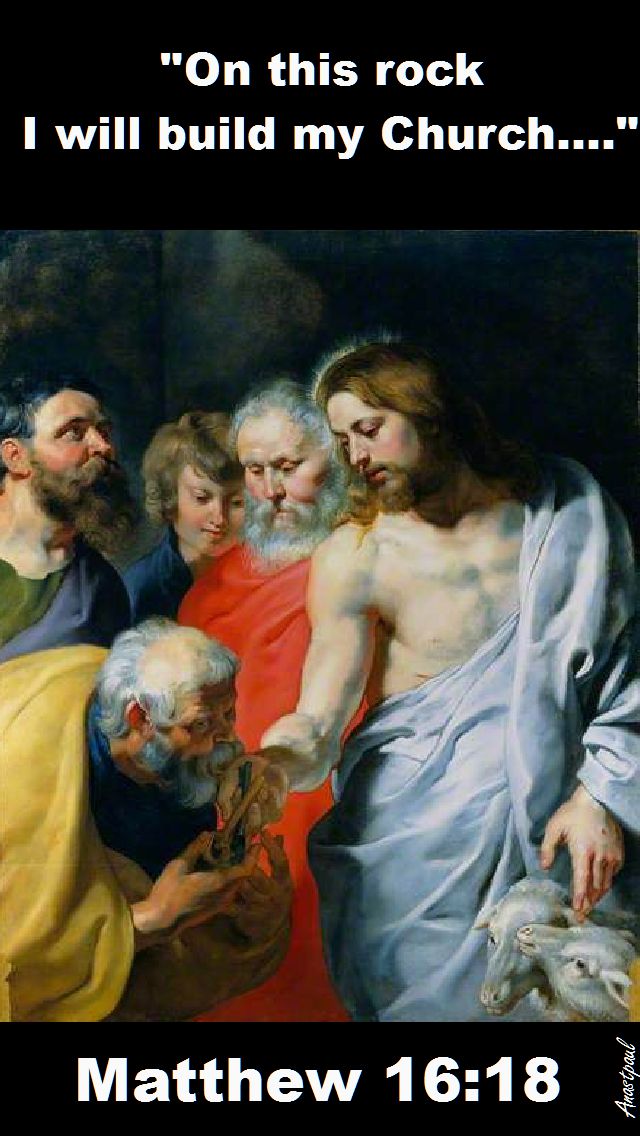
“On this rock I will build my Church”…Matthew 16:18
REFLECTION – “How blessed is the Church of Rome, on which the Apostles poured forth all their doctrine along with their blood!” (De Praescriptione Hereticorum, 36)…….Tertullian
“I decided to consult the Chair of Peter, where that faith is found exalted by the lips of an Apostle; I now come to ask for nourishment for my soul there, where once I received the garment of Christ. I follow no leader save Christ, so I enter into communion with Your beatitude, that is, with the Chair of Peter, for this I know is the rock upon which the Church is built.” (cf. Le lettere I, 15, 1-2)…………..St Jerome (343-420) Father & Doctor
PRAYER – Holy Father, send Your Divine Enlightener into the hearts of all Your faithful, filling us with the strength to fulfil our mission as the followers of the Chair of St Peter. And most of all, we pray Lord Holy God to inspire and light the way of our Holy Father, Francis. Sustain and guide him, keep him in health and strength, to lead Your people by the Light of the Way and the Truth. Holy Father, have mercy on us, Holy Spirit guide and lead us, Lord Jesus Christ be our intercessor and teacher, amen.
Quote/s of the Day – 21 February – The Memorial of St Peter Damian O.S.B. (1007-1072) and St Robert Southwell S.J. (1561-1595)
“He pours light into our minds, arouses our desire and gives us strength… As the soul is the life of the body, so the Holy Spirit is the life of our souls.”
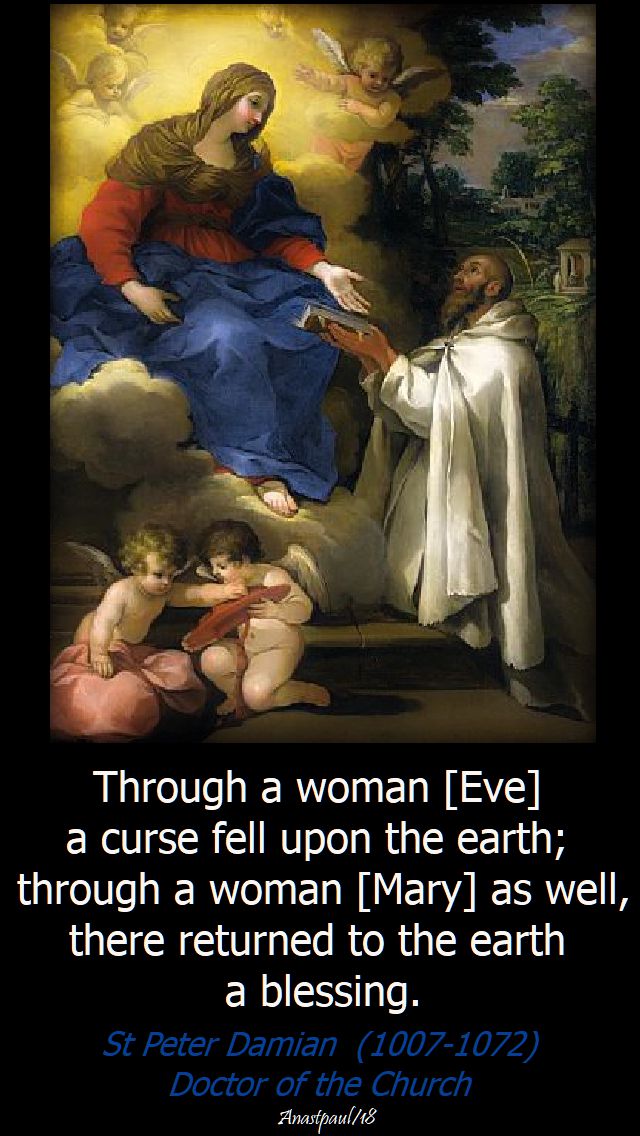
“Through a woman [Eve] a curse fell upon the earth; through a woman [Mary] as well, there returned to the earth a blessing.”
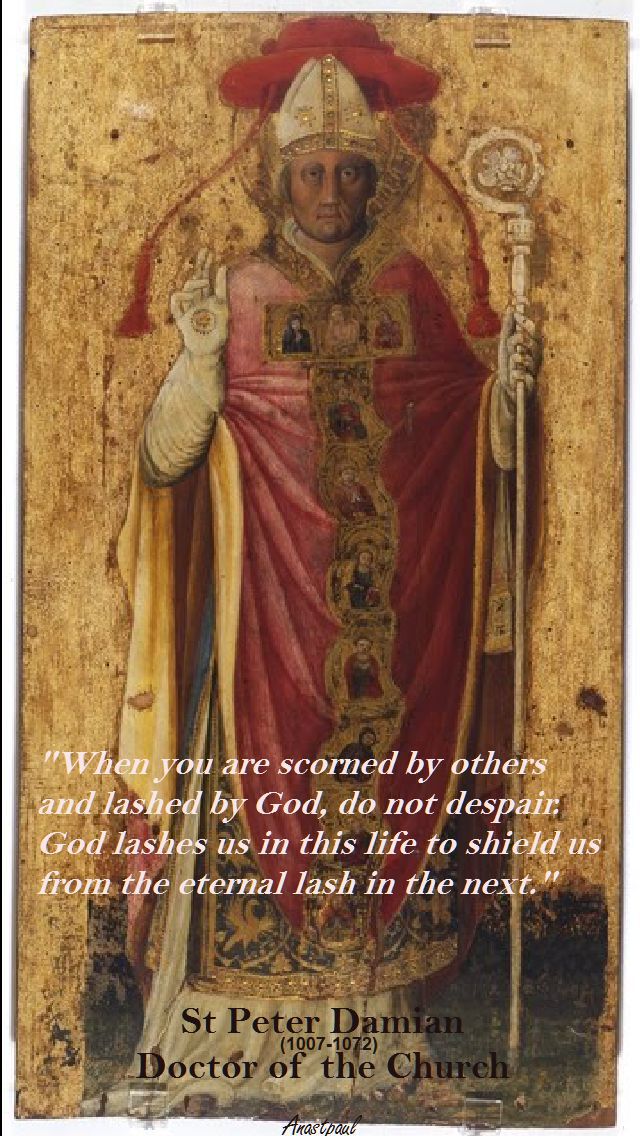
“When you are scorned by others and lashed by God, do not despair. God lashes us in this life, to shield us from the eternal lash in the next.”
St Peter Damian (1007-1072) Doctor of the Church
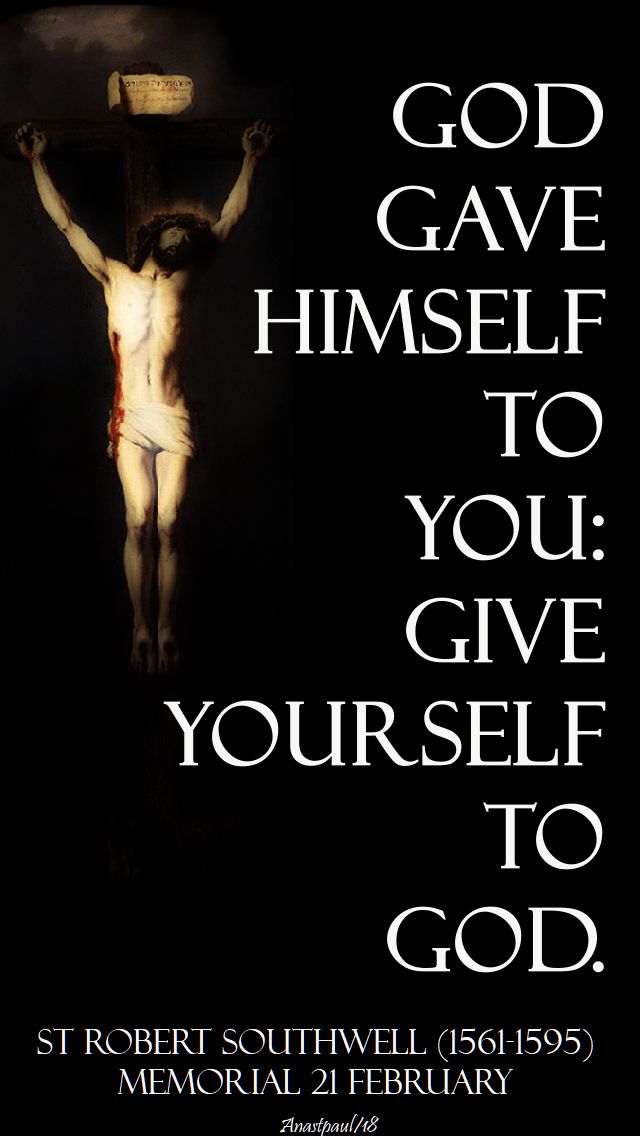
“God gave Himself to you: give yourself to God.”
“Where sin was hatched, let tears now wash the nest.”
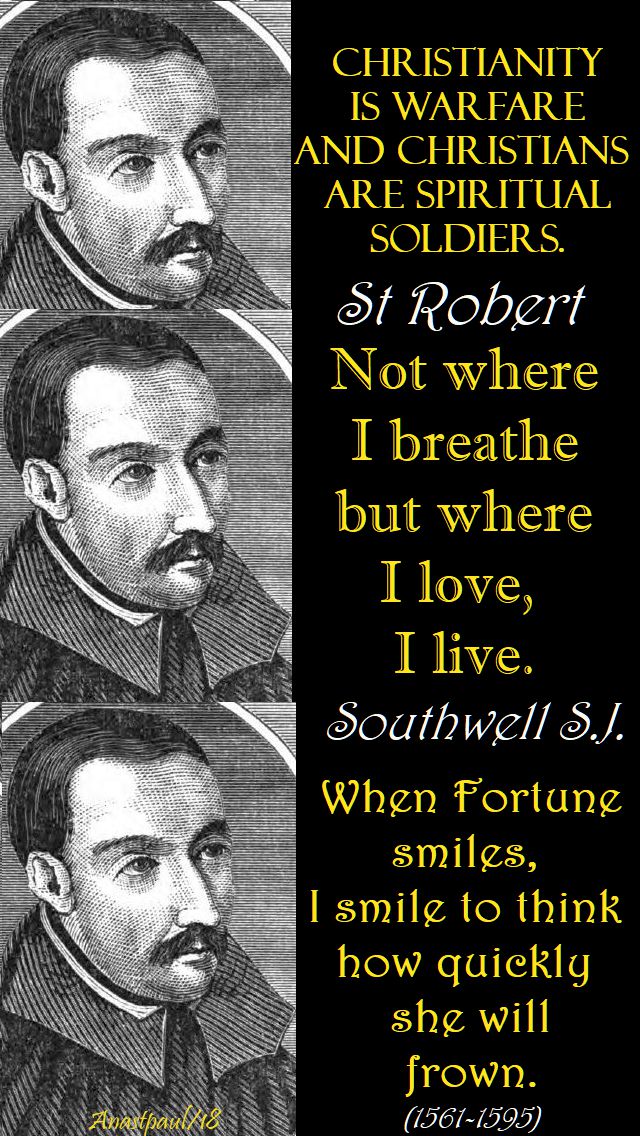
“Christianity is warfare and Christians are spiritual soldiers.”
“Not where I breathe but where I love, I live.”
“When Fortune smiles, I smile to think, how quickly she will frown.”
Thought for the Day – 20 February 2018 – Tuesday of the First Week of Lent
Excerpt from “Behold the Man”, a Lenten Reflection
By Blessed John Henry Cardinal Newman (1801-1890)
“I see the figure of a man, whether young or old I cannot tell. He may be fifty, or he may be thirty. Sometimes He looks one, sometimes the other. There is something inexpressible about His face that I cannot solve. Perhaps, as He bears all burdens, He bears that of old age too. But so it is; His face is at once most venerable, yet most childlike, most calm, most sweet, most modest, beaming with sanctity and with loving kindness. His eyes rivet me and move my heart. His breath is all fragrant and transports me out of myself. Oh, I will look upon that face forever and will not cease.
And I see suddenly someone come to Him and raise His hand and sharply strike Him on that heavenly face. It is a hard hand, the hand of a rude man and perhaps has iron upon it. It could not be so sudden as to take by surprise, Him who knows all things past and future and He shows no sign of resentment, remaining calm and grave as before; but the expression of His face is marred; a great welt arises and in a short time that all-gracious face is hidden from me by the effects of this indignity, as if a cloud came over it.
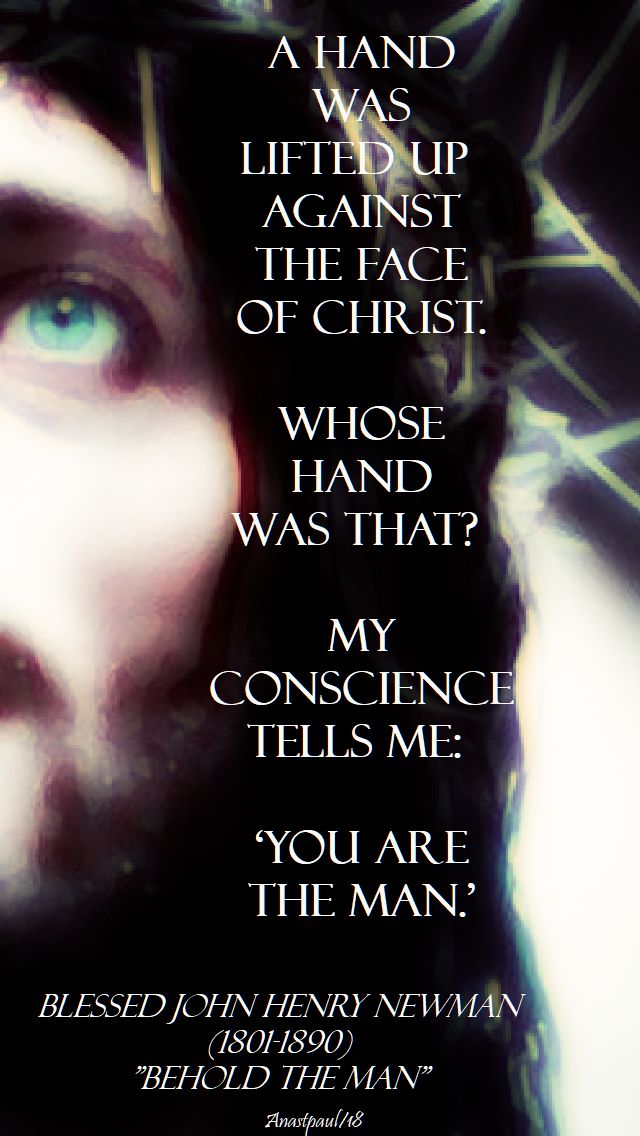
A hand was lifted up against the face of Christ.
Whose hand was that? My conscience tells me: ‘You are the man.’
I trust it is not so with me now. But, O my soul, contemplate the awful fact. Fancy Christ before you and fancy yourself lifting up your hand and striking Him! You will say, ‘It is impossible: I could not do so.’ Yes, you have done so.When you sinned wilfully, then you have done so. He is beyond pain now: still you have struck Him and had it been in the days of His flesh, He would have felt pain. Turn back in memory and recollect the time, the day, the hour, when by wilful mortal sin, by scoffing at sacred things, or by profaneness, or by hard hatred of your brother, or by acts of impurity, or by deliberate rejection of God’s voice, or in any other devilish way known to you, you have struck the All-Holy One.”(to be continued…………….)
NOTE of Interest: A second miracle attributed to the intercession of Blessed John Henry (2016) is still in progress of investigation by the Congregation for the Causes of Sainthood and if Vatican theologians and doctors conclude the healing is a divine sign of Newman’s sanctity the Pope will be invited to canonise him as the first English saint since 1970 and the first British saint since 1976.
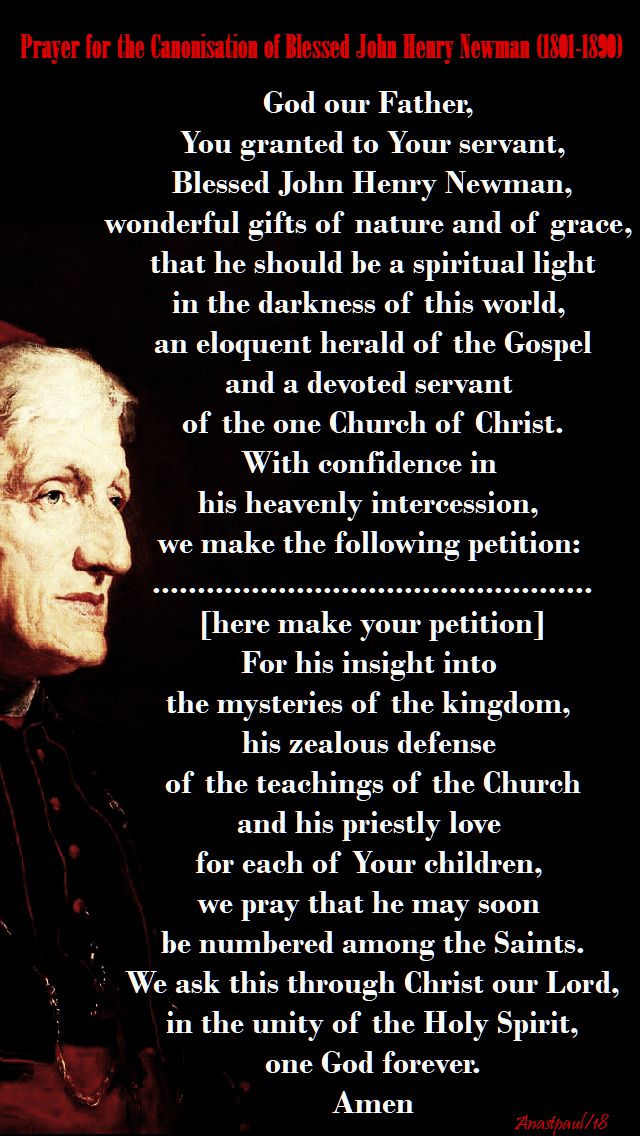
Prayer for the Canonisation of Blessed John Henry Newman (1801-1890)
God our Father, You granted to Your servant, Blessed John Henry Newman, wonderful gifts of nature and of grace, that he should be a spiritual light in the darkness of this world, an eloquent herald of the Gospel and a devoted servant of the one Church of Christ. With confidence in his heavenly intercession, we make the following petition: …………………………………………. [here make your petition] For his insight into the mysteries of the kingdom, his zealous defense of the teachings of the Church and his priestly love for each of Your children, we pray that he may soon be numbered among the Saints. We ask this through Christ our Lord, in the unity of the Holy Spirit, one God forever. Amen
Quote/s of the Day – 20 February 2018 -The First Memorial of Saints Francisco (1908-1919) and Jacinta (1910-1920) – “The Shepherds of Fatima”
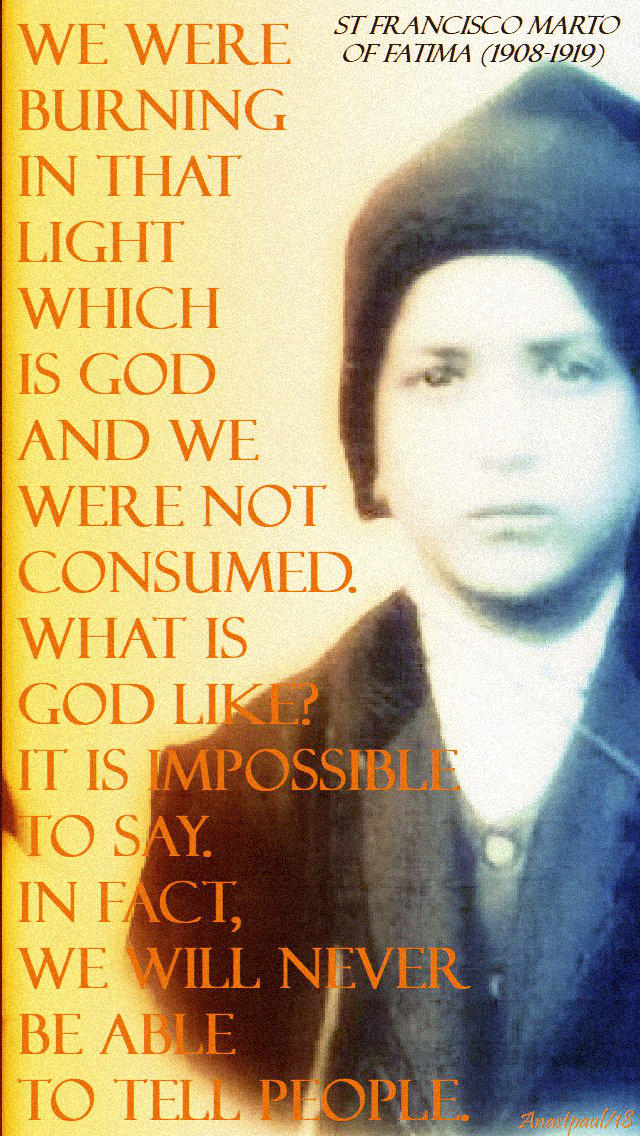
“We were burning in that light which is God and we were not consumed. What is God like? It is impossible to say. In fact, we will never be able to tell people”
St Francisco Marto of Fatima (1908-1919)
“Speak ill of no-one and avoid the company of those who talk (ill) about their neighbours.”
St Jacinta Marto of Fatima (1910-1920)
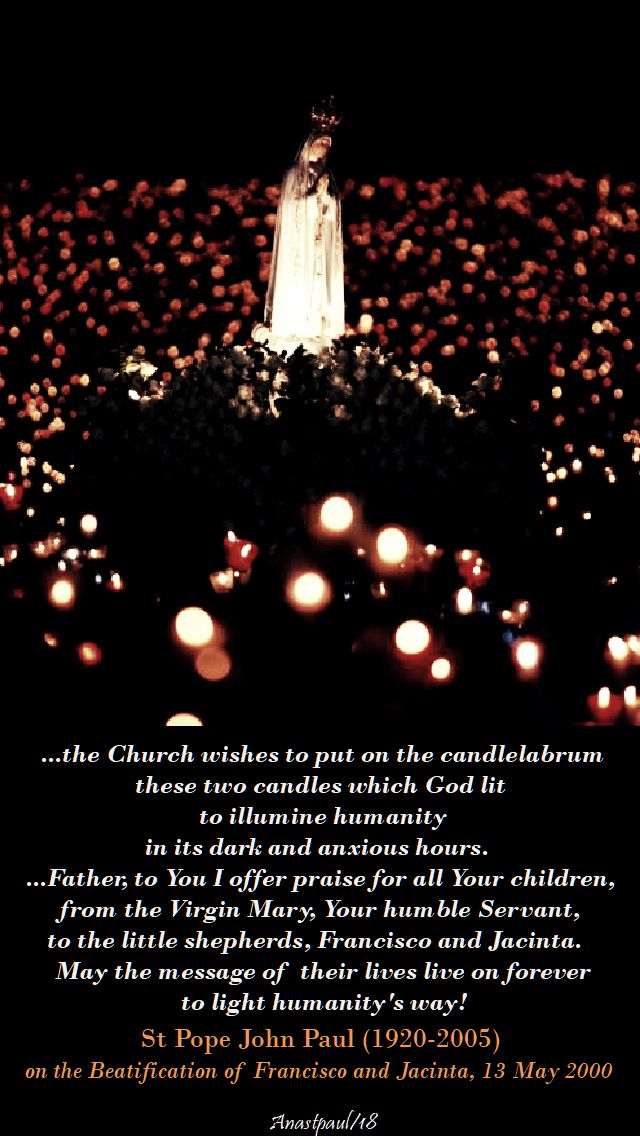
“Father, to You I offer praise, for you have revealed these things to the merest children”. Today Jesus’ praise takes the solemn form of the beatification of the little shepherds, Francisco and Jacinta. With this rite the Church wishes to put on the candlelabrum these two candles which God lit to illumine humanity in its dark and anxious hours. …Father, to You I offer praise for all Your children, from the Virgin Mary, Your humble Servant, to the little shepherds, Francisco and Jacinta. May the message of their lives live on forever to light humanity’s way!”
St Pope John Paul (1920-2005) on the Beatification of Francisco and Jacinta, 13 May 2000
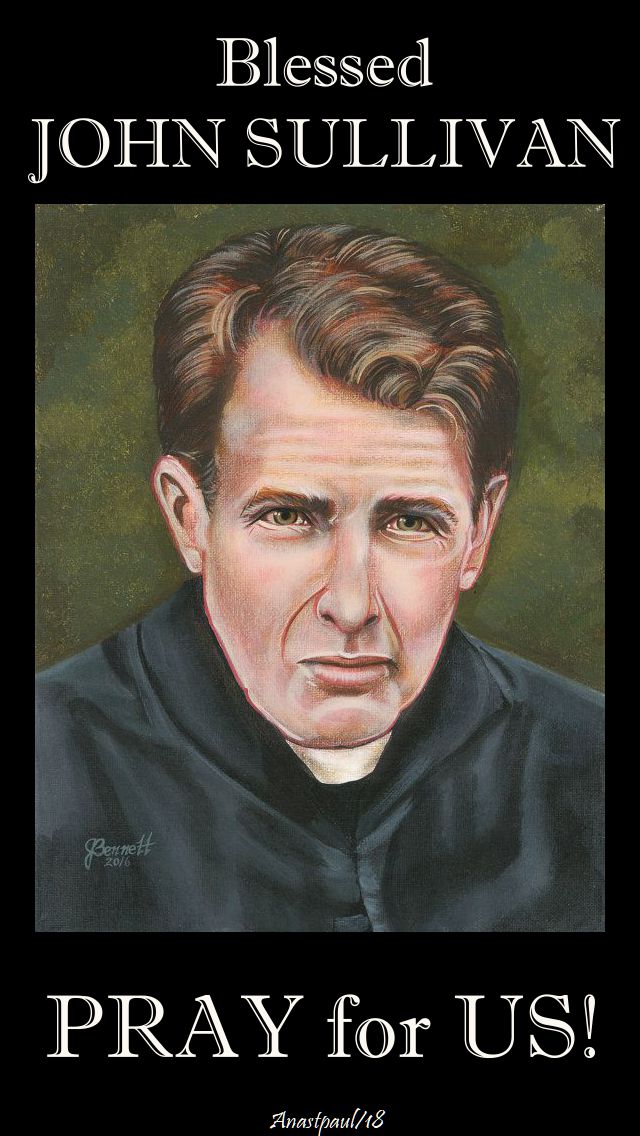
One Minute Reflection – 19 February – The Memorial of Bl John Sullivan SJ (1861-1933)
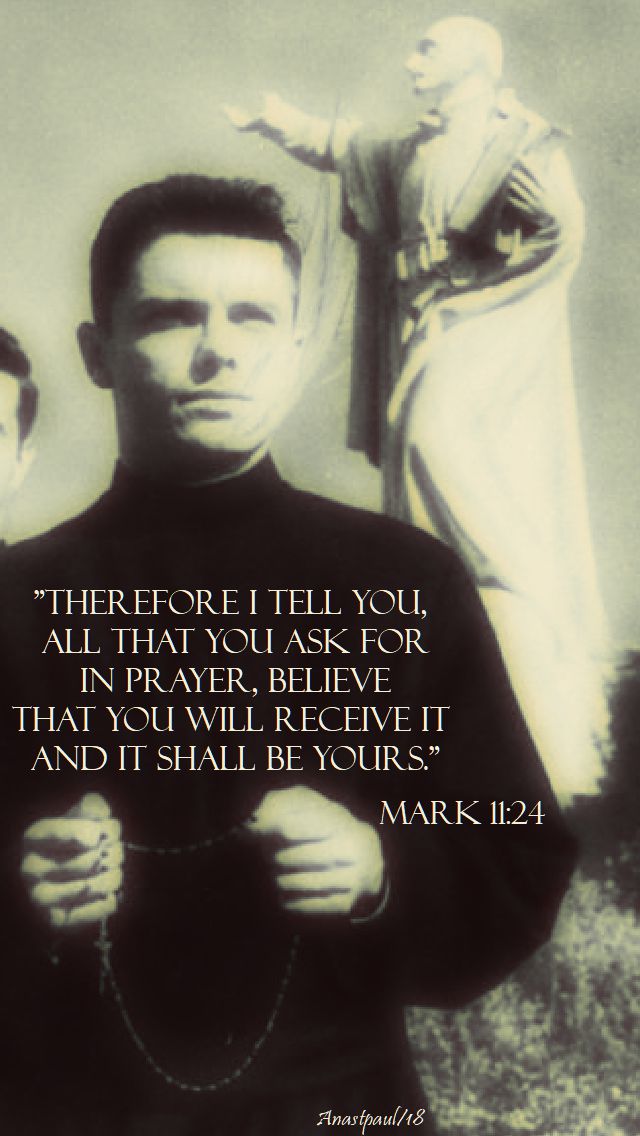
Therefore I tell you, all that you ask for in prayer, believe that you will receive it and it shall be yours...Mark 11:24
REFLECTION – “In prayer,don’t mind the scaffolding. Get at God.”
PRAYER – God of mercy, teach us to live as You have ordained. Help us to follow Your commandments with courage and steadfast devotion. Let our Saviour be our master, help us to learn from Him, the ways of prayer in silence. Fill us with the fire of the Holy Spirit, that we may learn how to pray. Grant blessed Trinity, that by the prayers of Blessed John Sullivan, who so clearly gave himself totally in prayer, we may grow in holiness. Through Jesus our Lord, in unity with the Holy Spirit, one God forever. Amen
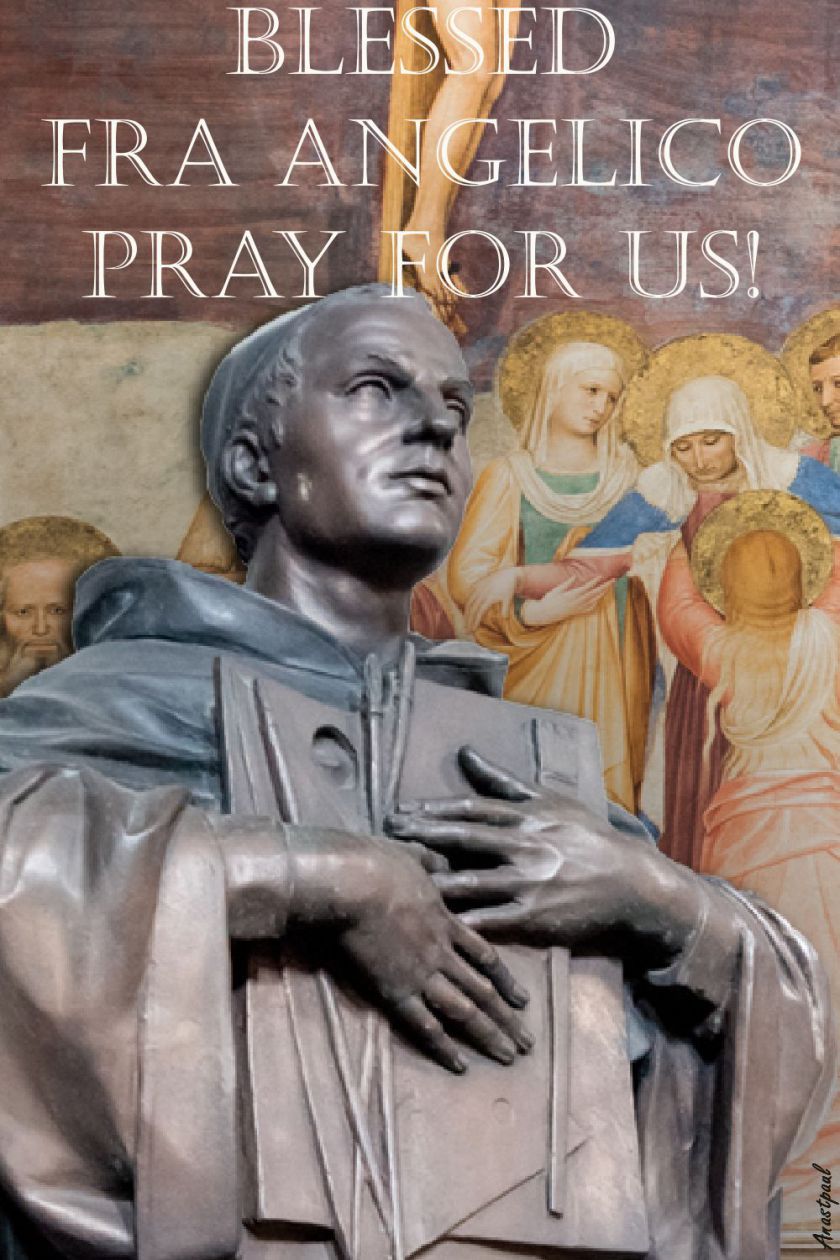
One Minute Reflection – 18 February – The Memorial of Blessed John of Fiesole/Fra Angelico O.P. (1387-1455)
Well done you are an industrious and reliable servant…… Come share your master’s joy…………Matthew 25:21
REFLECTION – “In God’s house we must try to accept whatever job he gives us – cook, kitchen boy, waiter, stable boy or baker. For we know that our reward depends not on the job itself but on the faithfulness with which we serve God.”… Pope John Paul I
“Fra Angelico’s painting was the fruit of the great harmony between a holy life and the creative power with which he had been endowed.”… St Pope John Paul II
PRAYER – O God, in Your providence You inspired blessed Fra Angelico to portray the beauty and sweetness of heaven. By his prayers and the example of his virtues, grant that we may manifest this splendour to our brothers and sisters. Blessed Angelico, pray for us! Through Christ our Lord, amen.
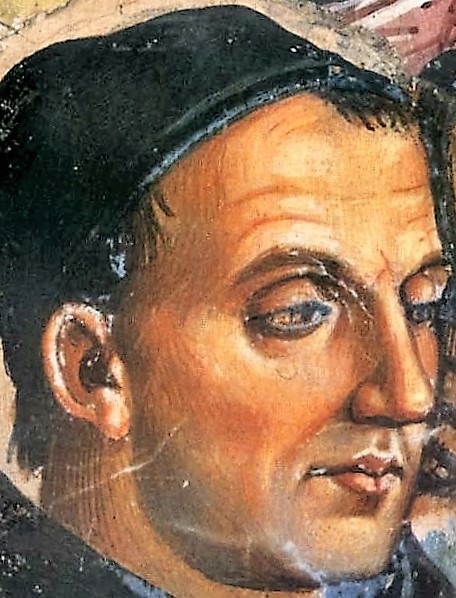
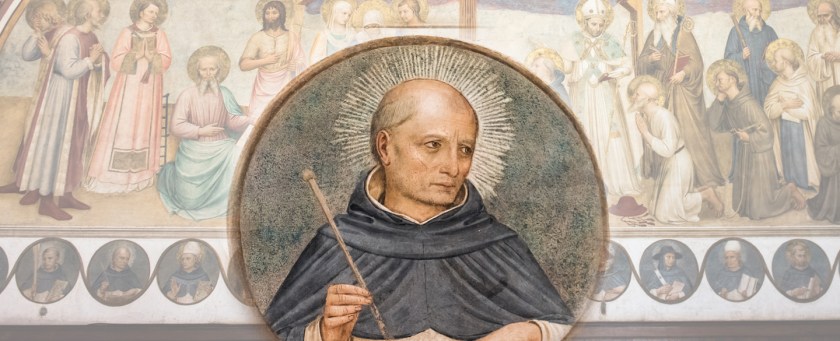
Saint of the Day – 18 February – Blessed John of Fiesole/Fra Angelico O.P. (1387-1455) Born in 1387 in Vicchio di Mugello near Florence, Italy as Guido di Pietro – he died on 18 February 1455 in the Dominican convent in Rome, Italy of natural causes. He was known to contemporaries as Fra Giovanni da Fiesole (Brother John of Fiesole) and Fra Giovanni Angelico (Angelic Brother John). In modern Italian he is called il Beato Angelico (Blessed Angelic One); the common English name Fra Angelico means the “Angelic friar”. In 1982, Pope John Paul II proclaimed his beatification in recognition of the holiness of his life, thereby making the title of “Blessed” official. Fiesole is sometimes misinterpreted as being part of his formal name but it was merely the name of the town where he took his vows as a Dominican friar and was used by contemporaries to separate him from others who were also known as Fra Giovanni. He is listed in the Roman Martyrology as Beatus Ioannes Faesulanus, cognomento Angelicus—”Blessed Giovanni of Fiesole, surnamed ‘the Angelic’ “. Patron of Catholic Artists.
Fra Angelico was an Early Italian Renaissance painter described by Vasari in his Lives of the Artists as having “a rare and perfect talent”.
Early life, 1395–1436
Fra Angelico was born Guido di Pietro at Rupecanina in the Tuscan area of Mugello near Fiesole towards the end of the 14th century. Nothing is known of his parents. He was baptised Guido or Guidolino. The earliest recorded document concerning Fra Angelico dates from 17 October 1417 when he joined a religious confraternity or guild at the Carmine Church, still under the name of Guido di Pietro. This record reveals that he was already a painter, a fact that is subsequently confirmed by two records of payment to Guido di Pietro in January and February 1418 for work done in the church of Santo Stefano del Ponte. The first record of Angelico as a friar dates from 1423, when he is first referred to as Fra Giovanni (Friar John), following the custom of those entering one of the older religious orders of taking a new name. He was a member of the local community at Fiesole, not far from Florence, of the Dominican Order; one of the medieval Orders belonging to a category known as mendicant Orders because they generally lived not from the income of estates but from begging or donations. Fra, a contraction of frater (Latin for ‘brother’), is a conventional title for a mendicant friar.
According to Vasari, Fra Angelico initially received training as an illuminator, possibly working with his older brother Benedetto who was also a Dominican and an illuminator. The former Dominican convent of San Marco in Florence, now a state museum, holds several manuscripts that are thought to be entirely or partly by his hand. The painter Lorenzo Monaco may have contributed to his art training and the influence of the Sienese school is discernible in his work. He had several important charges in the convents he lived in but this did not limit his art, which very soon became famous. According to Vasari, the first paintings of this artist were an altarpiece and a painted screen for the Charterhouse (Carthusian monastery) of Florence; none such exist there now.
From 1408 to 1418, Fra Angelico was at the Dominican friary of Cortona, where he painted frescoes, now mostly destroyed, in the Dominican Church and may have been assistant to Gherardo Starnina or a follower of his. Between 1418 and 1436 he was at the convent of Fiesole, where he also executed a number of frescoes for the church and the Altarpiece, which was deteriorated but has since been restored. A predella of the Altarpiece remains intact and is conserved in the National Gallery, London, and is a great example of Fra Angelico’s ability. It shows Christ in Glory surrounded by more than 250 figures, including beatified Dominicans.
San Marco, Florence, 1436–1445
In 1436, Fra Angelico was one of a number of the friars from Fiesole who moved to the newly built convent or friary of San Marco in Florence. This was an important move which put him in the centre of artistic activity of the region and brought about the patronage of one of the wealthiest and most powerful members of the city’s governing authority, or “Signoria” (namely Cosimo de’ Medici), who had a cell reserved for himself at the friary in order that he might retreat from the world.
It was, according to Vasari, at Cosimo’s urging that Fra Angelico set about the task of decorating the convent, including the magnificent fresco of the Chapter House, the often-reproduced Annunciation at the top of the stairs leading to the cells, the Maesta (or Coronation of the Madonna) with Saints (cell 9) and the many other devotional frescoes, of smaller format but remarkable luminous quality, depicting aspects of the Life of Christ that adorn the walls of each cell.
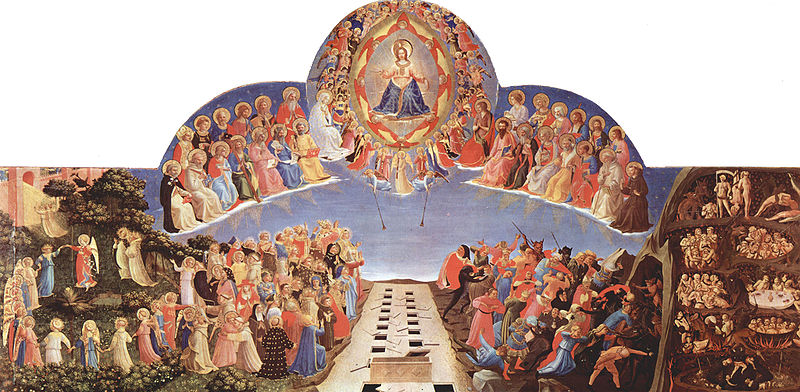
The Last JudgementThe Transfiguration shows the directness, simplicity and restrained palette typical of these frescoes. Located in a monk’s cell at the Convent San’ Marco and intended for private devotion.
In 1439 Fra Angelico completed one of his most famous works, the San Marco Altarpiece at Florence. The result was unusual for its time. Images of the enthroned Madonna and Child surrounded by saints were common, but they usually depicted a setting that was clearly heaven-like, in which saints and angels hovered about as divine presences rather than people. But in this instance, the saints stand squarely within the space, grouped in a natural way as if they were able to converse about the shared experience of witnessing the Virgin in glory. Paintings such as this, known as Sacred Conversations, were to become the major commissions of Giovanni Bellini, Perugino and Raphael.
San Marco Altarpiece
The Vatican, 1445–1455
In 1445 Pope Eugene IV summoned him to Rome to paint the frescoes of the Chapel of the Holy Sacrament at St Peter’s, later demolished by Pope Paul III. Vasari claims that at this time Fra Angelico was offered the Archbishopric of Florence by Pope Nicholas V and that he refused it, recommending another friar for the position. The story seems possible and even likely. However, if Vasari’s date is correct, then the pope must have been Eugene IV and not Nicholas, who was elected Pope only on 6 March 1447. Moreover, the archbishop in 1446–1459 was the Dominican Antoninus of Florence (Antonio Pierozzi), canonised by Pope Adrian VI in 1523. In 1447 Fra Angelico was in Orvieto with his pupil, Benozzo Gozzoli, executing works for the Cathedral. Among his other pupils were Zanobi Strozzi.
From 1447 to 1449 Fra Angelico was back at the Vatican, designing the frescoes for the Niccoline Chapel for Nicholas V. The scenes from the lives of the two martyred deacons of the Early Christian Church, St Stephen and St Lawrence may have been executed wholly or in part by assistants. The small chapel, with its brightly frescoed walls and gold leaf decorations gives the impression of a jewel box. From 1449 until 1452, Fra Angelico returned to his old convent of Fiesole, where he was the Prior.
Death and beatification
In 1455, Fra Angelico died while staying at a Dominican convent in Rome, perhaps on an order to work on Pope Nicholas’ chapel. He was buried in the church of Santa Maria sopra Minerva.
When singing my praise, don’t liken my talents to those of Apelles. Say, rather, that, in the name of Christ, I gave all I had to the poor.
The deeds that count on Earth are not the ones that count in Heaven.
I, Giovanni, am the flower of Tuscany. — Translation of epitaph
The English writer and critic William Michael Rossetti wrote of the friar:
“From various accounts of Fra Angelico’s life, it is possible to gain some sense of why he was deserving of canonisation. He led the devout and ascetic life of a Dominican friar and never rose above that rank; he followed the dictates of the order in caring for the poor; he was always good-humoured. All of his many paintings were of divine subjects and it seems that he never altered or retouched them, perhaps from a religious conviction that, because his paintings were divinely inspired, they should retain their original form. He was wont to say that he who illustrates the acts of Christ should be with Christ. It is averred that he never handled a brush without fervent prayer and he wept when he painted a Crucifixion. The Last Judgement and the Annunciation were two of the subjects he most frequently treated.”
The Crucified Christ
Pope John Paul II beatified Fra Angelico on 3 October 1982 and in 1984 declared him patron of Catholic artists.
“Angelico was reported to say “He who does Christ’s work must stay with Christ always”. This motto earned him the epithet “Blessed Angelico” because of the perfect integrity of his life and the almost divine beauty of the images he painted, to a superlative extent those of the Blessed Virgin Mary.”— St Pope John Paul II
Thought for the Day – – 16 February – The First Friday of Lent 2018
Alas, for our dearest Lord! up to this day what have we done for Him?
You see what He has done for us and the end of His doing it was to gain our love!
We look upon a crucifix and it hardly moves us.
We hear of His bittter passion but our eyes are dry and our hearts indifferent.
We kneel down to pray but we can hardly keep our thoughts fixed upon Him for a quarter of an hour together.
We go into His own most holy presence and we hardly bend the knee before the Tabernacle lest it should spoil our clothes.
We see others sin and what is it to us that Jesus is offended, so long as it is not we, who are risking our souls, by offending Him?
These are strange signs of love!
Surely Jesus cannot be much to us if this is the way we feel about Him.
Yet so it is.
We go our own way and do our own will.
The great thing is to please ourselves and to make things easy to ourselves.
Life must be taught to run smooth.
As to penance, it must be kept at arm’s length.
We must have our bodily comforts and worldly conveniences and our spiritual life must be nothing but a sufficiency of those inward consolations without which our souls give us pain, because they are not at rest.
If we worship God it is for self, if we do good to others, it is self we are seeking, even in our charity.
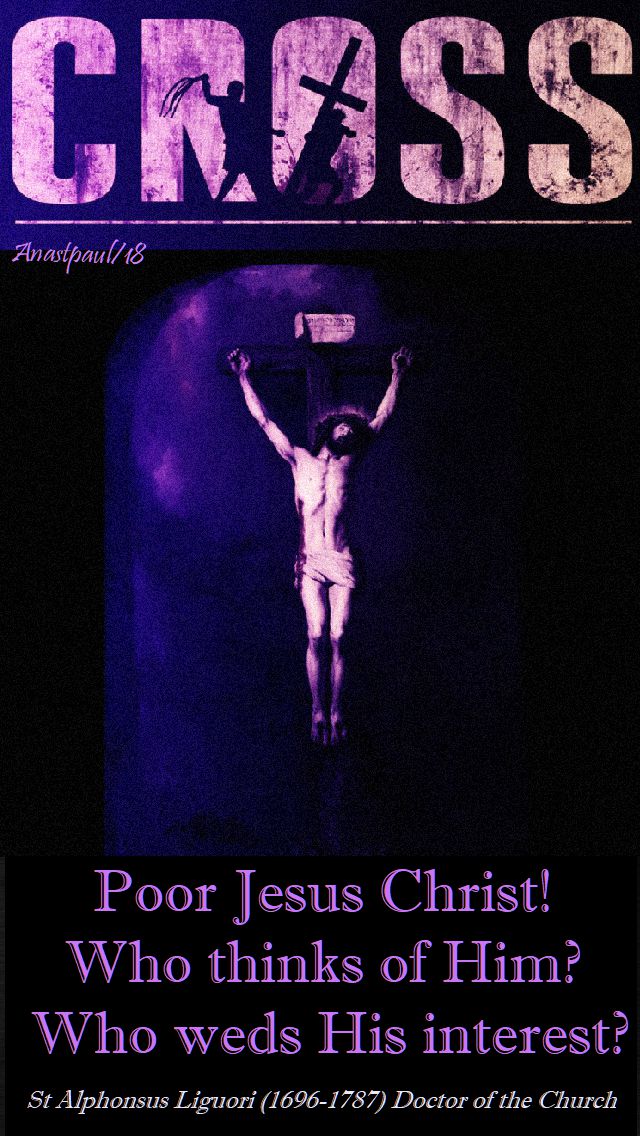
Poor Jesus Christ! as Saint Alphonsus used to say, “Poor Jesus Christ! Who thinks of Him? Who weds His interest?”
Father Faber – Remember Me: Daily Readings for Lent
Quote of the Day – 16 February – The First Friday of Lent 2018
“Prayer, mercy and fasting: these three are one and they give life to each other. Fasting is the soul of prayer, mercy is the lifeblood of fasting. Let no one try to separate them, they cannot be separated. If you have only one of them or not all together, you have nothing. So if you pray, fast, if fast, show mercy, if you want your petition to be heard, hear the petition of others. When you fast, see the fasting of others. If you hope for mercy, show mercy. If you look for kindness, show kindness. If you want to receive, give.”
St Peter Chrysologus (c 406 – c 450) Father & Doctor of the Church
One Minute Reflection – – 16 February – The First Friday of Lent 2018
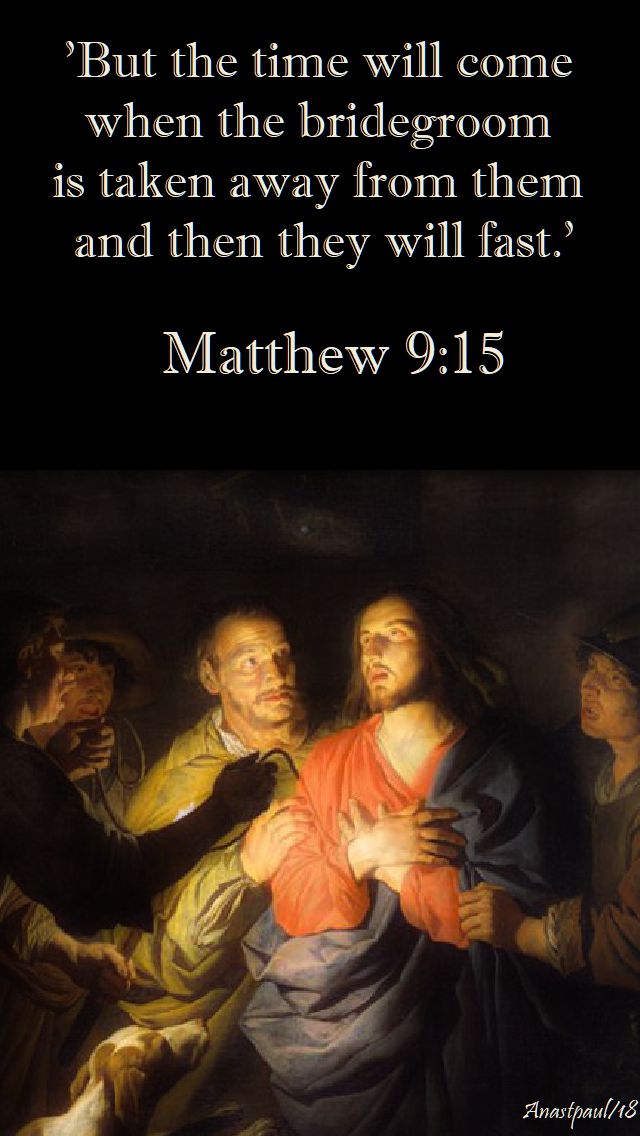
‘But the time will come when the bridegroom is taken away from them and then they will fast.’…Matthew 9:15
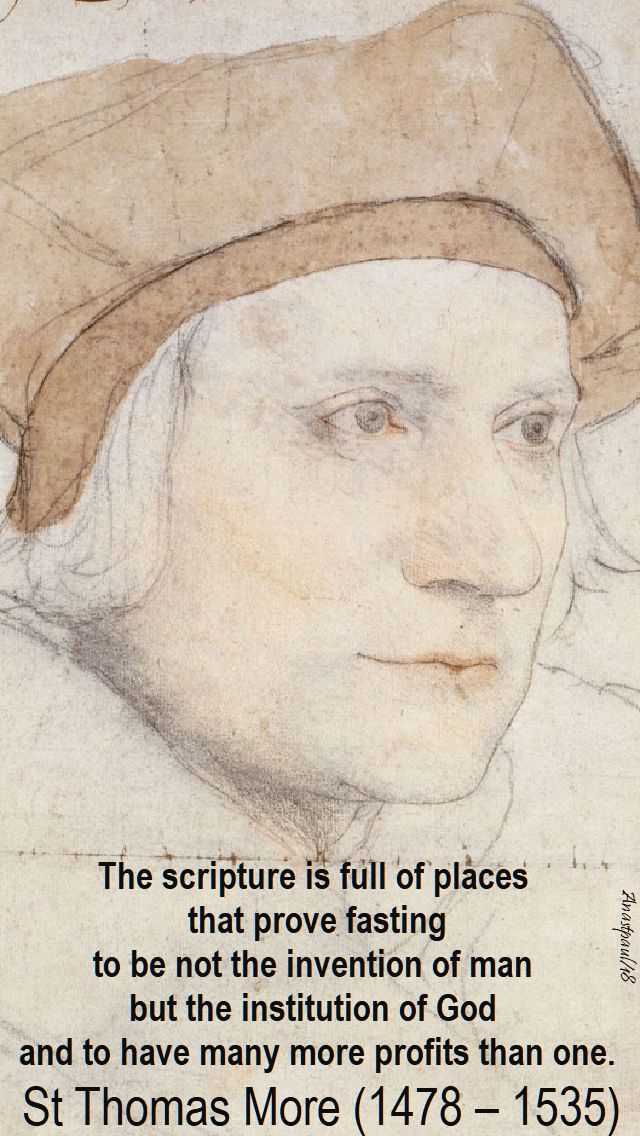
REFLECTION – “The scripture is full of places that prove fasting to be not the invention of man but the institution of God and to have many more profits than one. And that the fasting of one man may do good unto another, our Saviour shows Himself where He says that some kind of devils cannot be cast out of one man by another “without prayer and fasting.” And therefore I marvel that they take this way against fasting and other bodily penance.”…St Thomas More (1478 – 1535)
PRAYER – Give us the grace O Lord, to continue the works of penitence we have begun, so that the Lenten observance we have taken upon ourselves, may be accomplished in sincerety of heart. “A humbled, contrite heart, O God, You will not spurn.” (Ps 51) Through our Lord Jesus Christ, in unity with the Holy Spirit, one God forever, amen.
Thought for the Day – 15 February – The Memorial of St Claude de la Colombiere S.J. (1641-1682)
This is a special day for the Jesuits, who claim today’s saint as one of their own. It’s also a special day for people who have a special devotion to the Sacred Heart of Jesus—a devotion Claude de la Colombière promoted, along with his friend and spiritual companion, St Margaret Mary Alacoque. The emphasis on God’s love for all was an antidote to the rigorous moralism of the Jansenists, who were popular at the time.
Claude showed remarkable preaching skills long before his ordination in 1675. Two months later, he was made superior of a small Jesuit residence in Burgundy. It was there he first encountered Margaret Mary Alacoque. For many years after he served as her confessor.
As a fellow Jesuit and as a promoter of the devotion to the Sacred Heart of Jesus, Saint Claude must be very special to Pope Francis who has so beautifully emphasised the mercy of Jesus. The emphasis on God’s love and mercy are characteristic of both men.
“The past three centuries allow us to evalutate the importance of the message which was entrusted to Claude. In a period of contrasts between the fervour of some and the indifference or impiety of many, here is a devotion centred on the humility of Christ, on His presence, on His love of mercy and on forgiveness. Devotion to the Heart of Christ would be a source of balance and spiritual strengthening for Christian communities so often faced with increasing unbelief over the coming centuries. May the canonisation of Claude La Colombiere be for the whole Church an appeal to live the consecration to the Heart of Christ, a consecration which is a self-giving that allows the charity and mercy of Christ to inspire us, pardon us and lead us in His ardent desire to open the ways of truth and life to all our brothers and sisters!”…St Pope John Paul II, during the canonisation of Saint Claude (31 May 1992)
Quote/s of the Day – 15 February – The Memorial of St Claude de la Colombiere S.J. (1641-1682)
“May the Heart of Jesus Christ be our school! Let us make our abode there. Let us study its movements and attempt to conform ours to them. Yes, O Divine Jesus, I want to live there.”
“When the Holy Spirit is in a soul, He communicates Himself, in one way or another. We can say that He makes virtue contagious and turns a simple faithful into an apostle.”
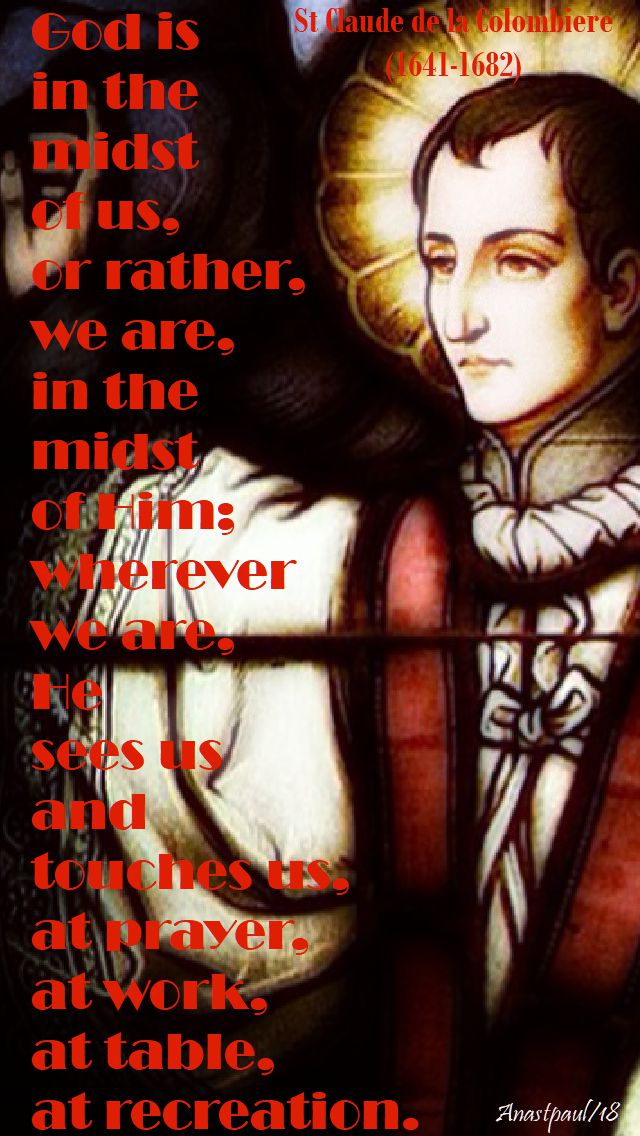
“God is in the midst of us, or rather, we are in the midst of Him; wherever we are, He sees us and touches us, at prayer, at work, at table, at recreation.”
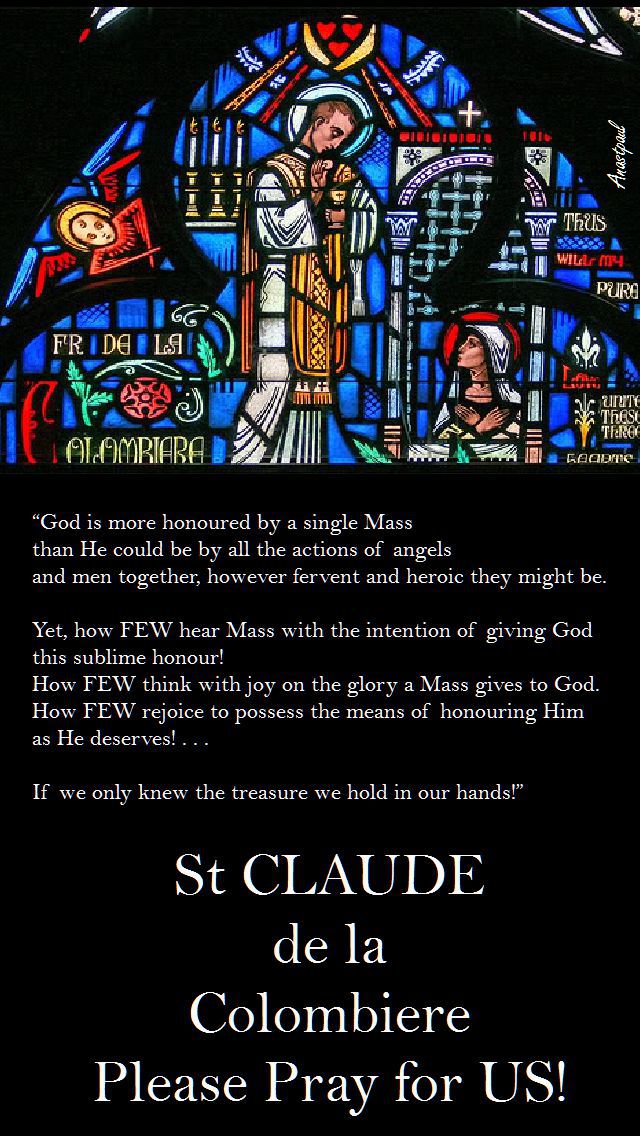
“God is more honoured by a single Mass than He could be by all the actions of angels and men together, however fervent and heroic they might be. Yet, how FEW hear Mass with the intention of giving God this sublime honour! How FEW think with joy on the glory a Mass gives to God. How FEW rejoice to possess the means of honouring Him as He deserves! . . . If we only knew the treasure we hold in our hands!”
St Claude de la Colombiere (1641-1682)
“St Claude has been a dear friend of mine since I discovered his writings quite some years ago. . I count on his intercession. I turn to him when I feel my heart is tired and a little cold and distressed. This Saint of Hearts is a most willing guide leading us to the warmest Heart of Christ full of Mercy and Love.”
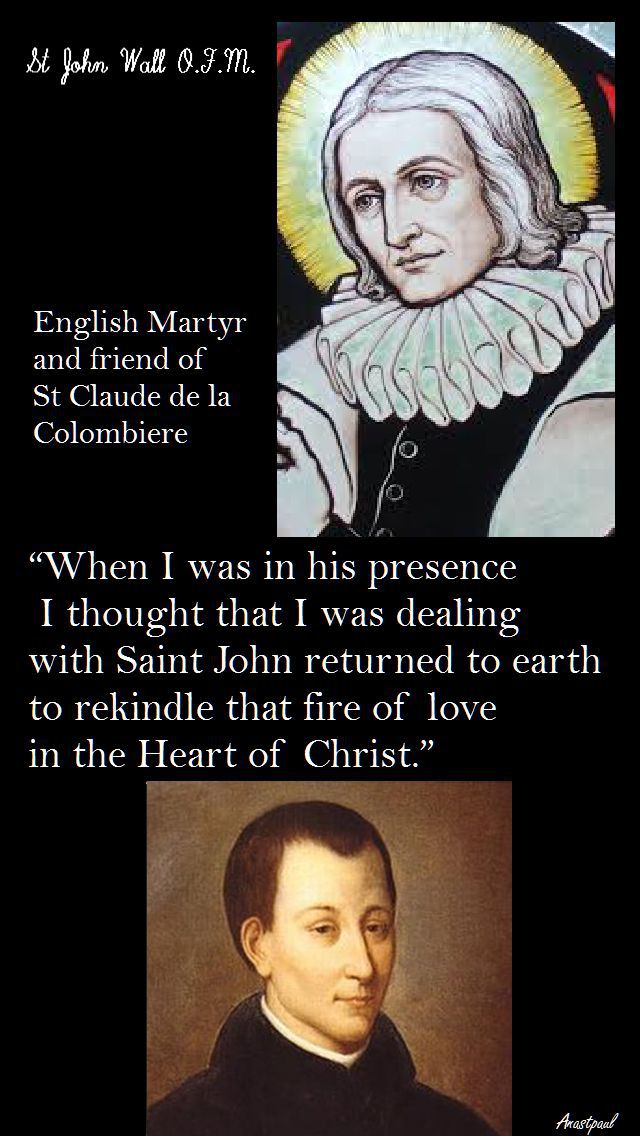
The Franciscan St John Wall O.F.M. (1620-1679) (Joachim of Saint Anne), who was martyred for the crime of being a Catholic priest near Redhill, Corcester, England on August 22nd, 1679, knew Saint Claude. After having spent a night in spiritual conversation with him, the soon–to–be martyr said,
“When I was in his presence I thought that I was dealing with Saint John returned to earth to rekindle that fire of love in the Heart of Christ.”
One Minute Reflection – 15 February – The Memorial of St Claude de la Colombiere S.J. (1641-1682)
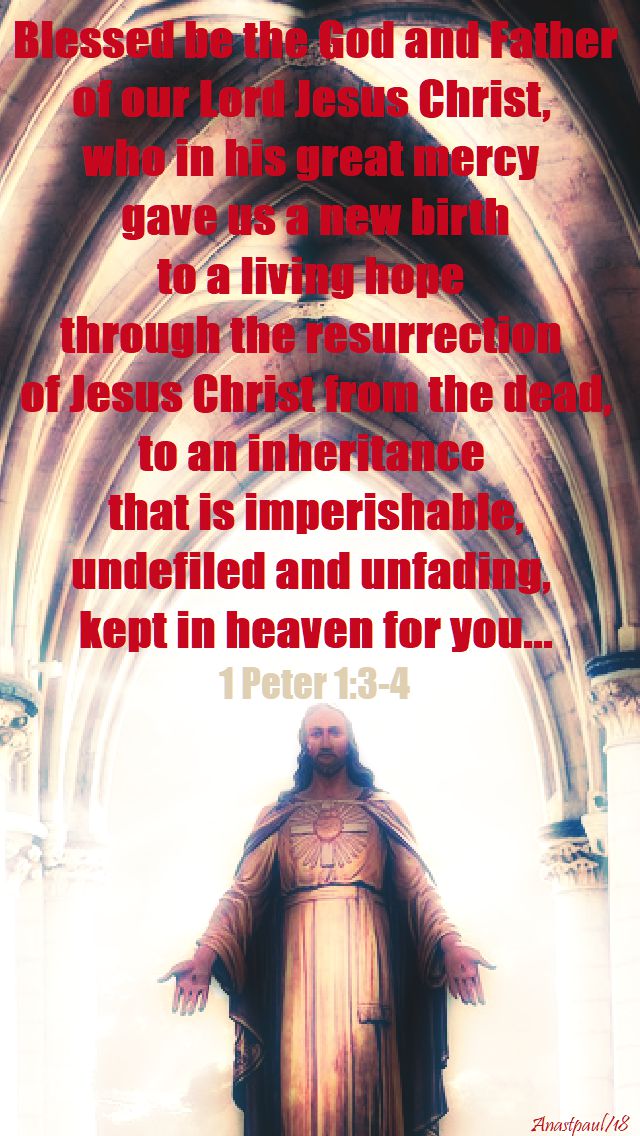
Blessed be the God and Father of our Lord Jesus Christ, who in his great mercy gave us a new birth to a living hope through the resurrection of Jesus Christ from the dead, to an inheritance that is imperishable, undefiled and unfading, kept in heaven for you...1 Peter 1:3-4
REFLECTION – “Lord, I am in this world to show Your mercy to others. Other people will glorify You, by making visible the power of Your grace, by their fidelity and constancy to You. For my part I will glorify You, by making known how good You are to sinners, that Your mercy is boundless and that no sinner, no matter how great his offences, should have reason to despair of pardon. If I have grievously offended You, My Redeemer, let me not offend You even more, by thinking that You are not kind enough to pardon me.” … St Claude de la Colombiere
PRAYER – Heavenly Father, Your great mercy, gave us Your Son! Surely nothing can be a greater proof to us of Your unending love and mercy to Your lowly creatures, we who are dust. Through Him, who died and rose for us, You have shown us the way of true mercy. Grant us this day that by the intercession of St Claude, we may take up our crosses with Him, never leaving the love of His Sacred Heart, so that we may join Your holy saints in eternal life. Through Your Son, our Lord Jesus Christ, in union with the Holy Spirit, one God forever, amen.
Thought for the Day – 14 February – The Memorial of Sts Cyril (827-869) & Methodius (826-885)
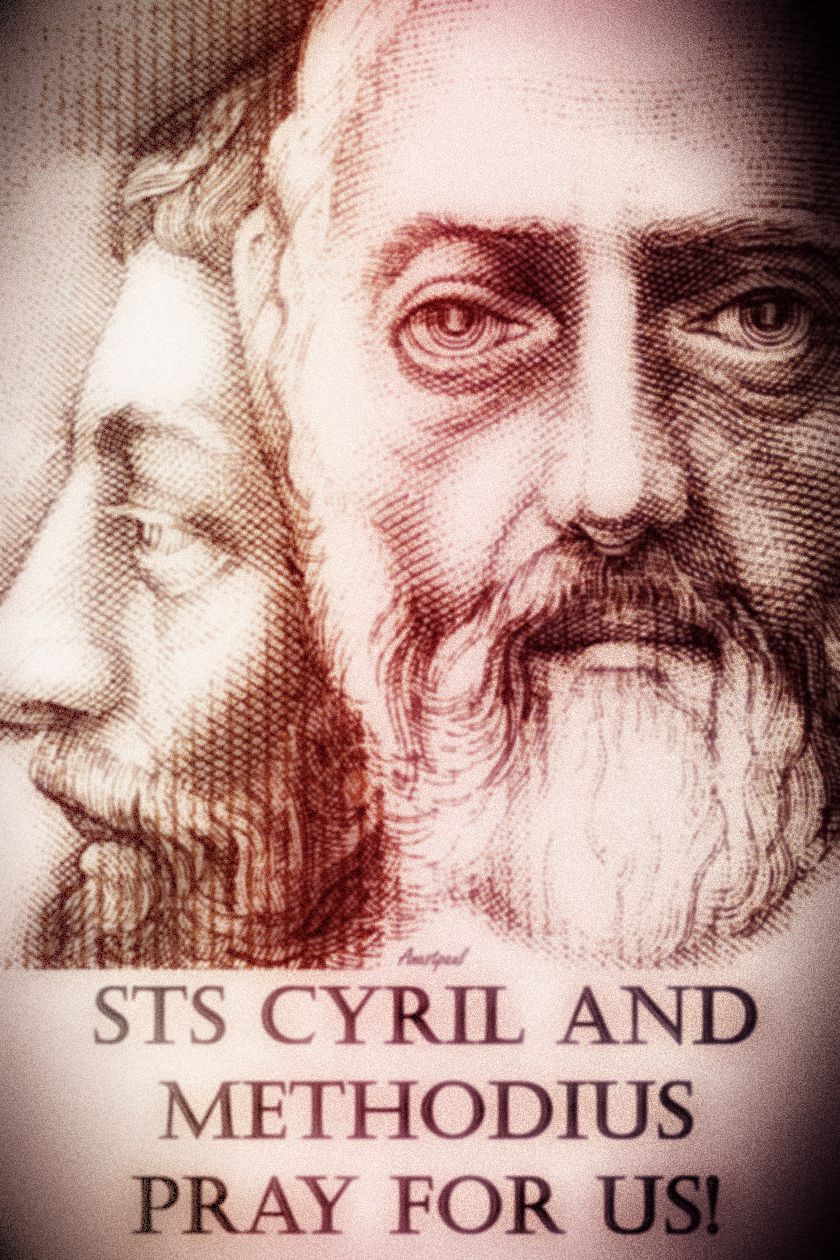
Wishing now to sum up concisely the profile of the two Brothers, we should first recall the enthusiasm with which Cyril approached the writings of St Gregory of Nazianzus, learning from him the value of language in the transmission of the Revelation. St Gregory had expressed the wish that Christ would speak through him: “I am a servant of the Word, so I put myself at the service of the Word”. Desirous of imitating Gregory in this service, Cyril asked Christ to deign to speak in Slavonic through him. He introduced his work of translation with the solemn invocation: “Listen, O all of you Slav Peoples, listen to the word that comes from God, the word that nourishes souls, the word that leads to the knowledge of God”. In fact, a few years before the Prince of Moravia had asked the Emperor Michael III to send missionaries to his country, it seems that Cyril and his brother Methodius, surrounded by a group of disciples, were already working on the project of collecting the Christian dogmas in books written in Slavonic. The need for new graphic characters closer to the language spoken was therefore clearly apparent: so it was that the Glagolitic alphabet came into being. Subsequently modified, it was later designated by the name “Cyrillic”, in honour of the man who inspired it. It was a crucial event for the development of the Slav civilisation in general. Cyril and Methodius were convinced that the individual peoples could not claim to have received the Revelation fully, unless they had heard it in their own language and read it in the characters proper to their own alphabet.
Methodius had the merit of ensuring that the work begun by his brother was not suddenly interrupted. While Cyril, the “Philosopher”, was more inclined to contemplation, Methodius on the other hand had a leaning for the active life. Thanks to this he was able to lay the foundations of the successive affirmation of what we might call the “Cyrillian-Methodian idea”: it accompanied the Slav peoples in the different periods of their history, encouraging their cultural, national and religious development. This was already recognised by Pope Pius XI in his Apostolic Letter Quod Sanctum Cyrillum, in which he described the two Brothers: “Sons of the East, with a Byzantine homeland, of Greek origin, for the Roman missions to reap Slav apostolic fruit” (AAS 19 [1927] 93-96). The historic role they played was later officially proclaimed by St Pope John Paul II who, with his Apostolic Letter Egregiae Virtutis, declared them Co-Patrons of Europe, together with St Benedict (31 December 1980; L’Osservatore Romano English edition, 19 January 1981, p. 3).
Cyril and Methodius are in fact a classic example of what today is meant by the term “inculturation”: every people must integrate the message revealed into its own culture and express its saving truth in its own language. This implies a very demanding effort of “translation” because it requires the identification of the appropriate words to present anew, without distortion, the riches of the revealed word. The two holy Brothers have left us a most important testimony of this, to which the Church also looks today in order to draw from it inspiration and guidelines. Pope Benedict XVI, Wednesday, 17 June 2009
The work of Saints Cyril and Methodius are a powerful reminder of our role in the celebration of the Liturgy. God speaks to us—to each of us—in a language that we can understand and based upon that understanding we are called to live the Gospel. We pray today for more active participation, greater comprehension and the ability to successfully live the Word of God for all to see!
Almighty and everlasting God, who by the power of the Holy Spirit moved your servant Cyril and his brother Methodius to bring the light of the Gospel to a hostile and divided people, overcome all bitterness and strife among us by the love of Christ and make us one united family under the banner of the Prince of Peace, who lives and reigns with You and the Holy Spirit, one God, now and for ever, amen.
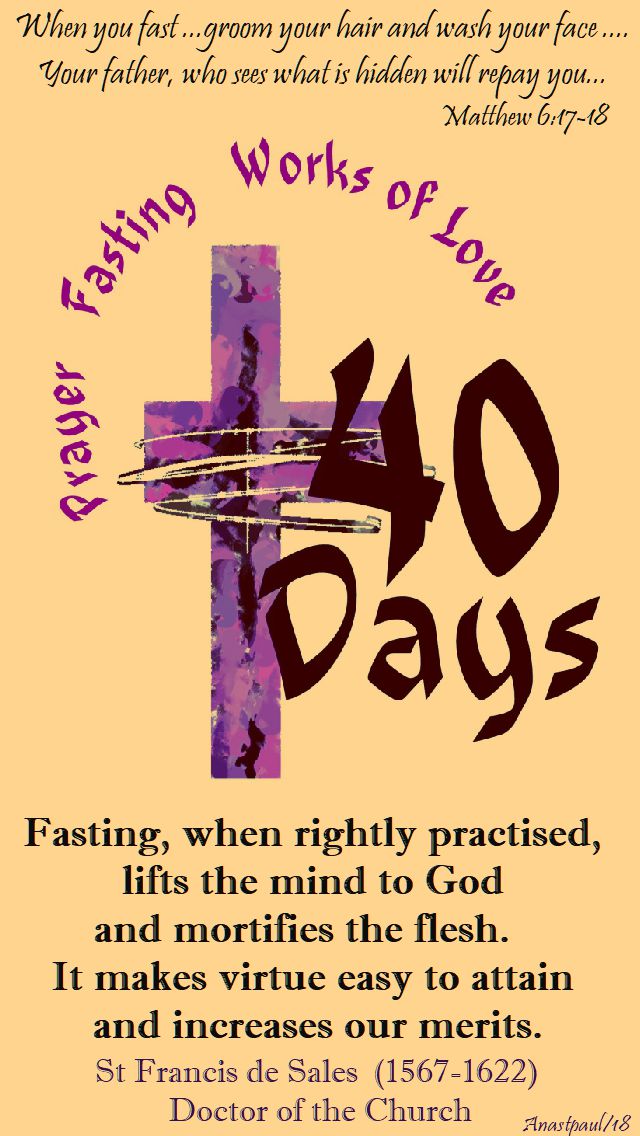
One Minute Reflection – 14 February 2018 – Ash Wednesday
When you fast …groom your hair and wash your face ….Your father, who sees what is hidden will repay you.…Matthew 6:17-18
REFLECTION – “Fasting, when rightly practised, lifts the mind to God and mortifies the flesh. It makes virtue easy to attain and increases our merits.”…St Francis de Sales (1567-1622) Doctor of the Church
PRAYER – Support us Lord, as with this Lenten fast we begin our Christian warfare, so that in doing battle against the spirit of evil, we may be armed with the weapon of self-denial. Heavenly Father, help us to fast for the right reasons. Teach us to fast to curb illicit desires and to obtain closer union with You. Help us Lord, during this Lenten season to cleave to You alone and grow in sanctity and charity. Create in me a clean heart O Lord! Through our Lord Jesus Christ in unity with the Holy Spirit, one God forever, amen.
Thought for the Day – 13 February – The Memorial of Blessed Jordan of Saxony O.P. (1190-1237
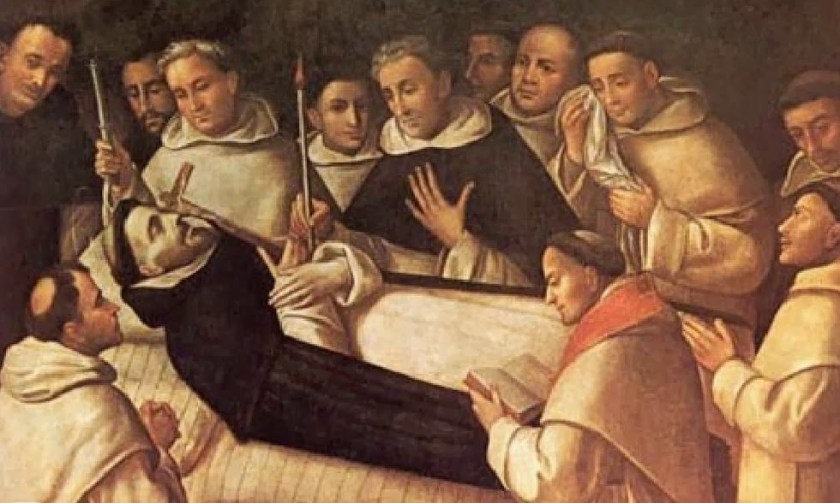
“You have no doubt heard that our kind Father, Master Jordan, his two companions and ninety-nine other persons have been taken from this wicked world by shipwreck in a violent storm. However, dear brothers, do not let your hearts be saddened by this awful calamity; for God, in His mercy, has already greatly consoled us, who have become orphans through the untimely death of a good Father. After the storm, the bodies of our three confrères were washed ashore and bright lights in the form of crosses shone over them every night until they were found and buried where they lay by those who escaped from the disaster. These, together with many others, have borne testimony to the miracle. Moreover, the inhabitants of the neighbourhood, drawn to the place of the catastrophe by reports of so marvellous an occurrence, testify that they experienced a sweet fragrance all round; while those who touched the bodies declare that this fragrance did not leave their hands for more than ten days. Indeed, this same sweet odour pervaded the locality until the fathers at Ptolomais came in a boat and took up the bodies for burial in the conventual church of that city. There now repose the remains of our late beloved Master General; and many wonders have in this short time been attributed to his intercession. Blessed be God in all His works. Amen”
All through his religious life the second head of the Order had been regarded as a very saintly man. A number of prodigies were said to have been wrought by him. Others came after his death; while several very holy persons declared that, in visions, they saw his soul ascend into heaven. All this, together with the facts recorded in the letter just quoted, occasioned a devotion to the man of God which continued through the course of centuries and caused him to be given the title of Blessed Jordan of Saxony. After a thorough study of this immemorial veneration by the Sacred Congregation of Rites, Leo XII, who reigned from 1823 to 1829, allowed the Friars Preacher the world over to say mass and recite the divine office in his honour. Throughout his Order he is held in an esteem second only to that which is accorded to Saint Dominic.
It is not commonly known or understood the highly efficacious intercession available to us all and thus we pray, Blessed Jordan of Saxony, Pray for us!
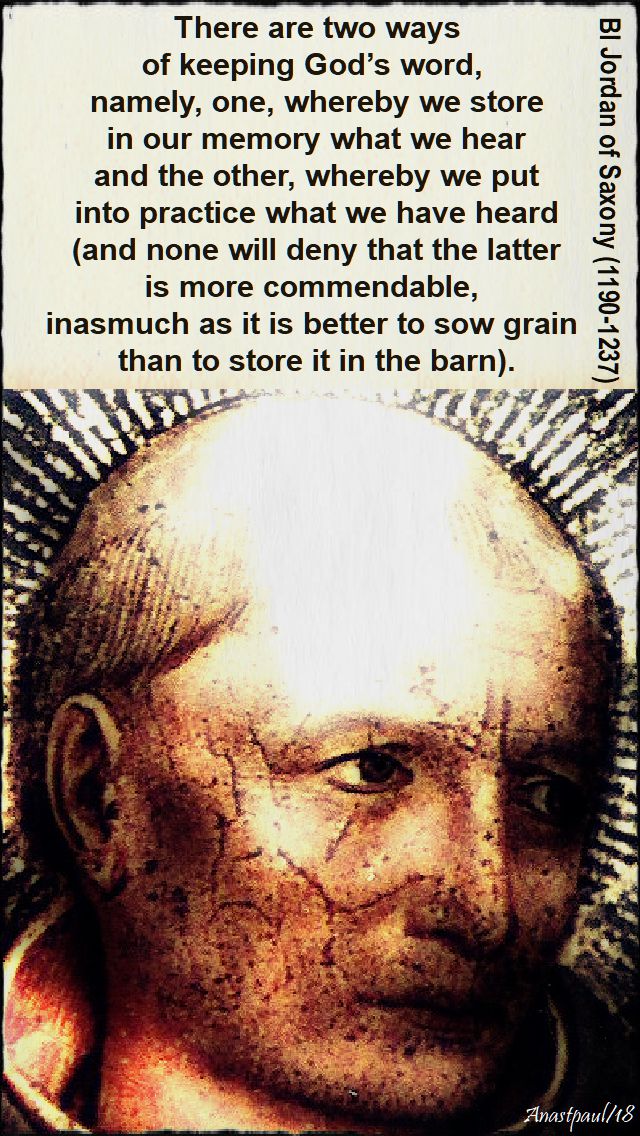
Quote of the Day – 13 February – The Memorial of Blessed Jordan of Saxony O.P. (1190-1237)
“There are two ways of keeping God’s word, namely, one, whereby we store in our memory what we hear and the other, whereby we put into practice, what we have heard (and none will deny that the latter is more commendable, inasmuch, as it is better to sow grain, than to store it in the barn).”
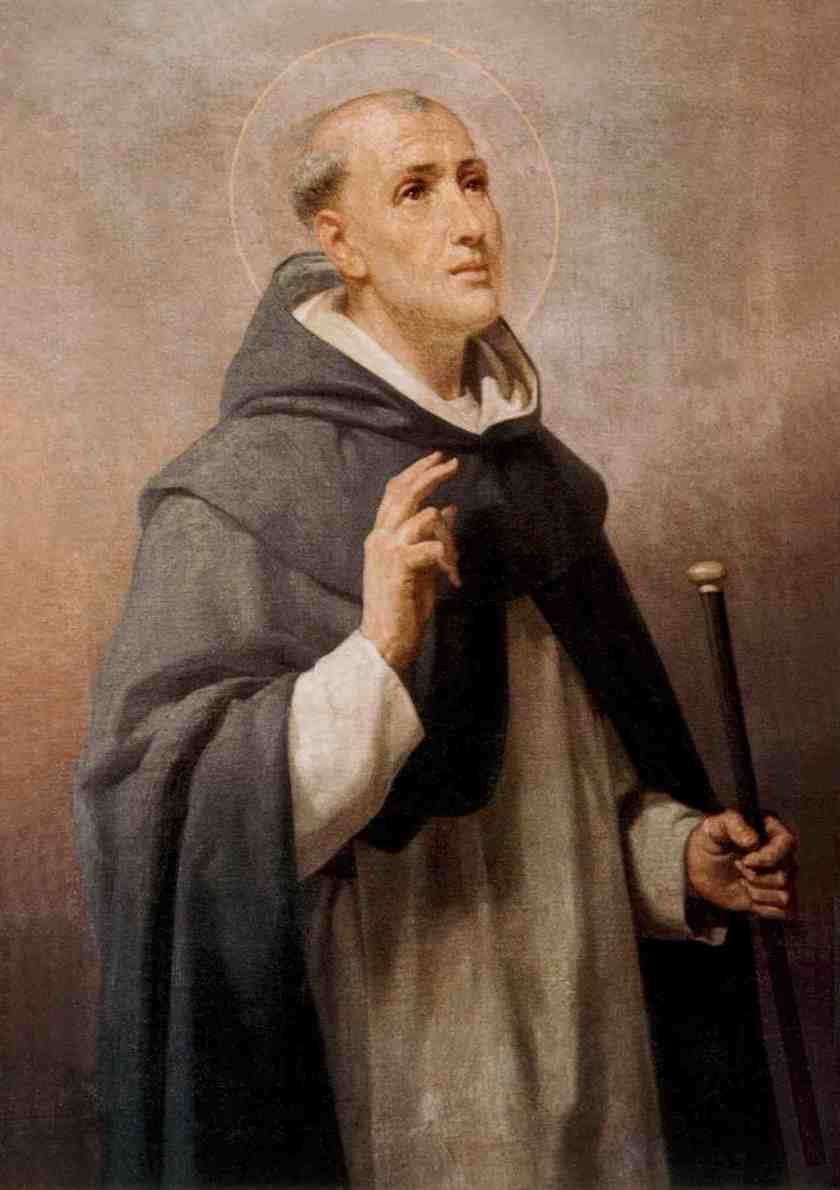
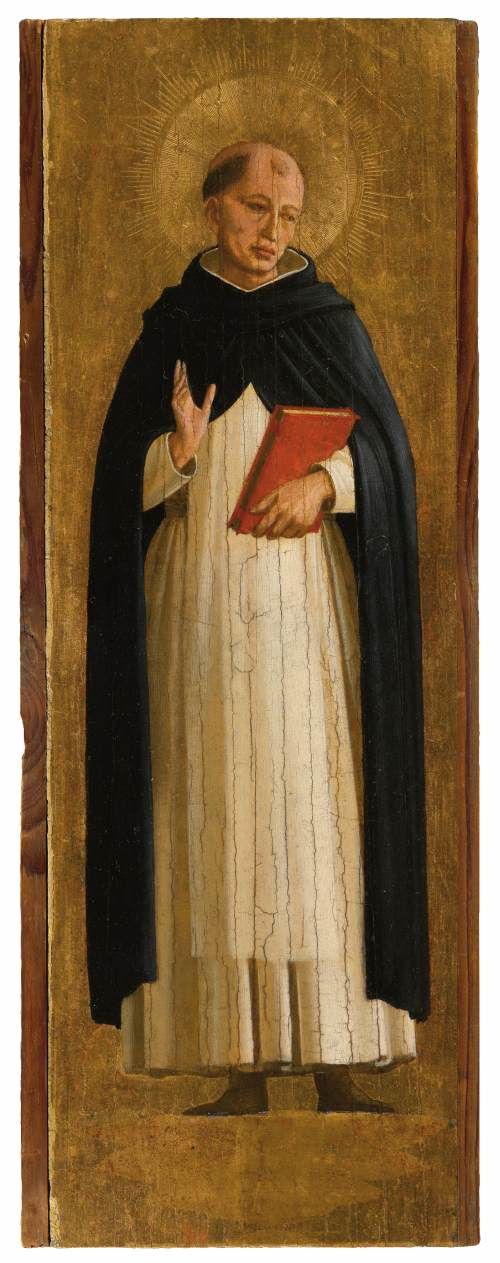
Saint of the Day – 13 February – Blessed Jordan of Saxony O.P. (1190-1237) Religious Priest, Preacher, the Second Master-General of the Domican Order, after St Dominic himself. He was born in 1190 at Padberg Castle, diocese of Paderborn, Westphalia, old Saxony (in modern Germany), though it is rumoured to have been born in Palestine while his parents were on a pilgrimage, and named after the River Jordan but this is apparently aprochryphal. He died by drowning in 1237 in a shipwreck off the coast of Syria while on a pilgrimage to the Holy Land. He is buried in Acre. Patronages – against drowning, of the Dominican Order, Vocations to the Dominicans. Attributes – Dominican writing, a pen, a lily.
Mothers hid their sons when Master Jordan came to town…
These ten short words sum up in a humorous kind of way, the outstanding legacy of the successor of St Dominic. It not only gives the impression that this new group of mendicant preachers had a clearly defined and essential role to play, challenging the infectious heresies so prevalent at the time (as was confirmed by Pope Honorius III in 1216 when he formally recognised the Order) but also that people were powerless to resist when confronted with it. Of Blessed Jordan we are told that that during his tenure as Master General, between 1222 and 1237, over 1000 novices joined the Dominicans, new convents were established and new provinces formed. Under his rule the Order continued to win many of the best men available, particularly in the Universities where many a Professor was seduced. With such a charming figure sweeping through the neighbourhood is it any wonder that mothers tried to keep their sons out of reach?
A German of noble descent born in 1190, he had been in the Order a mere two years before his election as Master General in 1222. By today’s standards, his rapid accession may appear hasty, a point he himself was quick to highlight when he became the first Provincial of Lombardy in 1221. In the Libellus he writes:
‘In 1221, at the General Chapter in Bologna, they saw fit to make me the first Provincial of Lombardy, although I had only been in the Order one year and had not struck root as deeply as I ought to have done. I was to be placed over others as their superior, before I had learned to govern my own imperfection. I was not present at this Chapter myself.’
Despite his anxiety, he must have made quite an impression on his brothers during his short tenure in the Order. We are told about the type of person he was by those who knew. It is obvious that he possessed all those qualities the ideal leader should have. Inspired by his brother and friend St Dominic, he was abounding in faith, kind and compassionate, humble, authoritative and yet at the same time understanding. He had the ability to attract people by his sincerity. His style of life complemented his style of words; something that was evidently lacking at the time among the Clergy and Religious. This was vital at a time when ‘reform’ was the buzzword of the day.
His great love for the poor was well known. There is a story said of him that:
‘Meeting a vagabond upon the road who feigned sickness and poverty, he gave him one of his tunics, which the fellow at once carried straight to a tavern for drink. The brethren, seeing this done, taunted him with his simplicity: ‘There now, Master, see how wisely you have bestowed your tunic.’ ‘I did so,’ said he, ‘because I believed him to be in want through sickness and poverty and it seemed at the moment to be a charity to help him; still, I reckon it better to have parted with my tunic than with charity.’
Our Blessed Jordan may well be still speaking to us today! Not all those people who present themselves as being needy these days may be genuine. However, when we stop caring, we stop striving to be like Jesus. Let us never restrain God’s work in our hearts but allow ourselves to be moved by compassion . Perhaps it was this genuineness that caused Mothers in the district to be wary of his arrival.
Jordan died in a shipwreck on his return from Palestine, where he had visited the local convents of the Order; the shipwreck occurred off the coast of Syria in 1237. It is perhaps fitting that this great servant of the Order of Preachers, who was kept at arm’s length by the Mothers who feared his magnetic appeal on their sons, should nestle snuggly within the loving embrace of the Mother of God as famously depicted in that famous vision of St Dominic.
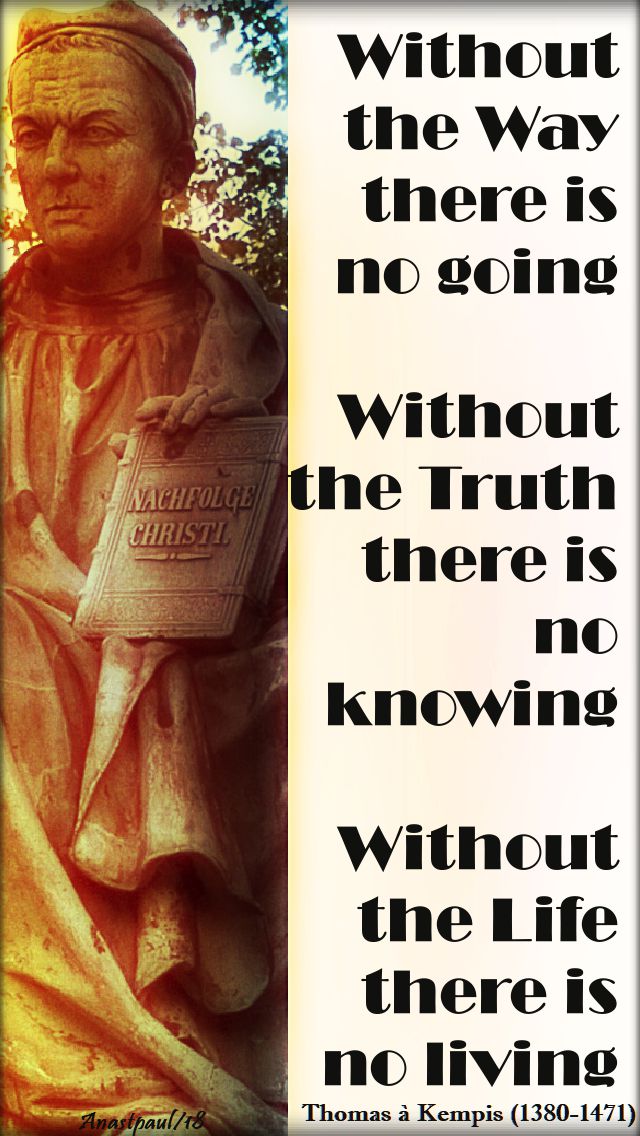
The Imitation of Christ “Without the Way, there is no going, Without the Truth, there is no knowing, Without the Life, there is no living.”
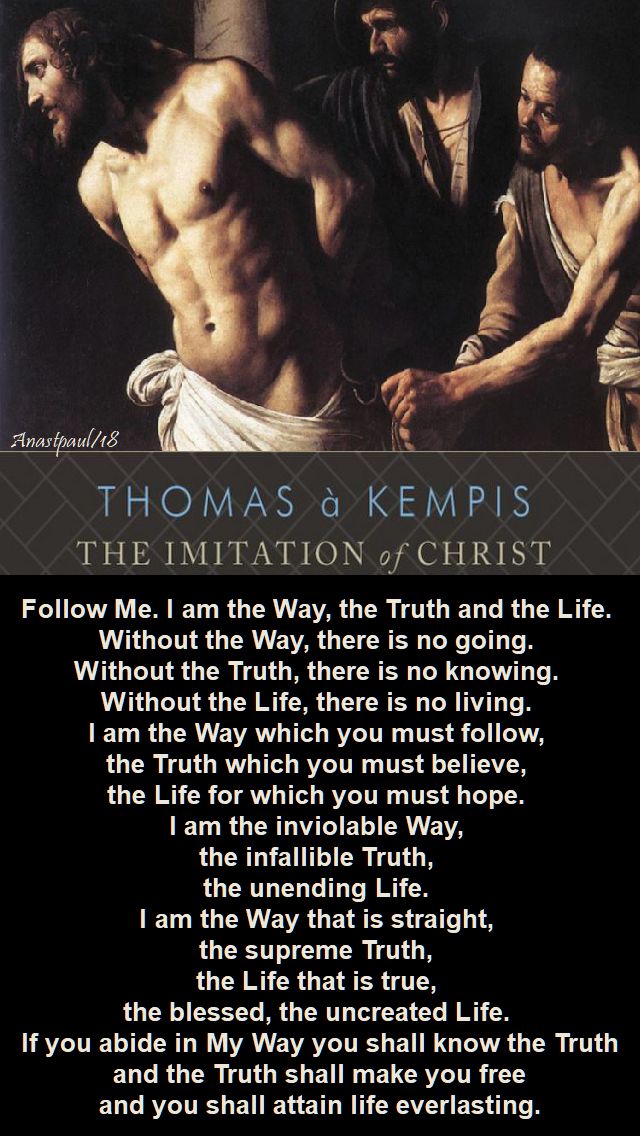
“Follow Me. I am the Way, the Truth and the Life. Without the Way, there is no going. Without the Truth, there is no knowing. Without the Life, there is no living. I am the Way, which you must follow, the Truth, which you must believe, the Life, for which you must hope. I am the inviolable Way, the infallible Truth, the unending Life. I am the Way that is straight, the supreme Truth, the Life that is true, the blessed, the uncreated Life. If you abide in My Way, you shall know the Truth and the Truth shall make you free and you shall attain life everlasting.”
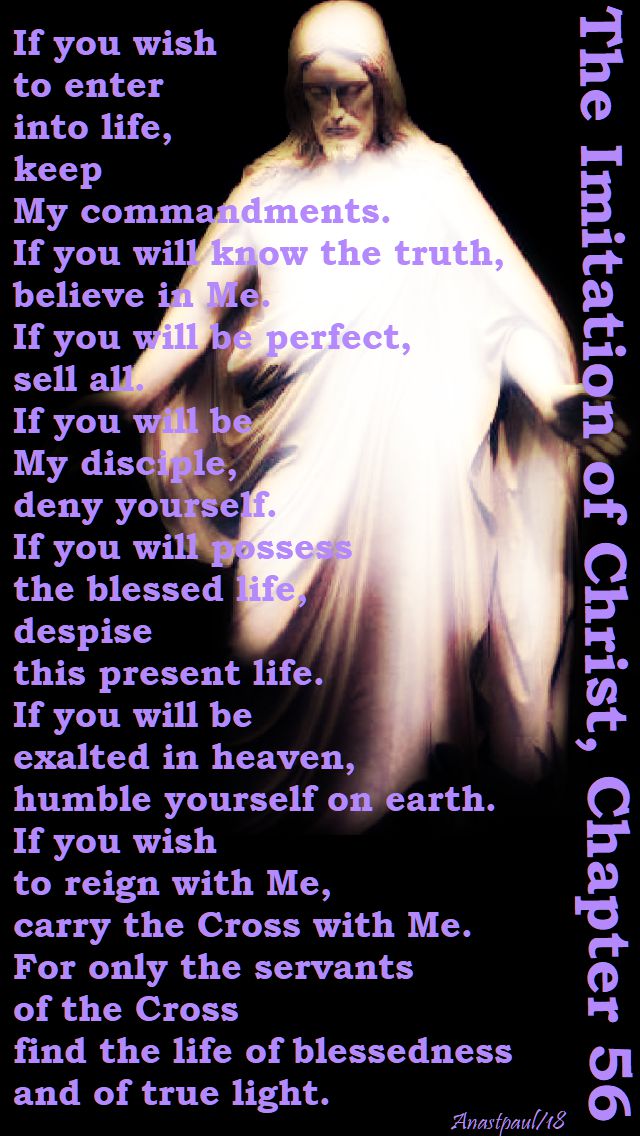
“If you wish to enter into life, keep My commandments. If you will know the truth, believe in Me. If you will be perfect, sell all. If you will be My disciple, deny yourself. If you will possess the blessed life, despise this present life. If you will be exalted in heaven, humble yourself on earth. If you wish to reign with Me, carry the Cross with Me. For only the servants of the Cross find the life of blessedness and of true light.”
“MY CHILD, the more you depart from yourself, the more you will be able to enter into Me. As the giving up of exterior things, brings interior peace, so the forsaking of self, unites you to God. I will have you learn perfect surrender to My will, without contradiction or complaint.”
“Take courage, brethren, let us go forward together and Jesus will be with us. For Jesus’ sake we have taken this cross. For Jesus’ sake let us persevere with it. He will be our help as He is also our leader and guide. Behold, our King goes before us and will fight for us. Let us follow like men. Let no man fear any terrors. Let us be prepared to meet death valiantly in battle. Let us not suffer our glory to be blemished by fleeing from the Cross.”
The Imitation of Christ Chapter 56
“If, however, you seek Jesus in all things, you will surely find Him. “
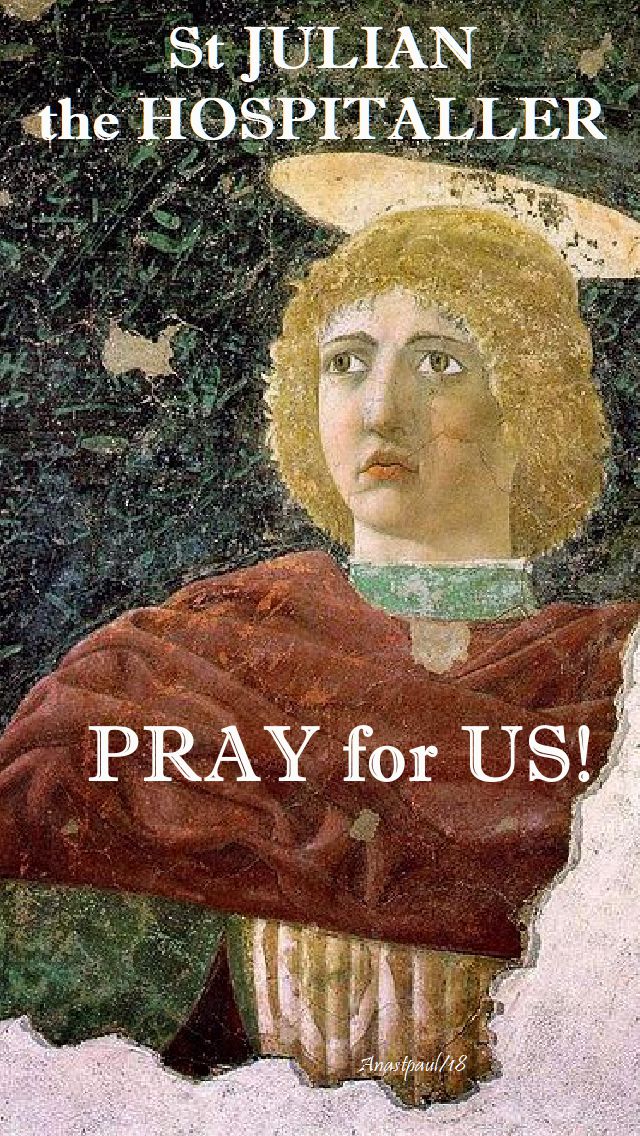
One Minute Reflection – 12 February – The Memorial of St Julian the Hospitaller (unknown date of birth and death)
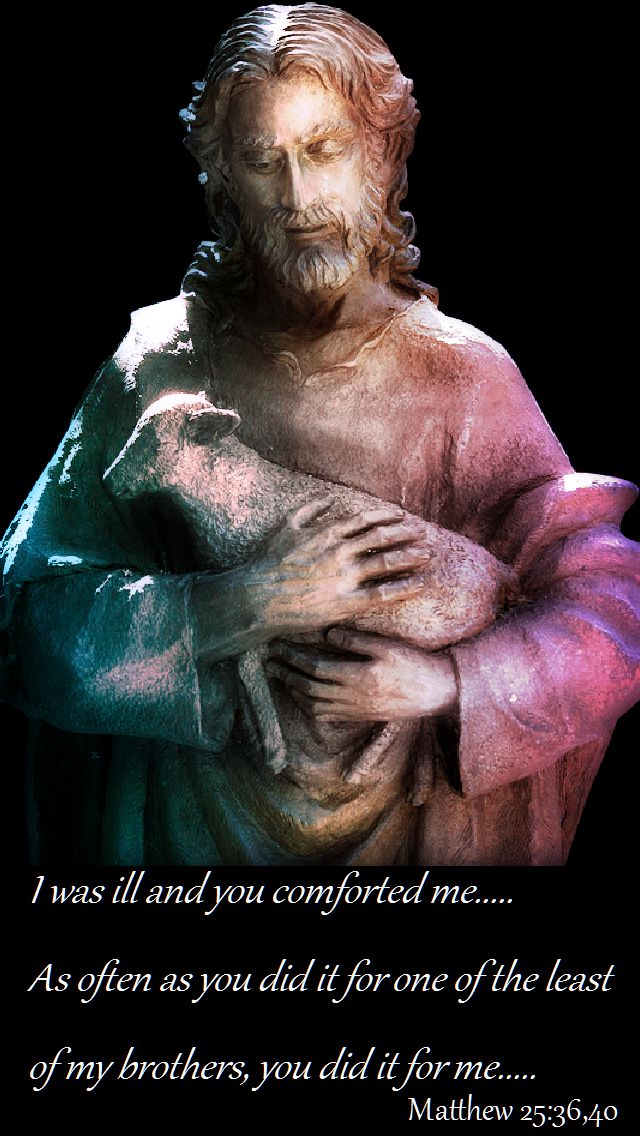
I was ill and you comforted me….. As often as you did it for one of my least brothers, you did it for me…….Matthew 25:26,40
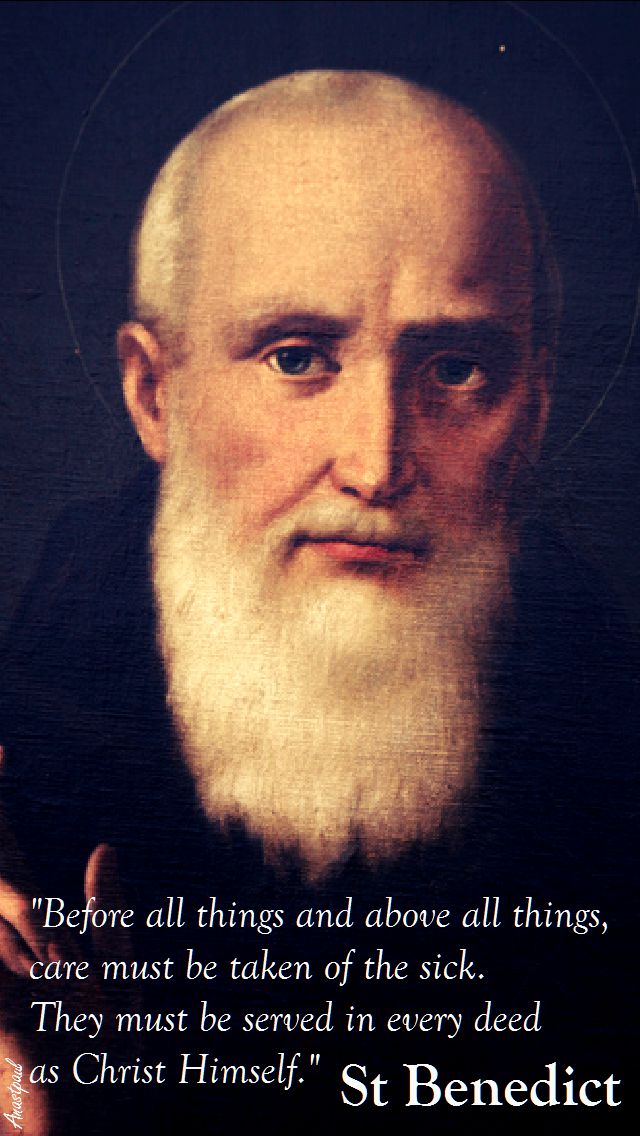
REFLECTION – “Before all things and above all things, care must be taken of the sick. They must be served in every deed as Christ Himself.”…………….St Benedict
PRAYER – Jesus, infinite Healer, teach me to visit and comfort the sick. Help me always to see You in them and not count the cost. St Julian, you were a perfect example of giving your utmost love to the sick, please pray for us, amen!
Sunday Reflection – 11 February 2018 – 6th Sunday of Year B – Pope Benedict and St John Paul
In liturgical prayer, especially the Eucharist and – formats of the liturgy – in every prayer, we do not speak as single individuals, rather we enter into the “we” of the Church that prays. And we need to transform our “I” entering into this “we”. Pope Benedict XVI is one of the great liturgists of our age. His seminal book, “The Spirit of the Liturgy”, written when he was still Joseph Cardinal Ratzinger, is required reading in most seminaries and should be read by every Catholic.
“It is not the individual – priest or layman – or the group that celebrates the liturgy but it is primarily God’s action through the Church, which has its own history, its rich tradition and creativity. This universality and fundamental openness, which is characteristic of the entire liturgy is one of the reasons why it can not be created or amended by the individual community or by experts but must be faithful to the forms of the universal Church.
The entire Church is always present, even in the liturgy of the smallest community. For this reason there are no “foreigners” in the liturgical community. The entire Church participates in every liturgical celebration, heaven and earth, God and man. The Christian liturgy, even if it is celebrated in a concrete place and space and expresses the “yes” of a particular community, it is inherently Catholic, it comes from everything and leads to everything, in union with the Pope, the Bishops , with believers of all times and all places. The more a celebration is animated by this consciousness, the more fruitful the true sense of the liturgy is realised in it.
Dear friends, the Church is made visible in many ways: in its charitable work, in mission projects, in the personal apostolate that every Christian must realise in his or her own environment. But the place where it is fully experienced as a Church is in the liturgy : it is the act in which we believe that God enters into our reality and we can meet Him, we can touch Him. It is the act in which we come into contact with God, He comes to us and we are enlightened by Him.
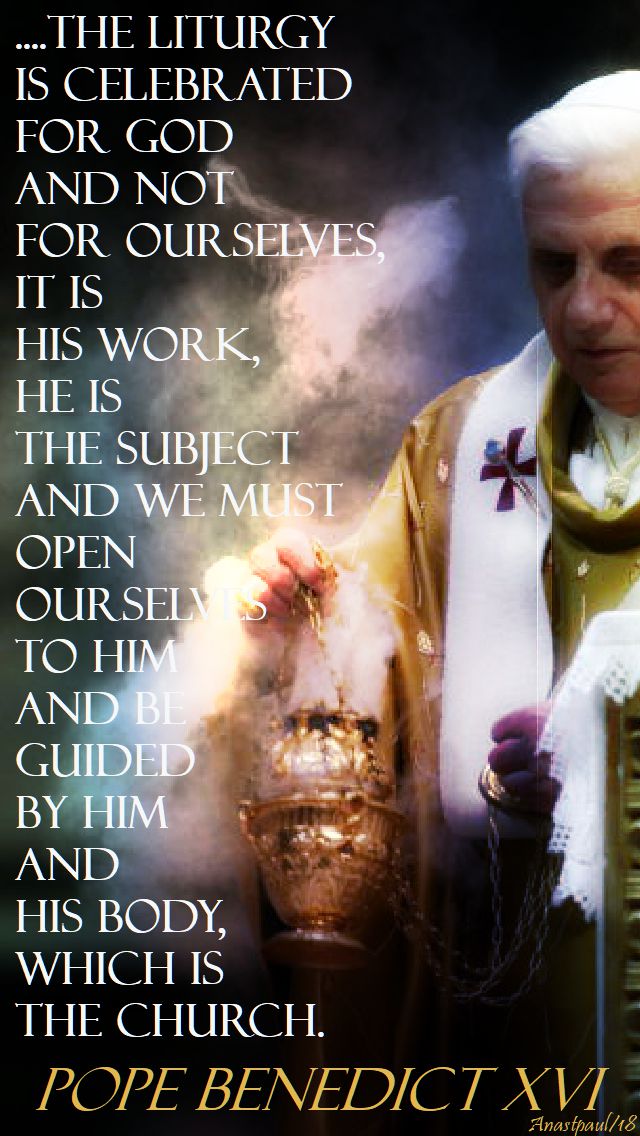
So when in the reflections on the liturgy we concentrate all our attention on how to make it attractive, interesting and beautiful, we risk forgetting the essential: the liturgy is celebrated for God and not for ourselves, it is His work, He is the subject and we must open ourselves to Him and be guided by Him and His Body, which is the Church.
Let us ask the Lord to learn every day to live the sacred liturgy, especially the Eucharistic celebration, praying in the “we” of the Church, that directs its gaze not in on itself but to God and feeling part of the living Church, of all places and of all time.”…Pope Benedict XVI – Wednesday Audience 3 Oct 2012
“I have been able to celebrate Holy Mass in chapels built along mountain paths, on lakeshores and seacoasts. I have celebrated it on altars built in stadiums and in city squares….This varied scenario of celebrations of the Eucharist, has given me, a powerful experience of its universal and, so to speak, cosmic character – YES, cosmic! Because even when it is celebrated on the humble altar of a country church, the Eucharist is always, in some way, celebrated on the altar of the world. It unites heaven and earth. It embraces and permeates all creation!” St Pope John Paul “Ecclesia de Eucharista no 8”
One Minute Reflection – – 11 February – 6th Sunday of Year B, Memorial of Our Lady of Lourdes and the 26th World Day of Prayer for the Sick
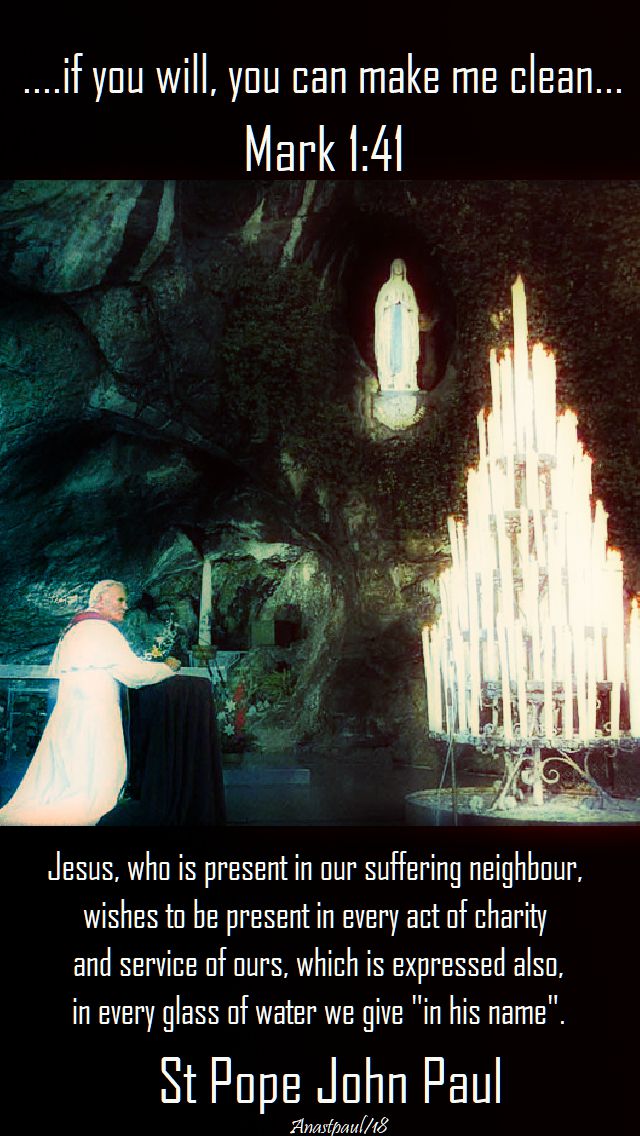
….if you will, you can make me clean…Mark 1:41.
REFLECTION – “Jesus, who is present in our suffering neighbour, wishes to be present in every act of charity and service of ours, which is expressed also, in every glass of water we give “in his name” (cf Mk 9:41). Jesus wants love, the solidarity of love, to grow from suffering and around suffering. He wants, that is, the sum of that good which is possible in our human world. A good that never passes away. The Pope, who wishes to be a servant of this love, kisses the forehead and kisses the hands of all those who contribute to the presence of this love and to its growth in our world. He knows, in fact and believes that he is kissing the hands and the forehead of Christ himself, who is mystically present in those who suffer and in those who, out of love, serve the suffering.”…St Pope John Paul, Memorial of Our Lady of Lourdes – 1979
PRAYER – Christ of our sufferings,
Christ of our sacrifices,
Christ of our Gethsemane,
Christ of our difficult transformations,
Christ of our faithful service to our neighbour,
Christ of our pilgrimages to Lourdes,
Christ of our community, today, in St Peter’s Basilica,
Christ our Redeemer,
Christ our Brother!
Amen.
Our Lady of Lourdes, Pray for us that we may live this solidarity of love, in You and with You and for You, amen.
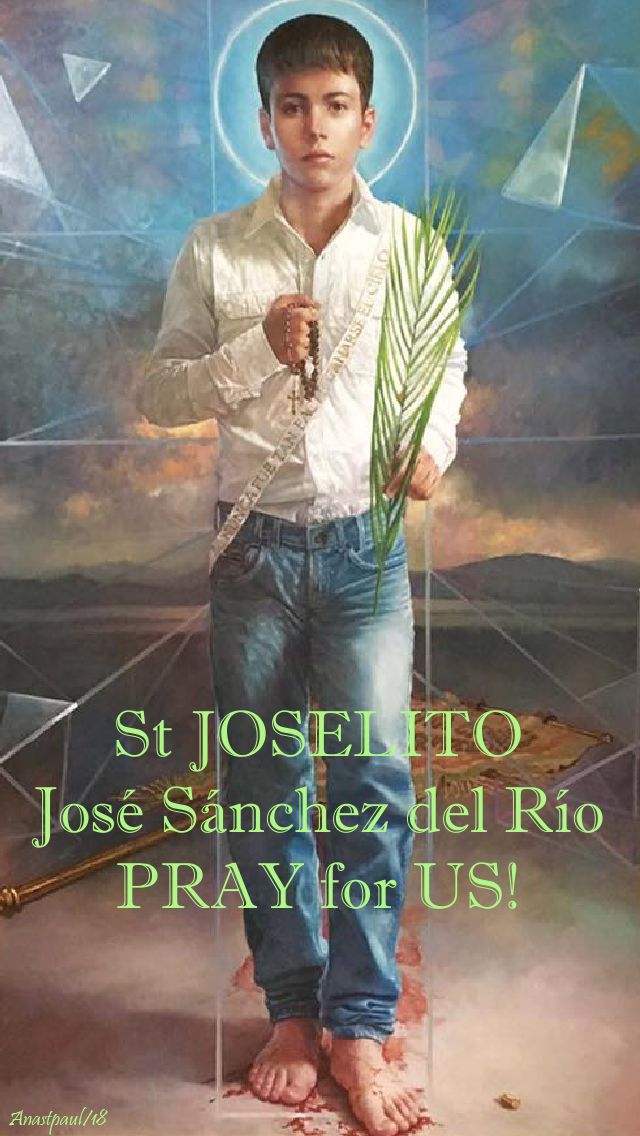
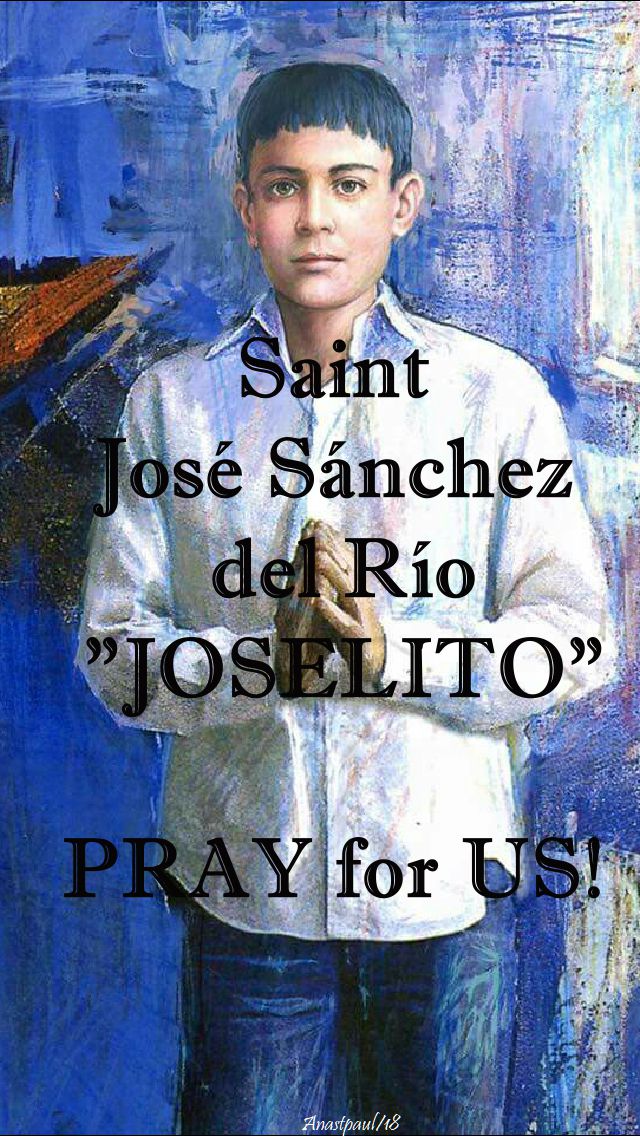
Thought for the Day – 10 February – The Memorial of St José Sánchez del Río “Joselito”(1913-1928)
Mexican child-saint José Sánchez del Río (Joselito) “is not only a martyr of the Christian faith, but is a martyr of the fundamental rights of the person.”
In an interview with the Register at the Vatican on Saturday, the newly proclaimed saint’s postulator, Father Fidel Gonzáles, stressed this as he spoke about St José Sánchez del Río. Father Gonzalez stressed how young José’s faith was not for sale and no one, no “offer” — not even his parents’ intervention — would convince him to negate his faith, even if it cost him his life.
The Vatican official also addressed how there are many Christian martyr saints that exist, even if they have not been formally recognised by the Church and reflected on how important it is, in the midst of today’s world, full of ambiguities, relativism and religious persecution, to not abandon our faith, as St Josélito teaches us.
“It’s always a little surprising to hear about saints as young as only 14 years old. But can a child, someone so young, really be a saint as much as an adult or an elderly person? Of course. There is a theological sanctity that belongs to every baptised person, even if baptised even a few hours after birth, because it is a grace of the Holy Spirit. Instead, the moral holiness grows like a tree, which comes and develops from a small seed and then spreads throughout the course of a lifetime. In the specific case of St José Sánchez del Río, we are facing a martyr of nearly age 15 but he had a clear awareness of the ideas that led him to proclaim his faith with martyrdom. I can say that he really is an exceptional figure.
Why?
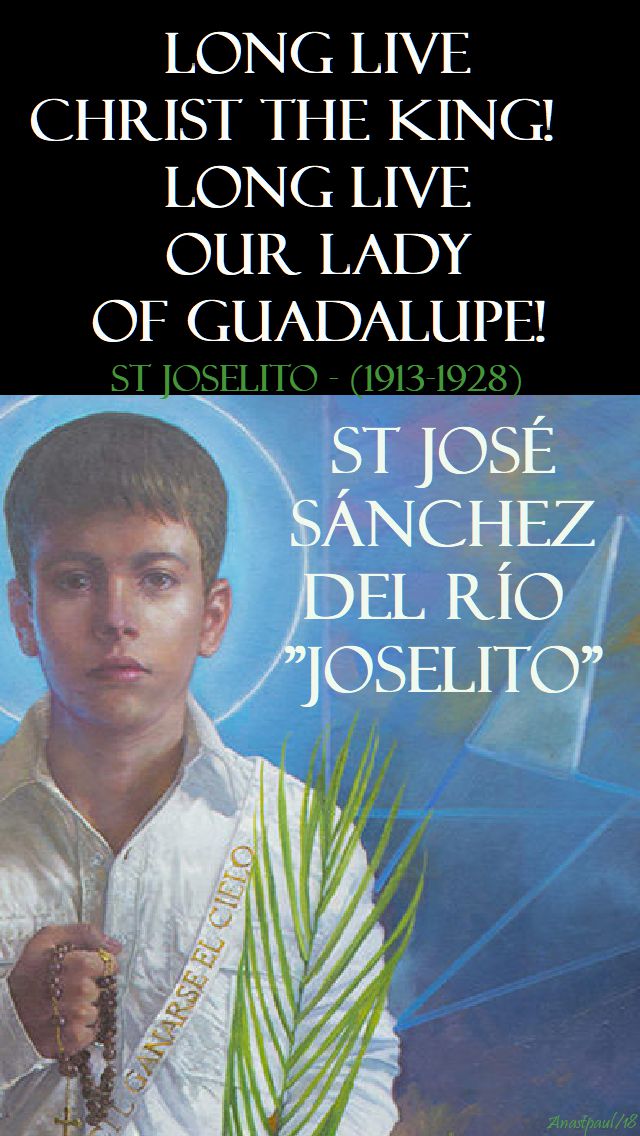
…because he showed a psychological maturity much higher than that of his own age. We could say that, psychologically, he had the maturity of someone at least 18 or 20 years old, especially as he demonstrated his firm decision to reject the many proposals that they made to free him from prison in exchange for the apostasy of his faith in Christ. But he replied with a phrase, instead, of accepting, one that the witnesses then reported, a phrase that he used speaking to his parents when they tried to free him from captivity: “My faith is not for sale,”which means: “My faith in Christ cannot be sold, even though I know that this involves torture and death.” “Long live Christ the King” was the cry with which the Mexican Cristeros went down in history. What did those words mean to them? It’s a theological expression; maybe neither St Josélito nor the others, fully realised its meaning, its significance. For them, it was a way of proclaiming the centrality of Christ in history. We must point out that St José did not ever stop proclaiming Christ. They said, “If you shout, ‘Death to Christ the King,’ we will spare your life.” But instead he continued: “Long live Christ the King. … Long live the Lady of Guadalupe.” This invocation of Our Lady of Guadalupe was significant, too, as it was the first concrete manifestation of God in the history of Mexico and Latin America. José stayed faithful to the very, very end, even as they continued stabbing him and eventually shot him with the pistol.”
As a specialist on the concept of sanctity, are you familiar with other martyrs like St. José?
“I have been a consultant for 31 years of the Congregation for the Causes of Saints and I have seen hundreds of cases of martyrdom but never of a martyr so young. It’s a unique case, where you really see the power of divine grace. But José Sánchez del Río — this is my thesis — is not only a martyr of the Christian faith but is a martyr of the fundamental rights of the person: the right to freedom of opinion, freedom of religion, the right to practice their religion. … In short, he is a martyr of all the rights that were denied the totalitarian era. The 20th century is the century of totalitarian regimes, each very different from the others but yet they all agree on setting aside God, getting rid of the foundation of human rights. St Josélito simply teaches us that the Catholic faith is not for sale, as he said himself [while] dying. This is especially true in a world like today, full of ambiguities, of relativism, of dominant cultural nihilism. The Christian faith, instead, has a solid foundation, i.e., the principle that God is the creator of all reality and if we put it aside, then all the rights of the person lose consistency and end up at the mercy of a political power.
It’s interesting, I repeat, that all ideological totalitarianisms of the 20th century have desecrated the human person, profaning God.”
Correspondent Deborah Castellano Lubov writes from Rome.
One Minute Reflection – 10 February – The Memorial of St José Sánchez del Río “Joselito”(1913-1928)
What will separate us from the love of Christ? Will anguish, or distress, or persecution, or famine, or nakedness, or peril, or the sword? As it is written: “For your sake we are being slain all the day; we are looked upon as sheep to be slaughtered.” No, in all these things we conquer overwhelmingly through him who loved us ...Romans 8:35-37
REFLECTION – “My faith is not for sale.” … St José Sánchez del Río “Joselito”(1913-1928)
PRAYER – Lord, my God, You chose us from the foundations of the world to be Your children. We pray that our courage may not fail us as we are attacked from all sides, as we struggle home to You. Grant that through the prayers of young Joselito, we too may fight unto death for Your love and the glory of Your Kingdom. Through our Lord, Jesus, in the unity of the Holy Spirit, one God forever and ever, amen.
























 AnaStpaul
You must be logged in to post a comment.