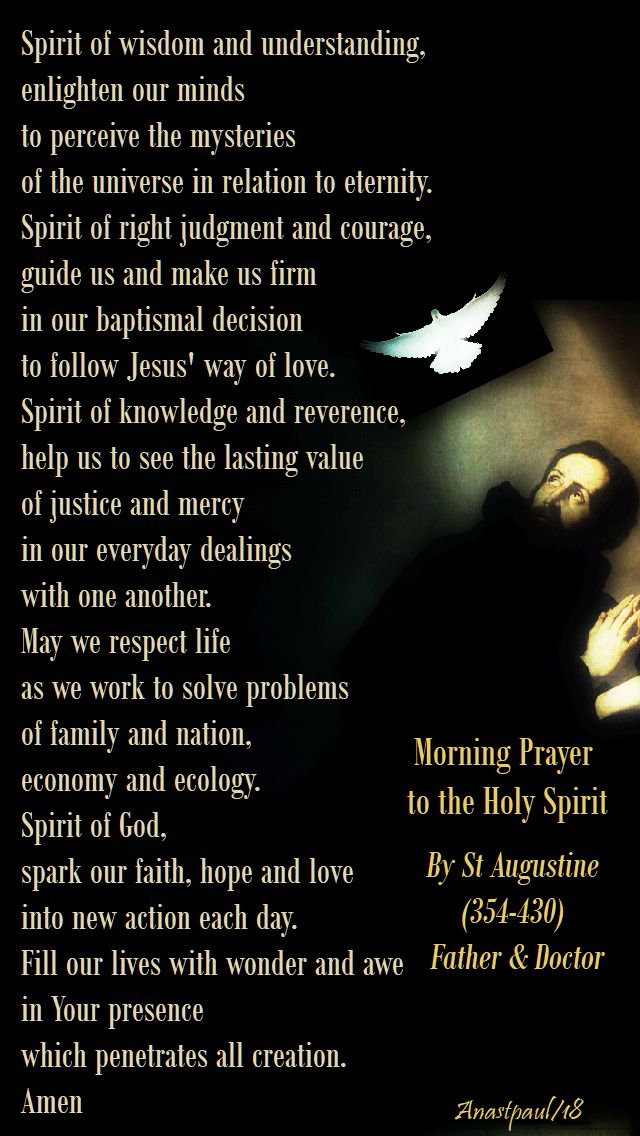
Morning Prayer to the Holy Spirit By St Augustine (354-430) Father & Doctor
Spirit of wisdom and understanding,
enlighten our minds
to perceive the mysteries
of the universe in relation to eternity.
Spirit of right judgment and courage,
guide us and make us firm
in our baptismal decision
to follow Jesus’ way of love.
Spirit of knowledge and reverence,
help us to see the lasting value
of justice and mercy
in our everyday dealings
with one another.
May we respect life
as we work to solve problems
of family and nation,
economy and ecology.
Spirit of God,
spark our faith, hope and love
into new action each day.
Fill our lives with wonder and awe
in Your presence
which penetrates all creation.
Amen
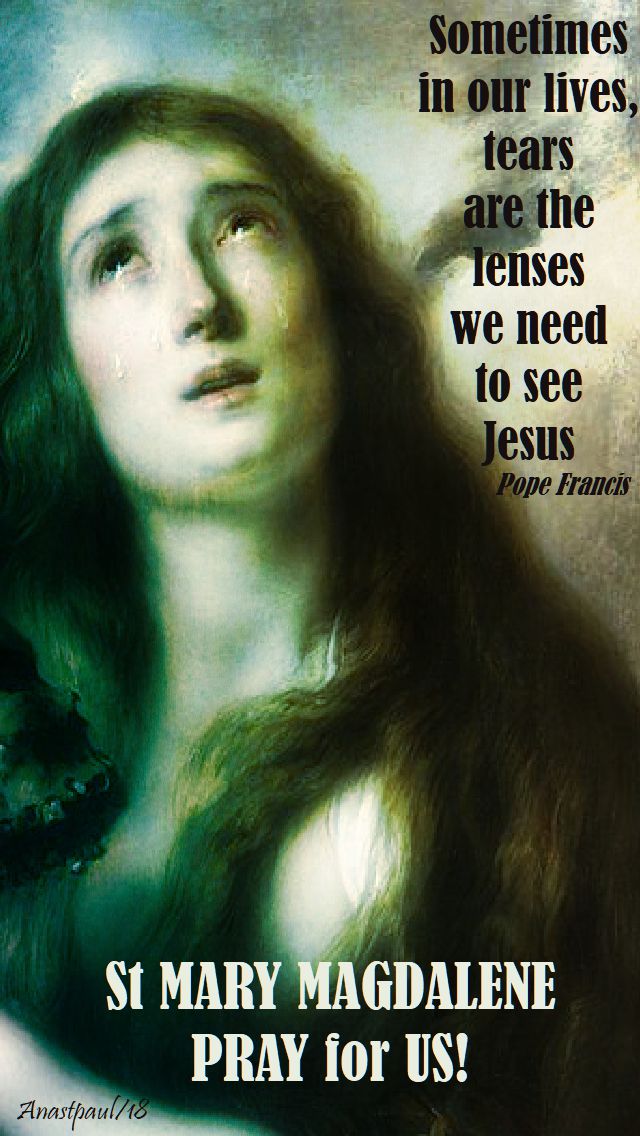
Thought for the Day – 22 July – Feast of St Mary of Magdala
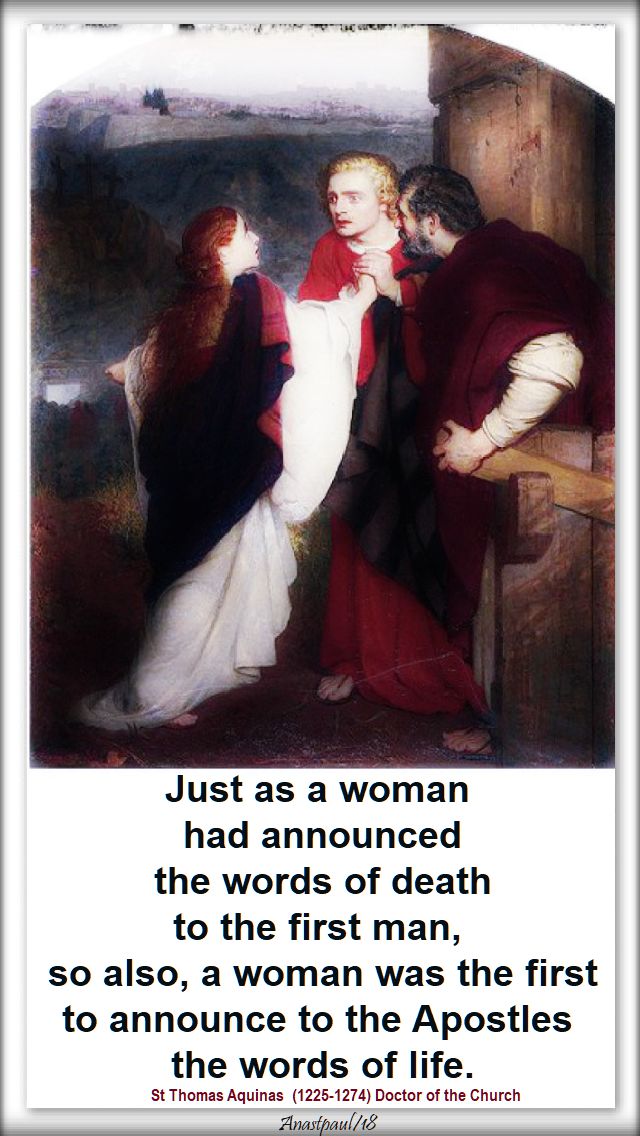
“When Mary Magdalene came to the tomb and did not find the Lord’s body, she thought it had been taken away and so informed the disciples. After they came and saw the tomb, they too believed what Mary had told them. The text then says: “The disciples went back home,” and it adds: “but Mary wept and remained standing outside the tomb.”
We should reflect on Mary’s attitude and the great love she felt for Christ; for though the disciples had left the tomb, she remained. She was still seeking the one she had not found and while she sought she wept; burning with the fire of love, she longed for Him who she thought had been taken away.
And so it happened that the woman who stayed behind to seek Christ was the only one to see Him. For perseverance is essential to any good deed, as the voice of truth tell us: “Whoever perseveres to the end will be saved”…. Jesus says to her: “Mary.” Jesus is not recognised when He calls her “woman”, so He calls her by name, as though He were saying: ‘Recognise me as I recognise you, for I do not know you as I know others, I know you as yourself.’
And so Mary, once addressed by name, recognises who is speaking. She immediately calls Him ‘Rabboni’, that is to say, teacher, because the one whom she sought outwardly was the one who inwardly taught her to keep on searching.”
from a homily by St Pope Gregory the Great (540-604) Father & Doctor
One Minute Reflection – 22 July – Sixteenth Sunday in Ordinary Time, Year B – Today’s Gospel: Mark 6:30-34
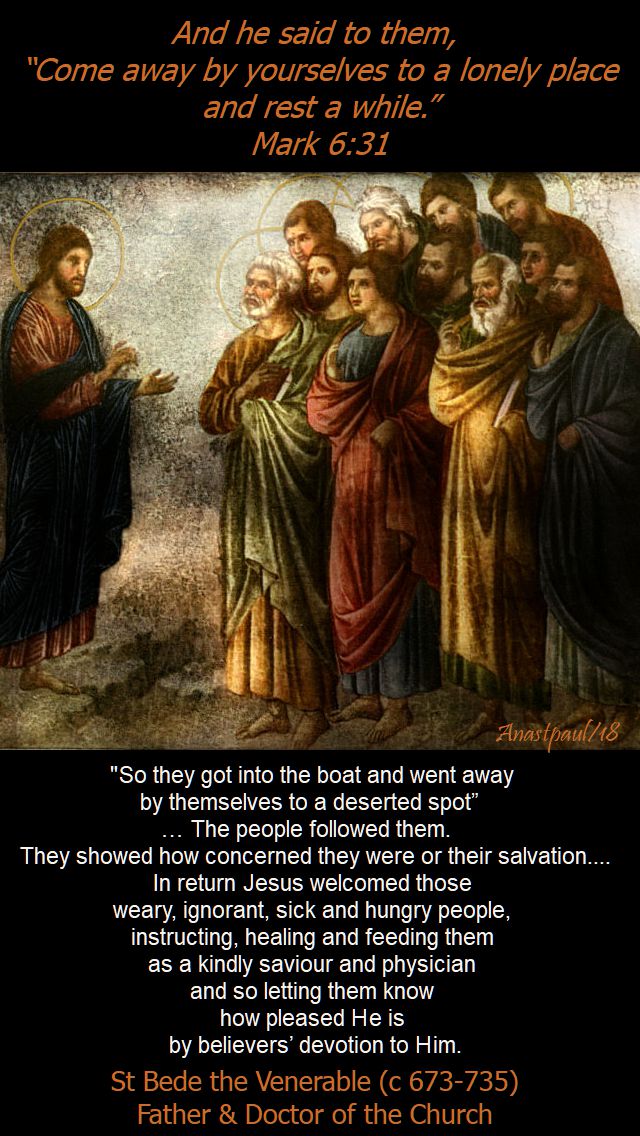
And he said to them, “Come away by yourselves to a lonely place and rest a while.”...Mark 6:31
REFLECTION – “So they got into the boat and went away by themselves to a deserted spot”… The people followed them. They showed how concerned they were for their salvation by the effort they made in going along the deserted road, not on donkeys or in carts of various kinds but on foot. In return Jesus welcomed those weary, ignorant, sick and hungry people, instructing, healing and feeding them as a kindly saviour and physician and so letting them know how pleased He is by believers’ devotion to Him.”…Saint Bede the Venerable (c 673-735) Father & Doctor of the Church (Commentary on Saint Mark’s gospel, 2 ; CCL 120, 510)
“Today we could pray during this mass for our shepherds, that the Lord may give them the grace to walk with the people and to be present for them with much tenderness and closeness. When people find their shepherd, they feel that special sensation only felt in the presence of God. The amazement comes from the feeling of the closeness and tenderness of God in the shepherd.”…Pope Francis – Santa Marta, 30 January 2018
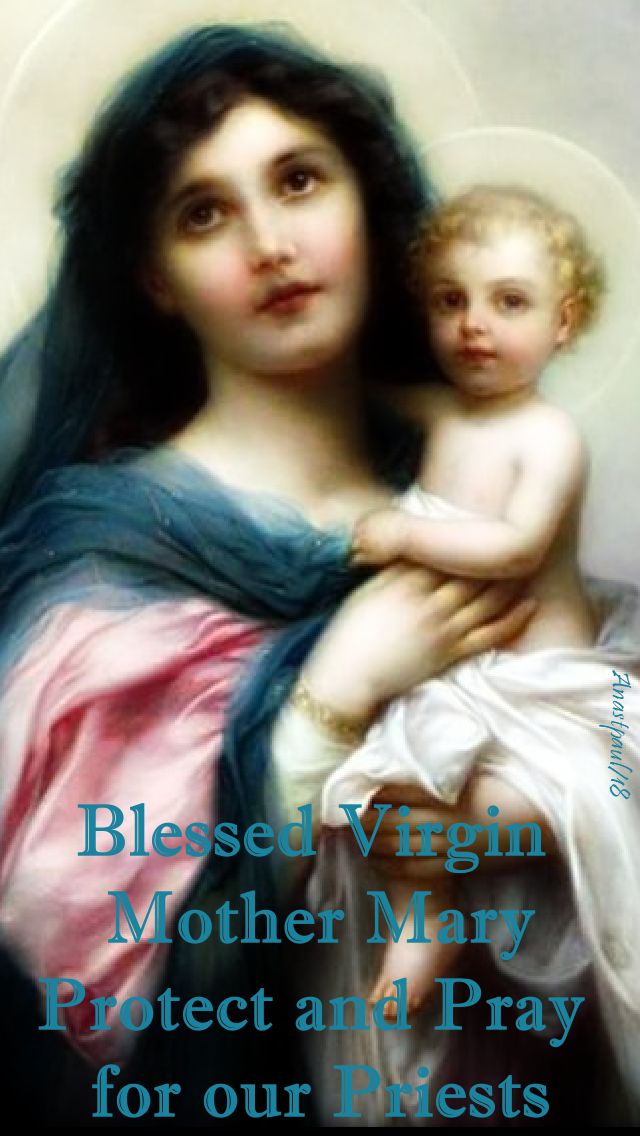
PRAYER – Be gracious, Lord, to us who serve You and in Your kindness increase Your gifts of grace within us, so that fervent in faith, hope and love, we may be ever on the watch and persevere in doing what You command. Guard, protect and inspire our own shepherds, our priests who serve Your people, keep them faithful, loyal and prayerful. May our Mother, the most Holy and Pure Blessed Virgin Mary, keep our priests and all of us at her side. Through our Lord Jesus Christ, one God with Holy Spirit, forever and ever, amen.
Quote/s of the Day – 21 July – The Memorial of St Lawrence of Brindisi OFM Cap (1559-1619) Doctor of the Church
“God is love and all his operations proceed from love. Once he wills to manifest that goodness by sharing His love outside Himself, then the Incarnation becomes the supreme manifestation of His goodness and love and glory. So, Christ was intended before all other creatures and for His own sake. For Him all things were created and to Him all things must be subject and God loves all creature, in and because of Christ. Christ is the first-born of every creature and the whole of humanity. as well as the created world, finds its foundation and meaning in Him. Moreover, this would have been the case, even if Adam had not sinned.”
“God is love and all His operations proceed from LOVE…”
“For Him all things were created and to Him all things must be subject and God loves all creature, in and because of Christ.”
“Christ is the first-born of every creature and the whole of humanity. as well as the created world, finds its foundation and meaning in Him.”
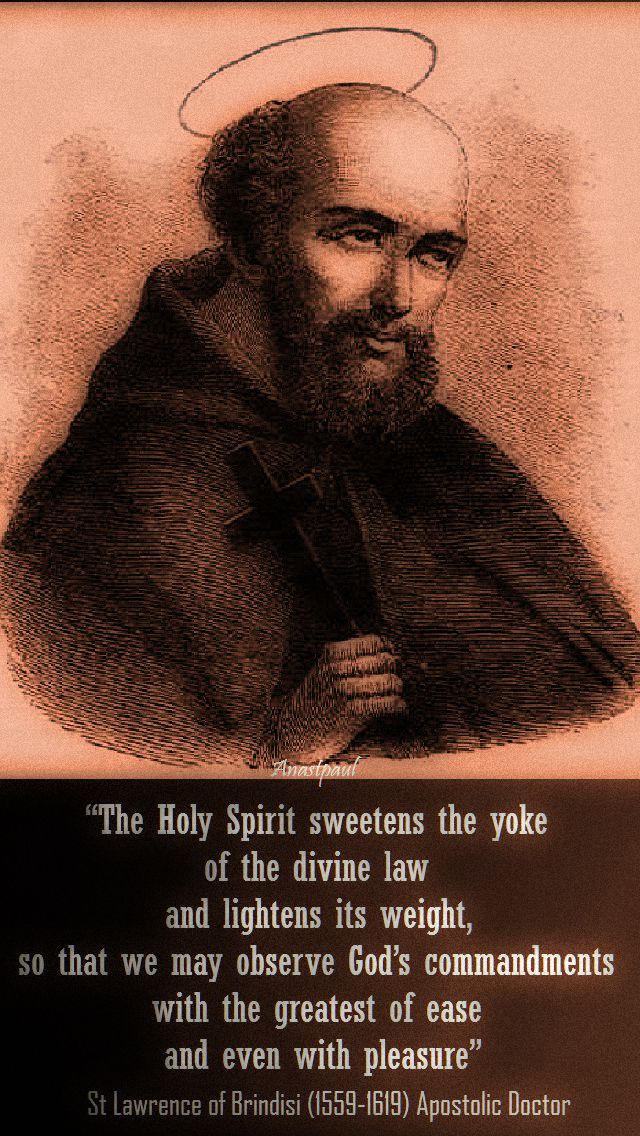
“The Holy Spirit sweetens the yoke of the divine law and lightens its weight, so that we may observe God’s commandments with the greatest of ease and even with pleasure”
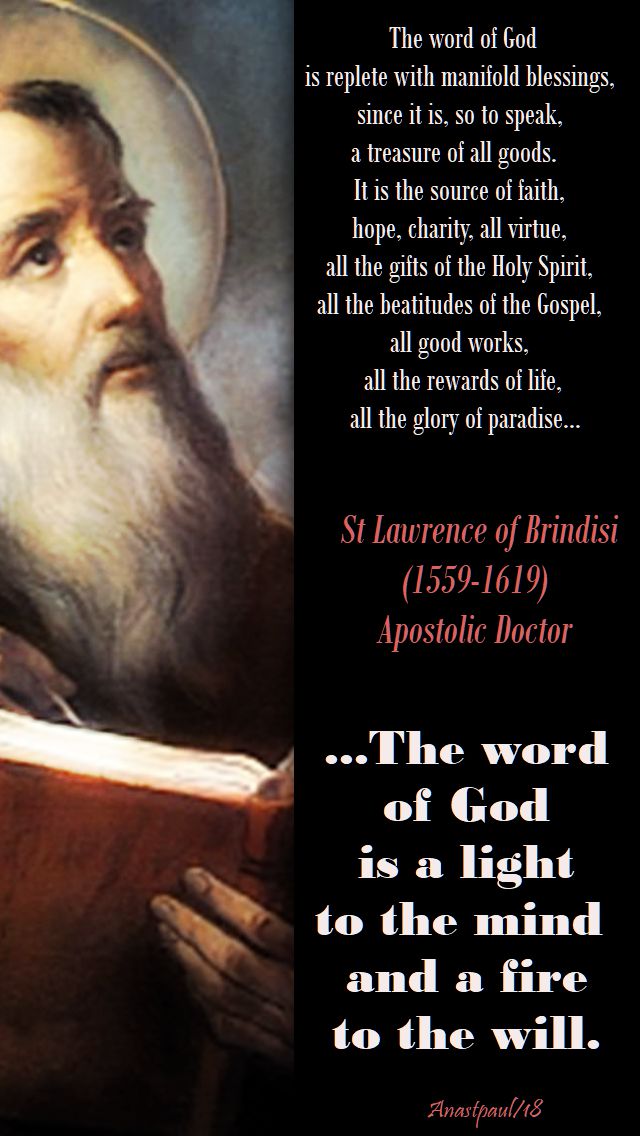
“The word of God is replete with manifold blessings, since it is, so to speak, a treasure of all goods. It is the source of faith, hope, charity, all virtue, all the gifts of the Holy Spirit, all the beatitudes of the Gospel, all good works, all the rewards of life, all the glory of paradise…”
“…The word of God is a light to the mind and a fire to the will.”
St Lawrence of Brindisi(1559-1619) Apostolic Doctor
One Minute Reflection – 21 July – Saturday of the Fifteenth week in Ordinary Time – The Memorial of St Lawrence of Brindisi OFM Cap (1559-1619) Doctor of the Church – Today’s Readings: Micah 2:1-5, Psalm 10:1-4, 7-8, 14, Matthew 12:14-21
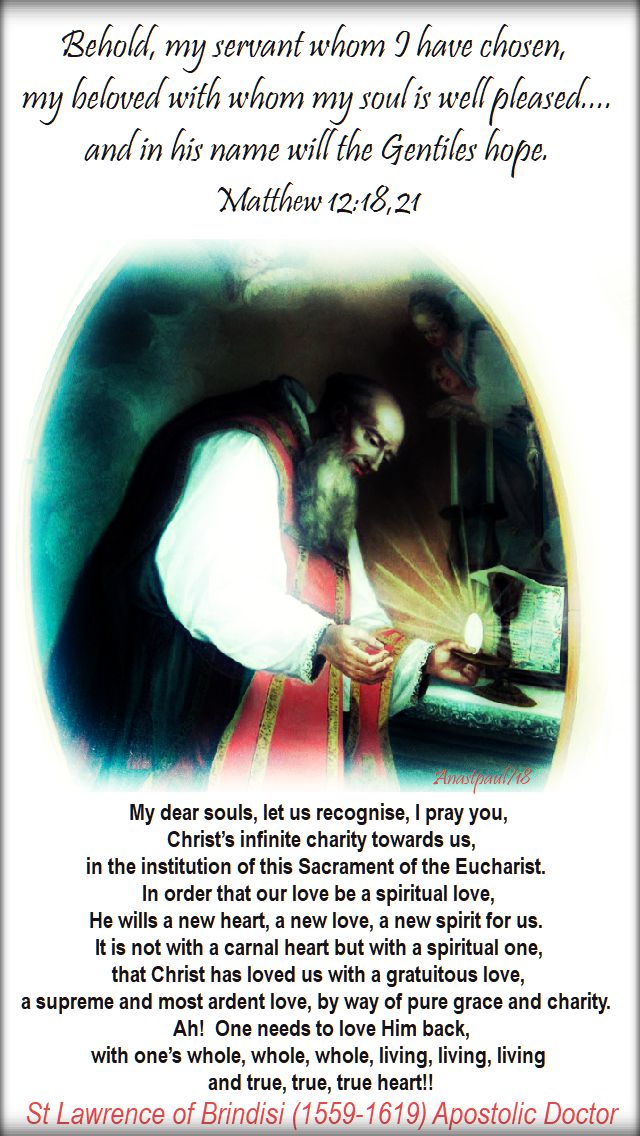
“Behold, my servant whom I have chosen, my beloved with whom my soul is well pleased…. and in his name will the Gentiles hope.”…Matthew 12:18,21
REFLECTION – “My dear souls, let us recognise, I pray you, Christ’s infinite charity towards us, in the institution of this Sacrament of the Eucharist. In order that our love be a spiritual love, He wills a new heart, a new love, a new spirit for us. It is not with a carnal heart but with a spiritual one, that Christ has loved us with a gratuitous love, a supreme and most ardent love, by way of pure grace and charity. Ah! One needs to love Him back with one’s whole, whole, whole, living, living, living and true, true, true heart!!” …… St Lawrence of Brindisi (1559-1619) Apostolic Doctor
PRAYER – Lord God, You bestowed on St Lawrence of Brindisi the spirit of counsel and fortitude, so that Your name might be glorified and souls be saved. At the intercession of St Lawrence, grant that we may see what we have to do and, in Your mercy give us the strength to do it and the courage, love and charity to persevere. Grant above all, that by his prayers we may love You above all and with all we are. St Lawrence pray for us, amen.
Our Morning Offering – 21 July – The Memorial of St Lawrence of Brindisi OFM Cap (1559-1619) Doctor of the Church – Today’s Readings: Micah 2:1-5, Psalm 10:1-4, 7-8, 14, Matthew 12:14-21
“Woe to those who devise wickedness and work evil upon their beds!”…Micah 2:1
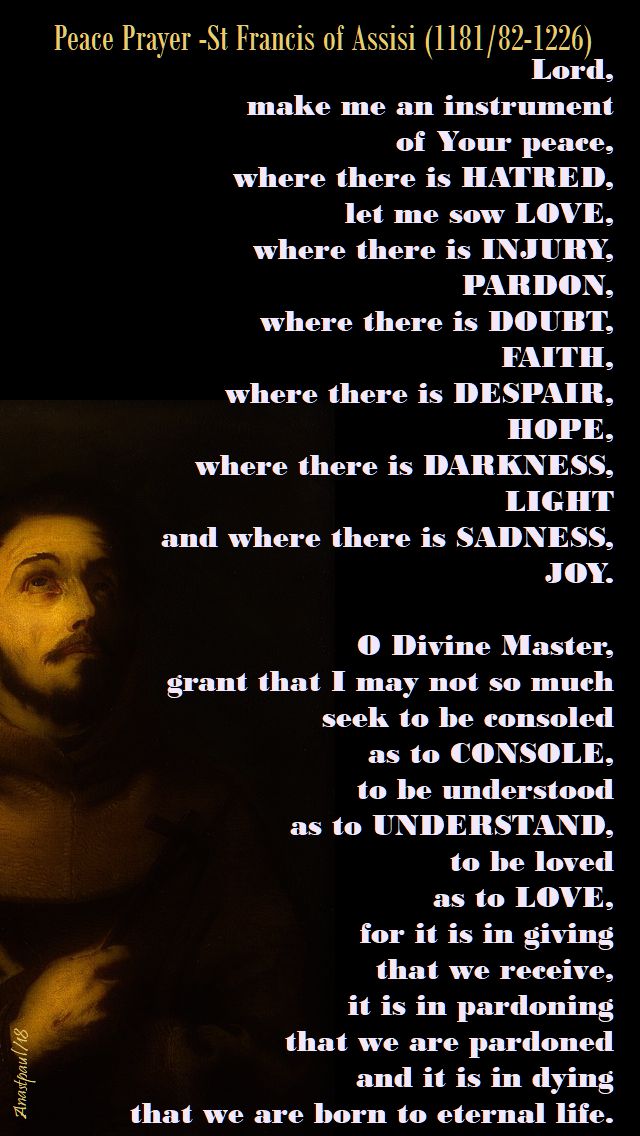
The Peace Prayer
By St Francis of Assisi (c 1181-1226)
Lord, make me an instrument of Your peace, where there is hatred, let me sow love, where there is injury, pardon, where there is doubt, faith, where there is despair, hope, where there is darkness, light and where there is sadness, joy. O Divine Master, grant that I may not so much seek to be consoled as to console, to be understood as to understand, to be loved as to love, for it is in giving that we receive, it is in pardoning that we are pardoned and it is in dying that we are born to eternal life.
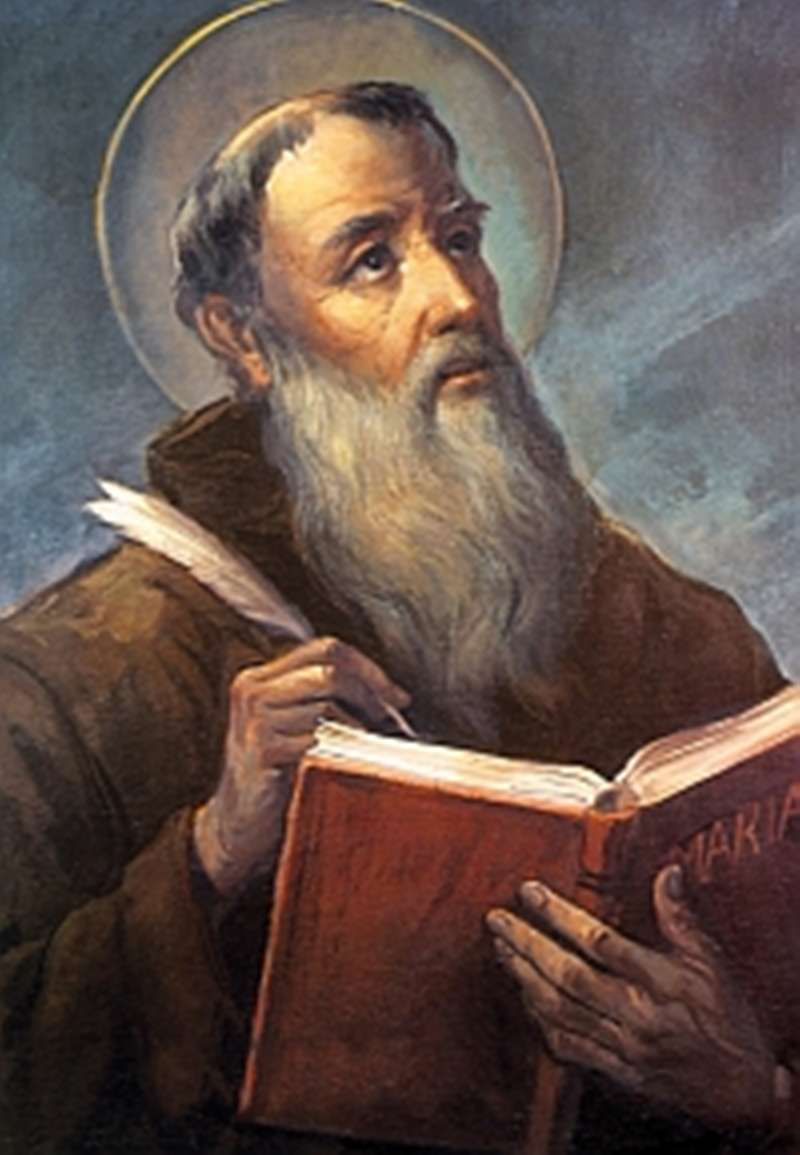
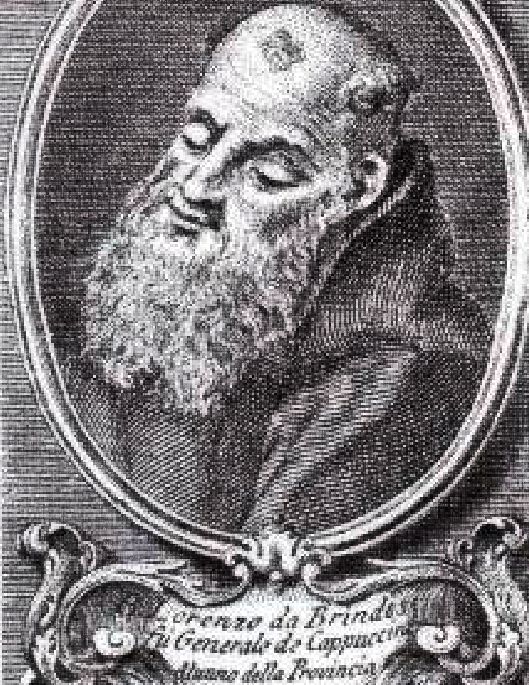
Saint of the Day – 21 July – St Lawrence of Brindisi OFM Cap (1559-1619) Doctor of the Church. He was created a Doctor of the Church by St Pope John XXIII in 1959 with the title Doctor apostolicus (Apostolic Doctor). Patronages – Brindisi, Italy.
St Lawrence is known as the “Franciscan Renaissance Man” – he was a Religious member of the Franciscan Friars Minor Capuchin, a Priest, Theologian, Vicar General of the Franciscans, Language scholar, Apologist of immense and calm resources, Humanist, Philosopher, Biblicist, Preacher, Missionary, Professor, International Administrator, Confidant of Popes, Emperors, Kings and Princes, Diplomatic envoy, Army Chaplain, Military Strategist and Morale builder, Polemicist, Prolific writer.
Saint Lawrence of Brindisi
By Pope Benedict XVI
General Audience, 23 March 2011
I still remember with joy the festive welcome I was given in Brindisi in 2008. It was in this city that in 1559 was born a distinguished Doctor of the Church, St Lawrence of Brindisi, the name that Julius Caesar Russo took upon entering the Capuchin Order.
He had been attracted since childhood by the family of St Francis of Assisi. In fact, his father died when he was seven years old and his mother entrusted him to the care of the Friars Minor Conventual in his hometown. A few years later, however, Lawrence and his mother moved to Venice and it was precisely there that he became acquainted with the Capuchins who in that period were generously dedicated to serving the whole Church in order to further the important spiritual reform promoted by the Council of Trent.
With his religious profession in 1575, Lawrence became a Capuchin friar and in 1582 he was ordained a priest. During his ecclesiastical studies for the priesthood he already showed the eminent intellectual qualities with which he had been endowed. He learned with ease the ancient languages, such as Greek, Hebrew and Syriac, as well as modern languages, such as French and German. He added these to his knowledge of Italian and of Latin that was once spoken fluently by all clerics and by all cultured people. Thanks to his mastery of so many languages, Lawrence was able to carry out a busy apostolate among the different categories of people. As an effective preacher, his knowledge, not only of the Bible but also of the rabbinic literature, was so profound that even the Rabbis, impressed and full of admiration, treated him with esteem and respect.
As a theologian steeped in Sacred Scripture and in the Fathers of the Church, he was also able to illustrate Catholic doctrine in an exemplary manner to Christians who, especially in Germany, had adhered to the Reformation. With his calm, clear exposition he demonstrated the biblical and patristic foundation of all the articles of faith disputed by Martin Luther. These included the primacy of St Peter and of his Successors, the divine origin of the Episcopate, justification as an inner transformation of man, and the need to do good works for salvation. Lawrence’s success helps us to realise that today too, in pursuing ecumenical dialogue with such great hope, the reference to Sacred Scripture, interpreted in accordance with the Tradition of the Church, is an indispensable element of fundamental importance. I wished to recall this in my Apostolic Exhortation Verbum Domini (n. 46). Even the simplest members of the faithful, those not endowed with great culture, benefited from the convincing words of Lawrence, who addressed humble people to remind them all to make their lives consistent with the faith they professed.
This was a great merit of the Capuchins and of other religious Orders which, in the 16th and 17th centuries, contributed to the renewal of Christian life, penetrating the depths of society with their witness of life and their teaching. Today too, the new evangelisation stands in need of well-trained apostles, zealous and courageous, so that the light and beauty of the Gospel, may prevail over the cultural tendencies of ethical relativism and religious indifference and transform the various ways of thinking and acting into genuine Christian humanism.
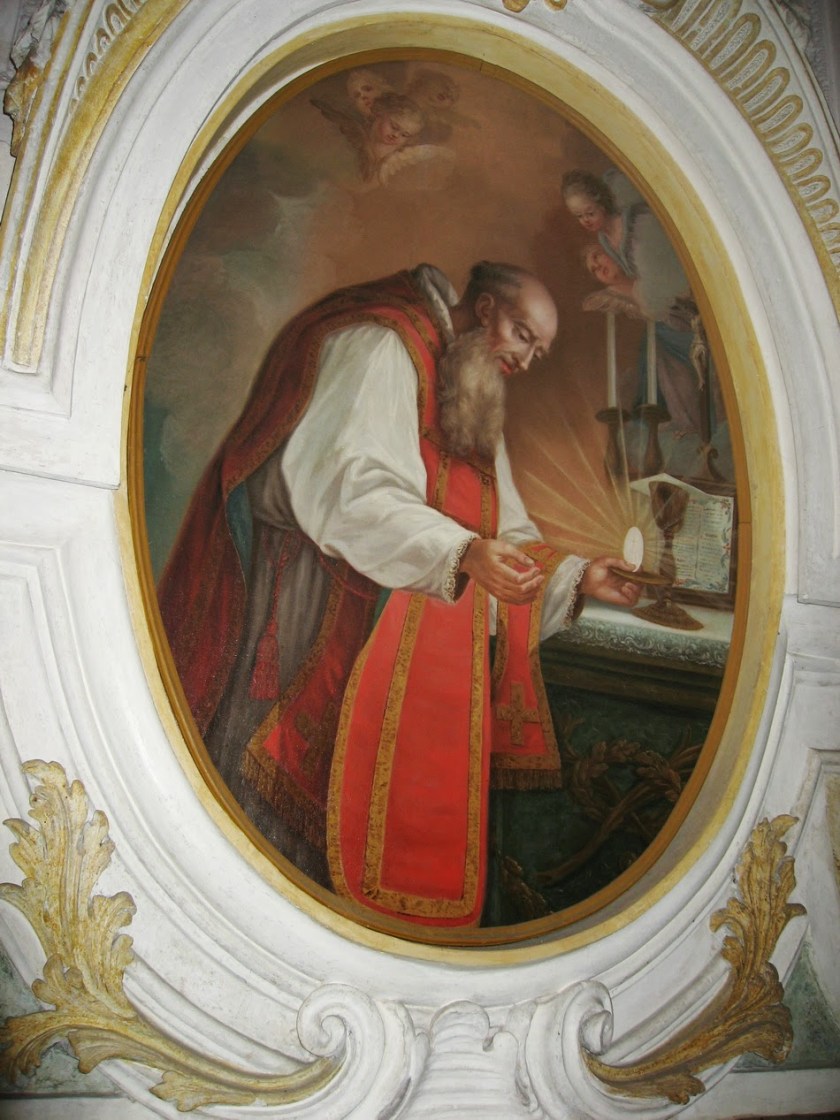
It is surprising that St Lawrence of Brindisi was able to continue without interruption his work as an appreciated and unflagging preacher in many cities of Italy and in different countries, in spite of holding other burdensome offices of great responsibility. Indeed, within the Order of Capuchins he was professor of theology, novice master, for several mandates minister provincial and definitor general and finally, from 1602 to 1605, minister general. In the midst of this mountain of work, Lawrence cultivated an exceptionally fervent spiritual life. He devoted much time to prayer and, especially, to the celebration of Holy Mass — often protracted for hours — caught up in and moved by the memorial of the Passion, death and Resurrection of the Lord.
At the school of the saints, every priest, as was emphasised frequently during the recent Year for Priests, may only avoid the danger of activism — acting, that is, without remembering the profound motives of his ministry — if he attends to his own inner life.
In speaking to priests and seminarians in the Cathedral of Brindisi, St Lawrence’s birthplace, I recalled that “the time he spends in prayer is the most important time in a priest’s life, in which divine grace acts with greater effectiveness, making his ministry fruitful. The first service to render to the community is prayer. And, therefore, time for prayer must be given true priority in our life… if we are not interiorly in communion with God, we cannot even give anything to others. Therefore, God is the first priority. We must always reserve the time necessary to be in communion of prayer with Our Lord” (Address of Benedict XVI to priests, deacons and seminarians of the Archdiocese of Brindisi, Cathedral of Brindisi, 15 June 2008).
Moreover, with the unmistakable ardour of his style, Lawrence urged everyone and not only priests, to cultivate a life of prayer, for it is through prayer that we speak to God and that God speaks to us: “Oh, if we were to consider this reality!”, he exclaimed. “In other words that God is truly present to us when we speak to him in prayer; that he truly listens to our prayers, even if we pray only with our hearts and minds. And that not only is he present and hears us, indeed he willingly and with the greatest of pleasure wishes to grant our requests”.
Another trait that characterises the opus of this son of St Frances, is his action for peace. Time and again both Supreme Pontiffs and Catholic Princes entrusted him with important diplomatic missions, to settle controversies and to encourage harmony among the European States, threatened in those days by the Ottoman Empire. The moral authority he enjoyed made him a counsellor both sought after and listened to. Today, as in the times of St Lawrence, the world is in great need of peace, it needs peaceful and peacemaking men and women. All who believe in God must always be sources and artisans of peace.
It was precisely on the occasion of one of these diplomatic missions that Lawrence’s earthly life ended, in 1619 in Lisbon, where he had gone to see King Philip III of Spain, to plead the cause of the Neapolitan subjects oppressed by the local authorities.
He was Canonised in 1881 and his vigorous and intense activity, his vast and harmonious knowledge, earned him the title of Doctor Apostolicus, “Apostolic Doctor”. The title was conferred on him by St Pope John XXIII in 1959, on the occasion of the fourth centenary of his birth. This recognition was also granted to Lawrence of Brindisi because he was the author of numerous works of biblical exegesis, theology and sermons. In them he offers an organic presentation of the history of salvation, centred on the mystery of the Incarnation, the greatest expression of divine love for humankind.
Furthermore, since he was a highly qualified Mariologist, the author of a collection of sermons on Our Lady entitled “Mariale”, he highlighted the unique role of the Virgin Mary, whose Immaculate Conception and whose role in the redemption brought about by Christ he clearly affirms.
With a fine theological sensitivity, Lawrence of Brindisi also pointed out the Holy Spirit’s action in the believer’s life. He reminds us that the Third Person of the Most Holy Trinity illumines and assists us with his gifts in our commitment to live joyously the Gospel message.
“The Holy Spirit”, St Lawrence wrote, “sweetens the yoke of the divine law and lightens its weight, so that we may observe God’s commandments with the greatest of ease and even with pleasure”.
I would like to complete this brief presentation of the life and doctrine of St Lawrence of Brindisi by underlining that the whole of his activity was inspired by great love for Sacred Scripture, which he knew thoroughly and by heart and by the conviction that listening to and the reception of the word of God produces an inner transformation that leads us to holiness.
“The word of the Lord”, he said, “is a light for the mind and a fire for the will, so that man may know and love God. For the inner man, who lives through the living grace of God’s Spirit, it is bread and water but bread sweeter than honey and water better than wine or milk…. It is a weapon against a heart stubbornly entrenched in vice. It is a sword against the flesh, the world and the devil, to destroy every sin”.
St Lawrence of Brindisi teaches us to love Sacred Scripture, to increase in familiarity with it, to cultivate daily relations of friendship with the Lord in prayer, so that our every action, our every activity, may have its beginning and its fulfilment in him. This is the source from which to draw so that our Christian witness may be luminous and able to lead the people of our time to God….vatican.va Pope Benedict
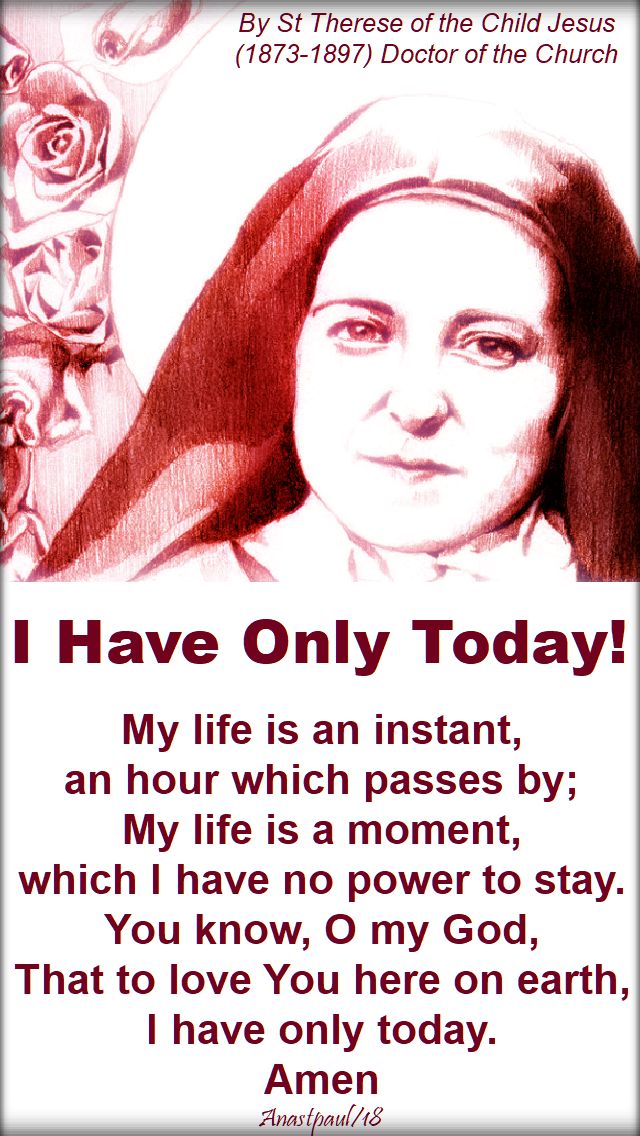
I Have Only Today! By St Therese of the Child Jesus (1873-1897) Doctor of the Church
My life is an instant,
an hour which passes by;
My life is a moment,
which I have no power to stay.
You know, O my God,
That to love You here on earth,
I have only today.
Amen
Thought for the Day – 19 July – Thursday of the Fifteenth week in Ordinary Time, Year B – Today’s Gospel: Matthew 11:28-30.
“Come to me, all who labour and are heavy laden and I will give you rest. Take my yoke upon you and learn from me; for I am gentle and lowly in heart and you will find rest for your souls. For my yoke is easy, and my burden is light.”…Matthew 11:28-30
The light burden of the law of Christ
Saint Jerome (347-420)
Priest, Translator of the Bible,
Father & Doctor of the Church
“Bear one another’s burdens and so you will fulfil the law of Christ.” Sin is a burden as the psalmist attests when he says: “My sins weigh heavy upon me.” But the Lord has carried this burden for us, teaching us, by His example what we ourselves should do. For it is He who bore the burden of our sins; He was stricken for our sake (cf Is 53:8) and invites those who are weighed down by the heavy burden of the Law and of their sins to carry the easy burden of virtue, saying: “My yoke is easy and my burden is light” (Mt 11:30).
Therefore, whoever holds out a hand to the person who begs for support, not despairing of a neighbour’s salvation, who weeps with those who weep, is weak with those who are weak and who regards other’s sins as though they were his own – such a one, fulfils through charity, the law of Christ. What is this law of Christ? “I give you a new commandment, that you love one another” (Jn 13:34). What is the law of the Son of God? “Love one another as I have loved you.” How has the Son of God loved us? No one has greater love than this, “to lay down one’s life for one’s friends” (Jn 15:13).
Someone who shows no clemency, who is not clothed with the bowels of mercy and tears, no matter what sort of student he is in spirituality, such a one does not fulfil the law of Christ.
Someone who comes to the assistance of the poor weighed down by the burden of destitution and makes friends with dishonest wealth (Lk 16:9), such a one shoulders the needs of his neighbour. This is the one to whom Jesus will say after the general resurrection: “Come, you that are blessed by my Father, inherit the kingdom prepared for you from the foundation of the world. For I was hungry and you gave me food, I was thirsty and you gave me something to drink” (Mt 25:34-35).
Quote/s of the Day – 18 July – The Holy Father’s Prayer Intention for July “Pray for our Priests and their Pastoral Ministry”
“He made them, the vicars of His love.
St Ambrose (340-397)
Father & Doctor of the Church
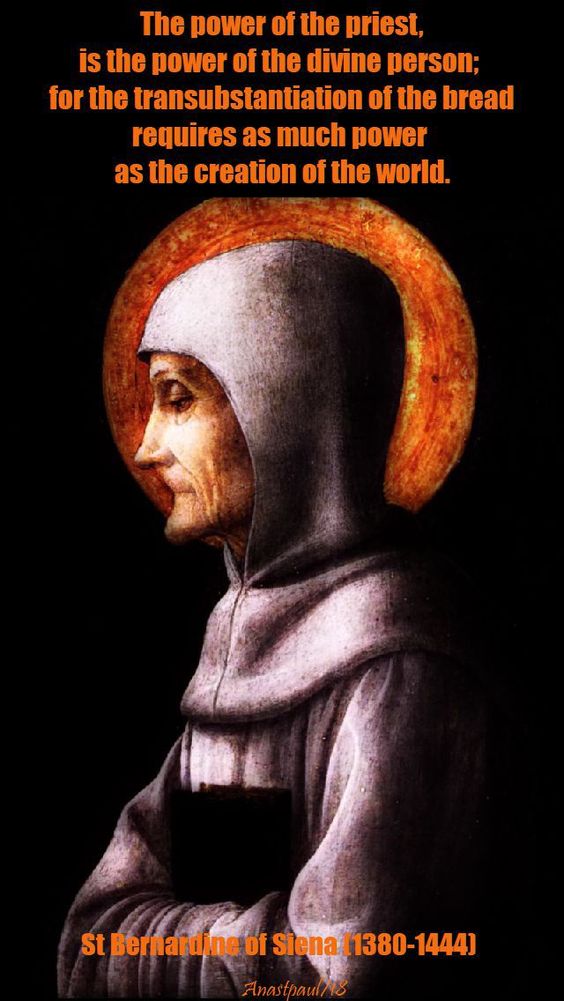
“The power of the priest, is the power of the divine person, for the transubstantiation of the bread, requires as much power, as the creation of the world.”
St Bernardine of Siena (1380-1444)
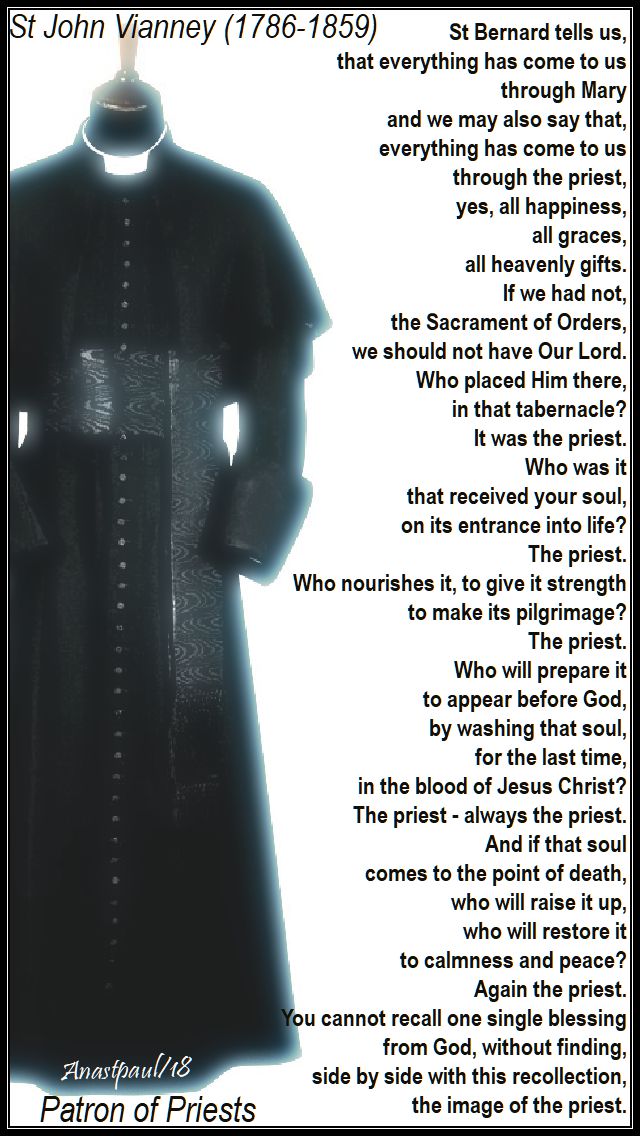
“St Bernard tells us that everything has come to us through Mary and we may also say that everything has come to us through the priest, yes, all happiness, all graces, all heavenly gifts. If we had not the Sacrament of Orders, we should not have Our Lord. Who placed Him there, in that tabernacle? It was the priest. Who was it that received your soul, on its entrance into life? The priest. Who nourishes it, to give it strength to make its pilgrimage? The priest. Who will prepare it to appear before God, by washing that soul, for the last time, in the blood of Jesus Christ? The priest – always the priest. And if that soul comes to the point of death, who will raise it up, who will restore it to calmness and peace? Again the priest. You cannot recall one single blessing from God, without finding, side by side with this recollection, the image of the priest.”
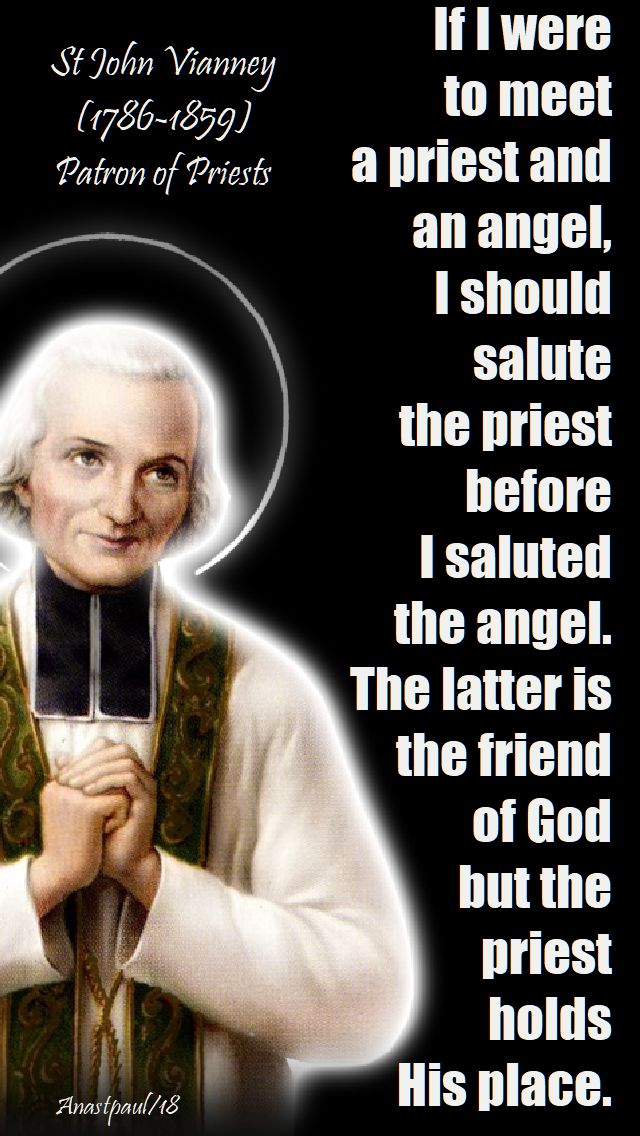
“If I were to meet a priest and an angel, I should salute the priest before I saluted the angel. The latter is the friend of God but the priest holds His place.”
St John Vianney (1786-1859) Patron of Priests
“Day after day, it is necessary to learn, that I do not possess my life for myself. Day by day, I must learn to abandon myself, to keep myself available for whatever He, the Lord, needs of me at a given moment, even if other things seem more appealing and more important to me, this means giving life, not taking it.”
Quote/s of the Day – 17 July – Tuesday of the Fifteenth week in Ordinary Time, B – Today’s Gospel: Matthew 11:20-24
Speaking of: Seeking Repentance with the Fathers
“When once you have departed this life, there is no longer any place for repentance, no way of making satisfaction. Here, life is either lost or kept. Here, by the worship of God and by the fruit of faith, provision is made for eternal salvation. Let no one be kept back either by his sins or by his years from coming to obtain salvation. To him who still remains in this world, there is no repentance that is too late.”
St Cyprian of Carthage (c 200- c 258)
Father of the Church
“Do you fast? Then feed the hungry, give drink to the thirsty, visit the sick, do not forget the imprisoned, have pity on the tortured, comfort those who grieve and who weep, be merciful, humble, kind, calm, patient, sympathetic, forgiving, reverent, truthful and pious, so that God might accept your fasting and might plentifully grant you the fruits of repentance.”
“Since it is likely that, being men, they would sin every day, St Paul consoles his hearers by saying ‘renew yourselves’ from day to day. This is what we do with houses: we keep constantly repairing them as they wear old. You should do the same thing to yourself. Have you sinned today? Have you made your soul old? Do not despair, do not despond but renew your soul by repentance and tears and Confession and by doing good things. And never cease doing this.”
“If repentance is neglected for an instant, one can lose the power of the Resurrection as he lives with the weakness of tepidity and the potential of his fall.”
St John Chrysostom (347-407)
Father and Doctor of the Church
“Reform yourself and so be always ready. Be not afraid of the last day, as a thief, who will break up your house as you sleep but awake and reform yourself today.”
“In failing to confess, Lord, I would only hide You from myself, not myself from You.”
St Augustine (354-430) Father and Doctor of the Church
“To do penance is to bewail the evil we have done and to do no evil to bewail.”
St Pope Gregory the Great (540-604)
Father & Doctor of the Church
“Repentance raises the fallen, mourning knocks at the gate of Heaven and holy humility opens it.”
“Repentance is the renewal of baptism. Repentance is a contract with God for a second life. A penitent is a buyer of humility. Repentance is constant distrust of bodily comfort. Repentance is self-condemning reflection of carefree self-care. Repentance is the daughter of hope and the renunciation of despair. A penitent is an undisgraced convict. Repentance is reconciliation with the Lord by the practice of good deeds contrary to the sins. Repentance is purification of conscience. Repentance is the voluntary endurance of all afflictions. A penitent is the inflicter of his own punishments. Repentance is a mighty persecution of the stomach and a striking of the soul into vigorous awareness.”
“Confession is like a bridle that keeps the soul which reflects on it from committing sin but anything left unconfessed we continue to do without fear as if in the dark.”
Our Morning Offering – 17 July – Tuesday of the Fifteenth week in Ordinary Time, B
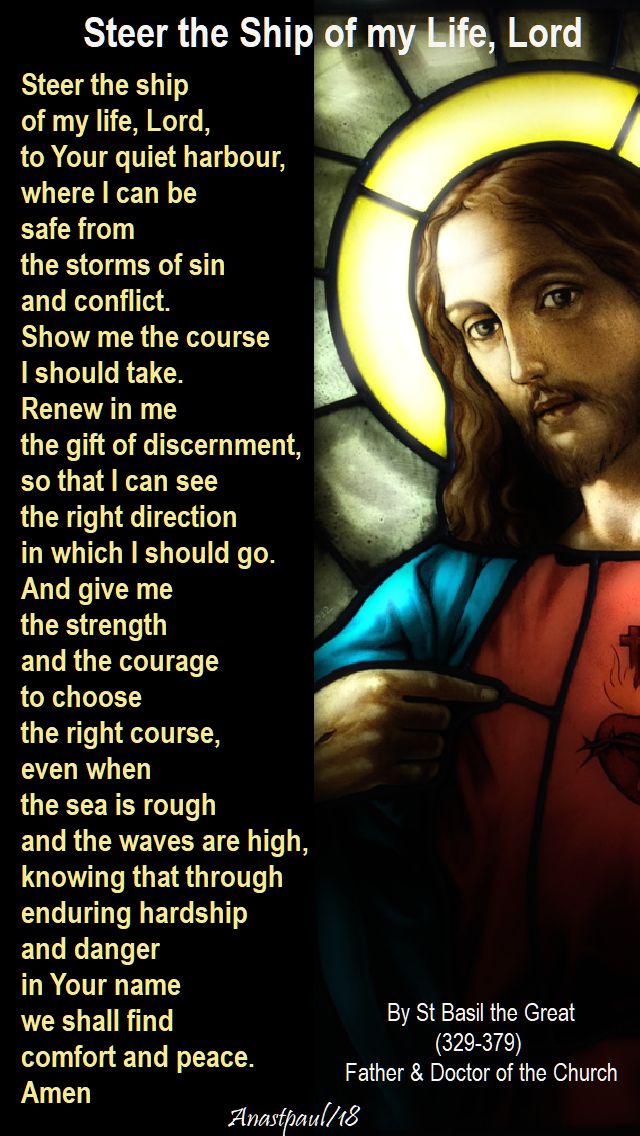
Steer the Ship of My Life, Lord By St Basil the Great (329-379) Father & Doctor of the Church
Steer the ship of my life, Lord,
to Your quiet harbour,
where I can be safe from
the storms of sin and conflict.
Show me the course I should take.
Renew in me the gift of discernment,
so that I can see the right direction
in which I should go.
And give me the strength
and the courage
to choose the right course,
even when the sea is rough
and the waves are high,
knowing that through enduring
hardship and danger in Your name
we shall find comfort and peace.
Amen
Thought for the Day – 15 July – Fifteenth Sunday of the Year – the Memorial of St Bonaventure (1221-1274) – Seraphic Doctor
Perhaps not a household name for most people, Saint Bonaventure, nevertheless, played an important role in both the medieval Church and the history of the Franciscan Order. A senior faculty member at the University of Paris, Saint Bonaventure certainly captured the hearts of his students through his academic skills and insights. But more importantly, he captured their hearts through his Franciscan love for Jesus and the Church. Like his model, Saint Francis, Jesus was the centre of everything—his teaching, his administration, his writing, and his life . So much so, that he was given the title “Seraphic Doctor.”
Bonaventure so united holiness and theological knowledge that he rose to the heights of mysticism while remaining a very active preacher and teacher, one beloved by all who met him. To know him was to love him; to read him is still for us today to meet a true Franciscan and a gentleman.
In his bull of Canonisation, Pope Sixtus IV wrote:
Bonaventure was great in learning but no less great in humility and holiness. His innocence and dove-like simplicity were such that Alexander of Hales, the renowned doctor whose disciple Saint Bonaventure became, used to say of him that it seemed as though Adam had never sinned in him.
A man of eminent learning and eloquence and of outstanding holiness, he was known for his kindness, approachableness, gentleness and compassion. – Pope Gregory X on hearing of the death of Bonaventure.
Let us learn from the great Saint himself, to grow in the fruits he possessed in such abundance – humility, kindness, gentleness, charity, chastity, generosity, joy, peace, patience, faithfulness, modesty and self-control. (Matthew 7: 15-20)
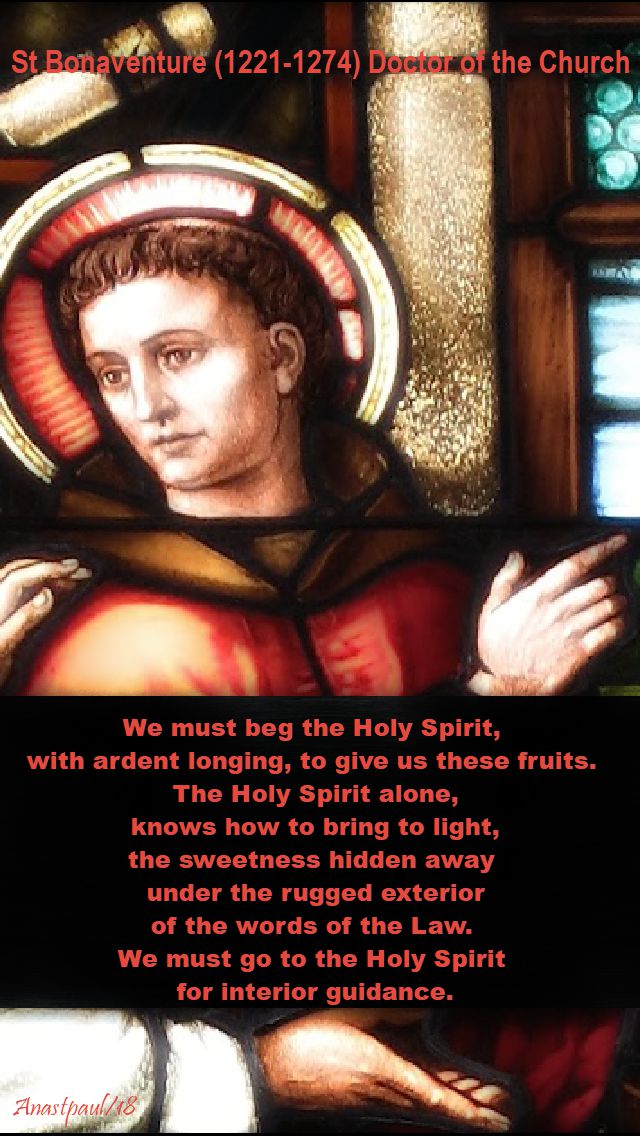
“We must beg the Holy Spirit, with ardent longing, to give us these fruits. The Holy Spirit alone, knows how to bring to light, the sweetness hidden away under the rugged exterior of the words of the Law. We must go to the Holy Spirit for interior guidance.”
St Bonaventure from Holiness of Life
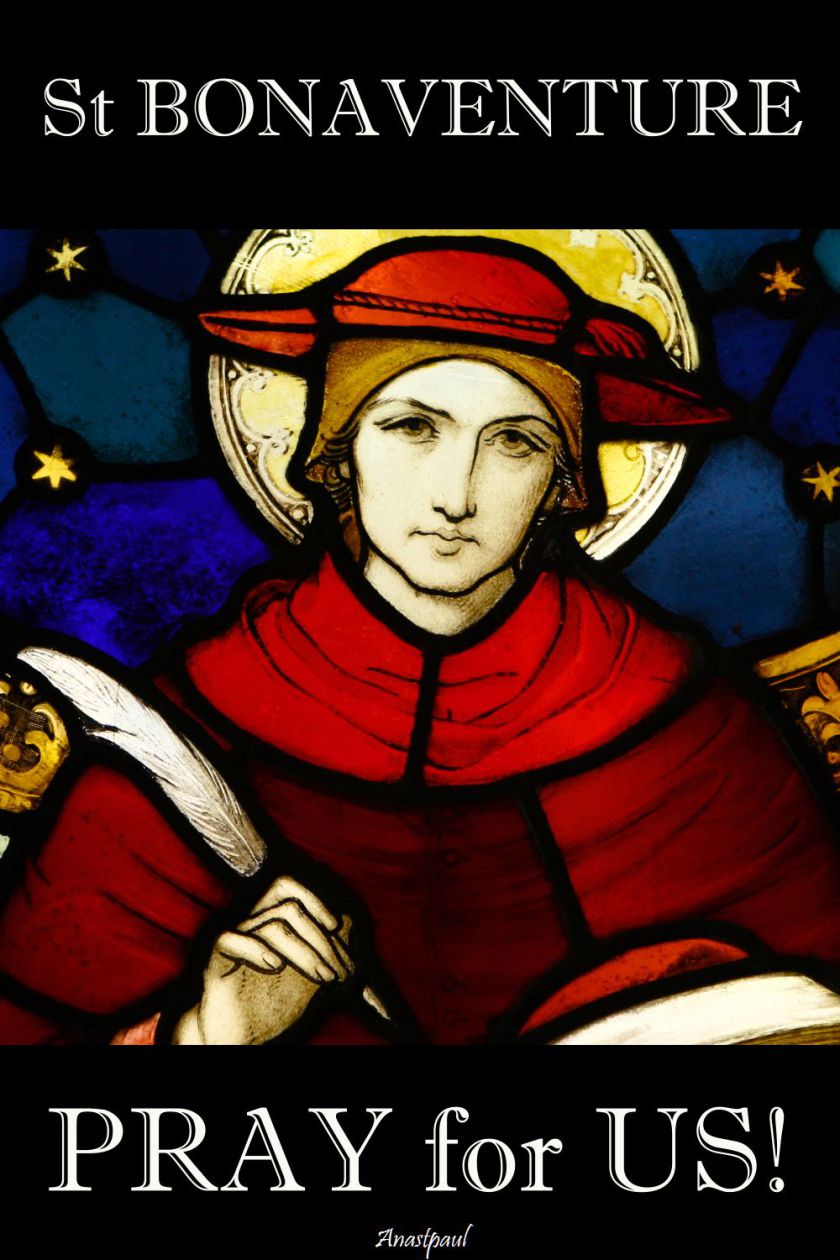
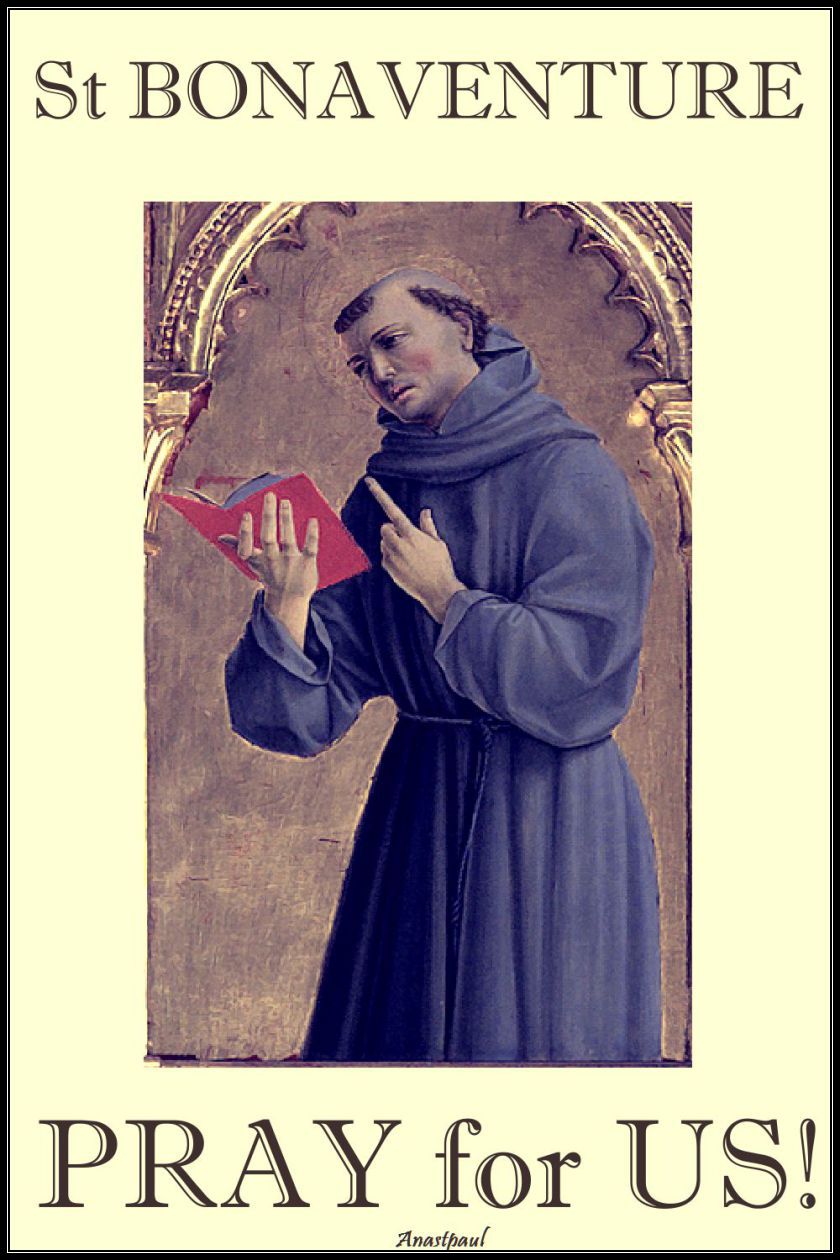
St Bonaventure, Pray for us!
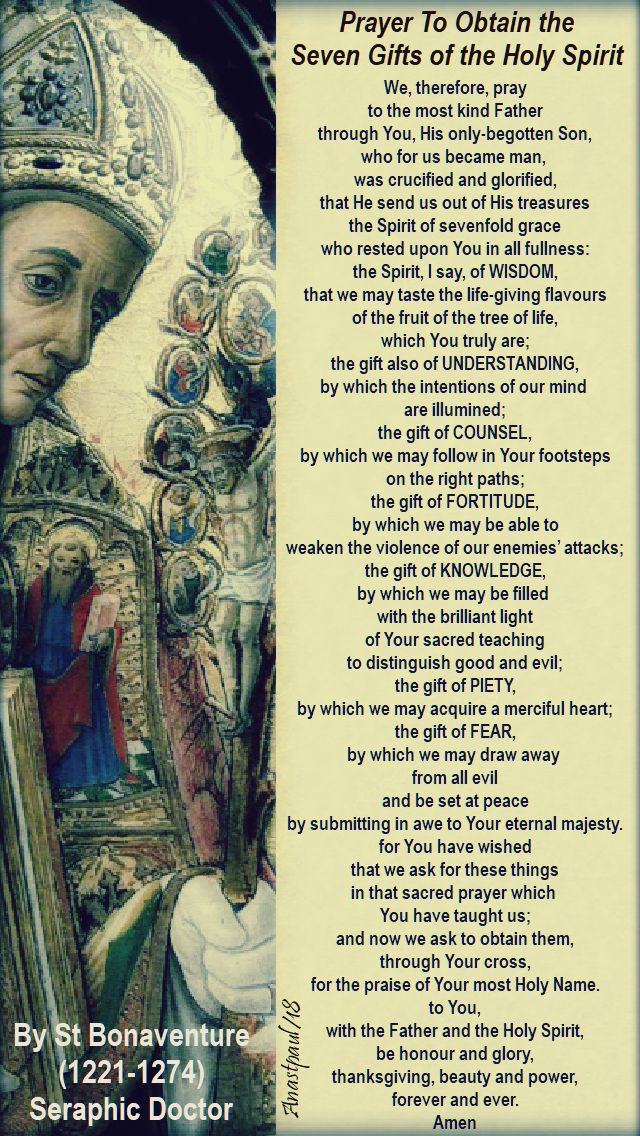
Prayer To Obtain the Seven Gifts of the Holy Spirit By St Bonaventure (1221-1274) – Seraphic Doctor
We, therefore, pray to the most kind Father through You, His only-begotten Son, who for us became man, was crucified and glorified, that He send us out of His treasures the Spirit of sevenfold grace who rested upon You in all fullness: the Spirit, I say, of WISDOM, that we may taste the life-giving flavours of the fruit of the tree of life, which You truly are; the gift also of UNDERSTANDING, by which the intentions of our mind are illumined; the gift of COUNSEL, by which we may follow in Your footsteps on the right paths; the gift of FORTITUDE, by which we may be able to weaken the violence of our enemies’ attacks; the gift of KNOWLEDGE, by which we may be filled with the brilliant light of Your sacred teaching to distinguish good and evil; the gift of PIETY, by which we may acquire a merciful heart; the gift of FEAR, by which we may draw away from all evil and be set at peace by submitting in awe to Your eternal majesty. for You have wished that we ask for these things in that sacred prayer which You have taught us; and now we ask to obtain them, through Your cross, for the praise of Your most Holy Name. to You, with the Father and the Holy Spirit, be honour and glory, thanksgiving, beauty and power, forever and ever. Amen
-From Prayer “To Obtain the Seven Gifts of the Holy Spirit” included at the closing The Tree of Life” ― Bonaventure, Bonaventure: The Soul’s Journey into God, the Tree of Life, the Life of St. Francis
Quote/s of the Day – 15 July – Fifteenth Sunday of the Year – the Memorial of St Bonaventure (1221-1274) – Seraphic Doctor
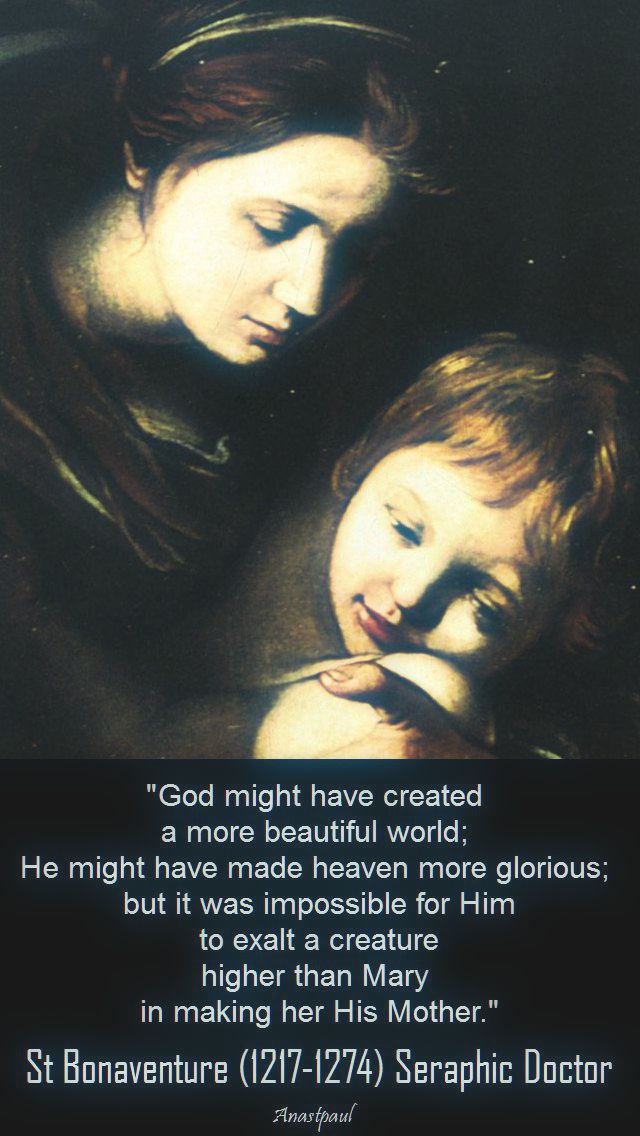
“God might have created a more beautiful world; He might have made heaven more glorious; but it was impossible for Him to exalt a creature higher than Mary in making her His Mother.”
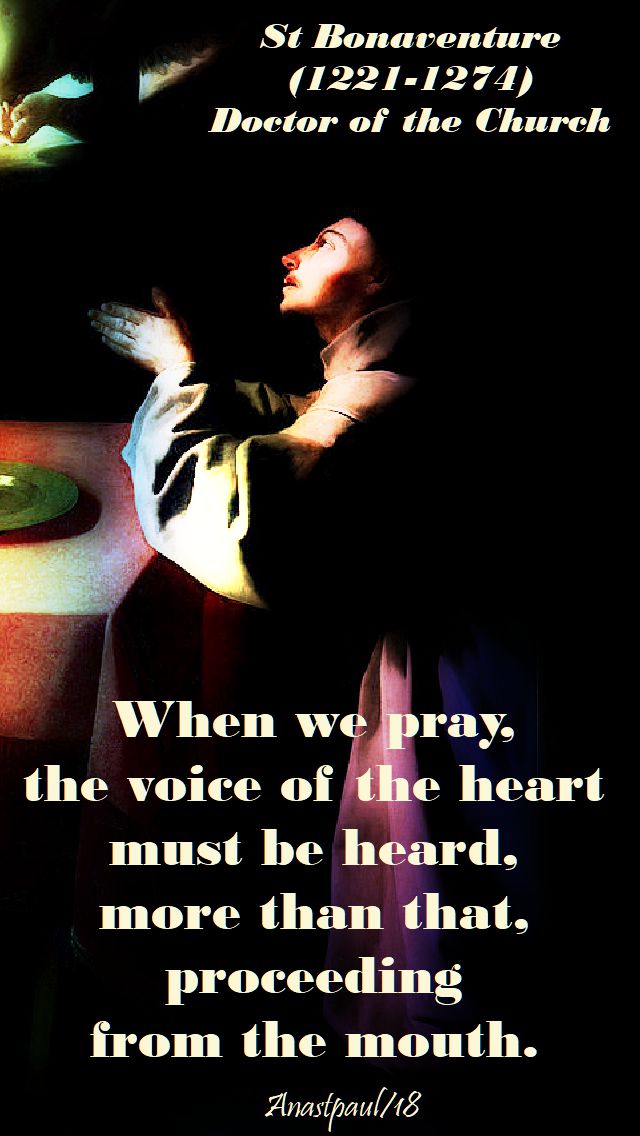
“When we pray, the voice of the heart must be heard, more than that, proceeding from the mouth.”
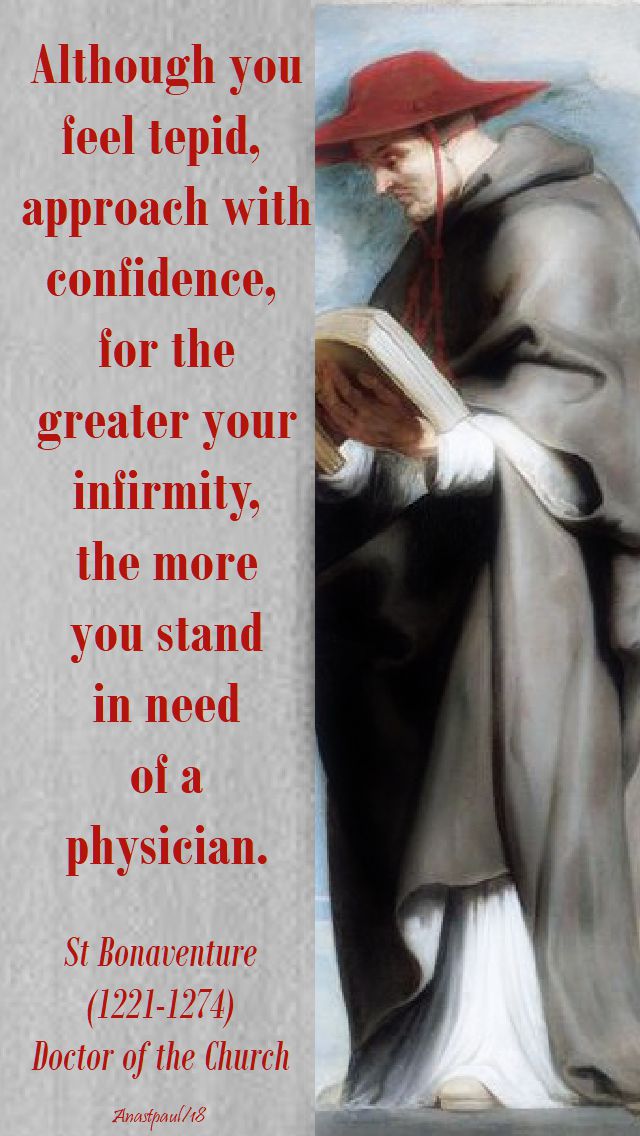
“Although you feel tepid, approach with confidence, for the greater your infirmity, the more you stand in need of a physician.”
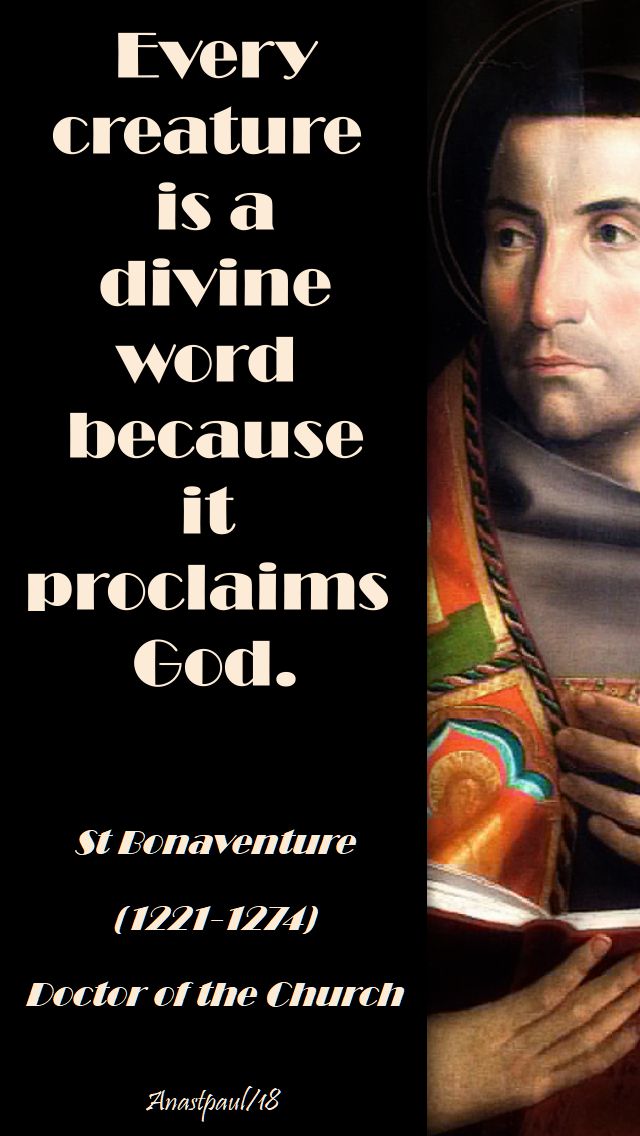
“Every creature is a divine word because it proclaims God.”
“Christ has something in common with all creatures. With the stone He shares existence, with the plants He shares life, with the animals He shares sensation and with the angels He shares intelligence. Thus all things are transformed in Christ since in the fullness of His nature, He embraces some part of every creature.”
One Minute Reflection – 15 July – Fifteenth Sunday of the Year – the Memorial of St Bonaventure (1221-1274) – Seraphic Doctor – 2nd Reading Ephesians 1:3-14.
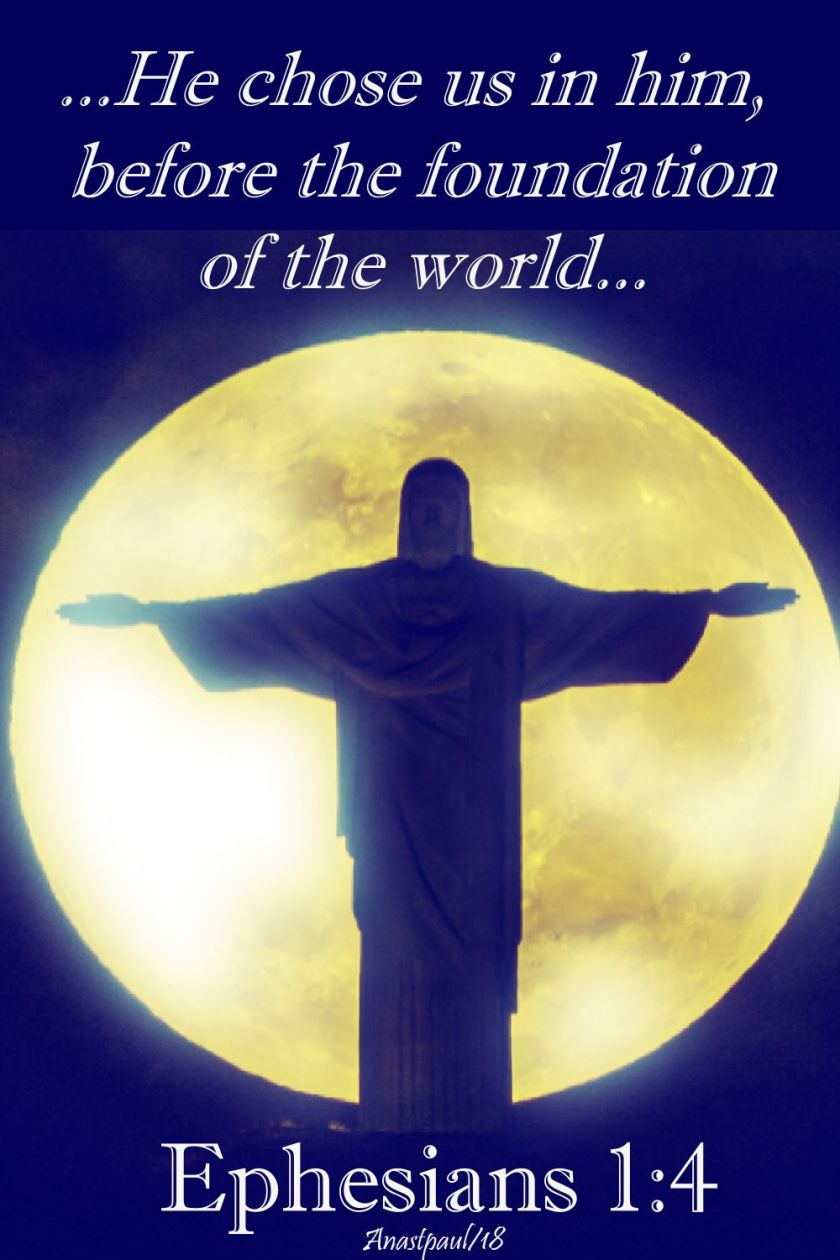
“Blessed be the God and Father of our Lord Jesus Christ, who has blessed us in Christ with every spiritual blessing in the heavens, as he chose us in him, before the foundation of the world, to be holy and without blemish before him.” … Ephesians 1:3-4.
REFLECTION – “Christ is both the way and the door. Christ is the staircase and the vehicle, like the “throne of mercy over the Ark of the Covenant” and “the mystery hidden from the ages.” A man should turn his full attention to this throne of mercy and should gaze at Him hanging on the cross, full of faith, hope and charity, devoted, full of wonder and joy, marked by gratitude and open to praise and jubilation. Then such a man will make with Christ a “pasch,” that is, a passing-over. Through the branches of the cross he will pass over the Red Sea, leaving Egypt and entering the desert. There he will taste the hidden manna and rest with Christ in the sepulcher, as if he were dead to things outside. He will experience, as much as is possible for one who is still living, what was promised to the thief who hung beside Christ: “Today you will be with me in paradise.” – from Journey of the Mind to God by Saint Bonaventure
PRAYER – God our Father, we are Your children and You have set us aside to come home to You by the light of the way of Your divine Son. Grant we pray, that we may grow in faith and love daily, by the intercession of Saint Bonaventure and may be a light of love, to all around us. We make our prayer through our Lord Jesus with You in the unity of the Holy Spirit, God forever, amen.
Our Morning Offering – 15 July – Fifteenth Sunday of the Year – the Memorial of St Bonaventure (1221-1274) – Seraphic Doctor
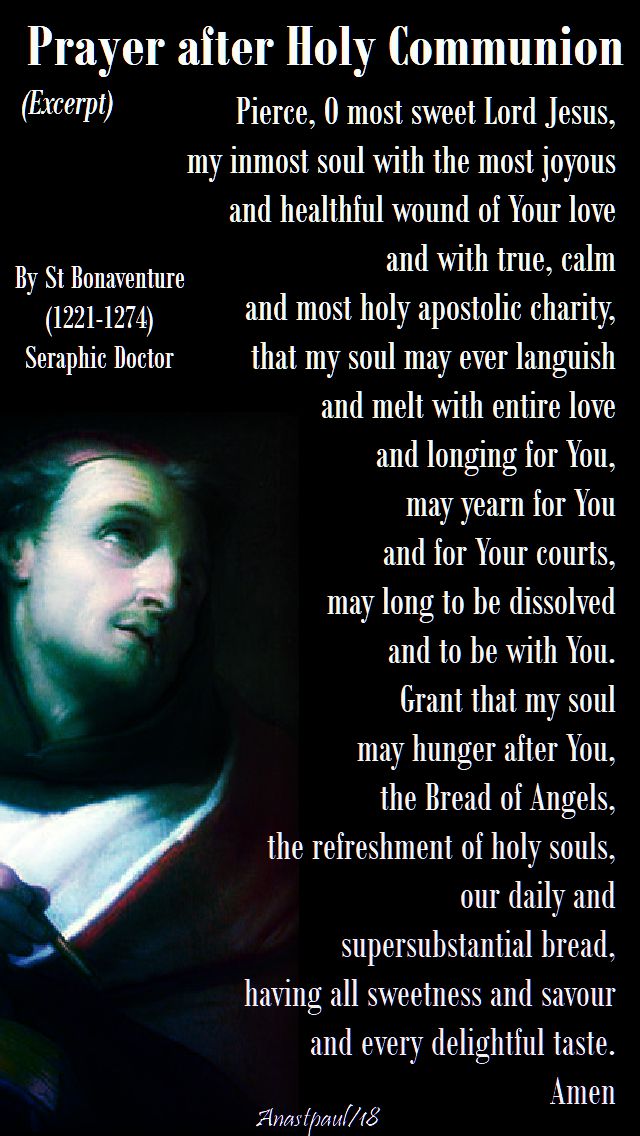
Excerpt from the Prayer after Holy Communion By St Bonaventure (1221-1274) Seraphic Doctor
Pierce, O most sweet Lord Jesus,
my inmost soul with the most joyous
and healthful wound of Your love
and with true, calm
and most holy apostolic charity,
that my soul may ever languish
and melt with entire love
and longing for You,
may yearn for You
and for Your courts,
may long to be dissolved
and to be with You.
Grant that my soul
may hunger after You,
the Bread of Angels,
the refreshment of holy souls,
our daily and supersubstantial bread,
having all sweetness and savour
and every delightful taste.
Amen
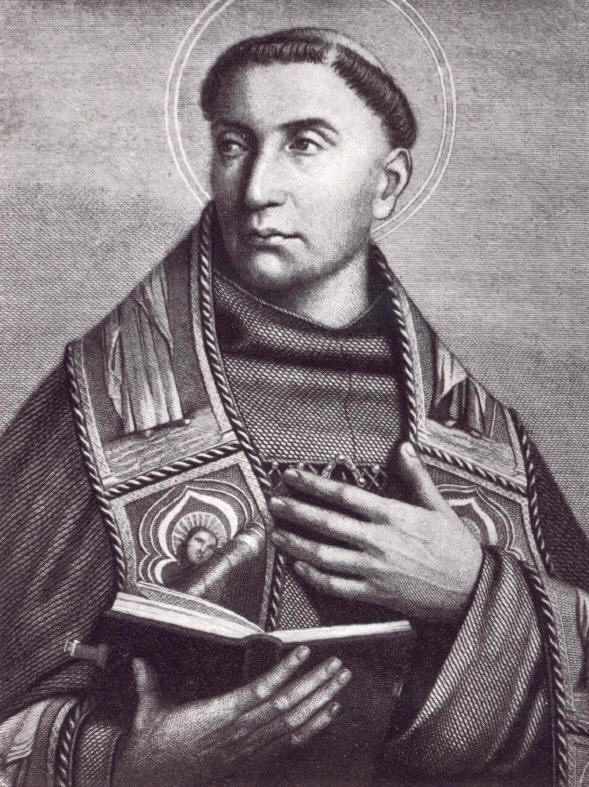
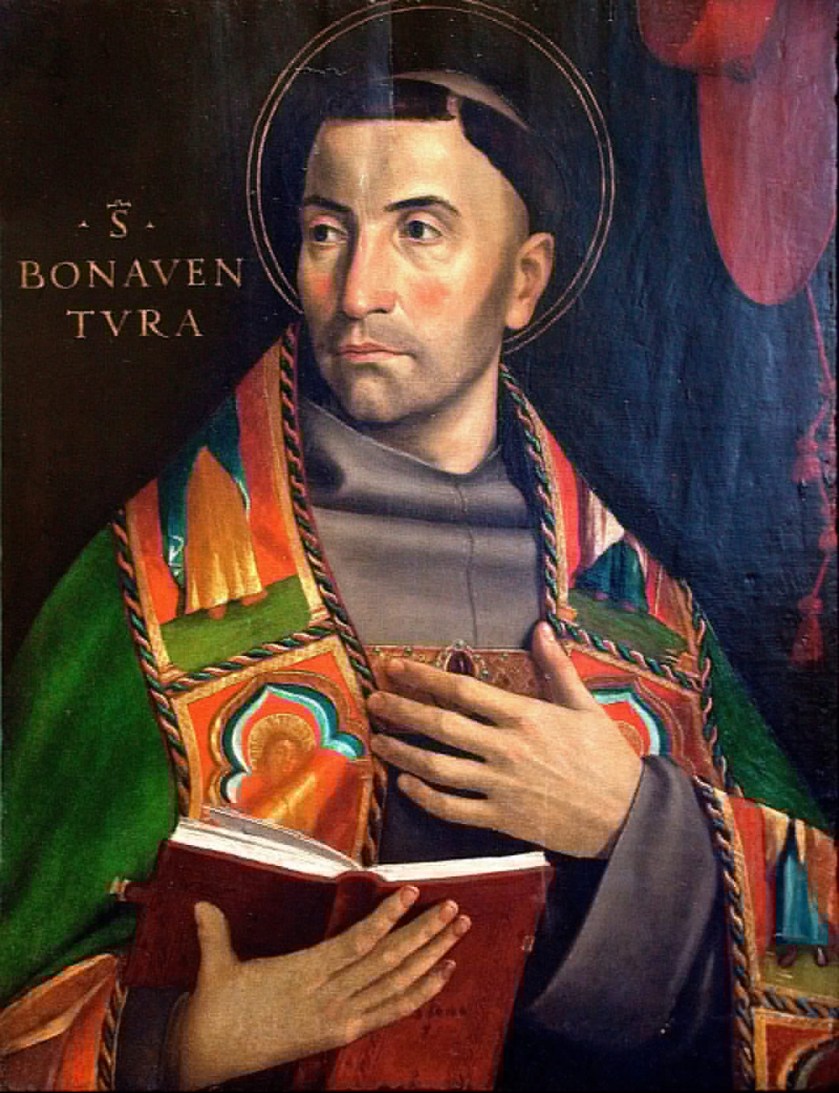
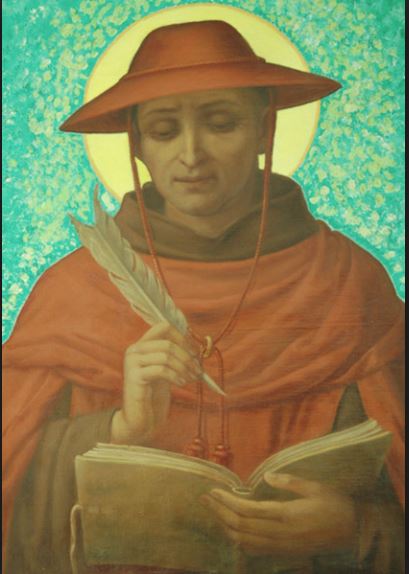
Saint of the Day – 15 July – St Bonaventure O.F.M. (1221-1274) – Doctor of the Church – known as the “Seraphic Doctor” – Friar, Bishop, Theologian, Philosopher, Writer, Mystic, Preacher, Teacher.
Sanctity and learning raised Bonaventure to the Church’s highest honours and from a child he was the companion of Saints. Yet at heart he was ever the poor Franciscan friar and practised and taught humility and mortification.
Francisco de Herrera the Elder 1576 – 1656 St Bonaventure Enters the Franciscan Order 1628
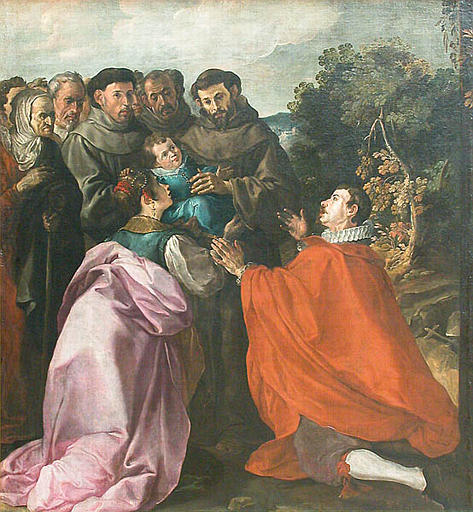
St Francis gave him his name, for, having miraculously cured him of a mortal sickness, he prophetically exclaimed of the child, “O bona ventura!”-good luck.
Francisco de Herrera the Elder 1576 – 1656 The Cure of Saint Bonaventure as a Child by St Francis 1628
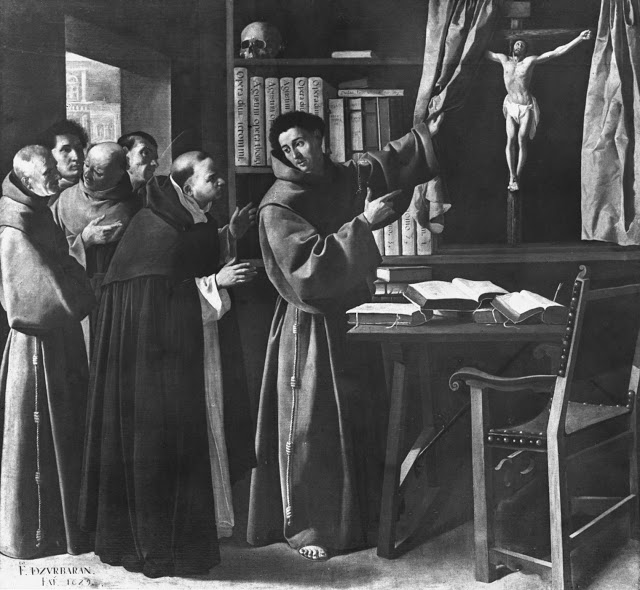
He is known also as the “Seraphic Doctor,” from the fervour of divine love which breathes in his writings. He was the friend of S. Thomas Aquinas, who asked him one day whence he drew his great learning. He replied by pointing to his crucifix. At another time St Thomas found him in ecstasy while writing the life of St Francis and exclaimed, “Let us leave a Saint to write of a Saint.” They received the Doctor’s cap together.
Francisco de Zurbarán 1598 -1664 Saint Bonaventure and St Thomas Aquinas before the Crucifix 1629 (lost in 1945)
He was the guest and adviser of St Louis and the spiritual director of St Isabella, the king’s sister. At the age of thirty-five in 1257 he was made general of his Order and only escaped another dignity, the Archbishopric of York, by dint of tears and entreaties. Gregory X appointed him Cardinal Bishop of Albano.
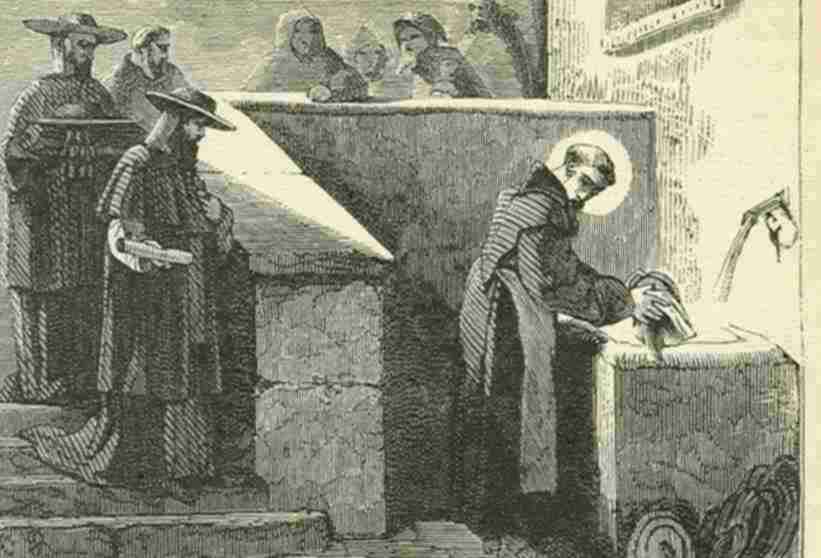
When the Saint heard of the Pope’s resolve to create him a Cardinal, he quietly made his escape from Italy. But Gregory sent him a summons to return to Rome. On his way, he stopped to rest himself at a convent of his Order near Florence and there two Papal messengers, sent to meet him with the Cardinal’s hat, found him washing the dishes. The Saint desired them to hang the hat on a bush that was near and take a walk in the garden until he had finished what he was about. Then taking up the hat with unfeigned sorrow, he joined the messengers and paid them the respect due to their character.
He sat at the Pontiff’s right hand and spoke first at the Council of Lyons. His piety and eloquence won over the Greeks to Catholic union and then his strength failed.
Francisco de Zurbarán 1598 -1664 Saint Bonaventure at the Council of Lyon (1274) (c.1630)
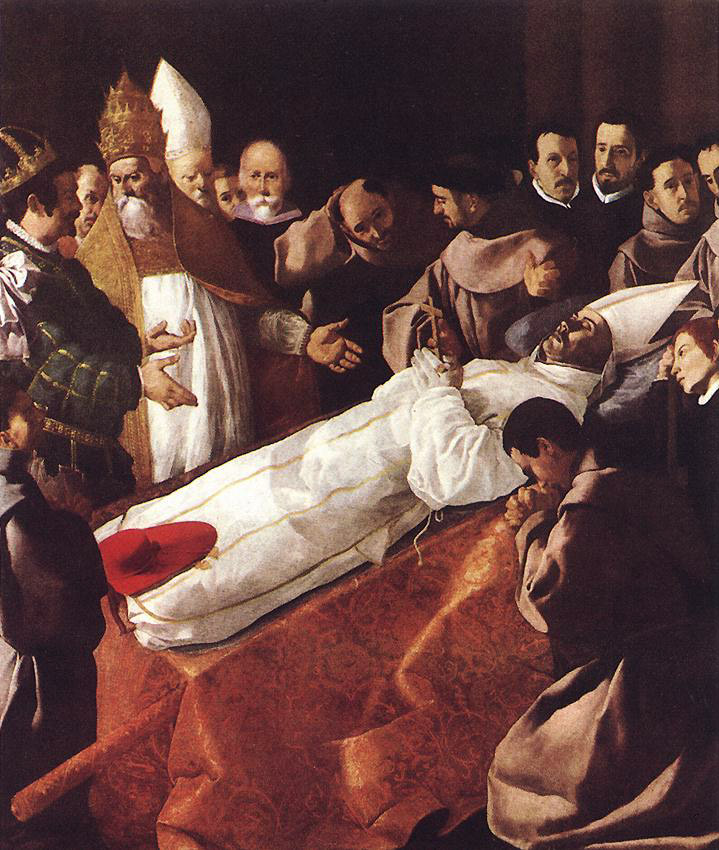
He died while the Council was sitting and was buried by the assembled bishops, on 15 July 1274.
Francisco de Zurbarán 1598 -1664 The Exposition of the Body of St Bonaventure (c.1630)
For more details on St Bonaventure’s life here: https://anastpaul.wordpress.com/2017/07/15/saint-of-the-day-15-july-st-bonaventure-seraphic-doctor/
St Bonaventure of Bagnoregio O.F.M. (1221-1274) – Seraphic Doctor of the Church -(Memorial)
Dispersion of the Apostles: Commemorates the missionary work of the Twelve Apostles. It was first mentioned in the 11th century and was celebrated in the northern countries of Europe during the Middle Ages. It is now observed in Germany, Poland and some dioceses of England, France and the United States.
St Abundantia of Spoleto
St Abudemius of Bozcaada
St Adalard the Younger
St Anrê Nguyen Kim Thông
Bl Anne Mary Javhouhey
Bl Antoni Beszta-Borowski
St Apronia
St Athanasius of Naples
St Antiochus of Sebaste
St Benedict of Angers
Bl Bernard of Baden
Bl Ceslas Odrowaz
St David of Sweden
St Donivald
St Eberhard of Luzy
St Edith of Tamworth
St Eternus
St Felix of Pavia
St Gumbert of Ansbach
St Haruch of Werden
St Jacob of Nisibis
St Joseph Studita of Thessalonica
Bl Michel-Bernard Marchand
Bl Peter Aymillo
St Phêrô Nguyen Bá Tuan
St Plechelm of Guelderland
Bl Roland of Chézery
St Valentina of Nevers
St Vladimir I of Kiev
—
Martyred Jesuit Missionaries of Brazil – 40 beati: A band of forty Spanish, Portugese and French Jesuit missionaries martyred by the Huguenot pirate Jacques Sourie while en route to Brazil. They are –
• Aleixo Delgado • Alonso de Baena • álvaro Borralho Mendes • Amaro Vaz • André Gonçalves • António Correia • Antônio Fernandes • António Soares • Bento de Castro • Brás Ribeiro • Diogo de Andrade • Diogo Pires Mimoso • Domingos Fernandes • Esteban Zuraire • Fernando Sánchez • Francisco Alvares • Francisco de Magalhães • Francisco Pérez Godoy • Gaspar Alvares • Gonçalo Henriques • Gregorio Escribano • Ignatius de Azevedo • Iõao • João Fernandes • João Fernandes • Juan de Mayorga • Juan de San Martín • Juan de Zafra • Luís Correia • Luís Rodrigues • Manuel Alvares • Manuel Fernandes • Manuel Pacheco • Manuel Rodrigues • Marcos Caldeira • Nicolau Dinis • Pedro de Fontoura • Pedro Nunes • Simão da Costa • Simão Lopes •
They were martyed on 15 and 16 July 1570 on the ship Santiago near Palma, Canary Islands. They were beatified on 11 May 1854 by Pope Pius IX.
Martyrs of Alexandria – 13 saints: Thirteen Christians who were martyred together. We know the names of three, no details about them and the other ten were all children. – Narseus, Philip and Zeno. Martyred in the early 4th-century in Alexandria, Egypt.
Martyrs of Carthage – 9 saints: A group of nine Christians who were martyred together. We know nothing else but their names – Adautto, Catulinus, Felice, Florentius, Fortunanziano, Januarius, Julia, Justa and Settimino. They were martyred in Carthaginian and their relics at the basilica of Fausta at Carthage.
Martyrs of Pannonia – 5 saints: Five 4th-century martyrs killed together. No information about them has survived except the names – Agrippinus, Fortunatus, Martialis, Maximus and Secundinus.
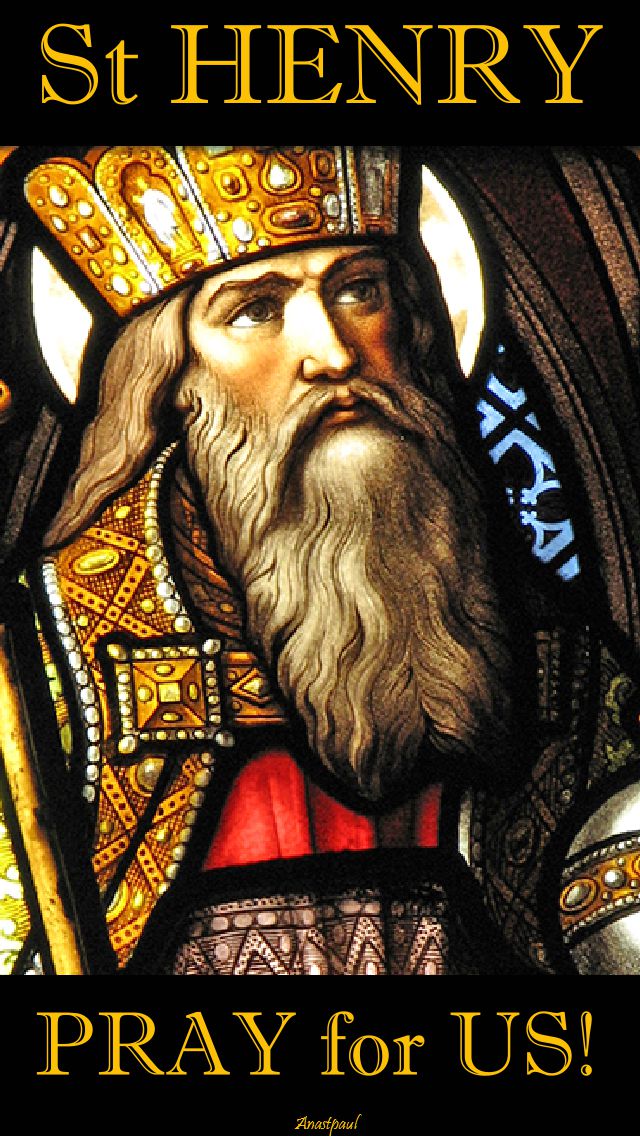
One Minute Reflection – 13 July – The Memorial of St Henry (972-1024) Holy Roman Emperor
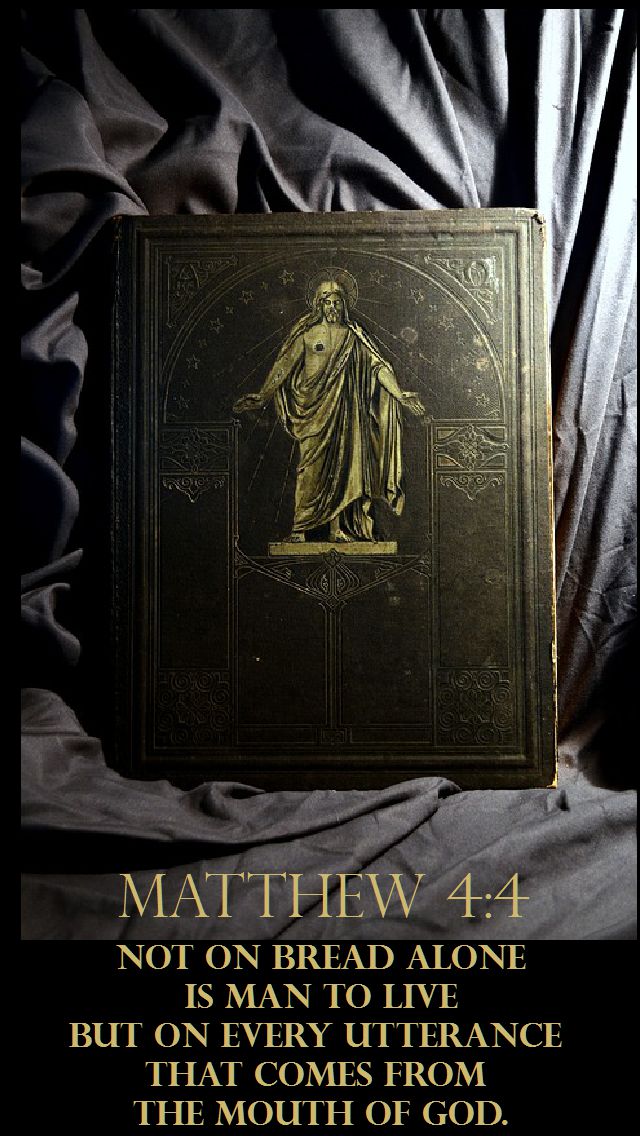
Not on bread alone is man to live but on every utterance that comes from the mouth of God………….Matthew 4:4
REFLECTION – “These are fountains of salvation, that they who thirst, may be satisfied, with the living words they contain. In these is proclaimed the doctrine of godliness. Let no man add to these, neither let him take out from these.”…….St Athanasius of Alexandria (297-373) Father and Doctor of the Church
PRAYER – Heavenly Father, inspire me to meditate on Your holy words every day and fill me with Your Holy Spirit, that I might not only understand them but be filled with the desire to follow and live their instructions. May they be a consolation, a strength and an assistance on my journey to You. St Henry – you were inspired and strove to live by the Holy Scriptures, please pray for us all, amen.
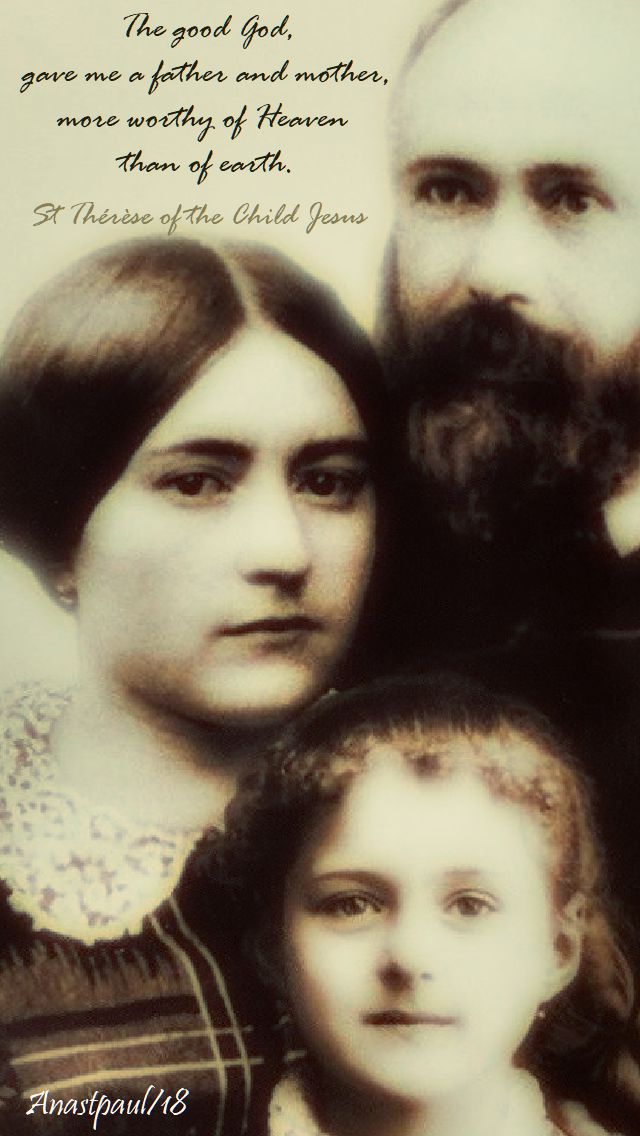
Quote/s of the Day – 12 July – The Memorial of Sts Louis & Zelie Martin
– Parents of St Thérèse of the Child Jesus
“The good God, gave me a father and mother, more worthy of Heaven than of earth.”
St Thérèse of the Child Jesus (1873-1897)
Doctor of the Church
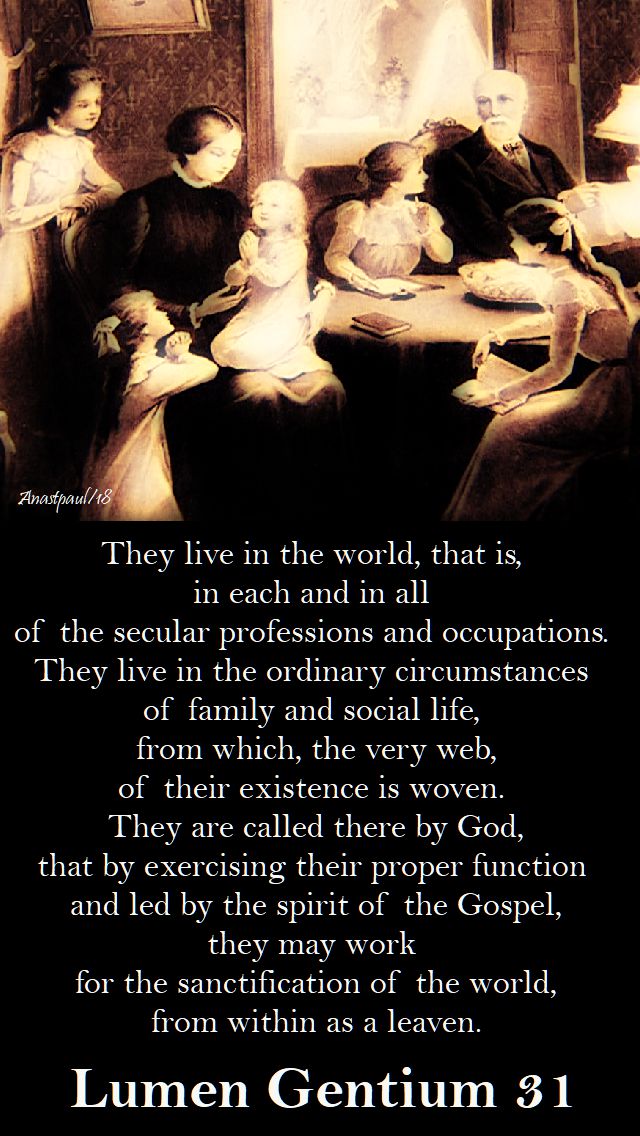
“They live in the world, that is, in each and in all of the secular professions and occupations. They live in the ordinary circumstances of family and social life, from which, the very web, of their existence is woven. They are called there by God, that by exercising their proper function and led by the spirit of the Gospel, they may work for the sanctification of the world, from within as a leaven.”
Our Morning Offering – 12 July – The Memorial of Sts Louis & Zelie Martin – Parents of St Thérèse of the Child Jesus
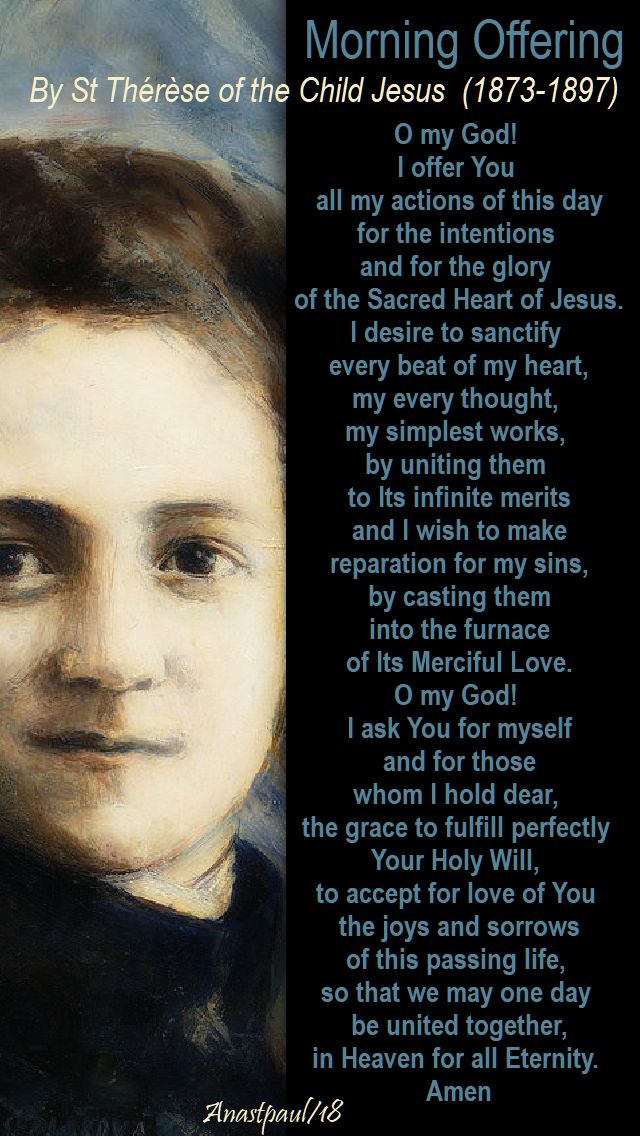
Morning Offering
By St Thérèse of the Child Jesus (1873-1897)
O my God!
I offer You all my actions of this day
for the intentions and for the glory
of the Sacred Heart of Jesus.
I desire to sanctify
every beat of my heart,
my every thought,
my simplest works,
by uniting them to Its infinite merits
and I wish to make reparation for my sins,
by casting them into the furnace
of Its Merciful Love.
O my God!
I ask You for myself and for those
whom I hold dear,
the grace to fulfill perfectly
Your Holy Will,
to accept for love of You
the joys and sorrows of this passing life,
so that we may one day be united together,
in Heaven for all Eternity.
Amen
Thought for the Day – 10 July – Tuesday of the Fourteenth Week of Ordinary Time, Year B – Today’s Gospel: Matthew 9:32-38
“The harvest is abundant…Matthew 9:37”
St John Chrysostom (347-407) Father & Doctor
“All the farmer’s work naturally leads towards the harvest. So how could Christ call a ‘harvest’ a work that was still in its initial stages? Idolatry reigned over all the earth… Everywhere there was fornication, adultery, debauchery, greed, theft, wars… The earth was filled with so many evils! No seed had yet been sown there. The thorns, thistles and weeds that covered the ground had not yet been pulled up. The ground had not yet been ploughed, no furrow had yet been drawn.
So how could Jesus say that the harvest was abundant? … The apostles were probably distressed and frustrated: “How are we going to be able to say anything, to stand upright before so many people? How can we, the Eleven, correct all the inhabitants of the earth? Will we who are so ignorant be able to approach scholars; will we who are so stripped of everything be able to meet armed men; will we who are subordinates be able to approach people in authority? We know only one language – will we be able to argue with the barbarians who speak foreign languages? Who will bear with us if they don’t even understand our language?”
Jesus did not want such reasoning to discourage them. So He called the Gospel a harvest. It is as if He told them: “Everything is prepared, all the preparations have been made. I am sending you out to harvest the ripe grain. You will be able to sow and reap on the same day.”
When the farmer leaves his home to go out and gather the harvest, he is brimming over with joy and shining with happiness. He thinks neither of the suffering nor the difficulties that he might encounter… Christ says, lend me your tongue and you will see the ripe grain going into the king’s granaries. And so He then sends them out, telling them: “I am with you always, until the end of the world.” (Mt 28:20)
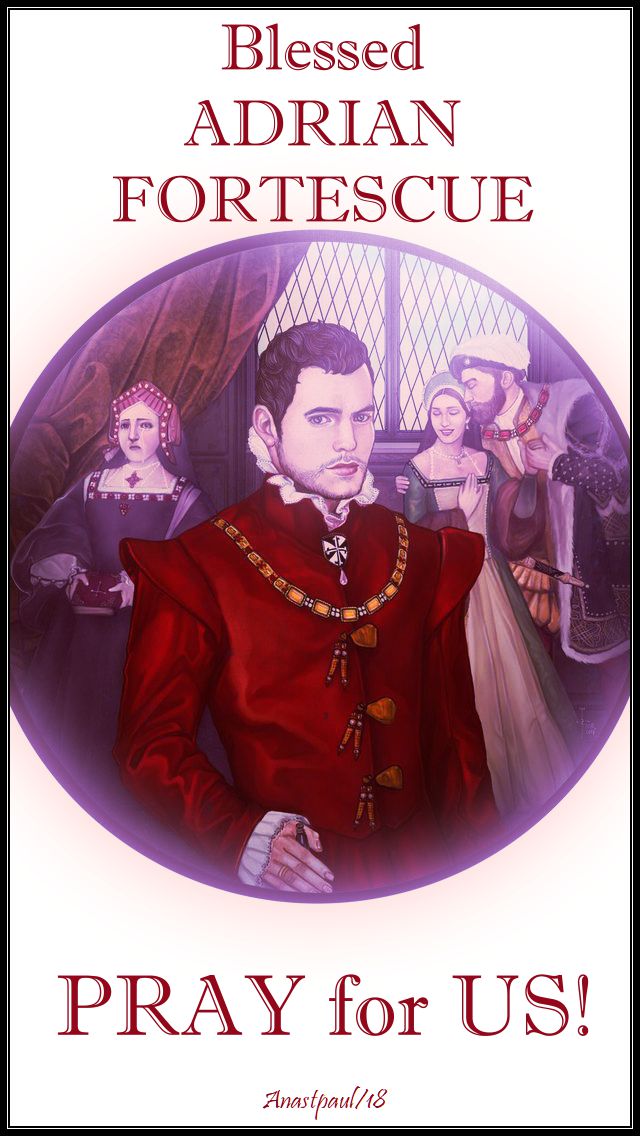
One Minute Reflection – 9 July – The Memorial of Blessed Adrian Fortescue T.O.S.D. (1476-1539) Martyr
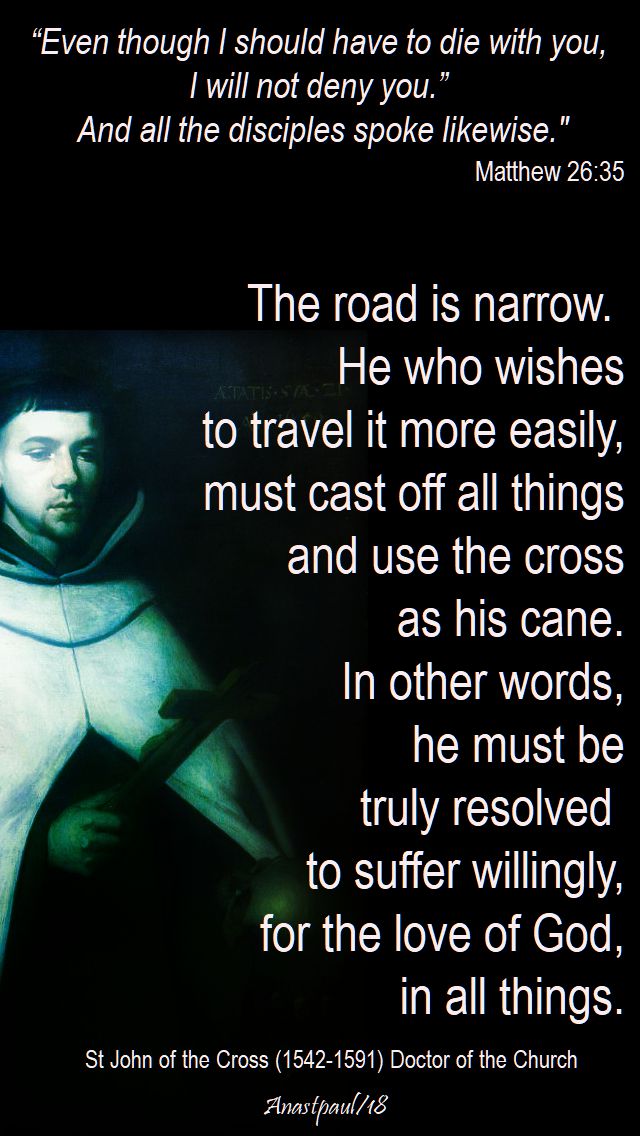
“Even though I should have to die with you, I will not deny you.” And all the disciples spoke likewise”…Matthew 26:35.
REFLECTION – “The road is narrow. He who wishes to travel it more easily must cast off all things and use the cross as his cane. In other words, he must be truly resolved to suffer willingly for the love of God in all things.”…St John of the Cross (1542-1591) Doctor of the Church
PRAYER – O God, You specially strengthened Blessed Adrian Fortescue with a wonderful spirit of holiness and courage. Hear the prayers of Your people and from his renowned example, may we learn to be obedient to You rather than to human authority. We ask this through our Lord Jesus Christ, Your Son, who lives and reigns with you and the Holy Spirit, one God forever and ever. Amen
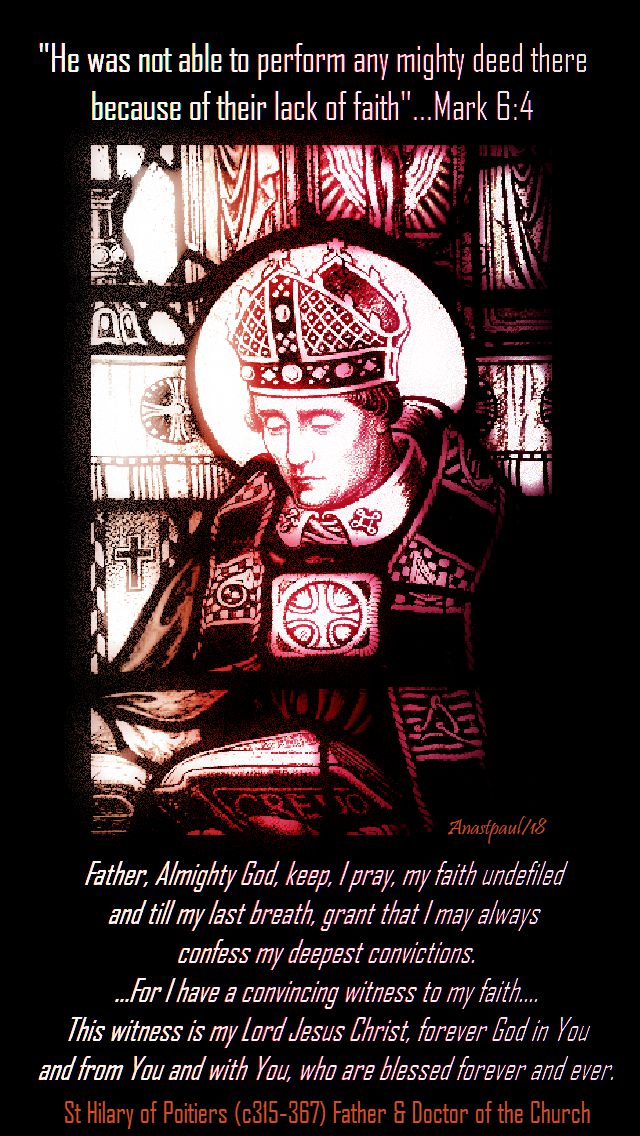
One Minute Reflection – 8 July – – Fourteenth Sunday in Ordinary Time, Year B – “He was not able to perform any mighty deed there because of their lack of faith”...Mark 6:4
And he could do no mighty work there, except that he laid his hands upon a few sick people and healed them. And he marvelled because of their unbelief...Mark 6:5-6
REFLECTION – “Father, Almighty God, keep, I pray, my faith undefiled and till my last breath, grant that I may always confess my deepest convictions. May I ever hold fast to everything which I professed in the creed of my new birth, when I was baptised in the Father and the Son, and the Holy Spirit. May I always adore You our Father and your Son who is one with You; give me always Your Holy Spirit, who proceeds from You, through Your Only-begotten Son.
For I have a convincing witness to my faith, who says, “Father, everything of mine is yours and everything of yours is mine” (Jn 17:10). This witness is my Lord Jesus Christ, forever God in You and from You and with You, who are blessed forever and ever. Amen”…Saint Hilary (c315-367) Bishop of Poitiers, Father & Doctor of the Church (De Trinitate, XII, final prayer)
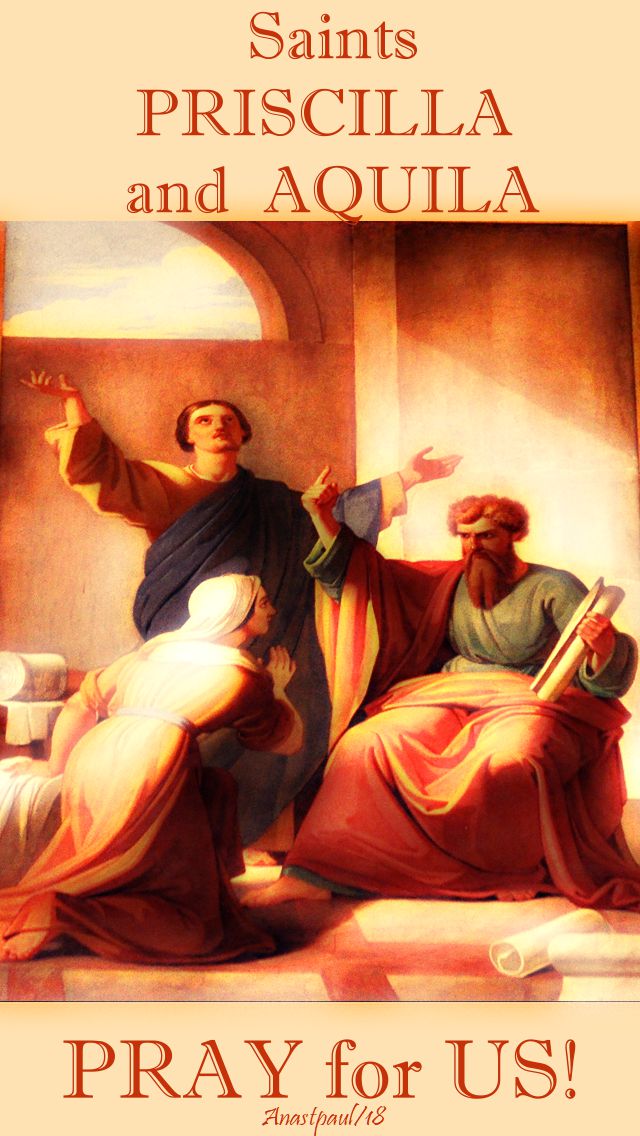
PRAYER – Lord Holy God and Father of all, hold us always in Your Heart, keep us near to Your Son, that our faith may never fail us! Grant that by the prayers of Sts Aquila and Priscilla, we may hold fast to our Saviour, even in times of distress, hardship, persecution and humiliation, when this world assails us. Through Christ our Lord, in the unity of the Holy Spirit, one God forever amen.
One Minute Reflection – 7 July – Saturday of the Thirteenth Week of Ordinary Time, Year B – Today’s Gospel Matthew 9:14-17.
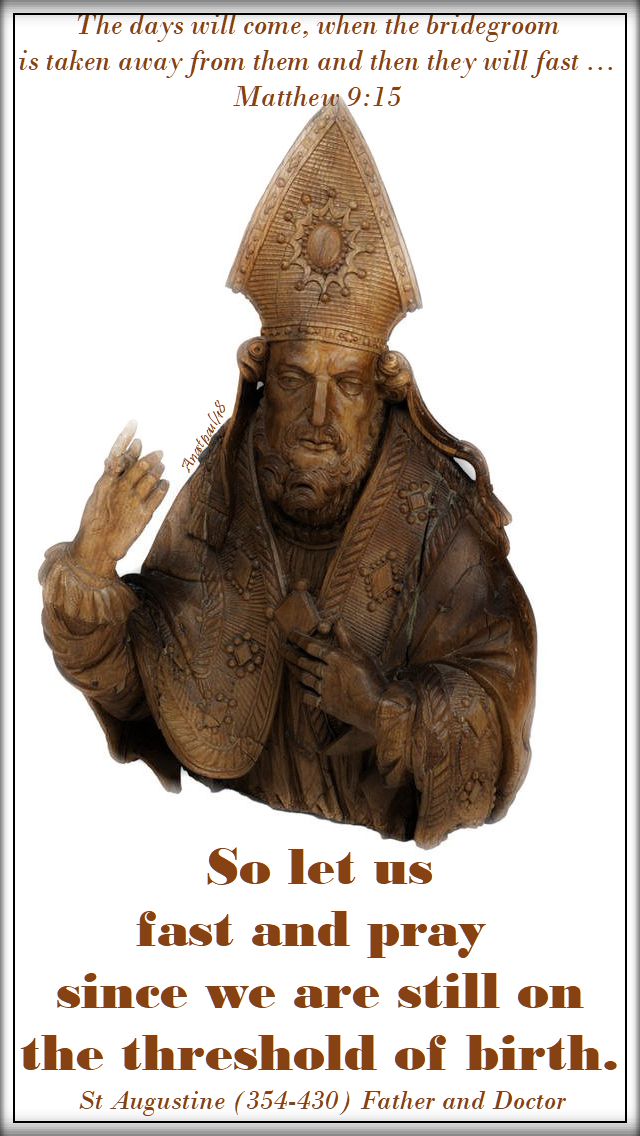
And Jesus said to them, “Can the wedding guests mourn as long as the bridegroom is with them? The days will come, when the bridegroom is taken away from them, and then they will fast...Matthew 9:15
REFLECTION – “However, our mourning is right if we burn with desire to see Him. How happy they were who were able to enjoy His presence before His Passion, to question Him as they wished and listen to Him as necessary… As for us, we see the fulfilment of what He said: “The days are coming when you will long to see one of the days of the Son of Man, and you will not see it” (Lk 17:22)…A little while and you will no longer see me and again a little while and you will see me” (Jn 16:19). But now this is the hour of which He said: “You will weep and mourn but the world will rejoice… But, He added, I will see you again and your hearts will rejoice and no one will take your joy away from you” (v.22). The hope thus given us by Him, who is faithful in His promises, never now leaves us, without a certain joy — until that overwhelming joy comes on the day when we will be like Him because we will see Him as he is (1Jn 3:2)… “When a woman is in labour, she has pain because her hour has come,” says the Lord, “but when her child is born, she no longer remembers the anguish because of the joy of having brought a human being into the world” (Jn 16:21). This is the joy no one can take away from us and with which we will be satisfied when we pass to eternal light from our present conception in faith. So let us fast and pray since we are still on the threshold of birth.“…St Augustine (354-430) Father and Doctor
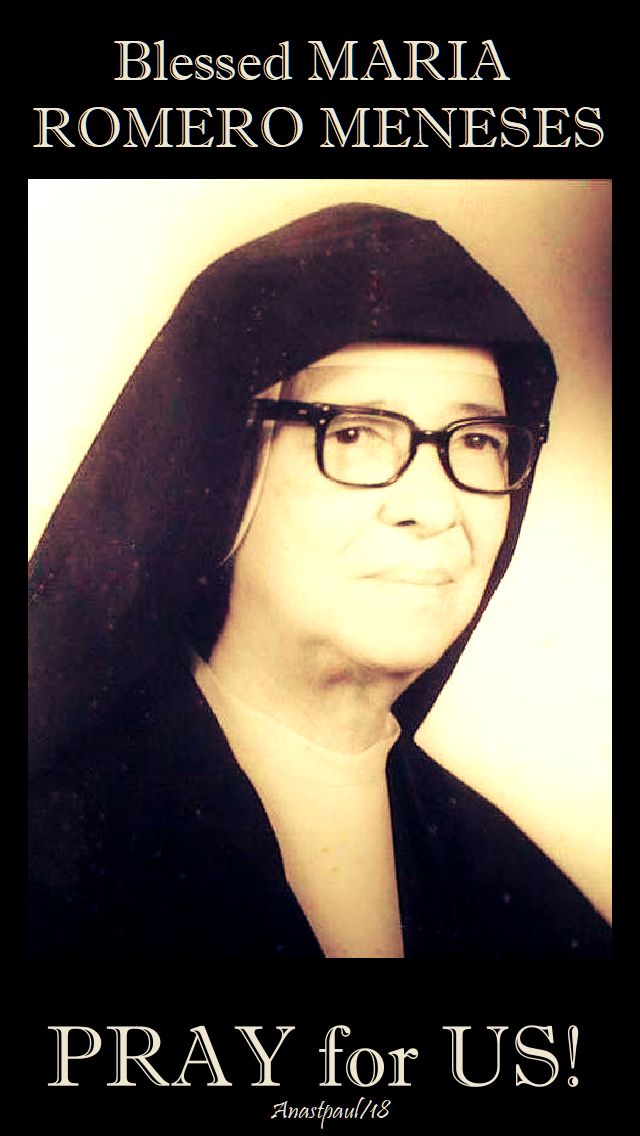
PRAYER – Father almighty, as we wait and work and pray and fast in joyful hope of our eternal life with You, grant we pray that we may always remain steadfast in Your love. Blessed Maria Romero Meneses, pray for us that we will fully utilise the many gifts our Almighty God has bestowed on us as we journey home. We make our prayer through Jesus Christ our Lord, in union with You and the Holy Spirit, one God forever, amen.
Quote of the Day – 3 July – Feast of St Thomas Apostle
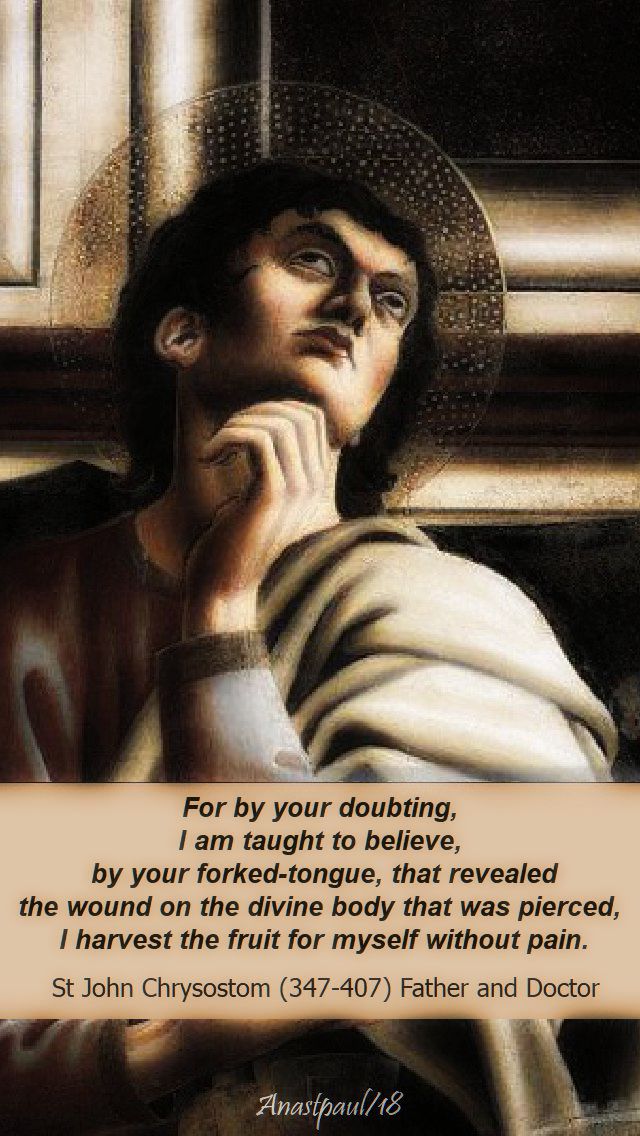
“For by your doubting, I am taught to believe, by your forked-tongue, that revealed the wound on the divine body that was pierced, I harvest the fruit for myself without pain.”
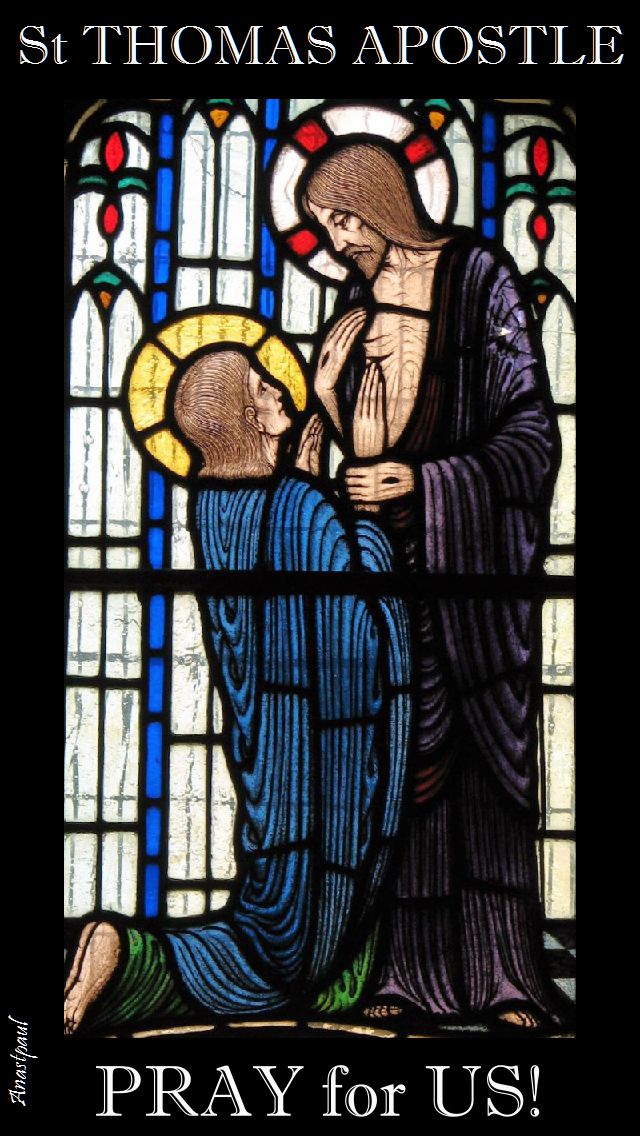
One Minute Reflection – 3 July – Feast of St Thomas Apostle – Today’s Gospel: John 20:24-29.
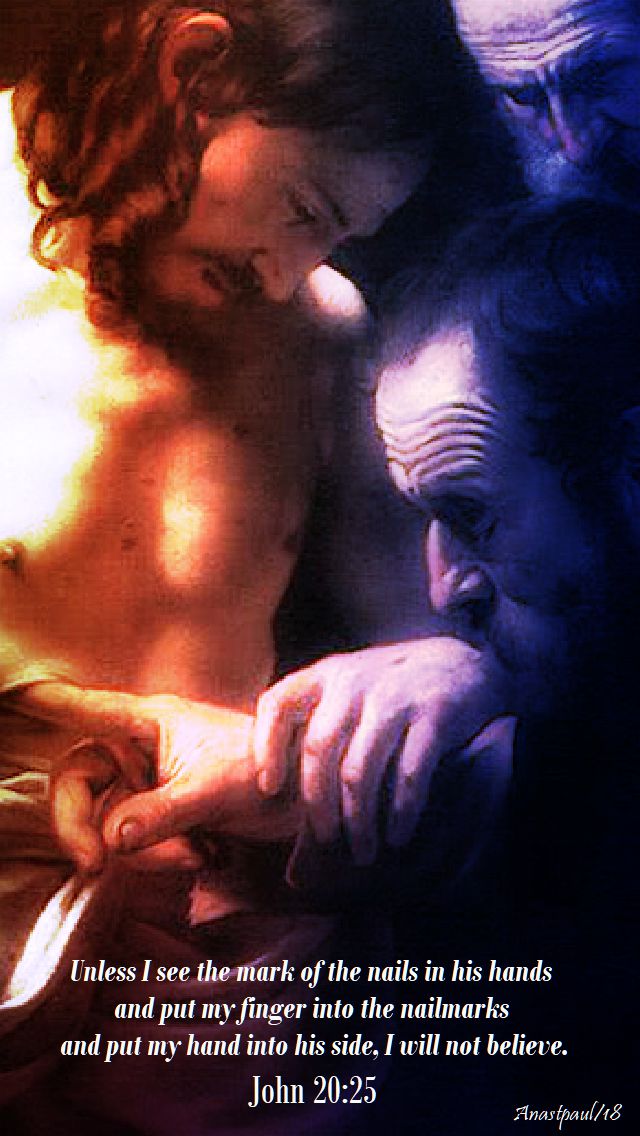
Thomas, called Didymus, one of the Twelve, was not with them when Jesus came. So the other disciples said to him, “We have seen the Lord.” But he said to them, “Unless I see the mark of the nails in his hands and put my finger into the nailmarks and put my hand into his side, I will not believe.”...John 20:24-25
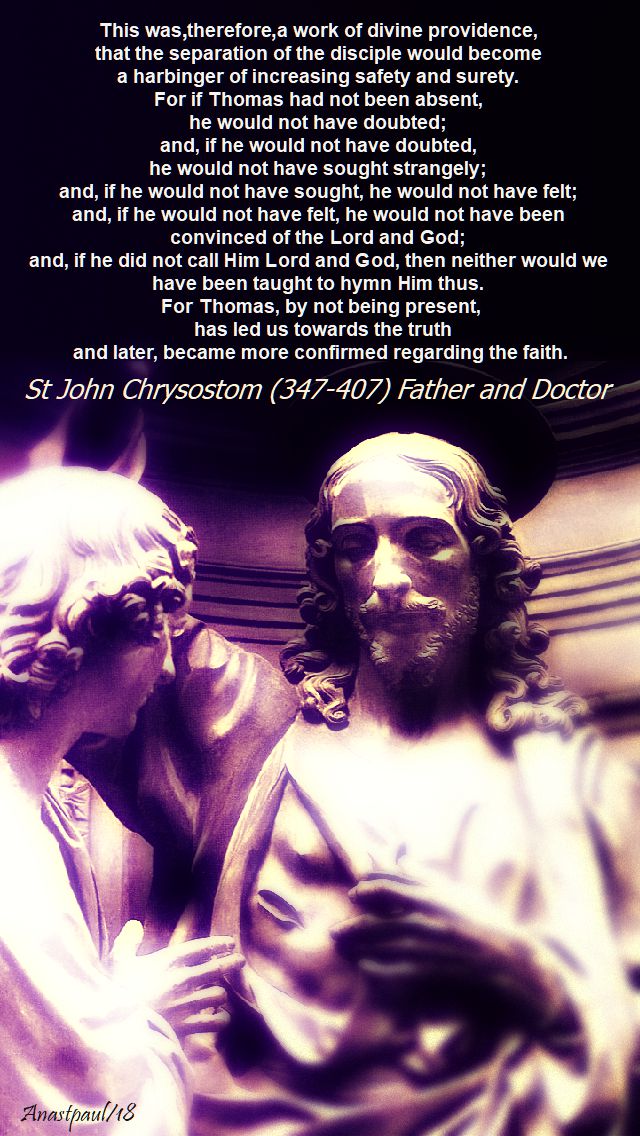
REFLECTION – “This was, therefore, a work of divine providence, that the separation of the disciple, would become a harbinger of increasing safety and surety. For if Thomas had not been absent, he would not have doubted; and, if he would not have doubted, he would not have sought strangely; and, if he would not have sought, he would not have felt; and, if he would not have felt, he would not have been convinced of the Lord and God; and, if he did not call Him Lord and God, then neither would we have been taught to hymn Him thus. For Thomas, by not being present, has led us towards the truth and later, became more confirmed regarding the faith.”… St John Chrysostom (347-407) Father and Doctor
PRAYER – Father, let our celebration on the feast of Saint Thomas the Apostle, be the source of his unfailing help and protection. Fill us with Your life-giving grace through our faith in Your Son, Jesus the Christ, whom Thomas acknowledged to be his Lord and his God. We make our prayer, through our Lord Jesus in union with the Holy Spirit, one God with You, forever and ever, amen.
















 AnaStpaul
You must be logged in to post a comment.