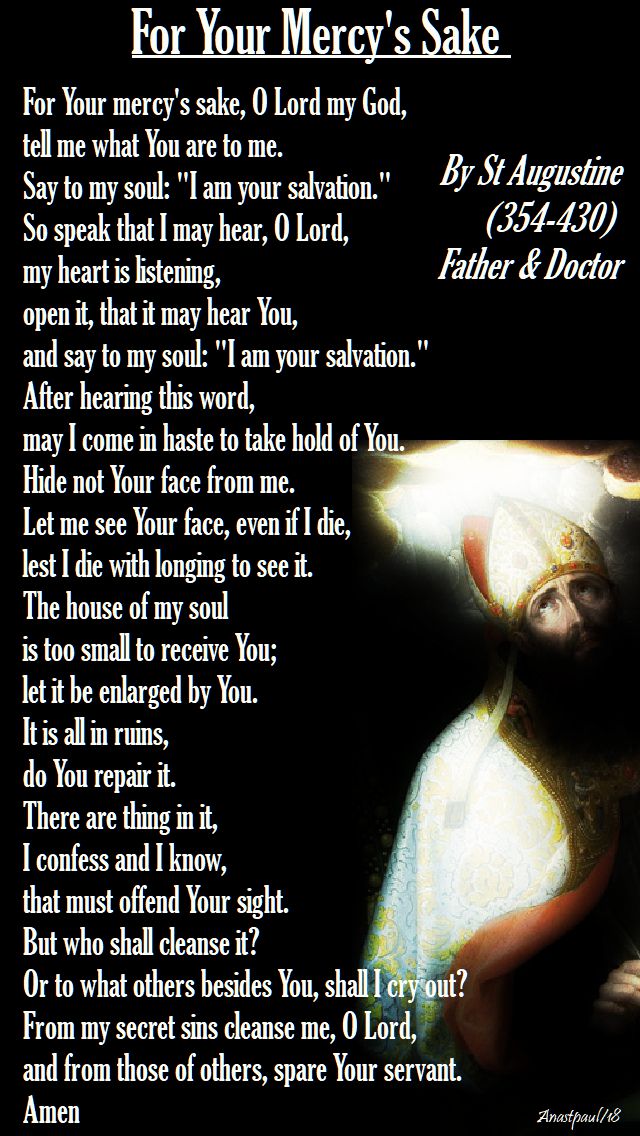
Thought for the Day -30 July – The Memorial of St Peter Chrysologus “Golden Words” (c 400-450) Father & Doctor
Saint Peter’s great gift to the Church are the words he left behind and the impact those words have upon those who hear them—both while he was alive and in the present day.
His name, meaning “Golden Words” in Greek, comes not from long and intricate homilies given on complex theological issues but rather his humility and the hope that he would not “bore” the faithful.
His teachings on the Annunciation, Prayer, Fasting and Mercy, the Holy Eucharist, the Incarnation and Human Dignity, the Priesthood of All Catholic Believers, the Epiphany, the Love of God and more—as well as around 180 other sermons—survive today, inspiring us and reminding us of the core tenets of our faith.
He is credited as the first to deliver the “short sermon”—morally rich, Gospel-driven, doctrinally sound brief reflections on the Catholic way of being in the world, of living what Christ taught us.
St Peter was called “Golden Words” because his eloquence ‘enriched’ those who listened, though the words themselves have immense value.
The wonder of Gold is that it does not tarnish or lose its value, in fact gold constantly increases in value. Reading today his golden words, we can certainly agree with his nickname, for they are even more valuable in our time possibly, than in his. And, let us not forget that ‘good listening’ is as important as good preaching.
Quote/s of the Day 30 July – The Memorial of St Peter Chrysologus “Golden Words”
(c 400-450) Father & Doctor
“Each of us is called to be both a sacrifice to God and His priest. Do not forfeit what divine authority confers on you. Put on the garment of holiness, gird yourself with the belt of chastity. Let Christ be your helmet, let the cross on your forehead be your unfailing protection. Your breastplate should be the knowledge of God that He Himself has given you. Keep burning continually the sweet smelling incense of prayer. Take up the sword of the Spirit. Let your heart be an altar. Then, with full confidence in God, present your body for sacrifice. God desires not death but faith; God thirsts not for blood but for self-surrender; God is appeased not by slaughter but by the offering of your free will.”
“He is The Bread sown in the virgin, leavened in the Flesh, moulded in His Passion, baked in the furnace of the Sepulchre, placed in the Churches and set upon the Altars, which daily supplies Heavenly Food to the faithful.”
“For he who touches the Body of Christ unworthily, receives his damnation.”
“Now that we are reborn,… in the likeness of our Lord and have indeed been adopted by God as his children, let us put on the complete image of our Creator so as to be wholly like Him, not in the glory that He alone possesses but in innocence, simplicity, gentleness, patience, humility, mercy, harmony, those qualities in which He chose to become and to be, one with us.”
“The poor stretch out the hand but God receives what is offered.”
” If you want God to know that you are hungry, know that another is hungry. If you hope for mercy, show mercy. If you look for kindness, show kindness. If you want to receive, give. If you ask for yourself what you deny to others, your asking is a mockery.”
“Anyone who wishes to frolic with the devil cannot rejoice with Christ.”
“We exhort you, in every respect, honourable brother, to heed obediently what has been written by the Most Blessed Pope of the City of Rome; for Blessed Peter, who lives and presides in his own see, provides the truth of faith to those who seek it.”
One Minute Reflection – 30 July – Monday of the Seventeenth week in Ordinary Time, Year B and The Memorial of St Peter Chrysologus “Golden Words” (c 400-450) Father & Doctor
“The kingdom of heaven is like leaven which a woman took and hid in three measures of flour, till it was all leavened.”..Matthew 13:33
REFLECTION – “Let us give the deep meaning of this parable. The woman who took some yeast is the Church; the yeast which she took is the revelation of heavenly doctrine; the three measures with which she mixed the yeast are the Law, the Prophets and the Gospels, where the divine meaning mixes itself and hides itself under symbolic terms, to be understood by the believer but escape those who do not believe. As for these words “until the whole batch was leavened”, they relate to what the apostle Paul says: “Now we know partially and we prophesy partially, but when the perfect comes, the partial will pass away” (1Co 13:9). The knowledge of God is now in the dough: it spreads to the senses, it inflates hearts, strengthens our minds and like all instruction, widens them, lifts them and opens them up to the dimensions of heavenly wisdom. Everything will soon be leavened. When? at the advent of Christ.”...St Peter Chrysologus
PRAYER – God our Father, You made St Peter Chrysologus a most eloquent preacher of Christ, Your Word. By his intercession, help us top meditate constantly in our hearts, on the mysteries by which You save us and to manifest them faithfully in our lives. We make our prayer through Jesus Christ and the Holy Spirit, one God forever, amen.
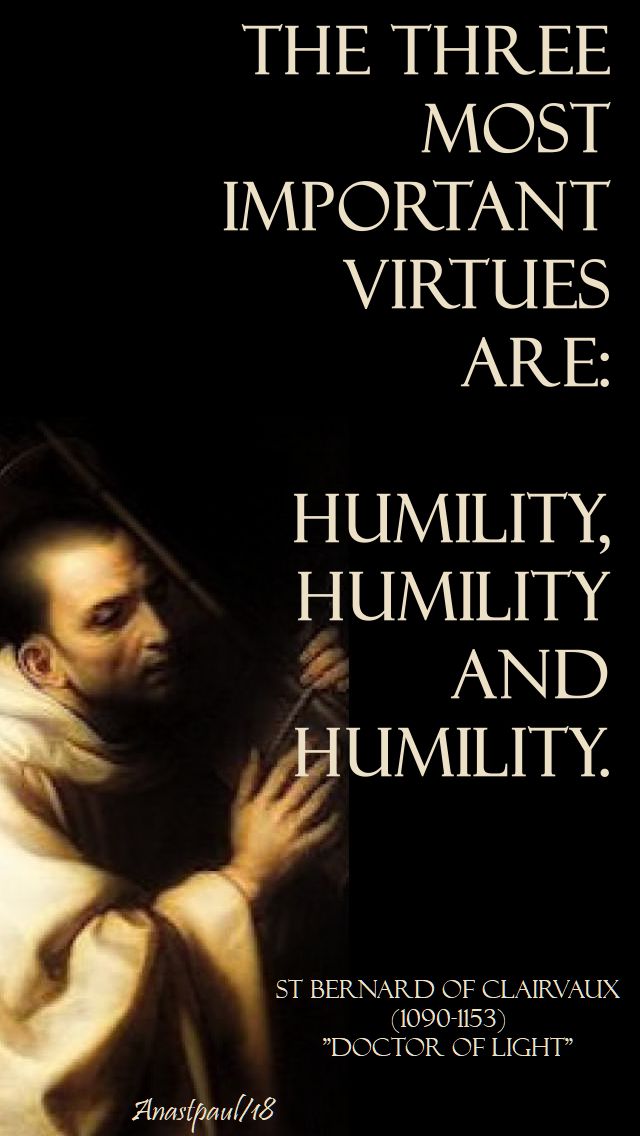
In the Name of the Father, Son and Holy Spirit By St Hilary (315-368) Father & Doctor of the Church
Father, keep us from vain strife of words.
Grant to us constant profession of the Truth!
Preserve us in a true and undefiled faith
so that we may hold fast to that
which we professed when we were baptised
in the Name of the Father, Son and Holy Spirit,
that we may have Thee for our Father,
that we may abide in Thy Son
and in the fellowship of the Holy Spirit.
Through Jesus Christ, Our Lord.
Amen
Saint of the Day – 30 July – St Peter Chrysologus (c 400-450) “Golden Words” Father & Doctor of the Church – Bishop of Ravenna, Italy. Patronages – against fever, against mad dogs, of Imola, Italy.
Today we celebrate the Memorial of Saint Peter Chrysologus, a fifth-century Italian bishop known for testifying courageously to Christ’s full humanity and divinity during a period of the heresy called Monophysite.
The saint’s title, Chrysologus, signifies “golden speech” in Greek. Named as a Doctor of the Church in 1729, he is distinguished as the “Doctor of Homilies” for the concise but theologically rich reflections he delivered during his time as the Bishop of Ravenna.
His surviving works (176 of sermons), offer eloquent testimony to the Church’s traditional beliefs about Mary’s perpetual virginity, the penitential value of Lent, Christ’s Eucharistic presence, and the primacy of St Peter and his successors in the Church.
Few details of St Peter Chrysologus’ early life are known. He was born in the Italian Town of Imola in either the late fourth or early fifth century but sources differ as to whether this occurred around 380 or as late as 406.
Following his study of theology, Peter was Ordained to the Diaconate by Imola’s local Bishop Cornelius, whom he greatly admired and regarded as his spiritual father. Cornelius not only Ordained Peter but taught him the value of humility and self-denial. The lessons of his mentor inspired Peter to live as a Monk for many years, embracing a lifestyle of asceticism, simplicity and prayer. His simple monastic life came to an end, however, after the death of Archbishop John of Ravenna in 430. After John’s death, the clergy and people of Ravenna chose a successor and asked Cornelius, still the Bishop of Imola, to journey to Rome and obtain Papal approval for the candidate. Cornelius brought Peter, then still a Deacon, along with him on the visit to Pope Sixtus III.
Tradition relates that the Pope had experienced a vision from God on the night before the meeting, commanding him to overrule Ravenna’s choice of a new Archbishop. The Pope declared that Peter, instead, was to be Ordained as John’s successor.
In Ravenna, Peter was received warmly by the Western Roman Emperor Valentinian III and his mother Galla Placidia. She is said to have given him the title of “Chrysologus” because of his preaching skills. Throughout the Archdiocese, however, he encountered the surviving remnants of paganism, along with various abuses and distortions of the Catholic faith. Peter exercised zeal and pastoral care in curbing abuses and evangelising non-Christians, during his leadership of the Church in Ravenna.
One of the major heresies of his age, Monophysitism, held that Christ did not possess a distinct human nature in union with His eternal divine nature. Peter laboured to prevent the westward spread of this error, promoted from Constantinople by the monk Eutyches.
The Archbishop of Ravenna also made improvements to the City’s Cathedral and built several new Churches. Near the end of his life he addressed a significant letter to Eutyches, stressing the Pope’s authority in the Monophysite controversy.
Having returned to Imola in anticipation of his death, St Peter Chrysologus died in 450, one year before the Church’s official condemnation of Monophysitism. 176 of his sermons have survived; it is the strength of these beautiful explanations of the Incarnation, the Creed, the place of Mary and John the Baptist in the great plan of salvation, etc., that led to his being proclaimed a Doctor of the Church in 1729 by Pope Benedict XIII.
St Abdon
Bl Antonio di San Pietro
Bl Edward Powell
St Ermengyth
St Hatebrand
St Julitta of Caesarea
St Leopold Bogdan Mandic
Bl Manés de Guzmán
St María Natividad Venegas de La Torre
Bl Richard Featherstone
St Rufinus of Assisi
St Senen
St Tatwine of Canterbury
St Terenzio of Imola
Bl Thomas Abel
St Ursus of Auxerre
Bl Vicenta Chavez-Orozco
—
Martyrs of Castelseras: Three Dominicans, two of them priests, one a novice, who were martyred together in the Spanish Civil War for refusing to renounce Christianity.
• Joaquín Prats Baltueña
• José María Muro-Sanmiguel
• Zosimo Izquierdo Gil
They were shot on 30 July 1936 at a farm house outside Castelserás, Teruel, Spain and Beatified on 11 March 2001 by Pope John Paul II.
Martyrs of Tebourba – 3 saints: Three girls martyred together in the persecutions of Diocletian. We know little else about them but the names – Donatilla, Maxima and Secunda. 304 at Tebourba in North Africa.
Martyred in the Spanish Civil War: Thousands of people were murdered in the anti-Catholic persecutions of the Spanish Civil War from 1934 to 1939. Today’s list includes the following:
The Martyred Hospitallers of Spain and
Bl Alejandro Arraya Caballero
Bl Alejandro González Blanco
Bl Bernabé Núñez Alonso
Bl Eugenio García Tribaldos
Bl Francesc Salla Saltó
Bl Guillermo Álvarez Quemada
Bl Jaume Puig Mirosa
Bl Juan Lanz Palanca
Bl Luis Aguirre Bilbao
Bl Luis Herrero Arnillas
Bl Miguel Solas del Val
Bl Pablo Díaz de Zárate y Ortiz de Zárate
Bl Rafael Martí Fugueras
Bl Ramón Palos Gascón
Bl Ricardo Pla Espí
Bl Sebastià Llorens Telarroja
Bl Sergio Cid Paz
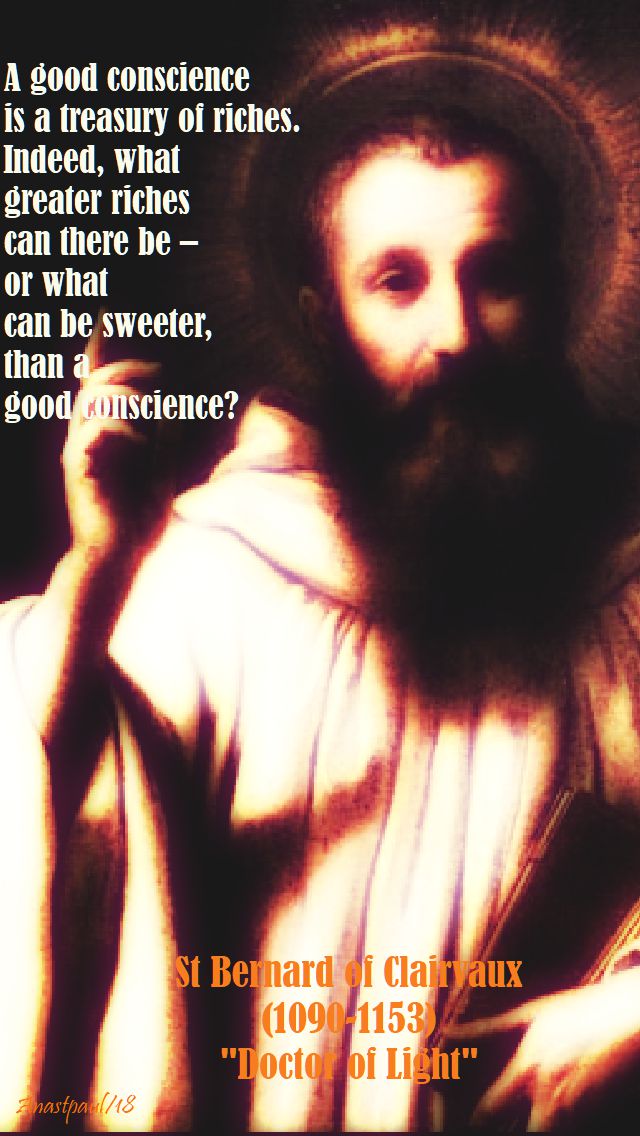
Saint Bernard teaches that it is not enough for us to take and eat the Bread from Heaven.
We must also offer ourselves to be eaten.
Holy Communion is a wondrous exchange in which we become the bread of Christ.
Listen to Saint Bernard:
“My penitence, my salvation are His food. I myself am His food. I am chewed. as I am reproved by Him; I am swallowed by Him. as I am taught; I am digested by Him. as I am changed; I am assimilated. as I am transformed; I am made one with Him, as I am conformed to Him. He feeds upon us and is fed by us that we may be the more loosely bound to Him.”
Saint Bernard, ever the poet, uses images of eating and assimilation to describe how Christ unites us to Himself.
Our Lord becomes our food that we might become His.
We need the language of poets and preachers in our approach to the Eucharist.
Saint Bernard says, “Christ eats me that He may have me in Himself and Christ in turn is eaten by me that He may be in me and the bond between us, will be strong and the union complete.”
What awaits you in Holy Communion exceeds all that you can desire. Eat, then and offer yourself to be eaten. Receive the Bread of God and become the bread of God.
Quote/s of the Day – 29 July – Seventeenth Sunday in Ordinary Time – Today’s Gospel: John 6:1–15 and the Memorial of St Martha
“Martha, Martha, you are anxious and worried about many things. There is need of only one thing. Mary has chosen the better part and it will not be taken from her.” – Luke 10:42
“Our Lord’s words teach us that though we labour among the many distractions of this world, we should have but one goal. For we are but travelers on a journey without as yet a fixed abode; we are on our way, not yet in our native land; we are in a state of longing, not yet of enjoyment. But let us continue on our way and continue without sloth or respite, so that we may ultimately arrive at our destination.”
St Augustine (354-430) Father and Doctor
(Sermo 103, 1-2, 6: PL 38, 613, 615)
One of his disciples, Andrew, Simon Peter’s brother, said to him, “There is a lad here who has five barley loaves and two fish; but what are they among so many?”…John 6:8-9
“Before the suffering, loneliness, poverty and difficulties of so many people, what can we ourselves do? Complaining doesn’t resolve anything but we can offer the little that we have, like the lad in the Gospel. We surely have a few hours of time, certain talents, some skills…. Who among us doesn’t have “five loaves and two fish” of his own? We all have them! If we are willing to place them in the Lord’s hands, they will be enough to bring about a little more love, peace, justice and especially joy in the world.”
One Minute Reflection – 29 July – Seventeenth Sunday in Ordinary Time – Today’s Gospel: John 6:1–15
“This is indeed the Prophet, the one who is to come into the world!”…John 6:14
REFLECTION – “The disciples say that they have only five loaves and two fish. The five loaves signified that they were still subject to the five books of the Law and the two fish that they were fed by the teachings of the prophets and John the Baptist… This was what the apostles had to offer to begin with since this was the point they were at and it was from this point, that the preaching of the Gospel began…
Our Lord took the loaves and the fish. He raised his eyes to heaven, said the blessing and broke them. He gave thanks to the Father because the Good News was being changed into food after centuries of the Law and the prophets… The loaves were then given to the apostles, it was at their hands, that the gifts of divine grace were to be handed out. Then the people were fed with the five loaves and two fish and, when those who were invited were satisfied, the leftovers of bread and fish were so plentiful that twelve baskets were filled with them. What this means is that the crowd was filled with God’s word coming from the teaching of the Law and the prophets. But it is an abundance of divine power, kept aside for the gentiles, that overflows after the provision of the food that lasts forever. It comes to its full complement, that of the number twelve, the same as the number of the apostles. Now, it happens that the number of those who ate is the same as that of those who would come to believe: five thousand men (Mt 14:21; Acts 4:4).”…St Hilary (c 315-367) Bishop of Poitiers, Doctor of the Church
PRAYER – Lord God, protector of those who hope in You, without whom nothing is strong, nothing holy, support us always with Your love. Help us to offer our own ‘loaves and fishes’ our own talents and possessions, to feed all who need our care. May the prayers of St Martha grant us Your grace to serve Christ faithfully in our brethren and guide us so to use the good things of this world, that even now, we may hold fast to what endures forever, through Jesus Christ, our Lord. Amen
Our Morning Offering – 28 July – Seventeenth Sunday in Ordinary Time, Year B (and still in the Month of Precious Blood)
Wash Me With Your Precious Blood By St Peter Canisius (1521-1597) Doctor of the Church
See, O merciful God,
what return
I, Your thankless servant,
have made for the innumerable favours
and the wonderful love
You have shown me!
What wrongs I have done,
what good left undone!
Wash away, I beg You,
these faults and stains
with Your precious blood,
most kind Redeemer,
and make up for my poverty
by applying Your merits.
Give me the protection I need,
to amend my life.
I give and surrender myself wholly to You,
and offer You all I possess,
with the prayer,
that You bestow Your grace on me,
so that I may be able to devote and employ
all the thinking power of my mind
and the strength of my body,
in Your holy service,
who are God blessed
forever and ever.
Amen
Our Morning Offering – 28 July – Saturday of the Sixteenth week in Ordinary Time, Year B
Lord, I am Yours By St Francis de Sales (1567-1622) Doctor of the Church
Lord, I am Yours,
and I must belong to no one but You.
My soul is Yours,
and must live only by You.
My will is Yours,
and must love only for You.
I must love You as my first cause,
since I am from You.
I must love You as my end and rest,
since I am for You.
I must love You more than my own being,
since my being subsists by You.
I must love You more than myself,
since I am all Yours and all in You.
Amen
One Minute Reflection – 26 July – The Memorial of Sts Joachim and Anne, Parents of the Blessed Virgina nd Grandparents of Jesus
How wonderful is God among his saints; come, let us adore him…..Psalm 94
REFLECTION – “Joachim and Anne, how blessed a couple! All creation is indebted to you. For at your hands the Creator was offered a gift excelling all other gifts: a chaste mother, who alone was worthy of Him. Joachim and Anne, how blessed and spotless a couple! You will be known by the fruit you have borne, as the Lord says: “By their fruits you will know them.” The conduct of your life pleased God and was worthy of your daughter. For by the chaste and holy life you led together, you have fashioned a jewel of virginity: she who remained a virgin before, during and after giving birth . She alone for all time would maintain her virginity in mind and soul as well as in body. Joachim and Anne, how chaste a couple! While leading a devout and holy life in your human nature, you gave birth to a daughter nobler than the angels, whose queen she now is.” – from a sermon by Saint John Damascene (675-749) – Doctor of the Church
PRAYER – O Lord, God of our Fathers, who bestowed on Saints Joachim and Anne this grace, that of them should be born the Mother of your incarnate Son, grant, through the prayers of both, that we may attain the salvation you have promised to your people. Through our Lord Jesus Christ, your Son, who lives and reigns with you in the unity of the Holy Spirit, one God, for ever and ever. Sts Joachim and Anne, pray for us! Amen
Thought for the Day – 25 July – The Memorial of St Christopher (died c 251) One of the Fourteen Holy Helpers
The Fourteen “Auxiliary Saints” or “Holy Helpers” are a group of saints invoked because they have been efficacious in assisting in trials and sufferings. Each saint has a separate feast or memorial day and the group was collectively venerated on 8 August until the 1969 reform of the Roman calendar, when the feast was dropped. These saints were often represented together. Popular devotion to these saints often began in some monastery that held their relics. All of the saints except Giles were martyrs. Devotion to some of the saints, such as St George, St Margaret, St Christopher, St Barbara and St Catherine became so widespread that customs and festivals still are popular today.
The Fourteen Holy Helpers are invoked as a group mainly because of the Black Plague which devastated Europe from 1346 to 1349. Among its symptoms were the black tongue, a parched throat, violent headache, fever and boils on the abdomen. The victims were attacked without warning, robbing them of their reason and killed within a few hours; many died without the last Sacraments. No one was immune and the disease wreaked havoc in villages and family circles. The epidemic appeared incurable. The pious turned to Heaven, begging the intervention of the saints, praying to be spared or cured. Each of these fourteen saints had been efficacious in interceding in some aspect for the stricken during the Black Plague. The dates are the traditional feast days; not all the saints are on the Universal Roman Calendar.
The Basilica of the Fourteen Holy Helpers (also Basilika Vierzehnheiligen) is a church located near the town of Bad Staffelstein near Bamberg, in Bavaria, southern Germany. The late Baroque-Rococo basilica, designed by Balthasar Neumann, was constructed between 1743 and 1772.
The altar depicts statues of the Fourteen Holy Helpers.
The Legend of Building the Basilica
On 24 September 1445, Hermann Leicht, the young shepherd of a nearby Franciscan monastery, saw a crying child in a field that belonged to the nearby Cistercian monastery of Langheim . As he bent down to pick up the child, it abruptly disappeared. A short time later, the child reappeared in the same spot. This time, two candles were burning next to it. In June 1446, the Leicht saw the child a third time. This time, the child bore a red cross on its chest and was accompanied by thirteen other children. The child said: “We are the fourteen helpers and wish to erect a chapel here, where we can rest. If you will be our servant, we will be yours!” Shortly after, Leicht saw two burning candles descending to this spot. It is alleged that miraculous healings soon began, through the intervention of the fourteen saints.
The Cistercian brothers to whom the land belonged erected a chapel, which immediately attracted pilgrims. An altar was consecrated as early as 1448. Pilgrimages to the Vierzehnheiligen continue to the present day between May and October.
One of the most famous group depictions of the “Fourteen Saints” is a 1503 altarpiece by Matthias Grünewald for the monastery in Lichtenfels in Upper Franconia, unfortunately, I cannot find a complete image of this, below are Panels one and two.
The “fourteen angels” of the lost children’s prayer in the Composer, Engelbert Humperdinck’s (1854-1921) fairy opera, ‘Hansel and Gretel’, are the Fourteen Holy Helpers. The English words are familiar and very beautiful:
When at night I go to sleep, Fourteen angels watch do keep, Two my head are guarding, Two my feet are guiding; Two upon my right hand, Two upon my left hand. Two who warmly cover Two who o’er me hover, Two to whom ’tis given To guide my steps to heaven.
I will pray daily, to the Fourteen Holy Helpers, to Pray for us all, for the world is indeed suffering from a ‘Plague’ of a new kind!
Prayer to the Fourteen Holy Helpers By St Alphonsus Liguori (1696-1787) Doctor of the Church
Great princes of heaven, Holy Helpers,
who sacrificed to God all your earthly possessions,
wealth, preferment and even life
and who now are crowned in heaven
in the secure enjoyment of eternal bliss and glory;
have compassion on me,
a poor sinner in this vale of tears
and obtain for me from God,
for Whom you gave up all things
and Who loves you as His servants,
the strength to bear patiently all the trials of this life,
to overcome all temptations
and to persevere in God’s service to the end,
that one day I too may be received into your company,
to praise and glorify Him, the supreme Lord,
Whose beatific vision you enjoy
and Whom you praise and glorify forever.
Amen
One Minute Reflection – 25 July – The Memorial of St James the Greater, Apostle of Christ – Today’s Gospel: Matthew 20:20–28
Jesus said in reply, “You do not know what you are asking. Can you drink the cup that I am going to drink?” They said to him, “We can.”……Matthew 20:28
REFLECTION – “Through their mother’s mediation, the sons of Zebedee press Christ as follows in the presence of their fellow apostles: “Command that we may sit, one at your right side and one at your left” (cf. Mk 10:35f.)… Christ hastens to free them from their illusions, telling them they must be prepared to suffer insults, persecutions, even death. “You do not know what you are asking. Are you able to drink the cup that I shall drink?” Let no one be surprised to see the apostles displaying such imperfect dispositions. Wait until the mystery of the cross has been fulfilled and the strength of the Holy Spirit given to them. If you want to see the strength of their souls, take a look at them later on and you will see them to be above all human weakness. Christ does not conceal their pettiness so you will be able to see what they become later on by the power of the grace that will transform them…”… St John Chrysostom (c 345-407) Father & Doctor of the Church
“…we can learn much from St James: promptness in accepting the Lord’s call even when He asks us to leave the “boat” of our human securities, enthusiasm in following Him on the paths that He indicates to us over and above any deceptive presumption of our own, readiness to witness to Him with courage, if necessary to the point of making the supreme sacrifice of life. Thus James the Greater stands before us, as an eloquent example of generous adherence to Christ. He, who initially had requested, through his mother, to be seated with his brother next to the Master in His Kingdom, was precisely the first to drink the chalice of the passion and to share martyrdom with the Apostles.”…Pope Benedict XVI – General Audience, 21 June 2006
PRAYER – Lord our God, You accepted the sacrifice of St James, the first of Your Apostles to give his life for Your sake. May Your Church find strength in his martyrdom and support in his constant prayer. Through our Lord Jesus Christ, your Son, who lives and reigns with you in the unity of the Holy Spirit, one God, for ever and ever. St James the Greater, Apostle of Christ, Pray for us! Amen
Quote of the Day – 24 July – Tuesday of the Sixteenth week in Ordinary Time, Year B – Today’s Gospel: Matthew 12:46-50
“For whoever does the will of my Father in heaven, is my brother and sister and mother.”…Matthew 12:50
It is a matter of real sorrow when God has given us strength to break stronger fetters, those of vanity and sin, that we neglect our own progress and the attainment of such great blessings, because we will not detach ourselves from trifles. Not only do we not advance, we fall back. For it is well known, that on the spiritual road, not to go on overcoming self, is to go backwards and not to increase our gain, is to lose. As wood can never be transformed into fire, if one necessary degree of heat is missing, so the soul, that has even one imperfection, can never be perfectly transformed in God.
St John of the Cross (1542-1591) Doctor of the Church
One Minute Reflection – 24 July 2018 – Tuesday of the Sixteenth week in Ordinary Time, Year B – Today’s Gospel: Matthew 12:46-50 and the Memorial of St Charbel Makhluf (1828-1898)
“For whoever does the will of my Father in heaven, is my brother and sister and mother.”…Matthew 12:50
REFLECTION – “His mother is the whole Church, since it is she, who, by God’s grace, gives birth to Christ’s members, that is to say, those who are faithful to Him. Again, His mother is every holy soul who does the Father’s will and whose fruitful charity is made known in those, to whom she gives birth for Him, “until he has been formed in them” (cf Gal 4:19)…St Augustine (354-430) Father & Doctor
PRAYER – Almighty Father, You made us Your children, You called us from all ages and You formed us by Holy Mother Church. Grant, we pray, that by Your grace, we may be ever faithful to her and be guided by Your Holy Spirit of love. O God may Your holy Saint Charbel Makhluf intercede for us that, being made imitators of the Lord’s Passion, we may merit to be co-heirs of His Kingdom. Who lives and reigns with You in the unity of the Holy Spirit, one God, forever, amen.
Morning Prayer to the Holy Spirit By St Augustine (354-430) Father & Doctor
Spirit of wisdom and understanding,
enlighten our minds
to perceive the mysteries
of the universe in relation to eternity.
Spirit of right judgment and courage,
guide us and make us firm
in our baptismal decision
to follow Jesus’ way of love.
Spirit of knowledge and reverence,
help us to see the lasting value
of justice and mercy
in our everyday dealings
with one another.
May we respect life
as we work to solve problems
of family and nation,
economy and ecology.
Spirit of God,
spark our faith, hope and love
into new action each day.
Fill our lives with wonder and awe
in Your presence
which penetrates all creation.
Amen
Thought for the Day – 22 July – Feast of St Mary of Magdala
“When Mary Magdalene came to the tomb and did not find the Lord’s body, she thought it had been taken away and so informed the disciples. After they came and saw the tomb, they too believed what Mary had told them. The text then says: “The disciples went back home,” and it adds: “but Mary wept and remained standing outside the tomb.”
We should reflect on Mary’s attitude and the great love she felt for Christ; for though the disciples had left the tomb, she remained. She was still seeking the one she had not found and while she sought she wept; burning with the fire of love, she longed for Him who she thought had been taken away.
And so it happened that the woman who stayed behind to seek Christ was the only one to see Him. For perseverance is essential to any good deed, as the voice of truth tell us: “Whoever perseveres to the end will be saved”…. Jesus says to her: “Mary.” Jesus is not recognised when He calls her “woman”, so He calls her by name, as though He were saying: ‘Recognise me as I recognise you, for I do not know you as I know others, I know you as yourself.’
And so Mary, once addressed by name, recognises who is speaking. She immediately calls Him ‘Rabboni’, that is to say, teacher, because the one whom she sought outwardly was the one who inwardly taught her to keep on searching.”
from a homily by St Pope Gregory the Great (540-604) Father & Doctor
One Minute Reflection – 22 July – Sixteenth Sunday in Ordinary Time, Year B – Today’s Gospel: Mark 6:30-34
And he said to them, “Come away by yourselves to a lonely place and rest a while.”...Mark 6:31
REFLECTION – “So they got into the boat and went away by themselves to a deserted spot”… The people followed them. They showed how concerned they were for their salvation by the effort they made in going along the deserted road, not on donkeys or in carts of various kinds but on foot. In return Jesus welcomed those weary, ignorant, sick and hungry people, instructing, healing and feeding them as a kindly saviour and physician and so letting them know how pleased He is by believers’ devotion to Him.”…Saint Bede the Venerable (c 673-735) Father & Doctor of the Church (Commentary on Saint Mark’s gospel, 2 ; CCL 120, 510)
“Today we could pray during this mass for our shepherds, that the Lord may give them the grace to walk with the people and to be present for them with much tenderness and closeness. When people find their shepherd, they feel that special sensation only felt in the presence of God. The amazement comes from the feeling of the closeness and tenderness of God in the shepherd.”…Pope Francis – Santa Marta, 30 January 2018
PRAYER – Be gracious, Lord, to us who serve You and in Your kindness increase Your gifts of grace within us, so that fervent in faith, hope and love, we may be ever on the watch and persevere in doing what You command. Guard, protect and inspire our own shepherds, our priests who serve Your people, keep them faithful, loyal and prayerful. May our Mother, the most Holy and Pure Blessed Virgin Mary, keep our priests and all of us at her side. Through our Lord Jesus Christ, one God with Holy Spirit, forever and ever, amen.
Quote/s of the Day – 21 July – The Memorial of St Lawrence of Brindisi OFM Cap (1559-1619) Doctor of the Church
“God is love and all his operations proceed from love. Once he wills to manifest that goodness by sharing His love outside Himself, then the Incarnation becomes the supreme manifestation of His goodness and love and glory. So, Christ was intended before all other creatures and for His own sake. For Him all things were created and to Him all things must be subject and God loves all creature, in and because of Christ. Christ is the first-born of every creature and the whole of humanity. as well as the created world, finds its foundation and meaning in Him. Moreover, this would have been the case, even if Adam had not sinned.”
“God is love and all His operations proceed from LOVE…”
“For Him all things were created and to Him all things must be subject and God loves all creature, in and because of Christ.”
“Christ is the first-born of every creature and the whole of humanity. as well as the created world, finds its foundation and meaning in Him.”
“The Holy Spirit sweetens the yoke of the divine law and lightens its weight, so that we may observe God’s commandments with the greatest of ease and even with pleasure”
“The word of God is replete with manifold blessings, since it is, so to speak, a treasure of all goods. It is the source of faith, hope, charity, all virtue, all the gifts of the Holy Spirit, all the beatitudes of the Gospel, all good works, all the rewards of life, all the glory of paradise…”
“…The word of God is a light to the mind and a fire to the will.”
St Lawrence of Brindisi(1559-1619) Apostolic Doctor
One Minute Reflection – 21 July – Saturday of the Fifteenth week in Ordinary Time – The Memorial of St Lawrence of Brindisi OFM Cap (1559-1619) Doctor of the Church – Today’s Readings: Micah 2:1-5, Psalm 10:1-4, 7-8, 14, Matthew 12:14-21
“Behold, my servant whom I have chosen, my beloved with whom my soul is well pleased…. and in his name will the Gentiles hope.”…Matthew 12:18,21
REFLECTION – “My dear souls, let us recognise, I pray you, Christ’s infinite charity towards us, in the institution of this Sacrament of the Eucharist. In order that our love be a spiritual love, He wills a new heart, a new love, a new spirit for us. It is not with a carnal heart but with a spiritual one, that Christ has loved us with a gratuitous love, a supreme and most ardent love, by way of pure grace and charity. Ah! One needs to love Him back with one’s whole, whole, whole, living, living, living and true, true, true heart!!” …… St Lawrence of Brindisi (1559-1619) Apostolic Doctor
PRAYER – Lord God, You bestowed on St Lawrence of Brindisi the spirit of counsel and fortitude, so that Your name might be glorified and souls be saved. At the intercession of St Lawrence, grant that we may see what we have to do and, in Your mercy give us the strength to do it and the courage, love and charity to persevere. Grant above all, that by his prayers we may love You above all and with all we are. St Lawrence pray for us, amen.
Our Morning Offering – 21 July – The Memorial of St Lawrence of Brindisi OFM Cap (1559-1619) Doctor of the Church – Today’s Readings: Micah 2:1-5, Psalm 10:1-4, 7-8, 14, Matthew 12:14-21
“Woe to those who devise wickedness and work evil upon their beds!”…Micah 2:1
The Peace Prayer
By St Francis of Assisi (c 1181-1226)
Lord, make me an instrument of Your peace, where there is hatred, let me sow love, where there is injury, pardon, where there is doubt, faith, where there is despair, hope, where there is darkness, light and where there is sadness, joy. O Divine Master, grant that I may not so much seek to be consoled as to console, to be understood as to understand, to be loved as to love, for it is in giving that we receive, it is in pardoning that we are pardoned and it is in dying that we are born to eternal life.
Saint of the Day – 21 July – St Lawrence of Brindisi OFM Cap (1559-1619) Doctor of the Church. He was created a Doctor of the Church by St Pope John XXIII in 1959 with the title Doctor apostolicus (Apostolic Doctor). Patronages – Brindisi, Italy.
St Lawrence is known as the “Franciscan Renaissance Man” – he was a Religious member of the Franciscan Friars Minor Capuchin, a Priest, Theologian, Vicar General of the Franciscans, Language scholar, Apologist of immense and calm resources, Humanist, Philosopher, Biblicist, Preacher, Missionary, Professor, International Administrator, Confidant of Popes, Emperors, Kings and Princes, Diplomatic envoy, Army Chaplain, Military Strategist and Morale builder, Polemicist, Prolific writer.
Saint Lawrence of Brindisi
By Pope Benedict XVI
General Audience, 23 March 2011
I still remember with joy the festive welcome I was given in Brindisi in 2008. It was in this city that in 1559 was born a distinguished Doctor of the Church, St Lawrence of Brindisi, the name that Julius Caesar Russo took upon entering the Capuchin Order.
He had been attracted since childhood by the family of St Francis of Assisi. In fact, his father died when he was seven years old and his mother entrusted him to the care of the Friars Minor Conventual in his hometown. A few years later, however, Lawrence and his mother moved to Venice and it was precisely there that he became acquainted with the Capuchins who in that period were generously dedicated to serving the whole Church in order to further the important spiritual reform promoted by the Council of Trent.
With his religious profession in 1575, Lawrence became a Capuchin friar and in 1582 he was ordained a priest. During his ecclesiastical studies for the priesthood he already showed the eminent intellectual qualities with which he had been endowed. He learned with ease the ancient languages, such as Greek, Hebrew and Syriac, as well as modern languages, such as French and German. He added these to his knowledge of Italian and of Latin that was once spoken fluently by all clerics and by all cultured people. Thanks to his mastery of so many languages, Lawrence was able to carry out a busy apostolate among the different categories of people. As an effective preacher, his knowledge, not only of the Bible but also of the rabbinic literature, was so profound that even the Rabbis, impressed and full of admiration, treated him with esteem and respect.
As a theologian steeped in Sacred Scripture and in the Fathers of the Church, he was also able to illustrate Catholic doctrine in an exemplary manner to Christians who, especially in Germany, had adhered to the Reformation. With his calm, clear exposition he demonstrated the biblical and patristic foundation of all the articles of faith disputed by Martin Luther. These included the primacy of St Peter and of his Successors, the divine origin of the Episcopate, justification as an inner transformation of man, and the need to do good works for salvation. Lawrence’s success helps us to realise that today too, in pursuing ecumenical dialogue with such great hope, the reference to Sacred Scripture, interpreted in accordance with the Tradition of the Church, is an indispensable element of fundamental importance. I wished to recall this in my Apostolic Exhortation Verbum Domini (n. 46). Even the simplest members of the faithful, those not endowed with great culture, benefited from the convincing words of Lawrence, who addressed humble people to remind them all to make their lives consistent with the faith they professed.
This was a great merit of the Capuchins and of other religious Orders which, in the 16th and 17th centuries, contributed to the renewal of Christian life, penetrating the depths of society with their witness of life and their teaching. Today too, the new evangelisation stands in need of well-trained apostles, zealous and courageous, so that the light and beauty of the Gospel, may prevail over the cultural tendencies of ethical relativism and religious indifference and transform the various ways of thinking and acting into genuine Christian humanism.
It is surprising that St Lawrence of Brindisi was able to continue without interruption his work as an appreciated and unflagging preacher in many cities of Italy and in different countries, in spite of holding other burdensome offices of great responsibility. Indeed, within the Order of Capuchins he was professor of theology, novice master, for several mandates minister provincial and definitor general and finally, from 1602 to 1605, minister general. In the midst of this mountain of work, Lawrence cultivated an exceptionally fervent spiritual life. He devoted much time to prayer and, especially, to the celebration of Holy Mass — often protracted for hours — caught up in and moved by the memorial of the Passion, death and Resurrection of the Lord.
At the school of the saints, every priest, as was emphasised frequently during the recent Year for Priests, may only avoid the danger of activism — acting, that is, without remembering the profound motives of his ministry — if he attends to his own inner life.
In speaking to priests and seminarians in the Cathedral of Brindisi, St Lawrence’s birthplace, I recalled that “the time he spends in prayer is the most important time in a priest’s life, in which divine grace acts with greater effectiveness, making his ministry fruitful. The first service to render to the community is prayer. And, therefore, time for prayer must be given true priority in our life… if we are not interiorly in communion with God, we cannot even give anything to others. Therefore, God is the first priority. We must always reserve the time necessary to be in communion of prayer with Our Lord” (Address of Benedict XVI to priests, deacons and seminarians of the Archdiocese of Brindisi, Cathedral of Brindisi, 15 June 2008).
Moreover, with the unmistakable ardour of his style, Lawrence urged everyone and not only priests, to cultivate a life of prayer, for it is through prayer that we speak to God and that God speaks to us: “Oh, if we were to consider this reality!”, he exclaimed. “In other words that God is truly present to us when we speak to him in prayer; that he truly listens to our prayers, even if we pray only with our hearts and minds. And that not only is he present and hears us, indeed he willingly and with the greatest of pleasure wishes to grant our requests”.
Another trait that characterises the opus of this son of St Frances, is his action for peace. Time and again both Supreme Pontiffs and Catholic Princes entrusted him with important diplomatic missions, to settle controversies and to encourage harmony among the European States, threatened in those days by the Ottoman Empire. The moral authority he enjoyed made him a counsellor both sought after and listened to. Today, as in the times of St Lawrence, the world is in great need of peace, it needs peaceful and peacemaking men and women. All who believe in God must always be sources and artisans of peace.
It was precisely on the occasion of one of these diplomatic missions that Lawrence’s earthly life ended, in 1619 in Lisbon, where he had gone to see King Philip III of Spain, to plead the cause of the Neapolitan subjects oppressed by the local authorities.
He was Canonised in 1881 and his vigorous and intense activity, his vast and harmonious knowledge, earned him the title of Doctor Apostolicus, “Apostolic Doctor”. The title was conferred on him by St Pope John XXIII in 1959, on the occasion of the fourth centenary of his birth. This recognition was also granted to Lawrence of Brindisi because he was the author of numerous works of biblical exegesis, theology and sermons. In them he offers an organic presentation of the history of salvation, centred on the mystery of the Incarnation, the greatest expression of divine love for humankind.
Furthermore, since he was a highly qualified Mariologist, the author of a collection of sermons on Our Lady entitled “Mariale”, he highlighted the unique role of the Virgin Mary, whose Immaculate Conception and whose role in the redemption brought about by Christ he clearly affirms.
With a fine theological sensitivity, Lawrence of Brindisi also pointed out the Holy Spirit’s action in the believer’s life. He reminds us that the Third Person of the Most Holy Trinity illumines and assists us with his gifts in our commitment to live joyously the Gospel message.
“The Holy Spirit”, St Lawrence wrote, “sweetens the yoke of the divine law and lightens its weight, so that we may observe God’s commandments with the greatest of ease and even with pleasure”.
I would like to complete this brief presentation of the life and doctrine of St Lawrence of Brindisi by underlining that the whole of his activity was inspired by great love for Sacred Scripture, which he knew thoroughly and by heart and by the conviction that listening to and the reception of the word of God produces an inner transformation that leads us to holiness.
“The word of the Lord”, he said, “is a light for the mind and a fire for the will, so that man may know and love God. For the inner man, who lives through the living grace of God’s Spirit, it is bread and water but bread sweeter than honey and water better than wine or milk…. It is a weapon against a heart stubbornly entrenched in vice. It is a sword against the flesh, the world and the devil, to destroy every sin”.
St Lawrence of Brindisi teaches us to love Sacred Scripture, to increase in familiarity with it, to cultivate daily relations of friendship with the Lord in prayer, so that our every action, our every activity, may have its beginning and its fulfilment in him. This is the source from which to draw so that our Christian witness may be luminous and able to lead the people of our time to God….vatican.va Pope Benedict
I Have Only Today! By St Therese of the Child Jesus (1873-1897) Doctor of the Church
My life is an instant,
an hour which passes by;
My life is a moment,
which I have no power to stay.
You know, O my God,
That to love You here on earth,
I have only today.
Amen
Thought for the Day – 19 July – Thursday of the Fifteenth week in Ordinary Time, Year B – Today’s Gospel: Matthew 11:28-30.
“Come to me, all who labour and are heavy laden and I will give you rest. Take my yoke upon you and learn from me; for I am gentle and lowly in heart and you will find rest for your souls. For my yoke is easy, and my burden is light.”…Matthew 11:28-30
The light burden of the law of Christ
Saint Jerome (347-420)
Priest, Translator of the Bible,
Father & Doctor of the Church
“Bear one another’s burdens and so you will fulfil the law of Christ.” Sin is a burden as the psalmist attests when he says: “My sins weigh heavy upon me.” But the Lord has carried this burden for us, teaching us, by His example what we ourselves should do. For it is He who bore the burden of our sins; He was stricken for our sake (cf Is 53:8) and invites those who are weighed down by the heavy burden of the Law and of their sins to carry the easy burden of virtue, saying: “My yoke is easy and my burden is light” (Mt 11:30).
Therefore, whoever holds out a hand to the person who begs for support, not despairing of a neighbour’s salvation, who weeps with those who weep, is weak with those who are weak and who regards other’s sins as though they were his own – such a one, fulfils through charity, the law of Christ. What is this law of Christ? “I give you a new commandment, that you love one another” (Jn 13:34). What is the law of the Son of God? “Love one another as I have loved you.” How has the Son of God loved us? No one has greater love than this, “to lay down one’s life for one’s friends” (Jn 15:13).
Someone who shows no clemency, who is not clothed with the bowels of mercy and tears, no matter what sort of student he is in spirituality, such a one does not fulfil the law of Christ.
Someone who comes to the assistance of the poor weighed down by the burden of destitution and makes friends with dishonest wealth (Lk 16:9), such a one shoulders the needs of his neighbour. This is the one to whom Jesus will say after the general resurrection: “Come, you that are blessed by my Father, inherit the kingdom prepared for you from the foundation of the world. For I was hungry and you gave me food, I was thirsty and you gave me something to drink” (Mt 25:34-35).
Quote/s of the Day – 18 July – The Holy Father’s Prayer Intention for July “Pray for our Priests and their Pastoral Ministry”
“He made them, the vicars of His love.
St Ambrose (340-397)
Father & Doctor of the Church
“The power of the priest, is the power of the divine person, for the transubstantiation of the bread, requires as much power, as the creation of the world.”
St Bernardine of Siena (1380-1444)
“St Bernard tells us that everything has come to us through Mary and we may also say that everything has come to us through the priest, yes, all happiness, all graces, all heavenly gifts. If we had not the Sacrament of Orders, we should not have Our Lord. Who placed Him there, in that tabernacle? It was the priest. Who was it that received your soul, on its entrance into life? The priest. Who nourishes it, to give it strength to make its pilgrimage? The priest. Who will prepare it to appear before God, by washing that soul, for the last time, in the blood of Jesus Christ? The priest – always the priest. And if that soul comes to the point of death, who will raise it up, who will restore it to calmness and peace? Again the priest. You cannot recall one single blessing from God, without finding, side by side with this recollection, the image of the priest.”
“If I were to meet a priest and an angel, I should salute the priest before I saluted the angel. The latter is the friend of God but the priest holds His place.”
St John Vianney (1786-1859) Patron of Priests
“Day after day, it is necessary to learn, that I do not possess my life for myself. Day by day, I must learn to abandon myself, to keep myself available for whatever He, the Lord, needs of me at a given moment, even if other things seem more appealing and more important to me, this means giving life, not taking it.”
Quote/s of the Day – 17 July – Tuesday of the Fifteenth week in Ordinary Time, B – Today’s Gospel: Matthew 11:20-24
Speaking of: Seeking Repentance with the Fathers
“When once you have departed this life, there is no longer any place for repentance, no way of making satisfaction. Here, life is either lost or kept. Here, by the worship of God and by the fruit of faith, provision is made for eternal salvation. Let no one be kept back either by his sins or by his years from coming to obtain salvation. To him who still remains in this world, there is no repentance that is too late.”
St Cyprian of Carthage (c 200- c 258)
Father of the Church
“Do you fast? Then feed the hungry, give drink to the thirsty, visit the sick, do not forget the imprisoned, have pity on the tortured, comfort those who grieve and who weep, be merciful, humble, kind, calm, patient, sympathetic, forgiving, reverent, truthful and pious, so that God might accept your fasting and might plentifully grant you the fruits of repentance.”
“Since it is likely that, being men, they would sin every day, St Paul consoles his hearers by saying ‘renew yourselves’ from day to day. This is what we do with houses: we keep constantly repairing them as they wear old. You should do the same thing to yourself. Have you sinned today? Have you made your soul old? Do not despair, do not despond but renew your soul by repentance and tears and Confession and by doing good things. And never cease doing this.”
“If repentance is neglected for an instant, one can lose the power of the Resurrection as he lives with the weakness of tepidity and the potential of his fall.”
St John Chrysostom (347-407)
Father and Doctor of the Church
“Reform yourself and so be always ready. Be not afraid of the last day, as a thief, who will break up your house as you sleep but awake and reform yourself today.”
“In failing to confess, Lord, I would only hide You from myself, not myself from You.”
St Augustine (354-430) Father and Doctor of the Church
“To do penance is to bewail the evil we have done and to do no evil to bewail.”
St Pope Gregory the Great (540-604)
Father & Doctor of the Church
“Repentance raises the fallen, mourning knocks at the gate of Heaven and holy humility opens it.”
“Repentance is the renewal of baptism. Repentance is a contract with God for a second life. A penitent is a buyer of humility. Repentance is constant distrust of bodily comfort. Repentance is self-condemning reflection of carefree self-care. Repentance is the daughter of hope and the renunciation of despair. A penitent is an undisgraced convict. Repentance is reconciliation with the Lord by the practice of good deeds contrary to the sins. Repentance is purification of conscience. Repentance is the voluntary endurance of all afflictions. A penitent is the inflicter of his own punishments. Repentance is a mighty persecution of the stomach and a striking of the soul into vigorous awareness.”
“Confession is like a bridle that keeps the soul which reflects on it from committing sin but anything left unconfessed we continue to do without fear as if in the dark.”
Our Morning Offering – 17 July – Tuesday of the Fifteenth week in Ordinary Time, B
Steer the Ship of My Life, Lord By St Basil the Great (329-379) Father & Doctor of the Church
Steer the ship of my life, Lord,
to Your quiet harbour,
where I can be safe from
the storms of sin and conflict.
Show me the course I should take.
Renew in me the gift of discernment,
so that I can see the right direction
in which I should go.
And give me the strength
and the courage
to choose the right course,
even when the sea is rough
and the waves are high,
knowing that through enduring
hardship and danger in Your name
we shall find comfort and peace.
Amen
Thought for the Day – 15 July – Fifteenth Sunday of the Year – the Memorial of St Bonaventure (1221-1274) – Seraphic Doctor
Perhaps not a household name for most people, Saint Bonaventure, nevertheless, played an important role in both the medieval Church and the history of the Franciscan Order. A senior faculty member at the University of Paris, Saint Bonaventure certainly captured the hearts of his students through his academic skills and insights. But more importantly, he captured their hearts through his Franciscan love for Jesus and the Church. Like his model, Saint Francis, Jesus was the centre of everything—his teaching, his administration, his writing, and his life . So much so, that he was given the title “Seraphic Doctor.”
Bonaventure so united holiness and theological knowledge that he rose to the heights of mysticism while remaining a very active preacher and teacher, one beloved by all who met him. To know him was to love him; to read him is still for us today to meet a true Franciscan and a gentleman.
In his bull of Canonisation, Pope Sixtus IV wrote:
Bonaventure was great in learning but no less great in humility and holiness. His innocence and dove-like simplicity were such that Alexander of Hales, the renowned doctor whose disciple Saint Bonaventure became, used to say of him that it seemed as though Adam had never sinned in him.
A man of eminent learning and eloquence and of outstanding holiness, he was known for his kindness, approachableness, gentleness and compassion. – Pope Gregory X on hearing of the death of Bonaventure.
Let us learn from the great Saint himself, to grow in the fruits he possessed in such abundance – humility, kindness, gentleness, charity, chastity, generosity, joy, peace, patience, faithfulness, modesty and self-control. (Matthew 7: 15-20)
“We must beg the Holy Spirit, with ardent longing, to give us these fruits. The Holy Spirit alone, knows how to bring to light, the sweetness hidden away under the rugged exterior of the words of the Law. We must go to the Holy Spirit for interior guidance.”
St Bonaventure from Holiness of Life
St Bonaventure, Pray for us!
Prayer To Obtain the Seven Gifts of the Holy Spirit By St Bonaventure (1221-1274) – Seraphic Doctor
We, therefore, pray to the most kind Father through You, His only-begotten Son, who for us became man, was crucified and glorified, that He send us out of His treasures the Spirit of sevenfold grace who rested upon You in all fullness: the Spirit, I say, of WISDOM, that we may taste the life-giving flavours of the fruit of the tree of life, which You truly are; the gift also of UNDERSTANDING, by which the intentions of our mind are illumined; the gift of COUNSEL, by which we may follow in Your footsteps on the right paths; the gift of FORTITUDE, by which we may be able to weaken the violence of our enemies’ attacks; the gift of KNOWLEDGE, by which we may be filled with the brilliant light of Your sacred teaching to distinguish good and evil; the gift of PIETY, by which we may acquire a merciful heart; the gift of FEAR, by which we may draw away from all evil and be set at peace by submitting in awe to Your eternal majesty. for You have wished that we ask for these things in that sacred prayer which You have taught us; and now we ask to obtain them, through Your cross, for the praise of Your most Holy Name. to You, with the Father and the Holy Spirit, be honour and glory, thanksgiving, beauty and power, forever and ever. Amen
-From Prayer “To Obtain the Seven Gifts of the Holy Spirit” included at the closing The Tree of Life” ― Bonaventure, Bonaventure: The Soul’s Journey into God, the Tree of Life, the Life of St. Francis
You must be logged in to post a comment.