Notre-Dame de Bolougne-sur-Mer / Our Lady of Bolougne-sur-Mer, France (633) – 20 February:
In the year 636, a small group of people standing on the seashore witnessed a ship without oars or sails came into the harbour of Boulogne. It finally came to rest in the estuary, seemingly of its own accord. One of the witnesses boarded the boat and confirmed that there was no-one aboard and that the vessel had no rudder, oars or sails. The ship, however, bore a luminous statue of Our Lady. Taking hold of it to bring it to land, a voice was heard saying, “I choose your City as a place of grace.” The citizens welcomed Mary to their city by erecting a Shrine to her, which reached its height of glory in the 12th Century.
King Henry VIII is reported to have stolen the Statue of Our Lady of Boulogne and taken it to England. After many negotiations, the French managed to get it back. The image had been stolen and hidden many other times but always saved and returned. World War II almost completely destroyed the Statue. In modern times, four exact replicas of Our Lady of Boulogne toured France for more than seven years, as a symbol of French devotion to Mary. One of these was taken to Walsingham, England in 1948 and carried in procession by the “Cross-bearing pilgrimate” when many other Statues and images of the Virgin visited England. Bologne was one of the most important Lady shrines of medieval France; among its noted pilgrims have been: Henry III, Edward II, the Black Prince, John of Gaunt. Marian Feast Day, 10 July: The dedication of a new Church built in honour of Our Lady of Boulogne was consecrated in the year 1469 by Bishop Chartier of Paris. The confraternity of Our Lady of Boulogne was so celebrated, that six French kings have chosen to belong to it.
At the French Revolution, the Statue was burnt to ashes and the Church pulled down. A new Shrine and Statue was made in 1803 and pilgrimages began again. The image represents the Mother with the Child in her arms, standing in a boat, with an angel on either side. At the Marian Congress in Bolougne in 1938, a custom began to take replicas of this Statue “in turn” in France and abroad. A branch of the Confraternity of Our Lady of Compassion at Bolougne has been established for the reconciliation of the Church of England. The Sanctuary Church at Bolougne was badly damaged during World War II and Mary’s image smashed but the return, the “Great Return” of one of the copies of the Statue which had been sheltered at Lourdes, took place in 1943 and the occasion will long be remembered by lovers of the Blessed Virgin Mary.
The shrine of Our Lady of Boulogne-sur-Mer, built in 1866.
Most remarkable about the Grand Return was the unprecedented avalanche of graces, especially of conversions and penance. Thousands upon thousands of atheists, communists, freemasons and fallen-away Catholics converted on the spot when they saw Our Lady enter their village. One bishop described the effect on the faithful:
“The passing of Our Lady in my Diocese is the most extraordinary contemporary religious event of our times and the most significant. Crowds of people rose up, motivated and enthusiastic. In fact, the confessionals and communion rails were besieged during the holy vigils, while the recitation of the mysteries of the Rosary kept the faithful praying in the Churches. In some Parishes, there were tremendous conversions like never seen before on the missions.”
Young men of the French Boy Scouts, barefoot in the spirit of penance, carry Our Lady of the Grand Return in February 1946.
Saint of the Day – 19 February – Blessed Alvarez of Cordova OP (c 1350–c 1430) Priest of the Order of Preachers, Confessor, Ascetic, Royal Advisor and Tutor, founder of many Churches and Convents, miracle-worker – born in c 1350 in either Lisbon, Portugal or Cordova, Spain (sources vary) and died in c1430 at Escalaceli near Cordova, Spain of natural causes, aged around 80 and is buried there. By his preaching and contemplation of the Lord’s Passion he spread the practice of the Way of the Cross, throughout the West.
Blessed Alvarez is claimed by both Spain and Portugal. He received the habit in the Convent of Saint Paul in Cordova in 1368 and had been preaching there for some time in Castile and Andalusia, when Saint Vincent Ferrer began preaching in Catalonia. Having gone to Italy and the Holy Land on a pilgrimage, Alvarez returned to Castile and preached the crusade against the infidels. He was spiritual advisor to the Queen-mother of Spain, Catherine daughter of John of Gaunt and tutor to her son who would become King John II. Alvarez had the work of preparing the people spiritually, for the desperate effort to banish the Moors from Spain. He also opposed the Avignon Pope Peter de Luna nd encouraged all to resist him.
Blessed Alvarez is remembered and honoured as a builder of Churches and Convents, an activity which was symbolic of the work he did in the souls of those among whom he preached. He founded, in one place, a Convent to shelter a famous image of Our Lady, which had been discovered in a miraculous manner. Near Cordova he built the famous Convent of Scala Coeli, a haven of regular observance. It had great influence for many years. His building enterprises were often aided by the angels, who, during the night, carried wood and stones to spots convenient for the workmen.
The austerities of Alvarez were all the more remarkable in that they were not performed by a hermit but by a man of action. He spent the night in prayer, as Saint Dominic had done; he wore a hairshirt and a penitential chain and he begged alms in the streets of Cordova, for the building of his churches, despite the fact, that he had great favour at court and could have obtained all the money he needed from the Queen. He had a deep devotion to the Passion and had scenes of the Lord’s sufferings made into small oratories in the garden of Scala Coeli.
On one occasion, when there was no food for the community but one head of lettuce, left from the night before, Blessed Alvarez called the community together in the refectory, said the customary prayers and sent the porter to the gate. There, the astonished brother found a stranger, leading a mule; the mule was loaded with bread, fish, wine and all things needed for a good meal. The porter turned to thank the benefactor and found that he had disappeared.
At another time, Blessed Alvarez was overcome with pity, at the sight of a dying man who lay untended in the street. Wrapping the man in his mantle, he started home with the sufferer and one of the brothers asked what he was carrying. “A poor sick man,” replied Alvarez. But when they opened the mantle, there was only a large Crucifix in his arms. This Crucifix is still preserved at Scala Coeli.
Blessed Alvarez died and was buried at Scala Coeli. An attempt wads made later to remove the relics to Cordova, but it could not be done because violent storms began each time the journey was resumed and stopped when the body was returned to its original resting place.
Blessed Alvarez founded Escalaceli (Ladder of Heaven), a Dominican house of strict observance in the mountains around Cordova. It became a well known centre of piety and learning. Alvarez spent his days there preaching, teaching, begging alms in the streets and spending his nights in prayer. In the gardens of the house, he set up a series of oratories with images of the Holy Lands and Passion, similar to modern Stations of the Cross.
A bell in the Chapel of Blessed Alvarez, in the Convent of Cordova, rings of itself when anyone in the Convent, or of special note in the Order, is about to die (Benedictines, Dorcy).
Alvarez was Beatified on 22 September 1741 At St Peter’s by Pope Benedict XIV.
Notre Dame-de-Bonne Nouvelle / Our Lady of Good Tidings, Lempdes, France (1500’s) – 18 February:
The Abbot Orsini wrote: “Our Lady of Good Tidings, near Rouen, where a great number of people are seen, particularly on Saturdays.”
It was on 23 December 1563, when the Bishop of Lucon, Jean-Baptiste Tiercelin, consecrated the Church under the patronage of the Blessed Virgin, Notre-Dame-de-Bonne-Nouvelle. This first Chapel came into the world in the midst of religious convulsions that were then taking place in Switzerland, Germany and England, by the leaders of the ‘Reformation’ and must necessarily be seen, as an action bravely going against the tide. The religious wars that began raging in France ten years after its erection, began to be another reason for some concern for faithful Catholics but the pilgrimages to the Church of Notre-Dame-de-Bonne-Nouvelle continued undisturbed. From time immemorial, there had been venerated at Notre Dame a Statue of the Blessed Virgin, holding in her arm the Infant Jesus. Many went to her in procession, especially children, who came each year to ask Mary for perseverance after their first Communion. The revolutionary turmoil in France, which was to take the throne and the altar, could not leave behind the parish of Our Lady of Good Tidings. In 1790 the National Assembly decreed a new law in which the Church of Our Lady of Good Tidings was dissolved. As the Priest, Fr M Fabre, had the courage to refuse the oath of the Civil Constitution of the Clergy, he was thrown into the street. A short time later, on 22 May 1791, the Abbot Fourquet de Damalis, convened in the Church an assembly of the faithful and there were very many who responded. This occurred under the noses of twelve national guardsmen and so the Police Commissioner, a man named Cafin, responded there quickly. He asked the Abbot why there was such a meeting and the Abbot answered him, that he was explaining to the faithful the decrees of the National Assembly for the public good. The Police Commissioner accepted the explanation and the meeting, having been perfectly peaceful, the police commissioner was obliged to agree to the monthly meetings and record it in his minutes. One might think that the worship would be suspended at Notre-Dame-de-Bonne-Nouvelle during the Terror but we have evidence to the contrary. As at Chartres, a great number of the faithful remained active and opposed the removal of the sacred ornaments of the Church and defended their Priests and eager to fulfil their religious duties, they were not to be intimidated by the fear of imprisonment and even death. From the registry of marriages and baptisms, including a few that date back to 1793, we know that there were religious ceremonies such as baptisms and weddings held there secretly, sometimes in an oratory, sometimes in the Church. In the year 1818, a severe epidemic was ravaging the country. The faithful vowed, with the agreement of their Bishop, to go in procession to Our Lady of Good Tidings and celebrate in perpetuity the feast of the Visitation, which was the feast of the Chapel. The procession took place and God quickly put an end to the scourge of the plague. At about that time, a young boy began making regular visits to the Church of Our Lady of Good Tidings, who was the patroness of the village. He was a poor boy materially, for Lempdes was one of the poorer villages in France and he had been born into a peasant family, that was struggling to eke out a living in the wreck of post-revolutionary France. He kept the faith and when he grew up, Jean Baptiste Lamy was Ordained a Priest, eventually becoming the first Archbishop of Sana Fe, New Mexico.
Bl Józef Zaplata St Lucia Yi Zhenmei St Mansuetus of Milan St Odran St Proclus of Bisignano St Quodvultdeus St Valerius of Antibes St Zambdas of Jerusalem
Notre-Dame de l’ Epine / Our Lady of the Thorn, Chalons-sur-Marne, France (1400) – 16 February:
On the night of the Feast of the Annunciation, 24 March in the year 1400, some shepherds tending their flocks were attracted by a bright light coming from the Chapel of Saint John the Baptist near Chalons, France. As they approached the light, they saw that it was actually a thorn bush fully engulfed in flames and they discovered a statue of the Blessed Virgin standing unharmed in the midst of the flames. In fact, though the fire burned brightly, the branches and leaves of the thorn bush were unaffected by the flames. The miracle continued all that night and into the next day and news of the miracle spread quickly. Mobs of people crowded around the burning bush that was so reminiscent of the one witnessed by Moses on Mount Horeb. The Bishop of Chalons, Charles of Poiters, also witnessed the burning bush and the miraculous statue – both still unaffected by the fire. When the flames finally did die down, the bishop reverently took the statue and carried it in his own hands to the nearby Chapel of Saint John. On the very site of the miracle, construction of a Church was begun for the enshrinement of the miraculous statue. Since the Church was built so rapidly – in a little over 24 years – a charming local legend claims that angels continued the work at night after the labourers had left for home. Our Lady of the Thorn (Notre Dame de l’ Epine) became a place of pilgrimage very rapidly. Today, a minor Basilica, the Shrine proved to be so beautiful that the people considered it a worthy place to venerate the Blessed Virgin. The flamboyant Gothic church boasts majestic great doors, a splendid rosette decorating the principle entrance and two chiselled stone spires, rise high and imposing on the plain in Champagne. During the terrible French Revolution, the statue of Our Lady of Thorns was removed from the main altar and hidden for safekeeping. After it had ended, the statue was brought back out for veneration. Many miracles have also been reported at the Shrine, many verified by physicians. The beautiful Basilica of Our Lady of the Thorn has been recognised by several Popes, including Pope Calixtis III, Pius II and Gregory XV. Pope Leo XIII ordered the solemn coronation of the miraculous statue, saying, “Yes, Our Lady of the Thorn will be crowned in my name. Prepare for her a diadem worthy of the Mother of God and the people whom she protects…”
It is a place of grandeur where Christian souls can expand in adoration of the Son of God and many are the pilgrims of all descriptions, who have visited the Shrine over the years, including Saint Joan of Arc in 1429.
Martyrs of Cilicia – 12 saints: A group of Christians who ministered to other Christians who were condemned to work the mines of Cilicia in the persecutions of Maximus. They were arrested, tortured and martryed by order of the governor Firmilian. • Daniel • Elias • Isaias • Jeremy • Samuel The group also includes the three known have been sentenced to the mines – • Pamphilus • Paul of Jamnia • Valens of Jerusalem and those who were exposed as Christians as a result of these murders – • Julian of Cappadocia • Porphyrius of Caesarea • Seleucius of Caesarea • Theodule the Servant They were martyred in 309 in Cilicia, Asia Minor (in modern Turkey).
Quote/s of the Day – 13 February – The Memorial of Blessed Jordan of Saxony OP (1190-1237)
“I send you a you a very little word, THE WORD, made little in the crib, THE WORD, made flesh for us …. THE WORD, of salvation and grace THE WORD, of sweetness and glory THE WORD Who is good and gentle – JESUS CHRIST.”
“There are two ways of keeping God’s word, namely, one, whereby we store in our memory what we hear and the other, whereby we put into practice, what we have heard (and none will deny that the latter is more commendable, inasmuch, as it is better to sow grain, than to store it in the barn).”
“Virtue – humility and patience, kindness and obedience, charity also and sobriety – can never grow to excess.”
Meeting a vagabond upon the road who feigned sickness and poverty, Blessed Jordan gave him one of his tunics, which the fellow at once carried straight to a tavern for drink. The brethren, seeing this done, taunted him with his simplicity:
‘There now, Master, see how wisely you have bestowed your tunic.’
“I did so,’ said he, ‘because I believed him to be in want, through sickness and poverty and it seemed, at the moment, to be a charity to help him. Still, I reckon it better, to have parted with my tunic than with charity.”
“And if I send them away hungry to their homes, they will faint on the way. And some of them have come from far away.” – Mark 8:3
REFLECTION – “Lord Jesus, how well I know You have no wish to allow these people here with me, to remain hungry but to feed them, with the food You distribute, and so, strengthened with Your food, they will have no fear of collapsing from hunger. I know, too, that You have no wish to send us away hungry, either… As You have said – You do not want them to collapse on the way, meaning to collapse in the byways of this life, before reaching the end of the road, before coming to the Father and understanding that You come from the Father…
Our Lord takes pity, then, so that none may collapse along the way… Just as He makes it rain on the just as well as the unjust (Mt 5,45) so He feeds the just, as well as the unjust. Was it not thanks to the strength of the food, that the holy prophet Elijah, when he was collapsing on the way, was able to walk for forty days? (1Kgs 19,8). It was an angel who gave that food to him but, in your case, it is Christ Himself who feeds you. If you preserve the food you have received, in this way, then you will walk, not forty days and forty nights… but for forty years, from your departure from the borders of Egypt to your arrival in the land of plenty, the land where milk and honey flow (Ex 3,8)…
And so Christ shares out the foodstuffs and, there is no question, He wants to give it to all. He withholds it from no-one, for He provides for everyone. Nevertheless, when He breaks the loaves and gives them to the disciples, unless you hold out your hands to receive your portion, you will collapse along the way… This bread that Jesus breaks, is the mystery of the Word of God, it increases as it is distributed. With only a few words Jesus has provided abundant nourishment for all peoples. He has given us His words as bread and, while we are tasting them, they increase in our mouths… Even as the crowds are eating, the pieces increase and become more numerous to such an extent that, in the end, the leftovers are even more plentiful than the loaves that were shared.” – St Ambrose (340-397) Father and Doctor of the Church – Commentary on the Gospel of Saint Luke, VI, 73-88
PRAYER – Lord support us as we pray, protect us day and night. Grant us the grace of total trust and teach us to hear Your Voice and do Your Will. By Your Word You teach and lead us and Your Word, we share with all. May Your food always strengthen us for the journey that we may reach the end of the road in Heaven. May the prayers of Blessed Jordan of Saxony, help us and strengthen us that we may grow in worthiness to receive Your grace. Through our Lord Jesus Christ in the unity of the Holy Spirit, one God forever, amen.
Our Morning Offering – 13 February – The Memorial of Blessed Jordan of Saxony OP (1190-1237) and a blessed Marian Saturday
It was Jordan who initiated the custom of singing the Salve Regina in procession each night after Compline, to ask Our Lady’s protection of the brothers against temptations from the devil. This is a custom still practised by Dominicans throughout the world and by our community each night.
Salve Regina Hail Holy Queen By Blessed Herman the Cripple of Reichenau(1013–1054)
Hail, holy Queen, Mother of Mercy, Hail our life, our sweetness and our hope. To thee do we cry, Poor banished children of Eve; To thee do we send up our sighs, Mourning and weeping in this valley of tears. Turn then, most gracious advocate, Thine eyes of mercy toward us; And after this our exile, Show unto us the blessed fruit of thy womb, Jesus.
This line, below, by St Bernard of Clairvaux (1090-1153) Doctor of the Church
O clement, O loving, O sweet Virgin Mary.
℣ Pray for us, O holy Mother of God, ℟ that we may be made worthy of the promises of Christ.
Let us pray: Almighty, everlasting God, who by the co-operation of the Holy Spirit didst prepare the body and soul of the glorious Virgin-Mother Mary to become a dwelling-place fit for Thy Son, grant that as we rejoice in her commemoration, so by her fervent intercession, we may be delivered from present evils and from everlasting death. Through the same Christ our Lord. Amen
Mother of Mercy, Notre-Dame de Pellevoisin / Our Lady of Pellevoisin, France (1876) – 13 February: Pellevoisin is a little village not far from Tours in France. In 1876, a young woman, Estelle Faguette, lay dying from tuberculosis, at the aged of 33 – only five hours to live in the opinion of the doctors. With childlike faith, Estelle composed a letter to the Blessed Virgin Mary in which she asked for a cure. The letter was laid at the feet of a Statue of the Virgin in Montbel, the summer chateau of the Rochefoucaulds, about 3 km from Pellevoisin.
And, on the 13th of February, when all were expecting her death, Our Lady appeared near the sickbed. This occurred on three successive nights and then, as Our Lady had promised, the sick woman was instantly cured on a Saturday. During the visits, Our Lady of Pellevoisin frequently spoke to Estelle, her theme being that which she so often has expressed during the past hundred years:
“I am all-merciful and have great influence over my Son. What distresses me most is the lack of respect for my Son. Publish my glory.”
For some months after her miraculous cure, Estelle continued to live quietly at Pellevoisin. She was at a loss to find the means of fulfilling the mission entrusted to her by Our Lady. Her heavenly visitor, however, was watching over her and Estelle was to see her again and receive more minute instructions as to what was required of her. On the feast of Our Lady’s Visitation in the same year, 1876, as Estelle was praying in her room, she was granted another vision. Our Lady, robed in white and wearing on her breast a white scapular with the image of the Sacred Heart of Jesus, appeared to her favoured friend. This was the first of a series of wonderful visions enjoyed by Estelle, ten in all. Again and again Mary pointed to the great need for penance and expiation – a return to God. During one of these apparitions, Our Lady of Pellevoisin, taking her white scapular in her hand, held it before Estelle saying,
“I love this devotion.”
Immediately Estelle knew that her life’s work was to propagate devotion to the Sacred Heart by means of a scapular modeled on Mary’s. On her last appearance, December 8th, Our Lady commanded Estelle to approach her Bishop and give him a copy of the new scapular.
“Tell him to help you with all his power and that nothing would be more agreeable to me, than to see this badge on each one of my children, in reparation for the outrages that my Son suffers in the Sacrament of His Love. See, the graces I pour upon those who wear it with confidence and who help to make it known.”
The Prelate in question, the Archbishop of Bourges, Mnsgr de La Tour d’Auvergne, gave Estelle a favourable hearing and immediately set up a commission to investigate the whole matter. The result of all this was the establishment at Pellevoisin in 1894 by Pope Leo XIII of an Archconfraternity under the title of Mother of Mercy, Our Lady of Pellevoisin. The membership of this Confraternity has gone on increasing year after year, while Pellevoisin itself has become a centre of pilgrimages for thousands of Mary’s friends. Estelle lived her quiet and peaceful life at Pellevoisin, neither desiring nor receiving any personal credit. She died in 1929. Her miraculous cure was recognised in 1983 by Monsignor Paul Vignancour. Although no formal approval has been granted acknowledging the authenticity of the events at Pellevoisi, either by the local bishop at Bourges or by the Holy See, numerous acts of secondary level of approval, including recognition of Mary’s scapular request, have been granted. Pope Leo XIII, by a Motu Proprio, granted indulgences to encourage the pilgrimage to Pellevoisin on 20 December 1892, and on 4 April 1900, The Congregation of Rites issued a decree granting approval to the Scapular of the Sacred Heart.
St Julian of Lyon St Lucinus of Angers St Marice St Martinian the Hermit St Maura of Ravenna St Modomnoc St Paulus Lio Hanzuo St Peter I of Vercelli St Phaolô Lê Van Loc St Stephen of Lyons St Stephen of Rieti
Saint of the Day – 2 February – Blessed Peter Cambiano OP (1320-1365) Priest and Friar of the Order of Preachers (the Dominicans) and Martyr, Confessor, renowned Preacher calling many to conversion by his holy zeal and the power of his words. Born in 1320 in Chieri, Piedmont, Italy and died by being stabbed to death with daggers on 2 February 1365 by Waldensian heretics outside the Franciscan friary of Susa, Italy. He is also known as – Pietro de Ruffi, Peter of Ruffia, Peter Cambiani, Pietro Cambiano av Ruffi. Additional Memorial – 7 November (Dominicans).
Peter Cambiano was born in Chieri, in Piedmont, in 1320. Peter’s father was a City Councillor, his mother was from a noble family and the boy was raised in a pious household. He received a good education and was drawn early to religious life, with a personal devotion to Our Lady of the Rosary and was thus attracted to the Dominican Order.
He joined the Dominicans in Piedmont, Italy at age 16. He continued his studies and was ordained at age 25 and was a noted preacher throughout northern Italy. Among his talents, it is said, that he had a loud clear voice, which was very useful at that time when he had to preach in the open air. He received an appropriate formation that allowed him to be prepared for controversy with the Waldensians, a heretic sect spread in northern Italy.
The inquisition had been set up to deal with those people in Lombardy before the death of St Peter Martyr, a century before. So well did young Peter carry out the work of preaching among them, that the Order sent him to Rome to obtain a higher degree. The Pope, impressed by his talents and his family name, appointed him Inquisitor General in Piedmont.
In January 1365, Peter and two Dominican brothers went on a preaching mission through the mountains between Italy and Switzerland, working from the Franciscan Friary at Susa, Italy.
Peter’s preaching brought many back to the faith, which earned him the anger of the Waldensians. Three of the heretics came to the Friary, asked to see Peter and then murdered him at the gate.
He was buried at the Franciscan Friary, as it was considered unsafe to transport his body through the hostile heretical territory. His relics were translated to the Dominican house in Turin, Italy in 1517, after the Franciscan Friary was destroyed by an invading army.
Peter was Beatified on 4 December 1856 by Pope Pius IX (cultus confirmation).
Loving God, in Your mercy You bestowed the crown of Martyrdom on Blessed Peter for his defence of the true faith. Help us by his prayers to please You by a faith that is manifested through charity. We ask this through our Lord Jesus Christ, Your Son, who lives and reigns with You and the Holy Spirit, one God, forever and ever. Amen (General Calendar of the Order of Preachers)
Feast of the Purification of the Blessed Virgin and the Presentation of the Lord – also known as Candlemas – 2 February: The feast commemorates the purifying of the Blessed Virgin according to the Mosaic Law, 40 days after the birth of Christ and the presentation of the Infant Jesus in the Temple. The feast was introduced into the Eastern Empire by Emperor Justinian I and is mentioned in the Western Church in the Gelasian Sacramentary of the 7th century. Candles are blessed on that day in commemoration of the words of Holy Simeon concerning Christ “a light to the revelation of the Gentiles” (Luke 2) and a procession with lighted candles is held in the church to represent the entry of Christ, the Light of the World, into the Temple of Jerusalem. “Candlemas” is still the name in Scotland for a legal term-day on which interest and rents are payable (2 February). Patronages – Jaro, Philippines, Western Visayas, Philippines.
Our Lady of the Candles – (formally known as Nuestra Señora de la Purificación y la Candelaria) is a Marian title and image venerated by Filipino Catholics. The image, which is enshrined on the balcony of Jaro Cathedral, is known as the patroness of Jaro District of Iloilo City and the whole of the Western Visayas. The feast day of Our Lady of the Candles is on Candlemas (2 February) and is celebrated in Iloilo City with a Solemn Pontifical Mass presided by the Archbishop of Jaro.
St Adalbald of Ostrevant St Adeloga of Kitzingen St Agathodoros of Tyana St Andrea Carlo Ferrari St Apronian the Executioner St Bruno of Ebsdorf St Burchard of Wurzburg St St Candidus the Martyr St Columbanus of Ghent St Cornelius the Centurion St Felician the Martyr St Feock St Firmus of Rome St Flosculus of Orléans St Fortunatus the Martyr St Hilarus the Martyr St Jeanne de Lestonnac St Lawrence of Canterbury Bl Louis Alexander Alphonse Brisson Blessed Maria Domenica Mantovani (1862-1934) Her Life: https://anastpaul.com/2020/02/02/saint-of-the-day-2-february-blessed-maria-domenica-mantovani-1862-1934/ St Marquard of Hildesheim St Mun Blessed Peter Cambiano OP (1320-1365) Priest and Martyr St Rogatus the Martyr St Saturninus the Martyr St Sicharia of Orleans St Simon of Cassia Fidati Bl Stephen Bellesini St Theodoric of Ninden St Victoria the Martyr — Martyrs of Ebsdorf: Members of the army of King Louis III of France under the leadership of Duke Saint Bruno of Ebsdorf. The martyrs died fighting invading pagan Norsemen, and defending the local Christian population. Four bishops, including Saint Marquard of Hildesheim and Saint Theodoric of Ninden, eleven nobles, and countless unnamed foot soldiers died repelling the invaders. They were martyred in the winter of 880 in battle at Luneberg Heath and Ebsdorf, Saxony (modern Germany).
One Minute Reflection – 28 January – Thursday of the Third week in Ordinary Time, Readings: Hebrews 10:19-25, Psalms 24:1-2, 3-4, 5-6, Mark 4:21-25 and the Memorial of St Thomas Aquinas OP (1225-1274) and Blessed Julian Maunoir SJ (1606-1683)
“For to the one who has, more will be given and from the one who has not, even what he has will be taken away.” – Mark 4:25
REFLECTION – “Blessed is the servant who attributes every good to the Lord God, for he who holds back something for himself, hides within himself, the money of his Lord God (Mt 25:18) and that which he thought he had, shall be taken away from him (Mt 25:18.28; Lk 8:18).
Blessed is the servant who esteems himself, no better when he is praised and exalted by people, than when he is considered worthless, simple and despicable; for what a man is before God, that he is and nothing more. …
Blessed is that religious, who takes no pleasure and joy except in the most holy words and deeds of the Lord and with these, leads people to the love of God in joy and gladness … Blessed is the servant who, when he speaks, does not reveal everything about himself in the hope of receiving a reward and, who is not quick to speak but wisely weighs what he should say and how he should reply. Woe to that religious, who does not keep in his heart, the good things the Lord reveals to him and who does not manifest them to others, by his actions but, rather seeks to make such good things known by his words. He, thereby, receives his reward while those who listen to him, carry away but little fruit. …
Blessed is that servant who stores up in heaven (Mt 6,20) the good things which the Lord has revealed to him and does not desire to reveal them to others, in the hope of profiting thereby. For the Most High will manifest his deeds to whomever he wishes. Blessed is the servant who keeps the secrets of the Lord in his heart.” – St Francis of Assisi (c 1181–1226) Founder of the Friars Minor – Admonitions, 19-22.28
PRAYER – Lord, our God, since it was by Your gift that St Thomas became so great a Saint and theologian, give us grace to understand his teaching and follow his way of life. May his great love for Jesus Crucified and His pure adoration of the Blessed Sacrament, be our guide to follow in Your Son’s footsteps and take up our cross and follow Him. Grant that by the prayers of St Thomas, we may grow in love and sanctity, amen.
Our Morning Offering – 28 January – The Memorial of St Thomas Aquinas (1225-1274) Doctor of the Church
O Merciful God By St Thomas Aquinas (1225-1274) Doctor Angelicus Doctor Communis
O merciful God, grant that I may ever perfectly do Your Will in all things. Let it be my ambition to work only for Your honour and glory. Let me rejoice in nothing but that leads to You, nor grieve for anything, that leads away from You. May all passing things be as nothing in my eyes and may all that is Yours be dear to me and You, my God, dear above them all. May all joy be meaningless without You and may I desire nothing apart from You. May all labour and toil delight me when it is for You. Make me, O Lord, obedient without complaint, poor without regret, patient without murmur, humble without pretense, joyous without frivolity, and truthful without disguise. Amen
St Aemilian of Trebi St Agatha Lin Bl Amadeus of Lausanne St Antimus of Brantôme St Archebran Bl Bartolomé Aiutamicristo St Brigid of Picardy St Callinicus St Cannera of Inis Cathaig Bl Charlemagne (a decree of Canonisation was issued by the anti-pope Paschal III but this was never ratified by valid authority.) St Constantly St Flavian of Civita Vecchia St Glastian of Kinglassie Bl James the Almsgiver St James the Hermit St Jerome Lu St John of Reomay St Joseph Freinademetz SVD (1852-1908) St Joseph’s Life: https://anastpaul.com/2020/01/28/saint-of-the-day-28-january-saint-joseph-freinademetz-svd-1852-1908-fu-shenfu-lucky-priest/
Blessed Julian Maunoir SJ (1606-1683) Priest “The Apostle of Brittany” St Julian of Cuenca St Lawrence Wang St Leucius of Apollonia Bl María Luisa Montesinos Orduña St Maura of Picardy Bl Mosè Tovini Bl Odo of Beauvais Bl Olympia Bida St Palladius of Antioch St Paulinus of Aquileia Bl Peter Won Si-jang St Richard of Vaucelles St Thyrsus of Apollonia — Martyrs of Alexandria: A group of 4th-century parishioners in Alexandria, Egypt. During the celebration of Mass one day an Arian officer named Syrianus led a troop of soldiers into their church and proceded to murder all the orthodox Christians in the place. 356 in Alexandria, Egypt.
Quote/s of the Day – 23 January – “Month of the Most Holy Name of Jesus” and The Memorial of Blessed Henry Suso OP (1295-1366)
“Faith in Jesus and in the power of His Holy Name is the greatest spiritual force in the world today. It is a source of joy and inspiration in our youth; of strength in our manhood, when only His Holy Name and His grace, can enable us to overcome temptation; of hope, consolation and confidence at the hour of our death, when more than ever before, we realise, that the meaning of Jesus is ‘Lord, the Saviour.’ We should bow in reverence to His Name and submission to His Holy Will.”
“Suffering is the ancient law of love; there is no quest without pain; there is no lover who is not also a martyr.”
“Remember, that you will derive strength by reflecting, that the saints yearn for you to join their ranks; desire to see you fight bravely and, that you behave like true knights in your encounters with the same adversities which they had to conquer. That breath-taking joy is theirs and your eternal reward for having endured a few years of temporal pain. Every drop of earthly bitterness will be changed into an ocean of heavenly sweetness!”
“I have often repented of having spoken. I have never repented of silence.”
“Let each look to himself and see what God wants of him and attend to this, leaving all else alone.”
Feast in honour of the Blessed Virgin’s Espousal to Saint Joseph. It is certain that a real Matrimony was contracted by Joseph and Mary. Still Mary is called “espoused” to Joseph (“his mother Mary was espoused to Joseph”, Matthew 1:18) because the matrimony was never consummated. The term, ‘spouse’ is applied to married people until their marriage is consummated.
The first definite knowledge of a Feast in honour or the Espousals of Mary dates from 29 August1517, when it was granted by Pope Leo X to the Nuns of the Annunciation. It was celebrated on 22 October. It appears in the Missal of the Franciscans, to whom it was granted on 21 August 1537, for 7 March, while the Servites obtained the Feast for 8 March. Although the Feast of the Espousal has never been extended to the Universal Church ,it is observed in nearly the entire Latin Church on 23 January and in the Spanish-speaking countries on 26 November.
Bl Joan Font Taulat St John the Almoner (Died c 620) Bishop of Alexandria Bl Juan Infante St Jurmin St Lufthild St Maimbod Bl Margaret of Ravenna Martyrius of Valeria St Messalina of Foligno St Ormond of Mairé St Parmenas the Deacon St Severian the Martyr
Saint of the Day – 18 January – Blessed Andrés Grego de Peschiera OP (1400-1485) Priest and Friar of the Order of Preachers, Confessor, Missionary, miracle-worker, known as “the Apostle of the Valtelline,”“Father of the poor.” Born in 1400 in Peschiera del Garda, Italy and died on 18 January 1485 in the Dominican convent at Morbegno, Sondrio, Lombardy, Italy of natural causes. Roman Martyrology – In the convent of Morbegno near the Italian Alps, Blessed Andrew Grego of Peschiera, a priest of the Order of Preachers, who for a long time walked all over the region, where he lived austerely with the poor and tried to reconcile everyone fraternally (1485). Also known as – Andrés Gregho, Andrés of Peschiera, Andrew… Patronages – Peschiera and Valtelline, Italy.
Born early 15th Century in Peschiera, Italy. As a child, Andrés lived on the southern shore of Lake Garda, in northern Italy. His training for a life of heroic sanctity began early, with voluntary penances and unquestioning obedience to his father. Andrés’ first desire was to be a hermit, an ambition that was met with ridicule from his brothers. Failing to realise this hope, he made for himself a severe schedule of prayer and penance and, in his own house, lived the life of one wholly given to God. He was remarkable for his prayer, abstinence, charity for the poor and obedience to his father. Blessed Andrés, as a child, always fasted on only bread and water during the whole of Lent.
After the death of his father, it became increasingly difficult to carry out his plan, so he resolved to enter the cloister. Although his brothers had persecuted him without mercy, he knelt and humbly begged their prayers and forgiveness for having annoyed them. Then he gave them the only possession he had, a walking stick. This stick, thrown carelessly in a corner by the brothers, was forgotten until, long afterwards, it bloomed with flowers, like the legendary rod of Saint Joseph in token of Andrés’ holiness.
The 15-year old received the Dominican habit at Brescia and then was sent to San Marco in Florence. This convent was then at its peak of glory, stamped with the saintly personalities of Saint Antoninus and the Blessed Lawrence of Riprafratta, Constantius and Antony della Chiesa. Andrés soul caught the fire of their apostolic zeal and set forth on his mission in the mountains of northern Italy.
St Dominic, St Catherine and Dominican Saints and Blesseds
Heresy and poverty had combined to draw almost this entire region from the Church. It was a country of great physical difficulties and, in his travels in the Alps, he risked death from snowstorms and avalanches as often as from the daggers of the heretics. Nevertheless, he travelled tirelessly, preaching, teaching and building–for his entire lifetime (45 years). He worked tirelessly and without fear in the area preaching against heresy and founding many orphanages and refuges for the poor. He caused several churches and monasteries to be erected and was so loved by the poor that he was given the popular title, “Father of the poor.”
Morbegno, Valtellina, Italy.
He would retire from time to time to these convents for periods of prayer and spiritual refreshment, so that he could return with renewed courage and zeal to the difficult apostolate. He was known as “the Apostle of the Valtelline” because of the district he evangelised.
Andrés performed many miracles. Probably his greatest miracle was his preaching, which produced such fruits in the face of great obstacles. At one time, when he was preaching to the people, the heretics presented him with a book in which they had written down their beliefs. He told them to open the book and see for themselves what their teachings amounted to. They did so and a large viper emerged from the book.
Andrés had a tender devotion to the Passion of Our Lord and in the ancient pictures of him (none of which appear to be electronically available today) Blessed Andrés is usually pictured with a Crucifix. There is also historical accounts that Blessed Andrew is pictured, at the Chapel in Peschiera dedicated to him, near a Crucifix, from which issues a light that is directed at Andrés’ heart. This is said to refer to some miraculous favour that was granted to Blessed Andrés while he was contemplating Our Lord’s passion. Tradition also tells that on Fridays, Andrés wore a crown of sharp thorns which he concealed under the hood of his habit.
Bl Andrés of Peschiera
Blessed Andrés died on 18 January 1485 among his Dominican brethren at the priory of Morbegno, Valtellina, Italy. So many miracles were reported to have occurred at his tomb, that Blessed Andrew’s mortal remains were moved twice to allow better access for pilgrims. Blessed Andrés was Beatified (cultus confirmed) by Pope Pius VII in on 26 September 1820.
O Lord Jesus Christ, who didst adorn Blessed Andrés, Thy Confessor, with the apostolic spirit, grant us, in imitation of him, so to benefit others, both by word and example, as to reap abundant fruit. Who livest and reignest world without end. Amen
Our Lady of Egypt — 7 January: “So he arose and took the child and his mother by night and withdrew into Egypt and remained there until the death of Herod; that there might be fulfilled what was spoken by the Lord through the prophet, saying, ‘Out of Egypt I called my son.'” Matthew, 2:14, 15 Only one child escaped the cruel sword of Herod – Mary’s Son, safe in the arms of his Mother fleeing with Him into Egypt. How much Our Lady have suffered during that long journey across the desert: anxiety, fatigue, hunger, thirst, want of shelter! While in Egypt, Mary’s interest in the Gentiles must have greatly increased. It was not in vain that Mary and her Son were sent into Egypt; God had his reasons. Egypt is a true picture of the Blessed Sacrament, hidden away in so many Tabernacles, surrounded by so many people who do not suspect His Presence; it is nothing to so many that pass by- yes even to Catholics! But what is it to those who know? What was Jesus to Mary and Joseph in the land of Egypt? He was their All – with Him, exile did not exist; with Him, God’s will was easy, God’s arrangements, the best; with Him, it was impossible to complain, impossible to have any regrets about the past or impatient wonderings about the future. Mary was absorbed in the present because she had Jesus with Her – He had to be cared for, fed, taught, thought about, worked for, lived for – Egypt!
St Aldric of Le Mans Bl Ambrose Fernandez St Anastasius of Sens St Brannock of Braunton St Candida of Greece St Canute Lavard St Cedd St Clerus of Antioch St Crispin I of Pavia St Cronan Beg St Emilian of Saujon St Felix of Heraclea Bl Franciscus Bae Gwan-gyeom St Januarius of Heraclea St Julian of Cagliari St Kentigerna Blessed Lindalva Justo de Oliveira DC (1953-1993) Virgin Martyr, Religious Sister St Lucian of Antioch Bl Marie-Thérèse Haze St Pallada of Greece St Polyeuctus of Melitene St Reinhold of Cologne St Spolicostus of Greece St Theodore of Egypt St Tillo of Solignac St Valentine of Passau St Virginia of Ste-Verge Bl Wittikund of Westphalia
Bl Adrian of Dalmatia St Anastasius II of Antioch (Died 609) Bishop and Martyr St Anrê Tran An Dung St Baudacarius of Bobbio St Beornwald of Bampton Bl Bezela of Göda Bl Daniel of the Annunciation St Dioscorus Blessed Dominic Spadafora OP (1450-1521) Biography: https://anastpaul.com/2019/12/21/saint-of-the-day-21-december-blessed-dominic-spadafora-op-1450-1521/ St Festus of Tuscany St Glycerius of Nicomedia St James of Valencia St John of Tuscany St John Vincent St Micah the Prophet St Phêrô Truong Van Thi St Severinus of Trèves Bl Sibrand of Marigård St Themistocles of Lycia
Saint of the Day – 26 October – Blessed Damian dei Fulcheri OP (Died 1484) Dominican Priest and Friar, renowned Preacher – born at Fulcheri, Liguria, Italy and died in 1484 at Modena, Reggio d’Emilia, Italy of natural causes.
One of the bright lights of the fifteenth century was Damian dei Furcheri. Unfortunately we know very little about him, expect that he lived at a time and place not noted for sanctity and he was known as a holy man.
Damian was born in Furcheri, near Genoa, at the end of the fourteenth century. His people were rich and noble and also pious. We know nothing of his youth, except the not-too-revealing fact, that when he was a baby, he was kidnapped by a lunatic. His parents prayed to Our Lady and the baby was returned unharmed.
Damian entered the Order of Preachers at Genoa and became a diligent student and a model Dominican. He was to be known especially for his preaching. The field of his endeavours was Italy. He seems never to have left the country.
By the force of his preaching, he inspired many hundreds of sinners to repentance and, since the fifteenth century produced many sinners who needed such preaching, he was kept supplied with works for a long lifetime.
Damian died in a little village near Modena, in 1884 and immediately became the object of much pious speculation, because of the miracles worked at his tomb. He was not, however, Beatified until 1848, though his relics were by that time widely distributed and his cult well known.
Blessed Damian was Beatified on 4 August 1848 by Blessed Pope Pius IX.
Dominican Saints
Prayer God of truth, for the salvation of the faithful You endowed Blessed Damian with wondrous virtues and powers of speech. Through his prayers, may we hear Your word with an open heart and hold fast to it with patience. We ask this through our Lord Jesus Christ, Your Son, who lives and reigns with You and the Holy Spirit, one God, forever and ever. Amen
Saint of the Day – 21 October – Blessed Peter Capucci OP (1390-1445) Priest, Domincan Friar, Confessor, Penitent, Wonderworker, he was called“the Preacher of Death,”– born as Pedro Capucci in 1390 at Città di Castello, Tiferno, Italy and died on 21 October 1445 of natural causes. He is also known as Pedro de Tiferno, Peter of Tiferno and of Città di Castello. Patronage – Città di Castello.
After an uneventful childhood, Peter Capucci applied for admission to the Dominicans. He and the frail, youthful Saint Antoninus (1389–1459) were both received into the order on the Vigil of the Feast of the Assumption 1405. Their novice master was Blessed Lawrence of Ripafratta. Peter counted the artist-brothers, Blessed Fra Angelico and Fra Benedetto as his friends. Peter spent his novitiate at Cortona, remained there when some of his community moved to Fiesole, was Ordained and began his apostolate all in Cortona.
Not much about Peter is truly remarkable when he is viewed in the light of his neighboring luminaries but he glittered enough to have gained the attention of the Church. He was noted for regularity, patience and humility–virtues not terribly common in any age. He took upon himself the job of begging for alms as a means of atoning for his noble birth. Of course, just as we might treat the homeless, some treated Peter rudely but that did not disturb him. He quietly persisted in his humble work to ensure that his brothers had food and that there were alms for the poor. We are told that one rich wine merchant refused Peter, saying that the barrels in the cellar were all empty. A little later he found to his horror that they were indeed all empty. He immediately sent for the friar, apologised and begged him to bless the barrels and restore the wine–which Peter did without hesitation.
Other miracles were attributed to Peter, too. A woman’s withered hand was restored. Two unjustly condemned men were miraculously preserved from execution. Once, walking through the cloister, Peter came upon a disreputable man. Peter prophesied that the man would die within a day. The man laughed but died in the middle of the night after having sent for Peter to give him the sacraments. Peter Capucci became known as “the Preacher of Death,” because he used to preach with a skull in his hands. He apparently had the ability to read hearts and could expertly point out uncomfortable truths to unwilling listeners.
When Peter died, he was buried in a humble grave. Miracles began to occur there; thus, his fame grew. A prominent man who had been paralysed for three years, received the use of his limbs at the grave, after he had promised to pay the expenses for an annual celebration in Peter’s honour. In 1597, Peter’s relics were moved to a more suitable place (Benedictines, Dorcy).
Blessed Peter’s cultus was confirmed by Pope Pius VII with an official Beatification on 11 May 1816.
O God, who hast declared that Thy faithful, by continually remembering their latter end, shall never sin, grant, through the prayers and example of Blessed Peter, Thy Confessor, that we may so bear in mind our temporal death, that, by continually weeping over the sins we have committed, we may avoid eternal death. Through Christ our Lord. Amen
Saint of the Day – 13 October – Blessed Maddalena Panattieri OP (1443–1503) member of the Sisters of Penance of Saint Dominic, Stigmatist, she was blessed with many Mystical gifts – prophecy, visions, Eucharistic Adorer, Catechist – born in 1443 at Turino, Diocese of Vercelli, Piedmont, Italy and died on 13 October 1503 at Turino, Italy of natural causes. Patronages – Trino, Catechists.
Maddalena Pannatieri was born at Trino, near Vercelli, in 1443, of deeply religious parents. She was a devout child, who made a vow of virginity while she was quite young. Before she was twenty years old, she took her vows as a Dominican Tertiary, an exceptional circumstance, showing that she was held in high esteem. The Tertiary chapter was made up principally of widows and older woman who centred their Apostolate of active charities around the Dominican Church. Maddalena fitted into this work with ease and she brought to the chapter a spirit of penance that few of her companions could match. The delightful part of it all wa,s that her penances never rendered her dreary; she was a cheerful, resourceful person to have around. People drew as much good from her spirit of joy as from any other feature of her spirituality.
Maddalena had a special fondness for little children and, what we now call baby-sitting, and used her influence with the children to bring their parents to a better way of life. Childless women won her sympathy and several times her prayers brought the blessing of motherhood to such people. She taught Catechism to children and gradually the older folk of her acquaintance began to sit in on her classes. She was quite unaware that she had great powers of description and could make the truths of religion clear to simple people. The Dominican fathers allowed her to use a large room attached to the Church for a class room and the class grew. Not only the parents of the children and the simple folk of the neighbourhood but also a number of Priests and religious were attending regularly.
When the reform movement started by Blessed Raymond of Capua got underway, Maddalena Parnatieri promoted it in Trino. Through her influence, Blessed Sebastian Maggio was invited to preach there and he accomplished great good.
Maddalena was considered the protectress of the city of Trino. Whatever disaster threatened it, the citizens expected her to look out for their interests and she usually did. In her life there is no mention of a “dark night of the soul” or of grim detachment from all things of earth. Her love of God kept her from attaching herself to any illegitimate pleasures but she thoroughly enjoyed the lawful ones – she loved her family and her townspeople and was happy in their company. Her favourite brother was a good-for-nothing- he was always in trouble. When his conduct had gone beyond the patience of everyone but Magdalene, she threw herself on her knees in front of her Crucifix and she stayed there until our Lord assured her that He would take a hand with the black sheep: ” I cannot refuse you anything,” He said.
The Dominican fathers received her solitude when they were persecuted by a wealthy man of the town. This person carried his hatred so far, that he was finally excommunicated for persecuting the Church. There was of course, a good deal of blood shed before the affair was over and one of the reprobate’s followers made the mistake of hitting Maddalena and calling her names. Before the irate townspeople could deal out justice to him, God did; the man died a violent death.
God revealed to Maddalena the coming political troubles of Italy – the French invasion of the country. She did not live to see this prophecy accomplished but she persistently asked God’s mercy for her people. During the violent quarrels and bloodshed of the time, Trino was always spared, though the villages all around were in a shambles. The townsfolk unhesitatingly gave credit to Maddalena!
Maddalena died on 13 October 1503 in Trino. On her deathbed she said: “I could not be happy in Heaven, if you were not there too” to those assembled near her bedside. She sang “Jesus our Redeemer” and the “Ave Maria” prior to her death. Her remains were found in 1964 and transferred in 1970.
Maddalena received formal Beatification from Pope Leo XII on 26 September 1827 once the Pontiff confirmed that a ‘cultus’ (or popular devotion) to Maddalena existed and had endured since her death.
Quote/s of the Day – 9 October – The Memorial ofSt Louis Bertrand OP (1526-1581) “Apostle of South America”, St John Leonardi OMD (1541-1609), Founder of the Clerks Regular of the Mother of God and St John Henry Newman C.Orat (1801-1890)
“If, because of your preaching, men lay aside enmities, forgive injuries, avoid occasions of sin and scandals and reform their conduct, you may say that the seed has fallen on good ground. But to God alone give all the glory and acknowledge yourselves ever unprofitable servants.”
St Louis Bertrand (1526-1581)
“The medicine of God, is Jesus Christ, Crucified and Risen, the measure of all things.”
“Christ first of all, Christ in the centre of the heart, in the centre of history and of the cosmos. Humanity needs Christ intensely because, He is our “measure.” There is no realm, that cannot be touched by His strength; there is no evil, that cannot find remedy in Him, there is no problem, that cannot be solved in Him. Either Christ or nothing!”
Our Lady of Good Help (1859) USA – 9 October: “I am the Queen of Heaven who prays for the conversion of sinners.” Such is the way the Mother of God introduced herself to a twenty-eight-year-old Belgian immigrant, Adele Brise, on 9 October 1859. The pious young woman was on her eleven mile walk home to Robinsonville (now Champion), Wisconsin, after attending Mass in Bay Settlement. Adele was travelling at the time with two companions, her sister and another woman, as well as a male guardian who was working for the Holy Cross Fathers at the Settlement. Our Lady had appeared earlier to Adele the day before and, again, that same morning at the same spot but she had not spoken. Her companions did not see or hear anything. The young woman was told by Heaven’s Queen that she must pray for the conversion of sinners and warn them, for if they do not convert, her Son was going to punish them. She was told to gather together the children in this remote area and teach them the truths they must know for their salvation; teach them the catechism; teach them how to bless themselves with the Sign of the Cross; and teach them how to approach the sacraments. Our Lady ended by telling Adele, whose faith was strong but simple, to fear nothing and be confident in her help. For the next thirty-seven years of her life, until her death in 1896, Sister Adele Brise was faithful to this mission.
Bl Aaron of Cracow St Abraham the Patriarch St Alfanus of Salerno St Andronicus of Antioch St Athanasia of Antioch Bl Bernard of Rodez St Demetrius of Alexandria St Deusdedit of Montecassino St Domninus St Dorotheus of Alexandria St Donnino of Città di Castello St Eleutherius St Geminus St Gislenus St Goswin Bl Gunther
St Lambert St Louis Bertrand OP (1526-1581) Biography: https://anastpaul.com/2018/10/09/saint-of-the-day-9-october-st-louis-bertrand-o-p-1526-1581-apostle-of-south-america/ St Publia St Rusticus St Sabinus of the Lavedan St Valerius — Martyrs of the Spanish Civil War – Martyrs of Astoria – (9 saints): Also known as Martyrs of Turon: A group of Brothers of the Christian Schools and a Passionist priest martyred in the persecutions during the Spanish Civil War. They are – • Aniceto Adolfo • Augusto Andrés • Benito de Jesús • Benjamín Julián • Cirilo Bertrán • Inocencio de la Immaculada • Julián Alfredo • Marciano José • Victoriano Pío They were martyred on 9 October 1934 in Turón, Spain and Canonised on 21 November 1999 by St Pope John Paul II. — Martyrs of Laodicea – (3 saints): Three Christians martyred together in Laodicea, but no other information about them has survived but their names – Didymus, Diodorus and Diomedes. They were martyred in Laodicea, Syria.
Saint of the Day – 5 October – Blessed Raymond of Capua OP (c 1330-1399) Priest, “The Second Founder” of the Dominican Order of Preachers, Reformer, Spiritual Director, he worked with St Agnes of Montepulciano and St Catherine of Siena, hagiographer, teacher – born in c 1330 in Capua, Naples as Raymondo delle Vigne and died on 5 October 199, aged 69, in Nuremberg, Germany of natural causes. Also known as – Raymond delle Vigne, Raymund, Raimondo. Raymond was a leading member of the Dominican Order and served as it’s Master General from 1380 until his death. First as Prior Provincial of Lombardy and then as Master General of the Order, Raymond undertook the restoration of Dominican religious life. For his success in this endeavour, he is referred to as the Order’s “Second Founder.” Raymond also worked for the return of the papacy to Rome and for a solution to the Western schism. The important Mystic, Reformer, Doctor of the Church, St Catherine of Siena, accepted him as her spiritual director because of his burning passion for the Church and for the revival of religious life, most especially in their own Order.
He was born “Raymondo della Vigna” a member of a prominent family of that city, and was a descendant of Pietro della Vigna (a figure mentioned in Dante’s Divine Comedy). In 1350, while a student of law at the University of Bologna, he entered the Dominican Order. For the next twenty-five years he worked as a spiritual director or as a teacher in various communities of the Order.
Raymond was first assigned to Montepulciano, where he served as a chaplain to a monastery of nuns of the Dominican Second Order. He was the first biographer of their venerated former prioress, St Agnes of Montepulciano, who had died about fifty years earlier. He was then stationed in Rome, to serve as the Prior of the Friars at Santa Maria sopra Minerva. Later he was sent to Siena, where he was assigned by the Master General to be the spiritual director and confessor to the noted Dominican tertiary, Catherine of Siena.
Raymond spent the next six years advising her and hearing her confidences. While there, Raymond gradually learned to trust her holiness and her judgement. This was sealed, when they both became involved in nursing victims of the plague in 1374. When he contracted the disease himself and lay near death, Catherine came and sat at his bedside until he recovered. Knowing how close he was to death, Raymond credited his recovery to her prayers.
By 1374 Raymond had come to the attention of Pope Gregory XI, then living in Avignon, as a result of his connection to Catherine and also for his novel ways of confronting issues like the Crusades in the Holy Land, the return of the papacy to Rome, and the general reform of the Church. He was well known for his ability to pass seamlessly from dealing with spiritual and supernatural considerations to the more mundane matters of practical politics. For four years Raymond accompanied Catherine in her journeys and went to Avignon to act as an intermediary between her and the Pope.
This experience of trying to reconcile the Church proved to be incredibly important for Raymond who, only weeks after St Catherine’s death, was elected Master of the Order. Not only had the Church been suffering through a schism but the Order too, was undergoing is own divisive period. Raymond strove to unite the two factions in the Order and with the help of holy friars, such as Bl John Dominici, he was able to re-establish the regular observance in the Order and restore peace and concord. For this, he was referred to as the “Second Founder” of the Order. Thanks to Raymond, the Dominican Order never split. During this time, Raymond also wrote The Life of St Catherine of Siena.
In 1379 by command of Pope Urban VI Raymond was examined by Fra. Giacomo Altoviti who promoted him to the grade of Master of Theology.
Raymond was buried first in Nuremberg (now Germany) where he died but his body was later moved to Naples, to the Church of San Domenico Maggiore. In 1899 Pope Leo XIII Beatified him, on the 500th anniversary of his death.
O God, You called Blessed Raymond to seek Your kingdom by following the way of perfect charity. Strengthened by his prayers, may we progress in the same way of love with joyful hearts. We ask this, through our Lord, Jesus Christ, Your Son, who lives and reigns with you and the holy Spirit, one God forever and ever. Amen
Our Morning Offering – 7 September – Monday of the Twenty Third week in Ordinary Time
Our Lord, King of all! By St Albert the Great (1200-1280) Doctor of the Church
We pray to You, O Lord, who are the supreme Truth, and all truth is from You. We beseech You, O Lord, who are the highest Wisdom, and all the wise depend on You for their wisdom. You are the supreme Joy, and all who are happy owe it to You. You are the Light of minds and all receive their understanding from You. We love, we love You above all. We seek You, we follow You, and we are ready to serve You. We desire to dwell under Your power for You are the King of all. Amen
Our Morning Offering – 6 September – Twenty Third Sunday in Ordinary Time
The hymn Tantum Ergo pays homage to our Lord both in the Eucharist and in His glory in the Trinity. It comprises the last two stanzas of Pange Lingua, a hymn written by Saint Thomas Aquinas for the Feast of Corpus Christi when it was first instituted by the Church in 1264. This text has been set to music by composers as diverse as Palestrina, Mozart, Bruckner and Faure.
This wonderful miracle, when our Lord comes to give us His grace and support, occurs countless times everyday in Masses all over the world! And everyday, our Lord, like His faithful servant Saint Thomas Aquinas, invites us to see and worship Him in the Blessed Sacrament through the eyes of faith!
Tantum ergo Sacramentum By St Thomas Aquinas (1225-1274) Doctor Angelicus/Doctor Communis
Tantum ergo Sacramentum Veneremur cernui: Et antiquum documentum Novo cedat ritui: Praestet fides supplementum Sensuum defectui.
Genitori, Genitoque Laus et jubilatio, Salus, honor, virtus quoque Sit et benedictio: Procedenti ab utroque Compar sit laudatio. Ame.
Down in adoration falling, Lo! the sacred Host we hail, Lo! o’er ancient forms departing Newer rites of grace prevail; Faith for all defects supplying, Where the feeble senses fail.
To the everlasting Father, And the Son Who reigns on high With the Holy Spirit proceeding Forth from each eternally, Be salvation, honour blessing, Might and endless majesty. Amen
St Jacobo Kyushei Gorobioye Tomonaga
St James the Deacon St Jeanne of the Cross Delanoue (1666-1736) About St Jeanne: https://anastpaul.com/2018/08/17/saint-of-the-day-17-august-st-jeanne-delanoue-1666-1736/
St Jeroen of Noordwijk
St Juliana of Ptolemais
St Leopoldina Naudet
St Mamas
Bl Marie-Élisabeth Turgeon
St Michaël Kurobyoie
St Myron of Cyzicus St Nicolò Politi (1117-1167) Basilian Monk and Hermit
Bl Noël-Hilaire Le Conte
St Paul of Ptolemais
St Theodore of Grammont
—
Martyred in the Spanish Civil War: Bl Antoni Carmaniú Mercarder, Bl Facundo Escanciano Tejerina, Bl Eugenio Sanz-Orozco Mortera, Bl Enric Canadell Quintana, Florencio López Egea and see below –
Martyrs of Malaga – 8 beati: A priest and seven brothers, all members of the Hospitallers of Saint John of God, all martyred together in the Spanish Civil War:
• Antonio del Charco Horques
• Eusebio Ballesteros Rodríguez
• Florentino Alonso Antonio
• Isidro Valentín Peña Ojea
• Juan Antonio García Moreno
• Manuel Sanz y Sanz
• Pedro Pastor García
• Silvestre Perez Laguna
17 August 1936 in Málaga, Spain – they were Beatified on 13 October 2013 by Pope Francis.
Martyrs of Maspujols – 3 beati: Three priests in the archdiocese of Tarragona, Spain.
Martyred together in the Spanish Civil War:
• Josep Mañé March
• Magí Civit Roca
• Miquel Rué Gené
17 August 1936 in Maspujols, Tarragona, Spain. They were Beatified on 13 October 2013 by Pope Francis. The beatification ceremony was celebrated in Tarragona, Spain.
Saint of the Day – 9 August – Blessed John of Salerno OP (c 1190-1242) Dominican Friar and Priest, Confessor, Defender of the Faith, Superior with outstanding administrative and fatherly skills, miracle-worker, Pope Gregory IX commissioned him to deal with the heretical sect known as the Patarines – born in c 1190 at Salerno, Italy and died in 1242 of natural causes.
Although Father Touron failed to give a sketch of this distinguished Friar Preacher in his First Disciples of Saint Dominic, it is certain that he belonged to them and that he was an outstanding character in the noble galaxy. Some authors say that John was a scion of the noted Guana family and connected with the Norman princes who long reigned over the former kingdoms of Naples and Sicily. Whilst they do not give the date of his birth, practically all hold that he first saw the light of day at Salerno, some thirty miles south of Naples; that he studied at the University of Bologna and that he entered the Order in that educational centre. With one or two exceptions who give this honour to Blessed Reginald of Orleans, the writers maintain he received the habit from Saint Dominic himself. The year 1219 is the date assigned for the ceremony.
Evidently John was then a mature man, for he was soon placed at the head of twelve other confrères sent to establish the Order in Florence. A few date this commission in 1219 but 1220 is the time ordinarily given. The choice of him for superior, in so important a city, confirms the statement that his rare virtue, which he had practiced from early youth, made a strong impression on Saint Dominic. Although very small of stature, the future blessed, possessed a mighty mind and a courage that nothing could awe. Doubtless these qualities also appealed to the holy father, who seemed to judge of the characters ‘ of men almost by intuition, for an able, fearless leader was needed in Florence. Dominic and John are said to have been intimate, trustful friends-no doubt, a relationship born of grace. That the Saint formed a correct estimate of his young disciple, is shown by the fact that, our blessed soon became one of the most influential Friar Preacher in Italy.
A curious story is told about the first house of the fathers at Florence. It was built, so it would seem, by one Deodate del Dado (possibly a merchant) who wished to make restitution for his dishonesty by devoting it to religious purposes. Situated in the “plain of Ripoli”, two or three miles from the city limits, on the way to Arezzo, it was better suited for a contemplative order than for one of the apostolic character of Saint Dominic’s. Mamachi thinks another community had occupied it. Be that as it may, it was free when the builder beard of the wonderful preaching of the holy man from Caleruega, in Bologna. So he hurried to that city, attended one of the Saint’s sermons and then offered the place to him. Some writers say that the offer was accepted at once and the delighted donor accompanied the first missionaries back to Florence.
When the fathers arrived at the hermitage of Ripoli and saw its lonely, remote location, some of them likely wondered if their prayerful, mortified superior might intend to sacrifice the active side of their institute, which they had seen brought so prominently to the fore in Bologna, to the retired and cloistered side. They did not have long to wait before learning his views. Although the house was small, John of Salerno felt that it would suffice for a start. The first few days he spent in setting the place in order. Then he called the community together, and made known his plan of action. The life of a Friar Preacher, he said, is that of an energetic apostolate. They had come to humble Hipoli, not for their own sakes but for the spiritual welfare of the faithful in the Province of Tuscany. The work would commence on the morrow and every man would be expected to do his duty.
Day by day, the little handful of soul harvesters left their hermitage at an early hour, in bands of two, that they might preach the word of God in Florence or elsewhere. In all thing,s the diminutive superior, with a great mind and magnanimous soul, set the example, as well as led the way, which he would have the others follow. They assembled the people in churches, public squares, market places, open plains — wherever they could procure an audience. In the evening, unless too far away, they returned to their quiet abode for prayer and meditation.
Proud, cultivated Florence was stirred to the very core by the eloquence and zeal of the new religious, in whose lives there seemed to be naught of the worldly. The effect of their sermons was enhanced by the patience with which they trudged afoot back and forth between Ripoli and the city. They were on every tongue-in every mind. Their preaching was discussed in public, no less than in private. Repentant Deodate seems to have taken care of their secluded home while they were absent, as well as to have contributed towards their maintenance. No doubt he was happy in the realisation that his work of reparation bore such rich fruit.
Among the band of missioners, men of God though they all were, John of Salerno shone especially for his oratory, virtue and quest for souls. None of them appeared quite so heroic as he. Whilst his example, fatherly government and kindly admonition ever urged his confrères on in their exertions, his fine judgement and tact won the confidence of the faithful. All this combined with his superb scholarship and rare devotion to bring him the affection of the Archbishop, John di Velletri, together with that of the vast majority of the Diocesan clergy. Indeed, our Friar Preacher had every qualification for a perfect superior and a successful fisherman of men. Thus, it is no matter for wonder, that he was retained at the helm of his Order in one of Italy’s most beautiful cities, yet ever a maelstrom of political intrigue.
Saint Dominic is said to have been so impressed with the reports of the good’ effected by his brethren in Florence, that he paid them at least one visit and was delighted with their fervour and zeal. Their benefactor, Deodate, seems to have lived less than a year after they settled in his hermitage. His death deprived them of their principal source of support. This misfortune, together with the fatigue of walking back and forth each day between the city and the “plain of Ripoli,” caused the Florentines to obtain permission for them to use the hospice of Saint Pancratius, which stood at the side of the Church of the same name within the municipal limits, until a more suitable place could be obtained for them. John of Salerno gladly acceded to the proposal and moved his community thither at once, for this more convenient location would be of great aid to his friars in their work.
From the Saint Pancratius’ house, the fathers were soon transferred to Saint Paul’s. There, however, as was but natural, objections against their presence were raised by the clergy stationed at that church. John and his companions, while continuing their labours, bore all difficulties with admirable patience. Fortunately, no doubt in answer to their prayers, providence came to their aid. A Father Foresio, rector of Santa Maria Novella, touched by their virtue, zeal and forbearance, offered them his Church, together with the buildings attached to it, on condition that they would pay a moderate allowance each year for his support. Our blessed, in his capacity as superior, gratefully accepted the generous offer. Cardinal Ugolino, the Papal legate whom we have so often seen in the role of a friend of the Order and Archbishop di Velletri warmly approved of the project.
Santa Maria Novella passed into the hands of the Friars Preacher, on 8 November 1221. Thus John of Salerno became the founder of the great convent at Florence, which was destined to become one of the most historic and beautiful, in a religious institute, renowned for it’s learning and deeds, as well as for its cultivation of the artistic. Many noted clergymen were trained and educated there. Not a few of Italy’s most famed painters, sculptors and architects were employed there. It is still an object of delightful study for artists from every part of the world. Because of it’s exquisite decorations, Michaelangelo was wont to call it “The Bride.”
Florence had become one of the strongholds of the new Manicheans in Italy, whence their evil influence spread throughout Tuscany. They hesitated at nothing for the propagation of their destructive principles. In the subject of our sketch they met with a relentless foe. Day and night he opposed them, whether by deed or word. Never was he known to quail before their threats or attacks. His fearless action and preaching not only produced the most salutary effects but even won for him, the name of “hammer of heretics.” He must ever rank high amongst those brave Friars Preachers who helped to free the Italian Peninsula from the dangers of Manicheanism and Albigensianism.
The persuasive eloquence of the man of God, combined with the odour of his sanctity and the fire of his zeal, drew many and brilliant subjects into his Order. They came from numerous places but especially from Florence, Prato and Pistoia. Among them was the noted Hugh of Sesto, a Canon at Saint Paul’s who had led the opposition to the friars at that church. Others who should not be omitted were – Roderic, a Canon at Saint Peter’s, James Rabacante, who later succeeded John of Salerno as Prior of Santa Maria Novella, Ottavente di Nerli, Roger Calcagni, who became the first Papal inquisitor at Florence and Bishop of Castro; Father Buoninsegna, a Martyr at Antioch, who is commonly called blessed, Ambrose of Rimini, a celebrated preacher who became Bishop of his native city, Thomas Morandi, honoured with the mitre of Fano and Aldobrandini Cavalcanti, entrusted with the charge of the Diocese of Orvieto. We might mention more but those given above suffice to show the character of those whom the early disciple brought into his institute.
Blessed John had a special gift for governing others. He seemed to read dispositions almost as he would read a book. In all things he showed himself a father, brother, friend and servant to those under his charge. He dominated their wills by kindness, quickened their zeal by his own, directed them along the path of perfection by his example and gentle words. The love which he bore them merited the affection which they gave him.
Whatever he did, the man of God was doubtless guided by the lessons which he had received from Saint Dominic. He had lived under the our blessed Dominic at Bologna, had met him in Florence and, of course, had come in contact with him at the general chapter of 1221. Some writers say he was the Saint’s travelling companion on several apostolic journeys. However, such was his love for the Order’s Founder that he no sooner received word of his serious illness, than he started in all haste for Bologna, where he arrived just in time to receive the dying man’s last blessing and the assurance that he would be more helpful to the infant institute in heaven than he could be on earth. Such is the importance which one saint attaches to the word of another, that we are justified in believing those of Dominic must have acted as an inspiration for Blessed John of Salerno the rest of his life.
St Dominic
God enriched the soul of this early disciple with many choice graces. One of the things which greatly aided him in the spiritual direction of others, whether in his Order or without it, was the faculty often accorded him of reading their consciences. Many a time did he make known to his penitents, sins which they had forgotten. This gift, quite naturally, increased his influence and he was careful to use it only for the spiritual betterment of those who sought his aid. Not a few miracles were also attributed to him but these he did all in his power to conceal.
There is an adage which tells us that the ways of God are not the ways of man. Rare is it, that providence does not permit even the most faithful servants of Christ to be tried in the crucible of temptation but, as Saint Paul assures us, the temptation is always accompanied with the grace necessary to overcome it. So it was with John of Salerno. There were those who sought to lead him from the path of virtue. Yet his resistance not merely saved him from sin, it issued unto his greater glory before God and man. It made him “the good odour of Christ” even unto the conversion of those who thirsted for his ruin.
Among our Friar Preacher’s notable works for the benefit of religion in Tuscany must be placed the establishment of the first community of Dominican Sisters in the province. These he started in the hermitage of Ripoli, built by Deodate del Dado, sometime after the fathers had left it. He had great faith in the prayers of these holy women and trusted to their intercession as an aid to the success of his work and that of his friars. In later years, because the neighbourhood of Florence became infested with brigands, these sisters moved into the city. There, they divided into two communities. One of them retained the old title of Ripoli, while the other took the name of Saint Dominic. Both long continued to edify the Florentines by their saintly lives and to bring blessings on the Church of the municipality by their perpetual prayers
So laboured on Blessed John of Salerno until the end of his useful life. Father John Caroli and other earlier writers speak of his toil and his heroic virtue in terms of the highest praise. They tell how he was loved and venerated, how his fellow friars mourned his death and how the people of Florence turned out in a body for his funeral but, they give us no further indication of it’s date, than to say that it happened after many years of faithful labour.
Our blessed was buried with great honour in the Church of Santa Maria Novella, where his tomb immediately became a place of pilgrimage for the faithful. A number of miracles were attributed to him. It would seem that there were several translations of his relies, one of which doubtless took place when his body was removed from the old church to the new. On these occasions the faithful of the city and neighbouring places came in immense crowds to pay honour to one, whom they held in deep veneration. The last and possibly the most notable, ceremony of the kind took place on 18 February 1571. At this date his relics were placed in a tomb and chapel specially dedicated to his memory. Pope Pius VI, who reigned from 1775 to 1799, officially ratified the cult to John, permitted his Order to say Mass and the Divine Office in his honour and appointed 9 August as his feast day.
One Minute Reflection – 8 August – Saturday of the Eighteenth week in Ordinary Time, Readings: Habakkuk 112-2, 4, Psalm 9:8-13, Matthew 17:14-20 and the Memorial of St Cyriacus the Martyr, Deacon (Died c 303) One of the Fourteen Holy Helpers and of St Dominic (1170-1221)
He said to them, “Because of your little faith. For truly, I say to you, if you have faith as a grain of mustard seed, you will say to this mountain, ‘Move from here to there,’ and it will move; and nothing will be impossible to you.”… Matthew 17:20
REFLECTION – “The word “faith” has one syllable but two meanings. First of all it is concerned with doctrine and it denotes the assent of the soul to some truth. Faith in this sense brings blessing and salvation to the soul, as the Lord said: “He who hears my word and believes in him who sent me, has eternal life.” (Jn 5:24)…
The word “faith” has a second meaning – it is a particular gift and grace of Christ. “To one is given through the Spirit the utterance of wisdom and to another the utterance of knowledge according to the same Spirit, to another faith by the same Spirit, to another gifts of healing” (1Cor 12:8-9). Faith in the sense of a particular divine grace conferred by the Spirit is not, then, primarily concerned with doctrine but with giving a person powers, quite beyond their natural capability. Whoever has this faith will say to a mountain: “Move from here to there” and it will move and anyone who can in fact say these words through faith and “believes without hesitation that they will come to pass,” (Mk 11:23) receives this particular grace. It is to this kind of faith that the Lord’s words refer – “If you have faith as a grain of mustard seed.” Now, a mustard seed is small in size but its energy thrusts it upwards with the force of fire. Small are its roots, great the spread of its boughs and once it is fully grown the birds of the air find shelter in its branches (Mt 13:32). So too, in a flash, faith can produce the most wonderful effects in the soul.
Enlightened by faith the soul gazes at the glory of God so far as human nature allows and, even before the consummation of all things, ranging beyond the boundaries of the universe, it has a vision of the judgement and of God making good the rewards he promised. As far as it depends on you then, cherish this gift of faith that leads you to God and you will then receive the higher gift which no effort of yours can reach, no power of yours attain.”…St Cyril of Jerusalem (313-350) Bishop of Jerusalem, Father & Doctor of the Church (Baptismal Catechesis 5)
PRAYER – Holy God, grant we pray, Your Holy Spirit of love and divine grace to grow ever more in faith. By our prayers and love for You and our neighbour, may we merit Your divine assistance. Lord Jesus, help us to dwell often on the manner in which we are following You. Let us strive each day to become more and more like You in all things and, to become beacons of Your Light, to all the world. St Cyriacus Martyr for Christ, you who were and are a light to all, pray for us and may the prayers of St Dominic assist us in our day and may his zeal be our inspiration to always fight the good fight,amen.
St Cyriacus/Cyriac the Martyr, Deacon (Died c 303) One of the Fourteen Holy Helpers
St Eleutherius of Constantinople
St Ellidius
St Famianus of Compostela
St Gedeon of Besancon
St Hormisdas of Persia
Bl John Felton
Bl John Fingley
St Largus
St Leobald of Fleury
St Leonidas of Constantinople
St Marinus of Anzarba St Mary of the Cross/ Mary MacKillop (1842-1909) – the first Australian born Saint Biography:
St Mummolus of Fleury
St Myron the Wonder Worker
St Paulus Ge Tingzhu
St Rathard of Diessen
St Severus of Vienne
St Sigrada
St Smaragdus
St Ternatius of Besançon
St Ultan of Crayke
Bl William of Castellammare di Stabia
Bl Wlodzimierz Laskowski
—
Martyrs of Albano – 4 saints: Four Christians who were martyred together, and about we today know little more than their names – Carpóforo, Secondo, Severiano and Vittorino. They were martyred in Albano, Italy – their remains are interred in the San Senator cemetery, on the Appian Way, 15 miles from Rome, Italy.
Martyrs of Rome – 5 saints: Five Christians martyred together; we know nothing else about them but the names – Ciriaco, Crescenziano, Giuliana, Memmia and Smaragdus. They were martyred at the 7 mile marker, on the Via Ostia, Rome, Italy.
Martyred in the Spanish Civil War – Martyrs of El Saler – 5 beati: Five nuns, all members of the Sisters of the Pious Schools, all teachers, and all martyred together in the Spanish Civil War.
• Antonia Riba Mestres
• Maria Baldillou Bullit
• María Luisa Girón Romera
• Nazaria Gómez Lezaun
• Pascuala Gallén Martí
They were martyred on 8 August 1936 in El Saler, Valencia, Spain and Beatified on 11 March 2001 by Pope John Paul II.
Martyred in the Spanish Civil War:
Bl Cruz Laplana Laguna
Bl Fernando Español Berdie
Bl Leoncio López Ramos
Bl Manuel Aranda Espejo
Bl Mariano Pina Turón
Bl Pedro Álvarez Pérez

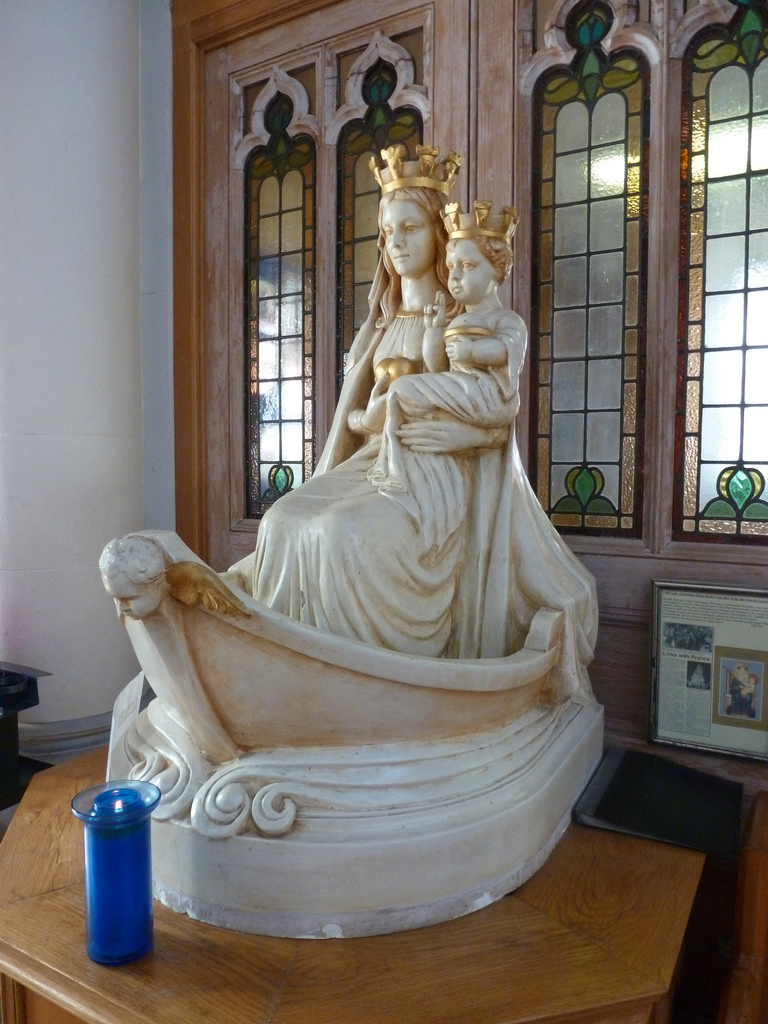
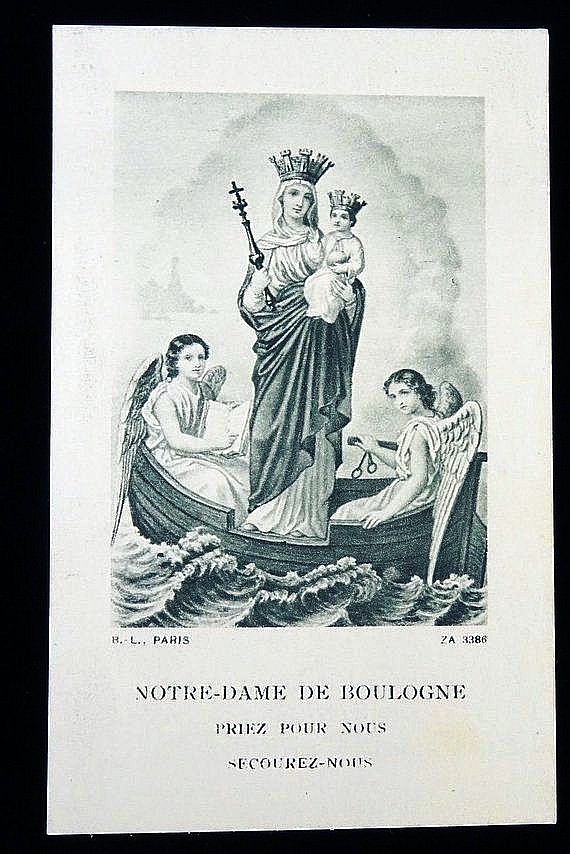
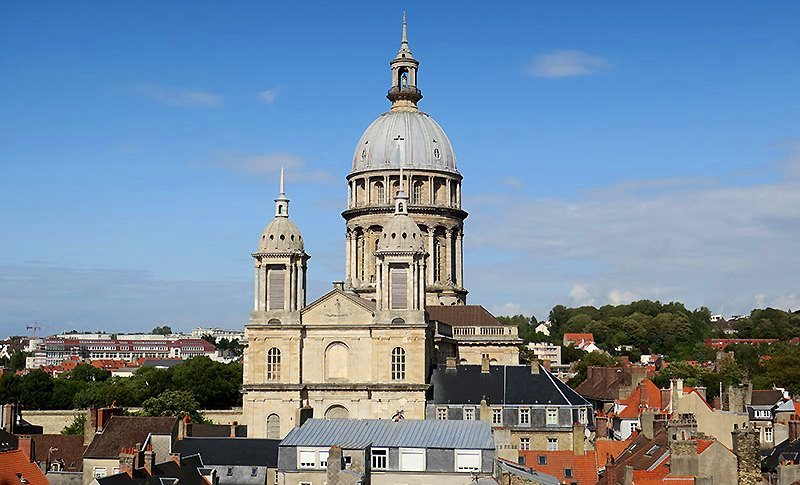
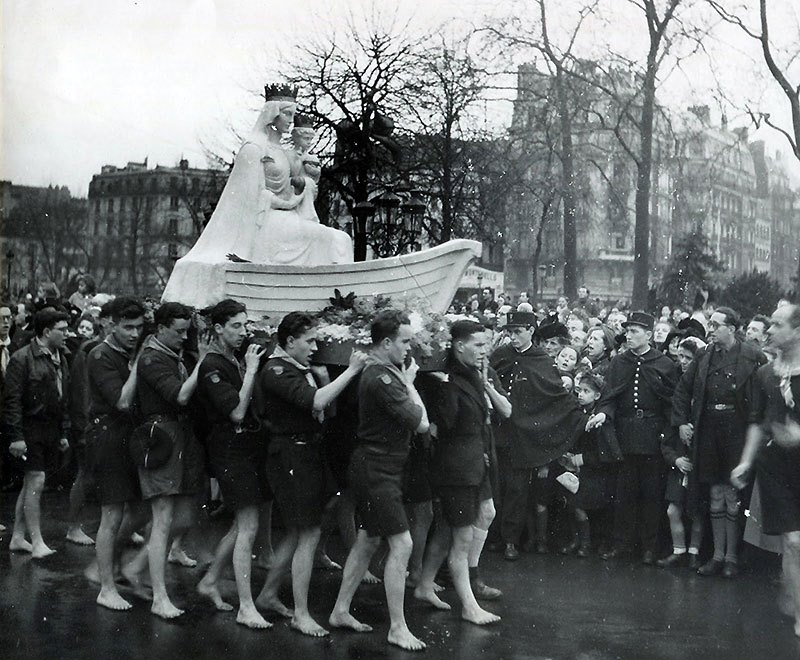
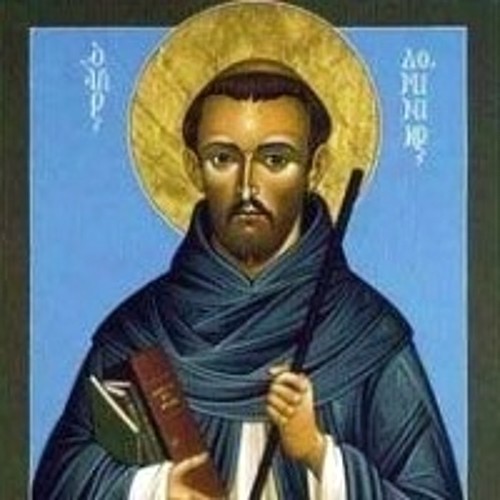
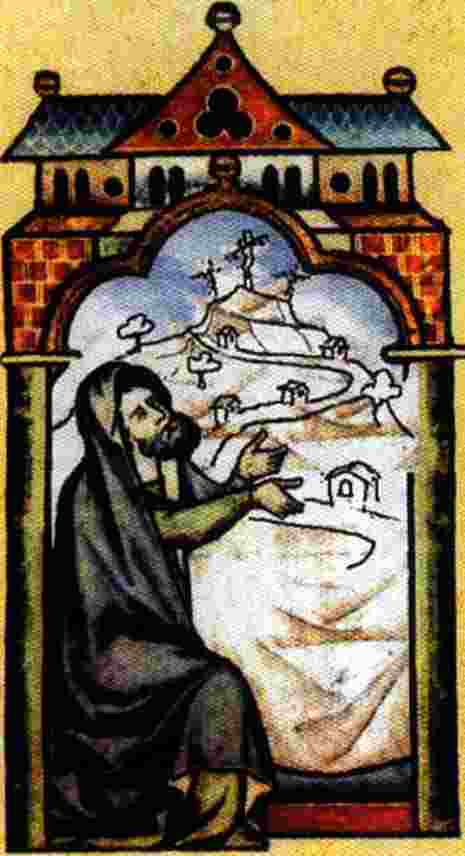
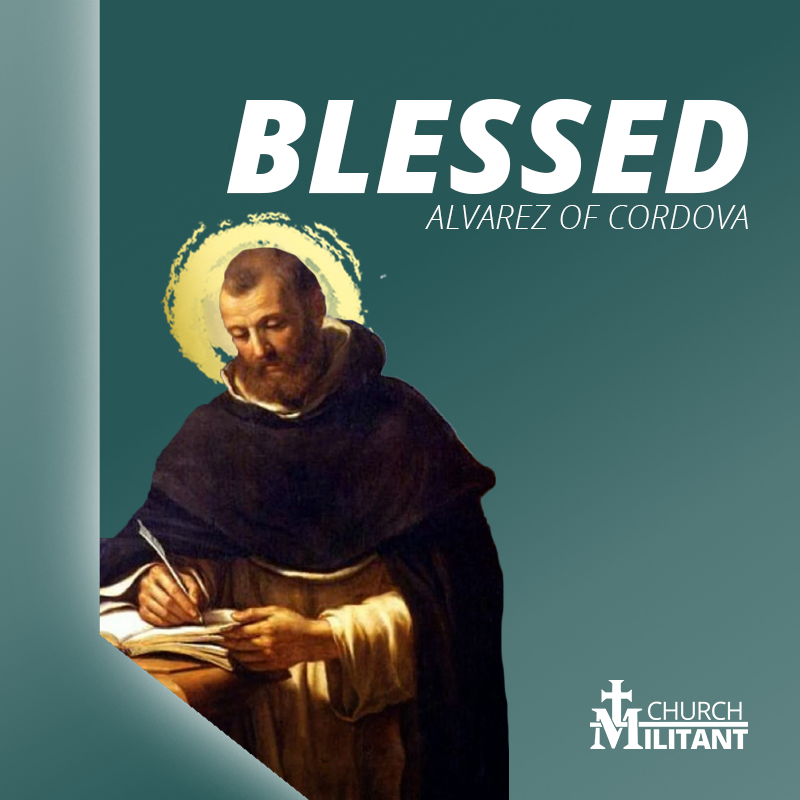

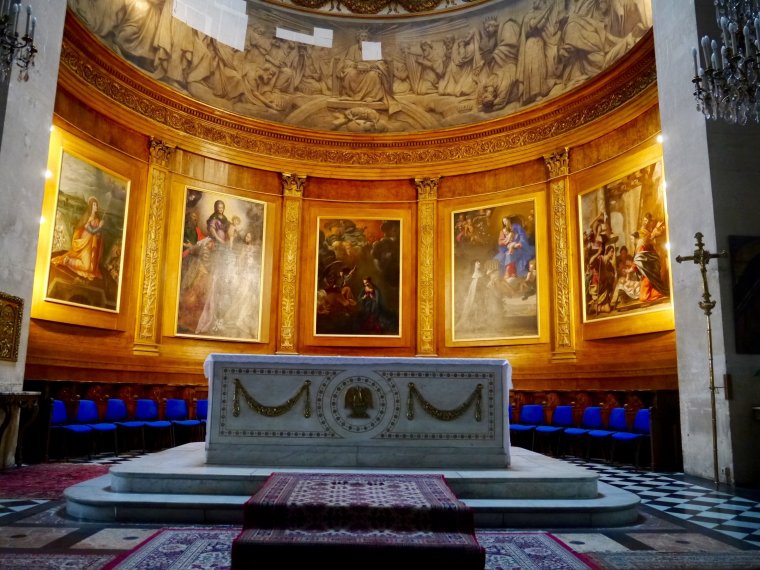
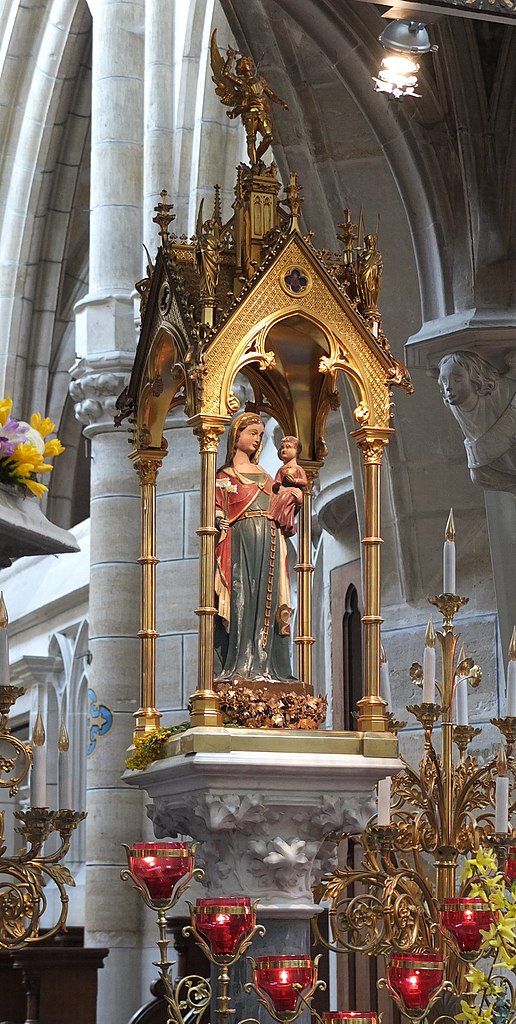
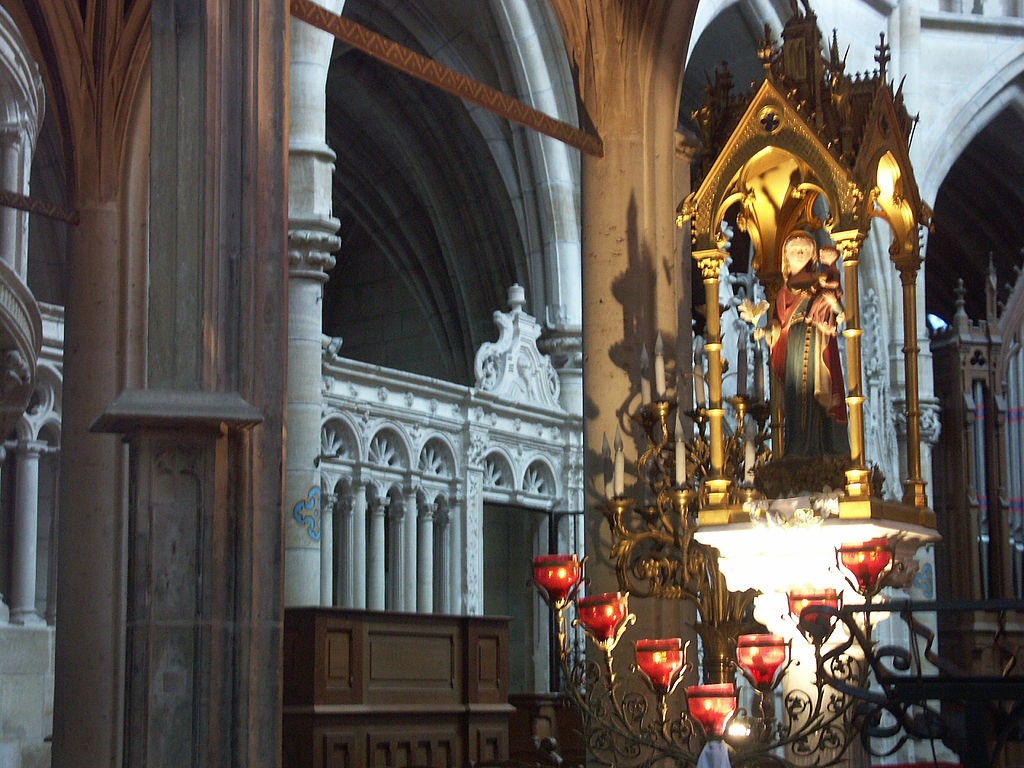
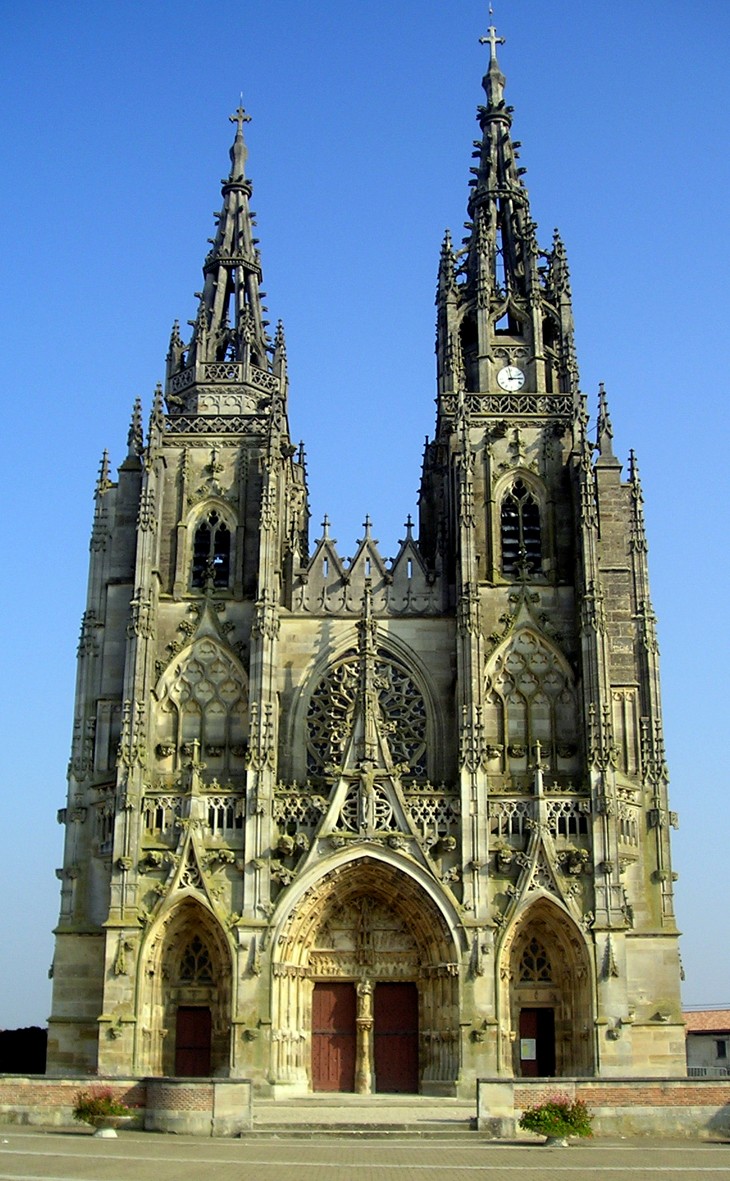
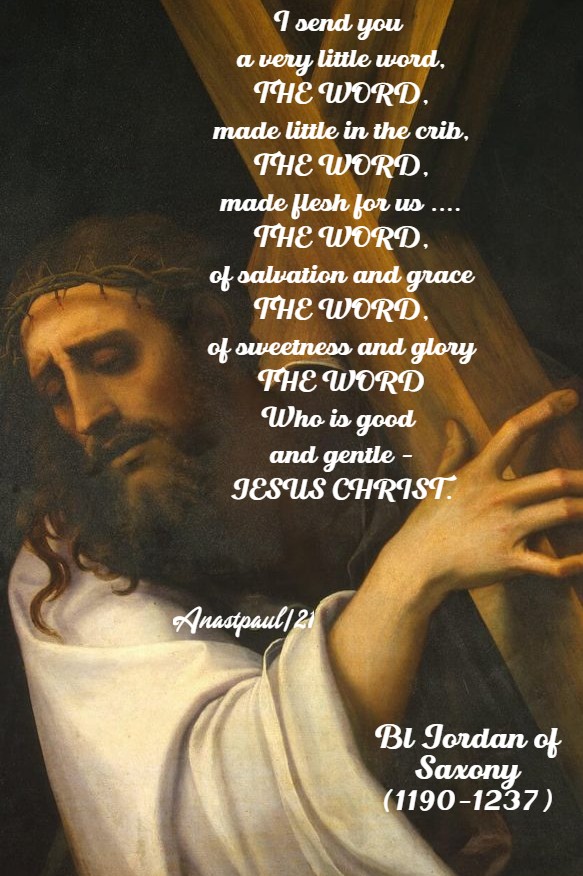
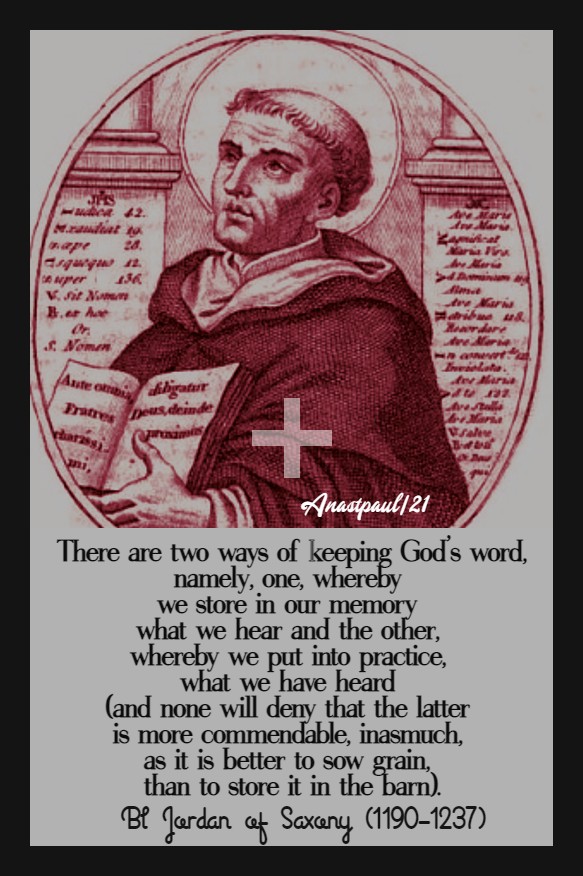
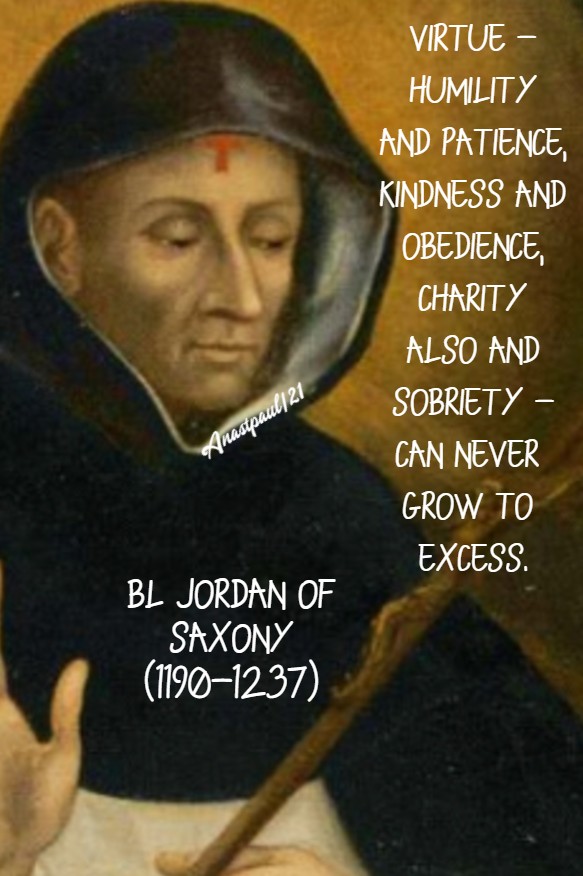
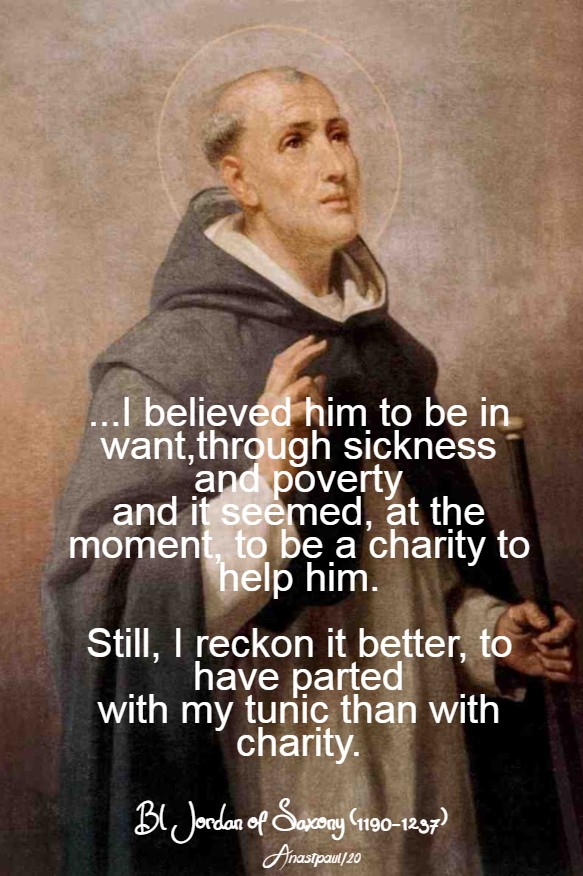


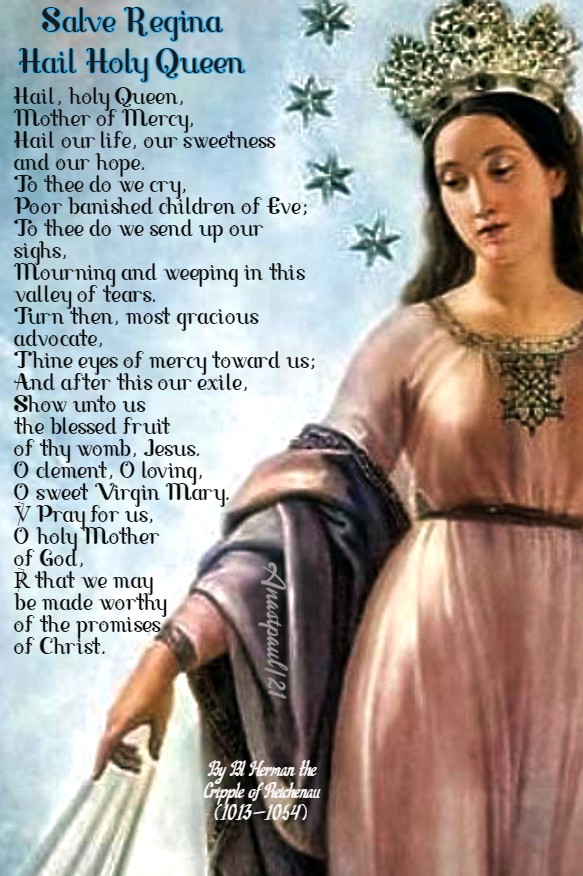

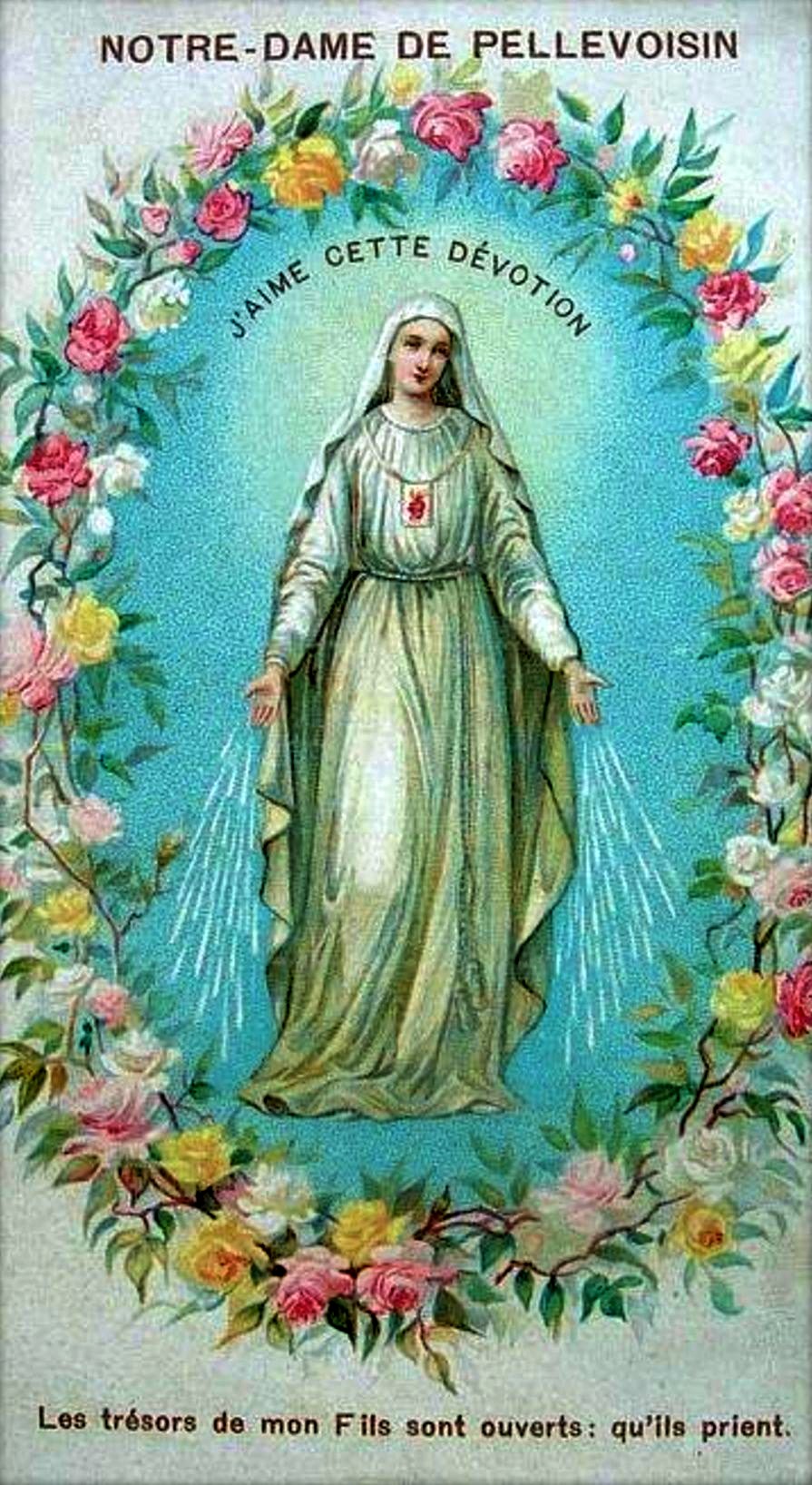
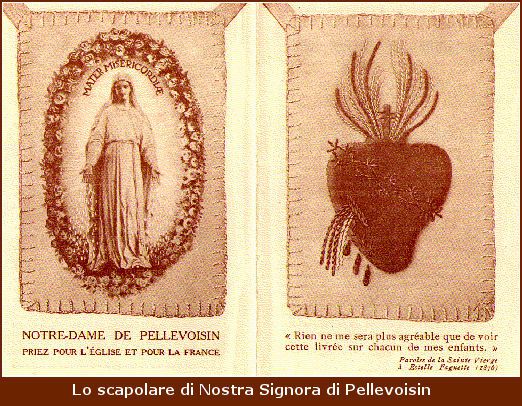
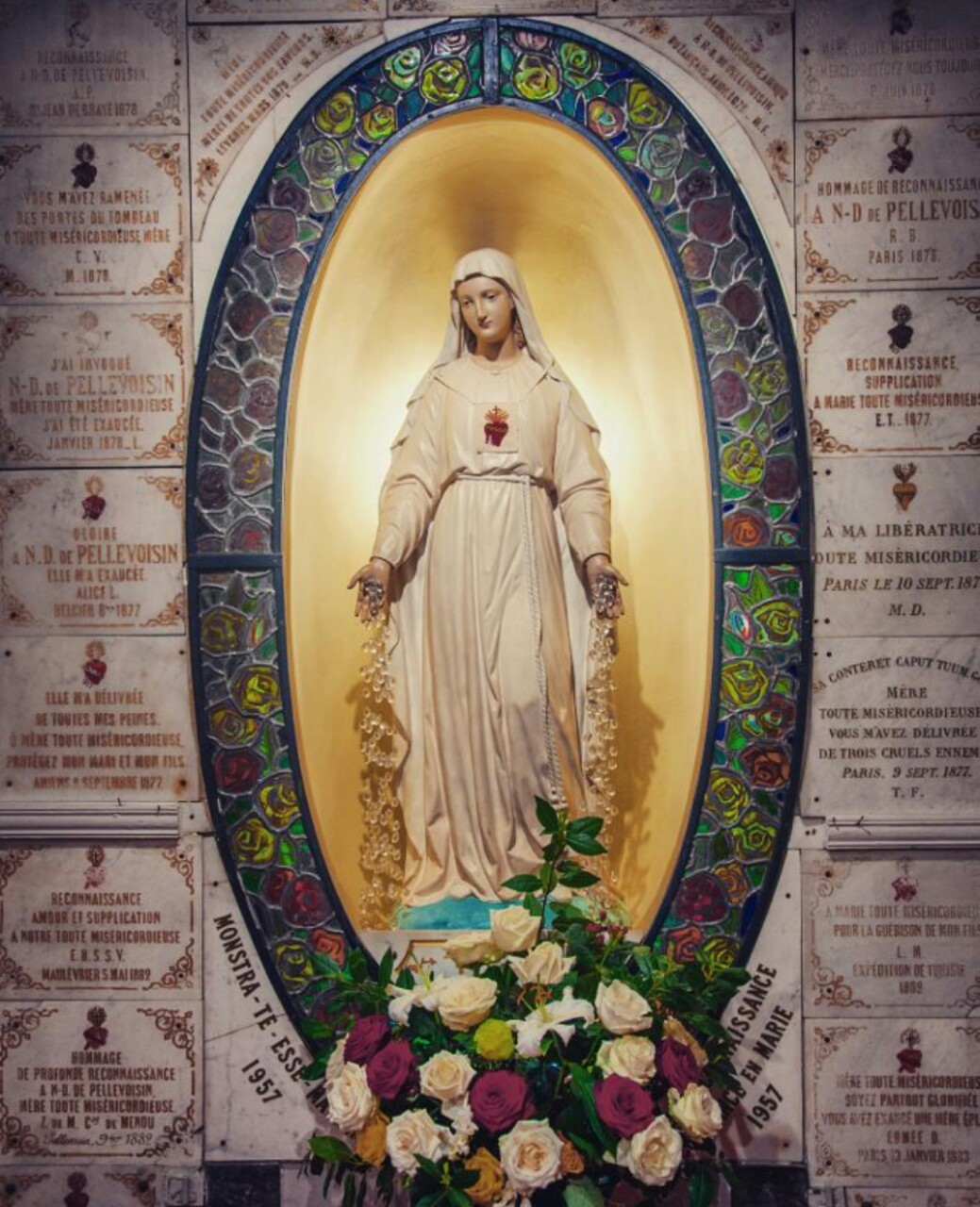


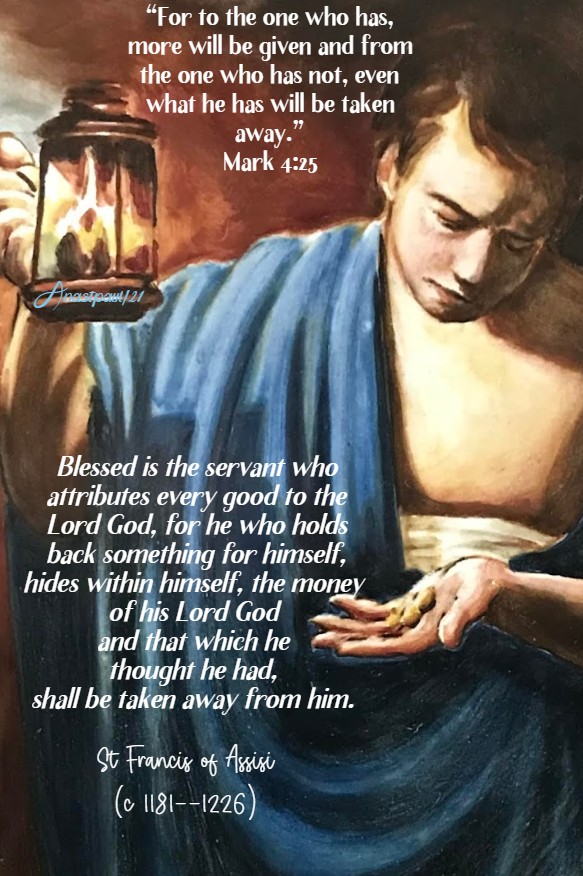
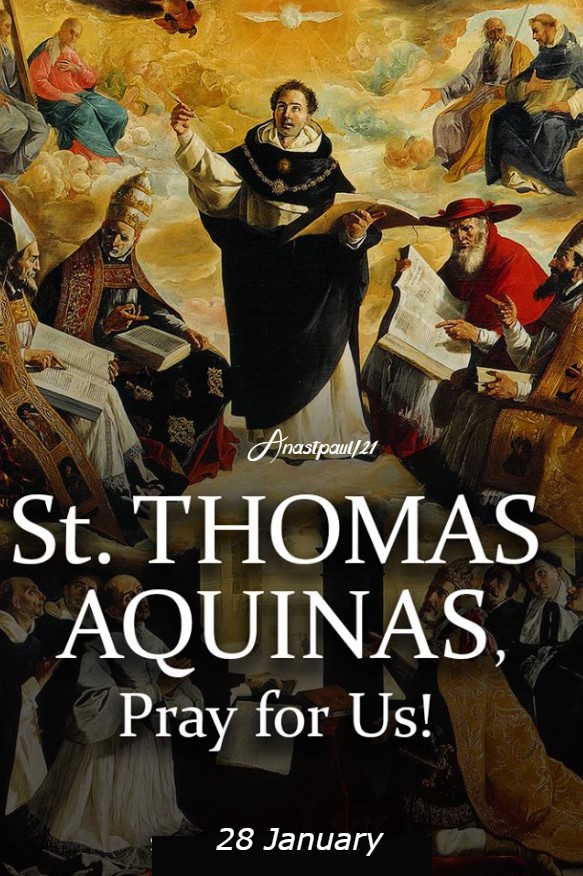
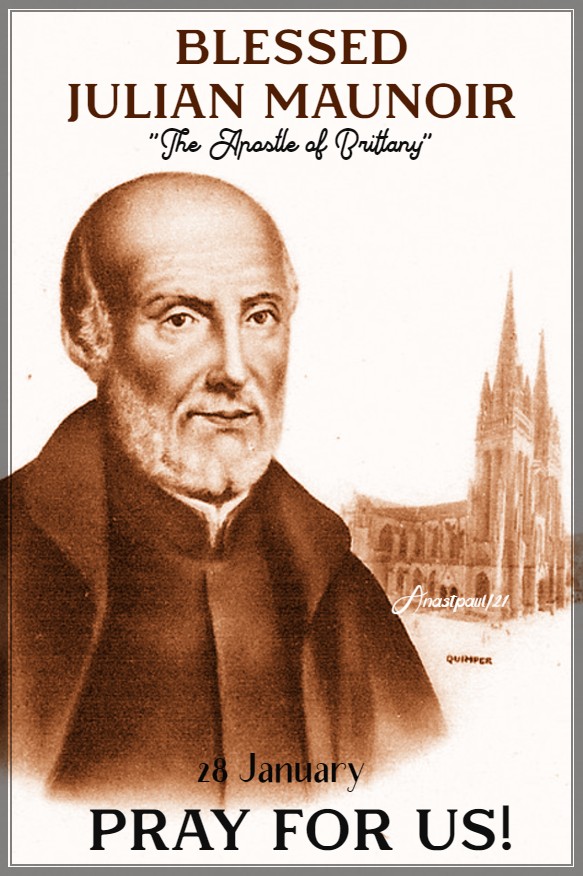

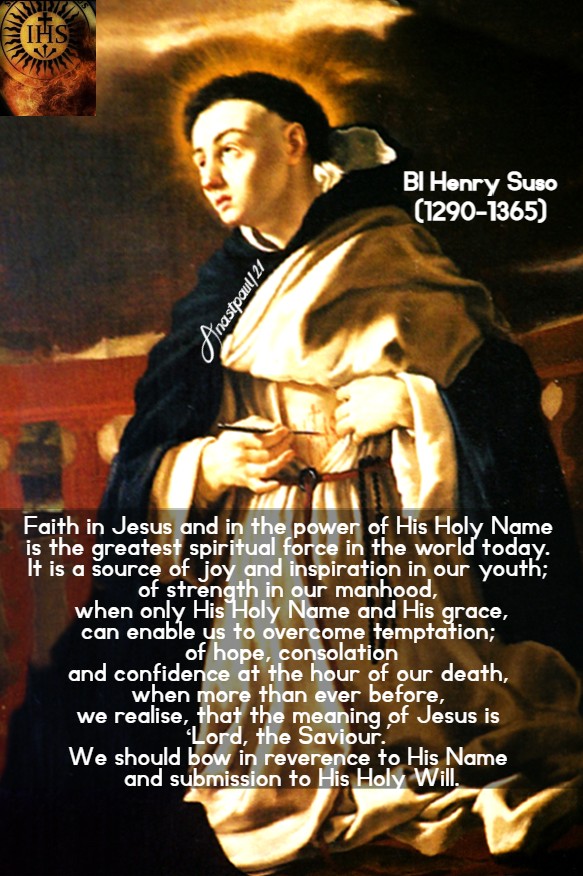
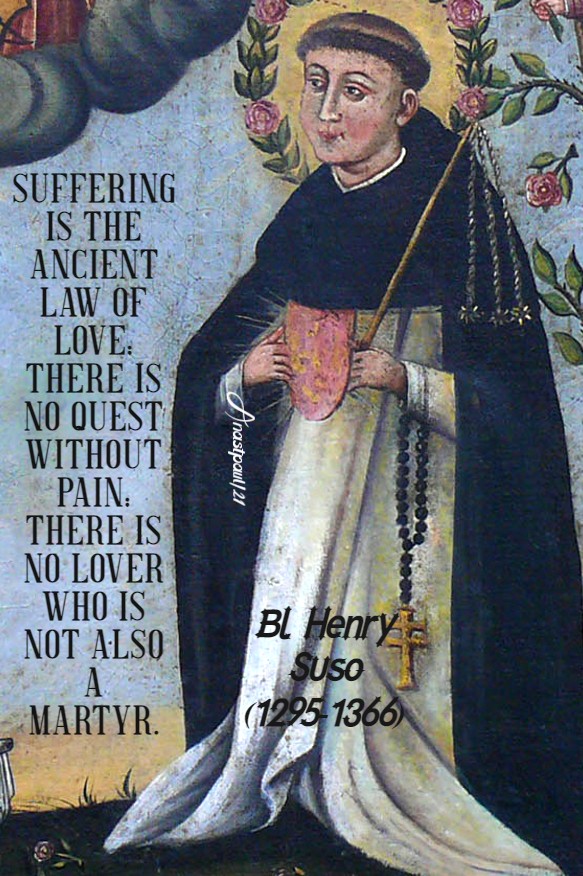

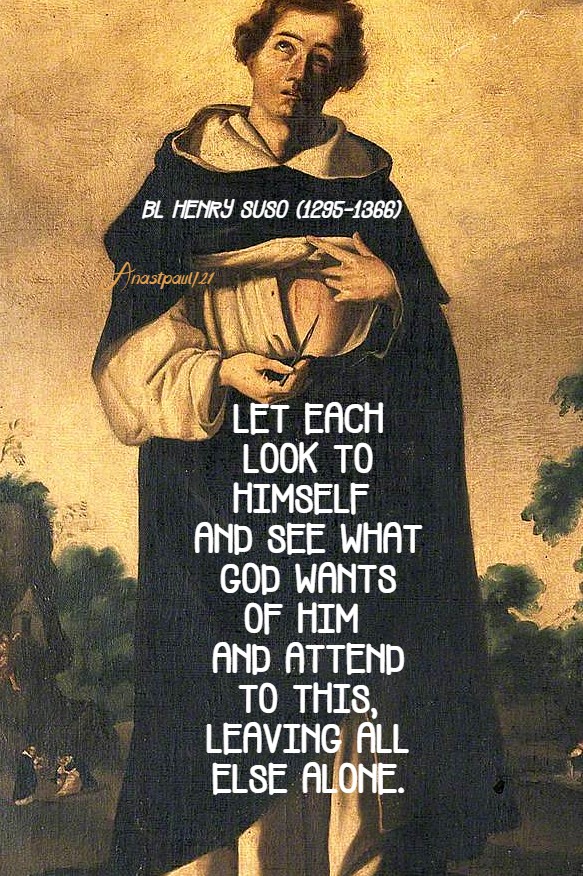
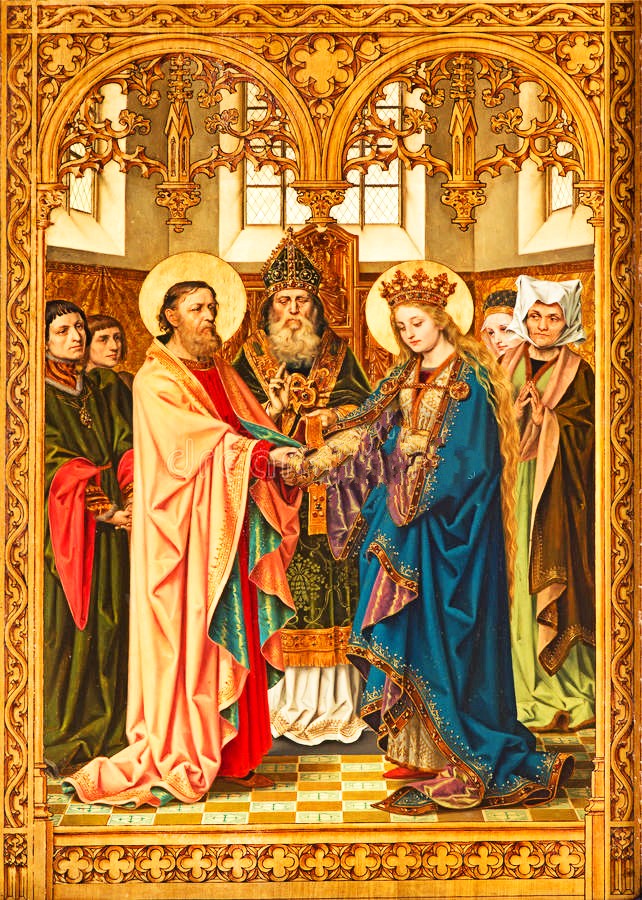
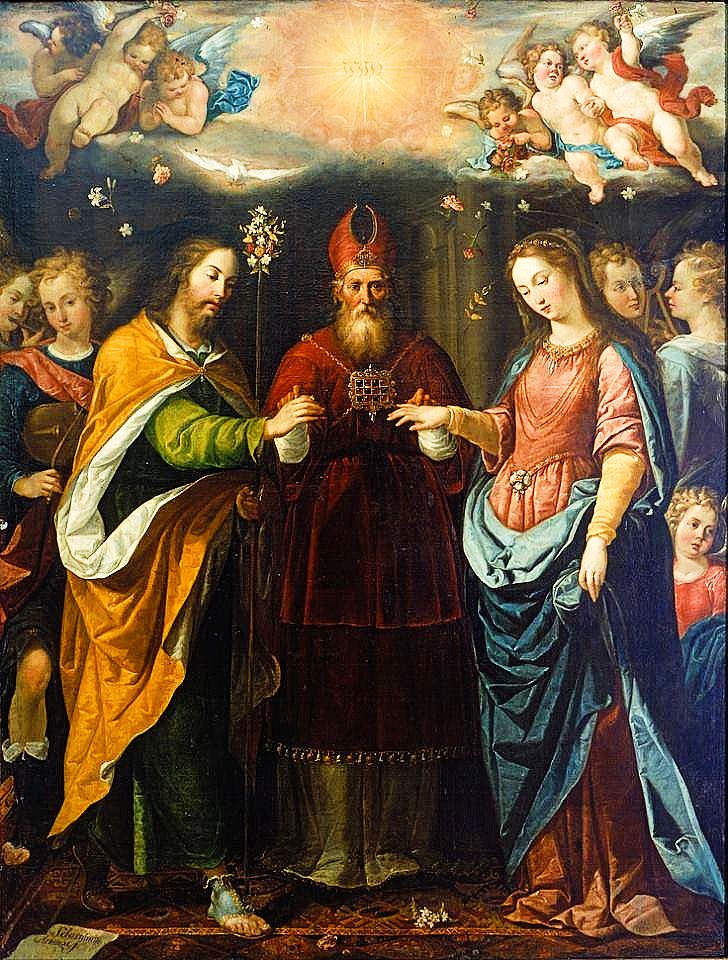
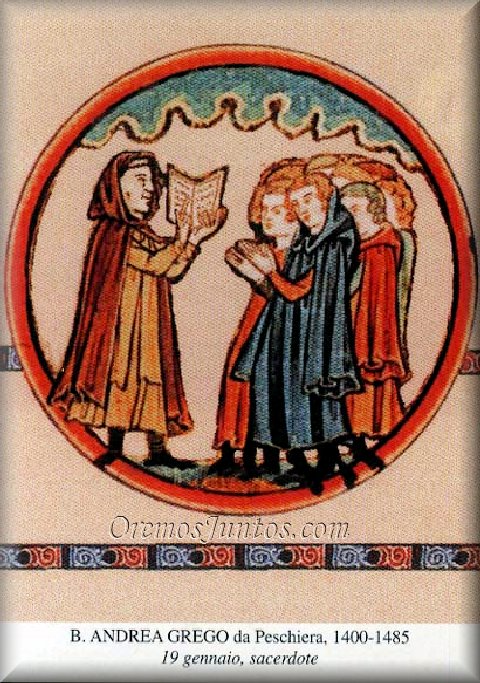
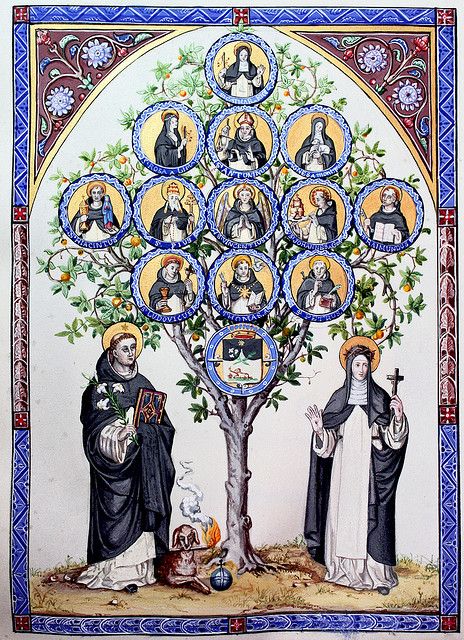
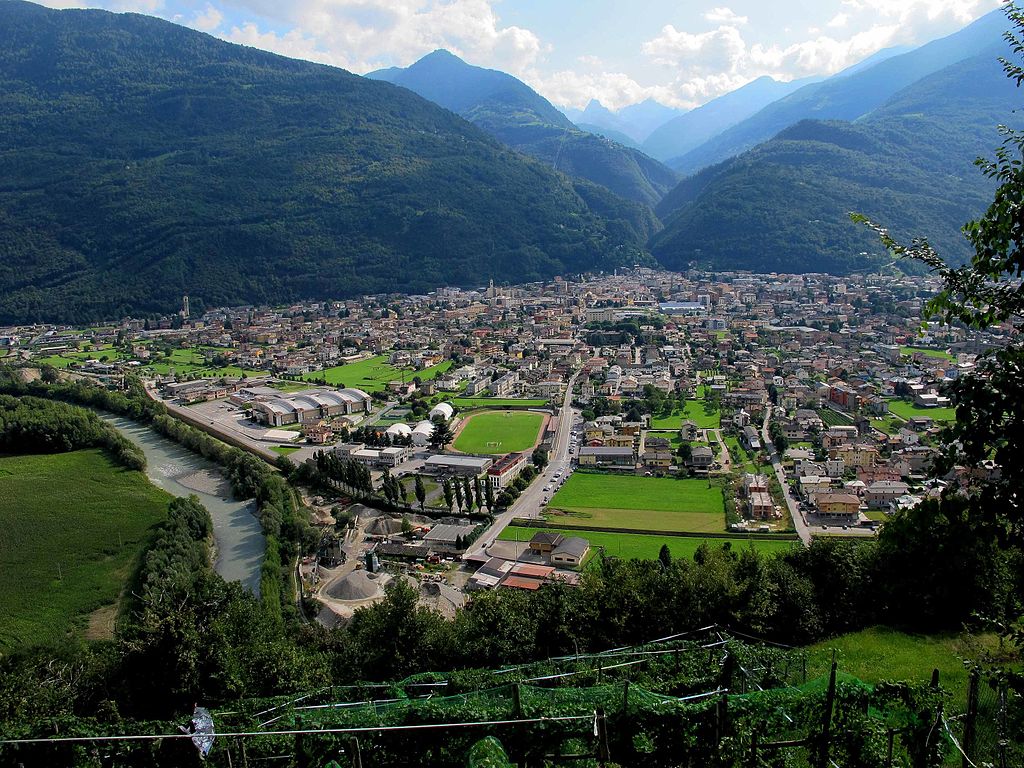

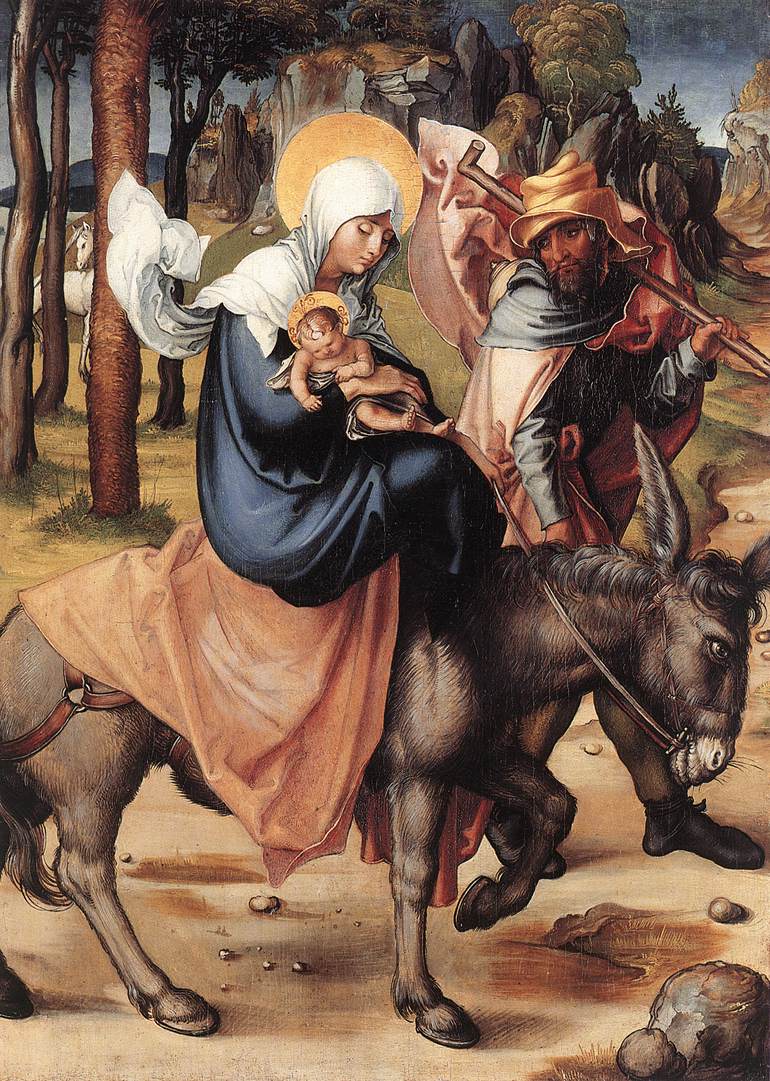
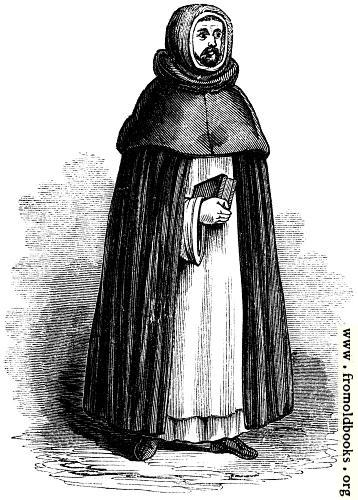
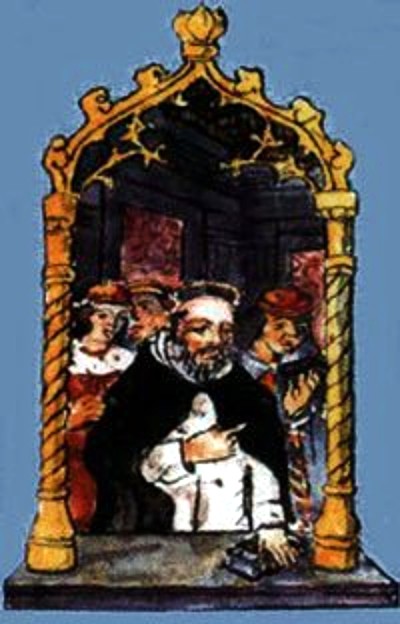
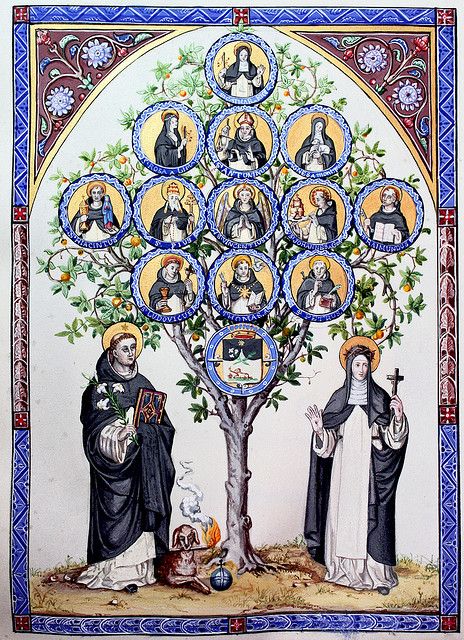
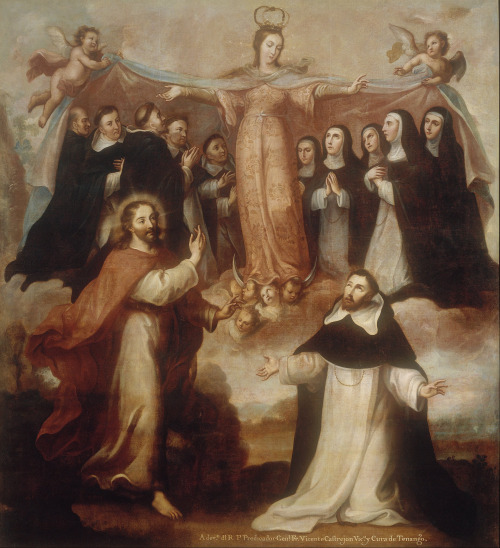
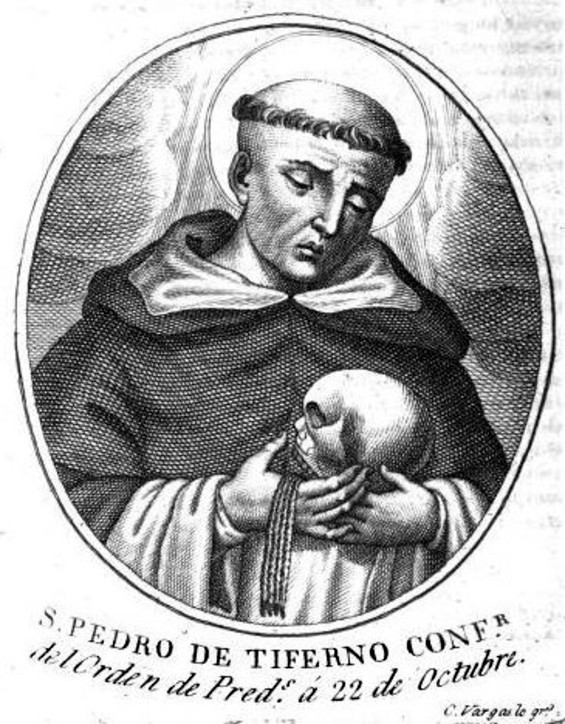
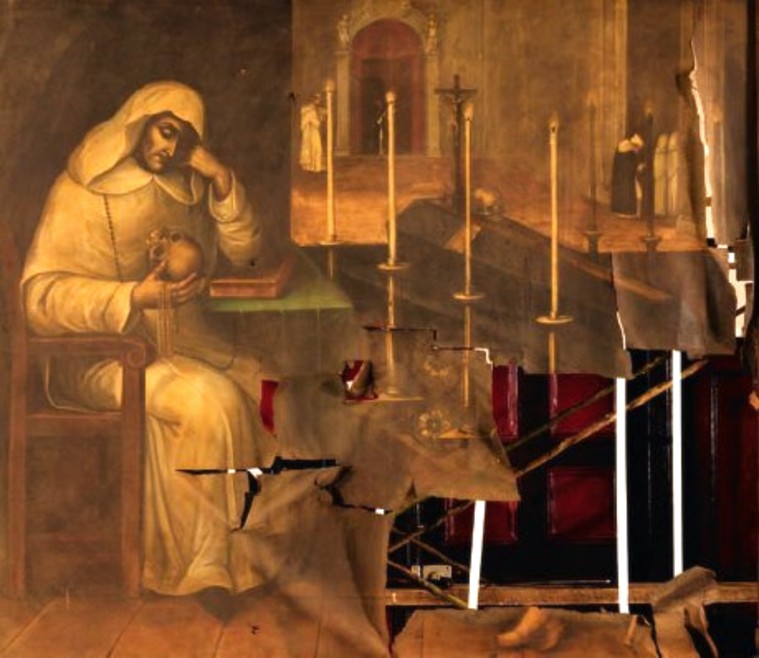
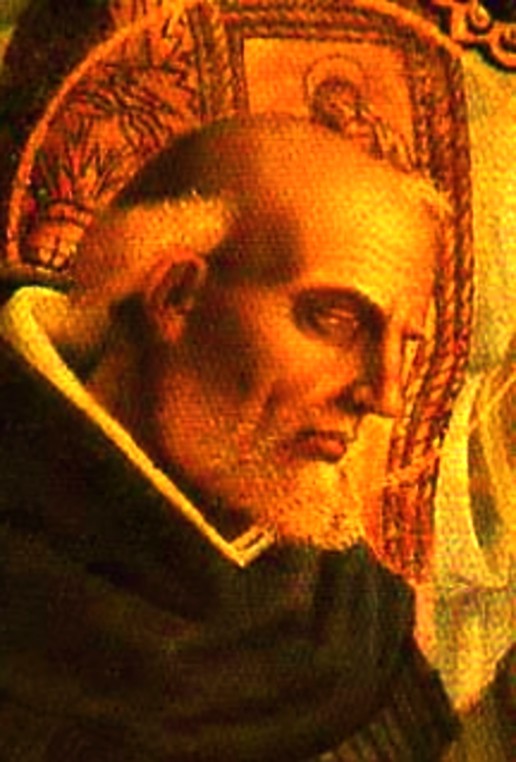
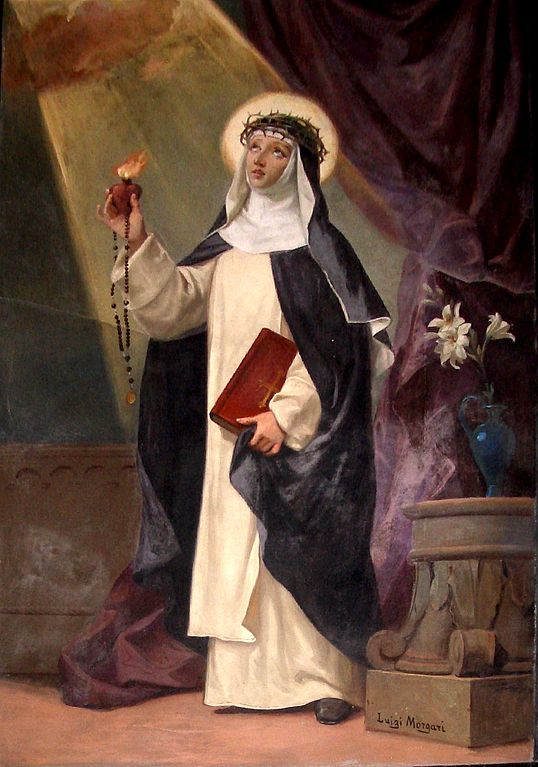


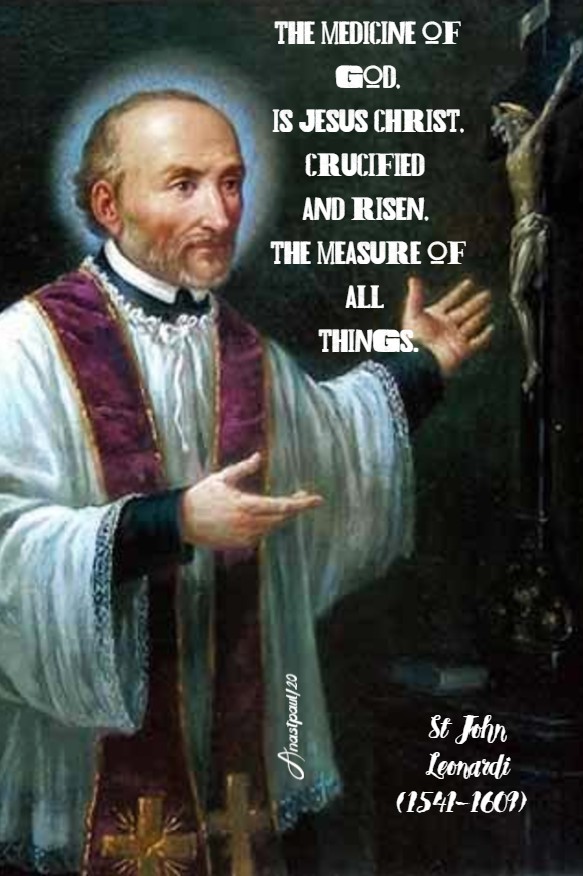
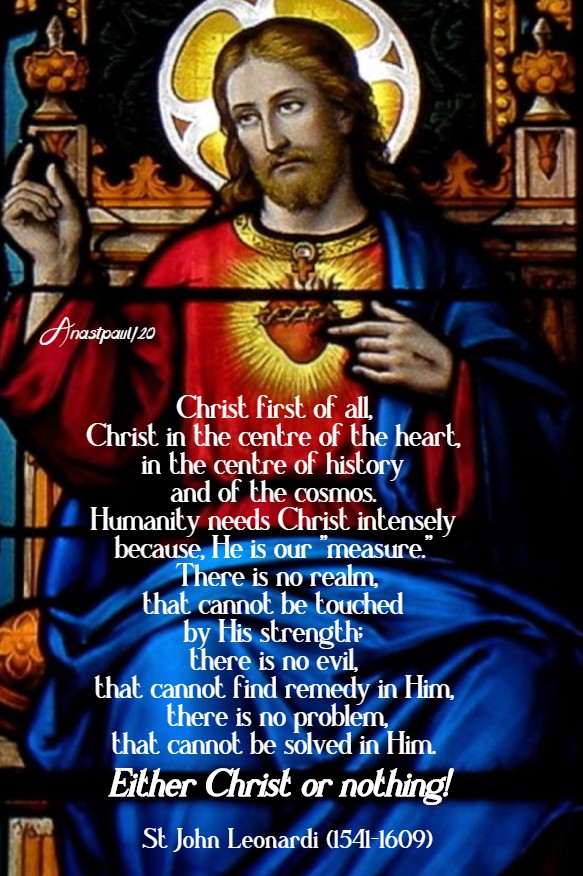

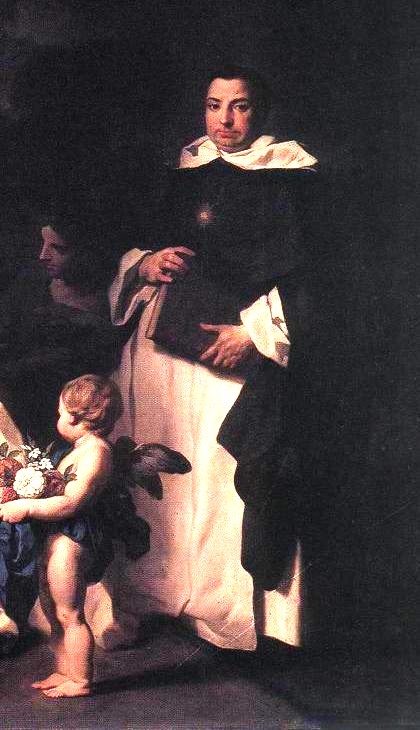
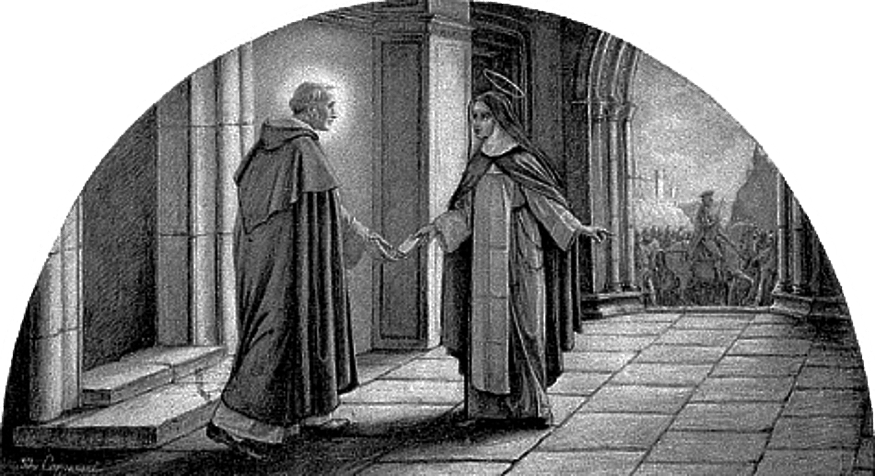
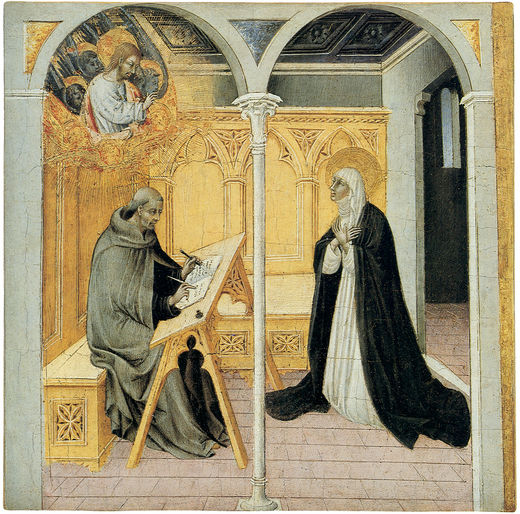
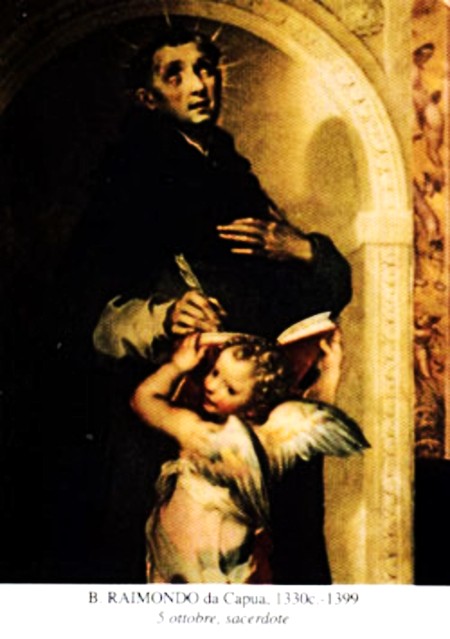
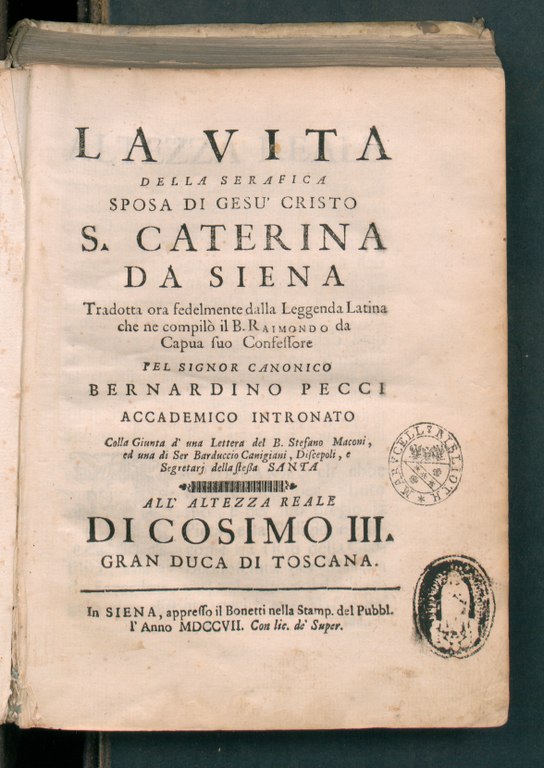
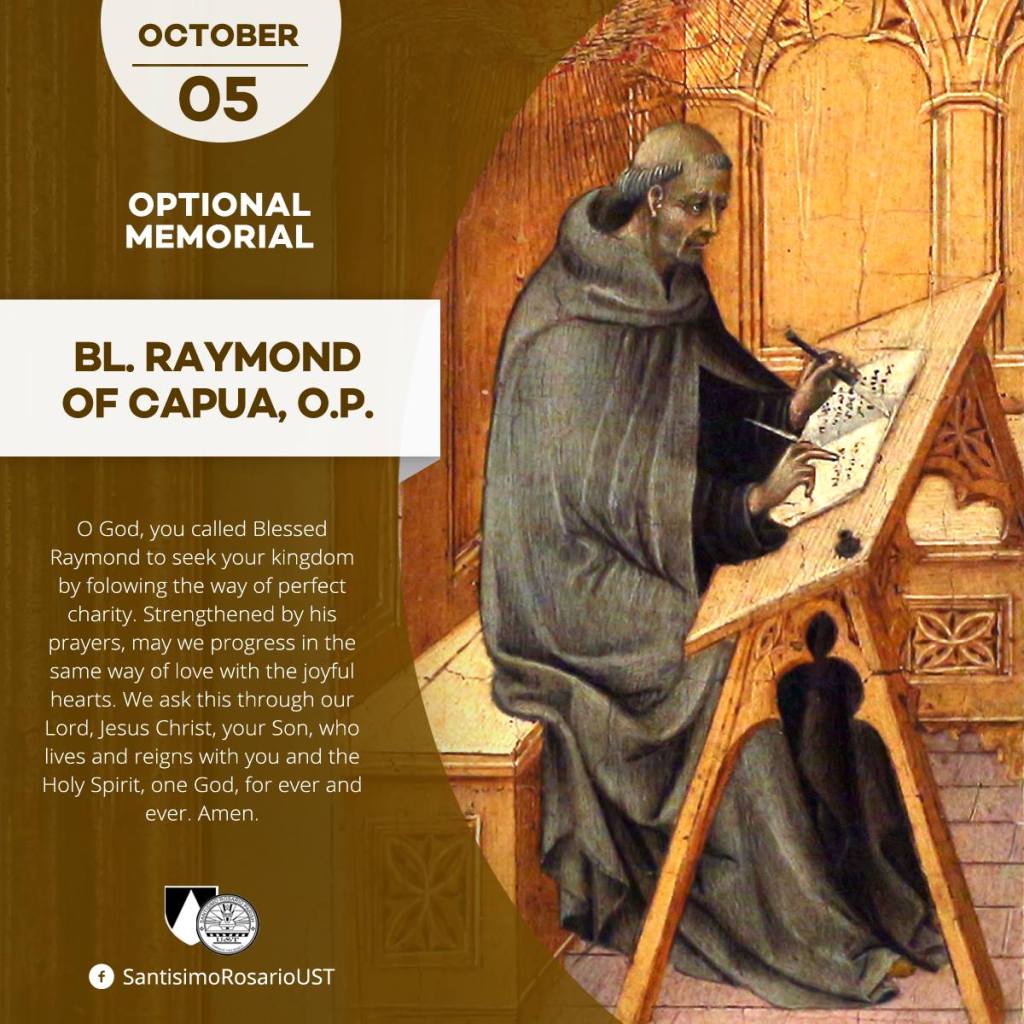

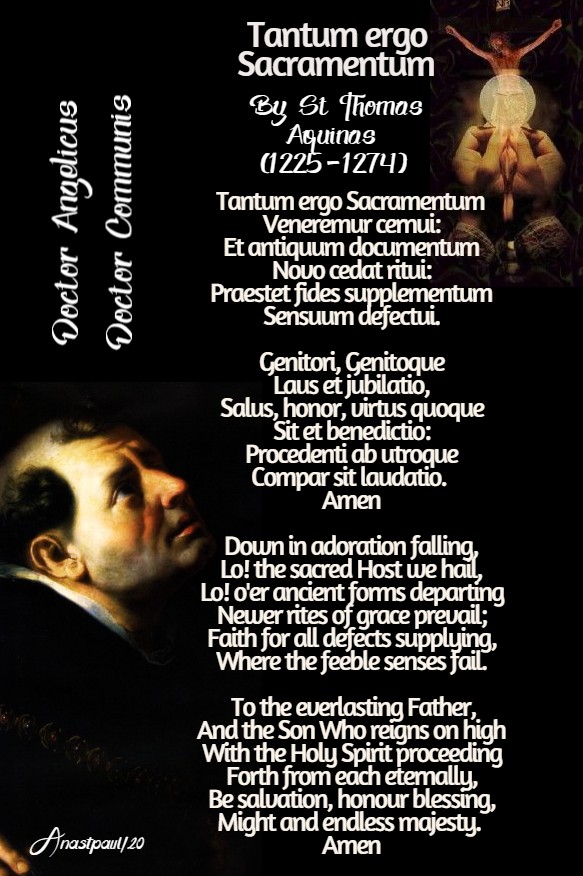
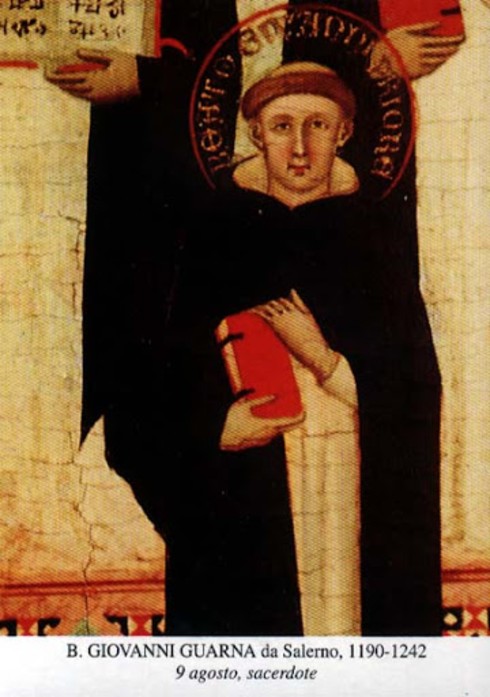
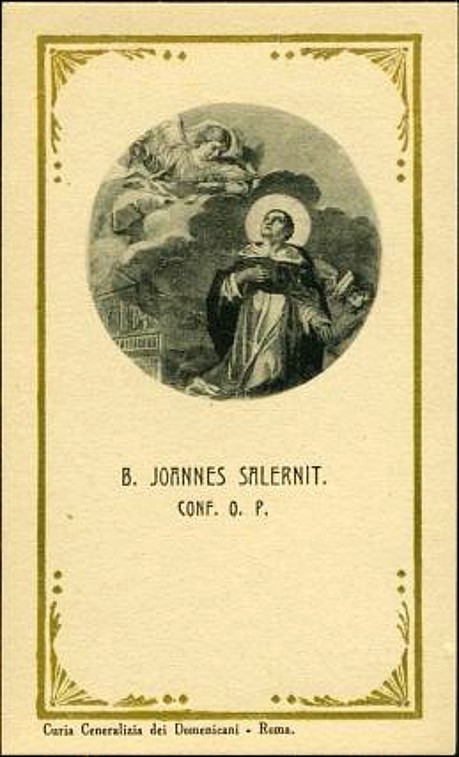

 Among them was the noted Hugh of Sesto, a Canon at Saint Paul’s who had led the opposition to the friars at that church. Others who should not be omitted were – Roderic, a Canon at Saint Peter’s, James Rabacante, who later succeeded John of Salerno as Prior of Santa Maria Novella, Ottavente di Nerli, Roger Calcagni, who became the first Papal inquisitor at Florence and Bishop of Castro; Father Buoninsegna, a Martyr at Antioch, who is commonly called blessed, Ambrose of Rimini, a celebrated preacher who became Bishop of his native city, Thomas Morandi, honoured with the mitre of Fano and Aldobrandini Cavalcanti, entrusted with the charge of the Diocese of Orvieto. We might mention more but those given above suffice to show the character of those whom the early disciple brought into his institute.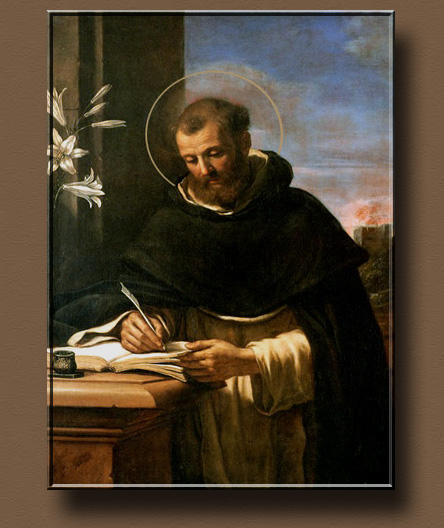
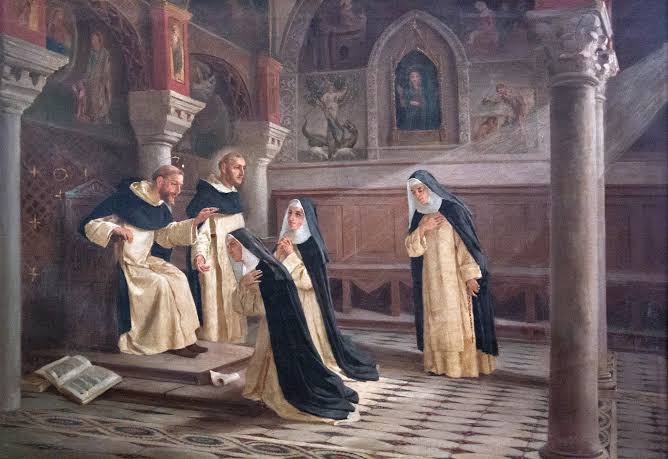
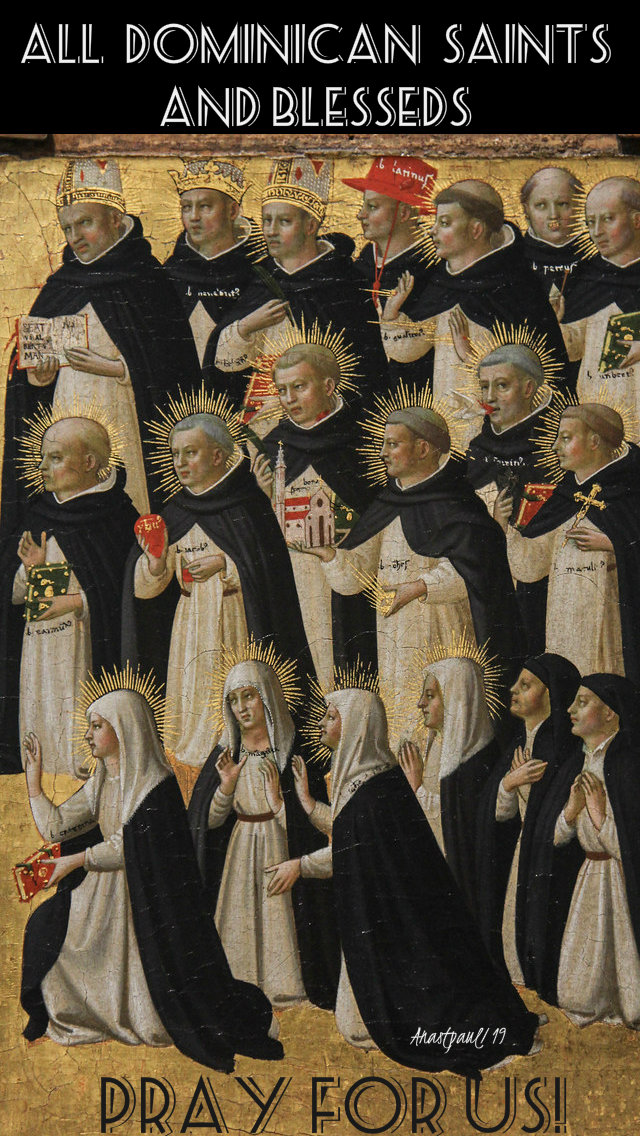
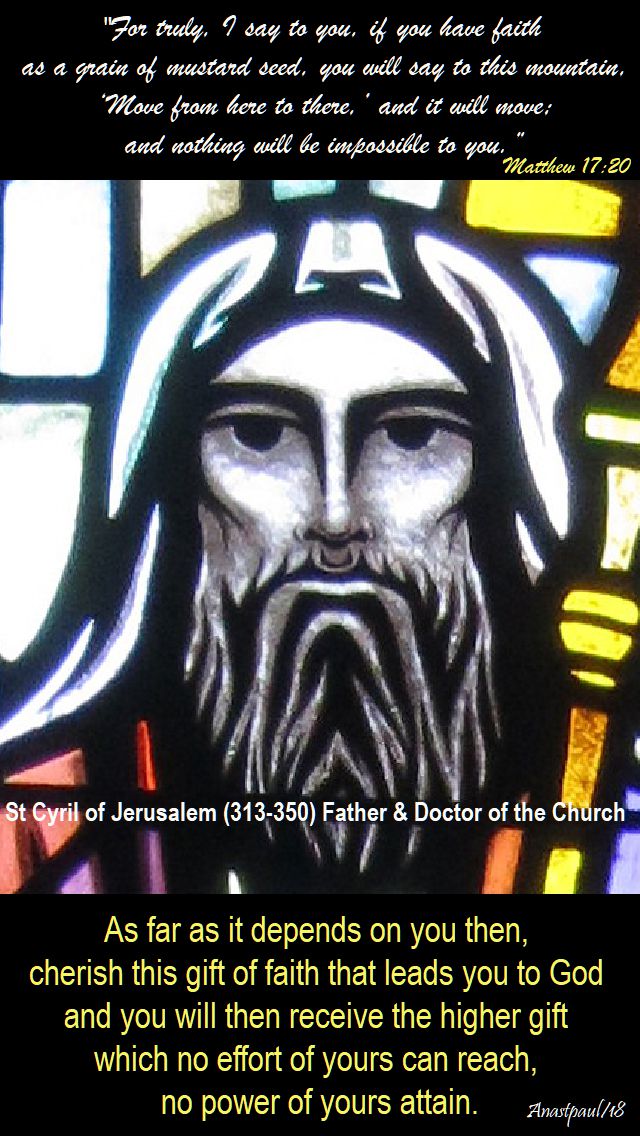
 AnaStpaul
You must be logged in to post a comment.