Posted in DOMINICAN OP, MORNING Prayers, SAINT of the DAY, The WORD

One Minute Reflection – 13 February – “All these evil things come from within and they defile a man.”

One Minute Reflection – 13 February – Wednesday of the Fifth week in Ordinary Time, Year C. Gospel: Mark 7:14-23 and the Memorial of Blessed Jordan of Saxony OP (1190-1237)

And he said, “What comes out of a man is what defiles a man.   For from within, out of the heart of man, come evil thoughts, fornication, theft, murder, adultery, coveting, wickedness, deceit, licentiousness, envy, slander, pride, foolishness.   All these evil things come from within and they defile a man.” Mark 7:20-23

REFLECTION – “The boundary between good and evil does not pass outside of us but rather within us.   We could ask ourselves: where is my heart?   Jesus said:  “Where your treasure is, there will your heart be also”.   What is my treasure?   Is it Jesus, is it His teaching?   If so, then the heart is good.   Or is my treasure something else?   Thus it is a heart which needs purification and conversion.   Without a purified heart, one cannot have truly clean hands and lips which speak sincere words of love — it is all duplicitous, a double life — lips which speak words of mercy, of forgiveness but only a sincere and purified heart can do this.”…Pope Francis – Angelus, 30 August 2015mark 7 20 what comes out of a man - the boundary between good and evil - pope francis 13feb2019.jpg

PRAYER – God our Saviour, through the grace of Baptism, You made us children of light. Hear our prayer, that we may always walk in that light and work for truth, as Your witnesses before men.   May our hearts be purified by You grace and may our hands and lips speak with sincere words of love. Blessed Jordan, you worked and walked with zeal and passion in the light of the Lord, please pray for us.   We make our prayer, through Christ our Lord with the Holy Spirit, God forever, amen.bl-jordanofsaxony-prayforus-13-feb-2017-2.jpg

Posted in DOMINICAN OP, franciscan OFM, MARIAN QUOTES, PRACTISING CATHOLIC, QUOTES of the SAINTS, QUOTES on LOVE, QUOTES on SACRIFICE, QUOTES on SUFFERING, SAINT of the DAY

Quote/s of the Day – 23 January – The Memorial of St Ildephonsus (607-667), Blessed Henry Suso OP (1295-1366) and St Marianne Cope (1838-1918)

Quote/s of the Day – 23 January – The Memorial of St Ildephonsus (607-667), Blessed Henry Suso OP (1295-1366) and St Marianne Cope (1838-1918)

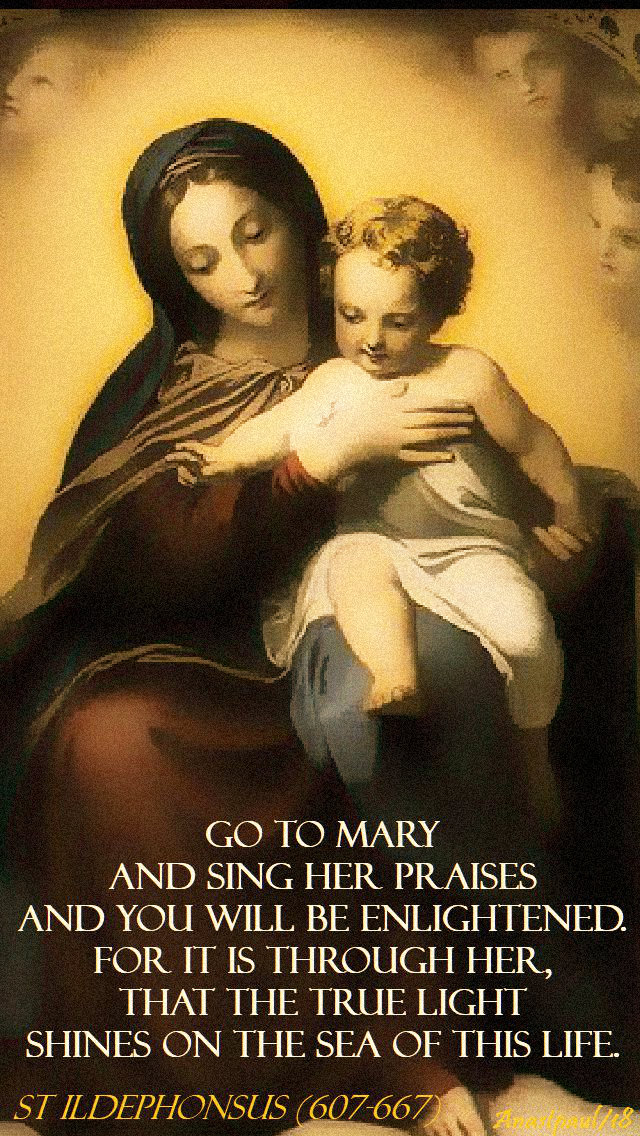
“Go to Mary and sing her praises
and you will be enlightened.
For it is through her,
that the true Light
shines on the sea of this life.”

St Ildephonsus (607-667)go-to-mary-st-ildephonsus-23-jan-2018.jpg

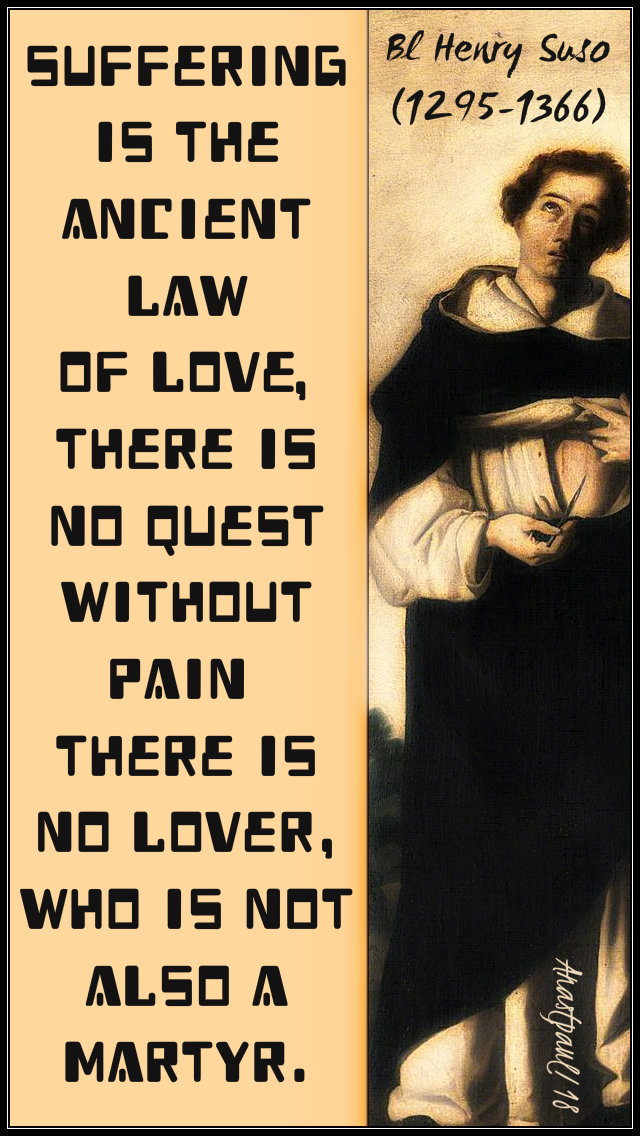
“Suffering is the ancient law of love;
there is no quest without pain;
there is no lover,
who is not also a martyr.”

Blessed Henry Suso (1295-1366)suffering is the ancient law of love - bl henry suso 23 jan 2019.jpg

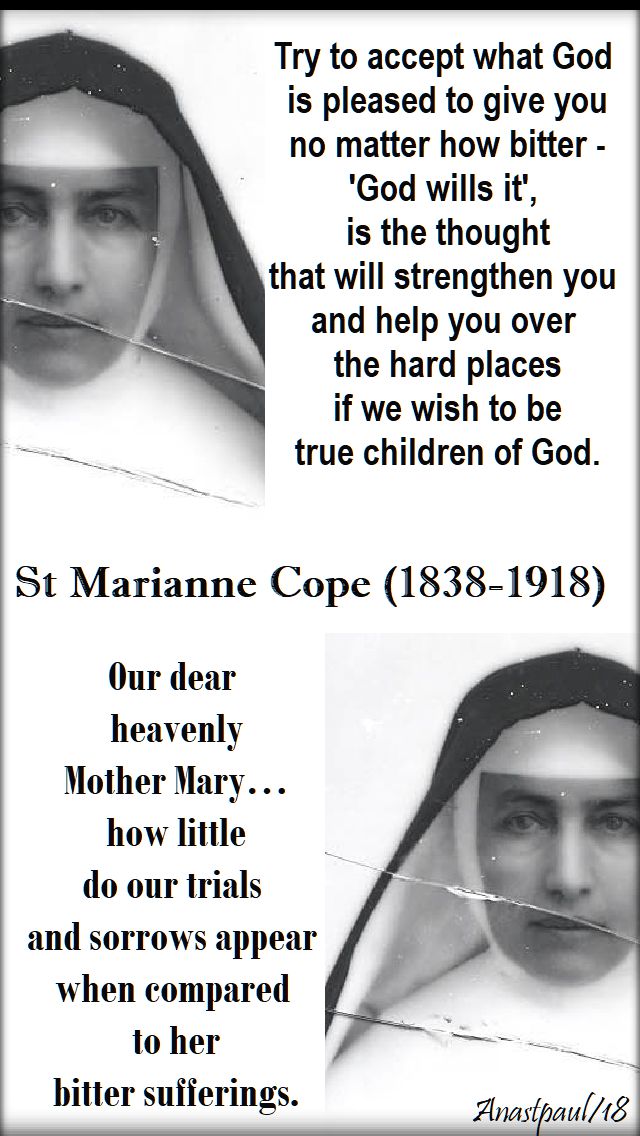
“Try to accept what God
is pleased to give you
no matter how bitter –
‘God wills it’,
is the thought
that will strengthen you
and help you over
the hard places
if we wish to be
true children of God.”

“Our dear
heavenly Mother Mary…
how little do our trials
and sorrows appear
when compared
to her bitter sufferings.”

St Marianne Cope (1838-1918)try-to-accept-what-god-st-marianne-cope-23-jan-2018.jpg

Posted in DOMINICAN OP, FATHERS of the Church, MORNING Prayers, SAINT of the DAY, The WORD

One Minute Reflection – 23 January –Wednesday of the Second week in Ordinary Time – First Reading: Hebrews 7:1–3

One Minute Reflection – 23 January –Wednesday of the Second week in Ordinary Time – First Reading: Hebrews 7:1–3 – and The Memorial of Blessed Henry Suso OP (1295-1366)

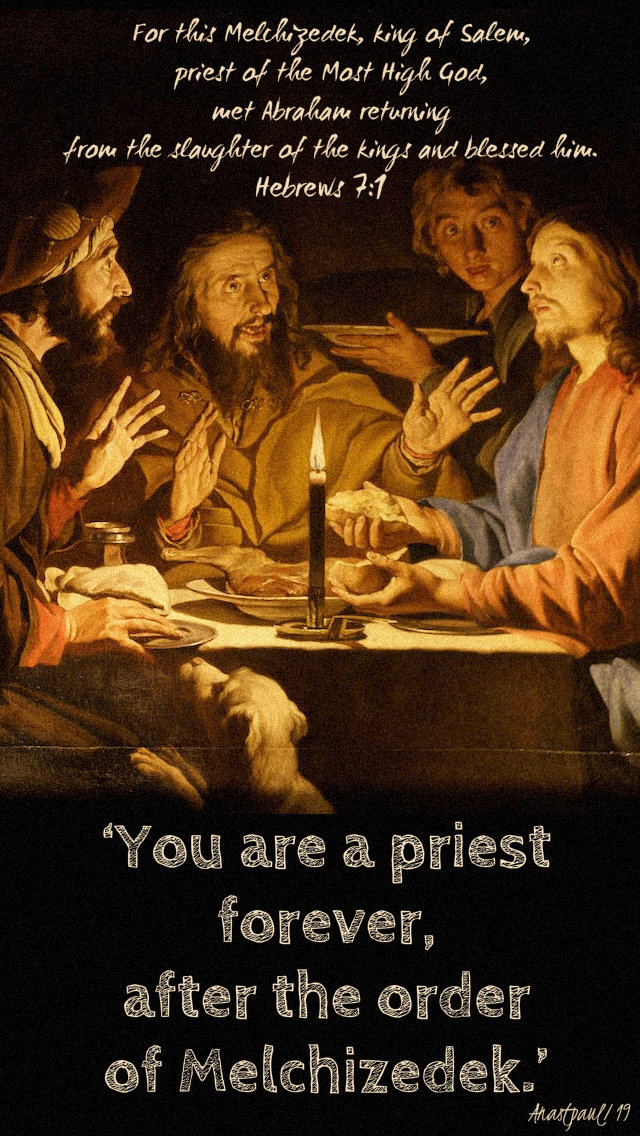
For this Melchizedek, king of Salem, priest of the Most High God, met Abraham returning from the slaughter of the kings and blessed him…Hebrews 7:1

REFLECTION – “An ancient priest of the Mosaic order could only be selected from the tribe of Levi.   It was obligatory without exception that he should be of the family descending from Aaron and do service to God in outward worship with the sacrifices and blood of irrational animals.   But he that is named Melchizedek, which in Greek is translated “king of righteousness,” who was king of Salem, which would mean “king of peace,” without father, without mother, without line of descent, not having, according to the account, “beginning of years or end of life,” had no characteristics shared by the Aaronic priesthood.

For he was not chosen by humans, he was not anointed with prepared oil, he was not of the tribe of those who had not yet been born and, strangest of all, he was not even circumcised in his flesh and yet he blesses Abraham, as if he were far better than he.   He did not act as priest to the Most High God with sacrifices and libations, nor did he minister at the temple in Jerusalem.   How could he?   It did not yet exist.   And he was such, of course, because there was going to be no similarity between our Saviour Christ and Aaron, for He was neither to be designated priest after a period when he was not priest, nor was He to become priest but be it.   For we should notice carefully in the words, “You are a priest forever,” he does not say, “You shall be what you were not before,” any more than, “You were that before which you are not now” — but by Him who said, “I am who I am,”1 it is said, “You are, and remain, a priest forever.”

And the fulfilment of the oracle is truly wondrous to one who recognises how our Saviour Jesus, the Christ of God, now performs through His ministers even today, sacrifices after the manner of Melchizedek’s.   For just as He, who was priest of the Gentiles, is not represented as offering outward sacrifices but as blessing,  Abraham only with wine and bread, so in exactly the same way our Lord and Saviour Himself first and then all His priests among all nations, perform the spiritual sacrifice according to the customs of the church and with wine and bread darkly express the mysteries of His body and saving blood.   This, by the Holy Spirit, Melchizedek foresaw and used the figures of what was to come, as the Scripture of Moses witnesses, when it says, “And Melchizedek, king of Salem, brought out bread and wine; he was priest of God Most High, and he blessed Abraham.”   And thus it followed that to Him only was the addition of an oath, “The Lord God has sworn and will not change his mind, ‘You are a priest forever after the order of Melchizedek.’”.Eusebius of Caesarea (c 260-339) Bishop “Father of Church History”hebrews 2 1 - for this melchizidek - you are a priest forever - 23 jan 2019.jpg

PRAYER – Loving Father, grant me to have a true fervour in Your service. Help me to become a zealous worker for Your honour and glory, in imitation of your Son and of your holy saints. Grant that by the prayers of Blessed Henry Suso, we may grow in love, by Your grace. Through our Lord Jesus Christ, in unity with the Holy Spirit, one God forever.

“In the history of early Christianity there is a fundamental distinction between the first three centuries and those that followed the Council of Nicaea in 325, the first Ecumenical Council.   Like a “hinge” between the two periods are the so-called “conversion of Constantine” and the peace of the Church, as well as the figure of Eusebius, Bishop of Caesarea in Palestine.   He was the most highly qualified exponent of the Christian culture of his time in very varied contexts, from theology to exegesis, from history to erudition.   Eusebius is known above all as the first historian of Christianity but he was also the greatest philologist of the ancient Church.”…Pope Benedict XVI, 13 June 2007bl henry suso pray for us 23 jan 2019

Posted in DOMINICAN OP, PRAYERS of the SAINTS, SAINT of the DAY

Our Morning Offering – 23 January – The Memorial of Blessed Henry Suso OP (1295-1366)

Our Morning Offering – 23 January – The Memorial of Blessed Henry Suso OP (1295-1366)

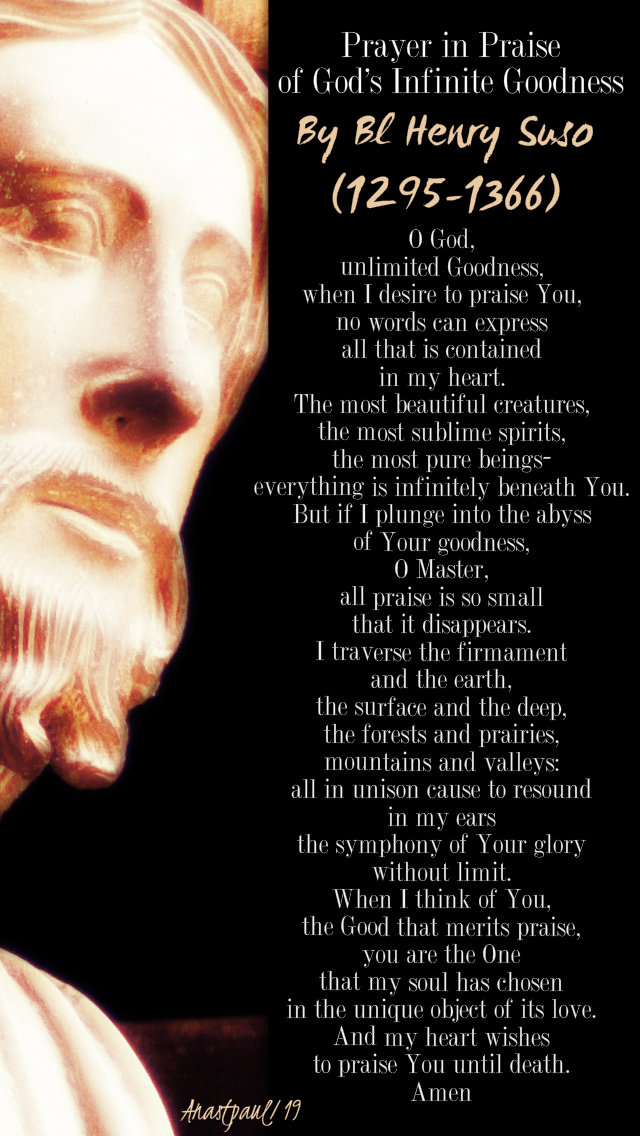
Prayer in Praise of God’s Infinite Goodness
By Bl Henry Suso (1295-1366)

O God, unlimited Goodness,
when I desire to praise You,
no words can express
all that is contained in my heart.
The most beautiful creatures,
the most sublime spirits,
the most pure beings-
everything is infinitely beneath You.
But if I plunge into the abyss of Your goodness,
O Master,
all praise is so small that it disappears.
I traverse the firmament and the earth,
the surface and the deep,
the forests and prairies,
mountains and valleys:
all in unison cause to resound in my ears
the symphony of Your glory without limit.
When I think of You,
the Good that merits praise,
you are the One
that my soul has chosen
in the unique object of its love.
And my heart wishes to praise You until death.
Amenprayer in praise of god's infinite goodness bl henry suso 23 jan 2019.jpg

Posted in DOMINICAN OP, INCORRUPTIBLES, SAINT of the DAY

Saint of the Day – 23 January – Blessed Henry Suso OP (1295-1366)

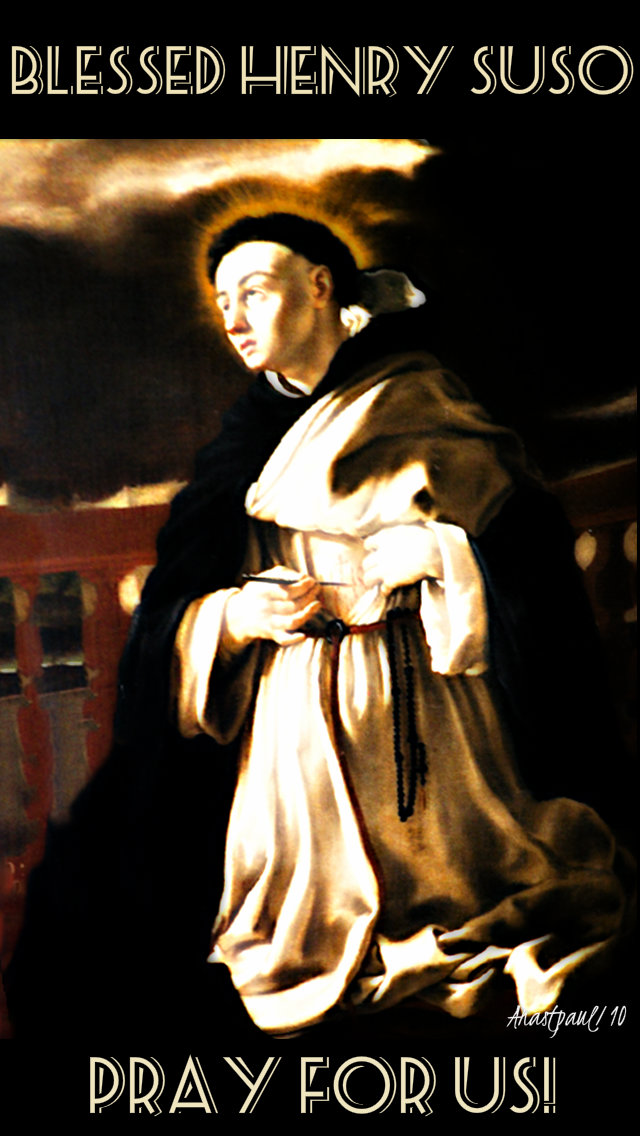
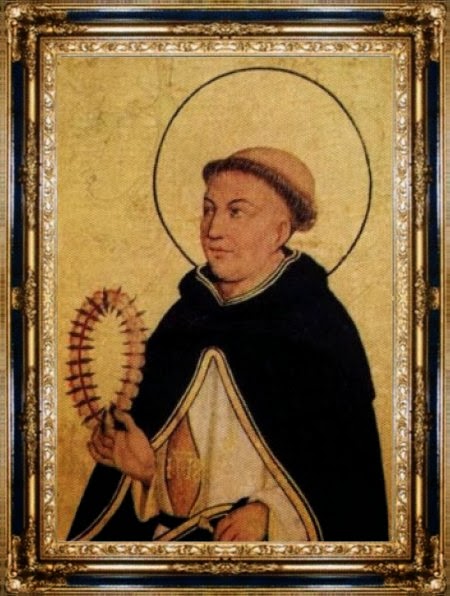
Saint of the Day – 23 January – Blessed Henry Suso OP (1295-1366) Henry (also called Amandus, a name adopted in his writings and Heinrich Seuse in German), was a German Dominican Priest and Friar and the most popular vernacular writer of the fourteenth century.   Suso is thought to have been born on 21 March 1295.   An important author in both Latin and Middle High German, he is also notable for defending Meister Eckhart’s legacy after Eckhart was posthumously condemned for heresy in 1329.   He died in Ulm on 25 January 1366 and was Beatified 1831, by Pope Gregory XVI. Blessed Henry was a Priest, Preacher, Writer, Poet, Mystic.   His body is incorrupt.bl henry suso.jpg

Henry was born in Switzerland—hence the epithet “Suso,” or “Swiss”—in 1290.   The gentle Henry was a great disappointment to his military family.   Gifted with a deep awareness of God’s presence within him and drawn to a life of prayer, at the age of thirteen, he entered the Dominican convent at Lake Constance near the Alps on the Swiss-German border.   His Dominican formation developed and matured his natural contemplative gifts, giving his prayer an outlet in a joyful zeal to share its fruits with others.   Once ordained, he travelled constantly and widely, preaching and hearing confessions.henri_suzo_45_02

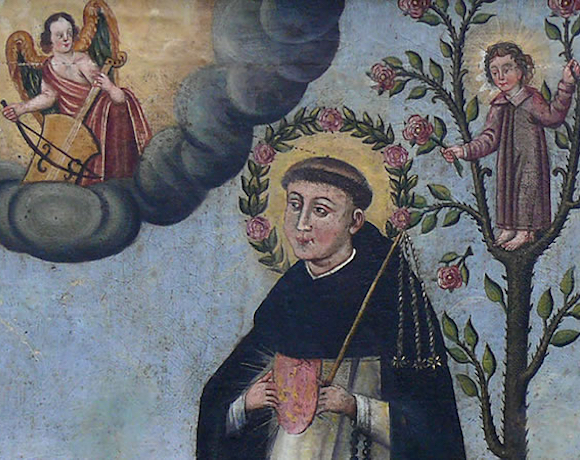
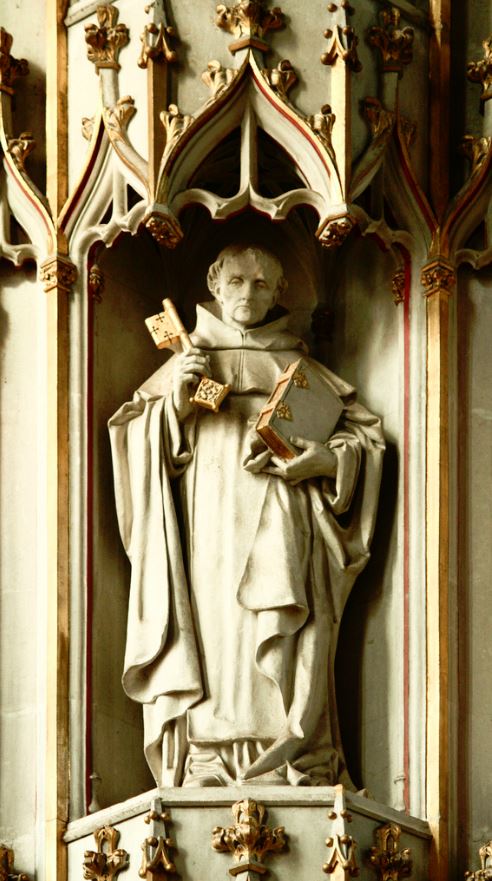
Bl Henry Suso is known in the Order for his gentleness and slight eccentricity.   For example, he once erected a Maypole and danced around it in a joyful display of uninhibited love for the Lord.    He used to call his beloved crucified Lord “God’s Eternal Wisdom”, which indeed Christ is.   Although in his lifetime Blessed Henry suffered much and was not renowned for being a great theologian or preacher, the manuscripts surviving of his writings suggest he was the most widely read spiritual author in the later Middle Ages until the publication of the Imitatio Christi.   Henry wrote the spiritual classic The Little Book of Eternal Wisdom, or The Exemplar.    He had a very strong devotion to Christ’s passion and crucifixion and speaks of it in very human terms. This makes him and especially his Little Book of Eternal Wisdom, ideal reading and material for meditation during Lent.   In many images you will  see him writing the name of Jesus under his heart – it is believed that he really did ‘tattoo’ himself in this way.blessed-henry-suso

From his teens, Henry had imposed severe penances on himself.   However, his greatest sufferings were not of his own making.   In his innocence, he was constantly misunderstood and taken advantage of.   On one preaching tour, Henry was victim of the deceit of his lay companion, who lied about Henry’s poisoning a well in the town.   The story was believed and Henry was almost clubbed to death.   In another situation, which found him in the middle of disputes between feuding families, he was falsely accused by a woman from one of them as being the father of her child.

Henry was a contemporary of John Tauler OP and Master Eckhart, Dominican theological writers of the Rhineland Mystics of Germany in the fourteenth century.   Henry complemented their theology with his beautiful devotional poetry.

He died in Ulm, near Bavaria, in 1365.   His body was later found incorrupt and emitting a fragrance reminiscent of that of his Holy Father Dominic 150 years before.

Suso was esteemed as a preacher and was heard in the cities and towns of Swabia, Switzerland, Alsace and the Netherlands.   His apostolate, however, was not with the masses but rather with individuals of all classes who were drawn to him by his singularly attractive personality and to whom he became a personal director in the spiritual life.

The words of the Christmas Hymn “In dulci jubilo” are attributed to Suso.   In his biography (or perhaps autobiography), it was written:
Now this same angel came up to the Servant (Suso) brightly and said that God had sent him down to him, to bring him heavenly joys amid his sufferings, adding that he must cast off all his sorrows from his mind and bear them company and that he must also dance with them in heavenly fashion.   Then they drew the Servant by the hand into the dance and the youth began a joyous song about the infant Jesus ..:

In sweet rejoicing,
now sing and be glad!
Our hearts’ joy
lies in the manger;
And it shines like the sun
in the mother’s lap.
You are the alpha and omega!bl henry suso lg.jpg

Posted in DOMINICAN OP, PRAYERS of the SAINTS, QUOTES of the SAINTS, QUOTES on CONVERSION, QUOTES on FAITH, QUOTES on PATIENCE, QUOTES on PEACE, QUOTES on PERSECUTION, QUOTES on PERSEVERANCE, QUOTES on SANCTITY, SAINT of the DAY

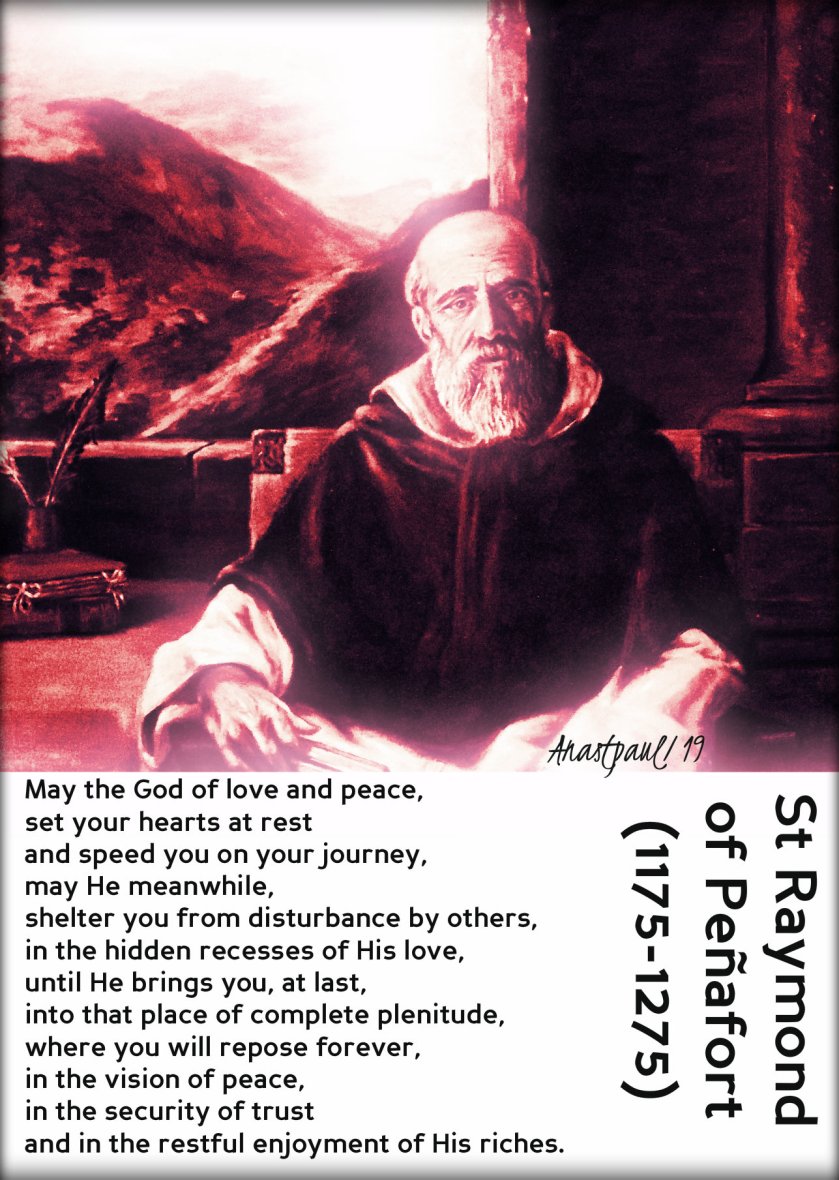
Thought for the Day – 7 January – The Memorial of St Raymond of Peñafort (1175-1275) “Father of Canon Law”

Thought for the Day – 7 January – The Memorial of St Raymond of Peñafort (1175-1275) “Father of Canon Law”

As a lawyer, priest and preacher, St Raymond of Penyafort made a significant mark on the history of Spain and the church.   His preaching helped re-Christianise Spain after the Moors were overthrown.   And his compilation of papal and conciliar decrees was the main source of canon law for seven centuries.

An accomplished lawyer and scholar, Raymond joined the Dominicans at Barcelona in 1222.   The 47-year-old novice was assigned to develop a book of case studies for confessors that helped to shape the medieval church’s penitential system.   Also a gifted preacher, Raymond had remarkable success evangelising Moors and Jews.   And he travelled throughout Spain, rejuvenating the spiritual life of Christians, that the Moors had enslaved.   Among his main themes were spiritual combat and standing firm in trials.

He wrote:

“Your purity of life, your devotion, deserve and call for a reward, because you are acceptable and pleasing to God, your purity of life must be made purer still, by frequent buffetings, until you attain perfect sincerity of heart.   If from time to time you feel the sword falling on you with double or treble force, this also should be seen as sheer joy and the mark of love.”

And then, he encouraged and prayed for us all:

“May the God of love and peace,
set your hearts at rest
and speed you on your journey,
may He meanwhile,
shelter you from disturbance by others,
in the hidden recesses of His love,
until He brings you, at last,
into that place of complete plenitude,
where you will repose forever,
in the vision of peace,
in the security of trust
and in the restful enjoyment of His riches.”may the god of love and peace - st raymond of penafort - 7 jan 2019.jpg

St Raymond of Peñafort, Pray for Us!st raymond of penafort pray for us no 2. 7 jan 2019.jpg

Posted in DOMINICAN OP, SAINT of the DAY

Memorials of the Saints -7 January

St Raymond of Peñafort OP (1175-1275) (“Father of Canon Law”) (Optional Memorial)

St Aldric of Le Mans
Bl Ambrose Fernandez
St Anastasius of Sens
St Brannock of Braunton
St Candida of Greece
St Canute Lavard
St Cedd
St Clerus of Antioch
St Crispin I of Pavia
St Cronan Beg
St Emilian of Saujon
St Felix of Heraclea
Bl Franciscus Bae Gwan-gyeom
St Januarius of Heraclea
St Julian of Cagliari
St Kentigerna
St Lucian of Antioch
Bl Marie-Thérèse Haze
St Pallada of Greece
St Polyeuctus of Melitene
St Reinhold of Cologne
St Spolicostus of Greece
St Theodore of Egypt
St Tillo of Solignac
St Valentine of Passau
St Virginia of Ste-Verge
Bl Wittikund of Westphalia

Posted in DOMINICAN OP, Of LAWYERS & CANON Lawyers, Attorneys, Solicitors, Barristers, Notaries, Para-Legals, SAINT of the DAY

Saint of the Day – St Raymond of Peñafort OP (1175-1275) “Father of Canon Law”

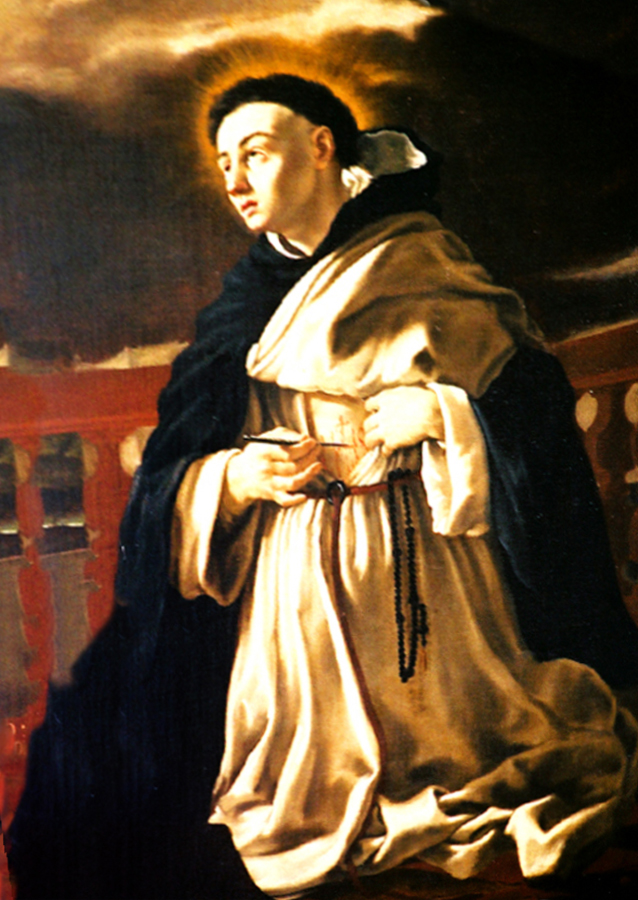
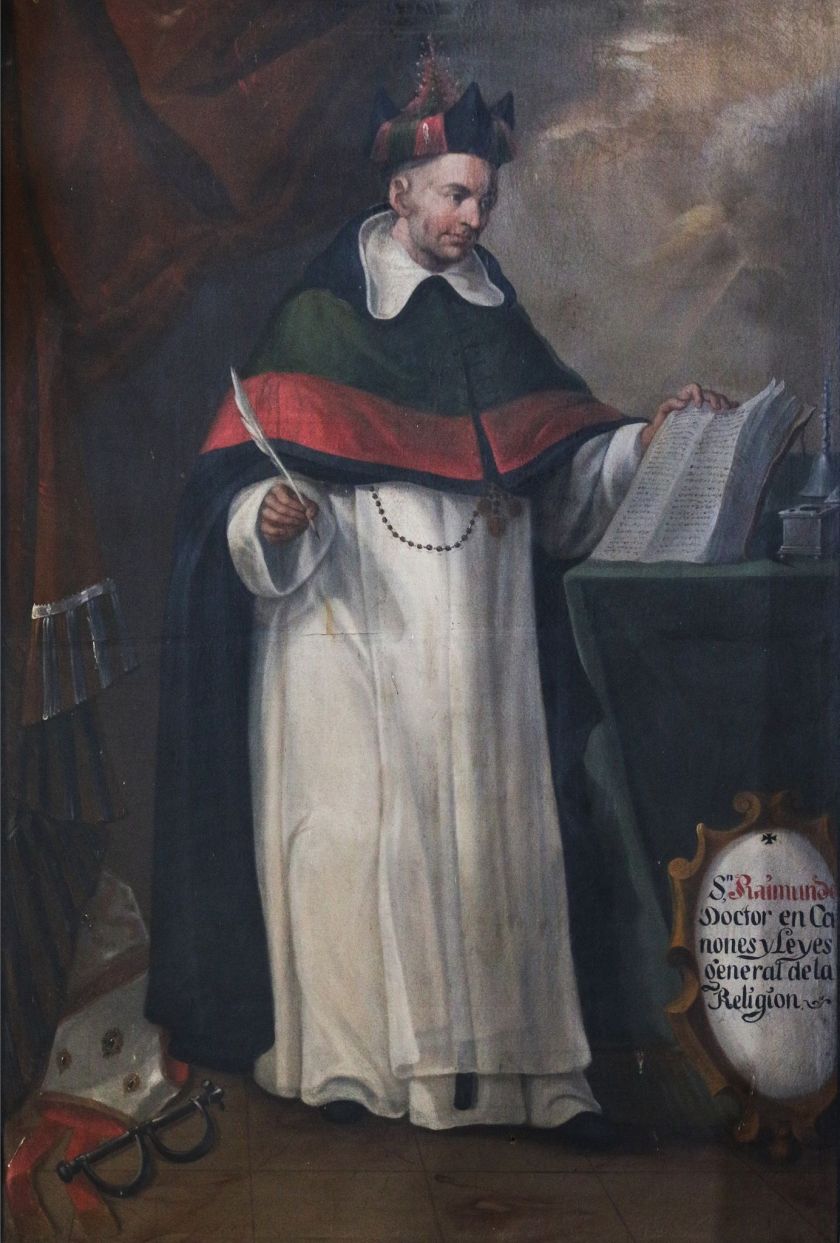
Saint of the Day – St Raymond of Peñafort OP (1175-1275) “Father of Canon Law” Dominican Priest, Doctor of Canon Law, Founder of the Mercedarian friars, the third Master of the Order of Preachers, Writer, Teacher, Miracle-Worker – born on 1175 at Peñafort, Catalonia, Spain and died on 6 January 1275 at Barcelona, Spain of natural causes. PatronagesLawyers, Canonists, Medical Record Librarians, Barcelona, Spain, Navarre, Spain.

sod-0107-saintraymondofpeñafort-790x480
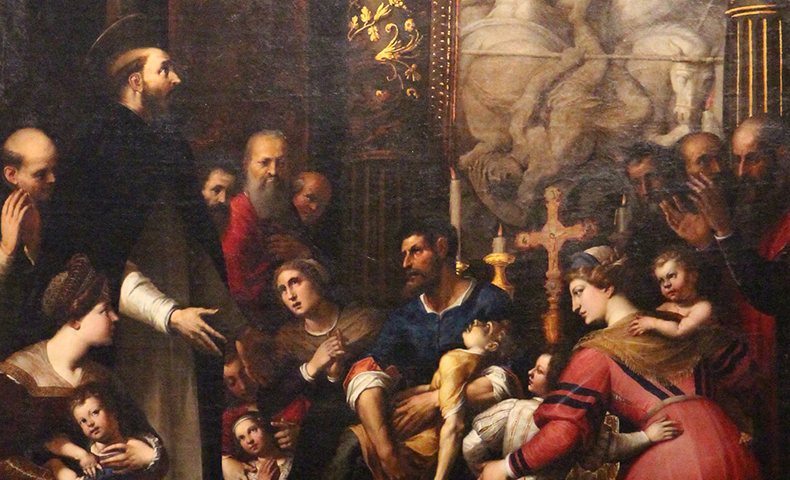
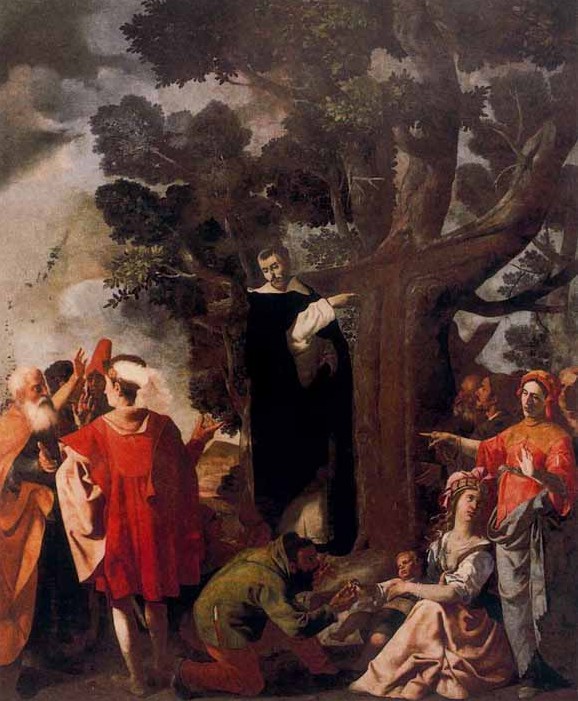
Saint Raymond of Peñafort’s Miracle by Jacopo Ligozzi 

Raymond was born of a noble Spanish family, at the age of twenty, taught philosophy at Barcelona with marvellous success.   Ten years later his rare abilities won for him the degree of Doctor in the University of Bologna and many high dignities.

A tender devotion to our blessed Lady, which had grown up with him from childhood, determined him in middle life to renounce all his honours and to enter her Order of St. Dominic.   There, again, a vision of the Mother of Mercy instructed him to co-operate with his penitent St Peter Nolasco (1189-1256) and with James, King of Aragon, in founding the Order of Our Lady of Ransom for the Redemption of Captives (the Mercedarian friars).  He began this great work by preaching a crusade against the Moors and rousing to penance the Christians, enslaved in both soul and body by the infidel.   King James of Aragon, a man of great qualities but held in bond by a ruling passion, was bidden by the Saint to put away the cause of his sin.  saint_raymond

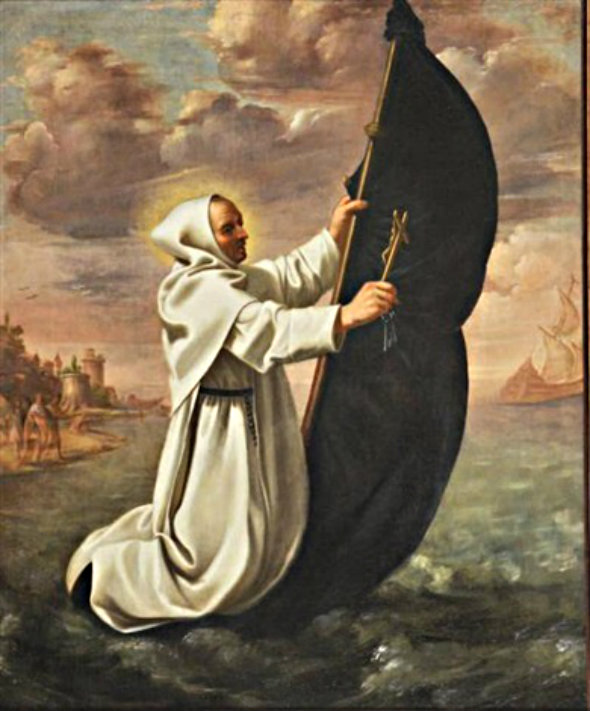
On his delay, Raymond asked for leave to depart from Majorca, since he could not live with sin.   The king refused and forbade, under pain of death, his conveyance by others.  Full of faith, Raymond spread his cloak upon the waters and, tying one end to his staff as a sail, made the sign of the cross and fearlessly stepped upon it.   In six hours he was borne to Barcelona, where, gathering up his cloak dry, he stole into his monastery.   The king, overcome by this miracle, became a sincere penitent and the disciple of the Saint till his death.french-school-(17)-le-miracle-de-saint-raymond-de-penyafort-(1175-1275)

In 1230, Gregory IX. summoned Raymond to Rome, made him his confessor and grand penitentiary and directed him to compile “The Decretals,” a collection of the scattered decisions of the Popes and Councils.  st raymond penafort - canonist.jpg

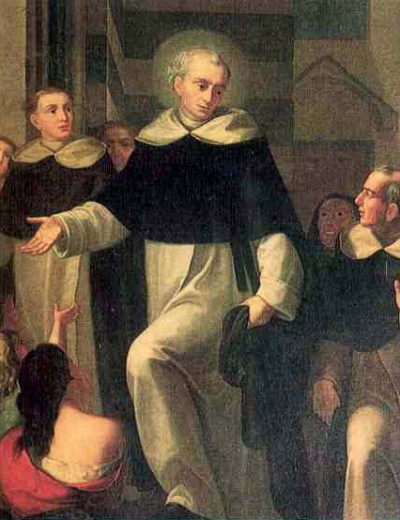
Having refused the archbishopric of Tarragona, Raymond found himself in 1238 chosen third General of his Order  which post he again succeeded in resigning, on the score of his advanced age.  Rejoicing to see himself again free of office, he applied himself with fresh vigour to the Christian ministry, especially working for the conversion of the Moors.   To this end he encouraged Thomas Aquinas to write his work Against the Gentiles.   He instituted the teaching of Arabic and Hebrew in several houses of the friars.   He also founded priories in Murcia (then still ruled by Arabs) and in Tunis.   Additionally he went to help establish the Church in the recently conquered island of Mallorca.   In 1256 Raymond, then eighty-one, was able to report that ten thousand Saracens had received Baptism.  st-raymond-011,-louth-1318847641.jpg

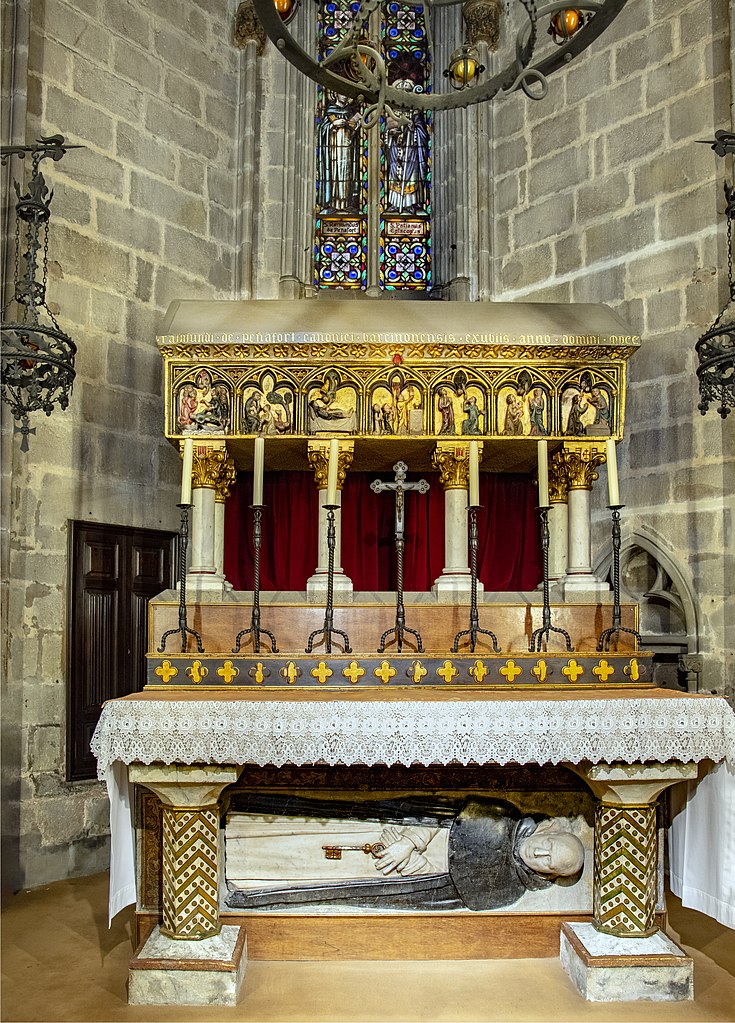
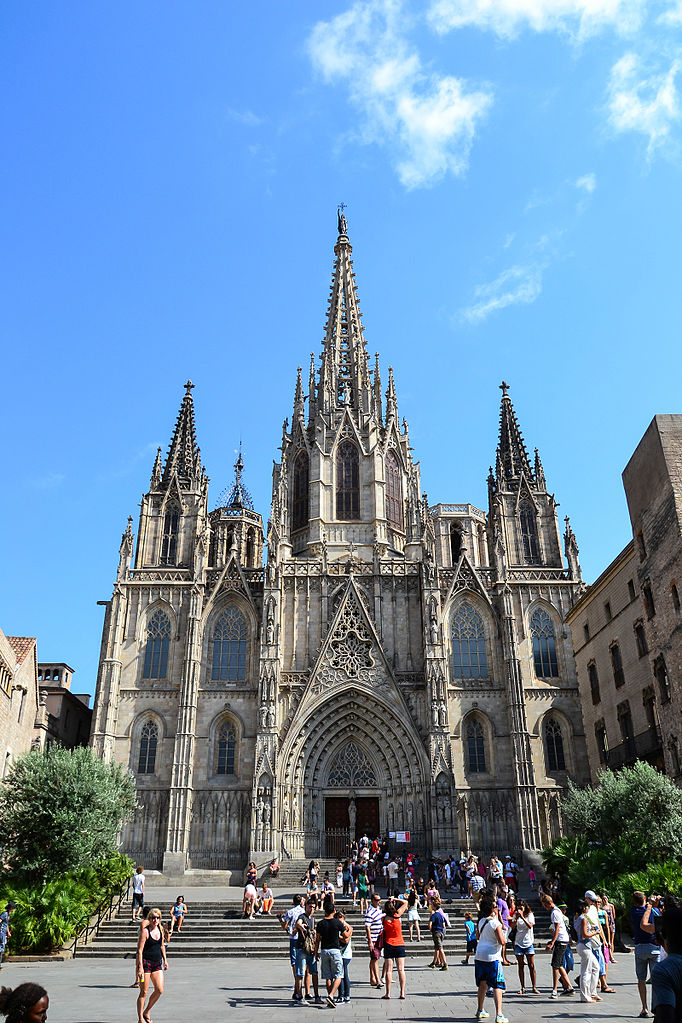
Raymond died at the age of 100 in Barcelona in 1275 and was Canonised by Pope Clement VIII in 1601.   He was buried in the Cathedral of Santa Eulalia in Barcelona.cathedral_of_the_holy_cross_and_saint_eulaliashrine 735px-barcelona_cathedral_interior_-_capella_de_sant_ramon_de_penyafortst raymondf penafort statue

Here is one of my first posts on the saints but it has a lot more detail of his life – St Raymond:  https://anastpaul.wordpress.com/2017/01/07/saint-of-the-day-7-january/

Posted in DOMINICAN OP, INCORRUPTIBLES, SAINT of the DAY

Saint of the Day – 16 December – Blessed Sebastian Maggi OP (1414–1496)

Saint of the Day – 16 December – Blessed Sebastian Maggi OP (1414–1496) Religious Priest of the Order of Preachers, Confessor – born in 1414 at Brescia, Italy and died in 1496 at Genoa, Italy of natural causes.   Blessed Sebastian also served as the confessor to both Girolamo Savonarola (1452–1498) and Saint Catherine of Genoa (1447–1510).   His body is incorrupt.

Sebastian Maggi was born in Brescia to nobles in 1414.   He is related to Bishop Berardo Maggi who was also the Duke and Count of Brescia.

Maggi began his work in 1429 when he joined the Order of Preachers.   His intelligence was noticed and he later received a master’s degree in theological studies.   He rose through the ranks and became the superior of several religious Dominican houses.   He practised corporal mortification and was strict in discipline.   He would often tell his subordinates: “When you have committed a fault, come to me, not as prior but as your father.   If you will not have me as a father, you will find me a severe judge.”bl sebastian maggi op

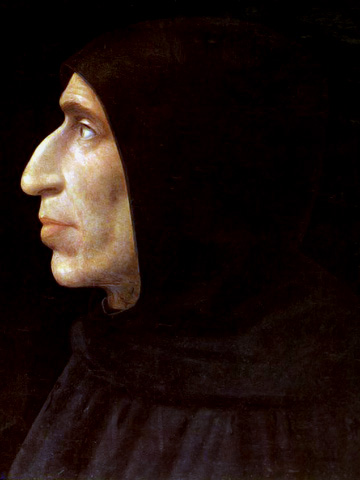
He appointed the monk Girolamo Savonarola to the position of novice master and set that famous Florentine friar on his own path to fame.   In his time he was regarded as one of the greatest preachers in the Italian state.

Pope Alexander VI chose Father Maggi to investigate revelations that Savonarola claimed were given to him directly from God.   Savonarola appealed the choice and believed that Sebastian – as Vicar-General of the Lombard Congregation – would be biased and try to take over his recently-emancipated “San Marco” facility in Florence.   Alexander VI, however, had already decided to give the facility back to the Congregation, making Sebastian, Savonarola’s canonical superior.

Perhaps, if Sebastian Maggi had lived, he might have saved Savonarola from the political entanglements that sent him to his death.   Sebastian was his confessor for a long time and always testified in his favour when anyone attacked the reformer’s personal life.   It is hard to say just where he stood politically in the long and complex series of events concerning the separation of Lombard province from the province of Italy.   But all that has been written of him, conveys the same impression, he was a kind and just superior, who kept the rule with rigid care but was prudent in exacting it of others.

Girolamo_Savonarola
Girolamo Savonarola

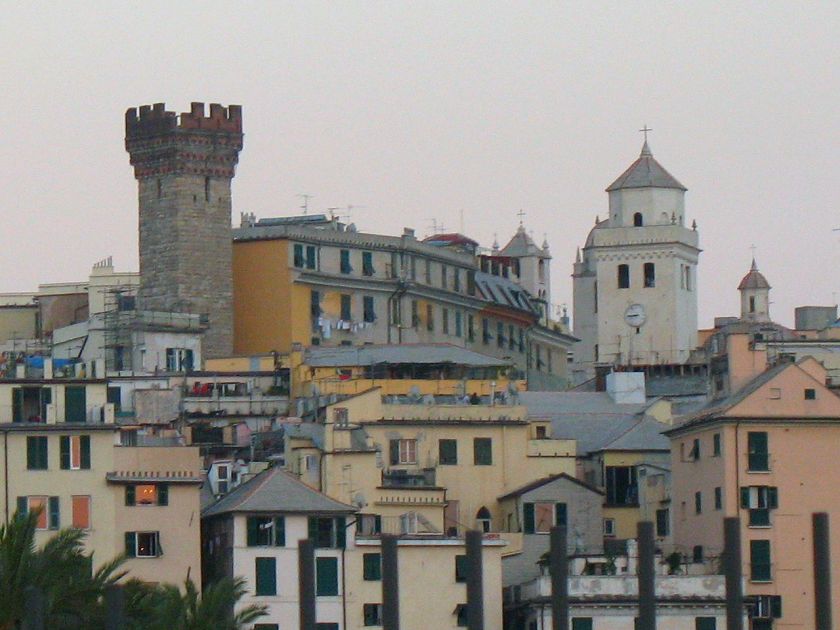
Several times Sebastian Maggi was sent on missions of reform and he died on one of these.   On his way to a convent for visitation, he became ill at Genoa and died there in 1496.   He is buried at the Dominican “Santa Maria di Castello” complex in Genoa (see below).1280px-Genova-centro_storico-IMG_1503

History has written of Blessed Sebastian that his greatest virtues were seen in his governing.   As the prior of several convents, Blessed Sebastian often loved to wait on his Dominican sisters and brothers with his own hands and to minister to them when they were ill.   It was commonly said, that when Blessed Sebastian visited the sick, he did so with as much joy as attending a wedding.

Posted in DOMINICAN OP, SAINT of the DAY

Memorials of the Saints – 12 November

St Josaphat Kuncewicz OSBM (1584-1623) Martyr (Memorial)
All About St Josaphat:   https://anastpaul.wordpress.com/2017/11/12/saint-of-the-day-12-november-st-josaphat-kuncewicz-1584-1623/

St Arsatius
St Astricus of Ungarn
St Aurelius
St Cadwallader
St Cummian Fada
St Cunibert of Cologne
St Emilian Cucullatus
St Evodius of Le Puy
St Hesychius of Vienne
Bl John Cini della Pace
Bl José Medes Ferrís
St Lebuin of Deventer
St Livinus of Alost
St Machar of Aberdeen
St Margarito Flores-García
St Namphasius
St Nilus the Elder
St Paternus of Sens
St Publius
St Renatus of Angers
St Rufus of Avignon
Bl Ursula Medes Ferris
St Ymar of Reculver

Five Polish Brothers – martyrs:  They weren’t Polish and they weren’t related but were instead five Italian Benedictine monks who worked with Saint Adalbert of Prague as missionaries to the Slavs and were martyred together.   They were – Benedict, Christinus, Isaac, John and Matthew. Born in Italy.   They were martyred in 1005 at the Benedictine monastery near Gnesen, Poland and Canonised by Pope Julius II.

Posted in DOMINICAN OP, SAINT of the DAY

Thought for the Day – 3 November – The Memorial of St Martin de Porres OP (1579-1639)

Thought for the Day – 3 November – The Memorial of St Martin de Porres OP (1579-1639)

In normal times, Saint Martin succeeded with his alms to feed 160 poor persons every day and distributed a remarkable sum of money every week to the indigent — the latter phenomenon hard to explain by ordinary calculations.   To Saint Martin the city of Lima owed a famous residence founded for orphans and abandoned children, where they were formed in piety for a creative Christian life.   This lay Brother had always wanted to be a missionary but never left his native city;  yet even during his lifetime he was seen elsewhere, in regions as far distant as Africa, China, Algeria, Japan.   An African slave who had been in irons said he had known Martin when he came to relieve and console many like himself, telling them of heaven.   When later the same slave saw him in Peru, he was very happy to meet him again and asked him if he had had a good voyage, only later did he learn that Saint Martin had never left Lima.   A merchant from Lima was in Mexico and fell ill, he said aloud:  Oh, Brother Martin, if only you were here to care for me..! and immediately saw him enter his room.   And again, this man did not know until later that he had never been in Mexico.

When he died in 1639, Saint Martin was known to the entire city of Lima, word of his miracles had made him known as a Saint to every resident of the region.   After his death, the miracles and graces received when he was invoked multiplied in such profusion that his body was exhumed after 25 years and found intact and exhaling a fine fragrance.

Letters to Rome pleaded for his Beatification the decree affirming the heroism of his virtues was issued in 1763 by Clement XIII, Gregory XVI beatified him in 1836 and in 1962 St Pope John XXIII Canonised him.

The poor and the sick will never fail to find in him a friend having great power over the Heart of God.

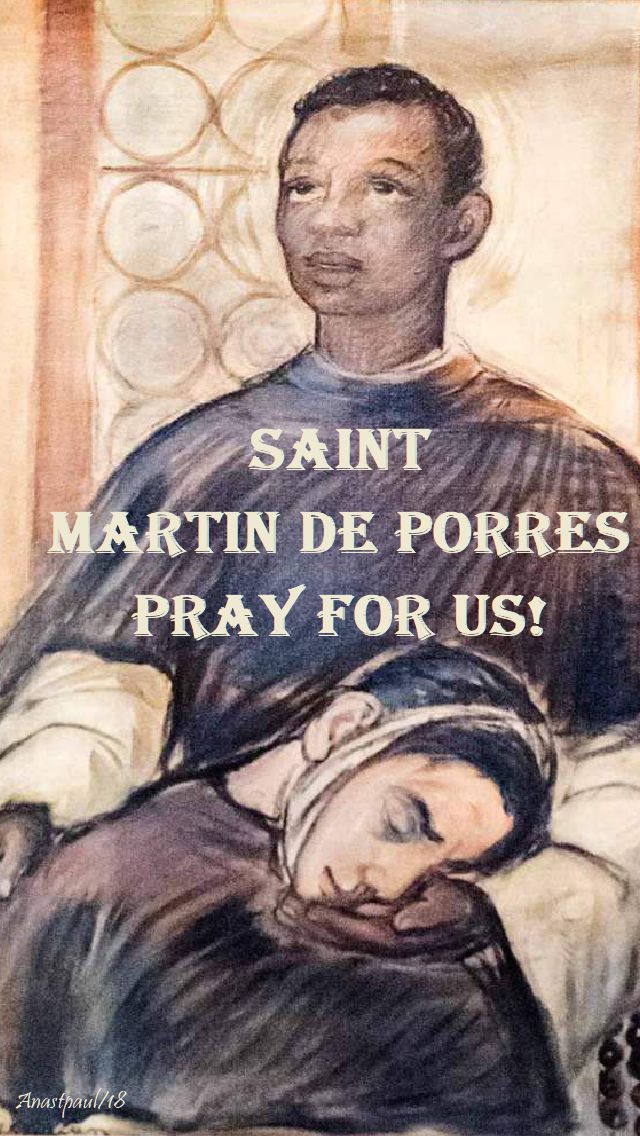
St Martin de Porres, Pray for Us!st martin de porres pray for us - 3 nov 2018

Posted in DOMINICAN OP, QUOTES of the SAINTS, QUOTES on LOVE, QUOTES on MERCY, QUOTES on PRAYER, SAINT of the DAY

Quote/s of the Day – 3 November – The Memorial of St Martin de Porres (1579-1639)

Quote/s of the Day – 3 November – The Memorial of St Martin de Porres (1579-1639)

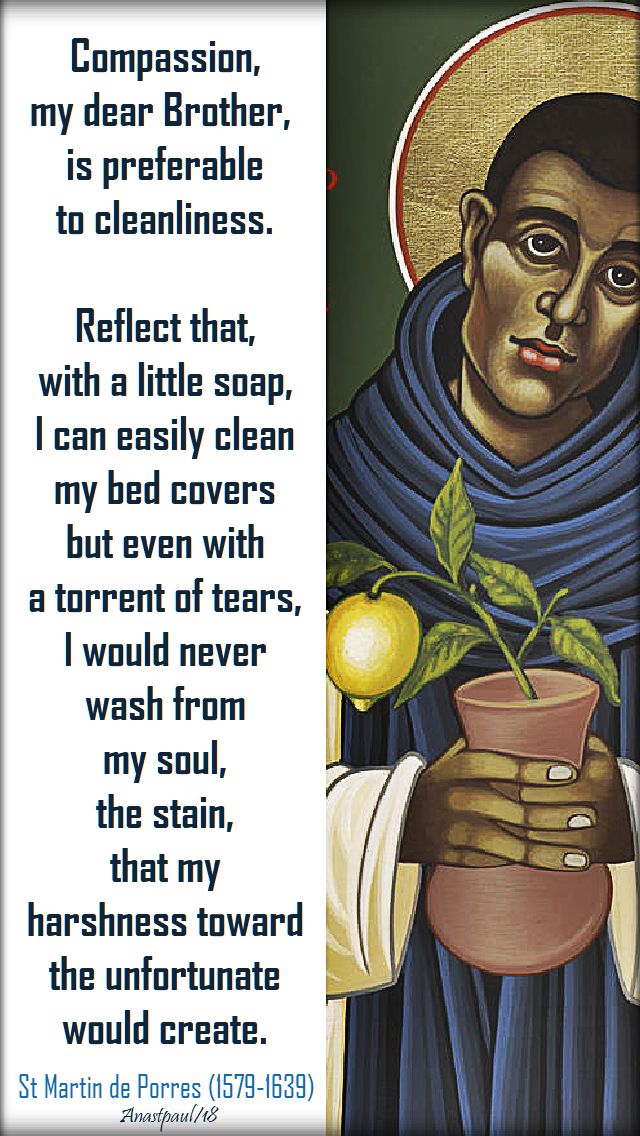
“Compassion, my dear Brother,
is preferable to cleanliness.
Reflect that with a little soap,
I can easily clean my bed covers
but even with a torrent of tears,
I would never wash from my soul,
the stain, that my harshness toward
the unfortunate would create.”compassion my dear brother - st martin de porres - 3 nov 2018

“Everything,
even sweeping,
scraping vegetables,
weeding a garden
and waiting on the sick,
could be a prayer,
if it were offered to God.”

St Martin de Porres (1579-1639)everything - st martin de porres - 3 nov 2018

Posted in DOMINICAN OP, SAINT of the DAY

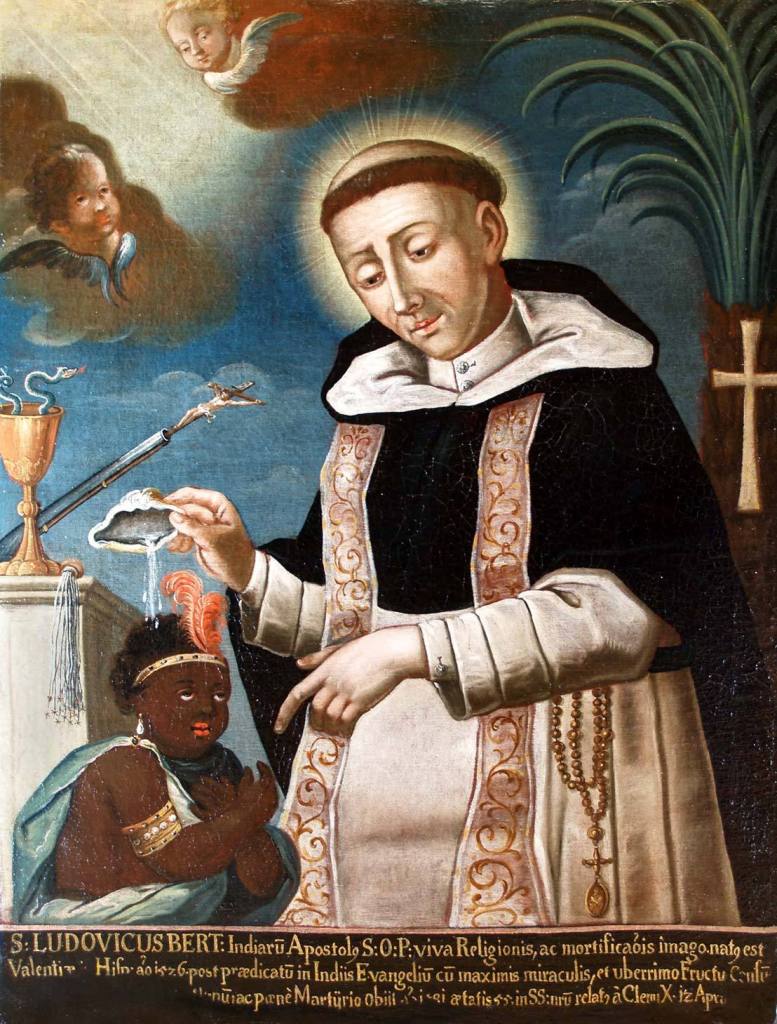
Saint of the Day – 9 October – St Louis Bertrand O.P. (1526-1581) “Apostle of South America”

Saint of the Day – 9 October – St Louis Bertrand O.P. (1526-1581) “Apostle of South America” – Dominican Priest, Missionary, Preacher, Confessor, Teacher, Spiritual Director, Miracle-Worker – born as Luis Beltrán on 1 January 1526 at Valencia, Spain and died on 9 October 1581 of natural causes at Valencia, Spain.   Patronages – Buñol; New Granada; Colombia.header - san-luis-beltran-email

Saint Louis Bertrand was born in the year 1526, the oldest of the eight children of his good Christian parents, at Valencia in Spain.   He was in every way a model of modesty and obedience and it was foreseen that God had some particular role for him.   He devoted himself to the sick in the hospitals.   He desired to enter the Order of Saint Dominic but for some time could not obtain his parents’ permission.   Finally, in 1545, he became professed in the Dominican Order, then was ordained a priest in 1547 when he was only 21 years old, according to the desire of his Superiors.   In 1551, at the age of twenty-five, he was made master of novices and in this post he formed many great servants of God.   In demeanour he was grave and apparently without any sense of humour, yet withal possessed of a gentle and sweet disposition that greatly endeared him to those with whom he came in contact.   It is said that despite his strictness, he was so gentle that his chastisements were more agreeable to his novices than the favours of their best friends.10_9_St Louis Bertrand

In 1560, when the plague broke out in Valencia, his Superiors, not wanting to lose him, sent him elsewhere for a time, he preached with great success and was endowed with the spirit of prophecy.   He continued his preaching when recalled to Valencia.   In 1562 he obtained leave to embark for Carthagena in the American mission and there converted vast multitudes to the Faith.   He hoped to obtain the grace of martyrdom there, but God conserved his life.   He was favoured with the gift of miracles and, after praying for the gift to be understood without an interpreter, since one of those had disappointed him seriously, he preached in his mother tongue, Spanish but was understood by all the natives of various tribes.st louis teaching the cross

In his mission at Tubera he himself baptised 10,500 Indians, without counting those his companions baptised, and obliged them to burn their idols and the sites of their sacrifices.   Often his gentleness charmed his worst enemies.  He preached also at Capicoa and Paluato, having established missions there  . He refused all remuneration -he brought down rain after a drought.   He was poisoned by some pagans who had suffered a reproach but the poison did not harm him and the nativeswere converted by the miracle.   He went to many other places, preaching and healing the sick – again he was poisoned without effect.   There was no one who did not consider him a Saint, sent for the benefit of the new continent.LG ST LOUIS BERTRAND

After seven years he returned to Spain to plead the cause of the Indians, oppressed and given bad example by his own countrymen.   He used his own growing reputation for sanctity, as well as family and other contacts, to lobby on behalf of the native peoples he had encountered, as well as serving in his native diocese of Valencia.   There he also became a spiritual counsellor to many, including St Teresa of Ávila.  He was not permitted, however, to return and labour among his beloved peoples.   He spent his remaining days preaching, labouring for the conversion of different cities and again forming the novices of the Order at Valencia.   He was elected Prior of that convent and never had a more charitable or more zealous Superior been seen there.louis bertrand

At length, after suffering from a long and painful illness, he was carried from the pulpit in the Cathedral at Valencia to the bed from which he never rose.   He died on the day he had foretold, 9 October 1581, at the age of 55 years.st louis bertrand deathbed

He was Canonised by Pope Clement X in 1671.

There is a statue of Louis Bertrand on the north colonnade of St Peter’s Basilica in Rome.
The festival known as La Tomatina is held in Buñol, Valencia, in honour of the town’s patron saints, Louis Bertrand and the Mare de Déu dels Desemparats – Mother of God of the Defenceless, a title of the Blessed Virgin Mary.

ST LOUIS BERTRAND

Posted in DOMINICAN OP, MORNING Prayers, SAINT of the DAY, The WORD

Thought for the Day – 18 September – The Memorial of St Juan Macias O.P. (1585-1645)

Thought for the Day – 18 September – The Memorial of St Juan Macias O.P. (1585-1645)

St Juan Macias reflects the life of the many immigrants who come seeking better living conditions.   His life helps us to realise that as immigrants, we have a greater mission – to share the richness of our faith with other people in simple ways.   According to his biographers, St Juan Macias constantly meditated on the verse from the Book of Revelation:  “I saw a new heaven and a new earth” (Rev 21:1).

Faith is a journey on this earth in which all of us are immigrants who seek the new heaven and the new earth.   The life of St Juan Macias teaches us to walk this journey of faith in simple ways – being generous at all times, especially with the poor, the sick and the elderly;  being humble, embracing the reality that we are on this earth only for a while and doing the works of charity, the surest way to salvation.

The life of St Juan Macias teaches, that immigrants go to new worlds to find a better life through giving themselves for the greater mission of sharing the Gospel.   Indeed, this is a very effective way in which our life conditions will really become better, by sharing the Gospel, the Word of God, the life and death of our Saviour, Jesus Christ, in whatever way we can, where we find ourselves!

St Juan Macias, pray for us!st juan macias pray for us - no 2 - 18 sept 2018

Posted in DOCTORS of the Church, DOMINICAN OP, FATHERS of the Church, franciscan OFM, MORNING Prayers, PAPAL SERMONS, QUOTES of the SAINTS, QUOTES on CONVERSION, SAINT of the DAY, The WORD

One Minute Reflection – 18 September – Today’s Gospel: Luke 7:11–17

One Minute Reflection – 18 September – Today’s Gospel: Luke 7:11–17, Tuesday of the Twenty-fourth week in Ordinary Time and the Memorial of St Juan Macias O.P. (1585-1645) and St Joseph of Cupertino O.F.M. Conv. (1603-1663)

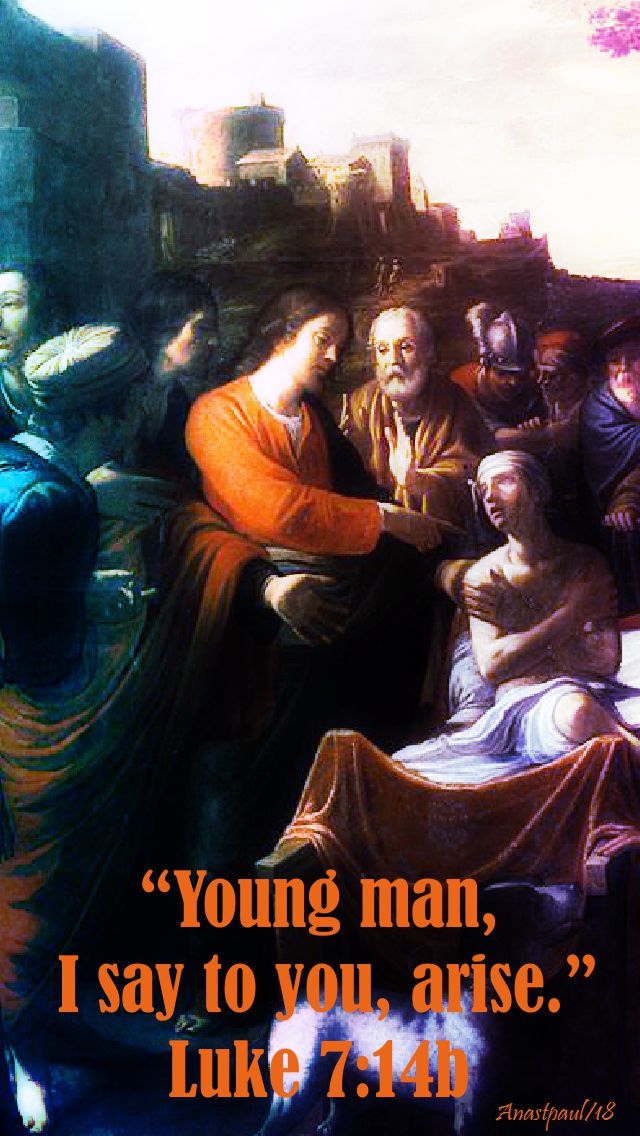
And he said, “Young man, I say to you, arise.”...Luke 7:14byoung man i say to arise - luke 7 14b - 18 sept 2018

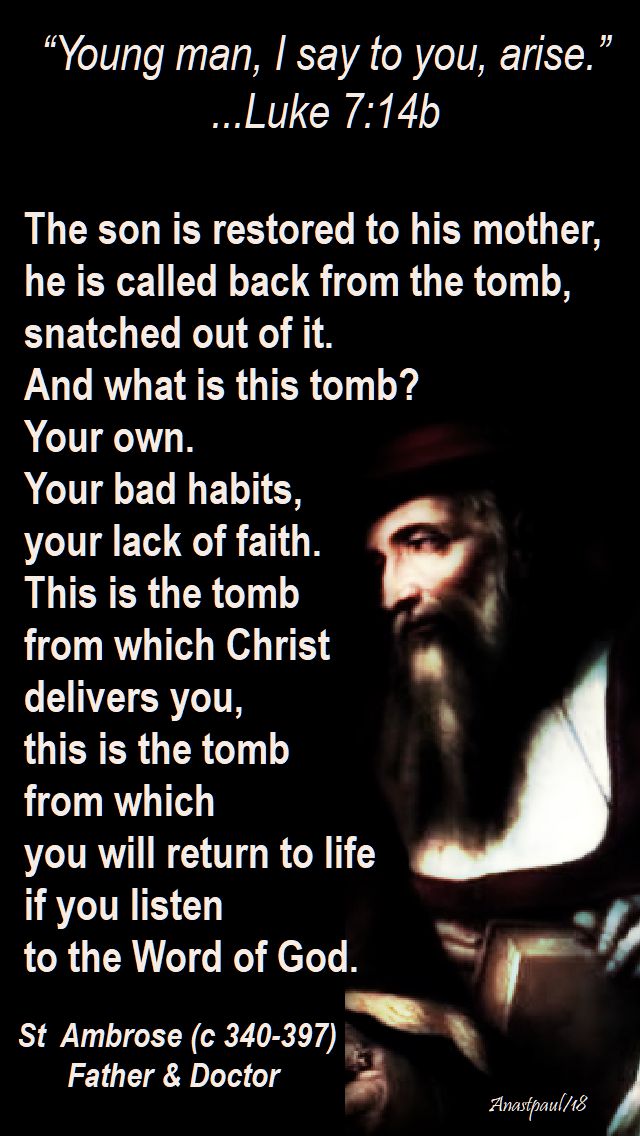
REFLECTION – “Even if the signs of death have removed all hope of life, even if the bodies of the dead lie beside the tomb, yet, at the voice of God, the corpses of those ready to decompose will rise and recover speech.   The son is restored to his mother, he is called back from the tomb, snatched out of it.   And what is this tomb?   Your own.   Your bad habits, your lack of faith.  This is the tomb from which Christ delivers you, this is the tomb from which you will return to life if you listen to the Word of God.  Even if your sin is so grave that you are unable to wash it clean for yourself with your tears of repentance, the Church, your mother, she who intercedes for each one of her children like a widowed mother for her only son, will weep for you.   For she feels for it with a kind of spiritual suffering natural to her when she sees her offspring dragged down to death by lamentable vices…
Let her weep, then, this pious mother; let the crowd accompany her – and not just a crowd but a large crowd – and may it show compassion towards this tender mother. Then you will come to life again in your tomb and will be delivered, the bearers will stop and you will start to speak the words of the living; everyone will be astonished.   The example of one will correct the many and they will praise God for having granted such remedies to us for escaping death.”…St Ambrose (c 340-397) Father & Doctor (A treatise on the Gospel of Saint Luke)young man i say to you arise luke 7 14b - the son is restored to his mother - st ambrose 18 sept 2018

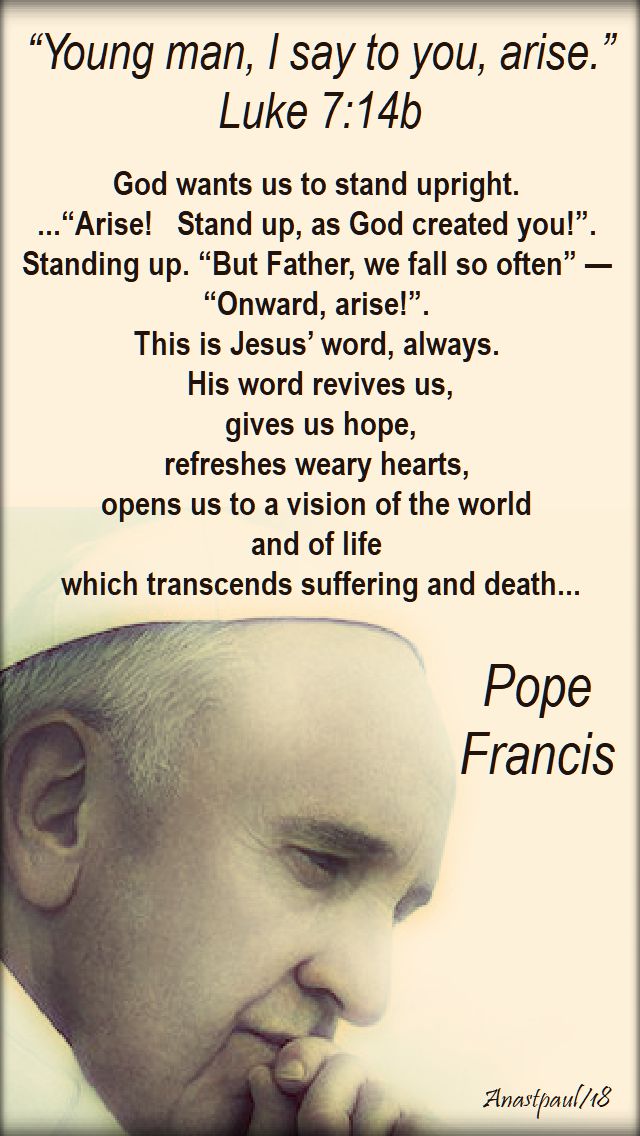
God wants us to stand upright.   He created us to be on our fee,: for this reason, Jesus’ compassion leads to that gesture of healing, to heal us, of which the key phrase is:  “Arise! Stand up, as God created you!”.   Standing up.   “But Father, we fall so often” — “Onward, arise!”.   This is Jesus’ word, always.   His word revives us, gives us hope, refreshes weary hearts, opens us to a vision of the world and of life which transcends suffering and death…Pope Francis – General audience, 10 August 2016young man i say to arise - luke 7 14b - pope francis - god wants us to stand upright - 18 sept 2018

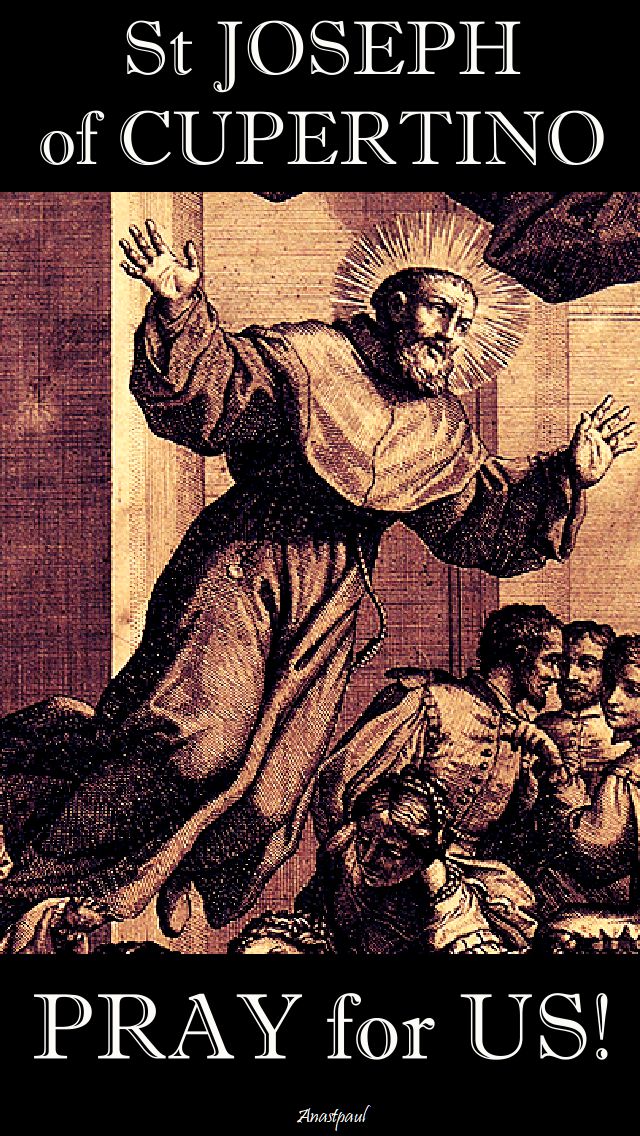
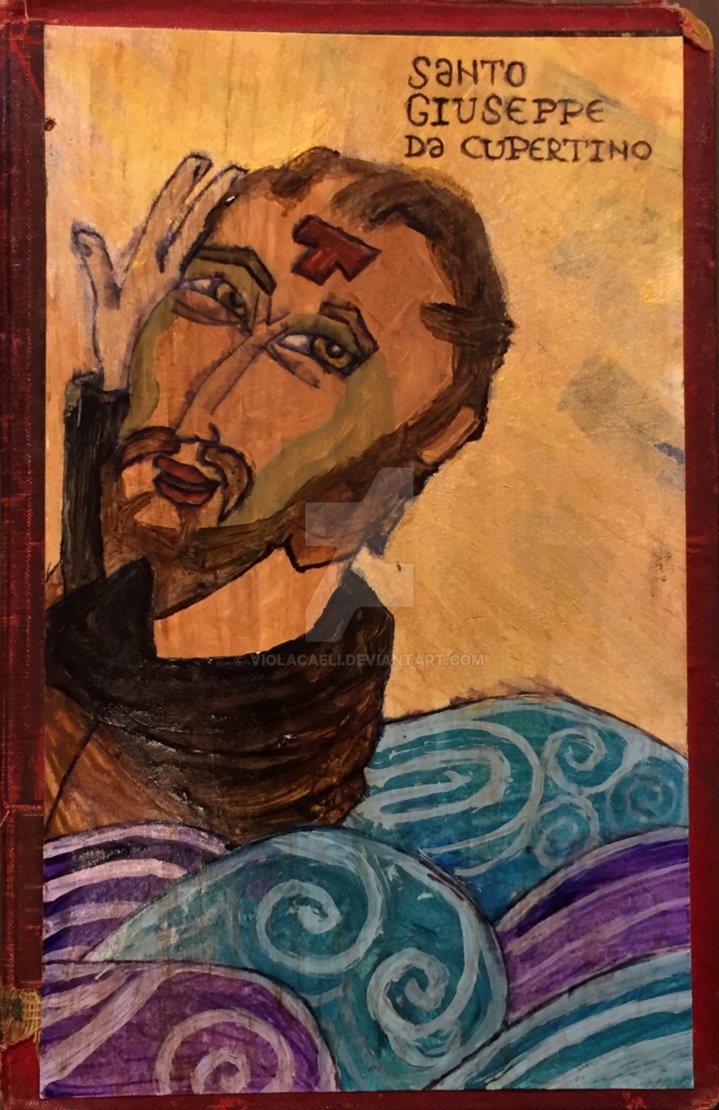
PRAYER – Heavenly Father, help me to be holy in the way that You have laid out for me. Let me stand upright and carry out my duties of my state of life to the full.   Only in You may I attain holiness, learning to give myself, my will, my heart and my to You.   St Joseph of Cupertino, you who were so disadvantaged, achieved by the grace of God, sanctity in this life and now behold His Face through all eternity.   St Juan, in your lowly work, you stood in the Light of Christ, allowing the lowly and rich, to see Him who saved us.   We ask You Holy Father, that You grant, by the intercession pf St Joseph and Juan, that we may reach our heavenly home.   We make our prayer through Christ our Lord, with the Holy Spirit, one God forever, amen.st-joseph-of-cupertino-pray-for-us-18 sept 2017

st juan macias pray for us 18 sept 2018

Posted in DOMINICAN OP, Our MORNING Offering, SAINT of the DAY

Our Morning Offering – 18 September – The Memorial of St Juan Macias O.P. (1585-1645)

Our Morning Offering – 18 September – The Memorial of St Juan Macias O.P. (1585-1645)

Note:  I am a Lay Dominican so I should be signing Anastpaul O.P. 

Breaking (down) The Habit

For the past 800 years, Dominican Friars (and Sisters, of course) have donned the white habit, the familiar robes, the brand unique of the Order of Preachers.   Each day whilst dressing, they quietly recite prayers as they do so.   This is a glimpse into a rarely seen Dominican ritual.

First is the tunic, a long white cotton/wool robe worn over any set of plain clothes.

Clothe me, O Lord, with the garments of salvation.   By Your grace may I keep them pure and spotless, so that clothed in white, I may be worthy to walk with You in the Kingdom of God. Amen.

The cincture is a belt, generally black leather, simple.

Gird me, O Lord, with the cincture of justice and the cord of purity that I may unite the affections of my heart in the love of You alone. Amen.

Over the belt, a 10-15 decade rosary, in adoration for Mary Magdalene.   Worn on the left hip because that was wear soldiers wore their weapons in 1216 when St Dominic founded the Order of Preachers, saying, “Arm yourself with prayer rather than a sword;  wear humility rather than fine clothes”.

O God, whose only-begotten Son, by His life, death and resurrection, has purchased for us the rewards of eternal life, grant we beseech Thee, that meditating upon the mysteries of the Most Holy Rosary of the Blessed Virgin Mary, we may imitate what they contain and obtain what they promise, through the same Christ our Lord, Amen.

The scapular is akin to a large white poncho, a long vest without sleeves.

Show yourself a mother, He will hear your pleading whom your womb has sheltered and whose hand brings healing.

A white capuce looks like the original hoody but only comes down past the shoulders to a point between the arm pit and the elbow.

Lord, You have set your sign upon my head that I should admit no lover but you. Amen.

The sixth layer is a black cappa, a cape of sorts.

We fly to your patronage, O Holy Mother of God, do not despise our prayers in our necessity, but free us from all peril, O Blessed Virgin. Amen.

The black capuce is the seventh and final layer.   It is generally only worn for formal occasions.

Heavenly Father, Who were with Your great servants Moses and Joshua and used them to bring Your children out of bondage, fill us with that same grace that we may preach Your word boldly and with authority for the deliverance of those under the bondages of sin.   We ask this through Christ our Lord, Amen.

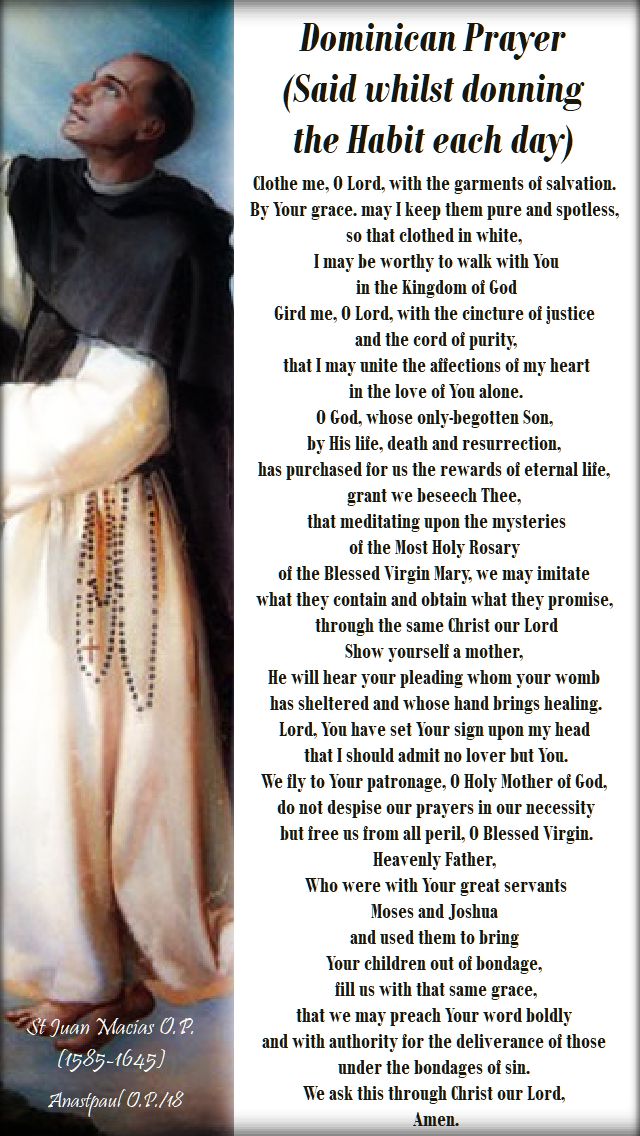
Dominican Prayer whilst donning the Habit

Clothe me, O Lord, with the garments of salvation.
By Your grace. may I keep them pure and spotless,
so that clothed in white,
I may be worthy to walk with You in the Kingdom of God
Gird me, O Lord, with the cincture of justice
and the cord of purity,
that I may unite the affections of my heart
in the love of You alone.
O God, whose only-begotten Son,
by His life, death and resurrection,
has purchased for us the rewards of eternal life,
grant we beseech Thee,
that meditating upon the mysteries of the Most Holy Rosary
of the Blessed Virgin Mary, we may imitate
what they contain and obtain what they promise,
through the same Christ our Lord
Show yourself a mother,
He will hear your pleading whom your womb
has sheltered and whose hand brings healing.
Lord, You have set Your sign upon my head
that I should admit no lover but You.
We fly to Your patronage, O Holy Mother of God,
do not despise our prayers in our necessity
but free us from all peril, O Blessed Virgin.
Heavenly Father,
Who were with Your great servants Moses and Joshua
and used them to bring Your children out of bondage,
fill us with that same grace,
that we may preach Your word boldly
and with authority for the deliverance of those
under the bondages of sin.
We ask this through Christ our Lord,
Amen.dominican prayer - clothing prayer no 2 with St Juan macias- 18 sept 2018
Posted in DOMINICAN OP, SAINT of the DAY

Saint of the Day – 18 September – St Juan Macias O.P. (1585-1645)

Saint of the Day – 18 September – St Juan Macias O.P. (1585-1645) – vowed Dominican Lay Friar, Mystic, Apostle of Charity and Prayer, MiracleWorker – St Juan was born on 2 March 1585 Ribera del Fresno in Extremadura, Spain and died on 16 September 1645 in Lima, Peru.   He was Beatified in 1837 together with his close friend, St Martin de Porres, by Pope Gregory XVI and Canonised in 1975 by Pope Paul VI.   His main image is located at the main altar of the Basilica of Our Lady of the Rosary of Lima and is venerated by the local laity in Peru.   A church was built in his honour in 1970 in San Luis, Lima, Peru.header - st juan macias

St Juan Macias is a saint dear to the heart of Dominicans.   To the chorus of Dominican saints, this humble lay brother adds his characteristic notes of contemplation and spiritual friendship, a living example of the Dominican motto, “to contemplate and to give to others the fruits of our contemplation.”

Juan Macias was born on 2 March 1585 in a small village in southwestern Spain.   His parents were poor farmers – both died when Juan and his sister Agnes were young.   The two children were raised by their uncle whose last name, “Macias,” they took as their own.

st juan macias

When he was sixteen, Juan met a Dominican priest while attending Mass in a neighbouring village.   Like most young people, Juan was full of wonder about what his future would hold.   This experience made a new impression on Juan and opened his heart to the possibility of a Dominican vocation.   Unlike most young people, Juan received another special grace – it is said that as he began to seek God’s will for his life, he was frequently visited by the Blessed Virgin Mary and by his patron, St John the Evangelist.

At the age of 35, Juan still felt drawn to the Dominican Order.   St John told him that it was not to be in Spain that he would become a Dominican, but in Lima, Peru.   In 1622, Juan Macias entered the Dominican convent of St Mary Magdalene in Lima, Peru. H  e entered as a lay brother, a non-ordained friar who, instead of preaching, would do the manual labour necessary in the monastery.   Juan was the assistant Porter (doorkeeper) until his death in 1646.   Although he was uneducated, Juan Macias exemplified the Dominican charism.   Like St Dominic, he learned the most sublime theology by studying the “book of charity,” the Cross.    Juan Macias’ entire life preached the Word of God to those he met.st juan macias beautiful statue

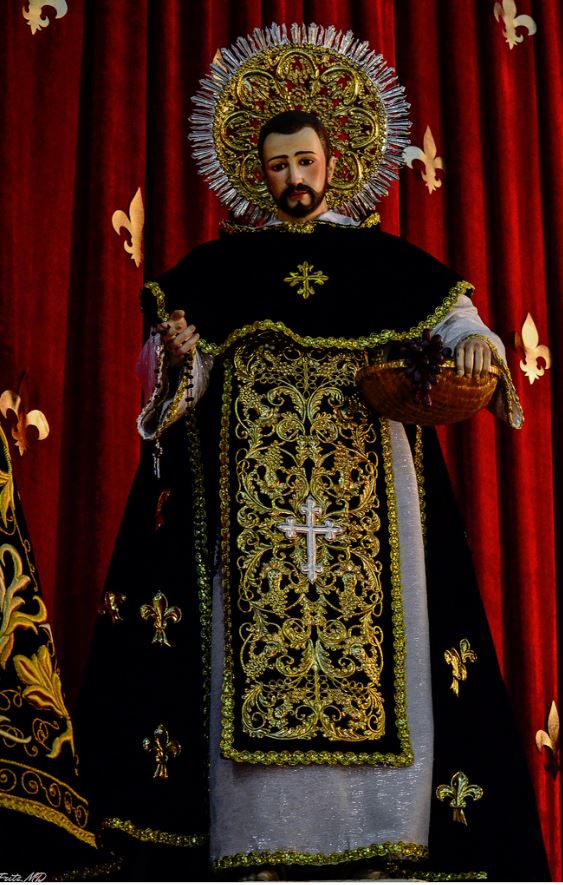
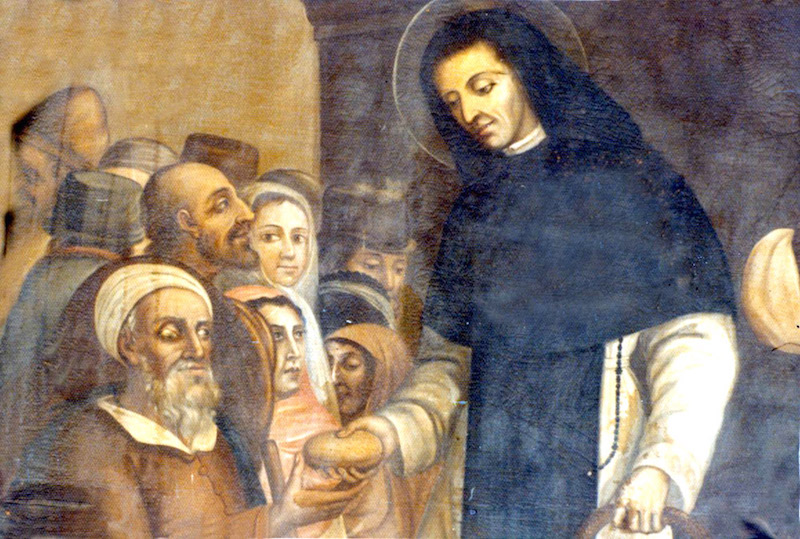
One of Juan Macias’ chief duties was to meet the poor who came to the convent seeking material or spiritual assistance, often over two hundred people every day.   Besides his cheerful disposition and encouraging manner, Juan Macias became known for the sometimes miraculous nature of his service to the poor.   Everyone knew that Juan worked extremely hard to collect alms for distribution.   Still, he would often return empty handed.   Yet, somehow Juan never turned anyone away.   From what he had been able to collect, he would have enough to feed all who came to him for help.St.-Juan-Macias

Juan Macias knew that he must help meet the physical needs of those who came to him, but he also knew that their spiritual hunger was much greater.   Juan was an instrument of conversion for many.

Juan Macias is well known for his close friendship with another Dominican saint, Martin de Porres  (1579–1639).   The two saints often met on their daily rounds of the city and became close spiritual friends as well.   They were a constant source of encouragement and ideas for one another.   The two were beatified together in a single ceremony by Pope Gregory XVI in 1837.st martin de porres and st juan macias

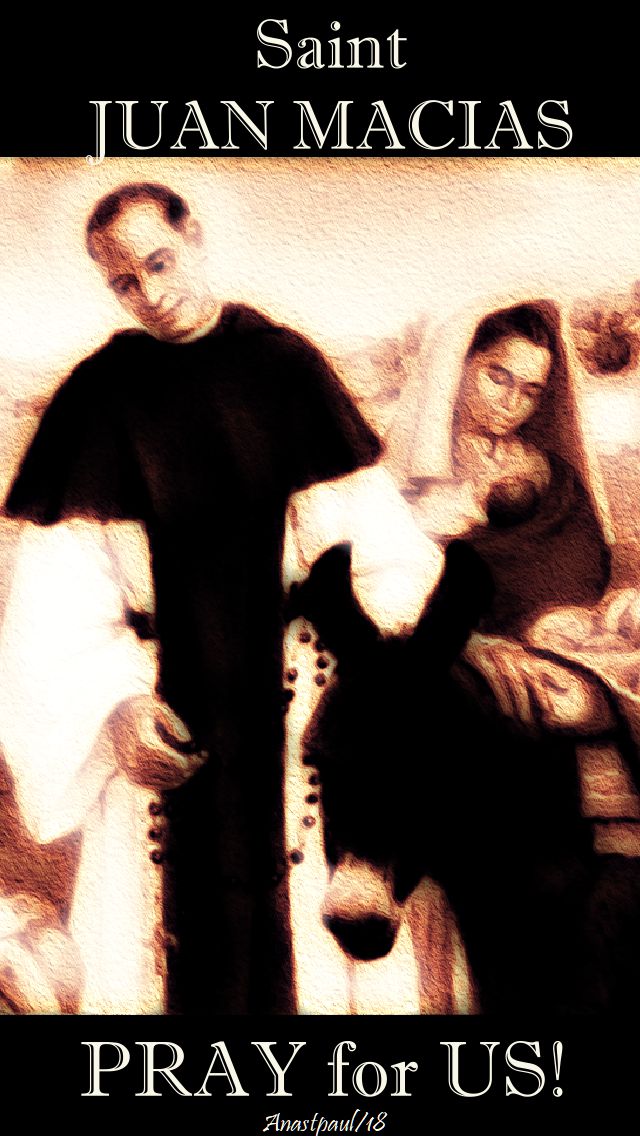
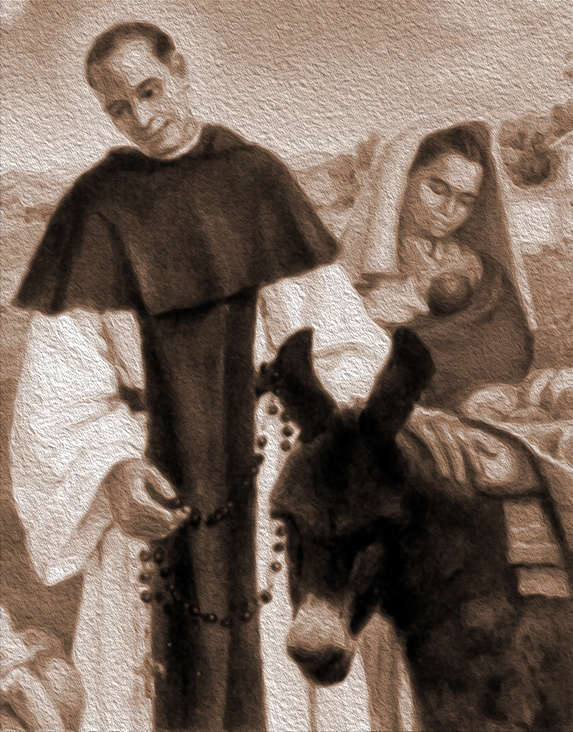
John Macias was well known mainly for two things during his life.   First, he was known to love the rosary, which he began to pray as a child in Spain while he shepherded his uncle’s flock of sheep.   Secondly, he was known for his generosity to the poor, 200 of whom he fed every day.   He was greatly aided in this by a little donkey that he sent through Lima.   He had a small sign put on it asking for donations for the poor.   The donkey, knowing his route perfectly, would travel through the streets and come back with benefactions for the city’s poor.   Often the donkey would stop at certain locations and make loud noises so that the people inside would come out to make their donations.ST-JUAN-MACIAS

At the priory, Macías’s life was filled with fervent prayer, frequent penance and charity. As a result of his austerity, he quickly fell ill and had to have a risky surgery. Nevertheless, he continued to care for other sick and needy as they waited at the friary gates.   Beggars, disabled people and other disadvantaged people were commonplace throughout Lima where they flocked to him at the monastery gates for counsel and comfort.   The poor came for food and the rich for advice.st juan macias engraving

Macias, however, expressed a greater desire to spend more time in contemplative solitude rather than engage in conversational activities with others.   He confessed this to Father Abbot Ramírez who said, “If he were to never follow his vow of obedience, nobody would have ever seen his face.”   But his official position as the priory’s porter, which he held for over 20 years and went against his natural inclinations of solitude, served to continue disciplining his vow of obedience.   This filled him with a joyful sense of fulfillment.   He died of natural causes in 1645.San_Juan_Macias_official_sidest__joseph_of_cupertino___icon_by_violacaeli-d99myw4

Posted in DOMINICAN OP, SAINT of the DAY

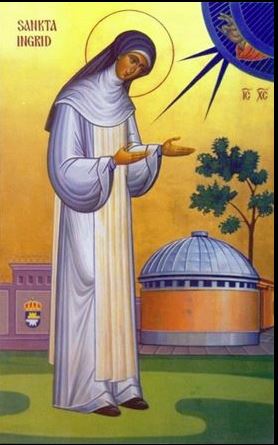
Saint of the Day – 2 September – St Ingrid of Sweden O.P. (Died 1292)

Saint of the Day – 2 September – St Ingrid of Sweden O.P. (Died 1292) – also known as St Ingrid of Skänninge – Dominican Religious and Mystic.9_2_St_Ingrid_of_Sweden best

Ingrid Elovsdotter was born in Skänninge, Sweden, in the 13th century.   Following the death of her husband, she resolved to consecrate the rest of her life to God.   She placed herself under the spiritual direction of Peter of Dacia, a Dominican priest.   In one of his letters, Petrus de Dacia has left a description of the ascetic life style and mystic revelations of one of his “spiritual daughters” in this circle of women, which likely refers to Ingrid.

She was the first Dominican nun in Sweden and in 1281 after making a pilgrimage to Rome she founded the first Dominican cloister, called St Martin’s in Skänning, which was formally recognised in 1281, 1 year prior to her death.   Ingrid made pilgrimages to Santiago de Compostela, Jerusalem and Rome.

She died in 1282 surrounded by an aura of sanctity.   After her death in 1282, Ingrid became object of veneration and pilgrimages to her convent.   She was, however, not formally recognised by the Pope as such.   When her relative, Bridget of Sweden, was formally recognised by the Pope in 1391, it caused a need to have Ingrid to be granted a similar status as well.   At the Council of Costance, an application was made for her canonisation.   In 1499, Pope Alexander VI agreed to a Translation (relic), which took place in her convent in 1507.

The remains of Ingrid was removed to the Vadstena Abbey after the Swedish Reformation.   In 1645, the skull was stolen from the Vadstena church by Antoine de Beaulieu, who believed it to be the skull of Bridget of Sweden.   Antoine de Beaulieu gave the skull to the French ambassador Gaspard Coignet de la Thullerie, who in turn placed it in the church of Courson-les-Carrières in France.   In 1959, it was given to the Brigitinesse abbey of Mary’s Refuge in Uden in the Netherlands, where it is exhibited as the skull of Bridget of Sweden.

st ingrid of sweden


Posted in DOCTORS of the Church, DOMINICAN OP, Our MORNING Offering, SAINT of the DAY

Our Morning Offering– 23 August – The Memorial of St Rose of Lima (1586-1617)

Our Morning Offering– 23 August – The Memorial of St Rose of Lima T.O.S.D. (1586-1617)

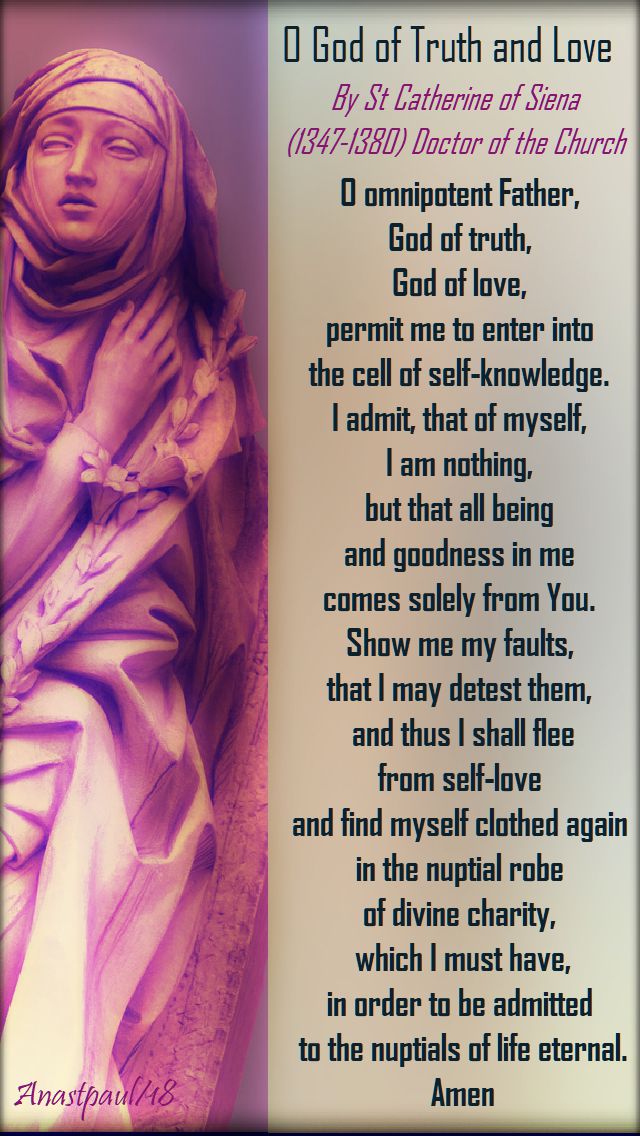
O God of Truth and Love

A Prayer of Penitence
By St Catherine of Siena (1347-1380) Doctor of the Church

O omnipotent Father,
God of truth,
God of love,
permit me to enter into
the cell of self-knowledge.
I admit, that of myself, I am nothing,
but that all being
and goodness in me
comes solely from You.
Show me my faults,
that I may detest them,
and thus I shall flee from self-love
and find myself clothed again
in the nuptial robe of divine charity,
which I must have,
in order to be admitted
to the nuptials of life eternal.
Amen

St Catherine was St Rose’s model and both were, of course, Dominican Tertiaries.o god of truth and love, o omnipotent Father - st catherine of siena - 23 aug 2018 mem of st rose of lima (dominican tertiaries)

Posted in DOMINICAN OP, SAINT of the DAY

Saint of the Day – 23 August – St Rose of Lima (1586-1617)

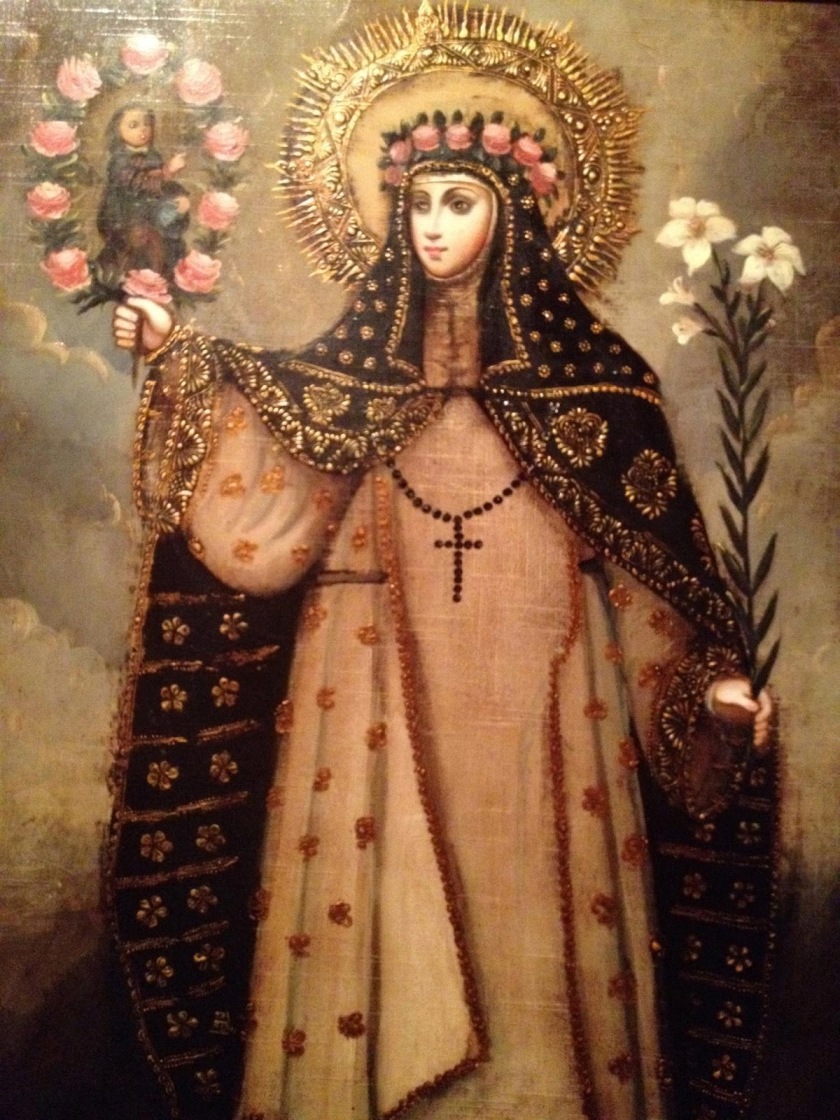
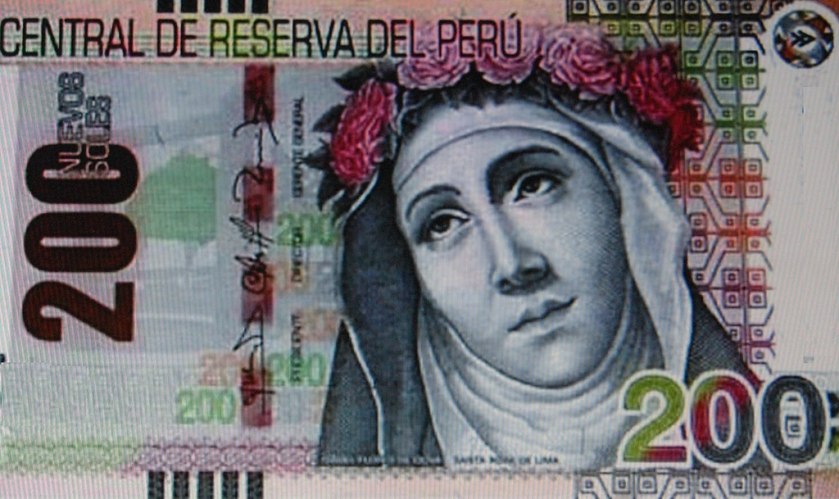
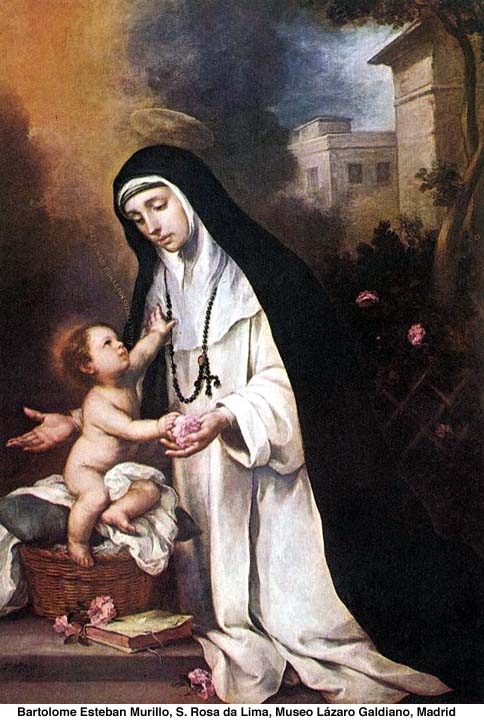
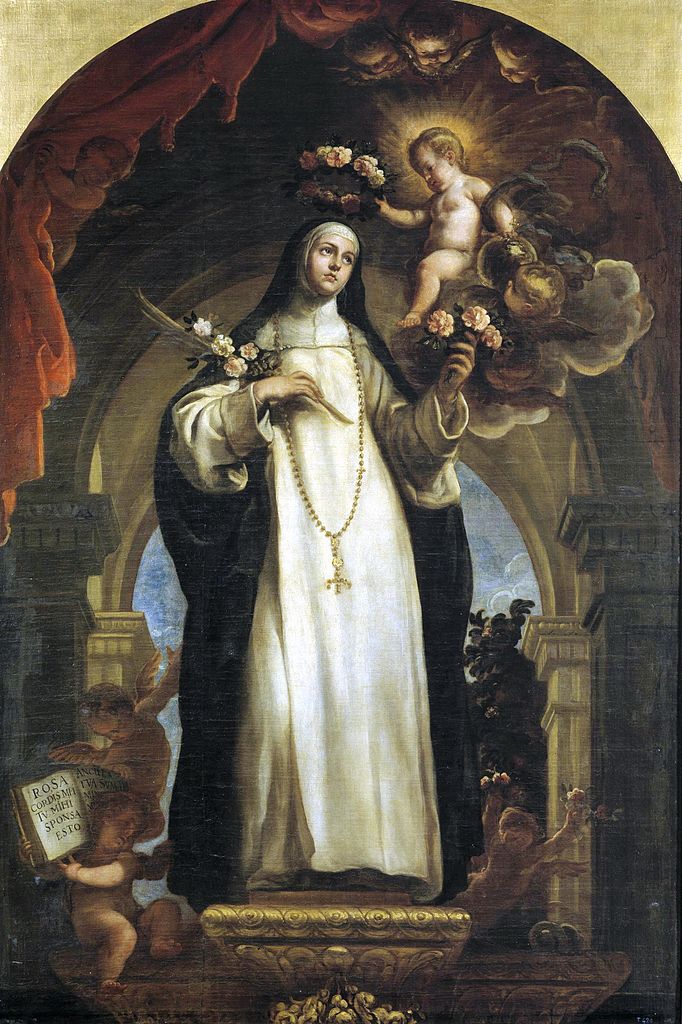
Saint of the Day – 23 August – St Rose of Lima T.O.S.D. (1586-1617) Virgin and Penitent, Mystic, Visionary, Stigmatist (invisible), Apostle of the Poor – born on 20 April 1586 at Lima, Peru as Isabel Flores de Oliva and died on 24 August 1617 at Lima, Peru of natural causes.   Patronages – against vanity, embroiderers, florists, gardeners, needle workers, people ridiculed for their piety, Peru, Lima, Peru, Americas, Central America, Latin America, New World, South America, India, Philippines, West Indies, diocese of Santa Rosa, California, Villareal Samar, Philippines, World Youth Day 2011.   St Rose was a member of the Third Order of Saint Dominic in Lima, Peru, who became known for both her life of severe asceticism and her care of the needy of the city through her own private efforts.  She was the first person born in the Americas to be canonised as a saint.   She is the primary patroness of Peru and of the indigenous natives of Latin America.   Her image is featured on the highest denomination banknote of Peru.St. Rose of LimaSt Rose of Lima - 1024px-Biljete200soles

This lovely flower of sanctity, was born at Lima in 1586.   She was christened Isabel but the beauty of her infant face earned for her the title of Rose, which she ever after bore.

As a child, while still in the cradle, her silence under a painful surgical operation proved the thirst for suffering already consuming her heart.   At an early age she took service to support her impoverished parents and worked for them day and night.   In spite of hardships and austerities her beauty ripened with increasing age and she was much and openly admired.   From fear of vanity she cut off her hair, blistered her face with pepper and her hands with lime.

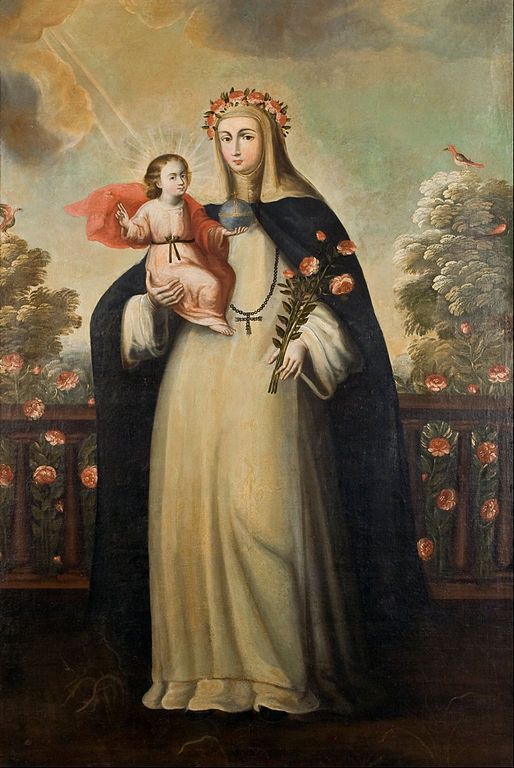
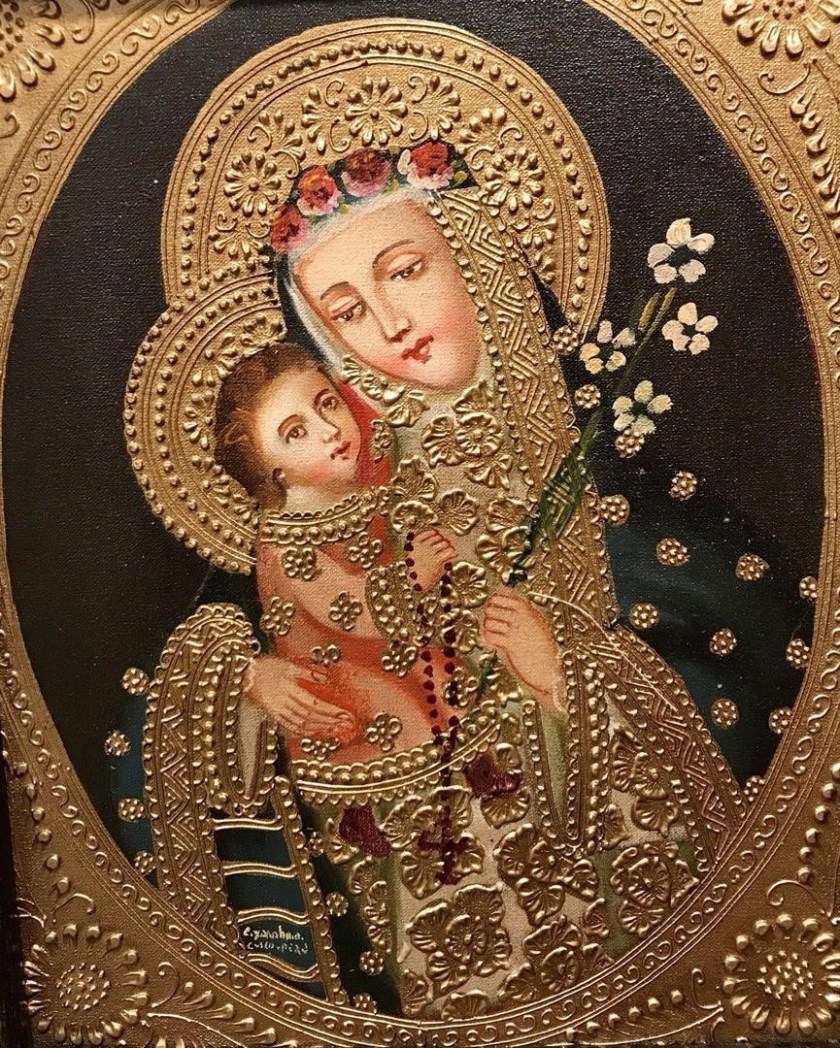
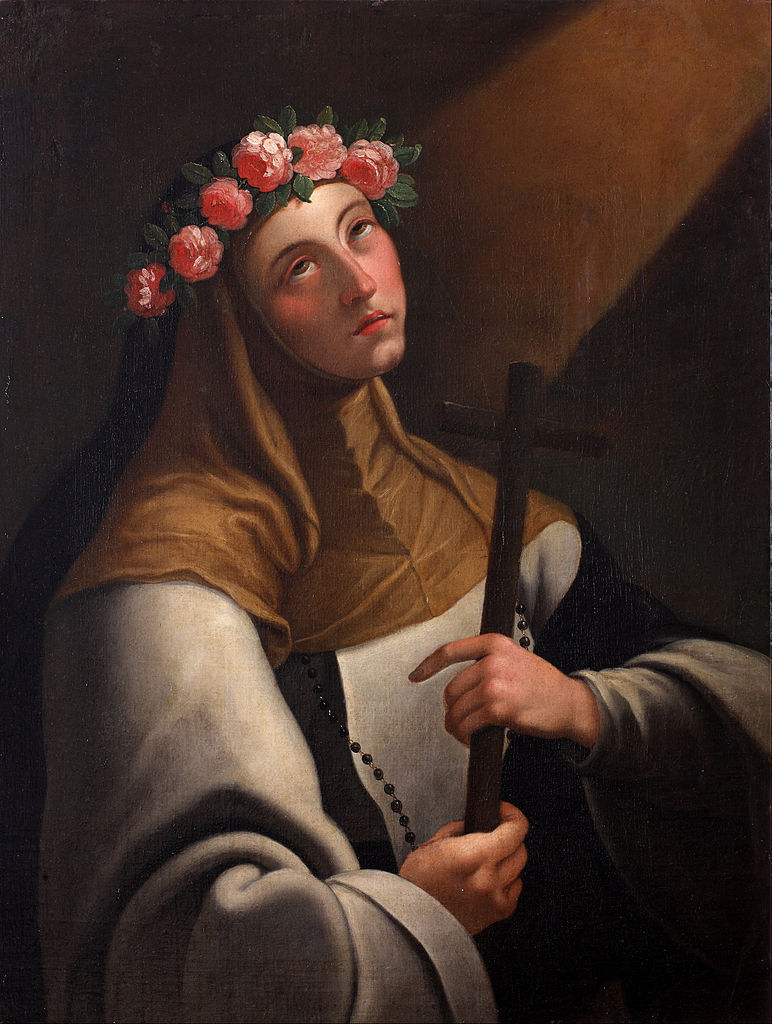
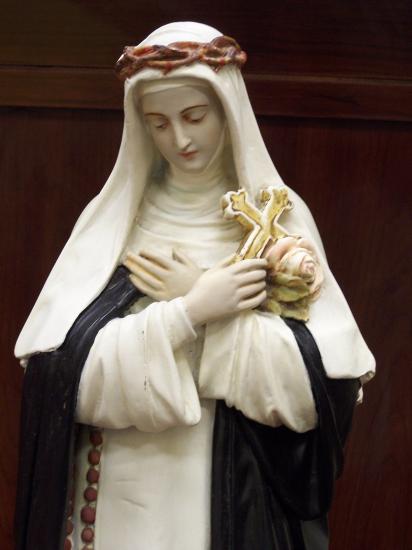
For further security she enrolled herself in the Third Order of St Dominic, took St Catherine of Siena as her model and redoubled her penance.   Her cell was a garden hut, her couch a box of broken tiles.   Under her habit Rose wore a hair-shirt studded with iron nails, while, concealed by her veil, a silver crown armed with ninety points encircled her head.   More than once, when she shuddered at the prospect of a night of torture, a voice said, “My cross was yet more painful.”Santa_Rosa_da_Lima_DSta_Rosa_de_Lima_por_Claudio_Coello514px-Anonymous_Cusco_School_-_Saint_Rose_of_Lima_with_Child_Jesus_-_Google_Art_Project

The Blessed Sacrament seemed almost her only food.   Her love for it was intense.   When the Dutch fleet prepared to attack the town, Rose took her place before the tabernacle, and wept that she was not worthy to die in its defence.   All her sufferings were offered for the conversion of sinners and the thought of the multitudes in hell was ever before her soul.

She died in 1617, at the age of thirty-one on the date she had predicted.saint-rose-lima-original-oil-painting_1_e306317917c3f8cbdfe682319a440417

Rose was beatified by Pope Clement IX on 10 May 1667 and Canonised on 12 April 1671, by Pope Clement X, the first in the Americas to be declared a saint.   Her shrine, alongside those of her friends St Martin de Porres (1585-1645) and St John Macias (also 1585-1645)), is located inside the convent of St Dominic in Lima.   Many miracles followed her death:  there were stories that she had cured a leper and that, at the time of her death, the city of Lima smelled like roses, roses also started falling from the sky.   Many places in the New World are named Santa Rosa after her.

772px-José_del_Pozo_(atribuido)_-_Saint_Rose_of_Lima_-_Google_Art_Projectst rose of lima statue

Posted in DOMINICAN OP, MORNING Prayers, SAINT of the DAY

Thought for the Day – 8 August – The Memorial of St Dominic (1170-1221)

Thought for the Day – 8 August – The Memorial of St Dominic (1170-1221)

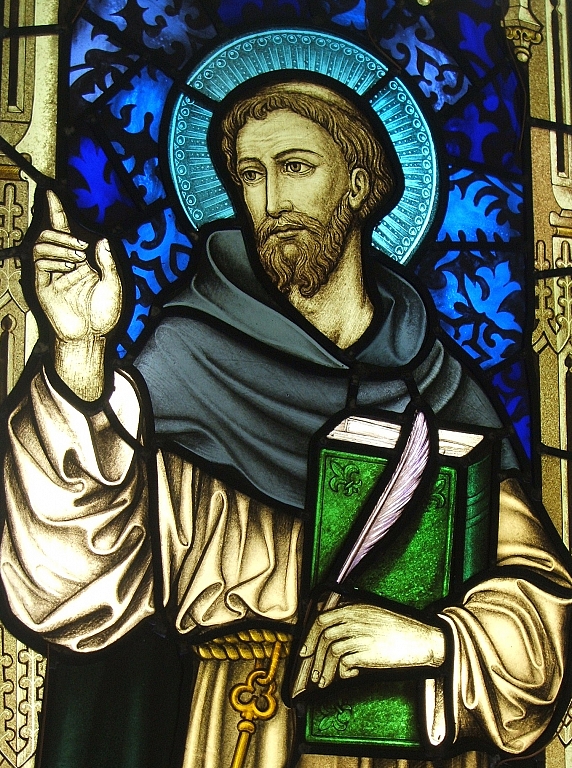
St Dominic possessed such great integrity and was so strongly motivated by divine love, that without a doubt he proved to be a bearer of honour and grace.   And since a joyful heart animates the face, he displayed the peaceful composure of a spiritual man in the kindness he manifested outwardly and by the cheerfulness of his countenance. Wherever he went he showed himself in word and deed to be a man of the Gospel.

During the day no one was more community-minded or pleasant toward his brothers and associates.   During the night hours no one was more persistent in every kind of vigil and supplication.   He seldom spoke unless it was with God, that is, in prayer, or about God and in this matter, he instructed his brothers.   Frequently he made a special personal petition that God would deign to grant him genuine charity in caring for and obtaining the salvation of men.   For he believed that only then would he be truly a member of Christ, when he had given himself totally for the salvation of men, just as the Lord Jesus, the Saviour of all, had offered Himself completely for our salvation.   So, for this work, after a lengthy period of careful and provident planning, he founded the Orders of Friars Preachers.
In his conversations and letters he often urged the brothers of the Order to study constantly the Old and New Testaments.   He always carried with him the gospel according to Matthew and the epistles of Paul and so well did he study them that he almost knew them from memory.

Two or three times he was chosen bishop but he always refused, preferring to live with his brothers in poverty.

Of him Pope Gregory IX declared: “I knew him as a steadfast follower of the apostolic way of life.   There is no doubt that he is in heaven, sharing in the glory of the apostles themselves.”
– from various writings on the history of the Order of Preachers

St Dominic, Pray for us!st-dominic-pray-for-us-2.-8 aug 2017

Posted in DOMINICAN OP, MORNING Prayers, QUOTES of the SAINTS, QUOTES on CHARITY, QUOTES on DIVINE PROVIDENCE, QUOTES on EVANGELISATION, QUOTES on FAITH, QUOTES on HUMILITY, QUOTES on LOVE, QUOTES on MERCY, QUOTES on PERSEVERANCE, QUOTES on SUFFERING, QUOTES on TRUST and complete CONFIDENCE in GOD, SAINT of the DAY

Quote/s of the Day – 8 August – The Memorials of St Dominic (1170-1221) and St Mary of the Cross MacKillop (1842-1909)

Quote/s of the Day – 8 August – The Memorials of St Dominic (1170-1221)

and St Mary of the Cross MacKillop (1842-1909)

“We must sow
the seed,
not hoard it.”we must sow the seed not hoard it - st dominic - 8 aug 2018.jpg

“Heretics are to be converted by an example of humility
and other virtues far more readily, than by any external
display or verbal battles.
So let us arm ourselves with
devout prayers and set off showing signs of genuine humility
and go barefooted to combat Goliath.”heretics-st-dominic-8 aug 2017

“A man who governs his passions is master of his world.
We must either command them or be enslaved by them.
It is better to be a hammer than an anvil.”

St Dominic (1170-1221)a-man-who-governs-his-passions-st-dominic-8 aug 2017

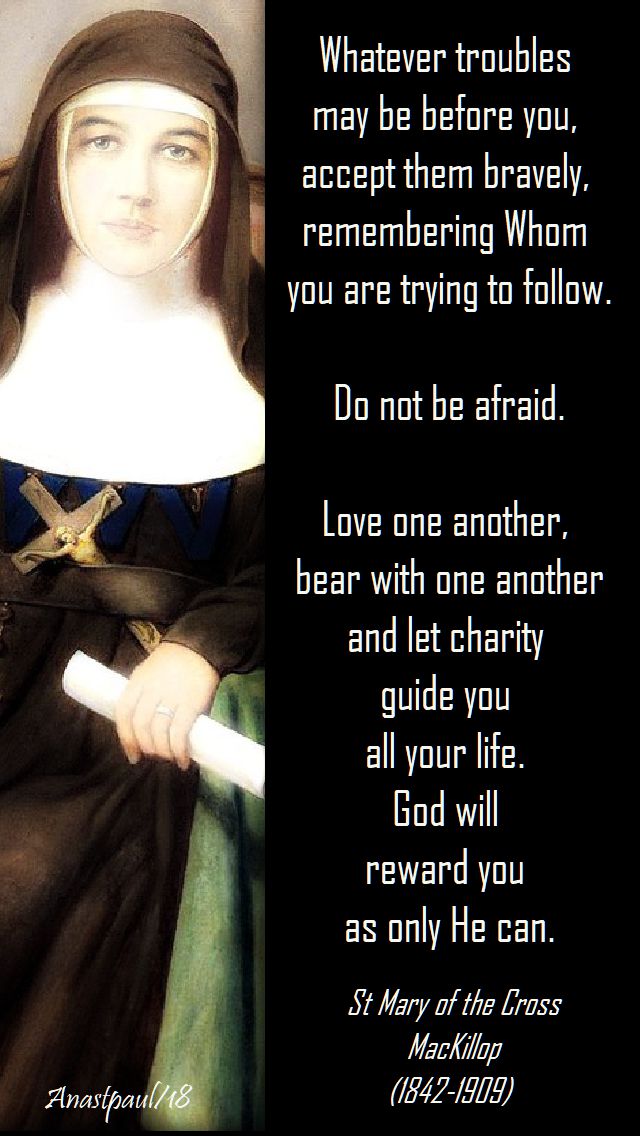
“Whatever troubles may be before you,
accept them bravely,
remembering Whom you are trying to follow.
Do not be afraid.
Love one another, bear with one another
and let charity guide you all your life.
God will reward you as only He can.”

St Mary of the Cross MacKillop (1842-1909)whatever troubles may be - st mary of the cross - 8 aug 2018

Posted in DOMINICAN OP, MORNING Prayers, PAPAL SERMONS, QUOTES on FAITH, SAINT of the DAY, The WORD

One Minute Reflection – 8 August – Today’s Gospel: Matthew 15:21–28

One Minute Reflection – 8 August – Wednesday of the Eighteenth week in Ordinary Time, Year B – Today’s Gospel: Matthew 15:21–28 and The Memorials of St Dominic (1170-1221) and St Mary of the Cross MacKillop (1842-1909)

Then Jesus answered her, “O woman, great is your faith!   Be it done for you as you desire.” And her daughter was healed instantly...Matthew 15:28

REFLECTION – “Jesus points to this humble woman as a model of unwavering faith.   Her persistence in beseeching Christ’s intervention is incentive for us not to become discouraged, not to despair when we are burdened by life’s difficult trials.   The Lord does not turn away in the face of our needs and, if at times, He seems insensitive to our requests for help, it is in order to put to the test and to strengthen, our faith.   We must continue to cry out like this woman:  “Lord, help me! Lord, help me!”.  In this way, with perseverance and courage.   This is the courage needed in prayer.   He can help us to find our way, when we have lost the compass of our journey; when the road no longer seems flat but rough and arduous; when it is hard to be faithful to our commitments.

It is important to nourish our faith every day, by carefully listening to the Word of God, with the celebration of the Sacraments, with personal prayer as a “cry” to Him — “Lord, help me!” — and with concrete acts of charity toward our neighbour.”…Pope Francis – Angelus, 20 August 2017matthew 15 38 - o woman great is your faith - the lord does not turn away - pope francis - 8 aug 2018

PRAYER – Lord God, You gave St Dominic and St Mary of the Cross Mackillop, to the Church in their days, as lessons in total love, charity and zeal.   We pray that they may help us in our times, by their merits, their inspiration, their words and their prayers. Through Jesus Christ our Lord, in the unity of the Holy Spirit, one God forever, amen.st-dominic-pray-for-us.8 aug 2017.pgst mary of the cross mackillop pray for us 8 aug 2018

Posted in DOMINICAN OP, MORNING Prayers, PRAYERS of the SAINTS, SAINT of the DAY

Our Morning Offering – 8 August – The Memorial of St Dominic (1170-1221)

Our Morning Offering – 8 August – The Memorial of St Dominic (1170-1221)

St Dominic’s Blessing

May God the Father,
who made us, bless us.
May God the Son,
send His healing among us.
May God the Holy Spirit,
move within us
and give us eyes to see with,
ears to hear with,
and hands, that Your work,
might be done.
May we walk and preach
the word of God to all.
May the angel of peace
watch over us
and lead us at last,
by God’s grace,
to the Kingdom.
Amenmay god the father - st dominic's blessing - 8 aug 2018

Posted in DOMINICAN OP, SAINT of the DAY

Saints of the Day – 8 August

St Dominic de Guzman O.P. (1170-1221) (Memorial) – All about him here: https://anastpaul.wordpress.com/2017/08/08/saint-of-the-day-8-august-st-dominic-de-guzman-founder-of-the-dominican-order-of-preachers/

St Aemilian of Cyzicus
St Altman of Passau
St Cyriacus the Martyr
St Eleutherius of Constantinople
St Ellidius
St Famianus of Compostela
St Gedeon of Besancon
St Hormisdas of Persia
Bl John Felton
Bl John Fingley
St Largus
St Leobald of Fleury
St Leonidas of Constantinople
St Marinus of Anzarba
St Mary of the Cross/ Mary MacKillop (1842-1909) – the first Australian born Saint

St Mummolus of Fleury
St Myron the Wonder Worker
St Paulus Ge Tingzhu
St Rathard of Diessen
St Severus of Vienne
St Sigrada
St Smaragdus
St Ternatius of Besançon
St Ultan of Crayke
Bl William of Castellammare di Stabia
Bl Wlodzimierz Laskowski

Martyrs of Albano – 4 saints: Four Christians who were martyred together, and about we today know little more than their names – Carpóforo, Secondo, Severiano and Vittorino. They were martyred in Albano, Italy – their remains are interred in the San Senator cemetery, on the Appian Way, 15 miles from Rome, Italy.

Martyrs of Rome – 5 saints: Five Christians martyred together; we know nothing else about them but the names – Ciriaco, Crescenziano, Giuliana, Memmia and Smaragdus. They were martyred at the 7 mile marker, on the Via Ostia, Rome, Italy.

Martyred in the Spanish Civil War – Martyrs of El Saler – 5 beati: Five nuns, all members of the Sisters of the Pious Schools, all teachers, and all martyred together in the Spanish Civil War.
• Antonia Riba Mestres
• Maria Baldillou Bullit
• María Luisa Girón Romera
• Nazaria Gómez Lezaun
• Pascuala Gallén Martí
They were martyred on 8 August 1936 in El Saler, Valencia, Spain and Beatified on 11 March 2001 by Pope John Paul II.

Martyred in the Spanish Civil War:
Bl Antero Mateo Garcia
Bl Antonio Silvestre Moya
Bl Cruz Laplana Laguna
Bl Fernando Español Berdie
Bl Leoncio López Ramos
Bl Manuel Aranda Espejo
Bl Mariano Pina Turón
Bl Pedro Álvarez Pérez

Posted in DOMINICAN OP, SAINT of the DAY

Saint of the Day – 3 August – Blessed Augustine Gazotich O.P. (1262-1323)

Saint of the Day – 3 August – Blessed Augustine Gazotich O.P. (1262-1323) born in 1262 at Trau, Dalmatia and died on 3 August 1323 at Lucera, Foggia, Italy of natural causes.  Also known as Augustin Kazotic.   Blessed Augustine was a Dalmatian-Croatian Prelate and professed member from the Order of Preachers who served as the Bishop of Lucera from 1322 until his death.   Gazotich was a humanist and orator who had served first as the Bishop of Zagreb from 1303 until 1322.   He studied in Paris before returning to his homeland where he began working in the missions and preaching in modern Bosnia.  He was one of the first humanist figures to appear in southern Croatia, a great Apostle of Charity.   He was also noted for being the guide for Dante Aligheri as the poet travelled through Croatia.   His reputation for personal holiness remained noted long after his death; this resulted in Pope Innocent XII confirming the late bishop’s beatification in 1700.bl augustin gazotich-my enlg 2

Born to a wealthy family at Trau, Dalmatia, about 1262, Augustine joined the Dominican Order at eighteen and was sent to Hungary.   There his fine spiritual qualities brought him to the attention of the legate Cardinal Niccolo Boccasino, a fellow Dominican.   Upon the latter’s elevation to the Papacy as Benedict XI in 1303, Augustine was made Bishop of Zagreb.augustin-kaoti-b3710491-1f1d-40d7-a635-723897a2b11-resize-750
The new Bishop reformed the clergy, completed building the cathedral and diligently brought about the spiritual renewal of the diocese and its people–while fending off the attacks of the hostile King of Dalmatia.   He was particularly attentive to the needs of the poor and needy peoples, donating most of his own income to them.

In time, Augustine was transferred to the See of Lucera in Sicily, where he continued his work of spiritual renewal, aided by his gift of healing.   The Bishop also defended his flock from attacks against the Faith.   He cared for the poor and needy and fostered devotion to Sts Dominic, Thomas Aquinas, and Peter Martyr.   He died in 1323 in the odour of sa  nctity. In 1702, Pope Clement XI confirmed his cultus.   The cause for his canonisation was re-launched in 2013 in Lucera.   The current Postulator for this cause – since the cause still proceeds – is the Dominican priest Gianni Festa.augustin-kaoti-21c3e900-88eb-45f3-b6c2-93f2a7c0487-resize-750

Posted in DOMINICAN OP, SAINT of the DAY

Saint of the Day – 22 July – Blessed Augustine Fangi O.P. (1430-1493)

Saint of the Day – 22 July – Blessed Augustine Fangi OP (1430-1493) – Dominican Friar and Priest, Confessor, Mystic, known as “The Miracle Worker,” Augustine of Biella.   He was commonly regarded, even in his time, as a miracle worker and, in serving as the Prior of several of his Order’s monasteries, was concerned with restoring and maintaining a faithful observance of the Rule of Saint Dominic.   He was born in 1430 at Biella, Piedmont, Italy and died on 22 July 1493 at Venice, Italy of natural causes.   In the 1530s, workmen found his coffin floating in the water that had seeped into the burial chamber – when opened, Augustine’s body and clothing were found to be Incorrupt and remains so.

bl augustine fangi - my pic - 22 july 2018

Blessed Augustine’s father was a member of the Fangi family, who were wealthy and noble and, because of this, he had planned a secular career for his son.   But when the Dominicans came to Biella, his plans were changed, for Augustine was completely charmed by their way of life and begged to be admitted.   He entered, while quite young, the new convent that the Dominicans had built at Biella.

Augustine had a reputation for penance, even at a time when people were not as squeamish as they are today.   Not only did he inflict harsh penances upon himself, he also bore with patience whatever pain and annoyance life granted him gratuitously.

One remarkable characteristic noted of Augustine, was his equanimity and ability to concentrate intensely on spiritual matters.   One incident recorded, involves a surgical procedure, which he was required to undergo without anesthetic, as such an aid was not available in the fifteenth century.   He did so without crying out at all.   Afterwards, he simply stated that his mind was so intensely focused on something else that he hardly noticed what was being done.  In prayer he was often seen levitating in ecstasy.

In 1464, Augustine was made Prior at Soncino.   Several of his best known miracles were performed there.   At one time, a deformed child, who had died without baptism, was restored to life, by Augustine’s prayer, long enough to be baptised.   At another time, when he was passing down the street, he met a little boy who was crying bitterly, because he had broken a jug of wine.   Augustine gathered up the shards and put them back together again.   Then, with a prayer, he refilled the jug and handed it back to the startled child.   Still another time, through his intercession, a woman was delivered from possession of five devils.

When his coffin, was opened in the 1530s and his body was found to be Incorrupt, interest was again revived in Blessed Augustine.   Nevertheless, it was more than three centuries before his cultus was confirmed in 1872 by Pope Pius IX he was finally beatified in 1878 by Pope Leo XIII.   His Shrine is at the Chapel of St Dominic in Venice (below).879px-Interior_of_Santi_Giovanni_e_Paolo_Venice_-_Chapel_of_St._Dominic_by_Andrea_Tirali

Posted in DOMINICAN OP, SAINT of the DAY

Saint of the Day – 16 July – Blessed Bartholomew of the Martyrs (1514-1590)

Saint of the Day – 16 July – Blessed Bartholomew of the Martyrs or St Bartholomew of Braga O.P. ArchBishop of Braga (1514-1590) – Portuguese Dominican Friar and Priest, Writer, Theologian, Advisor, Teacher and Catechetical writer, Apostle of Charity founding a series of hospitals and hospices in Braga and surrounds – born as Bartolomeu Fernandes on 3 May 1514 in Lisbon, Portugal and died on 16 July 1590 in the monastery of Viana do Castelo, Minho, Portugal of natural causes.   Patronage – Archdiocese of Braga.

bartolomeu_dos_martires_21907495c_base

Blessed Bartholomew was born near Lisbon on 3 May 1514 to Domingos Fernandes and Maria Correia.  He was baptised mere hours after, in the local parish church of Nossa Senhora dos Mártires.

He entered the Order of Preachers on 11 November 1527 and later made his solemn profession into the order on 20 November 1529.   On the completion of his own studies in 1538 he taught philosophical studies in the Convent of the Order at Lisbon and then for about two decades taught theological studies in the various houses of the Dominicans.   In 1551 he received his Master’s degree at the provincial chapter of Salamanca in Spain. He also served as the prior of the Benfica Convent from 1557 to 1558 and was in Évora as a teacher from 1538 until 1557.header - bl bartholomew of braga

During the course of teaching theological studies at the Batalha Convent, he was summoned to Évora at the request of Luis of Portugal, Duke of Beja to undertake the religious education of his son who was entering the ecclesiastical life himself.   He dedicated a great deal of his time to this task.

In 1558 – against his own desires – and out of obedience to his provincial superior (the Venerable Louis of Granada (1505-1588) he accepted the appointment to the Archepiscopal see of Braga for which Queen Catherine had chosen him and in 1559 received his episcopal consecration at the Convent of Saint Dominic on 3 September 1559 from the Bishop of Coimbra João Soares.    In actual fact it was Luis of Grenada who was initially nominated to become the Archbishop though Luis urged the queen to select Fernandes instead.   Pope Paul IV confirmed this appointment in the papal bull “Gratiae divinae praemium” on 27 January 1559.   He devoted himself to the duties of his new office with his installation in his Archdiocese on 4 October 1559.bl bartholomew of braga

On the resumption of the Council of Trent in 1561, the Archbishop repaired to the Council and took part in the last sessions.    He made a total of 268 suggestions at the council and collaborated with Saint Charles Borromeo.    There was also one instance in which he pushed for the defense of a certain topic and opposed view of the Archbishop of Toledo Bartolomé Carranza.   He was esteemed and held in high regard among the Council Fathers both on the account of his theological learning and the holiness of his life.   Bartholomew exercised great influence in the discussions and more so with regard to the decrees on the reform of ecclesiastical life and development.   The conclusion of that council saw him return to Braga in February 1564 and in 1566 he held an important provincial gathering of the diocese, in which decrees were passed for the restoration of ecclesiastical discipline and the elevation of the moral life of priests and people (“Concilium provinciale Bracarense quartum” in 1567).   As Archbishop, Bartholomew now devoted himself to the task of enacting the reforms of the Council of Trent in addition to the decrees of his own provincial synod.

A great famine and a visitation of the plague, revealed the depths of his charitable and merciful nature, in addition to his willingness to aid his flock in their time of need;  he also constructed a series of hospitals and hospices.

He made repeated requests to resign from his episcopal see and received papal permission from Pope Gregory XIII on 20 February 1582 to resign and withdraw to the Dominican Convent at Viana do Castelo where he lived in solitude for the remainder of his life but also serving as a teacher for some time.

Blessed Bartholomew died at Viana do Castelo on 16 July 1590.

The sainthood process commenced under Pope Benedict XIV on 11 September 1754 and he was titled as a Servant of God while Pope Gregory XVI later named him as Venerable on 23 May 1845.   St Pope John Paul II Beatified Bartholomew in Saint Peter’s Square on 4 November 2001.   Pope Francis – on 20 January 2016 – authorised the C.C.S. to work towards the Equipollent Canonization of the late archbishop and authorised that the second miracle required for his Canonization be waived as a result.   It is probable that Blessed Bartholomew will be Canonised soon.

Blessed Bartholomew’s writings have been republished on numerous occasions and have also been translated into several languages.   A collective edition is: “Opera omnia cura et studio Malachiae d’Inguinbert, archiepisc. Theodos.” (1 vol. Fol. In 2 parts, Rome, 1734–35).bl bartholomew of braga statue

Posted in DOMINICAN OP, MORNING Prayers, QUOTES of the SAINTS, QUOTES on CHARITY, QUOTES on FAITH, QUOTES on HUMILITY, QUOTES on LOVE, QUOTES on MERCY, QUOTES on PATIENCE, QUOTES on PRAYER, QUOTES on SILENCE, QUOTES on TEMPTATION, QUOTES on TRUST and complete CONFIDENCE in GOD, SAINT of the DAY, The HOLY GHOST

Quote/s of the Day – 9 July – The Memorial of Blessed Adrian Fortescue T.O.S.D. (1476-1539) Martyr

Quote/s of the Day – 9 July – The Memorial of Blessed Adrian Fortescue T.O.S.D. (1476-1539) Martyr

“In Husbands Bosworth Hall, the residence of Miss Fortescue-Turville, the last direct descendant of the blessed martyr, was found some years ago a very precious relic, being nothing less than the Book of Hours which he habitually used.
The manuscript has suffered a good deal from time and careless handling but on the outer leaf can still be read another series of maxims, a kind of rule of life written and signed by the martyr’s own hand.   It will be seen how, while yet in the days of his prosperity, this truly Christian knight was preparing all unconsciously for the martyr’s crown and palm.
The Book of Hours is now reverently preserved as a relic in the beautiful little Catholic church adjoining the old hall of Husbands Bosworth :”

Quotations (slightly updated – from his famous Book of Hours)

…”Pray often.
Also enforce yourself
to set your house at quietness.
Resort to God every hour.”

“Be pitiful unto poor folk and help them to your power,
for there you shall greatly please God.”

“Give fair language to all persons
and especially to the poor and needy.”pray often - be pitiful unto poor folk - give fair language - bl adrian fortescue - 9 july 2018

“Banish from yourself all grudging and detraction
and especially from your tongue.”

“In prosperity be meek of heart
and in adversity patient.”

“Pray for perseverance.
Continue in dread
and ever have
God before your eye.”banish from yourself - in prosperity - pray for perseverance - bl adrian fortescue - 9 july 2018

“Also apply diligently
the inspirations of the Holy Spirit,
whatsoever you have therein to do.”

“If by chance you fall into sin,
despair not
and if you keep these precepts,
the Holy Spirit will strengthen you
in all other things necessary
and this doing you shall be
with Christ in Heaven,
to Whom be given laud,
praise and honour everlasting.”

Blessed Adrian Fortescue (1476-1539)also apply diligently - if by chance - bl adrian fortescue - 9 july 2018.jpg

Posted in DOCTORS of the Church, DOMINICAN OP, MORNING Prayers, QUOTES of the SAINTS, QUOTES on SANCTITY, QUOTES on SUFFERING, QUOTES on the CROSS of CHRIST, The HOLY CROSS, The WORD

One Minute Reflection – 9 July – The Memorial of Blessed Adrian Fortescue T.O.S.D. (1476-1539) Martyr

One Minute Reflection – 9 July – The Memorial of Blessed Adrian Fortescue T.O.S.D. (1476-1539) Martyr

“Even though I should have to die with you, I will not deny you.” And all the disciples spoke likewise”…Matthew 26:35.

REFLECTION – “The road is narrow.   He who wishes to travel it more easily must cast off all things and use the cross as his cane.   In other words, he must be truly resolved to suffer willingly for the love of God in all things.”…St John of the Cross (1542-1591) Doctor of the Churcheven though i should die - matthew 26-35 and the road is narrow - st john of the cross - 9 july 2018

PRAYER – O God, You specially strengthened Blessed Adrian Fortescue with a wonderful spirit of holiness and courage.   Hear the prayers of Your people and from his renowned example, may we learn to be obedient to You rather than to human authority.   We ask this through our Lord Jesus Christ, Your Son, who lives and reigns with you and the Holy Spirit, one God forever and ever. Amenbl adrian fortescue - 9 july 2018 - pray for us