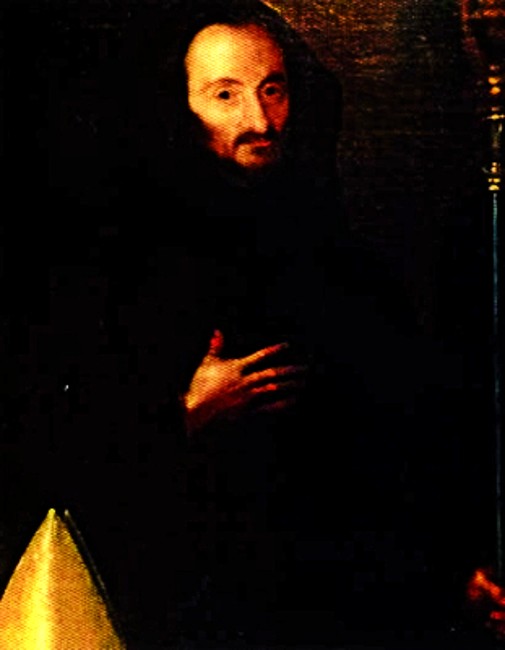
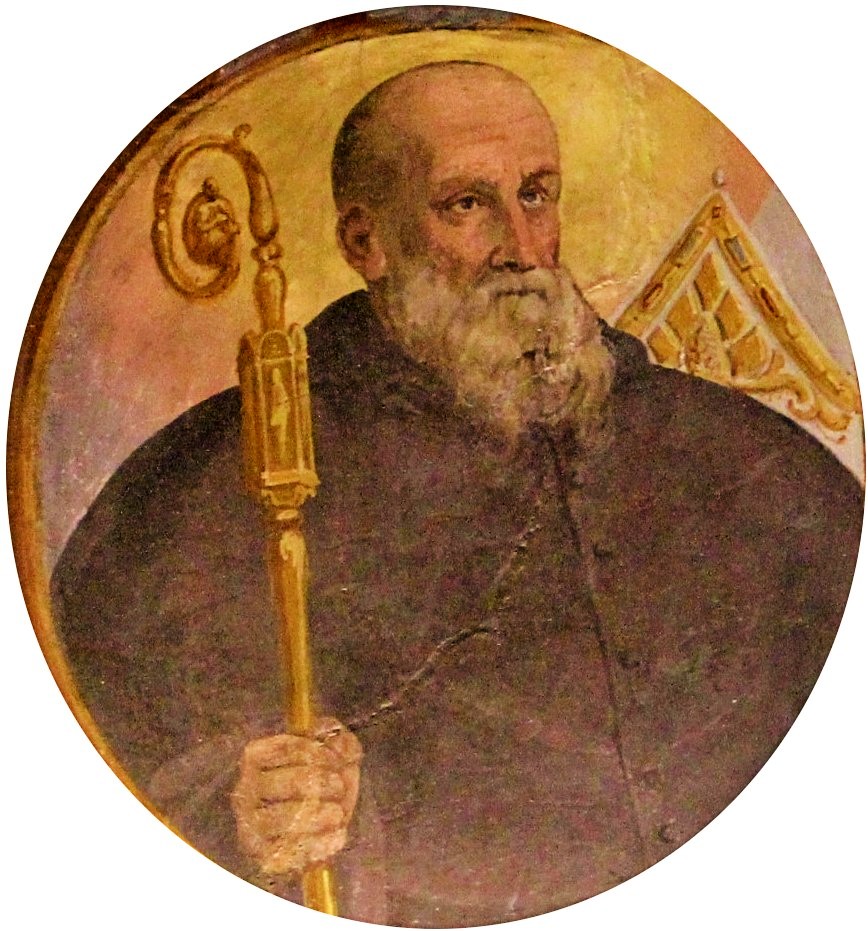
Saint of the Day – 3 September – Blessed Guala de Ronii of Brescia OP ( 1180-1244) Bishop, Priest and Friar of the Order of Preachers, being one of the earliest disciples of St Dominic, Papal Envoy, Peace-maker. Also known as – Guala of Roniis, Guala Romanoni, Guala of Bergamo, Walter… Wilhelm… Guala was Beatified on 1 October 1868 by Pope Pius IX. Additional Memorials – 2 September (Diocese of Brescia), 20 April as one of the Saints of the Diocese of Brescia and 4 September on some calendars.
Guala de Ronii was born in 1180 in the Bergamo Province and belonged to a famed noble Roman house. His parents oversaw his initial education and his excellent progress caused his parents to entertain great hopes for his future, while neglecting to entertain the thought that perhaps God had a surprise in store for their son and the course of his life.
Guala heard St Dominic preach in 1219 and – like others – was so enchanted by St Dominic’s character that he was one of the first to seek him out for enrollment into his new Order of Preachers. Guala soon received the habit from St Dominic himself and later received Ordination as a Priest. St Dominic soon called the Priest to Bologna in order to appoint him as one of four entrusted with the building of Saint Agnes’ convent for Dominican nuns.
He served as one of the Saint’s first disciples and received the latter’s appointment as the first Prior of the Order in Brescia where Dominic founded a Monastery. Both Theoderic of Apolda, the Hagiographer and Blessed Jordan of Saxony were his Dominican contemporaries.
When Guala learned of St Dominic’s death ,which he received in Brescia, with tremendous grief. Prior to this news, he had fallen asleep with his head against a Church bell tower and saw a Friar ascending a ladder into Heaven where Angels surrounded him – that Friar was Dominic, unbeknownst to him at the time. He was about to depart for Bologna when he learned that Dominic had died at the time of his vision!
The Priorship of Saint Nicholas in Bologna – now titled as Saint Dominic – became vacant and the people there elected him to the position in 1226. But his tenure became difficult with tensions between Bologna and rival Mantua which prompted Pope Honorius III to appoint him as the Papal Envoy to the two Cities, n order that he might secure reconciliation between the warring towns – he managed to negotiate peace terms sto remain in place and to be abided by, for a decade. The new Pope Gregory IX then appointed him as the Papal Legate to Frederick II in order to induce him to keep his often broken promise, to march on a crusade for the relief of the faithful in Jerusalem. On 20 July 1225 he oversaw the successful Treaty of San Germano in Cassino.
Brescia longed for his return and when the Bishop of the Diocese died the people pleaded with intense supplications for the Fr Guala’s appointment to replace the deceased. Guala reluctanly accepted his appointment in 1229 as the Bishop of Brescia from Pope Gregory IX and he received his Episcopal Consecration soon after.
His Episcopate intended as a particular objective to make provision for the temporal care of poor children of the Diocese. But ,the Pontiff also made him an Apostolic Delegate to both Treviso and Paduaas peacemaker, when the two were at odds with each other – despite putting the new Bishop far from his flock – and it was he who conducted successful peace negotiations.
Guala’s contemporaries described him as “a man of great prudence, well acquainted with the world, and of accomplished manners” and said that “he governed the Diocese entrusted to his care with such holiness that, both during his life and after his death, he wrought many wonders through God.”
The years of labour and civil strife wore him down. He resigned his See in 1242 in order to enter complete seclusion and pray without interruption, in preparation for death. Therefore, he retired to the Vallumbrosan Monastery of San Sepolcro d’Astino in Bergamo, his hometown, where he lived as a Hermit – despite his retreat into peaceful solitude – many still flocked to seek his wise counsel. Guala died on 3 September 1244. He was buried in the Benedictine Church,and after many miracles at his tomb, his cause was promoted.
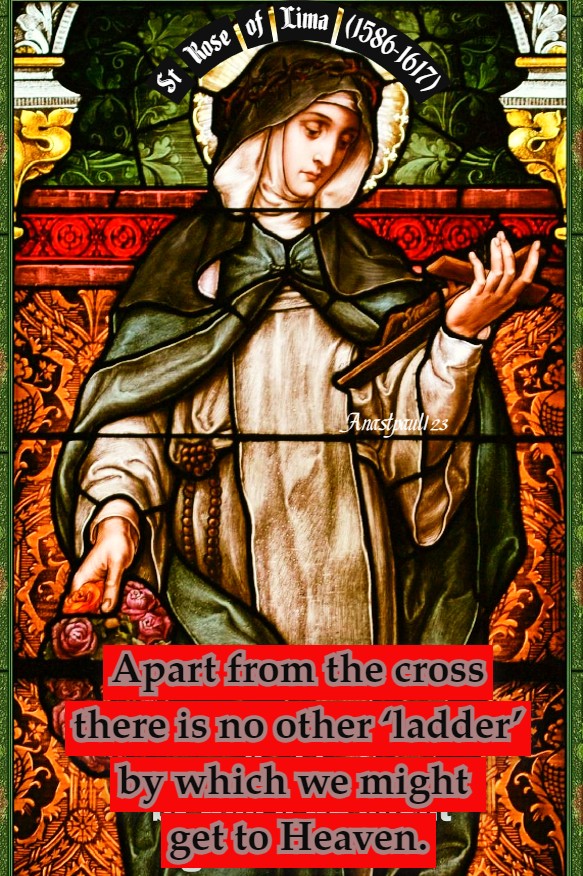
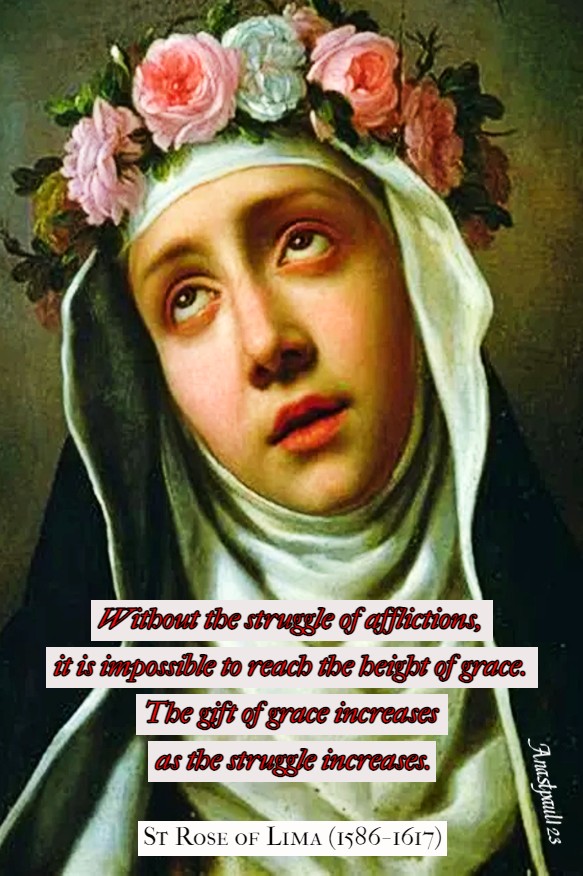
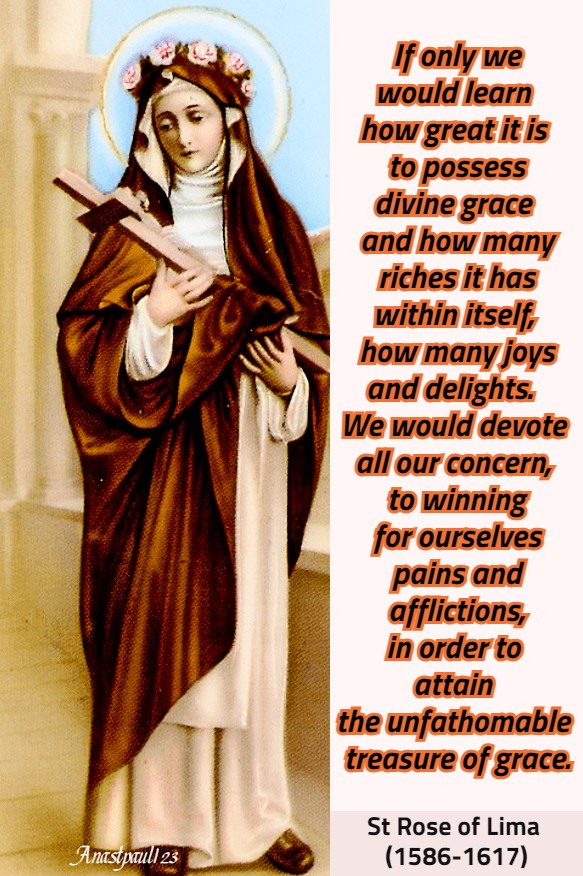
Quote/s of the Day – 30 August – St Rose of Lima OP (1586-1617) Virgin
“Apart from the cross there is no other ‘ladder’ by which we might get to Heaven.”
“Without the struggle of afflictions, it is impossible to reach the height of grace. The gift of grace increases as the struggle increases.”
“If only we would learn how great it is to possess divine grace and how many riches it has within itself, how many joys and delights. We would devote all our concern, to winning for ourselves pains and afflictions, in order to attain the unfathomable treasure of grace.”
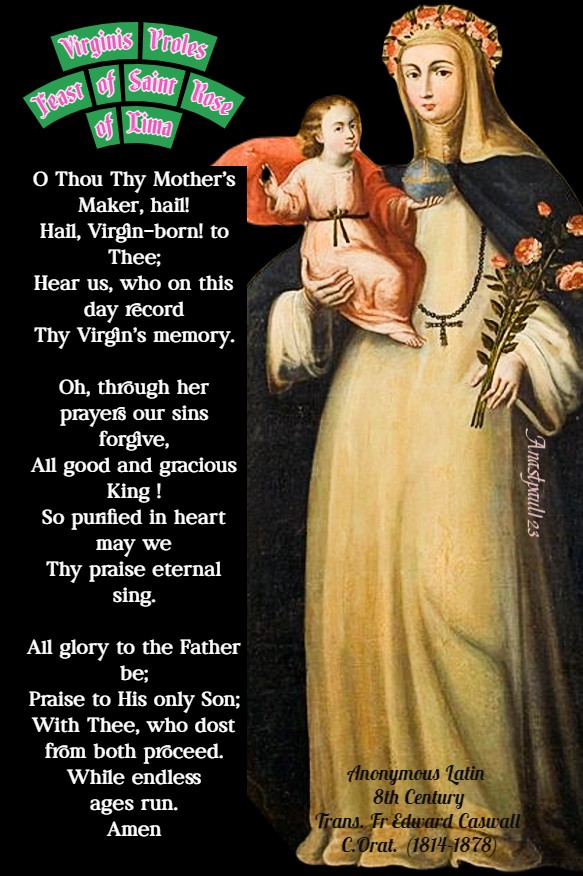
Our Morning Offering – 30 August – St Rose of Lima OP (1586-1617) Virgin
Virginis Proles Anonymous Latin, 8th Century Trans. Fr Edward Caswall C.Orat. (1814-1878)
O Thou Thy Mother’s Maker, hail! Hail, Virgin-born! to Thee; Hear us, who on this day record Thy Virgin’s memory.
Oh, through her prayers our sins forgive, All good and gracious King ! So purified in heart may we Thy praise eternal sing.
All glory to the Father be; Praise to His only Son; With Thee, who dost from both proceed. While endless ages run.
This Hymn is used for Matins in the Common of Virgins in the Extraordinary form of the Roman Breviary. Verses 1, 4 and 5 above, are used for a Virgin who is not a Martyr.
Quote/s of the Day – 18 August – “The Month of the Immaculate Heart of Mary” – Within the Octave of the Assumption of the Blessed Virgin into Heaven
“Mary is the new Tree of Life, who, instead of the bitter fruit picked by Eve, gives to mankind that Sweet Fruit on which the whole world is fed.”
St Ephrem (306-373) Father and Doctor of the Church
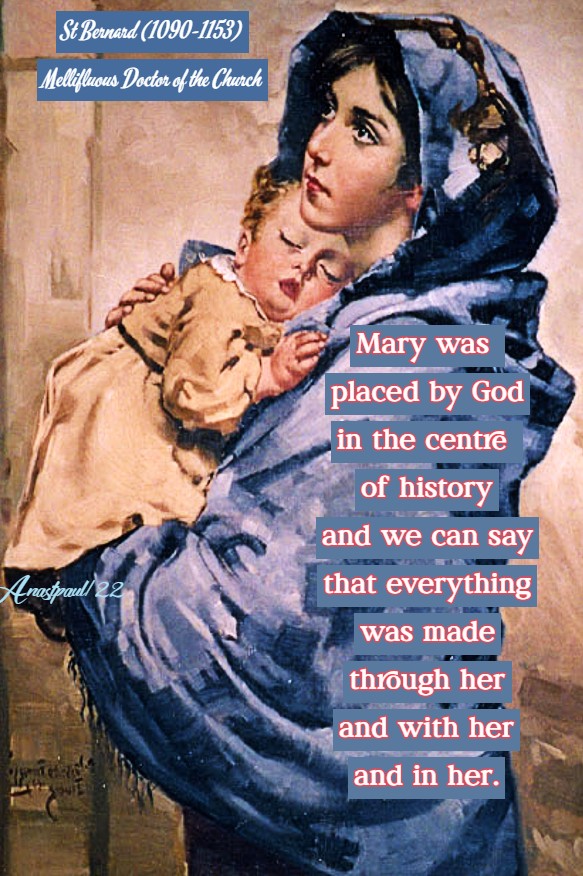
“Mary was placed by God in the centre of history and we can say that everything was made through her and with her and in her.”
“In the Immaculate Heart of Mary, I trust. Look to the Star, call upon Mary! In danger, in difficulty or in doubt, think of Mary, call upon Mary. Keep her name on your lips, never let it pass out of your heart.”
St Bernard (1090-1153) Mellifluous Doctor of the Church
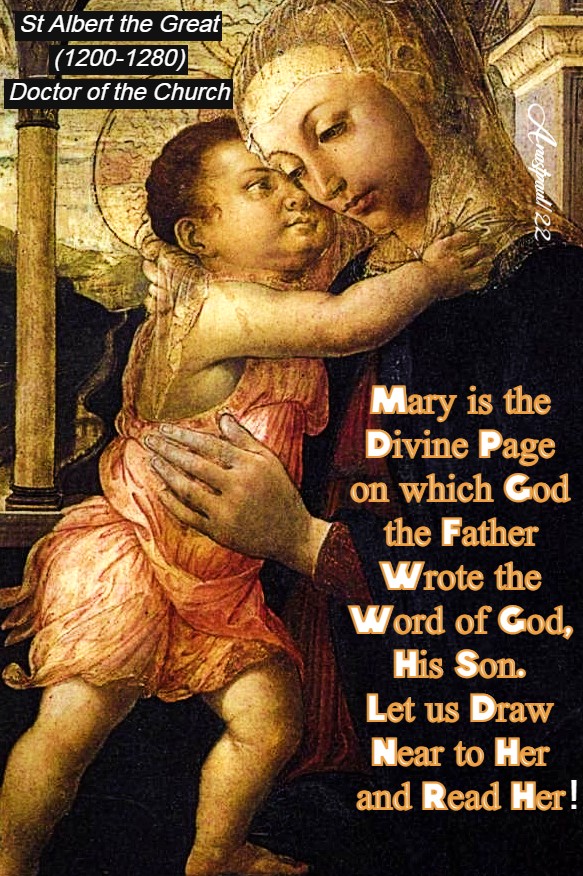
“Mary is the divine Page on which God the Father wrote the Word of God, His Son. Let us draw near to her and read her!”
St Albert the Great OP (1200-1280) Doctor of the Church
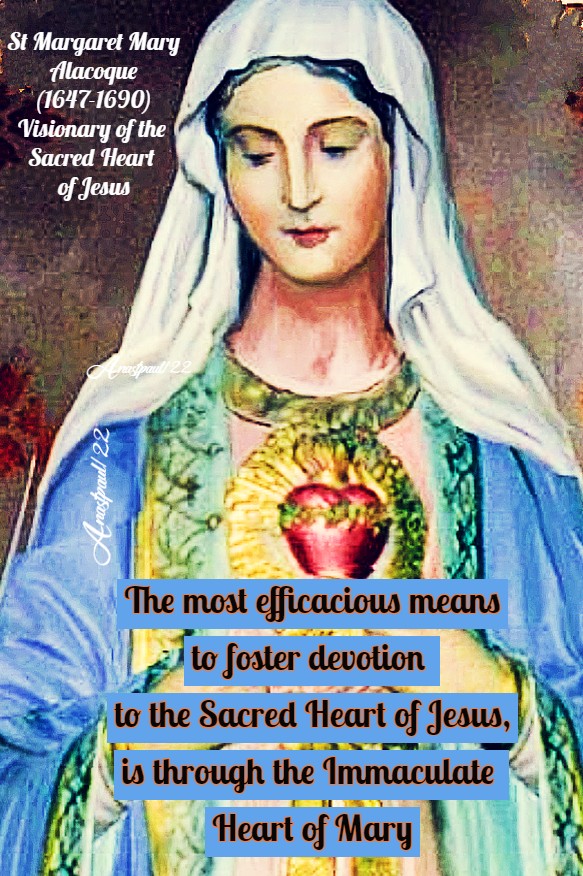
“The most efficacious means to foster devotion to the Sacred Heart of Jesus, is through the Immaculate Heart of Mary.”
St Margaret Mary Alacoque (1647-1690 Visionary of the Sacred Heart of Jesus
St Amor of Amorbach St Anastasius of Terni St Benedicta of Lorraine St Carloman St Cecilia of Lorraine
St Clare of the Cross of Montefalco (c 1269-1308) Augustinian Nun and Abbess, before becoming a nun, St Clare was a member of the Third Order of St Francis (Secular), Mystic, Penitent, Spiritual adviser. Beatified by Pope Clement XII. On 8 December 1881, the Feast of the Immaculate Conception, Pope Leo XIII Canonised Clare. Her Life: https://anastpaul.com/2019/08/17/saint-of-the-day-17-august-saint-clare-of-the-cross-of-montefalco-c-1269-1308/
St Donatus of Ripacandida OSB (1179-1198) Monk St Drithelm St Elias the Younger St Eusebius of Sicily St James the Deacon St Jeroen of Noordwijk St Juliana of Ptolemais St Mamas St Myron of Cyzicus
St Nicolò Politi (1117-1167) Basilian Monk and Hermit. He was known for his miracles even during his childhood and was Venerated as a saint even before his death. St Nicolò was Canonised on 7SJune 1507, at Saint Peter’s Basilica, Rome, by Pope Julius II. About St Nicolò: https://anastpaul.com/2020/08/17/saint-of-the-day-17-august-st-nicolo-politi-1117-1167/
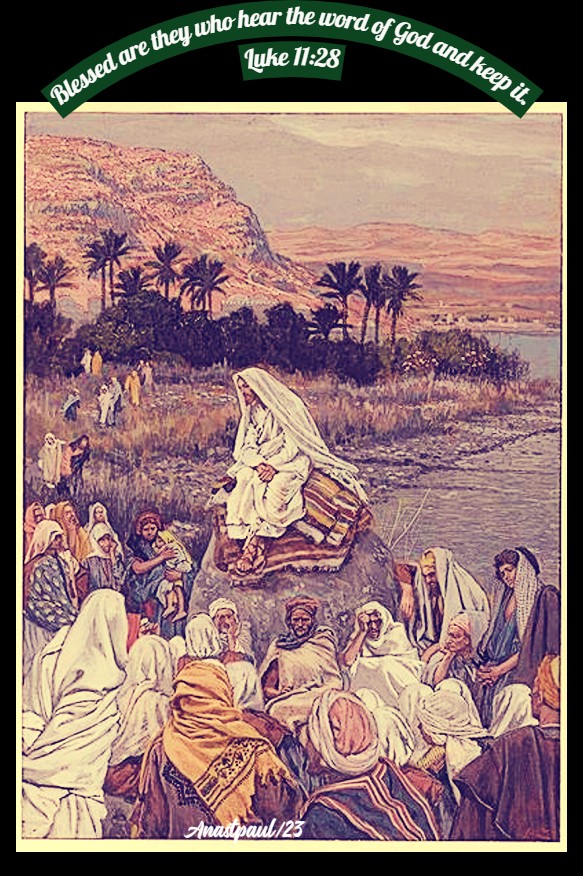
Quote/s of the Day – 14 August – “The Month of the Immaculate Heart of Mary” – Vigil of the Assumption – Ecclesiasticus 24:23-31, Luke 11:27-28 – Scripture search here: https://www.drbo.org/
“Rather, blessed are they who hear the Word of God and keep it.”
Luke 11:28
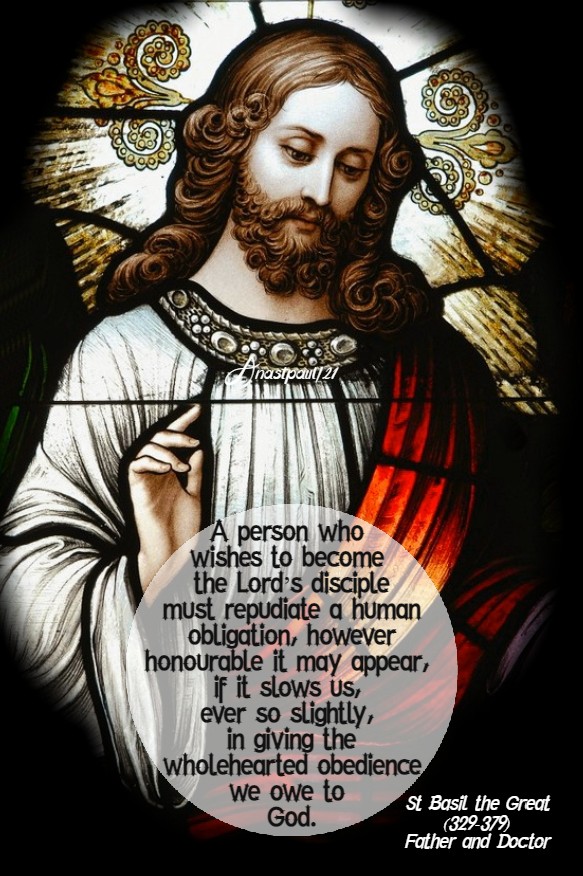
“A person who wishes to become the Lord’s disciple must repudiate a human obligation, however honourable it may appear, if it slows us, ever so slightly, in giving the wholehearted obedience we owe to God.”
St Basil the Great (329-379) Father and Doctor of the Church
“To arrive at the knowledge of the Truth, there are many paths – the first is humility, the second is humility and the third is humility.”
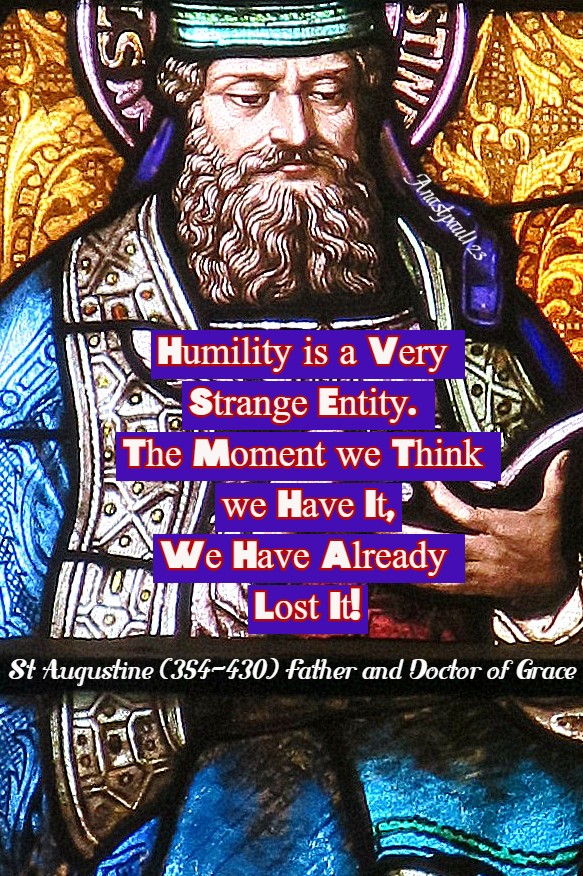
“Humility is a very strange entity. The moment we think we have it, we have already lost it!”
St Augustine (354-430) Father and Doctor of Grace)
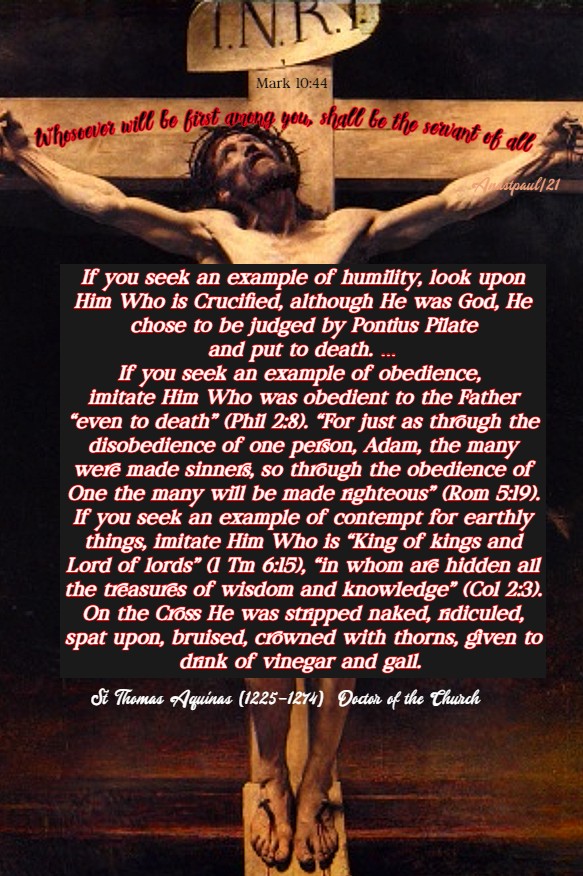
“If you seek an example of humility, look upon Him Who is Crucified, although He was God, He chose to be judged by Pontius Pilate and put to death. … If you seek an example of obedience, imitate Him Who was obedient to the Father “even to death” (Phil 2:8). “For just as through the disobedience of one person, Adam, the many were made sinners, so through the obedience of One, the many will be made righteous” (Rom 5:19). . If you seek an example of contempt for earthly things, imitate Him Who is “King of kings and Lord of lords” (1 Tm 6:15), “in whom are hidden all the treasures of wisdom and knowledge” (Col 2:3). On the Cross He was stripped naked, ridiculed, spat upon, bruised, crowned with thorns, given to drink of vinegar and gall.”
St Thomas Aquinas (1225-1274) Angelic Doctor of the Church
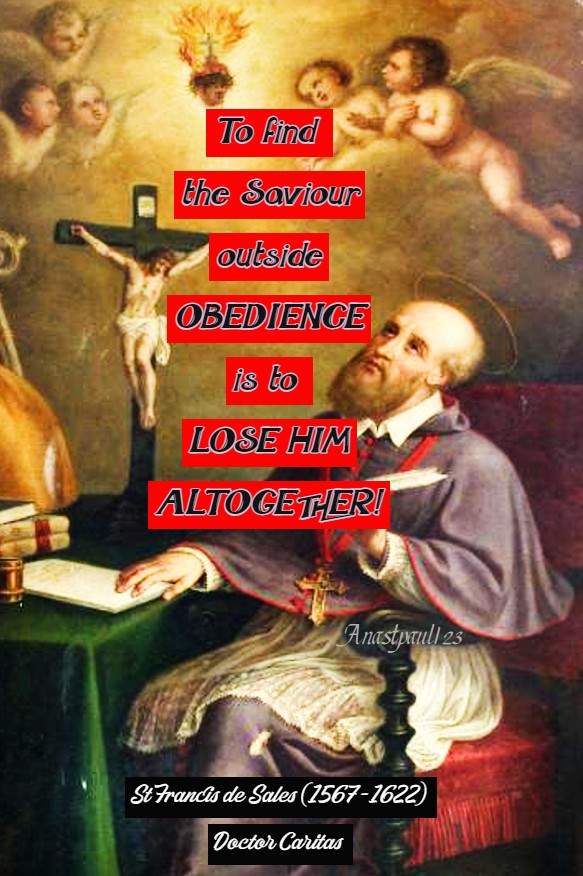
“To find the Saviour outside obedience, is to lose Him altogether.”
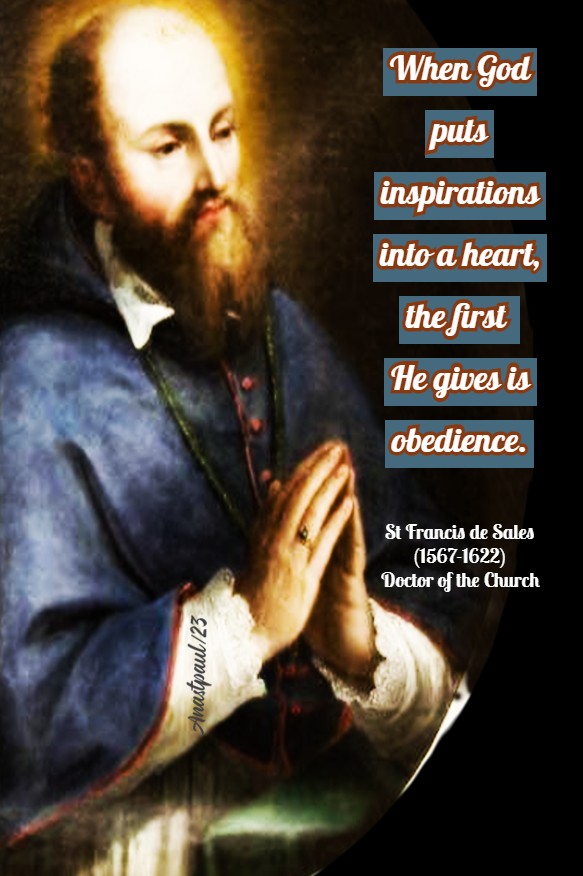
“When God puts inspirations into a heart, the first He gives is obedience.”
St Francis de Sales (1567-1622) Doctor of the Church
Quote/s of the Day – 8 August – The Fourteen Holy Helpers – 1 Thessalonians 2:13-16, Mark 16:15-18 – Scripture search here: https://www.drbo.org/
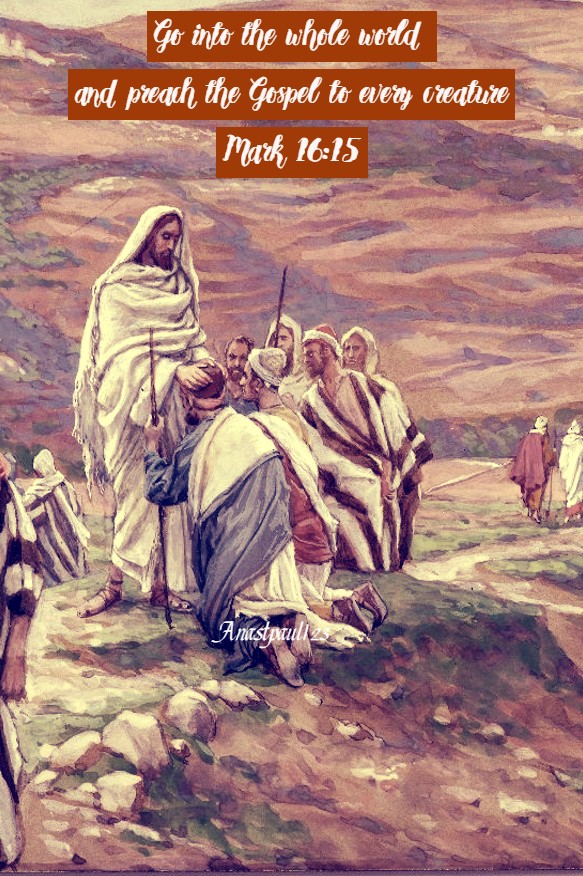
“Go into the whole world and preach the Gospel to every creature.”
Mark 16:15
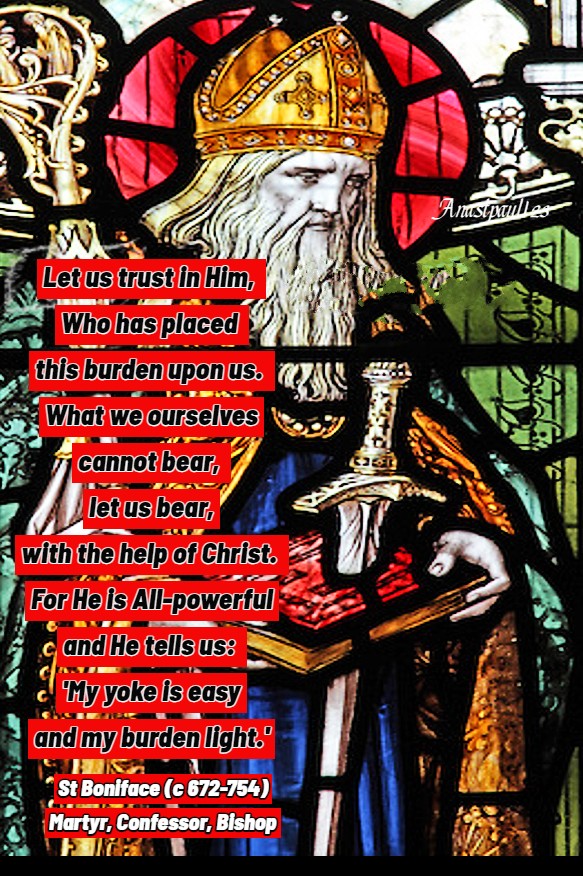
“Let us trust in Him. Who has placed this burden upon us. What we ourselves cannot bear, let us bear, with the help of Christ. For He is All-powerful and He tells us: ‘My yoke is easy and my burden light,’”
St Boniface (c672-754) Martyr, Confessor, Bishop “The Apostle of Germany”
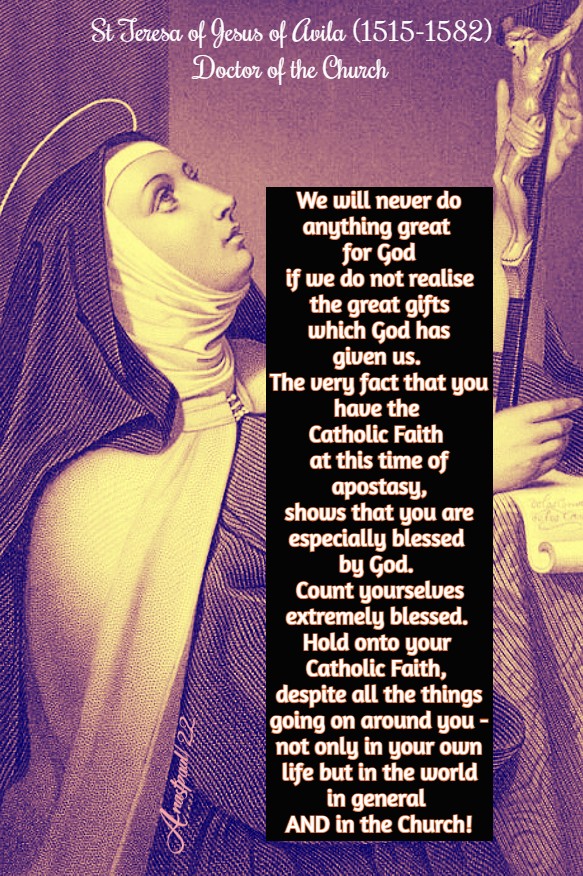
“We will never do anything great for God if we do not realise the great gifts which God has given us. The very fact that you have the Catholic Faith at this time of apostasy, shows that you are especially blessed by God. Count yourselves extremely blessed. Hold onto your Catholic Faith, despite all the things going on around you ,- not only in your own life but in the world in general AND in the Church!”
St Teresa of Jesus of Avila (1515-1582) Doctor of the Church
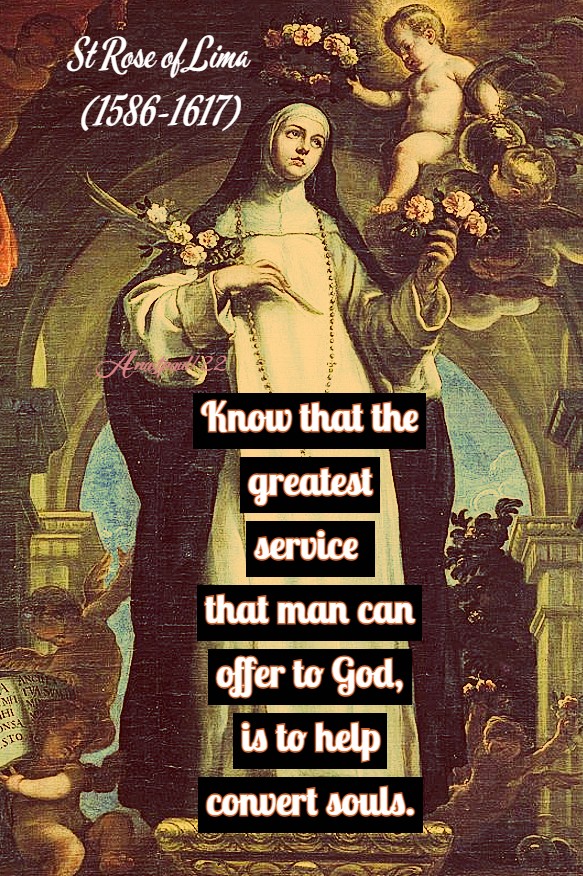
“Know that the greatest service that man can offer to God, is to help convert souls.”
St Rose of Lima (1586-1617)
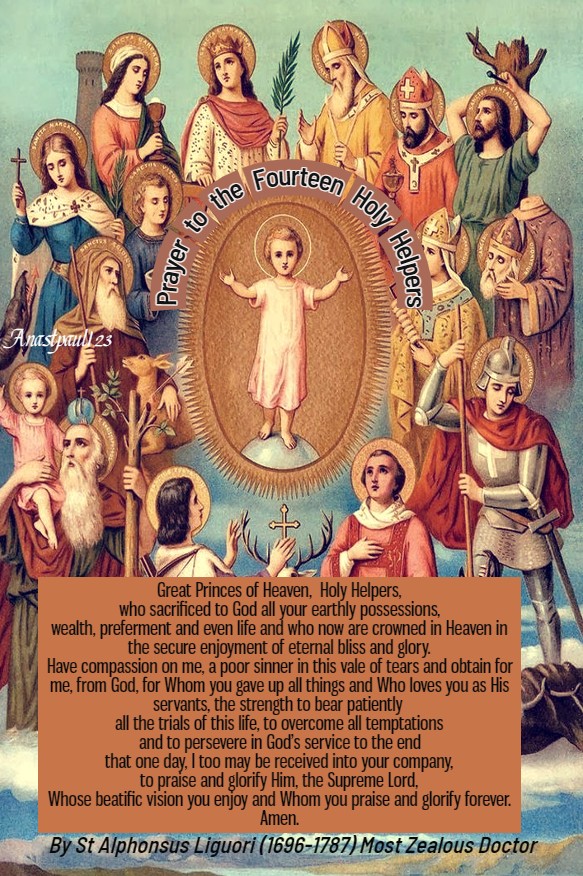
Prayer to the Fourteen Holy Helpers By St Alphonsus Liguori (1696-1787) Most Zealous Doctor of the Church
Great Princes of Heaven, Holy Helpers, who sacrificed to God all your earthly possessions, wealth, preferment and even life and who now are crowned in Heaven in the secure enjoyment of eternal bliss and glory. Have compassion on me, a poor sinner in this vale of tears and obtain for me, from God, for Whom you gave up all things and Who loves you as His servants, the strength to bear patiently all the trials of this life, to overcome all temptations and to persevere in God’s service to the end that one day, I too may be received into your company, to praise and glorify Him, the Supreme Lord, Whose beatific vision you enjoy and Whom you praise and glorify forever. Amen.
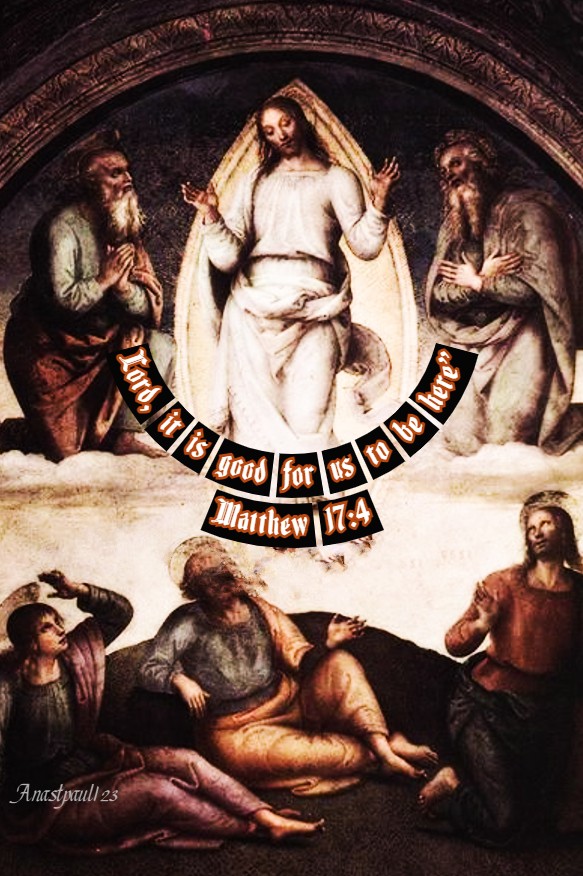
Quote/s of the Day – 6 August – The Transfiguration of Our Lord – 2 Peter 1:16-19, Matthew 17:1-9 – Scripture search here: https://www.drbo.org/
“Lord, it is good for us to be here”
Matthew 17:4
“Let us listen to the holy Voice of God which summons us from on high, from the holy mountain top. There, we must hasten – I make bold to say – like Jesus, Who is our leader and has gone before us into Heaven. There, with Him, may the eyes of our mind shine with His light and the features of our soul be made new; may we be transfigured with Him and moulded to His image, ever becoming divine, being transformed in an ever greater degree of glory.”
St Anastasius Sinaita (Died 6th Century) Priest and Abbot of St Catherine’s Monastery on Mount Sinai
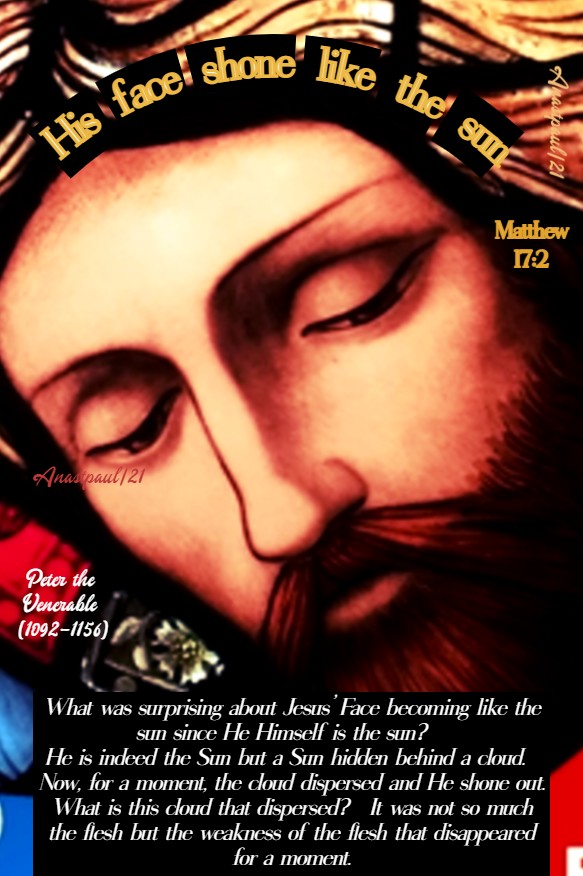
“What was surprising about Jesus’ Face becoming like the sun since He Himself is the Sun? He is indeed the Sun but a Sun hidden behind a cloud. Now, for a moment, the cloud dispersed and He shone out. What is this cloud that dispersed? It was not so much the flesh but the weakness of the flesh that disappeared for a moment.”
Peter the Venerable (1092-1156) Abbot of Cluny Sermon 1 for the Transfiguration
“At His Transfiguration Christ showed His disciples, the splendour of His beauty, to which He will shape and colour those who are His: ‘He will reform our lowness configured to the body of His glory.’”
St Thomas Aquinas (1225 – 1274) Doctor of the Church
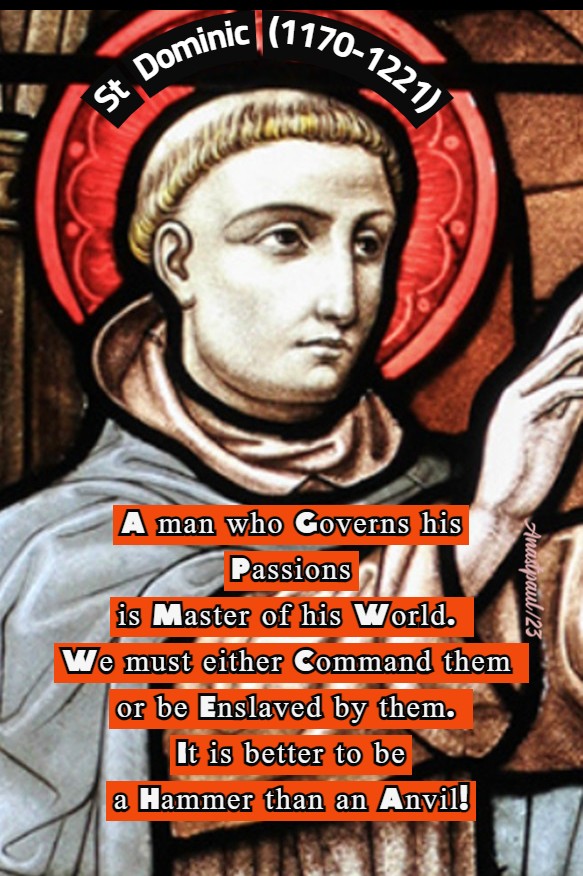
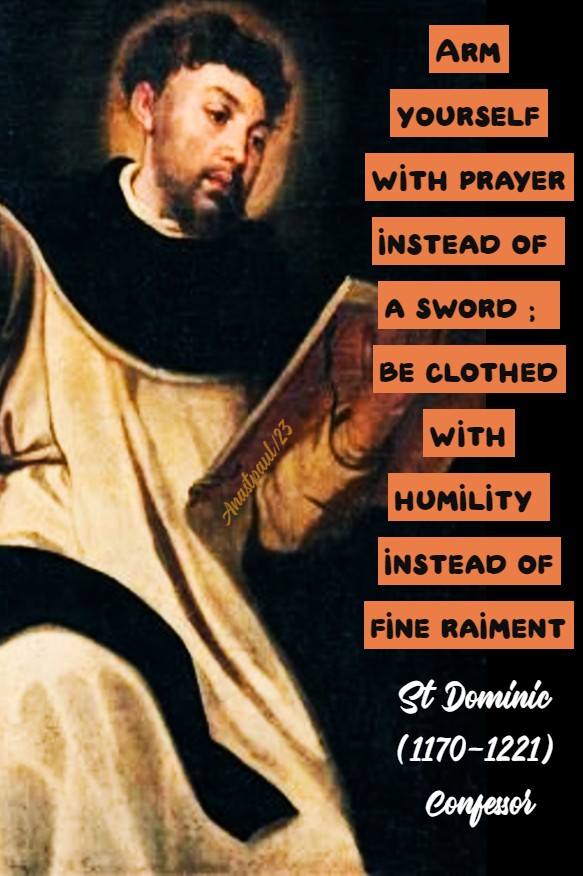
Quote/s of the Day – 4 August – The Memorial of St Dominic (1170-1221) Confessor
“A man who governs his passions is master of his world. We must either command them or be enslaved by them. It is better to be a hammer than an anvil!”
“Arm yourself with prayer instead of a sword; be clothed with humility instead of fine raiment.”
Our Morning Offering – 4 August – On the Feast of St Dominic, we pray a prayer by one of his most illustrious children, St Albert the Great
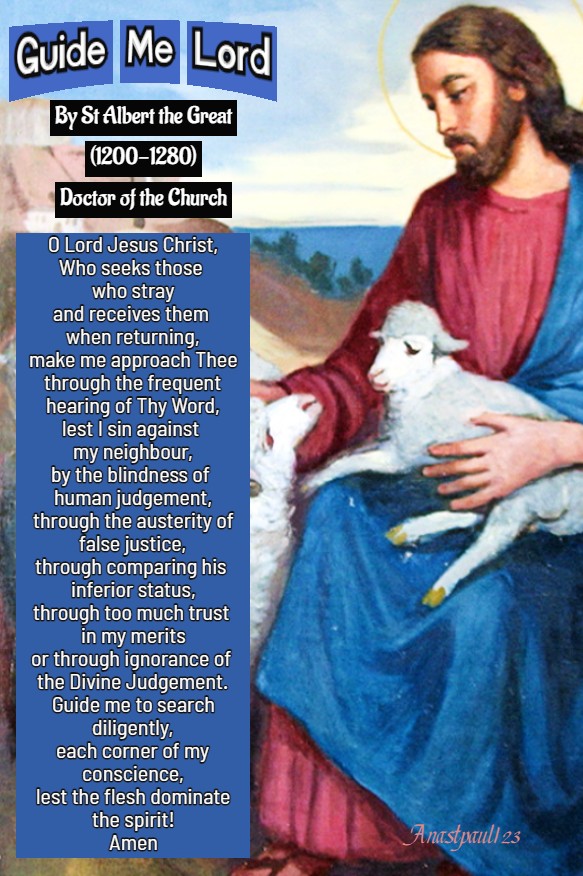
Guide Me Lord By St Albert the Great (1200-1280) Doctor of the Church
O Lord Jesus Christ, Who seeks those who stray and receives them when returning, make me approach Thee through the frequent hearing of Thy Word, lest I sin against my neighbour, by the blindness of human judgement, through the austerity of false justice, through comparing his inferior status, through too much trust in my merits or through ignorance of the Divine Judgement. Guide me to search diligently, each corner of my conscience, lest the flesh dominate the spirit! Amen
St Dominic de Guzman OP (1170-1221) Confessor, Founder of the Dominicans – The Order of Preachers – Priest, Founder, Teacher, Preacher, Mystic, Miracle-Worker, Apostle of the Holy Rosary. At Dominic’s Baptism, Blessed Joan, his Mother, saw a star shining from his chest, which became another of his symbols in art and led to his patronage of astronomy. https://anastpaul.wordpress.com/2017/08/08/saint-of-the-day-8-august-st-dominic-de-guzman-founder-of-the-dominican-order-of-preachers/ A lovely personal description of St Dominic here: https://anastpaul.com/2022/08/04/saint-of-the-day-4-august-st-dominic-confessor/ The Roman Martyrology states today: “At Bologna, St Dominic, Confessor, Founder of the Order of Friars Preachers, most renowned for sanctity and learning. He preserved his chastity unsullied to the end of his life and by his great merits, raised three persons from the dead. After having repressed heresies by his preaching and instructed many in the religious and Godly life, he rested in peace on the 6th of this month. His Feast, however, is celebrated on this day by decree of Pope Paul IV.”
St Agabius of Verona (Died c350) Bishop St Aristarchus of Thessalonica (1st Century) St Crescentio of Rome St Eleutherius of Bithynia St Epiphanes of Besançon
St Hyacinth of Rome St Ia of Persia St Isidore of Besançon St Lua of Limerick St Onofrio of Panaia St Perpetua of Rome St Protasius of Cologne St Rainerio of Split St Sithney (Died c 529) St Tertullinus of Rome Blessed William Horne O.Cart. (Died 1540) Martyr, Carthusian Lay Brother
Quote/s of the Day – 21 July – “The Month of the Most Precious Blood of Jesus” – St Praxedes, Virgin (Died 164) – 1 Corinthians 7:25-34, Matthew 13:44-52 – Scripture search here: https://www.drbo.org/
“And the unmarried woman and the virgin, thinketh on the things of the Lord, that she may be holy, both in body and in spirit, in Christ Jesus our Lord.”
1 Corinthians 7:34
“Virginity can be lost by a single thought.”
St Jerome (343-420) Father and Doctor of the Church
“He errs who believes that he can overcome his sensual propensities and preserve chastity, by his own efforts. God’s mercy must extinguish nature’s ardour. Have recourse to the intercession of the Immaculate Virgin and rest assured, you will obtain this mercy.”
St John Chrysostom (347-407) Father and Doctor of the Church
“Chastity depends on the heart, for its source and on the body, as its subject. Hence, it may be lost, by all the external senses of the body and by the thoughts and desires of the heart.”
(Introduction to the Devout Life, Part III, Chapter 13).
St Francis de Sales (1567-1622) Doctor of the Church
Prayer for Chastity and Purity By St Thomas Aquinas (1225-1274) Dear Jesus, I know that every perfect gift and especially that of chastity, depends on the power of Thy Providence. Without Thee, a mere creature can do nothing. Therefore, I beg Thee, to defend, by Thy grace the chastity and purity of my body and soul. And if I have ever sensed or imagined anything that could stain my chastity and purity, blot it out, Supreme Lord of my powers that I may advance with a pure heart in Thy love and service, offering myself on the most pure altar of Thy Divinity, all the days of my life. Amen
St Andrew the Hermit St Antiochus of Sebaste Bl Arnold of Clairvaux Bl Arnold of Hildesheim St Athenogenes of Sebaste
St Bartholomew of Braga OP – ArchBishop of Braga also known as Bl Bartholomew of the Martyrs (Bartolomeu Fernandez dei Martiri Fernandes) (1514-1590) Portuguese Dominican Friar and Priest, Writer, Theologian, Advisor, Teacher and Catechetical writer, Apostle of Charity founding a series of hospitals and hospices in Braga and surrounds. St Bartholomew: https://anastpaul.com/2018/07/16/saint-of-the-day-16-july-blessed-bartholomew-of-the-martyrs-1514-1590/
St Generosus of Poitou St Gobbán Beg St Gondulf of Tongeren-Maastricht St Gondolf of Saintes St Grimoald of Saintes St Helier of Jersey (Died c555) Martyr, Hermit Bl Irmengard St Landericus of Séez Bl Madeleine-Françoise de Justamond Bl Marguerite-Rose de Gordon Bl Marguerite-Thérèse Charensol Bl Marie-Anne Béguin-Royal Bl Marie-Anne Doux
St Marie-Madeline Postel (1756-1846) Religious Sister and Founder of the Sisters of Christian Schools of which she is the Patron, Teacher, Franciscan tertiary. Pope Pius X later signified on 22 January 1908 his approval to two investigated miracles attributed to her intercession and so Beatified her on 17 May 1908. Pope Pius XI confirmed two additional miracles and Canonised Blessed Marie-Madeline on 24 May 1925. Her Life: https://anastpaul.com/2019/07/16/saint-of-the-day-16-july-st-marie-madeline-postel-
Bl Marie-Rose Laye Bl Milon of Thérouanne St Monulphus of Tongeren-Maastricht Bl Ornandus of Vicogne
Martyrs of Antioch – 5 Saints: Five Christians who were Martyred together. No details about them have survived by the names – Dionysius, Eustasius, Maximus, Theodosius and Theodulus. They were Martyred in Antioch, Syria, date unknown.
Our Morning Offering – 12 July – “The Month of the Most Precious Blood of Jesus”
Grant Me Grace, O Merciful God Daily Prayer of St Thomas Aquinas (1225-1274) (Which he was accustomed to recite everyday before the image of Christ.) Doctor Angelicus & Doctor Communis
Grant me grace, O merciful God, to desire ardently all that is pleasing to Thee, to examine it prudently, to acknowledge it truthfully and to accomplish it perfectly, for the praise and glory of Thy Name. Amen
Our Morning Offering – 7 July – “The Month of the Most Precious Blood of Jesus” and “Friday Devotion The Passion”
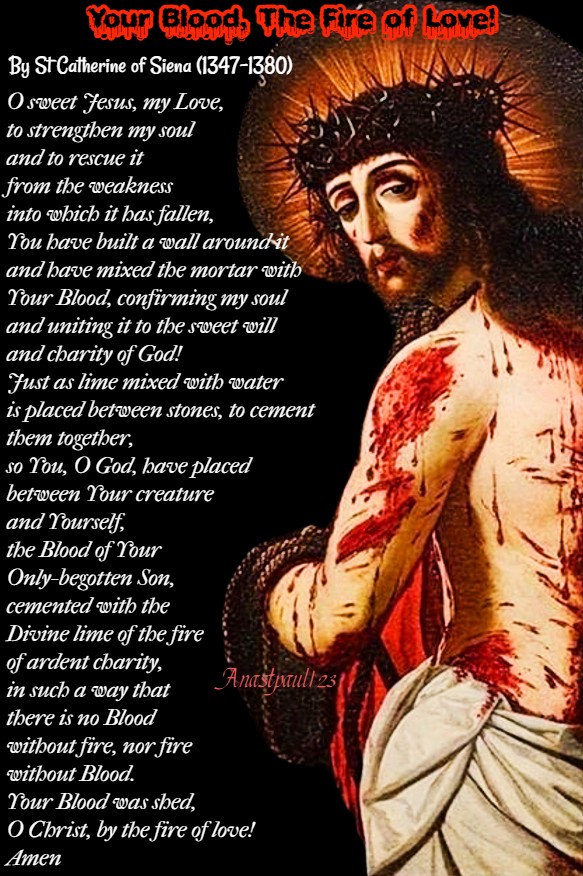
Your Blood, The Fire of Love! By St Catherine of Siena (1347-1380) Doctor of the Church
O sweet Jesus, my Love, to strengthen my soul and to rescue it from the weakness into which it has fallen, You have built a wall around it and have mixed the mortar with Your Blood, confirming my soul and uniting it to the sweet will and charity of God! Just as lime mixed with water is placed between stones, to cement them together, so You, O God, have placed between Your creature and Yourself, the Blood of Your Only-begotten Son, cemented with the Divine lime of the fire of ardent charity, in such a way that there is no Blood without fire, nor fire without Blood. Your Blood was shed, O Christ, by the fire of love! Amen
Saint Cyril (827-869) Saint Methodius (826-885) “Apostles to the Slavs,” Sibling Brother Bishops, Confessors, Theologians, Missionaries, Writers, Preachers, Patrons of Europe. Creators of the Glagolitic alphabet, the first alphabet used to transcribe Old Church Slavonic and Cyrillac Alphabet, which was developed from it. Their Feast Day is 7 July (moved in 1969). The great Saints Cyril & Methodius: https://anastpaul.wordpress.com/2018/02/14/saints-of-the-day-14-february-sts-cyril-827-869-methodius-826-885/
St Lawrence of Brindisi OFM Cap (1559-1619) Confessor, The “Franciscan Renaissance Man,” Priest and Friar of the Friars Minor Capuchin, Theologian, Vicar General of the Franciscans, Language scholar, Humanist, Philosopher, Biblicist, Preacher, Missionary, Professor, International Administrator, Confidant of Popes, Emperors, Kings and Princes, Diplomatic envoy, Army Chaplain, Military Strategist and Morale builder, Polemicist, Prolific writer. He was Beatified on 1 June 1783 by Pope Pius VI and Canonised on 8 December 1881 by Pope Leo XIII. His Zealous Life: https://anastpaul.com/2017/07/21/saint-of-the-day-21-july-st-lawrence-of-brindisi-o-f-m-cap-doctor-of-the-church/
St Alexander St Angelelmus of Auxerre St Apollonius of Brescia
Blessed Pope Benedict XI OP (1240-1303) Cardinal-Priest of St Sabina, Bishop of Ostia then of Rome, Dominican Friar, Prior Provincial of Lombardy prior to becoming the Master of the Order in 1296, Apostolic Papal Legate to Hungary and France, Teacher, Preacher, Writer and renowned Scholar with special emphasis on Scriptural commentary. His Papacy began on 22 Ocober 1303 and ended at his death on 7 July 1304. His Life: https://anastpaul.com/2020/07/07/saint-of-the-day-7-july-blessed-pope-benedict-xi-1240-1303/
Bl Bodard of Poitiers St Bonitus of Monte Cassino St Carissima of Rauzeille St Eoaldus of Vienne St Ethelburga of Faremoutier (Died 664) Abbess, Princess St Hedda of Wessex St Maelruan Bl Marie-Gabrielle-Françoise-Suzanne de Gaillard de Lavaldène St Medran St Merryn Bl Oddino Barrotti St Odo of Urgell St Odran St Palladius of Ireland St Pantaenus of Alexandria
St Pantænus (Died c 216) Father of the Church, Theologian, Philosopher, Teacher, Confessor and Defender of the Faith, Writer and interpreter of the Bible, the Trinity and Christology, |Missionary. Convert of the disciples of the Apostles. Head of the Alexandrian School of Learning – a famous pupil was St Clement of Alexandria. Biography: https://anastpaul.com/2019/07/07/saint-of-the-day-7-july-st-pantaenus-father-of-the-church-died-c-216/
Martyrs of Durres – 7 Saints: Also known as – Martyrs of Dyrrachium/Martyrs of Durazzo. A group of seven Italian Christians who fled Italy to escape the persecutions of Emperor Hadrian. Arrived in Dyrrachium, Macedonia to find Saint Astius tied to a cross, covered in honey, laid in the sun and left to be tortured by biting and stinging insects. When they expressed sympathy for Astius, they were accused of being Christians, arrested, chained, weighted down, taken off shore and drowned. We know little more about each of them than their names – Germaus, Hesychius, Lucian, Papius, Peregrinus, Pompeius and Saturninus. They were born in Italy and were Martyred at sea c117 off the coast of Dyrrachium (Durazzo), Macedonia (modern Durres, Albania).
Our Morning Offering – 4 July – “The Month of the Most Precious Blood of Jesus”
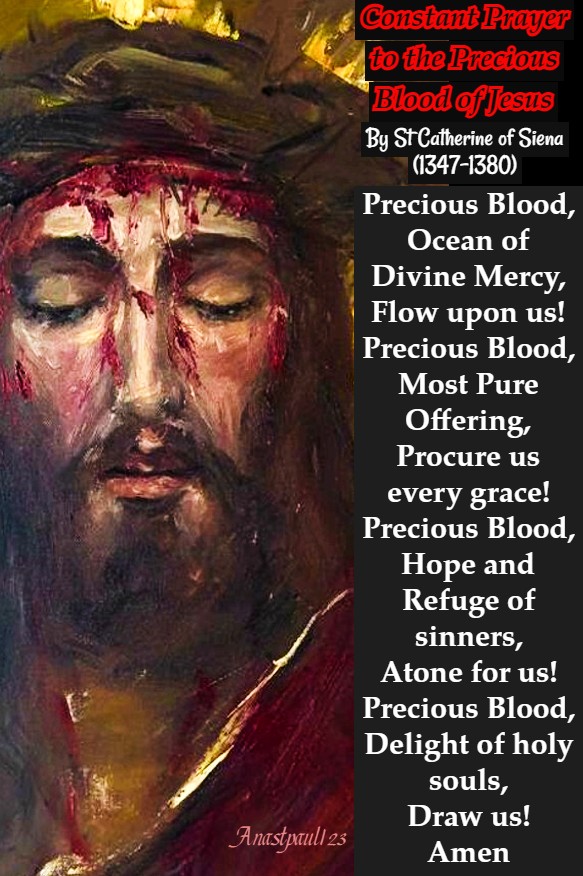
Constant Prayer to the Precious Blood of Jesus By St Catherine of Siena (1347-1380) Doctor of the Church
Precious Blood, Ocean of Divine Mercy, Flow upon us! Precious Blood, Most Pure Offering, Procure us every grace! Precious Blood, Hope and Refuge of sinners, Atone for us! Precious Blood, Delight of holy souls, Draw us! Amen
Quote/s of the Day – 3 July – “The Month of the Most Precious Blood of Jesus” – St Leo II (611–683) Pope, Confessor – 1 Peter 5:1-4; 5:10-11, Matthew 16:13-19 – Scripture search here: https://www.drbo.org/
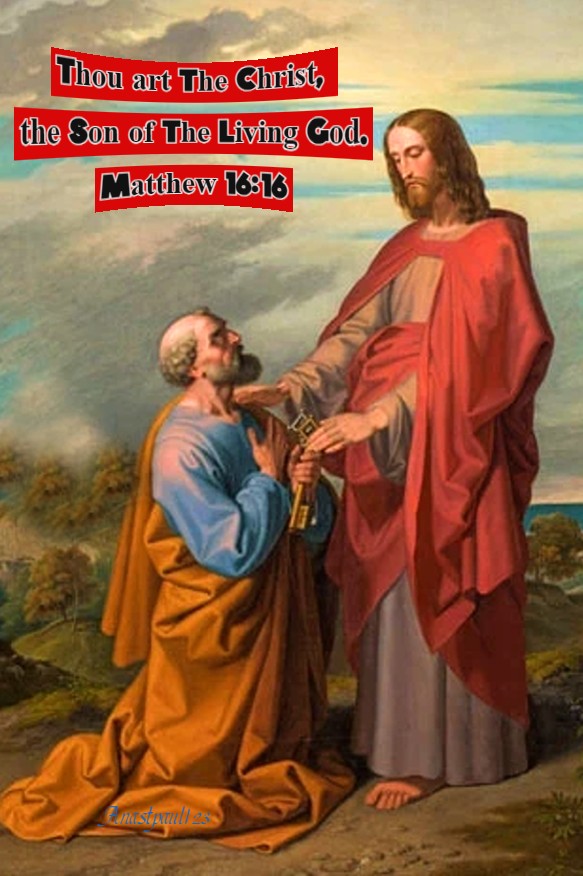
“Thou art the Christ, the Son of the living God.”
Matthew 16:16
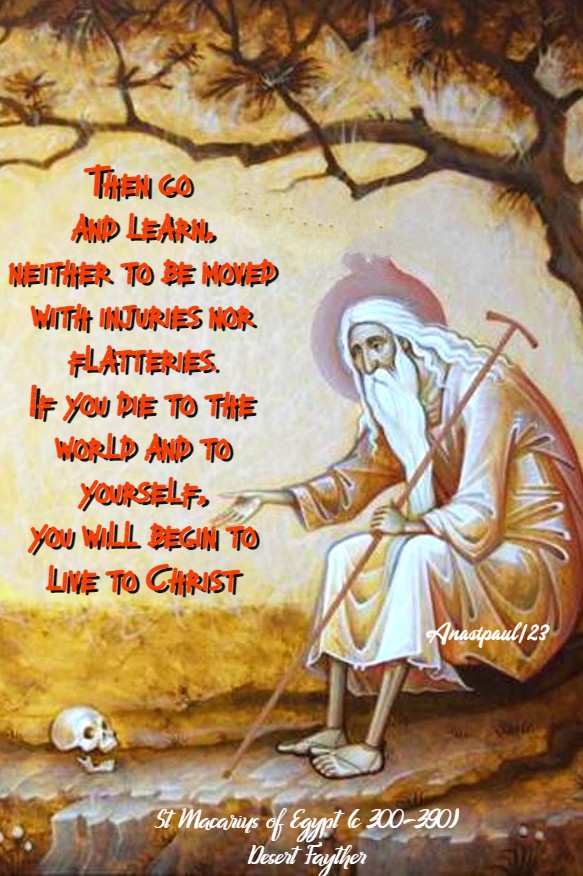
“Then go and learn, neither to be moved with injuries nor flatteries. If you die to the world and to yourself, you will begin to live to Christ.”
St Macarius of Egypt (c300-390)
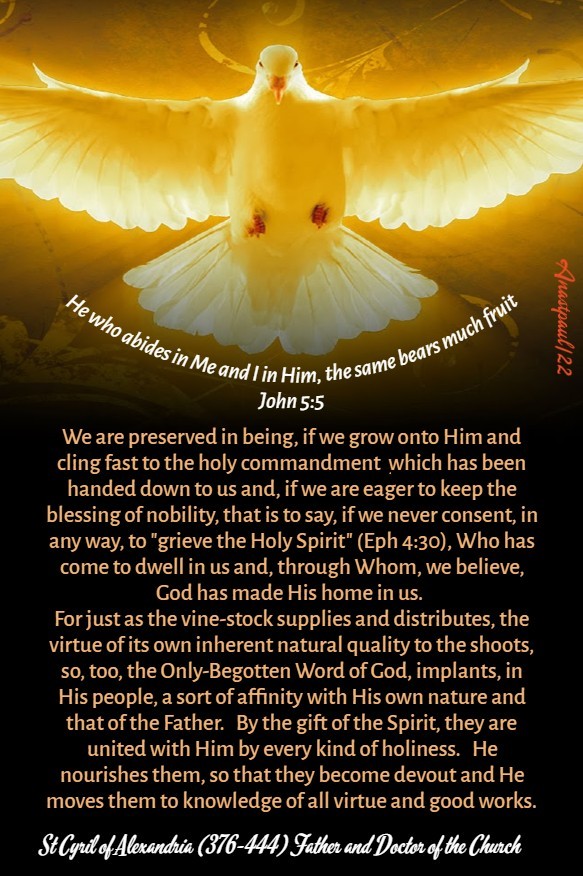
“He who abides in Me and I in Him, the same bears much fruit”
John 5:5
“We are preserved in being, if we grow onto Him and cling fast to the holy commandment, which has been handed down to us and, if we are eager to keep the blessing of nobility, that is to say, if we never consent, in any way, to “grieve the Holy Spirit” (Eph 4:30), Who has come to dwell in us and, through Whom, we believe, God has made His home in us. … For just as the vine-stock supplies and distributes, the virtue of its own inherent natural quality to the shoots, so, too, the Only-Begotten Word of God, implants, in His people, a sort of affinity with His own nature and that of the Father. By the gift of the Spirit, they are united with Him by every kind of holiness. He nourishes them, so that they become devout and He moves them to knowledge of all virtue and good works.”
St Cyril of Alexandria (376-444) Father & Doctor of the Church
“Christ said that the shepherd enters through the gate and that He is Himself the Gate, as well as the Shepherd. Then, it is necessary, that He enter through Himself. By so doing, He reveals Himself and through Himself, He knows the Father. But we enter through Him because through Him. we find happiness.”
St Thomas Aquinas (1225-1274) Doctor Angelicus Doctor Communis
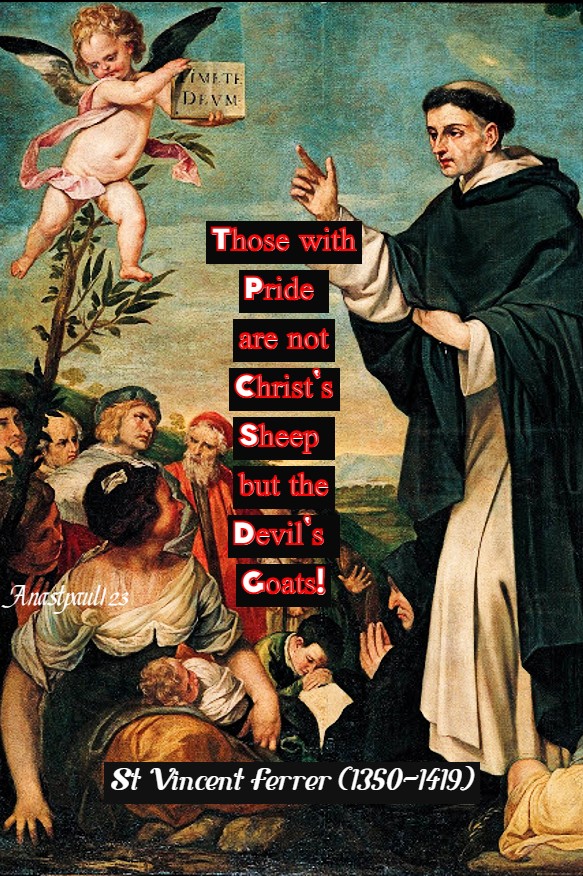
“Those with pride are not Christ’s sheep but the devil’s goats!”
Quote/s of the Day – 1 July – “The Feast and Month of the Most Precious Blood of Jesus”
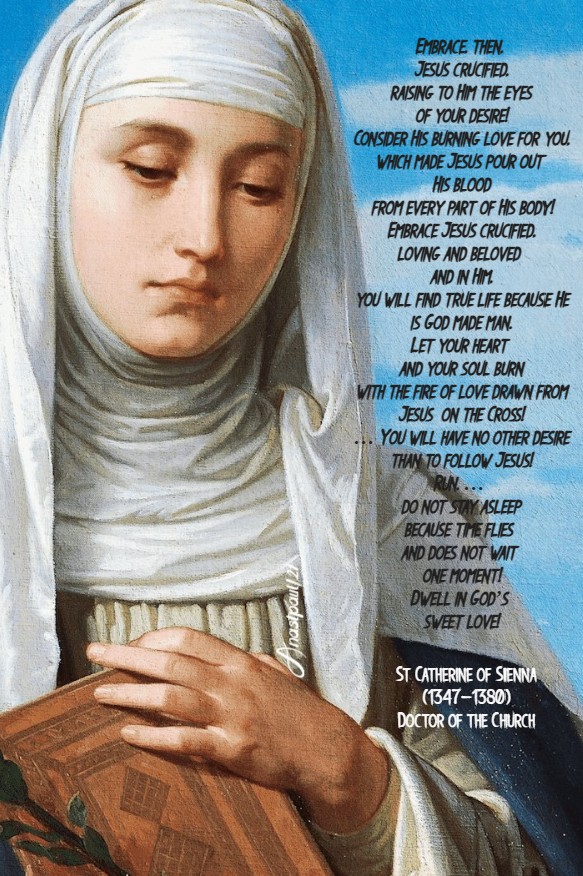
“Embrace, then, Jesus Crucified, raising to Him the eyes of your desire! Consider His burning love for you which made Jesus pour out His Blood from every part of His body! Embrace Jesus Crucified, loving and beloved and in Him, you will find true life because He is God made Man. Let your heart and your soul burn with the fire of love drawn from Jesus on the Cross! … You will have no other desire than to follow Jesus! Run, … do not stay asleep because time flies and does not wait one moment! Dwell in God’s sweet love!”
St Catherine of Sienna (1347-1380) Doctor of the Church
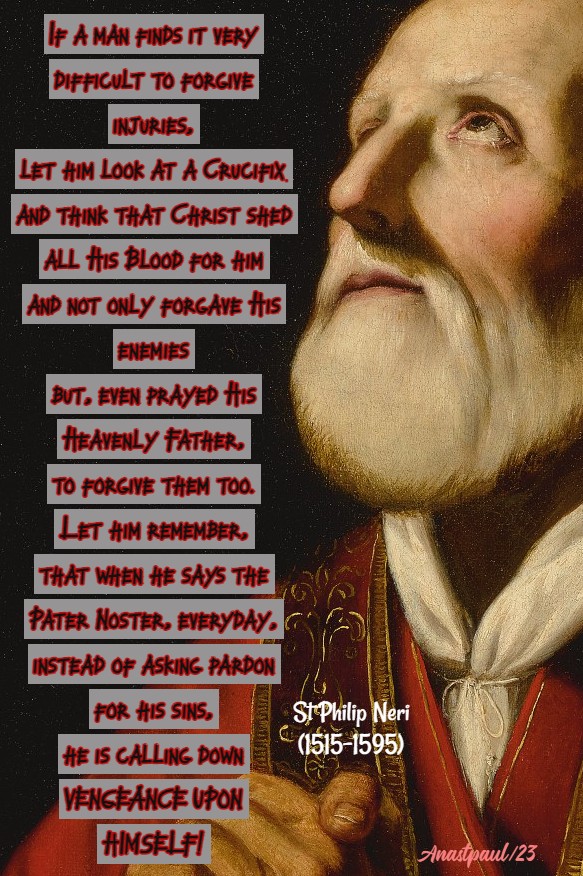
“If a man finds it very difficult to forgive injuries, let him look at a Crucifix and think that Christ shed all His Blood for him and not only forgave His enemies but, even prayed His Heavenly Father, to forgive them too. Let him remember, that when he says the Pater Noster, everyday, instead of asking pardon for his sins, he is calling down VENGEANCE UPON HIMSELF!”
St Philip Neri (1515-1595)
“The Saviour has instituted the most glorious Sacrament of the Eucharist, which truly contains His Body and His Blood, so that, whoever eats it will live forever. Therefore, those who receive it frequently, with devotion, strengthen their spiritual life and well-being, to such an extent, that it is almost impossible for them to be poisoned by any kind of evil attachment.”
(Introduction to the Devout Life, Part II, Chapter 20)
St Francis de Sales (1567-1622) Doctor of the Church
Our Morning Offering – 11 June – “The Month of the Sacred Heart of Jesus” – The Solemnity of Corpus Christi, The Most Holy Body and Blood of Our Lord Jesus Christ and Sunday within the Octave – The Second Sunday after Pentecost
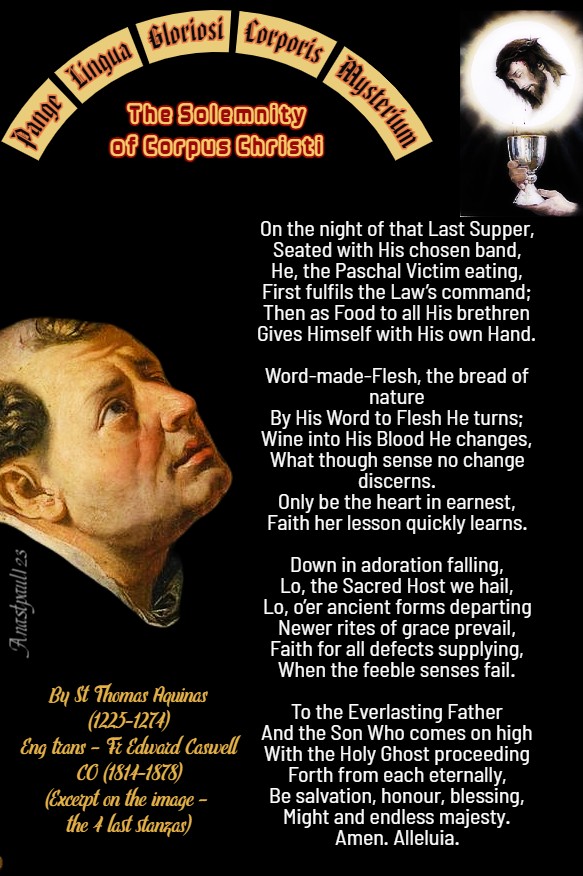
Pange Lingua Gloriosi Corporis Mysterium Sing, My Tongue By St Thomas Aquinas (1225-1274) Eng trans – Fr Edward Caswell CO (1814-1878) (Excerpt on the image – the 4 last stanzas)
Sing, my tongue, the Saviour’s glory, Of His Flesh, the Mystery sing; Of the Blood, all price exceeding, Shed by our Immortal King, Destined, for the world’s redemption, From a noble Womb to spring.
Of a pure and spotless Virgin Born for us on earth below, He, as Man, with man conversing, Stayed, the seeds of truth to sow; Then He closed in solemn order Wondrously His Life of woe.
On the night of that Last Supper, Seated with His chosen band, He, the Paschal Victim eating, First fulfils the Law’s command; Then as Food to all His brethren Gives Himself with His own Hand.
Word-made-Flesh, the bread of nature By His Word to Flesh He turns; Wine into His Blood He changes, What though sense no change discerns. Only be the heart in earnest, Faith her lesson quickly learns.
Down in adoration falling, Lo, the Sacred Host we hail, Lo, o’er ancient forms departing Newer rites of grace prevail, Faith for all defects supplying, When the feeble senses fail.
To the Everlasting Father And the Son Who comes on high With the Holy Ghost proceeding Forth from each eternally, Be salvation, honour, blessing, Might and endless majesty. Amen. Alleluia.
Written by St Thomas Aquinas (1225-1274) the Angelic and Common Doctor of the Church, for the very first Solemnity of Corpus Christi, this Hymn is considered the most beautiful of Aquinas’ Hymns and one of the seven great Hymns of the Church.
The last two stanzas make up the Tantum Ergo (Down in Adoration Falling) which is used at Benediction of the Blessed Sacrament. The Hymn is also used on Maundy Thursday during the procession from the Sanctuary to the Altar of Repose, where the Blessed Sacrament is kept until Good Friday.
PANGE, Lingua, Gloriosi Corporis Mysterium
Corporis mysterium, Sanguinisque pretiosi, quem in mundi pretium fructus ventris generosi Rex effudit Gentium.
Nobis datus, nobis natus ex intacta Virgine, et in mundo conversatus, sparso verbi semine, sui moras incolatus miro clausit ordine.
In supremae nocte cenae recumbens cum fratribus observata lege plene cibis in legalibus, cibum turbae duodenae se dat suis manibus.
Verbum caro, panem verum verbo carnem efficit: fitque sanguis Christi merum, et si sensus deficit, ad firmandum cor sincerum sola fides sufficit.
Tantum ergo Sacramentum veneremur cernui: et antiquum documentum novo cedat ritui: praestet fides supplementum sensuum defectui.
Genitori, Genitoque laus et iubilatio, salus, honor, virtus quoque sit et benedictio: procedenti ab utroque compar sit laudatio. Amen. Alleluia.
Quote/s of the Day – 10 June – “The Month of the Sacred Heart of Jesus” – Within the Octave of Corpus Christi – 1 Corinthians 23-29, John 6:56-59 – Scripture search here: https://www.drbo.org/
“He who eats My Flesh and drinks My Blood, abides in Me and I in him.”
John 6:57
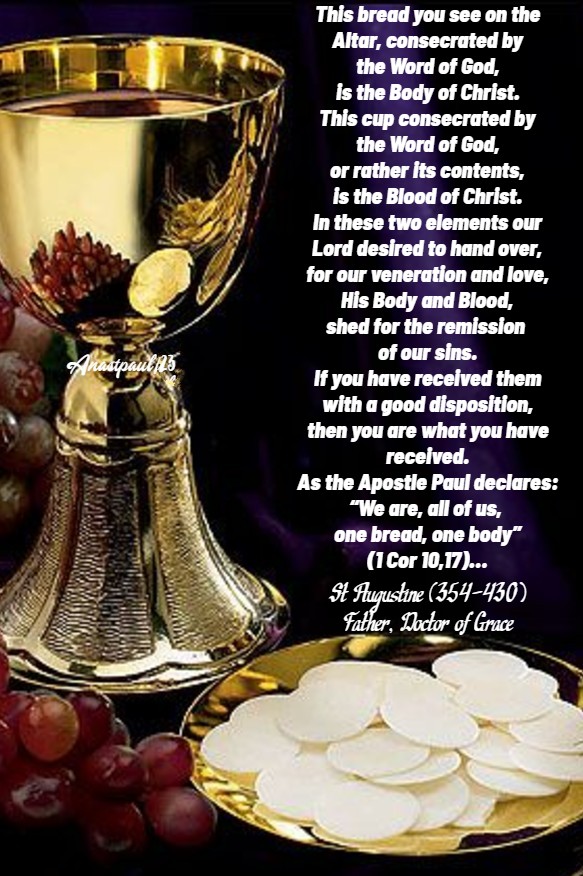
“This bread you see on the Altar, consecrated by the Word of God, is the Body of Christ. This cup consecrated by the Word of God, or rather its contents, is the Blood of Christ. In these two elements our Lord desired to hand over, for our veneration and love, His Body and Blood, shed for the remission of our sins. If you have received them with a good disposition, then you are what you have received. As the Apostle Paul declares: “We are, all of us, one bread, one body” (1 Cor 10,17)…”
St Augustine (354-430) Father, Doctor of Grace
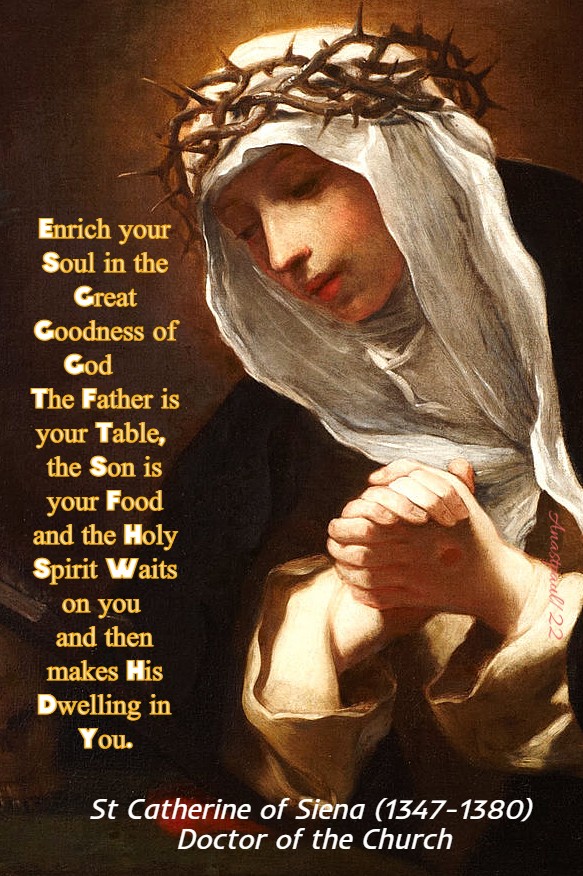
“Enrich your soul in the great goodness of God – The Father is your Table, the Son is your Food and the Holy Spirit waits on you and then makes His Dwelling in you.”
St Catherine of Siena OP (1347-1380) Doctor of the Church
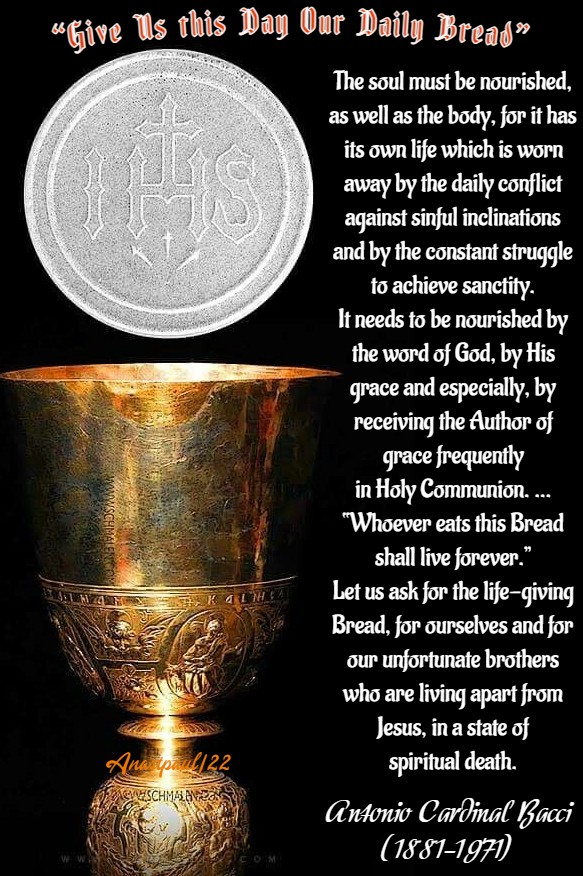
“The soul must be nourished, as well as the body, for it has its own life which is worn away by the daily conflict against sinful inclinations and by the constant struggle to achieve sanctity. It needs to be nourished by the word of God, by His grace and especially, by receiving the Author of grace frequently in Holy Communion. … “Whoever eats this Bread shall live forever.” Let us ask for the life-giving Bread, for ourselves and for our unfortunate brothers who are living apart from Jesus, in a state of spiritual death.”
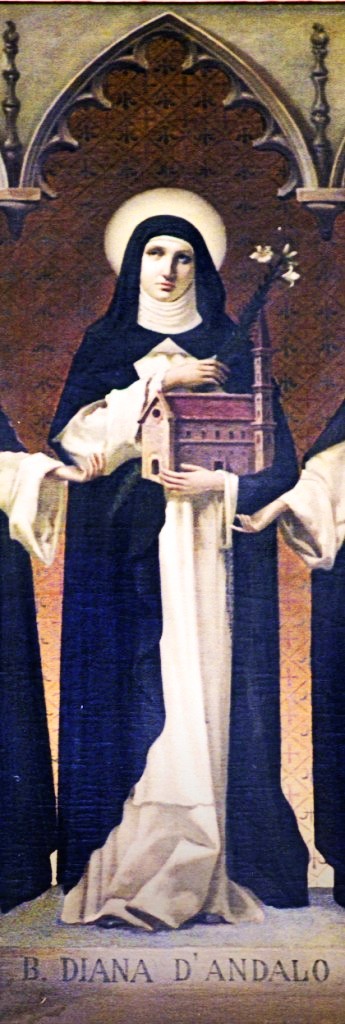
Saint of the Day –10June – Blessed Diana d’Andalo OP (1201-1236) Virgin, Nun of the Order of Preachers Born in 1201 near Bologna, Italy and died on 9 January 1236 in Bologna of natural causes. Beatified on 8 August 1888 by Pope Leo XII. Also known as – Diana degli Andalò.
The Roman Martyrology states: “In Bologna, blessed Diana d’Andalò, Virgin, who, having overcome all the impediments posed by her family, took a vow of cloistered life in the hands of Saint Dominic himself, entering the Monastery of Saint Agnes, which she founded.”
Diana was born into a powerful Roman family in Bologna, Italy in 1201. Nothing is known of her childhood but she was described as “rather spoiled.” She was “of outstanding beauty,” charming, eloquent, well-educated, high spirited, courageous and had good judgement. Dominican scholar Gerald Vann also called her “full of the joy of living, full too of the joy of her own beauty and the power it gave her.”
In 1218, Diana heard the Dominican Scholar and Preacher, Blessed Reginald of Orléans speak in Bologna. His sermons inspired her to give up her worldliness and devote herself to prayer. Following Reginald’s advice, she remained at her family’s home and continued to wear the clothes appropriate to her standing, although she wore an iron chain and hairshirt under them.
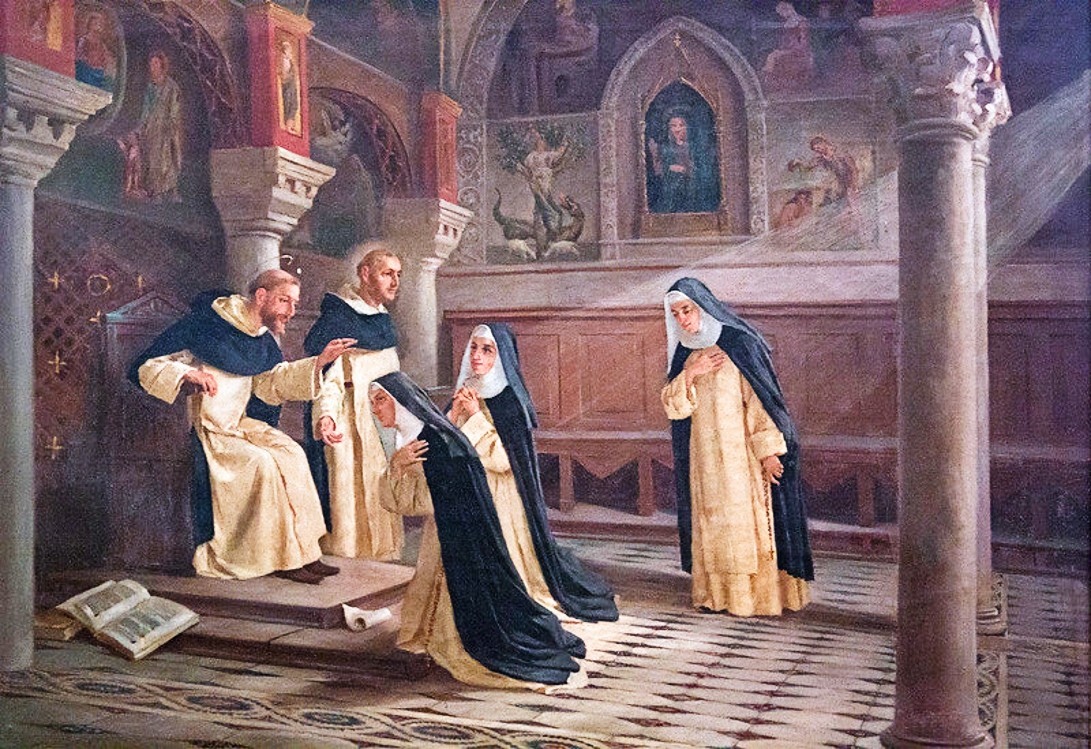
In 1219, St Dominic , himself, came to Bologna and to him she vowed her perpetual virginity and she proclaimed her intention to join the Dominican Order as soon as a Convent was established in Bologna.
She persuaded her father to purchase the lands to build a Convent but he refused to allow her to enter it, probably because the family intended that she marry into another prominent family and the Bishop denied permission to build on the site chosen.
In 1222, she ran away to an Augustinian Convent in Ronzano. Her family forcibly removed her and brought her back home;. In the struggle, one of her ribs was broken, an almost fatal injury from which she never fully recovered. St Dominic died shortly afterwards but after she recovered sufficiently in 1223, she again escaped to Ronzano, although her family did not pursue her a second time.
The 3 Sisters make their vows at the new Convent
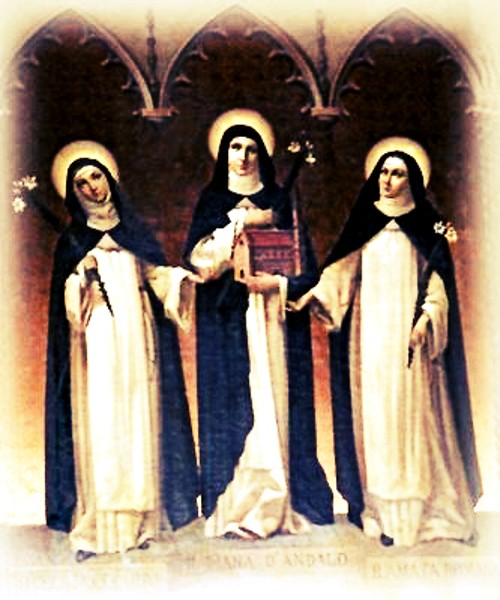
Shortly after St Dominic’s death, Blessed Jordan of Saxony, St Dominic’ Successor, as leader of the Order, met Diana when he came to Bologna. With his assistance, Diana reconciled with her family, her father agreed to allow her to enter religious life and the Bishop agreed to another site for the Convent. In 1223, the Convent was dedicated to St Agnes in Bologna and Diana entered the Dominican Order there. Four other nuns were also brought from the Convent of St Sixtus in Rome, including the Blessed Cecilia Cesarini, who was made Prioress, and Blessed Amata. The three are always associated together.
Blesseds Cecilia, Diana, Amarta
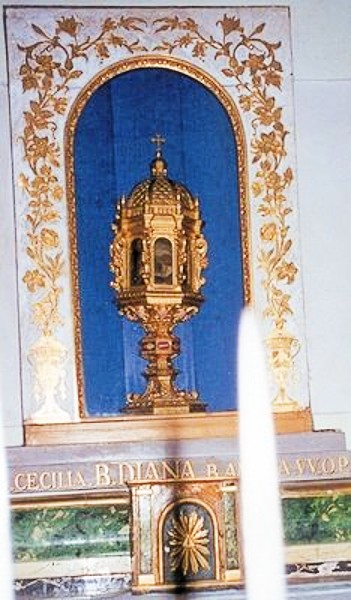
Diana remained at St Agnes until her death in 1236 and was buried there, along with the remains of Cecilia and Amata. Their Relics were moved several times but always together. Diana’s head was placed in a Reliquary near St Dominic’s Tomb. Diana, along with Cecilia and Amata, were Beatified on 8 Augus 1888, by Pope Leo XIII.
The Reliquary containing Blessed Diana’s skull
Diana is known for a series of letters written to her and to the other Sisters at St Agnes, by Blessed Jordan of Saxony. 37 of the 50 letters that have survived were written directly to her. They are “evidence of the deep friendship shared by Diana and Jordan and demonstrate the possibility of warm affection” between Priests and the cloistered Nuns who pray for them and their work. The letters are also a record of the early history of the Dominican Order. Gerald Vann, Author of the book To Heaven with Diana! a compilation of the correspondence between the two Blesseds, Diana and Jordan, calls the letters “a wonderful treatise on Christian friendship.”
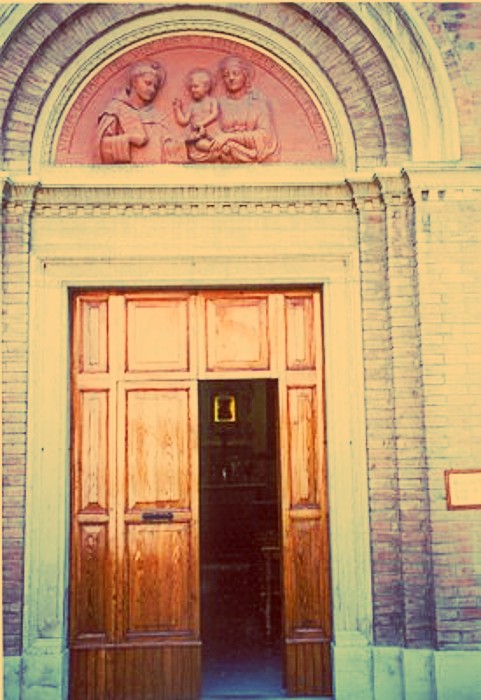
The entrance to St Agnes Convent, built by Bl Diana’s family in Bologna
One Minute Reflection – 30 May – “Pentecost Tuesday – Acts 8:14-17, John 10:1-10 – Scripture search here: https://www.drbo.org/
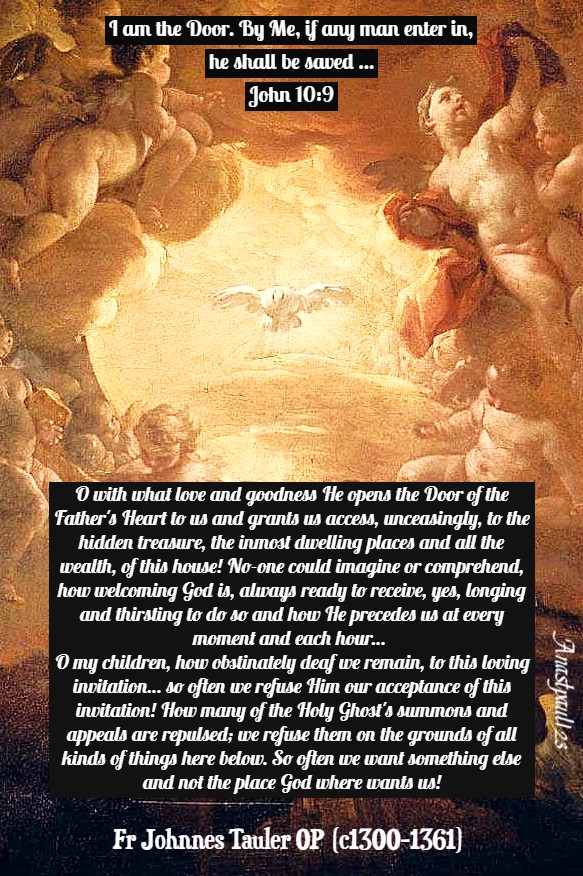
“I am the Door. By Me, if any man enter in, he shall be saved and he shall go in and go out and shall find pastures.” – John 10:9
REFLECTION – “I am the Door of the sheep” our Lord says He is the Door of the sheepfold. Now what is this sheepfold, the pen into which Christ is the Door? It is the Father’s Heart, into which and of which, Christ, Who has unsealed and opened for us, the Heart hitherto closed to humankind, is indeed our most lovable Door. All the Saints are gathered inside this fold. The Shepherd is the eternal Word; the Door, the humanity of Christ – by the sheep in this house, we understand human souls. But Angels, too, belong to the sheepfold… the Holy Ghost is the Doorkeeper… because all Truth, understood and expressed, comes from Him…
O with what love and goodness He opens the Door of the Father’s Heart to us and grants us access, unceasingly, to the hidden treasure, the inmost dwelling places and all the wealth, of this house! No-one could imagine or comprehend, how welcoming God is, always ready to receive, yes, longing and thirsting to do so and how He precedes us at every moment and each hour… O my children, how obstinately deaf we remain, to this loving invitation… so often we refuse Him our acceptance of this invitation! How many of the Holy Ghost’s summons and appeals are repulsed; we refuse them on the grounds of all kinds of things here below. So often we want something else and not the place God where wants us!” – Fr Johnnes Tauler OP (c1300-1361) Dominican Friar, renowned Preacher and Theologian , leaving us more than 80 sermons. (Sermon 27, 3rd for Pentecost).
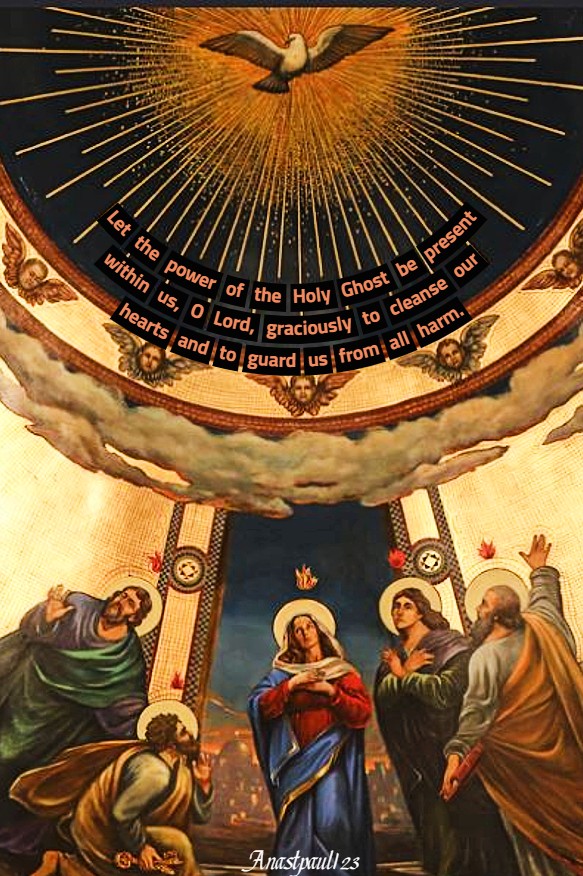
PRAYER – Let the power of the Holy Ghost be present within us, O Lord, graciously to cleanse our hearts and to guard us from all harm. Through Jesus Christ, Thy Son our Lord, Who liveth and reigneth with Thee, in the unity of the same Holy Ghost, God, world without end. Amen (Collect).
St Accidia Bl Albert of Csanád St Caraunus of Chartres St Caraunus the Deacon St Crescens of Rome St Dioscorides of Rome St Eoghan the Sage St Gemiliano of Cagliari
Bl Mary of the Nativity St Moel-Odhran of Iona St Paulus of Rome St Phaolô Hanh St Podius of Florence Bl Robert Johnson St Senator of Milan Bl Thomas Ford St Ubaldesca Taccini St William of Gellone (755-812) Monk
Martyrs of Palestine: A group of early 5th century Monks in Palestine who were Martyred by invading Arabs.
Martyrs of Sardinia – 6 Saints: A group of early Christians for whom a Church on Sardinia is dedicated; they were probably Martyrs but no information about them has survived except the names Aemilian, Aemilius, Emilius, Felix, Lucian and Priamus. Patrons of the Diocese of Alghero-Bosa, Italy.
Quote/s of the Day –18 May – The Ascension of the Lord
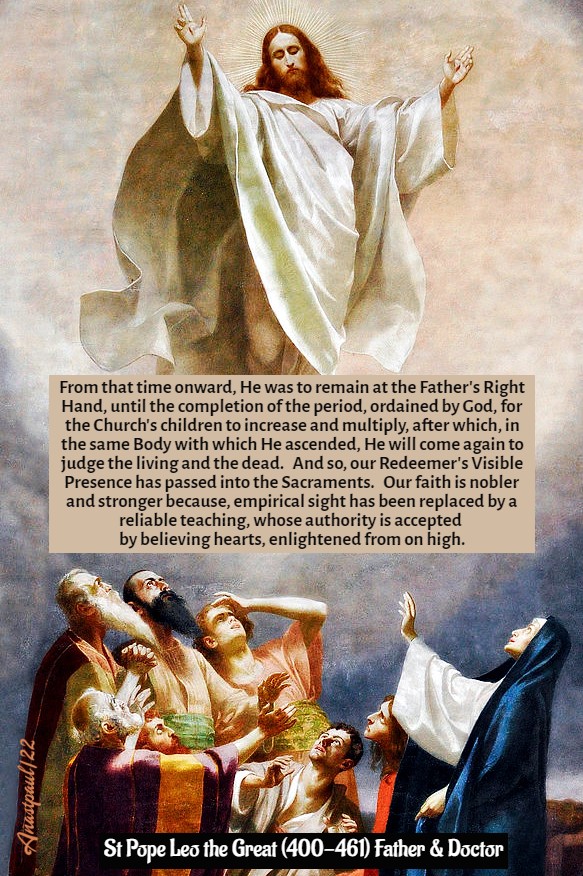
“From that time onward, He was to remain at the Father’s Right Hand, until the completion of the period, ordained by God, for the Church’s children to increase and multiply, after which, in the same Body with which He ascended, He will come again to judge the living and the dead. And so, our Redeemer’s Visible Presence has passed into the Sacraments. Our faith is nobler and stronger because, empirical sight has been replaced by a reliable teaching, whose authority is accepted by believing hearts, enlightened from on high.”
St Leo the Great (400-461) Pope , Great Father and Doctor of the Church
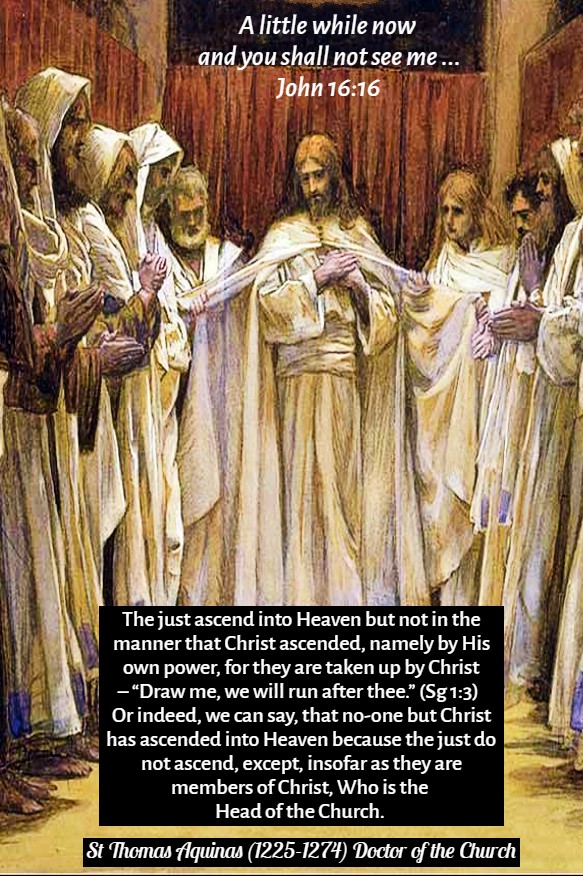
“… The just ascend into Heaven but not in the manner that Christ ascended, namely by His own power, for they are taken up by Christ – “Draw me, we will run after thee.” (Sg 1:3) Or indeed, we can say, that no-one but Christ has ascended into Heaven because the just do not ascend, except, insofar as they are members of Christ, Who is the Head of the Church. … ”
St Thomas Aquinas (1225-1274) Doctor Angelicus/Doctor Communis
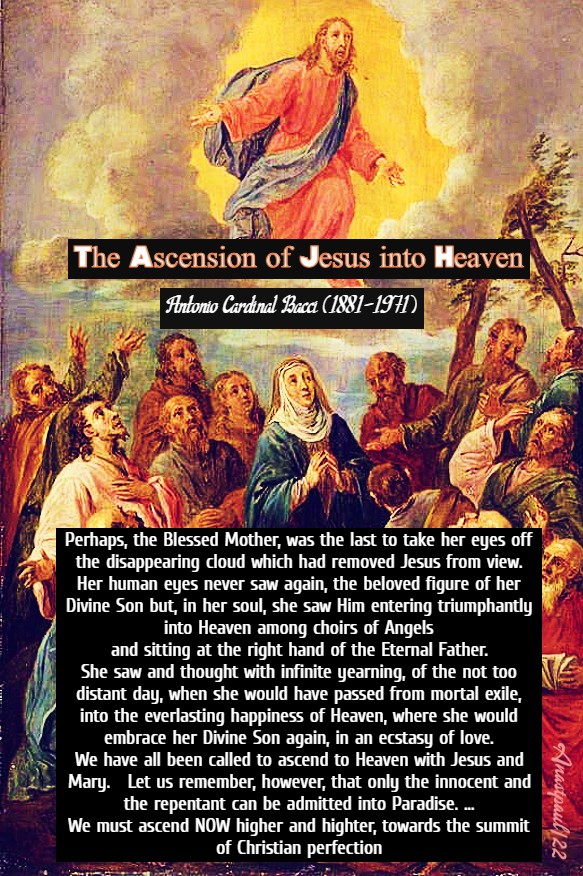
“Perhaps, the Blessed Mother, was the last to take her eyes off the disappearing cloud which had removed Jesus from view. Her human eyes never saw again, the beloved figure of her Divine Son but, in her soul, she saw Him entering triumphantly into Heaven among choirs of Angels and sitting at the right hand of the Eternal Father. She saw and thought with infinite yearning, of the not too distant day, when she would have passed from mortal exile, into the everlasting happiness of Heaven, where she would embrace her Divine Son again, in an ecstasy of love.
We have all been called to ascend to Heaven with Jesus and Mary. Let us remember, however, that only the innocent and the repentant can be admitted into Paradise!”
Quote/s of the Day –30 April – Prayers by St Catherine of Siena (1347-1380)
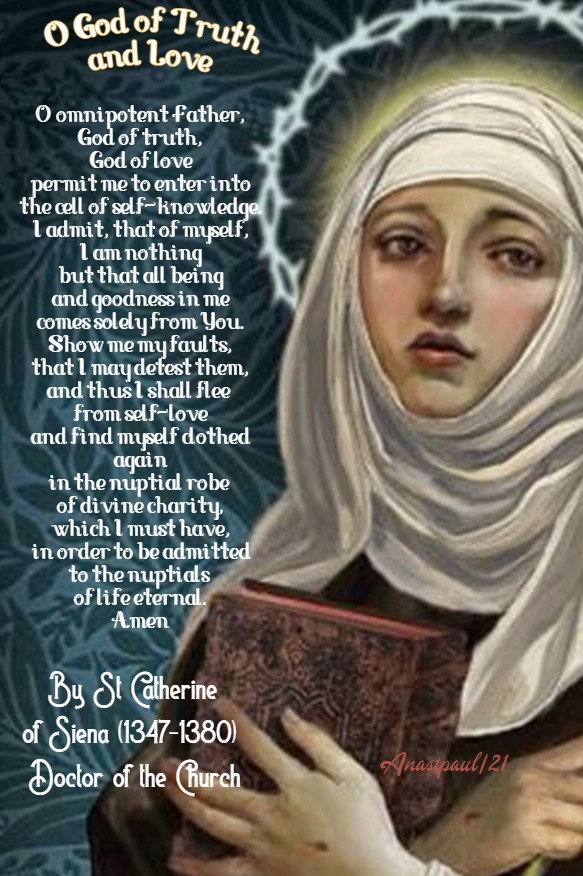
O God of Truth and Love
O omnipotent Father, God of truth, God of love permit me to enter into the cell of self-knowledge. I admit, that of myself, I am nothing but that all being and goodness in me comes solely from You. Show me my faults, that I may detest them, and thus I shall flee from self-love and find myself clothed again in the nuptial robe of divine charity, which I must have, in order to be admitted to the nuptials of life eternal. Amen
Holy Trinity, Holy Love
Holy Spirit, come into my heart; draw it to Thee by Thy power, O my God, and grant me charity with filial fear. Preserve me, O beautiful love, from every evil thought, warm me, inflame me with Thy dear love and every pain will seem light to me. My Father, my sweet Lord, help me in all my actions. Jesus, love, Jesus, love. Amen.
Your Blood, The Fire of Love!
O sweet Jesus, my Love, to strengthen my soul and to rescue it from the weakness into which it has fallen, You have built a wall around it and have mixed the mortar with Your Blood, confirming my soul and uniting it to the sweet will and charity of God! Just as lime mixed with water is placed between stones, to cement them together, so You, O God, have placed between Your creature and Yourself, the Blood of Your Only-begotten Son, cemented with the Divine lime of the fire of ardent charity, in such a way that there is no Blood without fire, nor fire without Blood. Your Blood was shed, O Christ, by the fire of love! Amen
Constant Prayer to the Precious Blood of Jesus
Precious Blood, Ocean of Divine Mercy, Flow upon us! Precious Blood, Most Pure Offering, Procure us every grace! Precious Blood, Hope and Refuge of sinners, Atone for us! Precious Blood, Delight of holy souls, Draw us! Amen
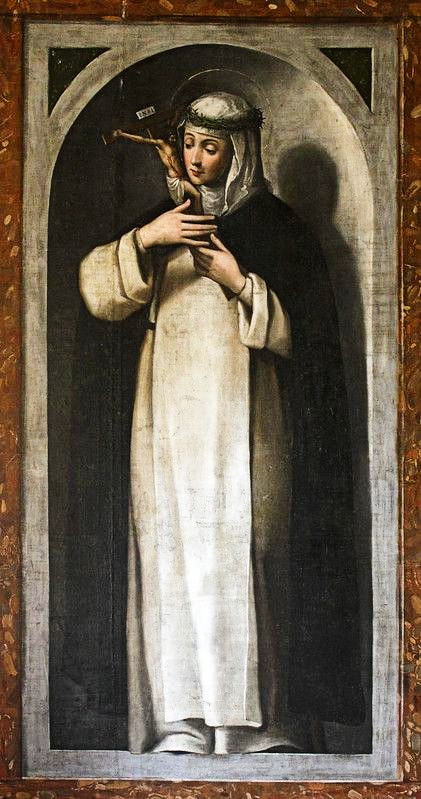
Saint of the Day – 30 April – St Catherine of Siena OP (1347-1380) Virgin. Revisiting St Catherine with Fr Weninger.
St Catherine of Sienna, Virgin By Fr Francis Xavier Weninger SJ (1805-1888)
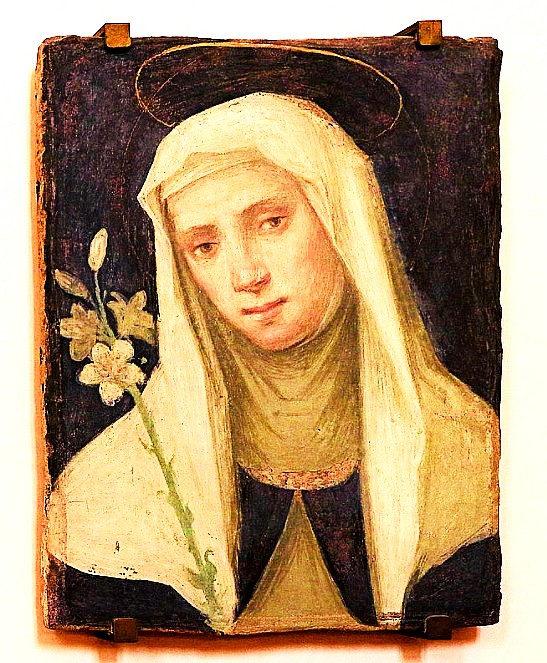
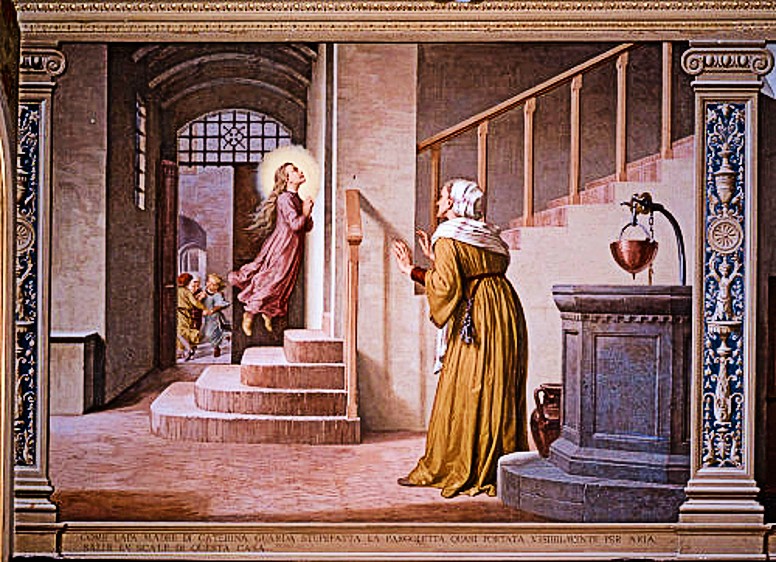
Sienna, in the Tuscan District, is the favoured place where, in 1347, Caterina / Catherine, first saw the light of this world. Her life from her childhood, was a continual exercise of the choicest virtues but, at the same time, a perpetual communication of Divine Grace. When scarcely five years of age, she was called “the little Saint” on account of her quietness and her love of prayer. Already, at that time, she greeted the Virgin Mother upon every step of the staircase with the words of the Angels: “Ave Maria!” When six years old, our Lord appeared to her with the Apostles Peter, Paul and John, together with St Dominic, looked tenderly at her and gave His blessing. This was the beginning of many and extraordinary visions with which the holy virgin was graced until her death. Her heart from this time was filled with intense love of God. She read most carefully the lives of the Saints and endeavoured to follow their example. In her seventh year she Consecrated her virginity to God. Her only pleasure was solitude, prayer, work and self-immolation.
Catherine’s Mother Sees Her Daughter Climbing the Stairs Suspended in the Air, by Alessandro Franchi and Gaetano Marinelli
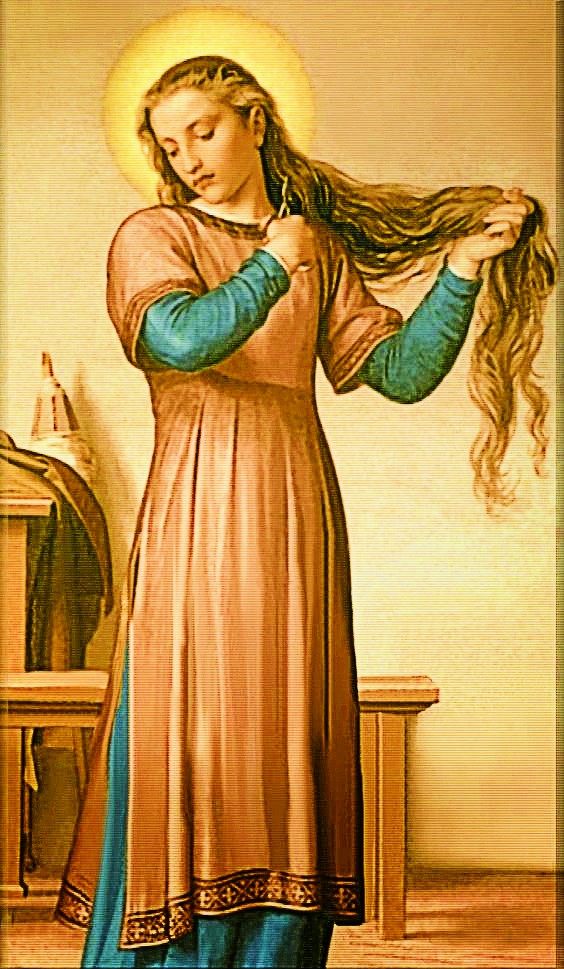
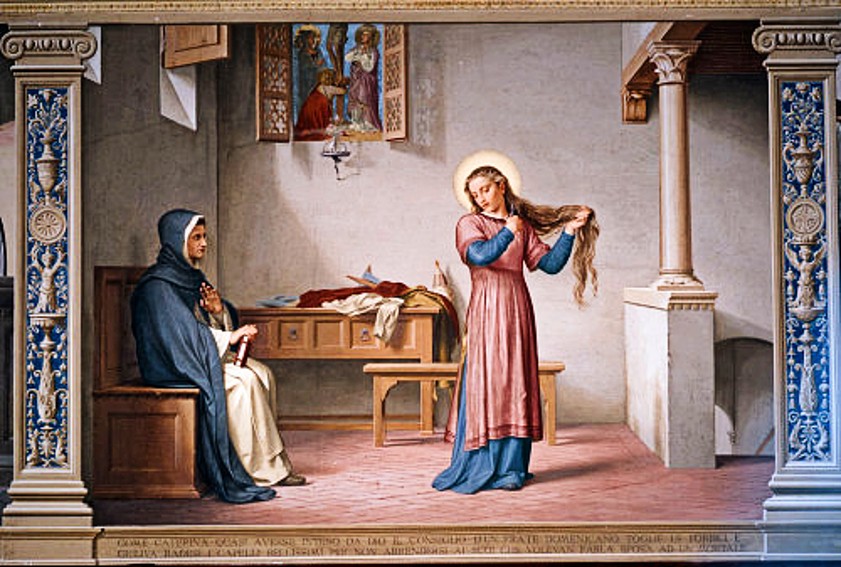
Persuaded by her sister, she once began to pay more attention to her dresses and to curl her hair after the prevailing fashion of the world. This lasted, however, only a short while, for she became aware, during her prayers, how much God was displeased with such vanities and how long her pious sister would have to suffer, on account of it in purgatory. Hencfprward, she refrained from it and repented of her folly, as long as she lived. Her parents desired her to marry but she replied: “I am already wedded to a most noble Spouse and shall never bestow my love on a human being” and cutting off her hair, she covered her head with a veil.
Catherine Cutting Off her Long Hair, by Alessandro Franchi and Gaetano Marinelli
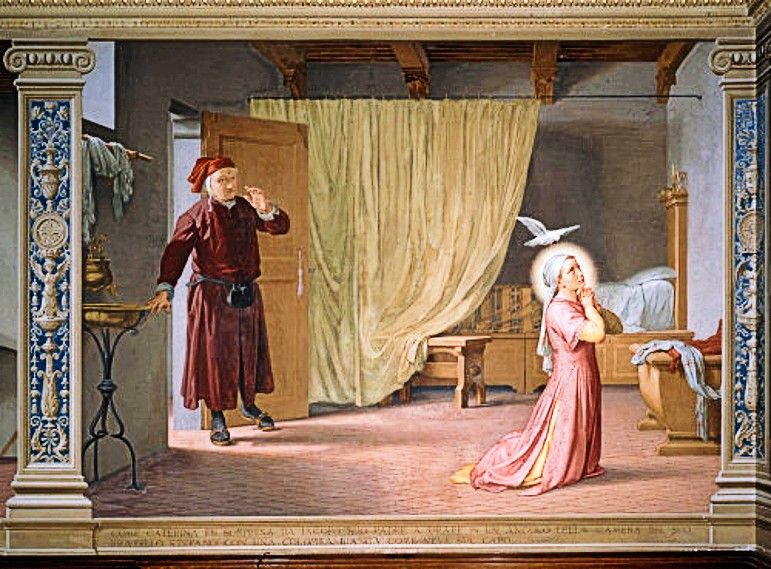
To drive all thoughts of entering a Convent out of her mind, her parents burdened her with the entire care of the house, as well as the most difficult work, so that no leisure was left her, either for prayer, or devotional reading. This was at first a sore trial to her,but she was told by Chris, to build a cell in her heart, where, in the midst of her employments, she might pray, namely, by offering her work to God and by pious ejaculations. Following these directions of Christ, her soul became filled with sweet consolation and she manifested, under the greatest drudgery, a most extraordinary happiness. This caused her parents to change their resolution and they permitted her to live according to her vocation. Hence, she now began to live in a more retired manner and with more austerity than before.
Catherine’s Father Finds Her Praying with the Dove of the Holy Ghost Above her Head,by Alessandro Franchi and Gaetano Marinelli
Bread, herbs and water were her only nourishment, two bare boards her bed. She was girded by a pointed chain which she continued to wear until a few hours before her death, when at the instance of her Confessor, she laid it aside. She only allowed herself one or two hours of sleep during the nigh,; the remainder she employed in prayer or in the contemplation of the Divine Mysteries. She scourged herself three times daily, sometimes until she drew blood. These austerities she observed from her eighteenth year until her death. After she had been received into the Third Order of St Dominic, she aspired most fervently after sanctification but Satan endeavoured, with the most loathsome imaginings and temptations, to trouble the repose of her soul and pervert her thoughts. Catherine, however, increasing her penance and her prayers, withstood him bravely but still, without feeling more relieved or more quiet. At length, when, one day, Christ appeared to her, she said: “O Lord, why hast Thou forsaken me?” “I was in thy heart,” answered the Saviour. “What” said she, “hast Thou been in my heart which was filled with such abominable thoughts? Hast thou then consented to them?!” “Hast thou been pleased with them?” asked Christ. “Oh, no!” replied Catherine, “it was most painful to me to be afflicted with them.” “And this was thy merit” said Christ “I have seen how thou hast battled and I have assisted thee.“ Thus ended her temptations which were succeeded by the most comforting visions of our Lord, His Blessed Mother and other Saints, the number of which is known only to God.
She frequently saw Christ as a lovely little Child in the holy Sacrament, for which Divine Mystery she entertained the most fervent devotion. She partook of it almost daily but always with renewed piety and shedding a flood of tears. It was very remarkable that the receiving of it preserved also her temporal life, for it is a fact that one year she partook of nothing else but the Blessed Eucharist from Ash Wednesday until Ascension day. When she was required, as an act of obedience, to take some food, she suffered so greatly by so doing that the request was not repeated.
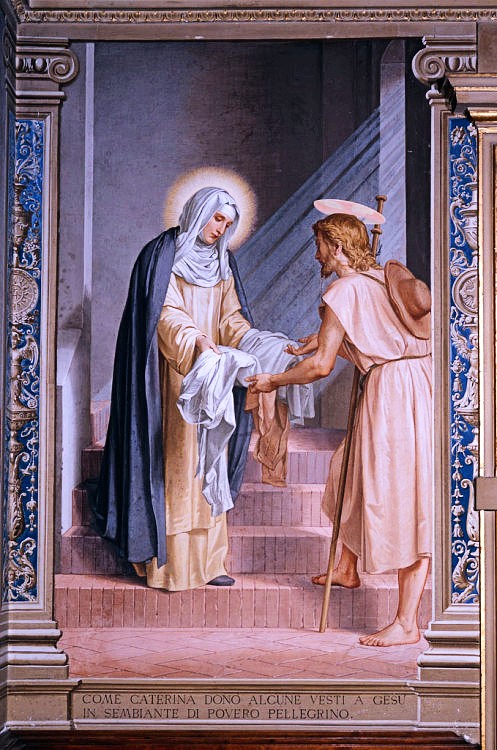
After some time, Christ commanded her to be kind and charitable to her neighbours and she began to nurse the sick with an indescribable loving care. Among others, she attended to two women, of whom one was afflicted with leprosy, the other with cancer. In nursing them, she evinced the most perfect self-control. She pressed the offensive matter out of the sores and cleansed them with water. Feeling disgust, she drank the purulent matter which she had kept in a vessel mixed with water, saying to her Confessor that she had never tasted anything more agreeable. Christ appeared to her on the following night, praised her self-mortification and rewarded her with great interior peace and tranquillity.
Catherine Gives her Cloak to Jesus in the Guise of a Poor Man, by Alessandro Franchi and Gaetano Marinelli
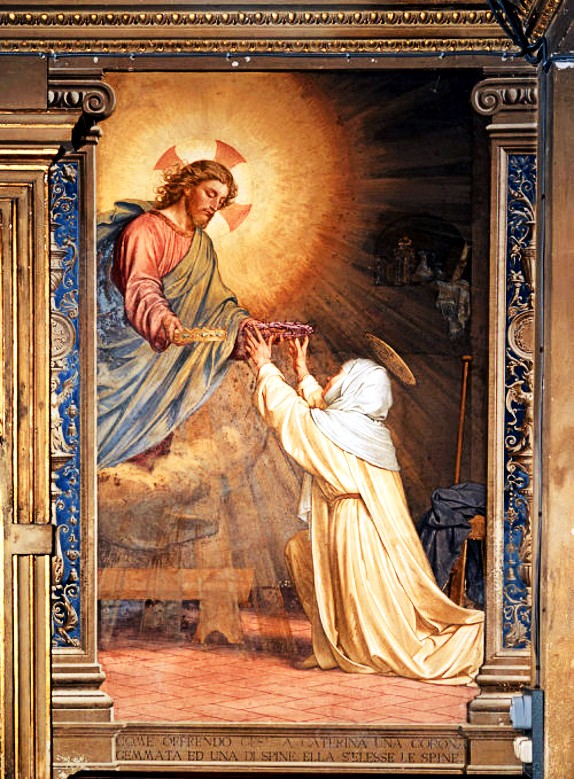
It was an awful cross for her to bear, when this very woman, whom she had so tenderly nursed, instigated by Satan, not only complained of her but slandered her in the whole City. But Christ visited her and presenting to her two crowns, one of gold, the other of thorns, said: “Which of these two do you desire?” Catherine answered: “Lord, I desire to resemble Thee in this life and it is a joy to me to suffer as Thou didst:” and with these words she took the crown of thorns and pressed it upon her head. Christ, upon this, commanded her to continue her charity towards the sick which she did with unprecedented patience and kindness.
Jesus Offering Catherine a Crown of Gold and a Crown of Thorns, by Alessandro Franchi and Gaetano Marinelli
Her love towards those whose souls were diseased, was still more tender and she offered for such, her prayers and many penances, through which means, she obtained from God, the conversion of many sinners, who otherwise would have gone to destruction. She prayed three whole days for a certain woman who was dangerously ill and, who hated the Saint most bitterly. At last, she said to Christ: “I will not move from this place until Thou givest me this soul.” He graciously complied with her request by converting the woman and giving her a happy death.
She was also gifted by God with the grace of reading the inmost thoughts of those who approached her, hence, her exhortations were always addressed to their weakest spot. If a lascivious person came near her, she always perceived so terrible an odour that she had to cover her nose and mouth. Many other graces God had bestowed upon her, to relate all of which would take too much space.
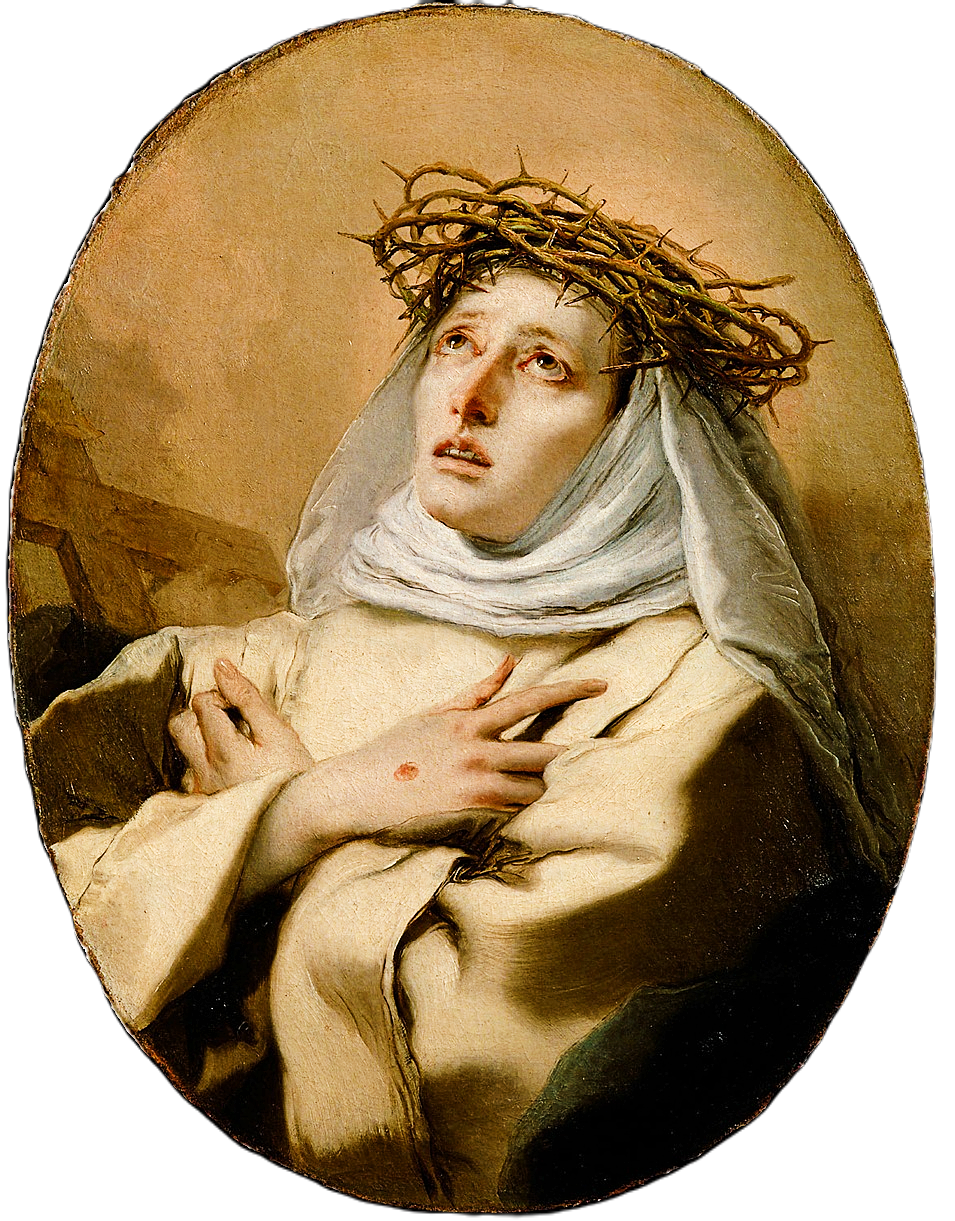
One of the most remarkable of these was, that Christ had impressed the marks of His Five Holy Wounds upon her but in such a manner that, exteriorly, nothing was to be seen, while she suffered all their pains. She had prayed to Christ for this grace in order that it might remain unknown to the world. The many miracles which she performed on the sick and possessed and the heavenly wisdom with which she was filled, secured her, not only the highest regard of the people but also of the prelates of the Church, as well as of worldly princes. She was even sent in times of strife and contention, as a messenger of peace and the effect of her wonderful talents, more than surpassed all expectations.
By Giovanni Battista Tiepolo
At Rome, whither she had been called by the Pope, she became dangerously sick and during four months, she suffered excruciating pain. She ceased not, however, praising and giving thanks to God. The Almighty, whose judgement, although inscrutable, is always just, sent her a last bitter trial after she had received the holy Sacrament – Satan reproached her that in her actions and ecstasies, she had only sought her own aggrandisement. But she overcame the enemy of her peace and, after this anguish of soul, she had a most consoling and tender discourse with Christ, Who visibly appeared to her and into Whose Hands she breathed her chaste soul, in the thirty-third year of her life. Her last words were: “Lord, into Thy Hands I commend my spirit.“
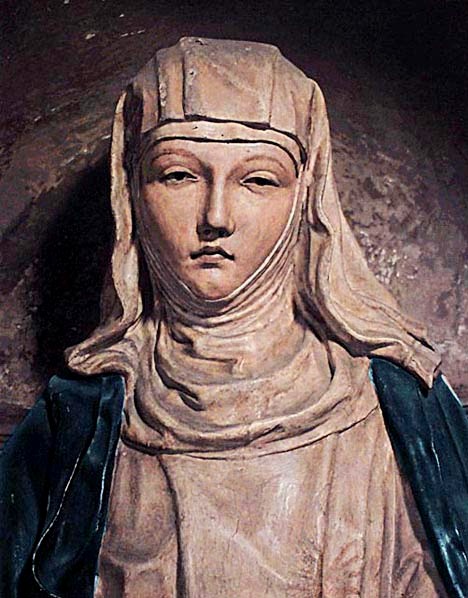
Statuette by Neroccio di Bartolomeo de’ Landi,(1475)
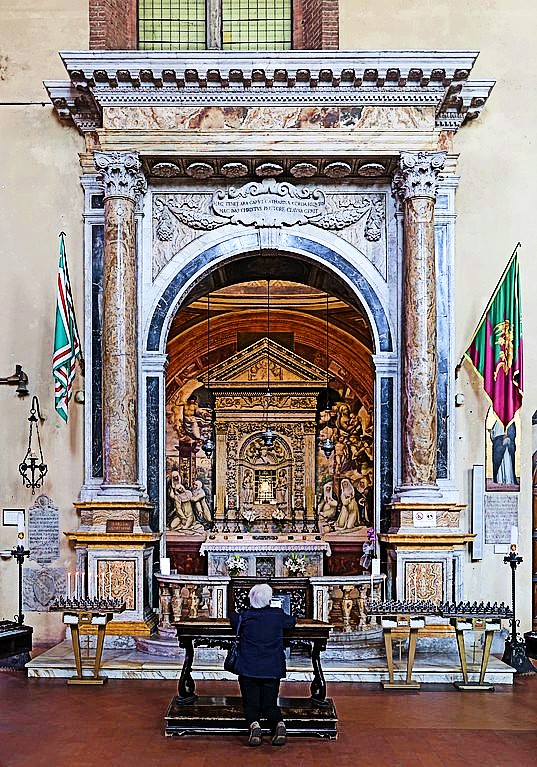
The Chapel of Saint Catherine, Basilica of San Domenico in Siena
Bl Hildegard the Empress St Lawrence of Novara St Louis of Córdoba St Mariano of Acerenza St Maximus of Ephesus St Mercurialis of Forlì St Peter of Córdoba St Pomponius of Naples St Quirinus of Rome St Rodopiano of Aphrodisias St Sophia of Fermo St Swithbert the Younger Bl Ventura of Spello
Martyrs of Montpellier: A group of 70 Mercedarian Friars, led by Blessed Luigi Puell, who were Martyred by Huguenots for trying to bring people back to the Catholic Church. They were Martyred in 1567 in Montpellier, France.
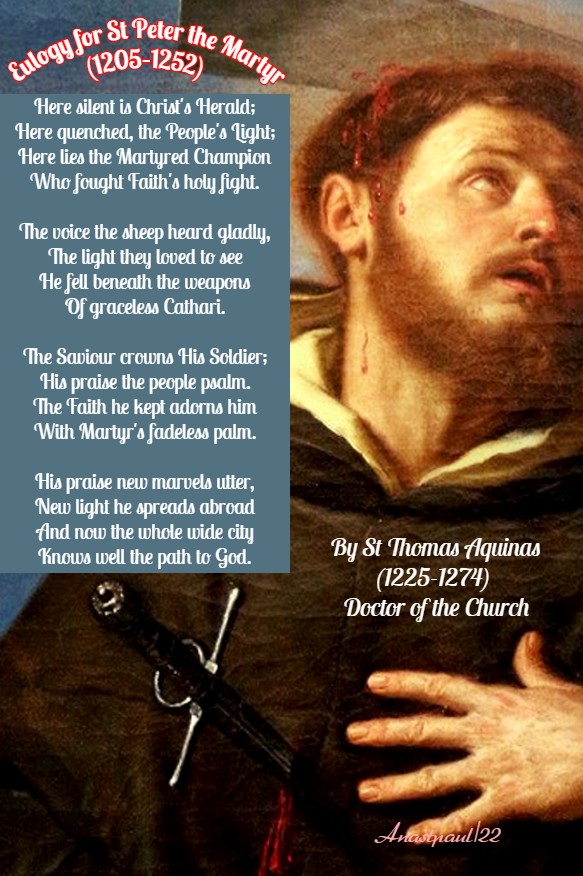
St Peter Canisius SJ (1521-1597) – The Known as “The Hammer of Protestantism,” “Second Apostle of Germany” – Confessor, Doctor of the Church, Dutch Priest of the Society of Jesus, Reformer, Teacher, Writer, Apostle of Charity. Patronages – Catholic Press, Germany, Catechists. The restoration of the Catholic Church in Germany after the Protestant Reformation is largely attributed to the work there of the Society of Jesus, which he led. “Peter Canisius was the first publisher, the first author, the first editor of the Society of Jesus. By now, Jesuits have followed in his footsteps to the tune of having published in 400 years, thousands of books. From the time of Canisius, and his name is first in the bibliography of Jesuit writers, from Peter Canisius to the end of the l9th century, that is to 1900, there are about twenty volumes of bibliography, each volume about two inches thick, stands about eighteen inches high, filled just with authors and titles, thousands and thousands and thousands, no other religious institute in the Church publishes as much as members of the Society. It was all started by Peter Canisius.” (Ven Servan of God Fr John A Hardon SJ) His Feast day is 27 April (General Roman Calendar, 1926–1969. Biography: https://anastpaul.com/2017/12/21/saint-of-the-day-21-december-st-peter-canisius-s-j-1521-1397-doctor-of-the-church/ AND: https://anastpaul.com/2018/12/21/saint-of-the-day-21-december-st-peter-canisius-s-j-1521-1397-the-second-apostle-of-germany-doctor-of-the-church/
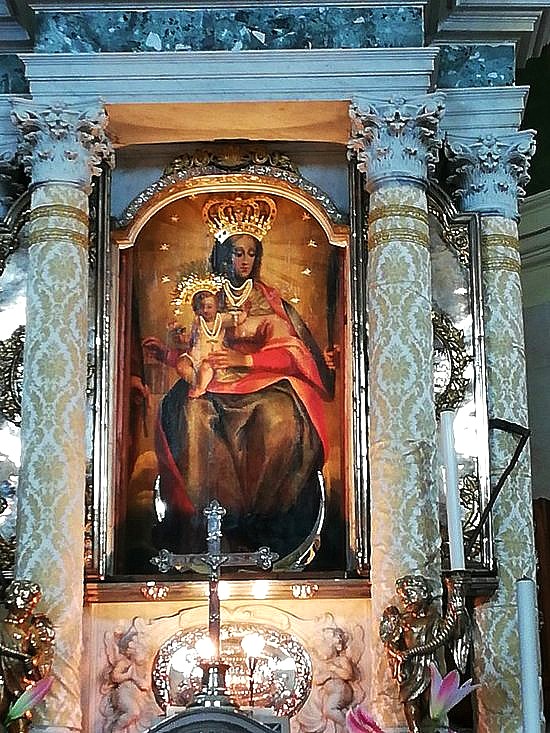
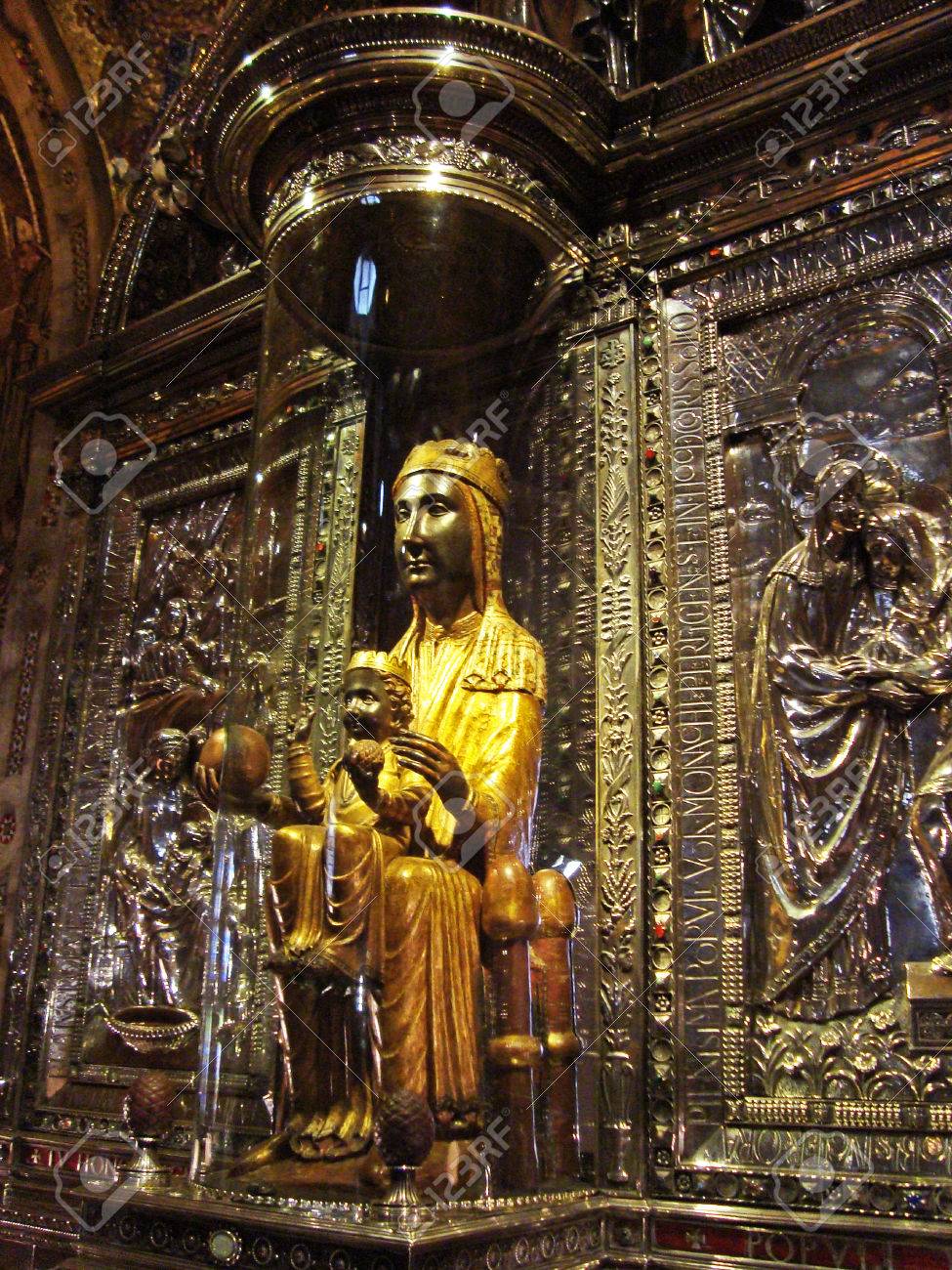
Our lady of Montserrat, patroness of Catalonia. The statue of the black Madonna is in the Church of Santa Maria de Montserrat Abbey, Catalonia, Spain. Photographed from 21.07.2015.
St Adelelmus of Le Mans St Asicus of Elphin St Castor of Tarsus St Enoder St Floribert of Liege
Blessed Jakov Varingez OFM (c 1400–1496) Croatian professed religious of the Order of Friars Minor, Apostle of charity, Mystic with a great devotion to the Cross of Christ, Marian devotee, he was noted as a miracle worker and levitated. He was Beatified on 29 December 1700 by Pope Clement XIH. His body is incorrupt. His Life: https://anastpaul.com/2019/04/27/saint-of-the-day-27-april-blessed-jakov-varingez-ofm-c-1400-1496/
St John of Kathara (c770-c835) Priest, Abbot St Liberalis of Treviso St Maughold
St Peter Armengol OdeM (c 1238-1304) “The Martyr who Wasn’t,” “The Unconquerable Martyr of Jesus Christ,” “The Gangster Saint,”Spanish Priest of the Mercedarian Friars, Penitent, Mystic. Beatified on 28 March 1686, by Pope Innocent XI and Canonised on 8 April 1687, by the same Pope. His body was incorrupt until it was destroyed during the horrors of the Spanish Civil War. A Miraculous Life: https://anastpaul.com/2022/04/27/saint-of-the-day-27-april-saint-peter-armengol-odem-c-1238-1304-the-martyr-who-wasnt/
St Pollio of Cybalae St Simeon of Jerusalem St Stephen of Tarsus St Tertullian of Bologna St Theophilus of Brescia St Winewald of Beverley
St Zita of Lucca (1212-1272) Virgin, Laywoman, Apostle of the Poor. – Her reputation was such that Dante in the Inferno referred to the City of Luccam, her birthplace and home, as “Santa Zita.” P atronages – housewives, butlers, housemaid, domestic servants (proclaimed by Pope Pius XII), housemaid, lost keys, maids, manservants, people ridiculed for their piety, rape victims, servants, servers, single laywomen, waiters, Lucca, Italy. Her body is incorrupt. Biography:. https://anastpaul.wordpress.com/2017/04/27/saint-of-the-day-27-april-st-zita-of-lucca/
Martyrs of Nicomedia: A group of Christians murdered together for their faith. In most cases all we have are their names – Dioscurus, Evanthia, Felicia, Felix, Germana, Germelina, Johannes, Julius, Laetissima, Nikeforus, Papias, Serapion and Victorinus. They died at Nicomedia, Bithynia, Asia Minor (modern Izmit, Turkey).

























 AnaStpaul
You must be logged in to post a comment.