Quote/s of the Day – 25 February – The Second Sunday in Lent – Thessalonians 4:1-7; Matthew 17:1-9 – Scripture search here: https://www.drbo.org/
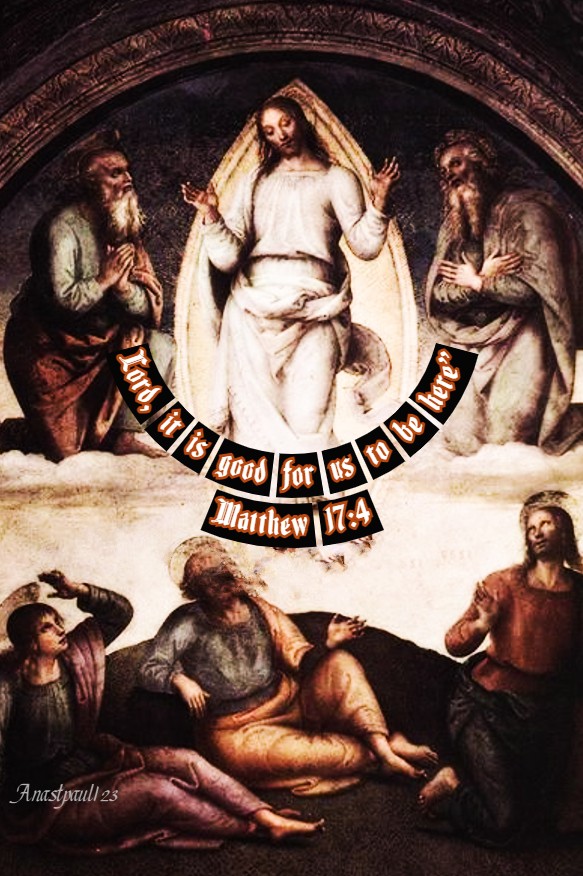
“Lord, it is good for us to be here …”
Matthew 17:4
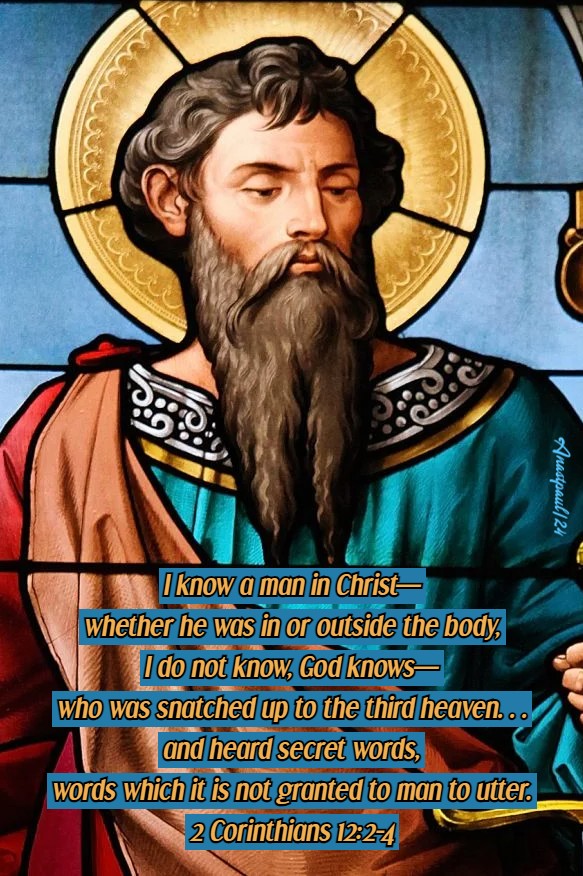
“I know a man in Christ— whether he was in or outside the body, I do not know, God knows— who was snatched up to the third heaven. . . and heard secret words, words which it is not granted to man to utter.”
2 Corinthians 12:2-4
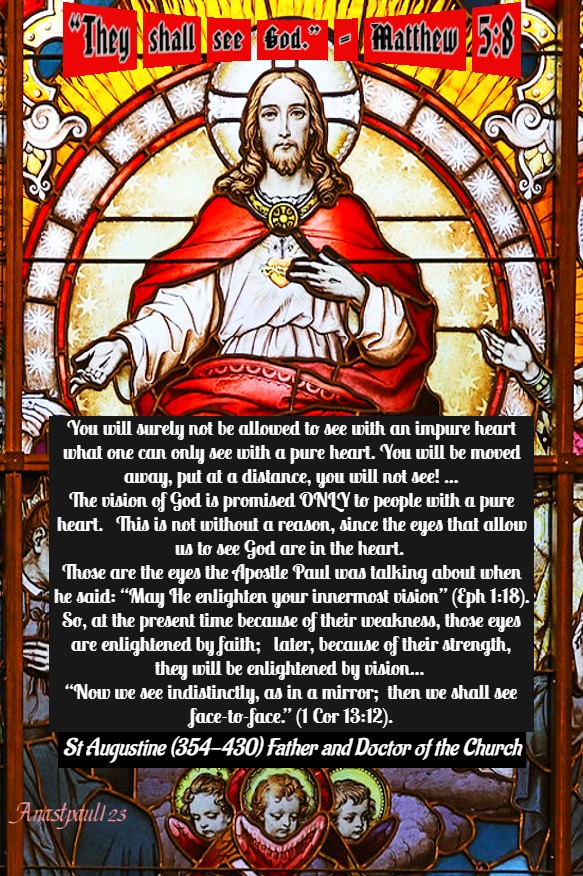
“They shall see God.” Matthew 5:8
“You will surely not be allowed to see with an impure heart what one can only see with a pure heart. You will be moved away, put at a distance, you will not see! The vision of God is promised ONLY to people with a pure heart. This is not without a reason, since the eyes which allow us to see God are in the heart. Those are the eyes the Apostle Paul was talking about when he said: “May He enlighten your innermost vision” (Eph 1:18). So, at the present time because of their weakness, those eyes are enlightened by faith; later, because of their strength, they will be enlightened by vision… “Now we see indistinctly, as in a mirror; then we shall see face-to-face.”
St Augustine (354-430) Father and Doctor of the Church
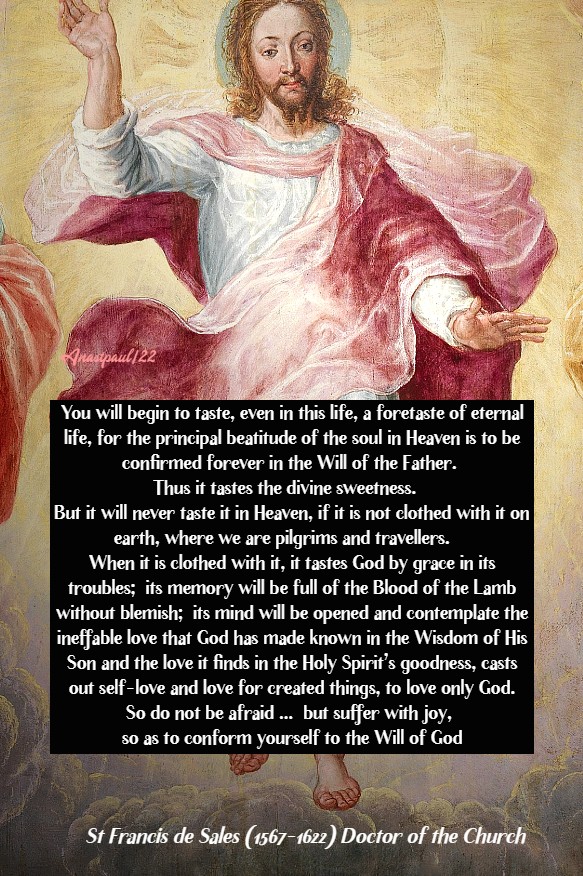
“You will begin to taste, even in this life, a foretaste of eternal life, for the principal beatitude of the soul in Heaven, is to be confirmed forever in the Will of the Father. Thus, it tastes the divine sweetness. But it will never taste it in Heaven, if it is not clothed with it on earth, where we are pilgrims and travellers. When it is clothed with it, it tastes God by grace in its troubles; its memory will be full of the Blood of the Lamb without blemish; its mind will be opened and contemplate the ineffable love that God has made known in the Wisdom of His Son and the love it finds, in the Holy Spirit’s goodness, casts out self-love and love for created things, to love only God. So do not be afraid … but suffer with joy, so as to conform yourself to the Will of God.””
St Francis de Sales (1567-1622) Doctor Caritatis
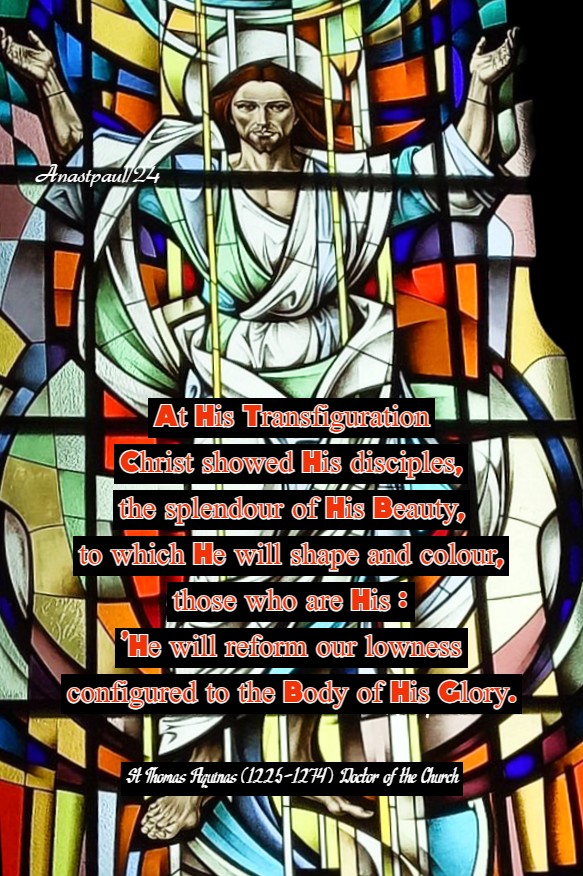
“At His Transfiguration Christ showed His disciples, the splendour of His Beauty, to which He will shape and colour, those who are His : ‘He will reform our lowness configured to the Body of His Glory.”
St Thomas Aquinas (1225-1274) Doctor of the Church
Martyrs of Cilicia – 12 Saints: A group of Christians who ministered to other Christians who were condemned to work the mines of Cilicia in the persecutions of Maximus. They were arrested, tortured and martryed by order of the governor Firmilian. They were Daniel, Elias, Isaias, Jeremy, Samuel. The group also includes the three known have been sentenced to the mines – Pamphilus, Paul of Jamnia, Valens of Jerusalem and those who were exposed as Christians as a result of these murders – Julian of Cappadocia, Porphyrius of Caesarea, Seleucius of Caesarea, Theodule the Servant. They were Martyred in 309 in Cilicia, Asia Minor (in modern Turkey).
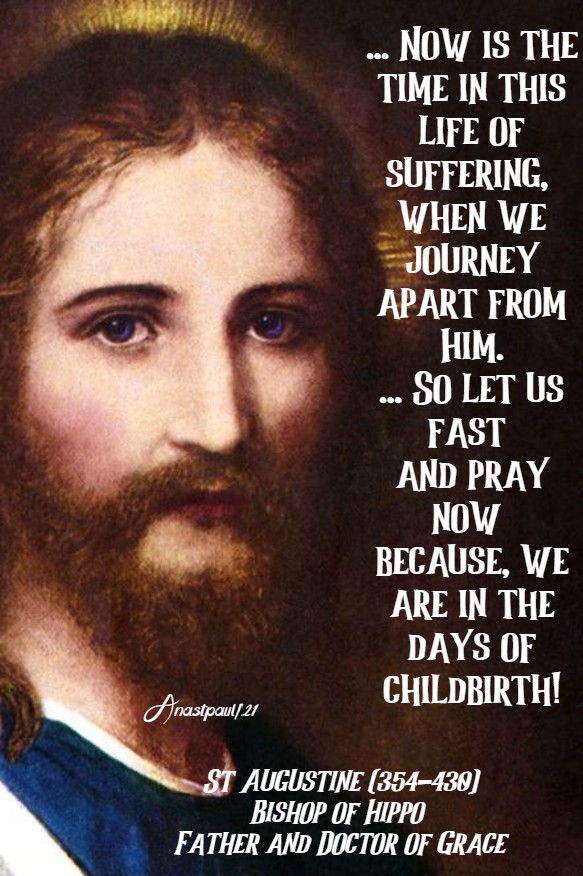
“… Now is the time in this life of suffering, when we journey apart from Him. … So let us fast and pray now because, we are in the days of childbirth!”
“Fasting cleanses the soul, raises the mind, subjects one’s flesh to the spirit, renders the heart contrite and humble, scatters the clouds of concupiscence, quenches the fire of lust and kindles the true light of chastity. Enter again into yourself!”
St Augustine (354-430) Father and Doctor of Grace
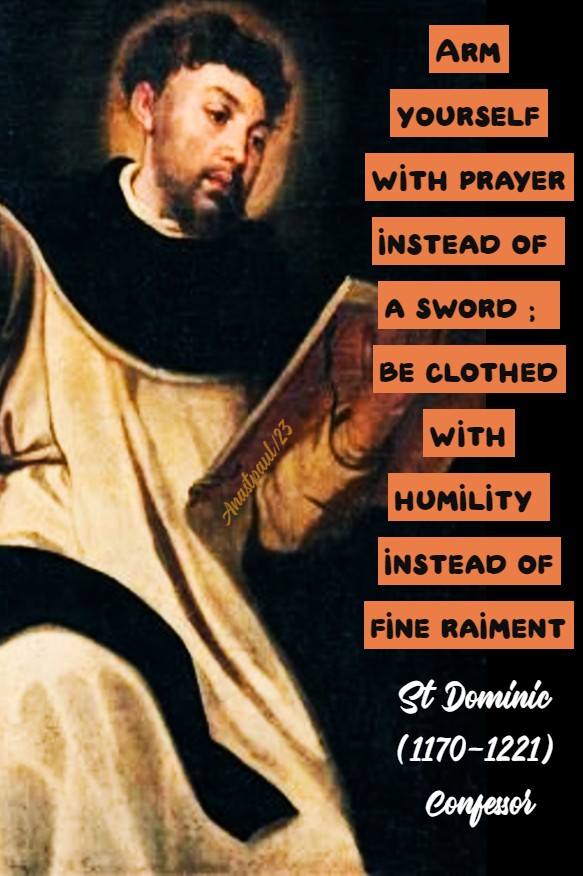
“Arm yourself with prayer instead of a sword; be clothed with humility instead of fine raiment.”
St Dominic OP (1170-1221)
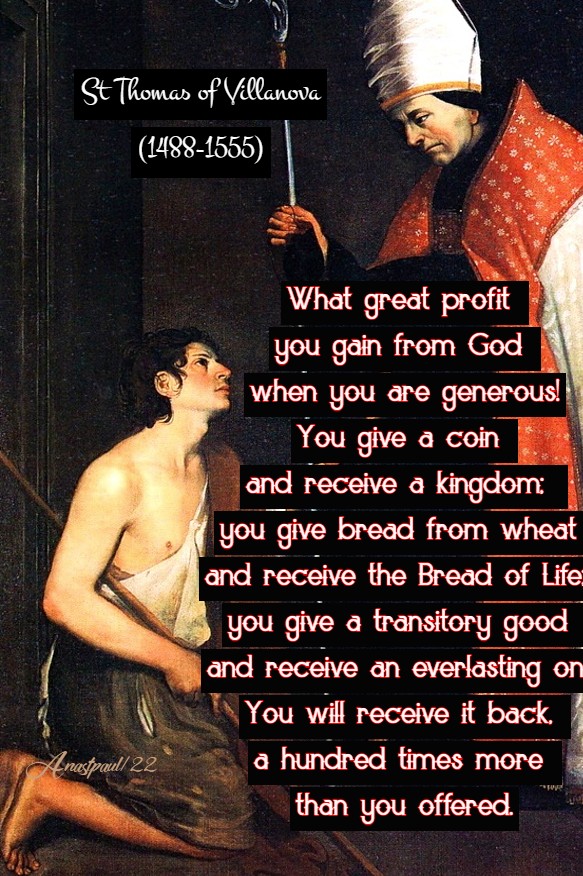
“What great profit you gain from God when you are generous! You give a coin and receive a Kingdom; you give bread from wheat and receive the Bread of Life; you give a transitory good and receive an everlasting one. You will receive it back, a hundred times more than you offered.”
St Thomas of Villanova (1488-1555)
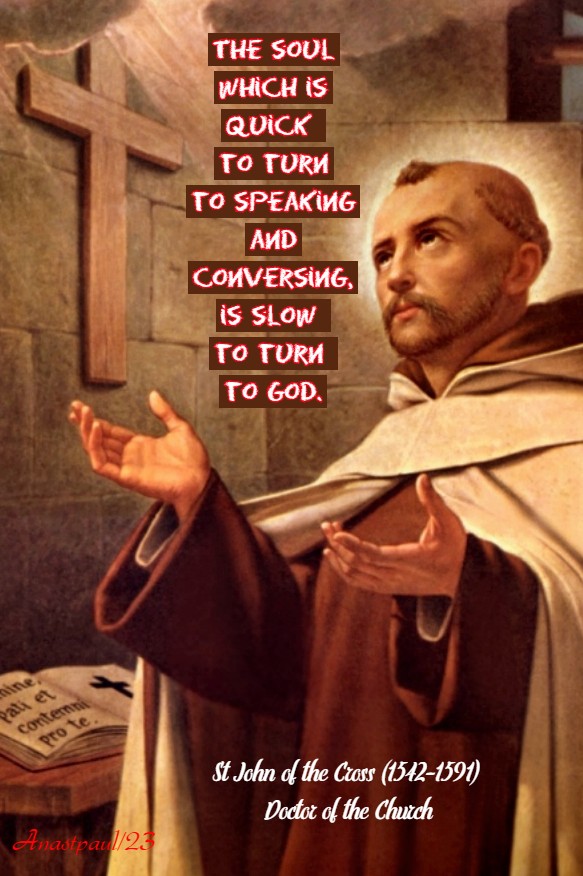
“The soul which is quick to turn to speaking and conversing, is slow to turn to God.”
St John of the Cross (1542-1591) Doctor of the Church
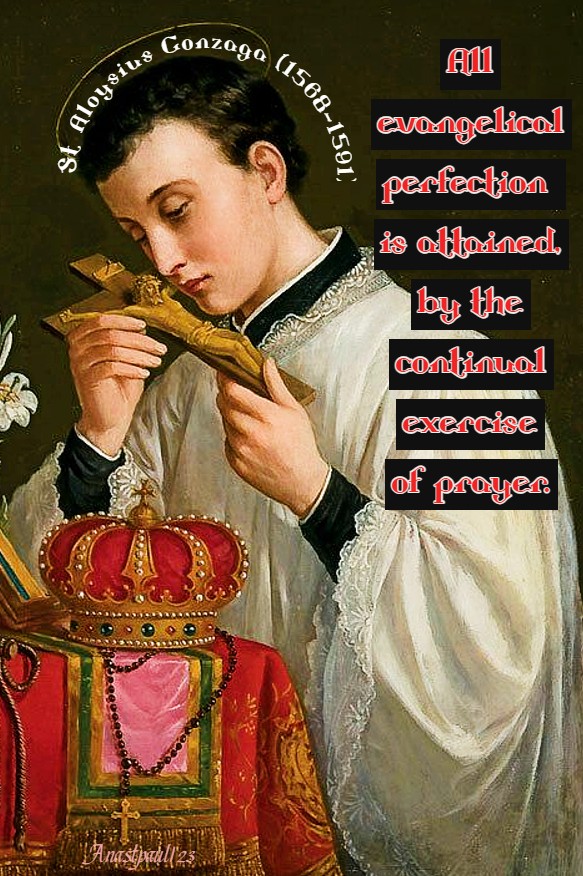
“All evangelical perfection is attained, by the continual exercise of prayer.”
St Aloysius Gonzaga SJ (1568-1591)
“As well as the corporal works, there are the spiritual works of mercy. Everyone is not obliged to undertake the former, that would be impossible, for instance, for the desitute, the sick, the aged. But, everyone is OBLIGED to undertake the latter. Sometimes a kind word is more valuable than money!” … Remember, however, that the practice of the spiritual works of mercy, does not excuse us from the exercise of material works of charity, wherever that is possible for us (Cf Js 2:16).
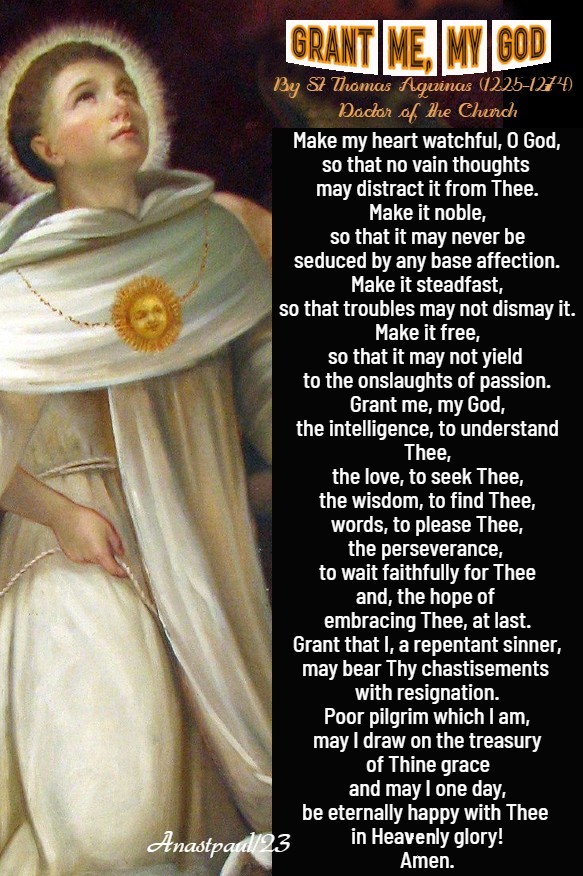
Grant Me, My God By St Thomas Aquinas (1225-1274) Angelic Doctor, Common Doctor
Make my heart watchful, O God, so that no vain thoughts may distract it from Thee. Make it noble, so that it may never be seduced by any base affection. Make it steadfast, so that troubles may not dismay it. Make it free, so that it may not yield to the onslaughts of passion. Grant me, my God, the intelligence, to understand Thee, the love, to seek Thee, the wisdom, to find Thee, words, to please Thee, the perseverance, to wait faithfully for Thee and, the hope of embracing Thee, at last. Grant that I, a repentant sinner, may bear Thy chastisements with resignation. Poor pilgrim which I am, may I draw on the treasury of Thine grace and may I one day, be eternally happy with Thee in Heavenly glory! Amen.
The Feast of the Holy Face of Jesus: In the 19th Century Jesus expressed His wishes to Sister Mary of St Peter (1816-1848), a Carmelite Nun in Tours, France, that there be an actual Devotion to his Holy Face. Our Lord wanted this in reparation for blasphemies against Him and His Holy Name as well, as for the profanation of Sunday (when people engage unnecessarily in commerce and other such labours and chores on Sunday, a day meant for rest and reflection on God). In August of 1843 He dictated to her the well-known Golden Arrow Prayer. He also gave her Promises for those who would honour His Holy Face. The first Holy Medal of the Holy Face was given to Ven Pope Pius XII, who approved the Devotion and the Medal. In 1958 he formally declared the Feast of the Holy Face of Jesus as Shrove Tuesday for all Catholics. https://anastpaul.com/2022/03/01/feast-of-the-holy-face/
Shrove Tuesday: Shrove is the past tense of the word Shrive, which means “to hear a confession, assign penance and absolve from sin.” In the Middle Ages, especially in Northern Europe and England, it became the custom to confess one’s sins on the day before Lent began in order to enter the penitential season in a repentant spirit.
St Catherine de Ricci OP (1522-1590) Virgin, Tertiary of the Order of Preachers, Mystic, Stigmatist, Ecstatic, Counsellor to many in both secular and spiritual matters, a highly admired Administrator and Advisor,blessed with many mystical charism including visions of Christ, both as a Baby and Adult, bilocation and miracles. Her body is incorrupt. A Mighty Handmaid: https://anastpaul.com/2022/02/13/saint-of-the-day-13-february-saint-catherine-de-ricci-op-1522-1590/
St Fusca of Ravenna St Gilbert of Meaux St Gosbert of Osnabruck St Guimérra of Carcassone St Huno
St Julian of Lyon St Lucinus of Angers St Marice St Martinian the Hermit St Maura of Ravenna St Modomnoc St Peter I of Vercelli St Stephen of Lyons St Stephen of Rieti (Died c590) Abbot
Our Lady of the Candles – Nuestra Señora de la Purificación y la Candelaria, is a Marian title and image venerated by Filipino Catholics. The image, which is enshrined on the balcony of Jaro Cathedral, is known as the Patroness of Jaro District of Iloilo City and the whole of the Western Visayas. The Feast Day of Our Lady of the Candles is on Candlemas (2 February) and is celebrated in Iloilo City with a Solemn Pontifical Mass presided by the Archbishop of Jaro.
St Adalbald of Ostrevant St Adeloga of Kitzingen St Agathodoros of Tyana St Apronian the Executioner Bl Bernard of Corbara St Bruno of Ebsdorf St Candidus the Martyr St Columbanus of Ghent St Cornelius the Centurion St Felician the Martyr St Feock St Firmus of Rome St Flosculus of Orléans St Fortunatus the Martyr St Hilarus the Martyr St Jeanne de Lestonnac (1556-1640) Widow, Mother, Founder
St Lawrence of Canterbury (Died 2 February 619) The Second Archbishop of Canterbury, the successor of St Augustine of Canterbury from 604 until his death in 619, but he was Consecrated as Archbishop by his predecessor, St Augustine, during Augustine’s lifetime, to ensure continuity in the office, Benedictine Monk, Missionary. He was a member of the Gregorian mission sent from Italy to England to Christianise the Anglo-Saxons. About St Lawrence: https://anastpaul.com/2022/02/02/saint-of-the-day-2-february-saint-lawrence-of-canterbury-died-619/
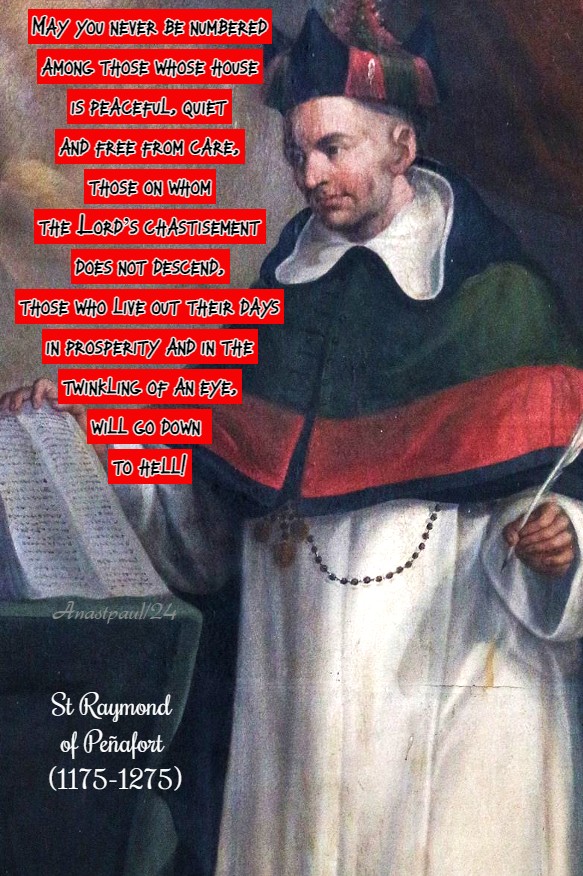
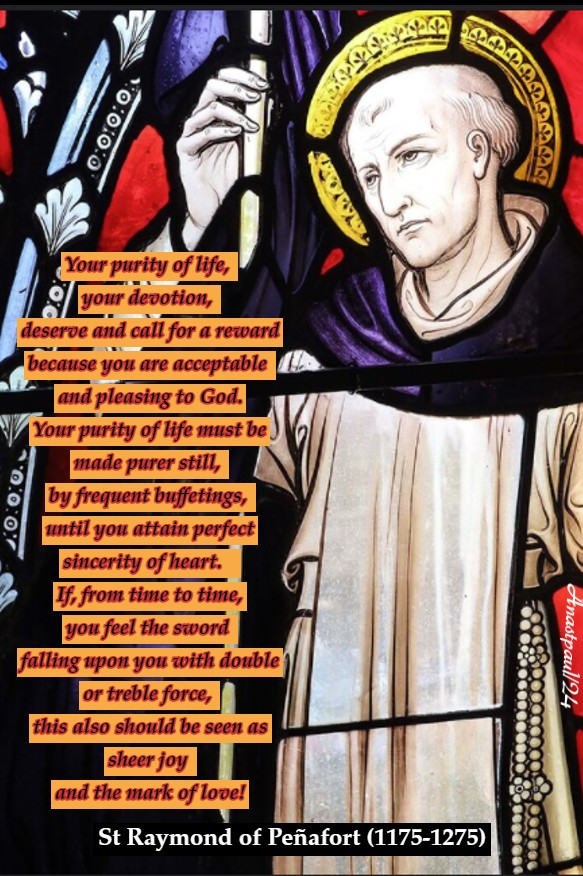
Quote/s of the Day – 23 January – St Raymond of Peñafort OP (1175-1275) Confessor, “Father of Canon Law”
“May you never be numbered among those whose house is peaceful, quiet and free from care, those on whom the Lord’s chastisement does not descend, those who live out their days in prosperity and in the twinkling of an eye, will go down to hell!”
“Your purity of life, your devotion, deserve and call for a reward because you are acceptable and pleasing to God. Your purity of life must be made purer still, by frequent buffetings, until you attain perfect sincerity of heart. If, from time to time, you feel the sword falling upon you with double or treble force, this also should be seen as sheer joy and the mark of love!”
“Look then on Jesus, the Author and Preserver of faith — in complete sinlessness, He suffered and, at the hands of those who were His own and was numbered among the wicked. As you drink the cup of the Lord Jesus (how glorious it is!), give thanks to the Lord, the Giver of all blessings. May the God of love and peace set your hearts at rest and speed you on your journey; may He meanwhile, shelter you from disturbance by others in the hidden recesses of His Love, until He brings you, at last, into that place of complete plenitude, where you will repose forever in the vision of peace, in the security of trust and in the restful enjoyment of His riches. ”
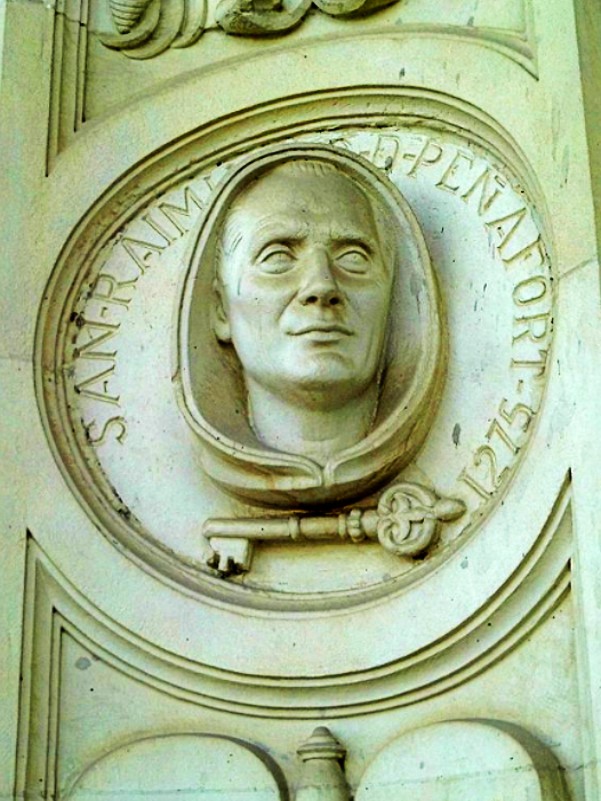
Saint of the Day – 23 January – St Raymond of Peñafort OP (1175-1275) Confessor, “Father of Canon Law” Dominican Priest, Co-Founder of the Mercedarian Friars with St Peter Nolasco, Miracle-Worker – born on 1175 at Peñafort, Catalonia, Spain and died on 6 January 1275 at Barcelona, Spain of natural causes. Raymond compiled the Decretals of St Gregory IX (Reign 1227-1241), a collection of Canonical Laws which remained a major part of Church Law until the 1917 Code of Canon Law abrogated it. Patronages – Lawyers, Canon Lawyers, Medical Record Librarians, Barcelona, Spain, Navarre, Spain. Also known as – Ramon de Penyafort, Raymond of Rochefort. … of Penyafort, Raymund. https://anastpaul.com/2019/01/07/saint-of-the-day-st-raymond-of-penafort-op-1175-1275-father-of-canon-law/
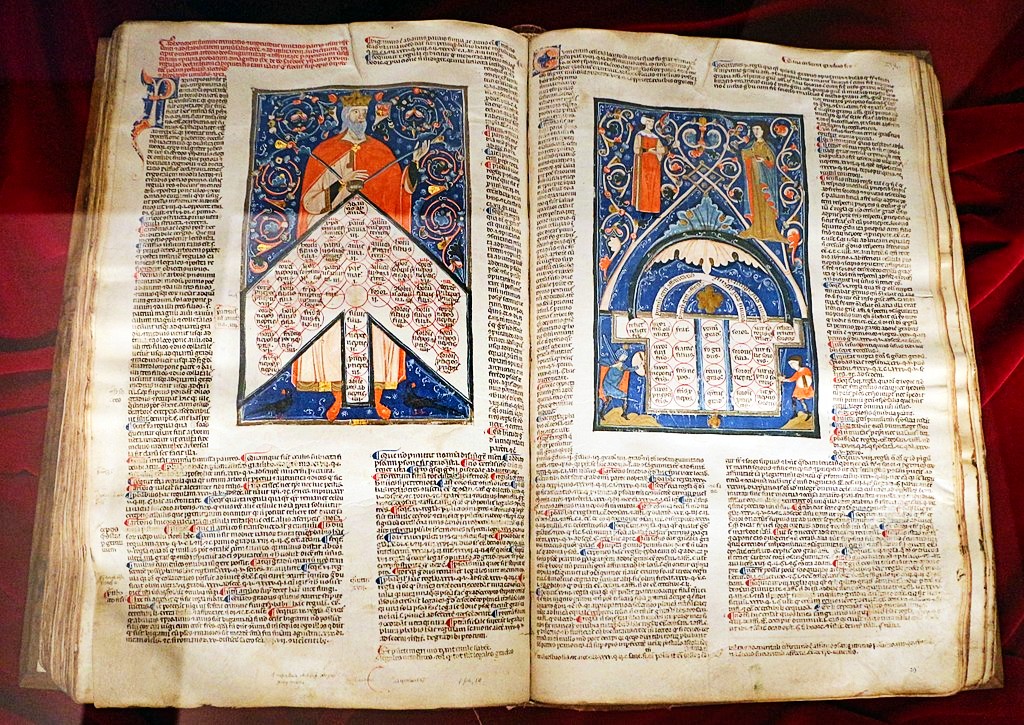
Decretals of St Gregory IX
St Raymond of Peñafort OP (1175-1275) By Fr Francis Xavier Weninger SJ (1805-1888)
“Raymond, sprung from the noble race of Peñafort, was born at Barcelona, in Catalonia, Spain, in the year 1175. Even in early childhood. his only delight was in prayer and study and, when but a mere youth, he was so advanced in learning, as to be deservedly appointed to instruct others. Subsequently, he devoted himself to Canon and Civil Law and soon excelled amongst the most celebrated Jurists of his time.
At Bologna he lectured publicly and gratuitously. At this time, Berengarius, Bishop of Barcelona, happening to pass through Bologna and hearing of Raymond’s wide-spread fame, persuaded him to return to his native land, where he first installed him as Canon, subsequently, however, as Provost. Nor did the Bishop hesitate to consult him in his most important affairs.
At the age of forty-four Raymond entered the Order of St Dominic, in which he soon acquired a great reputation for learning and piety. Pope Gregory IX, called him to Rome and chose him for his Spiritual Guide and Confessor, of which duties he acquitted himself with remarkable modesty and frankness. Observing that many poor people visited the Papal Palace, in whose fate no-one seemed to interest themself, Raymond imposed upon the Pope, as a penance, the duty of better providing for Christ’s poor. The Pope, who tells this anecdote himself, loved Raymond the more and valued him the more highly on this account, carefully regulating his manner of life, according to the instructions of the Saint.
As some reward for his many services, the Holy Father wished to appoint him to the Bishopric of Taragona but Raymond, steadfastly refused the proffered dignity, only begging to be dismissed from the Papal Court. In fact, his physicians had already decided that, if he wished to recover from a malady with which he was afflicted, he must seek his native air. Once more restored to his old home, he resumed his primitive fervour, in which he ever persevered. He wrote various instructions for the use of his neighbour, to whose eternal salvation he entirely devoted himself.
In the foundation of the Order for the Redemption of Captives, he took no little part; for he too, like St. Peter Nolasco, was admonished, in an apparition of Our Lady, to interest himself in its cause. He compiled Rules for those who wished to enter the Order, received St Peter as its first member, afterwards appointing him, with permission of the Holy See, its first General. In 1238, Raymond himself was elected the 3rd General but hastened, after three years, to resign, preferring the quiet of the cloister, devoted to prayer, the writing of edifying books and other such holy and useful occupations. He was looked upon by all, as a model of Christian perfection,but he excelled especially in a wonderful humility, an obliging condescension to the poor and a most childlike devotion to the Virgin Mother.
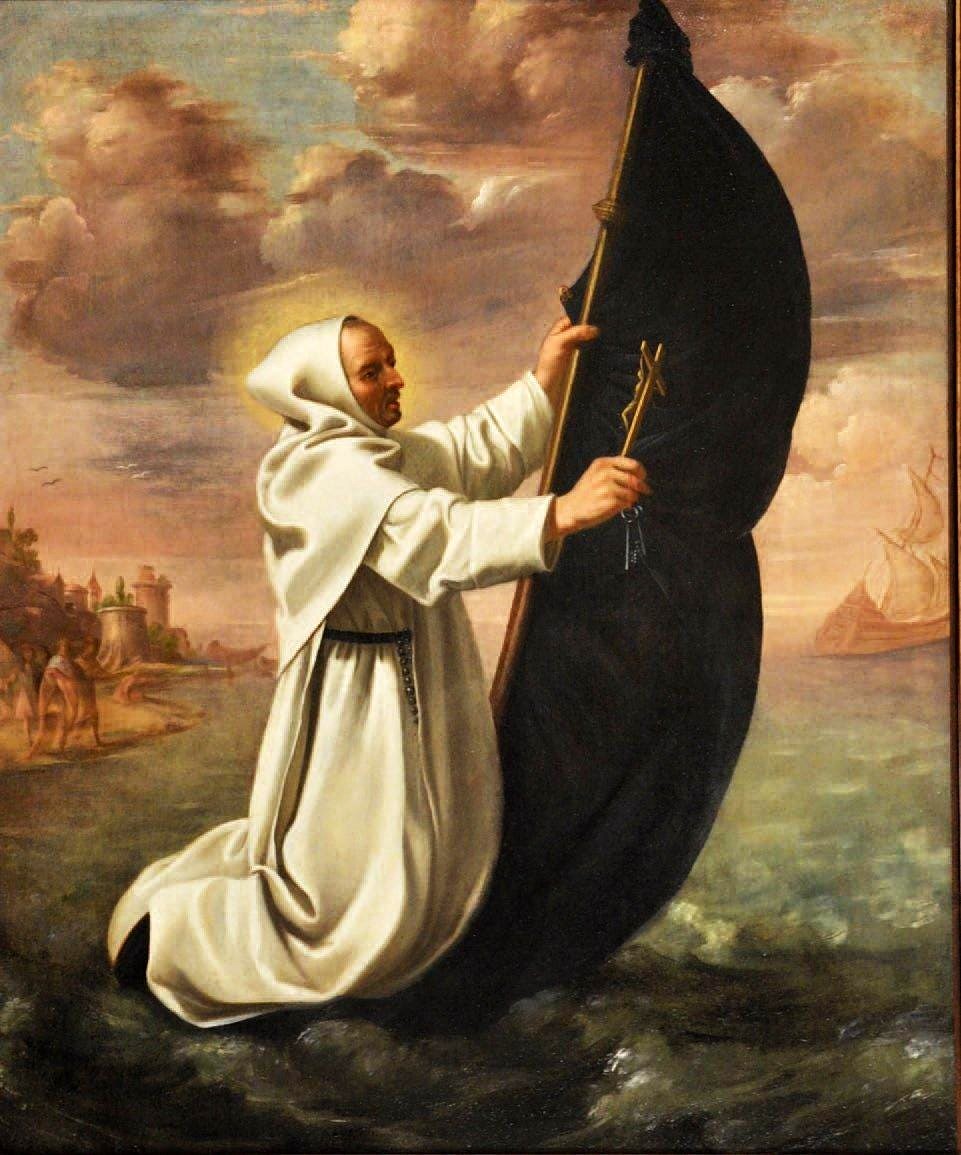
Many and remarkable are the miracles recorded of him but the following, which is the most known, may suffice here. James the First, King of Arragon, had chosen Raymond for his Confessor and desired him to favour him with his company on a journey to the Island of Majorca. But the King, incited by an unholy love for a certain woman, clandestinely conveyed her with him. Raymond had repeatedly and with holy zeal conjured the King to dismiss her and James had even promised to comply with the holy man’s request but upon their arrival at Majorca the Saint, soon perceiving that the King had broken his promise, went up to him and thus addressed him: “Your Majesty must either dismiss this person, or I shall be obliged to set sail for Barcelona to return to my cloister.” The King, growing angry at this reproof, gave strict orders that no-one should give passage to Raymond, should he wish to return to Spain. The holy man, unconscious of the intrigues of the King, hastened to the sea-coast, where a vessel lay ready to sail. He sought for admission in vain, the Officers showed him the Royal Mandate in Raymond’s regard.
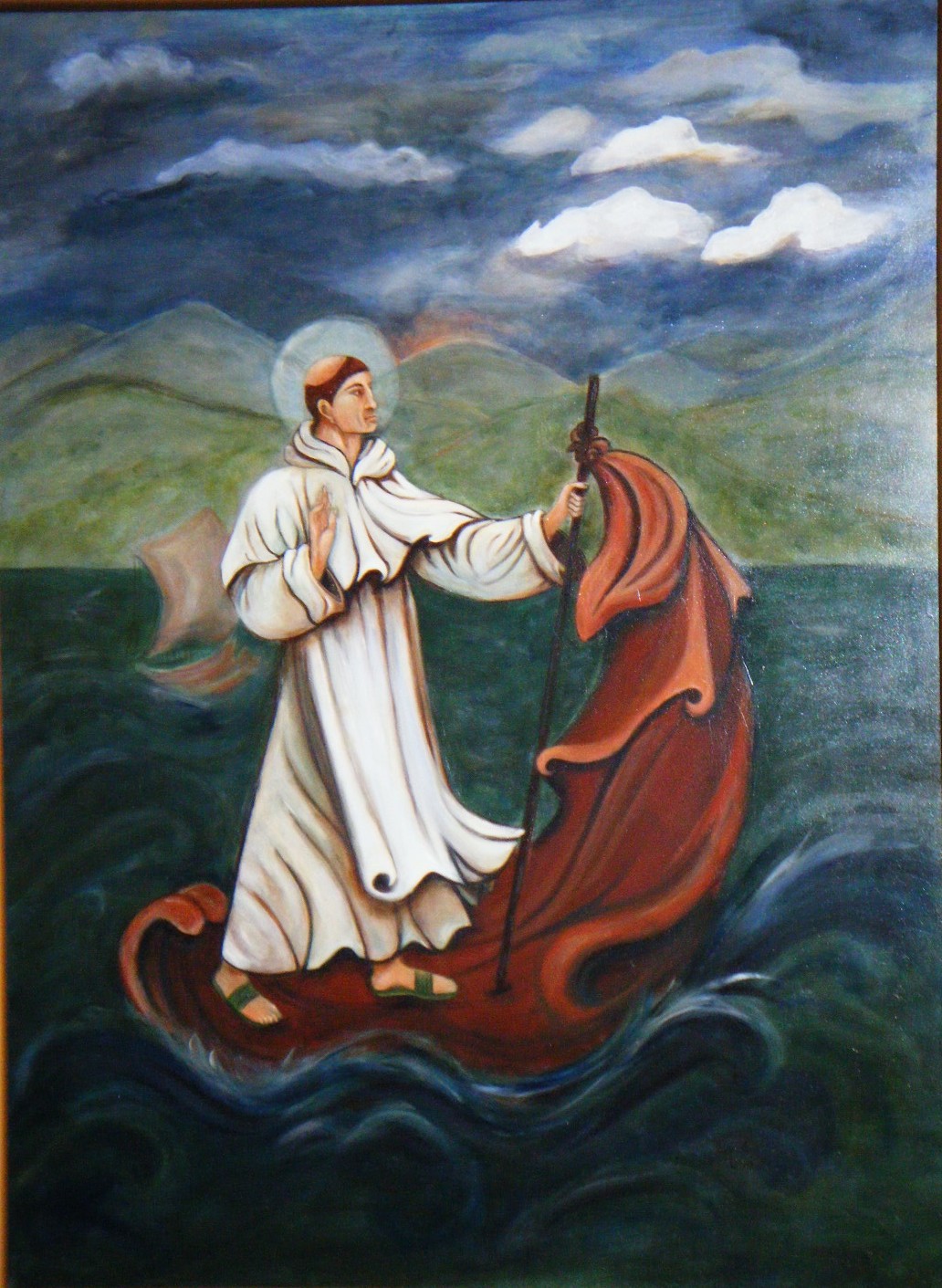
Full of confidence in God, the Saint stepped upon a huge rock which stretched far into the sea. After making the Sign of the Cross, he spread his cloak upon the water and mounted the same, as if it were a seaworthy vessel. In vain did he press a fellow-Religious to join him, who had followed him to the coast but who now stood stupefied at this manner of sailing. Raymond did not allow himself to be shaken in his purpose by the fright of his companion but, placing his staff upright on his cloak and gathering up the folds in front in the manner of a sail, he glided off, to the most profound astonishment of all present! He arrived safely in Barcelona within six hours after his departure, the distance being 160 miles. In the presence of a large concourse of people, he stepped ashore, and, throwing his perfectly dry cloak over his shoulders, he hurried to his Monastery.
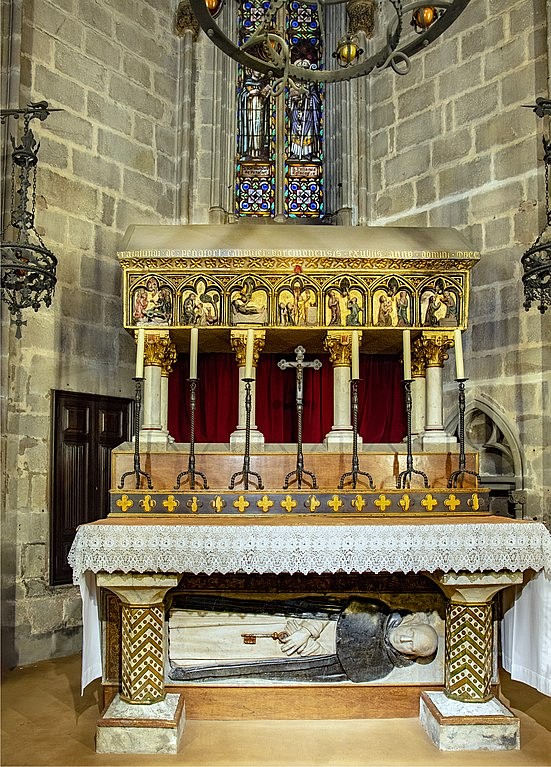
There, he lived for some time in great sanctity and, when he had almost reached his hundreth year, he slept quietly in the Lord, full of virtues and merits.” Below is St Raymon’d Tomb and Shrine in Barcelona Cathedral.
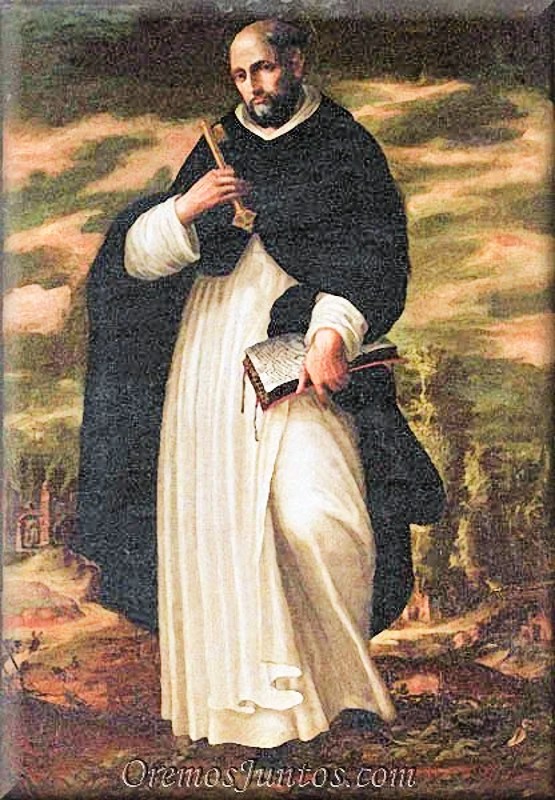
St Raymond of Peñafort OP (1175-1275) “Father of Canon Law” Dominican Priest, Doctor of Canon Law, the Third Master of the Order of Preachers, Founder of the Mercedarian friars, Writer, Teacher, Miracle-Worker. St Raymond of Peñafort’s Feast day was inserted in the General Roman Calendar in 1671 for celebration on 23 January. In 1969 it was moved to 7 January, the day after that of his death. He is the Patron Saint of canon lawyers, specifically and lawyers, in general. Biography: https://anastpaul.com/2019/01/07/saint-of-the-day-st-raymond-of-penafort-op-1175-1275-father-of-canon-law/
St Abel the Patriarch St Agathangelus St Amasius of Teano St Aquila the Martyr St Asclas of Antinoe St Clement of Ancyra St Colman of Lismore St Dositheus of Gaza
St Ildephonsus (506-667) Archbishop of Toledo. Theologian, Scholar, Marian devotee, Writer, Evangeliser. Abbot Dom Guéranger calls him the Doctor of the Virginity of Mary. Saint Ildephonsus established the Feast of the Expectation of the Blessed Virgin Mary, which is still kept in some places on 18 December. Biography: https://anastpaul.wordpress.com/2018/01/23/saint-of-the-day-23-january-st-ildephonsus-607-667/
Quote/s of the Day – 22 January – “The Month of the Most Holy Name of Jesus and of the Holy Family” – St Vincent of Saragossa (Died 304) Protomartyr of Spain and St Anastasius the Persian (Died 628) Martyr – Wisdom 3:1-8; Luke 21:9-19 – Scripture search here: https://www.drbo.org/
“And you shall be hated by all men, for My Name’s sake.”
Luke 21:17
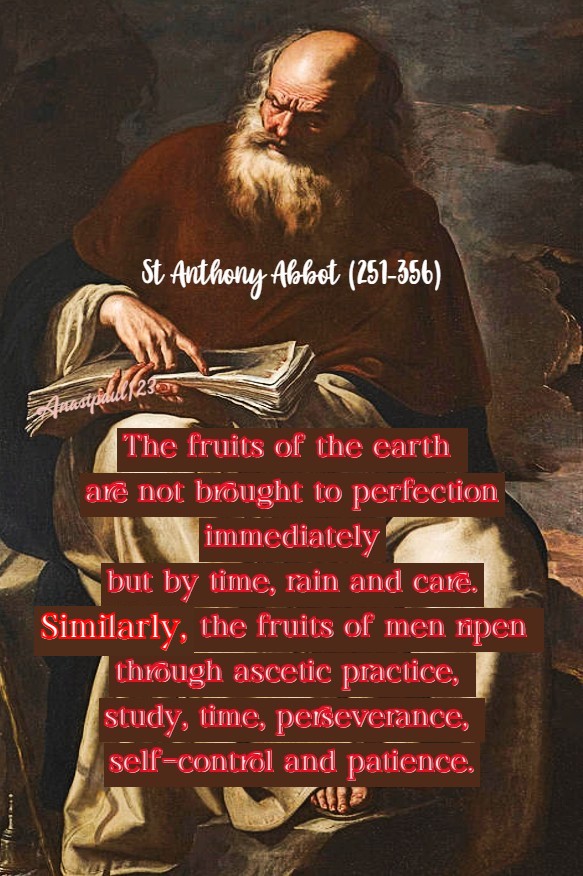
“The fruits of the earth are not brought to perfection immediately but by time, rain and care. Similarly, the fruits of men ripen through ascetic practice, study, time, perseverance, self-control and patience.”
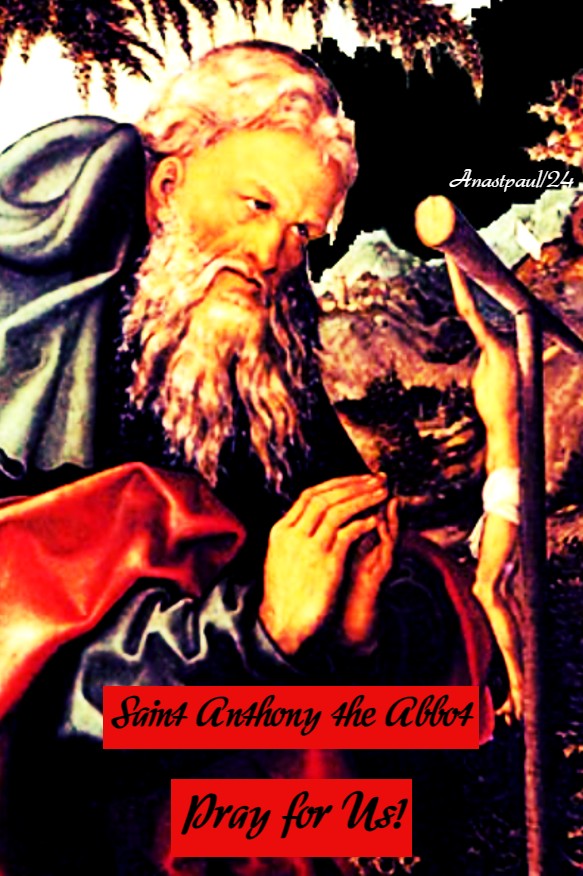
St Anthony Abbot (251-356)
“Rejoice and be happy! Persevere to the end and prefer to die rather than abandon the post, to which God has called you!”
St Catherine of Siena (1347-1380) Doctor of the Church
“Love consists, not in feeling great things but, in having great detachment and in suffering for the Beloved.”
St John of the Cross (1542-1591) Doctor Mysticus
“Now, you must always persevere in firmly placing all your trust in our Lord, in the troublesome business you have in hand. It will give you a fine opportunity of laying a good foundation of submission to God’s will and peace of soul.”
St Francis de Sales (1567-1622) Doctor Caritatis
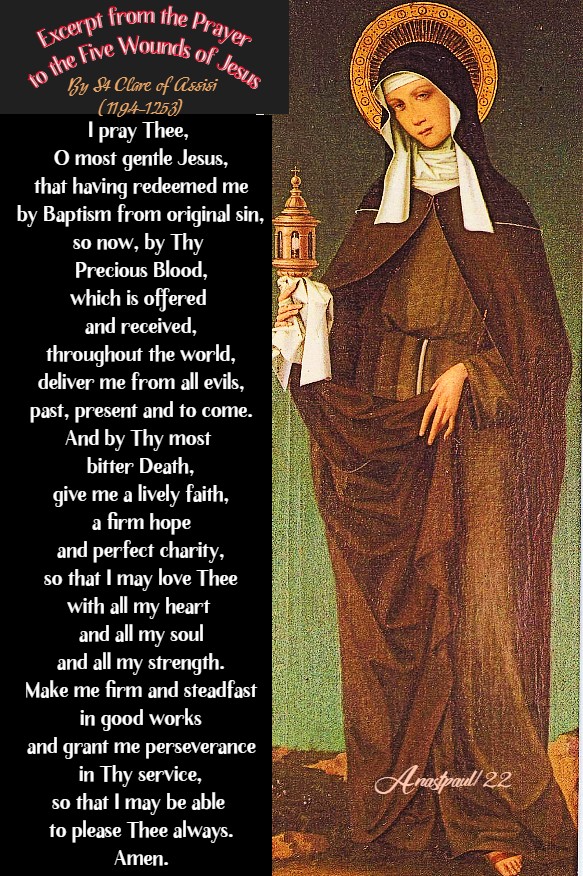
Excerpt from the Prayer to the Five Wounds of Jesus By St Clare of Assisi (1194-1253)
I pray Thee, O most gentle Jesus, that having redeemed me by Baptism from original sin, so now, by Thy Precious Blood, which is offered and received, throughout the world, deliver me from all evils, past, present and to come. And by Thy most bitter Death, give me a lively faith, a firm hope and perfect charity, so that I may love Thee with all my heart and all my soul and all my strength. Make me firm and steadfast in good works and grant me perseverance in Thy service, so that I may be able to please Thee always. Amen.
Saint of the Day – 22 January – Blessed Antonio della Chiesa OP (1394-1459) Priest and Friar of the Order of Preachers, the Dominican Order (Ordo Fratrum Praedicatorum – OP), Prior, Reformer. Antonio was a known Miracle worker and was able to read the consciences of all which gifts made him a sought-after Spiritual Counsellor. Antonio was a Mystic and had a special devotion to the Blessed Virgin Mary and he was known to have conversed with her several times, in ecstasy. Born in 1394 in San Germano Vercellese, in the region of Piedmont in northern Italy and died on 22 January 1459 in the Dominican Convent in Como, Lombardy, of natural causes, Also known as – Anthony of San Germano. Beatified on 15 May 1819 by Pope Pius VII. Additional Memorial – 28 July in his Hometown of San Germano Vercellese, the date his Relics were translated to the Parish Church there.
Antonio belonged to the noble and illustrious Piedmontese family of the Marquis della Chiesa and, via a connexted line, he was an ancestor of Pope Benedict XV (Reign 1914-1922) (Giacomo Giovanni della Chiesa).
He received a good education and early in life he showed pious traits. He grew up hoping to become a Monk but his father, who was a man of some importance, opposed this. In 1417, as a twenty-year-old, he nevertheless, joined the Dominican Order in Vercelli, despite his family’s protests.
He became known as a popular and effective Preacher, particularly against usurious interest. He also became a sought-after Confessor. He accompanied Saint Bernardine of Siena on a range of missions and served in various capacities in the Dominican Monasteries. Among those positions was that of the Prior and he served at the Friaries of Como and Florence, as well as in Savona and Bologna.
In Como, he reformed the life and morals of the entire Town and following this success Antonio was sent to govern other Convents. It was at these Convents that he insisted on a rigorous observance to their Rule of Life according to Saint Dominic. He is remembered as a kind Prior who had mercy on sinners and, at the same time, was firm with them that they may amend their ways.
Antonius was also one of the leaders in opposition to the last antipope, Felix V, who troubled the Church from 1440 until 1449. Felix V had a large support network stemming from Switzerland and Antonio vigourously opposed his work. He succeeded in winning over a large number of the antipope’s adherents to the lawful power of the recognised Pontiff, Pope Eugene IV and later Pope Nicholas V.
While on a trip from Savona to Genoa, he was captured by pirates but he was released unharmed. He had been apprehended with a fellow Friar and the pirates released the pair, after being so impressed with their gentle and kind demeanour.
Antoniuo, worn out by activity and penance, he died at the age of 65 having poredicted the date of his death, on 22 January 1459 in Como while he was Prior there. He was buried in the Dominican Church in the City and many miracles happened at his grave. On 28 July 1810 his Relics were translater to the Parish Church of San Germano Vercellese, his birth Town. He was Beatified on 15 May 1819 when his cult was confirmed by Pope Pius VII (1800-1823).
St Anastasius the Persian (Died 628) Martyr, Monk. The Roman Martyrology reads: “At Rome, at Aquiae, Salviae, St Anastasius, a Persian Monk, who, after suffering much at Caesarea in Palestine, from imprisonment, stripes and fetters, had to bear many afflictions from Chosroes, King of Persia, who caused him to be beheaded. He had sent before him, to Martyrdom, seventy of his companions, who were precipitated into rivers. His head was brought to Rome, together with his venerable likeness, by the sight of which, the demons are expelled and diseases cured, as is attested by the Acts of the Second Council of Nicacea.” His Life and Death: https://anastpaul.com/2023/01/22/saint-of-the-day-21-january-st-anastasius-the-persian-died-628-martyr-monk/
Blessed Antonio della Chiesa OP (1394-1459) Priest and Friar of the Order of Preachers St Blaesilla of Rome St Brithwald of Ramsbury St Caterina Volpicelli St Dominic of Sora St Guadentius of Novara
Blessed Maria Mancini of Pisa OP (1356-1431) Widow, Second Order Sister of the Order of Preachers, spiritual disciple of St Catherine of Siena, Prioress, Mystic, Reformer, Apostle of the poor and the sick. The Roman Martyrology states: “In Pisa, Blessed Maria Mancini, who, twice widowed and all her children lost, under the exhortation of St Catherine of Siena, began community life in the Monastery of St Domenic, which she led for ten years.” Her Life: https://anastpaul.com/2022/01/22/saint-of-the-day-22-january-blessed-maria-mancini-of-pisa-op-1356-1431/
Bl Walter of Himmerode Bl William Patenson
Martyrs of Puigcerda: St Orontius St Victor St Vincent
Quote/s of the Day – 19 January – “The Month of the Most Holy Name of Jesus and of the Holy Family” – St Marius and Family of Persia, (Died c 270) Martyrs – Hebrews 10:32-38, Matthew 24:3-13 – Scripture search here: https://www.drbo.org/
“Tell us when shall these things be? and what shall be the sign of Thy Coming and of the consummation of the world? ”
Matthew 24:3
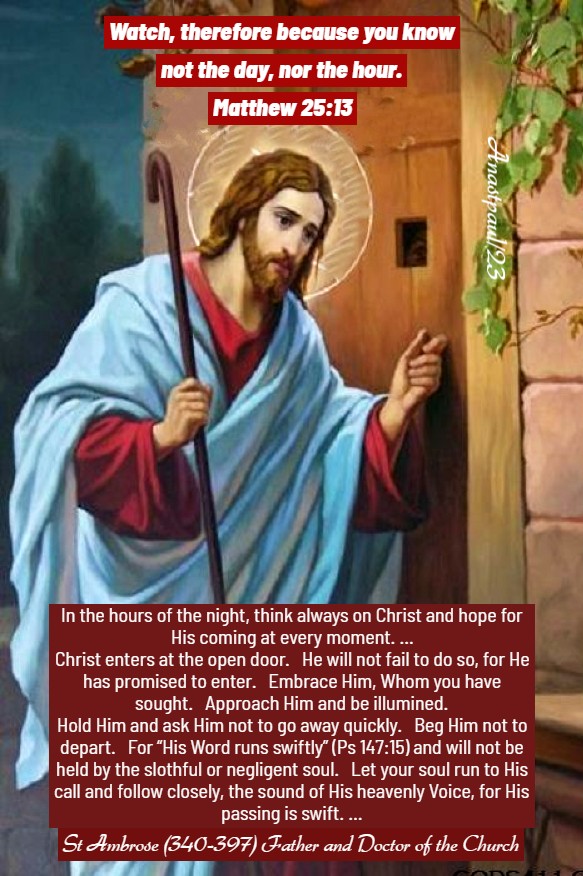
“Watch, therefore because you know not the day, nor the hour.” Matthew 25:13
“ In the hours of the night, think always on Christ and hope for His coming at every moment. … Christ enters at the open door. He will not fail to do so, for He has promised to enter. Embrace Him, Whom you have sought. Approach Him and be illumined. Hold Him and ask Him not to go away quickly. Beg Him not to depart. For “His Word runs swiftly” (Ps 147:15) and will not be held by the slothful or negligent soul. Let your soul run to His call and follow closely, the sound of His heavenly Voice, for His passing is swift. …”
St Ambrose (340-397) Father and Doctor of the Church
“… In fact, according to the merit and fervour of each one, there is a frequent and familiar advent of the Lord that, in this intermediary period, between His First and Last Coming, models us on one and prepares us to the other. The Lord comes to us now, so that His First Coming to us, may not be in vain and that the Last One, may not be that of wrath. Through His Present Coming, in fact, He works at reforming our pride, in the image of the humility of His first advent, to then remodel our humble body, in the image of the glorified body He will show us, when He will return. This is why we should desire and fervently ask this personal coming – which gives us the grace of this first advent and promises us the glory of the last. …”
Bl Guerric of Igny (c1080-1157) Cistercian Abbot
(2nd sermon for Advent, 2-4)
Grant Me, My God By St Thomas Aquinas (1225-1274) Angelic Doctor, Common Doctor
Make my heart watchful, O God, so that no vain thoughts may distract it from Thee. Make it noble, so that it may never be seduced by any base affection. Make it steadfast, so that troubles may not dismay it. Make it free, so that it may not yield to the onslaughts of passion. Grant me, my God, the intelligence, to understand Thee, the love, to seek Thee, the wisdom, to find Thee, words, to please Thee, the perseverance, to wait faithfully for Thee and, the hope of embracing Thee, at last. Grant that I, a repentant sinner, may bear Thy chastisements with resignation. Poor pilgrim which I am, may I draw on the treasury of Thine grace and may I one day, be eternally happy with Thee in Heavnely glory! Amen.
Feast of the Chair of the Apostle, St Peter at Rome: This Feast was instituted to commemorate the establishment of the Holy See at Rome. In 1960, Pope John XXIII removed from the General Roman Calendar, the 18 January Feast of the Chair of Peter at Rome. Two Liturgical Feasts were celebrated in Rome, in Honour of Chairs of Saint Peter, one of which was kept in the Baptismal Chapel of St Peter’s Basilica, the other at the Catacomb of Priscilla. The dates of these celebrations are 18 January and 22 February. The two Feasts were included in the Tridentine Calendar with the rank of Double which, in 1604, Pope Clement VIII raised to the rank of Greater Double. Those traditional Catholics. who do not accept the changes made by Pope John XXIII, continue to celebrate both Feast days: “Saint Peter’s Chair at Rome” on 18 January and the “Chair of Saint Peter at Antioch” on 22 February. https://anastpaul.com/2017/02/22/feast-of-the-chair-of-st-peter-22-february/
Blessed Beatrix d’Este the Younger (c 1230-1262) French Benedictine Nun, Founded a Convent. Beatified in 1774 by Pope Clement XIV. Her memorial date was decreed by Pope Pius VI for today. The Roman Martyrology states: “In Ferrara, Blessed Beatrice d’Este, Nun, who, on the death of her future husband, having renounced the kingdom of this world, consecrated herself to God in a Monastery founded by herself under the rule of Saint Benedict.” Her Life: https://anastpaul.com/2023/01/18/saint-of-the-day-18-january-blessed-beatrix-deste-the-younger-c-1230-1262/
St Catus
Blessed Cristina Ciccarelli OSA (1481–1543) Religious of the Order of Saint Augustine, Mystic, Stigmatist, Apostle of the poor, Reformer, she had a had a particular devotion to the Eucharist and to the Passion and Death of Christ, she was granted the gift of Prophecy, visions and levitation. Beatified in 1841 by Pope Gregory XVI . About Bl Cristina: https://anastpaul.com/2020/01/18/saint-of-the-day-18-january-blessed-cristina-ciccarelli-osa-1481-1543/
St Day/Dye St Deicola of Lure Bl Fazzio of Verona St Leobardus of Tours St Moseus of Astas St Ulfrid of Sverige St Volusian of Tours (Died 496) Bishop
One Minute Reflection – 17 January – “The Month of the Most Holy Name of Jesus and of the Holy Family” – St Anthony Abbot (251-356) – Ecclesiasticus 45:1-6; Luke 12:35-40 – Scripture search here: https://www.drbo.org/
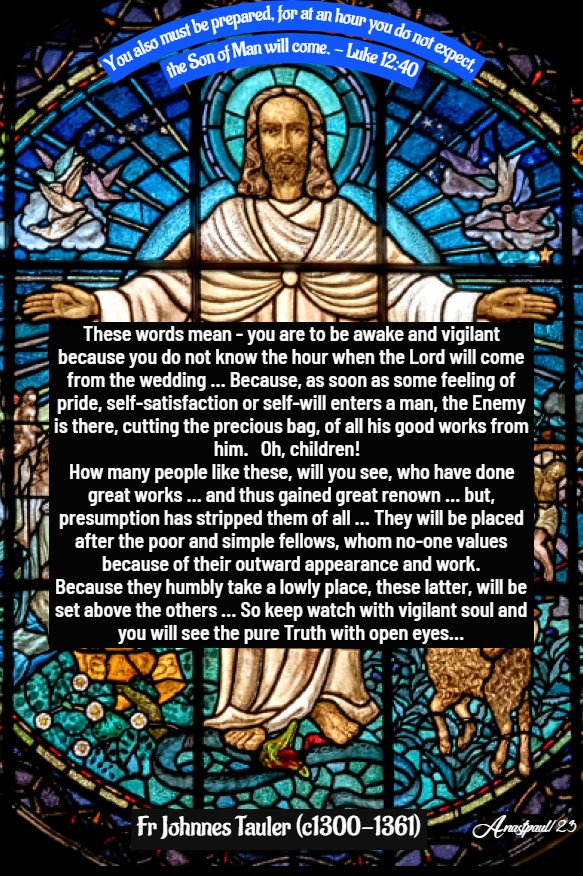
“You also must be prepared, for at an hour you do not expect, the Son of Man will come.” – Luke 12:40
REFLECTION – “These words mean – you are to be awake and vigilant because you do not know the hour when the Lord will come from the wedding … Because, as soon as some feeling of pride, self-satisfaction or self-will enters a man, the Enemy is there, cutting the precious bag, of all his good works from him. Oh, children! How many people like these, will you see, who have done great works … and thus gained great renown … but, presumption has stripped them of all … They will be placed after the poor and simple fellows, whom no-one values because of their outward appearance and work. Because they humbly take a lowly place, these latter, will be set above the others … So keep watch with vigilant soul and you will see the pure Truth with open eyes …
“Let your loins be girt about and your lamps alight.” Here there are three points to notice. First – the loins are to be girded like someone firmly bound with a rope, so as to be led, against his will … Second – you are to carry lighted lamps in your hands which is to say, works of love. Your hands should never stop doing the true, ardent work of charity … Third – you should wait for the Lord when He returns from the wedding … “The Lord will set them over all His goods; He will gird Himself and will serve them.” This wedding from which the Lord comes, takes place in the most interior part of the soul, in its depths, where the noble image is found. O what intimate contact the soul has with God and God with it, in this depth and what a marvellous work God does there! What rejoicing and joy He finds there! It surpasses all feeling and thought and yet, man knows nothing and feels nothing of it.” – Fr Johannes Tauler OP (c1300-1361) Dominican Priest and Friar, renowned Preacher and Theologian (Sermon 77 for the Feast of a Confessor).
PRAYER – May the intercession of the Blessed Abbot Anthony, commend us, we beseech Thee, O Lord, so that what we do not deserve by any merits of our own, we may obtain by his patronage. Through tJesus Christ, Thy Son our Lord, Who lives and reigns with Thee, in the unity of the Holy Ghost, God, world without end. Amen (Collect).
St Henry of Coquet St Honoratus of Arles (c350-c429) Bishop and Confessor St Honoratus of Fondi Abbot Bl James of Luino St James of Tarentaise Bl Joan of Bagno di Romagna Bl Konrad II of Mondsee St Leobazio St Liberata of Pavia St Melas of Rhinocolura St Otto of Morocco St Peter of Morocco St Priscilla of Rome St Sigeberht of East Anglia
Quote/s of the Day – 12 January – “The Month of the Most Holy Name of Jesus and of the Holy Family” – Seventh Day Within the Octave of The Epiphany – Isaias 60:1-6; Matthew 2:1-12
“We have seen His Star in the east and are come to adore Him.”
Matthew 2:2
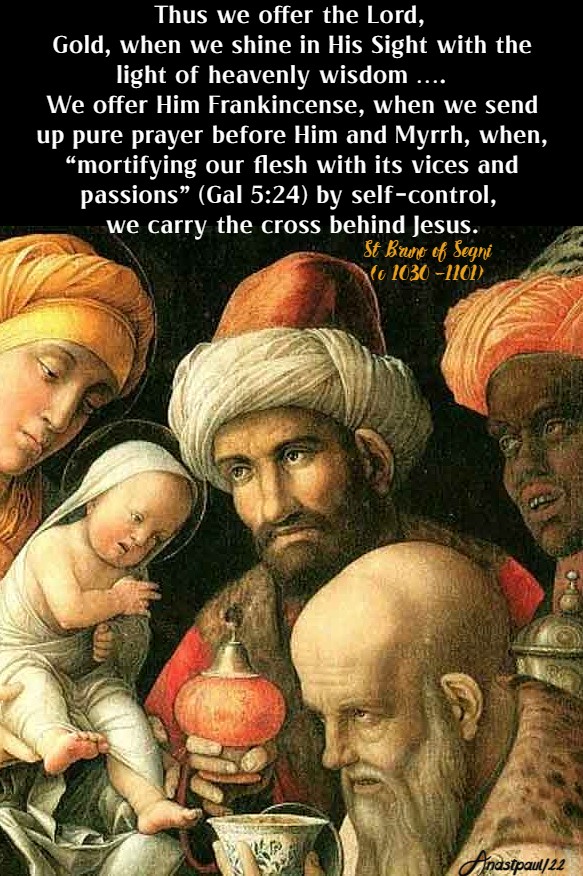
“Thus we offer the Lord, Gold, when we shine in His Sight with the Light of heavenly wisdom …. We offer Him Frankincense, when we send up pure prayer before Him and Myrrh, when, “mortifying our flesh with its vices and passions” (Gal 5:24) by self-control, we carry the cross behind Jesus.”
St Bruno of Segni O.Cart. (c 1030 -1101)
Bishop (1st Sermon on the Epiphany PL 165, 863).
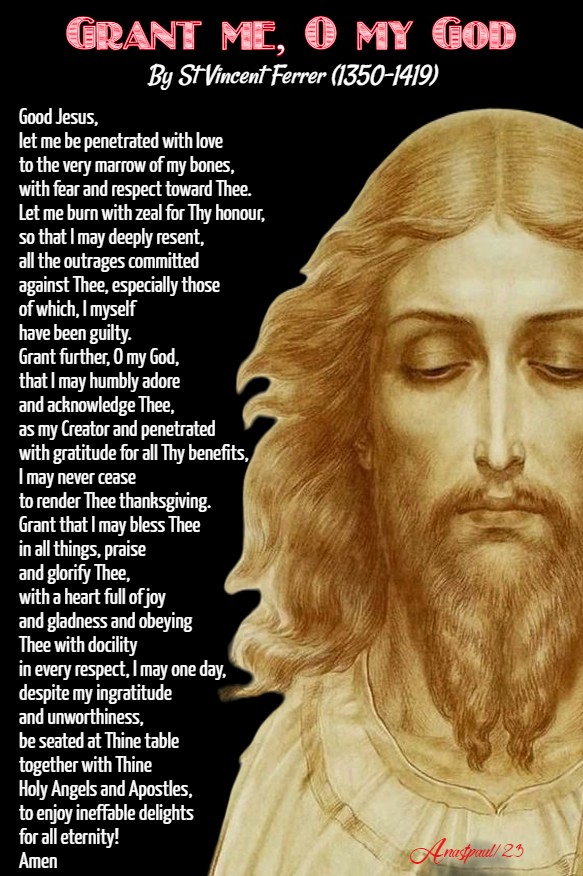
Grant me, O my God By St Vincent Ferrer OP (1350-1419)
Good Jesus, let me be penetrated with love to the very marrow of my bones, with fear and respect toward Thee. Let me burn with zeal for Thy honour, so that I may deeply resent, all the outrages committed against Thee, especially those of which, I myself have been guilty. Grant further, O my God, that I may humbly adore and acknowledge Thee, as my Creator and penetrated with gratitude for all Thy benefits, I may never cease to render Thee thanksgiving. Grant that I may bless Thee in all things, praise and glorify Thee, with a heart full of joy and gladness and obeying Thee with docility in every respect, I may one day, despite my ingratitude and unworthiness, be seated at Thine table together with Thine Holy Angels and Apostles, to enjoy ineffable delights for all eternity! Amen
“He who most loves will be most loved.”
(Letters to Persons in Religion III, 43)
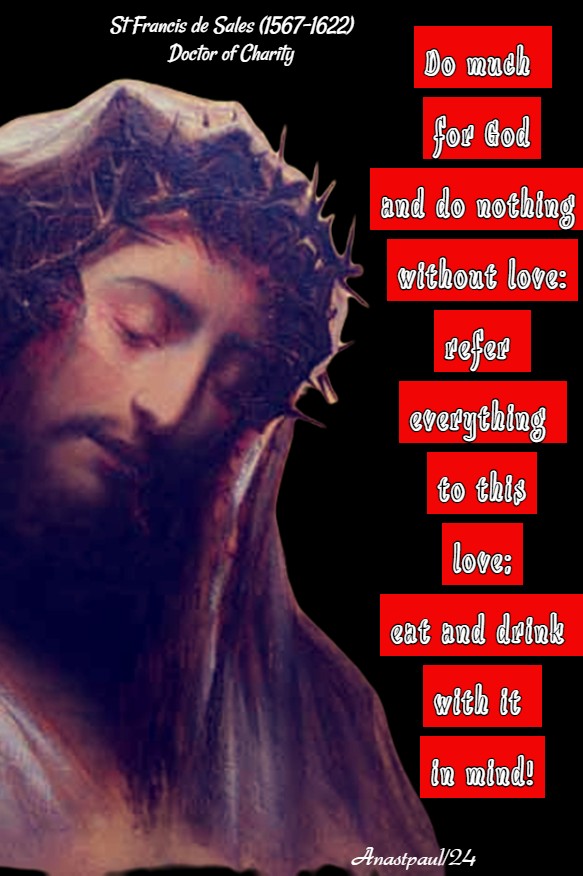
“Do much for God and do nothing without love: refer everything to this love; eat and drink with it in mind!”
(Letter to Madame de Chantal)
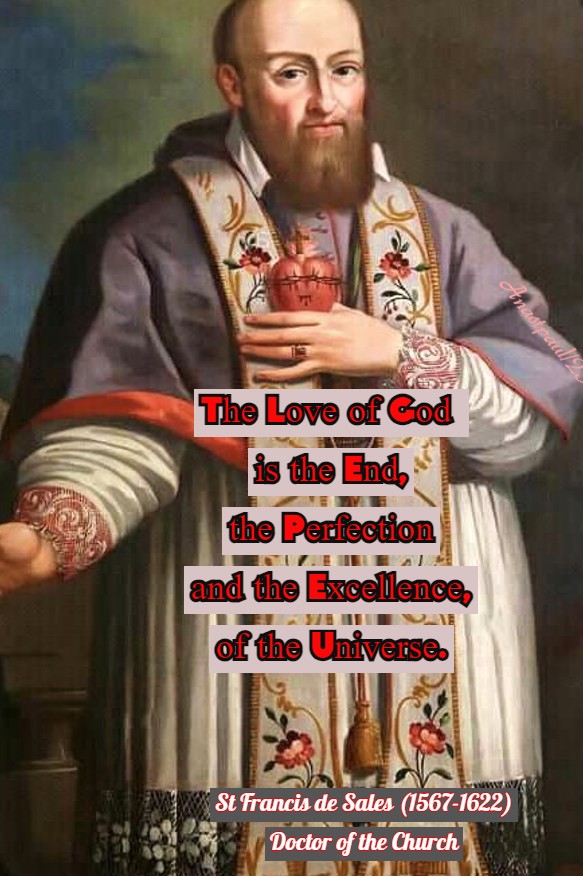
“The love of God, is the end, the perfection and the excellence of the universe.”
Quote/s of the Day – 11 January – “The Month of the Most Holy Name of Jesus and of the Holy Family” – Within the Octave of Epiphany – Isaias 60:1-6, Matthew 2:1-12
“And seeing the Star they rejoiced with exceeding great joy.”
Matthew 2:10
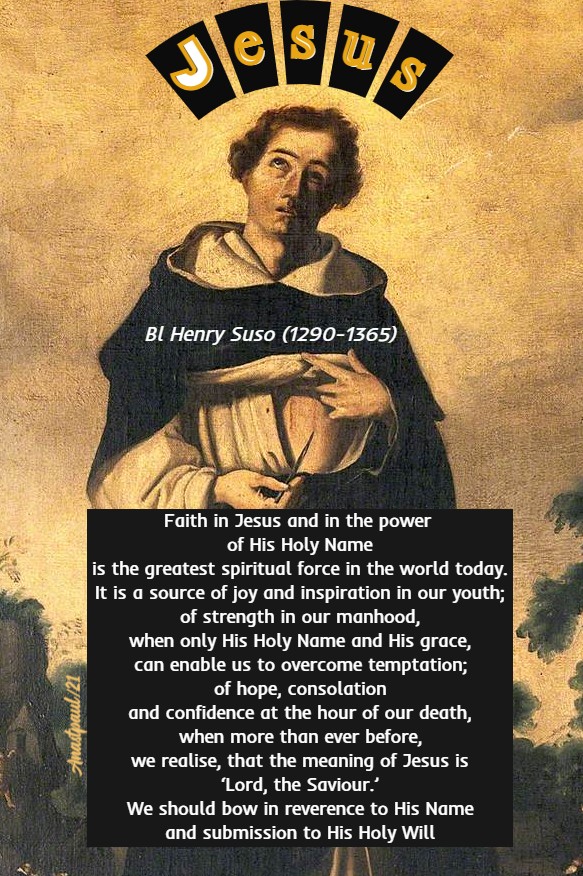
“Faith in Jesus and in the power of His Holy Name is the greatest spiritual force in the world today. It is a source of joy and inspiration in our youth; of strength in our manhood, when only His Holy Name and His grace, can enable us to overcome temptation; of hope, consolation and confidence at the hour of our death, when more than ever before, we realise, that the meaning of Jesus is ‘Lord, the Saviour.’ We should bow in reverence to His Name and submission to His Holy Will.”
Bl Henry Suso OP (1290-1365)
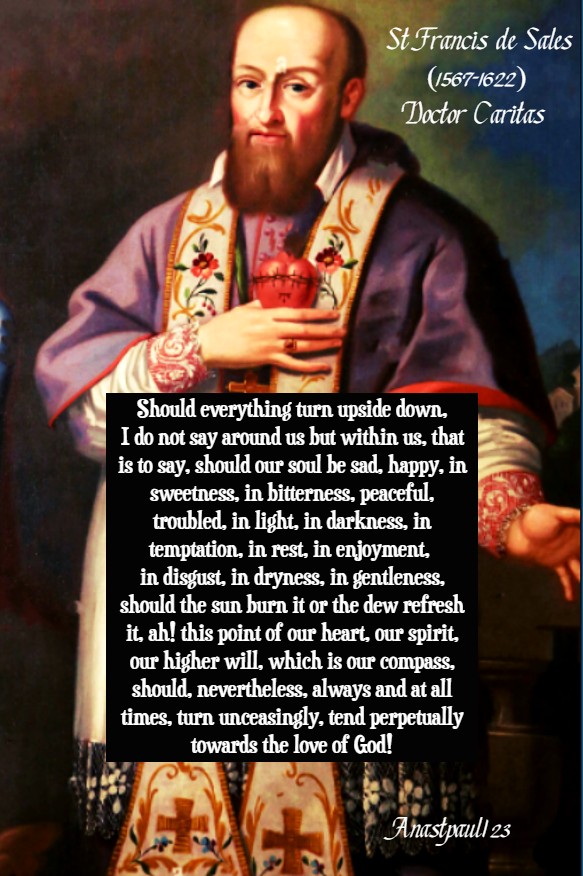
“Should everything turn upside down, I do not say around us but within us, that is to say, should our soul be sad, happy, in sweetness, in bitterness, peaceful, troubled, in light, in darkness, in temptation, in rest, in enjoyment, in disgust, in dryness, in gentleness, should the sun burn it or the dew refresh it, ah! this point of our heart, our spirit, our higher will, which is our compass, should, nevertheless, always and at all times, turn unceasingly, tend perpetually towards the love of God!”
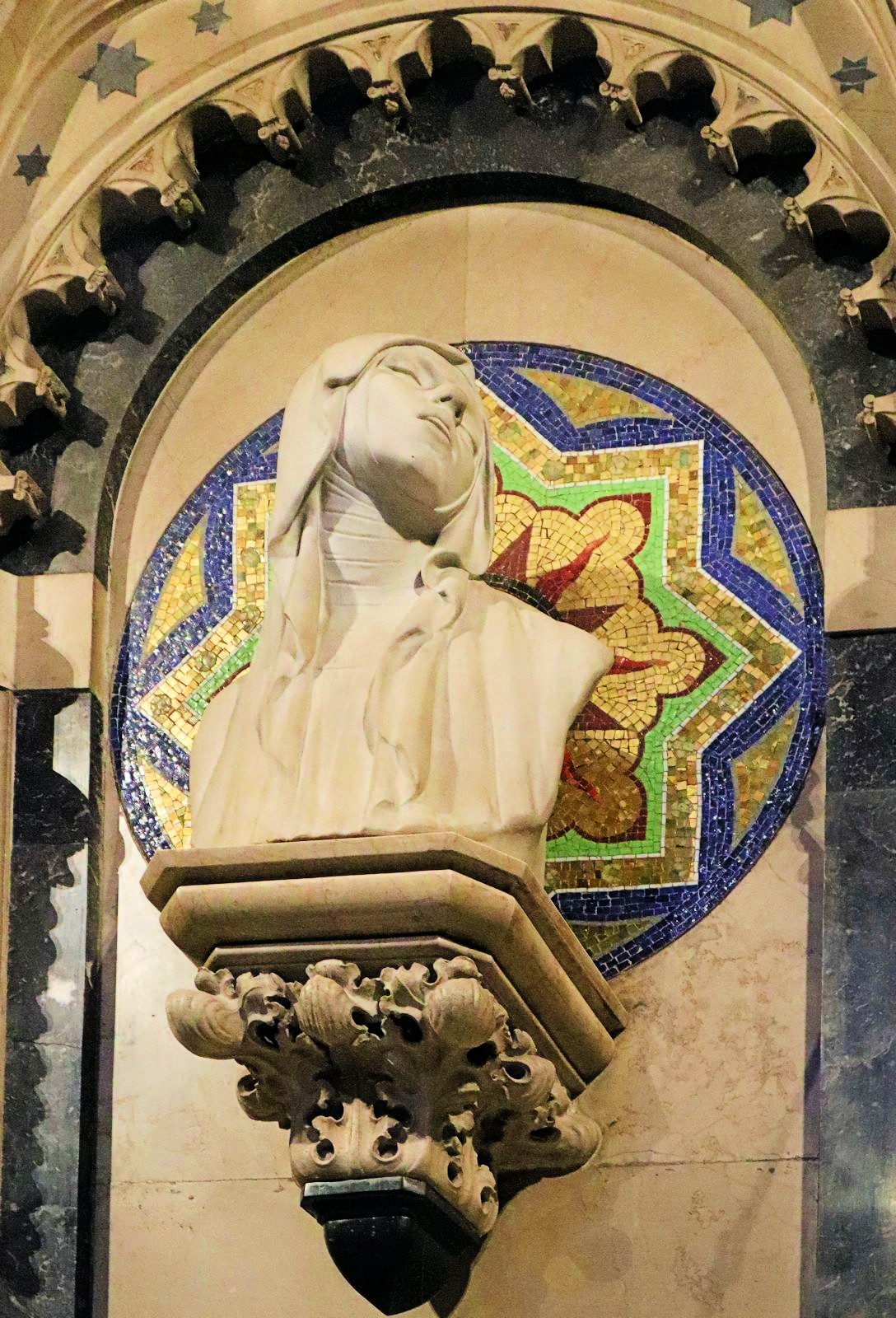
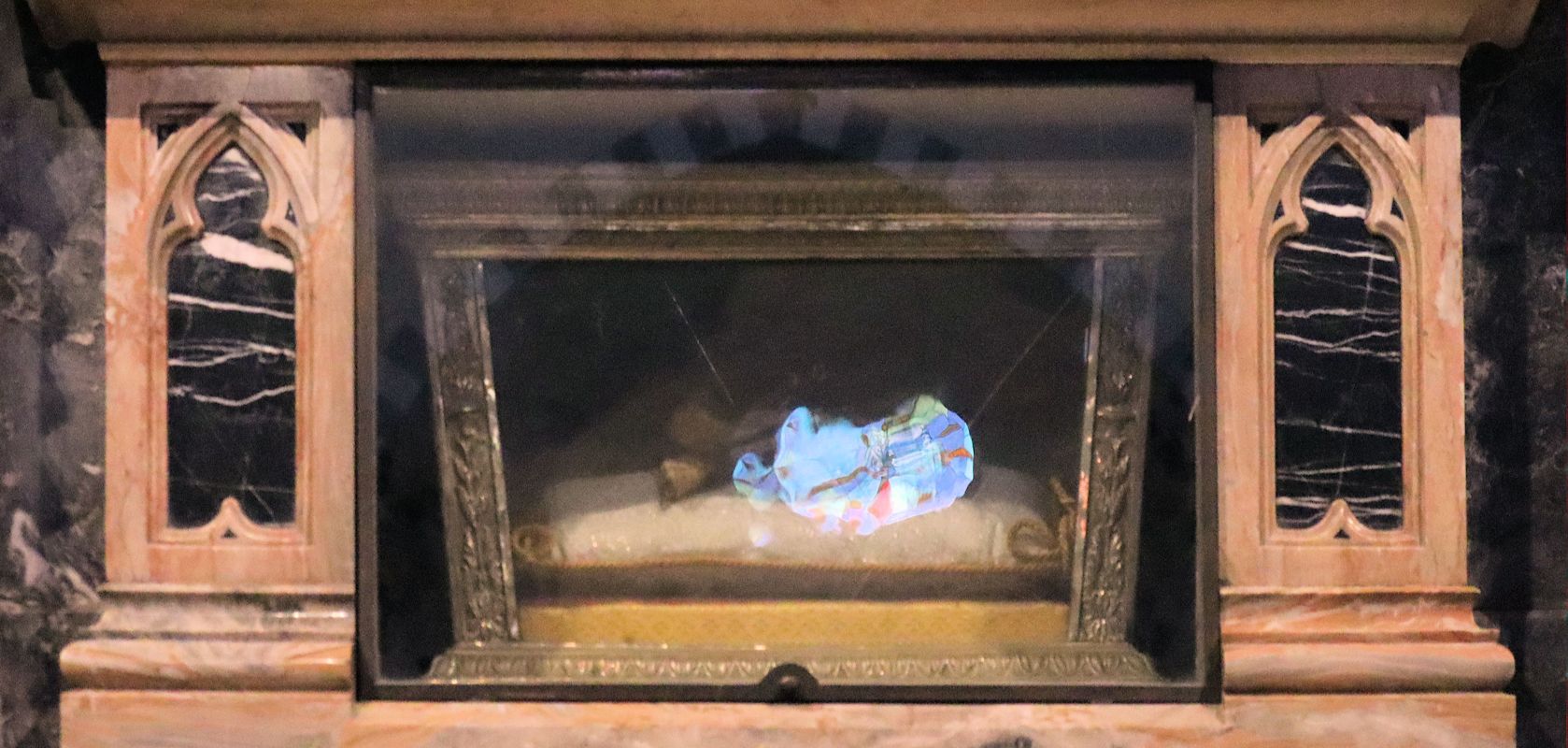
Saint of the Day – 2 January – Blessed Stephana de Quinzanis OP (1457-1530) Virgin, Dominican Tertiary, Mystic, Stigmatist, Stephana was particularly devoted to the Passion of our Lord and bore the Stigmata of His Passion. At the same time, she experienced spiritual aridity, as well as doubts and temptations. Stephana was well known for her service to the poor. Born in 1457 in Orzinuovi near Brescia in Italy and died on 2 January 1530 in Soncino near Crema in Italy. Also known as – Stefana Quinzani, Stephanie de Quinzanis. Patronage – of Theologians, Beatified on 14 December 1740 by Pope Benedict XIV (cultus confirmed). Her Body is interred at the Church of the Convent of the Dominican Tertiary Sisters Soncino, Cremona, Italy which Stephana had founded and some of her Relics are enshrined in her hometown Parish of .Orzinuovi.
She was born in 1457 in Brescia, Italy, to Lorenzo de Quinzanis and his wife, who were a poor and pious couple. Her father became a member of the Third Order of St Dominic while Stephana was very young. While accompanying him on visits to the Dominican Monastery in nearby Soncino, she met the stigmatist Friar, Blessed Matthew Carrieri, who instructed her in the Catechism.
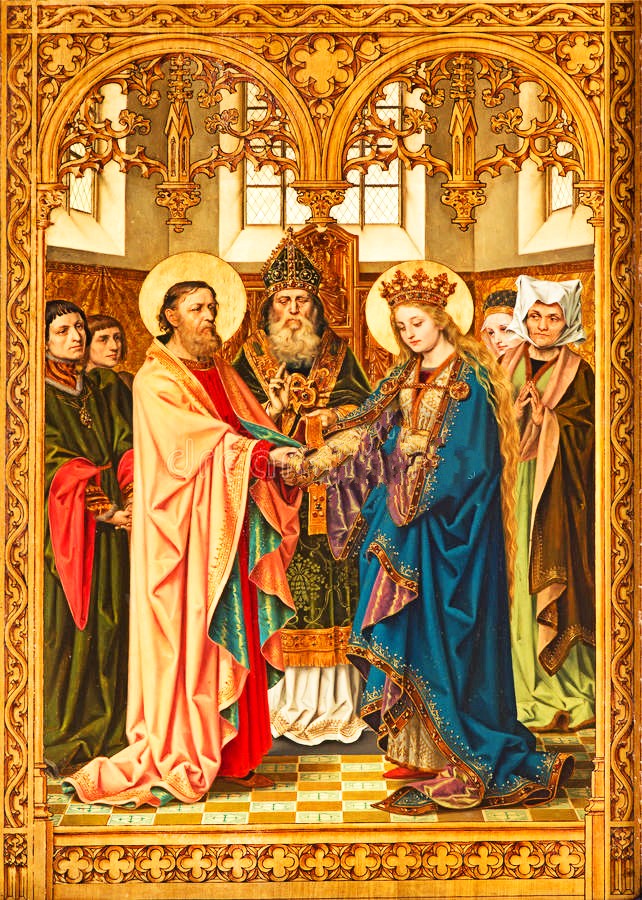
Bl Matthew told her that she would be his spiritual heiress, a statement she did not understand for many years. She began receiving visions of Dominican Saints from age seven, at which point she made vows of poverty, chastity and obedience. In 1464, Christ appeared to her, accompanied bythe Blessed Virgin Mary and Saints Dominic, Thomas Aquinas and Catherine of Siena, presenting her with a wedding ring, signifying her mystical marriage. Bl Matthew Carrieri died when Stephana was 14 years old and soon after he appeared to her in a vision and she herself received the Stigmata.
Stephana started to work as a servant but she continued in her formation in the Third Order and at age 15, made her profession at the Dominican Priory in Soncino. Her devotion to the poor and sick led her to found a community of Third Order Sisters there. She served as its first Prioress.
Her counsel was sought by many, including St Angela Merici, Foundress of the Ursulines, also Bl Augustine Fangi, as well as her fellow Dominican tertiary and mystic, Bl Osanna of Mantua. In 1497, Stephana participated in various stages of the Passion of Jesus Christ which was attested to by 21 witnesses in a still extant account, written in the vernacular and entitled “Relazione dell’Estasi della Passione – Report of the Ecstasy of the Passion.” Sources state that although Stephana was “plain” she had magnificent hair. Grudging herself this one beauty, she pulled it out by the roots.
Bl Stephana in ecstasy, bust on the Altar dedicated to her, in the Parish Church in Orzinuovi. The Sculphture was created in 1930 by Enrico Biondi
Stephana had a particularly intense devotion to Saint Thomas Aquinas. In fact, to overcome the temptation of thoughts against purity, she once threw herself upon a cartload of thorns in imitation of the Doctor Angelicus. Exhausted from this penance, she prayed to Saint Thomas and, was girded by Angels, as St Thomas had been mystically girded with a cord, which they tied so tightly around her waist that she cried out in pain.
Although she had no formal theological training, she could discuss mystical theology at the most profound level. She is considered a patron saint for theologians. Stephana could read the hearts and minds of the people around her and had the gift of prophesy and of curing illnesses. She lived in a nearly continuous fast. She accurately predicted the date of her own death which occurred from natural causes on 2 January 1530.
Stephana’s tomb became a pilgrimage site almost immediately. Her intercession was often felt in the Convent she had founded, where the Sisters obtained both material and spiritual help through her intercession.
Her cult was popularised by the Dominicans Bartholomeo of Mantua and Battista of Salò but their Latin Vitae (Lives of the Blessed), have been lost and only a later Italian version which combined the two texts has survived.
Quote/s of the Day – 31 December – “The Month of the Divine Infancy and the Immaculate Conception of the Blessed Virgin Mary” – Sunday Within the Octave of Christmas – Galatians 4:1-7, Luke 2:33-40 – Scripture search here: https://www.drbo.org/
“She did not leave the temple, serving with fastings and prayers, night and day.”
Luke 2:37
“If, in holy Scripture, Christ is the true Sun and the true Day, there is no hour when Christians should not adore God frequently and constantly, so that we, who are in Christ, that is, in the true Sun and true Day, should be persevering, throughout the whole day, in our petitions and prayer. And when, in the course of time, the revolving night returns, there can be no harm from the nocturnal shades, for those who pray because, to the sons of Light (1 Thes 5:5), even in the night there is day! For when is he without light who has Light in his heart? Or when does he not have sun and day to whom Christ is Sun and Day?”
St Cyprian (200-258) Martyr, Father of the Church
“Arm yourself with prayer instead of a sword; be clothed with humility instead of fine raiment.”
St Dominic (1170-1221)
“If you want God to hear your prayers, hear the voice of the poor. If you wish God to anticipate your wants, provide for those of the need, without waiting for them to ask you. Especially, anticipate the needs of those, who are ashamed to beg. To make them ask for alms, is to make them buy it!”
St Thomas of Villanova (1488-1555)
“It is best to learn to silence the faculties and to cause them to be still, so that God may speak!”
St John of the Cross (1542-1591) Doctor of the Church
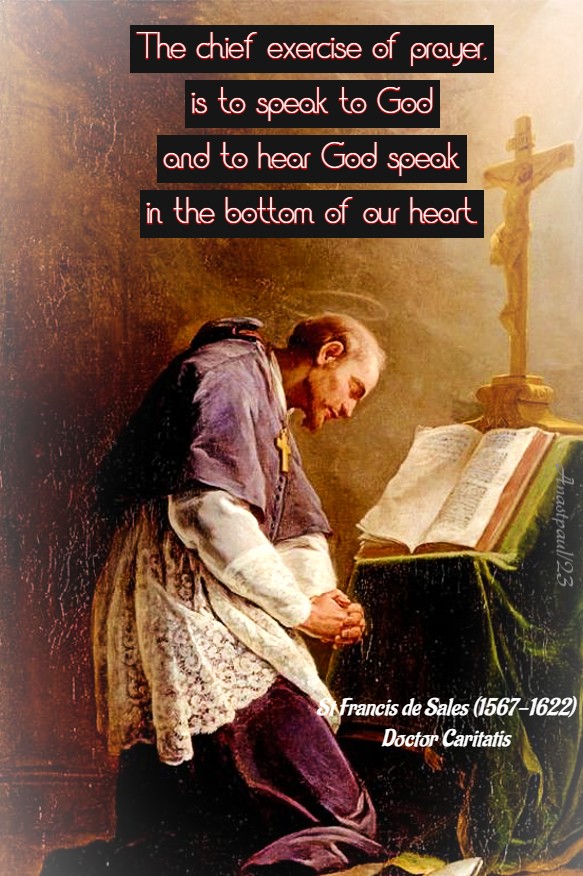
“The chief exercise of prayer, is to speak to God and to hear God speak in the bottom of our heart.”
(Treatise on the Love of God Book 6 Chapter 1)
“The sacred gift of prayer is already in the Right Hand of the Saviour; as soon as ever you shall have emptied yourself of self, He will pour it into your heart!”
St Beoc St Dominic Dosso Bl Elizabeth of Saint Francis
St Everard of Friuli (c815-867) Duke, Count, Soldier, Founder of Churches and a Monastery. In contrast to his soldiering life, St Everard was a peacemaker, a humble and loving Master with a social conscience, striving always to free serfs, wherever possible or at least to free them from their burdens and assisting the poor and needy in all their deprivations. His Life: https://anastpaul.com/2021/12/16/saint-of-the-day-16-december-saint-everard-of-friuli-c-815-867/
Haggai the Prophet St Irenion Bl James of Tunis St Jean Wauthier St Macarius of Collesano
Martyred Women of North-West Africa: A large group of women Martyred in the persecutions of Hunneric, Arian King of the Vandals. 482 in North-West Africa.
Martyrs of Ravenna – 4 Saints: A group of Christians Martyred together. Four names and no other information has survived – Agricola, Concordius, Navalis and Valentine. c 305 at Ravenna, Italy.
Quote/s of the Day – 8 December – Feast of the Immaculate Conception and “The Month of the Divine Infant and the Immaculate Conception”
“O daughter of King David and Mother of God, the universal King. O Divine and living object whose beauty has charmed God the Creator; your whole soul is completely open to God’s action and attentive to God alone. … Your womb will be the abode of the One whom no place can contain. Your milk will provide nourishment for God, in the little Infant Jesus. Your hands will carry God and your knees will serve as a throne for Him that is more noble than the throne of the Cherubim. … You are the temple of the Holy Spirit, the City of the living God, made joyous by abundant flowers, the sacred flowers of Divine grace. You are all-beautiful and very close to God, above the Cherubim and higher than the Seraphim, right near God Himself! Amen”
St John Damascene (675-749) Father and Doctor of the Church
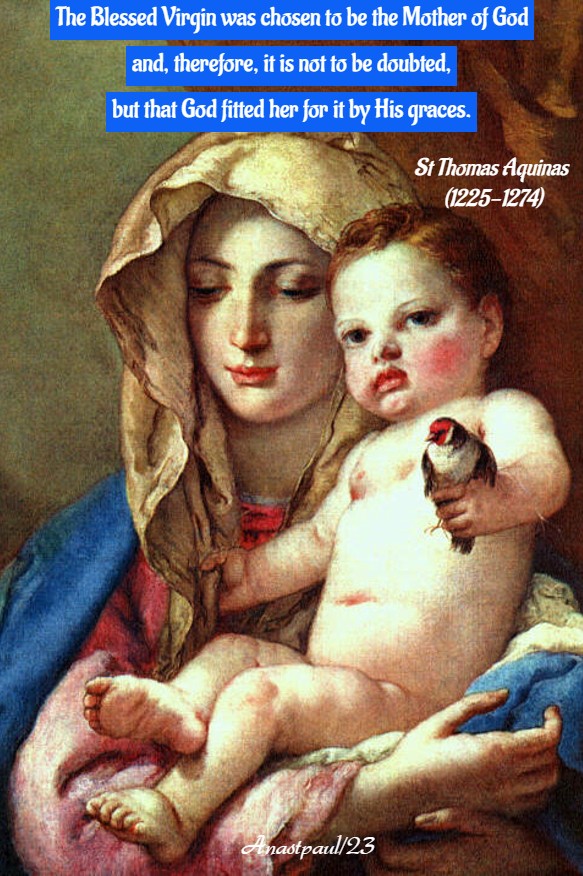
“The Blessed Virgin was chosen to be the Mother of God and, therefore, it is not to be doubted, but that God fitted her for it by His graces.”
St Thomas Aquinas (1225-1274) Doctor Angelicus / Doctor Communis
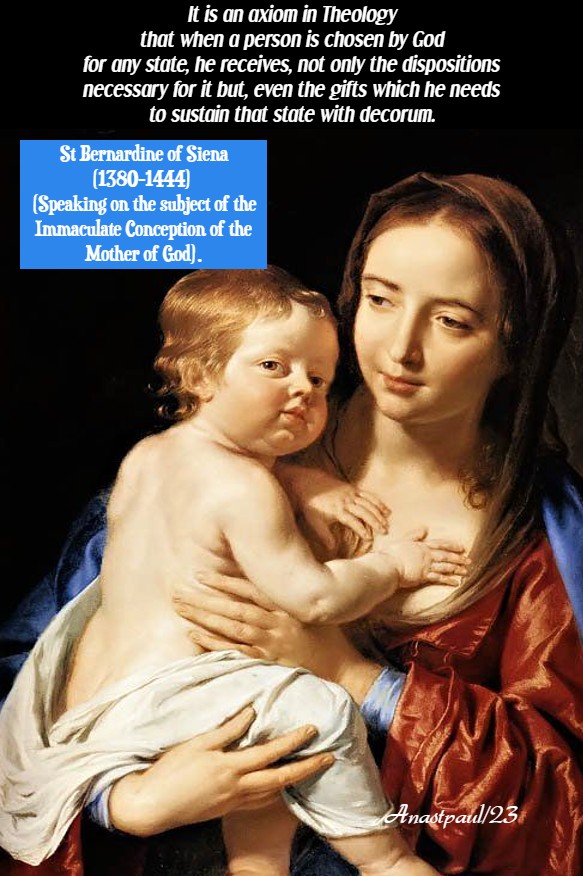
“It is an axiom in Theology that when a person is chosen by God for any state, he receives, not only the dispositions necessary for it but, even the gifts which he needs to sustain that state with decorum.” (Speaking on the subject of the Immaculate Conceptionof the Mother of God).
St Bernardine of Siena (1380-1444)
“She saw herself raised to the highest dignity that ever was or will be, for although it should please God to create anew many worlds, He could never make a pure creature be greater than the Mother of God.
Our Lady humbled herself and acknowledged herself unworthy of being raised to the high dignity of Mother of God, therefore, she was made to be His Mother, for she had no sooner uttered the protestation of her littleness, than, having abandoned herself to Him, by an act of incomparable charity, she became the Mother of the Most High, Who is the Saviour of our souls!”
Thought for the Day – 27 November – Meditations with Antonio Cardinal Bacci (1881-1971)
The Blessedness of the Pure of Heart
“Let us conclude this meditation with an appropriate prayer of St Thomas Aquinas.
“Make my heart watchful, O God, so that no vain thoughts may distract it from Thee. Make it noble, so that it may never be seduced by any base affection. Make it steadfast, so that troubles may not dismay it. Make it free, so that it may not yield to the onslaughts of passion. Grant me, my God, the intelligence, to understand Thee, the love, to seek Thee, the wisdom, to find Thee, words, to please Thee, the perseverance, to wait faithfully for Thee and, the hope of embracing Thee, at last. Grant that I, a repentant sinner, may bear Thy chastisements with resignation. Poor pilgrim which I am, may I draw on the treasury of Thine grace and may I one day, be eternally happy with Thee in Heavnely glory! Amen.”
Quote/s of the Day – 7 November – The Feast of All Saints of the Order of Preacher
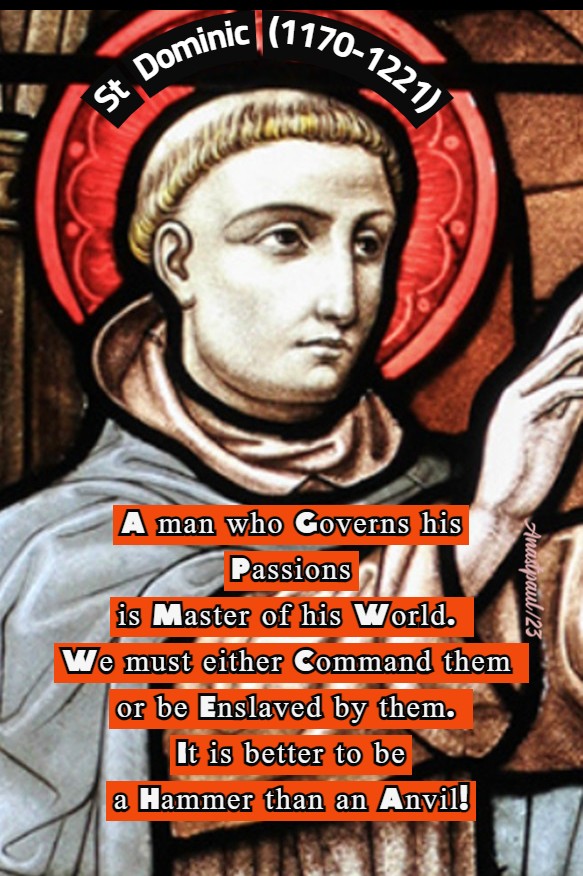
“A man who governs his passions is master of his world. We must either command them or be enslaved by them. It is better to be a hammer than an anvil!”
“Arm yourself with prayer instead of a sword; be clothed with humility instead of fine raiment.”
St Dominic OP (1170-1221) Confessor
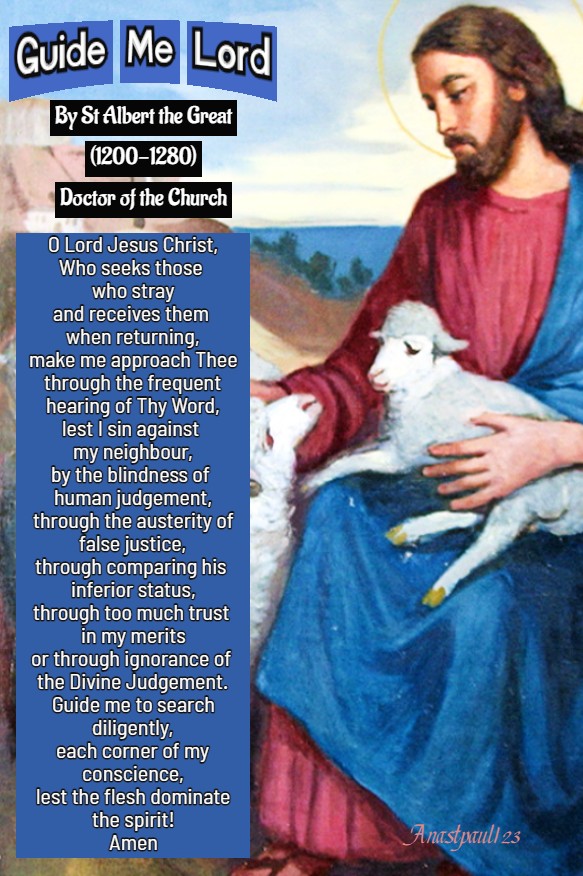
Guide Me Lord By St Albert the Great (1200-1280) Doctor of the Church
O Lord Jesus Christ, Who seeks those who stray and receives them when returning, make me approach Thee through the frequent hearing of Thy Word, lest I sin against my neighbour, by the blindness of human judgement, through the austerity of false justice, through comparing his inferior status, through too much trust in my merits or through ignorance of the Divine Judgement. Guide me to search diligently, each corner of my conscience, lest the flesh dominate the spirit! Amen
“Christ said that the shepherd enters through the gate and that He is Himself the Gate, as well as the Shepherd. Then, it is necessary, that He enter through Himself. By so doing, He reveals Himself and through Himself, He knows the Father. But we enter through Him because through Him. we find happiness.”
St Thomas Aquinas OP (1225-1274) Doctor Angelicus Doctor Communis
“Speak the truth in a million voices. It is silence that kills!”
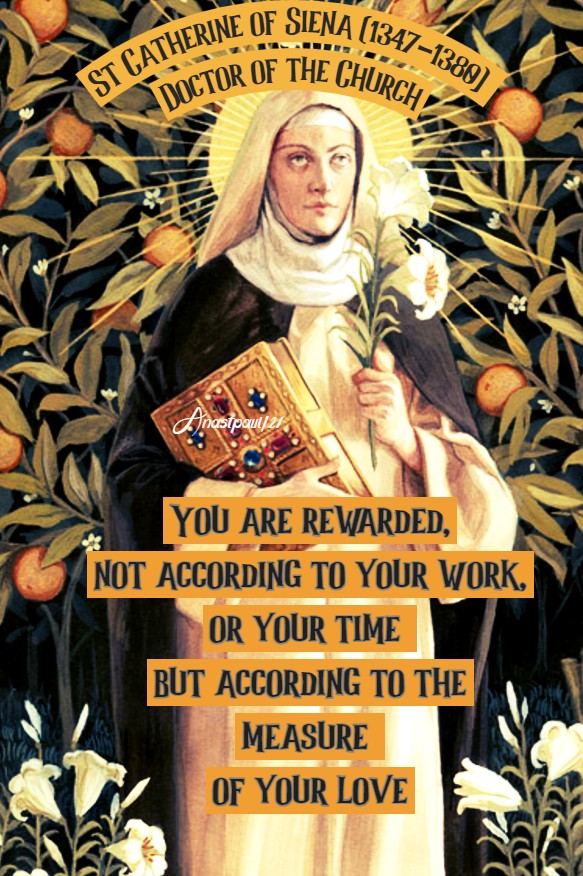
“You are rewarded, not according to your work, or your time but according to the measure of your love.”
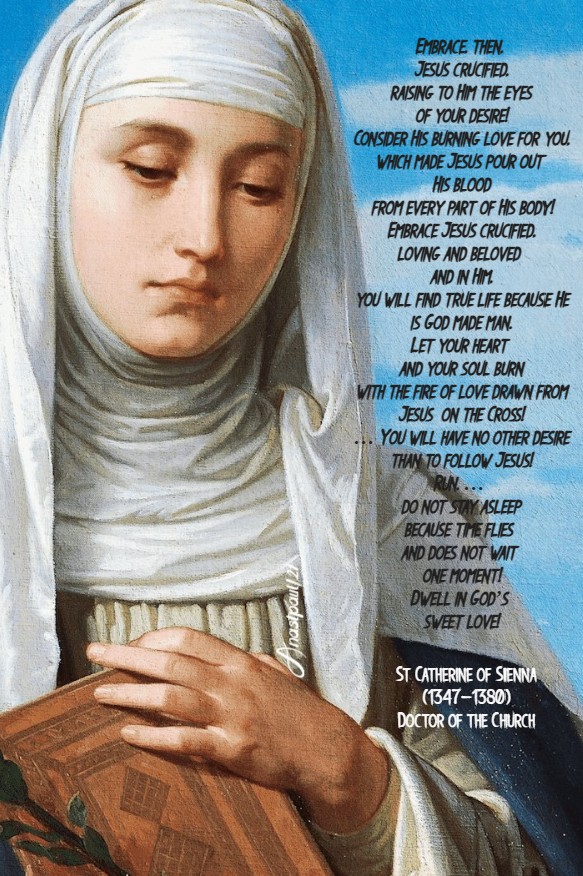
“Embrace, then, Jesus Crucified, raising to Him the eyes of your desire! Consider His burning love for you which made Jesus pour out His Blood from every part of His body! Embrace Jesus Crucified, loving and beloved and in Him, you will find true life because He is God made Man. Let your heart and your soul burn with the fire of love drawn from Jesus on the Cross! … You will have no other desire than to follow Jesus! Run, … do not stay asleep because time flies and does not wait one moment! Dwell in God’s sweet love!”
St Catherine of Sienna (1347-1380) Doctor of the Church
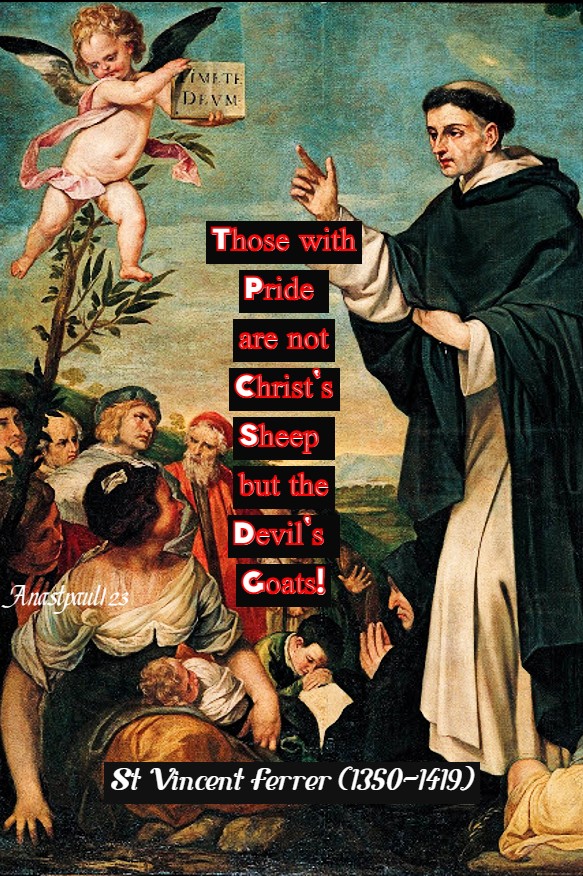
“Those with pride are not Christ’s sheep but the devil’s goats!”
St Vincent Ferrer OP 1350-1419)
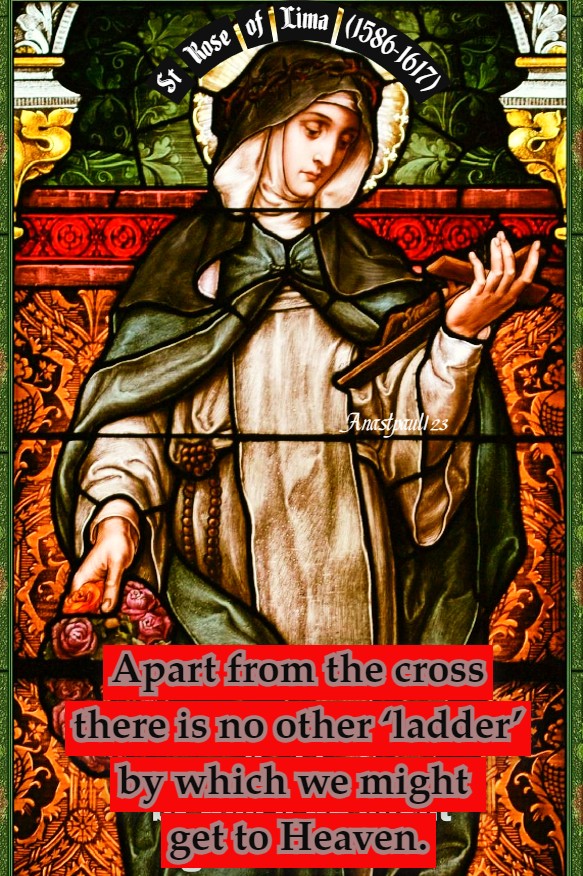
“Apart from the cross there is no other ‘ladder’ by which we might get to Heaven.”
St Rose of Lima OP (1586-1617)
Grant me, O my God By St Vincent Ferrer OP (1350-1419)
Good Jesus, let me be penetrated with love to the very marrow of my bones, with fear and respect toward Thee. Let me burn with zeal for Thy honour, so that I may deeply resent, all the outrages committed against Thee, especially those of which, I myself have been guilty. Grant further, O my God, that I may humbly adore and acknowledge Thee, as my Creator and penetrated with gratitude for all Thy benefits, I may never cease to render Thee thanksgiving. Grant that I may bless Thee in all things, praise and glorify Thee, with a heart full of joy and gladness and obeying Thee with docility in every respect, I may one day, despite my ingratitude and unworthiness, be seated at Thine table together with Thine Holy Angels and Apostles, to enjoy ineffable delights for all eternity! Amen
The Feast of All Saints of the Order of Preachers: “Fountain of all holiness, You stirred up in our holy brothers and sisters an extraordinary love of truth, conformity to Christ Crucified and a thirst for the salvation of souls: may we imitate them in offering You thanksgiving on account of the way of life they gave us.” — From the Intercessions at Lauds for the Feast of All Saints of the Order of Preachers. HERE: https://anastpaul.com/2019/11/07/thought-for-the-day-7-november-feast-of-all-dominican-saints/
St Achillas (Died 313) Bishop of Alexandria, Egypt. St Amarand St Amaranthus
Blessed Anthony Baldinucci SJ (1665-1717) Priest of the Society of Jesus, Preacher, Writer and Missionary. Fr Baldinucci was Beatified by Pope Leo XIII on 25 March 1893. Biography here: tps://anastpaul.wordpress.com/2017/11/07/saint-of-the-day-blessed-anthony-baldinucci-s-j-1665-1717/
St Athenodorus of Neo-Caesarea St Auctus of Amphipolis St Baud of Tours St Blinlivet St Congar
St Gebetrude of Remiremont St Herculanus of Perugia St Hesychius of Mytilene St Hieron of Mytilene Bl Hyacinth Castañeda Puchasons St Lazarus the Stylite Bl Lucia of Settefonti St Nicander of Mytilene Bl Peter Ou St Prosdocimus of Padua St Prosdocimus of Rieti St Raverranus of Séez St Rufus of Metz St Taurion of Amphipolis St Thessalonica of Amphipolis St Tremorus of Brittany
Quote/s of the Day – 3 November – “The Month of the Holy Souls in Purgatory” – Within the Octave of All Saints – Apocalypse 7:2-12, Matthew 5:1-12 – Scripture search here: https://www.drbo.org/
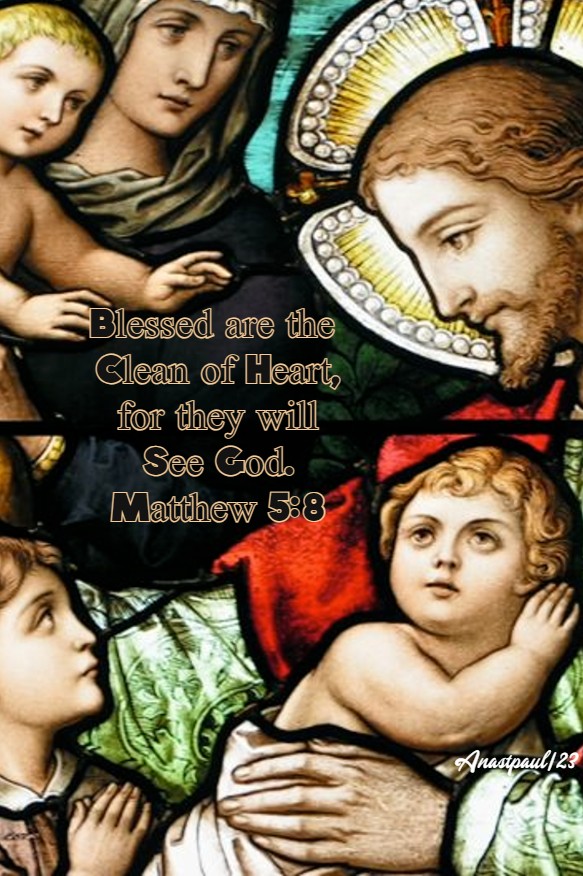
“Blessed are the clean of heart, for they will see God.”
Matthew 5:8
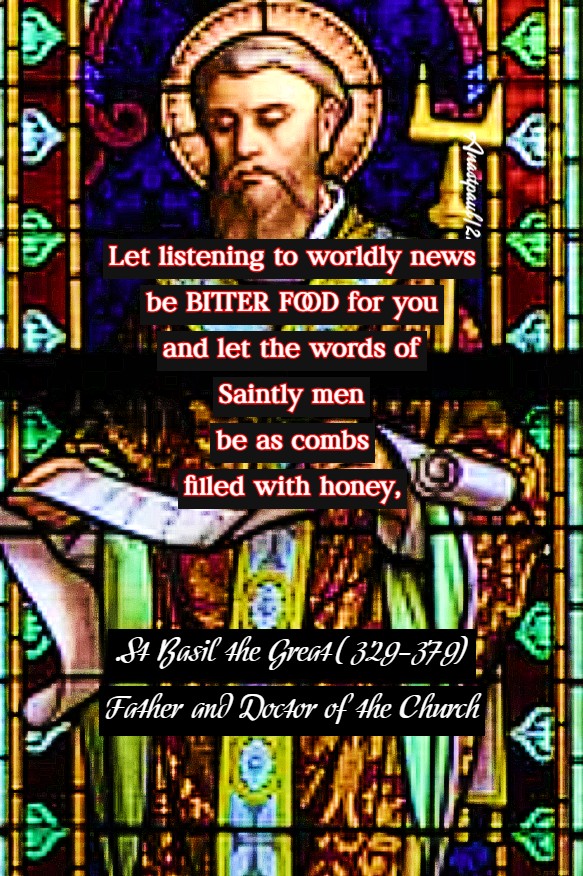
“Let listening to worldly news be BITTER FOOD for you and let the words of Saintly men be as combs filled with honey.”
St Basil the Great (329-379) Father and Doctor of the Church
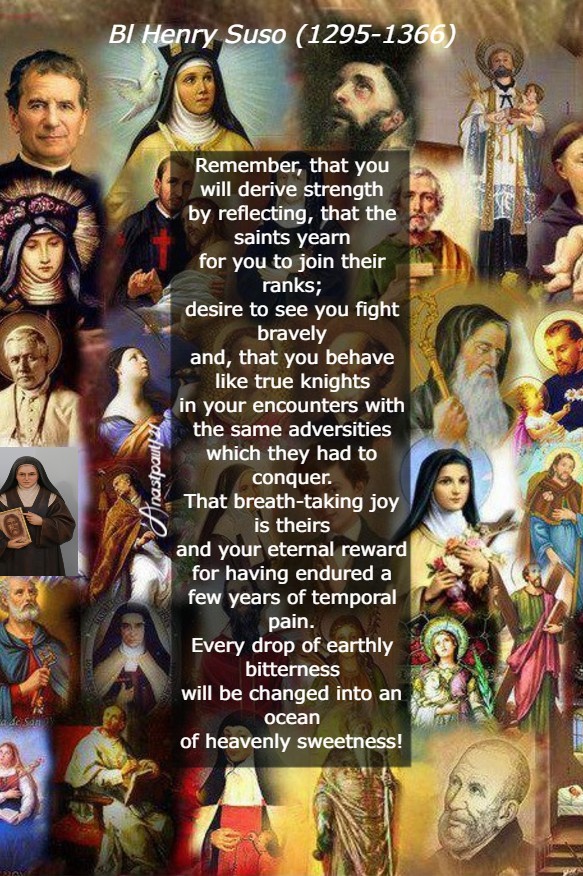
“Remember, that you will derive strength by reflecting, that the Saints yearn for you to join their ranks; desire to see you fight bravely and, that you behave like true knights in your encounters with the same adversities which they had to conquer. That breath-taking joy is theirs and your eternal reward for having endured a few years of temporal pain. Every drop of earthly bitterness will be changed into an ocean of heavenly sweetness!”
Blessed Henry Suso (1295-1366)
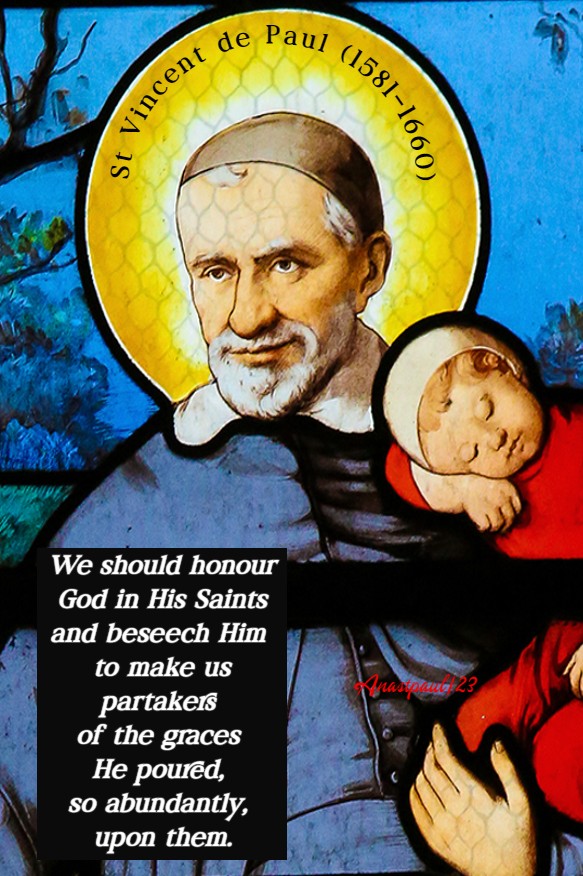
“We should honour God in His Saints and beseech Him to make us partakers of the graces He poured, so abundantly, upon them.”
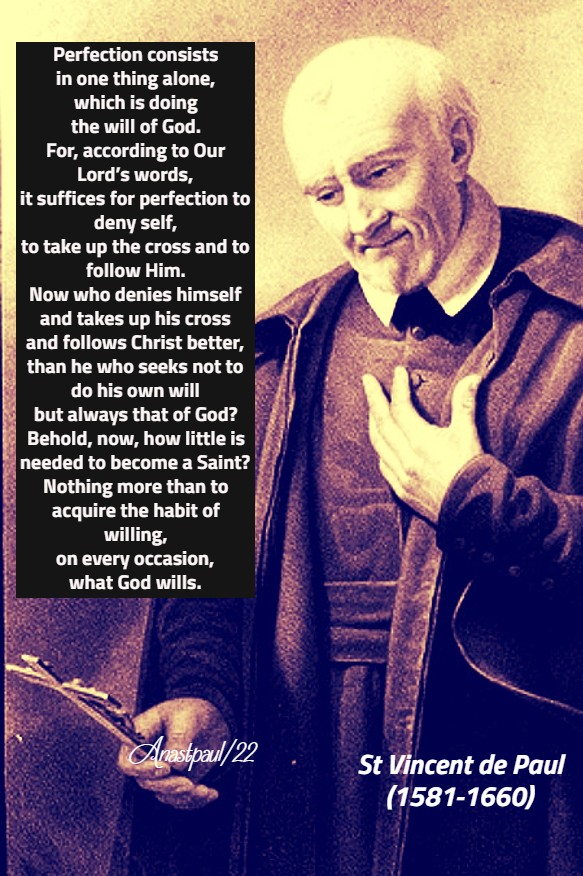
“Perfection consists in one thing alone, which is doing the will of God. For, according to Our Lord’s words, it suffices for perfection to deny self, to take up the cross and to follow Him. Now who denies himself and takes up his cross and follows Christ better, than he who seeks not to do his own will but always that of God? Behold, now, how little is needed to become as Saint? Nothing more than to acquire the habit of willing, on every occasion, what God wills.”
St Vincent de Paul (1581-1660)
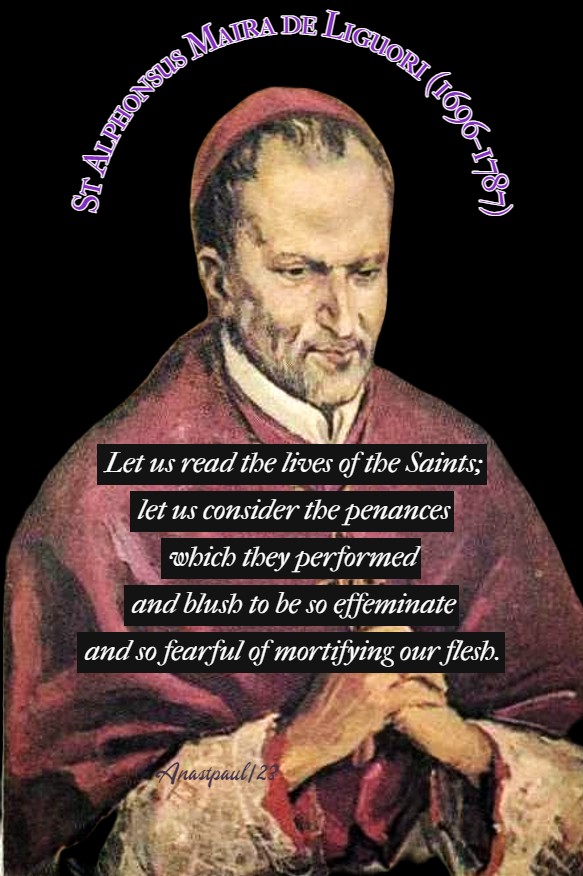
“Let us read the lives of the Saints; let us consider the penances which they performed and blush to be so effeminate and so fearful of mortifying our flesh.”
St Alphonsus Maria de Liguori (1696-1787) Most Zealous Doctor
St Acepsimas St Acheric of Vosges Bl Alphais of Cudot Bl Berardo dei Marsi Bl Berchtold of Engelberg St Caesarius St Cecilio Manrique Arnáiz St Clydog St Cristiolus St Domnus of Vienne St Elerius St Englatius St Florus of Lodeve St Gaudiosus of Tarazona St Germanus St Guenhael St Hermengaudius of Urgell St Hilary of Viterbo
St Sylvia Mother of St Gregory the Great, Pope St Theophilus St Valentine of Viterbo St Valentinian St Vitalis St William of Vosges St Winifred of Wales St Wulganus
Innumerable Martyrs of Saragossa: A large group of Christians martyred in Zaragoza, Spain by Dacian during the persecutions of Diocletian. Dacian ordered all Christians of the city into exile under pain of death; when they were assembled to leave, Dacian ordered imperial soldiers to massacre the lot of them. They were Martyred in 304.
Vigil of All Saints Day or All Hallow’s Eve: Eve of the Feast of All Hallows, that is, All Saints Day. Halloween is a day on which many quaint customs are revived. It is popular in the United States and Scotland and in the US has become the second largest secular holiday of the year.
St Wolfgang of Regensburg (c934 –994) “The Great Almoner,” Bishop, Monk, Missionary, Ascetic, Apostle of Charity. He is regarded as one of the three great German Saints of the 10th Century, the other two being Saint Ulrich and Saint Conrad of Constance. He was Canonised in 1052 by Pope Leo IX. St Wolfgang’s life: https://anastpaul.com/2019/10/31/saint-of-the-day-31-october-saint-wolfgang-of-regensburg-c-934-994/
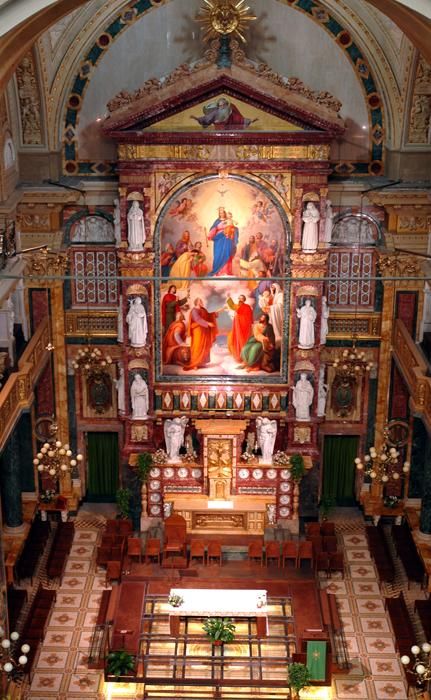
Dedication of the Basilica of Auxilium Christianorum / Our Lady Help of Christians, Turin, Italy, built by St John Bosco (1868) – 27 October: HERE: https://anastpaul.com/2021/10/27/88503/









































You must be logged in to post a comment.