Quote/s of the Day – 26 November – The Memorial of St Leonard of Port Maurice OFM (1676-1751)
“I believe, that were it not for the Holy Mass, at this moment, the world would be in the abyss, unable to bear up, under the mighty load of its iniquities. Mass is the potent prop that hold the world on its base.”
“What graces, gifts and virtues the Holy Mass calls down!”
“Oh Most Sacred Name, Name of peace, Balsam of life, which is the centre of all the sighs, of the most fervent lovers of Jesus. The Sign of those who truly love Jesus is to bear Jesus imprinted in the heart and to name often and with devotion, the Most Holy Name of Jesus.”
Our Morning Offering – 26 November – The Memorial of St Leonard of Port Maurice OFM (1676-1751)
Forgive Me, Good Jesus By St Leonard of Port Maurice (1676-1751)
Lord, I confess that up until now I have not lived as a Christian. I am not worthy to be numbered among Your elect. I recognise that I deserve to be damned but Your mercy is great and, full of confidence in Your grace, I say to You that I wish to save my soul, even if I have to sacrifice my fortune, my honour, my very life, as long as I am saved. If I have been unfaithful up to now, I repent, I deplore, I detest my infidelity, I ask You humbly to forgive me. Forgive me, good Jesus and strengthen me, that I may be saved. I ask You not for wealth, honour or prosperity, I ask You for one thing only, to save my soul. Amen
Onze-Lieve-Vrouw van Westrozebeke / Our Lady of Westrozebeke, Staden, West Flanders, Belgium (1482) – 26 November, Third Sunday of June:
On 26 November 1382, opposing armies camped around the Village of Westrozebeke: rebels recently victorious in Ghent vs. Louis II, King of Flanders and French troops brought in to help him. The residents congregated at a forest Chapel to beg the Virgin’s help. At the battle the next day, the rebels fled after their leader was killed. Afterward, a red silk thread encircling the area the King’s forces had occupied, with seven knots equally spaced along it and crosses where the ends met, was discovered – this was interpreted as a sign of the Virgin’s protection. The silk thread was soon distributed for relics and in its place, eight Chapels were built – seven to honour each of Mary’s Sorrows, where the knots had lain and a larger one to honour the Holy Cross. In 1384, Louis II’s son-in-law Philip II of Burgundy, instituted an annual procession and Mass in thanksgiving for the victory. Many pilgrims sought out the circuit of eight Chapels and the help of Our Lady of Roosebeke (“rosy stream“), especially sufferers from the streptococcal skin infection erysipelas, known as St Anthony’s fire in English but as wondroos (“rosy wound“) in Dutch. And they continued to frequent the old forest Chapel of Our Lady of the Fountain, near a spring with waters believed to cure eye diseases. The annual pilgrimage continued for centuries. The faithful from the Provincial Capital of Bruges, brought new clothes for Our Lady’s Statue, while those from Menen, to the south, came in thanksgiving for their deliverance from an epidemic in the early 1500s. In 1566, iconoclasts destroyed the Statue. Believers installed a new one in 1584. During World War I, another miracle came to light. In 1916, when Germans torpedoed the ferry “Sussex” as it crossed the English Channel toward France, sailors from Westrozebeke prayed to Our Lady and were spared. But their Village was not so fortunate: it was destroyed during the war. Our Lady’s beloved Statue, which had been moved away for safekeeping, returned afterwards and was installed in the new Church of St Bavo on 13 June1924.
St Bavo’s Church
Now part of the Municipality of Staden, Westrozebeke holds a 10-day festival in July, starting on the third Sunday, when firemen throw roses from the Church tower. The religious portion culminates in Our Lady’s Pageant on the following Saturday, with a procession and Mass in St Bavo’s Church, where roses encircle the Statue of Our Lady.
Bl Albert of Haigerloch St Alypius Stylites St Amator of Autun St Basolus of Verzy St Bellinus of Padua St Bertger of Herzfeld St Conrad of Constance St Ðaminh Nguyen Van Xuyên Bl Delphine of Glandèves St Egelwine of Athelney
St Magnance of Ste-Magnance St Marcellus of Nicomedia Bl Marmaduke Bowes St Martin of Arades St Nicon of Sparta Bl Pontius of Faucigny St Sabaudus of Trier St Siricius, Pope St Stylianus St Sylvester Gozzolini OSB Silv. (1177– 1267) Priest, Abbot, Founder St Tôma Ðinh Viet Du St Vacz — Martyrs of Alexandria – 7+ saints: A group of approximately 650 Christian priests, bishops and laity martyred together in the persecution of Maximian Galerius. We have the names and a few details only seven of them – Ammonius, Didius, Faustus, Hesychius, Pachomius, Phileas and Theodore. The were born in Egypt and were martyred there in c 311 in Alexandria, Egypt.
Martyrs of Capua – 7 saints: A group of seven Christians martyred together. The only details about them to survive are the names – Ammonius, Cassianus, Felicissimus, Nicander, Romana, Saturnin and Serenus. They were martyred in Capua, Campania, Italy, date unknown.
Martyrs of Nicomedia – 6 saints: A group of six orthodox Christians martyred by Arians. Few details have survived except their names – Marcellus, Melisus, Numerius, Peter, Serenusa and Victorinus. Martyred in 349 in Nicomedia, Bithynia, Asia Minor (modern Izmit, Turkey).
Saint of the Day – 16 November – Saint Agnes of Assisi OSC (1197-1253) Virgin, Nun,Abbess, younger sister of Clare of Assisi and one of the first Abbesses of the Order of Poor Ladies (now the Poor Clares). Born Caterina Offreducia in 1197 at Assisi, Italy and died on 16 November 1253 at the Monastery of San Damiano of natural causes. Patronage – the Poor Clares, siblings, children of Mary, engaged couples, chastity.
Agnes was the younger daughter of Count Favorino Scifi. Her saintly mother, Blessed Hortulana, belonged to the noble family of the Fiumi and her cousin, Rufino, was one of the celebrated “Three Companions” of St Francis.
Agnes’s childhood was passed between her father’s Palace in the City and his Castle of Sasso Rosso on Mount Subasio.
On 18 March, 1212, her eldest sister Clare, moved by the preaching and example of St Francis, had left her father’s home to follow the way of life taught by the Saint. Sixteen days later, Agnes repaired to the Monastery of St Angelo in Panso, where the Benedictine Nuns had afforded Clare temporary shelter and resolved to share her sister’s life of poverty and penance. Agnes was just Fifteen years of age.
At this ocurrence, the fury of Count Favorino knew no bounds. He sent his brother Monaldo, with several relatives and some armed followers, to St Angelo’s Monastery, to force Agnes, if persuasion failed, to return home. The conflict which followed is related in detail in the “Chronicles of the Twent Four Generals.” Monaldo, (Agnes’ uncle) beside himself with rage, drew his sword to strike the young girl but his arm dropped, withered and useless, by his side; others dragged Agnes out of the Monastery by the hair, striking her and even kicking her repeatedly. Presently St.Clare came to the rescue and suddenly, Agnes’s body became so heavy that the soldiers having tried in vain to carry her off, dropped her, half dead, in a field near the Monastery.
Overcome by a spiritual power against which physical force availed not, Agnes’s relatives were obliged to withdraw and to allow her to remain with St Clare.
St Francis, who was overjoyed at Agnes’s heroic resistance to the entreaties and threats of her pursuers, presently cut off her hair and gave her the habit of Poverty. Soon after, he established the two sisters at St Damiano’s, in a small rude dwelling adjoining the humble Sanctuary, which he had helped to rebuild with his own hands. There several other noble ladies of Assisi joined Clare and Agnes, and thus began the Order of the Poor Ladies of St Damian’s, or Poor Clares, as these Franciscan nuns afterwards came to be called.
From the outset of her religious life, Agnes was distinguished by such an eminent degree of virtue, that her companions declared that she seemed to have discovered a new road to perfection, known only to herself.
As Abbess, she ruled with loving kindness and knew how to make the practice of virtue bright and attractive to her subjects. In 1219, Agnes, despite her youth, was chosen by St Francis to found and govern a community of the Poor Ladies at Monticelli, near Florence, which in course of time, became almost as famous as St Damiano’s. A letter written by St Agnes to St Clare, after this separation, is still extant, touchingly beautiful in its simplicity and affection. Nothing perhaps in Agnes’s character, is more striking and attractive, than her loving fidelity to Clare’s ideals and her undying loyalty in upholding the latter, in her lifelong and arduous struggle for Seraphic Poverty.
Full of zeal for the spread of the Order, Agnes established, from Monticelli, several Monasteries of the Poor Ladies in the north of Italy, including those of Mantua, Venice and Padua, all of which observed the same fidelity to the teaching of St Francis and St Clare.
In 1253 Agnes was summoned to St Damiano’s during the last illness of her beloved sister and assisted at the latter’s triumphant death and funeral.
On 16 November of the same year,she followed St Clare to her eternal reward. Her mother Hortulana and her younger sister Beatrice, both of whom had followed Clare and Agnes into the Order, had already passed away.
The precious remains of St Agnes repose near the body of her mother and sisters, in the Church of St Clare at Assisi. God, Who had favoured Agnes with many heavenly manifestations during life, glorified her Tomb after death, by numerous miracles. In 1753 Pope Benedict XIV recognised her holiness and recognised her cultus by and permitted the Order of St Francis to celebrate her Feast. It is kept on 16 November, as a double of the second class.
Our Lady of the Gate of Dawn / Our Lady of Ostra, Brama, Vilnius, Lithuania (1363) – 16 November:
This Marian Title is the prominent Catholic painting of the Blessed Virgin Mary venerated by the faithful in the Chapel of the Gate of Dawn in Vilnius, Lithuania. The painting was historically displayed above the Vilnius City Gate; city gates of the time often contained religious artefacts intended to ward off attacks and bless passing travellers. The painting is in the Northern Renaissance style and was completed most likely around 1630. The Virgin Mary is depicted without the infant Jesus. The artwork soon became known as miraculous and inspired a following. A dedicated Chapel was built in 1671 by the Discalced Carmelites. At the same time, the painting was covered in expensive and elaborate silver and gold clothes leaving only the face and hands visible.
In 1702, when Vilnius was captured by the Swedish army during the Great Northern War, Our Lady of the Gate of Dawn came to her people’s rescue. At dawn, the heavy iron of the Gate collapsed, crushing and killing four Swedish soldiers. After this, the Polish-Lithuanian Commonwealth Army successfully counter-attacked near the gate. In the following centuries, the cult grew and Our Lady became an important part of religious life in Vilnius. This inspired many copies in Lithuania, Poland and diaspora communities worldwide. On 5 July 1927, the image was canonically crowned as Mother of Mercy. It is a major site of pilgrimage in Vilnius and attracts many visitors, especially from Poland.
Patronage of Our Lady: Feast permitted by a 1679 Decree of the Sacred Congregation of Rites for all Provinces of Spain, in memory of the victories obtained there over infidels. Pope Benedict XIII granted it to the Papal States and it may now be celebrated with due permission by Churches throughout the world.
Bl Edward Osbaldeston St Elpidius the Martyr St Eucherius of Lyon St Eustochius the Martyr St Felicita of Capua St Fidentius of Padua St Gobrain of Vannes St Ludre St Marcellus the Martyr St Othmar of Saint Gal Bl Simeon of Cava — Martyrs of Africa – (11 saints)
Martyrs of Almeria – (9 saints): Soon after the start of the Spanish Civil War in 1936, the Communist-oriented Popular Front had all clergy and religious arrested and abused as they considered staunch Christians to be enemies of the revolution. Many of these prisoners were executed for having promoted the faith and this memorial remembers several of them killed in the province of Almeria. • Adrián Saiz y Saiz • Bienvenido Villalón Acebrón • Bonifacio Rodríguez González • Diego Ventaja Milán • Eusebio Alonso Uyarra • Isidoro Primo Rodríguez • Justo Zariquiegui Mendoza • Manuel Medina Olmos • Marciano Herrero Martínez
Saint of the Day – 13 November – Saint Didacus (de Alcalá de Henares) OFM (c 1400-1463) Lay Brother of the Order of Friars Minor, Hermit, Mystic, Confessor, Born in c 1400 at Seville, Spain and died on 12 November 1463 at Alcala, Castile, Spain of natural causes. Also known as – St Didacus of St Nicholas, Diego, Diaz, Didacus de Alcalá de Henares, Didacus of Alcala. Patronages – Franciscan laity, Franciscan lay brothers, Diocese of San Diego, California.
The Roman Martyrology states of him today: “At Alcala in Spain, St Didacus, Confessor of the Order of Minorites, who was renowned for his humility. Incribed on the catalogue of the Saints by Pope Sixtus V, with a Feast Day of 13 November.“
Didacus was born about 1400 at San Nicolas in Andalusia, of poor and God-fearing parents. He entered the Third Order of St Francis when he had scarcely reached young manhood and under the direction of a devout Tertiary Priest, he served God for a long time as a Hermit. Consumed with the desire for still greater perfection, he later entered the Franciscan Convent at Arizafa in Castile and was there admitted to solemn vows as a lay brother.
His rapid progress in virtue made him a model to all his companions. His soul was continually occupied with God in prayer and meditation. From this source, he gathered such supernatural insight concerning God and the Mysteries of Faith, that learned theologians listened with astonishment to the inspiring conversations of this uneducated lay brother. Since Brother Didacus manifested great zeal for souls and willingness for sacrifice, his superiors sent him with other brethren to the Canary Islands, which at that time, were still inhabited by wild infidels. Didacus was eager for martyrdom and in this spirit, bore with dauntless patience, the many hardships that came his way. Both by word and example, he helped in converting many infidels.
In 1445, he was appointed Guardian of the chief Friary on the islands at Fortaventura. Recalled to Spain, he went to Rome in 1450 at the command of the Observant Vicar General, St John Capistrano, to attend the great Jubilee and the Canonisation ceremonies of St Bernardine of Siena. On this occasion, an epidemic broke out among the many Friars assembled in the large Convent of Aracoeli. Didacus attended the sick with great charity and trust in God. And God did not fail him. Despite the lack of supplies in the City at the time, Didacus always had ample provisions for his patients. He miraculously restored many of them to health by merely making the Sign of the Cross over them.
Leaving Rome, he returned to Spain, where, as in the former days, he was a source of great edification to the Friars of every Convent in which he lived.
When he felt that the end of his life was drawing near, he asked for an old and worn-out habit, so that he might die in it as a true son of the poor St Francis. He died on 12 November 1463, at the Franciscan Monastery in Alcalá, pressing a Crucifix to his heart and repeating the words of the Good Friday chant: “Dulce lignum, dulce ferrum, dulce pondus sustinet” – Precious the wood, precious the nails, precious the weight they bear.
Months passed before it was possible to bury Brother Didacus, so great was the number of people who came to venerate his remains. Not only did his body remain incorrupt but it diffused a pleasant odour. After it was laid to rest in the Franciscan Church at Alcalá de Henares, astounding miracles continued to occur at his tomb. Pope Sixtus V, himself a Franciscan, Canonised Brother Didacus in 1588.
The Church pays to Didacus today, the very same honours as we have seen her pay to Bernardine and John Capistrano. What is this but asserting, that before God, heroic acts of hidden virtue, are not inferior to the noble deeds that dazzle the world, if, proceeding from the same ardent love, they produce in the soul, the same increase of divine charity.
Saint of the Day – 9 November – Blessed Gabriel Ferretti OFM (1385-1456) Priest, Friar of the Order of Friars Minor,, Provincial Superior, Mystic. renowned missionary Preacher. He was zealous in the restoration and establishment of new Convents. Born in 1385 at Ancona, Italy and died on 12 November 1456 in Ancona, Piceno, Italy of natural causes. He was an ancestor to both Cardinal Gabriele Ferretti and Blessed Pope Pius IX, having been descended from a long noble lineage. Patronage – Ancona. His body is incorrupt.
Gabriel was born in 1385 and belonged to the ancient ducal family of the Ferretti. His devout parents raised him in the fear of God and in his eighteenth year he entered the Franciscan Order. His efforts at acquiring virtue won for him so great a degree of the respect and confidence of his brethren that, shortly after his Ordination to the Priesthood, when he was only twenty-five years old, he was appointed to preach missions in the March of Ancona. For fifteen years he devoted himself to this important task with blessed success.
He was then assigned to the office of Guardian of the Convent of Ancona and later he was elected Provincial of the Province of the March. In both offices he was careful to guide his subjects well. He shirked no labour and he could be very severe if it was necessary to correct an evil. He achieved the greatest results, however, by his own bright example of virtue, which induced weak and lax characters to exert themselves manfully in observing the rule.
His reputation for preaching to the masses was noted to the point, where Giacomo della Marca – who was preaching in Bosnia – asked for his help in that task. But the Ancona council in their deliberations on 22 February 1438 passed a resolution asking Pope Eugene IV to ensure the Friar remained in Ancona, due to all his good works. The Pope accepted this request, which meant that Gabriel could not go to Bosnia to aid his friend.
The following incident is proof of his great humility and piety. Once while he was journeying to Assisi, he went into the Franciscan Church at Foligno to pray. The Sacristan, who took him for a Brother, bade him serve the Mass of a Priest who had just gone to the Altar. The humble Provincial obeyed but when the guardian of the Convent recognised the venerable Superior of the Province of the March, in the server, he severely reproached the Sacristan. Father Gabriel defended the Sacristan, saying:
“To serve Mass is a great privilege. The Angels would consider themselves honoured. So do not blame the Brother for conferring that honour on me!”
Gabriel’s zeal to promote the interests of the Order was as great as his humility. At San Severino he restored a Convent that had fallen into ruin. At Osimo he built a new Convent. The Convent at Ancona he enlarged, in order to accommodate the great number of novices attracted to it by the fame of his sanctity.
Blessed Gabriel Ferretti possessed an ardent love of God and the Blessed Virgin Mary and he unwittingly gave expression to it, in all his sermons. Frequently he was favoured with visions of Our Lord and of the Blessed Virgin.
Rich in virtue and merits, Blessed Gabriel Ferretti died on 12 November 1456, in the Convent at Ancona, assisted in his last hour by the servant of God Gregory of Alba, and St James of the March. The latter delivered his funeral oration. To this day his body is incorrupt and the many miracles wrought through his intercession have increased the devotion of the faithful to him. On 19 September 1753 Pope Benedict XIV solemnly confirmed his veneration.
Dedication of The Archbasilica of the Most Holy Saviour and of Saints John the Baptist and John the Evangelist in the Lateran (Feast):
The oldest and first in rank of the four Basilicas of Rome. The name is derived from the Laterani family, on the site of whose Palace the Basilica stands. King Constantine presented this Palace to the Church. Its annual celebration throughout the Latin Church is a sign of love and unity with the Papacy and Pope. The original Church building, probably adapted from the hall of the palace, was dedicated to the Saviour and from its splendour was known as the Basilica Aurea. Though several times destroyed and rebuilt, the Basilica retained its ancient form, being divided by rows of columns into aisles and having an atrium with colonnades. The restoration of the 17th century changed its appearance. A Monastery was formerly between the Basilica and the City wall of which the cloister still remains. The original apse survived until 1878, when it was destroyed and a deeper apse built. The ancient mosaics have been preserved The high Altar, which is of wood and is believed to have been used by Saint Peter, is now encased in marble. In the upper part of the baldachinum are the heads of the Apostles, Peter and Paul. The Baptistery is an octagonal edifice with porphyry columns. The font is of green basalt. This Basilica has been the Cathedral of Rome since the 4th century.
Santa Maria la Real de la Almudena / Our Lady of Almudena, Madrid, Spain (712) – 9 Novemnber:
The Virgin of Almudena is a medieval icon of the Virgin Mary, Mother of God. The image is the advocation of the Virgin that serves as a Patroness of Madrid, Spain. Intriguingly, however, its name derives from the Arabic term of Al Mudayna, or the citadel. There are various legends regarding the Statue. One of the historical legends is that in 712, prior to the capture of the Town by the advancing Muslim forces, the inhabitants of the Town secreted the image of the Virgin, for its own protection, inside the walls surrounding the town. In the 11th century, when Madrid was reconquered by the King Alfonso VI of Castile, the Christian soldiers endeavoured to find the Statue. After days of prayer, the spot on the wall hiding the icon crumbled, revealing the Statue. Another legend is that as Christian soldiers approached the Town, they had a vision of Mary imploring them to allow her to lead them into the City. Again the miraculous crumbling of the wall occurred, with the Statue showing an entry route through the walls. The Cathedral of Madrid is dedicated to this advocation of the Virgin and her feast day, 9 November, is a major holiday in Madrid. Below is this beautiful Cathedral.
St Agrippinus of Naples St Alexander of Salonica St Aurelius of Riditio St Benignus of Armagh St Eustolia St Francisco José Marín López de Arroyave Blessed Gabriel Ferretti OFM (1385-1456) Priest Bl George Napper Bl Gratia of Cattaro Bl Helen of Hungary Bl Henryk Hlebowicz St Jane of Segna
St Justo Juanes Santos St Luigi Beltrame Quattrocchi St Luis Morbioli St María de la Salud Baldoví Trull Bl María del Carmen of the Child Jesus St Pabo St Sopatra St Theodore Stratelates St Ursinus of Bourges St Valentín Gil Arribas St Vitonus of Verdun — Martyrs of Constantinople – 3 saints: A group of ten Catholic Christians who tried to defend an image of Jesus over the Brazen Gate of Constantinople from an attack by Iconoclasts during the persecutions of emperor Leo the Isaurian. The group of was seized by soldiers, condemned by judges for opposing the emperor, and martyred. The only details that have survived are three of their names – Julian, Marcian and Maria. They were martyred in 730 at Constantinople (modern Istanbul, Turkey).
Martyred in the Spanish Civil War: • Blessed Anastasio Garzón González • Blessed Francisco José Marín López de Arroyave • Blessed Justo Juanes Santos • Blessed María de la Salud Baldoví Trull • Blessed Valentín Gil Arribas
Saint of the Day – 1 November – Blessed Ranieri Rasini OFM (c 1250-1304) Lay Friar of the Order of Friars Minor, Porter and beggar. He assisted all who came to Frairy in whatever way possible. The poor were his special friends, sharing what little was available with them. Born in c 1250 in Sansepolcro, Umbria, Italy and died on 1 November 1304 in Sansepolcro, Umbria of natural causes. Patronage – women in labour. Also known as – Ranieri of Aretino, Ranieri of Arezzo, Ranieri of Borgo, Ranieri of Sansepolcro, Raniero, Ranie.
Ranieri spent his life in the fulfillment of the humble duties of porter and beggar, thus entering, truly poor among the poor, in contact with the humble and simple people and with all those in need, who found some food at the door of the Convent.
Sister Death caught him in the cellar, where he was performing his service for the table of the brother Friars.
Ranieri was immediately venerated as a saint by the people of the City. Thus, a few days after his death, the City governors, which had taken steps to have the body embalmed and to collect the testimonies of the miracles attributed to the blessed, had a monumental Altar erected in honour of Ranieri. On the Altar, still existing in the Church of St Francis, we read: “In the year of the Lord 1304, on the Feast of All Saints, the saint Ranieri migrated to the Lord. In that year ,the City had this Altar made for the honour of God and for the magnificence of this saint. Amen” (original in Latin).
Among the miracles attributed to Ranieri after his death there is also the resurrection of two children, for which the Blessed is now invoked by women in labour.
The devotion paid to Blessed Ranieri was recognised by Pope Pius VII in 1802. The celebrations in honour of Blessed Ranieri occurs on 31 October due to his feast day occuring on the solemnity of All Saints. The body of the blessed is kept in the crypt of the Church of St Frances in Sansepolcro.
Quote/s of the Day – 19 October – The Memorial of St Peter of Alcantara OFM (1499-1562),
“He does much in the sight of God who does his best, be it ever so little.”
“If you would suffer patiently the adversities and miseries of this life, be a man of prayer. … ”
“No tongue can express the greatness of the love which Jesus Christ bears to our souls. He did not wish, that between Him and His servants, there should be any other pledge than Himself…
Saint of the Day – 17 October – Blessed Contardo Ferrini TOSF (1859-1902) Layman, Third Order Franciscan, Profesor, Civil and Canon Lawyer, Apostle of the poor, writer, A recognised specialist in Roman and Byzantine law, Contardo Ferrini was a Professor at several Universities but his name is mainly linked to the University of Pavia , where he studied in 1880 and later became a Professor. He was also a fervent Roman Catholic, who lived a devout life of prayer and service to the poor. Born on 4 April 1859 at Milan, Italy and died on 17 October 1902 at Suna, Verbano-Cusio-Ossola, Italy of typhus, aged 43. Patronages – academics, colleges, schools, universities.
The Roman Martyrology mentions him today: “In Suna near Lake Maggiore, Blessed Contardo Ferrini, who, in educating young people, with his example of faith and Christian life, went far beyond human science.“
Contardo Ferrini was born on 5 April 1859 in Milan to Rinaldo Ferrini and Luigia Buccellati. He was Baptised at the font where Blessed Frédéric Ozanam, also a native of Milan, had been Baptised 46 years before. After receiving his First Holy Communion at age 12, he joined a Blessed Sacrament Confraternity.
Contardo’s father, a Professor of mathematics and science, taught his son at an early age. By the time he was a young man, he spoke several languages. His apparent love for his faith caused friends to call him by the nickname St. Aloysius (St. Aloysius Gonzaga). He entered University of Pavia at age 17 and, two years later, was appointed Dean of Students. At age 21 he became a Doctor of the law at the University. His doctoral thesis, which related penal law to Homeric poetry, was the basis of his being awarded a scholarship to the University in Berlin, where he specialised in Roman-Byzantine law, a field in which he became internationally acclaimed as expert.
Blessed Bartholomew Longo and Contardo Ferrini
During Contardo’s stay in Berlin, he wrote of his excitement at receiving the Sacrament of Reconciliation for the first time in a foreign country. The experience brought home to him, he wrote, the universality of the Church.
Upon his return to Italy, he was a Lecturer in Universities at Messina, Modena and Pavia. He received his first Professorship at age 26. Contardo, atthis time, attempted to discern a vocation as a secular priest, a religious, or as a married person. Ultimately, he remained an unmarried layperson. He vowed himself to God, became a member of the Third Order of St. Francis in 1886 and was a member of the Saint Vincent de Paul Society, to which he had been introduced by his father, a member of a St Vincent de Paul Conference himself.
As a faculty member at the University of Pavia, he was considered an expert in Roman Law. Over the course of his career he published books, articles and reviews. He taught for a time at the University of Paris. He became a Canon Lawyer in addition to being a Civil Lawyer. Mountaineering was an favourite hobby.
An anecdote, unsourced, about Contardo is that he was asked to attend a dinner party and, once there, found it tedious. His resort was to invite all the guests to join him in praying the Rosary.
In 1900, Contardo developed a heart lesion. In Autumn 1902, he went to his country home in Suna in order to rest. There he became ill with typhus. He died at age 43 on 17 October 1902. Residents of Suna immediately declared him a saint. His fellow faculty members at the University of Pavia wrote letters in which he was described as a saint. In 1909 Pope Pius X appointed Cardinal Ferrari to open a cause. Contardo was declared Venerable by Pope Pius XI and he was Beatified by Pope Pius XII on 13 April 1947. His body is venerated in a Chapel of Milan’s Catholic University. He is a patron of universities, colleges and academics. Yesterday we read some of the history of Milan Duomo and the 3159 Saint Statues there. One of the 2245 Spire Saints, on one the lofty Spires of this breathtaking Cathedral, resides our Blessed Contardo.
Quote/s of the Day – 12 October – “Month of the Holy Rosary” and the Memorial of St Serafino of Montegranaro OFM Cap (1540-1604)
“Be constant in secret prayers which God, Who indeed sees in secret, rewards in the open. Hold fast to this exercise of a most excellent way of life. that you may find hidden treasure in the day of need.”
St Basil the Great (329-379) Father and Doctor of the Church
“I have nothing, just a Crucifix and a Rosary but with these, I hope to benefit the Friars and become a Saint.”
Said by St Serafino upon entering the Novitiate
“… [I] resolved to recite a Rosary for anyone who caused me trouble. Then I heard the voice from the Tabernacle say, ‘Your prayers for those who mortify you, are very pleasing to Me. In exchange, I am ready to grant you many graces.‘”
Saint Serafino prayed each day:
“Holy Mother, pierce me through, In my heart each wound renew Of my Saviour Crucified.”
Saint of the Day – 12 October – St Serafino of Montegranaro OFM Cap (1540-1604) Franciscan Capuchin Lay Friar, Confessor, gifted with the charism of prophecy, mystic, Apostle of the poor, spiritual advisor, devoted to the Blessed Sacrament, the Holy Rosary and to the Blessed Virgin Mary, wonder-worker . Born as Felice Rapagnano in1540 at Montegranaro, Italy and died on 12 October 1604 at Ascoli Piceno, Italy of natural causes. Also known as – Serafino of Ascoli Piceno, Serafinus, Seraphim, Seraphin. Felix, Felice.
The Roman Martyrology states: “At Ascoli, St Seraphinus, Confessor, of the Order of Minorite Capuchins, distinguished by holiness of life and humility. Hre was enrolled among the Saints by the Sovereign Pontiff Clement XIII.”
Born Felice (Felix) Rapagnano at Montegranaro, then in the March of Fermo, he was the second of four children of poor but pious parents, Gerolamo Rapagnano and Teodora Giovannuzzi. His father was a mason. Because of their poverty, the family depended on the productivity of all of its members. The eldest son, Silenzio, followed in his father’s footsteps as a mason. The slighter and less manually adept Felix, was hired out to a local farmer as a shepherd. Felix enjoyed shepherding since it afforded him time for prayer. Even at an early age, he had an inclination toward silence, seclusion and prayer. When their father died, however, he was summoned home. His brother understood that Felix lacked the skills of a mason but hoped to use him as an unskilled laborer. All attempts proved futile. Felix could not even learn how to slake lime. He did learn, however, to put up with the physical and emotional abuse heaped upon him by his irascible brother.
Felix kept in mind stories he had heard about the desert ascetics and of their fasting and penances and dreamed of becoming like them. He confided in a friend, Luisa Vannucci from Loro Piceno, who encouraged him to enter religious life. She specifically mentioned the Capuchins because she was familiar with these Friars and with their reputation for virtue. Immediately, he left for Tolentino and presented himself to the Capuchin Provincial, expecting to be admitted that very day. But such was not the Capuchin custom. Instead, he was sent home, in all likelihood because of his age, he was just eighteen and fragile condition. In 1556, he repeated his request to the Prior Provincial, who this time accepted him and sent him to the Novitiate of the Province at Jesi.
After he completed a year of probation, Felix received the religious name of Serafino (meaning “seraph” or “celestial being or the burning one”). Upon entering the Order, he remarked, “I have nothing, just a Crucifix and a Rosary but with these, I hope to benefit the Friars and become a Saint.” Serafino was distinguished from the first, by his unaffected simplicity, mortification and obedience, as well as a great charity towards the poor. He had a special devotion to the Blessed Sacrament and to the Blessed Virgin. He was assigned to serve variously as a porter or questor at various Friaries throughout the March but most of his religious life was spent at Ascoli Piceno.
Serafino’s physical appearance was described as that of a peasant – hair always rumpled, clumsy at manual tasks and mainly illiterate. But his holiness was recognised by many. At times, he was discouraged by the ridicule of his Capuchin brothers. He would regain his composure through prayer. He explained, “When I entered religious life I was a poor, unskilled labourer, lacking both talent and potential. I remained as I was and this caused so many humiliations and rebukes, which the devil used as opportunities to tempt me to leave religious life and retreat to some desert, withdrawing into myself. I entrusted myself to the Lord and, one night I heard a voice coming from the Tabernacle say, ‘To serve God you must die to yourself and accept adversity, of whatever type.’ So I accepted them and resolved to recite a Rosary for anyone who caused me trouble. Then I heard the voice from the Tabernacle say, ‘Your prayers for those who mortify you are very pleasing to me. In exchange, I am ready to grant you many graces.‘”
A Capuchin custom was to keep rooms near the Porter’s Office available for the use of travelLers and pilgrims. At whatever hour of the night, Serafino would answer the door. Many recounted that, after the City gates had been closed for the night, they had sought refuge at the Capuchin Friary, which were usually located outside the City walls and that they had been welcomed warmly by Serafino. He spent entire nights in Church. Friars testified that, after everyone else had gone to bed, they would often hear him walking toward the Church to spend the night in adoration before the Blessed Sacrament. There he was heard praying, “Peace, Lord, I ask peace for so-and-so.” He once confided that the reason he spent so much of the night before the Tabernacle was because, in his room, he was greatly tempted against chastity, even in his old age.
Memories agree, that Serafino was endowed with the gift of reading the secrets of hearts and with that of miracles and prophecy. Although unlettered, Serafino’s advice was sought by secular and ecclesiastical dignitaries. His reputation reached as far as the Dukes of Bavaria and Parma, the nobles of Bologna and Cardinal Ottavio Bandini. The Bishop of Ascoli, the eminent theologian Cardinal Girolamo Bernerio, also sought out his advice.
Serafino was austere in his person. Only once in his life did he accept a new religious habit and then, only out of obedience. For forty continuous years, he ate only soup or salad. In keeping with the spirituality prevalent at the time, Serafino had a personal devotion of serving as many Masses as possible. To avoid having people kiss his hand or tunic to show their respect, he would carry a Crucifix with him, offering it for them to kiss instead.
However, Serafino was also endowed with a great sense of humour. Once, a woman asked him if she would give birth to a boy or a girl. He attempted to avoid answering. But the woman insisted, saying, “How shall I know what name to choose?” Chuckling, Serafino responded, “As far as that goes, choose Ursula and Companions,” indicating that throughout her life the woman would give birth to a succession of girls.
Even before Serafino’s burial in 1604, his first biographer put pen to paper. He was Canonised by Pope Clement XIII on 16 July 1767. Pope Clement Canonised Serafino together with John Cantius, Joseph Calasanz, Joseph of Cupertino, Jerome Emiliani and Jane Frances de Chantal. In the Papal Bull of Canonisation, the illiterate and physically clumsy Capuchin was acclaimed as a person who “knew how to read and understand the great book of life which is our Saviour, Jesus Christ. For that reason, he deserves to be listed among Christ’s principal disciples.”
Serafino’s tomb is in the Capuchin friary at Ascoli Piceno. A Church at San Lorenzo Nuovo is dedicated to him.
Serafino was in love with the mystery of Christ and of Our Lady. He was enthralled to meditate on them and would go into ecstasy. He would have liked to be in the fraternity at Loreto or in Rome to be able to serve as many Masses as possible each day. This was the source of his zeal – to work with Christ to save souls. He was remembered and venerated – for his brief and penetrating spiritual exhortations; for his extremely fruitful vocational apostolate; for his veneration for priests; for his compassion for the sick, the troubled and the poor; for his courageous commitment to make peace in society and in families; for his missionary enthusiasm and his desire for martyrdom. Although he was almost illiterate he could speak about the things of God with extraordinary ability and unction. When he was obliged, by obedience, to give a sermon in the refectory, his words in commenting on the psalm Qui habitat in adiutorio Altissimi, or the sequence Stabat Mater dolorosa were so full of feeling that he used to reduce everyone to tears. Dear holy Saint Serafino, pray for us all!
Quote/s of the Day – 4 October – The Memorial of St Francis of Assisi (c 1181–1226)
“Alms are an inheritance and a justice which is due to the poor and which Jesus has levied upon us.”
“Start by doing what is necessary, then what is possible and suddenly, you are doing the impossible!”
“He who works with his hands, is a labourer. He who works with his hands and his head, is a craftsman. He who works with his hands and his head and his heart, is an artist.”
One Minute Reflection – 4 October – “Month of the Holy Rosary” – Readings: Jonah 1: 1 – 2: 1-2, 11; Psalm Jonah 2: 3, 4, 5, 8; Luke 10: 25-37 The Memorial of St Francis of Assisi (c 1181–1226)
“But a certain Samaritan being on his journey, came near him and seeing him, was moved with compassion. And going up to him, bound up his wounds …” – Luke 10:33-34
REFLECTION – “ How good You are, O Divine Samaritan, to gather up this wounded world so sadly fallen along the way, trapped in such mire and so unworthy of Your Goodness!
The more wicked the world, the more Your Mercy shines forth: to be infinitely good to the good, is a thousand times less admirable, than to be infinitely good to souls, who, even though lavished with graces, are simply ungrateful, unfaithful, perverse. The more wicked we are, the more the marvel of Your infinite Mercy gleams and shines. This in itself, suffices to explain, the great good that sin produces on the earth and explains, why You permit it. It makes way for an incomparable greater good – the exercise and manifestation of Your divine Mercy. This divine attribute could not be put into practice without it; goodness could be exercised and shown without sin but failure is needed, if mercy is to be manifested. Ah! My Lord and God, how Good you are! How Merciful! Mercy is, so to speak, the overflow of Your Goodness and what is most passionate in Your Goodness, the weight by which Your Goodness overcomes Your Justice. How divinely good You are! (…)
Be kind to sinners, since God is so kind to us – pray for them, love them. … “Be merciful as our Father is merciful” (cf. Lk 6:36). God “prefers mercy to sacrifice” (cf. Mt 12:7).” – Bl Charles de Foucauld (1858-1916) Hermit and Missionary in the Sahara – (Meditations on the psalms 103, psalm 52)
PRAYER – All highest, glorious God, cast Your light into the darkness of our hearts, give us true faith, firm hope, perfect charity and profound humility, so that with wisdom, courage and perception, O Lord, we may do what is truly Your holy will. Amen. – St Francis of Assisi
Our Morning Offering – 4 October – The Memorial of St Francis of Assisi OFM (c 1181–1226)
Prayer to do the Will of God By St Francis of Assisi (c 1181-1226)
Almighty, eternal, just and merciful God, grant us in our misery, the grace to do for You alone what we know You want us to do and always to desire, what pleases You. Thus, inwardly cleansed, interiorly enlightened and inflamed by the fire of the Holy Spirit, may we be able to follow in the footprints of Your beloved Son, our Lord Jesus Christ. And, by Your grace alone, may we make our way to You, Most High, Who live and rule in perfect Trinity and simple Unity and are glorified God all-powerful, forever and ever. Amen
Stigmata of St Francis of Assisi: Two years before the great Saint Francis of Assisi died and when he was forty-two years old — one year after he had built the first crib in honour of Our Lord — he went off to a lonely mountain called Mount Alvernia, to prepare himself by forty days of fasting and prayer for the Feast of Saint Michael, the greatest of God’s Angels, whose Feast day is 29 September. On the Feast of the Exaltation of the Holy Cross on 14 September, Saint Francis received in his hands, feet and side the Sacred Wounds from Our Lord’s own body.
Never was a Saint more beautifully loved by Jesus than Saint Francis of Assisi. The wounds Jesus gave him stayed in his hands, feet and side and continually bled for two more years, until he died in 1226. The day on which Saint Francis received the Five Wounds of Our Lord was 14 September but so, that this beautiful event might have a feast day for itself, the Stigmata of Saint Francis is commemorated today, on 17 September. The simple liturgy of this holy Saint’s life might be put this way – the crib in 1223 and the Cross in 1224.
St Agathoclia St Brogan of Ross Tuirc St Columba of Cordova St Crescentio of Rome St Emmanuel Nguyen Van Trieu St Flocellus
St Narcissus of Rome St Peter Arbues OSA (1442-1485) Priest Martyr St Rodingus St Satyrus of Milan St Socrates Bl Stanislaus of Jesus and Mary St Stephen St Theodora St Uni of Bremen St Zygmunt Sajna
Saint of the Day – 17 August – Saint Beatrice da Silva Meneses OIC (1424-1492) Virgin, Founder of The Order of the Immaculate Conception known as the Conceptionists, a contemplative Order of Nuns. Born in 1424 as Beatriz de Menezes da Silva, in Campo Maior, Portalegre, Portugal and died on 17 August 1492 in Toledo, Spain of natural causes. Also known as – Brites, Beatrix da Silva, Beatriz da Silva Meneses. Patronage – prisoners. Additional Memorial – 1 September in the Franciscan Order.
Beatrice da Silva was a Portuguese noble woman, one of eleven children born to Rui Gomes da Silva – first Governor of Campo Major, Portugal, after it was reconquered from Arab rule – and of Isabel de Menezes, the Countess of Portalegre. One of her brothers was the Blessed Amadeus of Portugal, OFM, a noted Confessor and Reformer of the Order of Friars Minor. (His life here: https://anastpaul.com/2018/08/10/saint-of-the-day-blessed-amadeus-of-portugal-o-f-m-1420-1482/.
She was raised in the Castle of Infante John, Lord Reguengos de Monsaraz. In 1447 Beatrice accompanied his daughter, Princess Isabel of Portugal, as her Lady in Waiting when Isabel went to marry King John II of Castile and Leon. She became a close friend of the Queen but unfortunately her beauty made Isabel jealous. It is said that a suitor, whom Beatrice had rejected, insinuated to the Queen that Beatrice was a rival for the King’s affections and she imprisoned Beatrice in a tiny cell. There is a story that she shut her in a chest. After a few days a relative, concerned about Beatrice’s welfare, persisted in questioning Isabel – the Queen showed him the chest where, expecting to find a body, he found Beatrice in perfect health. While imprisoned, Beatrice had a vision of Our Lady, who told her to found a new Order in her name.
Beatrice escaped and went to Toledo. On the journey she met two Franciscan Friars who told her she would be the mother of many children. She protested that she had taken a vow of purity to the Queen of Heaven. “What we have said will come to be,” they told her and then they vanished. Beatrice believed that Mary had sent St Francis and St Anthony to give her consolation.
In Toledo she took refuge with the Dominican nuns and for 37 years led a life of holiness without becoming a member of the Order. In 1484 Beatrice and a few companions took possession of a Palace in Toledo set apart for them by the new Queen Isabella (who married Ferdinand of Aragon). Isabella of Castile was a devout woman and took a great interest in Beatrice’s work. The Monastery was named Santa Fe, which was dedicated to honouring the Immaculate Heart of Mary.
In 1489, with the permission of Pope Innocent VIII, the Nuns adopted the Cistercian rule, bound themselves to daily recitation of the Divine Office of the Immaculate Conception and were placed under obedience to the ordinary of the Diocese. Beatrice chose the habit, which is white with a white scapular and blue mantle with a medallion of Mary under her title of the Immaculate Conception.
Beatrice died in 1492 in the Monastery which she had founded. Her remains are still venerated in the Chapel of that Monastery.
In 1501 Pope Alexander VI united the Nuns of Sante Fe, which Beatrice had founded, with the neighbouring Benedictine Monastery of San Pedro de las Duenas and put them all under the Rule of St Clare. Through this, the Order became connected with the Franciscans. Pope Julius II gave the Order a rule of life of its own in 1511 and special constitutions were drawn up by the Franciscan Cardinal Francisco de Quinones, establishing the community as the Monastery of the Immaculate Conception. The Order spread in Europe and South America. At its height, there were some 2,000 Monasteries of the Order throughout the world.
Beatrice was Beatified on 28 July 1926 by Pope Pius XI and Canonised on 21 January 1974 by Pope Paul VI (decree on heroic virtues). Recorded miracles involved the instantaneous and perfect healing of Sister Mary of Saint Anne, 22, from a hemorrhage subretinica, retinicis and a secondary lesions of the eye on 25 March 1923 in Mexico City;and Elizabeth Orozco Estrada, 63, from the small intestine and colon malignant neoplasia in September 1945 in Mexico City.
Quote/s of the Day – 12 August – “Month of the Immaculate Heart of Mary” – Memorial of St Clare of Assisi (1194-1253) and St Jane Frances de Chantal (1572-1641
“Go forth in peace, for you have followed the good road. Go forth without fear, for He who created you has made you holy, has always protected you and loves you as a mother. Blessed be you, my God, for having created me.”
“Love[ing] one another with the charity of Christ, let the love you have in your hearts, be shown outwardly in your deeds …”
Our Morning Offering – 12 August – “Month of the Immaculate Heart of Mary” Memorial of St Clare of Assisi (1194-1253)
I Come, O Lord By St Clare of Assisi (1194-1253)
I come, O Lord, unto Thy sanctuary to see the life and food of my soul. As I hope in Thee, O Lord, inspire me with that confidence which brings me to Thy holy mountain. Permit me, Divine Jesus, to come closer to Thee, that my whole soul may do homage to the greatness of Thy majesty, that my heart, with its tenderest affections, may acknowledge Thy infinite love, that my memory may dwell on the admirable mysteries, here renewed everyday and that the sacrifice, of my whole being, may accompany Thine. Amen
Saint of the Day – 7 August – Blessed Vincent de L’Aquila OFM (c 1435-1504) Lay Brother Friar of the Order of the Friars Minor of St Francis, gifted with the charism of prophecy, Mystic, known to levitate whilst in prayer, miracle-worker. He was sought out by nobility, future saints and ordinary people for spiritual advice and prophecy. Born in c 1435 in L’Aquilaand died on the evening of 7 August 1504 in his hut in the forest outside the convent of San Giualiano near L’Aquila, Italy of natural causes. His body is incorrupt. Patronage – L’Aquila, Italy. Also known as Vicente.
The Roman Martyrology states of him today: “In L’Aquila, in the Vestina region (today Abruzzo), Italy, Blessed Vincent, a religious of the Order of Friars Minor, famous for his humility and his prophetic spirit”
Vincent was born in L’Aquila, in Abruzzo, a City that at that time was part of the kingdom of Naples..
At the age of 14 he entered the Order of Friars Minor in the Convent of San Julián, founded by Blessed Antonio de Stroncone, near the City gates. After the profession of perpetual vows, he spent the first years of his conventual life retired in a hut in the forest of the Convent, which he only left to fulfill the offices assigned to him. He preferred humble jobs, he helped the brothers with their domestic chores and fixed their sandals because, to be more useful, he had learned the trade of shoemaker. Other times he would dedicate himself to the work of the fields and, in the rest periods, he would retire to the roughness of the rocky ground, about a hundred paces from the Convent, to devote himself to prayer.
Although educated at home with great care, Vincent wanted, out of humility, to remain a lay brother. One of the characteristics of his holiness was the spirit of mortification. So much was his austerity, that he did not even wear the sandals permitted but always remained barefoot. His brown habit, which can still be seen today, was the heaviest and coarsest of all; He did not take it off day or night. In addition, he wore sackcloth and inflicted frequent and prcticed floggings. His food was reduced to bread and water with some raw herbs, and if he was sometimes obliged, by obedience, to eat like the community, he nevertheless found a means of mortifying himself, taking only a part of his portion and adding dust or bitter substances to it.
His application to prayer was so great that Fray Marcos de Lisboa wrote about him: “Vicente remained abstracted and elevated in the air and his body was as deprived of the senses as if he were dead.” The superiors, seeing him as exemplary, to keep him away from excessive mortification, dedicated him to begging in which Vincent undoubtedly found many sacrificial occasions, given his fondness for solitude and the hidden life. His main concern, in the daily walks, was always the good of souls. Among the people who were inspired by his holiness we must remember the young girl Mattia Ciccarelli, who later became an Augustinian nun in L’Aquila, with the name of Blessed Sister Cristina Ciccarelli and today she is venerated on Altars with the title of Blessed.
Vincent was sent to the Penne Convent, then for 10 years, to that of Sulmona; from there here turned to San Julián del Aquila. The Prince of Capua, Queen Juana, second wife of Ferdinand I and sister of Ferdinand the Catholic, King of Spain, became acquainted with him for advice. He predicted the royal crown to the Duke of Calabria, the eldest son of Ferdinand I of Aragon.
An illness which had afflicted Vincent for a long time was getting worse and worse, until it prevented him from leaving his poor cell. He endured everything with great resignation and with the serenity of the Saints. On the afternoon of 7 August 1504, he expired serenely in the Lord, lovingly assisted by his confreres. Blessed Cristina Ciccarelli, from her window, saw the Convent of San Julián illuminate with great splendour and the soul of her spiritual director fly to heaven accompanied by a crowd of Angels.
In life, Vincent performed several miracles. In L´Aquila he returned speech to a mute. In another City, he cured a child who, due to his misshapen legs, could not walk and in Sant’Angelo three people owed him the cure of a similar disease. But the most admirable prodigy attributed to the power of his prayers was the resurrection of the Bishop of Sulmona, Bartolomé della Scala, of the Order of Preachers. This latter miracle had a great impact in Abruzzo and visits flowed to the Convent of San Nicolás de Sulmona, the residence of the miracle-worker at that time. They brought him sick to pray for them and they were cured.
He was 69 years old. He was buried in the Church of San Julián next to the Convent. His incorrupt body is preserved in in a walnut and glass chest.. Since then it began to shine with miracles attested by donations and votive inscriptions. After more than a century, in 1634, the preservation of the body was still evident. A new inscription was added: “In this tomb rests the body of Blessed Vincent de L’Aquila, who passed away on 7 August 1504.” Pope Pius VI approved his cult by Beatification on 19 September 1787.
Santa Maria degli Angelis / Our Lady of Angels, Assisi, Italy (13th Century) Feast Day and Portiuncula Indulgence: 2 August
Our Lady of Angels, or of the Portiuncula, is located on the outskirts of the City of Assisi, in Italy. It was a desolate locality and apparently an unsettled one where robbers and the lawlessness flourished, for the Benedictines who had lived at the Monastery felt it was too hazardous to remain there. They abandoned the Monastery, relocating to Mount Subasio, which was a fortified Monastery. The original Chapel is thought to date from the 4th Century and was built by holy hermits who had come from the Valley of Josaphat. It is said that they brought relics of the Blessed Virgin with them to the region when they constructed the Chapel. The history of the feast is inspiring. St Francis of Assisi, in the early days of his conversion, while he was still uncertain as to what path to pursue, was praying earnestly for enlightenment before the Crucifix at the Church of San Damiano, when he heard within himself the command of the Crucified: “Build up my house, for it is nearly falling down.” Taking the words literally, Francis began to restore San Damiano and other dilapidated Churches in and near Assisi. The most famous of these was the Church of Our Lady of the Angels. Some time after the restoration of this little Chapel, an Angel told St Francis to come to the Church of Our Lady of Angels, or Portiuncula. There he found Our Lord, His Blessed Mother and the Angels waiting for him. Our Lord commended Francis because of his zeal for the salvation of souls and promised to grant him whatever he should ask on behalf of sinners. St Francis asked for this great favour – that all those who came to this Church to pray and, truly sorry for their sins, confessed them, should “Obtain in perpetuity a Plenary Indulgence” so that they would have nothing to account for when God called them. This was the great favour he asked, but Our Lord granted it to him through Mary. When Saint Francis came upon the little, run down and abandoned Chapel of Our Lady of Angels, or Santa Maria degli Angelis, in the year 1208, it was almost completely hidden in shrubs and bush. Saint Francis entered the hidden Church, which measured only (7 x 4 metres) twenty-two feet by thirteen feet and saw the ancient fresco that had been placed above the main Altar. It was an image of the Assumption of the Blessed Virgin surrounded by Angels. Some say that this is why the Chapel was named Our Lady of Angels, although there are also legends that Angels could often be heard singing there.
The place took its name, the Little Portion, or Portiuncula in the native Italian, from the small section of fertile land that was gifted to the Monks to work for their support. It is said that this was the place where Saint Francis first understood his vocation, received visions and was also where the saint desired to live. The Benedictines had lived at that location for hundreds of years but the Benedictine Monks gave this Chapel to Saint Francis upon his request. It was certainly here that the Franciscan Order was founded. At first Saint Francis wished the convent which he built there to be the principal one of his Order. He assembled the first General Chapter there, where there were five thousand religious. It was also where he yielded up his spirit on 3 October 1226, the twentieth of his conversion and the forty-fourth of his age. The cell in which the poor man of Assisi died can still be seen where it rests against one of the columns of the cupola under the choir bay.
St Auspicius of Apt St Betharius of Chartres St Centolla of Burgos St Etheldritha of Croyland Bl Frederic Campisani Bl Giustino Maria Russolillo Bl Gundekar of Eichstätt Bl Joanna of Aza Bl John of Rieti St Maximus of Padua St Pedro de Osma
St Plegmund St Rutilius St Serenus of Marseilles (Died c 606) Bishop of Marseilles St Sidwell St Pope Stephen I — Martyred in the Spanish Civil War: Bl Fernando Olmedo Reguera Bl Miguel Amaro Rodríguez
Quote/s of the Day – 15 July – “Month of the Most Precious Blood” and the Memorial of St Bonaventure OFM (1221-1274) Seraphic Doctor of the Church
“As “pride is the beginning of all sin,” (Eccl. 10:15) so humility is the foundation of all virtue. Learn to be really humble and not, as the hypocrite, humble merely in appearance.”
“Run with eager desire to this Source of Life and Light, all you who are vowed to God’s service.”
St Bonaventure’s Sermon of 4 October 1255
“When we pray, the voice of the heart must be heard , more than that proceeding from the mouth.”
“Have Mercy on Me, O Lady
Have mercy on me, O Lady, for thou art called the Mother of Mercy. And according to thy mercy, cleanse me from all my iniquities. Pour forth thy grace upon me and withdraw not from me thine accustomed clemency. For I will confess my sins to thee and I will accuse myself of all my crimes before thee. Reconcile me to the Fruit of thy womb: and make peace for me with Him, Who has created me. Amen.”
The Psalter of the Blessed Virgin Mary by St Bonaventure
“Mary seeks for those who approach her devoutly and with reverence, for such she loves, nourishes, and adopts as her children. ”
Saint of the Day – 15 July – Blessed Bernard of Baden TOSF (1428-1458) Margrave of Baden (Margrave was originally the medieval title for the military commander assigned to maintain the defence of one of the border provinces of the Holy Roman Empire.) Tertiary of the Order of St Francis, apostle of the poor and the needy. Born in c 1428 in Hohenbaden Castle, Baden-Baden, Baden-Württemberg, Germany and died on 15 July 1458 in Moncalieri, Italy of natural causes. Also known as – Bernard of Marchio, Bernard II, Margrave of Baden-Baden, Bernhard of Baden, Bernardo, Bernardus, Bernhard. Patronages – Baden, Germany, Baden-Baden, Germany, together with Saint Konrad of Constance , he is the Patron Saint of the Archdiocese of Freiburg, Germany, Moncalieri, Italy.
Blessed Bernard was born in late 1428 or early 1429 (his exact birthday is not known) at Hohenbaden Castle near Baden-Baden in the present state of Baden- Baden. Württemberg in Germany. This Castle was the then tribal seat of the Margraves of Baden and Bernhard was the second son of Margrave James I and his wife Catherine of Lorraine, who was the daughter of Blessed Margaret of the Palatinate and Duke Charles II of Lorraine (1364-1431) .
Berrnard grew up in a deeply religious family. His father,had founded Fremersberg Abbey and expanded the Collegiate Church in Baden-Baden. The Margrave’s house was characterised by a deep devotion and religious practices and a great sense of responsibility towards the family members and subjects.
Bernard received a careful education, which would prepare him for his later role as a sovereign. The intent was that he would be Margrave of Pforzheim, Eberstein, Besigheim and several districts in the northern part of the Margraviate.
He was related to the Habsburg dynasty via his older brother Karl I, who had married Catherine of Austria, a sister of Emperor Frederick III. This relationship should give Bernard access to the imperial Court. But first, he assisted his uncle René of Anjou in an armed conflict in northern Italy. According to contemporary sources, he fought bravely. After his father’s death in 1453, he returned to Baden, where he agreed with his brother to give up his claim to part of the margraviate. Instead, he became Frederick III’s personal envoy, despite his young age.
Bernard saw a number of disgraceful situations and tried to alleviate hardship and poverty wherever he could. He spent most of his income assisting the poor and those in need. Even during his lifetime, he impressed his contemporaries with his unusual and deep piety.
Under pressure, after the fall of Constantinople to the Turks in 1453, the imperial Habsburg family began preparing a Crusade against the expanding Ottoman Empire. In March 1453, the Turks captured Constantinople, the capital of the Greek Empire, after a terrible battle and the City was lost to Christianity. This was the main reason that Frederick III, in particular, saw the need to attempt to rout the Turks. Thus, Bernard left soldier life and embarked on a diplomatic career, which was more in line with his peaceful nature. Emperor Frederick III sent him to various Courts in Germany, France and Italy to arouse interest and raise money for a new Crusade. He was so attracted to this mission to save Christianity, that he soon after handed over the office of Margrave of Baden with all rights to his brother Karl for a period of ten years.
Bernard had, since childhood, lived a very religious life and wanted to support his brother-in-law the Emperor by all means. At the imperial Court he also became an ardent intercessor for the needy, following the teachings of Christ and His Church and seeing the Face of Christ in the poor. Bernard rightly believed, that Godliness should lead to mercy for those in most need. He himself lived as he taught and divided his guaranteed annual income into three: one-third was to be used for the poor, one-third was to benefit the Church, and one-third was for himself. In addition, he led a strictly religious life and gave up all worldly pleasures, which earned him deep respect even during his young lifetime.
Emperor Frederick III held two parliaments in 1455, where he appointed delegations of German Princes to recruit rulers outside Germany to take part in a crusade against the Turks. Bernard’s intention was to work on behalf of Emperor Frederick III for the good of Christianity in the areas that the Turks had occupied. His last voyage as an imperial envoy began in late May 1458 and led him and his companions to the Duchy of Orléans and on to Genoa.
He was on his way to Rome, to meet Pope Callistus III (1455-1458), who himself tried to encourage support for a Crusade with great enthusiasm but little success . But shortly after Bernard left Turin in northern Italy, he and his companions were infected by an epidemic, probably the plague. He tried to get home to Baden but even before reaching the village of Moncalieri on the Po River south of Turin in Piedmont, two of his companions were dead. In a hostel next to the Franciscan Monastery in Moncalieri, Bernard died on 15 July 1458, not yet thirty years old.
Due to his position as Prince and Emperor’s envoy, Margrave Bernard was buried in front of the High Altar in the dormitory Church of Santa Maria della Scala in Moncalieri. He was not a citizen of Moncalieri but was, nevertheless, solemnly carried to the grave in the presence of numerous clergy and local citizens, which was probably due more to his privileged status, than the strongly believing and holy life he had led.
During the mourning ceremony, Bernard’s life was told, which led to a citizen of Moncalieri asking Bernhard for prayer and help, as he had only been able to move with a cane and crutches for a long time the result of a bone disease. Already, during the mourning ceremony, this man recovered, which led to general astonishment and joy and was immediately attributed to the prayers of the newly buried Badian Margrave. Bernard’s cult and calls for help and support had begun. He already had a reputation for holiness and for a special devotion to the Virgin Mary, and many miracles were reported at his tomb. In Moncalieri and the surrounding area, accounts spread of his effective intercession. His tomb and his relics became a pilgrimage site which it still is. Pilgrimages were and are held there, prayers are said, vows are made and sacrifices are offered. Bernhard has, for many centuries, been the Patron Saint of Moncalieri, which is probably the only City in Italy, that has a German Prince as their Protector.
His cult spread rapidly in Piedmont and the surrounding areas of France and Germany. In Vic near Nancy and Metz in Lorraine, where Bernhard’s brother Georg had been Bishop, an Altar and Statue were rected in St. Stephan’s Collegiate Church. Of course, he was also remembered in his home county. There, Margaret, daughter of Margrave Charles I, who from 1477 to 1496 was Abbess of the Monastery of Lichtenthal, had a wooden Statue made in honour of her uncle, which was erected in the princely Chapel.
The wooden Statue erected by Bleseed Bernard’s niece
Bernard was Beatifed on 16 September 1769 by Pope Clement XIV. His Canonisation process continues, at present, the second miracle required is being investigated.
Saint of the Day – 5 July – Blessed Elias of Bourdeilles OFM (c 1423-1484) Archbishop of Tours and Cardinal, Defender of the Church against the State and a political prisoner because of it, devout son of St Francis of Assisi, living a life of poverty and caring for the poor. Born in c 1423 at Périgord, France and died on 5 July, 1484, at Artannes near Tours, France of natural causes. Also known as – Elie, Hélie.
You know enough about Saint Jeanne d’Arc (Joan of Arc) to understand that she was a victim of international politics and rival patriarchal systems. Within twenty-five years of her death, Pope Callixtus III concluded an inquiry with a declaration of her innocence and Martyrdom. One of the advocates who worked on the report that vindicated her was a Bishop named Elias of Bourdeilles.
Elia was the son of the Viscount Arnaud de Bourdeilles and was born at the Castle of Bourdeilles in Périgord,
Having entered the Franciscan Order at an early age, he was only twenty four years old when, at the request of King Charles VII, he was appointed to the See of Périgueux in 1447.
During the wars between France and England he was held prisoner for several years by the English, in consequence of his defence of ecclesiastical immunity.
In 1468 he was appointed to the Archepiscopal See of Tours and in 1483 he was raised to the Cardinalate by Pope Sixtus IV.
He was a devout Franciscan and he lived in personal poverty and used the Church’s available resources to aid the poor. Elias was an intimate friend of St Frances of Paola.
He is mentioned among the Blessed in the Franciscan Martyrology for the 5th day of July. A stanch defender of the rights of the Church against the encroachments of the State, Cardinal Elias advocated the abolition of the Pragmatic Sanction of Bourges, as may be seen from his treatise, “Pro Pragmaticæ Sanctionis Abrogatione” (Rome, 1486). He also wrote “Libellus in Pragmaticam Sanctionem Gallorum” (Rome, 1484) and a Latin defence of Jeanne d’Arc which is attached in manuscript to the process of her rehabilitation.
Saint of the Day – 2 July – Servant of God Bernard of Quintavalle OFM ( Died 1241) “The First fruits of the Minor Orders,”The First Follower of St Francis of Assisi,” his faithful and devout companion who received. from St Francis on his deathbed, custody of the Friars Minor. He died nearly 20 years after St Francis.
Bernard, one of the wealthiest young men of Assisi, became intrigued by reports about one of his peers—Francesco di Bernardone, previously known as something of a dandy and carouser—who had recently aroused wonder, as well as ridicule, by his ostentatious embrace of poverty. His curiosity piqued, Bernard who invited Francis to dine with him and spend the night in his home.
During the course of the night, he was so moved by the sound of his guest’s ardent prayers that he confronted Francis the next day and asked his help in discerning God’s will. Opening the Missal at random, Francis alighted on the text, “If you wish to be perfect, go and sell all you own, and give it to the poor.” A second time he opened the book and found, “Take nothing for your journey.” On a third attempt, he found, “If anyone would follow me, let him deny himself.”“This is the advice that the Lord has given us,” Francis proclaimed. “Go and do as you have heard.” Taking these instructions to heart, Bernard disposed of his property and adopted Francis’s way of life.
This image shows Bernard peeking out from behind the curtains on the right. as St Francis prays.
Becoming one of Francis’s most trusted companions, Bernard accompanied him on many journeys. He established a house in Bologna and undertook a special mission to the Shrine at Santiago de Compostela. When Francis was on his deathbed in 1226, “like the patriarch Jacob, with his devoted sons standing around him, grieving and weeping over the departure of so beloved a father,” he asked, “Where is my firstborn son?” Placing his hand on Bernard, he bestowed a special blessing, and enjoined him to “be the head of all your Brothers.”
Bernard himself died about 20 years later, around 1241 and was buried near his spiritual father in the Basilica of Saint Francis. His last words were, “I find this in my soul – not for a thousand worlds equal to this one, would I want not to have served Our Lord Jesus Christ…. My dearest brothers, I beg you to love one another.”
“Of Bernard, St Francis said that he was worthy of all reverence and that he had founded this Order because he was the first who had left the world, keeping back nothing for himself but giving everything to Christ’s poor.” — From The Little Flowers of St. Francis.
Saint of the Day – 27 June – Blessed Benvenutus of Gubbio OFM ) (Died 1232) Lay Brother of the Order of the Friars Minor of St Francis, ex-Soldier, apostle of the sick and of lepers. Benvenutus was graced with an ardent and mystical devotion to the Blessed Eucharist and to the Mother of God. So ardent was his faith and contemplation that he was seen to hold the Divine Infant in his arms. Born in the 12th-century Gubbio, Italy and died in 1232 in Corneto, Italy of natural causes. Also known as – Benvenuto.
In the Umbrian town of Gubbio, north of Assisi, there lived a Knight named Benvenutus, who had achieved great martial fame for his valour. When St Francis came to Gubbio in 1222 in order to preach in that vicinity, Benvenutus saw him and listened to him with astonishment. His martial spirit took great pleasure in the Saint’s perfect mortification and contempt of the world.
The grace of God so touched his heart, that, after a few days, Benvenutus presented himself to St Francis in complete knightly attire and entreated him humbly to admit him as a lay brother. Francis always had great esteem for soldiers who distinguished themselves in obedience, self-denial and fearless courage, for he considered such training a very good preparation for the religious life. Since Benvenutus evinced, in addition to these good qualities, a very profound humility, Francis recognised in him, the true soldier of Jesus Christ and gladly received him among his brethren.
Clad in a poor garment and girded with a cord, the stately warrior was now seen heroically overcoming himself. The poorest in clothing, dwelling and food was his choice. The purity of his heart shone in his countenance and in his entire external appearance. He seemed to have no will whatsoever of his own, so perfect in obedience was he at all times.
St Francis charged him with the care of the sick in a leper hospital. There he had, in truth, daily and hourly opportunities to practice heroic charity and self-denial. But Benvenutus was always seen, to wait upon the patients, even the most repulsive among them, with such cheerful devotion and care, as if he were serving his Divine Lord. Jesus Himself. Otherwise very serious and reserved, he was very sociable when he spoke to the sick and the depressed in order to cheer them up.
Benvenutus was also favoured by God with a high degree of contemplation. Sometimes he spent whole nights in prayer, pleading with God with burning tears ,for the conversion of sinners. Towards the Blessed Sacrament he entertained an ardent devotion filled with lively faith and frequently, our Diving Lord descended into his arms in the form of a charming child. He also had a very special devotion to Mary, the Blessed Mother of God.
The more completely, to purify his soul and increase his merit, God allowed Blessed Benvenutus to be seized with a severe illness, after he had himself tended the sick for many years. As his active charity formerly edified everybody, so his patience and perfect resignation to God’s holy will did so now in a greater degree. Blessed Benvenutusof Gubbio died ten years after his entrance into the Order, in 1232, in the City of Corneto.
Astonishing miracles wrought at the grave of Blessed Benvenutus gave evidence of his holiness, and attracted a great concourse of pilgrims, so that only a few years after his death, Pope Gregory IX sanctioned his public veneration in Corneto and the surrounding country. Pope Innocent XI extended the devotion to the entire Franciscan Order in the year 1697.
Matka Boża Tęskniąca / Longing Mother of God, Warsaw, Poland – 26 June:
One of the oldest Churches in the Archdiocese of Warsaw is St Elizabeth Powsin Located on the main Altar is a painting of th Longing Mother of God– artist unknown – from the first half of the seventeenth century. At either side, the image is surrounded by statues of Saints Adalbert and Stanislaus – Polish Bishops and Martyrs. The testimony of miracles and graces relating to the Longing Mother of God icon, have been collected at least since the mid-seventeenth century. On 28 June 1998, the image became the fourth image of Mary in the Archdiocese of Warsaw to be canonically Crowned.
Bl Andrii Ischak St Anthelm of Belley O. Cart. (c 1105-1178) Bishop, Prior St Babolenus of Stavelot-Malmédy St Barbolenus of Fossés Bl Bartholomew of Vir St Corbican St David of Thessalonica St Deodatus of Nola St Dionysius of Bulgaria St Edburga of Gloucester St Hermogius of Tuy St Iosephus Ma Taishun St John of Rome St John of the Goths St José Maria Robles Hurtado
Blessed Jacques Ghazir Haddad OFM Cap (1875-1954) the “St Vincent de Paul of Lebanon,” “the Apostle of the Cross” and “the Apostle of Lebanon.” Priest, Religious of the Order of Friars Minor as a Capuchin Friar, Founder of the Franciscan Sisters of the Holy Cross of which he is the Patron, noted Preacher and founder of many orphanages and schools across Lebanon. Beautiful Blessed Jacques: https://anastpaul.com/2019/06/26/saint-of-the-day-blessed-jacques-ghazir-haddad-ofm-cap-1875-1954/
St Maxentius of Poitou St Medico of Otricoli Bl Mykola Konrad St Paul of Rome St Pelagius of Oviedo St Perseveranda of Poitiers Bl Raymond Petiniaud de Jourgnac St Salvius Bl Sebastian de Burgherre St Soadbair St Superius St Terence of Rome St Vigilius of Trent Bl Volodymyr Ivanovych Pryima — Martyrs of Africa – 4 saints: Four Christians who were martyred together – Agapitus, Emerita, Felix and Gaudentius at an unknown location in Africa, date unknown.
Martyrs of Alexandria – 3 saints: Three Christians who were martyred together, but we really know little more that the names – Agatho, Diogenes and Luceja. They were martyred in Alexandria, Egypt, date unknown.
Martyrs of Cambrai – 4 beati: Four Daughters of Charity of Saint Vincent de Paul nuns at Arras, France. Imprisoned together in 1792 and executed together two years later in the anti-Catholic excesses of the French Revolution. They were: • Jeanne Gerard • Marie-Françoise Lanel • Marie-Madeleine Fontaine • Thérèse-Madeleine Fantou They were guillotined on 26 June 1794 at Cambrai, Nord, France and Beatified in June 1920 by Pope Benedict XV.
Thought for the Day – 13 June – Meditations with Antonio Cardinal Bacci (1881-1971)
St Anthony
“On the 13th of June in the year 1231, a crowd of children set out from the nearby Convent of Arcella and entered Padua crying out: “The Saint is dead!” The entire City was -plunged into mourning because it’s Saint was dead.
Anthony had traversed Italy, converting heretics, recalling innumerous sinners to repentance, working miracles and giving peace to souls and to strife-torn cities. Soon he had felt that his young life was already running out as the result of these labours and austerities and he had determined to hide himself in a little Franciscan Monastery at Camposampiero near Padua. In order to shelter himself from the world ,as far as possible, he built a little cell in the bifurcation of the branches of a giant walnut tree. Here he spent his last days in prayer and contemplation, joining with the birds in their songs of praise to God. He was no longer a man but an angel in human form. Crowds of the faithful flocked around the tree to hear, once again, the voice of the Saint calling on them to practise virtue and to follow the road to Heaven.
It was in this little nest, at only thirty six years of age, that his life slowly flickered out, consumed, not so much by disease as by a burning love for God and for his fellowman.
Let us pray that we may obtain a spark of this love, which will detach us from the world, cause us to belong entirely to God and make us generous apostles in our work for the salvation of souls. Jesus, my God, I love You above all things. Amen.”

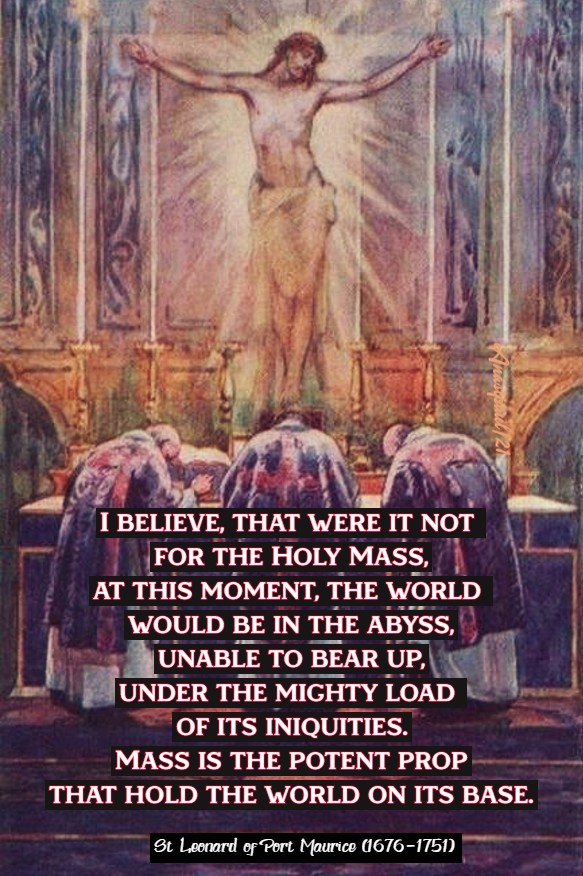
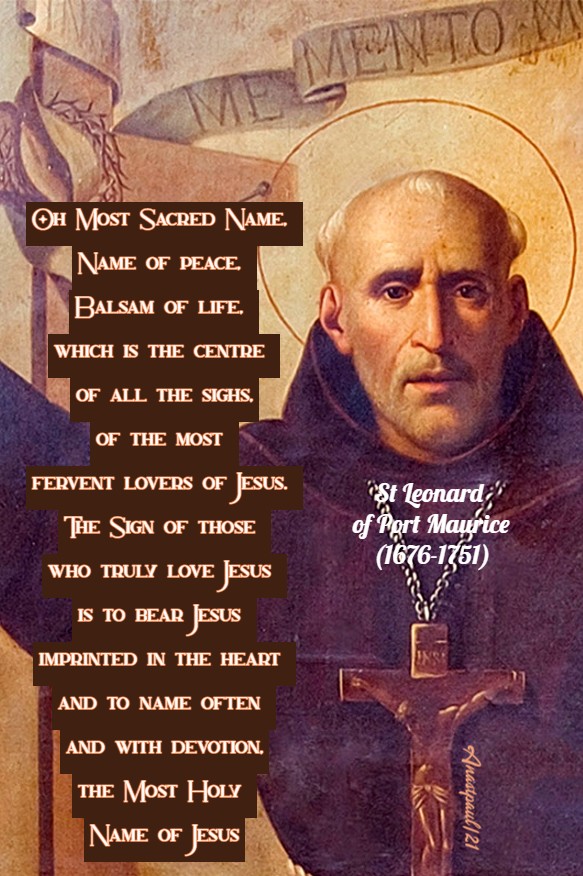

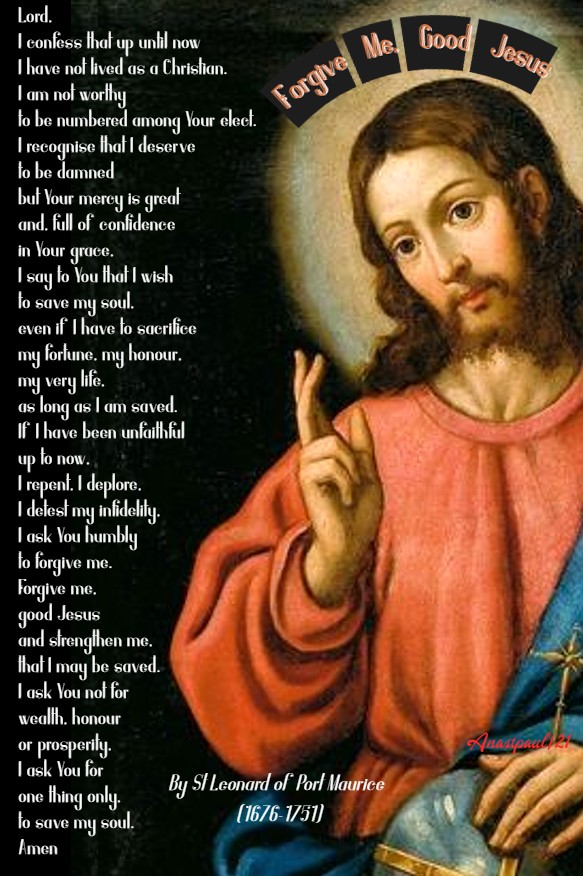
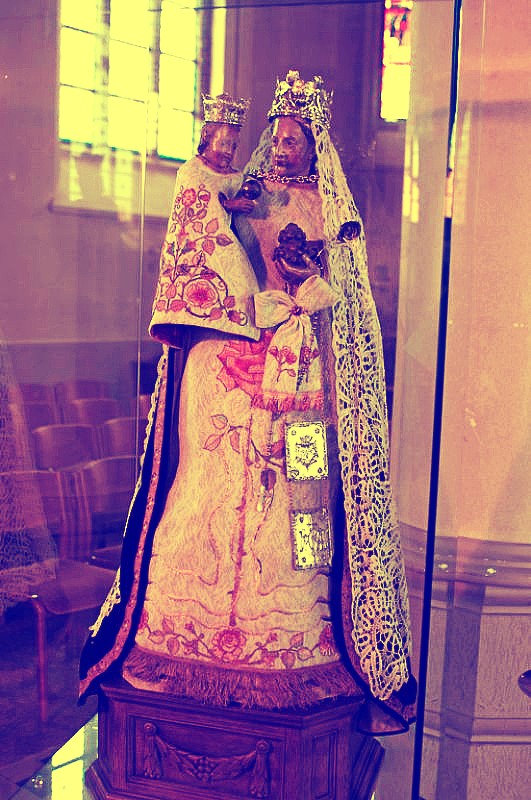
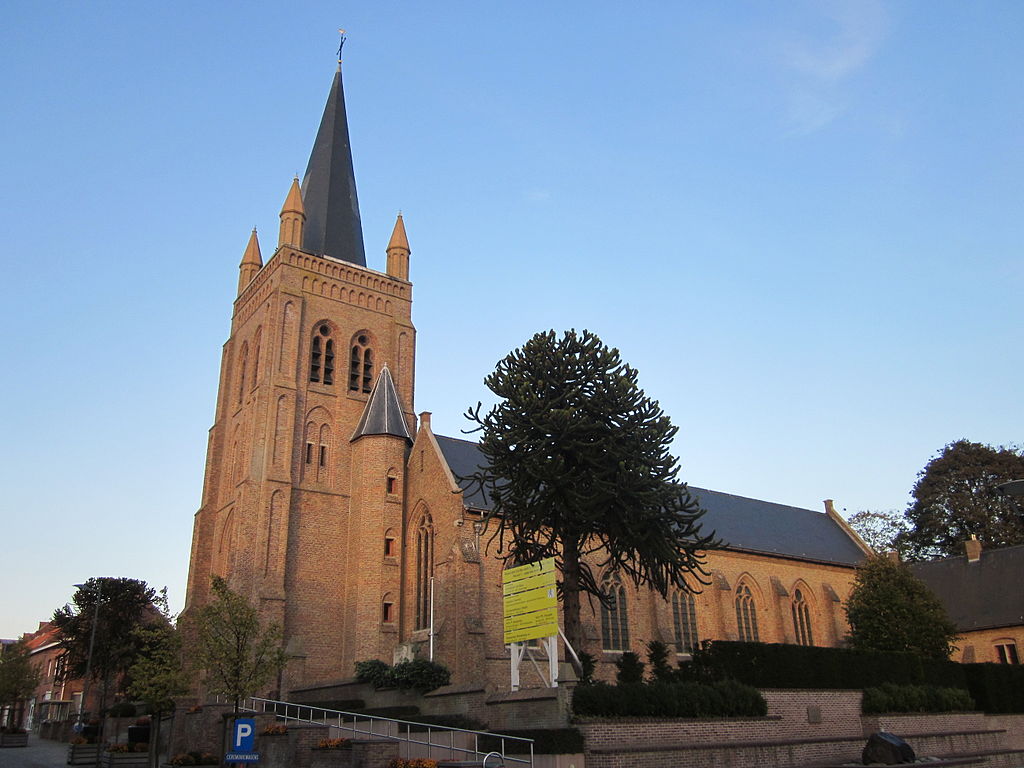

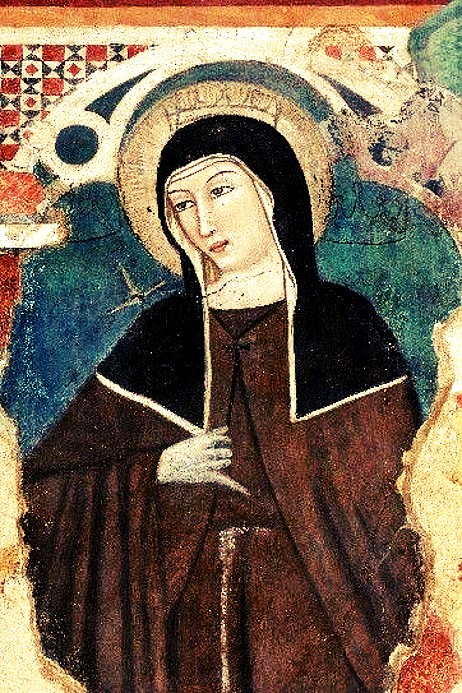
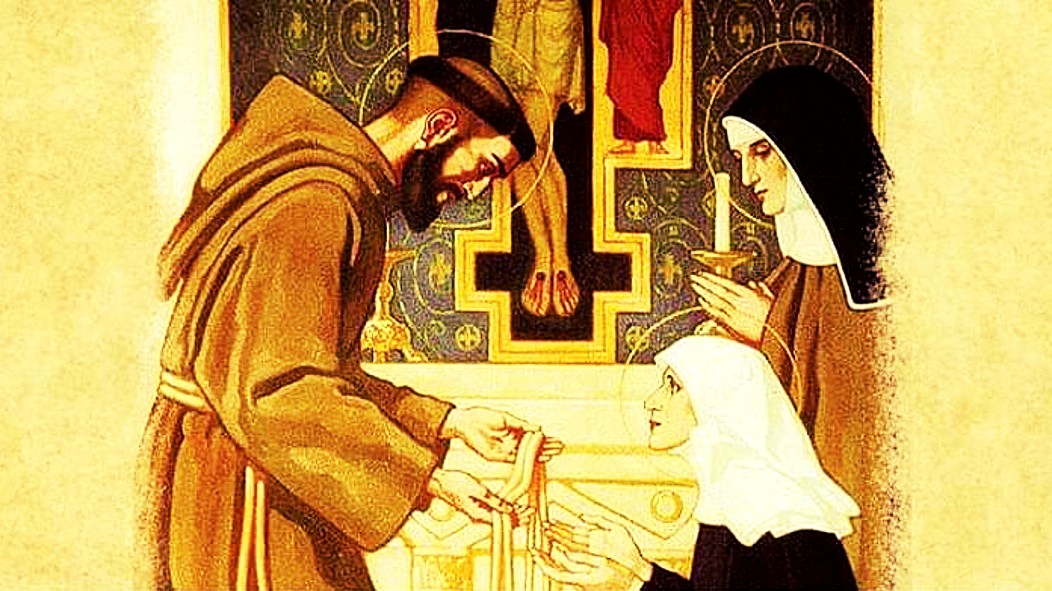
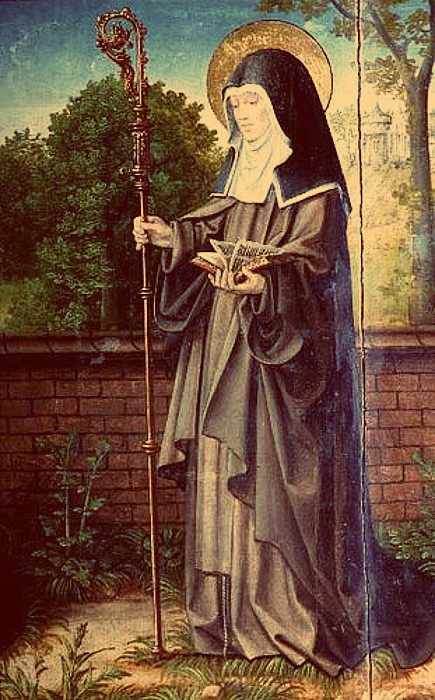
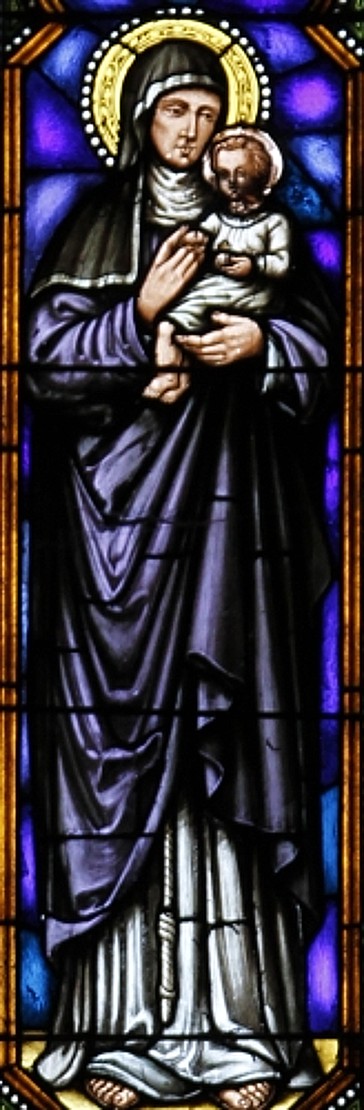

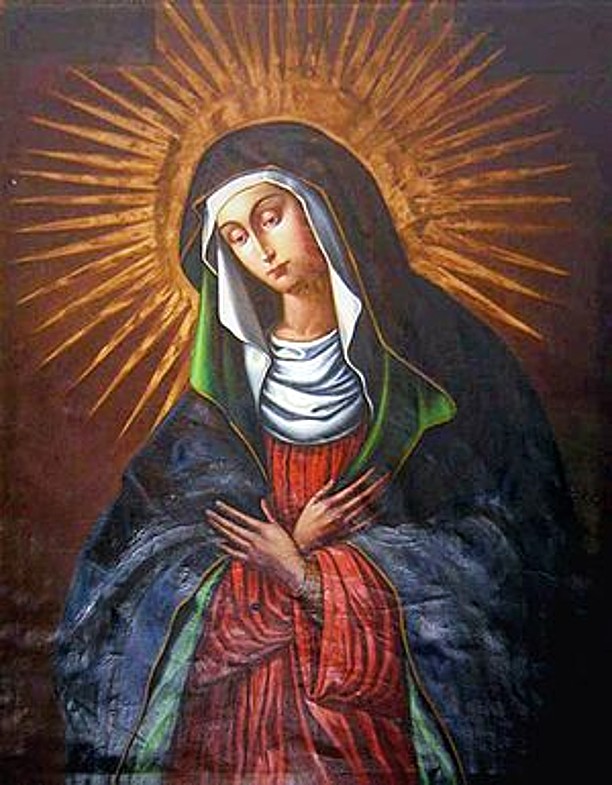
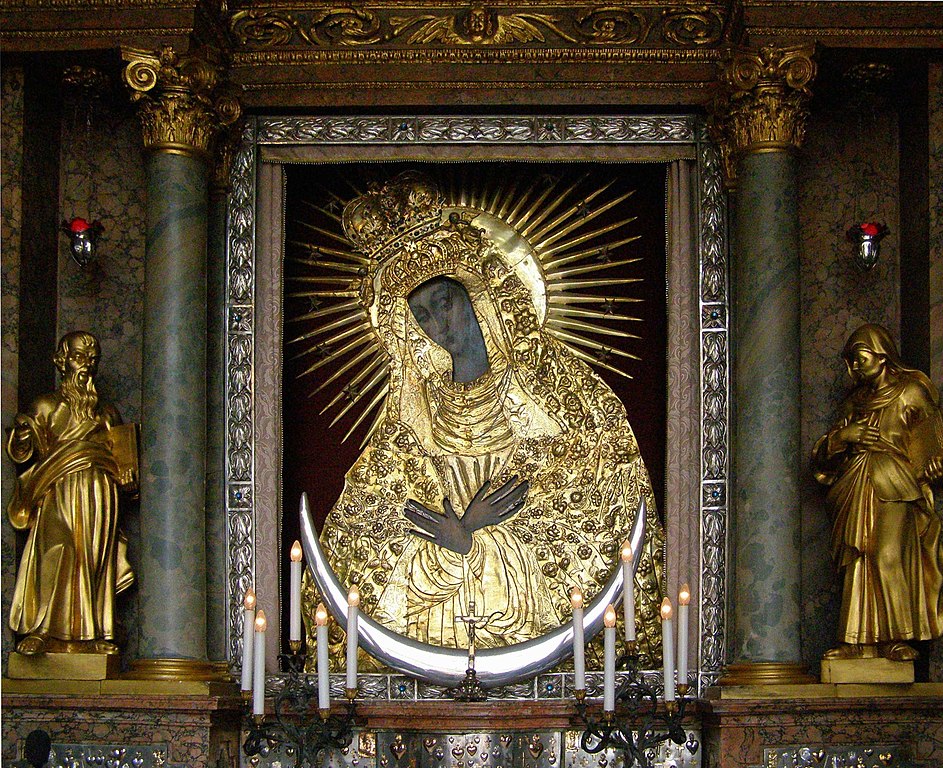

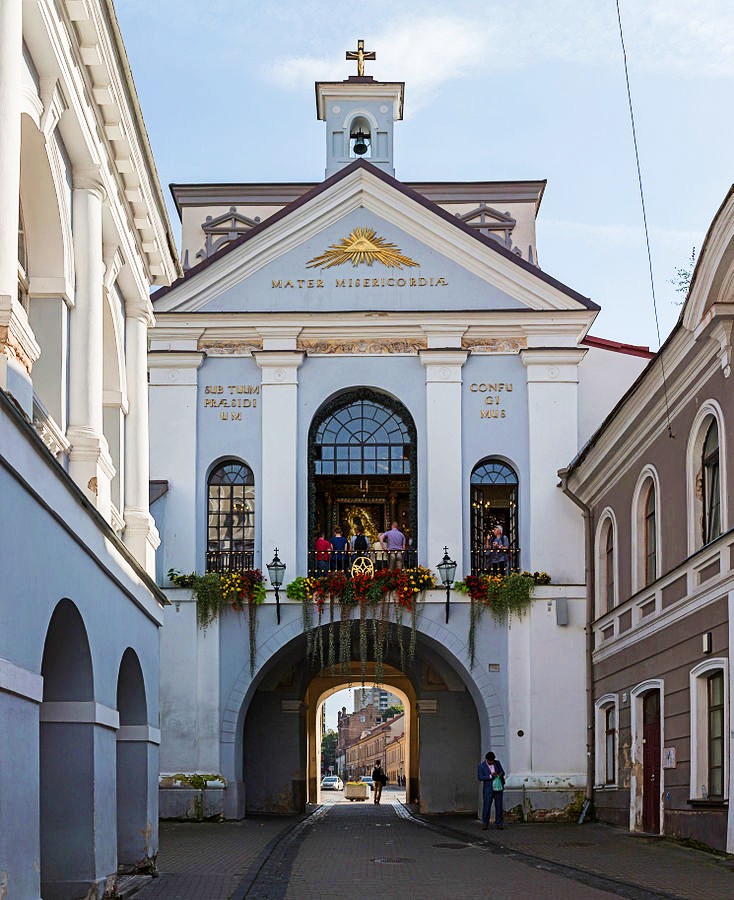

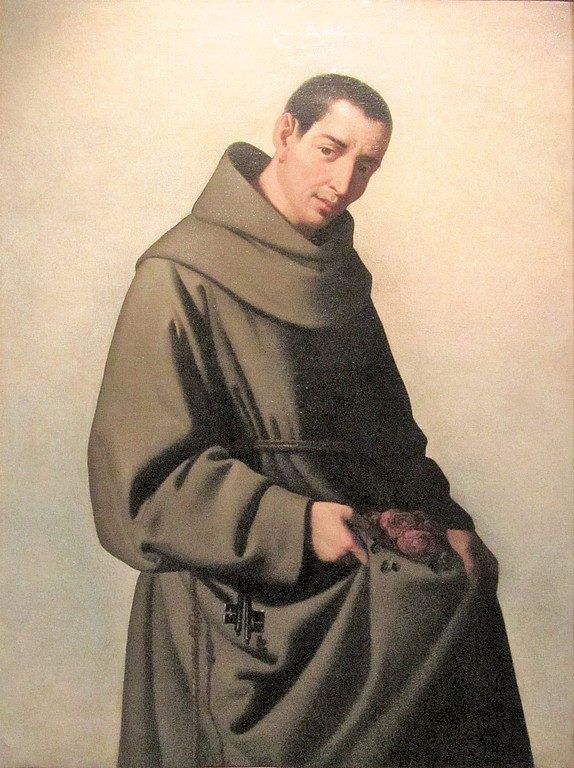
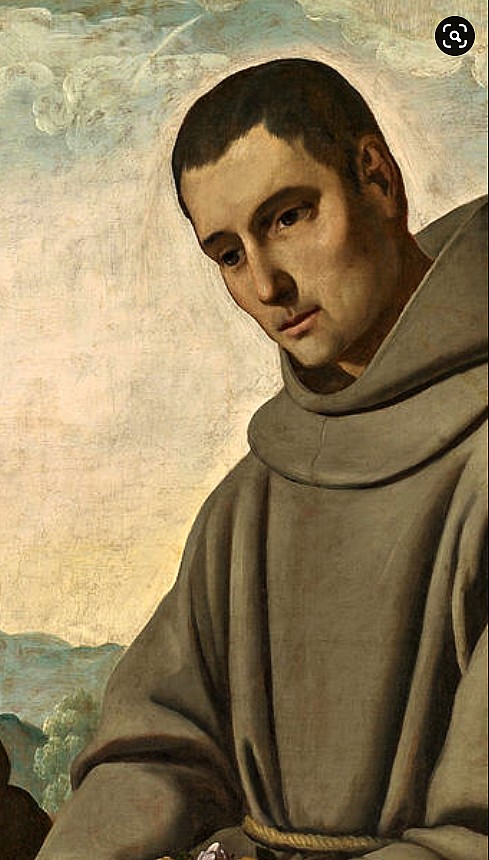
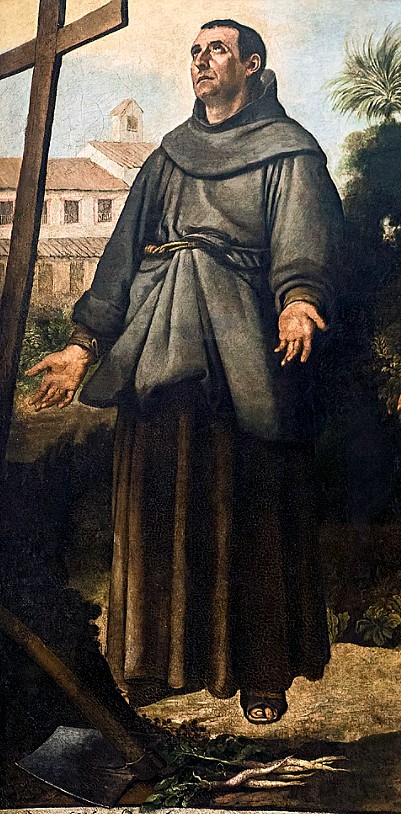
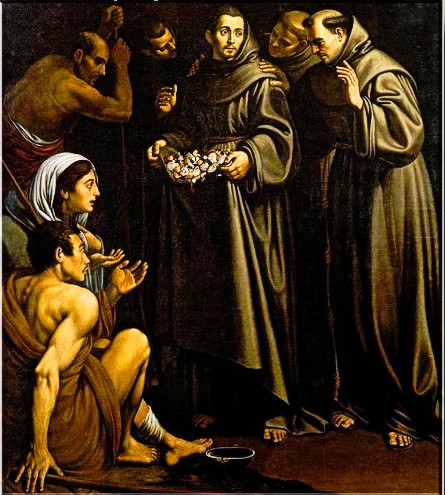

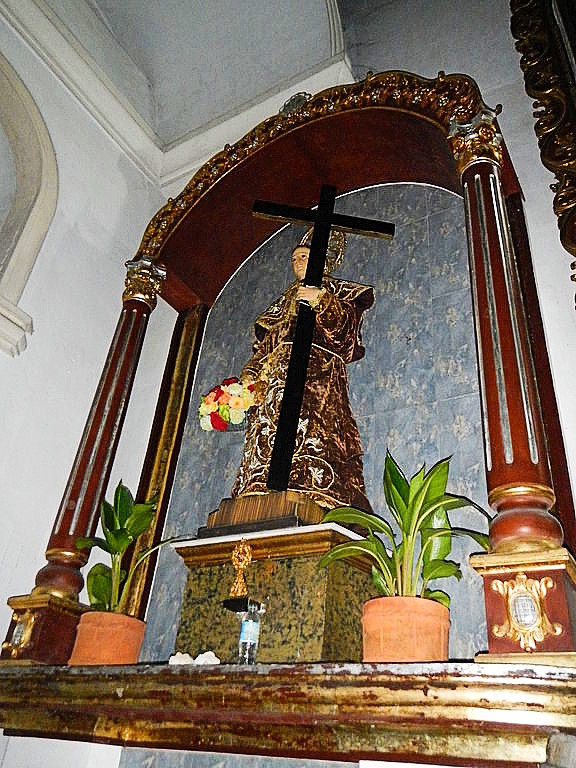


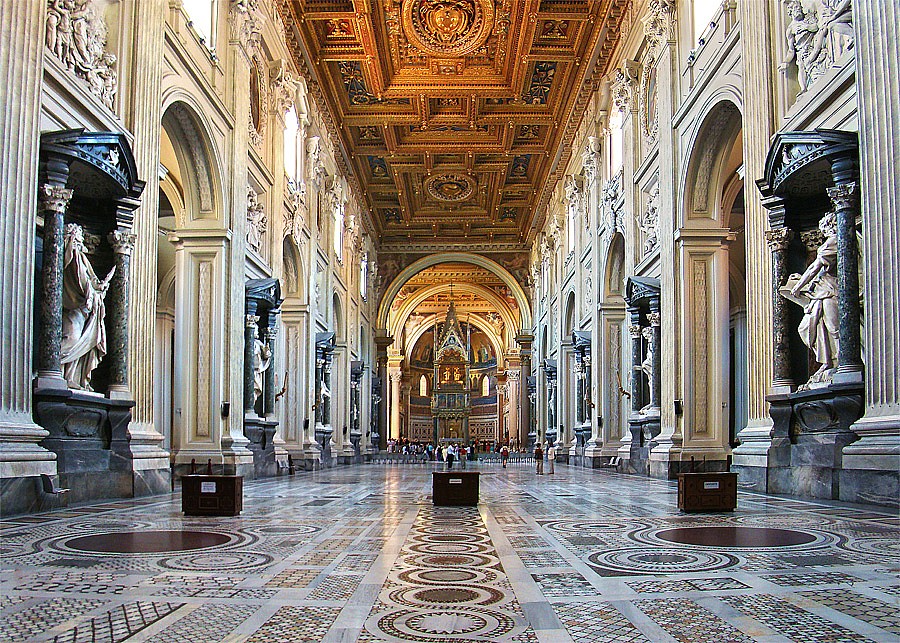
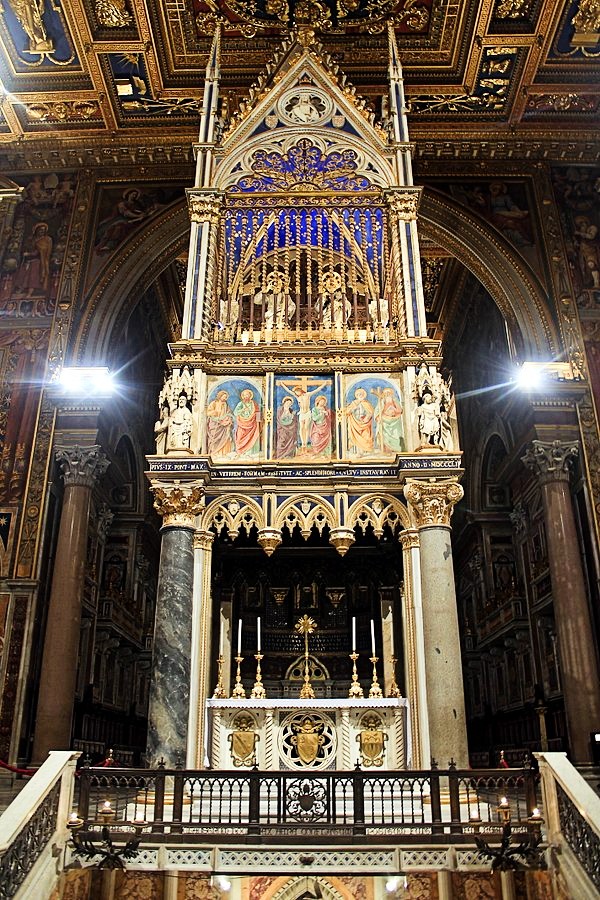



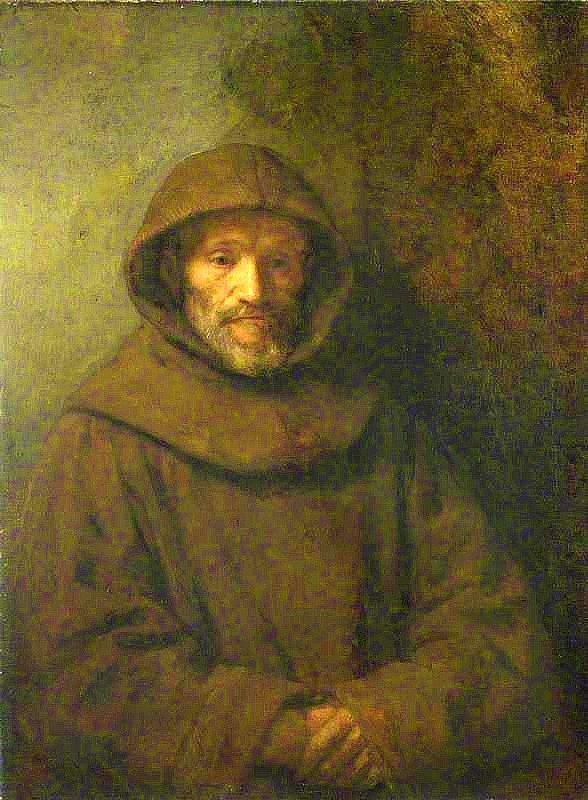
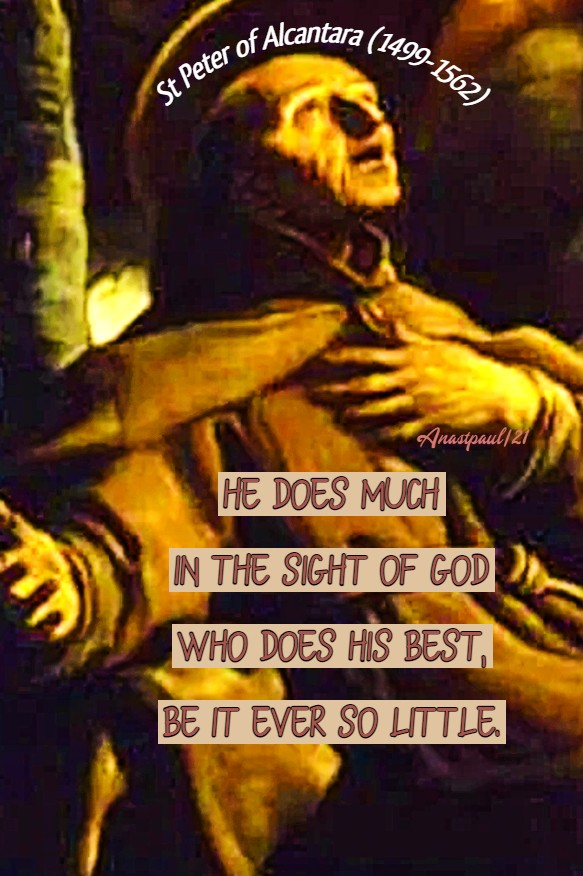
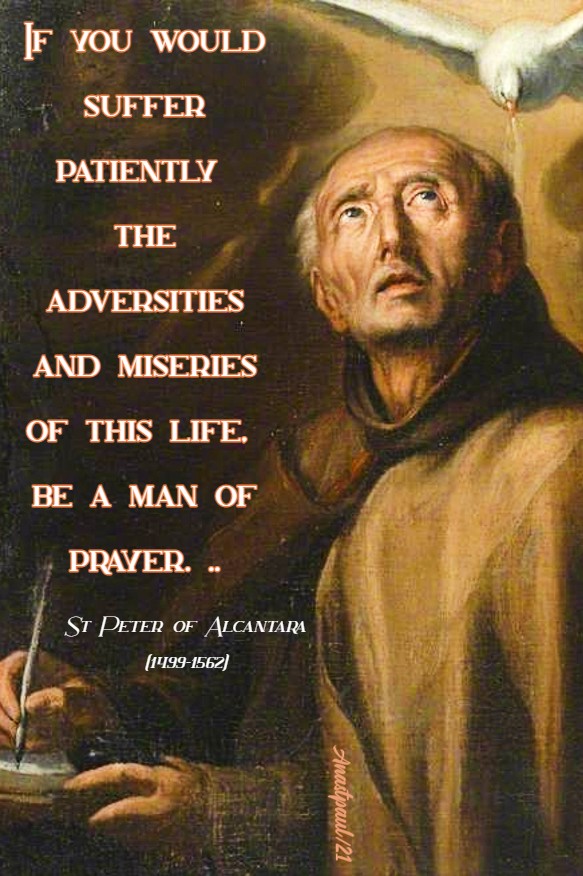
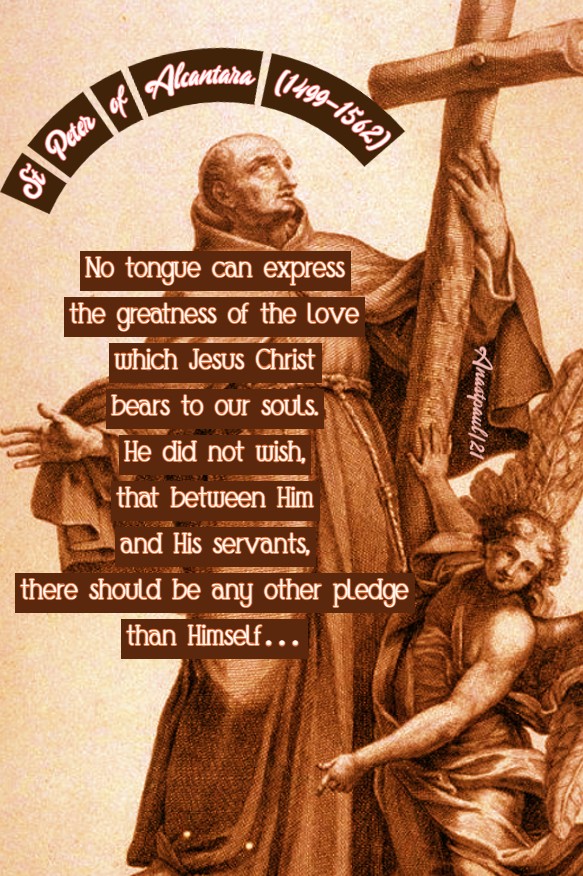

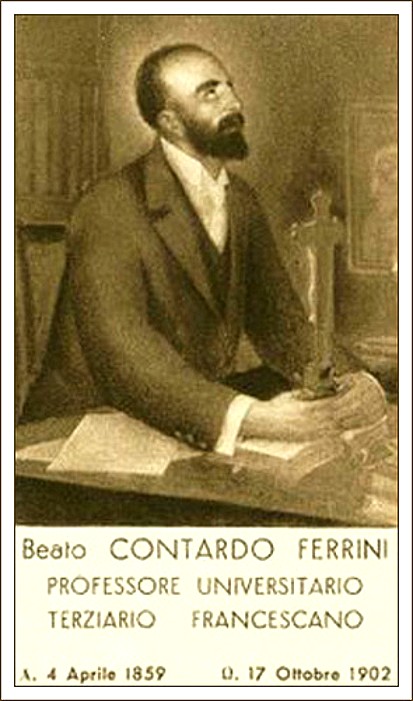
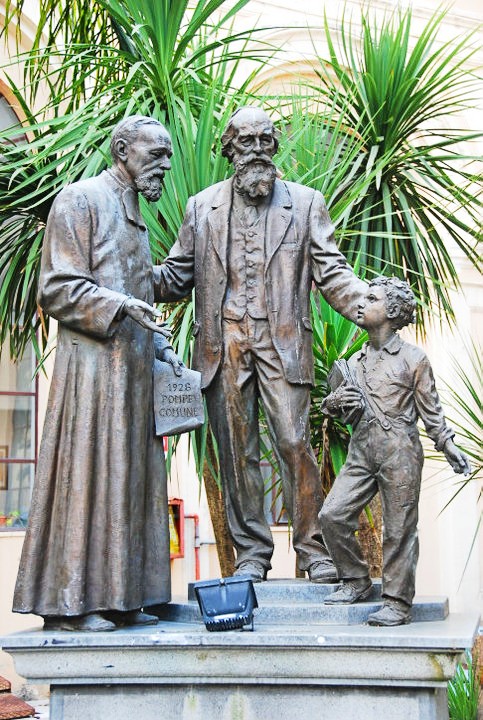
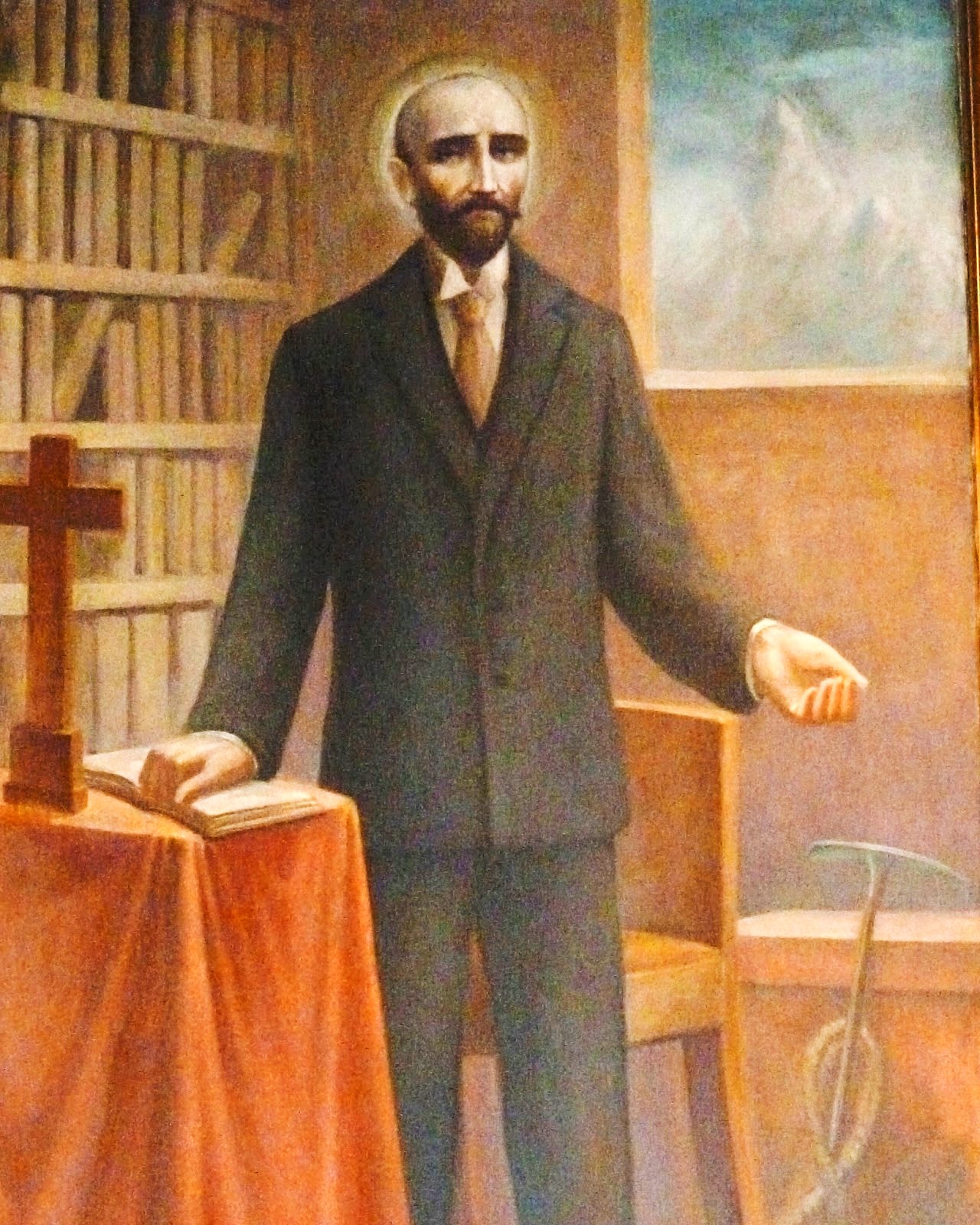

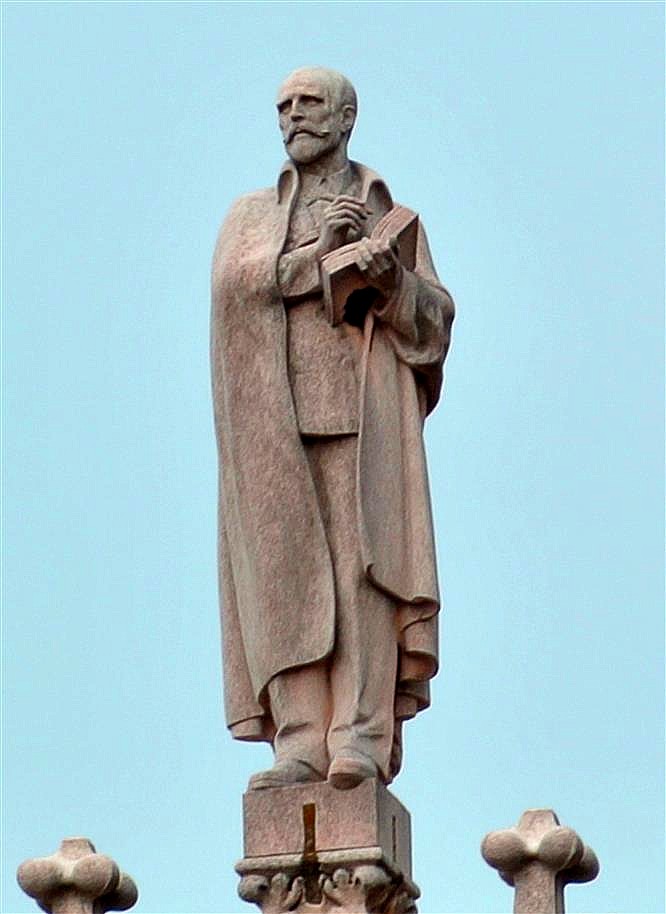
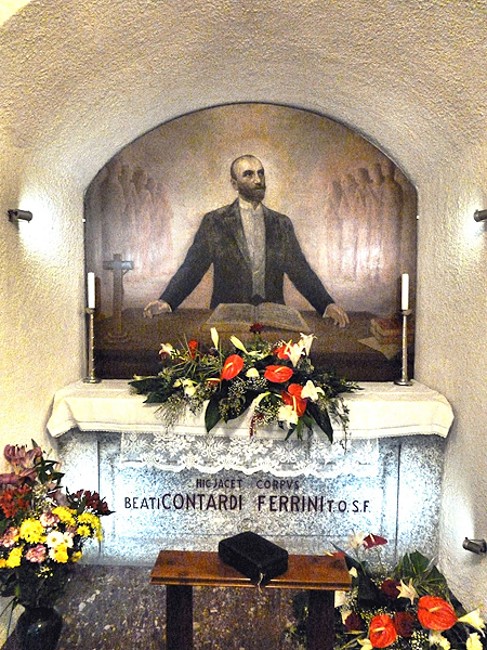

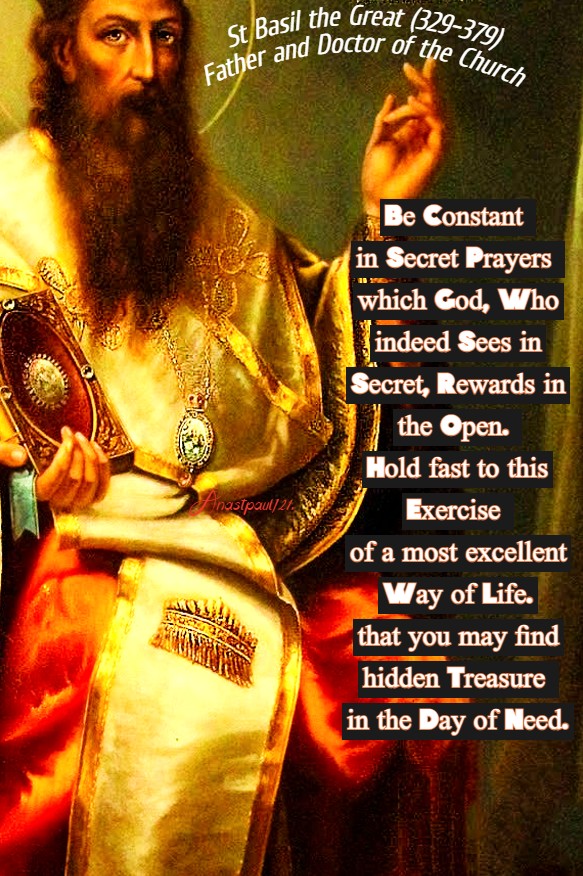
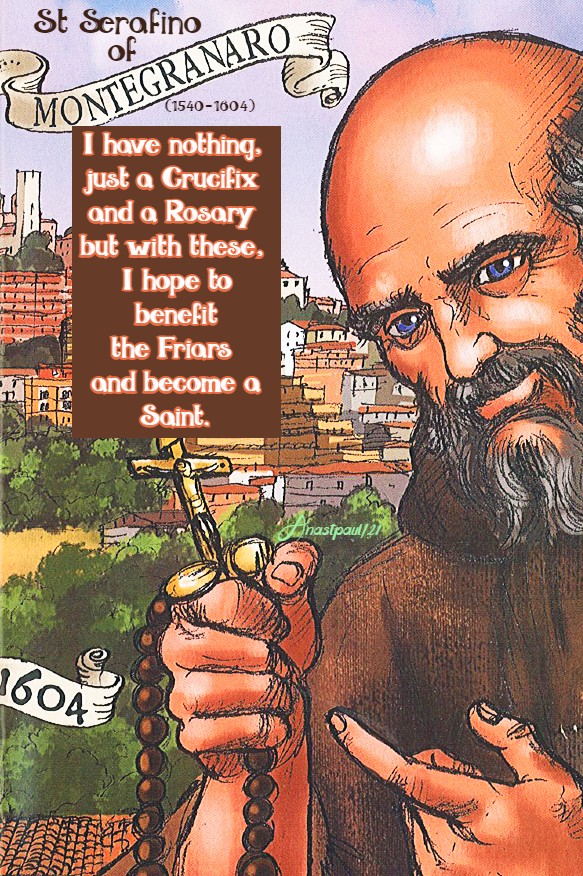
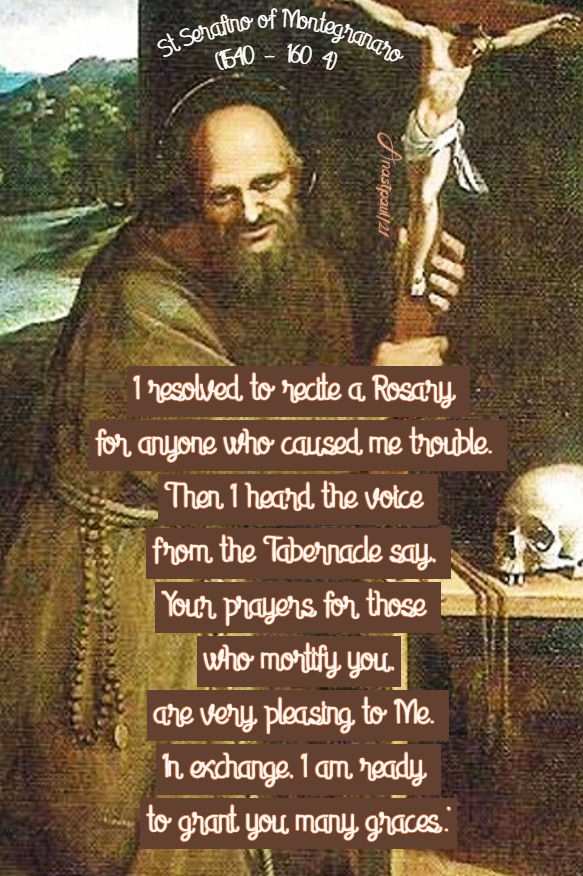
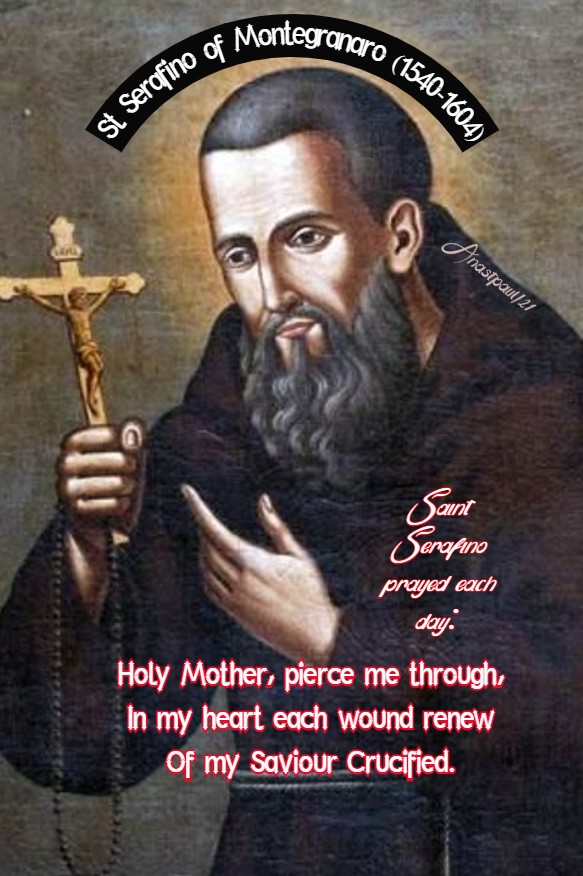
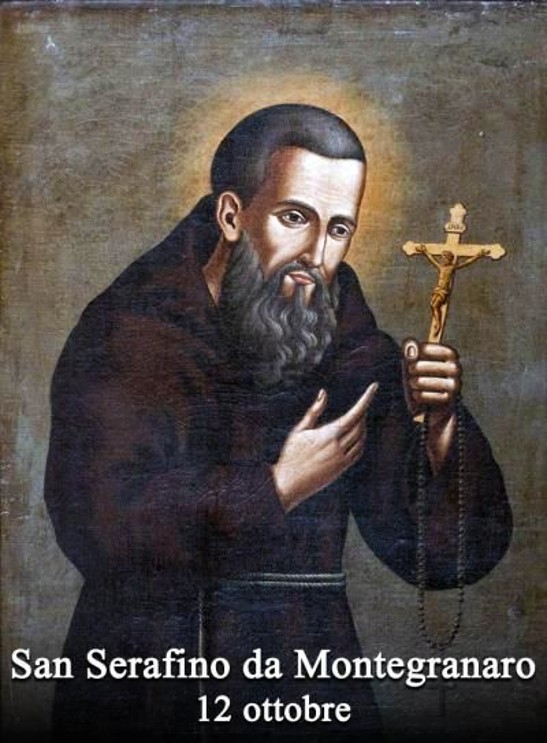

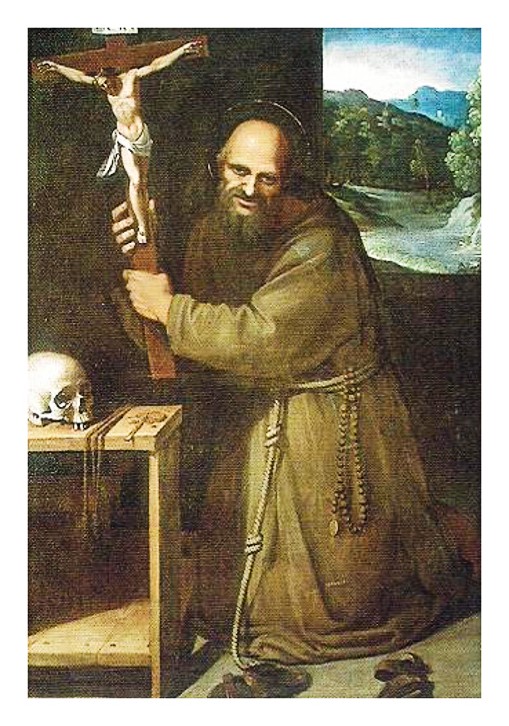
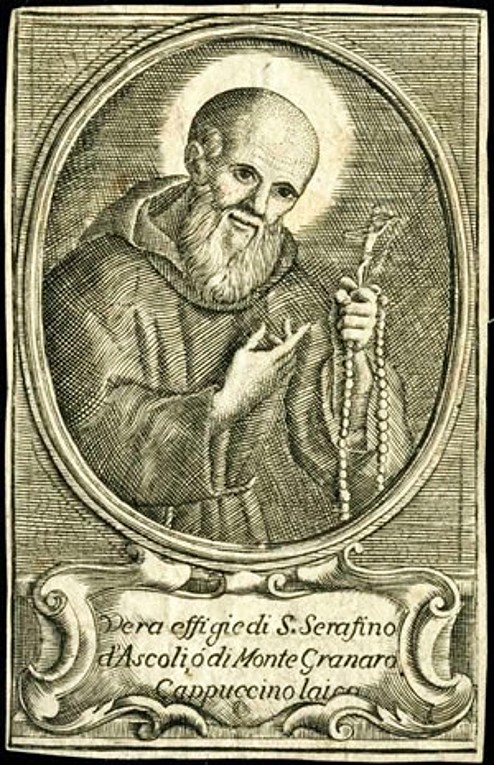
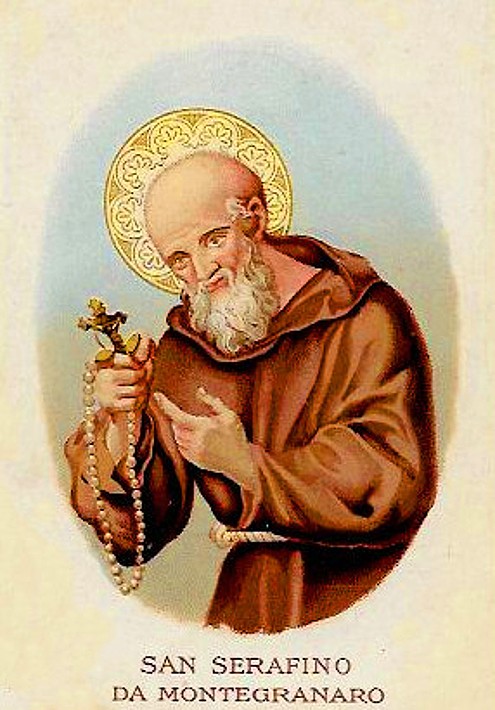
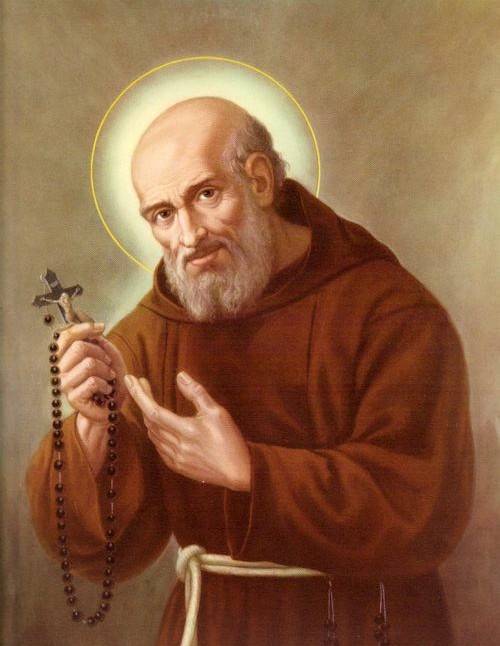


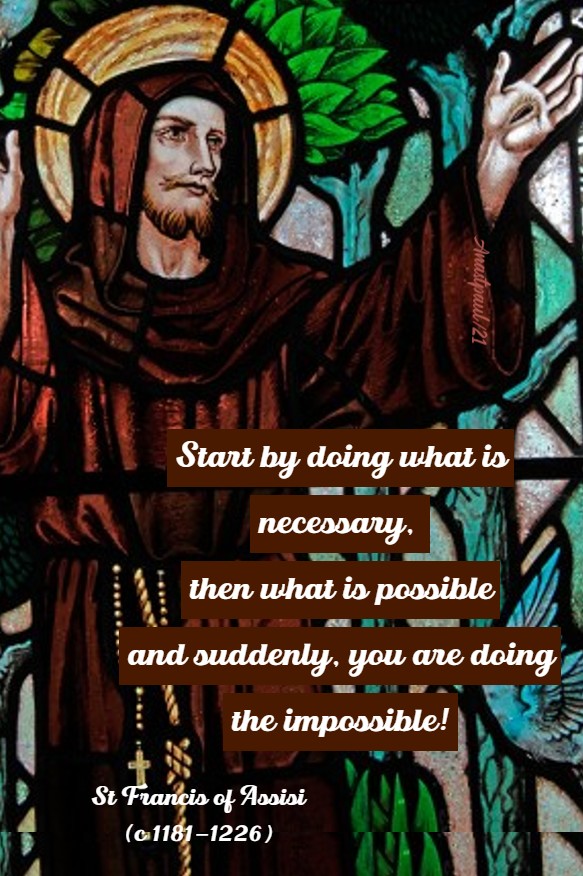

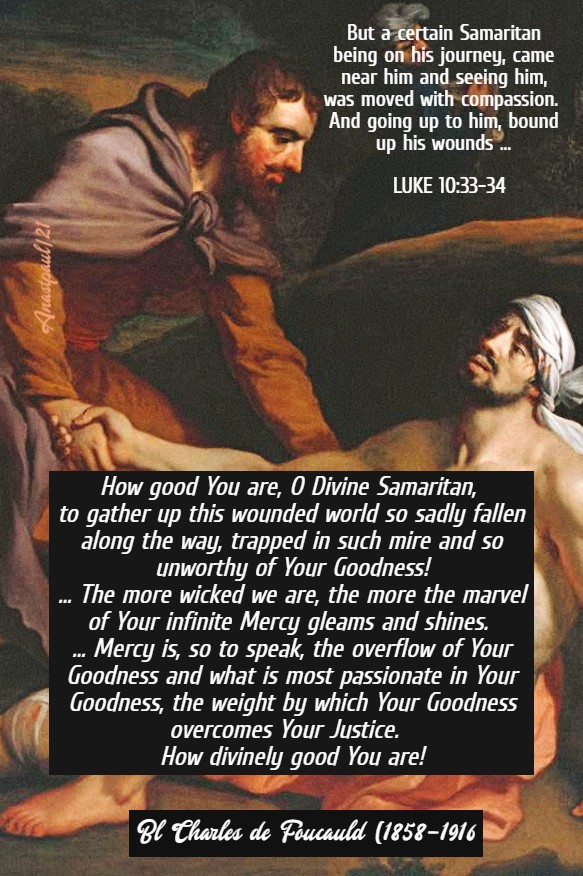



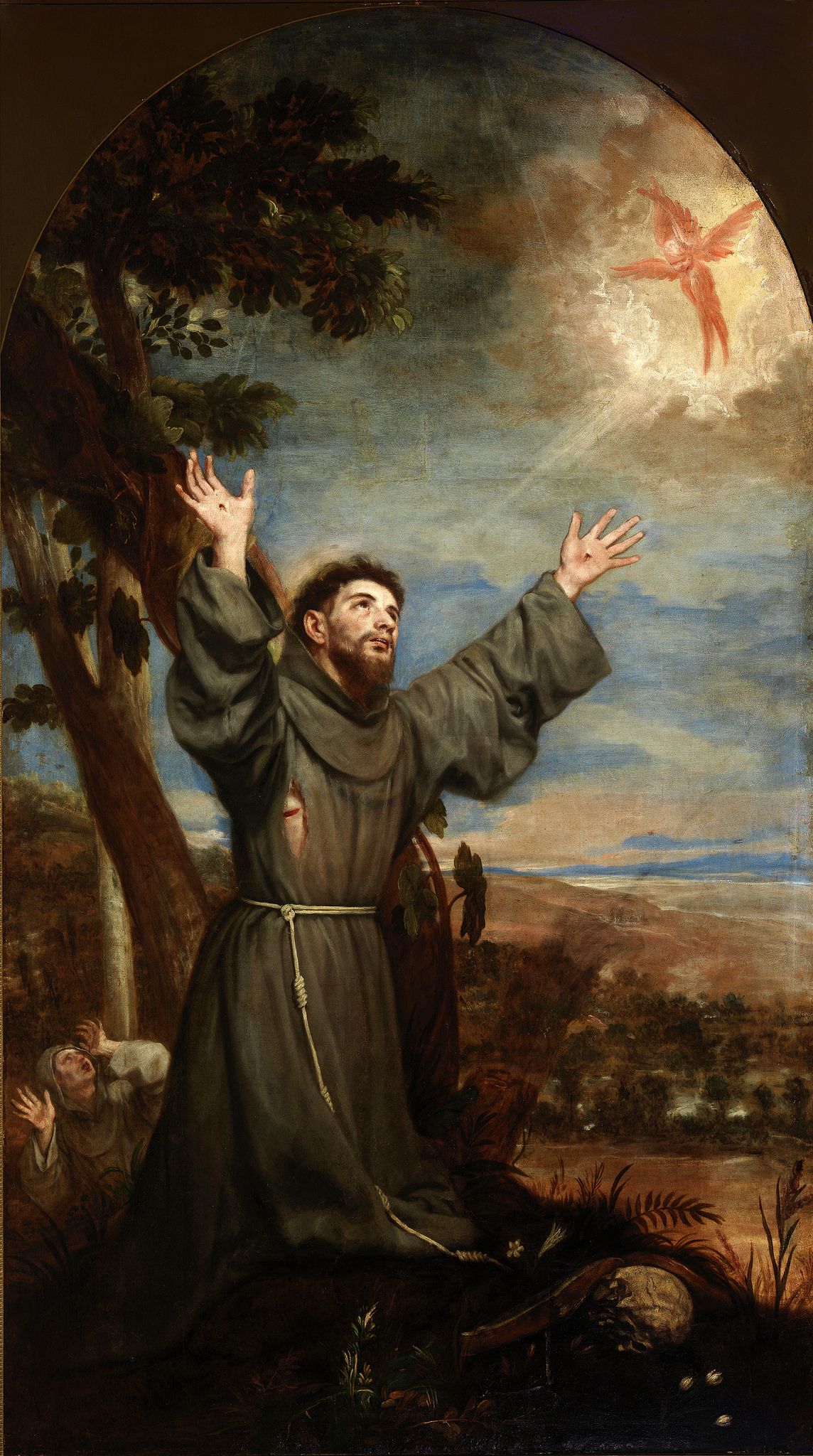




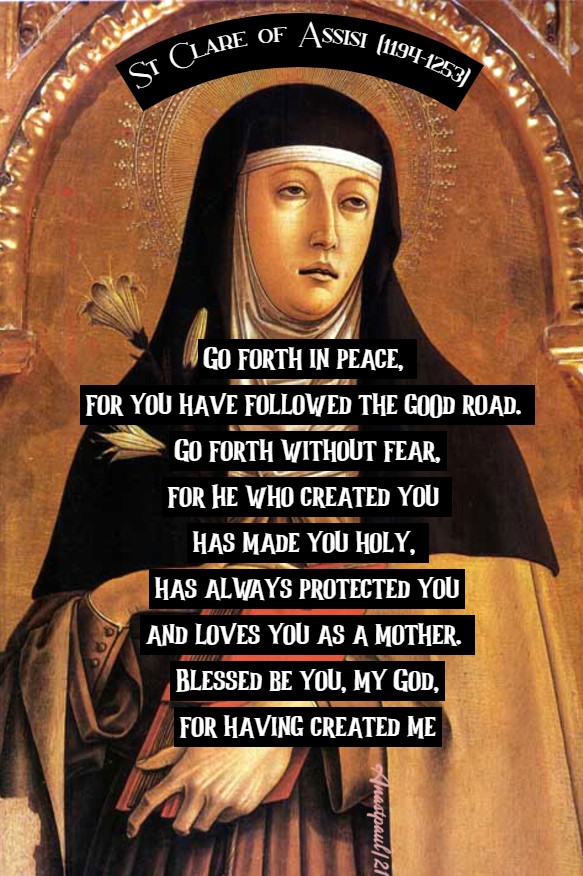
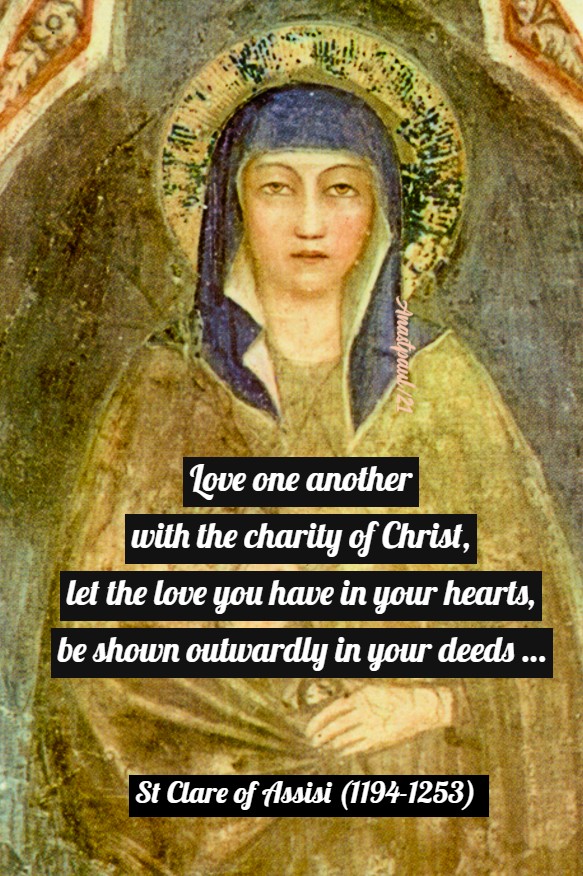

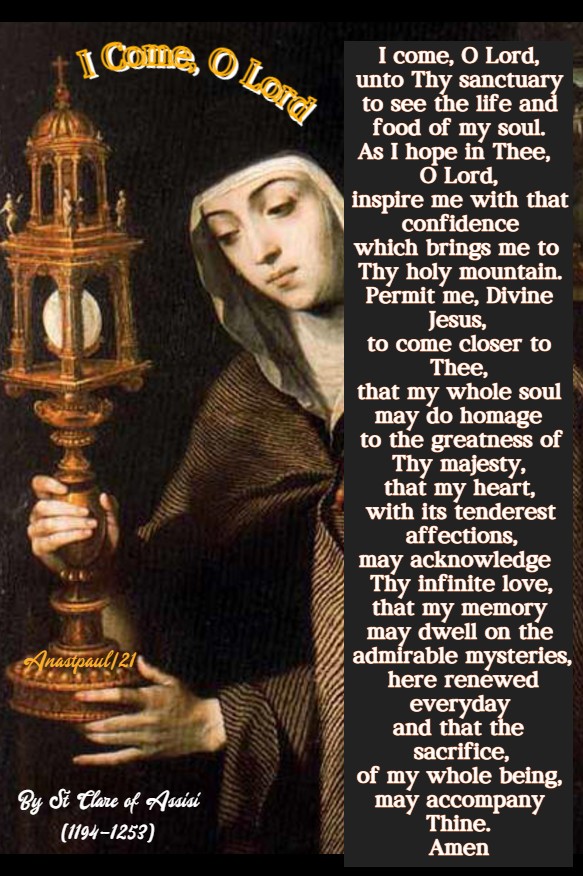




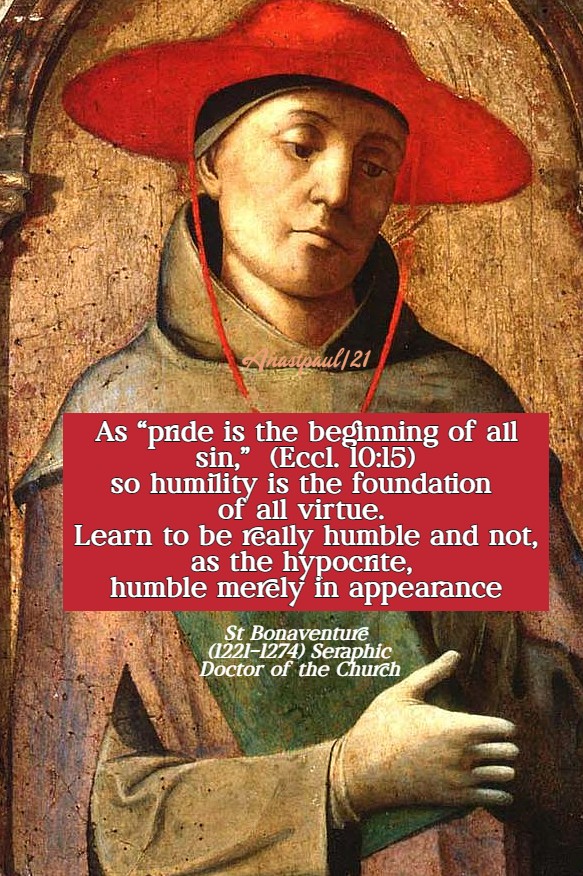
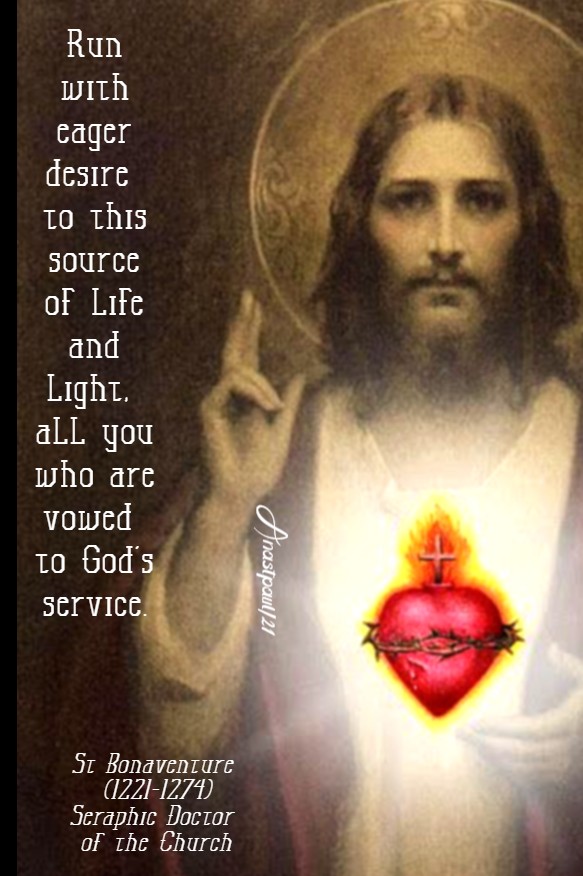
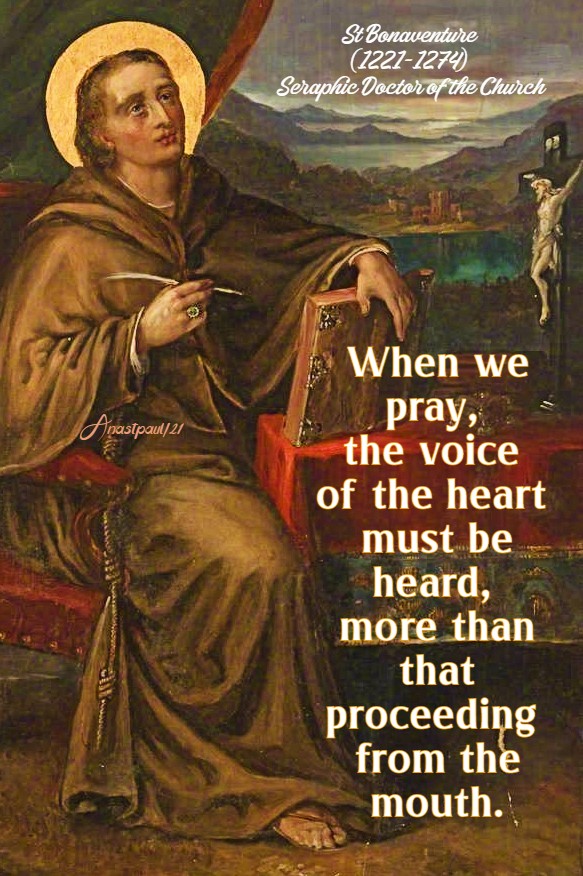
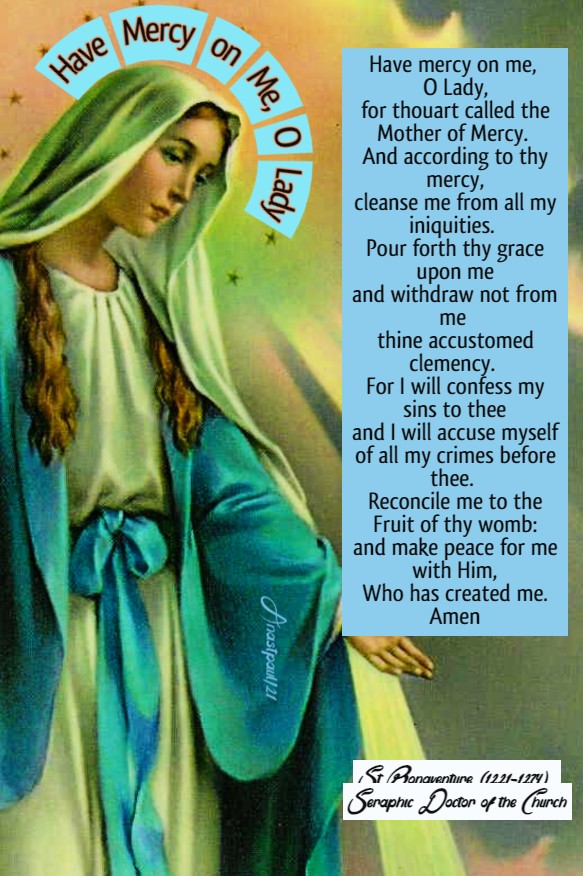
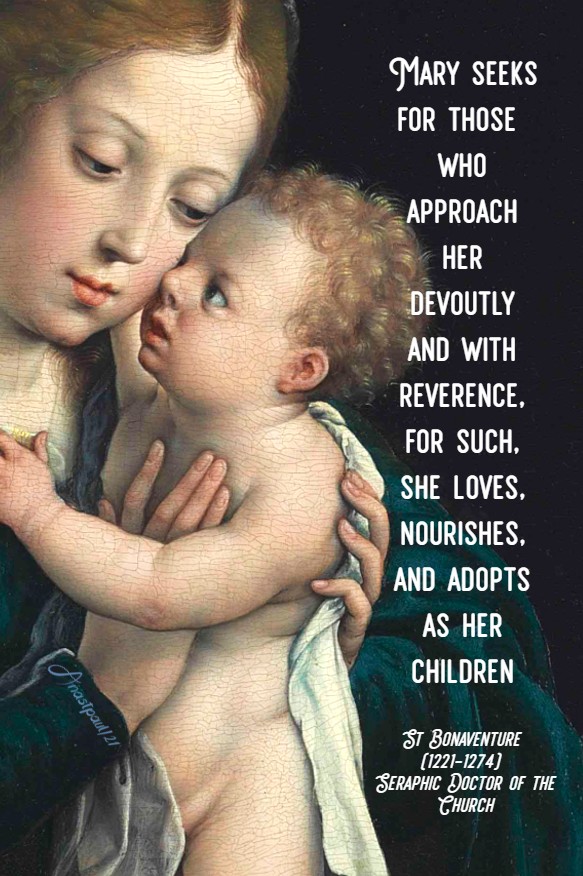

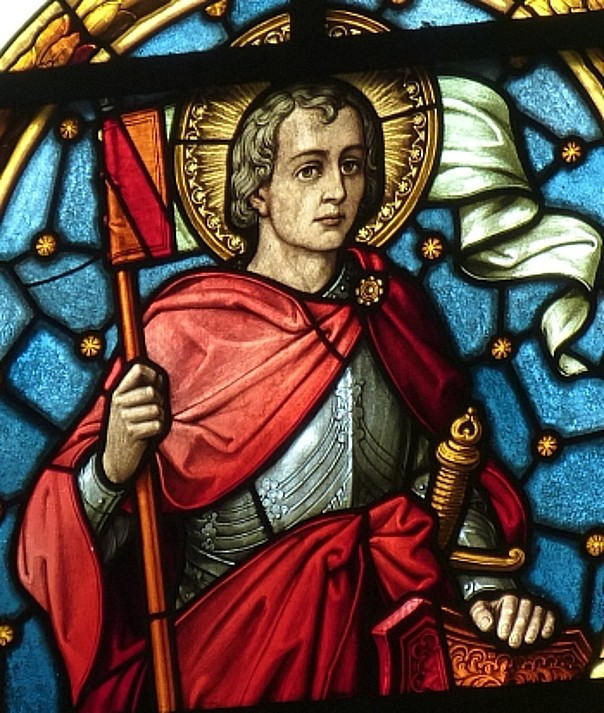
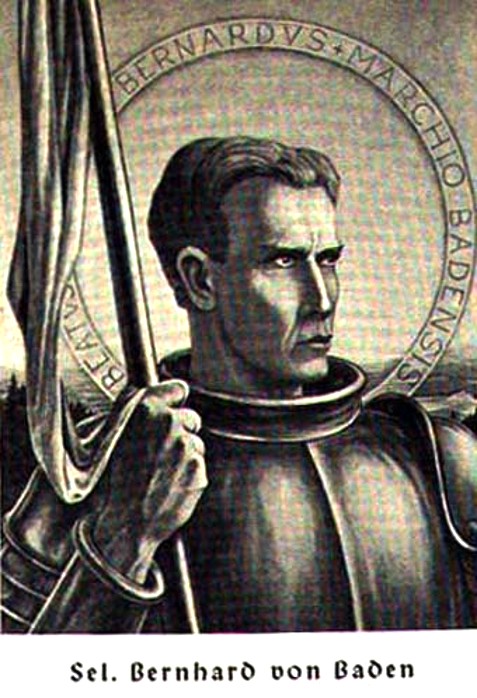
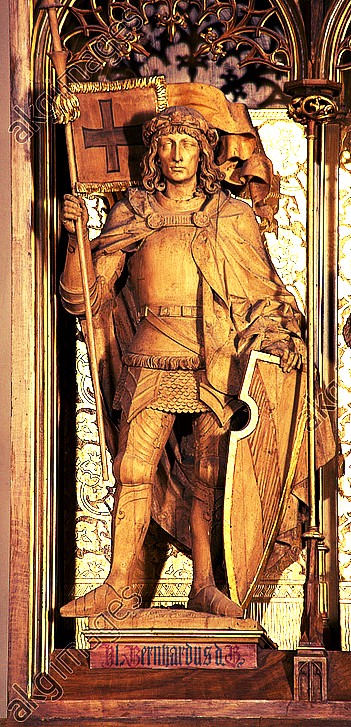
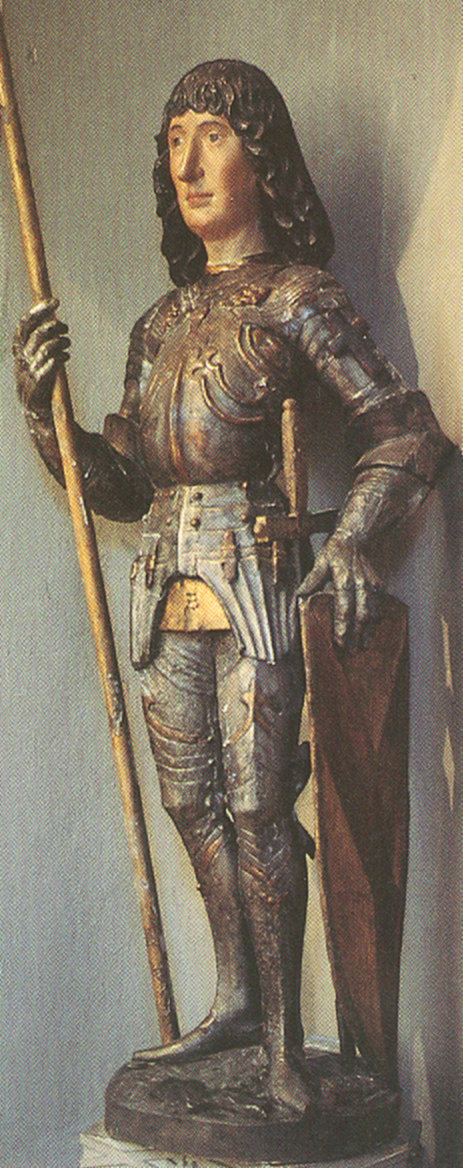
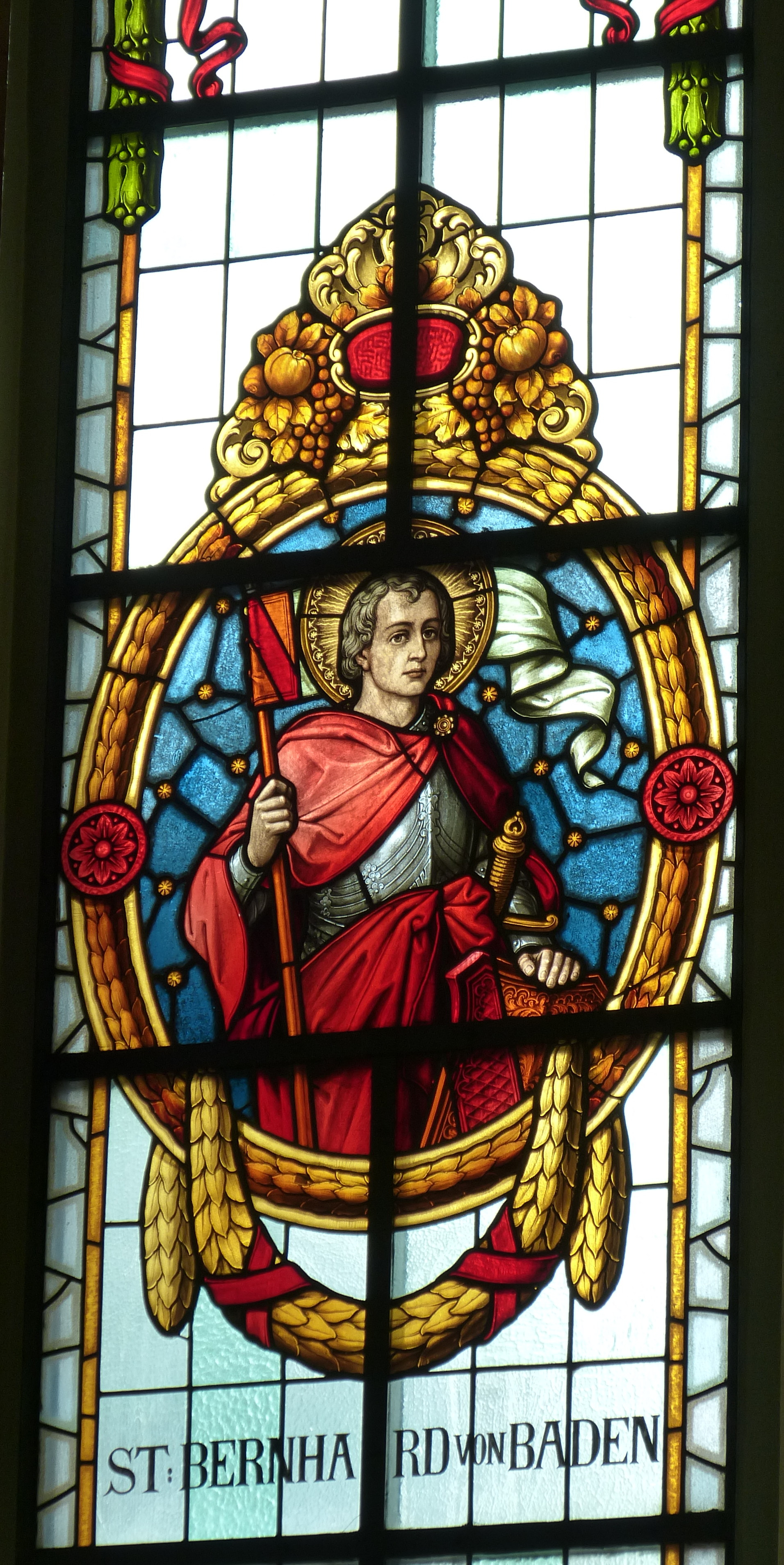
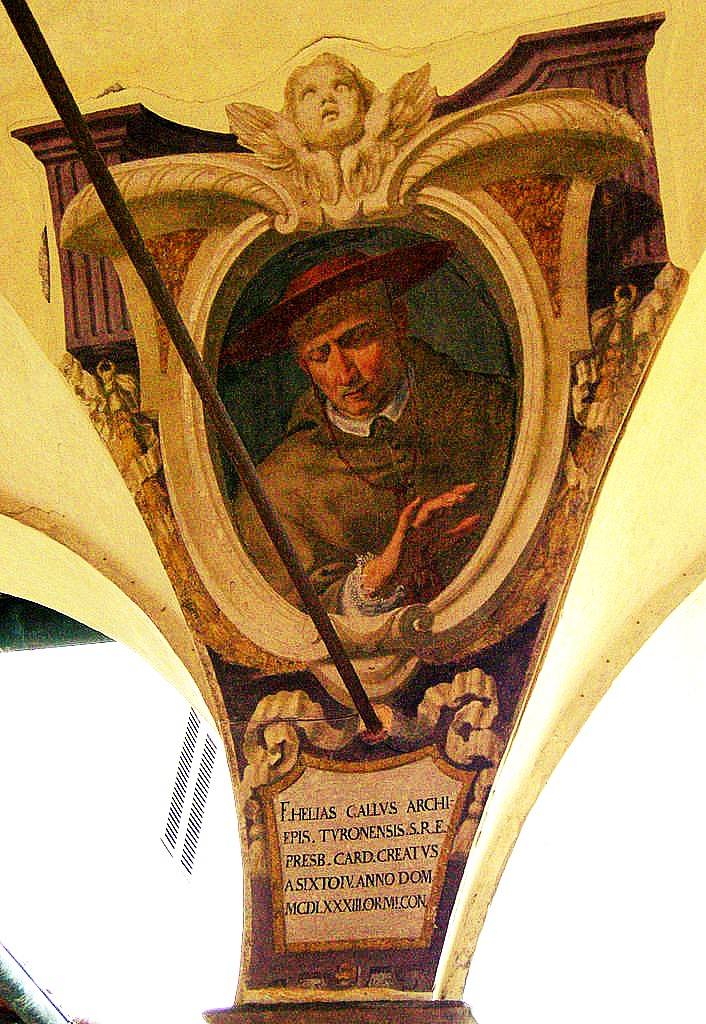

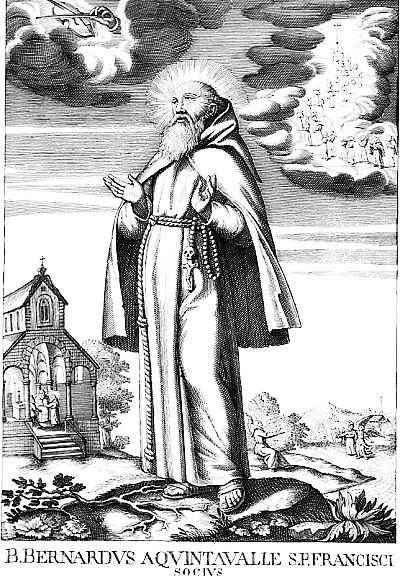
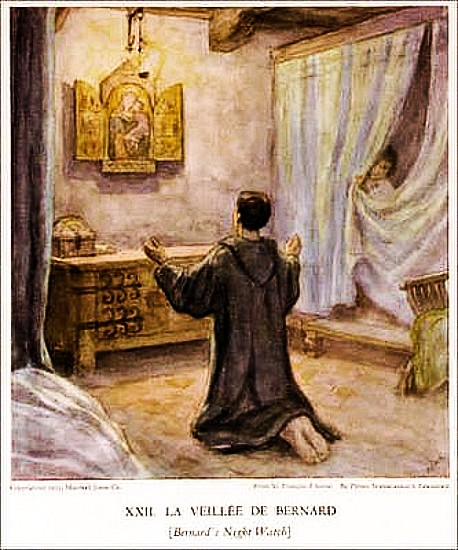
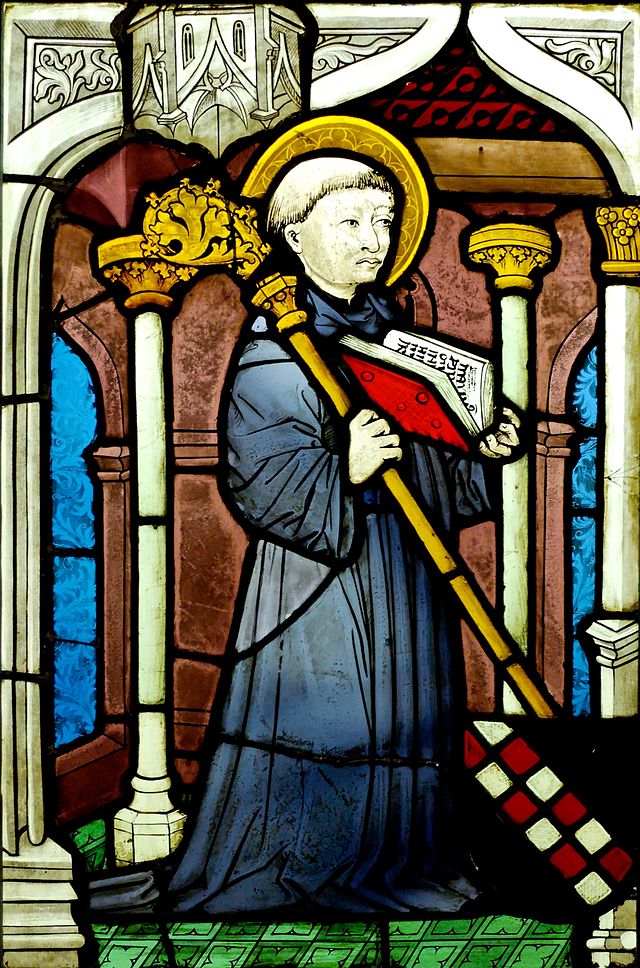

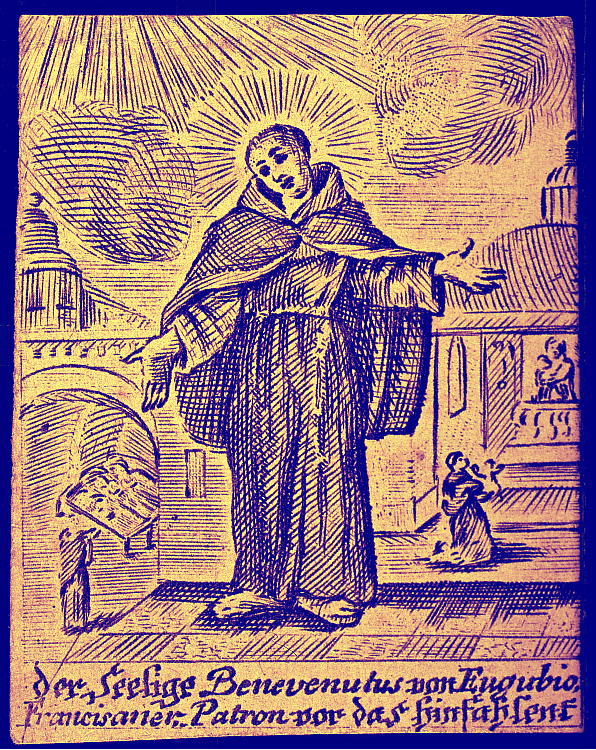
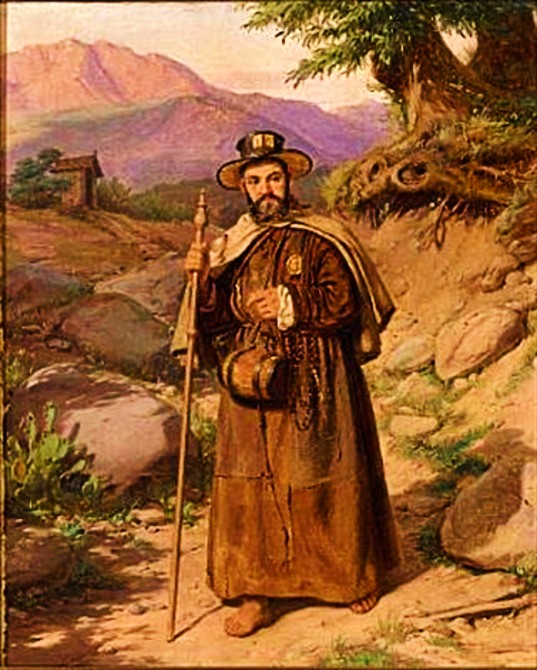





You must be logged in to post a comment.