Sunday Reflection – 22 September – The Twenty Fifth Sunday in Ordinary Time, Year C
Jesus’ Sacrifice on Calvary
In the book “Padre Pio’s Mass” written by Fr Tarcisio of Cervinara, we again are given proof that the Holy Mass is the unbloody Holy Sacrifice of Jesus Christ, offered once and for all on Calvary. At the Council of Trent in the 22nd. session it states:
“Jesus Christ, our Lord and God, when he was about to offer himself once on the altar of the Cross to God the Father, making intercession by means of his death, so that he might gain there an eternal redemption, since his priesthood was not to be extinguished by death, at the last Supper, ‘on the night that he was handed over’, left to his beloved Spouse the Church a visible sacrifice, such as the nature of man requires, by which the bloody sacrifice achieved once upon the Cross might be represented and its memory endure until the end of the age and its saving power be applied to the remission of those sins which are daily committed by us.”
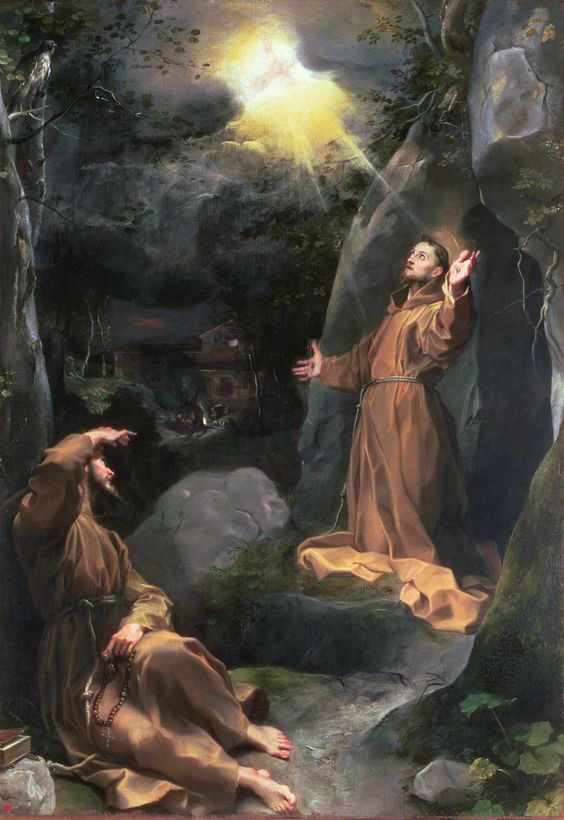
St Padre Pio is the first priest to have received the “stigmata,” the wounds of Jesus in his body (hands, feet and side). St Francis received them but only as a deacon. This is important because Padre Pio offered the sacrifice of the Holy Mass and St Francis was only able to assist.
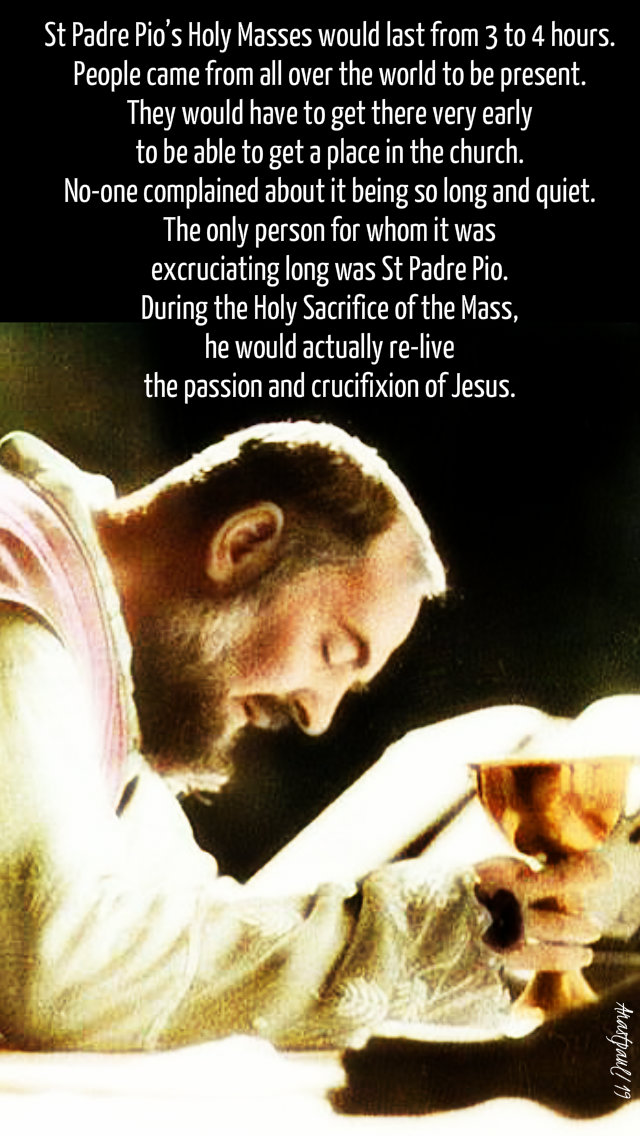
St Padre Pio’s Holy Masses would last from 3 to 4 hours. People came from all over the world to be present. They would have to get there very early to be able to get a place in the church. No-one complained about it being so long and quiet. The only person for whom it was excruciating long was St Padre Pio. During the Holy Sacrifice of the Mass, he would actually re-live the passion and crucifixion of Jesus.
First we need to be reminded, that at every Holy Mass, Jesus is, in an un-bloody form, offering His life on the Cross for the salvation of sinners. Then that the priest is truly an Alter Christus, which means the priest actually becomes the victim with Jesus Christ at the Holy Mass. This is shown by the priest saying: “This is My Body” and “This is My Blood”. The priest does not say: This is Jesus‘ Body or This is Jesus‘ Blood.
So when St Padre Pio would offer the Holy Sacrifice of the Mass, he would become literally this Alter Christus in suffering the crucifixion and bleeding in his wounds. One priest who was next to the altar during Padre Pio’s Mass, said he could never do that again, because he could not stand to see Padre Pio go through that agony again.
Cleonice Morcaldi, one of the spiritual daughters of Padre Pio, asked him several times what he felt and lived in each of his Masses. She wrote carefully each of his answers and thanks to her, we have a unique testimony from the Father himself about his Mass.
– Father, what is your Mass?
– A sacred accomplishment of the Passion of Jesus.
– What should I comprehend in your Holy Mass?
– All of Calvary.
– Father, tell me all that you suffer at the Holy Mass.
– All that Jesus suffered in His Passion, I inadequately suffer to the extent a human creature can possibly suffer. All of it, at no merit of my own and only because of His Goodness.
Father, is it true that you suffer the torment of the crowning of thorns during the Holy Mass?
– And you doubt it?
– During the whole Mass?
– And also before and after it. The crown is never taken away.
Saint Padre Pio’s Feast Day is tomorrow, 23 September.
One Minute Reflection – 22 September – Twenty Fifth Sunday in Ordinary Time, Year C, Gospel: Luke 16:1–13 and the Memorial of St Ignatius of Santhia OFM Cap (1686-1770)
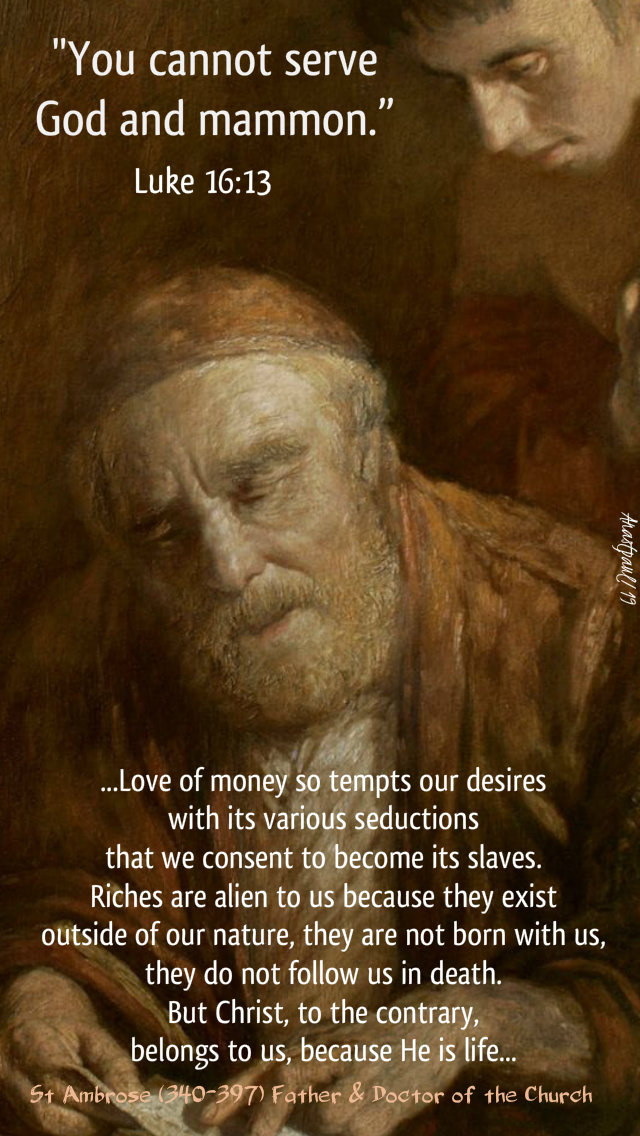
“You cannot serve God and mammon.” … Luke 16:13
REFLECTION – “A servant cannot serve two masters.” Not that there are two, there is only one Master. For even if there are some people who serve money, it has no inherent right to be a master, they themselves are the ones, who assume the yoke of this slavery. In fact, money has no rightful authority but constitutes an unjust bondage. That is why Jesus says: “Make friends for yourselves with deceitful money” so that by generosity to the poor we will win the favour of angels and saints.
The steward is not blamed. By this we learn that we are not masters but rather stewards of other people’s wealth. He was praised even though he was in the wrong because, in paying out to others in his master’s name he won support for himself. And how rightly Jesus spoke of “deceitful wealth” because love of money so tempts our desires with its various seductions that we consent to become its slaves. That is why He said: “If you are not trustworthy with what belongs to another, who will give you what is yours?” Riches are alien to us because they exist outside of our nature, they are not born with us, they do not follow us in death. But Christ, to the contrary, belongs to us because He is life… So don’t let us become slaves of exterior goods because Christ is the only one we should acknowledge as our Lord.” … Saint Ambrose (340-397) – Bishop of Milan, Father and Doctor of the Church – Commentary on Saint Luke’s Gospel, 7, 244s SC 52
PRAYER – All-powerful, eternal God, splendour of true light and never-ending day, turn our ears and hearts to Your Word, that we may hear and live by the seed You have sown. May all that grows in us, be of Your good seed and yield fruit a hundredfold. Grant Lord, we pray, that by the prayers of St Ignatius of Santhia, we may be filled with courage and love and spread Your Word by our lives. We make our prayer through Jesus, our Lord and Word, with the Holy Spirit, one God with You, forever, amen.
Our Morning Offering – 22 September – Twenty Fifth Sunday in Ordinary Time, Year C
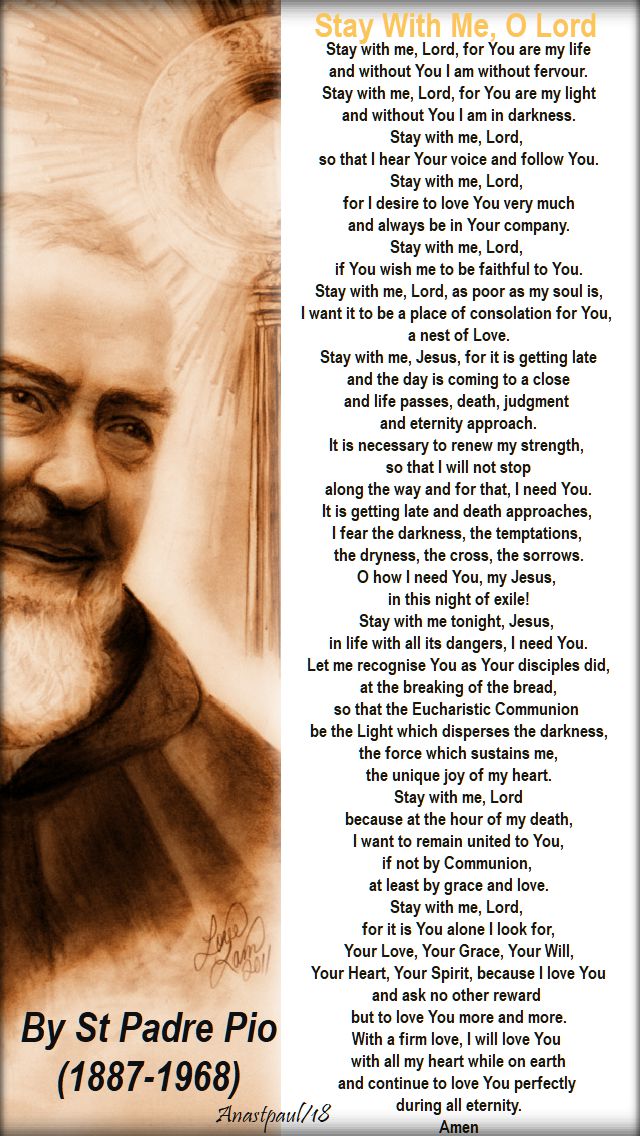
Stay With Me, O Lord St Padre Pio (1887-1968)
Stay with me, Lord, for You are my life
and without You I am without fervour.
Stay with me, Lord, for You are my light
and without You I am in darkness.
Stay with me, Lord,
so that I hear Your voice and follow You.
Stay with me, Lord,
for I desire to love You very much
and always be in Your company.
Stay with me, Lord,
if You wish me to be faithful to You.
Stay with me, Lord, as poor as my soul is,
I want it to be a place of consolation for You,
a nest of Love.
Stay with me, Jesus, for it is getting late
and the day is coming to a close
and life passes, death, judgement
and eternity approach.
It is necessary to renew my strength,
so that I will not stop
along the way and for that, I need You.
It is getting late and death approaches,
I fear the darkness, the temptations,
the dryness, the cross, the sorrows.
O how I need You, my Jesus, in this night of exile!
Stay with me tonight, Jesus,
in life with all its dangers, I need You.
Let me recognise You as Your disciples did,
at the breaking of the bread,
so that the Eucharistic Communion be the Light
which disperses the darkness,
the force which sustains me,
the unique joy of my heart.
Stay with me, Lord, because at the hour of my death,
I want to remain united to You,
if not by Communion, at least by grace and love.
Stay with me, Lord, for it is You alone I look for,
Your Love, Your Grace, Your Will,
Your Heart, Your Spirit, because I love You
and ask no other reward but to love You more and more.
With a firm love, I will love You
with all my heart while on earth
and continue to love You perfectly during all eternity.
Amen
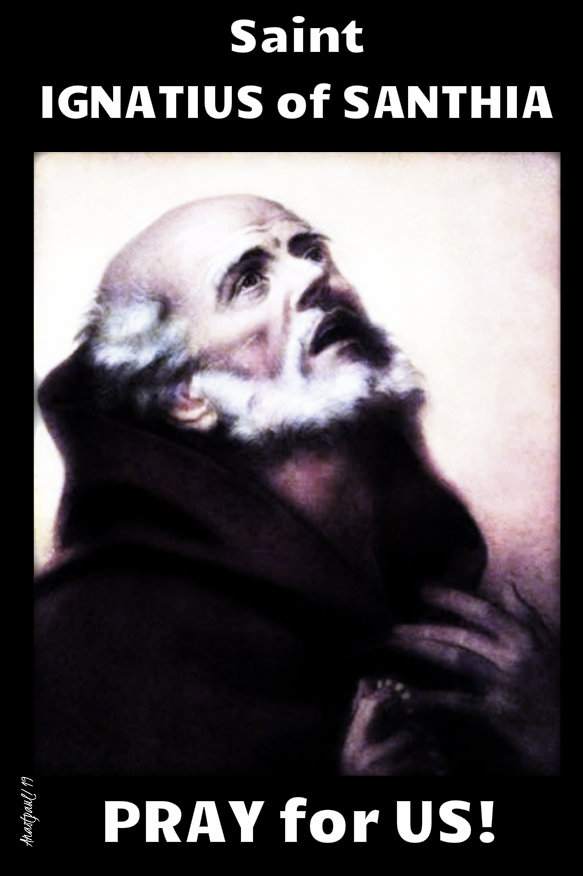
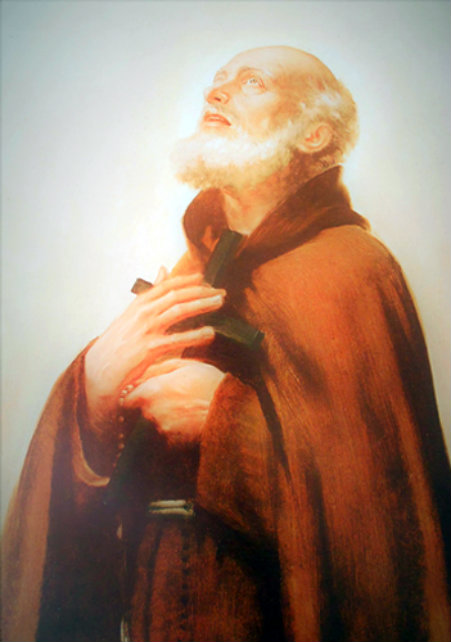
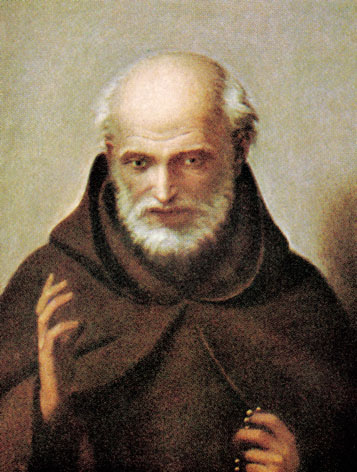
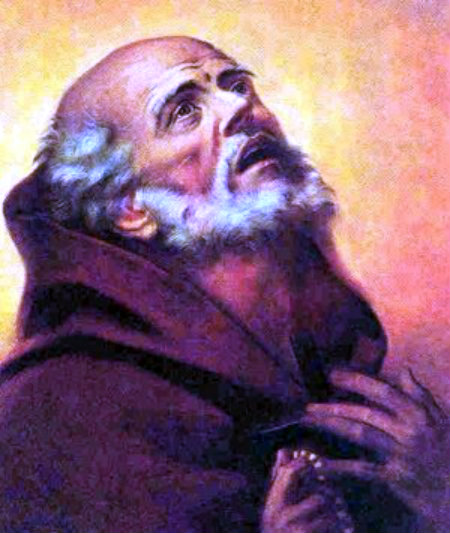
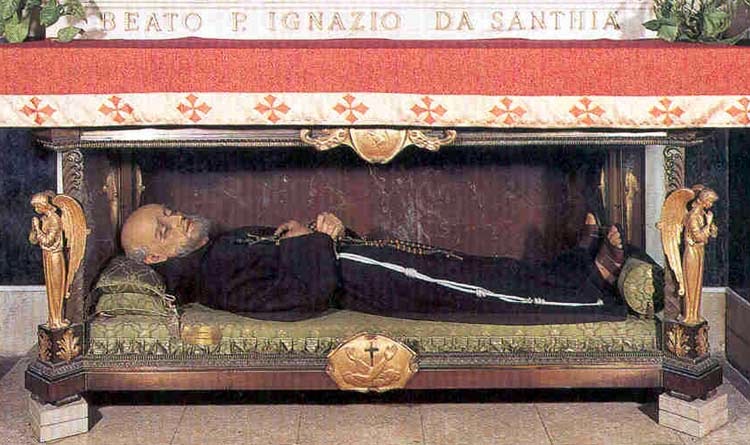
Saint of the Day – 22 September – Saint Ignatius of Santhia OFM Cap (1686-1770) Franciscan Priest and Friar, renowned Spiritual Director, servant of the Confessional, apostle of charity – known as the “Father of sinners and the lost” born Lorenzo Maurizio Belvisotti, on 5 June 1686 in Santhià, Vercelli, Italy and died on 21 September 1770 of natural causes in Turin, Italy. Patronages – Chaplains, Santhià.
St Ignatius made it his mission to help penitents in the sacrament of Reconciliation and also devoted himself to the care of the ill. He gained a strong reputation for the humble and austere nature of his life in addition to the application of the Franciscan charism in his life which served as a model for thousands.
Saint Ignatius of Santhiá was born on 5 June 1686 in Santhiá, in the Vercelli region of Northern Italy and died in Turin on 21 September 1770. He was a Capuchin priest, who was faithful to the Franciscan spirit, especially by his obedience, simplicity and humility. He was renowned for his gift of spiritual direction and concern for the spiritual growth of the faithful. He was also called the “Father of sinners and the lost” thanks to his particular ability to deal with the “spiritually sick”.
Capuchin vocation
He was baptised Lorenzo Maurizio, the fourth of six children of the upper-class Belvisotti family. He received his early education from a good priest, who inspired him and helped discern his call to enter the priesthood. In 1710 he was ordained a diocesan priest. After six years of priestly ministry, he joined the Capuchin Friars. At the time he suffered from the criticism of his family and parish who did not understand his decision. In the Capuchin Order, Ignatius finally found the inner peace he had been searching for in the simplicity of Franciscan life.
Life of obedience
On 24 May 1717, he made his religious profession and from that day he was like putty in the hands of his superiors. He began his spiritual journey being sent from one house to another in the Savoy region of Northern Italy. He was happy to be moved around out of obedience and honoured to be able to serve his brothers. He was completely at “God’s disposition”.
In 1727, Ignatius was sent to the convent in Torino-Monte, with the responsibility of prefect of the sacristy and confessor for the laity, a mission he was to fulfil for the last 24 years of his life when he returned to Turin, after serving as master of novices and chief of chaplains for the army of the Kingdom of Savoy. In this ministry he showed his fatherly concern for others and the spiritual wisdom that is learned at the foot of the Crucified One. It was not long before religious, priests, the faithful and the most hardened sinners began coming to the monastery to make their confession and to receive spiritual direction.
Special forms of service
In 1731, he was sent to the monastery of Mondovì, where he was made master of novices and vicar of the monastery. He was in charge of the novitiate for 14 years and his only desire was to make the novices entrusted to his care, true followers of Christ and obedient sons of St Francis. His teaching was founded on two pillars – divinely loving the novices and teaching by example, more than by words. He was available at all hours of the day and night for novices in need of help and he knew each one of them, making their formation his top priority. In 1744 he had to leave the novitiate and go to Turin because he suffered from a mysterious eye ailment that led to near blindness. He was partially cured so that he could return to active ministry.
In 1743-1746, war broke out in the Piedmont. This also brought with it the influx of the wounded and an epidemic. The King of Sardinia-Piedmont, Charles Emmanuel III asked the Capuchins to provide medical and spiritual care for the hospitals. Fr Ignatius was made head chaplain and offered his assistance for two years in the hospitals of Asti, Vinovo and Alessandria, offering an example of tireless activity and piety, serving and healing in a spirit of genuine evangelical love.
Spiritual director
When Piedmont was at peace, he returned once more to his convent in Turin-Monte where he would remain for 24 years as spiritual director and confessor. He visited the sick and begged for money and food for the needy. The well-loved old friar died a peaceful and gracious death in Turin-Monte on 21 September 1770. He would often say: “Paradise is not made for slackers. Let’s get to work!” To all people, religious brothers and laity, he taught the way of holiness and of abandonment in God’s hands, by his example and by his words.
On 17 April 1966, St Paul VI Beatified Ignatius of Santhiá and St John Paul II, Canonised him on 19 May 2002. … Vatican.va
Thought for the Day – 18 September – The Memorial of St Joseph of Cupertino (1603-1663)
Joseph of Cupertino is most famous for levitating at prayer. Already as a child, Joseph showed a fondness for prayer. After a short career with the Capuchins, he joined the Conventual Franciscans. Following a brief assignment caring for the friary mule, Joseph began his studies for the priesthood. Though studies were very difficult for him, Joseph gained a great deal of knowledge from prayer. He was ordained in 1628.
Joseph’s tendency to levitate during prayer was sometimes a cross, some people came to see this much as they might have gone to a circus sideshow. Joseph’s gift led him to be humble, patient and obedient, even though at times he was greatly tempted and felt forsaken by God. He fasted and wore iron chains for much of his life.
The friars transferred Joseph several times for his own good and for the good of the rest of the community. He was reported to and investigated by, the Inquisition; the examiners exonerated him.
Joseph was Canonszed in 1767. In the investigation preceding the Canonisation, 70 incidents of levitation are recorded.
While levitation is an extraordinary sign of holiness, Joseph is also remembered for the ordinary signs he showed. He prayed even in times of inner darkness and he lived out the Sermon on the Mount. He used his “unique possession”–his free will–to praise God and to serve God’s creation. He said:
“Clearly, what God wants above all, is our will,which we received as a free gift from God, in creation and possess, as though our own. When a man trains himself to acts of virtue, it is with the help of grace from God, from whom all good things come, that he does this. The will is what man has as his unique possession.”
St Ariadne
St Dominic Trach Doai
St Eumenius Thaumaturgus
St Eustorgius of Milan
St Ferreolus the Tribune
St Ferreolus of Limoges
St Hygbald
St Irene of Egypt St Joseph of Cupertino OFM Conv. (1603-1663)
St Oceano of Nicomedia Saint Richardis (839-c 895)
St Sophia of Egypt
—
Martyred in the Spanish Civil War:
• Blessed Carlos Eraña Guruceta
• Blessed Fernando García Sendra
• Blessed Jacinto Hoyuelos Gonzalo
• Blessed Jesus Hita Miranda
• Blessed José García Mas
• Blessed José María Llópez Mora
• Blessed Justo Lerma Martínez
• Blessed Salvador Chuliá Ferrandis
• Blessed Salvador Fernández Pérez
• Blessed Vicente Gay Zarzo
• Blessed Vicente Jaunzarás Gómez
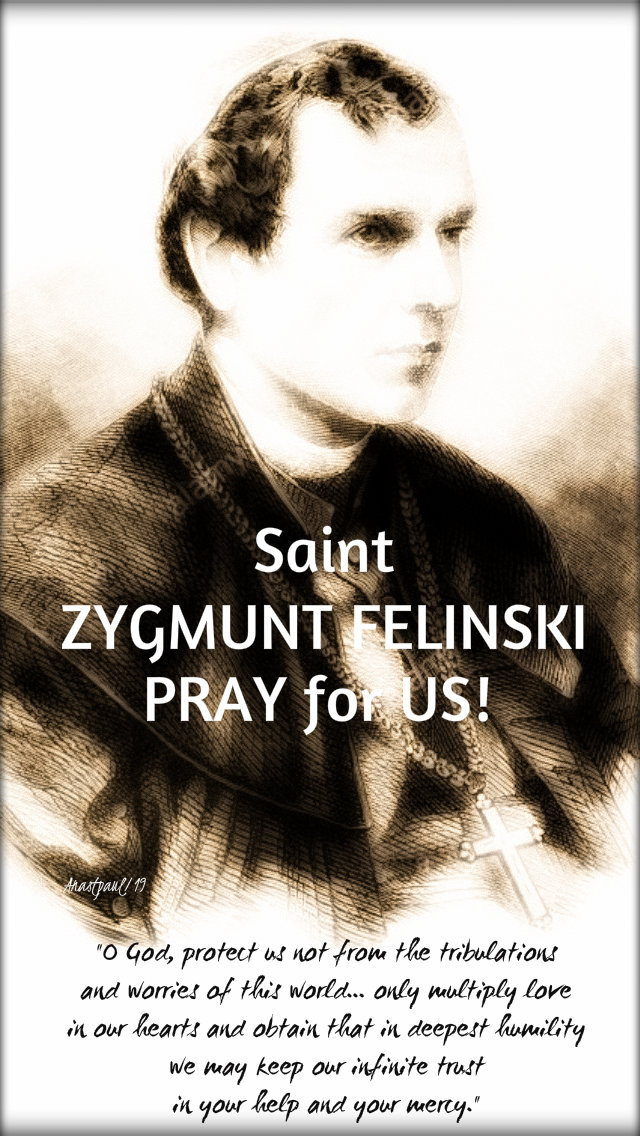
Thought for the Day – 17 September – Tuesday of the Twenty Fourth week in Ordinary Time, Year C and the Memorial of Saint Zygmunt Szcesny Felinski (1822-1895)
From a young age, the life of Zygmunt Szczęsny Feliński was marked by his striving after sanctity. Christ was for him “the Way, the Truth and the Life.” He wanted to achieve such a degree of unity with God so as to say after Saint Paul: I live now not with my own life but with the life of Christ who lives in me.
He was marked by unfaltering faith and utter trust in Providence. He always placed love of God and Church, devotion to his country and respect for all people in the first place. His great integrity, fortitude and justice were characteristic features of his spirituality. Apart from that, he was full of devotion and mercy marked by Franciscan cheerfulness, humility and straightforwardness – work and poverty. He was described as “the pride of the Polish episcopate”, “martyr”, “faithful son of the Church”.
Also nowadays, we can take the refreshing spirit and light from the treasury of his life. The Canonisation of the Shepherd-Exile encourages reflection on one’s own way of life, family and its revival, the building of the common house, the homeland, under God’s providential care and that of His Holy Mothe and ours.
During his Canonisation homily, on 11 October 2009, Pope Benedict said:
Archbishop of Warsaw, the Founder of the Congregation of the Franciscan Sisters of the Family of Mary, was a great witness of faith and pastoral charity in very troubled times for the nation and for the Church in Poland. He zealously concerned himself with the spiritual development of the faithful, he helped the poor and orphans. At the Ecclesiastical Academy in St Petersburg he saw to the sound formation of priests and as Archbishop of Warsaw he instilled in everyone the desire for inner renewal. Before the January 1863 Uprising against Russian annexation he put the people on guard against useless bloodshed. However, when the rebellion broke out and there were repressions he courageously defended the oppressed. On the Tsar of Russia’s orders he spent 20 years in exile at Jaroslaw on the Volga, without ever being able to return to his diocese. In every situation he retained his steadfast trust in Divine Providence and prayed: “O God, protect us not from the tribulations and worries of this world… only multiply love in our hearts and obtain that in deepest humility, we may keep our infinite trust in Your help and Your mercy”.
Today his gift of himself to God and to humankind, full of trust and love, becomes a luminous example for the whole Church.
Stigmata of St Francis of Assisi
Two years before the great Saint Francis of Assisi died and when he was forty-two years old — one year after he had built the first crib in honour of Our Lord — he went off to a lonely mountain called Mount Alvernia, to prepare himself by forty days of fasting and prayer for the feast of Saint Michael, the greatest of God’s angels, whose feast day is 29 September. On the feast of the Exaltation of the Holy Cross on 14 September, Saint Francis received in his hands, feet and side the Sacred Wounds from Our Lord’s own body.
Never was a saint more beautifully loved by Jesus than Saint Francis of Assisi. The wounds Jesus gave him stayed in his hands, feet and side and continually bled for two more years, until he died in 1226. The day on which Saint Francis received the Five Wounds of Our Lord was 14 September but so, that this beautiful event might have a feast day for itself, the Stigmata of Saint Francis are commemorated today, on 17 September. The simple liturgy of this holy saint’s life might be put this way – the crib in 122, and the Cross in 1224.
St Justin of Rome
St Lambert of Maastricht
St Narcissus of Rome
St Peter Arbues
St Rodingus
St Satyrus of Milan
St Socrates
Bl Stanislaus of Jesus and Mary
St Stephen
St Theodora
St Uni of Bremen
St Zygmunt Sajna St Zygmunt Szcesny Felinski TOSF (1822-1895)
—
Martyred in the Spanish Civil War
• Blessed Álvaro Santos Cejudo Moreno Chocano
• Blessed Juan Ventura Solsona
• Blessed Timoteo Valero Pérez
Quote/s of the Day – 12 September – Feast of the Most Holy Name of Mary
“This most holy, sweet and worthy name was eminently fitted to so holy, sweet and worthy a virgin. For Mary means a bitter sea, star of the sea, the illuminated or illuminatrix. Mary is interpreted Lady. Mary is a bitter sea to the demons, to men, she is the Star of the sea, to the Angels, she is illuminatrix and to all creatures she is Lady.”
St Bonaventure (1217-1274) Seraphic Doctor
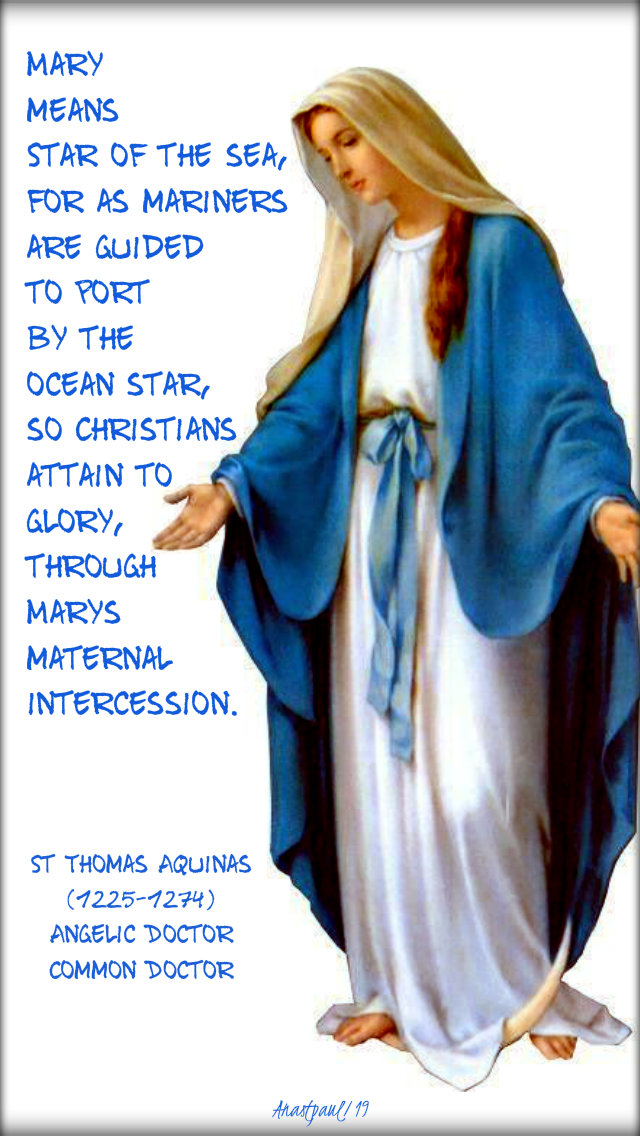
“Mary means Star of the sea, for as mariners are guided to port by the ocean star, so Christians attain to glory, through Mary’s maternal intercession.”
St Thomas Aquinas (1225-1274)
Angelic Doctor
Common Doctor
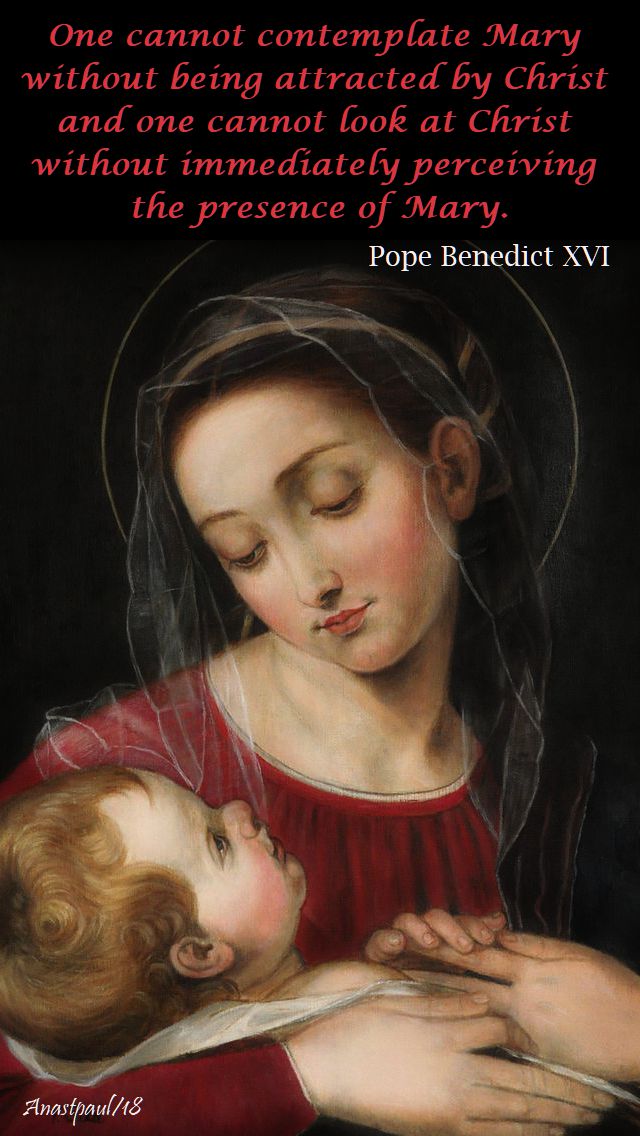
“One cannot contemplate Mary without being attracted by Christ and one cannot look at Christ without immediately perceiving the presence of Mary.”
Pope Benedict XVI
Mary’s Name
Rare perfume is a rough and reeking place, A bell-like music breaking through the blare Of strident streets, a dear remembered face Appearing through the mind’s pondrous despair.
A foam of summer flowers fringing the drear Immobile desert sea, a cherished voice Calling in some long night of pain and fear To make the heavy, heaving heart rejoice. Such is the mystic wonder of her name That is a shudder down Hell’s shaken halls, And joy where angel-wings flit like white flames, Where height to echoing height its glory calls.
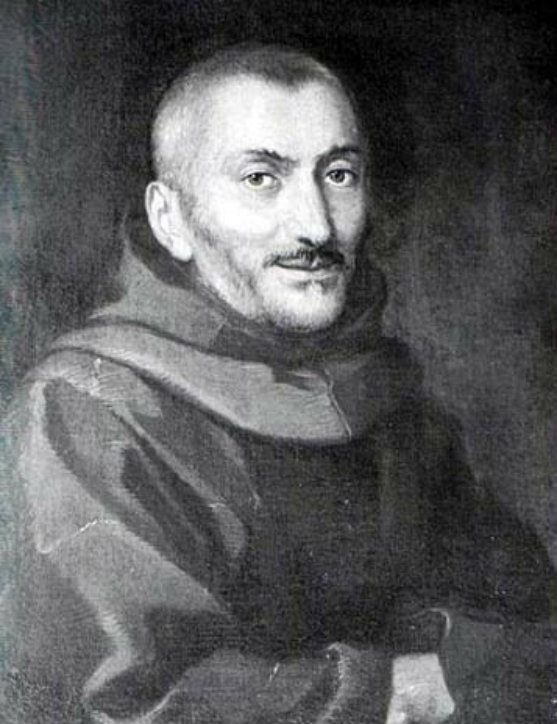
Saint of the Day – 11 September – Blessed Bonaventure of Barcelona OFM (1620-1684) Franciscan Friar, Reformer, Papal Adviser, Founder of Retreat houses – born on 24 November 1620 on Carrer de la Butxaca (Pocket Street) in Riudoms, Tarragona, Catalonia (in modern Spain) as Miguel Baptista Gran Peris (the street where he was born has been re-named in his honour) and died on 11 September 1684 at the friary of Saint Bonaventure on the Palantine Hill in Rome, Italy of natural causes. Patronage – Riudoms, Spain.
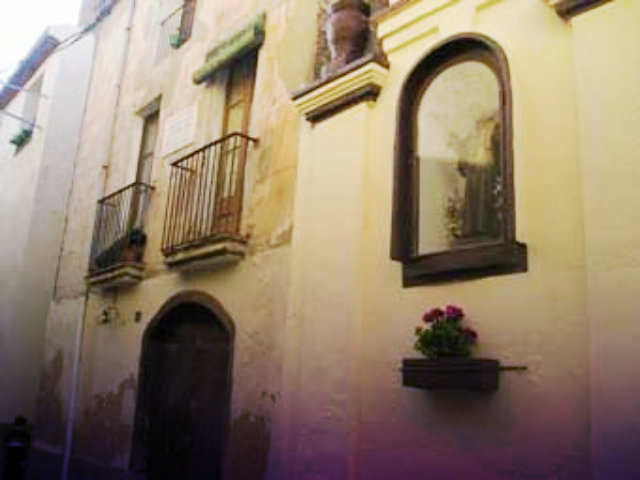
He was born in Riudoms, Catalonia, on 24 November 1620 in a modest house in the street known as a Pocket Street and now has his name. After marrying at the age of 18 as his father wished, he was widowed in a few months. He entered the Franciscan convent of Sant Miquel d’Escornalbou and made religious profession on 14 July 1641, changing his name to Bonaventura. In the following years, he was sent to Mora d’Ebre , Figueres, la Bisbal d’Empordà and Terrassa, where another street has been named for him.
The Birth Home of Blessed Bonaventure
In 1658 he was sent to Rome where he founded Santo Retiro are four monasteries in the province of Rome, including San Bonaventura al Palatino. He was an adviser to four popes – Alexander VII, Clement IX, Clement X and Innocent XI. In Rome in 1662 he founded the Riformella, a reform movement within the Reformed Order of Friars Minor of the Strict Observance, so the monks and Franciscan priests who dedicated themselves to the apostolate could gather in meditation and spiritual retreat, living the founding spirit of the Franciscan order.
In 1679, he sent from Rome the relics of Saint Boniface, Saint Julian and Saint Vincent. Since then, the second Sunday of May is celebrated in Riudoms as the Feast of the Holy Relics.
In 1775 he was declared venerable and in 1906 he was beatified by the Pope Pius X, after the verification of two miraculous healings. The first one in 1790 when a woman was in a serious condition after falling from the horse and was inexplicably cured after have invoked him. The other, in 1818 in which another woman remained unconscious for three days after childbirth and cured instantaneously after applying a relic of Bonaventura.
In Riudoms, his remains are preserved since 1972, when they were moved from Rome. They are currently in the tabernacle chapel in the church of Saint James the Apostle. In Riudoms, there is a great devotion to Blessed Bonaventura and a feast in his honour is celebrated every 24 November the day he honoured Riudoms by his birth, where his remains are taken in procession through the village.
Sunday Reflection – 8 September – Twenty-third Sunday in Ordinary Time, Year C
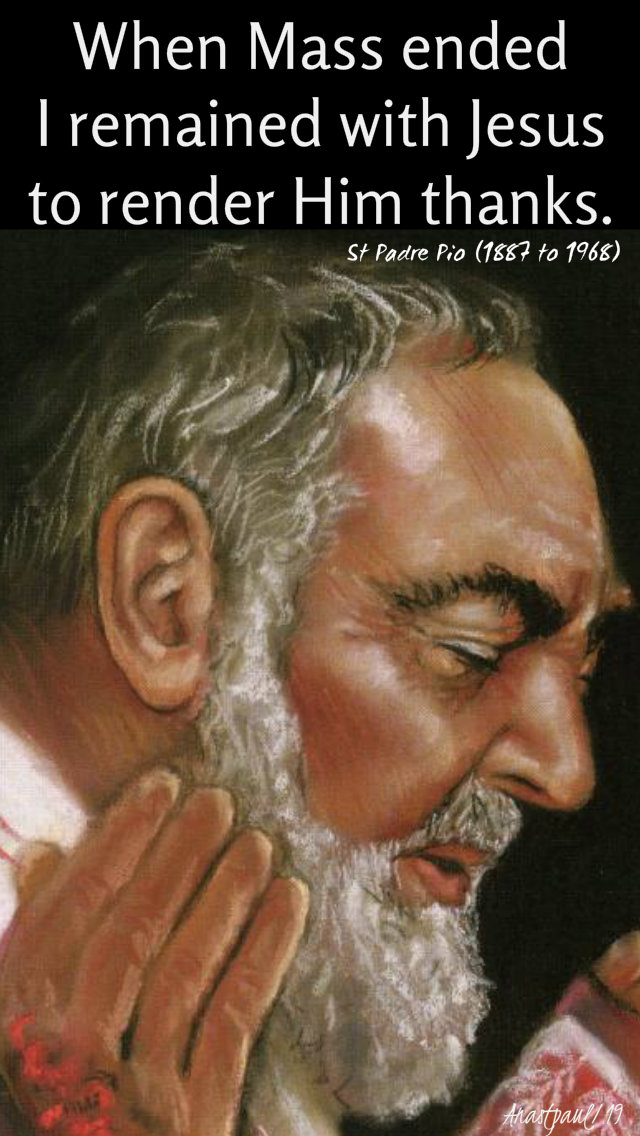
“When Mass ended I remained with Jesus to render Him thanks.
My thirst and hunger do not diminish after I have received Him in the Blessed Sacrament but rather, increase steadily.
Oh, how sweet was the conversation I held with Paradise this morning.
The Heart of Jesus and my own, if you will pardon my expression, fused.
They were no longer two hearts beating but only one.
My heart disappeared, as if it were, a drop in the ocean.”
St Pio of Pietrelcina aka St Padre Pio (1887 to 1968)
Our Morning Offering – 8 September – Twenty-third Sunday in Ordinary Time, Year C
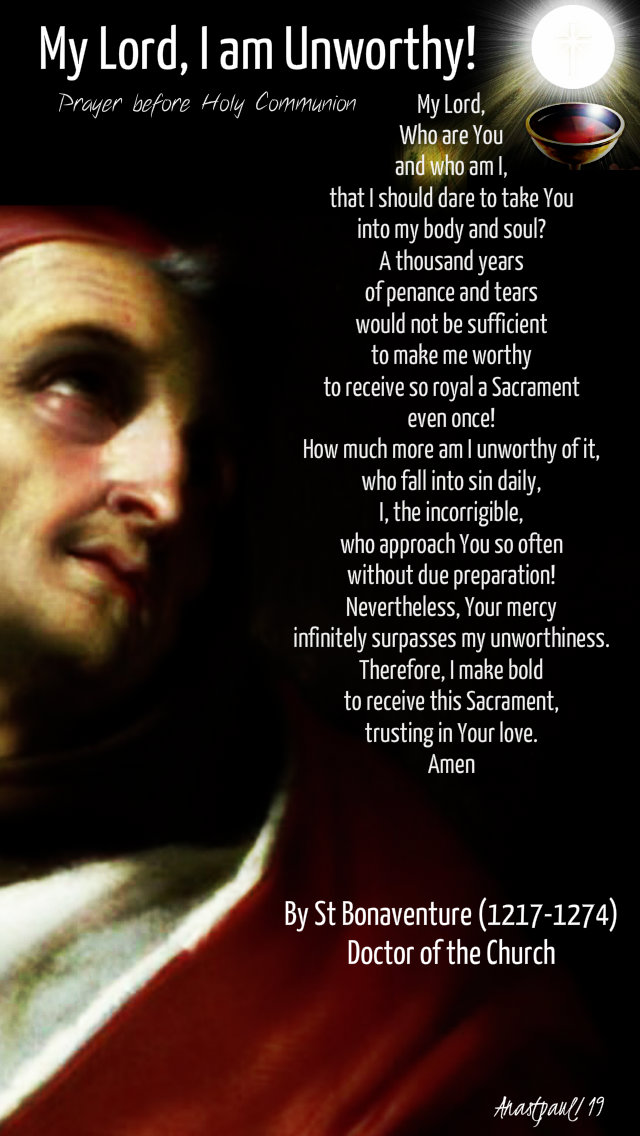
My Lord, I am Unworthy! Prayer before Holy Communion By St Bonaventure (1217-1274) Doctor of the Church
My Lord,
Who are You
and who am I,
that I should dare to take You
into my body and soul?
A thousand years
of penance and tears
would not be sufficient
to make me worthy
to receive so royal a Sacrament
even once!
How much more am I unworthy of it,
who fall into sin daily,
I, the incorrigible,
who approach You so often
without due preparation!
Nevertheless, Your mercy
infinitely surpasses my unworthiness.
Therefore, I make bold
to receive this Sacrament,
trusting in Your love.
Amen
Our Morning Offering – 6 September – Friday of the Twenty-second week in Ordinary Time, Year C
Holy Spirit, Fire of Love By St Anthony of Padua (1195-1231) Doctor of the Church
Holy Spirit,
fire of love,
come rest over each of us,
make our tongue ready
to confess our sins,
that in revealing everything
and concealing nothing,
we may attain heavenly life
to sing eternal praise
with the angels.
With your help,
You who live
and reign through all ages.
Amen
Quote of the Day – 1 September – Twenty-second Sunday in Ordinary Time, Year C and The 5th World Day of Prayer for the Care of Creation
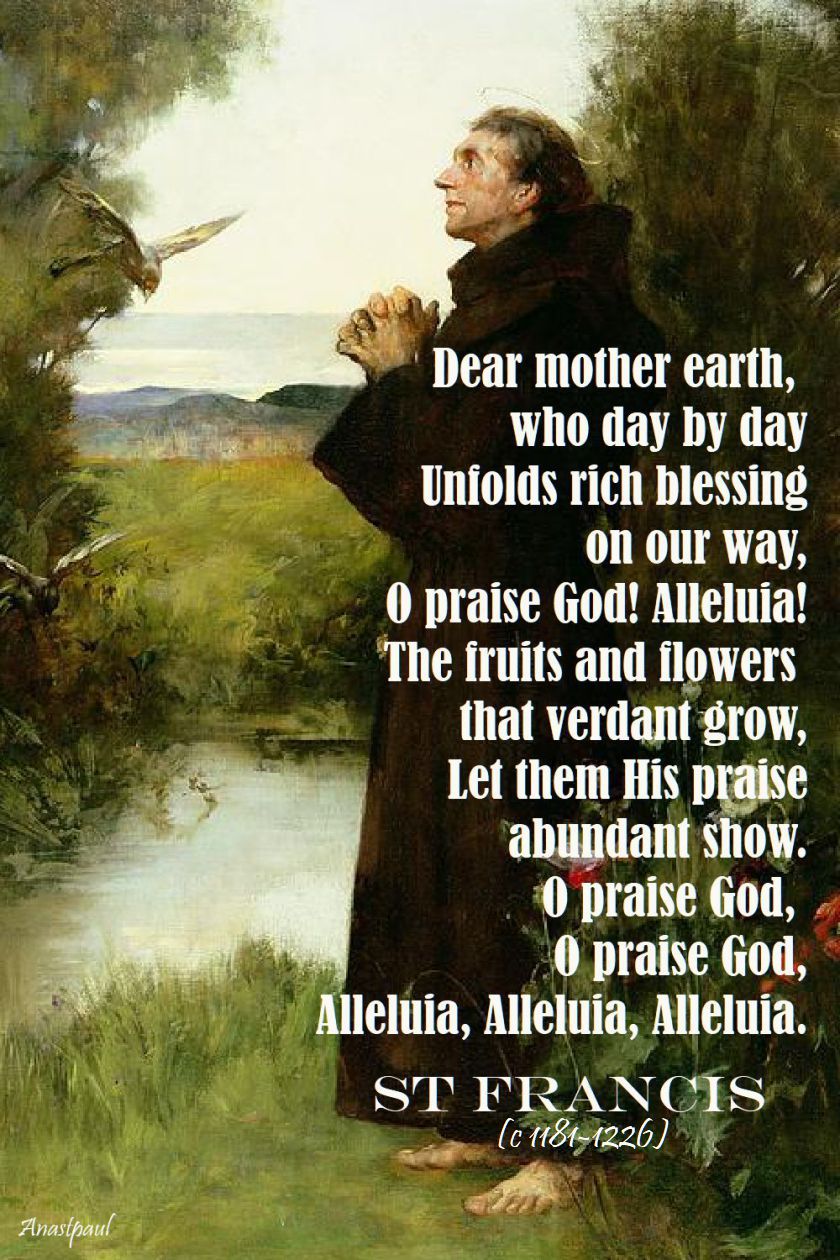
Dear mother earth, who day by day Unfolds rich blessing on our way, O praise God! Alleluia! The fruits and flowers that verdant grow, Let them His praise abundant show. O praise God, O praise God, Alleluia, Alleluia, Alleluia.
St Francis of Assisi (c 1181-1226)
(Translated by William H Draper) (Image by St Francis by Albert Chevallier Tayler)
Our Morning Offering – 30 August – Friday of the Twenty-first week in Ordinary Time, Year C
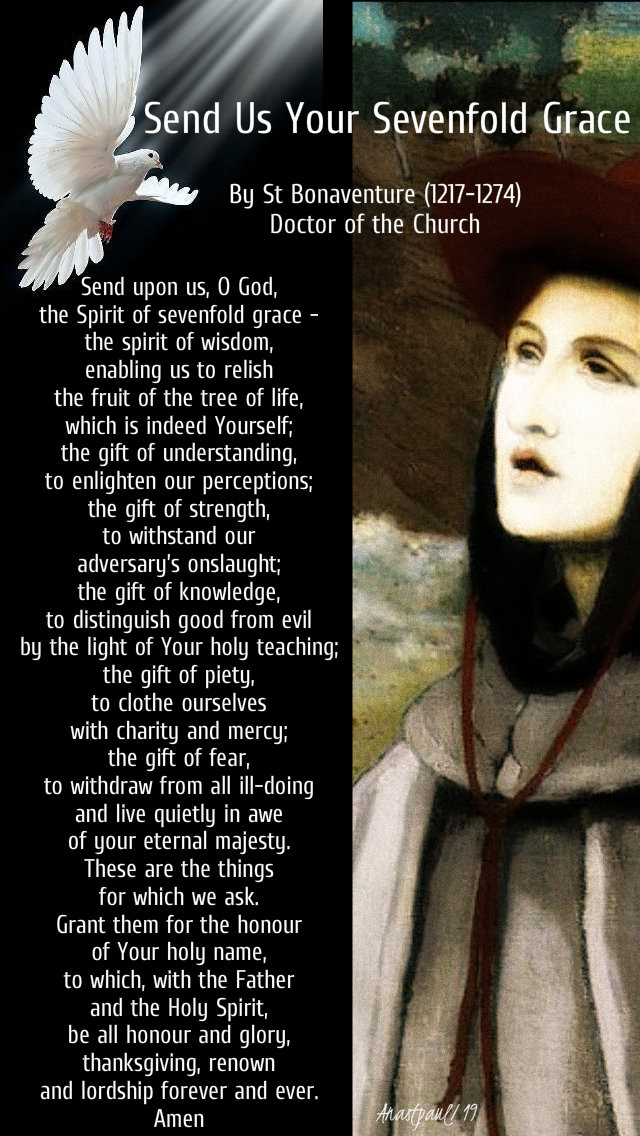
Send Us Your Sevenfold Grace By St Bonaventure (1217-1274) Doctor of the Church
Send upon us, O God,
the Spirit of sevenfold grace –
the spirit of wisdom,
enabling us to relish the fruit of the tree of life,
which is indeed Yourself;
the gift of understanding,
to enlighten our perceptions;
the gift of strength,
to withstand our adversary’s onslaught;
the gift of knowledge,
to distinguish good from evil
by the light of Your holy teaching;
the gift of piety,
to clothe ourselves with charity and mercy;
the gift of fear,
to withdraw from all ill-doing
and live quietly in awe of your eternal majesty.
These are the things for which we ask.
Grant them for the honour of Your Holy Name,
to which, with the Father and the Holy Spirit,
be all honour and glory,
thanksgiving, renown
and lordship forever and ever.
Amen
Our Morning Offering – 17 August – Saturday of the Nineteenth week in Ordinary Time, Year C and a Marian Saturday
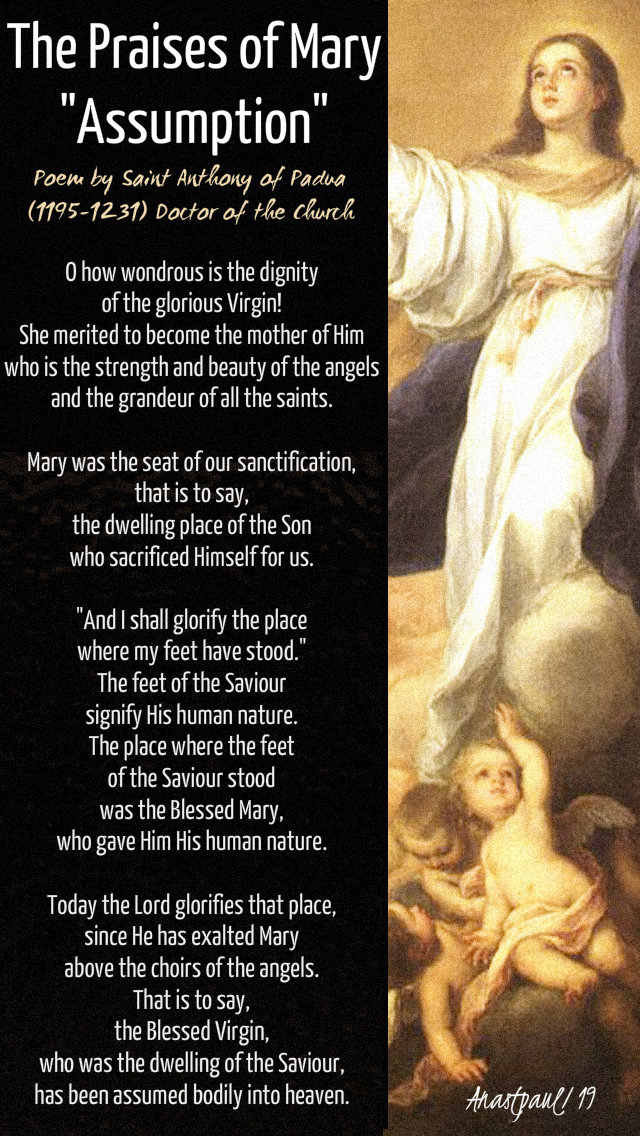
The Praises of Mary “Assumption” Poem by Saint Anthony of Padua (1195-1231) Doctor of the Church
O how wondrous is the dignity of the glorious Virgin!
She merited to become the mother of Him
who is the strength and beauty of the angels
and the grandeur of all the saints.
Mary was the seat of our sanctification,
that is to say,
the dwelling place of the Son
who sacrificed Himself for us.
“And I shall glorify the place where my feet have stood.”
The feet of the Saviour signify His human nature.
The place where the feet of the Saviour stood
was the Blessed Mary,
who gave Him His human nature.
Today the Lord glorifies that place,
since He has exalted Mary
above the choirs of the angels.
That is to say,
the Blessed Virgin,
who was the dwelling of the Saviour,
has been assumed bodily into heaven.
Thought for the Day – 14 August – Memorial of Saint Maximilian Mary Kolbe OFM Conv (1894 -1941) “Martyr of Charity”
Apostolic Zeal for the Salvation and Sanctification of Souls
An excerpt from the Letters of Saint Maximilian Kolbe
“The burning zeal for God’s glory that motivates you fills my heart with joy. It is sad for us to see in our own time that indifferentism in its many forms is spreading like an epidemic not only among the laity but also among religious. But God is worthy of glory beyond measure and, therefore, it is of absolute and supreme importance, to seek that glory with all the power of our feeble resources. Since we are mere creatures we can never return to Him all that is His due.
The most resplendent manifestation of God’s glory is the salvation of souls, whom Christ redeemed by shedding His blood. To work for the salvation and sanctification of as many souls as possible, therefore, is the preeminent purpose of the apostolic life. Let me, then, say a few words that may show the way toward achieving God’s glory and the sanctification of many souls.
God, who is all-knowing and all-wise, knows best what we should do to increase His glory. Through hHs representatives on earth, He continually reveals His will to us, thus it is obedience and obedience alone, that is the sure sign to us of the divine will. A superior may, it is true, make a mistake but it is impossible for us to be mistaken in obeying a superior’s command. The only exception to this rule is the case of a superior commanding something, that in even the slightest way, would contravene God’s law. Such a superior would not be conveying God’s will.
God alone is infinitely wise, holy, merciful, our Lord, Creator and Father; He is beginning and end, wisdom and power and love, He is all. Everything other than God, has value to the degree, that it is referred to Him, the maker of all and our own redeemer, the final end of all things. It is He who, declaring His adorable will to us through His representatives on earth, draws us to Himself and whose plan is, to draw others to Himself through us and to join us all to Himself in an ever-deepening love.
Look, then, at the high dignity that by God’s mercy belongs to our state in life. Obedience raises us beyond the limits of our littleness and puts us in harmony with God’s will. In boundless wisdom and care, His will guides us to act rightly. Holding fast to that will, which no creature can thwart, we are filled with unsurpassable strength.
Obedience is the one and the only way of wisdom and prudence, for us to offer glory to God . If there were another, Christ would certainly have shown it to us by word and example. Scripture, however, summed up His entire life at Nazareth in the words: He was subject to them, Scripture set obedience as the theme of the rest of His life, repeatedly declaring that He came into the world, to do His Father’s will.
Let us love our loving Father with all our hearts. Let our obedience increase that love, above all, when it requires us to surrender our own will. Jesus Christ crucified is our sublime guide toward growth in God’s love.
We will learn this lesson more quickly through the Immaculate Virgin, whom God has made the dispenser of His mercy. It is beyond all doubt, that Mary’s will represents to us, the will of God Himself. By dedicating ourselves to her, we become in her hands, instruments of God’s mercy even as she was such an instrument in God’s hands. We should let ourselves be guided and led by Mary and rest quiet and secure in her hands. She will watch out for us, provide for us, answer our needs of body and spirit, she will dissolve all our difficulties and worries.”
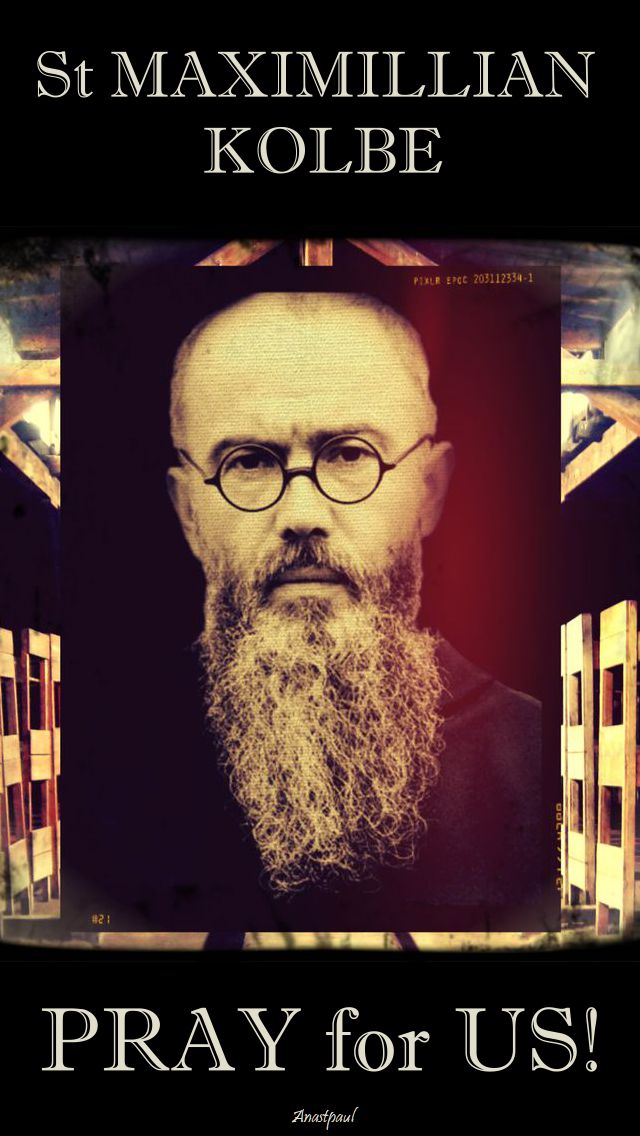
Quote/s of the Day – 14 August – The Memorial of St Maximillian Kolbe OFM Conv (1894 -1941) “Martyr of Charity”
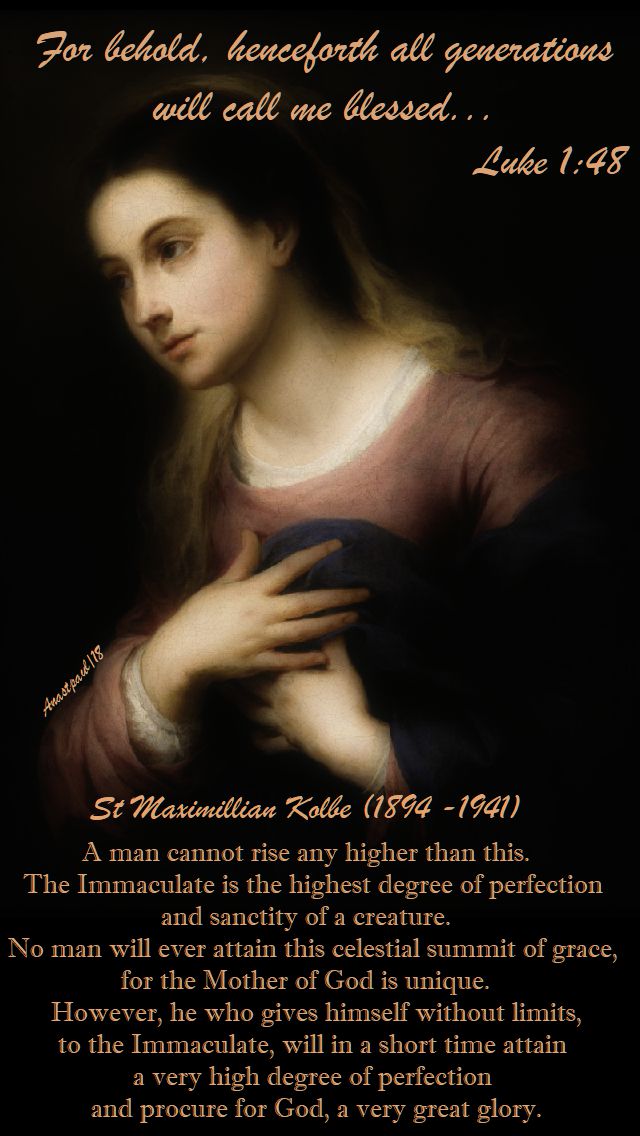
“A man cannot rise any higher than this. The Immaculate is the highest degree of perfection and sanctity of a creature. No man will ever attain this celestial summit of grace, for the Mother of God is unique. However, he who gives himself without limits, to the Immaculate, will in a short time, attain a very high degree of perfection and procure for God, a very great glory.”
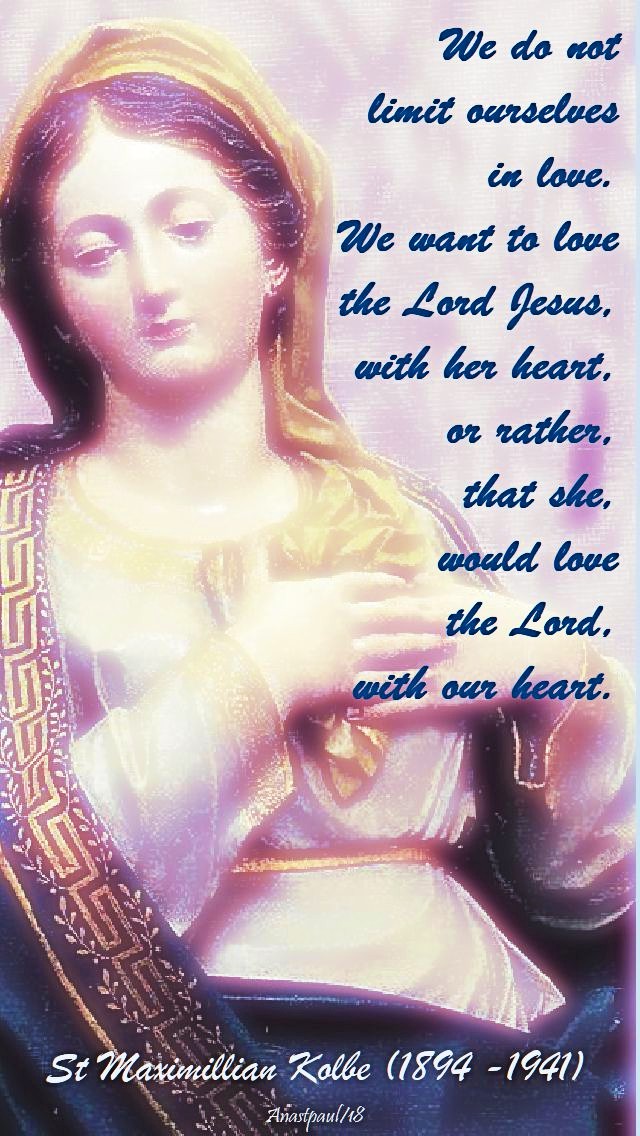
“We do not limit ourselves in love. We want to love the Lord Jesus, with her heart, or rather, that she would love the Lord, with our heart.”
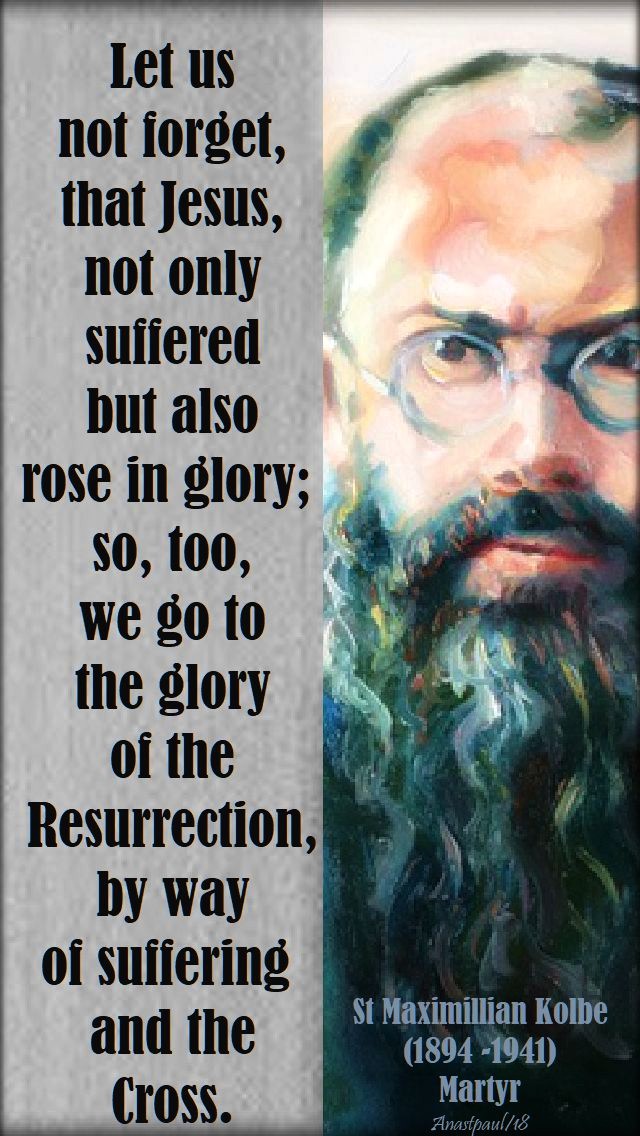
“Let us not forget, that Jesus not only suffered but also rose in glory; so, too, we go to the glory of the Resurrection, by way of suffering and the Cross.”
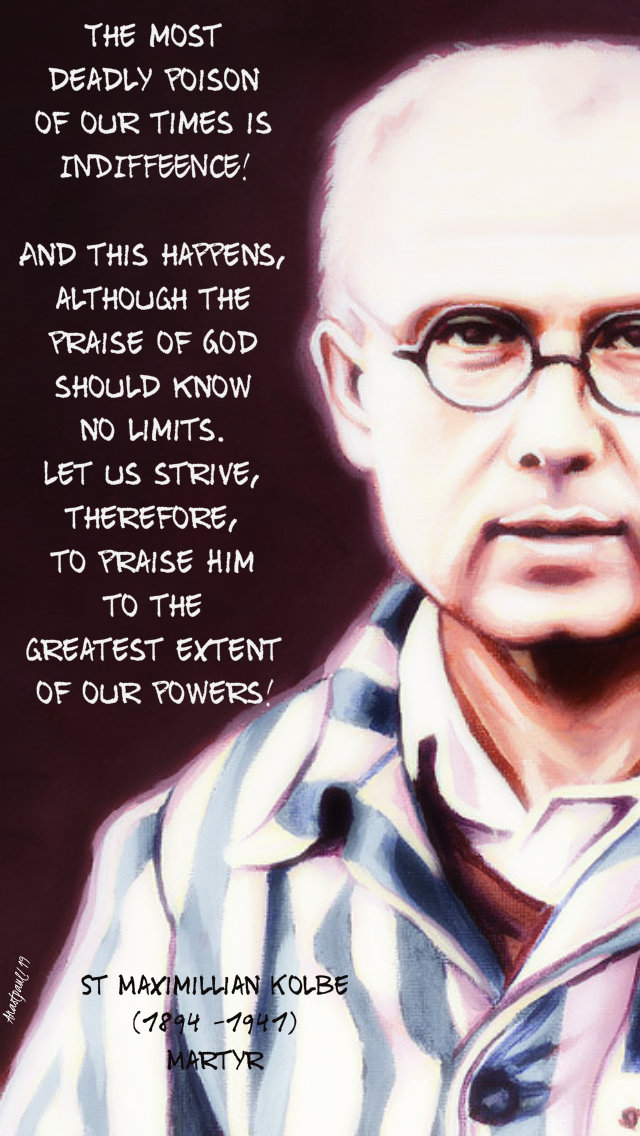
“The most deadly poison of our times is indifference. And this happens, although the praise of God should know no limits. Let us strive, therefore, to praise Him to the greatest extent of our powers!”
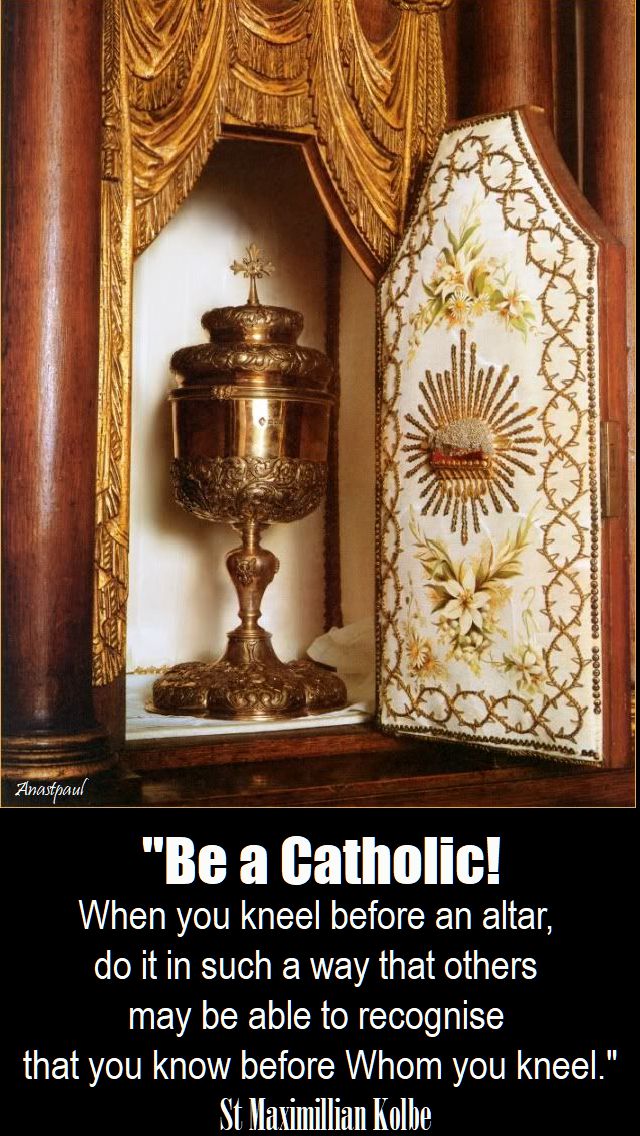
“Be a Catholic! When you kneel before an altar, do it in such a way that others may be able to recognise that you know before Whom you kneel.”
One Minute Reflection – 14 August – Wednesday of the Nineteenth week in Ordinary Time Year C, Gospel: Matthew 18:15–20 and the Memorial of St Maximillian Kolbe OFM Conv (1894 -1941) “Martyr of Charity”
“For where two or three are gathered in my name, there am I in the midst of them.” … Matthew 18:20
REFLECTION – “The Lord said: “If two of you agree on earth about anything for which they are to pray, it shall be granted to them by my heavenly Father. For where two or three are gathered together in my name, there am I in the midst of them.”
These words prove that much is given not to the mere number but to the unanimity of those who pray. “If two of you agree on earth,” He says, putting unanimity and peaceful concord first, teaching us to agree firmly and loyally. But how can one man agree with another when he disagrees with the body of the Church itself, with the whole brotherhood?… The Lord’s words were spoken about His own Church and addressed to members of the Church. If they are agreed, if, as He commanded but two or three are gathered together and pray with one mind, then, although they are but two or three, they can obtain from the divine majesty what they ask.
“Where two or three are gathered, I (he said) am with them.” That means, of course, with the single-hearted and peaceable, with those who fear God and keep His command-ments. With these, though but two or three, He declared His presence, as He was present also with the Three Children in the fiery furnace and, because they continued single-hearted and of one mind, refreshed them with the breath of dew as the flames surrounded them (Dn 3,50); or as He was present with the two apostles in prison, because they were single-hearted and of one mind and Himself opened the prison gates (Acts 25,25)… So when Christ lays down with authority: “Where two or three are gathered, I am with them,” He is not separating men from the Church which He founded and created. But He rebukes the faithless for their discord and with His own voice commends peace to the faithful.” … Saint Cyprian of Carthage, (c 200- c 258) Bishop and Martyr, Father of the Church – On the Unity of the Church
PRAYER – My Lord and my God, You who are the fruit of Mary’s blessed womb and the most Divine Son of our Father, grant that we may always have recourse to You, through her who bore You and through Your Holy Church. Grant that she may help and comfort us me and lead us to You. Mary, Holy and loving Mother of God, pray for us all. Grant O Lord, that through the intercession of St Maximillian, we may entrust ourselves to You through Your and our blessed Mother, amen.
Bl Aimo Taparelli
St Antony Primaldo St Arnold/Arnulf of Soissons (1040-1087)
St Athanasia of Timia
St Callistus of Todi
St Demetrius of Africa
St Domingo Ibáñez de Erquicia
St Eberhard of Einsiedeln
St Eusebius of Palestine
St Eusebius of Rome
St Fachanan of Ross
St Francisco Shoyemon
Bl Juliana Puricelli
St Marcellus of Apamea
Bl Sanctes Brancasino
St Ursicius of Nicomedia
St Werenfridus
__
Martyred in the Spanish Civil War: 11 Beati
• Blessed Ángel de la Red Pérez
• Blessed Antonio María Martín Povea
• Blessed Basilio González Herrero
• Blessed Ezequiél Prieto Otero
• Blessed Joaquín Frade Eiras
• Blessed Jocund Bonet Mercadé
• Blessed José García Librán
• Blessed Ricardo Atanes Castro
• Blessed Segundo Pérez Arias
• Blessed Vicente Rubiols Castelló
Our Lady, Refuge of Sinners/Refugium Peccatorum: St John Damascene calls Mary a city of refuge to all who flee to Her.
Blessed Antonio Baldinucci SJ (1665-1717) had a particular devotion to the Refugium Peccatorum image of Virgin Mary in the Church of the Gesu (Frascati) in Italy and commissioned a copy which he considered miraculous and carried it with him in his travels. The Jesuits spread copies of the image of the Madonna of Refuge in Mexico by the 19th century and it began to be depicted in missions there, often with clouds surrounding the lower portion of the image of the Virgin Mary holding the Child Jesus.
The term “Refugium peccatorum” is also used other works of Roman Catholic Marian art. For instance, there is a marble statue representing the Virgin Mary, on the grand staircase of the old municipal palace in Venice, Italy. The name came from the fact that the convicts were allowed to stop in front of the Virgin Mary’s statue to pray for their soul on the way to the scaffold.
The traditional feast day of Our Lady, Refuge of Sinners is today, 13 August.
St Anastasius the Monk
St Anastasius the Priest
St Benildus
St Cassian of Imola
St Cassian of Todi
St Concordia
St Conn O’Rourke
Bl Gertrude of Altenberg
St Helen of Burgos
St Herulph of Langres
Bl Jakob Gapp
Bl John of Alvernia St John Berchmans SJ (1599-1621)
St Junian of Mairé
St Ludolph Bl Marco d’Aviano/Mark of Aviano OFM Cap (1631-1699) Biography: https://anastpaul.com/2018/08/13/saint-of-the-day-13-august-blessed-mark-of-aviano-ofm-cap-1631-1699/
St Maximus the Confessor
St Nerses Glaietsi
St Patrick O’Healy
Bl Pierre Gabilhaud
St Radegund
St Radegunde
St Wigbert of Fritzlar
Bl William Freeman
—
Martyred in the Spanish Civil War:
• Blessed Francesc Castells Areny
• Blessed Inocencio García Díez
• Blessed José Bonet Nadal
• Blessed José Boher y Foix
• Blessed José Juan Perot y Juanmarti
• Blessed Jose Tàpies y Sirvant
• Blessed Josep Alsina Casas
• Blessed Luciano Hernández Ramírez
• Blessed Maria de Puiggraciós Badia Flaquer
• Blessed Mateo Despóns Tena
• Blessed Modesto García Martí
• Blessed Pascual Araguàs y Guàrdia
• Blessed Pedro Martret y Molet
• Blessed Silvestre Arnau y Pascuet
Martyred Claretians of Barbastro – 51 beati:
• Blessed Agustín Viela Ezcurdia
• Blessed Alfons Miquel Garriga
• Blessed Alfons Sorribes Teixidó
• Blessed Antolín Calvo y Calvo
• Blessed Antoni Dalmau Rosich
• Blessed Atanasio Vidaurreta Labra
• Blessed Eduardo Ripoll Diego
• Blessed Esteve Casadevall Puig
• Blessed Eusebi Maria Codina Millà
• Blessed Felipe de Jesús Munárriz Azcona
• Blessed Francesc Roura Farró
• Blessed Francisco Castán Meseguer
• Blessed Gregorio Chirivas Lacamba
• Blessed Hilario Llorente Martín
• Blessed Jaume Falgarona Vilanova
• Blessed Joan Baixeras Berenguer
• Blessed Joan Codinachs Tuneu
• Blessed José Amorós Hernández
• Blessed José Blasco Juan
• Blessed José Figuero Beltrán
• Blessed José Pavón Bueno
• Blessed Josep Maria Badía Mateu
• Blessed Josep Ormo Seró
• Blessed Josep Ros Florensa
• Blessed Juan Díaz Nosti
• Blessed Juan Echarri Vique
• Blessed Juan Sánchez Munárriz
• Blessed Leoncio Pérez Ramos
• Blessed Lluís Escalé Binefa
• Blessed Lluís Lladó Teixidor
• Blessed Lluís Masferrer Vila
• Blessed Manuel Buil Lalueza
• Blessed Manuel Martínez Jarauta
• Blessed Manuel Torras Sais
• Blessed Miquel Masip González
• Blessed Nicasio Sierra Ucar
• Blessed Pedro García Bernal
• Blessed Pere Cunill Padrós
• Blessed Rafael Briega Morales
• Blessed Ramon Illa Salvia
• Blessed Ramon Novich Rabionet
• Blessed Salvador Pigem Serra
• Blessed Sebastià Riera Coromina
• Blessed Sebastián Calvo Martínez
• Blessed Secundino Ortega García
• Blessed Teodoro Ruiz de Larrinaga García
• Blessed Tomàs Capdevila Miró
• Blessed Wenceslau Clarís Vilaregut
They were martyred on 2 August through 18 August 1936 in Barbastro, Huesca, Spain and Beatified on 25 October 1992 by Pope John Paul II.
Thought for the Day – 11 August – Nineteenth Sunday in Ordinary Time, Year C, Gospel: Luke 12:32–48 and the Memorial of St Clare of Assisi (1194-1253)
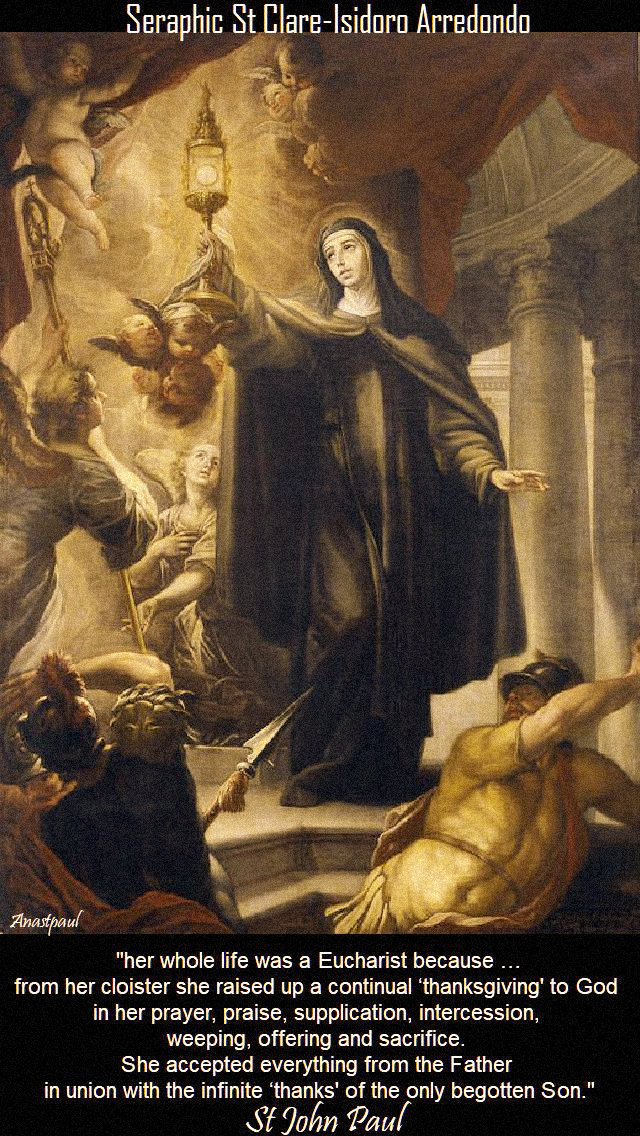
St Pope John Paul II said of Saint Clare – “her whole life was a Eucharist because … from her cloister she raised up a continual ‘thanksgiving’ to God in her prayer, praise, supplication, intercession, weeping, offering and sacrifice.
She accepted everything from the Father in union with the infinite ‘thanks’ of the only begotten Son.”
St Pope John Paul II (1920-2005)
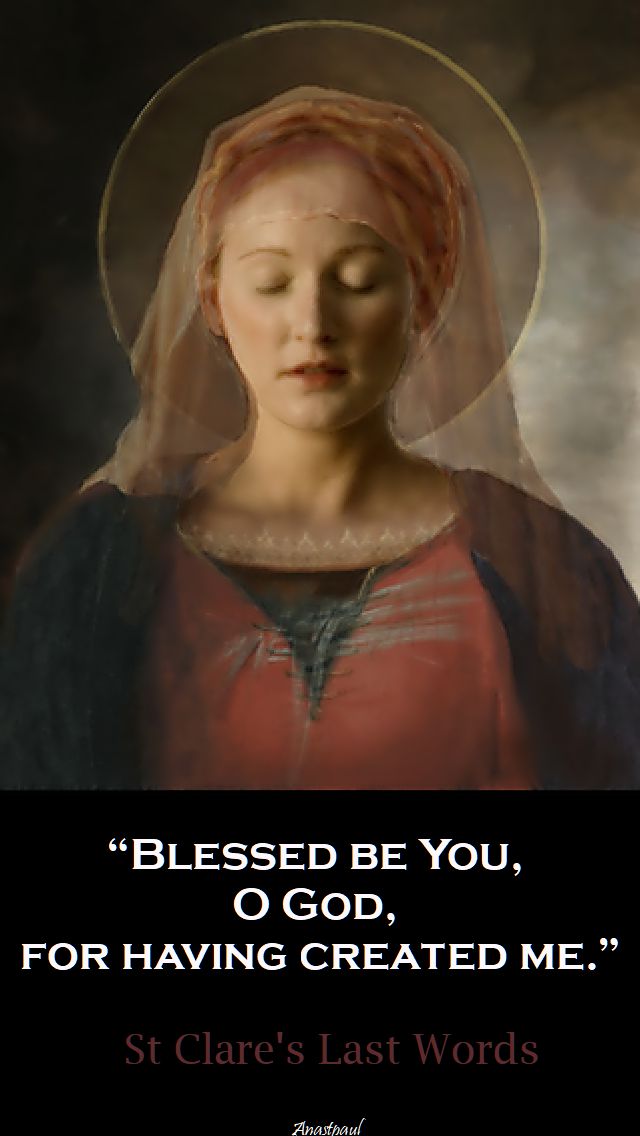
“ Blessed be You, O God, for having created me. ”
St Clare’s Last Words
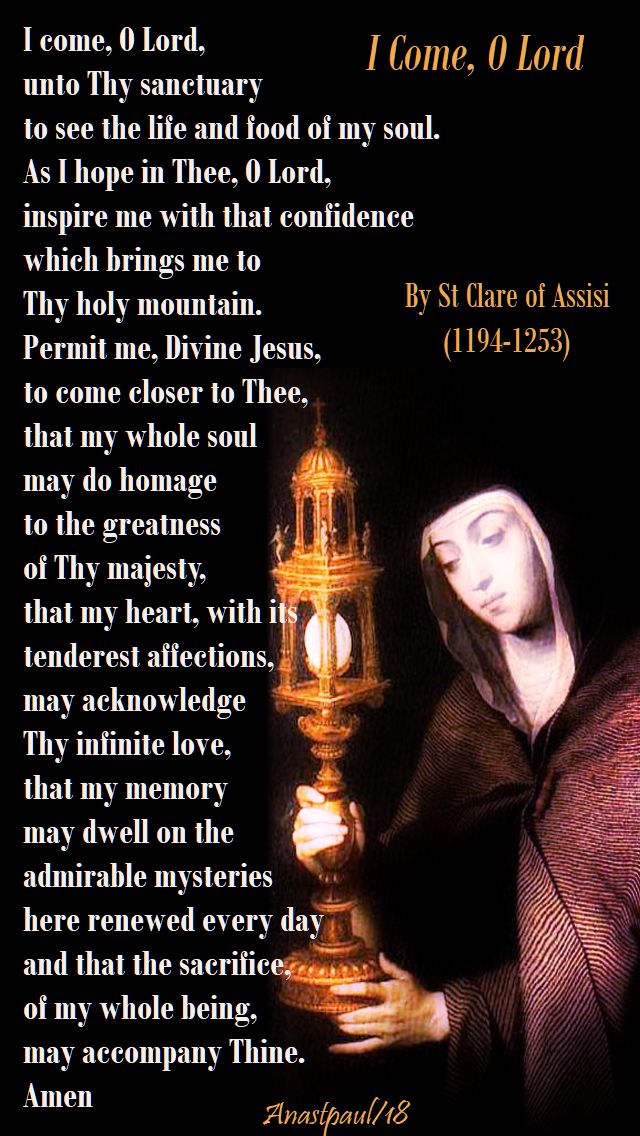
I Come, O Lord By St Clare of Assisi (1194-1253)
I come, O Lord,
unto Thy sanctuary
to see the life and food of my soul.
As I hope in Thee, O Lord,
inspire me with that confidence
which brings me to Thy holy mountain.
Permit me, Divine Jesus,
to come closer to Thee,
that my whole soul may do homage
to the greatness of Thy majesty,
that my heart,
with its tenderest affections,
may acknowledge Thy infinite love,
that my memory may dwell
on the admirable mysteries
here renewed every day
and that the sacrifice,
of my whole being,
may accompany Thine.
Amen
St Rusicola of Arles
St Rufinus of Marsi
St Susanna of Rome
St Taurinus of Evreux
Bl Theobald of England and Companion
St Tiburtius of Rome
Bl William Lampley
—
Martyred in the Spanish Civil War
Bl Armando Óscar Valdés
Bl Benjamín Fernández de Legaria Goñi
Bl Carlos Díaz Gandía
Bl Rafael Alonso Gutiérrez
Bl Ramon Rosell Laboria
St Agathonica of Carthage
St Agilberta of Jouarre Bl Amadeus of Portugal O.F.M. (1420–1482) Biography: https://anastpaul.com/2018/08/10/saint-of-the-day-blessed-amadeus-of-portugal-o-f-m-1420-1482/
St Aredius of Lyon
St Asteria of Bergamo
Bl Augustine Ota
St Bassa of Carthage
St Bessus
St Bettelin St Blane (Died 590)
Bl Claude-Joseph Jouffret de Bonnefont
St Deusdedit the Cobbler
Bl Edward Grzymala
Bl Franciszek Drzewiecki
Bl Francois François
St Gerontius
Bl Hugh of Montaigu
Bl Lazare Tiersot
St Paula of Carthage
St Thiento of Wessobrunn
—
Martyrs of Alexandria – 260+ saints: A large number of Christians who died in Alexandria, Egypt between 260 and 267 in the persecutions of Decius and Valerian, whose names have not come down to us and who are commemorated together.
Martyrs of Rome – 165 saints: Group of 165 Christians martyred in the persecutions of Aurelian. 274 in Rome, Italy.
Martyred in the Spanish Civil War:
• Blessed Antonio González Penín
• Blessed José Toledo Pellicer
• Blessed José Xavier Gorosterratzu Jaunarena
• Blessed Juan Martorell Soria
• Blessed Pedro Mesonero Rodríguez
• Blessed Victoriano Calvo Lozano
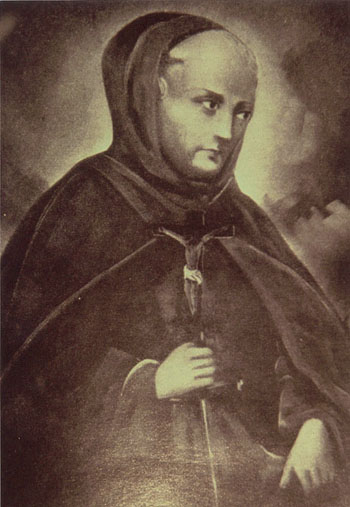
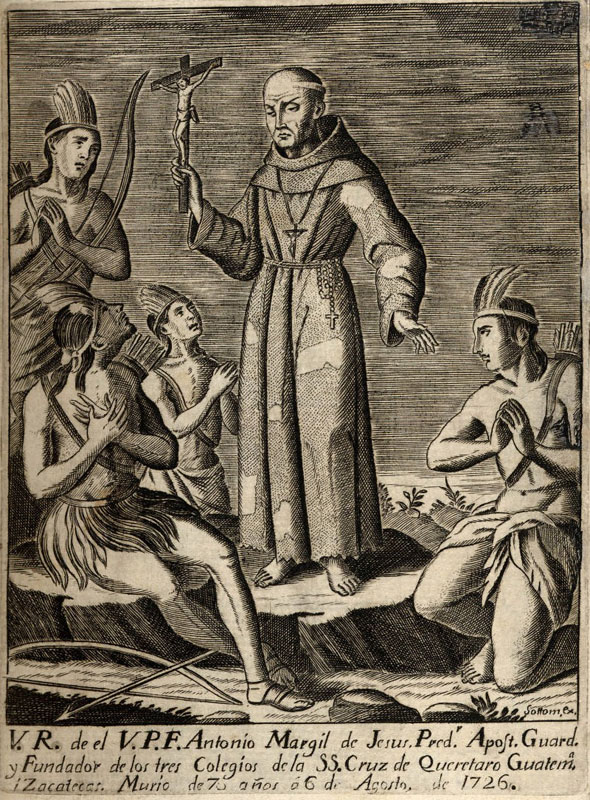
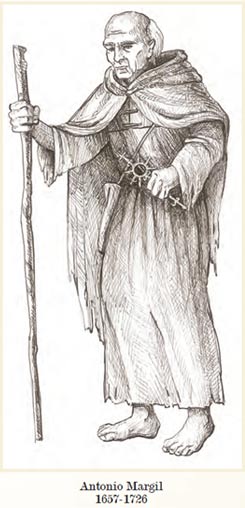
Thought for the Day – 8 August – The Memorial of Ven Antonio Margil of Jesus OFM (1657-1726) “The Flying Father”
A quarter century before St Junípero Serra began his California adventure, there was an extraordinary Franciscan carrying out a great work of evangelisation across Central America, Mexico and finally, Texas. In his zeal to spread the Catholic faith, he faced inclement weather, hostile animals, forest insects and reptiles, lack of food and water and cruel treatment from hostile Indian tribes.
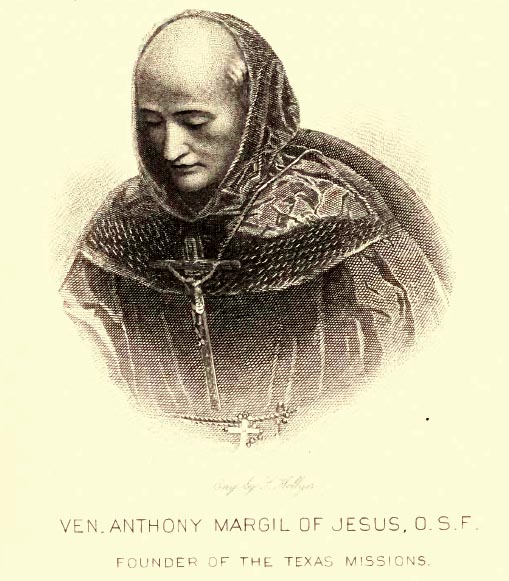
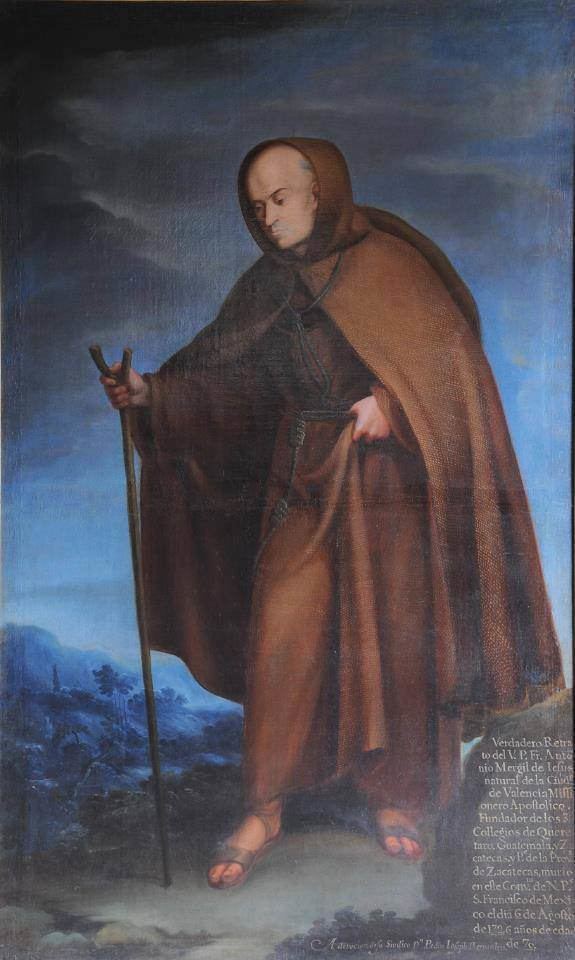
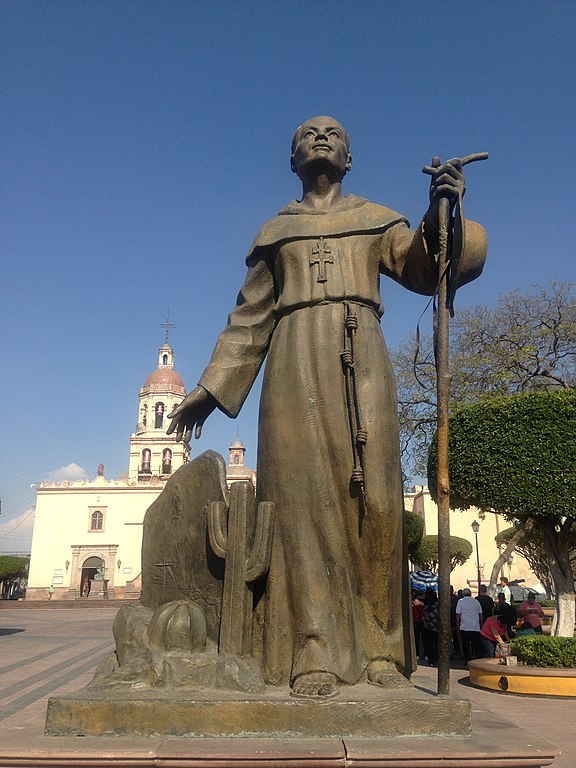
The life of Fr Antonio Margil of Jesus is an epic story of a man who seems larger than life. Barefoot, carrying only a staff, breviary and the materials he needed to say Mass, he established hundreds of missions in a territory extending from the jungles of Costa Rica to east Texas and the borders of Louisiana. Countless Indians of Costa Rica, Nicaragua, Guatemala, Mexico and Texas received the divine gift of faith from him and revered him a saint. For this, he is called the Apostle of New Spain and Texas.
In 1697, Fr Margil was recalled to Querétaro as superior, or presidente, of the Franciscan College of the Holy Cross, and a new phase of his life began as an administrator. When he reached the College, Fr Margil took off the ragged habit he had worn and mended for 14 years, patching it at times with bark from a certain tree called the mastastes and exchanged it for a new one, thus avoiding the least shadow of singularity.
As superior, he never dispensed himself from any public act or expected anything but what he himself practised. To maintain accuracy and the decorum of ritual, he imposed upon his religious the obligation of holding a conference once a week on the ceremonies of the Holy Sacrifice of the Mass. The friar who loved “Lady Poverty” exhorted his brethren and the faithful to ornament the altars and churches as much as they could, so they might be worthy of the divine majesty of God.
For Our Lord, there was nothing too rich or decorous. For himself, it was a different story. With the exception of Sunday, he fasted every day, taking a few herbs, a piece of bread and some water or watered down chocolate once a day. He permitted himself sleep only from 8 to 11 every evening. He was wakened then by the brother porter and together they read a chapter from The Mystical City of God by María de Agreda. After praying the Divine Office at midnight, he made the Stations and would remain in prayer until the hour of Prime, absorbed in God.
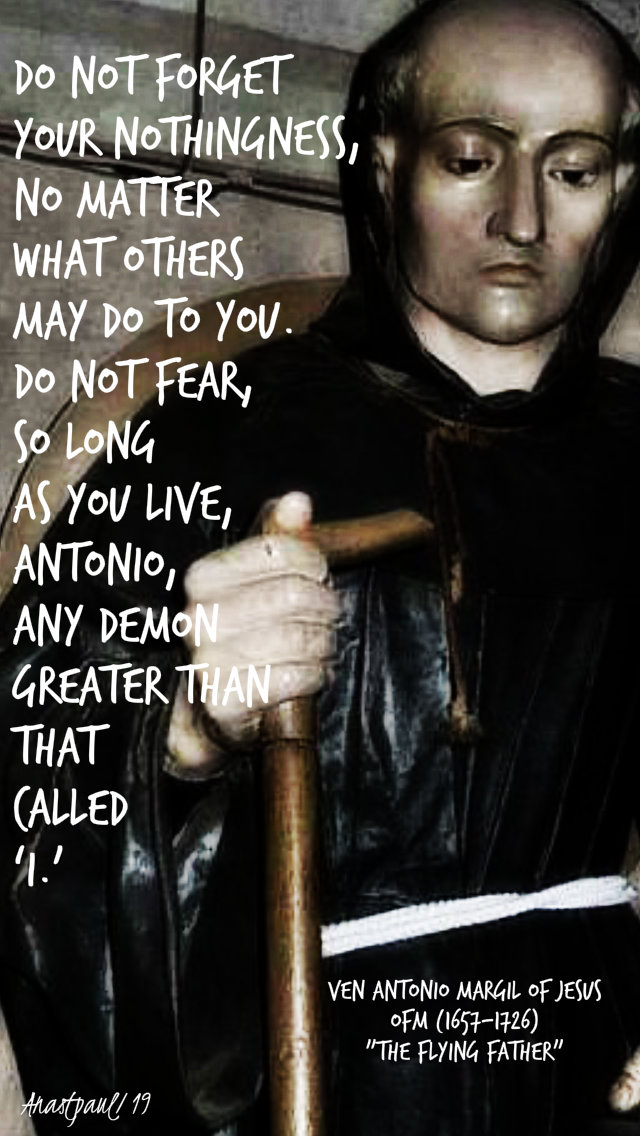
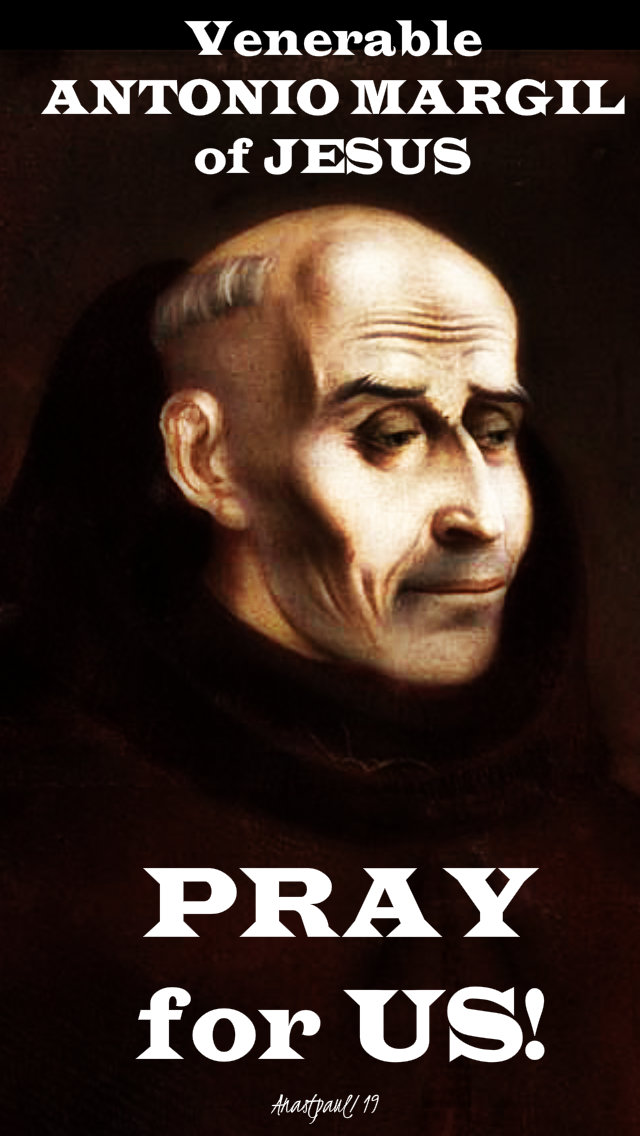
The barefoot friar who walked on water in his extraordinary missionary work was a man of deep humility. More than once he was tortured, beaten, or left for dead. His name, which deserves to be known and his fame spread is Venerable Antonio Margil of Jesus, who titled himself and signed his letters as El Nada Mismo – Nothingness Itself.
“Do not forget your nothingness, no matter what others may do to you. Do not fear, so long as you live, Antonio, any demon greater than that called ‘I.’”
Let us Pray that Venerable Antonio that he may soon be raised to the altars of the most high!
Prayer for the Intercession of Venerable Antonio
O Lord Jesus Christ,
Your apostle Antonio Margil of Jesus,
left his homeland to bring
the Gospel of Salvation to the people
of Mexico and the United States.
He endured every hardship
and pain for love of You.
May You graciously deign
to reward Your servant Antonio
by hastening the day
when he will be raised
to the honour of Blessed and Saint.
We ask that Venerable Antonio Margil
intercede for us before God
by answering this request.
………………………………. (make your request)
Through Christ Our Lord,
Amen
Saint of the Day – 8 August – Venerable Antonio Margil of Jesus OFM (1657-1726) Franciscan Priest and Friar, Missionary, ascetic, mystic, miracle-worker, apostle of prayer and penance, administrator, known as the “Apostle of New Spain and Texas” and the “Flying Father” – born Antonio Margil on 18 August 1657 in Valencia, Spain and died on 6 August 1726 in Mexico City, Mexico aged 68, of natural causes.
Venerable Antonio laboured tirelessly as missionary, miracle-worker, servant of the Lord throughout the Americas. While others gave him such laudable nicknames, ever humble Antonio referred to himself as “La Misma Nada,” translated as “Nothingness Itself.” At his eulogy, it was said of him: “All America was the witness and the scene of his virtues and miracles . To trace his journeys among the pagans, turn your eyes to east and west, to north and south and you will find him in all these places, leading a very austere life, crossing mountains, combating the evil spirits until he had triumphantly planted his foundations. The widely scattered provinces of Nicaragua and Costa Rica, of Honduras and Chol and Panama, of Coahuila and Tejas – all of them heard his apostolic voice.”
Antonio was born in Valencia, Spain and at the young age of 15 joined the Franciscan Order at La Corona de Cristo. Ordained at 25, he was assigned to “New Spain” and made the voyage to Mexico where he was initially stationed at the newly established Mission college of Queretaro. Like other new world missionaries (for example, Junipero Serra in California, twenty-five years later), Antonio encountered difficult living and harsh conditions. Never one to complain, he embraced his challenges as mortifications, offering his sufferings to the Lord for the sake of those he preached to.
Over the course of his life, Antonio would travel throughout Mexico and Central America. His first two missions were to Guatemala and Nicaragua, where he founded colleges. He became known for his fierce preaching, life of penance and prayers, miracle-working and ability to read souls. He survived multiple attacks, including being burned in a pile of flaming wood by the Talamanca Indians. Rather than be injured, he walked unharmed from the pyre as the flames died. Similarly, reports were told of Anthony walking across swollen streams or rivers without getting wet and multiplied small quantities of food so that entire villages could eat for months on end.
While on his mission, Antonio received notice that he had been elected Father Guardian (Superior) of the Holy Cross Monastery in Queretero. Requested to return, he left immediately, covering the 700 mile distance barefoot (without a mule) in only 14 days. Once at the monastery, Father Antonio governed fairly and through his own example of exact observance of the Rule of the Order, penance, mortification, fasting and prayer. His favourite devotion was to that of the Stations of the Cross, which he prayed through the streets each Friday, barefoot, carrying a large cross, with a rope around his neck and a crown of thorns atop his head. In Guatemala alone, he established more than 2,500 Ways of the Cross to encourage this devotion.
Similarly, in a miraculous occurrence, a tree sprouted and grew in the courtyard garden of the monastery where Anthony stuck his walking stick into the ground one afternoon. After a few days, it became clear that the walking stick had sprouted and began growing into a tree. The miraculous tree produces a series of small thorns, each it the form of a cross along its trunk and branches. Each cross, in turn, presents three smaller thorns recognising the spikes of the crucifixion. The tree, which is unlike any other in the world, continues to grow in the monastery courtyard today.
At approximately the age of 60, Antonio was appointed vice-commissary of Missions of New Spain and was granted the right to establish missions wherever he thought the most work for the Lord could be accomplished. Having heard of the Indians of Texas, who lived in horrible conditions, he became intent on journeying to Texas to establish missions on their behalf. The journey was difficult due to weather, hostile animals and Indian tribes, insects, reptiles, hunger and lack of water. He was repeatedly captured and tortured, beaten and left for dead but never gave up. Walking barefoot through the harsh terrain, he established multiple missions throughout the region. Bringing nothing with him, he relied each day on the provisions of the Lord, which were never withheld from him.
Throughout his journeys, Antonio worked further miracles, kept peace between natives and settlers and founded multiple missions—some of which needed to be abandoned during the war between France and Spain in 1719. One of his most famous miracles occurred during a journey from Nacogdoches when his band of travellers found themselves without water and with no hope of finding any. Faint with thirst, Antoniosaid: “Fear not, do not be dismayed. Trust in God, for in a short time you shall have water.” Then striking a rock in the dry creek bed twice with his staff, fresh and clear water gushed forth and continues to flow to this day. The area is named in his honour.
Given Antonio’s great success at missionary work and the unmatched peace-keeping and influence, he had on all he encountered, he was sent on various missions in his elder years including travel to Zacatecas, Guadalajar, and other towns. These rigorous trips took their toll on his declining health and it soon became clear that he would not live much longer. When the people noted this, they began to surround him, cutting pieces from his travel cloak as holy relics. He was sent to Mexico City for medical attention and upon arrival declared to his superior: “Reverend Father Superior, the donkey has come here to deposit its burden.”
Antonio insisted on making a last confession, which due to the nature of his life, was quite short (given that he had few faults to confess). His confessor, having difficulty finding sufficient sin to absolve him of, paused with a look of wonder and confusion. Seeing this, Antonio said, “If Your Reverence should see a ball of gold suspended by a hair, though gold is very heavy, would you think that it was supported by itself? Now, I have been a poor creature, liable to fall at any moment and if God had not kept His omnipotent hand over me, I do not know what I might have done.”
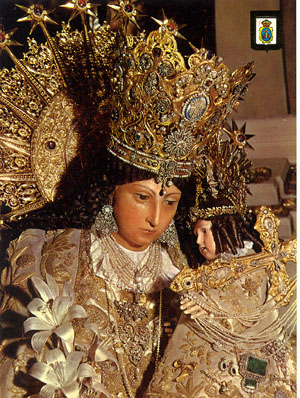
His illness lasted five days, but he never complained of sufferings or asked the least relief, although he suffered greatly. He was heard preaching, singing hymns, invoking the holy names of Jesus and Mary, reprimanding sinners with kindness and charity and reciting the Rosary. On 5 August, a picture of Our Lady of Remedies, the Patroness of Valencia, his hometown in Spain,was brought to him and he greeted her lovingly saying, “Until tomorrow, my dearly beloved Lady.” The following day, on the feast of the Transfiguration, he died peacefully. Just short of his 69th birthday, Antonio had served the Lord with profound humility for nearly 53 years, 43 of which as a missionary in North and Central America.
When notice of his death was given, all the bells of the Mexico City began to ring announcing it. Citizens of all ages and conditions lined up to see the mortal remains of the Servant of God, exposed for three days in the Franciscan church and surrounded by guards to protect it from the multitudes. His face, pallid in life, had now assumed a rosy hue, his limbs remained flexible, his flesh warm. His feet, worn to leather and covered with rough calluses from the thousands of miles he had trod, became soft and supple like those of a child.
Shortly after his death the process for beatification was begun. But because of grave political situation in Europe, the process was interrupted and only in 1836 was he declared Venerable by Pope Gregory XVI.
Why he is not a saint yet? In 1992 the archivist of the Vatican Congregation for Causes of Saints and the Franciscan promoter of the cause, stated as soon as there is an approved miracle attributed to the intercession of Fr Margil, he will be beatified and then after a second miracle, he will be Canonised. Miracles can be reported to The Margil House of Studies, in Houston, Tx.
Venerable Antonio Margil of Jesus’s statue in Queretaro, Mexico.
St Aemilian of Cyzicus
St Altman of Passau Ven Antonio/Margil of Jesus OFM (1657-1726)
St Cyriacus the Martyr
St Eleutherius of Constantinople
St Ellidius
St Famianus of Compostela
St Gedeon of Besancon
St Hormisdas of Persia
Bl John Felton
Bl John Fingley
St Largus
St Leobald of Fleury
St Leonidas of Constantinople
St Marinus of Anzarba St Mary of the Cross/ Mary MacKillop (1842-1909) – the first Australian born Saint Biography: https://anastpaul.com/2018/08/08/saint-of-the-day-st-mary-of-the-cross-1842-1909/
St Mummolus of Fleury
St Myron the Wonder Worker
St Paulus Ge Tingzhu
St Rathard of Diessen
St Severus of Vienne
St Sigrada
St Smaragdus
St Ternatius of Besançon
St Ultan of Crayke
Bl William of Castellammare di Stabia
Bl Wlodzimierz Laskowski
—
Martyrs of Albano – 4 saints: Four Christians who were martyred together, and about we today know little more than their names – Carpóforo, Secondo, Severiano and Vittorino. They were martyred in Albano, Italy – their remains are interred in the San Senator cemetery, on the Appian Way, 15 miles from Rome, Italy.
Martyrs of Rome – 5 saints: Five Christians martyred together; we know nothing else about them but the names – Ciriaco, Crescenziano, Giuliana, Memmia and Smaragdus. They were martyred at the 7 mile marker, on the Via Ostia, Rome, Italy.
Martyred in the Spanish Civil War – Martyrs of El Saler – 5 beati: Five nuns, all members of the Sisters of the Pious Schools, all teachers, and all martyred together in the Spanish Civil War.
• Antonia Riba Mestres
• Maria Baldillou Bullit
• María Luisa Girón Romera
• Nazaria Gómez Lezaun
• Pascuala Gallén Martí
They were martyred on 8 August 1936 in El Saler, Valencia, Spain and Beatified on 11 March 2001 by Pope John Paul II.
Martyred in the Spanish Civil War:
Bl Cruz Laplana Laguna
Bl Fernando Español Berdie
Bl Leoncio López Ramos
Bl Manuel Aranda Espejo
Bl Mariano Pina Turón
Bl Pedro Álvarez Pérez
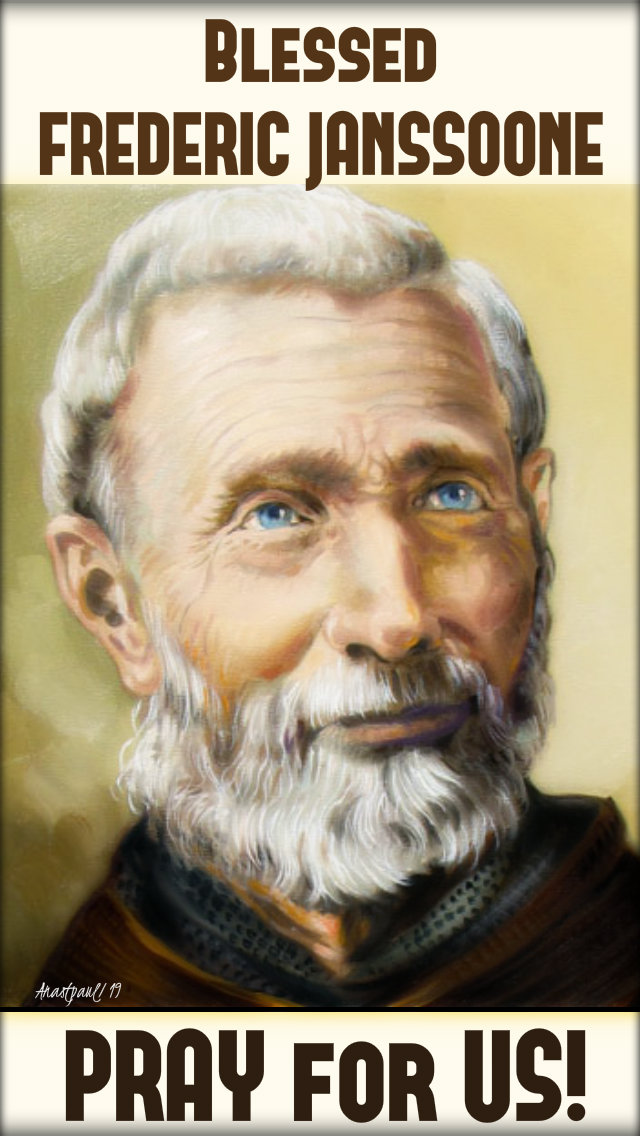
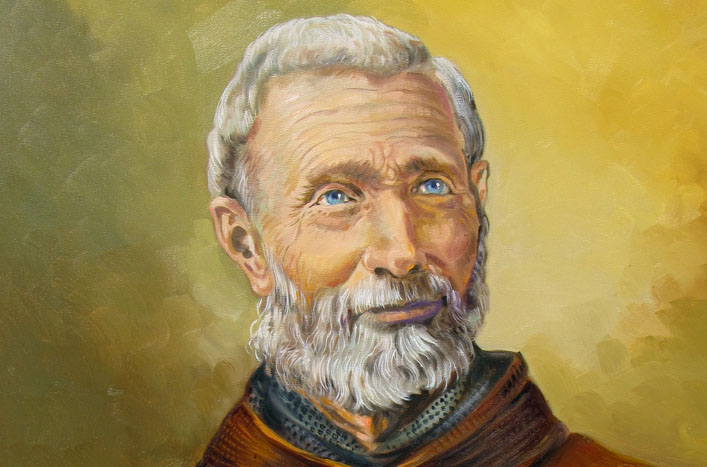
Thought for the Day – 4 August – Eighteenth Sunday in Ordinary Time, Year and The Memorial of Blessed Frédéric Janssoone OFM (1838-1916) – “God’s Pedlar”, “Good Fr Frederic”
His Great Passion, Jesus of Nazareth
One of the very first things to extract from the life of Father Frederic, is his passion for Jesus of Nazareth.
His early education pointed him toward the Gospels. His formation with the Franciscans, his plans to become a missionary in the Holy Land, his writings and books all his preaching on Jesus the son of man and son of God, everything reveals to us that the Blessed Frederic is the missionary to the Holy Land par excellence. His work orients us to know Jesus in the mysteries of His humanity, His birth, His public life, His passion and Resurrection.
It is he who walked about the country of Jesus in every sense during the 14 years that he lived in the Holy Land. The Stations of the Cross which had been banned since 1621, he negotiated with the Muslim Arabs the right to preach the Stations of the Cross along the Via Dolorosa and in the arched souks of Jerusalem. He directed the construction work of the church of Saint Catherine next to the Basilica of the Nativity in Bethlehem. For this construction, he then went to beg in France and in Canada, hence his first journey in 1881.
He is a pioneer in the dispersion of the gospels in Canada. From 1893 to 1907, his Life of Our Lord Jesus Christ, a text in harmony with the Gospels, enjoyed eight printings, which represent a total of 42,000 copies “It was without a doubt the greatest publishing success in Canada” (Legare – Baillargeon, Good Father Frederic, Montreal, Pauline Ed. 1988, p. 277).
Blessed Frederic could be the patron of the seekers of meaning and truth who study the Gospels and especially the life of Jesus of Nazareth, thus the man Jesus.
Prayer for the Canonisation of Blessed Frederic Janssoone
Almighty and eternal God,
You granted to Blessed Frederic Janssoone,
son of France,
to follow the footsteps of Your Son Jesus
in the Holy Land,
and to work there for peace.
Then You led him to Canada,
to invite that nation
to be generous toward the Holy Land,
to found the Sanctuary of the Cap-de-la-Madeleine,
and to better make known
the life of Jesus of Nazareth
and His most holy Mother.
Grant us to become in turn,
true pilgrims,
and veritable missionaries of Your Church.
That we also may be equally
solid pillars of the faith in our Christian communities.
Grant us, through his intercession,
the favour that we ask…
……………………………………..
(Silent pause)
Grant this son of Saint Francis of Assisi,
to be canonised soon,
and to draw us all toward Your Son
Jesus, Our Lord.
Amen.
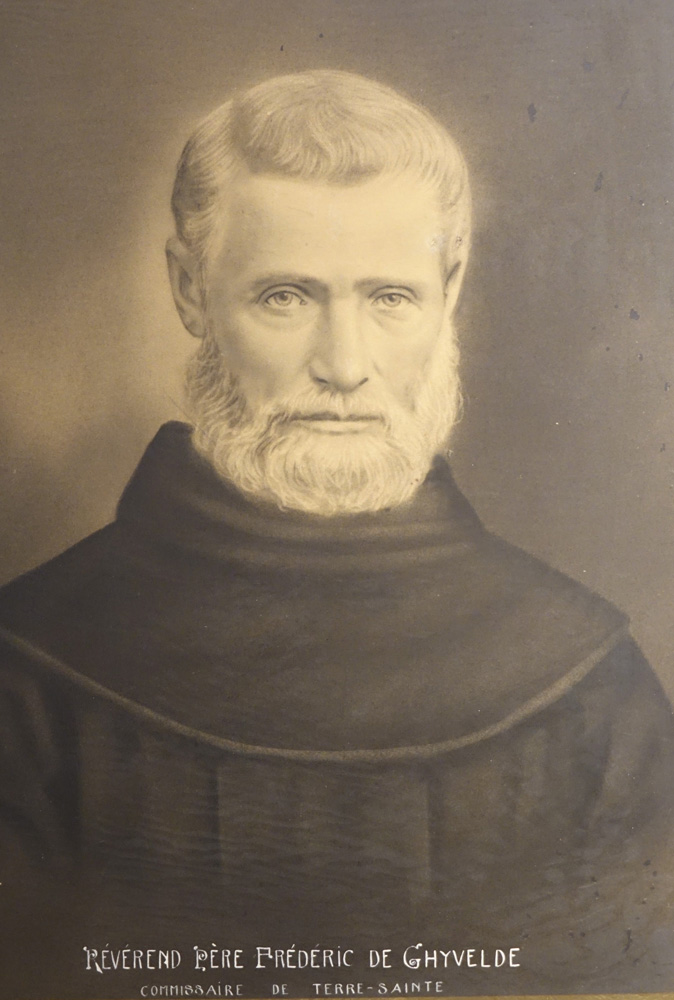
Saint of the Day – 4 August – Blessed Frédéric Janssoone OFM (1838-1916) – Franciscan Priest, prolific and passionate preacher, Evangeliser “God’s Pedlar”, “Good Fr Frederic”, apostle of the Passion, of the poor, of charity of Marian devotions – born on 19 November 1838, Ghyvelde, France — 4 August 1916, Montreal, Canada. Patronage – the Secular Franciscan Regional Fraternity of Eastern Canada.
The son of a prosperous and devout farming family, Frederic Janssoone was born on 19 November 1838, in Ghyveldge, in the North of France. His father died when Frederic was only nine. He attended secondary school in Hazebrouck and then Dunkirk but in 1856, he had to leave school to support his mother. He found work as an errand boy and eventually had great success as a travelling salesman. After his mother died, in 1861, he was able to complete his studies. In 1864, he entered the novitiate of the Franciscan Order of Friars Minor in Amiens. He was Ordained a priest in 1870 and was a military chaplain during the Franco-Prussian War. Afterwards, he became assistant novice director and librarian. He then became superior of the community in Bordeaux.
In 1876, he travelled to the Custody of the Holy Land. He became chaplain for the Brothers of the Christian Schools in Cairo and gave preached retreats there and in Alexandria. Between 1878 and 1888, he was assistant to the head guard of the Sacred Sites in Palestine. He helped with administration, promoted a renewal of the custom of Holy Land pilgrimages, re-established the ritual of the Way of the Cross in the streets of Jerusalem and directed construction of the Church of the Nativity in Bethlehem. He revised the set of customary regulations that had developed through the centuries between the Latins, the Greeks and the Armenians for the use and maintenance of the shrines of Bethlehem and the Holy Sepulchre.
In 1881, Father Frederic made his first trip to Canada to establish an annual collection for the Holy Places and to submit to the Bishops a plan for the Commissariat for the Holy Land in Canada. He gave preached retreats throughout Quebec – in Quebec City, Portneuf, TroisRivières, Bécancour and Cap-de-la-Madeleine. He settled in Canada for good in 1888. He lived in Trois-Rivières, where he became closely involved with the organisation and development of the pilgrimage of Our Lady of the Rosary that had been started up by Father Luc Désilets at nearby Cap-de-la-Madeleine. He promoted the
Franciscan Third Order in Quebec and New England. He created three outdoor Ways of the Cross, organised conferences and pilgrimages and gave many preached retreats. He also wrote magazine and newspaper articles, booklets, works on the Holy Land, lives of Jesus, Mary, Saint Anne, Saint Joseph, Saint Francis of Assisi, Saint Anthony of Padua and the first Franciscan born in Canada, the Venerable Brother Didace Pelletier.
Father Frederic paved the way for the re-establishment in Canada of the Order of Friars Minor, which had ceased to exist with the death of the last Recollet in 1812 Father Frederic, the former travelling salesman, had become a pedlar for God. He travelled from one parish to another in several Quebec dioceses and went door-to-door selling his works. The profit from his sales went toward the establishment of several communities of consecrated life – the Franciscan Missionaries of Mary, the Poor Clares, the Franciscans of Trois-Rivières and the Sister Adorers of the Precious Blood of Joliette.
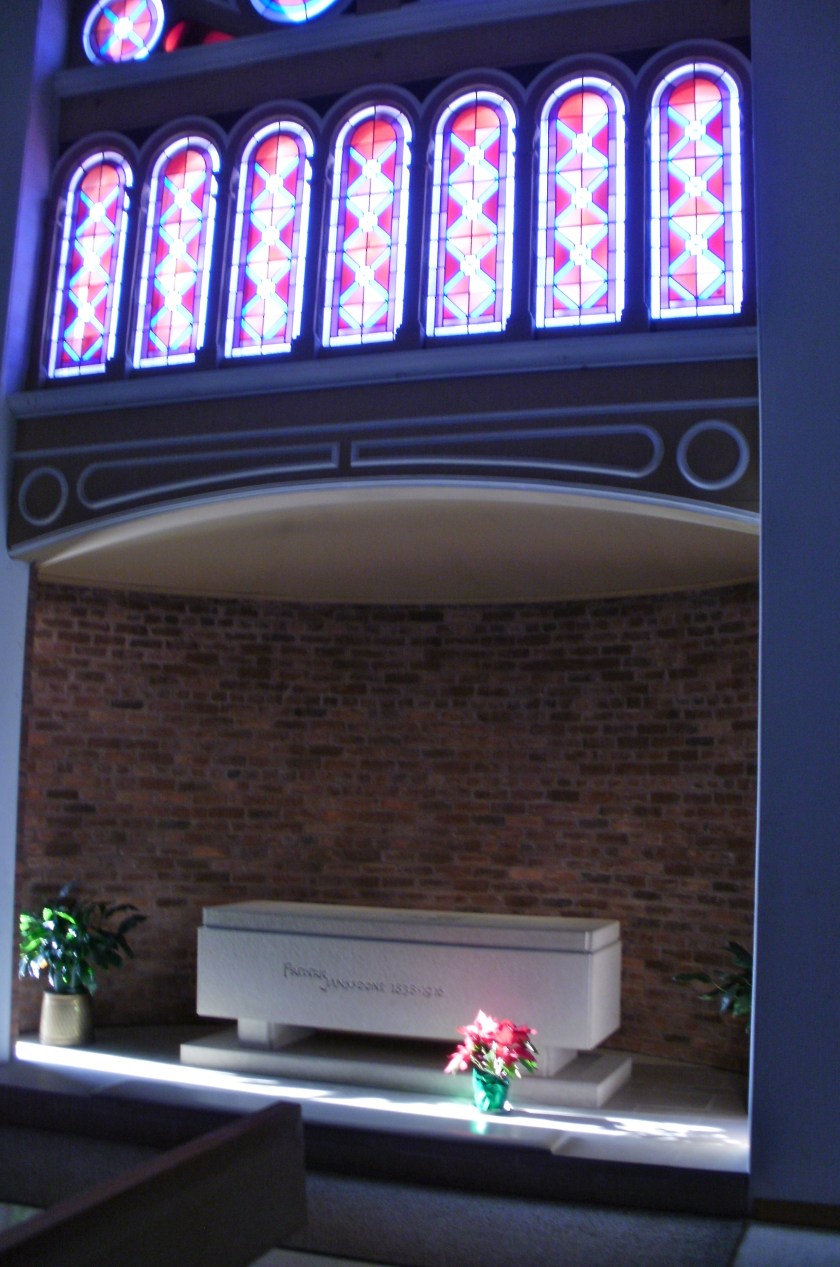
Bl Frederic took to his bed in June 1916 physically worn out by his many exertions in his ministries and in great pain. He was admitted to the Franciscan Infirmary in Montreal, where he was diagnosed as suffering from stomach cancer. After almost two months of intense pain, he died there on the following 4 August. His body was returned to Trois-Rivières, where he was buried in the small chapel he had built attached to the friary. Next door is now a Museum dedicated to him. He was Beatified by St Pope John Paul II on 25 September 1988.
His Spirituality
As a young man, Frederic Janssoone received the rigorous humanist college education typical of his era. He developed skill in business before turning to priestly life. His upbringing left him with a sensitive conscience but he had unusual gifts for pastoral work.
He was always curious and in Paris he researched the early Franciscan mission to Canada. He was a natural pedagogue and could touch hearts and minds when he preached. He was comfortable presiding at liturgical celebrations and believed in making them resplendent as this would draw the minds of participants to God. He was among those who promoted a religious awakening in France following the Franco-Prussian War.
In Palestine, he demonstrated considerable diplomacy and skill in building churches. His devotion to the passion of Christ inspired him to re-establish the practice of praying the Way of the Cross in the streets of Jerusalem. His sincere and upright character as well as his spirit of justice and conciliation permitted him to develop the set of regulations that decreased the tensions between the Greeks, Armenians, and Latins regarding the shrines of the Holy Sepulchre and Bethlehem.
His preaching was leavened by his close observation of life and it was delivered with energy. He was never afraid to be dramatic if it could touch the hearts of his listeners. He took advantage of his first-hand knowledge of the land where Jesus and Mary had lived to illustrate his sermons. His apostolic spirit characterised his promotion of the devotion of the Way of the Cross, pilgrimages and the Franciscan Third Order. He played an important role as the initiator of a spiritual renewal based on meditation on the suffering and passion of Christ.
Father Frederic had an innate sense of publicity and used his facility for writing to add lustre to the projects that he poured himself into. As soon as he began visiting Quebec, he published newspaper articles on the Holy Land to publicise his mission. The Canadians liked his style of preaching. The Journal des Trois-Rivières wrote that he was “one of the best preachers that one could encounter.”
He was humble and objective and he expressed his apostolic ambition with the prayer, “Let me bring to you, whoever comes to me.” After he created the pilgrimage site at Our Lady of the Cape Shrine, he suggested to the Bishop that he entrust its management to the Oblates of Mary Immaculate, “because they are very humble and have simplicity ways.” His devotion to Mary was expressed in the promotion of prayer to Our Lady of the Rosary, which is at the heart of the pilgrimage to Cap-de-la-Madeleine. He founded the Annales, known today under the title NotreDame-du-Cap. His goodness and his reputation as a moving preacher earned him the nicknames “Holy Father” and “Good Father Frederic”.
It was said of Fr Frederic “the man is joyful and full of humour.” He had numerous areas of interest, going from theology to the pastoral, by way of history, geography, astronomy, botany, painting, architecture and archaeology. Tireless apostle, his love of people and preaching, his goodness, austerity, his extreme poverty, his patience and his serenity during adversity, made others compare him to St Francis of Assisi.
St Agabius of Verona
St Aristarchus of Thessalonica
St Crescentio of Rome
St Eleutherius of Bithynia
St Epiphanes of Besançon
St Euphronius of Tours
St Francesc Mercader Rendé Bl Frédéric Janssoone OFM (1838-1916) “God’s Pedlar” “Good Father Frédéric”
St Hyacinth of Rome
St Ia of Persia
St Isidore of Besançon
St Lua of Limerick
St Onofrio of Panaia
St Perpetua of Rome
St Protasius of Cologne
St Rainerio of Split
St Sithney
St Tertullinus of Rome
Bl William Horne


 St Agathoclia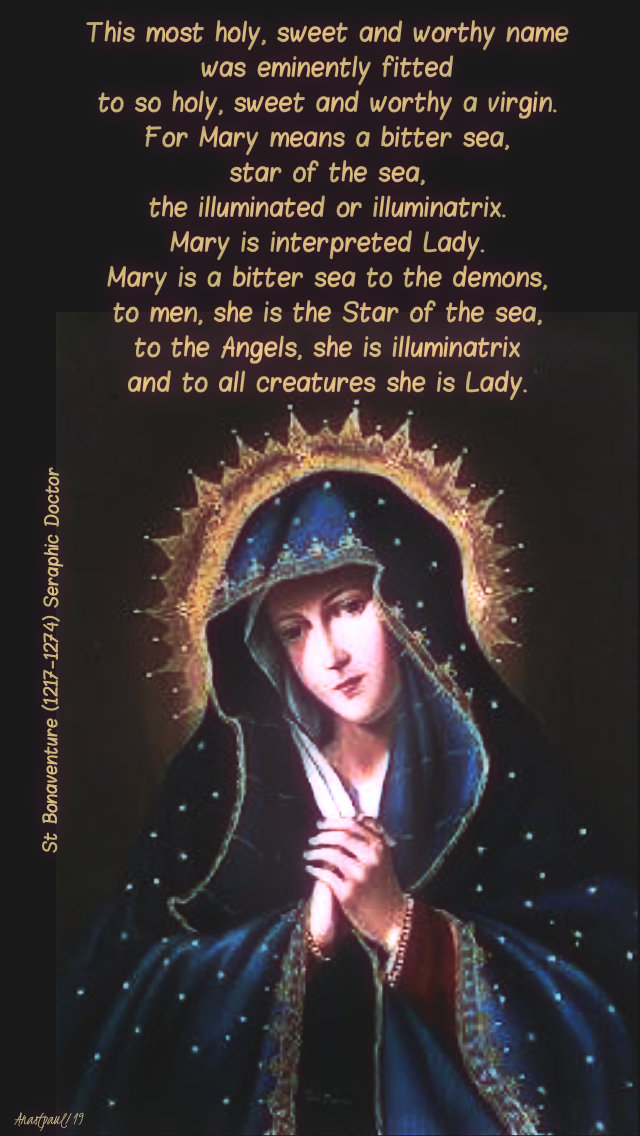




 The following day, on the feast of the Transfiguration, he died peacefully. Just short of his 69th birthday, Antonio had served the Lord with profound humility for nearly 53 years, 43 of which as a missionary in North and Central America.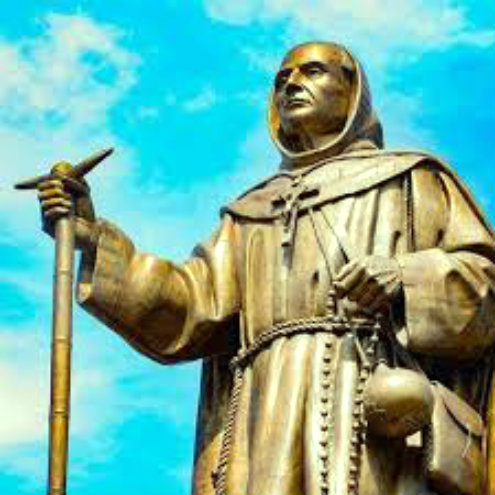
 He helped with administration, promoted a renewal of the custom of Holy Land pilgrimages, re-established the ritual of the Way of the Cross in the streets of Jerusalem and directed construction of the Church of the Nativity in Bethlehem. He revised the set of customary regulations that had developed through the centuries between the Latins, the Greeks and the Armenians for the use and maintenance of the shrines of Bethlehem and the Holy Sepulchre.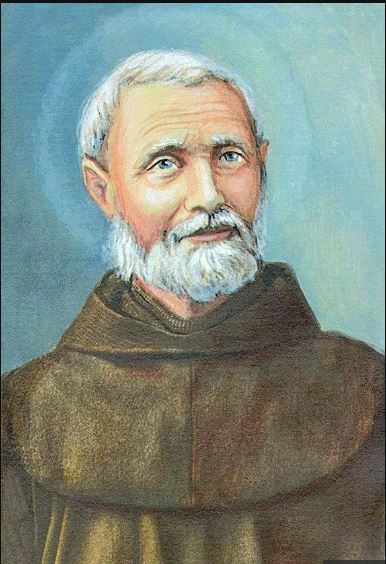




You must be logged in to post a comment.