Quote/s (and Prayers) of the Day – 13 June – St Anthony of Padua (1195-1231) Cpmfessor, Evangelical Doctor of the Church
“But the Apostles “spoke as the Spirit gave them the gift of speech.” Happy the man whose words issue from the Holy Ghost and not from himself!”
“At Thy Word I will lower the nets.” Whenever I lowered them on my own, I wanted to keep what belongs to Thee for myself. It was myself I was preaching and not Thee; my words, not Thine. That is why I caught nothing. Or, if I did catch something, it was not fish but frogs, only good for croaking my own praise! …”
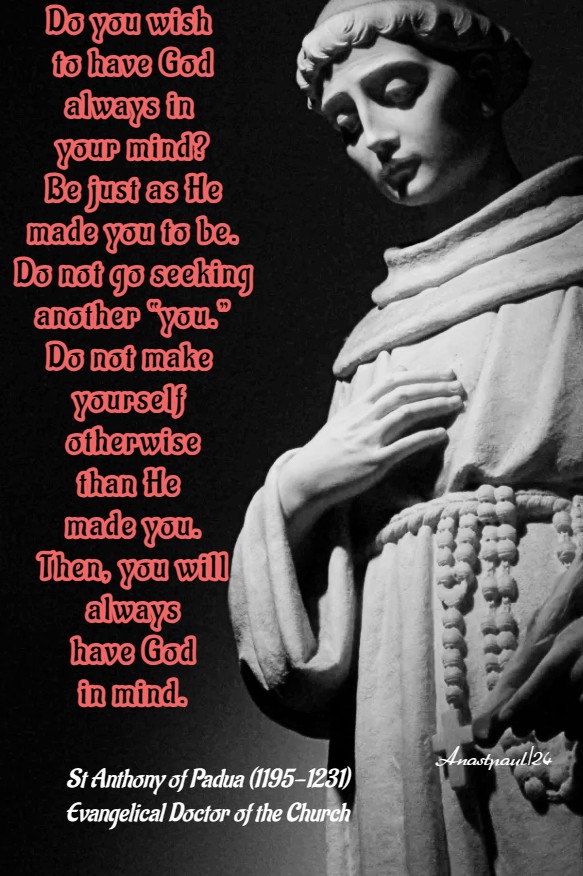
“ Do you wish to have God always in your mind? Be just as He made you to be. Do not go seeking another “you.” Do not make yourself otherwise than He made you. Then you will always have God in mind.”
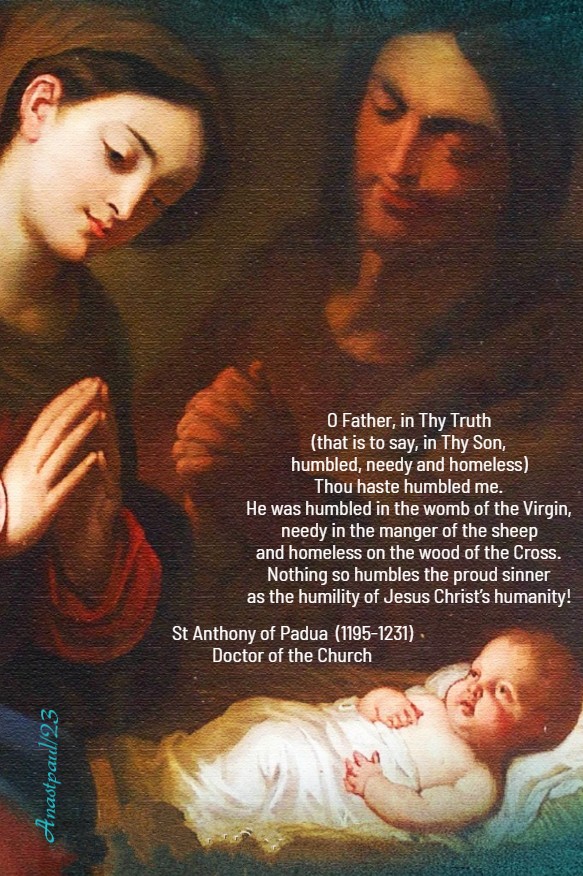
“O Father, in Thy Truth (that is to say, in Thy Son, humbled, needy and homeless) Thou haste humbled me. He was humbled in the womb of the Virgin, needy in the manger of the sheep and homeless on the wood of the Cross. Nothing so humbles the proud sinner as the humility of Jesus Christ’s humanity!”
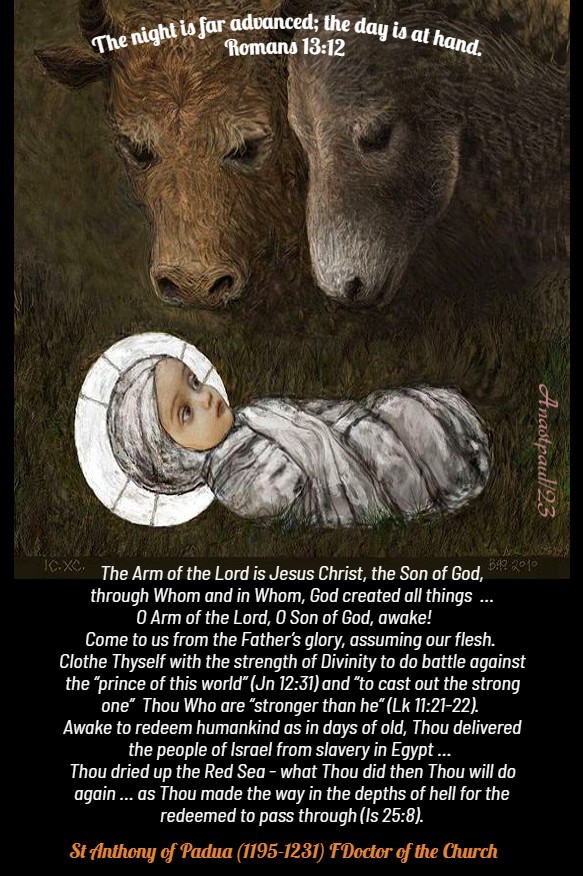
“The Arm of the Lord is Jesus Christ, the Son of God, through Whom and in Whom God created all things … O Arm of the Lord, O Son of God, awake! Come to us from the Father’s glory, assuming our flesh. Clothe Thyself with the strength of Divinity to do battle against the “prince of this world” (Jn 12:31) and “to cast out the strong one” Thou Who are “stronger than he” (Lk 11:21-22). Awake to redeem humankind as in days of old, Thou delivered the people of Israel from slavery in Egypt … Thou dried up the Red Sea – what Thou did then Thou will do again … as Thou made the way in the depths of hell for the redeemed to pass through (Is 25:8).”
One Minute Reflection – 13 June – “The Month of the Sacred Heart of Jesus” – St Anthony of Padua (1195-1231) Cpmfessor, Evangelical Doctor of the Church – Timothy 4:1-8; Matthew 5:13-19 – Scripture search here: https://www.drbo.org/
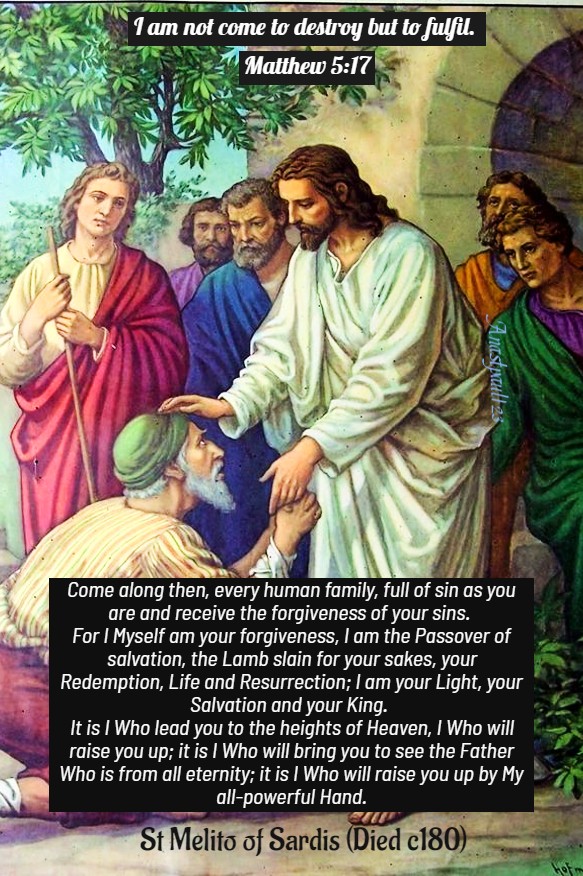
“I am not come to destroy but to fulfil.” – Matthew 5:17
REFLECTION – “The sacrifice of the lamb, the Passover rite and the letter of the Law have reached their term in Jesus Christ, in view of Whom, everything in the ancient Law took place – and, even more so, in the new dispensation. For the Law became the Word; from being old it became new … the commandments have been transformed into grace and the foreshadowing into Truth; the lamb has become the Son, the sheep has become man and man has become God. …
God, although He was the Lord, put on our humanity; He suffered for him, who was suffering, was bound for him, who was captive, was judged for the guilty, was buried for him, who was buried. He was raised from the dead and cried out in a loud voice: “If anyone wishes to oppose Me, let us appear together” (Is 50:8). It is I Who delivered the condemned man; I Who restored life to the dead; I Who raised up those in the grave. “Who disputes My right?” It is I, He says, I Who am the Christ, I Who destroyed death, Who triumphed over the enemy, Who bound the mighty enemy and carried off man to the heights of heaven; it is I, He says, Who am the Christ.
Come along then, every human family, full of sin as you are and receive the forgiveness of your sins. For I Myself Am your forgiveness, I am the Passover of salvation, the Lamb slain for your sakes, your Redemption, Life and Resurrection; I am your Light, your Salvation and your King. It is I Who lead you to the heights of Heaven, I Who will raise you up; it is I Who will bring you to see the Father Who is from all eternity; it is I Who will raise you up by My all-powerful Hand.” – St Melito of Sardis (Died c180) Bishop of Sardis in Smyrna and Father of the Church [Paschal Homily (Passim)]
PRAYER – May the solemn feast of blessed Anthony, Thy Confessor and Doctor, make Thy Church rejoice, O God, so that, ever sustained by spiritual help, she may deserve to reap everlasting joy. Through Jesus Christ, Thy Son our Lord, Who lives and reigns with Thee, in the unity of the Holy Ghost, God, world without end. Amen (Collect).
Sweet Heart of my JESUS, make me love Thee ever more and more! 300 Days Once a Day. ii. Plenary, Once a month.Raccolta – 162. Blessed Pope Pius IX, 26 November 1876.
St Fandilas of Penamelaria St Felicula of Rome St Fortunatus of North Africa
Blessed Gerard of Clairvaux (Died 1138) – was the elder brother of Saint Bernard of Clairvaux. He was a Soldier. When he was wounded in combat at the siege of Grancy, Gerard resolved to become a Monk. He became a Benedictine Cistercian Monk at Citeaux. He worked with Saint Bernard at Clairvaux and became his closest confidant. He died in 1138 of natural causes.
St Lucian of North Africa St Mac Nissi of Clonmacno St Maximus of Cravagliana St Nicolas Bùi Ðuc The St Peregrinus of Amiterno St Rambert St Salmodio Bl Servatius Scharff St Thecla
Quote/s of the Day – 11 June – “The Month of the Sacred Heart of Jesus” – Feast of St Barnabas the Apostle, Martyr, The “Son of Encouragement” – Acts 11:21-26; 13:1-3; Matthew 10:16-22.– Scripture search here: https://www.drbo.org/
“Behold I send you as sheep in the midst of wolves. Be, therefore, wise as serpents and simple as doves. ”
Matthew – 10:16
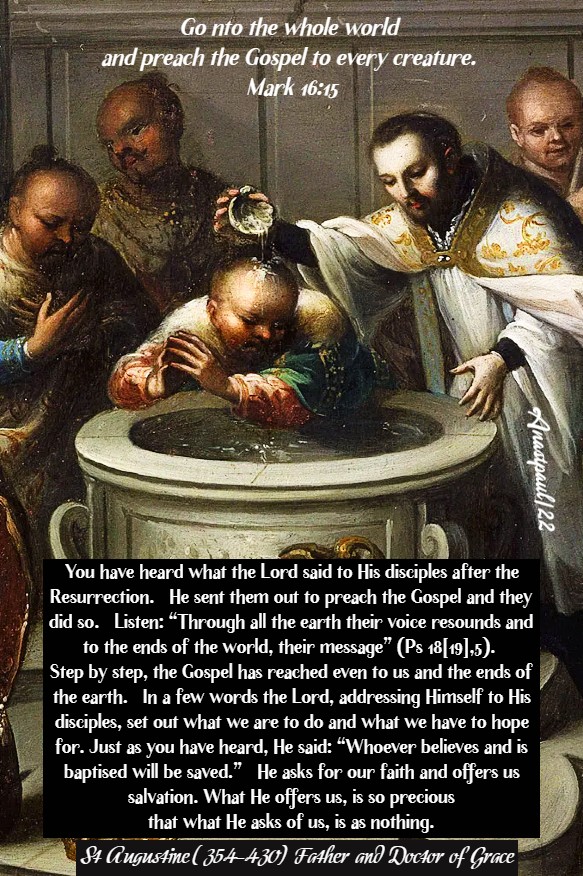
“Go into the whole world and preach the Gospel to every creature.” Mark 16:15
“You have heard what the Lord said to His disciples after the Resurrection. He sent them out to preach the Gospel and they did so. Listen: “Through all the earth their voice resounds and to the ends of the world, their message” (Ps 18[19],5). Step by step, the Gospel has reached even to us and the ends of the earth. In a few words the Lord, addressing Himself to His disciples, set out what we are to do and what we have to hope for. Just as you have heard, He said: “Whoever believes and is Baptised will be saved.” He asks for our faith and offers us salvation. What He offers us, is so precious that what He asks of us, is as nothing.”
St Augustine (354-430) Father and Doctor of Grace
“All the brothers should strive to follow the humility and the poverty of our Lord Jesus Christ … And they must rejoice when they live among people who are considered to be of little worth and who are looked down upon, among the poor and the powerless, the sick and the lepers and the beggars by the wayside. And when it may be necessary, let them go to seek alms. And they should not be ashamed but rather recall that our Lord Jesus Christ, the Son of the living and all-powerful God … was a poor man and a transient and lived on alms, He and the Blessed Virgin and His disciples.”
St Francis of Assisi (c1181-1226)
(Earlier Rule, #8-9).
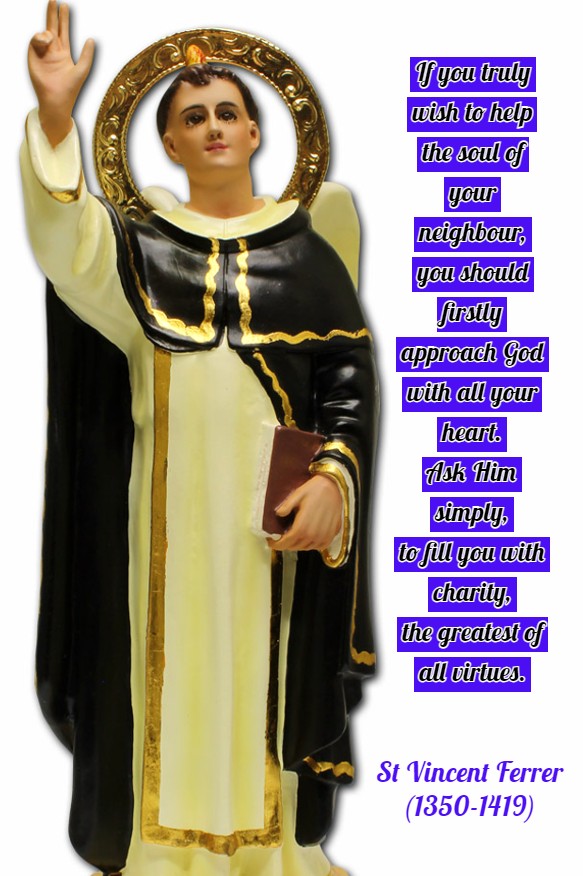
“If you truly wish to help the soul of your neighbour, you should firstly approach God with all your heart. Ask Him simply, to fill you with charity, the greatest of all virtues.”
St Vincent Ferrer OP (1350-1419)
“If you wish to enter into life, keep My commandments. If you will know the truth, believe in Me. If you will be perfect, sell all. If you will be My disciple, deny yourself. If you will possess the blessed life, despise this present life. If you will be exalted in Heaven, humble yourself on earth. If you wish to reign with Me, carry the Cross with Me. For only the servants of the Cross find the life of blessedness and of true Light.”
One Minute Reflection – 10 June – “The Month of the Sacred Heart of Jesus” – Within the Octave of the Sacred Heart – St Margaret of Scotland (1045-1093) Widow – Proverbs 31:10-31; Matthew 13,44-52 – Scripture search here: https://www.drbo.org/
“Who, when he had found one pearl of great price, … sold all that he had and bought it.” – Matthew 13:46
REFLECTION – “Among the gifts of grace which Francis received from God the generous Giver, he merited, as a special privilege, to grow in the riches of simplicity through his love of the highest poverty. The holy man saw that poverty was the close companion of the Son of God and now that it was rejected by the whole world, he was eager to espouse it in everlasting love. For the sake of poverty, he not only left his father and mother but also gave away everything he had. No -one was so greedy for gold, as he was for poverty; nor was anyone so anxious, to guard his treasure, as he was in guarding this pearl of the Gospel.
In this, especially, would his sight be offended, if he saw in the friars, anything which did not accord completely with poverty. Indeed, from the beginning of his religious life until his death, his only riches were a tunic, a cord and underclothes and, with this much, he was content. He used to frequently call to mind with tears the poverty of Jesus Christ and his mother, claiming that it was the queen of the virtues because, it shone forth so preeminently in the King of kings (1Tm 6:15) and in the Queen, His Mother.
When the Friars asked him at a gathering what virtue does more to make one a friend of Christ, he replied as if opening the hidden depths of his heart: “Know, brothers, that poverty is the special way to salvation, as the stimulus of humility and the root of perfection, whose fruit is manifold but hidden. This is the Gospel’s treasure “hidden in a field” (Mt 13:44); to buy this, we should sell everything and, in comparison to this, we should spurn everything we cannot sell.” – St Bonaventure (1221-1274) Franciscan, Doctor of the Church (Life of Saint Francis).
PRAYER – O God, Who made blessed Queen Margaret glorious by her remarkable charity toward the poor; grant, by her intercession and example that Thy charity may continually increase in our hearts. Through Jesus Christ, Thy Son our Lord, Who lives and reigns with Thee, in the unity of the Holy Ghost, God, world without end. Amen (Collect).
ALL PRAISE, honour and glory to the Divine Heart of JESUS.Indulgenced– 50 Days, once a day. 168 Pope Leo XIII, 14 June 1901.
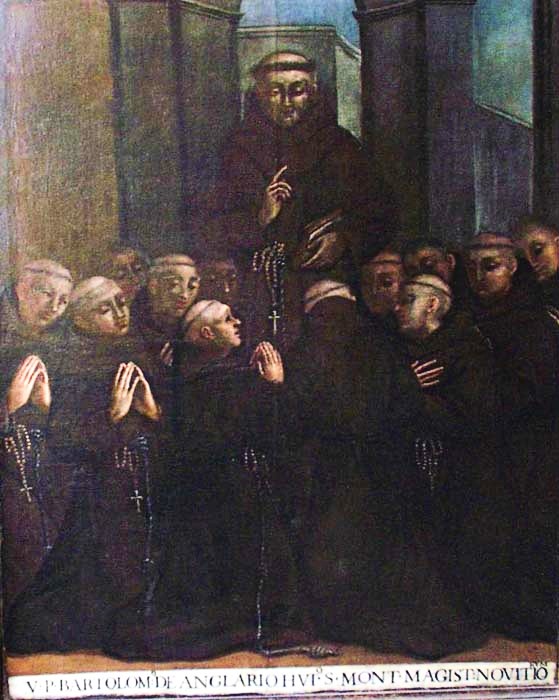
Saint of the Day – 25 May – Blessed Bartolomeus Magi di Amghiari OFM (1460-1510) Confessor, Friar of the Order of Friar’s Minor. Born in 1460 in Anghiari, Italy and died in 1510 in Empoli, Italy of natural causes. Also known as – Bartholomeo, Bartholomew. Additional Memorial – 29 August (Enshrinment of Relics)
In the Franciscan Obituary our Bartholomeus is remembers today as follows: “Near Empoli, in Tuscany, the Blessed Bartholomaeus Magi, from Anglario, a Confessor who, adorned with chastity, humility,and patience, led an almost angelic life. ”
I can find little personal detail of our Saints life but the cult and memory of Bartolomeus Magi of Anghiari, as well as within the Franciscan Order, has been a constant love over the centuries, espeically in the devotion of the Parish of Anghiari, indeed the Church of Santa Croce, with the adjoining Convent, remains a monument in honour of the Blessed.
He, by his holy advice, organised the construction of this Church which, according to his intention, was to commemorate the miracle of the of the Stigmata of Saint Francis which occurred in 1224, when he passed near the Castle and raised a Cross there.
The Church of Santa Croce in Anghiari was built and Consecrated on 15 October 1566. The faithful of Anghiari wanted to house the mortal remains of the blessed Bartolomeus Magi. But this grace was obtained only in 1603. It was on 19 August when, in the City of Empoli, Father Valerio Martelli delivered the Relics of the head of the Blessed to Mr. Maurizio di Girolamo Magi, to place them in the Church of Santa Croce in Anghiari which was officiated at the time by the Zoccolanti Fathers.
Public veneration of the Blessed Bartolomeo Magi was paid in the Church of Santa Croce by the Decree of the Bishop of Sansepolcro Fra Zanobio de Medici OP, issued on 19 June 1635. This privilege was granted at the request of the Municipal Administration of Anghiari of those times, who erected a beautiful Monument to Blessed Bartolomeo. In the Hall of the City Council of Anghiari, the marble bust of the Blessed still dominates today, as does the picture painted by Proposto Tuti in the Sacristy of the Church.
Coming to more recent times, we remember that public veneration of the Blessed Bartolomeus Magi was recognised in any Church, Oratory, or Chapel by the Bishop of Sansepolcro ,Annibale Tommasi on 2 May 1830, after having completed the recognition of the illustrious Relic. In 1907 Giovanni Volpi, Bishop of Arezzo, made his first pastoral visit to Anghiari and with the Decree of 9 June of the same year, he repeated what Monsignor Tommasi had established and was allowed to transfer the Relic from the Church of Santa Croce to that of Propositura, in order to encourage the rememberance and veneration of the faithful.
In August 1910 the IV Centenary of the death of the Blessed was celebrated in the Propositura of Anghiari and in 1922 the Association of Male Catholic Youth had the Blessed Bartolomeus Magi as its protector. In 1950, the Catholic Action Associations of the Parish, built a new Altar in the Propositura under Sogliani’s painting to give a more decorous arrangement to the Relic of the Head of the Blessed Magi, placed in a precious Reliquary.
The Feast of the Blessed is celebrated at this Altar on 29 August of each year.
St Pope Gregory VII (1015-1085) Confessor, Bishop of Rome 22 April 1073 to his death in 1085, Monk, Priest, Reformer, Administrator, Adviser. Pope Gregory “was probably the most energetic and determined man ever to occupy the See of Peter and was driven by an almost mystically exalted vision of the awesome responsibility and dignity of the papal office” (Eamonn Duffy, Saints and Sinners: A History of the Popes). Biography: https://anastpaul.com/2018/05/25/saint-of-the-day-25-may-st-pope-gregory-vii-c-1015-1085/
Bl Antonio Caixal Blessed Bartolomeus Magi di Amghiari OFM (1460-1510) Confessor, Friar of the Order of Friar’s Minor St Canio St Denis Ssebuggwawo St Dionysius of Milan St Dunchadh of Iona St Egilhard of Cornelimünster Bl Gerardo Mecatti St Gerbald St Injuriosus of Auvergne St Iosephus Chang Song-Jib Bl James Bertoni Bl Juan of Granada St Leo of Troyes
St Madeleine Sophie Barat RSCJ (1779-1865) Virgin, Religious, Foundress of the Religious of the Sacred Heart of Jesus, Institute of Teachers. Patronage – Teachers. Her body is incorupt. Saint Madeleine Sophie died in Paris on 25 May, 1865. Ascension Day. She was buried in the cemetery at Conflans. In 1904, when the French Sisters were expelled by the Combes laws, her body was transferred to the Sacred Heart at Jette, Brussels. Since her Beatification in 1908 by St Pius X, her well-preserved body has been exposed in a Shrine. She was Canonised n 24 May 1908 by Pope Pius XI Her Life of Love: https://anastpaul.com/2022/05/25/saint-of-the-day-25-may-st-madeleine-sophie-barat-rscj-1779-1865-v/
St Matthêô Nguyen Van Ðac Phuong St Maximus of Evreux Bl Nicholas Tsehelsky St Pasicrates of Dorostorum Bl Pedro Malasanch St Pherô Ðoàn Van Vân St Scholastica of Auvergne St Senzio of Bieda St Urban I, Pope St Valentio of Dorostorum St Victorinus of Acquiney St Winebald of Saint Bertin St Worad of Saint Bertin St Zenobius of Florence
Saint of the Day – 24 May – Blessed Juan del Prado OFM (1563-1631) Martyr, Priest, Religious of the Friars Minor of the Barefooted Franciscans of the Strict Observance, Missionary to Muslims in Morocco. Born in 1563 at Morgobresio, Habsburg, Kingdom of Léon, Spain and died by being burned to death on 24 May 1636 at Morocco, North Africa. Also known as – Giovanni di Prado, John of Prado.
Juan del Prado was born in 1563 in Morgovejo, Léon, Spain, to a noble Spanish family. He attended the University of Salamanca and in 1584 made his religious profession in the Order of Friars Minor. Having then received Priestly Ordination, he was initially sent to his home town to preach. He served in various communities as Novice Master and later, as Guardian. However, he was then removed from this last position following a false accusation made against him despite the holiness of life and humility which distinguished him. In 1610, having definitively established his innocence, he was able to be elected Minister of the newly formed Province of San Diego.
In the meantime, the desire to be able to dedicate himself to announcing the Gospel to the pagans, in one of the many missions already existing at that time scattered around the world, grew in his heart. When, IN 1613, the plague raged in Morocco most of his brothers in Morocco, engaged in the difficult mission with the local Muslim population, sadly succombed to the illmess. With the need to replace this sad loss, Juan was able to realise his dream and Pope Urban VIII did not hesitate to name him an Apostolic Missionary and give him special powers.
Having arrived on site, he and two companions began to take care of the Christian slaves. The local authorities ordered them to leave the Town but the three Franciscans did not give up and continued with their activity. They were then arrested near Marrakech, imprisoned and sent to crush saltpetre, the mineral for the manufacture of gunpowder. Led by the Sultan, they did not hesitate to profess their Christian faith and were, therefore, flogged and thrown back into prison. In a subsequent public interrogation, ignoring the presence of the Sultan, Juan turned his attention to some apostates present. Mulay al Walid then struck him, throwing him to the ground, he was pierced by two arrows and burned alive. Overwhelmed by the flames, he persevered in exhorting the executioners to follow Christ but one of them became impatient and smashed his head with a stone.
Pope Benedict XIII Beatified Juan deL Prado on 24 May 1728, officially recognising his Martyrdom “in odium fidei.”
Our Morning Offering – 22 May – Pentecost Wednesday
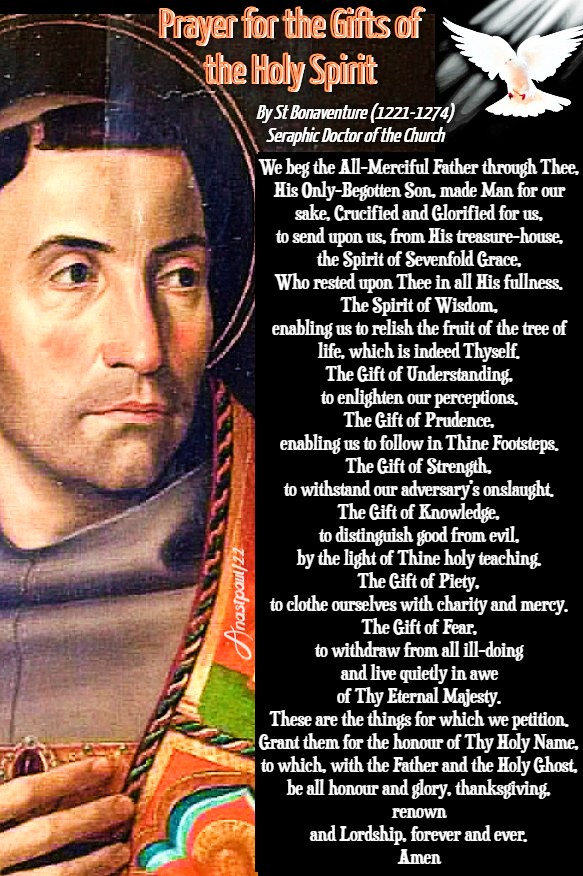
Prayer for the Gifts of the Holy Ghost By St Bonaventure (1221-1274) Seraphic Doctor of the Church
We beg the All-Merciful Father through Thee, His Only-Begotten Son, made Man for our sake, Crucified and Glorified for us, to send upon us, from His treasure-house, the Spirit of Sevenfold Grace, Who rested upon Thee in all His fullness.
The Spirit of Wisdom, enabling us to relish the fruit of the tree of life, which is indeed Thyself. The Gift of Understanding, to enlighten our perceptions. The Gift of Prudence, enabling us to follow in Thine Footsteps. The Gift of Strength, to withstand our adversary’s onslaught. The Gift of Knowledge, to distinguish good from evil, by the light of Thine holy teaching. The Gift of Piety, to clothe ourselves with charity and mercy. The Gift of Fear, to withdraw from all ill-doing and live quietly in awe of Thy Eternal Majesty.
These are the things for which we petition. Grant them for the honour of Thy Holy Name, to which, with the Father and the Holy Ghost, be all honour and glory, thanksgiving, renown and Lordship, forever and ever. Amen
St Peter Canisius SJ (1521-1597) – The Known as “The Hammer of Protestantism,” “Second Apostle of Germany” – Confessor, Doctor of the Church, Dutch Priest of the Society of Jesus, Reformer, Teacher, Writer, Apostle of Charity. Patronages – Catholic Press, Germany, Catechists. The restoration of the Catholic Church in Germany after the Protestant Reformation is largely attributed to the work there of the Society of Jesus, which he led. “Peter Canisius was the first publisher, the first author, the first editor of the Society of Jesus. By now, Jesuits have followed in his footsteps to the tune of having published in 400 years, thousands of books. From the time of Canisius, and his name is first in the bibliography of Jesuit writers, from Peter Canisius to the end of the l9th century, that is to 1900, there are about twenty volumes of bibliography, each volume about two inches thick, stands about eighteen inches high, filled just with authors and titles, thousands and thousands and thousands, no other religious institute in the Church publishes as much as members of the Society. It was all started by Peter Canisius.” (Ven Servan of God Fr John A Hardon SJ) His Feast day is 27 April (General Roman Calendar, 1926–1969. Biography: https://anastpaul.com/2017/12/21/saint-of-the-day-21-december-st-peter-canisius-s-j-1521-1397-doctor-of-the-church/ AND: https://anastpaul.com/2018/12/21/saint-of-the-day-21-december-st-peter-canisius-s-j-1521-1397-the-second-apostle-of-germany-doctor-of-the-church/
St Adelelmus of Le Mans St Asicus of Elphin St Castor of Tarsus St Enoder St Floribert of Liege
Blessed Jakov Varingez OFM (c 1400–1496) Croatian professed religious of the Order of Friars Minor, Apostle of charity, Mystic with a great devotion to the Cross of Christ, Marian devotee, he was noted as a miracle worker and levitated. He was Beatified on 29 December 1700 by Pope Clement XIH.His body is incorrupt. His Life: https://anastpaul.com/2019/04/27/saint-of-the-day-27-april-blessed-jakov-varingez-ofm-c-1400-1496/
St Peter Armengol OdeM (c 1238-1304) “The Martyr who Wasn’t,” “The Unconquerable Martyr of Jesus Christ,” “The Gangster Saint,”Spanish Priest of the Mercedarian Friars, Penitent, Mystic. Beatified on 28 March 1686, by Pope Innocent XI and Canonised on 8 April 1687, by the same Pope. His body was incorrupt until it was destroyed during the horrors of the Spanish Civil War. A Miraculous Life: https://anastpaul.com/2022/04/27/saint-of-the-day-27-april-saint-peter-armengol-odem-c-1238-1304-the-martyr-who-wasnt/
St Pollio of Cybalae St Simeon of Jerusalem St Stephen of Tarsus St Tertullian of Bologna St Theophilus of Brescia St Winewald of Beverley
St Zita of Lucca (1212-1272) Virgin, Laywoman, Apostle of the Poor. – Her reputation was such that Dante in the Inferno referred to the City of Luccam, her birthplace and home, as “Santa Zita.” Patronages – housewives, butlers, housemaid, domestic servants (proclaimed by Pope Pius XII), housemaid, eys, manservants, people ridiculed for their piety, rape victims, servers, single laywomen, waiters, Lucca, Italy. Her body is incorrupt. Biography:. https://anastpaul.wordpress.com/2017/04/27/saint-of-the-day-27-april-st-zita-of-lucca/
Martyrs of Nicomedia: A group of Christians murdered together for their faith. In most cases all we have are their names – Dioscurus, Evanthia, Felicia, Felix, Germana, Germelina, Johannes, Julius, Laetissima, Nikeforus, Papias, Serapion and Victorinus. They died at Nicomedia, Bithynia, Asia Minor (modern Izmit, Turkey).
Quote/s of the Day – 23 April – Blessed Giles of Assisi OFM (c1190-1262) Friar and Missionary of the Order of Friars Minor, Friend and the 3rd follower of St Francis.
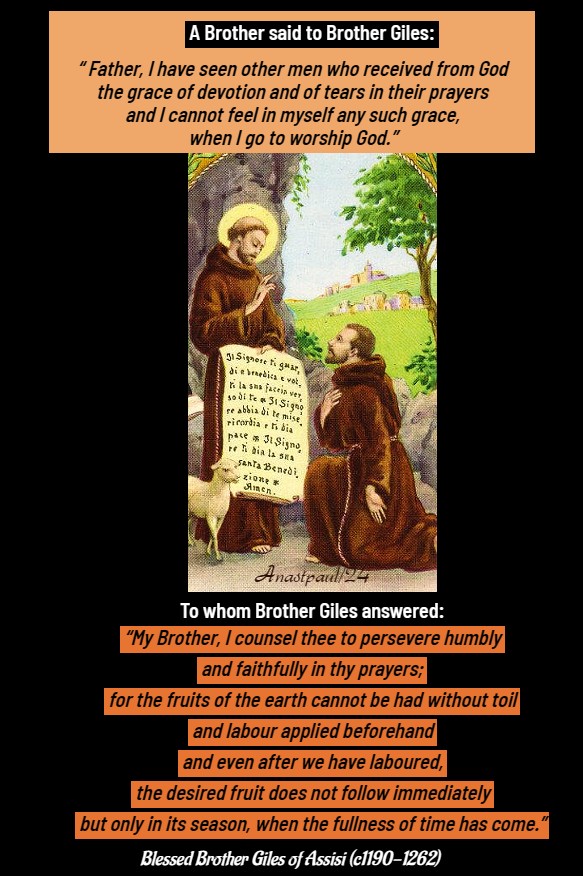
A Brother said to Brother Giles: “ Father, I have seen other men who received from God the grace of devotion and of tears in their prayers and I cannot feel in myself any such grace, when I go to worship God.” To whom Brother Giles answered: “My Brother, I counsel thee to persevere humbly and faithfully in thy prayers; for the fruits of the earth cannot be had without toil and labour applied beforehand and even after we have laboured, the desired fruit does not follow immediately but only in its season, when the fullness of time has come.”
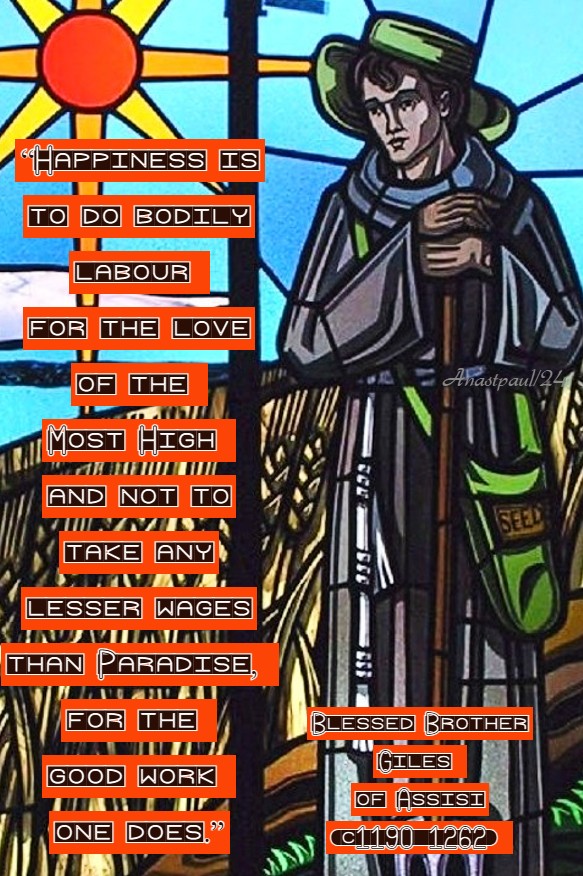
“Happiness is to do bodily labour for the love of the Most High and not to take any lesser wages than Paradise, for the good work one does.”
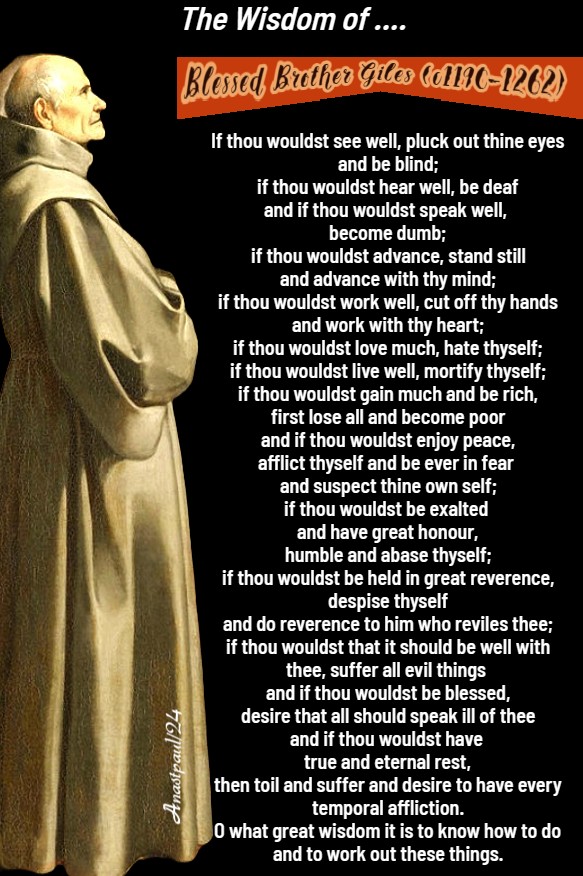
“If thou wouldst see well, pluck out thine eyes and be blind; if thou wouldst hear well, be deaf and if thou wouldst speak well, become dumb; if thou wouldst advance, stand still and advance with thy mind; if thou wouldst work well, cut off thy hands and work with thy heart; if thou wouldst love much, hate thyself; if thou wouldst live well, mortify thyself; if thou wouldst gain much and be rich, first lose all and become poor and if thou wouldst enjoy peace, afflict thyself and be ever in fear and suspect thine own self; if thou wouldst be exalted and have great honour, humble and abase thyself; if thou wouldst be held in great reverence, despise thyself and do reverence to him who reviles thee; if thou wouldst that it should be well with thee, suffer all evil things and if thou wouldst be blessed, desire that all should speak ill of thee and if thou wouldst have true and eternal rest, then toil and suffer and desire to have every temporal affliction. O what great wisdom it is to know how to do and to work out these things.”
Our Morning Offering – 23 April – “The Month of the Resurrection and the Blessed Sacrament”
Prayer in Praise of God By St Francis of Assisi (c1181-1226)
Thou art Holy, Lord, the only God and Thine Deeds art wonderful. Thou art Strong. Thou art Great. Thou art the Most High. Thou art Almighty. Thou, Holy Father art King of Heaven and earth. Thou art Three and One, Lord God, all Good. Thou art Good, all Good, Supreme Good, Lord God, Living and True. Thou art Love. Thou art Wisdom. Thou art Humility. Thou art Endurance. Thou art Rest. Thou art Peace. Thou art Joy and Gladness. Thou art Justice and Moderation. Thou art all our Riches and Thou art Suffice for us. Thou art Beauty. Thou art Gentleness. Thou art our Protector. Thou art our Guardian and Defender. Thou art our Courage. Thou art our Haven and our Hope. Thou art our Faith, our great Consolation. Thou art our Eternal Life, Great and Wonderful Lord, God Almighty, Merciful Saviour. Amen
Saint of the Day – 23 April – Blessed Giles of Assisi OFM (c1190-1262) Friar and Missionary of the Order of Friars Minor, Friend and the 3rd follower of St Francis. Giles held a leading place among the original Franciscans and St Francis called him “The Knight of our Round Table.” Giles was unlearned but a man of great wisdom, so much so, that all social classes came to learn aat his feet., he was a Mystic and man of deep contemplation and prayer. Born in c1190 in Assisi, Umbria, Papal States (in modern Italy) and died on 23 April 1262 at Perugia, Italy of natural causes. Also known as – Aegidius, Egidius.
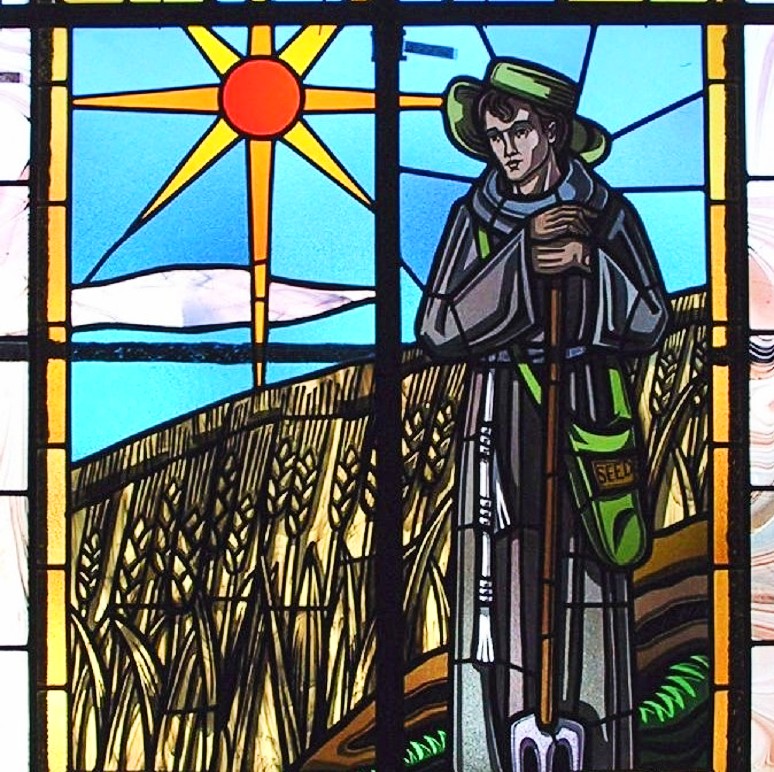
Of Giles’ origins and early life nothing certain is known, other than that he was a simple farmer. In April, 1209, moved by the example of two leading fellow-Assisians and friends, who had already become the first followers of St Francis, he begged permission to join the little band and on the Feast of St George was invested in a poor religious habit which Francis had begged for him. Almost immediately afterwards he set out with Francis to preach in the Marches of Ancona. He accompanied Francis to Rome when the first Rule was orally approved by Pope Innocent III and appears to have then received the monastic tonsure.
Pope Innocent III approves the first Rule
About 1212 Giles made a pilgrimage to the Tomb of St James at Compostella, in Spain. Shortly after his return to Assisi, he started for Jerusalem, to venerate the Holy Places, visiting on his way home, the Italian Shrines of St Michael, at Monte Gargano and St Nicholas, at Bari. He is next found in Rome and still later at Tunis.
In these journeys, Giles was always at pains to procure, by manual labour, what food and shelter he needed. At Ancona he made reed baskets; at Brindisi he carried water and helped to bury the dead; at Rome he cut wood, trod the wine-press and gathered nuts; while the guest of a Cardinal at Rieti, he insisted on sweeping the house and cleaning the knives. He said: “Happiness is to do bodily labour for the love of the Most High and not to take any lesser wages than Paradise, for the good work one does.”
During the course of these travels, Giles, a keen observer of people and events, acquired much valuable knowledge and experience which he turned to good account. He took every opportunity to preach the Gospel. His sermons were brief and heartfelt, replete with homely wisdom. He never eluded truth and spoke to all, with the same love.
After some years of missionary activity, included a period amongst the Muslims in Tunis, Giles was assigned by Francis to the Hermitage of Monteripido, outside Perugia, where he began a life of contemplation and ecstasy which continued until his death.
Giles was a stranger to theological and classical learning but engaged in constant contemplation of heavenly things. Men of all social classes were drawn to Perugia to hear Giles teach. The answers and advice these visitors received were remembered, talked over and committed to writing and thus was formed a collection of the familiar ‘Dicta’ or ‘Sayings’ of Giles. St Bonaventure held these ‘Sayings’ in high esteem and they are cited in the works of many subsequent ascetical writers. They are short, pithy, popular counsels on Christian perfection, applicable to all classes. Known for their mysticism, humanity and originality, they faithfully reflect the early Franciscan spirit and teaching.
It was in 1262, on the 52nd Anniversary of his reception into the Order of Friars Minor that this Blessed Giles died, already revered as a Saint. His immemorial cultus was confirmed by Pope Pius VI in 1777 and his Feast Day is celebrated today, the 23rd of April.
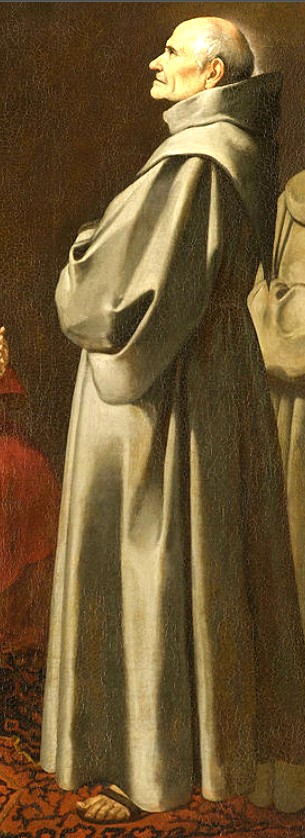
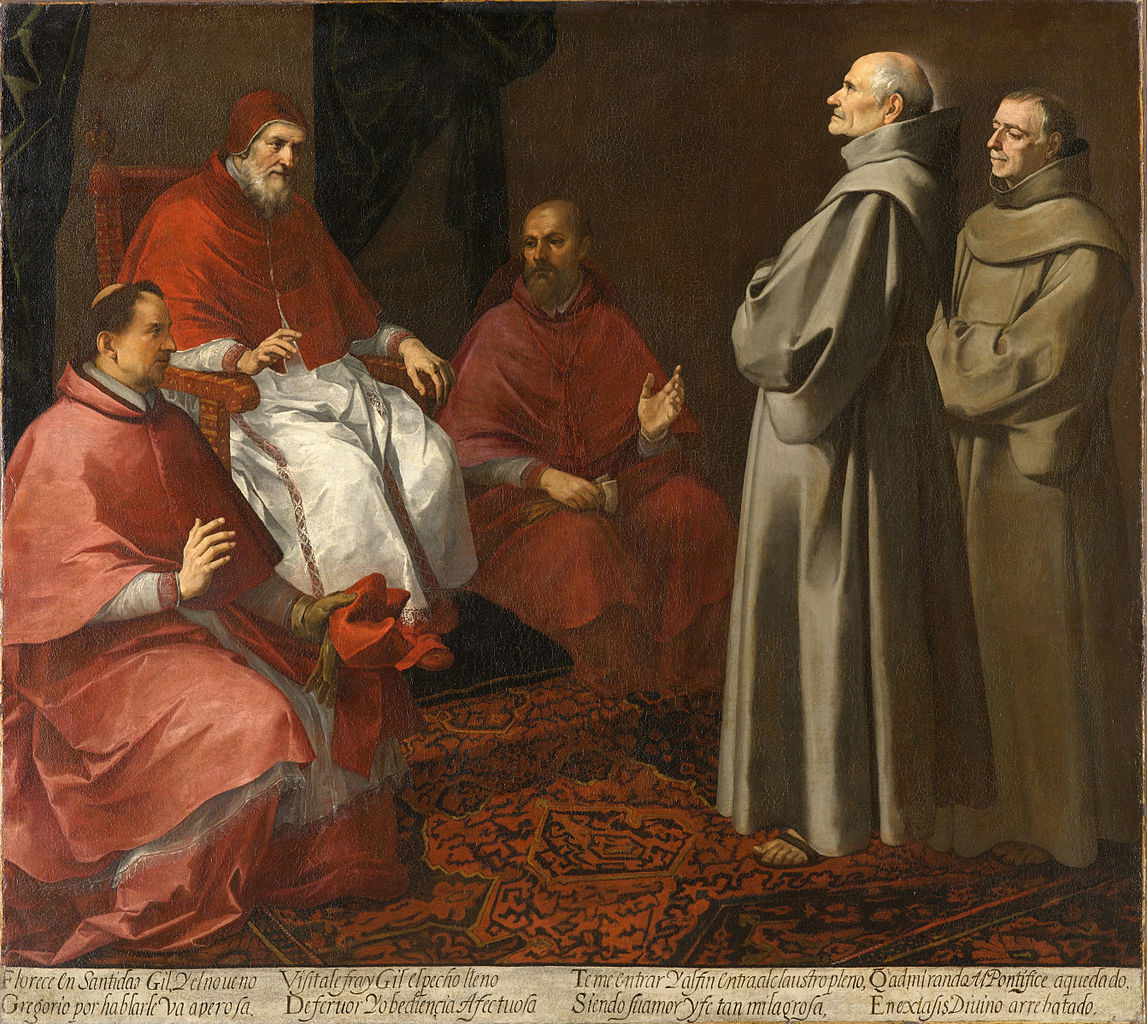
Blessed Giles before Pope Gregory IX by Bartolomé Estéban Murillo
Bl essed Giles of Assisi OFM (c1190-1262) Friar and Missionary of the Order of Friars Minor, Friend and the 3rd follower of St Francis.
Bl Giles of Saumur
St Giorgio di Suelli (Died 1117) Italian Bishop of Suelli, Apostle of the poor, Miracle-worker. For the Diocese he was a true shepherd, a lover of the poor whom he helped and of whom he had a list. He was devoted to prayer and fasting and lived a life of penitence and poverty. Biography: https://anastpaul.com/2021/04/23/saint-of-the-day-23-april-saint-giorgio-di-suelli-died-1117/
St Ibar of Meath St Marolus of Milan St Pusinna of Champagne
Martyrs of Africa: A group of Christians murdered for their faith in northern Africa. Little information has survived but their names. The ones we know are – Catulinus, Chorus, Faustinus, Felicis, Felix, Nabors, Plenus, Salunus, Saturninus, Silvius, Solutus, Theodora, Theodorus, Theon, Ursus, Valerius, Venustus, Victorinus, Victurus, Vitalis.
St Apollonius the Priest St Aristonicus of Melitene
Blessed Bernard of Sithiu (Died 1182) Penitent, Pilgrim, Hermit. Patronages – of sinners, convicts, prisoners, penitents, pilgrims. The Roman Martyrology: “At the Monastery of Saint-Bertin in the territory of France in Thérouanne, lies the tomb of Blessed Bernard, penitent, who, eager to atone for the sins of his youth with an austere penitence, voluntarily chose exile and, barefooted, wearing rough garments, was a tireless pilgrim to the holy places.” Dear Blessed Bernard, pray for us!: https://anastpaul.com/2023/04/19/saint-of-the-day-19-april-blessed-bernard-of-sithiu-died-1182-layman-penitent/
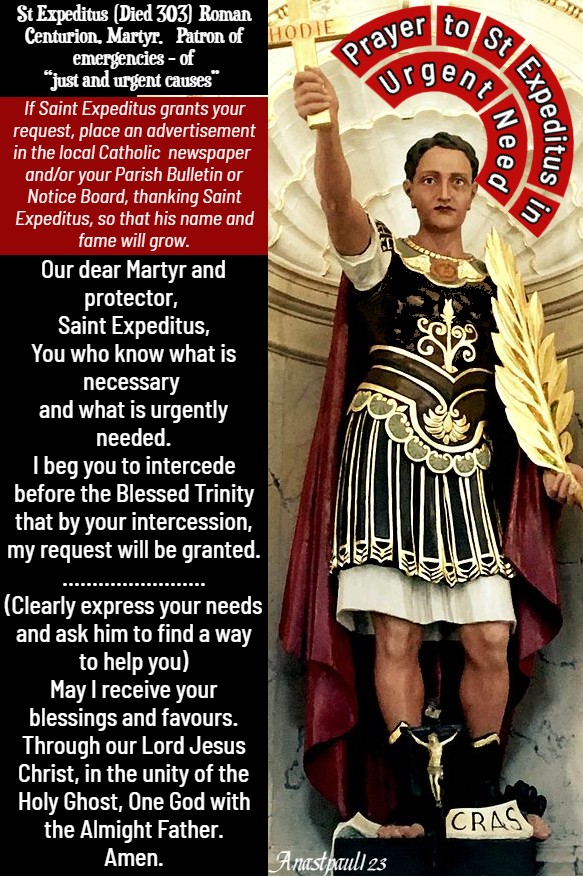
Our dear Martyr and protector, Saint Expeditus, You who know what is necessary and what is urgently needed. I beg you to intercede before the Blessed Trinity that by your intercession, my request will be granted. …………………… (Clearly express your needs and ask him to find a way to help you.) May I receive your blessings and favours. Through our Lord Jesus Christ, in the unity of the Holy Ghost, One God with the Almighty Father. Amen.
If Saint Expeditus grants your request, place an advertisement in the local Catholic newspaper and/or your Parish Bulletin or Notice Board, thanking Saint Expeditus, so that his name and fame will grow
St Gaius of Melitene St Galata of Melitene St George of Antioch St Gerold of Saxony (c900-c978)Hermit
St Pope Leo IX (1002-1054) known as “Apostolic Pilgrim” When the German Pope Damasus II died in 1048, Bishop Bruno was selected by the Emperor, Henry III, to succeed him. Bruno agreed to go to Rome and to accept the Papacy if freely elected thereto by the Roman people. He wished, at least, to rescue the See of Peter from its servitude to the German Emperors. When, in company with Hildebrand he reached Rome and presented himself to its people clad in pilgrim’s guise and barefooted but still tall and fair to look upon, they cried out with one voice that him and no other would they have as Pope. Assuming the name of Leo, he was solemnly enthronedon 12 February, 1049. Biography: https://anastpaul.wordpress.com/2018/04/19/saint-of-the-day-19-april-st-pope-leo-ix-1002-1954/
St Martha of Persia St Rufus of Melitene St Vincent of Collioure
Martyrs of Carthage – 17 Saints: A group of Christians Martyred in the persecutions of Decius. We know little more than the names – Aristo, Basso, Credula, Donato, Ereda, Eremio, Fermo, Fortunata, Fortunio, Frutto, Julia, Mappalicus, Martial, Paul, Venusto, Victorinus and Victor. Died in the year 250 in prison in Carthage, North Africa (modern Tunis, Tunisia).
St Bitheus St Calocerus of Brescia St Cogitosus St Corebus St Eleuterius of Illyria St Elpidius of Melitene St Eusebius of Fano St Galdinus della Sala of Milan (c1096-1176) Cardinal Bishop St Gebuinus of Lyons St Genocus St Hermogenes of Melitene
Blessed Idesbald of Dunes O.Cist (c1095-1167) Cistercian Priest and Abbot of Ten Duinen Abbey, Our Lady of the Dunes. The Roman Martyrology states: “In Bruges in Flanders, in today’s Belgium, Blessed Idesbaldo, Abbot, who, soon became a widower and exercised for another thirty years, duties in the palace of the Counts, entered the Monastery of Dune at a mature age, which he held holy, as the third Abbot for twelve years.” Biography: https://anastpaul.com/2021/04/18/saint-of-the-day-18-april-blessed-idesbald-of-dunes-o-cist-c-1095-1167/
One Minute Reflection – 17 April – “The Month of the Resurrection and the Blessed Sacrament” –Solemnity of the Patronage of St Joseph Confessoris – Genesis 49:22-26; Luke 3:21-23– Scripture search here: https://www.drbo.org/
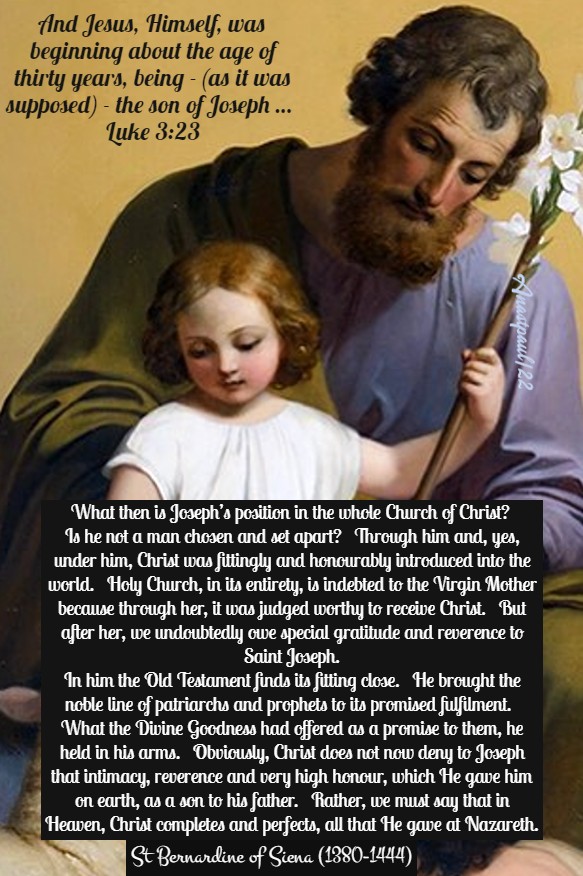
“And Jesus, Himself, was beginning about the age of thirty years, being – (as it was supposed) – the son of Joseph … ” – Luke 3:23
REFLECTION – “There is a general rule, concerning all special graces granted to any human being. Whenever the Divine favour chooses someone to receive a special grace, or to accept a lofty vocation, God adorns the person chosen, with all the gifts of the Spirit, needed to fulfil the task at hand.
This general rule is especially verified in the case of Saint Joseph, the Foster-Father of our Lord and the husband of the Queen of our world, enthroned above the Angels. He was chosen by the eternal Father as the trustworthy Guardian and Protector of his greatest treasures, namely, his Divine Son and Mary, Joseph’s wife. He carried out this vocation with complete fidelity until at last God called him, saying: Good and faithful servant, enter into the joy of your Lord.
What then is Joseph’s position in the whole Church of Christ? Is he not a man chosen and set apart? Through him and, yes, under him, Christ was fittingly and honourably introduced into the world. Holy Church, in its entirety, is indebted to the Virgin Mother because through her, it was judged worthy to receive Christ. But after her, we undoubtedly owe special gratitude and reverence to Saint Joseph.
In him the Old Testament finds its fitting close. He brought the noble line of Patriarchs and Prophets to its promised fulfilment. What the Divine Goodness had offered as a promise to them, he held in his arms. Obviously, Christ does not now deny to Joseph that intimacy, reverence and very high honour which He gave him on earth, as a son to his father. Rather, we must say that in Heaven, Christ completes and perfects, all that He gave at Nazareth.
Now, we can see ,how the last summoning words of the Lord appropriately apply to Saint Joseph – Enter into the joy of your Lord. In fact, although the joy of eternal happiness enters into the soul of a man, the Lord preferred to say to Joseph – Enter into joy. His intention was, that the words should have a hidden spiritual meaning for us. They convey, not only that this holy man possesses an inward joy but also, that it surrounds him and engulfs him, like an infinite abyss.
Remember us, Saint Joseph and plead for us to your Foster-Child. Ask your most holy bride, the Virgin Mary, to look kindly upon us, since she is the Mother of Him, Who, with the Father and the Holy Ghost, lives and reigns eternally. Amen.” – St Bernardine of Siena (1380-1444) (An excerpt on his Sermon 2 of St Joseph).
PRAYER – God, Who in thine unspeakable foreknowledge didst choose Thy blessed servant Joseph, to be the husband of Thine Own most holy Mother; mercifully grant that now that he is in Heaven with Thee, we who on earth do reverence him for our Defender, may worthily be helped by the succour of his prayers to Thee on our behalf. Through the same Jesus Christ, Thy Son our Lord, Who lives and reigns with Thee, in the unity of the Holy Ghost, God, world without end. Amen (Collect).
St Miguel de Sanctis O.SS.T (1591-1625) Priest of the Order of the Most Holy Trinity and of the Captives also known as the Trinitarian Order or the Trinitarians, Mystic, Penitent, Ecstatic, Apostle of prayer, mortification, of the poor and the sick, he had a special devotion to the Blessed Sacrament and would fall into ecstatic prayer during the Consecration at Holy Mass, so much so, that he became known as “El Extático”, “The Ecstatic.” Pope Pius IX Canonised Miguel on 8 June 1862. About St Miguel: https://anastpaul.com/2020/04/10/saint-of-the-day-10-april-st-miguel-de-sanctis-o-ss-t-1591-1625/
St Palladius of Auxerre (Died c659) Bishop St Paternus the Scot
Martyrs of Carthage – 50 Saints: A group of 50 Christians who were imprisoned in a pen of snakes and scorpions and then Martyred, all during the persecutions of Decius. Only six of their names have come down to us – Africanus, Alessandro, Massimo, Pompeius, Terence and Teodoro. Beheaded in 250 at Carthage.
Martyrs of Georgia: Approximately 6,000 Christian Monks and lay people Martyred in Georgia in 1616 for their faith by a Muslim army led by Shah Abbas I of Persia.
Martyrs of Ostia: A group ofcriminals who were brought to the faith by Pope Saint Alexander I while he was in prison with them. Drowned by being taken off shore from Ostia, Italy, in a boat which was then scuttled, c 115.
Quote/s of the Day – 6 April – “The Month of the Resurrection and the Blessed Sacrament” – Easter Saturday – 1 Peter 2:1-10, John 20:1-9 – Scripture search here: https://www.drbo.org/
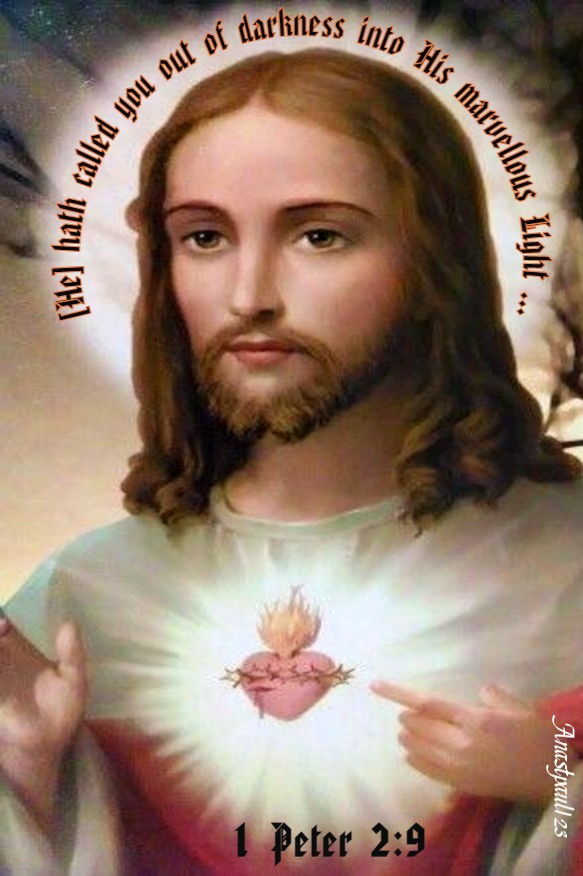
“[He] hath called you out of darkness into His marvellous Light … ”
1 Peter 2:9
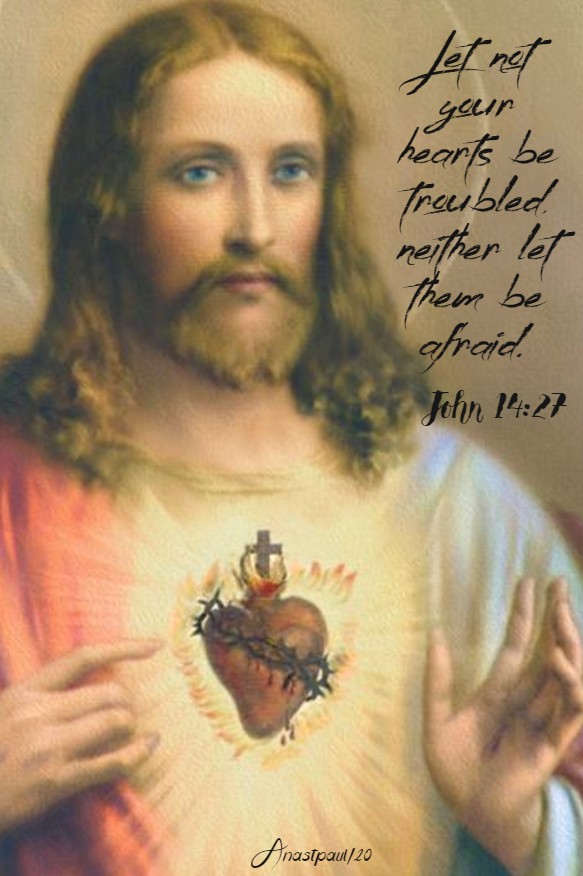
“Let not your hearts be troubled, neither let them be afraid.”
John 14:27
“In the world you will have tribulation. But take heart, I have conquered the world.” John 16:33
“Who will be crowned without having fought? Who will go to rest if he is not tired (cf. 2 Tim 2:5-6)? Who will gather the fruits of life without having planted virtues in his soul? Cultivate them, prepare the earth with the greatest care, take trouble over it, sweat over it, children, God’s workers, imitators of the Angels, competitors with incorporeal beings, lights for those who are in the world (cf. Phil 2:15)!”
St Theodore the Studite (759-826)
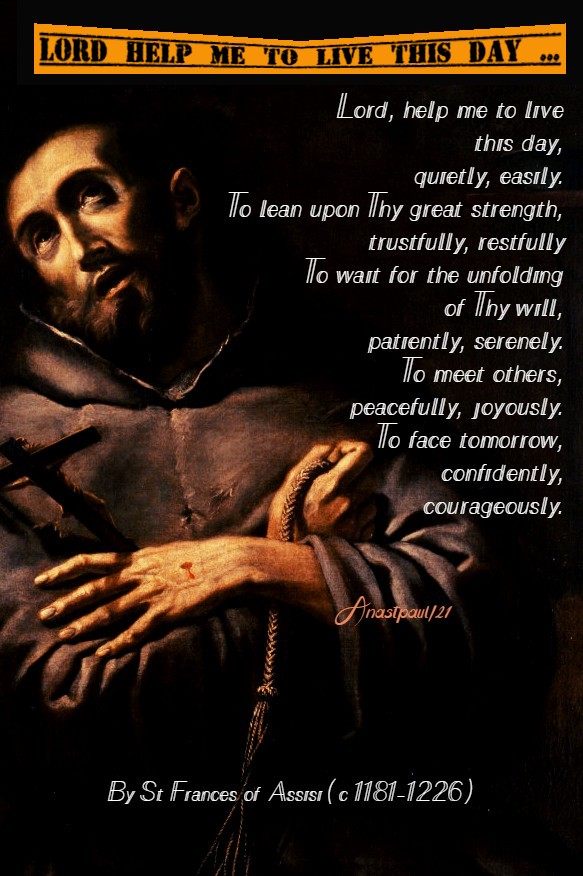
“Lord, help me to live this day, quietly, easily. To lean upon Thy great strength, trustfully, restfully. To wait for the unfolding of Thy will, patiently, serenely. To meet others, peacefully, joyously. To face tomorrow, confidently, courageously.”
St Frances of Assisi (c1181-1226)
“Let nothing perturb you, nothing frighten you. All things pass. God does not change. Patience achieves everything.”
St Teresa of Jesus of Avila (1515-1582) Doctor of Prayer
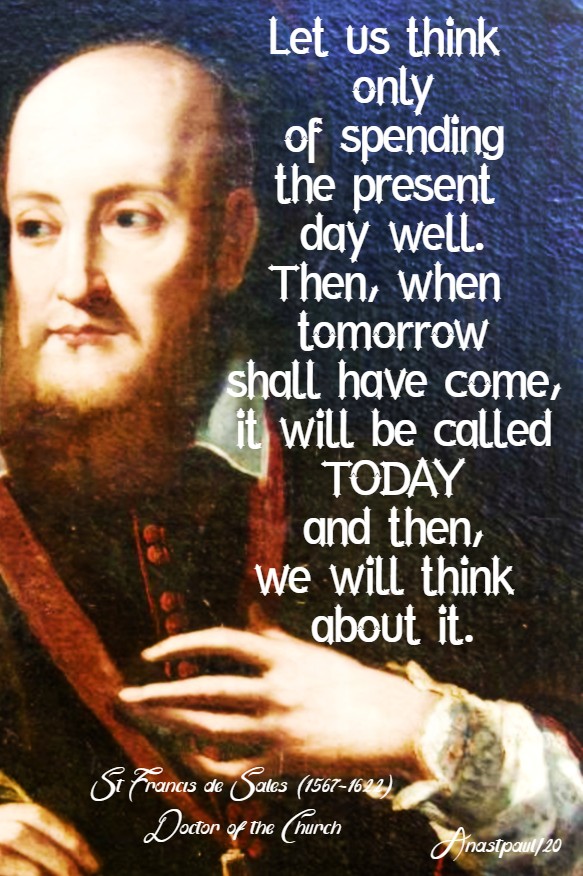
“Let us think only of spending the present day well. Then, when tomorrow shall have come, it will be called TODAY and then, we will think about it.”
St Francis de Sales (1567-1622) Doctor of the Church
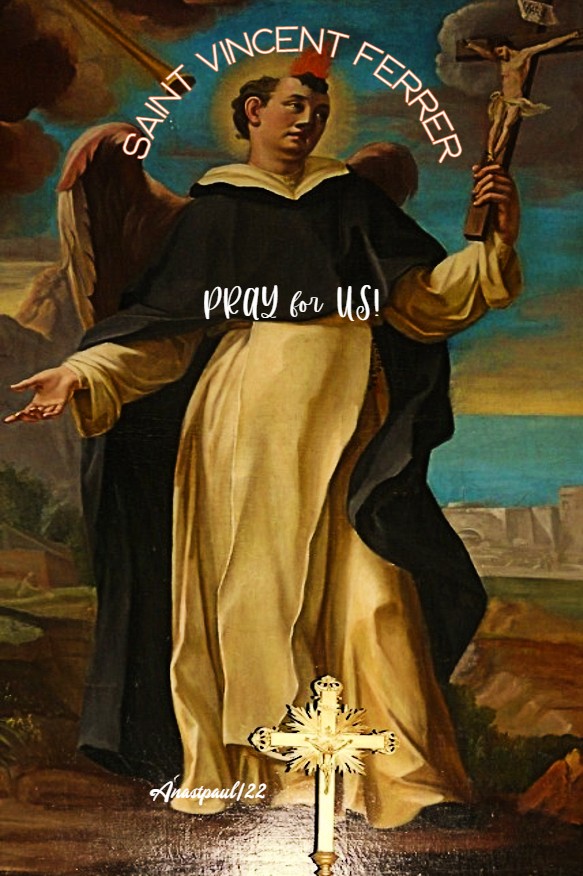
One Minute Reflection – 5 April – “The Month of the Resurrection and the Blessed Sacrament” – Easter Friday – St Vincent Ferrer OP (1350-1419) Confessor, called the “Angel of the Apocalypse/The Last Judgement” and the “Mouthpiece of God” – 1 Peter 3:18-22, Matthew 28:16-20 – Scripture search here: https://www.drbo.org/
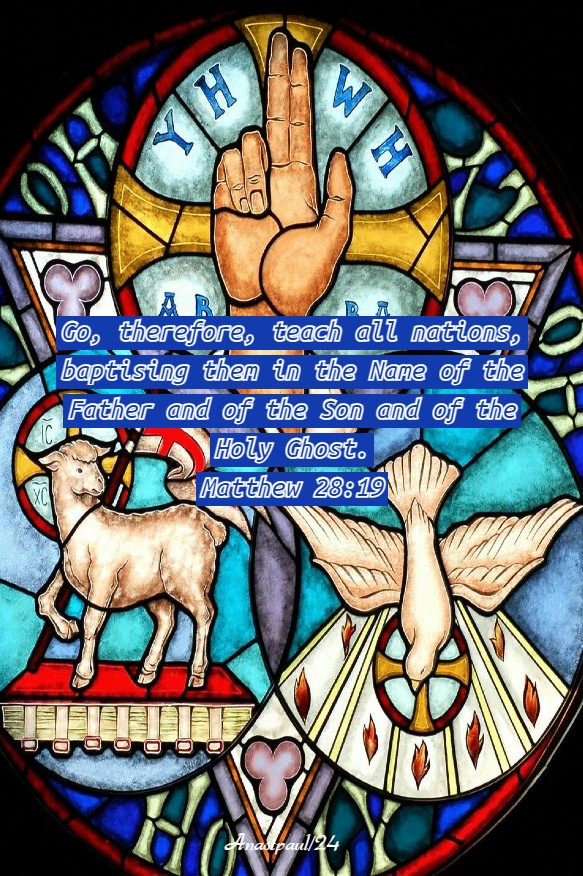
“Go, therefore, teach all nations, baptising them in the Name of the Father and of the Son and of the Holy Ghost.” – Matthew 28:19
REFLECTION – “The Father, the Son and the Holy Ghost, are of One substance and inseparably equal. Their Unity is in their Essence, their plurality in the Persons. The Lord openly showed the Unity of the Divine Essence and the Trinity of Persons, when He said: “Baptise them in the Name of the Father and of the Son and of the Holy Ghost.” He did not say “in the NAMES” but “in the Name” by which He showed the Unity of Essence. But, He then used Three Names in order to show that there are Three Persons.
In this Trinity can be found, the supreme origin of all things, perfect beauty, very blessed joy. As Saint Augustine said in his book on true religion, the supreme origin is God the Father, from Whom all things come, from Whom proceed the Son and the HolyGhost. The very perfect Beauty is the Son, the Truth of the Father, Who is not dissimilar to Him in anything, Whom we venerate with the Father and in the Father, Who is the model for all things because, everything was made through Him and everything relates to Him. The very blessed Joy, the sovereign goodness is the Holy Ghost Who is the Gift of the Father and of the Son and we must believe and hold that this Gift is exactly like the Father and the Son.
When we look at creation, we finish with the Trinity which is of One single substance. We understand One single God – the Father from Whom we are, the Son by Whom we are, the Holy Ghost in Whom we are – the Origin to Whom we run; the Model Whom we follow; the Grace which reconciles us!” – St Anthony of Padua OFM (c1195-1231) Franciscan, Evangelical Doctor of the Church (Sermons for Sundays and the Feasts of the Saints).
PRAYER – O God, Who graciously enlightened Thy Church by the virtues and preaching of blessed Vincent, Thy Confessor, grant that we, Thy servants, may, be taught by his example and delivered from all harm by his intercession.Through the same Jesus Christ, Thy Son our Lord, Who lives and reigns with Thee, in the unity of the Holy Ghost, God, world without end. Amen (Collect).
St Benedict of Palermo OFM (1526-1589) Lay Friar of the Order of Friars Minor of the Observance, Confessor, spiritual counsellor, Apostle of the poor and needy, graced with the gift of healing the sick. St Benedict’s gifts for prayer, his love for the Blessed Virgin and the Infant Jesus and the wisdom displayed in his guidance of souls, earned him, a reputation for holiness, throughout Sicily. Following the example of St Francis, Benedict kept seven 40-day fasts throughout the year. He also slept only a few hours each night. His body is incorrupt. Kind and Holy Benedict: https://anastpaul.com/2023/04/03/saint-of-the-day-3-april-st-benedict-of-palermo-ofm-1526-1589-lay-friar/
Blessed Gandulphus of Binasco OFM (c1200-1260)Priest, Friar of the First Order of St Francis. He was a renowned Preacher mainly in Sicily, Hermit, Miracle-worker . He was one of those who entered the Order while the Seraphic Father was still alive and the life he led was one of great self-abnegation. He was Beatified on 10 March 1881 by Pope Leo XIII. Biography: https://anastpaul.com/2022/04/03/saint-of-the-day-3-april-blessed-gandulphus-of-binasco-ofm-c-1200-1260/
Martyrs of Greece – 4 Saints: A group of young Christian men who protested to City authorities that gifts to temples of pagan gods should be used to feed the poor during a regional famine. When the officials refused, the group went to local temples, broke up the idols and fixtures and gave the gold and silver bits to the poor to use to buy food. The group was imprisoned and executed. The only other thing we know about these Martyrs are the names – Bythonius, Elpideforus, Dius and Galycus. They Died in the 3rd Century at an unknown location in Greece.
Martyrs of Tomi (Romania) – 9 Saints who were Martyred together. We know nothing else about them but the names – Arestus, Benignus, Chrestus, Evagrius, Papo, Patricius, Rufus, Sinnidia and Zosimus. They Died at Tomi, Scythia (modern Constanta, Romania).
St Francis of Paola O.M. (1416-1507) known as “Saint Francis the Fire Handler” – Confessor, Monk and Founder, inspired with the Gift of Prophecy and still called the “Miracle-Worker” Apostle of the poor, Peacemaker. He was an Italian mendicant Friar and the Founder of the Order of Minims. Unlike the majority of founders of men’s religious orders and like his Patron Saint, Francis was never ordained a priest. His Body was Incorrupt until destroyed in the French Revolution. He was Canonised in 1519 by Pope Leo X. St Francis’s Life: https://anastpaul.wordpress.com/2018/04/02/saint-of-the-day-2-april-st-francis-of-paola-o-m-1416-1507/
St Abundius of Como Bishop and Confessor St Agnofleda of Maine St Appian of Caesarea (c287-306) Martyr, Layman
St Bronach of Glen-Seichis St Constantine of Scotland St Ebbe the Younger St Eustace of Luxeuil St Gregory of Nicomedia St John Payne
Blessed Leopold of Gaiche OFM Cap (1732-1815) Priest and Friar of the Order of Friars Minor of the Capuchin branch, Missionary Preacher in Italy, called “The Apostle of Umbria.” He became renowned for wearing a crown of thorns. He served in a position of power in the Franciscan Order in the Umbrian region in which he supported strong adherence to the Rule of Saint Francis. Biography: https://anastpaul.com/2022/04/02/saint-of-the-day-2-april-blessed-leopold-of-gaiche-ofm-cap-1732-1815/
St Lonochilus of Maine St Musa of Rome St Nizier of Lyon (c513-573) Bishop St Rufus of Glendalough St Theodora of Tiria
Martyrs of Africa – 10 Saints: A group of ten Christians Martyred together in Africa, date unknown. We have six of their names – Marcellinus, Procula, Quiriacus, Regina, Satullus and Saturnin but no other information has survived.
Martyrs of Thessalonica – 16 Saints: Sixteen Christians who were Martyred together in Thessalonica in Greece, date unknown. We know nothing else about them but 13 of their names – Agapitus, Agatophus, Cyriacus, Dionysius, Gagus, Julianus, Mastisius, Proculus, Publius, Theodoulus, Urbanus, Valerius and Zonisus.
“This is the day which the Lord hath made, let us be glad and rejoice therein.”
Psalm 117:24.
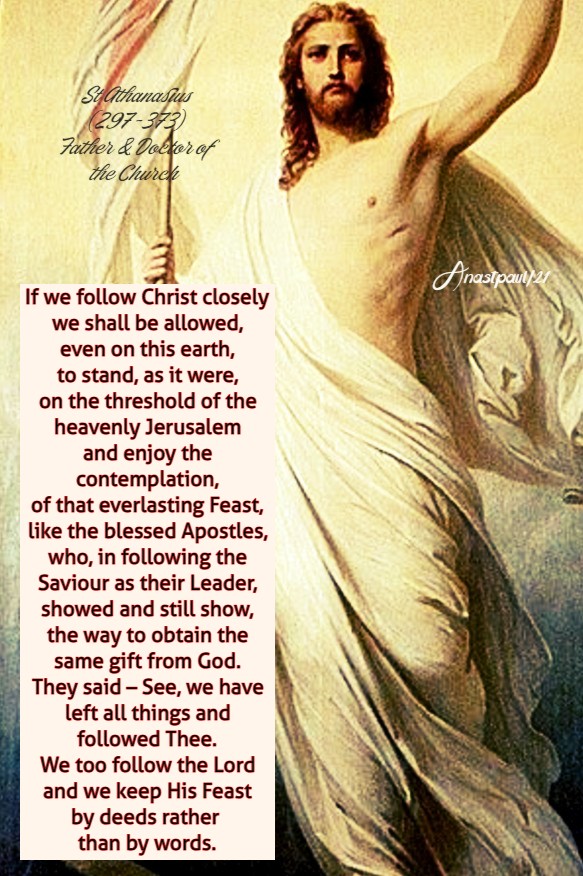
“If we follow Christ closely we shall be allowed, even on this earth, to stand, as it were, on the threshold of the heavenly Jerusalem and enjoy the contemplation, of that everlasting Feast, like the blessed Apostles, who, in following the Saviour as their Leader, showed and still show, the way to obtain the same gift from God. They said – See, we have left all things and followed Thee. We too follow the Lord and we keep His Feast by deeds rather than by words.”
St Athanasius (297-373) Father & Doctor of the Church
“For Christ is our Salvation. For He is our Salvation, Who was wounded for us and fastened with nails to the Wood and taken down from the Wood and laid in the sepulchre. But He rose from the sepulchre and although His Wounds were healed, the Scars remained. For this He judged expedient for His Disciples that He should keep His Scars, to heal the wounds of their soul.”
St Augustine (354-430) Father and Doctor of Grace
“All I want to know is Christ and the power flowing from His Resurrection!”
Our Morning Offering – 31 March – Easter Sunday, Alleluia, He is Truly Risen, Alleluia!
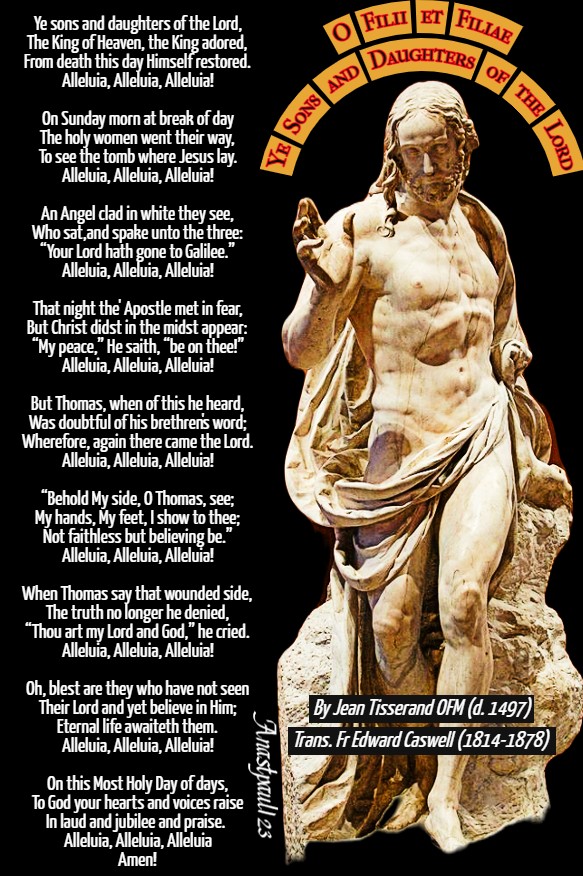
O Filii et Filiae Ye Sons and Daughters of the Lord By Jean Tisserand OFM (Died 1497) (The original Hymn comprises the nine stanzas below). Trans. Fr Edward Caswell C.Orat. (1814-1878)
Ye sons and daughters of the Lord, The King of Heaven, the King adored, From death this day Himself restored. Alleluia, Alleluia, Alleluia!
On Sunday morn at break of day The holy women went their way, To see the tomb where Jesus lay. Alleluia, Alleluia, Alleluia!
An Angel clad in white they see, Who sat,and spake unto the three: “Your Lord hath gone to Galilee.” Alleluia, Alleluia, Alleluia!
That night the’ Apostle met in fear, But Christ didst in the midst appear: “My peace,” He saith, “be on thee!” Alleluia, Alleluia, Alleluia!
But Thomas, when of this he heard, Was doubtful of his brethren’s word; Wherefore, again there came the Lord. Alleluia, Alleluia, Alleluia!
“Behold My side, O Thomas, see; My hands, My feet, I show to thee; Not faithless but believing be.” Alleluia, Alleluia, Alleluia!
When Thomas say that wounded side, The truth no longer he denied, “Thou art my Lord and God,” he cried. Alleluia, Alleluia, Alleluia!
Oh, blest are they who have not seen Their Lord and yet believe in Him; Eternal life awaiteth them. Alleluia, Alleluia, Alleluia!
On this Most Holy Day of days, To God your hearts and voices raise In laud and jubilee and praise. Alleluia, Alleluia, Alleluia Amen!
One Minute Reflection – 30 March – Holy Saturday – The Lord’s Vigil Mass of Easter, Blessing of the Fire, Prophecies, Blessing of the Font, First Mass of Easter – Matthew 28:1-7 – Scripture search here: https://www.drbo.org/
“And the Angel answering, said to the women: Fear not you, for I know that you seek Jesus Who was Crucified, He is not here, for He is risen, as He said.” – Matthew 28:5-6
REFLECTION – “When the third day dawned of the Lord’s Sacred repose in the tomb … Christ, the “power and Wisdom of God” (1 Cor 1:24), with the author of death lying prostrate, conquered even death itself and opened to us access to eternity, when He raised Himself from the dead by His Divine Power in order to make known to us the paths of Life.
Then there was a great earthquake, for an Angel of the Lord came down from Heaven, with raiment like snow and his countenance like lightening. He appeared attractive to the devout and severe to the wicked – for he terrified the soldiers and comforted the timid women, to whom the Lord Himself first appeared after rising because, their intense devotion, so merited. Then He was seen by Peter, then by the disciples going to Emmaus, then by all the Apostles except Thomas. Later He presented Himself to be touched by Thomas, who proclaimed his faith: “My Lord and my God.” And thus, during forty days, He appeared in many ways to His disciples, both eating and drinking with them.
He enlightened our faith with proofs and lifted up our hope with promises, so as finally, to enkindle our love with gifts from Heaven!” … St Bonaventure (1217-1274) Doctor of the Church
PRAYER – O God, Who dost illuminate this most holy night by the glory of the Lord’s Resurrection, preserve in the new children of Thy family, the spirit of adoption which Thou hast given, that renewed in body and mind, they may render to Thee a pure service. Through our Lord Jesus Christ, Thy Son, who lives and reigns with Thee in the unity of the Holy Ghost, God, world without end. Amen (Collect).
One Minute Reflection – 28 March – Maundy Thursday – 1 Corinthians 11:20-32, John 13:1-15 – Scripture search here: https://www.drbo.org/
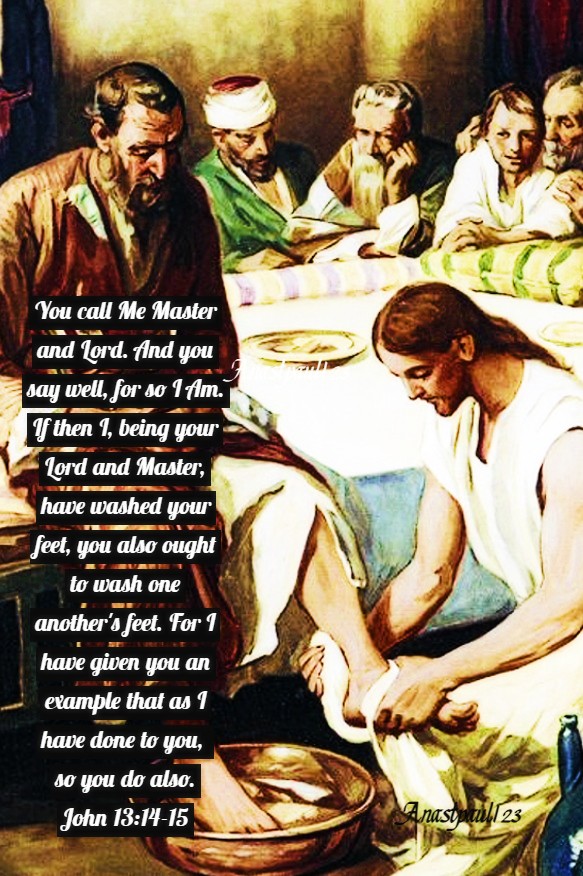
“You call Me Master and Lord. And you say well, for so I Am. If then I, being your Lord and Master, have washed your feet, you also ought to wash one another’s feet. For I have given you an example that as I have done to you, so you do also.” – John 13:14-15
REFLECTION – “Jesus rose from supper and took off His outer garments. He took a towel and tied it around His waist. Then He poured water into a basin and began to wash the disciples’ feet. We read a story of the same kind in Genesis. Abraham says to the messengers – the three Angels who visit him: “Let some water be brought that you may bathe your feet and then rest yourselves under the tree; let me bring you a little food that you may refresh yourselves” (Gen 18:4-5). What Abraham did for the three Angels, Christ did for His Apostles, those messengers of the Truth, who were to preach faith in the Blessed Trinity, to all the world.
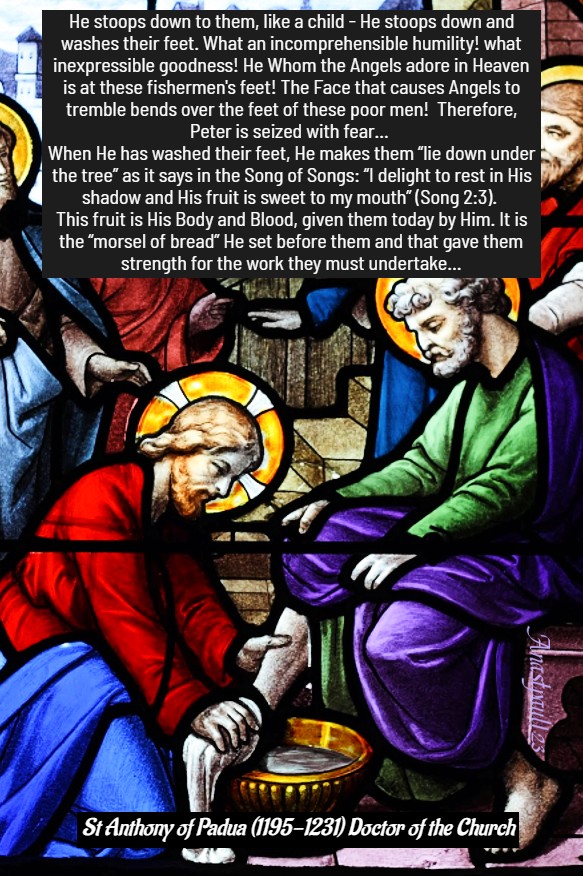
He stoops down to them, like a child – He stoops down and washes their feet. What an incomprehensible humility! what inexpressible goodness! He Whom the Angels adore in Heaven, is at these fishermen’s feet! The Face that causes Angels to tremble bends over the feet of these poor men!Therefore, Peter is seized with fear… When He has washed their feet He makes them “lie down under the tree” as it says in the Song of Songs: “I delight to rest in His shadow and His fruit is sweet to my mouth” (Song 2:3). This fruit is His Body and Blood, given them today by Him. It is the “morsel of bread” He set before them and that gave them strength for the work they must undertake…
Behold, “on this mountain the Lord of Hosts will prepare for all peoples a feast of rich meat with the marrow” (Is 25:6)… In the Upper Room where the Apostles are to receive the Holy Spirit on the day of Pentecost, the Lord of all the world, throws a feast today for all the peoples who believe in Him… This is what the Church does today throughout the world. It was for her sake that Christ prepared this feast on Mount Zion, this food that restores us, His True Body, rich in every spiritual virtue and charity. This He has given to His Apostles and has commanded them to give to those who believe in Him.” – St Anthony of Padua (1195-1231) Franciscan, Doctor of the Church (Sermons for Sundays and Feasts, Maundy Thursday).
PRAYER – O God, from Whom Judas received the punishment of his guilt and the thief the reward of his confession: grant unto us the full fruit of Thy clemency, that even as in His Passion, our Lord Jesus Christ gave to each a retribution according to his merits, so having taken away our old sins, He may bestow upon us the grace of His Resurrection. Who with Thee lives and reigns in the unity of the Holy Ghost, God, world without end. Amen (Collect).
St John of Capistrano OFM (1386-1456) Priest and Friar of the Friars Minor, Confessor and Preacher. Famous as a Preacher, Theologian and Inquisitor, trained Lawyer, he earned himself the nickname ‘the Soldier Saint’ when in 1456 at age 70 he led a Crusade against the invading Ottoman Empire at the Siege of Belgrade. He was Beatified on 19 December 1650 by Pope Innocent X and Canonised on 16 October 1690 by Pope Alexander VIII. Feast Day moved from 28 March in 1969. Biography: https://anastpaul.com/2017/10/23/saint-of-the-day-23-october-st-john-capistrano-ofm-1386-1456-the-soldier-saint/
St Cyril the Deacon St Dorotheus of Tarsus St Gundelindis of Niedermünster
St Guntramnus (c532-592) King of the Kingdom of Orléans and Burgundy from 561 until his death in 592, Confessor, Apostle of the needs of the Church and of the poor and sick, Penitent. The Roman Martyrology reads: “At Chalons in France, the demise of St Gontran King, who devoted himself to exercises of piety, renounced the pomps of the world and bestowed his treasures on the Church and the poor,” https://anastpaul.com/2022/03/28/saint-of-the-day-28-march-saint-guntramnus-died-597/
St Hesychius of Jerusalem (Died c450) Priest, Exegete. He is not to be confused with Bishop St Hesychius of Jerusalem, a contemporary of St Gregory the Great.
Quote/s of the Day – 25 March – Monday in Holy Week
I Beg Thee, Lord By St Francis of Assisi (c1181–1226)
I beg Thee, Lord, let the fiery, gentle power of Thy love take possession of my soul and snatch it away, from everything under Heaven, that I may die, for love of Thy love, as Thou saw fit, to die for love of mine! Amen
“Now it is that we are to show an invincible courage towards our Saviour, serving Him purely for the love of His will, not only without pleasure but amid this deluge of sorrows, horrors, distresses and assaults, as did his glorious Mother and St John, upon the day of His Passion. Amongst so many blasphemies, sorrows and deadly distresses, they remained constant in love …”
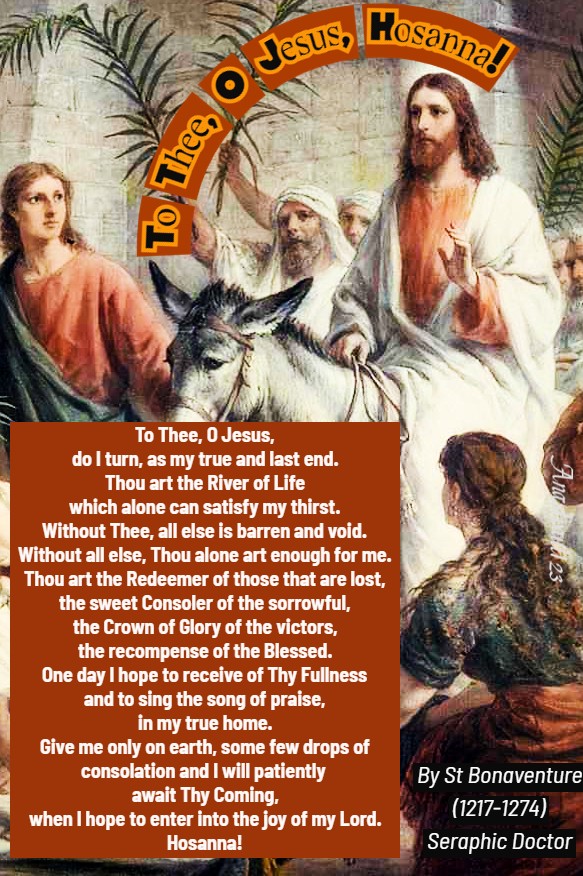
To Thee, O Jesus, Hosanna! By St Bonaventure (1217-1274) Seraphic Doctor of the Church
To Thee, O Jesus, do I turn, as my true and last end. Thou art the River of Life which alone can satisfy my thirst. Without Thee, all else is barren and void. Without all else, Thou alone art enough for me. Thou art the Redeemer of those that are lost, the sweet Consoler of the sorrowful, the Crown of Glory of the victors, the recompense of the Blessed. One day I hope to receive of Thy Fullness and to sing the song of praise, in my true home. Give me only on earth, some few drops of consolation and I will patiently await Thy Coming, when I hope to enter into the joy of my Lord. Hosanna!
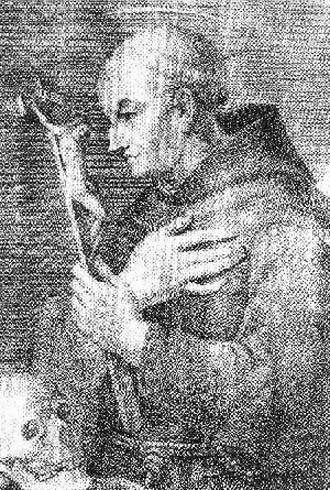
Saint of the Day – 19 March – Blessed John of Parma OFM (c1209-1289) Priest and Friar of the Friars Minor, the 7th Minister General of the Order (1247–1257) and a noted Theologian. He was known for his attempts to bring back the earlier spirit of the Order after the death of Saint Francis of Assisi. Born in 1209 at Parma, Italy as Giovanni Burali and died in 1289 at Greccio, Italy of natural causes. Patronage – of his birthplace, Parma, Italy. His cult was confirmed in 1777 by his Beatification by Pope Pius VI. Also known as – Giovanni di Parma, John Burall. Additional Memorial – 20 March on some calendars.
John was born in Parma, Italy, around 1209 of the noble Burali family. His education was undertaken by his uncle, the Chaplain of the St Lazarus hospice in Parma. It was when he was a young Philosophy Professor known for his piety and learning that God called him to bid good-bye to the world he was used to and enter the new world of the Franciscan Order.
After his profession, John was sent to Paris to complete his Theological studies in order to be Ordained to the Priesthood. After his Ordaination, he was appointed to teach Theology at Bologna, then in Naples and finally in Rome.
In 1245, Pope Innocent IV called a General Council in the City of Lyons, France. Crescentius, the Franciscan Minister General at the time, was ailing and unable to attend. In his place he sent Friar John, who made a deep impression on the Church leaders gathered there. Two years later, when the same Pope presided at the election of a new Minister General of the Franciscans, he remembered Friar John well and proposed him as the man best qualified for the office.
And so, in 1247, John of Parma was elected to the position of the 7th Minister General. The surviving disciples of St Francis rejoiced in his election, expecting a return to the spirit of poverty and humility of the early days of the Order. And they were not disappointed. As General of the Order, John travelled on foot, accompanied by one or two companions, to practically all of the Franciscan Convents in existence. Sometimes he was able to visit incognito and unrecognised, remaining there for a number of days to test the true spirit of the Friars.
The Pope called on John to serve as the Papal Legate to Constantinople, where he was most successful in winning back the schismatic Greeks. Upon his return, he asked that someone else take his place to govern the Order. At John’s urging, Saint Bonaventure was chosen to succeed him. John then took up a life of prayer in the Hermitage at Greccio, one of St Francis favourite Hermitages. and where he founded the first Nativity devotion.
Many years later, John learned that the Greeks who had been reconciled with the Church for a time, had again relapsed into schism. Although 80 years old by then, John received permission from Pope Nicholas IV to return to the East in an effort to restore unity once more. On his way, John became ill and died. He was Beatified in 1777. The Office was granted to the Franciscan Order in 1780 and extended to the ducal States on 24 April 1781.










































 AnaStpaul
You must be logged in to post a comment.