Solemnity of Saints Peter and Paul (29 June) +2021
Nuestra Señora del Refugio / Our Lady of Refuge, Matamoros, Tamaulipas, Mexico (1720) – 4 July:
Jesuit Missionary Father Juan José Güica brought a painting of Our Lady, Refuge of Sinners from Italy to Mexico in 1720. In a dream, the Virgin told Padre Güica to ask the Franciscans of Zacatecas to use and promote the image; – they distributed over 150 copies, making this one of the most widespread Marian devotions in Mexico.
In 1793 Franciscan Friars came to the new settlement which would become Matamoros, renaming the area “Nuestra Señora del Refugio de los Esteros Hermosos” (Our Lady of the Refuge of the Lovely Marshes).
The Cathedral of Our Lady of Refuge, built in 1832, displays an 1886 painting of her. Her fiesta, celebrated in many Mexican Towns, commemorates the coronation of the original “Refugium Peccatori” in the Jesuit Church of Frascati, Italy, on 4 July 1717.
Bl Agatha Yun Jeom-Hye St Albert Quadrelli St Andrew of Crete St Anthony Daniel St Aurelian of Lyons St Bertha of Blangy St Carileffo of Anille Bl Catherine Jarrige St Cesidio Giacomantonio Bl Damiano Grassi of Rivoli St Donatus of Libya St Edward Fulthrop St Elias of Jerusalem St Finbar of Wexford St Fiorenzo of Cahors St Flavian of Antioch St Giocondiano Bl Giovanni of Vespignano St Haggai the Prophet Bl Hatto of Ottobeuren Bl Henry Abbot St Henry of Albano St Hosea the Prophet St Innocent of Sirmium Bl John Carey Blessed John Cornelius SJ (1557– 1594) Martyr, English Priest of the Society of Jesus, Missionary. Bl Jozef Kowalski St Jucundian St Laurian of Seville St Lauriano of Vistin Bl Maria Crocifissa Curcio St Namphanion the Archmartyr Bl Natalia of Toulouse St Odo the Good Bl Odolric of Lyon Bl Patrick Salmon Bl Pedro Romero Espejo
I nearly forgot to remind you – please pray with me.
Devotion to the Most Precious Blood is not a spiritual option, it is a spiritual obligation and that, not only for Priests but for every follower of Christ. I really believe that one of the symptoms of modern society (and I would even include, sadly, modern Catholic society) one of the symptoms of a growing, gnawing secularism is the lessening and the weakening of devotion to the Precious Blood. Devotion, as we know, is a composite of three elements: -It is first- veneration, it is secondly- invocation, and it is thirdly- imitation. In other words, devotion to the Precious Blood of Christ, the Lamb of God who was slain, is first of all to be veneration on our part, which is a composite of knowledge, love and adoration. We are to study to come to a deeper understanding of what those two casual words, Precious Blood, really mean.
I found this passage in the oldest document, outside of Sacred Scripture, from the first century of the Christian era – to be exact, from Pope St. Clement I, dated about 96. Says Pope Clement: “Let us fix our gaze on the Blood of Christ and realise how truly precious It is, seeing that it was poured out for our salvation and brought the grace of conversion to the whole world.“
To understand the meaning of the Precious Blood, we must get some comprehension of the gravity of sin, of the awfulness of offending God because, it required the Blood of the Son of God to forgive that sin. We are living in an age in which to sin has become fashionable.
This veneration of the Precious Blood, which is the first element in our devotion to the Precious Blood, means, that we have a deep sensitivity to the awfulness of sin. Sin must be terrible. It must be awful. It must be the most dreadful thing in the universe. Why? Because it cost the living God in human form, the shedding of His Blood.
Lord Jesus, You became Man, in order, by Your Passion and Death and the draining of Your Blood on the Cross, might prove to us, how much You, our God, love us. Protect us, dear Jesus, from ever running away from the sight of blood. Strengthen our weak human wills so that we will not only, not run away from the Cross but welcome every opportunity to shed our blood in spirit, in union with Your Precious Blood, so that, dying to ourselves in time. we might live with You in Eternity. Amen
Thought for the Day – 21 June – Meditations with Antonio Cardinal Bacci (1881-1971)
St Aloysius Gonzaga
“St Aloysius Gonzaga is one of the outstanding models of holy purity, for young and old alike. We are told, that when he was nine years of age and went to the City of Florence, he went to the Church of the Annunziata, to pray before the picture of our Blessed Lady. It was then, that he experienced the ardent desire to consecrate himself to God. He was the eldest son of Prince Ferdinand de Gonzaga and, therefore, heir to his father’s title. But, from this moment, he was determined to spend his life in the service of God. He made a vow of perpetual chastity and placed himself under the protection of the Blessed Virgin.
Now, his life became a continual ascent towards perfection. Hs chastity, which he had offered to Our Lady, remained spotless until his death. The spirit of evil could make no headway against his angelic virtue. This was a grace which he merited as a result of his prayers and penances. He often spent three or four hours, kneeling in prayer and contemplation. Even at night, he rose from his bed, in order to pray. His mind and heart where in Heaven, rather than upon earth. His prayer was an intimate conversation with Jesus, Mary and the Saints. Innocent though he was, he practised servere mortifications. Believing himself to be a great sinner, he scourged his body until his blood flowed freely and deprived himself of food and sleep.
Do we wish to preserve our purity and to become saints? If so, let us remember that without prayer and mortification, this is impossible. Jesus said to His disciples “that they must always pray and not lose heart” (Lk 18:1) “Pray” He said again, “that you may not enter into temptation” (Lk 22:40) and further, “Unless you repent, you will all perish” (Lk 13:5).”
Quote/s of the Day – 21 June – The Memorial of St Aloysius de Gonzaga SJ (1568-1591)
“There is no more evident sign that anyone is a saint and of the number of the elect, than to see him leading a good life and, at the same time, a prey to desolation, suffering and trials.”
O Holy Mary, my mistress, into your blessed trust and special custody and into the grasp of your mercy I this day, everyday and in the hour of my death, commend my soul and my body. To you, I commit, all my anxieties and miseries, my life and the end of my life, that by your most holy intercession and by your merits all my actions may be directed and disposed according to your will and that of your Son. Amen
Saint of the Day – 20 June – Blessed Francisco Pacheco SJ (1566-1626) Martyr, Priest of the Society of Jesus, Missionary to India, China and Japan, Provincial Superior. Born in 1566 in Ponte de Lima, Braga, Portugal and died by being burned at the stake on 20 June 1626 in Nagasaki, Japan. Also known as – Francesco, Francis.
Francisco Pacheco was the most experienced Jesuit who died a Martyr during the Great Persecution in Japan between 1617 and 1632. At the time of his arrest, he was Provincial Superior of the Jesuits and Apostolate Administrator of the Diocese and his imprisonment was a serious loss to the Christian community struggling to survive the persecution.
Fr Pacheco was born in Ponte di Lima, near Braga, Portugal, of noble parents. As a youth he heard of the exploits of Missionaries in Japan and dreamed of imitating them. While at the Jesuit school in Lisbon, he also watched the annual departure of the Jesuit Nissionaries and this further strengthened his resolve and thus he decided to join the Society in 1585. His request to go to the missions was only granted seven years later and his first stop was Goa, India where he continued his studies. He then went on to Macau to further continue his studies before being Ordained.
Fr Pacheco finally set forth for Japan in 1604 and spent four years in the capital of Osaka, Miyako (today’s Kyoto) before taking up his next appointment as Head of the Jesuit college in Macau. In 1614, he returned to Japan and became Vicar General to Bishop Luis de Cerqueira and was based in Nagasaki until the promulgation of the shogun’s decree in 1614 banishing all foreign Missionaries and forbidding Japanese Christians to practice their religion.
Fr Pacheco’s exile in Macau was a short one as he returned secretly to Japan the following year, disguised as a merchant and took up Missionary work at Takaku and the islands of Amakusa and Kani. During those years of fierce persecution he sadly saw thousands of Christians give up their religion under governmental pressure and fear of torture. He also witnessed the terrible deaths of his brother Jesuits and hundreds of Christians who remained steadfast in their faith, though it meant beheading or death by slow fire. Fr Pacheco knew that the longer he remained in Japan the closer was his Martyrdom.
Following his appointment as the Jesuits’ Provincial Superior, Fr Pacheco moved his residence from Nagasaki to the seaport of Kuchinotsu in Arima which had better security and better contact with the Jesuits in Japan. The search for Jesuit Missionaries was intensified when more spies were recruited by Shogun Iyemitsu. Fr Pacheco was betrayed by his former host, an apostate who because of the reward money and hoping to gain favour with the district governor, revealed where he was With 200 soldiers surrounding the house, Fr Pacheco and two of his Catechists, Paul Kinsuke and Peter Kinsei were arrested with two others living in the next house. The Jesuits, the Catechists, their hosts and families were all arrested and placed in a dungeon in Shimabara where they had to endure the damp and cold winter. Within a few days, Fr John Baptist Zola and his Catechist, Vincent Kaun, were added to their number.
While in prison, Fr Pacheco admitted the four Catechists into the Society and transformed his group of prisoners, including the lay persons into a quasi-religious community with set times for rising, prayer, meditation, fasting and doing penance to prepare and strengthen them for the Martyrdom to come. Their greatest sorrow was their inability to celebrate Mass, recite the Breviary and recite the Rosary as all these had been taken away from them, although, of course, they could still count on their fingers and added their own meditations. Finally, on 20 June 1626, the prisoners were brought to Nagasaki where two other prisoners, Fr Balthazar de Torres SJ and his Catechist, Michael Too, were included. The final number was nine Jesuits and nine lay Christians and all were escorted to the Martyrs’ Hill where the executions were to take place.
The Jesuits rejoiced in seeing each other and embraced for the last time. They were the first to die. The government kept the Christians aside hoping that some would apostatize but watching the Martyrs die only strengthened their faith. They were kept in a prison in Nagasaki, determined to die for Christ. They were Martyred on 12 July 1626.
Fr Pacheco and his eight Jesuit companions, together with the nine lay Christians, were included among the 205 M,artyrs Beatified by Blessed Pope Pius IX on 7 May1867. Their ashes thrown into the sea and no relics remain.
Quote/s of the Day – 16 June – “Month of the Sacred Heart” and The Memorial of St John Francis Régis SJ (1597-1640)
“The Catholic religion was the religion of your forefathers and the only one Jesus Christ founded; – the one which He promised would endure till the end of time. It is in the Catholic religion alone that you can save your soul.”
“How long are you going to be deaf to His call? Or are you going to lose your soul, which Jesus Christ bought at the price of His Precious Blood?”
“My child, it is indeed the Voice of God you have heard. He has given you a great grace in thus calling you into His one true Church. While you live, never cease to thank Him and bless Him for it.”
(All the above from – Rev Fr D. Chisholm, The Catechism in Examples (London: R & T Washbourne, Ltd
“Brother, I see our Lord and our Lady opening the gates of Paradise for me. Into Your hands, O Lord, I commend my spirit.” St John Francis Regis on his deathbed
Saint of the Day – 16 June – St John Francis Régis SJ (1597-1640) Priest, Confessor., renowned Preacher, Missionary., miracle-worker. Born as Jean-François Régis on 31 January 1597 at Fontcouverte, Aude, France and died on 31 December 1640 (aged 43) at La Louvesc, Ardèche, France of natural causes. Patronages – lacemakers, medical social workers, illegitimate children, Regis University, Regis High School (New York City), Regis Jesuit High School (Aurora, Colorado).
The Roman Martyrology states of him today: “In the village of La Louvese, formerly of the Diocese of Vienne in Dauphiny, the decease of St Jean-Francois Régis, Confessor, of the Society of Jesus, distinguished by his zeal for the salvation of souls and by his patience. He was placed on the list of Saints by Pope Clement XII.”
John Francis ministered to Catholics suffering neglect after civil conflict between Calvinists and Catholics devastated France. Much of southern France had fallen under control of the Huguenots who destroyed Catholic Churches and killed the Priests. Home missioners such as Régis had the task of rekindling a once-strong faith.
John Francis was born on 31 January 1597 in Fontcouverte, in southern France. His father, Jean Régis, had recently been ennobled as a result of service rendered during the Wars of the League. His mother, Marguerite de Cugunhan, was of a noble family. John Francis was remarkably holy from childhood. He was disinterested in children’s games, preferring instead, to contemplate the things of God. Sensitive and devout as he was, he managed not to be insufferable and was well-liked by his peers. He was educated at the Jesuit College of Béziers.
In 1616, at the age of 19, he entered the Jesuit Novitiate in Toulouse and began to prepare for a priestly ministry that would save thousands of souls. He studied humanities, philosophy and then theology. After finishing his course in rhetoric at Cahors, Regis was sent to teach grammar at several colleges: Billom (1619–22), Puy-en-Velay (1625–27), and Auch (1627–28). While he was teaching, he also pursued his studies in philosophy at the scholasticate at Tournon. Noted for an intense love of preaching and teaching the Faith, as well as a great desire to save souls, John Francis began his study of theology at Toulouse in 1628. Less than two years later, in 1630, he was Ordained a Priest at 31. The following year, having completed his studies, John Francis made his tertianship.
He was now fully prepared for his vocation and life’s work and entered upon his apostolic career in the summer of 1631. He was a tireless worker who spent most of his life serving the marginalised. As a newly ordained Priest, he worked with bubonic plague victims in Toulouse. From May 1632 until September 1634, his headquarters was at the Jesuit College of Montpellier. Here he laboured for the conversion of the Huguenots, visited hospitals, assisted the poor and the needy, withdrew from vice wayward women and girls and preached Catholic doctrine with tireless zeal to children and the poor. John Francis is best known for his work with at-risk women and orphans. He established safe houses and found jobs for them. He established the Confraternity of the Blessed Sacrament, which organised charitable collections of money and food from the wealthy. He also established several hostels for prostitutes and helped many become trained lace makers, which provided them with a stable income and an opportunity to avoid the threat of exploitation.
In 1633, he went to the Diocese of Viviers at the invitation of the local Bishop,, Monsignor Louis II de la Baume de Suze, giving missions throughout the Diocese. From 1633 to 1640 he evangelised more than fifty districts in le Vivarais, le Forez, and le Velay. John Francis laboured diligently on behalf of both Priests and laypersons. His preaching style was said to have been simple and direct. He appealed to the uneducated peasantry and immense numbers of conversions resulted.
Others it seems, were jealous of his success in reaping a harvest of conversions.His boldness – perceived as arrogance in some cases – led to a conflict with certain other Priests, a period of tension with the local Bishop and even threats of violence from those whose vices he condemned. Although he longed to devote himself to the conversion of the indigenous inhabitants of Canada, he remained in France all his not very long life. The influence of the best people on the one hand and on the other the patience and humility of the Saint, soon succeeded in confounding the calumny and caused the discreet and enlightened ardour of Father John Francis to shine forth with renewed splendour.
Less moderate indeed was his love of mortification, which he practiced with extreme rigour on all occasions, without ruffling, in the least, his evenness of temper. As he returned to the house one evening after a hard day’s toil, one of his confrères laughingly asked: “Well, Father Regis, speaking candidly, are you not very tired?”“No”, he replied, “I am as fresh as a rose.” He then took only a bowl of milk and a little fruit, which usually constituted both his dinner and supper and finally, after long hours of prayer, lay down on the floor of his room, the only bed he knew.
John Francis walked from town to town, in rough mountainous areas where travel was difficult, especially in the winter. On one particularly treacherous journey, Fr John Francis slipped and broke his leg. Leaning on his companion, he managed to make it to town, where he refused the help of the doctor in favour of spending a few hours in the Confessional. When he emerged several hours later, his badly broken leg had been healed.
In mid-December 1640 the Jesuit Missioner was giving a Mission at Montregard; – he interrupted his work there to return to his home at Le Puy because he had an intimation that he would soon die. He wanted to prepare for his death so he spent three days in retreat before making a general confession. Then he and his companion, Brother Claude Bideau, went back to Montregard to finish the Mission there.
Brother Claude Bideau with St John Francis
On 23 December the two set out for La Louvesc, the site of the next Mission but a winter storm blew in and they lost their way in the snow and had to spend the night in a battered shack. The next day they were able to reach La Louvesc where they found people waiting for them. Rather than taking a few minutes to eat and rest, John Francis immediately began preaching, then heard Confessions and celebrated Mass. So many people came for Confession that hedid not stop until it was time for Midnight Mass. Both Christmas day and the following day were also spent in the Confessional. Because of the crush of people, John Francis had to hear Confessions in the Sacristy where a broken window let in cold air directly onto him. By late afternoon he felt weak and suddenly collapsed. He was put in the Parish Priest’s bed but people followed him even there, seeking to confess. He lapsed into unconsciousness and the physician who attended him, confirmed that pneumonia had set in. Nothing could be done. John Francis lingered on until 31 December, praying constantly. He died as he had lived:,entirely poured out for souls.
But immediately after his death Regis was venerated as a saint. Pilgrims came in crowds to his tomb and since then, the concourse has only grown. Mention must be made of the fact that a visit made in 1804 to the blessed remains of the Apostle of Vivarais, was the beginning of the vocation of the Blessed Curé of Ars, Jean-Baptiste Vianney, whom the Church has raised in his turn to her altars.“Everything good that I have done”, he said when dying, “I owe to [John Francis] him.” The place where John Francis died has been transformed into a mortuary Chapel. Nearby is a spring of fresh water to which those who are devoted to Saint John Francis attribute miraculous cures through his intercession.
The fresh water spring in the village of La Louvesc, to which devotees of Saint John Francis Regis attribute miraculous cures through his intercession.
Today, Régis’ name lives on across the world. There are Churches, lakes, mountains, Schools. hotels, apartment complexes, swimming pools and Streets with his name. The Jesuit mission at Conewago, PA was named after him.
John Francis Régis was Beatified om 18 May 1716 by Pope Clement XI and Canonised on 5 April 1737 by Pope Clement XII.
Our Morning Offering – 13 June – “Month of the Sacred Heart” – Sunday within the Octave
Lord, Give Me Your Heart By St Claude de la Colombiere SJ (1641-1682) Apostle of Devotion to the Sacred Heart and Spiritual Director to St Margaret Mary Alacoque
O God, what will You do to conquer the fearful hardness of our hearts? Lord, You must give us new hearts, tender hearts, sensitive hearts, to replace hearts that are made of marble and of bronze. You must give us Your own Heart, Jesus. Come, lovable Heart of Jesus. Place Your Heart deep in the centre of our hearts and enkindle in each heart a flame of love as strong, as great, as the sum of all the reasons that we have for loving You, my God. O holy Heart of Jesus, dwell hidden in our hearts, so that we may live only in You and only for You, so that, in the end, we may live with You eternally in heaven. Amen
Quote/s of the Day – 11 May – “Mary’s Month” – Tuesday of the Sixth Week of Easter,Readings: Acts 16: 22-34, Psalms 138: 1-2, 2-3, 7-8, John 16: 5-11
“I will send to you the Spirit of truth, says the Lord; he will guide you to all truth.”
John 16:7,13
“If one of us has a conscience polluted by the stain of avarice, conceit, vain-glory, indignation, irascibility, or envy and the other vices, he has “a daughter badly troubled by a demon” like the Canaanite woman.”
St Bede the Venerable (673-735) Father and Doctor of the Church
“A good man is not a perfect man; a good man is an honest man, faithful and unhesitatingly responsive to the Voice of God in his life.”
St John Fisher (1469-1535) Bishop, Martyr
“Just as speech has been given to men to be the interpreter of their feelings and desires, so it is through the conscience, that God teaches us, what He judges of everything and what He expects of each one of us. This divine Voice forms various interior words, to express various lessons and the different orders, that it pleases God to give to His creature. It is the bond of communication that the Lord desires to have with us and the most usual organ he makes use of, to touch our hearts and open to us His own.”
St Claude la Colombière SJ (1641-1682)
Christian reflections (Spiritual writings, coll. Christus no 9,)
“The Heart of Jesus is with me.”
“Three things I cannot escape: the eye of God, the voice of conscience, the stroke of death. In company, guard your tongue. In your family, guard your temper. When alone guard your thoughts.”
Venerable Matthew Talbot (1856 – 1925)
“Then steer your ship with steady arm, Trust Me and rest your soul. Your little boat I’ll keep from harm, I’ll guide it toward its goal. … Be therefore, steadfast, calm and true, Your God is at your side. Through storm and night He’ll see you through With conscience as your guide.”
St Teresa Benedicta of the Cross OCD.(1891-1942 Edith Stein “At the Helm”
Notre-Dame de Gray, Gray, Haute-Saône, Franche-Comté, France / Our Lady of Gray (1400s) – 4 May
By the 1200s, a cruciform oak tree had become a place of devotion in the Flemish Town of Scherpenheuvel.(Montaigu in French) In the early 1400s, the Shrine became famous after a Statue of the Virgin placed on the tree, fell down and could not be moved from the spot.
The copy of the orginal Statue, made in 1613
But Protestants destroyed the Sanctuary in 1568 and in 1604 the tree was cut down. In 1613, a poor widow, Jeanne Bonnet, made a pilgrimage to Montaigu at the age of 70. She brought a piece of the sacred oak home to Salins-les-Bains in eastern France, where sculptor Jean Brange, carved a Statue of the Virgin from it, copying the Belgian original from the description.
From 1616 until the French Revolution, this Statue presided over a long series of miracles at the Capuchin Monastery in the Town of Gray, 37 miles away. When the revolutionaries expelled the Monks and pillaged the Monastery, a family hid the holy image until it could be safely installed in the Basilica at Gray.
In thanksgiving for the end of the 1849 cholera epidemic, Cardinal Mathieu, Archbishop of Besançon, gave the Shrine a silver Statue covered in gold and jewels, which he dedicated on 4 May 1851, at a ceremony attended by 92 Priests, throngs of the faithful, artillery salvos and the ringing of all the bells in Town. Afterwards, the Parish celebrated the feast of Our Lady of Gray with a procession every 4 May.
The new Statue dating from 1849
St Albian of Albée Bl Angela Bartolomea dei Ranzi Bl Angela Isabella dei Ranzi St Antonia of Constantinople St Antonina of Nicaea St Antonia of Nicomedia St Antonius of Rocher St Arbeo of Freising St Augustine Webster St Cunegund of Regensburg St Curcodomus of Auxerre St Cyriacus of Ancona St Enéour St Ethelred of Bardney St Florian of Lorch Bl Hilsindis
St Judas Cyriacus Blessed Ladislas of Gielniów OFM Cap (c 1440-1505) Priest St Luca da Toro Bl Margareta Kratz Bl Michal Giedroyc St Nepotian of Altino Bl Paolino Bigazzini St Paulinus of Cologne St Paulinus of Senigallia St Pelagia of Tarsus St Porphyrius of Camerino Rino St Richard Reynolds St Robert Lawrence St Silvanus of Gaza
— Carthusian Martyrs: A group of Carthusian monks who were hanged, drawn and quartered between 19 June 1535 and 20 September 1537 for refusing to acknowledge the English royalty as head of the Church: • Blessed Humphrey Middlemore • Blessed James Walworth • Blessed John Davy • Blessed John Rochester • Blessed Richard Bere • Blessed Robert Salt • Blessed Sebastian Newdigate • Blessed Thomas Green • Blessed Thomas Johnson • Blessed Thomas Redyng • Blessed Thomas Scryven • Blessed Walter Pierson • Blessed William Exmew • Blessed William Greenwood • Blessed William Horne • Saint Augustine Webster • Saint John Houghton • Saint Robert Lawrence
Martyrs of Cirta: Also known as • Martyrs of Cirtha • Martyrs of Tzirta A group of clergy and laity martyred together in Cirta, Numidia (in modern Tunisia) in the persecutions of Valerian. They were – Agapius, Antonia, Emilian, Secundinus and Tertula, along with a woman and her twin children whose names have not come down to us.
Martyrs of England: 85 English, Scottish and Welsh Catholics who were martyred during the persecutions by Protestants in the 16th and 17th centuries. They are commemorated together on 22 November. • Blessed Alexander Blake • Blessed Alexander Crow • Blessed Antony Page • Blessed Arthur Bell • Blessed Charles Meehan • Blessed Christopher Robinson • Blessed Christopher Wharton • Blessed Edmund Duke • Blessed Edmund Sykes • Blessed Edward Bamber • Blessed Edward Burden • Blessed Edward Osbaldeston • Blessed Edward Thwing • Blessed Francis Ingleby • Blessed George Beesley • Blessed George Douglas • Blessed George Errington • Blessed George Haydock • Blessed George Nichols • Blessed Henry Heath • Blessed Henry Webley • Blessed Hugh Taylor • Blessed Humphrey Pritchard • Blessed John Adams • Blessed John Bretton • Blessed John Fingley • Blessed John Hambley • Blessed John Hogg • Blessed John Lowe • Blessed John Norton • Blessed John Sandys • Blessed John Sugar • Blessed John Talbot • Blessed John Thules • Blessed John Woodcock • Blessed Joseph Lambton • Blessed Marmaduke Bowes • Blessed Matthew Flathers • Blessed Montfort Scott • Blessed Nicholas Garlick • Blessed Nicholas Horner • Blessed Nicholas Postgate • Blessed Nicholas Woodfen • Blessed Peter Snow • Blessed Ralph Grimston • Blessed Richard Flower • Blessed Richard Hill • Blessed Richard Holiday • Blessed Richard Sergeant • Blessed Richard Simpson • Blessed Richard Yaxley • Blessed Robert Bickerdike • Blessed Robert Dibdale • Blessed Robert Drury • Blessed Robert Grissold • Blessed Robert Hardesty • Blessed Robert Ludlam • Blessed Robert Middleton • Blessed Robert Nutter • Blessed Robert Sutton • Blessed Robert Sutton • Blessed Robert Thorpe • Blessed Roger Cadwallador • Blessed Roger Filcock • Blessed Roger Wrenno • Blessed Stephen Rowsham • Blessed Thomas Atkinson • Blessed Thomas Belson • Blessed Thomas Bullaker • Blessed Thomas Hunt • Blessed Thomas Palaser • Blessed Thomas Pilcher • Blessed Thomas Pormort • Blessed Thomas Sprott • Blessed Thomas Watkinson • Blessed Thomas Whitaker • Blessed Thurstan Hunt • Blessed William Carter • Blessed William Davies • Blessed William Gibson • Blessed William Knight • Blessed William Lampley • Blessed William Pike • Blessed William Southerne • Blessed William Spenser • Blessed William Thomson • They were Beatified on 22 November 1987 by Pope John Paul II.
Martyrs of Novellara: A bishop and several his flock who were martyred together in the persecutions of Diocletian and whose relics were kept and enshrined together. We know nothing else about them but the names – Apollo, Bono, Cassiano, Castoro, Damiano, Dionisio, Leonida, Lucilla, Poliano, Tecla, Teodora and Vespasiano. They were Martyred on 26 March 303. Their relics were enshrined in the parish of Saint Stephen in Novellara, Italy in 1603.
Rejoice! It’s 1 May The Month of the Blessed Virgin Mary
The May Magnificat By Gerard Manley Hopkins SJ (1844-1889)
May is Mary’s month, and I Muse at that and wonder why: Her feasts follow reason, Dated due to season-
Candlemas, Lady Day: But the Lady Month, May, Why fasten that upon her, With a feasting in her honour? Ask of her, the mighty Mother: Her reply puts this other Question: What is Spring? Growth in everything- All things rising, all things sizing Mary sees, sympathising With that world of good, Nature’s motherhood.
Well but there was more than this: Spring’s universal bliss Much, had much to say To offering Mary May.
Our Morning Offering – 30 April – Friday of the Fourth Week of Easter +2021, Readings: Acts 13:26-33, Psalm 2:6-11, John 14:1-6
Jesus said to his disciples: “Let not your heart be troubled. You believe in God, believe also in me. ” – John 14:1
O Christ Jesus, When All is Darkness By St Ignatius Loyola (1491-1556)
O Christ Jesus, when all is darkness and we feel our weakness and helplessness, give us the sense of Your presence, Your love and Your strength. Help us to have perfect trust in Your protecting love and strengthening power, so that nothing may frighten or worry us, for, living close to You, we shall see Your hand, Your purpose, Your will through all things. Amen
Our Morning Offering – 14 April – Wednesday of the Second Week of Easter
May I Be United with You, Good Jesus St Peter Canisius (1521-1597) Doctor of the Church
Let my eyes take their sleep but may my heart always keep watch for You. May Your right hand bless Your servants who love You. May I be united with the praise that flows from You, Lord Jesus, to all Your saints; united with the gratitude drawn from Your heart, good Jesus, that causes Your saints to thank You; united with Your passion, good Jesus, by which You took away our guilt; united with the divine longing that You had on earth, for our salvation; united with every prayer that welled from Your divine heart, good Jesus and flowed into the hearts of Your saints. Amen
Saint of the Day – 7 April – Blessed Edward Oldcorne SJ (1561-1607) Priest Martyr. Born in 1561 at York, North Yorkshire, England and died by being hanged, drawn and quartered on 7 April 1607 at Worcester, Worcestershire, England.
Edward Oldcorne (1561-1606) had a long and fruitful pastoral apostolate in England operating out of the same residence for 16 years. Ralph Ashley (birthday unknown, 1606) entered the Jesuits in Valladolid, Spain, as a brother and was urged to return to his native England to recover his good health, a prescription that worked well until he was arrested with Father Oldcorne whom he assisted for eight years.
Blessed Edward Oldcore Unknown artist, line engraving, 1608
Oldcorne was born in York of a non-Catholic father and a Catholic mother, whose courage when she was imprisoned for her faith ,set an example for her son who dropped medical studies to travel to Rheims, France in August 1581 in order to study for the priesthood. In 1583 he moved on to Rome where he finished his studies and was Ordained a Priest. Soon afterwards, he asked to enter the Society of Jesus, was accepted and was allowed to complete his novitiate in a very short time because of the difficult conditions he would face, upon his return to England. He landed on a remote beach near Norfolk in November 1588 and joined a group of sailors travelling to London where he stayed with Father Henry Garnet, the Superior of the Jesuits in England. After a few months there, he was assigned to Hinlip Hall just outside Worcester ,where he would enjoy one of the longest periods of any Jesuit ministering in England during the many years of the persecution of the heretical Elizabeth.
The master of Hinlip Hall, was an ardent Catholic who was in prison and had left the property in the care of his sister, Dorothy, a Protestant, who had been at Elizabeth’s court and merely tolerated the presence of the Priest guests in her brother’s residence. Several Priests had tried, unsuccessfully, to convert her back to her family’s Catholicism but she resisted all efforts. Finally Oldcorne began fasting for her conversion; when she learned of his fast, she yielded to God’s grace and became an encouragement for many others in the shire to return to the Catholic religion. The Hall became the Jesuit’s base of operations where many people came to seek the Sacraments and hear Fr Edward’s preaching. His success was accompanied by poor health ever since he returned to England. He had a throat cancer that left him with a hoarse and painful voice but this did not keep him from preaching. He made a pilgrimage around 1591 to St. Winifred’s Shrine seeking a cure. He returned with the cancer healed.
Catholics looked forward to the end of persecution when Queen Elizabeth died and James I became King on 24 March 1603. He had promised he would be more tolerant but ,in fact, the persecution increased. Some angry Catholic laymen plotted to blow up the Houses of Parliament during the King’s visit there on 5 November 1605. Discovery of the plot intensified hatred of Catholics; the government was determined to implicate Jesuits in the so-called “Gunpowder Plot,” despite the fact, that the men behind it had already been captured. The Jesuit Superior, Father Garnet, decided to leave London and seek shelter at Hinlip Hall, which had more hiding places than any other mansion in England. Brother Nicholas Owen, (Saint), who had constructed those places, accompanied him. The two Jesuits joined Oldcorne and Ashley.
On 20 January 1606, the Sheriff of Worcestershire and over 100 men, arrived at the Hall and spent several days fruitlessly searching for the Priests. A man arrested for being involved in the plot against Parliament, tried to curry favour by telling authorities he could lead them to Father Oldcorne. Finally, on the fourth day, hunger forced Brother Ashley and his companion, St Owen, to leave their hiding place. Four more days later, the two Priests emerged weak and ill, from their hiding place. All four were imprisoned in the Tower of London.
When efforts to spy on the conversation between the prisoners failed to yield any damning evidence, Fr Edward was tortured on the rack five hours a day for five consecutive days. He refused to say anything. When he and Ashley were put on trial, the Jesuit Priest denied the charge of being involved in the Gunpowder Plot so well, that the charge against him was changed to simply being a Jesuit Priest. He was found guilty of high treason and ordered to be executed. Just before he was hung, his betrayer asked for pardon, which Fr Edward readily granted. Fr Edward also prayed for the King and royal family, for his accusers, the judge and the jury who had condemned him. He was pushed from the ladder but was cut down before he was dead; he was then beheaded and quartered. Brother Ashley followed him to the gallows as did St Owen.
The Martyrdom of Blessed Edward Oldcorne, Brothr Ashley and Saint Nichola Owe
It is said, that, as Oldcorne waited on the ladder to die, Ashley kissed his feet and said, “What a happy man am I to follow in the steps of my sweet father”. Oldcorne died with the name of St Winifred on his lips. When Ashley came to die, he prayed and asked for forgiveness and noted that like Edward, he was dying for his faith and not as a traitor.
Blessed Edward’s portrait was painted after his death for the Church of the Gesù. A number of his relics survived including one of his eyes which he lost, when the executioner decapitated him:. The force of the blow was so great, that his eye flew out of its socket. A secondary school, Blessed Edward Oldcorne Catholic College, named in his honour, is in Worcester. His right eye and the rope that bound him ,are kept as relics at Stonyhurst College. They believe, that the eye was taken by a Catholic sympathiser while his body was being parboiled after he was quartered.
Reliquary of Blessed Edward’s Right eye
Edward Oldcorne was Beatified on 15 December 1929 by Pope Pius XI.
Quote/s of the Day – – 28 March – Saturday of the Fourth week of Lent, Readings: Jeremiah 11:18-20, Psalm 7:2-3, 9-12, John 7:40-53
“Never before, has anyone spoken, like this one”
John 7:46
“Follow me.”
Luke 5:27
“Come along then, every human family, full of sin as you are and receive the forgiveness of your sins. For I Myself, am your Forgiveness, I am the Passover of salvation, the Lamb slain for your sakes, your redemption, life and resurrection; I am your Light, your Salvation and your King. It is I, who lead you to the heights of heaven, I, who will raise you up; it is I, who will bring you to see the Father who is from all eternity; it is I, who will raise you up by My all-powerful Hand.”
St Melito of Sardis (Died c 180) Bishop, Apologist
“Christ is the artist, tenderly wiping away all the grime of sin that disfigures the human face and restoring God’s image to its full beauty.”
St Gregory of Nyssa (c 335–C 395) Father of the Church
“He is the origin of all wisdom. The Word of God in the heights, is the source of wisdom. Christ is the source of all true knowledge, for He is “the way, the truth and the life.” (Jn 14:6). … As way, Christ is the teacher and origin of knowledge … Without this Ligh, which is Christ, no-one can penetrate the secrets of faith.”
St Bonaventure (1221-1274) Seraphic Doctor
“… Make use of Our Lord as an armour which covers [us] all about, by means of which [we] shall resist every device of [our] enemies. You shall then be my Strength, O my God! You shall be my Guide, my Director, my Counsellor, my Patience, my Knowledge, my Peace, my Justice and my Prudence.”
St Claude de la Colombiere (1641-1682) “Apostle of the Sacred Heart”
“Where, then, is true freedom? It is in the heart of one who loves nothing more than God. It is in the heart of one who is attached neither to spirit nor to matter but only to God. It is in that soul which is not subject to the “I” of egoism, which soars above its own thoughts, feelings, suffering and enjoyment. Freedom resides in the soul whose one reason for existence is God, whose life is God and nothing else but God.”
St Raphael Arnaiz Baron (1911-1938) Spanish Trappist Monk
Quote/s of the Day – 25 February – Thursday of the First week of Lent, Readings: Esther C:12, 14-16, 23-25, Psalms 138:1-2,2-3, 7-8, Matthew 7:7-12
“Ask and it will be given you, seek and you will find, knock and it will be opened to you.”
Matthew 7:7
“Prayer is the wing, wherewith the soul flies to heaven and meditation, the eye, wherewith we see God.”
St Ambrose (340-397) Father and Doctor of the Church
“Ask with tears, seek with obedience, knock with patience.”
St John Climacus (c 525-606) Father of the Church
“All who ask receive, those who seek find and to those who knock it shall be opened. Therefore, let us knock at the beautiful garden of Scripture. It is fragrant, sweet and blooming with various sounds of spiritual and divinely inspired birds. They sing all around our ears, capture our hearts, comfort the mourners, pacify the angry and fill us with everlasting joy.”
St John Damascene (676-749) Father and Doctor of the Church
“He promises to be [our] strength, in proportion to the trust which [we] place in Him.”
St Claude de la Colombiere (1641-1682) “Apostle of the Sacred Heart”
“On the journey of this life to eternity, let me carry You in my heart, following Mary’s example, who bore You in her arms, during the flight to Egypt.”
St Alphonsus Maria de Liguori (1696-1787) Bishop and Doctor of the Church
Saint of the Day – 22 February – Blessed Diego Carvalho SJ (1578-1624) Jesuit Priest and Martyr, Missionary to Japan. Born in 1578 in Coimbra, Portugal and died by exposure on 22 February 1624 at Sendai, Miyagi, Japan. Patronage Japanese miners.
Diego was born in Coimbra, Portugal, in 1578. After entering the Society of Jesus in his hometown in 1594, late in 1600 he arrived, after a long voyage with sixteen other Jesuits, in Goa, India.
The following year, 1608, he set out for Macau, where he was Ordained as Priest. In 1609, he arrived in Japan, where, after learning Japanese, he was a Missionary in the Amakusa Islands, before relocating to Kyōto around 1612. After the edict of proscription of 1614, in November that year, with seventy-two other Jesuits on three Chinese junks, he was deported to Macau.
Diogo’s heart remained in Japan, however and he secretly returned in 1616. Later he relocated in the north to serve refugees fleeing persecution in the south.
Carvalho’s ministry centred on the silver miners in the districts of Oshu and Dewa. Living conditions were difficult but conversions were abundant. In December 1623 he was working in Miwake when the local prince began to persecute the Christians and ordered soldiers to kill all who refused to apostatise. When the governor of Sendai learned of Father Carvalho, he went searching for him but the Jesuit and about 60 Christians fled into a deep valley seeking to escape. Unfortunately, their tracks in the snow led the soldiers to them and Carvalho gave himself up, in an attempt to allow his people to get away. He was able to save all but 12 of his companions. Then the Christians had to march for seven days through the cold to Sendai. Two who could not keep up, were killed on the spot and the rest were barely given enough food to eat to survive their month-long imprisonment once they reached the City.
Martyrdom came for Carvalho and his companions through the cold. The Hirose River flowed near the fortress where they had been imprisoned; on its bank the soldiers dug a hole and filled it with icy water from the river. The prisoners were forced first to sit naked in the freezing water and then stand up to let the wind hit them. Their captors promised to end the torture if they would renounce Christianity. None did and the cold slowly took away their life. Carvalho was the last to die, enduring the torture long into the night before he also finally perished. The names of his companions are sadly unknown, so they could not be Beatified with him but with God they are Blessed in His Heavenly Kingdom.
The decree of Martyrdom and Beatificztion, was confirmed on 7 May 1867 by Pope Blessed Pius IX.
Notre-Dame de Rennes / Our Lady of Miracles and Virtues, Rennes, France (1357) – 22 February:
The Statue of Our Lady of Miracles and Virtues in the Lady Chapel at Saint Sauveur at Rennes
Our Lady of Rennes, in Britanny. The English, having made a mine to blow up the town, it is said that the candles in theCchapel were found miraculously lighted; the bells rung of themselves and the image of the Blessed Virgin was seen to stretch out its arms towards the middle of the Church, where the mine was, which, by that means was discovered. The people rushed to the spot and so, the plot was discovered and the entire town saved through the intervention of Our Lady of Rennes. Great was the rejoicing and deep the gratitude of the people. Known today as the Basilica of Saint Sauveur in Rennes, it is located in the heart of historic Rennes, which was once the capital of Brittany. It is situated at the termination of Saint-Sauveur Street on which its façade faces. As the original Gothic Church partially collapsed in the year 1682, the Classical style Church that can currently be seen, was constructed beginning in 1703 and consecrated in August of 1719. In the year 1793, during the French Revolution, the Church was made into a Temple of Reason and the miraculous statue of Our Lady was destroyed. It was not until 1802, after the end of the Terror, that the Church was opened again to worship. The Church was made into a minor Basilica in 1916 by Pope Benedict XV.
The Altar of Our Lady in the main body of the Basilica of Saint Sauveur at Rennes
According to popular tradition there was a famous miracle attributed to Our Lady at Rennes during the War of Succession at Brittany. As Rennes was being besieged by the invading English army under the Duke of Lancaster, the people of the city expected the English forces to mine their way under the walls into the City. On the night of 8 February 1357, the Church bells began to ring of their own accord and the candles were spontaneously lit. The Statue of Our Lady, known as Our Lady of Miracles and Virtues, pointed out a particular slab in the Church. The inhabitants of the city thus were alerted to the mine and the point of the English attack, and were able to repulse the invasion. The miracle was a popular subject for ballads, especially the troubadour Cavalier. In 1634 the miracle was officially recognised by the Bishop of Rennes, Pierre Cornulier. There are many miracles attributed to Our Lady, including the miraculous healing of Magdalene Morice in the year 1761. She had gangrene in her right foot which was instantly healed on Easter Sunday. The Statue of Our Lady of Miracles and Virtues currently displayed at the Basilica was placed there in February of 1876. In 1684 a boy of eleven left home for the City of Rennes, in hopes of enrolling at the Jesuit College of Thomas a Becket. The young Louis-Marie was an intelligent boy who was taken under the guidance of the Jesuit Priests and it was at Rennes that he began to consider a possible vocation to the Priesthood. It was here, at the Shrine of Our Lady at Rennes, that Saint Louis de Montfort made the final decision to become a Priest. Amen! We thank our Lady for giving us St Louis-Marie Grignion de Montfort!
St Maximian of Ravenna St Miguel Facerías Garcés St Mohammed Abdalla St Papias of Heirapolis St Paschasius of Vienne St Raynerius of Beaulieu St Thalassius — Martyrs of Arabia – A memorial for all the unnamed Christians martyred in the desert and mountainous areas south of the Dead Sea during the persecutions of Emperor Valerius Maximianus Galerius.
Quote/s of the Day – 21 February – First Sunday of Lent, Readings: Genesis 9:8-15, Psalms 25:4-5, 6-7,8-9, 1 Peter 3:18-22, Mark 1:12-15 and the Memorial of St Peter Damian OSB (1007-1072) Doctor of the Church and St Robert Southwell SJ (1561-1595) Priest and Martyr
“We … are under an obligation to be the light of the world by the modesty of our behaviour, the fervour of our charity, the innocence of our lives and the example of our virtues. Thus shall we be able to raise the lowered prestige of the Catholic Church and, to build up again, the ruins that others by their vices have caused. Others, by their wickedness, have branded the Catholic Faith with a mark of shame, we must strive, with all our strength, to cleanse it from its ignominy and to restore it to its pristine glory!”
St Robert Southwell SJ (1561-1595) Priest and Martyr
Our Morning Offering – 21 February – First Sunday of Lent
Anima Christi
Soul of Christ, sanctify me Body of Christ, save me Blood of Christ, inebriate me Water from the side of Christ, wash me Passion of Christ, strengthen me Good Jesus, hear me Within Your wounds, shelter me from turning away, keep me From the evil one, protect me At the hour of my death, call me Into Your presence lead me to praise You with all Your saints Forever and ever, Amen
For many years the Anima Christi was popularly believed to have been composed by Saint Ignatius Loyola (1491-1556) , as he puts it at the beginning of his Spiritual Exercises and often refers to it. In the first edition of the Spiritual Exercises Ignatius merely mentions it, evidently supposing that the reader would know it. In later editions, it was printed in full. It was by assuming that everything in the book was written by Ignatius that it came to be looked upon as his composition. On this account the prayer is sometimes referred to as the Aspirations of St. Ignatius Loyola and so my image shows St Ignatius at prayer.
However, the prayer actually dates to the early fourteenth century and was possibly written by Pope John XXII but its authorship remains uncertain. It has been found in a number of prayer books printed during the youth of Ignatius and is in manuscripts which were written a hundred years before his birth. The English hymnologist James Mearns found it in a manuscript of the British Museum which dates back to about 1370. In the library of Avignon there is preserved a prayer book of Cardinal Pierre de Luxembourg (died 1387), which contains the prayer in practically the same form as we have it today. It has also been found inscribed on one of the gates of the Alcázar of Seville, which dates back to the time of Pedro the Cruel (1350–1369).
The invocations in the prayer have rich associations with Catholic concepts that relate to the Eucharist (Body and Blood of Christ), Baptism (water) and the Passion of Jesus (Holy Wounds).
Notre-Dame de Bon-Port / Our Lady of Bon Port/Good Haven, Paimpol, France (1838) – 21 February:
In 1838, the crew of a vessel which had just arrived at Paimpol, in France, forty-eight in number, accomplished a vow they had made in a most perilous voyage from Newfoundland. A terrific tempest had arisen, their sails were tor, and for three days they were in continual danger of finding a watery grave. The ship began to fill with water and all hope of safety seemed lost, when the crew, by common consent, turned their eyes to Mary, Star of the Sea and asked for good haven. They promised if she saved them, they would visit in the most supplicant manner, the Church at Paimpol, where there is an image of Our Lady much venerated by the people. They had scarcely ended their prayer, when the weather became more calm and the waves began to subside. Profiting by this providential change, they repaired their sails and had a favourable wind, until they reached the coasts of Brittany. They landed in safety at Knod, toward the decline of day and their first act was to prostrate themselves on the ground and give God thanks for their safe return. They then intoned the Litany of the Blessed Virgin and advanced barefooted and bare-headed along the banks and through the streets of Paimpol, to the Church of the Good Haven. The people attracted in crowds by the novelty of the sight, followed them. There were parents who went to give thanks to Our Lady of Good Haven for the return of their sons and wives, to thank Mary for restoring their husbands to them. Tears streamed down from every eye, and the immense multitude knelt down before the Altar of that powerful Virgin, who had received from her Son, the power to command wind and wave. The torches shed a dim light on the recessed of the sanctuary, where stood the image of the Blessed Virgin, Our Lady of Good Haven, whose inclined head and exteneded arms seemed to say to all, “Come to me, I am your Mother.” These pious mariners with the most touching expression of sentiment, chanted the hymn, “Ave Maria Stella” in which they were joined in gratitude by the people.
“Bright Mother of our Maker, hail! Thou Virgin ever blest, The ocean’s star, by which we sail, And gain the port of rest.”
St Avitus II of Clermont Blessed Caterina Dominici/Maria Enrichetta SSA (1829–1894) Nun Bl Claudio di Portaceli St Daniel of Persia Bl Eleanora St Ercongotha St Eustathius of Antioch St Felix of Metz St George of Amastris St Germanus of Granfield St Gundebert of Sens Blessed Noel Pinot (1747-1794) Priest and Martyr His Life and Death: https://anastpaul.com/2020/02/21/saint-of-the-day-21-february-blessed-noel-pinot-1747-1794-priest-and-martyr/ St Paterius of Brescia (Died 606) Bishop St Pepin of Landen St Peter Mavimenus St Randoald of Granfield
St Severian of Scythopolis St Severus of Syrmium Bl Thomas Pormort St Valerius of San Pedro de Montes St Verda of Persia — Martyrs of Sicily – 79 saints – Seventy-nine Christians martyred together in the persecutions of Diocletian. They were martyred in c 303 on Sicily.
Martyrs of Hadrumetum – A group of 26 Christians martyred together by Vandals. We know little more than eight of their names – Alexander, Felix, Fortunatus, Saturninus, Secundinus, Servulus, Siricius and Verulus. c 434 at Hadrumetum (modern Sousse, Tunisia)
Martyrs Uchibori – Three Japanese laymen, all brothers, all sons of Paulus Uchibori Sakuemon, one a teenager, one only five years old and all martyred for their faith in the persecutions in Japan. 21 February 1627 in Shimabara, Nagasaki, Japan. Beatified 24 November 2008 by Pope Benedict XVI. Antonius Balthasar Ignatius
Notre Dame-de-Bonne Nouvelle / Our Lady of Good Tidings, Lempdes, France (1500’s) – 18 February:
The Abbot Orsini wrote: “Our Lady of Good Tidings, near Rouen, where a great number of people are seen, particularly on Saturdays.”
It was on 23 December 1563, when the Bishop of Lucon, Jean-Baptiste Tiercelin, consecrated the Church under the patronage of the Blessed Virgin, Notre-Dame-de-Bonne-Nouvelle. This first Chapel came into the world in the midst of religious convulsions that were then taking place in Switzerland, Germany and England, by the leaders of the ‘Reformation’ and must necessarily be seen, as an action bravely going against the tide. The religious wars that began raging in France ten years after its erection, began to be another reason for some concern for faithful Catholics but the pilgrimages to the Church of Notre-Dame-de-Bonne-Nouvelle continued undisturbed. From time immemorial, there had been venerated at Notre Dame a Statue of the Blessed Virgin, holding in her arm the Infant Jesus. Many went to her in procession, especially children, who came each year to ask Mary for perseverance after their first Communion. The revolutionary turmoil in France, which was to take the throne and the altar, could not leave behind the parish of Our Lady of Good Tidings. In 1790 the National Assembly decreed a new law in which the Church of Our Lady of Good Tidings was dissolved. As the Priest, Fr M Fabre, had the courage to refuse the oath of the Civil Constitution of the Clergy, he was thrown into the street. A short time later, on 22 May 1791, the Abbot Fourquet de Damalis, convened in the Church an assembly of the faithful and there were very many who responded. This occurred under the noses of twelve national guardsmen and so the Police Commissioner, a man named Cafin, responded there quickly. He asked the Abbot why there was such a meeting and the Abbot answered him, that he was explaining to the faithful the decrees of the National Assembly for the public good. The Police Commissioner accepted the explanation and the meeting, having been perfectly peaceful, the police commissioner was obliged to agree to the monthly meetings and record it in his minutes. One might think that the worship would be suspended at Notre-Dame-de-Bonne-Nouvelle during the Terror but we have evidence to the contrary. As at Chartres, a great number of the faithful remained active and opposed the removal of the sacred ornaments of the Church and defended their Priests and eager to fulfil their religious duties, they were not to be intimidated by the fear of imprisonment and even death. From the registry of marriages and baptisms, including a few that date back to 1793, we know that there were religious ceremonies such as baptisms and weddings held there secretly, sometimes in an oratory, sometimes in the Church. In the year 1818, a severe epidemic was ravaging the country. The faithful vowed, with the agreement of their Bishop, to go in procession to Our Lady of Good Tidings and celebrate in perpetuity the feast of the Visitation, which was the feast of the Chapel. The procession took place and God quickly put an end to the scourge of the plague. At about that time, a young boy began making regular visits to the Church of Our Lady of Good Tidings, who was the patroness of the village. He was a poor boy materially, for Lempdes was one of the poorer villages in France and he had been born into a peasant family, that was struggling to eke out a living in the wreck of post-revolutionary France. He kept the faith and when he grew up, Jean Baptiste Lamy was Ordained a Priest, eventually becoming the first Archbishop of Sana Fe, New Mexico.
Bl Józef Zaplata St Lucia Yi Zhenmei St Mansuetus of Milan St Odran St Proclus of Bisignano St Quodvultdeus St Valerius of Antibes St Zambdas of Jerusalem
Quote/s of the Day – 15 February – The Memorial of St Claude de la Colombiere SJ (1641-1682) “Apostle of the Sacred Heart”
“He promises to be [our] strength, in proportion to the trust which [we] place in Him.”
“… Make use of Our Lord as an armour which covers [us] all about, by means of which [we] shall resist every device of [our] enemies. You shall then be my Strength, O my God! You shall be my Guide, my Director, my Counsellor, my Patience, my Knowledge, my Peace, my Justice and my Prudence.”
“[Prayer] is the one means for our purification, the one way to union with God, the one channel by which God may unite Himself with us, that He may do anything with us, for His glory. To obtain the virtues of an apostle, we must pray; to make them of use to our neighbour, we must pray; to prevent our losing them, while we use them in His service, we must pray. The counsel, or rather the commandment: Pray always, seems to me extremely sweet and by no means impossible. It secures the practice of the presence of God …”
St Claude de la Colombiere (1641-1682) “Apostle of the Sacred Heart”
One Minute Reflection – 15 February – Readings: Genesis 4:1-15, 25, Psalms 50:1 and 8,16-17, 20-21, Mark 8:11-13 and the Memorial of St Claude de la Colombiere SJ (1641-1682) “Apostle of the Sacred Heart”
And he sighed deeply in his spirit and said, “Why does this generation seek a sign?” – Mark 8:12
REFLECTION – “Admire God’s wonderful work, come out of your sleep. Are you only going to admire extraordinary miracles? But are they any greater than those that daily take place before your eyes? Are people astonished because our Lord Jesus Christ satisfied several thousand persons with five loaves (Mt 14,19f) and are not surprised that a few seeds are enough to cover the ground with abundant harvests? They are filled with wonder when they see our Saviour change water into wine (Jn 2,19); isn’t it the same thing when rain goes through the roots of the vine? The author of both these miracles is the same…
Our Lord worked miracles and yet many despised him… They said to themselves : ‘The works are divine but, as for Him, he is only a man.’ Therefore, you see two things: divine works on the one hand and a Man on the other. If those divine works can only be carried out by God, could it not be because God is hidden in this Man? Yes. Be very attentive to what you see and believe what you do not see. He who calls on you to believe, has not abandoned you to yourself, even if He asks you to believe what you cannot see, He has not left you without anything to see, to help you believe what is unseen. Isn’t creation itself a faint sign, a faint manifestation of the Creator? In addition, look at Him who comes into the world and works miracles. You were unable to see God but you were able to see a Man – therefore God became Man, so that what you see and what you believe, should be but One!” – St Augustine (354-430) Bishop of Hippo (North Africa), Father and Doctor of the Church – Sermon 126, 4-5
PRAYER – Almighty Lord and God, protect us by Your power throughout the course of this day, even as You have enabled us to begin it. Your grace is all that we need, to see the loving kindness of Your Son, our Lord Jesus in all we see and do and think. Do not let us turn aside from His path but by the faith You have granted us, let us find meaning in all, which is the sign of Your glory. Do not let us turn aside to sin and may the intercession of St Claude de la Colombiere (1641-1682), grant us courage and peace. Through Jesus Christ, our Saviour, with the Holy Spirit, God now and forever, amen.
Our Morning Offering – 15 February – The Memorial of St Claude de la Colombiere SJ (1641-1682) “Apostle of the Sacred Heart”
Lord, be the Centre of Our Hearts By St Claude de la Colombiere
O God, what will You do to conquer the fearful hardness of our hearts? Lord, You must give us new hearts, tender hearts, sensitive hearts, to replace hearts that are made of marble and of bronze. You must give us Your own Heart, Jesus. Come, lovable Heart of Jesus. Place Your Heart deep in the centre of our hearts and enkindle in each heart a flame of love as strong, as great, as the sum of all the reasons that I have for loving You, my God. O holy Heart of Jesus, dwell hidden in my heart, so that I may live only in You and only for You, so that, in the end, I may live with You eternally in heaven. Amen
Notre-Dame de Paris / Our Lady of Paris, France (522) – 15 February:
There does not seem to be a great deal of information about Our Lady of Paris; it is an ancient title and can be traced well back before the 12th Century, when the Cathedral of Notre Dame de Paris (Our Lady of Paris) was begun. Some authorities say that veneration of the Blessed Virgin in Paris can be traced to the first apostles of the city. Since Saint Paul was in Gaul (France) during his travels, it may be assumed that this veneration dates to the first century of the Christian era. And, if Mary was venerated in Paris at that early date, it is possible that she was, even then, known as Our Lady of Paris. Briefly, as long as Christian minds can remember, Paris was consecrated to the Virgin Mary, whom the inhabitants always venerated. It is known that Our Lady of Paris was a Church first built by King Childebert in the year 522. About the year 1257, the King, Saint Louis IX assisted in the construction of a larger Church carried on in the same place, on the foundations which King Philip Augustus had laid in the year 1191. The older Church built by King Childebert, which had been dedicated to the Blessed Virgin, had became too ruinous to be repaired, so Maurice, Bishop of Paris, decided to rebuild it and, at the same time, adorn Paris with a Cathedral that would outshine all those which had hitherto been built anywhere.
Plans were drawn up during the reign of King Louis VII and work had actually begun on Notre Dame de Paris, Notre Dame Cathedral, in 1162. The cornerstone was laid in the presence of Pope Alexander III. Notre Dame is a huge Gothic Cathedral on the Ile de la Cite, with beautiful flying buttresses to support the tremendous height of the walls and are adorned with stylish gargoyles. It is home to a reliquary which contains Christ’s Crown of Thorns. By the beginning of the fourteenth century, perhaps 1345, the Cathedral was finished, virtually as it stands today. Sometime during the building of the Cathedral, a statue of Our Lady was fashioned and installed in place. As was typical, the Cathedral was desecrated during the French Revolution and many of the religious artifacts were lost to future generations, although the incredible stained glass windows were not destroyed, including the three spectacular “rose window” that can still be seen today.
A smoke detector first alerted building staff to a fire beneath the roof at 6:18 pm on 15 April 2019, f Notre-Dame de Paris. By the time it was extinguished, the building’s spire collapsed and most of its roof had been destroyed and its upper walls severely damaged. Extensive damage to the interior was prevented by its stone vaulted ceiling, which largely contained the burning roof as it collapsed.
The restoration in early 2020
Many works of art and religious relics were moved to safety early in the emergency but others suffered some smoke damage and some exterior art was damaged or destroyed. The Cathedral’s altar, two pipe organs, and its three 13th-century rose windows suffered little to no damage.
The Nave before the fireThe Nave after the fire
Three emergency workers were injured. French President, Emmanuel Macron, said that the Cathedral would be restored by 2024 and launched a fundraising campaign which brought in pledges of over €1 billion as of 22 April 2019. A complete restoration could require twenty years or more. On 25 December 2019, the Cathedral did not host ChristmasMass for the first time since 1803.
Martyrs of Passae: Castulus Lucius Magnus Saturninus
Martyrs of Prague – 14 beati – Franciscan Friars Minor martyred together by a mob led by Lutherans – • Blessed Antonín of Prague • Blessed Bartolomeo Dalmasoni • Blessed Bedrich Bachstein • Blessed Christoffel Zelt • Blessed Didak Jan • Blessed Emmanuel of Prague • Blessed Gaspare Daverio • Blessed Giovanni Bodeo • Blessed Girolamo degli Arese • Blessed Jakob of Prague • Blessed Jan of Prague • Blessed Juan Martínez • Blessed Klemens of Prague • BlessedSimon of Prague They were martyred on • Shrove Tuesday 15 February 1611 at the Church of Our Lady of the Snows in Prague, Czech Republic • body dumped nearby but given Christian burial on 19 February 1611 in the monastery • re-interred in the side chapel of the church in 1616. Beatified 13 October 2012 by Pope Benedict XVI
Martyrs of Sweden: Sigfrid Sunaman Unaman Winaman
Martyred in the Spanish Civil War: Bl Pere Vallmitjana Abarca
Quote/s of the Day – 4 February – Thursday of the Fourth Week of Ordinary Time, Readings: Hebrews 12:18-19, 21-24, Psalms 48:2-3,3-4, 9, 10-11, Mark 6:7-13
And he called the twelve and began to send them out, two by two …
Mark 6:7
“Go into all the world and proclaim the gospel to vthe whole creation.”
Mark 16:15
“Lord, if Your people still have need of my services, I will not avoid the toil. Your will be done. I have fought the good fight long enough. Yet, if You bid me to continue to hold the battle line, in defence of Your camp, I will never beg to be excused from failing strength. I will do the work You entrust to me. While You command, I will fight beneath Your banner. Amen”
St Martin de Tours (c 316-397)
“Pray as though everything depended on God. Work as though everything depended on you.”
St Augustine (354-430) Father & Doctor of the Church
“What a tragedy, how many souls are being shut out of heaven and falling into hell, thanks to you!”
St Francis Xavier (1506-1552)
“We ought to instruct with meekness those whom heresy has made bitter and suspicious and has estranged from orthodox Catholics, … Thus, by whole-hearted charity and goodwill, we may win them over to us in the Lord.”
St Peter Canisius (1521-1397) Doctor of the Church
“Let us go in simplicity, where merciful Providence leads us, content to see the stone on which we should step, without wanting to discover, all at once and completely, the windings of the road.”
Blessed Frédéric Ozanam (1813–1853) “Servant to the Poor”
Saint of the Day – 3 February – Blessed John Nelson SJ (1535-1578) Priest Martyr, English Jesuit Martyr who was executed during the reign of Elizabeth I. Born in 1534 at Skelton, Yorkshire, England and died by being hung, drawn and quartered on 3 February 1578 at Tyburn, London England. Additional Memorial 29 October as one of the Martyrs of Douai.
John Nelson was born in Yorkshire in 1535 and was the son of Sir Nicholas Nelson. He was known for his intense practice of the faith and never feared to practice Catholicism openly although Queen Elizabeth’s government was unfavourable to Catholics and spies abounded. John was convinced that it was only by the shedding of blood that England could again be restored to the faith and driven by this firm conviction, at the age of 40, he left for Flanders and studied at the English college at Douai. He was delighted when his younger brothers, Martin and Thomas, followed him to Douai in 1574 and 1575 respectively. John was Ordained a Priest in 1576 at Bynche and 5 months later, he and 4 other newly Ordained Priests, left the continent for their native land England.
Fr Nelson spent only 1 year in his Priestly ministry and was forced to celebrate Mass secretly in Catholic households. On 1 December 1577, as he was reading his Breviary in the evening at his London residence, Priest-hunters surprised him and arrested him on suspicion of him being a Catholic Priest. He was brought to London’s Newgate Prison. A week after he was arrested, he was taken before the Queen’s High Commissioners but he adamantly refused to recognise the Queen’s authority over the Church. When asked who then was the Head of the Church, he unequivocally answered, that it was the Pope. He also boldly declared, when asked of the Queen’s position, that she was a schismatic, a heretic and that the religion practiced in England was of her own making. At his trial, he repeated the same remarks and because he refused to take the oath acknowledging the Queen’s supremacy in religious matters, he was found guilty of High Treason and condemned to be hanged, drawn and quartered as a traitor.
Fr Nelson spent the last two days of his life in a dark, damp, vermin-infested dungeon where he spent his time fasting, praying and preparing for death. On his execution day, 3 February 1578, he refused to see several Protestant ministers, after meeting with family members. When asked to beg pardon of the Queen, he responded, “I will ask no pardon of her, for I have never offended her.” He was then dragged to Tyburn for execution. Just before he was hanged, Fr Nelson asked the Catholics present to pray with him and aloud he recited the Creed, the Our Father and the Hail Mary, all in Latin. He then encouraged the bystanders to remain steadfast in their faith, asked forgiveness of all whom he might have offended and beseeched God to forgive his enemies and executioners. Just as he was finishing these words he was hanged. He was cut down while still alive to make him further suffer disembowelment. His severed head was then displayed on London’s Bridge and portions of his body exhibited at each of the city’s four gates.
Fr Nelson had been an admirer of the Jesuits since he had met them in France and as there was no Jesuit mission in England until 1580, 2 years after his death, he had written to the French Jesuits during his imprisonment for permission to be admitted to the Society. The Jesuits were happy to accept him, especially one about to be Martyred for Christ.
Fr John Nelson was Beatified by Pope Leo XIII on 9 December 1886, togetherWITH other Jesuit martyrs of England and Wales.
Outside of Palestine one of the most famous sanctuaries of the Mother of God in the Levant, is a Convent of Orthodox nuns, – Dair as-Sagura, located within the walls of an ancient fortress on a hill near Damascus. It is thought to be the site where Abel, the murdered brother of Cain, is buried and, is also the site of one of the world’s most ancient Monasteries.
Saidnaya, (or Saydnaya or Sednaya), is a city located in a mountainous region of Syria about 17 miles north of Damascus. The word Saidnaya means “Our Lady” and refers to a famous icon of the Virgin Mother of God that is still kept in the main Church. The origin of the Shrine of Our Lady of Saideneida goes back to a time long before the separation of the Orthodox Church from Old Rome. In fact, there is a tradition, that associates the Shrine to at least the time of the Roman Emperor Justinian I (died 565). According to this tradition, the Roman Emperor Justininian I was leading his army through the desert in modern day Syria. His army was suffering greatly from a lack of water and was near despair, when the Emperor saw a beautiful gazelle in the distance. Justinian chased the animal, which came to a rocky knoll where there was a spring of fresh water. He was preparing to shoot the animal when it suddenly transformed into an icon of the Mother of God which shone with a heavenly light. A voice could be heard to say, “No, thou shalt not kill me, Justinian but thou shalt build a Church for me here on this hill.” The light then faded and the beautiful figure disappeared. The water from the spring saved his army and Justinian told his commanders what he had seen. He ordered them to draw up the plans for the Church Our Lady had requested. The architects complained of insurmountable problems and the Blessed Virgin appeared to the Emperor in a dream and gave him the plan for the Church and convent, of which she herself would be the protectress. The project was completed on the Feast of Our Lady’s nativity.
Mosaic depiction of Mary ordering Justinian not to kill her but to build a church on the rock in the background, after having first appeared to him as a gazelle. The scroll she holds reads: “No, thou shalt not kill me, Justinian but thou shalt build a Church for me, here, on this rock.”
Once constructed, the convent became so renowned that it was second only to Jerusalem as a site of pilgrimage. The icon, called Our Lady of Saideneida and attributed to St Luke, was said to have been brought to its home in the year 870 from Jerusalem. The holy Abbess of the convent, a woman named Marina, spoke to a Greek pilgrim named Theodore who had stopped at the convent for rest on his pilgrimage to the Holy Land. Since he was on his way to Jerusalem, the holy abbess Marina asked Theodore to purchase an icon of the Blessed Virgin in the Holy City and bring it back to the convent. The hermit, once in Jerusalem, forgot about the Abbess’s request and began making his way home, when he was stopped by a voice which asked, “Have you not forgotten something in Jerusalem? What have you done in regard to the commission from the Abbess Marina?” Theodore turned back and purchased a beautiful icon of the Theotokos that he knew would be acceptable to the Abbess. His journey back to the convent was fraught with difficulties, as he and his companions were set upon by bandits and suffered the attack of wild beasts. The hermit turned to the Blessed Virgin in all these dangers, invoking her intercession as he prayed before the icon. Despite all the attacks and violence, all those in the caravan were miraculously saved from every danger through the aid of the Mother of God.
The hermit Theodore, was convinced of the powerful aid of the icon and was tempted to keep it for himself. He decided to return home by another route to avoid the Abbess and Saideneida completely. He paid to take ship but the vessel encountered such a furious storm that they were forced to turn back rather than be lost. Repenting of his error, he returned to the road he had taken and made his way back to Saideneida. Once back at the convent, the days passed and he found that he did not want to part with the icon. He lied to the Abbess, telling her he had not purchased the icon she had requested and planned to depart from the convent in secret rather than face the disappointed abbess again. Moving in the darkness the following morning, the hermit made his way soundlessly to the gate so as to begin his trek back to his homeland. As he attempted to pass through the convent gate, however, there was an invisible power that would not allow him to pass. It was as if he were trying to walk through a wall of solid stone, though nothing could be seen that barred his way. When he realised that he would not be able to leave the convent, he turned back and faced the Abbess, admitting to her that he had lied and had intended to keep the icon for himself. With tears of gratitude, the Abbess Marina gave glory to God and His Holy Mother and the icon found its home. That same icon, known as the Shaghoura, meaning “the illustrious,” is kept in a pilgrimage Shrine that is separate from the rest of the chapel. It is hidden in an ornate niche with silver doors. Childless couples especially and pilgrims seeking miracles of cures, still come seeking the Blessed Virgin’s intercession. The Shrine was formerly well known in the West, where from about 1200 it was popularised by the stories of miracles and miraculous cures. A German chronicler, during the ages of the crusades, wrote of his pilgrimage to the convent and spoke of the special properties of a miraculous, holy oil that was emitted from the icon. It was believed, that the oil could cure the sick and Templar knights, especially, would go to the Shrine to obtain the holy oil for their Churches. Interestingly, not only Catholics but also Moslems go to the Shrine as pilgrims. It is remembered, that a sultan, in thanksgiving for a prayer answered through the icon, set a lamp to burn perpetually before the image of Our Lady. The Middle Ages were certainly a time of faith and there were many images of Our Lord, the Blessed Virgin and various Saints that were produced for the edification of the people. Inflamed with a true zeal for the faith and anxious to give glory to God, there were many Shrines all over Europe, many of which are now long forgotten in our age when the world struggles mightily to extinguish the Light of Christ.
Bl Alois Andritzki St Anatolius of Salins St Ansgar OSB (801-865) “Apostle of the North”, Bishop Biography: https://anastpaul.com/2019/02/03/saint-of-the-day-3-february-saint-ansgar-osb-801-865-apostle-of-the-north/ St Anna the Prophetess St Berlinda of Meerbeke St Blasius of Armentarius St Blasius of Oreto St Caellainn St Celerinus of Carthage St Claudine Thevenet St Clerina of Carthage St Deodatus of Lagny St Eutichio St Evantius of Vienne St Felix of Africa St Felix of Lyons St Hadelin of Chelles Bl Helena Stollenwerk Bl Helinand of Pronleroy St Hippolytus of Africa St Ia of Cornwall St Ignatius of Africa Bl Iustus Takayama Ukon Blessed John Nelson SJ (1535-1578) Priest Martyr Bl John Zakoly St Laurentinus of Carthage St Laurentius of Carthage St Lawrence the Illuminator St Liafdag St Lupicinus of Lyon St Margaret of England Bl Marie Rivier St Oliver of Ancona St Philip of Vienne St Remedius of Gap St Sempronius of Africa St Tigrides St Werburga of Bardney St Werburga of Chester — Benedictine Martyrs: A collective memorial of all members of the Benedictine Order who have died as martyrs for the faith.
Saint of the Day – 28 January – Blessed Julian Maunoir SJ (1606-1683) Priest “The Apostle of Brittany,” “The Good Father of Brittany,” Missionary, Founder of the “Breton Missionaries” Apostolate. Born on 1 October 1606 at Saint-Georges-de-Reitembault, France and died on 8pm on 28 January 1683 at Plévin, France of natural causes. Also known as Julien. Additional Memorial – 2 July (Jesuits). Patronage – Brittany, France.
Julian was born in the tiny hamlet of Saint-George-de-Reintembault in 1606 and then studied at the Jesuit college in Rennes, where his teachers spoke often about the Jesuit Missionaries in China, Japan and Canada.
After he entered the Jesuits in 1625, he had several classmates who did become Missionaries and Saints and Martyrs, to foreign lands — including Saints Isaac Jogues and Gabriel Lalemant. But Maunoir’s path veered toward the people of Brittany after he learned to preach in the difficult Breton language during his period of formation. He is considered a noted orthographer of the Breton language, having completed a Breton grammar. He continued to preach in the hamlets of Brittany until he went to Tours to begin his theological studies, prior to Ordination.
The decision not to go to the foreign missions became clear, after he almost died when an infection in his arm became gangrenous. Maunoir was at the point of death, when he made a vow to devote his life to preaching to the Bretons if his health was restored. His rapid recovery showed God’s will and he was Ordained in 1637.
After finishing his studies, he returned to Quimper where he met Fr Michael Le Nobletz, an itinerant Missionary of Lower Brittany, who had retired because of ill health. The young Jesuit decided to follow the methods that Le Nobletz had used among the poor hardworking peasants and fisherman, the forgotten people of the peninsula and he was found to be uniquely suited for the difficult task of evangelising these impoverished people of Brittany in Northern France.
Accompanied by Father Pierre Bernard, Fr Julian visited cities and towns of the mainland as well as many offshore islands, some of which had not been visited by a Priest in many years. The two men gave missions that usually lasted four to five weeks and attempted to establish a good foundation in Christian doctrine. They used charts as visual aids showing the life of Christ, the seven deadly sins and key points of theology. They also used hymns that they had learned from Fr Nobletz but Maunoir also composed many new ones which the people learned during the missions. His methods managed to instil a deep spiritual meaning to what had sometimes become pious customs.
These missions were very successful. During the 43 years that Fr Maunoir travelled around Brittany, he gave approximately 400 missions. Often several Parishes came together for one mission, with up from 10,000 to 30,000 people taking part. The Parish Priests helped hear Confessions and teach Catechism and some of them asked permission of their Bishops to continue in the work with their Jesuit mentor. By 1683 there were almost 1,000 “Breton Missionaries” who carried on the work.
As he got older, Father Julian had to reduce the number of missions he gave. He was on his way to start a mission when he sensed that death was near. His Jesuit companions helped him to Plévin where he took to bed and contracted pneumonia. When he died several weeks later, the people demanded that he be buried in the Parish church there despite the Bishop’s desire that he be buried in the Quimper Cathedral. There is however a window in the Cathedral entitled “The Presentation of Fr Julian Maunoir to Monseigneur du Louët by Fr Michel Le Nobletz.”
The Presentation of Fr Julian Maunoir to Monseigneur du Louët by Fr Michel Le Nobletz.
Cathédrale Saint-Corentin de Quimper
On 20 May 1951 the Good Father Julian, Apostle of Brittany, was Beatified by Pope Pius XII.

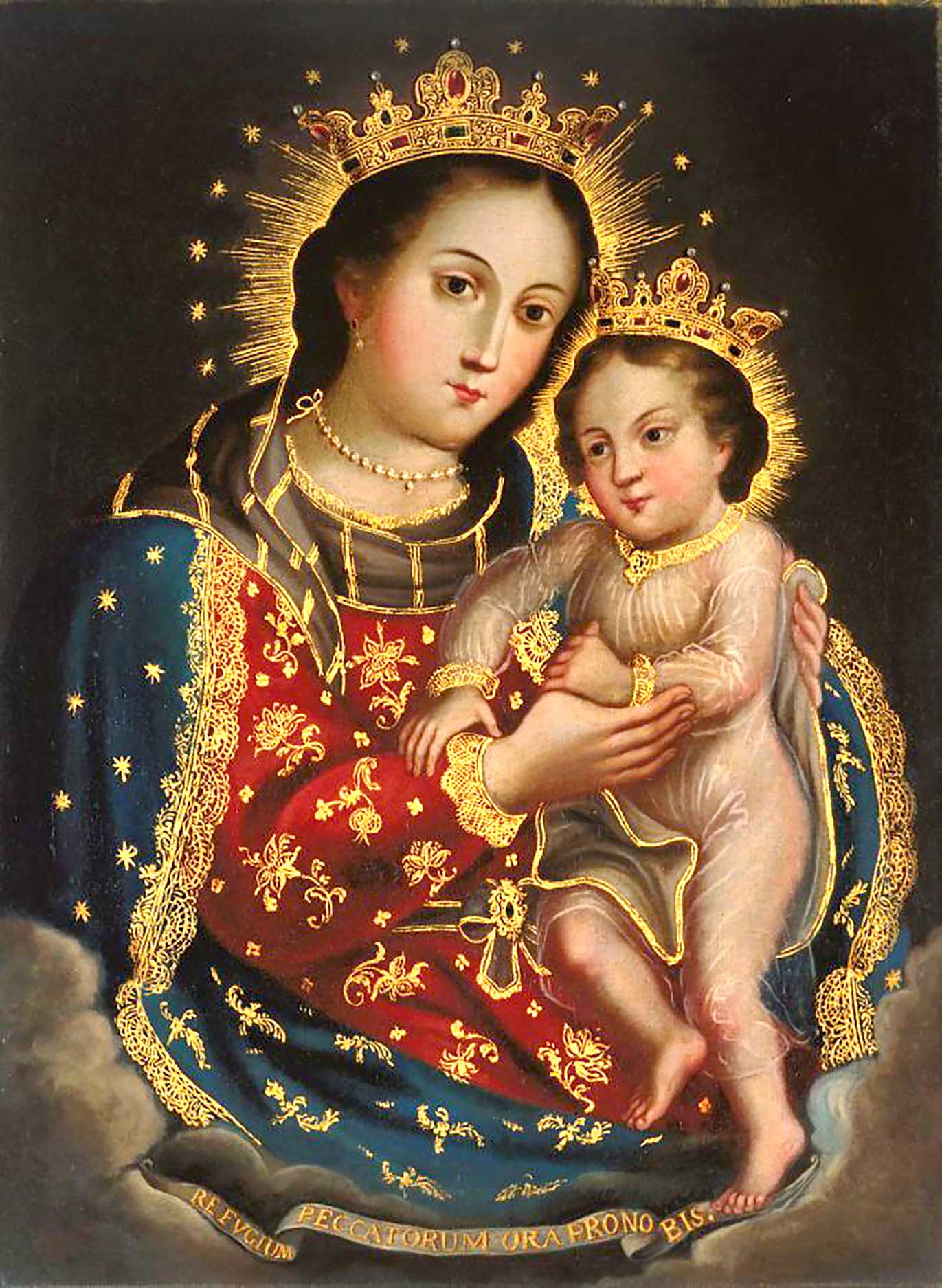
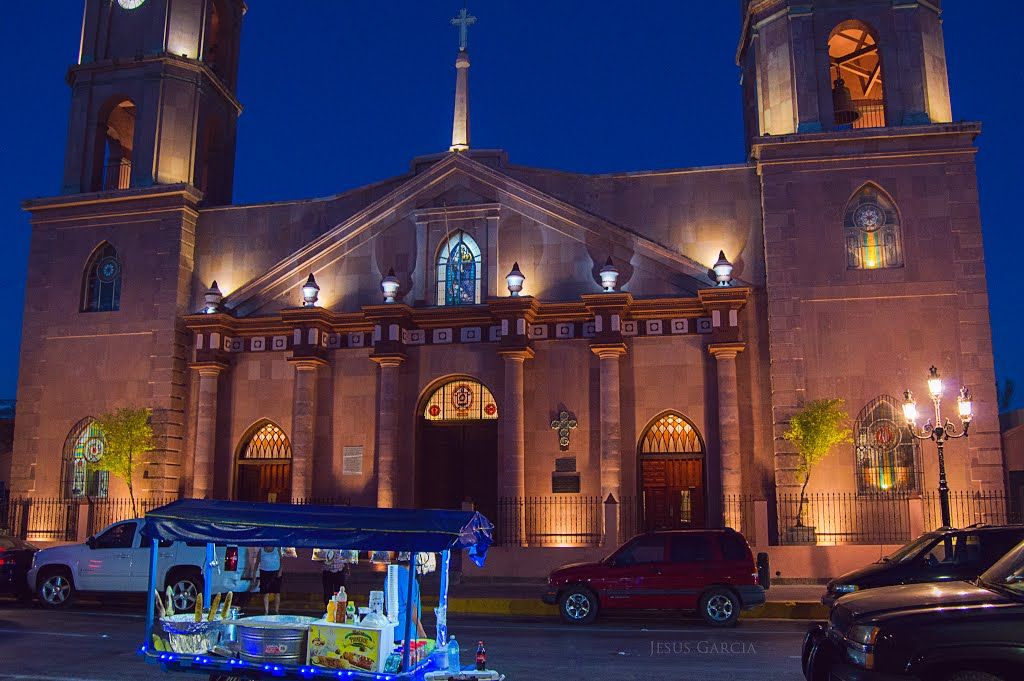
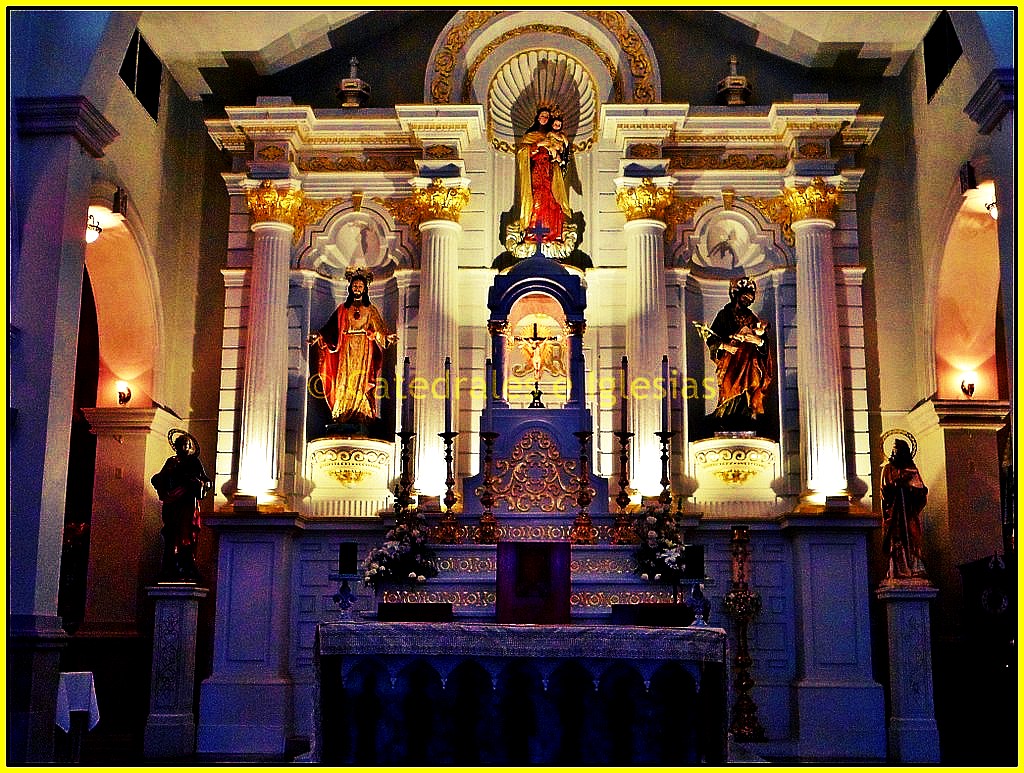

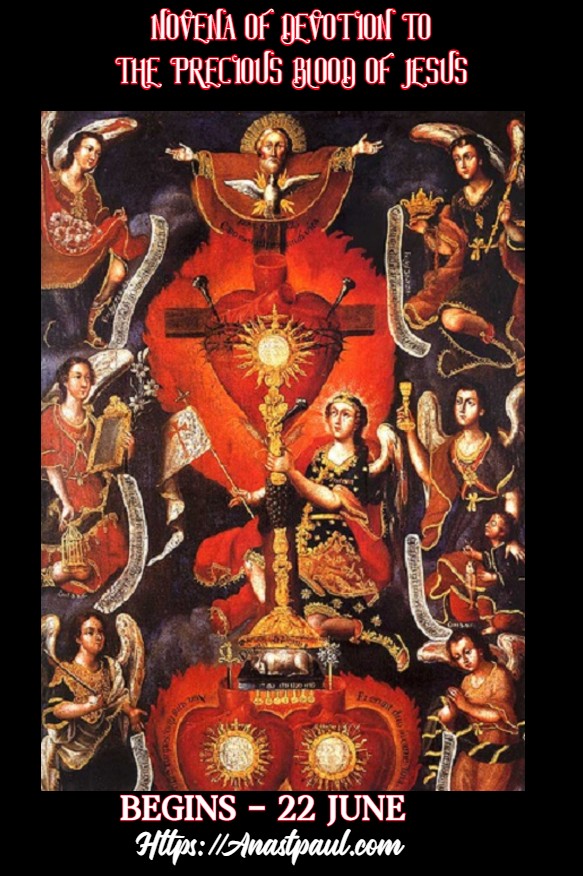
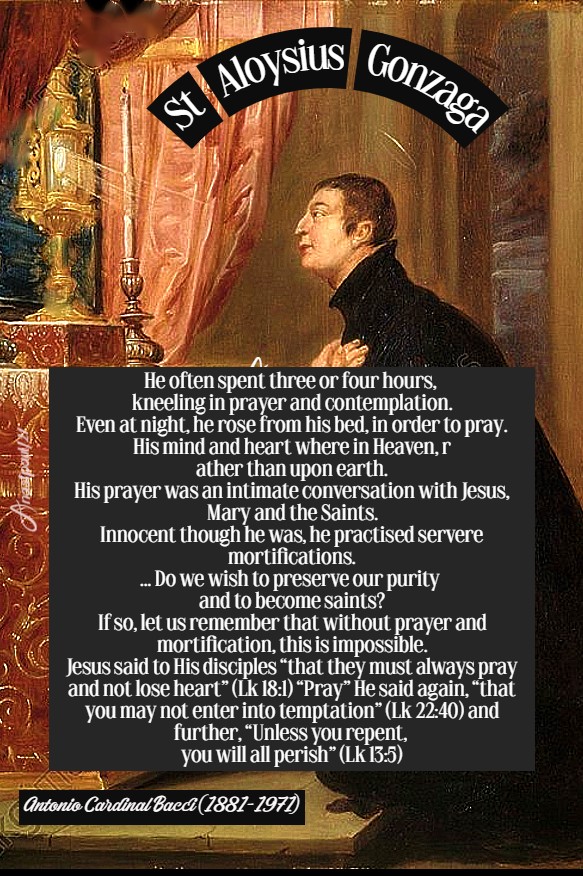

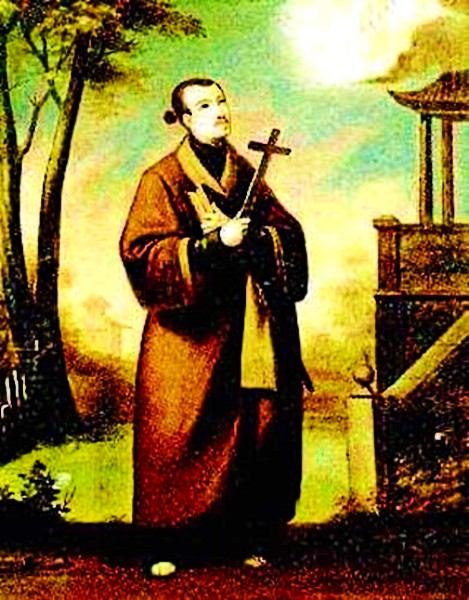
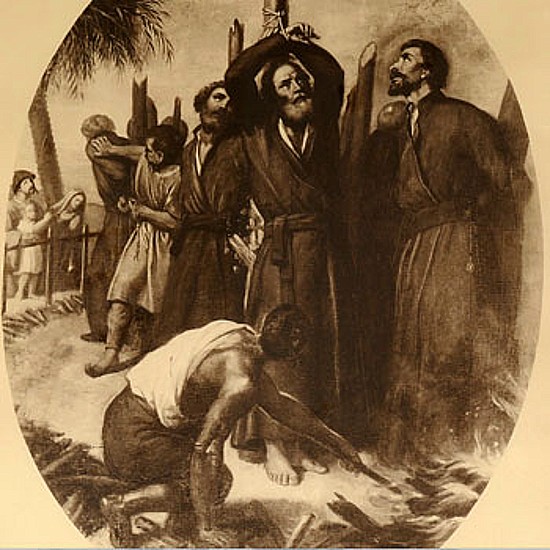
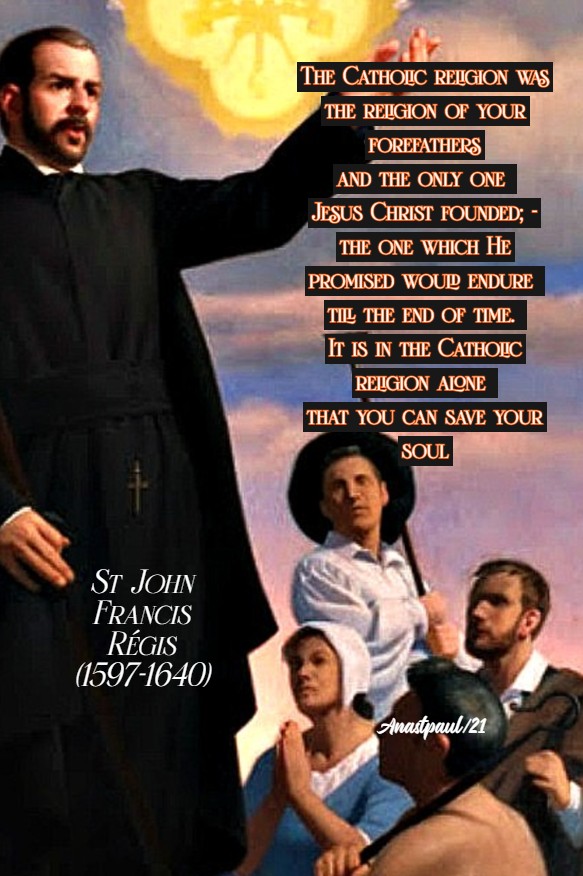


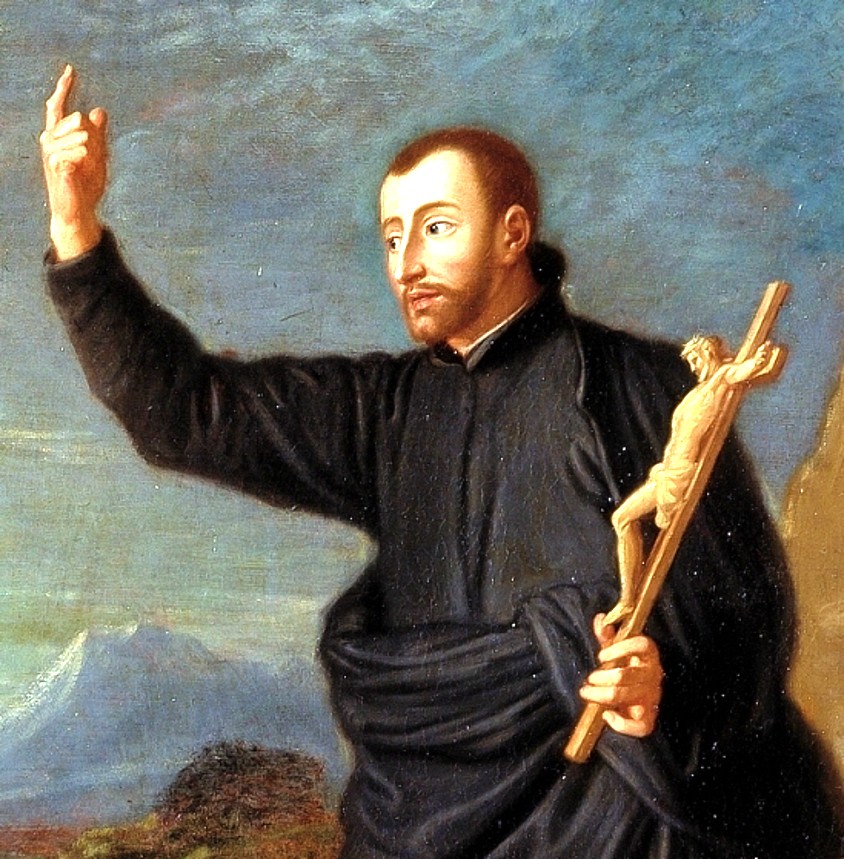

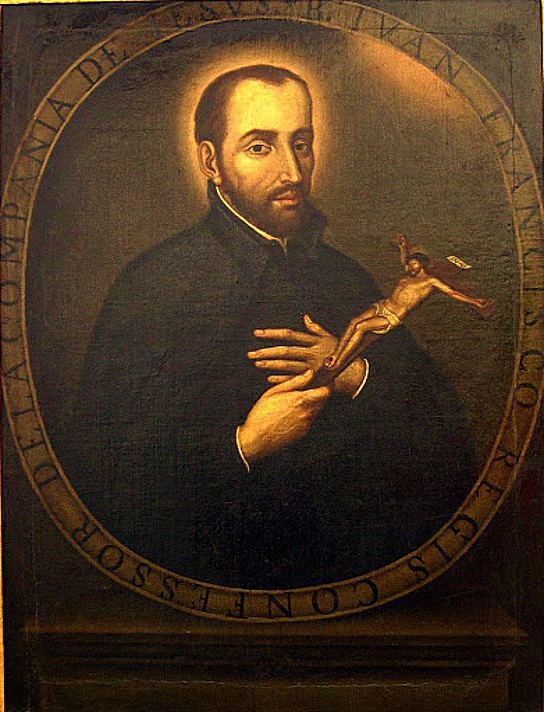
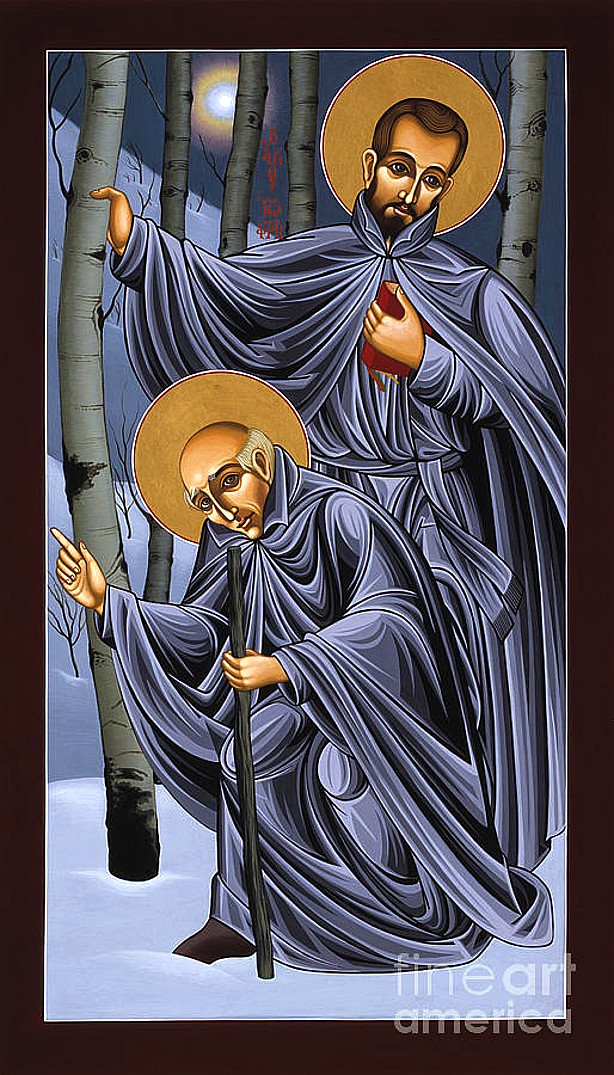
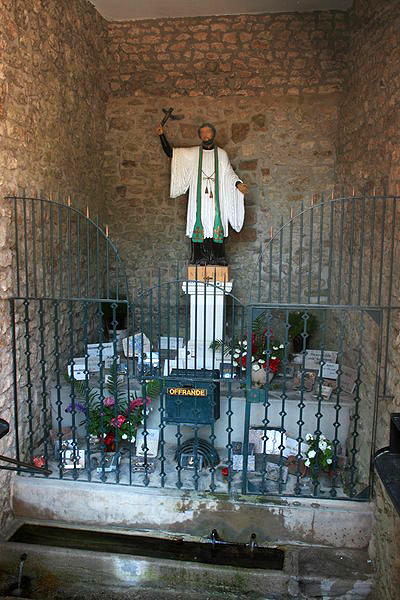

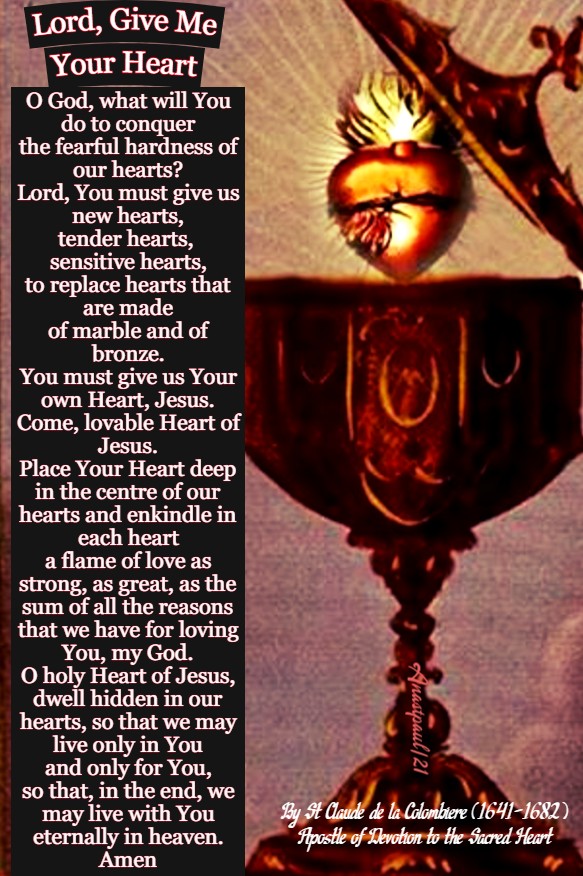
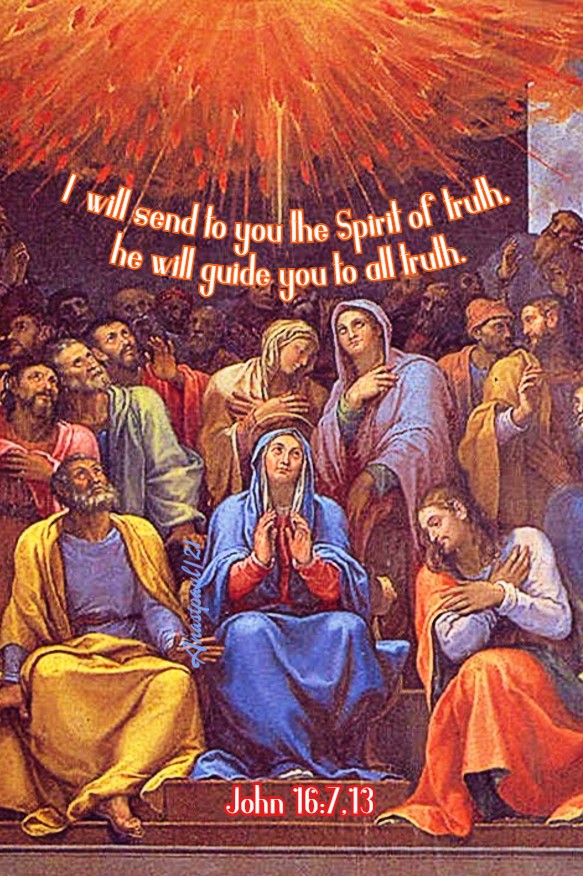
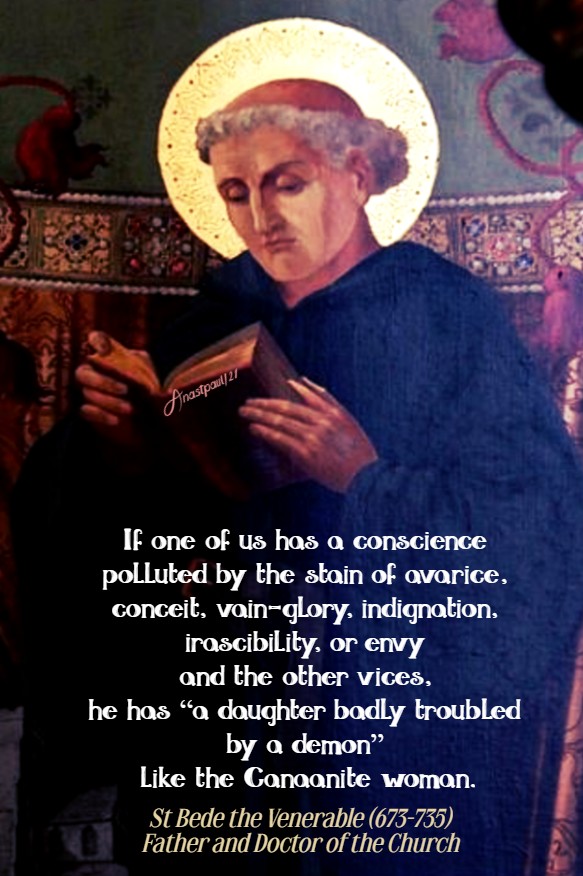
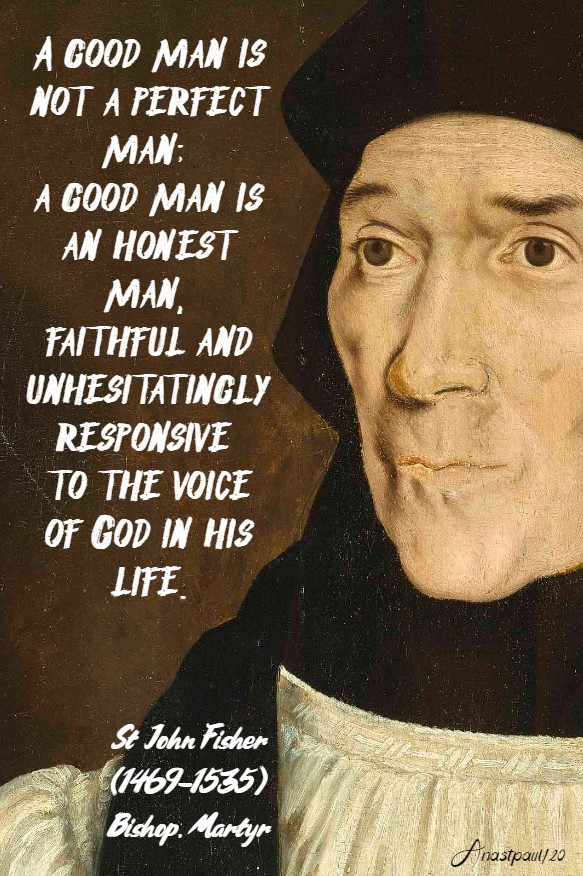
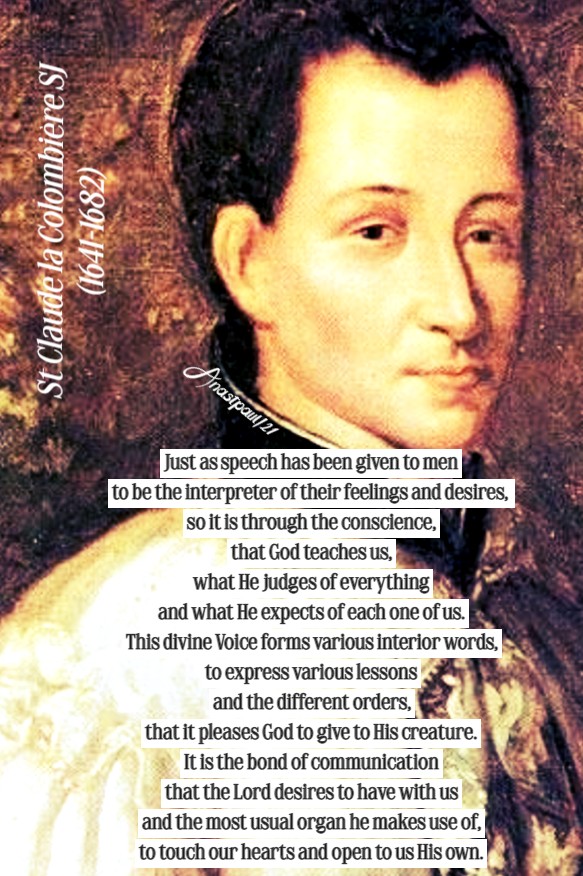
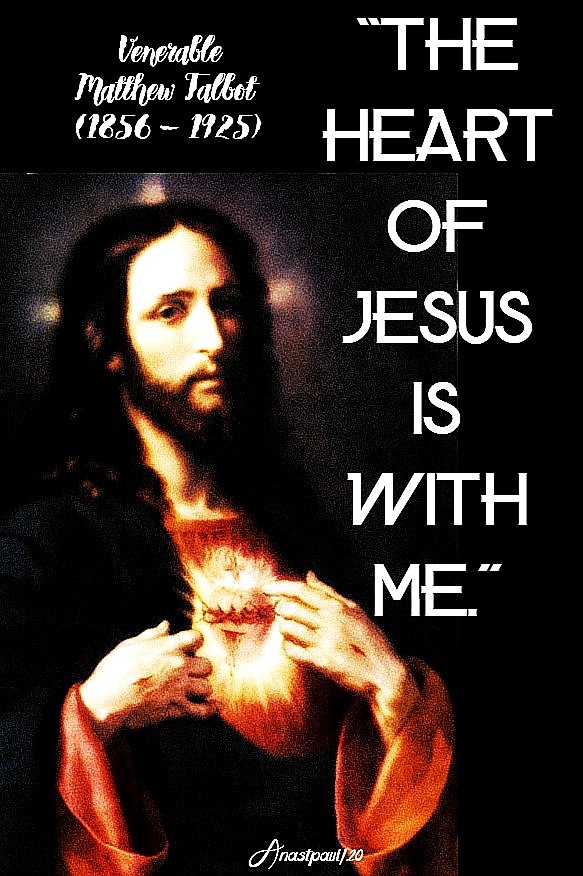
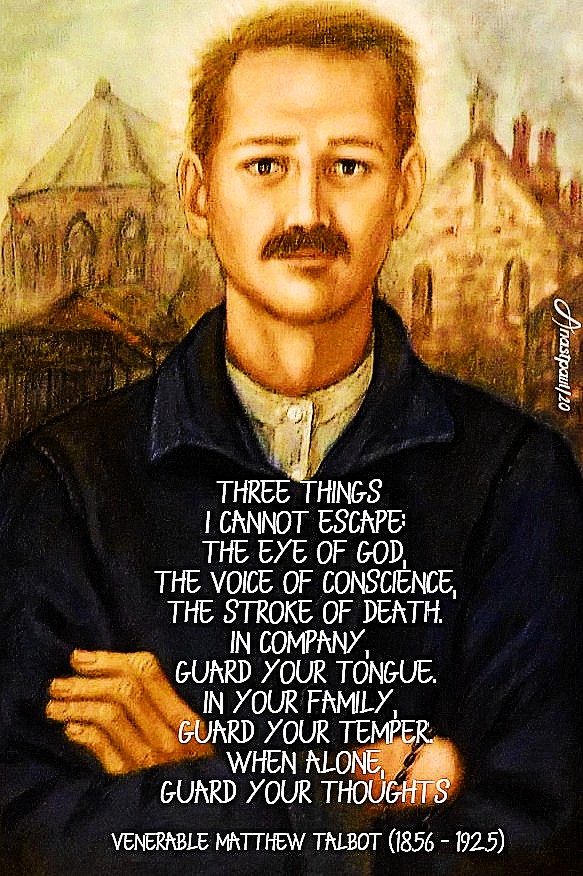
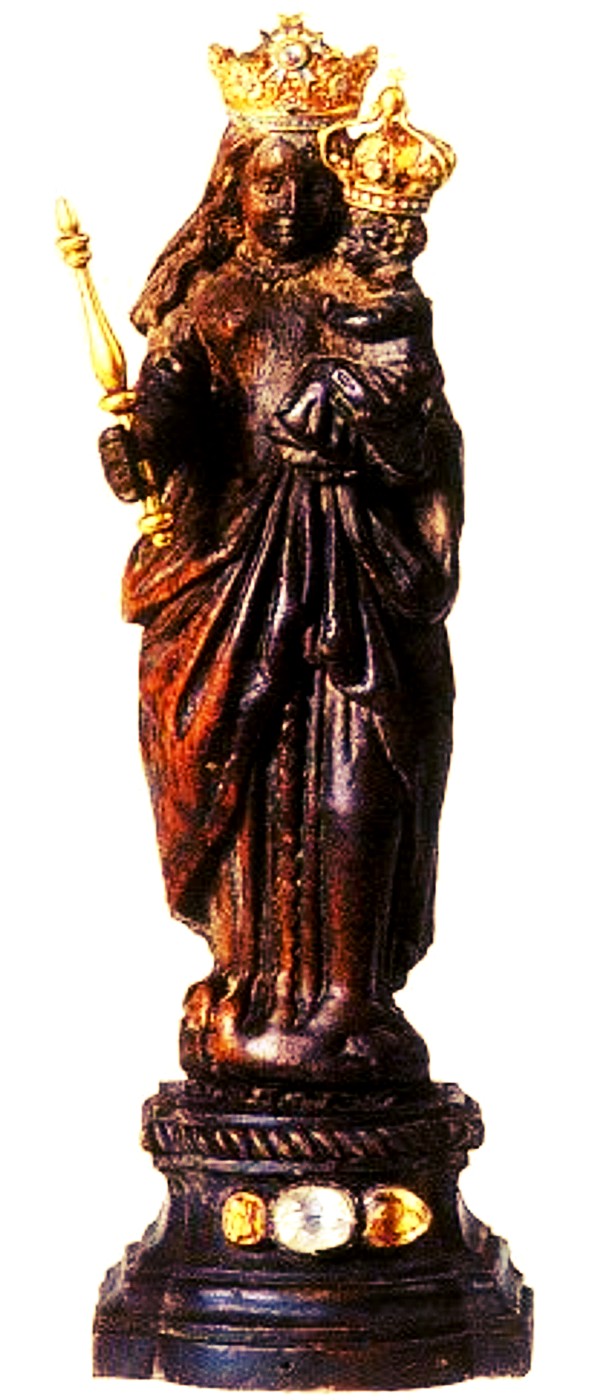

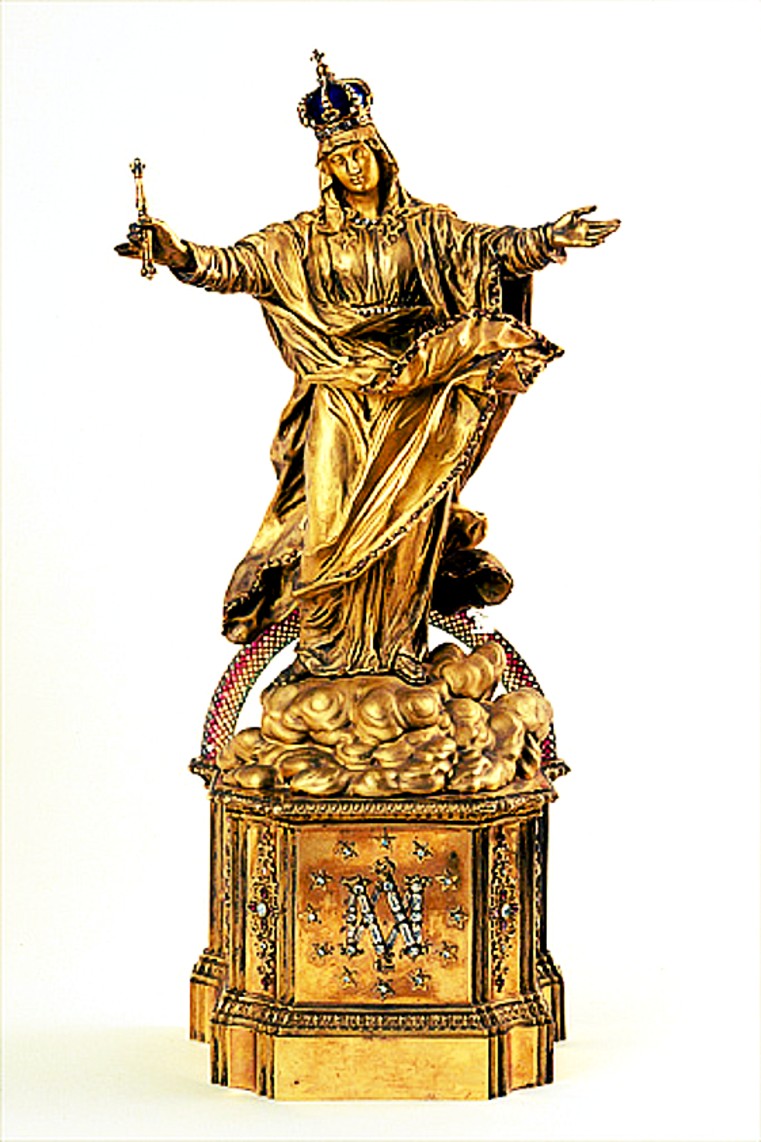


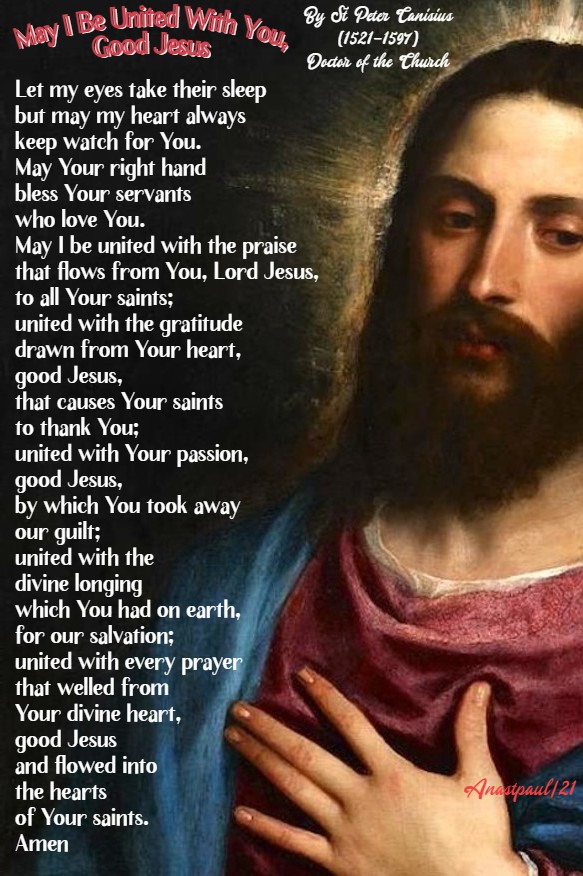
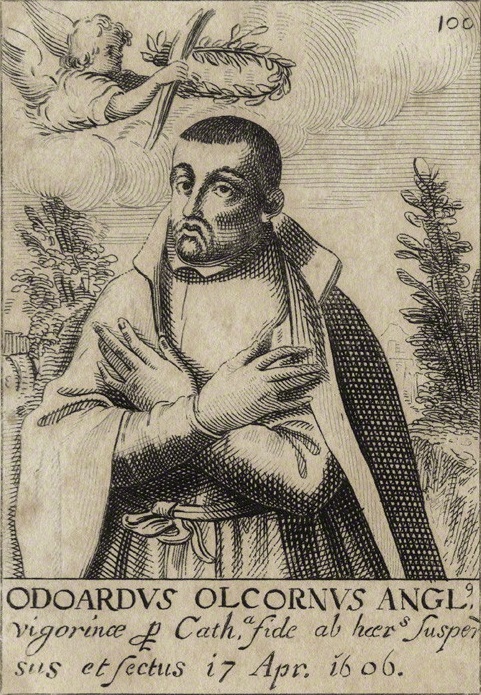
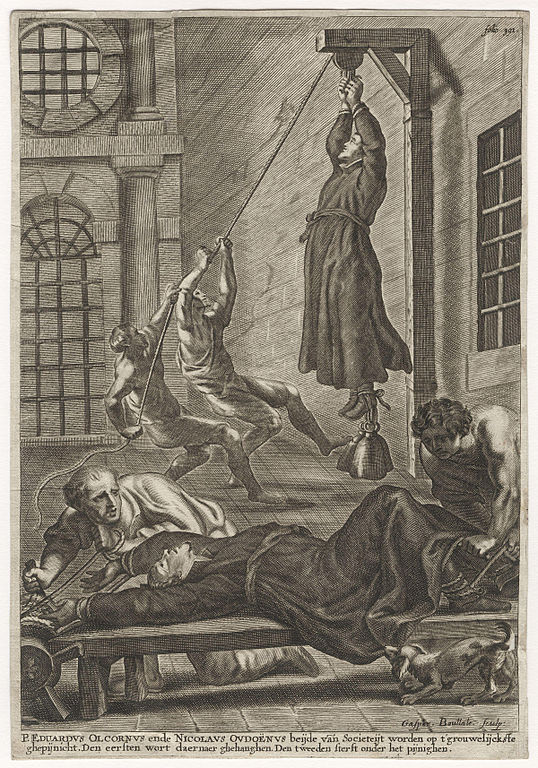
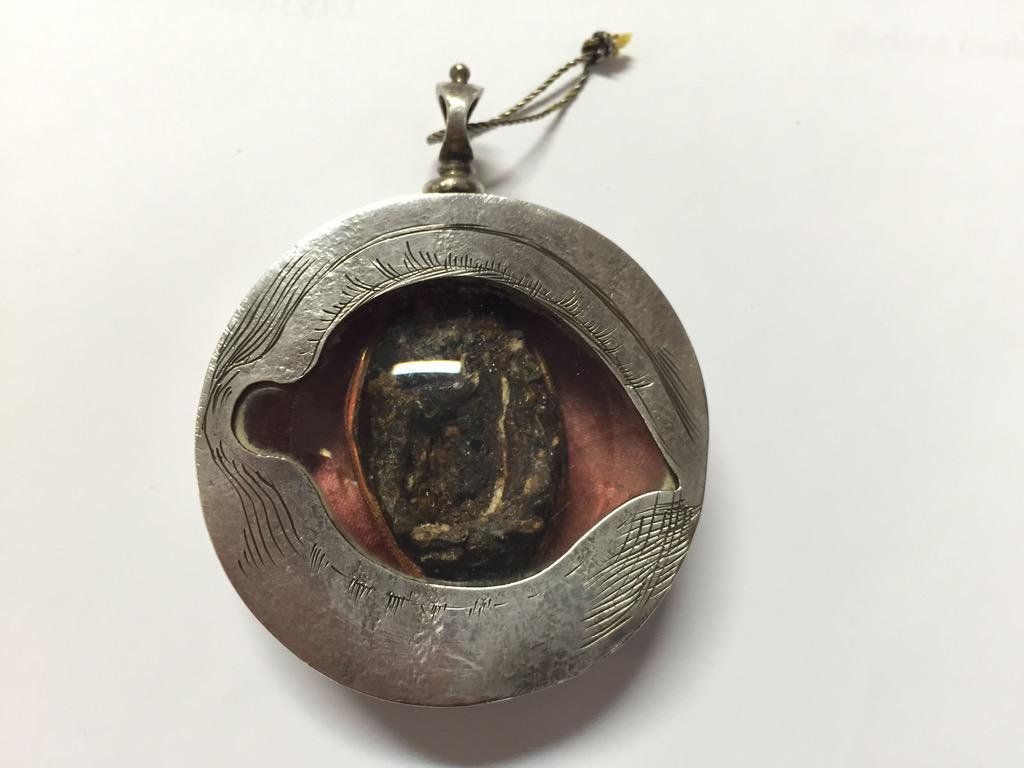
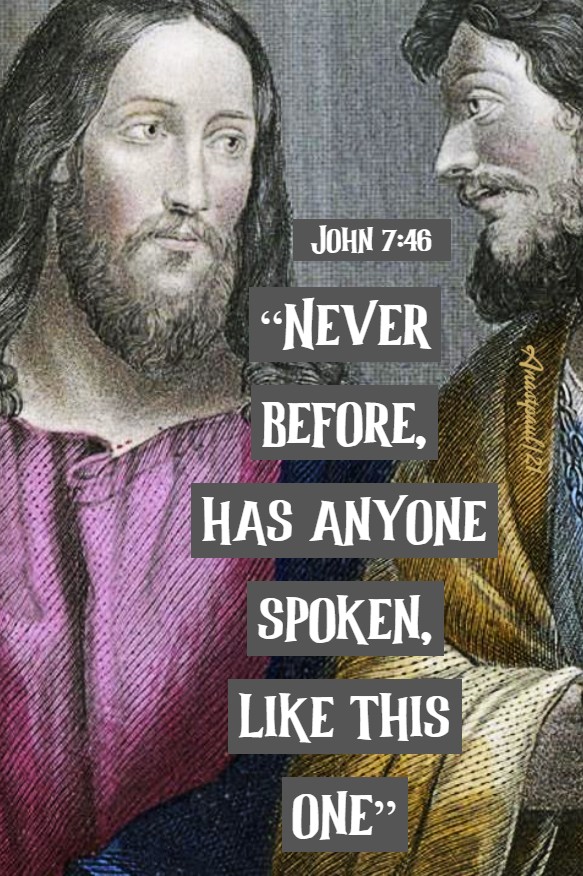
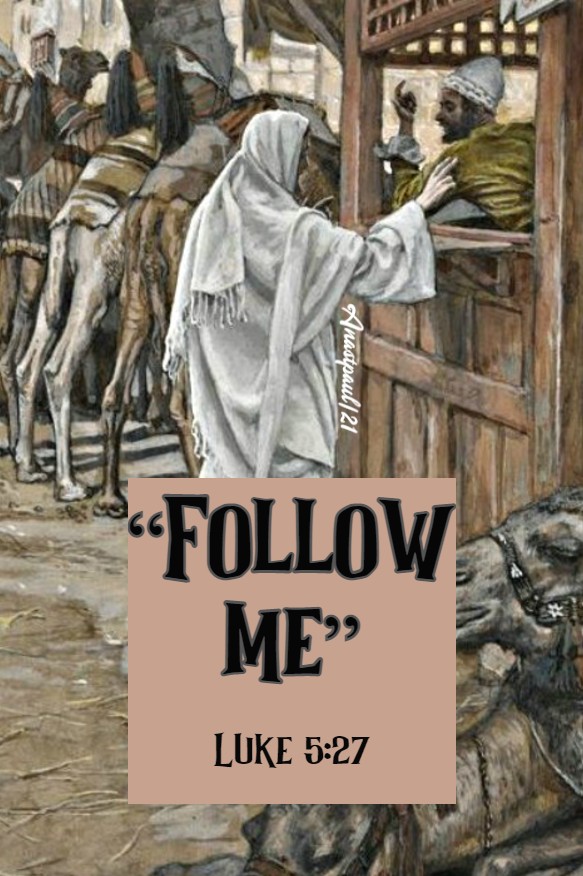
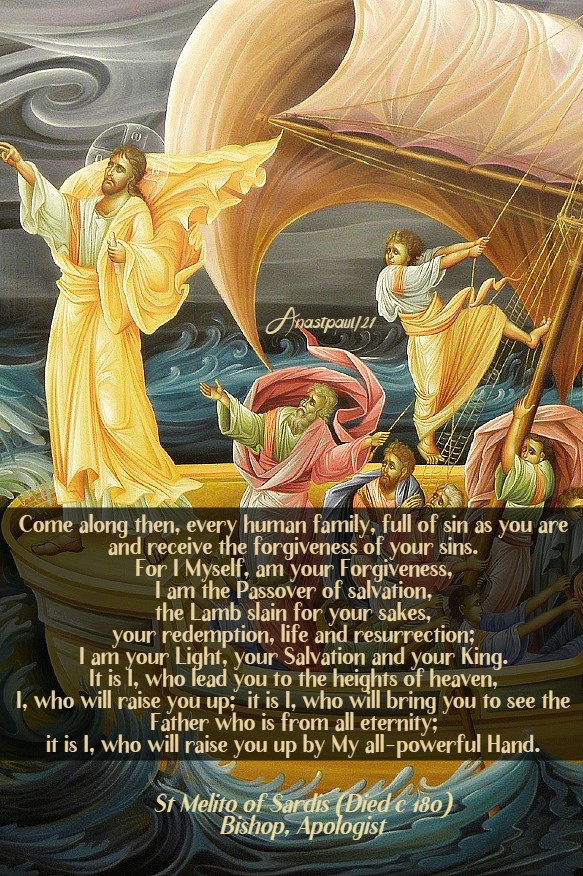
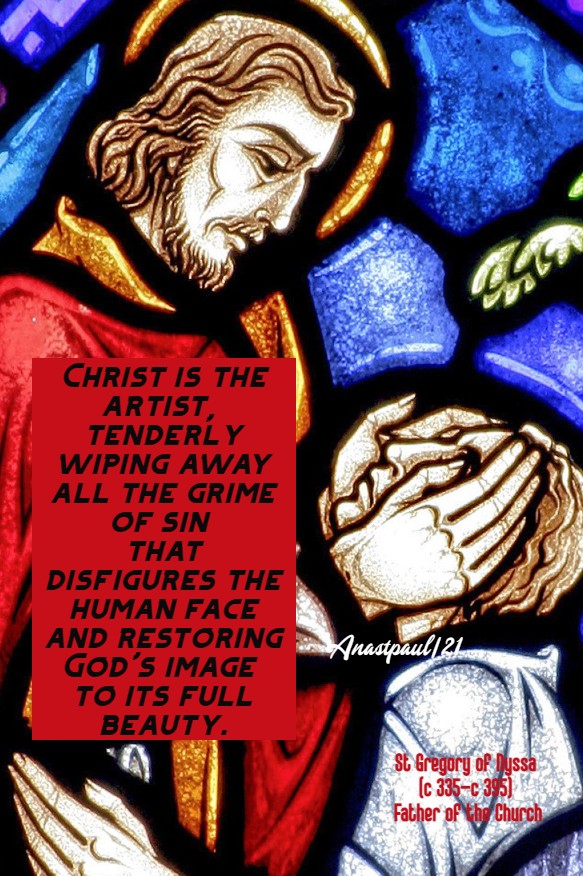
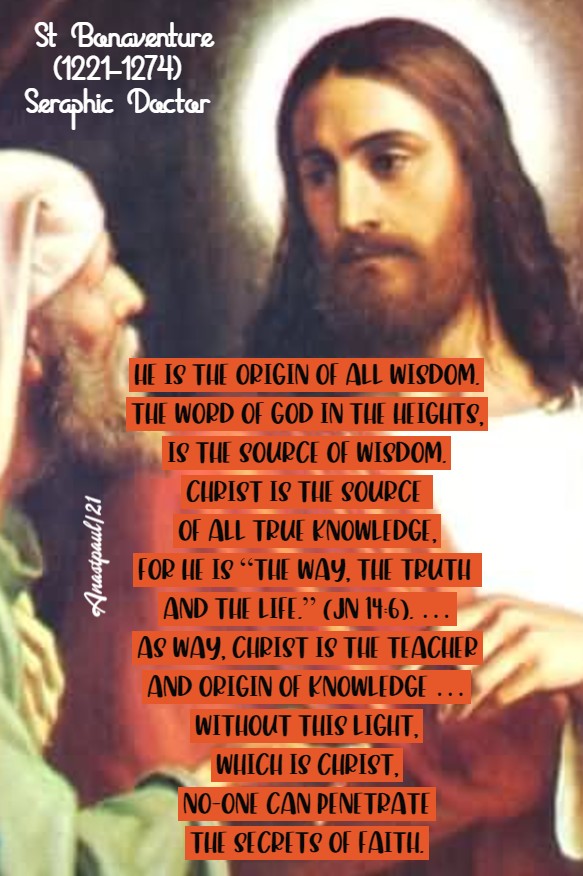
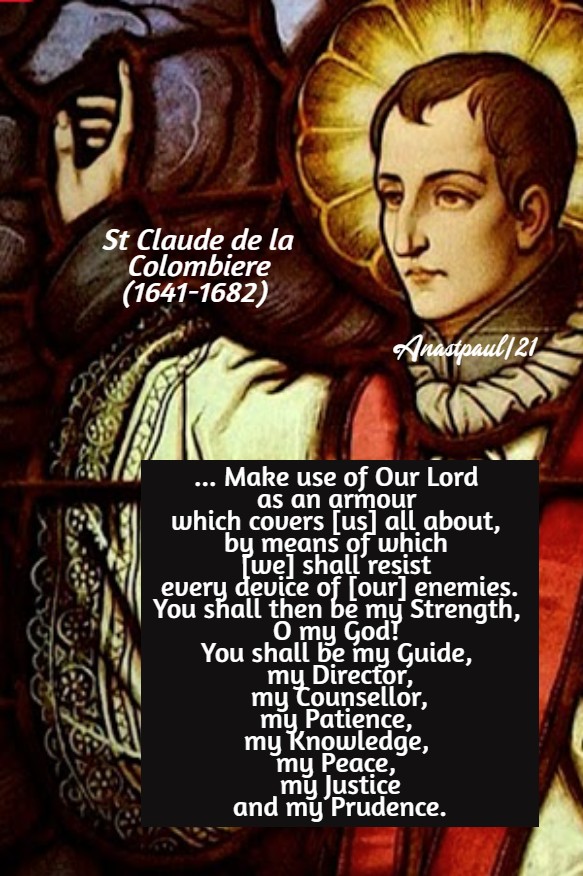
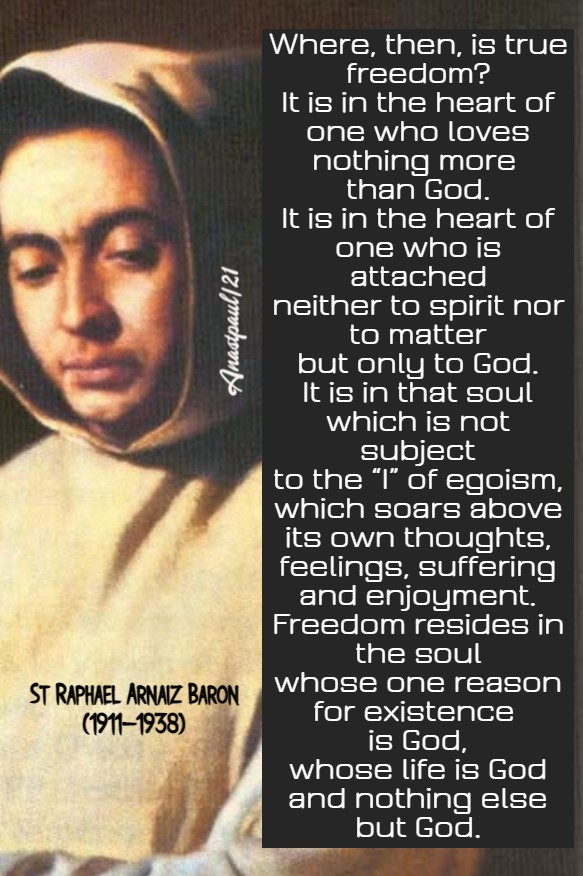
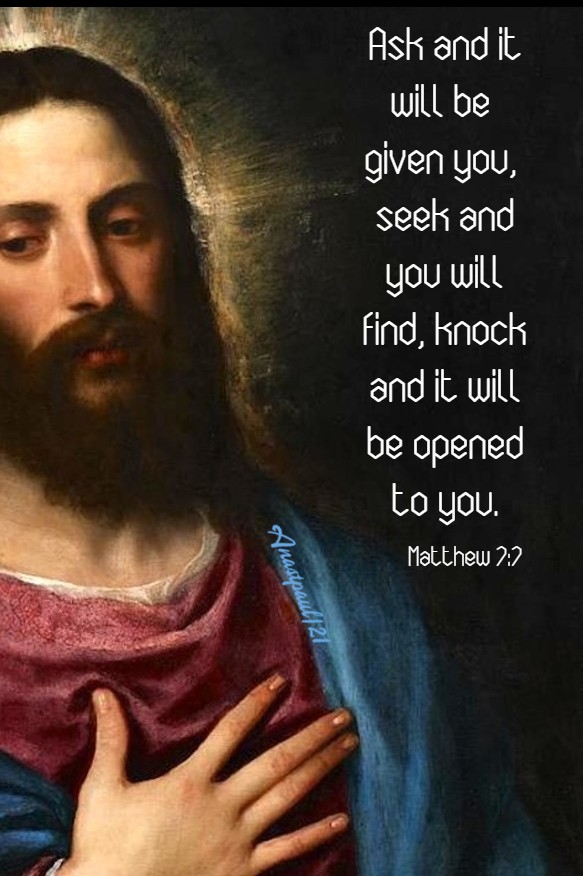
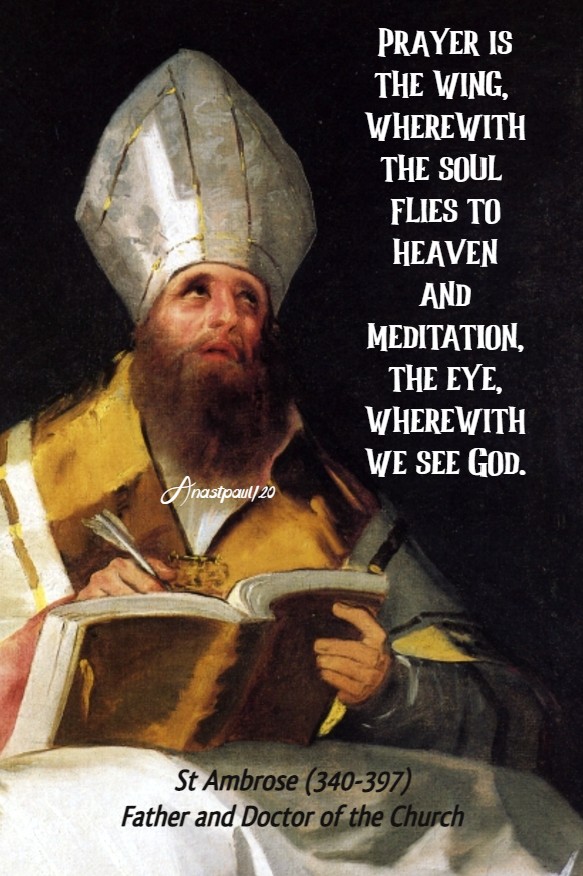
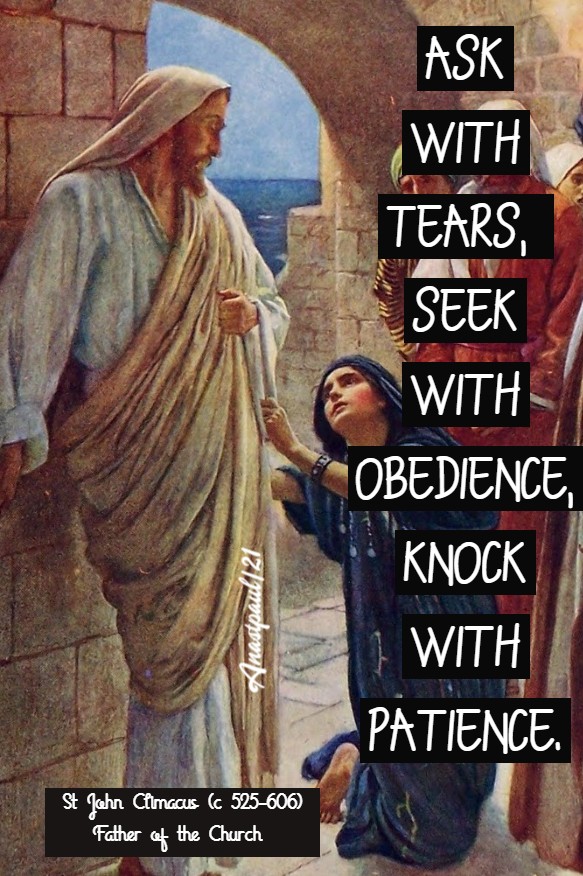
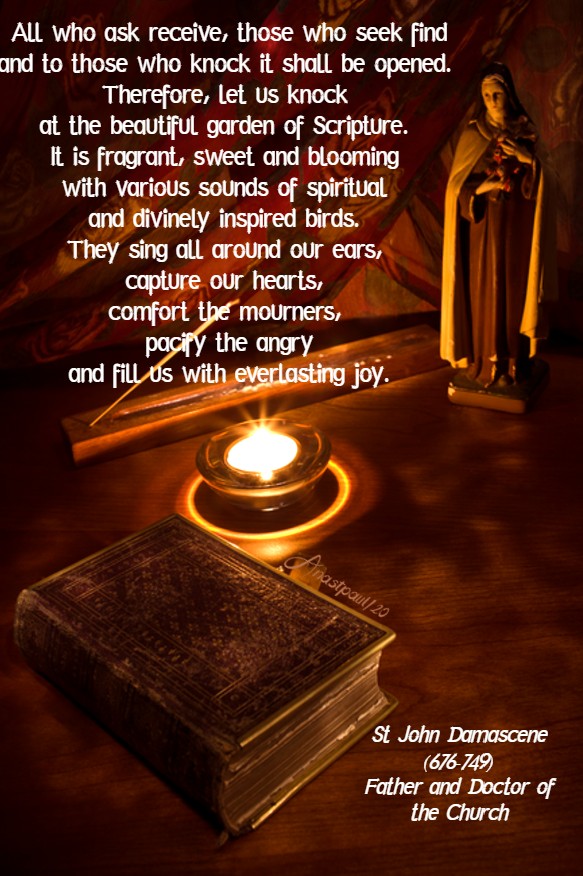
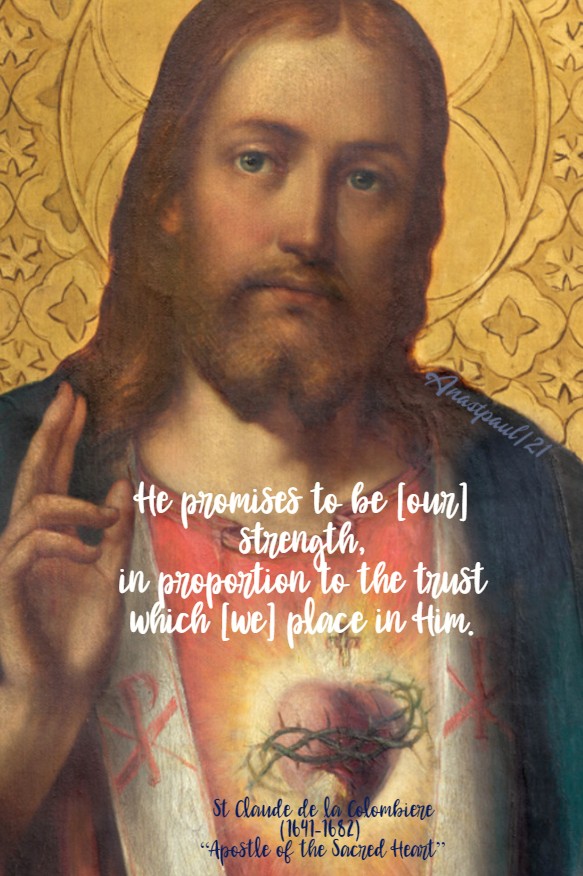
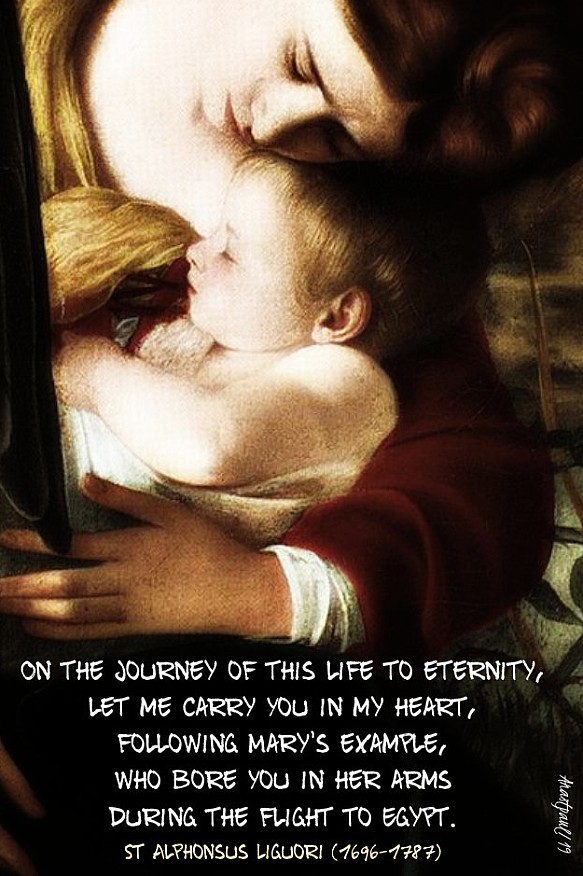
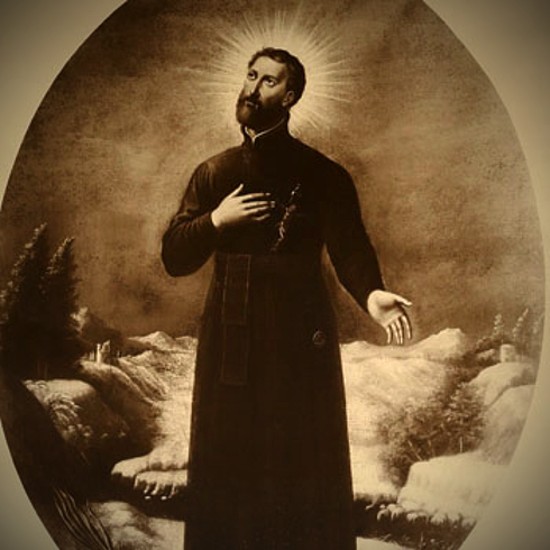

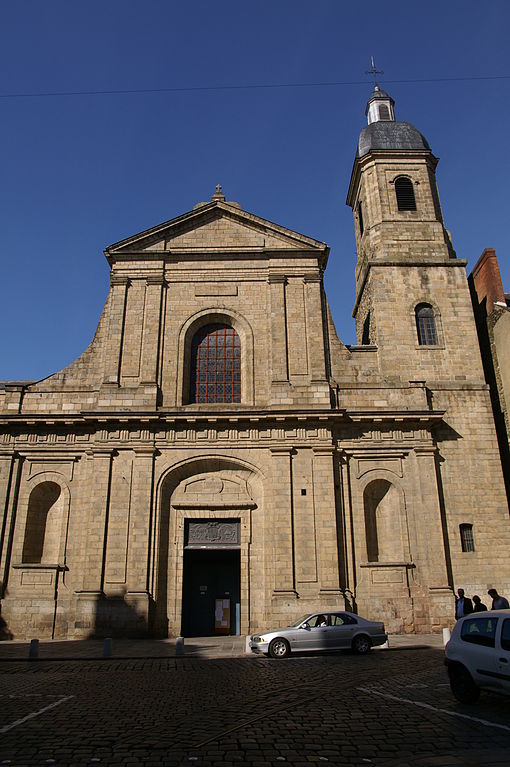

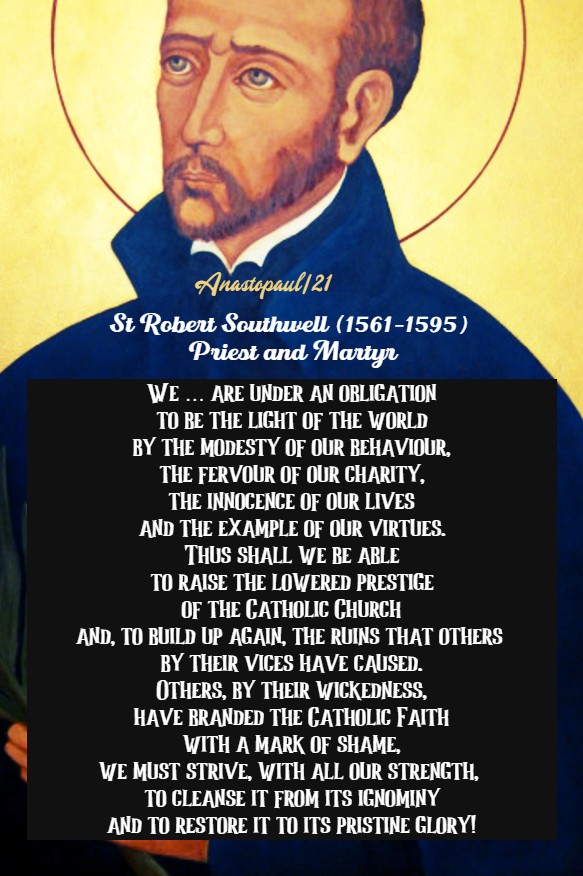

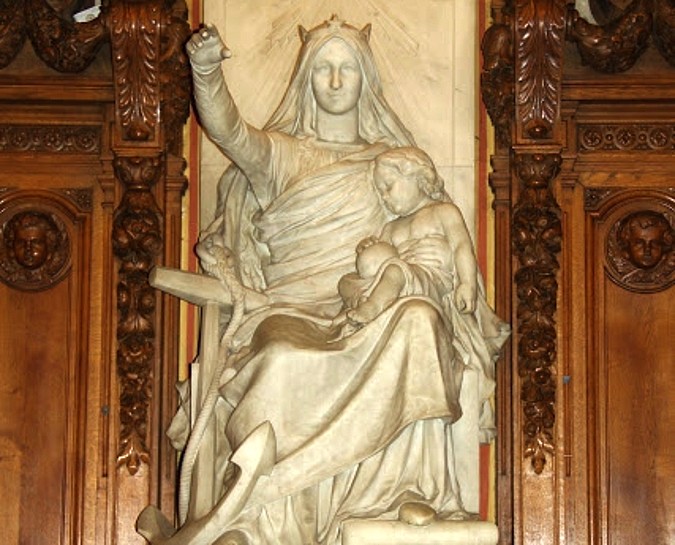

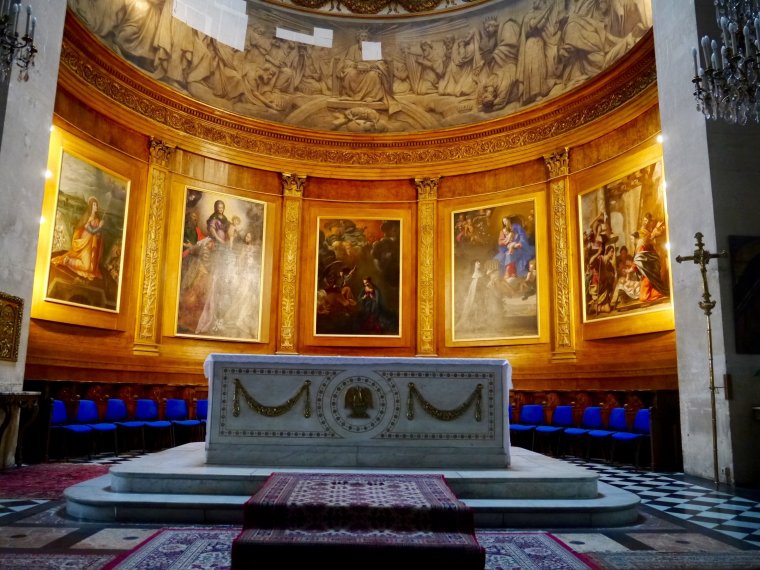
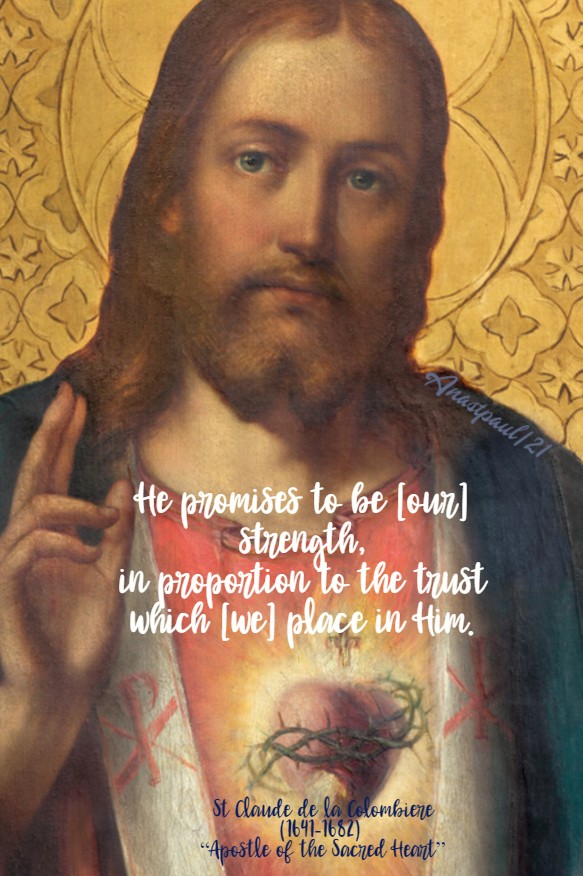
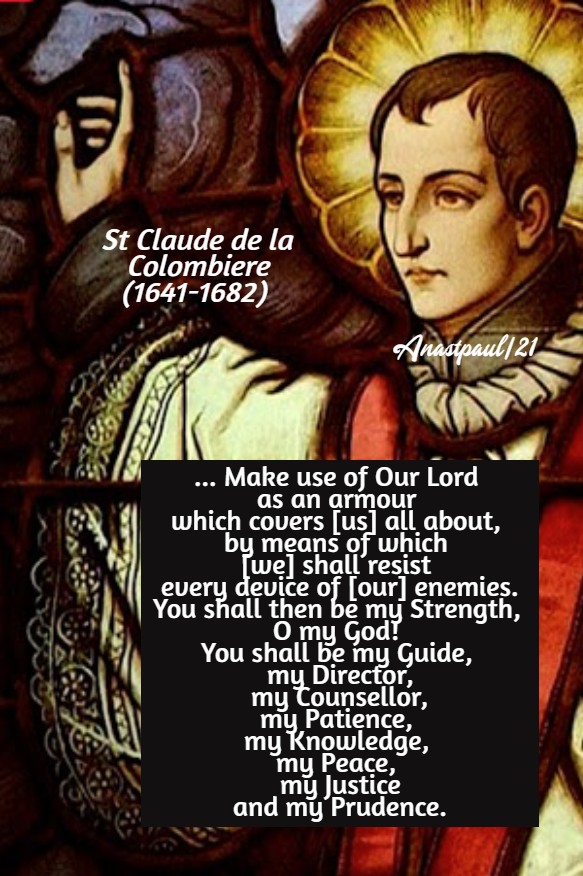

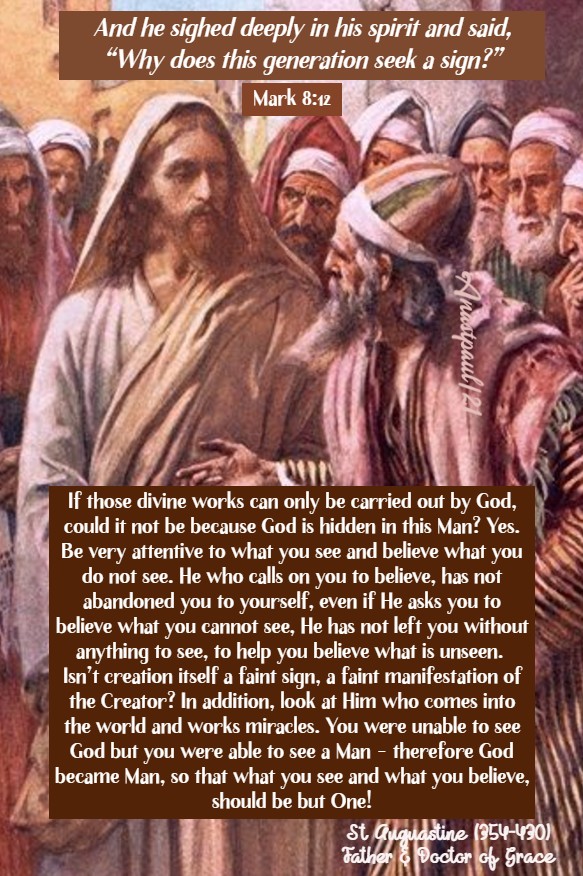

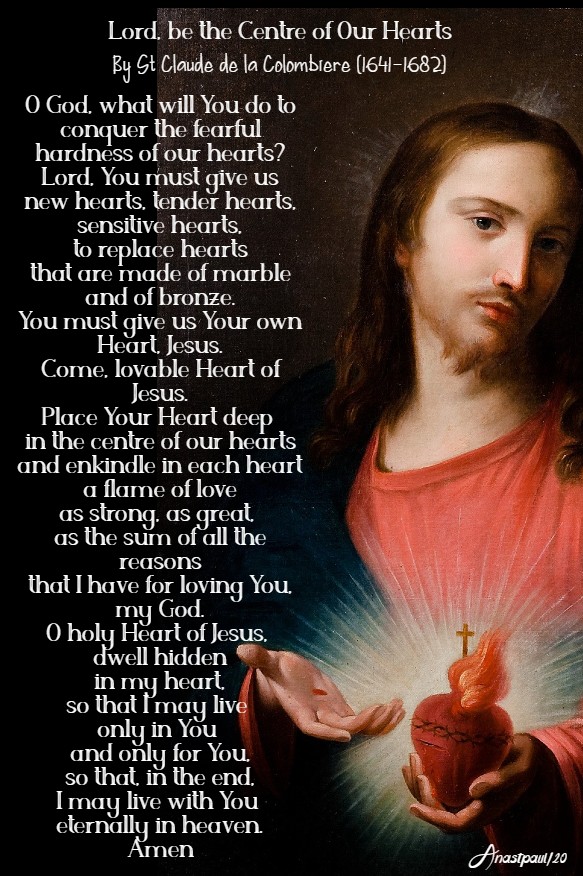
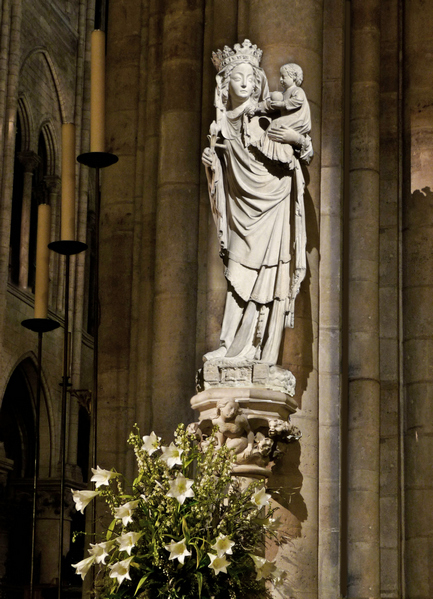
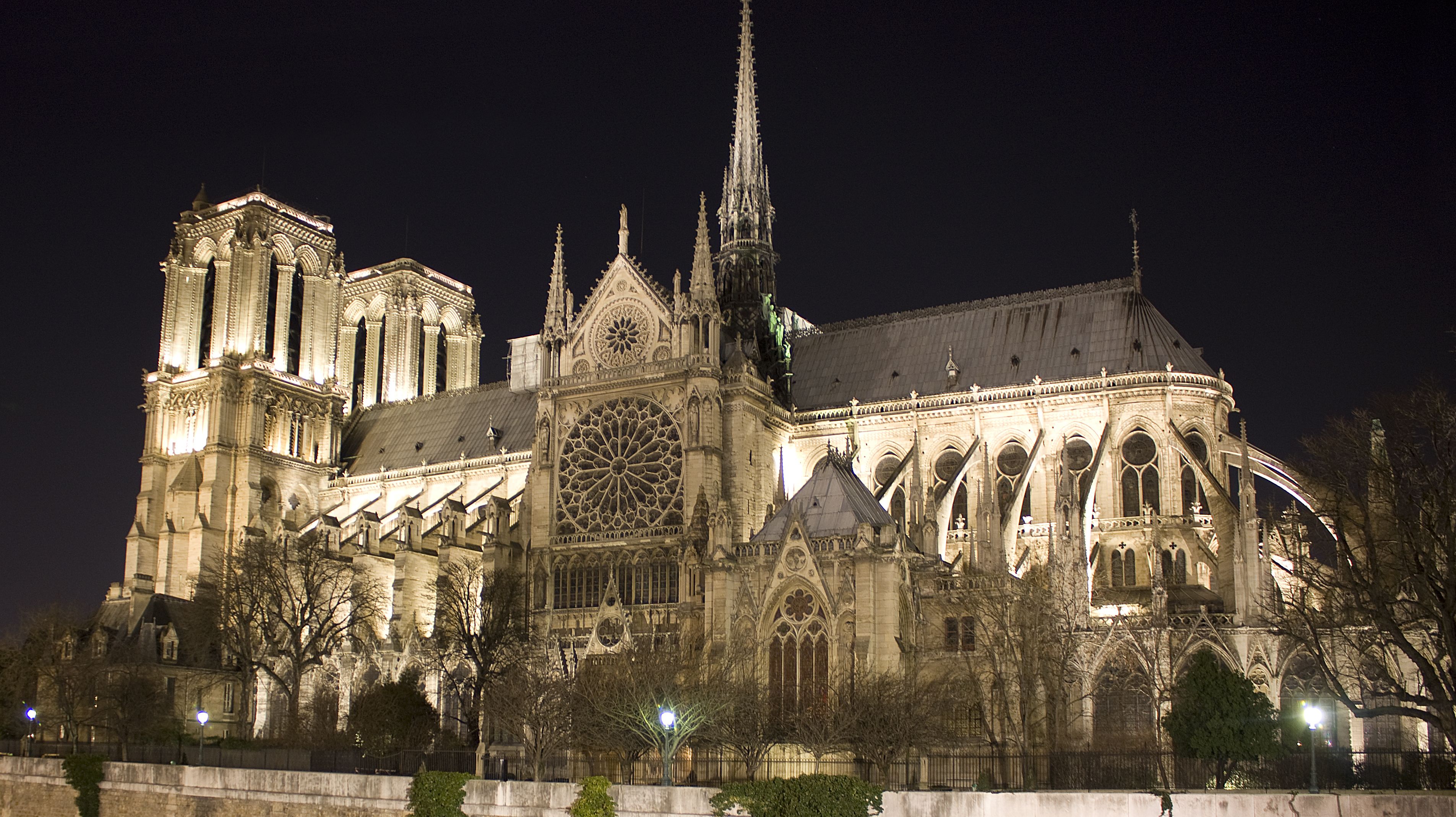
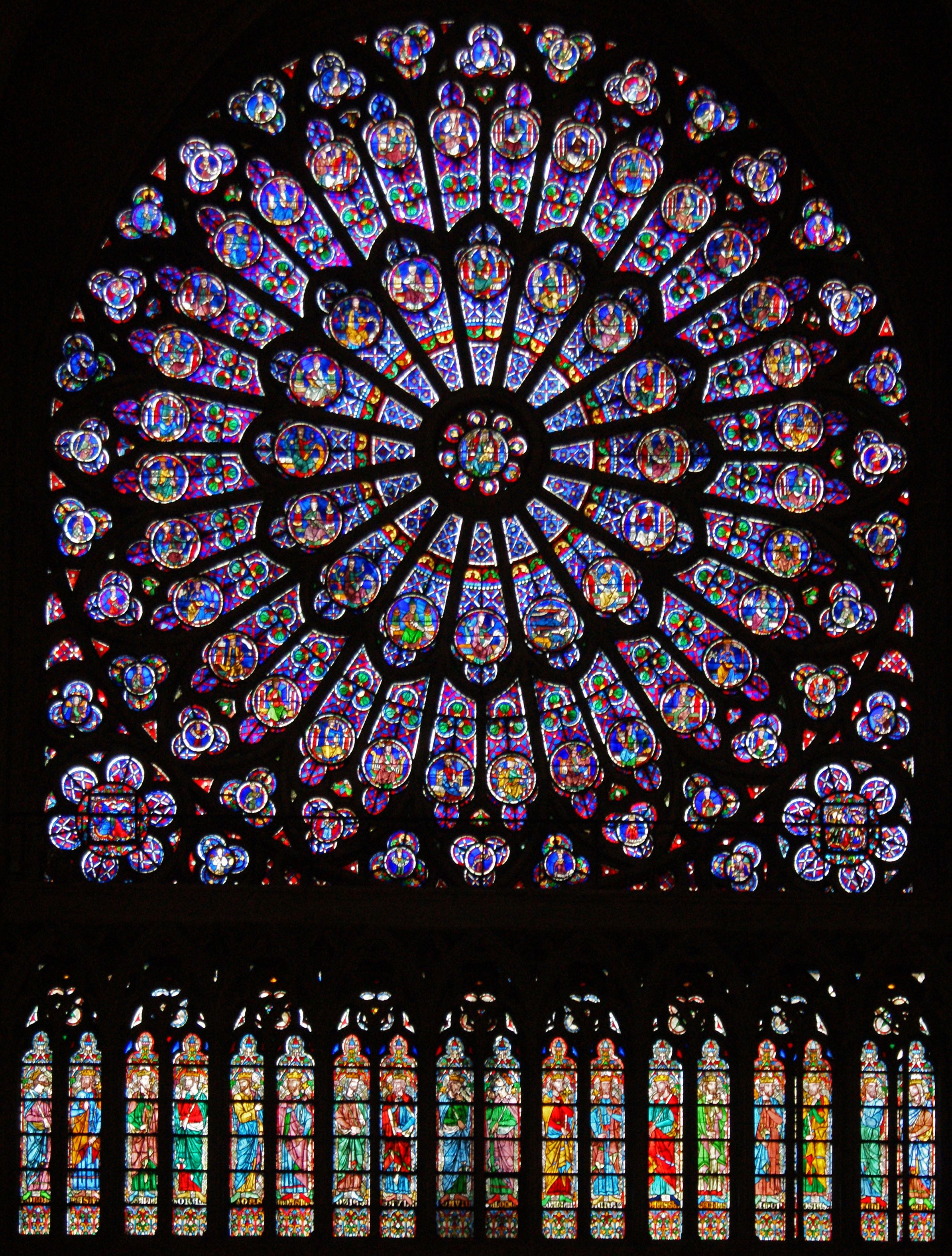

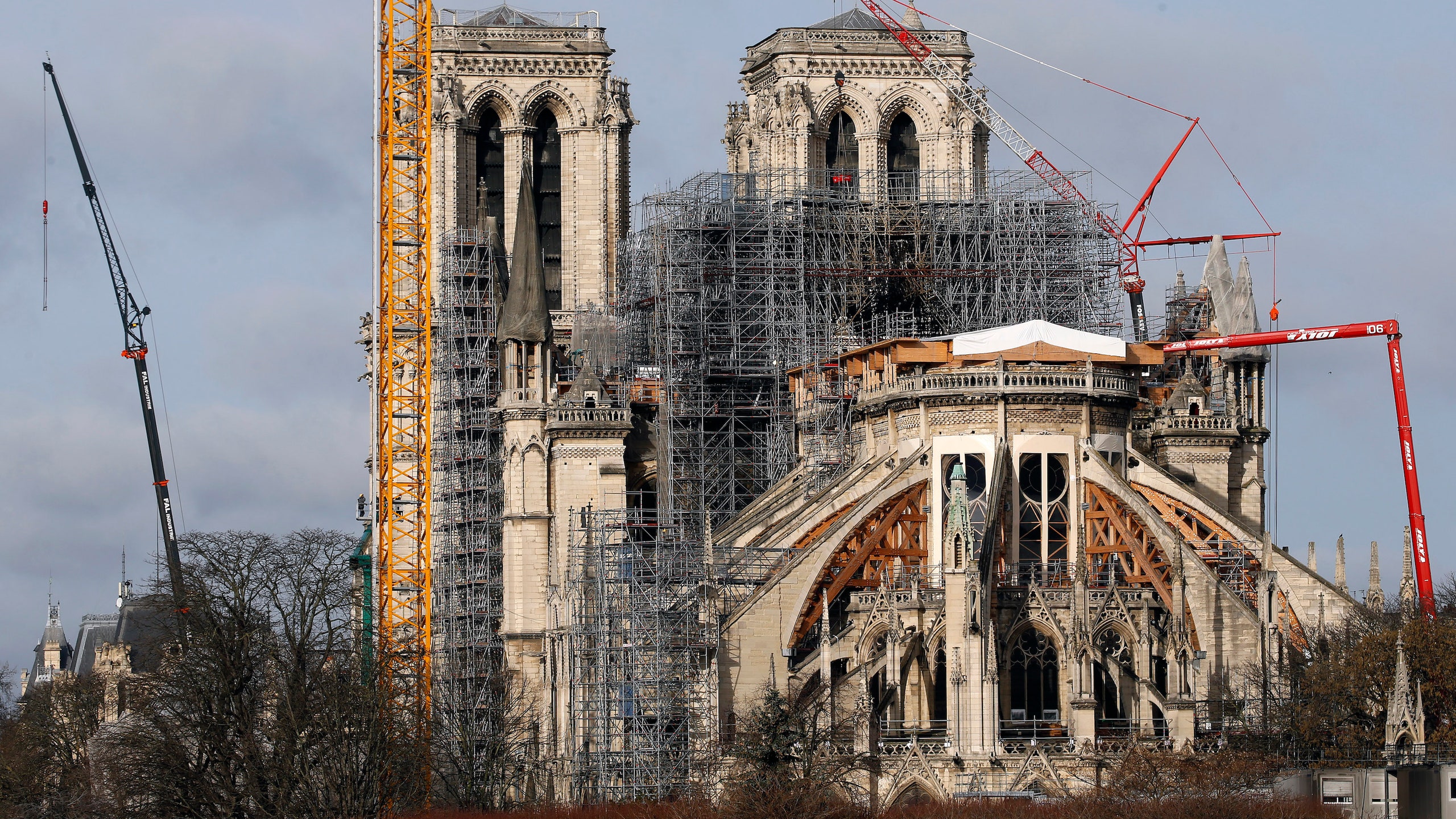


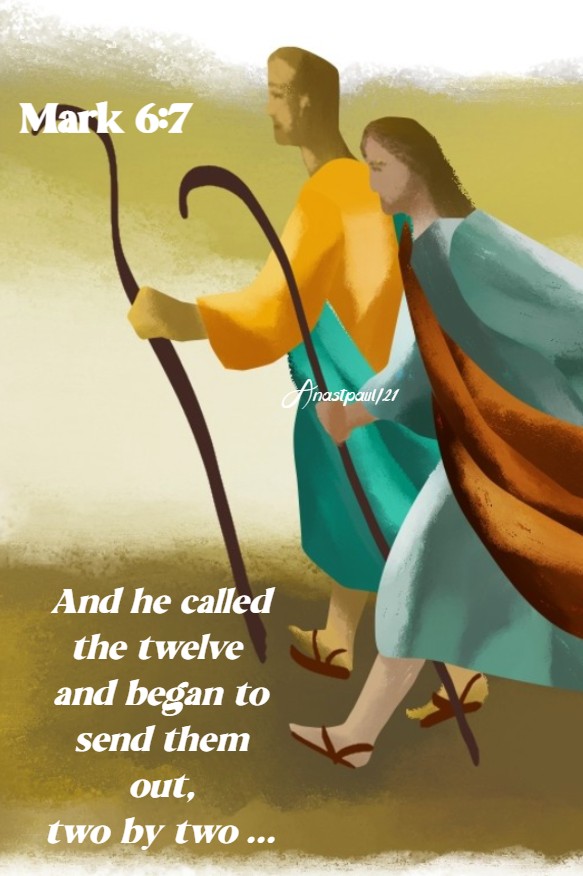
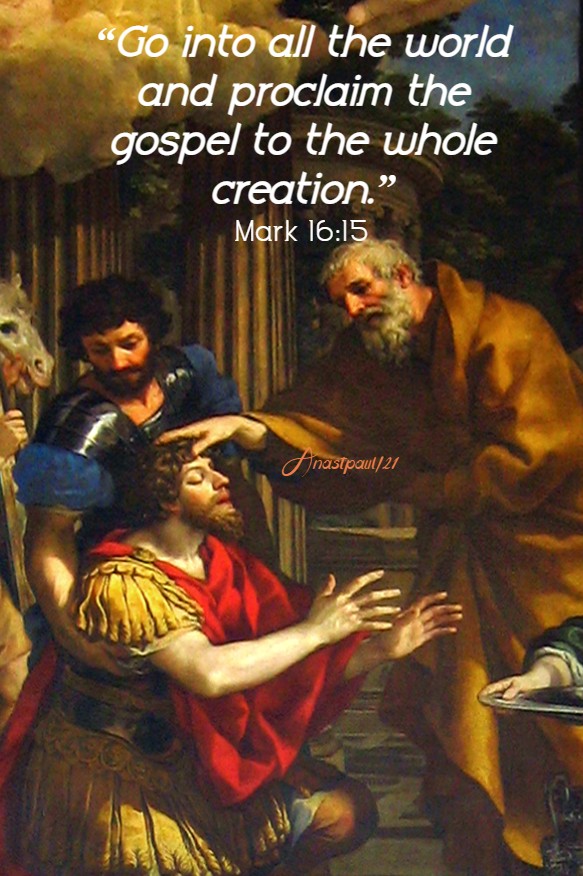
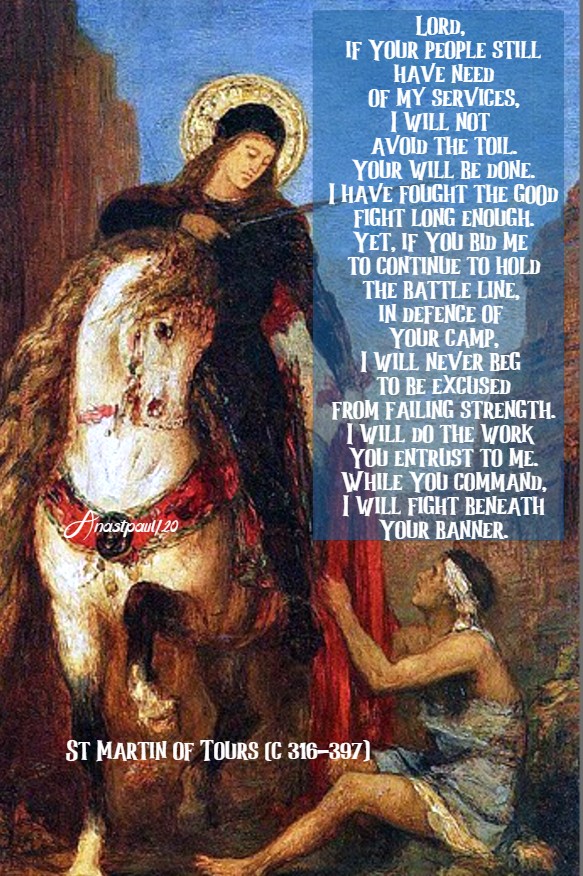
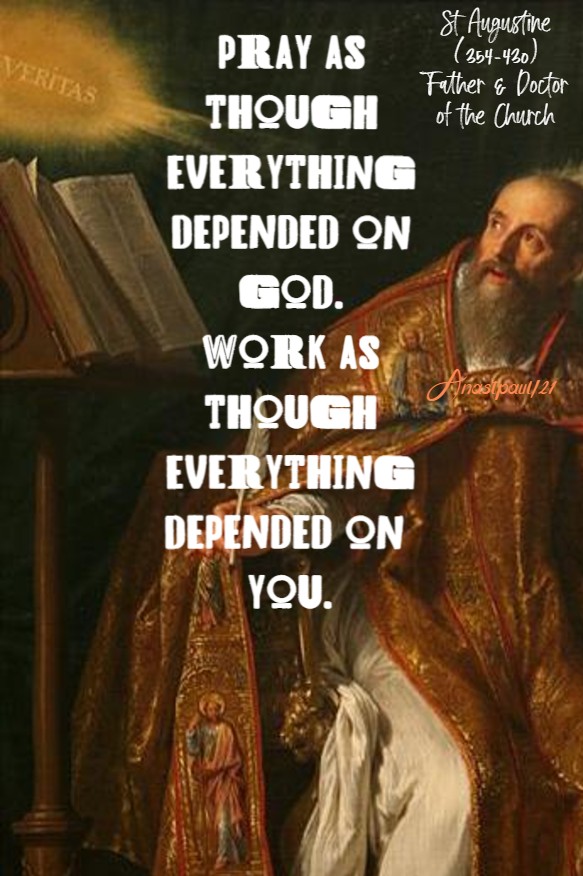
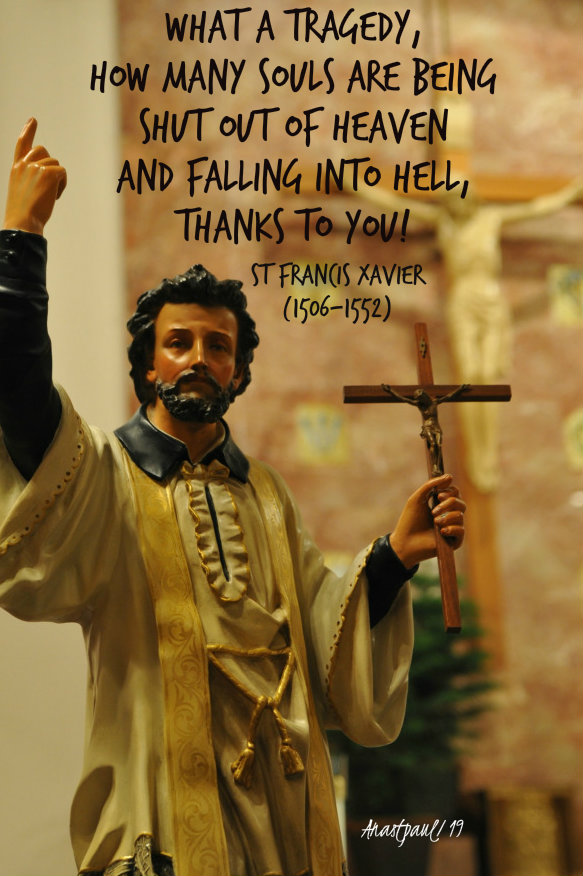
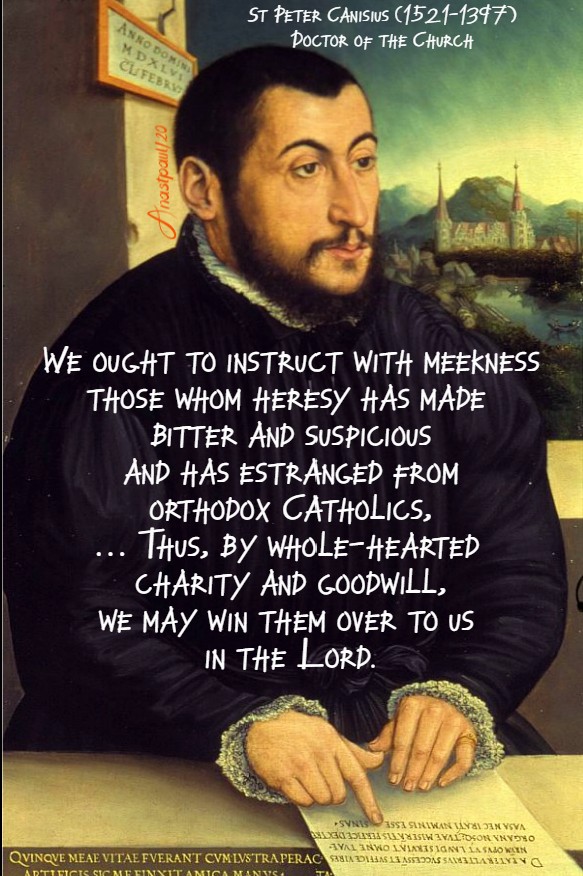
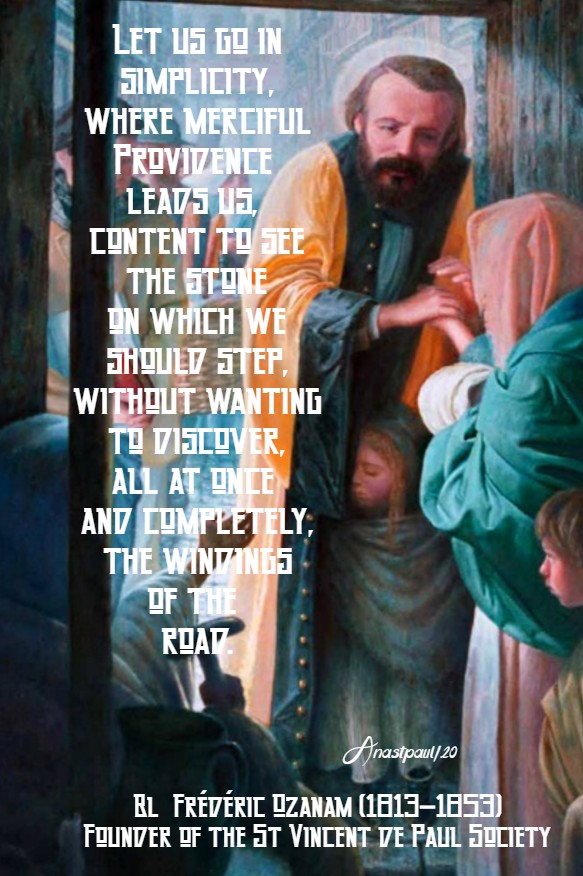
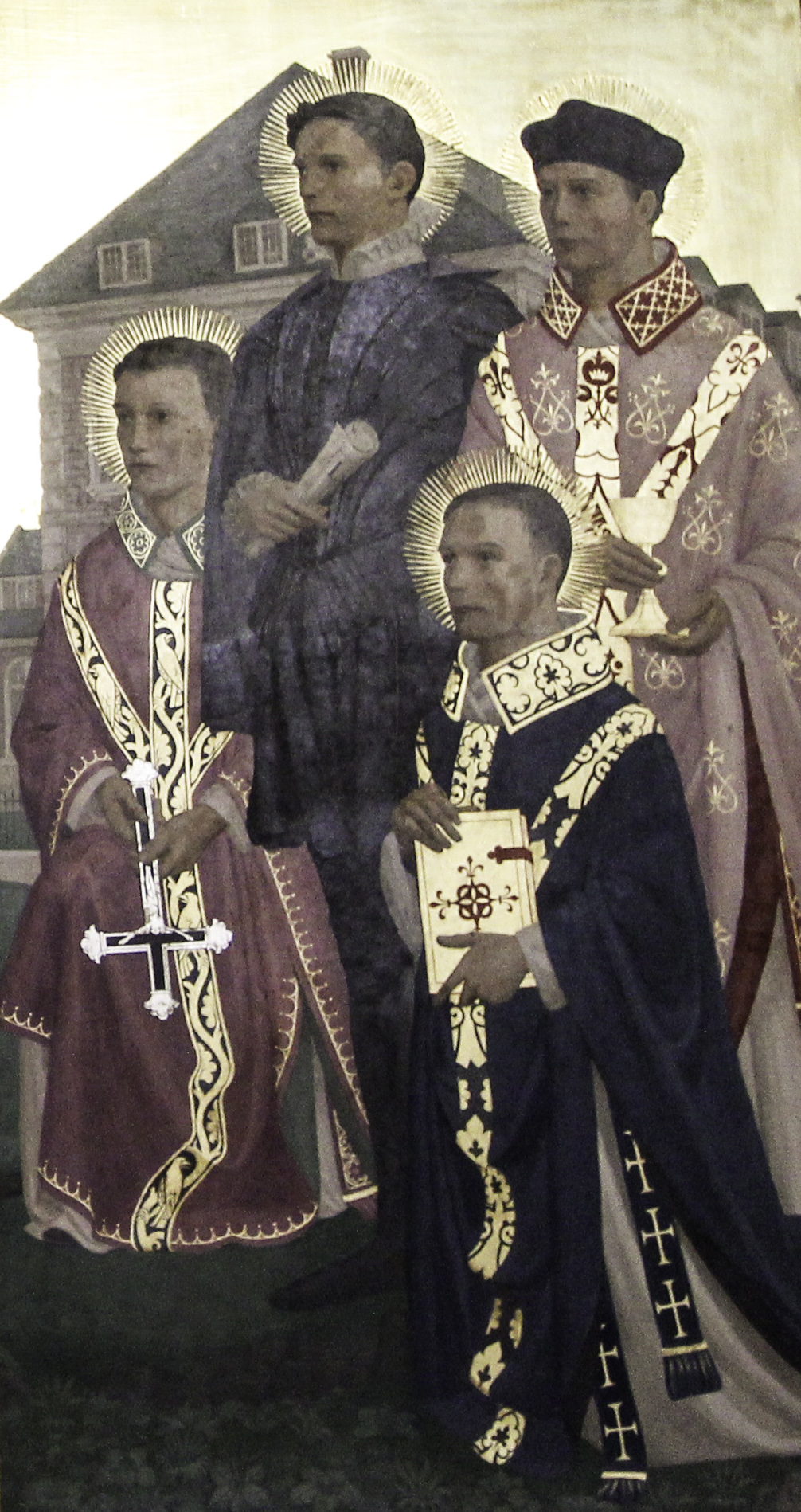

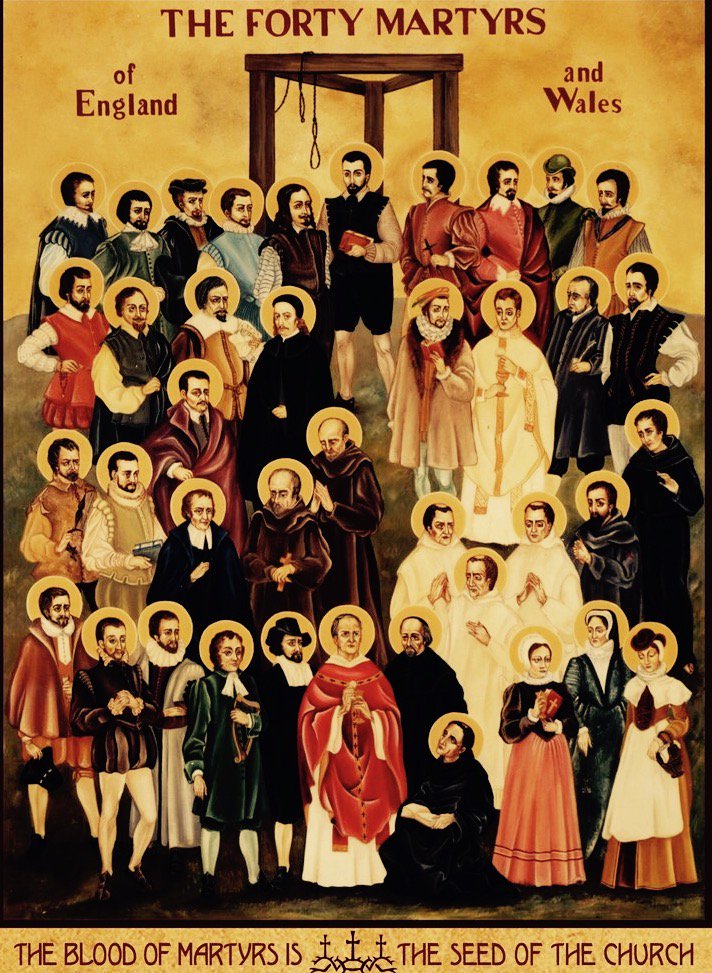


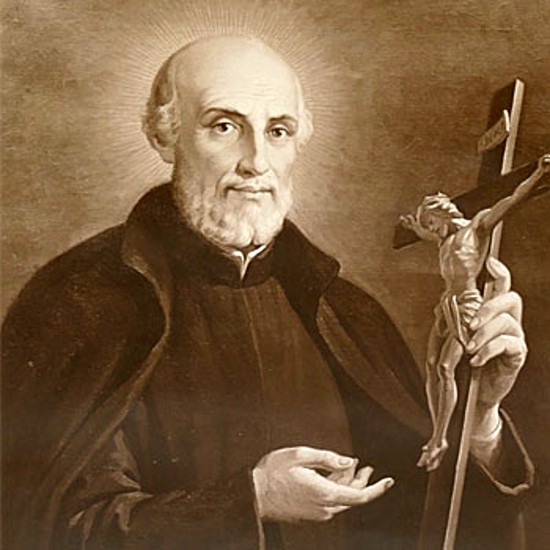
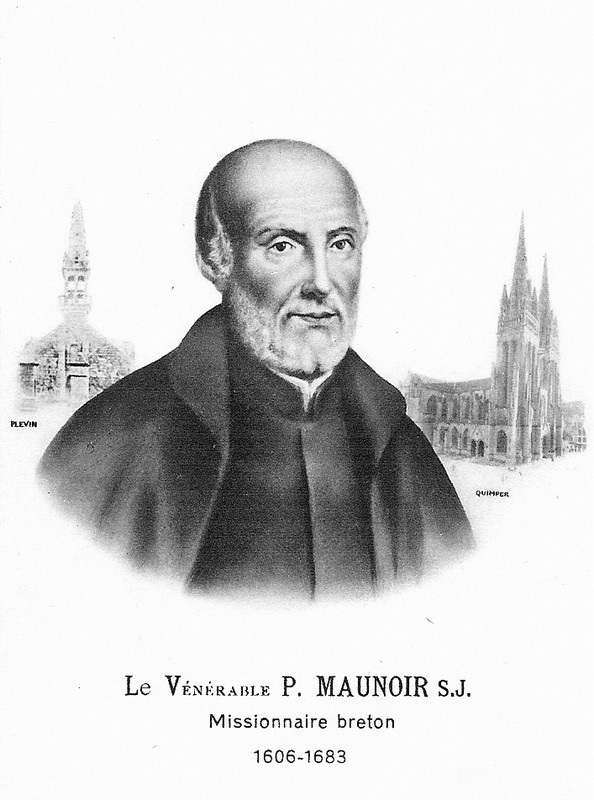

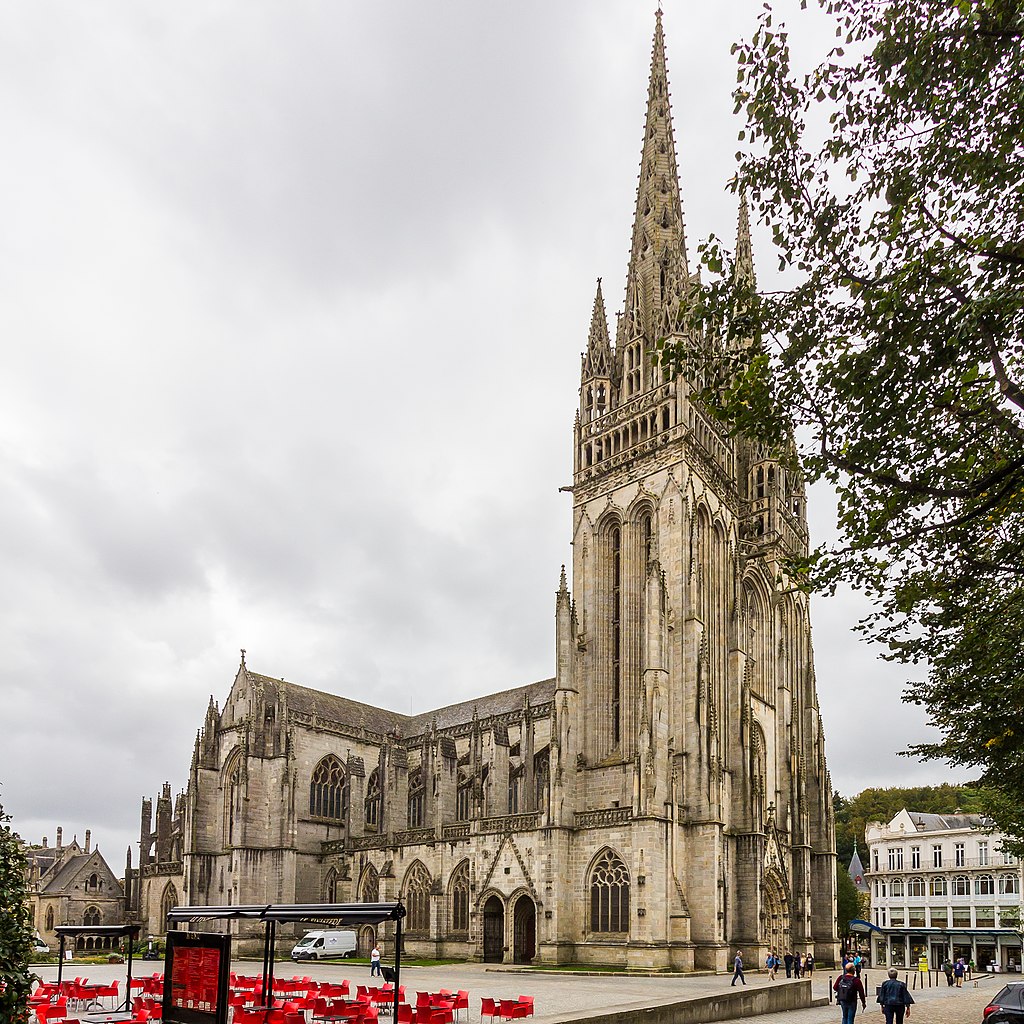
 AnaStpaul
You must be logged in to post a comment.