Our Lenten Journey with the Angels and the Saints – 5 March – Tuesday of the Third Week in Lent – 4 Kings 4:1-7; Matthew 18:15-22 – Scripture search here: https://www.drbo.org/
“And forgive us our sins, for we also forgive everyone who is indebted to us.” Luke 11:4
“Then Peter came up to him and said, “Lord, how often shall my brother sin against me and I forgive him? As many as seven times?” Jesus said to him, “I do not say to you seven times but seventy times seven.” Matthew 18:21-22
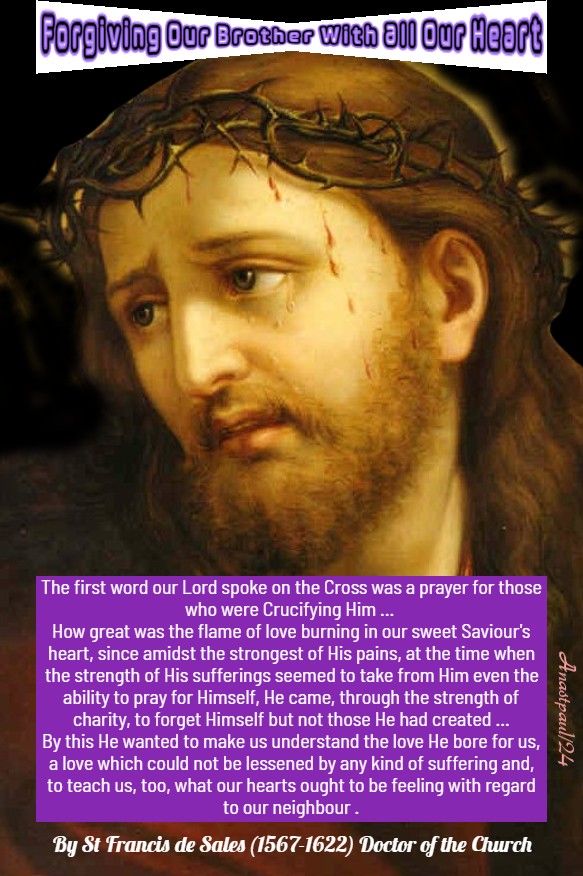
Forgiving Our Brother With All Our Heart
By St Francis de Sales (1567-1622) Doctor of the Church
“The first word our Lord spoke on the Cross was a prayer for those who were Crucifying Him; thus, He carried out what Saint Paul wrote: “In the days of His flesh, He offered prayer and sacrifice” (Heb 5:7). It is true that those who were Crucifying our Divine Saviour did not know Him … for, if they had known Him, they would not have Crucified Him (1 Cor 2:8). Therefore, our Lord, seeing the ignorance and weakness of those torturing Him, began to make excuses for them and offer this Sacrifice to His heavenly Father for them – for prayer is a sacrifice: … “Father, forgive them, for they know not what they do” (Lk 23:34). How great was the flame of love burning in our sweet Saviour’s heart, since amidst the strongest of His pains, at the time when the strength of His sufferings seemed to take from Him even the ability to pray for Himself, He came, through the strength of charity, to forget Himself but not those He had created …
By this He wanted to make us understand the love He bore for us, a love which could not be lessened by any kind of suffering and, to teach us, too, what our hearts ought to be feeling with regard to our neighbour …
Now, since this Divine Lord had been occupying Himself in asking forgiveness for us, it is absolutely certain that His request was granted. For His Divine Father honoured Him too much to refuse Him anything He asked.” – (Sermon for Good Friday 25/03/1622).
Our Lenten Journey with the Angels and the Saints – 4 March – St Casimir (1458-1484) Confessor, Prince – 4 Kings 5:1-15; Luke 12:35-40 – Scripture search here: https://www.drbo.org/
“The just shall flourish like the palm tree, he shall grow up, like the cedar of Lebanon.” Psalm 91:13
“There were many widows in Israel” Luke 4:25
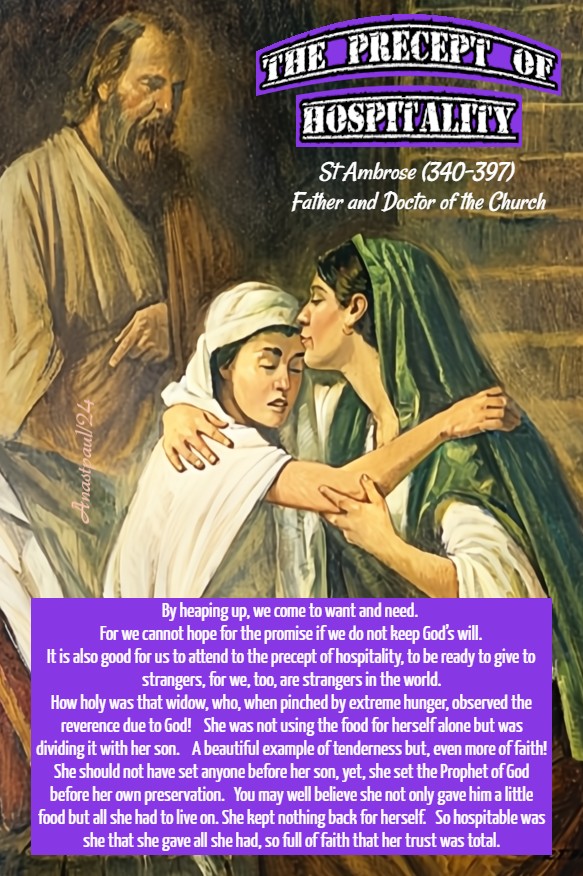
The Precept of Hospitality
St Ambrose (340-397) Father and Doctor of the Church
“At that time, when the whole human race was afflicted by famine, Elias was sent to a widow? And see how, for each is reserved her own special grace. An Angel is sent to the Virgin, a Prophet to the widow. In the one case it is Gabriel, in the other Elisha. The most excellent chiefs of the number of Angels and Prophet,s are seen to be chosen! But there is no praise, simply in widowhood, unless there be added the virtues of widowhood. For, indeed, there were many widows but one is preferred to all, by whose example of virtue, they are stimulated … The grace of hospitality is not lost sight of by God, Who, as He hHmself relates in the Gospel, rewards a cup of cold water with the exceeding recompense of eternity (Mt 10:42) and compensates the small measure of meal and oil, by an unfailing abundance of plenty …
Why consider the fruits of the earth are private, when the earth itself is common property? … But we turn aside the warnings of a general utterance to our private advantage. God says: “Every tree which has in it the fruit of a tree yielding seed, shall be to you for food and, to every beast and to every bird and to everything that creeps on the earth.” (Gn 1:29-30). By heaping up, we come to want and need. For we cannot hope for the promise if we do not keep God’s will. It is also good for us to attend to the precept of hospitality, to be ready to give to strangers, for we, too, are strangers in the world.
How holy was that widow, who, when pinched by extreme hunger, observed the reverence due to God! She was not using the food for herself alone but was dividing it with her son. A beautiful example of tenderness but, even more of faith! She should not have set anyone before her son, yet, she set the Prophet of God before her own preservation. You may well believe she not only gave him a little food but all she had to live on. She kept nothing back for herself. So hospitable was she that she gave all she had, so full of faith that her trust was total.” – (On Widows).
Our Lenten Journey with the Angels and the Saints – 3 March – The Third Sunday in Lent – Ephesians 5:1-9; Luke 11:14-28 – Scripture search here: https://www.drbo.org/
“Walk then, as children of the Light. For the fruit of the Light is in all goodness and justice and truth.” Ephesians 5:8-9
“And He was casting out a devil and the same was dumb.” Luke 11:14
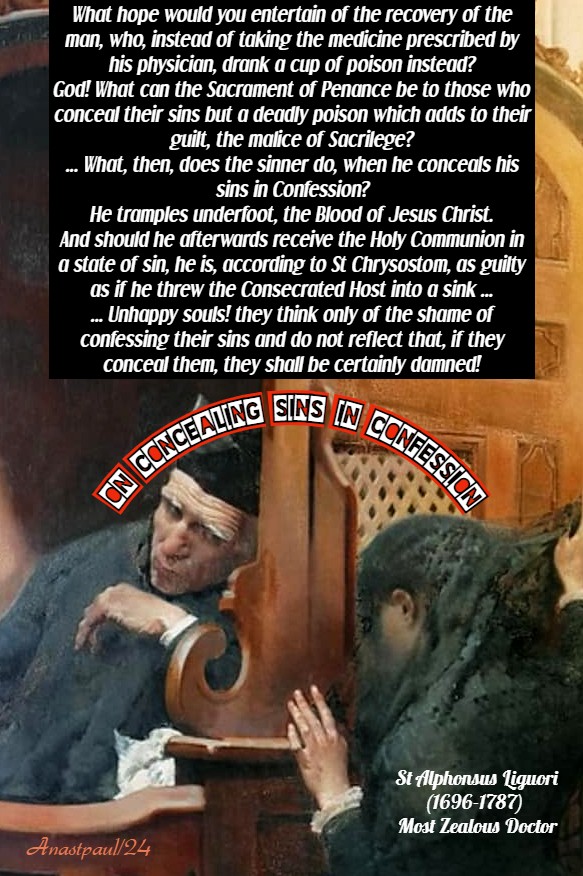
On Concealing Sins in Confession
St Alphonsus Maria de Liguori (1696-1787) Most Zealous Doctor
“THE devil does not bring sinners to hell with their eyes open — he first blinds them with the malice of their own sins. “For their own malice blinded them.” (Wis 2:21) He thus leads them to eternal perdition. Before we fall into sin, the enemy labours to blind us that, we may not see the evil we do and, the ruin we bring upon ourselves, by offending God. After we commit sin, he seeks to make us dumb that, through shame, we may conceal our guilt in Confession. Thus, he leads us to hell by a double chain, inducing us, after our transgressions, to consent to a still greater sin the sin of sacrilege!
… St Augustine says that, to prevent the sheep from seeking assistance by there cries, the wolf seizes them by the throat and thus securely carries them away and devours them. The devil acts in a similar manner with the sheep of Jesus Christ. After having induced them to yield to sin, he seizes them by the throat that they may not confess their guilt and thus, he securely brings them to hell. For those who have sinned grievously, there is no means of salvation but the confession of their sins! But, what hope of salvation can he have who goes to Confession and conceals his sins and makes use of the tribunal of penance to offend God and to make himself doubly the slave of Satan? What hope would you entertain of the recovery of the man, who, instead of taking the medicine prescribed by his physician, drank a cup of poison instead? God! What can the Sacrament of Penance be to those who conceal their sins but a deadly poison which adds to their guilt, the malice of Sacrilege? In giving Absolution, the Confessor dispenses to his patient the Blood of Jesus Christ; for it is through the merits of that Blood that he absolves from sin.
What, then, does the sinner do, when he conceals his sins in Confession? He tramples underfoot, the Blood of Jesus Christ. And should he afterwards receive the Holy Communion in a state of sin, he is, according to St Chrysostom, as guilty as if he threw the Consecrated Host into a sink … Accursed shame! how many poor souls do you bring to hell? … Unhappy souls! they think only of the shame of confessing their sins and do not reflect that, if they conceal them, they shall be certainly damned!” (Extract from the Sermon for the Third Sunday of Lent, 1 and 5).
Our Lenten Journey with the Angels and the Saints – 2 March – Saturday of the Second Week in Lent – Ferial Day – Genesis 27:6-40; Luke 15:11-32 – Scripture search here: https://www.drbo.org/
“ It is good to give praise to the Lord and to sing to Thy Name, O most High. To shew forth Thy mercy in the morning and Thy truth in the night.” Psalm 91:2-3
“I shall arise and shall go to my Father” Luke 15:18
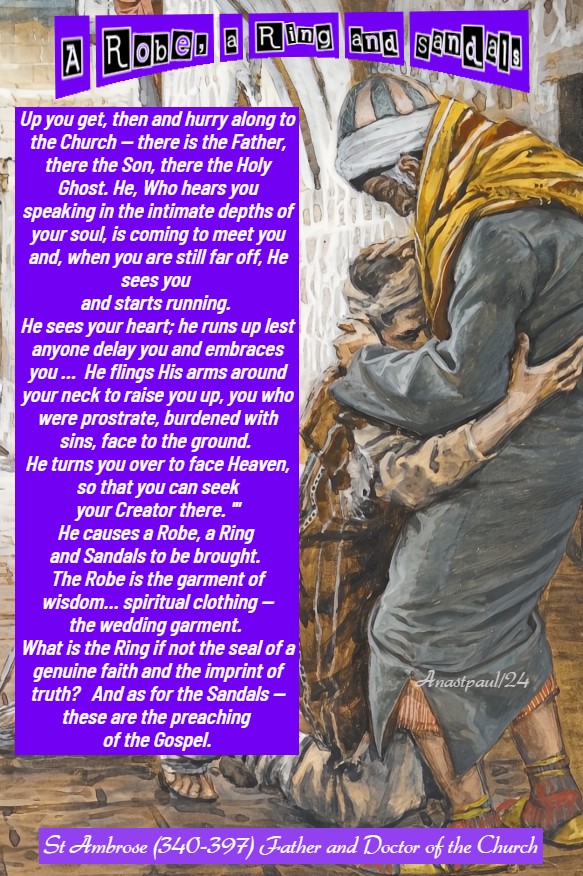
A Robe, a Ring and Sandals “Awake, O Sleeper and Rise from the Dead” (Ephesians 5:14)
St Ambrose (340-397) Father and Doctor of the Church
“I shall go to my father and say: ‘Father, I have sinned against Heaven and against you.’” Such is our first confession to our Creator, our merciful Lord, the Judge of our sins. For although He knows all things, God is waiting for an expression of our confession. For “if you confess with your mouth… you will be saved” (Rm 10:10)…
This is how the younger son spoke to himself. But it is not enough just to speak, unless you come to the Father. Where are we to look for Him? Where will we find Him? “He got up.” Get up first of all, you who have hitherto been sitting down asleep. This is what the Apostle Paul says: “Awake, O sleeper and rise from the dead” (Eph 5:14) … Up you get, then and hurry along to the Church — there is the Father, there the Son, there the Holy Ghost. He, Who hears you speaking in the intimate depths of your soul, is coming to meet you and, when you are still far off, He sees you and starts running. He sees your heart; he runs up lest anyone delay you and embraces you … He flings His arms around your neck to raise you up, you who were prostrate, burdened with sins, face to the ground. He turns you over to face Heaven, so that you can seek your Creator there. Christ flings His Arms around you, so as to free your neck from slavery’s yoke and set His gentle yoke upon you… He is embracing you when He says: “Come to me, all you who labour and are burdened and I will give you rest. Take my yoke upon you” (Mt 11:28). Such is His manner of embrace if you repent.
He causes a Robe, a Ring and Sandals to be brought. The Robe is the garment of wisdom… spiritual clothing — the wedding garment. What is the Ring if not the seal of a genuine faith and the imprint of truth? And as for the Sandals — these are the preaching of the Gospel.” – (Commentary on Saint Luke’s Gospel VII).
Our Lenten Journey with the Angels and the Saints – 1 March – Friday of the Second Week in Lent and the Feast of the Holy Shroud – – Genesis 37:6-22; Matthew 21:33-46.– Scripture search here: https://www.drbo.org/
“He has not dealt with us according to our sins, nor rewarded us according to our iniquities.” Psalm 102:10
“They seized Him, threw Him out of the vineyard and killed Him.” Matthew 21:39
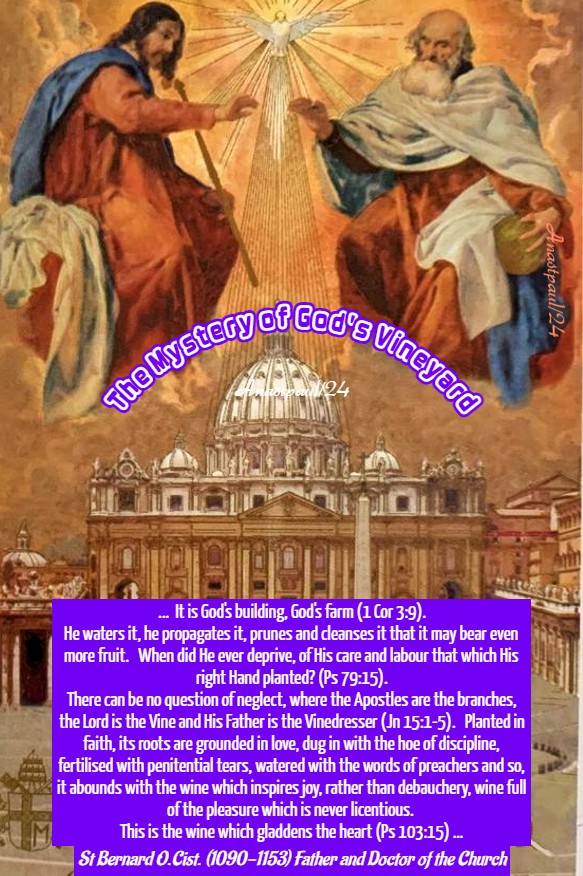
The Mystery of God’s Vineyard Faith, Love, Obedience, Penance …
St Bernard O.Cist. (1090-1153) Father and Doctor of the Church
“Brethren, if we understand the Lord’s Vineyard to be the Church … it seems to me that we here encounter a significant prerogative. Note,, in a special way, how the Church extended her boundaries all over the world …
By this I understand that company of believers, who were described as “of one heart and soul.” (Acts 4:32) … For during the persecution it had not been so uprooted that it could not be elsewhere replanted and leased “to other tenants, who will deliver the produce … when the season arrives.” No indeed, it did not perish, it changed in a new location; it even increased and spread further afield under the blessing of the Lord. So, brethren, lift up your eyes round about and see if “the mountains were not covered with its shade, the cedars of God with its branches; if its tendrils did not extend to the sea and its offshoots all the way to the river” (Ps 79:11-12).
No wonder this, for it is God’s building, God’s farm (1 Cor 3:9). He waters it, he propagates it, prunes and cleanses it that it may bear even more fruit. When did He ever deprive, of His care and labour that which His right Hand planted? (Ps 79:15). There can be no question of neglect, where the Apostles are the branches, the Lord is the Vine and His Father is the Vinedresser (Jn 15:1-5). Planted in faith, its roots are grounded in love, dug in with the hoe of discipline, fertilised with penitential tears, watered with the words of preachers and so, it abounds with the wine which inspires joy, rather than debauchery, wine full of the pleasure which is never licentious. This is the wine which gladdens the heart (Ps 103:15) … Be consoled, daughter of Sion! Yours is to wonder at the Mystery, rather than bewail the harm — let your heart be expanded to gather together, the fullness of the pagans!” — (Extract from Sermon 30 on the Song of Songs)
Our Lenten Journey with the Angels and the Saints – 29 February – Thursday in the Second Week of Lent – Jeremias 17:5-10, Luke 16:19-31 – Scripture search here: https://www.drbo.org/
“ I am the Lord Who search the heart and prove the reins: Who give to everyone according to his way and according to the fruit of his devices.” Jeremias 17:10
“The poor man died and was carried by the Angels to Abraham’s bosom. The rich man also died and was buried and in Hades, being in torment, he lifted up his eyes and saw Abraham, far off and Lazarus in his bosom. …” Luke 16:22-23
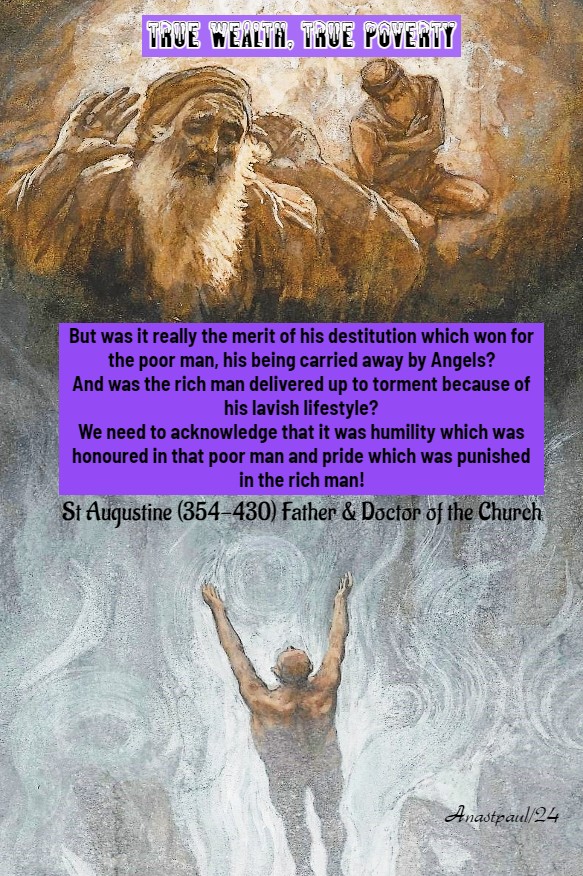
True Wealth, True Poverty
St Augustine (354-430) Father & Doctor of the Church
“When I say that God does not incline His ear to the rich man, do not go so far as to think, my friends that God fails to answer those who have gold and silver, servants and lands. If they were born in that state and occupy that class of society, let them call to mind the saying of the Apostle Paul: “Tell the rich in the present world, not to yield to pride” (1Tm 6:17). People who do not yield to pride are poor before God, Who inclines His ear to the poor and needy (Ps 85:1). Indeed, they know their hope does not lie in gold or silver, or in those things, of which they have an abundance, for a time. It suffices that possessions are not causing their loss and that, if they do nothing for their salvation, at least they are not an obstacle to it … Therefore, when someone despises those things that feed one’s pride, he is one of God’s poor and God inclines His ear towards him, for He knows the troubles of his heart.
It is true, my brethren that the poor man Lazarus, covered with sores, who lay at the rich man’s door, was carried by Angels into the bosom of Abraham. This is what we read and believe. Whereas ,the rich man, who was clothed in purple and fine linen and feasted splendidly everyday, was thrown down to the torments of hell.
But was it really the merit of his destitution which won for the poor man, his being carried away by Angels? And was the rich man delivered up to torment because of his lavish lifestyle? We need to acknowledge that it was humility which was honoured in that poor man and pride which was punished in the rich man!” – (Discourses on the Psalms 85,3).
Our Lenten Journey with the Angels and the Saints – 28 February – St Gabriel of the Sorrowful Virgin/Gabriel Possenti CP (1838-1862) Confessor, – 1 John 2:14-17; Mark 10:13-21 – Scripture search here: https://www.drbo.org/
“He will not deprive, of good things, those who walk in innocence. O Lord of hosts, blessed is the man who trusts in Thee!” Psalm 83:13
“One thing is lacking to thee; go, sell whatever thou has and give to the poor and thou shalt have treasure in Heaven and come, follow Me.” Mark 10:21
Let Us Hate Our Sins and Love Him Who Will Exact Punishment for Them.
St Augustine (354-430) Father and Doctor of Grace
“What then should the Christian do? He ought to use the world, not become its slave. And what does this mean? It means having, as though not having.
So says the Apostle: “My brethren, the appointed time is short — from now on, let those who have wives, live as though they had none and those who mourn, as though they were not mourning and those who rejoice, as though they were not rejoicing and those who buy, as though they had no goods and those who deal with this world, as though they had no dealings with it.”
For the form of this world is passing away. But I wish you to be without anxiety. He who is without anxiety waits without fear until his Lord comes. For what sort of love of Christ is it to fear His coming? Brothers, do we not have to blush for shame? We love Him, yet we fear His coming! Are we really certain that we love Him? Or do we love our sins more? Therefore, let us hate our sins and love Him Who, will exact punishment for them. He will come whether we wish it or not. Do not think that because He is not coming just now, He will not come at all. He will come, you know not when and provided He finds you prepared, your ignorance of the time of His coming, will not be held against you.” (A Discourse on Psalm 95)
Our Lenten Journey with the Angels and the Saints – 27 February– Tuesday of the Second Week in Lent – Scripture search here: https://www.drbo.org/
“The troubles of my heart are multiplied, deliver me from my necessities. See my abjection and my labour and forgive me all my sins.” Psalm 24:17-18
“Whoever exalts himself will be humbled and whoever humbles himself will be exalted.” Matthew 23:12
PENANCE “ … Come to Our Help, Watchful Ward of Our Lives”
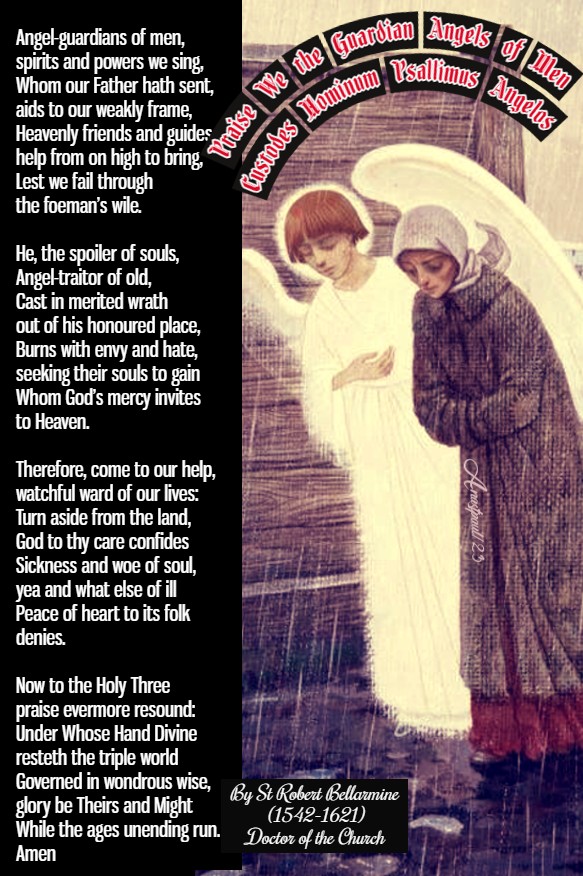
Custodes Hominum Psallimus Angelos Praise We the Guardian Angels of Men By St Robert Bellarmine SJ (1542-1621) Archbishop of Capua, Theologian Doctor of the Church
Angel-guardians of men, spirits and powers we sing, Whom our Father hath sent, aids to our weakly frame, Heavenly friends and guides, help from on high to bring, Lest we fail through the foeman’s wile.
He, the spoiler of souls, Angel-traitor of old, Cast in merited wrath out of his honoured place, Burns with envy and hate, seeking their souls to gain Whom God’s mercy invites to Heaven.
Therefore, come to our help, watchful ward of our lives: Turn aside from the land, God to thy care confides Sickness and woe of soul, yea and what else of ill Peace of heart to its folk denies.
Now to the Holy Three praise evermore resound: Under Whose Hand Divine resteth the triple world Governed in wondrous wise, glory be Theirs and Might While the ages unending run. Amen
This Hymn/Prayer/Reflection by St Robert Bellarmine,was added to the Roman Breviary in 1608, by command of Pope Paul V. It is for Vespers in the Office for “the Holy Guardian Angels. Double of the second class, 2 October.
Our Lenten Journey with the Angels and the Saints – 26 February – St Margaret of Cortona (1247–1297) Penitent – Sirach 51:13-17, Matthew 13:44-52 – Scripture search here: https://www.drbo.org/
“The Kingdom of Heaven is like a treasure hidden in a field; he who finds it, hides it and in his joy, goes and sells all that he has and buys that field.” Matthew 13:44
“For where your treasure is, there also will your heart be.” Luke 12:34
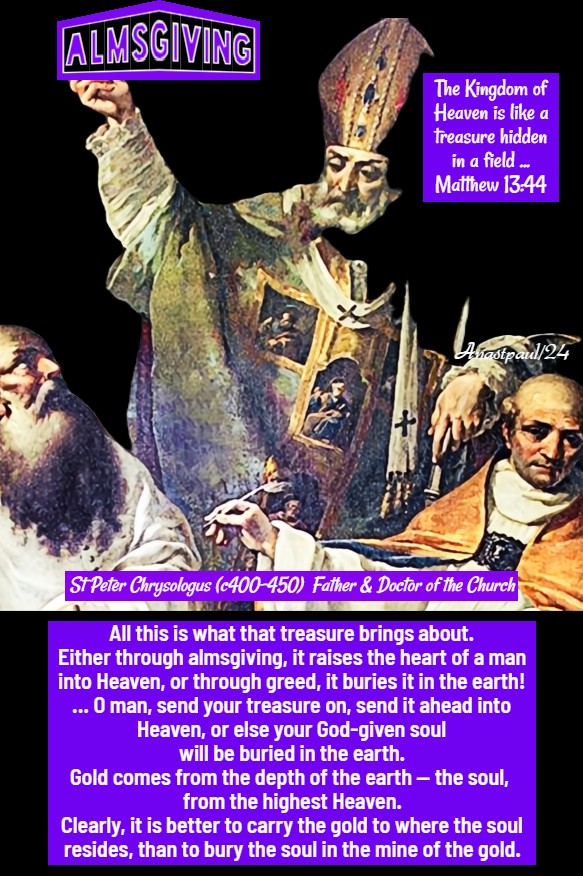
ALMSGIVING
St Peter Chrysologus (c400-450) Bishop of Ravenna Father and “Doctor of Homilies”
“All this is what that treasure brings about. Either through almsgiving, it raises the heart of a man into Heaven, or through greed, it buries it in the earth!
That is why He said, “For where your treasure is, there your heart will be also.” O man, send your treasure on, send it ahead into Heaven, or else your God-given soul will be buried in the earth. Gold comes from the depth of the earth — the soul, from the highest Heaven. Clearly, it is better to carry the gold to where the soul resides, than to bury the soul in the mine of the gold. That is why God orders those, who will serve in His army here below, to fight as men stripped of concern for riches and unencumbered by anything. To these he has granted the privilege of reigning in Heaven.” (Sermon 22)
Our Morning Offering – 25 February – “The Month of the Most Holy and Blessed Trinity” – The Second Sunday in Lent
The Golden Arrow
This prayer was revealed by Jesus Himself to a Carmelite Nun of Tours in 1843 as a Reparation for Blasphemy. “This Golden Arrow will wound My Heart delightfully” He said “and heal the wounds, inflicted by blasphemy.”
May the Most Holy, Most Sacred, Most Adorable, Most Mysterious and Unutterable Name of God be always praised, blessed, loved, adored and glorified in Heaven. on earth and under the earth, by all the creatures of God and by the Sacred Heart of our Lord Jesus Christ in the most Holy Sacrament of the Altar. Amen
Our Lenten Journey with the Angels and the Saints – 24 February – Ember Saturday – Acts 1:15-26, Matthew 11:25-30 – Scripture search here: https://www.drbo.org/
“ Lord, Thou hast proved me and known me: Thou hast known my sitting down and my rising up.” Psalm 138:1-2
“Take My yoke upon you and learn from Me, for I Am meek and humble of heart and you will find rest for yourselves. For My yoke is easy and My burden light.” Matthew 11:29-30
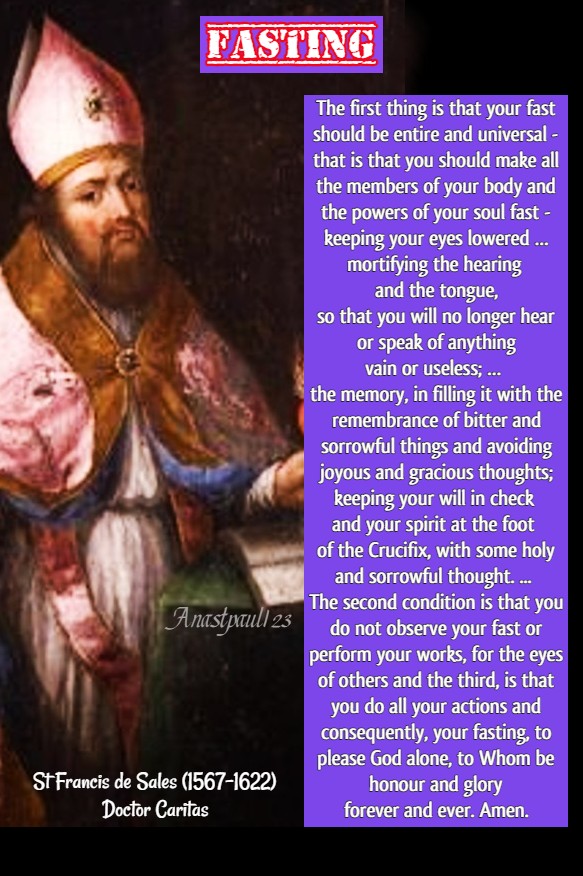
ON FASTING St Francis de Sales (1567-1622) Doctor Caritas
This is all I wish to tell you regarding fasting and what must be observed in order to fast well. The first thing is that your fast should be entire and universal – that is that you should make all the members of your body and the powers of your soul fast – keeping your eyes lowered … mortifying the hearing and the tongue, so that you will no longer hear or speak of anything vain or useless; … the memory, in filling it with the remembrance of bitter and sorrowful things and avoiding joyous and gracious thoughts; keeping your will in check and your spirit at the foot of the Crucifix, with some holy and sorrowful thought. If you do this, your fast will be universal, interior and exterior, for you will mortify both your body and your spirit. The second condition is that you do not observe your fast or perform your works, for the eyes of others and the third, is that you do all your actions and consequently, your fasting, to please God alone, to Whom be honour and glory forever and ever. Amen.” – (Excerpt from the Sermon given for Ash Wednesday on 9 February 1622).
Our Lenten Journey with the Angels and the Saints – 23 February – 2 Timothy 4:1-8; Matthew 5:13-19 – Scripture search here: https://www.drbo.org/
“Blessed is the man who fears the Lord, he shall delight exceedingly in His commandments.” Psalm 111:1
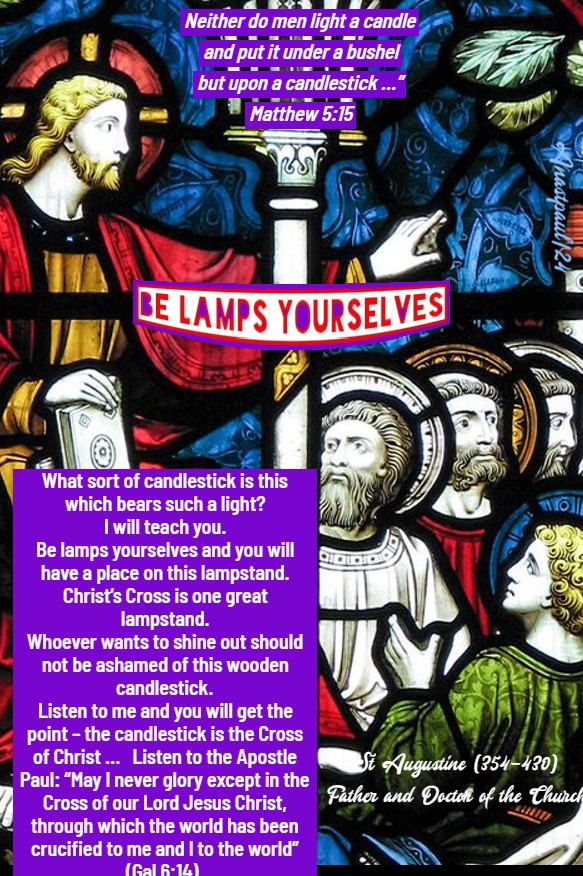
“Neither do men light a candle and put it under a bushel but upon a candlestick …” Matthew 5:15
Be Lamps Yourselves
St Augustine (354-430) Father and Doctor of the Church
“What sort of candlestick is this which bears such a light? I will teach you. Be lamps yourselves and you will have a place on this lampstand. Christ’s Cross is one great lampstand. Whoever wants to shine out should not be ashamed of this wooden candlestick. Listen to me and you will get the point – the candlestick is the Cross of Christ …
“So will your light shine before others, so that they may see your good works and glorify” Glorify whom? Not yourself, since to seek your own glory is to want to be extinguished! “Glorify your heavenly Father.” Yes, that they may glorify Him, your heavenly Father, when they see your good works… Listen to the Apostle Paul: “May I never glory except in the Cross of our Lord Jesus Christ, through which the world has been crucified to me and I to the world” (Gal 6:14).”
The Feast of the Sacred Lance and Nails – Friday after the 1st Sunday in Lent: The Supreme Pontiff, Innocent VI, in his Decree establishing the Feast and Office of the Lance and Nails which pierced the Body of our Crucified Lord Jesus Christ, exhorts all the faithful to have a special veneration for and devotion to, all the Sacred Instruments of our Saviour’s Passion. The following are the Holy Father’s words: “We should honour the most holy Passion of our Lord and Redeemer, Jesus Christ, in such manner that, meditating on all the mysteries and merits of the same Passion, we venerate also each Sacred Instrument thereof.” Then this holy and zealous Pontiff, coming more directly to the honour due to the Lance and Nails, says: “Although the Lance and Nails and the other Sacred Instruments of the Passion, should be enerated everywhere, by the faithful of Christ and although every year the Church celebrates the Solemn Offices of the same Passion, yet, we deem it proper and fitting, that a special Solemn Feast should be instituted and celebrated in honour of those particular Instruments of the Passion, more especially, in those places wherein these salutary Instruments are preserved. Hence, we wish to encourage this devotion by a special Office and privileges.” (Innocent VI in Decret. de Fest. Lane, et Clav. Domini).
The Lance, also known as “The Spear of Longinus” is kept in the Vatican Basilica, given to Innocent VIII in 1492. The Nails were kept with the Crown of Thorns, along with a small piece of the Lance of Longinus at Saint Chapelle, France and were subsequently lost during the French Revolution. The Crown of Thorns was the only Relic saved and is now kept at Notre Dame Cathedral.
In a Leap Year, the Vigil of St Matthias, Apostel, is not announced today because it is transferred to the 24th.
St Alexander Akimetes St Boswell St Dositheus of Egypt St Felix of Brescia St Florentius of Seville St Giovanni Theristi (1049–1129) Monk Bl John of Hungary
St Lazarus Zographos (c810-c 867) Priest, Monk known as “the Painter and the Iconographer.” Lazarus lived before and during the second period of Byzantine Iconoclasm. The Roman Martyrology states of him today: “St Lazarus, a Monk, whom the Iconoclast Emperor Theophilus ordered to be put to torture for having painted holy images. His hand was burned with a hot iron but, being healed by the power of God, he painted anew the holy images which had been defaced and finally rested in peace.” Biography: https://anastpaul.com/2022/02/23/saint-of-the-day-23-february-st-lazarus-zographos-810-865/
St Milo of Benevento (Died c1077) Bishop St Ordonius St Polycarp of Rome St Romana
St Serenus the Gardener (Died 307) Martyr. Serenus was by birth a Grecian. He left his family estate, friends and country to serve God in celibacy, penance and prayer. With this design he bought a garden in Sirmium in Pannonia, which he cultivated with his own hands and lived on the fruits and herbs it produced. His Life and Death: https://anastpaul.com/2019/02/23/saint-of-the-day-23-february-st-serenus-the-gardener-died-307-martyr/
Martyrs of Syrmium – 73 Christians who were Martyred together in the persecutions of Diocletian. We know no details about them, and only six of their names – Antigonus, Libius, Rogatianus, Rutilus, Senerotas and Syncrotas.
Our Lenten Journey with the Angels and the Saints – 22 February – The Feast of the Chair of St Peter at Antioch –1 Peter 1:1-7; Matthew 16:13-19 – Scripture search here: https://www.drbo.org/
“Let the mercies of the Lord, give glory to Him and his wonderful works to the children of men!” Psalm 106:31
“But Whom do you say that I Am? Simon Peter answered and said: Thou art Christ, the Son of the living God.” Matthew 16:15-16
On Christian Perfection In Thought, Word and Deed
St Gregory of Nyssa (c335–c395) Bishop and Father of the Church
(Brother of St Basil the Great)
“The life of the Christian has three distinguishing aspects – deeds, words and thought. Thought comes first, then words, since our words express openly the interior conclusions of the mind. Finally, after thoughts and words, comes action, for our deeds carry out what the mind has conceived. So when one of these results in our acting or speaking or thinking, we must make sure that all our thoughts, words and deeds are controlled by the Divine Ideal, the Revelation of Christ. For then, our thoughts, words and deeds will not fall short of the nobility of their implications.
What then must we do, we who have been found worthy of the Name of Christ? Each of us must examine his thoughts, words and deeds, to see whether they are directed toward Christ or are turned away from Him. This examination is carried out in various ways. Our deeds or our thoughts or our words are not in harmony with Christ if they issue from passion. They then bear the mark of the enemy who smears the pearl of the heart with the slime of passion, dimming and even destroying the luster of the precious stone.
On the other hand, if they are free from and untainted by every passionate inclination, they are directed toward Christ, the Author and Source of peace. He is like a pure, untainted stream. If you draw the thoughts in your mind and the inclinations of your heart from Him, you will show a likeness to Christ, your Source and Origin, as the gleaming water in a jar resembles the flowing water from which it was obtained.
For the purity of Christ and the purity which is manifest in our hearts are identical. Christ’s purity, however, is the Fountainhead; ours has its Source in Him and flows out of Him. Our life is stamped with the beauty of His thought. The inner and the outer man, are harmonised in a kind of music. The mind of Christ is the controlling influence which inspires us to moderation and goodness in our behaviour. As I see it, Christian perfection consists in this – sharing the title which expresses the meaning of Christ’s Name, we bring out this meaning in our minds, our prayers and our way of life.” – (Extract from his Treatise On Christian Perfection).
Quote/s of the Day – 21 February – “The Month of the Most Holy and Blessed Trinity” – Ember Wednesday – 3 Kings 19:3-8; Matthew 12:38-50 – Scripture search here: https://www.drbo.org/
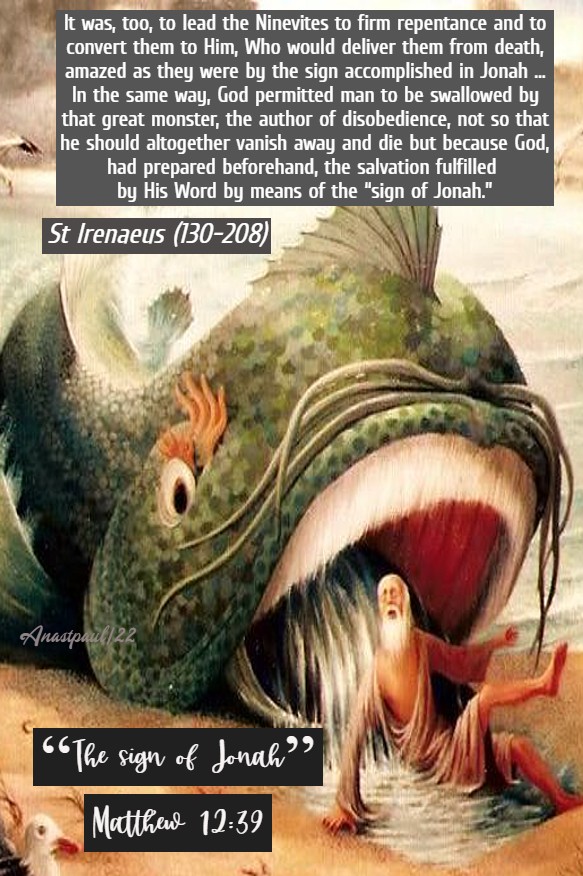
“The sign of Jonah”
Matthew 12:39
“It was, too, to lead the Ninevites to firm repentance and to convert them to Him, Who would deliver them from death, amazed as they were by the sign accomplished in Jonah … In the same way, God permitted man to be swallowed by that great monster, the author of disobedience, not so that he should altogether vanish away and die but because God, had prepared beforehand, the salvation fulfilled by His Word by means of the “sign of Jonah.”
St Irenaeus (130-208) Bishop of Lyons, Martyr and Father
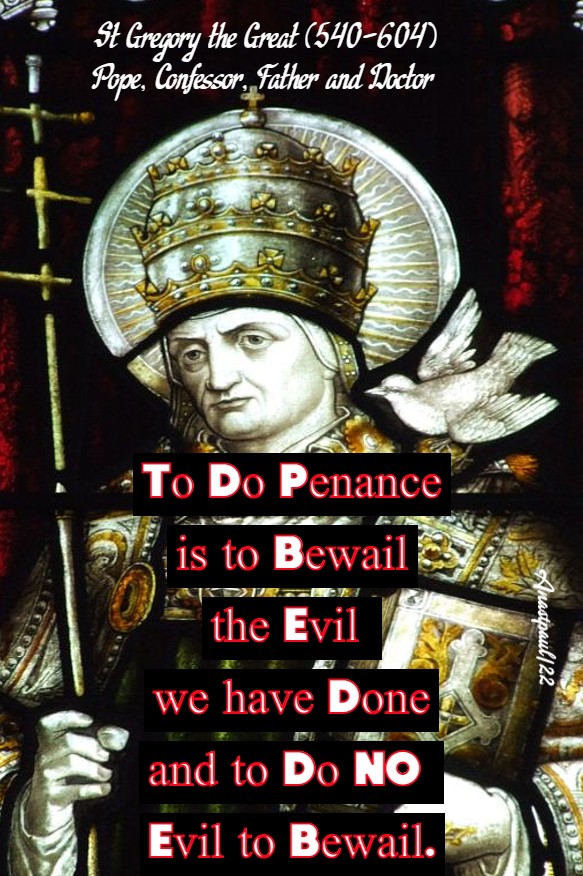
“To do penance is to bewail the evil we have done and to do no evil to bewail.”
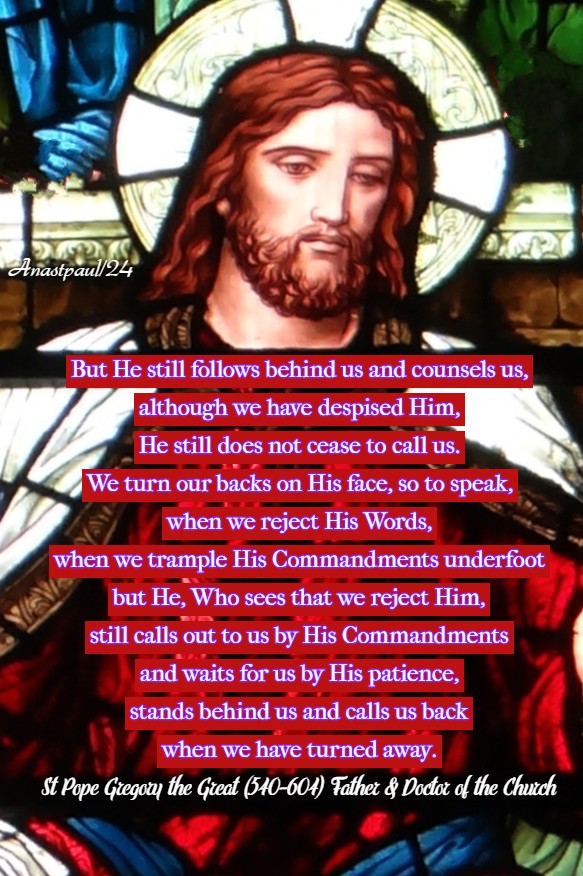
“But He still follows behind us and counsels us, although we have despised Him, He still does not cease to call us. We turn our backs on His face, so to speak, when we reject His Words, when we trample His Commandments underfoot but He, Who sees that we reject Him, still calls out to us by His Commandments and waits for us by His patience, stands behind us and calls us back when we have turned away.”
St Pope Gregory the Great (540-604) Father & Doctor of the Church
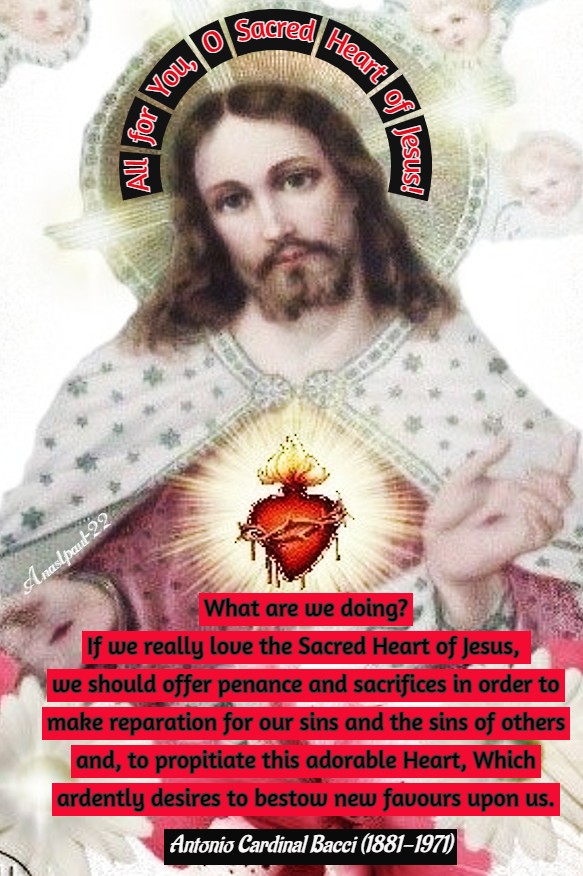
“What are we doing? If we really love the Sacred Heart of Jesus, we should offer penance and sacrifices in order to make reparation for our sins and the sins of others and, to propitiate this adorable Heart, Which ardently desires to bestow new favours upon us.”
Our Lenten Journey with the Angels and the Saints – 21 February – Ember Wednesday – 3 Kings 19:3-8; Matthew 12:38-50 – – Scripture search here: https://www.drbo.org/
“The troubles of my heart are multiplied, deliver me from my necessities. See my abjection and my labour and forgive me all my sins.” Psalm 24:17-18
“The men of Nineveh will rise up in the judgement with this generation and will condemn it; for they repented at the preaching of Jonah and behold, One greater than Jonah is here.” Matthew 12:41
REPENTANCE
St Romanos Melodios (c490-c556) Monk, Hymnist, Poet
“Let us meditate on the Ninevites … let us listen to what they did. After the terrifying proclamation made by Jonah before this gluttonous and drunken people … like capable workmen, they made hast to restore the city their evil deeds had destroyed, taking a sure rock for its foundation … – REPENTANCE.
After washing away its filth, in the floods of their tears, they adorned their town with their prayer and converted Nineveh thus pleasing the Merciful One. Its King, a wise man, … prepared animals and flocks as if to bring them along in dowry, saying: “O God, my Saviour, I offer everything to Thee, only reconcile, bring back in grace, the one who prostituted herself and betrayed … Thy purity, for see how, in her love, she offers her repentance to Thee like a gift …”
If I, the sovereign King, have sinned, then strike me down alone and take pity on all these others. But if we have all fallen short, hear the voices of all … May Thy help come upon us and all fear will be dissolved. Nothing will dismay us if Thou receive what we are offering, our repentance …
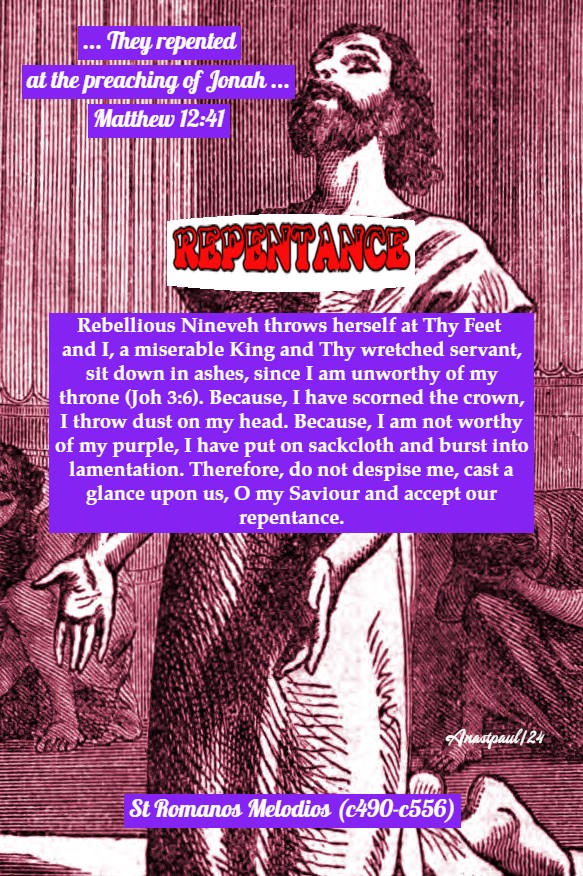
Rebellious Nineveh throws herself at Thy Feet and I, a miserable King and Thy wretched servant, sit down in ashes, since I am unworthy of my throne (Joh 3:6). Because, I have scorned the crown, I throw dust on my head. Because, I am not worthy of my purple, I have put on sackcloth and burst into lamentation. Therefore, do not despise me, cast a glance upon us, O my Saviour and accept our repentance.
Son of the One God, O only God, protect those who love Thee, in Thy mercy … As in former days Thou took pity on the Ninevites … so today, release from judgement, those who sing to Thee and grant forgiveness in return for my Confession … Since I have no works worthy of Thy glory, at least save me, my Saviour, for my words of contrition, Thou Who loves repentance.” (Hymn ‘Nineveh’)
Our Lenten Journey with the Angels and the Saints – 20 February – Tuesday of the First Week in Lent – Ferial Day – Isaias 55:6-11, Matthew 21:10-17 – Scripture search here: https://www.drbo.org/
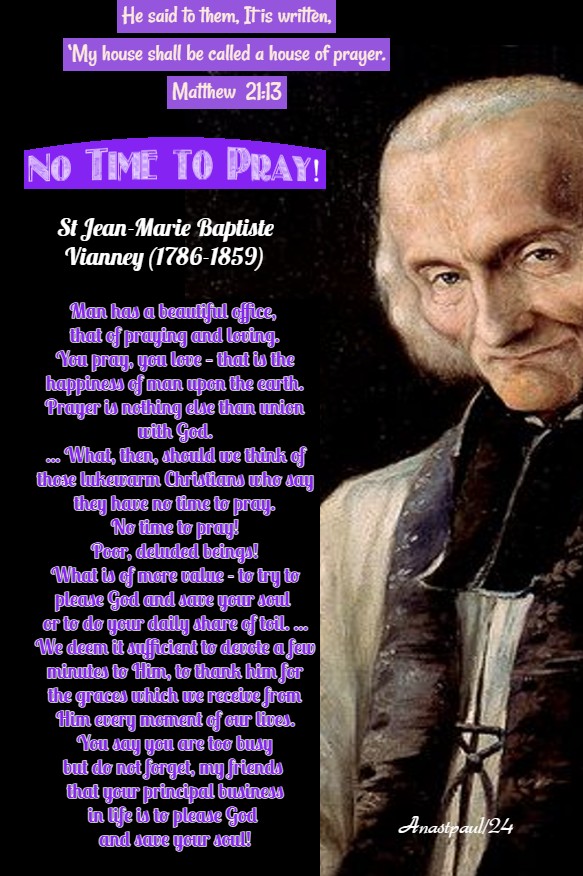
“Let my prayer come like incense before You, O Lord” Psalm 140:2
“He said to them, It is written, ‘My house shall be called a house of prayer’” Matthew 21:13
No Time to Pray!
St Jean-Marie Baptiste Vianney (1786-1859)
“Man has a beautiful office, that of praying and loving. You pray, you love – that is the happiness of man upon the earth. Prayer is nothing else than union with God. I say that prayer is the lifting up of the heart to God. Or, rather, it should be like a pleasant confidence, such as might exist between a child and his father, or between a friend and a friend. …
What, then, should we think of those lukewarm Christians who say they have no time to pray. No time to pray! Poor, deluded beings! What is of more value – to try to please God and save your soul or to do your daily share of toil. No time to pray! Suppose God had let you die during the night, would you do your work today? Or if God had sent you a protracted sickness, would you then be able to perform your daily labour? Oh, what blindness! Such people deserve that God should let them perish in their blindness. We deem it sufficient to devote a few minutes to Him, to thank him for the graces which we receive from Him every moment of our lives. You say you are too busy but do not forget, my friends that your principal business in life is to please God and save your soul! If you do not attend to your work yourself, somebody else will take your place and do it but if you lose your soul, who will save it for you?…
But you may ask, “How is it possible to be constantly praying?” My dear people there is nothing easier than that. All that is necessary, is to occupy our minds from time to time, while we are working, with God, by making now and then an Act of Charity, to prove to Him that we love Him because He is goodness itself and deserves to be loved; or an Act of Humility, insofar as we deem ourselves unworthy of His graces which He imparts to us unceasingly; or, again, an Act of Confidence, by recalling to our mind that, al though we are laden with sin, He loves us and longs to make us happy. Or at other times we should think of the Suffering and Passion of Jesus Christ, we should contemplate Him in the Garden of Olives … or some other time of His birth, His flight into Egypt; or again, of death, the Judgement, hell and Heaven. Or we might say a little prayer in honour of our Guardian Angel and for one thing we should never omit to say – The Angelus, when the bells call …” (Sermons of the Curé d’Ars ).
Our Lenten Journey with the Angels and the Saints – 19 February – Monday of the First Week in Lent – Ferial Day –Ezechiel 34:11-16; Matthew 25:31-46 – Scripture search here: https://www.drbo.org/
“As the eyes of servants are on the hands of their masters, so are our eyes on the Lord, our God, until He have mercy on us. Have mercy on us, O Lord, have mercy on us. ”
Psalm 122:2
“For I was hungry and you gave me to eat”
Matthew 25:35
If You Wish to Receive Mercy, Be Merciful Before He Comes
St Augustine (354-430) Father & Doctor of Grace
“He will judge the world with equity and the peoples in His truth. What are equity and truth? He will gather together with Himself, for the Judgement, His chosen ones but the others, He will set apart – for He will place some on His right, others on His left. What is more equitable, what more true, than that they should not, themselves expect mercy, from the Judge, who themselves were unwilling to show mercy before the Judge’s Coming. Those, however, who were willing to show mercy, will be judged with mercy. For it will be said to those placed on His right – Come, blessed of My Father, take possession of the Kingdom which has been prepared for you from the beginning of the world. And hH reckons to their account, their works of mercy – For I was hungry and you gave Me to eat; I was thirsty and you gave Me to drink.
What is imputed to those places on His left side? That they refused to show mercy. And where will they go? Depart into the everlasting fire. The hearing of this condemnation will cause much wailing. But what has another Psalm said? The just man will be held in everlasting remembrance; he will not fear the evil report. What is the evil report? Depart into the everlasting fire which was prepared for the devil and his angels. Whoever rejoices to hear the good report will not fear the bad. This is equity, this is truth.
Or do you, because you are unjust, expect the Judge not to be just? Or because you are a liar, will the Truthful One not be true? Rather, if you wish to receive mercy, be merciful before He comes – forgive whatever has been done against you; give of your abundance. Of whose possessions do you give, if not from His? If you were to give of your own, it would be largess but since you give of His, it is restitution. For what have you that you have not received? These are the sacrifices most pleasing to God – mercy, humility, praise, peace, charity. Such as these, then, let us bring and, free from fear, we shall await the Coming of the Judge, Who will judge the world in equity and the peoples in His Truth.” – (An excerpt from A Discourse on Psalm 95).
Our Lenten Journey with the Angels and the Saints – 18 February – The First Sunday of Lent – 2 Corinthians 6:1-10; Matthew 4:1-11 – Scripture search here: https://www.drbo.org/
“We entreat you not to receive the grace of God in vain. For He says: In an acceptable time, I have heard you and in the day of salvation, I have helped you. Behold, now is the acceptable time; behold, now is the day of salvation!” 2 Corinthians 6:1-2
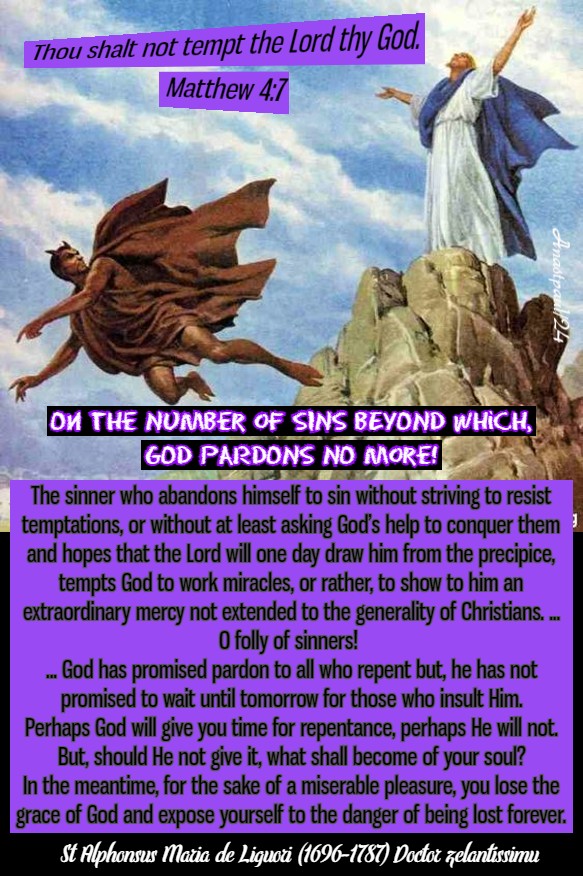
“Thou shalt not tempt the Lord thy God.” Matthew 4:7
On the Number of SINS BEYOND which, GOD PARDONS NO More!
St Alphonsus Maria de Liguori (1696-1787) Doctor zelantissimu
“ The sinner who abandons himself to sin without striving to resist temptations, or without at least asking God’s help to conquer them and hopes that the Lord will one day draw him from the precipice, tempts God to work miracles, or rather, to show to him an extraordinary mercy not extended to the generality of Christians. God, as the Apostle says, “will have all men to be saved,” (1 Tim 2;4) but, He also wishes us all to labour for our own salvation, at least by adopting the means of overcoming our enemies and, of obeying Him when He calls us to repentance. Sinners hear the calls of God but they forget them and continue to offend Him. But God does not forget them. He numbers the graces which He dispenses, as well as the sins which we commit. Hence, when the time which He has fixed arrives, God deprives us of His graces and begins to inflict chastisement. … Be attentive. …
Hence, according to St Chrysostom, God is more to be feared, when He bears with sinners than when He instantly punishes their sins. “ Plus timendum est, cum tolerat quam cum festinanter punit.” (He is more to be feared when He tolerates than when He punishes quickly). And why? Because, says St Gregory, they to whom God has shown most mercy, shall, if they do not cease to offend Him, be chastised with the greatest rigour. The saint adds that God often punishes such sinners with a sudden death and does not allow them time for repentance. And the greater the light which God gives to certain sinners for their correction, the greater is their blindness and obstinacy in sin. “For it had been better for them not to have known the way of justice, than, after they had known it, to turn back.” (2 Pet 2: 21.) Miserable the sinners who, after having been enlightened, return to the vomit. St Paul says, that it is morally impossible for them to be again converted. “For it is impossible for those who were once illuminated, who have tasted also the heavenly gifts … and are fallen away, to be renewed again to penance.” (Heb 6:4, 6.) …
O folly of sinners! If you purchase a house, you spare no pains to get all the securities necessary to guard against the loss of your money; if you take medicine, you are careful to assure yourself that it cannot injure you; if you pass over a river, you cautiously avoid all danger of falling into it but – for a transitory enjoyment, for the gratification of revenge, for a beastly pleasure which lasts but a moment, you risk your eternal salvation, saying: “I will go to Confession after I commit this sin.” And when, I ask, when are you to go to Confession? You say: “On the morrow.” But who promises you tomorrow? Who assures you that you shall have time for Confession and that God will not deprive you of life, as He has deprived so many others, in the act of sin? “Diem tenes,” says St Augustine, “qui horam non tenes.” You cannot be certain of living for another hour and you say: “I will go to confession to-morrow.” Listen to the words of St Gregory: “He who has promised pardon to penitents, has not promised tomorrow to sinners.” (Hom. xii. in Evan).
God has promised pardon to all who repent but, he has not promised to wait until tomorrow for those who insult Him. Perhaps God will give you time for repentance, perhaps He will not. But, should He not give it, what shall become of your soul? In the meantime, for the sake of a miserable pleasure, you lose the grace of God and expose yourself to the danger of being lost forever.”- (Extract fromSERMON XV. FIRST SUNDAY OF LENT.1,6,8).
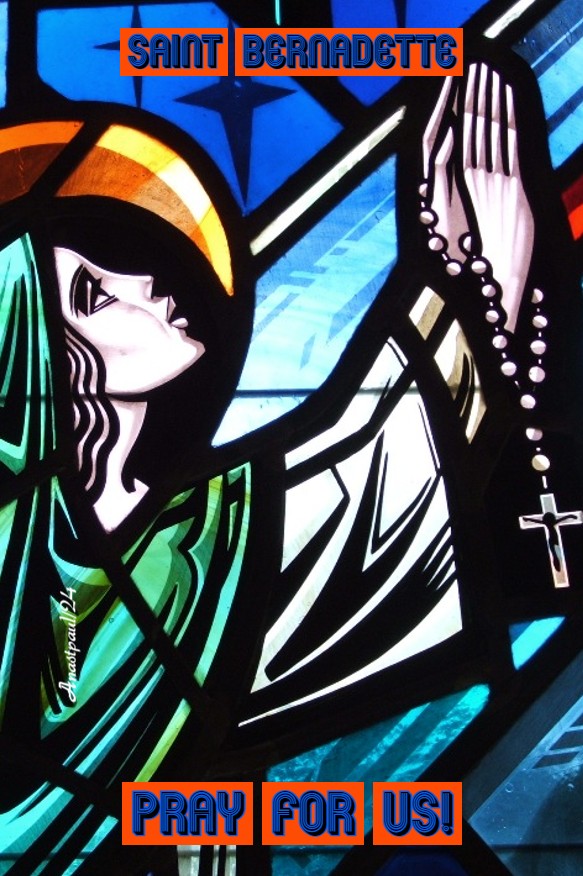
One Minute Reflection – 18 February – The First Sunday of Lent – St Bernadette Soubirous (1844-1879) of Lourdes – Virgin, The Visionary of Lourdes, – 2 Corinthians 6:1-10; Matthew 4:1-11 – Scripture search here: https://www.drbo.org/
Then the devil left Him …” – Matthew 4:11
REFLECTION – “When the Lord had been tempted with this triple temptation—because in all the allurements of the world these three are to be found, either pleasure, or curiosity, or pride — what did the Evangelist say? After the devil had concluded every temptation — every kind but of the alluring sort — there remained the other sort of temptation, by harsh and hard treatment, savage treatment, atrocious and ferocious treatment. Yes, there remained the other sort of temptation. Another Evangelist knew this, knew what had been carried out, what remained, and so he said, “After the devil had completed every temptation, he departed from Him, until the time.” He departed from Him in the form, that is, of the insidious serpent. He is going to come back in the form of the roaring lion. The One Who will trample on the lion and the cobra, will conquer him. Satan will return. He will enter Judas and will make him betray his Master. He will bring along the Jews, not flattering now but raging. Taking possession of his own instruments, he will cry out with the tongues of all of them, “Crucify him, crucify him!” That Christ was the Conqueror there, why should we be surprised? He is Almighty God.” – St Augustine (354-430) Bishop of Hippo, Father and Doctor of Grace (Ser
PRAYER – Almighty and eternal God, Who has dominion over both the living and the dead and has mercy upon all, whom Thou foreknow will be Thine own by faith and good works; we humbly beseech Thee that all, for whom we have resolved to make supplication, whether the present world still holds them in the flesh, or the world to come holds them out of the body, may, through the intercession of St Bedrnadette and all Thy Saints, obtain of Thine goodness and clemency, pardon for all their sins.Through Jesus Christ, Thy Son our Lord, Who lives and reigns with Thee, in the unity of the Holy Ghost, God, world without end. Amen (Collect).
Our Lenten Journey with the Angels and the Saints – 17 February – Saturday after Ash Wednesday – Isaias 58:9-14, Mark 6:47-56 – Scripture search here: https://www.drbo.org/
“And the Lord will give thee rest continually and will fill thy soul with brightness and deliver thy bones and thou shalt be like a watered garden and like a fountain of water, whose waters shall not fail.” Isaias 58:11
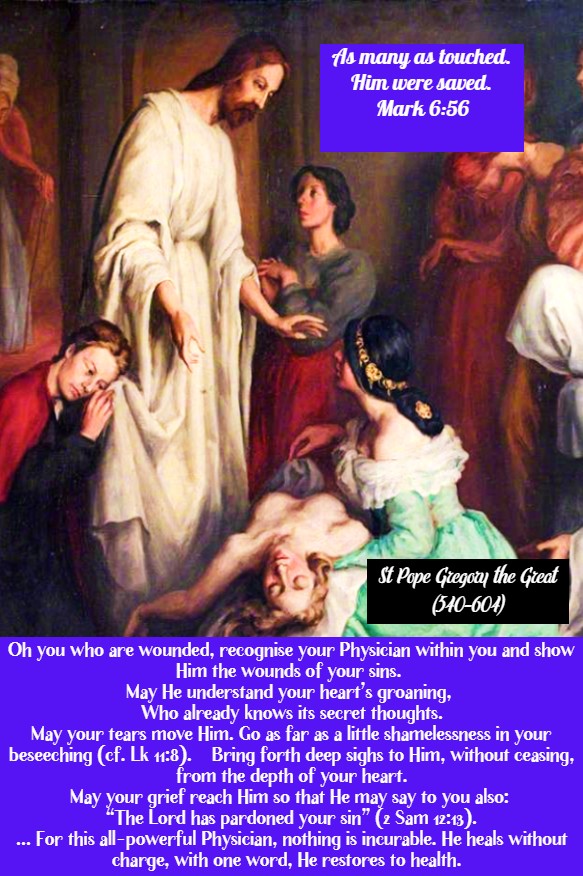
“As many as touched Him were saved” Mark 6:56
The Wounds of the Soul
St Gregory the Great (540-604) Pope, Father & Doctor of the Church
“Let us set before our interior consideration, someone gravely wounded who is about to breathe his last. … Now, the soul’s wound is sin, of which Scripture speaks in these terms: “Wound and welt and gaping gash, not drained or bandaged or eased with salve” (Is 1:6). Oh you who are wounded, recognise your Physician within you and show Him the wounds of your sins. May He understand your heart’s groaning, Who already knows its secret thoughts. May your tears move Him. Go as far as a little shamelessness in your beseeching (cf. Lk 11:8). Bring forth deep sighs to Him, without ceasing, from the depth of your heart.
May your grief reach Him so that He may say to you also : “The Lord has pardoned your sin” (2 Sam 12:13). Cry out with David, who said: “Have mercy on me, O God, in … the greatness of your compassion” (Ps 50[51]:3). It is as though one were to say: “I am in great danger because of an enormous wound, that no doctor can cure, unless the all-powerful Physician comes to help me.” For this all-powerful Physician, nothing is incurable. He heals without charge, with one word, He restores to health. I would have despaired of my wound, were it not that I placed my trust in the Almighty.” (Commentary on Psalm 50)
Our Lenten Journey with the Angels and Saints – 16 February – Friday after Ash Wednesday – The Feast of the Sacred Crown of Thorns of Our Lord Jesus Christ – Isa 58:1-9; Matthew 5:43-48; 6:1-4 – Scripture search here: https://www.drbo.org/
“This, rather, is the fasting I wish: releasing those unjustly bound, untying the thongs of the yoke, setting free the oppressed, breaking every yoke, sharing your bread with the hungry, sheltering the oppressed and the homeless; clothing the naked when you see them and not turning your back on your own. … Then you will call and the Lord will answer, you will cry for help and He will say: ‘Here I am!’ For I, the Lord your God, am merciful.” Isaias 58:6-7 and 9
“But I say to you, Love your enemies, do good to those who hate you and pray for those who persecute and calumniate you …” Matthew 5:44
Love for One’s Enemy
St Thérèse of the Child Jesus and the Holy Face (1873-1897) Carmelite
“There is a Sister in the Community, who has the faculty of displeasing me in everything – in her ways, her words, her character, everything seems very disagreeable to me. And still, she is a holy religious who must be very pleasing to God. Not wishing to give into the natural antipathy I was experiencing, I told myself that charity must not consist in feelings but in works – then, I set myself to doing, for this Sister, that which I would do for the person I loved the most. Each time I met her, I prayed to God for her, offering Him all her virtues and merits. I felt this was pleasing to Jesus, for there is no artist who does not love to receive praise for his works and Jesus, the Artist of souls, is happy when we do not stop at the exterior but, penetrating into the inner sanctuary where He chooses to dwell, we admire its beauty.
I was not content simply, with praying very much for this Sister who gave me so many struggles but, I took care to render her all the services possible and, when I was tempted to answer her in a disagreeable manner, I was content with giving her my most friendly smile and with changing the subject of the conversation. … Frequently, when … I had occasion to work with this Sister, I used to run away like a deserter, whenever my struggles became too violent. As she was absolutely unaware of my feelings for her, never did she suspect the motives for my conduct and she remained convinced that her character was very pleasing to me. One day at recreation, she asked in almost these words: “Would you tell me, Sister Thérèse of the Child Jesus, what attracts you so much toward me; for everytime you look at me, I see you smile?” Ah! what attracted me was Jesus hidden in the depths of her soul; Jesus Who makes sweet what is most bitter!” (Autobiographical Manuscript C 13).
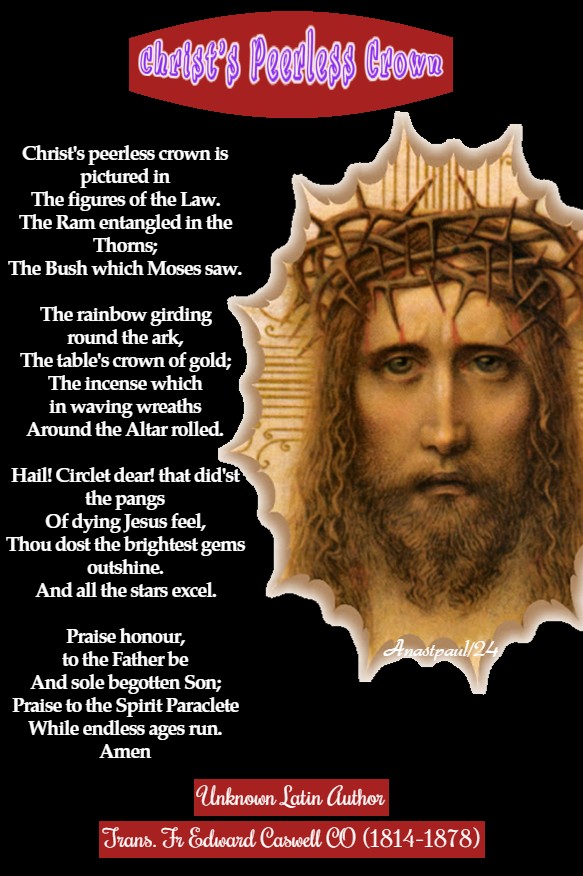
Feast of The Sacred Crown of Thorns of Our Lord Jesus Christ celebrated on the Friday after Ash Wednesday – One of the “Seven Passion Feasts” – celebrated on the the Friday after Ash Wednesday – 16 February 2024
The first Feast in honour of the Sacred Crown of Thorns (Festum susceptionis coronae Domini) was instituted at Paris in 1239, when Saint Louis IX of France brought there the Relic of the Crown of Thorns which was deposited later in the Royal Chapel, erected in 1241–1248 to guard this and other Relics of the Passion. The Feast, observed then on 11 August, though at first special to the Royal Chapel, was gradually observed throughout the north of France.
The Reliquary in France
In the following Century, another festival of the Holy Crown on 4 May, was instituted and was celebrated along with the Feast of the Finding of the True Cross in parts of Spain, Germany and Scandinavia. It was later kept in Spanish Diocese and is observed by the Dominicans on 24 April.
A special Feast on the Monday after Passion Sunday was granted to the Diocese of Freising in Bavaria, by Pope Clement X (1676) and Pope Innocent XI (1689), in honour of the Crown of Thorns of Christ. It was celebrated at Venice in 1766 on the second Friday of March. In 1831 it was adopted at Rome as a Double Major and is observed on the Friday following Ash Wednesday. As it is not kept universally, the Mass and Office are placed in the appendices to the Breviary and the Missal. The Hymns of the Office, which is taken from the 17th Century Gallican Breviary of Paris.
Artist – Carl Heinrich Bloch
This Feast became a part of The Seven Passion Feasts – special Masses related to the Passion of Christ which are celebrated as Feasts on particular days each week, from Septuagesima to the Fourth Week in Lent.
The Feasts and their appointed days are as follows: The Prayer of Our Lord Jesus Christ (in the Garden of Gethsemane)—on the Tuesday after Septuagesima Sunday. The Commemoration of the Passion of Our Lord Jesus Christ (Votive Mass of the Passion)—on the Tuesday after Sexagesima Sunday. The Sacred Crown of Thorns of Our Lord Jesus Christ—on the Friday after Ash Wednesday. The Sacred Lance and Nails of Our Lord Jesus Christ—Ember Friday in Lent (1st Week of Lent). The Most Sacred Shroud of Our Lord Jesus Christ—on Friday of the Second Week in Lent. The Five Sacred Wounds of Our Lord Jesus Christ—on Friday of the Third Week in Lent. The Most Precious Blood of Our Lord Jesus Christ—on Friday of the Fourth Week in Lent.
These Feasts are crowned by the observance of The Compassion of Our Lady (The Seven Dolours of Our Lady) on Friday in Passion Week—1 week before Good Friday. In this way the Mystery of Christ’s Passion is continually kept before the eyes of the faithful as they journeyed through Lent.
These Feasts no longer form part of the Vatican II Roman Missal.
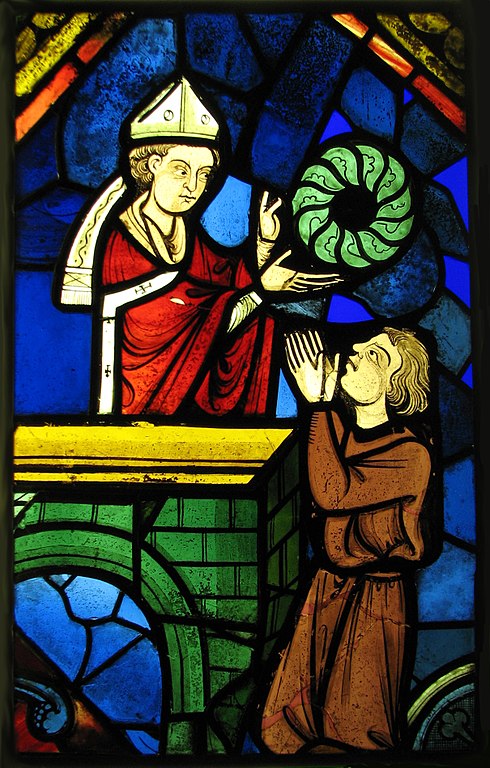
A stained glass window depicts veneration of the Crown of Thorns.
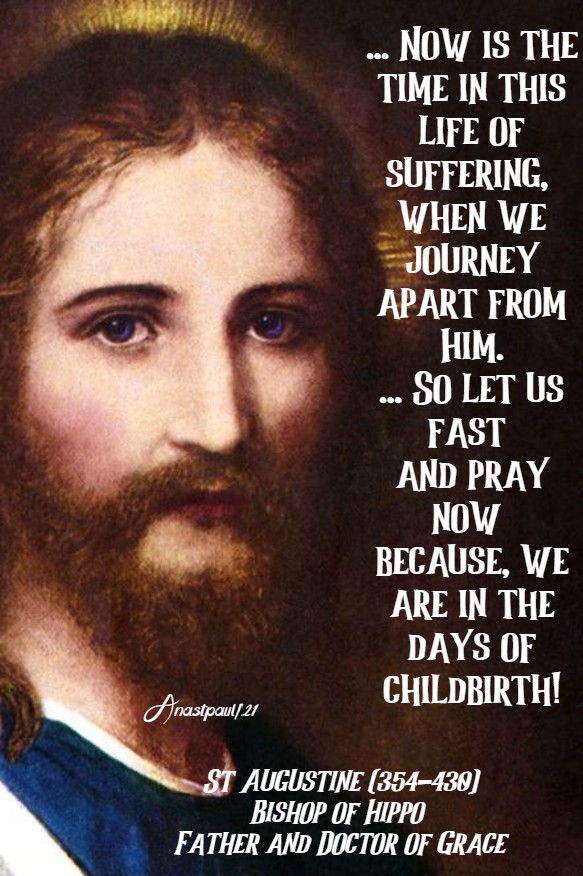
“… Now is the time in this life of suffering, when we journey apart from Him. … So let us fast and pray now because, we are in the days of childbirth!”
“Fasting cleanses the soul, raises the mind, subjects one’s flesh to the spirit, renders the heart contrite and humble, scatters the clouds of concupiscence, quenches the fire of lust and kindles the true light of chastity. Enter again into yourself!”
St Augustine (354-430) Father and Doctor of Grace
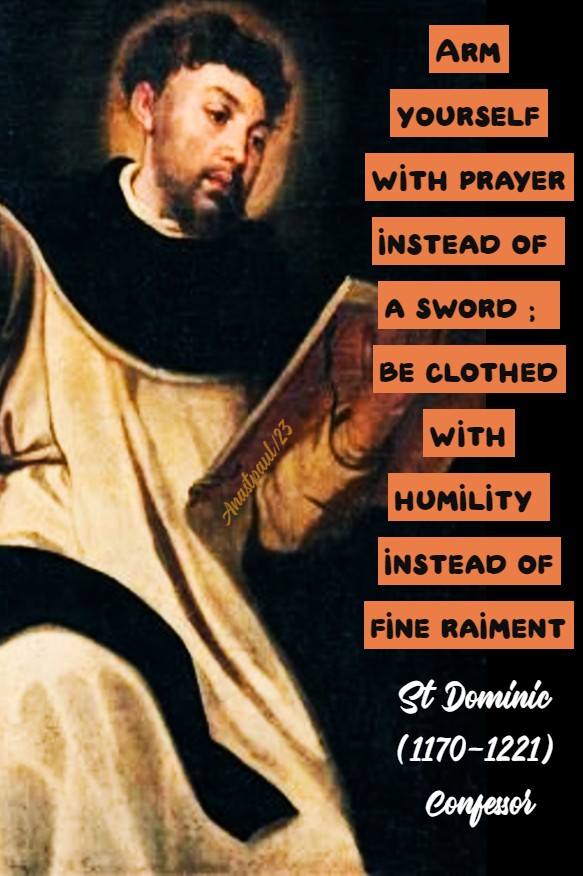
“Arm yourself with prayer instead of a sword; be clothed with humility instead of fine raiment.”
St Dominic OP (1170-1221)
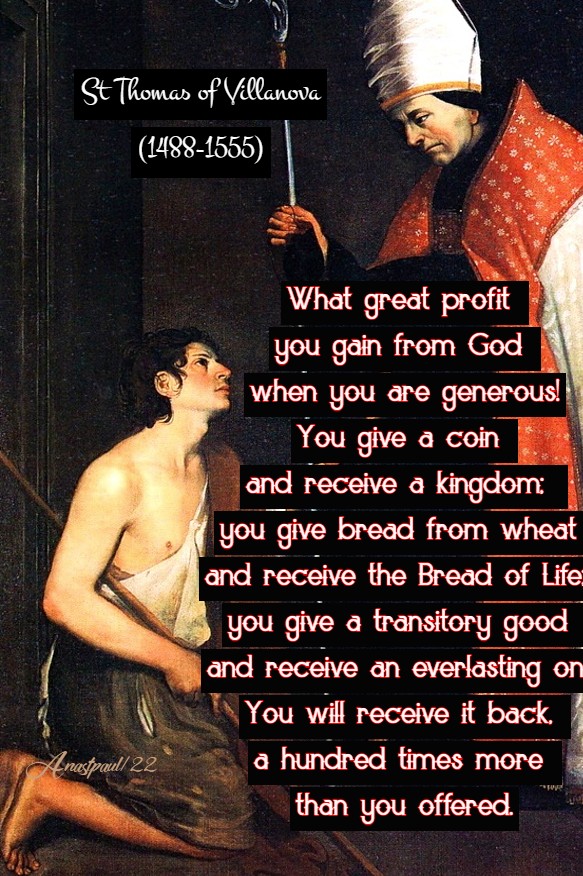
“What great profit you gain from God when you are generous! You give a coin and receive a Kingdom; you give bread from wheat and receive the Bread of Life; you give a transitory good and receive an everlasting one. You will receive it back, a hundred times more than you offered.”
St Thomas of Villanova (1488-1555)
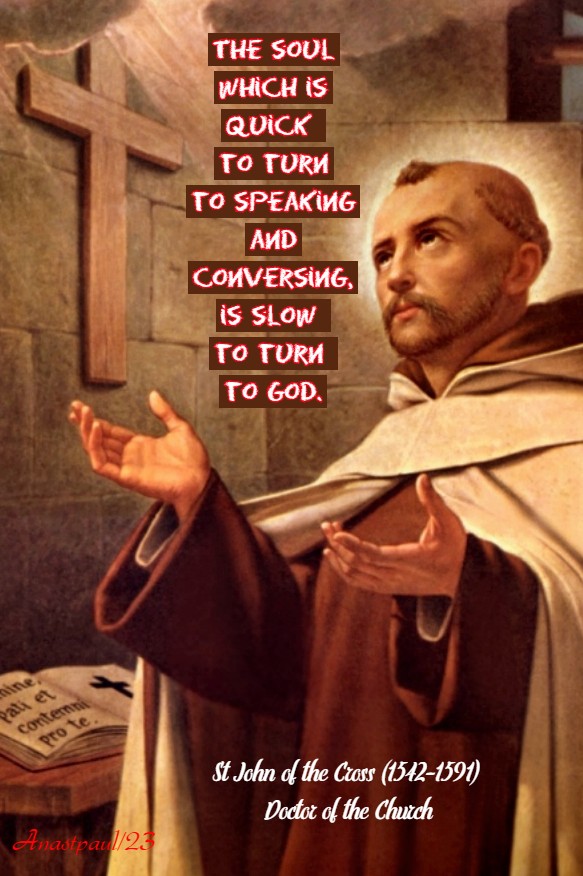
“The soul which is quick to turn to speaking and conversing, is slow to turn to God.”
St John of the Cross (1542-1591) Doctor of the Church
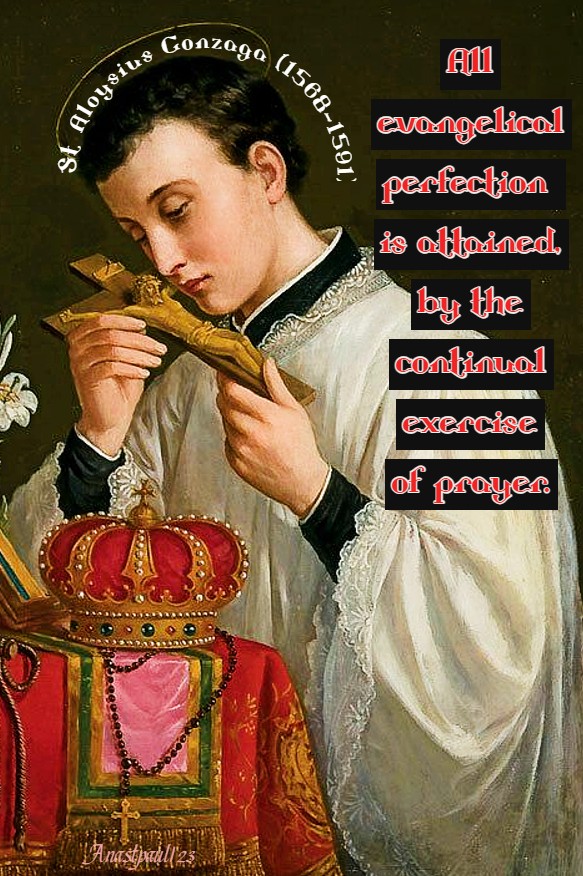
“All evangelical perfection is attained, by the continual exercise of prayer.”
St Aloysius Gonzaga SJ (1568-1591)
“As well as the corporal works, there are the spiritual works of mercy. Everyone is not obliged to undertake the former, that would be impossible, for instance, for the desitute, the sick, the aged. But, everyone is OBLIGED to undertake the latter. Sometimes a kind word is more valuable than money!” … Remember, however, that the practice of the spiritual works of mercy, does not excuse us from the exercise of material works of charity, wherever that is possible for us (Cf Js 2:16).
Ash Thursday – 15 February – Our Lenten Journey With The Angels and the Saints – Isaias 38:1-6; Matthew 8:5-13 – Scripture search here: https://www.drbo.org/
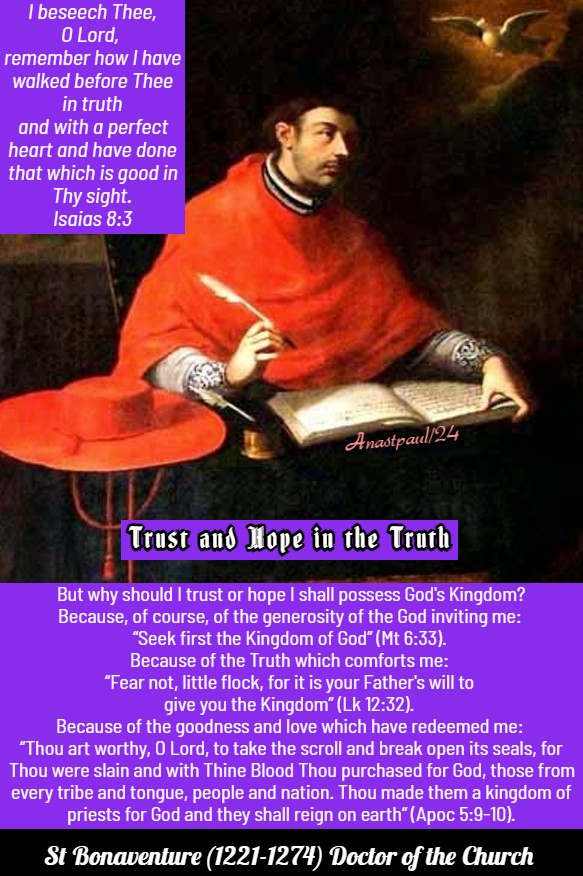
“I beseech Thee, O Lord, remember how I have walked before Thee in truth and with a perfect heart and have done that which is good in Thy sight.”
Isaias 8:3
“Many shall come from the east and the west and shall sit down with Abraham and Isaac and Jacob in the Kingdom of Heaven …”
Matthew 8:11
Trust and Hope in the Truth
St Bonaventure (1221-1274) Franciscan, Doctor of the Church
“The Kingdom of Heaven is as broad as the breadth of endless charity. Although, it is composed of individuals, “of every language and people, of every tribe and nation” (Apoc 5:9) yet, none is found wanting because, to the contrary, it expands and the glory of each is increased all the more. Which prompted Saint Augustine to say that: “When many people share the same joy, the joy of each is all the greater because each one inflames the other.”
This breadth of the Kingdom is expressed in these words of Scripture: “Ask and I shall give you the nations for your heritage” (Ps 2:8) and, “Many shall come from east and west and take their places with Abraham, Isaac and Jacob in the Kingdom of Heaven.” (Matthew 8:11). Neither the multitude of those who long for it, nor the multitude of those who now live, nor the multitude of those who possess it, nor the multitude of those arriving, can restrict the space in this Kingdom, nor compromise anyone.
But why should I trust or hope I shall possess God’s Kingdom? Because, of course, of the generosity of the God inviting me: “Seek first the Kingdom of God” (Mt 6:33). Because of the Truth which comforts me: “Fear not, little flock, for it is your Father’s will to give you the Kingdom” (Lk 12:32). Because of the goodness and love which have redeemed me: “Thou art worthy, O Lord, to take the scroll and break open its seals, for Thou were slain and with Thine Blood Thou purchased for God, those from every tribe and tongue, people and nation. Thou made them a kingdom of priests for God and they shall reign on earth“ (Apoc 5:9-10).” (On the Kingdom of the Gospel)
“What dost thou have that thou hast not received?”
1 Corinthians 4:7
“She did not leave the temple, serving with fastings and prayers, night and day.”
Luke 2:37
“If, in holy Scripture, Christ is the true Sun and the true Day, there is no hour when Christians should not adore God frequently and constantly, so that we, who are in Christ, that is, in the true Sun and true Day, should be persevering, throughout the whole day, in our petitions and prayer. And when, in the course of time, the revolving night returns, there can be no harm from the nocturnal shades, for those who pray because, to the sons of Light (1 Thes 5:5), even in the night there is day! For when is he without light who has Light in his heart? Or when does he not have sun and day to whom Christ is Sun and Day?”
St Cyprian of Carthage (200-258) Martyr, Father of the Church
“… Behold, now is the acceptable time. behold, now is the day of salvation (2 Cor 6). And so, you must be more earnest in prayer and in alms-giving, in fasting and in watching. He that until now has given alms, in these days, let him give more – for as water quencheth a flaming fire, so does almsgiving wipe out sin (Eccles 3:3). He that, until now, fasted and prayed, let him fast and pray still more – for there are certain sins which are not cast out, except by prayer and fasting (Mc 27:20).”
“Fasting is the death of sin, the destruction of our crimes and the remedy of our salvation.”
St Ambrose (340-397) Father & Doctor of the Church
“Listen to the Lord’s appeal: ‘Come, then, return to Me and learn to know Me as your Father, Who repays good for evil, love for injury and boundless charity for piercing wounds!”
St Peter Chrysologus (c400-450) “Golden Words” Father & Doctor of the Church
“Are we going to neglect our own salvation? Let us show great compassion towards the poor so as to be made worthy of possessing good things to come for all eternity!”
St John Chrysostom (347-407) Father and Doctor of the Church
“For the devil may tempt the good but he cannot find rest in them; for he is shaken violently and upset and driven out – now by their prayers, now by their tears of repentance and now. by their almsgiving and similar good works.”
St Bruno (c1030-1101)
“If you want God to hear your prayers, hear the voice of the poor. If you wish God to anticipate your wants, provide for those of the need, without waiting for them to ask you. Especially, anticipate the needs of those, who are ashamed to beg. To make them ask for alms, is to make them buy it!”
St Thomas of Villanova (1488-1555)
“The sacred gift of prayer is already in the Right Hand of the Saviour; as soon as ever you shall have emptied yourself of self, He will pour it into your heart!”
Ash Wednesday – 14 February – Our Lenten Journey With The Angels and the Saints Begins – Joel 2:12-19, Matthew 6:16-21 – Scripture search here: https://www.drbo.org/
“Return to Me with all your heart, with fasting and weeping and mourning; rend your hearts, not your garments and return to the Lord, your God.” Joel 2:12-13
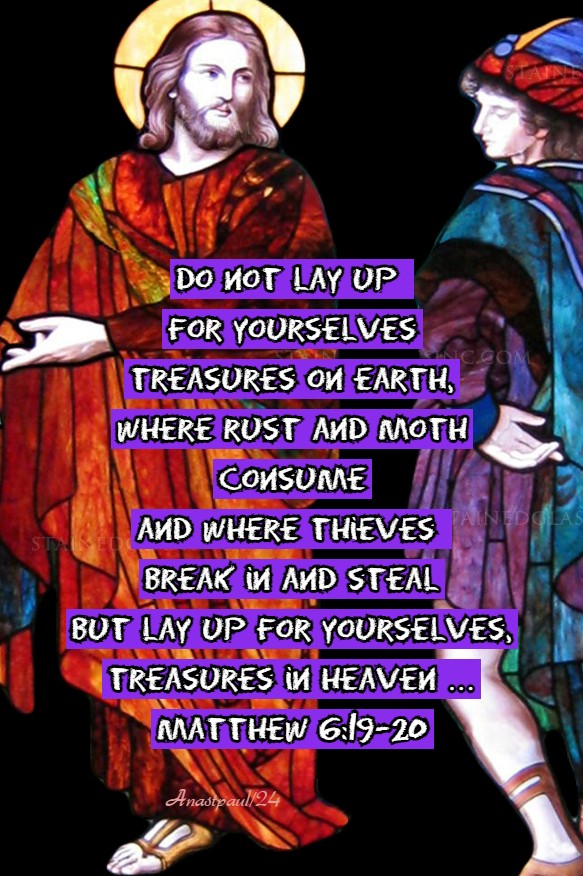
“Do not lay up for yourselves treasures on earth, where rust and moth consume and where thieves break in and steal but lay up for yourselves, treasures in Heaven …”
Matthew 6:19-20
Prayer, Fasting and Mercy
St Peter Chrysologus (c400-450) Bishop of Ravenna “Doctor of Homilies” Father and Doctor of the Church
“There are three things, my brethren, by which faith stands firm, devotion remains constant and virtue endures. They are prayer, fasting and mercy. Prayer knocks at the door, fasting obtains, mercy receives. Prayer, mercy and fasting: these three are one and they give life to each other.
Fasting is the soul of prayer, mercy is the lifeblood of fasting. Let no-one try to separate them; they cannot be separated. If you have only one of them, or not all together, you have nothing. So if you pray, fast; if you fast, show mercy; if you want your petition to be heard, hear the petition of others. If you do not close your ear to others you open God’s ear to yourself.
When you fast, see the fasting of others. If you want God to know that you are hungry, know that another is hungry. If you hope for mercy, show mercy. If you look for kindness, show kindness. If you want to receive, give. If you ask for yourself, that which you deny to others, your asking is a mockery.
Let this be the pattern for all men when they practice mercy – show mercy to others in the same way, with the same generosity, with the same promptness, as you wish others to show mercy to you.
Therefore, let prayer, mercy and fasting be one single plea to God on our behalf, one speech in our defence, a threefold united prayer in our favour.” – (An excerpt from his Sermon 43)



























 AnaStpaul
You must be logged in to post a comment.