Thought for the Day – 28 December – Meditations with Fr Richard Frederick Clarke SJ (1839-1900)
Meditations for Advent From “The Devout Year” By Fr Richard Frederick Clarke SJ (1839-1900)
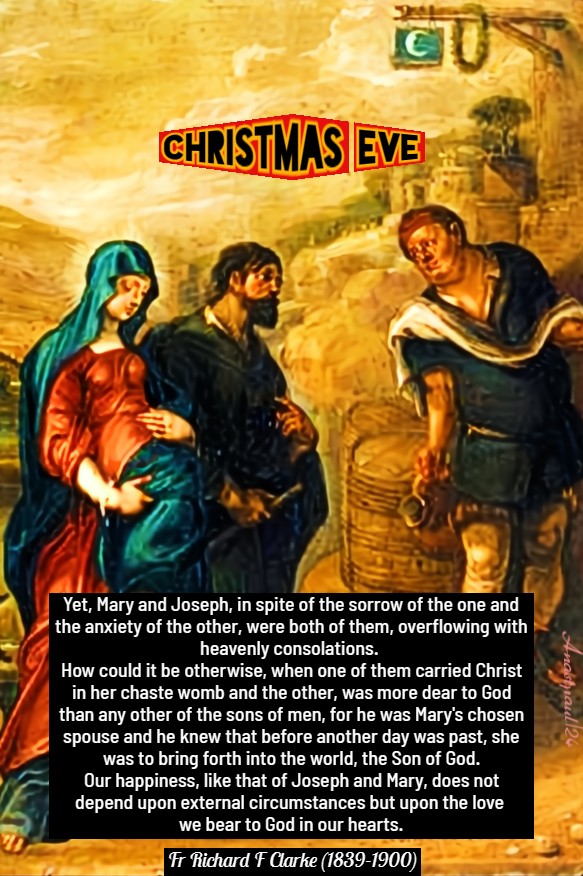
Christmas Eve
+1. How did Mary and Joseph spend the first Christmas Eve St Joseph spent it in a fruitless attempt to find a lodging for his holy spouse Vainly he sought for a place in the caravanserais or inn, where travellers were received. Vainly he went from house to house in Bethlehem. Everywhere he was disappointed. Thus it is how God prepares His Saints and chosen ones for some unique blessing. We must not be cast down by the fruitlessness of our efforts. It is a sign that some great grace is close at hand!
+2. Mary meantime, was patiently waiting. She was simply praying that God’s will might be done, whatever suffering it might bring to her. She was offering herself to God , to be used by Him as He should see fit. She was making acts of perfect conformity to the Will of God in all things. Blessed are those who wait patiently in such a spirit. God will soon fulfil all the desires of their heart.
+3. Yet, Mary and Joseph, in spite of the sorrow of the one and the anxiety of the other, were both of them, overflowing with heavenly consolations. How could it be otherwise, when one of them carried Christ in her chaste womb and the other, was more dear to God than any other of the sons of men, for he was Mary’s chosen spouse and he knew that before another day was past, she was to bring forth into the world, the Son of God. Our happiness, like that of Joseph and Mary, does not depend upon external circumstances but upon the love we bear to God in our hearts.
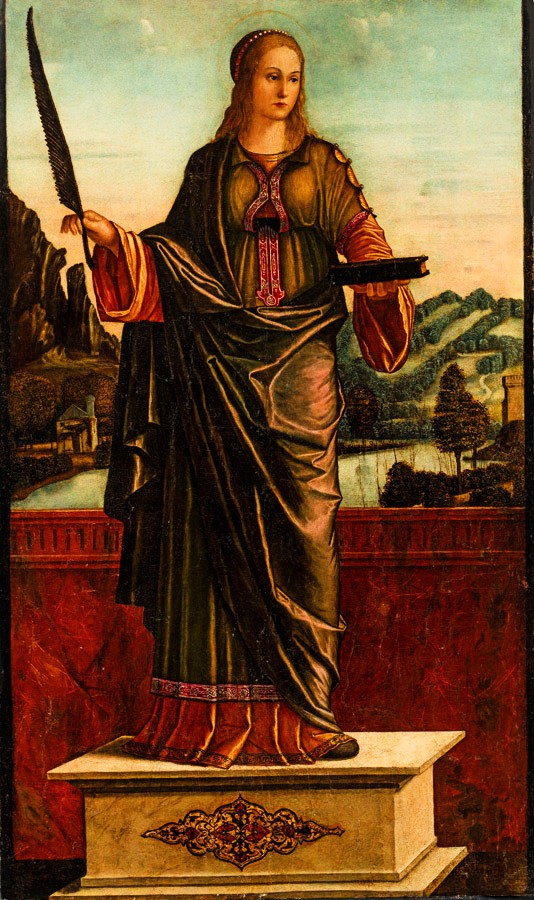
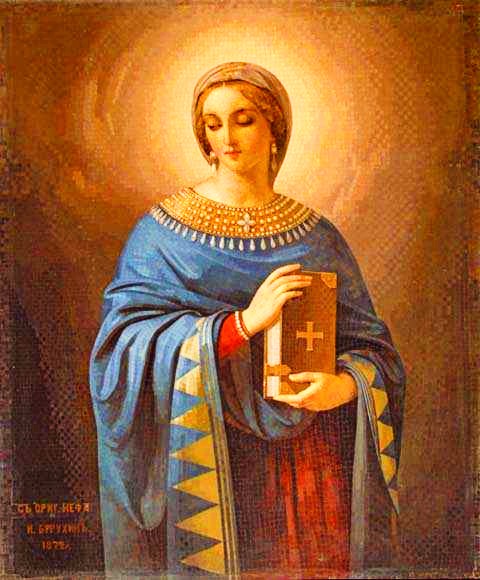
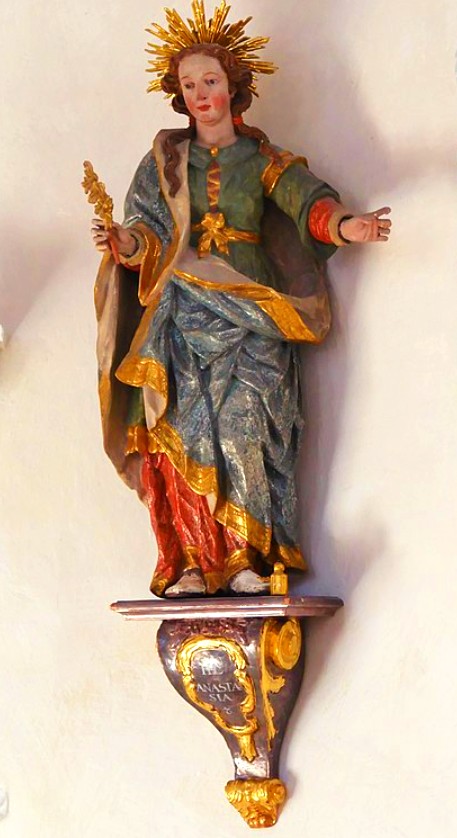
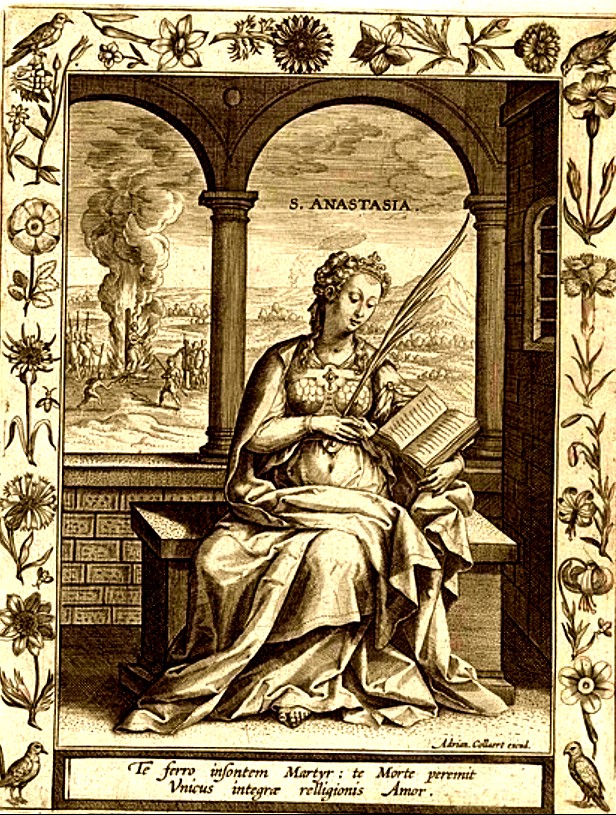
Saint of the Day – 25 December – Saint Anastasia of Sirmium (Died 304) Widow, Martyr. Patronages – of martyrs, weavers, widows, Borgorose, Italy, Burana in Kyrgyzstan. She is one of seven women who, along with Blessed Virgin Mary, are commemorated by name in the Roman Canon of the Mass.
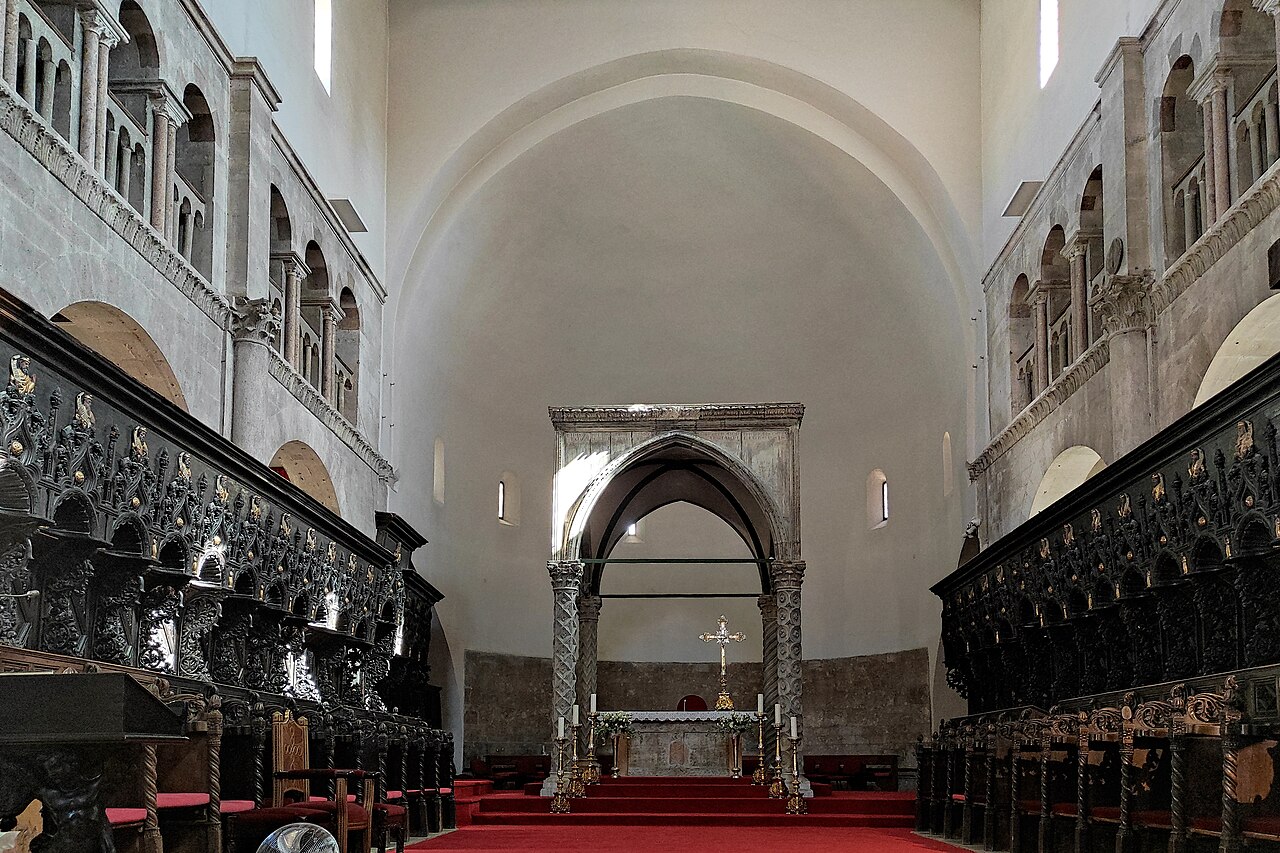
From a Triptych in Zadar Cathedral
Before the liturgical reforms of the 20th Century, this Martyr enjoyed the distinction, unique in the Roman Liturgy, of having a special commemoration in the second Mass on Christmas Day. Since the time of St Gregory the Great (Papacy 590-604) and celebrated by the Pope himself, her name was also inserted into the Roman Canon.
The Roman Martyrology reads today: “The birthday of St Anastasia, who, in the time of Diocletian, first suffered a severed and harsh imprisonment on the part of her her husband, Publius, in which, however, she was much consoled and encouraged by the Confessor of Christ, St Chrysogonus. Afterwards, she was thrown into prison again by order of Florus, Prefect of Illyria and, finally having her hands and feet stretched out, she was tied to stakes with a fire kindled about her in the midst of which, she ended her Martyrdom on the Island of Palmarola, whither she had been conveyed with two hundred men and seventy women, who have made Martyrdom a glorious thing by the various kinds of death they so courageously endured. ”
Anastasia, daughter of Pretestato a noble Roman, was a native of Sirmium, Pannonia, a Roman City in what is now Yugoslavia. She was the wife of Publius, a pagan, nevertheless, she was entirely devoted to assisting the Christians of Rome, who were forbidden, by an unjust law, to carry out any profession. Her husband, who was very much against her good works, cruelly punished her every disobedience but she was comforted by the advice of St Chrysogonus, who was also persecuted and imprisoned.
After her husband’s death, she was able to exercise her Christian charity more freely. Her spiritual advisor St Chrysogonus, had been arrested and sent to the Imperial Court in Aquileia, Anastasia accompanied him on the journey from Rome and witnessed the interrogation and then his beheading, the body was abandoned at the home of the three Christian sisters Agape, Chionia, Irene, who with the help of the holy priest Zoilus, gave him burial and for this they were all arrested.
Then Diocletian left for Macedonia taking with him all the imprisoned Christians and with them Anastasia; from Macedonia he moved towards Sirmium in Illyria, here the matron Theodota and her three sons were reported to him as fugitive Christians and he had them imprisoned.
The interest which Anastasia had in the fate of the four, aroused the suspicion of the pagans who reported her to the prefect Probus; these, after interrogations and vain attempts to make her renounce Christ, kept her in chains for a month and then put her on a pierced ship, together with other Christians and criminals and sent it out to sea to a certain death. But they miraculously escaped the stormy seas and landed at Palmaria, where they were again captured and offered freedom in exchange for honouring the gods. After their consistent refusal they were all massacred, while Anastasia was burned alive. Her ashes were collected by a woman named Apollonia who placed them in a small Church in her garden.
Although this ‘passio’ is probably partly enhanced and imagined, it is certain that the cult of a Martyr St Anastasia in Sirmium, is very ancient and then spread to Constantinople and Rome. In Sirmium, her Relics were venerated until about 460, when then, the Bishop Gennadius had them transferred to Constantinople to the Church that later took her name. In Rome, since the 4th Century, there was a Titular Church, already dedicated to her, right in the centre of pagan memories (Circus Maximus, on the Palatine).
She is depicted without particular attributes among the virgins in procession in the Church of St Apollinare Nuovo, also present on the bronze door of St Mark in Venice, in the Cathedral of Zadar in Sirmium (Yugoslavia) and others. In ancient times various Churches were dedicated to her, including that of Verona and the other very ancient and important for its historical and archaeological aspect, in Rome, already mentioned which, in the 7th Century, was already listed as the third most important Church after the Lateran and St Mary Major. The Cathedral of Zadar (Sirmium) is also dedicated to her.
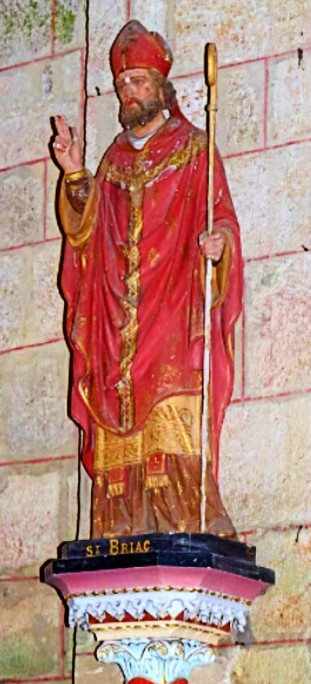
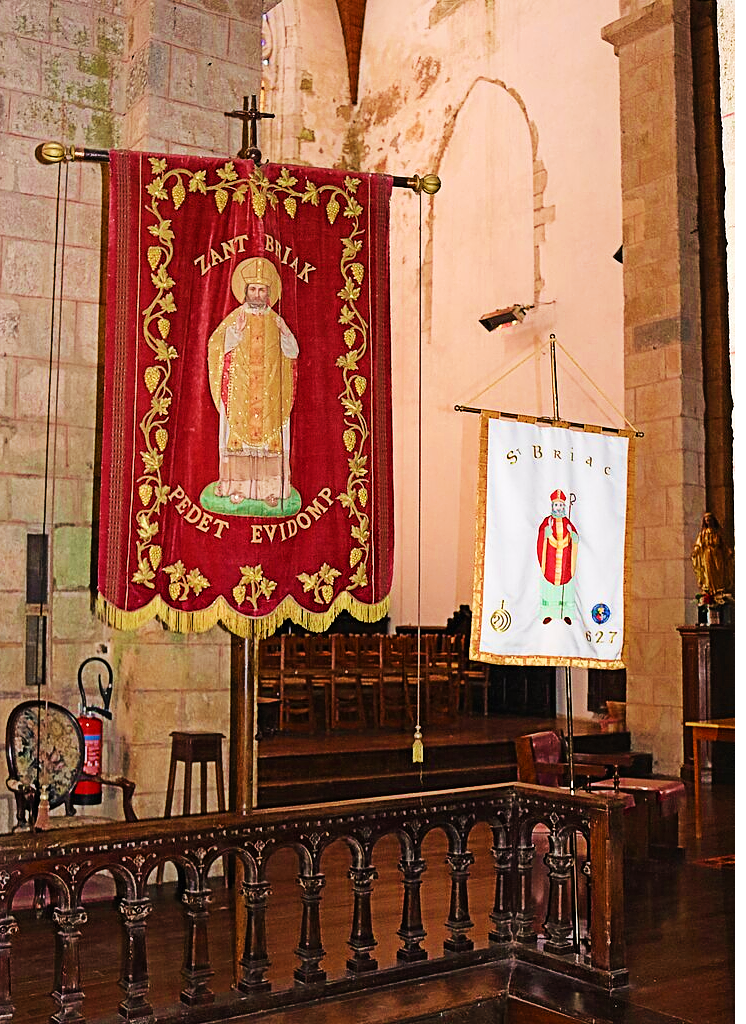
Saint of the Day – 17 December – St Briarch (Died 627) Abbot, Priest, Missionary, Founder of the Monastery of Bourbriac from which a village grew (Briarch Village), Hermit Born in Ireland and died in 627 in Bourbiac, France of natural causes. Patronages – against epilepsy, against mental illness, against headaches. Also known as – Briarch of Brittany, Briach…Briac…Briachus…Briag…Briagenn…Briarch of Bourbriac.
In the 6th Century, the Benedictines spread throughout Europe, Monks who lived according to the Rule of Saint Benedict, based on prayer and work. Even in Ireland, the ideas of the Italian Monk captured the interest of many young men.
This is the case of the Saint celebrated today – the nobleman Briarch. He abandoned luxury, wealth and a brilliant career and left his native Island home, to go to Wales. Here, his monastic life began under the guidance and direction of St Tual (Died c560) The young nobleman, who had become a Priest, decided to cross the sea once again and reached Brittany in North-west France, which at that time was called Armorica.
Briaco was not alone; he was accompanied by seventy fellow Monks. In this area, the Priest built a Monastery around which a village was born, the current French City of Bourbriac (Briarch Village).
In the Monastery, the Monks prayed, cultivated the land, copied the Sacred Scriptures and other Latin and Greek spiritual works by hand and welcomed the many in need of food, care and protection. The Monks also taught the locals how to cultivate the fields and how to read and write. Monasteries thus become places of peace and work for many desperate people fleeing from invasions.
After some time, Briarch wished to embrace solitude in order to grow in sanctity and to unite himself to God. He took refuge in the forest and lived as a Hermit. He prayed, fasted and immersed himself in mediationon. His isolation did not mean, however, running away from people, towards whom Briarch was always kind.
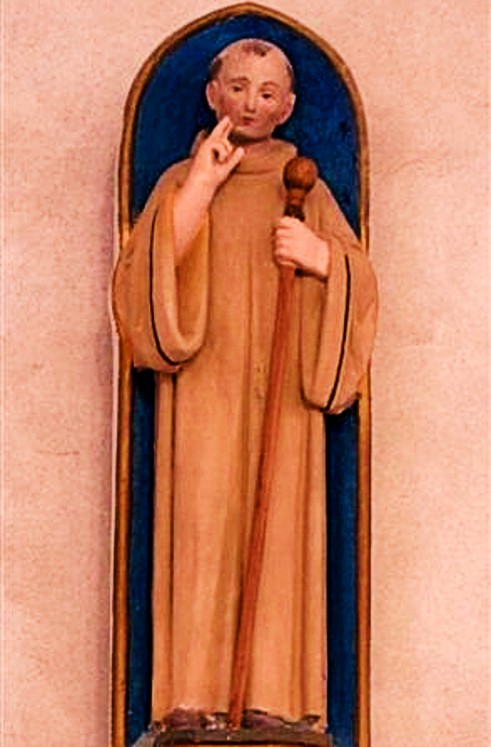
Celebrating St Briarch today on his Feast
In fact, during his stay in the forest, many miracles occurred due to his intercession. He made a sick person wear his habit and immediately a miraculous cure occurred. Another individual, suffering from obsessive thoughts which caused him to suffer great anxiety, was healed by the prayers of the Irish Hermit. On another occasion, a man, bitten by a poisonous snake, was immediately saved from death by the intervention of Briarch.
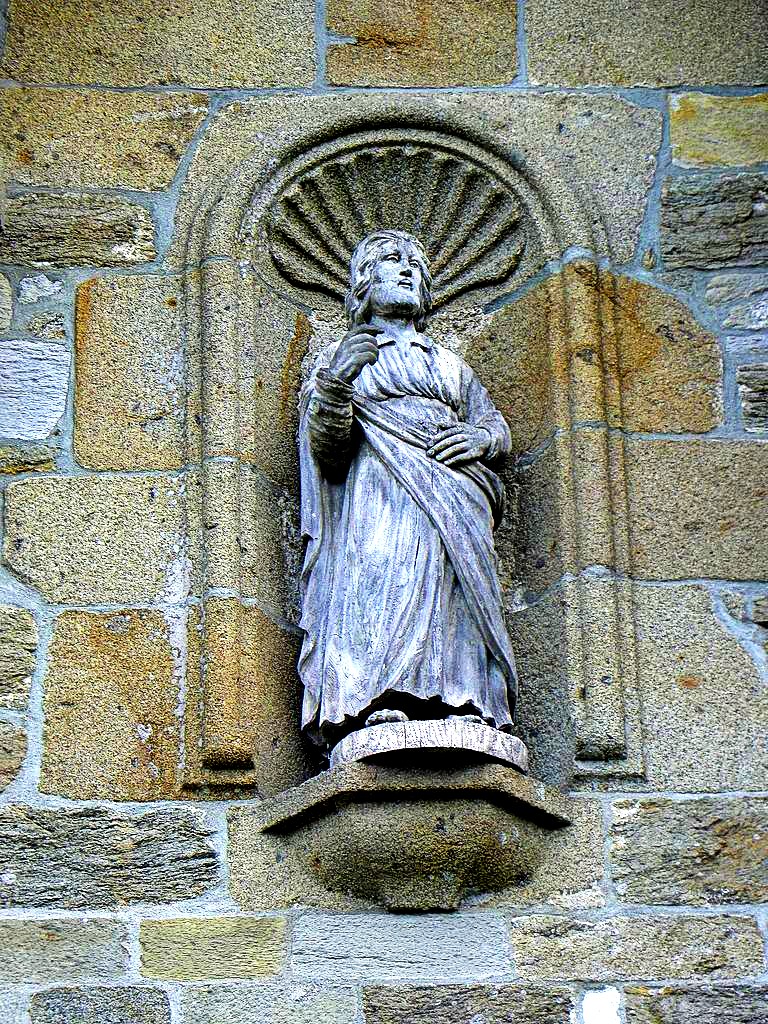
On the facade of the St Briac Church at Saint-Briac-sur-Mer
Briarch then undertook another journey, this time as a Pilgrim to Rome to meet Pope Pelagius II and to visit the holy places. On his return however in 627, he stopped in the South of France, in Arles, some sources say he died here and others that he did reach his beloved Monastery in Brittany, where he died.
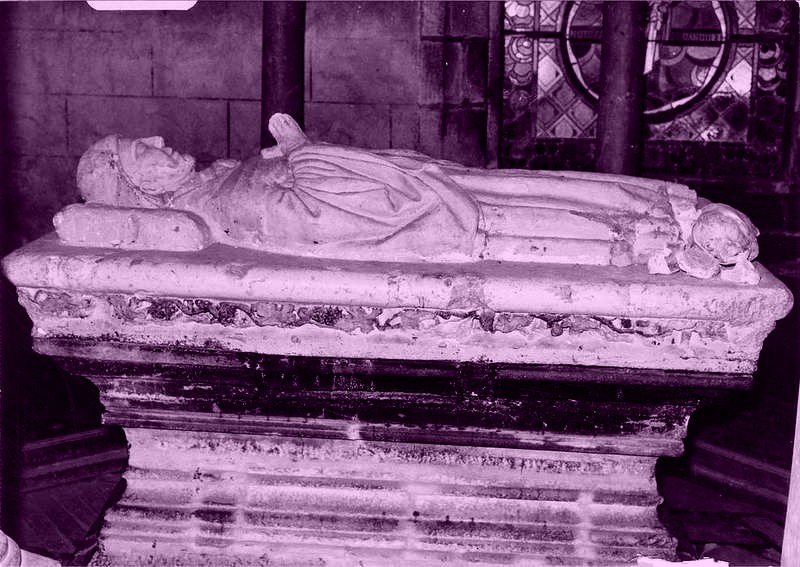
Briarch is buried in the Church of Bourbriac. There is still a Sarcophagus from the Merovingian period, probably the stone coffin in which he was laid to rest. Under the Church is the Crypt from the 11th Century, probably built as Briarcc’s final resting place, where believers could venerate him without disturbing the service in the Church above. A spring can still be seen near the Church.
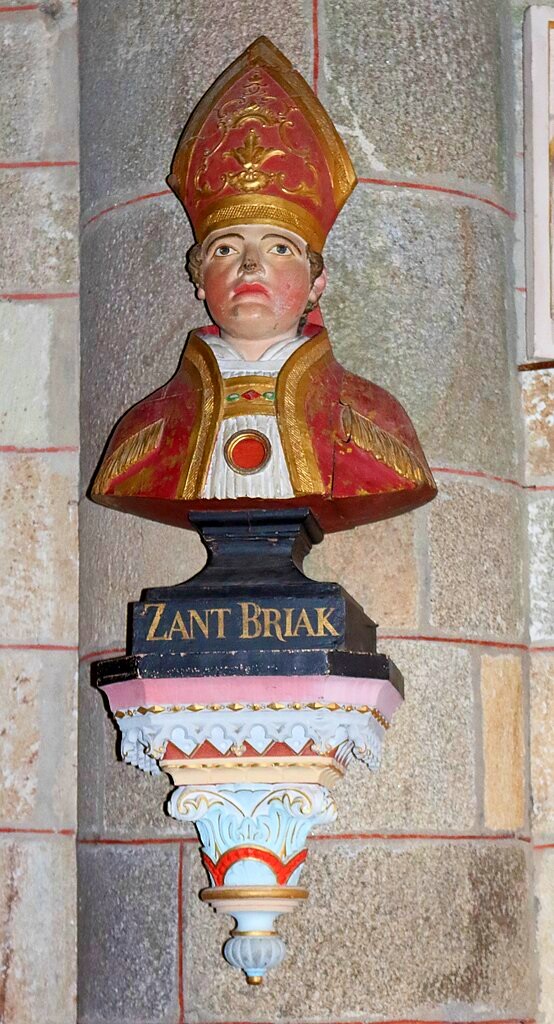
A pardon (penitential procession) is held on Ascension Day. On that occasion, the Reliquary of St Briarch, in the form of a bust is carried around the former Monastery grounds. There are numerous Churches, Towns, Villaes, regions named after St Briarch in France.
The Reliquary of St Briarch used in the Pardon Procession
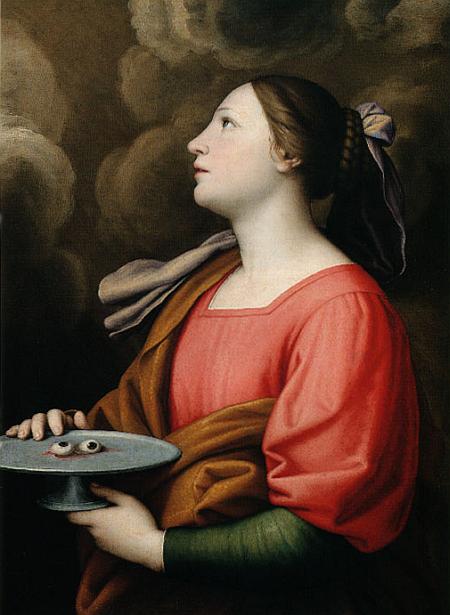
Quote/s of the Day – 13 December – St Lucy (of Syracuse) – St Lucy/Lucia of Syracuse (c283-304) Virgin and Martyr Patron of the blind, eye disorders, martyrs – The Feast Day of St Lucy AND St Odilia of Alsace (c660-720) Virgin Abbess, born blind, but was miraculously granted her sight, miracle-worker. The Life of St Odilia, another Patron against eye diseases and partial sightedness, also ear ailments. https://anastpaul.com/2021/12/13/saint-of-the-day-13-december-saint-odilia-of-alsace-c-660-720/
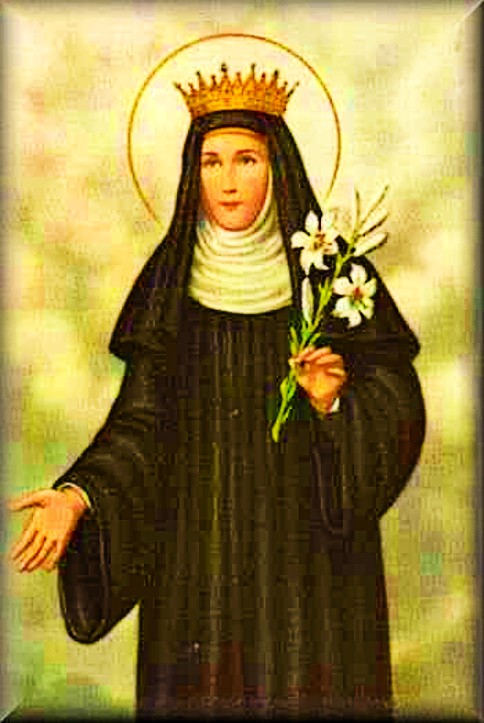
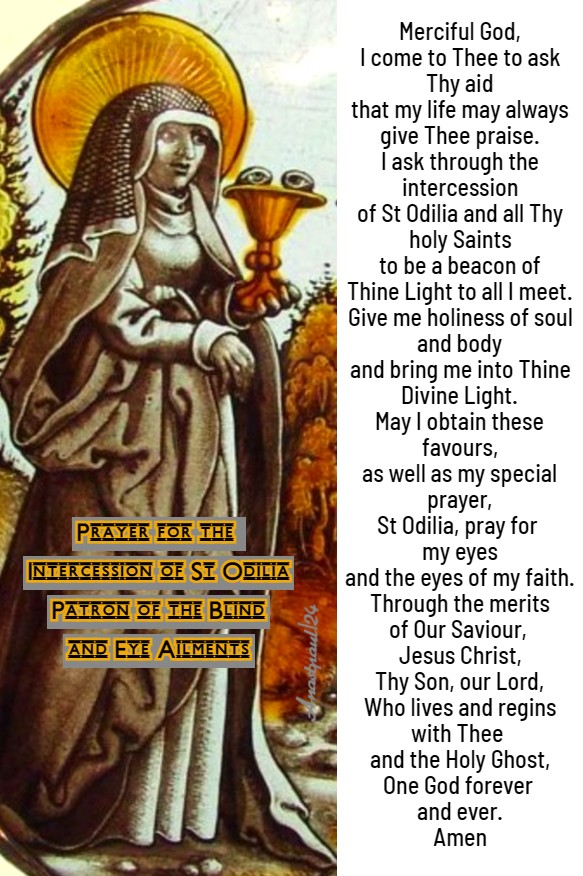
Prayer for the Intercession of St Odilia
Merciful God, I come to Thee to ask Thy aid that my life may always give Thee praise. I ask through the intercession of St Odilia and all Thy holy Saints to be a beacon of Thine Light to all I meet. Give me holiness of soul and body and bring me into Thine Divine Light. May I obtain these favours, as well as my special prayer, St Odilia, pray for my eyes and the eyes of my faith. Through the merits of Our Saviour, Jesus Christ, Thy Son, our Lord, Who lives and regins with Thee and the Holy Ghost, One God forever and ever. Amen
And another prayer to St Lucy
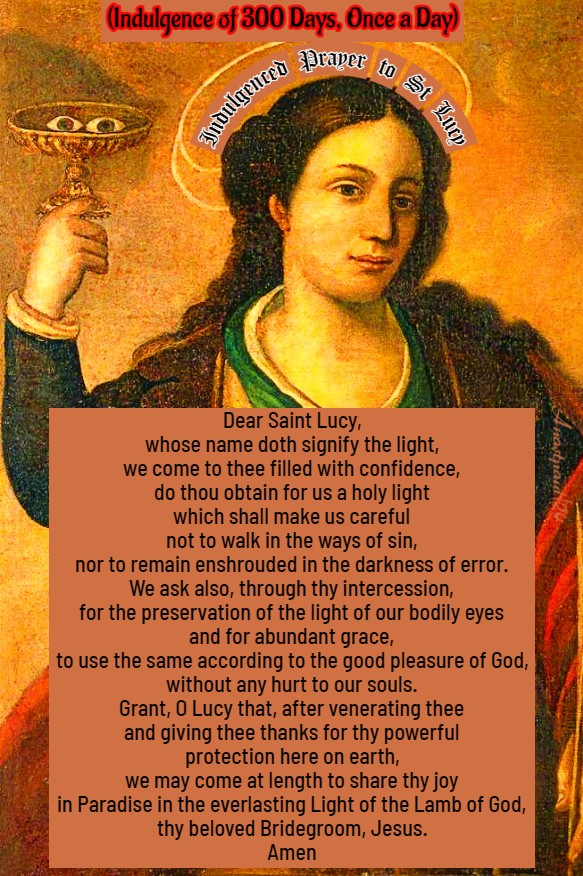
Indulgenced Prayer to St Lucy (Indulgence of 300 Days, Once a Day)
Dear Saint Lucy, whose name doth signify the light, we come to thee filled with confidence, do thou obtain for us a holy light which shall make us careful not to walk in the ways of sin, nor to remain enshrouded in the darkness of error. We ask also, through thy intercession, for the preservation of the light of our bodily eyes and for abundant grace, to use the same according to the good pleasure of God, without any hurt to our souls. Grant, O Lucy that, after venerating thee and giving thee thanks for thy powerful protection here on earth, we may come at length to share thy joy in Paradise in the everlasting Light of the Lamb of God, thy beloved Bridegroom, Jesus. Amen
Our Morning Offering – 13 December – The Feast of St Lucy, Virgin Martyr, Patron Against Eye Diseases and Blindness
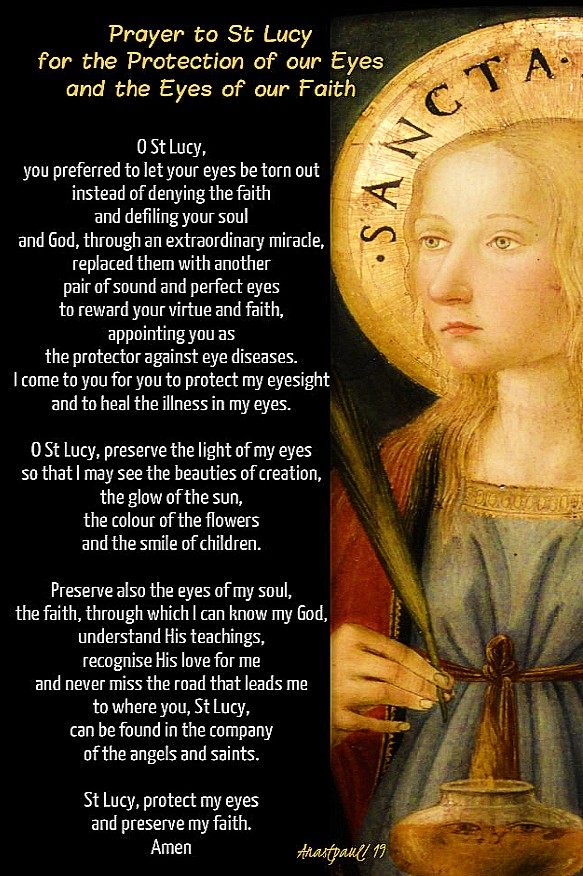
Prayer to St Lucy [Prayer to St Lucy for the Protection of our Eys and the Eys of our Faith]
O St Lucy, you preferred to let your eyes be torn out instead of denying the faith and defiling your soul and God, through an extraordinary miracle, replaced them with another pair of sound and perfect eyes to reward your virtue and faith, appointing you as the protector against eye diseases. I come to you for you to protect my eyesight and to heal the illness in my eyes.
O St Lucy, preserve the light of my eyes so that I may see the beauties of creation, the glow of the sun, the colour of the flowers and the smile of children.
Preserve also the eyes of my soul, the faith, through which, I can know my God, understand His teachings, recognise His love for me and never miss the road that leads me to where you, St Lucy, can be found in the company of the angels and saints. St Lucy, protect my eyes and preserve my faith.
St Lucy, “Bringer of Light” Pray for those with eye ailments, Pray for us all!
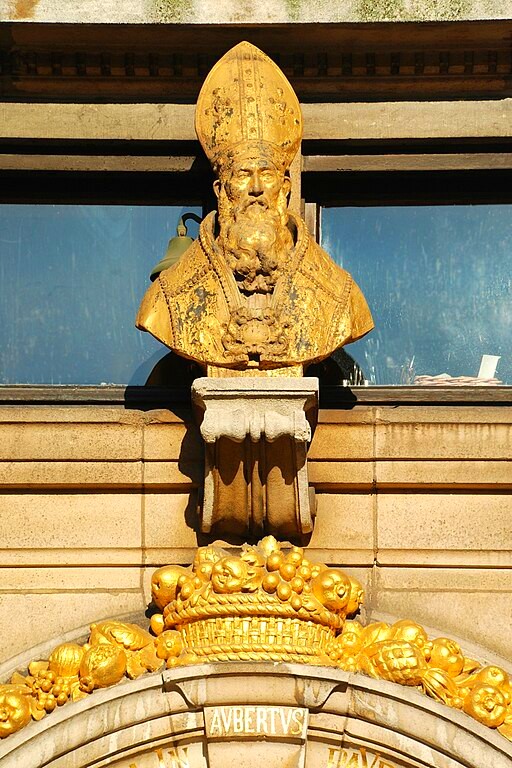
Saint of the Day – 13 December – Saint Aubertus of Cambrai-Arras (c600-c669) Bishop and Confessor, Monk and Hermit, Apostle of the poor, Founder of several Churches and Monateries in the region of what is now Belgium. Born in France in c600 and died there in c669 of natural causes. Patronages – of bakers and confectioners, merchants, Cambrai, France, Ghent, Belgium, Hainault, Belgium. Also known as – Aubert of Cambrai, Aubert of Cambrai-Arras, Aubert of Avranches , Albert…Audebertus…Authbert…Autbertus…Obrecht…
The Roman Martyrology reads today: “At Cambrai, in France, St Aubertus, Bishop and Confessor.”
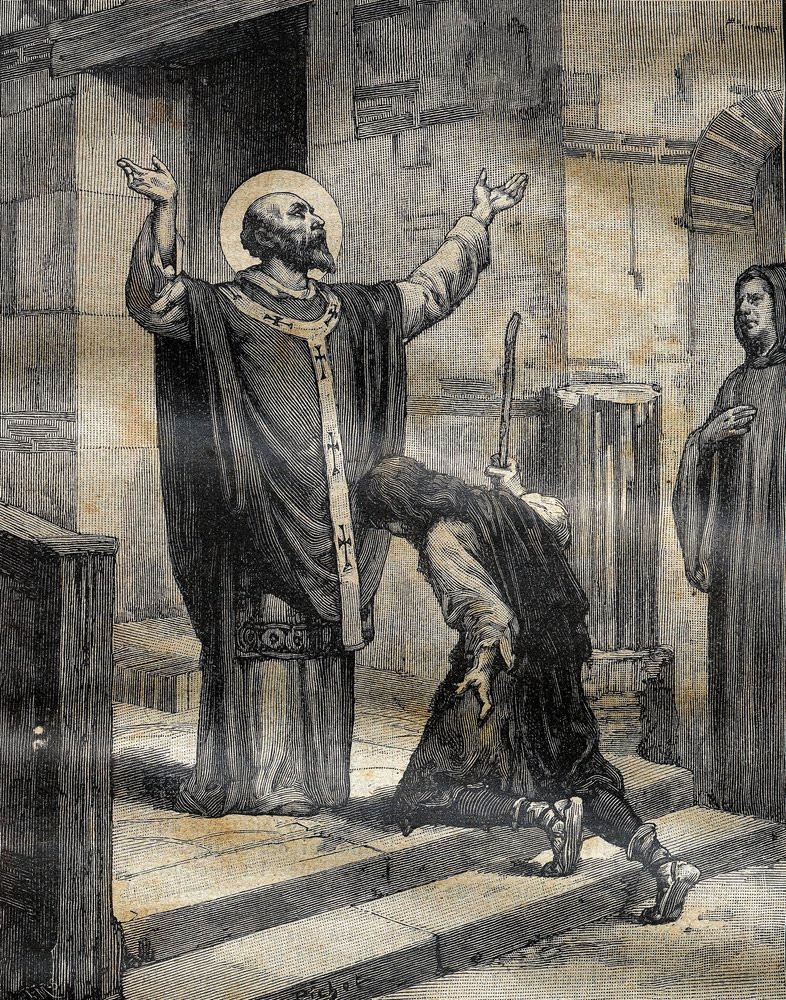
Saint Aubertus, the Bishop of Cambrai-Arras, welcomed his disciple and prodigal godson, St Landelin and forgives him his three years of error. Engraving in Le Pelerin.
Aubertus was the 8th Bishop of Cambrai, in France who lived around the middle of the 7th Century.
He was born around 600 in Haucourt en Cambrésis, belonging to the family of the Merovingian King Dagobert I. He became a Monk in the Abbey founded by Saint Columban in 590 in Luxeuil, during the years in which Saint Eustasius was the Abbot.
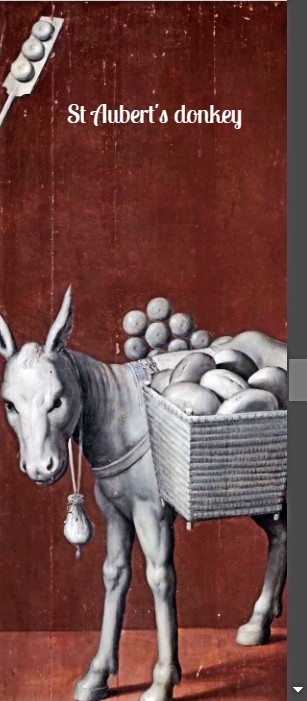
After this first experience, tradition tells us that he became a Hermit and chose to live in solitude in the mountains. In his solitude he made bread which he then, with the help of his donkey, went to sell and donate the proceeds to the poor.
Around 652, Autbertus became the Bishop of Cambrai, after Saint Adalbert. Serving as the Bishop for 36 years, Bishop Aubertus promoted religion and the study of holy texts in Hainaut and Flanders. Through his influence, many nobles were converted and King Dagobert became a major supporter of the Christian Church. St Landelin was entrusted to his care and was educated in learning and piety by Aubertus. The Bishop of Cambrai gave his benediction to St Ghislain and blessed his hermitage (now Saint-Ghislain). Aubertus bestowed the religious habit upon the Count of Hainaut, Vincent Madelgarius, his wife, Saint Waltrude and her sister, St Aldegundis, who was admitted to the vows of a Nun by our St Aubertus of Cambrai and St Amandus of Maestricht, before becoming the first Abbess of Maubeuge Abbey.
In c655, Aubertus alongside St Eligius, arrived 30 days after St Fursey’s death to exhume his body for his Canonisation. In 666, he solemnly performed the translation of the Relics of St Vedast at Arras.
He governed the Diocese until 669, the year of his death. Among his disciples we also find Saint Vindician, his successor. Autbertus is the Patron Saint of bakers and in Belgium he is represented, with a donkey loaded with two baskets full of bread and carrying a bag around his neck.
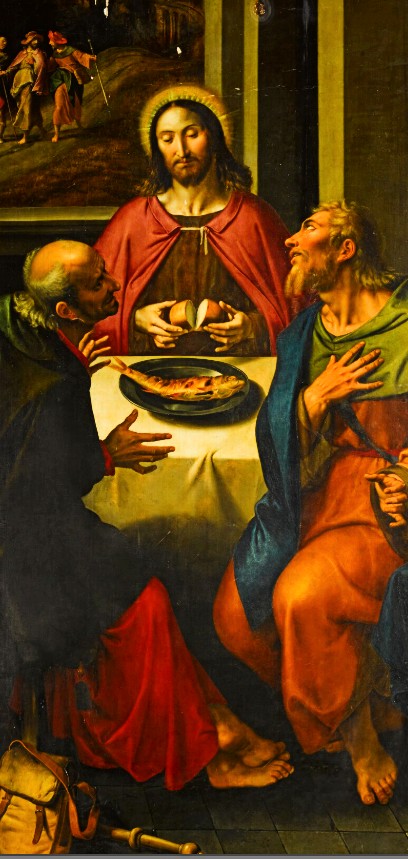
Bishop Aubertus died around 669 in Cambrai, Francia. He was buried in St Peter Church and is celebrated today, 13 December. His Shrine is kept in a Cambrai Abbey of Canons Regular, established in 1066. This beautiful image below features our Saint Aubertus. Itis a double-sided Altarpiece wing depicts The Supper at Emmaus and Saint Aubert, Bishop of Cambrai-Arras on the right(?). The Artist was Ambrosius Francken the Elder (Herentals 1544/45–1618 Antwerp).
Blessed Antonio Grassi Cong. Orat. (1592 – 1671) Priest of the Oratorians of St Philip Neri, Confessor, Tertiary of the Order of St Francis, Spiritual advisor, Counsellor, Mediator, Miracle Worker, Apostle of the poor and the sick. He was Beatified on 30 September 1900 by Pope Leo XIII. Blessed Antonio’s biography: https://anastpaul.com/2018/12/13/saint-of-the-day-13-december-blessed-antonio-grassi-cong-orat-1592-1671/
St Aristone St Arsenius of Latro St Aubertus of Cambrai (c600-c669) Bishop and Confessor Bl Bartholomew of Tuscany St Edburgh of Lyminge St Einhildis of Hohenburg Bl Elizabeth Rose St Jodocus
Blessed Giovanni Marinoni CR (1490-1562) Priest of the Theatines of St Cajetan (1480-1547) (The Congregation of the Clerics Regular of the Divine Providence), renowned Preacher and spiritual director. Patron of Preachers. He was Beatified on 5 December 1764, by a Bull of Pope Clement XIII, who also granted an Office in his honour, to his Order, to be celebrated on 13 December. Biography: https://anastpaul.com/2019/12/13/saint-of-the-day-blessed-giovanni-marinoni-cr-1490-1562/
St Martino de Pomar St Roswinda St Tassio of Bavaria
Blessed Mercedarian Knights – 7 Beati: A group of Mercedarian Knights who fought the enemies of the Catholic faith in the first Century of the Order. Blessed Bernardo de Podio Blessed Giacomo de Copons Blessed Giovanni de Bruquera Blessed Guglielmo de Sa Blessed Pietro Boguer Blessed Pietro Ricart Blessed Raimondo de Frexa
Martyrs of Sebaste – 5 Saints: A group of Christians Martyred together in the persecutions of Diocletian. We know little more than their names – Auxentius, Eustratius, Eugene, Mardarius and Orestes. They were martyred in c 302 at Sebaste, Armenia (in modern Turkey) and their relics are enshrined at the church of Saint Apollinaris in Rome, Italy.
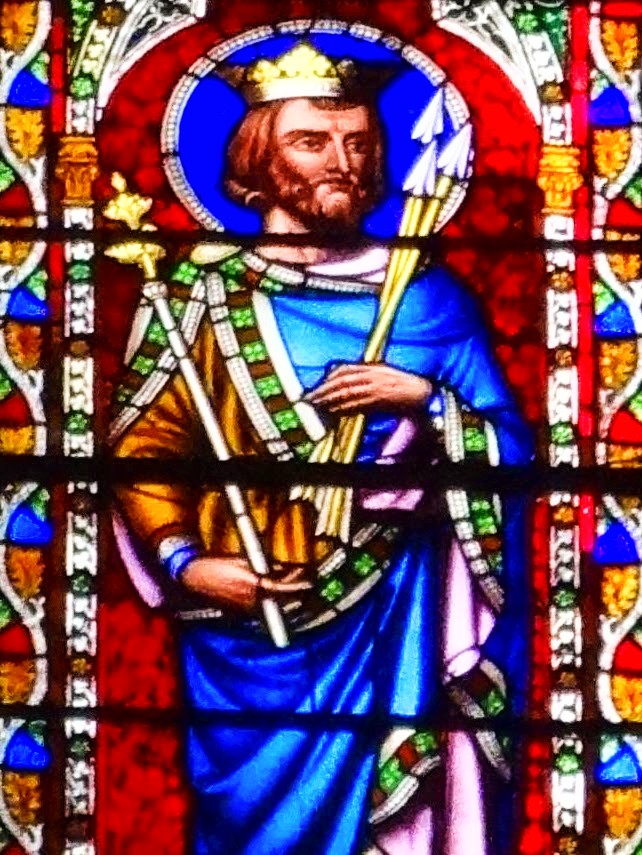
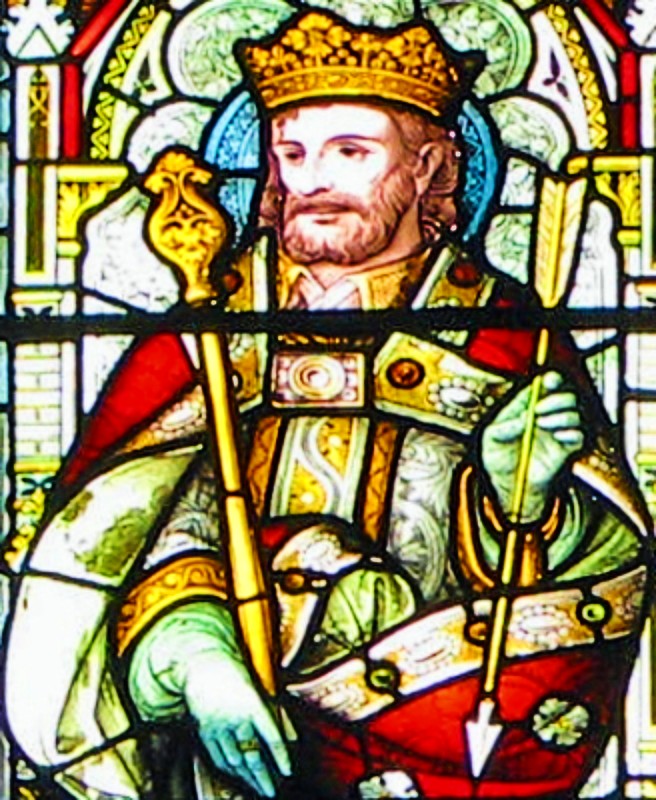
Saint of the Day – 20 November – St Edmund (c841-870) King and Martyr. Born in c841 probably in Nuremburg, Germany and died by being beaten, whipped, pierced with arrows “until he bristled with them like a hedgehog” and then beheaded at Hoxne, Suffolk, England on 20 November 870. Patronages – Co-Patron of England, against the Plague/Epidemics, of Kings, of torture victims, wolves, of the County and Diocese of East Anglia. Also known as – Edmund the Martyr, … of East Anglia. Additional Memorials – 29 April (translation of Relics), 2 November and 25 December on some local calendars.
The Roman Martyrology reads today: “In England, St Edmund, King and Martyr.”
On Christmas Day in the year 855, a remarkable event unfolded as a 14-year-old boy named Edmund was hailed as the rightful King of Norfolk by the influential figures of the County, including ruling men and Clergy. This acclaim was soon followed by a similar declaration from the leaders of Suffolk the following year.
For the next 15 years, Edmund would rule over the East Angles, a region in England, with a reputation for Christian dignity and justice which was universally acknowledged. He appeared to draw inspiration from the piety of King David of the Old Testament, notably excelling in the public recitation of the Psalms during worship.
However, Edmund’s reign was not without its challenges. Starting in 866, his Kingdom faced escalating threats from Danish invasions. For four years, the East Angles managed to maintain an unstable and often broken peace, with the invaders. Nevertheless, the situation took a dire turn, when the Danes set fire to Thetford, prompting King Edmund’s army to confront them. Unfortunately, they were unable to defeat the marauding Danish forces.
As the invaders reached East Anglia, they presented Edmund with an offer of peace but, it came with a condition which Edmund found impossible to accept. The condition required him to rule as a vassal under Danish authority and, most notably, to forbid the practice of the Christian Faith. Edmund unwaveringly refused this ultimatum, choosing to stand firm in defence of Christ.
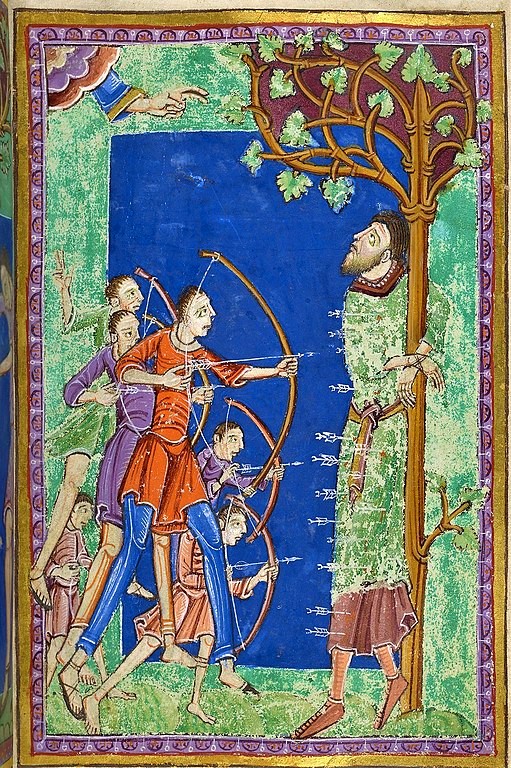
In response to his refusal, Edmund was subjected to a gruesome and torturous fate. He was bound to a tree and made the target of Danish archers, who rained down a hail of arrows upon him. Throughout this agonising ordeal, Edmund displayed remarkable bravery, repeatedly invoking the Name of Jesus. Eventually, he was decapitated, sealing his fate as a Martyr for Christ and His Church.
The Martyrdom of St Edmund, from the 12th Century Passio Sancto Eadmundi
Edmund’s final resting place is the City of Bury St Edmunds, where his memory is cherished to this day. The tree at Hoxne which tradition claimed was the site of his Martyrdom, stood as a symbol of his sacrifice until 1849 when it fell. During the tree’s dismantling, an arrowhead was discovered embedded in its trunk, serving as a poignant reminder and Relic of his Martyrdom.
St Edmund holds a unique place in history as the only English sovereign to die for both his religious beliefs and the defence of his throne, until the time of King Charles I. His Martyrdom quickly earned him reverence and his cultus spread widely throughout the Middle Ages. Together with Saint George, Saint Edmund is celebrated as one of the Patron Saints of England.
‘There was a great wonder, that he was as whole as if he were alive, with an intact body and his neck was healed which had previously been cut; it was as if there were a red silken thread about his neck, to show men how he had been killed. And the wounds which the cruel heathen had made in his body, with many shots, were healed by Heaven’s God and he lies thus incorrupt until this present day, awaiting the resurrection and eternal glory.’
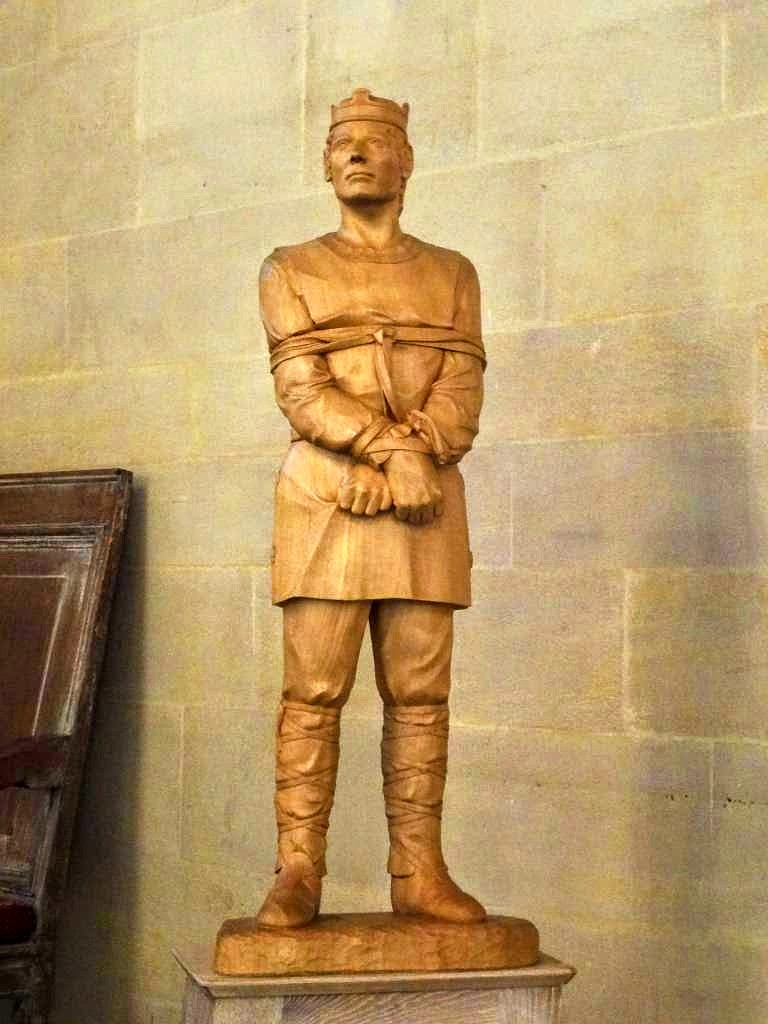
This modern Statue of St Edmund in the Cathedral of Bury St Edmund
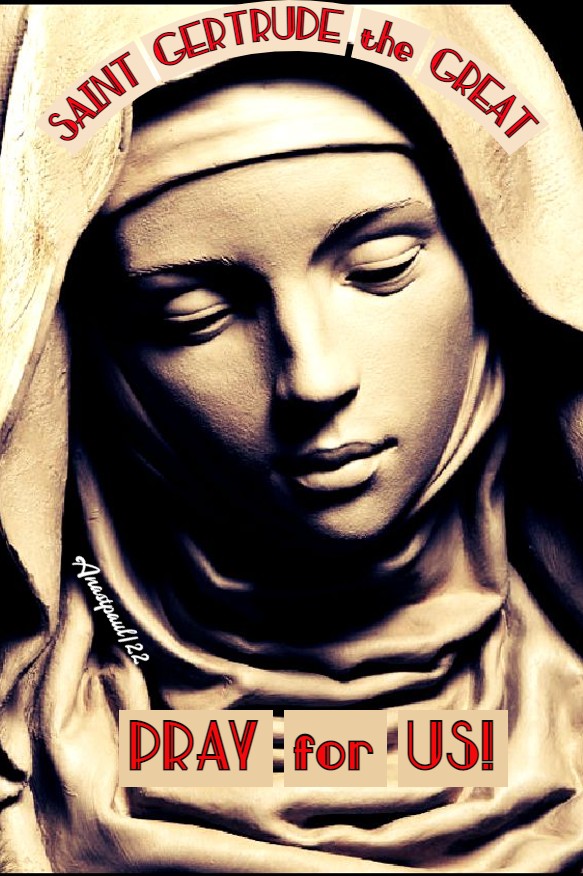
One Minute Reflection – 16 November – “The Month of the Holy Souls in Purgatory” – St Gertrude the Great (1256-1302) Virgin – 2 Corinthians 10:17-18; 11:1-2: Matthew 25:1-13 – Scripture search here: https://www.drbo.org/
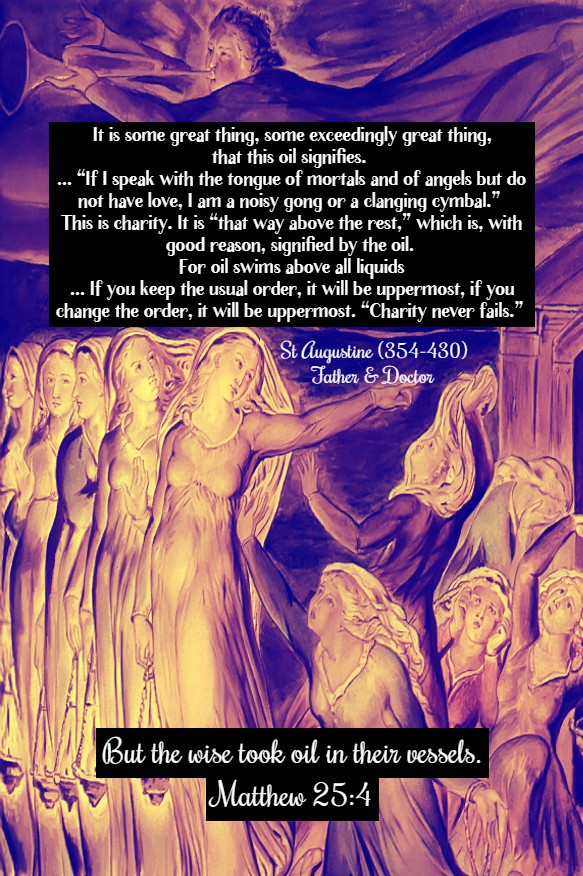
“But the wise took oil in their vessels” – Matthew 25:4
REFLECTION – “It is some great thing, some exceedingly great thing, that this oil signifies. Do you think it might be charity? If we try out this hypothesis, we hazard no precipitate judgement. I will tell you why charity seems to be signified by the oil. The Apostle says, “I will show you a still more excellent way.” “If I speak with the tongue of mortals and of angels but do not have love, I am a noisy gong or a clanging cymbal.” This is charity. It is “that way above the rest,” which is, with good reason, signified by the oil. For oil swims above all liquids. Pour in water and pour in oil upon it, the oil will swim above. If you keep the usual order, it will be uppermost, if you change the order, it will be uppermost. “Charity never fails!” … St Augustine (354-430) Father & Doctor (Sermon 93).
PRAYER – O God, Who prepared a pleasing dwelling place for Thyself in the heart of blessed Gertrude the Virgin, by her merits and intercession, mercifully wipe away all sinful stain from our heart and grant that we may enjoy her companionship. Through Jesus Christ, Thy Son our Lord, Who lives and reigns with Thee, in the unity of the Holy Ghost, God, world without end. Amen (Collect).
Saint of the Day – 13 November – Saint Brice of Tours (c370-444) Bishop, disciple of St Martin of Tours, Penitent, Miracle-worker. Born in Gaul, modern France and died in Tours, France of natural causes. Patronages – against colic, against stomach diseases, of Tours, of Calimera and Samperone in Italy. Also known as – Briccius, Brictius, Britius, Brixius, Brizio, Brizo.
The Roman Martyrology reads today: “At Tours, St Brice, Bishop, disciple of the blessed Bishop Martin.”
St Martin, whose Feast we kept two days ago, was succeeded in the See of Tours, as he had predicted, by a Monk named Brice, a singularly unpromising candidate to succeed such a holy Bishop.
Martin had spent as much time as his Episcopal duties permitted among a monastic community at Marmoutier near Tours, into which he himself had taken the orphaned Brice. St Gregory of Tours describes Brice as “proud and vain” and St Martin’s Biographer, St Sulpicius Severus, tells the story in his Dialogues (3.15) of Brice being led by devils to “vomit up a thousand reproaches against Martin” even daring to assert that he, himself, was much holier for being raised from childhood in a Monastery, while Martin was raised in a military camp. Although Brice repented of this (as St Sulpicius believed, due to Martin’s prayers) and asked for the Saint’s forgiveness, he continued to be a very difficult character. Martin refused to remove him from the Priesthood, lest he would be judged to do so, as an act of vengeance but, expressed his tolerance in less than-complimentary terms: “If Christ could put up with Judas, why should I not put up with Brice?”
St Brice and St Martin
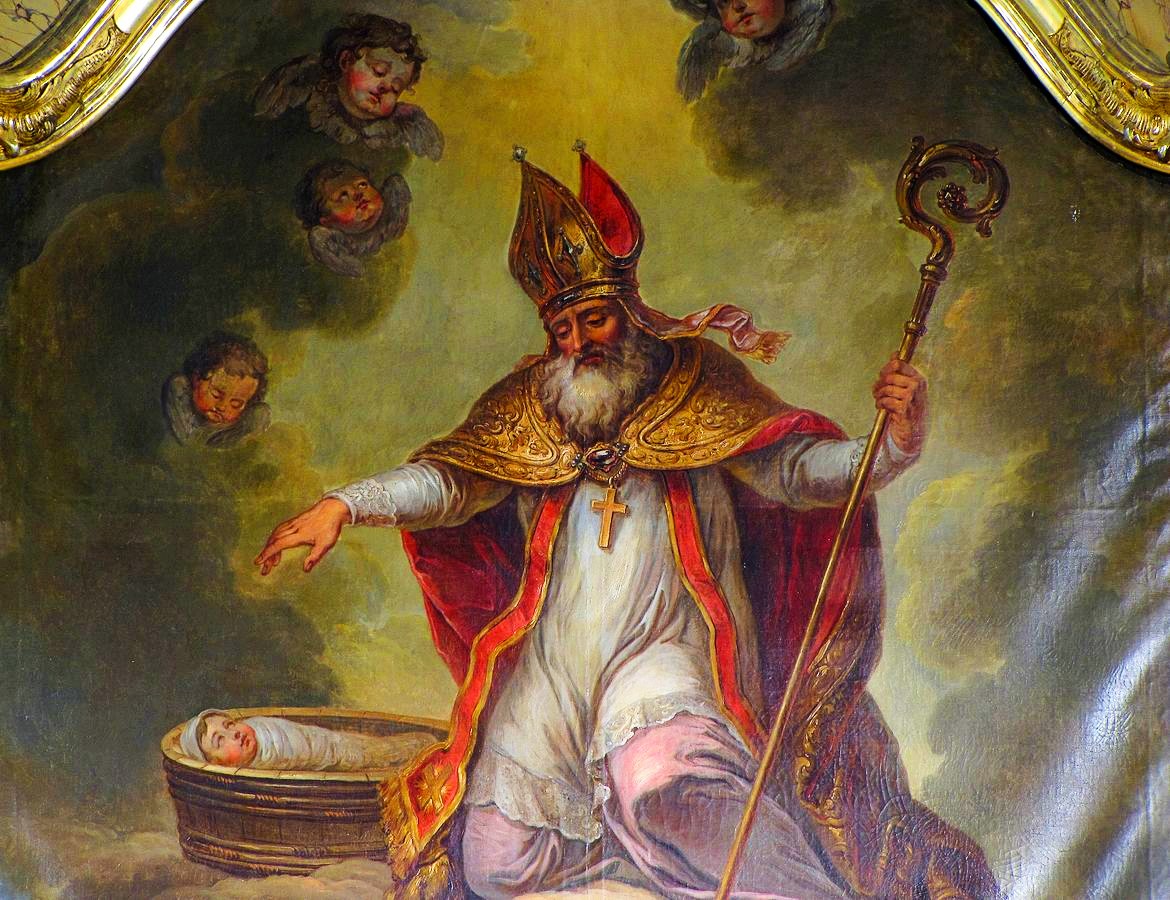
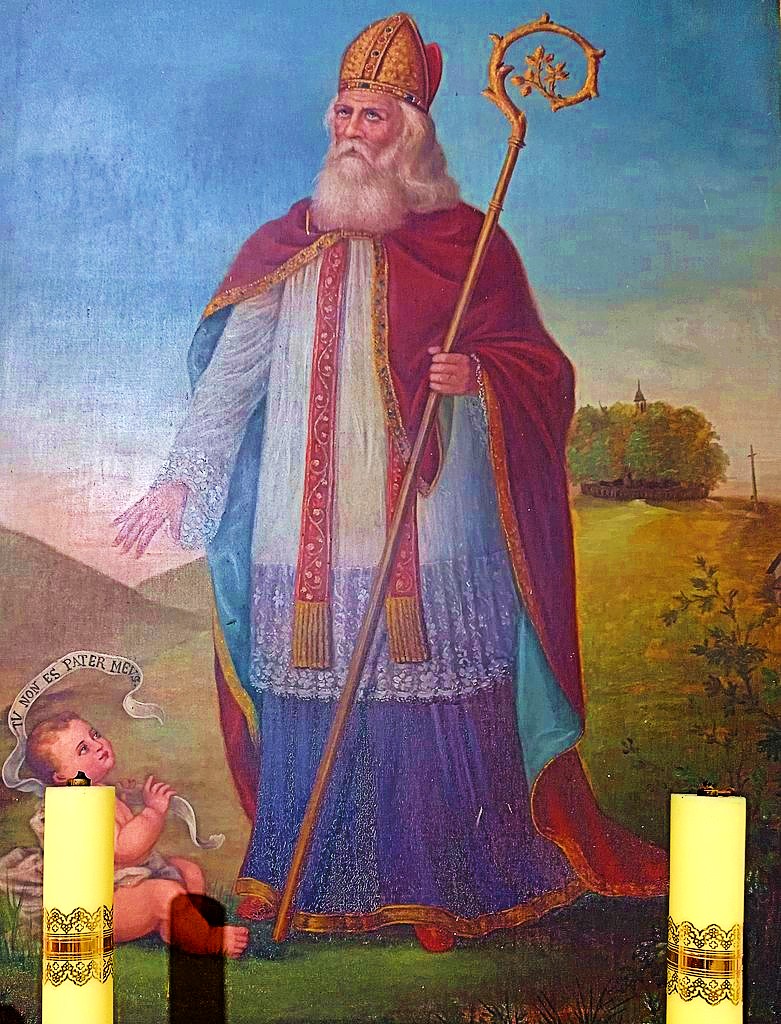
St Martin had predicted, not only that Brice would succeed him as the Bishop, but, that he would suffer much in the Episcopacy, words which Brice dismissed as “ravings.” Both predictions were fulfilled in the following manner. Although Brice was vain and proud, he was “chaste in body” and yet, he was accused of fathering a child. The revised Butler’s Lives of the Saints says, with characteristic reticence that he vindicated himself by “a very astonishing miracle” without saying what the miracle was. St Gregory of Tours tells us that Brice called together the faithful and before them ordered the month-old infant to say whether or not he was the father, at which the child did indeed say, “You are not my father!” The people ask Brice to make the infant say who its father was but Brice replied, “That is not my job. I have taken care of the part of this business which pertains to me; if you can, ask for yourselves.”
St Brice with the Infant, from the Church of St Médard in Boersch in Eastern France.
This miraculous event was attributed, perhaps understandably, to the use of magic, rather than holiness and so Brice attempted to vindicate himself by carrying hot coals in his cloak to the Tomb of St Martin; when he arrived his cloak was not burnt. But this sign was also not accepted and so he was driven from his See, “that the words of the Saint might be fulfilled, ‘Know that, in the Episcopate, you will suffer many adversities.’ …
Then Brice sought out the Pope of Rome, weeping and mourning and saying ‘Rightly do I suffer these things because I sinned against God’s Saint and often called him crazy and deluded and, seeing his virtues, I did not believe.’ ” After staying in Rome for seven years and purging his sins by the celebration of many Masses, he was restored to his See which he governed for a further seven years as a man “of magnificent sanctity,” according to St Gregory, very much changed for the better by the experience.
I believe, a Polish image of St Brice with the Infant
His popularity in the medieval period was very great and his Feast is found on most calendars, although not that of Rome. This is due in part to his association with St Martin but perhaps more, as an example of something which the medievals understood very well and loved to dwell upon – it is never too late for God’s grace to bring us away from sin to sanctity and even to Sainthood. And so we ask St Brice to assist us by his intercession, in our repentance and our growth in holiness. (Adapted from Gregory DiPippo’s articleon NLM).
Our Morning Offering – 7 November – “The Month of the Holy Souls in Purgatory” – On Thursday we devote our hearts and souls to the most holy Eucharist. The Eucharist is the greatest Gift of God to mankind, as it is nothing less than Jesus Himself. Therefore today too, we pray for our Priests AND as today is the Feast Day of All the Saints of the Order of Preachers or the Dominicans, we pray a prayer by one of their greatest sons.
Lauda Sion Salvatorem Sion, Lift Up thy Voice and Sing (Excerpt) By St Thomas Aquinas OP (1225-1274) Doctor Angelicus / Doctor Communis
Sion, lift thy voice and sing, Praise thy Saviour and thy King, Praise with hymns thy Shepherd true, Dare thy most to praise Him well, For He doth all praise excel, None can ever reach His due.
Special theme of praise is Thine, That true living Bread divine, That life-giving flesh adored, Which the brethren twelve received, As most faithfully believed, At the Supper of the Lord.
Let the chant be loud and high, Sweet and tranquil be the joy Felt to-day in every breast; On this festival divine Which recounts the origin Of the glorious Eucharist.
St Thomas Aquinas wrote the Liturgy for Corpus Christi when Pope Urban IV added the Solemnity to the universal Church’s Liturgical calendar in 1264. He provided a great sequence, one of the great poems chanted or recited before the proclamation of the Gospel. Lauda Sion is one of only four medieval sequences which were preserved in the Roman Missal published in 1570 following the Council of Trent (1545–1563)—the others being Victimae Paschali Laudes (Easter), Veni Sancte Spiritus (Pentecost) and Dies irae (requiem masses). (A fifth, Stabat Mater, would later be added in 1727.) Before Trent, many feasts had their own sequences. The existing versions were unified in the Roman Missal promulgated in 1570. The Lauda Sion is still sung today as solemn Eucharistic hymn, though its use is optional in the post-Vatican II Ordinary form. As with St Thomas’s other three Eucharistic Hymns, the last few stanzas of the Lauda Sion are often used alone, in this case, to form the “Ecce Panis Angelorum”.
Thought for the Day – 4 November – Meditations with Saint Alphonsus Maria de Liguori (1696-1787) Bishop, Confessor, Most Zealous Doctor of the Church
“Preparation for Death” By St Alphonsus Maria de Liguori (1696-1787)
CONSIDERATION XXXIII
The Holy Communion “Take, eat; This is My Body.” (Matt xxvi: 26)
FIRST POINT: LET us observe how great a gift is this Holy Sacrament; how great is the Love which Jesus has shown to us in this gift and, how great is His desire, of our reception of this, His GREAT GIFT.
Let us consider, in the first place, the great Gift, Jesus Christ procured for us, in giving Himself to be wholly Food in the Holy Communion. St Augustine says that our Blessed Lord: “although He is omnipotent, was not able to give us more than this.” St Bernardine of Sienna asks: “What greater treasure can the heart of man possess, than the most holy Body of Christ?” … If our Redeemer had not given us this gift, whoever would have been able to ask for it, who would ever have dared to say to Him, Lord, if Thou desiredst to make us know Thy Love, conceal Thyself under the form of Bread and permit us to feed on Thee!? It would have been esteemed madness! even to think of this. St Augustine asks: “Would it not seem madness to say, Eat My Flesh and drink My Blood!?”
When our Blessed Lord revealed to His disciples this gift of the Holy Sacrament which He wished to leave them, many of them could not attain to the belief of it and they parted from Him, saying: “How can this Man give us His Flesh to eat? …. This is a hard saying; who can hear it? (John vi: 52,60). But what men were not able, at any time to conceive, the great Love of our Lord Jesus Christ, both intended and wrought. St Bernardine says that our Blessed Lord left us “this Sacrament to be a memorial of His Love” and the record which St Luke has left of our Lord’s words, agrees with this statement: “Do this in remembrance of Me.” (Luke xxii: 19). St Bernardine adds, the love of our Lord was not satisfied with sacrificing His Life for us: “In that excess of fervour, when He was ready to die for us, He was impelled, by this ocean of love, to do a greater work than ever had been wrought, to give to us His Body for food.” Abbot Guerric says, in this Sacrament, Jesus “poured out upon His friends, the last strength of His Love” and the same sentiment is expressed more forcibly, when it was said of old that, in the Eucharist, our Blessed Lord, “as it were, poured out upon men, the riches of His Love.”
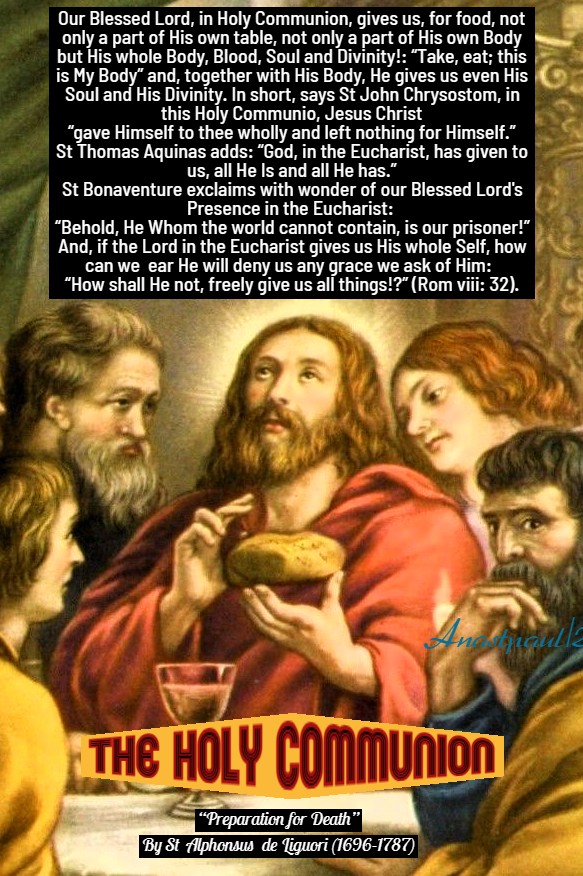
… Our Blessed Lord, in Holy Communion, gives us, for food, not only a part of His own table, not only a part of His own Body but His whole Body, Blood, Soul and Divinity!: “Take, eat; this is My Body” and, together with His Body, He gives us even His Soul and His Divinity. In short, says St John Chrysostom, in this Holy Communio, Jesus Christ “gave Himself to thee wholly and left nothing for Himself.” St Thomas Aquinas adds: “God, in the Eucharist, has given to us, all He Is and all He has.” St Bonaventure exclaims with wonder of our Blessed Lord’s Presence in the Eucharist: “Behold, He Whom the world cannot contain, is our prisoner!”
And, if the Lord in the Eucharist gives us His whole Self, how can we ear He will deny us any grace we ask of Him: “How shall He not, freely give us all things!?” (Rom viii: 32).
Affections and Prayers
O my Jesus! What has ever led Thee to give Thy whole Self for our food? And what remains, after Thou hast given us this gift, to compel us to love Thee? Oh ! Lord, give usThine Light and make us to understand, how excessive is the love which caused Thee to reduce Thyself to food, to unite Thyself to ourselves, poor sinners! But if Thou givest Thyself wholly to us, it is a reason why we also should give ourselves wholly to Thee.
O my Redeemer, how have I been able to offend Thee, Who hast so loved me and Who hast had nothing more Thou couldst do to gain my love? Thou hadst become Man for me; Thou didst die for m ; Thou hast made Thyself my food; tell me what more it remains for Thee to do?
I love Thee, O Infinite Goodness; I love Thee, O Infinite Love! Lord, come often into my soul: inflame me wholly with Thy holy Love and cause me to forget all else, that I may neither think of, nor love any other than Thee.
Our Morning Offering – 4 November – Saint Charles Borromeo (1538-1584) He is known as the “Father of the Clergy” – Some of his Patronages: Bishops, Priests, Seminarians • Catechists • Catechumens • Spiritual Directors • Spiritual leaders
O Holy Mother of God A Prayer for our Priests to the Most Blessed Virgin By St Charles Borromeo (1538-1584)
O Holy Mother of God, pray for the Priests thy Son has chosen to serve His Church. Help them by thy intercession, to be holy, zealous and chaste. Make them models of virtue, in the service of God’s people. Help them to be prayerful in meditations, effective in preaching and enthusiastic in the daily offering of the Holy Sacrifice of the Mass. Help them to administer the Sacraments with joy, O Holy Mother of God. Amen
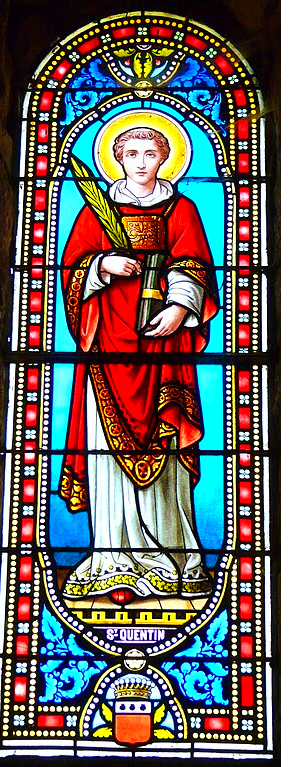
Saint of the Day – 31 October – Saint Quentin (Died c287) Martyr, Roman Senator, Missionary. Died in c287 after horrible torments he was finally beheaded. Patronages – against coughs, whooping courgh, colds, against dropsy, against sneezing, of bombardiers, of Chaplains, locksmiths, porters, surgeons, tailors, of Amiens in France, of Monticelli Terme in Italy. Also known as – Quentin of Vermand, Quentin of Amiens, Quinten… Quintin…Quintino… Quintinus… Additional Memorials – 24 June on some calendars, 3 January (discovery of his body), 25 October (translation of the body). In art Quentin is often depicted as a Deacon.
The Roman Martyrology reads today: “At Saint Quentin, in France, St Quintinus, a Roman citizen and Senator, who endured Martyrdom under the Emperor Maximian. By the revelation of an Angel, his body was found incorrupt after the lapse of 55 years.”
Quentin belonged to a Roman senatorial family and came to Gaul under the Emperor Maximian to work with St Lucian who was later also Martyred near Beauvais in c290, as a missionary of faith in the area around Amiens.
The Life os St Quentin Unknown Dutch Master
He was arrested in Vermand and finally beheaded near what is now St-Quentin. According to later tradition, he was pricked with nails, doused with hot pitch and his body thrown into the River Somme. Around 55 years later, the blind Roman noblewoman, Matron Eusebia had the body recovered from the Somme following a vision and buried in a Chapel she had built.
The Martyrdom of St Quentin – Unknown artist
According to St Gregory of Tours, Quentin was already being venerated in the 6th Century. Around 641, St Eligius of Noyon found the Relics and made a richly decorated Tomb (St Eligius being a renowned craftsman and goldsmith) – the first recorded story of the Passion of St Quentin dates from that time.
Due to the large stream of pilgrims to the Church dedicated to the Martyr , the Town of St-Quentin developed on this site. The Church, which was renovated between 813 and 826 and again in the 13th Century, contains Quentin’s Tomb and today is a very large Basilica and is still a place of pilgrimage and miracles, so much so, that a new Church, the current Basilica, had to be erected to accommodate the faithful. The Processional Bust and Reliquary below might be that crafted by St Eligius (?).
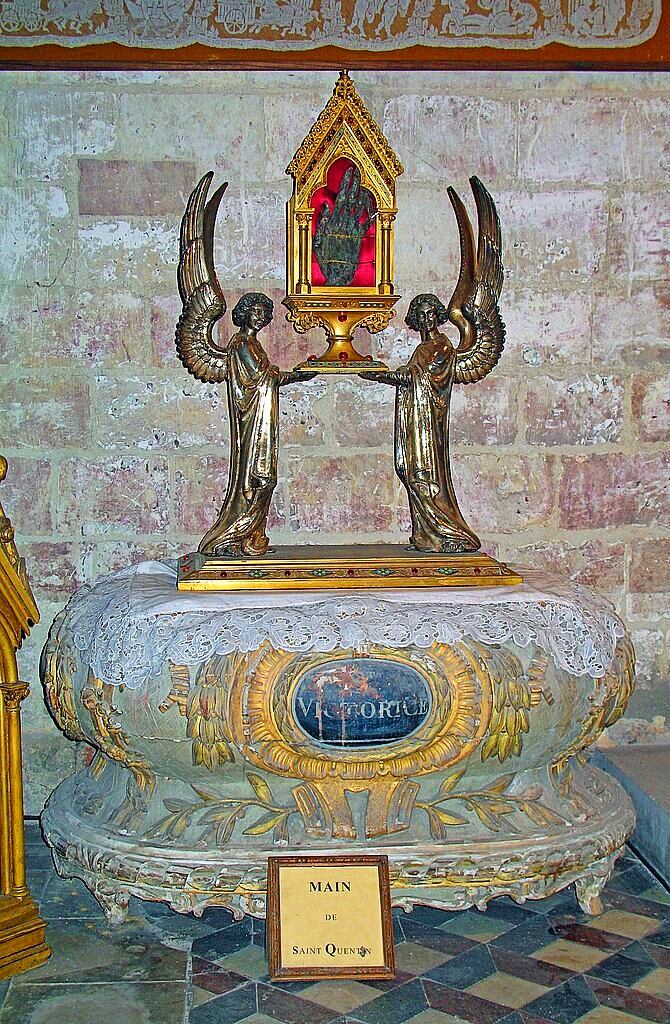
St Quentin’s Relics in the Basilica at St Quentin
In 881, because of the Norman invasions, the Relics were taken to Laon. In Parma, the Church of San Quintino is dedicated to our Saint which dates to an old Oratory which was built outside the City walls.
the processional Religuary of St Quentin kept in the Basilica
The Martyrs Sts Victoricus and Fuscian were St Quentin’s followers.
Saint of the Day – 24 October – St Senoch (536-576) Abbot, Priest, Ascetic, Apostle of the needy, the poor, of slaves, Founder of a Monastery , Miracle-worker granted the charism of curing the sick, especially the blind, those sick in soul and body. Born in 536 in Tiffauges, Poitou, Gaul (in modern France) and died in 576 aged 40, Touraine, France from a fever. Patronages – against eye diseases, of the blind, Saint-Senoch, France, Sassenay, France. Also known as – Xenochus, Sassena, Sassenay, Seno, Sénoch, Senoco, Senócus. Additional Memorial – 25 October in the Diocese of Tours to avoid conflict with St Raphael on 24 October.
Senoch retired to Touraine to live as a Hermit. He exercised his gift of healing espeically of the blind, the mute and the paralysed. He used this great grace granted to him by the Almighty also to adsminister to and to free the slaves.
He established a Monastery near Tours, whose Bishop St Eufronius had revived the spiritual ardour of his See, Senoch found ruins in which he set up an Oratory. The Bishop of Tours Consecrated the Altar, placed Relics therein and conferred the Diaconate upon Senoch.
A few years later,, Senoch was Ordained a Priest. But in his pride, Senoch decided to returned to Tiffauges to see his parents and cure his fellow townsmen of their illnessed. However, in this he failed, he could not work any miracles in his hometown and they chased him away with stones.
Upon his return to Tours, Senoch asked forgiveness for his sin of vanity and chose to atone for his sins by leading a life of mortification and humility in his Monastery. He died there in 576 after suffering a fever.
In the 9th Century, the remains of the Saint were transported to Sassenay, a village in Burgundy located on the outskirts of Chalon-sur-Saône, so that they could escape the Norman invaders.
Indeed, in the 9th Century, faced with the threat of invasion, the Monks, who no longer felt safe in the region, began an exodus, with the Relics of their holy founder. After various stops, the small community finally settled in the heart of Morvan, then in Beaune (Côte-d’Or). According to tradition, it was at the time of the construction of the Parish Church of Sassenay in the 11th-12th centuries when the translation of the Relics of Saint Senoch took place, a gift from the Bishop of Dijon to the Bishop of Autun.
It was the starting point of a very popular pilgrimage for the cure of sick children, the blind and the suffering.
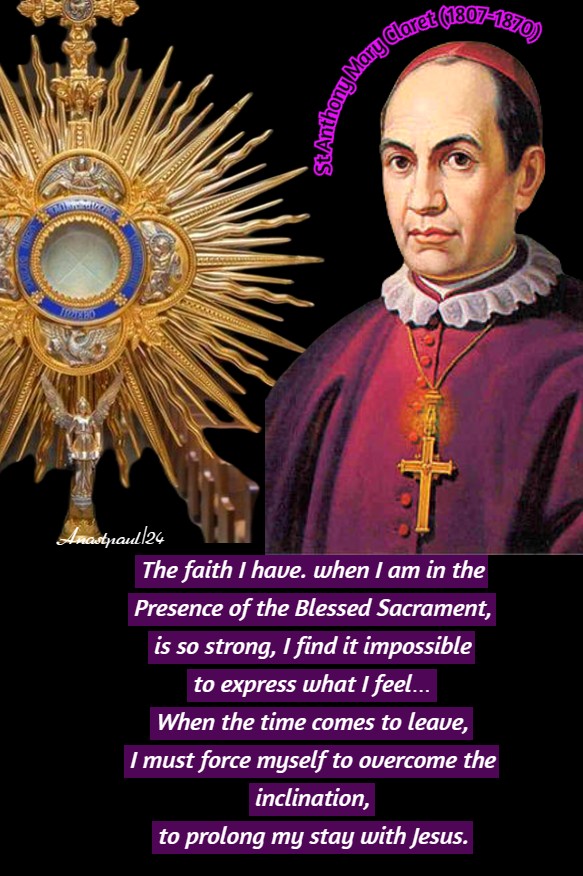
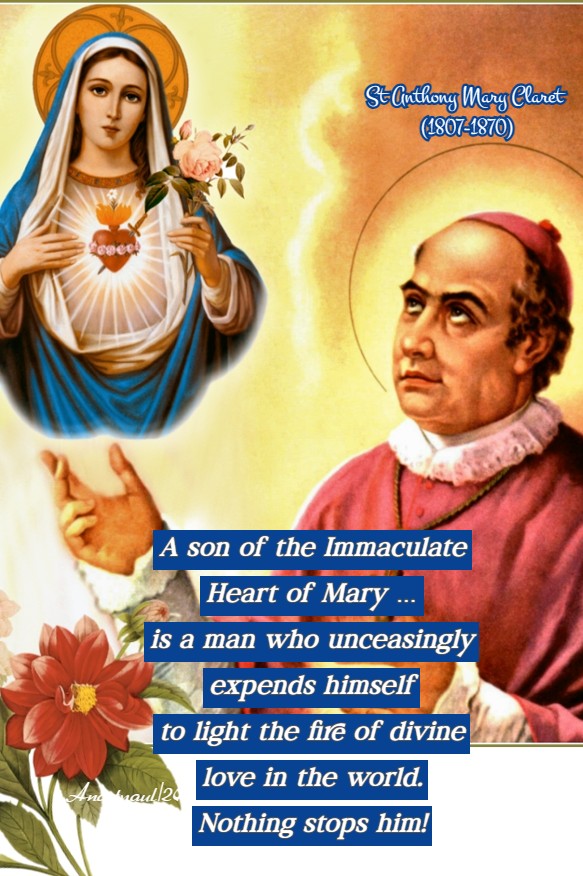
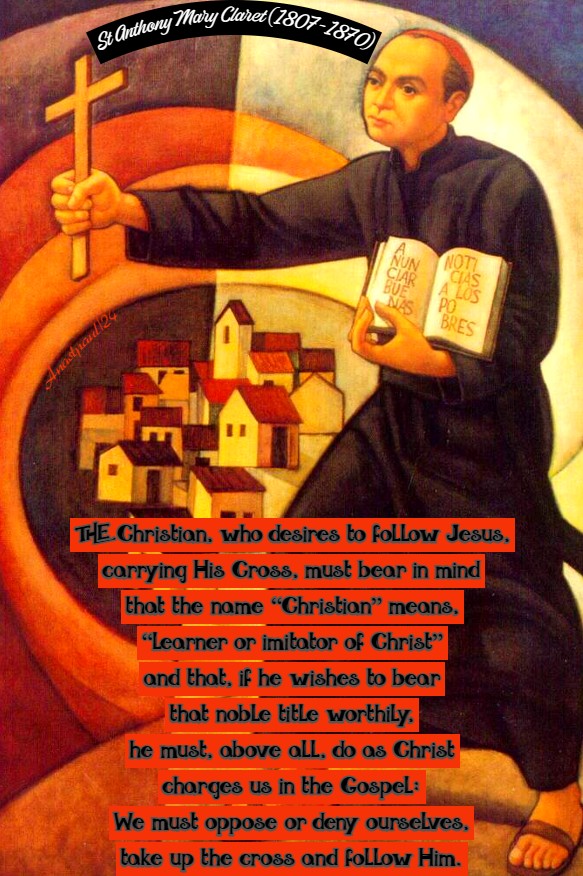
Quote/s of the Day – 23 October – St Anthony Mary Claret CMF (1807-1870) Archbishop and Founder of the Claretians
“The faith I have, when I am in the Presence of the Blessed Sacrament, is so strong, I find it impossible to express what I feel… When the time comes to leave, I must force myself to overcome, the inclination to prolong my stay with Jesus.”
“A son of the Immaculate Heart of Mary … is a man who unceasingly expends himself to light the fire of divine love in the world. Nothing stops him!”
“The Christian, who desires to follow Jesus, carrying His Cross, must bear in mind that the name “Christian” means, “learner or imitator of Christ” and that, if he wishes to bear that noble title worthily, he must, above all, do as Christ charges us in the Gospel: We must oppose or deny ourselves, take up the cross and follow Him.”
Our Morning Offering – 22 September – “The Month of The Seven Sorrows of the Blessed Virgin Mary and The Holy Cross” – Pentecost XVIII
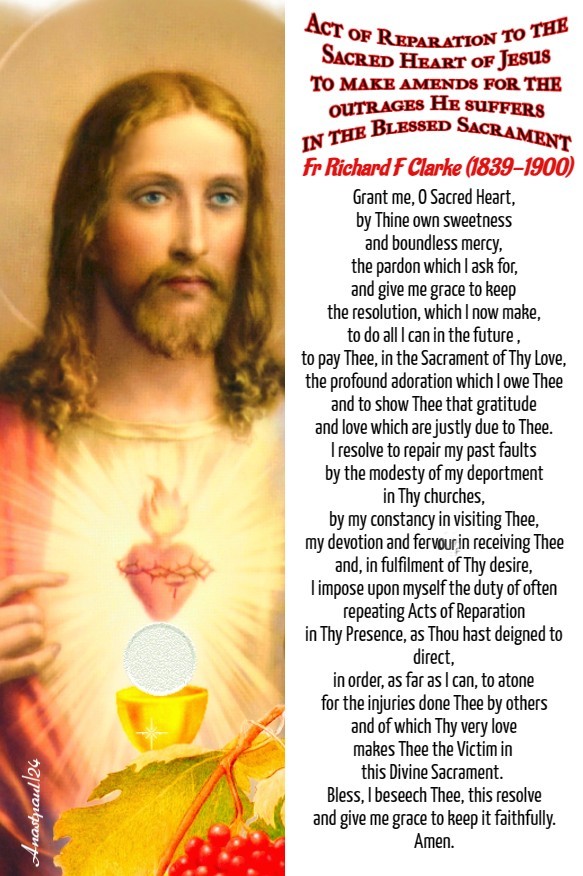
Act of Reparation to the Sacred Heart of Jesus to make amends for the outrages He suffers in the Blessed Sacrament By Fr Richard Frederick Clarke SJ (1839-1900)
Grant me, O Sacred Heart, by Thine own sweetness and boundless mercy, the pardon which I ask for, and give me grace to keep the resolution, which I now make, to do all I can in the future , to pay Thee, in the Sacrament of Thy Love, the profound adoration which I owe Thee and to show Thee that gratitude and love which are justly due to Thee. I resolve to repair my past faults by the modesty of my deportment in Thy churches, by my constancy in visiting Thee, my devotion and fervo.r in receiving Thee and, in fulfilment of Thy desire, I impose upon myself the duty of often repeating Acts of Reparation in Thy Presence, as Thou hast deigned to direct, in order, as far as I can, to atone for the injuries done Thee by others and of which Thy very love makes Thee the Victim in this Divine Sacrament.
Bless, I beseech Thee, this resolve and give me grace to keep it faithfully. Amen
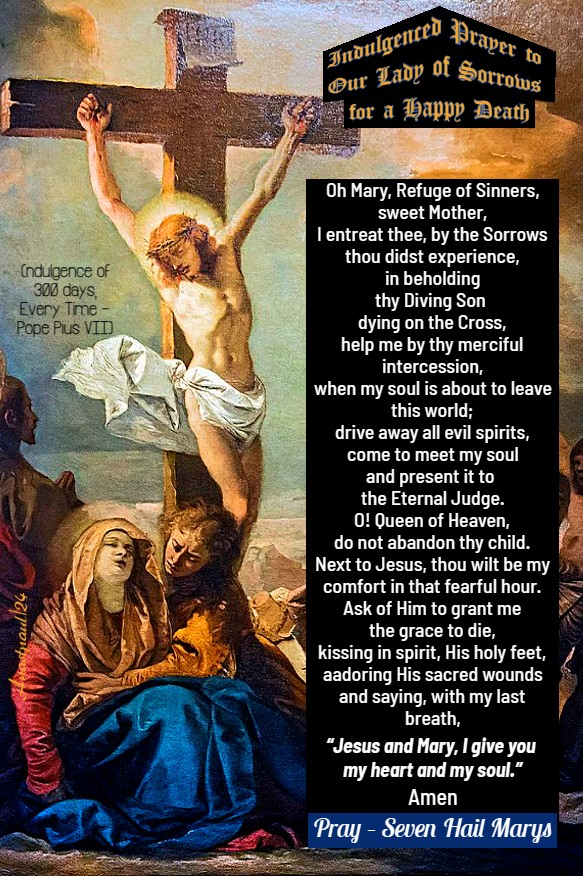
Indulgenced Prayer to Our Lady of Sorrows for a Happy Death (Pope Pius VII granted an Indulgence of 300 days, Every Time)
Oh Mary, Refuge of Sinners, sweet Mother, I entreat thee, by the Sorrows thou didst experience, in beholding thy Diving Son dying on the Cross, help me by thy merciful intercession, when my soul is about to leave this world; drive away all evil spirits, come to meet my soul and present it to the Eternal Judge. O! Queen of Heaven, do not abandon thy child. Next to Jesus, thou wilt be my comfort in that fearful hour. Ask of Him to grant me the grace to die, kissing in spirit, His holy feet, aadoring His sacred wounds and saying, with my last breath, “Jesus and Mary, I give you my heart and my soul.” Amen
Quote/s of the Day – 16 September – “The Month of The Seven Sorrows of the Blessed Virgin Mary and The Holy Cross” – The Feast of Saint Corneliu, Pope & Martyr and Saint Cyprian, Bishop & Martyr
“It is written, ‘God is not mocked.’ (Gal vi: 7) Indeed, God cannot be mocked, nor circumvented, nor deluded by any man’s astute deceit. … Let each of you, then, I beg you, brethren, confess his fault while the sinner is yet in this world, while Confession is still possible, while the satisfaction and remission granted by the Priests, is still acceptable to God!”
“God is One and Christ is One, His Church is One, His See is One, founded by the Voice of the Lord on Peter. No other Altar can be set up, no other Priesthood instituted apart from that One Altar and that One Priesthood. Who so gathers elsewhere, scatters!”
“She did not leave the temple, serving with fastings and prayers, night and day.” Luke 2:37
“If, in holy Scripture, Christ is the true Sun and the true Day, there is no hour when Christians should not adore God frequently and constantly, so that we, who are in Christ, that is, in the true Sun and true Day, should be persevering, throughout the whole day, in our petitions and prayer. And when, in the course of time, the revolving night returns, there can be no harm from the nocturnal shades, for those who pray because, to the sons of Light (1 Thes 5:5), even in the night, there is day! For when is he without light who has Light in his heart? Or when does he not have sun and day to whom Christ is Sun and Day?”
“Why then do we pray for the Kingdom of Heaven to come, if this earthly bondage pleases us? WHAT IS THE POINT of praying so often for its early arrival, if we would rather serve the devil here than reign with Christ!?”
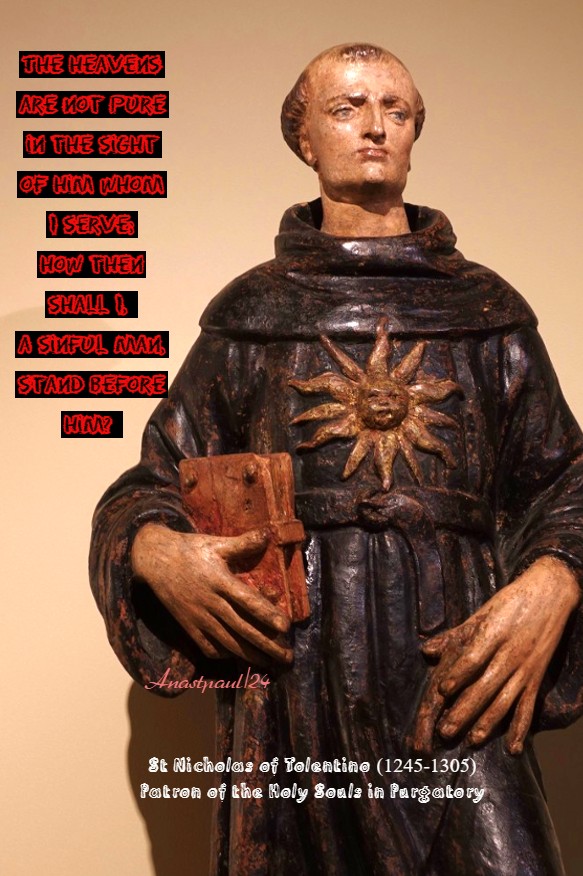
Quote/s of the Day – 10 September – Saint Nicholas of Tolentino OSA (1245-1305) Confessor, “The Patron of Holy Souls” Priest, Augustinian Friar Monk, Mystic, Preacher, Miralce-worker and Apostle of the poor, the sick, the needy.
“How can I be said to fast, while every morning, at the Altar, I receive my God?”
(Often after his Mass, it was revealed to him that the souls for whom he had offered the Holy Sacrifice, had been admitted to the Presence of God.)
“The heavens are not pure in the sight of Him Whom I serve; how then shall I, a sinful man, stand before Him? ”
Saint of the Day – 10 September – Saint Nicholas of Tolentino OSA (1245-1305) Confessor, “The Patron of Holy Souls” Priest, Augustinian Friar Monk, Mystic, Preacher, Miralce-worker and Apostle of the poor, the sick, the needy. Patronages – animals, babies (reported to have raised more than 100 children from the dead), sailors, dying people, sick animals, the Holy Souls in Purgatory, 4 Cities, 3 Diocese. The Name Nicholas from the Greek means means: “the victor over the people.”
The Roman Martyrology reads today: “At Tolentino, in the March of Ancona, the departure from this life of St Nicholas, Confessor of the Order of Augustinians.”
Nicholas was born in the angelic town of Sant’ Angelo in Pontano, Italy. An angel had advised his previously childless parents, to make a pilgrimage to the Tomb of St Nicholas of Myra and out of gratitude, they gave their son the name of the Saint.
Nicholas was admitted into the Augustinian Hermits’ Order in 1255 , was Ordained a Priest in 1270 and initially, worked as a Preacher and Confessor. In 1275 he was sent to Tolentino , where he experienced miraculous confirmations from Angels whom he saw standing around the Altar.
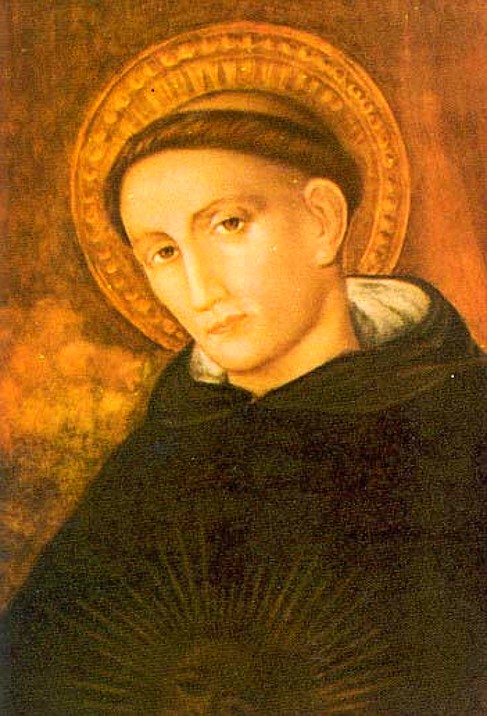
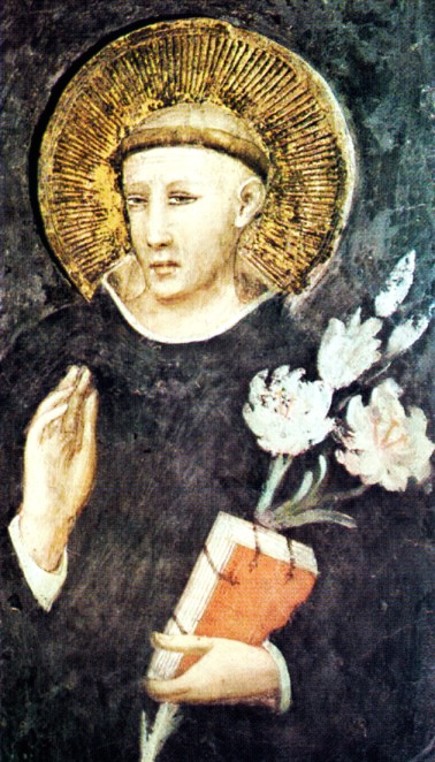
14th Century, painting now in the Basilica named after St Nicholas in Tolentino
Nicholas became a very popular Preacher and Shepherd of the sick and led a life of strict asceticism and active charity. He worked tirelessly as a pastor of the common people and cared for the poor and sick. It is said that miracles occurred through his intercession during his lifetime; his prayers had a healing effect, he overcame the devil who broke the lamp on the Altar and tried to harm others. Even when he was seriously ill, he refused to eat two roasted birds because of the mortification he had vowed but when he obediently obeyed the Prior’s command to take a bite, the partridges – alive – flew away.
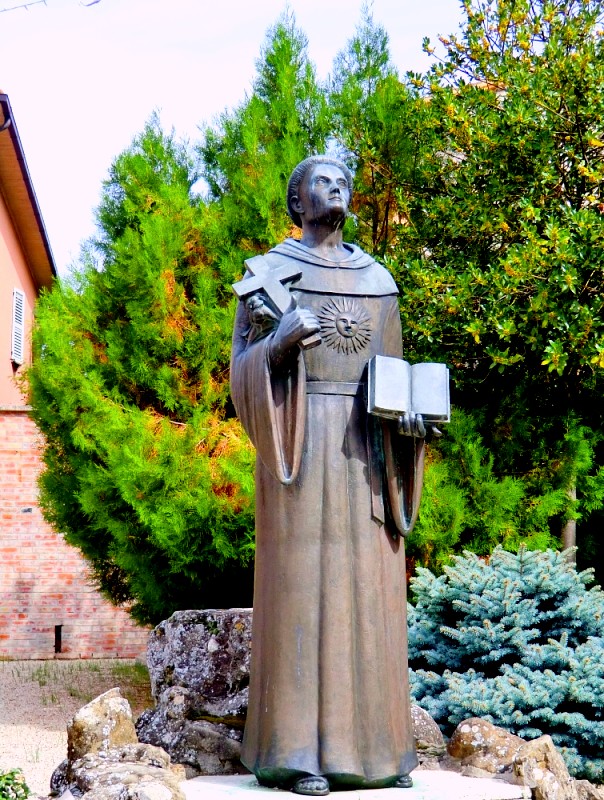
Statue at the site of Nicholas’ birthplace in Sant’ Angelo in Pontano, erected by the Municipality and population, on the 650th Anniversary of his death – 10 September 1955.
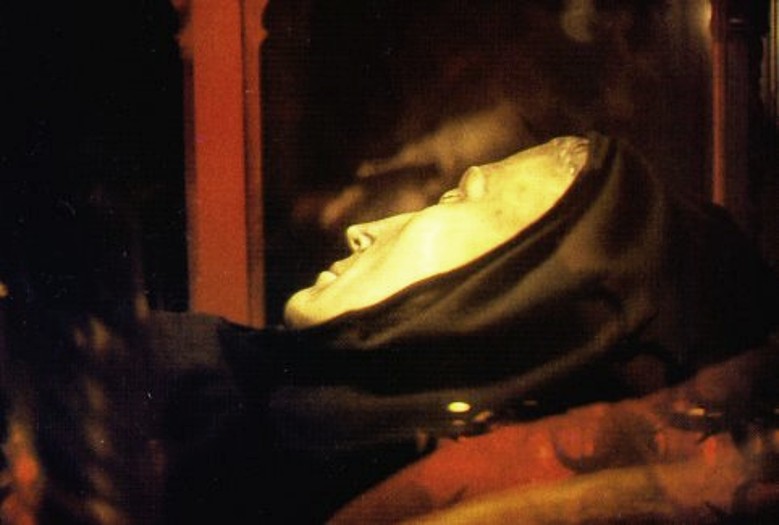
Nicholas’ Grave is in the Basilica in Tolentino which was built above it and named after him. He was not buried in the coffin originally intended for him which is in the large Chapel built for his veneration but under the floor, after his arms were taken as Relics. Numerous miracles occurred there and more than 300 were officially confirmed in the twenty years after his death alone. In 1926, his bones were rediscovered during excavations and were placed in a glass shrine and brought to the newly equipped Crypt. His Grave remains an important place of pilgrimage to this day.
Gian Giacomo Barbelli: “Glorification of St Nicholas” 1653, in the Church of Sant’Andrea in Bergamo
From the 16th to the 18th Centuries, Nicholas was one of the most venerated Saints in Europe. In many Countries he is considered a helper in times of need. In Cordoba he became the Patron Saint of the City because his intercession ended a plague epidemic. In Venice the Church of San Nicola da Tolentino was dedicated to him for the same reason and there too, he became the Patron of the City. On his Feast Day, according to old custom, bread is blessed which is said to help against gout or is thrown into the flames of fires to contain them – the background is the story of how Nicholas was cured of a fever after asking an old woman for bread at the behest of the Blessed Virgin Mary.
St Nicholas in a glass coffin in the Basilica di San Nicola in Tolentino
Saint of the Day – 4 September – Saint Candida of Naples (Died c78) Virgin. Co-Patronage – of Naples. She was Baptised by St Peter. Also known as – Candida la Vecchia, Candida the Elder.
The Roman Martyrology reads today: “At Naples, In Campagna, the Birthday of St Candida, who was the first to meet St Peter when he came to that City and being Baptised by him, afterwards ended her holy life in peace.”
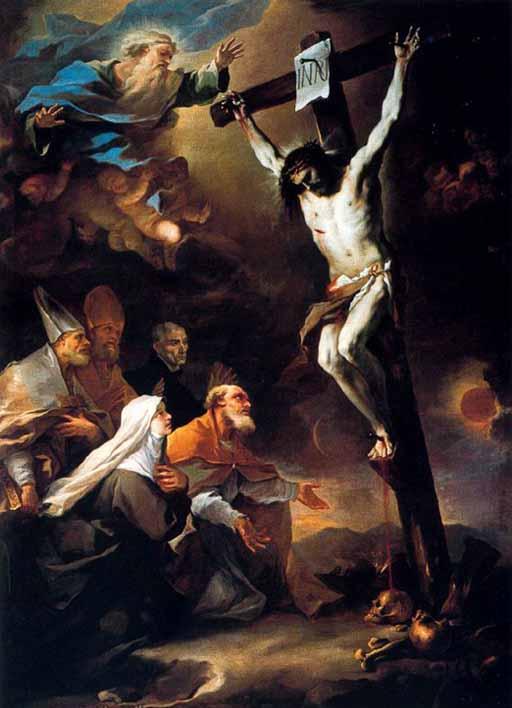
The Patron Saints of Naples [Saints Baculus, Euphebius, Francis Borgia, Aspren, and Candida the Elder (kneeling)] adoring the Crucifix, 17th Century. Palazzo Reale, Naples by Luca Giordano. Since the time of this Painting there are many more Co-Patrons of Naples.
Candida was an elderly woman who hospitably welcomed St Peter the Apostle, when he was passing through Naples on his way to Rome. She was cured of an illness by St Peter and converted to Christianity, being Baptised by St Peter.
Candida later converted St Aspren, who became the first Bishop of Naples.
Our Morning Offering – 3 September – “The Month of The Seven Sorrows of the Blessed Virgin Mary and The Holy Cross” – St Pius X (1835-1914) Pope, Confessor and today, Wednesday, being St Joseph’s day. St Joseph continues his fatherly guardianship of Christ’s Body, the Holy Catholic Church. He is a very powerful intercessor for all of us. [Sorry friends, I got the days confused, thinking today was Wednesday – but no time to change this prayer and anyway we should pray it every day 😬😉]
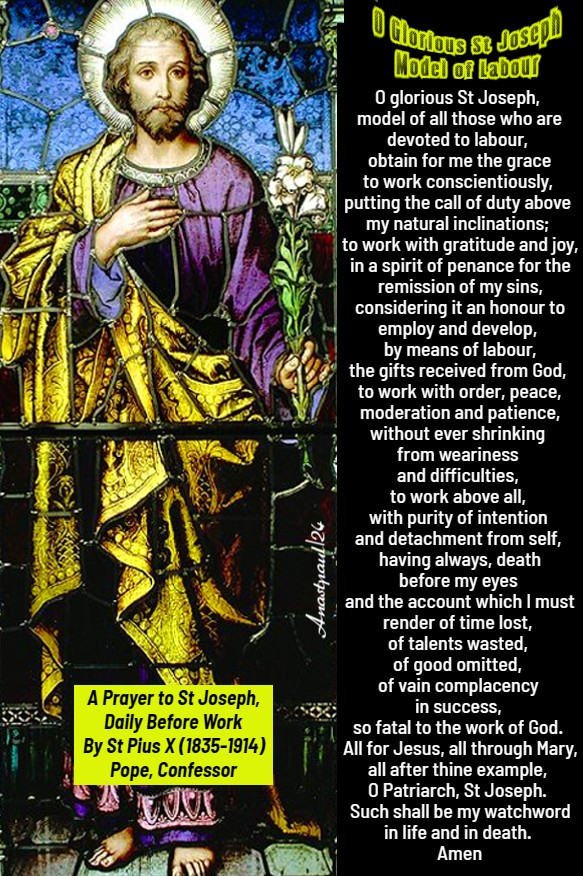
O Glorious St Joseph, Model of Labour A Prayer to St Joseph, Daily Before Work By St Pius X (1835-1914) Pope, Confessor
O glorious St. Joseph, model of all those who are devoted to labour, obtain for me the grace to work conscientiously, putting the call of duty above my natural inclinations; to work with gratitude and joy, in a spirit of penance for the remission of my sins, considering it an honour to employ and develop, by means of labour, the gifts received from God, to work with order, peace, moderation and patience, without ever shrinking from weariness and difficulties, to work above all, with purity of intention and detachment from self, having always, death before my eyes and the account which I must render of time lost, of talents wasted, of good omitted, of vain complacency in success, so fatal to the work of God. All for Jesus, all through Mary, all after thine example, O Patriarch, St Joseph. Such shall be my watchword in life and in death. Amen
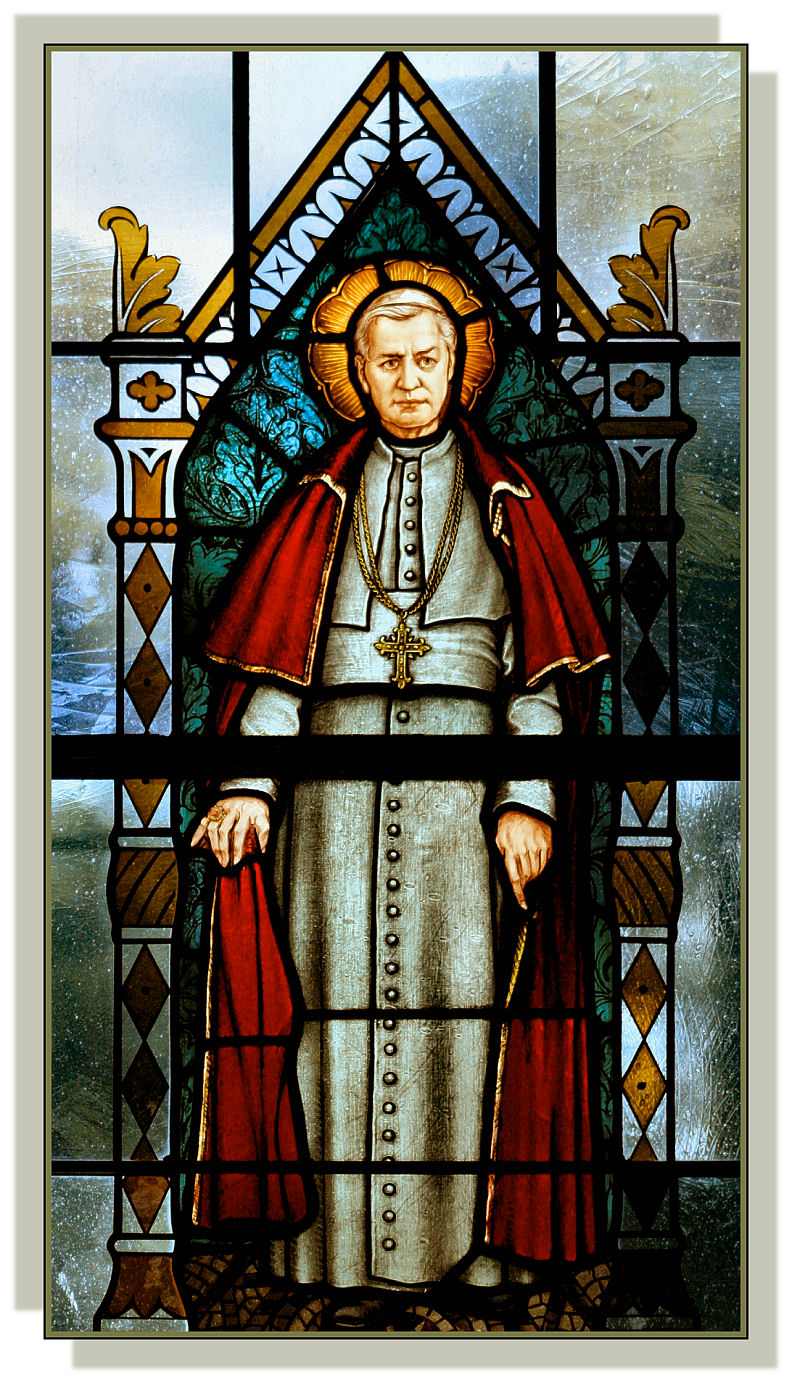
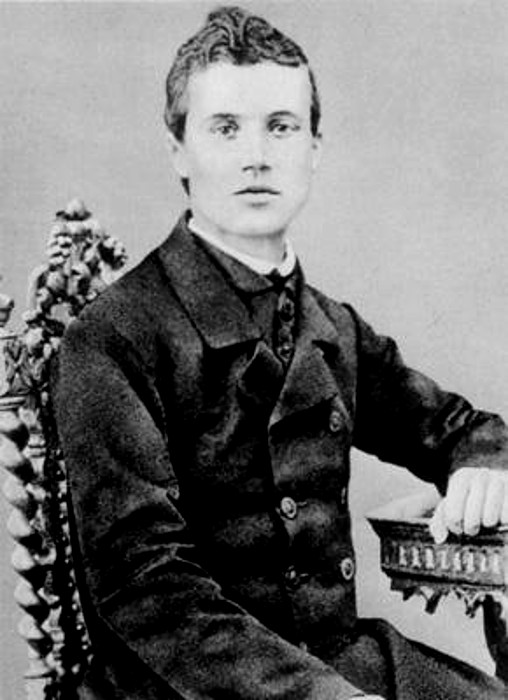
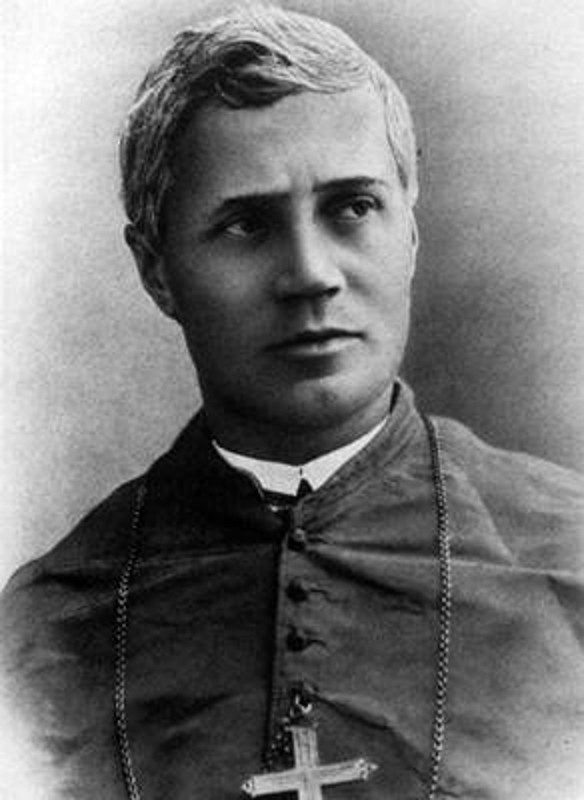
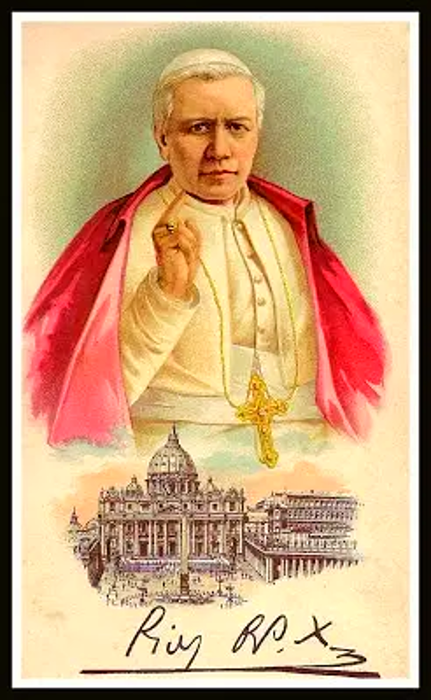
Saint of the Day – 3 September – Saint Pope Pius X (1835-1914) “Pope of the Blessed Sacrament” – born on 2 June 1835 at Riese, Diocese of Treviso, Venice, Austria (now Italy) as Giuseppe Melchiorre Sarto (familiarly known as Joseph Sarto) and died on 20 August 1914 at Vatican City. He reigned from 4 August 1903 until his death in August 1914. Patronages – First Communicants, Catechists, Pilgrims, 7 Diocese, Patriarchy of Venice. His Incorrupt body lies at St Peter’s Basilica. He was Beatified on 3 June 1951 by Pope Pius XII and Canonised on 29 May 1954 by the same Pope.
Pope St Pius X From the Roman Breviary
Pope Pius X, whose name previously was Joseph Sarto, was born in the Village of Riese in the Venetian Province, to humble parents remarkable for their Godliness and piety. He enrolled among the students in the Seminary of Padua, where he exhibited such piety and learning that he was, both an example to his fellow students and, the admiration of his teachers. Upon his Ordination to the Priesthood, he laboured for several years, first as Curate in the Town of Tombolo, then as Parish Priest at Salzano.
He applied himself to his duties with such a constant flow of charity and, such Priestly zeal and, was so distinguished by the holiness of his life, that the Bishop of Treviso appointed him as a Canon of the Cathedral Church and made him the Chancellor of the Bishop’s Curia, as well as Spiritual Director of the Diocesan Seminary. His performance in these duties was so outstanding and so highly impressed Pope Leo XIII that he appointed him as the Bishop of the Church of Mantua.
Lacking in nothing which maketh a good shepherd, he laboured particularly, to teach young men called to the Priesthood, as well as fostering the growth of devout associations and the beauty and dignity of Divine worship. He would ever affirm and promote, the laws upon which Christian civilisation depend and, while leading himself a life of poverty, never missed the opportunity to alleviate the burden of poverty in others.
Because of his great merits, he was made a Cardinal and created Patriarch of Venice. After the death of Pope Leo XIII, when the votes of the College of Cardinals began to increase in his favour, he tried in vain with supplications and tears, to be relieved of so heavy a burden. Finally he ceded to their persuasions, saying I accept the cross. Thus he accepted the Crown of the Supreme Pontificate as a cross, offering himself to God, with a resigned but stedfast spirit.
Placed upon the Chair of Peter, he gave up nothing of his former way of life. He shone, especially in humility, simplicity and poverty, so that he was able to write in his Last Testament: I was born in poverty, I lived in poverty and I wish to die in poverty. His humility, however, nourished his soul with strength, when it concerned the glory of God, the liberty of Holy Church and the salvation of souls.
A man of passionate temperament and of firm purpose, he ruled the Church firmly as it entered into the 20th Century and adorned it with brilliant teachings. He restored the Sacred music to its pristine glory and dignity; he established Rome as the principal centre for the study of the Holy Scripture; he ordered the reform of the Roman Curia with great wisdom; he restored the laws concerning the faithful for the instruction of the Catechism; he introduced the custom of more frequent and even daily reception of the Holy Eucharist, as well as permitting its reception by children as soon as they reach the age of reason; he zealously promoted the growth of Catholic Action; he provided for the sound education of Clerics and increased the number of Seminaries in their divers regions; he encouraged every Priest in the practice of the interior life; he brought the laws of the Church together into one body; he condemned and suppressed those most pernicious errors known collectively as Modernism; he suppressed the custom of civil veto at the Election of a Supreme Pontiff.
Finally, worn out with his labours and overcome with grief at the European War which had just begun, he went to his heavenly reward on the 20th day of August in the year 1914. Renowned throughout all the world for the fame of his holiness and miracles, Pope Pius XII, with the approbation of the whole world, numbered him among the Saints.
On 19 May 1944, the body of Pius X was exhumed for inspection as part of the Beatification process, during which the remains were found to be miraculously Incorrupt. On 29 May 1954, less than three years after his Beatification, Pius X was Canonised, following the recognition of two further miracles.
Saint of the Day – 25 August – St Patricia of Naples (7th Century) Virgin, Consecrated as a Religious Sister, Pilgrim. Born in Constantinople (modern Istanbul, Turkey) and died in c665 at Naples, Italy of natural causes. Patronage – of Naples, one of a long list of Patron Saints of Naples. St Patricia is less well known than St Januarius, also a Patron Saint of the City, who attracts crowds to Naples Cathedral three times a year to witness the miracle of a small sample of his blood turning to liquid but St Patricia’s blood liquifies every Tuesday, on her Feast Day and at many other times. Also known as – Patricia of Constantinople, Patritia of… Patrizia of…
Saint Patricia, the niece of Emperor Constantine, was born in Constantinople in the year 30 of the Christian era. Brought up in the Imperial Court and trained in the Christian religion by a pious lady named Aglaia (now Blessed), she took the vow of virginity at an early age and, to remain faithful to her vow, she fled from her paternal home. With the faithful Aglaia as a companion, she sailed to Rome, where Pope Liberius bestowed upon her the veil of Christ’s Bride.
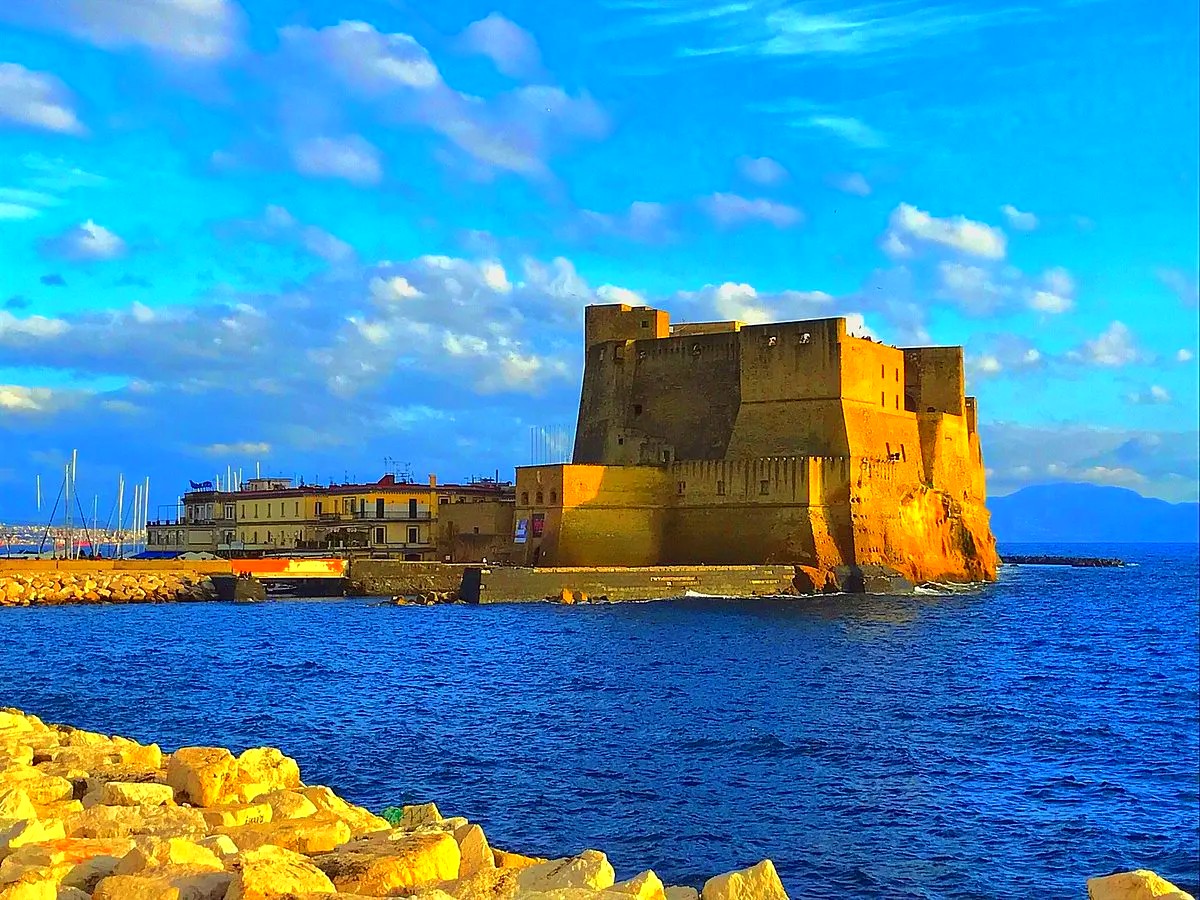
At the death of her father, she returned to Constantinople where she renounced all her worldly possessions, distributing her wealth to the poor. Patricia then embarked with her companion, on a ship bound for the Holy Land in order to visit the places sanctified by Our Lord. During the voyage, they were overtaken by a violent storm which carried the vessel in the opposite direction, as far away as Naples, Italy. There, they landed and took refuge on a rock near the bay, afterward called Castel del’ovo. After a few months of penitential life, she fell ill and died a saintly death at the age of 21.
The Castel del’ovo, legendary site of St Patricia’s shipwreck.
She was buried at the Church dedicated to the Martyr Saints Nicandro and Marciano, thereby remaining with her spiritual daughters, the Patrician Sisters who had formed around her. In 1864 the Sisters brought her remains to the Monastery of St Gregory theArmenian when their convent was suppressed.
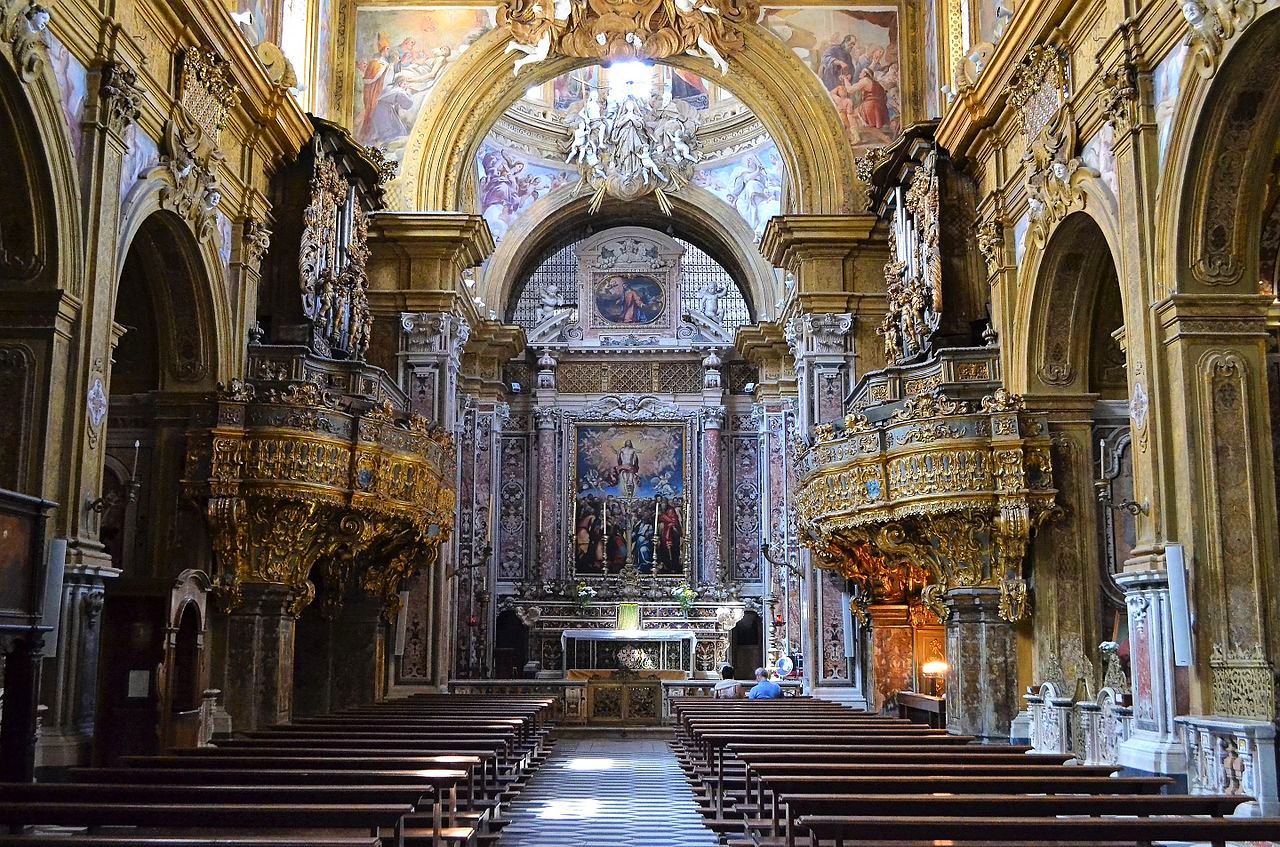
Inside the Church of St Gregory the Armenian
St Patricia is today venerated by numerous devout pilgrims who reverently kneel before those sacred remains and frequently witness a wonderful miracle – the liquefying of her blood which flowed from her mouth almost 600 hundred years after her death. It is believed that, in 1214, one of her teeth had been pulled by a zealous knight and blood flowed from the empty socket.
The miracle has been repeated for 12 Centuries. Not only every year on her Feast day, 25 August, every Tuesday but frequently in the presence of pious pilgrims who come to pray and beg St Patricia’s intercession..
Ecclesiastical authorities and scientists have investigated the phenomenon more than once and have come to the conclusion that the liquefaction cannot be explained by science and, therefore, is a real miracle.
In Naples, every Tuesday is dedicated to St Patricia. The Sister Adorers of the Blessed Sacrament of her Order are in charge of her Shrine.
The Shrin of St Patricia inside her Chapel in the Church of St Gregory the Armenian in Naples
Saint/s of the Day – 13 August – Saints Hippolytus and Cassian (Died c235) Martyrs. St Hippolytus is the Patron Saint of – horses, prison guards, officers and workers’ In Austria: Sankt Pölten, Zell am See. In Italy: Bardonecchia, Bibbiena, Cassano Valcuvia, Fogliano di Cascia, Laterina, Rogeno. St Cassian is the Patron Saint of – parish clerks and secretaries, of stenographers (proclaimed on 23 December 1952 by Pope Pius XII), students, teachers, typists. In Italy – Bibbiena, Cassano Valcuvia, Comacchio, Imola, La Salle, Laterina, Macherio, Rogeno, San Casciano dei Bagni, San Casciano in Val di Pesa, San Cassiano a Vico, San Cassiano di Controne, San Cassiano di Moriano, Trecate, the Diocese of Bolzano-Bressanone, the Diocese of Brixenand Imola. Of Mexico City, Mexico, Of Las Galletas, Tenerife, Spain.
The Roman Martyrology reads today: “At Rome, blessed Hippolytus, Martyr, who gloriously confessed the Faith, under the Emperor Decius {mpt Valerian}. After enduring other torments, he was tied by the feet to the necks of wild horses and being cruelly dragged through briars and brambles and having all his body lacerated, he yielded his spirit.” AND: “At Imola, the birthday of St Cassian, Martyr. As he refused to worship idols, the persecutor called the boys whom the Saint taught and who hated him, giving them leave to kill him. The torment suffered by the Martyr was the more grievious, as the hand which inflicted it by reason of its weakness, rendered death more tardy.”
St Hippolytus and St Cassian, (Died c235) Martyrs By Fr Francis Xavier Weninger SJ (1805-1888)
St Hippolytus, an Officer of the body-guard of the Emperor Decius, had been born in the darkness of idolatry but he had become a Christian, with all his household, in consequence of witnessing the many miracles which St Lawrence performedwhile in the prison under his charge.
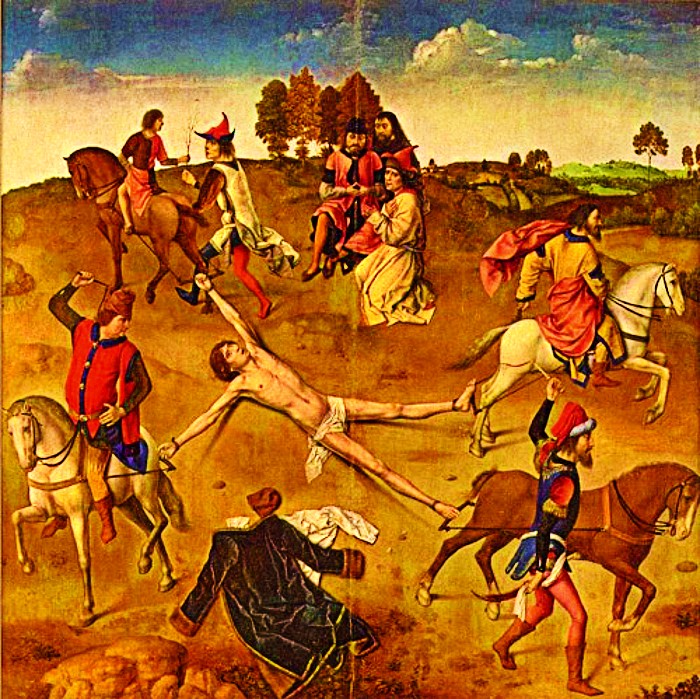
The Martyrdom of St Hippolytus
He had also been present when the Saint, lying on the red-hot gridiron, endured the most terrible tortures. At the sight of the heroism of St Lawrence, he was filled with the desire to announce himself a Christian but he was prevented by St Lawrence. But when this Martyr had gloriously ended his combat, Hippolytus, with the assistance of a Priest, named Justinus, buried the sacred remains with great devotion and veneration. The Emperor on being informed of it, had Hippolytus seized and brought before him. He asked him if it was true that he had become a Christian? Hippolytus answered firmly: “Yes, I am a Christian and, moreover, resolved to die such.” The emperor, who had always highly esteemed him, endeavoured, first by promises and then by menaces, to induce him to forsake Christ. As, however, all was unavailing, he caused him to be tortured.
He was accordingly stretched on the ground, whipped with scourges and beaten with clubs so fearfully that it was believed he could not survive. But God, by a visible miracle, prolonged his life. Keeping his eyes fixed upon Heaven, he frequently repeated: “I am a Christian, I suffer for Christ’s sake.”
After having been tormented for a long time, he was cast into prison and the Prefect received the order to behead him. Before executing this order, however, he went to the house of Hippolytus to secure his property. Finding the entire household had become Christians, he took them beyond the gates of the City and had them beheaded. Concordia, an old and holy matron, who had been Hippolytus’ nurse, was scourged until she expired because she encouraged the others to remain firm in their faith.
At last, Hippolytus was taken out of prison and fastened to the necks of two horses and dragged by them until he was torn to pieces and his heroic soul was received into the Presence of Him Whom he had so fearlessly confessed.
On the same day, although at another place, St Cassian suffered a Martyrdom of unprecedented cruelty. This Saint, was the Bishop of Brescia but had been banished from his See on account of his faith.
St Cassian
He intended to go to Rome and offer the Pope his services for the salvation of souls in some other place. On his way, he changed his mind and taking up his residence at Imola, a Town in Italy, he resolved to teach children to read and write, hoping that occasion would not be wanting to do good. In this apparently humble position, he was no less zealous than he had been in the administration of his Diocese. He taught the children with love and gentleness and endeavoured to inspire them with respect for the Christian faith, fear and horror of sin and love of virtue and piety.
He continued in this occupation with great zeal for some years, to the great benefit of young and old. Suddenly a terrible persecution of the Christians arose. Cassian was one of the first who were taken prisoners. The tyrant commanded him to sacrifice to the gods. The holy Bishop and teacher refused, as might have been expected and tried to convince the Judge of his fearful blindness in worshipping dumb idols or making gods of godless men.
The tyrant, furious at his arguments, ordered the executioners to strip him of his clothes and tie his hands behind his back and leave him exposed to the mercy of the children whom he had taken such pains to teach. The children, who had been taught that Cassian was a magician and consequently must die, a most painful death, took their sharp iron pencils with which, in those days, they wrote upon their wax tablets and pierced him with them till the blood ran profusely from his veins. This torture lasted long and was extremely painful. The Saint, however, never complained of the ingratitude of his pupils, nor gave a sign of impatience but praised and thanked the Lord until his soul went to Heaven to receive the Crown of Martyrdom.
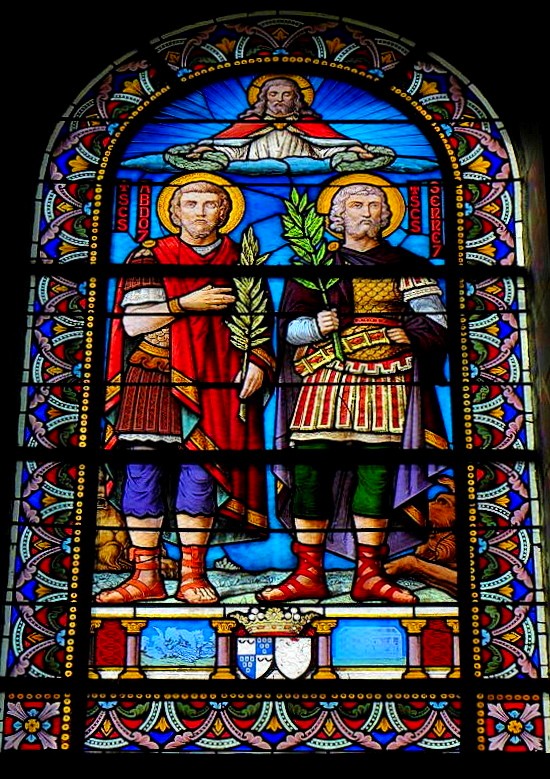
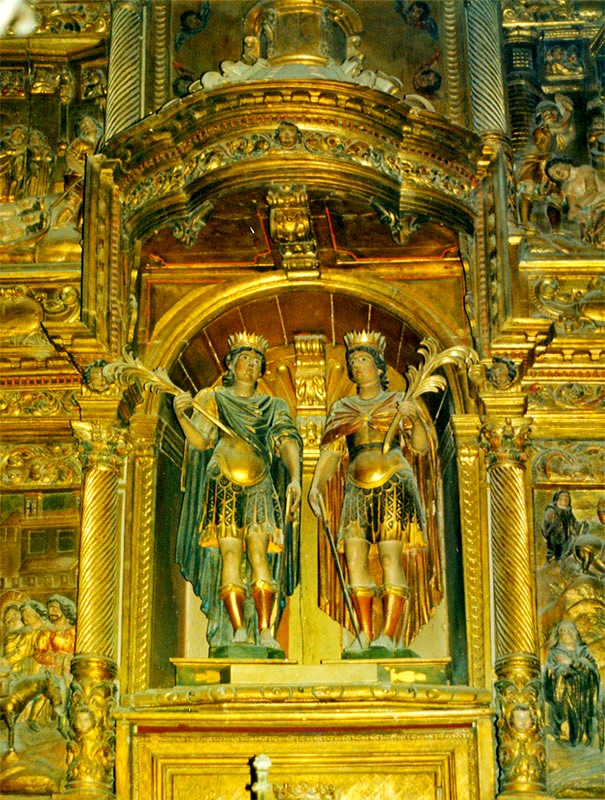
Saint/s of the Day – 30 July – Saint Abdon and Saint Senen (Died c250) Martyrs. Both our Martyrs were born in Persia and died in Rome by tortures and finally beheading around 250 under the persecutions of Emperor Decius. Patronages – against eye diseases, against rickets, against vermin, of barrel and cask makers, of blind children and children in general, of farmers and gardeners, of Arles and the Diocese of Perpignan in France, of Calasparra, in Murcia, Spain. Unfortunately, I can find no English text explaining the reasons for their various Patronages. They would naturally have related to miracles granted by the intercession of Sts Abdon and Senen before or after death. Also known as – Abdo, Abdus and Sennes, Sennis, Zennen. Additional Memorials – 20 March, and the first Sunday of May on some calendars.
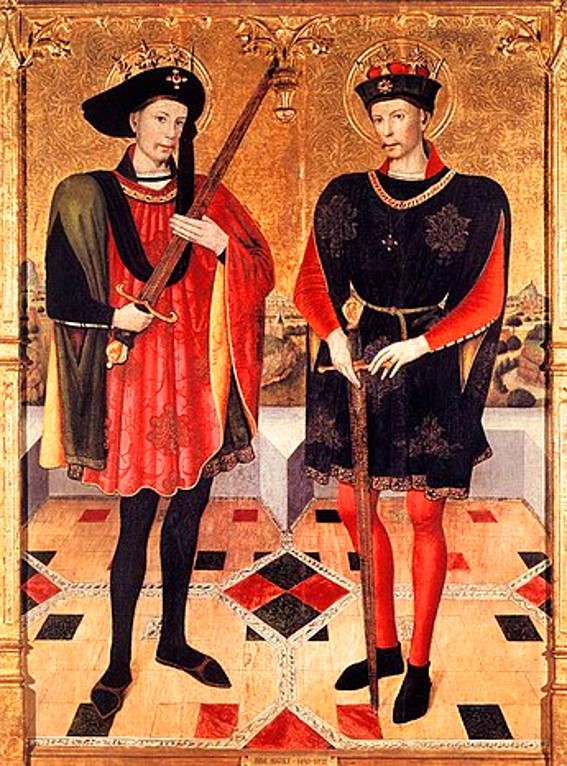
The two Saints have been the privileged object of many artistic works in various Churches and Cathedrals, in Italy and around Europe. In addition to the richness of their clothes is shown to indicate their Persian origin. They often wear a royal diadem like the one sometimes attributed to the Three Wise Men who were in fact oriental but the constant presence, is the sword, with which they were beheaded.
Saints Abdó and Senen – Diocesan Museum of the Cathedral of Tarragona – Cataloni, Spain.
The Roman Martyrology reads: “At Rome in the reign of Dec ius, the holy Persian Martyrs, Abdon and Sennen, who were bound with chains, brought to Rome, scourged with leaded whips for the Faith of Christ and then put to the sword.”
The Acts of Abdon and Sennen written for the most part prior to the 9th Century, describe them as Persian nobles, captured and taken to Rome in the 3rd Century, during a Roman army military campaign.
In Rome they converted to Christianity and helped bury the Christian dead. They came to the attention of Emperor Decius who had them taken in chains before the Roman Senate, where they refused to sacrifice to the Roman gods. They were condemned to death and taken to the Amphitheater where the Colossus of Nero stood, between the Flavian Amphitheater and the Temple of Venus, to be devoured by wild beasts. But they miraculously tamed the animals which avoided them. Abdon and Sennen were then beheaded by gladiators. Their bodies were thrown in front of the statue of the Sun, where they remained for three days, until the Deacon, Quirinius, picked them up and hid them in his house, where they remained for a very long time.
St Abdon and St Senen carrying the early Christian martyrs off for burial, Guillaume Courtois
Later, during the reign of the blessed Constantine the Great (reigned 306–337), translated to the Cemetery of Pontianus on the way to Porto, near the gates of Rome. In this Cemetery there is a 6th Century Fresco which depicts them with beards, dressed in tunics, with the Phrygian cap worn by natives of Phrygia. Above the Fresco, a Latin inscription names them unequivocally. In the Fresco, Abdon appears more mature with a short, round beard, while Sennen has a pointed beard and is certainly younger.
Still in the same Cemetery, a terracotta lamp of the 5th Century was found, with the image of a praying figure, covered by a rich Persian cloak with a short, round beard, in which Abdon was immediately identified.
Another Fresco found on a 6th Century Sarcophagus contaning their remains represents them receiving crowns from Christ.
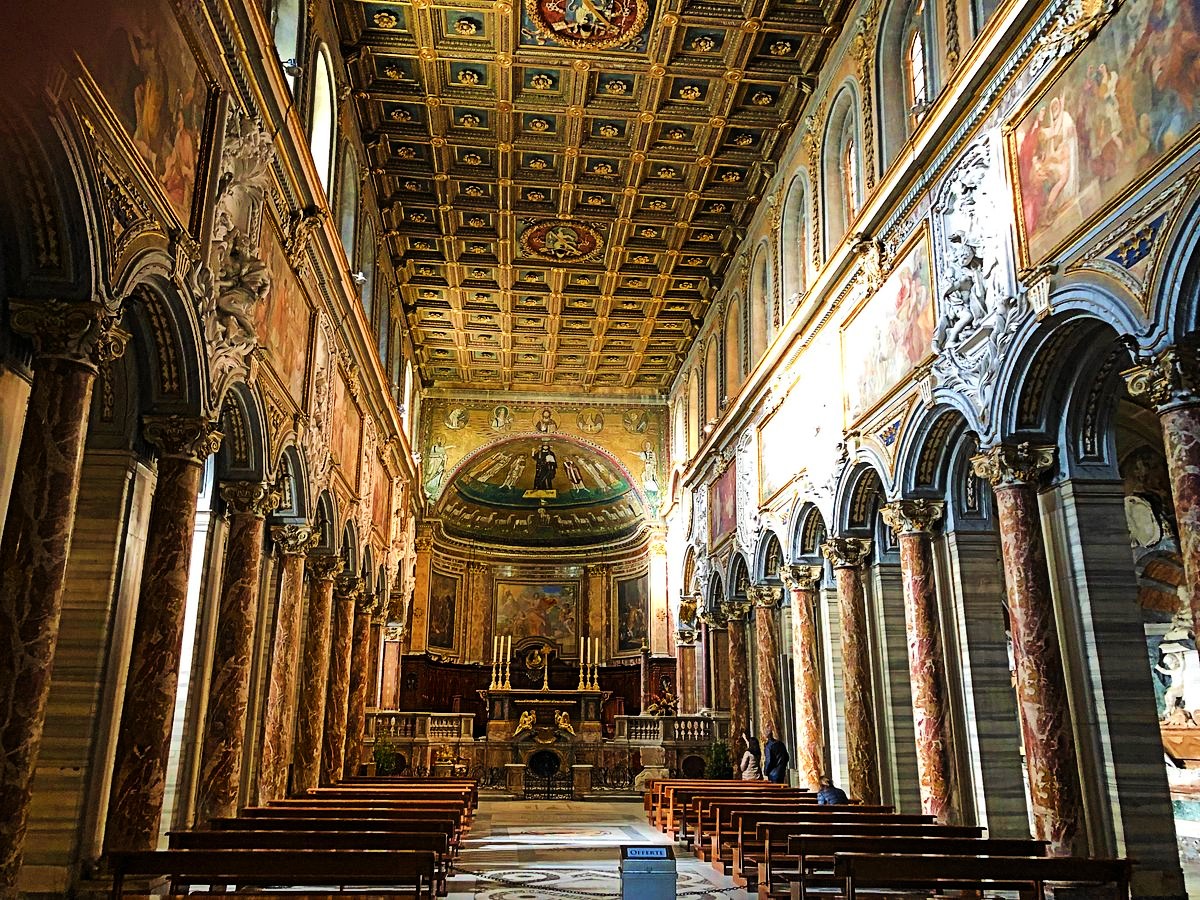
Several Cities, notably Florence and Soissons, claim possession of their bodies but the Acta Sanctorum insist that they rest in the Basilica of San Marco Evangelista al Campidoglio, Rome, having been brought there in 1474 and where there is now an Altar dedicated to them. . The Benedictine Abbey of Sainte-Marie in Arles-sur-Tech, France also claims their Tomb but it does seem that portion of their Relics have been shared in those Cities of which they are Patrons.
The Basilica of St Mark the Evangelist in Rome where Sts Abdon and Senen rest
Saint of the Day – 27 July – Blessed Lucia Bufalari of Amelia OSA (Died 1350) Virgin, Augustinian Oblate Prioress, Mystic, Miracle-worker Born in the early 14th Century at Castel Porziano near Rome, Italy and died on 27 July 1350 at the Augustinian Convent in Amelia, Italy of natural causes. Lucia was the sister of Blessed Giovanni or John of Rieti OSA (c1318-2362) who also joined the Augustinians (Feast Day on 1 August). PatronageS – against demonic possession, particularly of children. Also known as – Lucy of Amelia, Lucia. Her body is Incorrupt.
Little is known of her life, save that she gained the reputation for great holiness and prudence as an Augustinian Third Order Nun at Amelia.
We know that later she became the Pprioress of her community. She died young, on 27 July 1350.
Following her death, the people of Amelia acclaimed her as a Saint. Her Incorrupt Body is preserved at the former Augustinian Church of Amelia. Her cultus was confirmed on 3 August 1832 by Pope Gregory XVI.
In 1925, Blessed Lucia’s Relics were re-enshrined in the Church of Saint Monica and in 2011 they were translated and enshrined under the Altar of the Parish Church in Amelia when the Convent closed. Many miracles occurred there, especially in regard to children believed to be demonically possessed.
Saint of the Day – 20 July – St Elias the Prophet (Elias from the Greek) lived during the reign of King Ahab (9th Century BC), according to the Books of Kings. The spelling ‘Elijah’ is from the Hebrew. Patronages – for rain, against drought, coachmen, Air Forces, civil aeronautics, Romanian Air Force, the Carmelite Order, Mount Carmel, Bosnia and Herzegovina. Melkite Greek Catholic Archeparchy of Akka, Haifa, Israel, in Italy: Buonabitacolo, Malito, Peschici.
Ludovico Carracci (1555–1619) The TGransfiguration with Moses and Elias
The Roman Martyrology states: “On Mount Carmel, the holy Prophet Elias.”
Born in Thisbe in the 9th Century BC, at the time of King Ahab, he dedicated his life to turning the people away from the worship of idols and bringing them back to the one true God, consistent with the name given to him – Elias in fact means: “The Lord is my God”.
Precursor of Saint John the Baptist: A virtuous and austere man, he wore a camel-hide cloak over a simple apron tied around his hips, thus prefiguring St John the Baptist eight centuries in advance. Elias was gifted with the heart of a warrior and a refined intellect, he combined in his soul, the burning fire of faith and zeal for the Lord, so much so, that St John Chrysostom defined him as “an angel of the earth and a man of Heaven.” Centuries later, the Church presented him as a model of Christian life and passion for God.
The Clash with the Followers of Baal: A striking example of Elias’ prophetic power can be read in the first Book of Kings, chapter 18 which tells how, at the time of King Ahab, Israel succombing to the seduction of idolatry: in fact, they worshipped Baal because they believed he brought rain and, therefore, fertility to the fields, livestock and mankind. Precisely to unmask this lying belief, Elias gathered the people on Mount Carmel and put before a choice – follow the Lord or follow Baal. The Prophet invited over 400 idolaters to a confrontation – each one would prepare a sacrifice and each woulf pray to their own god, so that he would reveal himself. The one who responded unequivocally, was the Lord, “God of Abraham, Isaac and Israel,” Who burned the offering for the sacrifice prepared by Elias on an altar made of twelve stones, “according to the number of the tribes of the sons of Jacob, to which the Lord had given the name of Israel.” Thus the hearts of the people were converted, faced with the evidence of the Truth. Baal, however, remains silent and powerless because – and this is Elijah’s teaching – “the true adoration of God is to give oneself to God and to men, the true adoration is love.”
Elias’ offering is consumed by fire from Heaven
The Encounter with the Lord on Mount Horeb: A new test, however, awaits the Prophet he, who has fought for the faith, must escape the wrath of Queen Jezebel, Ahab’s idolatrous wife, who wishes him to be removed permanently. Exhausted and frightened, Elias asks God that he might be taken out of this life and abandons himself to an uninterrupted sleep. But an Angel wakes him and orders him to climb Mount Horeb to meet the Lord. Elias obeys – he walks for 40 days and 40 nights to reach the destination, in a journey which is the metaphor of the pilgrimage and purification of the heart, ascending towards the experience of God.
The Sonorous Silence: As prefigured, the encounter with the Lord occurs but not in a human sensational way – God reveals himself, in fact, in the form of a light breeze. It is a “thread of a sonorous silence” – which exhorts Elias not to be discouraged and to retrace his steps to complete his mission. And the prophet, covering his face as a sign of adoration and humility, obeys God’s call because he understands its value – that of testing, obedience and perseverance. Once again, therefore, Elias challenges Ahab and Jezebel, who had usurped a farmer’s land, prophesying terrible misfortunes to them, until he induces them to repent. The Prophet also alleviates the suffering and misery of a widow, feeding her and healing her son who is on the brink of death. Once his mission was accomplished, Elias disappeared, ascending to Heaven on a Chariot of Fire and entering the infinity of that God, Whom he had served with such passion. His cloak remained on earth, destined for the disciple Elisha as a sign of investiture.
St Elias and the widow
Prophetic Zeal: Today the religious Order of the Hermits of Mount Carmel (The Carmelites) recalls this great Prophet in its Shield-shaped Coat of Arms – it depicts an arm holding a flaming sword and a ribbon with the words “Zelo zelatus sum pro Domino Deo exercitum”, or “full of zeal for the God of hosts”.
Carmelite Coat of Arms
Elias, along with Elisha and Samuel, is one of the greatest Prophets of Ion (distinct from the writing Prophets, such as Isaiah, Jeremiah, Ezekiel and Daniel, who have left anonymous writings of the Sacred Books) and his mission was to incite the people to be faithful to the One True God, without being seduced by the influence of the idolatrous and licentious cult of Canaan.
The work of spiritual rebuilding, so laboriously begun, was carried forward with complete success by his disciple, Elisha, to whom he communicated the Divine call while he was in the fields behind the plough, throwing his cloak over his shoulders. Elisha was also the only witness to the mysterious end of Elias’s earthly sojourn which occurred around 850 BC.
Saint of the Day – 18 July – Saint Arnold of Arnoldsweiler (Died 793) Layman, Musician at the Court of Blessed Charlemagne, Apostle of the poor and needy, Tutor and substitute ruler of King Louis the Pious, Blessed Charlemagne’s son. Born in in Greece (?) or in Graz in Austria (?) and died on 18 July 793 in Arnoldsweiler, today a district of Düren in North Rhine-Westphalia, Germany. The name ‘Arnold’ means: ‘the one who rules like an eagle‘ (Old High German). Patronages – for a holy and gentle death, for the cure of livestock diseases, of musicians, of musical instrument manufacturers, of the Town of Arnoldsweiler, Germany.
Statue, around 1800, in the Arnold Chapel in Arnoldsweiler
Arnold lived at the Court of Charlemagne, as a singer and harp player. In 779, Arnold saw the plight of the poor and took the opportunity, when the King was hunting in the village of Ginnizweiler – today’s Arnoldsweiler – to ask the King to give him as much of the forest as he could ride around during dinner.
The King granted the request and Arnold rode around the Bürgewald(wald meaning forest) northeast of Düren with 20 villages and these poor communities were now allowed – by official decision – to collect firewood from this forest.
Not long thereafter, Charlemagne appointed Arnold as the Count of Agde and Montpellier. In 781, Charlemagne appointed his son Louis – later called the Pious – as the Regent of Aquitaine and appointed Armold as his tutor and official substitute King until the minor came of age.
The Coat of Arms of the Municipality of Arnoldsweiler , 1966
During this time, Arnold maintained good relations with St Benedict of Aniane, the Abbot and monastic Reformer (known as “The Second Benedict”). When Louis came of age and our Saint’s substitution came to an end, Arnold, who was described as an exemplary ruler and deeply religious man with great commitment to the poor, donated all of the wealth he had acquired in Aquitaine to Benedict’s Abbey of Aniane.
In 792 he wanted to make a pilgrimage to the Tomb of James the Elder in Santiago de Compostela but because of a great famine, however, he only got as far as the Bordeaux region, turned back and spent the last years of his life in Ginnizweiler now the Town named after him.
18th Century Statue in Arnoldsweiler
Armold’s donations to the Monastery in Aniane are confirmed in two documents by Emperor Louis the Pious, the second of which dates from 822. A document by the same King names the former Ginnizweiler, as a hamlet named after Arnold and, it is attested tpp, in 1168 as .Wilre Sancti Arnoldi.’ The 20 communities around Arnoldsweiler which Arnold gifted with the right to harvest wood in the forest are recorded in a document by Archbishop Gero of Cologne from 973/976. In return for the right to harvest wood, the communities offered prayers at an annual candlelit procession to Arnold’s grave which, according to tradition, had already been ordered by Arnold at the time of the donation, as a wax offering for the Altar of the Church in Ginnizweiler every Pentecos .
The Church of St Arnold in Arnoldsweiler
Arnold’s bones rest in a raised grave in the old Parish Church in Arnoldsweiler, now known as the Arnold Chapel. Parts of his head are now in the Arnold Church of the Steyler Missionaries in Neuenkirchen-St Arnold; its Founder, Father Arnold Janssen SVD (1837-1909), traced his name to Arnold of Arnoldsweiler. In the 15th Century, a brotherhood named after Arnold was founded in Arnoldsweiler, which still exists today. Arnoldus Week is celebrated in Arnoldsweiler around his memorial day, which concludes on Sunday with a Solemn High Nass and procession.
Arnold was probably Canonised by the Archbishop of Cologne as early as 820. However, the veneration was not officially confirmed until 18 February 1886 by Pope Leo XIII.
Peter Hecker: Duchess Magdalena of Jülich makes a pilgrimage to the grave of Armold in 1618, fresco, 1913, in the Arnold Chapel in Arnoldsweiler
You must be logged in to post a comment.