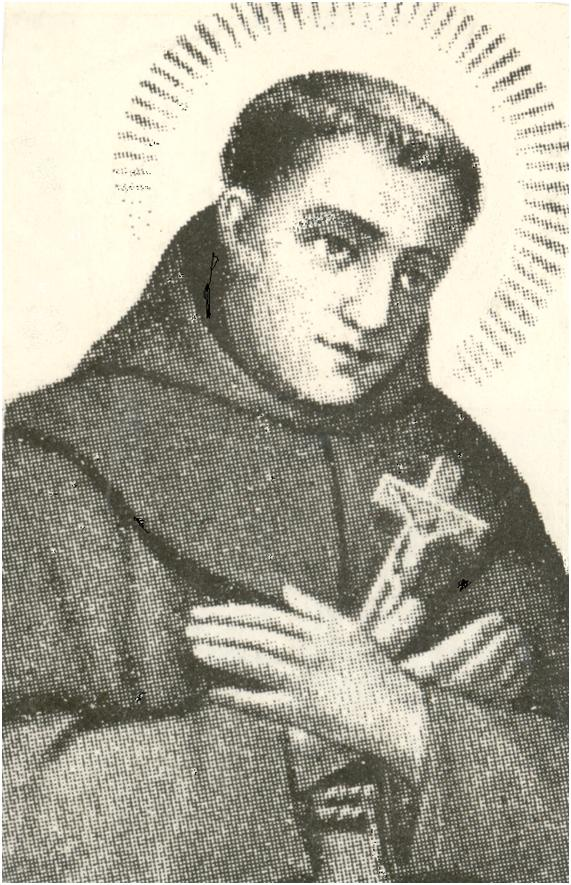
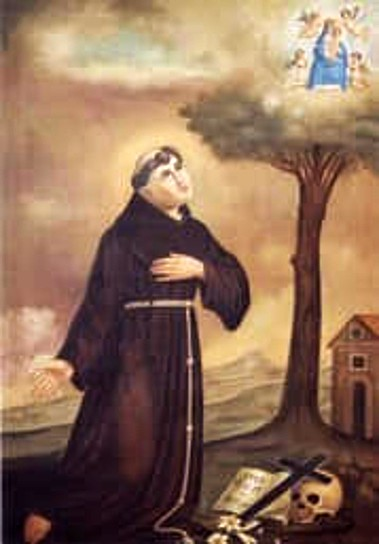
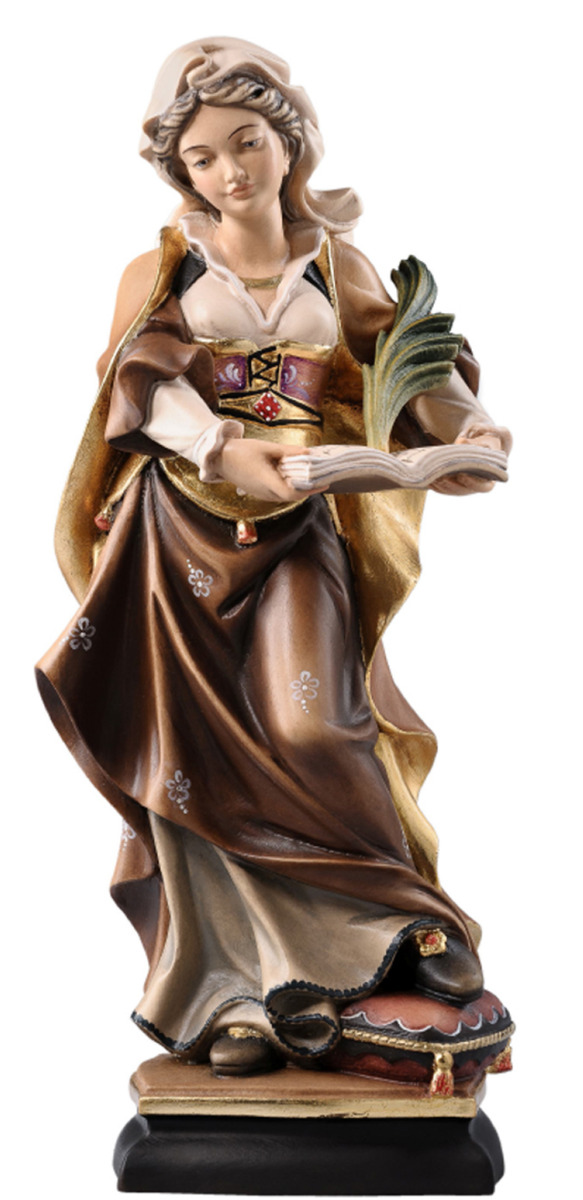
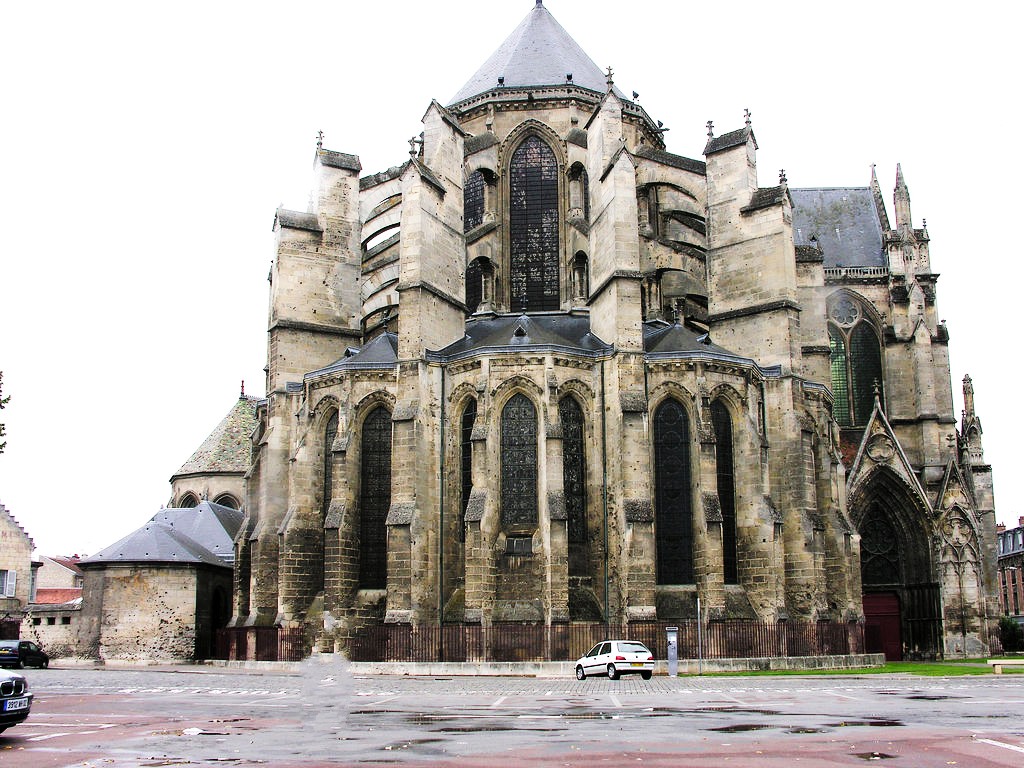
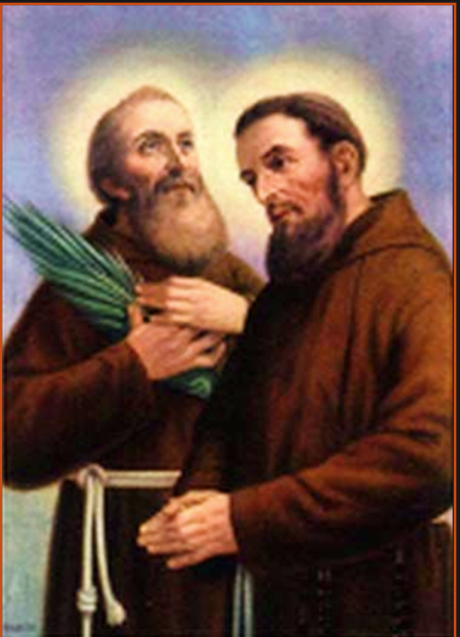
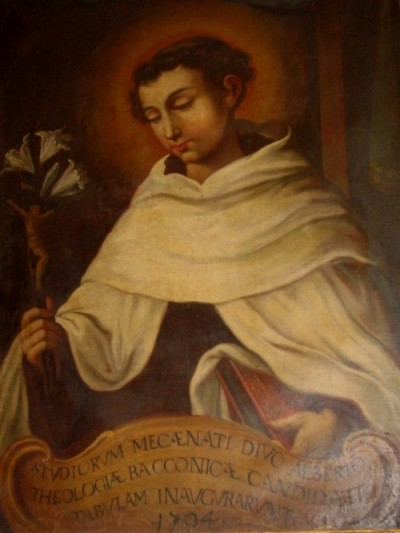
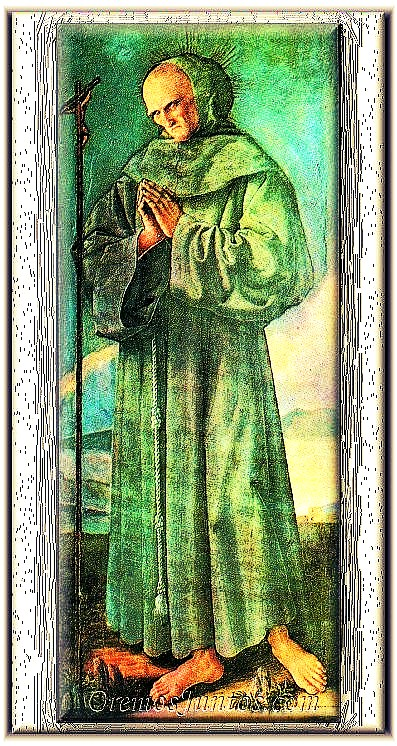
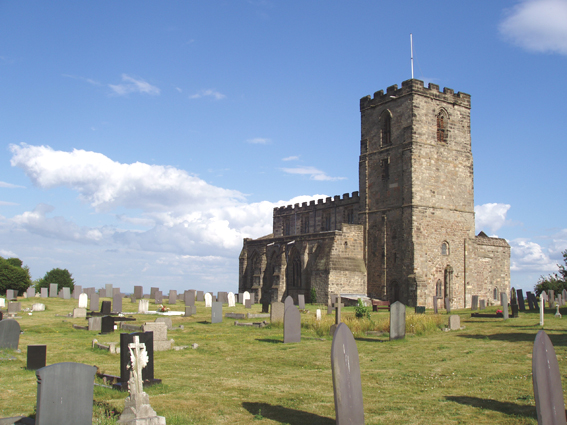
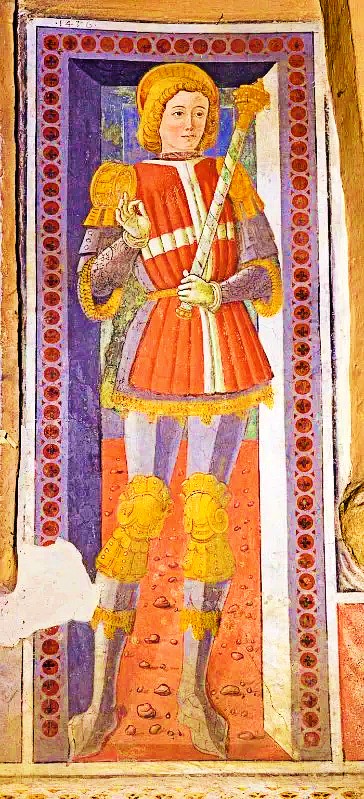
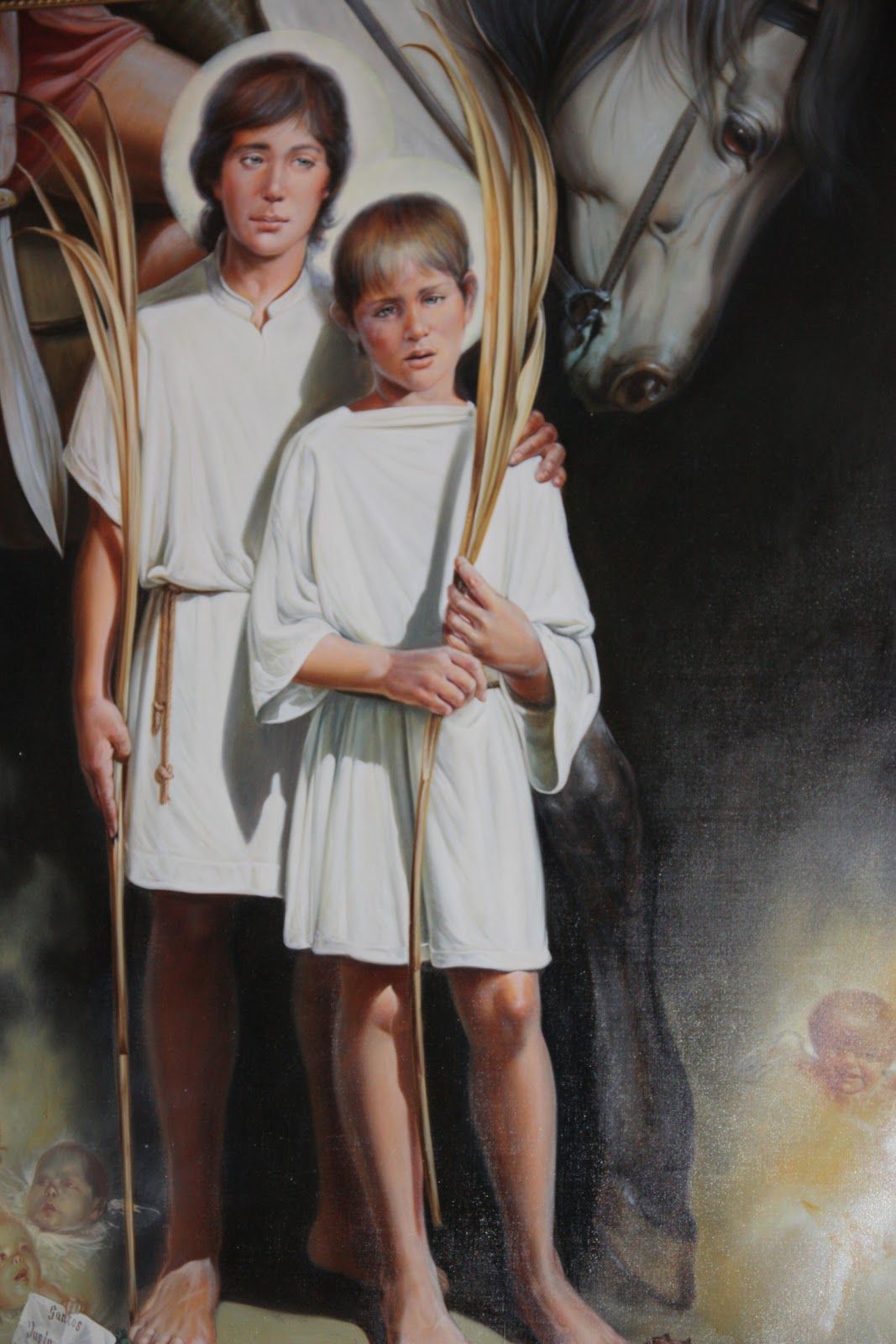
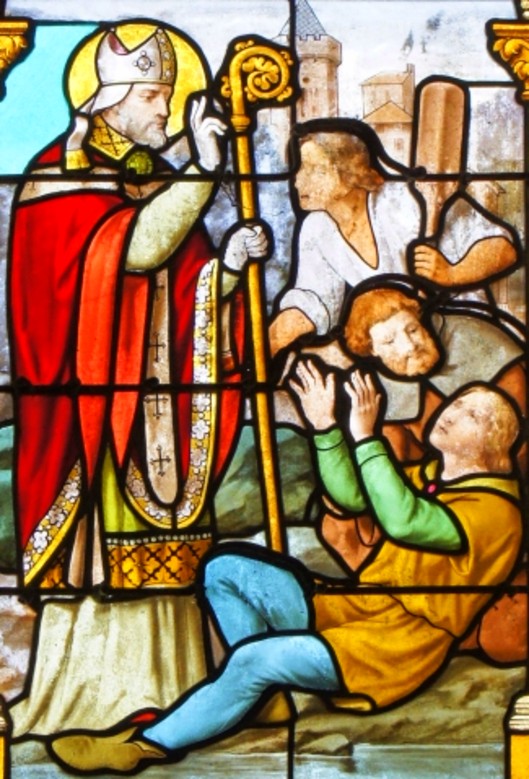
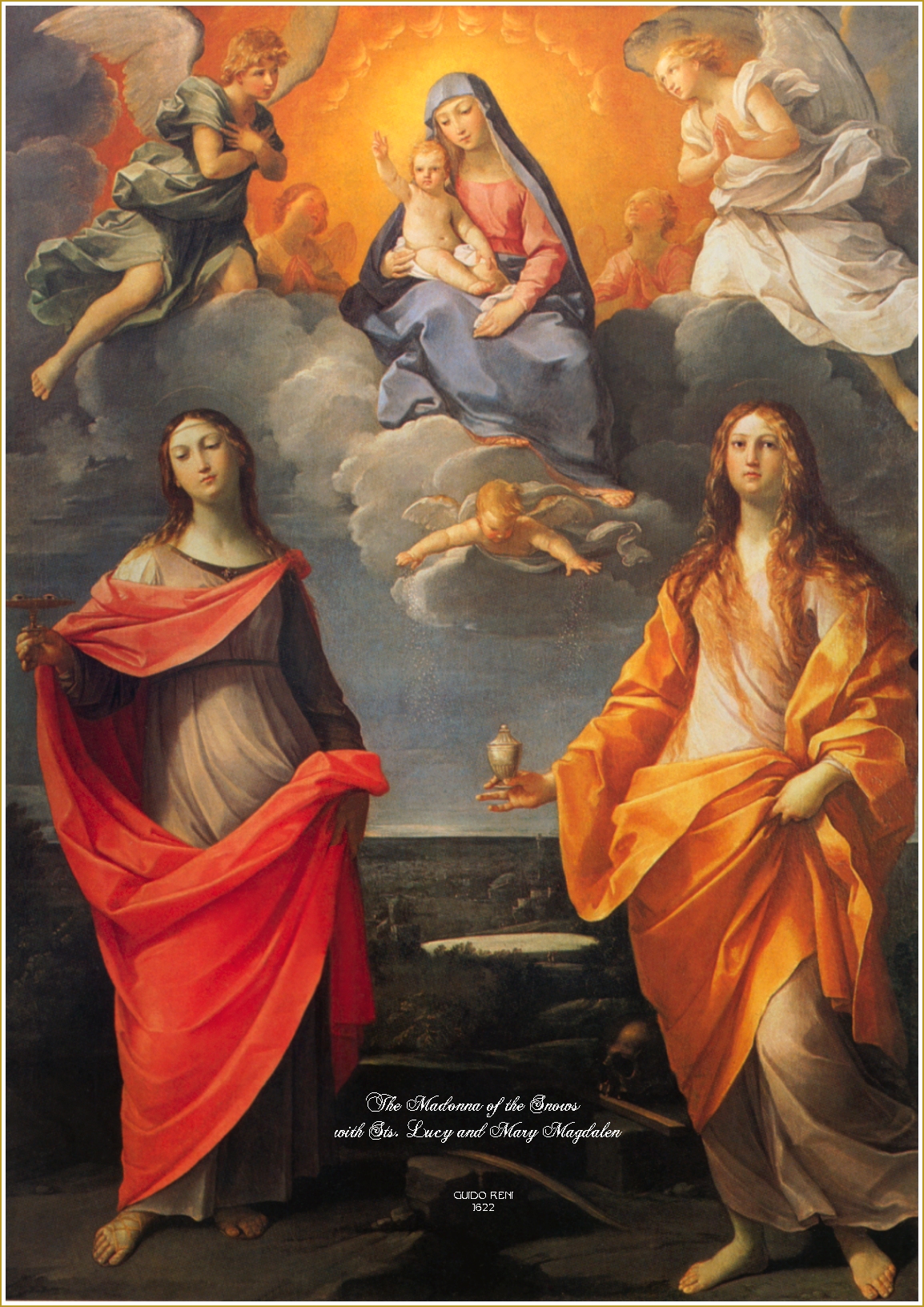
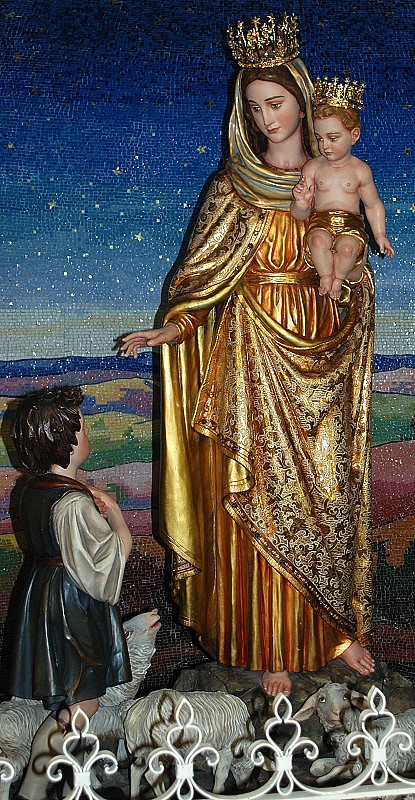
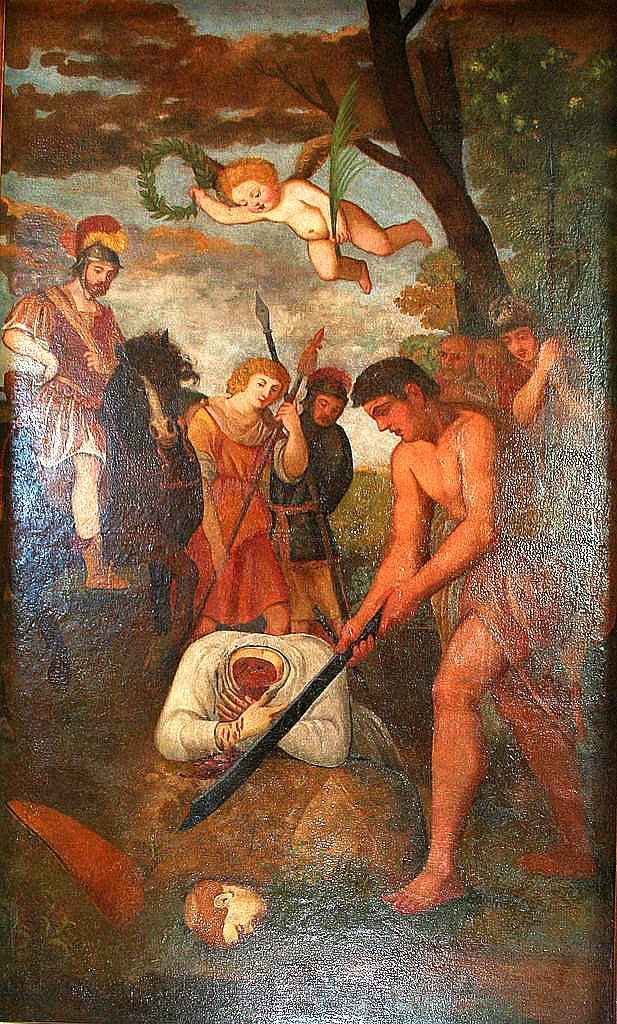
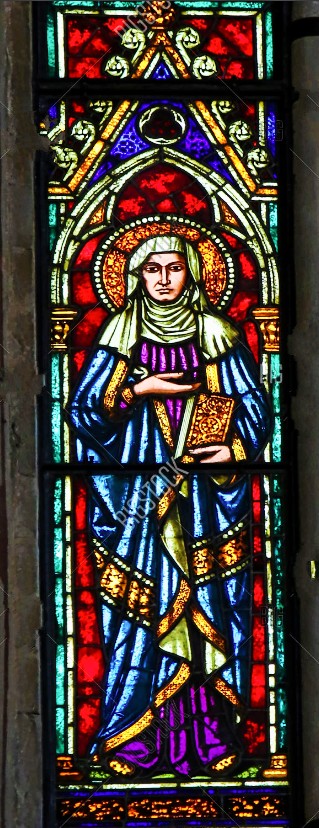
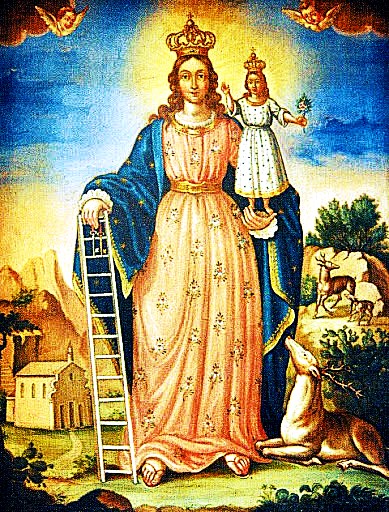
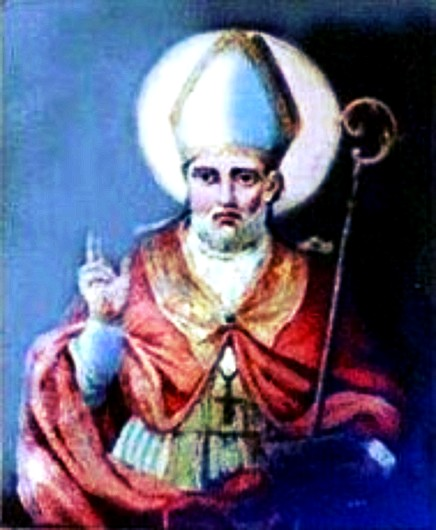
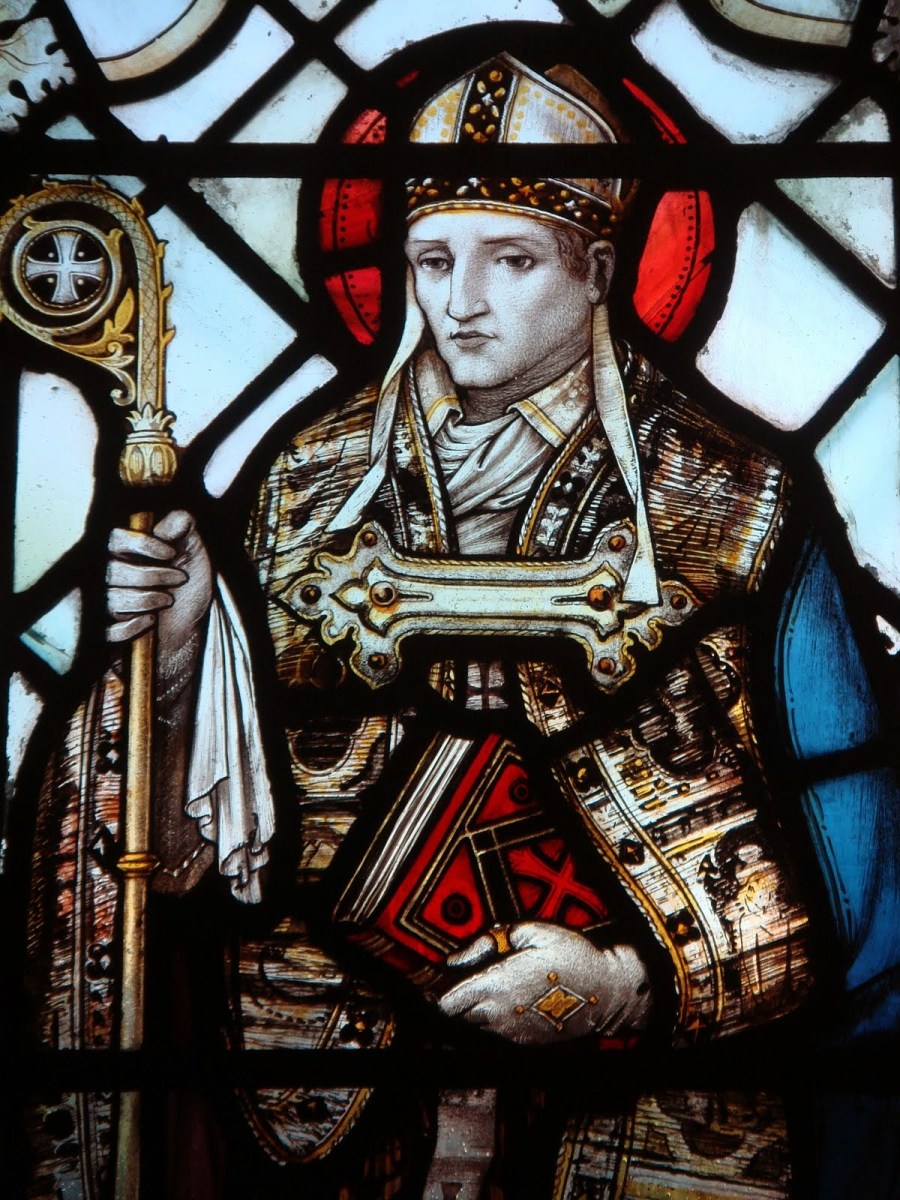
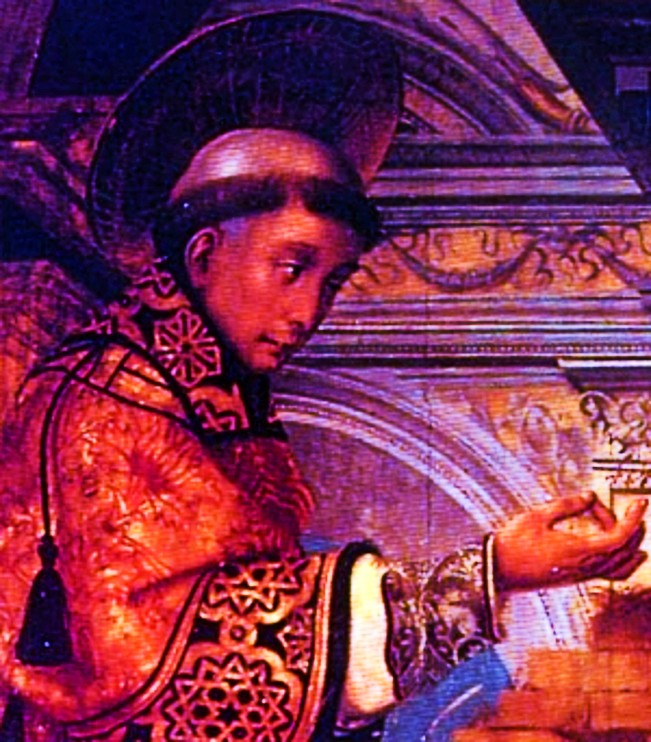
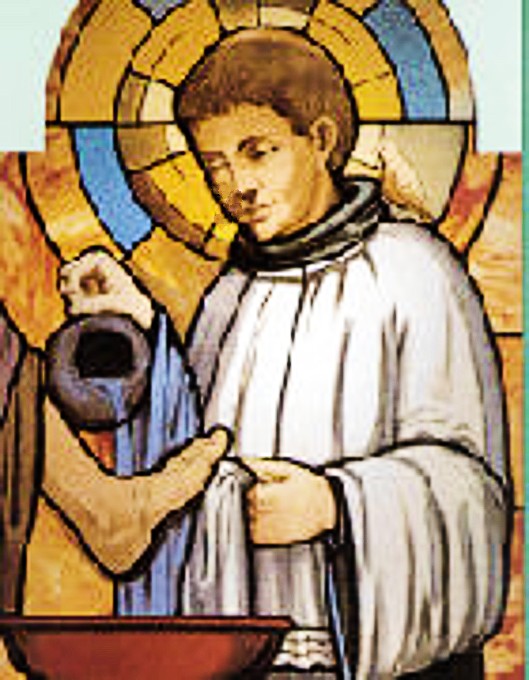
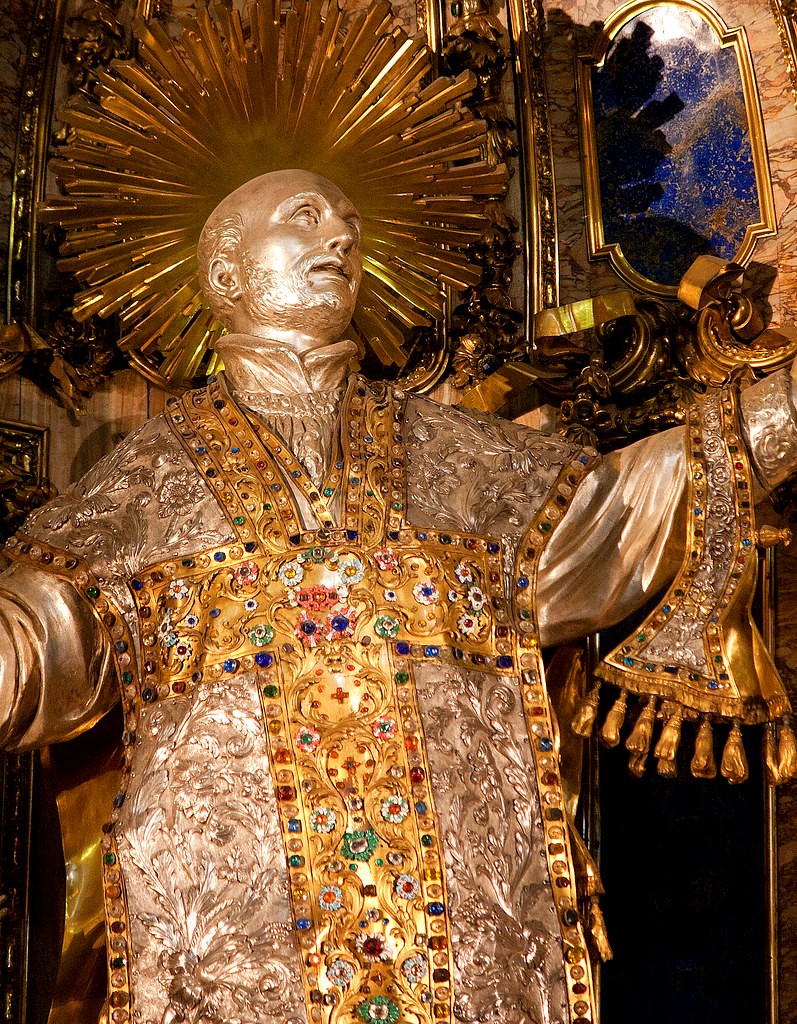
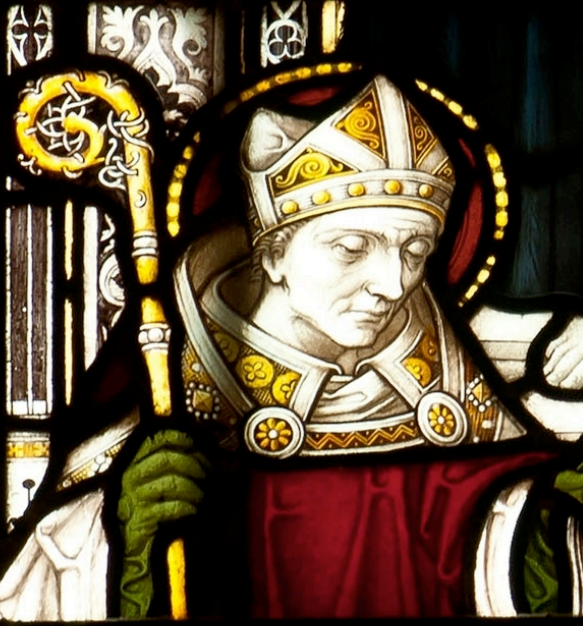
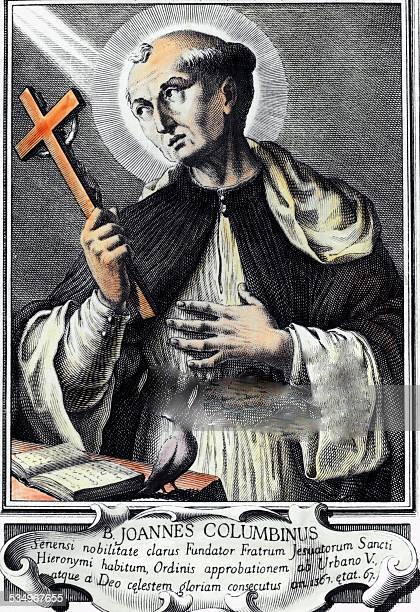
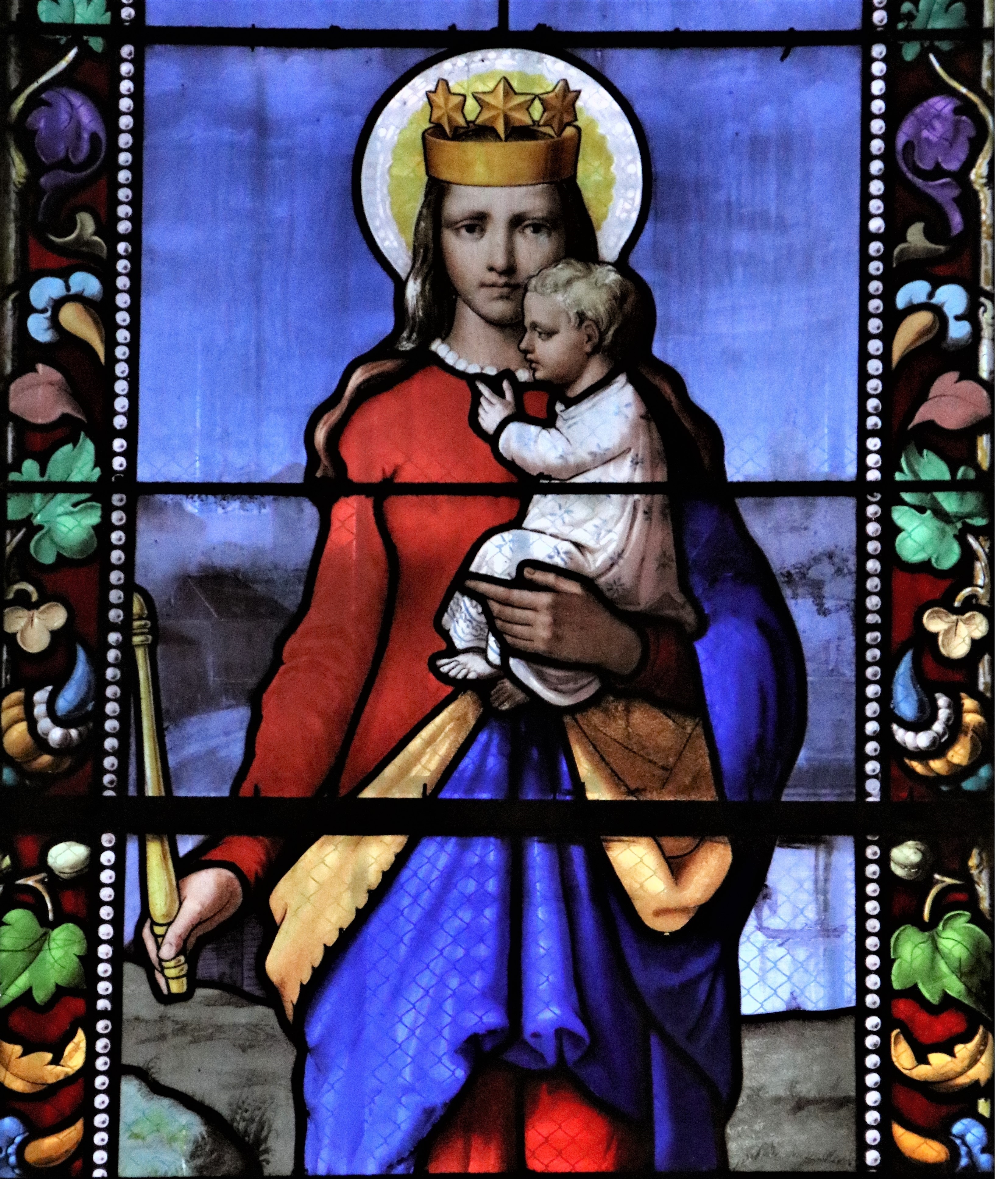
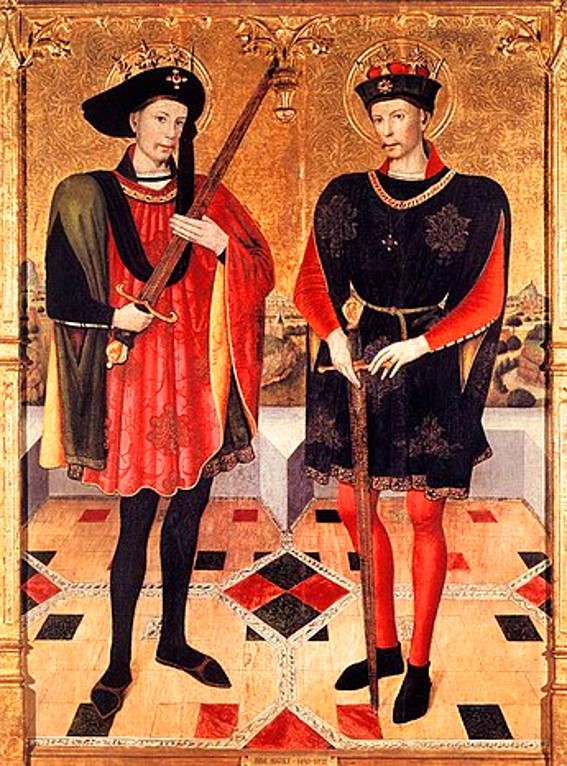
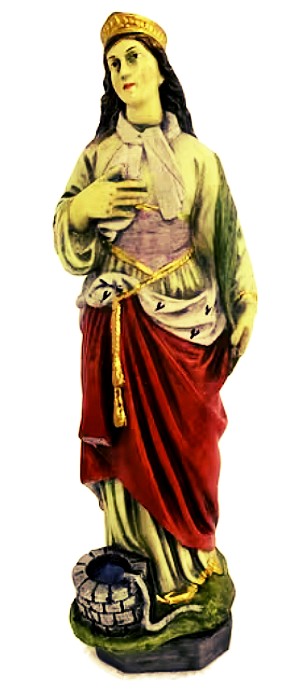
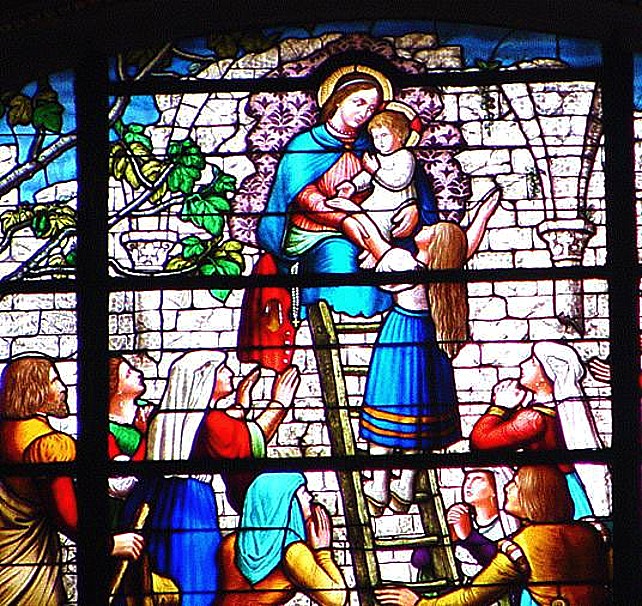
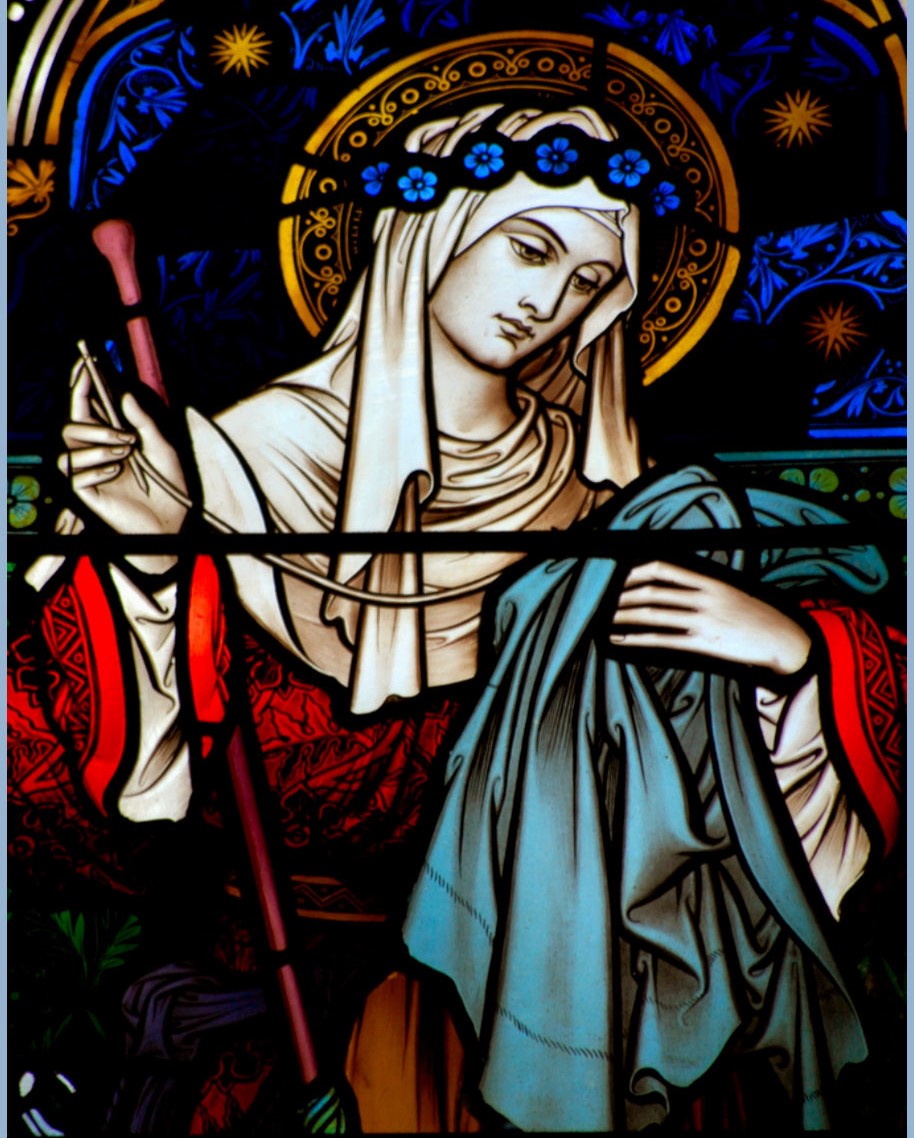
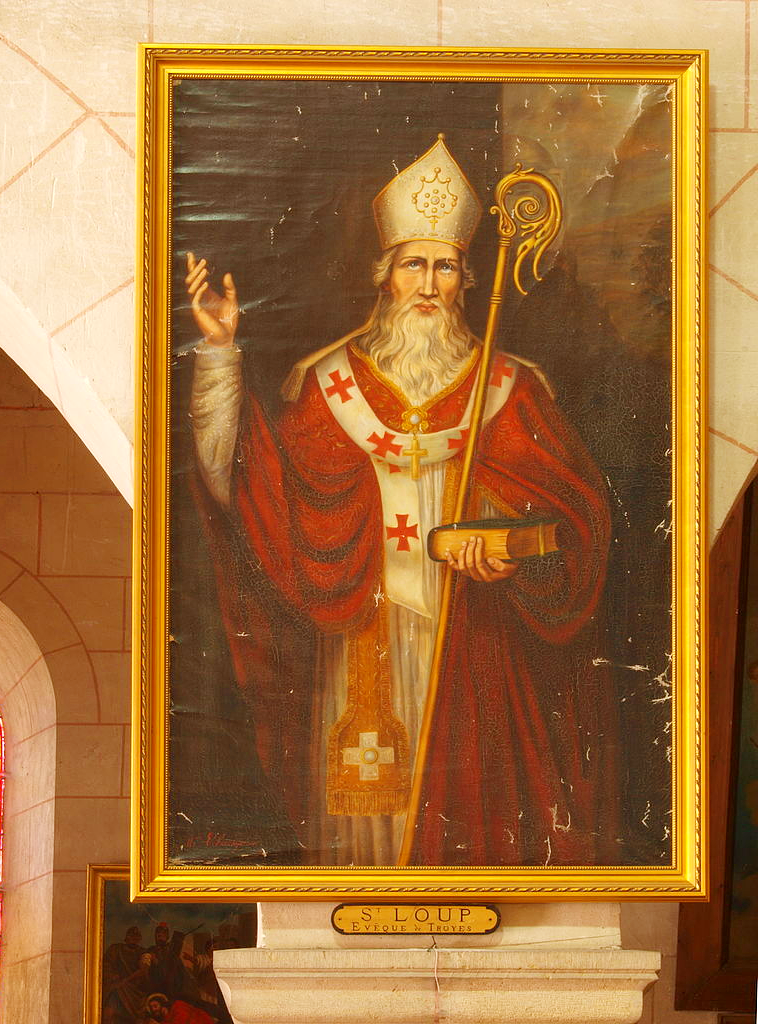
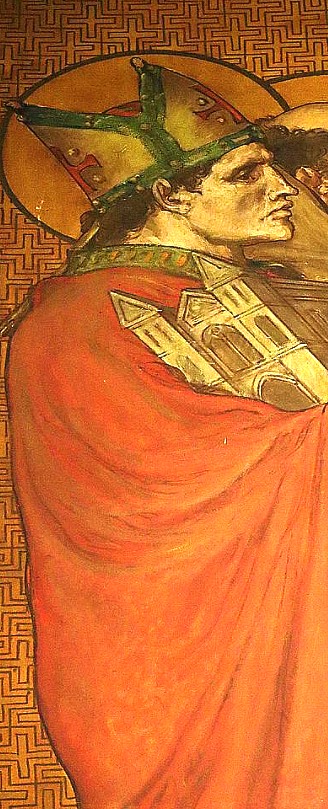
* St Abdon and St Senen (Died c250) Martyrs. Both our Martyrs were born in Persia and died in Rome by tortures and finally beheading around 250 under the persecutions of Emperor Decius. Patronages – against eye diseases, against rickets, against vermin, of barrel and cask makers, of blind children and children in general, of farmers and gardeners, of Arles and the Diocese of Perpignan in France, of Calasparra, in Murcia, Spain. Their Life and Death: https://anastpaul.com/2024/07/30/saint-s-of-the-day-30-july-saint-abdon-and-saint-senen-died-c250-martyrs/
Bl Antonio di San Pietro Bl Edward Powell St Ermengyth
St Godelieve (c1049-1070) Flemish Laywoman. Born in c1049 at Londefort-lez-Boulogne, France and died by being strangled by her mother-in-law’s and husband’s servants on 6 July 1070 at Gistel, Belgium. Patronages – difficult marriages, against abuse and spousal abuse, against throat diseases, in-law problems, for good weather and against storms. Her Life and Sad Death: https://anastpaul.com/2022/07/30/saint-of-the-day-30-july-saint-godelieve-c-1049-1070/
St Hatebrand OSB (Died 1198) Abbot St Julitta of Caesarea
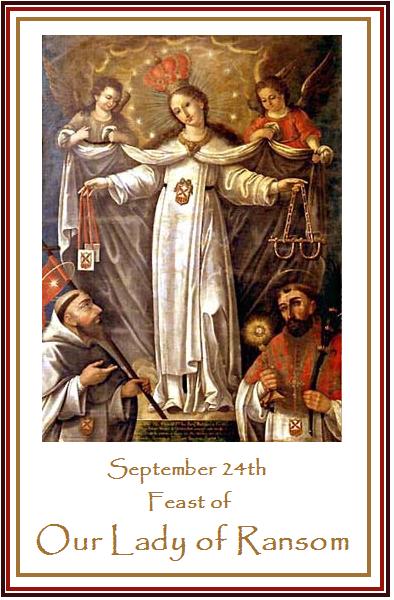
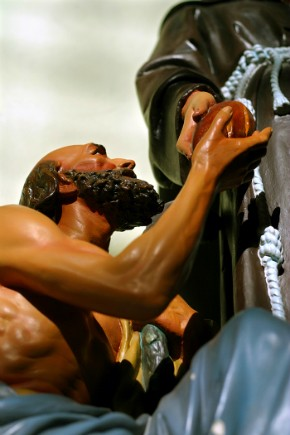
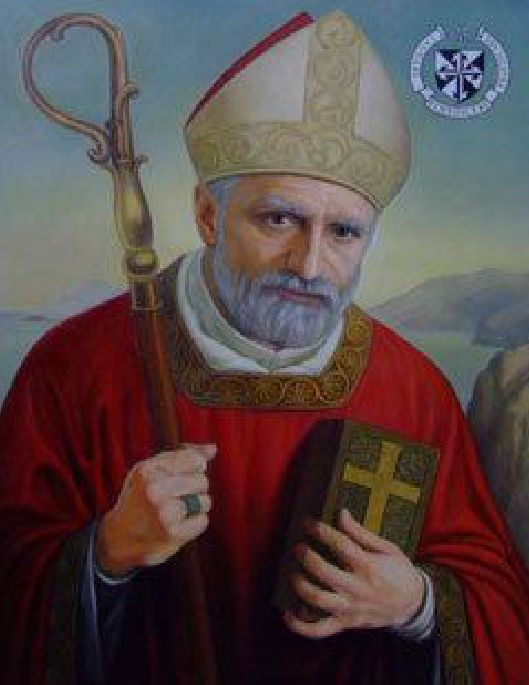
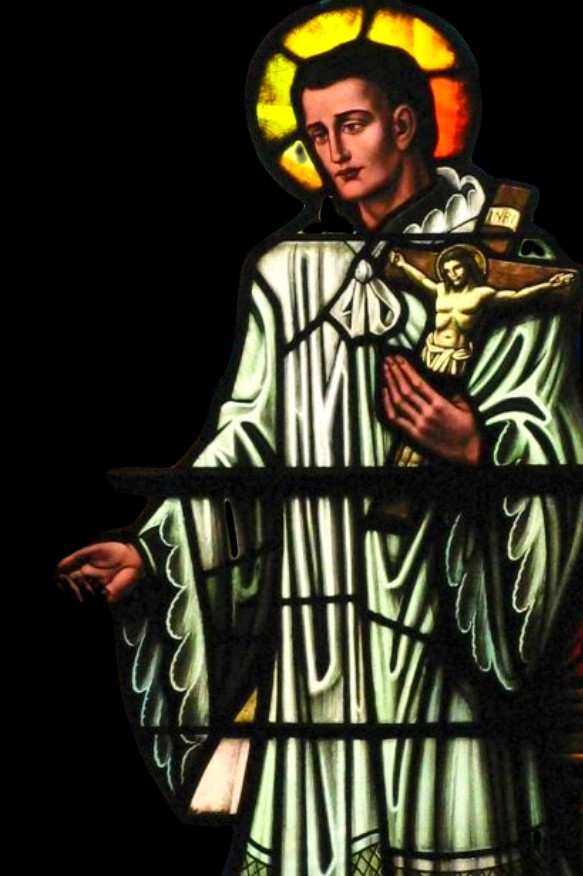
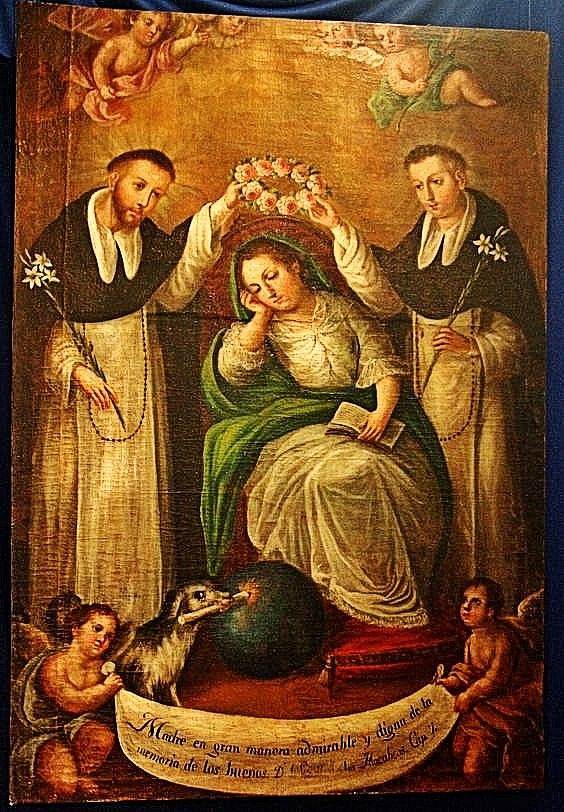
Blessed Manés on the left and Saint Dominic on the right
Bl Richard Featherstone St Rufinus of Assisi * St Senen St Tatwine of Canterbury St Terenzio of Imola Bl Thomas Abel St Ursus of Auxerre
Martyrs of Tebourba – 3 Saints: Three girls Martyred together in the persecutions of Diocletian. We know little else about them but the names – Donatilla, Maxima and Secunda. 304 at Tebourba in North Africa.
Saint of the Day – 29 July – Saint Kilian (8th Century) Abbot of Inish-caltra Monastery, Scholar, Poet and Writer. Also known as – Coelan, Chelian.
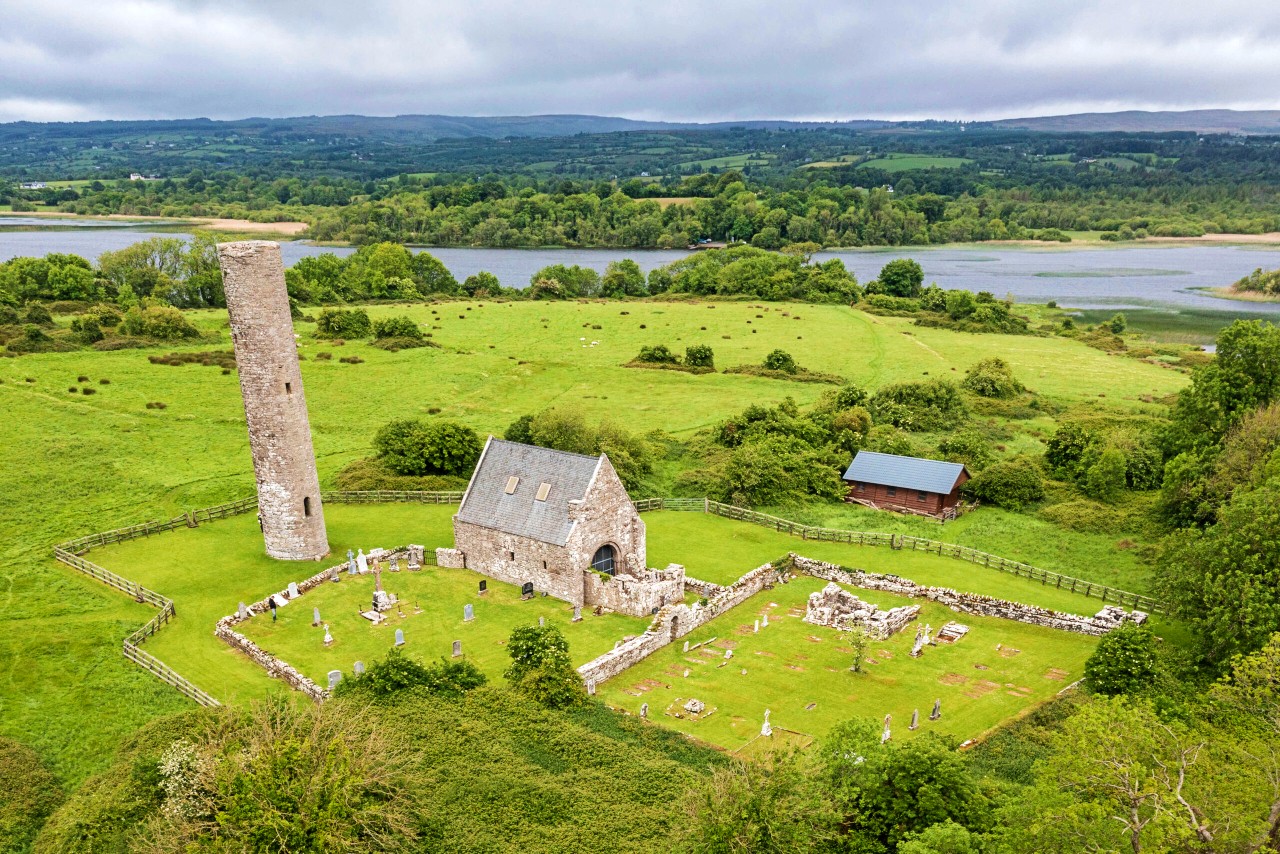
Inish-caltra Monastery
Inish-caltra was an Island Monastery of Lough Derg, County Clare. Its monastic school continued to produce a number of scholars over the centuries and our Saint Kilian is said to have authored a metrical life of Saint Brigid of Kildare.
Alas, the surviving manuscripts are not of good quality and the language used is not that of our Saint’s time, so scholars find some difficulties with the attribution to Saint Kilian. If nothing else though, Canon O’Hanlon’s account below gives us an insight into some of the difficulties faced by the great 17th Century hagiologist, Father John Colgan, as he sought to collate the existing sources for the lives of Ireland’s Saints:
Unknown Irish Monk
“This highly gifted, esteemed and worthy Religious, had laboured so earnestly and so well, in his great and holy avocation to meet that God, Whose service was the sole absorbing object of his life that his future rewards were secured, even before they were fully realised. An elegant scholar, his mind, was furthermore enlightened by the gifts of grace. It is much to be regretted, however, that his personal history has been so obscured and it has become so difficult of elucidation. T he Natalis of St Chelian, Kilian or Coelan, a Monk of Inis-keltra, occurs on the 29th of July, according to the Martyrology of Tallagh.”
St Antony Bl Beatrix of Valfleury St Callinicus of Paphlagonia St Faustinus of Spello St Felix II Pope and Martyr St John the Soldier St Kilian (8th Century) Abbot of Inish-caltra Monastery
Martyrs of Rome – 23 Saints also known as St Simplicius and Companions: Antony, Beatrix, Eugene, Faustinus, Felix, Flora, Lucilla, Rufo, Simplicius, Theodore, Eugene, Flora the Martyr, Lucilla, Theodore.
Saint of the Day – 28 July – Saint Acatius (Died c310) Bishop af Miletus in Asia Minor and Martyr. Also known as – Acacius, Acacio, Acazio and … the Younger..
The Roman Martyrology reads today: “At Miletus, in the time of the Emperor Licintius, the holy Martyr, Acatius, who completed his Martyrdom by havine his head stuck off, after having undergone different torments and been thrown into a furnace from which he came out uninjured, through the assistance of God.”
Acatius was Martyred during the persecution of the Eastern Emperor, Licinius (308-311) in Miletus, Asia Minor.
The fragments of his deeds which have come down to us from the Greek Vita, are miraculous as so many of our Martyrs were so wonderfully protected. According to the Acts Acatius survived unscathed, the most diverse tortures reserved for Christians, including beatings, wild beasts and terrible fires, during which the Tribune in charge of the execution perished in his place; finally, he was beheaded.
St Pope Innocent I (Died 417) Confessor. Papal Ascension 402 until his death on 12 March 417, He defended the exiled Saint John Chrysostom and consulted with the Bishops of Africa concerning the Pelagian controversy, confirming the decisions of the African synods. The Catholic priest-scholar Johann Peter Kirsch, 1500 years later, described Innocent as “a very energetic and highly gifted individual …who fulfilled admirably the duties of his office.” Holy St Innocent: https://anastpaul.com/2021/07/28/saint-of-the-day-28-july-saint-pope-innocent-i-died-417/
St Acatius (Died c310) Bishop af Miletus and Martyr St Arduinus of Trepino St Botwid of Sudermannland St Camelian of Troyes Bl Christodoulos St Eustathius of Galatia St Irene of Cappadocia Bl John Soreth St Longinus of Satala St Lucidius of Aquara St Lyutius
St Nicanor the Deacon St Parmenas the Deacon St Peregrinus St Prochorus the Deacon
DISCLAIMER: Please note: I cannot control the content of the Advertisements on this Site, or of pop-ups which may appear, The revenue from the Advertisements, however, does provide a little assistance in the support of the Site. I do apologise for any inappropriate content.
Saint of the Day – 27 July – St Aetherius (Died c573) Bishop and Confessor of Auxerre, in modern Burgundy, France. Also known as – Ether, Ethère, Etherius.
The Roman Martyrology reads today: “At Auxerre, the demise of the blessed St Aetherius, Bishop and Confessor.”
Unknown Ancient French Bishop
Aetherius succeeded St Romanus as the 15th Bishop of Auxerre from 564 until his death in c573.
He was a great promoter of monastic life and defended the Church against interference from the secular state, naturally undergoing persecution on account of his fervent protection of the Church. After around 10 years in Office, Aetherius died and was buried in the Abbey of St Germanus in Auxerre, see below.
St Aetherius (Died c573) Bishop and Confessor of Auxerre St Anthusa of Constantinople St Arethas St Aurelius of Cordoba St Benno of Osnabruck (c 1020-1088) Bishop Bl Berthold of Garsten
St Pope Celestine I (Died 432) called “the Heresy Fighter.” Much is unknown about Celestine, including his birthday. But his reign as Pope – from 422 until his death in 432 – is credited with many achievements. The Papacy of St Celestine I: https://anastpaul.com/2018/07/27/saint-of-the-day-st-pope-celestine-i-died-432/
St Ecclesius of Ravenna St Felix of Cordoba St Galactorio of Lescar St George of Cordoba St Hermippus St Hermocrates St Hermolaus St Juliana of Mataró St Lillian of Cordoba
Blessed Maria Magdalena Martinengo OSC Cap (1687-1737) Nun of the Order of the Capuchin Poor Clares, Mystic with a great devotion to the Passion of Christ. She had a great horror of sin and devoted much time to contemplating death, and the Divine Judgement. The recognition of two miracles attributed to her direct intercession allowed for Pope Leo XIII to preside over her Beatification on 3 June 1900. Her Holy Life: https://anastpaul.com/2021/07/27/saint-of-the-day-27-july-blessed-maria-magdalena-martinengo-osc-cap-1687-1737/
Martyrs of Nicomedia – 3 Saints: Three Christians Martyred together. The only other information to survive are their names – Felix, Jucunda and Julia. Nicomedia, Asia Minor.
Seven Sleepers of Ephesus: A group of seven young Christian men who hid in a cave in hopes of avoiding the persecution of Decius in the year 250. Found and arrested, they were ordered by the pro-consul in Ephesus to renounce their faith; they refused and were sentenced to die. Legend says that they were walled up in their hiding cave, guarded by the dog Al Rakim; when the cave wall was breached in 479 – they all woke up! It is likely that the youths were tortured to death in various ways and buried in the cave. The resurrection story confusion came from the phrase “went to sleep in the Lord” which was used to describe the death of Christians and 479 is when their relics were discovered. Their names were Constantinus, Dionysius, Joannes, Malchus, Martinianus, Maximianus and Serapion. They were martyred in 250 in Ephesus (in modern Turkey); tradition says that they were walled up in a cave to suffocate but other records indicate that they were tortured to death in various ways. Their relics discovered in 479 and translated to Marseilles, France and enshrined in a large stone coffin.
Saint of the Day – 26 July – St Simeon (Died 1016) Monk at the Monastery of Saint-Benoît-sur-Po, Hermit, Pilgrim, Miracle-worker. Simeon of Armenian origin died in Mantua, Italy in 1016). Also known as – Simeon of Polirone.
The Roman Martyrology reads today: “In the Monastery of St Benedict near Mantua, St Simeon, Monk and Hermit, who was renowned for many miracles and at an advanced age rested in the Lord.”
Little is known of Simeon’s early life but, at some time, he left his homeland and spent some years living as a Hermit in Palestine. After this, he is known to have visited Rome, where his exoticism led to his harassment by a Roman mob. Papal intervention calmed this situation. By order of Pope Benedict VII, Simeon was examined and found to be totally devout and completely orthodox.
In the following period, Simeon travelled across Italy, France and Spain visiting the Holy Shrines and Tombs of the Saints. Simeon then returned to northern Italy, joining a Benedictine Monastery near Mantua, where he became known for his kindness and generosity. He died in Mantua in 1016.
He was renowned for his piety and heroic charity and for numerous miracles performed during life and after death.
His cult was approved by Pope Benedict VIII in 1024 and Leo IX also approved his Sainhood in 1049. In 1913 Simeon’s Relics were solemnly exposed. His Tomb was a site of numerous miracles which contributed to his Canonisation in 1049. A locla noble, Marchese Boniface III of Montferrat, later rebuilt a local Church and dedicated it in Simeon’s honour.
St Benigno of Malcestine Bl Camilla Gentili St Charus of Malcestine Bl Edward Thwing Bl Élisabeth-Thérèse de Consolin St Erastus Bl Évangéliste of Verona St Exuperia the Martyr Bl George Swallowell St Gérontios St Gothalm St Hyacinth Bl Hugh of Sassoferrato Bl Jacques Netsetov Bl John Ingram St Joris Bl Marie-Claire du Bac Bl Marie-Madeleine Justamond Bl Marie-Marguerite Bonnet St Olympius the Tribune
Saint of the Day – 25 July – Saint Theodemirus (Died c851) Monk of Carmona Monestery and Martyr of Cordoba, Spain. He is also remembered as one of the Martyrs of Cordoba.
The Roman Martyrology reads today: “At Cordoba, St Theodemirus, Monk and Martyr.”
The Martyrs at Cordoba Cathedral, Saint Eulogius by an unknown artist of the 17th Century.
We have no personal information about Theodemirus. All we have is gleaned from various Martyrologies. He was Martyred in Cordoba under the Muslim rulerAbd al-Rahman II, who reigned from 822 to 852, for refusing to renounce his Christian Faith.
His body was buried in the Choir of the Church of Saint Zoilo in Cordoba.
Bl Antonio of Olmedo St Bantu of Trier St Beatus of Trier
St Cugat del Valles (Died c304) Martyr, Preacher, Evangeliser, Miracle-worker. The Roman Martyrology reads: “At Barcelona in Spain, during the persecution of Diocletian and under the Governor Darian, the birthday of the holy Martyr Cucuphas. After overcoming many torments, he was struck with the sword and thus went triumphantly to Heaven.” St Cugat’s Life and Death: https://anastpaul.com/2024/07/25/saint-of-the-day-25-july-st-cugat-del-valles-died-c304-lay-martyr/
St Ebrulfus St Fagildo of Santiago St Felix of Furcona St Florentius of Furcona St Glodesind of Metz
St Mordeyren St Nissen of Wexford St Olympiad of Constantinople St Paul of Palestine
Blessed Pietro Corradini OFM (1435–1490) Priest of the Franciscan Friars Minor, Confessor, Preacher, Spiritual Director. Pietro and a great devotion to the Holy Mother and constantly taught love of her. Fr Pietro served in several leadership positions within his Order. The Beatification process commenced not too long after Fr Pietro’s death and culminated on 10 August 1760 after Pope Clement XIII issued a formal decree that approved Corradini’s local ‘cultus’ thus naming him Blessed. A Special Child of Mary: https://anastpaul.com/2020/07/25/saint-of-the-day-25-july-blessed-pietro-corradini-ofm-1435-1490-priest/
St Theodemirus (Died c851) Martyr of Cordoba
Martyrs of Caesarea – 3 Saints: Three Christians Martyred together in the pesecutions of emperor Maximilian and governor Firmilian – Paul, Tea and Valentina. 309 in Caesarea, Palestine.
Martyrs of Cuncolim, Goa, south western India– 20 Saints: On 15 July 1583 the group met at the Church of Orlim and hiked to Cuncolim to erect a Cross and choose land for a new Church. Local anti-Christian Hindu pagans, seeing the unarmed Christians, gathered their weapons and marched on them. One of the Parishioners, a Portuguese emigre named Gonçalo Rodrigues, carried a firearm but Father Alphonsus Pacheco stopped him from using it. The Hindu pagans, numbering at least 500, then fell upon them and killed them all without mercy. They were Beatified by Pope Leo XIII on 30 April 1893. They were – Alphonsus Pacheco, Alphonsus the Altar boy, Anthony Francis, Dominic of Cuncolim, Francis Aranha, Francis Rodrigues, Gonçalo Rodrigues, Paul da Costa, Peter Berno, Rudolph Acquaviva, ten other native Christian converts whose names have not come down to us. They were Martyred on Monday 25 July 1583 at the village of Cuncolim, district of Salcete, territory of Goa, India. They were Beatified on 30 April 1893 by Pope Leo XIII.
Saint of the Day – 24 July – Saint Declan (5th Century) the 1st Bishop of Ardmore, county Waterford, Ireland. Born in the 5th Century at Desi, Waterford, Ireland and more than likely died at his See in Ardmore. Patronages – Ardmore, the Diocese of Waterford and Lismore.
Declan preached in Ireland before the arrival of Saint Patrick. It is likely that Declan was the first Bishop of Ardmore which was certainly an Episcopal See and an important Ecclesiastical centre in ancient times.
The content of his Acts is highly uncertain but they at least testify to the extraordinary veneration with which Declan was surrounded in Ardmore and the surrounding area. This devotion has endured to the present day, especially on his Feastday which is still celebrated, when Ardmore becomes the centre of numerous pilgrimages. Particularly to pray at St Declan’s Holy Well for his holy aid.
A significant collection of testimonies of early eEclesiastical life is also preserved here and it is possible that the oldest fragments date to Declan’s time.
St Aliprandus of Pavia St Antinogenes of Merida St Aquilina the Martyr St Arnulf of Gruyere Bl Balduino of Rieti St Boris (c990-1010) Prince
St Capito – Martyr. No further information has survived.
St Christina Mirabilis/the Astonishing (1150-1224) Virgin, mendicant, Penitent, Mystic. St Christina the Astonishing has been recognised as a Saint since the 12th century. She was placed in the calendar of the saints by at least two bishops of the Catholic Church in two different centuries (17th & 19th Her Amazing Life: https://anastpaul.com/2019/07/24/saint-of-the-day-24-july-saint-christina-mirabilis-1150-1224/
St Cyriacus of Ziganeus St Declan (5th Century) Bishop of Ardmore, Ireland Bl Diego Martinez
Saint/s of the Day – 23 July – Saint Theophilus (Died c302) and Saint Trophimus (Died c302) Martyrs of Rome. T hese two were probably brothers and also more than likely citizens of Rome.
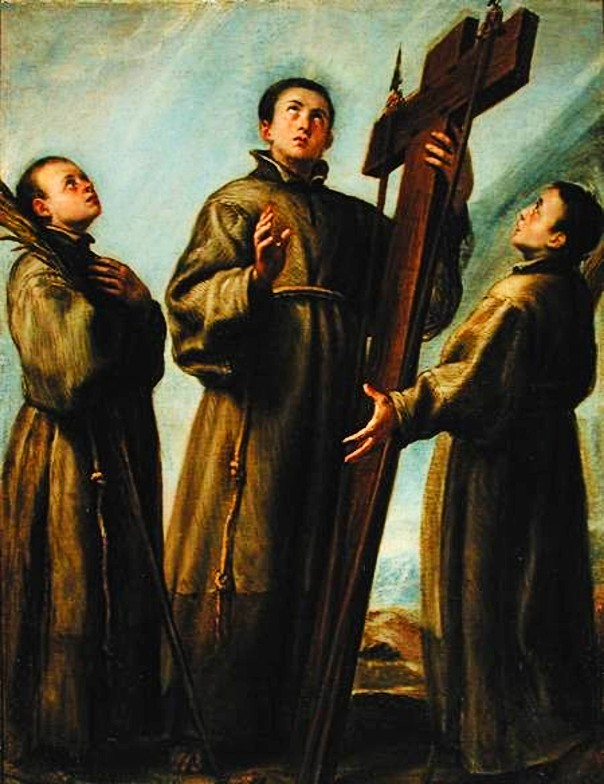
The only information we have is from the Roman Martyrology (1914) as below.
The Roman Martyrology reads today: “The birthday of the holy Martyrs Trophimus and Theophilus, who received their Crowns of Martyrdom by being beaten with stones, scorched with fire and finally struck with the sword in the time of the Emperor Diocletian.”
Bl Juan de Luca Bl Juan de Montesinos Bl Leonard da Recanati Bl Mariano Brandi
St Phocas the Gardener (Died c303) Layman Martyr, Apostle of the poor and needy. Died by beheading c 303 in Sinope, Pontus (in modern Turkey). Patronages – against insect bites, against poisoning, against snake bites, agricultural workers, farm workers, farmers, field hands, boatmen, mariners, sailors, watermen, gardeners, husbandmen, market-gardeners. https://anastpaul.com/2022/07/23/saint-of-the-day-23-july-st-phocas-the-gardener-died-c-303-martyr/
St Primitiva V(1st Century) irgin Martyr of Rome St Rasyphus of Macé St Rasyphus of Rome St Ravennus of Macé
Saint of the Day – 22 July – St Meneleus (Died c700) Abbot of Ménat Monastery near Clermont, France. Born in Précigné, France and died at his Ménat Monastery. Also known as – Mauvier, Menele, Men eve, Menevius.
The Roman Martyrology reads today: “In the territory of Auvergne, St Meneleus, Abbot.”
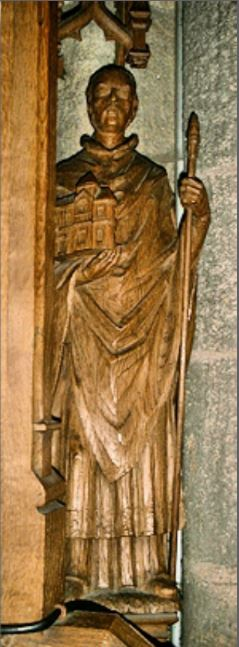
Statue of Saint Meneleus in the Menat Abbey Church
According to the Vita, Meneleus was born in Précigné (Sarthe, Anjou). To avoid marriage, he took refuge in Auvergne and there he met Theofredus, the Abbot of Saint-Chaffre. Meneleus entered this Monastery and was trained by the Abbot for several years.
With a companion, St Savinian, Meneleus then received permission to live the solitary silent life of Hermits in constant prayer and fasting. The two companions later plaed themselves under the guidance of Saints Eudo in the Abbey which later took the name of Le Monastier.
After seven years, Meneleus returned to Menat to assume the direction of that Monastery which was destroyed by fire shortly thereafter. Meneleus oversaw its reconstruction and died in c700.
The memorial of St Meneleus today on 22 July is found in the Martyrology of Usuard, in the Benedictine Martyrologies and was revived by the Roman. Meneleus is commemorated in the Diocese of Clermont. The Saint’s Relics were once located, along with those of Saint Savinian, under the High Altar of Menat but were dispersed during the Revolution, with the exception of a few fragments which, in 1711, had been donated to Précigné, his bikrthplace.
St Joseph of Palestine (Died c356) Layman, Convert from Judaism, a contemporary of Emperor Constantine, a Rabbinical scholar, member of the Sanhedrin and a disciple of Hillel II. Following his conversion, Emperor Constantine gave him the rank of Count, appointed him as supervisor of the Churches in Palestine and gave him permission to build Churches in the Galilee. Patronages – Jewish converts, guardians. A Very Interesting Saint: https://anastpaul.com/2022/07/22/saint-of-the-day-22-july-st-joseph-of-palestine-died-c-356/
St Lewine St Maria Wang Lishi St Meneleus (Died c700) Abbot St Movean of Inis-Coosery St Pancharius of Besancon Bl Paolo de Lara
Martyrs of Marula/Massylis: – 3 Saints: Three Christians Martyred together. We know nothing else about them but the names – Ajabosus, Andrew and Elian. They were martyred in Massylis (Marula), Numidia (in modern Algeria).
Martyrs of Massilitani: A group of Christians Martyred together in northern Africa. Saint Augustine of Hippo wrote about them.
Saint of the Day – 21 July – Saint John (6th Century) Deacon, Hermit, apostle of the poor and needy and disciple and friend of St Simeon Salus (Died c570) – nown as “The Holy Fool.” Born and died probably in Emesa, Syria. . The Roman Martyrology reads today: “In Syria, the holy Monk St John, a companion of St Simeon Salus.” https://anastpaul.com/2025/07/01/saint-of-the-day-1-july-st-simeon-salus-died-c570-confessor/
St Simeon Salus and maybe St John begging in the background
As a young man became the Deacon of the Church in the City of Emesa. There he became a friend, disciple and finally the companion of St Simeon Salus. This occurred in the following manner:
Simeon did not play a fool with his friend John, the Deacon of the Church in Emesa. Simeon once saved John from being executed when he was falsely accused. Shortly before his death, Simeon told John:
“I beg you, never disregard a single soul, especially when it happens to be a Monk or a beggar. For your charity knows that His place is among the beggars, especially among the blind, people made as pure as the sun through their patience and distress …Show love of your neighbour through almsgiving. For this virtue, above all, will help us on the Day of Judgement.”
St Praxedes (Died c165) Virgin Laywoman. Patronage – single laywoman. The Roman Martyrology reads: “At Rome, the holy virgin, Praxedes, who was brought up in all chastity and in the knowledge of the Divine law. Assiduously attending to watching, prayer and fasting, she rest in Christ and was buried near her sister St Pudentiana and family, on the Salarian Road.” A Devout and Holy Life: https://anastpaul.com/2023/07/21/saint-of-the-day-21-july-st-praxedes-died-c165-virgin/
St Iosephus Wang Yumei St John (6th Century) Deacon and Hermit of Emesa in Syria St John of Moyenmoutier Bl Juan de Las Varillas Bl Juan de Zambrana St Jucundinus of Troyes St Julia of Troyes St Justus of Troyes Bl Parthenius of Thessaly
Martyrs of Africa – 6 Saints: Six Christians who were Martyred together. We know no other details about them but the names – Emilian, Hugal, Motanus, Saphus, Stercorius and Victor. They were martyred in an unknown location in Africa, date unknown.
DISCLAIMER: Please note: I cannot control the content of the Advertisements on this Site, or of pop-ups which may appear, The revenue from the Advertisements, however, does provide a little assistance in the support of the Site. I do apologise for any inappropriate content.
Saint of the Day – 20 July – St Wulmar (Died 689) Priest, Founder Abbot of the Monastery of Saint-Vulmaire in Boulogne, France, Hermit, Born near Boulogne in Picardy, France and died in the same region at his Abbey in 689). Patronage – Samer, France. Also known – as Ulmar, Ulmer, Vilmarus, Volmar, Vulmaro, Vulmarus.
The Roman Martyrology reads today: “At Boulogne, in France, the Abbot St Wulmar, a man of admirable sanctity.”
St Wulmar (1600) Bibliotheque Municipale de Lyon
Wulmar was born near the Village of Picardy in the Province of Boulogne in France. Although he was married, he was separated by force from his wife, she having been originally promised to another was taken from Wulmar to fulfil this prior agreement, the marriage to Wulmar being declared null and void. Wulmar was inspired to join the Abbey of Hautmont in Hainaul.
His piety and devotion, even in his humble duties of keeping the cattle and hewing wood for the community, brought him to the attention of the Superiors. Upon observation, he was found to be a worthy candidate for Ordination and promoted to the dignity of the Priesthood.
Later, he obtained the consent of his Superiors to leave the Abbey and live his life alone as a Hermit near Mount Cassel. For several years he fulfilled this desire by living a life of solitude, prayer and fasting, intent on drawing ever closer to the Lord.
Becoming well-known and drawing disciples to himself, Wulman founded the Abbey of Samer, near Calais, where he served as the Abbot.
When Wulmar died this Monastery was re-named Saint-Vulmar in his honour and existed until the French Revolution.
Wulmar also founded the Convent for cloistered Nuns at Wierre-aux-Bois, about a mile from his own Monastery, for his Niece, Saint Eremberta.
St Wulmar has been glorified by miracles and his Relics were conveyed to Boulogne and from there to the Abbey of St Peter at Ghent.
Bl Anne Cartier St Ansegisus St Aurelius of Carthage
St Bernward (c960-1022) Bishop – Bernward was the thirteenth Bishop of Hildesheim from 993 until his death in 1022. He was an exceptionally gifted and talented Creative Artist and Craftsman, in particular, in the creation of Sacred Vessels and adornments of Holy items, in precious metals. Patronages – Architects, Builders, Goldsmiths, Sculptors, Craftsmen, Painters, This Holy and Creative Shepherd: https://anastpaul.com/2023/07/20/saint-of-the-day-20-july-st-bernward-of-hildesheim-c960-1022-bishop/
Blessed Gregory Lopez (1542-1596) “The Mystery Man” – Hermit, Spiritual Advisor, Writer. Around 1585, word of a “Mystery Man” began to leak into Mexico City, a strange hermit who lived out in the lonely valley of Guesteca, who walked miles to go to Mass, lived totally subject to “Lady Poverty” and had travelled from the Shrine of Our Lady of Guadalupe in Spain (which dates from 712), to her Shrine in Mexico (which dates from 1531). The Mystery Man” : https://anastpaul.com/2018/07/20/saint-of-the-day-20-july-blessed-gregory-lopez-1542-1596/
St Joseph Barsabbas the Just (1st Century) Disciple of Jesus, Bishop, Martyr. The Roman Martyrology states today: “The birthday of the blessed Joseph, surnamed the Just, whom the Apostles selected with the blessed Matthias, for the Apostleshop in the place of the traitor, Judas. The lot having fallen upon Matthias, Joseph, notwithstanding, continued to preach and advance in virtue and after having sustained from the Jews, many persecutions for the Faith of Christ, happoily ended his life in Judea.” His Life and Death: https://anastpaul.com/2021/07/20/saint-of-the-day-20-july-saint-joseph-barsabbas-the-just-1st-century-disciple-of-jesus/
St Mère St Paul of Saint Zoilus St Rorice of Limoges St Severa St Severa of Saint Gemma St Wulmar (Died 689) Priest, Founder Abbot of the Monastery of Saint-Vulmaire in Boulogne, France.
Martyrs of Corinth – 22 Saints: 22 Christians who were Martyred together. We know nothing else about them but the names – • Appia • Calorus • Cassius • Celsus • Cyriacus • Donatus • Emilis • Felix • Fructus • Magnus • Maximus • Nestita • Partinus • Pasterus • Paul • Romanus • Spretus • Tertius • Theodolus • Ueratia • Valerian • Victor. They were martyred in Corinth, Greece.
Martyrs of Damascus – 16 Saints: 16 Christians who were Martyred together. We know the names of six of then, but no details about any of them – Cassia, Julian, Macrobius, Maximus, Paul and Sabinus. They were martyred in Damascus, Syria, date unknown.
Saint of the Day – 19 July – St Pope Symmachus (Died 514) Bishop of Rome from 22 November 498 until his death. Born in Sardinia and died in Rome, both in modern Italy.
The Roman Martyrology reads today: “At Rome, Pope St Symmachus, who for a long time had much to bear from a faction of schismatics. At last, distinguished by Holiness, he went to God.”
Mosaic of St Symmachus in the Apse of the Church of Saint Agnes Outside the Walls
Symmachus was a native of Sardinia and a convert to Christianity, He entered religious life and became the Archdeacon of the Roman Church under Pope Anastasius II, whom he succeeded in November 498.
His reign is remembered chiefly for what has usually been called the Laurentian schism, named for his rival Laurentius, the Archpriest of Santa Prassede, who had been elected as the anti-pope by his supporters. For close to ten years (for some of which he actually occupied the Lateran Palace while Symmachus operated from an Episcopal residence on the Vatican Hill.
During his Papacy, Symmachus erected the round Chapel dedicated to St Andrew next to the old St Peter’s and a Basilica over the graveof St Pancras in the Cemetery of Octavilla. He built several or restored, several Churches.
Symmachus expenditure was immense in support of the Church in Vandal-ruled and officially Arian north-west Africa. His grant of the Pallium to Archbishop St Honorius of Arles, is the earliest known instance of such an award outside of Italy.
Symmachus died on 19 July 514 and was buried in St Peter’s Basilica. He had ruled for 15 years, 7 months,and 27 days.
St Ambrose Autpertus Bl Antonio of Valladolid St Aurea of Cordoba
St Arsenius (c354-c 449) Deacon, Hermit, Desert Father, Theologian, writer. Arsenius one of the most highly regarded of the Desert Fathers, whose teachings were greatly influential on the development of asceticism and the contemplative life. His contemporaries so admired him as to surname him “the Great”. His Life of Oblation to God: https://anastpaul.com/2021/07/19/saint-of-the-day-19-july-saint-arsenius-the-great-c-354-c-449/
St Macrina the Younger (c327-379) Virgin, Ascetic. With charm and grace, St Macrina ruled the roost in a family of saints. St Basil the Elder and St Emmelia, her parents, had ten children including the younger St Basil the Great (329-379) Father and Doctor of the Church, St Gregory of Nyssa (c 335–C 395) Father of the Church and St Peter of Sebaste Bishop (c 340–391). As the eldest child, Macrina exercised a formative influence on her more famous brothers and even on her mother. Her Holy Life: https://anastpaul.com/2019/07/19/saint-of-the-day-19-july-saint-macrina-the-younger-c-327-379/
St Martin of Trier St Michael the Sabaitè Bl Pascasio of Lyon
Martyrs of Meros – 3 Saints: Three Christians tortured and Martyred together in the persecutions of emperor Julian the Apostate and governor Almachio. We know nothing else about them but the names – Macedoniuis, Tatian and Theodule. They were burned to death on an iron grill in Meros, Phrygia (in modern Turkey).
Martyrs of China: 3 Beati: Beatified on 17 April 1955 by Pope Pius XII. Elisabeth Qin Bianshi Elisabeth Ioannes Baptista Zhu Wurui Simon Qin Chunfu
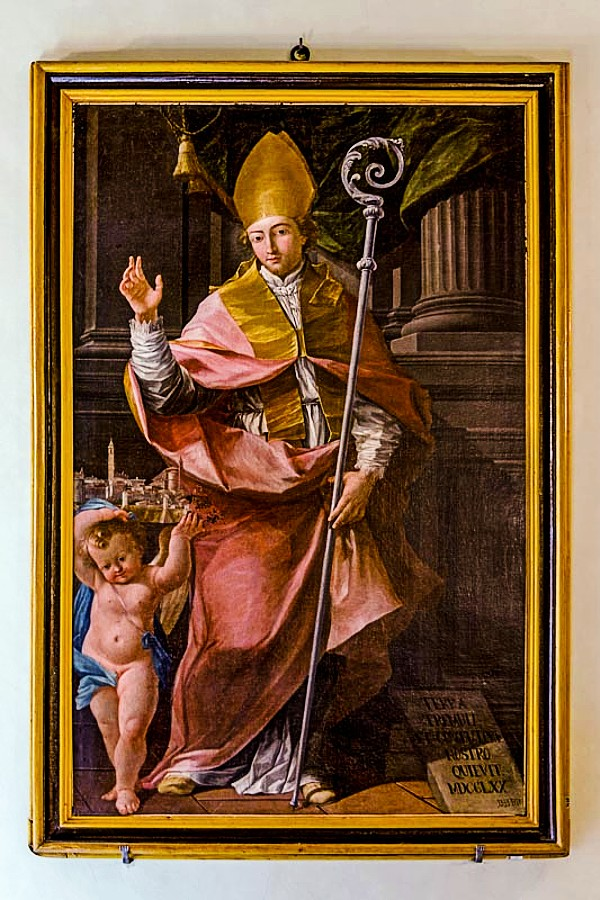
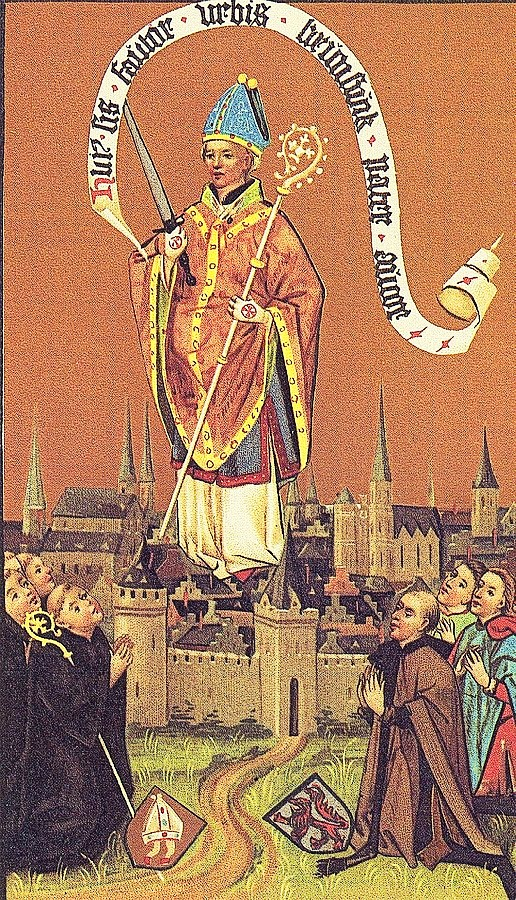
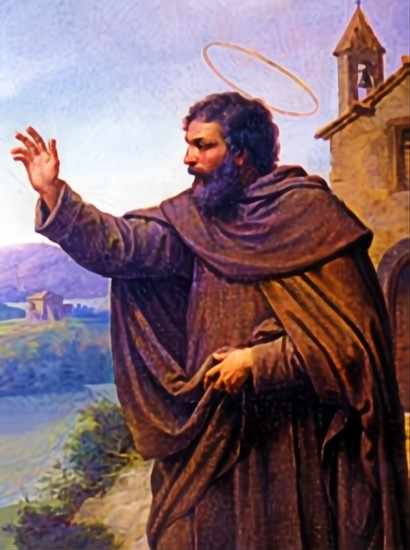
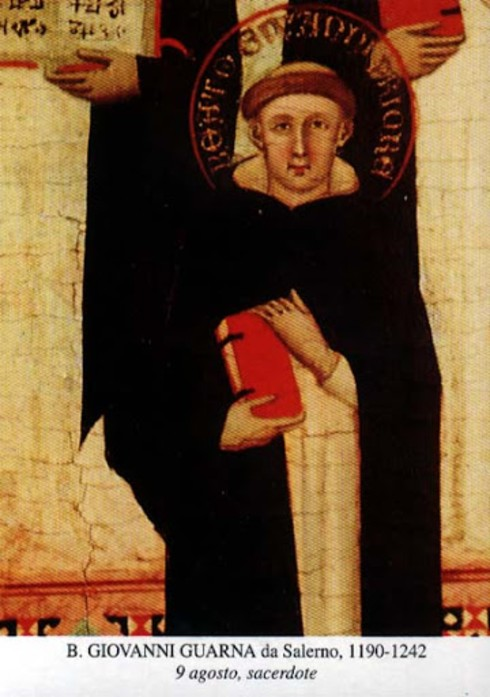
Saint of the Day – 18 July – St Rufillus (5th Century) the 1st Bishop of Forlimpopoli, in the Province of Forli, Italy, Defender of the Faith, as zealous and faithful shepherd and protector of his people. a “dragon-slayer” symbolising the slaying of paganism and idolatry. Patronages – of the City of Forlimpopoli and of the Diocese of Forli-Bertinoro.
The Roman Martyrology reads today: “At Forlimpopoli, Emilia, Italy, St Rufillus, the Bishop of that City.”
The information we have about the 1st Bishop of Forlimpopoli in Forlì, Saint Rufillus, comes from late literary sources. However the evidence of his cult throughout Emilia-Romagna indicates his existence and the great veneration he received over the centuries.
Medieval sources cite 13 Churches dedicated to him in the region: one in Bologna, near the San Rufillus Bridge, one in Casola Valsenio (Diocese of Imola), one in Vitignano di Meldola (Forlì), one in Ravenna, three in the Diocese of Faenza, three in the Diocese of Forlimpopoli, one in Florence and finally, the Saint’s Sepulchral basilica (Collegiate Church of Saint Rufillus) which existed in the City of Forlimpopoli but was located outside the City walls at the time of its Construction.
Recent excavations have dated the Apse to the 5th Century, while the rest of the ancient religious building underwent various destructions, reconstructions and renovations, culminating in the current Basilica dating to 1378. It is the only early Basilica in the City, and eminent scholars believed it to be the original Cathedral of Forlimpopoli.
Around 971, the Basilica was ceded to the Benedictines and became an Abbey, while the Cathedral sSat was transferred to another Church within the defensive walls, likely to the Basilica discovered beneath the foundations of the famous 14th Century fortress, now home to an Archaeological Museum.
All this to reiterate that, beyond the hagiographical uncertainties surrounding St Rufillus, the existence of such a widespread cult makes him a highly venerated Saint and, therefore, one of a holy life and zealous apostolic work among the population.
An ancient 11th Century sermon, recited on the Saint’s Feastday and written in excellent Latin, provides us with some information about Rufillus, endowed with the virtues proper to a Bishop. The document dates the Feast to 18 July and recounts the episode of the victory over the dragon; between Forlimpopoli and Forlì, 8 km away where a monstrous dragon lurked, its breath polluting the air, causing the deaths of several people.
Bishop Rufillus urged the faithful of the Diocese to fast and pray, so that the area would be freed from the pestilential monster. At the same time, he invited the Bishop of Forlì, St Mercuriale (30 April), to participate in the appeals to Heaven and to the dragon.
They both went to the dragon’s lair, where they wrapped their stoles around its throat and threw it into a deep well, blocking the mouth with a ‘memorial’ (a monument or an inscription). This episode is also recounted in the Vita of St Mercuriale and in that of Saints Gratus and Marcellus; the dragon represented the symbol of idolatry which was still quite widespread snf, therefore, saw the struggle of the 1st Bishop of Forlimpopoli committed to eradicating it, together with the work of other saintly Bishops of the region.
And with them he was also committed to combating the Arian heresy, whose driving force was in Rimini; from the documents relating to the aforementioned Bishops and to St.Peter Chrysologus, the Bishop of Ravenna, also his contemporary, the period of his Episcopate can be dated to the first half of the 5th Century.
According to some sources, he died at the age of ninety in Forlimpopoli. In 1362, after the destruction of the City, his Relics were transported to Forlì to the Church of St James. In May 1964, they returned to the Collegiate Basilica of Forlimpopoli, where they are now still highly venerated.
St Symphorosa and her seven sons / Also known as – The Martyrs of Tivoli – 8 Saints: A widow, St Symphorosa and her seven sons ( Crescens, Eugene, Julian, Justin, Nemesius, Primitivus and Stracteus) Martyred in Tivoli, Italy in the 2nd-century persecutions of Hadrian.
St Aemilian of Dorostorium St Alanus of Sassovivo St Alfons Tracki Blessed Angeline of Marsciano Bl Arnold of Amiens
Martyrs of Silistria – 7 Saints: Seven Christians who were Martyred together. No details about them have survived but the names – Bassus, Donata, Justus, Marinus, Maximus, Paulus and Secunda. They were martyred in Silistria (Durostorum), Moesia (in modern Bulgaria), date unknown.
Saint of the Day – 17 July – Saint Magnus Felix Ennodius (c473-521) Bishop and Confessor of Pavia, Father of the Church, Poet, Rhetorician, a man of great erudition and eloquence, well employed for the benefit of the Faith and the Church of Christ. He is commonly referred to by his surname. Born in Arles, France as agnus Felix in either 473 or 474 and died
The Roman Martyrology reads today: “At Pavia, St Magnus Ennodius, Bishop and Confessor.”
Ennodius was a highly important figure of the 5th Century. He was a Bishop but also a Latin poet and rhetorician, undoubtedly a figure of the highest cultural and spiritual importance in that dark and somewhat fragmented century. The high level of esteem in which he and his work was held earned him the title of Confessor of the Faith and Father of the Church.
He was born in 473 or 474, related to the highest nobility of Rome. It is thought he may have descended from Felix Ennodius, who was the Pro-Consul of Africa between 408 and 423. His Father appears to have been named Firminus; Ennodius himself, in fact, cites this name, alongside that of Gerontius, as one of the two Grandfathers of his nephew Lupicinus. We also know of the existence of two Sissters and two Nieces: one, Euprepia, was the Mother of Lupicinus, the other, whose name is unknown, was the Mother of Parthenius.

Ennodius, orphaned at an early age, was raised by his paternal Aunt in northern Italy, more precisely in Pavia, a City to which he would be particularly attached and linked for his name and work, especially later as the Bishop.
At the age of sixteen, around 489-490, Ennodius lost his Guardian Aunt and found himself alone in a region then gripped by the misery resulting from the armed conflicts between Theodoric and Odoacer. However, he found refuge with a pious and wealthy family and became engaged to their Daughter but for reasons which are not entirely clear (one hypothesis is that the family was ruined by the war) the marriage did not take place.
Around 493, we know, Ennodiush entered the Clergy of Pavia, whose Bishop was Epiphanius, who died on 21 January 496 (or 498). Our Saint then became a Deacon in the Church of Milan, whose Bishop Lawrence (490-512) was his relative and it is precisely during his Milanese period that the bulk of his works date.
Known for his literary talent, he was induced to write in defence of Pope Symmachus during the long conflict between the latter and the Deacon Lawrence. This would be the beginning of an increasingly strong visibility throughout the Catholic Church and an opportunity to admire his eloquence and doctrinal erudition.
In July 511, he was struck by a serious fever, from which he recovered through the intercession of St. Victor. This illness was accompanied by a moral crisis which led him to renounce the literary trivialities he had practiced, until then, with too much complacency and to replace it with a maturity of faith which allowed him to live his vocation with greater devotion and determination.
In 514, he became the Bishop of Pavia. Given that it was the Seat of the Kingdom, everything suggests that Theodoric had been involved in this appointment. His work as a shepherd was intense and marked by charity and the need to confirm the Clergy and people in correct doctrine.
In 515 and 517, along with other Italian Bishops, Ennodius took part in several missions sent by Pope Hormisdas to the East to attempt to resolve the conflict between the two Churches. This would be the pinnacle of his Ecclesiastical diplomacy in the service of the Pope and for the good of the entire Church. A few years later, he died and, as his Epitaph records, was buried on 17 July 521.
Of Ennodius, 9 books of Epistles and Sermons have survived, a collection of writings in prose and verse on various subjects, including Hymns, descriptions of travels, epigrams, a panegyric to Theodoric (dated 507) and the biography of his predecessor, Saint Epiphanius.
Ennobius’ Relics and Tomb are venerated in the Basilica of St Michael in Pavia.
TheFeast of The Humility of the Blessed Virgin Mary or the Madonna of Humility: The Feast of the Humility of the Blessed Virgin Mary was included in the General Roman Calendar of 1954 among the feasts ‘pro aliquibus locis’ (in some places) but was removed from the General Roman Calendar of 1960. However, many Diocese worldwide still celebrate this beautiful Feast as do all Traditional Catholics. https://anastpaul.com/2022/07/17/saint-of-the-day-17-july-the-humility-of-mary-by-st-alphonsus/
Martyrs of Compiegne (16 Carmelite Beati): Sixteen Blessed Teresian Martyrs of Compiègne. Eleven Discalced Carmelite nuns, three lay sisters and two lay women servants who were Martyred together in the French Revolution. They were the earliest Martyrs of the French Revolution that have been recognised. They were: Angelique Roussel • Anne Pelras • Anne-Marie-Madeleine Thouret • Catherine Soiron • élisabeth-Julitte Vérolot • Marie Dufour • Marie Hanniset • Marie-Anne Piedcourt • Marie-Anne-Françoise Brideau • Marie-Claude-Cyprienne Brard • Marie-Françoise de Croissy • Marie-Gabrielle Trezel • Marie-Geneviève Meunier • Marie-Madeleine-Claudine Lidoine • Rose-Chretien de Neuville • Thérèse Soiron. They were guillotined on 17 July 1794 at the Place du Trône Renversé (modern Place de la Nation) in Paris, France. The 16 Martyrs Story: https://anastpaul.com/2017/07/17/saints-of-the-day-17-july-the-carmelite-martyrs-of-compiegne-o-c-d/
Bl Bénigne Bl Biagio of the Incarnation St Clement of Ohrid St Cynllo St Ennodius (c473-521) Bishop and Confessor of Pavia St Fredegand of Kerkelodor St Generosus St Gorazd St Hyacinth of Amastris St Kenelm
St Pope Leo IV (c790-855) The 103rd Bishop of Rome. Papal Ascension: 847. St Leo is particularly remembered for repairing Roman Churches those which had been damaged during the Arab raid and for building the Leonine Wall around Vatican Hill to protect the City. Pope Leo organised a league of Italian Cities which fought and won, the sea Battle of Ostia, against the Saracens. St Leo IV’s Life and Works: https://anastpaul.com/2024/07/17/saint-of-the-day-17-july-st-leo-iv-c790-855-the-103rd-bishop-of-rome/
St Marcellina (c330-c398) Consecrated Virgin, sister of St Ambroseand St Satyrus. The Roman Martyrology reads: “At Milan, the Virgin St Marcellina, sister of the blessed Archbishop Ambrose, who received the religious veil from Pope Liberius, in the Basilica of St Peter at Rome. Her sanctity is attested by St Ambrse in his writings.” Lovely Marcellina: https://anastpaul.com/2023/07/17/saint-of-the-day-17-july-st-marcellina-c330-c398-virgin/
St Nerses Lambronazi Bl Sebastian of the Holy Spirit Bl Tarsykia Matskiv St Theodosius of Auxerre St Theodota of Constantinople St Turninus
Martyrs of Scillium (12 Saints): A group of twelve Christians Martyred together, the final deaths in the persecutions of Emperor Marcus Aurelius. Upon their conviction for the crime of being Christians, the group was offered 30 days to reconsider their allegiance to the faith; they all declined. Their official Acta still exist. Their names : • Acyllinus • Cythinus • Donata • Felix • Generosa • Januaria • Laetantius • Narzales • Secunda • Speratus • Vestina • Veturius They were beheaded on 17 July 180 in Scillium, Numidia (in North Africa).
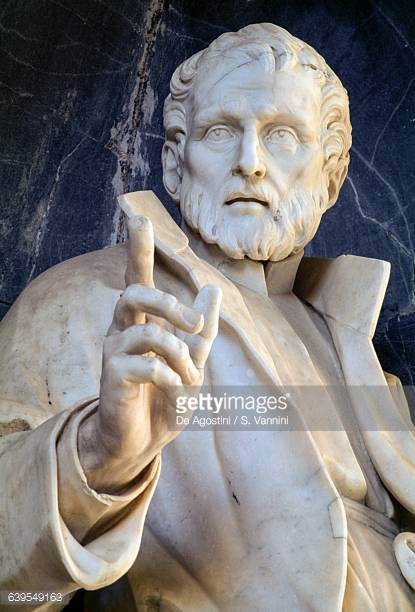
Saint of the Day – 16 July – St Sisenandus (Died 851) Deacon, Martyr of Córdoba in Spain. Born in Beja, in Portugal and died in 851 in Córdoba, Spain. Patronage of his birth C ity of Beja, Portugal. Also known as – S isenandus of Beja, Sisenando; … of Cordoba
The Roman Martyrology reads today: “At Cordoba in SBejapain, St Sisemandus, Deacon and Martyr, who was strangled by the Saracens for the Faith of Christ.”
Portrait and Relic of Saint Sisenandus in the Cathedral of St James the Great, in Beja
Most of that which is known about Sisenandus comes from Eulogius of Córdoba’s Martryology “Memoriale Sanctorum.” This Manuscript remained lost for centuries until its rediscovery by Pedro Ponce de León, Bishop of Plasencia, who had it transcribed and first published in 1574; interest in Sisenandus and the Martyrs of Córdoba at large only resurfaced after this date.
Sisenandus was born in an Iberian Peninsula under Islamic rule. Islamic authorities accorded Christians ‘dhimmi – protected’ status which allowed them to practice their religion with certain restricions, such as a prohibition on public displays of their Faith. These Christians, called Mozarabs, came to adopt elemnts of Arabic culture while retaining their own.
Sisenandus was born in modern-day Spain, from Beja and thence went to Córdoba as a young clerical student to conduct his studies at the Basilica of Saint Acisclus, a Martyr with his sister St Victoria during the reign of Diocletian c305. There, he received Holy Orders as a Deacon and as a fervent preacher, soon after, was arrested, tried and on 16 July 851 was Martyred by order of Abd al-Rahman II. His remains were thrown into the Guadalquivir, and later salvaged and brought to the Church of San Pedro in river in Córdoba.
In the late 16th Century, when Francisco de Reynoso y Baeza was the Bishop of Córdoba, the City of Beja sent a delegation to request the Relics of Saint Sisenandus — or, at least, part of them — be brouht to his birthplace both the Bishop and Philip II of Spain judged it a suitably devout demonstration of piety and allowed a radial bone to be brought to Beja in the year 1600.
The Relic was at first kept under the Tabernacle in the Church of Salvador but then transferred to its own temple. As this latter Chapel fell into disrepair and, eventually, abandonment, the Relics were translated to an Altar in the Cathedral of St James the Great, where they are kept to this day.
On 24 October 1651, Saint Sisenandus was decreed the Patron Saint of the City of Beja.
St Bartholomew OP – ArchBishop of Braga also known as Bl Bartholomew of the Martyrs (Bartolomeu Fernandez dei Martiri Fernandes) (1514-1590) Portuguese Dominican Friar and Priest, Writer, Theologian, Advisor, Teacher and Catechetical writer, Apostle of Charity founding a series of hospitals and hospices in Braga and surrounds. St Bartholomew: https://anastpaul.com/2018/07/16/saint-of-the-day-16-july-blessed-bartholomew-of-the-martyrs-1514-1590/
St Generosus of Poitou St Gobbán Beg St Gondulf of Tongeren-Maastricht St Gondolf of Saintes St Grimoald of Saintes
St Helier (Died c555) Martyr, Hermit, Missionary to Jersey from Belgium, Hermit, Ascetic, Miracle-worker. PATRONAGES – St Helier is the Patron Saint of Jersey and in particular of the Diocese and Capital City of Jersey, named for him – Saint Helier, he is invoked against and for the cure of EYE diseases and skin disorders, His Life and Death: https://anastpaul.com/2023/07/16/saint-of-the-day-16-july-st-helier-of-jersey-died-c555-martyr-missionary-hermit/
Bl Irmengard St Landericus of Séez Bl Madeleine-Françoise de Justamond Bl Marguerite-Rose de Gordon Bl Marguerite-Thérèse Charensol Bl Marie-Anne Béguin-Royal Bl Marie-Anne Doux
St Marie-Madeline (1756-1846Virgin, Religious Sister and Founder of the Sisters of Christian Schools of which she is the Patron, Teacher, Franciscan Tertiary. Pope Pius X later signified on 22 January 1908 his approval to two investigated miracles attributed to her intercession and so Beatified her on 17 May 1908. Pope Pius XI confirmed two additional miracles and Canonised Blessed Marie-Madeline on 24 May 1925. Her Devoted Life: https://anastpaul.com/2019/07/16/saint-of-the-day-16-july-st-marie-madeline-postel-
Bl Marie-Rose Laye Bl Milon of Thérouanne St Monulphus of Tongeren-Maastricht Bl Ornandus of Vicogne
Martyrs of Antioch – 5 Saints: Five Christians who were Martyred together. No details about them have survived by the names – Dionysius, Eustasius, Maximus, Theodosius and Theodulus. They were Martyred in Antioch, Syria, date unknown.
DISCLAIMER: Please note: I cannot control the content of the Advertisements on this Site, or of pop-ups which may appear, The revenue from the Advertisements, however, does provide a little assistance in the support of the Site. I do apologise for any inappropriate content.
Saint of the Day – 15 July – St David of Sweden (Died 1082) the 1st Bishop of Västeras in Sweden, Monk and Missionary, called “The apostle of Västmanland.” Born in England and died in Västeras
Our Saint David who is celebrated today 15 July, was the bishop of Västeras in Sweden. He was a Cluniac Monk of Anglo-Saxon origins sent as a missionary to Sweden around 1020.
He worked evangelising the still-pagan Swedes, starting in the south and then in the central-eastern region of the country. He lived in the place where the Church of Munkathorp now stands which, with his name, recalls the Monk (munk) who baptised new converts in the waters of a nearby spring.
In the Ecclesiastical history of Sweden, he is remembered as the apostle of Västmanland and the 1st Bishop of Västerås. He likely died in 1082 and was buried in Munkathorp. In 1463, 4 Centuries later, his Relics were translated to the Cathedral of his Episcopal See.
Unfortunately, as with so many Catholic Saints’ Relics, when Lutheranism entered and overwhelmed Sweden with its doctrines, they were taken and buried in the cemetery (if not destroyed completely) and his sarcophagus was destroyed.
His symbol is a glove because tradition has it that he once hung his gloves on a ray of sunshine. His liturgical Feastday is today 15 July.
You must be logged in to post a comment.