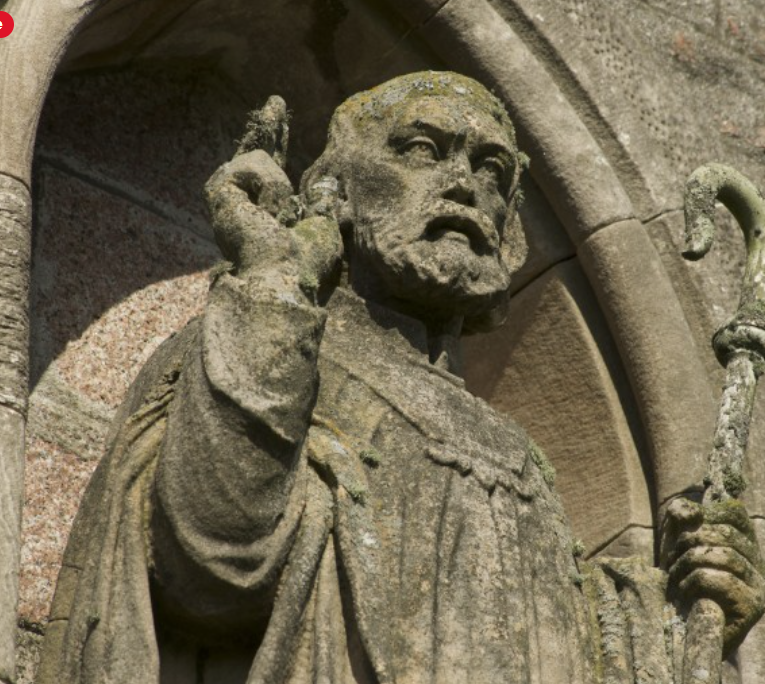
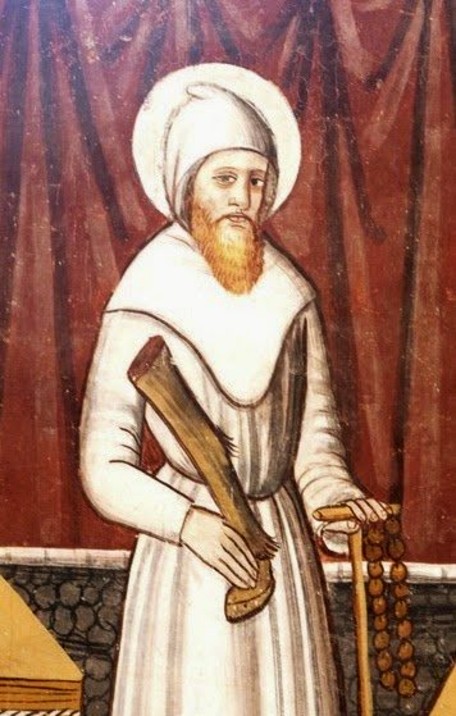
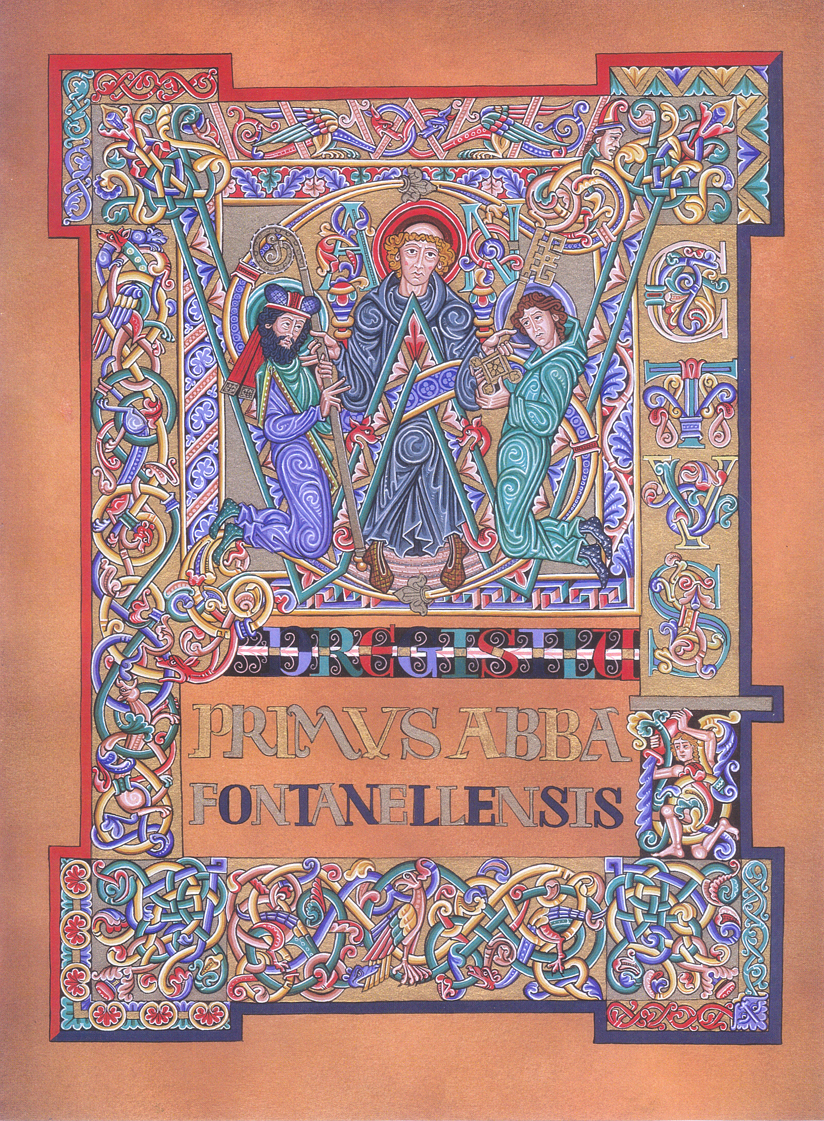
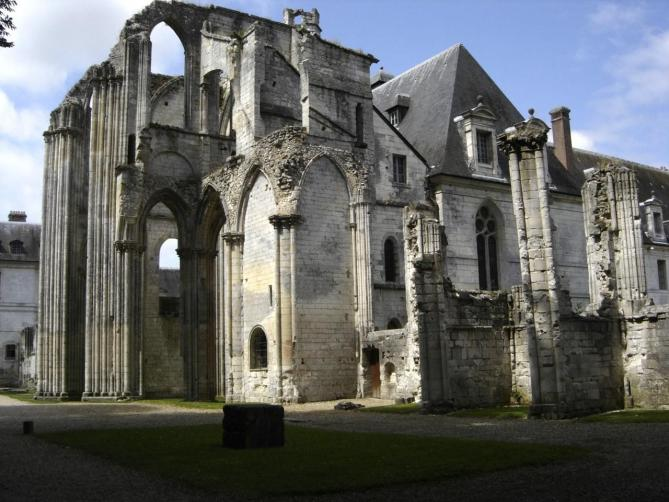
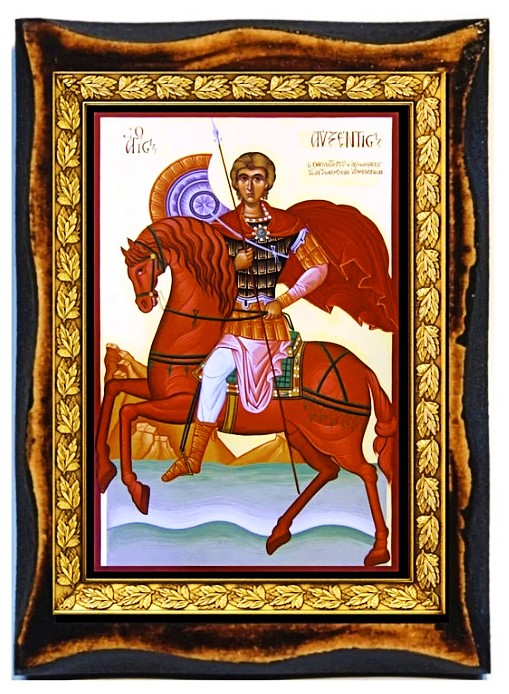
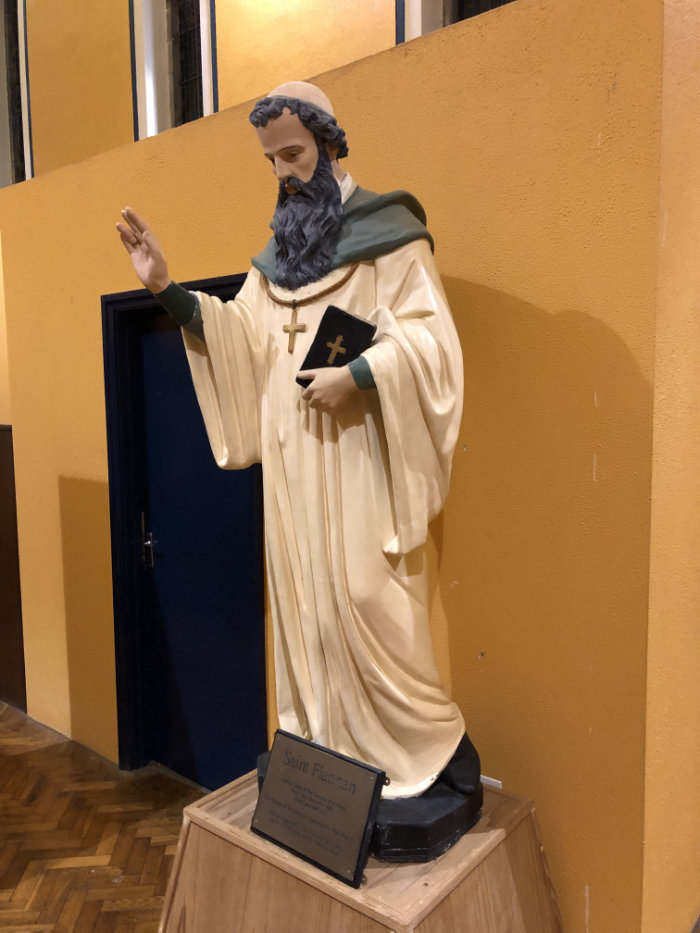
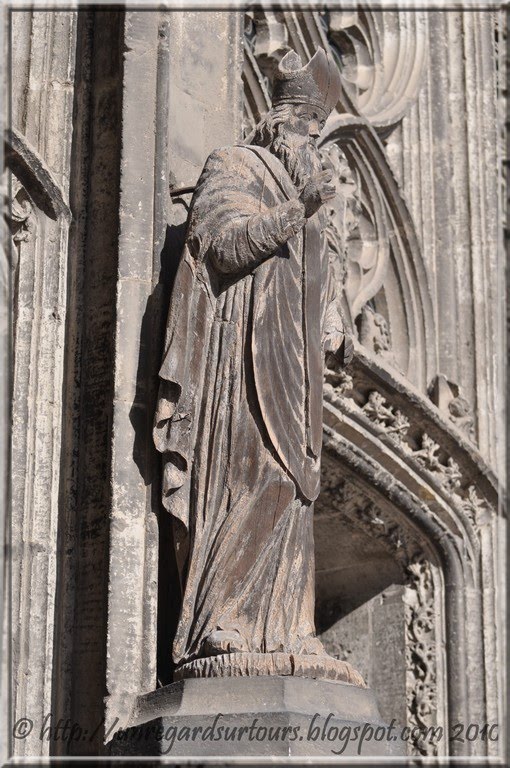
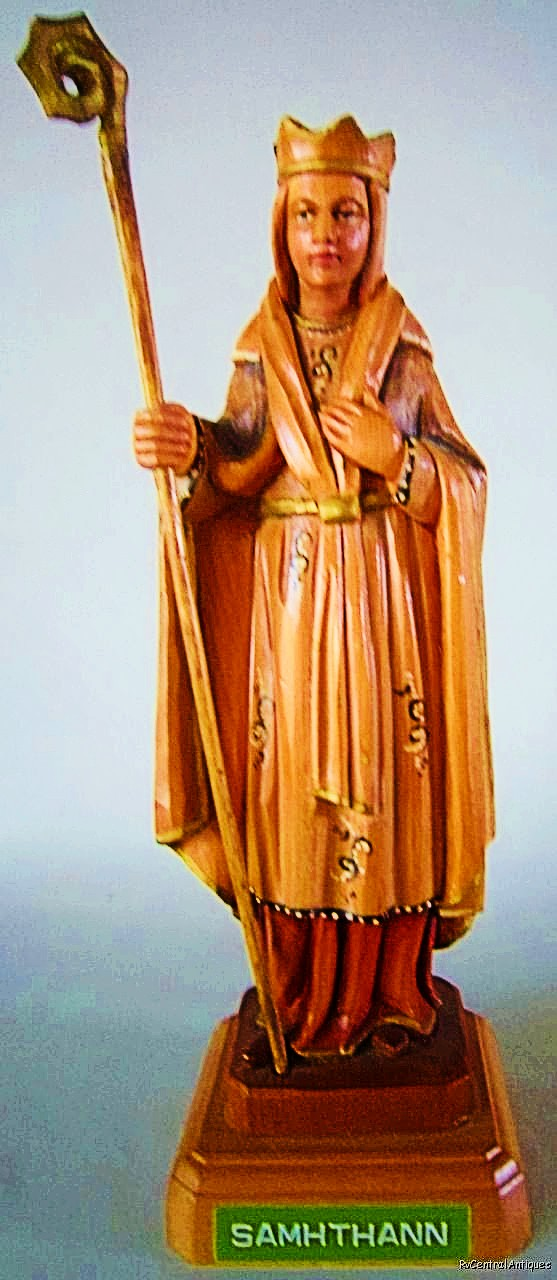
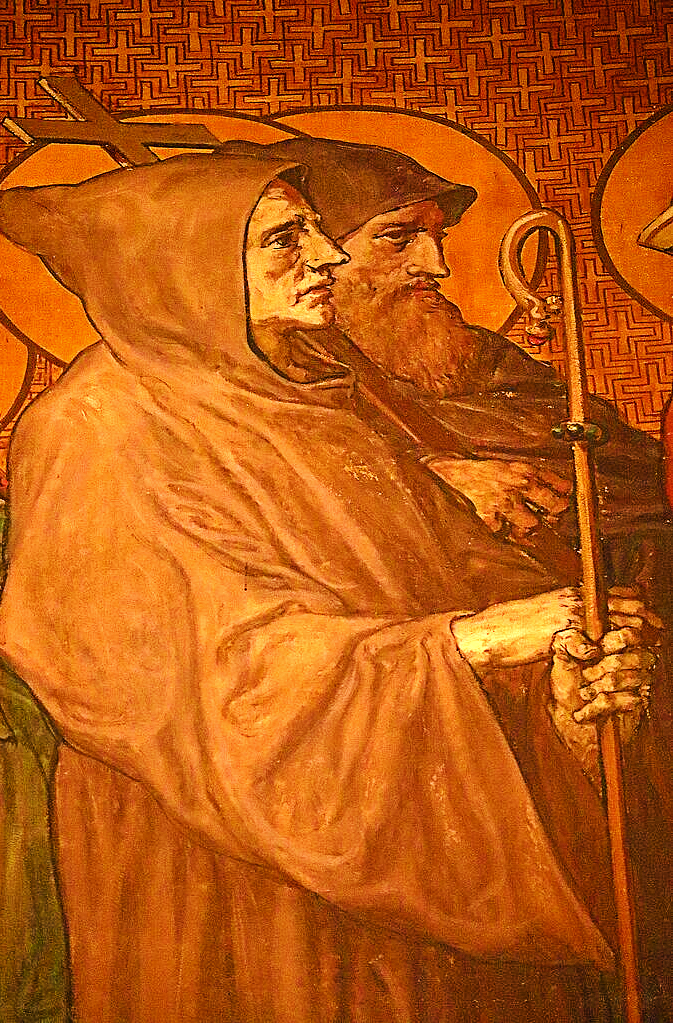
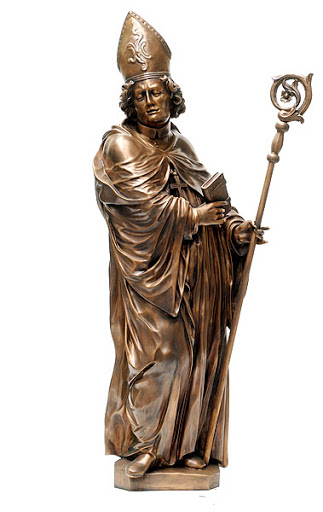
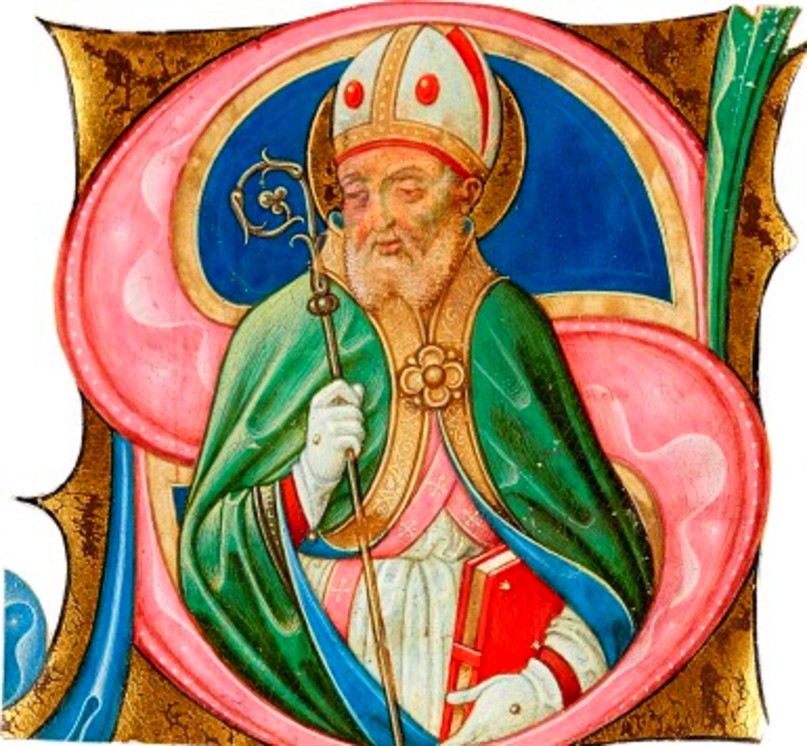
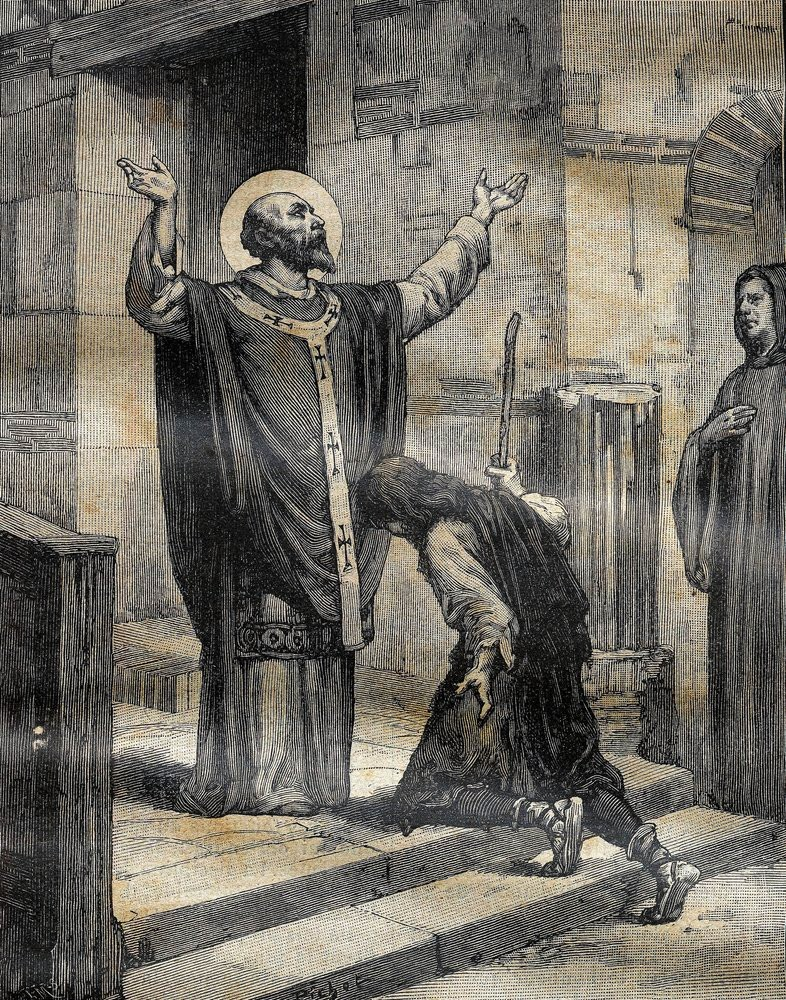
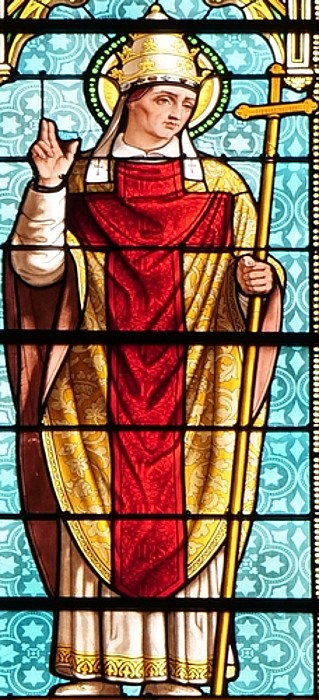
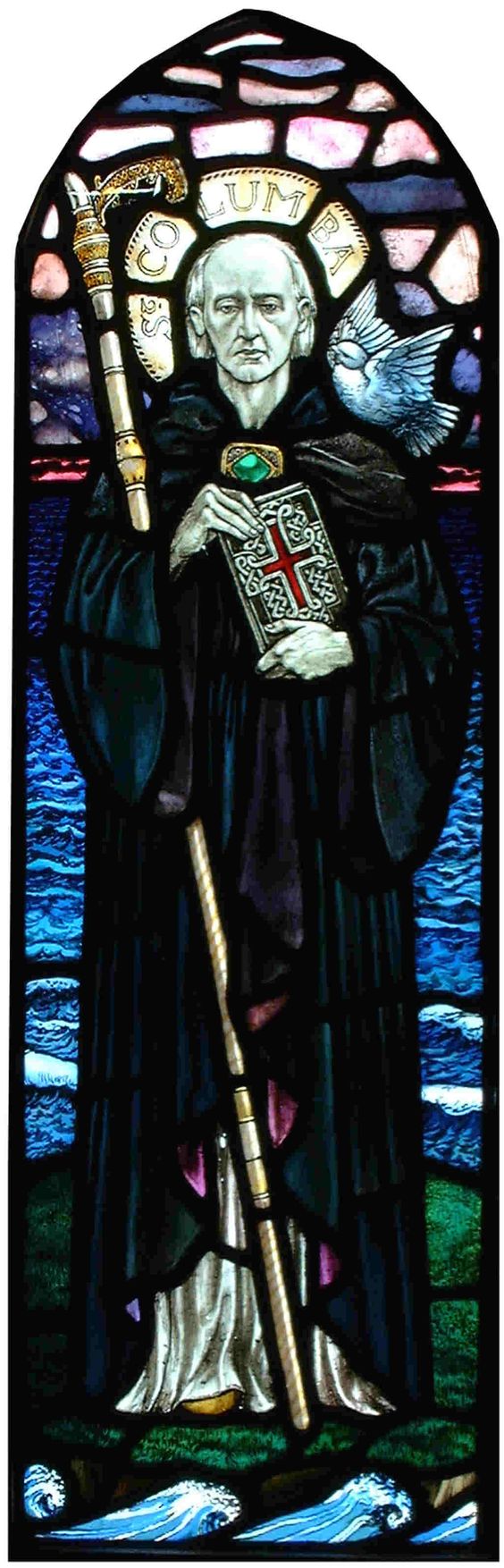
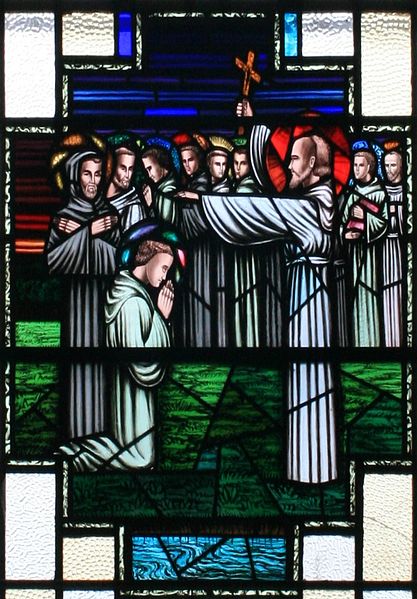
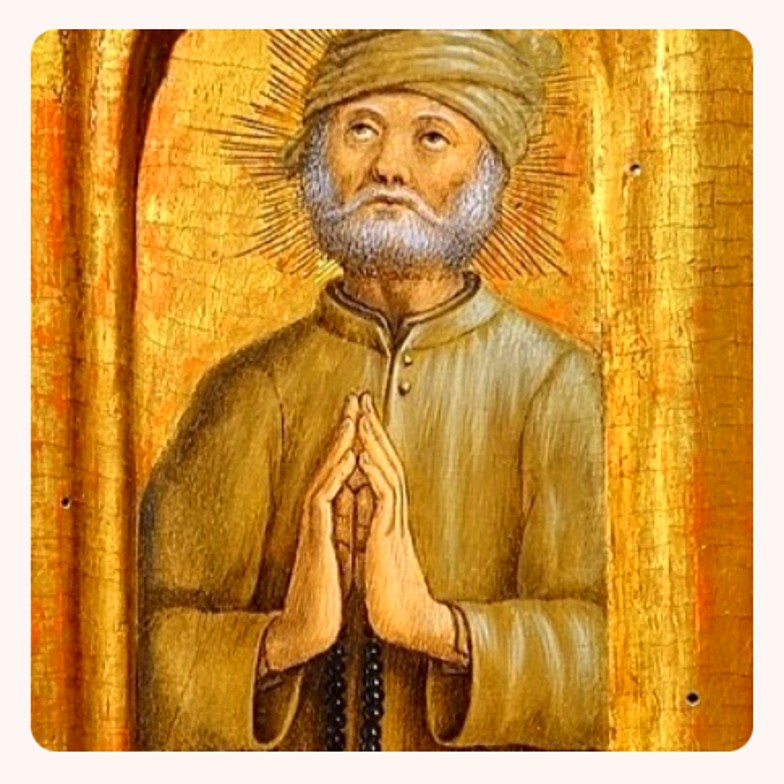
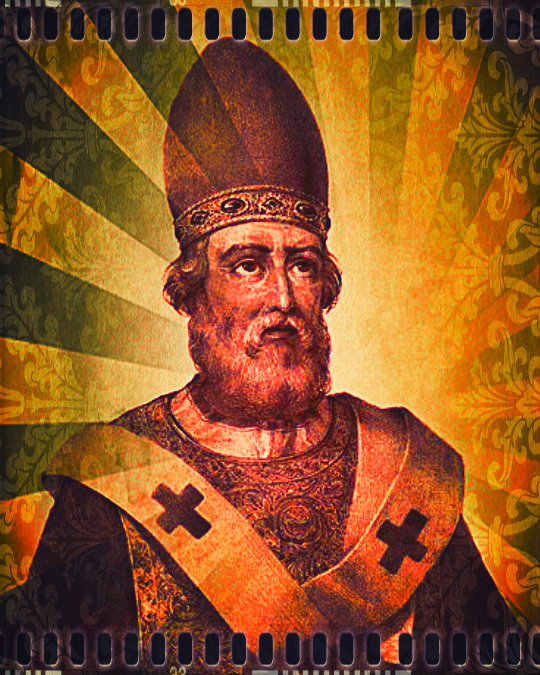
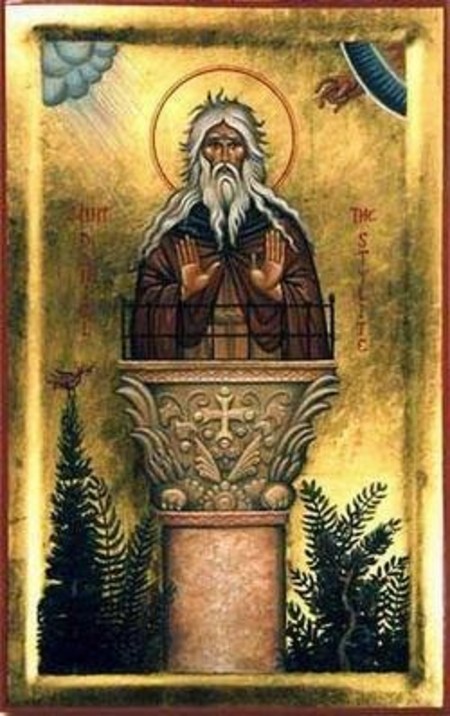
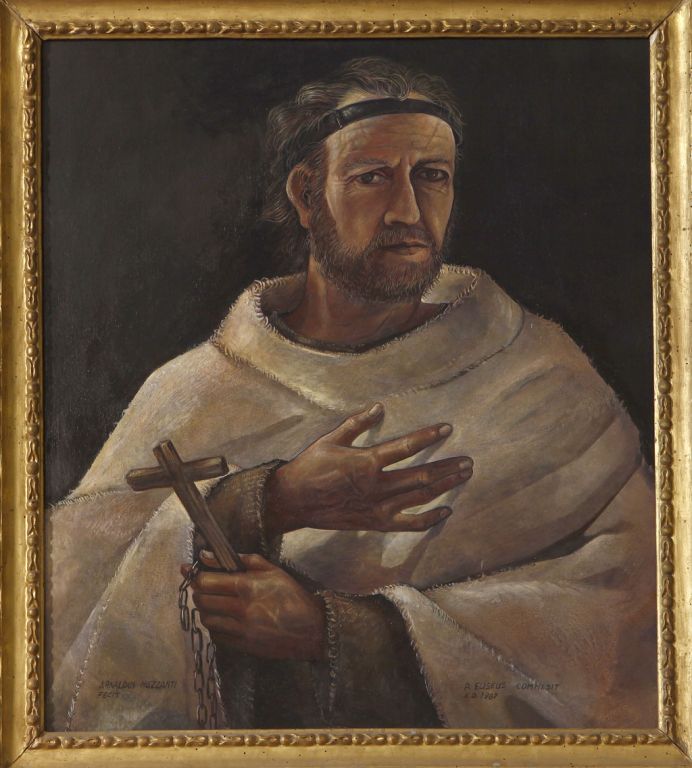
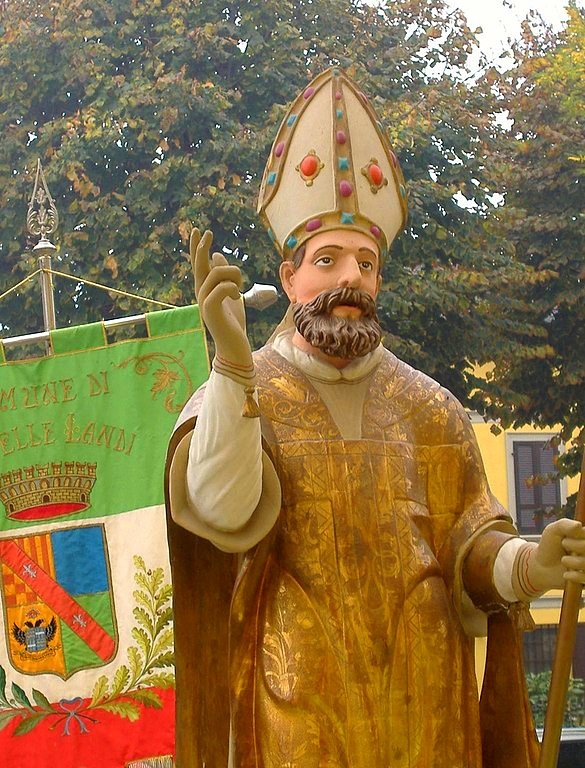
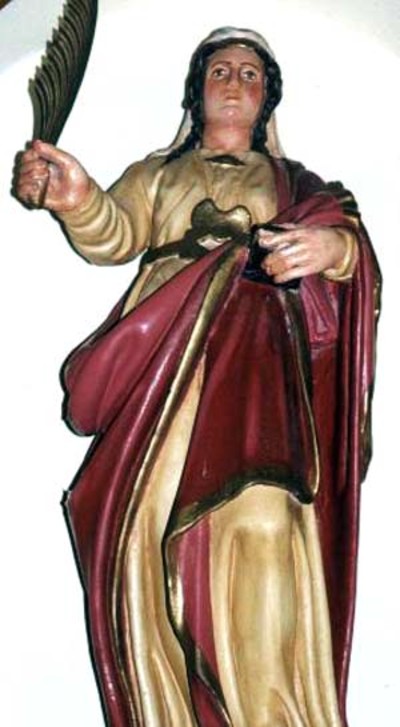
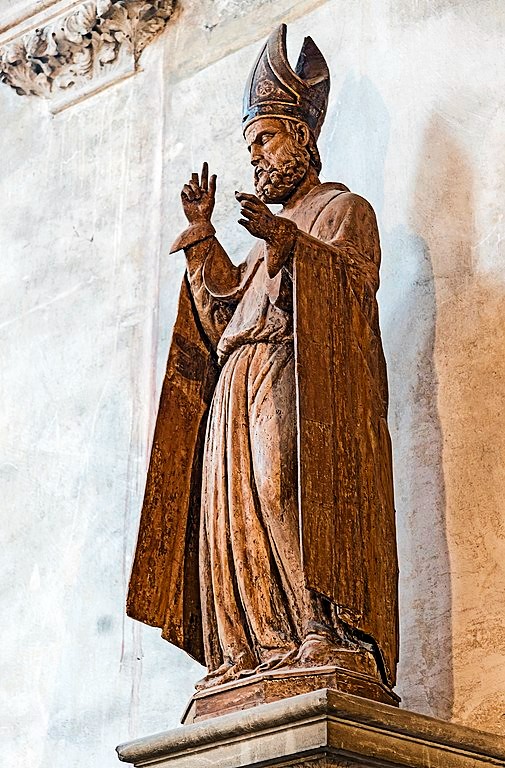
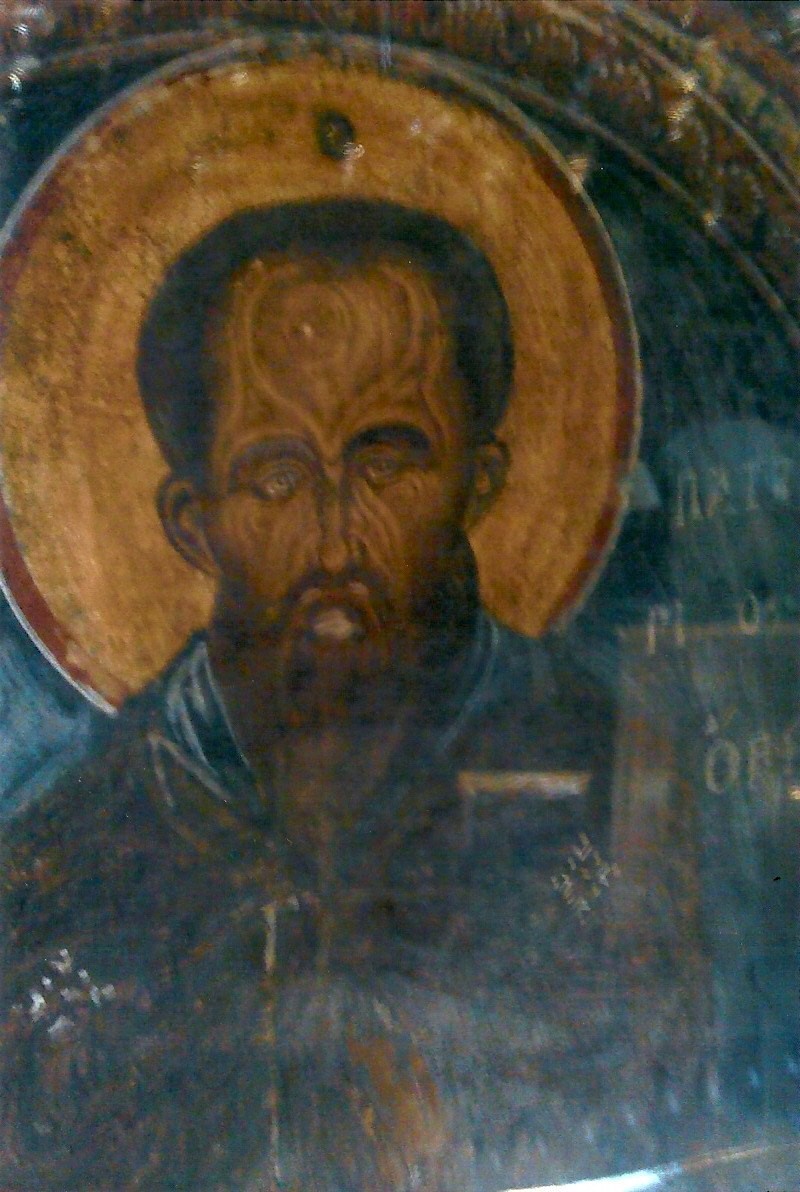
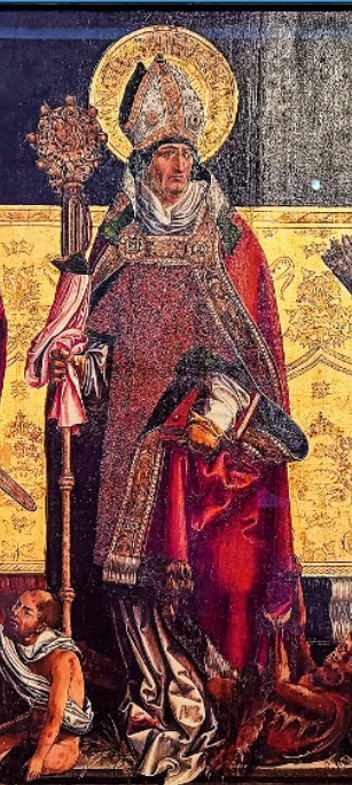
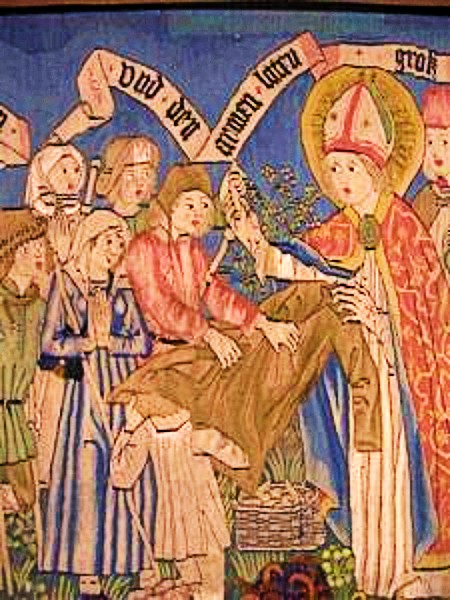
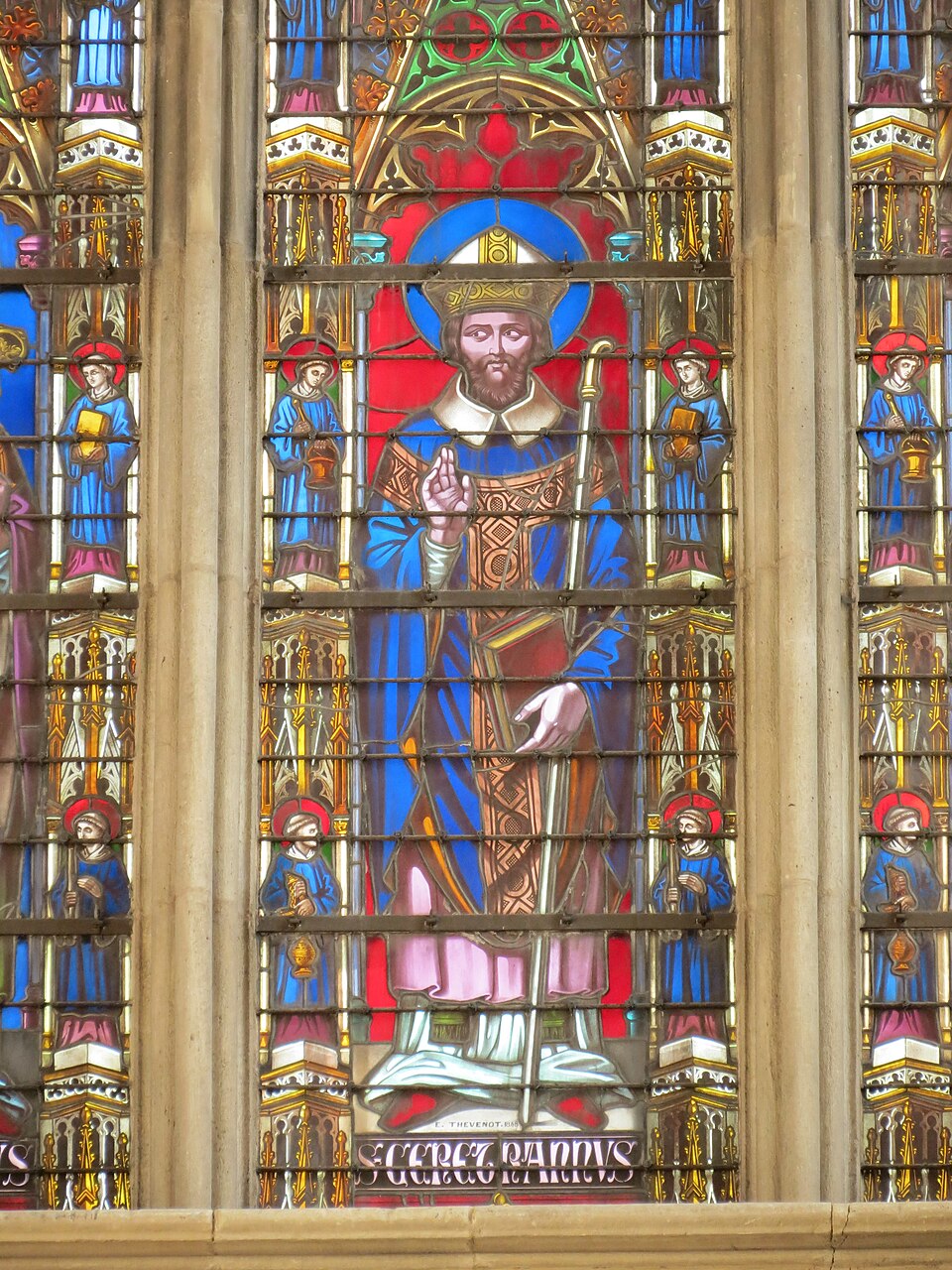
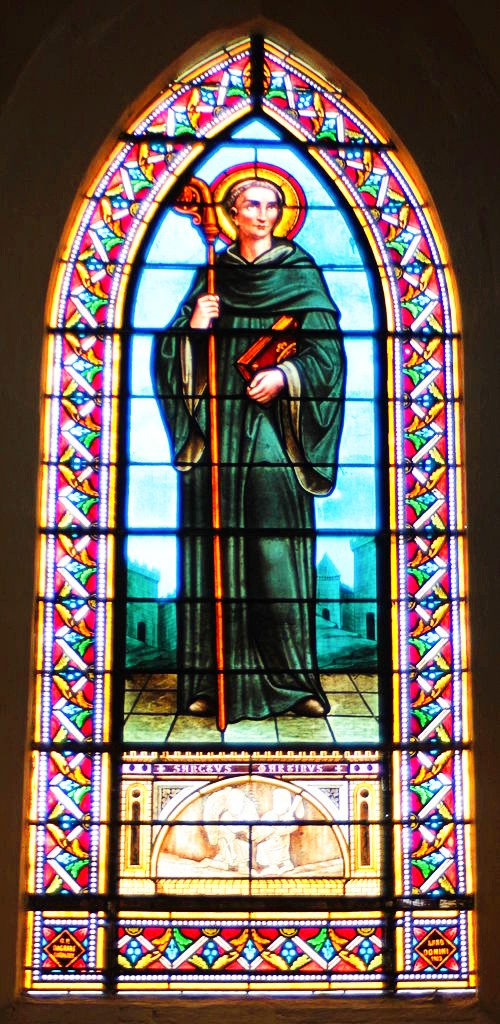
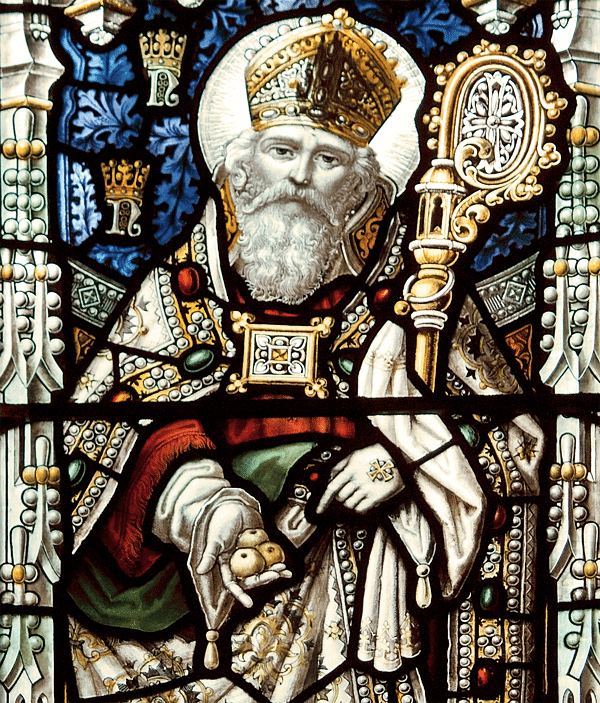
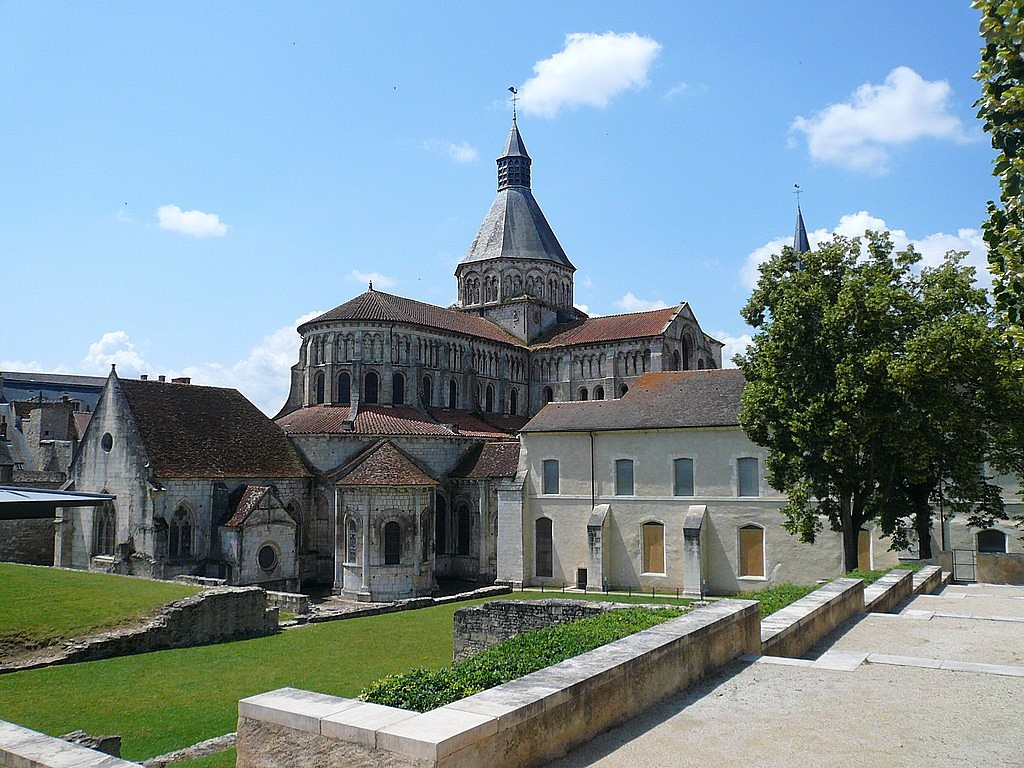
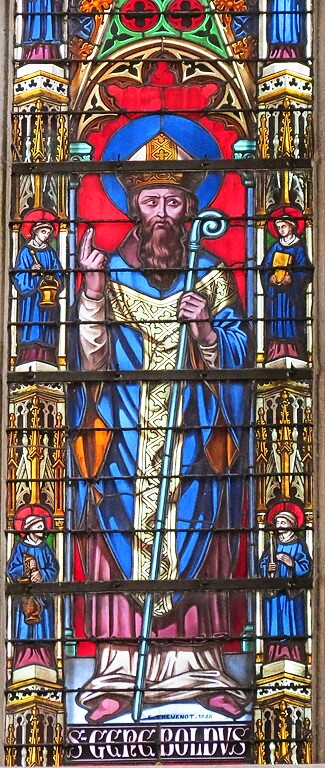
Saint of the Day – 18 September – St Eumenius (3rd Century?) Bishop and Confessor, Miracle-worker. Also known as – Emenius, Emenes, … of Gortyna, … the Wonder-Worker.
The Roman Martyrology reads today: “In Gortyna, Crete, St Eumenus, Bishop and Confessor.”
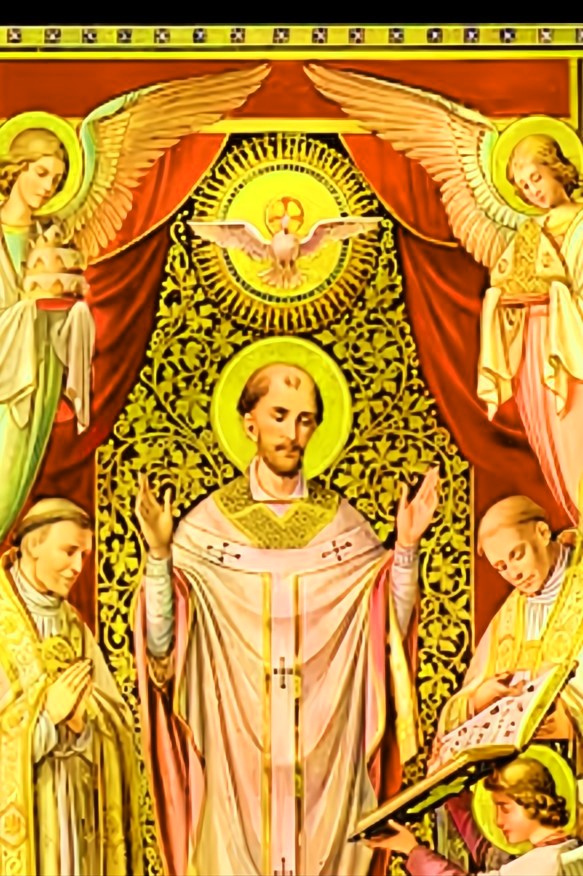
Eumenius was the Bishop of Gortyna, the ancient metropolis of Crete, Greece. Although no Vita exists, there is abundant evidence of his cult in the Greek Church and with much information on the Saint’s life.
Eumenius had dedicated himself to a life of prefection from a young age, especially practisng humility, penance and charity toward all. For this reason, he not only distributed his considerable wealth to the poor but also always avoided criticising or listening to criticism of others.
Being elected as the Bishop of Gortyna, Eumenius performed a holy and zealous apostolate and numerous miracles there, for which all sources insist on calling him Eumenius ‘the Wonder-Worker.’
Some of these sources also recount that he went to Rome, where he also performed miracles and was a “bright torch of doctrine” to all. From there, he went to the Thebaid, where he died at a very advanced age on 18 September. The local inhabitants, however, returned his body to the island of Crete, where he was buried in a place called Rado and there too, “from then until today,” the miracles due to his intercession have continued.
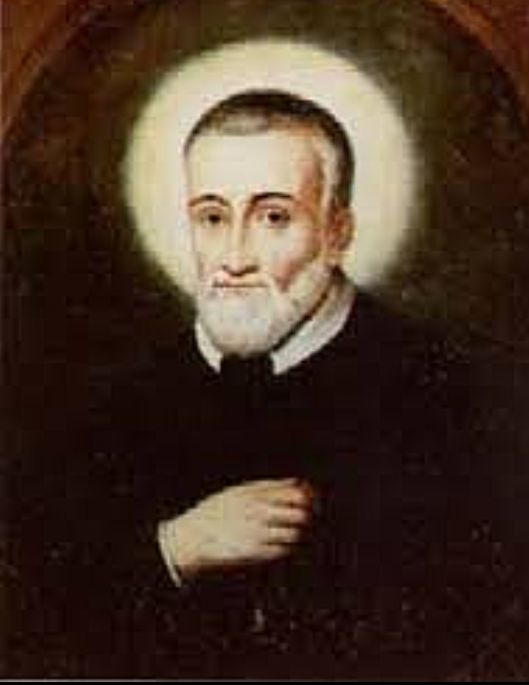
St Joseph of Cupertino OFM Conv. (1603-1663) Confessor, Religious Priest of the First Order of St Francis and Friar, Mystic, Miracle-worker. If ever a tiny child began life with nothing in his favour it was Joseph of Cupertino; he had only one hopeful and saving quality—that he knew it. … – Read on and be ashamed, for this is a Saint before the Throne of God! All about the this holy Flying Saint here: https://anastpaul.wordpress.com/2017/09/18/saint-of-the-day-18-september-st-joseph-of-cupertino-o-f-m-conv-1603-1663/
St Eustorgius (Died c349) The Ninth Bishop of Milan, Confessor, Defender of the Faith. Both St Athanasius and St Ambrose remember Eustorgius of Milan as one of the most steadfast and illustrious opponents of the Arian heresy. The Roman Martyrology says of him: “At Milan, St Eustorgius, Bishop of that City, highly recommended by blessed Ambrose.” A Holy Shepherd: https://anastpaul.com/2021/09/18/saint-of-the-day-18-september-saint-eustorgius-of-milan-died-c-349/
St Ferreolus the Tribune St Ferreolus of Limoges St Hygbald St Irene of Egypt
St Methodius of Olympus (Died c311) Confessor, Bishop, Martyr, Ecclesiastical Scholar and Author, renowned Theologian. The Roman Martyrology reads today: “The same da, [as St Joseph of Cupertino] the birthday of St Methodius, Bishop of Olympus in Lycia and afterwards of Tyre. Most renowned for his eloquence and learning. St Jerome says that he won the Crown of Martyrdom at Chalcis in Greece at the end of the last persecution there.” His Life and Death: https://anastpaul.com/2023/09/18/saint-of-the-day-18-september-saint-methodius-of-olympus-died-c311-bishop-martyr/
St Agathoclia St Brogan of Ross Tuirc Blessed Cherubino Testa OSA (1451-1479) Priest, Friar St Columba of Cordova St Flocellus
St Francis Mary of Camporosso OFM Cap (1804-1866) Lay Friar of the Friars Minor Capuchin Branch, “Quaestor” or Alms collector, as well as humble services such as Infirmarian, Cook, Gardener, Sacristan, gentle carer of the Poor, the sick, the imprisoned, the needy of all kinds, both spiritual and material. Francesco was gifted with immense graces to touch the hearts of all, both small and great and to listen and advise, often blessed with the gifts of prophecy and mind-reading. Born Giovanni Evangelista Croese on 27 December 1804 at Camporosso, Liguria, Kingdom of Sardinia. Italy and died on 17 September 1866 (aged 61) at Genoa, Italy. P The Beloved Questor: https://anastpaul.com/2022/05/11/saint-of-the-day-11-may-st-francesco-maria-da-camporosso-ofm-cap-1804-1866-the-beloved-questor/
Blessed Hildegard Abbess at Bingen OSB (1098-1179). She was Beatified on 26 August 1326 by Pope John XXII. St Hildegard is also known as Saint Hildegard and Sibyl of the Rhine, was a German Benedictine Abbess, Theologian, Writer, Composer, Philosopher, Poet, Mystic, Visionary, Founder, Scientist, Artist and Polymath. Amazing Hildegard: https://anastpaul.wordpress.com/wp-admin/post.php?post=39136&action=edit
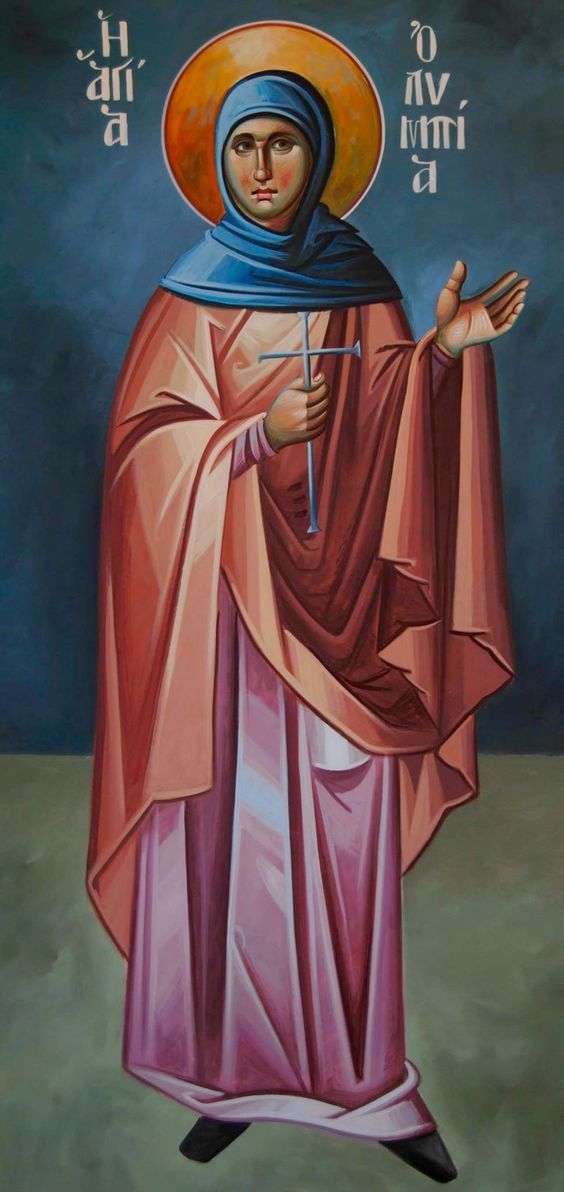
Saint of the Day – 16 September – St Ludmila (c860-921) Martyr, Mother, Widow, apostle of the poor and ill. Ludmila was the grandmother of Saint Wenceslaus, who is widely referred to as Good King Wenceslaus. Born in c860 at Mielnik (in modern Poland) and died by strangulation by hired assassins at Tetin, (modern Czech Republic) on 15 September 921 by the orders of her daughter-in-law, due to her influence over Saint Wenceslaus, her Grandson. Patronages – against in-law problems, Catechists, converts, Duchesses, mothers, widows, Bohemia, Czech Republic, the City of Prague, Czech Republic. Also known as – Ludmilla. Saint Ludmila was Canonisd shortly after her death. As part of the process of Canonisation, in 925, St Wenceslaus translated her remains to St George’s Basilica, Prague.
Anyone who has been to Prague will certainly remember, among its countless and breath-taking monuments and statuess, shrines and displays, the enormous Wenceslas Square, strategically located between the Old Town and the New as a symbol of national destiny and Czech identity in modern history.
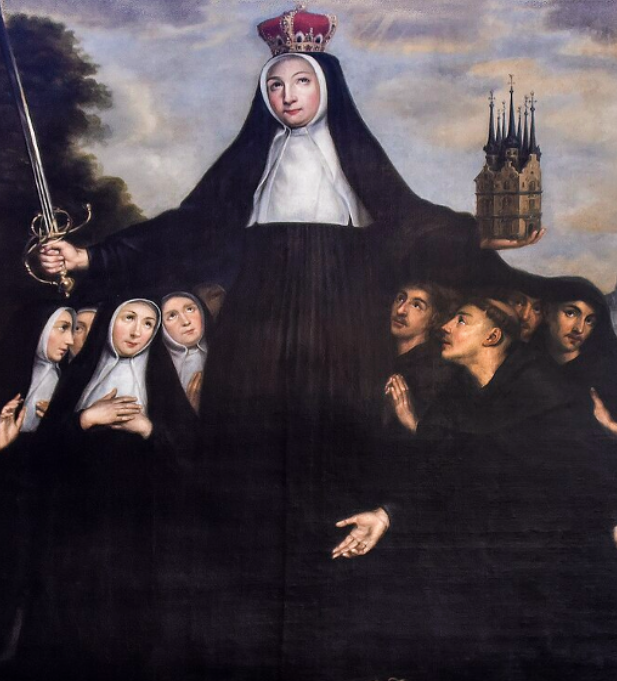
There, beneath the National Museum, stands the equestrian Monument of the Patron Saint, Saint Wenceslas (c905–935), the propagator of Christianity in Bohemia and murdered as a young man by his diabolical brother, Boleslav. His large Statue is surrounded by the four Bohemian Patron Saints: Adalbert and Agnes behind him, Prokop and, not coincidentally, Ludmila herself.
St Ludmila on the left
She was Wenceslas’ Grandmother, with a name which translates from Slavic means “beloved of the people” and the title, after her death of “mother of the poor” for her charitable works. She was born around 860 in Lusatia, a historical region located in Central Europe and divided today between Poland, Germany and the Czech Republic. Her father, Slavibor, was the Duke of Milsko and Ludmilla married Borisvoj, Duke of Bohemia,in 873, while still a teenager. The two were later Baptized by Saints Cyril and Methodius, Apostles of the Slavs in the 9th Century.
The couple were blessed with three sons and three daughters and were committed to their Christian education and, at the same time, to the spread of Christianity in that region.
Widowed in 894, Ludmila donated all her possessions to the poor and devoted herself to a life of piety, living with her eldest son, Vratislaus. When he died prematurely in 916, the nobles entrusted the Regency of the Duchy to his wife, Drahomira and the education of their firstborn grandson, Wenceslaus, to his Christian Grandmother. Drahomira, still essentially attached to paganism and jealous of her mother-in-law’s influence over the child, forced Ludmila to retreat to Tetin Castle. There, in 920, the poor widow was strangled with the widow’s veil she wore, likely on Drahomira’s orders.
Wenceslas, as soon as he came of age and became the Duke himself, had his Grandmother’s Relics, venerated and miracle-working, translated to the Basilica of the Ducal Castle in Prague. Unfortunately, this Basilica was transformed into a museum during the communist regime in Czechoslovakia.
St Abundantius of Rome St Abundius of Rome St Cunibert of Maroilles St Curcodomus St Dulcissima of Sutri
St Edith of Wilton (961-984) Virgin, Nun, Princess, Founder of a Church and a Hospital for the poor. Born in 961 at Kensing, Kent, England and died on 15 September 984 aged just 23 years, a date foretold by Saint Dunstan of Canterbury, of natural causes. Edith is one of the most venerated female Saints of England. Her extensive legacy continues to this day – there is a Pilgrimage route, “St Edith’s Way” and annual devotions take place on her Feast day. An Astounding Life: https://anastpaul.com/2023/09/16/saint-of-the-day-16-september-saint-edith-of-wilton-961-984-virgin-nun-princess/
Blessed Luigi Ludovico Allemandi (c1390-1450) Bishop and Cardinal, called “The Cardinal of Arles.” Blessed Luigi was a Priest driven by immense love for the Holy Mother of God and for the Church. His involvement in various Councils and Papal dissentions, were the result of his great desire to maintain the purity of the Chair of Peter. He was Beatified in 1527 by Pope Clement VII. His Devoted Life; https://anastpaul.com/2020/09/16/saint-of-the-day-blessed-luigi-ludovico-allemandi-c-1390-1450/
St Lucia and St Geminianus (Died c300) Virgin Martyrs of Rome + St Ludmila (c860-921) Widow, Martyr of Bohemia St Marcian the Senator Bl Martin of Huerta Bl Michael Himonaya
Bl Paul Fimonaya St Priscus of Nocera St Rogellus of Cordoba St Sebastiana St Servus Dei St Stephen of Perugia
Martyrs of the Via Nomentana: Four Saints: Christian men Martyred together, date unknown – Alexander, Felix, Papias and Victor. They were Martyred on the Via Nomentana outside Rome, Italy.
Saint of the Day – 15 September – Saint Allbinus (Died c400) the 14th Bishop of Lyon and the Founder of the Cathedral of St Stephen in Lyon. Also known as – Alpin, Albin, Aubin, St Albinus.
The Roman Martyrology reads today: “At Lyon, St Allbinus, the Bishop.”
It seems that the name of our Saint today was originally Alpin, altered to Allbinus, by St Bede and the Martyrologies which succeed him.
According to them, Allbinus succeeds St Justus in 390 and was a holy Bishop. He is believed to be the Founder builder of the St Stephen’s Cathedral and its Baptistry, where St Allbinus was duly buried. He died around 400.
St Aichardus St Albinus (Died c400) Bishop of Lyon St Aprus of Toul St Bond of Sens St Emilas of Cordoba St Eutropa of Auvergne Holy 5th Century widow in Auvergne, France. No other information has survived. St Hernan St Jeremias of Cordoba St Joseph Abibos
St Leobinus (Died c448) Bishop of Chartres, Abbot, Hermit, Miracle worker – he had the gift of healing, especially of dropsy or edema – born as Lubin at Poitiers, France and died on 14 March c558 of natural causes. Patronages – against dropsy/oedema, against rheumatism, of innkeepers and wine merchants. His Feast Day is today 15 September. It was moved in around 1969. Zealous St Leobinus: https://anastpaul.com/2020/03/14/saint-of-the-day-14-march-saint-leobinus-of-chartres-died-c-558/
St Mamillian of Palermo St Melitina St Mirin of Bangor St Nicetas the Goth
St Nicomedes (Died c71) Priest and Martyr. The Roman Martyrology reads today: “In Rome, on the Nomentan Way, the birthday of the blessed Nicomedes, Priest and Martyr. As he said to those who would compel him to sacrifice: “I sacrifice only to the Omnipotent God, who reigns in Heaven.” He was scourged, for a very long time with leaded whips and thus, went to our Lord.” His Life and Death: https://anastpaul.com/2023/09/15/saint-of-the-day-15-september-st-nicomedes-died-c71-priest-and-martyr/
St Porphyrius the Martyr St Ribert St Ritbert of Varennes
Bl Tommasuccio of Foligno St Valerian of Châlon-sur-Saône St Valerian of Noviodunum St Vitus of Bergamo
Martyrs of Adrianopolis – 3 Saints: Three Christian men Martyred together in the persecutions of Maximian – Asclepiodotus, Maximus and Theodore. They were martyred in 310 at Adrianopolis (Adrianople), a location in modern Bulgaria.
Martyrs of Noviodunum – 4 Saints: Three Christian men martyred together, date unknown – Gordian, Macrinus, Stratone and Valerian. They were martyred in Noviodunum, Lower Moesia (near modern Isaccea, Romania).
Mercedarian Martyrs of Morocco – 6 Beati: A group of six Mercedarians who were captured by Moors near Valencia, Spain and taken to Morocco. Though enslaved, they refused to stop preaching Christianity. Martyrs. – Dionisio, Francis, Ildefonso, James, John and Sancho. They were crucified in 1437 in Morocco.
DISCLAIMER: Please note: I cannot control the content of the Advertisements on this Site, or of pop-ups which may appear, The revenue from the Advertisements, however, does provide a little assistance in the support of the Site. I do apologise for any inappropriate content.
Saint of the Day – 14 September – Saint Crescentius c292-c303) Child Martyr of Rome who died under the persecutions of Diocletian. Patronage – of Perugia and Sienna, Italy.
The Roman Martyrology reads today: “On the Salarian Road, at Rome, during the pwersecution of Diocletian, St Crescentius, the young son of St Euthymius, who ended his life by the sowrd, under the Judge Turpilius.”
Born in Rome, toward the end of the 3rd Century, into a family where the Gospel was lived daily, even amidst the most ferocious persecutions like that of Diocletian, this boy was born with an auspicious name, a promise of growth not only physical, but above all spiritual and moral.
Crescentius, was the young son of a Roman patrician couple who fled to Perugia in the persecution of Diocletian. here, the father St Euthemius died of natural causes but Crescentius was brought back to Rome to be executed on the Via Salaria. He was eleven years old. He is sometimes associated with St George because he is shown stepping on the legendary dragon.
He was buried in the Cemetery of Priscilla on the Via Salaria. His place of burial became a focus of pilgrimage and veneration in the Middle Ages. In around 1058, his body was translated from Rome to Siena by Pope Stephen IX at the request of Bishop Antifredus. Other Relics were translated to Tortosa in 1606.
Saint Crescentius, Maestà of Duccio.
The only biographical source concerning Crescentius was derived from the copy of a manuscript dated 1600 and conserved in the Biblioteca Vallicelliana. His Acts were written long after the death of this Saint, probably around 1058, when Crescentius’ body was translated to Siena. During the Middle Ages, Crescentius was the subject of a popular cult there and he remains an important Patron of the City.
St Crescentian of Carthage St Crescentius (Died c300) Child Martyr of Rome St Generalis of Carthage St Giulia Crostarosa St Jean Gabriel Taurin du Fresse
St Maternus (Died c 325)Bishop, the first Bishop of Cologne and Founder of the Diocese of Tongeren, Germany. In Cologne and in his hometown of Trier, the faithful began to venerate him as a Saint. A popular cult of which the splendid 13th Century stained glass windows in the Cathedral Chapel dedicated to his name, also testify. He was buried in the Cathedral of Cologne but the Cathedral of St Peter in Trier boasts a large Reliquary which became and remains, a pilgrimage site. His Life of Love: https://anastpaul.com/2021/09/14/saint-of-the-day-14-september-saint-maternus-of-cologne-died-c-325/
St Peter O.Cist (1102-1174) Cistercian Monk, Archbishop of Tarentaise from 1141 until his death, Abbot, Apostle of Charity, Miracle-worker. There are two Saints named Saint Peter of Tarentaise who lived one Century apart. The Saint we honour today, is the younger Peter, born in France in the early part of the 12th Century. The other Saint Peter if Tarentaise, became Pope Innocent V. His Holy Life: https://anastpaul.com/2019/09/14/saint-of-the-day-14-september-saint-peter-of-tarentaise-o-cist-1102-1174/
St Rosula of Carthage St Sallustia St Victor of Carthage
Saint of the Day – 13 September – St Venerius (c560-630) Confessor, Founder Abbot of the Monastery on the Island of Tino, near Genoa, Italy, Hermit, Ascetic, spiritual Counsellor, Miricle-worker. Borin in c560 on the Island of Palmaria and died in 630 on Timo Island. Patronages – of the Gulf of La Spezia, of Lighthouse Keepers. Also known as – Venerio.
The Roman Martyrology reads today: “St Venerius, Confessor, a man of admirable sancity, who led an eremitical life on the Island of Timo.”
Little is known of Venerius’ early life and family background. However, it is believed that he had a deep faith and piety from a young age. Venerius was drawn to a life of solitude and seclusion, seeking a deeper spiritual union with God. He decided to dedicate his life to prayer and contemplation, ultimately becoming a Hermit on the Island of Tino.
As a Hermit, Venerius lived a life of simplicity and asceticism, distancing himself from worldly distractions and focusing solely on his devotion to God. His exceptional piety and profound spiritual insight attracted disciples who sought his guidance. Thus Venerius was led to establish a Monastic community on the Island.
Under his leadership, the Monastery flourished, attracting many individuals seeking a life of prayer in quiet surroundings. Venerius, as an Abbot, nurtured the spiritual growth of his fellow Monks, instilling in them the values of humility, discipline and dedication to God.
Among the notable aspects of Venerius’ life, is the Lighthouse on the Island of Tino. This Lighthouse which served as a beacon of light and safety for ships navigating the treacherous waters, became a symbol of hope and spiritual guidance. Due to its importance, Venerius’ association with the Lighthouse, led to his Patronage becoming closely tied with Lighthouse Keepers.
Despite living a secluded life, Venerius never failed to extend his support and prayers to those who depended upon him for counsel. Pilgrims from near and far sought his intercession, seeking his spiritual counsel and assistance in their quest for holiness. Known for his deep faith and miraculous abilities, Venerius was credited with numerous cures and graces granted through his intercession.
Saint Venerius departed from this earthly life on 13 September 630, leaving behind a legacy of holiness, wisdom and devotion to God. His sanctity was widely recognised even during his lifetime and after his death, his reputation as a saintly man only grew.
Venerius’ exemplary life and the countless miracles attributed to him, led to his veneration as a Saint by the faithful. His Feast Day is celebrated on 13 September, commemorating the day of his birthday into eternal life. Saint Venerius is honoured as the Patron Saint of Lighthouse Keepers, who look to him as a heavenly protector and advocate. His dedication to God, his life as a Hermit and Abbot continue to inspire and offer solace to those entrusted with the safety and guidance of seafarers.
To this day, the memory of Saint Venerius lives on, serving as a testament to the power of prayer, the selflessness of a life devoted to God and the immense impact one individual can make in the lives of others.
Even in death, Venerius remains in the hearts of the people of the Gulf of La Spezia, of which he is the Patron, so much so that, when, about a century after his death, these lands and Towns were attacked by Saracen and then Norman ships, the first concern of the inhabitants of Porto Venere (named after our Saint) was to secure the Saint’s venerated remains.
NOTE: The Gulf of La Spezia, is a body of water on the north-western coast of Italy and part of the northern Tyrrhenian Sea, specifically of Ligurian Sea.
St Evantius of Autun St Gordian of Pontus St Julian of Ankyra St Litorius (Died 371) Bishopof Tours the 2nd Bishop of Tour, reigning for 34 years from 337 until his death in 371. He built the first Churches and the Basilica of Tours. Born in Tours and died there on 13 September 371 of natural causes. A Lengthy Career of Love: https://anastpaul.com/2024/09/13/saint-of-the-day-13-september-saint-litorius-of-tours-died-371-bishop/
Saint of the Day – 12 September – Saint Sacerdos/Saint Priest (487-552) Bishop of Lyon – the 27th encumbent of this high Office in Lyon, our Saint Priest (the meaning of Sacerdos) was highly visible at the Councils and in the construction and renovation of Churches, Monasteriest and was highly favoured by the King. In fact, as the Advisor to King Childebert, it is believed that he influenced the King to found a Hospital, between the Saint-Paul Church and the first Pont du Change. Born in 487 in Burgundy, France and died on 11 September 552 in Paris, where he had arrived for a the meeting of a Council. Also known as – Saint Priest, Sardot, Sacerdote, Serdon.
The Roman Martyrology reads today: “At Lyon, the decease of St Sacerdos, Bishop.”
Sacerdos belonged to a noble family of the Kingdom of Burgundy. Tradition tells us he was married and had a son. , Aurelien who became the Sainted Archbishop of Arles. A specific Epitaph also states that he was buried in the tomb alongside his son.
His Episcopate, temporally speaking, was entirely under the reign of Childebert, the 1st King of the Franks, who reigned in Lyon between 534 and 558.
Sacerdos did not participate in the Council of Orléans in 541 but presided over the Council held on 28 October 540, in the same City. The 24 Canos of that Council addressed various topics, including the condemnation of Monophysitism and Nestorianism; the limitation of the use of excommunication; the requirement of the master’s consent for the Ordination of a slave and the care of prisoners and lepers. This Ccouncil also ratified, with a specific and detailed Canon, the foundation of the hospice erected by the King in Lyon.
During his Episcopate, the construction of the Church of Saint Paul and that of Saint Eulalia, originally connected to a Monastery of Nuns, which later became the Church of Saint George. Toward the end of hisreign, he ordered major renovations to be carried out at the Monastery of Saint Peter.
St Sacerdos Statue in the Church which he built, St Paul’s
A detailed account by St Gregory of Tours of his death in Paris has survived. Sacerdos was in Paris to participate in the Council convened by the King after the deposition of Bishop Saffaracus of Paris. St Gregory tells us that the King, having a special affection for Bishop Sacerdote, who had fallen ill in Paris, visited him during his illness. At that meeting, the Bishop requested the King to appoint his nephew, Nicetius (sT),as his successor to govern the Diocese of Lyon.
Sacerdote died at the age of 65, on 11 September 552. His body was transported to Lyon and buried in the Church of the Holy Apostles, a Church which, in later centuries, would be named after Saint Nicetius, our Saint’s son.
Numerous miracles flourished at his Tomb. An Epitaph on Saint Sacerdos remains, known from a 1308 transcription, carved in the Crypt of Saint Nicetius and rediscovered in 1883.
Saint of the Day – 11 September – St Patiens (Died c491) Bishop of Lyon, a most zealous and devoted shepherd of his flock for around 40 years and at the same time, the lover and caregiver of the needy and poor regardless of where they lived and to which Diocese they belonged – as we should, he did not ask whether they were pagans or Christians. Also known as – Patrient, Patient, Patriens, Paziente.
The Roman Martyrology reads today: “At Lyon, the decease of St Patiens, Bishop.”
In the official chronology, Patiens is listed in20th place. He succeeds Saint Eucherius and precedes Saint Lupicinus.
The name of Saint Patiens is recorded in the oldest Episcopal records, contained in a Litergical Gospel book from the mid-9th Century. The catalogue was compiled around 799-814 duringthe reign of Bishop Leidradus and is based on the original of the Lyonnais Church.
The name of Saint Patiens is also mentioned in a second Episcopal catalogue, reported by Hugues of Flavigny in his Chronica Universalis.
Patriens governed the Diocese for forty years, between 451 and 491. Considering this lengthy period of service, we know very little about his personal history.
But it was Bishop Patiens who commissioned St Constantius of Lyon to write theVita of St Germanud (Life of Germanus). Patiens also built a new Cathedral, dedicated to Saint Stephen. Later, in the 7th Century, a baptistery dedicated to Saint John was constructed as an accessory to the Church. This later became the site of the Cathédrale Saint-Jean-Baptiste de Lyon.
Patient, moved by great charity to help the people oppresssd by hunger, distributed free grain from the stores located in his See. He is also membered as a Bishop who devoted himself to a continuous apostolate, caring for his flock especially for the needy. He was deeply committed to the conversion of heretics.
His contemporary, the remarkable St Sidonius Apollinaris (c 30 – 489), admired Patiens and said that, despite the austerity of his life, he made himself “all things to all men.” He played his part zealously in repressing the heresies of his time but is especially remembered for his great dedication to the poor, not only of his own Diocese but of other parts of Gaul. He devoted all his resources to their relief. During a famine, he arrived in Lyon with wheat, to feed the entire population.
St Protus and St Hyacinth (Died c257) Brother MartyrsBrother Martyrs during the persecution of Emperor Valerian (257–259), they served as household Officials to St Eugenia. The Roman Martyrology states today: “At Rome, in the Cemetery of Basilla, on the old Salarian Way, the birthday of the Holy Martyrs, Protus and Hyacinth, brothers and eunuchs in the service of the blessed Eugenia, who were arrested in the time of the Emperor Gallienus, on the charge of being Christians and urged to offer sacrifice to the gods. But as they refused, both were most severely scourged and finally, beheaded.” Their Life and Death: https://anastpaul.com/2023/09/11/saint-s-of-the-day-11-september-st-protus-and-st-hyacinth-died-c257-brother-martyrs/
St Adelphus of Remiremont St Almirus Bl Baldassarre Velasquez
St Essuperanzio of Zurich St Felix of Zurich Bl Franciscus Takeya Bl François Mayaudon Bl Gaspar Koteda St Gusmeo of Gravedona sul Lario St Leudinus of Toul St Matthew of Gravedona sul Lario St Paphnutius of Thebes St Patiens (Died c491) Bishop of Lyon Bl Peter Taaffe Bl Petrus Kawano St Regula of Zurich St Sperandea
Saint of the Day – 10 September – St Theodard (c618-670) Bishop and Martyr of Maastricht, formerly the Abbot of of the Double Monastery of Stavelot-Malmedy, Defender and protector of his flock and the Church. Born in c618 in Speyer, Germany and died by being mrdered in Rülzheim, Germany, while journeying to obtain protestion of his Diocese from the plunderings of Frankish nobles. Patronage – of drovers, cattle dealers and the City of Maastricht. Also known as – Theodard of Maastricht, Theodard of Tongres, Teodard, Teodardo…Diethardt or Dodart.
The Roman Martyrology reads today: “At Liege, in Belgium, St Theodard, Bishop and Martyr, who laid down his life for his flock and after his death, was renowned for the gift of miracles.”
Theodard was born around 618 in the area of Speyer in Germany. He is thought to have been a disciple of St Remaclus , the Abbot, at the Monastery of Stavelot in Belgium. When St Remaclus became Bishop of Tongeren-Maastricht in around 653, Theodard succeeded him as the Abbot of the Double Monastery of Stavelot-Malmedy. When Remaclus retired to Stavelot in 663, Theodard again succeeded him and became the Bishop of Maastricht.
His biographers describe him as a cheerful and likeable man who performed his role as the Bishop, with great energy and pastoral care. As Bishop, he built and restored Churches, founded Monasteries, promoted evangelisation, charityand the care of the poor, the ill, orphans and widows.
He was murdered, in around 670, while on a journey through the forests of Bienwald south of Speyer, close to the Village of Rülzheim, on his way to seek justice from Childeric II of Austrasia in a legal dispute against Frankish nobles plundering the property of his Diocese. It is generally suspected that the murder was carried out on behalf of the nobles.
At first buried at the scene in Rülzheim, his body was later translated to Liege by his nephew and successor, St Lambert of Maastricht.
Because he was murdered on his way to defend the rights of the Church, he was honoured as a Martyr. A Chapel was built at his place of death and original burial in Rülzheim, called the ‘Dieterskirchel.’ The place became an important pilgrimage site and is one of the oldest in the Diocese of Speyer. Baronius added his name to the Roman Martyrology when it was revised in the late 1500s. Theodard is venerated as the Patron Saint of Drovers, cattle dealers and the City of Maastrict.
The Dieterskirchel Chapel, below, was built on the eastern edge of the vast forest south of the Town of Rülzheim and attracted pilgrimages and processions from Rülzheim, Rheinzabern and elsewhere. St Anselm (1033-1109) mentions a Church built in honour of St Theodard. A larger Church replaced it the 14th Century but was demolished in the 19th Century. The current Chapel, built in 1957, replaced its predecessor.
St Salvius of Albi St Sosthenes of Chalcedon St Theodard (c618-670) Bishop and Martyr of Maastricht St Victor of Chalcedon
Martyrs of Bithynia – 3 Sister Saints: Three young Christian sisters Martyred in the persecutions of Emperor Maximian and governor Fronto: Menodora, Metrodora, Nymphodora. They were Martyred in 306 in Bithynia, Asia Minor (in modern Turkey).
Martyrs of Japan – 205 Beati: A unified feast to memorialise 205 Missionaries and native Japanese known to have been murdered for their Faith between 1617 and 1637.
Martyrs of Sigum – 8 Saints: A group of Nicomedian Martyrs, condemned for their faith to be worked to death in the marble quarries of Sigum. There were Priests, Bishops and Laity in the group but only a few names have come down to us: Dativus, Felix, Jader, Litteus, Lucius, Nemesian, Polyanus, Victor. They were worked to death c 257 in Sigum.
Saint of the Day – 9 September – Saint Omer (c595-670) Bishop, a most zealous shepherd, founder of Monasteries and Churches, renowned scholar of Sacred Scripture, powerful preacher and evangeliser, converting his entire region to Christ. Born in France in c595 in near Constance and died in 670 in Thérouanne i France. Patronages – Luxeuil-les-Bains, Saint-Omer, Thérouanne. Also known as – Audomaro, Audomarus.
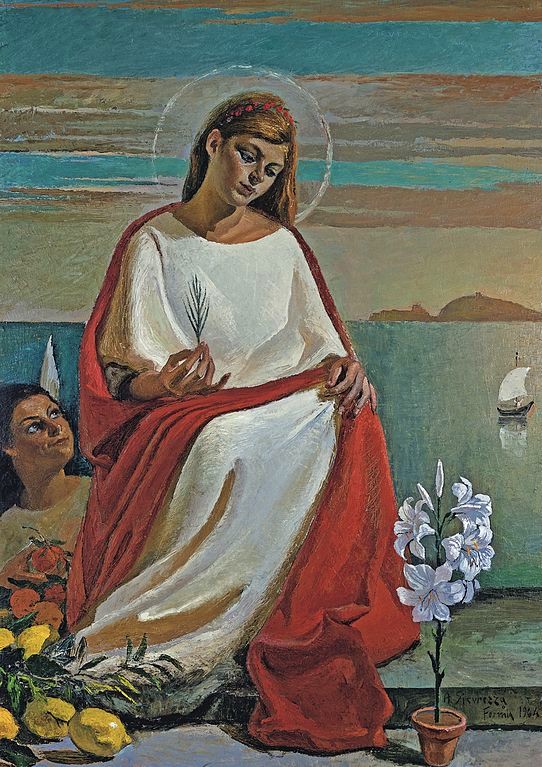
The Roman Martyrology reads today: “In the territory of Thérouanne St Omer, Bishop.”
Omer was born of a distinguished noble family of Coutances, then under the Frankish realm of Neustria, towards the close of the 6th or the beginning of the 7th Century. His parents paid great attention to his education, in particular, they strove to inspire him with a love for God and for virtue.
Upon the death of his mother Omer entered the Monastery of Luxeuil in the Diocese of Besançon and persuaded his father to accompany him. They sold their worldly goods and distributed the proceeds among the poor. The father and son made their religious profession together.
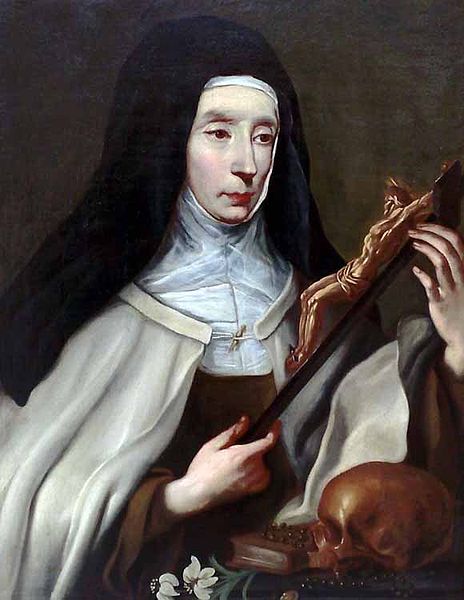
Under the direction of St Eustachius, Omer studied the Scriptures, in which he acquired remathe Abbot, rkable proficiency. The humility, obedience, mildness and devotion, together with the admirable purity of intention which shone forth in every action of Saint Omer, distinguished him even among his saintly brethren.
When, in 639, King Dagobert requested the appointment of a new Bishop for the important City of Thérouanne, the capital of the ancient territory of the Morini in Neustria, he was appointed and Consecrated.
The greater number of the inhabitants of the region were still pagans and even the few Christians, through a scarcity of Priests, had lapsed. The holy Bishop applied himself to his task with such efficacious zeal that, in a short time, his Diocese became one of the most flourishing in France. Even a pagan overlord, who had persecuted the Christians could not resist his exhortations and after his Baptism gave large grants to the Church. On one of those properties, Bishop Omer built a Monastery in honour of the Blessed Virgin.
In 654, Bishop Omer founded the Abbey of Saint Peter (now the Abbey of Saint Bertin) in Sithiu, soon to rival the old Monastery of Luxeuil for the number of learned and zealous men educated there. Several years later, Omer erected the Church of Our Lady of Sithiu, with a small Monastery adjoining it which he granted to the administration and care of the Monks of Saint Bertin.
The exact date of his death is unknown but he is believed to have died in 670. The place of his burial is uncertain but he was probably laid to rest in the Church of Our Lady which is now the Cathedral of Saint Omer, where there is a 13th Century Cenotaph dedicated to him and where his Feast is celebrated today, 9 September.
St Peter Claver SJ (1581-1654) Confessor, Priest of the Society of Jesus, Missionary, Confessor, Patron of the missions to African peoples and Human Rights Defender, Apostle of Charity. Also known as “The Apostle of Cartagena” and “The Slave of the Slaves.” Wonderful St Peter: https://anastpaul.com/2017/09/09/saint-of-the-day-9-september-st-peter-claver-s-j/
St Gorgonius of Nicomedia (Died c303) Martyr, Confessor, Soldier, Imperial Court Official and companions, St Dorotheus. After many horrific tortures these two were finally strangled to death in 303 in Nicomedia, Bithynia (modern Izmit, Turkey). The Roman Martyrology reads today: “At Nicomedia, the holy Martyrs, Gorgontius, Dorotheus and others. The greatest honours had been conferred on them by the Emperor Diocletian but, as they detested the cruelty which he exercised against the Christians, they were, by his orders, suspended in his presence and lacerated with whips; then their skin being torn from their bodies and vinegar and salt poured over them, they were burned on a gridiron and finally, strangled. After some time, the body of the blessed Gorgonius was brought to Rome and deposited on the Latin Way. Thence, it was transferred to the Basilica of St Peter and later some Relics went to France.” His Life and Death: https://anastpaul.com/2023/09/09/saint-of-the-day-9-september-st-gorgonius-of-nicomedia-died-c303-confessor-martyr/
St Alexander of Sabine St Basura of Masil St Bettelin St Dorotheus of Nicomedia (Died c303) Martyr, Soldier St Gorgonio of Rome St Gorgonius of Nicomedia(Died c303) Martyr, Soldier St Isaac the Great St Joseph of Volokolamsk (c1439-1515) Abbot, Founder
Saint of the Day – 8 September – BlessedAlanus de Rupe OP (c1428-1475) Priest and friar of the Order of Preachers, “Apostle of the Holy Rosary” Theologian, Professor, renowned Preacher, Missionary and Mystic. Born in c1428 in Sizun, Brittany, France and died on 8 September in 1475, in Zwolle, Netherlands. Patronage – of Zwolle, Netherlands. Also known as – Alain de la Roche, Alan de Rupe, Alan de la Roche, Alan the Breton, Alano de la Roca, Alanus Rupe
Some writers claim him as a native of Germany, others of Belgium but his disciple, Fr Cornelius Sneek OP (1455–1534), says he was born in Brittany. He is especially notable for his contributions to devotion to the Holy Rosary. According to tradition, the devotion to the Holy Rosary had been neglected and forgotten in most of Europe in the centuries after Saint Dominic established it and Alan is credited with re-establishing, increasing and spreading this most loved of all our devotions.
Alanus entered the Dominican Order in 1459 at age thirty-one. While pursuing his studies at Saint Jacques, in Paris, he distinguished himself in philosophy and theology.
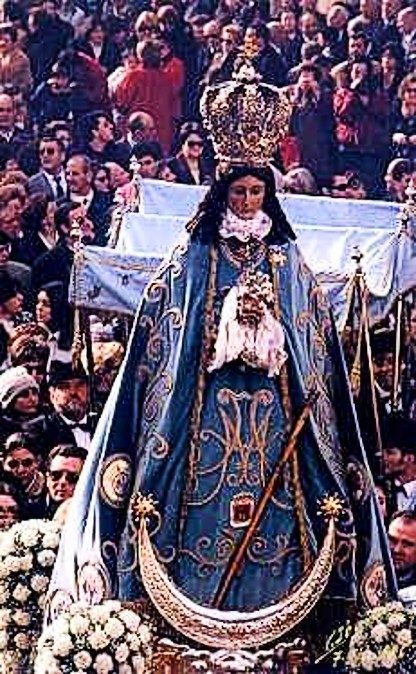
From 1459 to 1475 he taught almost uninterruptedly at Paris, Lille, Douay, Ghent and Rostock in Germany, where, in 1473, he was made Master of Sacred Theology. During his sixteen years of teaching, he became a most renowned preacher.
He was indefatigable in what he regarded as his special mission, the preaching, spreading and re-establishment of the Holy Rosary which he did with tremendous success throughout northern France, Flanders and the Netherlands. In around 1470, A;amus established a Confraternity of the Psalter of the Glorious Virgin Mary which was instrumental in disseminating the Holy Rosary throughout Europe.
binary comment
Alanus published nothing during his lifetime,but immediately after his death, the brethren of his Province were commanded to collect his writings for publication. In 1859, a list of his writings was compiled.
“It was Blessed Alanus de Rupr, one of the first disciples of Saint Dominic, who co-ordinated the Rosary and enriched it by adding meditations, as well as the life of Jesus and Mary. He called it the Holy Rosary because it resembled a bouquet of roses placed at the feet of the Virgin.” (website of the Diocese of Meaux).
St Adrian (Died 306) Confessor, Lay Martyr, Royal Court Guard in Roman Imperial Court at Nicomedia in Asia-Minor during the time of Emperor Maximian in the early 4th Century. Patronages – against the plague/epidemics, against epilepsy, arms dealers, butchers, guards, soldiers. The Roman Martyrology reads this day: “At Nicomedia, St Adrian, with twenty three other Martyrs, who ended their Martyrdom on the 4th day of March by having their limbs crushed, after enduring many torments, under the Emperors Diocletian and Maximian. Their remains were carried to Byzantium by the Christians and buried with due honours. Afterwards, the body of St Adrian was taken to Rome on this day, on which his festival is celebrated.” His Life and Death: https://anastpaul.com/2023/09/08/saint-of-the-day-8-september-st-adrian-died-306-confessor-martyr/
BlessedAlanus de Rupe OP (c1428-1475) Priest, “Apostle of the Holy Rosary”
Martyrs of Alexandria – 5 Saints: A group of Christians Martyred together in the persecutions of Diocletian – Ammon, Dio, Faustus, Neoterius and Theophilus. Martyred in Alexandria, Egypt.
Martyrs of Japan – (21 Beati: A group of 21 Missionaries and Converts, who were executed together for their faith. They were: Antonio of Saint Bonaventure, Antonio of Saint Dominic, Dominicus Nihachi, Dominicus of Saint Francis, Dominicus Tomach, Francisco Castellet Vinale, Franciscus Nihachi, Ioannes Imamura, Ioannes Tomachi, Laurentius Yamada, Leo Aibara, Lucia Ludovica, Ludovicus Nihachi, Matthaeus Alvarez Anji, Michaël Tomachi, Michaël Yamada Kasahashi, Paulus Aibara Sandayu, Paulus Tomachi, Romanus Aibar, Thomas of Saint Hyacinth, Thomas Tomachi Died on 8 September 1628 in Nagasaki, Japan Beatified on 7 May 1867 by Pope Pius XI.
DISCLAIMER: Please note: I cannot control the content of the Advertisements on this Site, or of pop-ups which may appear, The revenue from the Advertisements, however, does provide a little assistance in the support of the Site. I do apologise for any inappropriate content.
Saint of the Day – 7 September – St Euvertius (Died c340) Bishop of Orleans . Also known as – Eu
The Roman Martyrology reads today: “At Orleans, in France, the departure from this life of the holy Bishop, Euvortius, who was first a Sub-Deacon of the Roman Church and afterwards through the Divine favour, was designated as the Bishop of that City, by a dove.”
Euvertius was the 4th Bishop of Orléans, predecessor to Saint Anianus (died 388), according to the Episcopal records in the collection of Saint Albinus of Angers.
Long ignored except in the Episcopal lists, Euvertius suddenly rose to prominence in the 9th Century when, to enhance the prestige of the Church of the Holy Cross in Orléans, his Vita was composed, according to which, he was the builder of this Church under the reign of Constantine.
In Orleans, his Feast Day is celebrated today on 7 September, the date on which he is remembered in the Roman Martyrology.
St Alcmund of Hexham Bl Alexander of Milan St Augustalus St Balin St Carissima of Albi St Chiaffredo of Saluzzo Bl Claude-Barnabé Laurent de Mascloux St Desiderio of Benevento St Dinooth Bl Eugenia Picco St Eupsychius of Caesarea St Eustace of Beauvais St Euvertius (Died c340) Bishopof Orleans St Faciolus St Festo of Benevento Bl François d’Oudinot de la Boissière St Giovanni of Lodi St Goscelinus of Toul St Gratus of Aosta St Grimonia of Picardy St Hiduard Bl John Duckett Bl John Maki Bl John of Nicomedia Bl Ludovicus Maki Soetsu
St Madalberta of Mauberge (Died c706) Abbess. Born into the Merovingian Dynasty in Franc/Belgium in the 7th Century she died in c706 at Mauberge Abbey in Hainaut, in northern France. Madalberta was the daughter of Saint Vincent of Soignies and Saint Waltrude. She had the happiness of being educated in the Monastery of Mauberge by their Aunt, Saint Aldegonde, with her sister Aldetrudis. Her Loving Life of Devotion: https://anastpaul.com/2024/09/07/saint-of-the-day-7-september-saint-madalberta-of-mauberge-died-c706-abbess/
Martyrs of Noli: Four Saints: Christians who became soldiers and were martyred together for their faith. A late legend makes them member of the Theban Legend who escaped their mass martyrdom but that’s doubtful – Paragorius, Partenopeus, Parteus and Severinus. They were born in Noli, Italy and martyred in Corsica, France. Attribute – soldiers with a banner of NoliM
Saint of the Day – 6 September – St Gondulphus (Died 823) Bishop of Metz from 816 until his death. Also known as – Gundulfus, Gondulf, Gondon.
As the Bishop, Gondulphus succeeded Angilram, who caused Paul the Deacon to write the ‘Liber de piscopis Mettensibus’ and who probably died in 791.
At the death of Angilram, our Saint, Gondulphus (ow whom we know little more than this) was chosen as his replacement in the See of Metz. The date of the Consecration of Bishop Gondulphus must be set down as probably 28 December 816. The old Episcopal catalogue of the Metz’ Church informs us that Gondulphus occupied the See for six years, eight months and seven days and that he died on the 6th of September in the year 823.
He was buried in the Monastery of Gorze, where his Relics are still honoured on 6 September.
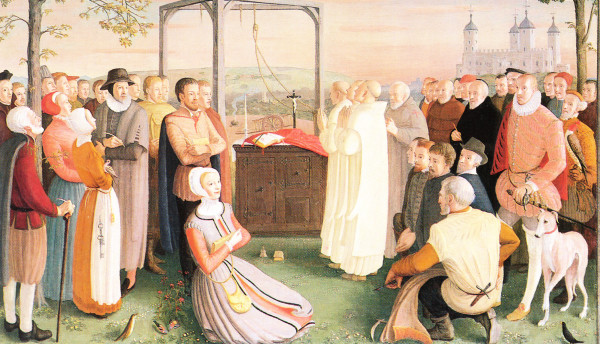
Saint of the Day – 5 September – Blessed William Browne (Died 1605) Martyr, Layman. Born in the 16th Century in Northampton, Northamptonshire, England and died by the butcherous method of being hanged, drawn and quartered on 5 September 1605 at Ripon, North Yorkshire, then under the rule of James I.
The history of anti-Catholic persecution in England, Scotland and Wales, begins in 1535 and ends in 1681; the first to unleash it was, as is well known, King Henry VIII, who began the English schism by seceding the Church from Rome, in order to declare himself as the Supreme Head of the Church, thus creating a new protestant church.
Its more or less bloody perpetrators were, beyond Henry VIII, his successors Edward VI (1547-1553), the terrible Elizabeth I, the ‘Virgin Queen’ but also called the Whore Queen (Died 1603), James I (Died 1625) Charles I, Oliver Cromwell and Charles II.
The first to die as glorious Martyrs, on 4 May and J15 une 1535, were 19 Carthusian Monks, hanged at the infamous Tyburn Tree in London. The last victim was the Archbishop of Armagh and Primate of Ireland, Oliver Plunkett, executed in London on 11 July 1681.
William Browne was born in Northamptonshire. Little is known about his life, except that he was one of the many Catholics who chose to die a Martyr, rather than betray their Holy Faith.
He was a servant in the household of the nobleman Thomas Darcy and was known for his zeal in refusing and causing others to refuse, the oath of the King’s spiritual supremacy, for not attending Protestant rites and for inciting fidelity to the Catholic Church.
For these reas ons, Wiilliam Browne was arrested and tried during the reign of James I (1566-1625) and sentenced to capital punishment for high treason.
On 5 September 1605, he was hanged, drawn and quartered in Ripon. The Martyr was Beatified on 5 December 1929, by Pope Pius XI, along with 106 other victims of those ferocious persecutions of the Enlish. Today, it begins again in these end times.
St Charbel Bl Florent Dumontet de Cardaillac St Genebald of Laon Bl Gendtilis
Blessed Gerbrand OPraem (Died 1267) Priest Abbot, a supporter of the Crusades. He encouraged the Frisians to join the Crusade and, in 1268, as a result of his zeal, was awarded, by Pope Clement IV, the Title of ‘Sacrae Militiae Dux‘ (Leader of the Crusade). Gerbrand was a close friend of Saint Louis IX of France (1226-1270). A Life of Zeal: https://anastpaul.com/2023/09/05/saint-of-the-day-5-september-blessed-gerbrand-of-dokkum-opraem-died-1267-abbot/
St Guise Hoang Luong Canh Blessed John the Good OSA (c 1168-1249) Bishop Blessed Jordan of Pulsano Abbot
St Obdulia Virgin – A Spanish virgin who was venerated at Toledo, Spain. Her remains are enshrined in Toledo but details of her life are lost. Bl Phêrô Nguyen Van Tu St Romulus of Rome St Victorinus of Amiterme St Victorinus o(Died c644) Bishop f Como Italy. He was a noted opponent of the Arians in his time. Blessed William Browne (Died 1605) Martyr
Martyrs of Armenia – 1,000 Saints: A group of up to 1,000 Christian soldiers in the 2nd Century Imperial Roman Army of Trajan, stationed in Gaul. Ordered to sacrifice to pagan gods, they refused and were transferred to Armenia. Ordered again to sacrifice to pagan gods, they refused again. Martyrs. We know the names of three of them but nothing else – Eudoxius, Macarius and Zeno.
Martyrs of Capua – 3 Saints: Three Christians who were Martyred together. Long venerated in Capua, Italy. We know their names, but little else – Arcontius, Donatus and Quintius. They were martyred in Capua, Italy.
Martyrs of Nicomedia – 80 Saints: A group of 80 Christians, Lay and Clergy, Martyred together in the persecutions of Valens. We know little more than the names of three of them – Menedemo, Teodoro and Urbano. They were locked on a boat which was then set on fire on the shore of Nicomedia, Bithynia (in modern Turkey) c370.
Martyrs of Porto Romano – 4+ Saints: A group of Christians Martyred together in the persecutions of Marcus Aurelius. We know little more than their names – Aconto, Herculanus, Nonno and Taurino. c180 at Porto Romano, Italy.
Saint of the Day – 4 September – Saint Marinus (c279-c366) Deacon of Rimini, Hermit, Stonemason, Founder of the State of San Marino. Born in the c275 island of Rab in Croatia and died on 3 September c366 on Mount Titano im San Marino. Patronages – bachelors, Deacons, falsely accused people, stone masons, of the independent City State of San Marino (officially the Republic of San Marino, is a landlocked country in Southern Europe, completely surrounded by Italy). Also known as – Marino in Italian, Marinao… the name means ‘man from the sea'(Latin).
The Roman Martyrology reads today: “At Rimini, St Marinus, Deacon.”
Portrait by Pompeo Batoni, 1740
According to tradition, Marinus, along with Leus of Montefeltro, was forced to perform forced labour in Rimini around 305 during the Diocletianic persecutions. There, they were tasked with building the City walls with stones brought from Mount Titano in what is now the little Sate of San Marino, named after Marinus.
Afterward, the two separated and Marinus lived as a Hermit in a cave on Mount Titano. Bishop Gaudentius of Rimini Ordained him a Deacon in 311—after the persecutions ended.
Rock with entrance to Marinus’ Cave
After some time, Marinus was discovered in his cave by herdsmen who spread the news about him. He then acted as a messenger of the Faith, converting and Baptising a woman whose brother gave Marinus land at the top of the mountain. Marinus left his cave and built the Church of San Pietro there.
Marinus died with the words, “I leave you free from both men” these are considered the founding myth of the State of San Marino which, was founded after Marinus’ death and is therefore the oldest State in the world with a republican constitution and emphasise its independence from the Emperor and the Pope.
San Marino remains the oldest State in the world with a Republican constitution.
Location of San Marino (green) in Europe (dark grey)
Marinus and Leus of Montefeltro were buried in two niches carved into the rock which can still be seen today in the crypt of the Church of San Pietro. Since the 4th Century, a Parish Church dedicated to Marinus stood nearby on the site of the Basilica of San Marino built at the beginning of the 19th Century. Under the High Altar, some of Marinus’ Relics discovered on 3 March 1586, lie; others have been on the island of Rab since 1595 .
Stained glass window in today’s Parish Church in Voghenza
In around 500, there was a Monastery on Mount Titas and around 754, a Castle named after Marinus was documented there. Marinus’ Vita was written in 900 and another in the 11th Century. Marinus is considered the founder of San Marino, therefore, Guercino’s image was used on the State’s 20 cent coin.
Painting of Saint Marinus descending from Heaven surrounded by the people of San Marino, painting located within the Palazzo Pubblico
St Rose of Viterbo TOSF (c 1233 – 1251) Virgin, Preacher – Member of the Franciscan Third Order, Recluse, Miracle-Worker. Rose was quickly acclaimed a Saint by the people of Viterbo who brought her incorrupt body to the Poor Clare Monastery which had refused her entry in life. Pope Innocent IV immediately began the process for her Canonisation but, for various reasons, her cause did not proceed 1457 when she was Canonised. Her Life of Grace: https://anastpaul.com/2018/09/04/saint-of-the-day-4-september-st-rose-of-viterbo-c-1233-1251/
St Ammianus the Martyr St Caletricus of Chartres
St Candida (Died c78) Virginof Naples, Co-Patronage – of Naples. She was Baptised by St Peter. The Roman Martyrology reads today: “At Naples, In Campagna, the Birthday of St Candida, who was the first to meet St Peter when he came to that City and being Baptised by him, afterwards ended her holy life in peace.” Blessed St Candida: https://anastpaul.com/2024/09/04/saint-of-the-day-4-september-saint-candida-of-naples-died-c78/
The Patron Saints of Naples [Saints Baculus, Euphebius, Francis Borgia, Aspren, and Candida the Elder (kneeling)] adoring the Crucifix, 17th Century. Palazzo Reale, Naples by Luca Giordano. Since the time of this Painting there are many more Co-Patrons of Naples.
St Julian the Martyr St Magnus of Ancyra St Marcellus of Chalon-sur-Saône St Marcellus of Treves St Marinus (c279-c366) Deacon of Rimini St Maximus of Ancyra St Monessa St Moses the Prophet St Oceanus the Martyr Bl Peter of Saint James St Rebecca of Alexandria St Rhuddlad
St Rufinus of Ancyra St Salvinus of Verdun St Silvanus of Ancyra St Sulpicius of Bayeux St Thamel St Theodore the Martyr St Ultan of Ardbraccan St Victalicus
Saint of the Day – 3 September – St Aigulphus OSB (c630-c679) Abbot of Lérins. Born around 630 near Blois in France and died around 676 on the Island of Aigylion / Caprasia, today Capraia in Italy. Patronage – the cure of eyes ailments, against obsessions. Also known as – Aigulphe, Aygulphe, Ayou, Ayoul. Additional Memorial – 17 May (translation of Relics to Lérins).
The Roman Martyrology reads today: “The birthday of the holy Martyrs, Aigulphus Abbot of Lérins and the Monks, his companions who, after their tongues were cut off and their eyes plucked out were murdered with the sword.”
Aigulphus became a Benedictine Monk in the Monastery founded around 651 in Fleury – today’s Saint-Benoît-sur-Loire.
According to tradition, in around 655 he fetcjed the remains of Saints Benedict and Scholastica from the Monastery of Monte Cassino, which had been devastated by the Lombards. Around 661 he was elected as the Abbot of the Monastery on the Lérins Island. There he wanted to introduce the mixed Rule comprising elements of the Order of Columban and the Benedictines.
Aigulphus and 3 companion Monk were attacked by pagans who objected to the growing influence of the Monks. Horrible tortures were inflicted upon Aigulphus. His tongues and eyes were cut and gouged ou t. Then heand his companions were forced into exile on the Island of Caprasia – today’s Island of Capraia – where there was a colony of Hermits which is now named after St Aigulphus. He was finally killed by pirates on this Island. Some sources say that this torture and Martyrdom was actually perpetrated by Monks who disliked Aigulphus’ strict reforms.
It is often said that he had 33 companions but in reality there were probably only three, namely the monks Trucharius and Frongentius (Frugentius) and one whose name is unknown.
His remains were returned by Abbot Rigomir to the Monastery at Lérins. Relics were also brought to Provins and rediscovered there by Archbishop Seguin in the 10th Century. Part of the head Relic was brought to the Cathedra in Grasse, see below.
St Regulus of Rheims St Remaclus St Sandila of Cordoba St Vitalian of Capua (Died 699) Bishop
Martyrs of Aquileia – 4 Saints: Four young women, variously sisters and cousins, who were born to the nobility, the daughters of the pagans Valentinianus of Aquileia and Valentius of Aquileia. Each woman converted and made private vows, dedicating themselves to God. They were arrested, tortured and martyred by order of Valentius for becoming a Christian. We know little else but their names – Dorothy, Erasma, Euphemia and Thecla. They were martyred by beheaded in the 1st century in Aquileia, Italy and their bodies were thrown into a nearby river.
Martyrs of Nagasaki – 6 Beati: A group of Priests and Clerics, native and foreign, murdered together in the anti-Christian persecutions in Japan. They were scalded in boiling water and then burned alive on 3 September 1632 in Nishizaka, Nagasaki, Japan and Beatified on 7 May 1867 by Pope Pius IX. They are: Anthony Ishida, Bartolomé Gutiérrez Rodríguez, Francisco Terrero de Ortega Pérez, Gabriel Tarazona Rodríguez, Jerome of the Cross de Torres, Vicente Simões de Carvalho
Saint of the Day – 2 September – Saint Elpidius (4th Century) Abbot in Alcona, Italy, Monk, Hermit, Missionary to Italy, Born in Cappadocia in Asia Minor and died in Piceno, Ancona, Italy. Patronages – Sant’Elpdio a Mare, Sant’Elpidio Morico and Porto Sant’Elpidio, Italy. Also known as – Elpidius of Cappadocia, Elpidius the Abbot, Elpidius the Hermit, Elpidio…
The Roman Martyrology reads today: “In the Marche of Ancona, another St Elpidius, an Abbot. A Town hearing his name glories in the posseson of his sacred body.”
South of Ancona, several Towns bear the name of today’s Saint – Sant’Elpidio a Mare, Sant’Elpidio Morico and Porto Sant’Elpidio. In the Piceno area, this name is also frequently used by parents for their male children, yet, little is known about this Saint, so distant in time and memory that he has been confused with various other figures.
Some believe St Elpidius originated in Cappadocia. The writer Palladius recalls him in his Lausiac History as a Hermit who lived for many years in a cave near Jericho and sings the praises of an ascetic who, estranged from the company of men, chose the solitary ascent to the heights of Christian perfection.
At the time of Sant’Elpidius’ life, in the 4th Century, a new form of monasticism was gaining ground, with St Pachomius, the Founder of community life. In the Thebaid, near the Nile, he founded the first Convents of men and women, divided into individual cells, with a communal Church and refectory. At the head of each nucleus (the future Convent) was the Abbot, whose task was to ensure observance of the common Rule, enforcing chastity, work, fasting and the recitation of the Office.
A few years after St Pachomius, the great Church Fater, theologian and mystic, St Basil the Great, also of Cappadocia, issued a more moderate but wiser Rule, destined to become the constitutions, of all Christian monasticism, through the Benedictine Rule.
Elpidius had likely left the Monastery for a period of austere and solitude near Jericho, if we accept this version of the Saint’s life. He later moved to Piceno in Ancona, Italy, by the visitation and instruction of an Angel (see image below) to establish a Monastic community or at least to carry out some form of apostolate among the people. Some scholars, however, believe Elpidius was originally from Piceno and spent his entire life there, adhering to a highly personal ascetic rule, one which earned him the esteem and devotion, of the entire region. This great veneration has not yet diminished for the beloved St Elpidius who has interceded on many occasions for the welfar of the people and Towns under his patronage.
St Elpidius Relics eare nshrined in the Town of Cluana (modern Sant’Elpidio a Mare), Ancona, Italy. The miracles wrought through the veneration of these Relics saved the Town from a Lombarsiege when Elpidius appeared in the sky.
St Elpidius receives a vision in which an Angel informs him that he must evangelise in Ancona
You must be logged in to post a comment.