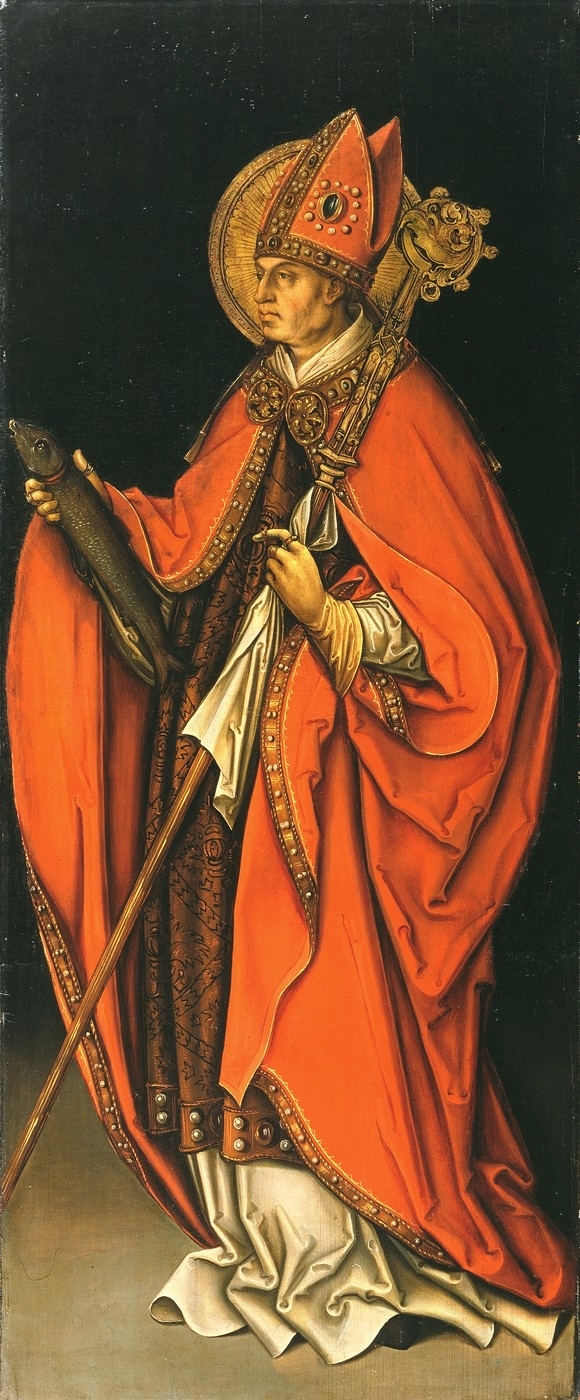
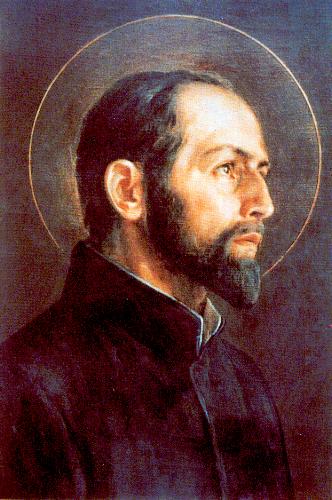
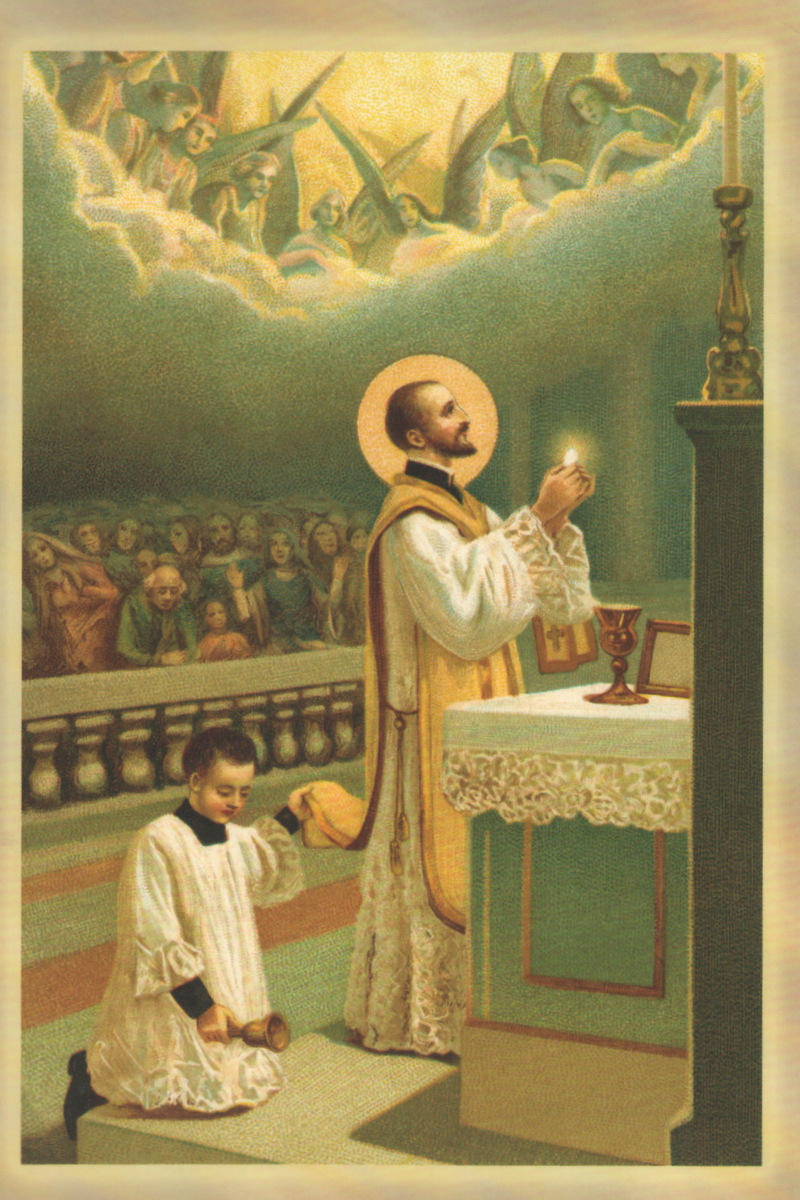
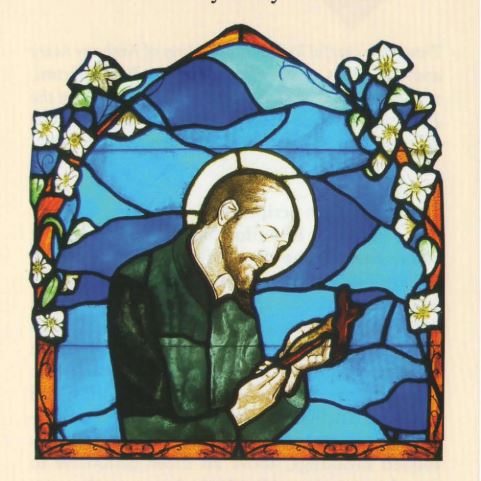
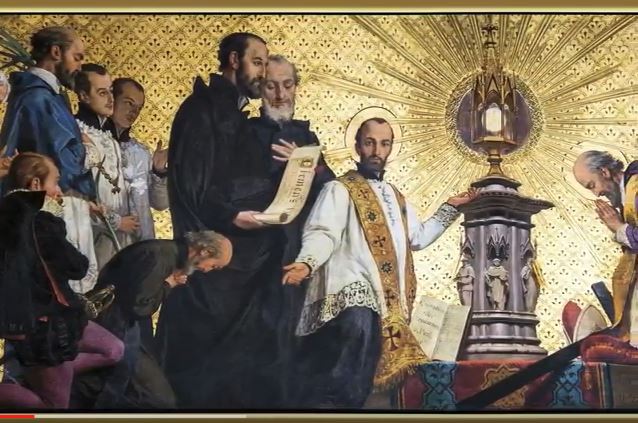
St Eugene de Mazenod OMI (1782-1861) Biography: https://anastpaul.wordpress.com/2018/05/21/saint-of-the-day-21-may-st-eugene-de-mazenod-o-m-i-1782-1861/
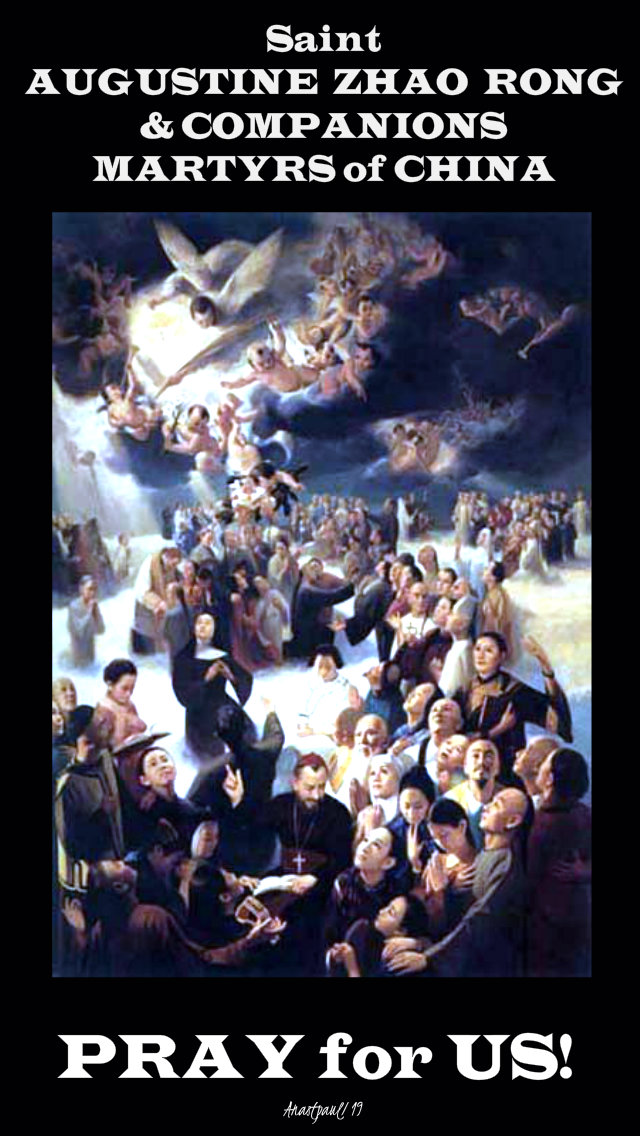
Martyrs of the Mexican Revolution (Optional Memorial): The 1917 Mexican constitution was pointedly anti-clerical and anti-Church, and its adoption instituted years of violent religious persecution including expulsion of foreign priests, closing of parochial schools, and the murders of several priests and lay leaders who work to minister to the faithful and support religious freedom. 25 of them who died at different times and places but all as a result of this persecution were celebrated together. They each have separate memorials but are also remembered as a group.
• Saint Agustin Caloca Cortes
• Saint Atilano Cruz Alvarado
• Saint Cristobal Magallanes Jara
• Saint David Galván-Bermúdez
• Saint David Roldán-Lara
• Saint David Uribe-Velasco
• Saint Jenaro Sánchez DelGadillo
• Saint Jesús Méndez-Montoya
• Saint Jose Isabel Flores Varela • Saint “Joselito” José Luis Sánchez del Río (1913-1928) Aged 14
Memorial 10 February Biography: https://anastpaul.wordpress.com/2018/02/10/saint-of-the-day-10-february-st-jose-sanchez-del-rio-joselito-1913-1928-boy-martyr/comment-page-1/
• Saint José María Robles Hurtado
• Saint Julio álvarez Mendoza
• Saint Justino Orona Madrigal
• Saint Luis Batiz Sainz
• Saint Manuel Moralez
• Saint Margarito Flores-García
• Saint Mateo Correa-Magallanes
• Saint Miguel de la Mora
• Saint Pedro de Jesús Maldonado-Lucero
• Saint Pedro Esqueda Ramírez
• Saint Rodrigo Aguilar Alemán
• Saint Roman Adame Rosales
• Saint Sabas Reyes Salazar
• Saint Salvador Lara Puente
• Saint Toribio Romo González
• Saint Tranquilino Ubiarco Robles
Canonised: 21 May 2000 by Pope John Paul II
—
St Adalric of Bèze
Bl Adilio Daronch
St Ageranus of Bèze
St Ansuinus of Bèze
St Antiochus of Caesarea Philippi St Arcangelo Tadini (1846–1912)
St Bairfhion of Killbarron
St Berard of Bèze
St Collen of Denbighshire
St Constantine the Great
St Donatus of Caesarea
St Eutychius of Mauretania
Bl Franz Jägerstätter
St Genesius of Bèze
St Godric of Finchale
Bl Hemming of Åbo
St Hospitius of Cap-Saint-Hospice
Bl Hyacinth-Marie Cormier
St Isberga of Aire
Bl Jean Mopinot
Bl Lucio del Rio
St Mancio of Évora
Bl Manuel Gómez González
St Nicostratus of Caesarea Philippi
Bl Pietro Parenzo
St Polieuctus of Caesarea
St Polius of Mauretania
St Restituta of Corsica
St Rodron of Bèze
St Secundinus of Cordova
St Secundus of Alexandria
St Serapion the Sindonite
St Sifrard of Bèze
Bl Silao
St Synesius
St Theobald of Vienne
St Theopompus
St Timothy of Mauretania
St Valens of Auxerre
St Vales
St Victorius of Caesarea
—
Martyrs of Egypt: Large number of bishops, priests, deacons and lay people banished when the Arian heretics seized the diocese of Alexandria, Egypt in 357 and drove out Saint Athanasius and other orthodox Christians. Many were old, many infirm and many, many died of abuse and privations while on the road and in the wilderness. Very few survived to return to their homes in 361 when Julian the Apostate recalled all Christians and then many of those later died in the persecutions of Julian.
Martyrs of Pentecost in Alexandria: An unspecified number of Christian clerics and lay people who, on Pentecost in 338, were rounded up by order of the Arian bishop and emperor Constantius and were either killed, or exiled, for refusing to accept Arian teachings. 339 in Alexandria, Egypt.
Thought for the Day – 20 May – Monday of the fifth Week of Easter, C and the Memorial of St Bernadine of Siena OFM (1380-1444)
Most of the saints suffer great personal opposition, even persecution. Bernardine, by contrast, seems more like a human dynamo who simply took on the needs of the world.
He was the greatest preacher of his time, journeying across Italy, calming strife-torn cities, attacking the paganism he found rampant, attracting crowds of 30,000, following St Francis of Assisi’s admonition to preach about “vice and virtue, punishment and glory.”
Compared with Saint Paul by the pope, Bernardine had a keen intuition of the needs of the time, along with solid holiness and boundless energy and joy. He accomplished all this despite having a very weak and hoarse voice, miraculously improved later because of his devotion to Mary.
When he was 20, the plague was at its height in his hometown of Siena. Sometimes as many as 20 people died in one day at the hospital. Bernardine offered to run the hospital and, with the help of other young men, nursed patients there for four months. He escaped the plague but was so exhausted that a fever confined him for several months. He spent another year caring for a beloved aunt whose parents had died when he was a child and at her death began to fast and pray to know God’s will for him.
At 22, he entered the Franciscan Order and was ordained two years later. For almost a dozen years he lived in solitude and prayer but his gifts ultimately caused him to be sent to preach. He always travelled on foot, sometimes speaking for hours in one place, then doing the same in another town. For nearly a quarter of a century he crisscrossed Italy on foot, calling people to repentance in exhortations like this:
“A sinner who repents learns to be prudent. He is like a donkey that, once he has fallen in a spot, afterwards looks more carefully where he sets his foot. For fear of punishment he takes care not to fall into those sins again, or into any others. Now, I want to ask older people about this. Old man and old woman, are you there? “Yes.” Tell me, have you fallen into sin over and over again? “Yes.” Well, have you returned to God? “Yes.” They have fallen often and so they walk more gingerly. They think about how they had better set their feet. As they see death approaching, they thank God that they have had time to turn to him. And they do not trust themselves not to fall, but always ask God to help them not to fall again.”
Especially known for his devotion to the Holy Name of Jesus, Bernardine devised a symbol—IHS, the first three letters of the name of Jesus in Greek—in Gothic letters on a blazing sun. This was to displace the superstitious symbols of the day, as well as the insignia of factions – for example, Guelphs and Ghibellines. The devotion spread and the symbol began to appear in churches, homes and public buildings. Opposition arose from those who thought it a dangerous innovation. Three attempts were made to have the pope take action against him but Bernardine’s holiness, orthodoxy and intelligence were evidence of his faithfulness.
General of the Friars of the Strict Observance, a branch of the Franciscan Order, Bernardine strongly emphasised scholarship and further study of theology and canon law. When he started there were 300 friars in the community, when he died there were 4,000. He returned to preaching the last two years of his life, dying while travelling.
Another dynamic saint once said, “…I will not be a burden, for I want not what is yours but you…. I will most gladly spend and be utterly spent for your sakes” (2 Corinthians 12:14). There is danger that we see only the whirlwind of activity in the Bernardines of faith—taking care of the sick, preaching, studying, administering, always driving—and forget the source of their energy. We should not say that Bernardine could have been a great contemplative if he had had the chance. He had the chance, everyday and he took it.
Quote/s of the Day – 20 May – Monday of the fifth Week of Easter, C and the Memorial of St Bernadine of Siena OFM (1380-1444)
“The name of Jesus, is in fact, the great foundation of the faith that turns people into children of God. The Catholic Faith indeed, consists in the news of Jesus Christ, as light of the soul, gate of life and foundation of eternal salvation.”
“The Name of Jesus is the glory of preachers because the shining splendour of that Name causes His word to be proclaimed and heard. And how do you think such an immense, sudden and dazzling light of faith came into the world, if not because Jesus was preached? Was it not through the brilliance and sweet savour of this Name that God called us into His marvellous light?”
“The last degree of love is when He gave Himself to us to be our Food; because He gave Himself to be united with us in every way.”
“Let Mary never be far from your lips and from your heart. Following her, you will never lose your way. Praying to her, you will never sink into despair. Contemplating her, you will never go wrong.”
“The power of the priest, is the power of the divine person, for the transubstantiation of the bread, requires as much power, as the creation of the world.”
One Minute Reflection -20 May – Monday of the fifth Week of Easter, C, Gospel: John 14:21–26 and the Memorial of St Bernadine of Siena OFM. (1380-1444)
“We will come to him and make our dwelling with him”…John 14:24
REFLECTION – “My Father will love him and we will come to him and make our home with him.” Consider, dearly beloved, how great this solemnity is, that commemorates the coming of God as a guest in our hearts. If some rich and powerful friend were to enter your home, you would quickly clean the entire house, for fear something there, might offend your friend’s eyes, when he entered. Let anyone then who is preparing his inner house for God, cleanse away the dirt of his evil deeds.
You see what Truth tells us – “We will come and make our home with him.” He does indeed enter the hearts of some but does not make His home there, because through repentance, they acquire respect for God but during a time of temptation, they forget that they have repented and so return to committing sins, as if they had never wept over them at all. The Lord comes into the heart and makes His home in one, who truly loves God and observes His commandments, since the love of His divine nature, so penetrates him that he does not turn away from it during times of temptation. That person loves truly, whose heart does not consent to be overcome by wicked pleasures… Hence the following clarification – “Whoever does not love me does not keep my words.” Dearly beloved, enter into yourselves and inquire if you truly love God. But let no-one believe the answer his heart gives in his own case, apart from the testimony of his works….St Pope Gregory the Great (540-604) Doctor of the Church Homilies on the Gospels no 30.
PRAYER – Lord, by Your grace, we are made one in mind and heart. Give us a love for what You command and a longing for what You promise, so that, amid this world’s changes, our hearts may be set on the world of lasting joy. May the angels and saints intercede for us and may our Mother, the Mother of God, be a constant assistant and guiding hand. We make our prayer, through our Lord Jesus Christ, in the unity of the Holy Spirit, one God with You, forever and ever, amen.
Saint of the Day – 20 May – Saint Ethelbert (died 794) Martyr – also known as Albert or Albrigh), King of East Anglia – Patronages – Hereford, England, Hereford Cathedral where a portion of his remains lie.
He was most probably born in 779 to a Christian family belonging to the ancient royal lineage of East Anglia. His father’s name was Aethelred and his mother bore the name Leofruna. He was brought up in the Christian tradition and obtained an education at the monastery in Bury St Edmunds. From his childhood Ethelbert was very serious, polite, kind-hearted and friendly and was filled with the desire to imitate Christ in everything. At that time most of England was under the control of King Offa of Mercia, who had a great ambition to place all the lands of England and part of Wales under his control and wanted the Church to be subordinated to the State.
When Ethelbert was 14, his father died and the young man was crowned king and started to rule his kingdom. It was in the year 793 or 794 that Ethelbert was offered marriage but the devout king first declined, wishing to keep his virginity. But as he needed an heir, Ethelbert finally agreed. His adviser, Oswald, suggested as a candidate the daughter of King Offa and his Queen Cynethryth of Mercia, Alfreda (also called Etheldritha). Ethelbert and all the court consented; only the saint’s mother, Leofruna, was hesitant as she feared the Mercian family and their dishonesty. Nevertheless, it was decided that Ethelbert would set out for Mercia.
As soon as the young king mounted his horse, a sudden earthquake occurred that made all his companions panic. Leofruna saw in this a sign from the Lord that her son would never return home alive. “Let the will of God be done!” exclaimed Ethelbert. But another sign followed. The sun darkened and such a dense fog rose around, that all who accompanied the king could not see each other or anything near them. Seeing this solar eclipse, the king commanded everybody to kneel and pray together – “May the Lord give us His mercy!”he said. As soon as they offered up a prayer, the fog dispersed.
On their way to Mercia, Ethelbert was filled with spiritual joy and asked his companions to sing joyful songs, promising to give his bracelet to the most skilful singer. They started singing spiritual hymns and songs relating his royal lineage. The king took off his bracelet immediately and promised other gifts on his return. Eventually, they reached Mercia, deciding to stop at Sutton in present-day Herefordshire. The following night Ethelbert had a strange vision – his palace was in ruins and his mother, weeping, was coming up to him, meanwhile, he himself, turned into a beautiful bird with golden wings which flew very high to the heavens, where it finally heard the angelic choir glorifying the Most Holy Trinity. Waking up, he asked his adviser Oswald to explain the dream to him. Oswald kept silence for a few moments and then replied – “Oh, king! Whatever happens to you, by the mercy of God all will be for the good”.
Thus, the trusting Ethelbert sent his messengers with gifts to King Offa while he followed behind. Offa, however, believed the wicked false rumours spread by his impious wife Cynethryth that the young king was allegedly coming with the hostile intent to invade the kingdom. As pious Ethelbert was approaching the royal palace, young Alfreda, his would-be betrothed, spotted him from the window. The young princess at once ran to her mother, exclaiming – “Dear mother! King Ethelbert has come! Such a pleasant young man! I would surely marry him!” These words enraged Cynethryth—she hurried to her husband Offa and said to him – “The rumors are true. If this marriage takes place, you will lose your kingdom very soon. So go and offer half of your riches to him who agrees to kill him”.
Ethelbert was welcomed near the palace by Wimbert, the court officer, who (after a conversation with the king) was treacherously going to murder the unsuspecting King of the East Angles. Ethelbert got down from his horse and said he wished to speak with King Offa. Wimbert slyly responded that the king was aware of his arrival and was waiting for him but, he must remove his sword, as it was not proper to appear before the king with a weapon in peacetime. The ingenuous Ethelbert gave up his sword and, accompanied by several nobles, proceeded to the king. He came to Offa. The doors were closed. The innocent Ethelbert was then seized, tied and beaten severely. After that Wimbert beheaded Ethelbert with his (the saint’s) own sword. The young Alfreda mourned the loss of her fiancé very bitterly and, unable to endure the callousness of her parents, retired to Crowland in the Lincolnshire marches where she lived as anchoress for 40 years. Famous for her prophecies, Alfreda reposed in c. 835 and afterwards was locally venerated as saint.
Since then Ethelbert has been known and venerated by English people as a martyr, a saint of God who gained abundant divine grace. Although Ethelbert did not die for Christ, he fell victim to evil, being personally very pious, so he is regarded as a martyr. King Offa, who arranged his murder, did not repent (according to most of the sources) and is remembered as a cruel king with a lust for power. It is supposed, that the scene of St Ethelbert’s martyrdom was the royal villa at or near Sutton. His body was buried like rubbish but a heavenly light identified it and it was eventually relocated.
Ethelbert was locally canonised by the Church. (Local canonisation took place before official papal canonisation had been established. The individual was ‘locally venerated’) He became the subject of a series of vitae that date from the eleventh century and he was venerated in religious cults in both East Anglia and at Hereford. 12 ancient churches and several chapels were dedicated to him, besides the Cathedral, together with the Blessed Virgin, in which he lies. During one of the moves of his body, the head fell off the body, fell off the cart it was being carried in, touched a pedestrian who had been blind for eleven years and cured him. The head is now enshrined at Westminster Abbey, London.
St Bernadine of Siena OFM (1380-1444) (Optional Memorial) About St Bernardine: https://anastpaul.wordpress.com/2017/05/20/saint-of-the-day-20-may-st-bernardine-of-siena/
St Abercius
Bl Albert of Bologna
St Alexander of Edessa
St Althryda
St Anastasius of Brescia
St Aquila of Egypt
St Arcangelo Tadini
Bl Arnaldo Serra and Companions
St Asterius of Edessa
St Austregisilus of Bourges
St Basilla of Rome
St Baudelius of Nîmes
St Codrato
Bl Columba of Rieti St Ethelbert of East Anglia (died 794) Martyr
Bl Guy de Gherardesca
St Helena
St Hilary of Toulouse
St José Pérez Fernández
St Lucifer of Caglieri
St Marcello
Bl Maria Angelica Perez
St Plautilla of Rome
St Protasius Chong Kuk-bo
St Rafaél García Torres
St Talaleo of Egea
St Thalalaeus of Edessa
St Theodore of Pavia
St Tomás Valera González
Saint of the Day – 19 May – St Maria Bernarda Bütler (1848-1924) aged 74 – Religious Sister, Founder, Missionary, Apostle of the Holy Eucharist, of prayer and charity, Marian devotee – born Verena Bütler on 28 May 1848 in Auw, Aargau, Switzerland and died on 19 May 1924 in Cartagena, Bolívar, Colombia of natural causes. St Maria Bernarda was a Swiss Roman Catholic professed religious and the foundress of the Franciscan Missionary Sisters of Mary Help of Sinners and a part of the missions in Ecuador and Colombia. She worked for the care of the poor in these places until her exile from Ecuador and entrance into Colombia where she worked for the remainder of her life. Her order moved there with her and continued to expand during her time there until her death.
Maria Bernarda/Verena Bütler was born in Auw, in the Canton of Argovia, in Switzerland, on 28 May 1848 and was baptised on the same day. She was the fourth child of Henry and Catherine Bütler, modest but exemplary country people, who educated the eight children born of their marriage in the love of God and of neighbour.
Gifted with excellent health, Verena grew up happy, intelligent, generous and a lover of nature. She began to attend school at seven years of age. The fervour and commitment with which she made her First Communion, on 16 April 1860, remained constant in her for the rest of her life.
Childhood HomeSt Maria Bernarda’s Childhood Bedroom
Devotion to the Eucharist would, in fact, form the foundation of her spirituality.
Having completed her elementary studies at the age of 14, Verena dedicated herself to farm work and experienced affection for a worthy young man with whom she fell in love. On feeling the call of God, she broke off the engagement in order to turn completely to the Lord. During this period in her life she was granted the grace of enjoying the presence of God, feeling Him very close. She herself said: “To explain this state of soul to someone who has never experienced anything similar is extremely difficult, if not impossible”. And again: “The Holy Spirit taught me to adore, praise, bless and give thanks to Jesus in the tabernacle at all times, even at work and in real life.
Drawn by the love of God, she entered a convent in her region as a postulant at 18 years of age. However, becoming aware that it was not the place to which the Lord was calling her, Verena very quickly returned home.
Work, prayer and apostolic activity in the parish kept her desire for the consecrated life alive. At the suggestion of her Pastor, Verena entered the Franciscan Monastery of Mary Help of Sinners in Altstätten on 12 November 1867. She took the Franciscan habit on 4 May 1868, taking the name of Sister Maria Bernarda of the Heart of Mary and made her Religious Profession on 4 October 1869 with the firm proposal of serving the Lord until death in the contemplative life.
She was very soon elected Mistress of Novices and Superior of the Community on three occasions, carrying out this fraternal service for nine consecutive years. Her zeal and love for the Kingdom of God had prepared her to begin a new missionary experience. Having willingly accepted the invitation of Msgr. Peter Schumacher, Bishop of Portoviejo in Ecuador, who, outlining the precarious situation of his people, asked her to come to his Diocese. Maria Bernarda clearly saw the will of God, who was calling her to be an announcer of the Gospel in that far away country, in this invitation.
Having overcome the initial resistance of the Bishop of St Gall and obtained a regular pontifical indult, Sr Maria Bernarda and six companions left the Monastery in Altstätten and set out for Ecuador on the 19th of June 1888. Only their light of faith and zeal to announce the Gospel sustained the Blessed and her companions in the difficult separation from their beloved Monastery and Sisters. In her intentions, Maria Bernarda thought of giving birth to a missionary foundation dependent on the Swiss Monastery.
The Lord, however, made her instead the foundress of a new Religious Congregation, that of the Franciscan Missionary Sisters of Mary Help of Sinners.
They were received paternally by the Bishop, who entrusted to Maria Bernarda the community of Chone, which presented a distressing spectacle because of the total lack of priests, scant religious practice and rampant immorality. Maria Bernarda became “everything to everyone”, placing prayer, poverty, fidelity to the Church and the constant exercise of the works of mercy at the base of her missionary work. She, together with her daughters, began an intense apostolate among families, deepening their knowledge of the language and of the culture of the people. The first fruits did not delay in maturing. The Christian life of the people blossomed again as if by magic.
The new Franciscan Congregation also grew in number and two filial houses were founded in Sant Ana and Canoa. Very soon after however, the missionary work of Mother Maria Bernarda was marked by the mystery of the Cross. Many indeed were the sufferings to which she and her daughters were submitted – absolute poverty, torrid heat, uncertainty and difficulties of every kind, risks to their health and security of their lives, misunderstanding on the part of ecclesiastical authorities and, besides, the separation of some Sisters from the community, establishing themselves later as an autonomous congregation (the Franciscans of the Immaculate: Blessed Charity Brader). Maria Bernarda underwent all this with heroic fortitude and in silence without defending herself or nourishing resentment towards anyone but forgiving them from her heart and praying for those who made her suffer.
As if all these trials were not enough, a violent persecution in 1895, begun by forces hostile to the Church, obliged Sr Maria Bernarda and her Sisters to flee from Ecuador. Without knowing where to go, she went, with 14 Sisters, towards Bahia, from where she continued towards Colombia.
The group was still wandering when it received an invitation from Msgr. Eugene Biffi to work in his Diocese of Cartagena. So, on 2 August 1895, the feast of the Porziuncola of Assisi, the Foundress and her Sisters, exiled from Ecuador, reached Cartagena and were received paternally by the Bishop . They found hospitality in a female hospital, commonly called a “Pious Work”. The Lord had led her by the hand towards that asylum, where Mother Mary Bernard would remain to the end of her life. After the house in Cartagena, the Foundation was extended not only in Columbia but also in Austria and Brasil.
With a compassionate heart, authentically Franciscan, she engaged above all in relieving the spiritual and material needs of the poor, whom she always considered to be her favourites. She used to say to the Sisters: “Open your houses to help the poor and marginalised. Give preference to the care of the indigent over all other activity”. The Mother guided her Congregation over thirty years. Even after resigning from the Office of Superior General, she continued to animate her dear Sisters with feelings of true humility, especially through the example of her life and her words and writings.
Struck by piercing hypo-gastric pains, while at the “Pious Work” in Cartagena, an establishment of her Daughters and loved and venerated by all as an authentic saint, Mary Bernard quietly went to sleep in the Lord on 19 May 1924. She was 74 years of age, 56 in the consecrated life and 38 in missionary life. News of her death spread quickly. The Pastor of the Cathedral of Cartagena announced her passing away, saying to the faithful: “A saint has died in this city, this morning – the reverend Mother Bernard!” Her tomb immediately became a centre of pilgrimage and a place of prayer.
The apostolic zeal and ardour of charity of Mother Mary Bernard are being re-lived today in the Church, particularly through the Congregation founded by her, present at the moment in various countries on three continents. The Blessed can be pointed out as an authentic model of “inculturation”, the urgency of which the Church has underlined for an efficient announcement of the Gospel (cf. Redemptoris Missio, n. 52). She incarnated perfectly her orienting motto: “My guide, my star, is the Gospel”.
St Maria Bernarda’s Bible and Crucifix below
During her life, she found support and comfort in God alone.
From the time she abandoned her homeland, to which she never went back, when she left her dear Monastery in Altstätten and during her untiring apostolic activity, she was always sustained by a solid spirituality of unceasing prayer, heroic charity towards God and her neighbour, by a faith that was solid as rock, by an unlimited trust in the Providence of God, by evangelical strength and humility and by a radical fidelity to the commitments of her consecrated life. From her contemplation of the mysteries of the Most Holy Trinity, the Eucharist and the Passion of the Lord, she also drew the gift of mercy towards all, which she practised and left, as the particular charism of her Congregation. Very devoted to the Virgin Mother of the Lord, she wished her Congregation to have Our Lady Help of Sinners as mother, protector and life model in her discipleship of Christ and in her missionary activity. As a Franciscan, she cultivated the same veneration which St Francis of Assisi nourished for “Holy Mother Church”, Pastors and priests, whom she called “the anointed of the Lord”.
This slideshow requires JavaScript.
The Blessed left an admirable example of the biblical woman – strong, prudent, mystical, spiritual teacher and notable missionary. She left the Church a wonderful testimony of dedication to the cause of the Gospel, teaching all, especially today, that it is possible to unite contemplation and action, life with God and service to humanity, bringing God to men and women, and men and women to God.
The Servant of God St Pope John Paul II conferred the title and honour of Blessed her on 29 October 1995. The Holy Father, Benedict XVI, inscribed her in the register of Saints on 12 October 2008…Vatican.va
St Alcuin of York
Bl Augustine Novello
St Calocerus of Rome St Pope Celestine V (1210-1296) Biography: https://anastpaul.wordpress.com/2017/05/19/saint-of-the-day-19-may-st-pope-celestine-v/
St Crispin of Viterbo
St Cyriaca of Nicomedia and Companions
St Cyril of Trèves
St Dunstan of Canterbury
St Evonio of Auvergne
St Hadulph of Saint-Vaast
Bl Humiliana de’ Cerchi St Ivo Hélory of Kermartin TOSF (1253-1303) An interesting man and Saint: https://anastpaul.wordpress.com/2018/05/19/saint-of-the-day-19-may-st-ivo-of-kermartin-1253-1303-advocate-of-the-poor/
Bl Jean-Baptiste-Xavier Loir
Bl Józef Czempiel
Bl Juan of Cetina
Bl Louis Rafiringa
Bl Lucinio Fontanil Medina
St Parthenius of Rome
Bl Peter de Duenas
Bl Peter Wright
St Philoterus of Nicomedia
St Pudens of Rome
St Pudentiana of Rome
St Theophilus of Corte St Maria Bernarda Bütler (1848-1924)
Quote/s of the Day – 18 May – Saturday of the Fourth Week of Easter, C, John 14:7–14 and the Memorial of St Felix of Cantalice O.F.M. Cap.(1515-1587) “Brother Deo Gratias”
What is Faith?
First, faith is simple. We believe in God – in God, who is the Beginning and End of human life. We believe in a God, who enters into a relationship with us human beings, who is our origin and our future. Consequently, faith is, always and inseparably, hope – the certainty that we have a future and will not end up as nothing. And faith is love, since God’s love is “contagious”. This is the first thing – we simply believe in God and this brings with it, hope and love.
Pope Benedict XVI
Regensburg Homily Tuesday 12 September 2006
and we thank God for our faith with St Felix!
“Deo Gratias”
“Thank God”
St Felix of Cantalice (1515-1587)
“Brother Deo Gratias”
Saint of the Day – 18 May – Blessed William of Toulouse OSA (c 1297-1369) Augustinian Priest, Preacher, apostle of prayer and charity, spiritual adviser – born in c 1297 in Toulouse, France and died on 18 May 1369 in Toulouse, France of natural causes.
Today we remember a French Augustinian who excelled in preaching the word of God. By means of his own deep interior life and attentiveness to Scripture, his influence on the people of his day through this preaching and pastoral work, as well as through the gift of spiritual direction, was significant and widespread. He was loved and admired by the people, who recognised his holiness and the power of his intercession.
William was born in Toulouse, France, around the year 1297. At the age of 19 he entered the Augustinian monastery in his native city and was sent to study in Paris where he received the title of lector in theology. Afterwards he devoted himself especially to the ministry of preaching, for which he became well known and respected, and through which he drew many others to embrace the religious life.
Except for a brief period when he was Prior in Pamiers, he seems to have spent his whole religious life in Toulouse, in the monastery of Saint’Etienne, where, in 1341, the Order’s General Chapter was held.
William died in Toulouse on 18 May 1369 and was buried in the cemetery of his monastery. Not long after, because of the veneration of the people who regarded him as a saint and wonder-worker, his remains were transferred to the chapel of Saint Mary Magdalene where he was accustomed to celebrate Mass. Pope Leo XIII confirmed his cult in 1893.
William’s methodology as a preacher was – pray, contemplate and only then speak of God, otherwise the preacher’s words will not touch the heart of his listeners but become lost in the rafters of the church. As a man of prayer and recollection, he was much sought after as a spiritual director and after his death, his people continued to revere and pray to him for his intercession.
St Pope John I (c 470 – 526) – He was Pope from 13 August 523 to his death in 526. (Optional Memorial) Biography: https://anastpaul.wordpress.com/2017/05/18/saint-of-the-day-18-may-st-pope-john-i/
—
Bl Burchard of Beinwil
St Dioscorus of Kynopolis
St Elgiva of Shaftesbury
St Eric of Sweden St Felix of Cantalice OFM Cap.(1515-1587) All about St Felix: https://anastpaul.wordpress.com/2018/05/18/saint-of-the-day-18-may-st-felix-of-cantalice-o-f-m-cap-1515-1587/
St Felix of Spoleto
St Feredarius of Iona
Bl Jan Oprzadek
St Merililaun
St Ortasio of Alexandria
St Potamon of Heraclea
St Serapione of Alexandria
Bl Stanislaw Kubski
St Venantius of Camerino Bl William of Toulouse OSA (c 1297-1369)
—
Martyrs of Ancyra – 8 saints: Seven nuns martyred in the persecutions of Diocletian and the innkeeper who was executed for giving them a Christian burial: Alexandria, Claudia, Euphrasia, Julitta, Matrona, Phaina, Thecusa and Theodatus. c.304 in Ancyra, Galatia (in modern Turkey)
Quote/s of the Day – 17 May – Thursday of the Seventh Week of Easter, C and the Memorial of St Paschal Baylon OFM. (1540-1592) “Seraph of the Eucharist” – Patron of Eucharistic Congresses
“God is as really present in the consecrated Host as He is, in the glory of Heaven.”
“There is no more efficacious means than this (Eucharistic Adoration) for nourishing and increasing the piety of the people toward this admirable pledge of love which is a bond of peace and of unity.”
“O Father Eternal God, Grant me faith and courage. Son, wisdom of the Father, grant me light and make me wise. Holy Spirit, beloved of Father and Son, inflame my heart and purify my soul, that I may approach this majestic Sacrament, with faith and love.”
St Paschal Baylon (1540-1592)
“Seraph of the Eucharist”
One Minute Reflection – 27 April – Friday of the Fourth Week of Easter C, – Gospel: John 14:1-6 and the Memorial of St Paschal Baylon and St Giulia Salzano
“Let not your hearts be troubled, believe in God, believe also in me.“…John 14:1
REFLECTION – “I will not mistrust Him, Meg, although I shall feel myself weakening and on the verge of being overcome with fear. I shall remember how St Peter at a blast of wind, began to sink, because of his lack of faith and I shall do as he did – call upon Christ and pray to Him for help. And then I trust, He shall place His holy hand on me and in the stormy seas, hold me up from drowning.”…St Thomas More (1478-1535)
PRAYER – “[Lord God] I believe in You, increase my faith. All my hopes are in You, secure my trust. I love You, teach me to love You more each day… I adore You as my first beginning, I long for You as my final end. I praise You as my constant helper and call on You as my loving protector. Guide me by Your Wisdom, correct me with Your Justice, comfort me with Your Mercy, protect me by Your Power… Lord, enlighten my understanding, enflame my will, purify my heart, sanctify my soul. Help me to repent of my past sins and to rise above my human weaknesses and to grow stronger as a Christian…”(from the Universal Prayer by Pope Clement XI (1649-1721)
Saint of the Day – 17 May – Saint Giulia Salzano (1846-1929) Professed Religious Sister, Founder of the Catechetical Sisters of the Sacred Heart of Jesus (1905), Teacher, Catechist. She is the Patron of the Order she founded.
Giulia Salzano was born in Santa Maria Capua Vetere in the province of Caserta on 13 October 1846, the daughter of Adelaide Valentino and Diego Salzano, a Captain in the Lancers of King Ferdinand II of Naples. Her father died when she was four and she was entrusted for her upbringing to the Sisters of Charity in the Royal Orphanage of Saint Nicola La Strada, where she remained until she was fifteen. She earned a teaching diploma and then taught in the local school at Casoria, in the Province of Naples, having moved there with her family in October 1865.
Alongside her teaching, she had a great interest in the catechism, imparting the faith to children, young people and adults She also encouraged devotion to the Virgin Mary.
Together with Blessed Caterina Volpicelli she promoted love of and devotion to the Sacred Heart, living the motto: “Ad maiorem Cordis Iesu gloriam” – “To the greater glory of the Sacred Heart.”
In her constant concern to make known the teachings and life of Jesus through education and witness, she founded the Congregation of the Catechetical Sisters of the Sacred Heart in 1905.
She devoted her life to the charism of catechesis, affirming: “While I have any life left in me, I will continue to teach the catechism. And then, I assure you, I would be very happy to die teaching the catechism”.
In the same way she exhorted her daughters: “The Sister catechist must be ready, at every moment, to instruct the little ones and the uneducated. She must not count the sacrifices such a ministry demands, indeed she should desire to die while doing it, if this be God’s will”.
Another Beatus, Ludovico da Casoria (1814–1885), in an almost prophetic style predicted: “Take care not to be tempted to abandon the children of our dear Casoria, because it is God’s will that you should live and die among them”. And so it was.
She died on 17 May 1929. The previous morning she had met with 100 children preparing for their First Communion. Her remains are housed in the motherhouse of the order in Casoria at Piazza Giovanni Pisa.
“Donna Giulietta”, as she was called by the people of Casoria, was so known for her holiness, that on 29 January 1937 the Cause for her Canonisation was introduced. On 25 January 1994 the Positio, a voluminous dossier on her life, virtues and reputation for sanctity, was consigned to the Congregation for the Causes for Saints. On 23 April 2002 Pope John Paul II ordered the publication of the Decree recognising the heroic nature of her virtues.
On 20 December of the same year Pope John Paul II signed the Decree recognising a miracle attributed to the intercession of Giulia Salzano, and declared her Blessed” …Vatican.va
She was Canonised by Pope Benedict XVI on 17 October 2010.
“In advance of her time, she was an apostle of the new evangelisation in which she combined apostolic activity with prayer, offered ceaselessly, especially for the conversion of the “indifferent”. This new Blessed, encourages us to persevere in faith and never to lose our confidence in God who does all things. Called to be the apostles of modern times, may believers also be inspired by Blessed Julia Salzano “to instil in many creatures the immense charity of Christ”.– St Pope John Paul II, from his homily during the beatification of Blessed Giulia
St Adrione of Alexandria
Bl Antonia Messina
Bl Bernard of Verdun
St Cathan of Bute
St Fionnchan of Druim-Eanaigh St Giulia Salzano (1846-1929)
St Heraclius of Noviodunum
Bl Ivan Ziatyk
St Madron of Cornwall
St Maildulf of Malmesbury
St Maw St Paschal Baylon OFM (1540-1592) The Saint of the Blessed Sacrament About this beautiful Saint: https://anastpaul.wordpress.com/2018/05/17/saint-of-the-day-17-may-st-paschal-baylon-o-f-m-1540-1592-the-seraph-of-the-eucharist/
St Paul of Noviodunum
St Peter Lieou
St Rasso of Grafrath
St Restituta of Carthage
St Silaus of Lucca
St Solochanus of Chalcedon
St Thethmar
St Victor Roma
—
Martyrs of Alexandria – 3 saints: Three Christians martyred together; no details about them have survived except their names: Adrio, Basilla and Victor. 4th century Alexandria, Egypt.
Martyrs of Nyon: A group of Christians martyred together in the persecutions of Diocletian. We know little more than three of their names: Aquilinus, Heradius and Paul. 303 at Noyon, Switzerland.
One Minute Reflection – 16 May – Thursday of the Fourth week of Easter, C, Gospel: John 13:16–20 and the Memorial of St Brandan the Navigator
“Whoever receives the one I send, receives me”...John 13:20
REFLECTION – “But, in order to keep the Gospel forever, whole and alive, within the Church, the Apostles left bishops as their successors, “handing over” to them “the authority, to teach in their own place.”(Saint Irenaeus) This sacred tradition, therefore and Sacred Scripture, of both the Old and New Testaments, are like a mirror in which the pilgrim Church on earth looks at God, from whom she has received everything, until she is brought finally, to see Him as He is, face to face (1 John 3:2)…”...Vatican II – Dogmatic Constitution on Divine Revelation “ Dei Verbum ”, #7-8
PRAYER – Lord God, stand by us in Your saving work and stay with us in Your gifts of grace. You have rescued us from the darkness, keep us ever in Your light. We ask that You hear the intercession of Mary, the Blessed Virgin Mother and St Brendan, whom we beseech for help as we work to reach our heavenly home. Through Christ our Lord, with the Holy Spirit, God forever, amen
Saint of the Day – 16 May – St Brendan the Navigator (c 484–c 577) Priest, Abbot, founder of many Monasteries also known as “of Clonfert,” “the Voyager,” “the Anchorite” and “the Bold” is one of the early Irish Monastic Saints and one of the Twelve Apostles of Ireland. – born in c 484 at Tralee, County Kerry, Ireland and died in c 577 at Annaghdown (Enach Duin). Patronages – boatmen, divers, mariners, sailor, travellers, whales, portaging canoes, Diocese of Clonfer, Diocese of Kerry. He is primarily renowned for his legendary quest to the “Isle of the Blessed”, also called “Saint Brendan’s Island”.
The Voyage of Saint Brendan by Edward Reginald Frampton, 1908
Brendan was born in Tralee in what would one day be known as County Kerry, Ireland, about the year 484 (just 10 years after the death of St Patrick). He was baptised at Tubrid, near Ardfert, by Saint Erc. He spent his first year with his parents, then he went to the home of the local chieftain, three miles to the East. He returned to his family at the end of his fifth year and completed his studies under Saint Erc, who ordained him priest in 510.
Between the years 510 and 530 St Brendan built monastic cells at Ardfert and, at the foot of Mount Brandon, Shanakeel— Seana Cill, usually translated as “the old church”.
From here he is said to have set out on his famous seven year voyage for Paradise. The old Irish Calendars assigned a special feast and St Aengus the Culdee, in his Litany composed at the close of the eighth century, invokes “the sixty who accompanied St Brendan in his quest for the “Land of Promise”.
Many versions of the legendary journey to The Isle of the Blessed exist, that tell of how he set out onto the Atlantic Ocean with sixty pilgrims (other versions have fourteen, plus three unbelievers who join at the last minute) searching for the Garden of Eden and his entire journey is based around the Liturgical year, with his landings and discovery of land, coinciding with the seasons and feasts.
This would have occurred sometime between 512-530, before his travel to the island of Great Britain. On his trip, Brendan is supposed to have seen St Brendan’s Island, a blessed island covered with vegetation.
The most commonly illustrated adventure is his landing on an island which turns out to be a giant sea monster called Jasconius or Jascon. This has its parallels in other stories, not only in Irish mythology but in other traditions, from Sinbad the Sailor to Pinocchio.
As the legend of the seven years voyage spread, crowds of pilgrims and students flocked to Ardfert. Religious houses were formed at Gallarus, Kilmalchedor, Brandon Hill, and Inistooskert in the Blasket Islands, in order to meet the wants of those who came for spiritual guidance from Saint Brendan.
While the story of The Voyage of Brendan is filled with wonderful images, many modern scholars believe it has a historical foundation. Some claim that Brendan’s voyage brought him to the shores of North America, making him and his companions the first Europeans to reach the continent, nearly a thousand years before Columbus. In 1977, a modern aviator built a replica of Brendan’s boat and retraced his route across the Atlantic to Newfoundland, proving that such a journey was indeed possible.
Whether or not Brendan’s voyage is historically factual, the story speaks to us throughout the centuries. We, too, are on a journey. God has invited us to travel with our companions and to invite others to journey with us along the way. We are cared for by the Steward and often make the journey through the years from Epiphany to Holy Thursday to Easter. We encounter many strange and wonderful things along the way. And, in the end, we, too, are promised that we will be brought safely home.
Brendan travelled to Wales and the holy island of Iona, off the west coast of Scotland and finally on returning to Ireland, he founded a monastery in Annaghdown, where he spent the rest of his life. He also founded a convent at Annaghdown for his sister Briga. He died c 577 in Annaghdown, while visiting his sister Briga. Fearing that after his death his devotees might take his remains as relics, Brendan had previously arranged to have his body secretly returned to the monastery he founded in Clonfert, concealed in a luggage cart.
Saint Brendan’s most celebrated foundation was Clonfert Cathedral, in the year 563, over which he appointed St Moinenn as Prior and Head Master. St Brendan was interred in Clonfert. He was Canonised in 1284.
Let the brothers and sisters now sing
Of the holy life of Brendan,
In an old melody
Let it be kept in song.
Loving the jewel of chastity,
He was the father of monastics.
He shunned the choir of the world,
Now he sings among the angels.
Let him pray that we may be saved
As we sail upon this sea.
Let him quickly aid the fallen
Oppressed with burdensome sin.
God the Father; Most High King
Breast-fed by a virgin mother,
Holy Spirit, when They will it,
Let Them feed us divine honey.
St Carantac
St Carantoc
St Diocletian of Osimo
St Felix of Uzalis
St Fidolus of Aumont
St Fiorenzo of Osimo
St Fort of Bordeaux
St Francoveus
St Gennadius of Uzalis
St Germerius of Toulouse
St Hilary of Pavia
St Honorius of Amiens
Bl Louis of Mercy
St Margaret Of Cortona
St Maxima of Fréjus
Bl Michal Wozniak
St Peregrinus of Auxerre
St Peregrinus of Terni
St Possidius of Calama
St Primael of Quimper St Simon Stock OCD (1165-1265) About St Simon: https://anastpaul.wordpress.com/2018/05/16/saint-of-the-day-16-may-st-simon-stock-1165-1265/
St Ubaldus Baldassini
St Victorian of Isauria
Bl Valdimir Ghika
—
Martyrs of Saint Sabas: A group of monks, whose names have not come down to us, who were massacred by Moors at the monastery of Saint Sabas in Palestine.
Saint of the Day – 15 May – Saint Euphrasius of Andujar (1st Century) Martyr, Bishop, Missionary – according to tradition, he is one of the group of Seven Apostolic Men (siete varones apostólicos), seven Christian clerics ordained in Rome by Saints Peter and Paul and sent to evangelise Spain. Besides Euphrasius, this group includes Sts Hesychius, Ctesiphon, Torquatus, Indaletius and Secundius. Patronages – diocese of Jaénin Spain, Andújar, Spain, Ajaccio in France, Corsica.
Saint Euphrasius, altarpiece at Jaén Cathedral, 18th century
In the 7th century, King Sisebut built a church over the saint’s sepulchre at Illiturgis but during the invasion of Spain by the Moors in the 8th century, his relics were translated to the Lugo Province. He is buried in the church of Santa María do Mao, near the monastery of San Xulián de Samos in Samos.
Euphrasius is also patron of Corsica and of Ajaccio – “this seems to have been due to a secondary translation of a portion of his relics.”
A relic of a kerchief found in a chapel behind the high altar of Jaén Cathedral is associated with a legend of St Euphrasius. When Euphrasius was sent to Rome to free the Pope from Satan’s temptations, it is said that he travelled to Rome in only half an hour due to the assistance of a captive goblin who helped the saint in return for some leftovers from the saint’s supper. Euphrasius vanquished Satan and was awarded with a kerchief.
Euphrasius is also associated with the cult of Our Lady of Cabeza (la Virgen de la Cabeza). According to one legend, when Saint Euphrasius came to Spain, he brought with him an image of the Virgin Mary to which he was devoted. According to the legend, this image was given to Euphrasius by Saint Peter and is said to have been the portrait that Saint Luke painted of the Virgin Mary.
Statue of Our Lady of Cabeza near the Basilica of Nuestra Señora de la Cabeza.
St Isidore the Farmer (c 1070-1619) (Optional Memorial) About St Isidore: https://anastpaul.wordpress.com/2017/05/15/saint-of-the-day-15-may-isidore-the-farmer/
St Achilles of Larissa
St Adiutor of Campania
St Alvardo Bl Andrew Abellon OP (1375-1450) Biography: https://anastpaul.wordpress.com/2018/05/15/saint-of-the-day-15-may-blessed-andrew-abellon-o-p-1375-1450/
Bercthun of Beverley
Bertha of Bingen
St Caecilius of Granada
St Caesarea of Otranto
St Cassius of Clermont
Bl Clemente of Bressanone
St Colman Mc O’Laoighse
St Ctesiphon of Verga
Bl Diego of Valdieri
St Dymphna St Euphrasius of Andujar (1st Century) Martyr
St Gerebernus
St Hallvard of Oslo
St Hesychius of Gibraltar
St Hilary of Galeata
St Indaletius of Urci
St Isaias
St Isidore of Chios
Bl Joan Montpeó Masip
St Maximus of Clermont
St Nicholas the Mystic
St Rupert of Bingen
St Secundus of Avila
St Simplicius of Sardinia
St Sophia of Rome
St Victorinus of Clermont
St Waldalenus of Beze
—
Martyrs of Maleville: 50 Mercedarian friars murdered for their faith by Huguenots. 1563 in the Mercedarian convent of Maleville in Rodez, France.
Martyrs of Persia: Three Christians who were tortured, mutilated, imprisoned, starved and finally executed together for refusing to worship the sun and fire during the persecutions of Shapur II. We know nothing else about them but their names: Bohtiso, Isaac and Simeon. They were beheaded or burned at the stake (records vary) in the late 3rd century somewhere in Persia
Martyrs of Lampsacus:
Andrew of Troas
Denysa of Troas
Paul of Troas
Peter of Lampsacus
Thought for the Day – 14 May – Tuesday of the Fourth Week of Easter, C and the Feast of St Matthias, Apostle of Christ
The virtues, labour and sufferings of St Mathias have not been handed down to us, this explains the lack of proper lessons on his life, such as we have for the feasts of the rest of the apostles.
St Clement of Alexandria (150-215) records in his writings several sayings of our holy apostle. One of these is so very appropriate to the spirit of the present season, that we consider it a duty to quote it. ‘It behooves us to combat the flesh and make use of it, without pampering it by unlawful gratifications. As to the soul, we must develop her power by faith and knowledge.’
How profound is the teaching contained in these few words! Sin has deranged the order which the Creator had established. It gave the outward man such a tendency to grovel in things which degrade him, that the only means left us for the restoration of the image and likeness of God unto which we were created, is the forcible subjection of the body to the spirit. But the spirit itself, that is, the soul, was also impaired by original sin and her inclinations were made prone to evil, what is to be her protection? Faith and knowledge. Faith humbles her and then exalts and rewards her and the reward is knowledge.
— Excerpted from The Liturgical Year, Abbot Gueranger OSB
Quote of the Day – 14 May – Tuesday of the Fourth Week of Easter, C and the Memorial of Saint Michel Garicoïts SCJ (1797-1863)
“…Therefore, never allow yourself to start brooding again but always be brave and trust. Serve your good Master with an open heart full of joy. The right way is to see all events and all obstacles in the spirit of faith as being in the hands of Our Lord and to hear Him say to you, on every occasion, as He did to the disciples ‘It is I. Do not fear. Have faith.'”
One Minute Reflection – 14 May – Tuesday of the Fourth Week of Easter, C, First Reading: Acts of the Apostles 1:15-17.20-26. and the Feast of St Matthias, Apostle of Christ
“During those days Peter stood up in the midst of the brothers and spoke.”…Acts 1:15
REFLECTION – “Because he is fervent and is the senior member of the group, he is always the first to speak: “My brothers, it is necessary we choose one of the men who accompanied us.” Note how he wants these new apostles to be eyewitnesses. No doubt, the Holy Spirit would come and yet Peter placed a great deal of importance on this point – “One of the men who accompanied us the whole time the Lord Jesus came and went among us” (v.21). He indicates that they must have lived with Him and not just been disciples. For in fact, in the beginning, many people followed Him… “Until the day when he was taken up from us. He must become with us a witness to his resurrection.” (v.22)
Peter did not say: “a witness to everything else” but only – “a witness to his resurrection.” For a disciple who could say, “Someone who ate and drank and was crucified was the same who was raised” would be more worthy of credence. Therefore,it was not necessary that he should be a witness to the times beforehand, nor to those that followed, nor to the miracles. What was required of him was that he should be a witness to the resurrection. Everything else had been manifest and proclaimed, whereas the resurrection took place in secret. It was manifested only to a few.”…St John Chrysostom (345-407) Bishop of Constantinople, Doctor of the Church – 3rd sermon on the Acts of the apostles ; PG 60, 33 (trans. breviary 14/05)
PRAYER – Lord God, You chose St Matthias to complete the number of the twelve. By his prayer, include us among Your chosen ones, since we rejoice to see that the lot marked out for us, is in Your Love. Through Jesus the Christ, our Lord, with the Holy Spirit, God now and forever, amen.
Saint of the Day – 14 May – Saint Michel Garicoïts (1797-1863) “An Apostle of the Love of God” Priest, Founder of the Congregation of the Sacred Heart of Jesus of Bétharram, Defender of the Faith, Confessor, Teacher, Preacher, ardent devotee of the Holy Eucharist and the Sacred Heart. Patronages – the Congregation of the Sacred Heart of Jesus of Bétharram and Teachers.
Born on the 15th April 1797, Michel Garicoits was the eldest of six children. He spent his youth in an isolated house at the foot of the Pyrenees, not far from the Spanish frontier with France. He grew up in a Catholic family, remained faithful to the Church of Rome during the persecution of the Revolutionary period. His parents and grandparents made a deep impression on him by their piety and example. He received a very strict up- bringing from his mother principally and later, he would say that after God, he owed her everything.
The young lad knew his catechism by heart and would sing hymns and canticles while guarding the cattle. At the age of 13 he was sent as a servant to the farm belonging to the Anghelu family at Oneix. It is here that he made his First Communion on Sunday 9 June 1811, feast of the Holy Trinity. He was 14 years of age. This powerful experience of the Presence and Love of God was to accompany his whole life through.
His First Communion triggered his vocation. On returning to his native village he announced to his father “I want to be a priest.” It was an impossible dream for lack of money in the household. But his grandmother had no hesitation in doing the 25 kilometres on foot which separated them from Saint-Palais. She convinced the Parish Priest to enrol Michael at the school in exchange for a few services. A very hard worker by nature, our little Basque friend would study by candlelight late into the night and quickly became the best pupil in Latin and French.
A promising young cleric:
Both at the Junior Seminary in Aire-sur-Adour and the Major Seminary in Dax, Michel made a very good impression. By his success in his studies, together with personal piety, he came to be compared with St Aloysius Gonzagua. While still a student he was called by Father Claverie to help out in the Junior Seminary in Laressore. Thanks to his kindness and seriousness, our young cleric soon became the favourite teacher both in the classroom and during recreation. On 20 December 1823 he was Ordained a priest by Mgr d’Astros in Bayonne Cathedral.
He was appointed to Cambo where he quickly won the hearts of his parishioners while at the same time promoting devotion to the Sacred Heart of Jesus. Little by little, he placed the Heart of Christ at the centre of his life and spirituality.
After two years, Father Garicoits swapped his role of curate to become a teacher in Betharram. In 1825 the seminary was in a deplorable state. Mgr d’Astros, who had originally thought of founding a group of missionaries there, soon found in Michael Garicoits a visionary rather than a reformer.
Not far from there, he got to know Jeanne Elizabeth Bichier des Ages and the Daughters of the Cross which she had founded. The meeting was decisive. Thanks to their lack of the essential and the dedication of this new community, he discovered the Religious Life. At the same time, the Superior of the Seminary, was fully aware ,of the helplessness of the hierarchy, in the face of the carelessness and the lack of discipline of some of the clergy. His decision was made: “I shall train priests who, by their obedience, will be a consolation for their Bishops.”
The Priests of the Sacred Heart:
Right from the start, Michel Garicoits intended to found a real religious congregation (with vows and a superior who would be elected). His dream was a body of soldiers for Christ, ever ready to answer the Church’s call. In 1832, a thirty day retreat in a Jesuit centre, helped him to accept God’s will. His spiritual director, Father Le Blanc, explained it thus: “God wants you to be more than a Jesuit, follow your inspiration which is from Heaven and you will become the father of a family which will be our sister.”
As soon as he got back to Betharram, Michel threw himself down in prayer before the Blessed Sacrament. From this experience, he was confirmed in a project which was to occupy the rest of his life. There would be no shortage of problems. – “How difficult it is to give birth to a Congregation!”he once exclaimed on his return from a visit to Bayonne. There was no shortage of graces either..
The Betharramites first assembled in 1835 and in 1841 took the name of Priests of the Sacred Heart of Jesus. Father Garicoits guided his little family by word and example. He suggested to his companions to live according to the rules of the Jesuits and in the spirit of St Ignatius. He threw his little society far and wide, sending the first Betharramites to the Argentine. He accompanied the religious of the diocese, beginning with the Daughters of the Cross in Igon. He gave weekly conferences and guided the retreats of his religious. His concern was that everyone – teacher, missionary, pastor, manual worker- should receive the right formation for his ministry. In community, he was close to his brethren, in society he was attentive to all human needs.
St Michel of Betharram and of the whole wide world:
In 1853 Father Garicoits was victim of severe illness. “Don’t be afraid” he said to those who were worried by his partial paralysis, “we shall carry on as long as God wants.” One Ascension Thursday Michel reached the heavens which as a child he vainly tried to touch as he skipped over the hills. On Thursday, 14 May 1863, at about 3:00 am, he died without having seen his work completed. His final words were: “Have pity on me, Lord, in Your great mercy”. It would take a further fourteen years for his dream to be realised. The Constitutions of the Congregation of Betharram were approved by Pope Leo XIII in 1877.
Today the spirit of St Michel Garicoits is very much alive in different parts of the world. Although few in number, the Betharramites are imbued by his charism “Here I am to do your will”. It is this same energy which drives them to answer the Bishops’ call, especially for places, where no-one is able, or willing to go.
Following in the footsteps of their Father, St Michel, the Betharramites too try to share with others the happiness which is theirs. They entrust themselves to God and His Divine Providence, to continue the mission of the Sacred Heart and with the same conviction, as that of their Founder, they strive “to see that God as the author and guardian of our Society. He governs it and will protect it.” As Christians and members of the Congregation of the Sacred Heart, they answer God’s love in their different missions.
The sainthood cause commenced under Pope Leo XIII in mid-1899 while Pope Benedict XV later named Michel as Venerable on 10 December 1916 upon the confirmation of his heroic virtue. Pope Pius XI Beatified him in 1923 while Pope Pius XII Canonised him on 6 July 1947.
St Ampelio
St Boniface of Ferentino
St Boniface of Tarsus
St Carthage the Younger
St Corona the Martyr
St Costanzo of Capri
St Costanzo of Vercelli
Bl Diego of Narbonne
St Dyfan
St Engelmer
St Erembert of Toulouse
St Felice of Aquileia
St Fortunatus of Aquileia
St Gal of Clermont-Ferrand
Bl Giles of Santarem
St Henedina of Sardinia
St Justa of Sardinia
St Justina of Sardinia
St Maria Domenica Mazzarello
St Maximus St Michel Garicoïts (1797-1863)
St Pons of Pradleves
St Pontius of Cimiez
St Tuto of Regensburg
St Victor the Martyr
—
Martyrs of Seoul – 5 Beata: A group of lay people martyred together in the apostolic vicariate of Korea.
• Petrus Choe Pil-je
• Lucia Yun Un-hye
• Candida Jeong Bok-hye
• Thaddeus Jeong In-hyeok
• Carolus Jeong Cheol-sang
14 May 1801 at the Small West Gate, Seoul, South Korea – Beatified: 15 August 2014 by Pope Francis
Second Thoughts for the Day – 13 May – Monday of the Fourth Week of Easter, C and the Memorial of Blessed Julian of Norwich (c 1342-c 1430)
Excerpt from Pope Benedict’s Catechesis on Julian of Norwich
Wednesday, 1st December 2010
Dear Brothers and Sisters,
I still remember with great joy the Apostolic Journey I made in the United Kingdom last September. England is a land that has given birth to a great many distinguished figures who enhanced Church history with their testimony and their teaching. One of them, venerated both in the Catholic Church and in the Anglican Communion, is the mystic Julian of Norwich, of whom I wish to speak this morning.
The — very scant — information on her life in our possession comes mainly from her Revelations of Divine Love in Sixteen Showings, the book in which this kindly and devout woman set down the content of her visions.
It is known that she lived from 1342 until about 1430, turbulent years both for the Church, torn by the schism that followed the Pope’s return to Rome from Avignon and for the life of the people who were suffering the consequences of a long drawn-out war between the Kingdoms of England and of France. God, however, even in periods of tribulation, does not cease to inspire figures such as Julian of Norwich, to recall people to peace, love and joy.
As Julian herself recounts, in May 1373, most likely on the 13th of that month, she was suddenly stricken with a very serious illness that in three days seemed to be carrying her to the grave. After the priest, who hastened to her bedside, had shown her the Crucified One not only did Julian rapidly recover her health but she received the 16 revelations that she subsequently wrote down and commented on in her book, Revelations of Divine Love.
And it was the Lord himself, 15 years after these extraordinary events, who revealed to her the meaning of those visions.
“‘Would you learn to see clearly your Lord’s meaning in this thing? Learn it well – Love was His meaning. Who showed it to you? Love…. Why did He show it to you? For Love’…. Thus I was taught that Love was our Lord’s meaning”(Julian of Norwich, Revelations of Divine Love, Chapter 86).
Inspired by divine love, Julian made a radical decision. Like an ancient anchoress, she decided to live in a cell located near the church called after St Julian, in the city of Norwich — in her time an important urban centre not far from London. She may have taken the name of Julian, precisely from that Saint, to whom was dedicated the church, in whose vicinity she lived for so many years, until her death.
This decision to live as a “recluse”, the term in her day, might surprise or even perplex us. But she was not the only one to make such a choice. In those centuries a considerable number of women opted for this form of life, adopting rules specially drawn up, for them, such as the rule compiled by St Aelred of Rievaulx (1110-1167).
The anchoresses or “recluses”, in their cells, devoted themselves to prayer, meditation and study. In this way they developed a highly refined human and religious sensitivity which earned them the veneration of the people. Men and women of every age and condition, in need of advice and comfort, would devoutly seek them. It was not, therefore, an individualistic choice, precisely with this closeness to the Lord, Julian developed the ability to be a counsellor to a great many people and to help those who were going through difficulties in this life.
We also know that Julian too received frequent visitors, as is attested by the autobiography of another fervent Christian of her time, Margery Kempe, who went to Norwich in 1413 to receive advice on her spiritual life. This is why, in her lifetime, Julian was called “Dame Julian”, as is engraved on the funeral monument that contains her remains. She had become a mother to many.
Men and women who withdraw to live in God’s company acquire by making this decision a great sense of compassion for the suffering and weakness of others. As friends of God, they have at their disposal a wisdom that the world — from which they have distanced themselves — does not possess and they amiably share it with those who knock at their door.
It was precisely in the solitude infused with God that Julian of Norwich wrote her Revelations of Divine Love. Two versions have come down to us, one that is shorter, probably the older and one that is longer. This book contains a message of optimism based on the certainty of being loved by God and of being protected by his Providence.
In this book we read the following wonderful words: “And I saw full surely that ere God made us He loved us, which love was never lacking nor ever shall be. And in this love He has made all His works and in this love He has made all things profitable to us and in this love our life is everlasting… in which love we have our beginning. And all this shall we see in God, without end” (Revelations of Divine Love, Chapter 86).
The theme of divine love recurs frequently in the visions of Julian of Norwich who, with a certain daring, did not hesitate to compare them also to motherly love. This is one of the most characteristic messages of her mystical theology. The tenderness, concern and gentleness of God’s kindness to us are so great that they remind us, pilgrims on earth, of a mother’s love for her children. In fact, the biblical prophets also sometimes used this language that calls to mind the tenderness, intensity and totality of God’s love, which is manifested in creation and in the whole history of salvation that is crowned by the Incarnation of the Son.
God, however, always excels all human love, as the Prophet Isaiah says: “Can a woman forget her sucking child, that she should have no compassion on the son of her womb? Even these may forget, yet I will never forget you” (Is 49:15).
Julian of Norwich understood the central message for spiritual life – God is love and it is only if one opens oneself to this love, totally and with total trust and lets it become one’s sole guide in life, that all things are transfigured, true peace and true joy found and one is able to radiate it.
I would like to emphasise another point. The Catechism of the Catholic Church cites the words of Julian of Norwich when it explains the viewpoint of the Catholic faith on an argument that never ceases to be a provocation to all believers (cf. nn. 304-313, 314).
If God is supremely good and wise, why do evil and the suffering of innocents exist? And the Saints themselves asked this very question. Illumined by faith, they give an answer that opens our hearts to trust and hope: in the mysterious designs of Providence, God can draw a greater good even from evil, as Julian of Norwich wrote: “Here I was taught by the grace of God that I should steadfastly hold me in the Faith … and that … I should take my stand on and earnestly believe in … that ‘all manner of thing shall be well”’ (The Revelations of Divine Love, Chapter 32).
Yes, dear brothers and sisters, God’s promises are ever greater than our expectations. If we are present to God, to His immense love, the purest and deepest desires of our heart, we shall never be disappointed. “And all will be well”, “all manner of things shall be well” – this is the final message that Julian of Norwich transmits to us and that I am also proposing to you today. Many thanks…Vatican.va
Marian Thoughts for the Day – 13 May -Monday of the Fourth Week of Easter, C and the 102nd Memorial of Our Lady of Fatima
The message of Fatima is simple – Pray!
Unfortunately, some people—not Sister Lucia—have distorted these revelations, making them into an apocalyptic event for which, they are now the only reliable interpreters. They have, for example, claimed that Mary’s request that the world be consecrated to her has been ignored. Sister Lucia agreed that Pope John Paul II’s public consecration in St Peter’s Square on 25 March 1984, fulfilled Mary’s request. The Congregation for the Doctrine of the Faith prepared a June 26, 2000, document explaining the “third secret.”
Mary is perfectly honoured when people generously imitate her response “Let it be done to me as you say” (Luke 1:38). Mary can never be seen as a rival to Jesus or to the Church’s teaching authority, as exercised by the college of bishops united with the bishop of Rome, for she is the protector of and the perfect type of the Church. She and the Church are one!
Holy Mother, Our Lady of Fatima, please pray for us!
Quote/s of the Day – 13 May – Monday of the Fourth Week of Easter, C and the Memorial of Blessed Julian of Norwich (c 1342-c 1430) – “Revelations of Divine Love”
“He [ Jesus] is our clothing, that for love wraps us and winds us, embraces us and totally encloses us, hanging about us in tender love.”
“Prayer is not overcoming God’s reluctance. It is laying hold of His willingness.”
“Despite all our feelings of woe or of well-being, God wants us to understand and to believe, that we are more truly in heaven than on earth. …for God is never out of the soul, in which He will dwell blessedly without end.”
“The fullness of Joy is to behold God in everything.”
“Truth sees God and wisdom contemplates God and from these two comes a third, a holy and wonderful delight in God, who is love.”
“In You, Father almighty, we have our preservation and our bliss. In You, Christ, we have our restoring and our saving. You are our mother, brother and Saviour. In You, our Lord the Holy Spirit, is marvelous and plenteous grace. You are our clothing, for love You wrap us and embrace us. You are our maker, our lover, our keeper. Teach us to believe, that by Your grace all shall be well, and all shall be well, and all manner of things shall be well. Amen”
One Minute Reflection – 13 May – Monday of the Fourth Week of Easter, C – Gospel: John 10:1-10 and the 102nd Memorial of Our Lady of Fatima
“… the sheep hear his voice and he calls his own sheep by name and leads them out.”…John 10:3
REFLECTION – “The mark of Christ’s sheep is their willingness to hear and obey, just as disobedience is the mark of those who are not His.
We take the word ‘hear’ to imply obedience to what has been said. People who hear God are known by Him. No-one is entirely unknown by God but to be known in this way, is to become part of His family.
Therefore, when Christ says, “I know mine,” He means I will receive them and give them a permanent mystical relationship with Myself.
It might be said that inasmuch as He has become man, He has made all human beings His relatives, since all are members of the same race. We are all united to Christ in a mystical relationship because of His incarnation. Yet those who do not preserve the likeness of His holiness are alienated from Him. “My sheep follow me,” says Christ. By a certain God-given grace, believers follow in the footsteps of Christ. No longer subject to the shadows of the law, they obey the commands of Christ and guided by His words, rise through grace, to His own dignity, for they are called “children of God.”
When Christ ascends into heaven, they also follow Him.”… St Cyril of Alexandria (376-444) Father & Doctor of the Church (Commentary on the Gospel of John)
PRAYER – Almighty God and Father, You have rescued Your faithful from enslavement to sin, by Your Son’s self-abasement. You have raised up the world through His suffering. Fill us now with holy joy at His rising and triumph. Let us hear His voice and follow Him to everlasting life. Our Lady of Fatima, pray for us! Through Christ our Lord, with the Holy Spirit, God now and forever, amen.
You must be logged in to post a comment.