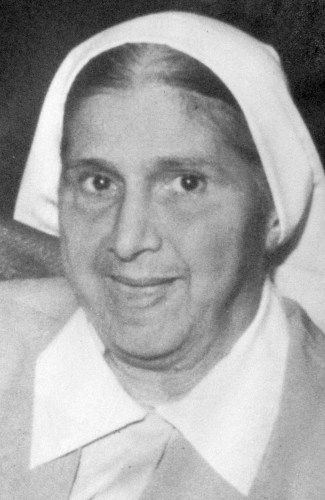
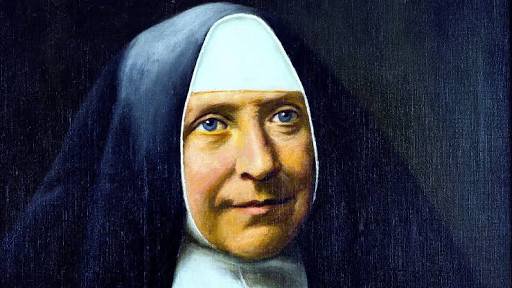
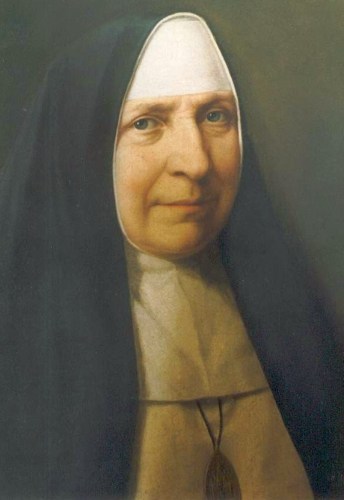
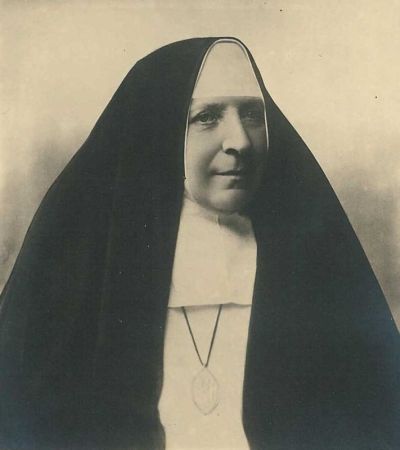
Thought for the Day – 21 March – Thursday of the Second week of Lent, Year C and the Memorial of St Benedetta Cambiagio Frassinello (1791 – 1858)
“O most blessed Light, fill the interior of the hearts of your faithful.” The words of the Sequence are a beautiful summary of the life of Benedetta Cambiagio Frassinello and explain its extraordinary spiritual richness.
Guided by divine grace, the new saint was concerned to accomplish God’s will with fidelity and coherence. With boundless confidence in the Lord’s goodness, she abandoned herself to his “loving Providence”, deeply convinced, as she liked to repeat, that one must “do everything for love of God and to please Him”.This is the precious inheritance that St Benedetta Cambiagio Frassinello left to her spiritual daughters that today is offered to the entire Christian community.
Come Holy Spirit, enkindle the hearts of your faithful! Help us to spread the fire of your love in the world. Amen!
St Pope John Paul on the Canonisation of St Benedetta, Sunday, 19 May 2002
Quote/s of the Day – 21 March – Thursday of the Second week of Lent, Year C and the Memorial of St Nicholas of Flue (1417-1487)
“O man, when the world hates you and is faithless toward you, think of your God, how He was struck and spat upon. You should not accuse your neighbour of guilt but pray to God, that He be merciful to you both.”
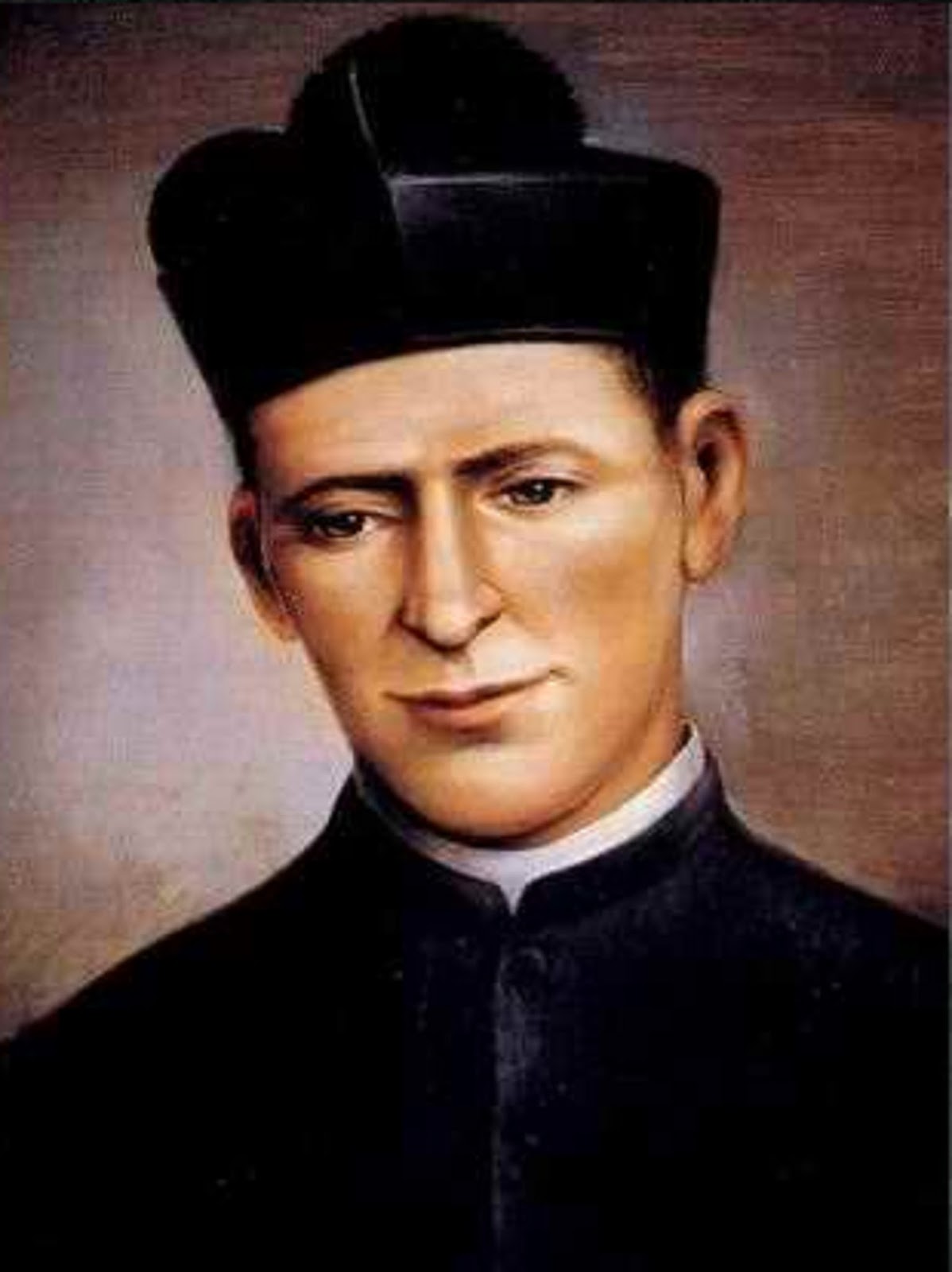
Saint of the Day – 21 March – St Benedetta Cambiagio Frassinello (1791 – 1858) aged 66 – Wife, Religious and Foundress of the Benedictine Sisters of Providence. Patronages – her Order and Teachers.
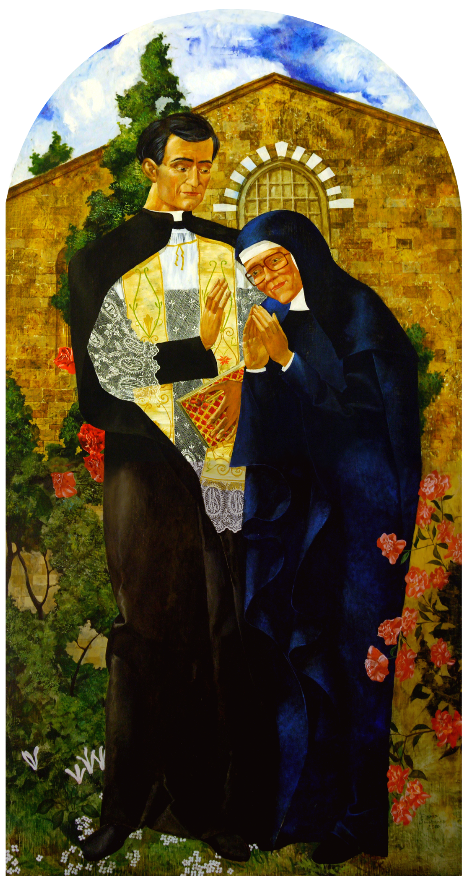
Saint Benedetta Cambiagio Frassinello was born on 2 October 1791 in Langasco (Genoa) Italy and she died on 21 March 1858 in Ronco Scrivia in Liguria. She was wife, religious and foundress. She let the Holy Spirit guide her through married life to the work of education and religious consecration. She founded a school for the formation of young women and also a religious congregation and did both with the generous collaboration of her husband. This is unique in the annals of Christian sanctity. Benedetta was a pioneer in her determination to give a high quality education to young women, for the formation of families for a “new Christian society” and for promoting the right of women to a complete education.
Call to marriage, then to religious life:
From her parents Benedetta received a Christian formation that rooted in her the life of faith. Her family settled in Pavia when she was a girl. When she was 20 years old, Benedetta had a mystical experience that gave her a profound desire for a life of prayer and penance and of consecration to God. However, in obedience to the wishes of her parents, in 1816, she married Giovanni Frassinello and lived married life for two years. In 1818, moved by the example of his saintly wife, Giovanni agreed that the two should live chastely, “as brother and sister” and take care of Benedetta’s younger sister, Maria, who was dying from intestinal cancer. They began to live a supernatural parenthood quite unique in the history of the Church.
Congregation founded by wife, who is supported by her husband:
Following Maria’s death in 1825, Giovanni entered the Somaschi Fathers founded by St Jerome Emiliani (1486-1537), and Benedetta devoted herself completely to God in the Ursuline Congregation of Capriolo. A year later, she was forced to leave because of ill health and returned to Pavia where she was miraculously cured by St Jerome Emiliani. Once she regained her health, with the Bishop’s approval, she dedicated herself to the education of young girls. Benedetta needed help in handling such a responsibility but her own father refused to help her. Bishop Tosi of Pavia asked Giovanni to leave the Somaschi novitiate and help Benedetta in her apostolic work. Together they made a vow of perfect chastity in the hands of the bishop and then began their common work to promote the human and Christian formation of poor and abandoned girls of the city. Their educational work was of great benefit to Pavia. Benedetta became the first woman to be involved in this kind of work. The Austrian government recognised her as a “Promoter of Public Education”.
She was helped by young women volunteers to whom she gave a rule of life that later received ecclesiastical approval. Along with instruction, she joined formation in catechesis and in useful skills like cooking and sewing, aiming to transform her students into “models of Christian life” and so assure the formation of families.
Benedictine Sisters of Providence:
Benedetta’s work was considered pioneering for those days and was opposed by a few persons in power and by the misunderstanding of clerics. In 1838 she turned over the institution to the Bishop of Pavia. Together with Giovanni and five companions, she moved to Ronco Scrivia in the Genoa region. There they opened a school for girls that was a refinement on what they had done in Pavia.
Eventually, Benedetta founded the Congregation of the Benedictine Sisters of Providence. In her rule she stressed the education of young girls. She instilled the spirit of unlimited confidence and abandonment to Providence and of love of God through poverty and charity. The Congregation grew quickly since it performed a needed service. Benedetta was able to guide the development of the Congregation until her death. On 21 March 1858 she died in Ronco Scrivia.
Her example is that of supernatural maternity plus courage and fidelity in discerning and living God’s will.
Today the Benedictine Nuns of Providence are present in Italy, Spain, Burundi, Ivory Coast, Peru and Brazil. They are at the service of young people, the poor, the sick and the elderly. The foundress also opened a house of the order in Voghera. Forty years after the death of Benedetta, the bishop separated this house from the rest of the Order. The name was changed to the Benedictines of Divine Providence who honour the memory of the Foundress.
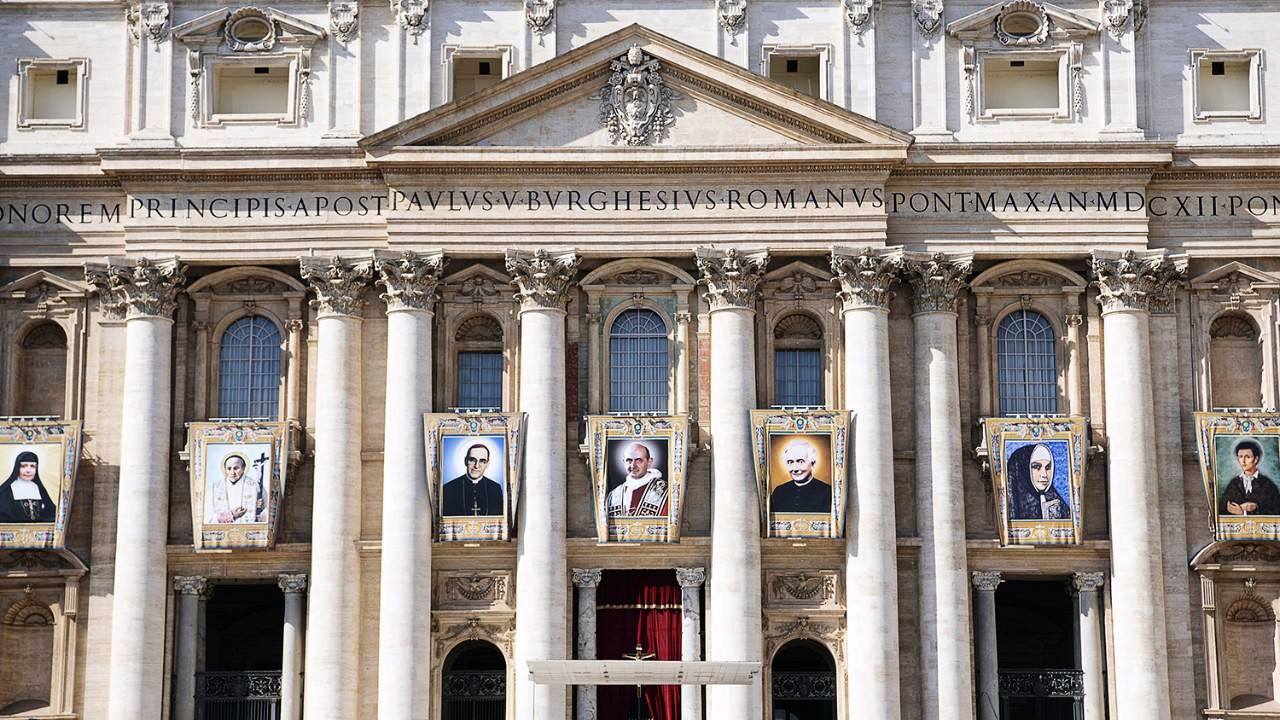
She was Beatified on 10 May 1987 and Canonised on 19 May 2002 by St Pope John Paul II…Vatican.va
Alfonso de Rojas
St Augustine Tchao St Benedetta Cambiagio Frassinello (1791 – 1858)
St Birillus of Catania
St Christian of Cologne
St Domninus of Rome
St Enda of Arran
St Isenger of Verdun
St James the Confessor
Bl John of Valence
Bl Lucia of Verona
St Lupicinus of Condat
Bl Mark Gjani
Bl Matthew Flathers St Nicholas of Flue (1417-1487)
About St Nicholas: https://anastpaul.wordpress.com/2018/03/21/saint-of-the-day-21-march-st-nicholas-of-flue-1417-1487/
St Philemon of Rome
Bl Santuccia Terrebotti
St Serapion the Scholastic
Bl Thomas Pilcher
Bl William Pike
—
Martyrs of Alexandria: A large but unknown number of Catholics massacred in several churches during Good Friday services in Alexandria, Egypt by Arian heretics during the persecutions of Constantius and Philagrio. They were martyred on Good Friday in 342 in Alexandria, Egypt.
Thought for the Day – 20 March – Wednesday of the Second week of Lent, Year C and the Memorial of St Martin of Braga (c 520–580)
St Gregory of Tours (538-594) declared St Martin to be the greatest scholar of his age. His writings included a guide to the Christian life, a description of superstitious peasant customs, a set of moral maxims and a version of the sayings of the Egyptian fathers. Listen to Martin’s voice in the following selection from his little essay on vanity:
“A person desires nothing more than to be praised, nor is there a single thing that he would consider it more agreeable to receive than someone’s admiration for him as a person of renown… For those who have usurped the things above, all that is left, so it seems to me, is the things below…Everyone everywhere strives to spread his own fame and, therefore, the cure for such vanity is most difficult, because it mingles not only with vices but also with virtues…For when he rejoices in other people’s praises his joy is followed by exalted triumph and his triumph, in turn, by pretentiousness and overestimation of himself…This is that deadly vice of which the Lord spoke in the gospel thus to the Jews: “How can you believe, who receive glory from one another and do not seek the glory which is from the only God?” (see John 5:44).”
Martin of Braga served the Christians of Galicia for nearly a quarter of a century. He died at his monastery at Dumium in 579. He is the true gospel-bearer that carries it, in his hands, in his mouth and in his heart. A person does not carry it in his heart that does not love it with all his soul.
One Minute Reflection – 20 March – Wednesday of the Second week of Lent, Gospel: Matthew 20:17–28
“…even as the Son of man came not to be served but to serve and to give his life as a ransom for many.”…Matthew 20:28
REFLECTION – “Resolute and obedient and nothing else! It was like this until the very end. The Lord enters in patience… He enters in patience. It is not only an example of a journey of suffering and dying on the Cross but also of a journey of patience.
He was unaccompanied in this decision because no-one understood the mystery of Jesus, the loneliness of Jesus on His journey towards Jerusalem, alone!
It was like this to the end.
Let us think, then, of the abandonment by the disciples, of Peter’s betrayal… alone!
How often have I tried to do so many things and have not looked to Him, who did all this for me? You entered in patience – the patient man, the patient God – who, with such patience, bears by sins, my failings?
And talk to Jesus like this. He is determined to always to go ahead. And thank Him. Let us take a little time today, a few minutes – five, ten, fifteen – perhaps before the Crucifix, or with the imagination, to ‘see’ Jesus walking resolutely towards Jerusalem and ask for the grace to have the courage to follow Him closely.”…Pope Francis – Santa Marta, 3 October 2017
PRAYER – Lord, You go before us! In patience, in total love and self-giving, alone! And we know You not and abandon You! Holy Father, grant us Your grace that we may see, understand and walk with Your Son, right behind Him, holding tightly to the hem of His robe, that we may learn to suffer and love as He does. Kindly listen Father God, to the prayers on our behalf, of St Josef Bilczewski, who always walked with Your Son. We make our prayer through Jesus, our Lord and Saviour, our Christ who with the Holy Spirit, is God forever, amen.
Saint of the Day – 20 March – St Jósef Bilczewski (1860-1923) Aged 62 – Archbishop of Lviv, Professor of Dogmatic Theology, Apostle of the Holy Eucharist, Marian devotion, the poor, the homeless, the needy, refugees, Social Reformer and Evangelist, Apostle of Catechesis both of the laity and of priests, Peace-maker. Patronages – Archdiocese of Lviv, Teachers, Wilamowice, Beggars, Homeless people.
Archbishop JOSEPH BILCZEWSKI was born on 26 April 1860 in Wilamowice near Kęty, in the present day Diocese of Bielsko Żywiec, then part of the Diocese of Krakow. Having finished elementary school at Wilamowic and Kęty, he attended high school at Wadowice receiving his diploma in 1880.
On 6 July 1884 he was ordained a priest in Krakow by Cardinal Albino Dunajewski. In 1886 he received a Doctorate in Theology from the University of Vienna. Following advanced studies in Rome and Paris he passed the qualifying exam at the Jaghellonic University of Krakow. The following year he became professor of Dogmatic Theology at the John Casimir University of Leopoli. He also served as Dean of Theology for a period of time prior to becoming Rector of the University. During his tenure at the University, he was appreciated as a professor by his students and also enjoyed the friendship and respect of his colleagues. He arduously dedicated himself to scientific work and, despite his young age, acquired a reputation as a learned man.
His extraordinary intellectual and relational abilities were recognised by Francis Joseph, the Emperor of Austria, who presented Monsignor Joseph to the Holy Father as a candidate for the vacant Metropolitan See of Leopoli. The Holy Father, Leo XIII responded positively to the Emperor’s proposal and on 17 December 1900 he named the forty year old Monsignor Joseph Bilczewski, Archbishop of Leopoli of the Latin Rite.
Given the complex social, economic, ethnic and religious situation, care for the large diocese required of the Bishop a deep commitment and called for great moral commitment, strong confidence in God and a faith enlivened by a continual contact in prayer with God.
Archbishop Joseph Bilczewski became known for his abundant goodness of heart, understanding, humility, piety, commitment to hard work and pastoral zeal which sprung from his immense love for God and neighbour.
Upon taking possession of the Archdiocese of Leopoli he spelled out very clearly his pastoral plan which can be summed up in his motto “totally sacrifice oneself for the Holy Church”.Among other things he pointed out the need for the development of devotion to the Most Blessed Sacrament and frequent reception of Holy Communion.
A particular form of pastoral action of Archbishop Bilczewski were the pastoral letters and appeals addressed to the priests and the faithful of the Archdiocese. In them he spoke of the problems of faith and morals of the time as well as of the most pressing issues of the social sphere. He also explained devotion to the Eucharist and to the Sacred Heart in them and the importance of religious and moral formation of children and youth in the family and in school. Above all, he took great care to cultivate many holy priestly vocations. He saw the priest as first and foremost a teacher of faith and an instrument of Christ, a father for the rich as well as for the poor. Taking the place of Christ on Earth, the priest was to be the minister of the Sacraments and for this reason his whole heart had to be dedicated to the celebration of the Eucharist, in order to be able to nourish the people of God with the body of Christ.
He often exhorted the priests to adoration of the most Blessed Sacrament. In his pastoral letter devoted to the Eucharist he invited the priests to participate in the priestly associations – The Association for Perpetual Adoration of the Most Holy Sacrament and the Association of Aid to Poor Catholic Churches, whose goal was to rejuvenate the zeal of the priests themselves. He also dedicated a great deal of care to the preparation of children and to full participation in the Mass, desiring that every Catechesis would lead children and youth to the Eucharist.
Archbishop Joseph Bilczewski promoted the construction of churches and chapels, schools and day-care centres. He developed teaching to help enable the growth in the instruction of the faithful. He materially and spiritually helped the more important works which were springing up in his Archdiocese. His holy life, filled with prayer, work and works of mercy, led to his meriting great appreciation and respect on the part of those of various faiths, rites and nationalities present in the Archdiocese. No religious or nationalistic conflicts arose during the tenure of his pastoral work. He was a proponent of unity, harmony and peace. On social issues he always stood on the side of the people and of the poor. He taught that the base of social life had to be justice made perfect by Christian love.
During the First World War, when souls were overtaken with hate and a lack of appreciation of the other, he pointed out to the people the infinite love of God, capable of forgiving every type of sin and offence. He reminded them of the need to observe the commandments of God and particularly that of brotherly love. Sensitive to the social questions regarding the family and youth, he courageously proposed solutions to problems based on the love of God and of neighbour. During his 23 years of pastoral service he changed the face of the Archdiocese of Leopoli Only his death, on 20 March 1923 could end his vast and far-sighted pastoral action.
He was prepared for death and accepted it with peace and submission as a sign of God’s will, which he always considered sacred.
He left this world having enjoyed a universal recognition of holiness. Wanting to rest among those for whom he was always father and protector, in accord with his desires, he was buried in Leopoli in the cemetery of Janów, known as the cemetery of the poor.Thanks to the efforts of the Archdiocese of Leopoli the process for his beatification and canonisation was initiated. The first step was concluded on 17 December 1997 with the declaration of the life of heroic virtue of Archbishop Joseph Bilczewski by The Holy Father, St Pope John Paul II. In June 2001, the Congregation for the Causes of Saints recognised as miraculous the fact of the rapid lasting and unexplainable “quo ad modum” healing through the intercession of Archbishop Bilczewski of the third degree burns of Marcin Gawlik, a nine year old boy, thus opening the way for his beatification. The Beatification took place in the Diocese of Leopoli on 26 June 2001 during St Pope John Paul II’s Apostolic Visit to the Ukraine…Vatican.va
One final miracle was required for sainthood. St John Paul II approved a second healing on 20 December 2004. Cardinal Angelo Sodano formalised the date on 24 February 2005 at a consistory, representing the then very ill St John Paul II who died a month later. The new Pope Benedict XVI celebrated the Canonisation in Saint Peter’s Square on 23 October 2005.
Bl Ambrose Sansedoni of Siena
Anastasius XVI
Archippus of Colossi
St Benignus of Flay
St Cathcan of Rath-derthaighe
St Clement of Ireland
St Cuthbert of Lindisfarne
Bl Francis Palau y Quer
St Guillermo de Peñacorada
St Herbert of Derwenwater
Bl Hippolytus Galantini
Bl Jeanne Veron
Bl John Baptist Spagnuolo
St John Nepomucene
St John Sergius St Jósef Bilczewski (1860-1923) Aged 62
St Nicetas of Apollonias
St Remigius of Strasbourg
St Tertricus of Langres
St Urbitius of Metz
St Wulfram of Sens
—
Martyrs of Amisus – 8 saints: A group of Christian women martyred together in the persecutions of Diocletian. The only details we have are eight of their names – Alexandra, Caldia, Derphuta, Euphemia, Euphrasia, Juliana, Matrona and Theodosia. They were burned to death c 300 in Amisus, Paphlagonia (modern Samsun, Turkey).
Martyrs of Rome – 9+ saints: A group of Christians martyred together in the persecutions of Nero. We know nothing else about them but the names Anatolius, Cyriaca, Joseph, Parasceve, Photis, Photius, Sebastian and Victor.
Martyrs of San Saba – 20 saints: Twenty monks who were martyred together in their monastery by invading Saracens.
They were martyred in 797 when they were burned inside the San Sabas monastery in Palestine.
Martyrs of Syria – 3+ saints: A group of Christians who were martyred together in Syria. We know nothing else about them but the names Cyril, Eugene and Paul.
Thought for the Day – 19 March – Solemnity of Saint Joseph, spouse of the Blessed Virgin Mary
The faithful foster-father and guardian
Saint Bernardine of Siena (1380-1444)
An excerpt from his On Saint Joseph (Sermon 2)
There is a general rule concerning all special graces granted to any human being. Whenever the divine favour chooses someone to receive a special grace, or to accept a lofty vocation, God adorns the person chosen with all the gifts of the Spirit needed to fulfil the task at hand.
This general rule is especially verified in the case of Saint Joseph, the foster-father of our Lord and the husband of the Queen of our world, enthroned above the angels. He was chosen by the eternal Father as the trustworthy guardian and protector of His greatest treasures, namely, His divine Son and Mary, Joseph’s wife. He carried out this vocation with complete fidelity until at last God called him, saying – Good and faithful servant, enter into the joy of your Lord.
What then is Joseph’s position in the whole Church of Christ? Is he not a man chosen and set apart? Through him and, yes, under him, Christ was fittingly and honourably introduced into the world. Holy Church in its entirety is indebted to the Virgin Mother because through her it was judged worthy to receive Christ. But after her we undoubtedly owe special gratitude and reverence to Saint Joseph.
In him the Old Testament finds its fitting close. He brought the noble line of patriarchs and prophets to its promised fulfilment. What the divine goodness had offered as a promise to them, he held in his arms.
Obviously, Christ does not now deny to Joseph that intimacy, reverence and very high honour which He gave him on earth, as a son to His father. Rather we must say that in heaven Christ completes and perfects, all that He gave at Nazareth.
Now we can see how the last summoning words of the Lord appropriately apply to Saint Joseph – Enter into the joy of your Lord. In fact, although the joy of eternal happiness enters into the soul of a man, the Lord preferred to say to Joseph – Enter into joy. His intention was that the words should have a hidden spiritual meaning for us. They convey not only that this holy man possesses an inward joy but also that it surrounds him and engulfs him like an infinite abyss.
Remember us, Saint Joseph and plead for us to your foster-child. Ask your most holy bride, the Virgin Mary, to look kindly upon us, since she is the mother of Him who with the Father and the Holy Spirit lives and reigns eternally. Amen
Lenten Reflection – 19 March – Tuesday of The Second Week of Lent, Year C
The Solemnity of St Joseph, Husband of Mary
“When Joseph awoke, he did as the angel of the Lord had commanded him”
St Francis de Sales (1567-1622)
Bishop of Geneva and Doctor of the Church
“How faithful in humility was the great saint we are celebrating! That can’t be said in all its perfection for, in spite of what he was, in what poverty and lowliness he lived all the days of his life, a poverty and lowliness beneath which he kept hidden and concealed his great virtues and dignity!… Truly, I have no doubt at all that the angels came, beside themselves with admiration, rank upon rank, to behold and wonder at his humility, while he sheltered that dearest child in the poor workshop where he worked at his employment so as to feed the little boy and the mother entrusted to him.
There is no doubt at all that Saint Joseph was braver than David and wiser that Solomon [who were his ancestors]. Nevertheless, seeing him reduced to the exercise of carpentry, who could have discerned this unless they were enlightened by a heavenly light, so hidden did he keep the remarkable gifts with which God had favoured him? And what wisdom did he not have? For God gave him his most glorious Son to care for…, the universal Prince of heaven and earth… Nevertheless, you can see how low and humbled he was brought, more than can be said or imagined… he went to his own country and town of Bethlehem and none but he was turned away from all those inns… Notice how the angel turns him about with both hands. He tells him he has to go to Egypt and he goes, he orders him to return and he returns. God wants him to be always poor… and he submits to it with love and not only for a while, for he was poor his whole life long.”
Daily Meditation: Protect us from what could harm us as St Joseph protected our Lord and Saviour.
God the Father has given us His only Son, the Word made man,
to be our food and our life. Let us thank Him and pray:
May the word of Christ dwell among us in all its richness.
Help us in this Lenten season to listen more frequently to Your word,
that we may celebrate the solemnity of Easter with greater love for Christ, our paschal teacher,
that we may encourage those in doubt and error to follow what is true and good.
Enable us to enter more deeply into the mystery of the Anointed One,
that our lives may reveal Him more effectively.
Purify and renew Your Church in this time of salvation,
that it may give an even greater witness to You.
For thy steadfast love was established forever, thy faithfulness is firm as the heavens. Thou hast said, “I have made a covenant with my chosen one, I have sworn to David my servant: ‘I will establish your descendants for ever, and build your throne for all generations.’
Psalm 89:2–4
Closing Prayer:
God in heaven and in my life,
guide me and protect me.
I so often believe I can save myself
and I always end in failure.
Lead me with Your love away from harm
and guide me on the right path.
May Your Spirit inspire the Church
and make us an instrument of Your love and guidance.
Thank You for your care for me.
May the Lord bless us,
protect us from all evil
and bring us to everlasting life.
Amen
Quote/s of the Day – 19 March – The Solemnity of St Joseph, Spouse of the Blessed Virgin Mary, Guardian of Jesus, Patron of the Dying, Patron of the Universal Church
Saint Joseph was the just man, by his constant fidelity, an effect of justice; by his perfect discretion, a sister to prudence; by his upright conduct, a mark of strength and by his inviolable chastity, a flower of temperance.”
St Albert the Great (1200-1280) Doctor of the Church
“Some Saints are privileged, to extend to us, their patronage, with particular efficacy, in certain needs but not in others but our holy patron St Joseph, has the power to assist us in all cases, in every necessity, in every undertaking.”
St Thomas Aquinas (1225-1274) Doctor of the Church
“Go, then to Joseph and do all, that he shall say to you, Go to Joseph and obey him, as Jesus and Mary obeyed him, Go to Joseph and speak to him, as they spoke to him, Go to Joseph and consult him, as they consulted him, Go to Joseph and honour him, as they honoured him, Go to Joseph and be grateful to him, as they were grateful to him, Go to Joseph and love him, as they love him still.”
St Alphonsus Liguori (1696-1787) Doctor of the Church
“There is but one saint who typifies to us the next world and that is Saint Joseph. He is the type of rest, repose, peace. He is the saint and patron of home, in death as well as in life.”
One Minute Reflection – 19 March – The Solemnity of St Joseph, Spouse of the Blessed Virgin Mary, Guardian of Jesus and Patron of the Universal Church
When Joseph woke from sleep, he did as the angel of the Lord commanded him; he took his wife...Matthew 1:24
REFLECTION – “And this man, this dreamer, is able to accept this duty, this grave duty. He has so much to say to us, in this time, of a strong sense of being orphaned. And so this man takes the promise of God and carries it onward in silence, with strength, he carries it onward so that God’s Will might be done. He is the man who doesn’t speak but obeys, the man of tenderness, the man capable of carrying forward the promises so that they might become solid, certain; the man who guarantees the stability of the Kingdom of God, the paternity of God, our sonship as children of God.
I like to think of Joseph as the guardian of weaknesses, of our weaknesses too, he is able to give birth to so many beautiful things from our weaknesses, even from our sins.
Today I want to ask, grant to all of us the ability to dream, that when we dream great things, beautiful things, we might draw near to the dream of God, the things God dreams about us. [I ask] that he might give to young people – because he was young – the capacity to dream, to risk, to undertake the difficult tasks they have seen in dreams. And [I ask] him to give to all of us the faithfulness that tends to grow when we have a just attitude – Joseph was just – [the faithfulness that] grows in silence, with few words, that grows in tenderness that guards our own weaknesses and those of others.”…Pope Francis – Santa Marta, 20 March 2017
PRAYER – Almighty God, at the beginnings of our salvation, when Mary conceived your Son and brought Him forth into the world, you placed them under Joseph’s watchful care. May his prayer still help Your Church to be an equally faithful guardian of Your mysteriest and a sign of Christ to mankind. We make our prayer through our Lord Jesus, with the Holy Spirit, God, forever, amen.
Our Morning Offering – 19 March – The Solemnity of St Joseph, Spouse of the Blessed Virgin Mary, Guardian of Jesus and Patron of the Universal Church, Patron of Fathers, Patron of the Dying, Patron of Workers. et al
St Joseph, be our Protector By St Pope John XXIII (1881-1963)
St Joseph,
be always our protector.
That your internal spirit of peace,
silence, honest work and prayer
in the service of the Church
give us life and happiness
in union with your blessed Spouse,
our Sweet and Immaculate Mother
in the strong and mild love to Jesus,
Glorious and Immortal King
of the centuries and the people.
Amen
Saint of the Day – 19 March – Blessed Marcel Callo (1921-1945) aged 23 – Layman, Martyr – born on 6 December 1921 in Rennes, Ille-et-Vilaine, France and died on 19 March 1945 in Mauthausen, Upper Austria, Austria of tuberculosis and dysentery. His body was buried in a mass grave outside the walls of the Concentration camp and his remains never recovered.. He was Beatified on 4 October 1987 by St Pope John Paul II. His memory is also honoured and remembered on 19 April in the Diocese of Linz, Austria.
Marcel Callo was born on 6 December 1921, in Rennes, France, being one of nine children. He was a happy child, who was known to be a leader and a perfectionist. He helped with his household chores and he helped take care of his younger siblings. After completing his primary studies, he became an apprentice to a printer around age 13.
He did not like associating with fellow workers who swore and told many improper stories. He preferred accompanying good Catholic friends who belonged to the JOC, Jeunesse Ouvriere Chretienne (Young Christian Worker). He had a good sense of humour and would like to wrestle, play football, ping pong, cards and bridge.
When Marcel was 20 he fell in love with Marguerite Derniaux. He did not degrade women like his fellow worker but instead had deep respect for women. He said, “I am not one to amuse myself with the heart of a lady, since my love is pure and noble. If I have waited until 20 years old to go out with a young lady, it is because I knew that I wanted to find real love. One must master his heart before he can give it to the one that is chosen for him by Christ.” It took him about one year to declare his love to Marguerite and an additional four months before they first kissed. After being engaged, they imposed a strict spiritual rule of life which included praying the same prayers and going to Mass and receiving the Eucharist as often as they could.
On 8 March 1943, the war (World War II) had gripped their city of Rennes. That day his sister, Madeleine was killed by one of the bombs.
He was conscripted to serve during the war and his original intention was to flee but realised that if he did so, those he left at home would be arrested. He was reluctant but agreed to serve and when conscripted said: “I’m leaving not as a worker but as a missionary in the service of my companions”. Callo departed on 19 March 1943 for his service and brought with him – which he kept at all times – his badges as both a scout and a member of the YCW. The Gestapo arrested Callo on 19 April 1944 due to his membership with the YCW which was perceived to be an outlawed and secret order.
Once there, he worked in a factory that produced bombs that would be used against his own countrymen. After three months or so of missing his family and missing Mass (there was no Catholic church in that town), Marcel became seriously depressed. He later found a room where Mass was offered on Sunday. This helped change his disposition. He reported that, “Finally Christ reacted. He made me to understand that the depression was not good. I had to keep busy with my friends and then joy and relief would come back to me.”
With his morale and hope restored, he cared for his deported friends. He organised a group of Christian workers who did activities together like play sports or cards. He also organised a theatrical group. He galvanised his friends despite him suffering from painful boils, headaches and infected teeth. For his French friends, he arranged a Mass to be celebrated in their native tongue. Eventually, his religious activities attracted unwanted attention from the German officials. The Germans arrested Marcel on 19 April 1944 saying that, “Monsieur is too much of a Catholic.”
The Germans interrogated Marcel. He admitted his Catholic activities and was imprisoned in Gotha. He secretly received the Eucharist while in prison and continued to pray and help his companions. He was considered dangerous to the Germans and was moved to a different prison at Mathausen. He suffered from various ailments such as bronchitis, malnutrition, dysentery, fever, swelling (due to the malnutrition and dehydration) and general weakness. He never complained. Despite his suffering, he encouraged his companions by saying, “It is in prayer that we find our strength.”
He died on the feast of St Joseph, 19 March 1945. The date was exactly two years from the day he left home. St Pope John Paul II Beatified Marcel Callo on 4 October 1987 as a Martyr murdered in hatred of the Faith. Colonel Tibodo – who saw thousands die in the camps witnessed that of Callo’s and said of it with emotion: “Marcel had the look of a saint.” Tibodo also testified for the beatification proceedings and said: “I have never seen in a dying man a look like this”.
St Adrian of Maastricht
St Alkmund of Northumbria
St Amantius of Wintershoven
Bl Andrea Gallerani
St Apollonius of Braga
St Auxilius of Ireland
Bl Clement of Dunblane
St Colocer of Saint-Brieuc
St Corbasius of Quimperlé
St Cuthbert of Brittany
St Gemus
Bl Isnard de Chiampo
Bl Jan Turchan
St John the Syrian of Pinna
St Lactali of Freshford
St Landoald of Maastricht
St Leontinus of Braga
St Leontinus of Saintes Bl Marcel Callo (1921-1945) Martyr
Bl Mark of Montegallo
St Pancharius of Nicomedia
Bl Sibyllina Biscossi
—
Martyrs of Sorrento: A group of three sisters and a brother who were martyred together. We have little more than their names – Mark, Quartilla, Quintilla and Quintius. They were martyred in Sorrento, Italy, date unknown.
Mark
Quartilla
Quintilla
Quintius
Martyred in the Spanish Civil War
• Blessed Alberto Linares de La Pinta
• Blessed Jaume Trilla Lastra
Saint of the Day – 17 March – Blessed Juan Nepomuceno Zegri y Moreno (1831-1905) – Priest, Founder of the Sisters of Charity of the Blessed Virgin Mary of Mercy.
Juan Nepomuceno Zegrí y Moreno was born on 11 October 1831 in Granada, Spain. His father, Antonio Zegrí Martín and his mother, Josefa Moreno Escudero, were most vigilant in educating their son and in helping to form his personality according to evangelical values. The young boy had a great love for Jesus and Mary and was particularly sensitive to the needs of the poor.
Binding wounds, healing hearts:
As a youth, Juan felt called to serve the Lord in society’s poor and wanted to become a priest. He entered St Dionysius Seminary of Granada and on 2 June 1855 was ordained in the Cathedral of Granada. He served in the parishes of Huétor Santillán and of San Gabriel de Loja in Granada.
His vocation, as he once proclaimed in a homily, was to be “like a good shepherd, going after the lost sheep; like a doctor, healing sick hearts wounded by faults and binding them with hope; like a father, who visibly provides for all of those who, suffering from abandonment, must drink from the bitter chalice and receive nourishment from the bread of tears”.
Fr Zegrí’s priestly life was characterised by a profound experience of God and a deep love for Jesus the Redeemer and Mary, Mother and Protectress. His sermons encouraged listeners to live the Christian life radically and responsibly.
He always served with great humility in the positions he was asked to assume as a priest – synodal judge, canon of the cathedral of Malaga, visitor of the religious orders, formator of the seminarians and preacher of and royal chaplain to Her Majesty Queen Isabel II.
Founder inspired by Mary:
It was with a profound interest in resolving social problems and in meeting the needs of the poor and neglected that Fr Zegrí felt called to found a religious congregation that would serve the most needy. On 16 March 1878 in Malaga, under the protection and inspiration of the Blessed Virgin Mary of Mercy, he began the Congregation of the Sisters of Charity of the Blessed Virgin Mary of Mercy.
The Congregation’s main charism was to practice all of the spiritual and corporal works of mercy for the benefit of the poor. He asked the Religious to do all “for the good of humanity, in God, for God, towards God”. In only a few years, the Congregation was established in many Dioceses throughout Spain, all due to the dynamism of Fr Zegrí’s charismatic inspiration – heal wounds, repair evils, comfort sorrows, dry tears, do not, if possible, leave even one person in the world abandoned, afflicted, unprotected, without religious education and assistance.
He firmly believed that “charity is the only answer to all social problems”. In this light the key points of the spirituality of the Founder were: redemptive charity, love and configuration with Jesus the Redeemer, love for Mary, Our Lady of Mercy.
Testing and vindication:
God permitted Fr Zegrí to be severely tested and misunderstood after he founded the Congregation and his own Religious “daughters” falsely accused him. With a Pontifical Decree dated 7 July 1888 he was sent away from the Order that he himself had founded.
After years of silent suffering, his innocence was recognised with another Decree dated 15 July 1894. Although he was permitted to re-enter the Congregation, he was not accepted. He voluntarily kept himself at a distance in order to preserve communion with the Church and his “daughters”, so that they would not openly disobey Church authority.
On 17 March 1905 in Malaga, Fr Zegrí died just as he had desired: like Jesus, alone and abandoned. He offered himself for the good of humanity and forgave “his own” who had accused him.
After many years, the Congregation once again recognised him as Founder, all due to the fact that there were Sisters who had kept alive his memory and witness of holiness. In 1925 Fr Zegrí was officially declared as Founder of the Sisters of Charity of the Blessed Virgin Mary of Mercy….vatican.va
He was Beatified on 9 November 2003 by St Pope John Paul II.
St Agricola of Châlon-sur-Saône
St Alexander
St Ambrose of Alexandria
Bl Conrad of Bavaria
St Diemut of Saint Gall
St Gabriel Lalemant St Gertrude of Nivelles OSB (626-659)
About St Gertrude: https://anastpaul.wordpress.com/2018/03/17/saint-of-the-day-17-march-st-gertrude-of-nivelles-o-s-b-626-659/
Bl Gertrude of Trzebnica
St Jan Sarkander
Bl Josep Mestre Escoda
St Joseph of Arimathea Bl Juan Nepomuceno Zegrí y Moreno (1831-1905)
St Llinio of Llandinam
Bl Maria Bárbara Maix
St Paul of Cyprus
St Stephen of Palestrina
St Theodore of Rome
St Thomasello
St Withburga of Dereham
Martyrs of Alexandria – Also known as Martyrs of Serapis: An unknown number of Christians who were martyred together by a mob of worshippers of the Graeco-Egyptian sun god Serapis. They were Martyred in c 392 in Alexandria, Egypt
Thought for the Day – 16 March – Our devotion to the Saints
One thing that unites the Catholic Church to the Eastern Orthodox Churches and separates it from most Protestant denominations is the devotion to the saints, those holy men and women who have lived exemplary Christian lives and, after their deaths, are now in the presence of God in Heaven. Many Christians — even Catholics — misunderstand this devotion, which is based on our belief that, just as our life does not end with death, so too our relationships with our fellow members of the Body of Christ continue after their deaths. This Communion of Saints is so important that it is an article of faith in all Christian creeds, from the time of the Apostles’ Creed.
What Is a Saint?
Saints, broadly speaking, are those who follow Jesus Christ and live their lives according to His teaching. They are the faithful in the Church, including those who are still alive. Catholics and Orthodox, however, also use the term narrowly to refer to especially holy men and women who, through extraordinary lives of virtue, have already entered Heaven. The Church recognises such men and women through the process of canonisation, which holds them up as examples for Christians still living here on earth.
Why Do Catholics Pray to Saints?
Like all Christians, Catholics believe in life after death, but the Church also teaches us that our relationship with other Christians does not end with death. Those who have died and are in Heaven in the presence of God can intercede with Him for us, just as our fellow Christians do here on earth when they pray for us. Catholic prayer to saints is a form of communication with those holy men and women who have gone before us and a recognition of the “Communion of Saints,” living and dead.
Patron Saints
Few practices of the Catholic Church are so misunderstood today as devotion to patron saints. From the earliest days of the Church, groups of the faithful (families, parishes, regions, countries) have chosen a particularly holy person who has passed into eternal life to intercede for them with God. The practice of naming churches after saints and of choosing a saint’s name for Confirmation, reflects this devotion.
The Doctors of the Church
The Doctors of the Church are great saints known for their defence and explanation of the truths of the Catholic Faith. Thirty six saints, including four female saints, have been named Doctors of the Church, covering all eras in Church history.
The Litany/ies of the Saints
The Litany/ies of the Saints is one of the oldest prayers in continuous use in the Catholic Church. Most commonly recited on All Saints Day and at the Easter Vigil on Holy Saturday, the Litany of the Saints is an excellent prayer for use throughout the year, drawing us more fully into the Communion of Saints. The Litany of Saints addresses the various types of saints and includes examples of each and asks all of the saints, individually and together, to pray for us Christians who continue our earthly pilgrimage.
Saint of the Day – 16 March – St Heribert (c 970–1021) Archbishop of Cologne, a miracle-worker and counsellor – born in c 970 at Worms, Germany and died on 16 March 1021 at Cologne, Germany of natural causes. Patronages – against drought, for rain and of Deutz, Germany. St Heribert was a German Roman Catholic prelate who served as the Archbishop of Cologne from 999 until his death. He also served as the Chancellor for the Emperor Otto III from 994 and collaborated with Saint Henry II Obl. SB (973-1074) with whom relations were strained though were strengthened over time. St Heribert’s Canonisation was confirmed in 1075 by St Pope Gregory VII.
St Heribert was born at Worms in Germany about 970 and educated at the Abbey of Gorze in Lorraine. He wanted to enter the Benedictine Order there but his father recalled him to Worms and obtained a canonry for him. As a young priest, Heribert became a trusted counsellor of the youthful Emperor Otto III, chancellor of the diocese and finally Archbishop of Cologne in 998.
In that same year the Saint accompanied the Emperor to Rome and assisted him in his last moments before his death in 1002. In the ensuing skirmishing for the post of Emperor, St Heribert at first was opposed to St Henry II through a mutual misunderstanding. But in time the two Saints, Archbishop and Emperor, were publicly reconciled and laboured together for the good of the people.
St Heribert was practically a model of what a Bishop should be. He was a peaceful man but a firm disciplinarian, a holy man but one who knew the value of money and saw to it that his was always divided among the poor. He was a man of prayer and in a time of drought, it was in answer to his prayers that a torrential rain fell, saving the harvest and delivering the people from famine, hence the reason he is invoked against drought and prayed to for rain.
Heribert built the monastery of Deutz, on the Rhine and was already honoured as a saint during his lifetime.
He died in Cologne on 16 March 1021 and is buried at the Cathedral of Deutz, which replaced the original Church, destroyed during WW II. St Heribert’s shrine, completed in 1175, is one of the major goldsmith works of the 12th century. It is displayed in the centre of the apse.
St Abban of Kill-Abban
St Abraham Kidunaia
St Agapitus of Ravenna
St Aninus of Syria
St Benedicta of Assisi
St Dionysius of Aquileia
St Dentlin of Hainault
Bl Eriberto of Namur
St Eusebia of Hamage
St Felix of Aquileia
St Finian Lobhar
Bl Ferdinand Valdes
St Gregory Makar St Heribert of Cologne (c 970–1021)
St Hilary of Aquileia
Bl Joan Torrents Figueras
Bl John Amias
Bl John Sordi of Vicenza
St Julian of Anazarbus
St Largus of Aquileia
St Malcoldia of Asti
St Megingaud of Wurzburg
Thought for the Day – 15 March – The Memorial of St Clement Mary Hofbauer C.Ss.R.(1751-1820) “The Apostle of Austria” and “The Second Founder of the Redemptorists”
Among the passengers sharing a coach with Father Hofbauer on one occasion was a young man who was described as being infirm both in body and soul. Possibly embittered by his unfortunate physical state, the young man continually heaped coarse insults upon the holy priest, who endured the vulgarity in silence. At noon, when the coach drew up at an inn, all the other passengers disembarked to dine, giving no thought or concern for the crude cripple left behind. Hofbauer lifted the man in his arms, carried him into the inn, ordered his meal, then carried him back to the coach. The man’s behaviour toward the saint was totally changed for the rest of the trip. Filled with sorrow for his meanness, he declared that he would never have sunk to such moral degradation had he met such a priest earlier in life.
A Polish countess who had frequented St Benno’s reminisced in after years: “Whenever I recall him, I see him before me as a venerable priest, refined and awe inspiring in his deportment but withal very plain. Wherever he went, he radiated the beauty of peace and spread about him the consolation that springs from divine love. His language was always simple, he never made use of choice expressions. Still, his words always manifested great depth of mind and invariably awakened immediate confidence. The love of Our Lord Jesus Christ, which filled his heart, shone forth in all his actions but there was about him no trace of singularity or affectation. Purity of soul, peace of heart, the radiance of that holy joy which is born of the intimate union of man with his Maker, beamed from his countenance. The Holy Spirit had bestowed upon him a special talent for directing souls in the ways of virtue and holiness and he toiled on with unrelenting fervour, granting himself no rest or respite until his physical energy was exhausted.”
He was unrelenting in pursuing souls cut off from the life of grace, especially those facing imminent death. A nun entered the church one day and found Father Hofbauer kneeling before the altar. Unobserved by the saint, she saw his cheeks wet with tears as he pleaded for the conversion of some sinner outside the fold.
“Lord,” he begged, “give me this soul, for if Thou refuse, I shall go to Thy Mother!” The nun was so deeply affected by this scene that she immediately knelt before an image of the Blessed Virgin and united her own prayers to those of Hofbauer’s.
Even a tiny grain of imitation of this great Redemptorist Saint would be a huge impetus on our own road to holiness!
Quote of the Day – 15 March – The Memorial of St Clement Mary Hofbauer C.Ss.R.(1751-1820) “The Apostle of Austria” and “The Second Founder of the Redemptorists”
“We are living in evil times here. The Church of God is vilified, oppressed and persecuted, while we look on, helpless to defend or rescue, the Bride of Christ from the hatred of her foes.”
An acquaintance one day met the saint returning exhausted from attending to a dying man who lived far removed from the city and who had been away from the sacraments for seventeen years.
“It is a good thing when such a one lives far away,” he said. “For then I have ample time to recite the Rosary on the way and I have learned from experience, that sinners invariably repent before death, whenever I have had a chance to say the beads before reaching them.”
One Minute Reflection – 15 March – Friday of the First week of Lent, Year C, Gospel: Matthew 5:20–26 and The Memorial of St Clement Mary Hofbauer C.Ss.R.(1751-1820)
“If you are bringing your gift to the altar and there remember that your brother has something against you, leave your gift there before the altar and first go and be reconciled with your brother. Then come and offer your gift.”…Matthew 5:23–24
REFLECTION – “Christ gave His life for you and do you hold a grudge against your fellow servant? How then can you approach the table of peace? Your Master did not refuse to undergo every kind of suffering for you and will you not even forgo your anger?… He has offered me an outrageous insult, you say. He has wronged me times without number, he has endangered my life. Well, what is that? He has not yet crucified you as the Jewish elders crucified the Lord.
If you refuse to forgive your neighbour’s offence your heavenly Father will not forgive your sins either (Mt 6:15). What does your conscience say when you repeat the words: “Our Father who art in heaven, hallowed be thy name…,” and the rest? Christ went so far as to offer His blood for the salvation of those who shed it. What could you do that would equal that? If you refuse to forgive your enemy you harm not him but yourself… You earn for yourself eternal punishment on the Day of Judgement.
Listen to the Lord’s words: “If you are bringing your gift to the altar and there remember that your brother has something against you, leave your gift there before the altar and first go and be reconciled with your brother. Then come and offer your gift.” What do you mean? Am I really to leave my gift, my offering there? Yes, He says, because this sacrifice is offered in order that you may live in peace with your brother… For the Son of Man has come into the world to reconcile humanity with its Father. As Paul says: “Now God has reconciled everything to himself” (Col 1:20) “putting enmity to death through the cross” (Eph 2:16)…. St John Chrysostom (347-407)
PRAYER – All-merciful Father, help me to be ever open to Your love and mercy, running to You in all my needs and in all my fears. Allow me too, to run to the confessional when I have sinned, to ask for and receive forgiveness and love. Through Your mercy and forgiveness, teach me too to forgive and open my heart to kindness, reconciliation and care for my brother. Grant that the prayers of St Clement Mary Hofbauer, may assist us all in living holy lives according to Your Commandments and the laws of the Church. Amen
Saint of the Day – Blessed Jan Adalbert Balicki (1869-1948) – Priest, Professor of dogmatic theology at the Seminary, Spiritual Director, Preacher – born on 25 January 1869 in Staromiescie, Poland and died on 15 March 1948 of pneumonia and tuberculosis in Przemysl, Poland. He was Beatified on 18 August 2002 by St Pope John Paul II at Krakow, Poland.
John Adalbert was raised in a deeply religious family and, although materially poor, they were a family rich in honesty and virtue. From 1876-1888 he attended the schools of Rzeszow under the guidance of high level educators imbued with a love for Polish culture. In September 1888 he entered the diocesan Seminary of Przemysl. After four years of study and spiritual preparation, he was ordained on 20 July 1892.
The bishop sent him to be assistant pastor in the parish of Polna. He was appreciated as a man of prayer, a patient confessor and a gifted preacher. After about a year, he was sent to Rome to pursue his formation at the Pontifical Gregorian University. During his four years of study (1893-1897), he was aware of a dual responsibility – as a priest, to continue to make progress in Christian perfection and as a student, to complete his studies. His spiritual approach to theology bore fruit later on in his teaching. He listened to the lectures in the morning. In the afternoon he read the authors referred to and, above all, St Thomas Aquinas. Then he went to the chapel to pray over what he studied. He spent his freetime in Rome visiting the shrines of the Apostles and the rooms of the saints. It was a concrete way of learning about the faith.
Professor of theology, prefect of studies:
In the summer of 1897, he returned to Przemysl of the Latins, where he was appointed professor of dogmatic theology in the diocesan seminary. He was convinced that theology is not only the science that regards God but the science that can turn man to reach God. His lessons were meditations on the mysteries of God and had a good influence on the moral formation of his students. Up till 1900, Fr Balicki was also prefect of studies.
Rector of the seminary:
In 1927, in a spirit of obedience, he accepted the post of vice-rector of the seminary and a year later he was appointed rector. He was concerned about the spiritual formation of the priests. Before he presented the candidates to the bishop, he studied the reports and prayed for light to make the proper decision.
Spiritual direction and confession:
In 1934 he was forced to resign as rector and professor of theology due to poor health but he continued to live at the seminary. From 1934-1939 he could only hear confessions and give spiritual direction. Many of his penitents testified that he had an extraordinary gift of penetrating the profondity of their soul. As confessor he had an open heart for everyone who approached him with sincerity. He was always available for confession despite poor health. He was not just a judge or giver of absolution but he did all he could to motivate his penitents to grow spiritually. He regularly gave direction through letters.
World War II: restrictions, worsened health:
In September 1939, Poland was plunged into the tragedy of the Second World War. Right away the city of Przemysl was divided into two parts – the old section occupied by Soviet troops and the rest of the city occupied by the Germans. Although the priests and the bishop and his collaborators thought it safer to move to the German side, Fr Balicki remained in the Soviet zone hoping to start again the activity of formation in the Seminary. In the end, he was forced to move into a room in the bishop’s temporary housing.
In October 1941, the fighting in the area stopped and the artificial barrier that divided the city was abolished. Fr Balicki stayed there in his temporary room with the bishop.
In the second half of February 1948, he became gravely ill and was diagnosed as having bilateral pneumonia and tuberculosis in its advanced stage. He was admitted to the hospital where he died on 15 March 1948. He was considered by all to be a “holy priest” and “humility in person”.
Teaching and example:
After his death, the fame of his holiness spread throughout Poland and beyond Poland by means of the Polish emigrants. Eventually the people began to report to the authorities the answers to their prayers in which they begged John Adalbert to intercede for them.
Those who knew him report that his whole life was motivated by the desire to be the least among his brothers. His humility was simple, natural, authentic. There was no room for pride or vanity. He was gentle and careful in his dealings with others. He never desired to call attention to his own pains or sufferings.
What stood out as the fruit of humility was his great love of God and neighbour. Love was the dominant attitude. Humility allowed him to tend constantly toward God. He said that the life of grace was revealed in the dominion of the spirit over the flesh and its disordered inclinations. He stressed the role of the virtues in the growth of the spiritual life, especially mortification, patience and humility. Mortification submits nature to grace, patience, inseparable from love, makes man capable of sacrifice for God, humility dethrones the ego to place the Lord at the centre of his heart.
He held up prayer as the indispensable nourishment for the growth of the interior life and for final perseverance. Prayer is the elevation of the mind and heart to God so that we can live for Him and we love God with the love that He infuses into our hearts.
He did a study of mystical prayer in which he emphasised four degrees – prayer of quiet, prayer of simple union, ecstatic union and perfect union.
He also gave a list of the 7 steps for progress in the spiritual life. They are a serious approach to life, readiness to be critical of self, unshakeable confidence in prayer, joy of spirit, love for suffering, praise of divine mercy and continuous self amendment.
Model for Diocesan Priests:
On 22 December 1975, the then Cardinal Wojtyła wrote to Pope Paul VI to hold him up as a model for priests in our time….Vatican.va
Bl Jan was Beatified on 18 August 2002 by St Pope John Paul II at Krakow, Poland.
The Tomb and Shrine of Blessed Jan Adalbert Balicki
St Eoghan of Concullen
St Eusebius II
Bl Francis of Fermo Bl Jan Adalbert Balicki (1869-1948)
St Leocritia of Córdoba
St Longinus the Centurian
Bl Ludovico de la Pena
St Mancius of Evora
St Matrona of Capua
St Matrona of Thessaloniki
St Menignus of Parium
Bl Monaldus of Ancona
St Nicander of Alexandria
St Peter Pasquale
St Pío Conde y Conde
St Sisebuto
St Speciosus
St Vicenta of Coria
Bl Walter of Quesnoy
Bl William Hart
St Pope Zachary
Thought for the Day – 14 March – the Memorial of Blessed Giacomo Cusmano (1834-1888)
St Pope John Paul on the Beatification of Blessed Giacomo, 30 October 1983
“To heal the wounds of poverty and misery which were afflicting such a large part of the population because of recurring famines and epidemics but also because of social inequality, (Blessed Giacomo Cusmano) chose the way of charity – love for God which was translated into effective love for his brethren and into the gift of himself to the most needy and suffering in a service pushed to the point of heroic sacrifice.
After opening a first “House for the Poor”, he began a broader work of social promotion by instituting the “Morsel for the Poor” Association, which was like the mustard seed from which a very vigorous plant sprung up. Making himself poor with the poor, he did not disdain begging in the streets of Palermo, soliciting everyone’s charity and collecting food which he then distributed to the innumerable poor who gathered around him.
His work, like all of God’s works, encountered difficulties which severely tested his will but with immense confidence in God and with his indomitable will power, he overcame every obstacle, giving origin to the Institute of the “Sisters Servants of the Poor” and to the “Congregation of Missionary Servants of the Poor”.
He led his spiritual sons and daughters to the practice of charity in fidelity to the evangelical counsels and in striving for holiness. His rules and spiritual letters are documents of an ascetic wisdom in which strength and gentleness are merged. The central idea was this – “To live in the presence of God and in union with God, to receive everything from God’s hands, to do everything out of pure love and the glory of God.”
Quote of the Day – 14 March – the Memorial of Blessed Giacomo Cusmano (1834-1888)
The charism of the Congregations founded by Blessed Giacomo
and a beautiful creed for us all:
“To live in the presence of God and in union with God, to receive everything from God’s hands, to do everything out of pure love and the glory of God.”
Saint of the Day – 14 March – Blessed Giacomo Cusmano (1834-1888) – Priest, Founder, Physician, Surgeon, Apostle of the Poor. Bl Giacomo was an Italian Roman Catholic priest and the founder of the “Congregation of Missionary Servants of the Poor” which is also known as the Morsel of the Poor. Cusmano also established the Sisters Servants of the Poor. He was beatified by St Pope John Paul II on 30 October 1983. His older sister was Vincenzina Cusmano (1826-1894), who joined his female religious order was declared Venerable in May 2017, putting her on the path to beatification.
This Italian Blessed was born on 15 March 1834, in Palermo on the island of Sicily. He received his first schooling in his parents’ house from a priest-tutor. This perhaps laid the foundation for his piety, which was then deepened at the Collegio Massimo of the Jesuits in Palermo. Hence, the young medical student was armed against the threats to religion and morals during his studies at the University in Palermo.
After Giacomo Cusmano had brilliantly completed a doctorate in medicine and surgery, he practised the medical profession from 1855 to 1859 with intelligence, skill and zeal, caring particularly for those poor sick people who could not afford a doctor. Soon he noted that many of his patients from the poorer sections of the city of Palermo were in much greater need of a priestly physician of souls. He began to study theology as well, and on 22 December 1860, he was ordained a priest.
Now both doctor and priest, he felt compelled to start an institution for his poor patients that he called Boccone del Povero (Food of the Poor). He began by gathering medicines, foodstuffs and other material relief for the poor and by distributing these donations to them in their lodgings. Out of this developed a society, which was authorised in 1867 by Archbishop Naselli of Palermo and was finally approved and blessed by Pope Pius IX.
The physician-priest Father Cusmano wanted to provide his institution with a band of auxilliaries, women and men who would help serve the poor. After twelve years of labour pains, such an association of lay brothers and sisters came into being. On 13 May 1880, the Blessed was able to present the habit to the first Sisters, on 14 October 1884, after a long preparation, he conferred the habit upon the first lay Brothers of the Servants of the Poor. On 21 November 1887, Blessed Giacomo erected also the Congregation of Missionary Fathers, who were commissioned to proclaim the Good News to the poor and furthermore to direct and minister to the Servants of the Poor. Then Dr Cusmano founded additional hostels, hospitals and orphanages for the poor people in Palermo and in other Sicilian localities. His work soon extended to other regions of Italy, as well as to Africa and to both North and South America.
The ideal that personally motivated this Blessed and that he wanted the members of his societies to put into action was “unlimited charity”. One of his first collaborators, later the Archbishop of Palermo, Cardinal Giuseppe Guarino, wrote about Giacomo Cusmano: “God has placed deep within the bosom of this physician and priest the heart of Saint Vincent de Paul. The fervour of his love for the poor was unsurpassed, the integrity of his blameless conduct was truly angelic, the kindness beaming from his face recalled Saint Francis de Sales. I have followed him very attentively through all the stages of his virtuous life and I must acknowledge, I have never met a priest who was so zealous for the salvation of souls, so amiable and so holy as he.”
On 9 February 1888, Giacomo Cusmano said at the inaugural meeting of the committee of the Ladies of Charity – presumably with a view to his approaching death – “My mission is now finished.”In fact, he died a few weeks later, on 14 March 1888, at 04:30am in Palermo, Italy of natural causes following a severe bout of pleurisy, in his fifty-fourth year just a day before his birthday and in the odour of sanctity, lamented and mourned by countless people. The orations that were given at his funeral were very moving, they spoke quite clearly of a saint who had gone home, of an Italian Vincent de Paul.
St Agno of Zaragoza
St Alexander of Pydna
St Aphrodisius of Africa
Bl Arnold of Padua
St Boniface Curitan
St Diaconus
St Eutychius of Mesopotamia
Bl Eve of Liege Bl Giacomo Cusmano (1834-1888)
St Lazarus of Milan
St Leo of the Agro Verano
St Leobinus of Chartres St Matilda of Saxony (c 894-968)
Biography: https://anastpaul.wordpress.com/2017/03/14/saint-of-the-day-14-march-st-matilda-of-saxony/
St Maximilian
Bl Pauline of Thuringia
St Peter of Africa
St Philip of Turin
St Talmach
Bl Thomas Vives
—
47 Martyrs of Rome – Forty-seven people who were baptised into the faith in Rome, Italy by Saint Peter the Apostle, and were later martyred together during the persecutions of Nero. Martyred c.67 in Rome, Italy
Martyrs of Valeria – Two monks martyred by Lombards in Valeria, Italy who were never identified. After the monks were dead, their killers could still hear them singing psalms. They were hanged on a tree in Valeria, Italy in the 5th
You must be logged in to post a comment.