Posted in CATHOLIC-PRAYERS OF THE CHURCH, LENT 2019, MORNING Prayers, PRAYERS of the CHURCH, SAINT of the DAY, The WORD

One Minute Reflection – 12 March – Our identity

One Minute Reflection – 12 March – Tuesday of the First Week of Lent, C – Gospel Matthew 6:7–15

“Pray then like this:
Our Father who art in heaven…”…Matthew 6:9

REFLECTION – “It’s good for us to sometimes examine our own consciences on this point. For me, is God my Father?   Do I feel that He is my Father?   And if I don’t feel that, let me ask the Holy Spirit to teach me to feel that way.   And am I able to forget offences, to forgive, to let go of it and if not, let us ask the Father:  ‘these people too are your children, they did something horrible to me … can you help me to forgive them’?   Let us carry out this examination of our consciences and it will do us a lot of good, good, good.   ‘Father’ and ‘our’: give us our identity as His children and give us a family to journey with during our lives.”…Pope Francis – Santa Marta, 16 June 2016.matthew 6 9 - pray then like this - the father and our give us our identity pope francis - 12 march 2019.jpg

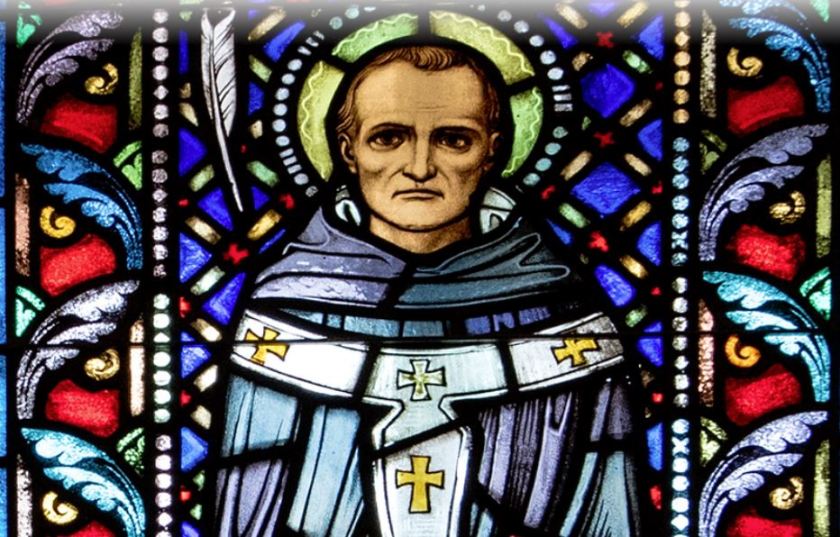
PRAYER – Heavenly Father, we are Your children and we beg You, make us know this with all our being.   May we be as little children in total trust and dependence on You. May we glory in resembling You, as children resemble their fathers on earth.  For You are all goodness, love and truth – may we become all of these things as perfect copies of You. May the prayers of St Luigi Orione, who lived his life as a true copy of Your Son, bring us strength and commitment especially on our Lenten journey to the Resurrection of Your Son.   Through Jesus our Lord and Saviour, in the unity of the Holy Spirit, one God forever, amen.st luigi orione 12 march 2019 pray for us

Posted in SAINT of the DAY

Saint of the Day – 12 March – St Luigi Orione FDP (1872-1940) 

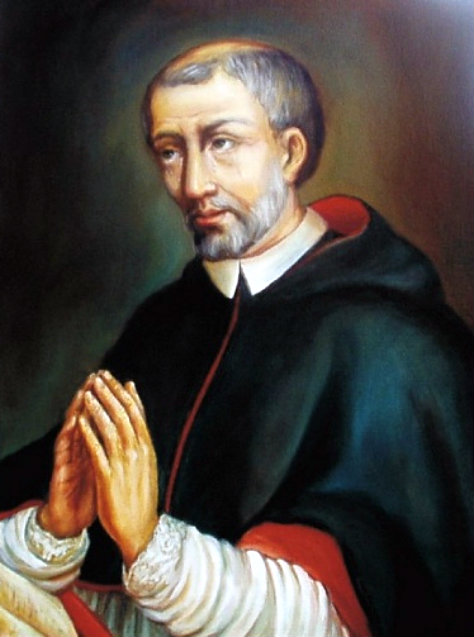
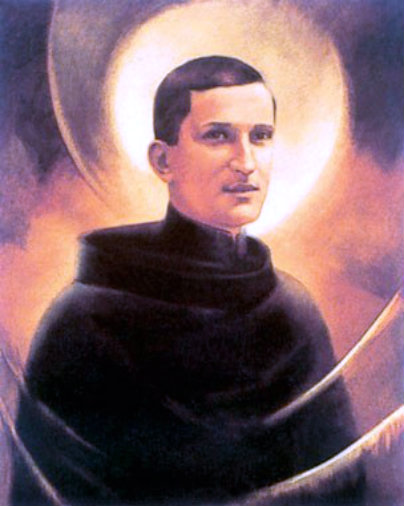
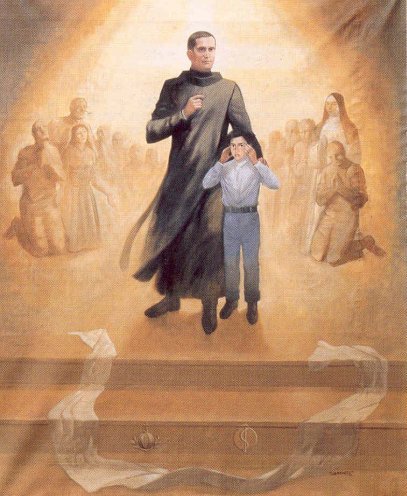
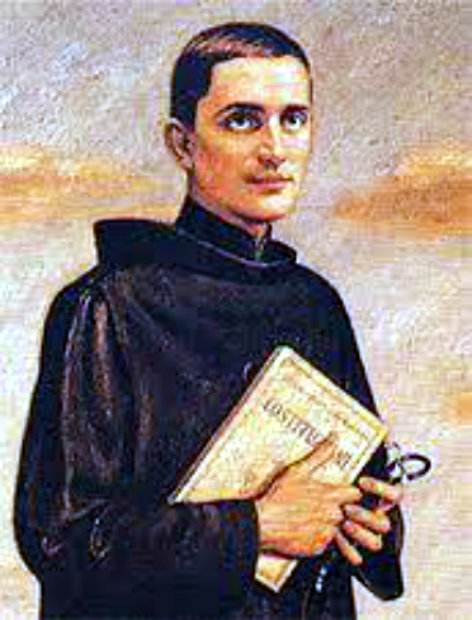
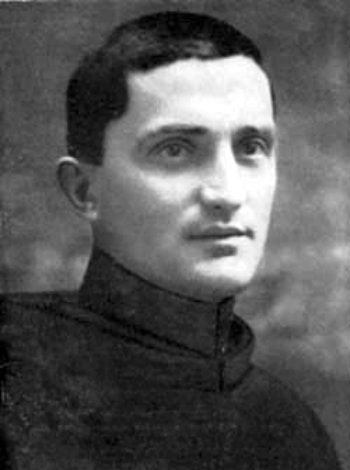
Saint of the Day – 12 March – St Luigi Orione FDP (1872-1940) aged 68  – “The Advocate of the Poor and of Orphans” Priest, Preacher, Confessor, Writer, Apostle of Charity, Apostle of Eucharistic Adoration, Marian Devotee and Founder of Sons of Divine Providence Congregation, the Congregation of the Little Missionary Sisters of Charity, Blind Sisters, Adorers of the Blessed Sacrament, Contemplative Sisters of Jesus Crucified – born as Aloysius Giovanni Orione on 23 June 1872 at Pontecurone, Allessandria, Italy and died on 12 March 1940 at San Remo, Imperia, Italy from heart disease.   Patronages – the Sons of Divine Providence, the Congregation of the Little Missionary Sisters of Charity, Blind Sisters, Adorers of the Blessed Sacrament,  Contemplative Sisters of Jesus Crucified, the various related Lay apostolates, Tortona and Pontecurone.   His body is Incorrupt.

Luigi Orione was born in Pontecurone, diocese of Tortona, on 23 June 1872.   At thirteen years of age he entered the Franciscan Friary of Voghera (Pavia) but he left after one year owing to poor health.   From 1886 to 1889 he was a pupil of Saint John Bosco at the Valdocco Oratory (Youth Centre) in Turin.

On 16 October 1889, he joined the diocesan seminary of Tortona.   As a young seminarian he devoted himself to the care of others by becoming a member of both the San Marziano Society for Mutual Help and the Society of Saint Vincent de Paul.   On 3 July 1892 he opened the first Oratory in Tortona to provide for the Christian training of boys. The following year, on 15 October 1893, Luigi Orione, then a seminarian of twenty-one, started a boarding school for poor boys, in the Saint Bernardine estate.

On 13 April 1895, Luigi Orione was ordained priest and, on that occasion, the Bishop gave the clerical habit to six pupils of the boarding school.   Within a brief span of time, Don Orione opened new houses at Mornico Losana (Pavia), Noto – in Sicily, Sanremo and Rome.Saint Louis Orione 1

Around the young Founder, there grew up seminarians and priests who made up the first core group of the Little Work of Divine Providence.   In 1899, he founded the branch of the Hermits of Divine Providence.   The Bishop of Tortona, Mgr Igino Bandi, by a Decree of 21 March 1903, issued the canonical approval of the Sons of Divine Providence (priests, lay brothers and hermits) – the male congregation of the Little Work of Divine Providence.   It aims to “co-operate to bring the little ones, the poor and the people to the Church and to the Pope, by means of the works of charity” and professes a fourth vow of special “faithfulness to the Pope”.   In the first Constitutions of 1904, among the aims of the new Congregation, there appears that of working to “achieve the union of the separated Churches”.

Inspired by a profound love for the Church and for the salvation of Souls, he was actively interested in the new problems of his time, such as the freedom and unity of the Church, the Roman question, modernism, socialism and the Christian evangelisation of industrial workers.

He rushed to assist the victims of the earthquakes of Reggio and Messina (1908) and the Marsica region (1915).   By appointment of Saint Pius X, he was made Vicar General of the diocese of Messina for three years.

On 29 June 1915, twenty years after the foundation of the Sons of Divine Providence, he added to the “single tree of many branches” the Congregation of the Little Missionary Sisters of Charity who are inspired by the same founding charism.   Alongside them, he placed the Blind Sisters, Adorers of the Blessed Sacrament.   Later, the Contemplative Sisters of Jesus Crucified were also founded.st luigi orione

For lay people he set up the associations of the “Ladies of Divine Providence”, the “Former Pupils”, and the “Friends”.   More recently, the Don Orione Secular Institute and the Don Orione Lay People’s Movement have come into being.

Following the First World War (1914-1918), the number of schools, boarding houses, agricultural schools, charitable and welfare works increased.   Among his most enterprising and original works, he set up the “Little Cottolengos”, for the care of the suffering and abandoned, which were usually built in the outskirts of large cities to act as “new pulpits” from which to speak of Christ and of the Church – “true beacons of faith and of civilisation”.

Don Orione’s missionary zeal, which had already manifested itself in 1913 when he sent his first religious to Brazil, expanded subsequently to Argentina and Uruguay (1921), Palestine (1921), Poland (1923), Rhodes (1925), the USA (1934), England (1935), Albania (1936).   From 1921-1922 and from 1934-1937, he himself made two missionary journeys to Latin America – to Argentina, Brazil and Uruguay, going as far as Chile.

He enjoyed the personal respect of the Popes and the Holy See’s Authorities, who entrusted him with confidential tasks of sorting out problems and healing wounds both inside the Church as well as in the relations with society.   He was a preacher, a confessor and a tireless organiser of pilgrimages, missions, processions, live cribs and other popular manifestations and celebrations of the faith.   He loved Our Lady deeply and fostered devotion to her by every means possible and, through the manual labour of his seminarians, built the shrines of Our Lady of Safe Keeping in Tortona and Our Lady of Caravaggio at Fumo.   In the winter of 1940, with the intention of easing the heart and lung complaints that were troubling him, he went to the Sanremo house, even though, as he said, “it is not among the palm trees that I would like to die,but among the poor who are Jesus Christ”.   Only three days later, on 12 March 1940, surrounded by the love of his confreres, Don Orione died, while sighing “Jesus, Jesus!   I am going”.cara_de_don_orione (1)

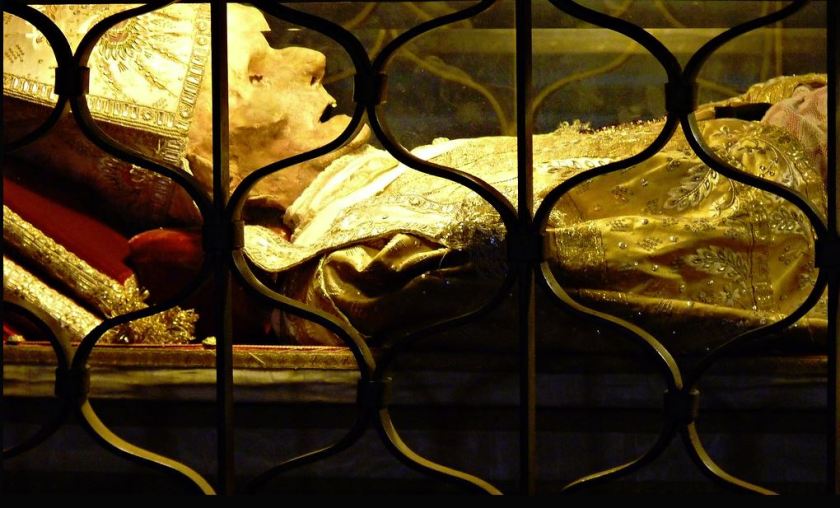
His body was found to be intact at its first exhumation in 1965.   It has been exposed to the veneration of the faithful in the shrine of Our Lady of Safe Keeping in Tortona ever since 26 October 1980 – the day in which St Pope John Paul II inscribed Don Luigi Orione in the Book of the Blessed…. Vatican.va

St Luigi was Canonised on 16 May 2004 by St Pope John Paul II.

1024px-Saint_luigi_orione_body
Saint Luigi Orione’s body in Sanctuary of Nostra Signora della Guardia, in Tortona, Italy.
st Luigi orione - 724px-MadonnaDellaGuardia.JPG
Don Orione was buried in the Santuario di Nostra Signora della Guardia in Tortona, the church that he himself built in 1931, with the help of priests and acolytes.   It was built in gratitude to the Madonna for ending the hostilities of World War I.   It is the most important pilgrimage site in the world for Orione’s followers
Posted in SAINT of the DAY

Memorials of the Saints – 12 March

St Almut of Wetter
St Alphege the Bald
Bl Angela Salawa
St Basilissa of Asia
Bl Beatrix of Engelport
St Bernard of Carinola
Bl Claudius the Minor
St Egdunus
St Fechno
St Girolamo da Recanati
St Heiu of Hartlepool
St Indrecht of Iona
St Pope Innocent I
St Joseph Zhang Dapeng
St Luigi Orione FDP (1872-1940)

St Maximilian of Thebeste
St Mura McFeredach
St Paul Aurelian
St Peter the Deacon
St Seraphina
St Theophanes the Chronographer

Martyrs of Nicomedia – 8 saints:   Eleven Christians who were martyred in succession in a single incident during the persecutions of Diocletian.   First there were the eight imprisoned Christians, Domna, Esmaragdus, Eugene, Hilary, Mardonius, Maximus, Mígdonus and Peter, about whom we know little more than their names.   Each day for eight days one of them would be strangled to death in view of the others so that they would spend the night in dread, not knowing if they were next.
Peter was the chamberlain or butler in the palace of Diocletian.   When he was overheard complaining about this cruelty, he was exposed as a Christian, arrested, tortured and executed by having the flesh torn from his bones, salt and vinegar poured on the wounds and then being roasted to death over a slow fire.
Gorgonio was an army officer and member of the staff in the house of emperor Diocletian, Doroteo was a staff clerk.   They were each exposed as Christians when they were overhead objecting to the torture and murder of Peter.   This led to their own arrest, torture and executions.
Died
in 303 in Nicomedia, Bithynia (in modern Turkey)
Additional Memorial – 28 December as part of the 20,000 Martyrs of Nicomedia.

Posted in SAINT of the DAY, Uncategorized

Saint of the Day – 11 March – St Eulogius (Died 857) Priest and Martyr,

Saint of the Day – 11 March – St Eulogius (Died 857) Priest and Martyr, Writer, Poet, Theologian, Teacher – It is not certain on what date or in what year of the 9th century he was born.   It must have been before 819, because in 848 he was a highly esteemed priest among the Christians of Catalonia and Navarre and priesthood was conferred only on men thirty years of age.   Patronages – carpenters, coppersmiths.

St Eulogius was of a senatorian family of Cordoba, at that time the capital of the Moors in Spain.   Our Saint was educated among the clergy of the Church of St Zoilus, a martyr who suffered with nineteen others under Diocletian.   Here he distinguished himself, by his virtue and learning and, being made priest, was placed at the head of the chief ecclesiastical school at Cordoba.   He joined assiduous watching, fasting and prayer to his studies and his humility, mildness and charity gained him the affection and respect of every one.St._Eulogio_-_Capilla_de_San_Eulogio_-_La_Mezquita_-_Córdoba

During the persecution raised against the Christians in the year 850, St Eulogius was thrown into prison and there wrote his Exhortation to Martyrdom, addressed to the virgins Flora and Mary, who were beheaded on 24 November, 851.   Six days after their death Eulogius was set at liberty.   In the year 852 several others suffered the like martyrdom.   St Eulogius encouraged all these martyrs to their triumphs and was the support of that distressed flock.

The Archbishop of Toledo dying in 858.   St Eulogius was elected to succeed him but there was some obstacle that hindered him from being consecrated, though he did not outlive his election two months.

A virgin, by name Leocritia, of a noble family among the Moors, had been instructed from her infancy in the Christian religion by one of her relatives and privately baptised. Her father and mother scourged her day and night to compel her to renounce the Faith. Having made her condition known to St Eulogius and his sister Anulona, intimating that she desired to go where she might freely exercise her religion, they secretly procured her the means of getting away and concealed her for some time among faithful friends.ST EULOGIUS

But the matter was at length discovered and they were all brought before the cadi, who threatened to have Eulogius scourged to death.   The Saint told him that his torments would be of no avail, for he would never change his religion.   Whereupon the cadi gave orders that he should be carried to the palace and be presented before the king’s council. Eulogius began boldly to propose the truths of the Gospel to them.   But, to prevent their hearing him, the council condemned him immediately to lose his head.   As they were leading him to execution, one of the guards gave him a blow on the face, for having spoken against Mohamed he turned the other cheek and patiently received a second.MARTYRDOM OF 972px-EulogioCordovamart

He received the stroke of death with great cheerfulness, on 11March, 859.   St Leocritia was beheaded four days after him and her body thrown into the river Guadalquivir but taken out by the Christians.

St Eulogius’s friend and biographer Paulus Alvarus affectionately described him as gentle, reverent, well-educated, steeped in Scripture and so humble, that he freely submitted to opinions of others less informed than he.   He said that Eulogius had a pleasant demeanour and conducted his relationships with such kindness that everyone regarded him as a friend.   A gifted leader, the most prominent among his charisma was the ability to give encouragement.   As a priest serving in an occupied country, he used this gift to strengthen his friends in the face of danger.

This humility shone particularly on two occasions.   In his youth he had decided to make a foot pilgrimage to Rome, notwithstanding his great fervour and his devotion to the sepulchre of the Prince of the Apostles (a notable proof of the union of the Mozarabic rite Church with Rome), he gave up his project, yielding to the advice of prudent friends. Again, during the Muslim persecution, in 850, after reading a passage of the works of St Epiphanius he decided to refrain for a time from saying Mass that he might better defend the cause of the martyrs, however, at the request of his bishop, Saul of Córdoba, he put aside his scruples.   His extant writings (Apologia, Exhortation to Martyrdom, Memorial of the Saints) are proof that Alvarus did not exaggerate.st eulogius martyrdom

Saint Eulogius demonstrated courageous love for the Lord, accepting martyrdom even when his position within society would have allowed him to avoid such a fate.   He recorded a detailed history of the martyrs of Cordoba, illuminating the widespread heroic faith which occurred in that region.

His life reminds us that all we have is given to us by the Lord—that without Him, we are nothing.   The message of Lent resonates with the lives of these “voluntary” martyrs of Cordova who gave their lives for their faith, recognising that those lives belonged to He who created them.

St Eulogius is buried in the Cathedral of Oviedo.

Posted in SAINT of the DAY

Memorials of the Saints – 11 March

St Aengus the Culdee
St Alberta of Agen
St Alexius U Se-Yong
St Amunia
St Aurea of San Millán
St Benedict Crispus of Milan
St Candidus the Martyr
St Constantine II
St Constantine of Carthage
St Ðaminh Cam
St Eulogius (Died 857) Martyr
St Firmian the Abbot
St Firmus the Martyr
St Gorgonius the Martyr
St Heraclius of Carthage
Bl John Kearney
Bl John Righi of Fabriano
St Marcus Chong Ui-Bae
St Peter the Spaniard
St Pionius
St Piperion the Martyr
St Rosina of Wenglingen
St Sophronius of Jerusalem
St Thalus the Martyr
Bl Thomas Atkinson
St Trophimus the Martyr
St Vigilius of Auxerre
St Vincent of Leon
St Vindician of Cambrai
St Zosimus of Carthage

Martyrs of Antioch: A group of Christians martyred together by Emperor Maximian Galerius. Martyred in c 300 in Antioch, Syria.

Posted in PRAYERS of the SAINTS, QUOTES of the SAINTS, QUOTES on LOVE, SAINT of the DAY

Thought for the Day – 10 March – “I am looking at my Lord. It is in looking at Him, that we learn how to love.”
Thought for the Day – 10 March – The Memorial of St Marie Eugénie de Jésus (1817-1898)

Marie Eugenie led the Assumption for fifty-five years.   Her life was full.   Her first priority was for her sisters:  their happiness, their formation, their work.   She was concerned for their health – more than two hundred sisters were to die before she did, often young and of tuberculosis.

She was constantly travelling from community to community, encouraging, consoling and challenging.   As the Congregation became known, she was invited to start more and more communities.   She saw her work as being always in and for the Church and her loyalty to it was absolute.

The last few years of her life were spent in increasing retirement.   Gradually her health failed.   Her legs refused to carry her and her speech also slowed, so that at the end she could only occasionally say a few words.   Those around her were struck by her gentleness and patience.   One day she managed to say –

“I am looking at my Lord.

It is in looking at Him, that we learn how to love.”

She died, surrounded by her sisters, on the 10th March 1898.i am looking at my lord - st marie eugenie de jesus 10 march 2019

Credo of St Marie Eugenie of Jesus

I believe that our earth is a place of glory for God.
I believe that the destiny of the world is the Reign of Jesus Christ.
I believe that each of us has a mission on earth.
I believe that the aim of our religion, is not just our own eternal happiness
but to let God use us, to make the Gospel known and loved.
I believe that each one enters into God’s plan by prayer, by action and by the cross
And that to refuse His call, is to refuse our own happiness.
I believe the aim of Christian education, is to make Jesus Christ known
As the liberator and ruler of the world..

St Marie Eugénie de Jésus, Pray for Us!st marie eugenie de jesus pray for us 10 march 2019

Posted in QUOTES of the SAINTS, QUOTES on FRIENDSHIP, QUOTES on GRATITUDE, QUOTES on LOVE, QUOTES on PRAYER, SAINT of the DAY

Quote/s of the Day – 10 March – St Marie Eugénie de Jésus

Quote/s of the Day – 10 March – The Memorial of St Marie Eugénie de Jésus (1817-1898)

“Be the cotton
between sheets of glass,
to keep others, from shattering.”

“Transform
everything into
Praise and Thanksgiving!”

“Love never says
‘I have done enough.'”

St Marie Eugénie de Jésus (1817-1898)quotes st marie eugenie de jesus 10 march 2019.jpg

Posted in SAINT of the DAY, VATICAN Resources

Saint of the Day – 10 March – St Marie Eugénie de Jésus (1817-1898)

Saint of the Day – 10 March – St Marie Eugénie de Jésus (1817-1898) aged 80 – Foundress of the Religious of the Assumption – Religious, – born 26 August 1817 at Metz, Moselle, France as Eugenie Milleret de Brou (de Bron) and died on 10 March 1898 at Auteuil, Hauts-de-Seine, France of natural causes.   Patronages – the Religious of the Assumption and Students.   St Marie Eugénie is also known as Anne-Eugénie Milleret de Brou, Eugénie Milleret de Brou, Eugénie Milleret de Bron, Marie Eugénie Milleret de Brou, Mere Marie Eugénie.   She was Beatified on 9 February 1975 by St Pope Paul VI and Canonised by Pope Benedict XVI on 3 June 2007.marie-de-jesus-milleret-oung.1.2.jpg

Anne Marie Eugenie was born in 1817 in Metz after Napoleon’s complete defeat and the restoration of the Monarchy.   She belonged to a non-believing and financially comfortable family and it seemed unlikely that she would trace a new spiritual path across the Church of France.

Her father, follower of Voltaire and a liberal, was making his fortune in the banking world and in politics.   Eugenie’s mother provided the sensitive Eugenie with an education, which strengthened her character and gave her a strong sense of duty.   Family life developed her intellectual curiosity and a romantic spirit, an interest in social questions and a broad world view.

Like her contemporary, George Sand, Anne Eugenie went to Mass on feast days and received the Sacraments of initiation, as was the custom but without any real commitment.   However, her First Communion was a great mystical experience that foretold the secret of her future.   She did not grasp its prophetic meaning until much later when she recognised it as her path towards total belonging to Jesus Christ and the Church.

Her youth was happy but not without suffering.   She was affected when still a child by the death of an elder brother and a baby sister.   Her health was delicate and a fall from a horse left serious consequences.   Eugenie was mature for her age and learnt how to hide her feelings and to face up to events.   Later, after a prosperous period for her father, she experienced the failure of his banks, the misunderstanding and eventual separation of her parents and the loss of all security.   She had to leave her family home and go to Paris while Louis, closest to her in age and faithful companion went to live with their father.   Eugenie went to Paris with the mother she adored, only to see her die from cholera after a few hours of illness, leaving her alone at the age of fifteen in a society that was worldly and superficial.   Searching in anguish and almost desperate for the truth, she arrived at her conversion thirsty for the Absolute and open to the Transcendent.

When she was nineteen, Anne Eugenie attended the Lenten Conferences at Notre Dame in Paris, preached by the young Abbe Lacordaire (1802–1861), already well-known for his talent as orator.   Lacordaire was a former disciple of Lamennais ­– haunted by the vision of a renewed Church with a special place in the world.   He understood his time and wanted to change it.   He understood young people, their questions and their desires, their idealism and their ignorance of both Christ and the Church.   His words touched Eugenie’s heart, answered her many questions and aroused her generosity.

Conference_Notre-Dame_Lacordaire
Fr Lacordaire preaching his Lenten Conferences from the elevated pulpit at Notre-Dame Cathedral, Paris, 1845.
Portrait_of_Dominique_Lacordaire
Fr Henri-Dominique Lacordaire OP, at the convent of Sainte-Sabine in Rome, by Théodore Chassériau (1840)

Eugenie envisaged Christ as the universal liberator and His kingdom on earth established as a peaceful and just society.   “I was truly converted, she wrote, and I was seized by a longing to devote all my strength or rather all my weakness to the Church which, from that moment, I saw as alone holding the key to the knowledge and achievement of all that is good.”

Just at this time, another preacher, also a former disciple of Lamennais, appeared on the scene.   In the confessional, Father Combalot recognised that he had encountered a chosen soul who was designated to be the foundress of the Congregation he had dreamt of for a long time.   He persuaded Eugenie to undertake his work by insisting that this Congregation was willed by God who had chosen her to establish it.   He convinced her that only by education could she evangelise minds, make families truly Christian and thus transform the society of her time.   Anne Eugenie accepted the project as God’s will for her and allowed herself to be guided by the Abbe Combalot.

At twenty-two, Marie Eugenie became foundress of the Religious of the Assumption, dedicated to consecrate their whole life and strength to extending the Kingdom of Christ in themselves and in the world.   In 1839, Mademoiselle Eugenie Milleret, with two other young women, began a life of prayer and study in a flat at rue Ferou near the church of St Sulpice in Paris.   In 1841, under the patronage of Madame de Chateaubriand, Lacordaire, Montalembert and their friends, the sisters opened their first school.   In a relatively short time there were sixteen sisters of four nationalities in the community.MME_middle age.jpg

Marie Eugenie and the first sisters wanted to link the ancient and the new – to unite the past treasures of the Church’s spirituality and wisdom with a type of religious life and education able to satisfy the demands of modern minds.   It was a matter of respecting the values of the period and at the same time, making the Gospel values penetrate the rising culture of a new industrial and scientific era.   The spirituality of the Congregation, centred on Christ and the Incarnation, was both deeply contemplative and dedicated to apostolic action.   It was a life given to the search for God and the love and service of others.

Marie Eugenie’s long life covered almost the whole of the 19th century.   She loved her times passionately and took an active part in their history.   Progressively, she channelled all her energy and gifts in tending and extending the Congregation, which became her life work.   God gave her sisters and many friends.   One of the first sisters was Irish, a mystic and her intimate friend whom she called at the end of her life, “half of myself.” Kate O’Neill, called Mother Therese Emmanuel in religion, is considered as a co-foundress.   Father Emmanuel d’Alzon, became Marie Eugenie’s spiritual director soon after the foundation, was a father, brother or friend according to the seasons.   In 1845, he founded the Augustinians of the Assumption and the two founders helped each other in a multitude of ways over a period of forty years.   Both had a gift for friendship and they inspired many lay people to work with them and the Church.   Together, as they followed Christ and laboured with Him, the religious and laity traced the path of the Assumption and took their place in the great cloud of witnesses.Marie-Eugénie âgée noir et blanc-old.JPG

In the last years of her life, Mother Marie Eugenie experienced a progressive physical weakening, which she lived in silence and humility – a life totally centred on Christ.   She received the Eucharist for the last time on 9 March 1898 and on the 10th, she gently passed to the Lord.   She was beatified by Pope Paul VI on 9 February 1975 in Rome.

Today, the Religious of the Assumption are present in 34 countries – 8 in Europe, 5 in Asia, 10 in America and 11 in Africa. Almost 1,200 sisters form 170 communities throughout the world.

The Lay Assumption – Assumption Together – made up of Friends of the Assumption and Communities or Fraternities of the Assumption, are numerous – thousands of Friends and hundreds of Lay Assumption committed to live according to the Way of Life….Vatican.va

Posted in JESUIT SJ, SAINT of the DAY

Memorials of the Saints – 10 March

The First Sunday of Lent, Year C

St Alexander of Apema
St Anastasia the Patrician
St Andrew of Strumi
St Attalas of Bobbio
St Blanchard of Nesle-la-Réposte
St Caius of Apema
St Cordratus of Nicomedië
St Droctoveus of Paris
Bl Elias del Socorro Nieves
St Emilian of Lagny
St Failbhe the Little
St Gustav the Hermit
St Himelin
Bl Jean-Marie Joseph Lataste
St John Ogilvie SJ (1579-1615 died aged 36) MARTYR
Biography: https://anastpaul.wordpress.com/2017/03/10/saint-of-the-day-10-march-st-john-ogilvie/
St John Ogilvie, his Rosary and the Baron: https://anastpaul.wordpress.com/2017/03/10/st-john-ogilvie-sj-10-march/


Bl John of Vallombrosa
St Kessog
St Macarius of Jerusalem
St Marie Eugénie de Jésus (1817-1898) aged 80
St Peter of Veroli
St Rufinus of Nicomedië
St Sannudius of Bagensena
St Saturninus of Nicomedië
St Sedna of Ossory
St Silvester of Ireland
St Simplicius, Pope
St Victor of North Africa
Bl Wirnto of Formbach

Anonymous Martyrs of Persia – A group of 42 Christians martyred in Persia in the 4th century.
Forty Martyrs of Armenia – Forty Christian soldiers of the Thunderstruck Legion of the Imperial Roman army who were tortured and murdered for their faith during the persecutions of Emperor Licinius. They were exposed naked on a frozen pond to freeze to death at Sebaste, Armenia in 320 and their bodies afterward were burned.

Posted in SAINT of the DAY

Thought for the Day – 9 March – He is the goal of all hearts.

Thought for the Day – 9 March – the Memorial of St Catherine of Bologna OSC (1413-1463)

When Margarita, Catherine’s greatest friend in the Court, became engaged, she invited Catherine to stay with her but Catherine felt called to the religious life and at the age of 14, she joined a Franciscan community.   During this time she suffered a spiritual crisis but she had a vision of the Real Presence in the Eucharist that brought her consolation. Spiritual visions consoled and disturbed her at various times in her life, which we know from her work, The Seven Spiritual Weapons.

Catherine artistic heart led her into many pursuits, playing the viola, painting religious pictures (including one of St Ursula that hangs today in a gallery in Venice), copying out and illuminating her breviary (now on display at Oxford), and writing spiritual guides and poetry. She is now the Patron of artists.

Many today might think that her life was a wasted one, when she could’ve been a ‘celebrity’ artist. Appreciating Catherine’s life in a Poor Clare monastery may be hard for us. “It seems like such a waste,” we may be tempted to say.

But Catherine, through prayer, penance and charity to her sisters, drew close to God and He consoled that creative heart in so many ways, for He is the goal of all hearts.   Our goal is the same as hers, even if our paths are different.

St Catherine of Bologna, Pray for us!st catherine of bologna pray for us - 9 march 20195.jpg

Posted in LENT 2019, QUOTES of the SAINTS, QUOTES on the CROSS of CHRIST, SAINT of the DAY

Quote of the Day – 9 March – St Catherine of Bologna

Quote of the Day – 9 March – Saturday after Ash Wednesday and the Memorial of St Catherine of Bologna OSC (1413-1463)

“Whoever wishes to carry
the cross for His sake,
must take up the proper weapons
for the contest,
especially those mentioned here.
First, diligence;
second, distrust of self;
third, confidence in God;
fourth, remembrance of His Passion;
fifth, mindfulness of one’s own death;
sixth, remembrance of God’s glory;
seventh, the injunctions of Sacred Scripture
following the example
of Jesus Christ in the desert.”

Saint Catherine of Bologna

from On the Seven Spiritual Weaponswhoever wishes to carry the cross for his sake - st catherine of bologna - 9 march 2019.jpg

Posted in LENT 2019, MORNING Prayers, QUOTES - J R R Tolkien and MORE, QUOTES on CONVERSION, SAINT of the DAY, The WORD

One Minute Reflection – 9 March – “Leaving everything behind, the man got up and followed him”

One Minute Reflection – 9 March – Saturday after Ash Wednesday
Today’s Gospel : Luke 5:27-32 – The Calling of Matthew

“Leaving everything behind, the man got up and followed him”...Luke 5:28

REFLECTION – “Th exploiter Levi, changes his ways and becomes Matthew, the Apostle and Evangelist, the bearer of the Good News.   His entire life-story proclaims that God is for the wrongdoer, inviting him to change.   Paul changed his ways, so did Augustine, so did Jerome.   So can you!   Ignatius the soldier, becomes Ignatius the saint, the founder of the Jesuits.   What will you be?   What will you do?   For YOU are called too!”…Archbishop Thomas Menamparampil SDB

“Because the healing power of God, knows no infirmity that cannot be healed and this, must give us confidence and open our heart to the Lord, that He may come and heal us.”…Pope Francis – General Audience, 13 April 2016luke 5 28 the calling of matthew - the exploiter levi changes his ways - gods word 2019 9 march 2019

PRAYER – Come my all-powerful, ever-living God, look with compassion on our frailty and for our protection, stretch out to us Your strong right hand.   Grant that by the prayers of Mary, our Mother and all your angels and saints we may change our ways, leave everything behind, proclaim the glory of Your kingdom and come safely home to You.   St Catherine of Bologna and St Frances of Rome, pray for us.   Through our Lord Jesus Christ, in the unity of the Holy Spirit, God forever, amen.st-frances-of-rome-pray-for-us - 9 march 2017.jpg

st catherine of bologna pray for us 9 march 2019

Posted in ARTISTS, PAINTERS, SAINT of the DAY

Saint of the Day – 9 March – St Catherine of Bologna OSC (1413-1463)

Saint of the Day – 9 March – St Catherine of Bologna OSC (1413-1463) – aged 49 – Religious Poor Clare nun – born on 8 September 1413 at Bologna, Italy as Caterina dei Vigri and died on 9 March 1453 at Bologna, Italy of natural causes.    Patronages – Bologna, Against temptations, Artists, Liberal arts.catherine of bologna

Catherine came from an upper class family, the daughter of Benvenuta Mammolini of Bologna and Giovanni Vigri, a Ferrarese notary.   She was raised at Niccolo III’s court as a lady-in-waiting to his wife Parisina d’Este (d. 1425) and became lifelong friends with his natural daughter Margherita d’Este (d. 1478).   During this time, she received some education in reading, writing, music, playing the viola, and had access to illuminated manuscripts in the d’Este Court library.

In 1426, after Niccolo III’s execution of Parisina d’Este for infidelity, Caterina left court and joined a lay community of beguines living a semi-religious life and following the Augustinian rule.    In 1431 the beguine house was converted into the Observant Poor Clare convent of Corpus Domini, which grew from 12 women in 1431 to 144 women by the end of the century.   Sister Caterina lived at Corpus Domini, Ferrara most of her life from 1431 to 1456, serving as Mistress of Novices.

She was a model of piety and experienced miracles and several visions of Christ, the Virgin Mary, Thomas Becket and St Joseph, as well as future events, such as the fall of Constantinople in 1453.catherinebologna2 Caterina_-_Sette_armi_spirituali,_circa_1475_-_2367343.tif

She wrote a number of religious treatises, lauds, sermons and copied and illustrated her own breviary (see on the right).

In 1455 the Franciscans and the governors of Bologna requested that she become abbess of a new convent, which was to be established under the name of Corpus Domini in Bologna.   She left Ferrara in July 1456 with 12 sisters to start the new community and remained abbess there until her death on 9 March 1463.   Caterina was buried in the convent graveyard but after eighteen days, a sweet smell emanated from the grave and the incorrupt body was exhumed.   It was eventually relocated to a chapel where it remains on display, dressed in her religious habit, seated upright behind glass.   A contemporary Poor Clare, Sister Illuminata Bembo, wrote her biography in 1469.   A strong local Bolognese cult of Caterina Vigri developed and she became a Beata in the 1520s, but was not Canonised until 1712 by Pope Clement XI.Incorrupt body of 768px-Caterina-bologna.jpg

Catherine’s best known text is Seven Spiritual Weapons Necessary for Spiritual Warfare (Le Sette Armi Spirituali), which she appears to have first written in 1438 and then rewritten and augmented between 1450 and 1456.   Although she probably taught similar ideas, she kept the written version hidden until she neared death and then handed it to her confessor with instructions to send a copy to the Poor Clares at Ferrara. Part of this book describes at length her visions both of God and of Satan.   The treatise was circulated in manuscript form through a network of Poor Clare convents.   It was first printed in 1475 and went through 21 later editions in the sixteenth and seventeenth centuries, including being translated in Latin, French, Portuguese, English, Spanish and German.   It therefore played an important role in the dissemination of late medieval vernacular mysticism in the early modern period.

In addition, she wrote lauds, short religious treatises and letters, as well as a 5000-line Latin poem called the Rosarium Metricum, the I Dodici Giardini and I Sermoni.   These were discovered around 2000 and described by Cardinal Giacomo Biffi – as “now revealed in their surprising beauty.   We can ascertain that she was not undeserving of her renown as a highly cultivated person.   We are now in a position to meditate on a veritable monument of theology which, after the Treatise on the Seven Spiritual Weapons, is made up of distinct and autonomous parts – The Twelve Gardens, a mystical work of her youth, Rosarium, a Latin poem on the life of Jesus and The Sermons, copies of Catherine’s words to her religious sisters.”catherine of bologna artwork

St Catherine represents the rare phenomenon of a fifteenth-century nun-artist whose artworks are preserved in her personal breviary.   She meditated while she copied the scriptural text, adding about 1000 prayer rubrics and drew initials with bust-portraits of saints, paying special attention to images of Saints Clare and Francis.   Besides multiple images of Christ and the infant swaddled Christ Child, she depicted other saints, including Thomas Becket, Jerome, Paul, Anthony of Padua, Mary Magdalene, her name saint Catherine of Alexandria.   Her self-taught style incorporated motifs from needlework and devotional prints.   Some saints’ images, interwoven with text and rubrics, display an idiosyncratic, inventive iconography.

Other panel paintings and manuscripts attributed to her include the Madonna and Child (nicknamed the Madonna del Pomo) in the Cappella della Santa, a possible portrait or self-portrait (?) in the autograph copy of the Sette Armi Spirituali, a Redeemer and another Madonna and Child in her chapel.

Catherinebolognaart
Madonna and Child – attributed to St Catherine

A drawing of a Man of Sorrows or Resurrected Christ found in a miscellany of lauds has also been attributed to her.   St Catherine is significant as a woman artist who articulated an aesthetic philosophy.   She explained that although it took precious time, the purpose of her religious art was “to increase devotion for herself and others”.

Posted in SAINT of the DAY

Memorials of the Saints – 9 March

St Frances of Rome Obl.S.B. (1384-1440) (Optional Memorial)
Biography: https://anastpaul.wordpress.com/2017/03/09/saint-of-the-day-9-march-st-frances-of-rome/

St Antony of Froidemont
St Bosa of York
St Bruno of Querfurt
St Candidus
St Catherine of Bologna OSC (1413-1463 – aged 49)

St Constantine of Cornwall
St Cyrion
St Mary of Seyne
St Pacian of Barcelona
St Vitalis of Calabria

Martyrs of Korea: – Ioannes Baptista Chon Chang-un, Petrus Ch’oe Hyong

Posted in SAINT of the DAY

Thought for the Day – 8 March – The Staff and the Bread Basket: Symbols of the Life of St. John of God

Thought for the Day – 8 March – The Memorial of St John of God (1495-1550) “The Heart Commands.”

The Staff and the Bread Basket:   Symbols of the Life of St John of God

During the time of St John of God (the 16th century), when individuals would travel from town to town, many carried a pilgrim or traveller’s staff to make their journey easier. The staff had two hooks on it for carrying a basket or whatever it was the traveller needed.   When St John of God walked throughout the city asking for alms for his hospital, he also carried a pilgrim’s staff.   On the right hook, he hung a coin box with a cross and on the left of it, hung a basket with food, mostly bread, meat or fish.Staff-and-Bread-Basket-242x300

Instead of sending someone to run his errands, St John of God took it upon himself to buy the food, charcoal and other supplies that the people staying with him needed.   This gave his boarders and patients privacy and the opportunity to make clothes or perform other work.

Article 3 of the Order’s first Constitution in 1585 specifically commands that the Brothers carry a staff and bag similar to the one used by St John of God when collecting alms.   This requirement united them, as the first Brothers were identified by these objects.

In the Biography of St John of God by Francisco de Castro, the author relates a tale about St John’s basket.   St John of God was near the Alhambra in Granada, Spain, when he accidentally bumped into a gentleman.   His basket caught hold of the man’s cloak and put it in disarray.   Although St John apologised, the man was very angry and slapped him across the face.   After another bystander intervened and the man realised it was St John of God that he had slapped, he begged forgiveness, kissed St John’s feet and invited him to dine with him.   St John declined the invitation but the man later sent 50 gold escudos for the poor.

Later in his life when he was ill, St John used his basket as a pillow.   Today, his staff and begging basket are conserved at the Order’s archives in the Casa de los Pisa in Granada, Spain.

Even perhaps in a metaphorical manner, we too should carry such a Basket and Staff, using them as St John did, collecting and giving to all, of the immense love which God has bestowed on us.

St John of God, Pray for Us!st john of god pray for us 8 march 2019

Posted in PRACTISING CATHOLIC, QUOTES of the SAINTS, QUOTES on CHARITY, QUOTES on FAITH, QUOTES on HEAVEN, QUOTES on LOVE, QUOTES on SACRIFICE, QUOTES on the CHURCH, SAINT of the DAY

Quote/s of the Day – 8 March – St John of God

Quote/s of the Day – 8 March – The Memorial of St John of God (1495-1550)

“The first (virtue) is faith,
believing all that
holy mother church
believes and holds,
keeping and putting
into practice
what she commands”the-first-virtue-is-faith-stjohnofgod-8march 2018.jpg

“Labour without stopping,
do all the good works you can,
while you still have the time.”labour without stopping - st john of god - 8 march 2019.jpg

“If we look forward to receiving God’s mercy,
we can never fail to do good,
so long as we have the strength.
For if we share with the poor,
out of love for God,
whatever He has given to us,
we shall receive according to His promise,
a hundredfold in eternal happiness.
What a fine profit, what a blessed reward!
With outstretched arms He begs us
to turn toward Him, to weep for our sins
and to become the servants of love,
first for ourselves, then for our neighbours.
Just as water extinguishes a fire,
so love wipes away sin.”with outstretched arms he begs us - st john of god - 8 march 2019.jpg

“Whether you like it or not,
you will grow apart from human beings.
However, Christ is faithful
and always with you.
Fot Christ provides all things.”whether-you-like-it-or-not-stjohnofgod- 8 march 2018

“The Heart Commands” – St John of Godthe heart commands - st john of god - 8 march 2019.jpg

Posted in LENT, LENT 2019, MORNING Prayers, QUOTES - J R R Tolkien and MORE, QUOTES on CHARITY, QUOTES on FAITH, QUOTES on FASTING, SAINT of the DAY, The WORD

One Minute Reflection – 8 March – Genuine Faith

One Minute Reflection – 8 March – Friday after Ash Wednesday, Gospel: Matthew 9:14-15 and the Memorial of St John of God (1495-1550)

“Can the wedding guests mourn as long as the bridegroom is with them? The days will come, when the bridegroom is taken away from them, and then they will fast.”…Matthew 9:15matthew 9 15 - can the wedding guests mourn.jpg

REFLECTION – “Genuine faith does not make a believer pretentious.   Dialogue with God is not a business bargain.   External observance of religion wins little favour with God, if it is combined with unfairness to the weak and indifference to the poor.   Openness to the indigent is the door to true religion.   The world itself changes for the better with the widening of human concern for the poor.   Good works multiply on the face of the earth and everyone sees the glory of God in action.
The Gospel presents Jesus as refusing to absolutise ritual fasting.   What He expects from His disciples, is that they remain faithful to the mission He is about to give them, even at great sacrifice.   It will make evidently greater demands of them than mere ritual fasting. They should be prepared.   Jesus is introducing a new set of values of immense worth, for which the old order of things must make way.”…Archbishop Thomas Menamparampil SDBgenuine faith does not make - fri after ash wed - 8 march 2019.jpg

PRAYER – Lord God, bestow a full measure of Your grace upon us, who seek to make our lenten journey fruitful.  Confirm us in Your service and help us to bear witness to You in the society in which we live by our lives, our fasting and prayer, our gift of self.   Listen kindly we pray, to the prayers of St John of God who so avidly followed in the footsteps of our Saviour, Lord Jesus Christ, in whose name, with the Holy Spirit, we pray, one God forever, amen.st-john-of-god-pray-for-us-8 march 2019.jpg

Posted in Against ALCOHOLISM, of ALCOHOLICS, Of HOSPITALS, NURSES, NURSING ASSOCIATIONS, Of the SICK, the INFIRM, All ILLNESS, PATRONAGE - MENTAL ILLNESS, PATRONAGE - WRITERS, PRINTERS, PUBLISHERS, EDITORS, etc, SAINT of the DAY

Saint of the Day – 8 March – St John of God OH (1495-1550)

Saint of the Day – 8 March – St John of God OH (1495-1550)

“All things pass, only good works last”

Miracles of St John of God

During his lifetime, St John of God accomplished miracles both small and large.   Daily he went out into the streets of Granada, providing help for the poor, the sick and the mentally disturbed.   He would often give the cloak off his back to someone who had no cloak.   The home he rented was a place of refuge for many.st  john of god.jpeg

According to Merriam-Webster’s dictionary a miracle is defined as, “an extraordinary event manifesting divine intervention in human affairs,” and “an extremely outstanding or unusual event, thing or accomplishment.”

St John’s daily activities of providing a place for unwanted people to feel loved and safe can be described as daily, small miracles for the people who needed help.   In the book Saints for Sinners by Alban Goodier, he writes about St John. “He could wash his patients and dress their sores;  he could kiss their feet and let them feel that somebody cared;  he could put them to bed and give them a sense of home.”st john of god 3.jpg

Keep in the mind, that the Granada of St John’s time was not the modern city it is today. Roads were unpaved and people walked everywhere.   Their feet were most likely the dirtiest parts of their bodies.   By kissing them, St John imitated Jesus’s actions toward His disciples and showed complete humility and compassion for these individuals.
St John lived out the commands of our Saviour to love one another and to love your neighbour as yourself.   Jesus says in Matthew 26:40, “I tell you the truth, whatever you did for one of the least of these brothers of mine, you did for me.”

Despite his earnest desire to serve Christ, St John faced oppression and had enemies who did not believe he was sincere in his service.   He would often care for his patients during the day and beg for alms at night.   Even though he faced hardships, his needs were always met and God always provided for his cause (another miracle).
Perhaps the grandest and best known of St John of God’s miracles was his rescuing of the patients from a fire in the hospital of Granada and yet escaping from the flames unscathed.   For this reason, he is the patron saint of firefighters.

Considered an impulsive man, one night, St John heard that the Royal Hospital of Granada was on fire.   When he rushed to the scene, he saw that people were just standing there watching the fire burn  . All the patients were inside the burning building. This non-action was unthinkable to St John and he rushed inside, leading all the patients to safety.
Once he knew that all the patients were safe, St John ran back into the building and started throwing items such as blankets and mattresses out the windows of the hospital. In his mission, St. John knew the importance of these goods for caring for the sick.   He wanted to salvage as much as possible.

By this point, the city had brought a canon to try to destroy and separate the burning part of the hospital from the non-burning portion, in its best efforts to contain the fire. However, St John could not accept this.   He ran up to the roof and started separating the two parts of the hospital with his axe.

Although he was successful, he fell through the burning roof.   Bystanders thought he had perished in the fire, until he appeared out of the smoke and ashes unharmed.
In an essay titled “St John of God, Founder of the Order of Charity,” written by Fr Francis Xavier Weninger in 1877, Weninger wrote, “The flame of Divine love which burned in his heart surpassed the intensity of the material fire.”st john of god - beautiful statue.jpg

In addition to performing great miracles, St John of God was also the recipient of divine intervention and spiritual favours.   Throughout his lifetime, he received assistance from heavenly beings including the Holy Mother and the Archangel Raphael.   His name of St John of God comes from a vision he had of the infant Jesus, who bestowed the name upon him.

Another time, St John experienced a heavenly vision when he found a dying beggar on the streets of Granada.   St John carried the man to the hospital and began washing the beggar’s feet.   While doing so, the man became transfigured with a shining light and brightness enveloped both himself and St John.   Later as St John was walking through the hospital alone, patients saw such a bright light surrounding him that they thought he was on fire.   He had a difficult time convincing the patients that all was well.

St John of God of was Canonised by Pope Alexander VIII on 16 October 1690, over 140 years after his death.   Today he remains the patron saint of hospitals, the sick, nurses, firefighters, alcoholics and booksellers.   His legacy and miracles live on through the Hospitaller Brothers and all of the good works they are accomplishing in our world today.   His Order looks after the Holy Father and the Vatican Household too.john of God - san-juan-de-dios-manuel-caro.jpg

The Museum of St John of God in Granada

Posted in SAINT of the DAY

Memorials of the Saints – 8 March

St John of God OH (1495-1550 – aged 55) (Optional Memorial)
About St John of God: https://anastpaul.wordpress.com/2017/03/08/saint-of-the-day-8-march-st-john-of-god/

St Apollonius of Antinoë
St Arianus of Alexandria
St Beoadh of Ardcarne
St Duthus of Ross
St Felix of Burgundy
St Humphrey of Prüm
St Jon Helgi Ogmundarson
St Litifredus of Pavia
St Philemon of Antinoë
St Pontius of Carthage
St Provinus of Como
St Quintilis of Nicomedia
St Rhian
St Senan of Scattery
St Stephen of Obazine
St Theophylact of Nicomedia
St Theoticus of Alexandria
St Veremundus of Irache
Bl Vincent Kadlubek of Krakow

Martyrs of North Africa – 9 saints – A bishop and some of his flock who were martyred together in North Africa. The only details that have survived are nine of the names – Beata, Cyril, Felicitas, Felix, Herenia, Mamillus, Rogatus, Silvanus, Urban

Posted in SAINT of the DAY

Thought for the Day – 7 March – A heart, forged in the love of God and the Church

Thought for the Day – 7 March – The Memorial of Blessed Leonid Feodorov (1879-1935) Martyr

“A heart, forged in the love of God and the Church”

In 1913 as the political situation destabilised in Serbia Fr Leonid decided to return to his homeland, Russia where he could then embark on evangelising the people.   But fate was not to be kind to Fr Leonid, who’s faith would soon be tempered in steel.   For upon arriving in St Petersburg, he was arrested and sent to Tobolsk a very inhospitable land in the Ural Mountains, where he spent the next 3 years.

But things did not quieten down, as rumours of revolution swirled around the courts of Imperial Russia.   So in haste Leonid was proclaimed a Bishop of the Russian Catholic Church, this was done in secrecy, as even the Royal Czar was opposed to a Catholic ‘presence’.

It was during this time that Exarch Leonid remembered a prophetic statement he had made when he was at Anagni, “Russia will not repent without travelling the Red Sea of the blood of her martyrs and numerous sufferings of her apostles.”   How true his words would be, much to his and his people’s sorrow.

And so it was that the red terror would launch itself upon the world in the form of its leader Lenin a name synonymous with evil.   And under the Communist regime the persecution of the Church began, for Lenin understood that the greatest threat to his power would come from the Catholic Church.

The order went out to arrest Catholic Priests, Monsignors and Bishops among which was Bishop Leonid Feodorov.   During the bogus trial Bishop Leonid was sentenced to 10 years in prison in Siberia “the Gulag”.

These were hard and difficult years for Bishop Leonid, in such an unforgiving terrain as Siberia but through it all his faith sustained him and his prayer life strengthened him for the rigours which lay ahead of him.

Bishop Leonid would find himself released and upon practising his faith he would then be re-arrested but his faith in God was tempered in steel and the communists could never break this heart, forged in the love of God and the Church.

For nothing would stand in the way of this indomitable Bishop as he secretly held Mass and gave Catechism classes to the youth and those who wished to learn about the Catholic Church.

Through it all, confusion, decision, peace, war, revolution and persecution. Bishop Leonid’s faith remained intact and strengthened by his ordeals.

Bishop Leonid Feodorov died in 1935.

Blessed Leonid Feodorov was beatified in 2001 by Pope John Paul II.

Glory be to You O Christ, King of the heart of Blessed Leonid!

May his strength by Your Grace, be given in part to us all, amen!

Blessed Leonid, Pray for Us!bl leonid feodorov pray for us no 2 7 march 2019.jpg

Posted in EUCHARISTIC Adoration, PRAYERS for VARIOUS NEEDS, PRAYERS of the SAINTS, QUOTES of the SAINTS, QUOTES on CONSCIENCE, QUOTES on PERSECUTION, QUOTES on SUFFERING, QUOTES on the CHURCH, QUOTES on UNITY/with GOD, SAINT of the DAY

Quote/s of the Day – 7 March by Blessed Leonid Feodorov (1879-1935) Martyr

Quote/s of the Day – 7 March – The Memorial of Blessed Leonid Feodorov (1879-1935) Martyr

“When I feel overwhelmed by misfortune,
the greatest joy that the Lord can give me,
is to go to the altar, to put my forehead against it
(as on the day of my ordination to the priesthood)
and to feel the presence of the only reality.
Not only does calm return
but my body seems to be annihilated,
the only true life begins,
the life of that which is intangible.”

(Fr Paul Mailleux, SJ “Exarch Leonid Feodorov, Bridgebuilder Between Rome and Moscow,” page 166)when i feel overwhelmed by misfortune - bl leonid feodorov - 7 march 2019.jpg

“If the Soviet Government orders me
to act against my conscience, I do not obey.
As for teaching the Catechism,
the Catholic Church holds that children
must be taught their religion,
no matter what the law says.
Conscience is above the law.
No law which is against the conscience can bind.”

(Adressing the court during his political ‘show trial’ in 1923)conscience is above the law - bl leonid feodorov 7 march 2019.jpg

“My whole life has been based on two principles –
the love of the Church to which I am united
and the love of my country, which I adore.
If I do not care, whether I am sentenced
to ten years imprisonment or to be shot,
it is not because I am a fanatic…
Since I joined the Catholic Church,
my sole object has been,
to reconcile my country to that Church
which I believe to be the One True Church.”since i joined the catholic church - bl leonid feodorov 7 march 2019.jpg

“Our hearts are full, not of hatred but of sadness.
You cannot understand us,
we are not allowed liberty of conscience.
That is the only conclusion,
we can draw from what we have heard here.”

(Addressing the court shortly before being sentenced to ten years in the GULAG)our hearts are full not of hatred but of sadness - bl leonid feodorov 7 march 2019.jpg

“The true messianism of the Russian (Catholic) Church
is not what the Slavophiles have imagined
but it is the example of suffering.
It is in this way that She shows,
that She is the continuation of Christ in this world.”

(Addressing a friend and confidant who was imprisoned with him at Solovki prison camp)the true messianism of the russian catholic church - bl leonid feodorov 7 march 2019.jpg

Prayer for Unity by Blessed Leonid

O Merciful Lord Jesus, Our Saviour,
hear the prayers and petitions
of Your unworthy, sinful servants,
who humbly call upon You
and make us all to be one
in Your One Holy Catholic and Apostolic Church.
Flood our souls with Your unquenchable light.
Put an end to religious disagreements
and grant that we Your disciples
and Your beloved children,
may all worship You,
with a single heart and voice.
Fulfill quickly, O grace-giving Lord,
Your promise,
that there shall be one flock
and one Divine Shepherd of Your Church
and may we be made worthy
to glorify Your Holy Name
now and ever and unto the ages of ages.
Amen

Blessed Leonid Feodorov (1879-1935) Martyrprayer for unity by bl leonid feodorov - 7 march 2019.jpg

Posted in LENT 2019, MORNING Prayers, QUOTES on LOVE, SAINT of the DAY, The WORD

One Minute Reflection – 7 March – “For what does it profit a man if he gains the whole world and loses or forfeits himself?”…Luke 9:25

One Minute Reflection – 7 March – Thursday after Ash Wednesday – Gospel: Luke 9:22-25 and the Memorial of Blessed Leonid Feodorov (1879-1935) Martyr

“For what does it profit a man, if he gains the whole world and loses or forfeits himself?”…Luke 9:25

REFLECTION – “For what does it profit a man, if he gains the whole world and loses or forfeits himself?”. (v. 25).   This paradox contains the golden rule that God inscribed in the human nature created in Christ – the rule, that only love gives meaning and happiness to life.   To spend one’s own talents, one’s energy and one’s time only to save, protect and fulfil oneself, in reality leads to losing oneself, i.e. to a sad and barren existence.   Instead let us live for the Lord and base our life on love, as Jesus did – we will be able to savour authentic joy and our life will not be barren, it will be fruitful.”… Pope Francis – Angelus, 3 September 2017luke 9 25 - this paradox contains the golden rule - pope francis - 7 march thurs after ash wed 2019

PRAYER – Heavenly Father, Your great mercy, gave us Your Son!   Surely nothing can be a greater proof to us of Your unending love and mercy to Your lowly creatures, we who are dust.   Through Him, who died and rose for us, You have shown us the way of true mercy.   Grant us this day that by the intercession of Blessed Leonid Feodorov, who gave himself without reserve, we may take up our crosses with Him, never leaving the love of His Sacred Heart, so that we may join Your holy saints in eternal life.   Through Your Son, our Lord Jesus Christ, in union with the Holy Spirit, one God forever, amen.bl leonid feodorov pray for us 7 march 2019

Posted in SAINT of the DAY

Saint of the Day – 7 March – Blessed Leonid Feodorov (1879-1935) Martyr

Saint of the Day – 7 March – Blessed Leonid Feodorov (1879-1935) Priest, Martyr, Monk, Exarch of the Russian Greek Catholic Church of the See of Peter, Philosopher.   Born as Leonid Ivanovich Feodorov on 4 November 1879 at Saint Petersburg, Russia and died on 7 March 1935 of “natural causes”.   His body is buried at Kirov, Russia.BL LEONID - GOOD.jpg

Feodorov was born in Saint Petersburg, Russia, on 4 November 1879, into a Russian Orthodox family.   His father, Ivan, was a moderately successful restaurant owner and the son of a serf.   His mother, Lyuba Feodorov, a woman of Greek descent, raised him as a single mother after his father’s early death.   Although she attempted to raise her son as a devout member of the Russian Orthodox Church, she simultaneously encouraged him to read the popular novelists of the day.

He later recalled, “So I began to devour the best known French novelists of the day, Zola, Hugo, Maupassant and Dumas.   I became acquainted with the Italian Renaissance and its corrupt literature, Boccaccio and Ariosto.   My head came to be like a sewer into which the foulest muck was emptied.”

After his graduation from the Second Imperial Gymnasium in 1901, he enrolled in the Orthodox Ecclesiastical Academy in order to study for the priesthood in the Russian Orthodox Church.   After much soul-searching, he left the academy in the summer of 1902 and travelled to Rome by way of Austrian-ruled Lviv, where Metropolitan Andrey Sheptytsky of the Ukrainian Greek Catholic Church blessed his mission.

On 31 July 1902, Feodorov was formally received into the Catholic Church at the Church of the Gesù in Rome.   In the aftermath, he began studying at the Jesuit seminary at Anagni under the pseudonym of “Leonidas Pierre,” which was meant to keep the Tsar’s secret police, or Okhrana, off his trail.BL Leonid 2

Although Leonid had originally promised to adopt the Latin Rite, while studying in the Jesuit seminary at Anagni, he came to believe that it was his duty to remain faithful to the liturgy and customs of the Christian East.   With the full permission and encouragement of Pope Pius X, Leonid transferred to the Russian Byzantine Catholic Church.   As a result of his decision, Leonid was disowned by his former Jesuit mentor and afterwards depended for his finances on Metropolitan Andrei Sheptytsky of Lviv.

On 25 March 1911, he received ordination in Bosnia as a Byzantine rite priest.   He spent the following years as a monk in Bosnia and Ukraine and was tonsured with monastic name ‘Leontiy’ on 12 March 1913.

On the eve of the First World War, he returned to Saint Petersburg whereupon he was immediately exiled to Tobolsk in Siberia as a potential threat to the Tsar’s government which held Russian Orthodoxy as its state religion.

After the February Revolution, the Provisional Government ordered the release of all political prisoners.   Pope Benedict XV named him Exarch of Russian Catholics of Byzantine rite.   A three-day Synod of the Russian Byzantine Catholic Church opened in Saint Petersburg under the leadership of Metropolitan Andrey.leonid-feodorov-3032e4c7-6452-4a94-8f77-1425791a05d-resize-750.jpg

Open persecution of religion began in 1922.   The clergy were forbidden to preach religion to anyone under eighteen years of age.   Then, all sacred objects were ordered to be seized for “famine relief” and lay councils were installed in each parish with the intention of making the priest a mere employee.   When both the Exarch Leonid and the Latin Rite Archbishop Jan Cieplak refused to permit this, all Catholic parishes were forcibly closed by the State.

In the spring of 1923, Exarch Leonid, Archbishop Cieplak, Monsignor Konstanty Budkiewicz and fourteen other Catholic priests and one layman were summoned to Moscow trial before the revolutionary tribunal for counter-revolutionary activities.   The international uproar which followed the trial gave the Soviet government pause, however.   Leonid was sentenced to prison but serving the first three years of his sentence in Moscow’s Butyrka prison, he was transported to enforced labour in Siberia – the Gulag in the White Sea.

There, in a former monastery, now a prison, Blessed Leonid was a pioneer of ecumenism together with the Orthodox with whom he shared the harsh captivity.   In Solovki, Roman Catholic Mass was offered in a chapel which had been restored for the purpose with the permission of the guards.   Exarch Leonid would offer the Divine Liturgy of the Russian Byzantine Catholic Church every other Sunday.   When the camp authorities cracked down on this in 1929, the Masses continued in secret.

On 6 August 1929, Exarch Leonid was released to the town of Pinega and put to work making charcoal.   After continuing, against all odds, to teach the Catechism to young boys, he was transferred to the village of Poltava, 15 km from Kotlas, where he completed his sentence in 1932.   He chose to reside in Kirov, Kirov Oblast, where, worn out by the rigours of his imprisonment, he died on 7 March 1935.

On 27 June 2001, Exarch Leonid Feodorov was Beatified by Pope John Paul II.   He remains deeply venerated among Russian Greek Catholics and by the Eastern Catholic Church.   He is regarded as a Martyr Killed Under Communist Regimes in Eastern Europe and is included in an additional memorial commemorating all of them on 29 June.BL LEONID.png

Posted in SAINT of the DAY

Memorials of the Saints – 7 March

St Felicity of Carthage (Optional Memorial) Martyr (died c 203)
St Perpetua of Carthage (Optional Memorial) Martyr (died c 203)
About these 2 Mother Martyrs: https://anastpaul.wordpress.com/2017/03/07/saints-of-the-day-7-march-saints-perpetua-and-felicity/

St Ardo of Aniane
St Deifer of Bodfari
St Drausinus of Soissons
St Enodoch
St Esterwine of Wearmouth
St Eubulus of Caesarea
St Gaudiosus of Brescia
Bl Henry of Austria
Bl Leonid Feodorov (1879-1935) Martyr
Bl Maria Antonia de Paz y Figueroa
St Paul of Prusa
St Paul the Simple
Bl St Reinhard of Reinhausen
St Teresa Margaret Redi
Bl William of Assisi

Martyrs of Carthage – 4 saints: A catechist and three students martyred together for teaching and learning the faith. We know little more than their names – Revocatus, Saturninus, Saturus and Secundulus. Mauled by wild beasts and beheaded 7 March 203 at Carthage, North Africa

Martyrs of Korea
Siméon-François Berneux
Bernard-Louis Beaulieu
Ioannes Baptista Nam Chong-Sam
Pierre-Henri Dorie
Simon-Marie-Just Ranfer de Bretenières

Martyrs of Laos
Bl Luc Sy
Bl Maisam Pho Inpèng
Martyrs of Tyburn
Bl German Gardiner
Bl John Ireland
Bl John Larke

Posted in DOCTORS of the Church, FATHERS of the Church, LENT 2019, QUOTES of the SAINTS, QUOTES on CONVERSION, QUOTES on FAITH, QUOTES on REPENTANCE, QUOTES on the CROSS of CHRIST, SAINT of the DAY, The SIGN of the CROSS, The WORD

Quote/s of the Day – 6 March

Quote/s of the Day – 6 March – Ash Wednesday and the Memorial of St Colette (1381-1447)

“Yet even now,” says the Lord,
“return to me with all your heart,
with fasting, with weeping and with mourning
and rend your hearts and not your garments.”
Return to the Lord, your God,
for he is gracious and merciful….

Joel 2:12-13joel 2 12-13 yet even now says the lord come back to me - ash wed 6 march 2019.jpg

He need not fear anything,
nor be ashamed of anything,
who bears the Sign of the Cross
on his brow.

St Augustine (354-430) Father & Doctor of the Churchhe need not fear anything nor - st augustine ash wed 6 march 2019

We must faithfully keep
what we have promised.
If through human weakness we fail,
we must always without delay arise again
by means of holy penance
and give our attention to leading a good life
and to dying a holy death.
May the Father of all mercy,
the Son by His holy Passion
and the Holy Spirit,
source of peace, sweetness and love,
fill us with Their consolation.
Amen

Saint Colette

(in her spiritual testament to her sisters)we must faithfully keep - st colette ash wed 6 march 2019.jpg

Posted in EYES - Diseases, of the BLIND, Of a Holy DEATH & AGAINST A SUDDEN DEATH, of the DYING, FINAL PERSEVERANCE, DEATH of CHILDREN, DEATH of PARENTS, Of the SICK, the INFIRM, All ILLNESS, PATRONAGE - HEADACHES, PATRONAGE - of BASKET-WEAVERS, CRAFTSMEN, PATRONAGE-INFERTILITY & SAFE CHILDBIRTH, PREGNANCY, SAINT of the DAY, SERVANTS, MAIDS, BUTLERS, CHAMBERMAIDS

Saint of the Day – 6 March – St Colette

Saint of the Day – 6 March – St Colette PCC (1381-1447 -aged 66) Abbess and Foundress of the Colettine Poor Clares, a reform branch of the Order of Saint Clare.

Renewing religious institutions is not easy.   We would expect a person chosen to reform convents and monasteries to be formidable.   Maybe even physically tall, overbearing, and somewhat threatening.   God, however, doesn’t seem to agree.   For example, in the fifteenth century he selected St Colette, a young woman the opposite of these characteristics, to call Franciscans to strict observance of the rules of St Clare and St Francis.Santa_Coleta_(pormenor_-_Santa_Clara_e_Santa_Coleta,_c._1520,_Mestre_da_Lourinhã)

Not that Colette was unimpressive.   She was a beautiful woman whose radiant inner strength attracted people.   However, her spirituality, her commitment to God and her heart for souls, not her physical qualities, suited her for her reforming mission.

At seventeen, upon her parents’ death, Colette joined the Franciscan Third Order.   She lived for eight years as a hermit at Corbie Abbey in Picardy.   Toward the end of this time, St Francis appeared to her in a vision and charged her to restore the Poor Clares to their original austerity.   When Friar Henry de Beaume came in 1406 to conform her mission, Colette had the door of her hut torn down, a sign that her solitude was over and her work begun.   And she then prayed for her commitment:

“I dedicate myself in health, in illness, in my life, in my death, in all my desires, in all my deeds, so that I may never work henceforth, except for your glory, for the salvation of souls and towards the reform for which you have chosen me.   

From this moment on, dearest Lord, there is nothing which I am not prepared to undertake for love of You.”36colette5

Colette’s first reports to reform convents met vigorous opposition.   Then she sought the approval of the Avignon pope, Benedict XIII, who professed her as a Poor Clare and put her in charge of all convents she would reform.   He also appointed Henry de Beaume to assist her.   Thus equipped, she launched her reform in 1410 with the Poor Clares at Besancon.   Before her death in 1447, the saint had founded or renewed seventeen convents and several friaries throughout France, Savoy, Burgundy and Spain.

Like Francis and Clare, Colette devoted herself to Christ crucified, spending every Friday meditating on the passion.   She is said to have miraculously received a piece of the cross, which she gave to St Vincent Ferrer O.P. (1350-1419) when he came to visit her.

St Joan of Arc (c 1412–1431) once passed by Colette’s convent in Moulins but there is no evidence that the two met.   Like Joan, Colette was a visionary.   Once, for instance, she saw souls falling from grace in great numbers, like flakes in a snowstorm.   Afterward, she prayed daily for the conversion of sinners.   She personally brought many strays back to Christ and helped them unravel their sinful patterns.   At age sixty-six, Colette foretold her death, received the sacrament of the sick and died at her convent in Ghent, Flanders.

HabijtColeta_28-04-2009_15-02-57
St Colette’s Habit, kept in Ghent, Belgium
Posted in LENT 2019, SAINT of the DAY

Ash Wednesday and Memorials of the Saints – 6 March

Ash Wednesday *2019

St Aetius
St Bairfhion
St Baldred of Strathclyde
St Baldred the Hermit
St Balther of Lindisfarne
St Basil of Bologna
St Cadroë
St Chrodegang of Metz
St Colette PCC (1381-1447 -aged 66)
More details here: https://anastpaul.wordpress.com/2017/03/06/saint-of-the-day-6-march-st-colette/


St Cyriacus of Trier
St Cyril of Constantinople
St Evagrius of Constantinople
Fridolin Vandreren of Säckingen
Bl Guillermo Giraldi
St Heliodorus the Martyr
Bl Jordan of Pisa
St Julian of Toledo
St Kyneburga of Castor
St Kyneswide of Castor
St Marcian of Tortona
Bl Ollegarius of Tarragona
St Patrick of Malaga
St Sananus
Bl Sylvester of Assisi
St Tibba of Castor
St Venustus of Milan

Martyrs of Amorium – 42 saints – Also known as Martyrs of Syria and Martyrs of Samarra
A group of 42 Christian senior officials in the Byzantine empire who were captured by forces of the Abbasid Caliphate when the Muslim forces overran the city of Amorium, Phrygia in 838 and massacred or enslaved its population. The men were imprisoned in Samarra, the seat of the Caliphate, for seven years. Initially thought to be held for ransom due to their high position in the empire, all attempts to buy their freedom were declined. The Caliph repeatedly ordered them to convert to Islam and sent Islamic scholars to the prison to convince them; they refused until the Muslims finally gave up and killed them. Martyrs. We know the names and a little about seven of them:
• Aetios
• Bassoes
• Constantine
• Constantine Baboutzikos
• Kallistos
• Theodore Krateros
• Theophilos
but details about the rest have disappeared over time. However, a lack of information did not stop several legendary and increasingly over-blown “Acts” to be written for years afterward. One of the first biographers, a monk name Euodios, presented the entire affair as a judgement by God on the empire for its official policy of Iconoclasm.
Deaths:
• beheaded on 6 March 845 in Samarra (in modern Iraq) on the banks of the Euphrates river by Ethiopian slaves
• the bodies were thrown into the river, but later recovered by local Christians and given proper burial

Martyrs of Nicomedia
Bassa
Claudian
Victor
Victorinus

Posted in SAINT of the DAY

Thought for the Day – 5 March – Living permanent ‘Lent’

Thought for the Day – 5 March – Tuesday of the Eighth week in Ordinary Time, Year C – Shrove Tuesday 2019 and the Memorial of St John Joseph of the Cross OFM (1654-1734)

St John Joseph’s mortifications allowed him, to be the kind of forgiving superior,  intended by Saint Francis.
Self-denial should lead us to charity—not to bitterness, it should help us clarify our priorities and make us more loving.
John Joseph is living proof of Chesterton’s observation:
“It is always easy to let the age have its head, the difficult thing is to keep one’s own”  (GK. Chesterton, Orthodoxy, page 101).

As we are nearly ready to leap into the three main areas of our lenten practice – fasting, prayer, almsgiving – let us recall the saints who so bountifully lived permanent ‘lents’ and aim to do the same.

St John Joseph of the Cross, Pray for Us!st john joseph of the cross pray for us 5 march 2019

Posted in LENT 2019, MORNING Prayers, PRACTISING CATHOLIC, QUOTES on CHARITY, QUOTES on ETERNAL LIFE, QUOTES on FAITH, SAINT of the DAY, The WORD

One Minute Reflection – 5 March – Gospel:Mark 10:28–31

One Minute Reflection – 5 March – Tuesday of the Eighth week in Ordinary Time, Year C, Gospel:  Mark 10:28–31 – Shrove Tuesday 2019 and the Memorial of St John Joseph of the Cross OFM (1654-1734)

Jesus said, “Truly, I say to you, there is no one who has left house or brothers or sisters or mother or father or children or lands, for my sake and for the gospel, who will not receive a hundredfold now in this time, houses and brothers and sisters and mothers and children and lands, with persecutions and in the age to come, eternal life.   But many that are first will be last and the last first.”…Mark 10:29-31mark 10 29-31 truly i say to you there is no-one who has left -5 march 2019

REFLECTION – “All offerings to God are of great value, if they are made with a cheerful heart.   The greatest of all such offerings are observing God’s commandments and showing kindness to the poor.   Prayer itself, is like a great offering, when made in thankfulness.
Jesus highlights the blessing that radical renouncers, for the sake of the Gospel, will receive.   What most people do not understand, when taking note of the ‘hundred-fold’ is the prediction of persecution that goes with it.   When one is not ready for it, his renunciation is incomplete.   ‘Persecution’ in this context, can also include the challenges of committed religious life, before which one is tempted to give up.   But one should gather up courage and continue.   Another danger, is to place oneself ahead of others even in renounced life, thus condemning oneself to the last position.   But fortunately, the last too has hope to change roles.”…Archbishop Thomas Menamparampil SDB

“Sursum corda” – lift up your hearts, high above the tangled web of our concerns, desires, anxieties and thoughtlessness – “Lift up your hearts, your inner selves!”   In both exclamations we are summoned, as it were, to a renewal of our Baptism:  “Conversi ad Dominum” – we must distance ourselves ever anew from taking false paths, onto which we stray so often in our thoughts and actions.   We must turn ever anew towards Him who is the Way, the Truth and the Life.   We must be converted ever anew, turning with our whole life towards the Lord.   And ever anew, we must allow our hearts to be withdrawn from the force of gravity, which pulls them down and inwardly we must raise them high, in truth and love.   At this hour, let us thank the Lord, because through the power of His word and of the holy Sacraments, He points us in the right direction and draws our heart upwards.”…Pope Benedict 22 March 2008susum-corda-lift-up-your-hearts-pope-benedict-easter-vigil-holy-sat-31-march-2018

PRAYER – Yes, Lord, make us Easter people, men and women of light, filled with the fire of Your love.   Kindly listen to the prayers of the angels and saints on our behalf, as we start our Lenten journey.   May You bless us through their prayers and grant us strength. Beloved Virgin Mother of God and our mother and St John Joseph of the Cross, pray for us, amen.yes-lord-make-us-easter-people-31-march-2018-holy-sat

st john joseph of the cross - pray for us - 5 march 2019

Posted in franciscan OFM, SAINT of the DAY

Saint of the Day – 5 March – St John Joseph of the Cross OFM (1654-1734)

Saint of the Day – 5 March – St John Joseph of the Cross OFM (1654-1734) – Priest, Franciscan Friar, Mystic, ascetic, gifted with prophecy and miracles – born Carlo Gaetano Calosinto on 15 August 1654 at Ischia, Naples, Italy and died on 5 March 1734 of natural causes.   Patronage – Ischia.Saint-John-Joseph-of-the-Cross

Saint John Joseph of the Cross was born on the feast of the Assumption in 1654, on the island of Ischia in the kingdom of Naples.   From his childhood he was a model of virtue and in his sixteenth year he entered the Franciscan Order of the Strict Observance, or Reform of Saint Peter of Alcantara (1499-1562), at Naples.   Such was the edification he gave in his Order, that within three years after his profession he was sent to found a monastery in Piedmont.   He assisted in its construction himself and established there the most perfect silence and monastic fervour.

One day Saint John Joseph was found in the chapel in ecstasy, raised far above the floor. He won the hearts of all his religious and became a priest out of obedience to his Superiors.   He obtained what seemed to be an inspired knowledge of moral theology, in prayer and silence.   He assisted at the death of his dear mother who rejoiced and seemed to live again in his presence and after he had sung the Mass for the repose of her soul, saw her soul ascend to heaven, to pray thereafter to their God face to face.st john joseph of the cross 5 march

With his superiors’ permission he established another convent and drew up rules for the Community, which the Holy See confirmed.   Afterward, he became a master of novices vigilant and filled with gentleness and of a constantly even disposition.   Some time later he was made Provincial of the Province of Naples, erected in the beginning of the 18th century by Clement XI.   He laboured hard to establish in Italy this branch of his Order, which the Sovereign Pontiff had separated from the same branch in Spain.   His ministry brought him many sufferings, especially moral sufferings occasioned by numerous calumnies.   Nonetheless, the Saint succeeded in his undertakings, striving to inculcate in his subjects the double spirit of contemplation and penance which Saint Peter of Alcantara had bequeathed to the Franciscans of the Strict Observance.   He gave them the example of the most sublime virtues, especially of humility and religious discipline. God rewarded his zeal with numerous gifts in the supernatural order, such as those of prophecy and miracles.

Finally, consumed by labours for the glory of God, he was called to his reward.   Stricken with apoplexy, he died an octogenarian in his convent at Naples, on 5 March 1734. Countless posthumous miracles confirmed the sanctity and glory of the Saint and he was Canonised in 1839 by Pope Gregory XVI.SOD-0305-SaintJohnJosephoftheCross-790x480