St Evantius of Autun St Gordian of Pontus Bl Hedwig of Hereford St Julian of Ankyra St Ligorius St Litorius of Tours St Macrobius St Marcellinus of Carthage
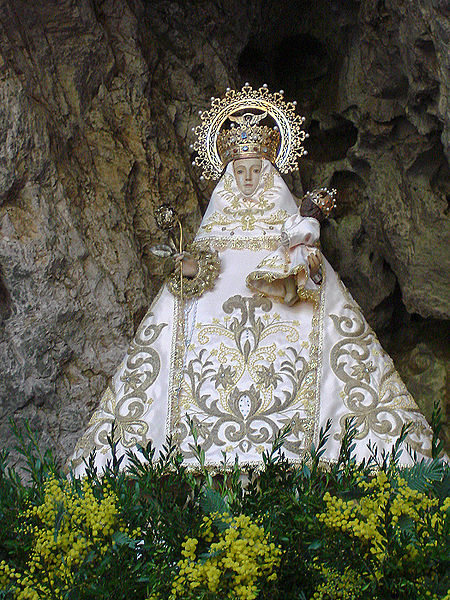
Feast of the Holy Name of Mary (1683 ) – 12 September: This Feast was first observed at Cuenca, Spain in 1513, then extended to the Universal Church and assigned to its present place and rank by Pope Innocent XI in 1683, in thanksgiving to God and the Blessed Virgin, for the liberation of Vienna, France and the signal victory over the Turks on 12 September 1683. It is the Titular Feast of the Society of Mary (Marianists) and of the Congregation of the Oblates of Mary Immaculate.
St Juventius of Pavia St Mancius of Saint Thomas St Paul of Saint Clare St Sacerdos of Lyon St Silvinus of Verona St Tomás de Zumárraga Lazcano
Martyrs of Alexandria – 6 Saints: A group of Christians Martyred in the persecutions of Diocletian. We know little more than their names – Hieronides, Leontius, Sarapion, Seleusius, Straton and Valerian. They were drowned c 300 at Alexandria, Egypt.
Martyrs of Phrygia – 3 Saints: Three Christians who were Martyred for destroying pagan idols. We know little more than their names – Macedonius, Tatian and Theodolus. They were burned to death in 362 in Phrygia (modern Turkey).
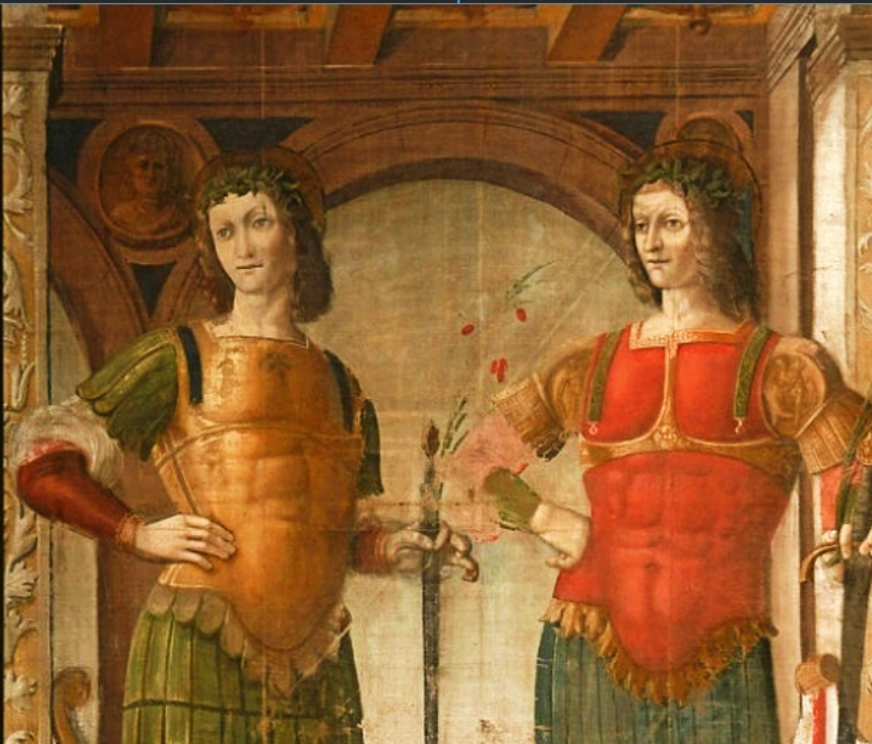
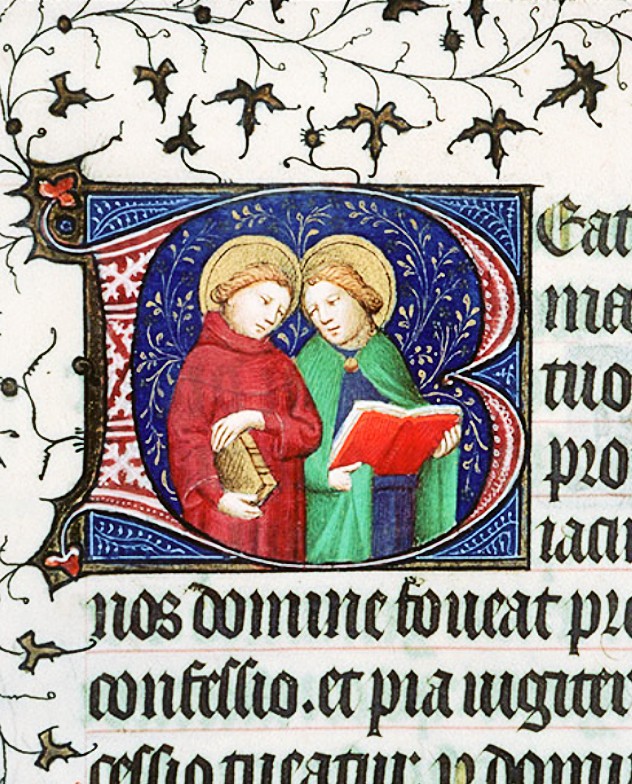
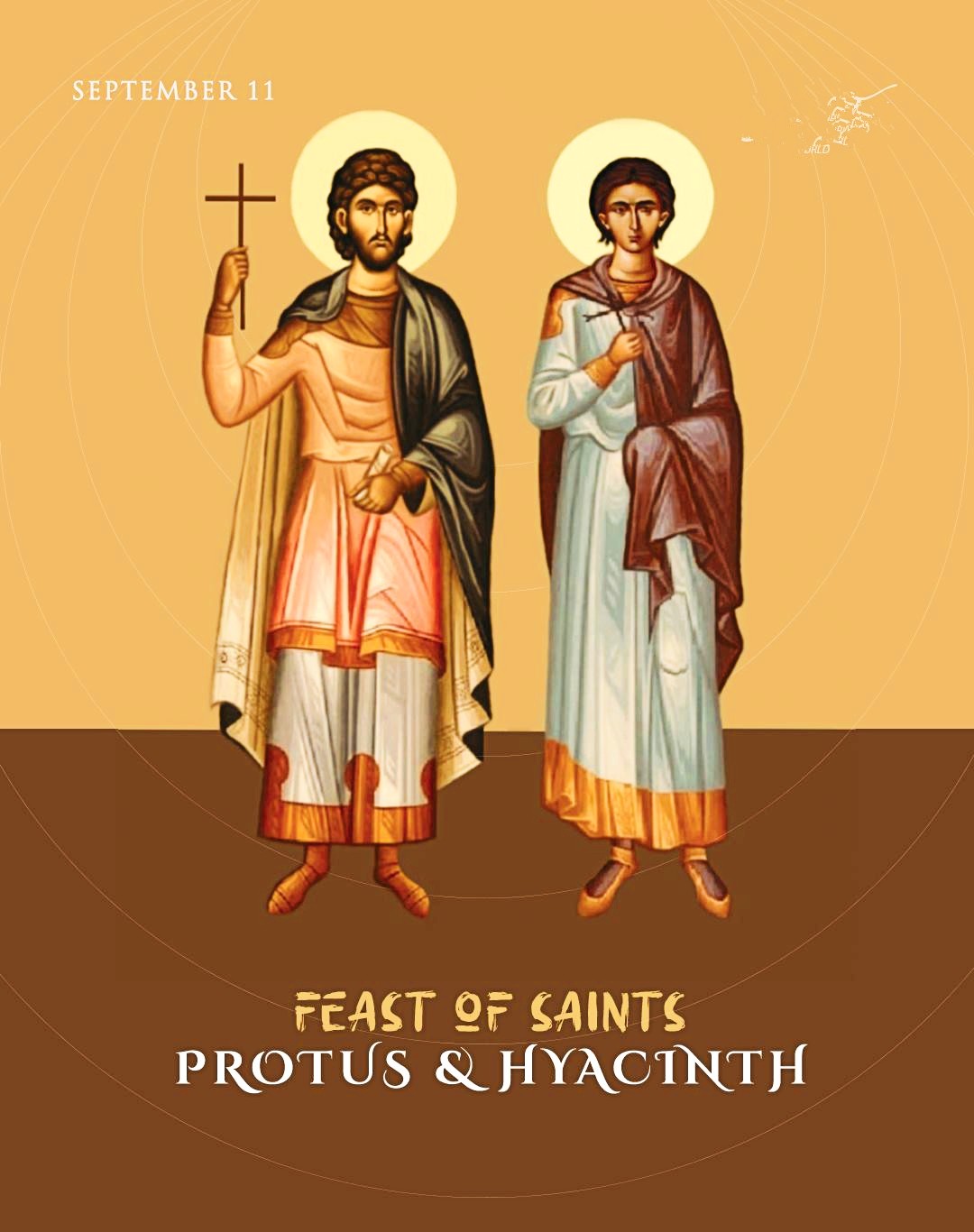
Saint/s of the Day – 11 September – St Protus and St Hyacinth (Died c257) Brother Martyrs during the persecution of Emperor Valerian (257–259), they served as household Officials to St Eugenia. Protus is also known as – Protatius, Proteus, Prothus, Prote and Proto. His name was corrupted in England as Saint Pratt. Hyacinth is sometimes called by his Latin name Hyacinthus (in French: Hyacinthe, Spanish: Jacinto and Italian: Giacinto).
The Roman Martyrology states today: “At Rome, in the Cemetery of Basilla, on the old Salarian Way, the birthday of the Holy Martyrs, Protus and Hyacinth, brothers and eunuchs in the service of the blessed Eugenia, who were arrested in the time of the Emperor Gallienus, on the charge of being Christians and urged to offer sacrifice to the gods. But as they refused, both were most severely scourged and finally, beheaded.”
Tradition holds that Protus and Hyacinth were brothers. They served as Chamberlains to Saint Eugenia, a holy Christian Virgin and Martyr and were Baptised along with her by Helenus, Bishop of Heliopolis.
Devoting themselves zealously to the study of Sacred Scripture, they lived with the hermits of Egypt and later accompanied Eugenia to Rome. There, they were arrested for their Christian Faith by Emperor Gallienus (260–268). Refusing to deny their faith, they were first scourged and then beheaded on 11 September.
In 1845, Father Marchi discovered the still undisturbed grave of St Hyacinth in a Crypt of the above-mentioned Catacomb. It was a small square niche in which lay the ashes and pieces of burned bone, wrapped in the remains of costly materials. Evidently the Saint had been burnt, a fate which many Martyrs had suffered, either dying by fire or being burnt after death. The niche was closed by a marble slab similar to that used to close a loculus (or tomb) and bearing the original Latin inscription which confirms the date in the old Roman Martyrology, mentioned above.
The day of Protus and Hyacinth’s annual commemoration is mentioned in the “Depositio Martyrum” on 11 September, in the Chronographia for the year 354.
The Chronographia also mentions their graves, in the Coemeterium of Basilla on the Via Salaria, later the Catacomb of St Hermes. The “Itineraries” and other early authorities, likewise give this as their place of burial.
St Emilian of Vercelli St Essuperanzio of Zurich St Felix of Zurich Bl Franciscus Takeya Bl François Mayaudon Bl Gaspar Koteda St Gusmeo of Gravedona sul Lario St Leudinus of Toul St Matthew of Gravedona sul Lario St Paphnutius of Thebes St Patiens of Lyon Bl Peter Taaffe Bl Petrus Kawano St Regula of Zurich St Sperandea St Theodora the Penitent
Saint of the Day – 10 September – Saint Peter Martinez (Died c1000) Archbishop of Antealares at Compostela, Monk, Abbot, leader of the Spanish Reconquista. Born in Galicia, Spain, Also Known as – Peter of Mozonzo.
Peter’s religious life began in around 950, as a Benedictine Monk at the Monastery of Saint Mary of Monzonzo where he later became the Abbot.
In 986, he was appointed the Archbishop of Saint Martin of Antealares in Compostela. Peter played an important role in the Spanish Reconquista, which drove the Moors out of Spain.
Some believe he might have been the Author of the Salve Regina although it is most widely believed that it was composed by Blessed Herman of Reichenau (1013–1054) with the Doxology being spontaneously added by the Mellifluous Doctor, Saint Bernard (1090-1153).
St Salvius of Albi St Sosthenes of Chalcedon St Theodard of Maastricht St Victor of Chalcedon
Martyrs of Bithynia – 3 Sister Saints: Three young Christian sisters Martyred in the persecutions of Emperor Maximian and governor Fronto: Menodora, Metrodora, Nymphodora. They were Martyred in 306 in Bithynia, Asia Minor (in modern Turkey).
Martyrs of Japan – 205 Beati: A unified feast to memorialise 205 Missionaries and native Japanese known to have been murdered for their Faith between 1617 and 1637.
Martyrs of Sigum – 8 Saints: A group of Nicomedian Martyrs, condemned for their faith to be worked to death in the marble quarries of Sigum. There were Priests, Bishops and Laity in the group but only a few names have come down to us: Dativus, Felix, Jader, Litteus, Lucius, Nemesian, Polyanus, Victor. They were worked to death c 257 in Sigum.
Quote/s of the Day – 9 September – St Peter Claver SJ (1581-1654) Confessor, “Slave of the slaves”
“To do the will of God, man must despise his own; the more he dies to himself, the more he will live to God.”
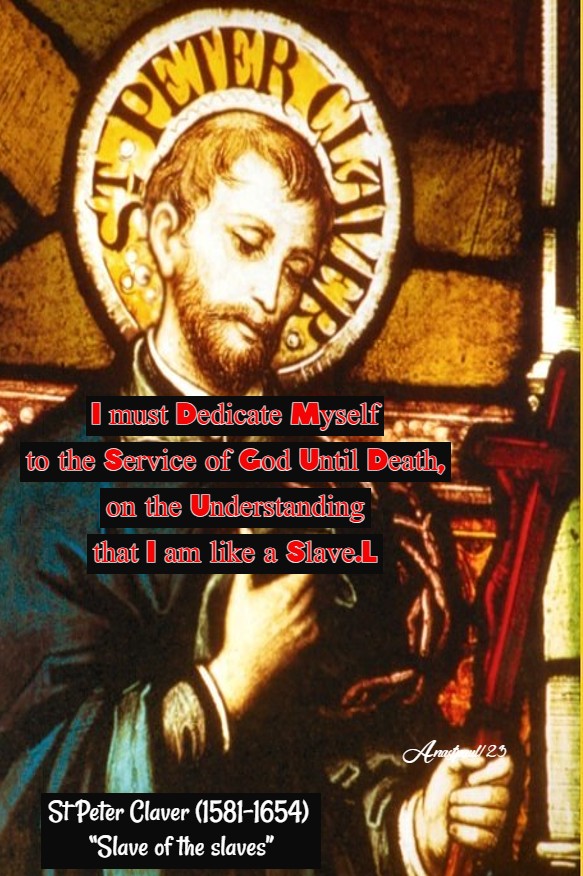
“I must dedicate myself to the service of God until death, on the understanding that I am like a slave.”
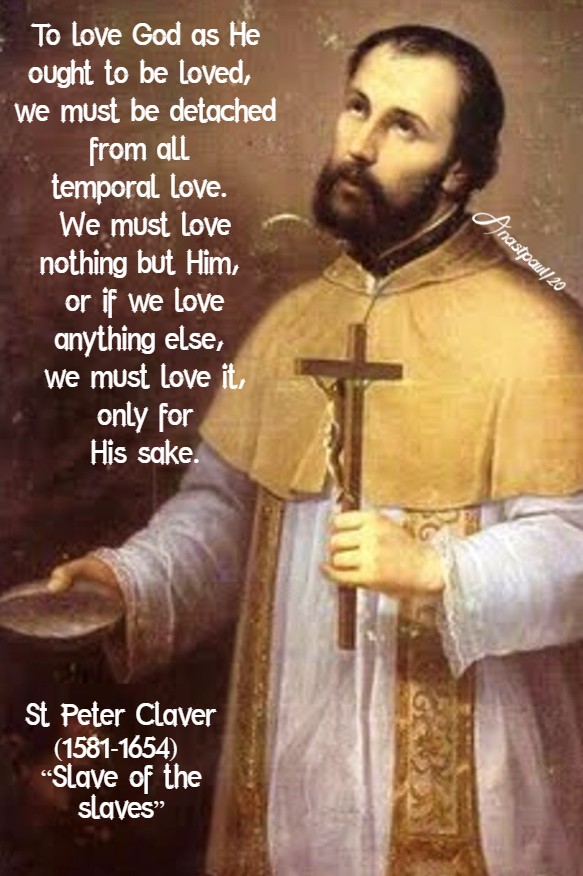
“To love God as He ought to be loved, we must be detached from all temporal love. We must love nothing but Him, or if we love anything else, we must love it, only for His sake.”
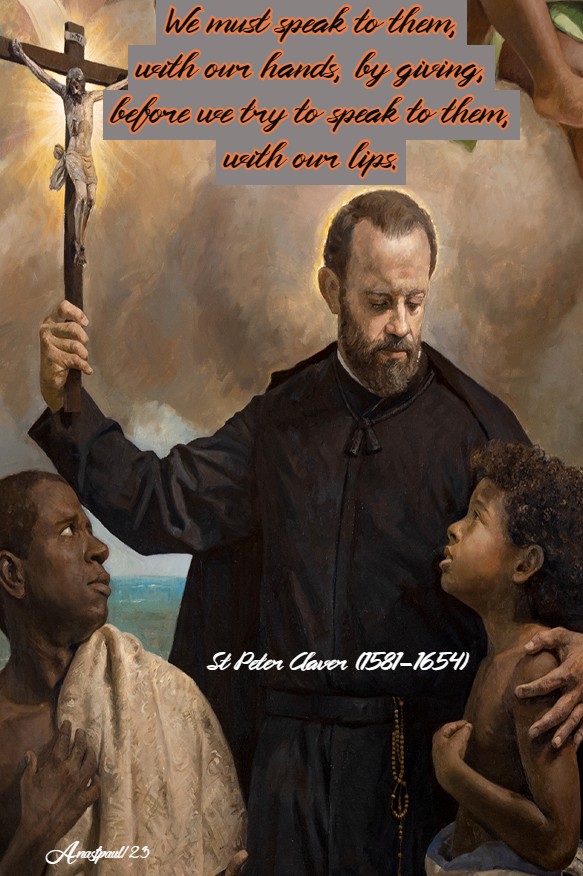
“We must speak to them, with our hands, by giving, before we try to speak to them, with our lips.”
St Peter Claver (1581-1654)
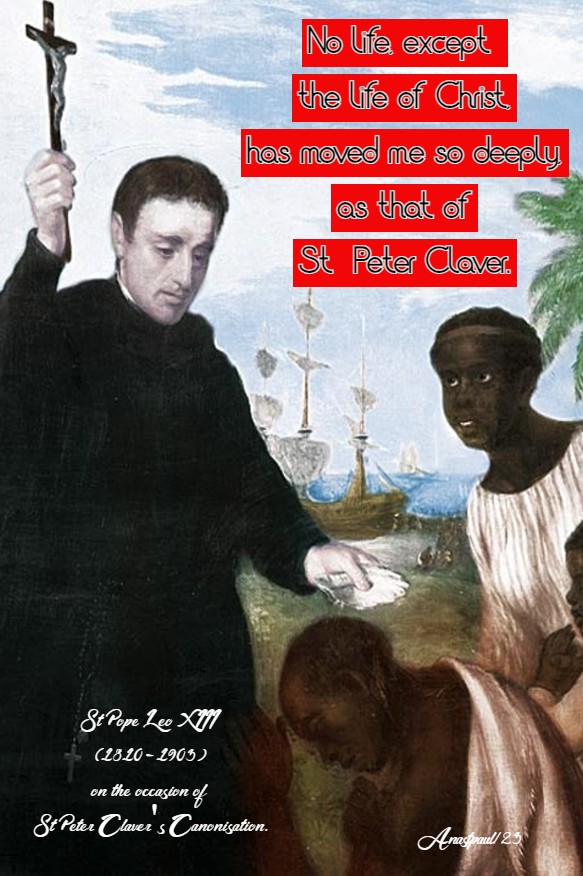
“No life, except the life of Christ, has moved me so deeply, as that of Peter Claver.”
St Pope Leo XIII (1810-1903) on the occasion of St Peter Claver’s Canonisation.
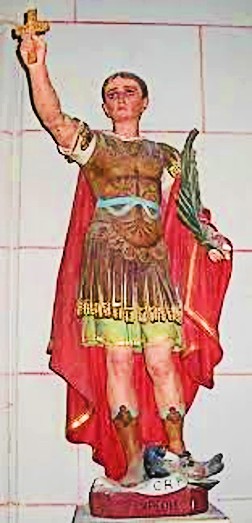
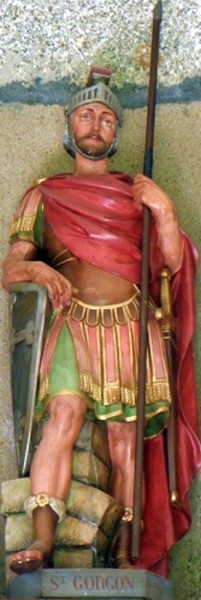
Saint of the Day – 9 September – St Gorgonius of Nicomedia (Died c303) Confessor, Martyr, Soldier, Imperial Court Official and companions, St Dorotheus. After many horrific tortures these two were finally strangled to death in 303 in Nicomedia, Bithynia (modern Izmit, Turkey).
The Roman Martyrology reads today: “At Nicomedia, the holy Martyrs, Gorgontius, Dorotheus and others. The greatest honours had been conferred on them by the Emperor Diocletian but, as they detested the cruelty which he exercised against the Christians, they were, by his orders, suspended in his presence and lacerated with whips; then their skin being torn from their bodies and vinegar and salt poured over them, they were burned on a gridiron and finally, strangled. After some time, the body of the blessed Gorgonius was brought to Rome and deposited on the Latin Way. Thence, it was transferred to the Basilica of St Peter and later some Relics went to France.”
Gorgonius held a high position in the household of the Emperor and had often been entrusted with matters of the greatest importance.
At the onset of the persecution, he was consequently, among the first to be charged and, remaining constant in the profession of the Faith, was with his companions, Dorotheus, Peter and several others, subjected to the most frightful torments and finally strangled.
Diocletian, determined that their bodies should not receive the extraordinary honours which the early Christians were wont to pay the Relics of the Martyrs (honours so great as to occasion the charge of idolatry!) ordered them to be thrown into the sea.
The Christians, nevertheless, obtained possession of them and later, the body of Gorgonius was carried to Rome, whence, in the 8th Century, it was translated by St Chrodegang, Bishop of Metz and enshrined in the Monastery of Gorze. Many French Churches obtained portions of the Saint’s body from Gorze,but in the general pillage of the French Revolution, most of these relics were lost.
Our chief sources of information regarding these Martyrs are Lactantius and Eusebius. Our Saint today and his companions are celebrated today, 9 September. There are many magnificent Churches names for our Saint in Europe, especially in France, Belgium and Germany.
St Peter Claver SJ (1581-1654) Confessor, Priest of the Society of Jesus, Missionary, Confessor, Patron of the missions to African peoples and Human Rights Defender, Apostle of Charity. Also known as “The Apostle of Cartagena” and “The Slave of the Slaves.” Biography: https://anastpaul.com/2017/09/09/saint-of-the-day-9-september-st-peter-claver-s-j/
St Alexander of Sabine St Basura of Masil St Bettelin St Dorotheus of Nicomedia (Died c303) Martyr, Soldier Bl Gaudridus St Gorgonio of Rome St Gorgonius of Nicomedia(Died c303) Martyr, Soldier St Isaac the Great St Joseph of Volokolamsk (c1439-1515) Abbot, Founder
Bl Maria Eutimia Uffing Bl Mary de la Cabeza St Omer St Osmanna St Rufinian St Peter of Nicomedia (Died c303) Martyr, Soldier St Severian St Straton St Tiburtius St Valentinian of Chur St Wilfrida St Wulfhilda
Saint of the Day – 8 September – St Adrian (Died 306) Confessor, Lay Martyr, Royal Court Guard in Roman Imperial Court at Nicomedia in Asia-Minor during the time of Emperor Maximian in the early 4th Century. Patronages – against the plague/epidemics, against epilepsy, arms dealers, butchers, guards, soldiers. Also known as – Hadrian.
The Roman Martyrology reads this day: “At Nicomedia, St Adrian, with twenty three other Martyrs, who ended their Martyrdom on the 4th day of March by having their limbs crushed, after enduring many torments, under the Emperors Diocletian and Maximian. Their remains were carried to Byzantium by the Christians and buried with due honours. Afterwards, the body of St Adrian was taken to Rome on this day, on which his festival is celebrated.”
Adrian was a paganGuard at the Imperial Court of Nicomedia. Impressed by the courage of a group of Christians who were being tortured, he declared himself a Christian and was imprisoned with them and suffered excruciating tortures before he was put to death.
After his execution, the executioners wanted to burn the bodies of the dead but a storm arose and quenched the fire. His young wife, Natalia, who was present at his death, comforted him in his agony, recovered one of his severed hands and took it to Argyropolis near Constantinople, where she fled to escape the importunities of an Imperial Official of Nicomedia, who wanted to marry her. She died there peacefully on 1 December in the same year as her husband.
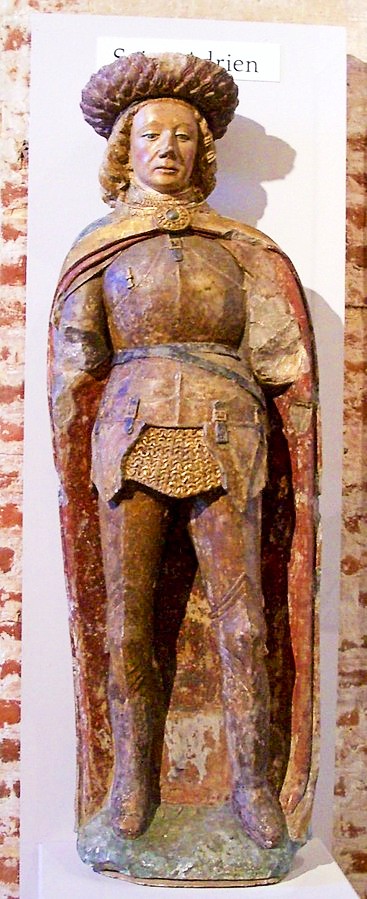
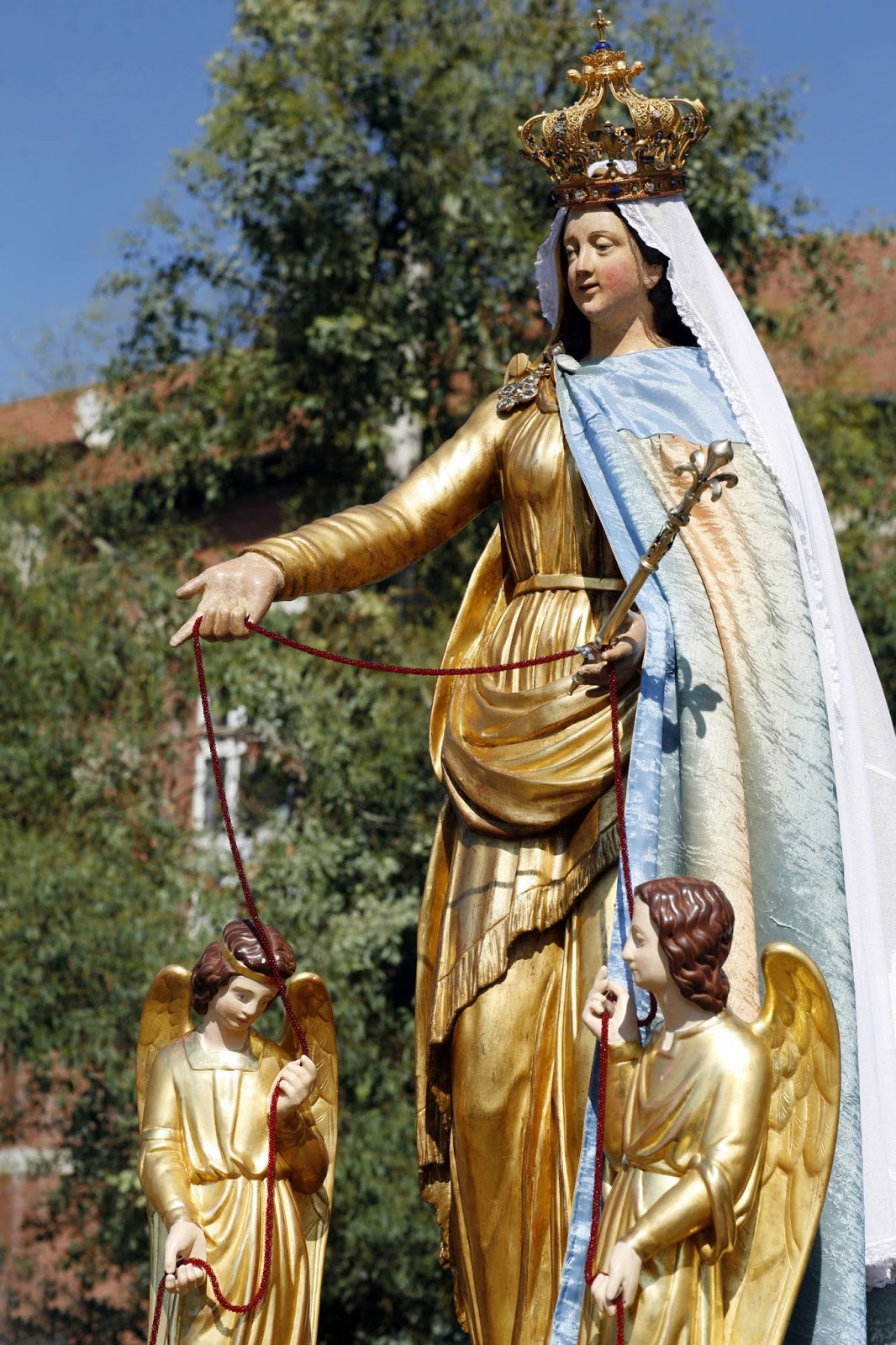
French Statue of St Adrian
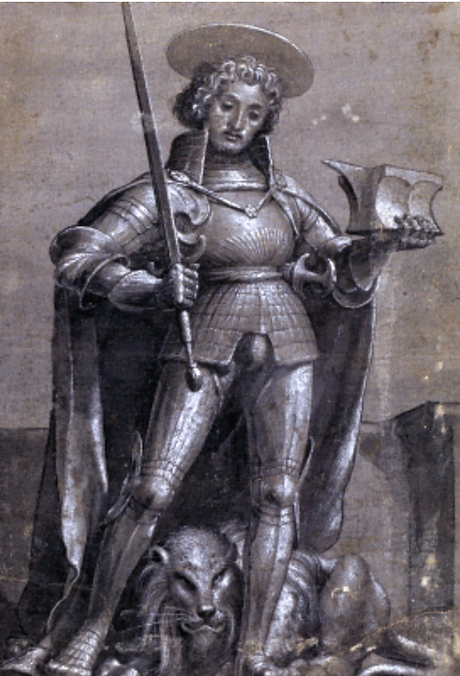
Saint Adrian/Hadrian was the chief military Saint of Northern Europe for many Centuries second only to Saint George and is much revered in Belgium, Germany and the north of France. He is usually represented armed, with an anvil in his hands or at his feet.
St Disibod of Disenberg St Ethelburgh of Kent St Faustus of Antioch St Isaac the Great Blessed István Pongrácz St Kingsmark St Peter of Chavanon Bl Seraphina Sforza
Martyrs of Alexandria – 5 Saints: A group of Christians Martyred together in the persecutions of Diocletian – Ammon, Dio, Faustus, Neoterius and Theophilus. Martyred in Alexandria, Egypt.
Martyrs of Japan – (21 Beati: A group of 21 Missionaries and Converts, who were executed together for their faith. They were: Antonio of Saint Bonaventure, Antonio of Saint Dominic, Dominicus Nihachi, Dominicus of Saint Francis, Dominicus Tomach, Francisco Castellet Vinale, Franciscus Nihachi, Ioannes Imamura, Ioannes Tomachi, Laurentius Yamada, Leo Aibara, Lucia Ludovica, Ludovicus Nihachi, Matthaeus Alvarez Anji, Michaël Tomachi, Michaël Yamada Kasahashi, Paulus Aibara Sandayu, Paulus Tomachi, Romanus Aibar, Thomas of Saint Hyacinth, Thomas Tomachi Died on 8 September 1628 in Nagasaki, Japan Beatified on 7 May 1867 by Pope Pius XI.
Saint of the Day – 7 September – Blessed Marko Križevcanin (c1588-1619) Priest Martyr, Missionary, Professor of Theology. Born in c1589 in Križevci, Koprivnicko-Križevacka, Croatia and died on 7 September 1619 in Košice, Košický kraj, Hungary (now in Slovakia). At the time of his Martyrdom he was 31 years old.Also known as – Marek Križin, Mark Crisin, Mark Crisinus, Marko Krizevcanin, Marko Krizin. Marko was Beatified on 15 January 1905 by Pope Pius X.
Born in KriÏevci in Croatia in 1588 to a noble Croatian family, Marko became a student of the Jesuits in Vienna and Graz, where he obtained his Doctorate in Philosophy, he then studied at the Gregorian College in Rome (1611-1615) as a student of the German-Hungarian College.
Marko was Ordained in Rome together with others who would later became his companions in Martyrdom. Returning to Croatia he exercised the pastoral ministry for two years and was then called, by Cardinal Pázmány, (his former Professor in Graz) to direct the Trnava Seminary.
At that time Marko was also appointed Canon of Esztergom (the Chapter was located in Trnava, due to the presence of the Turks in Hungary).
At the beginning of 1619, he was sent by the Chapter to administer the assets of the former Benedictine Abbey in Krásna, near Kosice. When the Hungarian Prince of Transylvania, Calvinist, Gabor Bethlen, began the war against the Emperor (beginning of 1619) the Jesuits, already expelled from Bohemia and Moravia (by the Bohemian Lutherans in agreement with Prince Bethlen), found asylum in Austria, Poland and Hungary.
In September 1619, Kosice was besieged by the army of George I Rákoczi, future Prince of Transylvania. On 5 September 1619, the Catholic Governor of Kosice was betrayed by the Mercenaries and the Calvinist population handed him over to Rákoczi, together with his three Priest guests. The head of the Municipal Council, Reyner, instigated by the Calvinist preacher, Alvinczi, called for the death of all the Catholics in the City! The majority of Calvinists opposed total extermination but the condemnation of the three Priests suited everyone.
On 7 September, at night, the torture began, aimed at bending the spirit and leading to the renunciation of Catholicism. The material executors were Rákoczi’s soldiers. In the presence of the Calvinist preacher, Alvinczi and the Municipal Official, Reyner, Fr Marko Krizevcanin was beheaded after the first tortures. Fr Grodziecki was beheaded a little later. Fr Pongrácz had to suffer much longer. Emasculated, suspended upside down, burned with torches until his bowels came out. Believed dead, the following morning he was thrown with the bodies of his companions into a drain, where he lived for another 20 hours, praying unceasingly.
The murder of the gentle victims aroused consternation among the Protestant population, however, funerals were prohibited.
The burial of the bodies took place only 6 months later (the Relics are currently in the Ursuline Church in Trnava). Shortly after the Martyrdom, Cardinal Pázmány began the canonical process in view of Beatification, which would take place on 15 January 1905 in Rome by St Pius X.
St Alcmund of Hexham Bl Alexander of Milan St Augustalus St Balin St Carissima of Albi St Chiaffredo of Saluzzo Bl Claude-Barnabé Laurent de Mascloux St Desiderio of Benevento St Dinooth Bl Eugenia Picco St Eupsychius of Caesarea St Eustace of Beauvais St Evortius of Orleans (Died c340) Bishop St Faciolus St Festo of Benevento Bl François d’Oudinot de la Boissière St Giovanni of Lodi St Goscelinus of Toul St Gratus of Aosta St Grimonia of Picardy St Hiduard Bl John Duckett Bl John Maki Bl John of Nicomedia Bl Ludovicus Maki Soetsu Madalberta Bl Maria of Bourbon Blessed Marko Križevcanin (c1588-1619) Priest Martyr St Melichar Grodecký St Memorius of Troyes St Pamphilus of Capua Bl Ralph Corby
Martyrs of Noli: Four Saints: Christians who became soldiers and were martyred together for their faith. A late legend makes them member of the Theban Legend who escaped their mass martyrdom but that’s doubtful – Paragorius, Partenopeus, Parteus and Severinus. They were born in Noli, Italy and martyred in Corsica, France. Attribute – soldiers with a banner of NoliM
Saint of the Day – 6 September – St Bega (Died c660) Virgin, Irish Princess, Abbess Founder, Miracle-worker. Born in the 7th Century in Ireland as a Princess and died in 681 of natural causes. Also known as – Bee, Bees, Begga, Begh, Begha. Additional Memorial – 31 October in Scotland.
The Roman Martyrology reads: “On the Cumberland coast in England, in a Town which later took its name from her, Saint Bega, consecrated virgin.”
Bega was the daughter of an Irish King. She is described as beautiful, virtuous and learned. Her father had promised her in marriage, to the son of the King of Norway but Bega had no intention of marrying. She wished to consecrated her virginity to Christ.
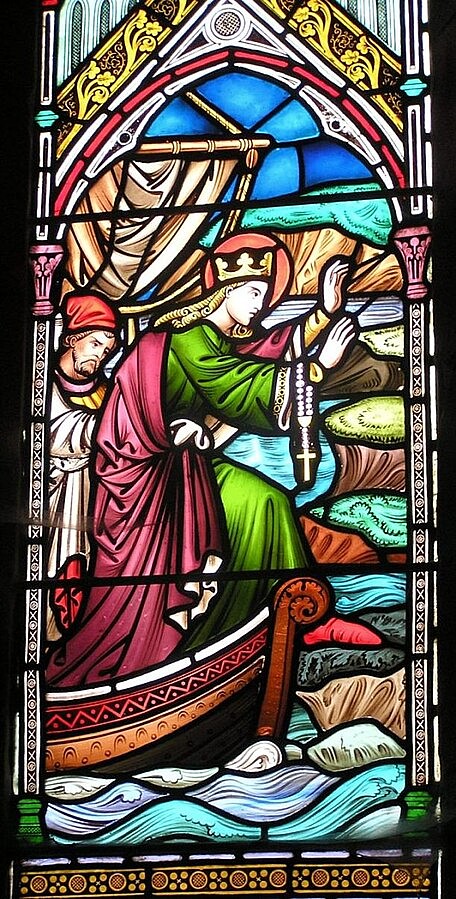
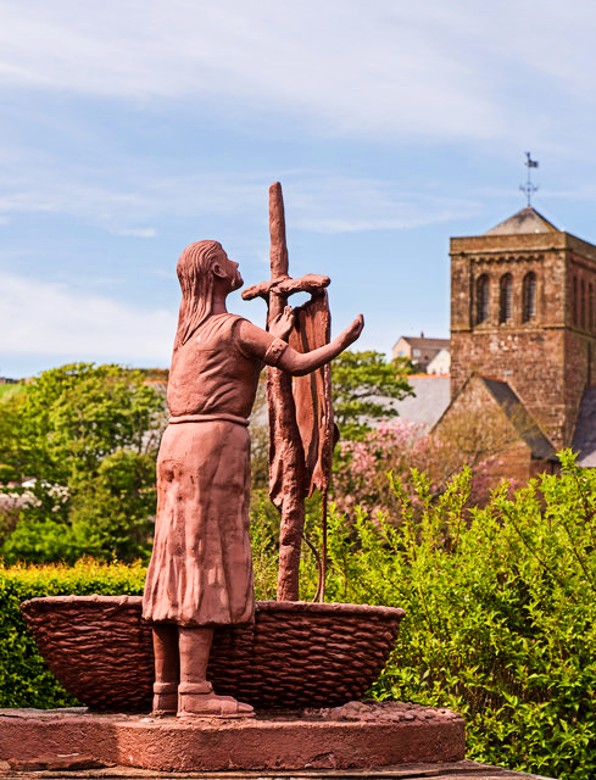
According to her Vita, an Angel presented Bega with an arm ring (bracelet) inscribed with the Cross as a token of her sacred promise. Bega escaped by the grace of God and with miraculous assistance. In onr account, Bega was transported across the Irish Sea by a clod of soil. She arrived safely on the English coast at Cumbria. Settling there, Bega lived in strict seclusion in a hut she built, in amongst a grove of trees near the seashore. She survived on food brought to her by seagulls and gannets.
After some years passed, Viking pirates began to raid the coast. The good Saint ,however, dreaded not death, nor mutilation, nor the loss of temporal goods, of which she was destitute except her bracelet (armilla) but she feared the loss of her virginity, the most precious treasure with which heaven can endow her sex.
By Divine command, Bega hastened her departure from the place but she was induced to leave her bracelet behind her that miracles, in ages to come, might be performed in that neighbourhood, in testimony of her holy life. She travelled inland and on the advice of King Oswald (later St Oswald of Northumbria (c604-642) Martyr and King – https://anastpaul.com/2019/08/05/saint-of-the-day-5-august-saint-oswald-of-northumbria-c-604-642-martyr/), she professed her religious vows and established a Monastery at St Bees in Cumbria under her administration as Abbess.
Bega is often wrongly identified with Saint Eiu (Heiu), who the Venerable St Bede says was the first woman to embrace monastic life in Northumbria, receiving the veil from the hands of Saint Aidan. Following this confusion, she was credited with founding other Monasteries in Yorkshire and there was considerable interference in her veneration as well.
It seems that our Saint died around 660, perhaps in her Monastery in Cumberland which, after her death, took her name and remained the main centre of her cult. It was later seriously damaged by the Danes but at the beginning of the 12th Century was restored as a Priory dependent on the Benedictine Abbey of St Mary of York and endowed by the Earl of Cumberland, William de Meschines.
Bega was considered a Patron Saint by the inhabitants of Cumberland and of the regions near the promontory, who resorted to her to defend them from the bullying of the local Lords and from the incursions of pirates. She was considered, in particular, as the Patroness of the poor and defenceless, with reference to a popular tradition, according to which, she would personally take care of the material needs of the workers, who worked on the construction of her Monastery.
The abovementioned Earl also claimed to possess the miraculous golden arm-ring or bracelet which, Bega received from an Angel before leaving Ireland, as a sign of loyalty to her Celestial Groom. Until the 12th Century, the bracelet was used for the performance of oaths, in the same way as the Sacred Scriptures are used today. It was certain, in fact, that the perjurer would not escape Celestial punishment.
In Scotland, the Church of Kilbees (Bega’s Church), dedicated to her, is also remembered. According to the legends which identify her with Saint Eiu, she, Bega, founded a Monastery in Hartlepool, in the northern region of Yorkshire and here she died as a simple Nun, having renounced the position of Abbess, in favour of Saint Hilda. From the Aberdeen Breviary of 1509, in which the same confusion of characters is found, we learn that, following a Divine intervention, 460 years after her death, Bega’s Relics were found in Hartlepool and solemnly transferred to the restored Monastery of Whitby, where, at the beginning of the 16th Century, were still the object of a lively veneration.
Bega’s festival was commonly celebrated on 6 September. As well as in the northern regions of Great Britain, she is also venerated in Norway, perhaps from this was born the legend, reported by some, according to which the Saint travelled to that Country, successfully working towards the conversion of that people.
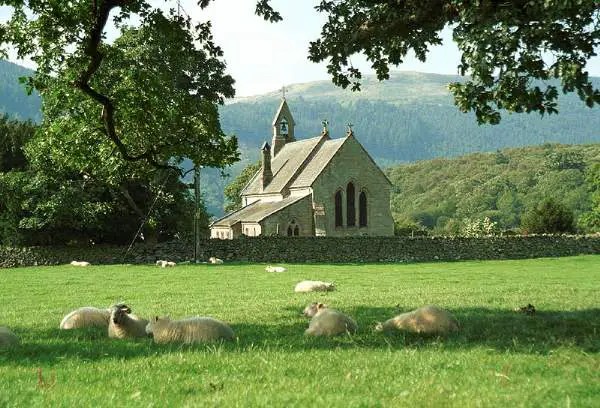
Her Feast day is still celebrated in the Diocese of Lancaster, in Scotland, in Yorkshire and Cumbria. Below is her Church in Bassenthwaite in the Lake District, Cumbria.
St Cagnoald St Consolata of Reggio Emilia St Cottidus of Cappadocia
St Eleutherius the Abbot (Died c 585) Monk and Abbot. A wonderful simplicity and spirit of compunction were the distinguishing virtues of this holy sixth century Abbot. His Lifestory: ttps://anastpaul.com/2020/09/06/saint-of-the-day-saint-eleutherius-the-abbot-at-spoleto-died-c-585/
St Eugene of Cappadocia St Eve of Dreux St Faustus of Alexandria St Faustus of Syracuse St Felix of Champagne
St Mansuetus of Toul St Onesiphorus St Petronius of Verona St Sanctian of Sens St Zacharius the Prophet
Martyrs of Africa – 6 Saints: There were thousands of Christians exiled, tortured and Martyred in the late 5th Century by the Arian King Hunneric. Six of them, all Bishops, are remembered today; however, we really know nothing about them except their names and their deaths for the Christ and the Faith – Donatian, Fusculus, Germanus, Laetus, Mansuetus and Praesidius.
Saint of the Day – 5 September – Blessed Gerbrand of Dokkum OPraem (Died 1267) Priest/Canon Regular, the 4th Abbot of the Premonstratensian (Norbertine) Monastery at Dokkum, and a supporter of the Crusades. He encouraged the Frisians to join the Crusade and, in 1268, as a result of his zeal, was awarded, by Pope Clement IV, the Title of ‘Sacrae Militiae Dux‘ (Leader of the Crusade). Gerbrand was a close friend of Saint Louis IX of France (1226-1270). Born in the early 13th Century in a region of modern Netherlands and died on 11 October 1267 at the Premontres Motherhouse in Laon, France of natural cause.
St Norbert
The blessed Gerbrand joined the Premonstratensians, who are also called the Norbertines after their Founder, Saint Norbert of Xanten (c1080-1134) and also the White Canons after the colour of the Order’s Habit. Gerbrand became a Canon in their Monastery in Dokkum in Friesland in today’s Netherlands.
He was elected the 4th Abbot of the Dokkum Monastery. He was a champion of the Crusades and was a friend of Saint Louis IX of France (1226-1270), from whom he received several letters, which remain extant.
In his sermons, he invited the Frisians to participate in the expeditions to assist the Church iu Jerusalem. In 1268, Pope Clement IV, therefore, gave him the title Leader of the Crusade. He made his believers take up the cross and support the Crusade with their alms.
Gerbrand died during his Order’s General Chapter on 11 October 1267 in the Order’s Mother Monastery at Prémontré near Laon in France. A sisterof the Order from Mount Sion had a vision where she saw Gerbrand die and be taken up into Heaven. He is honoured as blessed by the Premonstratensians with a memorial day on 5 September.
St Lawrence Justinian (1381-1455) Bishop of Venice, Confessor, Reformer, Spiritual writer. The Roman Martyrology states of him today: “The Feast of St Lawrence Justinian, first Patriarch of Venice, who, by glorious miracles and virtues, illustrated the Episcopal dignity which he received against his will on this day. His birthday into Heaven is 8 January.” His Zealous Life: https://anastpaul.com/2021/09/05/saint-of-the-day-5-september-saint-lawrence-justinian-1381-1455/
St Charbel Bl Florent Dumontet de Cardaillac St Genebald of Laon Bl Gendtilis Blessed Gerbrand of Dokkum OPraem (Died 1267) Priest Abbot St Guise Hoang Luong Canh Blessed John the Good OSA (c 1168-1249) Bishop Blessed Jordan of Pulsano Abbot
St Obdulia Bl Phêrô Nguyen Van Tu St Romulus of Rome St Victorinus of Amiterme St Victorinus of Como Bl William Browne
Martyrs of Armenia – 1,000 Saints: A group of up to 1,000 Christian soldiers in the 2nd Century Imperial Roman Army of Trajan, stationed in Gaul. Ordered to sacrifice to pagan gods, they refused and were transferred to Armenia. Ordered again to sacrifice to pagan gods, they refused again. Martyrs. We know the names of three of them but nothing else – Eudoxius, Macarius and Zeno.
Martyrs of Capua – 3 Saints: Three Christians who were Martyred together. Long venerated in Capua, Italy. We know their names, but little else – Arcontius, Donatus and Quintius. They were martyred in Capua, Italy.
Martyrs of Nicomedia – 80 Saints: A group of 80 Christians, Lay and Clergy, Martyred together in the persecutions of Valens. We know little more than the names of three of them – Menedemo, Teodoro and Urbano. They were locked on a boat which was then set on fire on the shore of Nicomedia, Bithynia (in modern Turkey) c370.
Martyrs of Porto Romano – 4+ Saints: A group of Christians Martyred together in the persecutions of Marcus Aurelius. We know little more than their names – Aconto, Herculanus, Nonno and Taurino. c180 at Porto Romano, Italy.
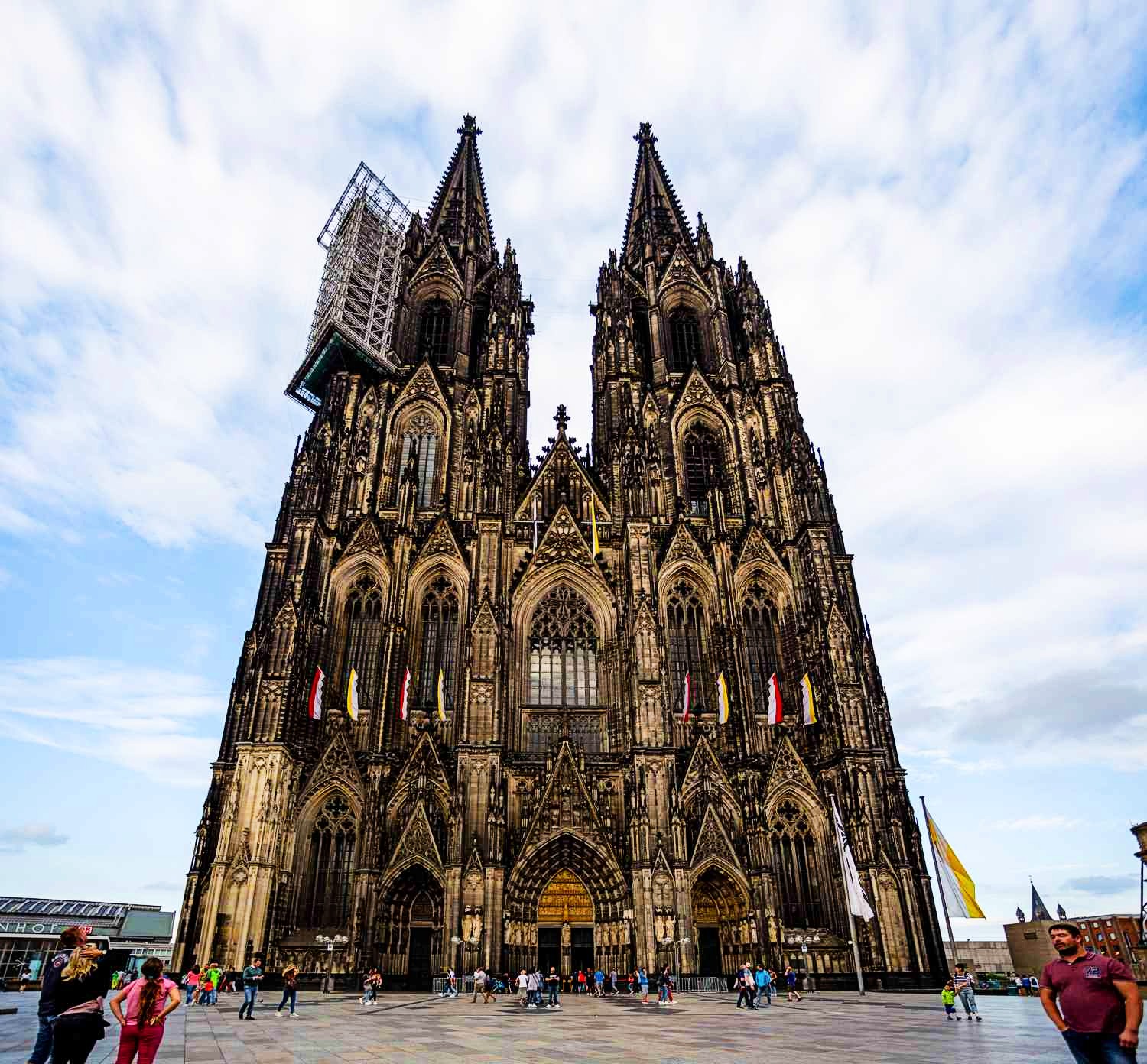
Saint of the Day – 4 September – St Irmgard of Cologne (c1000-c1065 or c1082-1089) Virgin, Reigning Countess of Süchteln, Recluse, Pilgrim, Founder of many Churches and Apostle of the poor. Born in c1000 in Aspel and died in Cologne, Germany of natural causes, where her Relics now reside behind the High Altar of the magnificent Cologne Cathedral. Also known as – Irmgarde, Irmengarda, Irmgard of Süchteln., Irmgard of Aspe. Additional Memorial – 10 November on some calendars in her locale.
The Roman Martyrology reads: “In Cologne in Lotharingia, in today’s Germany, Saint Irmgarde, who, Sovereign Countess of Süchteln, committed all her assets to the construction of Churches.”
Irmgard was the daughter of Count Godizo of Aspel, in the Lower Rhine, a relative of Saint Henry II, the Emperor and his wife Saint Cunegonde. after her parents died, she distributed her wealth among hospitals, Churches, founding and building new Churches, the poor and needy..
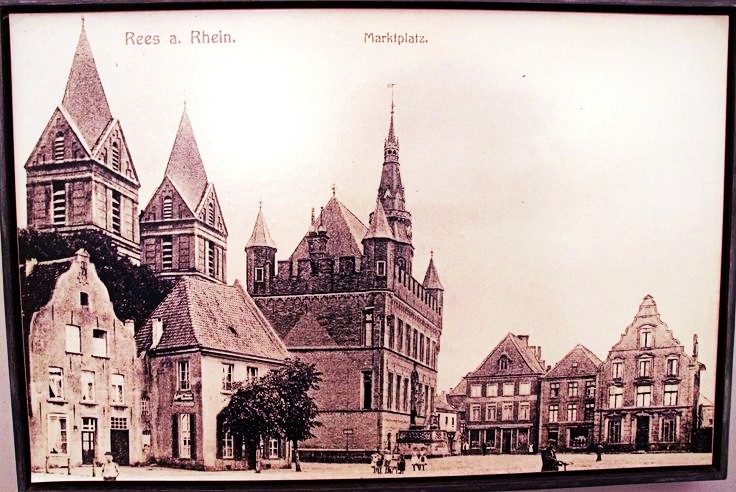
Above her parents’ Tomb, in Rees, Irmgard had a Church built in honour of the Holy Virgin.
Emperor Henry III granted her many lands in Belgium and Holland and, in 1049, Pope Saint Leo IX visited her in Aspel. Shortly afterwards, she left her deceased parent’s house and became a Recluse in Süchteln, where she lived a life in solitude of prayer, fasting and penance.
St Irmgard’s parents home in Rees
After a pilgrimage to Rome, Irmgard lived in Cologne, from where on a second pilgrimage, she brought back to Rome, some earth from the Cemetery of Saint Ursula which she would miraculously turn into blood. Irmgard completed three pilgrimages during her life.
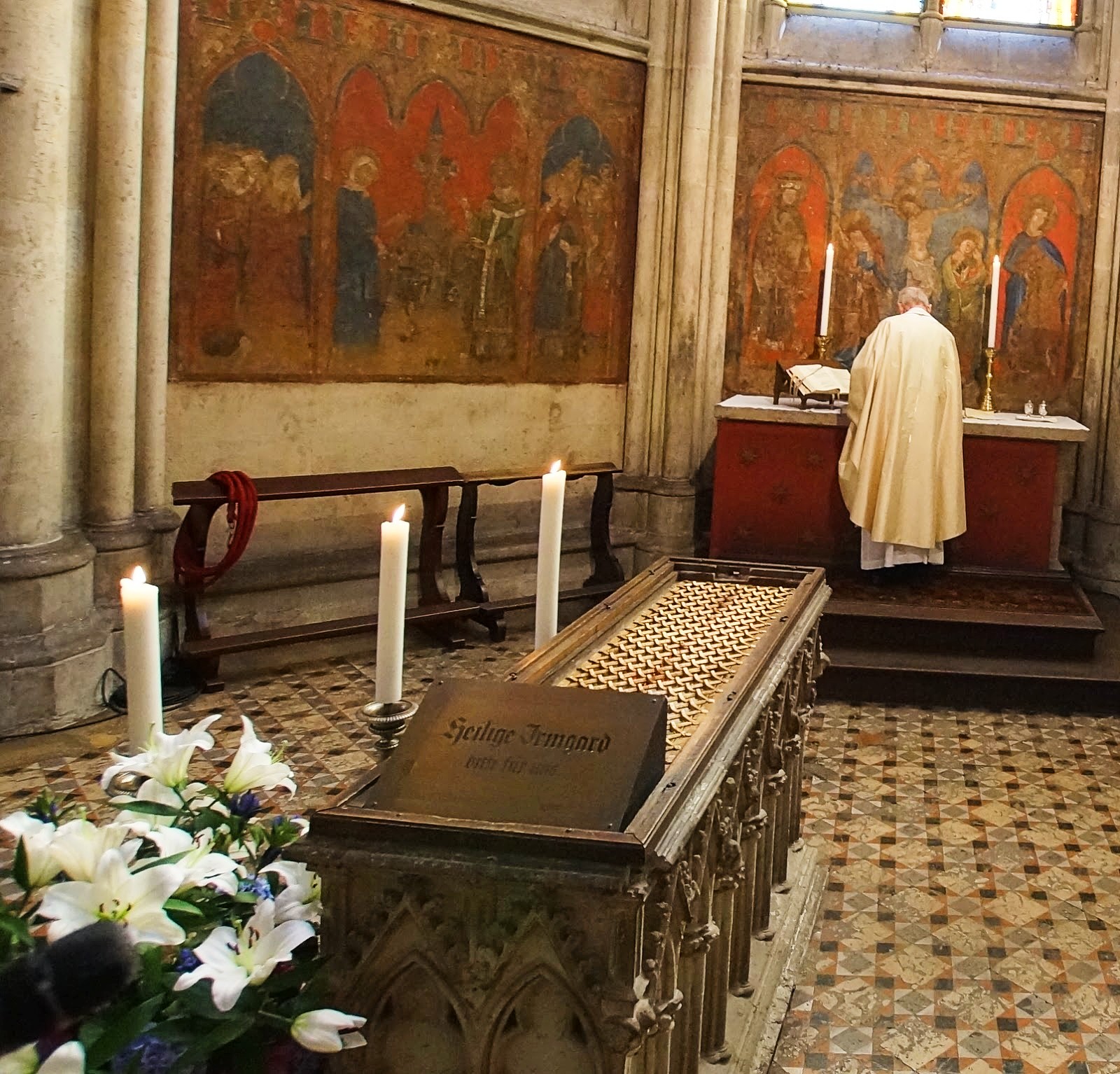
St Irmgard’s Sarcophagus behind the High Altar at Cologne Cathedral
St Irmgard’s Sarcophagus behind High Altar in Cologne Cathedral
Irmgard died around 1089, probably on 4 September in Cologne. Her Tomb is located behind the High Altar in the Cathedral of this City. Already in 1319 she had the title of Saint and her Feast was celebrated on 4 September and 10 November and her cult flourished, particularly in Cologne, Rees, Süchteln and Aspel, where today there are many Pilgrimages and celebrations on her Feast.
Cologne Cathedral
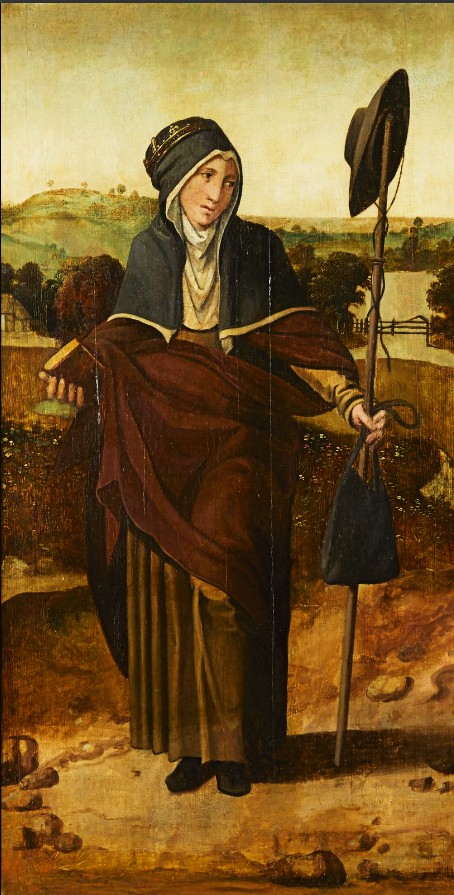
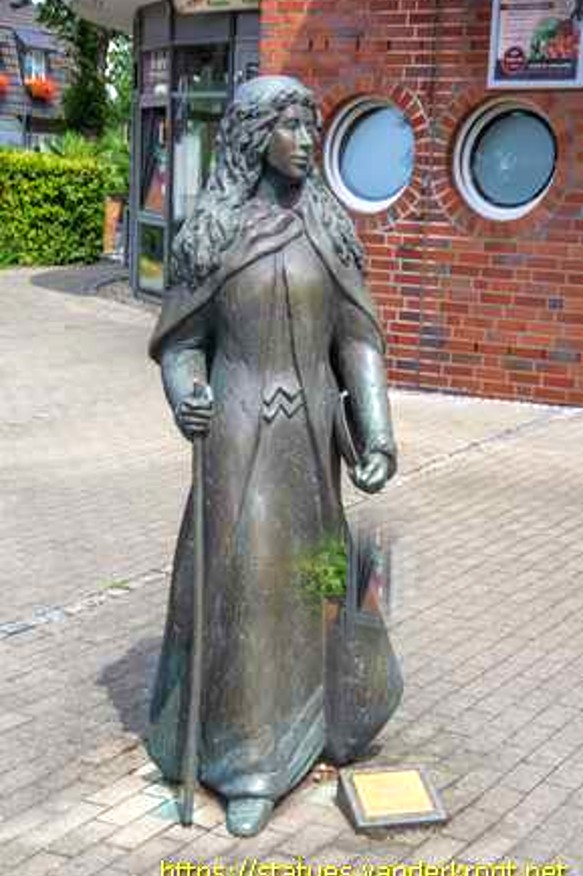
Irmengard is represented as a noble lady with a crown on her head, a model of a Church in one hand, a staff in the other. There are numerous Chruches, Schools, Hospitals, Apostolates and Institutions named after our Saint.
St Rose of Viterbo TOSF (c 1233 – 1251) Virgin, Preacher – Member of the Franciscan Third Order, Recluse, Miracle-Worker. Rose was quickly acclaimed a Saint by the people of Viterbo who brought her incorrupt body to the Poor Clare Monastery which had refused her entry in life. Pope Innocent IV immediately began the process for her Canonisation but, for various reasons, her cause did not proceed 1457 when she was Canonised. Her Story: https://anastpaul.com/2018/09/04/saint-of-the-day-4-september-st-rose-of-viterbo-c-1233-1251/
St Ammianus the Martyr St Caletricus of Chartres St Candida of Naples St Candida the Elder St Castus of Ancyra
St Irmgard of Cologne (c1000-c1065 or c1082-1089) Countess, Recluse, Pilgrim. St Julian the Martyr St Magnus of Ancyra St Marcellus of Chalon-sur-Saône St Marcellus of Treves St Maximus of Ancyra St Monessa St Moses the Prophet St Oceanus the Martyr Bl Peter of Saint James St Rebecca of Alexandria St Rhuddlad
St Rufinus of Ancyra St Salvinus of Verdun St Silvanus of Ancyra St Sulpicius of Bayeux St Thamel St Theodore the Martyr St Ultan of Ardbraccan St Victalicus
Saint of the Day – 3 September – Blessed Guala de Ronii of Brescia OP ( 1180-1244) Bishop, Priest and Friar of the Order of Preachers, being one of the earliest disciples of St Dominic, Papal Envoy, Peace-maker. Also known as – Guala of Roniis, Guala Romanoni, Guala of Bergamo, Walter… Wilhelm… Guala was Beatified on 1 October 1868 by Pope Pius IX. Additional Memorials – 2 September (Diocese of Brescia), 20 April as one of the Saints of the Diocese of Brescia and 4 September on some calendars.
Guala de Ronii was born in 1180 in the Bergamo Province and belonged to a famed noble Roman house. His parents oversaw his initial education and his excellent progress caused his parents to entertain great hopes for his future, while neglecting to entertain the thought that perhaps God had a surprise in store for their son and the course of his life.
Guala heard St Dominic preach in 1219 and – like others – was so enchanted by St Dominic’s character that he was one of the first to seek him out for enrollment into his new Order of Preachers. Guala soon received the habit from St Dominic himself and later received Ordination as a Priest. St Dominic soon called the Priest to Bologna in order to appoint him as one of four entrusted with the building of Saint Agnes’ convent for Dominican nuns.
He served as one of the Saint’s first disciples and received the latter’s appointment as the first Prior of the Order in Brescia where Dominic founded a Monastery. Both Theoderic of Apolda, the Hagiographer and Blessed Jordan of Saxony were his Dominican contemporaries.
When Guala learned of St Dominic’s death ,which he received in Brescia, with tremendous grief. Prior to this news, he had fallen asleep with his head against a Church bell tower and saw a Friar ascending a ladder into Heaven where Angels surrounded him – that Friar was Dominic, unbeknownst to him at the time. He was about to depart for Bologna when he learned that Dominic had died at the time of his vision!
The Priorship of Saint Nicholas in Bologna – now titled as Saint Dominic – became vacant and the people there elected him to the position in 1226. But his tenure became difficult with tensions between Bologna and rival Mantua which prompted Pope Honorius III to appoint him as the Papal Envoy to the two Cities, n order that he might secure reconciliation between the warring towns – he managed to negotiate peace terms sto remain in place and to be abided by, for a decade. The new Pope Gregory IX then appointed him as the Papal Legate to Frederick II in order to induce him to keep his often broken promise, to march on a crusade for the relief of the faithful in Jerusalem. On 20 July 1225 he oversaw the successful Treaty of San Germano in Cassino.
Brescia longed for his return and when the Bishop of the Diocese died the people pleaded with intense supplications for the Fr Guala’s appointment to replace the deceased. Guala reluctanly accepted his appointment in 1229 as the Bishop of Brescia from Pope Gregory IX and he received his Episcopal Consecration soon after.
His Episcopate intended as a particular objective to make provision for the temporal care of poor children of the Diocese. But ,the Pontiff also made him an Apostolic Delegate to both Treviso and Paduaas peacemaker, when the two were at odds with each other – despite putting the new Bishop far from his flock – and it was he who conducted successful peace negotiations.
Guala’s contemporaries described him as “a man of great prudence, well acquainted with the world, and of accomplished manners” and said that “he governed the Diocese entrusted to his care with such holiness that, both during his life and after his death, he wrought many wonders through God.”
The years of labour and civil strife wore him down. He resigned his See in 1242 in order to enter complete seclusion and pray without interruption, in preparation for death. Therefore, he retired to the Vallumbrosan Monastery of San Sepolcro d’Astino in Bergamo, his hometown, where he lived as a Hermit – despite his retreat into peaceful solitude – many still flocked to seek his wise counsel. Guala died on 3 September 1244. He was buried in the Benedictine Church,and after many miracles at his tomb, his cause was promoted.
St Aigulphus of Lérins St Ambrose of Sens St Ammon of Heraclea Bl Andrew Dotti St Auxanus St Balin St Basilissa of Nicomedia
St Chariton St Chrodegang of Séez St Frugentius the Martyr Blessed Guala de Ronii of Brescia OP ( 1180-1244) Bishop St Hereswitha Bl Herman of Heidelberg St Macanisius St Mansuetus of Toul St Marinus (Died c 366) St Martiniano of Como St Natalis of Casale
St Regulus of Rheims St Remaclus St Sandila of Cordoba St Vitalian of Capua (Died 699) Bishop
Martyrs of Aquileia – 4 Saints: Four young women, variously sisters and cousins, who were born to the nobility, the daughters of the pagans Valentinianus of Aquileia and Valentius of Aquileia. Each woman converted and made private vows, dedicating themselves to God. They were arrested, tortured and martyred by order of Valentius for becoming a Christian. We know little else but their names – Dorothy, Erasma, Euphemia and Thecla. They were martyred by beheaded in the 1st century in Aquileia, Italy and their bodies were thrown into a nearby river.
Martyrs of Nagasaki – 6 Beati: A group of Priests and Clerics, native and foreign, murdered together in the anti-Christian persecutions in Japan. They were scalded in boiling water and then burned alive on 3 September 1632 in Nishizaka, Nagasaki, Japan and Beatified on 7 May 1867 by Pope Pius IX. They are: Anthony Ishida, Bartolomé Gutiérrez Rodríguez, Francisco Terrero de Ortega Pérez, Gabriel Tarazona Rodríguez, Jerome of the Cross de Torres, Vicente Simões de Carvalho
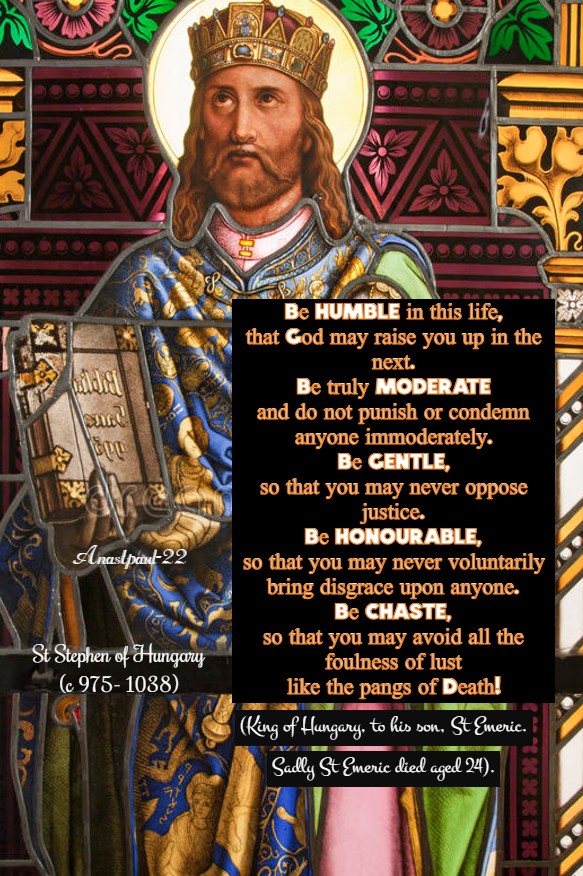
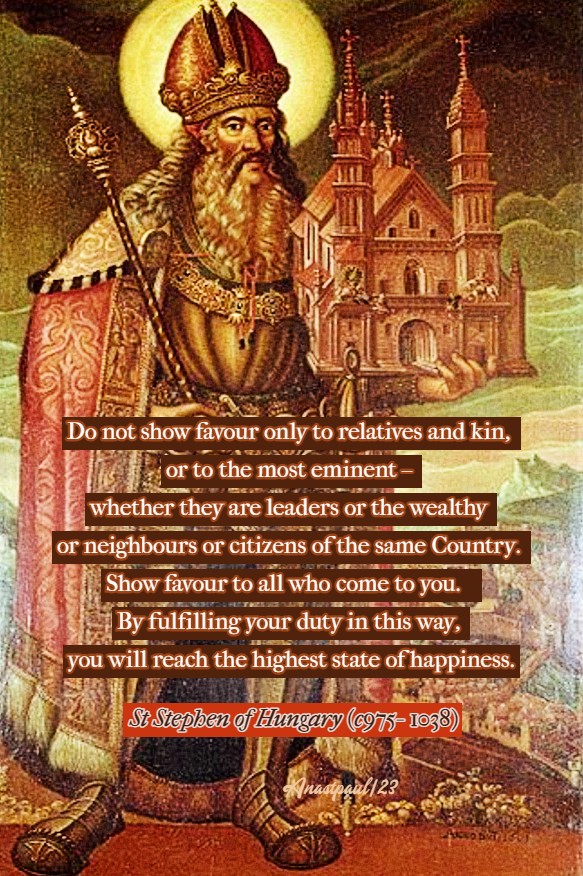
Quote/s of the Day – 2 September – St Stephen, King of Hungary (c975- 1038) Confessor
“Be HUMBLE in this life, that God may raise you up in the next. Be truly MODERATE and do not punish or condemn anyone immoderately. Be GENTLE, so that you may never oppose justice. Be HONOURABLE, so that you may never voluntarily bring disgrace upon anyone. Be CHASTE, so that you may avoid all the foulness of lust like the pangs of death.”
“Do not show favour only to relatives and kin, or to the most eminent – whether they are leaders or the wealthy or neighbours or citizens of the same Country. Show favour to all who come to you. By fulfilling your duty in this way, you will reach the highest state of happiness.”
St Stephen of Hungary (c975- 1038) (King of Hungary, to his son, St Emeric. Sadly St Emeric died aged 24 but had taken a private vow of Celibacy.)
Saint of the Day – 2 September – St Justus of Lyons (Died c390) the 13th Bishop of Lyons, Confessor, Monk, Hermit, a man of learning, of meek, gentle and kind nature. Born in Tournon-sur-Rhône, Gaul (in modern France) and died in 390 in the Egyptian desert of natural causes. Also known as – Just, Justo, Giusto. The Latin name Justus means “one who helps.”
The Roman Martyrology states of him today: “At Lyons in France, St Justus, Bishop and Confessor, who was endowed with extraordinary sanctity and, a prophetic spirit, He resigned his Bishopric and retired into a desert of Egypt with his Lector, Viator, When he had, for some years, led an almost angelic life and the end of his meritorious labours had come, he went to our Lord to receive the crown of justice, on the 14th day of October, His holy body together with the Relics of his blessed Lector Viator, was afterwards taken to Lyons on this day, 2 September, becoming the remembrance of his birthday into Heaven.”
Justus was born in the first half of the 4th Century in Tournon-sur-Rhône and came from an aristocratic family. He followed the religious teaching of Saint Paschasius, the Archbishop of Vienne at the time, and became a Deacon of the Church of Vienne. A contemporary biographer describes him as being a meek and merciful man.
Around 350, Justus was Consecrated as the Bishop of Lyons. As the Bishop of the Capital City of Gaul, he was among the participants of the Council of Valencia in 374, regarding religious discipline of the Clergy and the faithful.
In 381, He assisted at the Council of Aquileia, organised by St Ambrose of Milan. A general Council had been requested by Arian bishops Palladius and Secundianus, supported by the Empress Justina, to review the Church’s position on Arianism. St Ambrose refused to hold a General Council, agreeing only to a Provincial Council but the Emperor Gratian allowed other Bishops to attend. The Bishops of Gaul sent delegates including Justus, who was one of 32 Bishops at the Council which rejected Arianism and condemned Palladius and Secundianus. (They must have regretted have requested the Council!)
At that time, Justus maintained a correspondence with St Ambrose of which there remain only two letters from St Ambrose discussing sections of Scripture. The two letters suggest that Justus was a man respected for his learning.
Some time after the Council of Aquileia, an incident took place where an insane individual in a violent fit, had attacked and killed several people in the streets of the City with a sword. Although eventually restrained, he managed to escape and take refuge in the Church, at that time located on the side of the present Church of St Nizier. Despite threats, the Bishop maintained the right of sanctuary. At length a City Magistrate arrived and persuaded Bishop Justus to hand the accused over to him, giving his word that the matter would be handled according to law. Relying on the Magistrate’s assurances, Justus delivered the man over; but scarcely had the man left the Church when the mob overpowered the guard and seizing the prisoner, put him to death.
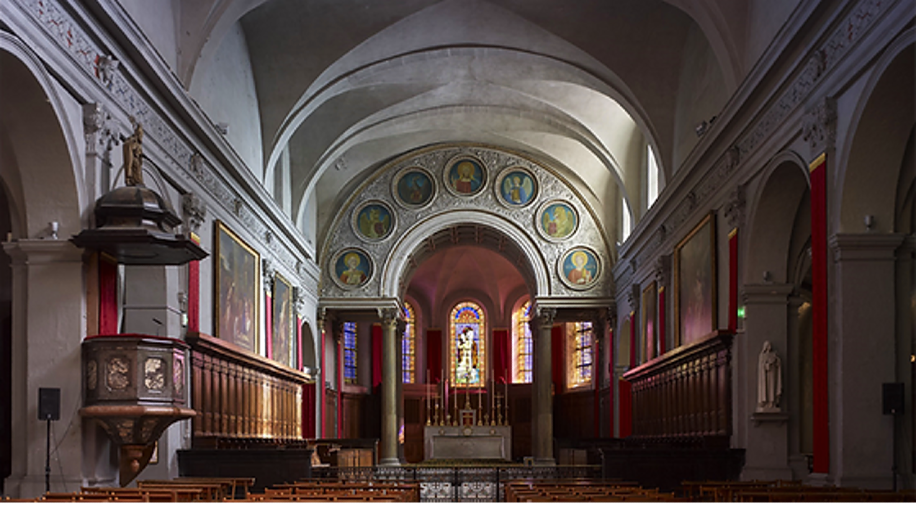
The interior of the Church of St Justus in Lyons
The Bishop came to believe that his failure to adequately protect the murderer had made him unworthy to continue to lead the Christian community and he resolved to devote the remainder of his life to doing penance. Disillusioned, Justus resigned his See and retired to his house at Tournon. His friends could neither convince him that he was not responsible for the unfortunate man’s death, nor to reconsider his decision of being unworthy to be Bishop. One night, he secretly left to take up the ascetical life of a Hermit. He travelled to Arles and then on to Marseilles where he planned to embark for Alexandria. The Cathedral Lector, Viator suspected the Bishop’s intentions and decided to follow his master. He caught up with Justus at Marseilles and together they boarded ship for Egypt.
Once there, they joined the community of Monks in the desert of Scetes, about 40 or 50 miles south of Alexandria, beyond the mountains of Nitria, in the Libyan Desert. At that time the leader or Abbot of this community was St Macarius of Egypt († 390), a disciple of St Anthony († 356). St Macarius had a reputation for great holiness and a fierce asceticism. Most of the Monks lived in cells, either dug in the ground or built of stones and each out of sight of others. They came together only on Sundays to celebrate the liturgy. They supported themselves by manual labour and ate only the poorest of foods. Fasting, prayer, silence and the keeping of night vigils, characterised their lives.
You can vaguely see this above in the interior of the St Justus Church in Lyons
The story is told then of a pilgrim in North Africa who some years later recognised Justus and reported this on his return to Lyons. The City folk being eager to regain their Bishop, sent a delegation led by Antiochus, a Priest of Lyons, to find him and bring him back to his Diocese. Antiochus found but could not convince the Hermit Bishop to return, so Antiochus returned to Gaul and was later himself appointed Bishop of Lyons.
Justus died at a Monastery of Scetes in c390. Upon his death, Antiochus, now himself Bishop of Lyons, made arrangements to repatriate the body of the Bishop and that of his companion Viator, who died shortly after and interred them in the Basilica of the Maccabees which Antiochus renamed the Saint-Just Basilica.
At the end of the 4th Century, a Vita Sancti Justi, Lugdunensis Episcopi, retracing in a hagiographic style the life of Justus, was written by a Priest of Lyons.
The Lyons Church celebrates a Mass for Saint Justus one to four times a year – on the date of his Ordination on 14 July (also Bastille Day); the translation of his Relics to Lyons on 4 August; his death on 2 September and his visit to Egypt on 14 October. The Feast of the translation of his Relics is still celebrated in the Diocese of Lyons, in addition to the regular September Feast.
St Justus Church in Lyons
In Lyons, the Basilica of Saint Justus, now destroyed, was replaced by the Church of Saint-Just. Around the Basilica developed a village of the same name which, in the 19th Century, became a suburb of Lyons.
The Chapel of the School of Tournon, St Justus’ birth Town, also bears his name.
St Prospero of Tarragona St Theodota of Bithynia St Valentine of Strasbourg St William of Roeskilde
Marytrs of Nicomedia – 3 Saints: Three Christians who were Martyred together in the persecutions of Diocletian. No details about them but their names have survived – Concordius, Theodore and Zenone. They were martyrd in Nicomedia, Bithynia (in modern Turkey).
The Holy Martyrs of September (Died 1792) – 191 beati: Also known as – Martyrs of Paris, Martyrs of Carmes. They were massacred by a mobs on 2 September and 3 September 1792 and Beatified on 17 October 1926 by Pope Pius XI. THEIR LIVES AND DEATHS: https://anastpaul.com/2021/09/02/saint-s-of-the-day-2-september-
Martyrs of 2 September – 10 Saints: A group of ten Martyrs; their names are on old Martyrologies but we have lost all record of their lives and deaths. They were Canonised: Antoninus, Diomedes, Eutychian, Hesychius, Julian, Leonides, Menalippus, Pantagapes, Philadelphus, Philip.
Holy Bishops of Rennes: Honours all the Bishops of the Diocese of Rennes, France who have been recognised as Saints and Beati. They include Saint Maximinus of Rennes Saint Modéran of Rennes Saint Rambert of Rennes Saint Riotisme of Rennes Saint Servius of Rennes Saint Synchronius of Rennes
Saint of the Day – 1 Septembert – Saint Nivard of Rheims (Died 673) Bishop Born in the early 7th Century near Rheims, Gaul (modern France) and died on 1 September 673 at the Abbey of San Pietro di Hautvillers of natural causes and was buried there. He served the Diocese for over 20 years becoming a Co-Founder and/or builder of many Monasteries and Churches, including the one where he retired and was buried at Hautvillers. Also known as – Nivardo, Nivo.
Nivard was born of a rich family belonging to the high Merovingian nobility, in the region of Rheims, He was raised at the Court and was the brother-in-law of King Childeric II of Austria. He entered the Clergy as a fully mature adult.
Having successively received all the Orders – something uncommon at that time – in 657 he succeeded Landone as the Bishop of Rheims. This City was then the Capital of King Clovis II. Remaining extraneous to political controversies, Nivard and his Diocese did not have to suffer from changes in dynasties but rather, always benefited from the favour of the powerful.
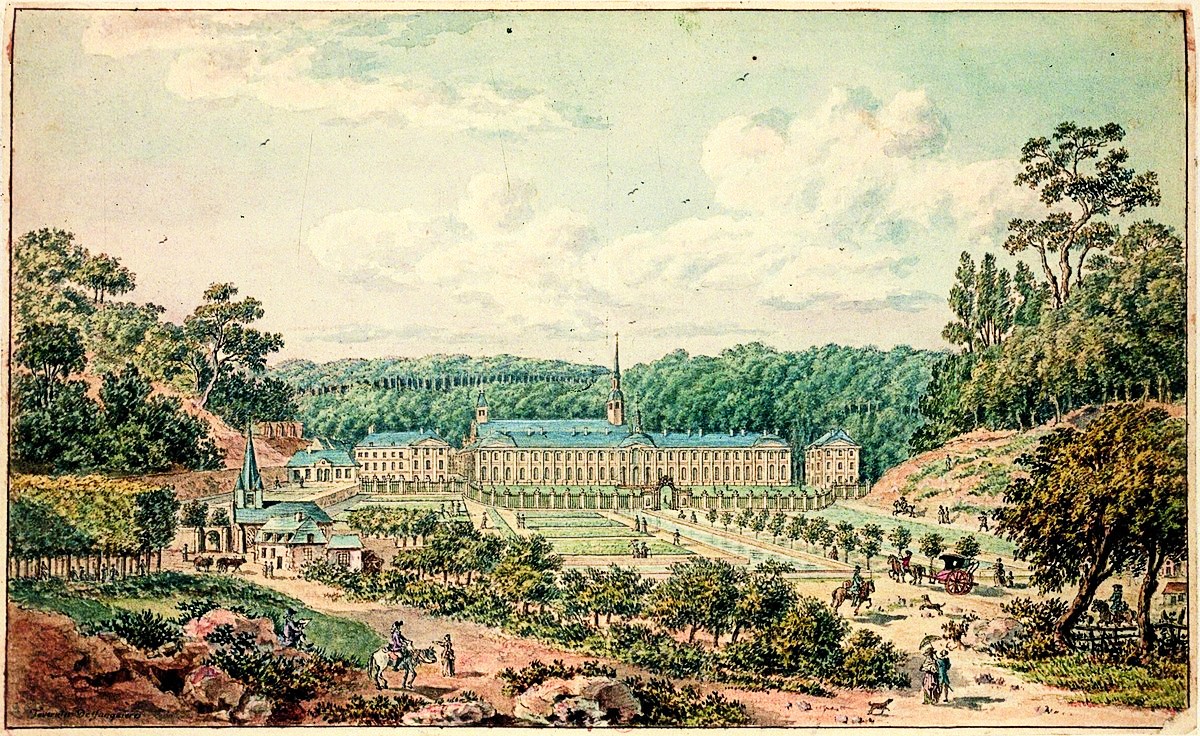
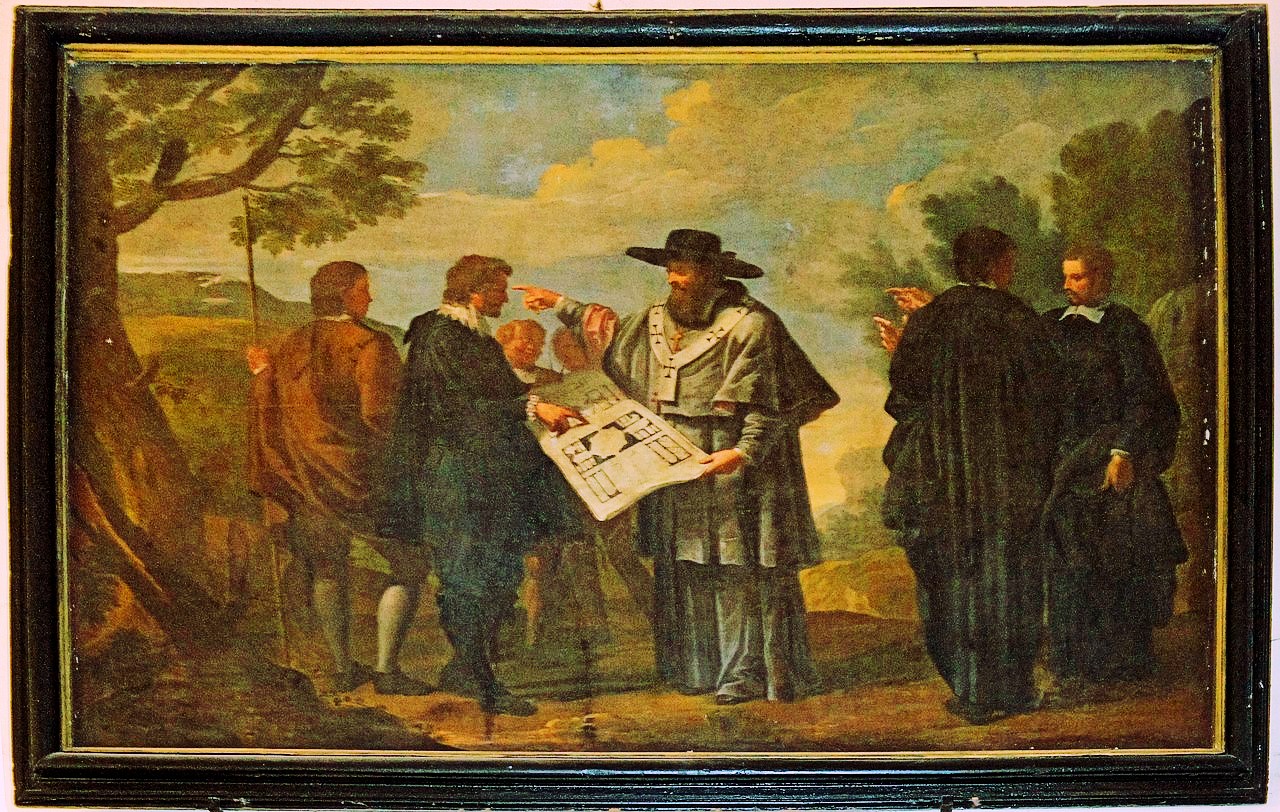
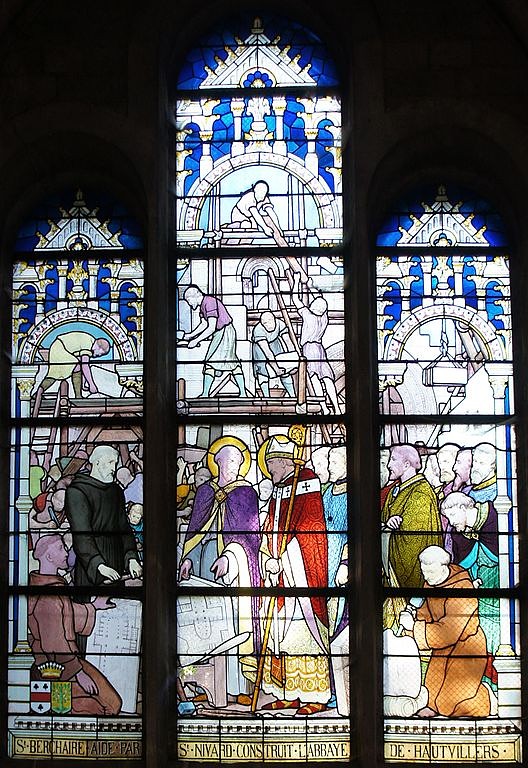
For his part, Nivard always showed great concern for the Monks. He co-operated with St Bercarius at the foundation of the Monastery of Hautvilliers, whose rule was a fusion of that of St Benedict and that of St Columba. The choice of location gave rise to many difficulties but Nivard managed, not only to build the Abbey but to reconcile those who opposed it. Some of these even entered the Monastery whose direction had been entrusted to St Bercarius.
The
Nivard’s benevolence and financial help also extended to other famous Monasteries (Corbie, Soissons, Fontenelle, today Saint-Wandrille). He was a patron of the Churches of Rheims, especially St Maria and St Remigius which he endowed extensively.
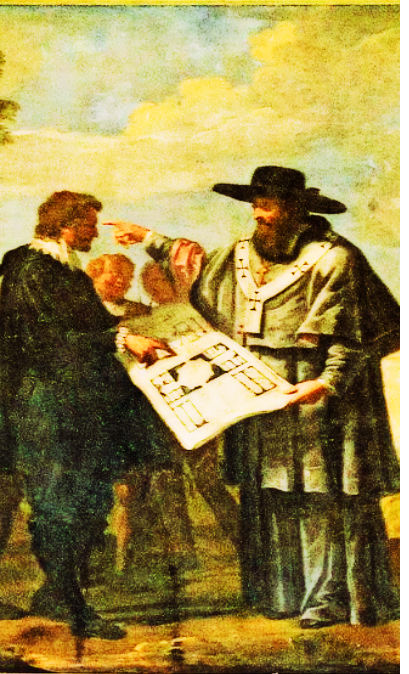
St Nivard chosing the location of the Monastery of Hautvillers
Having obtained a privilege of immunity for Hautvilliers and full jurisdiction over the Abbey for the Bishop of Rheims, Nivard chose it as his preferred residence. There, he died on 1 September 673.
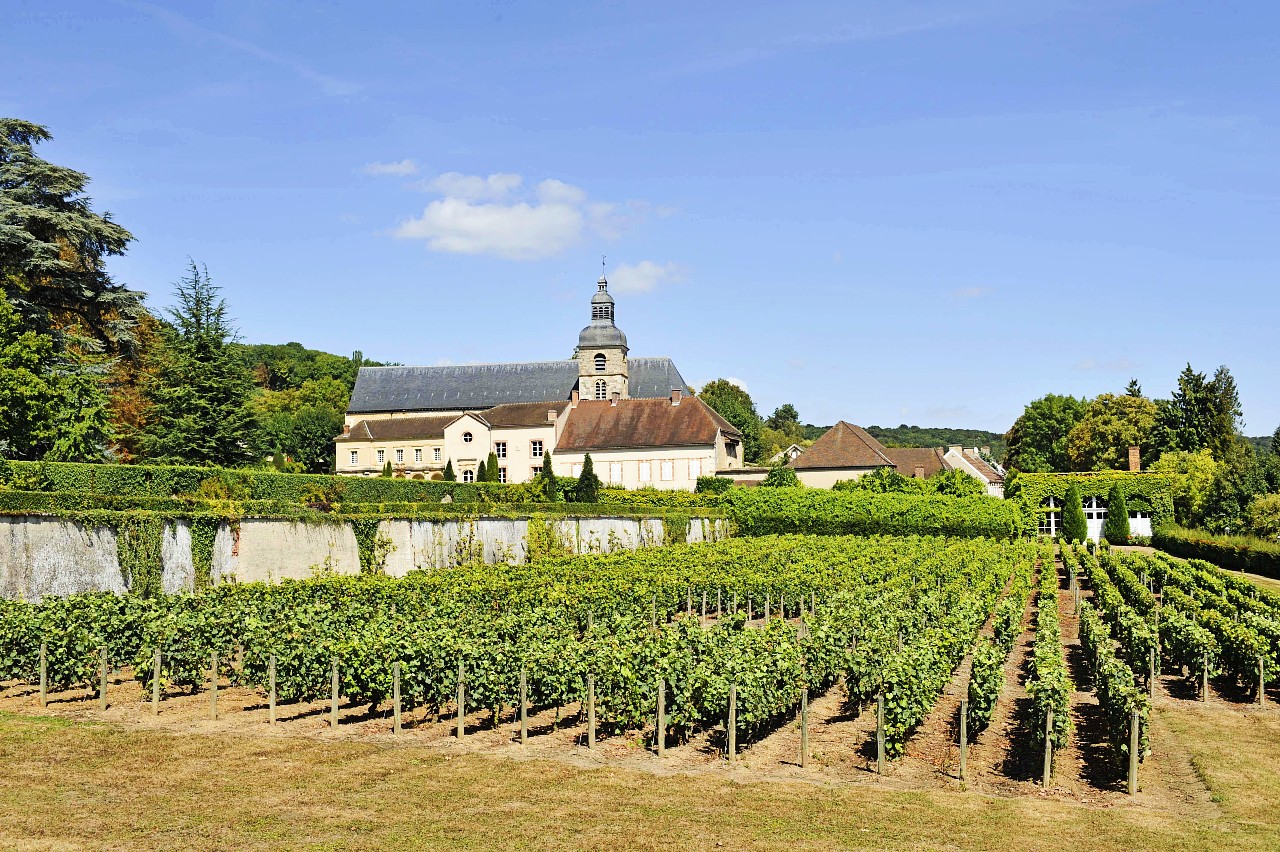
The Abbey of Hautvillers in the 9th Century became a famous school of miniatures and in the 18th Century, one of its Monks, Pérignone, perfected the “art and way of treating wines” thus inventing Champagne!
St Abigail the Matriarch St Aegidius St Agia St Anea St Arcanus St Arealdo of Brescia Bl Colomba of Mount Brancastello St Constantius the Bishop St Donatus of Sentianum St Felix of Sentianum
St Lythan St Nivard of Rheims (Died 673) Bishop St Priscus St Regulus St Sixtus of Rheims St Terentian St Verena St Victorious St Vincent of Xaintes
Exiles of Campania
Twelve Holy Brothers: Martyrs of the South – A group of Martyrs who died c303 at various places in southern Italy. In 760 their relics were brought together and enshrined in Benevento, Italy as a group. Saint Arontius of Potenza, Saint Donatus of Sentianum, Saint Felix of Sentianum, Saint Felix of Venosa, Saint Fortunatus of Potenza, Saint Honoratus of Potenza, Saint Januarius of Venosa, Saint Repositus of Velleianum, Saint Sabinian of Potenza, Saint Sator of Velleianum, Saint Septiminus of Venosa, Saint Vitalis of Velleianum. One tradition describes Saint Boniface of Hadrumetum and Saint Thecla of Hadrumetum as their parents.
Quote/s of the Day – 31 August – St Raymond Nonnatus (1204-1240) Priest, Confessor
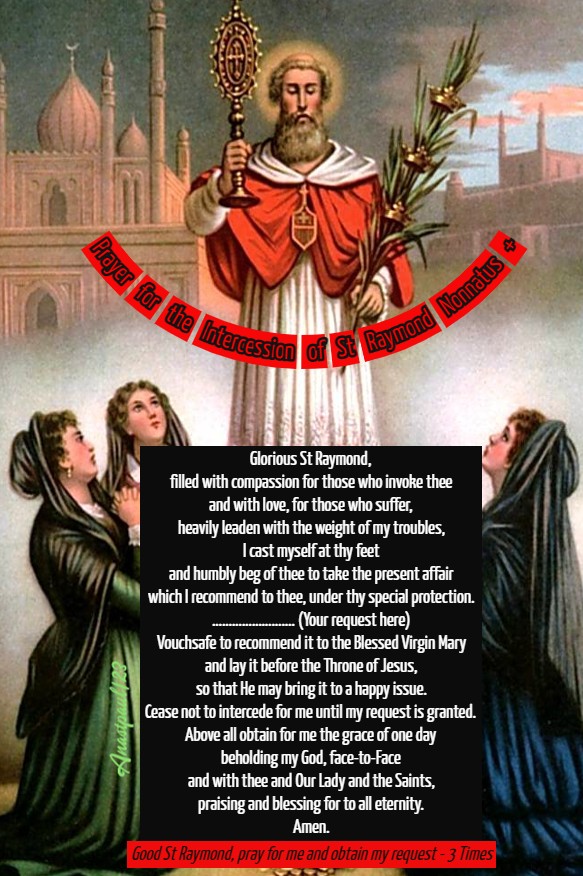
Prayer for the Intercession of St Raymond Nonnatus (Can also be used as a Novena Prayer).
Glorious St Raymond, filled with compassion for those who invoke thee and with love, for those who suffer, heavily leaden with the weight of my troubles, I cast myself at thy feet and humbly beg of thee to take the present affair which I recommend to thee, under thy special protection. ……………………. (Your request here) Vouchsafe to recommend it to the Blessed Virgin Mary and lay it before the Throne of Jesus, so that He may bring it to a happy issue. Cease not to intercede for me until my request is granted. Above all obtain for me the grace of one day beholding my God, face-to-Face and with thee and Our Lady and the Saints, praising and blessing for to all eternity. Amen.
Good St Raymond, pray for me and obtain my request – 3 Times
Saint of the Day – 31 August – St Raymond Nonnatus (1204-1240) Priest, Confessor, Cardinal, Friar of the Mercedarian Order. Patronages – against gossip, of silence, against fever, of babies, infants, childbirth, children, pregnant women, falsely accused people, midwives, obstetricians, Baltoa, Dominican Republic, San Ramon, Costa Rica. Raymond was delivered by Caesarean operation when his mother died during childbirth – hence the name: non natus = not born.
Saint Raymond Nonnatus, Confessor By Fr Francis Xavier Weninger SJ (1805-1888)
Catalonia, Spain, was the native country of St Raymund who, to the astonishment of the Physicians, was born after his mother’s death! As soon as he was old enough to comprehend how early he had become an orphan, he chose the Queen of Heaven as his mother and, to his last day, called her by no other name. When he had studied for some time with great success, his father, fearing the youth would enter a Religious Order, sent him into the too, opportunities to serve God. He became very fond of solitude and, therefore, chose for his occupation, the care of the sheep, in order to gain more time for prayer and meditation.
At the foot of the mountain to which he generally led his flock, was a small deserted hermitage, with a Chapel, in which an extremely lovely picture of the Blessed Virgin was kept, which was a source of great joy to him. There, he spent several hours daily, in devout exercises. Other shepherds, who observed this and to whom the piety of Raymund was a reproach of their own negligence, reported to his father that he was doing nothing but praying and, thereby neglected his flock. The father came to convince himself of the fact but, although he found his son praying in the Chapel, he saw that the flock was, meanwhile attended to by a youth of uncommon beauty of form and features. Asking his son who this young shepherd was and why he had engaged him, Raymund, to whom it was unknown that Providence had worked a miracle on his behalf, fell on his knees before his father and begging forgiveness, earnestly promised not to commit the fault again.
The Divine Mother, of Whom he begged the grace of knowing his vocation, appeared to him, saying that she desired him to take the habit of the newly established Order for the Redemption of Captives. He did so,and was sent to Algiers where he found a great many Christians in slavery and, as the money he had brought for their ransom was not sufficient, he offered himself as a hostage to redeem the others. He was induced to this by the danger in which the prisoners were of losing their faith and with it eternal life. This great and heroic charity gave him occasion to suffer much for the sake of Christ. At first, he was treated very harshly by his masters but when they began to fear that he would die before the ransom was paid, they allowed him more liberty which the holy man used, only for the salvation of the captive Christians. He strengthened them in their faith and, at the same time, endeavoured to convert the infidels.
Accused of this before the Judge, he was condemned to be impaled alive and nothing but the hope of a large ransom prevented the execution of this barbarous sentence and caused it to be changed into a cruel bastinado (a form of torture which involves the caning of the soles of the feet). Raymund, who desired nothing more fervently than to die for Christ’s sake, was not intimidated by what he had undergone but wherever an opportunity offered itself, he explained to the infidels, the word of God. The Judge, informed of it, ordered him to be whipped through all the streets of the city and then to be brought to the marketplace, where the executioner, with a red hot iron, pierced his lips, through which a small chain was drawn and closed with a padlock, in order that the holy man might no more use his tongue to instruct others. Every three days the lock was opened and he received just enough food to keep him from starvation. Besides this, he was loaded with chains and cast into a dungeon, where he lay for eight months, until his ransom arrived. Although it was the desire of the Saint to remain among the infidels, as he would there have an opportunity to gain the Crown of Martyrdom, obedience recalled him to his Monastery.
When the Pope was informed of all that Raymund had suffered during his captivity, he appointed him as a Cardinal but the humble Saint returned to his Convent and lived like all the other brothers of the Order, without making the least change in his dress, food, or dwelling, nor accepting any honour due to him as so high a dignitary of the Church.
Pope Gregory IX, desired to have so holy a man near him and called him to Rome. The Saint obeyed and set out on his journey. He had,, however, scarcely reached Cardona, six miles from Barcelona, when he was seized with a malignant fever which soon became fatal. He desired most fervently to receive the holy Sacraments but, as the Priest called to administer them to him, delayed to come, God sent an Angel, who brought him the Divine food. After receiving it, he returned thanks to God for all the graces he had received from Him during his life and peacefully gave up his soul, in the 37th year of his age.
After his death, the inhabitants of Cardona, the Clergy of Barcelona and the religious of his Order, contended as to where the holy body should be buried. Each party thought they had the greatest claim to possess his tomb. At last they resolved to leave the decision to Providence. They placed the coffin, in which the holy body reposed, upon a blind mule, determined that the treasure should be deposited in the place to which this animal should carry it. The mule, accompanied by a large concourse of people, went on until it had reached the hermitage and Chapel where the holy Cardinal, as a shepherd boy, had spent so many hours in prayer and had received so many graces from God. There the Saint was buried and St Peter Nolasco, Founder of the Order in the course of time, founded there a Convent, with a Church in which the holy remains are still preserved and greatly honoUred by the people of Catalonia.
St Raymond Nonnatus O.deM. (1204-1240) Religious Priest, Confessor, Cardinal, Friar of the Mercedarian Order. Beatified on 5 November 1625 by Pope Urban VIII and Canonised in 1657 by Pope Alexander VII. Raymond was delivered by Caesarean operation when his mother died during childbirth – hence the name: non natus = not born. Biography here: https://anastpaul.wordpress.com/2017/08/31/saint-of-the-day-31-august-st-raymond-nonnatus-o-dem/
St Ammi of Caesarea St Aristides the Philosopher St Barbolenus of Bobbio St Bonajuncia OSM Confessor St Caesidius St Cuthburga of Wimborne St Cwenburgh of Wimborne
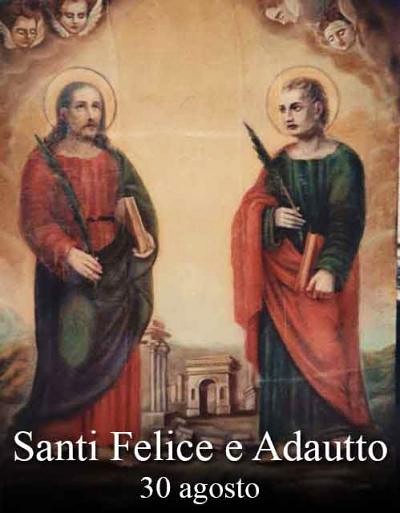
Saint/s of the Day – 30 August – Saints Felix Priest and Martyr and Saint Adauctus (Died c303) – both dying in c303 by beheading in Rome. Patronages – of Montecalvo Irpino, Italy and Felice del Benaco, Italy.
The Roman Martyrology reads today: “At Rome on the Ostian Way the Martyrdom of the blessed Priest, Felix, under the Emperor Diocletian and Maximian. After being racked, he was sentenced to death and as they led him to execution, he met a man who spontaneously declared himself a Christian and was, forthwith, beheaded with the holy Felix. The Christians, not knowing his name, called him Adauctus – the Latin word meaning “added to” because he was added to St Felix and shared his Crown.”
The Priest Felix, meaning the “happy one,” was apprehended in Rome at the beginning of the Diocletian persecution and underwent cruel tortures with admirable constancy.
Eventually he was condemned to beheading. En route to his place of execution, his coming martyrdom so excited a stranger that, the bystander was unable to contain himself. He cried out, “I too follow and believe the same commandments which this man professes; I too confess the same Jesus Christ and, it is my desire to also lay down my life in this cause.” The magistrates seized him when they heard this and the two were decapitated side by side.
Both were reverently buried in the Cemetery of Commodilla on the Ostian Way. Later Pope Saint Damasus had their Tomb restored and added the inscription below. Pope Saint Siricius added another Epitaph.
These Martyrs are commemorated in the Sacramentary of Saint Gregory the Great and many ancient calendars, including the Deposito Martyrum (354). Their Church in Rome, built over their graves, in the Catacomb of Commodilla, near the Basilica of Saint Paul Outside the Walls and restored by Pope Leo III, was discovered about three hundred years ago and again unearthed in 1905
“Felix, truly and rightly named, for you were happy to have confessed Christ and looked for the Kingdom of Heaven, despising the prince of this world and departing with your faith unimpaired. Adauctus, too, another conqueror, reveals, my brothers, the most precious faith which hastened his journey to Heaven.” – The Inscription on the Tomb of Saints Felix and Adauctus.
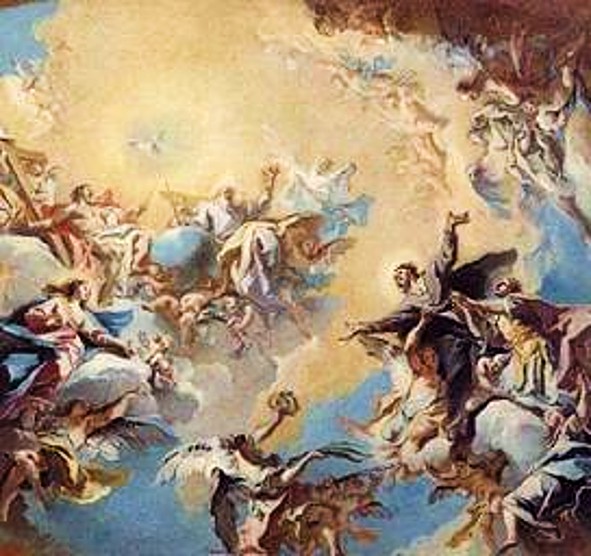
The Artist, Carlo Innocenzo Carlone (1686–1775) painted The Glorification of Saints Felix and Adauctus (1759–1761), seen above. It was commissioned for the Cupola of the Church of San Felice del Benaco on Lake Garda (see the Church below) of which Town our Saints are the Patrons.




















 AnaStpaul
You must be logged in to post a comment.