Posted in DYING / LAST WORDS, Of PARENTS & FAMILIES of LARGE Families, Of the SICK, the INFIRM, All ILLNESS, PATRONAGE - PRISONERS, SAINT of the DAY

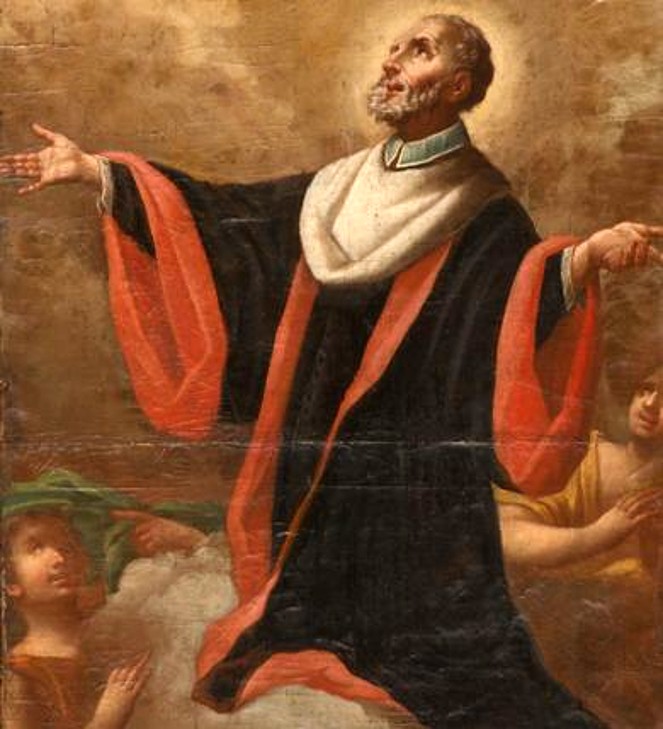
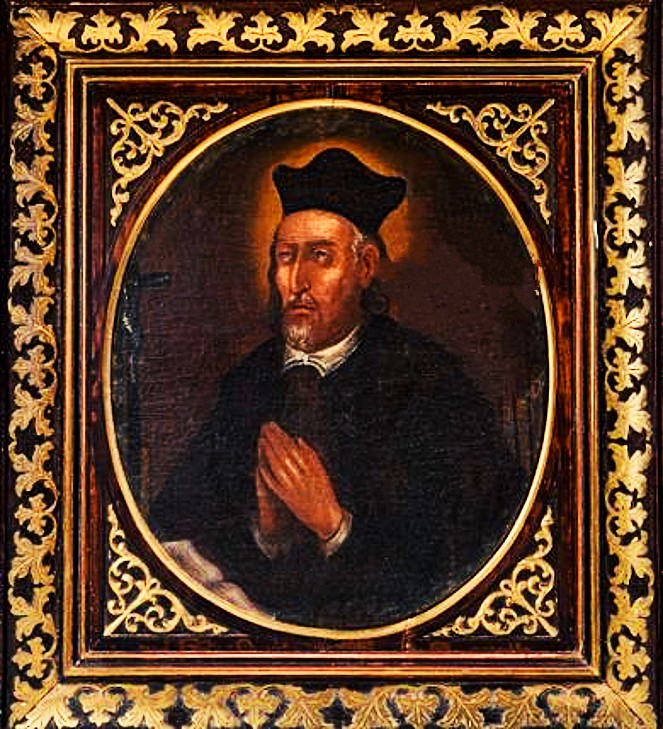
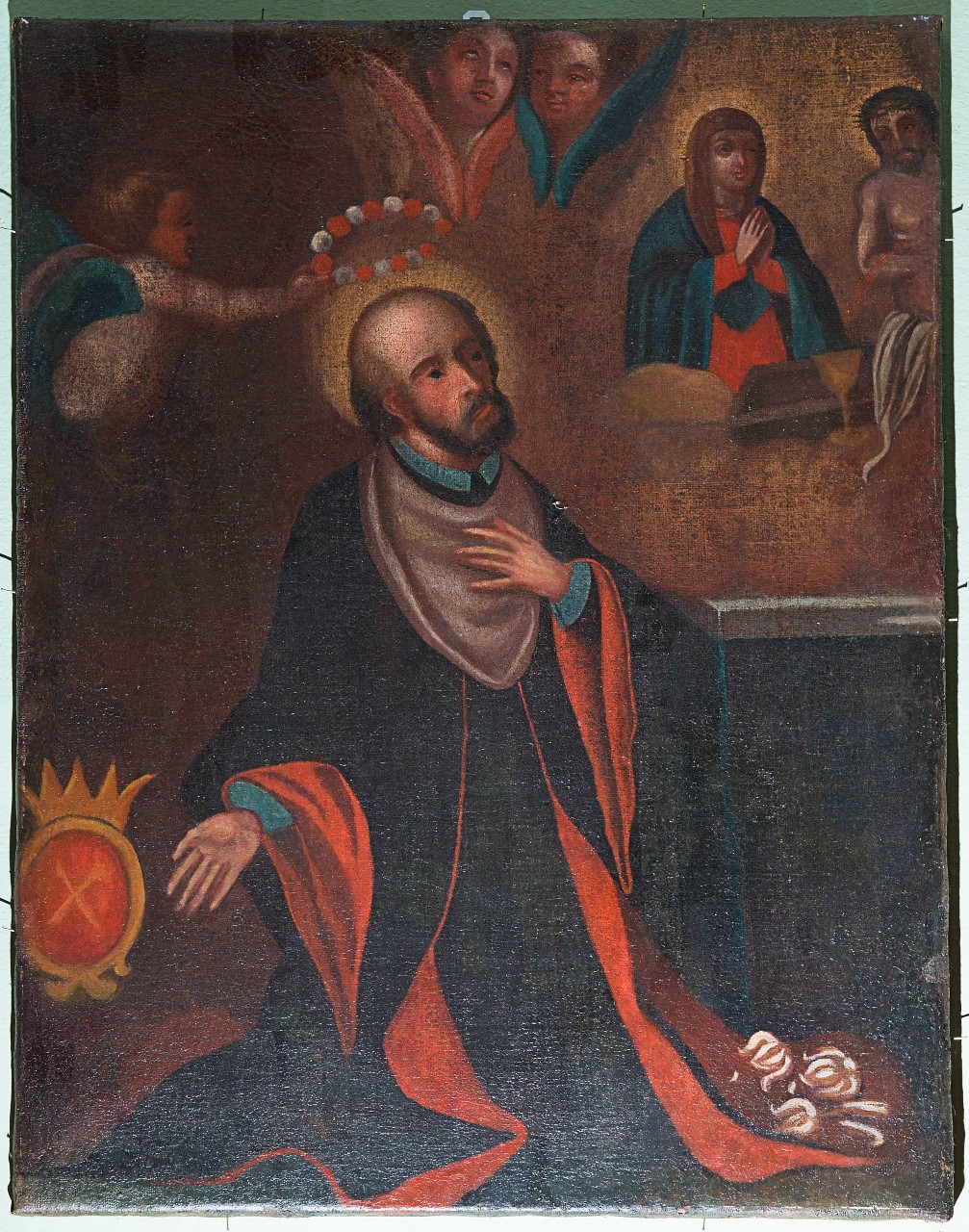
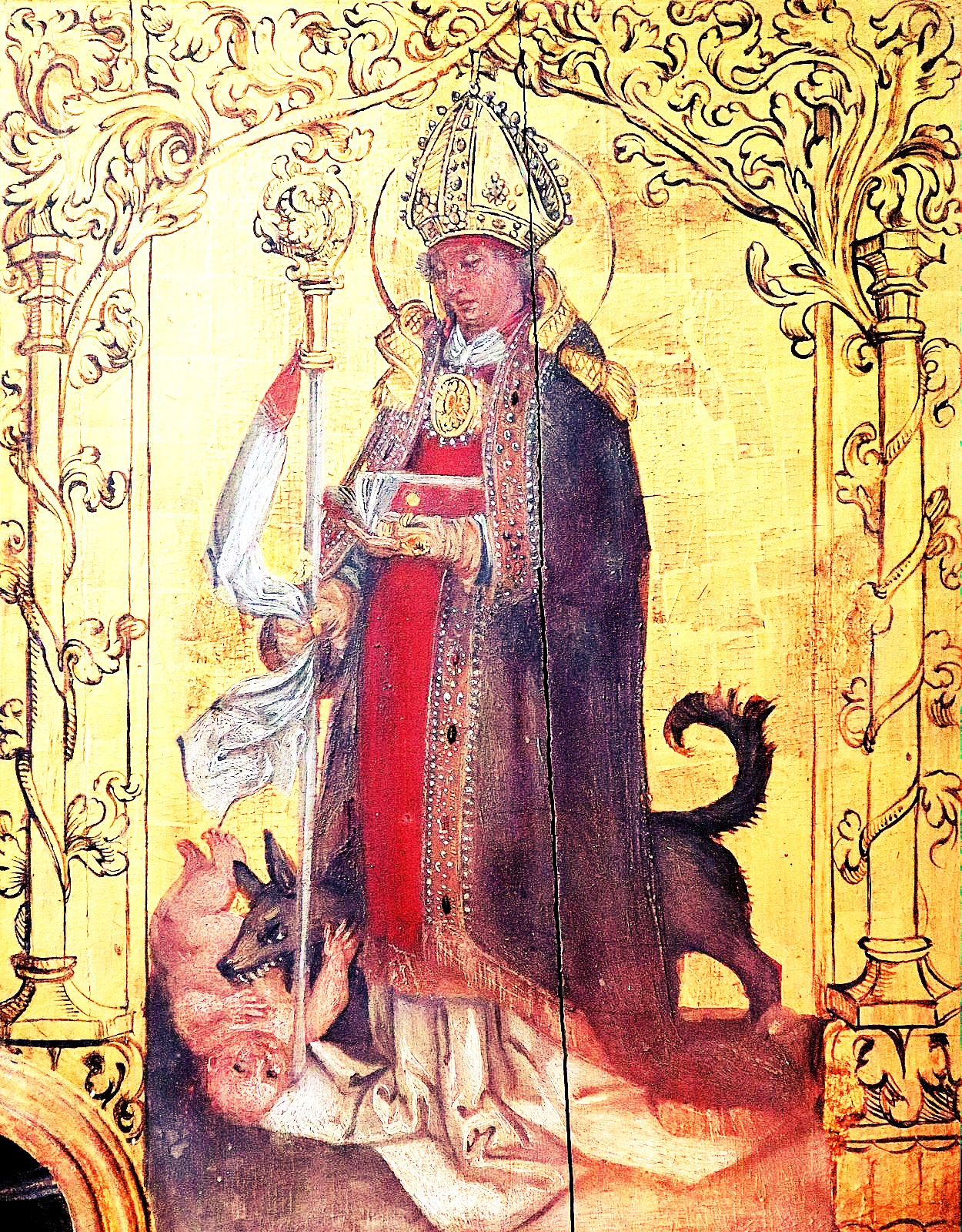
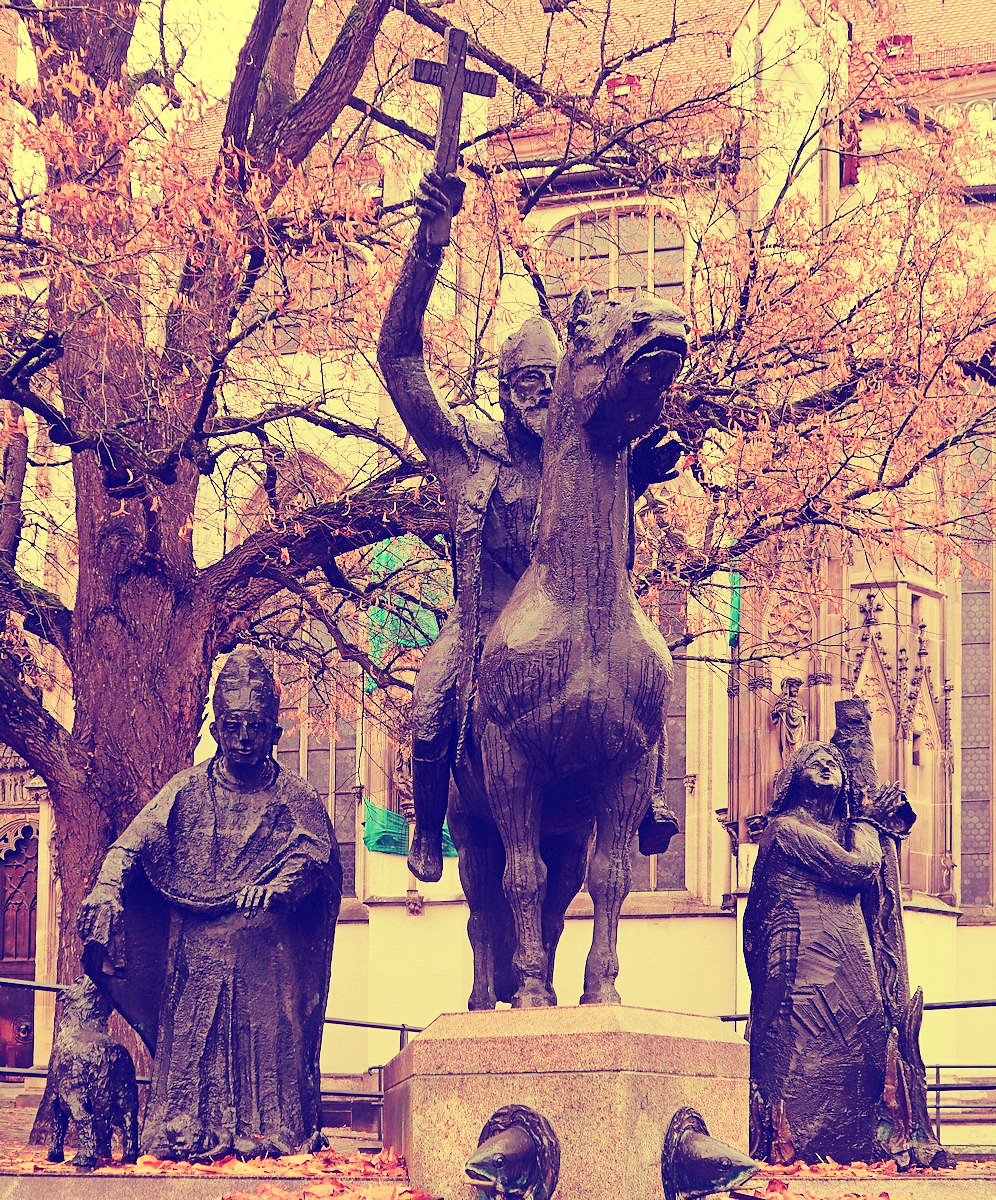
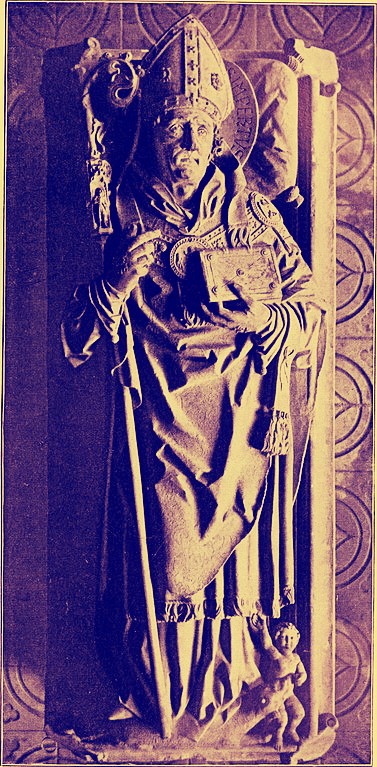
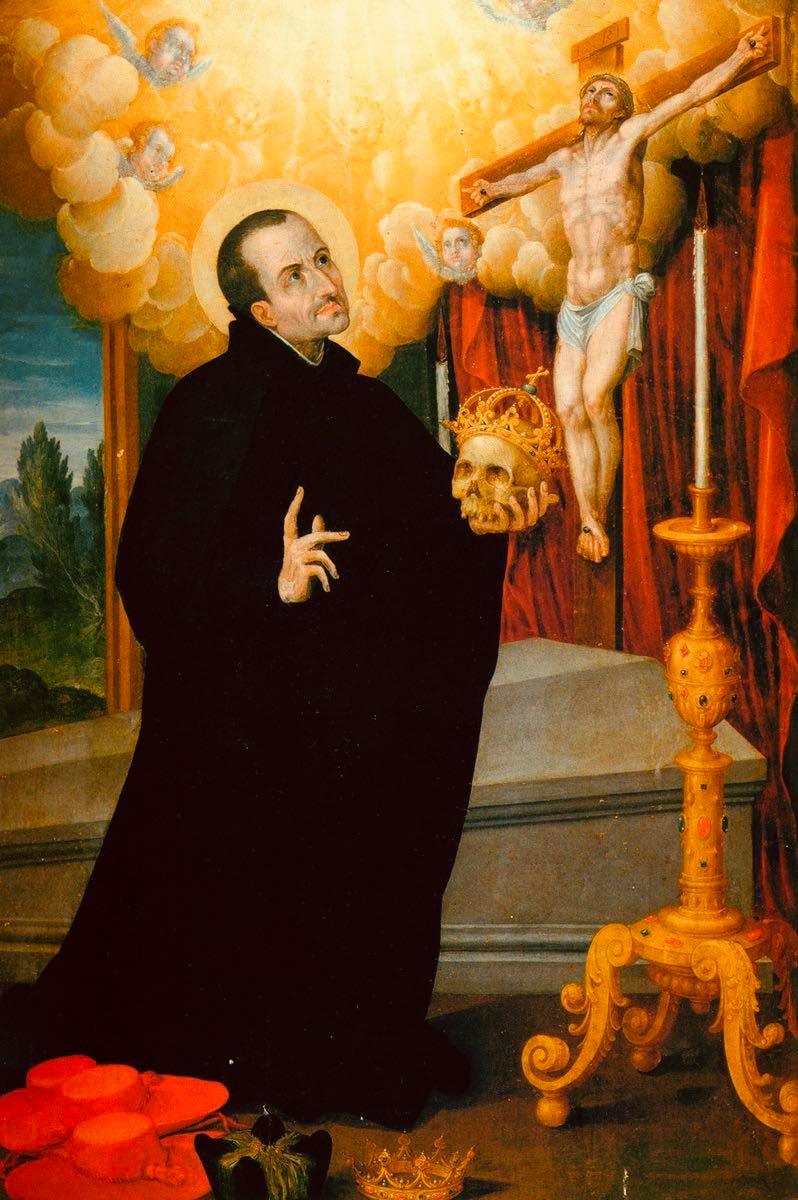
Saint of the Day – 25 August – St Louis IX (1214-1270) Confessor

Saint of the Day – 25 August – St Louis IX (1214-1270) King of France Confessor, King, Reformer, Apostle of Charity.

This remarkable man was born on 25 April 1214, near Paris, France. When his grandfather, King Philip II of France, passed away, his son, Prince Louis the Lion, became King Louis VIII. His wife became Queen Blanche. Their son, now Prince Louis, was only nine-years-old.

Three years later Louis’ father died and the boy was crowned King Louis IX. Because of his young age the Queen Mother, Blanche, took over the reins of government. A great woman in her own right, she made sure her son would be prepared for his life as King. Queen Blanche, also known as Blanche of Castille, took her Catholic faith very seriously. She was rigid and determined in teaching her son the faith and managed to instill genuine piety and a deep sense of devotion in him. She was quoted as having told her son, “I love you, my dear son, as much as a mother can love her child but I would rather see you dead at my feet, than that you should commit a mortal sin.

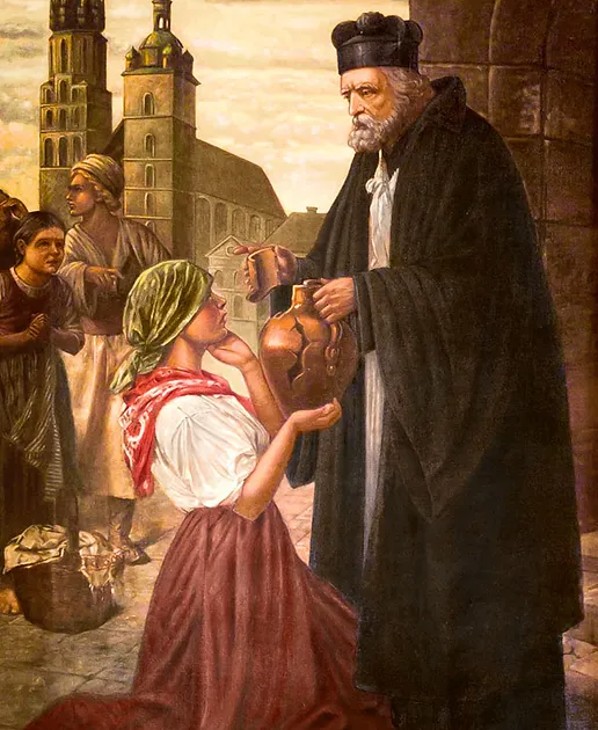
At the age of 21, Louis took charge of the government. His mother’s influence in his life was apparent because there was a force within Louis that made him strive to rule justly and to attain sanctity. King Louis had a pronounced affinity for the sick and poor of his kingdom. He treated the downtrodden with compassion, understanding and with a humility that was unheard of in a king.

Everyday King Louis IX would have three special guests called in from among the poor to have dinner with him…Since there were always crowds of poor and hungry outside the palace, he would try to have as many of them fed as was possible. During Lent and Advent anyone who presented themselves before him was given a meal and often, the King served them himself. He even had lists compiled of needy people in every Province under his rule.

Louis married his true love, Margaret of Provence on 27 May 1234. Queen Margaret was filled with religious fervour as was her husband and they truly made a beautiful couple while setting a fine example for all married couples. They both enjoyed each other’s company and liked riding together, listening to music and reading. King Louis and Queen Margaret had eleven children.

Louis was a strong-willed and strong-minded man with a powerful faith. His word was trusted throughout the Kingdom, and his courage, in taking action against wrongs was remarkable. Amazingly, this King had true respect for anyone with whom he had dealing, especially the poor and downtrodden. King Louis built Churches, libraries, hospitals and orphanages. He treated both Princes and commoners equally.

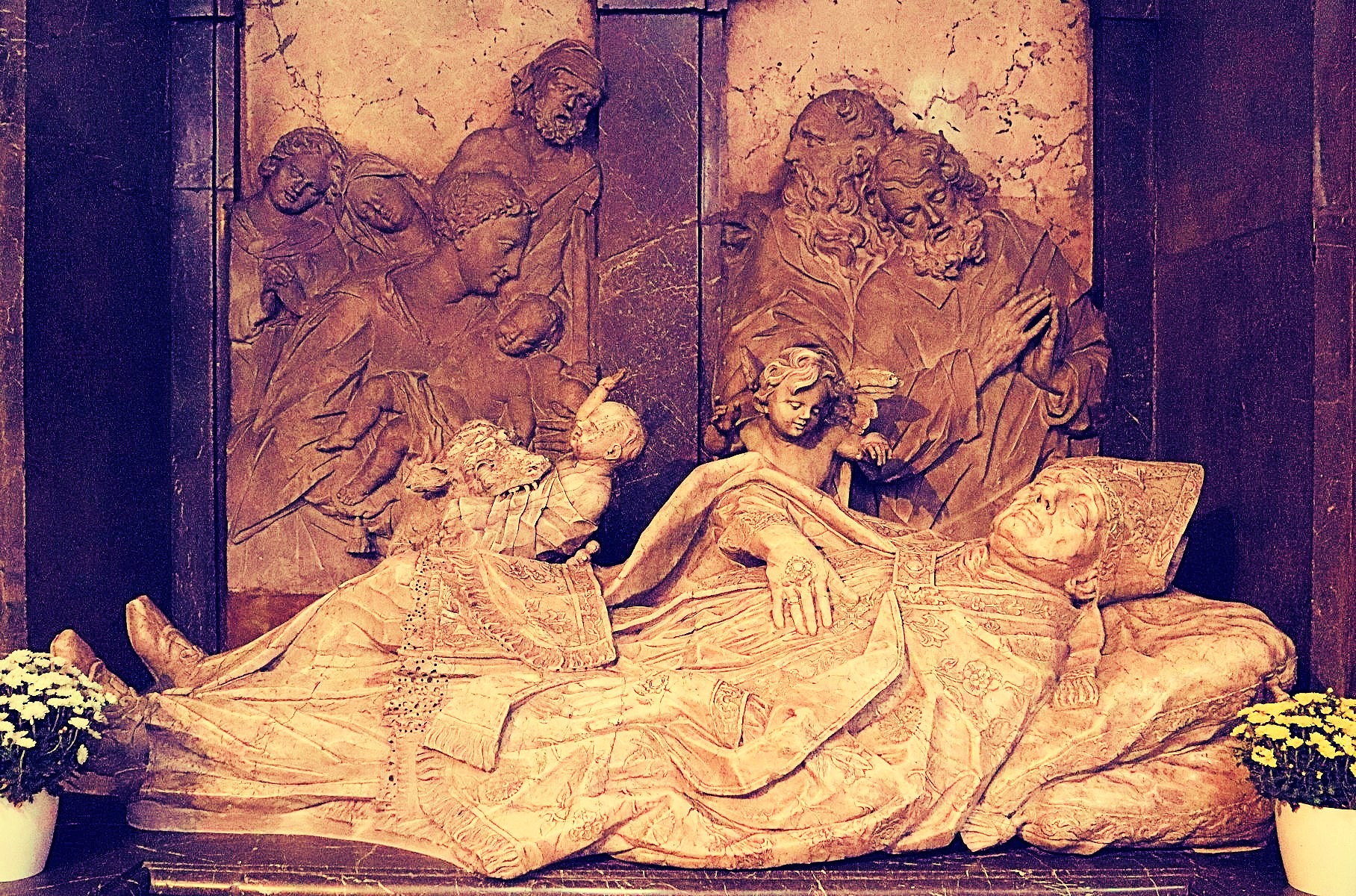
King Louis had taken his army on the 7th Crusade in 1248. This proved to be a disaster and the king was captured by the Muslims. After an absence of six years, he was successfully ransomed and returned home. In 1270 he sought redemption for his first failure and embarked on another crusade. It was summer in northern Africa and dysentery and typhoid swept through the dirty camps. King Louis IX, died while lying on a bed of ashes saying the name of the City he had not relieved; “Jerusalem, Jerusalem.

Pope Boniface VIII, proclaimed Louis a Saint in 1297. He is the only King of France named a Saint by the Church. This man was a true gentleman as he tried to treat everyone with courtesy, love and respect, whilst remaining strong and just at the same time. He is most beloved both in France and across the Catholic world.

More St Louis:
https://anastpaul.wordpress.com/2017/08/25/saint-of-the-day-25-august-st-louis-king-of-france/

Posted in SAINT of the DAY

Memorials of the Saints – 25 August

St Louis IX (1214-1270) King of France Confessor, King, Reformer, Apostle of Charity.
All about this wonderful Saint here:

https://anastpaul.wordpress.com/2017/08/25/saint-of-the-day-25-august-st-louis-king-of-france/

St Alessandro Dordi
St Andreas Gim Gwang-Ok
St Aredius of Limoges
St Ebbe the Elder
St Eusbius of Rome
St Genesius of Arles
St Genesius of Brescello
St Genesius of Rome
St Gennadius of Constantinople
St Geruntius of Italica
St Ginés de la Jara
St Gregory of Utrecht
St Gurloes of Sainte Croix
St Hermes of Eretum
St Hunegund of Homblieres
St Julian of Syria
St Julius of Eretum
Bl Ludovicus Baba
Bl Ludovicus Sasada
Bl Luis Cabrera Sotelo
St Maginus
St Marcian of Saignon

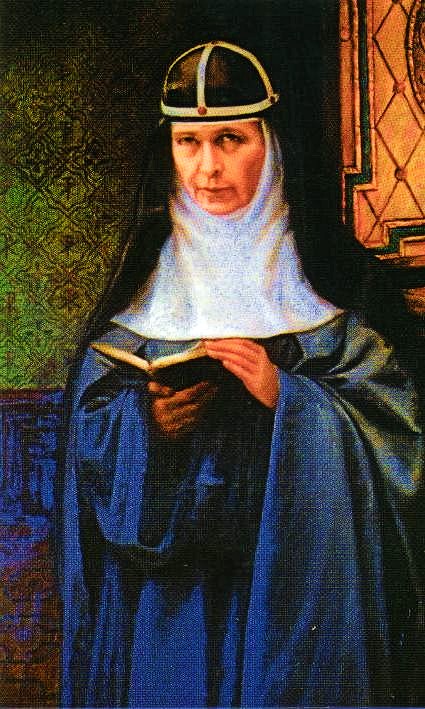
St Maria Micaela of the Blessed Sacrament (1809-1865) “Mother Sacramento” was a Spanish professed Religious and the Founder of the Handmaids of the Blessed Sacrament, Apostle and martyr of charity. In 1922, Pope Pius XI, proclaimed Mother Sacramento’s heroic virtues. On 25 July 1925, he Beatified her and on 4 March 1934, he Canonised her.
Her Life:

https://anastpaul.com/2019/08/25/saint-of-the-day-25-august-saint-maria-micaela-of-the-blessed-sacrament-1809-1865/

St Menas of Constantinople
Bl Miguel Carvalho
St Nemesius of Rome
St Patricia of Naples
Bl Pedro de Calidis
Bl Pedro Vázquez
St Peregrinus of Rome
St Petrus Gim Jeong-Duk
St Pontian of Rome

Posted in Of BUILDERS, CONSTRUCTION WORKERS, PATRONAGE - WRITERS, PRINTERS, PUBLISHERS, EDITORS, etc, SAINT of the DAY, SKIN DISEASES, RASHES, The APOSTLES & EVANGELISTS

Saint of the Day – 24 August – St Bartholomew the Apostle and Martyr

Saint of the Day – 24 August – St Bartholomew the Apostle and Martyr. Saint Bartholomew, whose name appears only in the lists of the Apostles, is believed to be Nathanael, whom Philip brought to Christ. He preached in Persia and Egypt and was flayed alive in Armenia. His relics are believed to be in the Church of Saint Bartholomew in Rome. Patronages – Armenia; bookbinders/publishers; butchers; Florentine cheese and salt merchants; Gambatesa, Italy; Catbalogan, Samar; Għargħur, Malta; leather workers; neurological diseases; plasterers/construction workers; shoemakers; tanners; trappers; skin diseases/rashes, against involuntary  shaking disorders;  Los Cerricos (Spain), 16 further cities all over the world. 

Saint Bartholomew Apostle and Martyr
Excerpt from The Liturgical Year
By Prosper Guéranger OSB (1805-1875)

A witness of the Son of God, one of the princes who announced His glory to the nations, lights up this day with his apostolic flame.

Personally, who was this Apostle who borrowed such solemnity from the scene of his apostolic labours? Under the name or surname of Bartholomew (“Son of Tholmai“), the only mark of recognition given him, by the first three Gospels, do we see, as many have thought that Nathaniel, whose presentation to Jesus by Philip forms so sweet a scene in St John’s Gospel (1: 45-51)?
A man of uprightness, innocence and simplicity, … for whom, the Man-God had choice graces and caresses from the very beginning.

Be this as it may, the lot which fell to our Saint among the Twelve, points to the special confidence of the Divine Heart. The heroism of the terrible Martyrdom which sealed his apostolate, reveals his fidelity. The dignity preserved by the nation he grafted onto Christ, in all the countries where it has been transplanted, witnesses to the excellence of the sap first infused into its branches. When, two centuries and a half later, St Gregory the Illuminator, so successfully cultivated the soil of Armenia, he did but quicken the seed sown by the Apostle, which the trials never wanting to that generous land, had retarded for a time but could not stifle. …

We learn from Eusebius and from St Jerome that before going to Armenia, his final destination, St Bartholomew evangelised the Indies, where Pantaenus a century later found a copy of St Matthew’s Gospel in Hebrew characters, left there by him. …

The City of Rome used to celebrate the Feast of St Bartholomew on the following day, as do also the Greeks who commemorate on 25 August – a translation of the Apostle’s relics. It is owing, in fact, to the various translations of his holy body and to the difficulty of ascertaining the date of his Martyrdom that different days have been adopted for his Feast ,by different Churches, both in the east and in the west. The 24th of this month, consecrated by the use of most of the Latin Churches, is the day assigned in the most ancient Martyrologies, including that of St Jerome. In the 13th Century, Pope Innocent III, having been consulted as to the divergence, answered that local custom was to be observed.

The Church gives just the following Lessons for the life of the Apostle of Armenia:

The Holy Apostle Bartholomew was a native of Galilee. It fell to his lot to preach the Gospel in western India;and he announced to those nations the coming of Our Lord Jesus Christ according to the Gospel of St Matthew. But after converting many souls to Jesus Christ in that Province and, undergoing much labour and suffering, he went into eastern Armenia.

Here he converted to the Christian Faith, the King Polymius and his Queen, as well as twelve Cities. This caused the pagan priests of that nation to be exceedingly jealous of him and they stirred up Astyages, the brother of King Polymius against the Apostle, so that he commanded him to be flayed alive and finally beheaded. In this cruel Martyrdom he gave up his soul to God.

His body was buried at Albanapolis, the town of eastern Armenia where he was Martyred but it was afterwards taken to the island of Lispari and thence to Beneventum. Finally it was translated to Rome by the Emperor Otto III and placed on the island of the Tiber, in a Church dedicated to God under his invocation.

On this day of thy Feast, O holy Apostle, the Church (in the Collect of the Mass) prays for grace to love what thou didst believe and to preach what thou didst teach. Not that the Bride of the Son of God, could ever fail, either in faith or in love but She knows, only too well that, although Her Head is ever in the light and Her heart ever united to the Spouse, in the Holy Ghost Who sanctifies Her, nevertheless ,Her members and particular Churches may detach themselves from their centre of life and wander away in darkness. O thou who didst choose the west as the place of thy rest, thou in whose precious relics Rome glories in possessing, bring back to St Peter, the nations thou didst evangelise, that we may together, enjoy the treasures of our concordant traditions and go to God, even at the cost of being despoiled of all things, by the course so grand and yet so simple, taught us by thy example and by thy sublime theology. Amen.

Posted in SAINT of the DAY, The APOSTLES & EVANGELISTS

St Bartholomew the Apostle and Martyr and all the Saints for 24 August

St Abban
St Abyce
St Agofridus of Lacroix
Bl Antonio de Blanes

St Eutychius of Troas
St George Limniotes
St Irchard

St Patrick the Elder
St Ptolemy of Nepi
St Romanus of Nepi
St Sandratus
St Taziano of Claudiopolis

Posted in DOCTORS of the Church, FATHERS of the Church, ONE Minute REFLECTION, QUOTES on HEAVEN, QUOTES on THE WORLD, QUOTES on WEALTH/RICHES, SAINT of the DAY, SOLDIERS/ARMOUR of CHRIST, The HEART, The WORD

One Minute Reflection – 23 August – ‘ … O man, send your treasure on, send it ahead into Heaven …’

One Minute Reflection – 23 August – St Philip Benizi OSM (1233-1285) Confessor – 1 Corinthians. 4:9-14, Luke 12:32-34

“For where your treasure is,
there also will your heart be.
” – Luke 12:34

REFLECTION – “All this is what that treasure brings about. Either through almsgiving, it raises the heart of a man into Heaven, or through greed it buries it in the earth. That is why He said, “For where your treasure is, there your heart will be also.”
O man, send your treasure on, send it ahead into Heaven, or else your God-given soul will be buried in the earth! Gold comes from the depth of the earth — the soul, from the highest Heaven. Clearly it is better ,to carry the gold to where the soul resides, than to bury the soul, in the mine of the gold. That is why God orders those who will serve in His Army here below, to fight as men stripped of concern for riches and unencumbered by anything. To these He has granted the privilege of reigning in Heaven.” – St Peter Chrysologus (c 400-450) Bishop of Ravenna, “Doctor of Homilies” Father and Doctor of the Church (Sermon 22)

PRAYER – O God, Who through St. Philip, Thy Confessor, gave us an outstanding example of humility, grant that Thy household may follow his example by scorning worldly prosperity and, ever seek the things of Heaven Through Jesus Christ, Thy Son our Lord, Who lives and reigns with Thee, in the unity of the Holy Ghost, God, world without end. Amen (Collect).

Posted in DYING / LAST WORDS, SAINT of the DAY

Saint of the Day – 23 August – St Philip Benizi OSM (1233-1285) Confessor

Saint of the Day – 23 August – St Philip Benizi OSM (1233-1285) Confessor, Priest and Co-Founder (one of the Seven Holy Founders of the Order of Servants of Mary) OSM, Servite Priest General of his Order, Reformer, Preacher, Medical Doctor., Miracle-worker.

St Philip Benizi, Confessor
By Fr Francis Xavier Weninger SJ (1805-1888)

St Philip was born at Florence into the noble Florentine family of Benizi and before his birth, the Almighty had revealed to his pious mother, that he would become illustrious for his holiness. It seemed to her that a bright shining light emanated from her, which, spreading more and more, at last illumined the whole world with its rays. This was one of the inducements which led her to neglect nothing, which was necessary, to form in her son, the mind and heart of a Saint. She was still more strengthened in this decision, by the following event:

Two Religious of the newly founded Order of the Servites, came to her house. Philip, at that time only five months old, after looking at them for some moments, said:
Behold the servants of Mary, give alms to them, my mother.
All present, greatly surprised at this miracle, concluded, rightly that God had ordained a remarkable future for this child. The same might be divined from his entire conduct, while yet but a child: all his actions seemed to be imprinted with the seal of holiness.

Having finished his studies, he was one day thinking about his vocation and it being the Thursday after Easter, he went into the Chapel of the Servites, which stood on the outskirts of Florence, to attend Holy Mass. At the Epistle were read the words of the Holy Ghost to St Philip: “Draw near and join thyself to the chariot.”” Having heard these words, he went into an ecstasy and it seemed to him that he was alone in a vast wilderness, where nothing was to be seen but sterile mountains, steep rocks and cliffs, or marshes overgrown with thorns, swarming with poisonous reptiles and full of snares. He screamed with fear and looking around, for a meabs to save himself, he saw, high in the air, the Blessed Virgin in a chariot, surrounded by Angels and Saints and holding in her hand, the habit of the Servites. At the same time, he heard from the lips of Mary the words which had just been read in the Epistle. “Draw near and join thyself to the Chariot.
After this revelation, Philip no longer doubted that he was called to enter the Order of the Servites and going, the following day, to the dwelling of the seven Founders of this Order, he requested to be received as a lay-brother.

He was readily accepted, but after having served in that capacity for a few years, his talent, knowledge and holiness were so manifest that he was Ordained Priest, after which, he was raised from one dignity to another, until he was at last made General of the entire Order.

Although he at first humbly opposed this choice, yet when forced to obey, he became zealous in his labours to disseminate the principles of the holy Order, whose object is to reverence the Blessed Virgin and to promote her honour. He sent some of the religious to Scythia, to preach the Gospel and to spread the veneration of the Blessed Virgin. He himself, with two companions went through an incredible number of Cities and Provinces, everywhere exhorting sinners to repentance, endeavouring to calm the contentions which, at that period, disturbed the Christian world, disabusing, by his sermons, those who refused obedience to the Pope and animating all, to greater love of God and devotion to the Blessed Virgin.

The Lord aided him visibly in all his undertakings and obtained for him, the highest regard from both clergy and laity. When the Cardinals, assembled at Viterbo to elect a new Pope, were unable to agree, they, at length, unanimously chose Philip, as all deemed him worthy of this high dignity. Philip, informed of it, was terrified and fled into the desert of Mount Thuniat, where he remained concealed in a cave, until another was elected Pope. This was not less an evidence, of his humility, than his election had been, of the high regard in which his virtues and the many miracles he had performed, were held by the Prelates of the Church.

His innocence and purity he carried unspotted to the grave but in order to preserve them, he was very severe to himself. He possessed in an eminent degree, the spirit of prayer, for, besides occupying a great portion of the night in devotional exercises, he also raised his mind to God, during his various occupations, by means of short aspirations. He never undertook anything without first recommending it in prayer to God and, the more important the affair, the longer and more fervent were his prayers.

The only object of his many and labourious voyages, was the glory of God and the good of men and his constant endeavour was, to prevent offences of the Divine Majesty and to work for the salvation of souls. But how shall we express his tender devotion to the Blessed Virgin, whom he had loved and honoured as a mother from his earliest childhood? In her honour, while yet a youth, he kept several festivals and performed many prayers.

He entered the Order of the Servites, because they regarded it their duty, to promote her veneration and honour. In every sermon, he admonished the people to honour Mary and to call upon her in all their troubles. In a word, he neglected nothing which he deemed necessary or useful, to institute and disseminate, due devotion to the Queen of Heaven. Although in many places, he had to endure much hardship and persecution, his love of God and the Blessed Virgin could not be discouraged from continuing in his apostolic labours.

Meanwhile, the weakness of his body manifested plainly that his last hour was approaching. He ,therefore, went to his Convent at Todi and there, first visited the Church. He prostrated himself before the Altar and when, after a long and fervent prayer, he again rose, he said:
Lord, receive my thanksgiving,; here is my place of rest.

On the festival of the Assumption of Our Lady, he preached his last sermon, with such eloquence and unction, that all his listeners were greatly moved. On leaving the pulpit, he was seized with a fever, which, although by others thought of no consequence, was regarded by himself, as a messenger of death. Hence, he had himself carried into a special apartment and laid down but could not be persuaded to divest himself, of the rough hair-shirt which he constantly wore.

The days that he remained on earth after this, he employed in instructing and exhorting his religious, in prayers to God and invoking the intercession of the Blessed Virgin, in repenting of his sins and in longing to be admitted to the presence of the Most High. After having received,, with great devotion, the holy Sacraments, he requested his brethren to say the Litany of the Saints. When they came to the words:
We sinners. we beseech Thee to hear us!” he fell into an ecstasy and lost his consciousness to such a degree that he seemed already to have expired.

In this state he remained for three hours, when one of his friends loudly called him. He awakened as if from a deep slumber and related how fearful a struggle, he had had with Satan. How the latter had reproached him with his sins and endeavoured to make him despair of the mercy of God. But when the combat was at its height, the Blessed Virgin had appeared to him and, driving away Satan, had not only saved him from all danger,but had also shown him the crown which awaited him in the other world. Having related this to those around him, who were all awestruck, he requested what he called “his book,” the Crucifix and pressing it to his heart, he intoned the hymn of praise of St Zachary and after it, the 30th Psalm: “In thee, O Lord, have I hoped!” Arriving at the words: “Into thy hands I commend my spirit,” he looked once again at the Crucifix and ended his holy and useful life, on the Octave of Our Lady’s Assumption, in the year 1285.

The biography of this Saint contains many miracles which he performed during his life and many more which took place, by his intercession, after his happy death.

Posted in MARIAN TITLES, SAINT of the DAY

Vigil of St Bartholomew, Notre-Dame de la Victoire de Valois / Our Lady of Victory of Valois, France (1328) and Memorials of the Saints – 23 August

Vigil of St Bartholomew

St Philip Benizi OSM (1233-1285) Confessor, Co-Founder (one of the Seven Holy Founders of the Order of Servants of Mary) OSM, Servite Priest Genera\Superior, Reformer, Preacher, Medical Doctor. St Philip was Beatified on 8 October 1645 by Pope Innocent X and Canonised on 12 April 1671 by Pope Clement X – he was first Servite to be Canonised.
Biograph:

https://anastpaul.wordpress.com/2017/08/23/saint-of-the-day-23-august-st-philip-benezi/

Notre-Dame de la Victoire de Valois / Our Lady of Victory of Valois, France (1328) – 23 August:

The Feast of Our Lady of Victory of Valois concerns Our Lady’s intercession in the Battle of Cassel, which was fought between the French, under Philip of Valois and the Flemish near Mount Cassel on 23 August in the year 1328. Philip of Valois, or King Philip VI, “Philip the Fortunate,” was the King of France beginning that year until his death in 1350.

Philip led his army against the band of Flemish rebels under Nicolas Zannekin, who were seeking independence from French rule. Having refused to pay what they considered to be excessive taxes to the Count of Flanders, they eventually imprisoned the King’s representative and captured several French towns. The Pope asked Philip to do what he could with the rebels but after having restored the Flemish aristocracy, the Flemish rebels had turned even on them, killing many of them.
Philip was certain of victory, taking 2,500 knights and 12,000 infantry and archers with him into battle. Not knowing where he would attack, the Flemish rebels would have to divide their forces to protect their territory. Even so, the Flemish under Zannekin brought 15,000 soldiers into the field at Cassel.

For three days the two armies did nothing but taunt each other, although the Flemish commenced a direct attack on the French on the third day. Apparently, the French were caught off-guard, for many of them had taken off their armour because of the extreme heat that day. Fleeing in panic, the knights left the field, while much of the French nobility, who stood their ground were wounded. The Duke of Lorraine was slain and the situation appeared desperate.

It is recorded that Philip of Valois, being surrounded by Flemish soldiers as the flower of his nobility fell, had recourse to the Blessed Virgin, who immediately delivered him from that danger. The Dauphin of Vienne, Guigues VIII de la Tour-du-Pin, had been given the command of Philip’s 7th Corps. He led a counter attack which shattered the Flemish assault, while the knights regrouped and attacked the Flemish from the rear. The Flemish were defeated and victory assured by Our Lady of Victory of Valois.

Our of gratitude for this favour, when he made his entry into Paris, Philip went straight to Notre Dame Cathedral. Going into the Church on horseback, he proceeded the whole length of the nave to the Crucifix and there, laid down his arms. The picture of this Monarch on horseback, was, for a long time, to be seen in that Church, to which Philip gave a revenue of 100 livres, to be levied on his domain of Gatinais.

St Abbondius of Rome
St Altigianus
St Apollinaris of Rheims
St Archelaus of Ostia
St Asterius of Aegea
St Claudius of Aegea
St Domnina of Aegea
St Eleazar of Lyons
St Eonagh
St Flavian of Autun
Bl Franciszek Dachtera
Bl Giacomo Bianconi of Mevania
St Hilarinus
St Ireneus of Rome
Bl Jean Bourdon
St Lupo of Novi
St Luppus
St Maximus of Ostia
St Minervius of Lyons
St Neon of Aegea
St Quiriacus of Ostia
St Theonilla of Aegea
St Timothy of Rheims

St Tydfil (Died c 480) Martyr of Wales, Confessor, Princess, Apostle of Mercy to the sick and the needy.
Biography:

https://anastpaul.com/2020/08/23/saint-of-the-day-23-august-saint-tydfil-died-c-480-martyr-of-wales/

St Victor of Vita
St Zaccheus of Jerusalem

Martyrs of Agea – 4 Saints: A group of Christian brothers, Asterius, Claudius and Neon, denounced by their step-mother who were then tortured and Martyred in the persecutions of Pro-consul Lysias. They were crucified in 285 outside the walls of Aegea, Cilicia (in Asia Minor) and their bodies left for scavengers.

Posted in AUGUST - The Immaculate Heart of Mary, FEASTS and SOLEMNITIES, MARIAN TITLES, SACRED and IMMACULATE HEARTS, SAINT of the DAY

Feast of the Immaculate Heart of Mary (Octave Day of the Assumption) and Memorials of the Saints – 22 August

Feast of the Immaculate Heart of Mary (Octave Day of the Assumption).
(In 1969, after Vatican II, the Feast was moved to the Saturday, immediately after the Solemnity of the Sacred Heart of Jesus. This mean, in practice that it is now held on the third Saturday after Pentecost).

https://anastpaul.com/2017/06/24/the-feast-of-the-immaculate-heart-of-mary-24-june-2017-the-saturday-following-the-feast-of-the-sacred-heart/
AND:
https://anastpaul.com/2018/06/09/feast-of-the-immaculate-heart-of-mary-8-june/

St Timothy and Companions – Martyrs

St Andrew of Fiesole
St Anthusa of Seleucia
St Antoninus of Rome
St Arnulf of Eynesbury
St Athanasius of Tarsus
Bl Bernard Perani
St Dalmau Llebaría Torné
St Epictetus of Ostia
St Ethelgitha of Northumbria
St Fabrician of Toledo
St Felix of Ostia

Blessed Giacomo/James Bianconi OP (1220–1301) Confessor, Priest and Friar of the Order of Preachers, Spiritual Advisor, founder and restorer of Convents and Churches. Pope Urban VIII Beatified the Blessed Giacomo in 1641.
Biography:

https://anastpaul.com/2019/08/22/saint-of-the-day-22-august-blessed-giacomo-bianconi-op-1220-1301/

St Gunifort
St Joan Farriol Sabaté

St John Kemble (1599 – 1679) Martyr, Priest. Ordained in 1625, he returned to Monmouthshire and served more than 50 years as an itinerant Priest, winning admirers even among Protestants. After being dragged on a hurdle to Widemarsh Common, Kemble declared on the scaffold that he died for the religion that had made this country Christian and that he forgave all his enemies. He was then obliged to encourage the executioner, who had no stomach for his task.
Biography:

https://anastpaul.com/2018/08/22/saint-of-the-day-22-august-st-john-kemble-1599-1679-martyr/

St John Wall
St Josep Roselló Sans
St Julio Melgar Salgado
St Maprilis of Ostia
St Martial of Ostia
St Maurus of Rheims
St Narciso de Esténaga y Echevarría
St Philibert of Toledo
Bl Richard Kirkman
St Saturninus of Ostia
Bl Simeon Lukach
St Sigfrid of Wearmouth
St Symphorian of Autun

Blessed Timoteo da Monticchio OFM (1444-1503) Priest of the Order of the Friars Minor, he ws endowed with mystical gifts, especially of the Blessed Virgin and of St Francis of Assisi. On 10 March 1870, his Beatification was confirmed by Pope Pius IX. His body is incorrupt.
Biography:
https://anastpaul.com/2020/08/22/saint-of-the-day-22-august-blessed-timoteo-da-monticchio-ofm-1444-1503/

St Thomas Percy
St Timothy of Rome
Bl William Lacey

Posted in "Follow Me", CHRIST, the WAY,TRUTH,LIFE, GOD ALONE!, Our MORNING Offering, PRAYERS of the SAINTS, QUOTES on DIVINE PROVIDENCE, QUOTES on TRUST and complete CONFIDENCE in GOD, SAINT of the DAY, The WILL of GOD

Our Morning Offering – 21 August – Prayer of Abandonment By St Jane Frances de Chantal

Our Morning Offering – 21 August – The Memorial of St Jane Frances de Chantal VHM (1572-1641)

Prayer of Abandonment
By St Jane Frances de Chantal (1572-1641)

O sovereign goodness
of the sovereign Providence of my God!
I abandon myself forever to Thy arms.
Whether gentle or severe,
lead me henceforth whither Thou will.
I will not regard the way
through which Thou will have me pass
but keep my eyes fixed upon Thee,
my God, who guides me.
My soul finds no rest without the arms
and the bosom of this heavenly Providence,
my true Mother, my strength and my rampart.
Therefore I resolve with Thy Divine assistance,
0 my Saviour,
to follow Thy desires and Thy ordinances,
without regarding or examining
why Thou does this rather than that
but I will blindly follow Thee,
according to Thy Divine will,
without seeking my own inclinations.
Hence I am determined to leave all to Thee,
taking no part therein,
save by keeping myself in peace in Thy arms,
desiring nothing, except as Thou incites me to desire,
to will, to wish.
I offer Thee this desire, 0 my God,
beseeching Thee to bless it.
I undertake all it includes,
relying on Thy goodness,
liberality and mercy,
with entire confidence in Thee,
distrust of myself,
and knowledge of my infinite misery and infirmity.
Amen.

Posted in Of a Holy DEATH & AGAINST A SUDDEN DEATH, of the DYING, FINAL PERSEVERANCE, DEATH of CHILDREN, DEATH of PARENTS, PATRONAGE - IN-LAW PROBLEMS, SAINT of the DAY, WIDOWS and WIDOWERS

Saint of the Day – 21 August – St Jane Frances de Chantal (1572-1641) Widow,

Saint of the Day – 21 August – St Jane Frances de Chantal (1572-1641) Widow, Mother, Foundress of the Congregation of the Visitation. Close friend of St Francis de Sales and St Vincent de Paul, both of whom guided and assisted her and her foundation, spiritually Patronages – against in-law problems, against the death of parents, forgotten people, parents separated from children, widows.

St Jane Frances de Chantal, Widow
From the Liturgical Year, 1909

Jane Frances Freiniot de Chantal was born at Dijon in Burgundy, France, of noble parents and from her childhood gave clear signs of her future great sanctity. It was said that when only five years of age, she put to silence a Calvinist nobleman by substantial arguments, far beyond her age, and, when he offered her a little present, she immediately threw it into the fire, saying: “This is how heretics will burn in hell because they do not believe Christ when He speaks.

When she lost her mother, she put herself under the care of the Virgin Mother of God,and dismissed a maid servant who was enticing her to love of the world. There was nothing childish in her manners. she shrank from worldly pleasures, and thirsting for martyrdom, she devoted herself entirely to religion and piety. She was given in marriage by her father to the Baron de Chantal and in this new state of life, she strove to cultivate every virtue and busied herself in instructing in faith and morals, her children, her servants and all under her authority. Her liberality in relieving the necessities of the poor was very great and more than once, God miraculously multiplied her stores of provisions – on this account, she promised never to refuse anyone who begged an alms in Christ’s Name.

Her husband, having been killed while hunting, she determined to embrace a more perfect life and bound herself ,by a vow of chastity. She not only bore her husband’s death with resignation but, overcame herself, so far, as to stand as the Godmother, to the child of the man who had killed him, in order to give a public proof that she pardoned him. She contented herself with a few servants and with plain food and dress, devoting her costly garments, to pious usages. Whatever time remained from her domestic cares, she employed in prayer, pious reading and good works. She could never be induced to accept offers of a second marriage, even though, honourable and advantageous. In order not to be shaken in her resolution of observing chastity, she renewed her vow and imprinted the most Holy Name of Jesus Christ upon her breast with a red-hot iron. Her love grew more ardent day by day. She had the poor, the abandoned, the sick and those, who were afflicted with the most terrible diseases, brought to her and not only sheltered, and comforted but also, nursed them. She washed and mended their filthy garments and did not shrink from putting her lips to their running sores.

Having learnt the will of God from St Francis de Sales, her Director, she founded the Institute of the Visitation of Our Lady. For this purpose, she quitted, with unfaltering courage, her father, her father-in-law and even her son, over whose body she had to step, in order to leave her home, so violently did he oppose her vocation. She observed her Rule with the utmost fidelity and so great was her love of poverty that she rejoiced to be in want, of even the necessaries of life.

She was a perfect model of Christian humility, obedience, and all other virtues. Wishing for still higher ascensions in her heart, she bound herself by a most difficult vow, always to do what she thought most perfect. At length when the Order of the Visitation had spread far and wide, chiefly through her endeavours, after encouraging her sisters to piety and charity, by words and example and also, by writings full of divine wisdom, laden with merits, she passed to the Lord at Moulins, having duly received the Sacraments of the Church. She died on the 13 December, in the year 1641.

St Vincent de Paul, who was, at a great distance, saw her soul being carried to Heaven and St Francis de Sales coming to meet her. Her body was afterwards translated to Annecy. Miracles having made her illustrious, both before and after her death, Pope Benedict XIV. placed her among the Blessed and Pope Clement XIII. among the Saints. Pope Clement XIV. commanded her Feast to be celebrated by the Universal Church.

More details of St Jane’s Life:
https://anastpaul.com/2017/08/12/saint-of-the-day-12-august-st-jane-frances-de-chantal/

Posted in MARIAN TITLES, SAINT of the DAY

The 11th Sunday after Pentecost, Our Lady of Knock, Ireland (1879) and Memorials of the Saints – 21 August

The 11th Sunday after Pentecost
Sunday within the Octave of the Assumption

Our Lady of Knock, Ireland (1879) – 21 August:

The Apparition in County Mayo in Ireland of Our Lady of Knock is reported to have occurred on the evening of 21 August 1879, the Vigil of the Octave of the Feast of the Assumption. Those who witnessed the miracle, ranged in age from five years old to seventy five.

The Apparition was described as follows:
Our Lady was wearing a large, brilliant crown and clothed in white garments. On her right was Saint Joseph, his head inclined toward her and on her left Saint John the Evangelist. To the left of Saint John was an Altar on which stood a Crucifix and a lamb.”
Standing only a few feet off the ground, the Blessed Virgin wore a white cloak and was described by witnesses as being incredibly beautiful. She wore a bright golden crown and appeared to be praying with her eyes looking toward Heaven with her arms bend in front of her with her palms facing inward.

Fifteen parishioners stood, before the Apparition, for two hours as they recited the Rosary. Although it was daylight when the Apparition began, the weather changed and it began to rain heavily. The area around the Apparition appeared unaffected, however, as the ground remained dry, as long as the vision lasted. Our Lady did not speak but the gable of the Church where the Apparition occured was covered with a cloud of light.

Saint Joseph, also wore white robes and stood on the Virgin’s right. He inclined his head respectfully toward the Blessed Virgin. Saint John the Evangelist wore a miter and appeared to be preaching as he held a book in his left hand.

Since then thousands of people have made pilgrimages to Knock to pray to Our Lady. Their prayerful, penitential and reverential spirit, has been commended again and again by visitors from other lands. No sign of commercialism detracts from the purely religious atmosphere of that hallowed spot. People from all walks of life kneel in humble supplication before the Shrine of Our Lady, fully confident that she has sanctified that spot by her appearance there.
Organised pilgrimages from various Diocese are conducted frequently to the Shrine The Holy Rosary comprises the main portion of the devotion – the Shrine is, therefore, appropriately called the Rosary Shrine. The “Knock Shrine Annual” relates many wonderful accounts of cures and conversions effected at the Shrine.

St Jane Frances de Chantal VHM (1572-1641) – Mother, Widow, Foundress of the Congregation of the Visitation. Close friend of St Francis de Sales and St Vincent de Paul, both of whom guided and assisted her and her foundation, spiritually,
Biography”

https://anastpaul.com/2017/08/12/saint-of-the-day-12-august-st-jane-frances-de-chantal/

St Abraham of Smolensk (Died c 1222) Monk, Abbot, Priest, apostle of the poor, Preacher, Biblical scholar and spiritual adviser 
Biography:

https://anastpaul.com/2019/08/21/saint-of-the-day-21-august-saint-abraham-of-smolensk-died-c-1222/

St Agapius of Edessa
St Agathonicus of Constantinople
St Anastasius Cornicularius
St Aria of Rome
St Avitus I of Clermont
St Bassa of Edessa
Bl Beatrice de Roelas
St Bernhard of Lérida
St Bernard de Alziva
St Bonosus
St Camerinus of Sardinia
St Cameron
St Cisellus of Sardinia
St Cyriaca
St Euprepius of Verona
St Fidelis of Edessa
Bl Gilbert of Valenciennes
St Gracia of Lérida
St Hardulph
St Joseph Nien Vien
Bl Ladislaus Findysz
St Leontius the Elder
St Luxorius of Sardinia
St Maria of Lérida
St Maximianus the Soldier
St Maximilian of Antioch
St Natale of Casale Monferrato
St Paternus of Fondi
St Privatus of Mende
St Quadratus of Utica

St Sidonius Apollinaris (c 430 – 489) Bishop, Copnfessor, Poet, Diplomat, Writer, Scholar, Apostle of the poor and of exiles.
His Life:

https://anastpaul.com/2020/08/21/saint-of-the-day-21-august-saint-sidonius-apollinaris-c-430-489/

St Theogonius of Edessa
St Zoticus the Philosopher

Posted in DOCTORS of the Church, FATHERS of the Church, SAINT of the DAY

Saint of the Day – 20 August – St Bernard (1090-1153)

Saint of the Day – 20 August – St Bernard (1090-1153) Abbot, Confessor, “Doctor Mellifluus” of the Church and the Last Father of the Church,“The Bard of Mary.”

A Beautiful Portrait of the Saint
Excerpt From
“Saint Bernard”
An Oracle of the 12th Century
By Father Hugo Henry Hoever

“The whole world knows that God glorified his servant Bernard, Abbot of Clairvaux, through miraculous signs. However, he displayed the greatest miracle ,in his own person. His gaze was serene and his appearance humble. In his sermons, he exercised prudent caution and, his actions were filled with fear of God. He was a man of meditation and prayer, who, in all his undertakings, trusted more in prayer than in his own abilities. God had given this holy soul a fitting body to assist him. A more spiritual, than sensual charm, enveloped his whole appearance. Heavenly glory brightened his face and from his eyes shone out, the innocence of an angel and the simplicity of a dove. So great was the interior beauty and fullness of grace of this man, that it was radiated in his bodily exterior. The body of the Saint was built most tenderly and almost completely without flesh. A fine red covered his cheeks. His hair was very fair and the reddish beard grew grey, in the last years of his life. Although he was only of medium height, Bernard appeared tall rather than short. If he could withdraw from exterior businesses, he prayed, read, wrote, taught his Monks or enjoyed silent meditation …

Clothing:
With regard to clothing, Bernard liked poverty,but not uncleanliness. This would, he said, rather be a sign of negligence or reveal a proud man, who is intent on snatching some false glory from his fellowmen. In the later years of his life, by order of the visiting Abbots, he wore, besides the “Cuculla” (cowl) and tunic, a short woolen coat and a head-wear of similar material. In spite of his bodily sufferings, he could not be induced to put on a fur.

Gift of Speech:
Notwithstanding his weak body, Bernard had a strong and beautiful voice which was given him by God because He had chosen him for the office of preacher. Bernard knew well how to adapt his speech to the audience. With people from the country hespoke like someone ,who himself, was reared in the country. When he was dealing with representatives of other classes, his words sounded as though he were familiar with their occupations in detail. This gift of eloquence which God had bestowed upon him, became evident also, by the fact, that the Germans, with great enthusiasm, listened to his sermons, although they did not understand his language. No interpretation in their own language, could have more edified, or more deeply affected them. They contritely beat their chests during his sermons and wept loudly.

Interior Recollection:
When Bernard visited the Charter house (Chartreuse) near Grenoble, Prior Guigo was amazed by the refined saddlery of Bernard’s riding-animal which corresponded little with his poverty. When the holy Abbot learned of this, he was also surprised and asked what kind of saddle it was. Bernard had ridden from Clairvaux to the Charterhouse without taking notice of the saddle and up to this hour, he did not know what it looked like. The riding-animal, belonged to his uncle, a Cluniac Monk, who lived close by and who had lent it to him. Bernard had used the horse just as his uncle had left it. When the Prior heard this explanation, it was again his turn to be surprised. How must this servant of God have guarded his eyes! Bernard, on his long way, had not noticed what he (the Prior) had caught at first glance. In a similar way, Bernard travelled a whole day along the shore of Lake Geneva, without noting it, or at least without being conscious of it. When, in the evening, his companions spoke about the lake, he asked, to the surprise of all, the time during which they had passed the lake!

From the very first, Bernard always endeavoured to keep away from worldly things and to stay at the Monastery. For a certain time, he was able to carry out this plan, since the reference to his bodily weakness afforded a favourable excuse. But finally, the distressed condition of the Church of God and the command of the Pope, as well as of the Abbots of the Order, to whom he readily submitted all his affairs, compelled him to step out of his solitude. He was surprised, when he heard religious-minded people, laughing loudly. Often, we heard Bernard say, that, since he entered the Monastery, it was more difficult for him to laugh, than to suppress the laughter.

The Humble, Amiable Monk:
Bernard had lived already for several years in Clairvaux, when one day he decided to pay a friendly visit to Bishop Hugo of Grenoble and the Carthusians living close by. The Bishop, who recognised the sanctity in his guest, received him with such respect, that he fell upon his knees before him.
When the Abbot saw the aged Bishop in that position, he was much embarrassed. Immediately, he also went on his knees and then he received the Kiss of peace. From this time on, Bernard and the Bishop were intimate friends and seemed to be of one heart and soul.

With the same love and respect, the holy Abbot was received by Prior Guigo and the other Friars of the chartreuse. They were delighted to find in his person, the picture that they had formed of him, in their minds, from his letters. (Gaufrid, Vita Bernardi, lib. Ill, c. 1-3).

Bodily Sufferings and DeatH:
Bernard’s health suffered from several bodily diseases. Especially dangerous, was a narrowing of his gullet which hardly permitted the reception of solid food. Moreover, he had a serious gastric condition. He found it difficult to stand for long periods – for this reason, he usually sat and moved around only a little.

After the holy Abbot had brought peace to Metz and all of Lorraine, he returned to the Monastery and suffered much from the infirmities of his slowly decaying body. However, he faced death gladly and cheerfully, just as one who enters the desired harbour and reefs the sails one by one. When Bishop Godfrey of Langres asked Bernard for his advice in an official affair, he was astonished at his indifference. Bernard replied: ‘Do not be surprised, I do not belong to this world any longer.’

He who desires further information on his sickness, can obtain this knowledge from a letter which Bernard, a few days before his death, sent to a friend: ‘I was glad to receive your letter but my condition does not permit me to enjoy it fully. How could one even speak of pleasure, when suffering prevails. Sleep eludes me, so that pain is not even interrupted for a time, by the blessing of drowsiness of the senses. A sick stomach is the cause of almost all my sufferings. Day and night it must be strengthened with beverages, since it inexorably rejects any solid food . . . The feet and legs are swollen like those of a dropsical person. That nothing remains concealed between friends, I want to add that in spite of all hardship, the spirit remains willing in the weak flesh. Pray to the Divine Redeemer, that He may not detain the imminent death but mercifully allow me to die.

Finally, when the mortal frame was completely shattered, the waiting soul returned home. When this day of death commenced which, for Bernard was the beginning of eternal reward, the neighbouring Bishops and many Abbots and Friars, gathered together. Now the loyal servant of our Lord, the first Abbot of Clairvaux, the (direct or indirect) Founder of more than 160 Monasteries! happily completed his course of life. He died at the age of almost 63, on 20 August 1153, in the presence of his spiritual sons.

On 22 August he was buried in front of the Altar of the Blessed Virgin and Mother, whose most devoted Priest he was. Upon his request a capsule with relics of St Thaddeus, which he had received that same year from Jerusalem, was laid on his chest. He desired to celebrate the day of general resurrection in communion with this Apostle.” (Gaufrid, Vita Bernardi lib. V, c. 2). St Bernard’s Tomb now rests in Troyes Cathedral, below.

Posted in SAINT of the DAY

Memorials of the Saints – 20 August

Within the Octave of the Assumption

St Bernard O.Cist. (1090-1153) Abbot of the Order of Citeaux (the Cistercians), Confessor, “Doctor Mellifluus” of the Church and the Last Father of the Church,“The Bard of Mary”- Theologian, Reformer, Writer, Mystic, Preacher, Mariologist, Advisor, Mediator, Poet. St Bernard, the Founding Abbot of Clairvaux Abbey in Burgundy, France, was one of the most commanding Church leaders in the first half of the twelfth century, as well as, one of the greatest spiritual masters of all time and the most powerful propagator of the Cistercian reform.
St Bernard’s Life:

https://anastpaul.com/2017/08/20/saint-of-the-day-20-august-st-bernard-of-clairvaux-abbot-confessor-doctor-of-the-church-doctor-mellifluus-and-the-last-father-of-the-church/

St Amadour the Hermit
St Bernard of Valdeiglesius

St Bernardo Tolomei (1272 – 1348) Founder, Theologian, Mystic, Hermit, Lawyer, Soldier, Politician.
Biography here:

https://anastpaul.wordpress.com/2017/08/21/saint-of-the-day-21-august-st-bernardo-tolomei-1272-1348/
Apologies for the date mix-up. His Memorial in the universal Church is actually today 20 August.

St Brogan
St Burchard of Worms
St Christopher of Cordoba
St Cristòfol Baqués Almirall
St Edbert of Northumbria
Bl Georg Hafner
Bl Gervais-Protais Brunel
St Gobert of Apremont
St Haduin of Le Mans
St Heliodorus of Persia
St Herbert Hoscam
St Leovigild of Cordoba
Bl Louis-François Lebrun
St Lucius of Cyprus
St Maximus of Chinon

Blessed Maria de Mattias ASC (1805-1866) Founder of the religious Congregation of the Sisters Adorers of the Blood of Christ, Mystic, Teacher, Preacher, Catechist
Biography:

https://anastpaul.com/2018/08/20/saint-of-the-day-20-august-st-maria-de-mattias-a-s-c-1805-1866/

St Oswine of Deira (Died 651) King, Martyr, King of Deira in northern England.
His Life and Death:

https://anastpaul.com/2020/08/20/saint-of-the-day-20-august-saint-oswine-of-deira-died-651-king-martyr/

St Philibert of Jumièges (c 608–684) Abbot and Monastic Founder, particularly of Jumièges Abbey. 
About St Philibert:

https://anastpaul.com/2019/08/20/saint-of-the-day-20-august-saint-philibert-of-jumieges-c-608-684/

St Porphyrius of Palestrina
St Ronald of Orkney
St Samuel the Patriarch
Bl Wladyslaw Maczkowski
St Zacchaeus the Publican

Posted in SAINT of the DAY

Saint of the Day – 19 August – St John Eudes (1601-1680) Confessor,

Saint of the Day – 19 August – St John Eudes (1601-1680) Confessor, “The Apostle of Two Hearts.”

Saint John Eudes, Confessor
From the Roman Breviary

John was born in the year 1601, of pious and respectable parents, at a village commonly known as Ri, in the Diocese of Seez. While still a boy, when he was fed with the Bread of Angels, he cheerfully made a vow of perpetual chastity. Having been received at the College of Caen, directed by the Fathers of the Society of Jesus, he was conspicuous for a remarkable piety and, committing himself to the protection of the Virgin Mary, when still a youth, he signed, with his own blood, the special covenant he had entered into with her.

Having completed his courses of letters and of philosophy, with great distinction and having spurned opportunities of marriage, which had been arranged for him, he enrolled himself with the Congregation of the Oratory, founded by Cardinal] de Berulle and was Ordained Priest at Paris. He was on fire with a marvellous love towards his neighbour, for he took the most constant pains, in caring for both the souls and bodies, of those smitten with the Asiatic plague, in many different places.

He was made Rector of the Oratorian house at Caen but, since he had been thinking for a long time, of educating suitable young men for the service of the Church, earnestly asking for the Divine assistance, with a brave spirit, he most regretfully departed from the associates with whom he had lived for twenty years.

Accordingly, associating five Priests with himself, in the year 1643, on the feastday of the Annunciation of the Blessed Virgin Mary, he founded a Congregation of Priests, to whom he gave the most holy names of Jesus and Mary and opened the first Seminary at Caen. A great many others followed immediately, in Normandy and Brittany, also founded by him. For the recalling of sinful women to a Christian life, he founded the Order of Our Lady of Charity; of which most noble tree, the Congregation of the Good Shepherd of Angers is a branch. Furthermore, he founded the Society of the Admirable Heart of the Mother of God and other charitable institutions.

He was the Author of many excellent treatises and laboured as an Apostolic Missionary to the very end of his life, preaching the Gospel in very many villages and cities,and even in the Royal Court.

His matchless zeal was very conspicuous in promoting the salutary devotion, towards the most Sacred Hearts of Jesus and Mary, whose liturgical worship he was the first of all to devise, although not without some Divine inspiration. He is, therefore, held to be the father, the teacher and the apostle of that worship.

Courageously withstanding the doctrines of the Jansenists, he preserved, unalterable obedience towards the Chair of Peter, and he constantly prayed to God, both for his enemies as well as for his brethren.

St John Eudes with Fathers and Sisters of
the Congregations he founded

Broken by so my labours, rather than by years, desiring to be freed and to be with Christ, on 19 August1680, frequently repeating the sweet Names of Jesus and Mary, he died in peace. As he became illustrious by many miracles, Pope Pius X added him to the list of the Blessed and, as he still shone forth with new signs and wonders, Pope Pius XI, in the holy year 1925 and on the day of Pentecost, placed him among the Saints and extended his Office and Mass, to the Universal Church.

A Magnificat
By St John Eudes (1601-1680)

A Hymn of Praise and Thanksgiving
to the Sacred Heart of Jesus
and to the Holy Heart of Mary

My soul doth magnify the admirable
Heart of Jesus and Mary
And my spirit rejoices in Thou great Heart.
Jesus and Mary have given me their Heart,
This immense Heart,
in order that all in me
May be performed in its love.

Infinite praise to them, for their ineffable gift.
This Heart infinitely merciful,
has done great things for me.
It has possessed me from the womb of my mother.
Infinite thanksgiving for Thou ineffable gifts.

The abyss of my misery has called
on the abyss of His Mercy.
Infinite thanksgiving for His ineffable gifts.
This Heart infinitely meek has presented me
With blessings of its sweetness.
Infinite thanksgiving for His ineffable gifts.
Amen

Posted in SAINT of the DAY

Memorials of the Saints – 19 August

Within the Octave of the Assumption

St John Eudes (1601-1680) Confessor, Priest, Missionary, Founder, Preacher, Writer, Mystic, he founded the Congregation of Jesus (The Eudists) and Mary and the Order of Our Lady of Charity and was the Author of the propers for the Mass and Divine Office of the Sacred Hearts of Jesus and Mary. Known as “The Apostle of Two Hearts.” Beatified on 25 April 1909 by Pope Pius X and Canonised on 31 May 1925 by Pope Pius XI. 
Biography here:

https://anastpaul.wordpress.com/2017/08/19/saint-of-the-day-19-august-st-john-eudes-apostle-of-two-hearts/

St Andrew the Tribune
St Badulf of Ainay
St Bertulf of Luxeuil
St Calminius
St Credan of Evesham
St Donatus of Mount Jura
St Elaphius of Châlons
St Guenninus
Bl Guerricus
Bl Hugh Green

Blessed Jordan of Pisa OP (c 1255–1311) Dominican Friar, Theologian, Professor, renowned Preacher, Founder of the Confraternity of the Holy Redeemer at Pisa, Visionary, Marian devotee, promoter and daring innovator of the vernacular Italian language as a ‘church’ language and a tool for evangelisation. On 23 August 1833, Blessed Jordan’s cultus was confirmed by Pope Gregory XVI and in 1838 he was Beatified by Pope Gregory XVI.
His Life:

https://anastpaul.com/2019/08/19/saint-of-the-day-blessed-jordan-of-pisa-op-c-1255-1311/
St Julius of Rome

St Louis of Toulouse OFM (1274-1297) Prince and Bishop, Neapolitan Prince of the Capetian House of Anjou, Franciscan Friar and Priest, Apostle of Prayer, of Penance and of the poor and the sick. He had received the last sacraments on the Feast of the Assumption of Our Lady and on the 19th of August, 1297, while pronouncing the holy name of Mary, he yielded his soul to God. Because of the many miracles that were wrought at his tomb, he was Canonised as early as 1317, during the lifetime of his mother.
Lovely St Louis:

https://anastpaul.com/2020/08/19/saint-of-the-day-19-august-saint-louis-of-toulouse-ofm-1274-1297-prince-and-bishop/

St Magnus of Anagni
St Magnus of Avignon
St Magnus of Cuneo
St Marianus of Entreaigues
St Marinus of Besalu
St Magino of Tarragona
St Mochta
St Namadia of Marsat
St Rufinus of Mantua
St Sarah the Matriarch
St Sebaldus
St Thecla of Caesarea
St Timothy of Gaza

Martyrs of Nagasaki – 15 Beati: A group of missionaries and their laymen supporters who were executed for spreading Christianity in Japan.
• Antonius Yamada
• Bartholomaeus Mohyoe
• Iacobus Matsuo Denji
• Ioachim Díaz Hirayama
• Ioannes Miyazaki Soemon
• Ioannes Nagata Matashichi
• Ioannes Yago
• Laurentius Ikegami Rokusuke
• Leo Sukeemon
• Ludovic Frarijn
• Marcus Takenoshita Shin’emon
• Michaël Díaz Hori
• Paulus Sankichi
• Pedro de Zúñiga
• Thomas Koyanagi
They were beheaded on 19 August 1622 at Nagasaki, Japan and Beatified on 7 May 1867 by Pope Pius IX.

Posted in SAINT of the DAY, STOMACH DISEASES and PAIN, INTESTINAL DISORDERS

Saint of the Day – 18 August – St Agapitus the Martyr (c 259- c 274)

Saint of the Day – 18 August – St Agapitus the Martyr (c 259- c 274) Roman Youth aged 15 Born in c 259 in Palestrina, Italy and died in c 274 by being thrown to wild animals in the arena. When the animals would not touch him, he was beheaded at Palestrina, Italy. Patronages – against colics, Palestrina, Italy. Also known as –

The Roman Martyrology reads: “At Palestina, the birthday of the holy Martyr Agapitus. Although only fifteen years of age, as he was fervent in the love of Christ, he was arrested by order of te Emperor Aurelian and scourged for a long time. Afterwards, under the Prefect Antiochus, he endured more severed torments and, being delivered to the lions by the Emperor’s order without receiving any injury, he was finally struck with the sword and thus, merited his crown.

Agapitus, was a member of the noble Anicia family of Palestrina, He was condemned to death under the Prefect Antiochus and the Emperor Aurelian, for being a Christian.

Agapitus was but 15 years old, when he was apprehended by the tyrant Aurelian, on account of being a Christian. As he unflinchingly proclaimed his belief in Christ, he was whipped with scourges and then cast into a dungeon, without any food, that he might thus be forced to forsake Christianity.

When Antiochus, the Prefect, found him, at the end of five days, more determined than before, he ordered a live coal to be put upon his head. The brave youth stood immovably under this torture and praising God, said: “A head, which would wear an eternal crown in Heaven, must not hesitate to wear suffering and pain upon earth. Wounds and burns make my head the more worthy to be crowned with eternal glory.

Antiochus, greatly provoked, ordered them to whip the holy youth till his body became one great wound, after which, they hung him by the feet over a fire, hoping to suffocate him. But they failed for, after a long silence, he addressed the Prefect saying: “Behold, Antiochus, the people will say that all thy ingenuity, all thy wit, ends in smoke.

Statue of St Agapitus by Marco Antonio Prestinari (c 1605-1607) in Museo del Duomo, Milan

Enraged at this remark, the tyrant had him again cruelly whipped and ordered boiling water to be poured into the open wounds. After this, they knocked all his teeth out and broke his jaws with blows.

The Martyrdom of St Agapitus

But God punished the tyrant for his cruelty; He caused him to fall from his seat and break his neck. Aurelian, hearing of this, ordered the Martyr to be thrown to the wild beasts but, as they refused to touch him, he was finally beheaded. Thus ended the glorious Martyrdom of the holy youth, Agapitus, in around 274.

Agapitus is mentioned in the ancient Martyrologies, including the Martyrologium Hieronymianum of St Jerome, Around the 5th Century, Pope Felix III built a Basilica in his honour on the supposed site of his Martyrdom. His relics were kept in the Basilica and a cemetery grew around it. At some uncertain date, his relics were translated to the present Cathedral of Palestrina, dedicated to him.

Agapitus is honoured in the Tridentine Calendar by a commemoration added to the Mass and canonical hours in the liturgy of the day within the Octave of the Assumption.

Cathedral of San Agapito, Palestrina
Posted in SAINT of the DAY

Memorials of the Saints – 18 August

Within the Octave of the Assumption of Our Lady

St Agapitus the Martyr (c 259- c 274) Roman Youth aged 15

St Helena (c 250 – c 330) Mother of Constantine the Great
St Helena’s Story:

https://anastpaul.com/2018/08/18/saint-of-the-day-18-august-st-helena-c%e2%80%89250-c-%e2%80%89330/

St Macarius the Wonder-Worker (Died 850) Monk, Abbot, Defender of Icons, Miracle worker 
Biography:

https://anastpaul.com/2019/08/18/saint-of-the-day-18-august-saint-macarius-the-wonder-worker-died-850/

St Crispus of Rome
St Daig Maccairaill
Bl Domenico de Molinar
St Eonus of Arles
St Ernan
St Evan of Ayrshire
St Firminus of Metz
St Florus of Illyria
Bl Francus of Francavilla
Bl Gaspar di Salamanca
St Hermas of Rome
St John of Rome
St Juliana of Myra
St Juliana of Stobylum
St Laurus of Illyria
St Leo of Myra
Bl Leonard of Cava
St Maximus of Illyria
Bl Milo of Fontenelle
St Polyaenus of Rome
St Proculus of Illyria

Blessed Rinaldo of Concorezzo (c 1245 – 1321) Bishop of Vicenza from 1296 until his 1303 appointment as the Archbishop of Ravenna-Cervia holding that until his death, Doctor of Canon Law, Papal envoy, Arbitrator and Peace-maker. Archbishop Rinaldo was also a close friend of Dante Alighieri.
His Courageous Life:

https://anastpaul.com/2020/08/18/saint-of-the-day-18-august-blessed-rinaldo-of-concorezzo-c-1245-1321/

St Ronan of Iona
St Serapion of Rome

Massa Candida: Also known as Martyrs of Utica and the White Company: Three hundred 3rd century Christians at Carthage, who were ordered to burn incense to Jupiter or face death by fire. Martyrs. Saint Augustine of Hippo and the poet Prudentius wrote about them. They were forced to cast themselves into a pit of burning lime c 253 at Carthage, North Africa.

Posted in Against DROWNING, DOMINICAN OP, DYING / LAST WORDS, SAINT of the DAY

Saint of the Day – 17 August – St Hyacinth OP (1185-1257) Confessor

Saint of the Day – 17 August – St Hyacinth OP (1185-1257) ) Confessor, Priest. “Apostle of Poland” and “Apostle of the North” also known as “the Polish St Dominic.

Saint Hyacinth, Confessor
By Fr Francis Xavier Weninger SJ (1805-1888)

St Hyacinth, a great ornament of the celebrated Order of Preachers, was born in Poland. He was the son of illustrious parents, who educated him according to the dictates of Christianity. During the years devoted to his studies, he was an example of innocence, piety and industry. His uncle, the Bishop of Cracow, appointed him Canon in his Cathedral, so that he might employ him in the administration of his See. When he left for Rome, on account of troubles at home, he took Hyacinth with him. St Dominic, so celebrated for his apostolic zeal and for the miracles he wrought, was also in Rome at the time. Hyacinth, observing the wonderful zeal and piety of this holy man and of his companions, felt a growing desire to join them. He and three of his fellow-travellers, who had the same inclination, went to St Dominic and begged him to receive them into his newly founded Order. The Saint received them willingly and instructed them how to lead a religious life, to preach in a Christian spirit and to labour successfully for the spiritual welfare of men. After a few months, the holy founder had so thoroughly imbued them with his spirit that he did not hesitate, after they had taken their vows, to send them into their native country, to preach the word of God and promote the salvation of souls.

At Cracow, where Hyacinth had formerly preached, by his edifying life, he now began to preach with words and God gave them such power that he reformed the most hardened sinners, induced others to become more zealous in the service of the Almighty and animated all, to be more solicitous for the salvation of their souls. That all this might have a more solid foundation, he gathered a number of spiritual co-operators about himself and, having instructed them, according to the maxims of St Dominic, he established a Dominican Monastery at Cracow. Hyacinth, who had been chosen Superior by the new members, was an example to all. Besides the prescribed fast-days of his Order, he fasted all Fridays and vigils, on bread and water. The greater part of the night he passed in fervent prayer, before the Blessed Sacrament. He allowed himself only a very short rest on the bare floor and scourged himself severely every night. The whole day was occupied with hearing confessions, preaching, visiting the sick and similar pious exercises.

He had particular devotion to the Blessed Sacrament and to the Blessed Virgin and never undertook anything before offering his work to God and begging the assistance of His Blessed Mother. She appeared to him once, on the eve of the Feast of her Assumption, saying to him: “Be assured, my son, that thou shalt receive everything thou askest from my Son.” The comfort these words afforded the holy man, may be easily imagined. He, however, asked only for what was necessary for the salvation of souls. His own and his companion’s pious labours were all directed to the same end.

When he thought that he had firmly established religious principles and practices among the inhabitants of Cracow and the whole Diocese, he sent his preachers to different places to labour in the same manner. He himself, also left Cracow and it is astonishing, how many Countries he journeyed through, how many Convents he established everywhere for apostolic labourers, how many souls he converted to the true faith or to a more virtuous life. To aid his pious endeavours, God gave him power to work miracles and so great was their number, that he might well be called the Thaumaturgus, or wonder-worker of his age.

A miraculous event occurred in Russia, when the Tartars stormed Kiow, where the Saint had founded a Church and Convent. He was standing at the Altar when they entered the City, spreading destruction and desolation around them. After finishing the Holy Sacrifice, the Saint, still in his Priestly robes, took the Ciborium containing the Blessed Sacrament and telling his Priests to follow him without fear, he went towards the Church door. When passing a large alabaster statue of the Blessed Virgin, before which he had often said his prayers, he distinctly heard a voice saying: “My son Hyacinth, wilt thou leave me here to be at the mercy of my enemies?” The Saint’s eyes filled with tears. “How can I carry thee? ” said he; “the burden is too heavy.” “Only try,” was the response; “my Son will assist thee to carry me without difficulty.” The holy man with streaming eyes, took the statue and found it so light that he could carry it with one hand. Thus, carrying the Ciborium in one hand and the statue in the other, he and his companions passed through the enemy unassailed, to the gates of the City. Not finding any soldiers there, they passed on and reached Cracow in safety.

Whether Almighty God made His servants invisible to the Tartars on this occasion, or in some other manner prevented them from harming them, is not known but, it is a fact that they left the City unmolested. When they reached the river, over which there was no bridge, nor a boat to convey them across, the Saint, trusting in the power of Him Whom he carried in his right hand and, in the intercession of her whom he held in his left, fearlessly stepped upon the water and crossed it with dry feet.

A similar and perhaps, still greater miracle occurred at another time. He was going to Vicegrad to preach but, on reaching the river, found no vessel which he could use to reach the opposite bank. Spreading his cloak on the water, he sat upon it and was floated safely across and brought his companions over in the same manner. By this and many other miracles, God glorified His servant even on earth.

For forty years this holy man had laboured for the salvation of souls, when, in 1257, it was revealed to him that he should assist, in Heaven, at the triumph of the Blessed Virgin, on the Feast of her glorious Assumption. On the Feast of St Mary ad Nives, he was taken ill. On the eve of the Assumption, he gave his last instruction to the Priests of his Order, after which, he prepared for the festival and,, having recited the Office of the day, he fixed his eyes on Heaven and said the psalm, “In thee, O Lord, have I hoped,” to the words, “Into thy hands I commend my spirit,” when he calmly expired, at the age of 74. The innocence and chastity which he possessed at the time of his Baptism, remained unspotted until the end.

After his death, the miracles which the Almighty continued to work through this Saint, were the means of proclaiming to all the world, the sanctity and merits of His blessed servant.

More about St Hyacinth:
https://anastpaul.wordpress.com/2017/08/17/saint-of-the-day-17-august-st-hyacinth-o-p-apostle-of-poland-and-apostle-of-the-north/

The life of St Hyacinth
Posted in AUGUSTINIANS OSA, DOMINICAN OP, MARIAN TITLES, SAINT of the DAY

Victory of the King of France (Philip the Fair), imploring the help of Our Lady of Chartres (1304), St Hyacinth and Memorials of the Saints – 17 August

Octave of St Lawrence

Victory of the King of France (Philip the Fair), imploring the help of Our Lady of Chartres (1304) – 17 August:
HERE:

https://anastpaul.com/2021/08/17/victory-of-the-king-of-france-philip-the-fair-imploring-the-help-of-our-lady-of-chartres-1304-and-memorials-of-the-saints-17-august/

St Hyacinth OP (1185-1257) ) “Apostle of Poland” and “Apostle of the North” also known as “the Polish St Dominic”– Confessor, Priest of the Order of Preachers, Doctor of Law and Divinity, Missionary, Preacher, Miracle Worker, Mystic.
Biography:

https://anastpaul.wordpress.com/2017/08/17/saint-of-the-day-17-august-st-hyacinth-o-p-apostle-of-poland-and-apostle-of-the-north/

St Amor of Amorbach
St Anastasius of Terni
St Benedicta of Lorraine
St Carloman
St Cecilia of Lorraine

St Clare of the Cross of Montefalco (c 1269-1308) Augustinian Nun and Abbess, before becoming a nun, St Clare was a member of the Third Order of St Francis (Secular), Mystic, Penitent, Spiritual adviser. Beatified by Pope Clement XII. On 8 December 1881, the Feast of the Immaculate Conception, Pope Leo XIII Canonised Clare.
Her Life:

https://anastpaul.com/2019/08/17/saint-of-the-day-17-august-saint-clare-of-the-cross-of-montefalco-c-1269-1308/

St Donatus of Ripacandida
St Drithelm
St Elias the Younger
St Eusebius of Sicily
St James the Deacon
St Jeroen of Noordwijk
St Juliana of Ptolemais
St Mamas
St Myron of Cyzicus

St Nicolò Politi (1117-1167) Basilian Monk and Hermit. He was known for his miracles even during his childhood and was Venerated as a saint even before his death. St Nicolò was Canonised on 7SJune 1507, at Saint Peter’s Basilica, Rome, by Pope Julius II.
About St Nicolò:

https://anastpaul.com/2020/08/17/saint-of-the-day-17-august-st-nicolo-politi-1117-1167/

St Paul of Ptolemais
St Theodore of Grammont

Posted in DOCTORS of the Church, FATHERS of the Church, SAINT of the DAY, The WORD

One Minute Reflection – 16 August – O blessed couple, Joachim and Anna

One Minute Reflection – 16 August – “The Month of the Immaculate Heart of Mary” – St Joachim, Father of the Blessed Virgin Mary – Ecclesiasticus 31:8-11, Matthew1:1-16

And Jacob begot Joseph, the husband of Mary and of her was born Jesus, Who is called Christ.” – Matthew 1:16

REFLECTION – “Let all creation celebrate and sing the holy childbirth of a holy woman, for she has brought a lasting treasure into the world. … Through her, the creative Word of God has been united to the whole creation and we celebrate the ending of human barrenness, the ending of the sickness that kept us from possessing all our good. … Nature has given way to grace … As the Virgin Mother of God had to be born of barren Anna, so nature remained without fruit until grace had produced its own. It was to open the womb of its mother, she who would give birth to “The Firstborn of all creation” in whom “all things hold together” (Col 1:15,17).

O blessed couple, Joachim and Anna! All creation owes you thanks; through you it has offered the Creator the best of all His gifts: a Mother worthy of veneration, the only Mother worthy of the One who created her. ”- St John Damascene (675-749) Monk, Theologian, Father and Doctor of the Church – Homily on the Nativity of the Virgin Mary, 1-2 (cf SC 80, p. 48).

PRAYER – O God, Who, willed St Joachim to be the father of Thy Son’s Mother; grant, we beseech Thee that we may ever enjoy the spiritual help of him whose feast we celebrate. Through the same Jesus Christ, Thy Son our Lord, Who lives and reigns with Thee, in the unity of the Holy Ghost, God, world without end. Amen (Collect).

Posted in CARPENTERS, WOODWORKERS, JOINERS, CABINETMMAKERS, Of FATHERS, GRANDfathers, GRANDparents, PATRONAGE - HAPPY MARRIAGES, of MARRIED COUPLES, SAINT of the DAY

Saint of the Day – 16 August – St Joachim, Father of the Blessed Virgin Mary

Saint of the Day – 16 August – St Joachim, Father of the Blessed Virgin Mary. St Joachim is regarded as the Father of the Virgin Mary, Mother of God, our Lord Jesus and Saviour. St Joachim was a retired Priest or Holy man of his time. He is the Patron Saint of Fathers, Grandfathers, Grandparents, Married Couples, Cabinet Makers, Puerto Rico, Dolores, Eastern Samar; Fasnia (Tenerife). The name Joachim in Hebrew means, “God Prepares.

At the temple, Joachim’s sacrifice was rejected, as the couple’s childlessness was interpreted as a sign of Divine displeasure. Joachim consequently withdrew to the desert, where he fasted and did penance and prayed for 40 days. Angels then appeared to both Joachim and Anne to promise them a child.

Joachim returned to Jerusalem and embraced Anne at the City gate, located in the Walls of Jerusalem. An ancient belief held that a child born of an elderly mother who had given up hope of having offspring was destined for great things. It is also tradition that Joachim would give Mary to the service of the Temple when the girl was only three years old.

Joachim is neither mentioned in historical or canonical writings but is still widely revered and is the namesake of many Church institutions. The only source of information regarding St Joachim, is the non-biblical Gospel of James, an apocryphal book that was, nonetheless, widely read.

St Joachim meets St Anne at the City Gate

In the 1500 – 1600’s, Joachim’s image appeared on many European coins ,including , in about 1520, the famous Joachim’s Taler, a silver coin in Bohemia. Some of those coins are still seen today, in the hands of collectors.

We know St Joachim as the Father of Our Lady.  Although little is actually known about this Saint, one can imagine the love he had for his child, who came late in life to he and St Anne.  The tradition tells us he was a Priest or Holy man of God and much can be taken from that.  We too, may not always know what God may have in store for us – but one thing is certain, if we stay close to God, serve Him with all our strength, we too can merit life eternal, like St Joachim. 

Posted in MARIAN TITLES, SAINT of the DAY

Nuestra Señora de las Gracias de Torcoroma / Our Lady of Graces of Torcoroma, Colombia (1711) and Memorials of the Saints – 16 August

Nuestra Señora de las Gracias de Torcoroma / Our Lady of Graces of Torcoroma, Ocaña, Norte de Santander, Colombia (1711) – 16 August:
HERE:

https://anastpaul.com/2021/08/16/nuestra-senora-de-las-gracias-de-torcoroma-our-lady-of-graces-of-torcoroma-colombia-1711-and-memorials-of-the-saints-16-august/

St Joachim, Father of the Blessed Virgin Mary

St Roch (1295-1327) “Pilgrim,” Confessor, Hermit, Apostle of the Sick, Miracle Worker.
The story of St Roch here:

https://anastpaul.wordpress.com/2017/08/16/saint-of-the-day-16-august-st-roch/

Blessed Angelo Agostini Mazzinghi O.Carm. (1385-1438) was an Italian Priest and a professed member of the Carmelite Order. He was a noted Preacher, Prior and Reformer, Teacher of theology and was known for his pious devotion to the Holy Eucharist, the Blessed Virgin Mary and the Carmelite Rule of Life and to the profession of the Gospel.
His Life:

https://anastpaul.com/2019/08/16/saint-of-the-day-16-august-blessed-angelo-agostini-mazzinghi-o-carm-1385-1438/

St Armel of Brittany (Died c 570) Priest, Monk, Missionary, Confessor, Evangeliser, spiritual adviser, Miracle-worker .,
His Life:

https://anastpaul.com/2020/08/16/saint-of-the-day-16-august-saint-armel-of-brittany-died-c-570/

St Arsacius of Nicomedia
St Frambaldo
Bl Iacobus Bunzo Gengoro
Bl Jean-Baptiste Menestrel
Bl John of Saint Martha
Bl Laurence Loricatus
Bl Magdalena Kiyota Bokusai
Bl Maria Gengoro
Bl Ralph de la Futaye
St Serena
Bl Simon Kiyota Bokusai
Bl Thomas Gengoro
St Titus the Deacon

St Ugolina of Vercelli (c 1239-c 1300) Anchorite, Recluse, Penitent, Spiritual advisor. The very strange story that of this Blessed Ugolina who shut herself in a hermitage, representing herself as a man and remained there for forty-seven years! The aim of her subterfuge was to escape the aims of her father, who wished her to marry. In order not to reveal her secret, she called herself Ugo without revealing her identity to anyone. for nearly fifty years
Her Life:

https://anastpaul.com/2021/08/16/saint-of-the-day-16-august-saint-ugolina-of-vercelli-c-1239-c-1300/

Martyrs of Palestine – 33 Saints: Thirty-three Christians Martyred in Palestine; they are commemorated in old martyrologies but the date and exact location have been lost.

Posted in DOMINICAN OP, SAINT of the DAY

Saint of the Day – 15 August – Blessed Aimo Taparelli OP (c 1395-1495)

Saint of the Day – 15 August – Blessed Aimo Taparelli OP (c 1395-1495) Priest and Friar of the Order of Preachers, widower and father, Reformer., spiritual writer. He served as an Inquisitor-General for his order in the Lombard and Liguria regions of Italy and became a travelling preacher in northern Italian Cities. Born in c 1395 at Savigliano, Piedmont, Italy and died on 15 August 1495 (aged 100 years) at Savigliano, Piedmont of natural causes. Also known as – Aimone Taparelli, Haymo Taparelli, Elmo. Additional Memorial – 17 August, in Savigliano of which Town Aimo is the Patron. His name means “defends the house with the sword.” Aimo was Beatified on 29 May 1856 by Pope Pius IX.

The Roman Martyrology reads today: “In Savigliano in Piedmont, Blessed Aimone Taparelli, Priest of the Order of Preachers, tireless defender of the truth.

Aimo was born around 1395 in Savigliano to nobles who were the Counts of Lagnasco. The Tapparelli, one of the oldest families of Savigliano, boasted illustrious Ecclesiastics over the centuries.

Aimo first pursued a career in law and was married and a father. But soon became a widower, mourning both the death of his wife and his children. Aimo felt the call to the religious life instead.

He felt the call to the religious life and to this end he studied at Turin, graduating in Theology and Sacred Scripture. Embracing complete self-denial, he entered the Order of Preachers at Savigliano in 1441 at the San Domenico Convent.

From his earliest years, he engaged in an intense apostolate. He was a worthy son of St Dominic, for the effectiveness of his sermons and for the austerity of his life. When the clear fame of his virtues reached the Savoy Court, Duke Amedeo IX wanted him to be his Chaplain and Confessor. He was then appointed Professor at the University of Turin (lecturer in Theology).

He returned to Savigliano and was appointed as the Inquisitor-General for his Order in the Lombard and Ligurian regions. He was appointed as such to replace the murdered Fr Bartolomeo Cerveri. He carried out this delicate task with care and tireless preservation of the Catholic faith, strengthened by the example of his previous confreres in this role, who had suffered martyrdom in carrying out this mission. In the case of Blessed Antonio Pavoni (1325-1374), he personally organised his honourable burial .

In 1468 he became Superior of his Convent and then Prior of it in 1483. He was confirmed twice as the Inquisitor-General in 1483 and in 1489 and finally, Aimo was appointed as the Provincial Vicar. As he defended the values ​​of Catholicism, his zeal in restoring and confirming discipline within the Order was equal, so much so that he is remembered among the most ardent reformers of the fifteenth century.

However, he also loved solitude and when he could, he retired to a small hermitage in Verzuolo, where there was a Chapel dedicated to St Cristina, 5 kilometers from his Convent.

Aimo composed various religious writings and promoted the cult of the Mother of God, towards whom,he always nourished deep devotion.

In 1495 at almost 100 years old, Aimo predicted his death. A pious legend tells that the Angels warned him that it would take place on the Feast of the glorious Assumption of the Virgin. In bed, reciting the Office, he pressed the Crucifix to his heart and, having received the Sacraments, he expired saying “To serve God is to reign.

The Friars in choir, read the introit of the solemn Mass. With difficulty they removed the Crucifix from his hands while a crowd had already gathered at the Convent.

Aimo was buried in the choir, in a new tomb, where the faithful, who soon wanted his relics, could go to pray. Some brought wax tablets as ex-votos. Two extraordinary miracles are well remembered – the healing of a woman’s mother from cancer and the conception of a child, in old age, of a couple believed to be sterile. They were from the Genola family and the newborn, who was given the name Aimo, would become an illustrious scholar.

At the beginning of the 19th century his remains were brought to St Domenic Church in Turin. Pope Pius IX, on 29 May 1856, approved the cult, setting its memorial of the Blessed Aimo for 17 August, which date is still honoured in Savigliano.

Posted in SAINT of the DAY, THE ASSUMPTION

The Assumption of the Blessed Virgin Mary and Memorials of the Saints – 15 August

The Assumption of the Blessed Virgin Mary
https://anastpaul.com/2018/08/19/the-solemnity-of-the-assumption-of-the-blessed-virgin-mary-19-august/
AND:
https://anastpaul.com/2021/08/15/solemnity-of-the-assumption-of-the-blessed-virgin-mary-and-memorials-of-the-saints-15-august-4/

St Alypius of Thagaste (Died 430) Bishop Bishop of the See of Thagaste (in what is now Algeria) in 394, Confessor, Reformer, Defender of the Faith against heresy, Lawyer, teacher, spiritual advisor. He was a lifelong disciple and friend of Saint Augustine of Hippo and joined him in his conversion (in 386; Confessions 8.12.28) and life in Christianity. He is credited with helping establish Augustine’s Monastery in Africa. Most of what is known about him comes from Augustine’s autobiographical Confessions.
Biography:

https://anastpaul.com/2021/08/15/saint-of-the-dy-saint-alypius-of-thagaste-died-430/

Blessed Alfred of Hildesheim OSB (Died 874) Bishop, Benedictine Monk, Confessor, Founder of Essen Abbey, Hildesheim Cathedral, many Convents, Schools and Seminaries, Royal Spiritual Adviser to the East Frankish King Louis the German, Diplomatic Peacemaker, he was know for his great devotion to the Blessed Virgin Mary.
His Lifestory:

https://anastpaul.com/2020/08/15/saint-of-the-day-15-august-blessed-alfred-of-hildesheim-osb-died-874-bishop/

Blessed Aimo Taparelli OP (c 1395-1495) Priest of the Order of Preachers
Bl Alberto Berdini of Sarteano
St Arduinus of Rimini
St Napoleon of Alexandria

St Simplician (c 320-c 401) Archbishop of Milan and Successor of St Ambrose (340-397) Doctor of the Church in the Archdiocese of Milan, Teacher, Catechist, Writer, Mystic.
St Ambrose used to call Simplician father, as a sign of spiritual relationship but they were also great friends. Simplician took also an active part in the conversions of both Alypius of Thagaste and Augustine of Hippo. The meeting between Augustine and Simplican occurred in Milan in 386 and it is recorded in Augustine’s Confessions. After his conversion, Augustine also called Simplician father and in 397 he dedicated to Simplician two books on the issue of predestination, known as De Diversis Quaestionibus ad Simplicianum. St Augustine, remembered and referred to him with deep gratitude, calling him the “spiritual father of my soul” and would submit his own writings to him to review and comment.
Details of the life of St Simplician here:
https://anastpaul.wordpress.com/2017/08/15/saint-of-the-day-15-august-st-simplician-of-milan/

St Tarcisius (3rd century) Martyr of the Eucharist – Patronages – Altar boys, First Communicants.
About St Tarcisius:

https://anastpaul.com/2018/08/15/saint-of-the-day-15-august-st-tarcisius-3rd-century-martyr-of-the-eucharist/

Martyrs of Nicomedia – 3 Saints: Three Christians Martyred together. No details survive but the names – Eutychian, Philip and Straton. They were martyred in Nicomedia, Bithynia (in modern Turkey).

Posted in SAINT of the DAY

Saint of the Day – 14 August – Blessed Giuliana Puricelli (1427-1504)

Saint of the Day – 14 August – Blessed Giuliana Puricelli (1427-1504) Nun, Co-Foundress, Abbess. She was the first companion of the Blessed Caterina da Pallnza, and is regarded as the Co-Founder of the Ambrosian hermitages of the Sacro Monte di Varese. Born in 1427 near Busto Arsizio and died on 15 August 1501 at Varese , Italy. Also known as Juliana.

Giuliana was born in 1427 to a peasant family. Her father, a rough and violent man, did not wish his daughter to consecrate herself to the Lord and desired to marry her.

On 14 October 1454, the feast of San Callistus, at the age of twenty-seven Giuliana, went secretly to the Sacro Monte di Varese and placed herself under the spiritual direction of the Blessed Caterina of Pallanza, who had been leading a hermit’s life there for some years.

She began, with the authorisation of Pope Sixtus IV, on 10 August 1476. the monastic life in a Convent erected near the Sanctuary of Santa Maria del Monte or Sacro Monte di Varese, naming Caterina as the first Superior. Upon her death, in 1478, Giuliana succeeded to her position, becoming the second Abbess, which she held until the day of her death, in 1501.

Giuliana, lived heroically in humility, a spirit of penance, obedience and service to others, offering spiritual and material help through the windows off the Convent.

She died on 15 August 1501. The fame of holiness of Giuliana Puricelli was a constant in the neighbourhood of the Monastery. The faithful considered her a saint, even during her life. The fame and miracles grew with her death and. Pope Clement XIV recognised her immemorial cult by giving her the title of Blessed.

The body of the blessed, first buried in the cemetery, on 23 October 1650 was solemnly transferred to the choir of the Monastery of the Ambrosians. Later, in 1729, on the occasion of the diocesan confirmation of the cult, it was moved, together with that of the Blessed Caterino, to n oratory especially erected, near the Marian Sanctuary, where they are currently located, exposed for the veneration of the faithful.

Giuliana’s feast, which initially occurred on 23 October, in memory of the solemn translation of 1650, is celebrated on 14 August starting from 1770.

Posted in MARIAN TITLES, SAINT of the DAY

The Vigil of the Assumption of the Blessed Virgin Mary and Memorials of the Saints – 14 August

The 10th Sunday after Pentecost

The Vigil of the Assumption of the Blessed Virgin Mary – 14 August:
HERE:

https://anastpaul.com/2021/08/14/the-vigil-of-the-assumption-of-the-blessed-virgin-mary-and-memorials-of-the-saints-14-august/

St Eusebius of Rome (Died 357) Priest, Confessor. “At Rome, the birthday of the blessed Priest Eusebius, who for the defence of the Catholic Faith, was shut up in a room of his own house by the Arian Emperor, Constantius, where constantly persevering in prayer for seven months, he rested in peace. His body was removed by the Priests, Gregory and Orosius and buried in the cemetery of Cllistus on the Appian Way.” – Roman Martyrology.
His Life:

https://anastpaul.com/2020/08/14/saint-of-the-day-14-august-saint-eusebius-of-rome-died-357-priest-confessor/

Bl Aimo Taparelli

St Arnold/Arnulf of Soissons (1040-1087) Bishop, Monk, Abbot
Biography:

https://anastpaul.com/2019/08/14/saint-of-the-day-14-august-saint-arnold-of-soissons-1040-1087/

St Athanasia of Timia
St Callistus of Todi
St Demetrius of Africa
St Eberhard of Einsiedeln
St Eusebius of Palestine
St Fachanan of Ross
Blessed Giuliana Puricelli (1427-1504) Nun, Co-Foundress.
St Marcellus of Apamea
Bl Sanctes Brancasino
St Ursicius of Nicomedia

St Werenfridus OSB (Died c 780) Priest, Confessor, Monk, Missionary
His Life:

https://anastpaul.com/2021/08/14/saint-of-the-day-14-august-saint-werenfridus-osb-died-c-780/

Bl William of Parma

Posted in Against DROWNING, Against Unexplained FEVER or HIGH Temperatures, Of a Holy DEATH & AGAINST A SUDDEN DEATH, of the DYING, FINAL PERSEVERANCE, DEATH of CHILDREN, DEATH of PARENTS, Of the SICK, the INFIRM, All ILLNESS, PATRONAGE - of BASKET-WEAVERS, CRAFTSMEN, PATRONAGE - SPOUSAL ABUSE / DIFFICULT MARRIAGES / VICTIMS OF ABUSE, SAINT of the DAY, SKIN DISEASES, RASHES

Saint of the Day – 13 August – St Wigbert of Fritzlar (c 675-c 746)

Saint of the Day – 13 August – St Wigbert of Fritzlar (c 675-c 746) a learned Scholar and Abbot, Missionary, Miracle-worker, gifted with a penetrating understanding of Sacred Scripture as well as the gift of prophecy, companion of St Boniface, the Apostle of Germany. Born in c 518 in Erfurt, Saxony (England) and died on 13 August c 587 in Poitiers, France of natural causes. Wigbert was known as a quiet and gentle man and a great teacher. Both St Alcuin and St Bede knew and mentioned him in their historical writings of the times and of the Church. St Bede admired his contempt of this world and his learning. Patronages against drowning, against fever/high temperature, against leprosy/skin diseases for example against scabies, against the death of parents, against ulcers, difficult marriages, of potters, weavers, Poitiers, France.

Wigbert was born in England about 675 of noble parents. He was known for the purity of his morals, his zeal for the salvation of souls, his boundless love, his penetrating knowledge and familiarity with the Sacred Scriptures.

Wigbert became a Monk, working with great piety to increase his sanctity in the monastic environment, to live the Rule in its entirety and to help others to do the same. He spent many years in Ireland, there using his great skill in teaching to help others in their search for knowledge and wisdom. St Boniface summoned him from England to Germany and, in about the year 734 Wigbert went to Germany to join the great Missionary. , There he was made Abbot of the Monastery of Hersfeld in Hesse. Among his pupils was St Sturmi, first Abbot of Fulda.

In about 737, Boniface transferred Wigbert to Thuringia as Abbot of Ohrdruf, where he worked with the same success as in Hersfeld. Later, Wigbert obtained Boniface’s permission to return to Hersfeld to spend his remaining days in stillness and to prepare for the hour of death.

Even in old age and in illness, he continued his austere mode of life, until the very end. The Saint reposed at Hersfeld in about 746. He was buried at Fritzlar in an inconspicuous grave but during an incursion of Saxons (774), his remains were taken for safety to Buraburg and from there, in 780, his sacred relics were transferred by Abbot St Lullus to Hersfeld.

In the year 850 a beautiful Church was built and dedicated to St Wigbert but it was razed by fire in 1037. A new Church replaced it and dedicated in 1144 but it burned in 1761 in a great fire. Thereafter, St Wigbert’s sacred relics were never found again by men.

Posted in MARIAN TITLES, SAINT of the DAY

Our Lady, Refuge of Sinners / Refugium Peccatorum and Memorials of the Saints – 13 August

Our Lady, Refuge of Sinners / Refugium Peccatorum – St John Damascene calls Mary a City of Refuge to all who flee to Her.

Blessed Antonio Baldinucci SJ (1665-1717) had a particular devotion to the Refugium Peccatorum image of Virgin Mary in the Church of the Gesu (Frascati) in Italy. He commissioned a copy which he considered miraculous and carried with him in his travels.

The Jesuits spread copies of the image of the Madonna of Refuge in Mexico by the 19th century and it began to be depicted in missions there, often with clouds surrounding the lower portion of the image of the Virgin Mary holding the Child Jesus.
The term “Refugium Pstjohnberchmanseccatorum” is also used other works of Roman Catholic Marian art. For instance, there is a marble statue representing the Virgin Mary, on the grand staircase of the old municipal palace in Venice, Italy. The name came from the fact that the convicts were allowed to stop in front of the Virgin Mary’s statue to pray for their soul on the way to the scaffold.
The traditional feast day of Our Lady, Refuge of Sinners is today, 13 August.

St Hippolytus Bishop Martyr
St Cassian (of Imola) Martyr

St John Berchmans SJ (1599-1621) Jesuit Novice – born Jan Berchmans on 13 March 1599 at Driest, Brabant, Belgium and died on 13 August 1621 at Rome, Italy of natural causes. Patronages – Altar Servers, Jesuit novices and students. He had a special devotion to God’s Mother and to him is owed the Little Rosary of the Immaculate Conception.
Biography:

https://anastpaul.com/2019/08/13/saint-of-the-day-13-august-saint-john-berchmans-sj-1599-1621/

St Anastasius the Monk
St Anastasius the Priest
St Benildus
St Cassian of Todi
St Concordia
St Conn O’Rourke
Bl Gertrude of Altenberg
St Helen of Burgos
St Herulph of Langres
Bl John of Alvernia
St Junian of Mairé
St Ludolph

St Maximus the Confessor (c 580-662) Father of the Church, Monk, Abbot, Theologian, Confessor, Scholar, Writer. Also known as St Maximus of Constantinople and St Maximus the Theologian. St Maximus, a man of fearless courage in witnessing to – “confessing” – even while suffering, the integrity of his faith in Jesus Christ, true God and true man, Saviour of the world and of His Holy Catholic Church.
His Life:

https://anastpaul.com/2020/08/13/saint-of-the-day-13-august-saint-maximus-the-confessor-c-580-662-father-of-the-church/

St Nerses Glaietsi
St Patrick O’Healy

St Radegunde (c 518-587) Queen, Nun, Abbess, Ascetic, Founder of a female Convent of enclosed Nuns,named and dedicated to the Holy Cross of which a relic was enshrined, Sainte-Croixwho also cared for the sick within their Convent.
Biography:

https://anastpaul.com/2021/08/13/saint-of-the-day-13-august-saint-radegunde-c-518-587/

St Wigbert of Fritzlar (c 675-c 746) Abbot, Missionary, Miracle-worker, Companion of St Boniface.
Bl William Freeman

Posted in franciscan OFM, LOVE of NEIGHBOUR, QUOTES on CHARITY, QUOTES on LOVE, QUOTES on LOVE of GOD, SAINT of the DAY

Quote/s of the Day – 12 August – St Clare

Quote/s of the Day – 12 August – St Clare of Assisi (1194-1253) Virgin

O wondrous blessed clarity of Clare!
In life she shone to a few;
after death, she shines on the whole world!
On earth she was a clear light.
Now in Heaven, she is a brilliant sun.
O how great the vehemence of the
brilliance of this clarity!
On earth this light was indeed kept
within cloistered walls,
yet shed abroad its shining rays.
It was confined within a convent cell,
yet spread itself through the wide world.

Pope Innocent IV (c 1195-1254)
Papal reign 25 June 1243-1254

St Clare Quotes:
https://anastpaul.com/2021/08/12/quote-s-of-the-day-12-august-st-clare-and-st-jane-frances-de-chantal/

Posted in EYES - Diseases, of the BLIND, franciscan OFM, MYSTICS, PATRONAGE - TELEVISION, SAINT of the DAY

Saint of the Day – 12 August – St Clare of Assisi (1194-1253) Virgin

Saint of the Day – 12 August – St Clare of Assisi (1194-1253) Virgin. Patronages – embroiderers, needle workers, eyes, against eye disease, for good weather, gilders, gold workers, goldsmiths, laundry workers, television (proclaimed on 14 February 1958 by Pope Pius XII because when St Clare was too ill to attend the Holy Mass, she had been able to see and hear it, on the wall of her room.), television writers, Poor Clares, Assisi, Italy, Santa Clara Indian Pueblo.

The Roman Martyrology reads today: “At Assisi, in Umbria. Italy, St Clare, Virgin, the first of the poor woman of the Order of Minors. Being celebrated for holiness of life and miracles. she was placed among holy virgins, by Alexander IV.

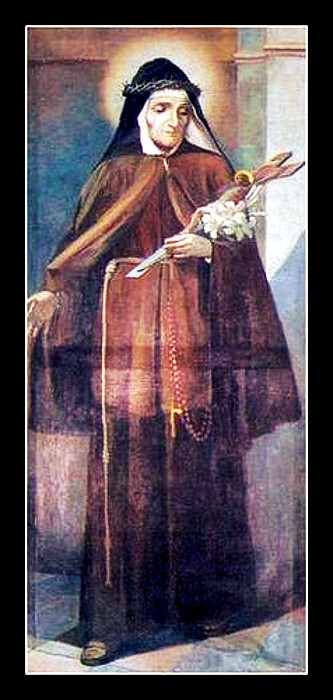
St Clare, Virgin, Founder,
Mystic, Miracle-worker
By Fr Francis Xavier Weninger SJ (1805-1888) (Excerpt)

St.Clare, Founder of the Order which bears her name, was born of rich and pious parents, at Assisi, in the district of Umbria, in Italy. She received the name of Clare, which means “clear or bright,” for the following reason. While her mother Hortulana, was kneeling before a Crucifix, praying that God might aid her in her hour of delivery, she heard the words: “Do not fear. You will give birth to a light which shall illumine the whole world.”

From her earliest childhood, prayer was Clare’s only delight. She gave to the poor all the presents which she received from her parents. She despised all costly garments, all worldly pleasures. Beneath the fine clothes she was obliged to wear, she wore a rough hair-girdle. She partook of so little food that it seemed as if she wished to observe a continual fast.

During this same period lived St Francis, surnamed “the Seraphic,” on account of his great virtues. Clare frequently went to him and confided to him, her desire to renounce the world and to consecrate her virginity to God and to lead a perfect life in the most abject poverty. St Francis who saw that besides other gifts and graces, she was filled with the most ardent love of God, possessing great innocence of heart and despising the world, strengthened her in her holy desire, while at the same time, he tested her constancy. Being sufficiently convinced that her desires were inspired by Heaven, he advised Clare to leave her home, which she did on Palm Sunday, going to the Church of the Portiuncula, where she had her hair cut off, as a sign that she would enter a religious life. She divested herself of all feminine ornament, and attired in a penitential garb, tied around her with a cord, she was placed. by St Francis in a vacant Benedictine Convent. She was at that time just eighteen years of age.

When her parents heard of what she had done, they hastened to the Convent, to take Clare home, declaring that this choice of a state of life was only a childish whim, or that she had been persuaded to it by others. Clare, however, after opposing their arguments, fled into the Church, and clinging to the Altar with one hand, with the other she showed her head shorn of its hair, exclaiming: “Know all, that I desire no other bridegroom but Jesus Christ. Understanding well what I was doing, I chose Him and I will never leave Him.” Astonished at this answer, all returned home, admiring her virtue and piety. Clare thanked God for this victory and was, on account of it, all the more strengthened in her resolution.

Clare had a sister younger than herself, named Agnes. A few days later she, too, fled from her parents’ roof and going to Clare, wished to be invested in the same habit and to serve God in the same manner. St Clare received her joyfully but as all her relatives were provoked beyond measure that she, too, had entered a Convent, twelve of them went and forcibly tore her from her sister’s arms. Clare took refuge in prayer and, as if inspired by the Almighty, ran after her sister, loudly calling her by name. God assisted her by a miracle. Agnes suddenly became immovable, as if rooted to the ground and no-one possessed strength enough to drag her from where she stood. Recognising in this, the powerful hand of God, they opposed her no longer but allowed her to return to the Convent.

Meanwhile, St Francis had rebuilt the old Church of St Damiano and had bought the neighbouring house. Into this house he placed his first two religious daughters, Clare and Agnes, who were speedily joined by others, desirous of conforming themselves to the rule of life which St Francis had given to Clare. This was the beginning of the Order of Poor Clares, which has since given to the world, so many shining examples of virtue and holiness, to the salvation of many thousands of souls.

St Clare was appointed Abbess by St Francis and filled the office for forty two years with wonderful wisdom and holiness. Her mother too, together with her youngest daughter, took the habit and submitted to the government of St Clare.

She was, to all in her charge, a bright example of poverty. In austerity towards herself, she was more to be admired than imitated. The floor or a bundle of straw was her bed, a piece of wood, her pillow. Twice during the year she kept a forty days’ fast on bread and water. Besides this, three days of the week, she tasted no food and so little on the others that it is marvellous that she could sustain life with it. The greater part of the night, she spent in prayer and her desire for mortification was so great that St. Francis compelled her to moderate her austerities.

She nursed the sick with the greatest pleasure, as in this work of charity, she found almost constant opportunity to mortify and overcome herself. Besides all her other virtues, she was especially remarkable for her devotion to the Blessed Sacrament. She sometimes remained whole hours immovable before the Tabernacle and was often seen in ecstacy, so great was her love for the Saviour it concealed. She sought her comfort in Him alone in all her trials, amidst all her persecutions and how great were the graces she thereby received, the following event will sufficiently illustrate.

The Saracens besieged Assisi and made preparations to scale the walls of the Convent. St Clare, who was sick at the time, had herself carried to the gates of the Convent, where, with the Ciborium, containing the Blessed Sacrament, in her hands, prostrating herself in company with all her religious, she cried aloud: “O Lord, do not give into the hands of the infidels, the souls of those who acknowledge and praise Thee. Protect and preserve Thy handmaidens whom Thou hast redeemed with Thy Precious Blood.” A voice was distinctly heard, saying: “I will protect you always.”

The result proved that this was the Voice of Heaven. The Saracens, seized with a sudden fear, betook themselves to flight, those who had already scaled the walls, became blind and flung themselves down. Thus were St Clare and her religious protected and the whole City preserved from utter devastation, by the piety and devotion of the Saint to the Blessed Sacrament.
We must omit many miracles which God wrought through His faithful servant.

[When St Clare] … had reached the age of sixty years, during twenty-eight of which, she had suffered from various painful maladies, although she had not been confined to her bed, or rather, her bundle of straw. Her patience while suffering was remarkable and she was never heard to complain.

The hour of her death drew near and she saw a great many white-robed virgins come to meet her, among whom was one who surpassed all the rest in beauty. She followed them and they led her to see the Almighty face-to face. Several who had read in the depths of her heart, said that she died more from the fervour of her love for God, than from the effects of her sickness. Her holy death took place in 1253. The great number of miracles wrought after her death, through her intercession and the heroic virtues which made her so remarkable, induced Pope Alexander IV., only two years later, to place her in the number of Saints.