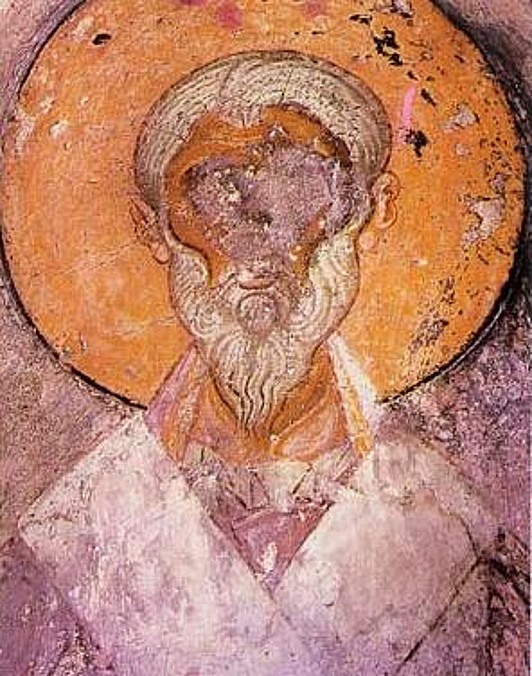
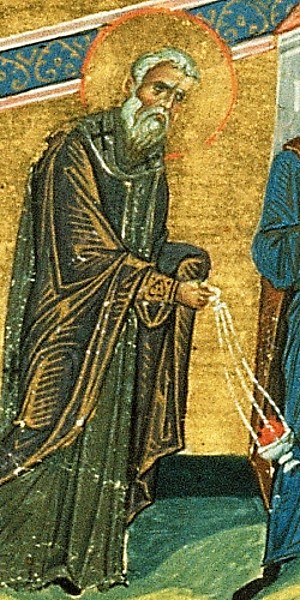
Saint of the Day – 26 February – St Alexander of Alexandria (Died c 326) Bishop of Alexandria, Confessor, Defender of the True Faith against heresies, in particular the Arians. Born in the 3rd Century in northern Egypt and died on 26 February c 326 at Alexandria, Egypt. Also known as – Alessandro di Alessandria.
The Roman Martyrology states of him today: “At Alexandria, the Bishop St Alexander, an aged man held in great honour who was a successor of the blessed Peter as Bishop of the City. He expelled from the Church, Arius, one of his Priests, tainted with heretical impiety and convicted by Divine Truth and, subsequently, was one of the three hundred and eighteen Fathers, who condemned him at the Council of Nicea.”
He was a man of apostolic doctrine and life, mild, affable, exceedingly charitable to the poor and full of faith, zeal and fervour.
St Alexander was made Bishop of Alexandria in 313. He was a disciple of the previous Bishop St Peter the Martyr and had heard the warnings the great Bishop made in prison about the Deacon Arius. Alexander led an untiring battle against this heretic, preparing the way for St Athanasius.
Arius was a tall man of a grave imposing appearance. He attracted confidence by his amiable manner and agreeable conversation. He lived austerely, assumed a penitent air and showed an apparent zeal for religion. With a broad but superficial knowledge of profane literature and the ecclesiastical sciences, he was a subtle and persuasive dialectician. However, under this exterior show of virtue was a man of melancholy, turbulence, ambition and a taste for novelties. After he was Ordained Priest and charged with teaching Scriptures, he could not contain his vanity and titled himself illustrious. After the death of St Achillas, Bishop of Alexandria, Arius aspired to his See. When Alexander was chosen, Arius became his enemy. It was about this time that Arius began to teach his bad doctrine and recruit followers.
Alexander, concerned about the spreading of this heresy and finding Arius obstinate and incorrigible, excommunicated him from the Diocese of Alexandria. The heretic went to Palestine where he received the support of various Bishops, especially Eusebius of Nicomedia. There he began a campaign of intrigues against his adversaries.
The Council of Nicea in 325 condemned Arius and his doctrines. In that famous assembly of Bishops, one of the high luminaries was our Saint, Alexander. St Athanasius, who had accompanied Alexander, was also present as a Deacon. Alexander returned to Alexandria, where he died several years later, after naming St Athanasius as his successor. Having dedicated his life to gloriously fighting in defence of the Church, he delivered his soul to the Lord in c 326.
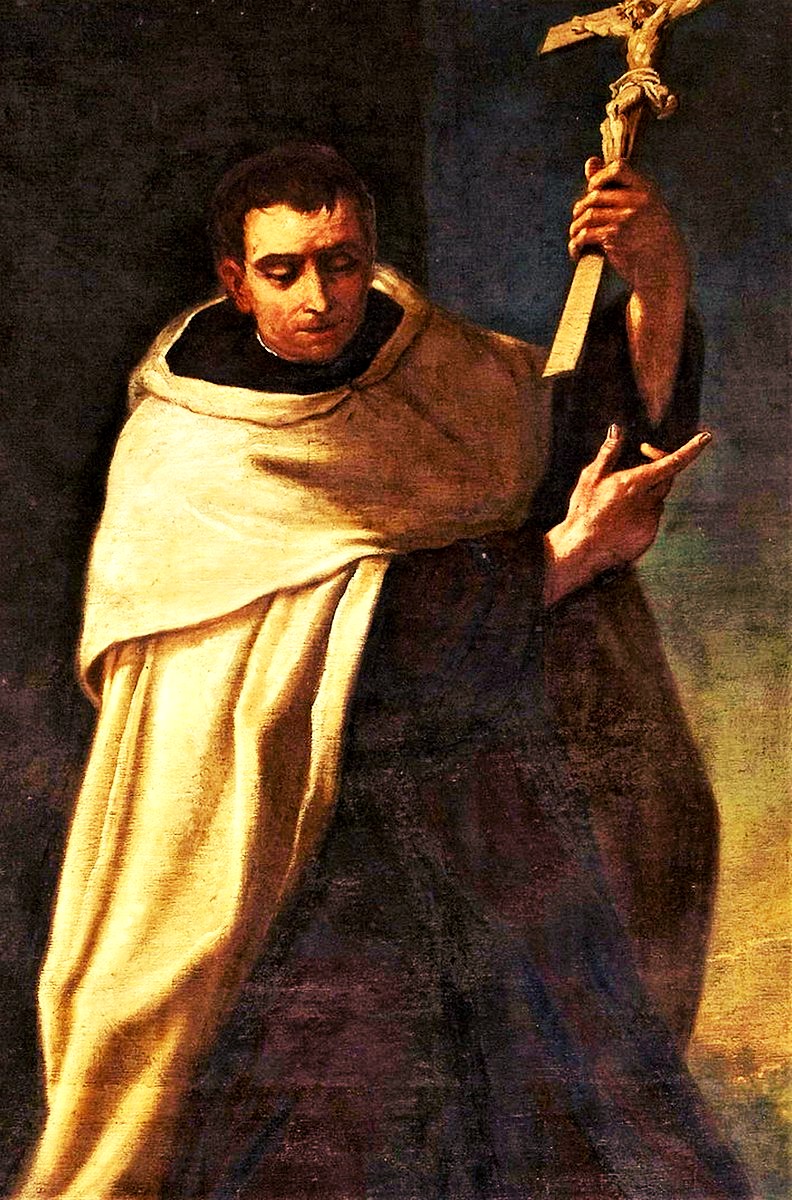
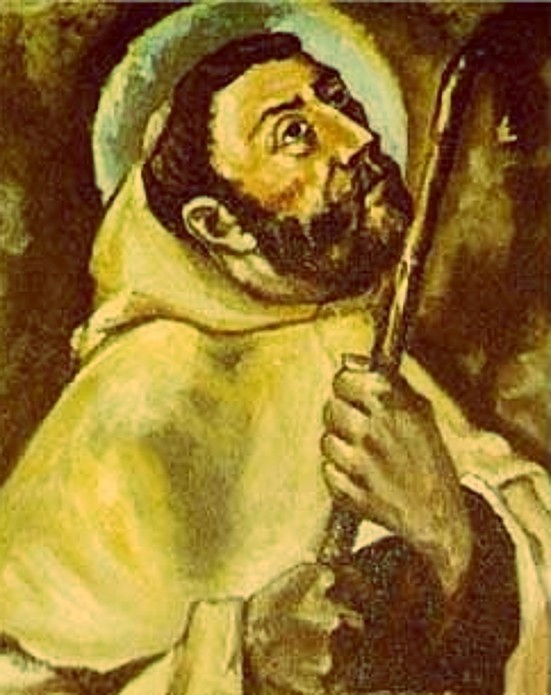
Saint of the Day – 25 February – Blessed Avertano of Lucca O.Carm ( 1320-c 1366 ) Lay Brother of the Order of Carmel, miracle-worker, Avertano had a great devotion to the Passion of Christ. Born in c 1320 in the Diocese of Limoges, France and died in c 1380 ub Lucca, Tuscany, Italy of the Plague. Also known as – Aventanus. Additional Memorial – 4 March (Carmelites).
Avertano was born in Limoges, France in the 12th Century. In his youth, Avertano had resolved to live a life closest to the teachings of the Gospel. The desire for holiness was always in his mind and soul.
Thus, when Avertano witnessed the exemplary way of life of the Carmelites, who had just returned from the East to their homeland, he expressed his intention of joining the Order. It did not take long for him to become a Carmelite.
Wherever he was assigned, Avertano was a model of virtue. Many, who came in contact with him, were edified by his reputation for and examples of holiness. He was also known as a miracle-worker who was blessed with many mystical gifts.
He desired to visit the Land of our Saviour but on his way home from his travels, he died of the Plague in c 1366. So many miracles were reported at his grave in the Church of San Pietro, that a series of paintings depicting some of them, were created for the San Pietro Church and the Cathedral of Lucca but then enshrined in the Church of Sts Paolino and Donato in 1806. He was Beatified in 1828 by Pope Gregory XVI,
St Adelelmo of Engelberg St Aldetrudis St Ananias of Phoenicia Blessed Avertano of Lucca O.Carm ( 1320-1380 ) St Caesarius of Nanzianzen St Callistus Caravario Bl Ciriaco Maria Sancha Hervas Bl Didacus Yuki Ryosetsu St Domenico Lentini St Donatus the Martyr Saint Felix III, Pope St Gerland the Bishop St Gothard the Hermit St Herena the Martyr St Justus the Martyr St Laurentius Bai Xiaoman St Luigi Versiglia
Martyrs of Egypt – A group of Christian men who were exiled to Egypt for their faith and were eventually Martyred for their faith in the persecutions of Numerian. We know little more than their names: Claudianus Dioscurus Nicephorus Papias Serapion Victor Victorinus
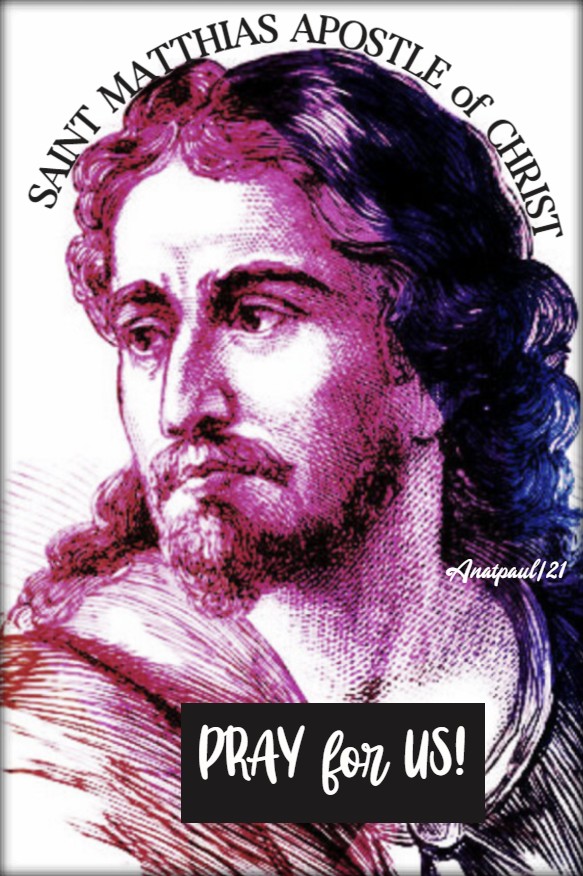
One Minute Reflection – 24 February – Feast of St Matthias, Apostle and Martyr – Acts 1:15-26, Matthew 11:25-30
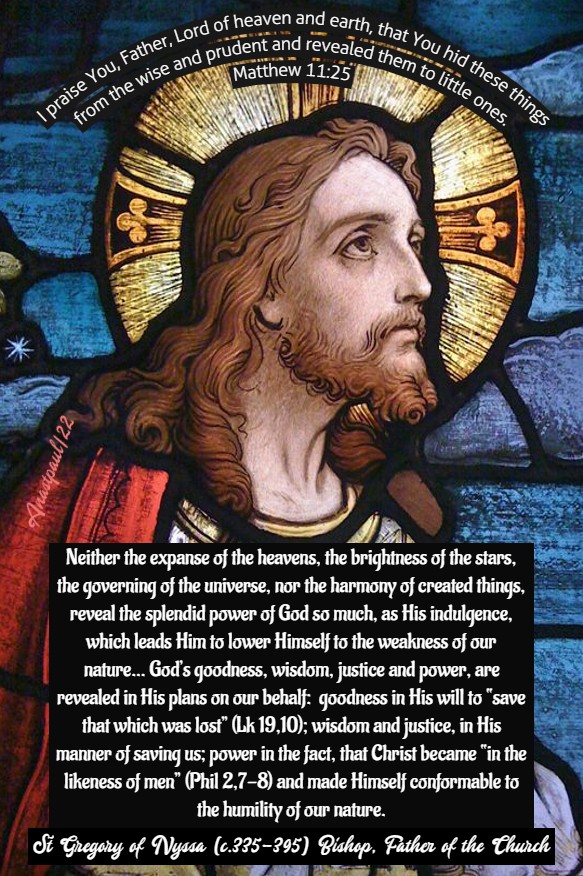
“I praise You, Father, Lord of heaven and earth, that You hid these things from the wise and prudent and revealed them to little ones.” – Matthew 11:25
REFLECTION – “The fact that the all-powerful God has been able to humble Himself even to the humility of the human condition, constitutes a greater proof than the impact and supernatural character of miracles. Indeed, when Divine power effects something of great sublimity, this is, after a fashion, in conformity with and appropriate to God’s nature… On the other hand, that God descended even to our lowliness is, in a certain way, the expression of an overwhelming power which, is not in the least restrained, by what is contrary to its nature…
Neither the expanse of the heavens, the brightness of the stars, the governing of the universe, nor the harmony of created things, reveal the splendid power of God so much, as His indulgence, which leads Him to lower Himself to the weakness of our nature… God’s goodness, wisdom, justice and power, are revealed in His plans on our behalf: goodness in His will to “save that which was lost” (Lk 19,10); wisdom and justice, in His manner of saving us; power in the fact, that Christ became “in the likeness of men” (Phil 2,7-8) and made Himself conformable to the humility of our nature.” – St Gregory of Nyssa (c.335-395) Bishop, Father of the Church (Catechetical Discourse 23-26 ; SC 453).
PRAYER – God, Who added blessed Matthias to the company of Your Apostles, grant, we beseech You, that by his intercession, we may ever be aware of the depth of Your love for us. Through Jesus Christ, Thy Son our Lord, Who lives and reigns with Thee, in the unity of the Holy Ghost, God, world without end. Amen (Collect).
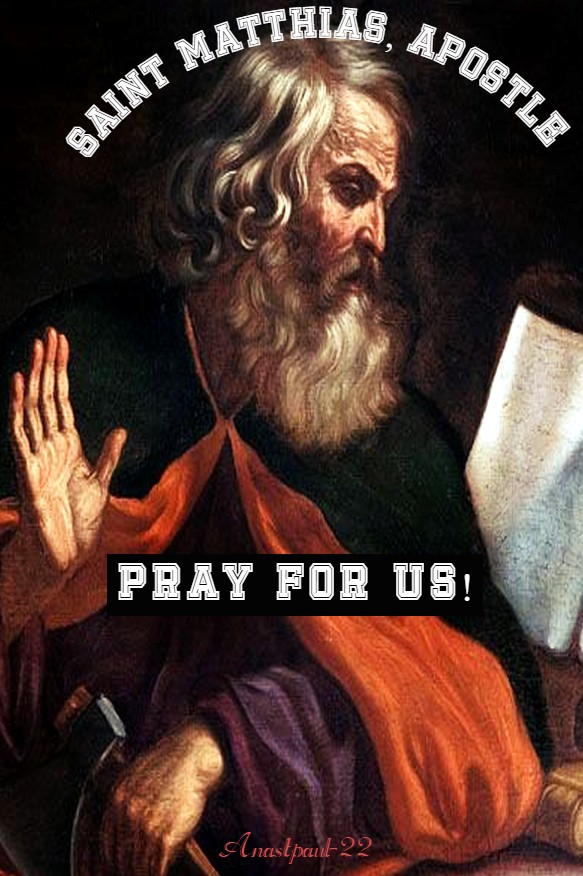
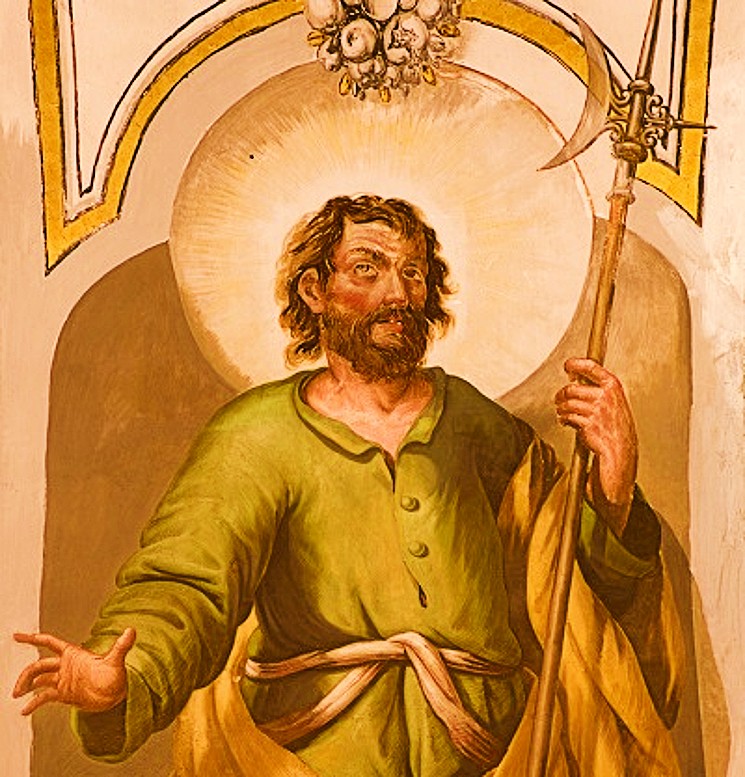
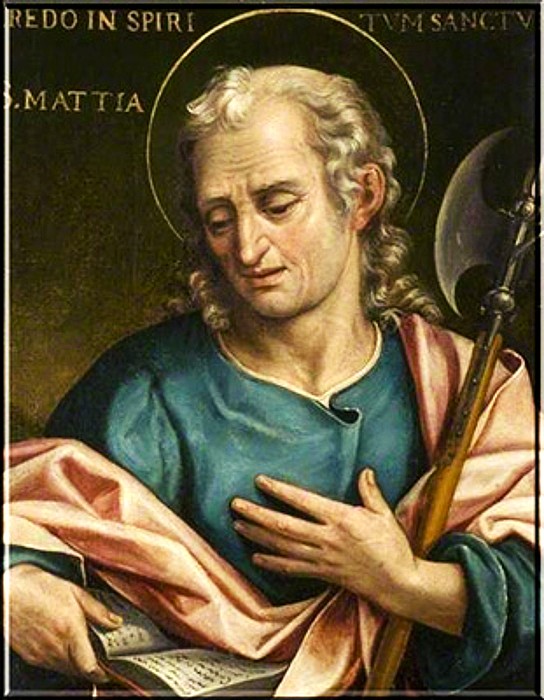
Saint of the Day – 24 February – St Matthias Apostle of Christ, Martyr.
St Mattias, born in Bethlehem of Juda, was at the commencement of Christ’s preaching, numbered by Him, among the seventy-two disciples and everywhere accompanied our Saviour and witnessed all His miracles and His Resurrection.
After Christ’s Ascension, Matthias was chosen Apostle in place of the traitor Judas, as is detailed in the Epistle of this day and, after the descent of the Holy Ghost, announced the Gospel, first to his own people, the Jews and then, in Cappadocia and the neighbourhood of the Caspian Sea.
Having preached the doctrine of salvation in many countries, especially urging, as St Clement of Alexandria relates, abstinence from Carnal pleasures, he was stoned by the Jews in Galilee, who wished not to hear his sermons and was finally beheaded by the Roman soldiers about the year 63. (Father Leonard Goffine, 1880).
Acts 1:15-26
In those days, Peter stood up in the midst of the brethren – now the number of persons met together, was about a hundred and twenty – and he said, Brethren, the Scripture must be fulfilled which the Holy Spirit declared before, by the mouth of David, concerning Judas, who was the guide of those who arrested Jesus; inasmuch as he had been numbered among us and was allotted his share in this ministry. And he indeed bought a field with the price of his iniquity and, being hanged, burst asunder in the midst and all his bowels gushed out. And it became known to all the residents of Jerusalem, so that the field came to be called, in their language, Haceldama, that is, the Field of Blood. For it is written in the book of Psalms, ‘Let their habitation become desolate and let there be none to dwell in it.’ And, ‘His ministry let another take.’ Therefore, of these men who have been in our company all the time that the Lord Jesus moved among us, from John’s baptism until the day that He was taken up from us, of these one must become a witness with us of His Resurrection.” And they put forward two: Joseph, called Barsabbas, who was surnamed Justus and Matthias.
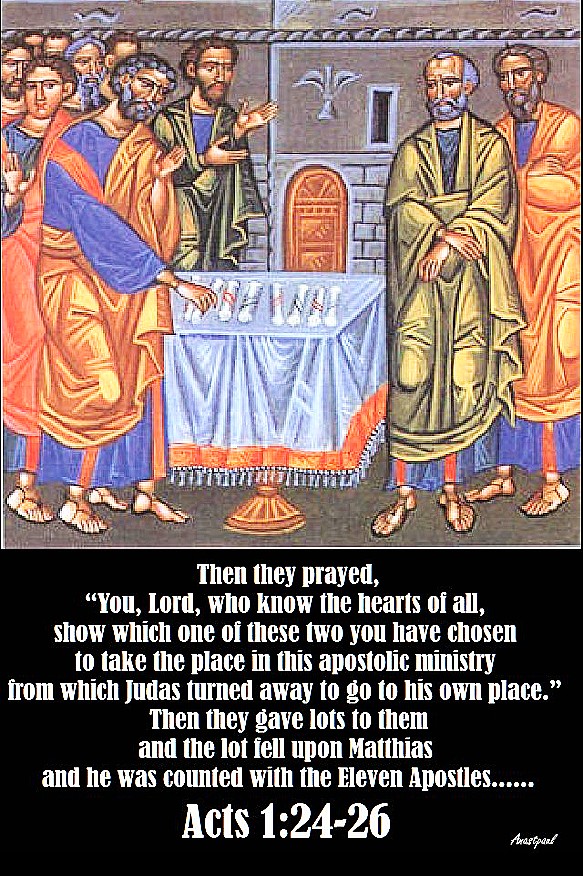
The Election of St Matthias
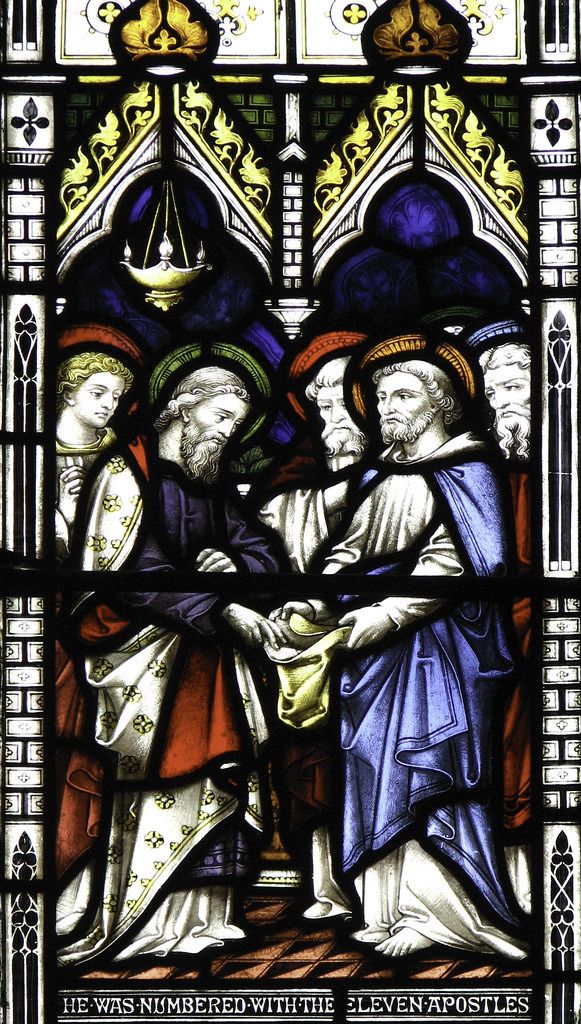
And they prayed and said, You, Lord, Who know the hearts of all, show which of these two You have chosen to take the place in this ministry and apostleship, from which Judas fell away to go to his own place. And they drew lots between them and the lot fell upon Matthias and he was numbered with the eleven apostles.
O God, Who didst choose Thy blessed servant Matthias to be of the number of the twelve Apostles, grant, we beseech Thee, that Thy Church, being upholden by his prayers, may ever feel about her, the arms of Thy most mighty Protection. Through our Lord Jesus Christ Thy Son, Who lives and reigns with Thee in the unity of the Holy Ghost, one God, world without end. Amen.
St Adela of Blois Bl Antonio Taglia Bl Arnold of Carcassonne St Betto of Auxerre Bl Berta of Busano
Blessed Constantius of Fabriano OP (1401-1481) Priest and Friar of the Order of Preachers, Prior, Reformer, Preacher of renown, Writer, known as a Miracle-Worker and had the gift of prophecy, peacemaker Biography: https://anastpaul.com/2019/02/24/saint-of-the-day-24-february-blessed-constantius-of-fabriano-op-1401-1481/
Bl Ida of Hohenfels Bl Josefa Naval Girbes St Liudhard Bl Lotario Arnari Bl Marco De’ Marconi St Modestus of Trier St Peter the Librarian St Praetextatus of Rouen St Primitiva St Sergius of Caesarea Bl Simon of Saint Bertin
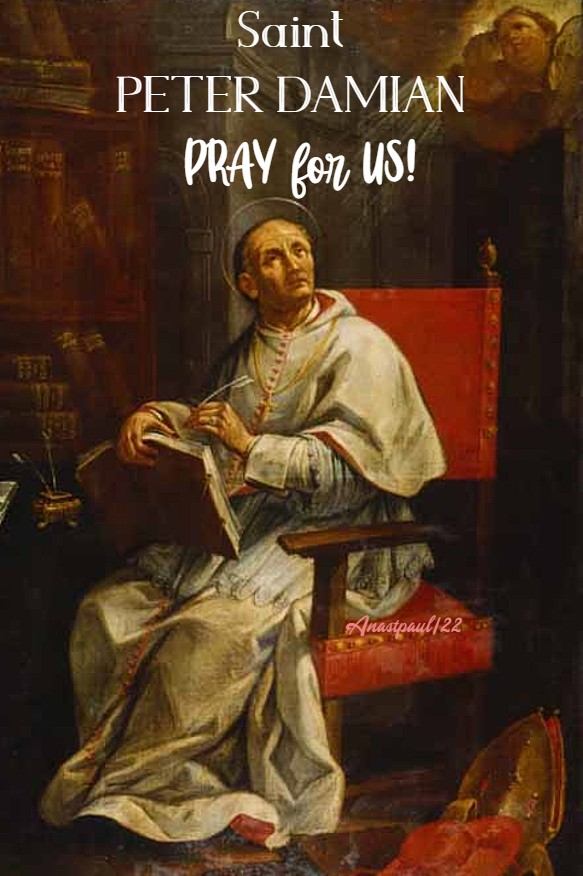
One Minute Reflection – 23 February – The Memorial of St Peter Damian (1007-1072) Bishop, Confessor, Doctor of the Church – 2 Timothy 4:1-8, Matthew 5:13-19
“I have come, not to abolish but to fulfil.” … Matthew 5:17
REFLECTION – “In Him, the promise made through the shadows of prophecy, stands revealed, along with the full meaning of the precepts of the law. He is the One Who teaches the Truth of prophecy, through His presence and makes obedience to the commandments possible, through grace. In the preaching of the holy Gospel all should receive a strengthening of their faith. No-one should be ashamed of the Cross of Christ, through which the world has been redeemed. No-one should fear to suffer for the sake of justice, no-one should lose confidence in the reward that has been promised. The way to rest is through toil, the way to life is through death. Christ has taken on Himself the whole weakness of our lowly human nature. If then, we are steadfast in our faith in Him and in our love for Him, we win the victory that He has won, we receive what He has promised. When it comes to obeying the commandments or enduring adversity, the words uttered by the Father should always echo in our ears – “This is my Son, the beloved, in whom I am well pleased, listen to Him.” … St Pope Leo the Great (400-461) Father and Doctor of the Church (An excerpt from Sermo 51).
PRAYER – Grant us, we beseech You, almighty God, to follow the counsel and examples of St Peter, Your Confessor and Bishop, so that by setting earthly goods at naught, we may attain everlasting happiness. Through Jesus Christ, Thy Son our Lord, Who lives and reigns with thee, in the unity of the Holy Ghost, God, world without end. Amen (Collect).
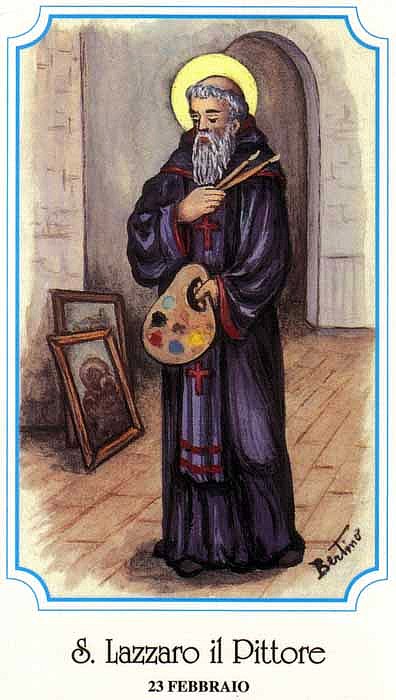
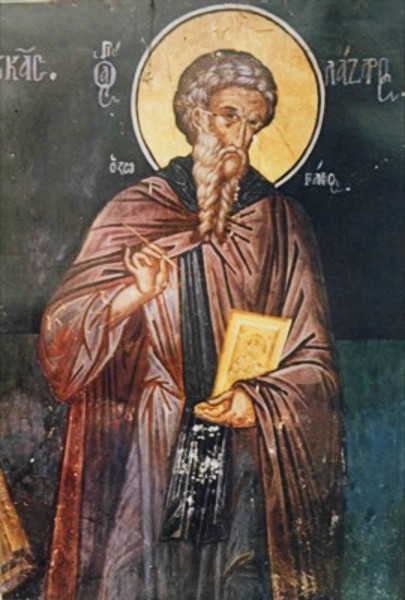
Saint of the Day – 23 February – St Lazarus Zographos (810 -865) surnamed Zographos (Greek for ‘painter’) Priest abd Monk known as “the Painter and the Iconographer.” Born at Mount Caucasus in Armenia on 17 November 810 in Armenia and died in 865 in Rome. Lazarus lived before and during the second period of Byzantine Iconoclasm. Also known as – Lazarus the Painter, the Iconographe, Lazarus of Constantinople, Lazzaro…
The Roman Martyrology states of him today: “St Lazarus, a Monk, whom the Iconoclast Emperor Theophilus ordered to be put to torture for having painted holy images. His hand was burned with a hot iron but, being healed by the power of God, he painted anew the holy images which had been defaced and finally rested in peace.”
Lazarus was noted to possess the virtues of love for Christ, asceticism, prayer and rejection of the vanities of the world. He was further recognised for his acts of self-control, discipline and alms-giving He was Ordained a Priest and in his lifetime, he was highly regarded and well-known for his frescos. He used faith and ritual as a means to transcribe his inner contemplation onto the images he painted. Thus, his ability to paint iSacred images was seen as a gift given by God.
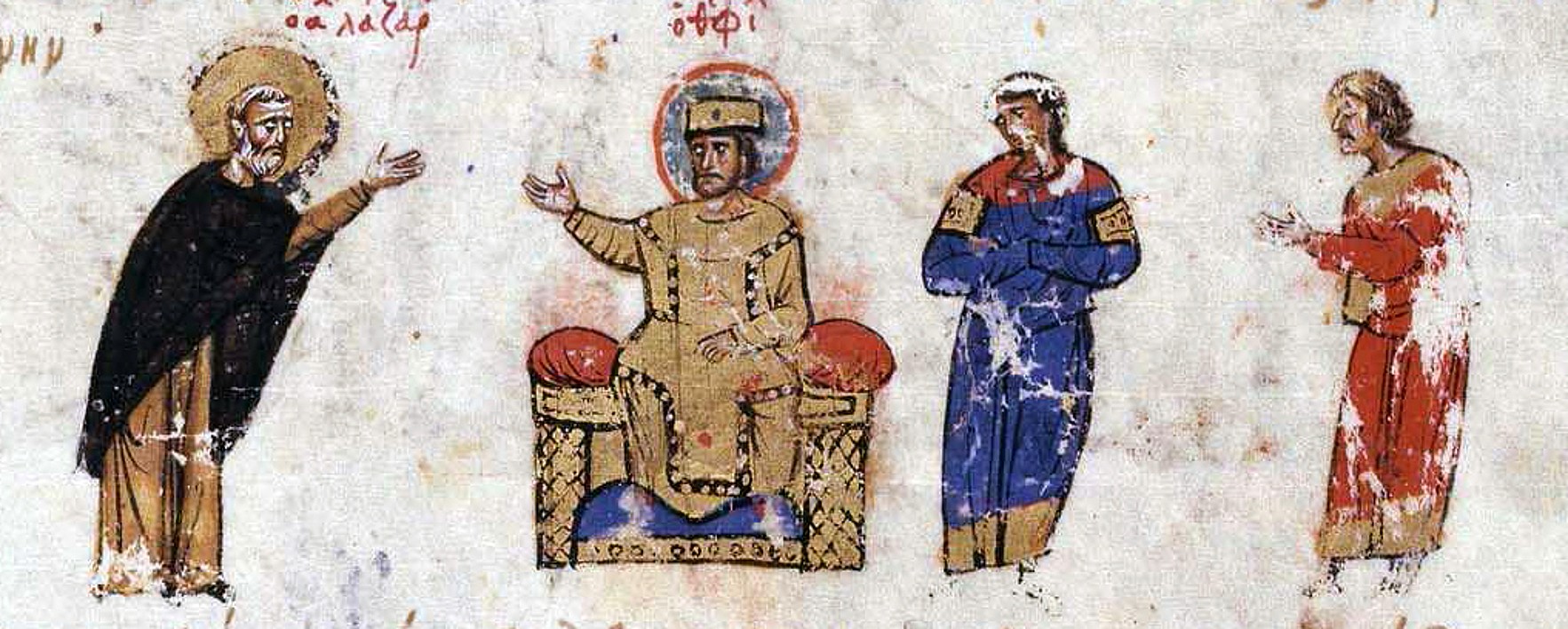
During the reign of Theophilus (829–842), an iconoclast Emperor opposed to all Sacred images, Lazarus stubbornly continued his craft of painting and began restoring images defaced by heretics. Theophilus sought out Lazarus, who was then famous for his artworks and intended to make an example of him. After being asked several times to cease painting, Lazarus was brought before the Emperor. Lazarus refused to destroy any of the images he painted. The Emperor soon found that Lazarus was above flattery and bribery. He was then threatened with the death penalty, which at the time was not an uncommon outcome for those who favoured icons (iconodules). However, Lazarus, being a holy man of the cloth, could not be put to death and so, he was instead thrown in prison.
St Lazarus before Emperor Theophilus
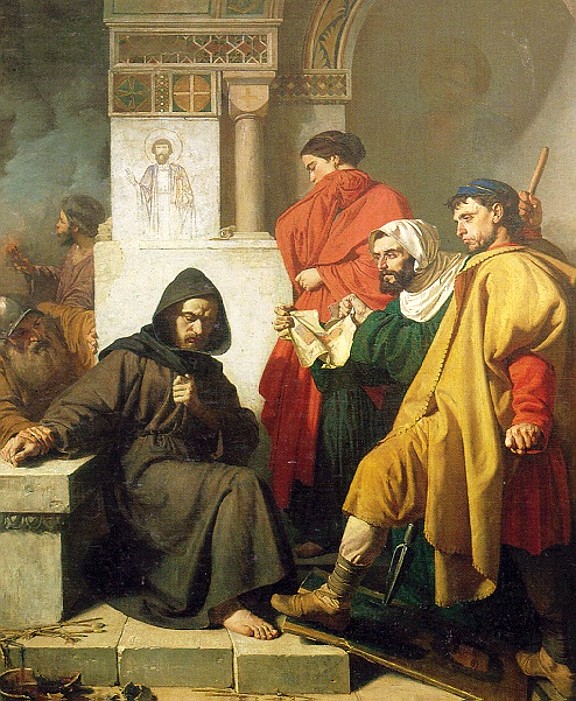
During his imprisonment he was subjected to such “severe torture that flesh melted away along with his blood.” He was left to die of his wounds but miraculously recovered. He then began to paint holy images on panels from his prison cell. Hearing of this, Theophilus gave orders to have “sheets of red hot iron to be applied to the palms of his hands ,where, as a result, he lost consciousness and lay half dead.” It is also said his hands were burned with red-hot horseshoes until his flesh melted to the bone.
As Lazarus lay on his deathbed, the Empress Theodora, an iconodule, convinced Theophilus to release Lazarus from prison. Lazarus found refuge at Tou Phoberou, a secluded Church of St John the Baptist. The Church is believed to have functioned as an Monastery which housed as many as one-hundred and seventy Monks.
After the death of Theophilus in 842, his wife, Theodora asked Lazarus to forgive her husband’s actions, to which he replied “God is not so unjust, O, Empress, as to forget our love and labours on His behalf.” Lazarus served as a model of perseverance for those who had suffered from iconoclast persecution.
St Lazarus and the Iconoclasts by Domenico Morelli (1855)
After the restoration of the icons in 843, Lazarus was again free to pursue his painting. Despite his previous wounds which the Almighty had completely healed, Lazarus was said to have painted a large fresco of St John at the Phoberos Monastery. The painted fresco was known to have the power to perform cures and miracles. That same year, he also famously restored a portrait of Christ known as the Christ of the Chalke, over the Chalke Gate, a ceremonial entrance of the Great Palace of Constantinople. Neither of these two works survive today.
Lazarus was also accredited with the mosaic decoration of the apse of the Hagia Sophia, within the pilgrim accounts of Antony, Archbishop of Novgorod during a visit to Constantinople. Antony described the mosaic as depicting the Mother of God holding a Child Christ flanked by two angels, which was noted to have been seen by both Emperor Basil l and Michael III (842–867) before his death the same year. However, these accounts are dated several centuries later in c. 1200.
In 856, Lazarus was sent as a diplomat for Michael III, Theophilos and Theodora’s son, who sent him as an Emissary to visit Pope Benedict III, to discuss the possibility of reconciliation between the Catholic Church of Rome and the Eastern Church of Constantinople, who at this time, had very strained relations. In 865, during his second mission to the Pope, Lazarus died at Rome on 28 September, although others dispute this date. He was buried in the Monastery of Evanderes, near Constantinople.
St Maximian of Ravenna St Miguel Facerías Garcés St Mohammed Abdalla St Papias of Heirapolis St Paschasius of Vienne St Raynerius of Beaulieu St Thalassius
Martyrs of Arabia – A memorial for all the unnamed Christians Martyred in the desert and mountainous areas south of the Dead Sea during the persecutions of Emperor Valerius Maximianus Galerius.
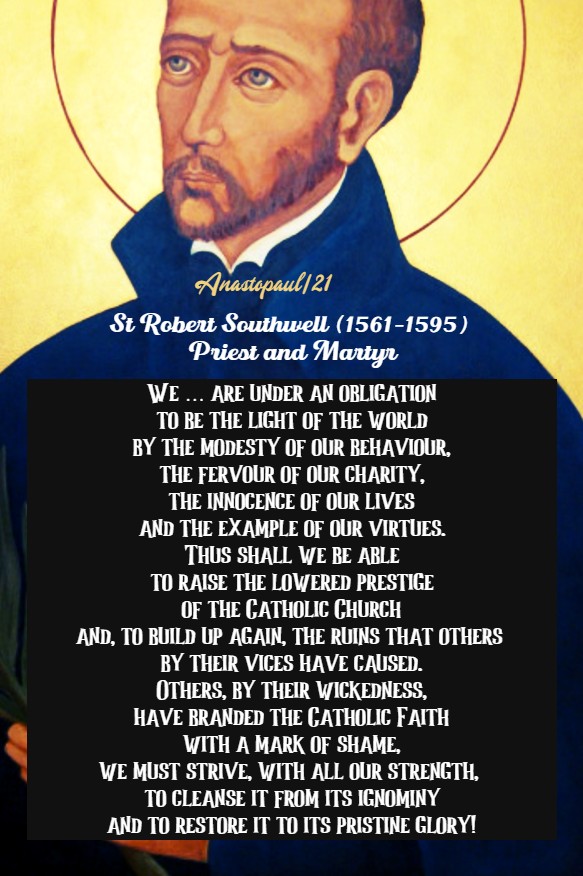
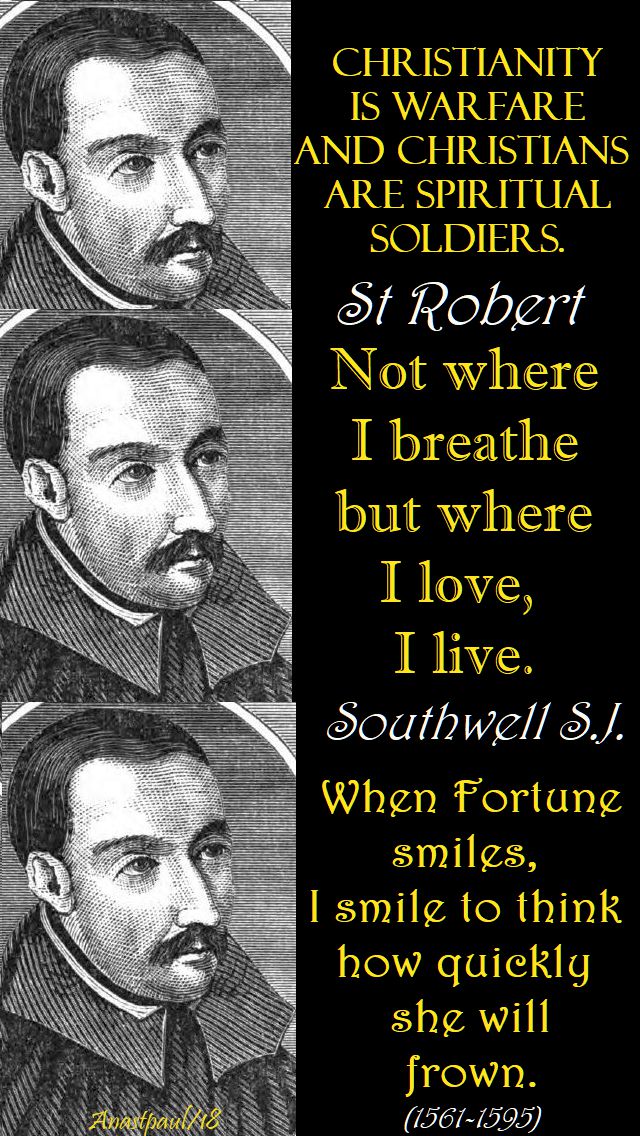
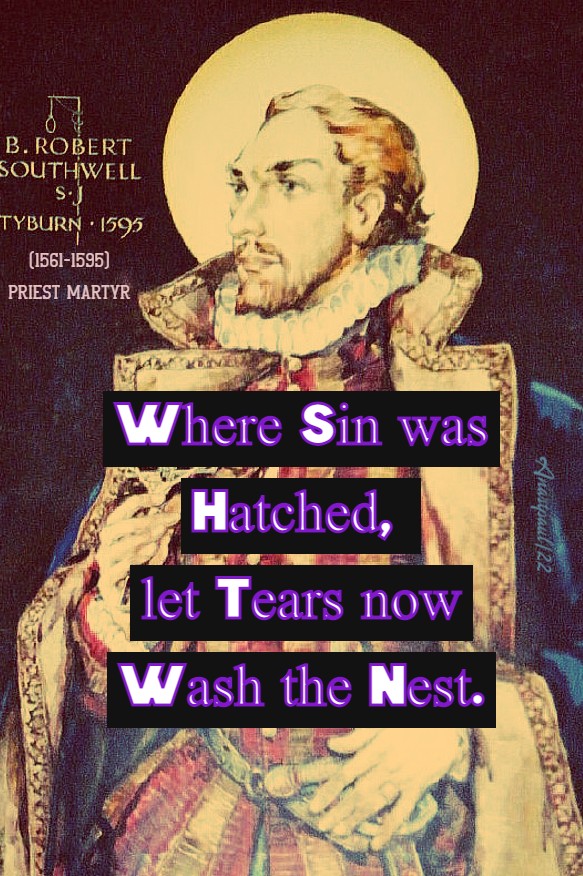
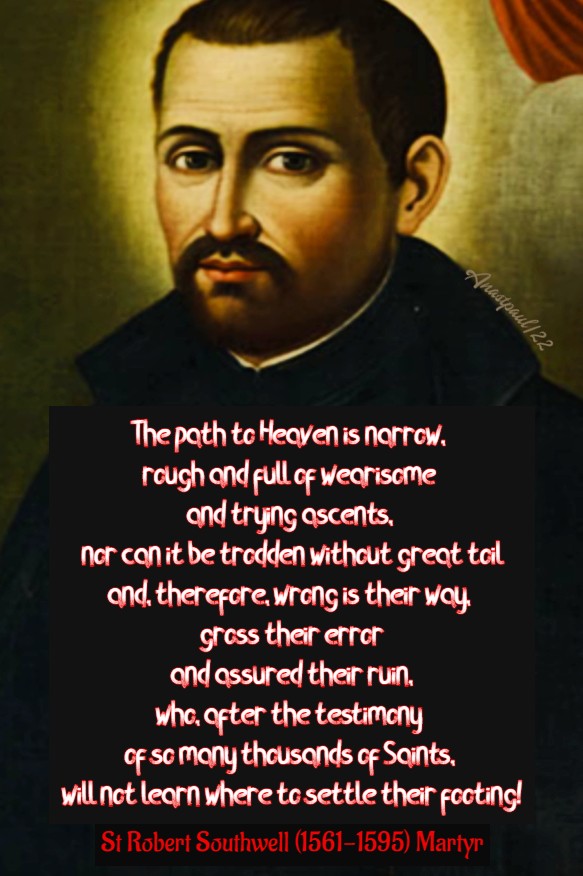
Quote/s of the Day – 21 February – St Robert Southwell SJ (1561-1595)
“We … are under an obligation to be the light of the world by the modesty of our behaviour, the fervour of our charity, the innocence of our lives and the example of our virtues. Thus shall we be able to raise the lowered prestige of the Catholic Church and, to build up again, the ruins that others by their vices have caused. Others, by their wickedness, have branded the Catholic Faith with a mark of shame, we must strive, with all our strength, to cleanse it from its ignominy and to restore it to its pristine glory!”
“Christianity is warfare and Christians are spiritual soldiers.”
“Not where I breathe but where I love, I live.”
“When Fortune smiles, I smile to think, how quickly she will frown.”
“Where sin was hatched, let tears now wash the nest.”
“The path to Heaven is narrow, rough and full of wearisome and trying ascents, nor can it be trodden without great toil and, therefore, wrong is their way, gross their error nd assured their ruin, who, after the testimony of so many thousands of Saints, will not learn where to settle their footing!”
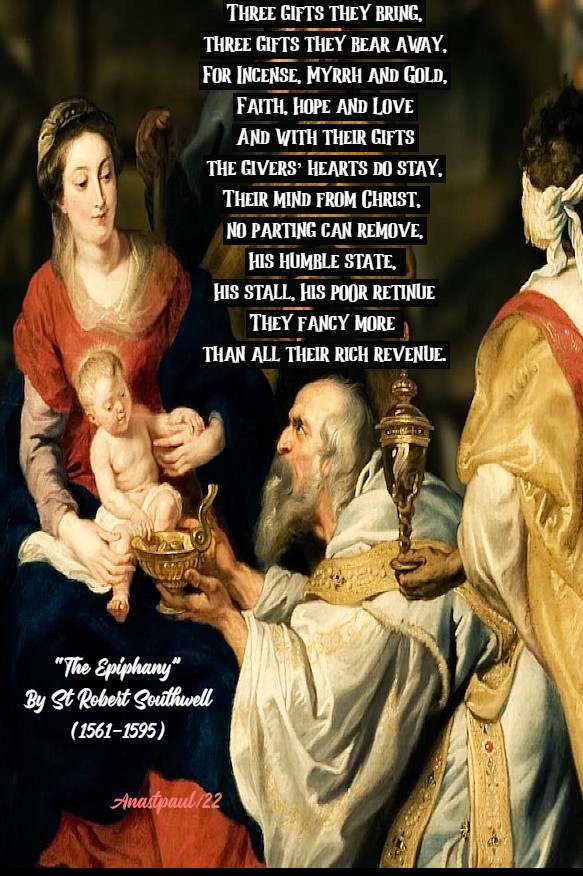
“The Epiphany” By St Robert Southwell SJ (1561-1595) Martyr
To blaze the rising of this glorious sun A glittering star appeareth in the east Whose sight to pilgrim toil three sages won To seek the light they long had in request, And by this star to nobler star they pace Whose arms did their desired sun embrace.
Still was the sky wherein these planets shined And want the cloud that did eclipse their rays, Yet through this cloud their passage they did find, And pierced these sages’ hearts by secret ways, Which made them know, the Ruler of the skies By Infant tongue and looks of babish eyes.
Heaven at her light, earth blusheth at her pride And of their pomp these peers ashamed be, Their crowns, their robes, their train they set aside When God’s poor cottage, clouts and crew they see, All glorious things their glory now despise Since God contempt doth more than glory prize.
Three gifts they bring, three gifts they bear away, For Incense, Myrrh and Gold, Faith, Hope and Love And with their gifts the givers’ hearts do stay, Their mind from Christ, no parting can remove, His humble state, His stall, His poor retinue They fancy more than all their rich revenue.
St Robert Southwell SJ (1561-1595) Priest and Martyr
Saint of the Day – 21 February – Blessed Thomas Pormort (c 1560-1592) Priest Martyr Born in c 1560 in Little Limber, Lincolnshire, England and died by being hanged on 20 February 1592 at Saint Paul’s Churchyard, London, England on a gibbet erected next to the shop of the man whose Confession he was accused of hearing. Also known as – Thomas or John Whitgift. Additional Memorials – 22 November as one of the Martyrs of England, Scotland, and Wales, 29 October as one of the Martyrs of Douai.
Thomas was probably related to the family of Pormort of Great Grimsby and Saltfletby, Lincolnshire.
After receiving some education at Cambridge, he went to Rheims on 15 January 1581 and on 20 March of the same year he travelled, to Rome, to study further for the Priesthood.
In 1587 he was Ordained in Rome. Thereafter, on 6 March 1587, he entered the household as a Secretary/Aid of the English Bishop Owen Lewis, Bishop of Cassano, Italy. He spent the next few years there. Later he served as prefect of studies in the Swiss College in Milan but then decided to return home to assist the persecuted English Catholics.
On 15 September 1590, Thomas proceeded his travels to return to England. Crossing the St Gotthard Pass, he reached Brussels around 29 November. There he became manservant to Mrs Geoffrey Pole, under the name of Whitgift, the Protestant Archbishop Whitgift being his Godfather. With her as a ‘cover’ he went to Antwerp, to proceed to Flushing and thence to England.
Less than a year later, on St James’ Day,25 July 1591, he was arrested in London and charged with the crime of being a Priest. Although he was able to escape, in August or September of 1591, he was arrested again and committed to Bridewell Palace, whence he was removed to Richard Topcliffe’s house and subjected to inhuman tortures, being repeatedly racked and sustaining a rupture in consequence. Richard Topcliffe was a notorious ‘Priest Hunter and Torturer.’
At the hearing, on 8 February 1592 he was convicted of high treason and condemned to death, for being a Priest and for reconciling John Barwys, a local haberdasher, to the Catholic Church and of hearing his Confession. At the hearing, Thomas accused Topcliffe of having boasted to him of indecent familiarities with the Queen, Elizabeth I. Hence Topcliffe obtained a decree to the sheriff to proceed with the execution. His Uncle, Archbishop Whitgift endeavoured to delay the sentence but without success.
The gibbet was erected against the haberdasher’s shop and Thomas was kept standing for two hours on the ladder, while Topcliffe vainly urged him to withdraw his accusation
Thomas was Beatified along with the 40 Martyrs of England, Scotland and Wales.
Blessed Caterina Dominici/Maria Enrichetta SSA (1829–1894) Nun of the Sisters of St Anne – whose main charism is the care and education of street children, Mystic with an extraordinary devotion to the Blessed Sacrament, close friend and adviser to St John Bosco in establishing the Rule of the Daughters of Mary Help of Christians, also “lending” two nuns to the new Congregation. Her Life: https://anastpaul.com/2021/02/21/saint-of-the-day-21-february-blessed-caterina-dominici-maria-enrichetta-1829-1894/
Bl Claudio di Portaceli St Daniel of Persia Bl Eleanora St Ercongotha St Felix of Metz St George of Amastris St Germanus of Granfield St Gundebert of Sens
Blessed Noel Pinot (1747-1794) Priest and Martyr. During the French Revolution, he refused to take the oath of the Civil Constitution of the Clergy unlike his superio! He wore his Mass Vestments to execution and died reciting the opening words of the Mass. He was Beatified by Pope Pius XI on 31 October 1926. His Life and Death: https://anastpaul.com/2020/02/21/saint-of-the-day-21-february-blessed-noel-pinot-1747-1794-priest-and-martyr/
St Paterius of Brescia (Died 606) Bishop St Pepin of Landen St Peter Mavimenus St Randoald of Granfield
St Severian of Scythopolis St Severus of Syrmium Blessed Thomas Pormort (c 1560-1592) Priest Martyr St Valerius of San Pedro de Montes St Verda of Persia
Martyrs of Sicily – 79 Saints: Seventy-nine Christians Martyred together in the persecutions of Diocletian. They were Martyred in c 303 on Sicily.
Martyrs of Hadrumetum – A group of 26 Christians Martyred together by Vandals. We know little more than eight of their names – Alexander, Felix, Fortunatus, Saturninus, Secundinus, Servulus, Siricius and Verulus. c 434 at Hadrumetum (modern Sousse, Tunisia)
Martyrs Uchibori – Three Japanese laymen, all brothers, all sons of Paulus Uchibori Sakuemon, one a teenager, one only five years old and all martyred for their faith in the persecutions in Japan. 21 February 1627 in Shimabara, Nagasaki, Japan. Beatified 24 November 2008 by Pope Benedict XVI. Antonius Balthasar Ignatius
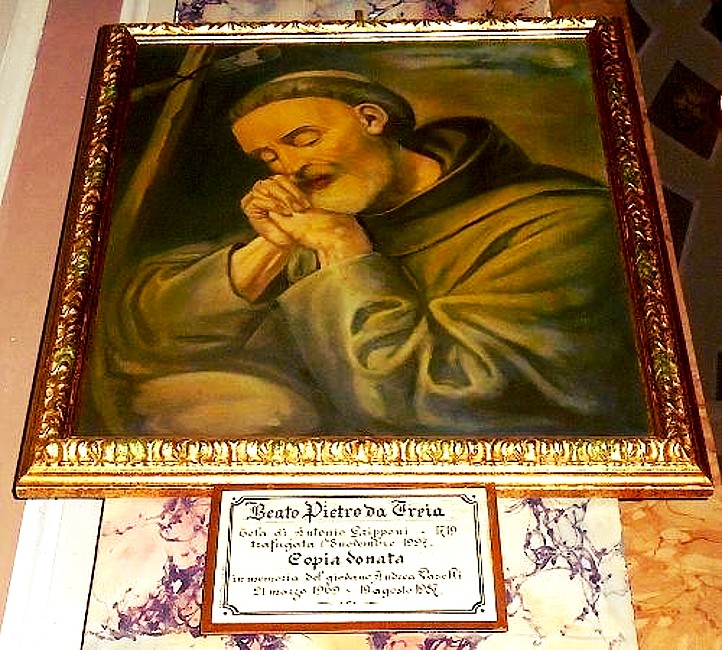
Saint of the Day – 20 February – Blessed Pietro of Treia OFM (1214-1304) Friar of the Friars Minor, renowned and eloquent Preacher, Mystic and Ecstatic who levitated and experienced visions. Born in 1214 and died on 19 February 1304 at the Franciscan Convent of Sirolo, Italy.
The Blessed Pietro da Treia was born in 1214 was descend from the noble Marchionni family. From childhood he showed a particular love for the Archangel Gabriel.
After spending the first years of his youth among the riches and comforts derived from his social condition, he decided to change his life and follow a more austere evangelical life. He entered the Order of Friars Minor at a very young age. Eager to imitate the virtues of St Francis, he also materially followed in his footsteps, residing for a long time in La Verna.
Blessed Pietro da Treia spent much of his time in contemplation but he was also an active Friar, especially in the ministry of the word, as an irresistible Preacher.
He travelled the Marches, captivating the crowds with his sacred eloquence. He had the gift of moving sinners, who through a good Confession, repented offering penances for their sins and were brought back to God.
His ecstasies and visions are well-known and documented. In Ancona the Blessed Peter while he was immersed in prayer before the Crucifix, placed on the main Altar of the Church, rose from the ground in ecstasy with his whole body and went to kiss the feet of the Lord Crucified. Later in the Convent of Forano, it was Pietro who saw a wonderful scene, in which the Madonna affectionately placed the Divine Baby Jesus on the loving arms of his brother Corrado da Offida.
Blessed Pietro died in the Convent of Sirolo on 19 February 1304, at the age of 79. Pope Pius VI, on 11 September 1793 approved the cult and Beatified him..
Saint of the Day – 19 February – Saint Quodvultdeus (Died c 453) Father of the Church, Bishop of Carthage, Confessor, Writer and Theologian, spiritual student, friend and correspondent of St Augustine, who dedicated some of his works to St Quodvultdeus. Name Meaning – “What God wants.” Born in the late 4th century, probably in Carthage, North Africa and died in c 450 in Naples, Italy. Additional Memorials – 8 January (calendar of Carthage), 28 November (as one of the Martyrs of North Africa).
The Roman Martyrology reads: “In Naples, deposition of St Quodvultdeus, Bishop of Carthage, who was sent into exile together with his clergy by the Arian king Genseric and placed on disused ships without sails or oars. Against all hope he landed in Naples, where he died. Confessor of the faith.”
Little is known of his youth. Born in Africa, almost certainly in Carthage, he was Ordained Deacon around 421 by St Augustine.
In one of his letters to St Augustin, Quodvultdeus asked him to write a work on heresies. St Augustine then wrote the De Haeresibus and dedicated it to Quodvultdeus
In c 434 he became the Bishop of Carthage. He harshly criticised Christians who let themselves be fascinated more by spectacles such as the circus than by the works and examples of the saints and Martyrs of their time, attributing the calamity of that region to a punishment from God for their sinfulness and lack of obedience to the teachings of the Church..
When Carthage was invaded by Arian Vandals under Genseric, Quodvultdeus and most of his Priests were loaded onto non-seaworthy ships and sent into exile and an Arian patriarch was installed as Bishop. Although the ships should have sank, they stayed afloat and carried Quodvultdeus and his clergy to safety in Naples.
Quodvultdeus continued his ministry, fighting the Pelagian heresy in Campagna and converting many to the true Faith. He was never able to return to his See of Carthage in North Africa. The Arians would not permit a Catholic Bishop to be appointed to Carthage for the next 15 years.
Bl Józef Zaplata St Lucia Yi Zhenmei St Mansuetus of Milan St Odran St Proclus of Bisignano St Quodvultdeus (Died c 450) Bishop, Confessor St Valerius of Antibes St Zambdas of Jerusalem
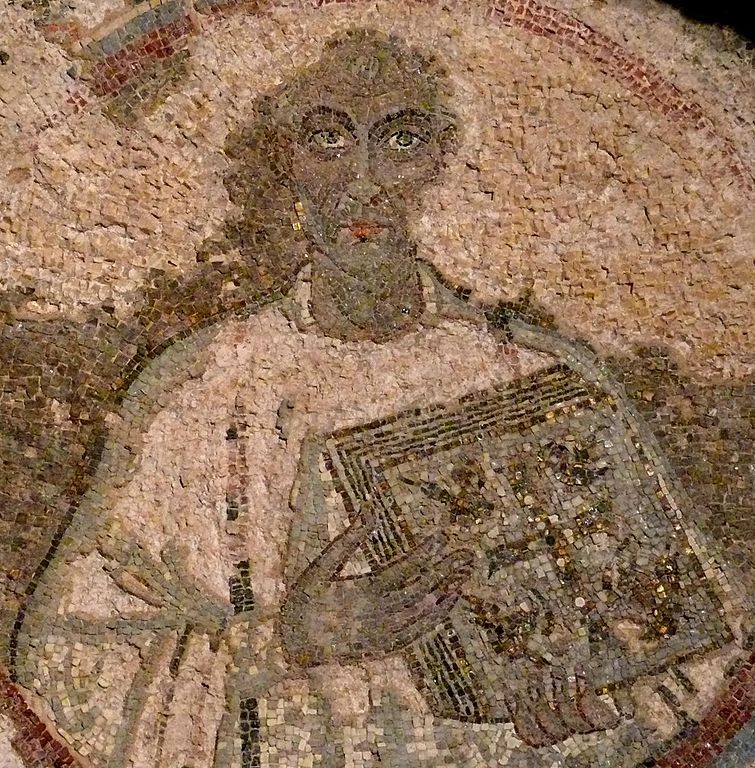
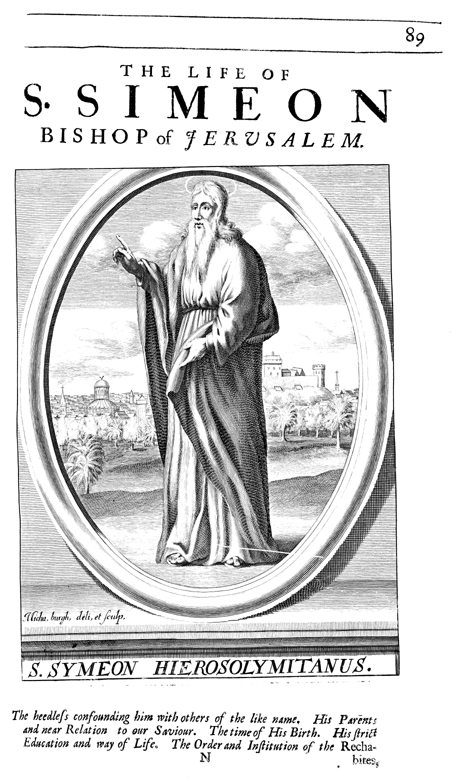
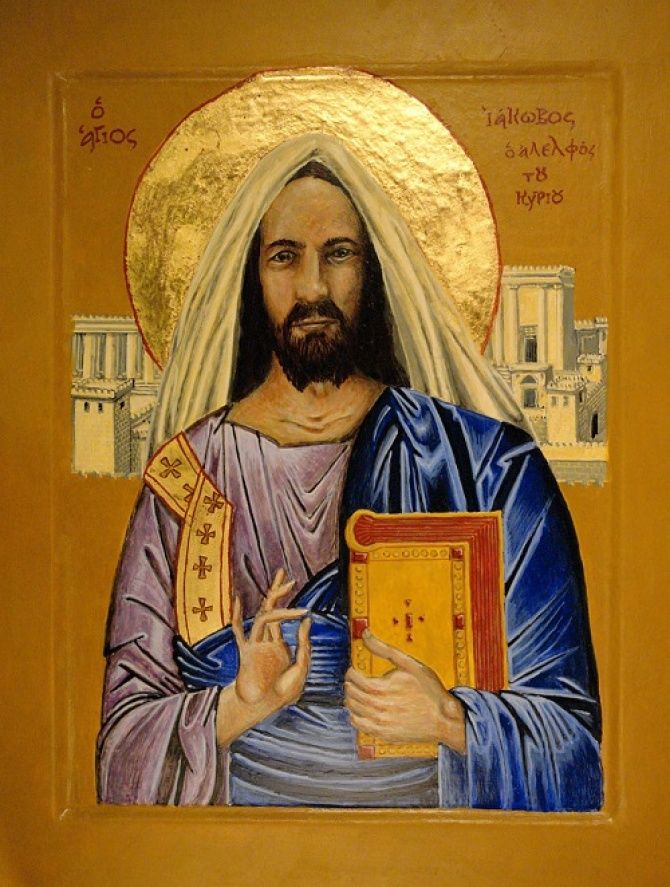
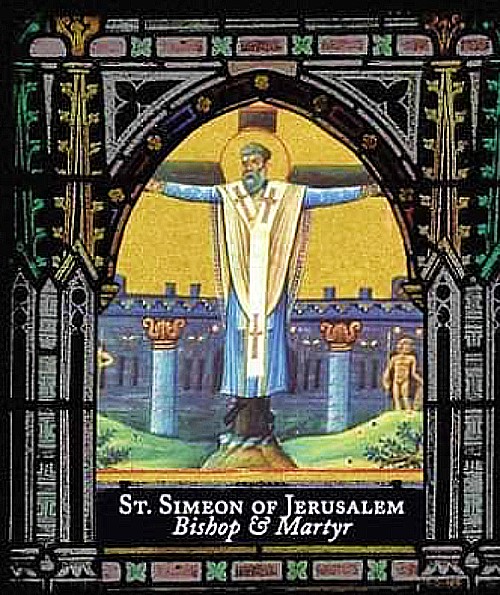
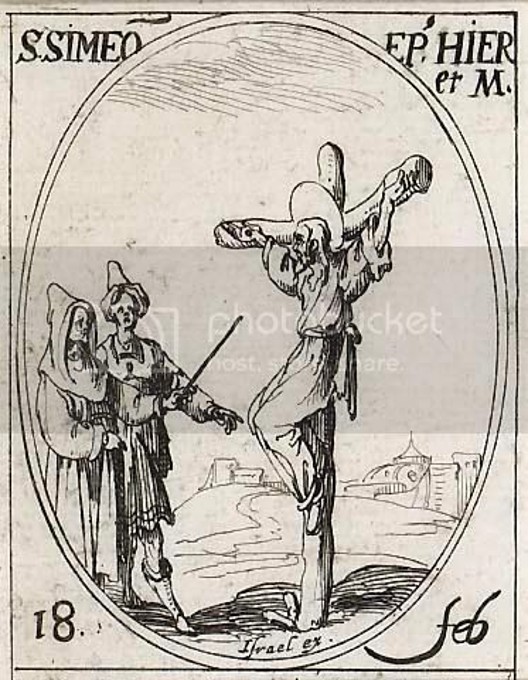
Saint of the Day – 18 February – St Simeon (Died c 106) Martyr, Bishop of Jerusalem, son of Cleopas, was a Jewish Christian leader and the second Bishop of Jerusalem (62 or 70–106). Died by crucifixion in c 106. Aldo known as – Simon. Saint Simeon succeeded his kinsman, Saint James the Lesser, during the persecution of Christians in Jerusalem. He led the early Church in that City for nearly 50 years until his Martyrdom.
The Roman Martyrology states: “At Jerusalem, the birthday of St Simeon, Bishop and Martyr, who is said to have been the son of Cleopas and a relative of the Saviour according to the flesh. He was Consecrated Bishop of Jerusalem after St James, the kinsman of our Lord and in the persecution of Trajan, after having endured many torments, he consummated his Martyrdom. All who were present, even the Judge himself, were astonished that a man, one hundred and twenty years of age, could bear the torment of crucifixion with such fortitude and sonstancy.”
Cleophas, according to tradition, was Saint Joseph’s brother, making Saint Simeon the first cousin of Jesus.
Simeon is mentioned only three times in the Holy Scriptures, in the Gospels of Matthew and Mark and in the Acts of the Apostles. When Jesus preached in His hometown and was poorly received, Simeon was present:
“53 When Jesus had finished these parables, he moved on from there. 54 Coming to his hometown, he began teaching the people in their synagogue and they were amazed. “Where did this man get this wisdom and these miraculous powers?” they asked. 55 “Isn’t this the carpenter’s son? Isn’t his mother’s name Mary and aren’t his brothers James, Joseph, Simeon and Judas? 56 Aren’t all his sisters with us? Where then did this man get all these things?” 57 And they took offense at him. But Jesus said to them, “A prophet is not without honor except in his own town and in his own home.” 58 And he did not do many miracles there because of their lack of faith.” (Matthew 13: 53-58)
No doubt he was one of those brethren of Christ who are mentioned in the Acts of the Apostles as having received the Holy Spirit on the day of Pentecost. St Eusebius says that when the Jews massacred St James the Lesser, Simeon upbraided them for their cruelty. The Apostles and disciples afterwards met together to appoint a successor to James as Bishop of Jerusalem and they unanimously chose Simeon, who had probably assisted in the government of that Church.
In the year 66 civil war broke out in Palestine, as a consequence of Jewish opposition to the Romans. The Christians in Jerusalem were warned of the impending destruction of the City and appear to have been divinely ordered to leave it. Accordingly that same year, before Vespasian entered Judaea, they retired with St Simeon at their head, to the other side of the Jordan, occupying a small City called Pella.
After the capture and burning of Jerusalem, the Christians returned and settled among the ruins until the Emperor Hadrian afterwards entirely razed it. We are told by Eusebius that the Church here flourished greatly and that many Jews were converted by the miracles wrought by the Saints.
When Vespasian and Domitian had ordered the destruction of all who were of the race of David, St Simeon had escaped their search but when Trajan gave a similar injunction, he was denounced as being not only one of David’s descendants but also a Christian and he was brought before Atticus, the Roman governor. He was condemned to death and, after being tortured, was crucified. Although he was extremely old – tradition reports him to have attained the age of 120 – Simeon endured his sufferings with a degree of fortitude which roused the admiration of Atticus himself.
St Gertrude Caterina Comensoli St Helladius of Toledo St Ioannes Chen Xianheng St Ioannes Zhang Tianshen St Jean-François-Régis Clet St Jean-Pierre Néel Bl Jerzy Kaszyra Bl John Pibush – one of the Martyrs of Douai St Leo of Patera St Martinus Wu Xuesheng Bl Matthew Malaventino St Paregorius of Patara St Sadoth of Seleucia St Simeon of Jerusalem (Died c 106) Martyr, Bishop of Jerusalem, Cousin of Jesus
St Tarasius of Constantinople
St Theotonius OSC (1082-1162) Priest of the Canons Regular, Reformer of religious life in Portugal, Royal Counsellor,, Apostle of the poor, Founder of the Canons Regular of the Holy Cross, now known as “The Crosiers.” He is the first Portuguese Saint. His Lifestory: https://anastpaul.com/2021/02/18/saint-of-the-day-18-february-saint-theotinius-1082-1162/
Bl William Harrington
Martyrs of North Africa – 7 Saints: Group of Christians who were Martyred together, date unknown. We know nothing else but seven of their names – Classicus, Fructulus, Lucius, Maximus, Rutulus, Secundinus and Silvanus. They were born and martyred in North Africa.
Martyrs of Rome – 5 Saints: A group of Christians Martyred together in the persecutions of Diocletian. We know nothing else but their names – Alexander, Claudius, Cutias, Maximus and Praepedigna. They were martyred in 295 in Rome, Italy.
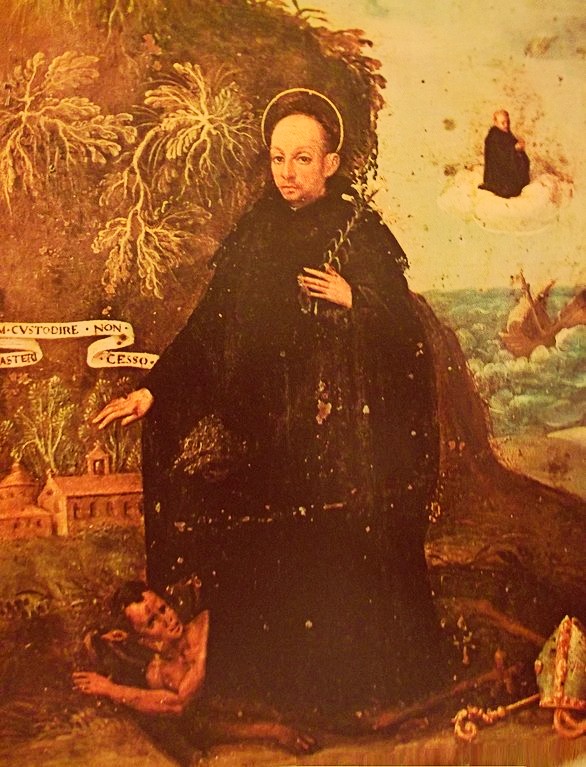
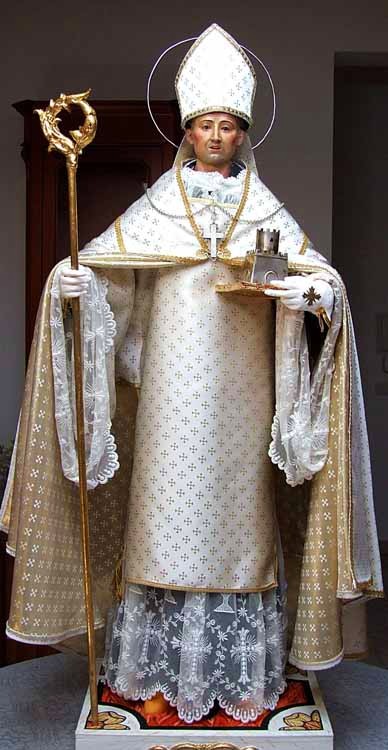
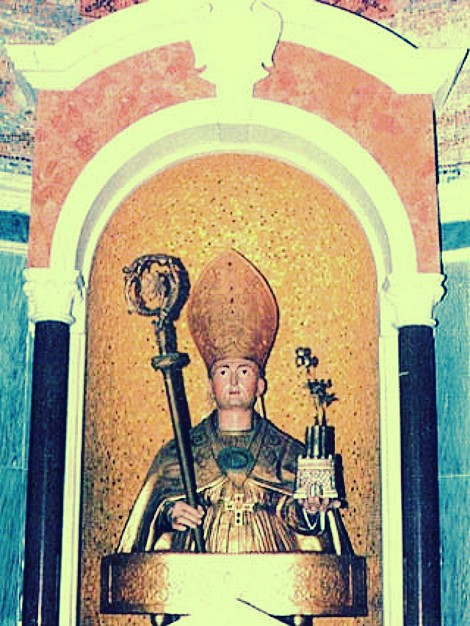
Saint of the Day – 17 February – Saint Constabilis of Cava OSB (c 1070-1124) Abbot, miracle-worker, known as “The Blanket of the Brothers” for his gentle kindness and caring humility for all the Monks in their trials and sorrows. He is the Patron Saint of the Town of Castellabate in Cilento, which he founded in 1123 and whose name clearly indicates it. Born in c1070 at Lucania, Italy and died on 17 February 1124 at Cava de’ Tirreni of natural causes. Patronages – • Castelabbate, Italy, of sailors, since 1979 he has been elevated to Co-Patron of the Diocese of Vallo della Lucania. Also known as – Constabile, Costabile.
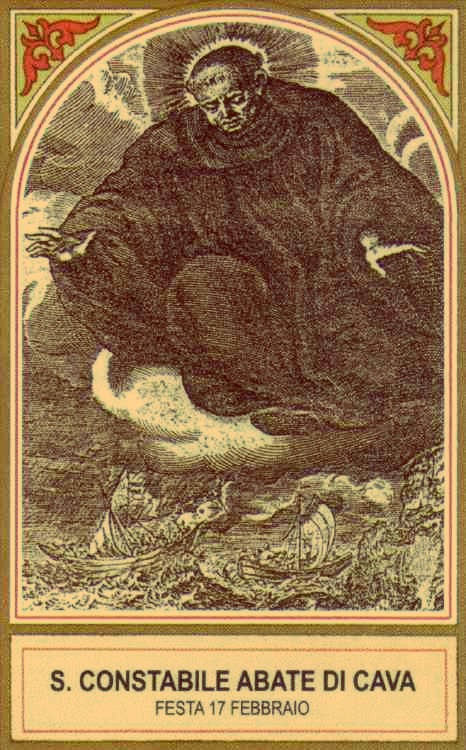
Miracle of the ships saved from wreckage
The Roman Martyrology reads today: “In the monastery of Cava de ‘Tirreni in Campania, Saint Constabilis, Abbot: – for his extraordinary meekness and his charity towards everyone, he was commonly called the “Blanket” of the brothers.”
Constabilis was born around 1070 at Tresino, in Lucania to the noble Gentilcore family. At the age of seven, he was entrusted to the care of Abbot of Cava, St Leo I.
He became a Monk at the Abbey, which followed the Benedictine Rule . Constabilis zealously lived the Rule to perfection and was entrusted by the Abbot to manage important negotiations and transactions on behalf of the Abbey.
On 10 January 1118, he was promoted by Abbot St Peter of Pappacarbone to the position of Coadjutor. He subsequently succeeded Peter as the Abbot after the latter’s death on 4 March 1122. His work was carried out with kindness, understanding for each of the Monks and their individual problems, without imposing authoritarian superiority over them. He approached each with humility and gentleness in his administration of the Abbey,.
He died on 17 February 1124 at the age of around 53 and was buried in the part of the Church overlooking the ‘Arsicia’ Cave used by St Alferius. After his death he appeared several times to his successor Abbots, coming to their aid in contingencies, there are records of his miraculous interventions for the salvation of the ships, which later belonged to the famous Abbey. These miraculous intercessions granted him widespread veneration as the protector of sailors.
Protector of Sailors
On 21 December 1893, Pope Leo XIII recognised the ancient verneration and the title of Saint, to the first four Abbots, of the famous Abbey of Trinità di Cava dei Tirreni, founded in the 11th century. They are St Alferius the Founder and first Abbot († 1050), St Leo I (1050-1079), St Peter Pappacarbone (1079-1123) and St Constabilis (c 1122-1124). Their relics rest in the Abbey Church in the Chapel of the Saintly Fathers.’
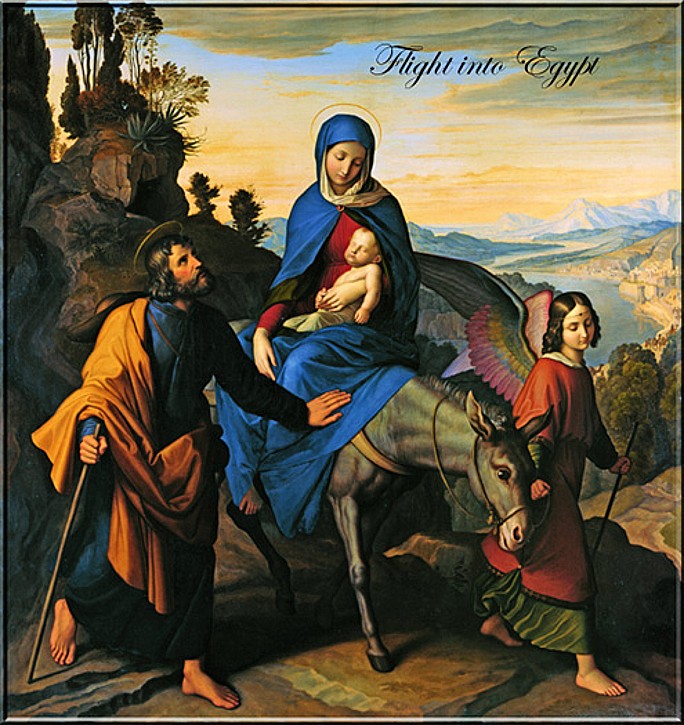
It was on the seventeenth of February, fifty five days after the Nativity of Jesus, when King Herod’s soldiers — sent to slaughter all little boys in Bethlehem and its neighbourhood who were two years old or under, in order to destroy a rival King, Jesus — were getting perilously near the cave at Bethlehem, where at first they little expected Our Lord to be. Saint Joseph received a message from God through an Angel, whereupon he took Our Lady and the Divine Infant and set off leaving the land of the Jews to travel to a land of the Gentiles. They took no-one with them, by way of servants or friends, as Saint Peter Chrysologus tells us.
The Town to which the Holy Family fled was called Fostat. It was three hundred miles from Bethlehem. A Church has been erected there, on the site of the house where the Holy Family lived during their exile. The little Town where the Holy Family lived in Egypt was not far from Heliopolis, a City in which — when Jesus, Mary and Joseph passed through it — statues of pagan gods crashed to the ground. Both Fostat and Heliopolis are not far from Cairo in Egypt.
St Antoni Leszczewicz St Bartholomew degli Amidei – One of the Seven Holy Founders of the Servites. St Benedict dell’Antella – One of the Seven Holy Founders of the Servites. St Benedict of Cagliari St Buonfiglio Monaldi – One of the Seven Holy Founders of the Servites. St Bonosus of Trier St Constabilis of Cava OSB (c 1070-1124) Abbot St Donatus the Martyr Bl Elisabetta Sanna St Evermod of Ratzeburg St Faustinus the Martyr St Finan of Iona
St Flavian of Constantinople St Fortchern of Trim St Gherardino Sostegni – One of the Seven Holy Founders of the Servites. St Guevrock St Habet-Deus St Hugh dei Lippi-Uguccioni – One of the Seven Holy Founders of the Servites. St John Buonagiunta Monetti – One of the Seven Holy Founders of the Servites. St Julian of Caesarea St Loman of Trim
St Lupiano Bl Martí Tarrés Puigpelat St Mesrop the Teacher St Petrus Yu Chong-nyul St Polychronius of Babylon St Romulus the Martyr St Secundian the Martyr St Silvinus of Auchy St Theodulus of Caesarea Bl William Richardson
Saint of the Day – 16 February – Saint Maruta (Died c 415) Bishop, Confessor, Theologian, Writer, honoured in the Syrian Rite Church as a Doctor of the Church. He was a friend of Saint John Chrysostom and acted as an Ambassador between the East Roman Emperor and the Persian Emperor. Died in 425 of natural causes.
The Roman Martyrology reads: “In the kingdom of Persia, St Maruta, Bishop, who, having restored peace for the Church, presided over the Council of Seleucia, restored the Churches of God which had collapsed during the persecution of King Sabor and placed the relics of the Martyrs of Persia in the City Seat of the Bishop, since then called Martiropoli.”
Maruta was Bishop of Mayferkqat, a Syrian City between the Tigris River and Lake Van, on the borders of the kingdom of Persia, an area where Christians frequently suffer aggression. When Yezdigerd I ascended the throne in 399, Maruta went to Constantinople to ask the Emperor Arcadius to intercede with the new sovereign in favour of persecuted Christians. His appeal, however, remained unattended as the court was already committed to resolving the question of the exile of St. John Chrysostom – in other words, they had no time to assist Maruta and the Persians. However, it was precisely the latter, St John, who was personally interested in Maruta’s difficult situation, asking St Olimpia, a friend of his, to go to Maruta, as St John was worried at Maruta’s lack of reply to St John’s letters. St John Chrysostom wrote to her: “I urgently need him for Persian matters. Try to find out what success he has achieved in his mission. If you are reluctant to put it in writing, let me know the result somehow through others. Do not delay trying to meet him. ”
Maruta went in person to the King’s court to try to get his support towards the Christians and in the delicate fundamental mission. Maruta’s prayer and medical knowledge allowed him to cure the Sovereign from violent migraine headaches. The pagan priests, worried that this could induce the King to convert to Christianity, came up with a way to discredit Maruta in his eyes – they hid a man under the floor of the temple, who, when the King entered the temple for worship, appeared out of nowhere and screamed. “Send away from this holy place, he who, wickedly, believes in a priest of Christians.” The King was impressed and decided to drive Maruta away but Maruta showed him the hidden trap door from which the impostor had appeared. The Sovereign thus began to tolerate Christianity in his kingdom,
During this period of truce, Maruta was able to dedicate himself to the reconstruction of many Churches previously destroyed under the persecutions induced by King Shapur. He also compiled the “Acts” of those ferocious persecutions and collected an innumerable series of relics, which earned the City the name of Martiropoli, still an Episcopal Seat today.
He was present at the general First Council of Constantinople in 381 and at a Council of Antioch in 383 (or 390), at which the Messalians were condemned. For the benefit of the Persian Church he held two Synods at Ctesiphon. A great organiser, he was one of the first to give a regular structure to the Syriac Church.
His writings include: Acts of the Persian Martyrs (these acts remember the victims of the persecution of Shapur II and Yazdegerd I) History of the Council of Nicea A translation in Syriac of the Canons of the Council of Nicea A Syrian liturgy Commentaries on the Gospels Acts of the Council of Seleucia-Ctesiphon (26 canons of a synod held in 410) He also wrote hymns on the Holy Eucharist, on the Passion and the Holy Cross and on Martyred Saints killed in Shapur’s persecution.
Most of Maruta’s hymns and works are still in use in the Syriac Rite. Maruta died around 415 and just in that period a new wave of persecutions broke out. Due to the numerous writings attributed to him, he was honoured as the principal Doctor of the Syriac Rite Church.
St Faustinus of Brescia (not the St Faustinus brother of St Jovinus – 15 February) St Gilbert of Sempringham St Honestus of Nimes St John III of Constantinople
Martyrs of Cilicia – 12 Saints: A group of Christians who ministered to other Christians who were condemned to work the mines of Cilicia in the persecutions of Maximus. They were arrested, tortured and martryed by order of the governor Firmilian. • Daniel • Elias • Isaias • Jeremy • Samuel The group also includes the three known have been sentenced to the mines – • Pamphilus • Paul of Jamnia • Valens of Jerusalem and those who were exposed as Christians as a result of these murders – • Julian of Cappadocia • Porphyrius of Caesarea • Seleucius of Caesarea • Theodule the Servant They were martyred in 309 in Cilicia, Asia Minor (in modern Turkey).
One Minute Reflection – 15 February – “Month of the Most Blessed Trinity” – the Commemoration of Sts Faustinus and Jovinus – 1 Cor. 9:24-27; 10:1-5, Matthew 20:1-16
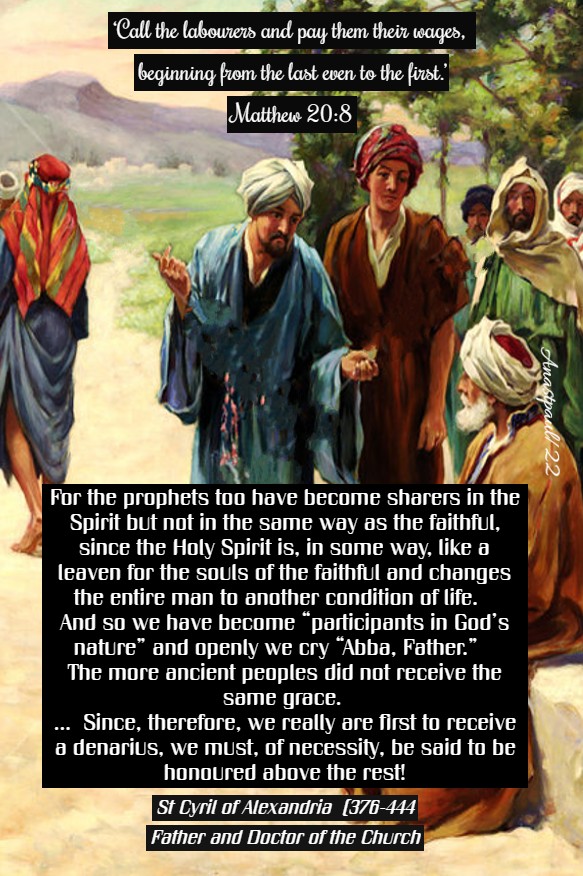
“When evening had come, the owner of the vineyard said to his steward, ‘Call the labourers and pay them their wages, beginning from the last even to the first.’” – Matthew 20:8
REFLECTION – The last ones, receiving the generosity of the Master instead of troubles, are first to receive their reward, since all those, after the Lord’s coming, have become — through Baptism and the union with the Spirit — “sharers in God’s nature” and are called sons of God. For the prophets too have become sharers in the Spirit but not in the same way as the faithful, since the Holy Spirit is ,in some way, like a leaven for the souls of the faithful and changes the entire man to another condition of life. And so, we have become “participants in God’s nature” and openly we cry “Abba, Father.” The more ancient peoples did not receive the same grace. So Paul too says, “For you did not receive a spirit that makes you a slave again to fear but you received the Spirit of sonship.” The ancients then received a spirit of slavery without the honour of adoption. Since, therefore, we really are first to receive a denarius, we must, of necessity, be said to be honoured above the rest!” – St Cyril of Alexandria (376-444) Archbishop of Alexandria, Father and Doctor of the Incarnation of the Church (Fragment 226).
PRAYER – O God, Who gladden us each year by the feast of Your holy Martyrs, Faustinus and Jovinus, graciously grant that, as we rejoice in their merits, we may be inspired by their example. Through Jesus Christ, Thy Son our Lord, Who lives and reigns with Thee, in the unity of the Holy Ghost, God, world without end. Amen (Collect).
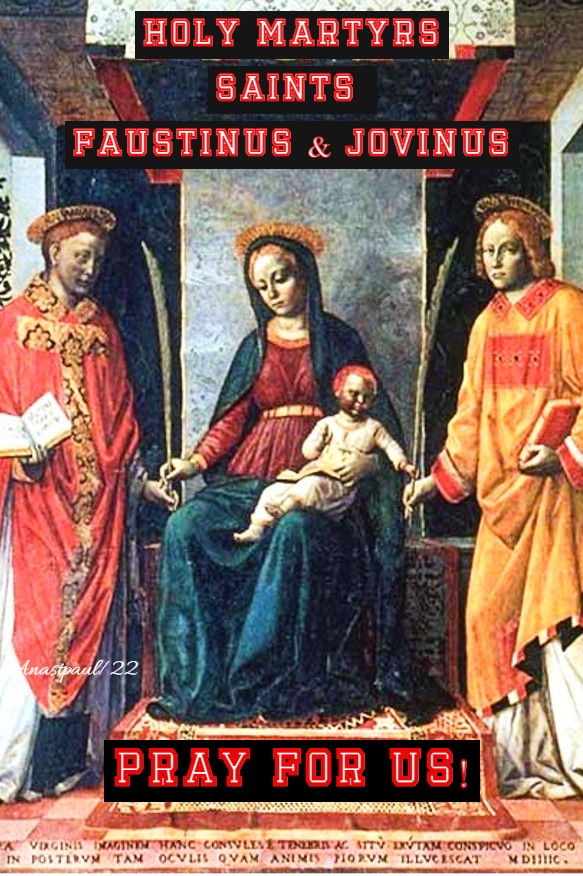
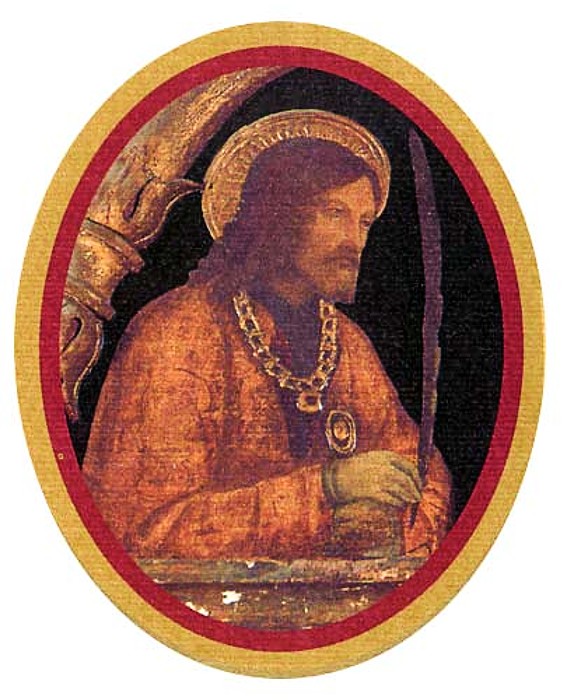
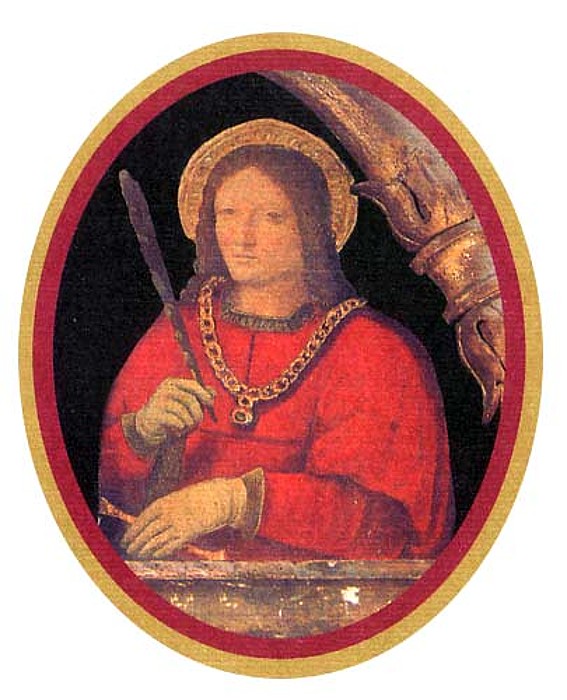
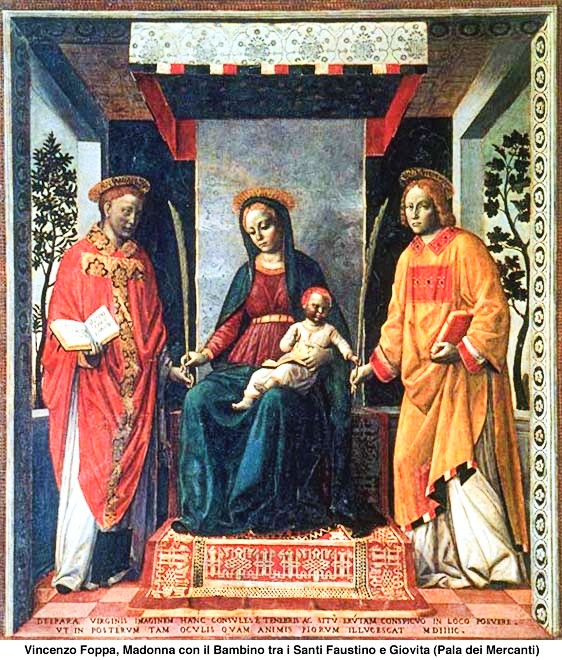
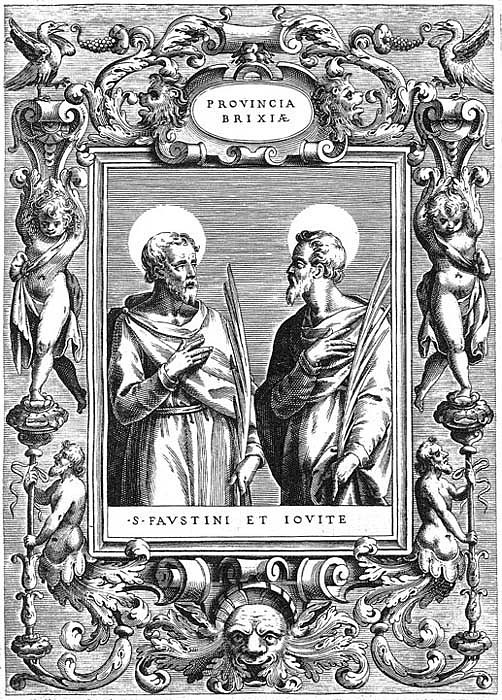
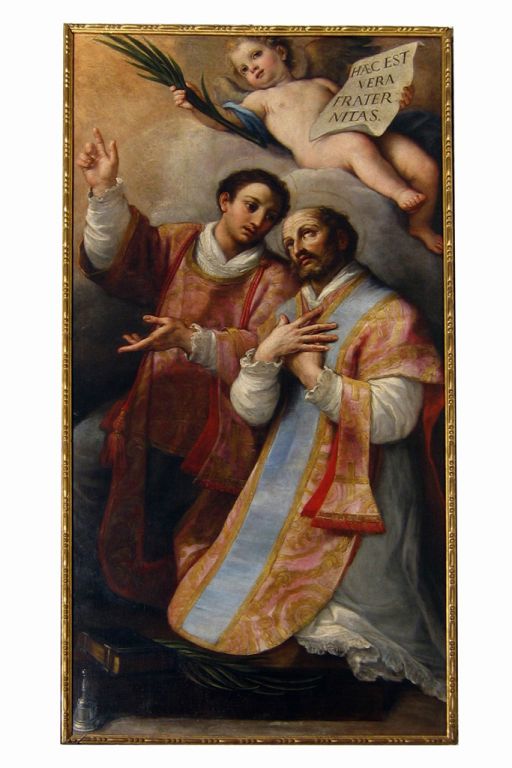
Saint of the Day – 15 February – Saints Faustinus (Died c 120) Martyr, Priest and Jovinus Martyr Deacon, both Evangelisers, Preachers. Born at Brescia, Lombardy, Italy and the two brothers died together. They was thrown to the lions but the animals refused to touch them. Then beheaded in 120 at Brescia, Italy. Patronages – Brescia, City and Diocese and the City of Credera Rubbiano, Italy.
The Roman Martyrology reads today: “At Brescia, in the time of the Emperor Hadrian, the birthday of the holy Martyrs Faustinus and Jovinus, who received the triumphant Crown of Martyrdom after many glorious combats for the Faith of Christ.”
Faustinus and Jovinus were born to the nobility in the 2nd century in Italy. They were zealous preachers in Brescia, Milan, Rome and Naples, during the persecution of Emperor Hadrian.
Julian, a heathen lord, apprehended them and the Emperor himself, passing through Brescia, when neither threats nor torments could shake their constancy, commanded them to be beheaded.
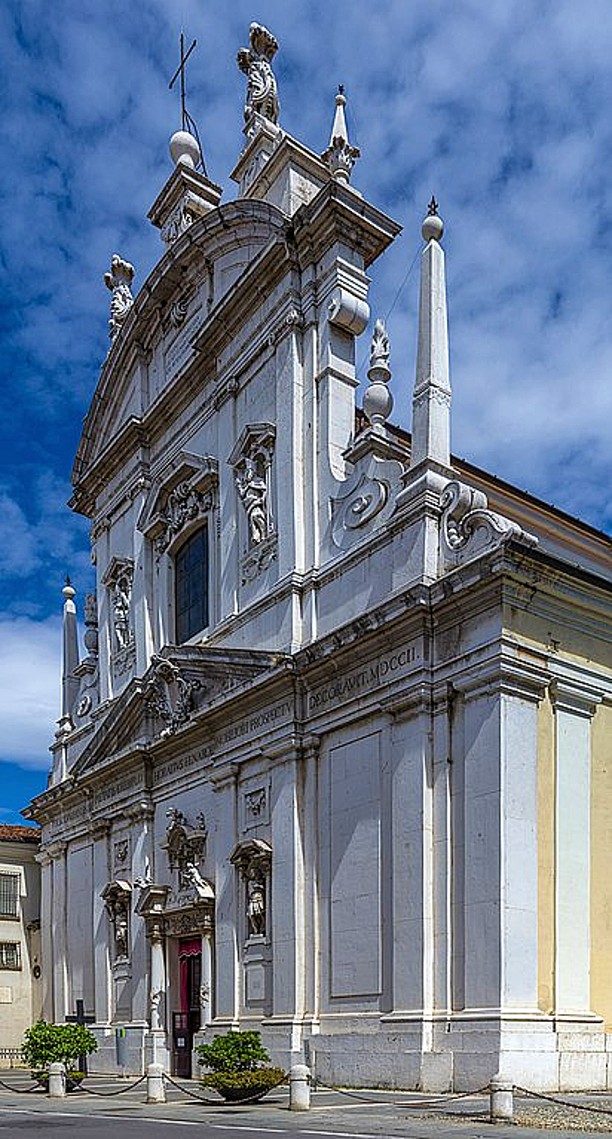
Both Saints Faustinus and Jovinus, are honoured as the chief Patrons of Brescia and their relics are located in the ancient Church bearing the names of both.
Brescia, the Capital of one of the Italian Provinces, can scarcely remember the names of those who were its governors or leading men, in the second century and yet, here are two of her citizens, whose names will be handed down, with veneration and love, to the end of the world and the whole of Christendom is filled with the praise of their glorious Martyrdom. Glory, then, to these sainted Brothers, whose example so eloquently preaches to us the great lesson of our Season,–fidelity in God’s service. (from the Liturgical Year, 1870).
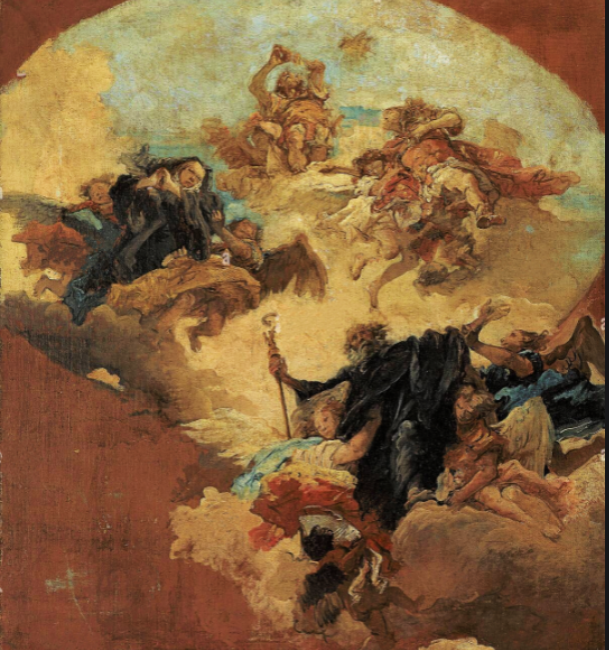
The glorification of Sts Faustinus and Jovinus by Giovanni Battista Tiepolo
Martyrs of Antioch: 5 Saints: A group of Christians murdered together. We know the names of five of them – Agapev, Baralo, Isicio, Joseph and Zosimus.
Martyrs of Passae: Castulus Lucius Magnus Saturninus
Martyrs of Prague – 14 Beati – Franciscan Friars Minor martyred together by a mob led by Lutherans – • Blessed Antonín of Prague • Blessed Bartolomeo Dalmasoni • Blessed Bedrich Bachstein • Blessed Christoffel Zelt • Blessed Didak Jan • Blessed Emmanuel of Prague • Blessed Gaspare Daverio • Blessed Giovanni Bodeo • Blessed Girolamo degli Arese • Blessed Jakob of Prague • Blessed Jan of Prague • Blessed Juan Martínez • Blessed Klemens of Prague • BlessedSimon of Prague They were martyred on • Shrove Tuesday 15 February 1611 at the Church of Our Lady of the Snows in Prague, Czech Republic • body dumped nearby but given Christian burial on 19 February 1611 in the monastery • re-interred in the side Chapel of the Church in 1616.
Martyrs of Sweden: Sigfrid Sunaman Unaman Winaman
Martyred in the Spanish Civil War: Bl Pere Vallmitjana Abarca
One Minute Reflection – 14 February – “Month of the Most Blessed Trinity” – The Memorial of St Valentine (176-273) Bishop and Martyr, 1 Cor. 9:24-27; 10:1-5, Matthew 20:1-16
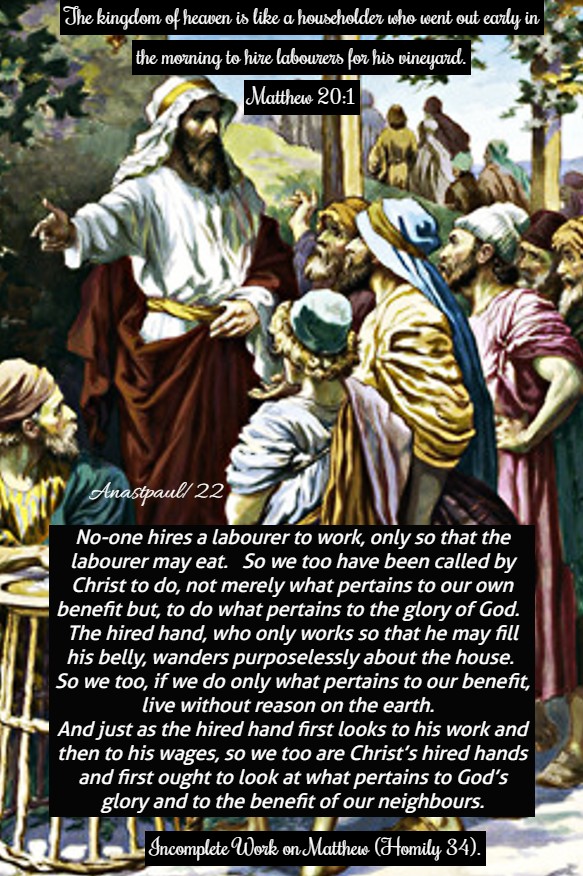
“The kingdom of heaven is like a householder who went out early in the morning to hire labourers for his vineyard.” – Matthew 20:1
REFLECTION – “To hire labourers for his vineyard.” What is the vineyard of God here? Not men, as elsewhere; for men are called the cultivators of the vineyard. The vineyard is justice and in it different kinds of virtues are placed like vines. For example, gentleness, chastity, patience, high-mindedness and countless other good qualities, which are all in general called virtues. So let us note how earnestly we should cultivate the heavenly vineyard. Adam was put in paradise to cultivate it and work it, but because he neglected it, he was ejected from it. We have been put here to cultivate justice; if we neglect it, we will be cast out, just as the Jews also were cast out, of whom it was written: “Add iniquity to their iniquity, that they may not enter thy justice.” The fall of those going before, should be a warning for those following. But if we the followers have also fallen into ruin, those who were the first to fall, deserve pardon more than we, who follow. A hired hand placed in the vineyard will not only lose his pay if he neglects it but, he will also be charged with the loss of the abandoned vineyard! So we too, if we neglect the justice committed to us, will not only have no reward but, we will also be charged for the justice that has been abolished. For God’s vineyard is not outside us but has been planted inside our very selves. So anyone who commits sin destroys the justice of God within himself but anyone who does good works, cultivates it in himself. The well-cultivated justice of God within you, brings forth grapes, that is, Christ. For those who do just deeds form Christ in themselves, as is written: “My little children, with whom I am again in travail, until Christ be formed in you.”
Anyone who consigns a vineyard to another to work consigns it, not so much for the other’s benefit, as for his own but God, giving His justice to our understanding, gave it, not for His own benefit but for ours. God does not need our labour but we, who do just work, may live because of it. The owner who consigned the vineyard to someone else for his own benefit, expects to receive it back in the same condition as He handed it over. How then will justice not be demanded back from us, in as immaculate a condition as He created it in us, particularly as He gave it, not for His own benefit but for our salvation?
Be aware that we have been hired as labourers. If we have been hired as labourers, we ought to know what our tasks are, for a hired labourer cannot be without a task. Our tasks are the works of justice, not to till our fields and vineyards; not to amass riches and pile up honours but to benefit our neighbours. And although we can do this tilling and amassing without sin, yet they are not our tasks but our daily occupations.
No-one hires a labourer to work, only so that the labourer may eat. So we too have been called by Christ, to do, not merely what pertains to our own benefit but, to do what pertains, to the glory of God. The hired hand, who only works so that he may fill his belly, wanders purposelessly about the house. So we too, if we do only what pertains to our benefit, live without reason on the earth. And just as the hired hand first looks to his work and then to his wages, so we too are Christ’s hired hands and first ought to look at what pertains to God’s glory and to the benefit of our neighbours …. Charity and true love toward God “does not insist on its own way” but desires to perform everything to the wish of the Beloved—than to what pertains to our own benefit.” – An anonymous Ancient Christian Writer (ACW) known as the Incomplete Work on Matthew (Sermon 34).
PRAYER – O glorious advocate and protector, St Valentine, look with pity upon our wants, hear our requests, attend to our prayers, relieve by your intercession, the miseries under which we labour and obtain for us the divine blessing, that we may be found worthy to join you in praising the Almighty for all eternity: through the merits of Our Lord Jesus Christ. Amen
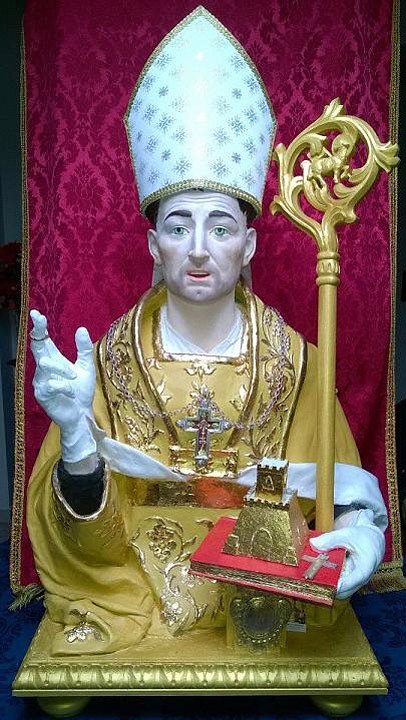
Saint of the Day – 14 February – Saint Modestinus of Avellino (c 245-311) Bishop Martyr. Confessor, Missionary, miracle-worker. Also known as – Modestinus of Mercogliano, Modestin…Modestino… Additional Memorials – 10 June (re-internment of relics), 13 August on some calendars. Patronages – Avellino, Italy, City of (given in 1220 by Ruggiero of Avellino). Avellino, Italy, Diocese of (given in 1220 by Ruggiero of Avellino), Mercogliano, Italy.
Modestinus was born in Antioch in c 245 of a noble family. In 302 he was Consecrated Bishop of the City and Patriarch of the region of Antioch. During the persecution of Diocletian (year 303), he retired to a hermitage on Mount Silpio,. But in 310 he returned to his See.
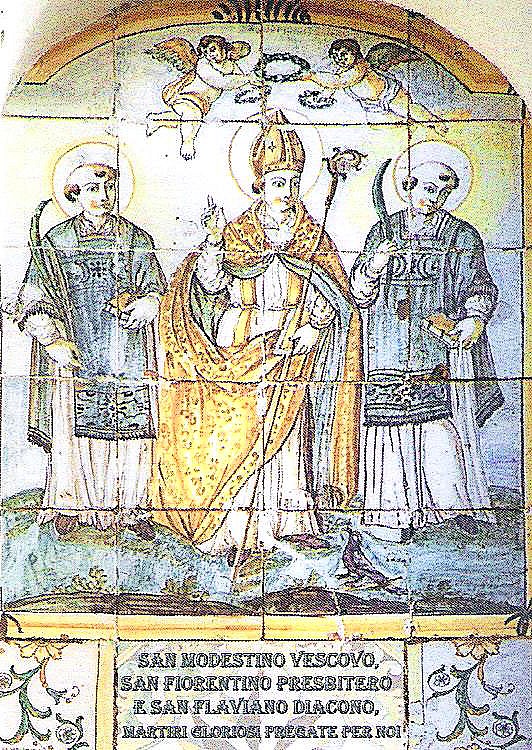
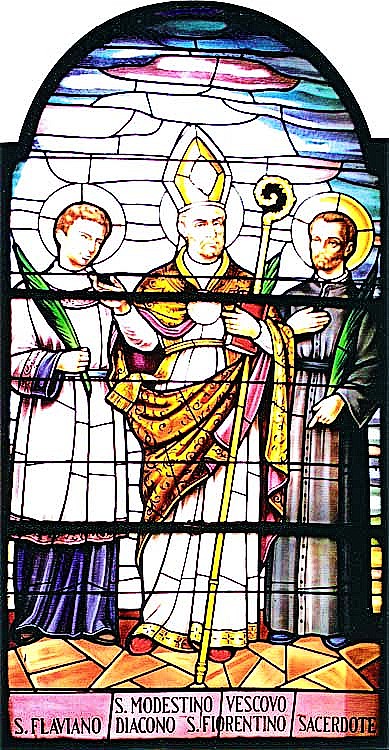
He preached the Gospel of Christ and performed numerous miracles and cures. Arrested and tortured, he was released from prison by the faithful of his Diocese. Modestinus, with his collaborators Fiorentinus a Priest and Flavianus a Deacon, left to travel to Italy. They arrived by sea in Locri (in Calabria) where they preached the Gospel, were arrested again and taken to prison in Sibari. .According to tradition, they were freed by the Archangel Michael.
They left by sea and reached near Avellino – it is believed that St Michael led the Saint to the regions that most needed the Gospel teachings and the truth of Christ. It is reported that Modestinus and his assistants, were successful in their preaching, converting and Baptising around 4,000 souls in one area. Modestinys performed many miracles and cures.
Again they were arrested, imprisoned and tried by an envoy of the Emperor Maxentius and taken to the place called the “Praetorium” where they suffered Martyrdom wrapped in red-hot robes and burned to death. They died in the night between 14 and 15 February in the year 311.
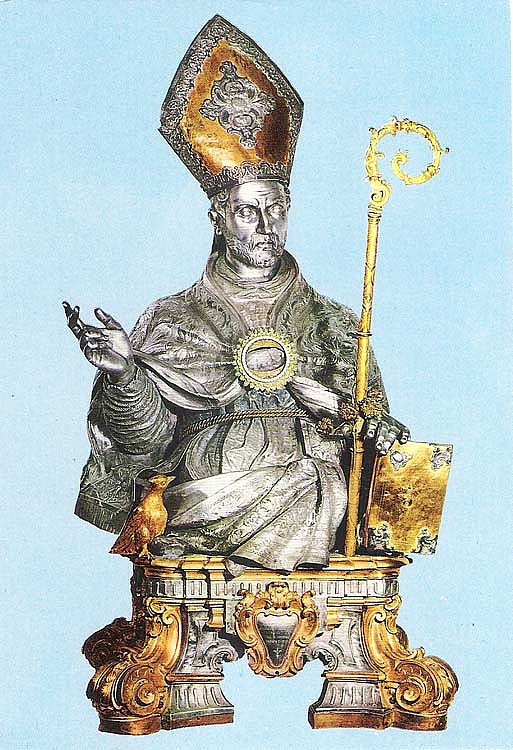
Their bodies were collected by the Christians and buried. A sign with their names was placed on the graves. In St Modestinus Church, a silver sculpture depicting a dove was placed on the tomb.
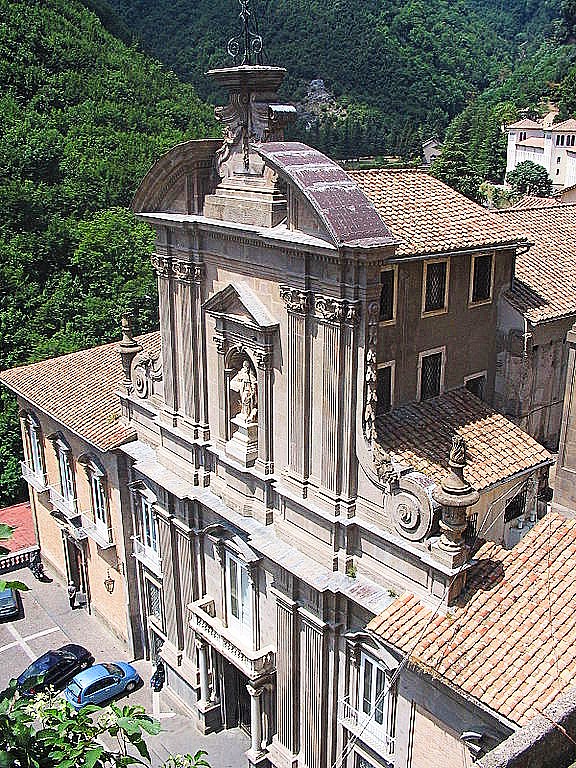
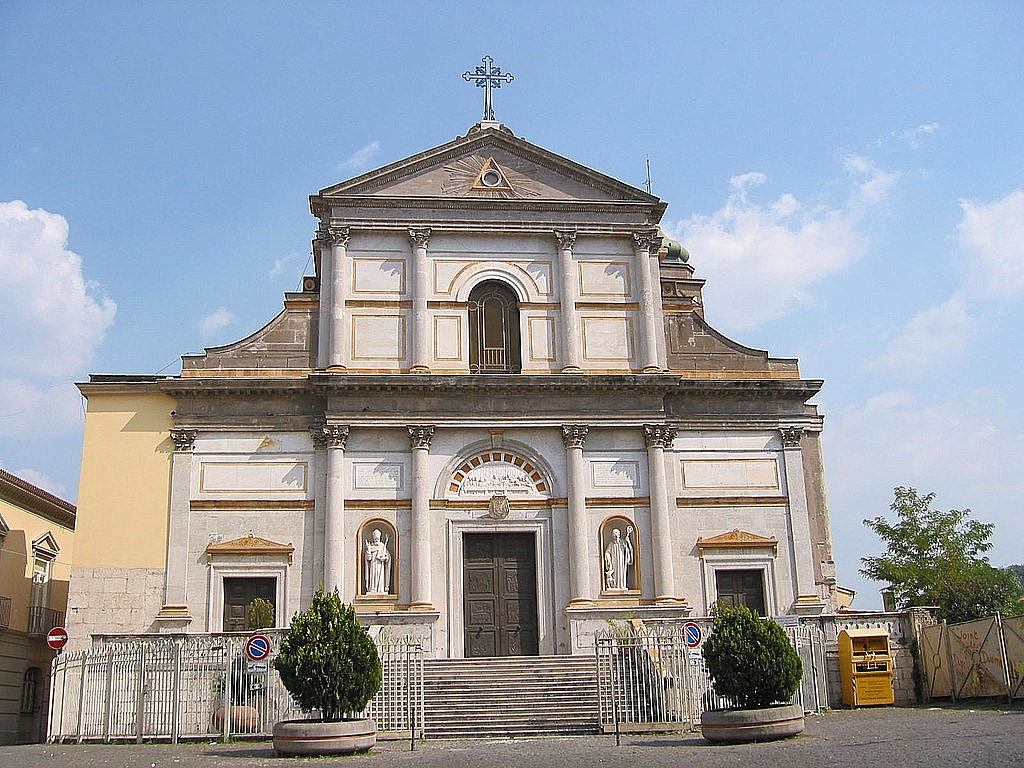
The Cathedral of Avellino dedicated to the Blessed Virgin and St Modestinus
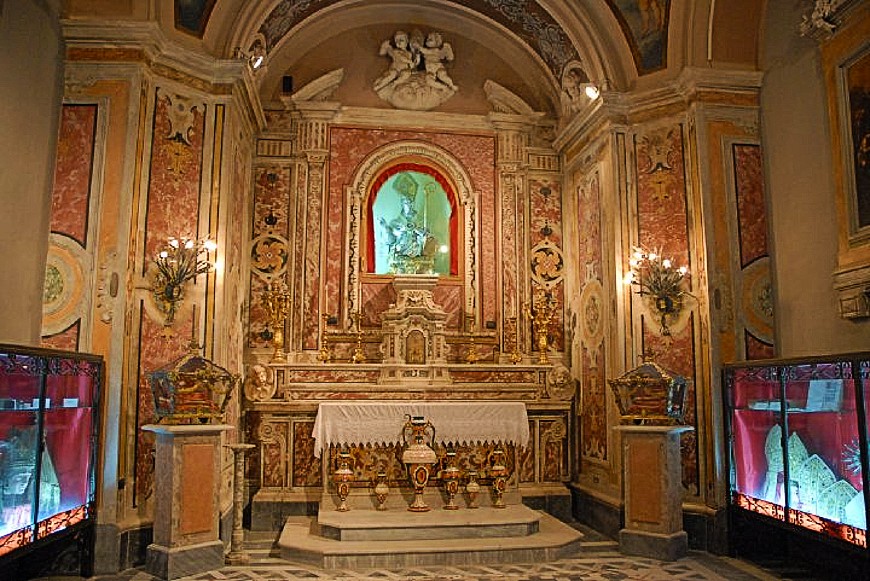
The Chapel of St Modestinus
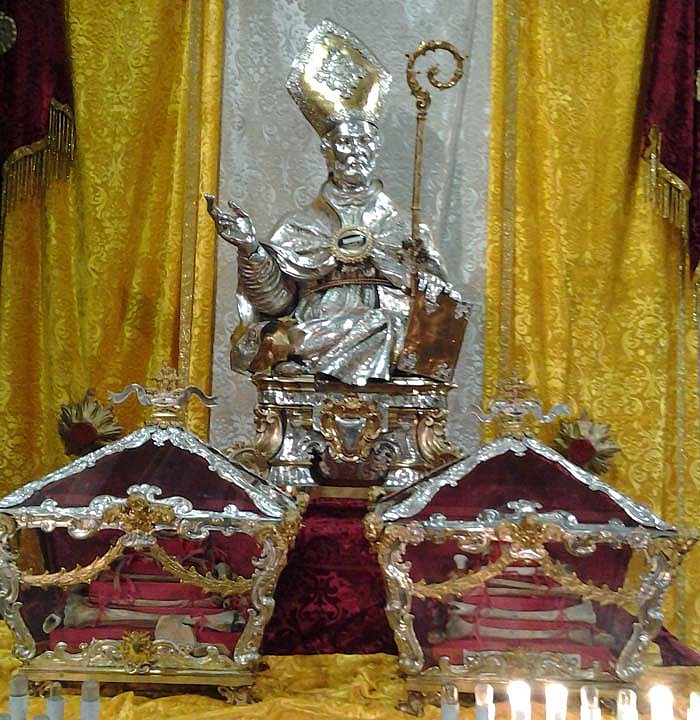
Their bodies, found in the summer of 1166, were taken to the Cathedral of Avellino, where they are still preserved today in the Chapel of St Modestinus. In 1220 they were appointed primary Patrons of the City and of the Diocese of Avellino by the Bishop Ruggiero.
St Cyril (827-869) (Memorial) “Apostles to the Slavs,” Sibling Brother Bishops, Confessors, Theologians, Missionaries, Writers, Preachers, Patrons of Europe. Creators of the Glagolitic alphabet, the first alphabet used to transcribe Old Church Slavonic and Cyrillac Alphabet, which was developed from it. St Methodius (826-885) (Memorial) Their Feast Day is 7 July (moved in 1969) The great Saints Cyril & Methodius: https://anastpaul.wordpress.com/2018/02/14/saints-of-the-day-14-february-sts-cyril-827-869-methodius-826-885/
20 Mercedarians of Palermo Martyrs of Alexandria – 16 saints Martyrs of Rome Felicula Vitalis Zeno
Martyrs of Terni: Three Christians who gave proper burial to Saint Valentine of Terni. Martyred in the persecutions of Aurelius. 273 in Terni, Italy – Apollonius, Ephebus, Proculus.
Martyrs of Alexandria: A group of Christians murdered in various ways for their faith in Alexandria, Egypt. We know the names and a few details about 16 of them – Agatho, Agatone, Ammonio, Ammonius, Antonius, Bassiano, Bassianus, Cirione, Cyrio, Dionysius, Dionysius, Lucio, Moses, Moses, Proto and Tonione.
Quote/s of the Day – 13 February – Septuagesima Sunday and the Memorial of Saint Catherine de Ricci OP (1522-1590) Virgin, Mystic, Stigmatist.
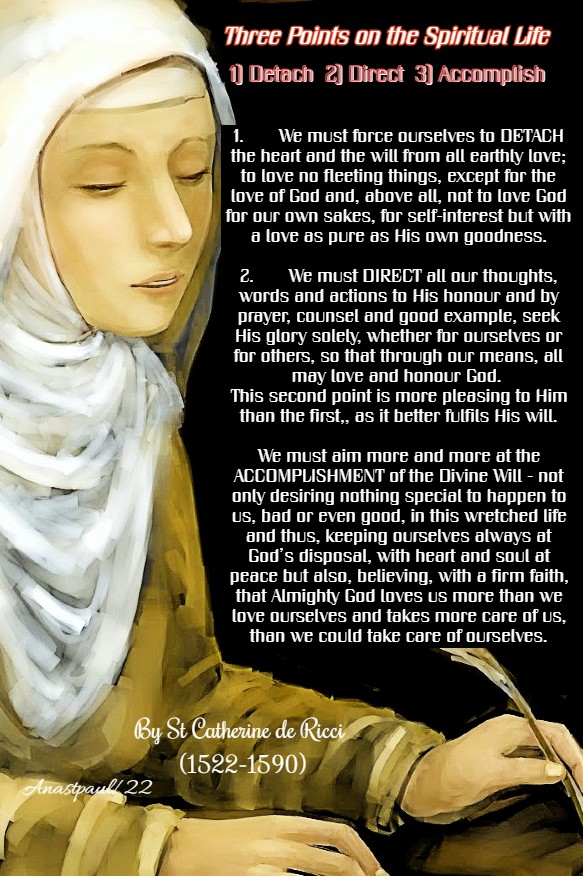
Three Points on the Spiritual Life By St Catherine de Ricci (1522-1590) 1) Detach 2) Direct 3) Accomplish
Letter to a Fellow Nun by St Catherine de Ricci
Very dear daughter, I have already sent you a letter to exhort you to the service of our Lord and now, I send you this one, in which I am going to give—first for myself and then for you—an account of the true way of faithfullyserving our Divine Spouse and a resume of the spiritual life, so that, by following it, we shall carry out the Holy Will of God.
If, then, my daughter, you would be the true spouses of Jesus, you must do His Holy Will in all things and you will do this, if you entirely give up your own will on every occasion and if you love the divine Spouse with your whole heart, your whole soul and your whole strength. Then, you must carefully attend to the following points (but it is necessary to weigh all these words), as they contain the summary of Christian perfection:
We must force ourselves to DETACH the heart and the will from all earthly love; to love no fleeting things, except for the love of God and, above all, not to love God for our own sakes, for self-interest but with a love as pure as His own goodness.
We must DIRECT all our thoughts, words and actions to His honour and by prayer, counsel and good example, seek His glory solely, whether for ourselves or for others, so that through our means, all may love and honour God. This second point is more pleasing to Him than the first, as it better fulfils His will.
We must aim more and more at the ACCOMPLISHMENT of the Divine Will – not only desiring nothing special to happen to us, bad or even good, in this wretched life and thus, keeping ourselves always at God’s disposal, with heart and soul at peace but also, believing, with a firm faith, that Almighty God loves us more than we love ourselves and takes more care of us, than we could take care of ourselves.
The more we conform to this way of acting, the more we shall find God present to help us and the more we shall experience, His most gentle love. But no-one can reach such perfection except by constant and courageous sacrifice of self-will and, if we would learn to practice such abnegation, it is necessary to keep ourselves in a state of great and deep humility, so that, by perfect knowledge of our own misery and weakness, we may rise to learn the greatness and beauty of our God.
Consider how just and necessary it is, to serve Him unceasingly, with love and obedience. I say just, because, God being Father and Master of all things, it is just that His Son and Servant, should obey and love Him. I say necessary because,, by acting otherwise, we could not be saved.
Let us always remember, never doubting, that it is the Eternal, Sovereign, All-powerful God, Who does, orders, or allows, everything that happens and that nothing comes to pass, without His Divine Will.
Let us remember that He is Himself that Wisdom, which, in the government of the universe – of heaven, earth and every single creature – cannot be deceived. (He would be neither God nor most wise, if it were otherwise). Let us look upon Him as supremely good, loving and beneficent.
If, through His Mercy, this conviction becomes strongly impressed upon our wills, we shall easily take all things from His Sacred Hand, with well-contented hearts, always thanking Him for fulfilling His most holy will in us. By acting thus. (with the help of His holy grace) we shall unite ourselves to Him, by true love in this life and by glory in eternity.
May He grant it to us in His goodness! Of your charity pray for me, a wretched sinner, who commends herself to you all.”
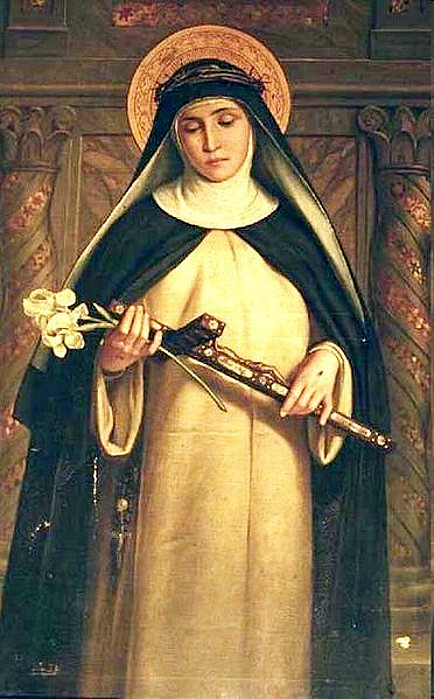
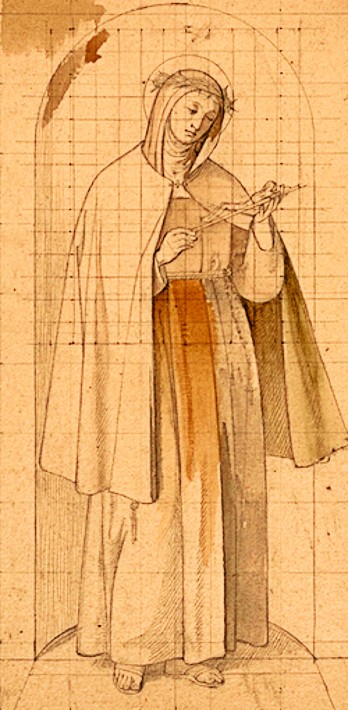
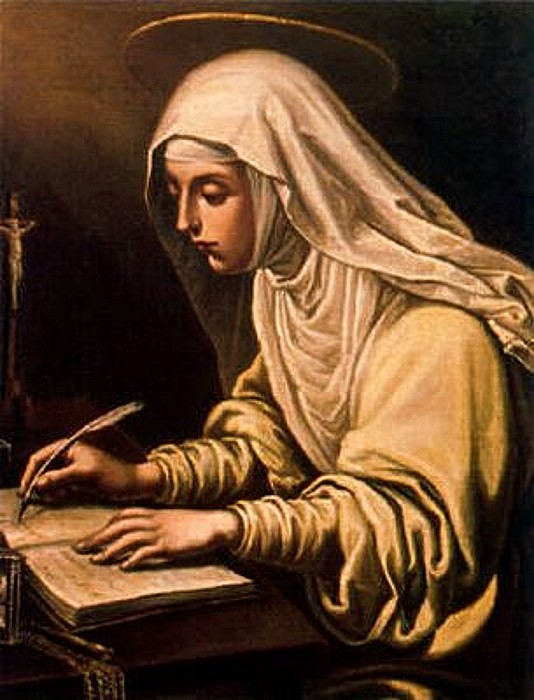
Saint of the Day – 13 February – Saint Catherine de Ricci OP (1522-1590) Virgin, Tertiary of the Order of Preachers, Mystic, Stigmatist, Ecstatic, Counsellor to many in both secular and spiritual matters, a highly admired Administrator and Advisor,blessed with many mystical charism including visions of Christ, both as a Baby and Adult, bilocation and miracles. Born as Alessandra Lucrezia Romola de’ Ricci in Florence on 23 April 1522 and died on 2 February 1590 (aged 67) at Prato, Grand Duchy of Tuscany, of natural causes. Patronage – the sick. Her body is incorrupt.
The Roman Martyrology states of her today: “At Prato, in Tuscany, St Catherine de Ricci, a Florentine Virgin of the Order of St Dominic, replenished with her heavenly gifts, whom Pope Benedict XIV inscribed on tbe catalogue of holy Virgins. She died in virtues and merits, on the 2nd of this month but her festival is celebrated on this day, 13th.”
The Ricci are an ancient family, which still subsists in a flourishing condition in Tuscany today. Alessandra was born in Florence to Pier Francesco de’ Ricci, of a patrician family and his wife, Caterina Bonza, who died soon after the birth of Alessandra. At age 6 or 7, her father enrolled her in a school run by a Monastery of Benedictine Nuns in the Monticelli quarter of the City, near their home and the City gates, where her Aunt, Luisa de’ Ricci, was the Abbess.
Catherine was a devout and pious child and it was here, in the Convent of her Aunt, that she developed a lifelong devotion to the Passion of Christ. After a short time back at home and after finally persuading her father,, at the age of 14, she entered the Convent of St Vincent in Prato, Tuscany, a cloistered community of religious sisters of the Third Order of St Dominic, disciples of the noted Dominican Friar Girolamo Savonarola, who followed the strict regimen of life she desired. In May 1535 she received the religious habit from her uncle, Timoteo de’ Ricci, who was Confessor to the Convent and the religious name of Catherine, after the Dominican tertiary, St Catherine of Siena.
Her novitiate was a time of trial. She would experience ecstasies during her routine, which caused her to seem asleep during community prayer , dropping plates and food, so much so, that the community began to question her competence, if not her sanity. Eventually, the other Sisters became aware of the spiritual basis for her behaviour. By the age of 30 she had risen to the post of Prioress.
After the recovery of her health, which seemed miraculous, she studied more perfectly to die to her senses and to advance in a penitential life and spirit, in which God had begun to conduct her, by practising the greatest austerities which were compatible with the obedience she had professed; – she fasted two or three days a week on bread and water alone and sometimes passed the whole day without taking any nourishment and chastised her body with disciplines and a sharp iron chain which she wore next her skin. Her obedience, humility and meekness were still more admirable than her spirit of penance. Much of penitential practice and oblation of her sufferings, were directed to the succour of the Souls in Purgatory.
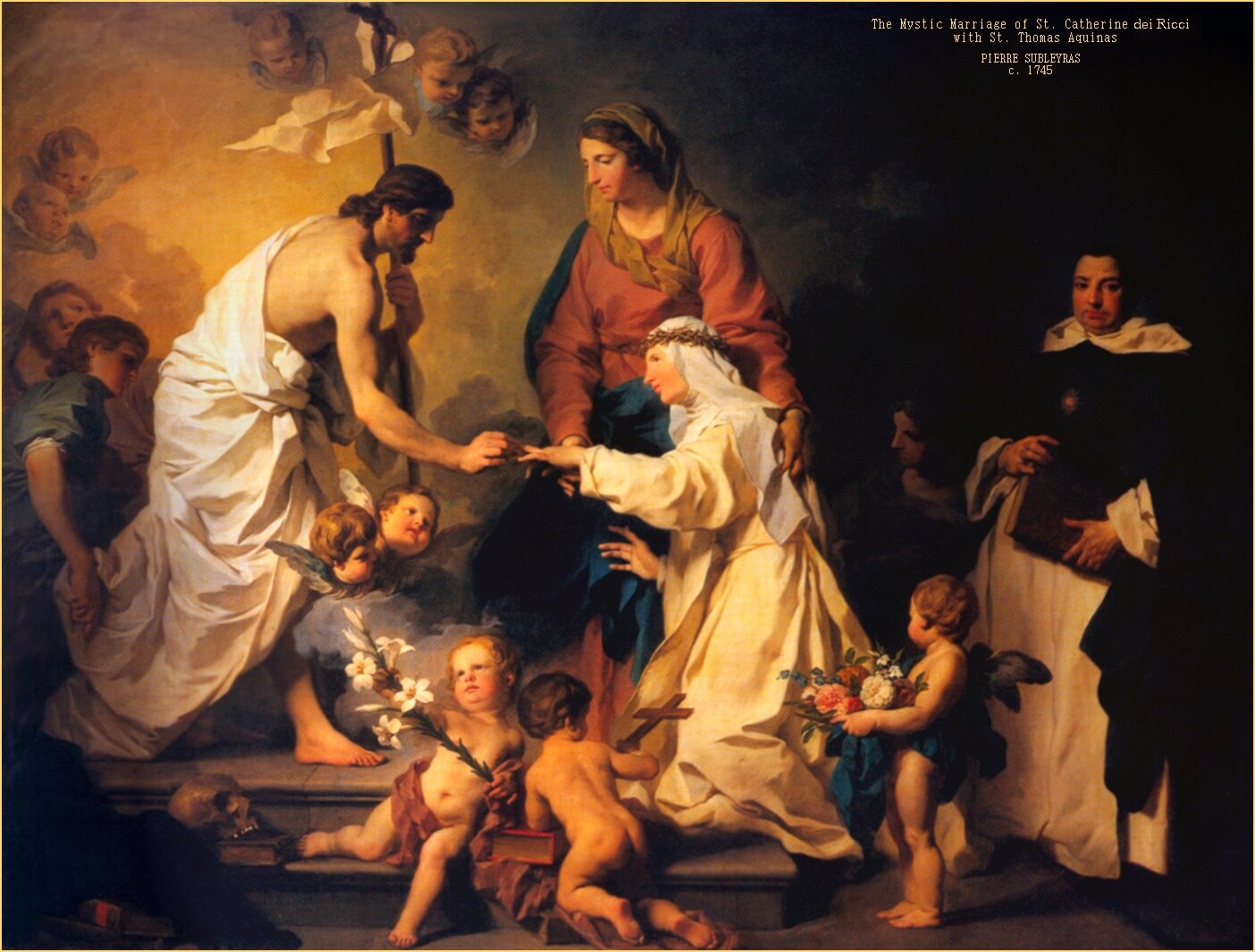
It was by profound humility and perfect interior self-denial that she learned to vanquish in her heart, the sentiments or life of the first Adam – that is, of corruption, sin and inordinate self-love. But this victory over herself,and purgation of her affections, was completed by a perfect spirit of prayer. By the union of her soul with God and the establishment of the absolute reign of His love in her heart, she was dead to and disengaged from, all earthly things. Her visions became most vivid allowing her to hold Baby Jesus dressed in swaddling clothes and to be mystically married and united with adult Jesus. Catherine’s meditations on the Passion of Christ were so deep, that she spontaneously bled, as if scourged. She also bore the Stigmata. During times of deep prayer, like Catherine of Siena, her Patron Saint, a coral ring representing her marriage to Christ, appeared on her finger.
Crowds gathered to witness her prayer and ecstasies and it began to distract from the life of the Convent. Catherine herself was embarrassed by all the attention. The community prayed that her wounds and experience would lessen in intensity so that they could go about the work of their common life together in peace and in 1554 the visions ceased.
As the Prioress, Catherine developed into an effective and greatly admired administrator. She was an advisor on various topics to Princes, Bishops and Cardinals. She corresponded with three figures who were destined to become Popes: Pope Marcellus II, Pope Clement VIII and Pope Leo XI. An expert on religion, management and administration, her advice was widely sought. She gave counsel both in person and through exchanging letters. It is reported that she was extremely effective in her work, managing her priorities with great zeal and efficiency.
One of the miracles that was documented for her Canonisation was her appearance many hundreds of miles away from where she was physically located, in a vision to St Philip Neri, a resident of Rome, with whom she had maintained a long-term correspondence. St Philip, who was otherwise very reluctant to discuss miraculous events, confirmed the event.
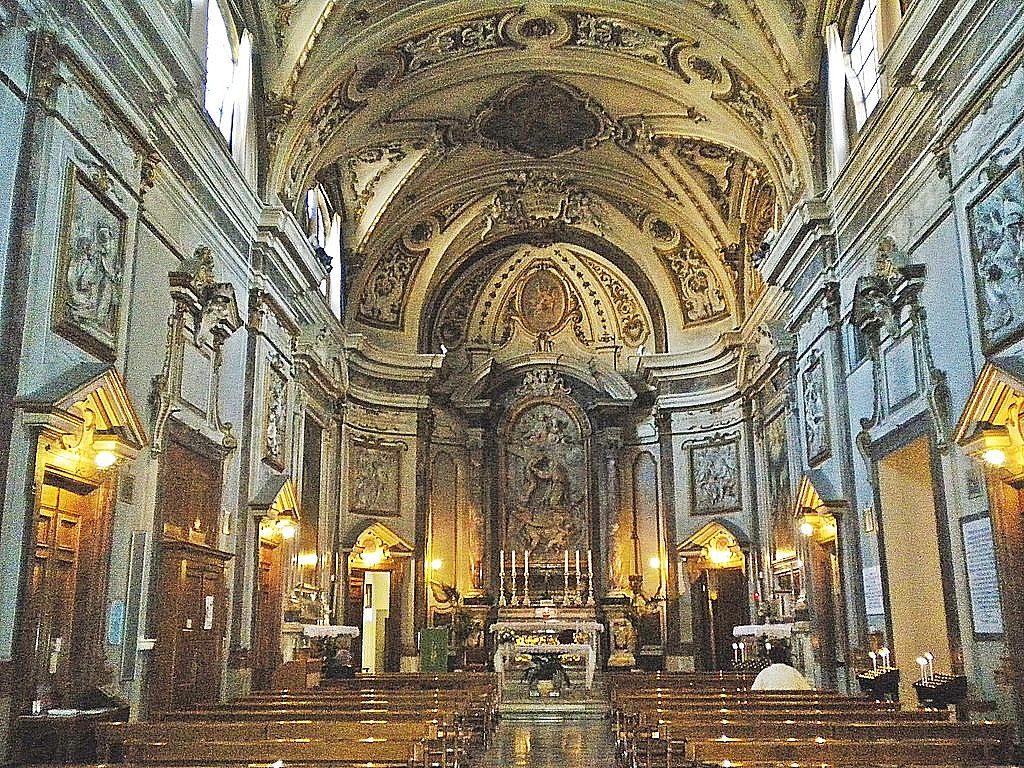
Catherine lived in the Convent until her death in 1590 after a prolonged illness. Her remains are visible under the Altar of the Minor Basilica of Santi Vicenzo e Caterina de’ Ricci, Prato, which is next to the Convent associated with her life..
The Minor Basilica of Santi Vicenzo e Caterina de’ Ricci, Prato, Italy
Catherine was Beatified by Pope Clement XII in 1732 and Canonised by Pope Benedict XIV in 1746 in a spectacular ceremony for which a magnificent ‘canopy’ was constructed. In celebration of the Saint’s Canonisation, Domenico Maria Sandrini wrote an authorative biography of the new Saint.
























 AnaStpaul
You must be logged in to post a comment.