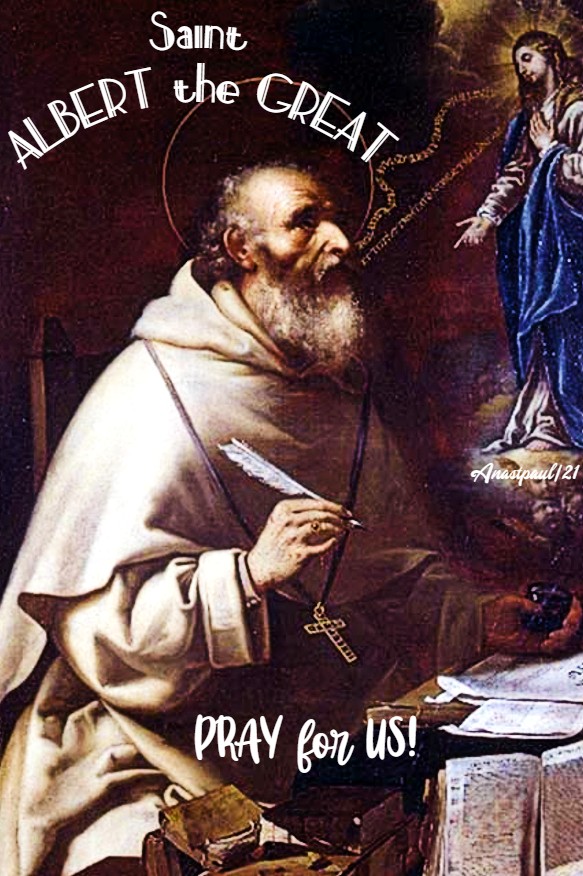
One Minute Reflection – 15 November – St Albert the Great OP (1200-1280) Bishop, Confessor, Doctor of the Church – 2 Timothy 4:1-8, Matthew 5:13-19 – Scripture search here: https://www.drbo.org/
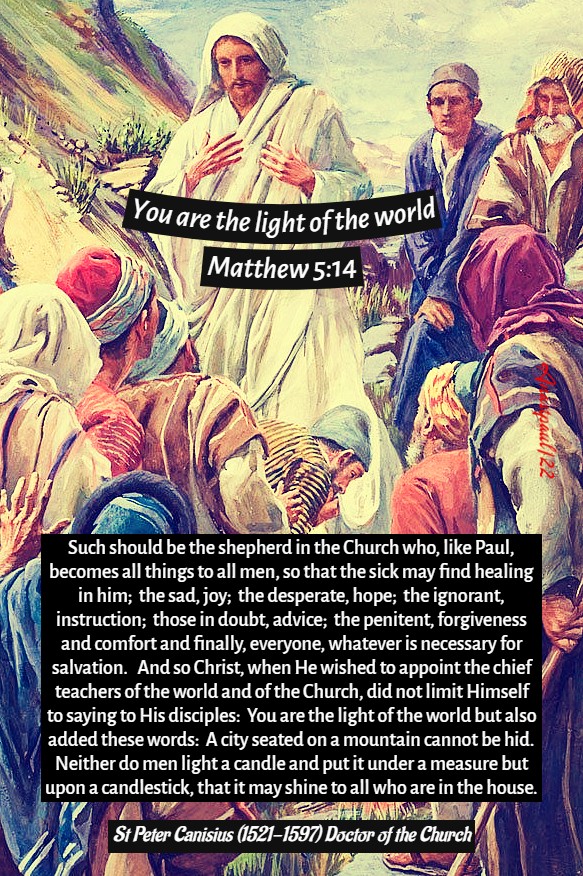
“You are the light of the world.” – Matthew 5:14
REFLECTION – “I shall always love and reverence the Apostles sent by Christ and their successors, in sowing the seed of the Gospel, those zealous and tireless co-operators in propagating the Word, who may justly say of themselves: Let a man so account of us as the ministers of Christ and the dispensers of the mysteries of God. For Christ, like a most watchful and most faithful householder, wished that the Gospel lamp should be lighted by such ministers and delegates, with fire sent down from Heaven and once lighted, should not be put under a measure but set upon a candlestick, so that it may spread its brightness far and wide and put to flight, all darkness and error, rife among both Jews and Gentiles.
Now it is not enough for the Gospel teacher to be a brilliant speaker in the eyes of the people; he must also be as a voice crying in the desert and endeavour, by his eloquence, to help many to lead good lives, lest, if he omit his duty of speaking, he be called the dumb dog that is not able to bark, spoken of by the prophet. Yes, he should also burn, in such a way, that, equipped with good works and love, he may adorn his evangelical office and follow the leadership of Paul. He indeed was not satisfied with bidding the Bishop of the Ephesians: This command and teach: conduct thyself in work as a good soldier of Christ Jesus but he unflaggingly preached the Gospel to friend and foe alike and, said with a good conscience to the Bishops gathered at Ephesus: You know how I have kept back nothing that was for your good but have declared it to you and taught you in public and from house to house, urging Jews and Gentiles to turn to God in repentance and to believe in our Lord Jesus Christ.
Such should be the shepherd in the Church who, like Paul, becomes all things to all men, so that the sick may find healing in him; the sad, joy; the desperate, hope; the ignorant, instruction; those in doubt, advice; the penitent, forgiveness and comfort and finally, everyone, whatever is necessary for salvation. And so Christ, when He wished to appoint the chief teachers of the world and of the Church, did not limit Himself to saying to His disciples: You are the light of the world but also added these words: A city seated on a mountain cannot be hid. Neither do men light a candle and put it under a measure but upon a candlestick, that it may shine to all who are in the house. Those churchmen err, who imagine that it is by brilliant preaching, rather than by holiness of and all-embracing love, they fulfil their office.” – St Peter Canisius SJ (1521-1597) Doctor of the Church (Sermon excerpt).
PRAYER – O God, Who made blessed Albert, ThyBishop and Doctor, eminent in the submission of human wisdom to divine faith, grant us, we beseech Thee, so to follow the path of his teaching that we may enjoy perfect light in Heaven.Through Jesus Christ, Thy Son our Lord, Who lives and reigns with Thee, in the unity of the Holy Ghost, God, world without end. Amen (Collect).
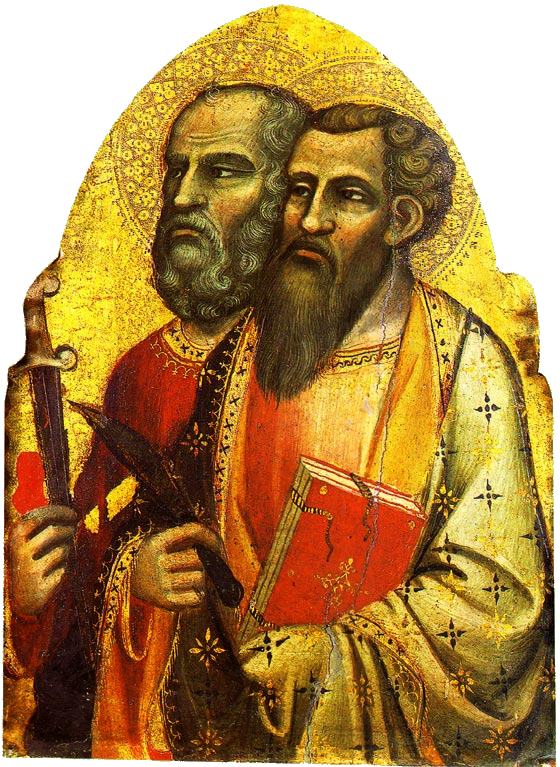
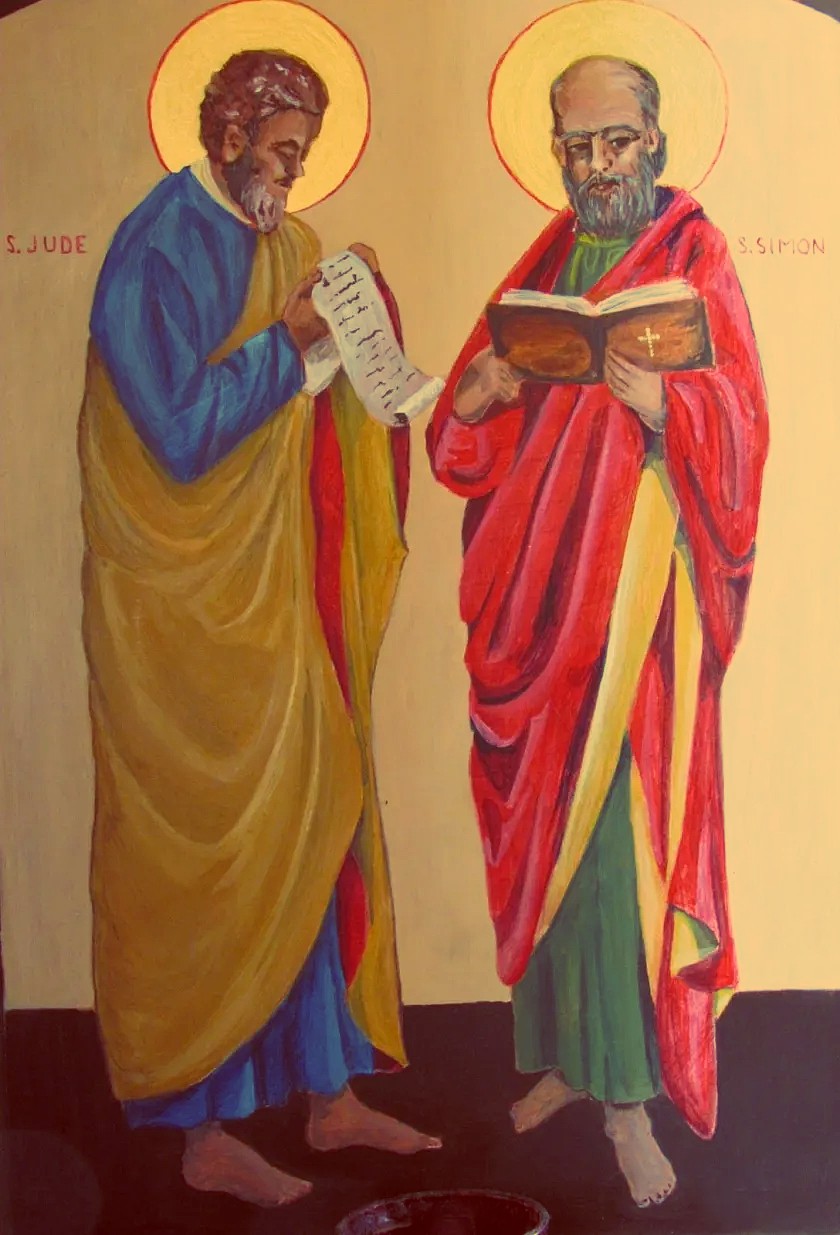
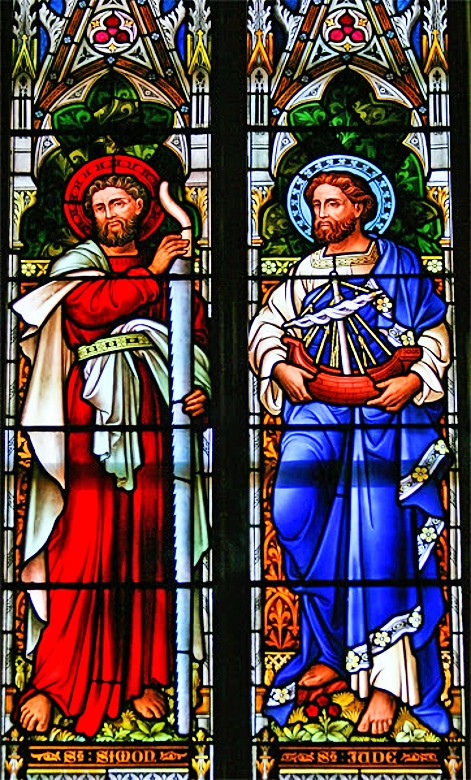
Quote of the Day – 28 October – Feast of Saints Simon and Jude, Apostles
“The Patron Saint of the Impossible:” This practice is thought to stem from the belief that few Christians invoked St Jude in prayer, due to their misplaced fear of praying to Christ’s betrayer, Judas Iscariot, the two names being so similar. Being so seldom invoked and reverenced, St Jude was and is, ready and waiting to hear the prayers of those who call upon him. Ironically, he is probably the Apostle who is the most frequently invoked in prayer and the most memorialised in Churches, with Statues and stained glass windows or other artworks. The ignored St Jude, thus became more eager to assist anyone who sought his intercession and aid, to the point of interceding in the most dire of circumstances. And so, the Title, “The Saint of Impossible Causes, for the Hopeless and the Desperate,” remains, to our benefit with the glorious Saint Jude. St Bernard and St Bridget too, both had visions from God, asking each to accept St Jude as “The Patron Saint of the Impossible.” Today, more than ever before, the merits of the beloved Saint Jude Thaddeus is being revived in people’s minds and hearts. In return, he is proving himself to be more than an ordinary advocate, taking special delight in coming to the aid of persons in desperate need.
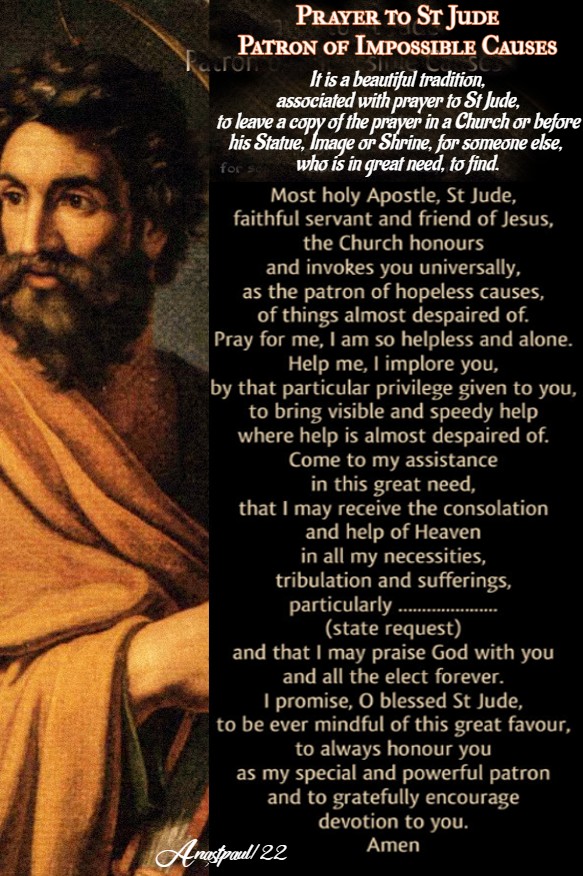
Prayer to St Jude Patron of Impossible Causes
It is a beautiful tradition, associated with prayer to St Jude, to leave a copy of the prayer in a Church or before his Statue, Image or Shrine, for someone else, who is in great need, to find.
Most holy Apostle, St Jude, faithful servant and friend of Jesus, the Church honours and invokes you universally, as the patron of hopeless causes, of things almost despaired of. Pray for me, I am so helpless and alone. Help me, I implore you, by that particular privilege given to you, to bring visible and speedy help where help is almost despaired of. Come to my assistance in this great need, that I may receive the consolation and help of Heaven in all my necessities, tribulation and sufferings, particularly ………………… (state request) and that I may praise God with you and all the elect forever. I promise, O blessed St Jude, to be ever mindful of this great favour, to always honour you as my special and powerful patron and to gratefully encourage devotion to you. Amen
One Minute Reflection – 28 October – Feast of Saints Simon and Jude, Apostles – Ephesians 4:7-13, John 15:17-25 – Scripture search here: https://www.drbo.org/
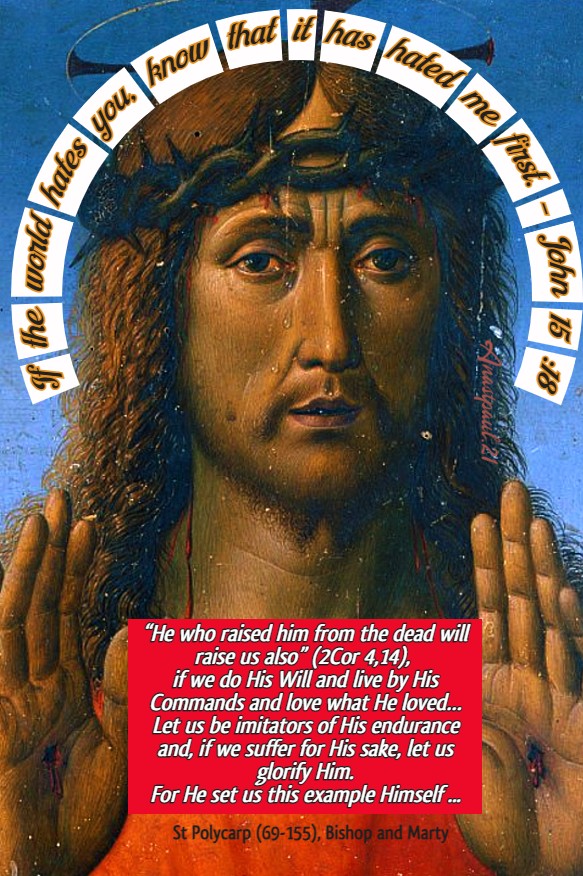
“If the world hates you, know that it has hated me first.”- John 15:18
REFLECTION –“I rejoice with you greatly in our Lord Jesus Christ, that you welcomed the copies of true love [Ignatius of Antioch and his companions]…who were encumbered with saintly chains, which are the diadems of those, truly chosen by God and our Lord. And I rejoice because the deep root of your faith, which has been renowned from early times, still lasts and bears fruit to our Lord Jesus Christ, Who for our sins, endured even facing death and Whom “God raised, releasing Him from the throes of death” (Acts 2,24). “Though you have not seen Him, you believe with unutterable, triumphant joy” (1Pt 1,8)…“He who raised Him from the dead will raise us also” (2Cor 4,14), if we do His Will and live by His Commands and love what He loved… Let us be imitators of His endurance and, if we suffer for His sake, let us glorify Him. For He set us this example Himself and this is what we have believed.
So I beg you all, to obey the message of uprightness and to exhibit all endurance, such as you saw with your own eyes, not only in the blessed Ignatius and Zosimus and Rufus but also, in others of your number and in Paul himself and the rest of the Apostles, being assured, that all these “have not run in vain” (Gal 2,2) but in faith and uprightness and, that they are in the place that they have deserved with the Lord, with and for Whom they suffered. For they did not “love the present world” (2Tm 4,10) but Christ, Who died for us and was raised up by God for our sakes.”- St Polycarp (69-155) Apostolic Father, Bishop and Martyr – Letter to the Philippians, 1-2, 8-9
PRAYER – O God, Who has given us a way of coming to know Thy Name through Thy blessed Apostles Simon and Jude, grant us to honour their everlasting glory, by becoming more holy and to become more holy by honouring it. ThroughJesus Christ, Thy Son our Lord, Who lives and reigns with Thee, in the unity of the Holy Ghost, God, world without end. Amen (Collect).
Our Morning Offering – 28 October – Feast of Saints Simon and Jude, Apostles
Exsultet Orbis! Let the World Rejoice! Unknown Author
Now let the earth with joy resound, And Heaven the chant re-echo round; Nor Heaven nor earth too high can raise The great Apostles’ glorious praise.
O ye who, throned in glory dread, Shall judge the living and the dead, Lights of the world forever more! To you the suppliant prayer we pour.
Ye close the Sacred Gates on high. At your command apart they fly. O loose for us the guilty chain We strive to break and strive in vain.
Sickness and health your voice obey, At your command they go or stay. From sin’s disease our souls restore; In good confirm us more and more.
So when the world is at its end. And Christ to Judgment shall descend, May we be called, those joys to see Prepared from all eternity.
Praise to the Father, with the Son, And Holy Spirit, Three in One; As ever was in ages past And so shall be while ages last. Amen
(Roman Breviary for the Common of Apostles) An Office Hymn that was traditionally prescribed for Vespers and Lauds on the Feasts of Apostles and Evangelists outside Easter time. The Hymn is found as early as the tenth century in a hymnal of Moissac Abbey.
Saints of the Day – 28 October – Feast of Saints Simon and Jude, Apostles of Christ
The Holy Apostles Simon and Jude (Excerpt) By Father Francis Xavier Weninger SJ (1805-1888)
St Simon, whose festival the Church commemorates to-day, was surnamed the Cananaean or Canaanite because he was born at Cana, a town in Galilee. In this town, Jesus wrought His first miracle, by changing water into wine, as is known from the Gospel. St Nicephorus (c 758-828) Bishop of Constantinople and some others, are of the opinion that Simon was the bridegroom whose wedding our Lord and His holy Mother honoured with their presence but that he afterwards left his bride with her consent and followed Christ.
St Jude, the brother of Simon, is called Thaddseus to distinguish him from the other Jude or Judas’ who betrayed and sold the Lord. According to St Nicephorus, Mary Cleophas was their mother and James the Lesser, their brother. Other writers say that Simon and Jude were not brothers. The Gospel tells us that both Simon and Jude were chosen by Christ as Apostles but when, or under what circumstances, this took place, is not recorded, nor have any particulars of their words and actions been left us. There is, however, not the slightest doubt that they, as all the others, constantly followed the Saviour and, although they forsook Him when He was taken prisoner, they had, after His Resurrection the grace to see Him frequently, to be present at His Ascension and to receive the Holy Ghost on Pentecost.
When later, the Apostles separated to preach the Gospel, St Simon went to Egypt and St Jude to Mesopotamia. Both, however,, were also in other lands, to preach the word of Christ and after thus spending 30 years in apostolic labours, they met again, by Divine dispensation, in Persia. On their arrival in this land, they found the Persian army in the field, for the King had declared war against India and was in the act of marching against it. Baradach, the General in Chief, had offered many sacrifices to the gods, desiring to know the issue of the war but no answer was given, which had always been given before, as the Evil spirits spoke through the idols. Hence Baradach, amazed at such unusual silence, sent to another idol which was kept in a place far from the camp and desired to know the reason of it. Satan, answering through it, said that the presence of two Apostles of the Lord Jesus Christ was the cause of the silence of the gods, as the power of these two Apostles was so great that not one of the gods, until now so greatly honoured, dared to appear before them.
Baradach, having received this answer, had the two Apostles brought before him. He met them with great manifestations of respect and listened to them, while they spoke to him of the nothingness of the gods which he worshipped. As he was desirous to know the issue of the war, they made use of the occasion to show him how false were the words of the idols and hence, how groundless was the notion, of their divinity. They bade him propose his questions to the idols, through the magicians as usual and told him that they would give his gods permission to speak. The magicians were ordered to ask the gods and returned with the answer, that the result would be a long, bloody and disastrous war. The Apostles having heard this, said to Baradach: “Now, great Prince, recognise the falsity and the deceit, as well of your magicians, as of your gods. A deputation of the Indians will arrive tomorrow, at this hour, in your camp, to request peace of you on whatever conditions you may choose to prescribe.” Baradach, surprised at these words, awaited with great impatience the following day. At the very hour the Apostles had foretold, the Indian embassy came humbly begging for peace, which was forthwith concluded.
This event was reported to the King, who resided at Babylon. He called the Apostles into his presence, listened with great attention to their words and after having been sufficiently instructed in Christianity, was Baptised by his holy teachers. The example of the King was followed by the whole Court and a great part of the City.
After this, the holy men went through the other towns and villages of the kingdom, everywhere preaching the mysteries and truths of the Christian Faith. Many thousands became converts, only the magicians and fortune-tellers remained in their blindness and seeing, with deep resentment, that they were everywhere despised and derided, they sought means to kill the holy Apostles. To this end, they excited the inhabitants of a town, which was far distant from the residence of the King, against the Saints, who had no sooner arrived there, than thay were seized and dragged, the one before an idol of the sun, the other before that of the moon and were commanded to offer incense. The holy men refused to comply with so wicked a demand, saying that they sacrificed only to the true God, after which they began to preach the Gospel. But the furious Pagans refused to listen to them and in their rage, cut St Simon asunder with a saw and beheaded St Jude. In this manner these two holy Apostles ended their lives and earned the glorious Crown of Martyrdom.
An interesting note: In the life of St Bernard we find that this Saint had a particular devotion to St Jude. He received, with extraordinary joy and veneration, the Relics of this holy Apostle which were sent to him and, on his death-bed, he requested that they should be laid on his breast and be buried with him.
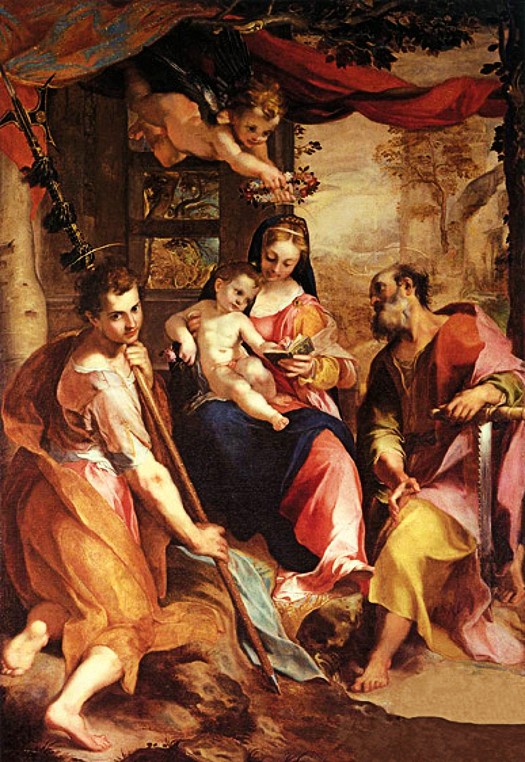
Sts Simon and Jude with the Virgin Mother and Baby Jesus
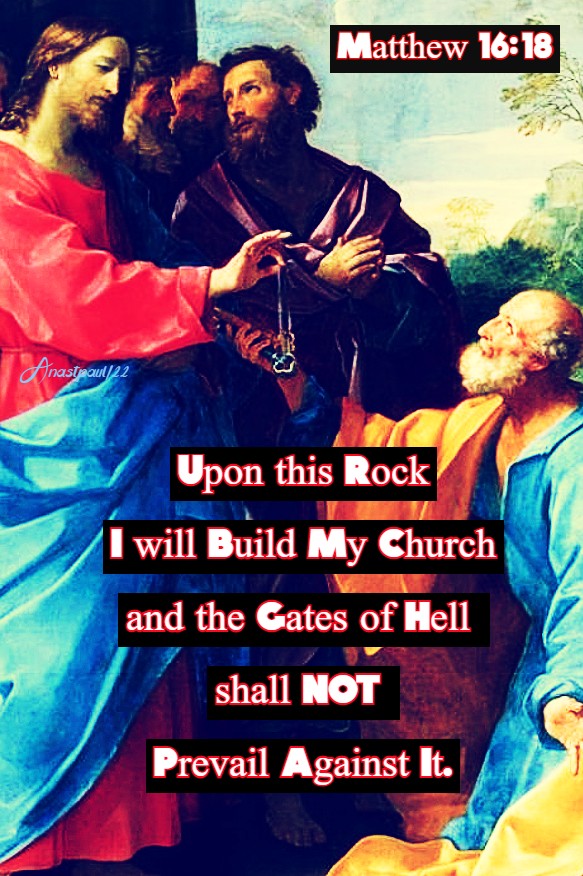
One Minute Reflection – 26 October – “The Month of the Most Holy Rosary and of the Angels” – 1 Peter 5:1-4; 5:10-11, Matthew 16:13-19 – Scripture search here: https://www.drbo.org/
“Upon this rock I will build my church” – Matthew 16:18
REFLECTION – “Although the earth and all who dwell in it quake, I have set firm its pillars” (Ps 74[75],40). All the Apostles are pillars of the earth but, at their head, the two whose Feast we are celebrating. They are the two pillars who support the Church with their teaching, their prayer and the example of their steadfastness. The Lord Himself strengthened these pillars. For at first they were weak, completely incapable of supporting either themselves or others. And in this the Lord’s great design appears: it they had always been strong, people could have thought their strength came from themselves. That is why the Lord wanted to show what they were capable of, before strengthening them, so that all might know, that their strength came from God… Peter was thrown to the ground by the voice of a mere servant… and the other pillar was very weak too: “I was once a blasphemer and persecutor and an arrogant man” (1Tm 1,13)…
Hence we ought to praise these Saints with all our heart: our Fathers who bore such trials for the Lord’s sake and who persevered, with such determination. It is nothing to persevere in joy, happiness and peace. But this is what is great – to be stoned, scourged, struck for Christ (2 Cor 11,25) and in all this, to persevere with Christ. With Paul it is a great thing to be cursed and to bless, to be persecuted and to endure, to be slandered and to console, to be like the world’s rubbish and to draw glory from it (1 Cor 4,12-13)…And what shall we say of Peter? Even if he had undergone nothing for Christ, it would be sufficient to celebrate him today in that he was crucified for Him… He well knew where He Whom he loved, He Whom he longed for was… his cross has been his road to Heaven.” – St Aelred of Rielvaux (1110-1167) Cistercian Monk (Sermon 18, for the feast of S (ints Peter and Paul ; PL 195, 298).
PRAYER – Grant, we beseech Thee, O Lord God, unto all Thy servants, that they may remain continually in the enjoyment of soundness, both of mind and body and by the glorious intercession of the Blessed Mary, always a Virgin, may be delivered from present sadness and enter into the joy of Thine eternal gladness. Through Jesus Christ, Thy Son our Lord, Who lives and reigns with Thee, in the unity of the Holy Ghost, God, world without end. Amen (Collect).
Quote/s of the Day – 18 October – The Feast of St Luke, the Evangelist – 2 Corinthians 8:16-24, Luke 10:1-9 – Scripture search here: https://www.drbo.org/
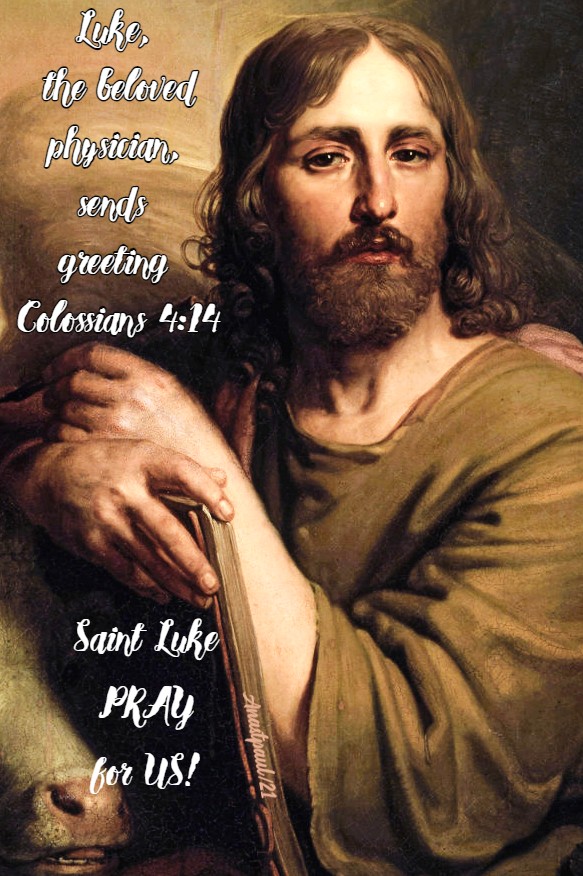
“Luke, the beloved physician, sends greetings … ”
Colossians 4:14
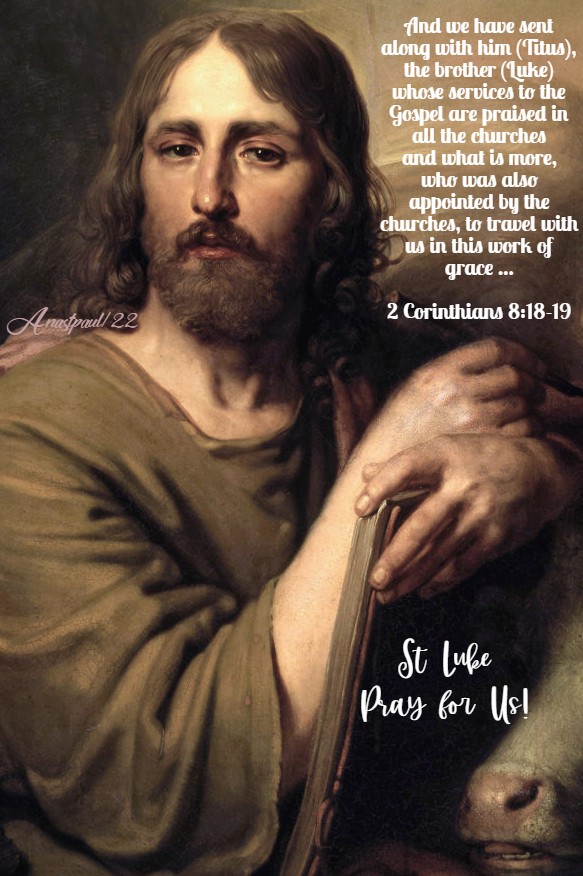
“And we have sent along with him (Titus), the brother (Luke) whose services to the Gospel are praised in all the churches and what is more, who was also appointed by the churches, to travel with us in this work of grace …”
2 Corinthians 8:18-19
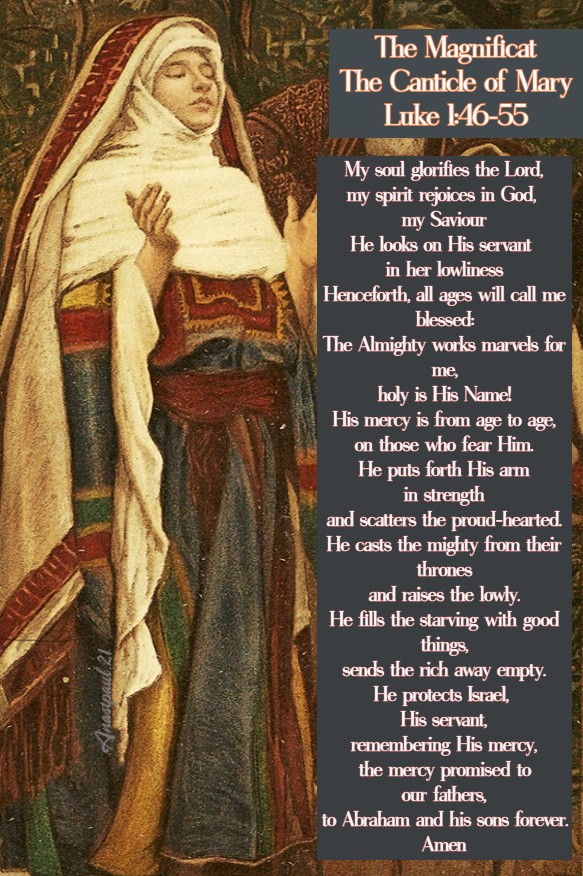
The Magnificat The Canticle of Mary Luke 1:46-55
My soul glorifies the Lord, my spirit rejoices in God, my Saviour He looks on His servant in her lowliness Henceforth all ages will call me blessed: The Almighty works marvels for me, holy is his Name! His mercy is from age to age, on those who fear Him. He puts forth His arm in strength and scatters the proud-hearted. He casts the mighty from their thrones and raises the lowly. He fills the starving with good things, sends the rich away empty. He protects Israel, His servant, remembering His mercy, the mercy promised to our fathers, to Abraham and his sons forever.
One Minute Reflection – 18 October – The Feast of St Luke, the Evangelist – 2 Corinthians 8:16-24, Luke 10:1-9 – Scripture search here: https://www.drbo.org/
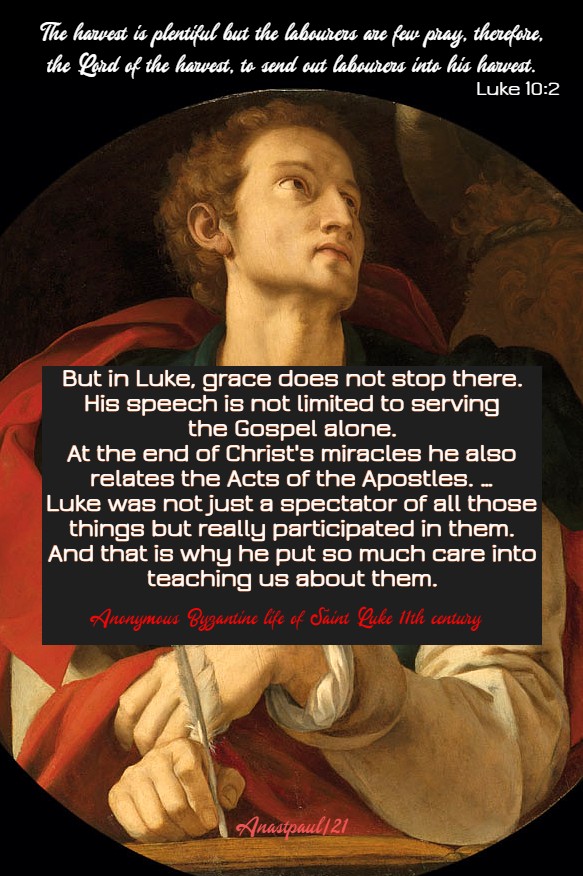
“And he said to them, “The harvest is plentiful but the labourers are few, pray therefore, the Lord of the harvest, to send out labourers into his harvest.” – Luke 10:2
REFLECTION – “When, after abandoning the darkness of error to bind himself to God’s love, Paul was joined to the number of the disciples, Luke went with him everywhere and became his travelling companion (Acts 16:10 f.). … He got on with him so well, was so close to him and shared all his graces, so nearly, that Paul, in writing to the faithful, called Luke his “beloved” (Col 4:14). From Jerusalem and the country round about, as far as Dalmatia, (Rom 15:19) he preached the Gospel with him. From Judea to Rome he shared the same chains with him, the same work, the same difficulties, the same shipwrecks. He desired to receive the same prize with him since he had shared the same labours.
Having acquired the gift of preaching along with Paul and won over and led so many peoples to the love of God, Luke truly seemed like the Saviour’s loving and beloved disciple, in addition to being the Evangelist who wrote His Sacred history. For formerly he had followed the Lord (cf. Lk 10:1), gathered together the testimonies of His first servants (Lk 1:1) and received inspiration from on high. It was this Evangelist who related the mystery of Gabriel, the messenger sent to the Virgin to announce joy to the whole world. It was he who told in full, the birth of Christ, showing us the newborn child lying in a manger and describing shepherds and Angels shouting for joy. … He reports the parabolic teachings in greater number than the other Evangelists. And just as he makes known to us the descent of the Word of God to earth, so too, he describes his Ascension to Heaven and return to the Father’s throne (24:51). …
But in Luke, grace does not stop there. His speech is not limited to serving the Gospel alone. At the end of Christ’s miracles he also relates the Acts of the Apostles. … Luke was not just a spectator of all those things but really participated in them. And that is why he put so much care into teaching us about them.” – Anonymous Byzantine life of Saint Luke – 11th century (Saint Luke, Evangelist and companion of Paul – 6-7; PG 115, 1134-1135).
PRAYER – O Lord, we beseech Thee, that Luke, Thy holy Evangelist, who for the honour of Thy Name bore continuously in his body the suffering of the Cross, may intercede on our behalf. Through the same Jesus Christ, Thy Son our Lord, Who lives and reigns with Thee, in the unity of the Holy Ghost, God, world without end. Amen (Collect).
Our Morning Offering – 18 October – The Feast of St Luke, the Evangelist
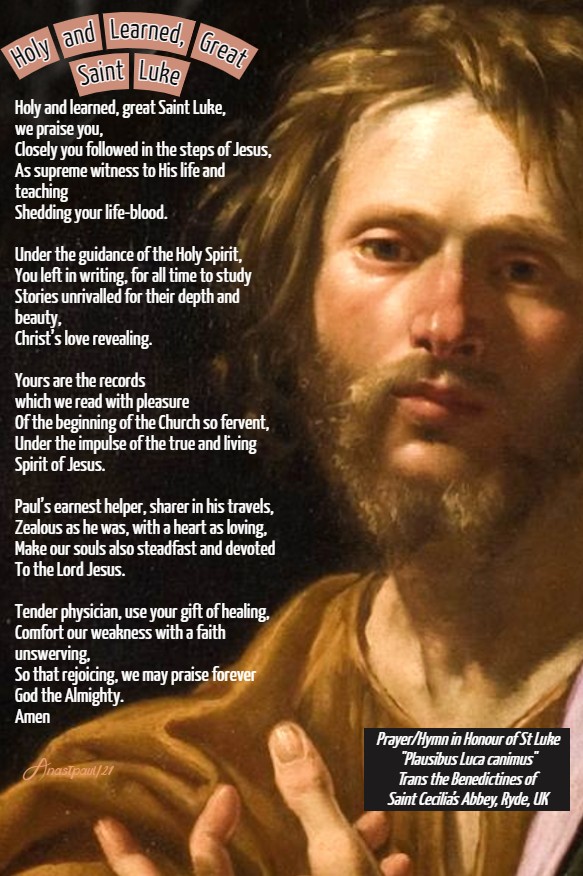
Holy and Learned, Great Saint Luke Prayer/Hymn in Honour of St Luke “Plausibus Luca canimus” Trans the Benedictines of Saint Cecilia’s Abbey, Ryde, UK
Holy and learned, great Saint Luke, we praise you, Closely you followed in the steps of Jesus, As supreme witness to His life and teaching Shedding your life-blood.
Under the guidance of the Holy Spirit, You left in writing, for all time to study Stories unrivalled for their depth and beauty, Christ’s love revealing.
Yours are the records which we read with pleasure Of the beginning of the Church so fervent, Under the impulse of the true and living Spirit of Jesus.
Paul’s earnest helper, sharer in his travels, Zealous as he was, with a heart as loving, Make our souls also steadfast and devoted To the Lord Jesus.
Tender physician, use your gift of healing, Comfort our weakness with a faith unswerving, So that rejoicing, we may praise forever God the Almighty. Amen
Saint of the Day – 18 October – The Feast of St Luke the Evangelist, Physician, Disciple of St Paul, Evangelist, Author of the Gospel according to Luke and the Acts of the Apostles and traditionally believed to be an Artist.
St Luke, Evangelist By Father Francis Xavier Weninger (1860-1946)
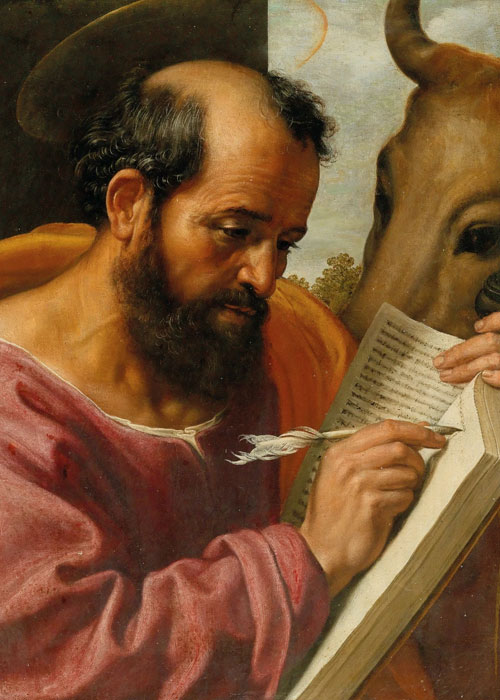
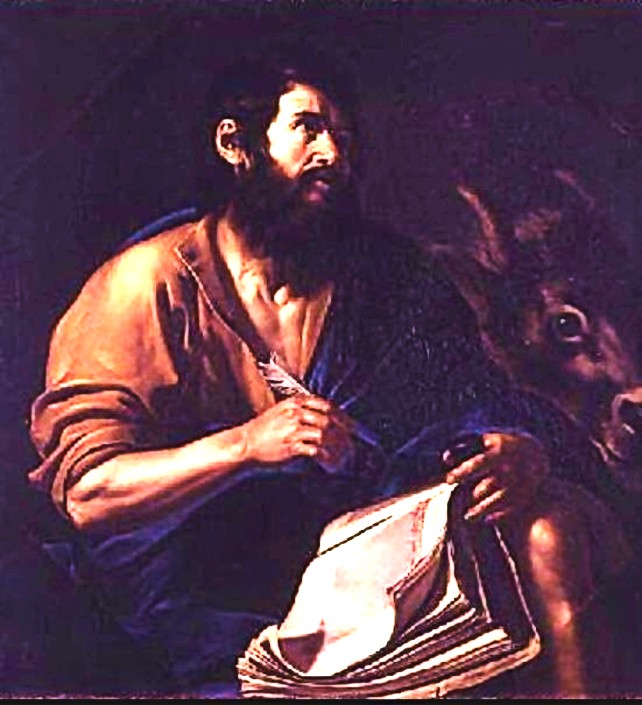
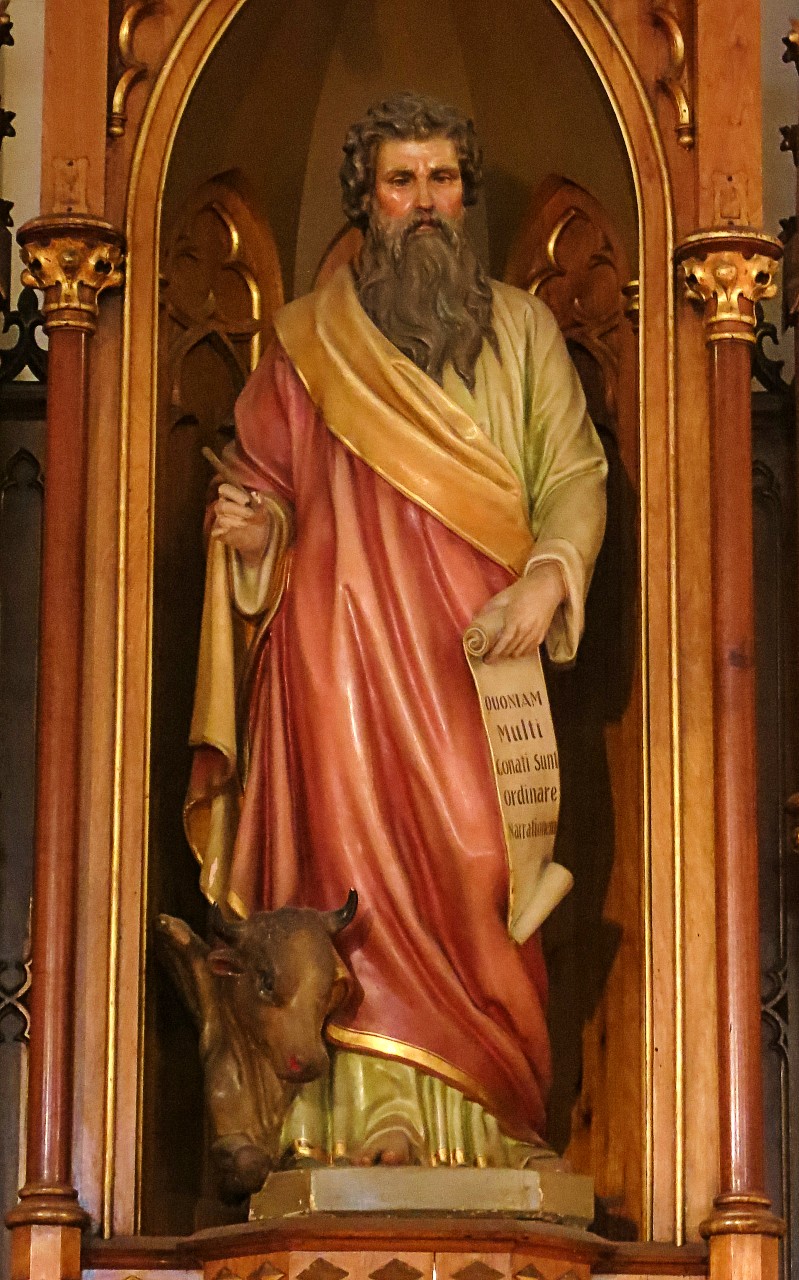
Among the holy men whom the Almighty chose to write the Gospel, or the history of the life and death, the teachings and miracles of Our Lord and Saviour, Jesus Christ, was St Luke, the third of those who are called Evangelists. He is represented with an ox near him, according to the mysterious revelation made to the Prophet Ezekiel because he begins his Gospel with the revelation of what happened to Zachary in the Temple, where oxen, sheep and other animals, were offered, according to the Old Covenant, in sacrifice to the Almighty.
St Luke is said to have been born at Antioch, in Syria and his occupation, in his youth, was the study of the liberal arts, especially rhetoric, physics, sculpture and painting. It is believed that St Paul himself instructed him in the Christian faith, hence, St.Jerome calls him a spiritual son of that holy Apostle. It is quite certain that he accompanied St Paul in the many and laborious travels which the holy Apostle undertook, to convert the infidels. Hence he had a part in all the labours, dangers, hardships and persecutions which the Apostle endured. This, however, caused him, to be most warmly beloved and highly esteemed, by St Paul, who mentions him in several of his epistles and among other praises, calls him an Apostle.
At the desire of St Paul, Luke wrote the Gospel in Greek, as the Apostle was at that time preaching to the Greeks and also, because this language was very much disseminated. St Luke relates, in his Gospel, much that is but slightly mentioned by the other Evangelists, for instance, the Mystery of the Annunciation and the Incarnation of Christ, from whichM the holy Fathers conclude that he must have been on very friendly terms, not only with the Apostles but also with the Divine Mother, as she could give him the best information concerning these Mysteries. Another reason is, that St Luke lived in chastity and earnestly endeavoured, to guard and preserve this virtue.
The commentators of Holy Writ have also observed that St Luke, more than the other Evangelists, gives sinners the hope of Divine Mercy and encourages them, to repentance, as is seen in the parable of the Prodigal Son, so lovingly received by his father, as also, in that of the Good Shepherd, Who, with great solicitude, sought the lost sheep, and brought it back to the fold. Again, in the history of the sinner, who so mercifully receives pardon in the Samaritan, Who cares so kindly for the wounded traveller but above all, in the wonderful conversion of the thief crucified with Christ, to whom, when he had humbly and penitentially begged to be remembered, our kind Saviour promised Paradise. St Anselm gives the reason for this, in the following words: “Luke was at first a Physician of the body, hence, it is that he speaks more than the other Evangelists, of the Merc of our Saviour, who heals and frees men from diseases of the soul.“”
Besides the Gospel, St Luke also wrote a book on the labours of the Apostles,, which is called the Acts of the Apostles. In it, he first relates the Ascension of Christ and the coming of the Holy Ghost and after this, what and where the Apostles preached, the miracles they wrought and the sufferings they endured for Christ’s sake.
He further describes the life of the first Christians and the Martyrdom of St Stephen and St James. He then relates the conversion of St Paul, the labours and sufferings of this holy Apostle, which no-one could know better than St Luke, who was his constant companion. During the two years of St Paul’s imprisonment at Caesarea, Luke aided him in every manner. Hhe also accompanied him to Rome, when St Paul had appealed to the Emperor. At Rome, where the holy Apostle was again imprisoned for two years, St Luke did not leave him and allowed, no persecution to separate him from his beloved master. When St Paul was set at liberty, St Luke accompanied him as before, wherever the unwearied Apostle preached the Gospel. St Epiphanius relates, that, after the death of the two Apostles, Peter and Paul, St Luke preached the Gospel of Christ in Italy, France, Dalmatia and Macedonia, with apostolic zeal. The Greeks assure us that he did the same in Egypt, Thebais and Libya and, that he had great success, in converting the infidels.
It is easy to conceive, what hardships, dangers and persecutions, the holy Evangelist must have suffered, in these many wearisome travels and in consequence of his zealous preaching. Yet he was never discontented, never desponding but always cheerful because he always thought of Him, for Whom he laboured and suffered and of the recompense that was awaiting him. St Jerome writes that the Saint continued his apostolic labours until he had reached his 84th year. St Gregory of Nazianzen, St Paulinus and St Gaudentius maintain that he ended his life by Martyrdom. Nicephorus writes that the heathens hung him to an olive-tree and that thus he died a Martyr.
It is certain that his life, full of cares and hardships, was a continued Martyrdom, the severity of which he increased by severe fasting and other penances. Hence, the Church says of him, in the prayer which she offers up today at Holy Mass, that he bore the mortification of the cross ceaselessly in his body, for the love and honour of Christ. He ended his glorious labours and sufferings at Patras in Achaia. His holy relics, with those of St Andrew, were brought to Constantinople at the time of Constantine the Great. Long afterwards, they were removed to Pavia;but the head had, some time before, been taken by Gregory the Great to Rome and placed in St Peter’s Basilica.
Nanni di Banco, St Luke, 1408-15, marble, Museo dell’Opera del Duomo, Florence
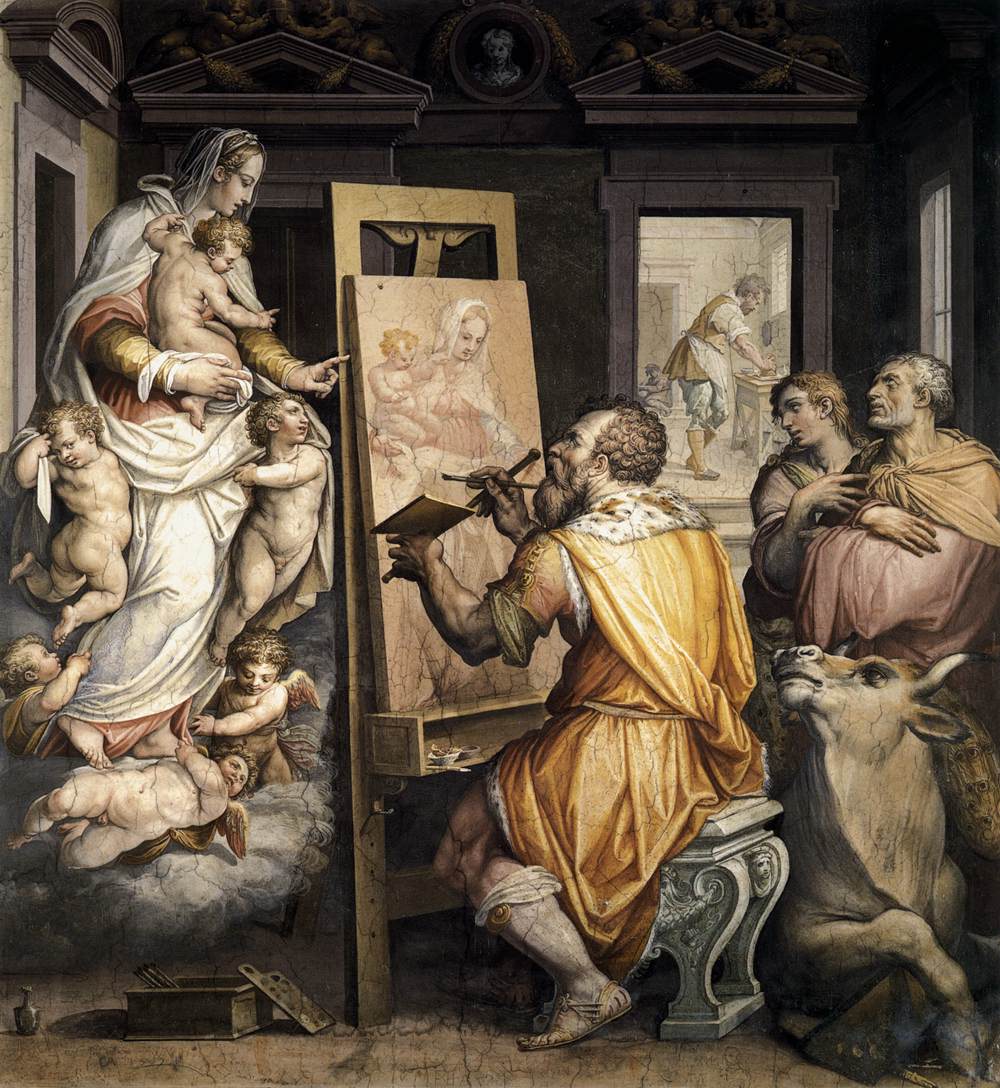
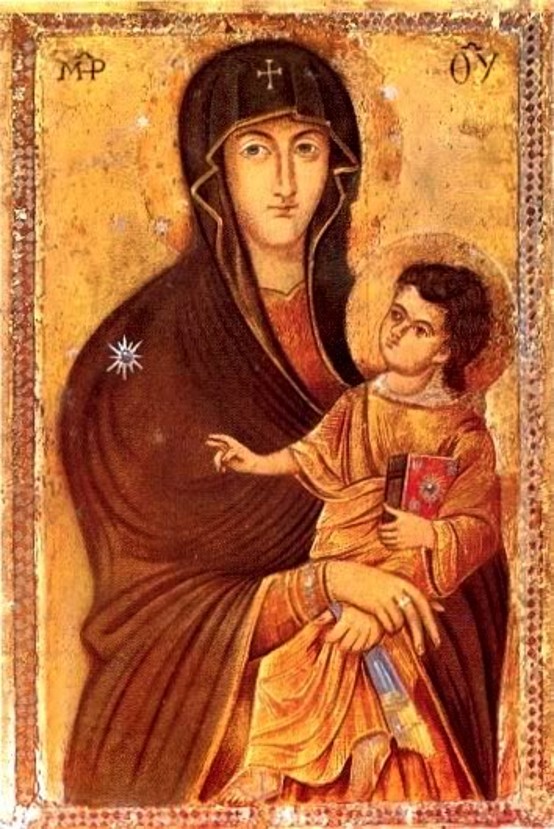
There is a tradition that St Luke painted several likenesses of Christ and the Blessed Virgin and left them to the Christians to comfort them. To this day, several pictures of the Blessed Virgin are shown, which are believed to be his works. One of these is at Rome, in the Church of St Mary Major and another is at Loretto, both of these are venerated by the whole Christian world.
Giorgio Vasari, St Luke Painting the Virgin, after 1565, fresco, Santissima Annunziata, Florence
The Salus Popli Roman by St Luke in St Mary Major Basilica, Rome
St Asclepiades of Antioch St Athenodorus St Brothen Bl Burchard I St Cadwaladr of Brittany Bl Domenico of Perpignano St Eutychius of Pozzuoli St Gwen St Gwen of Tagarth St Gwendoline
Bl Margherita Tornielli St Monon of Nassogne St Proculus of Pozzuoli Bl Theobald of Narbonna St Tryphonia of Rome
Martyrs of Africa – 9 Saints: A group of Christians Martryed together in Africa. The only details that have survived are the names – Beresus, Dasius, Faustinus, Leucius, Lucius, Martialis, Victoricus, Victrix and Viktor. They were martyred in c.300 in Africa.
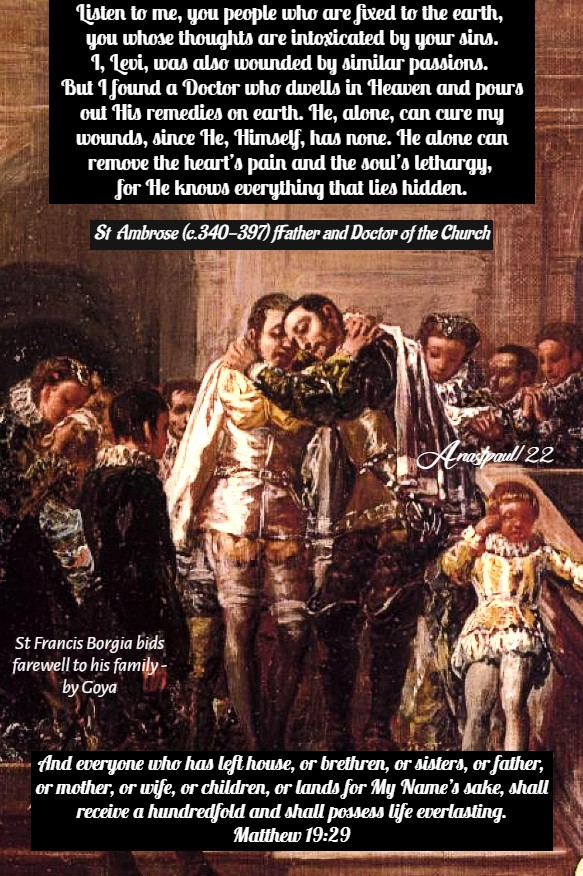
One Minute Reflection – 10 October – St Francis Borgia SJ (1510-1572) Confessor, Priest of the Society of Jesus, – Ecclesiasticus 45:1-6, Matthew 19:27-29 – Scripture search here: https://www.drbo.org/
“And everyone who has left house, or brethren, or sisters, or father, or mother, or wife, or children, or lands for My Name’s sake, shall receive a hundredfold and shall possess life everlasting.” – Matthew 19:29
REFLECTION – “The Apostle Paul said: “Take off the old self with its practices and put on the new self” (Col 3,9-10)… This was the work Christ accomplished when He called Levi; He refashioned him into a new man. Similarly, it is as a new person that the former publican prepares a banquet for Christ, since Christ takes pleasure in him and he ,himself merits, to have a share in happiness, with Christ… He followed Him now, happy, lighthearted and overflowing with joy.
“I have the aspect of a publican no more,” he said, “I do not carry around the old Levi, any longer, I put off Levi when I put on Christ. I flee from my earlier life, my Lord Jesus, Thou alone, Who heals my wounds, I desire to follow. Who shall separate me from the love of God within Thee? tribulation? anguish? hunger? (Rom 8,35). I am bound to Thee by faith as by nails, I am held fast by the worthy bonds of love. All Thy commandments will be like a cautery which I will apply firmly to my wound – the remedy stings but it takes away the ulcerous infection. Lord Jesus, with Thy powerful sword, cut away the corruption of my sins, come quickly, lance my hidden and varied passions. Purge away all infection in the new bath.
Listen to me, you people who are fixed to the earth, you whose thoughts are intoxicated by your sins. I, Levi, was also wounded by similar passions. But I found a Doctor Who dwells in Heaven and pours out His remedies on earth. He, alone, can cure my wounds, since He, Himself, has none. He alone can remove the heart’s pain and the soul’s lethargy, for He knows everything that lies hidden.” – St Ambrose (c.340-397) Bishop of Milan and Father and Doctor of the Church (Commentary on Saint Luke’s Gospel, 5, 23.27).
PRAYER – O Lord Jesus Christ, model of true humility and its reward, we beseech Thee, that as Thou made blessed Francis one of Thy glorious imitators, by his contempt for earthly honours, grant us to follow his example and to share in his glory. Through the same Jesus Christ, Thy Son our Lord, Who lives and reigns with Thee, in the unity of the Holy Ghost, God, world without end. Amen (Collect).
One Minute Reflection – 21 September – “The Month of the Seven Sorrows of the Blessed Virgin Mary and the Holy Cross” – The Feast of St Matthew, Apostle and Evangelist, Martyr – Ezekiel 1:10-14, Matthew 9:9-13
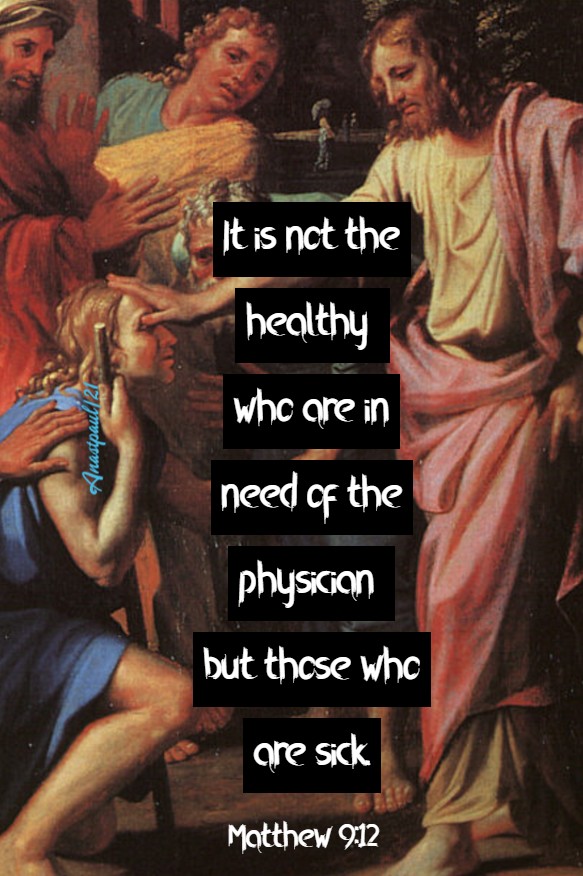
“It is not the healthy who need a physician but they who are sick. But go and learn what this means: ‘I desire mercy, and not sacrifice.’ For I have come to call sinners, not the just.”- Matthew 9:12-13
REFLECTION – “The Apostles, those who all as one and each in particular, possessed the Good News of God, went to the ends of the earth proclaiming the news of all the blessings God sends us and announcing Heaven’s peace towards men (Lk 2:14). Specifically, Matthew produced a written form of the gospel for the Hebrews in their own language, while Peter and Paul evangelised Rome and founded the Church there. After their deaths, Mark, who was Peter’s disciple and interpreter (1 Pt 5:13), also handed down Peter’s preaching to us in writing. Likewise, Luke, Paul’s companion, set down in a book, the Gospel preached by the latter. And then John, the disciple of the Lord, the one who leaned back on his breast (Jn 13:25), also published the Gospel during his stay at Ephesus.
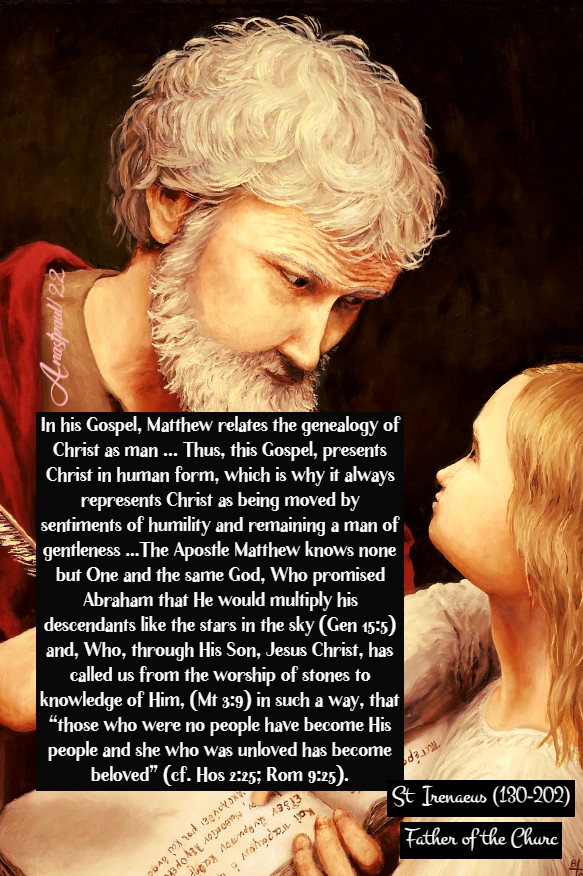
In his Gospel,Matthew relates the genealogy of Christ as man: “The book of the genealogy of Jesus Christ, the son of David, the son of Abraham: now this is how the birth of Christ came about” (Mt 1:1, 18). Thus, this Gospel, presents Christ in human form, which is why it always represents Christ as being moved by sentiments of humility and remaining a man of gentleness …The Apostle Matthew knows none but One and the same God, Who promised Abraham that He would multiply his descendants like the stars in the sky (Gen 15:5) and, Who, through His Son, Jesus Christ, has called us from the worship of stones to knowledge of Him, (Mt 3:9) in such a way, that “those who were no people have become His people and she who was unloved has become beloved” (cf. Hos 2:25; Rom 9:25).” – St Irenaeus (130-202) Father of the Church, Bishop of Lyons, Theologian, Martyr (Against the heresies, III, 11,8 ; 9,1 – One of the first historical testimonies to the Evangelists).
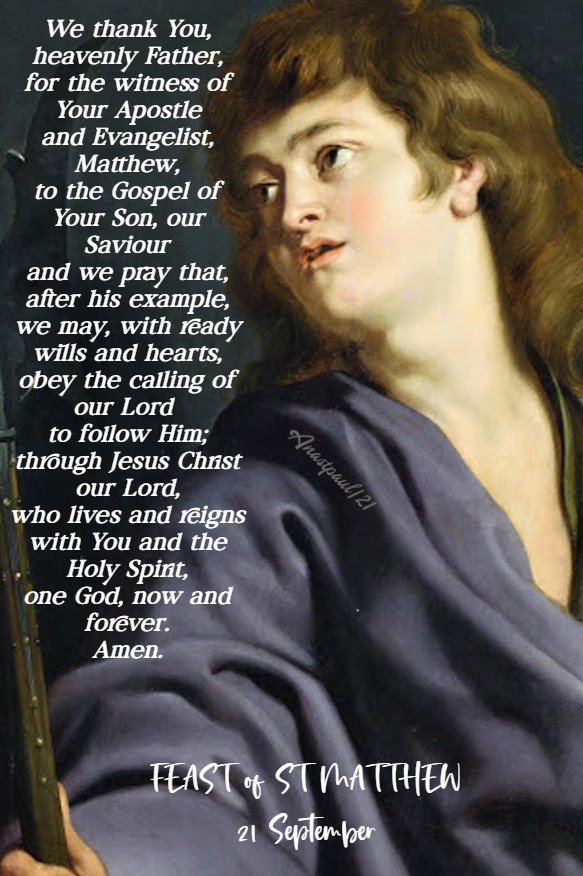
PRAYER – We thank You, heavenly Father, for the witness of Your Apostle and Evangelist, Matthew, to the Gospel of Your Son, our Saviour and we pray, that, after his example, we may with ready wills and hearts, obey the calling of our Lord, to follow Him; through Jesus Christ our Lord, who lives and reigns with You and the Holy Spirit, one God, now and forever. Amen. (Collect).
Saint of the Day – 21 September – The Feast of St Matthew, Apostle and Evangelist, Martyr. Patronages – accountant, bookkeepers, bankers, customs officers, financial officers, money managers, guards, security forces, security guards, stock brokers, tax collectors, Diocese of Trier, Germany, Archdiocese of Washington, 5 cities.
St Matthew, Apostle and Evangelist By Fr Leonard Goffiné O.Praem (1648-1719) (Excerpt from The Church’s Year)
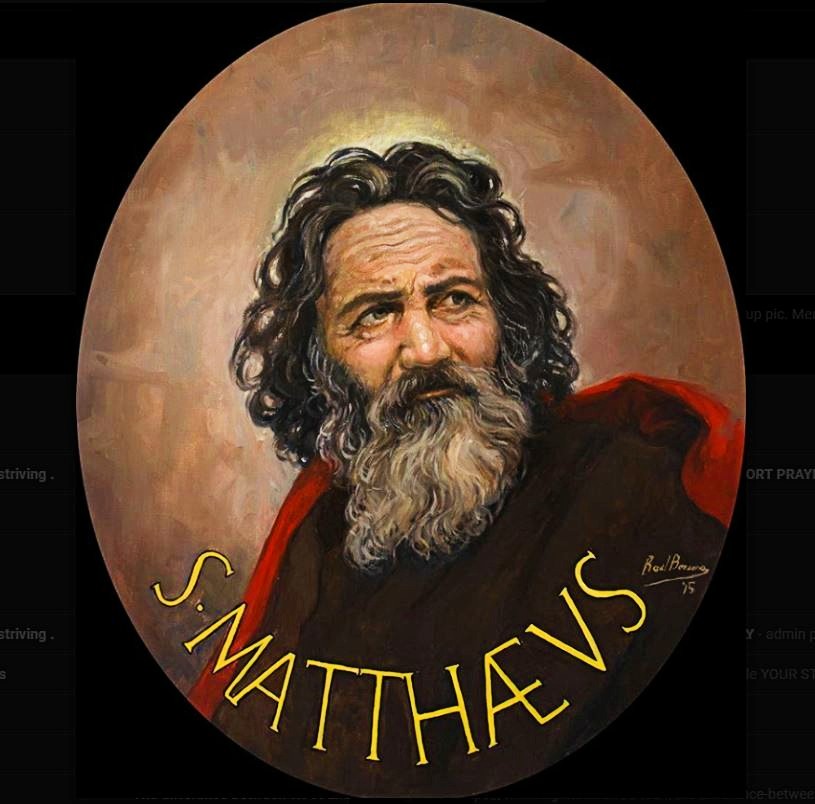
Matthew, before his conversion called Levi, was a Galilean, a son of Alpheus (Mark 2:14) consequently a brother of St James the Less, another of the Apostles. (Mark 3:18). Matthew was a collector of the toll which the Jews were obliged to pay to the Roman Emperors and was called from his custom-house by our Lord to be an Apostle.
In his Gospel, which he wrote later, he calls himself from humility always by his early designation, Matthew the Publican. He followed Jesus faithfully and after the descent of the Holy Ghost remained, as the historical writers Eusebius and Epiphanus inform us, in Judea and its neighbourhood, until just before the destruction of Jerusalem, when the Apostles dispersed and went into foreign lands to preach the doctrine of Christ. When obliged to separate from the recent converts in Jerusalem, Matthew wrote his Gospel to leave with them in place of his presence among them and was the first to write concerning our Lord’s life upon earth.
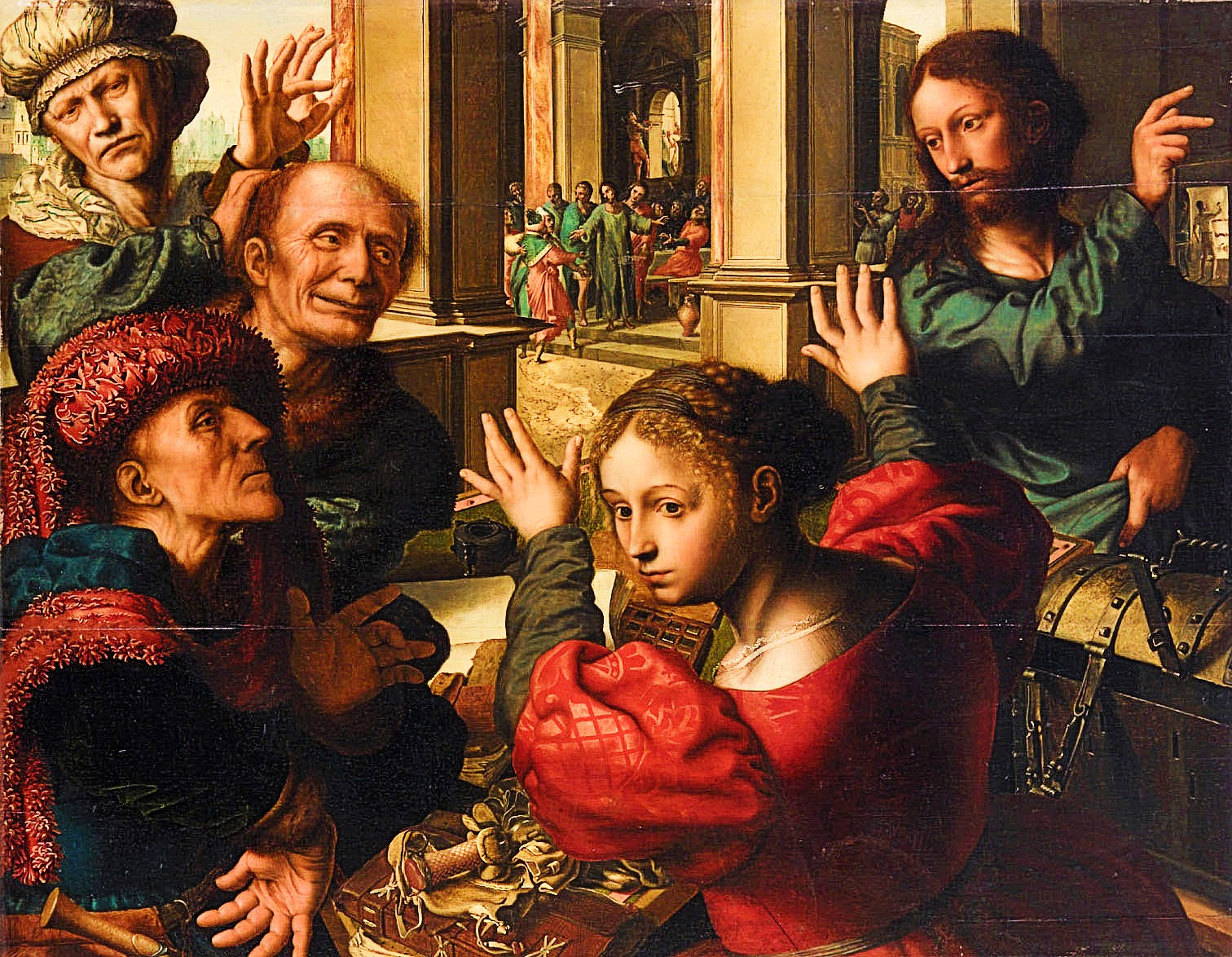
The Calling of Matthew – van Hemessen
He led a rigorous life, prayed much, never touched meat and lived on herbs, roots and wild fruits. He was at last stabbed by the Ethiopian King Hirtakus, as the generality of writers inform us, while standing at the Altar and offering the Sacrifice of Mass because the Saint had refused consent to the King’s marriage with the virgin Eugenia, who was dedicated to God. His sacred remains were, in the tenth Century, brought to Salerno, Naples, where they are still highly venerated.
Matthew was the first to write a Gospel. How proper it is, that he, who after many sins, becomes converted, should be the first to announce the Infinite Mercy of the Redeemer, Who came into this world, not to call the just but sinners.
“Christ, the Saviour, looked with His mild eyes at St Matthew in his custom-house and called him. Matthew obeyed, instantly arose and followed Christ, becoming thus, from a publican, an Apostle of the Lord, a great Saint. How comforting an example of Divine Mercy, even towards the greatest sinner! How wholesome a lesson! The same kind, merciful Saviour, Who gazed so mildly upon Matthew and called him, turns His loving eyes on you also, even if you live in mortal sin. He calls you to repentance – He calls you to follow Him. Obey Him as St. Matthew did, without putting it off. Let neither the greatness, nor the number of your sins detain you. Your Saviour is ready to forgive them, to receive you into His favour and to make you a Saint. “If you are a publican or a sinner,” says St Chrysostom, “you may still become an Evangelist. If you are a blasphemer, you may still become an Apostle.” This means that you may obtain pardon and gain salvation, as St Matthew and St Paul did, the former of whom was a publican, a sinner;and the other, according to his own testimony, a blasphemer. St Augustine says the same in the following words: “Perhaps some may think that the sin they have committed, is so great that it cannot obtain pardon from God. Oh! may such thoughts be far from us. Why, O man, regard only the number of thy sins and not the Omnipotence of the Heavenly Physician? As God is merciful because He is gracious and, as He can be merciful because He is Omnipotent, he who believes that God will not or cannot forforgive him, closes the door of the Divine Mercy on himself, by denying that God is gracious or Omnipotent. Hence, let no-one doubt the Mercy of God, even if he has committed a hundred, nay a thousand crimes. But this belief should incite him, to reconcile himself immediately with the Almighty.” – Fr Francis Xavier Weninger SJ (1805-1888)
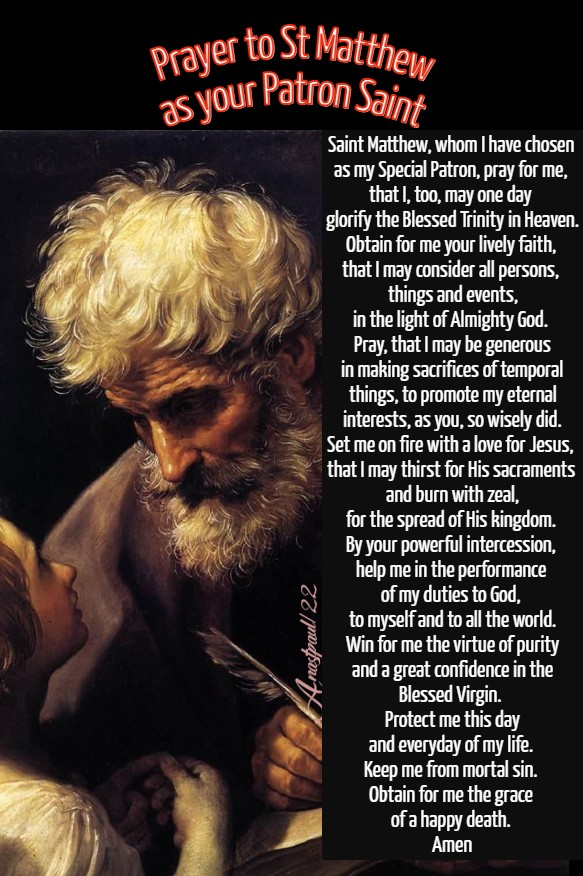
Prayer to St Matthew as your Patron Saint
Saint Matthew, whom I have chosen as my Special Patron, pray for me, that I, too, may one day glorify the Blessed Trinity in Heaven. Obtain for me your lively faith, that I may consider all persons, things and events, in the light of Almighty God. Pray, that I may be generous in making sacrifices of temporal things, to promote my eternal interests, as you, so wisely did. Set me on fire with a love for Jesus, that I may thirst for His sacraments and burn with zeal, for the spread of His kingdom. By your powerful intercession, help me in the performance of my duties to God, to myself and to all the world. Win for me the virtue of purity and a great confidence in the Blessed Virgin. Protect me this day and everyday of my life. Keep me from mortal sin. Obtain for me the grace of a happy death. Amen
St Alexander of the Via Claudia Bl Diego Hompanera París St Eusebius of Phoenicia St Francisco Pastor Garrido St Gerulph St Herminio García Pampliega St Iphigenia St Isaac of Cyprus Bl Jacinto Martínez Ayuela St Jonah the Prophet Bl José María Azurmendi Mugarza Bl Josep Vila Barri St Landelino of Ettenheim Bl Manuel Torró García
St Maura of Troyes St Meletius of Cyprus Bl Nicolás de Mier Francisco St Pamphilus of Rome Bl Vicente Galbis Gironés Bl Vicente Pelufo Orts
Martyrs of Gaza – 3 Saints: Three brothers, Eusebius, Nestulus and Zeno, who were seized, dragged through the street, beaten and murdered by a pagan mob celebrating the renunciation of Christianity by Julian the Apostate. They were burned to death in 362 on a village garbage heap in Gaza, Palestine.
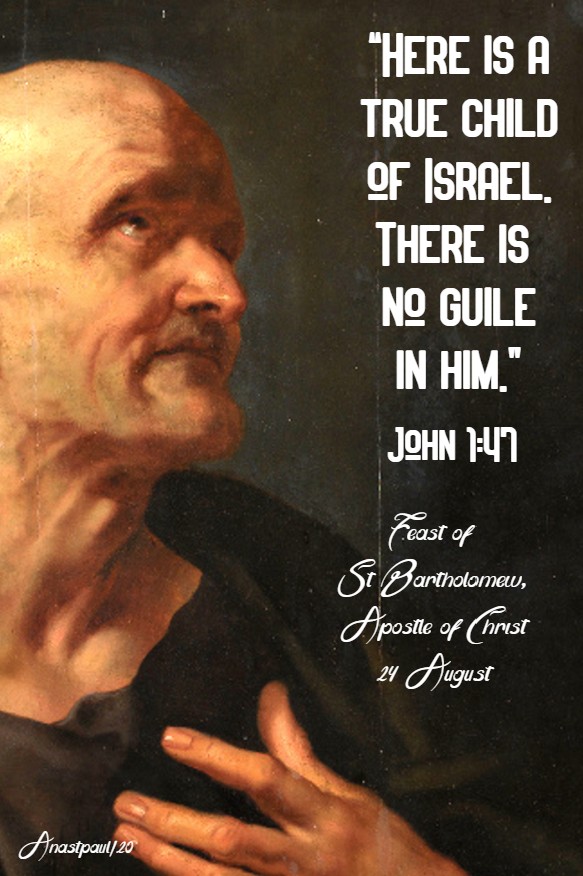
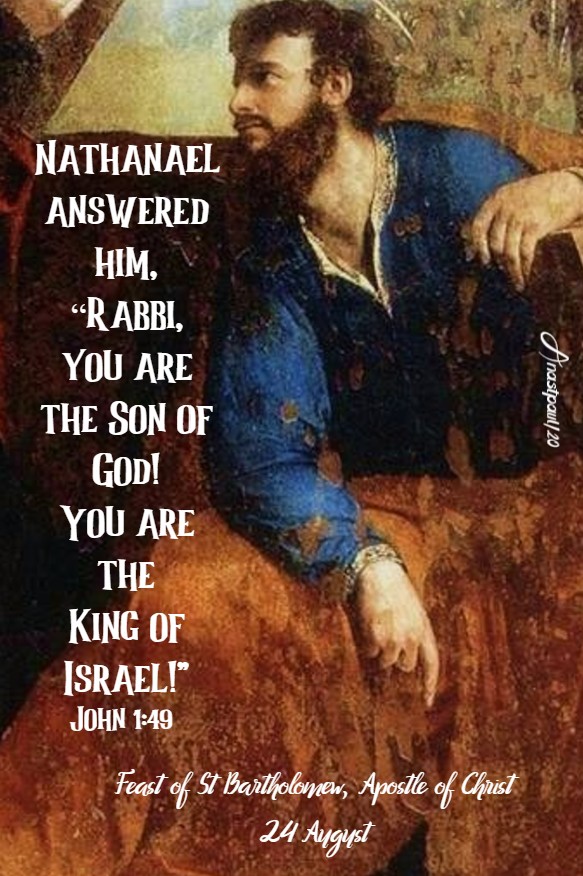
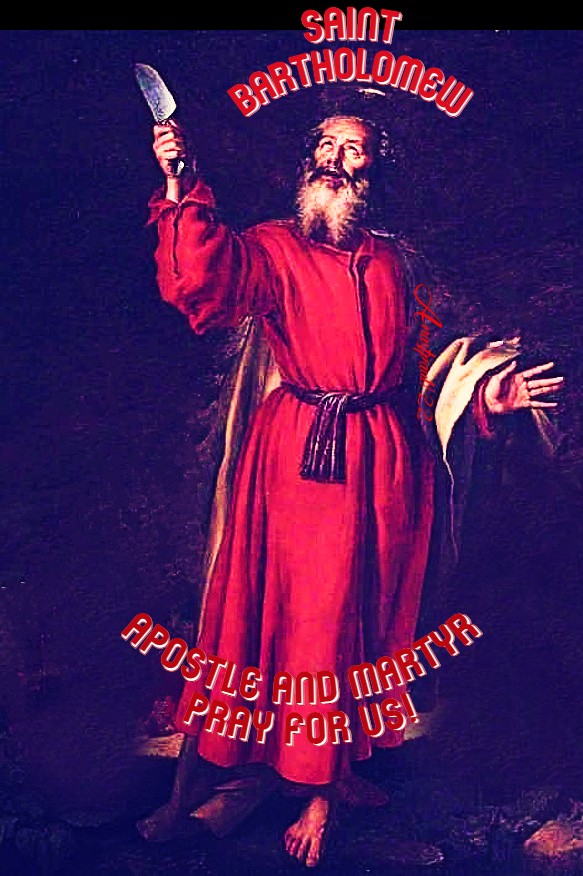
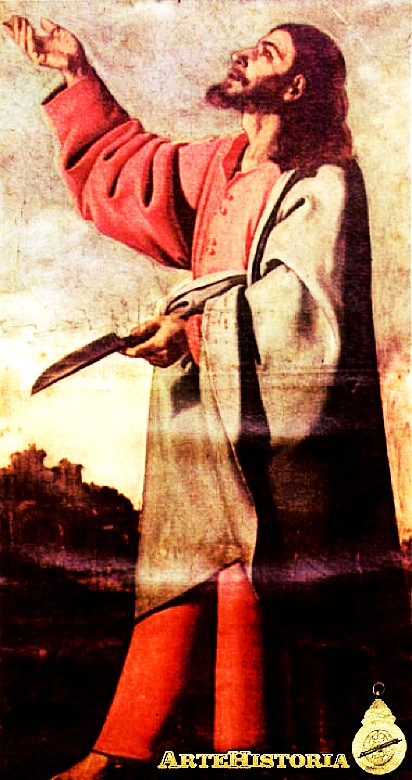
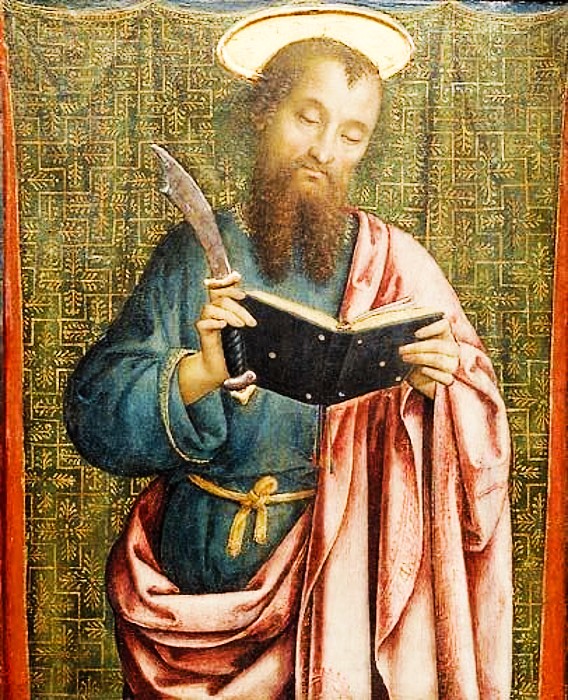
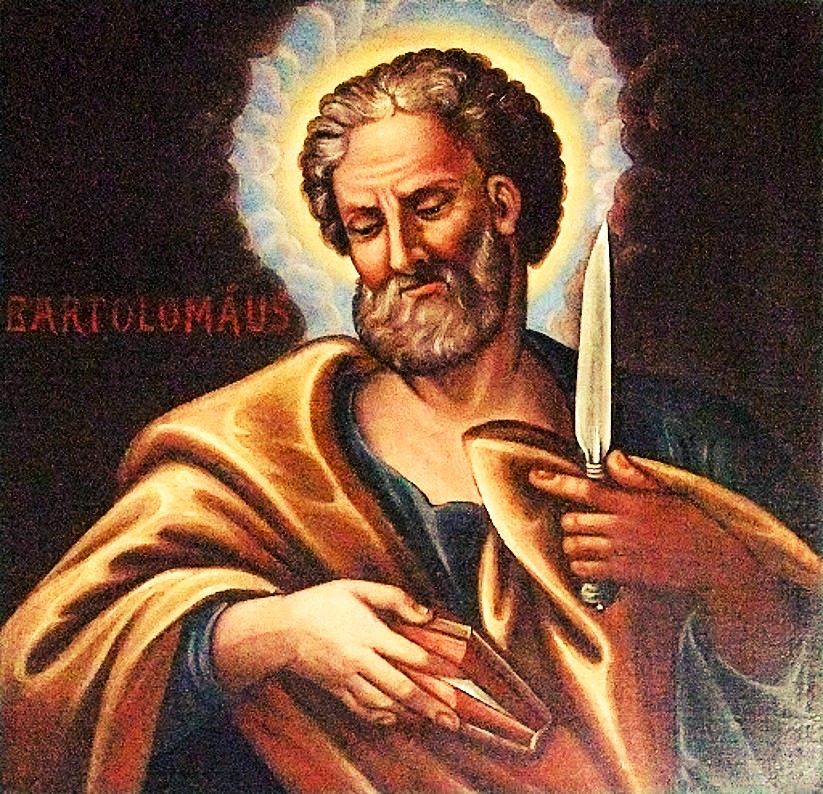
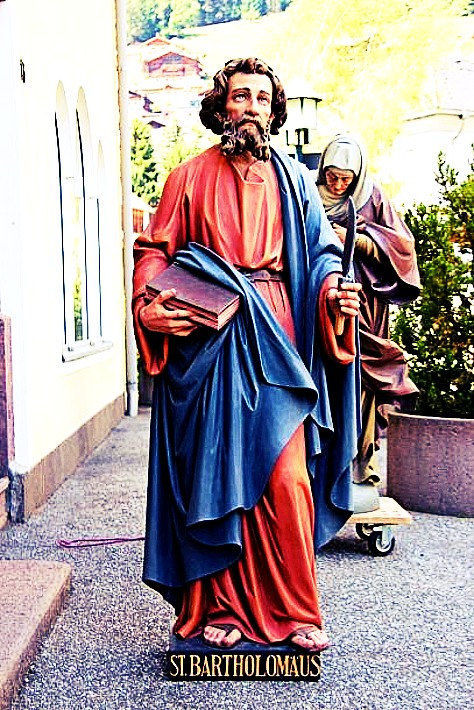
Quote/s of the Day – 24 August – St Bartholomew the Apostle and Martyr
“Here is a true child of Israel. There is no guile in him.”
John 1:47
Nathanael answered him, “Rabbi, you are the Son of God! You are the King of Israel!”
John 1:49
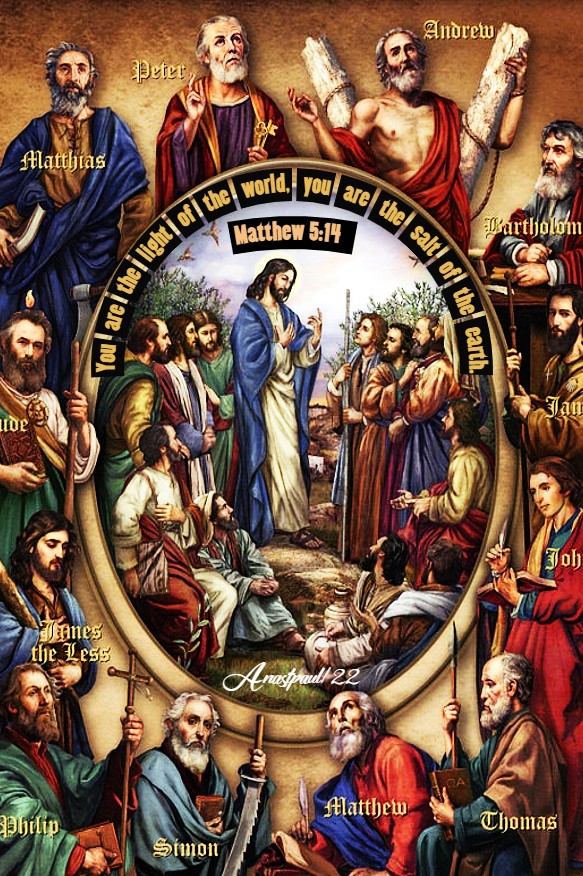
“You are the light of the world, you are the salt of the earth.”
Matthew 5:14
“Like peaceful conquerors, without any human weapons but backed by by the power of God, they divided the world amongst themselves, so that they might win it for Christ! The Roman Empire was small to them. They travelled, moreover, to the distant shores of Ethiopia and India, where the Eagle of Rome had never found its way! Surely, this is the most extraordinary Miracle of history?!
The Holy Spirit accomplished that, which human armies had never been able to do, save in part, or for a limited period of time. In this achievement, He used the weakest possible human means, namely, twelve poor fishermen! The earthly Empire of Rome, passed away but the Spiritual domain of Christ still remains, with its centre at Rome, as the only true Light, the only unfailing hope and the only pledge of salvation for individuals and nations.”
Antonio Cardinal Bacci (1881-1971)
O Fathers of Our Ancient Faith
O Fathers of our ancient faith, With all the heav’n, we sing your fame Whose sound went forth in all the earth To tell of Christ and bless His Name.
You took the Gospel to the poor, The Word of God alight in you, Which in our day is told again, That timeless Word, forever new.
You told of God, Who died for us And out of death triumphant rose, Who gave the Truth which made us free and changeless through the ages goes.
Praise Father, Son and Holy Spirit, Whose gift is faith that never dies, A light in darkness now, until The Day-Star in our hearts arise.
O Fathers of Our Ancient Faith is written by the Benedictine Nuns of Stanbrook Abbey. In the Divine Office it is sung at Morning Prayer in the Common of Apostles. It is set to the anonymous tune associated with the 7th century Latin hymn, Creator Alme Siderum.
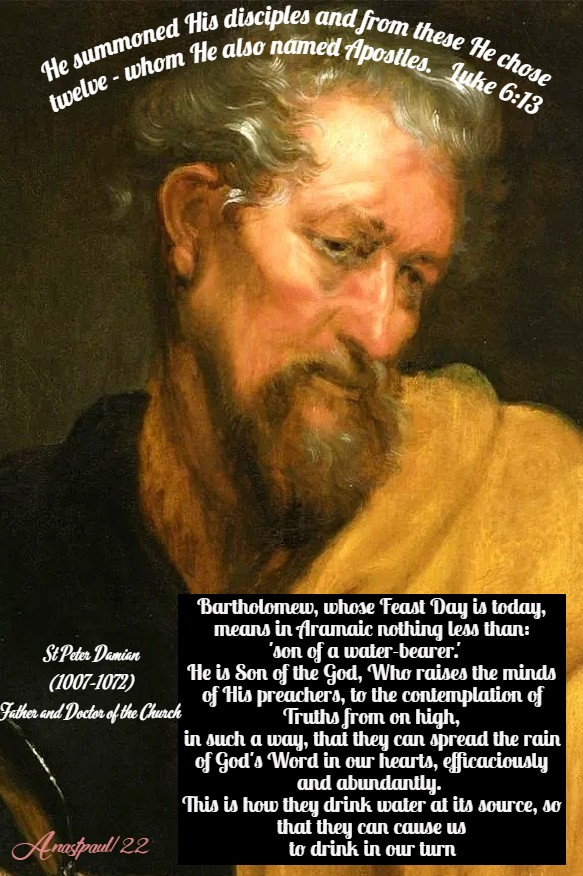
One Minute Reflection – 24 August – St Bartholomew the Apostle and Martyr – 1 Corinthians 12:27-31, Luke 6:12-19
“And when day broke, He summoned His disciples and from these He chose twelve – whom He also named Apostles.” – Luke 6:13
REFLECTION – “The Apostles are those precious pearls that Saint John tells us, he beheld in his Revelation and of whom, the gates of the heavenly Jerusalem are composed ( Apoc. 21:21). … For indeed, when the Apostles reflect the Light of Divinity through their signs or miracles, they open the way, to the heavenly glory of Jerusalem to people who have been converted to faith in Christ. And whoever has been saved because of them, enters life, as one on a journey crosses a threshold. … It is of them, too, that the prophet says: “Who are these that fly like clouds?” (Is 60:8). These clouds pour down water, when they bedew the earth of our heart, with the rain of their instruction, making them fertile and apt to bear the seeds of good works.
Bartholomew, whose Feast Day is today, means in Aramaic nothing less than: ‘son of a water-bearer.‘ He is Son of the God, Who raises the minds of His preachers, to the contemplation of Truths from on high, in such a way, that they can spread the rain of God’s Word in our hearts, efficaciously and abundantly . This is how they drink water at its source, so that they can cause us to drink in our turn.” – St Peter Damian (1007-1072) Bishop, Father and Doctor of the Church (Sermon 42 the second for Saint Bartholomew).
PRAYER – Almighty, eternal God, Who bestowed on us the devout and holy joy of this day to celebrate the Feast of Thy blessed Apostle Bartholomew, grant unto Thy Church, we beseech Thee, both to love what he believed and to preach what he taught. Through Jesus Christ, Thy Son our Lord, Who lives and reigns with Thee, in the unity of the Holy Ghost, God, world without end. Amen (Collect).
Our Morning Offering – 24 August – St Bartholomew the Apostle and Martyr
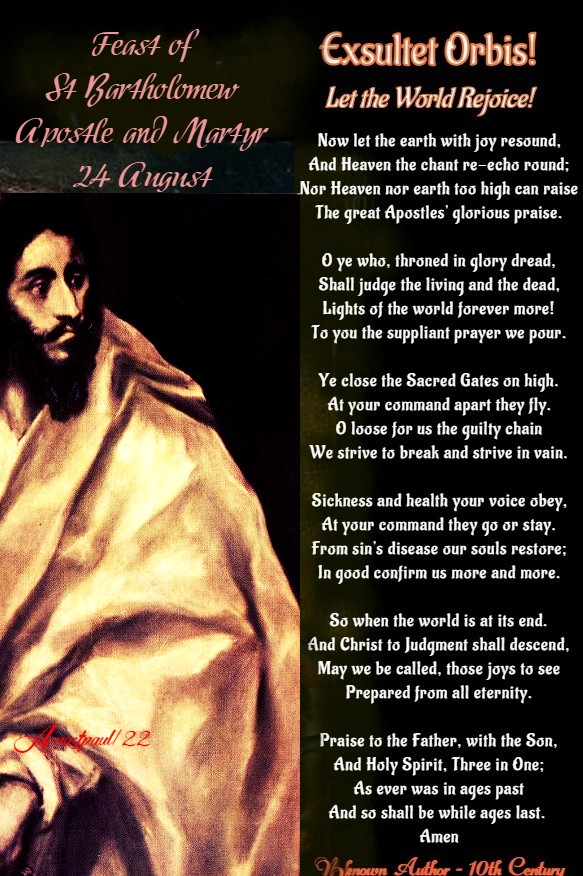
Exsultet Orbis! Let the World Rejoice! Unknown Author
Now let the earth with joy resound, And Heaven the chant re-echo round; Nor Heaven nor earth too high can raise The great Apostles’ glorious praise.
O ye who, throned in glory dread, Shall judge the living and the dead, Lights of the world forever more! To you the suppliant prayer we pour.
Ye close the Sacred Gates on high. At your command apart they fly. O loose for us the guilty chain We strive to break and strive in vain.
Sickness and health your voice obey, At your command they go or stay. From sin’s disease our souls restore; In good confirm us more and more.
So when the world is at its end. And Christ to Judgment shall descend, May we be called, those joys to see Prepared from all eternity.
Praise to the Father, with the Son, And Holy Spirit, Three in One; As ever was in ages past And so shall be while ages last. Amen
(Roman Breviary for the Common of Apostles) An Office Hymn that was traditionally prescribed for Vespers and Lauds on the Feasts of Apostles and Evangelists outside Easter time. The Hymn is found as early as the tenth century in a hymnal of Moissac Abbey.
Saint of the Day – 24 August – St Bartholomew the Apostle and Martyr. Saint Bartholomew, whose name appears only in the lists of the Apostles, is believed to be Nathanael, whom Philip brought to Christ. He preached in Persia and Egypt and was flayed alive in Armenia. His relics are believed to be in the Church of Saint Bartholomew in Rome. Patronages –Armenia; bookbinders/publishers; butchers; Florentine cheese and salt merchants; Gambatesa, Italy; Catbalogan, Samar; Għargħur, Malta; leather workers; neurological diseases; plasterers/construction workers; shoemakers; tanners; trappers; skin diseases/rashes, against involuntary shaking disorders; Los Cerricos (Spain), 16 further cities all over the world.
Saint Bartholomew Apostle and Martyr Excerpt from The Liturgical Year By Prosper Guéranger OSB (1805-1875)
A witness of the Son of God, one of the princes who announced His glory to the nations, lights up this day with his apostolic flame.
Personally, who was this Apostle who borrowed such solemnity from the scene of his apostolic labours? Under the name or surname of Bartholomew (“Son of Tholmai“), the only mark of recognition given him, by the first three Gospels, do we see, as many have thought that Nathaniel, whose presentation to Jesus by Philip forms so sweet a scene in St John’s Gospel (1: 45-51)? A man of uprightness, innocence and simplicity, … for whom, the Man-God had choice graces and caresses from the very beginning.
Be this as it may, the lot which fell to our Saint among the Twelve, points to the special confidence of the Divine Heart. The heroism of the terrible Martyrdom which sealed his apostolate, reveals his fidelity. The dignity preserved by the nation he grafted onto Christ, in all the countries where it has been transplanted, witnesses to the excellence of the sap first infused into its branches. When, two centuries and a half later, St Gregory the Illuminator, so successfully cultivated the soil of Armenia, he did but quicken the seed sown by the Apostle, which the trials never wanting to that generous land, had retarded for a time but could not stifle. …
We learn from Eusebius and from St Jerome that before going to Armenia, his final destination, St Bartholomew evangelised the Indies, where Pantaenus a century later found a copy of St Matthew’s Gospel in Hebrew characters, left there by him. …
The City of Rome used to celebrate the Feast of St Bartholomew on the following day, as do also the Greeks who commemorate on 25 August – a translation of the Apostle’s relics. It is owing, in fact, to the various translations of his holy body and to the difficulty of ascertaining the date of his Martyrdom that different days have been adopted for his Feast ,by different Churches, both in the east and in the west. The 24th of this month, consecrated by the use of most of the Latin Churches, is the day assigned in the most ancient Martyrologies, including that of St Jerome. In the 13th Century, Pope Innocent III, having been consulted as to the divergence, answered that local custom was to be observed.
The Church gives just the following Lessons for the life of the Apostle of Armenia:
The Holy Apostle Bartholomew was a native of Galilee. It fell to his lot to preach the Gospel in western India;and he announced to those nations the coming of Our Lord Jesus Christ according to the Gospel of St Matthew. But after converting many souls to Jesus Christ in that Province and, undergoing much labour and suffering, he went into eastern Armenia.
Here he converted to the Christian Faith, the King Polymius and his Queen, as well as twelve Cities. This caused the pagan priests of that nation to be exceedingly jealous of him and they stirred up Astyages, the brother of King Polymius against the Apostle, so that he commanded him to be flayed alive and finally beheaded. In this cruel Martyrdom he gave up his soul to God.
His body was buried at Albanapolis, the town of eastern Armenia where he was Martyred but it was afterwards taken to the island of Lispari and thence to Beneventum. Finally it was translated to Rome by the Emperor Otto III and placed on the island of the Tiber, in a Church dedicated to God under his invocation.
On this day of thy Feast, O holy Apostle, the Church (in the Collect of the Mass) prays for grace to love what thou didst believe and to preach what thou didst teach. Not that the Bride of the Son of God, could ever fail, either in faith or in love but She knows, only too well that, although Her Head is ever in the light and Her heart ever united to the Spouse, in the Holy Ghost Who sanctifies Her, nevertheless ,Her members and particular Churches may detach themselves from their centre of life and wander away in darkness. O thou who didst choose the west as the place of thy rest, thou in whose precious relics Rome glories in possessing, bring back to St Peter, the nations thou didst evangelise, that we may together, enjoy the treasures of our concordant traditions and go to God, even at the cost of being despoiled of all things, by the course so grand and yet so simple, taught us by thy example and by thy sublime theology. Amen.
St Eutychius of Troas St George Limniotes St Irchard
St Jeanne-Antide Thouret (1765-1826) French Religious and the Founder of the Thouret Sisters – renamed the Sisters of Divine Charity., Apostle of Charity and the Poor and helpless, Teacher. Thouret’s life was one of service to children and the ill across France in schools and hospitals – some of which her order established. This active apostolate did not cease when the French Revolution forced her into exile. She continued her work in both Switzerland and the Kingdom of Prussia. St Jeanne-Antide was Canonised on 14 January 1934 by Pope Pius XI. Her Life: https://anastpaul.com/2019/08/24/saint-of-the-day-24-august-saint-jeanne-antide-thouret-1765-1826/
St Patrick the Elder St Ptolemy of Nepi St Romanus of Nepi St Sandratus St Taziano of Claudiopolis
Quote/s of the Day – 11 August – Saint Susanna of Rome (Died c 295) Virgin Martyr and and St Philomena (Died 304) Virgin Martyr – Hebrews 11:33-39, Luke 21:9-19
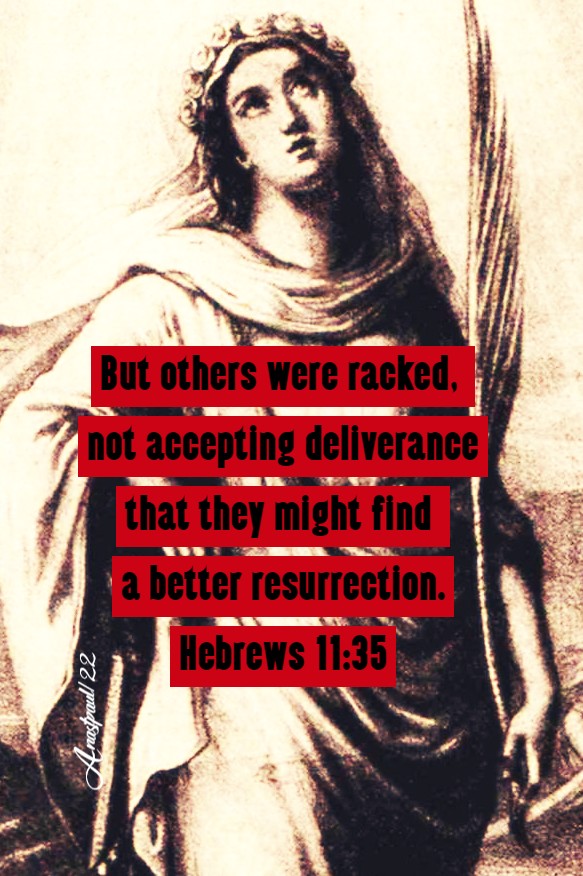
“But others were racked, not accepting deliverance that they might find a better resurrection.”
Hebrews 11:35
The Passion of Andrew: Hail, O Cross, yes, hail indeed!
“Hail, O Cross, inaugurated by the Body of Christ and adorned with His limbs as though they were precious pearls. Before the Lord mounted you, you inspired an earthly fear. Now, instead, endowed with heavenly love, you are accepted as a gift.
Believers know of the great joy that you possess and of the multitude of gifts you have prepared. I come to you, therefore, confident and joyful, so that you too may receive me, exultant as a disciple of the One Who was hung upon you….
O blessed Cross, clothed in the majesty and beauty of the Lord’s limbs!…
Take me, carry me far from men and restore me to my Teacher, so that, through you, the One who redeemed me by you, may receive me.
Hail, O Cross, yes, hail indeed!”
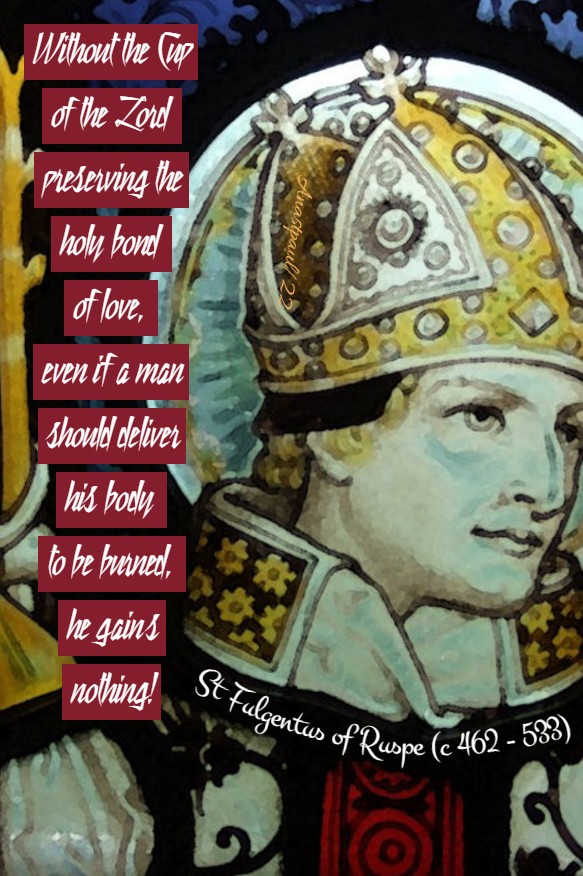
“Without the Cup of the Lord preserving the holy bond of love, even if a man should deliver his body to be burned, he gains nothing!”
St Fulgentus of Ruspe (c 462 – 533)
“We should not forget, that the devil has his martyrs and that he infuses into them a false constancy. It is not the punishment but the cause, that makes the Martyr; that is – the confession of the True Faith.”
St Alphonsus de Liguori (1696-1787) Doctor of the Church
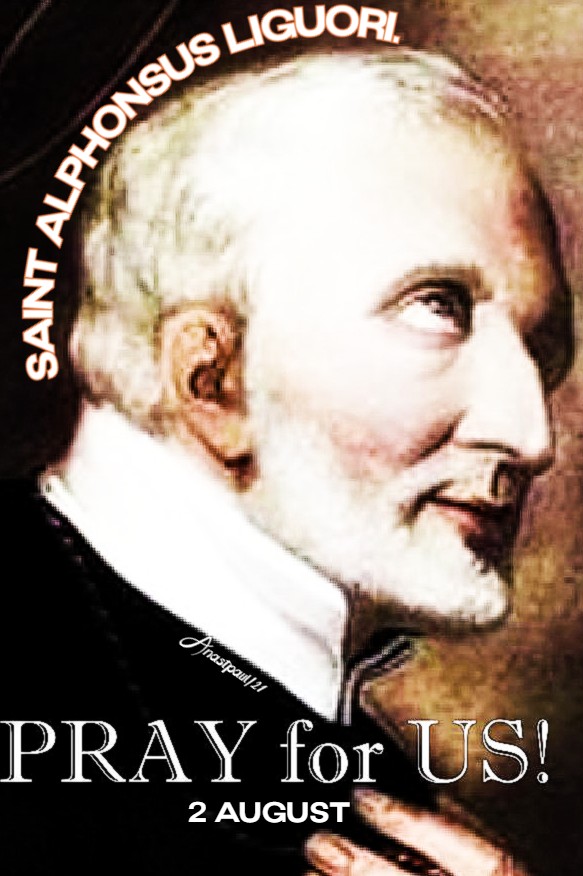
One Minute Reflection – 2 August – “The Month of the Immaculate Heart of Mary” – The Memorial of St Alphonsus Maria de Liguori (1696-1787) Bishop, Confessor, Doctor of the Church – Timothy 2:1-7, Luke 10:1-9
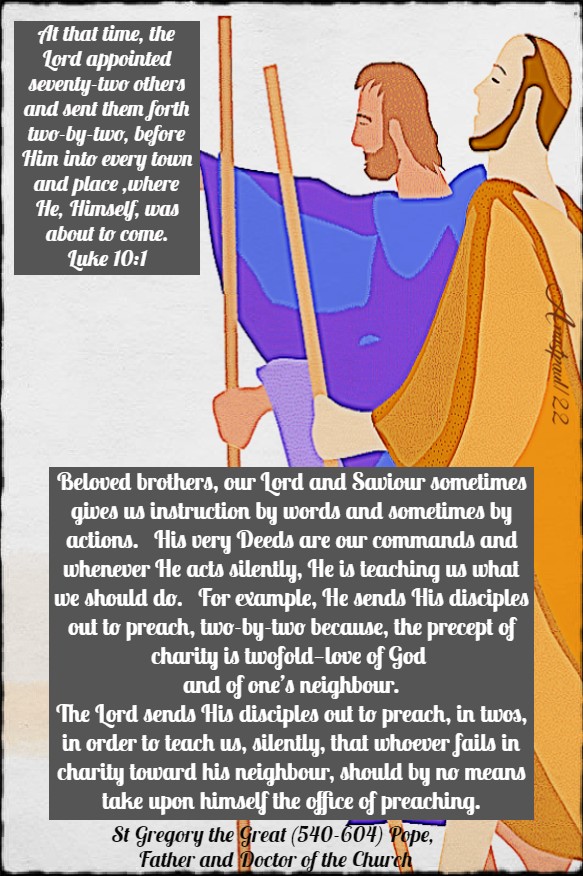
“At that time, the Lord appointed seventy-two others and sent them forth two-by-two, before Him into every town and place, where He, Himself, was about to come.” – Luke 10:1
REFLECTION – “Beloved brothers, our Lord and Saviour sometimes gives us instruction by Words and sometimes by Actions. His very Deeds are our commands and whenever He acts silently, He is teaching us what we should do. For example, He sends His disciples out to preach, two-by-two because the precept of charity is twofold—love of God and of one’s neighbour.
The Lord sends His disciples out to preach in twos, in order to teach us, silently, that whoever fails in charity toward his neighbour, should by no means take upon himself the office of preaching.
Rightly is it said, that He sent them ahead of Him into every city and place, where He ,Himself was to go. For the Lord follows after the preachers because preaching goes ahead to prepare the way and then, when the words of exhortation have gone ahead and established Truth in our minds, the Lord comes to live within us. To those who preach ,Isaiah says: Prepare the way of the Lord, make straight the paths of our God. And the psalmist tells them: Make a way for Him who rises above the sunset. The Lord rises above the sunset because, from that very place where He slept in death, He rose again and manifested a greater glory. He rises above the sunset because, in His Resurrection, He trampled underfoot the death, which He endured. Therefore, we make a way for Him who rises above the sunset ,when we preach His glory to you, so that when He, Himself follows after us, He may illumine you with His Love.
Let us listen now to His words as He sends His preachers forth: The harvest is great but the labourers are few. Pray, therefore, the Lord of the harvest to send labourers into His harvest. That the harvest is good but the labourers are few cannot be said without a heavy heart, for although there are many to hear the good news there are only a few to preach it. Indeed, see how full the world is of Priests but yet, in God’s harvest, a true labourer is rarely to be found;,although we have accepted the Priestly office, we do not fulfil its demands!
Think over, my beloved brothers, think over His Words: Pray the Lord of the harvest to send labourers into His harvest. Pray for us, so that we may be able to labour worthily on your behalf, that our tongue may not grow weary of exhortation, that after we have taken up the office of preaching, our silence may not bring us condemnation from the Just Judge! ” – St Gregory the Great (540-604) Pope, Father and Doctor of the Church (An excerpt from his Homily 17, On the Gospels).
PRAYER – O God, Who through blessed Alphonsus Maria, Thy Confessor and Bishop, fired with love for souls, enriched Thy Church with a new family; we beseech Thee that, taught by his saving counsels and strengthened by his example, we may be enabled, happily to come to Thee. Through Jesus Christ, Thy Son our Lord, Who lives and reigns with Thee, in the unity of the Holy Ghost, God, world without end. Amen (Collect).
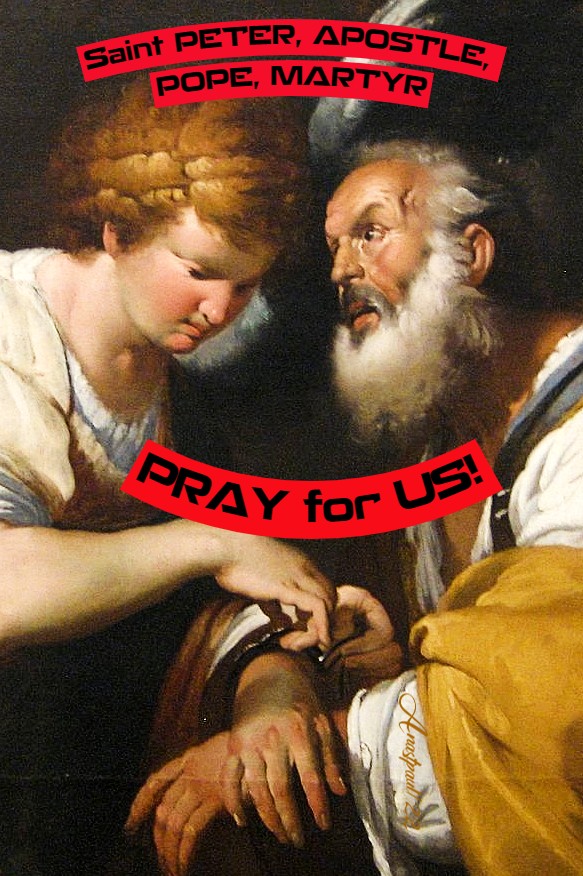
One Minute Reflection – 1 August – St Peter’s Chains – Acts 12:1-11, Matthew16:13-19
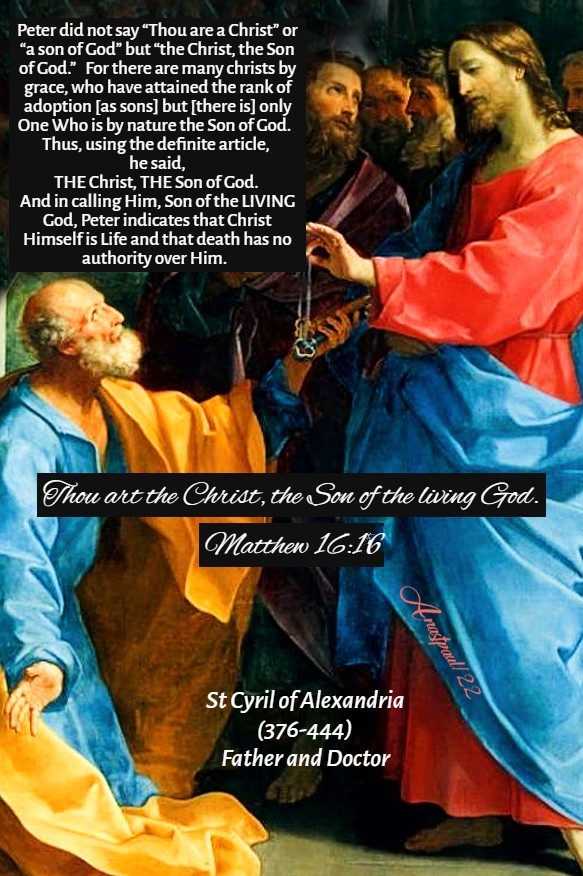
“Thou art the Christ, the Son of the living God.” – Matthew 16:16
REFLECTION – “Peter did not say “Thou are a Christ” or “a son of God” but “the Christ,the Son of God.” For there are many christs by grace, who have attained the rank of adoption [as sons] but [there is] only One Who is by nature the Son of God. Thus, using the definite article, he said, THE Christ, THE Son of God. And in calling Him, Son of the LIVING God, Peter indicates that Christ Himself is Life and that death has no authority over Him. And even if the flesh, for a short while, was weak and died, nevertheless, it rose again, since the Word, Who dwelled in it, could not be held under the bonds of death.” – St Cyril of Alexandria (376-444) Known as “The Pillar of Faith” Archbishop of Alexandria, Father and Doctor Incarnationis (Doctor of the Incarnation) (Fragment 190).
PRAYER – O God, Who didst loose the blessed Apostle, Peter, from his chains and didst make him go forth unharmed, loose, we pray, the chains of our sins and in Thy Merc, ward off from us every evil.Through Jesus Christ, Thy Son our Lord, Who lives and reigns with Thee, in the unity of the Holy Ghost, God, world without end. Amen (Collect).
One Minute Reflection – 25 July – “The Month of the Precious Blood” – Saint James the Greater, Apostle and Martyr – 1 Corinthians 4:9-15, Matthew 20:20-23
“You know not what you ask. Can you drink the Chalice that I shall drink?” – Matthew 20:22
REFLECTION – “Through their mother’s mediation, the sons of Zebedee press Christ as follows in the presence of their fellow apostles: “Command that we may sit, one at your right side and one at your left” (cf. Mk 10:35f.)… Christ hastens to free them from their illusions, telling them they must be prepared to suffer insults, persecutions, even death. “You do not know what you are asking. Are you able to drink the chalice that I shall drink?”
Let no-one be surprised to see the Apostles displaying such imperfect dispositions. Wait until the Mystery of the Cross has been fulfilled and the strength of the Holy Spirit given to them. If you want to see the strength of their souls, take a look at them later and you will see them to be above all human weakness. Christ does not conceal their pettiness, so that you will be able to see what they become later by the power of the grace which will transform them! …”… St John Chrysostom (c 345-407) Father & Doctor of the Church.
PRAYER – Protect Thy people and make them holy, O Lord, so that, guarded by the help of Thy Apostle James, they may please Thee by their conduct and serve Thee with peace of mind. Through esus Christ, Thy Son our Lord, Who lives and reigns with Thee, in the unity of the Holy Ghost, God, world without end. Amen (Collect).
Our Morning Offering – 25 July – “The Month of the Most Precious Blood” – Feast of Saint James the Greater, Apostle and Martyr
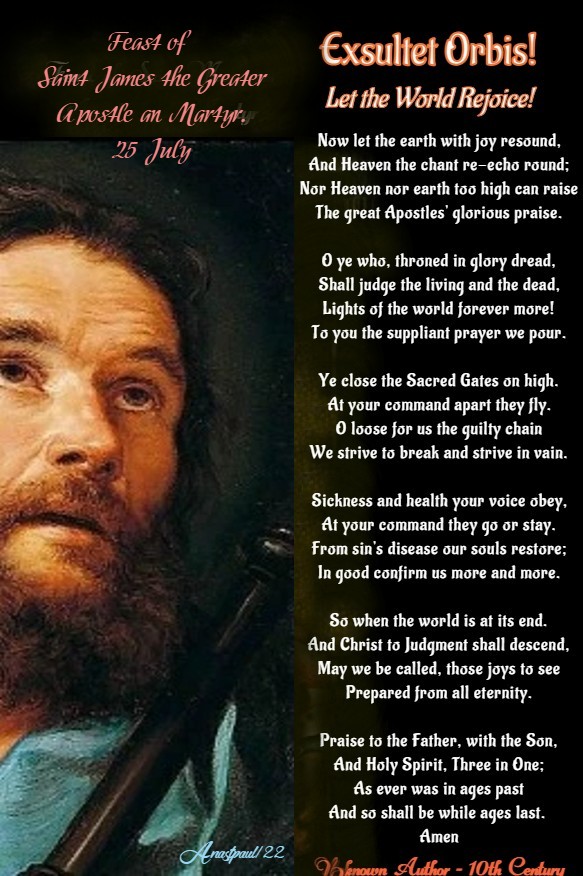
Exsultet Orbis! Let the World Rejoice! Unknown Author
Now let the earth with joy resound, And Heaven the chant re-echo round; Nor Heaven nor earth too high can raise The great Apostles’ glorious praise.
O ye who, throned in glory dread, Shall judge the living and the dead, Lights of the world forever more! To you the suppliant prayer we pour.
Ye close the Sacred Gates on high. At your command apart they fly. O loose for us the guilty chain We strive to break and strive in vain.
Sickness and health your voice obey, At your command they go or stay. From sin’s disease our souls restore; In good confirm us more and more.
So when the world is at its end. And Christ to Judgment shall descend, May we be called, those joys to see Prepared from all eternity.
Praise to the Father, with the Son, And Holy Spirit, Three in One; As ever was in ages past And so shall be while ages last. Amen
(Roman Breviary for the Common of Apostles) An Office Hymn that was traditionally prescribed for Vespers and Lauds on the Feasts of Apostles and Evangelists outside Easter time. The Hymn is found as early as the tenth century in a hymnal of Moissac Abbey.
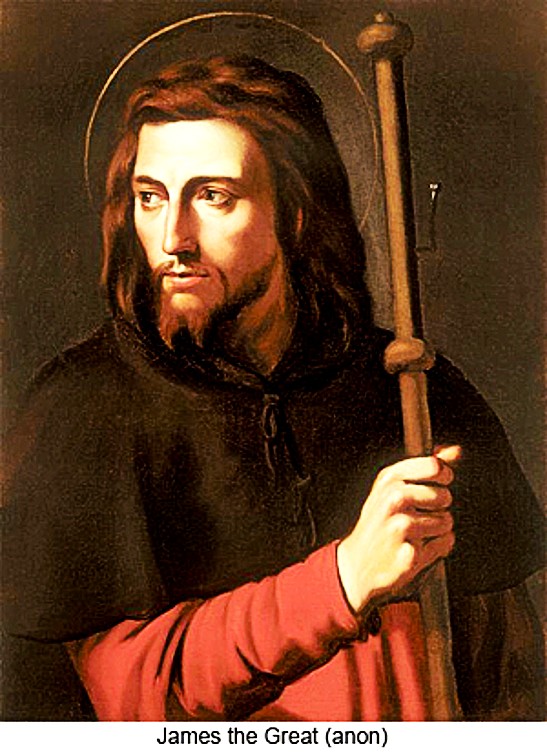
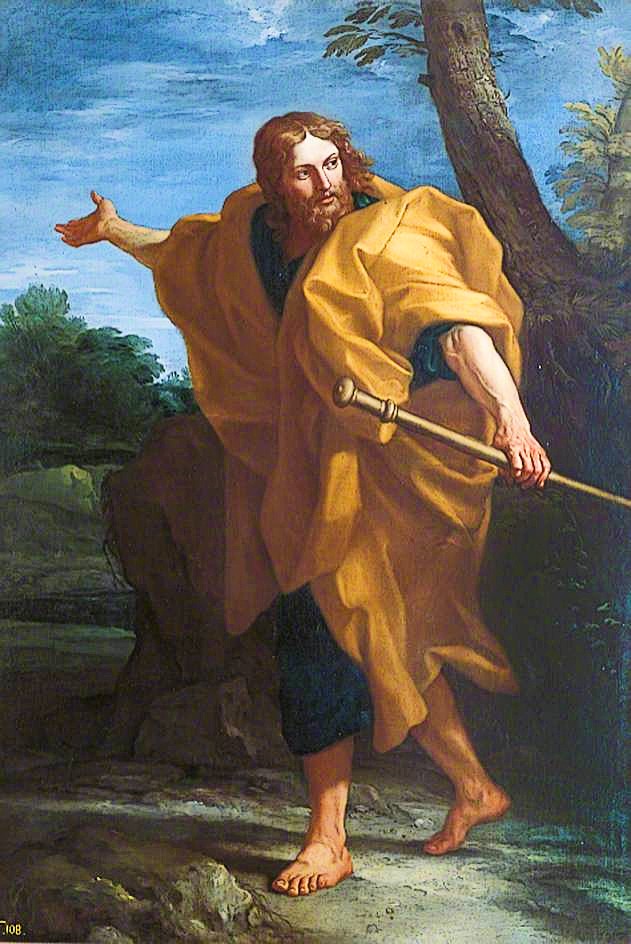
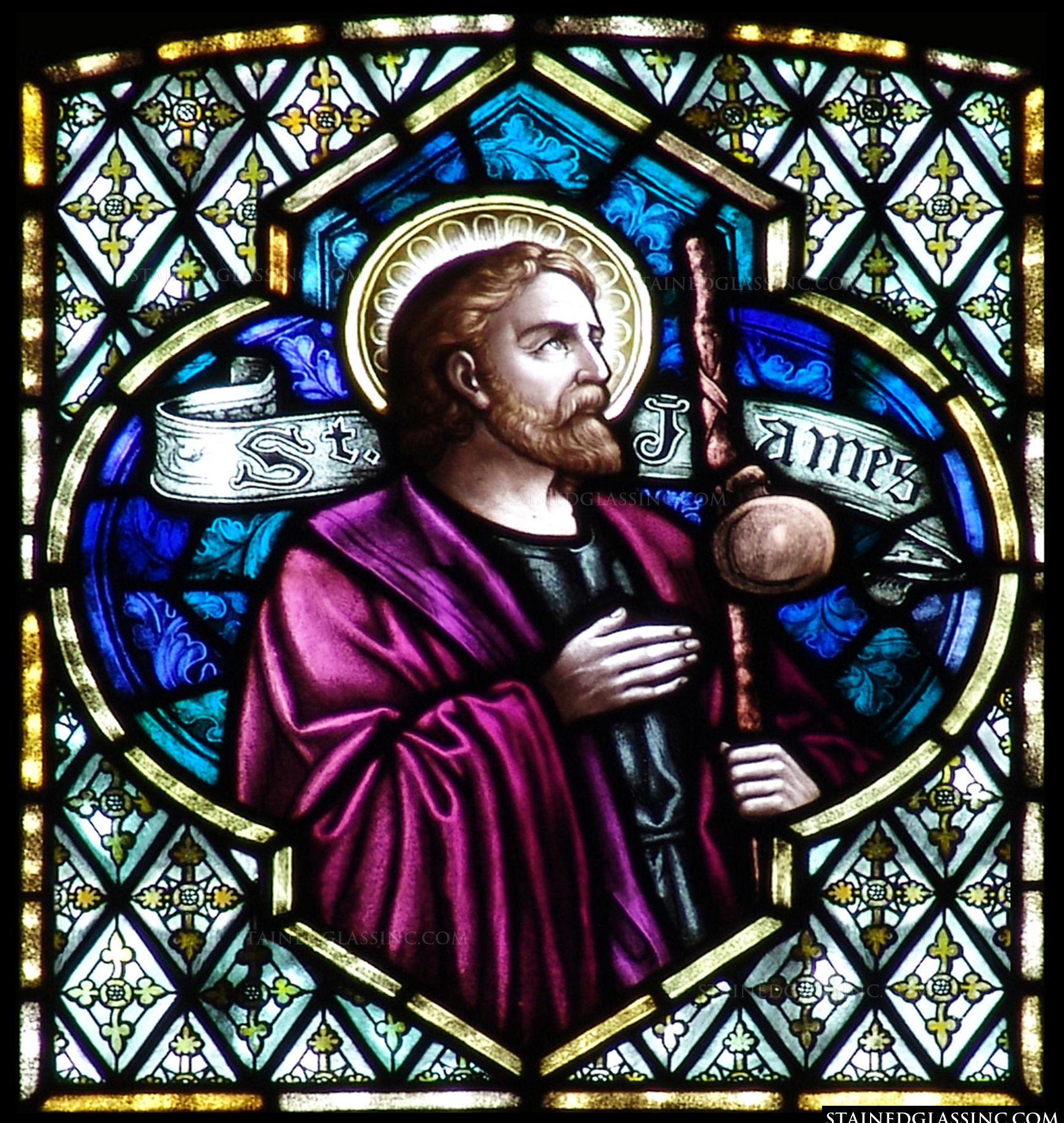
Saint of the Day – 25 July – Saint James the Greater, Apostle and Martyr, “Son of Thunder.”
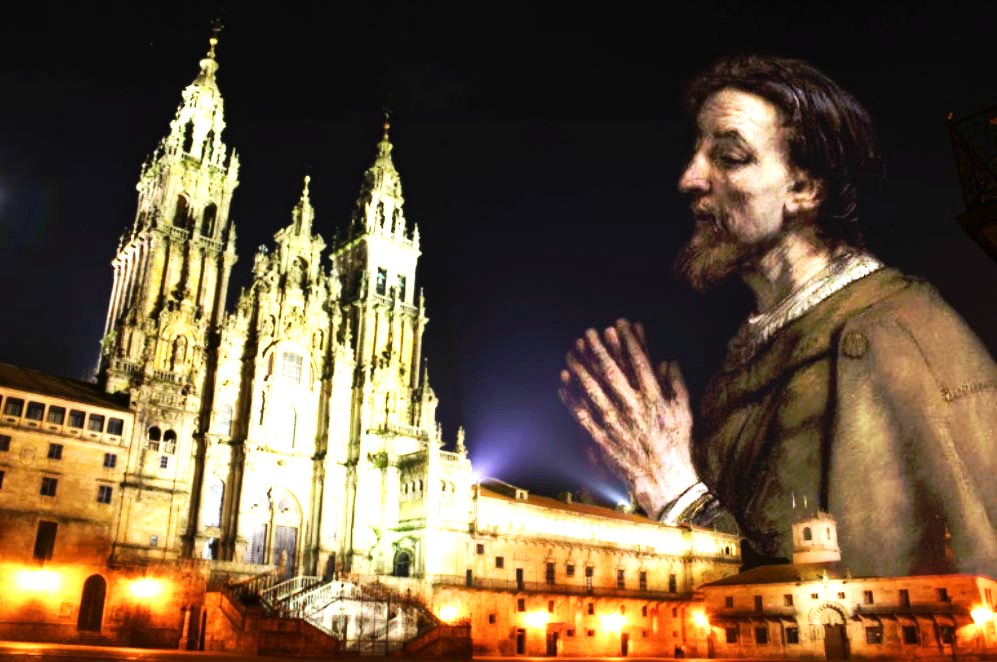
The Roman Martyrology reads: “ST JAMES the Apostle, brother of the blessed Evangelist, John, who was beheaded by Herod Agrippa, about the Feast of Easter. His sacred bones were, on this day, carried from Jerusalem to Spain and placed in the remote Province of Galicia, where they are devoutly honoured by the renowned piety of the inhabitants and the frequent concourse of Christians, who visit them through piety and in fulfilment of their vows.”
By Fr Leonard Goffiné O.Praem (1648-1719) (Excerpt from The Church’s Year)
St James, born in Galilee, son of Zebedee and Salome and a relative of the Blessed Virgin Mary, was a fisherman like his brother John and one of the first of the Apostles called by Christ. He left everything to follow the Lord and with Peter and John, was favoured by Christ, with special confidence.
He was present when Christ was glorified on Mount Thabor, when He healed Peter’s mother-in-law of the fever, raised the daughter of Jairus to life and when He suffered the unutterable terror on Mount Olivet.
He was also, with the rest of the Apostles, a witness of Christ’s Ascension, received with them the Holy Ghost on Pentecost and then preached the Gospel in Judea and the neighbourhood of Jerusalem.
He and his brother John, were called by Christ the Sons of Thunder, on account of their great zeal for the honour and Kingdom of God. When James with this thunderlike zeal continued to preach the Resurrection and the doctrine of Jesus, in Judea, the Jews were so enraged against him, that King Herod thought nothing would please them more than that they should condemn the Apostle to death. This they did, at Easter in the year of our Lord 44.
But when the he, who led him to execution, saw the firmness of his faith, he also became converted to Christ and both were, therefore ,led to death. On the way he prayed the Apostle to forgive him, who said to him: “Peace be with you!” and kissed him. Both were beheaded. This James was the first of the Apostles to shed his blood for Christ and to drink of the chalice of suffering.
His sacred remains were afterwards brought to Compostella in Spain by Abgeks. The Church celebrates his feast on the day of his translation and not on the day of his martyrdom, which, as already said, was at Easter.
PRAYER TO ST. JAMES O brave Apostle, the first to drink the Chalice of suffering after the example of Christ, Who had shed His Blood for thee, obtain, I beseech thee, the grace from Him, that I may not fear to drink of the Chalice of pain and suffering but may bear patiently, all that the hand of my God offers me, so that I may, one day, be worthy to enjo, in thy society, the joy of Heaven. Amen.
Bl Antonio of Olmedo St Bantu of Trier St Beatus of Trier St Cugat del Valles St Ebrulfus St Fagildo of Santiago St Felix of Furcona St Florentius of Furcona St Glodesind of Metz
St Mordeyren St Nissen of Wexford St Olympiad of Constantinople St Paul of Palestine
Blessed Pietro Corradini OFM (1435–1490) Priest of the Franciscan Friars Minor, Confessor, Preacher, Spiritual Director. Pietro and a great devotion to the Holy Mother and constantly taught love of her. Fr Pietro served in several leadership positions within his Order. The Beatification process commenced not too long after Fr Pietro’s death and culminated on 10 August 1760 after Pope Clement XIII issued a formal decree that approved Corradini’s local ‘cultus’ thus naming him Blessed. His Life: https://anastpaul.com/2020/07/25/saint-of-the-day-25-july-blessed-pietro-corradini-ofm-1435-1490-priest/
St Theodemir of Cordoba
Martyrs of Caesarea – 3 Saints: Three Christians Martyred together in the pesecutions of emperor Maximilian and governor Firmilian – Paul, Tea and Valentina. 309 in Caesarea, Palestine.
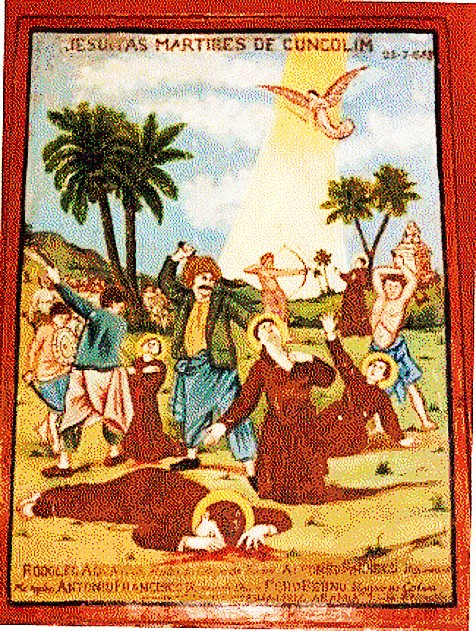
Martyrs of Cuncolim, Goa, south western India– 20 Saints: On 15 July 1583 the group met at the Church of Orlim and hiked to Cuncolim to erect a Cross and choose land for a new Church. Local anti-Christian Hindu pagans, seeing the unarmed Christians, gathered their weapons and marched on them. One of the Parishioners, a Portuguese emigre named Gonçalo Rodrigues, carried a firearm but Father Alphonsus Pacheco stopped him from using it. The Hindu pagans, numbering at least 500, then fell upon them and killed them all without mercy. They were – • Alphonsus Pacheco • Alphonsus the altar boy • Anthony Francis • Dominic of Cuncolim • Francis Aranha • Francis Rodrigues • Gonçalo Rodrigues • Paul da Costa • Peter Berno • Rudolph Acquaviva • ten other native Christian converts whose names have not come down to us They were Martyred on Monday 25 July 1583 at the village of Cuncolim, district of Salcete, territory of Goa, India. They were Beatified on 30 April 1893 by Pope Leo XIII.
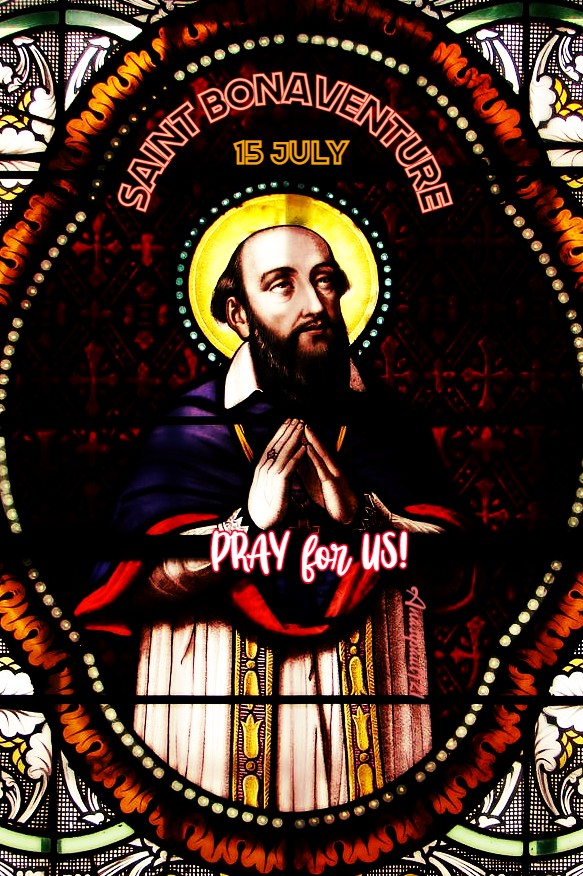
One Minute Reflection – 14 July – “The Month of the Precious Blood” – The Memorial of St Bonaventure OFM (1221-1274) Seraphic Doctor of the Church – 2 Timothy 4:1-8, Matthew 5:13-19
“You are the light of the world.” – Matthew 5:14
REFLECTION – “I shall always love and reverence the Apostles sent by Christ and their successors, in sowing the seed of the Gospel, those zealous and tireless co-operators in propagating the Word, who may justly say of themselves: Let a man so account of us as the ministers of Christ and the dispensers of the mysteries of God. For Christ, like a most watchful and most faithful householder, wished that the Gospel lamp should be lighted by such ministers and delegates, with fire sent down from Heaven and once lighted, should not be put under a measure but set upon a candlestick, so that it may spread its brightness far and wide and put to flight, all darkness and error, rife among both Jews and Gentiles.
Now it is not enough for the Gospel teacher to be a brilliant speaker in the eyes of the people; he must also be as a voice crying in the desert and endeavour, by his eloquence, to help many to lead good lives, lest, if he omit his duty of speaking, he be called the dumb dog that is not able to bark, spoken of by the prophet. Yes, he should also burn, in such a way, that, equipped with good works and love, he may adorn his evangelical office and follow the leadership of Paul. He indeed, was not satisfied with bidding the Bishop of the Ephesians: Thus command and teach: conduct thyself in work as a good soldier of Christ Jesus but he unflaggingly preached the Gospel to friend and foe alike and, said with a good conscience to the Bishops gathered at Ephesus: You know how I have kept back nothing that was for your good but have declared it to you and taught you in public and from house to house, urging Jews and Gentiles to turn to God in repentance and to believe in our Lord Jesus Christ.
Such should be the shepherd in the Church who, like Paul, becomes all things to all men, so that the sick may find healing in him; the sad, joy; the desperate, hope; the ignorant, instruction; those in doubt, advice; the penitent, forgiveness and comfort and finally, everyone, whatever is necessary for salvation. And so Christ, when He wished to appoint the chief teachers of the world and of the Church, did not limit Himself to saying to His disciples: You are the light of the world but also added these words: A city seated on a mountain cannot be hid. Neither do men light a candle and put it under a measure but upon a candlestick, that it may shine to all who are in the house. Those churchmen err, who imagine that it is by brilliant preaching, rather than by holiness of and all-embracing love, they fulfil their office.” – St Peter Canisius SJ (1521-1597) Doctor of the Church (Sermon excerpt).
PRAYER – O God, Who gave to Thy people, blessed Bonaventure, as a minister of salvation, grant, we beseech Thee, that we who cherished him on earth as a teacher of life, may be found worthy to have him as an intercessor in heaven. Through the same Jesus Christ, Thy Son our Lord, Who lives and reigns with Thee, in the unity of the Holy Ghost, God, world without end. Amen (Collect).

























 AnaStpaul
You must be logged in to post a comment.