Posted in BREVIARY Prayers, CATHOLIC-PRAYERS OF THE CHURCH, MORNING Prayers, SAINT of the DAY, The BLESSED VIRGIN MARY

Our Morning Offering – 5 August The Feast of the Dedication of Mary Major

Our Morning Offering – 5 August The Feast of the Dedication of Mary Major

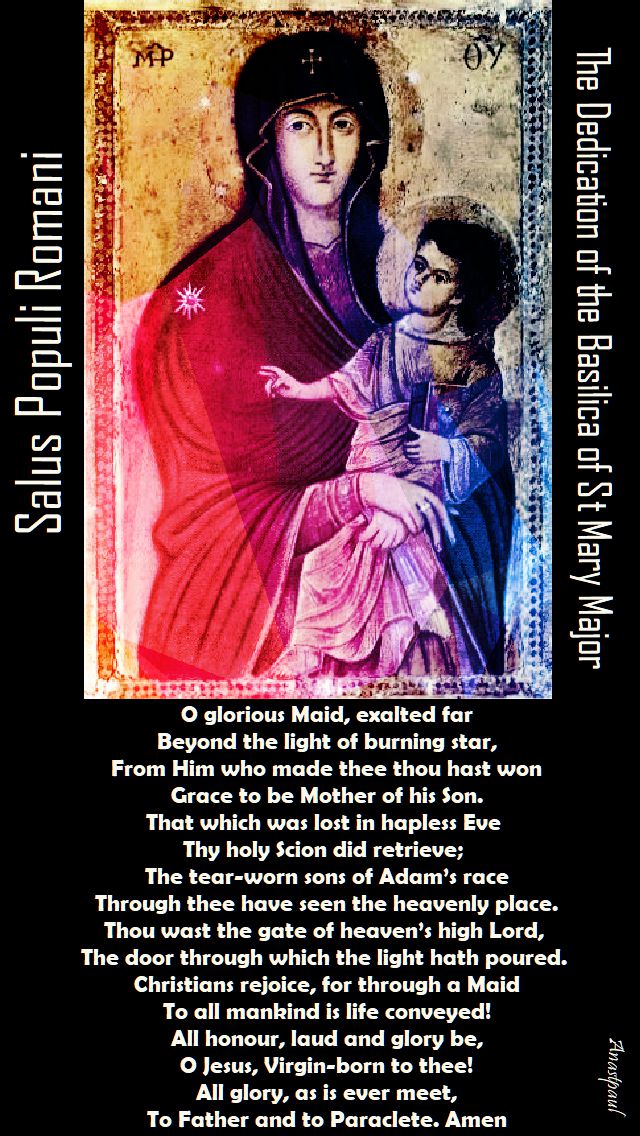
O glorious Maid, exalted far
Beyond the light of burning star,
From Him who made thee thou hast won
Grace to be Mother of his Son.
That which was lost in hapless Eve
Thy holy Scion did retrieve;
The tear-worn sons of Adam’s race
Through thee have seen the heavenly place.
Thou wast the gate of heaven’s high Lord,
The door through which the light hath poured.
Christians rejoice, for through a Maid
To all mankind is life conveyed!
All honour, laud and glory be,
O Jesus, Virgin-born to thee!
All glory, as is ever meet,
To Father and to Paraclete. Amen

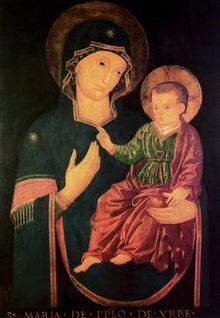
Salus Populi Romani - prayer

Posted in SAINT of the DAY, The BLESSED VIRGIN MARY

5 August – Dedication of the Basilica of Saint Mary Major: Our Lady of the Snows

5 August – Dedication of the Basilica of Saint Mary Major: Our Lady of the Snows – Patronage – Italy, Reno, Nevada, diocese of, Conco, Italy, Rovereto, Italy, San Marco in Lamis, Italy, Susa, Italy, Torre Annunziata, Italy, Utah.
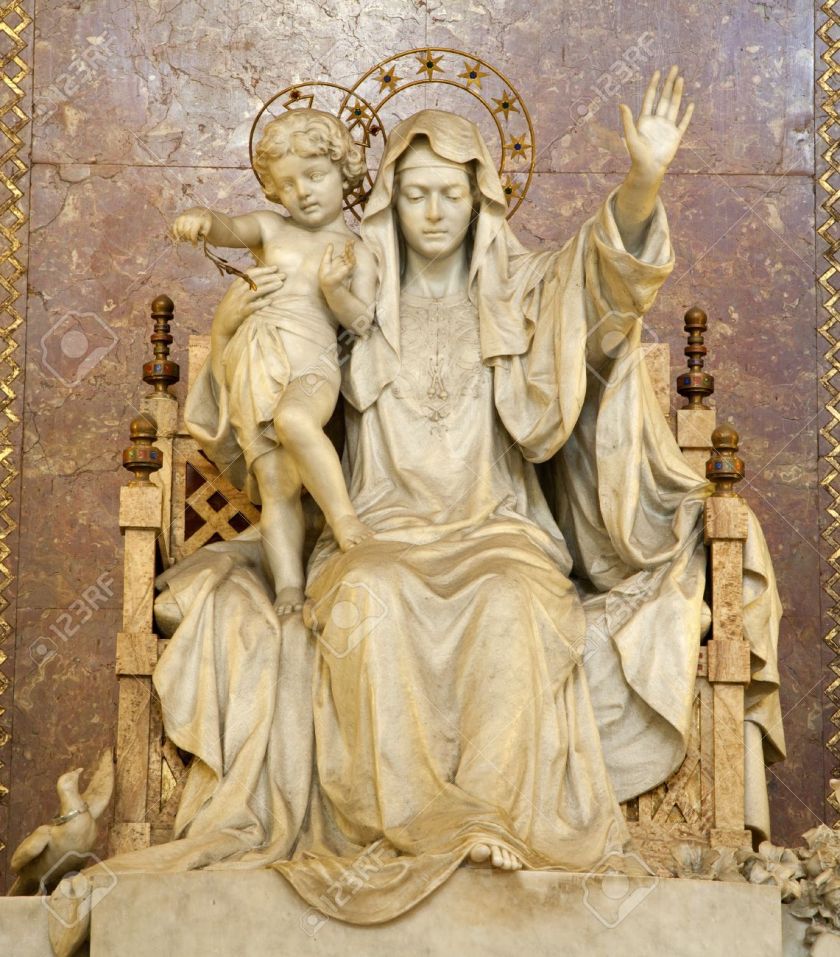
14986728-Rome-statue-of-Mother-of-Jesus-from-Santa-Maria-Maggiore-basilica-Stock-Photo

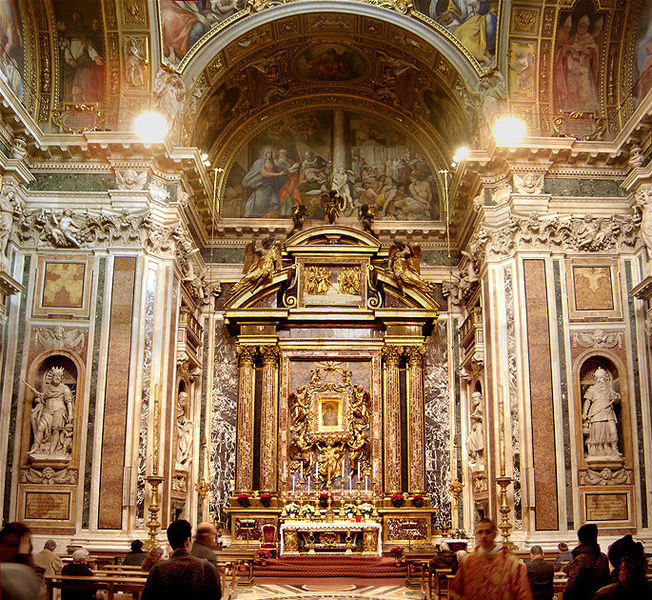
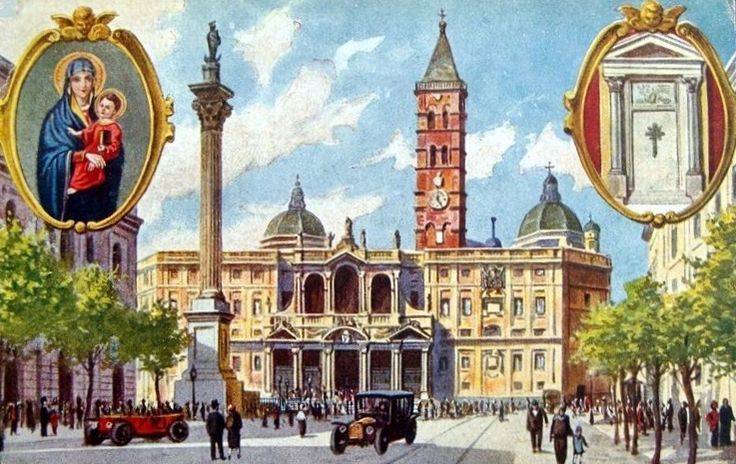
Today, 5 August, we celebrate the feast (optional memorial) of the Dedication of the Papal Basilica of Mary Major (Basilica di Santa Maria Maggiore) in Rome.   This grand basilica is also known as the Basilica of Saint Mary of the Snow (Santa Maria ad Nives ) due to a miraculous snowfall occurring there during the hot summer months and the Basilica of Saint Mary of the Crib (Santa Maria ad Præsepe), from the relics of the holy crib or manger of Bethlehem, in which Christ was laid at His birth, housed within.
dedication - HEADER

Saint Mary Major takes it’s name from two references to greatness (“major”):  first, it is the largest church in the world dedicated to Our Blessed Mother;  second, that it is one of four Papal (or major) basilicas.  Together with Saint Lawrence outside the Walls, these four basilicas were formerly referred to as the five “patriarchal basilicas” of Rome, associated with the five ancient patriarchal sees of Christendom.

Saint John Lateran:  represents Rome, the See of Peter
Saint Paul outside the Walls:  represents the See of Alexandria
Saint Peter:  represents the See of Constantinople
Saint Lawrence outside the Walls:  represents the See of Jerusalem
Saint Mary Major:  represents the See of Antioch, where Mary spent the majority of her life.

Also known as the Liberian Basilica, as it was presided over by Pope Liberius, this Basilica housed one of the earliest Christian congregations of Rome.   It is also the only Roman basilica that retained the core of its original structure(432-440), left intact despite several construction projects and damage from the great earthquake of 1348.

The beginnings of Saint Mary Major date to the Constantinian period (300s AD), under the direction of Pope Liberius.   According to Holy Legend, as recounted in the Breviary:
“Liberius was on the chair of Peter (352-366) when the Roman patrician John and his wife, who was of like nobility, vowed to bequeath their estate to the most Holy Virgin and Mother of God, for they had no children to whom their property could go.   The couple gave themselves to assiduous prayer, beseeching Mary to make known to them in some way what pious work they should subsidizse in her honour.
Mary answered their petition and confirmed her reply by means of the following miracle.   On the fifth of August — a time when it is unbearably hot in the city of Rome — a portion of the Esquiline would be covered with snow during the night. During that same night the Mother of God directed John and his wife in separate dreams to build a church to be dedicated to the Virgin Mary on the site where they would see snow lying. For it was in this manner that she wanted her inheritance to be used.   John immediately reported the whole matter to Pope Liberius and he declared that a similar dream had come to him.   Accompanied by clergy and people, Liberius proceeded on the following morning in solemn procession to the snow-covered hill and there marked off the area on which the church in Mary’s honour was to be constructed.”


Each year on August fifth, a solemn Mass is offered to celebrate the Miracle of the Snows. During the Mass, white rose petals are dropped from the coffered ceiling, covering the floor, celebrating and re-creating the miraculous snowfall of the fourth century.   At sunset on the same day, an artificial “snowfall” is staged as a tourist attraction in the square outside the basilica.

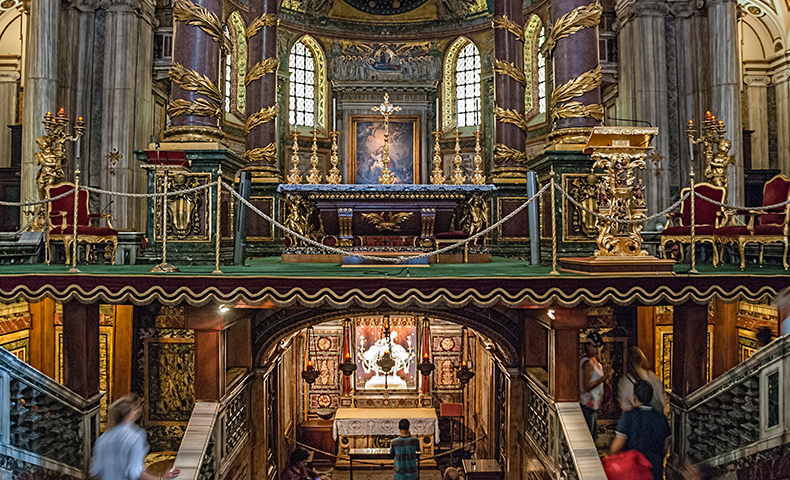
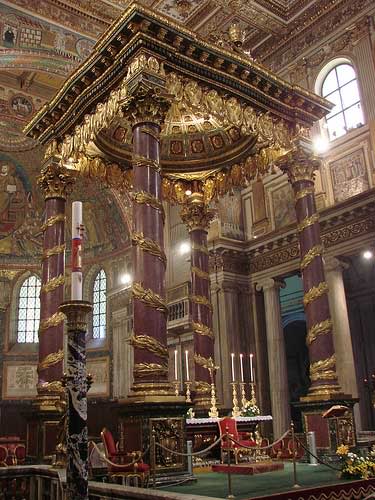
Giovanni-Paolo-Pannini-Piazza-Santa-Maria-MaggioreSOD-0805-SaintMaryMajorBasilica-790x480The Borghese Chapel, Basilica of Saint Mary Major (Our Lady of The Snows),85marymajor9

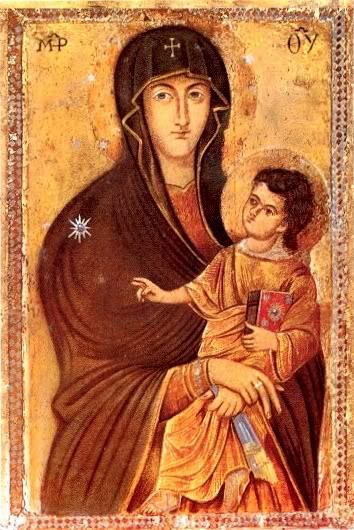
Following construction of the grand basilica, Pope Liberius presided over Masses for the congregation. Under Pope Sixtus III (432-440) the basilica was rebuilt.   Following the Council of Ephesus, led by St Cyril of Alexandria, Mary was definitively declared the Theotokos —the Divine Mother of God—and the basilica was consecrated in her honour.   The basilica was decorated with mosaics from the lives of Christ and Our Blessed Mother, which have survived until today.   Also present is the oldest surviving image of the Blessed Virgin.   Known as the Salus Populi Romani, (The Health of the Roman People), this icon is credited with saving Rome from the plague. Thought to have been painted by John the Evangelist, radiocarbon dating has placed the age of this icon at approximately two thousand years old.  85marymajor6
As early as the end of the fourth century a replica of the Bethlehem nativity grotto had been added, including relics of the manger of Christ.   On this account the edifice became known as “St. Mary of the Crib.”   The crib resembles an ordinary manger but is kept in a case of silver and in it lies an image of a little child, also of silver.   On Christmas day the holy manger is taken out of the case and exposed.   It is kept in a subterraneous chapel in this church and throughout history, saints, including Saint Jerome, have written about this holy relic—both when it resided in Bethlehem and after its relocation to Rome.


The Basilica of Saint Mary Major – (no Catholic church can be honoured with the title of “basilica” unless by apostolic grant or from immemorial custom.   St Mary Major is one of the only four that hold the title of “major basilica) is important to Christendom for three important reasons:
1) The basilica stands as a venerable monument to the Council of Ephesus (431), during which the dogma of Mary’s divine Motherhood was solemnly defined.   The definition of the Council occasioned a most notable increase in the veneration paid to Mary.

2) The basilica is Rome’s “church of the crib,” a Bethlehem within the Eternal City.   It also is a celebrated station church, serving, for instance, as the center for Rome’s liturgy for the first Mass on Christmas.   In some measure every picture of Mary with the divine Child is traceable to this church due to the surviving Salus Populi Romani.

3) Saint Mary Major is Christendom’s first Marian shrine for pilgrims.   It set the precedent for the countless shrines where pilgrims gather to honour Our Blessed Mother throughout the world.   Here was introduced an authentic expression of popular piety that has been the source of untold blessings and graces for Christianity in the past as in the present.

Posted in CATHOLIC DEVOTIONS of the Month, MORNING Prayers, PAPAL ENCYLICALS, SACRED and IMMACULATE HEARTS, The BLESSED VIRGIN MARY

Thought for the Day – 3 August – August the Month of the Immaculate Heart of Mary

Thought for the Day – 3 August – August the Month of the Immaculate Heart of Mary

Pope Paul VI said: “Mary offers a calm vision and a reassuring word to the people of our time, torn as we often are between anguish and hope, defeated as we can be by our own limitations and assailed by limitless aspirations, troubled in our minds and divided in our hearts, uncertain as we face the riddle of death, oppressed at times by loneliness, yet yearning for company and fellowship, a prey to boredom and disgust. Mary shows the victory of hope over anguish, of fellowship over solitude, of peace over anxiety, of joy and beauty over boredom and disgust, of eternal vision over earthly perceptions, of life over death.” (cf Marialis Cultus, 57)
Mary offers us a firm eschatological assurance and hope that God is in charge, through His Son, in His Holy Spirit.
Our love of Mary and devotion to her “fits into the only worship that is rightly called Christian, because it takes its origin and effectiveness from Jesus Christ, finds its complete expression in Christ and leads us through Christ in the Holy Spirit to the Father.” (Marialis Cultus, Introduction)
“Do whatever he tells you” (John 2:5) are the last recorded words of Mary in Scripture. It is her message yesterday, today and forever.   It is the hallmark of genuine spirituality, Christian behaviour and commitment to her son.
“Ask our Mother Mary, in whose heart we can find repose and peace, Mary who was full of the Holy Spirit, to nurture and foster the growth of the life of Jesus that is present in us by his Holy Spirit, so we can say that we not only belong to Jesus Christ and His Church but that we have become the Body of Christ because Christ lives in us and the love of Christ impels us to stay faithful as trustworthy stewards and disciples through all the competing pressures of life!”  (Bishop Peter Ingham )

Immaculate Heart of Mary Pray for us!

immaculate heart of mary - pray for us

Posted in EUCHARISTIC Adoration, MORNING Prayers, SAINT of the DAY, The BLESSED VIRGIN MARY, The HOLY EUCHARIST / The HOLY MASS

Quote/s of the Day – 2 August – The Memorial of St Peter Julian Eymard “Apostle of the Eucharist”

Quote/s of the Day – 2 August – The Memorial of St Peter Julian Eymard “Apostle of the Eucharist”

“During the days of His mortal life, Jesus was present in one place only.   He dwelt in one house only.   Few persons were privileged enough to enjoy His presence and listen to His words.   But today in the Blessed Sacrament, He is, we may say, everywhere at one and the same time.   In a way, His humanity shares the prerogative of His divine immensity which fills all things.   Jesus is present in His entirety in an infinite number of temples and in each one of them.   Since all the Christians scattered throughout the world are members of His Mystical Body, it does seem necessary that He, as the soul of it, should be everywhere present throughout the whole body, giving it life, and sustaining it in each one of His members.”

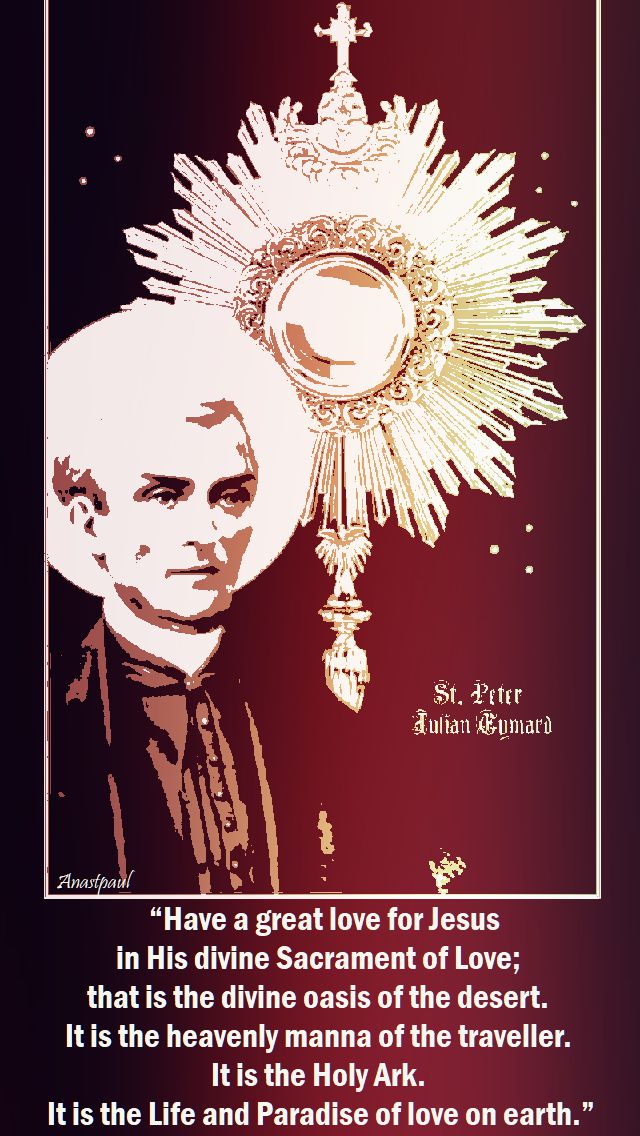
“Have a great love for Jesus in His divine Sacrament of Love;
that is the divine oasis of the desert.
It is the heavenly manna of the traveller.
It is the Holy Ark.
It is the Life and Paradise of love on earth.”

have a great love for jesus in His divine sacrament of love - st peter julian eymard

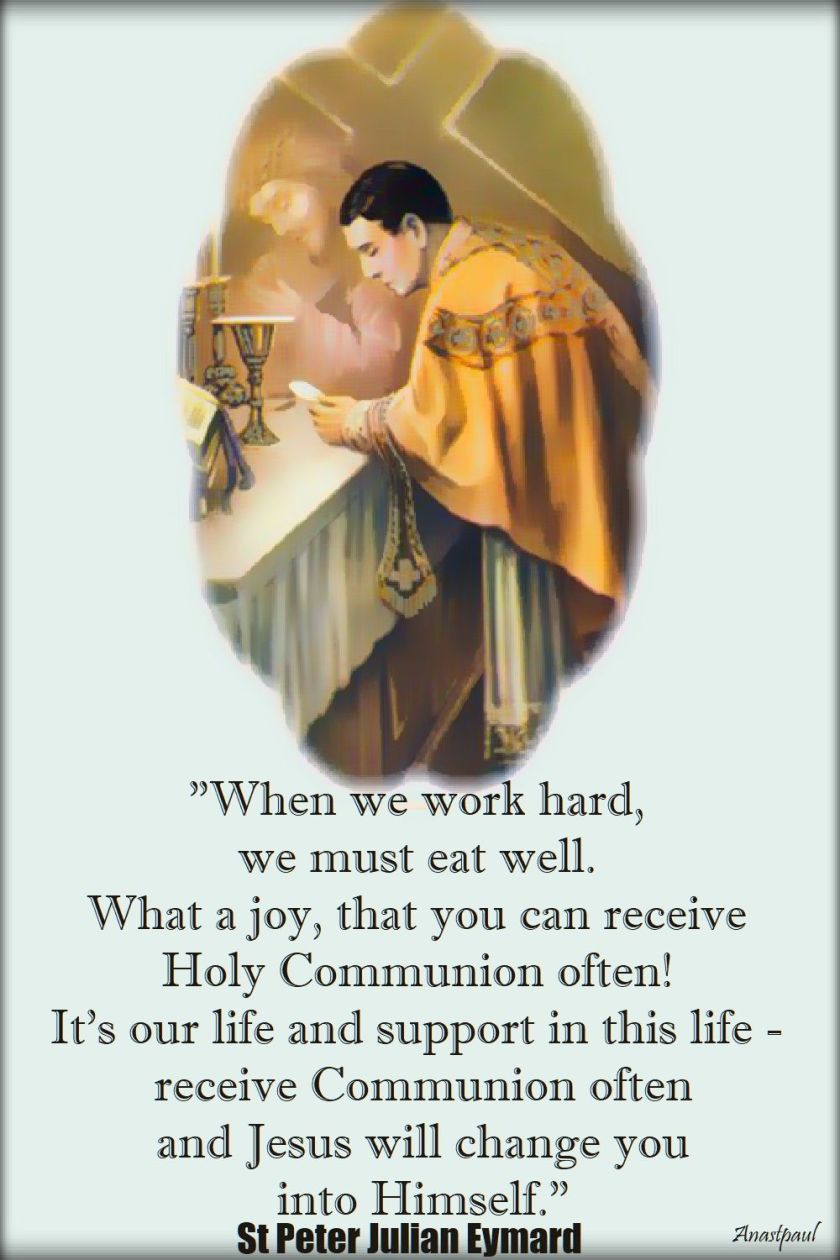
“When we work hard, we must eat well.
What a joy, that you can receive Holy Communion often!
It’s our life and support in this life – receive Communion often
and Jesus will change you into Himself.”

when we work hard, we must eat well - st peter julian eymard

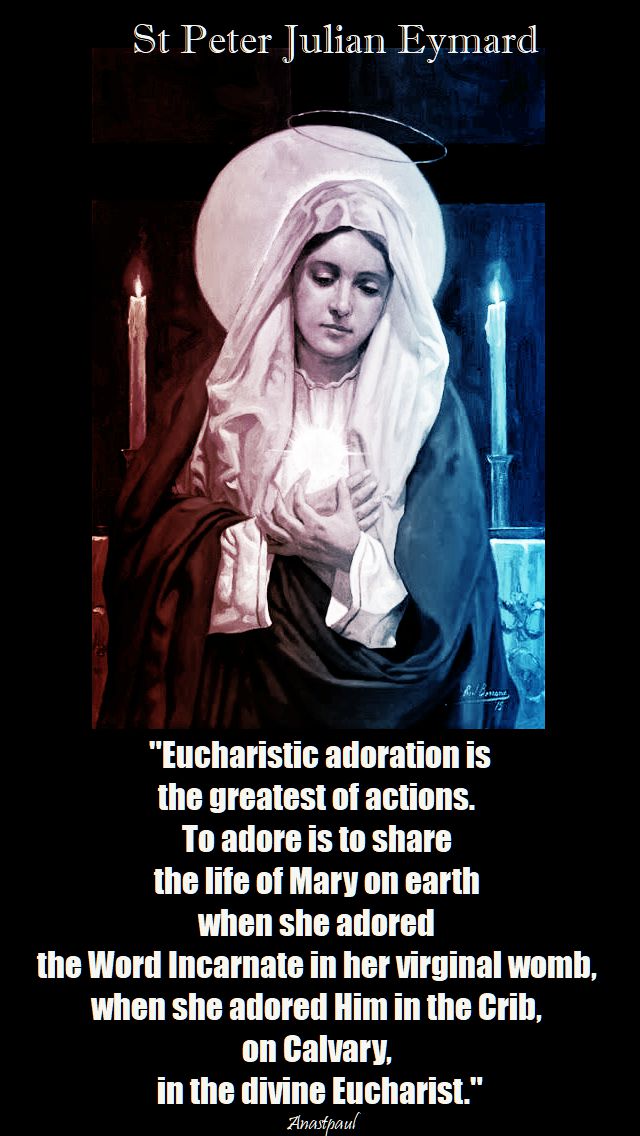
“Eucharistic adoration is the greatest of actions.
To adore is to share the life of Mary on earth
when she adored the Word Incarnate in her virginal womb,
when she adored Him in the Crib,
on Calvary,
in the divine Eucharist.”

St Peter Julian Eymard

eucharistic adoration is the greatest of actions - st peter julian eymard

Posted in DEVOTIO, SAINT of the DAY, The BLESSED VIRGIN MARY

Saints’ Memorials, Portiuncula Indulgence, Feast of Our Lady of the Angels – 2 August

St Eusebius of Vercelli (Optional Memorial)
St Peter Julian Eymund (Optional Memorial)

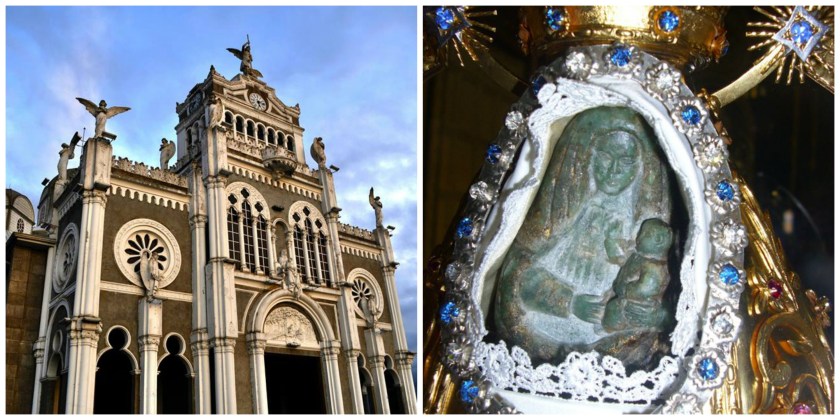
Our Lady of the Angels:  The image of Our Lady of the Angels is only about 10 cms high and is carved in a simple fashion on dark stone.   She has a round, sweet face, slanted eyes and a delicate mouth.   Her colouring is leaden, with scattered golden sparkles.   She carries the Christ Child on her left arm. Only the faces of Mary and the Child are visible; the rest is covered by a cloak that is gathered in pleats.   The statuette is displayed in a large gold monstrance that surrounds it and enlarges its appearance.   While searching for firewood on 2 August 1635, the feast of the Holy Angels, a poor mestizo woman named Juana Pereira discovered this small image of the Virgin sitting beside the footpath near Cartago, Costa Rica.   Juana took it home with her but it soon disappeared only to be re-discovered at the same place beside the same path.   The statue repeated this behaviour five more times – taken to homes and then the parish church – and returning on its own to the site where Juana found it.   The locals finally took this to mean that Our Lady wanted a shrine built there, and so it was.
The shrine soon became a point of pilgrimage, especially for the poor and outcast.   The image was solemnly crowned in 1926. In 1935 Pope Pius XI declared the shrine of the Queen of Angels a basilica.   The stone on which the statue was originally sitting is in the basilica and is being slowly worn away by the touch of the hands of the pilgrims.   A spring of water appeared from beneath the stone and its waters carried away to heal the sick.
Patronage – Costa Rica, diocese of Getafe, Spain.

our ldy of the angels

St Auspicius of Apt
St Betharius of Chartres
St Centolla of Burgos
St Etheldritha of Croyland
Bl Frederic Campisani
Bl Giustino Maria Russolillo
Bl Gundekar of Eichstätt
Bl Joanna of Aza
Bl John of Rieti
St Maximus of Padua
St Pedro de Osma
St Plegmund
St Rutilius
St Serenus of Marseille
St Sidwell
St Pope Stephen I

Martyred in the Spanish Civil War:
Bl Ceferino Jimenez Malla
Bl Felipe de Jesús Munárriz Azcona
Bl Fernando Olmedo Reguera
Francesc Company Torrelles
Francisca Pons Sarda
Bl Francisco Calvo Burillo
Francisco Manzano Cruz
Bl Francisco Tomás Serer
José Peris Ramos
Bl Juan Díaz Nosti
Bl Leoncio Pérez Nebreda
Bl Leoncio Pérez Ramos
Martí Anglés Oliveras
Bl Miguel Amaro Rodríguez

Posted in CATHOLIC DEVOTIONS of the Month, SACRED and IMMACULATE HEARTS, The BLESSED VIRGIN MARY

Catholic Devotion for the Month of August – The Immaculate Heart of Mary

Catholic Devotion for the Month of August:  The Immaculate Heart of Mary

The month of August is dedicated to the Immaculate Heart.   Since the 16th century Catholic piety has assigned entire months to special devotions.  The month of August is traditionally dedicated to the Immaculate Heart of Mary.   The physical heart of Mary is venerated (and not adored as the Sacred Heart of Jesus is) because it is united to her person and is the seat of her love (especially for her divine Son), virtue and inner life. Such devotion is an incentive to a similar love and virtue.   Just as the Sacred Heart represents Christ’s love for mankind, the Immaculate Heart represents the desire of the Blessed Virgin to bring all people to her Son.

This devotion has received new emphasis in this century from the visions given to Lucy Dos Santos, oldest of the visionaries of Fatima, in her convent in Tuy, in Spain, in 1925 and 1926.   In the visions Our Lady asked for the practice of the Five First Saturdays to help make amends for the offenses committed against her heart by the blasphemies and ingratitude of men.   The practice parallels the devotion of the Nine First Fridays in honour of the Sacred Heart.

In the midst of the second world war Pope Pius XII put the whole world under the special protection of our Saviour’s Mother by consecrating it to her Immaculate Heart and in 1944 he decreed that in the future the whole Church should celebrate the feast of the Immaculate Heart of Mary.   This is not a new devotion.   In the seventeenth century, St. John Eudes preached it together with that of the Sacred Heart;  in the nineteenth century, Pius VII and Pius IX allowed several churches to celebrate a feast of the Pure Heart of Mary.   Pius XII instituted today’s feast of the Immaculate Heart of Mary for the whole Church, so as to obtain by her intercession “peace among nations, freedom for the Church, the conversion of sinners, the love of purity and the practice of virtue” (Decree of May 4, 1944).   On October 31, 1942, Pope Pius XII made a solemn Act of Consecration of the Church and the whole world to the Immaculate Heart.   Let us remember this devotion year-round, but particularly through the month of August.

devotion for august - the immaculate heart of mary

Posted in SAINT of the DAY, The BLESSED VIRGIN MARY

Saints’ Memorials and a Feast of the Blessed Virgin Mary – 31 July

St Ignatius of Loyola (Memorial) – https://www.youtube.com/watch?v=CBNjc05zZJQ and https://www.youtube.com/watch?v=8jTq5lBBmek

Our Lady of Consolation: Starting in the 2nd century, Catholics venerated Mary as Our Lady of Consolation, one of her earliest titles of honour. The title of Our Lady of Consolation, or Mary, Consoler of the Afflicted, comes from the Latin Consolatrix Afflictorum. The origin of this invocation is derived from the Augustinian monks who propagated this particular devotion. In 1436 the Confraternity of the Holy Cincture of Our Lady of Consolation was founded in Bologna, Italy. It was based on an Augustinian tradition which hold that Saint Monica in the fourth century, was distraught with anxiety for her wayward son, Augustine and that Mary gave her a sash which the Virgin wore, with the assurance that whoever wore this belt would receive her special consolation and protection. Along with Augustine and Monica, Our Lady of Consolation is one of the three patrons of the Augustinians. The “Augustinian Rosary” is sometimes called the “Corona (or Crown) of Our Mother of Consolation”.

our Lady of Consolation Turin

St Calimerius of Milan
Bl Cecilia Schelingov
Bl Everard Hanse
St Fabius of Caesarea
St Firmus of Tagaste
St Germanus of Auxerre
St Giustino de Jacobis
StHelen of Skofde
Bl Jean-François Jarrige de La Morelie de Breuil
Bl John Colombini
St Marcel Denis
St Neot

Matyrs of Syria – 350 saints: 350 monks massacred by heretics for their adherence to orthodox Christianity and the decrees of the Council of Chalcedon. 517 in Syria.

Martyrs of Synnada:
Democritus
Dionysius the Martyr
Secundus

Martyred in the Spanish Civil War: Thousands of people were murdered in the anti-Catholic persecutions of the Spanish Civil War from 1934 to 1939.
• Blessed Ciriaco Olarte Pérez de Mendiguren
• Blessed Dionisio Vicente Ramos
• Blessed Francisco Remón Játiva
• Blessed Miguel Goñi Ariz
• Blessed Miguel Francisco González-Díez González-Núñez
Agapito Alcalde Garrido
Ciriaco Olarte Pérez de Mendiguren
Dionisio Vicente Ramos
Francisco Remón Játiva
Jaume Buch Canals
Maria Roqueta Serra
Miguel Goñi Ariz
Miguel Francisco González-Díez González-Núñez
Prudencio Gueréquiz y Guezuraga
Segundo de Santa Teresa
Teresa Subirà Sanjaume
Bl Vicenta Achurra Gogenola
Francisca Pons Sardá

Posted in SAINT of the DAY, The BLESSED VIRGIN MARY

Saints’ Memorials and Feasts of the Blessed Virgin Mary

St Martha (Memorial)
Chirsk-Pskov Icon of the Mother of God
Holy Mary of the Miracles

St Antony
St Beatrix of Rome
Bl Beatrix of Valfleury
St Callinicus of Paphlagonia
Bl Charles-Antoine-Nicolas Ancel
St Faustinus of Rome
St Faustinus of Spello
St Felix of Rome
St John Baptist Luo Tingyin
St John the Soldier
Bl José Calasanz Marqués
St Joseph Zhang
St Kilian of Inishcaltra
St Lek Sirdani
Bl Luis Bertran
St Lupus of Troyes
Bl Mancius of the Cross
St Martha Wang
St Olaf II
St Olaus of Sweden
St Paulus Chen Changpin
Bl Petrus of Saint Mary
St Pjetër Çuni
St Prosper of Orleans
St Rufo of Rome
St Seraphina
St Serapia of Syria
St Simplicius of Rome
St Sulian
Bl Pope Urban II
St William of Saint Brieuc

Four Anonymous Martyrs

Martyrs of Calanda – 8 beati: A group of Dominican priests and friars who were martyred over the course of a day in the same town by the same group of anti-Christian forces in the Spanish Civil War.
• Antonio Manuel López Couceiro
• Felicísimo Díez González
• Gumersindo Soto Barros
• Lamberto María de Navascués de Juan
• Lucio Martínez Mancebo
• Matías Manuel Albert Ginés
• Saturio Rey Robles
• Tirso Manrique Melero
They were martyred on 29 July 1936 in Calanda, Teruel, Spain and Beatified on 11 March 2001 by St Pope John Paul II.

Martyrs of Lleida – 12 beati: Carmelites of the Ancient Observance novices, friars and priests who were all martyred together in the Spanish Civil War.
• Àngel Prat Hostench
• Eliseo Maneus Besalduch
• Gabriel Escoto Ruiz
• Ginés Garre Egea
• Joan Maria Puigmitjà Rubió
• Joan Prat Colldecarrera
• Josep Solé Rovira
• Lluis Fontdecava Quiroga
• Manuel Serrano Buj
• Miquel Soler Sala
• Pere Dorca Coromina
• Pere Ferrer Marín
They were martyred on 29 July 1936 in Clot dels Aubens, Cervera, Lleida, Spain and Beatified on 28 October 2007 by Pope Benedict XVI.

Martyred in the Spanish Civil War: Thousands of people were murdered in the anti-Catholic persecutions of the Spanish Civil War from 1934 to 1939.
Bl Bartolomé Rodríguez Soria
Joseph-Louis Marcou Pecalvel
Bl Juan Bautista Egozcuezábal Aldaz
Martyrs of Rome – 23 saints
Eugene
Flora the Martyr
Lucilla
Theodore


Posted in MORNING Prayers, SAINT of the DAY, The BLESSED VIRGIN MARY

Thought for the Day – 26 July

Thought for the Day – 26 July

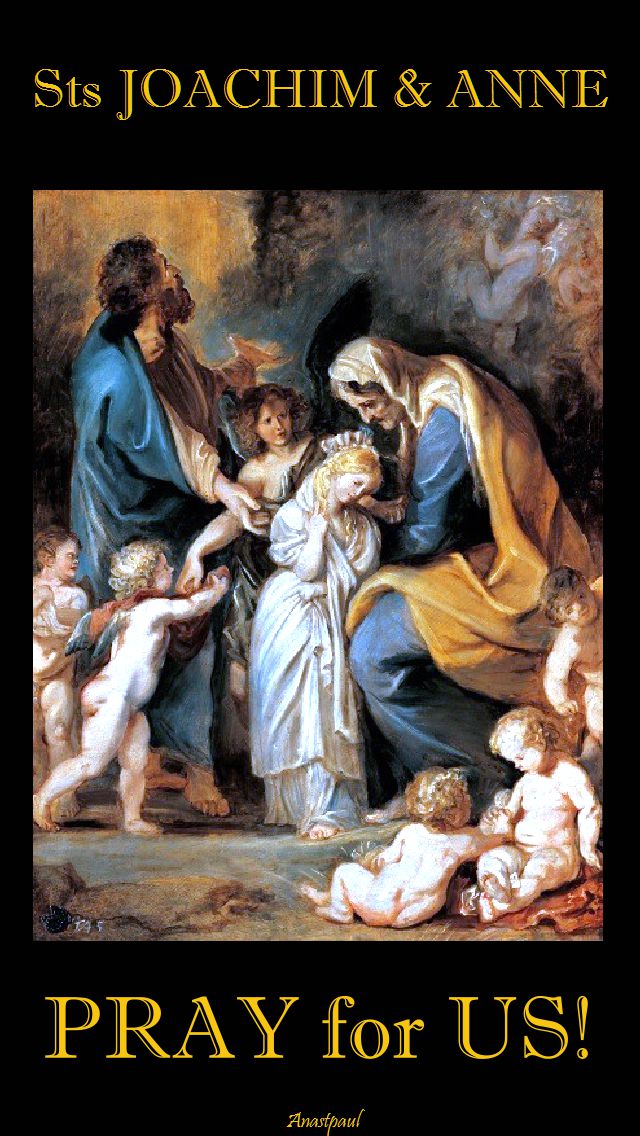
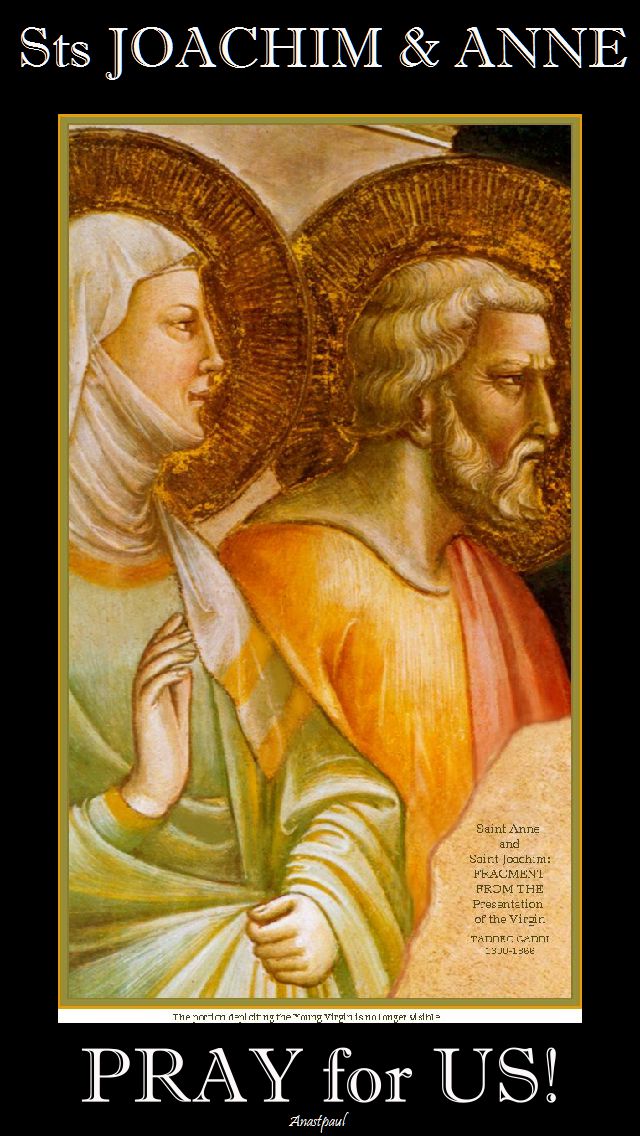
By tradition Joachim and Anne are considered to be the names of the parents of Mary, the Mother of God.   We have no historical evidence, however, of any elements of their lives, including their names.   Any stories about Mary’s father and mother come to us through legend and tradition.   We get the oldest story from a document called the Gospel of James, though in no way should this document be trusted to be factual, historical, or the Word of God.   The legend told in this document says that after years of childlessness, an angel appeared to tell Anne and Joachim that they would have a child.   Anne promised to dedicate this child to God (much the way that Samuel was dedicated by his mother Hannah — Anne — in I Kings).

For those who wonder what we can learn from people we know nothing about and how we can honour them, we must focus on why they are honoured by the church.   Whatever their names or the facts of their lives, the truth is that it was the parents of Mary who nurtured Mary, taught her, brought her up to be a worthy Mother of God.   It was their teaching that led her to respond to God’s request with faith,  “Let it be done to me as you will.”   It was their example of parenting that Mary must have followed as she brought up her own son, Jesus.   It was their faith that laid the foundation of courage and strength that allowed her to stand by the cross as her son was crucified and still believe. Such parents can be examples and models for all parents. (Fr Thomas Rosica, CSB)

Sts Joachim and Anne, pray for us!

sts joachim and anne - pray for us 2

Posted in DOCTORS of the Church, MORNING Prayers, QUOTES of the SAINTS, SAINT of the DAY, The BLESSED VIRGIN MARY, The WORD

One Minute Reflection – 26 July

One Minute Reflection – 26 July

How wonderful is God among his saints; come, let us adore him…..Psalm 94

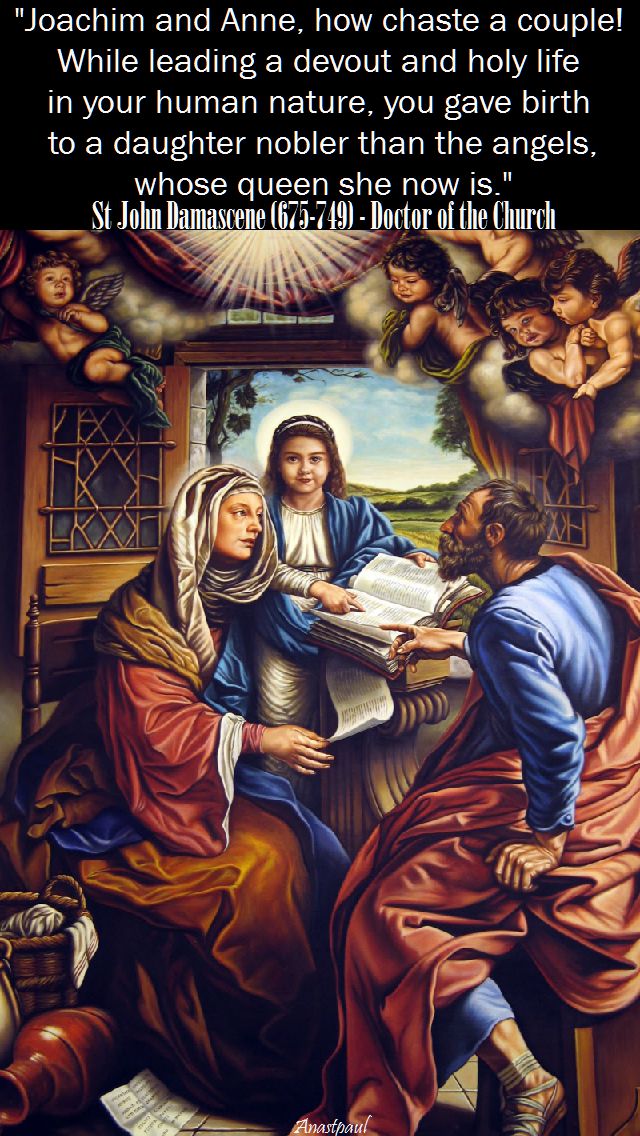
REFLECTION – “Joachim and Anne, how blessed a couple!   All creation is indebted to you. For at your hands the Creator was offered a gift excelling all other gifts:  a chaste mother, who alone was worthy of Him.   Joachim and Anne, how blessed and spotless a couple! You will be known by the fruit you have borne, as the Lord says:  “By their fruits you will know them.”   The conduct of your life pleased God and was worthy of your daughter.   For by the chaste and holy life you led together, you have fashioned a jewel of virginity: she who remained a virgin before, during and after giving birth.   She alone for all time would maintain her virginity in mind and soul as well as in body.   Joachim and Anne, how chaste a couple!   While leading a devout and holy life in your human nature, you gave birth to a daughter nobler than the angels, whose queen she now is.” – from a sermon by Saint John Damascene (675-749) – Doctor of the Church

joachim and anne - st john damascene

PRAYER – O Lord, God of our Fathers, who bestowed on Saints Joachim and Anne this grace, that of them should be born the Mother of your incarnate Son, grant, through the prayers of both, that we may attain the salvation you have promised to your people. Through our Lord Jesus Christ, your Son, who lives and reigns with you in the unity of the Holy Spirit, one God, for ever and ever. Sts Joachim and Anne, pray for us! Amen

sts anne and joachim pray for us

Posted in MORNING Prayers, SAINT of the DAY, The BLESSED VIRGIN MARY

Our Morning Offering – 26 July

Our Morning Offering – 26 July

Prayer to Sts Anne and Joachim
Parents of the Immaculate Conception

Good parents of the Blessed Virgin Mary,
grandparents of our Saviour, Jesus Christ,
When life seems barren,
help us to trust in God’s mercy.
When we are confused,
help us to find the way to God.
When we are lost in the desert,
lead us to those whom God
has called us to love.
When our marriage seems lifeless,
show us the eternal youth of the Lord.
When we are selfish,
teach us to cling only
to that which lasts.
When we are afraid,
help us to trust in God.
When we are ashamed,
remind us that we are God’s children.
When we sin,
lead us to do God’s will.
You who know God’s will
for husband and wife,
help us to live chastely.
You who know God’s will for the family,
keep all families close to you.
You who suffered without children,
intercede for all infertile couples.
You who trusted in God’s will,
help us to respect God’s gift of fertility.
You who gave birth to the Blessed Mother,
inspire couples to be co-creators with God.
You who taught the Mother of God,
teach us to nurture children in holy instruction.
You whose hearts trusted in God,
hear our prayers.
God of our fathers, You gave Saints Anne and Joachim
the privilege of being the parents of Mary,
the mother of Your incarnate Son.
May their prayers help us to attain the salvation
You have promised to Your people.
We ask this through Christ our Lord. Amen

prayer to anne and joachim

Posted in SAINT of the DAY, The BLESSED VIRGIN MARY

Saints’ Memorials and Feasts of the Blessed Virgin Mary

16th Sunday in Ordinary Time

St Bridget of Sweden (Optional Memorial)

Our Lady of Altino

Panagia Evangelistria/ Our Lady of Tinos:  The complex is built around a miraculous icon which according to tradition was found after the Virgin appeared to the nun Pelagia and revealed to her the place where the icon was buried.   The icon is widely believed to be the source of numerous miracles.    It is by now almost completely encased in silver, gold, and jewels and is commonly referred to as the “Megalócharē” (“[She of] Great Grace”) or simply the “Chárē Tēs” (“Her Grace”).   By extension the church is often called the same and is considered a protectress of seafarers and healer of the infirm.
The icon was found on the very first days after the creation of the modern Greek State, henceforth Our Lady of Tinos was declared the patron saint of the Greek nation.   The icon was at the time thought to be the handwork of St. Luke the Evangelist, a possibility that can neither be confirmed nor ruled out and a nationwide fund collection was carried out for the building of a church to house it.   The church, built in the Renaissance style, was inaugurated in 1830 and since then it constitutes the major Christian pilgrimage in Greece, equal to what is Lourdes in France or Fatima in Portugal.   The church receives a vast number of donations in silver and gold votives each year;  these are auctioned and used for charities.
The church is officially dedicated to the Annunciation of the Virgin Mary.   The major feast of the church, however, is on 15 August when the Dormition of the Virgin Mary (Theotokos) is commemorated by the Greek Orthodox Church, following the strong tradition of the Aegean Islands where the Dormition is grandly celebrated in mid-August as the principal summer feast.


Anne of Constantinople
Apollonius of Rome
Bl Basil Hopko
Bl Beaudoin of Beaumont
Conan of Cornwall
Bl Emilio Arce Díez
Eugene of Rome
Herundo of Rome
Bl Jane of Orvieto
John Cassian
Bl Josep Sala Picó
Bl Juan de Luca
Bl Juan de Montesinos
Bl Leonard da Recanati
Bl Margarita de Maturana
Bl Pedro Ruiz de los Paños Angel
Phocas the Gardener
Primitiva of Rome
Rasyphus of Macé
Rasyphus of Rome
Ravennus of Macé
Redempta of Rome
Romula of Rome
Severus of Bizye
Theophilus of Rome
Trophimus of Rome
Valerian of Cimiez
Bl Wojciech Gondek

Martyrs of Barcelona – 7 beati: Seven Christians, some lay people, some members of the Missionaries of the Sacred Hearts of Jesus and Mary and some of the Franciscan Daughters of Mercy, who were martyred in two groups on the same day in the Spanish Civil War.
• Catalina Caldés Socías
• Francesc Mayol Oliver
• Miquel Pons Ramis
• Miquela Rul-Làn Ribot
• Pau Noguera Trías
• Prudència Canyelles Ginestà de Aguadé
• Simó Reynés Solivellas
23 July 1936 in Barcelona, Spain. They were Beatified on 28 October 2007 by Pope Benedict XVI.

Martyrs of Bulgaria: An unknown number of Christians killed for their faith during the 9th century war between the Greek Emperor Nicephorus and the Bulgars.

Martyrs of Carabanchel Bajo – 9 beati: A group of nine Passionist priests, brothers and clerics who were martyred together in the Spanish Civil War.
• Anacario Benito Nozal
• Felipe Ruiz Fraile
• Felipe Valcobado Granado
• José Osés Sainz
• José Ruiz Martinez
• Julio Mediavilla Concejero
• Laurino Proaño Cuesta
• Manuel Pérez Jiménez
• Maurilio Macho Rodríguez
22 July 1936 in Carabanchel Bajo, Madrid, Spain. They were Beatified on 1 October 1989 by Pope John Paul II.

Martyrs of Horta – 10 beati: A lay woman and nine Minim nuns who were martyred together in the Spanish Civil War.
• Ana Ballesta Gelmá
• Dolors Vilaseca Gallego
• Josefa Pilar García Solanas
• Josepa Panyella Doménech
• Lucrecia García Solanas
• Maria Montserrat Ors Molist
• Mercè Mestre Trinché
• Ramona Ors Torrents
• Teresa Ríus Casas
• Vicenta Jordá Martí
23 July 1936 at the Sant Genís dels Agudells highway, Horta, Barcelona, Spain. They were Beatified on
27 October 2013 by Pope Benedict XVI.

Martyrs of Manzanares – 5 beati: Five Passionist clerics who were martyred together in the Spanish Civil War.
• Abilio Ramos y Ramos
• Epifanio Sierra Conde
• José Estalayo García
• Vicente Díez Tejerina
• Zacarías Fernández Crespo
They were shot on 23 July 1936 in Manzanares, Ciudad Real, Spain and Beatified on 1 October 1989 by Pope John Paul II.

Posted in SAINT of the DAY, The BLESSED VIRGIN MARY

Saints’ Memorials and the Feast of Our Lady of Kazan – 21 July

St Lawrence of Brindisi (Optional Memorial)

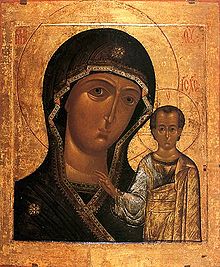
Our Lady of Kazan:  This miraculous icon, also known as the Theotokos of Kazan, is thought to have originated in Constantinople in the 13th century before it was taken to Russia.   When the Turks took Kazan in 1438, the icon may have been hidden.   Ivan the Terrible liberated Kazan in 1552, and the town was destroyed by fire in 1579.
The icon was eventually found in the ruins of a burnt-out house at Kazan on the River Volga on July 8th in 1579.   According to tradition, the location of the icon was revealed during a dream by the Blessed Virgin Mary to a ten year old girl named Matrona. Matrona told the local bishop of her dream, but he did not believe her.   There were two more similar dreams, after which Matrona and her mother went to the place indicated by the Blessed Virgin and dug in the ruins what had been a house until the uncovered the icon.   It appeared untouched by the flames, with the colors as vivid and brilliant as if it were new.   The bishop took the icon to the Church of Saint Nicholas, and immediately there was a miracle of a blind man’s sight being restored to him.   A monastery was built over the place where the icon had been found.
Known as the Holy Protectress of Russia, the icon was stolen on June 29th, 1904.   The thieves were later caught and claimed that they had destroyed the icon after taking the gold frame and jewels attached to the image. In any event, the original has never been found, though there are many copies in existence, thanks to the popularity of the icon. Many of the copies are known to be miracle working.
In 1993 a copy of the icon was given to Pope John Paul II, who kept it in his personal study before it was given to representatives of the Russian Orthodox Church in 2004.

220px-Kazan_moscow

Bl Agrícola Rodríguez García de Los Huertos
St Alberic Crescitelli
St Arbogast of Strasbourg
St Barhadbescialas
St Benignus of Moyenmoutier
Bl Claudius of Avignon
St Claudius of Troyes
St Corona of Marceille
Bl Cristóbal López de Valladolid Orea
Bl Daniel Molini
St Daniel the Prophet
St Eleutherius of Marseille
St Eternus of Evreaux
Bl Gabriel Pergaud
St Iosephus Wang Yumei
St John of Edessa
St John of Moyenmoutier
Bl Juan de Las Varillas
Bl Juan de Zambrana
St Jucundinus of Troyes
St Julia of Troyes
St Justus of Troyes
Bl Parthenius of Thessaly
St Praxides of Rome
St Simeon Salus
St Victor of Marseilles
St Wastrada
St Zoticus of Comana

Martyrs of Africa – 6 saints: Six Christians who were martyred together. We know no other details about them but the names – Emilian, Hugal, Motanus, Saphus, Stercorius and Victor. They were martyred in an unknown location in Africa, date unknown.


Posted in SAINT of the DAY, The BLESSED VIRGIN MARY

Saints’ Memorials and Feast of the Blessed Virgin

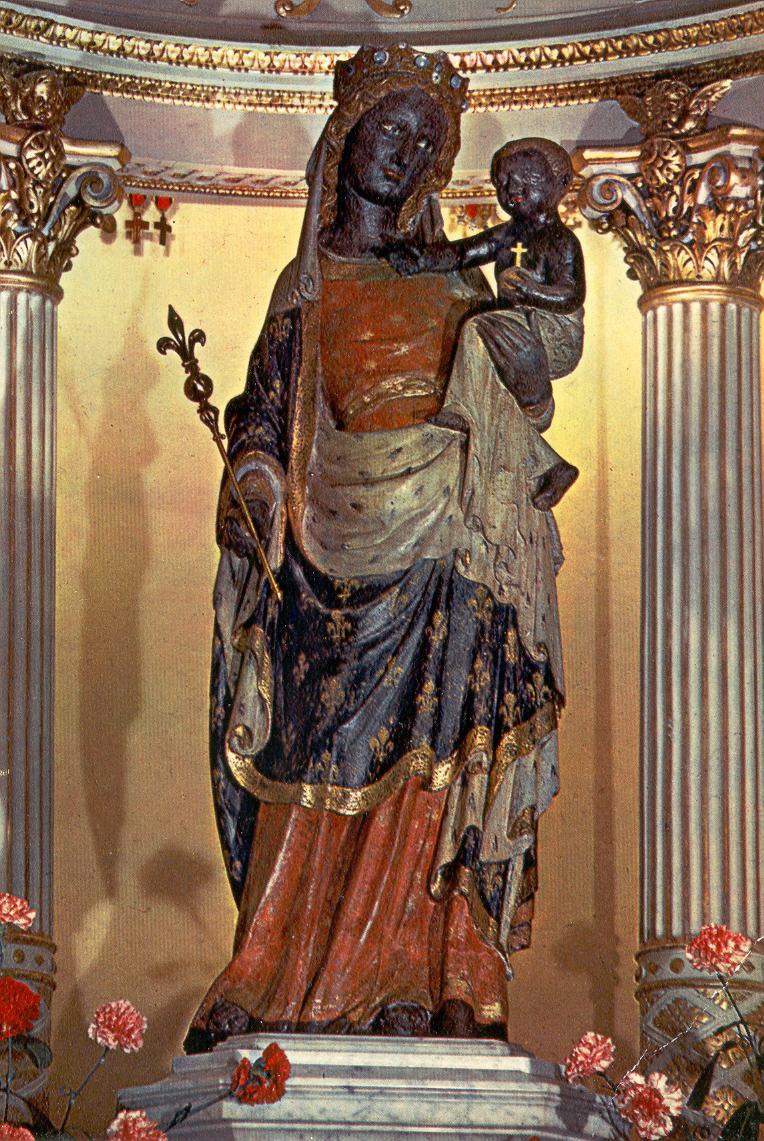
Our Lady of Good Deliverance:   Since the 1000s, the Church of Saint-Etienne-des-Grès in the old Latin Quarter of Paris had a chapel to Our Lady of Good Deliverance, where, across the centuries, pilgrims sought the Virgin’s help with all kinds of sufferings.   During the Wars of Religion and counter-Reformation, her confraternity had 12,000 members, including the King and Queen of France.   In 1587, young Francis de Sales, feeling himself damned, recovered confidence and joy after saying the prayer that had been pasted to a tablet before her statue, the Memorare.
In 1790, the revolutionary government closed the Church of Saint-Etienne-des-Grès. In 1791, when the church’s furnishings were advertised for sale, a devoted countess, Madame de Carignan Saint Maurice, bought the statue of the Black Virgin and moved it to her lodgings in Paris.   The following year, St.-Etienne’s was destroyed.   In 1793, the countess was sent to prison, where she met the Sisters of St. Thomas of Villanova.   They all got out the next year but when the government threatened to disband the Sisters, Mme de Carignan vowed to give them the statue if they were spared.   In 1806, she fulfilled the vow.   The image was installed in the Sisters’ chapel in Paris, moving with them in 1908 to their present motherhouse in the suburb of Neuilly-sur-Seine.
On a pedestal above the altar, the life-size polychrome limestone statue dates from the 1300s:   a classic Gothic standing mother and child, but both coal-black.   The Black Virgin wears a white veil and dark blue mantle ornamented with fleurs-de-lys over a red robe. Every day, the Sisters gather in the chapel to pray on behalf of families, the sick, religious vocations, those who have entrusted themselves to the Virgin and peace in the world.
The feast of Our Lady of Good Deliverance, is set for July 18, the date when the Vatican officially approved the congregation of Soeurs de Saint Thomas de Villenueve in 1873. The May 1 procession formerly held by her confraternity has been revived in recent years by the Chapter of Our Lady of Good Deliverance, Neuilly’s branch of Notre-Dame de Chrétienté.

our lady of good dliverance - 18 july

St Aemilian of Dorostorium
St Alanus of Sassovivo
St Alfons Tracki
Bl Arnold of Amiens
St Arnoul the Martyr
St Arnulf of Metz
St Athanasius of Clysma
Bl Bernard de Arenis
Bl Bertha de Marbais
St Bruno of Segni
St Ðaminh Ðinh Ðat
St Edburgh of Bicester
St Elio of Koper
St Frederick of Utrecht
St Goneri of Treguier
St Gundenis of Carthage
Bl Herveus
Bl Jean-Baptiste de Bruxelles
St Marina of Ourense
St Maternus of Milan
St Minnborinus
St Pambo of the Nitrian Desert
St Philastrius of Brescia
St Rufillus of Forlimpopoli
St Scariberga of Yvelines
St Szymon of Lipnicza
St Theneva
St Theodosia of Constantinople

Martyrs of Silistria – 7 saints: Seven Christians who were martyred together. No details about them have survived but the names – Bassus, Donata, Justus, Marinus, Maximus, Paulus and Secunda. They were martyred in Silistria (Durostorum), Moesia (in modern Bulgaria), date unknown.

Martyrs of Tivoli – 8 saints: A widow, Symphorosa and her seven sons ( Crescens, Eugene, Julian, Justin, Nemesius, Primitivus and Stracteus) martyred in Tivoli, Italy in the 2nd-century persecutions of Hadrian.

Posted in DEVOTIO, MORNING Prayers, SAINT of the DAY, The BLESSED VIRGIN MARY

Thought for the Day – 16 July

Thought for the Day – 16 July

The Carmelites were known from early on as “Brothers of Our Lady of Mount Carmel.” The title suggests that they saw Mary not only as “mother” but also as “sister.” he word sister is a reminder that Mary is very close to us.   She is the daughter of God and, therefore, can help us be authentic daughters and sons of God.   She also can help us grow in appreciation of being sisters and brothers to one another.   She leads us to a new realisation that all human beings belong to the family of God.   When such a conviction grows, there is hope that the human race can find its way to peace. (Fr. Don Miller, OFM)

carmelites4

Our Lady of Mount Carmel, Pray for us!

our lady of mount carmel - pray for us.2

Posted in DEVOTIO, MORNING Prayers, QUOTES of the SAINTS, SAINT of the DAY, The BLESSED VIRGIN MARY

Quote/s of the Day – 16 July

Quote/s of the Day – 16 July

In Hebrew Carmel means “garden” and expresses
not only the richness of the natural verdure which covers the mountain like a multicolored tapestry but also the grace and excellence of the many saints who flourished and flowered on its mystical summit…
Tall, majestic, strong and spacious, this Palestinian promontory,
rising out of the edge of the blue Mediterranean, was the site of many Biblical events.
It was the place of seclusion for early Christian monks who lived and prayed in its caves.
It was also the scene of battle and bloodshed for marauding armies:
-Saracens, Turks, and even Napoleon’s French troops-
who climbed its heights and left their destructive mark.
Both mountain and symbol, it stands as an enduring and tangible
testimony that the spirit of the great realities enacted there
will never be lost.

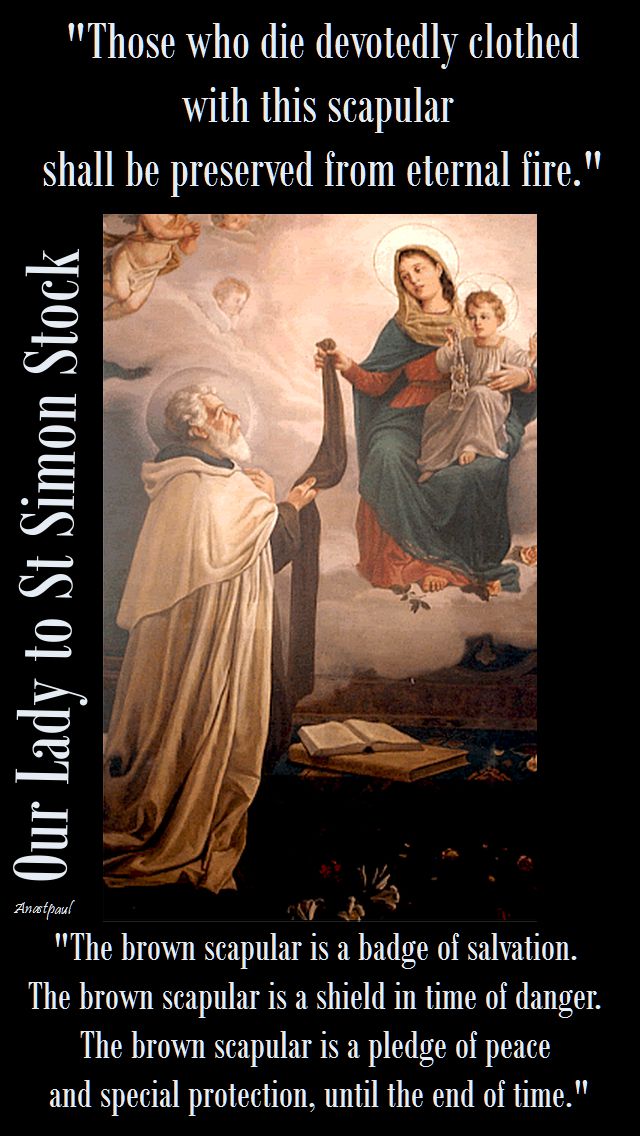
It was to St. Simon Stock, in a moment of ardent petition
for the preservation of the Order, that “the most glorious Mother of God appeared…
holding in her blessed hand the Scapular of Carmel and assured him of her predilection for those who would wear it piously.

In her appearance to Friar Stock, Mary entrusted him
with the Brown Scapular.

“Those who die devotedly clothed with this scapular
shall be preserved from eternal fire.”

“The brown scapular is a badge of salvation.
The brown scapular is a shield in time of danger.
The brown scapular is a pledge of peace
and special protection, until the end of time.”

our lady to st simon stock

“Wear the Scapular devoutly and perseveringly.
It is my garment.
To be clothed in it means you are continually
thinking of me, and I in turn,
am always thinking of you
and helping you to secure eternal life.”

Our Lady to St Simon Stock

mt carmel - quote

Posted in DOCTORS of the Church, MORNING Prayers, SAINT of the DAY, The BLESSED VIRGIN MARY, The WORD

One Minute Reflection – 16 July

One Minute Reflection – 16 July

I was (the Lord’s) delight day by day………….Proverbs 8:30

REFLECTION – “So pleasing to God was Mary’s humility that He was constrained by His goodness to entrust to her the Word, His only Son.
And it was that dearest Mother who gave Him to us.”……………St Catherine of Siena

so pleassing to God - st Catherine of Siena

PRAYER – Almighty Lord and God, let the gracious intercession of our Lady of Mount Carmel help us. Under her protection, may we come to the mountain of God, Christ the Lord, who lives and reigns with You and the Holy Spirit, one God, forever and ever. Amen

our lady of mount carmel - pray for us

Posted in SAINT of the DAY, The BLESSED VIRGIN MARY

Saints’ Memorials and Feasts of the Blessed Virgin

15th Sunday in Ordinary Time
Our Lady of Mount Carmel (Optional Memorial)
Blessed Virgin of the Graces
Our Lady of Ziteil

Bl André de Soveral
St Andrew the Hermit
St Antiochus of Sebaste
Bl Arnold of Clairvaux
Bl Arnold of Hildesheim
St Athenogenes of Sebaste
Bl Bartolomeu Fernandez dei Martiri Fernandes
Benedict the Hermit
Bl Claude Beguignot
Bl Domingos Carvalho
St Domnin
St Domnio of Bergamo
Bl Dorothée-Madeleine-Julie de Justamond
St Elvira of Ohren
St Eugenius of Noli
St Faustus
St Faustus of Rome and Milan
St Fulrad of Saint Denis
St Generosus of Poitou
St Gobbán Beg
St Gondolf of Saintes
St Grimoald of Saintes
St Helier of Jersey
Bl Irmengard
Bl John Sugar
St Landericus of Séez
Bl Madeleine-Françoise de Justamond
Bl Marguerite-Rose de Gordon
Bl Marguerite-Thérèse Charensol
Bl Marie-Anne Béguin-Royal
Bl Marie-Anne Doux
St Marie Madeline Postel
Bl Marie-Rose Laye
Bl Milon of Thérouanne
Bl Nicolas Savouret
Bl Ornandus of Vicogne
St Paulus Lang Fu
St Reinildis of Saintes
Bl Robert Grissold
Bl Simão da Costa
St Sisenando of Cordoba
St Tenenan of Léon
St Teresia Zhang Heshi
St Valentine of Trier
St Vitalian of Capua
St Vitaliano of Osimo
St Yangzhi Lang

Martyrs of Antioch – 5 saints: Five Christians who were martyred together. No details about them have survived by the names – Dionysius, Eustasius, Maximus, Theodosius and Theodulus. They were martyred in
Antioch, Syria, date unknown.

Posted in CATHOLIC-PRAYERS OF THE CHURCH, DEVOTIO, MORNING Prayers, SAINT of the DAY, The BLESSED VIRGIN MARY

Our Morning Offering – 16 July

Our Morning Offering – 16 July

A PRAYER TO OUR LADY OF MOUNT CARMEL

O most beautiful Flower of Mount Carmel,
fruitful vine, splendour of Heaven,
Blessed Mother of the Son of God,
Immaculate Virgin, assist me in this my necessity.
O Star of the Sea, help me
and show me herein that you are my Mother.
O Holy Mary, Mother of God, Queen of Heaven and earth,
I humbly beseech you from the bottom of my heart,
to succour me in this my necessity.
There are none that can withstand your power.
O show me herein that you are my Mother.

O Mary, conceived without sin,
pray for us who have recourse to thee. (3 times)

Sweet Mother, I place this cause in your hands. (3 times)

a prayer to our lady of mt carmel


Posted in DEVOTIO, FEASTS and SOLEMNITIES, PURGATORY, SAINT of the DAY, The BLESSED VIRGIN MARY

Feast of Our Lady of Mount Carmel – 16 July

Feast of Our Lady of Mount Carmel – 16 July

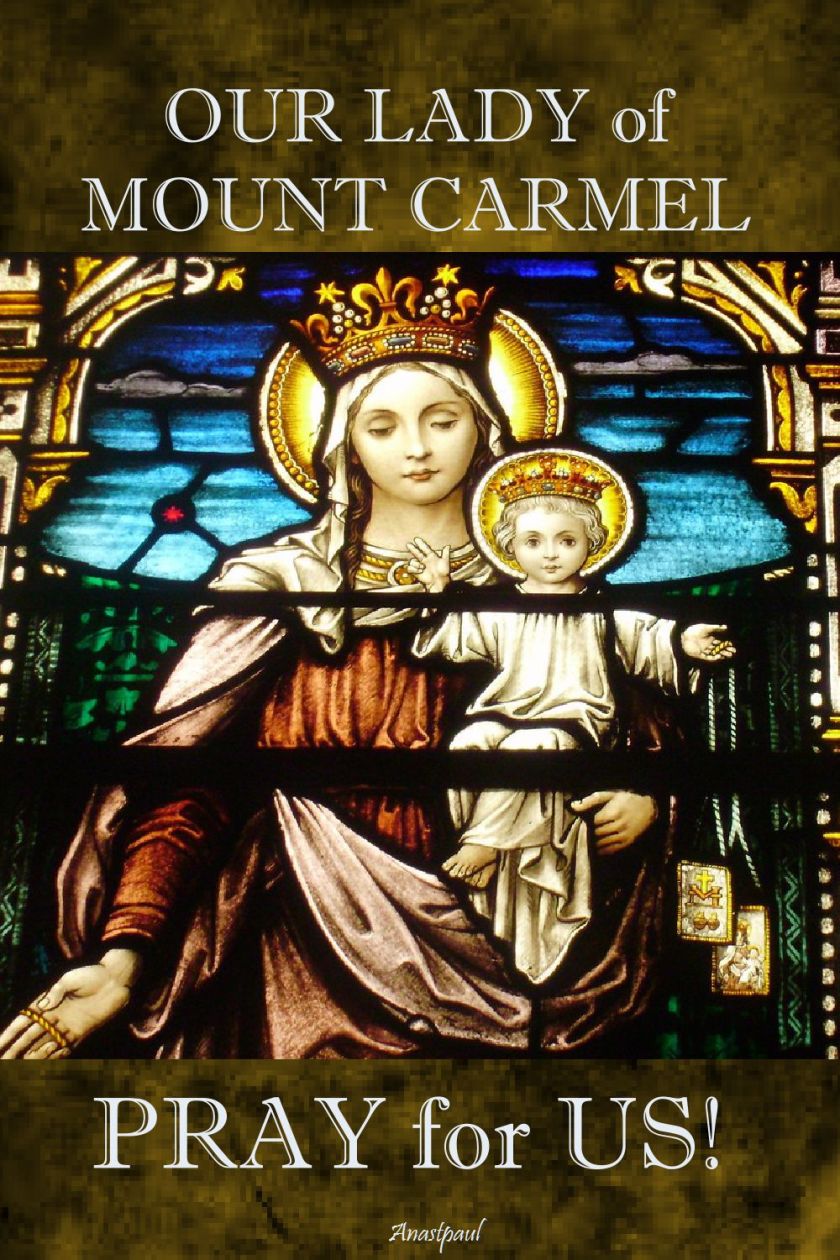
Since the 15th century, popular devotion to Our Lady of Mount Carmel has centered on the Scapular of Our Lady of Mount Carmel, also known as the Brown Scapular, a sacramental associated with promises of Mary’s special aid for the salvation of the devoted wearer.   Traditionally, Mary is said to have given the Scapular to an early Carmelite named Saint Simon Stock.  The liturgical feast of Our Lady of Mount Carmel is celebrated on 16 July.

CARMEL TITLE PIC

July16-OurLadyofMt.C_794227

Mt_carmel1

The solemn liturgical feast of Our Lady of Mount Carmel was probably first celebrated in England in the later part of the 14th century.   Its object was thanksgiving to Mary, the patroness of the Carmelite Order, for the benefits she had accorded to it through its difficult early years.   The institution of the feast may have come in the wake of the vindication of their title “Brothers of the Blessed Virgin Mary” at Cambridge, England in 1374.   The date chosen was 17 July;  on the European mainland this date conflicted with the feast of St. Alexis, requiring a shift to 16 July, which remains the Feast of Our Lady of Mount Carmel throughout the Catholic Church.   The Latin poem “Flos Carmeli” (meaning “Flower of Carmel”) first appears as the sequence for this Mass.

The Carmelite Order was the only religious order to be started in the Crusader States. In the 13th century, some of its people migrated west to England, setting up a chapter and being documented there about 1241-1242.   A tradition first attested to in the late 14th century says that Saint Simon Stock, believed to be an early English prior general of the Carmelite Order soon after its migration to England, had a vision of the Blessed Virgin Mary in which she gave him the Brown Scapular.   This formed part of the Carmelite habit after 1287.   In Stock’s vision, Mary promised that those who died wearing the scapular would be saved.

The Feast of Our Lady of Mount Carmel is known to many Catholic faithful as the “scapular feast,” associated with the Brown Scapular of the Carmelite order.   This is a devotional sacramental signifying the wearer’s consecration to Mary and affiliation with the Carmelite order.

Based on available historical documentation, the liturgical feast of Our Lady of Mount Carmel did not originally have a specific association with the Brown Scapular or the tradition of Stock’s vision of the Blessed Virgin Mary  . This tradition grew gradually, as did the liturgical cult of St. Simon.   The latter has been documented in Bordeaux, where Stock died, from the year 1435; in Ireland and England, from 1458; and in the rest of the Order, from 1564.   Historians have long questioned whether Stock had the vision of Mary and the scapular.   Although Simon Stock was never officially canonised, his feast day was celebrated in the church.

Also associated with Our Lady of Carmel was a papal bull saying that there was a Sabbatine privilege associated with devotion to the saint;   that is, that until the late 1970s, the Catholic liturgy for that day expressed the scapular devotion.   Vatican II resulted in scrutiny of the Feast of Our Lady of Mount Carmel, as well as that of Saint Simon Stock, because of the historical uncertainties about the origins.   The liturgies were revised and, in the 21st century, neither, even in the Carmelite proper, makes reference to the scapular.   The Carmelite convent of Aylesford, England, was restored and a relic of Saint Simon Stock was placed there in 1951.  The saint’s feast is celebrated in the places dedicated to him.

Church teaching:  A 1996 doctrinal statement approved by the Congregation for Divine Worship and the Discipline of the Sacraments states that

“Devotion to Our Lady of Mount Carmel is bound to the history and spiritual values of the Order of the Brothers of the Blessed Virgin Mary of Mount Carmel and is expressed through the scapular.   Thus, whoever receives the scapular becomes a member of the order and pledges him/herself to live according to its spirituality in accordance with the characteristics of his/her state in life.”

According to the Church on the Brown Scapular:  “The scapular is a Marian habit or garment.   It is both a sign and pledge.   A sign of belonging to Mary; a pledge of her motherly protection, not only in this life but after death.   As a sign, it is a conventional sign signifying three elements strictly joined:  first, belonging to a religious family particularly devoted to Mary, especially dear to Mary, the Carmelite Order;  second, consecration to Mary, devotion to and trust in her Immaculate Heart;  third, an urge to become like Mary by imitating her virtues, above all her humility, chastity, and spirit of prayer.”

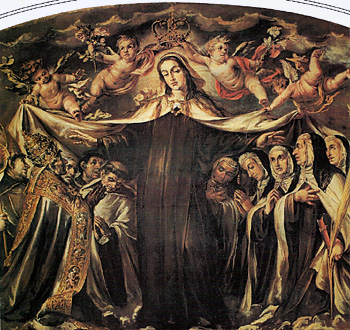
Association with Purgatory:  Since the Middle Ages, Our Lady of Mount Carmel has been related to Purgatory, where souls are purged of sins in the fires.   In some images, she is portrayed as accompanied with angels and souls wearing Brown Scapulars, who plead for her mediation.  In 1613, the Church forbade images to be made of Our Lady of Mt. Carmel descending into purgatory, due to errors being preached about certain privileges associated with the Brown Scapular (known as “the Sabbatine Privilege”).
That privilege appears in the noted Decree of the Holy Office (1613).   It was inserted in its entirety (except for the words forbidding the painting of the pictures) into the list of the indulgences and privileges of the Confraternity of the Scapular of Mount Carmel.   In the 21st century, the Carmelites do not promote the Sabbatine Privilege.   They encourage a belief in Mary’s general aid and prayerful assistance for their souls beyond death, especially her aid to those who devoutly wear the Brown Scapular and commend devotion to Mary especially on Saturdays, which are dedicated to her.

CARMEL-3

Miracles:  In Palmi, Italy, the anniversary of the earthquake of 1894 is observed annually on 16 November.   The earthquake had its epicenter in the city.   An associated event has been classified as the “miracle of Our Lady of Mount Carmel.”   For 17 days preceding this earthquake, many of the faithful had reported strange eye movements and changes in the colouring of the face in a statue of Our Lady of Mount Carmel.   The local and national press reported these occurrences.

In the evening of 16 November, the faithful improvised a procession carrying the statue of the Virgin of Carmel on their shoulders through the streets.   When the procession reached the end of the city, a violent earthquake shook the whole district of Palmi, ruining most of the old houses along the way.   But, only nine people died out of a population of about 15,000 inhabitants, as almost all of the population had been on the street to watch the procession and were not trapped inside the destroyed buildings. Therefore, the city commemorates the 1894 procession each year, accompanied by firecrackers, lights, and festive stalls.

The Catholic Church has officially recognised the miracle.   On November 16, 1896 the statue of the Virgin was crowned, based on the decree issued September 22, 1895 by the Vatican Chapter.

Use in the peace movement:  The first atomic bomb was exploded in the United States at the Trinity test site on 16 July 1945, near Alamogordo, New Mexico.   The Catholic anti-war movement has built on the coincidence between this date and the Feast of Our Lady of Mount Carmel.   In 1990, the Rev. Emmanuel Charles McCarthy, a priest of the Eastern Rite (Byzantine-Melkite) of the Catholic Church, initiated the “16 July Twenty-Four Hours Day of Prayer,” for Forgiveness and Protection with Our Lady of Mount Carmel, at Trinity Site in the New Mexico desert.    Each year on 16 July, a prayer vigil is conducted at the Trinity site to pray for peace and the elimination of nuclear weapons.


Posted in DOCTORS of the Church, franciscan OFM, QUOTES of the SAINTS, SAINT of the DAY, The BLESSED VIRGIN MARY

Quote/s of the Day – 15 July

Quote/s of the Day – 15 July

“Christ is both the way and the door.
Christ is the staircase and the vehicle,
like the “throne of mercy over the Ark of the Covenant,”
and “the mystery hidden from the ages.”
A man should turn his full attention to this throne of mercy
and should gaze at Him hanging on the cross,
full of faith, hope and charity, devoted,
full of wonder and joy, marked by gratitude
and open to praise and jubilation.
Then such a man will make with Christ a “pasch,”
that is, a passing-over.
Through the branches of the cross.
he will pass over the Red Sea,
leaving Egypt and entering the desert.
There he will taste the hidden manna
and rest with Christ in the sepulcher,
as if he were dead to things outside.
He will experience, as much as is possible for one who is still living,
what was promised to the thief who hung beside Christ:
‘Today you will be with me in paradise.'”
– from Journey of the Mind to God by Saint Bonaventure

“The life of God — precisely because God is triune —
does not belong to God alone.
God who dwells in inaccessible light and eternal glory
comes to us in the face of Christ and the activity of the Holy Spirit.
Because of God’s outreach to the creature,
God is said to be essentially relational, ecstatic, fecund,
alive as passionate love. Divine life is therefore also our life.
The heart of the Christian life is to be united
with the God of Jesus Christ by means of communion with one another.
The doctrine of the Trinity is, ultimately, therefore,
a teaching not about the abstract nature of God,
nor about God in isolation from everything other than God
but a teaching about God’s life with us and our life with each other.”

“God might have created a more beautiful world;
He might have made heaven more glorious;
but it was impossible for Him to exalt a creature
higher than Mary in making her His Mother.”

god might have created-st bonaventure


“If there is anyone who is not enlightened
by this sublime magnificence of created things,
he is blind.
If there is anyone who, seeing all these works of God,
does not praise Him,
he is dumb;
if there is anyone who, from so many signs,
cannot perceive God,
that man is foolish.”

if there is anyone who is not enlightened-st bonaventure


St Bonaventure (1217-1274) Seraphic Doctor

Posted in SAINT of the DAY, The BLESSED VIRGIN MARY

Saints’ Memorials and Feasts of the Blessed Virgin Mary – 14 July

St Camillus de Lellis (Optional Memorial) – https://www.youtube.com/watch?v=FCTeMNeoCAY

Mare de Déu de Canòlich: Read further – http://www.mariancalendar.org/mare-de-deu-de-canolich-canolich-sant-julia-de-loria-andorra/

Canolich façana
Our Lady of Dromon: Saint-Geniez, Alpes de Haute-Provence, Provence-Alpes-Côte d’Azur, France
In 1656, about 2.5 miles from the alpine village of Saint-Geniez, as 12-year-old herder Honoré was praying before a wooden cross on a stone mound, he heard the voice of the Blessed Virgin asking him to dig there to uncover chapels dedicated to her long ago. Excavations on the mountain located a crypt chapel dating back to around 1000, on the site of the ancient city of Theopolis. The upper chapel holds an alabaster statue of the Virgin and Child from the 1600s. The annual pilgrimage takes place on Bastille Day, July 14.

dromon-stgeniez1

Bl Angelina di Marsciano
Bl Boniface of Canterbury
St Colman of Killeroran
St Cyrus of Carthage
St Deusdedit of Canterbury
St Donatus of Africa
Bl Dorotea Llamanzares Fernández
St Francis Solano
Bl Giorgio of Lauria
Bl Hroznata of Bohemia
Bl Humbert of Romans
St Idus of Ath Fadha
St Ioannes Wang Kuixin
St Just
St Justus of Rome
St Kateri Tekakwitha (Optional Memorial USA)
St Liebert
St Marchelm
Bl Michael Ghebre
St Optatian of Brescia
St Papias of Africa
Bl Toscana of Verona
St Ulric of Zell

Posted in SAINT of the DAY, The BLESSED VIRGIN MARY

Saints’ Memorials and Feasts of the Blessed Virgin Mary

St Henry II (Optional Memorial)
Our Lady of Grace of Valsorda:  – Read about Our Lady of Valsorda here:  http://mariancalendar.org/madonna-delle-grazie-di-valsorda-/-our-lady-of-grace-of-valsorda-garessio-valsorda-italy/

our lady of valsorda.jpg
Our Lady of Soccorso/Our Lady of Help:  Read here:  http://wdtprs.com/blog/2012/03/beating-the-devil-the-madonna-del-soccorso/

our lady of soccorso

Bl Anne-Andrée Minutte
St Arno of Würzburg
Bl Barthélemy Jarrige de la Morelie de Biars
Bl Berthold of Scheide
St Clelia Barbieri
St Dogfan
Bl Élisabeth Verchière
St Emanuele Lê Van Phung
St Esdras the Prophet
St Eugene of Carthage
Bl Ferdinand Mary Baccilleri
St Iosephus Wang Kuiju
Bl James of Voragine
Bl Jean of France
St Joel the Prophet
Bl Louis-Armand-Joseph Adam
Bl Mariano de Jesus Euse Hoyos
Bl Marie-Anastasie de Roquard
Bl Marie-Anne Depeyre
Bl Marie-Anne Lambert
St Mildred of Thanet
St Muritta of Carthage
St Myrope
St Paulus Liu Jinde
St Salutaris of Carthage
St Sarra of Egypt
St Serapion of Alexandria
Serapion of Macedonia
Bl Thérèse-Henriette Faurie
Bl Thomas Tunstal
St Turiaf

Martyrs of Cyprus – 300 saints: 300 Christians who retired to Cyprus to live as cave hermits, devoting themselves to prayer and an ascetic life devoted to God. Tortured and martyred for their faith and their bodies dumped in the various caves in which they had lived. We know the names of five of them but no other details even about them – Ammon, Choulélaios, Epaphroditus, Eusthénios and Héliophotos. They were beheaded in the 12th century on Cyprus and their bodies dumped in the cave where they had lived and only rediscovered long afterwards.

Martyrs of Philomelio – 31 saints: 31 soldiers martyred for their faith in the persecutions of prefect Magno, date unknown. The only name that has come down to us is Alexander. In Philomelio, Phrygia (in modern Turkey).

Posted in SAINT of the DAY, The BLESSED VIRGIN MARY

Saints’ Memorials and Feasts of the Blessed Virgin Mary

St Benedict of Nursia (Memorial) – https://www.youtube.com/watch?v=DkhCqqcDp3Q
Madonna del Carmine

madonna-del-carmine-21

St Abundius of Ananelos
St Amabilis of Rouen
St Anna An Jiaoshi
St Anna An Xingshi
Bl Antonio Muller
St Berthevin of Lisieux
St Cindeus
St Cowair
St Cyprian of Brescia
St Cyriacus the Executioner
St Drostan
St Hidulf of Moyenmoutier
St Januarius
St John of Bergamo
Bl Kjeld of Viborg
St Leontius the Younger
St Marcian of Lycaonia
St Marciana of Caesarea
Maria An Guoshi
Maria An Linghua
Bl Marie-Clotilde Blanc
Bl Marie-Elisabeth Pélissier
Bl Marie-Marguerite de Barbégie d’Albrède
St Olga of Kiev
St Pelagia
St Pius I, Pope
St Placid of Dissentis
Bl Rosalie-Clotilde Bes
St Sabinus of Brescia
St Sabinus of Poitiers
St Sidronius
St Sigisbert of Dissentis
Bl Thomas Hunt
Bl Thomas Sprott
St Thurketyl

Posted in SAINT of the DAY, The BLESSED VIRGIN MARY

Saints’ Memorials, Feasts of the Blessed Virgin Mary

14th Sunday in Ordinary Time

Martyrs of China (Optional Memorial; 76 saints): 25 priests, friars, nuns, seminarians and lay people, all members of the Franciscan and all murdered together for their faith in the Boxer Rebellion:
• André Bauer • Elia; Facchini • Francesco; Fogolla • Franciscus; Zhang; Rong • Gregorio; Grassi • Iacobus; Yan; Guodong • Iacobus; Zhao; Quanxin • Ioannes; Wang; Rui • Ioannes; Zhang; Huan • Ioannes; Zhang; Jingguang • Jeanne-Marie; Kerguin • Maria; Chaira • Marianna; Giuliani • Marie; Adolphine; Dierks • Marie; Amandine • Marie; de; Saint; Just • Mary; Hermina; Grivot • Matthias; Feng; De • Patricius; Dong • Petrus; Wang; Erman • Petrus; Wu; Anbang • Petrus; Zhang; Banniu • Philippus; Zhang; Zhihe • Simon; Chen • Thomas; Shen; Jihe •
They were beheaded on 9 July 1900 at Taiyuanfu, Shanxi, China and Canonized on 1 October 2000 by Pope John Paul II in Rome.

Our Lady of Chiquinquira
Our Lady of Itatí
Our Lady of Peace
Our Lady of Victories

Bl Adrian Fortescue
St Agrippinus of Autun
St Alexander of Egypt
St Audax of Thora
St Brictius of Martola
St Copra of Egypt
St Cyril of Gortyna
Bl Dionysius the Rhetorician
St Everild of Everingham
St Faustina of Rome
St Felician of Sicily
Bl Fidelis Chojnacki
St Floriana of Rome
St Hérombert of Minden
Bl Jane Scopelli
St Joachim Ho
Bl Luigi Caburlotto
Bl Marguerite-Marie-Anne de Rocher
Bl Marie-Anne-Madeleine de Guilhermier
Bl Marija Petkovic
St Patermutius of Egypt
St Paulina do Coração Agonizante de Jesus
St Ursula/Veronica Giuliani

Four Holy Polish Brothers – 4 saints: Four brothers who became hermits, Benedictine monks and saints – Andrew, Barnabas, Benedict and Justus. They were born in Poland and died in 1008 of natural causes.

Martyrs of Gorkum – 19 saints: Nineteen martyrs killed by Calvinists for loyalty to the Pope and for their belief in the Real Presence in the Eucharist. They are –
• Adrianus van Hilvarenbeek • Andreas Wouters • Antonius van Hoornaar • Antonius van Weert • Cornelius van Wijk • Francisus de Roye • Godfried van Duynen • Godfried van Melveren • Hieronymus van Weert • Jacobus Lacops • Joannes Lenaerts • John of Cologne • Leonardus van Veghel • Nicasius Janssen van Heeze • Nicolaas Pieck • Nicolaas Poppel • Petrus van Assche • Theodorus van der Eem • Willehad van Deem •
They werehanged on 9 July 1572 in Brielle, Zuid-Holland, Netherlands.
Beatified on 24 November 1675 by Pope Clement X and Canonised on 29 June 1867 by Pope Pius IX.

Martyrs of Orange – 32 beati: 32 nuns from several orders who spent up to 18 months in prison and were finally executed for refusing to renounce Christianity during the persecutions of the French Revolution.
• Anne Cartier • Anne-Andrée Minutte • Dorothée-Madeleine-Julie de Justamond • élisabeth Verchière • élisabeth-Thérèse de Consolin • Jeanne-Marie de Romillon • Madeleine-Françoise de Justamond • Madeleine-Thérèse Talieu • Marguerite-Eléonore de Justamond • Marguerite-Marie-Anne de Rocher • Marguerite-Rose de Gordon • Marguerite-Thérèse Charensol • Marie Cluse • Marie-Anastasie de Roquard • Marie-Anne Béguin-Royal • Marie-Anne Depeyre • Marie-Anne Doux • Marie-Anne Lambert • Marie-Anne-Madeleine de Guilhermier • Marie-Claire du Bac • Marie-Clotilde Blanc • Marie-Elisabeth Pélissier • Marie-Gabrielle-Françoise-Suzanne de Gaillard de Lavaldène • Marie-Gertrude de Ripert d’Alauzier • Marie-Marguerite Bonnet • Marie-Marguerite de Barbégie d’Albrède • Marie-Rose Laye • Rosalie-Clotilde Bes • Suzanne-Agathe Deloye • Sylvie-Agnès de Romillon • Thérèse-Henriette Faurie
They were guillotined between 6 July and 26 July 1794 at Orange, Vaucluse, France.
Beatified on 10 May 1925 by Pope Pius XI.

Martyrs of the Baths – 10,204 saints: A group of Christians enslaved by Diocletian to build the gigantic baths in imperial Rome, Italy. The end of their labours coincided with the beginning of the great persecutions of Diocletian and they were all executed. Ancient records indicated there were 10,204 of them; Zeno of Rome is the only one whose name has come down to us and we know nothing else about any of their individual lives.
c 304.

Posted in SAINT of the DAY, The BLESSED VIRGIN MARY

Saints’ Memorials and Feast of the Blessed Virgin Mary

Our Lady of Soviore

St Alexander
St Angelelmus of Auxerre
St Antonino Fantosati
St Apollonius of Brescia
Bl Pope Benedict XI
Bl Bodard of Poitiers
St Bonitus of Monte Cassino
St Carissima of Rauzeille
St Eoaldus of Vienne
St Ethelburga of Faremoutier
Bl Francisco Polvorinos Gómez
St Hedda of Wessex
St Hesychius
Bl Joseph Juge de Saint-Martin
Bl Juan Antonio Pérez Mayo
Bl Juan Pedro del Cotillo Fernández
Bl Justo González Lorente
St Maelruan
Bl Manuel Gutiérrez Martín
St Marcus Ji Tianxiang
Bl María del Consuelo Ramiñán Carracedo
Bl Maria Romero Meneses
Bl Marie-Gabrielle-Françoise-Suzanne de Gaillard de Lavaldène
St Medran
St Merryn
Bl Oddino Barrotti
St Odo of Urgell
St Odran
St Palladius of Ireland
St Pantaenus of Alexandria
St Partinimus
Bl Pascual Aláez Medina
Bl Peter To Rot – https://www.youtube.com/watch?v=iHk6iAjWBxY
St Prosper of Aquitaine
St Syrus of Genoa
St They
St Willibald of Eichstatt

Martyrs of Durres – 7 saints: Also known as – Martyrs of Dyrrachium/ Martyrs of Durazzo. A group of seven Italian Christians who fled Italy to escape the persecutions of emperor Hadrian. Arrived in Dyrrachium, Macedonia to find Saint Astius tied to a cross, covered in honey, laid in the sun and left to be tortured by biting and stinging insects. When they expressed sympathy for Astius, they were accused of being Christians, arrested, chained, weighted down, taken off shore and drowned. Martyrs. We know little more about each of them than their names – Germaus, Hesychius, Lucian, Papius, Peregrinus, Pompeius and Saturninus. They were born in Italy and were martyred at sea c117 off the coast of Dyrrachium (Durazzo), Macedonia (modern Durres, Albania)

Posted in SAINT of the DAY, The BLESSED VIRGIN MARY

Saints’ Memorials and Feasts of the Blessed Virgin Mary – 5 July

St Anthony Mary Zaccaria (Optional Memorial) – https://www.youtube.com/watch?v=rPDB2PdV_s4
St Elizabeth of Portugal (Optional Memorial in the USA)
Mary’s Seven Joys
Our Lady of Refuge

St Agatho of Sicily
St Athanasius the Athonite
St Athanasius of Jerusalem
St Cast
St Cyprille of Libya
St Cyrilla of Cyrene
St Domèce
St Domitius of Phrygia
St Edana of West Ireland
Bl Edward Cheevers
Bl Elias of Bourdeilles
St Erfyl
St Fragan
Bl George Nichols
St Grace of Cornwall
St Gwen
Bl Humphrey Pritchard
Bl Joseph Boissel
St Marinus of Tomi
St Mars of Nantes
St Marthe
Bl Matthew Lambert
St Modwenna
St Numerian of Treves
Bl Patrick Cavanagh
St Philomena of San Severino
St Probus of Cornwall
Bl Richard Yaxley
Bl Robert Meyler
St Rosa Chen Aijieh
St Sedolpha of Tomi
St Stephen of Reggio
St Teresia Chen Qingjieh
St Theodotus of Tomi
Bl Thomas Belson
St Thomas of Terreti
St Triphina of Brittany
St Triphina of Sicily
St Zoe of Rome

Posted in INCORRUPTIBLES, JESUIT SJ, SAINT of the DAY, The BLESSED VIRGIN MARY

Saint of the Day – 2 July – St St Bernadino Realino SJ

Saint of the Day – 2 July – St St Bernadino Realino SJ – Priest, Lawyer, Teacher, Apostle of Charity -(1 December 1530 in Carpi, Modena, Italy -2 July 1616 in Lecce, Italy of natural causes).   Canonised on 22 June 1947 by Pope Pius XII.  Patronage -Lecce, Italy (proclaimed on 15 December 1947 by Pope Pius XII).  His body is incorrupt and emits a perfumed fragrance.

bernardinrealino

Bernardino Realino was born near Modena, Italy, on 1 December 1530.   At university he began studying philosophy and medicine but switched to law which he thought would open greater chances for advancement and wealth.   Family connections helped him become mayor of Felizzano at age 26, which also involved being a judge.   He was regarded as honest by the people and was reappointed to the post.   Other posts followed until he was made mayor of Castelleone.
Despite his successful career, Realino began losing interest in worldly advancement and began giving away his money to the poor.   In August 1564 he met two Jesuit novices and learned that the Jesuits had only recently come to Naples.   Further encounters strengthened his vocation and then he had a vision of Our Lady, who told him to enter the Jesuits.   He was accepted as a novice on 13 October 1564 at the age of 34.
Realino wanted to be a brother but was told he should be ordained a priest.   Only seven months after taking first vows he was ordained on 24 May 1567.   It was a tribute to his maturity that the Jesuit General (St) Francis Borgia made him master of novices in Naples, although still studying theology.   He also began the pastoral work which would occupy the rest of his active life.   He preached and taught catechism, visited slaves on the galleys in Naples harbour and heard confessions.
In 1574 he was sent to Lecce in Apulia, where there was a plan to set up a Jesuit house and college.   The local response was enthusiastic and Realino began the pastoral work which would last for 42 years:  preaching, hearing confessions, counselling clergy, visiting the sick and those in prison and giving conferences to men and women religious. Several times he was instructed to move to Naples or Rome but each every time he was about to leave the city, he was prevented by some unexpected occurrence – a sudden fever or bad weather.   Eventually his superiors allowed him to stay on in Lecce doing his pastoral work.   In 1583 he set up a sodality for diocesan priests to nurture their spiritual life and improve their competence to hear confessions.   The people showed their love for their pastor, especially during his final illness in June 1616.   Crowds gathered outside the Jesuit residence and only men were allowed in to kiss his hand and devoutly touch religious objects to his body.   On his death-bed, the city mayor and magistrates formally requested Fr Realino to be Lecce’s defender and protector in heaven.   Unable to speak, he nodded.   The distinguished lawyer who spent most of his life as a parish priest in relative seclusion died at the age of 86 with his eyes fixed on a crucifix.   His last words were: “O Madonna, mia santissima” (O my Lady, my most holy one).

72bernardino2bernardino.realino01stbernardinerealino (1)Reliquie_di_San_Bernardino_Realino_Lecce_1205

Posted in SAINT of the DAY, The BLESSED VIRGIN MARY

Saints’ Memorials and Feasts of Our Lady

13th Sunday in Ordinary Time (2017)

Our Lady of the Garden
Our Lady of Madhu
Our Lady of Montallegro
Our Lady of the Grove
Our Lady of the Leśniów Spring
Our Lady of the Visitation
Our Lady of the Way of Leon
Our Lady of Vaussivieres

Bl Benedict Metzler
St Bernadine Realino
Bl Giovanni da Fabriano Becchetti
St Jacques Fermin
Bl Jarich of Mariengaarde
St Jéroche
St Lidanus of Sezze
St Martinian of Rome
St Monegundis
St Oudoceus
Bl Peter of Luxembourg
Bl Pietro Becchetti da Fabriano
St Processus of Rome
St Swithun

Martyred Soldiers of Rome – 3 saints: Three soldiers who were converted at the martyrdom of Saint Paul the Apostle. Then they were martyred, as well. We known nothing else about them but their names – Acestes, Longinus and Megistus. Martyred c.68 in Rome, Italy

Martyrs in Carthage by Hunneric – 7 saints: A group of seven Christians tortured and murdered in the persecutions of the Arian Vandal king Hunneric for remaining loyal to the teachings of orthodox Christianity. They were some of the many who died for the faith during a period of active Arian heresy. – Boniface, Liberatus, Maximus, Rogatus, Rusticus, Septimus and Servus.

Martyrs of Campania – 10 saints: A group of ten Christians marytred together in the persecutions of Diocletian. The only details about them to have survived are their names – Ariston, Crescention, Eutychian, Felicissimus, Felix, Justus, Marcia, Symphorosa, Urban and Vitalis. Martyred in 284 in Campania, Italy.

Martyrs of Seoul – 8 saints: Additional Memorial – 20 September as part of the Martyrs of Korea.
A group of eight Christians who were martyred together as part of the lengthy persecutions in Korea.
• Agatha Han Sin-ae
• Antonius Yi Hyeon
• Bibiana Mun Yeong-in
• Columba Gang Wan-suk
• Ignatius Choe In-cheol
• Iuliana Gim Yeon-i
• Matthaeus Gim Hyeon-u
• Susanna Gang Gyeong-bok
They were martyred on 2 July 1801 at the Small West Gate, Seoul, South Korea. Beatified on 15 August 2014 by Pope Francis.


Posted in FEASTS and SOLEMNITIES, SAINT of the DAY, The BLESSED VIRGIN MARY

The Solemnity of Sts Peter and Paul, Saints’ Memorials and Feasts

Sts Peter and Paul Apostles (Solemnity)

Our Lady of Linares

St Anastasius of Bourges
St Benedicta of Sens
St Cassius of Narni
St Ciwg ap Arawn
St Cocha
Bl Hemma of Gurk
St Ilud Ferch Brychan
St Judith of Niederaltaich
St Marcellus of Bourges
St Mary, the Mother of John Mark
Bl Pierre of Tarentaise the Elder
St Salome of Niederaltaich
St Syrus of Genoa
Bl William of Sann

Martyrs of China
Ioannes Baptista Wu Mantang
Magdalena Du Fengju
Maria Du Tianshi
Paulus Wu Anju
Paulus Wu Wanshu