
Quote of the Day – 14 November
“There is One very near you
Who knocks at your door every hour of the day,
Who begs you to listen to Him
and to keep silence in order to hear Him.”
Quote of the Day – 14 November
“There is One very near you
Who knocks at your door every hour of the day,
Who begs you to listen to Him
and to keep silence in order to hear Him.”

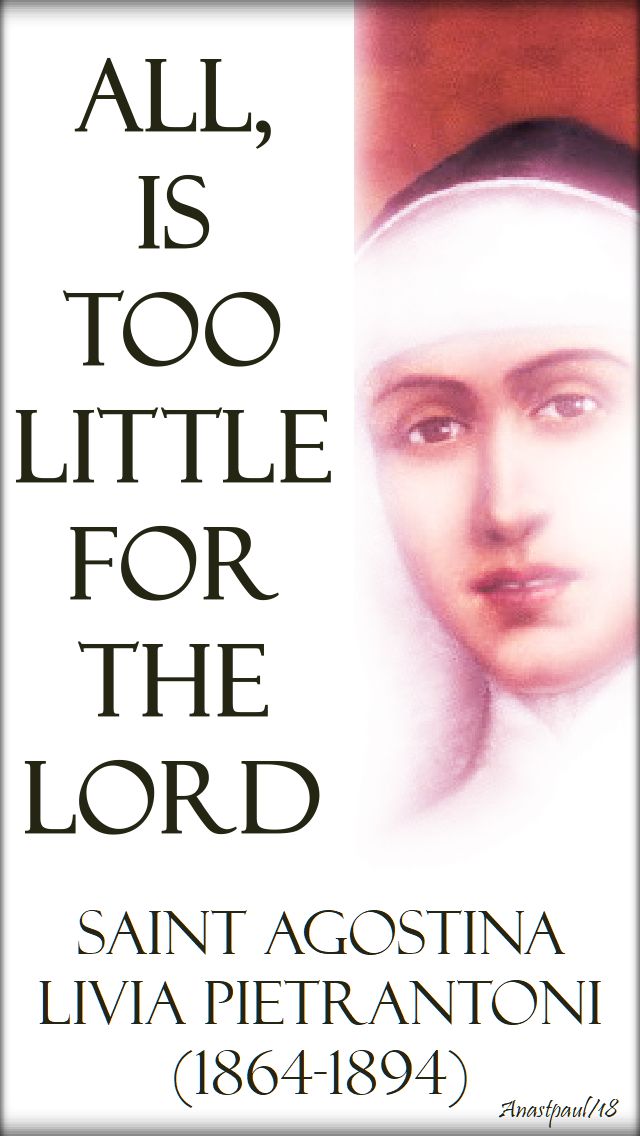
Quote of the Day – 13 November – The Memorial of St Agostina Livia Pietrantoni S.D.C. (1864-1894)
“All, is too little for the Lord.”
Pope Piux XI
Bishop of Rome
An excerpt from Ecclesiam Dei
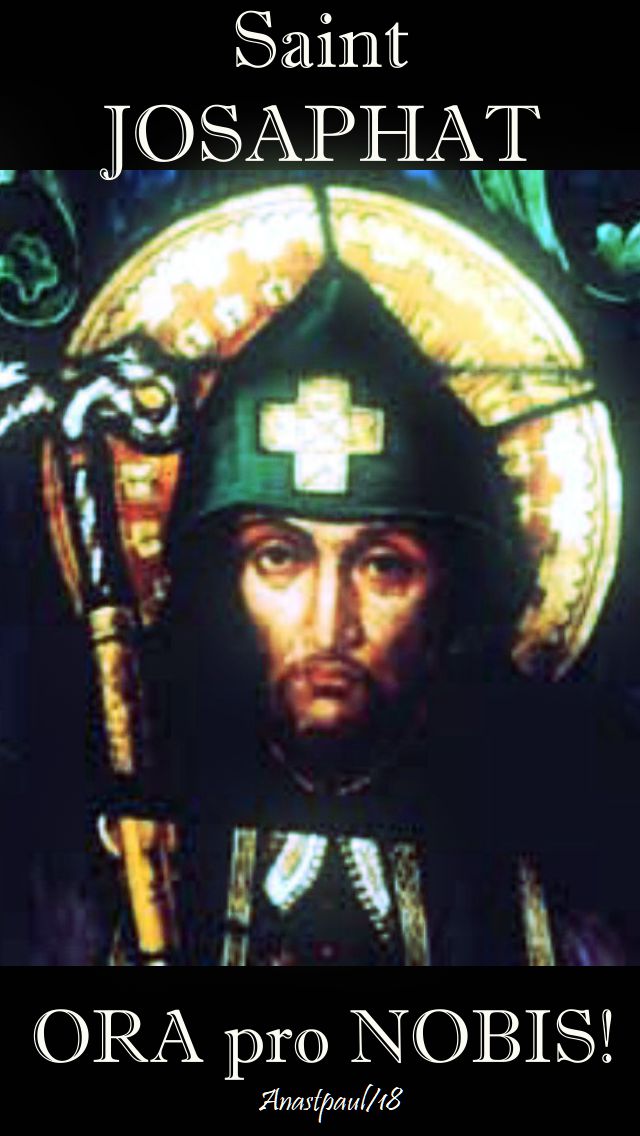
Memorial of St Josaphat (1584-1623) Bishop and Martyr “the thief of souls.”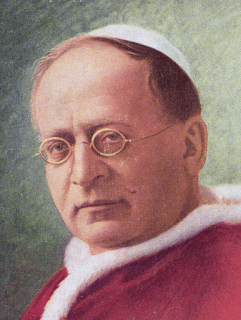
“In designing his Church God worked with such skill that in the fullness of time it would resemble a single great family embracing all men. It can be identified, as we know, by certain distinctive characteristics, notably its universality and unity.
Christ the Lord passed on to His apostles the task He had received from the Father: ‘I have been given all authority in heaven and on earth. Go, therefore, and make disciples of all nations.’ He wanted the apostles as a body to be intimately bound together, first by the inner tie of the same faith and love which flows into our hearts through the Holy Spirit and, second, by the external tie of authority exercised by one apostle over the others. For this he assigned the primacy to Peter, the source and visible basis of their unity for all time. So that the unity and agreement among them would endure, God wisely stamped them, one might say, with the mark of holiness and martyrdom.
Both these distinctions fell to Josaphat, Archbishop of Polock of the Slavonic rite of the Eastern Church. He is rightly looked upon as the great glory and strength of the Eastern Rite Slavs. Few have brought them greater honour or contributed more to their spiritual welfare than Josaphat, their pastor and apostle, especially when he gave his life as a martyr for the unity of the Church. He felt, in fact, that God had inspired him to restore world-wide unity to the Church and he realised that his greatest chance of success lay in preserving the Slavonic rite and Saint Basil’s rule of monastic life within the one universal Church.
Concerned mainly with seeing his own people reunited to the See of Peter, he sought out every available argument which would foster and maintain Church unity. His best arguments were drawn from liturgical books, sanctioned by the Fathers of the Church, which were in common use among Eastern Christians, including the dissidents. Thus thoroughly prepared, he set out to restore the unity of the Church. A forceful man of fine sensibilities, he met with such success that his opponents dubbed him “the thief of souls.”
The seeds of separation were sown in the fourth century when the Roman Empire was divided into East and West. The actual split came over customs such as using unleavened bread, Saturday fasting and celibacy. No doubt the political involvement of religious leaders on both sides was a large factor and doctrinal disagreement was present. But no reason was enough to justify the present tragic division in Christendom, which is 64 percent Roman Catholic, 13 percent Eastern—mostly Orthodox—Churches and 23 percent Protestant and this when the 71 percent of the world that is not Christian, should be experiencing unity and Christ-like charity from Christians! (These figures from Franciscan Media)
Saint of the Day – 10 November – St Andrew Avellino CR (1521 – 1608) Theatine Priest (Cong of the Clerics Regular of Divine Providence founded by St Cajetan 1480-1547), Canon and Civil Lawyer, Reformer, Founder of many new Theatine houses, Preacher, Spiritual Advisor, Confessor – born in 1521 at Castronuovo, Sicily as Lorenzo (called Lancelotto by his mother) and died on 10 November 1608 at Naples, Italy of a stroke. Patronages – against apoplexy or strokes, against sudden death, for a holy death, Badolato, Naples, Sicily, Italy.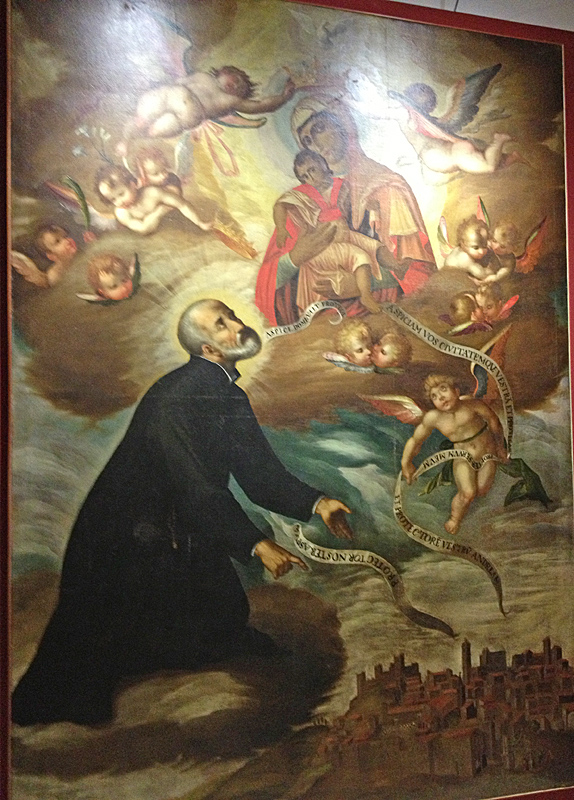
After a holy youth devoted to serious studies of philosophy and the humanities in Venice, Lancelot Avellino was ordained priest by the bishop of Naples. He was assigned to the chaplaincy of a community of nuns, sadly in need of reform, his intrepid courage and perseverance finally overcame many difficulties and regular observance was restored in the monastery. Certain irritated libertines, however, decided to do away with him and, waiting for him when he was about to leave a church, felled him with three sword thrusts. He lost much blood but his wounds healed perfectly without leaving any trace. The viceroy of Naples was ready to employ all his authority to punish the authors of this sacrilege but the holy priest, not desiring the death of sinners but rather their conversion and their salvation, declined to pursue them. One of them, however, died soon afterwards, assassinated by a man who wished to avenge a dishonour to his house.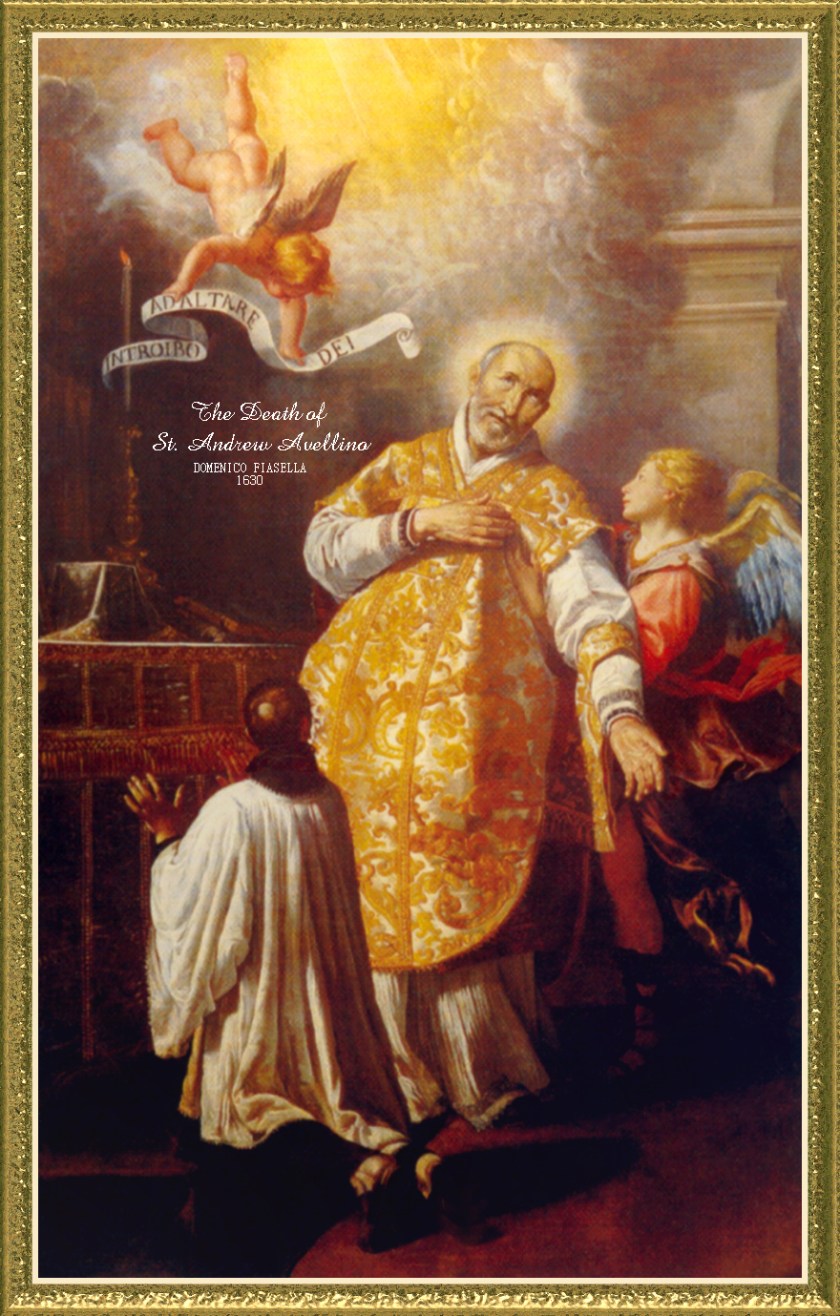
He was still practising law, which he had studied in Naples, one day a slight untruth escaped him in the defence of a client and he conceived such regret for his fault that he vowed to practice law no longer. In 1556, at the age of thirty-six, he entered the Theatine Order, taking the name of Andrew out of love for the cross. After a pilgrimage to Rome to the tombs of the Apostles, he returned to Naples and was named master of novices in his Community. 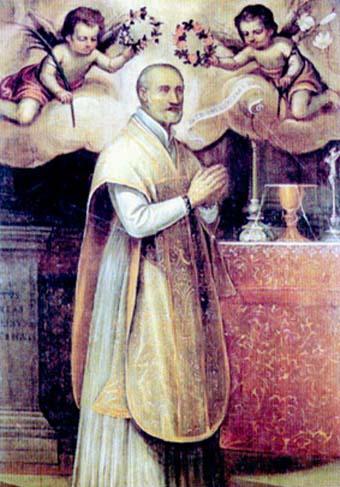
After holding this office for ten years, he was elected superior. His zeal for strict religious discipline and for the purity of the clergy, as well as his deep humility and sincere piety, induced the General of his Order to entrust him with the foundation of two new Theatine houses, one at Milan and the other at Piacenza. By his efforts, many more Theatine houses rose up in various dioceses of Italy. As superior of some of these new foundations, he was so successful in converting sinners and heretics by his prudence in the direction of souls and by his eloquent preaching that numerous disciples thronged around him, eager to be under his spiritual guidance. One of the most noteworthy of his disciples was Lorenzo Scupoli, the author of The Spiritual Combat. St Charles Borromeo was an intimate friend of Avellino and sought his advice in the most important affairs of the Church. He also requested Avellino to establish a new Theatine house in Milan.
Though indefatigable in preaching, hearing confessions and visiting the sick, Avellino still had time to write some ascetical works. His letters were published in 1731 at Naples in two volumes and his other ascetical works were published three years later in five volumes.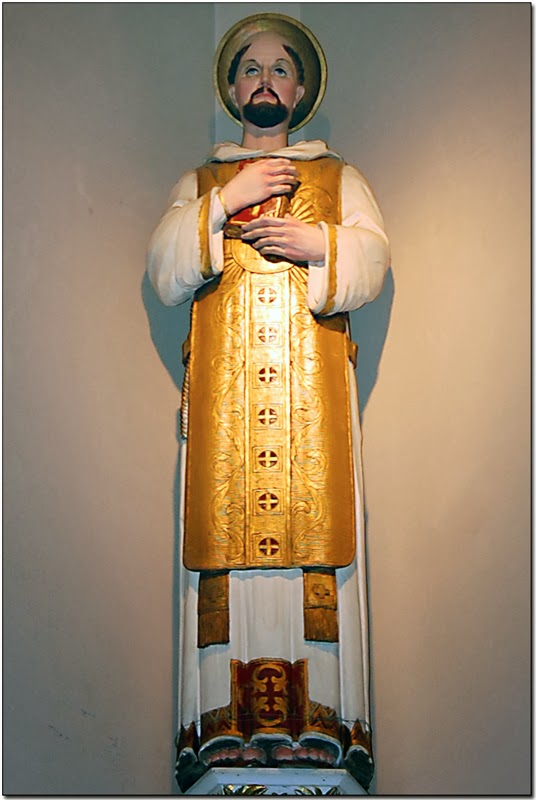
On 10 November 1608, when beginning the Holy Sacrifice of the Mass, he was stricken with apoplexy and, after receiving the Holy Viaticum, died at the age of 88. In 1624, only 16 years after his death, he was Beatified by Pope Urban VIII and in 1712 was Canonised by Pope Clement XI. His remains lie buried in the Church of St Paul at Naples.

Dedication of the Basilica of Saint John Lateran (Feast): The oldest and first in rank of the four basilicas of Rome, Italy. The name is derived from the Laterani family, on the site of whose palace the basilica stands. King Constantine presented this palace to the Church. Its annual celebration throughout the Latin Church is a sign of love and unity with the Papacy and Pope.
The original church building, probably adapted from the hall of the palace, was dedicated to the Saviour and from its splendour was known as the Basilica Aurea. Though several times destroyed and rebuilt, the basilica retained its ancient form, being divided by rows of columns into aisles and having an atrium with colonnades. The tasteless restoration of the 17th century changed its appearance. A monastery was formerly between the basilica and the city wall of which the cloister still remains. The original apse survived until 1878, when it was destroyed and a deeper apse built. The ancient mosaics have been preserved. The high altar, which is of wood and is believed to have been used by Saint Peter, is now encased in marble. In the upper part of the baldachinum are the heads of the Apostles, Peter and Paul. The baptistery is an octagonal edifice with porphyry columns. The font is of green basalt. This basilica has been the cathedral of Rome since the 4th century.
Our Lady of Almudena: The Virgin of Almudena (Virgen de la Almudena) is a medieval icon of the Virgin Mary, mother of Jesus Christ. The image is the advocation of the Virgin that serves as a patroness of Madrid, Spain.
Intriguingly, however, its name derives from the Arabic term of Al Mudayna, or the citadel. There are various legends regarding the ico. One story is that in 712, prior to the capture of the town by the advancing Muslim forces, the inhabitants of the town secreted the image of the virgin, for its own protection, inside the walls surrounding the town. In the 11th century, when Madrid was reconquered by the King Alfonso VI of Castile, the Christian soldiers endeavoured to find the statue. After days of prayer, the spot on the wall hiding the icon crumbled, revealing the statue. Another legend is that as Christian soldiers approached the town, they had a vision of Mary imploring them to allow her to lead them into the city. Again the miraculous crumbling of the wall occurred, with the icon showing an entry route through the walls.
The Cathedral of Madrid is dedicated to this advocation of the Virgin and her feast day, 9 November, is a major holiday in Madrid.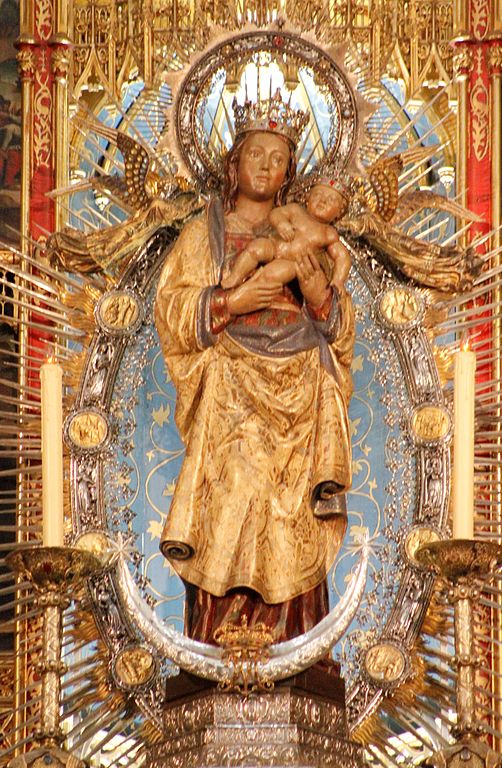
—
St Agrippinus of Naples
St Alexander of Salonica
St Aurelius of Riditio
St Benignus of Armagh
St Eustolia
St Francisco José Marín López de Arroyave
St Gabriel Ferretti
Bl George Napper
Bl Gratia of Cattaro
Bl Helen of Hungary
Bl Henryk Hlebowicz
St Jane of Segna
Bl Ludovico Morbioli (1433-1485)
St Justo Juanes Santos
St Luigi Beltrame Quattrocchi
St Luis Morbioli
St María de la Salud Baldoví Trull
Bl María del Carmen of the Child Jesus
St Pabo
St Sopatra
St Theodore Stratelates
St Ursinus of Bourges
St Valentín Gil Arribas
St Vitonus of Verdun
—
Martyrs of Constantinople – 3 saints: A group of ten Catholic Christians who tried to defend an image of Jesus over the Brazen Gate of Constantinople from an attack by Iconoclasts during the persecutions of emperor Leo the Isaurian. The group of was seized by soldiers, condemned by judges for opposing the emperor, and martyred. The only details that have survived are three of their names – Julian, Marcian and Maria. They were martyred in 730 at Constantinople (modern Istanbul, Turkey).
Martyred in the Spanish Civil War:
• Blessed Anastasio Garzón González
• Blessed Francisco José Marín López de Arroyave
• Blessed Justo Juanes Santos
• Blessed María de la Salud Baldoví Trull
• Blessed Valentín Gil Arribas
Saint Louis-Marie de Montfort’s Total Consecration to Jesus Through Mary – Second Week – Day Twenty Two – 7 November
Second Week
Day 22 of 33
From True Devotion To the Blessed Virgin Mary, Nos. 106-110
Marks of authentic devotion to our Lady
106. First, true devotion to our Lady is interior, that is, it comes from within the mind and the heart and follows from the esteem in which we hold her, the high regard we have for her greatness and the love we bear her.
107. Second, it is trustful, that is to say, it fills us with confidence in the Blessed Virgin, the confidence that a child has for its loving Mother. It prompts us to go to her in every need of body and soul with great simplicity, trust and affection.
108. Third, true devotion to our Lady is holy, that is, it leads us to avoid sin and to imitate the virtues of Mary. Her ten principal virtues are: deep humility, lively faith, blind obedience, unceasing prayer, constant self-denial, surpassing purity, ardent love, heroic patience, angelic kindness and heavenly wisdom.
109. Fourth, true devotion to our Lady is constant. It strengthens us in our desire to do good and prevents us from giving up our devotional practices too easily. It gives us the courage to oppose the fashions and maxims of the world, the vexations and unruly inclinations of the flesh and the temptations of the devil. Thus, a person truly devoted to our Blessed Lady is not changeable, fretful, scrupulous or timid.
110. Fifth, true devotion to Mary is disinterested. It inspires us to seek God alone in His Blessed Mother and not ourselves. The true subject o,f Mary does not serve his illustrious Queen for selfish gain. He does not serve her for temporal or eternal well-being but simply and solely, because she has the right to be served and God alone in her.
Recite: Litany of the Holy Spirit, Litany of the Blessed Virgin Mary, Ave Maris Stella:
https://anastpaul.wordpress.com/2018/10/29/saint-louis-marie-de-montforts-total-consecration-to-jesus-through-mary-first-week-day-thirteen-29-october/
St Louis de Montfort’s Prayer to Mary: https://anastpaul.wordpress.com/2018/11/05/saint-louis-marie-de-montforts-total-consecration-to-jesus-through-mary-second-week-day-twenty-5-november/ and the Rosary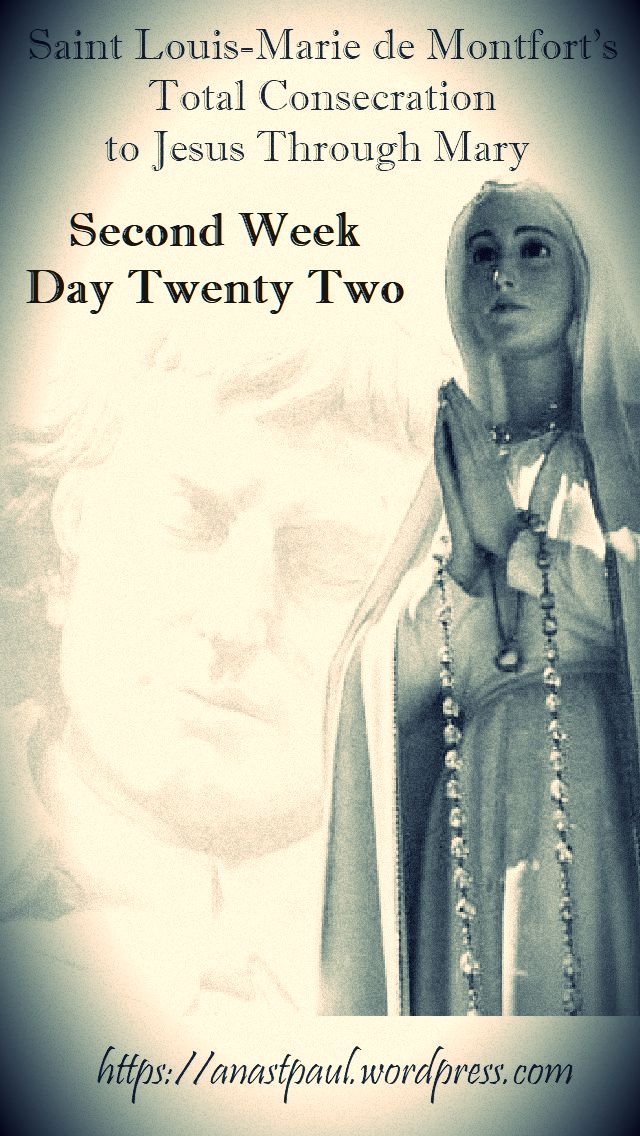
The Commemoration of All the Holy Souls in Purgatory – 2 November
The Church teaches us that the souls of the just who have left this world with traces of venial sin remain for a time in a place of expiation, where they suffer whatever punishment may be due to their offenses. Even if pardon has been obtained for our sins, satisfaction must be made to God, our Creator, in this world or in the next, for His sanctity has been, as it were, insulted by the self-will of one of His ignoble creatures. The more noble the person offended, the more serious the offence, even according to human laws.
It is a dogma of our faith that the suffering souls are relieved by the intercession of the Saints in heaven and by the prayers of the faithful upon earth. To pray for the dead is therefore an act of charity and of piety, certainly obligatory for a Christian who professes to have charity in his heart. We read in Holy Scripture: It is a holy and wholesome thought to pray for the dead, that they may be loosed from their sins. (II Maccabees 12:46)
When towards the close of the tenth century, Our Lord inspired Saint Odilo, (c 962-1049) Abbot of Cluny, to establish in his Benedictine Order a general commemoration of all the faithful departed, the practice was soon afterwards adopted by the entire Western Church and has been continued unceasingly to our day.
Let us always bear in mind the departed who have died in the love of God and offer up our prayers and sacrifices to help expiate for them. By showing this mercy to the suffering souls in purgatory, we gain for ourselves very devoted friends, who will in their turn pray for us. We shall then be entitled to be treated with mercy at our departure from this world and to share more abundantly in the suffrages of the Church, continually offered for all who have fallen asleep in Christ.
When we offer satisfaction to God in this life for our offences, there is merit attached to our penances. There is no longer any merit in purgatory – others must provide . Let us reflect well that if we do not ourselves repair our sins and faults, we place our burden on other, is that what we want?
All Souls Day (Commemoration): Feast in commemoration of the faithful departed in Purgatory. Abbot Odilo of Cluny instituted it in the monasteries of his congregation in 998, other religious orders took up the observance and it was adopted by various dioceses and gradually by the whole Church. The Office of the Dead must be recited by the clergy on this day and Pope Benedict XV granted to all priests the privilege of saying three Masses of requiem –
• one for the souls in Purgatory
• one for the intention of the Holy Father
• one for the priest’s
If the feast should fall on Sunday it is kept on 3 November.
Patronage: Monselice, Italy
Details here: https://anastpaul.wordpress.com/2017/11/02/the-commemoration-of-all-the-holy-souls-in-purgatory-2-november/
St Ambrose of Agaune
St Ambrose of Agaune
St Amicus of Fonte Avellana
St Amicus of Rambone
St Baya of Scotland
St Domninus of Grenoble
St Erc of Slane
St Eustochium of Tarsus
St George of Vienne
Bl John Bodey
St Jorandus of Kergrist
St Justus of Trieste
Bl Luigi Campidello
St Marcian of Chalcis
Bl Margaret of Lorraine
St Mateo López y López
St Maura of Scotland
St Theodotus of Laodicea
St Victorinus of Pettau
St Willebald of Bavaria
—
Martyrs of Isfahan – 5+ saints: Acindynus, Pegasius and Anempodistus were Persian priests who were imprisoned, tortured, interrogated and martyred in the persecutions of king Sapor II of Persia; he considered any Christian to be a Roman spy and anti-Persian. The three were brought back to life, miraculously healed, freed from their chains and began preaching Christianity, miraculously healing Sapor II in the process. This defiance enraged Sapor so much that he ordered them executed again; they were thrown into a cauldron of molten lead, but walked out unharmed. This miracle brought one of the torturers, Aphthonius, to convert; he was immediately martyred. Other attempts were made to kill them, and they emerged each time unharmed. Senator Elpidiphorus led a group speaking in favour of the Christians for their courage and faith; he was immediately executed. In the end the original three Christians were burned to death. Martyrs all – Acindynus, Anempodistus, Aphthonius, Elpidephorus and Pegasius.
They were born in Persia and Died:
• c.350 in Isfahan, Persia
• relics transferred to Constantinople and enshrined in a church dedicated to them
• some relics taken to France in 1204 during the 4th Crusade
• relics in France were lost when hidden from anti-Christian forces in the French Revolution
• relics in France re-discovered in 1892 in Grozon.
Martyrs of Sebaste – 10 saints: A group of ten soldiers in the imperial Roman army of Emperor Licinius Licinianus who were executed together for refusing to burn incense as a sacrifice to the emperor. The only details that have survived are five of their names – Agapius, Cartherius, Eudoxius, Styriacus and Tobias. They were burned at the stake in 315 in Sebaste (in modern Turkey).
Quote of the Day – 29 October – The Memorial of St Gaetano Errico (1791-1860), Founder of the Missionaries of the Sacred Hearts of Jesus and Mary
“Let us toil, to the loss of everything,
not excluding life, if necessary,
to make known to all people,
the most ardent love of the Sacred Hearts
and to kindle this holy
and divine love, in the hearts of humanity.”
(From the Rule)

St Adalgott of Einsiedeln
St St Alanus of Quimper
Albinus of Buraburg
St Alfred the Great
St Alorus of Quimper
St Amandus of Strasburg
St Amandus of Worms
St Aneurin
St Aptonius of Angouleme
St Arnold of Queralt
St Bean of Mortlach
St Bernard de Figuerols
Bl Bonaventura of Potenza
St Cedd
Bl Celina Chludzinska
St Cuthbert of Canterbury
Bl Damian dei Fulcheri
St Eadfrid
St Eata of Hexham
St Pope Evaristus – (c 44 – c 107) Martyr
St Felicissimus of Carthage
St Fulk of Piacenza
St Gaudiosus of Salerno
St Gibitrudis
St Gwinoc
St Humbert
St Lucian
St Marcian
St Quadragesimus of Policastro
St Rogatian of Carthage
St Rusticus of Narbonne
St Sigibald of Metz
—
Martyrs of Nicomedia – 5 saints
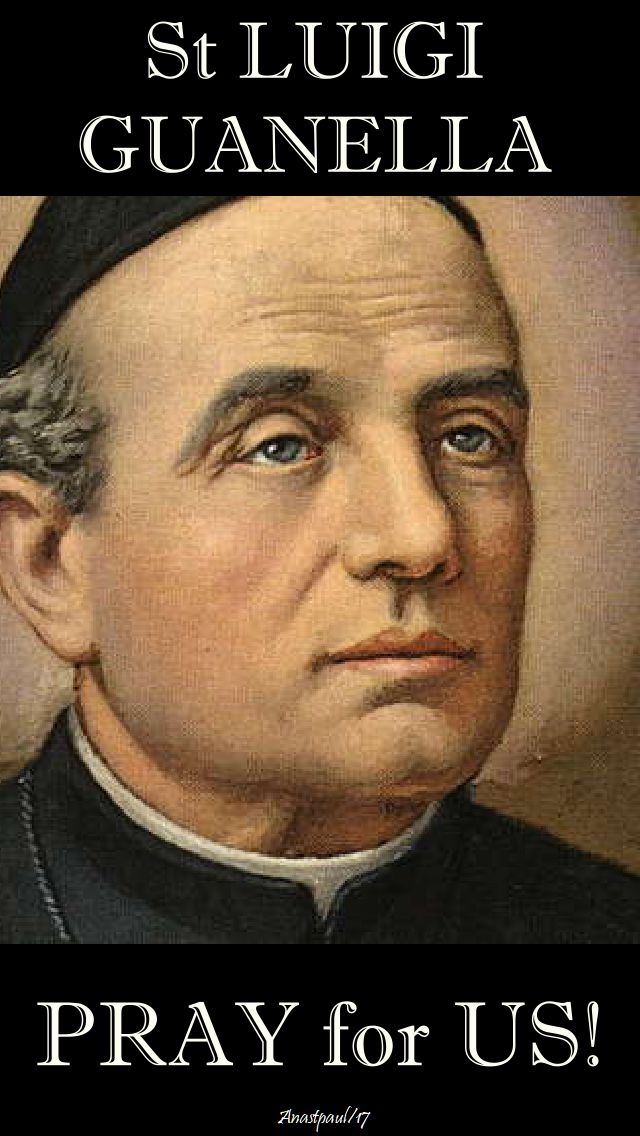
Thought for the Day – 24 October – The Memorial of St Luigi Guanella (1842-1915)
St Luigi and St Joseph – “The Pious Union of St Joseph”
In his daily life, Fr Guanella had a great devotion to St Joseph, custodial father of Jesus and safeguard of the virginity of Mary, his wife, the Mother of God. He reminded his priests and nuns that St Joseph is the administrator of all their homes. All superiors must have the love and care of St Joseph, as well as the kindness and gentleness of Mary, in dealing with the residents.
His love and care had no limit. His dear impaired people were assisted to the very end. When he was home, it was his duty to give his blessing for the dying. His motto was, “Let us give them bread and paradise” and this was implanted in the hearts of all his nuns and priests.
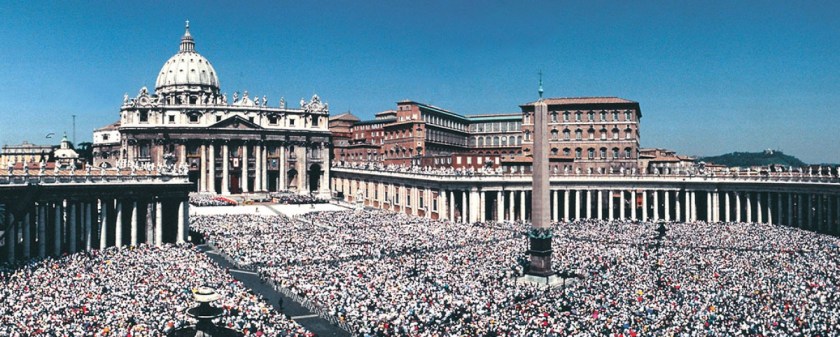
In Rome, six years before his death and physically tired by his work, Fr Guanella was inspired to build a Church and start an Association in honour of St Joseph, patron of the dying. Pope Pius X, a very close friend, expressed a desire to have a church in Trionfale, a very poor area near the Vatican. The Pope’s desire strengthened Fr Guanella’sown ideas. Trusting to divine providence, he put a down payment on the land and the foundation was immediately begun. On the property, there was a barn which became the first Chapel of St Joseph. The people called it the ‘Basilichetta’ (small Basilica.) In 1912, Fr Guanella announced to the Pope that the Church was completed in honour of St Joseph and His Holiness, whose baptismal name was Joseph Sarto.
The Pope admired Fr Guanella for his courage and devotion to St Joseph and when he heard about the Pious Union Association of prayers for the dying, he said to Fr Luigi, “Please make me the first member.”
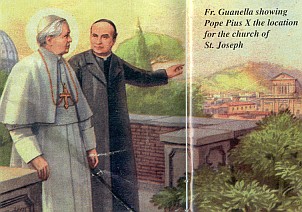
In 1913, Pope Pius X gave his approval, making the Church of the Pious Union the main centre for all the universal church. His beloved Pope Pius X died in 1914, one year before Fr Guanella’s own death. The two saints understood each other so well.
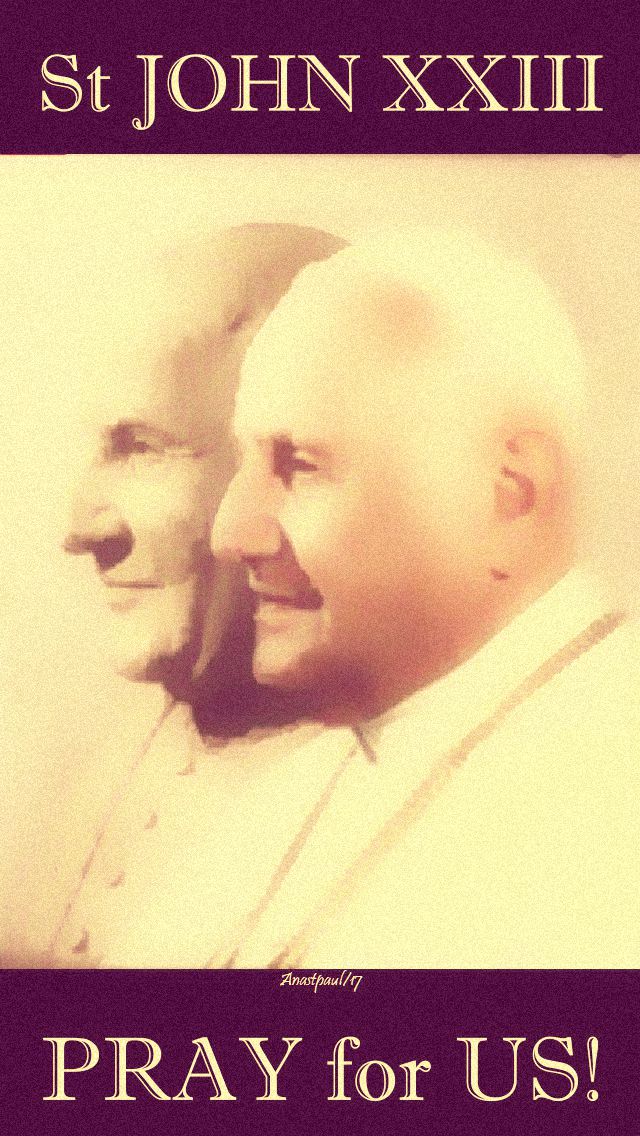
“The Daily Decalogue of St Pope John XXIII”
Only for today, I will seek to live the livelong day positively, without wishing to solve the problems of my life all at once.
Only for today, I will take the greatest care of my appearance – I will dress modestly, I will not raise my voice, I will be courteous in my behaviour, I will not criticise anyone, I will not claim to improve or to discipline anyone except myself.
Only for today, I will be happy in the certainty that I was created to be happy, not only in the other world but also in this one.
Only for today, I will adapt to circumstances, without requiring all circumstances to be adapted to my own wishes.
Only for today, I will devote 10 minutes of my time to some good reading, remembering that just as food is necessary to the life of the body, so good reading is necessary to the life of the soul.
Only for today, I will do one good deed and not tell anyone about it.
Only for today, I will do at least one thing I do not like doing and if my feelings are hurt, I will make sure that no one notices.
Only for today, I will make a plan for myself – I may not follow it to the letter but I will make it. And I will be on guard against two evils: hastiness and indecision.
Only for today, I will firmly believe, despite appearances, that the good Providence of God cares for me ,as no one else who exists in this world.
Only for today, I will have no fears. In particular, I will not be afraid to enjoy what is beautiful and to believe in goodness. Indeed, for 12 hours I can certainly do what might cause me consternation were I to believe I had to do it all my life.
Our Morning Offering – 1 October – The Memorial of St Thérèse of Lisieux O.C.D. (1873 – 1897)
Morning Offering
By St Thérèse
O my God!
I offer Thee all my actions of this day
for the intentions and for the glory
of the Sacred Heart of Jesus.
I desire to sanctify every beat of my heart,
my every thought,
my simplest works,
by uniting them to Its infinite merits
and I wish to make reparation for my sins,
by casting them into the furnace of Its Merciful Love.
O my God!
I ask Thee for myself
and for those whom I hold dear,
the grace to fulfil perfectly Thy Holy Will,
to accept for love of Thee,
the joys and sorrows of this passing life,
so that we may one day be united together
in Heaven for all Eternity.
Amen
Sunday Reflection – 30 September – Twenty sixth Sunday in Ordinary Time, Year B
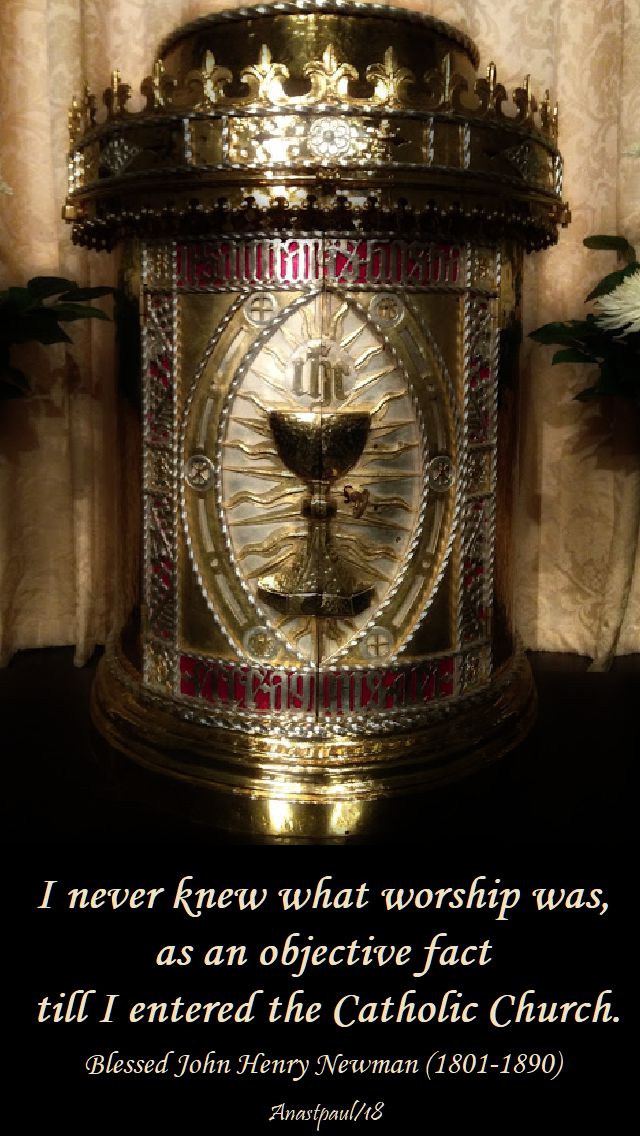
It is remarkable how it was the reservation of the Blessed Sacrament in Catholic churches that more than anything else impressed and moved Blessed John Henry Newman, even more than the Mass itself.
And so it was that the feature of his new religious life as a Catholic that most struck him came as a complete surprise – namely, the reservation of the Blessed Sacrament in Catholic churches. He wrote in a letter to a close friend, herself about to become a Catholic a few months later:
“We went over not realising those privileges which we have found by going. I never allowed my mind to dwell on what I might gain of blessedness – but certainly, if I had thought much upon it, I could not have fancied the extreme, ineffable comfort of being in the same house with Him who cured the sick and taught His disciples …
When I have been in Churches abroad, I have religiously abstained from acts of worship, though it was a most soothing comfort to go into them – nor did I know what was going on; I neither understood nor tried to understand the Mass service – and I did not know, or did not observe, the tabernacle Lamp – but now after tasting of the awful delight of worshipping God in His Temple, how unspeakably cold is the idea of a Temple without that Divine Presence! One is tempted to say what is the meaning, what is the use of it?”
“It is really most wonderful to see this Divine Presence looking out almost into the open streets from the various Churches … I never knew what worship was, as an objective fact, till I entered the Catholic Church.”
“It is such an incomprehensible blessing to have Christ in bodily presence in one’s house, within one’s walls, as swallows up all other privileges …”
Quote/s of the Day – 27 September – The Memorial of St Vincent de Paul C.M. (1581-1660)
“Perfection consists in one thing alone,
which is doing the will of God.
For, according to Our Lord’s words,
it suffices for perfection to deny self,
to take up the cross and to follow Him.
Now who denies himself and takes up his cross
and follows Christ better than he who seeks
not to do his own will but always that of God?
Behold, now, how little is needed to become as Saint?
Nothing more than to acquire the habit of willing,
on every occasion, what God wills.”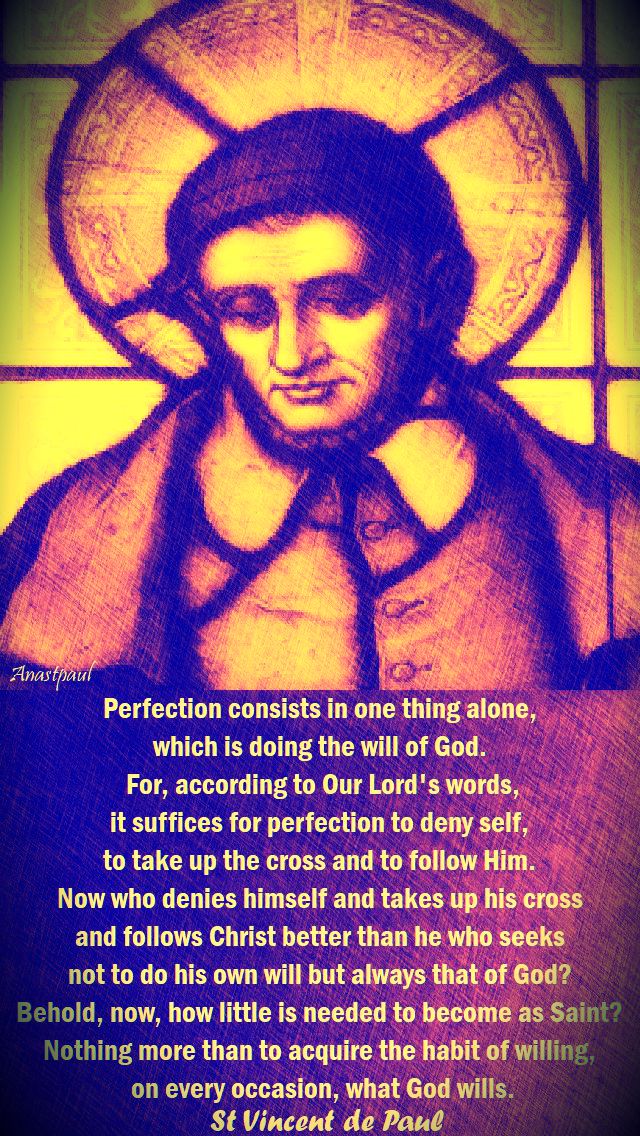
“…We have all been called by God to work on a masterpiece!”
“Extend your mercy towards others,
so that there can be no one in need
whom you meet without helping.
For what hope is there for us if God
should withdraw His Mercy from us?”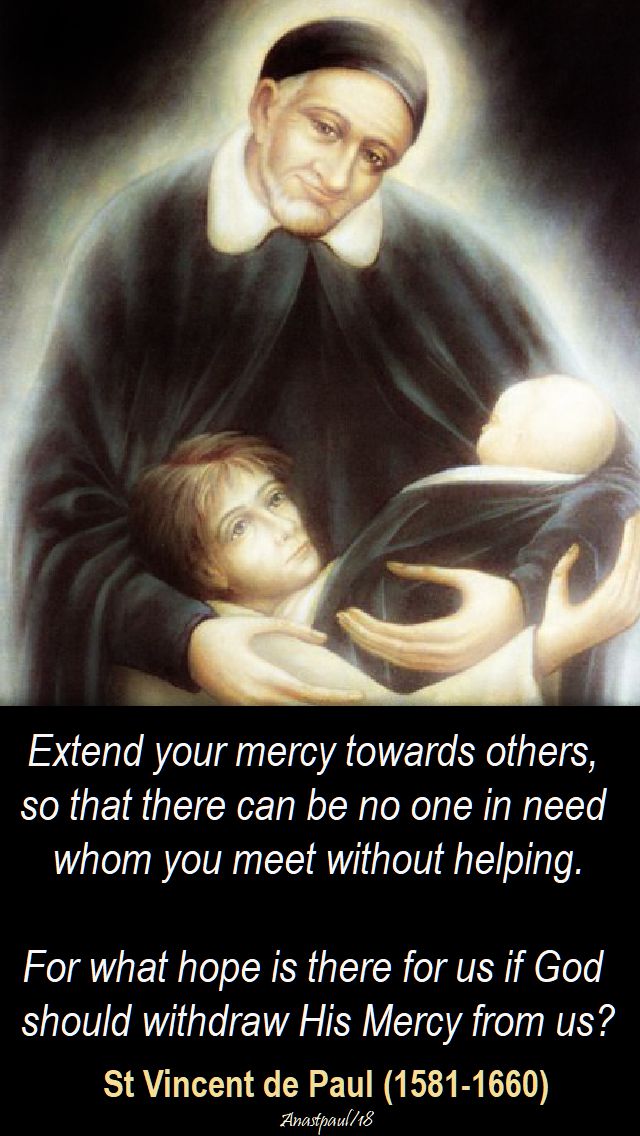
“With renewed devotion, then,
we must serve the poor,
especially outcasts and beggars.
They have been given to us
as our masters and patrons.”
“It is not enough to give soup and bread.
This the rich can do.
You are the servant of the poor,
always smiling and good-humoured.
They are your masters, terribly sensitive
and exacting master you will see.
And the uglier and the dirtier they will be,
the more unjust and insulting,
the more love you must give them.
It is only for your love alone,
that the poor will forgive you the bread you give to them.
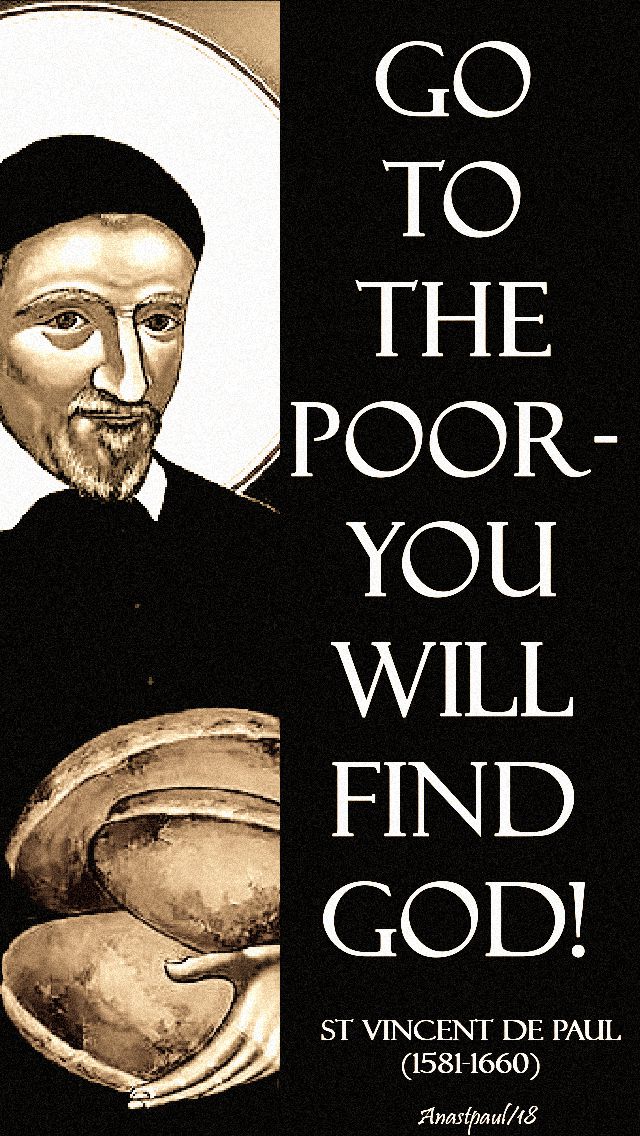
“Go to the poor – you will find God!”
One Minute Reflection – 27 September – Today’s First Reading: Ecclesiastes 1:2–11 – Thursday of the Twenty-fifth week in Ordinary Time, Year B – The Memorial of St Vincent de Paul (1581-1660)
What has been is what will be and what has been done is, what will be done..Ecclesiastes 1:9
REFLECTION – “Free your mind from all that troubles you; God will take care of things. You will be unable to make haste in this (choice) without, so to speak, grieving the heart of God because he sees that you do not honour Him sufficiently with holy trust. Trust in Him, I beg you and you will have the fulfilment of what your heart desires.”….St Vincent de Paul
PRAYER – Father, You endowed St Vincent de Paul with the spirit of an apostle to give himself to the poor and to the training of priests. Give us, good Lord, a share of the same spirit, that we may love what he loved and do as he taught. Fill us with hope and total trust and abandonment to Your Holy Providence. Through our Lord Jesus Christ, in union with the Holy Spirit, one God, forever and ever. St Vincent de Paul, pray for us, amen.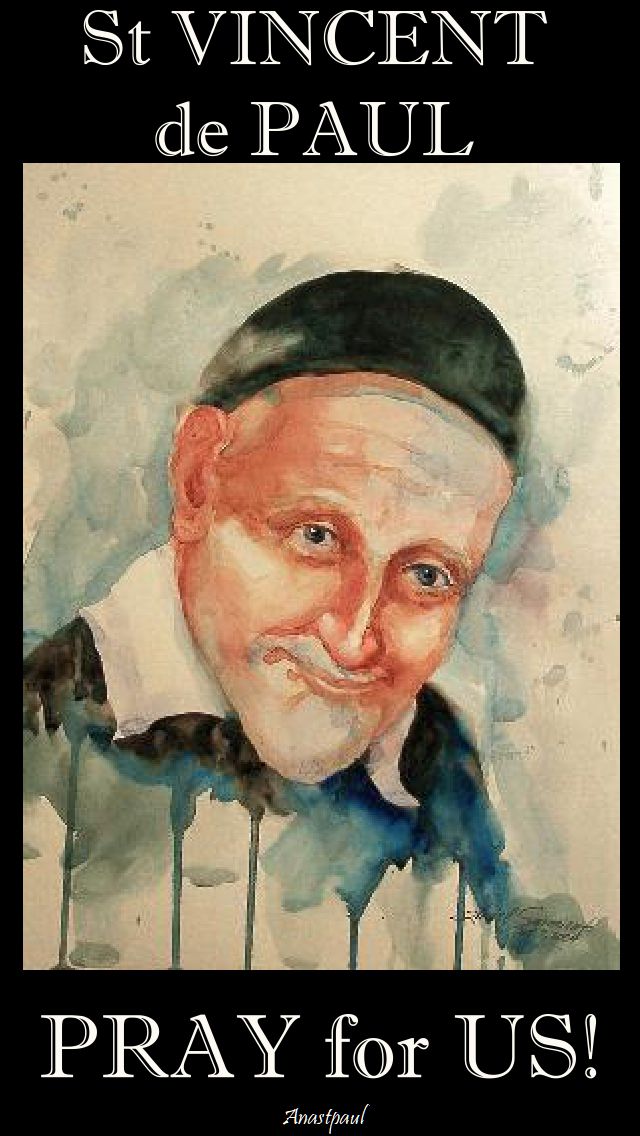
Our Morning Offering – 24 September – Monday of the Twenty-fifth week in Ordinary Time, Year B
May We Seek Your Face
By Pope Benedict XVI
Lord Jesus, grant us restless hearts,
hearts which seek Your Face.
Keep us from the blindness of heart
which sees only the surface of things.
Give us the simplicity and purity
which allow us to recognise
Your presence in the World.
When we are not able to accomplish great things,
grants us the courage
which is born of humility and goodness.
Impress Your Face on our hearts.
May we encounter You along the way
and show forth Your image
to the world.
Amen
Saint of the Day – 20 September -St Eustachius born as Placidas, Wife and Sons – Martyrs (Died c 188) One of the Fourteen Holy Helpers – Patronages – against fire, difficult situations, fire prevention, firefighters, hunters, hunting, huntsmen, Madrid, torture victims, trappers.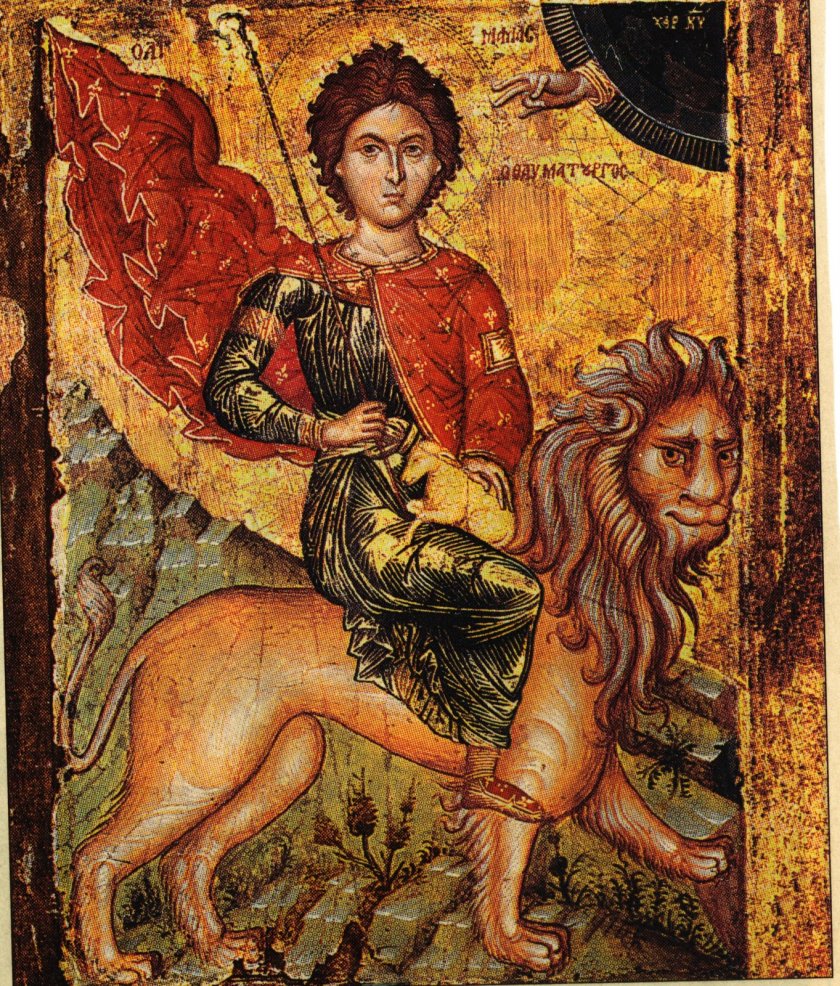
The remarkable story of Saint Eustachius, is a lesson given by God Himself on the marvels of His Divine Providence. He was a distinguished and very wealthy officer of the Roman army under the Emperor Trajan, in the beginning of the second century. He practised generous charity to the poor, although he had not yet perceived the errors of idolatry.
One day, while this distinguished officer was vainly pursuing a deer, the animal suddenly stood immobile before him in the light of a hilltop and he perceived between its horns a luminous cross. On the cross was the image of the crucified Saviour and a voice said to him, ‘I am the Christ whom you honour without knowing it; the alms you give to the poor have reached Me.’ Like Saint Paul, he fell from his horse and remained inert for a time. Coming to himself, he said interiorly, What is this voice I have heard? You who speak to me, who are you, that I may believe in you? And the Lord told him interiorly that He was the Creator of the light, of the seasons, of man and all things visible, that He had suffered to save the human race, died and been buried but had risen the third day.
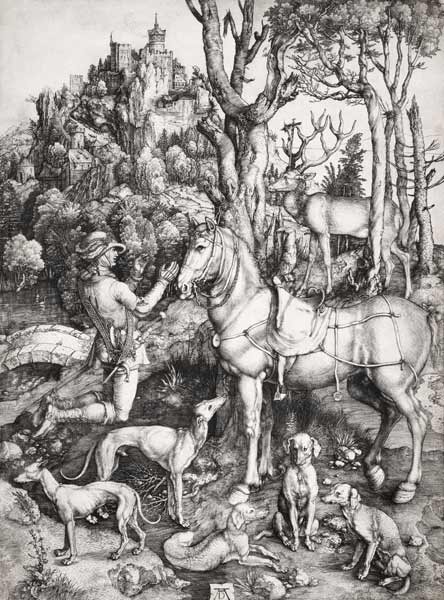
This was sufficient and the officer went home to fulfil the prescription he had received to be baptised with his wife and two young sons. His spouse had received a similar revelation at the same time as himself and they all went to the Christian authority of the region in secret, to be baptised the same night.
In a short time he lost all his possessions through natural catastrophes and robbers. But he had been advised beforehand that the Lord wanted to make of him another Job, that already the ancient enemy had plotted against him and that he was not to allow any thought of blasphemy to arise in his heart amid the sufferings that were awaiting him. He prayed for strength and retired from the region after the calamities, with his wife and children. When by unforeseeable and extraordinary accidents, his wife and children were also taken from him and he believed the children dead, he was close to despair and wished his life might end but the warning of the Lord returned to his mind and he entered into the service of a land-owner of a village called Badyssus, to tend the fields. He remained for fifteen years in this occupation. During this time his loved ones were well and safe, all spared in the perilous circumstances which had removed them from his sight but separated, each one like himself, from the three others.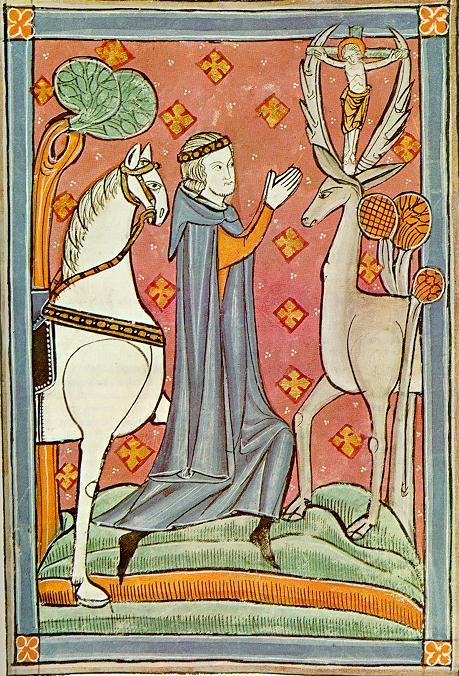
In those days the empire was suffering greatly from the ravages of barbarians and was sinking under the assaults. The emperor Trajan had Eustachius sought out and when he was found, had him clothed in splendid garments to give him command over the troops he intended to send against the invaders. During the celebration that accompanied his return, he related to the emperor all that had occurred to him. When the troops were being assembled, his own sons were conscripted. Seeing them, he noticed them as young men taller than most and of great nobility of bearing and countenance and kept them near him without yet recognising them. One of the two, while on bivouac near the very house of his own mother, who like Eustachius had taken employment in the garden of a landowner, related the confused memories of his childhood to his companion. Suddenly, the two brothers recognised one another and embraced in an effusion of joy.
Their mother, by a delicate attention of Providence, had chanced to overhear them and reflecting on what she heard, became certain they were her own sons. She went to the captain of the campaign to inquire about them and immediately recognised him. Not wishing to startle him, she began to relate her story, identifying herself as the wife of a certain Placidus and saying she believed she was now in the presence of her two sons from whom she had been separated and whom she had not seen for long years. One must imagine the sentiments of the captain on hearing this narration, the reunion which followed and the prayers of thanksgiving sent up to God by the family and also the troops, who joined them in their joy and prayers.
Returning to Rome victorious, Eustachius was received in triumph and greatly honoured, but when commanded to sacrifice during the celebration to the false gods, refused. The infuriated emperor Adrian — for Trajan had died — ordered him with his wife and children to be exposed to a starved lion. But instead of harming these servants of God, the beast came up to them, lowered its head as if in homage and left the arena. The emperor, more furious still, caused the martyrs to be shut up inside a brazen bull, under which a fire was to be kindled, that they might be roasted to death. Saint Eustachius prayed aloud and thanked God, asking Him who had reunited them to cause that their lives end at the same time, so they might be received together by Him into the happiness of His presence. They expired but neither their bodies nor even their hair was injured. They were found entire the next day and at first it was believed they were still alive. Many believed in Christ through this final miracle, which to us today seems perhaps less miraculous than the story of their existence while alive. A church in honour of the martyrs still exists in Rome: Saint-Eustachius in Thermis.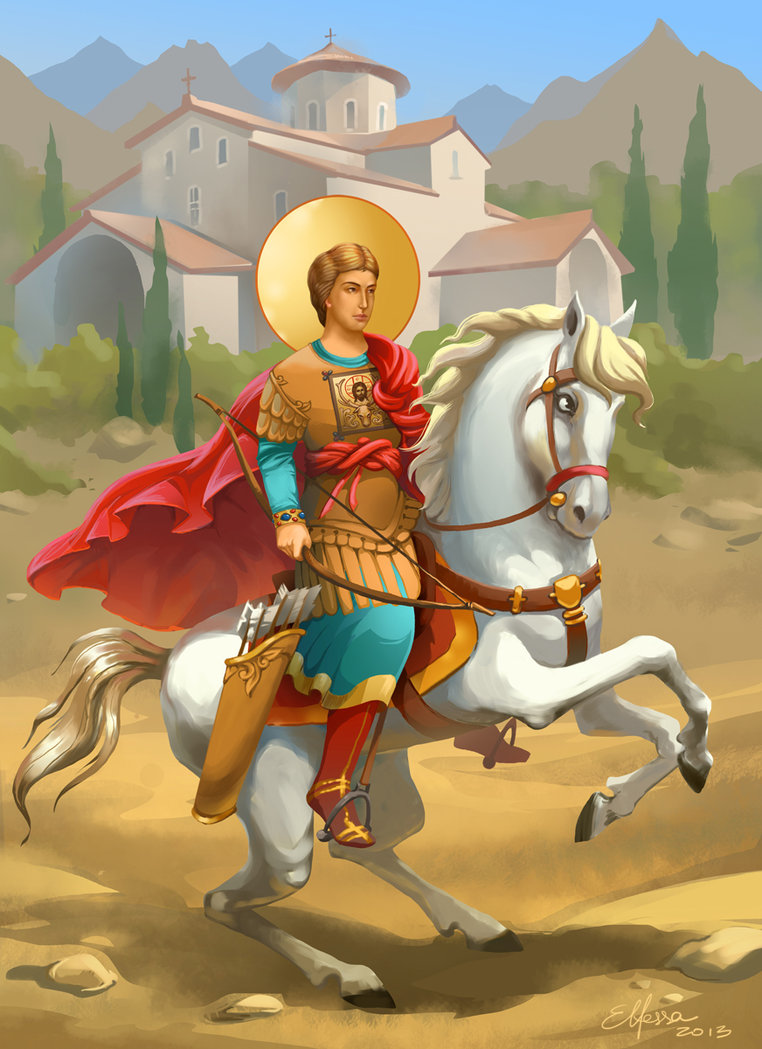
Eustachius became known as a patron saint of hunters and firefighters and also of anyone facing adversity; he was traditionally included among the Fourteen Holy Helpers. He is one of the patron saints of Madri d, Spain. The island of Sint Eustatius in the Caribbean Netherlands is named after him. The d’Afflitto, one of the oldest princely families in Italy, claim to be direct descendants of Saint Eustachius.
The novels “The Herb of Grace” (US title: Pilgrim’s Inn) (1948) by British author Elizabeth Goudge and Riddley Walker (1980) by American author Russell Hoban, incorporate the legend into their plot. It has also inspired the film Imagination.
The saint’s cross-and-stag symbol is featured on bottles of Jägermeister, a German alcoholic digestif. This is related to his status as patron of hunters; a Jägermeister was a senior foresters and gamekeeper in the German civil service until 1934, prior to the drink’s introduction in 1935. Jägermeister has a round logo of a shining cross between the antlers of a deer/stag referring to two persons who had seen such a vision: Saint Hubertus and Saint Eustachius.
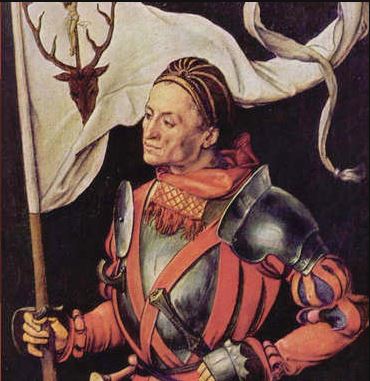
Saint Eustachius has a church dedicated to him in the southern part of India – he is called Saint Esthak in this part of the world and in County Kildare, Ireland. There is a church dedicated to him on the campus of Newbridge College in Newbridge, County Kildare and the schools’ logo and motto is influenced by the vision of Saint Eustachius; a nearby village is named Ballymore Eustace.
Sant’Eustachio is also honoured in Tocco da Casauria, a town in the Province of Pescara in the Abruzzo region of central Italy. The town’s church, built in the twelfth century, was dedicated to Saint Eustachius. It was rebuilt after being partially destroyed by an earthquake in 1706.
About the 14 Holy Helpers here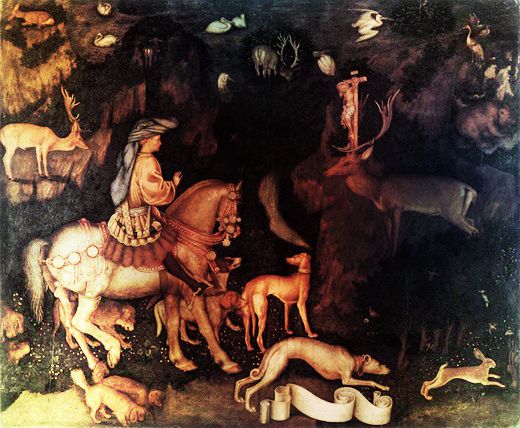
Martyrs of Korea: St Andrew Kim Taegon, St Paul Chong Hasang & Companions – 103 saints and beati (Memorial)
—
St Agapitus of Rome
St Candida of Carthage
St Dionysius of Phrygia
St Dorimedonte of Synnada
St Eusebia of Marseilles
St Eustachius
St Evilasius of Cyzicum
St Fausta of Cyzicum
Bl Francisco Martín Fernández de Posadas
St Glycerius of Milan
St John Charles Cornay
Bl John Eustace
St Jose Maria de Yermo y Parres
St Lawrence Mary Joseph Imbert
Bl Marie Therese of Saint Joseph (1855-1938)
St Paul Chong Hasang
St Priscus
Susanna of Eleutheropolis
Bl Thomas Johnson
—
Martyrs of Constantinople – 3 saints: A priest and two bishops who were imprisoned, tortured and martyred for the defense of icons in the iconoclast persecutions of emperor Leo the Isaurian. – Andrea, Asiano and Hypatius. They were martyred in 735 in Constantinople (modern Istanbul, Turkey) and their bodies were thrown to the dogs.
Martyrs of Pergen – 6 saints: A group of lay people martyred in the persecutions of Emperor Elagabalus. The names that have come down to us are Dionysius, Dioscorus, Philippa, Privatus, Socrates and Theodore. They were crucified c 220 at Pergen, Pamphylia, Asia Minor (in modern Turkey).
Martyred in the Spanish Civil War:
• Blessed Cristobal Iturriaga-Echevarría Irazola
• Blessed Santiago Vega Ponce
• Blessed Juan Antonio López Pérez
Thought for the Day – 19 September – The Memorial of St Januarius – Martyr (Died c 304)
Many centuries ago, St Januarius died for the Faith in the persecution of Diocletian and, to this day, God confirms the faith of his Church and works a continual miracle, through the blood which Januarius shed for Him.
Little did the heathen Governor think that he was the instrument, in God’s Hand, of ushering in the long succession of miracles which attest to the faith of St Januarius.
The Relics of St Januarius rest in the Cathedral of Naples and it is there that the liquefying of his blood occurs. The blood is congealed in two glass vials but when it is brought near the Martyr’s head it melts and flows like the blood of a living man.
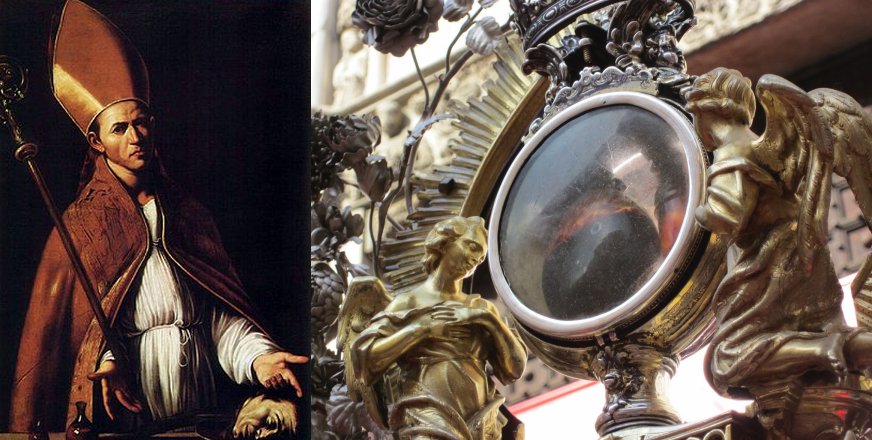
“The Neapolitans honour this Saint as the principal Patron of their City and nation and the Lord Himself has continued to honour him, by allowing many miracles to be wrought through his intercession, particularly when the frightful eruptions of Mount Vesuvius, have threatened the City of Naples with utter destruction.
While the Relics of St Januarius were being brought in procession towards this terrific volcano, the torrents of lava and liquid fire which it emitted have ceased, or turned their course from the City. But, the most stupendous miracle and that which is greatly celebrated in the Church, is the liquefying and effervescence, of this blessed Martyr’s blood whenever the Relic Vials are brought into the sight of his head.
This miracle is renewed many times in the year, in the presence of all who desire to witness it; yet, some heretics have endeavoured to throw a doubt upon its authenticity by frivolous and incoherent explanations but, no-one can deny the effect to be miraculous, unless he be prepared to question the evidence of his senses!”
Tertullian said, “The blood of the Martyrs is the seed of the Church.” Sometimes, that blood is bubbling!
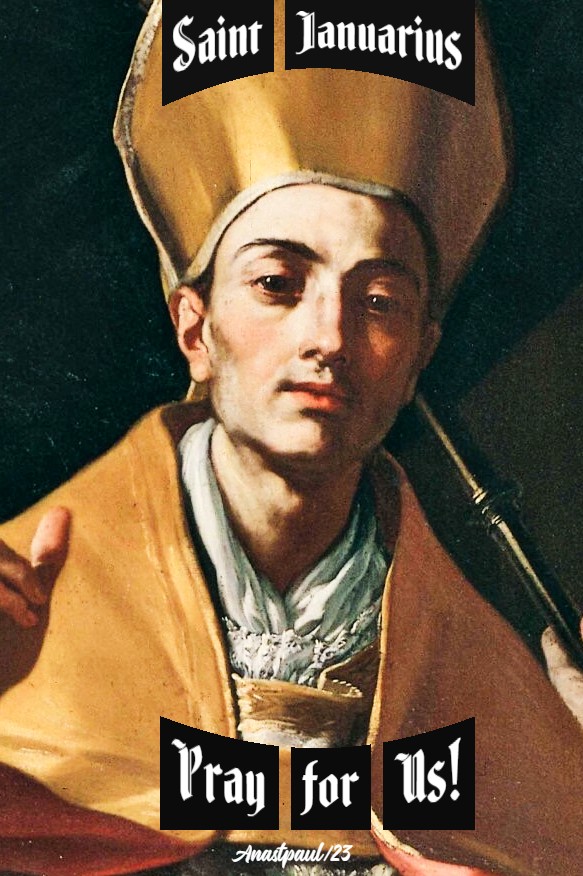

St Januarius of Naples Martyr (Died c 304) (Optional Memorial)
About St Januarius here: https://anastpaul.wordpress.com/2017/09/19/saint-of-the-day-19-september-st-januarius/
Our Lady of La Salette (1846) :
Mary appeared to two small children, Melanie Mathieu and Maximin Giraud, on the mountain of La Salette in the French Alps. She was crying and around her neck was a crucifix, with a hammer and pincers on either side – 19 September 1846. Approved by the diocesan bishop in 1851.
Read the whole story here: https://anastpaul.wordpress.com/2017/09/19/feast-of-our-lady-of-la-salette-19-september/
St Alonso de Orozco Mena O.S.A. (1500 – 1591)
St Arnulph of Gap
St Carolus Hyon Song-Mun
St Constantia of Nocera
St Desiderius of Pozzuoli
St Emily de Rodat
St Eustochius of Tours
St Felix of Nocera
St Festus of Pozzuoli
St Goeric of Metz
Bl Mary de Cerevellon
St Pomposa
St Sequanus
St Sosius of Puzzuoli
St Theodore of Canterbury
St Trophimus of Synnada
—
Martyrs of Antioch – (3 saints): Christians imprisoned, tortured and executed in various ways in the persecutions of Emperor Probus; some names have come down to us – Dorymedon, Sabbatius and Trophimus. c 277 at Antioch (in modern Turkey).
Martyrs of Phunon – (4 saints): Four bishops in Egypt who were sentenced to forced labour in a rock quarry and martyred in the persecution of Diocletian. Noted for celebrating Mass in prison. – Elias, Nilus, Patermuzio and Peleus. They were burned to death in 310 at Phunon, near Petra in Palestine.
Martyred in the Spanish Civil War:
• Blessed Consuelo Aguiar-Mella Díaz
• Blessed Herman José Fernández Sáenz
• Blessed Juan Pérez Rodrigo
• Blessed Lucas Martín Puente
• Blessed María de La Encarnación de La Yglesia de Varo
• Blessed María Dolores Aguiar-Mella Díaz
• Blessed Miguel Faúndez López
• Blessed Sebastián Obeso Alario
NOVENA to St Padre Pio/St Pius of Pietrelcina – DAY FIVE – 18 September
St Padre Pio you have said:
St Therese of the Child Jesus used to say, “I don’t want to choose either to die or to live but let Jesus do as He likes with me.” I see clearly that this is the image of all souls who are stripped of self and filled with God… What St Therese has said ought to be said by every soul inflamed with love of God.
Let us Pray:
Gracious God, You generously blessed Your servant, Padre Pio, with the gifts of the Spirit.
You marked his body with the five wounds of Christ Crucified,
as a powerful witness to the saving Passion and Death of Your Son
and as a stirring inspiration to many people of Your infinite mercy, forgiveness and love.
Through his powerful intercession, many who suffered were healed of sickness and disease.
Endowed with the gift of discernment, he could read people’s hearts.
With dignity and intense devotion, he celebrated daily Mass,
inviting countless men and women to a greater union with Jesus Christ,
in the Sacrament of the Holy Eucharist.
Gracious God, St Pio lived totally for You
teach us too this great act of self-giving and complete oblation.
Through the intercession of Saint Pio,
we confidently beseech You to to grant us the grace of
………………. (state your petition here).
Help us to imitate his example of prayerful holiness and compassion,
so that we, too, may faithfully follow the Risen Lord
and one day rejoice in the Kingdom,
where You live and reign forever and ever.
Amen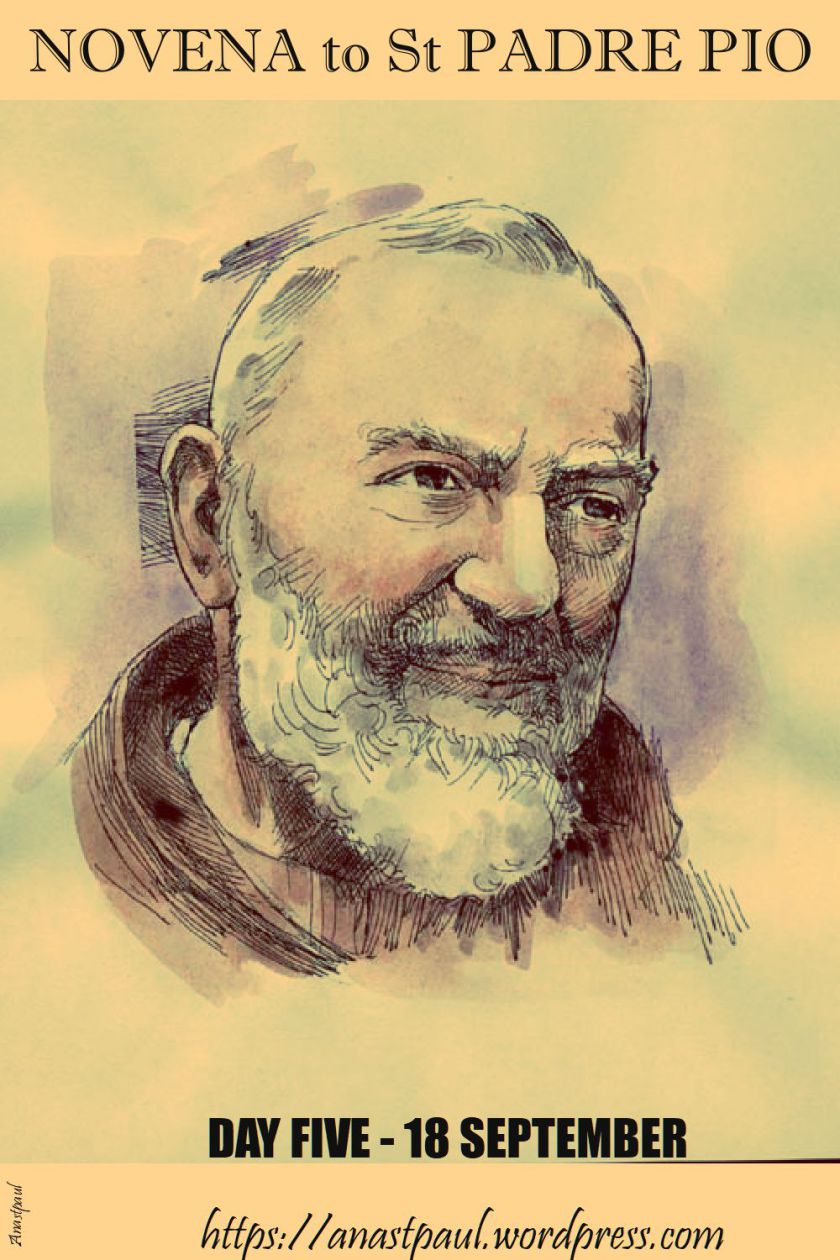
St Ariadne
St Dominic Trach Doai
St Eumenius Thaumaturgus
St Eustorgius of Milan
St Ferreolus the Tribune
St Ferreolus of Limoges
St Hygbald
St Irene of Egypt
St Joseph of Cupertino O.F.M. Conv. (1603-1663)
All about the this holy Flying Saint here: https://anastpaul.wordpress.com/2017/09/18/saint-of-the-day-18-september-st-joseph-of-cupertino-o-f-m-conv-1603-1663/
St Józef Kut
St Juan Macias O.P. (1585-1645)
St Oceano of Nicomedia
St Richardis of Andlou
St Sophia of Egypt
—
Martyred in the Spanish Civil War:
• Blessed Carlos Eraña Guruceta
• Blessed Fernando García Sendra
• Blessed Jacinto Hoyuelos Gonzalo
• Blessed Jesus Hita Miranda
• Blessed José García Mas
• Blessed José María Llópez Mora
• Blessed Justo Lerma Martínez
• Blessed Salvador Chuliá Ferrandis
• Blessed Salvador Fernández Pérez
• Blessed Vicente Gay Zarzo
• Blessed Vicente Jaunzarás Gómez
Our Morning Offering – 4 September
The prayer below, was written by Saint Thomas More while he was imprisoned in the Tower of London, awaiting execution by King Henry VIII.
Give me the grace, good Lord!
By St Thomas More (1478-1535)
Give me the grace, good Lord.
To set the world at naught.
To set the mind firmly on You
and not to hang upon the words of men’s mouths.
To be content to be solitary.
Not to long for worldly pleasures.
Little by little utterly to cast off the world
and rid my mind of all its business.
Not to long to hear of earthly things
but that the hearing of worldly fancies
may be displeasing to me.
Gladly to be thinking of God,
piteously to call for His help.
To lean into the comfort of God.
Busily to labour to love Him.
To know my own vileness and wretchedness.
To humble myself under the mighty hand of God.
To bewail my sins and, for the purging of them,
patiently to suffer adversity.
Gladly to bear my purgatory here.
To be joyful in tribulations.
To walk the narrow way that leads to life.
To have the last thing in remembrance.
To have ever before my eyes,
my death that is ever at hand.
To make death no stranger to me.
To foresee and consider the everlasting fire of Hell.
To pray for pardon before the judge comes.
To have continually in mind,
the passion that Christ suffered for me.
For His benefits unceasingly to give Him thanks.
To buy the time again that I have lost.
To abstain from vain conversations.
To shun foolish mirth and gladness.
To cut off unnecessary recreations.
Of worldly substance, friends, liberty, life and all,
to set the loss at naught, for the winning of Christ.
To think my worst enemies my best friends,
for the brethren of Joseph could never have done him
so much good with their love and favour,
as they did him with their malice and hatred.
These minds are more to be desired of every man,
than all the treasures of all the princes and kings,
Christian and heathen,
were it gathered and laid together, all in one heap.
Amen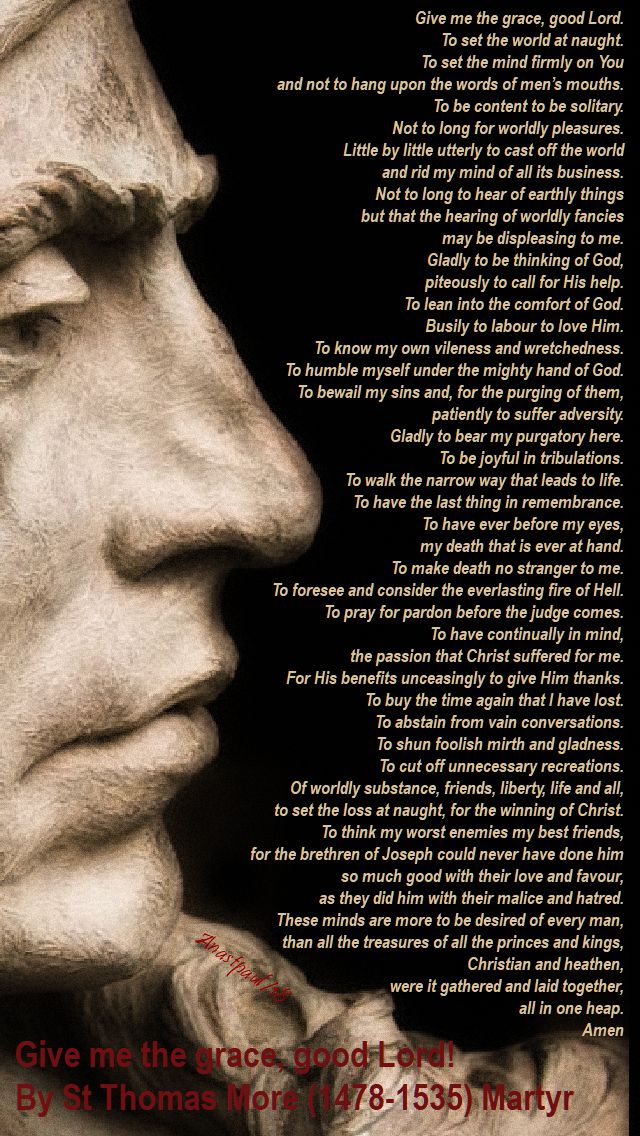
Quote of the Day – 2 September – The Memorial of St Solomon le Clercq FSC (1745-1792) Martyr
“I’m Solomon Le Clercq
and I want,
I want to sign,
to say that I’ll die,
I’ll die a happy man
if Jesus is at my side
and I say:
I want to live for Jesus,
I want!
I want to die for Jesus,
I want!
To live and to die
a real man of God!
To live and die a real
Brother from God!”

Quote of the Day – 1 September
The 4th World Day of Prayer for the Care of Creation
Dear mother earth, who day by day
Unfolds rich blessing on our way,
O praise God! Alleluia!
The fruits and flowers that verdant grow,
Let them His praise abundant show.
O praise God, O praise God,
Alleluia, Alleluia, Alleluia.
(Translated by William H Draper) (Image by St Francis by Albert Chevallier Tayler)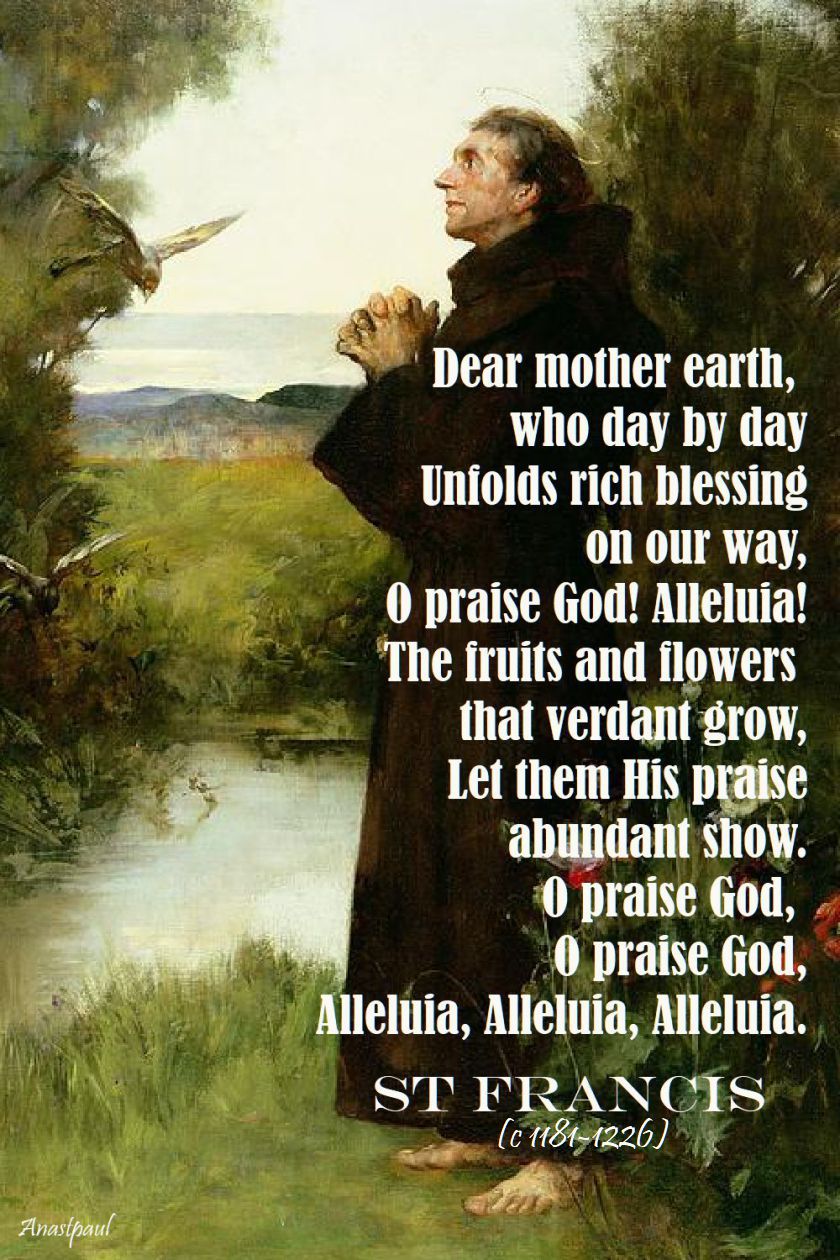
Open House….Conversations with …. 30 August
Little weekly reflections from those ‘minds alive’, our friends and intercessors waiting on our arrival.
Mother, how do we live by example?
Thomas Malcolm Muggeridge was a British journalist and media celebrity who did not care much about God and religion. But…he saw compassion actualised before his very eyes through the person of Mother Teresa and that made him do something he had sworn he would never do – he became a Catholic!
Muggeridge had an assignment to write about Mother Teresa. Travelling to India, he thought the trip was just the usual work but the amazing thing was, in the course of his talks and days of observation of the little nun, he experienced a complete conversion of his heart, his mind, his soul, his very being.
He confessed: “Words cannot express how much I owe her, she showed me Christianity in action. She showed me the power of love. She showed me how one loving person can start a tidal wave of love that can spread to the entire world!”
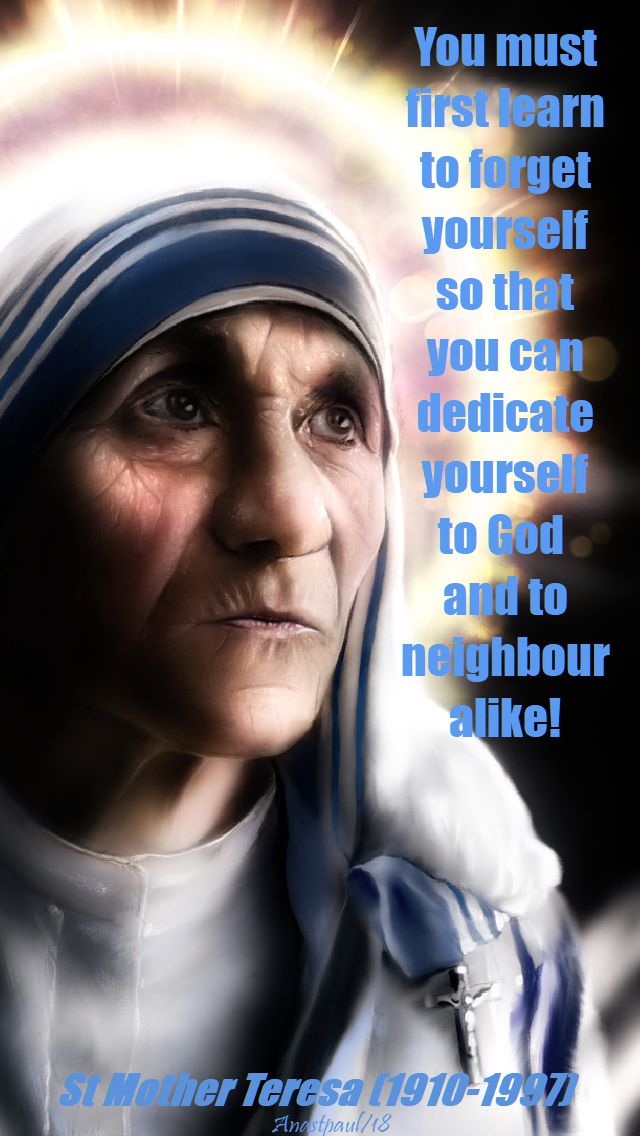
“You must first learn to forget yourself
so that you can dedicate yourself to God and to neighbour alike!”
St Mother Teresa (1910-1997)
Our Morning Offering – 28 August – The Memorial of St Edmund Arrowsmith S.J. (1585 – 1628) – Martyr
Your Soldiers
Blessed John Henry Newman (1801-1890)
O Lion of the Tribe of Judah,
the Root of David,
Who fights the good fight
and has called on all men to join You,
give Your courage and strength
to all Your soldiers over the whole earth,
who are fighting under the standard of Your Cross.
Be with Your missionaries in pagan lands,
put right words into their mouths,
prosper their labours
and sustain them under their sufferings
with Your consolations
and carry them on,
even through torments
and blood (if it be necessary)
to their reward in Heaven.
Amen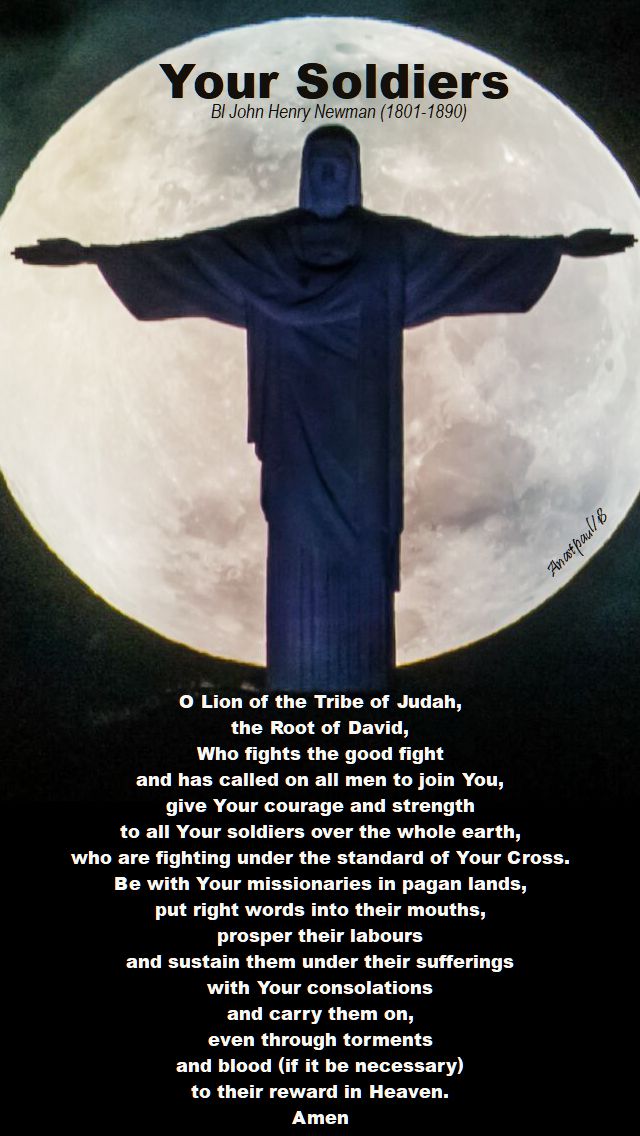
St Joseph Calasanz Sch.P. (1557-1648) (Optional Memorial)
St Louis IX (1214-1270) King of France (Optional Memorial)
All about this wonderful Saint here: https://anastpaul.wordpress.com/2017/08/25/saint-of-the-day-25-august-st-louis-king-of-france/
St Alessandro Dordi
Bl Andrea Bordino
St Andreas Gim Gwang-Ok
St Aredius of Limoges
St Ebbe the Elder
Bl Eduard Cabanach Majem
St Eusbius of Rome
Bl Fermí Martorell Vies
Bl Francesc Llach Candell
St Genesius of Arles
St Genesius of Brescello
St Genesius of Rome
St Gennadius of Constantinople
St Geruntius of Italica
St Gregory of Utrecht
St Gurloes of Sainte Croix
St Hermes of Eretum
St Hunegund of Homblieres
St Julian of Syria
St Julius of Eretum
Bl Ludovicus Baba
Bl Ludovicus Sasada
Bl Luis Cabrera Sotelo
St Maginus
St Marcian of Saignon
Bl María del Tránsito de Jesús Sacramentado
Bl Maria Troncatti
St Menas of Constantinople
Bl Miguel Carvalho
St Nemesius of Rome
St Patricia of Naples
Bl Paul-Jean Charles
Bl Pedro de Calidis
St Peregrinus of Rome
St Petrus Gim Jeong-Duk
St Pontian of Rome
St Severus of Agde
St Thomas of Hereford
St Vincent of Rome
—
Martyred in the Spanish Civil War:
• Blessed Antoni Prenafeta Soler
• Blessed Antoni Vilamassana Carulla
• Blessed Enric Salvá Ministral
• Blessed Florencio Alonso Ruiz
• Blessed Fortunato Merino Vegas
• Blessed Josep Maria Panadés Terré
• Blessed Juan Pérez Rodríguez
• Blessed Luis Gutiérrez Calvo
• Blessed Luis Urbano Lanaspa
• Blessed Manuel Fernández Ferro
• Blessed Miguel Grau Antolí
• Blessed Pere Farrés Valls
• Blessed Ramon Cabanach Majem
• Blessed Salvi Tolosa Alsina
• Blessed Vicente álvarez Cienfuegos

 AnaStpaul
You must be logged in to post a comment.