He is Risen, Tell the Story By Father Willard F Janusch (1930-2018)
He is risen, tell the story to the nations of the night; from their sin and from their blindness, let them walk in Easter light. Now begins a new creation, now has come our true salvation. Jesus Christ, the Son of God!
Mary goes to tell the others of the wonders she has seen; John and Peter come a’running what can all this truly mean? O Rabboni, Master holy, to appear to one so lowly! Jesus Christ, the Son of God!
He has cut down death and evil, He has conquered all despair; He has lifted from our shoulders, all the weight of anxious care. Risen Brother, now before you, we will worship and adore You. Jesus Christ, the Son of God!
Now get busy, bring the message, so that all may come to know there is hope for saint and sinner, for our God has loved us so. Ev’ry Church bell is a’ringing, ev’ry Christian now is singing. Jesus Christ, the Son of God!
A Parish Priest, Seminary Professor and prolific Musician and Hymnist, Fr Willard wa Ordained in 1956 and died at the age of 88 in 2018.
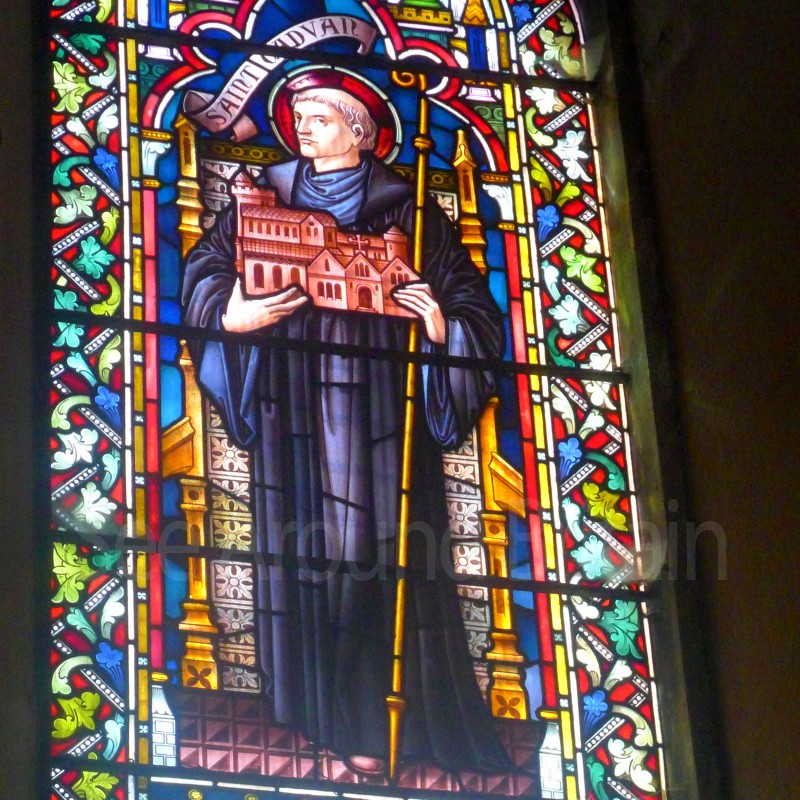
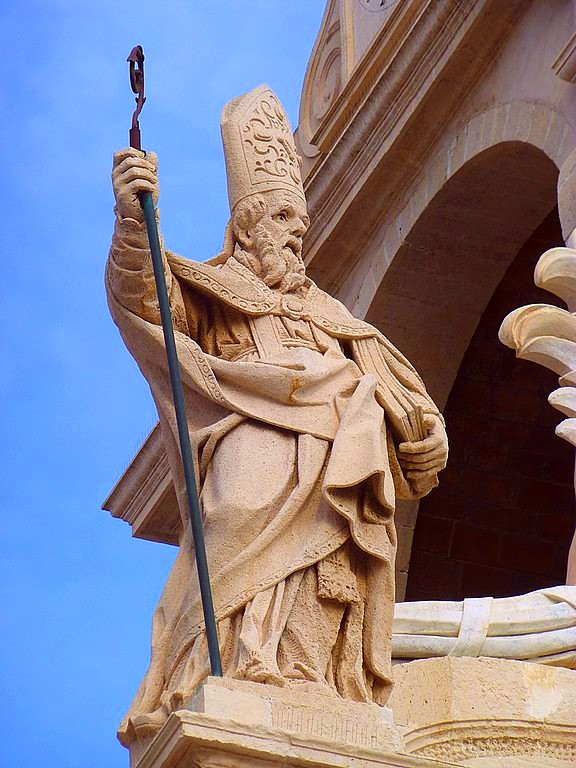
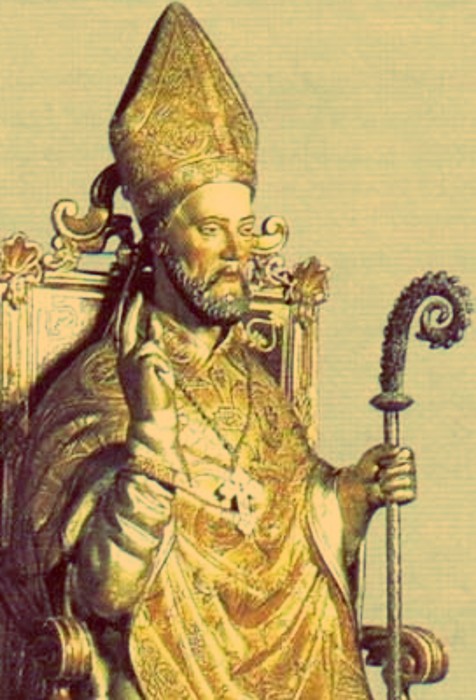
Saint of the Day – 2 April – Saint Nizier of Lyon (c513-573) Archbishop of Lyon, He served from 552 or 553 until his death. Nizier was a man of ascetic lifestyle, his care for the poor and his promotion of Church music have since been remembered and praised. Died in 573 of natural causes. Also known as – Nicet, Nicetus, Nicetius, Nicezio, Nikita.
The Roman Martyrology reads: “At Lyon, St Nizier, renowned for his saintly life and miracles.”
Nizier was born in Burgundy (or Geneva) in 513, into a noble Senatorial family. His father renounced the Bishopric of Geneva. He iwas the nephew of St Sacerdos, Bishop of Lyon and the great-uncle of St Gregory of Tours, who later wrote Nizier’s Vita.
Ordained as a Priest around 543 by St Agricola the Bishop of Chalon-sur-Saône, he was appointed as the Bishop of Lyon on 16 February 552 (or 19 January 553) and thus succeeded his uncle who had requested his appointment of the King.
He presided over a Council in Lyon in 566 of the Provinces of Lyons and Vienne. On this occasion he would have received the title of Archbishop from the Pope.
In his youth he had been healed of a facial tumour through the intercession of Saint Martin of Tours. Having become a Priest, he continued to work with his hands so as not to be dependent on anyone and to be able to support the poor. His nephew, St Gregory of Tours, wrote his biography describing how he served the Church of Lyon for twenty years, with supernatural charity, hastening to forgive everyone. He himself knew how to recognise and regret his sometimes annoying liveliness.
He fought to put Clerics under sole Ecclesiastical jurisdiction… He was a promoter of Church Music, the ‘friend of concord and peace‘ and revered for his generosity towards the poor of his time.
Nizier was buried in the Church of the Apostles (now St Nizier) at Lyon, where his Tomb is blessedly still preserved and the source of many miracles. Several localities iand Churches n the region have come under his patronage.
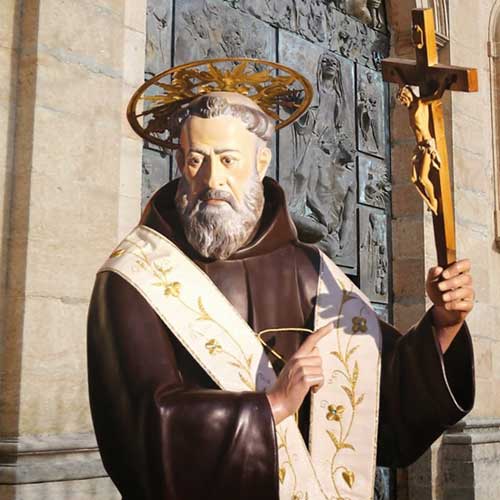
St Francis of Paola O.M. (1416-1507) known as “Saint Francis the Fire Handler” – Confessor, Monk and Founder, inspired with the Gift of Prophecy and still called the “Miracle-Worker” Apostle of the poor, Peacemaker. He was an Italian mendicant Friar and the Founder of the Order of Minims. Unlike the majority of founders of men’s religious orders and like his Patron Saint, Francis was never ordained a priest. His Body was Incorrupt until destroyed in the French Revolution. He was Canonised in 1519 by Pope Leo X. St Francis’s Life: https://anastpaul.wordpress.com/2018/04/02/saint-of-the-day-2-april-st-francis-of-paola-o-m-1416-1507/
St Abundius of Como Bishop and Confessor St Agnofleda of Maine St Appian of Caesarea (c287-306) Martyr, Layman
St Bronach of Glen-Seichis St Constantine of Scotland St Ebbe the Younger St Eustace of Luxeuil St Gregory of Nicomedia St John Payne
Blessed Leopold of Gaiche OFM Cap (1732-1815) Priest and Friar of the Order of Friars Minor of the Capuchin branch, Missionary Preacher in Italy, called “The Apostle of Umbria.” He became renowned for wearing a crown of thorns. He served in a position of power in the Franciscan Order in the Umbrian region in which he supported strong adherence to the Rule of Saint Francis. Biography: https://anastpaul.com/2022/04/02/saint-of-the-day-2-april-blessed-leopold-of-gaiche-ofm-cap-1732-1815/
St Lonochilus of Maine St Musa of Rome St Nizier of Lyon (c513-573) Bishop St Rufus of Glendalough St Theodora of Tiria
Martyrs of Africa – 10 Saints: A group of ten Christians Martyred together in Africa, date unknown. We have six of their names – Marcellinus, Procula, Quiriacus, Regina, Satullus and Saturnin but no other information has survived.
Martyrs of Thessalonica – 16 Saints: Sixteen Christians who were Martyred together in Thessalonica in Greece, date unknown. We know nothing else about them but 13 of their names – Agapitus, Agatophus, Cyriacus, Dionysius, Gagus, Julianus, Mastisius, Proculus, Publius, Theodoulus, Urbanus, Valerius and Zonisus.
The Month of April is dedicated both to devotion to the Resurrection of Our Lord Jesus Christ and to the Holy Eucharist – the proof of the promise of the love of God and of ETERNAL LIFE.
“My brethren, when was it that the Lord made Himself recognised? — When He broke the bread. — So, we ourselves are convinced, too, that when we break the bread, we recognise the Lord. — If He had not wanted to be recognised until that moment, it was for our sakes, we, who were not to see Him in the flesh but who were yet to eat Him in the flesh. ” – St Augustine (354-430) Father, Doctor of Grace
“I am the Resurrection and the Life, he who believes in Me, although he be dead, shall live.”
John 11:25
“I am the Living Bread Who came down from Heaven. If any man eat of this Bread, he shall live forever and the Bread that I will give, is My Flesh, for the Life of the world.”
John 6:51-52
“For His Body, has been given to you under the appearance of bread and His Blood, under the appearance of wine, so that, when you have partaken of the Body and Blood of Christ, you might be One Body and One Blood with Him. So shall we become Christ-bearers [“Christophers”]. His Body and Blood are diffused through all our members – see, then, how we become participants in the Divine Nature!”
St Cyril of Jerusalem (c 313-386) Father and Doctor of theChurch
Thought for the Day – 1 April– The Spiritual Combat (1589) – Dom Lorenzo Scupoli OSM (c1530-1610)
“None shall be crowned who has not fought well.” 2 Tim 2: 5
XXXVIII: … Esteem All Opportunities of Fighting for the Acquisition of Virtue (Part One)
“I shall not be contented to have you simply NOT shun the opportunities which may present themselves of attaining the different virtues, – for, I would have you esteem them as goods of great price and value – seek and embrace them joyfully whenever they present themselves and, account those dearest and most precious which are most repugnant to nature!
To this end, by the Divine assistance, you will be enabled to attain, by impressing strongly upon your mind, the following considerations: Firstly – that opportunities are means adapted, nay, necessary, for the attainment of virtue. When, therefore, you pray to the Lord for any virtue, you at the same time ask for occasions to exercise it; or else would your prayer be vain and you would be contradicting yourself and tempting your God, Who does not usually give patience without tribulation, nor humility without humiliations!
The same may be said of all virtues which are most surely attained by means of Crosses. And the more painful these are, the more effectually do they aid us and, therefore, the more acceptable and welcome should they be. For acts of virtue performed in such circumstances, are more generous and energetic and open to us, an easier and more speedy way to virtue.
But, we ought also, to value and not to leave without its appropriate exercise, the most trifling occasion, though it be but a word or a look which crosses our will – because, the acts thus produced, are more frequent, though less intense, than those called forth by circumstances of great difficulty.”
“This is the day which the Lord hath made, let us be glad and rejoice therein.”
Psalm 117:24.
“If we follow Christ closely we shall be allowed, even on this earth, to stand, as it were, on the threshold of the heavenly Jerusalem and enjoy the contemplation, of that everlasting Feast, like the blessed Apostles, who, in following the Saviour as their Leader, showed and still show, the way to obtain the same gift from God. They said – See, we have left all things and followed Thee. We too follow the Lord and we keep His Feast by deeds rather than by words.”
St Athanasius (297-373) Father & Doctor of the Church
“For Christ is our Salvation. For He is our Salvation, Who was wounded for us and fastened with nails to the Wood and taken down from the Wood and laid in the sepulchre. But He rose from the sepulchre and although His Wounds were healed, the Scars remained. For this He judged expedient for His Disciples that He should keep His Scars, to heal the wounds of their soul.”
St Augustine (354-430) Father and Doctor of Grace
“All I want to know is Christ and the power flowing from His Resurrection!”
One Minute Reflection – 1 April – “The Month of the Resurrection and the Blessed Sacrament” – Easter Monday – Acts 10:37-43, Luke 24:13-35 – Scripture search here: https://www.drbo.org/
“Stay with us!” … Luke 24:29
REFLECTION – “My brethren, when was it that the Lord made Himself recognised? When He broke the bread. So, we ourselves are convinced, too, that when we break the bread, we recognise the Lord. If He had not wanted to be recognised until that moment, it was for our sakes, we, who were not to see Him in the flesh but who were yet to eat Him in the flesh. So you, who believe in Him, whoever you are, you who do not bear the name of Christian in vain, who do not come casually into Church, who hear the Word of God in fear and hope – for you the broken bread will be a consolation. Our Lord’s absence is not a real absence. Trust, be faithful and He is with you, even if you do not see Him.
When the Lord hailed them, the disciples had no faith. They did not believe in His Resurrection, they did not even hope that He might be raised. They had lost faith, they had lost hope. They were dead men walking alongside a living one, they were walking, dead, with Life itself! Life was walking with them but, in their hearts, Life was not as yet renewed.
And do you long for Life? Imitate the disciples and you will recognise the Lord. They offered hospitality, our Lord seemed determined to proceed on His way but they held Him back … You too, then, keep hold of the stranger if you wish to recognise your Saviour! … Learn where to look for the Lord, where to possess Him, where to recognise Him – in breaking bread with Him!” … St Augustine (354-430) Bishop of Hippo, Father and Doctor of the Church
PRAYER – O God, Who dost heal the sick world by the solemn gladness of the Passover, continue, we beseech Thee, to pour forth Thine heavenly gifts upon Thy people, until the same shall bring them into perfect liberty and finally, avail them unto life everlasting .Through Jesus Christ, Thy Son our Lord, Who lives and reigns with Thee, in the unity of the Holy Ghost, God, world without end. Amen (Collect).
Our Morning Offering – 1 April – “The Month of the Resurrection and the Blessed Sacrament” – Easter Monday
Easter Prayer of Praise By St Gregory the Great (540-604) Pope, Father and Doctor of the Church
It is only right, with all the powers of our heart and mind, to praise Thee Father and Thine Only-Begotten Son, Our Lord Jesus Christ. Dear Father, by Thy wondrous condescension of Loving-Kindness toward us, Thy servants, Thou gave us Thy Son. Dear Jesus Thou paid the debt of Adam for us, to the Eternal Father by Thy Blood poured forth in Loving-Kindness. Thou cleared away the darkness of sin by Thy magnificent and radiant Resurrection. Thou broke the bonds of death and rose from the grave as a Conqueror. Thou reconciled Heaven and earth. Our life had no hope of Eternal Happiness before Thou Redeemed us. Thy Resurrection has washed away our sins, restored our innocence and brought us joy. How inestimable is the tenderness of Thy Love! Amen
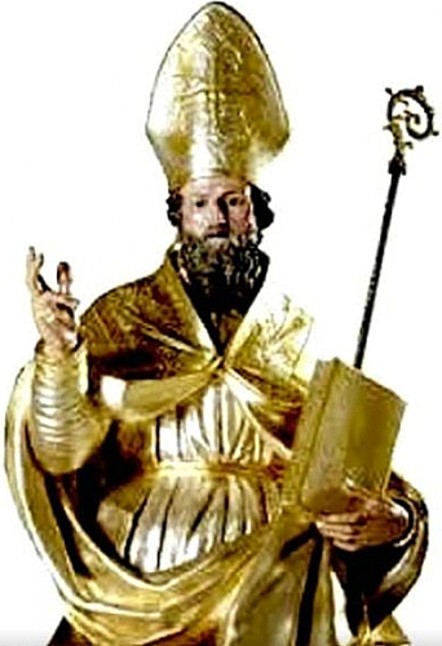
Saint of the Day – 1 April – Saint Valéry of Leucone (c565-c619) Priest, Abbot, Founder of the Abbey of Saint-Valery-sur-Somme, a man of Miracles and Visions. Born around 565 in the Auvergne in France and died on 1 April c619 (?) in Leuconay, today St-Valéry-sur-Somme. Patronages – of horticulturists and gardeners,of Death Row Prisoners,fishermen and of of Saint-Valéry-sur-Somme. Also known as – Valery of Leuconay, Valery of Amiens, Gualaric… Valarico… Valerico… Valerio… Walaric… Walarich… Walarico…Walaricus… Waleric… Walerico… Walericus… Walric… Additional Memorials – 2 April (enshrining of Relics) 21 May (translation of Relics at the Quintinus Basilica) 24 August (translation of Relics at the Bertinus Monastery) 12 December (translation of Relics in Amiens, France).
The Roman Martyrology reads: “At Amiens, the Abbot, St Valéry, whose Tomb is made illustrious by frequent miracles.”
Valéry was born in the Auvergne into a peasant family. Nearby was a school for the children of the wealthy citizens and Valéry begged a teacher to teach him the letters which the teacher gladly did. He could soon both read and write and his first project was to write the entire Book of Psalms and with this in his possession, he used the time tending the sheep to memorise all the Psalms
Leaving his family home, finally having convinced his father to allow him to go, he joined the Abbey of Autumo., where apparently an uncle was a Monk, He later moved to the Abbey of Saint-Germain d’Auxerre and finally, the Abbey of Luxeuil under the famous Abbot Columban. At Luxeui,l he exelled and was honoured too for his horticultural skills. His ability to protect his vegetables from insects was regarded as miraculous.
When Theuderic II, King of Burgundy expelled St Columban from his domains, Valéry and a fellow Monk named Waldolanus, left the kingdom to preach the Gospel. He eventually settled down as a Hermit at a place called Leuconay near the mouth of the Somme River. A community of disciples grew up around him.
In 613, Valéry founded a Monastery in Leuconay – today’s St-Valéry-sur-Somme – whose Monks lived according to Columban’s Rule. He converted the population to Christianity by – like St Boniface later in Hesse – having a tree felled which had been worshiped by the pagans. Tradition tells how he cured a lame man, St Blitmund, who became the Abbot of the Monastery after Valéry’s death.
The Monastery was built on the site of the former pagan tree. The village which developed around the Monastery bears our Saint’s name — Saint-Valery-sur-Somme.
Valéry died on 1 April around 619 in Leuconay. Valéry’s Relics were taken to Corbie by Huguenots but were amazingly recovered and returned to Leuconay on 12 December which is a day greatly celebrated.
The Luxeuil Monastery was abolished in 1790 during the French Revolution, the Abbey Church of St-Colomban is now a Parish Church and a school is housed in the Monastery buildings.
Blessed Abraham of Bulgaria Blessed Alexander of Sicily Saint Anastasio Blessed Antonius of Noto Saint Berhard of Amiens Blessed Bernhardin of Noto
Saint Celsus of Armagh (c1080-1129) Archbishop of Armagh, Reformer. He was responsible for the change from lay control of the Church in Ireland, to a Clerical-Episcopal model. Himself a hereditary lay administrator, he decided to seek Priestly Ordination and be embraced celibacy in order that the reform introduced by Pope St Gregory VIII on the Continent, could take effect also in Ireland. Biography: https://anastpaul.com/2023/04/01/saint-of-the-day-1-april-saint-celsus-of-armagh-c1080-1129-archbishop/
Saint Dodolinus of Vienne Blessed Enrico Alfrieri OFM (1315-1405) Vicar General of the Friar’s Minor Blessed Gerard of Sassoferrato Saint Gilbert de Moray Blessed Giuseppe Girott Blessed Hugh of Bonnevaux
Saint Hugh of Grenoble (1053-1232) Bishop, Reformer, in the foundation of the Carthusian Order, founded a Monastery at Chalais. The Roman Martyrology reads: “In Grenoble in Burgundia, in today’s France, St Hugh, Bishop, who worked for the reform of the customs of the clergy and the people and, during his Episcopate, ardently loving solitude, gave St Bruno at the time, his teacher and to his companions, the hermitage of Chartroux, of which he was also the first Abbot. He ruled his Church for about fifty years with the thoughtful example of his charity.” The life of another St Hugh: https://anastpaul.com/2022/04/01/saint-of-the-day-1-april-saint-hugh-of-grenoble-1053-1232/
Saint Jacoba of Rome Blessed John Bretton Saint Leucone of Troyes
Saint Melito Sardis (Died c 180) Early Church Father, Bishop of Sardis (Died c 180), ecclesiastical Writer, Confessor, Apologist, Defender of Christ’s dual nature. Saint Melito is believed to have been martyred around the time he wrote his apology to Marcus Aurelius circa 180. Biography: https://anastpaul.com/2019/04/01/saint-of-the-day-1-april-st-melito-died-c-180/
Blessed Nicolò of Noto Saint Prudentius of Atina Saint Tewdrig ap Teithfallt Saint Theodora of Rome Saint Valéry of Leucone (c565-c619) Priest, Abbot Saint Venantius of Spalato Blessed Vinebault
Apostles of Picardy – Martyrs: Saint Caidoc Saint Fricor
Martyrs of Thessalonica – 6 Saints: A group of Christians Martyred. We know nothing about them but the names Alexander, Dionysius, Ingenianus, Panterus, Parthenius and Saturninus. Martyred in Thessalonica, Greece, date unknown.
Quote/s of the Day – 31 March – Easter Sunday, Alleluia, He is Truly Risen, Alleluia!
Regina Caeli Laetari Eastertide from Holy Saturday until Trinity Sunday (in case you forget to replace the praying of the Angelus).
Anthem to the Blessed Virgin
Regina Caeli Laetari Queen of heaven
O Queen of Heaven, rejoice, Alleluia. For He Whom thou didst merit to bear, Alleluia. Hath risen as He said, Alleluia. Pray for us to God, Alleluia.
V. Rejoice and be glad, O Virgin Mary! Alleluia. R. For the Lord is truly risen, Alleluia.
Let us pray
O God, Who by the Resurrection of Thy Son, Our Lord Jesus Christ, hast vouchsafed to make glad the whole world, grant, we beseech Thee, that, through the intercession HIs Holy Mother, the Blessed Virgin Mary, we may attain the joys of eternal life. Through the same Christ our Lord. Amen
There is a venerable tradition connected with this joyous Anthem. It is related that a fearful pestilence raged in Rome, during one of the Easters of the Pontificate of St. Gregory the Great. In order to propitiate the anger of God, the holy Pope prescribed a public procession of both people and clergy, in which was to be carried the portrait of our Blessed Lady painted by St Luke.
The procession was advancing in the direction of Saint Peter’s and as the holy Picture, followed by the Pontiff, (it is said that he processed with bare feet), was carried along, the atmosphere became pure and free from pestilence. Having reached the bridge which joins the City with the Vatican, a choir of Angels was heard singing above the Picture and saying: “Rejoice, O Queen of heaven, alleluia! for He whom thou deservedst to bear, alleluia! hath risen, as He said, alleluia!” As soon as the heavenly music ceased, the saintly Pontiff took courage, and added these words to those of the Angels: “Pray to God for us, alleluia!”
Thus was composed the Paschal Anthem to our Lady. Raising his eyes to heaven, Gregory saw the destroying Angel standing on the top of the Mole of Hadrian and sheathing his sword.
In memory of this apparition, the Mole was called the Castle of Saint Angela and on the dome was placed an immense statue representing an Angel holding his sword in the scabbard.
( “The Sovereign Pontiff Benedict XIII, by a brief, Injuntae nobis, 14 September1724, amended by the Sacred Penitentiary Apostolic, 20 February 1933, granted a Plenary Indulgence, once a month, to all the faithful who, everyday, in the morning (6.00), at noon and in the evening at sunset (6.00), shall say, devoutly, the Angelus Dominie, with the Hail Mary, three times, or at Eastertide the Regina Caeli, on any day when, being truly penitent, after Confession and Communion, they shall pray for peace and union among Christian Princes, for the extirpation of heresy and for the triumph of Holy Mother Church. Also an indulgence of ten years, on all the other days in the year, ever time that they shall devoutly say these prayers.”)
Regina caeli, laetare, Alleluia.
Qua quem meruisti portare, Alleluia. Resurrexit, sicut dixit, Alleluia. Ora pro nobis Deum, Alleluia.
V. Gaude et laetare, Virgo Maria, Alleluia. R. Qua surrexit Dominus vere, Alleluia.
Oremus
Deus, qui per resurrectionem Filii tui, Domini nostri, Jesu Christi, mundum laetificare dignatus es, praesta, quaesumus, ut per ejus Genitricem Virginem Mariam perpetuae capiamus gaudia vitae: per eumdem Christum, Dominum nostrum. Amen
“This is the day which the Lord hath made, let us be glad and rejoice therein.” Psalm 117:24
Wishing you a Holy and Joyful Easter!
Thank you for accompanying me on our Lenten journey, I pray you have been inspired by our Saints and have grown in faith, hope and love. Today we rejoice and continue with joy singing in our hearts through the Octave as we celebrate this great Feast! May the Risen Lord fill your hearts with His infinite love, may He protect your faith and your families.
A special word of gratitude to the benefactors of “Breathing Catholic.” 💘🤗 Because of YOU, we are able to travel onward and upward! May the Beloved bless you abundantly.
“Live joyfully! Our Lord is looking lovingly down upon you! ”
Thought for the Day – 31 March – Meditations with Antonio Cardinal Bacci (1881-1971)
The Redemption
“In conclusion, let us say this prayer of St Alphonsus de Liguori (1696-1787): “My soul, look at this Crucified Man … see how the arms extend to embrace you, how the head bows forward to give you the kiss of peace. See how His side is open to receive you. What have you to say? Such a good and loving God deserves to be loved. O my Jesus! Adorable Jesus! O Love of my soul! How can I ever forget Thee? How can I ever love anything apart from Thee! O suffering Jesus, may the memory of Thee ever remain in my heart!”
Our Lenten Journey with the Angels and the Saints – 31 March – Easter Sunday, Alleluia, He is Truly Risen, Alleluia! – 1 Corinthians 5:7-8, Mark 16:1-7 – Scripture search here: https://www.drbo.org/
“This is the day the Lord hath made, let us be glad and rejoice therein.” Psalm 117:24
“You seek Jesus of Nazareth, Who was Crucified. He is risen, He is not here.” Mark 16:6
On This Day … Day of Resurrection Day of Our Joy!
St Hesychius of Jerusalem (Died c450) Priest, Exegete, Scholar, Monk, Hermit, Writer.
“The festival we celebrate today, is one of victory—the victory of the Son of God, King of the whole universe. On this day, the devil is defeated by the Crucified One; our race is filled with joy by the Risen One. In honour of my resurrection in Christ, this day cries out:
“In my journey I beheld a new wonder—an open tomb, a Man Risen from the dead, bones exulting, souls rejoicing, men and women refashioned, the heavens opened and powers crying out: ‘Lift up your gates, you princes; be lifted up, you everlasting doors that the King of Glory may enter in.’
“On this day, I saw the King of Heaven, robed in Light, ascend above the lightning and the rays of the sun, above the sun and the sources of water, above the dwelling place of the angelic powers and the City of Eternal Life.”
On this day, the Divine call is heard, the Kingdom is prepared, we are saved and Christ is adored.
Hidden first in a womb of flesh, He sanctified human birth by His own birth; hidden afterward in the womb of the earth, He gave life to the dead by his Resurrection. Suffering, pain and sighs have now fled away.
For Who has known the mind of God, or Who has been His Counsellor if not the Word made flesh, Who was nailed to the Cross, Who rose from the dead an, Who was taken up into Heaven?
This day brings a message of joy: – it is the day of the Lord’s Resurrection when, with Himself, He raised up the race of Adam. Born for the sake of human beings, He rose from the dead with them.
On this day, Paradise is opened by the Risen One, Adam is restored to life and Eve is consoled.
On this day, the Divine call is heard, the Kingdom is prepared, we are saved and Christ is adored.
On this day, when He had trampled death underfoot, made the tyrant a prisoner and despoiled the underworld, Christ ascended into Heaven as a King in victory, as a Ruler in glory, as an invincible Charioteer.
He said to the Father — here Am I, O God, with the children you have given me and He heard the Father’s reply: “Sit at My Right Hand until I make your enemies your footstool.” To Him be glory, now and forever, through endless ages, amen!” – (Easter Homily: Source chrétiennes 187, 66-69)
One Minute Reflection – 31 March – Easter Sunday, Alleluia, He is Truly Risen, Alleluia! – 1 Corinthians 5:7-8, Mark 16:1-7 – Scripture search here: https://www.drbo.org/
“This is the day the Lord hath made, let us be glad and rejoice therein.” – Psalm 117:24
REFLECTION – “This is the day the Lord hath made; let us be glad and rejoice therein.” (Ps 117:24) Why? Because the sun is no longer darkened and everything is illuminated; the curtain in the Temple is no longer torn, the Church is revealed; we are no longer holding palm branches, we are surrounding the newly baptised.
“This is the day the Lord hath made”… This now is the day in the real sense of the word, the triumphant day, the day consecrated to celebrating the Resurrection, the day when we adorn ourselves with grace, the day when we share the spiritual Lamb, the day when we give milk to those who have just been born, the day when the plan of Providence for the poor is realised. “Let us rejoice and be glad therein.”
This is the day when Adam was freed, when Eve was delivered from her pain, when savage death shuddered, when the power of rocks was broken, when the bars of the tomb were torn away…, when the unchangeable laws of the powers of hell were abrogated, when the heavens were opened because Christ, our Master, rose. This is the day when, for the good of humankind, the green and fertile plant of the Resurrection multiplied its offshoots, all over the world, as in a garden, when the lilies of the newly enlightened opened … when, the crowd of believers rejoices, when the Martyrs’ crowns again grow green. “This is the day the Lord hath made, let us rejoice and be glad therein!” – (Attri) St John Chrysostom (347-407) Father and Doctor of the Church
PRAYER – O God, Who, on this day, through Thine Only-begotten Son, hast conquered death and thrown open to us, the Gate of everlasting life, give effect by thine aid to our desires, which Thou dost anticipate and inspire. Through the same Jesus Christ, Thy Son our Lord, Who lives and reigns with Thee, in the unity of the Holy Ghost, God, world without end. Amen (Collect).
Our Morning Offering – 31 March – Easter Sunday, Alleluia, He is Truly Risen, Alleluia!
O Filii et Filiae Ye Sons and Daughters of the Lord By Jean Tisserand OFM (Died 1497) (The original Hymn comprises the nine stanzas below). Trans. Fr Edward Caswell C.Orat. (1814-1878)
Ye sons and daughters of the Lord, The King of Heaven, the King adored, From death this day Himself restored. Alleluia, Alleluia, Alleluia!
On Sunday morn at break of day The holy women went their way, To see the tomb where Jesus lay. Alleluia, Alleluia, Alleluia!
An Angel clad in white they see, Who sat,and spake unto the three: “Your Lord hath gone to Galilee.” Alleluia, Alleluia, Alleluia!
That night the’ Apostle met in fear, But Christ didst in the midst appear: “My peace,” He saith, “be on thee!” Alleluia, Alleluia, Alleluia!
But Thomas, when of this he heard, Was doubtful of his brethren’s word; Wherefore, again there came the Lord. Alleluia, Alleluia, Alleluia!
“Behold My side, O Thomas, see; My hands, My feet, I show to thee; Not faithless but believing be.” Alleluia, Alleluia, Alleluia!
When Thomas say that wounded side, The truth no longer he denied, “Thou art my Lord and God,” he cried. Alleluia, Alleluia, Alleluia!
Oh, blest are they who have not seen Their Lord and yet believe in Him; Eternal life awaiteth them. Alleluia, Alleluia, Alleluia!
On this Most Holy Day of days, To God your hearts and voices raise In laud and jubilee and praise. Alleluia, Alleluia, Alleluia Amen!
Saint of the Day – 31 March – Blessed Daniel of Venice ECMC (1344-1411) Martyr, Husband, Father, Entrepreneur, Politician, Diplomat, Peace-maker, Apostle of the poor, part-time Monk and Hermit. Born in 1344 in Cormons, near Venice, Italy and died on 16 September 1411 at San Mattia di Murano, Venice, Italy by being murdered by thieves. Also known as – Daniel of Murano, Daniel de Ungrispach. He is commemorated by the Camaldolese Hermits of Mount Corona on 20 March. The Church has never confirmed the cult of this “Blessed” but he still legitimately enjoys this title, as he is present in the Calendar of his Religious family and, in 1435, his cult was approved by the local Bishop. He is venerated as a “Martyr of Charity” and his body is preserved Incorrupt.
Daniel was born in the Castle of Cormons, around the year 1344, the eldest son of Nicolaussio d’Ungrispache of Maddalena Savio of Gemona. His was a noble family of Germanic lineage, “very wealthy.” Lords of Cormons, Medea and Foiana, vassals of the Counts of Gorizia, whih had among its members a Bishop of Concordia and one of Trieste. Even today the Coat of Arms of the Municipality of Cormons is inspired by that of Daniel’s family.
When Daniel was sixteen the family moved to Pordenone, where, at around twenty years of age, Daniel married Ursina Ricchieri, a member of the most powerful family in the City. They had a daughter, Lucia, who, in 1384, married the noble Giacomo Spelladi of Treviso. Between 1365 and 1368 Daniel was a prisoner in Verona, perhaps due to unrest and events of war. He endured the ordeal without harbouring resentment. Despite his young age, he was already so well liked by his fellow citizens that they intervened to obtain his release.
Daniel was an upright husband and father, he lived his days as a good Christian. The chronicles describe him: “a noted observer of God’s law, of every religious practice, of singular compassion towards the poor and a great lover of Pious Places.” He successfully engaged in the trade of silk and woollen cloth and cowhides. On the route which took him to Venice, sailing along the Noncello river, he had the opportunity to meet the Camaldolese of the Abbey of San Martin Rotto. The young man was attracted by monastic and hermitic spirituality, typical of the Order founded by St Romuald. The high-ranking position of the family,but certainly alsothe desire to contribute to the public administration in favour of his fellow citizens, also led him to political commitment and so, in 1384, he was appointed “podestà” (a very high Office and authority similar to a Mayor). The position was annual and included representation of the community, both in the Civil and Religious spheres.
Blessed Daniel d’Ungrispach
During his travels to Venice Daniel visited the important Camaldolese Monastery of San Mattia on the island of Murano, where, increasingly attracted by monastic life, he became a family guest.
For nineteen years, while maintaining family, social and work commitments, he constantly frequented the Monastery where he fully breathed the presence of God. He loved reading the Scriptures and the writings of the Fathers of the Church, in particular, Saint Augustine. Then, having even large sums of money at his disposal, he responded generously to the needs of the poor and of the Monastery. He could lead a life suited to his social status but instead, he preferred, day by day, to respond to this deep desire to become united to God, alternating days marked by social commitments with days of prayer, spent alongside his Monk friends. His life was a wonderful synthesis of ‘Ora et labora’ — Husband, Father, Entrepreneur and even Politician, with his gaze always turned towards the Giver of all good.
In 1380 he embarked on the journey to become an oblate of the Camaldolese Congregation which was fully completed on 31 March 1392. From that day he had a cell of his own. He was generous, as mentioned, with hisMmonastery but also with other religious entities, especially Venetian ones, so much so that in 1398 he was appointed procurator of the Church of St Mark!
At the age of fifty, the desire for a hermit’s life prevailed and Daniel renounced the rights, privileges and family assets which were due to him after his father’s death. He left his wife, by mutual agreement and was welcomed into the Monastery of San Mattia to share more fully in the life of the Monks but without the obligation of seclusion. From time to time, he returned to Pordenone and in 1404-1405, he was once again Official of the Municipality and Mayor, probably the Deputy, a sign of the great trust everyone placed in him. He continued to carry out the mercantile profession but also had some diplomatic positions. In 1406 he was among the intermediaries in a serious disagreement between Pordenone and Aquileia. The Mayor and the nobles of the City, including Daniel, were tasked with mediating to obtain forgiveness and peace.
On 16 September 1411 Daniele, while he was in Pordenone, wrote a Last Will naming his wife as universal heir. He arranged to be buried in San Mattia, to which he left bequests and precious books, including a Bible, a Legendary of the Saints, the Sermons of Saint Augustine. A few days later, after returning from work from in Venice, unknown criminals entered his cell at night and strangled him for the purpose of robbery. They were certainly aware of his habits and the money he had with him. The Camaldolese Fathers, struck by such an unjust death, gave him a devout burial in the tomb of the Donà nobles inside the Monastery. He was immediately considered a “Martyr of Charity.”
The Church and Camaldolese Monastery of San Mattia di Murano, between 1804 and 1828. By Giacomo Guardi (1764–1835).
Twenty-four years after his death, in 1435, the body was exhumed and found Incorrupt, “vivid in colour and exuding a very sweet odour, unlike the others found ruined and putrified.” It was placed on an Altar and immediately became a destination for devout pilgrimages. Everyone thought that the Incorrupt body confirmed the holiness which Daniel had displayed in life. The Bishop of Torcello approved the local cult and arranged for an Urn containing the Relics to be displayed in the Church. Graces and miracles followed and Daniel’s fame attracted, in the Centuries to come, faithful from the entire Venetian and surrounding areas. In 1657, Daniel’s Incorrupt body was placed on its own Altar, in a new wooden case, which is still the current one.
In 1810 the Monastery of San Mattia di Murano was suppressed and the Church subsequently destroyed. The body of Blessed Daniel underwent several translations and for a period was preserved in the sacristy of the Basilica della Salute in Venice. In 1857 the remains returned to Murano, the Urn was placed in the external Chapel of the Teacher Sisters of Santa Dorotea, who had opened a school on the island. The Nuns kept a register of the graces obtained by the Blessed, some as late as 1903. The body is today in the Basilica of St Donato, still Incorrupt, covered in a golden robe, a gift for a grace received in 1745. All testimonies of a cult which has never ceased.
Dedicated to his family, involved in public life, active in the mercantile profession, Daniel always had the Word of God as his compass and prayer as his companion. His example is undoubtedly of great relevance in the world we inhabit today. The local memory is set for 31 March, while the Camaldolese commemorates it on 20 March. The “ab immemorabili” recognition of the cult and the official title of Blessed would be highly desirable for this great and holy man.
St Benjamin the Deacon (Died c 424) Deaco and Martyr. Benjamin was executed during a period of persecution of Christians that lasted forty years and through the reign of two Persian kings: Isdegerd I, who died in 421 and his son and successor, Varanes V. King Varanes carried on the persecution with such great fury, that Christians were submitted to the most cruel tortures. His Life and Death: https://anastpaul.com/2021/03/31/saint-of-the-day-31-march-st-benjamin-the-deacon-died-c-424-martyr/
St Machabeo of Armagh Bl Mary Mamala St Mella of Doire-Melle St Renovatus of Merida
Martyrs of Africa – 4 Saints: A group of Christians Martyred together for their faith. No details have survived except for of their names – Anesius, Cornelia, Felix and Theodulus. They were martyred in Roman pro-consular Africa.
Thought for the Day – 30 March – Meditations with Antonio Cardinal Bacci (1881-1971)
The Death of our Saviour
“Jesus had now come to the last morning of His earthly life. The Blood had been drained from His Body as a result of His fatal Wounds and He felt a great thirst, “I thirst,” He murmured in a weak voice. He expressed in these words, not only His physical thirst but also, His spiritual thirst for souls. He had given everything for the eternal salvation of men, yet, He realised with Divine foresight, that many would refuse to co-operate with His infinite love, His thirst was a burning love for us and it was answered, on the physical level, by the vinegar which was given to Him to drink and in the moral order, by our ingratitude.
Seeing that His mission was fulfilled with His last breath, Jesus entrusted His soul to His Heavenly Father, “Father, into Thy Hands, I commend My spirit” (Lk 23:46). Then, in order to show that His Death was voluntary, He cried out in a loud Voice, “It is consummated!” (Jn 19:30). Jesus was dead!
Let us prostrate ourselves before His lifeless Body covered with sores and furrowed with blood. Let us vow, never to offend Him again. Let us give Him our minds, our hearts, our souls, our whole being. Let us love Him more and more!”
“INTO THY HANDS, O my God, I entrust my spirit. Dost Thou wish me to be in dryness or in consolation? Into Thy Hands, I entrust my spirit. Dost Thou wish me to be contradicted, to experience repugnances and difficulties, to be loved or not, to obey this one or that one and in whatever it may be, in great things or small? Then into Thy Hands, I entrust my spirit!”
“My soul, live henceforward amid the scourges and the thorns of thy Saviour and there, as a nightingale in its bush, sing sweetly: Live Jesus, Who didst die that my soul might live! Ah, Eternal Father! What can the world return Thee for the gift Thou hast made it of Thy only Son? Alas! to redeem a thing so vile as I, the Saviour delivered Himself to death and, unhappy me! I hesitate to surrender my nothingness to Him, Who has given me everything!”
Our Lenten Journey with the Angels and the Saints – 30 March – Holy Saturday – The Lord’s Vigil Mass of Easter, Blessing of the Fire, Prophecies, Blessing of the Font, First Mass of Easter – Matthew 28,1-7 – Scripture search here: https://www.drbo.org/
“It was very necessary that Christ should rise during the night because , His Resurrection has enlightened our darkness! … ” St Augustine
“He is not here. For He is risen, as He said.” Matthew 28:6
LUMEN CHRISTI Deo Gratias!
The Night which Sets Us Free From the Sleep of Death
St Augustine (354-430) Father and Doctor of the Church
“Brethren, let us keep watch, for Christ remained in the tomb until this night. It was on this night that the Resurrection of His flesh took place. On the Cross it was the butt of mockery; today, Heaven and earth give it worship. This night already forms part of our Sunday. It was very necessary that Christ should rise during the night because, His Resurrection has enlightened our darkness! … Just as our faith, strengthened by Christ’s Resurrection, dispels all sleep, so this night, lightened by our vigils, is filled with brightness. With the Church throughout the earth, it causes us to hope we shall never be surprised during the night (Mk 13:33).
Amongst so many peoples whom this Feast – kept so solemnly everywhere – gathers together in the Name of Christ, the sun has gone down. Yet, day has not disappeared; the lights of Heaven have taken over from the lights of earth… He, Who has given us the glory of His Name (Ps 28:2) has also illumined this night. He to Whom we say “Thou lighten my darkness” (Ps 18:28) sheds His brightness in our hearts. Just as our dazzled eyes behold these shining torches, so our enlightened spirits enable us to see how luminous is this night, this holy night in which our Lord initiated, in His own flesh, the Life which knows neither sleep nor death!” – (2nd Sermon for the Easter Vigil; PLS 2, 549-552 – Sermon Morin Guelferbytanus 5).
One Minute Reflection – 30 March – Holy Saturday – The Lord’s Vigil Mass of Easter, Blessing of the Fire, Prophecies, Blessing of the Font, First Mass of Easter – Matthew 28:1-7 – Scripture search here: https://www.drbo.org/
“And the Angel answering, said to the women: Fear not you, for I know that you seek Jesus Who was Crucified, He is not here, for He is risen, as He said.” – Matthew 28:5-6
REFLECTION – “When the third day dawned of the Lord’s Sacred repose in the tomb … Christ, the “power and Wisdom of God” (1 Cor 1:24), with the author of death lying prostrate, conquered even death itself and opened to us access to eternity, when He raised Himself from the dead by His Divine Power in order to make known to us the paths of Life.
Then there was a great earthquake, for an Angel of the Lord came down from Heaven, with raiment like snow and his countenance like lightening. He appeared attractive to the devout and severe to the wicked – for he terrified the soldiers and comforted the timid women, to whom the Lord Himself first appeared after rising because, their intense devotion, so merited. Then He was seen by Peter, then by the disciples going to Emmaus, then by all the Apostles except Thomas. Later He presented Himself to be touched by Thomas, who proclaimed his faith: “My Lord and my God.” And thus, during forty days, He appeared in many ways to His disciples, both eating and drinking with them.
He enlightened our faith with proofs and lifted up our hope with promises, so as finally, to enkindle our love with gifts from Heaven!” … St Bonaventure (1217-1274) Doctor of the Church
PRAYER – O God, Who dost illuminate this most holy night by the glory of the Lord’s Resurrection, preserve in the new children of Thy family, the spirit of adoption which Thou hast given, that renewed in body and mind, they may render to Thee a pure service. Through our Lord Jesus Christ, Thy Son, who lives and reigns with Thee in the unity of the Holy Ghost, God, world without end. Amen (Collect).
My Most Sorrowful Lady By St Anselm (1033-1109) Marian Doctor Magnificent Doctor
My most sorrowful Lady, what can I say about the fountains, that flowed from your most pure eyes, when you saw your only Son before you, bound, beaten and suffering? What do I know of the flood, that drenched your matchless face, when you beheld your Son, your Lord and your God, stretched on the Cross without guilt, when the flesh of your flesh, was cruelly butchered by wicked me? How can I judge what sobs troubled your most pure breast when you heard, “Woman, behold your son,” and the disciple, “Behold, your Mother,” when you received, as a son, the disciple, in place of the Master, the servant, for the Lord? Amen
Saint of the Day – 30 March – Blessed Dodone of Haske O.Praem.(1231) Monk, Hermit, Peace-Maker, Stigmatist. Born in Friesland (in modern Netherlands and died on 30 March 1231 at Haskerdijken, Friesland of injuries sustained when his Hermitage collapsed while Dodone was in prayer inside. Patronage – of Haske, Netherlands.Also known as – Dodone of Hanske, Dodone of Haskerdijken, Dodone of Asch, Dodon… Dodo…
Dodone was born in Friesland, in modern-day Netherlands. After the death of his father, Dodone was compelled into an arranged marriage for the betterment of his family. However, after a few years, he felt a strong calling to devote his life to God and entered the Premonstratensian Abbey of Mariôngaarde (Garden of Mary), located near the town of Hallum in Friesland. Upon entering the Abbey, Dodone’s wife and mother both chose to pursue religious life too, joining a nearby Convent.
Dodone himself spent a period of time practising penance and living in seclusion at Bakkeveen in Friesland. However, his reputation for holiness began to grow and his hermitage soon became a destination for many seeking spiritual guidance and individuals in the hope of miraculous cures.
During his time at Bakkeveen, Dodone also dedicated himself to preaching to the Frisians, urging them to renounce their ongoing vengeful feuds and vendettas. He tirelessly worked to assist those who had been injured in the conflicts, offering support and encouraging forgiveness and reconciliation among the people.
In his later years, Dodone chose to retire and live in solitude as a prayerful Hermit at Haskerdijken, another Town in Friesland. It was there, on 30 March 1231 that a tragic incident occurred while Dodone was engrossed in prayer inside his Hermitage. The structure collapsed, resulting in fatal injuries to Dodone.
Immediately following his death, the Stigmata appeared on his body. The grave of Blessed Dodone became a site of veneration and in honour of his memory, the Church and Premonstratensian House of Our Lady of Rosendaal, were constructed over his final resting place. Pilgrims began to flock to the Shrine, seeking holy consolation and miraculous cures. Many reportedmiracles and blessings attributed to Dodone’s intercession.
Although Dodone has not been officially Beatified, the faithful continue to regard him as a Saint and pray for his intercession. His life stands as a testament to his unwavering dedication to God and his tireless efforts to bring peace and reconcilation to the fractured community of the Frisians during his time.
Blessed Amadeus of Savoy (1435-1472) IXth Duke of Savoy, nicknamed “the Happy,” was the Duke of Savoy, from 1465 to 1472, Apostle of the poor and ill, a pious, humble and gentle ruler. Amadeus was a particular protector of Franciscan Friars and endowed other religious houses, as well as homes for the care of the poor and suffering. Biography: https://anastpaul.com/2021/03/30/saint-of-the-day-30-march-blessed-amadeus-of-savoy-1435-1472/
St Clinius of Pontecorvo (Died c1030) Abbot St Cronan Mochua St Damiano St Domnino of Thessalonica Blessed Dodone of Haske O.Praem.(1231) Monk, Hermit, Stigmatist St Fergus of Downpatrick St Irene of Rome
St Leonard Murialdo St Mamertinus of Auxerre St Osburga of Coventry St Pastor of Orléans St Patto of Werden St Quirinus the Jailer
St Peter Regalatus OFM (1320-1456) Priest, Friar of the Friars Minor, Superior, gifted with bi-location, prophecy and Miracle working. He was Canonised on 29 June 1746 by Pope Benedict XIV. The Roman Martyrology reads: “In Aguilera in Castile in Spain, Saint Peter Regalado of Valladolid, Priest of the Order of Minors, who was distinguished for humility and rigour of penance and built two cells, in which only twelve Friars could live in solitude.” About this zealous Saint: https://anastpaul.com/2022/03/30/saint-of-the-day-30-march-saint-peter-regalatus-ofm-1320-1456/
St Regulus of Scotland St Regulus of Senlis St Secundus of Asti St Tola St Zosimus of Syracuse
Martyrs of Constantinople: 4th Century Christians who were exiled, branded on the forehead, imprisoned, tortured, impoverished and murdered during the multi-year persecutions of the Arian Emperor Constantius. They were Martyred between 351 and 359 in Constantinople.
Thought for the Day – 29 March – Meditations with Antonio Cardinal Bacci (1881-1971)
The Crucifixion
“On either side of Jesus there were two other crosses, to which two robbers had been tied. When one of these saw how Jesus prayed and forgave, in the midst of His sufferings, he was touched by the grace of God. He began to hate his crimes and sins and to believe in the Divine Redeemer. Turning towards Jesus, he begged for forgiveness. “Lord,” he said, “remember me when Thou comes into Thy Kingdom.” Jesus returned his gaze at once and replied: “This day, thou shalt be with Me in Paradise.”
This moving episode holds two main lessons for us. (1) No matter how great and numerous our sins are, God in His Infinite Mercy, will forgive us if we sincerely repent and resolve to lead better lives. (2) We should not, on the other hand, put off our conversion until the moment of death.
As St Augustine points out, only one of the two thieves is reported to have been converted. We are taking a grave risk whenever we abuse God’s Goodness and Mercy!”
Quote/s of the Day – 29 March – Good Friday – The Passion of Our Lord Jesus Christ according to St John 18:1-40.19:1-42 – Scripture search here: https://www.drbo.org/
“And bearing His own Cross, He went forth to the place which is called Calvary but in Hebrew Golgotha.”
John 19:17
“By the Cross, death was slain and Adam was restored to life. The Cross is the glory of all the Apostles, the Crown of the Martyrs, the Sanctification of the Saints. By the Cross, we put on Christ and cast aside our former self. By the Cross we, the sheep of Christ, have been gathered into one flock, destined for the Sheepfold of Heaven.”
St Theodore the Studite (759-826)
“O souls! Seek a refuge, like pure doves, in the shadow of the Crucifix. There, mourn the Passion of your Divine Spouse and drawing from your hearts, flames of love and rivers of tears, make of them a precious balm with which to anoint the Wounds of your Saviour.”
“When you are alone in your room, take your Crucifix, kiss Its Five Wounds reverently, tell It to preach you a little sermon and then listen to the Words of eternal life that It speaks to your heart. Listen to the pleading of the Thorns, the Nails, the Precious Blood. Oh, what an eloquent sermon!”
Our Lenten Journey with the Angels and the Saints – 29 March – Good Friday – The Passion of Our Lord Jesus Christ according to St John 18:1-40.19:1-42 – Scripture search here: https://www.drbo.org/
“And bearing His own Cross, He went forth to the place which is called Calvary but in Hebrew Golgotha.” John 19:17
“Jesus Nazarenus, Rex Judeaorum – Jesus the Nazarene, the King of the Jews.” John 19:19
GOOD FRIDAY The Word of the Cross (Christ,What am I to Give Thee for my life?)
St Paulinus of Nola (c 354-431) Father of the Church
“Look on thy God, Christ hidden in our flesh. A bitter word, the Cross and bitter sight – Hard rind without, to hold the Heart of Heaven. Yet, sweet it is, for God upon that tree Did offer up His Life upon that rood – My Life hung, that my Life might stand in God. Christ, what am I to give Thee for my life? Unless, take from Thy Hands, the cup they hold, To cleanse me with the precious draught of death. What shall I do? My body to be burned? Make myself vile? The debt is not paid out yet. Whate’er I do, it is but I and Thou, And still do I come short, still must Thou pay My debts, O Christ, for debts Thyself had’st none. What love may balance Thine? My Lord was found In fashion like a slave that so His slave Might find himself in fashion like his Lord. Think you the bargain’s hard, to have exchanged The transient for the eternal, to have sold, Earth to buy Heaven? More dearly God bought me!”
One Minute Reflection – 29 March – Good Friday – The Passion of Our Lord Jesus Christ according to St John 18:1-40.19,1-42. – Scripture search here: https://www.drbo.org/
“There they crucified Him and with Him two others, one on either side and Jesus between them. ” – John 19:18
REFLECTION – “Truly, you are a hidden God!” (Is 45:15). Why hidden? Because He had neither form nor beauty, yet power was in His Hands. It was there His fortitude was hidden.
Was He not hidden when He submitted His Hands to brutes and His Palms received the nails? The print of the nails gleamed on His Hands and His innocent Side received the wound. They shackled His Feet in fetters, the iron pierced His soles and His Feet were fastened to the tree. These wounds did God suffer on our behalf, at the hands of His own people, in His own home. O how marvellous are His Wounds by which the wounds of the world were healed! How victorious His Wounds, by which He slew death and stung hell! … Therefore, O Church, O dove, You have coverts in the rock and a hollow in the wall in which to rest (cf. Sg 2:14). …
And what will you do … when He comes in the clouds with great power and majesty? (cf Mt 24:30) He will come down with Heaven and earth ablaze and by the terror of His coming, He will dissolve the elements. When He has come, the Sign of the Cross will be seen in the sky and the beloved One will show the scars of His Wounds and the prints of the nails, by which He was transfixed in His own home!” … St Amadeus of Lausanne (1108-1159) – Cistercian Monk, Bishop
PRAYER – Deliver us, we beseech Thee, O Lord, from all evils, past, present and to come and by the intercession of the blessed and glorious ever Virgin Mary, Mother of God and of the Holy Apostles, Peter and Paul and of all the Saints, mercifully grant peace in our days, that through the assistance of Thy mercy we may be always free from sin and secure from all disturbance. Through Jesus Christ, Thy Son our Lord, Who lives and reigns with Thee, in the unity of the Holy Ghost, God, world without end. Amen. Faithful Cross! above all other, One and only noble Tree! None in foliage, none in blossom, None in fruit thy peer may be. Sweetest wood and sweetest iron, Sweetest weight is hung on thee. (Antiphons).
Membra Jesu Nostri O Sacred Head, Now Wounded By Blessed Arnulf of Leuven O.Cist. (c1200-1276)
O sacred Head, now wounded, with grief and shame weighed down, Now scornfully surrounded with thorns, Thine only crown; O sacred Head, what glory, what bliss till now was Thine! Yet, though despised and gory, I joy to call Thee mine.
What Thou, my Lord, hast suffered, was all for sinners’ gain; Mine, mine, was the transgression but Thine the deadly pain. Lo, here I fall, my Saviour! ’Tis I deserve Thy place; Look on me with Thy favour, vouchsafe to me Thy grace.
Men mock and taunt and jeer Thee, Thou noble Countenance, Though mighty worlds shall fear Thee and flee before Thy glance. How art thou pale with anguish, with sore abuse and scorn! How doth Thy Visage languish that once was bright as morn!
Now from Thy cheeks has vanished, their colour once so fair; From Thy red lips is banished the splendour that was there. Grim death, with cruel rigour, hath robbed Thee of Thy life; Thus Thou hast lost Thy vigour, Thy strength in this sad strife.
My burden in Thy Passion, Lord, Thou hast borne for me, For it was my transgression which brought this woe on Thee. I cast me down before Thee, wrath were my rightful lot; Have mercy, I implore Thee; Redeemer, spurn me not!
What language shall I borrow to thank Thee, dearest Friend, For this Thy dying sorrow, Thy pity without end? O make me Thine forever and should I fainting be, Lord, let me never, never, outlive my love to Thee.
My Shepherd, now receive me; my Guardian, own me Thine. Great blessings Thou didst give me, O Source of gifts Divine. Thy Lips have often fed me with words of Truth and Love; Thy Spirit oft hath led me to Heavenly joys above.
Here I will stand beside Thee, from Thee I will not part; O Saviour, do not chide me! When breaks Thy loving Heart, When soul and body languish in death’s cold, cruel grasp, Then, in Thy deepest anguish, Thee in mine arms I’ll clasp.
The joy can never be spoken, above all joys beside, When in Thy Body broken I thus with safety hide. O Lord of Life, desiring Thy Glory now to see, Beside Thy Cross expiring, I’d breathe my soul to Thee.
My Saviour, be Thou near me when death is at my door; Then let Thy Presence cheer me, forsake me nevermore! When soul and body languish, oh, leave me not alone But take away mine anguish by virtue of Thine own!
Be Thou my consolation, my shield when I must die; Remind me of Thy Passion when my last hour draws nigh. Mine eyes shall then behold Thee, upon Thy Cross shall dwell, My heart by faith enfolds Thee. Who dieth thus dies well!
This Poem/Hymn was incorrectly ascribed to St Bernard of Clairvaux, for they are consistent with his style and his devotion. However, “the external proof for this ascription is so slight as to be negligible” (Hurlbut, VII, 18). The “O Sacred Head, Now Wounded” did appear in St Bernard’s collected works but only two hundred years after his death. When the Monasteries were suppressed in the French Revolution, all of the relevant manuscripts disappeared. The only surviving manuscript, dated 1320, bears Arnulf’s name (Arnulfus de louan). Here is Blessed Arnulf’s story: https://anastpaul.com/2023/04/02/saint-of-the-day-2-april-blessed-arnulf-of-leuven-o-cist-c1200-1276-abbot/
Arnulf’s Poem consists of a cycle of seven Poems, each a meditation on one of the Wounds of the Crucified Christ. The words of the Hymn remind us, not only of the depth of Christ’s love but also how much He suffers because of our sins.
You must be logged in to post a comment.