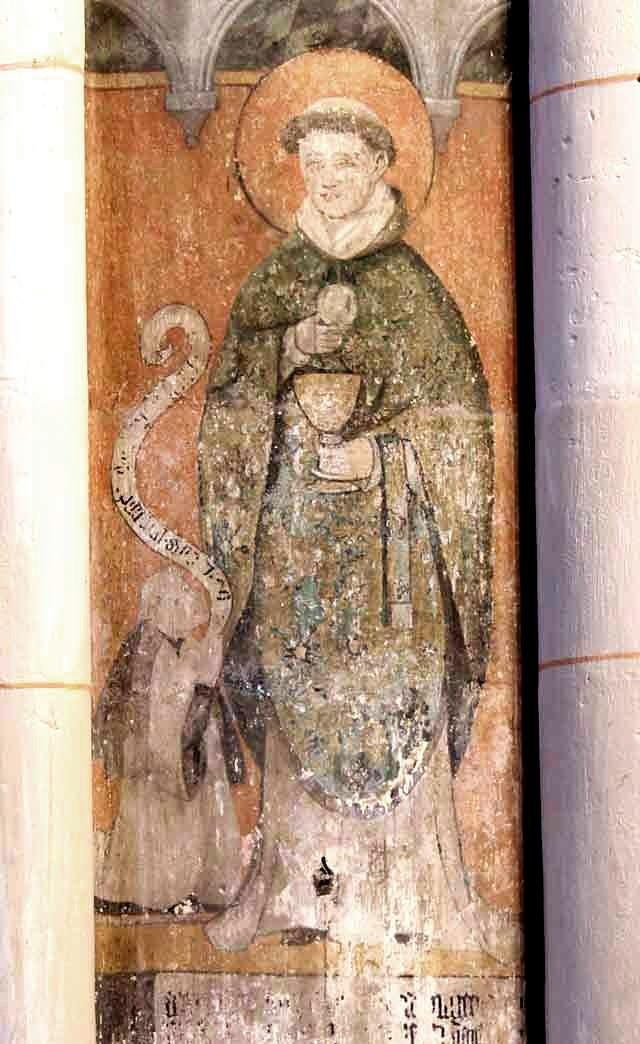
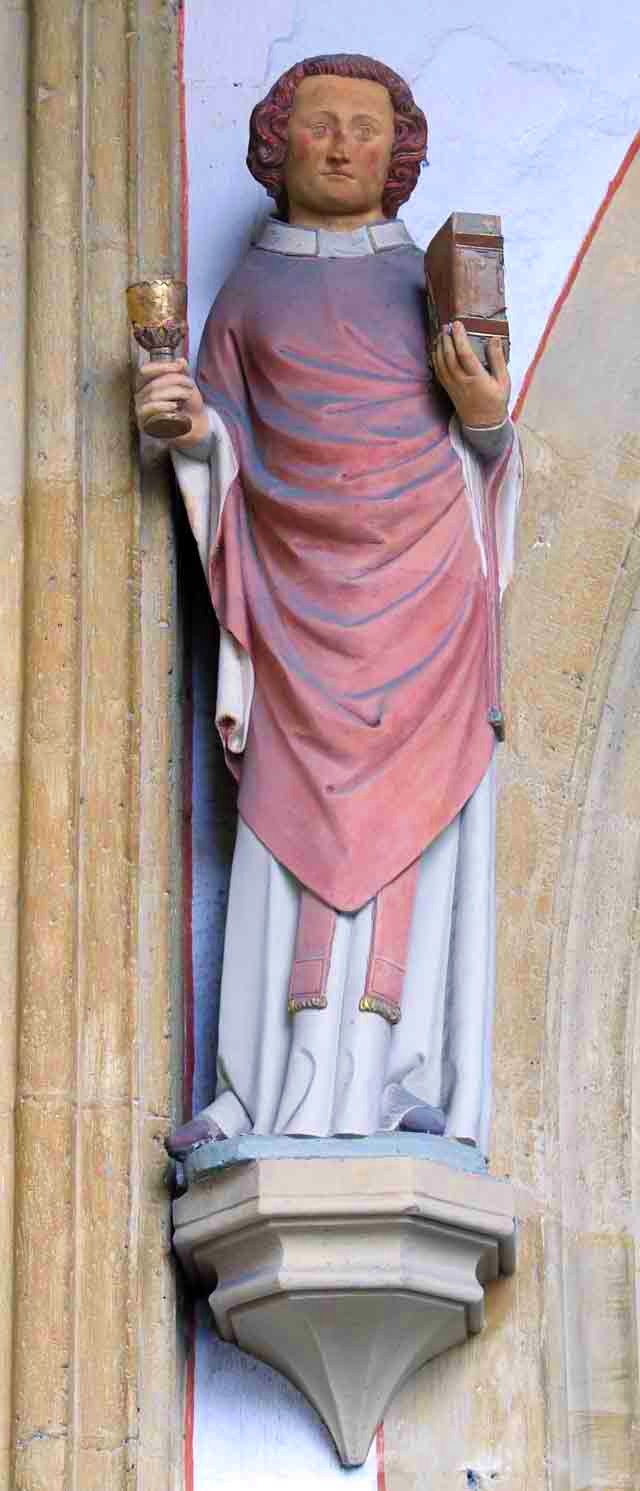
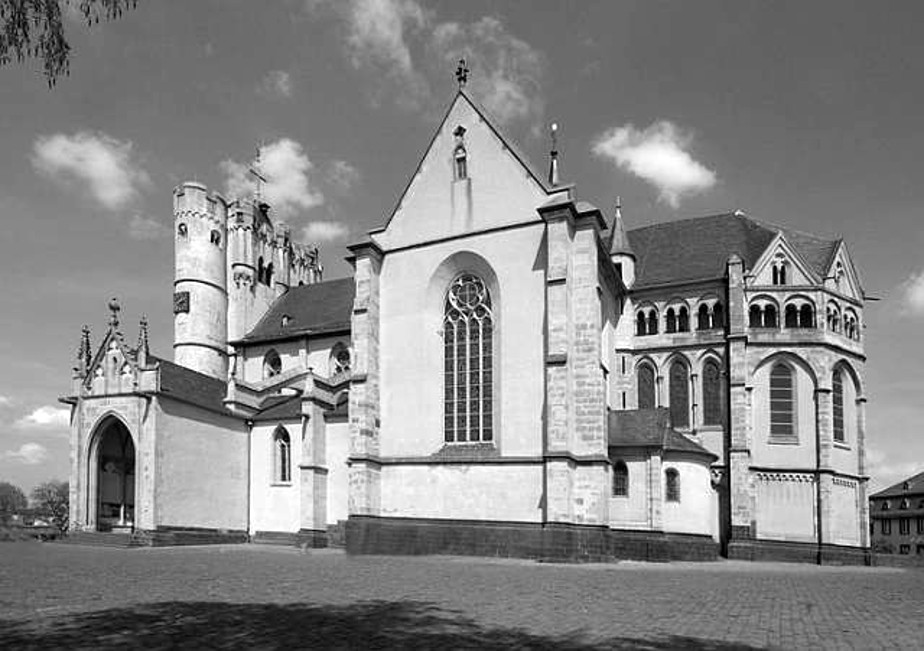
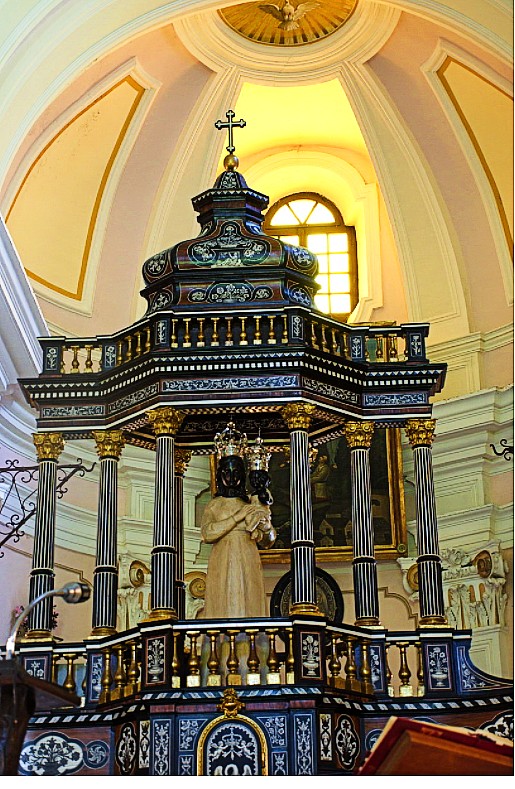
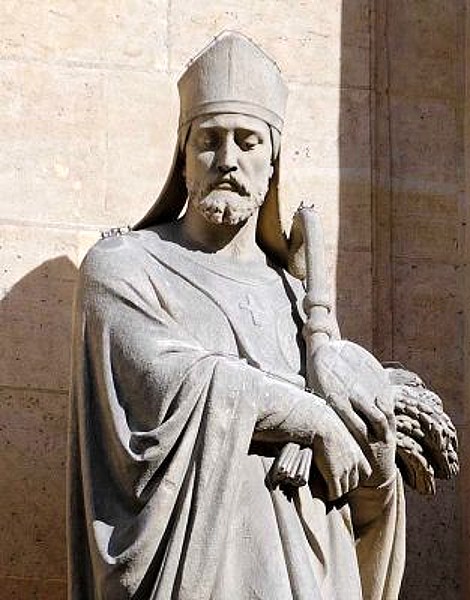
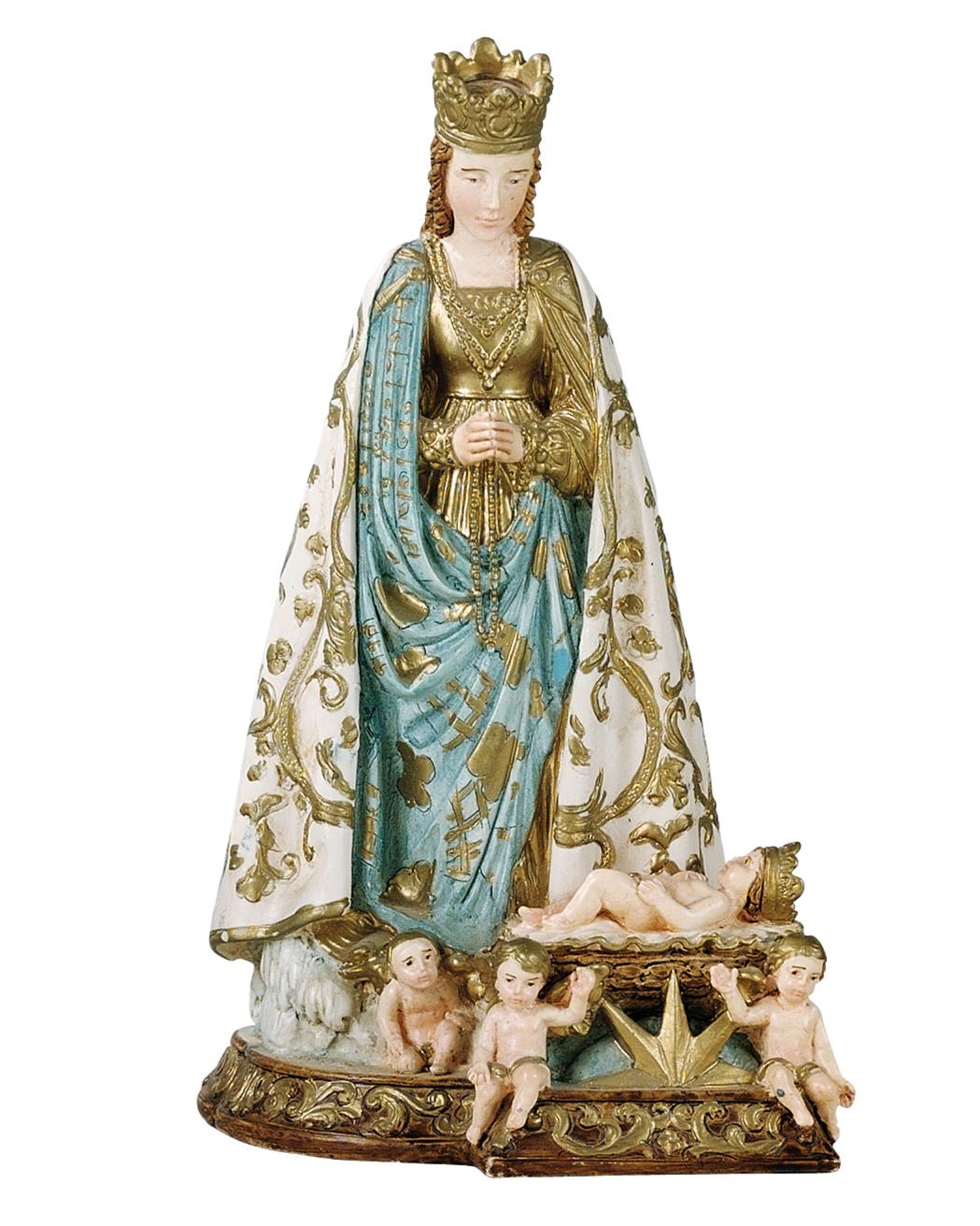
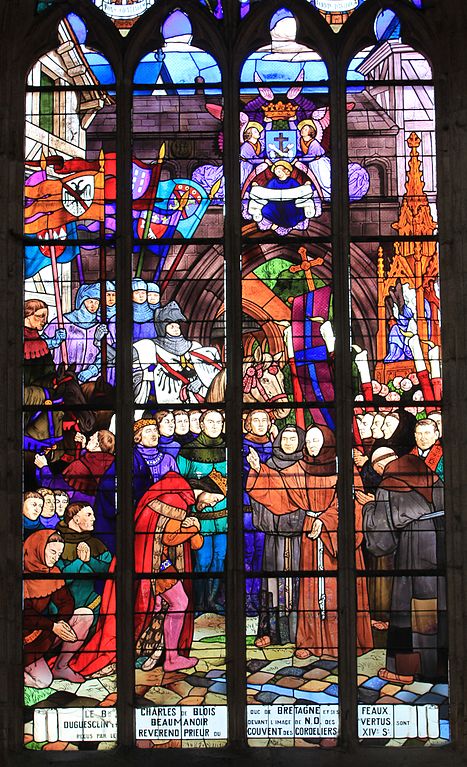
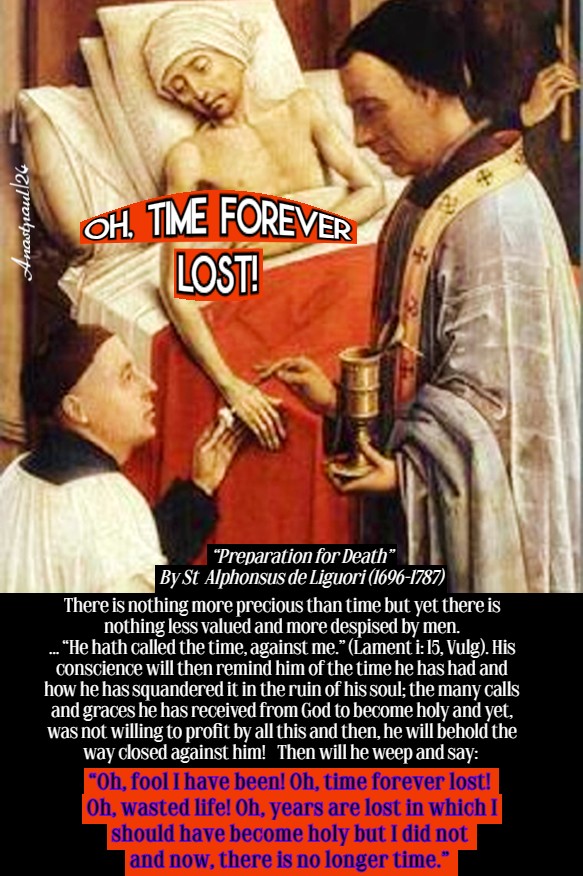
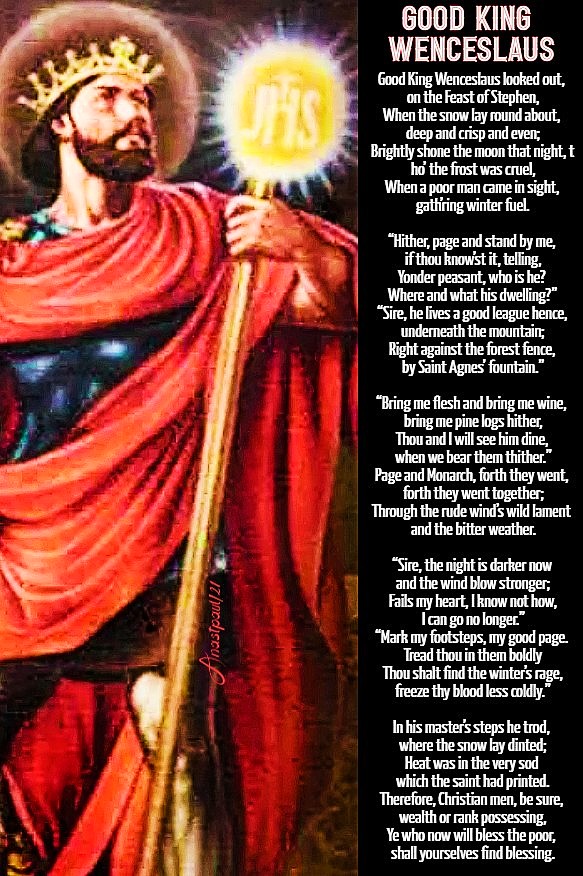
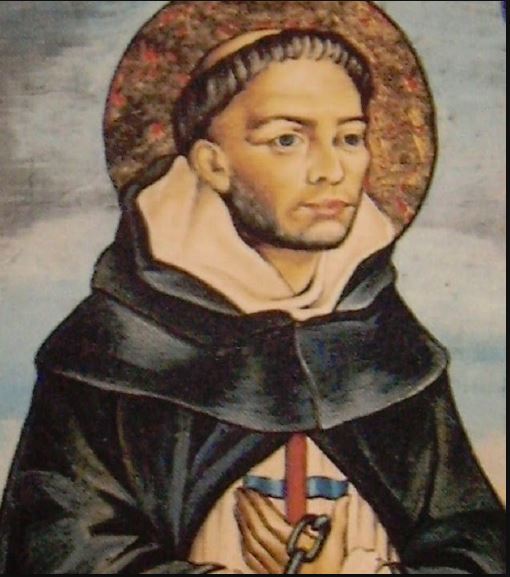
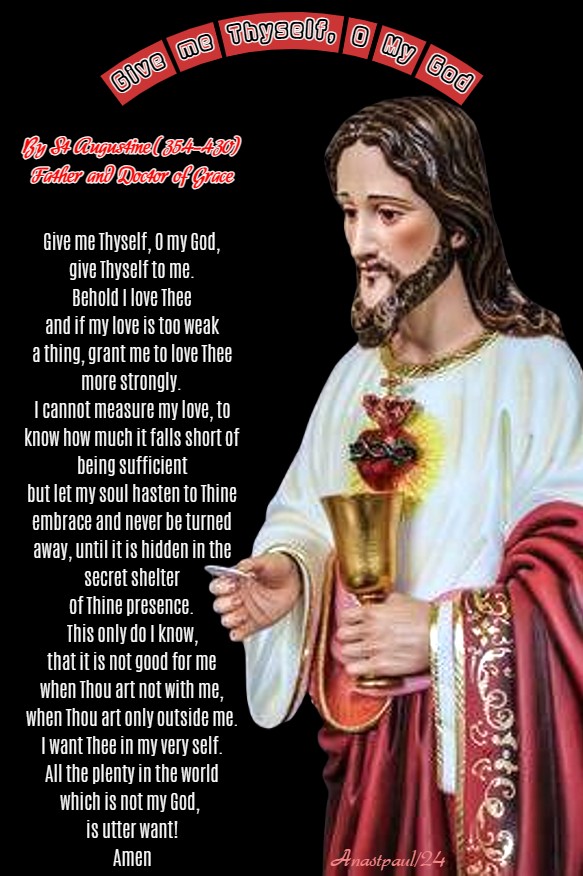
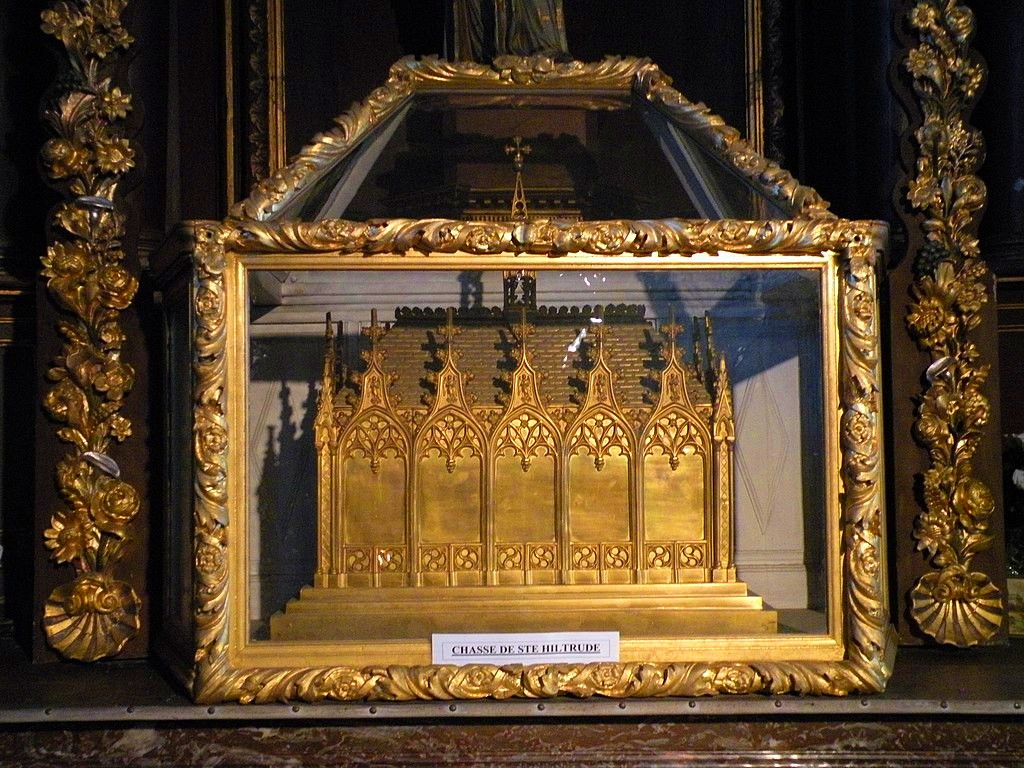
St Conrad of Parzham OFM Cap (1818-1894) Franciscan Religious Lay Friar, Devotee of Blessed Sacrament and Marian, Apostle of Charity, Miracle worker with the charism of prophecy. His heroic virtues and the miracles he performed won for him the distinction to be ranked among the Blessed by Pope Pius XI in 1930. Four years later, the same pope, approving additional miracles which had been performed, solemnly inscribed his name in the list of Saints. Biography: https://anastpaul.com/2018/04/21/saint-of-the-day-21-april-st-conrad-of-parzham-ofm-cap-1818-1894/
St Crotates of Nicomedia St Cyprian of Brescia St Felix of Alexandria St Fortunatus of Alexandria St Frodulphus St Isacius of Nicomedia St Maelrubba of Applecross
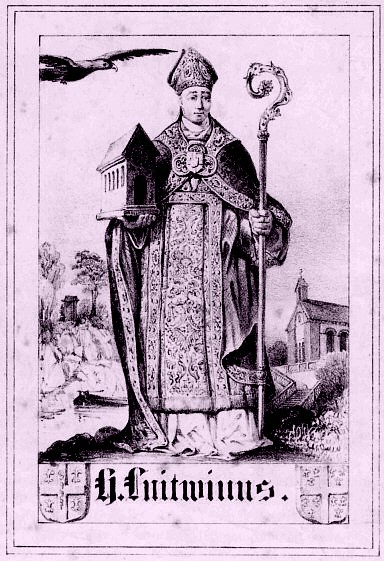
St Silvius of Alexandria St Simeon of Ctesiphon St Vitalis of Alexandria Bl Vitaliy Bayrak St Wolbodó of Liège (c950-1021) Bishop
Thought for the Day – 20 April – The Spiritual Combat (1589) – Dom Lorenzo Scupoli OSM (c1530-1610)
“None shall be crowned who has not fought well.” 2 Tim 2: 5
LI: … Meditation on the Sufferings of Christ (Part One)
“That which I previously prescribed concerning the method of praying and meditating on the sufferings of our Lord and Saviour, regarded only the petition of those things of which we stand in need – now, we are to proceed to the adoption of the proper sentiments from our considerations. For instance, if you have chosen the Crucifixion and its attendant circumstances, as the subject of your Meditation, you may dwell on the following considerations.
Consider firstly, the arrival of Jesus on Mount Calvary. His executioners rudely stripped Him, tearing the garments off which adhered to the torn flesh of His lacerated body. Consider next the fresh wounds made in His Sacred Head by the Crown of Thorns, removed and reset by his barbarous executioners. Next,visualise Him nailed to the Cross with spikes, driven through the flesh and bone into the wood with a large hammer. Consider that His hands, not reaching the places designed for them, were stretched so violently that all His bones were dislocated, enabling the onlookers to count His very bones [Psalm XXL:18]. Then think of the actual elevation of the Cross,and the weight of Christ’s body resting on nails which tore gaping wounds in His hands and feet, giving Him excruciating pain.
If, by these and similar considerations you wish to enkindle the flames of Divine love within your heart, try to attain, by meditation, a sublime knowledge of the Infinite Goodness of your Saviour, Who, for you, condescended to suffer so much. For the more you advance in the knowledge of His love for you, the greater will be your love and affection for Him. Being convinced of His extraordinary charity, you will naturally conceive a sincere sorrow for having, so often and so heinously, offended Him, Who offered Himself as a sacrifice for your offences.
Proceed then to make acts of hope, considering that this great God on the Cross, had no other plan than to extirpate sin from the world, to free you from the devil, to expiate your crimes, to reconcile you to His Father and to provide a resource for you in all your necessities. But if, after contemplating His passion, you consider its effects, your sorrow will be turned into joy. For observe that by Christ’s Death, the sins of humanity were blotted out, the anger of a Sovereign Judge appeased, the powers of Hell defeated, death itself vanquished and the places of the fallen Angels filed in Heaven. And the joy arising from such reflections will be increased by thinking of the joy with which the Holy Trinity, the Blessed Virgin, the Church Militant and Triumphant received the glad, tidings of the Redemption of Mankind.”
Quote of the Day – 20 April – Within the Octave of the Solemnity of the Patronage of St Joseph
“Joseph embraced the Son of the heavenly Father as he would a newborn babe and served Him as his God. He took pleasure in this as in goodness itself and he, who was complete righteousness (Mt 1:19), worshiped Him.
Oh how great was his wonderment! “How is it, Son of God Most High, that I should have You as my Son? I was angered against Your Mother and thought to put her away. I never knew that in her womb so great a treasure lay, Who straightway made me rich in the midst of my poverty.
David the King, arose amongst my forebears and wore the crown, yet how great is the destitution to which I have come! No king, I am a carpenter, yet a crown has come to me, since on my heart there rests, the Lord of all crowns.”
St Ephrem (306-373) Father and Doctor of the Church
One Minute Reflection – 20 April – Within the Octave of the Solemnity of the Patronage of St Joseph – Genesis 49:22-26; Luke 3:21-23 – Scripture search here: https://www.drbo.org/
“And Jesus, Himself, was beginning about the age of thirty years, being – (as it was supposed) – the son of Joseph … ” – Luke 3:23
REFLECTION – “This is the miracle – He Who adopted and begot fathers, was born from their sons! They were made His fathers whose Son He was not! He did them a favour by being their Son. They, however, offered Him nothing by being His forefathers. Among men, fathers adopt whomever they wish to be their sons. This Son, however, adopted fathers whom He chose for Himself. Among men, sons receive the honour of birth from their fathers. But in Christ’s case, the fathers received honour from the Son!
The text reads, “Although His Mother Mary had been betrothed to Joseph, before they married, she was found to be with child by the Holy Ghost.” Subsequently, all Saints would be born from the virgin Church which is betrothed to Christ. … Sons often imitate the example of their father. Note that Mary was betrothed to a carpenter. Christ, betrothed to the Church, was about to fashion for humanity, salvation in its entirety and his entire Work from the Wood of the Cross!” – ACW (Ancient Christian Writer) (Extract from Incomplete Work on Matthew, Homily 1).
PRAYER – God, Who in thine unspeakable foreknowledge didst choose Thy blessed servant Joseph, to be the husband of Thine Own most holy Mother; mercifully grant that now that he is in Heaven with Thee, we who on earth do reverence him for our Defender, may worthily be helped by the succour of his prayers to Thee on our behalf. Through the same Jesus Christ, Thy Son our Lord, Who lives and reigns with Thee, in the unity of the Holy Ghost, God, world without end. Amen (Collect).
Our Morning Offering – 20 April – Within the Octave of the Patronage of St Joseph
Ad Te, Beate Joseph To Thee, O Blessed Joseph By Pope Leo XIII (1810-1903)
O most watchful Guardian of the Holy Family, defend the chosen children of Jesus Christ. O most loving father, ward off from us, every contagion of error and corrupting influence. O our most mighty protector, be propitious to us and from heaven assist us in our struggle with the power of darkness and, as once you rescued the Child Jesus from deadly peril, so now protect God’s Holy Church from the snares of the enemy and from all adversity. Shield, too, each one of us by your constant protection, so that, supported by your example and your aid, we may be able to live piously, to die holy and to obtain eternal happiness in Heaven. Amen
Saint of the Day – 20 April – Saint Peter Caedwalla of Wessex (c658-689) Layman, King of Wessex. Venerable St Bede wrote of him in his Ecclesiastical History of the English People. Born in c658 in Wessex, England and died on 20 April 689 at Rome, Italy. Reign as King of Wessex, 685–688, when he abdicated. Patronages – of converts, of reformed murderers. Also known as – Caedwalla of Wales, Cadwallader, Cadwallador, Cadwalla… Cadwallon… Ceadwalla… Cedualla… Peter Caedwalla.
From St Bede’s Ecclesiastical History of the English People, we learn that Caedwalla was a nobleman of the West Saxons, exiled from his Country as a youth, who returned with an army and killed the reigning Monarch. After much plunder and bloodshed, he became the new King.
Caedwalla then conquered the pagan Isle of Wight and did his best to exterminate all the natives and replace them with settlers from his own region, although Bede states that the natives remained a majority on the island.Although not yet Baptised, Caedwalla is said to have vowed that, should he conquer the Island, he would give a quarter of all the land and his spoils to the God of the Christians. This promise was honoured when he gave the promised bounty to Bishop Wilfrid. Wilfrid appointed a Priest to preach on the Island and to Baptise all who wished to convert to the Christian Faith.
When Cædwalla first attacked the South Saxons, Wilfrid was at the court of King Æthelwealh and on Æthelwealh’s death, Wilfrid attached himself to Cædwalla. The Life of Wilfrid records that Cædwalla sought Wilfrid out as a spiritual father.
This stained glass window (above) can be seen in the south aisle of St Mary’s Church in Ryde. It was designed and installed by the Victorian Catholic artist, Nathaniel Westlake in 1882. It depicts St. Wilfrid, having landed on the Isle of Wight in 686, with Benedictine Monks, seeking permission from Caedwalla to preach the Gospel. Being granted permission and given land on the Island, St Wilfrid and his followers, built the Island’s first (wooden) Church at Brading, on the site of the present Church of St Mary the Virgin. Hence, it could be said that our St Peter Caedwalla was the first Isle of Wight Saint. (St Wilfred: https://anastpaul.com/2018/10/12/saint-of-the-day-12-october-st-wilfrid-c-633-709/).
Two young Princes, brothers of the former King, when Caedwalla invaded the Island, escaped across the Solent. They were eventually betrayed, however and ordered to be put to death. Caedwalla, at this time, was living in seclusion while he recovered from wounds received while fighting on the Isle of Wight. The Abbot of Redbridge petitioned him to allow the young Princes to receive instruction in the Christian Faith and to receive Baptism before their execution. Caedwalla consented to this request and they were duly instructed, Baptised and then executed.
In 688 Caedwalla, after governing the people of Wessex “most ably” for two years, abdicated his throne and went on pilgrimage to Rome, where he hoped to receive Baptism. He arrived in Rome during the Pontificate of Pope Sergius and was Baptised by him (and given the name of Peter on account of his devotion to the Apostle, which had inspired his pilgrimage).
On Holy Saturday 689, Peter Caedwalla fell ill while “still wearing his white robes” that is, during Easter Week when the newly Baptised were wearing the white garment received by them as a sign of their purification from sin. He died on 20 April that year and was buried in St Peter’s. The Pope directed that an Epitaph be inscribed on his tomb to preserve his memory and devotion. It was composed by the Archbishop of Milan and is given in full by St Bede. The stone was discovered in the 16th Century when the Basilica of St Peter was being rebuilt. A s 16th Century mural in Chichester Cathedral depicts St Peter Caedwalla giving land to St Wilfrid, see below.
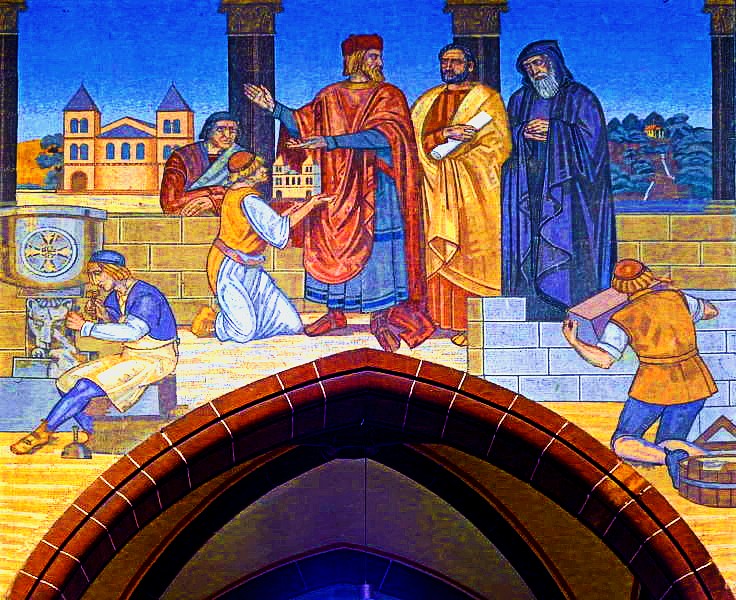
A 16th Century Mural by Lambert Barnard in Chichester Cathedral, depicting Saint Peter Cædwalla granting land to Saint Wilfrid.
St Peter Caedwalla of Wessex (c658-689) Layman, King of Wessex. Venerable St Bede wrote of him in his History of the English Church. Bl Catwallon St Domninus of Digne Bl Gerald of Salles Bl Harduin
Blessed Hildegun of Schönau O.Cist. (Died 1188) Virgin, Cistercian Monk – yes! she was disguised as a boy as a child, for her own safety and after many frightening trials, decided to retain the identity in order to enter the Cistercian Monastery as Brother Joseph. Her true identity remained a secret until her death. Or Brother Joseph!: https://anastpaul.com/2023/04/20/saint-of-the-day-20-april-blessed-hildegun-of-schonau-died-1188-virgin/
St Marcian of Auxerre St Margaret of Amelia Bl Maurice MacKenraghty St Michel Coquelet Bl Oda of Rivreulle St Sara of Antioch St Secundinus of Córdoba St Servilian
Blessed Simon Rinalducci OSA (Died 1322) Priest, Friar of the Order of the Hermits of St Augustine, noted for his theological studies, Prior of several houses, renowned Preader, Miracle-worker. Blessed Simon was a model of humility and obedience, even in the face of great trials and obvious injustices. Simon was Beatified on 19 March 1833 by Pope Gregory XVI (cultus confirmed). His Life: https://anastpaul.com/2021/04/20/saint-of-the-day-blessed-simon-rinalducci-osa-died-1322/
St Sulpicius St Theodore Trichinas St Theotimus of Tomi St Vincent of Digne St Wiho of Osnabrück
Thought for the Day – 19 April – The Spiritual Combat (1589) – Dom Lorenzo Scupoli OSM (c1530-1610)
“None shall be crowned who has not fought well.” 2 Tim 2: 5
L: … Meditation and Prayer through the Intercession of the Saints and the Angels
“The TWO following METHODS of obtaining the protection of the Saints and Angels, maybe of great assistance.
The first method is to address yourself to the eternal Father, laying before Him the hymns of Heavenly choirs, the labours, persecutions and torments suffered by the Saints on earth for love of Him. Then, in recalling their fidelity and love, beseech Him to grant your petitions.
The second method is to invoke the Angels, those blessed spirits, earnestly desirous, not only of our earthly perfection but, of our greater Heavenly perfection. Earnestly beseech them to assist you in subduing your evil inclinations and conquering the enemies of your salvation and beg a particular remembrance at the hour of death.
Sometimes think over the extraordinary graces God has granted to the Saints and Angels and rejoice as if they had been bestowed upon yourself.– rather, let your joy be even greater, for His having bestowed such favours upon them, rather than upon yourself, for such was His Will and you should bless and praise God in the accomplishment of His Divine Plan.
To facilitate the regularity and performance of this exercise, it would be well to assign the different days of the week to the different orders of the blessed. On Sunday, implore the intercession of the nine Angelic choirs; on Monday, invoke Saint John the Baptist; on Tuesday, the Patriarchs and Prophets; on Wednesday, the Apostles; on Thursday, the Martyrs; on Friday, Bishops and Confessors; on Saturday, the Virgins and other Saints. But let no day pass without imploring the assistance of Our Lady, the Queen of all the Saints, your Guardian Angel, the glorious Archangel Saint Michael, or any other Saint to whom you have any particular devotion. Moreover, beseech daily the eternal Father, His Divine Son and the Blessed Virgin that you may be particularly under the protection of Saint Joseph, the worthy spouse of the most chaste of virgins. Then addressing yourself to this loving protector, ask with great humility, to be received into his care. For innumerable are the instances of assistance afforded to those who have called upon St Joseph in their spiritual or temporal necessities. Particularly, has he aided them when they stood in need of Light from Heaven and direction in their prayers.
And if God shows so much regard for the other Saints who have loved and served Him here below, how much consideration and deference will He not show, for the person He so honoured, as to pay him filial homage and obedience?”
Quote of the Day – 19 April – Within the Octave of the Solemnity of the Patronage of St Joseph
“Observe the order which is kept in this holy family. … O God! how beautiful it was to see the respect and reverence with which he treated both the Mother and the Son! If he had wished to leave the Mother when he was not quite aware of the greatness of her dignity, into what admiration and profound abasement was he not afterwards plunged, when he saw himself so honoured that our Lord and our Lady became obedient to his will and did nothing but by his command?!”
One Minute Reflection – 19 April – “The Month of the Resurrection and the Blessed Sacrament” – Within the Octave of the Solemnity of the Patronage of St Joseph – Genesis 49:22-26; Luke 3:21-23 – Scripture search here: https://www.drbo.org/
“And Jesus, Himself, was beginning about the age of thirty years, being – (as it was supposed) – the son of Joseph … ” – Luke 3:23
REFLECTION – “How faithful in humility was the great Saint we are celebrating! That cannot be said in all its perfection for, in spite of what he was, in what poverty and lowliness he lived, all the days of his life – a poverty and lowliness beneath which. he kept hidden and concealed, his great virtues and dignity! … Truly, I am free of doubt that the Angels came, beside themselves with admiration, rank upon rank, to behold and wonder at his humility, while he sheltered that dearest Child in the poor workshop where he worked at his employment, so as to feed the little Boy and the Mother entrusted to him.
There is no doubt at all that St Joseph was braver than David and wiser that Solomon [who were his ancestors]. Nevertheless, seeing him reduced to the exercise of carpentry, who could have discerned this, unless they were enlightened by a heavenly light, so hidden did he keep the remarkable gifts with which God had favoured him? And what wisdom did he not have? For God gave him his most glorious Son to care for … the universal Prince of Heaven and earth … Nevertheless, you can see how low and humbled he was brought, more than can be said or imagined … he went to his own Country and Town of Bethlehem and none but he was turned away from all those inns … Notice how the Angel turns him about with both hands. He tells him he has to go to Egypt and he goes; he orders him to return and he returns. God wants him to be always poor … and he submits to it with love and, not only for a while, for he was poor his whole life long!” – St Francis de Sales (1567-1622) Bishop of Geneva and Doctor of the Church (Conferences No 20)
PRAYER – O God, Who in Thine unspeakable foreknowledge didst choose Thy blessed servant Joseph to be the husband of Thine Own most holy Mother; mercifully grant that now that he is in heaven with Thee, we ,who on earth, do reverence him for our Defender, may worthily be assisted by the succour of his prayers to Thee on our behalf. Who livest and reignest with God the Father, in the unity of the Holy Ghost, God, world without end. Amen (Collect)
Our Morning Offering – 19 April – Within the Octave of the Patronage of St Joseph
Glorious St Joseph! Prayer for the Intercession of St Joseph in All Our Needs By St Francis de Sales (1567-1622) Doctor Caritatis
Glorious St Joseph, Spouse of Mary, grant us thy paternal protection, we beseech thee, by the Heart of Jesus Christ. O thou, whose power extends to all our necessities and can render possible for us, the most impossible things. Open thy fatherly eyes to the needs of thy children. In the trouble and distress which afflicts us, we confidently have recourse to thee. Deign to take under thy charitable charge this important and difficult matter, cause of our worries. Make its happy outcome be for God’s glory and for the good of His devoted servants. Amen
Saint of the Day – 19 April – Saint Gerold of Saxony (c900-c978) Hermit. … Born in in Rhaetia, in the lower part of the Alps (part of modern Austria/Switzerland) and died on 16 April 978 of natural causes in Frisun, today the Town of St Gerold. Also known as – Gerold Graziato, Gerold of Einsiedeln, Gerold of Großwalsertal, Gerold of Grosswalsertal, Gerold of Vorarlberg, Adam… Geroldus…
On 1 January 949, Otto I returned to a certain Adam, involved in a conspiracy against the Sovereign and deprived him of his assets by judicial sentence, his possession which was located in present-day Vorarlberg. Otto calls Adam “vir Dei” in his act of 949 which allows us to deduce that this Adam, had consecrated himself to the service of God.
However, he is not designated as a Monk and, in Einsiedeln, tradition has never considered him such. The Einsiedeln Calendar does indeed name an Adam on 16 April but without defining him as a Monk. The tradition traced by the dean Albrecht von Bonstetten in 1494, narrates that the proscribed Adam took refuge in the solitude of the Wals Valley, where – in order not to be recognised – he lived under the name of Gerold Graziato, remained in solitude.
He donated his possessions to the Monastery of Einsiedeln and died around the year 978. The day of his death is placed on different dates. The obituary notices of Einsiedeln from the 10th Century, however, have an Adam on 16 April and the book of the anniversaries of Saint Gerold, dated to the 15th Century, indicates 19 April as the day on which his Feast is still celebrated today.
The place where Adam-Gerold lived, first called Frisun, appears in 1340 for the first time under the name of St Gerold. In Einsiedeln, the festival is celebrated on 19 April only after the exhumation of his bones which took place in 1663 and his Tomb is today preserved in the Monastery. When, in 1378, the suffragan Bishop of Chur consecrated the Altar of Saint Catherine to Saint Gerold, he granted an Indulgence for 4 June on the occasion of the commemoration of the blessed Gerolde – this proves that he was already venerated as a Saint then.
According to the tradition which makes Adam a Duke of Saxony (presumably because there is confusion with the old noble family of Sax, originally from Vorarlberg), he had two sons, Cuno (or also Chamo) and Ulrich (also called Henry), who by order of their father, became Monks of Einsiedeln. Cuno must have been dean and Ulrich custodian. After their father’s death, they both went to Frisun, where they died. Ulrich would have been buried in the provost’s Church, next to his father and Cuno in the Chapel of Saint Anthony ,next to the Church. However, there is no certain information about the two. In the Monastery, they were both venerated later (17th Century) as Blesseds, the Feast of Blessed Cuno on 8 March and that of Blessed Ulrich on 29 April.
Saint Gerold is depicted as a pilgrim with a hat and staff, sometimes even with a donkey because the Saint vowed to settle where the donkey carrying all his possessions would kneel. Sometimes he is represented with a bear, who helped him in the construction of his cell. A cycle of paintings created around 1683, depicting the life of the Saint, is found in the Church of Frisun, while the painting of the main Altar (by Rodolfo Blaettler, 1877) shows him with his two sons.
Statues in the provost’s house show the two sons as Monks and a 17th Century fresco in the Chapel of Saint Anthony represents the Blessed Cuno. Below is the Priory of St Gerold where these Statues reside although I can find no images of them.
St Apollonius the Priest St Aristonicus of Melitene
Blessed Bernard of Sithiu (Died 1182) Penitent, Pilgrim, Hermit. Patronages – of sinners, convicts, prisoners, penitents, pilgrims. The Roman Martyrology: “At the Monastery of Saint-Bertin in the territory of France in Thérouanne, lies the tomb of Blessed Bernard, penitent, who, eager to atone for the sins of his youth with an austere penitence, voluntarily chose exile and, barefooted, wearing rough garments, was a tireless pilgrim to the holy places.” Dear Blessed Bernard, pray for us!: https://anastpaul.com/2023/04/19/saint-of-the-day-19-april-blessed-bernard-of-sithiu-died-1182-layman-penitent/
Our dear Martyr and protector, Saint Expeditus, You who know what is necessary and what is urgently needed. I beg you to intercede before the Blessed Trinity that by your intercession, my request will be granted. …………………… (Clearly express your needs and ask him to find a way to help you.) May I receive your blessings and favours. Through our Lord Jesus Christ, in the unity of the Holy Ghost, One God with the Almighty Father. Amen.
If Saint Expeditus grants your request, place an advertisement in the local Catholic newspaper and/or your Parish Bulletin or Notice Board, thanking Saint Expeditus, so that his name and fame will grow
St Gaius of Melitene St Galata of Melitene St George of Antioch St Gerold of Saxony (c900-c978)Hermit
St Pope Leo IX (1002-1054) known as “Apostolic Pilgrim” When the German Pope Damasus II died in 1048, Bishop Bruno was selected by the Emperor, Henry III, to succeed him. Bruno agreed to go to Rome and to accept the Papacy if freely elected thereto by the Roman people. He wished, at least, to rescue the See of Peter from its servitude to the German Emperors. When, in company with Hildebrand he reached Rome and presented himself to its people clad in pilgrim’s guise and barefooted but still tall and fair to look upon, they cried out with one voice that him and no other would they have as Pope. Assuming the name of Leo, he was solemnly enthronedon 12 February, 1049. Biography: https://anastpaul.wordpress.com/2018/04/19/saint-of-the-day-19-april-st-pope-leo-ix-1002-1954/
St Martha of Persia St Rufus of Melitene St Vincent of Collioure
Martyrs of Carthage – 17 Saints: A group of Christians Martyred in the persecutions of Decius. We know little more than the names – Aristo, Basso, Credula, Donato, Ereda, Eremio, Fermo, Fortunata, Fortunio, Frutto, Julia, Mappalicus, Martial, Paul, Venusto, Victorinus and Victor. Died in the year 250 in prison in Carthage, North Africa (modern Tunis, Tunisia).
Thought for the Day – 18 April – The Spiritual Combat (1589) – Dom Lorenzo Scupoli OSM (c1530-1610)
“None shall be crowned who has not fought well.” 2 Tim 2: 5
XLIX: … Considerations to Produce Confidence in the Assistance of the Blessed Virgin
“Whoever wishes to have recourse to the Blessed Virgin with confidence, must observe the following motives.
Experience teaches us that a vessel which has contained perfumes, preserves their odour, especially if the perfume is in the container for any length of time, or if any remains in it, yet here, there is but a limited power, similar to the warmth carried from a fire, the source of that warmth. If such be the case, what are we to say of the charity and compassion of the Blessed Virgin, who for nine months, bore, and still carries in her heart, the only Son of God, the uncreated charity which knows no bounds? If, as often as we approach a fire, we are affected by its heat, have we not reason to believe that, whoever approaches the heart of the Mother of Mercies, ever burning with her most ardent charity, must be profoundly affected, in proportion to the frequency of his petitions, the humility and confidence in his heart?
No creature ever loved Jesus Christ more ardently, nor showed more perfect submission to His Will, than Mary, His Mother. If then, this Saviour, immolated for us sinners, gave His Mother to us, an advocate and intercessor for all time, she cannot but comply with His request and will not refuse us her assistance.
Let us, then, not hesitate to implore her pity. Let us have recourse to her with great confidence in all our necessities, as she is an inexhaustible source of blessings, bestowing her favours in proportion to the confidence placed in her.”
Quote/s of the Day – 18 April – Within the Octave of the Patronage of St Joseph
“So, taking Christ’s genealogy from Joseph – a husband in chastity, he was father in the same way. … Are you saying that he did not conceive Jesus through the operation of nature? Well then, what the Holy Spirit operated, He did for them both. For Joseph was “a just man,” Matthew tells us (1:19). Both husband and wife were just. The Holy Spirit dwelt within their mutual justice and gave each of them, a Son!”
St Augustine (354-430) Father and Doctor of Grace
“God, to Whom Angels submit themselves and Who Principalities and Powers obey, was subject to Mary and not only to Mary but Joseph too, for Mary’s sake … God obeyed a human creature; this is humility without precedent. A human creature commands God! it is sublime beyond measure!
St Bernard (1090-1153) Father & Mellifluous Doctor of the Church
“Since God could choose for the Guardian of His Son, the man in the world, the most accomplished in all sorts of perfections, according to the dignity and excellence of his Charge, Who was His most Glorious Son, the universal Prince of Heaven and earth, how could it be that being able, He did not will it and did not do it? There is, then, NO DOUBT that St Joseph was endowed with all the graces and all the gifts that were required for the care which the Eternal Father willed to give him, of the temporal and domestic economy of our Lord and of the guidance of his family … ”
One Minute Reflection – 18 April – “The Month of the Resurrection and the Blessed Sacrament” – Within the Octave of the Patronage of St Joseph – Genesis 49:22-26; … Luke 3:21-23 – Scripture search here: https://www.drbo.org/
“And Jesus, Himself, was beginning about the age of thirty years, being – (as it was supposed) – the Son of Joseph … ” – Luke 3:23
REFLECTION – “There is no doubt that Joseph was a very holy and trustworthy man, since the Mother of the Saviour was to be his wife. He was the “faithful and prudent servant” (Mt 24:45), for God established him to be His Mother’s support, the foster father of His flesh and the assistant for His plan of salvation.
We must recall, that he was of the House of David. He was son of David, not only by bonds of the flesh but even more because of his faith, holiness and piety. God found in him, a second David, to whom He could confidently entrust His plans, even the most hidden. He revealed to him, as to another David, the Mysteries of His Wisdom and disclosed to him, what no teacher in the world, could know. He allowed him to see and listen, to things that so many Kings and Prophets had wished to see and hear but which,, in spite of their desire, they had not been able to see or to hear (Mt 13:7), even more, He made him carry and guide, embrace, nurture and protect Him. Both Mary and Joseph belonged to David’s race; in Mary was fulfilled the promise once made by the Lord to David, while Joseph was the witness of this fulfilment.” – St Bernard (1090-1153) (Surname de Fontaine) Priest, Cistercian Monk, The Last Father and Doctor Mellifluus (Mellifluous Doctor) (Homily on the “Missus est”, 2, 16).
RRAYER – O God, Who in thine unspeakable foreknowledge didst choose Thy blessed servant Joseph, to be the husband of Thine Own most holy Mother; mercifully grant that now that he is in Heaven with Thee, we who on earth do reverence him for our Defender, may worthily be helped by the succour of his prayers to Thee on our behalf. Through the same Jesus Christ, Thy Son our Lord, Who lives and reigns with Thee, in the unity of the Holy Ghost, God, world without end. Amen (Collect).
Our Morning Offering – 18 April – “The Month of the Resurrection and the Blessed Sacrament” – Within the Octave of the Patronage of St Joseph
Indulgenced Prayer to St Joseph O St Joseph! Pray for Us Daily
O Joseph! virgin father of Jesus, pure Spouse of the Virgin Mother, pray for us daily to the Son of God, that, armed with the weapons of His grace, we may fight as we ought in life and be crowned by Him in death. Amen
(Indulgence of 100 days, twice a day St Pius X 26 November 1906)
Saint of the Day – 18 April – Saint Galdinus della Sala of Milan (c1096-1176) Cardinal ArchBishop of Milan from 1166 until his death in 1176., Born in c1096 at Milan, Italy and died on 18 April 1176 at Milan, Italy of natural causes. Patronages – of the Archdiocese of Milan and of Lombardy. Galdinus was Canonised by Pope Alexander III. Also known as – Galdini, Galdimus, Galdin, Galdino.
The Roman Martyrology reads today: “At Milan, St Galdini, Cardinal and Bishop of the City, who, at the conclusion of a discourse against heretics, gave up his soul to God.”
Galdinus was the son of the noble della Sala family of Milan and from his childhood, he was educated for the Ecclesiastical life. He received Sacred Orders after occupying various important positions and became the Chancellor of the Church in Milan.
In 1165, Pope Alexander III honoured him with the Title of Cardinal in the Consistory of 15 December as the Cardinal Priest of the Titular Church of Santa Sabina and, a year later, made him the Archbishop of Milan.
One of his first aims was to destroy the schism created by partisans of the antipope, “pope” Victor IV favoured by Emperor Frederick Barbarossa and bring them to recognise the legitimate Pontiff Alexander III. In this mission, he skillfully employed the diplomatic gifts he had learned.
Galdinus was very humble, even after reaching this elevated position. He was known for his sweetness and goodness, welcoming all as equals, except in the case of defending his position, when he was an example of fortitude and vigour.
At that time, the Cathars from Cologne were spreading their errors throughout Lombardy and the area of Milan. Galdinus zealously strove to uproot those heresies. His constant preaching and efforts weakened him and his physical strength waned.
In 1176, the Sunday after conducting the Easter ceremonies, he went to the Altar of St Tecla in Milan Cathedral to celebrate Mass but found himself too weak to do so. Nonetheless, at the sermon, he went to the pulpit and delivered a long and vehement discourse refuting the heresies and infamies of the Cathars with greater vigour and virulence than ever. As he finished, he fainted and lost consciousness. He died as the Mass ended, whose Gospel had been that of the Good Shepherd.
St Bitheus St Calocerus of Brescia St Cogitosus St Corebus St Eleuterius of Illyria St Elpidius of Melitene St Eusebius of Fano St Galdinus della Sala of Milan (c1096-1176) Cardinal Bishop St Gebuinus of Lyons St Genocus St Hermogenes of Melitene
Blessed Idesbald of Dunes O.Cist (c1095-1167) Cistercian Priest and Abbot of Ten Duinen Abbey, Our Lady of the Dunes. The Roman Martyrology states: “In Bruges in Flanders, in today’s Belgium, Blessed Idesbaldo, Abbot, who, soon became a widower and exercised for another thirty years, duties in the palace of the Counts, entered the Monastery of Dune at a mature age, which he held holy, as the third Abbot for twelve years.” Biography: https://anastpaul.com/2021/04/18/saint-of-the-day-18-april-blessed-idesbald-of-dunes-o-cist-c-1095-1167/
Thought for the Day – 17 April – The Spiritual Combat (1589) – Dom Lorenzo Scupoli OSM (c1530-1610)
“None shall be crowned who has not fought well.” 2 Tim 2: 5
XLVIII: … A Method of Prayer Based on the Intercession of the Blessed Virgin
“Besides the Methods of Meditation already mentioned, there is another which is addressed particularly to the Blessed Virgin Mother. We firstly consider the eternal Father, then Jesus Christ Our Lord and finally, the Blessed Mother.
With regard to the eternal Father, there are two considerations. The first is the singular affection He cherished, from all eternity for this most chaste Virgin whom He chose to be the Mother of His Divine Son. The second is the eminent sanctity He was pleased to bestow upon her and the many virtues she practiced in her lifetime. Meditating on the affection of the eternal Father for our Lady, you must begin by raising your mind above all created beings – look forward to the vast expanses of eternity, enter into the Heart of God and see, with what delight He viewed the person destined one day, to become the Mother of His Son; beseech Him, by that delight, to give you sufficient strength against your enemies, especially those who most grievously afflict you.
Contemplate, then, the virtues and heroic actions of this incomparable Virgin. Make an offering of each or all of them to God, as they are of such efficacy, as to obtain for you, divine assistance in your particular necessities.
After this address yourself to Jesus, begging Him to be mindful of that loving Mother who, for nine months carried Him in her womb, and, from the moment of His birth, paid Him the most profound adoration. For this was her acknowledgment that this Child was at once God and Man, her Creator and her Son. With compassion she saw Him poorly accommodated in a humble stable, nourished Him with her pure milk, kissed and embraced Him a thousand times, with maternal fondness and throughout His Life and at His Death, suffered for Him beyond expression. Present this picture to the Saviour that He may be compelled, as it were, by such powerful motives, to hear your prayers.
Appeal to the Blessed Virgin herself, reminding her of her commission ,from all eternity, to be the Mother of Mercy and the Refuge of sinners and that, after her Divine Son, you place your greatest confidence in her intercession. Present to her the fact, asserted by the learned and confirmed by miracles that no-one ever called upon her with a lively faith and love, was left unaided.
Finally, remind her of the sufferings of her Son for your salvation that she may obtain of Him, the grace necessary to make proper use of His sufferings for the greater glory of that loving Saviour!”
Quote/s of the Day – 17 April – Solemnity of the Patronage of St Joseph Confessoris
“We also should have recourse to St Joseph in our spiritual and bodily necessities. St Joseph had to endure a great deal in order to provide for the wants of the Holy Family and to protect them from the many dangers which threatened them. For this reason, he is especially attentive to requests of any kind, as long as they are made with a lively faith and submission to the Will of God.”
“St Joseph is the Universal Patron of the Church. We, who are loved children of the Church should invoke his special intercession, therefore, for the triumph and expansion of the Kingdom of God upon earth. … If we are loyal sons of the Church, we should pray that She may triumph. We should ask for the special intercession of St Joseph, Her Heavenly Patron.”
“We shall come to the end of our lives too, perhaps sooner than we imagine. Let us ask the Holy Patriarch for the favour of a happy death. Let us ask him to ensure that Jesus and Mary will help us too, when we are leaving this world.”
One Minute Reflection – 17 April – “The Month of the Resurrection and the Blessed Sacrament” –Solemnity of the Patronage of St Joseph Confessoris – Genesis 49:22-26; Luke 3:21-23– Scripture search here: https://www.drbo.org/
“And Jesus, Himself, was beginning about the age of thirty years, being – (as it was supposed) – the son of Joseph … ” – Luke 3:23
REFLECTION – “There is a general rule, concerning all special graces granted to any human being. Whenever the Divine favour chooses someone to receive a special grace, or to accept a lofty vocation, God adorns the person chosen, with all the gifts of the Spirit, needed to fulfil the task at hand.
This general rule is especially verified in the case of Saint Joseph, the Foster-Father of our Lord and the husband of the Queen of our world, enthroned above the Angels. He was chosen by the eternal Father as the trustworthy Guardian and Protector of his greatest treasures, namely, his Divine Son and Mary, Joseph’s wife. He carried out this vocation with complete fidelity until at last God called him, saying: Good and faithful servant, enter into the joy of your Lord.
What then is Joseph’s position in the whole Church of Christ? Is he not a man chosen and set apart? Through him and, yes, under him, Christ was fittingly and honourably introduced into the world. Holy Church, in its entirety, is indebted to the Virgin Mother because through her, it was judged worthy to receive Christ. But after her, we undoubtedly owe special gratitude and reverence to Saint Joseph.
In him the Old Testament finds its fitting close. He brought the noble line of Patriarchs and Prophets to its promised fulfilment. What the Divine Goodness had offered as a promise to them, he held in his arms. Obviously, Christ does not now deny to Joseph that intimacy, reverence and very high honour which He gave him on earth, as a son to his father. Rather, we must say that in Heaven, Christ completes and perfects, all that He gave at Nazareth.
Now, we can see ,how the last summoning words of the Lord appropriately apply to Saint Joseph – Enter into the joy of your Lord. In fact, although the joy of eternal happiness enters into the soul of a man, the Lord preferred to say to Joseph – Enter into joy. His intention was, that the words should have a hidden spiritual meaning for us. They convey, not only that this holy man possesses an inward joy but also, that it surrounds him and engulfs him, like an infinite abyss.
Remember us, Saint Joseph and plead for us to your Foster-Child. Ask your most holy bride, the Virgin Mary, to look kindly upon us, since she is the Mother of Him, Who, with the Father and the Holy Ghost, lives and reigns eternally. Amen.” – St Bernardine of Siena (1380-1444) (An excerpt on his Sermon 2 of St Joseph).
PRAYER – God, Who in thine unspeakable foreknowledge didst choose Thy blessed servant Joseph, to be the husband of Thine Own most holy Mother; mercifully grant that now that he is in Heaven with Thee, we who on earth do reverence him for our Defender, may worthily be helped by the succour of his prayers to Thee on our behalf. Through the same Jesus Christ, Thy Son our Lord, Who lives and reigns with Thee, in the unity of the Holy Ghost, God, world without end. Amen (Collect).
Our Morning Offering – 17 April – “The Month of the Resurrection and the Blessed Sacrament” – Wednesday, St Joseph’s Day and The Solemnity of the Patronage of St Joseph
Hail, Holy Joseph, Hail! By Father Frederick William Faber CO (1814-1863)
Hail, holy Joseph, hail! Chaste spouse of Mary hail! Pure as the lily flow’r In Eden’s peaceful vale. Hail, holy Joseph, hail! Prince of the house of God! May His best graces be By thy sweet hands bestowed.
Hail, holy Joseph, hail! Comrade of Angels, hail! Cheer thou the hearts that faint, And guide the steps that fail. Hail, holy Joseph, hail! God’s choice wert thou alone! To thee the Word made flesh, Was subject as a Son.
Hail, holy Joseph, hail! Teach us our flesh to tame And, Mary, keep the hearts That love thy husband’s name. Mother of Jesus! bless, And bless, ye Saints on high, All meek and simple souls That to Saint Joseph cry. Amen
Saint of the Day – 17 April – Blessed Mariana of Jesus OdeM(c1565-1624) “The Lily of Madrid” Tertiary Sister of the Mercadarian Order (the Servants of Mary) Mystic and Ecstatic, graced with Visions of Our Lord and His Mother and granted the ability, by her intercession, to be responsible for many miracles, Spiritual Director and Apostle of the poor and the sick. In addition, Mariana was known to bilocate and levitate during her ecstasies. Born on 17 January 1565 at Madrid, Spain as María Ana Navarro de Guevara y Romero and died on 17 April 1624 of natural causes at Madrid, aged 59. Patronages – of Madrid, Mercedarian Tertiaries Mercedarian Lay Fraternities and Apostolates. Also known as – “The Lily of Madrid,” “The Saint of Madrid,”Mariana Navarra de Guevara, Mary Ann of Jesus Navarro, Maria Ana de Jesus Navarro de Guevara. Her body is Incorrupt.
Mariana was born in Madrid on 17 January 1565 into a wealthy family. Her father was an affluent merchant whose business supplied leather goods to the Spanish Court. He, himself being in the service of King Philip II.
She was Baptised on the 21st of the same month of her birth in the Church of Santiago (St James). Mariana was attracted very early to religious life. At the age of 22, she already had the firm determination to enter a Convent, despite the strong opposition of her father (who, widowed early, had remarried) and her stepmother, who had arranged her marriage. However, her parents’ attempts to separate her from her vocation were of little use. Legend says that she went as far as to disfigure her face and cut her hair in order to see herself rejected by the young man chosen for her..
In 1598 she retired as a penitent to the hermitage of Santa Bárbara in the Capital of the Kingdom. There she was assisted by Brother Juan Bautista Sacramento, a Mercedarian Religious and reformer of the Order, who was her Spiritual director until her death and by other pious people. She made her home in a small house, next to the Convent of the Discalced Mercedarians where she spent several years dedicated to prayer and penance, as well as serving the poor and needy of the City. In 1613 she was received into the Order of Mercy, given the Tertiary Habit by order of Brother Felipe Guimerán, Master General of the Order, who the following year, on 20 May 1614, received her profession.
The fame of her virtues and the supernatural appearances and miracles which accompanied her, spread quickly throughout Madrid. Her Superiors ordered her to write about these experiences. In these writings, Mariana narrates, among other things, the visions she had of Jesus Christ and the Virgin Mother and her mystical ecstasies.
The Queen of Spain , Isabel de Borbón, sent for Mariana to attend at the Palace whereafter their acquaintance grew so much that Mariana was considered one of the Queen’s closest friends. At that time, Mariana was already called “The Saint of Madrid.”
Mariana’s death occurred on 17 April 1624 in the Mercedarian Convent of Santa Bárbara in Madrid, as a result of a lung condition. He was 59 years old.
Her body is preserved Incorrupt in the Church of the Mercedarian Nuns of Don Juan Alarcón in Madrid as the Convent of Santa Bárbara was destroyed during later unrest. The Tomb where Mariana rests, was given by Queen Elizabeth II.
The extraordinary thing about her life of great solitude is precisely her ability to welcome, listen to and attend, to the spiritual and material needs of so many people who came to request assistance, or to ask for spiritual succour.
She was Beatified by Pope Pius VI on 18 January 1783.
If already during her life Mariana had achieved great renown for her piety and the prodigies of all kinds which were attributed to her, after her death, it only increased. It includes among them the fall of rain in Madrid, in times of severe drought, such as the one which devastated the two Castiles in 1613.
Mariana’s body was displayed to the public for two days in the midst of a large gathering. The artist Vicente Carducho made several death masks of the deceased. The same year of her death, the Canonical process of her Beatification began, encouraged by the people, the nobility and King Philip IV himself , a great devotee of hers. Barely a month after her death, the information process on the life and miracles of Mariana de Jesús began. 152 witnesses testified in it. On 8 August 1624, the Board of Theologians and Canonists of Madrid proposed that she could be given a private cult.
On 31 August 1627, her grave was opened and to the general astonishment, it was found that the body was intact, with fresh flesh and flexible limbs and exhaling a pleasant fragrance. Only her face was slightly disfigured due to the manipulations necessary to obtain the death mask. This fact has been verified each of the successive times when the mortal remains were inspected — in 1731, 1924 and 1965.
The Solemnity of the Patronage of St Joseph Wednesday preceding the Third Sunday after Easter: Few Catholics are likely familiar with the Eastertide Solemnity of St Joseph. According to Father Francis Xavier Lasance (1860-1946) it was instituted during the hostile occupation of Rome by the Troops of the Italian King, Victor Emmanuel II. The Pope proclaimed St Joseph the Patron of the oppressed Household of the Faith, entrusting to St Joseph, the defence of Holy Mother Church.
In the beginning, this Feast Day was observed on the Third Sunday after Easter but when Pope St Pius X reformed the Liturgical Calendar to restore the Sunday Offices to prominence over those of the Saints, the second Feast of St Joseph was moved to the Wednesday preceding the Third Sunday after Easter. In 1911, the Feast was raised to a Double of the First Class and it was assigned an Octave after it was moved to the Wednesday before the Third Sunday after Easter. It is a Common Octave, so the Octave may or may not be commemorated on the intra Octave days depending on the rank of the Feasts which occur during the Octave. While this Feast day is not in the 1962 Missal, it is still kept by Priests who celebrate Holy Mass according to the pre-1955 reforms.
Bl essed Andrés Hibernón Real OFM (1534-1602) Religious Friar, Apostle of the Holy Eucharist, the Blessed Virgin and the Holy Rosary, Apostle of the poor. He predicted the date of his death four years before the fact, which was 18 April 1602 in Gandia, Valencia, Spain of natural causes immediately after having prayed a rosary. He was Beatified on 22 May 1791 by Pope Pius VI. His body is incorrupt. Biography: https://anastpaul.wordpress.com/2018/04/17/saint-of-the-day-17-april-blessed-andres-hibernon-real-o-f-m-1534-1602/
St Agia of Hainault St Anthia of Illyria St Athanasia of Aegina St Bitheus St Calocerus of Brescia St Cogitosus St Corebus
St Eleuterius of Illyria St Elpidius of Melitene St Eusebius of Fano St Galdinus of Milan St Gebuinus of Lyons St Genocus St Hermogenes of Melitene St Innocent of Tortona Bishop and Confessor Bl Idesbald of Dunes Blessed James of Cerqueto OSA (1285-1366)
St Laserian of Leighlin Blessed Mariana of Jesus OdeM (c1565-1624)
St Pantagathus of Vienne Bishop St Perfecto of Córdoba St Pusicio
St Robert de Turlande/Chaise-Dieu OSB (c1000-1067) Priest, professed religious of the Order of St Benedict, Monk, Abbot, Apostle of Charity, Marian devotee. He was of noble stock, was related to Saint Gerald of Aurillac (c855–c909) and was a descendant of St Caesarius of Arles (470-543). He is best known for the establishment of the Benedictine Convent of La Chaise-Dieu (‘Home of God’) and for his total commitment to the poor. He became a spiritual inspiration for Pope Clement VI (1291–1352) – whose own origin,s in the religious life were based at that Convent – and it was Pope Clement who confirmed the Canonisation of the Benedictine Abbot on 19 September 1351 in Avignon. His Life: https://anastpaul.com/2019/04/17/saint-of-the-day-17-april-st-robert-de-chaise-dieu-osb-c-1000-1067/
Thought for the Day – 16 April – The Spiritual Combat (1589) – Dom Lorenzo Scupoli OSM (c1530-1610)
“None shall be crowned who has not fought well.” 2 Tim 2: 5
XLVII: … Another Method of Meditation
“There is another method of prayer and meditation besides the one to which we have referred.
In this latter method, having considered the poignant sufferings of your Saviour and His patient endurance of them, you proceed to two other considerations of equal importance. The one, is the consideration of Christ’s Infinite merits and , the other, of that satisfaction and glory which the eternal Father received from His obedience – an obedience unto death, even the Death of the Cross. You must represent these two considerations to the Divine Majesty, as two powerful means of obtaining the grace you seek.
This method is applicable, not only to all the Mysteries of Our Lord’s Passion but, to every exterior or interior act He performed in the course of His Passion.”
Quote/s of the Day – 16 April – “The Month of the Resurrection and the Blessed Sacrament” – – Ferial Day – 1 Peter 2:21-25; John 10:11-16 – Scripture search here: https://www.drbo.org/
“My sheep hear My Voice; I know them and they follow Me.”
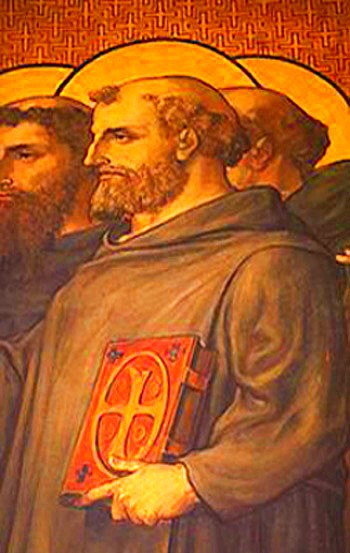
John 10:27
“I am like the sick sheep which strays from the rest of the flock. Unless the Good Shepherd takes me on His shoulders and carries me back to His fold, my steps will falter and, in the very effort of rising, my feet will give way!”
St Jerome (343-420) Father and Doctor of the Church
“Christ said that the shepherd enters through the gate and that He is Himself the Gate, as well as the Shepherd. Then, it is necessary, that He enter through Himself. By so doing, He reveals Himself and through Himself, He knows the Father. But we enter through Him because through Him. we find happiness.”
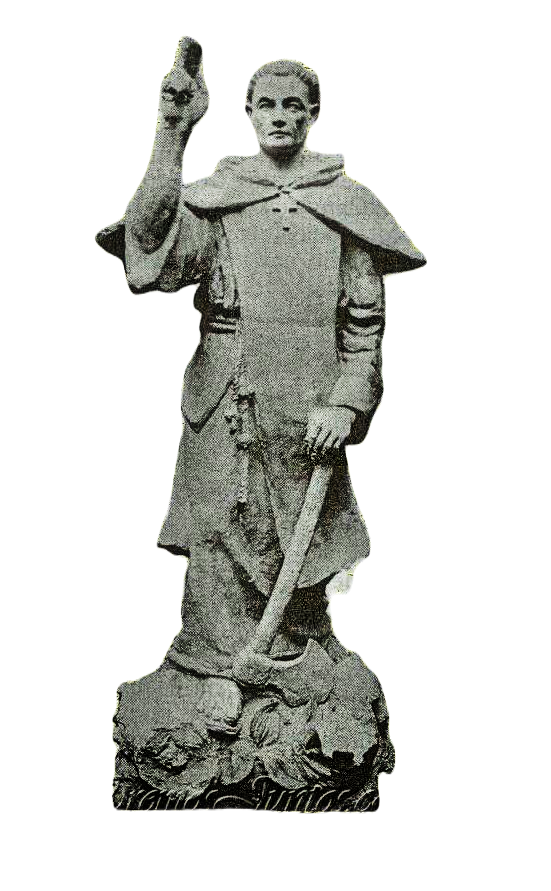
St Thomas Aquinas (1225-1274) Doctor Angelicus Doctor Communis
“It is never really God Who is silent. He is forever appealing to us to lead good lives. He is never really far from us but is always ready to bestow His gifts on us. Even when we have sinned, we hear His Voice prompting us to thoughts of remorse. Even when we stray away from Him, He follows and asks us to return to Him. It is we, who must ensure that the noise of the world, will not prevent us from hearing His Fatherly appeal and that sinful temptations will not destroy His influence over us.”
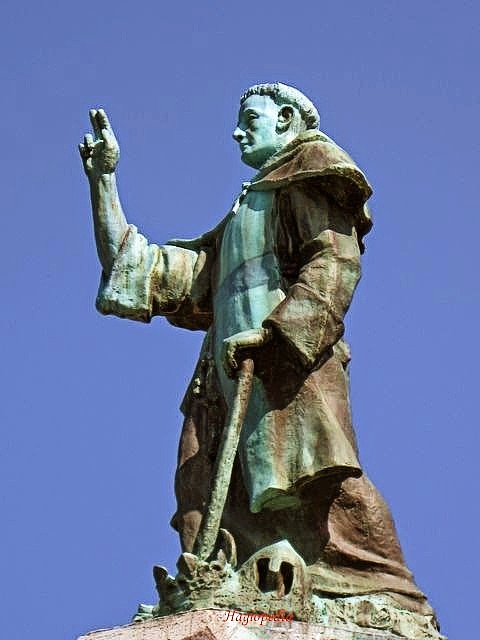
One Minute Reflection – 16 April – “The Month of the Resurrection and the Blessed Sacrament”– Ferial Day – 1 Peter 2:21-25; John 10:11-16 – Scripture search here: https://www.drbo.org/
“I am the Good Shepherd, I know My Own and My Own know Me.”- John 10:14
REFLECTION – “O Jesus, Good Shepherd, a Shepherd who is truly good, Shepherd full of loving kindness and gentleness, the cry of a poor and wretched shepherd rises up to Thee: a weak and clumsy shepherd, an unprofitable shepherd (cf. Lk 17:10) and yet, in spite of all, a shepherd of Thyine flock. Yes, Good Shepherd, the cry of this shepherd who is far from being good rises up to Thee. He cries to Thee, uneasy for himself, uneasy for Thine flock … Thou knows my heart, Lord, Thou knows my wish is to spend entirely, for those Thou has entrusted to me ,all Thou has given to Thy servant …, and more than anything, to spend myself for them without counting the cost (2 Cor 12:15)…
Even Thou Thyself, did not disdain to spend Thyself for them. Therefore, teach me, Lord, even me Thy servant, teach me through Thine Holy Ghost, how to expend myself for them … By Thine inexpressible grace, grant me, Lord, to bear their weaknesses with patience, to sympathise with kindness, to help them with discretion. May Thine Spirit’s instruction teach me to console the afflicted, strengthen the fearful, raise up those who fall, to be weak with the weak, to share the shame of those who stumble, to make myself all things to all, to gain them all (2 Cor 11:29; 1 Cor 9:19.22). Put true words on my lips, words which are upright and just, so that they may grow in faith, hope and love, in chastity and humility, in patience and obedience, fervour of spirit and purity of heart. Since it is Thou Who has given them this blind guide (Mt 15:14), this ignorant teacher, this incapable leader, teach him, whom Thou has installed as their professor, guide the one, Thou has commanded to guide others.” – St Aelred of Rievaulx (1110-1167) Cistercian Monk (The Prayer of a shepherd 1,7)
PRAYER – Grant, we beseech Thee, O Lord God, unto all Thy servants that they may remain continually in the enjoyment of soundness, both of mind and body and by the glorious intercession of the Blessed Mary, always a Virgin, may be delivered from present sadness and enter into the joy of Thine eternal gladness. Through the Jesus Christ, Thy Son our Lord, Who lives and reigns with Thee, in the unity of the Holy Ghost, God, world without end. Amen (Collect).
Our Morning Offering – 16 April – “The Month of the Resurrection and the Blessed Sacrament”
Guide Me Lord By St Albert the Great (1200-1280) Doctor of the Church
O Lord Jesus Christ, Who seeks those who stray and receives them when returning, make me approach Thee through the frequent hearing of Thy Word, lest I sin against my neighbour, by the blindness of human judgement, through the austerity of false justice, through comparing his inferior status, through too much trust in my merits or through ignorance of the Divine Judgement. Guide me to search diligently, each corner of my conscience, lest the flesh dominate the spirit! Amen
Saint of the Day – 16 April – Saint Turibius of Astorga (c402-c460) Bishop, Hermit, Monk, Defender of the Faith against heresy, in particular, the heresy of Priscilian., Miracle-worker (the image below is known as The Miracle of St Turibius of Astorga but unfortunately I can find no references to this ‘Miracle.’Born in Astorga in c402 and died there in c460 of natural causes. Patronages – Diocese of Palencia, Diocese of Santander, Diocese of Astorga. Also known as – Toribi, Toribio, Turrybiusz. Additional Memorial – On the Monday of the Second Week of Easter, a Solemnity is celebrated in the Diocese of Astorga.
The Roman Martyrology reads: “At Palencia, St Turibius, the Bishop of Astorga, Spain, who with the aid of Pope St Leo the Great, drove the heresy of Priscilian entirely out of Spain and, went to rest in the Lord with a great renown for miracles.”
According to tradition, Turibius lived for some time as a Hermit in a cave in the mountains near the Monastery of Santo Toribio de Liébana near Pottes which has been named after Turibius of Liébana since 1181.
He undertook a pilgrimage to the Holy Land, was Ordained a Priest and was appointed as a Guard at the Holy places. Due to the Persian invasion of the Holy City, Turibius went to Rome taking with him a Relic belonging to the Cross of Jesus. In Rome, Pope Saint Leo the Great appointed him as the first Bishop of the Diocese of Astorga. Thus, he returned to his hometown as the Bishop and bringing the very important Relic with him. He solemnly deposited it in the Cathedral of Astorga. In the 8th Century and due to the Arab domination, it was brought to this Sanctuary of the Monestery of St Turibius of as a safe place.
The Cross containing the Relic of the Holy Cross of Jesus now residing in the Monastery of Sat Toribius of Liébana
This turned the Monastery into an important pilgrimage centre which is why, in 1512, Pope Julius II granted this place the privilege of the Holy Year. It is celebrated every time thathe Monastery lies on t 16 April, the Feast of Saint Turibius, falls on a Sunday. Another important aspect is the fact that the Monastery lies on route to Compostela and so attracts many visitors to view the Relic of the Holy Cross.
He also brought a Statue of the Blessed Virgin Mary which was, in later years, hidden from the Arabs during the times of war. For a long time the Statue was considered lost but was finally found around 1200, under a Holm Oak tree by a Knight Templar named Venacio Blanco who was involved in the construction of their new castle in Ponferrada. This Statue has been revered publicly ever since in that City; of Ponferrada.
Our Lady of the Holm Oak
The Church of Nuestra Señora de la Encina, Our Lady of the Holm Oak , was built there in the 16th Century retaining the ancient Holm Oak in front of the Church which remains there today.
Venacio Blanco. the Templar finds the Statue of the Blessed Virgin Mary hidden under a Holm Oak. A modern sculpture in front of the Church of Nuestra Señora de la Encina in Ponferrada.
As Bishop, Turibius brought about the conversion of the Suebi peoples who were residing in the area and confronted the supporters of Priscillianism. He wrote two books criticising this heresy and presented them to Pope Leo I, who then commissioned him to call a Council. Turibius’ efforts against the heretics was succesful and he vanquished this heresy from the Spanish land.
When the Visigoth King Theuderic II, conquered Astorga in 456, Turibius was captured and taken to Gaul. After his release, he contributed to the reconstruction of the City of Astorga.
St Turibius in the Cathedral of Astorga
Over time, more Hermits settled in the mountains of Liébana, the Monastery of San Martín was founded there – probably in the 6th or at the latest in the 8th Century. After the Muslim occupation of Spain, Turibius’ Relics were brought here to safety. With the spread of the cult of St Turibius in the late 12th Century, the Monastery was now named after him which is why Turibius of Astorga is often confused with its Founder also St Truibius but remembered as “of Liébana.”
The Cross of Turibius on the Way of St James, 4 km west of Astorga.
A recumbent Statue of St Turibius in the Monastery in Liébana.
You must be logged in to post a comment.