One Minute Reflection – 23 February – St Peter Damian (1007-1072) Cardinal Bishop, Confessor, Father and Doctor of the Church – 2 Timothy 4:1-8; Matthew 5:13-19 – Scripture search here: https://www.drbo.org/
“I am not come to destroy but to fulfil.” – Matthew 5:17
REFLECTION – “The sacrifice of the lamb, the Passover rite and the letter of the Law have reached their term in Jesus Christ, in view of Whom, everything in the ancient Law took place – and, even more so, in the new dispensation. For the Law became the Word; from being old it became new … the commandments have been transformed into grace and the foreshadowing into Truth; the lamb has become the Son, the sheep has become man and man has become God. …
God, although He was the Lord, put on our humanity; He suffered for him, who was suffering, was bound for him, who was captive, was judged for the guilty, was buried for him, who was buried. He was raised from the dead and cried out in a loud voice: “If anyone wishes to oppose Me, let us appear together” (Is 50:8). It is I Who delivered the condemned man; I Who restored life to the dead; I Who raised up those in the grave. “Who disputes My right?” It is I, He says, I Who am the Christ, I Who destroyed death, Who triumphed over the enemy, Who bound the mighty enemy and carried off man to the heights of Heaven; it is I, He says, Who am the Christ.
Come along then, every human family, full of sin as you are and receive the forgiveness of your sins. For I Myself am your forgiveness, I am the Passover of salvation, the Lamb slain for your sakes, your Redemption, Life and Resurrection; I am your Light, your Salvation and your King. It is I Who lead you to the heights of Heaven, I Who will raise you up; it is I Who will bring you to see the Father Who is from all eternity; it is I Who will raise you up by My all-powerful Hand.” – St Melito of Sardis (Died c180) Bishop of Sardis in Smyrna and Father of the Church [Paschal Homily (Passim)]
PRAYER – Grant us, we beseech Thee, Almighty God, to follow the counsel and examples of St Peter, Thy Confessor and Bishop, so that by setting earthly goods at naught we may attain everlasting happiness. Through Jesus Christ, Thy Son our Lord, Who lives and reigns with Thee, in the unity of the Holy Ghost, God, world without end. Amen (Collect).
Our Morning Offering – 23 February – Ember Friday in the First Week of Lent
Rescue Me, Most Merciful God By Father Martin von Cochem OSFC (c 1630-1712)
Most merciful God, remember at how great a price Thou didst purchase me and how much Thou didst suffer for me. For the sake of that inestimable price, do not permit me to be lost, rescue me, number me amongst the sheep of Thy fold. With them, I will then praise and magnify Thy loving kindness, to all eternity. Amen
Fr Martin von Cochem was a German Capuchin theologian, preacher and prolific ascetic writer. Father Martin’s works embrace a great variety of subjects –a huge volume of apologetics against Protestantism, the life of Christ, lives of the Saints, edifying narratives, the setting forth of certain points in Christian asceticism, forms of prayer, methods to be followed for the worthy reception of the sacraments, etc. The prayer above is from the renowned “The Four Last Things.”
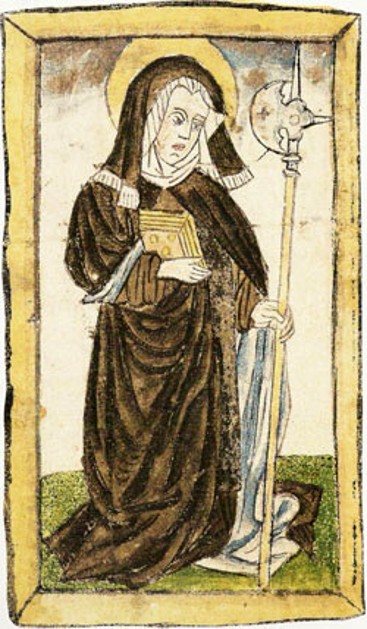
Saint of the Day – 23 February – Saint Milo of Benevento (Died c1077) Bishop, Teacher, Spiritual Guide and most zealous Shepherd of his flock and a loving father to the poor, the sick and the nedy. Born in Auvergne, France and died in c1073 in Benevento, Italy of natural causes. Patronages – of Bishops, of the poor and needy, of Teachers. Also known as – Milo of Auvergne, Milon … Milone… Additional Memorial – 25 May on some calendars.
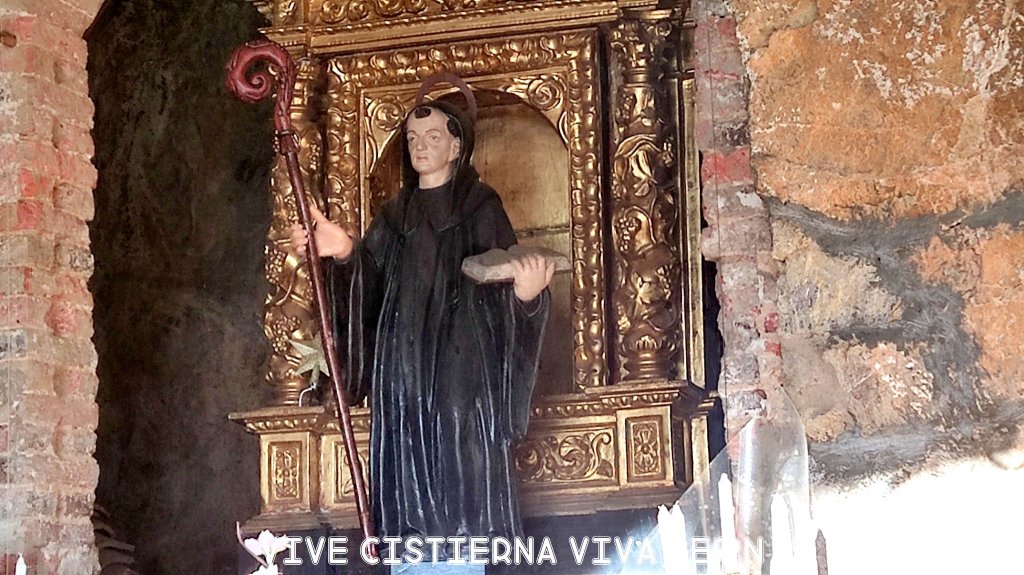
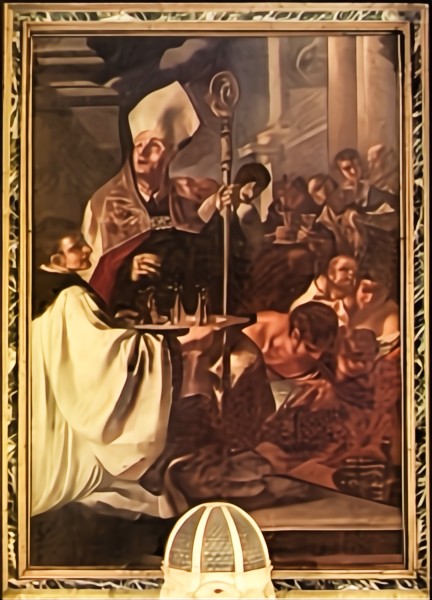
An Unknown Bishop Saint who maybe St Milo
Saint Milo was born in Auvergne, France, in the 11th Century. From a young age he was remarkable for his piety and intelligence,and, for this reason, he was initiated into the studies required for the Priesthood. He studied in Paris, where he was Ordained a Priest and became a Canon of the Cathedral.
Milo was a man of great charity and compassion. He dedicated himself passionately to his ministry and, did his utmost to help those in need. He was also a great Teacher and was responsible for the education of several young people, including Saint Stephen of Muret, who would become the Founder of the Order of Grandmont.
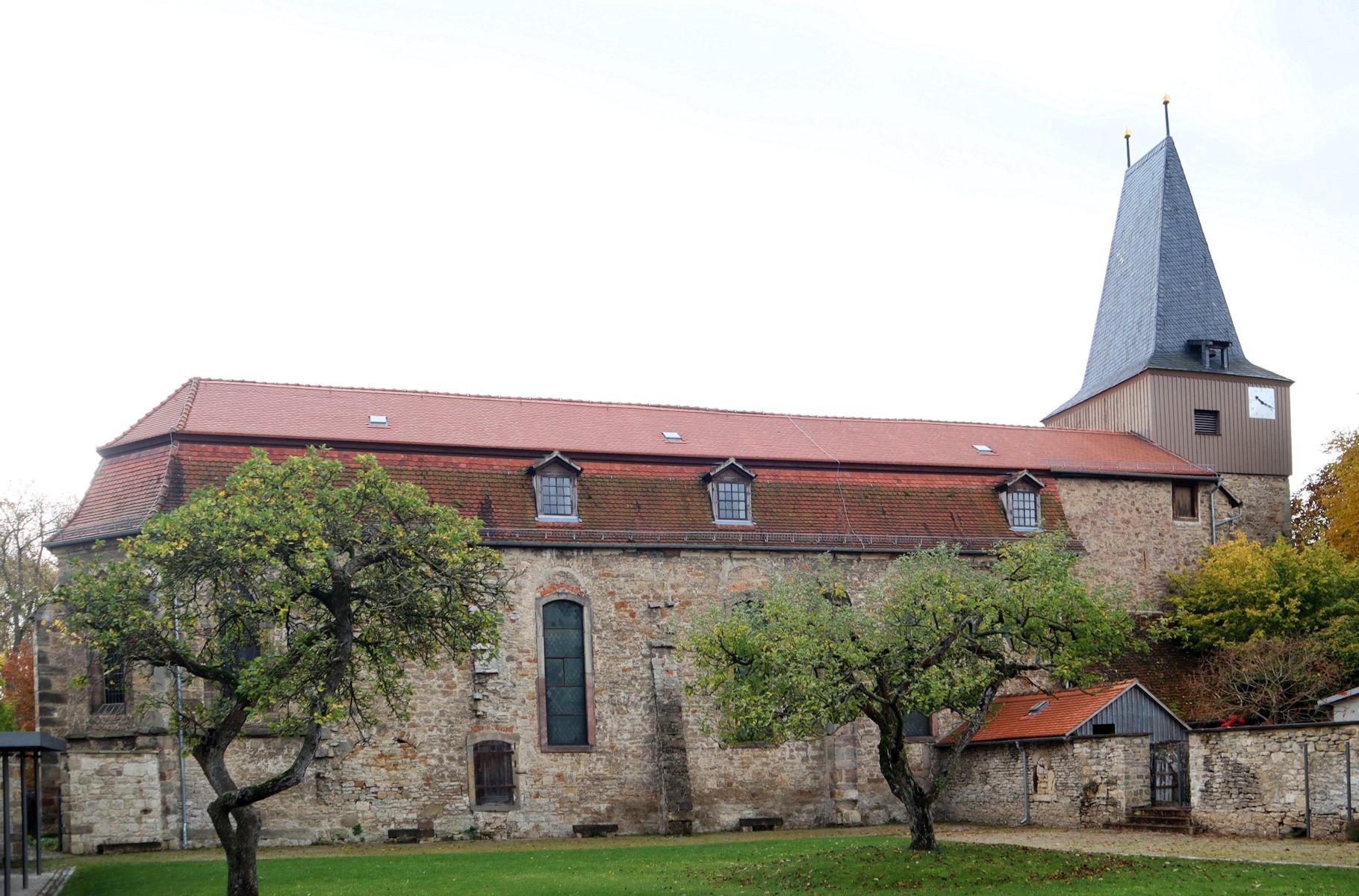
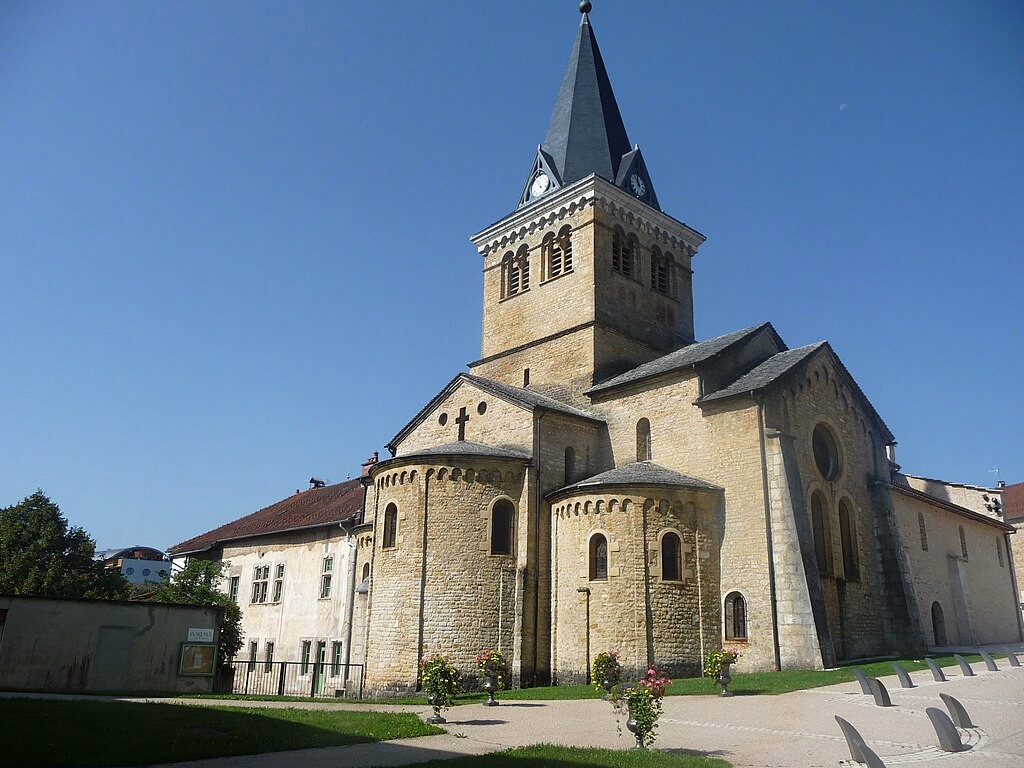
The Romanesque Cathedral of Benevento
The fame of Milo’s virtues and knowledge soon crossed the borders of France. In 1068, he was elected as the Bishop of Benevento in Italy. Milo accepted the Ecclesiatical honour with great humility and dedication. He committed himself to reforming the Diocese and promoting peace and justice.
Unfortunately he was able to govern the Diocese for only two years. He died in c1070 (some sources say 1076).
Saint Milo is venerated as a Patron of Bishops, Teachers and the poor and needy. His liturgical Feast is celebrated on 23 February 23 and 25 May.
The Feast of the Sacred Lance and Nails – Friday after the 1st Sunday in Lent: The Supreme Pontiff, Innocent VI, in his Decree establishing the Feast and Office of the Lance and Nails which pierced the Body of our Crucified Lord Jesus Christ, exhorts all the faithful to have a special veneration for and devotion to, all the Sacred Instruments of our Saviour’s Passion. The following are the Holy Father’s words: “We should honour the most holy Passion of our Lord and Redeemer, Jesus Christ, in such manner that, meditating on all the mysteries and merits of the same Passion, we venerate also each Sacred Instrument thereof.” Then this holy and zealous Pontiff, coming more directly to the honour due to the Lance and Nails, says: “Although the Lance and Nails and the other Sacred Instruments of the Passion, should be enerated everywhere, by the faithful of Christ and although every year the Church celebrates the Solemn Offices of the same Passion, yet, we deem it proper and fitting, that a special Solemn Feast should be instituted and celebrated in honour of those particular Instruments of the Passion, more especially, in those places wherein these salutary Instruments are preserved. Hence, we wish to encourage this devotion by a special Office and privileges.” (Innocent VI in Decret. de Fest. Lane, et Clav. Domini).
The Lance, also known as “The Spear of Longinus” is kept in the Vatican Basilica, given to Innocent VIII in 1492. The Nails were kept with the Crown of Thorns, along with a small piece of the Lance of Longinus at Saint Chapelle, France and were subsequently lost during the French Revolution. The Crown of Thorns was the only Relic saved and is now kept at Notre Dame Cathedral.
In a Leap Year, the Vigil of St Matthias, Apostel, is not announced today because it is transferred to the 24th.
St Alexander Akimetes St Boswell St Dositheus of Egypt St Felix of Brescia St Florentius of Seville St Giovanni Theristi (1049–1129) Monk Bl John of Hungary
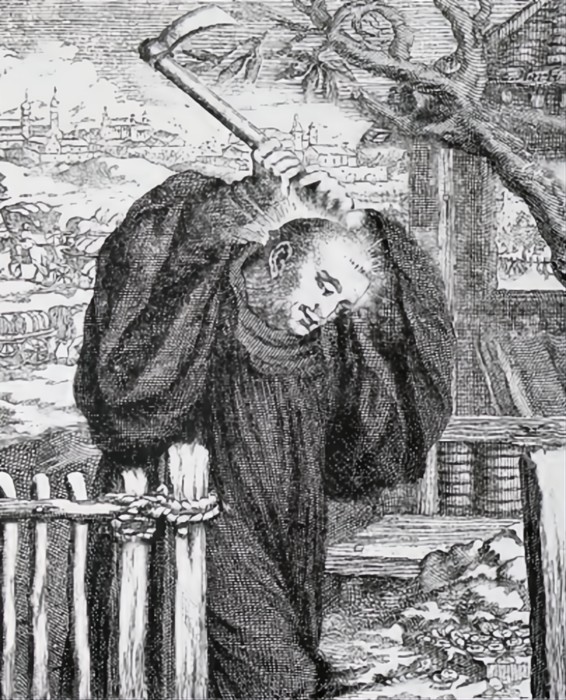
St Lazarus Zographos (c810-c 867) Priest, Monk known as “the Painter and the Iconographer.” Lazarus lived before and during the second period of Byzantine Iconoclasm. The Roman Martyrology states of him today: “St Lazarus, a Monk, whom the Iconoclast Emperor Theophilus ordered to be put to torture for having painted holy images. His hand was burned with a hot iron but, being healed by the power of God, he painted anew the holy images which had been defaced and finally rested in peace.” Biography: https://anastpaul.com/2022/02/23/saint-of-the-day-23-february-st-lazarus-zographos-810-865/
St Milo of Benevento (Died c1077) Bishop St Ordonius St Polycarp of Rome St Romana
St Serenus the Gardener (Died 307) Martyr. Serenus was by birth a Grecian. He left his family estate, friends and country to serve God in celibacy, penance and prayer. With this design he bought a garden in Sirmium in Pannonia, which he cultivated with his own hands and lived on the fruits and herbs it produced. His Life and Death: https://anastpaul.com/2019/02/23/saint-of-the-day-23-february-st-serenus-the-gardener-died-307-martyr/
Martyrs of Syrmium – 73 Christians who were Martyred together in the persecutions of Diocletian. We know no details about them, and only six of their names – Antigonus, Libius, Rogatianus, Rutilus, Senerotas and Syncrotas.
Our Lenten Journey with the Angels and the Saints – 22 February – The Feast of the Chair of St Peter at Antioch –1 Peter 1:1-7; Matthew 16:13-19 – Scripture search here: https://www.drbo.org/
“Let the mercies of the Lord, give glory to Him and his wonderful works to the children of men!” Psalm 106:31
“But Whom do you say that I Am? Simon Peter answered and said: Thou art Christ, the Son of the living God.” Matthew 16:15-16
On Christian Perfection In Thought, Word and Deed
St Gregory of Nyssa (c335–c395) Bishop and Father of the Church
(Brother of St Basil the Great)
“The life of the Christian has three distinguishing aspects – deeds, words and thought. Thought comes first, then words, since our words express openly the interior conclusions of the mind. Finally, after thoughts and words, comes action, for our deeds carry out what the mind has conceived. So when one of these results in our acting or speaking or thinking, we must make sure that all our thoughts, words and deeds are controlled by the Divine Ideal, the Revelation of Christ. For then, our thoughts, words and deeds will not fall short of the nobility of their implications.
What then must we do, we who have been found worthy of the Name of Christ? Each of us must examine his thoughts, words and deeds, to see whether they are directed toward Christ or are turned away from Him. This examination is carried out in various ways. Our deeds or our thoughts or our words are not in harmony with Christ if they issue from passion. They then bear the mark of the enemy who smears the pearl of the heart with the slime of passion, dimming and even destroying the luster of the precious stone.
On the other hand, if they are free from and untainted by every passionate inclination, they are directed toward Christ, the Author and Source of peace. He is like a pure, untainted stream. If you draw the thoughts in your mind and the inclinations of your heart from Him, you will show a likeness to Christ, your Source and Origin, as the gleaming water in a jar resembles the flowing water from which it was obtained.
For the purity of Christ and the purity which is manifest in our hearts are identical. Christ’s purity, however, is the Fountainhead; ours has its Source in Him and flows out of Him. Our life is stamped with the beauty of His thought. The inner and the outer man, are harmonised in a kind of music. The mind of Christ is the controlling influence which inspires us to moderation and goodness in our behaviour. As I see it, Christian perfection consists in this – sharing the title which expresses the meaning of Christ’s Name, we bring out this meaning in our minds, our prayers and our way of life.” – (Extract from his Treatise On Christian Perfection).
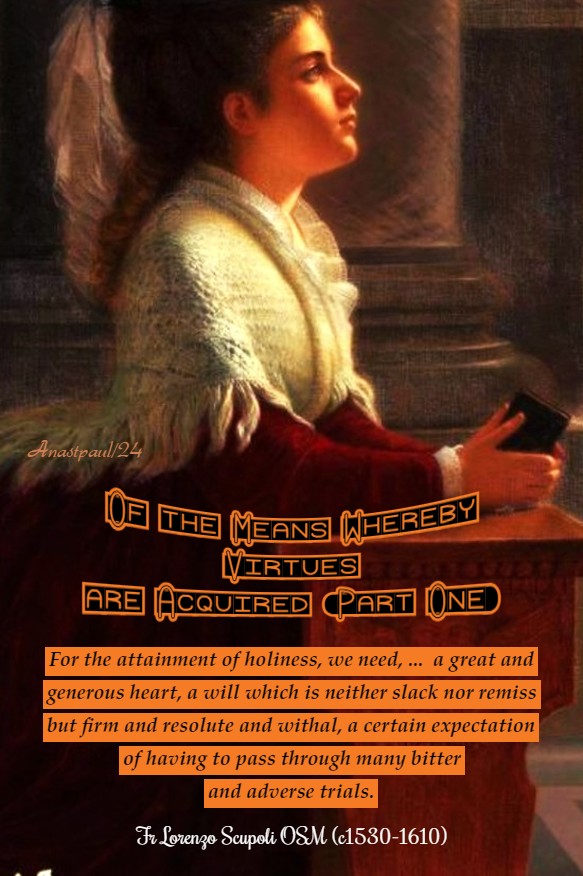
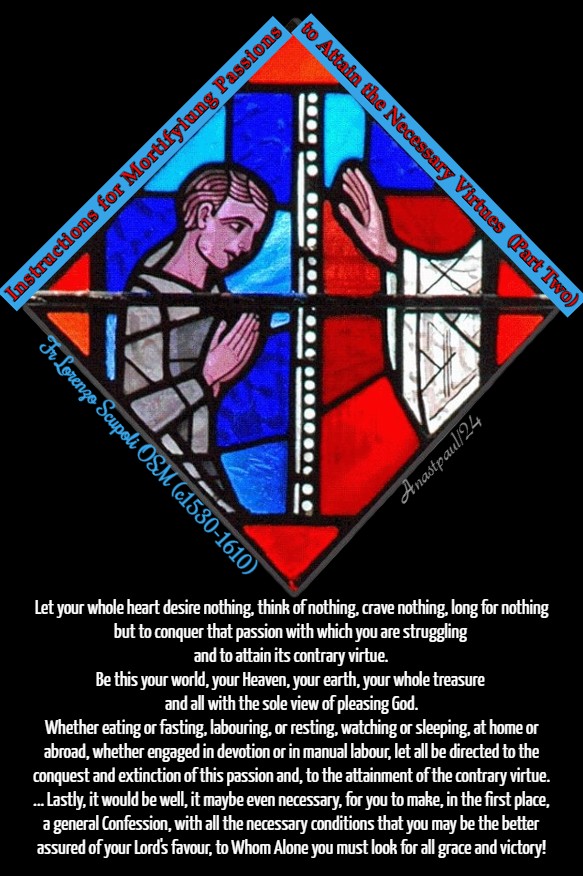
Thought for the Day – 22 February – The Spiritual Combat (1589) – Dom Lorenzo Scupoli OSM (c1530-1610)
“None shall be crowned who has not fought well.” 2 Tim 2: 5
XXII: … Of How Sensible Things Aid Us to Meditate on the Incarnate Word in the Mysteries of His Life and Passion (Part Two)
“The same may be said of other similar things.
+++ Let the taste of wine, or other liquid, remind you of your Lord’s vinegar and gall.
+++ If sweet perfumes refresh you, think of the ill odour of the dead bodies which were around Him on Calvary.
+++ While dressing, recollect that the Eternal Word clothed Himself with human flesh that He might clothe you with His Divinity.
+++ When undressing, remember Christ, Who was stripped of His garments, to be Scourged and Crucified for you.
+++ If you hear the shouts and cries of a multitude, think of those hateful words: “Away with Him, away with Him! crucify Him, crucify Him! ” which sounded in His Divine Ears.
+++ At each stroke of the clock, think of that deep sorrow and heaviness of heart which Jesus was pleased to endure in the Garden, as the foreboding and horror of His approaching Death and Passion began to fall upon Him; or imagine to yourself those heavy blows which nailed Him to the Cross.
+++ On any occasion of grief or sorrow which presents itself, whether your own or another’s, reflect that all these things are as nothing, compared to the inconceivable anguish which oppressed, pierced and mangled the Soul and Body of thy Lord!”
Quote/s of the Day – 22 February – Feast of the Chair of St Peter at Antioch – 1 Peter 1:1-7; Matthew 16:13-19 – Scripture search here: https://www.drbo.org/
“Upon this rock I will build My Church and the gates of hell shall not prevail against it. I will give you the keys of the Kingdom of Heaven and whatever you bind on earth shall be bound in Heaven and, whatever you loose on earth, shall be loosed in Heaven.”
Matthew 16:18-19
“… Now you must be, for a little time, made sorrowful in divers temptations. That the trial of your faith, (much more precious than gold which is tried by the fire) may be found unto praise and glory and honour at the appearing of Jesus Christ.”
1 Peter 1:6-7
“But the God of all grace, Who hath called us into His eternal glory in Christ Jesus, after you have suffered a little, will Himself perfect you and confirm you and establish you. To Him be glory and empire forever and ever. Amen.”
1 Peter 5:10-11
“Yes, the Apostle chosen to be His co-worker, merited to share, the same Name as Christ. They built the same Building together – Peter does the planting, the Lord gives the increase and it is the Lord, too, Who sends those, who will do the watering (cf 1 Cor 3:6f).”
St Augustine (354-430) Father & Doctor of the Church
“It is good to admire the fidelity of St Peter and the designs of Divine Providence in making him the visible Head of the Church but, it is far better, to follow his example. His love for Jesus, led him to leave his family and his fisherman’s trade, in order to follow Our Lord. It led him to undertake long voyages, to endure imprisonment and to face martyrdom. What can we do for the love of Jesus? Remember that, if love is to be sincere, it must be generous and effective. He was not satisfied, until he was hanging upon the cross like his Divine Master and could prove his love for Jesus by a Martyr’s death.”
One Minute Reflection – 22 February – The Feast of the Chair of St Peter at Antioch –1 Peter 1:1-7; Matthew 16:13-19 – Scripture search here: https://www.drbo.org/
“Whatsoever thou shalt bind upon earth, it shall be bound also in Heaven and whatsoever thou shalt loose on earth, it shall be loosed also in Heaven.” – Matthew 16:19
REFLECTION – “Bridegroom and Bride, that is, Christ and the Church, are as one, be it in receiving confession or in bestowing absolution. All this makes clear why Christ had to tell each of us: “Go, show yourself to the priest” (Mt 8,4)… It follows that apart from Christ, the Church cannot grant forgiveness and that Christ has no will to forgive, apart from the Church. The Church’s authority to forgive extends only to the repentant, to those, that is, whom Christ has already touched; Christ, on His part, has no intention of regarding as forgiven, one who despises the Church.
Doubtless, Christ need accept no restraints to His power of Baptising, Consecrating the Eucharist, Ordaining Priests, forgiving sins and the like but, the humble and faithful Bridegroom, prefers to confer such blessings, with the co-operation of His Bride. “What God,” then, “has joined, let no man put asunder” (Mt 19,6). “I say this is a great mystery and refers to Christ and the Church” (Eph 5,32)… To remove the Head from the Body (Col 1:18) were to ruin the whole Christ, irreparably. Christ, apart from the Church, is no more the whole Christ, than the Church is complete, if separated from Christ. Head and Body go to make the whole and entire Christ.” – Bl Isaac of Stella (c 1100 – c 1170) Cistercian Monk, Abbot, Theologian, Philosopher (Sermon 11, §11-814).
PRAYER – O God, Who when giving blessed Peter, Thine Apostle, the keys of the Heavenly Kingdom, bestowed on him the power of binding and loosing, grant that by the help of his intercession, we may be delivered from the bonds of our sins. Through Jesus Christ, Thy Son our Lord, Who lives and reigns with Thee, in the unity of the Holy Ghost, God, world without end. Amen (Collect).
Our Morning Offering – 22 February – The Chair of St Peter at Antioch
O Prince of the Apostolic Senate! Hymn to the Prince of the Apostles By St Peter Damian (1007-1072) Cardinal Bishop of Ostia Doctor of the Church
O Prince of the Apostolic Senate! Herald of our Lord! First Shepherd of the Faithful! watch over the Flock intrusted to thee.
Lead us through verdant pastures, feeding us with the nourishment of the Word and lead us, thus fed, into the heavenly fold, whither thou hast already gone.
To thee, Peter, have been delivered the Keys of heaven’s gate and all things, both in Heaven and on earth, acknowledge thy authority.
Tis thou that choosest the City where is to be established the Rock of the True Faith, the foundation of the building, on which the Catholic Church stands immoveable.
Thy shadow, as thou passest by, heals the sick and Tabitha, who made garments for the poor, was raised to life at thy bidding.
Bound with two chains, thou wast set free by an Angel’s power; he bids thee put on thy garments and thy sandals and lo! the prison door is opened.
To the Father unbegotten and to the Only-Begotten Son and to the co-equal Spirit of them both, be praise and kingly highest power. Amen.
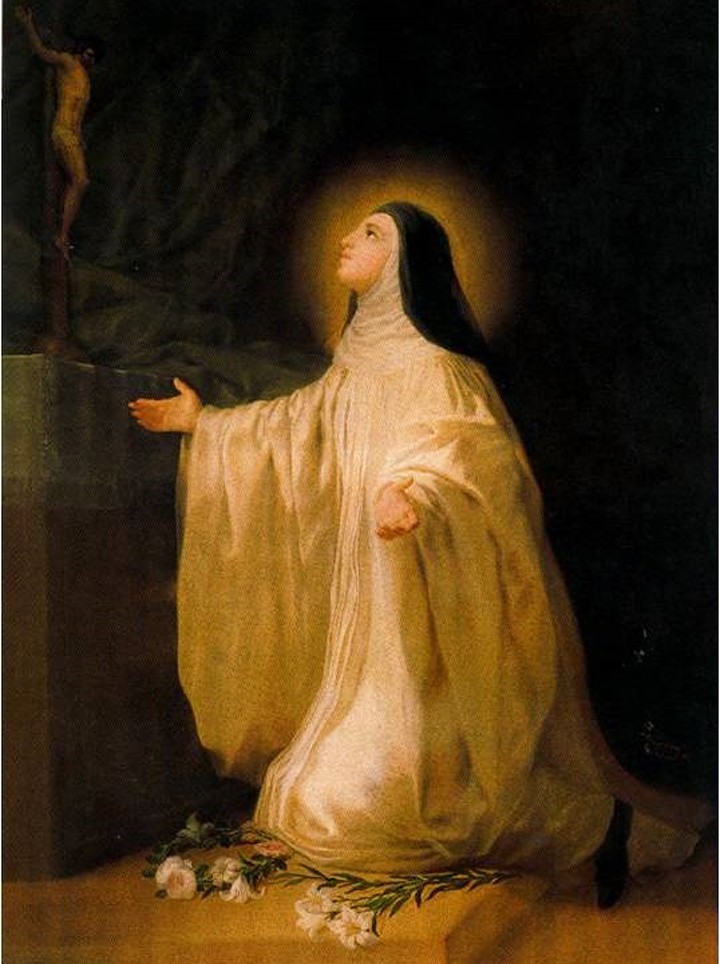
Saint of the Day – 22 February – Saint Isabella of France (1225-1270) Virgin, Apostle of the poor, the sick and needy, Founder Nun of a Convent based on the Poor Clares Order, known as the Sisters Minor and forming part of the Franciscan family. Sister of Saint Louis IX, Aunt of Saint Louis of Toulouse, Princess. Born in March 1225 in Paris and died on 23 February 1270 (aged 45) at the Convent in Longchamp, Pays de France. Patronages – of the ill and infirm, of the Royal Abbey of Longchamp. Also known as – Isabel, Isabelle. Additional Memorial 8 June (Franciscans), 8 November – as one of the Saints of the Diocese of Evry, 23, 24 and 26 February – on some calendars.
St Isabella with St Louis IX – laying the cornerstone ofthe Longchamps Convent
In Pays de France, just outside the City of Paris, along the Seine, lived King Louis VIII and Blanche of Castile, the Queen of France. The Royal couple were a holy example of Christian love and they had alreadybeen blessed with several children when their daughter, Isabella, came into the world in March 1225.
When Isabella was less than two years old, King Louis VIII died, leaving her older brother to reign as King. King St Louis IX was installed in 1226 and he reigned until 1270. His mother supervised the education of the young children, ensuring that Isabella not only learned the feminine arts butm also learned Latinm in order to study the Fathers of the Church.
Isabella demonstrated great piety from a very early age and, it must be noted, she received much support in practising her faith from her mother, her brother the King and other members of the Royal Court. Isabella dedicated her sewing skills to providing clothing for the poor and preparing Vestments for liturgical celebrations. On one occasion, as she was embroidering a new hat, King Louis IX asked her to give the hat to him. She refused, explaining, “No, this is the first of its kind and I must make it for my Saviour Jesus Christ.” When she finished it, she gave it to a poor and sick person. Then, she made another cap of similar design for her Royal brother.
Arranged marriages, common at the time, were a part of Isabella’s life from the age of two. The Treaty of Vendome, created in March 1227 and signed in June 1230, betrothed Isabella to Hugh, the eldest son and heir of Hugh X of Lusignan which was an area on the western coast of France. However, Isabella refused to celebrate this marriage. Some years later, she also refused to marry another Royal personage, Conrad, the son of the Holy Roman Emperor Frederick II. Her mother and brother both urged her to marry Conrad. Even Pope Innocent IV tried to persuade her to marry the son of the Emperor but, again she refused. When she learned of the Pope’s hope that she would marry Conrad, Isabella wrote to him explaining that she had consecrated her virginity to Christ and would never marry. The Pope, witnessing her steadfast faithfulness to Christ, admired her for her perseverance and agreed with her position. Her brother finally acquiesced and no longer tried to persuade her to marry Conrad or anyone else. Not long after this episode, their mother died.
In 1255, Isabella requested her brother’s permission to leave the Court and to establish a home for a group of devout women. . Thus, King St Louis IX undertook the purchase of some land in the Forest of Rouvray, just west of Paris, for this purpose. The cornerstone was placed on 10 June 1256 and four years later, the building was completed. On 2 February 1259, Pope Alexander IV gave his approval to the new Rule prepared by Princess Isabella. This Rule had been compiled by Fr Mansuetus, a Franciscan, who based it on the Rule of the Order of St Clare, also referred to as the Poor Clares. The Rule was approved by St Bonaventure, who was then the Minister General of the Franciscan Order. The new Monastery was called the Monastery of the Humility of the Blessed Virgin. The Nuns of this Monastery were called Sisters Minor.
The Rules were unique and specific to this group of women, being somewhat simpler than the Rules of the Poor Clares, in that the fasting was not as rigid and the community was allowed to hold property. But like the Poor Clares, these women also helped Tthe poor and needy of the neighbourhood. . The first Nuns to join this new Monastery were from the Convent of the Poor Clares at Rheims, nearly 100 miles east of Paris. Although Isabella never resided at the Monastery herself, she observed the Rules in the privacy of her home.
After a few years, Isabella adjusted the Rule and King St Louis submitted and obtained confirmation of the revised Rule. Pope Urban IV approved the new Rule on 27 July 1263, giving the Nuns of Longchamp, the official title of Sisters Minor. This title emphasised the close relationship with the Order of Friars Minor.
Isabella had refused to become the Abbess but continued to observe the Rule, as well as additional mortifications. She practiSed nearly total silence, fasted three days a week and lived a life of heroic virtue.
In 1270 Isabella died at the new house in Longchamp. The Nuns declared that when she died, the singing of Angels could be heard. She was buried in the Convent Church. After only nine days, her body was exhumed and it was still supple, suffering no decay. Not surprisingly, many miracles occurred at her gravesite. In 1521 Pope Leo X Beatified Isabella, permitting the Abbey of Longchamp to celebrate her Feast with a special office. On 4 June 1637 Isabella’s body was exhumed again and it was still incorrupt. 50 years later, on 25 January 1688, the Nuns received permission to celebrate Isabella’s Feast with an Octave observance. In 1696, on her Canonisation, Pope Innocent XII extended the permission to the entire Franciscan Order.
St John the Saxon St Limnaes Bl Mohammed Abdalla St Papias of Heirapolis St Paschasius of Vienne St Raynerius of Beaulieu St Thalassius
Martyrs of Arabia – A memorial for all the unnamed Christians Martyred in the desert and mountainous areas south of the Dead Sea during the persecutions of Emperor Valerius Maximianus Galerius.
Thought for the Day – 21 February – The Spiritual Combat (1589) – Dom Lorenzo Scupoli OSM (c1530-1610)
“None shall be crowned who has not fought well.” 2 Tim 2: 5
XXII: … Of How Sensible Things Aid Us to Meditate on the Incarnate Word in the Mysteries of His Life and Passion (Part One)
“I have shown you how we may raise our minds from sensible objects to the contemplation of the Divinity. Now, learn a method of taking occasion from the same, to meditate on the Incarnate Word and the most Sacred Mysteries of His Life and Passion.
All things in the universe may serve to this end, if first you behold God in them, as the sole first cause, Who has bestowed on them all the being, beauty and excellence which they possess. Passing on from this, consider how great, how immeasurable is His goodness; Who, being the Sole Principle and Lord of all creation, was pleased to descend so low, as to become Incarnate, to suffer and to die for man, permitting the very works of His Hands to arm themselves against Him and to Crucify Him. Many objects will then bring these Holy Mysteries before your mind’s eye, such as weapons, cords, scourges, pillars, thorns, reeds, nails, hammers and other instruments of His Passion.
Poor hovels will recall to our memory the stable and manger of our Lord. Rain will remind us of the drops of Divine Blood which fell from His most sacred Body in the Garden and watered the ground. Rocks will represent to us those which were rent asunder at His Death. The earth will bring to our memory the earthquake at that hour; the sun, the darkness that then covered it. The sight of water will speak to us of that stream which flowed from His most Sacred Side.”
Quote/s of the Day – 21 February – “The Month of the Most Holy and Blessed Trinity” – Ember Wednesday – 3 Kings 19:3-8; Matthew 12:38-50 – Scripture search here: https://www.drbo.org/
“The sign of Jonah”
Matthew 12:39
“It was, too, to lead the Ninevites to firm repentance and to convert them to Him, Who would deliver them from death, amazed as they were by the sign accomplished in Jonah … In the same way, God permitted man to be swallowed by that great monster, the author of disobedience, not so that he should altogether vanish away and die but because God, had prepared beforehand, the salvation fulfilled by His Word by means of the “sign of Jonah.”
St Irenaeus (130-208) Bishop of Lyons, Martyr and Father
“To do penance is to bewail the evil we have done and to do no evil to bewail.”
“But He still follows behind us and counsels us, although we have despised Him, He still does not cease to call us. We turn our backs on His face, so to speak, when we reject His Words, when we trample His Commandments underfoot but He, Who sees that we reject Him, still calls out to us by His Commandments and waits for us by His patience, stands behind us and calls us back when we have turned away.”
St Pope Gregory the Great (540-604) Father & Doctor of the Church
“What are we doing? If we really love the Sacred Heart of Jesus, we should offer penance and sacrifices in order to make reparation for our sins and the sins of others and, to propitiate this adorable Heart, Which ardently desires to bestow new favours upon us.”
Our Lenten Journey with the Angels and the Saints – 21 February – Ember Wednesday – 3 Kings 19:3-8; Matthew 12:38-50 – – Scripture search here: https://www.drbo.org/
“The troubles of my heart are multiplied, deliver me from my necessities. See my abjection and my labour and forgive me all my sins.” Psalm 24:17-18
“The men of Nineveh will rise up in the judgement with this generation and will condemn it; for they repented at the preaching of Jonah and behold, One greater than Jonah is here.” Matthew 12:41
REPENTANCE
St Romanos Melodios (c490-c556) Monk, Hymnist, Poet
“Let us meditate on the Ninevites … let us listen to what they did. After the terrifying proclamation made by Jonah before this gluttonous and drunken people … like capable workmen, they made hast to restore the city their evil deeds had destroyed, taking a sure rock for its foundation … – REPENTANCE.
After washing away its filth, in the floods of their tears, they adorned their town with their prayer and converted Nineveh thus pleasing the Merciful One. Its King, a wise man, … prepared animals and flocks as if to bring them along in dowry, saying: “O God, my Saviour, I offer everything to Thee, only reconcile, bring back in grace, the one who prostituted herself and betrayed … Thy purity, for see how, in her love, she offers her repentance to Thee like a gift …”
If I, the sovereign King, have sinned, then strike me down alone and take pity on all these others. But if we have all fallen short, hear the voices of all … May Thy help come upon us and all fear will be dissolved. Nothing will dismay us if Thou receive what we are offering, our repentance …
Rebellious Nineveh throws herself at Thy Feet and I, a miserable King and Thy wretched servant, sit down in ashes, since I am unworthy of my throne (Joh 3:6). Because, I have scorned the crown, I throw dust on my head. Because, I am not worthy of my purple, I have put on sackcloth and burst into lamentation. Therefore, do not despise me, cast a glance upon us, O my Saviour and accept our repentance.
Son of the One God, O only God, protect those who love Thee, in Thy mercy … As in former days Thou took pity on the Ninevites … so today, release from judgement, those who sing to Thee and grant forgiveness in return for my Confession … Since I have no works worthy of Thy glory, at least save me, my Saviour, for my words of contrition, Thou Who loves repentance.” (Hymn ‘Nineveh’)
One Minute Reflection – 21 February – “The Month of the Most Holy and Blessed Trinity” – Ember Wednesday – 3 Kings 19:3-8; Matthew 12:38-50 – – Scripture search here: https://www.drbo.org/
“The sign of Jonah” – Matthew 12:39
REFLECTION – “You were conducted by the hand to the holy pool of Sacred Baptism, just as Christ was conveyed from the Cross to the sepulchre close at hand [in this Church of the Holy Sepulchre]. Each person was asked if he believed in the Name of the Father and of the Son and of the Holy Spirit. You made the confession that brings salvation and submerged yourselves three times in the water and emerged, by this symbolic gesture, you were secretly re-enacting the burial of Christ, three days in the tomb. For just as our Saviour spent three days and nights in the bosom of the earth, so you, upon first emerging, were representing Christ… You saw nothing when immersed – as if it were night but you emerged – as if to the light of day. In one and the same action, you died and were born, the water of salvation became both tomb and mother for you…
What a strange and astonishing situation! We did not really die, we were not really buried, we did not really hang from a cross and rise again. Our imitation was symbolic but our salvation a reality! Christ truly hung from a Cross, was truly buried and truly rose again. All this He did gratuitously for us, so that we might share His sufferings by imitating them and gain salvation in actuality. What transcendent kindness! Christ endured nails in His innocent Hands and Feet and suffered pain and by letting me participate in the pain, without anguish or sweat, He freely bestows salvation on me! …
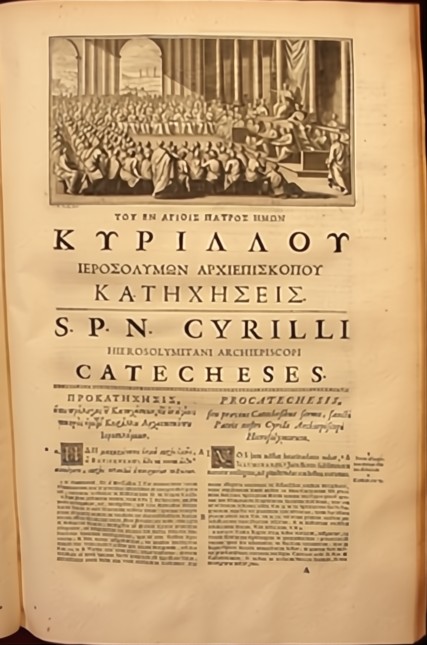
We know well that not merely does Baptism cleanse sins and bestow on us the gift of the Holy Spirit – it is also the sign of Christ’s suffering. This is why, as we heard just now, Paul cried out: “Are you unaware that we, who were Baptised into Christ Jesus, were Baptised into His Death? We were indeed buried with Him through Baptism into death”… So, in order that we may realise that Christ endured all His sufferings for us and our salvation IN actuality and not in symbolism and that, we share in His pains, Paul cried out the literal truth: “If we have grown into union with Him through a death like His, we shall also be united with Him in the resurrection,” (Rom 6,3-5). – St Cyril of Jerusalem (313-350) Bishop of Jerusalem, Father and Doctor of the Church (Catechesis no.20/2nd Mystagogy)
PRAYER – We beseech Thee, O Lord, look graciously upon the fervour of Thy people, who mortify themselves in the flesh through fasting and abstinence that they may be refreshed in spirit, by the fruit of these good works.Through Jesus Christ, Thy Son our Lord, Who lives and reigns with Thee, in the unity of the Holy Ghost, God, world without end. Amen (Collect).
Our Morning Offering – 21 February – Ember Wednesday
Lord Jesus, Think on Me By St Synesius of Cyrene (375-430) Bishop of Ptolemais, Father
Lord Jesus, think on me and purge away my sin, from earth-born passions set me free, and make me pure within. Lord Jesus, think on me, With care and woe oppressed, let me Thy loving servant be and taste Thy promised rest. Lord Jesus, think on me, nor let me go astray, through darkness and perplexity point Thou the heav’nly way. Lord Jesus, think on me, that, when the flood is past, I may eternal brightness see and share Thy joy at last. Amen
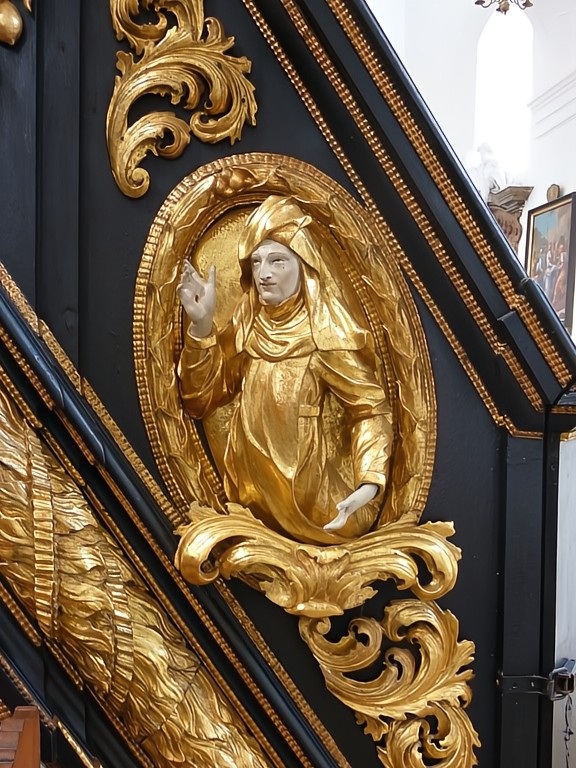
Saint of the Day – 21 February – Saint Maximian of Ravenna (c499-556) Bishop and Confessor, Defender of the orthodox Faith against heresy, a renowned Scholar and prolific Historical and Spiritual Writer. St Maximian was the 28th Bishop of Ravenna, indeed, he bears the honour of being the 1st Bishop in the West, to bear the title of Archbishop as holder of a City Diocese governing a number of surrounding Bishops. Born in c499 in Pola, Istria (modern Pula, Croatia) and died in 556 of natural causes in Ravenna, Italy. Also known as – Maximià, Massimiano, Maximianus.
The Roman Martyrology reads: “In Ravenna, St Maximian, Bishop, who faithfully carried out his pastoral office and defended the unity of the Church against heresy.”
Maximian had received Episcopal Consecration from Pope Vigilius in 546 and held the Seat for ten years. Thanks to his solid financial condition and exploiting, with his great intuition, the eminent position of Vicar of Pope Vigilius and the Emperor Justinian, he became one of the most important figures in 6th Century Italy.
Quite precise information has been handed down about him thanks to the Biography written by the Priest Historian, Andreas Agnellus, who, despite having lived two Centuries later, was a profound expert on the writings of the holy shepherd.
Maxiamian was born in c499 in Pola, Istria, today in Croatian territory and became a Deacon of the local Church. The fortunate discovery of a ‘treasure’ at the hands of himself or his father, allowed him to arrive at the Imperial Court of Constantinople, where he was able to earn the esteem of the Emperor Justinian.
In 545, upon the death of the Bishop of Ravenna, the faithful of the City asked the Emperor to award the Pallium to a candidate they had proposed but the latter instead, advised Pope Vigilius to appoint Maximian to the vacant See. So it was and the new Bishop was Consecrated on 14 October 546 but this inevitably caused strong friction with the population of Ravenna, who considered his appointment nothing more than an undue interference in City life. Maximian had no choice but to camp outside the walls, as a guest of the Arian bishop of the Goths but, with tact and diplomacy, he gradually managed to win the sympathy of his faithful and obtain permission to take possession of the Episcopal Seat.
His Episcopate represented the golden age of the Church of Ravenna, in fact, the Basilicas of St Michael and St Vitale were completed and Consecrated. Many others were embellished,and St John, St Stephen and many other Churches in the Diocese, were built or embeliished and all entirely due to him, including the splendid mosaics.
St Maximian on the left of Emperor Justinian
The quantity of books he authored was large – chronicles, descriptions of Ravenna, catalogues of the City’s Bishops and twelve volumes of his sermons! He also prepared an accurate edition of the Sacred Scriptures, accompanied by notes and commentary. He also wrote a Sacramentary on which the Leonine one was presumably later based. His activities extended to the whole of Italy, of which he was to all intents and purposes, Primate during the long absence from Rome of Pope Vigilius and his efforts were particularly focused on restoring harmony and unity within of the Churches, divided by the schism known as the “Three Chapters.” His Biographer, Andreas Agnellus also described him as a shepherd who “welcomed strangers, called back those who fell into error, gave the poor what they needed and consoled the suffering.”
Maximian died in Ravenna on 22 February 556 and his remains were buried in the Basilica of St Andrew, where they remained until 1809 when they were transferred to the Cathedral, following the deconsecration of the Church by the Napoleonic administration of the City. In the Basilica of St Vitale, inaugurated with great pomp in the presence of the Emperors Justinian and Theodora, Saint Maximian is depicted next to the Emperor in the grandiose mosaic on the north side of the Sanctuary, holding a gem-studded Cross in his hand.
Basilica of St Vitale
Triumphal Arch mosaics of Jesus Christ and the Apostles
St Avitus II of Clermont Bl Claudio di Portaceli St Daniel of Persia Bl Eleanora St Ercongotha St Felix of Metz St George of Amastris St Germanus of Granfield St Gundebert of Sens
St Maximian of Ravenna (c499-556) Archbishop of Ravenna and Confessor. completor of the immensely renowned Basilica of St Vitalis and many more Churches. He was a man of creative talents who ordered the creation of many famous and very beautiful artworks of various types, for his See, as well as, a great lover of Books and literature, (being a prolific Writer himself) ensuring the acquisition of many illuminated manuscripts. Maximian may have been the first Latin Bishop to use the title ‘Archbishop.’ Biography – his Feast Day was changed after 1969 to 22 February. Being rather confused, I have revisted him today again: https://anastpaul.com/2023/02/22/saint-of-the-day-22-february-saint-maximian-of-ravenna-499-556-bishop/
Blessed Noel Pinot (1747-1794) Priest and Martyr. During the French Revolution, he refused to take the oath of the Civil Constitution of the Clergy unlike his superio! He wore his Mass Vestments to execution and died reciting the opening words of the Mass. He was Beatified by Pope Pius XI on 31 October 1926. His Life and Death: https://anastpaul.com/2020/02/21/saint-of-the-day-21-february-blessed-noel-pinot-1747-1794-priest-and-martyr/
St Valerius of San Pedro de Montes St Verda of Persia
Martyrs of Sicily – 79 Saints: Sevent nine Christians Martyred together in the persecutions of Diocletian. They were Martyred in c 303 on Sicily.
Martyrs of Hadrumetum – A group of 26 Christians Martyred together by Vandals. We know little more than eight of their names – Alexander, Felix, Fortunatus, Saturninus, Secundinus, Servulus, Siricius and Verulus. c 434 at Hadrumetum (modern Sousse, Tunisia).
Thought for the Day – 20 February – The Spiritual Combat (1589) – Dom Lorenzo Scupoli OSM (c1530-1610)
“None shall be crowned who has not fought well.” 2 Tim 2: 5
XXI: … Of The Proper Use of the Exterior Senses: Contemplation of the Divinity (Part Two)
“And if attracted by the beauty of the creature, separate that which you see, from the Spirit which you see not and consider that all that exterior beauty, is solely derived from the invisible Spirit which is its source and joyfully say: “Behold, these are streamlets from the uncreated Fountain; behold, these are drops from the Infinite Ocean of all good. O, how does my inmost heart rejoice at the thought of that eternal Infinite Beauty which is the Source and Origin of all created beauty!”
And, on the discovery, in other men of goodness, wisdom, justice or similar virtues, make the same mental separation and say to God: “O most rich Treasure-house of all virtues, how greatly do I rejoice that from Thee and through Thee alone, flows all goodness and, that all in comparison with Thy Divine perfections, is as nothing! I thank Thee, Lord, for this and every good gift which Thou hast vouchsafed to my neighbour; remember, Lord, my poverty, and my great need of this very virtue.”
When you stretch out your hand to do anything, reflect that God is the first cause of that action and you but His living instrument and raising your thoughts to Him, say thus: “How great, O supreme Lord of all, is my interior joy, that without Thee I can do nothing and that Thou, art in truth, the first and chief Worker of all things!”
When eating or drinking, consider that it is God who gives its relish to your food. Delighting yourself, therefore, in Him alone, say: “Rejoice, O my soul, hat as there is no true contentment but in God, so in Him alone, may you, in all things content yourself.”
When your senses are gratified by some sweet odour, rest not in this enjoyment but let your thoughts pass onto the Lord, from Whom this sweetness is derived and, inwardly consoled, by this thought, say: “Grant, O Lord, that as I rejoice because all sweetness flows from Thee, so may my soul, pure and free from all earthly pleasure, ascend on high as a sweet savour, acceptable unto Thee.”
When you listen to the harmony of sweet sounds, let your heart turn to God, saying: “How do I rejoice, my Lord and God, in Thine Infinite perfections which, not only make a super-celestial harmony within Thyself, but also, unite the Angels in Heaven and all created beings, in one marvellous harmonious concert!”
Quote/s of the Day – 20 February – Tuesday of the First Week in Lent – Ferial Day – Isaias 55:6-11, Matthew 21:10-17 – Scripture search here: https://www.drbo.org/
“Let my prayer come like incense before Thee, O Lord”
Psalm 140:2
“In prayer, the soul cleanses itself from sin, charity is nourished, faith is strengthened, hope made secure; the spirit rejoices, the soul grows tender and the heart is purified, truth discovers itself, temptation is overcome, sadness takes to flight, the senses are renewed, failing virtue is made strong, tepidity disappears, the rust of sin is rubbed away. In it are brought forth, lively flashes of heavenly desires and in these fires, burns the flame of Divine love. Great are the excellences of prayer, great its privileges. The heavens open before it and unveil therein, their secrets and to it, are the ears of God ever attentive.”
Our Lenten Journey with the Angels and the Saints – 20 February – Tuesday of the First Week in Lent – Ferial Day – Isaias 55:6-11, Matthew 21:10-17 – Scripture search here: https://www.drbo.org/
“Let my prayer come like incense before You, O Lord” Psalm 140:2
“He said to them, It is written, ‘My house shall be called a house of prayer’” Matthew 21:13
No Time to Pray!
St Jean-Marie Baptiste Vianney (1786-1859)
“Man has a beautiful office, that of praying and loving. You pray, you love – that is the happiness of man upon the earth. Prayer is nothing else than union with God. I say that prayer is the lifting up of the heart to God. Or, rather, it should be like a pleasant confidence, such as might exist between a child and his father, or between a friend and a friend. …
What, then, should we think of those lukewarm Christians who say they have no time to pray. No time to pray! Poor, deluded beings! What is of more value – to try to please God and save your soul or to do your daily share of toil. No time to pray! Suppose God had let you die during the night, would you do your work today? Or if God had sent you a protracted sickness, would you then be able to perform your daily labour? Oh, what blindness! Such people deserve that God should let them perish in their blindness. We deem it sufficient to devote a few minutes to Him, to thank him for the graces which we receive from Him every moment of our lives. You say you are too busy but do not forget, my friends that your principal business in life is to please God and save your soul! If you do not attend to your work yourself, somebody else will take your place and do it but if you lose your soul, who will save it for you?…
But you may ask, “How is it possible to be constantly praying?” My dear people there is nothing easier than that. All that is necessary, is to occupy our minds from time to time, while we are working, with God, by making now and then an Act of Charity, to prove to Him that we love Him because He is goodness itself and deserves to be loved; or an Act of Humility, insofar as we deem ourselves unworthy of His graces which He imparts to us unceasingly; or, again, an Act of Confidence, by recalling to our mind that, al though we are laden with sin, He loves us and longs to make us happy. Or at other times we should think of the Suffering and Passion of Jesus Christ, we should contemplate Him in the Garden of Olives … or some other time of His birth, His flight into Egypt; or again, of death, the Judgement, hell and Heaven. Or we might say a little prayer in honour of our Guardian Angel and for one thing we should never omit to say – The Angelus, when the bells call …” (Sermons of the Curé d’Ars ).
One Minute Reflection – 20 February – Tuesday of the First Week in Lent – Ferial Day – Isaias 55:6-11, Matthew 21:10-17 – Scripture search here: https://www.drbo.org/
“For just as from the Heavens, the rain and snow come down and do not return there, until they have watered the earth, making it fertile and fruitful, giving seed to him who sows and bread to him who eats.” – Isaias 55:11
REFLECTION – “For the rain and the snow do not return to Heaven but accomplish in the earth the will of Him Who sends them. So the Word that He shall send through His Christ, Who is Himself, the Word and the Message, shall return to Him with great power. For when He shall come and bring it, He shall come down like rain and snow and through Him all that is sown shall spring up and bear righteous fruit and the Word shall return to His Sender but not in vain shall His going have been but thus shall He say, in the presence of His Sender, “Behold, I and the children that the Lord has given Me.” And this is the Voice through which the dead shall live. And this is the Voice of God that shall sound from on high and raise up all the dead.” – St Aphraates “the Sage” (Died c 345) (Feast Day – 29 January) Abbot, Father of the Church [see note below] (Demonstrations 8).
PRAYER – From all perils of soul and body, defend us, O Lord, we beseech Thee and by the intercession of blessed and gloriosus ever Virgin Mary, Mother of God, of blessed Joseph, of Thy blessed Apostles Peter and Paul and all the Saints, graciously grant us safety and peace that all adversities and errors being overcome, Thy Church may serve Thee in security and freedom. Through Jesus Christ, Thy Son our Lord, Who lives and reigns with Thee, in the unity of the Holy Ghost, God, world without end. Amen (Collect).
St Aphraates was a Syriac Christian author of the third century from the Persian Empire who composed a series of twenty-three sermons on points of Christian doctrine and practice. He was an Ascetic and Celibate. He may have been a Bishop and later Syriac tradition places him at the head of Mar Mattai Monastery near Mosul, therefore, he was certainly an Abbot.
Our Morning Offering – 20 February – “The Month of the Most Holy and Blessed Trinity”
Almighty Father, Come Into Our Hearts By St Augustine (354-430)
Almighty Father, come into our hearts and so fill us with Thy love that forsaking all evil desires, we may embrace Thee, our only good. Show us, O Lord our God, what Thou art to us. Say to our souls, I Am your salvation, speak so, that we may hear. Our hearts are before Thee, open our ears, let us hasten after Thy Voice. Hide not Thy Face from us, we beseech Thee, O Lord. Open our hearts, so that Thou may enter in. Repair the ruined mansions, that Thou may dwell therein. Hear us, O Heavenly Father, for the sake of Thy Only Son, Our Lord Jesus Christ, who lives and reigns with Thee and the Holy Ghost, one God, now and forever. Amen
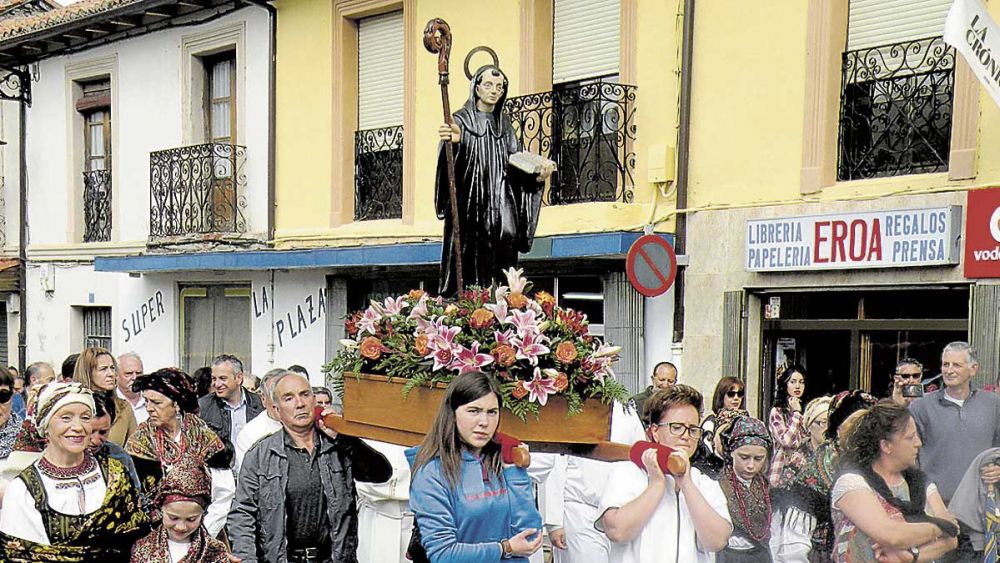
Saint of the Day – 20 February – St Leo of Catania (c720-789) Bishop, Defender of Sacred Images for which opposition he was forced to flee into exile for some years, Hermit. Born in c720 in Ravenna, Italy and died on 20 February 789 in Etna, Sicily, Italy, natural causes. St Leo was the 15th Bishop of Catania, Sicily, famed for his love and care for the poor, his brave opposition to the iconoclastic Government of the time and for his Miracles. Sadly I have found no accounts of his miracles but by the artworks below, it seems they were renowned in their day. Patronages – of these Cities and Towns in Sicily, Italy : Longi, Ronetta, Saracena, Sinagra. Also known as – “Il Maraviglioso” (the Wonderworker) or “He who performs Miracles” Leone.
The Roman Martyrology reads: “In Catania, Sicily, St Leo, the Bishop, illustrious vor virtue and miracles.”
Leo was born in Ravenna in around 720. Since his childhood, he felt the call of God. It is said that his mother saw him on his knees absorbed in prayer at the age of two. While still very young, he entered the Order of Benedictine Monks and moved to Reggio Calabria. Here he remained until he was elected Bishop of Catania. It is reported that the people of Catania had received an angelic vision in a collective dream, wherein they were informed that Leo was the perfect choice to hold the office of their new Bishop. Initially, Leo, not considering himself worthy, did not want to accept but after the insistence of the Catanian faithful, he became thei 15th Bishop of Catania.
In those years, the ferocious destruction of sacred images “iconoclasm – considered a sign of idolatry” was taking place throughout the Byzantine Empire. Those who did not obey the edict which forbid the use of sacred images, were imprisoned and often ended in exile and even Martyrdom. The Bishop of Catania openly opposed the imperial laws. For this reason, the Byzantine Governor of Sicily, ordered Leo’s arrest who was forced to leave Catania and take refuge in the mountains. He wandered in the wooded peaks of the area, in the surroundings of Longi and Sinagra, protected by the faithful, who honoured him as the proud opponent of the unjust laws of the Empire and as a Miracle-worker.
He finally arrived in Rometta. Here, in the nearby Peloritan mountains, he lived as a Hermit in a cave he dug himself. After some years, he returned, uncontested, to Catania, where he resumed his Episcopal Seat and his fight, with ever more energy, against the iconoclastic laws. He died in the City of Etna on 20 February 789. The image below was taken during the annual Procession held in Sinagra.
Our Lenten Journey with the Angels and the Saints – 19 February – Monday of the First Week in Lent – Ferial Day –Ezechiel 34:11-16; Matthew 25:31-46 – Scripture search here: https://www.drbo.org/
“As the eyes of servants are on the hands of their masters, so are our eyes on the Lord, our God, until He have mercy on us. Have mercy on us, O Lord, have mercy on us. ”
Psalm 122:2
“For I was hungry and you gave me to eat”
Matthew 25:35
If You Wish to Receive Mercy, Be Merciful Before He Comes
St Augustine (354-430) Father & Doctor of Grace
“He will judge the world with equity and the peoples in His truth. What are equity and truth? He will gather together with Himself, for the Judgement, His chosen ones but the others, He will set apart – for He will place some on His right, others on His left. What is more equitable, what more true, than that they should not, themselves expect mercy, from the Judge, who themselves were unwilling to show mercy before the Judge’s Coming. Those, however, who were willing to show mercy, will be judged with mercy. For it will be said to those placed on His right – Come, blessed of My Father, take possession of the Kingdom which has been prepared for you from the beginning of the world. And hH reckons to their account, their works of mercy – For I was hungry and you gave Me to eat; I was thirsty and you gave Me to drink.
What is imputed to those places on His left side? That they refused to show mercy. And where will they go? Depart into the everlasting fire. The hearing of this condemnation will cause much wailing. But what has another Psalm said? The just man will be held in everlasting remembrance; he will not fear the evil report. What is the evil report? Depart into the everlasting fire which was prepared for the devil and his angels. Whoever rejoices to hear the good report will not fear the bad. This is equity, this is truth.
Or do you, because you are unjust, expect the Judge not to be just? Or because you are a liar, will the Truthful One not be true? Rather, if you wish to receive mercy, be merciful before He comes – forgive whatever has been done against you; give of your abundance. Of whose possessions do you give, if not from His? If you were to give of your own, it would be largess but since you give of His, it is restitution. For what have you that you have not received? These are the sacrifices most pleasing to God – mercy, humility, praise, peace, charity. Such as these, then, let us bring and, free from fear, we shall await the Coming of the Judge, Who will judge the world in equity and the peoples in His Truth.” – (An excerpt from A Discourse on Psalm 95).
Thought for the Day – 19 February – The Spiritual Combat (1589) – Dom Lorenzo Scupoli OSM (c1530-1610)
“None shall be crowned who has not fought well.” 2 Tim 2: 5
XXI: … Of The Proper Use of the Exterior Senses: Contemplation of the Divinity (Part One)
“Great watchfulness and continual exercise is needed, for the due ordering and regulation of the exterior senses – for the appetite which is, as it were, the captain of our corrupt nature, inclines us to an immoderate seeking after pleasure and enjoyment. The appetite, being unable, by itself, to attain them, it uses the senses as its soldiers and as natural instruments for laying hold of objects, whose images it draws to itself and impresses on the mind. Hence arises the pleasure which, by reason of the relationship subsisting, between it and the flesh, diffuses itself, over all the senses which are capable of it, infecting both soul and body with a common contagion which corrupts the whole. You see the evil – now mark the remedy.
Take good heed not to let your senses stray freely where they will; nor to use them when pleasure alone and not utility, necessity, nor any good end, is the motive. And, if inadvertently they have been allowed to wander too far, recall them at once; or so regulate them that, instead of remaining as before in a miserable captivity to empty pleasures, they may gather a noble spoil from each passing object and bring it home to the soul, that, collected within itself, if may rise with a steadier flight towards Heaven, to the contemplation of God.
Which maybe done in the following manner: When any object is presented before one of your exterior senses, separate in your mind, from the material thing, the principle which is in it and reflect that, of itself, it possesses nothing of all that which it appears to have but, that all is the work of God, Who endows it invisibly, by His Spirit, with the being, beauty, goodness, or whatever virtue belongs to it. Then rejoice that thy Lord alone is the Cause and Principle, of such great and varied perfections and, that they are all eminently contained in Himself, all created excellences being but most minute degrees of His Divine and Infinite perfections. When engaged in the contemplation of grand and noble objects, reduce the creature, mentally to its own nothingness, fixing your mind’s eye on the great Creator therein present, Who gave it that great and noble being and delighting yourself in Him alone, say: “O Divine Essence and above all things to be desired, how greatly do I rejoice that Thou alone art the InfInite Principle of every created being!”
In like manner, at the sight of trees, plants, or such like objects, you will understand that the life which they have, they have not of themselves but, from the Spirit which you do not see,and which alone quickens them. Say, therefore: “Behold here the true Life from which, in which and through which, all things live and grow! O living Joy of this heart!”
So, at the sight of brute animals, raise your thoughts to God, Who gave them sensation and motion, saying: “O Thou First Mover of all that moves, Thou art Thyself immovable; how greatly do I rejoice in Thy steadfastness and stability!”
Quote/s of the Day – 19 February – Monday of the First Week in Lent – Ferial Day –Ezechiel 34:11-16; Matthew 25:31-46 – Scripture search here: https://www.drbo.org/
“For I was hungry and you gave me to eat”
Matthew 25:35
“If there are people who refuse to work that is for the governor and the police to deal with. My duty is to assist and relieve those who come to my door.”
St Thomas of Villanova OSA (1488-1555) Archbishop, Confessor.
“… We must remember that the precept to “give that which remains, as alms” applies also to us. If there is someone in grave need whom we have the means of helping, we are obliged to do so by the command of the Gospel. It is the same Gospel which warns us that if we fail to do so, the Divine Judge will, one day, condemn us!”
“For judgement is without mercy to him who has not shown mercy … And if a brother or a sister be naked and in want of daily food and one of you says to them, ‘Go in peace, be warmed and filled,’ yet you do not give them what is necessary for the body, what does it profit? ” So faith too, unless it has works is dead in itself” (Js 2:13-17).”
One Minute Reflection – 19 February – Monday of the First Week in Lent – Ferial Day –Ezechiel 34:11-16; Matthew 25:31-46 – Scripture search here: https://www.drbo.org/
“Amen I say to you, as long as you did not do it for one of these least ones, you did not do it for Me.” – Matthew 25:45
REFLECTION – “Do you suppose that charity is not an obligation but voluntary? That it is not a law but merely a counsel? I should like it to be so, too and would gladly think so. But God’s left hand gives me cause for alarm, the place where He has set the goats to whom He addresses His reproaches, not because they stole, plundered, committed adultery or perpetrated other such faults but because, they did not honour Christ in the person of His poor!
If you are willing to listen to me, then, O servants of Christ, His brothers and co-heirs, I say ,that we should visit Christ while there is an opportunity, take care of Him and feed Him. We should clothe Christ and welcome Him. We should honour Him, not only at our table, like some; not only with ointments, like Mary Magdalene; not only with a sepulchre, like Joseph of Arimathea; nor with things which have to do with His burial, like Nicodemus… nor finally, with gold, incense and myrrh, like the Magi.
But, as the Lord of all “desires mercy and not sacrifice” (Mt 9,13) and as compassion is better than tens of thousands of fat rams, let us offer Him this mercy through the needy and those who are at present cast down to the ground. Let us do this, so that, when we depart hence, they may “welcome us into the eternal habitations” (Lk 16:9), in the same Christ our Lord, to whom be glory forever.” – St Gregory Nazianzen (330-390) Archbishop of Constantinople, Father and Doctor of the Church (Sermon 14, on Love for the Poor, 27, 28, 39-40).
PRAYER – O God, our Saviour, direct our minds by Thy heavenly teaching, so that the Lenten fast may profit us. Through Jesus Christ, Thy Son our Lord, Who lives and reigns with Thee, in the unity of the Holy Ghost, God, world without end. Amen (Collect).
Our Morning Offering – 19 February – “The Month of the Most Holy and Blessed Trinity”
I Rise In God’s Strength An Old Morning Prayer (Excerpt) From The Blossoms of the Cross — 1894 The Sisters of St Joseph
I rise In God’s strength, In God’s power, In the Agony of Christ, In the Cross of Christ, In Christ’s Precious Blood, These will sustain me against my enemies, visible and invisible. I rise in the blessing of Christ which my dearest Jesus left to the whole world. Protect me, All-Holy Trinity, God the Father, Who created me, God, the Son, Who redeemed me in His Precious Blood, God, the Holy Ghost, Who sanctified me in Holy Baptism. God, the Father, I give myself to Thee! God, the Son, I commend myself to Thee! God, the Holy Ghost, teach me! Mary, Mother of God, assist me! All you Saints of God, pray for me! All you Holy Angels, protect me! The Cross of Christ preserve me! Amen
You must be logged in to post a comment.