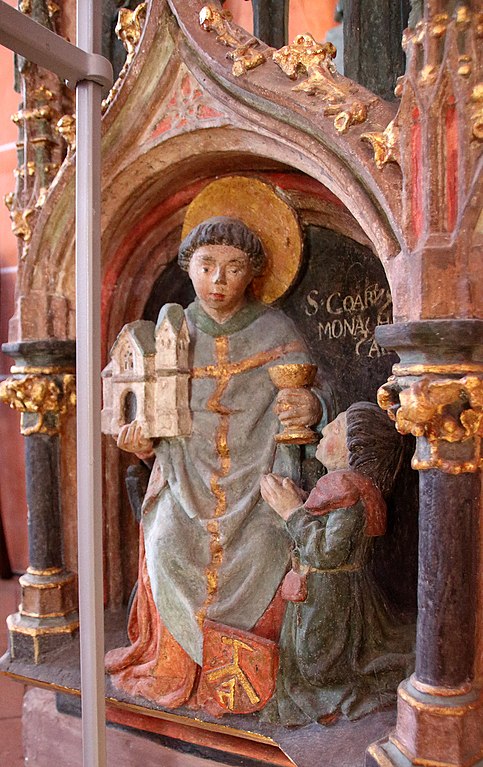
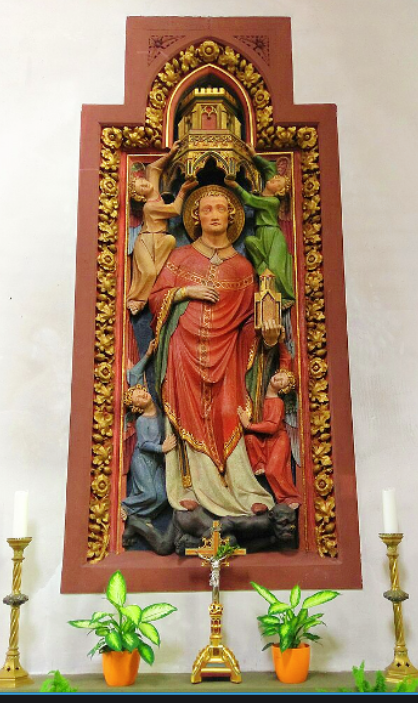
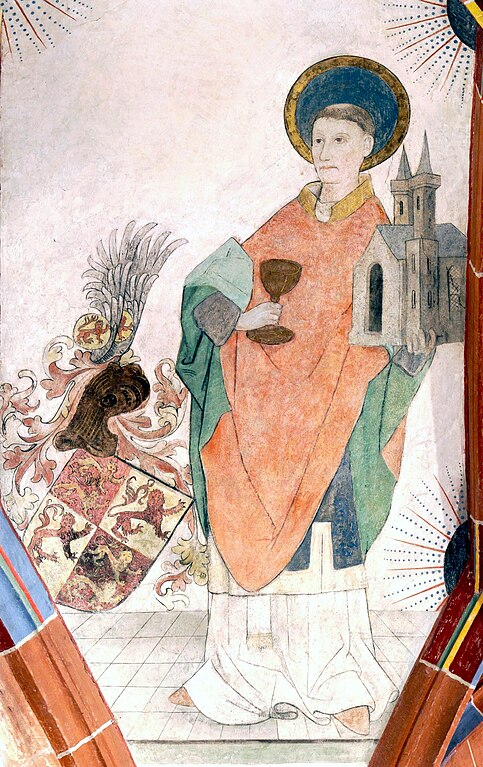
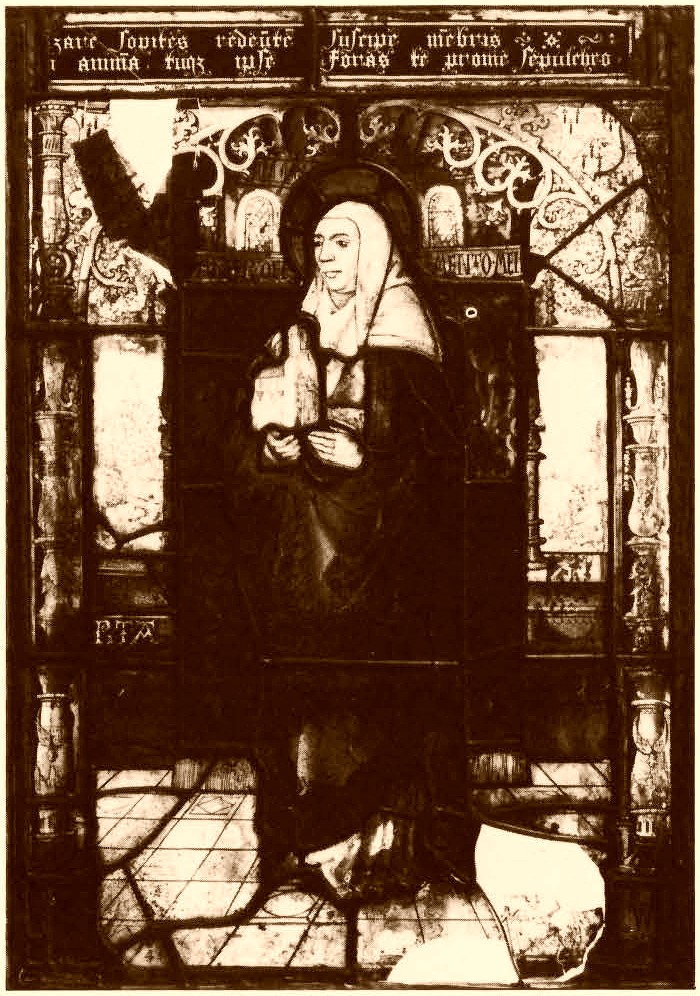
Saint of the Day – 23 December – Saint Besa of Egypt (5th Century) Abbot, a wise, compassionate and effective administrator, shepherd of the surrounding peoples Besa was the Senior Abbot of more than one double Monastery in the desert region of Thebes. Also known as – Wissa, Bêsa.
Besa became a Monk in the double Monastery of Dair al-Abiad in the Thebes region, later known as “The White Monastery” under the great Abbot St Sinuthius, who is said to have led the Monastery for 83 years before he died around the year 450 or possibly as late as around 466. He was then, according to tradition, 118 years old. Besa took over as Abbot and he immediately wrote St Sinuthius’ Vita.
Monks praying
In the 4th Century, Monasticism in Egypt was threatened by rebellious Monks and the peasant population received no religious education. But Besa preserved the legacy of a harmonious communal life among both Monks and Nuns. As an Abbot, he has been underestimated and has been overshadowed by the great St Sinuthius. But when one studies his character, his writings and exhortations and his administration – both of the White Monastery and the world outside (that is, neighbouring villages, Deacons and Clergy), one will see the same Besa – a light on top of the mountain of Monasticism.
He was powerful in character and had a deep sense of duty. His love of Sacred Scripture, shows the great emphasis he placed on moral thinking and spiritual reproof. For example, Besa did not hesitate to write a reprimanding letter to the Nun Aftonia (Aphthonia), who was the daughter of Count Alexandros. He must have been not only strong in character but also wise, for he dealt with such problems as theft, the reluctance of Monks and Nuns to renounce property and the reluctance to separate from the world (such things as receiving material gifts and leaving the Monastery without permission). In addition, many of his brothers did not agree with his open penal system. Despite this disagreement, he did not change his mind and he quoted the Scriptures to support his view, especially 1 Tim 5:20: “Those who sin, you must rebuke in the presence of everyone for the fear and warning of others.” His firm attitude in favour of the Gospel, kept the Monasteries alive in such trying times.
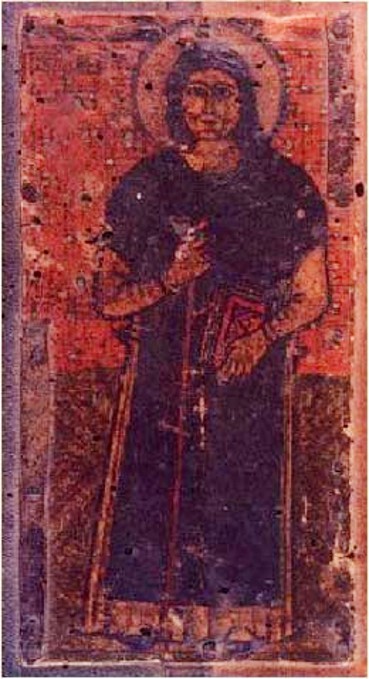
Image is a depiction of St Anthony Abbot
His writings also show his forceful character. His exhortations were passionate, especially when addressing a specific problem. His writings overflow with Scriptural quotations, sometime,s to such an extent that his own words became difficult to distinguish. Besa also shows, through his writings, the compassion and love he had for his Monks and Nuns. A pattern in his letters to those who had broken the rules of the Monastery, is that he never ceased to encourage his “sons and daughters” with hope and love at the end of each letter.
Besa was not only firm in character and compassionate in his heart, he was also a wise administrator. He wrote to neighbouring villages which shows that he had pastoral responsibility for them. He also opened the Monastery’s gates and resources, when a famine struck Egypt and forced 6,000 refugees to seek shelter. It is possible that he was the same “Apa Besa” who had a conversation with the Emperor Zeno (474-491), according to a fragment in the British Museum. The monastic community continued to play a central role in the outside world thanks to Besa.
With 4,000 Monks and Nuns under his care (2,200 Monks and 1,800 Nuns – in a few different locations) he cannot have been a weak figure. Many people of different financial and social status took monastic vows. With his wisdom and the experience he had gained from serving under St Sinuthius, Besa handled all the problems and needs which arose among his sons and daughters. His continuous exhortations helped those Monks who were weak to stand firm in their faith. St Sinuthius would not have left his life’s work to a man who was incapable of the many traits needed by an Abbot of such a huge community.
Besa wrote his biography of his predecessor St Sinuthius shortly after his death. It was written in Sahidic Coptic but only the Bohairic translation survived intact in a 9th Century manuscript. Some Sahidic fragments have been identified and published. There is also an extended version preserved in Arabic and a version similar to the Bohairic, is preserved in Ethiopic.
St Ivo of Chartres (c1040-1115) Bishop of Chartres, France from 1090 until his death, Confessor, Reformer, Defender of the Faith, Lawyer, Canon Lawyer, Teacher and Theologian, Writer. The Roman Martyrology states: “In Chartres in France, Saint Ivo, Bishop, who re-established the Order of the Canons and did much work and wrote to promote harmony between the clergy and the civil powers and for the good of the Church.” Biography: https://anastpaul.com/2021/12/23/saint-of-the-day-23-december-saint-ivo-of-chartres-c-1040-1115/
St John Cirita St John Stone St Mardonius of Rome St Mazota of Abernethy St Migdonius of Rome
St Servulus (Died c 590) Layman, Beggar, paralysed by Palsy from birth. Saint Servulus was a perfect model of submission to the divine Will; it would be difficult to offer a more consoling example to persons afflicted by poverty, illnesses and the other miseries of life. It is Saint Gregory the Great who narrates for us his edifying story. St Servulus’ Life of devotion: https://anastpaul.com/2020/12/23/saint-of-the-day-23-december-saint-servulus-died-c-590/
Martyrs of Crete – 10 Saints: A group of ten Christians who died in the persecutions of Decius. They were – Agathopus • Basilides • Cleomenes • Eunician • Euporus • Evaristus • Gelasius • Saturninus • Theodulus • Zeticus They were martyred in 250 on the island of Crete.
The Monthly Novena to the Miraculous Infant Jesus of Prague
There are two standard Novenas to the Infant Jesus of Prague – the one we will use below and the other for the Feast on 2 January. The Monthly Novena attracts Indulgences (see Note below).
“The more you honour Me, the more I will bless you.”
Disturbances in Bohemia due to the Thirty Years’ War brought an end to the special devotions and on 15 November 1631 the army of King Gustavus Adolphus of Sweden took possession of Bohemia’s Capital City. The Carmelite Friary was plundered and the image of the Infant of Prague was thrown into a pile of rubbish behind the Altar. Here it lay forgotten for seven years, its hands broken off, until in 1637, it was found again by Father Cyrillus and placed in the Church’s oratory. One day, while praying before the Statue, Cyrillus heard a voice say,
“Have pity on Me and I will have pity on you. Give Me my hands and I will give you peace. The more you honour Me, the more I will bless you.”
Eternal Father, I offer to Thy honour and glory, for my own salvation and that of the whole world, the Mystery of the Birth of our Divine Saviour. Glory be to the Father, etc.
Eternal Father, I offer to Thy honour and glory and for my eternal salvation and that of the whole world, the sufferings of the most holy Virgin and of St Joseph, in that long and weary journey from Nazareth to Bethlehem. I offer Thee the sorrow of their hearts when they found no place wherein to shelter themselves, when the Saviour of the world was born. Glory be to the Father, etc.
Eternal Father, I offer to Thy honour and glory and for my eternal salvation and that of the whole world, the sufferings of Jesus in the stable where He was born, the cold He endured, the swaddling clothes which bound Him, the tears He shed and His tender Infant cries. Glory be to the Father, etc.
Eternal Father, I offer to Thy honour and glory and for my eternal salvation and that of the whole world, the pain which the Holy Child Jesus felt in His tender body, when He submitted to circumcision. I offer Thee that Precious Blood which then, for the first time He shed for the salvation of the whole humanrace. Glory be to the Father, etc.
Eternal Father, I offer to Thy honour and glory and for my eternal salvation and that of the whole world, the humility, mortification, patience, charity, all the virtues of the Child Jesus and I thank Thee and I love Thee and I bless Thee without end, for the ineffable Mystery of the Incarnation of the Divine Word. Glory be to the Father, etc.
The Word was made Flesh, And dwelt among us.
LET US PRAY O God, Whose Only-begotten Son was made manifest to us in the substance of our flesh, grant, we beseech Thee, that through Him, Whom we acknowledge to be like unto ourselves, our souls may be inwardly renewed. Who liveth and reigneth with Thee forever and ever. Amen.
7 years Indulgence each day, if the above prayers are recited on the 9 days preceding the 25th of any month. Plenary Indulgence under the usual conditions, when the Novena is completed. (125)
Thought for the Day – 22 December – Meditations with Antonio Cardinal Bacci (1881-1971)
A Christmas Novena VII Prayer and Dedication
“As we kneel before the Infant Jesus, let us beseech Him to enable us to grasp the truth of these reflections. Let us take more care of our soul than we do, as of our external talents and possessions. May God occupy the foremost place in our minds and may He be the principal object of our thoughts, desires and affections.
Let us imitate the humble recollection and ardent love for God, of the Holy Infant. Like Him, let us offer ourselves entirely to God. Let us ask Him to make us like Himself, in complete acceptance of the Divine Will, especially when we are in trouble or in pain, for in this way, we shall be able to show God how sincerely we love Him.”
One Minute Reflection – 22 December – “The Month of the Divine Infancy and the Immaculate Conception of the Blessed Virgin Mary” – Friday of Ember Week in Advent – Isaias 11:1-5; Luke 1:39-47 – Scripture search here: https://www.drbo.org/
“My soul glorifies the Lord and my spirit rejoices in God my Saviour.”- Luke 1:46-47
REFLECTION – “When a man devotes all his thoughts to the praise and service of the Lord, he proclaims God’s greatness. His observance of God’s commands, moreover, shows that he has God’s power and greatness always at heart. His spirit rejoices in God his Saviour and delights in the mere recollection of his Creator Who gives him hope for eternal salvation.
These words are offered for all God’s creations but especially for the Mother of God. She alone was chosen and she burned with spiritual love for the Son she so joyously conceived. Above all other Saints, she alone could truly rejoice in Jesus, her Saviour, for she knew that He, Who was the source of eternal salvation, would be born, in time, in her body, in one person both her own Son and her Lord.
Therefore, it is an excellent and fruitful custom of holy Church that we should sing Mary’s hymn at the time of evening prayer. By meditating upon the Incarnation, our devotion is kindled and, by remembering the example of God’s Mother, we are encouraged to lead a life of virtue. Such virtues are best achieved in the evening. We are weary after the day’s work and worn out by our distractions. The time for rest is near and our minds are ready for contemplation.” – St Bede the Venerable (673-735) Father & Doctor of the Church
PRAYER – O God, Who, by the message of an Angel, willed to take flesh in the womb of the Blessed Virgin Mary, grant that we, Thy suppliants, who believe her to be truly the Mother of God, maybe helped by her intercession with Thee.TThrough Jesus Christ, Thy Son our Lord, Who lives and reigns with Thee, in the unity of the Holy Ghost, God, world without end. Amen (Collect).
Our Morning Offering – 22 December – “The Month of the Divine Infancy and the Immaculate Conception of the Blessed Virgin Mary” – The Third Week of Advent
Hark, a Herald Voice Is Sounding Vox Clare Unknown Author – 5th or 6th Century Trans: Fr Edward Caswall C.Orat. (1814-1878)
Hark! A herald voice is sounding! “Christ is near,” we hear it say. Cast away the works of darkness, all you children of the day!”
2 See, the Lamb, so long expected, comes with pardon down from Heav’n. Let us haste, with tears of sorrow, one and all, to be forgiv’n.
3 So, when next He comes in glory and the world is wrapped in fear, He will shield us with His mercy and with words of love draw near.
4 Honour, glory, might, dominion to the Father and the Son with the everlasting Spirit while eternal ages run! Amen
Saint of the Day – 22 December – Saint Zeno of Nicomedia (Died 303) Martyr, Roman Commander. In the persecutions of Diocletian, Zeno died, after many tortures, by beheading in Nicomedia, Bithynia (modern Izmit, Turkey). Also known as – Zenon, Zinon. Additional Memorial – 28 December as one of the 20,000 Martyrs of Nicomedia.
The Roman Martyrology reads today: “At Nicomedia, St Zeno, soldier, who derided Diocletian for sacrificing to Ceres, wherefore, he had his jawbone fractured, his teeth plucked out and his head struck off.”
Zeno was a Roman soldier who lived in Nicomedia in Bithynia in Asia Minor (today Izmit in Turkey). In this City the Roman Emperors had one of their favourite residences. The Emperor, at that time, was Diocletian (284-305), who goes down in history as the most bloodthirsty of the Christian persecutors. The last great persecution which Diocletian launched in February 303, was particularly virulent in this part of the Empire.
The renowned Bishop and Church historian, St Eusebius of Caesarea (c260-340) tells in his Church History (Historia Ecclesiastica), how the persecutions began. Emperor Diocletian issued an Edict on 24 February 303 ordering the destruction of all Churches and holy books. Shortly after the promulgation of the Edict, a fire broke out in the Imperial Palace in Nicomedia, for which the local Christians were blamed. The cause of the fire was undoubtedly a poorly extinguished light or a spark from the kitchen. But it was an eargerly awaited pretext to accuse the Christians leading the Emperor to order a fierce persecution. {Eusebius, Historia Ecclesiastica VIII 6, 13}
St Eusebius writes that a zealous Christian tore down the Imperial Edict, and from then on the Christian Priests were ordered to offer incense to the pagan gods, whenever they appeared in public. In 303, the City’s holy Bishop, Anthimos refused to sacrifice and was beheaded. A great many Christians were executed on the Emperor’s orders when the persecutions were extended tothe laity. Many who dcould not escape were burned alive, while some were thrown into the sea, some were beheaded and some were buried alive. 20,000 Christians were burned alive inside a Church on Christmas Day 303.
Zeno was the Commander of a Regiment and bravely condemned the conduct of the Emperor Diocletian in full public view and, he laughed, in the Name of God, when the Emperor sacrificed to the Roman god Ceres. He was oimmediately arrested on the Emperor’s order and had his teeth knocked out and his jaw crushed with stones, before he was beheaded.
St Abban of New Ross Bl Adam of Saxony St Amaswinthus of Málaga St Athernaise of Fife St Bertheid of Münster St Chaeremon of Nilopolis
St Flavian of Acquapendente (Died 363) Martyr Layman, Prefect of Imperial Rome, Husband of Saint Dafrosa, Father of Saint Bibiana and Saint Demetria. The Roman Martyrology states: “At Rome, ex-Prefect, who, under Julian the Apostate, was condemned to be branded for Christ and banished to Aquae Taurinae, where he gave up his soul to God in prayer.” His Life and Death: https://anastpaul.com/2021/12/22/saint-of-the-day-22-december-saint-flavian-of-acquapendente-died-363-martyr/
Blessed Thomas Holland SJ (1600-1642) Priest of the Society of Jesus and Martyr. of England and Wales. With eyes closed in prayer, Fr Holland looked at a Priest secretly in the crowd and received absolution. After he was hanged, his body was beheaded and quartered and exposed on London Bridge. Fr Holland was only forty-two years of age and a Jesuit for eighteen years. Pope Pius XI Beatified him on 15 December 1929. His Life and Death: https://anastpaul.com/2019/12/22/saint-of-the-day-22-december-blessed-thomas-holland-sj-1600-1642-priest-and-martyr-his-faith-was-his-crime/
St Zeno of Nicomedia (Died c303) Martyr, Roman Commander
Martyrs of Ostia – 3 Saints: A group of Christians Martyred together. The only details about them to survive are three names – Demetrius, Florus and Honoratus. They were martyred at Ostia, Italy.
Martyrs of Rhaitu – 43 Saints: 43 Monks Martyred by Blemmyes, in Raíthu, Egypt, date unknown.
Martyrs of Via Lavicana – 30 Saints: A group of 30 Christians Martyred together in the persecutions of Diocletian. Died in c 303 in Rome, Italy and were buried between two bay trees on the Via Lavicana outside Rome.
The Monthly Novena to the Miraculous Infant Jesus of Prague
There are two standard Novenas to the Infant Jesus of Prague – the one we will use below and the other for the Feast on 2 January. The Monthly Novena attracts Indulgences (see Note below).
“The more you honour Me, the more I will bless you.”
Devotion of the Saints to the Holy Infant: St Therese of the Child Jesus, as her very name proclaims, cherished a tender devotion to the Divine Infant and loved to imagine herself as His plaything, to be treated as He willed.
This Statue became a source of great blessing to the poor Franciscan Nuns and the devotion to the Infant has been zealously fostered by them to this day.
The Infant’s Patronage is especially sought for: vocations, good health, financial issues, a holy family life, schools, the welfare of children, freedom and peace, the missions and safety in travel.
Eternal Father, I offer to Thy honour and glory, for my own salvation and that of the whole world, the Mystery of the Birth of our Divine Saviour. Glory be to the Father, etc.
Eternal Father, I offer to Thy honour and glory and for my eternal salvation and that of the whole world, the sufferings of the most holy Virgin and of St Joseph, in that long and weary journey from Nazareth to Bethlehem. I offer Thee the sorrow of their hearts when they found no place wherein to shelter themselves, when the Saviour of the world was born. Glory be to the Father, etc.
Eternal Father, I offer to Thy honour and glory and for my eternal salvation and that of the whole world, the sufferings of Jesus in the stable where He was born, the cold He endured, the swaddling clothes which bound Him, the tears He shed and His tender Infant cries. Glory be to the Father, etc.
Eternal Father, I offer to Thy honour and glory and for my eternal salvation and that of the whole world, the pain which the Holy Child Jesus felt in His tender body, when He submitted to circumcision. I offer Thee that Precious Blood which then, for the first time He shed for the salvation of the whole humanrace. Glory be to the Father, etc.
Eternal Father, I offer to Thy honour and glory and for my eternal salvation and that of the whole world, the humility, mortification, patience, charity, all the virtues of the Child Jesus and I thank Thee and I love Thee and I bless Thee without end, for the ineffable Mystery of the Incarnation of the Divine Word. Glory be to the Father, etc.
The Word was made Flesh, And dwelt among us.
LET US PRAY O God, Whose Only-begotten Son was made manifest to us in the substance of our flesh, grant, we beseech Thee, that through Him, Whom we acknowledge to be like unto ourselves, our souls may be inwardly renewed. Who liveth and reigneth with Thee forever and ever. Amen.
7 years Indulgence each day, if the above prayers are recited on the 9 days preceding the 25th of any month. Plenary Indulgence under the usual conditions, when the Novena is completed. (125)
Thought for the Day – 21 December – Meditations with Antonio Cardinal Bacci (1881-1971)
A Christmas Novena VI The Silence of the Divine Infant
“Let us kneel in spirit before the Holy Infant. He is silent but His heart beats with love for His heavenly Father and for the afflicted human race which He has come to redeem. Let us adore God in the Mystery of His silence and let us ask Him to favour us with His inspirations and graces. Let us ask Him to teach us to be like Him, so that our Hearts may be closed to the vain attractions of the world and open to the influence of the supernatural. Let us ask Him to help us to employ the gifts of speech, in order to adore, praise and thank God and to draw down His blessings upon ourselves and oupon our fellowmen.
May the words which we utter exercise a prayerful and fruitful apostolate, for it was chiefly for this purpose that God endowed us with the gift of speech.”
Quote/s of the Day – 21 December – Feast of St Thomas, Apostle of Christ – Ephesians 2:19-22; John 20:24-29 – Scripture search here: https://www.drbo.org/
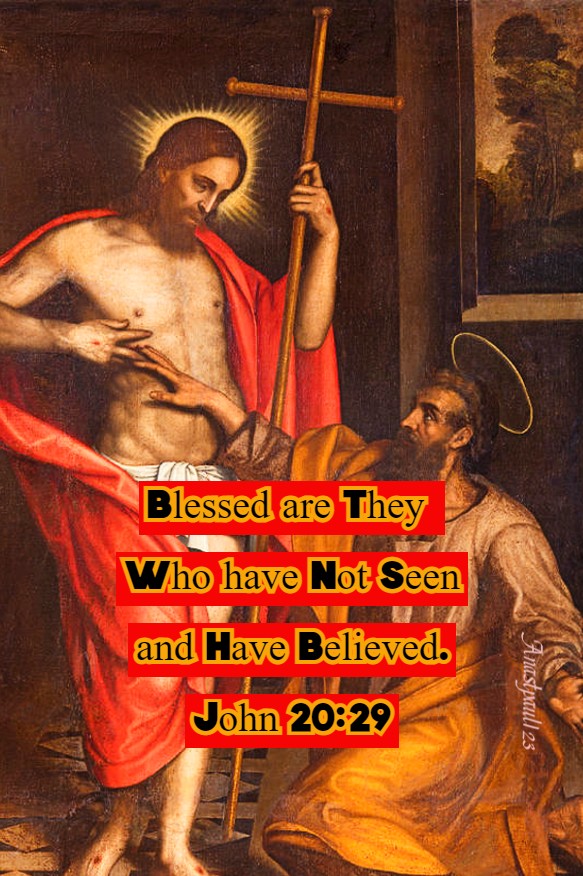
“Blessed are they who have not seen and yet, have believed.”
John 20:29
“Who is he who overcomes the world? but he who believes that Jesus is the Son of God.”
St Ignatius of Antioch (c35–c107) Bishop, Martyr, Apostolic Father
“Let us detach ourselves in spirit from all that we see and cling to that which we believe. This is the Cross which we must imprint on all our daily actions and behaviour.”
St Peter Damian (1007-1072) Doctor of the Church
“If we wish to make any progress in the service of God, we must begin everyday of our life, with new eagerness. We must keep ourselves, in the presence of God, as much as possible and have no other view or end, in all our actions but the Divine honour.”
St Charles Borromeo (1538-1584)
“The very prince of the universe, is man; the crowning point of man, is his heart; of the heart, is love and the perfection of love, is charity. That is why the love of God is the goal, the crowning point, the be-all and end-all of the universe.”
One Minute Reflection – 21 December – “The Month of the Divine Infancy and the Immaculate Conception of the Blessed Virgin Mary” – Feast of St Thomas, Apostle of Christ – Ephesians 2:19-22; John 20:24-29 – Scripture search here: https://www.drbo.org/
“Blessed are they who have not seen and yet, have believed.” – John 20:29
REFLECTION – “The disciples’ weakness was so unsteady that, not content with seeing the risen Lord, they still wanted to touch Him if they were to believe in Him. It was not enough for them to see Him with their eyes, they wanted to put out their hands to His limbs and touch the marks of His recent wounds. It was after He had touched and acknowledged His scars that the unbelieving disciple cried out: “My Lord and my God!” Those scars revealed the One Who, where other people were concerned, healed every wound! Could the Lord not have risen without scars? Yet, He saw within His disciples’ hearts, wounds which those scars which He had preserved in His Body, would heal.
And what does the Lord answer that confession of faith of His disciple, who says: “My Lord and my God”? “Have you come to believe because you have seen Me? Blessed are they who have not seen and yet, have believed.” Who is He talking about, my friends, if not of us? And not just of us but of those, too, who will follow us. For shortly afterwards, when He had disappeared from mortal sight so as to strengthen faith in the heart, all those who became believers, believed without seeing and their faith had great merit. To acquire it they reached out to Him, not a hand with which to touch Him but only, a loving heart! ” – St Augustine (354-430) Father and Doctor of Grace (Sermon 88).
PRAYER – O Lord, grant us, we beseech Thee, to glory in the Feast-day of blessed Thomas, Thy Apostle, that we maybe helped continually by his patronage and imitate his faith with a devotion like his. Through Jesus Christ, Thy Son our Lord, Who lives and reigns with Thee, in the unity of the Holy Ghost, God, world without end. Amen (Collect).
Our Morning Offering – 21 December – “The Month of the Divine Infancy and the Immaculate Conception of the Blessed Virgin Mary” – Feast of St Thomas, Apostle
Exsultet Orbis! Let the World Rejoice! Unknown Author
Now let the earth with joy resound, And Heaven the chant re-echo round; Nor Heaven nor earth too high can raise The great Apostles’ glorious praise.
O ye who, throned in glory dread, Shall judge the living and the dead, Lights of the world forever more! To you the suppliant prayer we pour.
Ye close the Sacred Gates on high. At your command apart they fly. O loose for us the guilty chain We strive to break and strive in vain.
Sickness and health your voice obey, At your command they go or stay. From sin’s disease our souls restore; In good confirm us more and more.
So when the world is at its end. And Christ to Judgment shall descend, May we be called, those joys to see Prepared from all eternity.
Praise to the Father, with the Son, And Holy Spirit, Three in One; As ever was in ages past And so shall be while ages last. Amen
(Roman Breviary for the Common of Apostles) An Office Hymn that was traditionally prescribed for Vespers and Lauds on the Feasts of Apostles and Evangelists outside Easter time. The Hymn is found as early as the tenth century in a hymnal of Moissac Abbey.
Saint of the Day – 21 December – Blessed Tommaso Vitali OSM (1425-1490) Priest and Friar of the Order of the Servants of Mary (the Servites), a renowned and highly effective Preacher and patient spiritual guide. Born in 1425 in Endenna, Bergamo, Italy and died on 21 December 1490 in Pesaro, Italy of natural causes. Also known as – Thomas.
Tommaso lived for many years in the Hermitage of Monte Granaro in the Province of Pesaro together with Blessed Paolo Bigoni from Chiari (Brescia) and Blessed Bonaventura from Forlì.
The three blessed together formed an exemplary community characterised by an intense Marian spirituality, whose corner stones were prayer, study, manual work and preaching.
Tradition tells us that Blessed Tommaso grew in the grace of the Lord thanks to his penances, his prayer vigils and his continuous fasting. A talented preacher, he was able to announce, with great enthusiasm, the experience of Jesus Christ Crucified, His suffering and His love for sinful man.
Living in conformity with his preaching, patiently listening to the Confessions of the faithful in order to be able to guide them wisely on the path of life aimed towards holiness.
He died in Pesaro on 21 December 1490. His body was kept in the Church of Santa Maria Monte Granaro until 1650 and subsequently, in the Church of St Maria delle Grazie. In 1922, when the Church of St Maria delle Grazie was demolished and the Servants of Mary moved to the Church of St Francesco, the body of Blessed Tommaso Vitali was placed under the Altar dedicated to the Seven Holy Founders of the Servite Order.
The Archdiocese of Pesaro counts him among its Blessed. Even if there is no celebration in memory of Blessed Tommaso Vitali, in some Martyrologies he is remembered on 21 December, on the anniversary of his death.
St Festus of Tuscany St Glycerius of Nicomedia St James of Valencia St John of Tuscany St John Vincent St Severin of Trèves (Died c300) Bishop, Confessor Bl Sibrand of Marigård St Themistocles of Lycia Blessed Tommaso Vitali OSM (1425-1490) Priest and Friar of the Order of the Servants of Mary (the Servites)
The Monthly Novena to the Miraculous Infant Jesus of Prague
There are two standard Novenas to the Infant Jesus of Prague – the one we will use below and the other for the Feast on 2 January. The Monthly Novena attracts Indulgences (see Note below).
“The more you honour Me, the more I will bless you.”
Devotion of the Saints to the Holy Infant: Members of the Carmelite Order have been zealous, at all times, in promoting devotion to the Holy Infant of Prague. In particular might we mentioned a certain Father Ildephonse. This Priest always carried a picture of the Infant Jesus on his person and on one occasion was miraculously saved from shipwreck by imploring His assistance. It has been ordained that in all Convents of Our Lady of Mt Carmel, whether of men or of women, a Statue of the Holy Infant should be set up for veneration. St. Teresa of Jesus, the celebrated reformer of the Carmelite Order, was very fond of this devotion. The Blessed Crescentia of Kaufbeuern also possessed a Statue of the Infant Jesus of Prague which she had adorned with a beautiful dress. St Clement Maria Hofbauer, a Redemptorist, was another ardent worshiper of the Divine Infant and always had a Statue of the Little King in his room.
The Infant’s Patronage is especially sought for: vocations, good health, financial issues, a holy family life, schools, the welfare of children, freedom and peace, the missions and safety in travel.
Eternal Father, I offer to Thy honour and glory, for my own salvation and that of the whole world, the Mystery of the Birth of our Divine Saviour. Glory be to the Father, etc.
Eternal Father, I offer to Thy honour and glory and for my eternal salvation and that of the whole world, the sufferings of the most holy Virgin and of St Joseph, in that long and weary journey from Nazareth to Bethlehem. I offer Thee the sorrow of their hearts when they found no place wherein to shelter themselves, when the Saviour of the world was born. Glory be to the Father, etc.
Eternal Father, I offer to Thy honour and glory and for my eternal salvation and that of the whole world, the sufferings of Jesus in the stable where He was born, the cold He endured, the swaddling clothes which bound Him, the tears He shed and His tender Infant cries. Glory be to the Father, etc.
Eternal Father, I offer to Thy honour and glory and for my eternal salvation and that of the whole world, the pain which the Holy Child Jesus felt in His tender body, when He submitted to circumcision. I offer Thee that Precious Blood which then, for the first time He shed for the salvation of the whole humanrace. Glory be to the Father, etc.
Eternal Father, I offer to Thy honour and glory and for my eternal salvation and that of the whole world, the humility, mortification, patience, charity, all the virtues of the Child Jesus and I thank Thee and I love Thee and I bless Thee without end, for the ineffable Mystery of the Incarnation of the Divine Word. Glory be to the Father, etc.
The Word was made Flesh, And dwelt among us.
LET US PRAY O God, Whose Only-begotten Son was made manifest to us in the substance of our flesh, grant, we beseech Thee, that through Him, Whom we acknowledge to be like unto ourselves, our souls may be inwardly renewed. Who liveth and reigneth with Thee forever and ever. Amen.
7 years Indulgence each day, if the above prayers are recited on the 9 days preceding the 25th of any month. Plenary Indulgence under the usual conditions, when the Novena is completed. (125)
Thought for the Day – 20 December – Meditations with Antonio Cardinal Bacci (1881-1971)
Christmas Novena V The Swaddling Clothes of the Divine Infant
“The swaddling clothes of the Infant Jesus are finally, symbols of the bonds of love which should unite us to our neighbour. Let us always remember that we shall never love God sincerely, as long as we do not love our neighbour. “This is My commandment” Jesus said, “that you love one another as I have loved you” (Jn 15:12). This means that we must love our neighbour, not only in word but, in deed. We must make sacrifices on his behalf and must even be prepared to die for him!
In practice, how do we love our fellowman? Are we prepared to spend time, money and energy, in order to alleviate the material and spiritual afflictions which beset so many of our brothers? If we refuse to do so, our piety is hard and false and, is an insult to Almighty God!”
Quote/s of the Day – 20 December – “The Month of the Divine Infancy and the Immaculate Conception of the Blessed Virgin Mary” The Vigil of St Thomas, Apostle – Ember Wednesday, Third Week of Advent – Sirach 44:25-27, 45:2-4, 45:6-9; John 15:12-16 – Scripture search here: https://www.drbo.org/
“This is My commandment that you love one another, as I have loved you. ”
John 15:12
“To love our neighbour, in charity, is to love God, in man.”
(Treatise on the Love of God Book 10 Chapter 11)
“We should always love our neighbour, as in the breast of Christ”
(The Spirit of St François de Sales II, 1)
“We must help one another, as much as we can and leave the rest to God.”
(Letters to Persons in Religion,I, 8)
“Love the poor and poverty, for it is by this love that you shall become truly poor.”
(Introduction to the Devout Life Part III Chapter 15)
St Francis de Sales (1567-1622) Doctor of the Church
One Minute Reflection – 20 December – “The Month of the Divine Infancy and the Immaculate Conception of the Blessed Virgin Mary” – The Vigil of St Thomas, Apostle – Ember Wednesday, Third Week of Advent – Sirach 44:25-27, 45:2-4, 45:6-9; John 15:12-16 – Scripture search here: https://www.drbo.org/
“This is My commandment that you love one another, as I have loved you. Greater love than this no man hath that a man lay down his life for his friends.” – John 15:12-13
REFLECTION – “We cannot truly love God without loving our neighbour, nor can we truly love our neighbour without loving God. This is why … the Holy Ghost was given a second time to the disciples. First He was given by the Lord while He was still dwelling on earth and later, while He was watching over us in Heaven (Jn 20:22; Acts 2). He was given to us on earth, that we may love our neighbours; from Heaven, that we may love God. Why first on earth and later from Heaven – except for the reason given us openly by John: “How can anyone, who does not love his brother, whom he sees love God Whom he does not see?”
So let us love our neighbours, my friends, let us love the one who is near us, so that we may be able to attain the love of the One, Who is above us! Let our hearts reflect on what our neighbours hold up to God, so that we may be found completely worthy, to rejoice in God with them. Then shall we reach the happiness of the heavenly multitude, the happiness of which, we have received an assurance from the Holy Spirit. Let us move forward toward that goal, where we shall be happy without end, with all our love. There is the holy community of heavenly citizens, there is the sure and solemn observance, there untroubled rest, there the true peace which is no longer dependent on us but given to us through our Lord Jesus Christ (Jn 14:27).” – St Gregory the Great (540-604) Pope, Father and Doctor of the Church (Excerpt Sermons on the Gospel No 30).
PRAYER – Put forth Thy power, O Lord, we beseech Thee and delay not and with Thy great might, come to our aid, so that what is hindered by our sins, maybe hastened by Thy merciful goodness. Who livest and reignest with God the Father, in the unity of the Holy Spirit, God, world without end. Amen (Collect)
Our Morning Offering – 20 December – “The Month of the Divine Infancy and the Immaculate Conception of the Blessed Virgin Mary” – Ember Wednesday of the Third Week of Advent
Let Your Goodness, Lord, Appear to Us An Advent Prayer By St Bernard (1090-1153) Father and Mellifluous Doctor
Let Your goodness, Lord, appear to us, that we, made in Your image, conform ourselves to it. In our own strength we cannot imitate Your majesty, power and wonder, nor is it fitting for us to try. But Your mercy reaches from the heavens through the clouds to the earth below. You have come to us as a small child but You have brought us the greatest of all gifts, the gift of eternal love. Caress us with Your tiny hands, embrace us with Your tiny arms and pierce our hearts with Your soft, sweet cries. Amen
Saint of the Day – 20 December – Saint Ursicinus of Saint-Ursanne (c552-c625) Abbot, Hermit, disciple of St Columban (543-615). Born in c552 in either France or Ireland and died on 20 December in c625 near modern St-Ursanne, Jura, Switzerland of natural causes. Patronages – against a painful and stiff neck, Besançon in France and in Switzerland – Basel, Saint-Ursanne. Also known as – Ursicino del Giura, Ursan, Ursitz, Ursanne. Additional Memorial – 24 July in the Diocese of Basel, Switzerland.
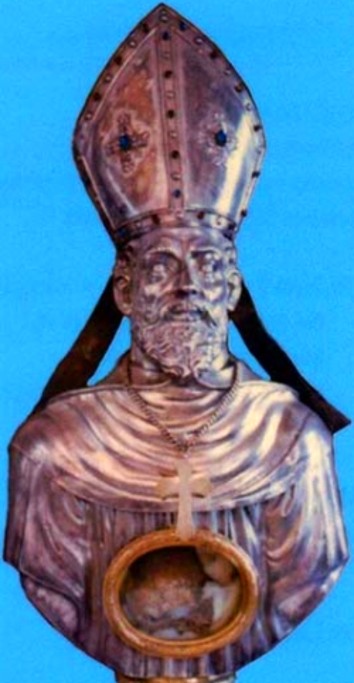
Reliquary of St Ursicinu , 1519, in the Monastery Church in St Ursanne
The cult of St Ursicinus, a Hermit in the Jura, is attested in this Swiss region since the third part of the 7th Century. In fact, already before 67, the Abbot German of Moûtier-Grandval, had built a Church in our Saint’s honour near Grandval.
Furthermore, an ancient document reports that Abbot St Wandregisel (Died 668), built a Monastery around 630 in the same place where Ursicinus rested.
The Sarcophagus of the Hermit Saint, dating to the 7th Century, is still venerated in the beautiful Church of St Ursanne (Ursicinus), located in the bend of the Doubs river which rises in the French Jura and enters Swiss territory for a short stretch, forming the aforementioned bend, on whose shore the Church is located.
Altar and Sarcophagus in the Monastery Church in St Ursanne
As regards the life of Ursicinus, everything that the Hagiographers have considered and spread, comes from an ancient document, first cited by the Jesuit Claudio Sudan (1579-1665) in his work “Sacred Basel” but which unfortunately, he did not transcribe verbatim. The document was a liturgical legend in 24 lessons, which was composed at the request of Bishop Hugh I of Besançon, the Diocese to which the Hermit Ursicinus then belonged.
This ‘Vita’ which was lost, said that Ursicinus was an Irish Monk, a companion of St Colomban (543-615), the Abbot who emigrated from Ireland to France and then to Italy, where he founded the Monastery of Bobbio in 614. Ursicinus, who had followed the Abbot Colomban, together with the Monks Gallus, Sigisbert, Fromond, in the Gaul of the time, when in 610, they had to leave Luxeuil in French territory, split from his master who was headed for Italy and with Fromond, he went up the mountain range of Franco-Swiss Jura, looking for a suitable place for a Hermit’s life.
This Statue rests in the Hermitage Shrine
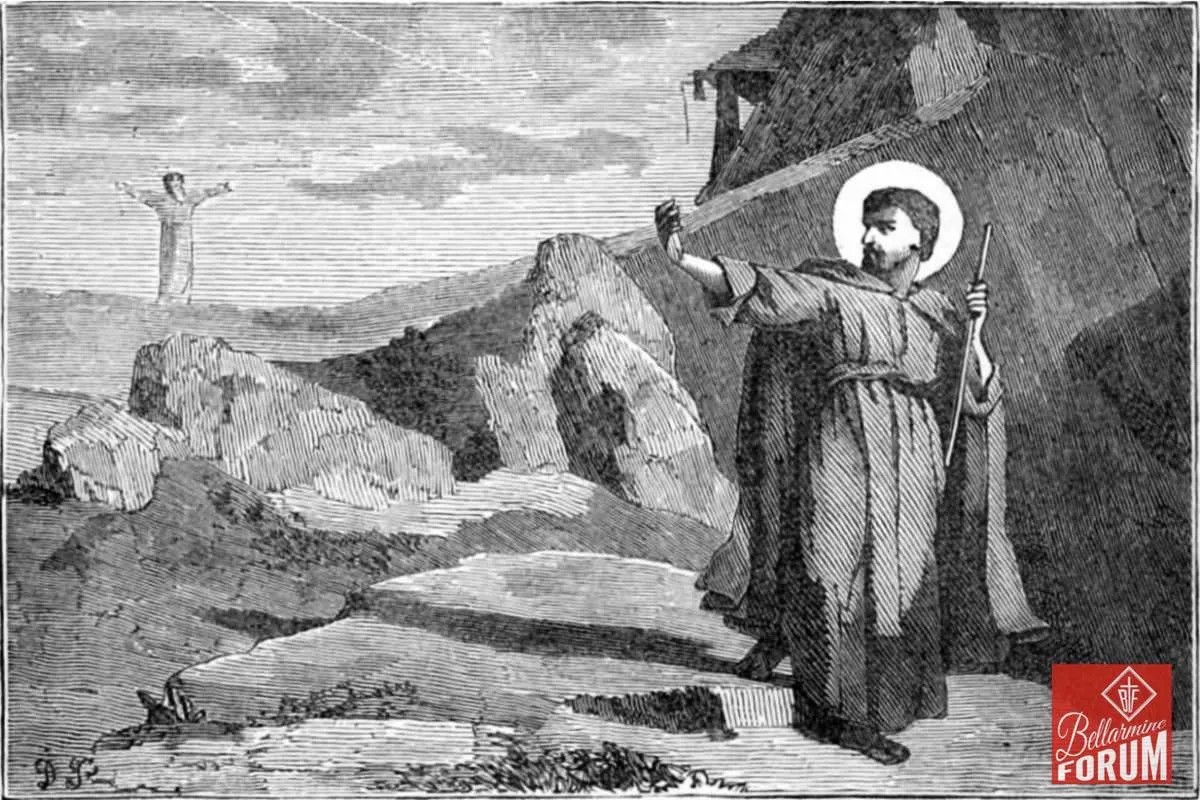
Tradition says that Ursicinus proposed to his fellow Monk to throw their sticks into the air from the top of a mountain, thus letting Heaven decide the correct indication at the point of where they fell. The sticks fell in different places and the two companions were separated, Ursicinus’ fell near a cave, in the valley of the Doubs river, where he retired as a Hermit.
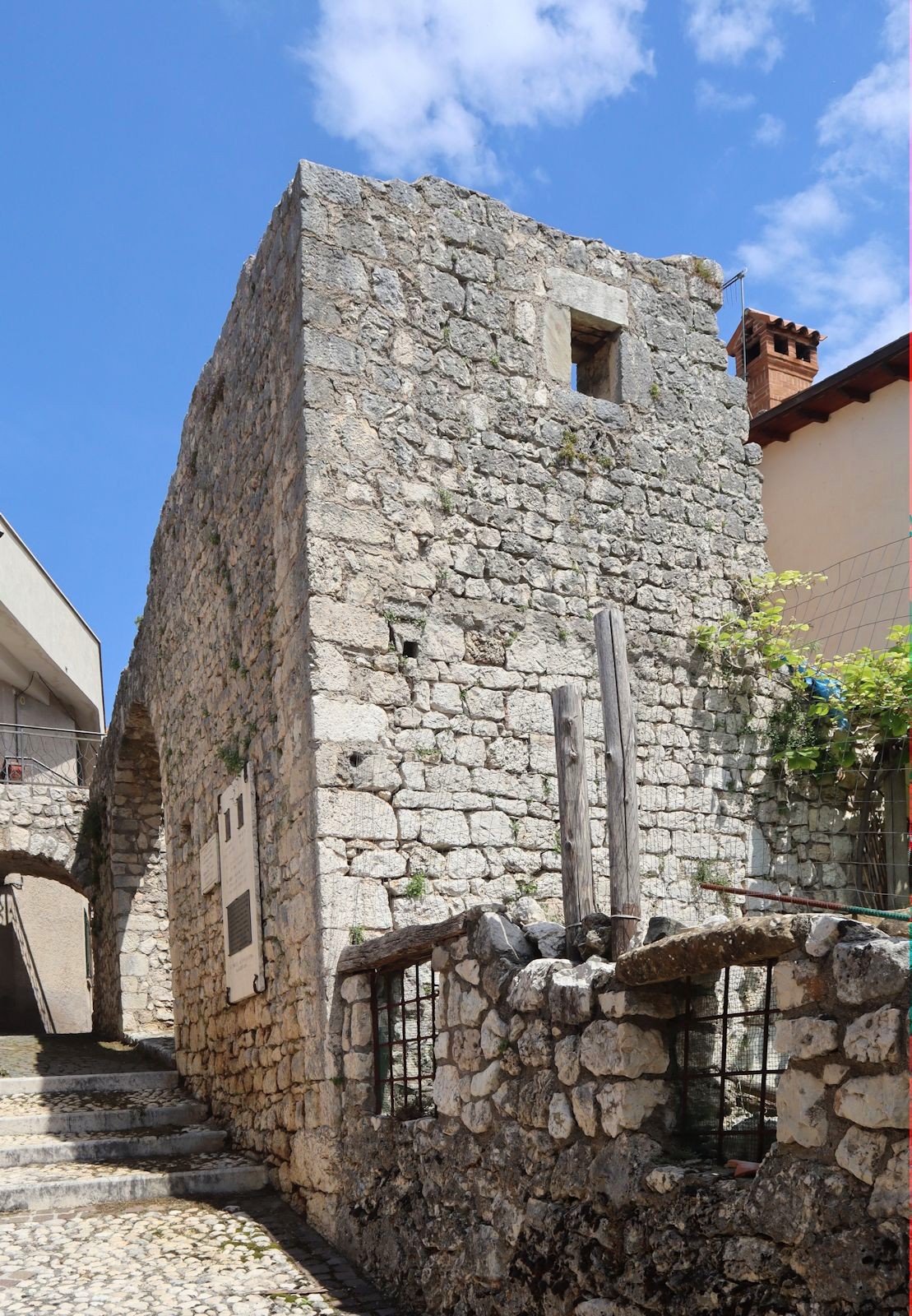
St Ursicinus’ Hermitage
In this place he built a Chapel dedicated to St Peter and which would, in the future, take his name. Soon his fame attracted various disciples, so Ursicinus founded a Monastery for them, under the rule of his master, St Columban and under his governance.
After about ten years of an exemplary hmonastic life, Saint Ursicinus died around 625. Hhis name is found in the Litanies of the Saints venerated in Besançon since the 11th Century and in the Martyrology of the same Diocese today, 20 December.
The Monastery he founded in the Doubs valley underwent various changes over time, passed to the Benedictines, in 1040 it was dependent on that of Moûtier-Grandval, then in 1077 it was assigned to the Bishops of Basel. In 1119, one of these Bishops established a Collegiate Church there which lasted until 1793 when it was destroyed.
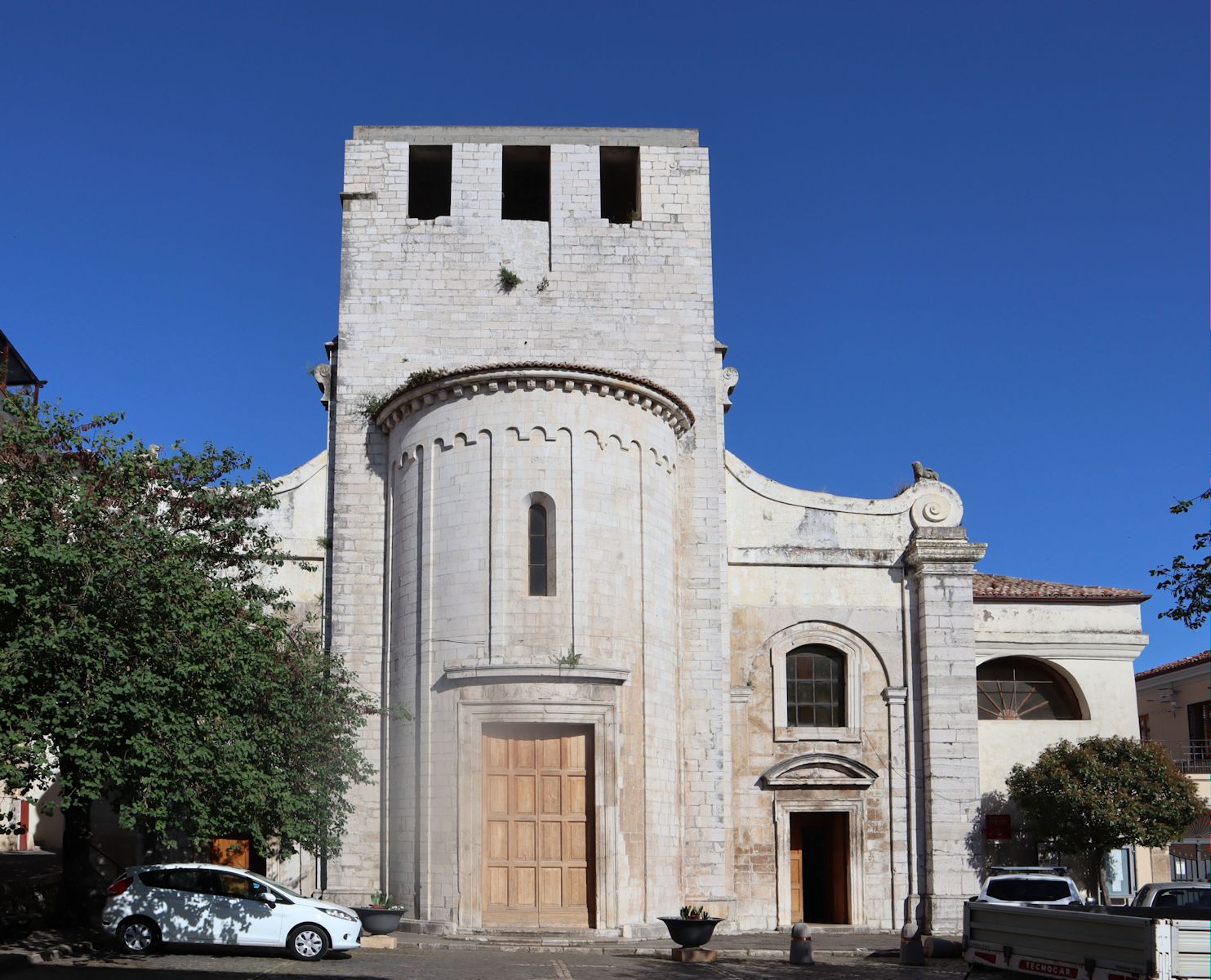
The Monastery of St Ursicinus
The Town of Saint Ursanne arose around the Monastery. He is venerated throughout the Northern Jura, in Besançon, Mainz, Basel. Images of him show him holding a book and lilies.
St Attala of Strasbourg St Bajulus of Rome St Crescentius of Africa St Damian of Padua St Dominic of Brescia
St Dominic de Silos OSB (1000-1073) Monk, Abbot. He was a Spanish Monk, to whom the Abbey of Santo Domingo de Silos, where he served as the Abbot, is dedicated. The mother of the better-known Saint Dominic de Guzmán, the Blessed Joan of Aza, prayed at his Shrine before she was able to conceive the son she named for him. That son would grow up to found the Dominican Order. Dominic’s special patronage thus became connected with pregnancy and until the establishment of the Second Spanish Republic in 1931, his abbatial crozier was used to bless the queens of Spain and was placed by their beds when they were in labour. Biography: https://anastpaul.wordpress.com/2017/12/20/saint-of-the-day-20-december-st-dominic-de-silos-o-s-b-c1000-1073/
St Eugene of Arabia St Hoger of Hamburg-Bremen (Died 916) Bishop Bl John de Molina St Julius of Gelduba Bl Lorenzo Company St Liberatus of Rome St Macarius of Arabia St Malou of Hautvillers St Paul of Latra Blessed Peter de la Cadireta
The Monthly Novena to the Miraculous Infant Jesus of Prague
There are two standard Novenas to the Infant Jesus of Prague – the one we will use below and the other for the Feast on 2 January. The Monthly Novena attracts Indulgences (see Note below).
“The more you honour Me, the more I will bless you.”
Within recent years the devotion to the Miraculous Infant has grown in a wonderful manner and today, the Statue of the Infant Jesus of Prague may be seen in Churches and Chapels, in cloisters and schools, the world over. The “Little King” has taken up His abf^de among the rich and poor, the great and lowly. Just as a mighty tree springs from a tiny seed, so this devotion has grown from a small beginning, to the greatest dimensions; it is no longer local or national but as universal as the Church itself. The Divine Child attracts an ever-increasing number of clients, who appeal to Him in every need.
The Infant’s Patronage is especially sought for: vocations, good health, financial issues, a holy family life, schools, the welfare of children, freedom and peace, the missions and safety in travel.
THE NOVENA PRAYERS
Eternal Father, I offer to Thy honour and glory, for my own salvation and that of the whole world, the Mystery of the Birth of our Divine Saviour. Glory be to the Father, etc.
Eternal Father, I offer to Thy honour and glory and for my eternal salvation and that of the whole world, the sufferings of the most holy Virgin and of St Joseph, in that long and weary journey from Nazareth to Bethlehem. I offer Thee the sorrow of their hearts when they found no place wherein to shelter themselves, when the Saviour of the world was born. Glory be to the Father, etc.
Eternal Father, I offer to Thy honour and glory and for my eternal salvation and that of the whole world, the sufferings of Jesus in the stable where He was born, the cold He endured, the swaddling clothes which bound Him, the tears He shed and His tender Infant cries. Glory be to the Father, etc.
Eternal Father, I offer to Thy honour and glory and for my eternal salvation and that of the whole world, the pain which the Holy Child Jesus felt in His tender body, when He submitted to circumcision. I offer Thee that Precious Blood which then, for the first time He shed for the salvation of the whole humanrace. Glory be to the Father, etc.
Eternal Father, I offer to Thy honour and glory and for my eternal salvation and that of the whole world, the humility, mortification, patience, charity, all the virtues of the Child Jesus and I thank Thee and I love Thee and I bless Thee without end, for the ineffable Mystery of the Incarnation of the Divine Word. Glory be to the Father, etc.
The Word was made Flesh, And dwelt among us.
LET US PRAY O God, Whose Only-begotten Son was made manifest to us in the substance of our flesh, grant, we beseech Thee, that through Him, Whom we acknowledge to be like unto ourselves, our souls may be inwardly renewed. Who liveth and reigneth with Thee forever and ever. Amen.
7 years Indulgence each day, if the above prayers are recited on the 9 days preceding the 25th of any month. Plenary Indulgence under the usual conditions, when the Novena is completed. (125)
Thought for the Day –19 December – Meditations with Antonio Cardinal Bacci (1881-1971)
A Christmas Novena IV The First Hours of the Childhood of Jesus Christ
“When we contemplate the Mystery of Love which caused God-made-man, to weep for our sins, we may not be moved to shed actual tears. But, we should at least, shed spiritual tears of repentance and of love and of longing for holiness and for complete dedication to Jesus Christ. We should love Jesus for the countless numbers who do not love Him, or who blaspheme and ignore Him. We should yearn to make reparation for so much ingratitude and neglect, by our prayers and penances. The Infinite Love of the God Child, demands all our love in return!”
Quote of the Day – 19 December – “The Month of the Divine Infancy and the Immaculate Conception of the Blessed Virgin Mary”
“Our Lord is begotten virginally, from all eternity, in the bosom of His Heavenly Father. He shares in the One Divinity of His Eternal Father, without dividing it or fracturing the Divine Simplicity. He remains One same God with Him. The most holy Virgin produced her Son, Our Lord on earth, as He is produced by His Father eternally in Heaven that is, virginally. There is one important difference, however, she brought Him forth from her womb and not in her womb, for once He left it He will no more return there but His Heavenly Father begets Him from His bosom and in His bosom and He will remain there eternally!”
(The Coming of the Divine Infant 24 December 1613 Sermon for Christmas Eve)
St Francis de Sales (1567-1622) Doctor of the Church
One Minute Reflection – 19 December – “The Month of the Divine Infancy and the Immaculate Conception of the Blessed Virgin Mary” – The Third Week of Advent – Ferial Day – Philippians 4:4-7; John 1:19-28 – Scripture search here: https://www.drbo.org/ – Scripture search here: https://www.drbo.org/
“He it is Who is to come after me, Who has been set above me, the strap of Whose sandal I am not worthy to loose. ” – John 1:27
REFLECTION – “When the whole universe was overshadowed by the darkness of the devil and sins’ gloom dominated the world, a new Sun, Christ our Lord, willed in these last days, when night was nearly over, to shine forth the first rays of a new day. But before this Light appeared, that is to say, before the “Sun of righteousness” (Mal 3:20) arose, God had already announced it, like a first gleam through his Prophets: “I sent My Prophets before the Light” (Jr 7:25). Later, Christ Himself, put forth His Rays – that is to say, His Apostles – to make His Light shine out and fill the universe with His Truth, so that none might be lost in darkness…
But so as to finish doing our necessary tasks, before the Sun of this world arises, we mortals anticipate the Light with our lamps. Likewise, Christ the Sun, also has His Lamp to precede His coming, as the Prophet says: “I have prepared a Lamp for My Anointed” (Ps 131:17). And Our Lord shows us what this lamp is, when He says with regard to John the Baptist: “He was a burning, shining light.” And John himself said, as though he were the feeble glimmering of a lantern being carried on ahead: “But One is coming, Who is stronger than I and I am not worthy to undo His sandal strap. He will Baptise you in the Holy Spirit and in fire” (Lk 3:16). And at the same time, knowing that his light was to be eclipsed by the Sun’s Rays, he prophesied: “He must increase; I must decrease” (Jn 3:30). Indeed, just as the glow of a lantern fades away at the coming of the Sun, so the baptism of repentance, preached by John, faded before the coming of the grace of Christ.” – St Maximus of Turin (Died c420) Bishop. Father (Sermon 62, 26).
PRAYER – Put forth Thy power, O Lord, we beseech Thee and delay not and with Thy great might, come to our aid, so that what is hindered by our sins, maybe hastened by Thy merciful goodness. Who livest and reignest with God the Father, in the unity of the Holy Spirit, God, world without end. Amen (Collect).
Our Morning Offering – 19 December – “The Month of the Divine Infancy and the Immaculate Conception of the Blessed Virgin Mary” – The Third Week of Advent
“Christ is Near!” Vox clara ecce intonas Hear the Herald Voice Resounding Unknown Sixth Century Trans. Fr Edward Caswell C.Orat. (1814-1878)
Hear the herald voice resounding: “Christ is near!” it seems to say, “Cast away the dreams of darkness, Welcome Christ, the Light of day!”
Wakened by this solemn warning, Let the earthbound soul arise; Christ her Sun, all sloth dispelling, Shines upon the morning skies.
See the Lamb so long expected, Comes with pardon down from Heav’n; Hasten now, with tears of sorrow, One and all to be forgiv’n.
So when next He comes with glory, Shrouding all the earth in fear, May He then as our Defender On the clouds of heav’n appear.
Honour, glory, virtue, merit, To the Father and the Son, With the co-eternal Spirit, While eternal ages run. Amen!
You must be logged in to post a comment.