Quote/s of the Day – 14 December – Within the Octave of the Immaculate Conception of the Blessed Virgin Mary – The Feast of St Venantius Fortunatus (c530 – c609) Bishop, Poet, Hymnist, Writer. Another “Golden Words.”
“O Mother blest! And chosen Shrine wherein the Architect Divine, Whose Hand contains the earth and sky vouchsafed in hidden guise to lie; Blest in the message Gabriel brought; blest in the work, the Spirit wrought; Most blest, to bring to human birth, the long desired of all the earth!”
“See the destined day arise! See a willing Sacrifice! Jesus, to redeem our loss, hangs upon the shameful Cross; Jesus, Who but Thee could bear wrath so great and justice fair? Every pang and bitter throe, finishing Thine life of woe?”
“Hail, O Altar, Hail, O Victim, For the glory of Thy Passion, By which Life endured death And by death, restored life!”
One Minute Reflection – 14 December –The Second Week of Advent, Within the Octave of the Immaculate Conception of the Blessed Virgin Mary – Proverbs 8:22-35; Luke 1:26-28 – Scripture search here: https://www.drbo.org/
“Hail, full of grace …” – Luke 1:28
REFLECTION – “How can I speak? What praises could I possibly make of the holy and glorious Virgin? She surpasses all other beings except for God Himself. She is by nature more beautiful than the Cherubim and Seraphim and the whole Angelic Host. No language, whether of Heaven or earth, or even of the Angels, is enough to praise her. Blessed Virgin, spotless dove, heavenly bride… temple and throne of the Godhead! Christ, the Sun Who shines resplendently in Heaven and on earth, belongs to thee. Thou art the luminous cloud which brought Christ down to earth, He Who is the bright streak of lightening, Who shines across the world.
Rejoice, full of grace, gate of Heaven! It was of thee, the author of the Song of Songs speaks… when he cries aloud: “A garden enclosed is my sister, my bride; an enclosed garden, a fountain sealed” (4:12)… Holy Mother of God, spotless ewe – thou gave birth to Christ, the Lamb, the Word made flesh in thee … How amazing a wonder in the heavens – a woman clothed with the sun (Apoc 12:1), carrying the Light in her arms! … How amazing a wonder in the heavens – the Lord of Angels becomes the Virgin’s Child. Angels judged Eve; now they fill Mary with glory, since it was she who raised Eve from her fall and brought Adam, expelled from Paradise, into Heaven.
Vast is the grace given to this Holy Virgin. Hence Gabriel, first addresses her with this greeting: “Hail, full of grace” resplendent as the Heaven. “Hail, full of grace” Virgin adorned with countless virtues… “Hail, full of grace” thou quench our thirst at the sweetness of the everlasting stream. Hail, holy and Immaculate Mother, thou conceived the Christ Who existed before thee. Hail, royal purple, thou clothed the King of Heaven and earth. Hail, O sealed book, thou enabled the world to read the Word, the Father’s Son!” – St Epiphanius of Salamis (c315-403) Bishop of Salamis, known as the Oracle of Palestine and Father of the Church (Sermon No 5)
PRAYER – Stir up our hearts, O Lord, to prepare the ways of Thy only-begotten Son, so that through His coming we may be able to serve Thee with purified minds. Who lives and reigns with Thee, in the unity of the Holy Ghost, God, world without end. Amen (Collect).
Our Morning Offering – 14 December – “The Month of the Divine Infancy and the Immaculate Conception of the Blessed Virgin Mary” and Within the Octave of the Immaculate Conception – Today is also the Feast day of dear St Venantius Fortunatus (c530 – c609) Bishop, Poet, Hymnist, Writer. Another “Golden Words”:
O Gloriosa Virginum By St Venantius Fortunatus (c530 – c609)
O Glorious Virgin, ever blest, Sublime above the starry sky, Who nurture from thy spotless breast To thy Creator didst supply.
What we had lost through hapless Eve, The Blossom sprung from these restores, And, granting bliss to souls that grieve, Unbars the everlasting doors.
O Gate, through which hath passed the King. O Hall, whence Light shone through the gloom; The ransomed nations, praise and sing Life given from the Virgin womb.
All honour, laud and glory be, O Jesu, Virgin-born, to Thee; All glory, as is ever meet, To Father and to Paraclete. Amen
O Gloriosa Domina is the second half of the Hymn: Quem Terra, Pontus, Aethera. It was composed by St Venantius Fortunatus (c530 – c609) the Bishop of Poitiers. In 1632, in accordance with revisions made to the Hymns of the Divine Office by Pope Urban VIII (1568-1644), it was altered and changed to O Gloriósa Vírginum. It is sung in the Common of the Blessed Virgin Mary of the Roman Breviary. It is said that St Anthony of Padua (1195-1231) was always singing this Hymn. His mother sang it to him as a baby,and even on his death bed after receiving Extreme Unction, he intoned the Hymn.
Saint of the Day – 14 December – Saint Agnellus of Naples OSA (535-596) Hermit, Priest, Abbot, Defender and Protector of the City of Naples, Miracle-worker. Agnellus was initially a Basilian Monk and later became a Friar of the Hermits of St Augustine. Born in 535 in Naples, Italy and died of natural causes on 14 December 596 in his birth-town at the age of 61. Patronages – against invaders or invasion, of the City of Guarcino, one of the 50+ Co-Patrons of Naples (See Note below). Also known as – Agnello, Aniello the Abbot. Additional Memorial – 18 May in his Patronage Town of Guarcino.
The Roman Martyrology reads today: “In Naples, in Campaniaa, St Agnellus, Abbot. Illustrious by the gift of miracles, he was often seen with the standard of the Cross, delivering the City besieged by enemies.”
At the beginning of the 10th Century, Peter, a Sub-Deacon of the Neapolitan Church who had been freed from a serious illness through the intercession of Agnellus, composed a “Libellus Miraculorum,” in which, in addition to his own miraculous cure, he recounts twenty-two further miracles performed through the intercession of our Saint.
Agnellus was born in 535 in Naples into a rich family of Syracusan origin, possibly related to Saint Lucy. His father was Federico and his mother Giovanna. He spent his youth as a Hermit in a cave near a Chapel dedicated to the Virgin Mary and then, in the Church of Santa Maria Intercede which later became Sant’Agnello Maggiore.
Statue of the saint in the Town named after him.
He received a rich and extensive inheritance on his parents’ death and used it on works of mercy, such as founding a hospital for the poor.
Agnellus became increasingly popular among the inhabitants of Naples, so much so that they called upon him to save the City during the Lombard invasion of 581. Accepting the challenge, he appeared carrying a Banner of the Cross to defend the City.
He finally left the City to escape his popularity, moving to Monte Sant’Angelo, then the village of Guarcino, where he remained for seven years and where there is a Shrine dedicated to him.
Agnellus later returned to Naples to become an Augustinian Monk and then a Priest at the Monastery of Gaudiosus of Naples, where he finally became Abbot and where he died aged 61.
The 17th Century Reliquary bust containing the jaw and throat attributed to Agnellus, is kept in the Cathedral of Naples, inside the Chapel of San Gennaro. He is Co-Patron of the City of Naples where, according to tradition, he was buried in the Church of Sant’Agnello Maggiore in Caponapoli.
Since the 15th Century, Agnellus was counted among the Patrons of Naples and is also the Patron of Guarcino, a City in Lazio in the Province of Frosinone. He also enjoys particular veneration in Lucca, where, since the 12th Century, an Altar was dedicated to him. This City disputed with Naples regarding the authenticity of its Relics and celebrates the Feast on 18 May.
There are many Churches dedicated to St Agnellus in the region.
*NOTE: The City of Naples has more than 50 official Patron Saints, although its principal Patron is Saint Januarius (Died c305). St Januarius is a Martyr of the Great Persecution which ended with Diocletian’s retirement in 305. The second in terms of importance, is St Aspren (Died in the 2nd Century) – the first Bishop of Naples. St Aspren’s Episcopate is stated as lasting twenty-three years.
St Agnellus in Glory – Gloria di Sant’Agnello, Santuario di Sant’Agnello Abate – Roccarainola
Bl Buenaventura Bonaccorsi St Folcuino of Therouanne Bl Joan Lambertini St John Pan y Agua (Bread-and-Water) Bl John Discalceat St Justus of Spain St Matronianus of Milan St Pompeius of Pavia
St Viator of Bergamo Bl William de Rovira
Martyrs of Alexandria – 4 Saints: A group of Egyptian Christians Martyred together in the persecutions of Decius – Arsenius, Dioscurus, Heron and Isidore. They were burned to death in 250 at Alexandria, Egypt.
Martyrs of Apollonia – 7 Saints: Martyred in the persecutions of Decius. The only surviving details are three names – Callinicus, Leucio and Tirso. The Martyrdom took place at Apollonia, Bithynia (in modern Turkey).
Martyrs of Ashkelon – 3 Saints: Several pilgrims from Egypt to Cilicia (in modern Turkey) who planned to minister to fellow Christians suffering in the persecutions of Emperor Maximinus. They were arrested, torture, mutilated and then imprisoned in Ashkelon. Some were ordered to forced labour in the mines but we have the names of three who were Martyred by order of Governor Firmilian – Ares, Elijah and Promo. They were burned at the stake or beheaded at the gates of Ashkelon c 308.
Martyrs of Hayle – 2+ Saints: Several Christians, including a brother and sister, who were Martyred together by pagans. The only other information to survive are the names of the two siblings – Fingar and Phiala. 5th Century at Hayle, Cornwall, England.
Martyrs of Syria – 3 Saints: Three Christians who were Martyred together. Known to Saint John Chrysostom who preached on their Feast Day and left us the only details we have – their names – Drusus, Theodore and Zosimus. The date and precise location of their Martyrdom is unknown but it was in Syria, possibly in Antioch.
Thought for the Day – 13 December – Meditations with Antonio Cardinal Bacci (1881-1971)
The Desire for Perfection
“Make and keep yourselves holy,” God commands us, “because, I Am Holy.” (Lev 11:44; 19:2). “You are to be perfect,” adds Jesus Christs, “even as your heavenly Father is perfect” (Mt 5:48).
We are obliged, therefore, to make every possible effort, to advance in holiness. Sad experience teaches us, however, that it is very dfifficult to reach the level of sanctity to which we are called by God and, that it is impossible to achieve the absolute perfection which God alone possesses. Why then, does God place before us such an inacessible goal? Simply because, although He knows that we cannot attain the perfect holiness which is to be found in our heavenly Father, He wants us to desire it with all our hearts and to do our best to approach as near to it as we can.
This desire for sanctity should dominate all our actions. It may be impossible for us to achieve Christian perfection completely but, we should always strive towards it. All our actions and affections should form a ladder which will enable us to climb nearer to this ideal. If the desire for perfection dominates our entire lives, it will one day dominate and brighten the supreme moment of death. If we lack this desire, we shall fall into a state of tepidity and of indifference to spiritual realities which will inevitably end in sin.”
Quote/s of the Day – 13 December – Feast of St Lucy, Virgin Martyr – 2 Corinthians 10:17-18, 11:1-2; Matthew 13:44-52 – Scripture search here: https://www.drbo.org/
“The Kingdom of Heaven is like a treasure hidden in a field.”
Matthew 13:44
“For the man who loves God, it is sufficient to please the One he loves and, there is no greater recompense to be sought, than the loving itself. For love is from God, by the very fact that God Himself is love. The good and chaste soul is so happy to be filled with Him that it desires to take delight in nothing else. For what the Lord says is very true: ‘Where your treasure is, there also will your heart be.’”
St Pope Leo the Great (400-461) ather and Doctor of the Church
I Will Love Thee, Lord By St Thomas of Villanova (1488-1555)
I will love Thee, Lord, in every way and without setting limits to my love. Thou set no limits to what Thou hast done for me; Thou hast not measured Thy gifts. I will not measure my love. I will love Thee, Lord, with all my strength, with all my powers, as much as I am able. Amen
“Amongst all loves, God’s is so to be preferred that we must always stand prepared in mind to forsake them all for that alone. ”
(Treatise on the Love of God, Book 10, Chapter 7)
“The love of God is the end, the perfection and the excellence, of the universe. ”
(Treatise on the Love of God, Book 10, Chapter 1)
St Francis de Sales (1567-1622) Doctor of the Church
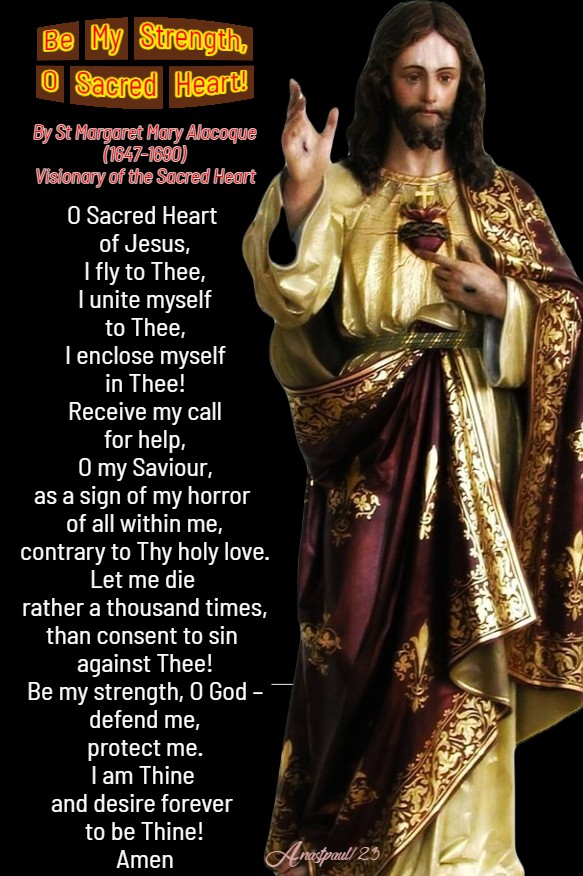
In Thy Divine Heart By St Margaret Mary Alacoque (1647-1690) Visionary of the Sacred Heart
Lord Jesus, let my heart never rest until it finds Thee, Who are its source, its love and its happiness. By the wound in Thy Heart pardon the sins I have committed, whether out of weakness, or out of evil desires. Place my weak heart in Thy own Divine Heart, continually under Thy protection and guidance, so that I may persevere in doing good and in fleeing evil, until my last breath. Amen
One Minute Reflection – 13 December – Wednesday of the Second Week of Advent, Within the Octave of the Immaculate Conception of the Blessed Virgin Mary, Mother of God – Feast of St Lucy, Virgin Martyr – 2 Corinthians 10:17-18, 11:1-2; Matthew 13:44-52 – Scripture search here: https://www.drbo.org/
“The Kingdom of Heaven is like a treasure hidden in a field.” – Matthew 13:44
REFLECTION – “For the man who loves God, it is sufficient to please the One he loves and, there is no greater recompense to be sought, than the loving itself. For love is from God, by the very fact, that God Himself is love. The good and chaste soul is so happy to be filled with Him that it desires to take delight in nothing else. For what the Lord says is very true: – ‘Where your treasure is, there also will your heart be.’
What is a man’s treasure but the heaping up of profits and the fruit of his toil? For whatever a man sows, this too will he reap and each man’s gain, matches his toil and where delight and enjoyment are found, there the heart’s desire is attached. Now there are many kinds of wealth and a variety of grounds for rejoicing – every man’s treasure is that which he desires. If it is based on earthly ambitions, its acquisition makes men not blessed but wretched!
But those who enjoy the things that are above and eternal, rather than earthly and perishable, possess an incorruptible, hidden store, of which the Prophet speaks: ‘Our treasure and salvation have come, wisdom and instruction and piety, from the Lord: these are the treasures of justice.’ Through these, with the help of God’s grace, even earthly possessions are transformed into heavenly blessings. It is a fact that many people use the wealth, which is either rightfully left to them or otherwise acquired, as a tool of devotion. By distributing what might be superfluous to support the poor, they are amassing imperishable riches, so that what they have discreetly given, cannot be subject to loss. They have properly placed those riches, where their heart is, – it is a most blessed thing, to work to increase such riches, rather than to fear that they may pass away.” – St Pope Leo the Great (400-461) Bishop of Rome and Great Western Father and Doctor of the Church (An excerpt from Sermon 92).
PRAYER – Hear us, O God our Saviour, that, as we rejoice on the feast of blessed Lucy, YThy Virgin and Martyr, so we may grow in love and devotion. Through the same Jesus Christ, Thy Son our Lord, Who lives and reigns with Thee, in the unity of the Holy Ghost, God, world without end. Amen (Collect).
Our Morning Offering – 13 December – “The Month of the Divine Infancy and the Immaculate Conception of the Blessed Virgin Mary”
O Purest of Creatures, Sweet Mother, Sweet Maid By Fr Frederick W Faber C.Orat. (1814-1863)
O Purest of creatures, sweet Mother, sweet maid, The one spotless womb wherein Jesus was laid! Dark night hath come down on us, Mother! and we Look out for thy shining, sweet Star of the Sea!
Deep night hath come down on this rough-spoken world, And the banners of darkness are boldly unfurled; And the tempest-tossed Church,— all her eyes are on thee; They look to thy shining, sweet Star of the Sea!
He gazed on thy soul, it was spotless and fair, For the empire of sin—it had never been there; None ever had owned thee, dear Mother but He. And He blest thy clear shining, sweet Star of the Sea!
Earth gave Him one lodging; t’was deep in thy breast, And God found a home where the sinner finds rest; His home and His hiding-place, both were in thee, He was won by thy shining, sweet Star of the Sea!
Saint of the Day – 13 December – Saint Ursicinus of Cahors (Died c595) Bishop, Monk, Royal Court Official and Adviser. Died in c595, og natural causes, after around 15 years as the Bishop of Cahors. Also known as – Urci, Urcisse, Urcsicinus, Ursicin, Ursicino.
Ursicinus was the Chancellor of Queen Ultragotha, the wife of Childebert I, King of Paris. He was chosen by Maurilius, then-Bishop of Cahors, to be his successor, making him the ninth Bishop of Cahors.
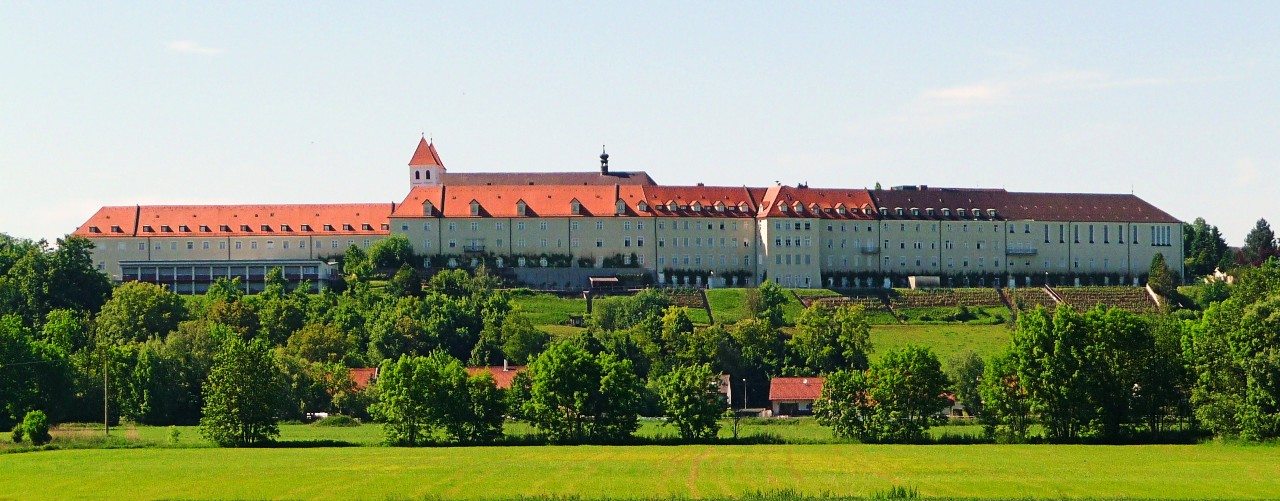
Cahors surrounding its Cathedral
The little information which has come to us about this Saint is reported by Saint Gregory of Tours in his “Historia Eccl. Francorum”, where he states that around the year 580, Maurilius, among the many Ecclesiastics who aspired to succeed him, chose Ursicinus, who was already a Secular and Spiritual Adviser to Queen Ultrogota, widow of King Childebert I.
Around 584, Innocent, Bishop of Rodez, accused Ursicinus of having usurped many Churches in his Diocese, so much so that the Bishop of Cahors had to defend himself in a Council meeting in Clermont, presided over by Bishop Sulpicius I, of Bouges. In that assembly, the accusations were judged false and Ursicinus was able to recover those Parishes usurped by the Bishop of Rodez and which had never belonged to his Diocese but had always been part of the Cahors See..
But then, Ursicinus was sentenced to a three-year penance at another Council. In fact, in the Autumn of 585, on the indication of King Gontranno, a Council was convened in Macon, where those Bishops who had welcomed the rebel Gondowald, a conspirator against the Merovingian dynasty, were discussed. Ursicinus publicly confessed to having committed this “crime” and the Bishop’s sentence of condemnation was explicit – he had to do penance for three years, abstaining from shaving his hair or beard, abstaining from wine and meat, not celebrating Mass, not ordaining Priests, nor consecrating Churches and not proceeding with any blessings.
Following this condemnation, the traces of Bishop Ursicinus are lost, but we do find him present at the Fourth Council of Auvergne in 590. After this citation we only know that his successor, Eusebius, was present at the Council of Paris in 614.
With regards to the cult of the sanctity of our Ursicinus – in a 14th Century Psalter, we find the first evidence of his cult and his feast which was celebrated on 13 December appears.
Many Churches in the Diocese were dedicated to him. Among these, one in Cahors, one in Tréjouls and one in Cantal. There are also two villages named after him, one in the canton of Puymirol and the other in that of Salvagnac. In the Diocese of Cahors the feast and remembrance of Saint Ursicinus, Bishop, is still celebrated today.
St Ursicinus Church in Cahors which was built in around the 7th Century
St Lucy (of Syracuse) – St Lucy/Lucia of Syracuse (c283-304) Virgin and Martyr Patron of the blind, eye disorders, martyrs, Perugia, Italy, Malta; epidemics; salesmen, Syracuse, Italy, throat infections, writers, against fire, against poverty, against spiritual blindness, peasants, penitent prostitutes, poor people, sick children, authors, cutlers, farmers, glass blowers, glass makers, glaziers, labourers, lawyer, maid servants, notaries, ophthalmologists, opticians, porters, printers, saddler, sailors, salesmen, seamstresses, stained glass workers, tailors, upholsterers, weavers and 10 further towns and cities. St Lucy’s Life and Death: https://anastpaul.wordpress.com/2017/12/13/saint-of-the-day-13-december-st-lucy-c-283-304/
Prayer to St Lucy
O St Lucy, you preferred to let your eyes be torn out instead of denying the faith and defiling your soul and God, through an extraordinary miracle, replaced them with another pair of sound and perfect eyes to reward your virtue and faith, appointing you as the protector against eye diseases. I come to you for you to protect my eyesight and to heal the illness in my eyes.
O St Lucy, preserve the light of my eyes so that I may see the beauties of creation, the glow of the sun, the colour of the flowers and the smile of children.
Preserve also the eyes of my soul, the faith, through which I can know my God, understand His teachings, recognise His love for me and never miss the road that leads me to where you, St Lucy, can be found in the company of the angels and saints. St Lucy, protect my eyes and preserve my faith.
St Lucy, “Bringer of Light” Pray for those with eye ailments, Pray for us all!
Blessed Antonio Grassi Cong. Orat. (1592 – 1671) Priest of the Oratorians of St Philip Neri, Confessor, Tertiary of the Order of St Francis, Spiritual advisor, Counsellor, Mediator, Miracle Worker, Apostle of the poor and the sick. He was Beatified on 30 September 1900 by Pope Leo XIII. Blessed Antonio’s biography: https://anastpaul.com/2018/12/13/saint-of-the-day-13-december-blessed-antonio-grassi-cong-orat-1592-1671/
St Aristone St Arsenius of Latro St Aubert of Arras Bl Bartholomew of Tuscany St Edburgh of Lyminge St Einhildis of Hohenburg Bl Elizabeth Rose St Jodocus
Blessed Giovanni Marinoni CR (1490-1562) Priest of the Theatines of St Cajetan (1480-1547) (The Congregation of the Clerics Regular of the Divine Providence), renowned Preacher and spiritual director. Patron of Preachers. He was Beatified on 5 December 1764, by a Bull of Pope Clement XIII, who also granted an Office in his honour, to his Order, to be celebrated on 13 December. Biography: https://anastpaul.com/2019/12/13/saint-of-the-day-blessed-giovanni-marinoni-cr-1490-1562/
St Martino de Pomar St Roswinda St Tassio of Bavaria St Ursicinus of Cahors (Died c595) Bishop St Wifred
Blessed Mercedarian Knights – 7 Beati: A group of Mercedarian Knights who fought the enemies of the Catholic faith in the first Century of the Order. Blessed Bernardo de Podio Blessed Giacomo de Copons Blessed Giovanni de Bruquera Blessed Guglielmo de Sa Blessed Pietro Boguer Blessed Pietro Ricart Blessed Raimondo de Frexa
Martyrs of Sebaste – 5 Saints: A group of Christians Martyred together in the persecutions of Diocletian. We know little more than their names – Auxentius, Eustratius, Eugene, Mardarius and Orestes. They were martyred in c 302 at Sebaste, Armenia (in modern Turkey) and their relics are enshrined at the church of Saint Apollinaris in Rome, Italy.
Thought for the Day – 12 December – Meditations with Antonio Cardinal Bacci (1881-1971)
Merit and the Love of God
“It is necessary, therefore, to love God and to do everything for the love of Him and for His glory alone. If we are to love God, however, we must know Him. If only we knew God perfectly, not only should we love Him but, we should come near to expiring from excessive love! We love God too little because, we know Him too little! Let us endeavour, therefore, to know Him by meditating on His infinite goodness, beauty and perfection. Any other goodness, beauty or perfection is a faint reflection of that of God, Who is the Source of all true goodness. We should not allow ourselves to be distracted or disturbed by these fleeting and perishable reflections.
God alone is enough for us. Let us learn to know Him and, in consequence, to love Him in the splendour of created things which reflect His beauty and power. The stars and the flowers, the waves of the sea and the trees of the forest, all speak to us of God. Let us come to know and to love Him, until we lament with St Augustine: “Too late have I loved Thee!”
Quote/s of the Day – 12 December – The Feast of Our Lady of Guadalupe
“Know, know for sure, my dearest, littlest and youngest son that I am the perfect and ever Virgin Holy Mary, Mother of the God of Truth, through Whom everything lives, the Lord of all things near us, the Lord of Heaven and earth.”
“I want, very much, to have a little house built here for me, in which I will show Him, I will exalt Him and make Him manifest. I will give Him to the people in all my personal love, in my compassion, in my help, in my protection because, I am truly your merciful Mother, yours and all the people who live united in this land and of all the other people of different ancestries, my lovers, who love me, those who seek me, those who trust in me.”
“Let not your heart be disturbed. Do not fear that sickness, nor any other sickness or anguish. Am I not here, who is your Mother? Are you not under my protection? Am I not your health? Are you not happily within my fold? What else do you wish? Do not grieve nor be disturbed by anything!”
One Minute Reflection – 12 December – Tuesday of the Second Week of Advent, Within the Octave of the Immaculate Conception of the Blessed Virgin Mary – Proverbs 8:22-35; Luke 1:26-28 – Scripture search here: https://www.drbo.org/
“Hail, full of grace, the Lord is with thee: blessed art thou among women” – Luke 1:28
REFLECTION – “Son of God, grant me your own admirable Gift that I may celebrate the wondrous beauty of Thy beloved Mother! The Virgin gave birth to a Son while preserving her virginity; she suckled Him Who gives nourishment to the peoples; in her immaculate breast, she bore Him Who carries the whole world in His Hands. She is Virgin and Mother, what will she not be hereafter? Holy in body, all beautiful in soul, pure of mind, upright in intelligence, perfect in feeling, chaste and faithful, pure of heart and filled with virtue.
May the hearts of virgins rejoice in Mary, since of her was born the One Who set humankind free from dreadful slavery. May the old Adam, wounded by the serpent, rejoice in Mary; it is Mary who gives Adam a posterity which allows Him to crush the accursed serpent and Who cures him of his mortal wound (Gen 3:15). Let Priests rejoice in the blessed Virgin; she has brought the High Priest into the world, Who gave Himself as a victim, putting an end to the sacrifices of the Old Covenant. … Let the Prophets rejoice in Mary, since in her were fulfilled their visions, in her were realised their prophecies, in her were confirmed their oracles. Let all the Patriarchs rejoice in Mary, since she received the blessing promised to them, she, who, in her Son, has brought them to completion. …
Mary is the new tree of life who, instead of the bitter fruit picked by Eve, gives to mankind that sweet fruit on which the whole world is fed!” – St Ephrem (306-373) Deacon in Syria, Father and Doctor of the Church (Marian Hymn).
PRAYER – O God, Who by the Immaculate Conception of the Virgin, prepared a worthy dwelling for Thy Son and Who, by Thy Son’s death, foreseen by Thee, preserved her from all taint, grant, we beseech Thee, through her intercession that we too may come to Thee unstained by sin.Through Jesus Christ, Thy Son our Lord, Who lives and reigns with Thee, in the unity of the Holy Ghost, God, world without end. Amen (Collect).
Our Morning Offering – 12 December – Feast of Our Lady of Guadalupe
Our Lady of Guadalupe, Mystical Rose Prayer to Our Lady of Guadalupe By St Pius X (1835-1914)
Our Lady of Guadalupe, Mystical Rose, make intercession for the holy Church, protect the Sovereign Pontiff, help all those who invoke thee in their necessities, and since thou art the ever Virgin Mary and Mother of the true God, obtain for us from thy most holy Son the grace of keeping our faith, sweet hope in the midst of the bitterness of life, burning charity and the precious gift of final perseverance. Amen
This prayer was approved and enriched with an Indulgence of Five Hundred Days by St Pius X at an Audience held on 15 August, 1908 and was included in the official edition of Approved Indulgenced prayers (1950). Raccolta number 389, 500 days Indulgence, St Pope Pius X Audience, 15 August 1908.
Saint of the Day – 12 December – Saint Columba of Terryglass (Died 552) Abbot, Founder of Monasteries, Miracle-worker. One of the Twelve Apostles of Ireland, pupil and disciple of St Finnian of Clonard (470–549) known as the “Tutor of the Saints of Ireland.” Born in Leinster, Ireland and died on 13 December 552 of the Plague at his Monastery in Terryglass, where he was also buried. Also known as – Colum mac Crimthainn, Colum moccu Loigse, Columba of Tirdaglas, Columba of Tyrdagla. Additional Memorial – 6 January as one of the Twelve Apostles of Ireland.
Columba was the son of Ninnidh, a descendant of Crinthainn, King of Leinster. In his childhood, he learned his Psalms and Hymns from an old holy man named Colman Cule, who lived near Clonenagh and founded the Church of Cluain Cain.
As he grew into adulthood, he studied with St Finnian of Clonard and then, Columba resolved to go to Rome and bring back Relics of Saints Peter and Paul. On his return, he visited Tours and brought from there, the staff of St Martin of Tours. He also visited England and preached with some success to the Anglo-Saxons.
Returning home, he remained at Clonenagh for around a year, before crossing Slieve Bloom and founding a Church near Lough Derg.
Around 520, Columba was prompted by an Angel, to relocate to the Island of Inis Cealtra and establish a Monastery there. , He remained a long time at this Monastery. According to one report, when one of his Monks died suddenly on the shore opposite the northern part of the Island, Columba ordered the Monks to go and say to the dead man, “Columba bids thee arise.” The man then arose and returned with them to the Island.
Columba founded the celebrated Monastery of Tirdaglas (Tir-da-glasí), or Terryglass in 548. St Fintan of Clonenagh (c526-603) received his religious formation at Terryglass and was deeply influenced by the penitential practices and the severity of the Rule at the Terryglass Monastery finally becoming the Abbot
When Saint Finnian was in extremis, suffering from the Plague, he sent for Columba to administer Holy Viaticum. Columba himself died of the Plague on 13 December 552 and was buried within the precincts of his Monastery at Terryglass.
There are some fifteen more Saints of Ireland, bearing the name of our St Columba all being mentioned in the Martyrology of Gorman.
Terryglass Parish Church with a Cross, being part of a Shrine to St Columba in the foreground
St Colman of Clonard St Columba of Terryglass (Died 552) Abbot One of the Twelve Apostles of Ireland. Bl Conrad of Offida St Corentius of Quimper St Cormac St Cury St Donatus the Martyr St Edburga of Thanet
Martyrs of Alexandria – 6 Saints: A group of six Christians Martyred for their faith during the persecutions of Decius. We know little more than five of their names – Alexander, Ammonaria, Dionysia, Epimachus and Mercuria. They were burned to death c 250 in Alexandria, Egypt.
Martyrs of Trier – 4 Saints and Companions: “At Treves (Trier), the holy Martyrs, Maxentius, Constantius, Crescentius, Justinus and their companions, who suffered inthe persecutions of Diocletian, under the Governor Rictiovarus.”
Thought for the Day – 11 December – Meditations with Antonio Cardinal Bacci (1881-1971)
Leaving Our Worries in God’s Hands
“We should try to behave with similar serenity. We should remain close to God and live in complete conformity with His will. We should perform our duties attentively and whole-heartedly but, we should never worry about them. As a result, we shall do more and do it more effectively. Most important of all, we shall be sure that God shall bless our work.”
Quote/s of the Day – 11 December – “The Month of the Divine Infancy and the Immaculate Conception of the Blessed Virgin Mary” – Monday of the Second Week of Advent – 1 Peter 5:1-4, 10-11; Matthew 16:13-19 – Scripture search here: https://www.drbo.org/
“But the God of all grace, Who hath called us into His eternal glory in Christ Jesus, after you have suffered a little, will Himself perfect you and confirm you and establish you. To Him be glory and empire forever and ever. Amen.”
1 Peter 5:10-11
“Then go and learn, neither to be moved with injuries nor flatteries. If you die to the world and to yourself, you will begin to live to Christ.”
St Macarius of Egypt (c300-390)
“Let us become like Christ, since Christ became like us. He assumed the worse, that He might give us the better; He became poor, that we through His poverty, might be rich.”
St Gregory Nazianzen (330-390) Father and Doctor of the Church
“Let us always belong to God, unreservedly and without interruption. May He ever live and reign in our hearts.”
(Letter to Madame de Chantal)
St Francis de Sales (1567-1622) Doctor of the Church
“Each one of us has a thirst for all that is infinite, eternal and perfect. God alone can satisfy this thirst. Just as we are created by God, so we are created for Him. Just as we came from God, so we are gradually travelling back towards Him, for He is the final goal of our earthly journey. We should meditate on this great truth which we were first taught in the Catechism, namely, that we were created to know, love and serve God on this earth and to be happy with Him forever in Heaven. God alone is the eternal beauty which will satisfy our hearts.”
One Minute Reflection – 11 December – Monday of the Second Week of Advent, Within the Octave of the Immaculate Conception of the Blessed Virgin Mary, Mother of God – St Pope Damasus I (c305-384) Confessor. – 1 Peter 5:1-4, 10-11; Matthew 16:13-19 – Scripture search here: https://www.drbo.org/
“Thou art the Christ, the Son of the living God.” – Matthew 16:16
REFLECTION – “Peter did not say “Thou are a Christ” or “a son of God” but “the Christ,the Son of God.” For there are many christs by grace, who have attained the rank of adoption [as sons] but [there is] only One Who is by nature the Son of God. Thus, using the definite article, he said, THE Christ, THE Son of God. And in calling Him, Son of the LIVING God, Peter indicates that Christ Himself is Life and that death has no authority over Him. And even if the flesh, for a short while, was weak and died, nevertheless, it rose again, since the Word, Who dwelled in it, could not be held under the bonds of death.” – St Cyril of Alexandria (376-444) Known as “The Pillar of Faith” Archbishop of Alexandria, Father and Doctor Incarnationis (Doctor of the Incarnation) (Fragment 190).
PRAYER – Look forgivingly on Thy flock, Eternal Shepherd and keep it in Thy constant protection, by the intercession of blessed Damasus Thy Sovereign Pontiff, whom Thou didst constitute Shepherd of the whole Church. Through Jesus Christ, Thy Son our Lord, Who lives and reigns with Thee, in the unity of the Holy Ghost, God, world without end. Amen (Collect).
Our Morning Offering – 11 December – Monday of the Second Week of Advent and Within the Octave of the Immaculate Conception of the Blessed Virgin Mary, Mother of God“
O Gloriosa Femina O Glorious Maid, Exalted Far By St Venantius Fortunatus (c530 – c609) Bishop, Father o the Church
O Glorious Maid, exalted far Beyond the light of burning star, From Him who made thee, thou hast won Grace to be Mother of His Son.
That which was lost in hapless Eve Thy holy Scion did retrieve: The tear-worn sons of Adam’s race Through thee have seen the heavenly place.
Thou wast the gate of Heaven’s high Lord, The door through which the Light hath poured. Christians rejoice, for through a Maid To all mankind is life conveyed!
All honour, laud and glory be, O Jesu, Virgin-born, to Thee; All glory, as is ever meet, To Father and to Paraclete. Amen.
This Hymn was used for Lauds in the Sarum Breviary for the Feasts of the Immaculate Conception, the Purification of the Blessed Virgin Mary, the Annunciation, the Assumption and the Nativity of the Blessed Virgin Mary. The above is the original text of this Hymn as it appears in The English Hymnal (1906), where it is listed as a Morning Office Hymn for Feasts of the Blessed Virgin Mary: Chant Tone: “O Gloriosa Domina” Gregorian Chant, Mode II, traditional.
Saint of the Day – 11 December – Saint Damasus I (c305-384) Bishop of Rome from 366-his death on 11 December 384. Pope Damasus was a Poet, a Confessor and Defender of Orthodoxy and a Reformer of morals amongst many other qualities. Born in c306 in Rome, Italy of Spanish descendancy and died in 384 in the same City of natural causes. He was initially buried in the Mark and Marcellianus Catacombs in Rome and in …. his bones were re-interred in the Church of San Lorenzo in Damaso, Rome. Patronage – of Archeologists.
The Roman Martyrology reads: “St Rome, St Damasus, Pope and Confessor, who condemned the heresiarch Apollinaris and restored to his See, Peter, Bishop of Alexandria who had been driven from it. He also discovered the bodies of many holy Martyrs and wrote verses in their honour.”
Today is the Feast of Pope St Damasus I, who was elected in October of 366, at roughly the age of 60 and died on this day in 384. He served as Deacon at the Church of St Lawrence Outside-the-Walls. He was elected to the Papacy in the midst of controversy, since a small group of the Clergy supported another candidate, Ursicinus; the followers of this schismatic seized control of the Liberian Basilica (now St Mary Major) and could only be repressed with violence and the exile of the anti-Pope.
St Damasus was a strenuous Defender of the Orthodox Christian faith, holding Synods in Rome to condemn the heresies of Macedonius and Apollinaris, sending legates to the First Council of Constantinople and excommunicating the Arian bishop of Milan, Auxentius, who was later succeeded by St Ambrose. It was at his (St Ambrose’) behest that St Jerome revised the Latin text of the Gospels and it is in a letter to him that St Jerome famously describes the need for such a revision by saying, “There are as many versions (of the Sacred Scriptures) as there are copies.” Pope Damasus then befriended St Jerome and employed him as his Secretary, a position he held for many years. They worked together on exegetical matters but, perhaps Damasus’ most important contribution to the Church, was that he commissioned Jerome to revise the existing Latin translation of the Gospels based on the original Greek. This was to become the Sacred Scripture translation which was later called “The Vulgate.” St Jerome is traditionally represented as a Cardinal because of the time he spent in Rome as Damasus’ Secretary.
Our Saint is today, venerated too, as the Patron Saint of Archeologists and, particularly those who work in the field of early Christian archeology, because of his great encouragement of devotion to the Roman Martyrs and his efforts to preserve their memories. He built a Church in honour of St Lawrence within his own house in the centre of Rome, now known as “San Lorenzo in Damaso” and also a Shrine at the Catacomb of St Sebastian, where the bodies of Ss Peter and Paul were once kept and the Baptistery of the ancient Basilica of St Peter. Within many of the Roman Catacombs, he had the areas around the Martyrs’ graves restored to make them more accessible to pilgrims ..
As a young man, Damasus had worked in the Papal Archives (the first reference to a Papal Archive), where he read about the lives and deaths of the Martyrs. Now that the persecutions were over, he worked tirelessly to promote the Martyr cult. He encouraged pilgrimages to the Catacombs and re-opened them, after they had been closed by Emperor Diocletian. He restored them, built staircases and skylights, all with the aim of demonstrating that the real splendour of Rome was not pagan but Christian.
Damasus also decorated the graves of many Martyrs with Epitaphs, composed by himself and carved into marble, with a special kind of lettering invented for the purpose. This Font, in which the bars of the letters are alternately thick and thin, with curved serifs at the corners, is known as either “Philocalian” lettering from its inventor, a friend of his named Furius Dionysius Filocalus, or “Damasian” after himself. We have a total of about 70 of these Inscriptions; about 40 of the originals are preserved, while the rest are recorded in various sources, although the stones themselves have been lost.
One of the best preserved of these is at the Church of St Agnes Outside-the-Walls on the Via Nomentana, the High Altar of which rests over her Gravesite. As seen in the photograph below, only the upper left corner is missing.
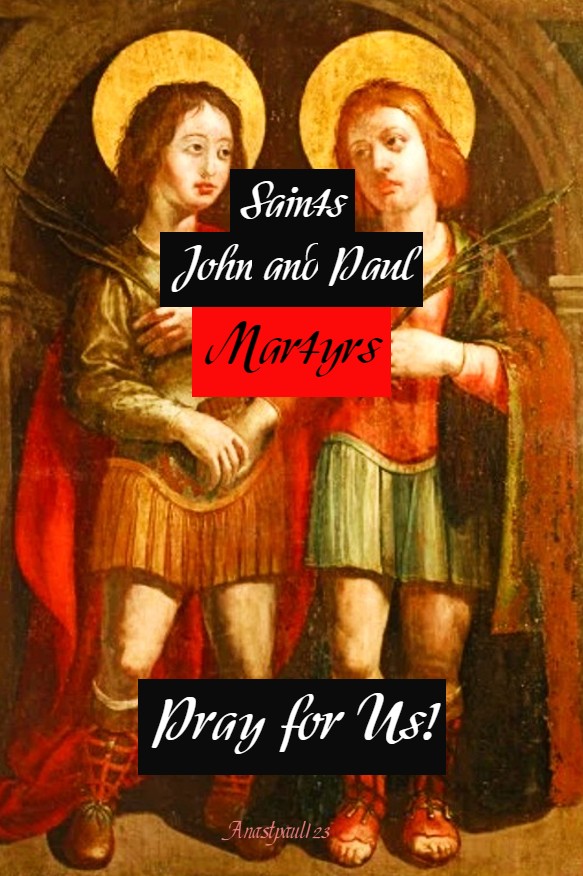
After recounting the Martyrdom and burial of St Agnes (including the story that when her clothes were torn off, her hair miraculously grew to cover her exposed body), the final line asks the “renowned Martyr to favour the prayers of Damasus.” These Inscriptions are particularly valuable witnesses to the authenticity of various Martyrs and the Liturgical devotion paid to them, since we know that Pope Damasus took care to inform himself about the Martyrdoms as best he could. At the grave of Ss Peter and Marcellinus, who were killed in the persecution of Diocletian in 304, he placed an Epitaph in which he gives the story of their deaths and then notes that he learned the details when he was a boy, by interviewing the Martyrs’ own executioner!Being himself born in the very heart of the persecution and. therefore. a young Cleric in Rome in the early years of the peace of the Church, he must also have known many who had actually, themselves, witnessed the Martyrdoms of Sts Agnes, John and Paul and Sebastian, just to name a few.
Pope Damasus’ relationship with the Eastern Church was unhappy. There, St Basil the Great (329-379) fought to restore orthodoxy on the basis of a refined new explanation of the Nicene Doctrine. Like the West, in general,, Damasus did not understand the new development and when Antioch was divided between rival Bishops, the Pope stubbornly clung to the support of Paulinus, the unrepresentative leader of a reactionary group, instead of Meletius, on whom the Eastern hope of unity rested . When Meletius died in 381, Damasus refused to enter into Church communion with his successor, Flavian. In desperation, Basilios described the Pope as improbably arrogant, who did nothing to contribute to the constructive détente between East and West that was now underway.
The second Ecumenical Council took place in Constantinople from May to July 381. Originally, it was an Eastern Council, where only about 150 Eastern Bishops participated. Pope Damasus was not present but when the Council decisions were later presented to him, he approved them and the Council was thus considered Ecumenical. Here the Doctrine of the Trinity was established for good and the Council adopted a powerful declaration of the deity of the Holy Ghost, directed against the Macedonians and the Pneumatomas (who rejected the deity of the Holy Ghost). The Council also condemned the Arians and Semi-Arians.
It was Pope Damasus I who introduced the Doxology Gloria Patri (Glory be to the Father) at the end of the Hymns. He was also the first to take over the title of Pontifex Maximus (High Priest) from the Roman Emperors. He also authorised the Ambrosian Rite and introduced the use of the Hebrew term “Hallelujah” (Latin: Alleluia ).
Damasus died on 11 December 384 in Rome and was first interred in the Catacomb of Mark and Marcellianus, near the Catacomb of Domitilla, on the Via Ardeatina, in a burial place he had prepared for his mother and sister, Irene. Later, his Relics were transferred to the Church of St Lorenzo in Damaso, which he had built himself. There, after being forgotten for a long time, they were found again in 1645. His Feast has been celebrated on 11 December since the 7th Century.
Bl Hugolinus Magalotti Blessed Jean Laurens O. Praem.(1548-1613)
Blessed Jerome Ranuzzi OSM (c 1410-c 1468) “The Angel of Good Counsel,” “The Blessed Bachelor,” Priest and Friar of the Order of the Servants of Mary, the Servites, Theologian, Adviser both spiritual and secular, renowned for his learning and scholarship, Penitent and Hermit with a great love of solitude and silence. His body is incorrupt and is still available for veneration in St Mary of the Servites, Urbano, Italy. His cult was confirmed on 1 April 1775 by Pope Pius VI with the title of Blessed. The Roman Martyrology states: “In Sant’Angelo in Vado always in the Marches, Blessed Girolamo, Priest of the Order of the Servants of Mary, who in solitude and silence reached the wisdom of holiness.” Biography: https://anastpaul.com/2021/12/11/saint-of-the-day-11-december-blessed-jerome-ranuzzi-osm-c-1410-c-1468-the-angel-of-good-counsel/
St Pens St Sabinus of Piacenza Blessed Severin Ott O.Praem. (1627-1708) Priest and Friar of the Norbertines or Premonstratensians.
Martyrs of Saint Aux-Bois – 3 Saints: Two Christian missionaries and one of their local defenders who faith in the persecutions of governor Rictiovarus – Fuscian, Gentian and Victoricus. They were beheaded in 287 in Saint Aux-Bois, Gaul (in modern France).
Martyrs of Rome – 3 Saints: Three Christians murdered in the persecutions of Diocletian for giving aid to Christian prisoners – Pontian, Practextatus and Trason. They were imperial Roman citizens. They were martyred in c 303 in Rome, Italy.
Thought for the Day – 10 December – Meditations with Antonio Cardinal Bacci (1881-1971)
HOLY PURITY
“Most Pure Virgin, Immaculate Mother of God, thou sees how many dangers and snares surround my soul. Thou sees how weak I am and how much I need thy help. Assist me, I beseech thee when I am tempted. Gran, I cry unto thee, that I may die in the state of grace, rather than fall into sin. Amen”
Quote/s of the Day – 10 December – The Second Sunday of Advent
“For this is He of Whom it is written: Behold. I send My Angel before My face, who shall prepare Thy way before Thee.”
Matthew 11:10
“For everyone who exalts himself, will be humbled and he who humbles himself, will be exalted.”
Luke 14:11
“We must erect the mystical ladder of Jacob, where Angels, ascending and descending, appeared to him. Ascent and descent means, that we go downward when we exalt ourselves and rise, when we are humbled. The ladder represents our life in this world, which our Lord erects to Heaven, when our heart is humbled. The sides of the ladder represent our soul and body, sides between which, God has placed several rungs of humility and, discipline, whereby we are to ascend if we would answer His call.”
(Rule of Benedict #7)
St Benedict (480-547) Father of the Church
“There is no road to Heaven but that of innocence or penance.”
St Cajetan (1480-1547)
“Worldly love aims at pleasing everyone and saddening no-one. Many call this politeness! but, it is simply self-praise and flattery!”
St Anthony Mary Zaccaria (1502-1539)
“What better penance can a heart do which commits faults, than to submit to a continual abnegation of self-will?”
St Francis de Sales (1567-1622) Doctor of the Church
“Let us be humble like Mary. Let us make God’s glory, rather than our own satisfaction, the object of our actions. Only one thing should count with us and that is, the testimony of a good conscience before God. Everything else is passing and futile.”
One Minute Reflection – 10 December – The Second Sunday of Advent, Within the Octave of the Immaculate Conception of the Blessed Virgin Mary, Mother of God – Romans 15:4-13; Matthew 11:2-10 – Scripture search here: https://www.drbo.org/
“Behold I send My Angel before My face, who shall prepare Thy way before Thee.” – Matthew 11:10
REFLECTION – “Since our Divine Saviour is so near, what are we to do to prepare ourselves for His coming ? Saint John the Baptist teaches us : “Repent!” he says, “bring low those mountains of pride, fill those valleys of laziness and pusillanimity, for salvation is near at hand.” The ‘valleys’ are nothing other than fear which, when it becomes too great, leads to discouragement. The sight of the great sins we have committed, brings with them, a shock and fear which strikes the heart. These are the valleys we have to fill, with trust and hope for the coming of our Lord.
“Bring low mountains and hills:”what are these but presumption, pride and self-esteem, which is a very great hindrance to our Lord’s coming, Who is accustomed to humble and bring low the proud, for He penetrates right to the bottom of our hearts to uncover the pride hidden within them. “Level the highways, the crooked ways make straight to make them a plain.” This is as though He were to say: “Put right all those doubtful intentions, so that you may have none but that of pleasing God, by doing penance, this being the goal to which we should all aim.”
Make straight the path, smooth down your feelings by the mortification of your passions, inclinations and aversions. Oh, what a desirable thing it is, this equanimity of mind and feeling; how faithfully we ought to work to acquire it! For, we are more changing and inconstant, than can be told. People are to be found, who at one moment, being in a good temper, will be of a pleasant and joyful conversation; yet look on the other side and you will find them sad and restless –in sum, the winding and uneven ways, are to be made straight for the coming of our Lord!” – St Francis de Sales (1567-1622) Bishop of Geneva, Doctor of the Church (Sermon for the 4th Sunday of Advent).
PRAYER – O God, Who by the Immaculate Conception of the Virgin, prepared a worthy dwelling for Thy Son,and Who, by Thy Son’s death, foreseen by Thee, preserved her from all taint, grant, we beseech Thee, through her intercession, that we too may come to Thee unstained by sin.Through the same Jesus Christ, Thy Son our Lord, Who lives and reigns with Thee, in the unity of the Holy Ghost, God, world without end. Amen (Collect).
Our Morning Offering – 10 December – The Second Sunday of Advent, Within the Octave of the Immaculate Conception of the Blessed Virgin Mary, Mother of God and “The Month of the Divine Infancy and the Immaculate Conception of the Blessed Virgin Mary”
Creator Alme Siderum Creator of the Starry Frame 7th Century Advent Hymn
Creator of the starry frame; Eternal Light of all who live; Jesu, Redeemer of mankind, An ear to Thy poor suppliants give.
When man was sunk in sin and death, Lost in the depth of Satan’s snare, Love brought Thee down to cure our ills, By taking of those ills a share.
Thou for the sake of guilty men, Causing Thine own pure blood to flow, Didst issue from Thy Virgin-shrine, And to the Cross a Victim go.
So great the glory of Thy might, If we but chance Thy Name to sound, At once all Heaven and Hell unite In bending low with awe profound.
Great Judge of all, in that last day, When friends shall fail and foes combine, Be present then with us, we pray, To guard us with Thy arm divine.
To God the Father and the Son, All praise and power and glory be, With Thee, O holy Comforter, Henceforth through all eternity.
Also known as Advent Hymn, this translation of the Latin hymn Creator Alme Siderum (Pope Urban VIII’s 1632 revision of the 7th Century Hymn Conditor alme siderum) was first published in Fr Edward Caswall’s Lyra Catholica,
Saint of the Day – 10 December – Saint Thomas of Farfa (Died c720) Abbot, Hermit, Pilgrim, expert Restorer and Abbot extraordinaire! Born at Maurienne, Savoy, France and died in c720 of natural causes at his famous Monastery of Farfa. Also known as – Thomas of Maurienne.
“This is the place which I promised you”
Words addressed by the Madonna to Thomas, the Restorer of Farfa Monastery, to indicate to him the ruins of the destroyed Abbey which were, later rebuilt by the Saint – it is the place of the current Monastery.
Thomas is believed to have hailed from Maurienne, where he was a Monk before he travelled to the Holy Land. According to the 12th Century Chronicon Farfense, by the renowned Monk Historian Gregory of Catino, Thomas was on a pilgrimage when, in the Church of the Holy Sepulchre in Jerusalem, he had a vision of the Virgin Mary, who told him to go to Italy and re-establish an abandoned Abbey which had been founded in her name.
Together with a small group of disciples and by the gracious assistance of Divine guidance, Thomas found the ruins of an Abbey in a deserted region in the Sabina Hills in central Italy.
The foundation of Farfa p dates to around 560-570 by St Laurence of Syria (Lorenzo Siro), who arrived from Syria together with his sister Susannah, to carry out an apostolate in Sabina, where he was elected as the Bishop but he himself soon left this position to become a Monk and dedicate himself to the foundation of this Monastery which had attracted him by the position of 3 beautiful tall Cypresses, representing the glorious Blessed Trinity..
At the time of the death of San Lorenzo, which occurred towards the end of the 6th Century, the Monastery suffered complete devastation and abandonment, due to the arrival of the Lombards but, our Saint Thomas managed to find the remains of the place dedicated to the Blessed Mother – being still marked by the same three cypresses.
Finally the ancient Church, now in ruins, was given new life in 680, under the protection of the Duke of Spoleto, Faroaldo II, who offered land and buildings.
It is precisely thanks to Saint Thomas that a period of profound recovery began in Farfa. In addition to the reclamation of the land, the Abbey patrimony expanded so considerably, to the point that Popes, Dukes, Kings and Governors granted great exemptions and privileges, so that Farfa quickly became an economically and politically powerful entity.
During Thomas’s 40+ year Abbacy, three Monks from Farfa established the Monastery of San Vincenzo al Volturno. According to San Vincenzo’s Vita, it was Thomas who directed the Monks to “the oratory of Christ’s Martyr Vincent [where] on each side of the river is a thick forest (which serves as a habitation for wild beasts and a hiding-place for robbers.”
Also during Thomas’ tenure, the Abbey received a privilege in 705, from Pope John VII which recognised that the Abbey was founded by “Bishop Laurence.” This Papal privilege included a confirmation of the Abbey’s first grant of land, from Duke Faroald II of Spoleto. Through his donations Faroald claimed to have “restored that place through Abbot Thomas and your [Papal] recommendation.” Thomas was ordered to put the Papal privilege on display.
The working Farfa today
Saint Thomas died in c720, after forty years of regency of the Farfa Monastery and was buried right there. According to the 11th Century Martyrology of the Abbey, Thomas was buried at the 30th Milestone, as later was Abbot Hilderic (Died 857). Thomas had been succeeded by Aunepert around 720.
St Pope Melchiades (Died 314) Bishop of Rome from 2 July 311- 19 or 11 January 314)
St Abundius St Albert of Sassovivo St Angelina of Serbia Blessed Brian Lacey (Died 1591) Lay Martyr BL Bruno of Rommersdorf St Caesarius of Epidamnus St Carpophorus St Deusdedit of Brescia (Died c700) Bishop
St Edmund Gennings St Emérico Martín Rubio St Florentius of Carracedo St Fulgentius of Afflighem St Gemellus of Ancyra St Gonzalo Viñes Masip Bl Guglielmo de Carraria St Guitmarus St Hildemar of Beauvais Bl Jerome Ranuzzi Bl John Mason
St Julia of Merida St Lucerius St Maurus of Rome St Mercury of Lentini St Polydore Plasden Bl Sebastian Montanol Bl Sidney Hodgson St Sindulf of Vienne St Swithun Wells St Thomas of Farfa (Died c720) Abbot, Hermit Bl Thomas Somers St Valeria
Martyrs of Alexandria – 3 Saints: A group of Christians murdered for their faith in the persecutions of Galerius Maximian – c 312. The only details that have survived are three of the names – Eugraphus, Hermogenes and Mennas.
Thought for the Day – 9 December – Meditations with Antonio Cardinal Bacci (1881-1971)
The Use and Abuse of the Sacraments
“The man who abuses God’s gifts, calls down a curse on his own head. “Cursed be he,” said the Prophet Jeremias, “who doth the work of the Lord deceitfully” (Jer 48:10).
Many people neglect to make proper use of Confession and Holy Communion. Let us examine ourselves with special care, in this regard. Do we go to Confession at least once a fortnight or, if possible, even weekly? How terrible for us if we are content to remain heedlessly in the state of sin, while we have at hand such an easy opportunity of obtaining pardon! Furthermore, do we endeavour to receive Jesus in the Blessed Sacrament every day, or at least as often as possible? We have daily need of this Divine nourishment if we wish to preserve the life of the soul. Otherwise, we shall languish and grow faint and shall eventually fall into sin. Finally, let us consider whether we receive these Sacraments with the proper disposition, with recollection and with love!”
You must be logged in to post a comment.