One Minute Reflection – 2 August – “The Month of the Immaculate Heart of Mary” and the Feast of St Alphonsus Maria de Liguori (1696-1787) Bishop, Confessor, Most Zealous Doctor of the Church – 2 Timothy 2:1-7, Luke 10:1-9 – Scripture search here: https://www.drbo.org/
“At that time, the Lord appointed seventy-two others and sent them forth …” – Luke 10:1
REFLECTION – “Our Lord Jesus Christ Ordained the disciples to be guides and teachers of the world and to be “stewards of God’s mysteries” (1Cor 4:1). He also bade them… like lights, to illuminate and give light, not merely to the Jewish people… but everywhere under the sun and to peoples scattered over all the earth (cf Mt 5:14)…
For, if He desired to send His disciples out, even as the Father had sent Him, (Jn 20:21) was it not necessary for those who were destined to imitate His mission, to ascertain what it was that the Father sent the Son to do? In various ways, then, He expounded the character of His mission. And, on one occasion, He said: “I have come to call, not the righteous but sinners, to repentance” (Lk 5:32) and again: “For I have come down from Heaven, not to do My own will but the will of Him Who sent Me” (Jn 6:38) and yet, once more: “For God did not send His Son into the world to condemn the world but in order that the world might be saved through Him” (Jn 3:17).
By saying that He is sending them as the Father has sent Him, therefore, He summarised, in a few words, the character of the Apostles’ mission. In this way, they would know that they were bound to call sinners to repentance, to heal the sick, whether of body or soul and in all their dealings as stewards, not by any means to follow their own will but the will of Him Who sent them and, finally, to save the world, insofar as it received the teachings of the Lord.” – St Cyril of Alexandria (380-444) Bishop, Father and Doctor of the Church (Commentary on the Gospel of John 12:1).
PRAYER – O God, Who through blessed Alphonsus Maria, Thy Confessor and Bishop, fired with love for souls, enriched Thy Church with a new family; we beseech Thee that, taught by his saving counsels and strengthened by his example, we may be enabled, happily to come to Thee. Through the same Jesus Christ, Thy Son our Lord, Who lives and reigns with Thee, in the unity of the Holy Ghost, God, world without end. Amen (Collect).
Our Morning Offering – 2 August – The Feast of St Alphonsus Maria de Liguori (1696-1787) Bishop, Confessor, Most Zealous Doctor of the Church
Act of Reparation By St Alphonsus Maria de Liguori (1696-1787) Most Zealous Doctor of the Church Indulgence of 3 Years Once a Day
O Jesus, my Saviour and Redeemer, Son of the living God, behold we kneel before Thee and offer Thee our reparation; we would make amends, for all the blasphemies uttered against Thy Holy Name, for all the injuries done to Thee in the Blessed Sacrament, for all the irreverence shown toward Thine Immaculate Virgin Mother, for all the calumnies and slanders, spoken against Thy Spouse, the Holy Catholic and Roman Church. O Jesus, Who hast said: “If you ask the Father anything in My Name, He will give it you,” we pray and beseech Thee, for all our brethren who are in danger of sin; sheld them from every temptation to fall away from the true faith; save those who are even now standing on the brink of the abyss; to all of them, give light and knowledge of the truth, courage and strength, for the conflict with evil, perseverance in faith and active charity! For this do we pray, most merciful Jesus, in Thy Name, unto God the Father, with Whom Thou livest and reignest in the unity of the Holy Ghost, world without end. Amen.
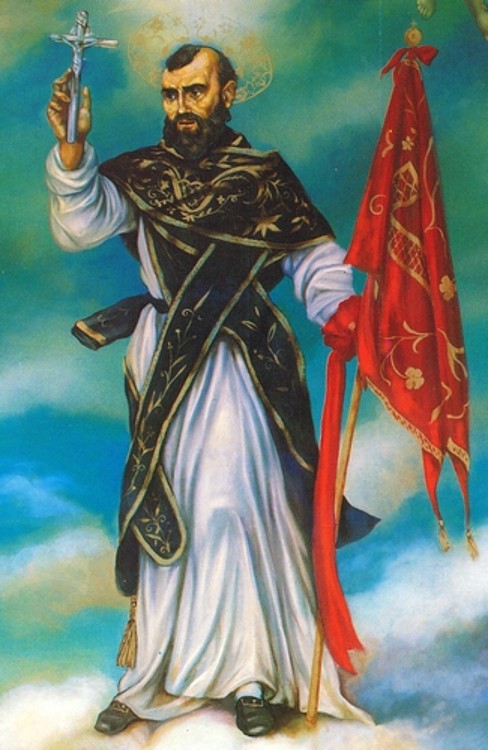
Saint of the Day – 2 August – St Alphonsus Maria de Liguori (1696-1787) Bishop, Confessor, Most Zealous Doctor of the Church, Founder of the Redemptorists, Spiritual Writer, Miracle-worker, Composer, Musician, Artist, Poet, Lawyer, Scholastic Philosopher and Theologian.Patronages – against arthritis, against scrupulosity, of Confessors (given on 26 February 1950 by Pope Pius XII), final perseverance, moral theologians, moralists (1950 by Pope Pius XII), scrupulous people, vocations, Diocese of Acerra, Italy, Diocese of Agrigento, Italy, l Pagani, Italy, Sant’Agata de’ Goti, Italy.
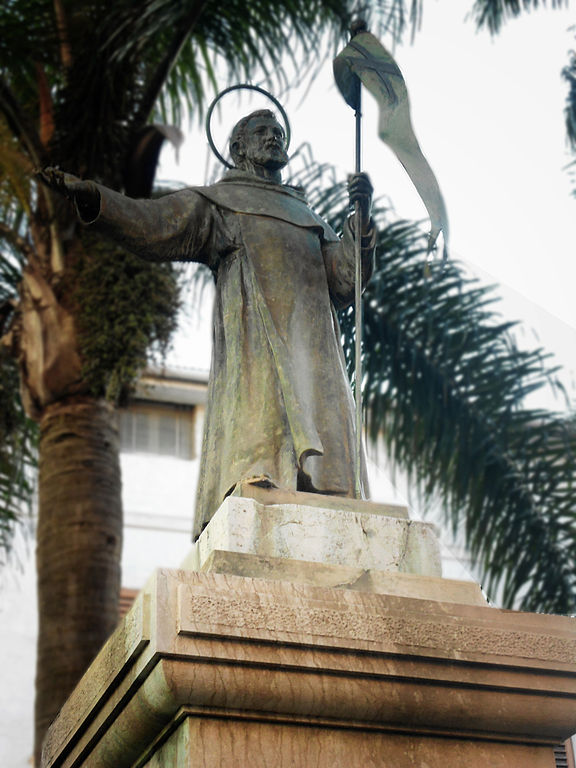
Saint Alphonsus Mary Liguori from the Liturgical Year, 1909
Let us listen to the Church’s account of his life.
“I have not hid Thy justice within my heart, I have declared Thy truth and Thy salvation.” (Gradual of the Mass Ps 39:11)
Alphonsus Maria de Liguori was born of a noble family at Naples and from his early youth, gave clear proofs of sanctity. While he was still a child, his parents once presented him to St Francis Girolamo, of the Society of Jesus. The Saint blessed him and prophesied that he would reach his ninetieth year that he would be raised to the Episcopal dignity and would do much good for the Church.
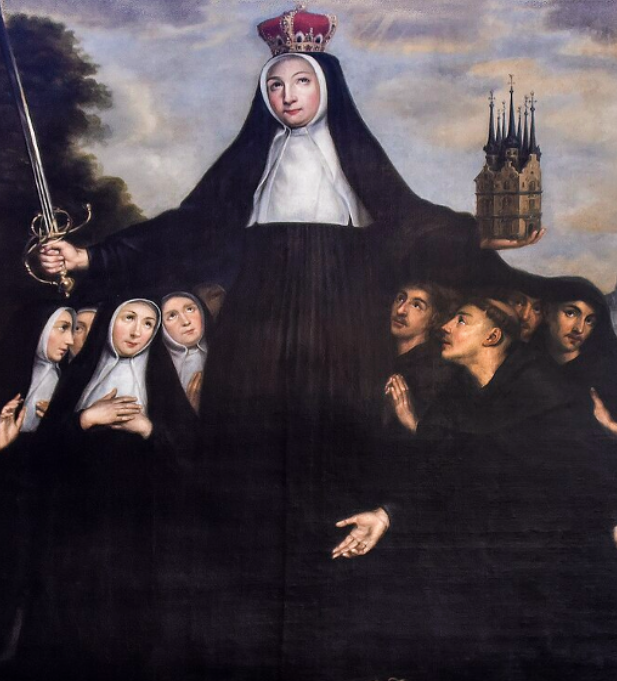
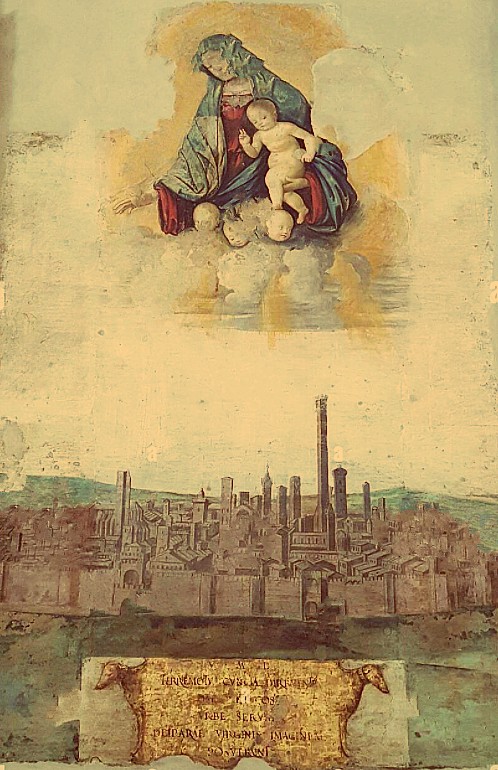
Even as a boy he shrank from games and both by his words and example, incited noble youth to Christian modesty. When he reached early manhood, he enrolled himself in pious associations and made it his delight to serve the sick in the public hospital, to spend much time in prayer and in the Church and frequently to receive the Sacred Mysteries. He joined study to piety with such success that, when scarcely sixteen years of age, he took the Degree of Doctor in both Canon and Civil Law, in the University of his native City. In obedience to his fathers wishes, he pleaded at the bar but, while winning himself a name in the discharge of this office, he learned by experience, what dangers beset a lawyer’s life and, of his own accord, abandoned the profession. Then he refused a brilliant marriage proposed to him by his father, renounced his right of inheritance as eldest son and, hanging up his sword at the Altar of the Virgin of Mercy, he devoted himself to the Divine Service.
OLYMPUS DIGITAL CAMERA
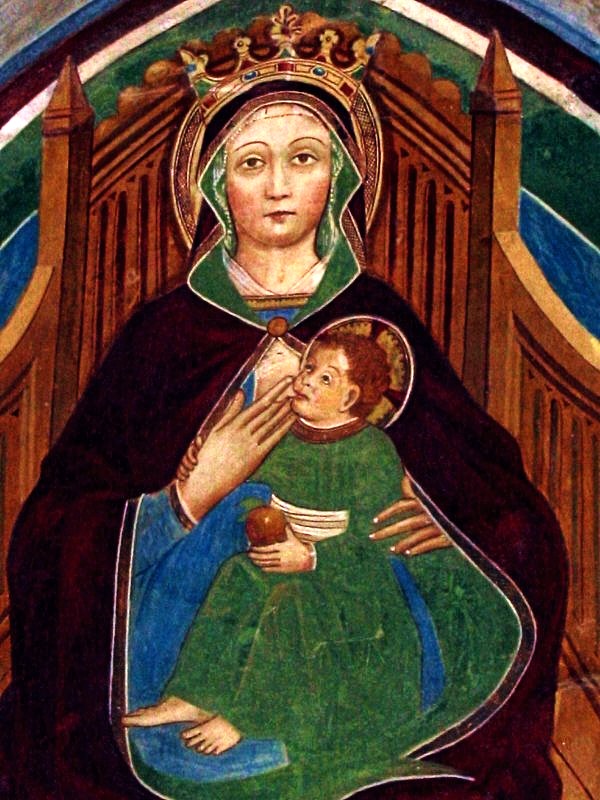
The Image of Our Lady where St Alphonsus placed his sword
Having been made Priest, he attacked vice with such great zeal that, in the exercise of his Apostolic ministry, he hastened from place to place, working wonderful conversions. He had a special compassion for the poor and particularly, for country people and founded a Congregation for Priests, called “of the Holy Redeemer,” who were to follow the Redeemer through the fields and hamlets and villages, preaching to the poor.
In order that nothing might turn him from his purpose, Alphonsus bound himself by a perpetual vow of never to waste any time. On fire with love of souls, he strove to win them to Christ and to make them lead more perfect lives, both by preaching the Divine Word and by writings full of Sacred learning and piety. Marvellous was the number of hatreds he stilled and of wanderers he brought back to the path of salvation.
He had the greatest devotion to the Mother of God, and published a book on the “Glories of Mary.” More than once, while he was speaking of her with great earnestness during his sermons, a wonderful brightness came upon him from Our Lady’s image and he was seen, by all the people, to be rapt in ecstasy.
The Passion of our Lord and the Holy Eucharist were the objects of his unceasing contemplation and he spread devotion to them in a wonderful degree. When he was praying before the Altar of the Blessed Sacrament, or celebrating Holy Mass, which he never failed to do, through the violence of his love, he shed burning tears, was agitated in an extraordinary manner and at times, was carried out of his senses. He joined a wonderful innocence, which he had never stained by deadly sin, with an equally wonderful spirit of penance and chastised his body, by fasting, iron chains, hair-shirts and scourgings even to blood. At the same time, he was remarkable for the gifts of prophecy, reading of hearts, bilocation and many miracles.
Alphonsus firmly refused the Ecclesiastical dignities which were offered him, but he was compelled, by the authority of Pope Clement XIII. to accept the government of the Church of St Agatha of the Goths. As Bishop, although he changed his outward dress, yet he made no alteration in the severity of his life. He observed the same moderation; his zeal for Christian discipline was most ardent and he displayed the greatest devotedness in rooting out vice, in guarding against false doctrine and in discharging the other duties of the pastoral charge. He was most generous towards the poor, distributing to them, all the revenues of his See and, in a time of scarcity of corn, he sold even the furniture of his house, to feed his starving people. He was all things to all men. He brought religious women to lead a more perfect life and took care to erect a Monastery for Nuns of his Congregation.
Severe and continual sickness forced Alphonsus to resign his Bishopric and he returned to his children, as poor as when he had left them. Although worn out in body by old age, labours, chronic arthritis and other painful maladies, his mind was fresh and clear and he never ceased speaking or writing of heavenly things until at length, on the 1st of August he most peacefully expired, at Nocera-dei-Pagani, amidst his weeping children. It was in the year 1787, the ninetieth of his age. His virtues and miracles made him famous and on this account, in 1816, Pope Pius VII. enrolled him amongst the Blessed. God still glorified him with new signs and wonders and, on the Feast of the Most Blessed Trinity, in the year 1839, Gregory XVI solemnly inscribed his name on the list of the Saints; and finally, Pope Pius IX, after consulting the Congregation of Sacred Rites, declared him a Doctor of the universal Church.
The Little-known Miracles of the Liquefying Blood of St Alphonsus
Like St Januarius, the principal Patron of Naples, the Saint of the very renowned “Liquefying Blood.” However, it remains unknown to most, that there are several prodigies of blood liquefying in the Neapolitan City, so many that the French writer Jean Jacques Bouchard (1606-1641) called Naples, “Urbs sanguinum – The City of Blood.”
“Among these is that of St Alphonsus Maria de Liguori: the Doctor of the Church, the Saint of the Age of Enlightenment, the Founder of the Congregation of the Most Holy Redeemer, which today has more than 700 houses in 80 countries around the world. A prodigious fact of which there is no longer any memory, not even among his spiritual children.
And yet, until a few decades ago, hundreds of the faithful went to the Santa Maria della Mercede (Holy Mary of Mercy) and St Alphonsus Church in Naples, also known by the name of the Redemption of the Captives, in Via San Sebastiano, a few steps from the Conservatorio di San Pietro a Majella, the same place where the young and noble Alfonso de Liguori laid his sword at the foot of the Statue of the Virgin to witness, on the Anniversary of the Saint’s death, the liquefying of his blood preserved in an ampoule set in a marvellous Reliquary.
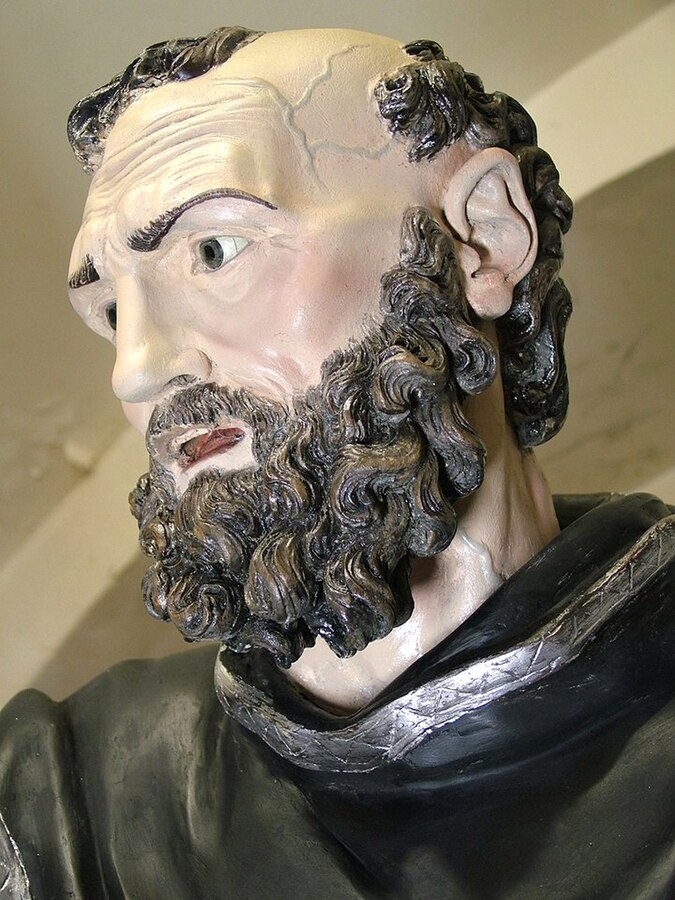
St Alphonsus Maria de Liguori (1696-1787) Bishop, Confessor, Most Zealous Doctor of the Church, Founder of the Redemptorists, Spiritual Writer, Composer, Musician, Artist, Poet, Lawyer, Scholastic Philosopher and Theologian.
St Auspicius of Apt St Betharius of Chartres St Centolla of Burgos St Etheldritha of of Croyland Bl Frederic Campisani Bl Gundekar of Eichstätt Bl Joanna of Aza Bl John of Rieti St Maximus of Padua St Pedro de Osma St Plegmund St Rutilius
August – The Month of the Immaculate Heart of Mary
The Church never disassociates the Mother from her Divine Son, in the festivals which she celebrates in His honour. If she celebrates the Mysteries of the Saviour, from His Incarnation to His Ascension, she celebrates, likewise, all the Mysteries of Mary, from her Conceptions to her Assumption. The Feast of the Sacred Heart of Mary (Immaculate Heart of Mary) is, therefore but the natural consequence of the Feast of the Sacred Heart of Jesus.
It is customary with many pious persons, to dedicate the Five First Saturdays of the month to the particular honour of the Immaculate Heart of Mary, as the Nine First Friday are devoted to the Sacred Heart of Jesus.
The Blessed Virgin, the Mother of Our Lord and Saviour Jesus Christ and our Mother Mary, is honoured in the first Month of the year, together with her Divine Son and Redeemer and her husband, St Joseph – January being the Month of the Holy Family.
Then, in May, we run to our Holy Mother everyday and in October we honour her again in our daily recitation of the Holy Rosary, with September being dedicated to the Seven Sorrows of Mary together with the Holy Cross. In December, we remember the Immaculate Conception and the most appropriate devotion to the Divine Infancy of Our Lord.
That then leaves August – the Month of her Most Immaculate Heart which gives the Virgin Mary a total of 6 months of dedication.
In 1944, Pope Pius XII set the Feast of the Immaculate Heart of Mary to be celebrated on 22 August as the Octave of the Feast of the Assumption of the Blessed Virgin on 15 August. Two years earlier, on the 25th Anniversary of the Fatima apparitions, Pope Pius XII, Consecrated the Catholic family and whole human race, to the Immaculate Heart of Mary.
August also celebrates the Marian Feast of Our Lady of the Snows (St Mary Major on 5 August, Our Lady Refuge of Sinners on 13 August, Our Lady of Knock on 21 August, Our Lady of Czestochowa and Our Lady Health of the Sick on 26 August.
“… give thanks in all circumstances; for this is the will of God in Christ Jesus for you.” 1 Thes 5:18
I thank those Priest who celebrated Holy Mass on the great Feast of St James the Greater, offering the greatest of all prayers for the success of the operation I was undergoing. I was and am, so well protected by all your glorious intercessions that I was cushioned, protected, comforted and so very confident!
I am nearly back online – just awaiting a final Post-op Examination to confirm the status of my eye and whether it can handle the PC light. I might have to ease into the time I usually spend here, slowly increasing the hours.
I continue to pray in thanksgiving and joy, for you all. 🙏💖
“Rejoice always, pray constantly, give thanks in all circumstances; for this is the will of God, in Christ Jesus, for you” (1 Thes 5:18).
I am off to Cape Town for about a week+- for an Eye Operation which has become essential. It will hopefully assist with comfort and reduce pain. For those who are unaware of this issue – I do have a note on my ‘About’ regarding this problem eye.
We have on the site, under PATRONAGE sub-category EYES Diseases, the BLIND – 36 Patrons who I am sure will be very happy to assist, by their intercession, to our Divine Physician and let us never forget the endless caring love and prayers of our Holy Virgin Mother.
I beg your prayers and, if any Priests here with us, would offer a Holy Mass – if possible on Tuesday morning 25 July, I will be endlessly grateful. The operation is scheduled for South African time – 8.00 am.
THANK YOU ALL – MY poor Prayers are always yours! Ana 🙏💖
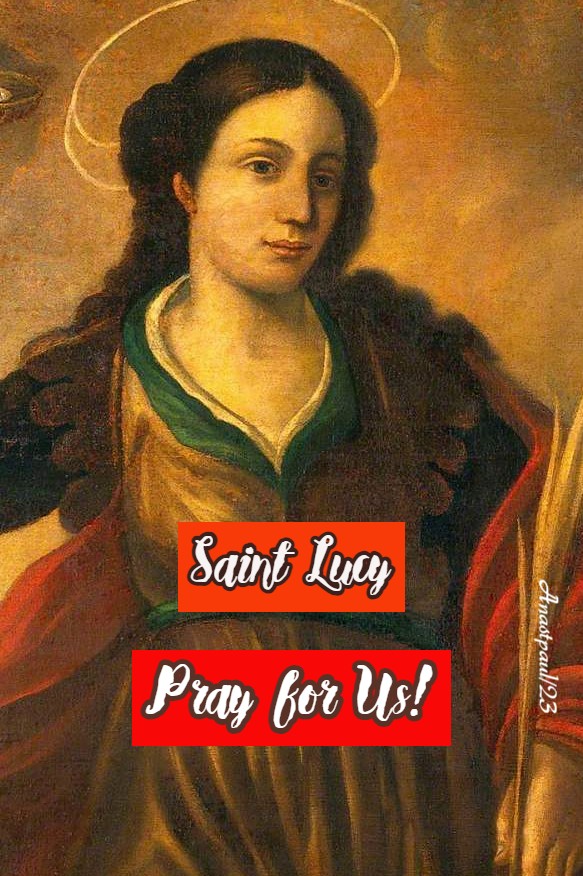
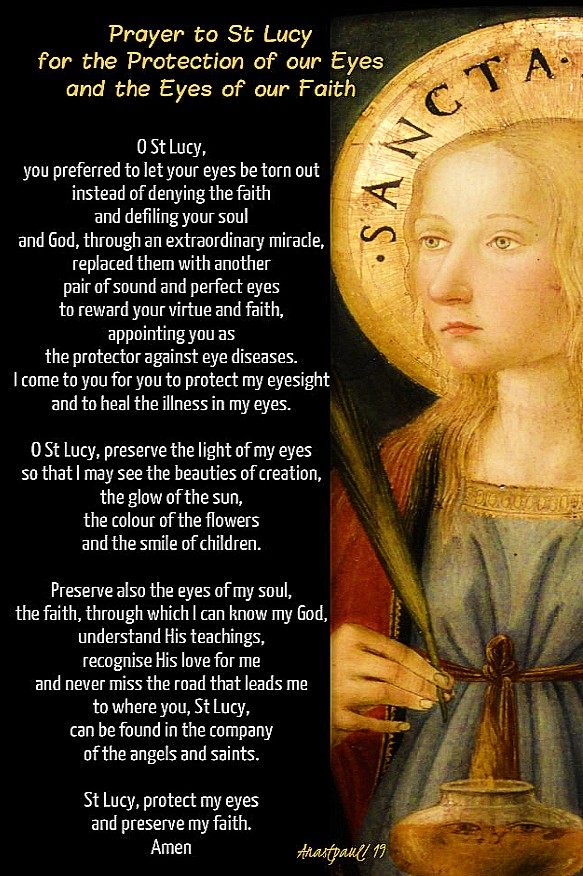
Prayer to St Lucy for the Protection of our Eyes and the Eyes of our Faith
O St Lucy, you preferred to let your eyes be torn out instead of denying the faith and defiling your soul and God, through an extraordinary miracle, replaced them with another pair of sound and perfect eyes to reward your virtue and faith, appointing you as the protector against eye diseases. I come to you for you to protect my eyesight and to heal the illness in my eyes.
O St Lucy, preserve the light of my eyes so that I may see the beauties of creation, the glow of the sun, the colour of the flowers and the smile of children.
Preserve also the eyes of my soul, the faith, through which I can know my God, understand His teachings, recognise His love for me and never miss the road that leads me to where you, St Lucy, can be found in the company of the angels and saints. St Lucy, protect my eyes and preserve my faith.
St Lucy, “Bringer of Light” Pray for those with eye ailments, Pray for us all!
Thought for the Day – 21 July – Meditations with Antonio Cardinal Bacci (1881-1971)
Holiness
“We need Saints to recall our wayward and corrupt society to the path of Truth, Justice and Charity. We should pray to God to send us Saints who will reform the world by living the Gospel and making it live for others. Above all, we should endeavour to become holy ourselves. To achieve this, we do not have to put on sack-cloth, go into the desert, or shut ourselves up in a Monastery. Each of us can become a saint in his own home and in whatever position God has allotted him. All we have to do is obey God’s Will in everything, love Him above everything, love our neighbour as ourselves, avoid sin and aim at what is good. We can and should, do all this with the help of God.”
Quote/s of the Day – 21 July – “The Month of the Most Precious Blood of Jesus” – St Praxedes, Virgin (Died 164) – 1 Corinthians 7:25-34, Matthew 13:44-52 – Scripture search here: https://www.drbo.org/
“And the unmarried woman and the virgin, thinketh on the things of the Lord, that she may be holy, both in body and in spirit, in Christ Jesus our Lord.”
1 Corinthians 7:34
“Virginity can be lost by a single thought.”
St Jerome (343-420) Father and Doctor of the Church
“He errs who believes that he can overcome his sensual propensities and preserve chastity, by his own efforts. God’s mercy must extinguish nature’s ardour. Have recourse to the intercession of the Immaculate Virgin and rest assured, you will obtain this mercy.”
St John Chrysostom (347-407) Father and Doctor of the Church
“Chastity depends on the heart, for its source and on the body, as its subject. Hence, it may be lost, by all the external senses of the body and by the thoughts and desires of the heart.”
(Introduction to the Devout Life, Part III, Chapter 13).
St Francis de Sales (1567-1622) Doctor of the Church
Prayer for Chastity and Purity By St Thomas Aquinas (1225-1274) Dear Jesus, I know that every perfect gift and especially that of chastity, depends on the power of Thy Providence. Without Thee, a mere creature can do nothing. Therefore, I beg Thee, to defend, by Thy grace the chastity and purity of my body and soul. And if I have ever sensed or imagined anything that could stain my chastity and purity, blot it out, Supreme Lord of my powers that I may advance with a pure heart in Thy love and service, offering myself on the most pure altar of Thy Divinity, all the days of my life. Amen
One Minute Reflection – 21 July – “The Month of the Most Precious Blood of Jesus” – St Praxedes, Virgin (Died 164) – 1 Corinthians 7:25-34, Matthew 13:44-52 – Scripture search here: https://www.drbo.org/
“So shall it be at the end of the world. The Angels shall go out and shall separate the wicked from among the just. And shall cast them into the furnace of fire – there shall be weeping and gnashing of teeth.” – Matthew 13:49-50
REFLECTION – “Our Lord was an example of incomparable patience. He bore with a “devil” among His disciples even to His Passion (Jn 6,70). He said: “Let them grow together until the harvest lest you uproot the wheat when you pull out the weeds” (cf. Mt 13,29f.). As a symbol of the Church, He preached that the net would bring back to shore, namely the end of the world, every kind of fish, both good and bad. And He made it known, in various other ways, whether openly or in parables, that there would always be a mixture of good and bad. But, nevertheless, He stresses, that we have to protect the Church’s discipline when He says: “If your brother sins against you, go and tell him his fault between you and him alone. If he listens to you, you have won over your brother” (Mt 18,15)…
Yet today, we see people who think of nothing but stern commandments, who order that troublemakers be reproved, ‘not giving what is holy to the dogs,’ treating, like the publicans, ‘anyone who despises the Church, cutting off the scandalous member from the body‘ (Mt 7,6 ; 18,17 ; 5,30). Their stormy zeal so troubles the Church, that they pull out the weeds before their time and their blindness makes of them enemies, of the unity of Jesus Christ…
Take care not to let these presumptuous thoughts enter our hearts, trying to separate ourselves from sinners, so as not to be soiled by contact with them, wanting to form a band of pure and holy disciples. We will achieve nothing but breaking up our unity, under the pretext of not associating with the wicked. To the contrary, let us remember the parables of Scripture, their inspired words, their striking examples, where we are shown that, until the end of the world and the day of judgement, the bad will always be mingled amongst the good in the Church, without their participation in the Sacraments being harmful to the good, so long as these latter, have not played a part in their sins.” – St Augustine (354-430) Father and Doctor of Grace (On Faith and Works – Excerpt ch 3-5)
PRAYER – Graciously hear us, O God our Saviour, that, as we rejoice in the festival of blessed Praxedes, thy Virgin, so may we be nourished by the food of her heavenly teaching, as to be enlightened by the fervour of her dedicated holiness. Through the same Jesus Christ, Thy Son our Lord, Who lives and reigns with Thee, in the unity of the Holy Ghost, God, world without end. Amen (Collect).
Our Morning Offering – 21 July – “The Month of the Most Precious Blood of Jesus” and the Day of the Passion
A Prayer of the Passion By St Melito of Sardis (Died 180) Bishop of Sardis, Apologist, Father
Lord Jesus Christ, You were bound as a ram, You were shorn like a lamb, You were led to the slaughter like a sheep, You bore the wood of the Cross on Your shoulders, You were led up the hill of Calvary, You were displayed naked on the Cross, You were nailed to the bitter Cross by three spikes, You delivered Your last Seven Words from the Cross You died on the Cross, with a shout of victory, You were buried in noble Joseph’s rock-hewn tomb, By Your boundless suffering on our behalf, fix our eyes unceasingly on Your broken Body and the Blood that poured from Your Hands, Feet and Side. By the Holy Sacrifice of the Mass that renews each day Your Sacrifice of the Cross on our Altars, apply the merits of the Cross to all humanity and, especially to those who worship it daily and who offer themselves back to You, our great High Priest and perpetually Intercessor, before the Eternal Throne of God. You live and reign, through all the ages of ages. Amen.
Saint of the Day – 21 July – St Praxedes (Died c165) Virgin Laywoman Born and died in Rome, (whose name means ‘one who does well’), Patronage – single laywoman. Also known as – Prassede, Praxedes, Praxidis.
The Roman Martyrology reads: “At Rome, the holy virgin, Praxedes, who was brought up in all chastity and in the knowledge of the Divine law. Assiduously attending to watching, prayer and fasting, she rest in Christ and was buried near her sister St Pudentiana and family, on the Salarian Road.”
St Praxedes by Simone Pignoni (1611–1698)
Praxedes was the daughter of St Pudens, a Roman Senator who was a disciple of St Paul and sister to Saint Pudentiana. In the days of Pope Pius I and the Emperor Antoninus, Praxedes edified the Church of Rome by the bright lustre of her virtues.
All her great wealth and riches she employed in relieving the poor and the necessities of the Church. By the comfort and succours which she afforded the Martyrs, she endeavoured to make herself partaker of their crowns and she lived in the assiduous exercise of prayer, watching and fasting.
Paolo Rossetti and Federico Zuccari Saints Praxedes and Pudentiana Burying the Martyrs Late 16th or early 17th Century Oil Caetani Chapel – Basilica of St Pudentiana, Rome
Praxedes died in peace and was buried near her sister on the Salarian Road. St Bede and other Hagiographers on the lives of the Saints, style her as a Virgin. An old title of St Praxedes of a Parish Church, now a Basilica, in Rome bearing her name is mentioned in the life of Pope Symmachus. It was repaired by Pope Adrian I and Paschal I and lastly by Saint Charles Borromeo, who took from it his title of Cardinal.
“The Basilica includes splendid Mosaics behind the simple and very Roman facade. However, the very simple exterior is augmented by an interior which is extraordinary – in particular for its mosaics, commissioned by Pope Paschal (817-824) as well as a beautiful ciborium magnum. (Pope Paschal himself maybe found in the mosaics, bearing a square halo — a sign given to someone who was yet living.) ”
The ancient Christians [and so it should be for ourselves too], lived only for Heaven and in every step looked up to God, regardless of all lower pursuits or meaner advantages which could interfere with their great design of knowing and loving Him alone. This constant attention to God awed them in their leisure; this gave life and wings to their devotions and animated them to fervour in all their actions; this carried them through the greatest difficulties and temptations and supported them under all troubles and afflictions. (Essentially from Lives of the Saints, by Father Alban Butler (1710–1773) English Priest and Hagiographer.)
St Barhadbescialas St Benignus of Moyenmoutier Bl Claudius of Avignon St Claudius of Troyes St Corona of Marceille Bl Cristóbal López de Valladolid Orea Bl Daniel Molini St Eleutherius of Marseille St Eternus of Evreaux Bl Gabriel Pergaud St Iosephus Wang Yumei St John of Edessa St John of Moyenmoutier Bl Juan de Las Varillas Bl Juan de Zambrana St Jucundinus of Troyes St Julia of Troyes St Justus of Troyes Bl Parthenius of Thessaly St Praxedes (Died c165) Virgin Laywoman
Martyrs of Africa – 6 Saints: Six Christians who were Martyred together. We know no other details about them but the names – Emilian, Hugal, Motanus, Saphus, Stercorius and Victor. They were martyred in an unknown location in Africa, date unknown.
Thought for the Day – 20 July – Meditations with Antonio Cardinal Bacci (1881-1971)
The Royal Road of the Cross
“A Penitent once asked a holy Priest for a hair-shirt. “I cannot give you that,” the Priest replied “but the best thing you can do is to offer to God the trials of your daily life.” The Penitent’s reaction was to protest that he would find this too difficult.
As a matter of fact, it is very difficult. But, it is useless for a man to wear a hair-shirt and to scourge himself, if he is not prepared to put up with ordinary everyday hardships and to deny himself by carrying his cross with resignation and love. God has imposed certain penances on us all and these are necessary for us. To accept them is to set out on the Royal Road of the Cross which leads to Heaven.
It is true, however, that there are times when we meet with temptations which are exceptionally strong. It can be necessary on these occasions to impose extra penances on ourselves for, “it is better to enter life maimed or lame, than having two hands or two feet to cast into the everlasting fire” (Cf Mt 18:8). Nevertheless, the first and most necessary penance is to take up our cross daily and follow Jesus.”
Quote/s of the Day – 20 July – St Jerome Emiliani (1486–1537) Confessor
O Mary, Twice Mother of Mercy By St Jerome Emiliani (1486–1537)
O Mary, thou art twice Mother of Mercy because thou hast been made Mother of our most merciful Saviour, and, furthermore because, thou hast given to us so many signs of thy maternal care and love. Turn upon us, we beseech thee, thy glance of compassion and grant, that we may always live free from sin, which is the only impediment to receiving the fruits of the Divine Mercies. Amen.
One Minute Reflection – 20 July – “The Month of the Most Precious Blood of Jesus” – St Jerome Emiliani (1486–1537) Confessor – Isaias 58:7-11, Matthew 19:13-21 – Scripture search here: https://www.drbo.org/
“Suffer the little children and forbid them not to come to Me: for the Kingdom of Heaven belongs to such as these.” – Matthew 19:14
REFLECTION – “The role of Christ, our Teacher, is, as its name suggests, to be the guide of children. But, we have yet to consider, what children Scripture is talking about and then, to give them their Teacher. The children in question are ourselves. Scripture draws attention to us in a great many ways, making use of various images to refer to us and highlighting the simplicity of faith in many different shades.
It is said in the Gospel: “The Lord was standing on the shore… and He said to the disciples – who were fishing – ‘Children, have you caught anything?‘” (Jn 21:4-5). It was His disciples whom He called ‘children.‘ “People brought children to Him that He might lay His Hands on them and pray. The disciples rebuked them but Jesus said: ‘Let the children come to Me and do not prevent them; for the Kingdom of Heaven belongs to such as these.’” (Mt 19:14). Our Lord Himself clarifies the meaning of these words when He says: “Unless you turn and become like children, you will not enter the Kingdom of Heaven” (Mt 18:3). This has nothing to do with being born again but puts forward the simplicity of the child for our imitation…
We can, indeed, call ‘children‘ those who only know God, their Father – newborn in the strict sense… There are some persons who have made progress in the Word, whom He calls to detachment from earthly concerns, so as to listen only to their Father as children do. This is why He tells them: “Do not worry about tomorrow; sufficient for each day is its own evil” (Mt 6:34). See how He exhorts us to free ourselves from earthly cares, so as to cleave only to our Father! Whoever carries out this command is indeed an infant, a child for God and for the world, since the latter considers him wholly ignorant and the former is an object of care.” – St Clement of Alexandria (c150- c215) Father of the Church, Theologian and Philosopher, Professor who taught at the Catechetical School of Alexandria. Among his pupils were Origen and Alexander of Jerusalem. (The Pedagogue I, 12, 17).
PRAYER – O God, the Father of mercies, by the merits and intercession of St Jerome, whom Thou willed to be the helper and father of orphans, grant that we may faithfully guard the spirit of adoption which makes us Thy sons both in name and reality.Through Jesus Christ, Thy Son our Lord, Who lives and reigns with Thee, in the unity of the Holy Ghost, God, world without end. Amen (Collect).
Our Morning Offering – 20 July – “The Month of the Most Precious Blood of Jesus”
Lord Jesus, Bind Me to Yourself By St Anthony of Padua OFM (1195-1231) Evangelical Doctor of the Church
Lord Jesus, bind me to Yourself and to my neighbour, with love. May my heart not be turned away from You. May my soul not be deceived, nor my talent or mind, enticed by allurements of error, so that I may never distance myself from Your love. Thus may I love my neighbour as myself, with strength, wisdom and gentleness, with Your help, You who are blessed throughout all ages. Amen.
Saint of the Day – 20 July – St Bernward of Hildesheim (c960-1022) Bishop. Bernward was the thirteenth Bishop of Hildesheim from 993 until his death in 1022. He was an exceptionally gifted and talented Creative Artist and Craftsman, in particular, in the creation of Sacred Vessels and adornments of Holy items, in precious metals. Born – c960 at Saxony and died on 20 November 1022 of natural causes. Patronages – Architects, Builders, Goldsmiths, Sculptors, Craftsmen, Painters, Artists. . Also known as – Berward, Bernward. Canonised in 1193 by Pope Celestine III.
Bernward came from a noble German family. His grandfather was Athelbero, Count Palatine of Saxony (in the coastal region of today’s north Germany). Having lost his parents at an early age, he came under the care of his uncle,Volkmar, Bishop of Utrecht, who entrusted his education to Thangmar, learned director of the Cathedral school at Heidelberg.
Under this master, Bernward made rapid progress in the sciences and in the liberal and even mechanical arts. He became very proficient in mathematics, painting, architecture and particularly. in the manufacture of Sacred Ecclesiastical Vessels and ornaments of silver and gold. He completed his studies at Mainz, where he was Ordained to the Priesthood by Archbishop Willigis, Chancellor of the Empire (975-1011).
Bernward declined a valuable preferment in the Diocese of his uncle, Bishop Volkmar and chose to remain with his grandfather, Athelbero, to comfort him in his old age. Upon the death of the latter, in 987, he became Chaplain at the Imperial Court and, in 987 shortly afterwards, appointed by the Empress-Regent Theophan, as the Tutor to her son, the future Emperor Otto III, then six years of age.
In 993, Bernward was appointed as the Bishop of Hildesheim. His time in office fell during the era of the Saxon Emperors, who had their roots in the area around Hildesheim and were personally related to Bernward. During this time, Hildesheim was a centre of power in the Holy Roman Empire and Bernward was determined to give his City an image fitting for one of its stature.
Bernward ecouraged the arts, commissioned religious paintings and sculpture, refurbished existing Ecclesiastical buildings, built new ones, he built up the Cathedral district with a strong twelve-towered wall and erected further forts in the countryside to protect against attacks by the neighbouring Slavic peoples. Under his direction numerous Churches and other edifices arose, including even fortifications for the defence of his Episcopal City against the invasions of the pagan Normans. He protected his Diocese vigorously from all attacks and consequently his administration was marked by peace. Around 1020, he retired to a Benedictine Monastary to spend his remaining days in prayer.
His life was set down in writing by his mentor, Thangmar, in Vita Bernwardi. He died on 20 November 1022, a few weeks after the Consecration of the magnificent Church of St Michael, which he had built. Beloved Bishop Bernward was Canonized by Pope Celestine III on 8 January 1193.
One of the most famous examples of Bernward’s work ,is a monumental set of cast bronze doors, known as the Bernward Doors, now installed at St. Mary’s Cathedral. The Doors are sculpted with scenes of the Fall of Man and the Salvation of Man – Life of Christ and which are related, in some ways to the wooden doors of Santa Sabina in Rome.
St Bernward’s Doors at St Mary’s Cathedral
Bernward was instrumental in the construction of the early Romanesque St Michael’s Church was completed after Bernward’s death and he is buried in the western crypt. These projects of Bernward’s are today UNESCO World Heritage Sites.
St Michael’s Church has exerted great influence on developments in Architecture. The complex bears exceptional testimony to a civilization that has disappeared. These two edifices and their artistic treasures, give a better overall and more immediate understanding, than any other decoration in Romanesque Churches. St Michael’s Church was built between 1010 and 1020 on a symmetrical plan with two apses that was characteristic of Ottonian Romanesque art in Old Saxony. Its interior, in particular the wooden ceiling and painted stucco-work, its famous bronze doors and the Bernward bronze column, are – together with the treasures of St Mary’s Cathedral – of exceptional interest as examples of the Romanesque Churches of the Holy Roman Empire.
St Mary’s Cathedral, rebuilt after the fire of 1046, still retains its original Crypt. The nave arrangement, with the familiar alternation of two consecutive columns for every pillar, was modelled after that of St Michael’s but its proportions are more slender.
St Bernward’s Church in Hildesheim, a Neo-Romanesque Church built 1905-07 and St Bernward’s Chapel in Klein Düngen which dates from the 13th Century nad St Bernward’s in Hanover and all dedicated to our Saint.
Bl Anne Cartier St Ansegisus St Aurelius of Carthage St Bernward of Hildesheim (c960-1022) Bishop St Cassian of Saint Saba St Elijah the Prophet
St Elswith St Frumentius of Ethiopia
Blessed Gregory Lopez (1542-1596) “The Mystery Man” – Hermit, Spiritual Advisor, Writer. Around 1585, word of a “Mystery Man” began to leak into Mexico City, a strange hermit who lived out in the lonely valley of Guesteca, who walked miles to go to Mass, lived totally subject to “Lady Poverty” and had travelled from the Shrine of Our Lady of Guadalupe in Spain (which dates from 712), to her Shrine in Mexico (which dates from 1531). Biography: https://anastpaul.com/2018/07/20/saint-of-the-day-20-july-blessed-gregory-lopez-1542-1596/
St Joseph Barsabbas the Just (1st Century) Disciple of Jesus, Bishop, Martyr. The Roman Martyrology states today: “The birthday of the blessed Joseph, surnamed the Just, whom the Apostles selected with the blessed Matthias, for the Apostleshop in the place of the traitor, Judas. The lot having fallen upon Matthias, Joseph, notwithstanding, continued to preach and advance in virtue and after having sustained from the Jews, many persecutions for the Faith of Christ, happoily ended his life in Judea.” His Life and Death: https://anastpaul.com/2021/07/20/saint-of-the-day-20-july-saint-joseph-barsabbas-the-just-1st-century-disciple-of-jesus/
St Mère St Paul of Saint Zoilus St Rorice of Limoges St Severa of Oehren St Severa of Saint Gemma St Wulmar
Martyrs of Corinth – 22 Saints: 22 Christians who were Martyred together. We know nothing else about them but the names – • Appia • Calorus • Cassius • Celsus • Cyriacus • Donatus • Emilis • Felix • Fructus • Magnus • Maximus • Nestita • Partinus • Pasterus • Paul • Romanus • Spretus • Tertius • Theodolus • Ueratia • Valerian • Victor. They were martyred in Corinth, Greece.
Martyrs of Damascus – 16 Saints: 16 Christians who were Martyred together. We know the names of six of then, but no details about any of them – Cassia, Julian, Macrobius, Maximus, Paul and Sabinus. They were martyred in Damascus, Syria, date unknown.
Thought for the Day – 19 July – Meditations with Antonio Cardinal Bacci (1881-1971)
Nature and Grace
“Although there is a contrast between grace and nature, there is also a certain harmony because God made us for Himself, as St Augustine says and our hearts will never be at rest, until they rest in Him. Grace is a supernatural graft, which elevates our nature and makes it capable of attaining everlasting life. It is necessary to take away all the shoots of the old tree stump and to care for the new branches, Only then shall we begin to approach Christian perfection.
“Therefore, O Lord, let Thy grace always go before and follow me and make me ever intent upon good works, through Jesus Christ, Thy Son, Amen.” (The Imitation of Christ Bk III C 55).”
Quote/s of the Day – 19 July – St Vincent de Paul CM (1581-1660) Confessor, “Holy Hero of Divine Charity.”
“If God is the centre of your life, no words are necessary. Your mere presence will touch hearts!”
“We should strive to keep our hearts open to the sufferings and wretchedness of others and pray continually, that God may grant us that spirit of compassion which is truly the Spirit of God.”
“We should spend as much time, in thanking God for His benefits, as we do, in asking Him for them!”
“Perfection consists in one thing alone which is doing the will of God. For, according to Our Lord’s words, it suffices for perfection to deny self, to take up the cross and to follow Him. Now, who denies himself and takes up his cross and follows Christ better than he, who seeks not to do his own will but always that of God? Behold, now, how little is needed, to become as Saint? Nothing more than to acquire the habit of willing, on every occasion, what God wills.”
“Humility and charity are the two master-chords: one, the lowest; the other, the highest; all the others are dependent upon them. Therefore, it is necessary, above all, to maintain ourselves in these two virtues; for observe well, that the preservation of the whole edifice depends on the foundation and the roof.”
Prayer for Vocations By St Vincent de Paul (1581-1660)
O Lord, send good workers to Thy Church, but may they be good! Send good missionaries to work in Thy vineyard, labourers, O my God, such as they ought to be – utterly detached from themselves, their own comfort and worldly goods. Let them even be few in number, provided that they are good! O Lord, grant this grace to Thy Church. Amen
One Minute Reflection – 19 July – “The Month of the Most Precious Blood of Jesus” – St Vincent de Paul CM (1581-1660) Confessor, “Holy Hero of Divine Charity” – 1 Corinthians 4:9-14, Luke 10:1-9 – Scripture search here: https://www.drbo.org/
“The harvest indeed is great but the labourers are few.Pray ye, therefore, the Lord of the harvest that He send labourers into His harvest.” – Luke 10:2
REFLECTION – “Jesus Christ, loaded with scorn and insults by His foes, set Himself still more, to doing them good… He went through towns, villages and synagogues, teaching us not to pay back calumny with calumny but with even greater generosity. If you have God’s good pleasure and not people’s in mind when you do good to your neighbour, whatever they may do to you, do not stop doing good to them! Your reward can only be all the greater… That is why Christ did not wait for the sick to come to Him – He Himself went to them, taking them two essential goods at the same time – the Good News of the Kingdom and the healing of their ills.
Nor even was that enough for Him, He showed His concern in yet another way. “At the sight of the crowds, His heart was moved with pity for them because they were troubled and abandoned, like sheep without a shepherd. Then He said to His disciples, ‘The harvest is abundant but the labourers are few, so ask the Master of the harvest to send out labourers for His harvest.” Note, once again, His distancing Himself from vainglory. Not wanting to draw everyone to follow Him, He sent His disciples. He wanted to train them, not just for the struggles they were going to undergo in Judea but also, for the battles they will set in motion throughout the earth…
Jesus gives His disciples the power to heal bodies, while waiting before confiding to them, the equally important power to heal souls. Note how He demonstrates both the ease and the necessity of this work, at the same time. What does He say, in fact? “The harvest is plentiful but the labourers are few.” I am not sending you out to sow but to harvest… In speaking like this, our Lord gave them confidence and showed them that the most important work had already been achieved!” – St John Chrysostom (347-407) Father and Doctor of the Church (Sermons on Saint Matthew’s Gospel No 32).
PRAYER – O God, Who endowed St Vincent with apostolic strength, to preach the Gospel to the poor and to enhance the dignity of clerical life; grant, we beseech Thee, that we. who honour his holy merits, may also conform to the example of his virtues. Through Jesus Christ, Thy Son our Lord, Who lives and reigns with Thee, in the unity of the Holy Ghost, God, world without end. Amen (Collect).
Our Morning Offering – 19 July – St Vincent de Paul CM (1581-1660) Confessor, “Holy Hero of Divine Charity.” Founder of the Congregation of the Mission (Vincentians) and Co-Founder of the Sisters of Charity, is an outstanding example of great love for the poor and unfortunate and the Celestial Patron of all Catholic Charitable Societies. (added by Pope Leo XIII).
Let Thou Thyself O Lord, Be Thine Eternal Thanksgiving! By St Vincent de Paul (1581-1660)
O Saviour, Who gave us the law to love our neighbour as ourselves, Who practised it, in such a perfect fashion, towards men. Let Thou Thyself O Lord, Be Thine eternal thanksgiving! O Saviour, how happy I am to be in the state of loving my neighbour! Grant me the grace to acknowledge my good fortune, to love this blessed state and to ensure that this virtue, may be revealed now, tomorrow and always. Amen.
Saint of the Day – 19 July – St Epaphras of Colossae (1st Century) Bishop, Martyr, pagan Convert and Disciple of St Paul. Also known as – Epafra, Epagaphras.
The Roman Martyrology reads today: “The birthday of St Epaphras, whom the Apostle St Paul calls his fellow-prisoner. By the same Apostles, he was Consecrated Bishop of Colossae, where, becoming renowned for his virtues, he received the Palm of Martyrdom, for courageously defending the flock commited to his charges. His body now lies at the Basilica of St Mary Major in Rome.”
St Epaphras Statue at St Mary Major in Rome
In St Paul’s letters to the Colossians and the letter to Philemon, he conveyed greetings from Epaphras:
“Epaphras saluteth you, who is one of you, a servant of Christ Jesus, who is always solicitous for you in prayers, that you may stand perfect, and full in all the will of God. For I bear his testimony that he hath laboured much for you,and for those who are at Laodicea, and those at Hierapolis.” Colossians 4:12–13
Originally from Colossae (in modern Turkey) and a pagan. Epaphras was converted by St Paul during the three years of apostolate in Ephesus. He is the founder and head of the Church of Colossae. The Apostle praises it twice: in Colossians 1:7 – the Colossians were evangelised by Epaphras “our beloved companion in the ministry, faithful minister of Christ, all devoted to your good.”
Finally, in the Epistle to Philemon, St Paul calls him “my fellow prisoner in Christ Jesus.” Epaphras, in fact, was in Rome with him, having come there from Colossae to visit and comfort him, with the assurance of the warm affection of all his faithful flock and disciples.
In the fervour of his apostolic zeal, Epaphras also made present to St Paul that heresy was trying to penetrate those Churches and to preserve them from danger, he had the Apostle write to them.
According to some critics, since the name Epaphras is a contraction of Epaphroditus, our Epaphras and the Epaphroditus mentioned by St Paul in the Epistle to the Philippians (3:25-28; 4:18) would be one and the same person. This identification, which rests only on the possible identity of the name, has nothing else on which to base itself and we agree to exclude it.
The tradition formed on this holy disciple of St Paul, was collected by Adonis: “On the birthday of the blessed Epaphras, who was Ordained Bishop of Colossae by the blessed Paul, famous for his virtues, received the Palm of Martyrdom for the sheep commended to him by a courageous struggle. He was buried in the same City but later his body was moved to St Mary Major in Rome.”
St Ambrose Autpertus Bl Antonio of Valladolid St Aurea of Cordoba
St Arsenius the Great (c 354-c 449) Deacon, Hermit, Desert Father, Theologian, writer. Arsenius one of the most highly regarded of the Desert Fathers, whose teachings were greatly influential on the development of asceticism and the contemplative life. His contemporaries so admired him as to surname him “the Great”. His Lifestory: https://anastpaul.com/2021/07/19/saint-of-the-day-19-july-saint-arsenius-the-great-c-354-c-449/
Bl Bernhard of Rodez St Daria of Constantinople St Epaphras of Colosse (1st Century) Bishop, Martyr, Disciple of St Paul St Felix of Verona
St Macrina the Younger (c 327-379) Virgin, Ascetic. With charm and grace, St Macrina ruled the roost in a family of saints. St Basil the Elder and St Emmelia, her parents, had ten children including the younger St Basil the Great (329-379) Father and Doctor of the Church, St Gregory of Nyssa (c 335–C 395) Father of the Church and St Peter of Sebaste Bishop (c 340–391). As the eldest child, Macrina exercised a formative influence on her more famous brothers and even on her mother. Her Life: https://anastpaul.com/2019/07/19/saint-of-the-day-19-july-saint-macrina-the-younger-c-327-379/
St Martin of Trier St Michael the Sabaitè Bl Pascasio of Lyon
St Romain of Ryazan St Pope Symachus (Died 514) Bishop of Rome from 22 November 498 until his death. St Vicente Cecilia Gallardo
Martyrs of Meros – 3 Saints: Three Christians tortured and Martyred together in the persecutions of emperor Julian the Apostate and governor Almachio. We know nothing else about them but the names – Macedoniuis, Tatian and Theodule. They were burned to death on an iron grill in Meros, Phrygia (in modern Turkey).
Martyrs of China: 3 Beati: Beatified on 17 April 1955 by Pope Pius XII. Elisabeth Qin Bianshi Elisabeth Ioannes Baptista Zhu Wurui Simon Qin Chunfu
Thought for the Day – 18 July – Meditations with Antonio Cardinal Bacci (1881-1971)
Our Dominant Passion
“We can conquer our predominant passion by the following means: (a) Fervent prayer. (b) A daily Examination of Conscience ,in the course of which we shall discover, whether we have made any progress, in the way of perfection and, shall renew our good resolutions. (c) Weekly, or at least, fortnightly Confession. (d) Daily, or at least, frequent Communion. (e) Avoidance of the occasions of sin and employment of the necessary means to overcome sin. (f) The performance of good actions which, are opposed to our predominant passion. (g) Determination to fight and to conquer because we are convinced that it is absolutely necessary to do so.
There can be no half measures, for the only alternative to victory is defeat! If we are conquered, we shall be slaves of passion in this life and shall be everlastingly unhappy in the next.”
Quote/s of the Day – 18 July – “The Month of the Most Precious Blood of Jesus” – St Camillus de Lellis MI (1550-1614) “The Giant of Charity,” Confessor, Priest and Founder the Order of the Ministers of the Sick, or simply as the “Camillians”
“Why are you afraid? Do you not realise that this is not your work but mine?”
Christ on the Cross speaking to Saint Camillus
“Lord, forgive this great sinner. Give me time to do penance. No more world, no more sins!”
One Minute Reflection – 18 July – “The Month of the Most Precious Blood of Jesus” – St Camillus de Lellis MI (1550-1614) Confessor, Priest and Founder, “The Giant of Charity.” – 1 John 3:13-18, John 15:12-16 – Scripture search here: https://www.drbo.org/
“This is My commandment that you love one another, as I have loved you. Greater love than this no man hath that a man lay down his life for his friends.” – John 15:12-13
REFLECTION – “We cannot truly love God without loving our neighbour, nor can we truly love our neighbour without loving God. This is why… the Holy Spirit was given a second time to the disciples. First it was given by the Lord while He was still dwelling on earth and later while he was watching over us in Heaven (Jn 20:22; Acts 2). He was given to us on earth that we may love our neighbours, from Heaven that we may love God. Why first on earth and later from Heaven – except for the reason given us openly by John: “How can anyone, who does not love his brother, whom he sees love God Whom he does not see?”
So let us love our neighbours, my friends, let us love the one who is near us, so that we may be able to attain the love of the One, Who is above us! Let our hearts reflect on what our neighbours hold up to God, so that they may be found completely worthy to rejoice in God with them. Then shall we reach the happiness of the heavenly multitude, the happiness of which we have received an assurance from the Holy Spirit. Let us move forward toward that goal where we shall be happy without end, with all our love. There is the holy community of heavenly citizens, there is the sure and solemn observance, there untroubled rest, there the true peace which is no longer dependent on us but given to us through our Lord Jesus Christ (Jn 14:27).” – St Gregory the Great (540-604) Pope, Father and Doctor of the Church (Excerpt Sermons on the Gospel No 30).
PRAYER – O God, Who endowed St Camillus with a special gift of charity for the help of souls struggling in their final agony, pour upon us, we beseech Thee, by his merits, the spirit of Thy love, so that at the hour of our death, we may be found worthy to overcome the enemy and attain the heavenly crown. Through Jesus Christ, Thy Son our Lord, Who lives and reigns with Thee, in the unity of the Holy Ghost, God, world without end. Amen (Collect).
Our Morning Offering – 18 July – “The Month of the Most Precious Blood of Jesus”
Hail, Sweet Jesus! Prayer to Christ in His Passion and Death By St Francis de Sales (1567-1622) Doctor of the Church
Hail, sweet Jesus! Praise, honour and glory be to Thee, O Christ, Who, of Thou own accord, embraced death, and recommending Thyself to Thy heavenly Father, bowing down Thy venerable Head, did yield up Thy Spirit. Truly thus giving up Thy life for Thy sheep, Thou hast shown Thyself, to be the Good Shepherd. Thou died, O Only-begotten Son of God. Thou died, O my beloved Saviour, that I might live forever. O how great hope, how great confidence have I reposed in Thy Death and Thy Blood! I glorify and praise Thy Holy Name, acknowledging my infinite obligations to Thee. O good Jesus, by Thy bitter Death and Passion, give me grace and pardon. Give unto the faithful departed, rest and life everlasting. Amen
Saint of the Day – 18 July – St Philastrius of Brescia (c330-c387) Confessor, the 7th Bishop of Brescia, Italy, Defender of the True Faith against heretics, most particularly he fought zealously against the Arian heretics, Miracle-worker, he was one of the Bishops present at a Synod held in Aquileia in 381. Born in c330 in Spain and died in c387 of natural causes. St Philastrius’ Relics are venerated in the Crypt of Saint Apollonius in the Cathedral of Brescia, Italy. Also known as – Filastrius, Philaster.
The Roman Martyrology reads today: “At Brescia, the birthday of St Philastrius, Bishop of that City, who, in speech and writing combated heretics, especially the Arians, from whom he suffered much. Finally, he died in peace, renowned for miracles.”
WE know nothing of this Saint’s beginnings and his home, only that he quitted it and the house and inheritance of his ancestors, like Abraham, the more perfectly to disengage himself from the ties of the world.
He lived in perfect continency and often passed whole nights in meditating on the Holy Scriptures. Being Ordained Priest, he travelled through many provinces to oppose the infidels and heretics, especially the Arians, whose fury was, at that time, formidable over the whole Church. His zeal and lively faith gave him courage to rejoice with the apostles in suffering for the truth and to bear in his body, the marks of the stripes which he received by a severe scourging which he underwent for Jesus Christ. At Milan he vigorously opposed the endeavours of Auxentius, the impious Arian wolf, who laboured there, to destroy the flock of Christ and, our Saint was its strenuous guardian before St Ambrose was made Bishop of that City.
He afterwards went to Brescia and, finding the inhabitants of that place savage and barbarous, almost entirely ignorant in spiritual things, yet desirous to learn, he took much pain to instruct them and had the comfort to see his labours crowned with incredible success. He rooted out the tares of many errors and cultivated this wild soil with such assiduity that it became fruitful in good works.
Being chosen the 7th Bishop of this See, he exerted himself in the discharge of all his pastoral functions with such vigour as even to outdo himself and the authority of his high dignity added the greater weight to his endeavours. He was not quite equal in learning to the Ambroses and Augustins of that age but what was wanting in that respect, was abundantly made up by the example of his life, his spirit of perfect humility and piety and his unwearied application to every pastoral duty. Philastrius is an instance of what eminent service and may be capable of achieving in the Church, when they are joined with a heroic degree of virtue.
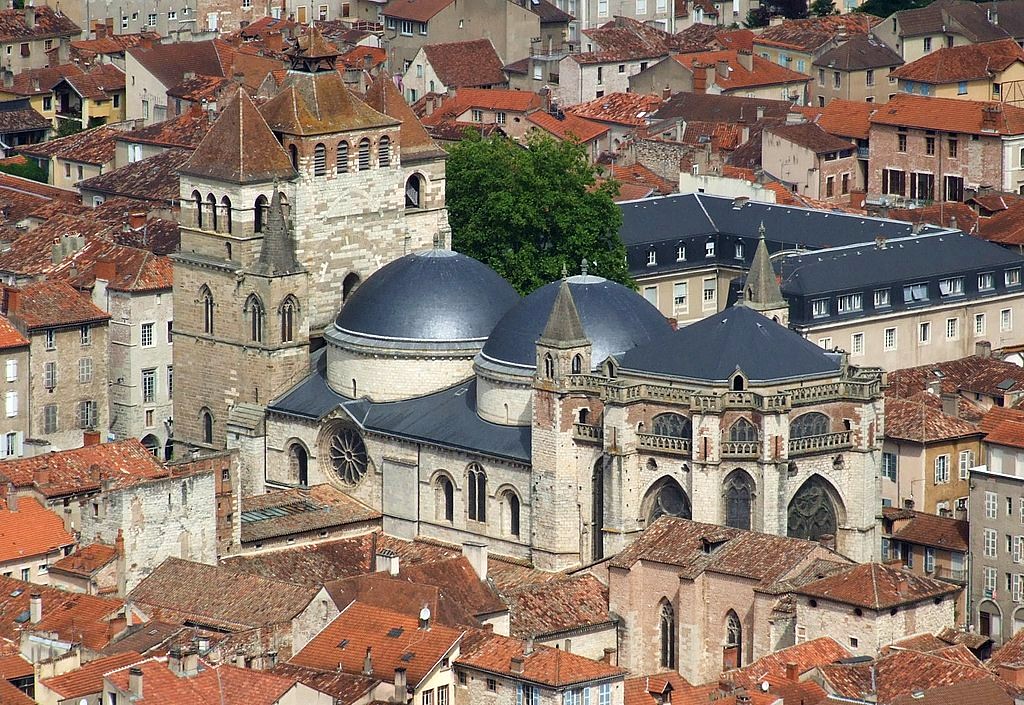
Brescia Cathedral
To caution his flock against the danger of errors in faith, he wrote his Catalogue of Heresies. He, everywhere breathes an ardent zeal for the Catholic faith. St. Gaudentius extols his profound humility, his meekness, and sweetness towards all men, which was such that it seemed natural to him to repay injuries only with kindness and favours and, he never discovered the least emotions of anger. By his charity and patience, he gained the hearts of all men. In all he did, he sought no interest but that of Jesus Christ and regarding with contempt all earthly things, he pursued and valued only those that are eternal.
Being most mortified and sparing in his diet and apparel, he seemed to know no other use of money than to employ it in relieving the poor and he extended his liberality, not only to all that were reduced to beggary but also, to tradesmen and all others, whom he often generously enabled to carry on, or when expedient, to enlarge their business. Although he communicated himself with surprising charity and goodness to all sorts of persons of every age, sex and condition, he seemed always to receive the poor with particular affection.
He trained many pious and eminent disciples, among whom are named St Gaudentius, his successor as Bishop of Brescia and one Benevolus, who, in his lifetime, was a true imitator of the Apostles. St Augustine met our St Philastrius at Milan with St Ambrose in the year 384. He died soon after, and before St Ambrose, his Archbishop, who after his death placed St Gaudentius in the See of Brescia. This Saint solemnised every year, with his people, the day on which his master, St Philastrius, passed to glory and always honoured it with a panegyric but of these discourses only the fourteenth is extant.
You must be logged in to post a comment.