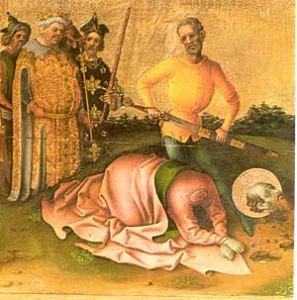
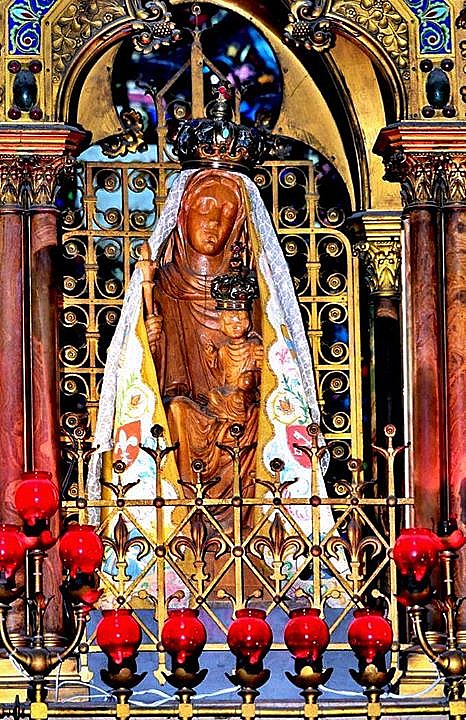
Saint of the Day – 30 January – Saint Adelelmus (Died c 1100) Abbot, Soldier, Miracle-worker. Born in the 11th Century at Laudun, Poitou, France and died in c 1100 at Burgos, Castilla la Vieja, Spain of natural causes. Patronages – Burgos, Spain, butlers, domestic servant, housemaids, manservants, servants. Also known as – Adelunie, Aleaume, Alleaume, Elesmes, Lesmes.
Adelelmus joined the military at a young age. During a pilgrimage to Rome he met St Robert de Turlande (c 1000-1067), Founder of the Abbey of La Chaise-Dieu – “Home of God” and left the military life to become a Monk in the Benedictine Order, under the spiritual direction of Saint Robert.
Soon, Adelelmus was known for miles around because of his miracles. Queen Constance of Burgundy of Castile was so impressed with the reports of Adelelmus’ holiness, she invited him to live in Burgos, Spain. She and King Alfonso VI founded a Monastery in the City in 1079, on the condition that he would be its first Abbot . He added a hospital and a Church to the building soon after. He later used his military training to help King Alfonso against the Moors.
One night, while out on some holy business, Abbot Adelelmus and his aide were caught in a storm. Adelelmus ordered his servany to light a candle in order to complete their journey in the darkness. Not only was he able to light the exposed candle in the rain and wind but it stayed alight throughout their whole wet, windy, stormy travels.
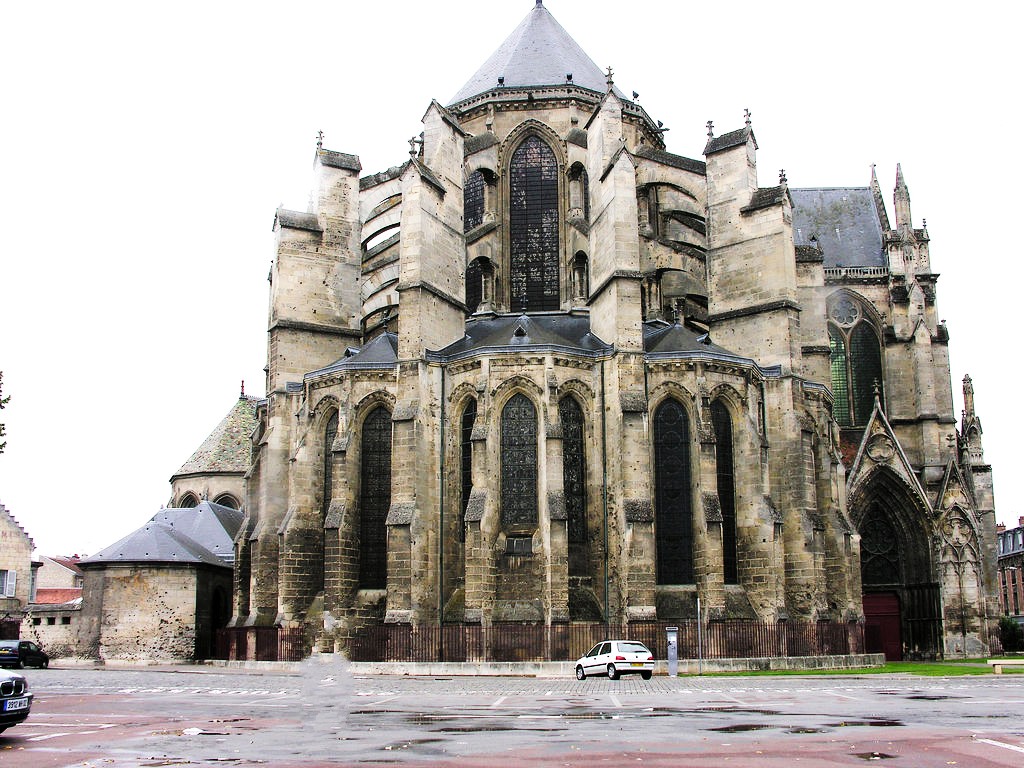
After death, Adelelmus became the Patron Saint of the City of Burgos in Spain. His remains lie in the Iglesia de San Lesmes Abad, dedicated to him.
Adelelmus’ life was written soon after his death by a French Monk named Rodulph, who travelled to Burgos with the sole purpose of writing the Saint Vita. This volume gives a detailed account of the life and miracles of Saint Adelelmus and includes all the liturgical chants for the Mass which celebrate this Saint. As an attestation of the centuries-long veneration of the Patron Saint of Burgos, the Vita Adelelmi represents a unique and indescribably valuable artifact.
Adelelmus’ Feast day is kept on 30 January and celebrated honourably in Burgos but it is no longer observed in the General Roman Calendar.
St Adelelmus (Died c 1100) Abbot St Aldegundis St Alexander of Edessa St Amnichad of Fulda St Armentarius of Antibes St Armentarius of Pavia St Barsen St Barsimaeus of Edessa
Our Prayers to the Saints – 29 January – St Francis de Sales (1567-1622) Bishop, Confessor – Doctor of the Church: Doctor Caritatis (Doctor of Charity) “The Gentle Christ of Geneva” and the “Gentleman Saint.”
O Glorious St Francis Prayer to St Francis de Sales
O Glorious St Francis, model of the interior life and full of zeal for the salvation of souls! Obtain for me the grace to employ all my faculties, not for my own sanctification alone but for that of my neighbour too that continually spreading abroad, the sweet odour of Jesus Christ, by my words and works, I may attain, with thee, the blessedness promised to the merciful: “Blessed are the merciful, for they shall obtain mercy” and that I may one day have a share in the glory which thou dost enjoy in Paradise with the Angels and Saints, where those who edify and instruct to justice, shall shine as stars for all eternity (Dan 12:3). Amen
Thought for the Day – 29 January – Meditations with Antonio Cardinal Bacci (1881-1971)
True Peace
“This absolute and loving abandonment to the Will of God in all things, brings complete inner peace but, it does not exclude conflict. Interior peace is the result of the practice of virtue and, therefore, of the struggle against evil. When Our Lord had repeated several times that He had given us His peace, He said too: “Do not think that I have come to send upon upon the earth; I have come to bring a sword, not peace.” (Mt 10:34).
These apparent contradictory words of Our Lord, are explained by the fact that the peace of Jesus does not consist in inactivity but demands action and strife and the conquest of evil. It is a militant peace which Our Lord desires us to possess. Only when we have controlled our passions, when we have made our wills entirely subject to the Will of God and have renounced ourselves, so that the Justice and Charity of Jesus Christ can triumph in us, only then shall we reach those serene heights, where storms from below cannot come near us and the peace of God reigns supreme!
We find examples of this true and perfect peace among the Saints, Martyrs and Apostles. We read of the Apostles that “they departed … rejoicing that they had been counted worthy to suffer disgrace for the Name of Jesus” (Acts 5:41). This is an example of that genuine peace which is the result of victory in the combat against evil and of complete and loving submission to the Will of God.”
Quote/s of the Day – 29 January – St Francis de Sales, Bishop, Confessor and Doctor of the Church
“The measure of love, is to love without measure.”
“Since God often sends us His inspirations by means of His Angels, we ought frequently to offer Him, our aspirations, through the same channel. … Call on them and honour them frequently and ask their help in all your affairs, temporal, as well as spiritual.”
“Anxiety is the greatest evil that can befall a soul, except sin. God commands you to pray but He forbids you to worry.”
“Friendships begun in this world will be taken up again, never to be broken off. ”
“Have patience with all things but chiefly, have patience with yourself. Do not lose courage in considering your own imperfections but instantly set about remedying them, everyday begin the task anew.”
“Do not look forward to the changes and chances of this life in fear – rather look to them with full hope that, as they arise, God, whose you are, will deliver you out of them. He is your keeper. He has kept you hitherto. Do you but hold fast to His dear hand and He will lead you safely through all things and, when you cannot stand, He will bear you in His arms. Do not look forward to what may happen tomorrow. Our Father will either shield you from suffering, or He will give you strength to bear it.”
“Thus we do not say that the Pope cannot err in his private opinions, as did John XXII; or be altogether a heretic, as perhaps Honorius was. Now, when he, [the Pope], is explicitly a heretic, he falls ipso facto, from his dignity and OUT of the Church! …”
“During the night we must wait for the Light.”
Hail, Sweet Jesus! Prayer to Christ in His Passion and Death By St Francis de Sales (1567-1622) Doctor of the Church
Hail, sweet Jesus! Praise, honour and glory be to Thee, O Christ, Who, of Thou own accord, embraced death, and recommending Thyself to Thy heavenly Father, bowing down Thy venerable Head, did yield up Thy Spirit. Truly thus giving up Thy life for Thy sheep, Thou hast shown Thyself, to be the Good Shepherd. Thou died, O Only-begotten Son of God. Thou died, O my beloved Saviour, that I might live forever. O how great hope, how great confidence have I reposed in Thy Death and Thy Blood! I glorify and praise Thy Holy Name, acknowledging my infinite obligations to Thee. O good Jesus, by Thy bitter Death and Passion, give me grace and pardon. Give unto the faithful departed, rest and life everlasting. Amen.
Most Holy Mary, Virgin Mother of God Act of Consecration By St Francis de Sales (1567-1622) Indulgence of 300 days, for each recitation St Pius X, 17 November 1906
Most Holy Mary, Virgin Mother of God, I ………., most unworthy though I am to be thy servant, yet touched by thy motherly care for me and longing to serve thee, do, in the presence of my Guardian Angel and all the Court of Heaven, choose thee this day to be my Queen, my Advocate and my Mother and I firmly purpose to serve thee evermore myself and, to do what I can, that all may render faithful service to thee. Therefore, most devoted Mother, through the Precious Blood thy Son poured out for me, I beg thee and beseech thee, deign to take me among thy clients and receive me as thy servant forever. Aid me in my every action and beg for me the grace never, by word or deed or thought, to be displeasing in thy sight and that of thy most holy Son. Think of me, my dearest Mother and desert me not at the hour of death. Amen
One Minute Reflection – 29 January – The Memorial of St Francis Salesius, Bishop, Confessor and Doctor of the Church – Romans 13:8-10, Matthew 8:23-27 – Scripture search here: https://www.drbo.org/
“And behold, there arose a great storm on the sea, so that the boat was covered by the waves but He was asleep.”- Matthew 8:24
REFLECTION – “Just as the good soldier is not afraid of battle, so the good Christian has no fear of temptation. … The greatest temptation is not to have temptation! It might even be said that we are fortunate to have temptations for these are the times of spiritual harvest when we gather up for Heaven. … If we were thoroughly saturated with God’s Holy Presence, it would be easy for us to resist the enemy. With the thought ‘God sees you!’ we would never sin.
There was a saint who complained to our Lord after being tempted and said to Him: “Where were Thou, my most loveable Jesus, during that awful storm?” Our Lord answered: “I was in the centre of thou heart…”– St John-Marie Baptiste Vianney (1786-1859) The Curé of Ars (Selected thoughts of the Curé d’Ars).
PRAYER – O God, Who for the salvation of souls, willed that blessed Francis, Thy Confessor and Bishop, should become all things to all men, mercifully grant that we, inspired by the sweetness of Thy love, guided by his teachings and aided by his merits, may attain the joys of everlasting life. Through Jesus Christ, Thy Son our Lord, Who lives and reigns with Thee, in the unity of the Holy Ghost, God, world without end. Amen (Collect).
Our Morning Offering – 29 January – St Francis de Sales (1567-1622) Bishop, Confessor – Doctor of the Church: Doctor Caritatis (Doctor of Charity) “The Gentle Christ of Geneva” and the “Gentleman Saint” – “The Month of the Most Holy Name of Jesus
An Act of Oblation to the Most Blessed Trinity By St Francis de Sales (1567-1622) Doctor of Charity
I vow and consecrate to God all that is in me, my memory and my actions, to God the Father; my understanding and my words, to God the Son; my will and my thoughts, to God the Holy Spirit. I consecrate my heart, my body, my tongue, my senses and all my sorrows, to the Sacred Humanity of Jesus Christ, Who consented to be betrayed into the hands of wicked men and to suffer the torment of the Cross for me. Amen
Saint of the Day – 29 January – St Francis de Sales (1567-1622) Bishop, Confessor, Doctor of the Church – Doctor Caritatis (Doctor of Charity) “The Gentle Christ of Geneva” and the “Gentleman Saint.”
From the Office of the Church for the Feast, of St Francis de Sales.
Francis was born of pious and noble parents, in the town of Sales, from which the family took their name. From his earliest years, he gave pledge of his future sanctity by the innocence and gravity of his conduct. Having been instructed in the liberal sciences during his youth, he was sent early to Paris that he might study Philosophy and Theology and, in order that his education might be complete, he was sent to Padua, where he took, with much honour, the degree of Doctor in both Civil and Canon Law. He visited the Sanctuary of Loreto, where he renewed the vow he had already taken in Paris, of perpetual virginity, in which holy resolution he continued till death, in spite of all the temptations of the devil and all the allurements of the flesh.
He refused to accept an honourable position in the Senate of Savoy and entered into the Ecclesiastical state. He was Ordained Priest and was made Provost of the Diocese of Geneva, which charge he so laudably fulfilled that Granier, his Bishop, selected him for the arduous undertaking of labouring, by the preaching of God’s Word, for the conversion of the Calvinists of Chablais and the neighbouring country round about Geneva.
This mission he undertook with much joy. He had to suffer the harshest treatment on the part of the heretics, who frequently sought to take away his life, caluminated him and laid all kinds of plots against him. But, he showed heroic courage in the midst of all these dangers and persecutions and by the Divine assistance, converted, as it is stated, seventy-two thousand heretics to the One True Catholic Faith, among whom were many distinguished by the high position they held in the world and by their learning.
After the death of Granier, who had already made him his Co-adjutor, he was made Bishop of Geneva. Then it was that his sanctity showed itself in every direction, by his zeal for Ecclesiastical discipline, his love of peace, his charity to the poor and every virtue.
From a desire to give more honour to God, he founded a new Order of Nuns, which he called the Visitation, taking for their Rule that of St Augustine, to which he added Constitutions of admirable wisdom and sweetness. He enlightened the children of the Church by the works he wrote, which are full of a heavenly wisdom and pointed out a path, which is at once safe and easy, to christian perfection.
In his fifty-fifth year, whilst returning from France to Annecy, he was taken with his last sickness, immediately after having celebrated Mass, on the Feast of St. John the Evangelist. On the following day, his soul departed this life for Heaven, in the year of our Lord 1622. His body was taken to Annecy and was buried, with great demonstration of honour, in the Church of the Nuns of the above mentioned Order. Immediately after his death, miracles began to be wrought through his intercession, which, being officially authenticated, he was Canonised by Pope Alexander the Seventh and his Feast was appointed to be kept on the twenty ninth day of January.
St Francis de Sales CO, OM, OFM (Cap) (1567-1622) Bishop, Confessor – Doctor of the Church: Doctor caritatis (Doctor of Charity) “The Gentle Christ of Geneva” and the “Gentleman Saint” – Bishop of Geneva, Doctor of Law and Theology, Writer, Theologian, Mystic, Teacher, Preacher, Founder along with St Jane Frances de Chantal, founded the women’s Order of the Visitation of Holy Mary (Visitandines). Feast Day – 29 January (General Roman Calendar of 1960 and local communities. Biography: https://anastpaul.wordpress.com/2018/01/24/saint-of-the-day-24-january-st-francis-de-sales-1567-1622-doctor-of-the-church-doctor-caritatis-doctor-of-charity/
t Abundantia the Martyr St Aphraates St Aquilinus of Milan St Barbea of Edessa St Blath of Kildare Bl Boleslawa Maria Lament St Caesarius of Angoulême Bl Charles of Sayn
Thought for the Day – 28 January – Meditations with Antonio Cardinal Bacci (1881-1971)
Blessed are Those who Love Peace
“Peace is especially opposed to sentiments of anger and hatred against our brothers. It commands us to love and help them. Hatred is the heritage of Cain because God says that “he who does not love, abides in death. Everyone who hates his brother is a murdere. And you know that no murderer has eternal life abiding in him” (1 Jn 3:15). A man who hates his brother may not actually kill him but, he is guilty of murdering him in his heart! As a result, he loses peace of soul because, as St Augustine points out (Sermon 82), by hating someone, you create disorder in yourself and destroy that Divine harmony which was the gift of Divine grace and charity.
If we wish to preserve interior peace, we must cast out from our hearts, every vestige of hatred for our neighbour and entertain love, understanding and forgiveness, for all. By loving our enemies, we place ourselves above them by an act of true Christian nobility. We imitate Jesus, Who forgave His executioners and prayed for them from the Cross.
A fit of anger is like a moment of madness. It is a great misfortune for anyone to yield to it. He speaks and acts like a man who has lost his reason and allows himself to be carried away by blind passion. When the moment of insanity is over, he will be ashamed of himself and of all that he has said and done.
It is necessary to be masters of ourselves and of our feelings. Never speak or act until anger has subsided within you. By persevering in co-operation with the grace of God, we presercve that inward calmness which is a reflection of the peace of God.”
Quote/s of the Day – 28 January – St Peter Nolasco OdeM (c 1182–c 1256) Confessor, Founder – 1 Corinthians 4:9-14, Luke 12:32-34 – Scripture search here: https://www.drbo.org/
“Sell what you possess and give alms. Make for yourselves purses which do not grow old, a treasure unfailing in Heaven, where neither thief draws near, nor moth destroys.”
Luke 12:33
“The Kingdom of Heaven is like a treasure buried in a field, which a person finds and hides again and out of joy, goes and sells all that he has and buys that field.”
Matthew 13:44
“It was Christ Who was present to all those to whom, from the beginning, God communicated His Speech and Word. If anyone, therefore, reads the Scriptures with attention, he will find in them, an expression of Christ and a foreshadowing of this new calling. For Christ is the Treasure which was hidden in the field, that is, in this world (Mt 13:38) – a Treasure hidden in the Scriptures, …” Thus it was, that the Lord explained the Scriptures to His disciples, after His Resurrection from the dead, proving to them, by their means, that “it was necessary the Christ should suffer these things and enter into his glory” (Lk 24:26). So, if anyone should likewise read the Scriptures that person will become a perfect disciple, “like the head of a household who brings from his storeroom things both new and old.” (Mt 13:52).
St Irenaeus of Lyons ((130-202) Bishop, Martyr, Father of the Church
“If you wish to be perfect, sell what you have and give to the poor and you will have treasure in Heaven.”
Matthew 19:21
“In saying this I am speaking the truth because I am relying on the words of Him ,Who is Truth: “If you wish to be perfect, sell what you have and give to the poor and you will have treasure in Heaven” Mt 19:21). Do not be cast down by these words, lest the same thing be said to you, as to the rich young man: “It will be difficult for one who is rich to enter the Kingdom of Heaven” (Mt 19:23). Still more, when you read this sentence, consider that death can snatch these possessions away from you that the aggression of someone powerful, can carry them away. At the end of the day, you will have seen no further than insignificant goods, in place of great wealth – these are no more than a treasure of coins, rather than treasures of grace. By their very nature, they perish, rather than remaining forever!”
St Ambrose (340-397) Father and Doctor of the Church
One Minute Reflection – 28 January – St Peter Nolasco OdeM (c 1182–c 1256) Confessor, Founder – 1 Corinthians 4:9-14, Luke 12:32-34 – Scripture search here: https://www.drbo.org/
“Sell what you possess and give alms. Make for yourselves purses which do not grow old, a treasure unfailing in Heaven, where neither thief draws near, nor moth destroys.” – Luke 12:33
REFLECTION – “You are a jailor of your wealth, not its owner, you who bury your gold in the ground (cf Mt 25:25); you are its slave and not its master. Christ said: “Where your treasure is there also your heart will be” so it is your heart you have buried. Rather, sell your gold and buy salvation; sell what is metal and acquire God’s Kingdom; sell the field and purchase for yourself eternal life!
In saying this I am speaking the truth because I am relying on the words of Him Who is Truth: “If you wish to be perfect, sell what you have and give to the poor and you will have treasure in Heaven” (Mt 19:21). Do not be cast down by these words, lest the same thing be said to you, as to the rich young man: “It will be difficult for one who is rich to enter the Kingdom of Heaven” (Mt 19:23). Still more, when you read this sentence, consider that death can snatch these possessions away from you that the aggression of someone powerful, can carry them away. At the end of the day, you will have seen no further than insignificant goods, in place of great wealth – these are no more than a treasure of coins, rather than treasures of grace. By their very nature, they perish, rather than remaining forever!” – St Ambrose (340-397) Bishop of Milan, Father and Doctor of the Church (Naboth the poor, 58).
PRAYER – O God, Thou Who, as an example of Thy love, divinely taught St Peter to enrich Thy Church with new offspring, a family of Religious devoted to the ransom of the faithful, grant by his intercession that we may be released from the slavery of sin and rejoice in lasting freedom in Heaven. Through Jesus Christ, Thy Son our Lord, Who lives and reigns with Thee, in the unity of the Holy Ghost, God, world without end. Amen (Collect).
Our Morning Offering – 28 January – Mary’s Saturday
O Mary, Twice Mother of Mercy By St Jerome Emiliani (1486–1537)
O Mary, thou art twice Mother of Mercy because thou hast been made Mother of our most merciful Saviour, and, furthermore because, thou hast given to us so many signs of thy maternal care and love. Turn upon us, we beseech thee, thy glance of compassion and grant, that we may always live free from sin, which is the only impediment to receiving the fruits of the Divine Mercies. Amen.
Saint of the Day – 28 January – Saint Julián of Cuenca (1127-1208) the second Bishop of Cuenca, Spain from c 1196 until his death. Professor, Hermit, Reformer, Miracle-worker, basket-weaver using the money he gained from this trade to support the poor and needy, He was also a regular visitor to prisoners, assisting them spiritually and with material succour. Born as Julián Ben Tauro in c 1127 at Burgos, Spain and died on 28 January 1208 in Cuenca, Spain of natural causes, aged around 80 years. Patronages – basket-weavers, for rain, of the City and Diocese of Cuenca. Also known as – Julian of Burgos. Canonised on 18 October 1594 by Pope Clement VIII.
Saint Julián of Cuenca by Eugenio Cajes.
Most details we have collected about Saint Julián’s life are due to tradition (mixed with “pious” stories), writings that developed, especially from the 16th Century. These writings depict a holy man, chosen by God from the mother’s womb (like the prophets), a man full of humility and apostolic zeal, great benefactor of the poor, with a deep and intense spirit of prayer and great devotion to the Virgin Mary.
Julián’s name was Julián Ben Tauro (meaning Julián son of Tauro). His surname indicates his Mozarab ancestry – that is, Christians who lived in Muslim kingdoms, thus, in a delicate position. This document leads most historians to state the Toledan Mozarab origins of Julián.
Historical sources do not offer much information on the early life of Julián, except that he was born in Burgos to the nobleman Tauro. He studied at the Cathedral school there before he studied at the University of Palencia where he earned his Doctorate. In 1153, he was appointed a Professor in the philosophical and theological departments in Palencia in 1153. During his time in Palencia he worked as a basket-weaverr in order to earn extra income for the poor, as well to support himself.
Saint Julian of Cuenca and St Adelelmus of Burgos – Spanish School, 17th Century
In 1163 he left Palencia and his teaching duties to live a life of solitude in a modest house outside Burgos, located on the banks of the Arlanzón. He was Ordained to the Priesthood in 1166 after having received the minor orders. He and his servant, Lesmes lived a life of mortification and contemplation. The two then took to the road as itinerant preachers and reached both Córdoba and Toledo in 1191. A note about Lesmes – “the figure of Lesmes, the loyal servant who would not leave the company of Saint Julián until his death.”
Saint Julián with Lesmes, his servant
But this solitude and travelling ended in 1191 when the Archbishop of Toledo, Martín II López de Pisuerga appointed Julián as the Archdeacon at Toledo. He exercised his administrative duties but continued preaching, as well as making baskets in order to generate income for the poor. From 1196, Julián served as the Archdeacon until the Bishop of Cuenca, Juan Yáñez died and Alfonso VIII of Castile chose Julián to succeed him.
The Archbishop of Toledo conferred Episcopal Consecration upon him that June of 1196. Julián was known for his almsgiving and he visited the poor in prisons too. His outreach to all faiths was equally generous and kind, as was his desire to make pastoral visits to care for the faithful in his Diocese. He often offered grain to the poor to alleviate their suffering and also aided the poor peasant farmers in the region.
He continued to preach during his travels to all the areas in his Diocese, as well as reforming the practices of the Diocesan Priests in addition to engaging with charitable organisations to better help the poor. He likewise supported these charities to provide for the needs of his flock, in addition to the Jews and Muslims. On an annual basis, he would retire to live a life of solitude and contemplation and continued his habit of making baskets. There is a wonderful miracle reported that one day Jesus Himself appeared to him in the guise of a beggar, in order to thank him.
Colonial School, Cuzco, Peru. 18th century – Saint Julian Bishop of Cuenca
He died in his Diocese in 1208. His remains were housed in the Cuenca Cathedral but his body was re-interred in 1578 under an Altar built in his honour in a side Chapel at the same Cathedral.
In the Reading V of the Office it is stated that “he was a true father of the poor and used his money and his talents to help the needy, widows and orphans. He used the yield of his Church to help the miserable, as well as to establish and decorate the Churches, using little support for himself, obtaining what he needed personally with his own hands. He was devoted to prayer, through which he achieved from God many and great things for his people. The beautiful miracle is related as follows: Since the whole Diocese suffered shortage of grain and nothing was left in the Episcopal barns, taking pity on the people suffering this great calamity, he prayed fervently to the Lord along with many tears. Then it occurred that a huge quantity of grain was transported to the gates of the Episcopal palace carried by numerous donkeys, which disappeared after leaving their load.
In memory and as a tribute to the charity of Saint Julián, the Chapter established at the beginning of the 15th century the “Chest of Saint Julián” or “of the Alms”, which became a charitable institution to attend the urgent needs of the dispossessed. Essentially it gave daily alms of bread, ensured the upbringing and accommodation of orphan children and provided dowries so orphan ladies could marry, something otherwise impossible given the customs and the way of thinking at the time. (This Chest was perpetuated in Cuenca until recent times).
According to the old obituaries of Cuenca’s Bishopric, the death or departure of Saint Julián took place on 20th January 1208, at the age of 80. However, his celebration was set on the 28th of the same month, probably for the sake of liturgical-pastoral expediency, and during centuries his festivity has been celebrated on that date in Cuenca and in other places where he is greatly venerated.
As the tradition brings to light and is easy to imagine, Saint Julián was a great preacher, going through many places of Spain preaching the Gospel of Salvation. He was an excellent missionary, also within Cuenca’s recently created Diocese, repopulated with peoples from the North, as a result of the re-conquest. Despite the many difficulties of travelling from one place to another, Julián spared no effort to preach the Gospel to everyone, as the Lord commended after His Resurrection.
Saint Julián’s Canonisation was solemnised under Pope Clement VIII on 18 October 1594.
The Second Feast of St Agnes: 28 January is traditionally the day of the “Second Feast of St Agnes,” although this very ancient observance was reduced to a commemoration in 1931 and abolished in the post-Vatican II reform (1969). It is still kept in some Churches dedicated to St Agnes, most prominent among them, the Basilica built over the site of her burial, less than a mile and a half from the gates of Rome. In liturgical books, the formal name of the feast is “Sanctae Agnetis secundo,” which literally means “the feast of St Agnes for the second time.” This title is found on the calendar of the Tridentine Missal and Breviary, as also seven centuries earlier in the Gregorian Sacramentary. The single Matins lesson in the Breviary of St Pius V tells us, that after her death, Agnes appeared first to her parents to console them and then to the Emperor Constantine’s daughter Constantia, who suffered from an incurable sore, while she was praying at her grave, exhorting Constantia to trust in Christ and receive Baptism. Having done this and been healed, Constantia later built a Basilica in the Saint’s honour.
St Aemilian of Trebi Bl Amadeus of Lausanne St Antimus of Brantôme St Archebran Bl Bartolomé Aiutamicristo St Brigid of Picardy St Callinicus St Cannera of Inis Cathaig Bl Charlemagne (a decree of Canonisation was issued by the anti-pope Paschal III but this was never ratified by valid authority.) St Constantly St Flavian of Civita Vecchia St Glastian of Kinglassie Bl James the Almsgiver St James the Hermit St Jean de Réomay
St Julian of Cuenca (c 1127-1208) Bishop St Leucius of Apollonia St Maura of Picardy Bl Odo of Beauvais St Palladius of Antioch St Paulinus of Aquileia St Richard of Vaucelles St Thyrsus of Apollonia
Martyrs of Alexandria: A group of 4th-century lay faithful in Alexandria, Egypt. During the celebration of Mass one day an Arian officer named Syrianus led a troop of soldiers into their church and proceded to murder all the orthodox Christians in the place. 356 in Alexandria, Egypt.
Thought for the Day – 27 January – Meditations with Antonio Cardinal Bacci (1881-1971)
How to Guard Holy Purity
“Let us examine our conscience now and we shall perceive that everytime we have fallen in any way, it was always because we did not put into practice, the remedies suggested. So let us not lose courage but renew out determination to employ, at the first sign of danger, the necessary means of defending our purity. It will be a difficult struggle at times. But the grace of God will never let us down, as long as we do our best to co-operate with it. Each one of us should remember that God “is faithful and will not permit you to be tempted beyond your strength but, with the temptation, will also give you a way out that you may be able to bear it” (1 Cor 10:13). Our first reward will be that exhilaration of having fought hard and won!”
Quote/s of the Day – 27 January – St John Chrysostom (347-407) Bishop, Confessor, Father and Doctor of the Church “Golden Mouthed.” – 2 Timothy 4:1-8, Matthew 5:13-19 – Scripture search here: https://www.drbo.org/
“If we approach with faith, we too will see Jesus… for the Eucharistic table takes the place of the crib. Here, the Body of the Lord is present, wrapped, not in swaddling clothes but in the rays of the Holy Spirit.”
“When you are before the Altar where Christ reposes, you ought no longer to think that you are amongst men but believe that there are troops of Angels and Archangels, standing with you and trembling with respect before the Sovereign Master of Heaven and earth. Therefore, when you are in Church, be there in silence, fear and veneration!”
“God defers hearing our prayers, not because He rejects them but, because He wishes to contrive to draw us to Himself. Do not cease praying until you are heard!”
“He errs who believes that he can overcome his sensual propensities and preserve chastity, by his own efforts. God’s mercy must extinguish nature’s ardour. Have recourse to the intercession of the Immaculate Virgin and rest assured, you will obtain this mercy.”
“Never separate yourself from the Church. No institution has the power of the Church. The Church is your hope. The Church is your salvation. The Church is your refuge.”
One Minute Reflection – 27 January – St John Chrysostom (347-407) Bishop, Confessor, Father and Doctor of the Church “Golden Mouthed.” – 2 Timothy 4:1-8, Matthew 5:13-19 – Scripture search here: https://www.drbo.org/
“You are the salt of the earth. But if salt loses its taste, with what can it be seasoned? It is no longer good for anything but to be thrown out and trampled underfoot.” – Matthew 5:13
REFLECTION – “It is as a matter of absolute necessity that He commands all this. Why must you be salt? Jesus says in effect: “You are accountable, not only for your own life but also, for that of the entire world. I am sending you not to one or two cities, nor to ten or twenty, nor even to one nation, as I sent the Prophets. Rather, I am sending you to the entire earth, across the seas, to the whole world, to a world fallen into an evil state.” For by saying, “You are the salt of the earth,” Jesus signifies, that all human nature itself has “lost its taste,” having become rotten through sin. For this reason, you see, He requires from His disciples, those character traits that are most necessary and useful for the benefit of all.” – St John Chrysostom (347-407) Archbishop of Constantinople, Father and Doctor (The Gospel of Matthew: Homily,15).
PRAYER – May heavenly grace, we beseech Thee, O Lord, prosper Thy Church, which Thou mercifully enlightened by the blessed virtues and teachings of glorious and blessed John Chrysostom, Thy Confessor and Bishop. Through Jesus Christ, Thy Son our Lord, Who lives and reigns with Thee, in the unity of the Holy Ghost, God, world without end. Amen (Collect).
Our Morning Offering – 27 January – St John Chrysostom (347-407) Bishop, Confessor, Father and Doctor of the Church “Golden Mouthed”
O Lord and Lover of Men By St John Chrysostom (347-407) Father and Doctor of the Church
O Lord and Lover of men, make shine in our hearts the pure Light of Thy Divine Knowledge and open the eyes of our mind to the understanding of Thy Gospel teaching. Instill in us the fear of Thy Blessed Commandments that trampling upon all carnal desires, we may enter upon a spiritual life, willing and doing all that is Thy Good Pleasure. For Thou art the Light of our souls and of our bodies, Christ O God and we give glory to Thee together with Thine Eternal Father and Thine All-holy, Good and Life-giving Spirit, now and forever, world without end. Amen.
Saint of the Day – 27 January – St John Chrysostom (347-407) Bishop, Confessor, Father and Doctor of the Church “Golden Mouthed.”
The Church, in the Lessons of today’s Office, thus speaks the praises of our Saint.
John, surnamed Chrysostom on account of his golden eloquence, was born at Antioch. Having gone through the study of the law and the profane sciences, he applied himself, with extraordinary application and success, to the study of the Sacred Scriptures. Having been admitted to Holy Orders and made a Priest of the Church at Antioch, he was appointed Bishop of Constantinople, after the death of Nectarius, by the express wish of the Emperor Arcadius. No sooner had he entered upon the pastoral charge, than he began to inveigh against the licentious lives led by the rich. Thus, his courageous preaching procured him many enemies. He likewise gave great offence to the Empress Eudoxia because he had reproved her, for having appropriated to herself, the money belonging to a widow, name, Callitropa and for having taken possession of some land which was the property of another widow.
At the instigation, therefore, of Eudoxia, several Bishops met together at Chalcedon. Chrysostom was cited to appear, which he refused to do because it was not a Council, either lawfully or publicly convened. Whereupon, he was sent into exile. He had not been gone long, before the people rose in sedition on account of the Saint’s banishment and he was recalled, to the immense joy of the whole City.
But, his continuing to inveigh against the scandals which existed, and his forbidding the games, held before the silver statue of Eudoxia which was set up in the space opposite Sancta Sophia, were urged by certain Bishops, enemies of the Saint, as motives for a second banishment.
The widows and the poor of the City bewailed his departure as that of a father. It is incredible how much Chrysostom had to suffer in this exile and how many he converted to the Christian Faith by his sufferings!
At the very time that Pope Innocent the First, in a Council held at Rome, was issuing a Decree, ordering that Chrysostom should be set at liberty – he was being treated by the soldiers, who were taking him into exile, with unheard of harshness and cruelty. Whilst passing through Armenia, the holy Martyr Basiliscus, in whose Church he had offered up a prayer, thus spoke to him during the night: “Brother John! we shall be united together tomorrow.“ Whereupon, on the following morning, Chrysostom received the Sacrament of the Eucharist and, signing himself with the Sign of the Cross, he breathed forth his soul to his God, on the eighteenth of the Calends of October (14 September).
A fearful hail-storm happened at Constantinople after the Saint’s death and, four days after, the Empress died. Theodosius, the Son of Arcadius, had the Saint’s body brought to Constantinople, with all due honour, where, amidst a large concourse of people, it was buried on the sixth of the Calends of February (27 January). Theodosius, whilst devoutly venerating the Saint’s Relics, interceded for his parents that they might be forgiven. The body was, at a later period, translated to Rome and placed in the Vatican Basilica.
All men agree in admiring the unction and eloquence of his sermons, which are very numerous, as indeed of all his other writings. He is also admirable in his interpretation of the Sacred Scriptures which he explains in their genuine sense. It has always been thought that he was aided, in his writings and sermons, by St Paul the Apostle, to whom he entertained an extraordinary devotion.
St John Chrysostom (347-407) Bishop, Confessor, Father and Doctor of the Church – “Golden Mouthed,” Preacher, Orator, Writer, Theologian, Confessor. Name Meaning – God is gracious; gift of God (John), golden-mouthed (Chrysostom). Biography: https://anastpaul.com/2017/09/13/saint-of-the-day-13-september-st-john-chrysostom-347-407-father-and-doctor-of-the-church-golden-mouthed/ (His Feast Day is today (changed in 1969 to 13 September). The Roman Martyrology states of him today: “At Constantinople, St John, Bishop, who was surnamed Chrysostom on account of his golden flow of eloquence. He greatly promoted the interests of the Christian religion by his preaching and exemplary life and, after many toils, closed his life in banishment. His sacred body was brought to Constantinople on this day in the reign of Theodosius the younger and afterwards taken to Rome and placed in the Basilica of the Prince of the Apostles. This illustrious Preacher of the Word of God, Pope Pius X declared and appointed as the Heavenly Patron of Sacred Orators.”
St Domitian of Melitene St Emerius of Bañoles St Gilduin Bl Gonzalo Diaz di Amarante St Henry de Osso y Cervello Bl John of Warneton St Julian of Le Mans St Julian of Sora St Lupus of Châlons
St Marius of Bodon Bl Michael Pini St Natalis of Ulster St Theodoric of Orléans St Pope Vitalian
Martyrs of North Africa – 30 Saints: A group of 30 Christians Martyred together by Arian Vandals. The only details to have survived are four of their names – Datius, Julian, Reatrus and Vincent. c 500 in North Africa.
Thought for the Day – 26 January – Meditations with Antonio Cardinal Bacci (1881-1971)
Blessed are the Clean of Heart
“St Paul warns us in the following words: “Do thou not know that thy members are the temple of the Holy Spirit, Who is in thee, Whom thou hast from God and that thou art not thy own? For thou hast been bought at a great price. Glorify God and bear Him in thy body” (1 Cor 6:19-20).
We who are temples of the Holy Ghost, redeemed by the Precious Blood of Jesus, must keep unsullied the purity of our hearts, the lily of our innocence. We must do this no matter what sacrifices it may cost us. Those stern words from the Gospel, “if thy right eye is an occasion of sin to thee, pluck it out and cast it from thee,” (Mt 5:29) refer in a special way to the obstacles we must overcome and the sacrifices we must make to preserve this beautiful virtue. There can be no half measures! We must be prepared to go to any lengths, even to accept death if necessary, like St Maria Goretti. Even as we should be ready to face Martyrdom for the Faith, so we must be ready to face Martyrdom, in order to preserve purity of heart and soul.”
Quote/s of the Day – 26 January – St Polycarp (69-155) Martyr, Bishop of Smyrna (Asia Minor), Apostolic Father
“Eighty and six years have I served Christ, nor has He ever done me any harm. How, then, could I blaspheme my King, Who saved Me? …. I bless Thee for deigning me worthy of this day and this hour that I may be among Thy Martyrs and drink the cup of my Lord Jesus Christ.”
“Beware of greed and remain pure and just. Restrain yourself from every vice. He who cannot restrain himself, how will he be able to teach others restraint?”
“Help one another with the generosity of the Lord and despise no-one. When you have the opportunity to do good, do not let it go by.”
Prayer Before His Martyrdom By St Polycarp (69–155)
Lord God Almighty, Father of Jesus Christ, Thy dear Son, through Whom we have come to know Thee, God of the Angels and Powers, God of all creation, God of those who live in Thy Presence, the race of the just, I bless Thee. Thou hast considered me worthy of this day and hour, worthy to be numbered with the Martyrs and to drink the cup of Thy Anointed One, and thus to rise and live forever, body and soul, in the incorruptibility of the Holy Spirit. Amen
One Minute Reflection – 26 January – St Polycarp (69-155) Martyr, Bishop of Smyrna (Asia Minor), Apostolic Father – 1 John 3:10-16, Matthew 10:26-32 – Scripture search here: https://www.drbo.org/
“And fear you not them who kill the body and are not able to kill the soul …” – Matthew 10:28
REFLECTION – “They did not nail Polycarp but only tied him up. And so, he was bound, putting his arms behind his back, like a noble ram taken from a large flock for sacrifice, a burnt offering acceptable to and made ready for God. Then he gazed up to Heaven and said: “O Lord God Almighty, Father of Your beloved and blessed Son Jesus Christ, through Whom we have received knowledge of You, God of the angels and the powers and of all creation, God of the whole race of the righteous who live in Your sight: I bless You, for You have thought me worthy of this day and hour, to share the cup of Your Christ, as one of Your Martyrs, to rise again to eternal life in body and soul in the immortality of the Holy Ghost. May I be taken up today into Your Presence among Your Martyrs, as a rich and acceptable sacrifice, in the manner You have prepared and have revealed and have now brought to fulfillment, for You are the God of truth… And so also I praise You for all things; I bless and glorify you through our Eternal High Priest in Heaven (Heb 4,14), in Your beloved Child, Jesus Christ, through Whom be glory to You and to Him and to the Holy Ghost, now and for the ages to come. Amen.” – Letter of the Church of Smyrna concerning the Martyrdom of Saint Polycarp (69-155)
PRAYER – O God, Who gave us joy by the annual solemnity of blessed Polycarp, Thy Martyr and Bishop, mercifully grant that we may rejoice in his protection, whose birthday we celebrate. Through Jesus Christ, Thy Son our Lord, Who lives and reigns with Thee, in the unity of the Holy Ghost, God, world without end. Amen (Collect).
Our Morning Offering – 26 January – – “The Month of the Most Holy Name of Jesus”
Complete Us, O Lord Jesus Christ, For the Glory of Thy Holy Name By St Anselm (1033-1109) Magnificent and Marian Doctor of the Church
O Lord Jesus Christ, our Redemption and our Salvation, we praise Thee and give Thee thanks. Although we are unworthy of Thy benefits and cannot offer to Thee, the devotion Thou deserves, let Thy loving-kindness complete, whatever our weakness attempts. Before Thee, O Lord, we lay all our desires and whatever our heart rightly wishes, it is because of Thy gifts. Help us to love Thee as Thou commands. Do not let Thy gifts be unfruitful. Complete what Thou hast begun, give what Thou hast made us desire, convert our lukewarmness into fervent love of Thee, for the glory of Thy Holy Name. Amen
Saint of the Day – 26 January – Blessed Eystein Erlandssön (Died 1188) Bishop. Born in the 12th century in Norway and died in 1188 in Nidaros, (modern Trondheim), Norway of natural causes. Also known as – Augustine Erlandsön, Augustinus Nidrosiensi, Øystein Erlendsson.
Eystein Erlendsson was from Trøndelag, probably born just before 1130. On his mother’s side he descended from Erling Skjalgsson and he was related to most of the local nobility.
Eystein was educated at Saint-Victor, in Paris, where we presume he was Ordained too. As a Priest he served as sChaplin to King Inge Krokrygg of Norway. When Archbishop Jon Birgersson died on 24 February 1157, the King Inge appointed Eystein as the new Archbishop.
Eysteinn then travelled to Rome, where his appointment was confirmed by Pope Alexander III in 1161. He returned to Norway and attempted to strengthen the ties between Rome and the Norwegian Church. He established the communities of Augustinian Canons regular and consecrated Saint Thorlak as the Bishop of Iceland.
This was a time of tension between Royal power and the Church. During this conflict Eystein sided with Erling Skakke and his son Magnus. When Sverre Sigurdsson eventually gained control over large regions of the realm Eystein was forced into exile. He stayed in Suffolk in England for around three years before returning to Norway in the summer of 1183.
On the political level the Archbishop was forced to agree to several compromises, which included coming to terms with King Sverre (whom he had excommunicated).
From his final years, history knows Eystein best as the grand strategist during the initial great period of building Nidaros Cathedral. He had brought ideas from England about the new Gothic style and he let this style dominate the further plans for the Cathedral.
Eystein also left a lasting mark in the form of Passio Olavi, a hagiographical work written in Latin relating to the life and works of Saint Olaf, with particular emphasis on his missionary work. The title is an abbreviation for Passio Et Miracula Beati Olaui, meaning Holy Olav’s sufferings and miracles.

Eystein died in 1188. He was proclaimed a saint in 1229 but Papal approbation was not forthcoming. Eystein Erlendsson has ,nevertheless, been accepted as a Norwegian Saint – one of four. 1 Blessed Eystein’s cult was finally approved by the Vatican and he is now entered in the register of saints and the beatified. . Blessed Eystein is commemorated on the date of his death, 26 January.
St Theofrid of Corbie St Theogenes of Hippo St Tortgith of Barking
Martyred Family of Constantinople: Saint Mary and Saint Xenophon were married and the parents of Saint John and Saint Arcadius. Theirs was a wealthy family of Senatorial rank in 5th century imperial Constantinople but were known as a Christians who lived simple lives. To give their sons a good education, Xenophon and Mary sent them to study in Beirut, Phoenicia. However, their ship wrecked, there was no communication from them, and the couple assumed, naturally, that the young men had died at sea. In reality, John and Arcadius had survived and decided that instead of continuing to Beirut, they were going to follow a calling to religious life and became Monks, eventually living in a Monastery in Jerusalem. Years later, Mary and Xenophon made a pilgrimage to Jerusalem – where they encountered their sons. Grateful to have their family re-united and taking it as a sign, Xenophon and Mary gave up their positions in society in Constantinople and lived the rest of their lives as a Monk and Anchoress in Jerusalem. A few years later, the entire family was Martyred together. They were mMrtyred in 5th century Jerusalem.
Our Prayers to the Saints – 25 January – Feast of the Conversion of St Paul, Apostle
Dear Saint Paul, My Patron
Dear Saint Paul, whom I have chosen as my special Patron, pray for me that I, too, may one day glorify the Blessed Trinity in Heaven. Obtain for me your lively faith that I may consider all persons, things and events, in the light of Almighty God. Pray that I may be generous in making sacrifices of temporal things to promote my eternal interests, as you so wisely did. Set me on fire with a love for Jesus that I may thirst for His Sacraments and burn with zeal for the spread of His Kingdom. By your powerful intercession, help me in the performance of my duties to God, myself and all the world. Win for me the virtue of purity and a great confidence in the Blessed Virgin. Protect me this day and everyday of my life. Keep me from mortal sin. Obtain for me the grace of a happy death. Amen
Thought for the Day – 25 January – Meditations with Antonio Cardinal Bacci (1881-1971)
Blessed are the Merciful
“Works of mercy can be either corporal or spiritual. The former cannot be practised much by those who are poor but, any generous-minded Christian can perform the latter. Sometimes, there is greater charity in speaking a kind word than in giving a large alms. Often, it is worth more in the sight of God, to comfort a sorrowful heart or to revive, in some soul, a dying hope, than it is to fill a hungry belly.
There are so many spiritual miseries which are crying out to be assuaged. The suffering of the soul is much deeper than that of the body. This is why anything done to soothe and encourage the soul is so valuable before God.
We can also do something about the remorse, disgust and darkness which are the results of the state of sin. If we can succeed in enlightening or healing one of these poor souls, we shall have accomplished a work of mercy which is most beautiful and meritorious in the eyes of God.”
Quote/s of the Day – 25 January – Feast of the Conversion of St Paul, Apostle – Acts 9:1-22, Matthew 19:27-29 – Scripture search here: https://www.drbo.org/
“Saul, Saul, why are you persecuting Me?”
Acts 9:4.
“So Saul was led to Ananias – the ravaging wolf is led to the sheep. But the Shepherd, Who guides everything from Heaven above, reassures him… “Do not fear, I will show him what he will have to suffer, for My Name’s sake” (Acts 9:16). What wonder is this! The wolf is led, a captive, to the sheep… The Lamb who died for the sheep, teaches it not to be afraid any more!”
St Augustine (354-430) Father and Doctor of the Church
“Now Paul rejoices with Stephen, with Stephen he enjoys the brightness of Christ; he exults with Stephen, he reigns with Stephen. There, where Stephen arose, the first, stoned under Paul’s very eyes, there too, Paul has risen with the help of Stephen’s prayers!”
St Fulgentius of Ruspe (c 462 – 533) Bishop in North Africa
“Yet I live, no longer I but Christ lives in me; insofar as I now live in the flesh, I live by faith in the Son of God, Who has loved me and given himself up for me.”
Galatians 2:20
“It is possible that, as he lay dying, Stephen looked up at Saul and uttered his last prayer for this sincere and honest young Jew, who had been led astray by the prejudice and passion of the mob. … Let us endeavour too, to suffer, pray and work for the conversion of our fellowmen, so many of whom, are wandering in the darkness of error or struggling in the clutches of vice. Let us try, by our sufferings, prayers and good example, to draw down God’s grace on our unhappy brothers. If we succeed, we shall share in the merits of their good actions and we shall have ensured our own everlasting salvation.”
You must be logged in to post a comment.