Quote of the Day – 28 February – Tuesday of the First Week in Lent
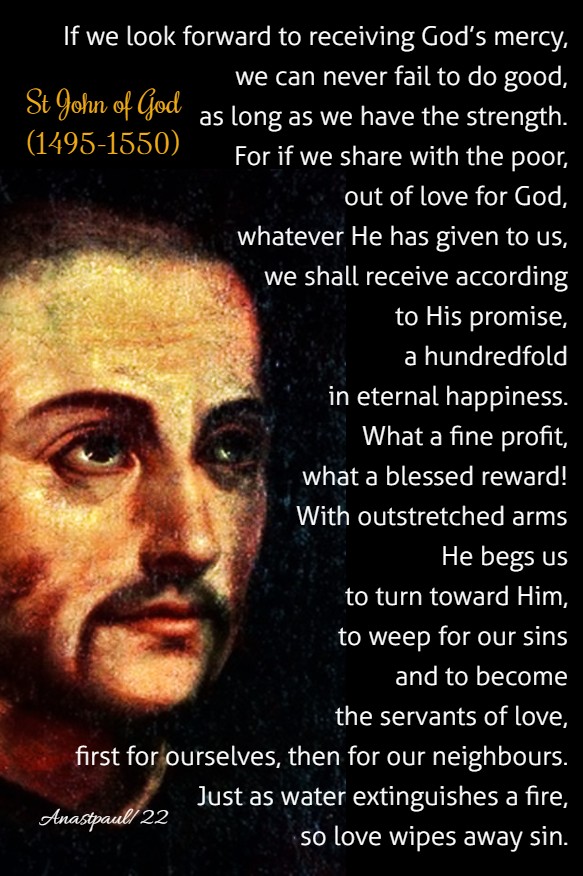
“If we look forward to receiving God’s mercy, we can never fail to do good, as long as we have the strength. For if we share with the poor, out of love for God, whatever He has given to us, we shall receive according to His promise, a hundredfold in eternal happiness. What a fine profit, what a blessed reward! With outstretched arms He begs us to turn toward Him, to weep for our sins and to become the servants of love, first for ourselves, then for our neighbours. Just as water extinguishes a fire, so love wipes away sin.”
Our Lenten Journey with St Francis de Sales – 28 February – Tuesday of the First Week in Lent – Isaias 55:6-11, Matthew 21:10-17 – Scripture search here: https://www.drbo.org/
“Let my prayer come like incense before You, O Lord” Psalm 140:2
“He said to them, It is written, ‘My house shall be called a house of prayer’” Matthew 21:13
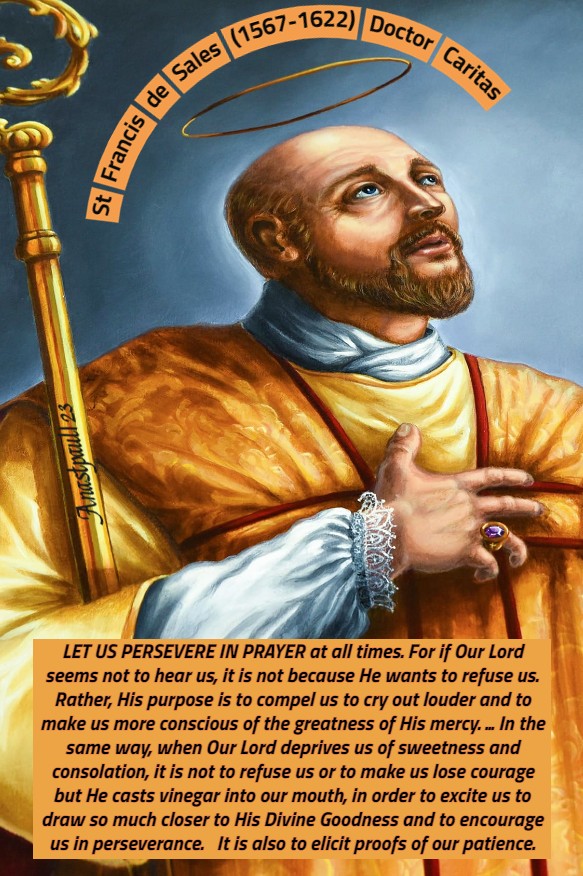
PERSEVERANCE IN PRAYER… St Francis de Sales (1567-1622) Doctor Caritas
“LET US PERSEVERE IN PRAYER at all times. For if Our Lord seems not to hear us, it is not because He wants to refuse us. Rather, His purpose is to compel us to cry out louder and to make us more conscious of the greatness of His mercy. Those who understand the Hunt, know well that in winter, dogs cannot scent their prey. The cold air and frost prevent them from detecting their prey as easily as they do at other times. A similar thing happens in the spring. The variety and fragrance of the flowers takes away the facility of perceiving the animal’s scent. To remedy this the hunter puts some vinegar in his mouth and holding the dog’s head, squirts the vinegar into its nose. Now he does this not to discourage it from going in quest of its prey but rather, to urge and excite it to do its task.
In the same way, when Our Lord deprives us of sweetness and consolation, it is not to refuse us or to make us lose courage but He casts vinegar into our mouth, in order to excite us to draw so much closer to His Divine Goodness and to encourage us in perseverance.
It is also to elicit proofs of our patience. This was the third virtue which accompanied the Canaanite woman’s prayer. Seeing her perseverance, the Saviour desired to prove her patience, too. By this virtue we maintain, as far as possible, equality of mind among the inequalities of this life.” (Sermon for Thursday after the First Sunday of Lent, 17 February 1622),
One Minute Reflection – 28 February – Tuesday of the First Week in Lent – Isaias 55:6-11, Matthew 21:10-17 – Scripture search here: https://www.drbo.org/
“For just as from the heavens, the rain and snow come down and do not return there, until they have watered the earth, making it fertile and fruitful, giving seed to him who sows and bread to him who eats.” – Isaias 55:11
REFLECTION – “For the rain and the snow do not return to heaven but accomplish in the earth the will of him that sends them. So the Word that He shall send through His Christ, Who is Himself, the Word and the Message, shall return to Him with great power. For when He shall come and bring it, He shall come down like rain and snow and through Him all that is sown shall spring up and bear righteous fruit and the Word shall return to His Sender but not in vain shall His going have been but thus shall He say, in the presence of His Sender, “Behold, I and the children that the Lord has given me.” And this is the Voice through which the dead shall live. And this is the Voice of God that shall sound from on high and raise up all the dead.” – St Aphraates “the Sage” (Died c 345) (Feast Day – 29 January) Abbot, Father of the Church [see note below] (Demonstrations 8).
PRAYER – From all perils of soul and body, defend us, O Lord, we beseech Thee and by the intercession of blessed and gloriosus ever Virgin Mary, Mother of God, of blessed Joseph, of Thy blessed Apostles Peter and Paul and all the Saints, graciously grant us safety and peace that all adversities and errors being overcome, Thy Church may serve Thee in security and freedom. Through Jesus Christ, Thy Son our Lord, Who lives and reigns with Thee, in the unity of the Holy Ghost, God, world without end. Amen (Collect).
St Aphraates was a Syriac Christian author of the third century from the Persian Empire who composed a series of twenty-three sermons on points of Christian doctrine and practice. He was an Ascetic and Celibate. He may have been a Bishop and later Syriac tradition places him at the head of Mar Mattai Monastery near Mosul, therefore, he was certainly an Abbot.
Our Morning Offering – 28 February – Tuesday of the First Week in Lent and the last day of “The Month of the Blessed Trinitys”
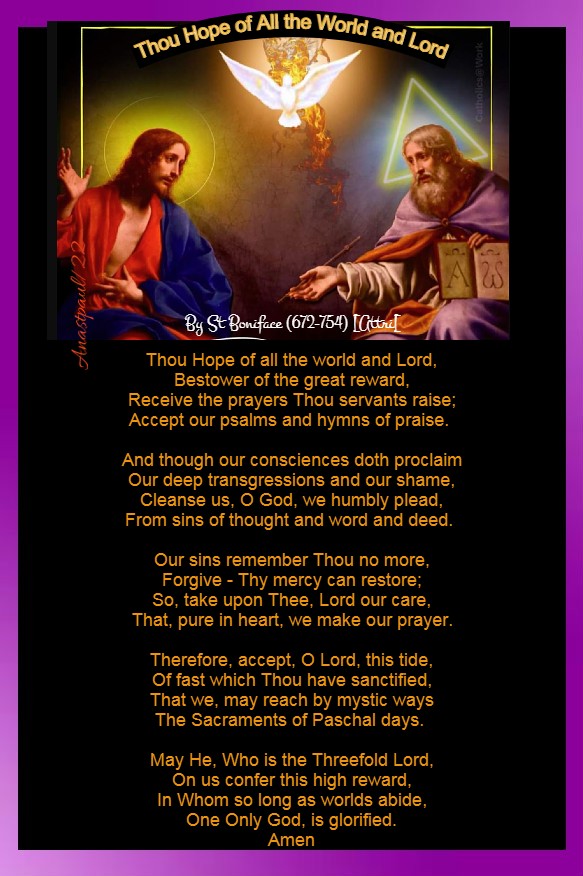
Thou Hope of All the World and Lord Attri to St Boniface (672-754) Sarum Rite Breviary Transl. Fr Alan G McDougall (1895-1964)
Thou Hope of all the world and Lord, Bestower of the great reward, Receive the prayers Thou servants raise; Accept our psalms and hymns of praise.
And though our consciences doth proclaim Our deep transgressions and our shame, Cleanse us, O God, we humbly plead, From sins of thought and word and deed.
Our sins remember Thou no more, Forgive – Thy mercy can restore; So, take upon Thee, Lord our care, That, pure in heart, we make our prayer.
Therefore, accept, O Lord, this tide, Of fast which Thou have sanctified, That we, may reach by mystic ways The Sacraments of Paschal days.
May He, Who is the Threefold Lord, On us confer this high reward, In Whom so long as worlds abide, One Only God, is glorified. Amen
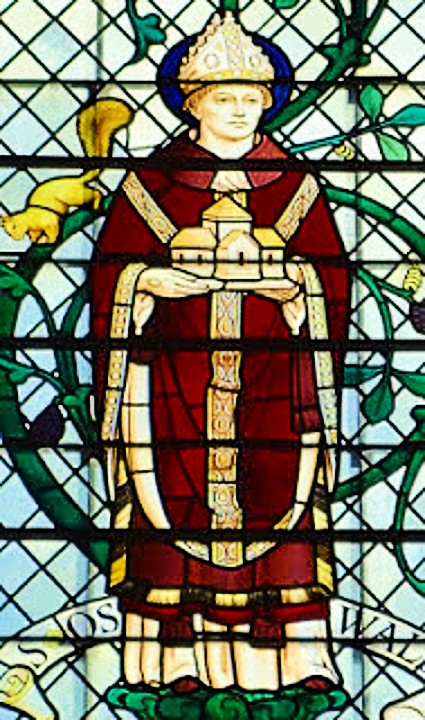
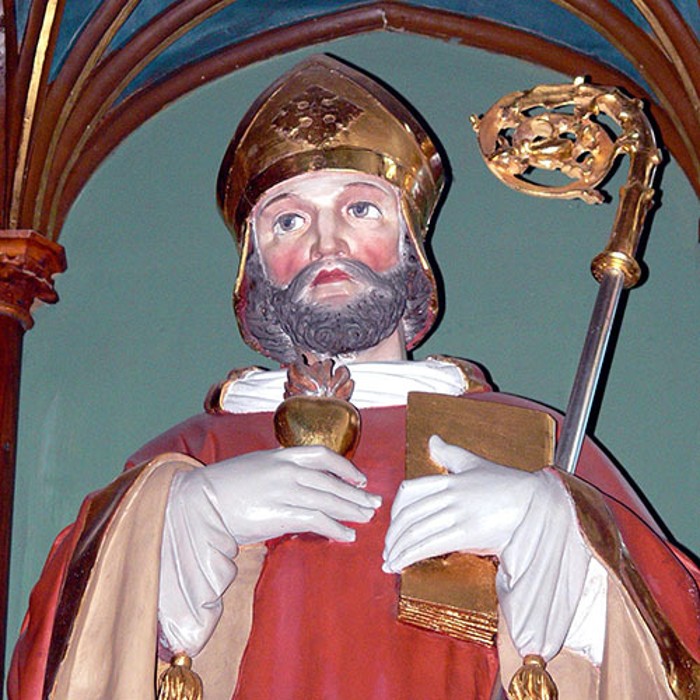
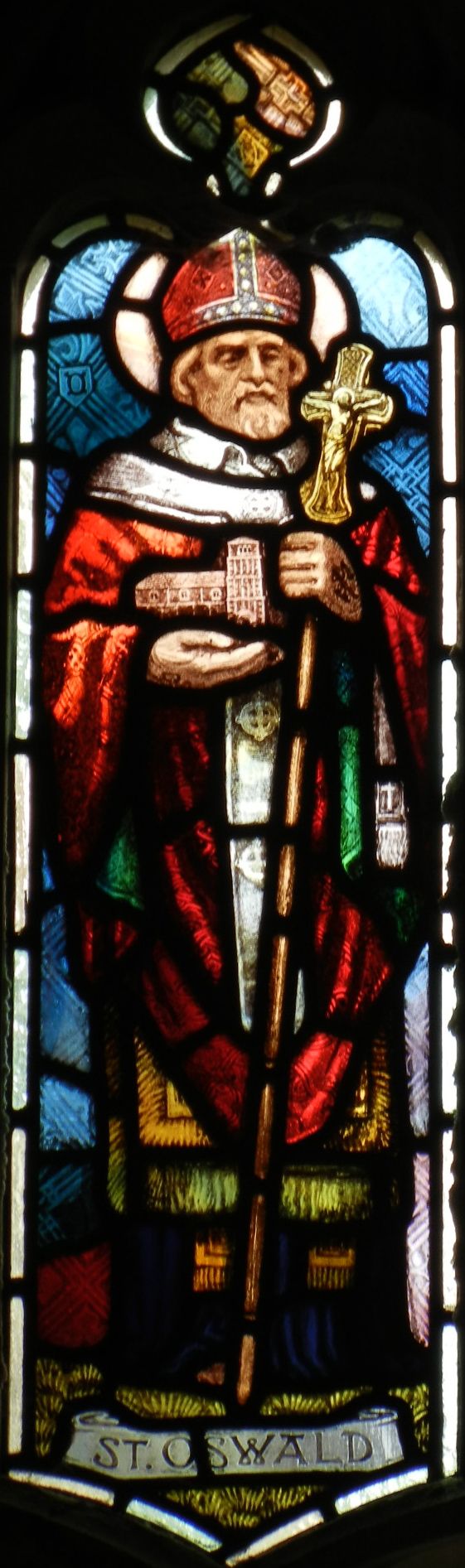
Saint of the Day – 28 February – Saint Oswald of Worcester (c912-992) Monk, Archbishop of York from 972-992, as well as simultaneously being the Bishop of Worcester and a leading figure in the reform of the Anglo-Saxon Church which took place in the second half of the tenth Century. He died on 29 February in 992 of natural causes, a leap year, therefore, his Feast is celebrated on the 28th. Also known as – Oswald of York.
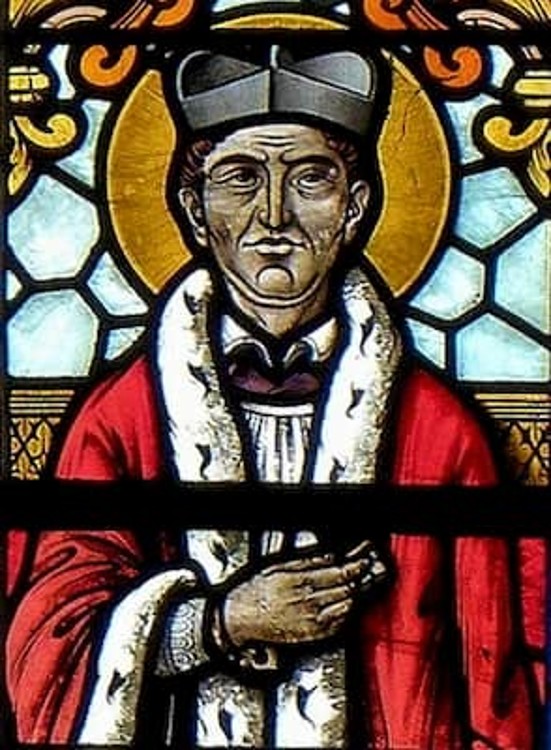
Oswald, Bishop of Worcester, was of a Danish family and was brought up by his uncle Oda. Under his uncle’s patronage, young Oswald was educated at the Abbey of Fleury-sur-Loire (a great centre of learning, which at the time had the largest library in Europe) and learned there the Benedictine ideals he would later bring to England.
When Oswald returned to England as a Priest in 958/9, he worked with another related Danish patron, Oskytel, who had recently become the Archbishop of York. His aepiscopal labours in York attracted the attention of St Dunstan, then the Bishop of Worcester. This was in 961 when St Dunstan was in the process of moving, to take up his new Episcopal position as the Archbishop of Canterbury. He thus recommended that King Edgar appoint Oswald as the Bishop of Worcester in his place .
Oswald founded a number of Monasteries at Westbury-on-Trym (near Bristol), at Ramsey (in Cambridgeshire) in collaboration with St Ethelwold, the Bishop of Winchester. Oswald reformed another seven Monasteries in the surrounding counties, imposing the Benedictine Rules and order of life and reforming the existing monastic practices. He also succeeded in gradually changing the Cathedral chapter in Worcester from secular Canons to Monks, imposing the Benedictine Rule and order of life.
In 972 Oswald was appointed as the Archbishop of York, at the same time retaining his See at Worcester. As Bishop and simultaneously as Archbishop, Oswald was able to bring the Scholar Abbo of Fleury, to Ramsey Abbey to teach for a number of years.
On 29 February 992 Oswald died, while he was washing the feet of the poor, a practice that had become his daily custom during Lent.
He was buried at Worcester and was quickly regarded as a Saint. Within a few years of his death, a Vita Oswaldi was written by the scholar and scientist Byrhtferth, a Monk belonging to Oswald’s foundation at Ramsey. Oswald was admired as Bishop of Worcester, St Wulfstan, who wept publicly when he found himself tearing down the Church which Oswald had built. Later Saints Oswald and Wulfstan were regarded as the two chief Saints of Worcester and you can see them together, for instance, flanking the tomb of King John before the High Hltar of the Cathedral at York.
He is closely associated with various Monks who became Bishops – particularly St Dunstan (909-988) and St Ethelwold (908-984) – in reforming Monasticism in England, which would last and remain powerful and influential within the life of the Church and of the country, for around 600 years before being disolved by Henry VIII.
St Justus the Potter St Llibio St Macarius the Potter St Maidoc St Marana of Beroea St Oswald of Worcester (Died 992) Bishop St Proterius of Alexandria St Pupulus of Alexandria
St Ruellinus of Treguier St Rufinus the Potter St Serapion of Alexandria St Sillan of Bangor St Theophilus the Potter Bl Villana de’Botti OP (1332-1361) Married, Mother, Penitent, Mystic.
Martyrs of Alexandria – A number of clerics and layman who died as Martyrs of charity for ministering to the sick during a plague that ravaged Alexandria, Egypt in 261.
Martyrs of Antwerp – 14 Christians who were Martyred together. We know nothing about them but the names Alexander, Anicetus, Cyriacus, Eulalia, Faustus, Genesius, Hirena, Macarius, Mauritius, Modestus, Placidus, Rochus, Symforian and Victorinus. Died in Rome, Italy, date unknown. Their Relics were transferred and enshrined in Antwerp, Belgium.
Martyrs of Corinth – A group of Christians Martyred together in Corinth, Greece. The only information we have about them are the names Basilia, Betha, Caius, Claudius, Diodorus, Donatus, Enuclus, Felix, Hermes, Januaria, Januarius, Maccaris, Maninlia, Mansuetus, Nicophorus, Papias, Quinquianus, Rufunia, Serapion, Servilia, Silvana, Stercola, Tella, Veneria, Victor and Victorinus.
Thought for the Day – 27 February – Meditations with Antonio Cardinal Bacci (1881-1971)
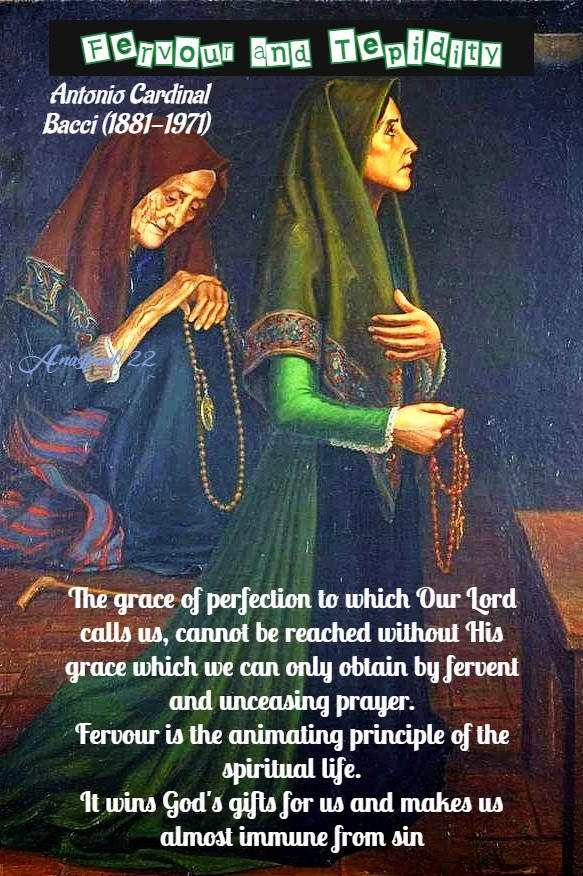
Fervour and Tepidity
“Our Lord does not command us to be merely virtuous. He commands us to be perfect. “You, therefore, are to be perfect, even as your heavenly Father is perfect” (Mt 5:48). He tells us to love Him with our whole heart and our whole soul. “Thou shalt love the Lord th God, with thy whole heart and with thy whole soul” (Mt 22:37). He orders us to renounce everything rather than offend Him, (Lk 14:33) even to pluck out an eye or cut off a hand or foot, if it should present an obstacle to our eternal salvation (Mt 18:81).
How can we remain unmoved and inactive in the face of these exhortations? The grace of perfection to which Our Lord calls us, cannot be reached without His grace which we can only obtain by fervent and unceasing prayer. Fervour is the animating principle of the spiritual life. It wins God’s gifts for us and makes us almost immune from sin.”
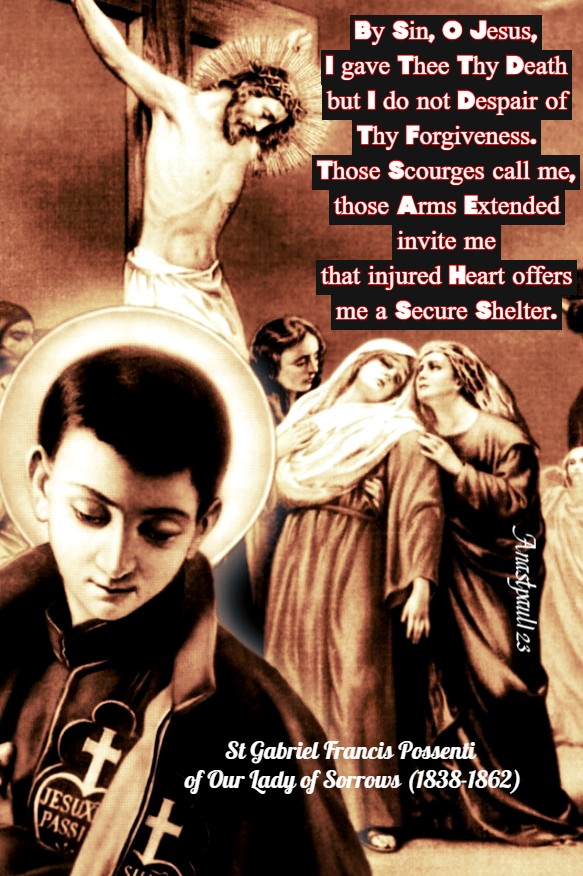
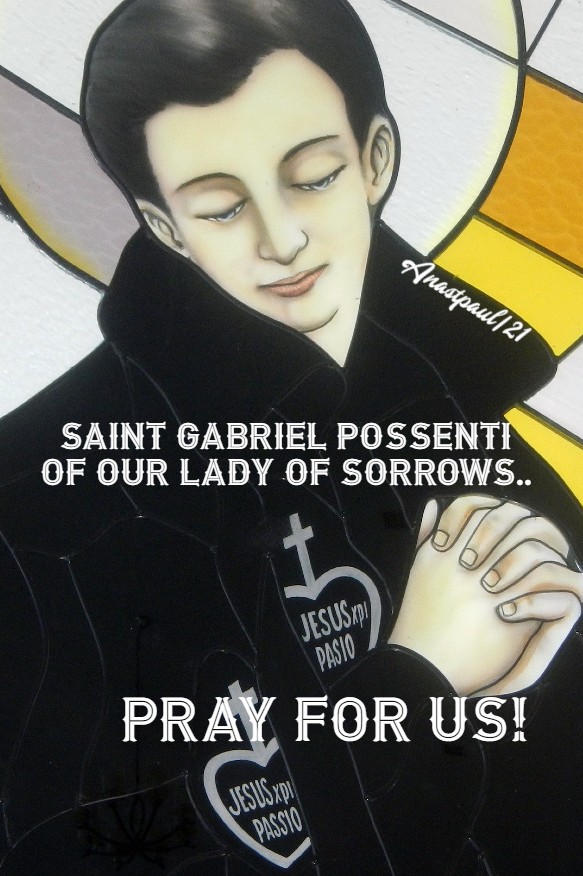
Quote/s of the Day – 27 February – Monday of the First Week in Lent – The Memorial of St Gabriel of Our Lady of Sorrows/Gabriel Possenti CP (1838-1862)
“By sin, O Jesus, I gave Thee Thy Death but I do not despair of Thy Forgiveness. Those Scourges call me, those Arms extended invite me that injured Heart offers me a secure shelter.”
“I will attempt, day by day, to break my will into pieces. I want to do God’s Holy Will, not my own.”
“Do not bestow your love on the world!”
“Love Mary!… She is loveable, faithful, constant. She will never let herself be outdone in love but will ever remain supreme. If you are in danger, she will hasten to free you. If you are troubled, she will console you. If you are sick, she will bring you relief. If you are in need, she will help you. She does not look to see what kind of person you have been. She simply comes to a heart that wants to love her. She comes quickly and opens her merciful heart to you, embraces you and consoles and serves you. She will even be at hand, to accompany you on the trip to eternity.”
(From a letter to his brother).
St Gabriel Francis Possenti of Our Lady of Sorrows (1838-1862)
Our Lenten Journey with St Francis de Sales – 27 February – Monday of the First Week in Lent – Scripture search here: https://www.drbo.org/
“My son, when you come to serve God, prepare your sould for temptation.” Ecclus. Sirach 2:1
“Then the devil left Him and behold, Angels came and ministered to Him.” Matthew 4:11
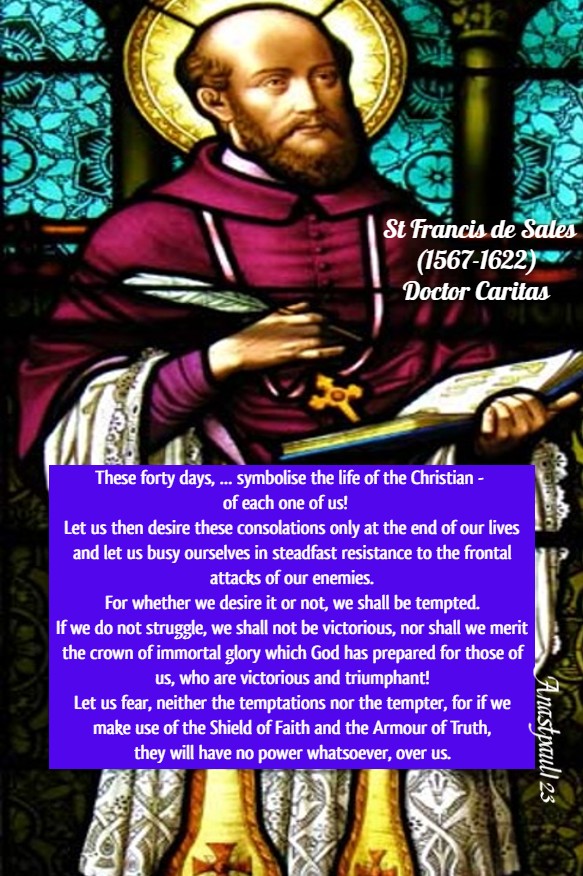
THESE FORTY DAYS … St Francis de Sales (1567-1622) Doctor Caritas
“I DOUBT NOT that many prefer the end of today’s Gospel (Mt 4:1-11) to its beginning. It is said there that after Our Lord had overcome His enemy and rejected his temptations, Angels came and brought Him heavenly food. What joy to find oneself with the Saviour at this delicious feast! My dear friends, we shall never be capable of keeping company with Him in His consolations, nor be invited to His Heavenly banquet, if we are not sharers of His labours and sufferings (2 Cor 1:7). He fasted for forty days but the Angels brought Him something to eat only at the end of that time.
These forty days, … symbolise the life of the Christian – of each one of us! Let us then desire these consolations only at the end of our lives and let us busy ourselves in steadfast resistance to the frontal attacks of our enemies. For whether we desire it or not, we shall be tempted. If we do not struggle, we shall not be victorious, nor shall we merit the crown of immortal glory which God has prepared for those of us, who are victorious and triumphant! Let us fear, neither the temptations nor the tempter, for if we make use of the Shield of Faith and the Armour of Truth, they will have no power whatsoever, over us.
… Let us also shun both spiritual avarice and the ambition which occasions so much disorder in our hearts and so greatly impedes our perfection. The noonday devil will be powerless in causing us to fail in our firm and steadfast resolution, to serve God generously and as perfectly as possible, in this life, so that after this life, we shall go to enjoy Him forever. May He be blessed ! Amen.” – (Extract-Sermon 1st Sunday of Lent – 13 February 1622).
One Minute Reflection – 27 February – Monday of the First Week in Lent – 1 John 2:14-17, Mark 10:13-21 – Scripture search here: https://www.drbo.org/
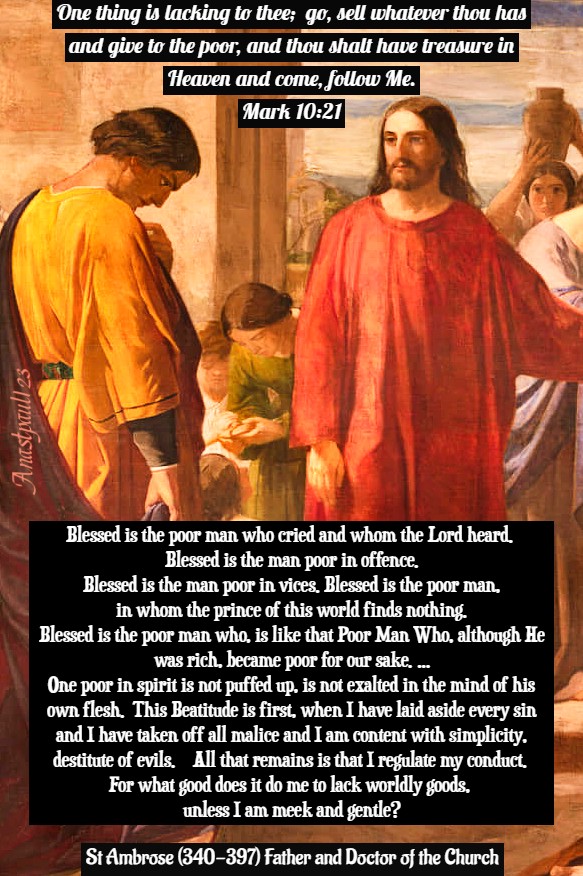
“One thing is lacking to thee; go, sell whatever thou has and give to the poor, and thou shalt have treasure in Heaven and come, follow Me.” – Mark 10:21
REFLECTION – “Blessed is the poor man who cried and whom the Lord heard. Blessed is the man poor in offence. Blessed is the man poor in vices. Blessed is the poor man, in whom the prince of this world finds nothing. Blessed is the poor man who, is like that Poor Man Who, although He was rich, became poor for our sake. Matthew fully revealed this when he said, “Blessed are the poor in spirit.” One poor in spirit is not puffed up, is not exalted in the mind of his own flesh. This Beatitude is first, when I have laid aside every sin and I have taken off all malice and I am content with simplicity, destitute of evils. All that remains is that I regulate my conduct. For what good does it do me to lack worldly goods, unless I am meek and gentle?
Although there are many charms of delights in riches, yet there are more incentives to practice virtues. Although virtue does not require assistance and the contribution of the poor person, is more commended, than the generosity of the rich, yet with the authority of the heavenly saying, He condemns, not those who have riches but those who do not know how to use them. The pauper is more praiseworthy who gives with eager compassion and is not restrained, by the bolts of looming scarcity. He thinks that he who has enough for nature, does not lack. So the rich person is the more guilty, who does not give thanks to God, for what he has received but vainly hides wealth given for the common use and conceals it, in buried treasures. Then the offence consists, not in the wealth but in the attitude.
Purify yourself with your tears. Wash yourselves with mourning. If you weep for yourself, another will not weep for you…. One who is a sinner weeps for himself and rebukes himself, that he may become righteous, for just people accuse themselves of sin. Let us pursue order because, it is written, “Set in order love in me.” I have laid down sin. I have tempered my conduct. I have wept for my transgressions. I begin to hunger. I hunger for righteousness. The sick, when he is seriously ill, does not hunger, because the pain of the illness excludes hunger. What is the hunger for righteousness? What is the bread of which it is said, “I have been young and am old and I have not seen the righteous man forsaken, nor his seed begging bread?” Surely, one who is hungry, seeks increase of strength. What greater increase of virtue is there, than the rule of righteousness?” – St Ambrose (340-397) Bishop of Milan, Father and Doctor of the Church( Exposition on the Gospel of Luke, 5).
PRAYER – O God, Who taught blessed Gabriel to meditate continually on the sorrows of Thy most sweet Mother and Who, through her, exalted him by the glory of a holy life and miracles; grant us, we beseech Thee, through his intercession and example so to share in the sorrows of Thy Mother that her motherly protection may save us. Through Jesus Christ, Thy Son our Lord, Who lives and reigns with Thee, in the unity of the Holy Ghost, God, world without end. Amen (Collect).
Our Morning Offering – 27 February – Monday of the First Week in Lent – The Memorial of St Gabriel of Our Lady of Sorrows/Gabriel Possenti CP (1838-1862)
O Mother of Sorrows, Stand by Me in My Last Agony By St Gabriel Francis Possenti of Our Lady of Sorrows (1838-1862)
O Mother of Sorrows, by the anguish and love with which thou did stand at the Cross of Jesus, stand by me in my last agony. To thy maternal heart I commend the last three hours of my life. Offer these hours to the Eternal Father in union with the agony of our dearest Lord, in atonement for my sins. Offer to the Eternal Father the most precious blood of Jesus, mingled with your tears on Calvary, that I may obtain the grace of receiving Holy Communion with the most perfect love and contrition before my death and that I may breathe forth my soul in the adorable presence of Jesus. Dearest Mother, when the moment of my death has at last come, present me as your child to Jesus. Ask Him to forgive me for having offended Him, for I knew not what I did. Beg Him to receive me into His kingdom of glory to be united with Him forever. Amen
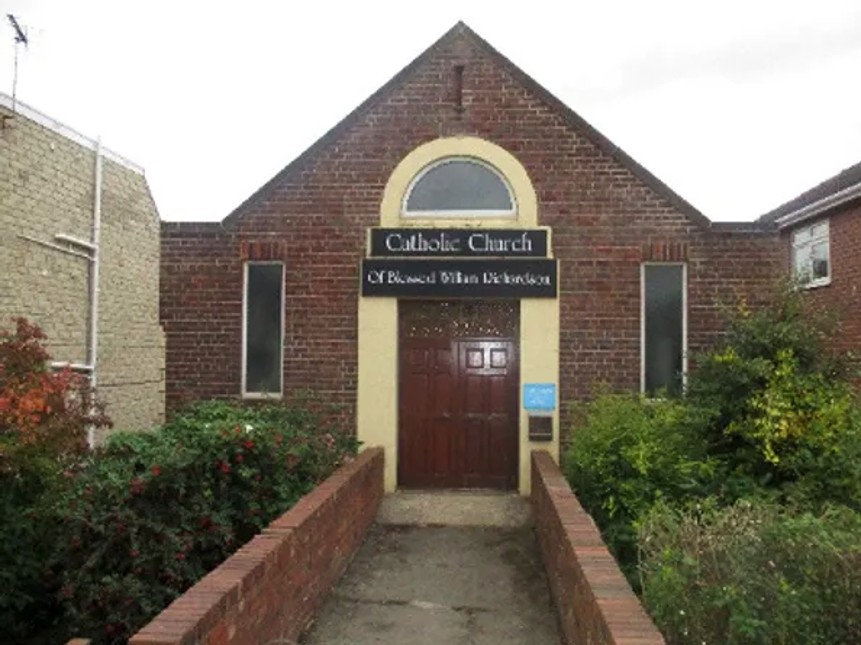
Saint of the Day – 27 February – Blessed William Richardson (1572–1603) English Priest, Martyr. Born in Yorkshire and died by being hanged, drawn and quartered on 27 February 1603 at Tyburn, London, aged just 31. William owns the dubious honour of being the last Martyr under Elizabeth I’s barbaric policy of murdering Catholics and especially Priests, in this manner. Also known as – William Anderson. He was Beatified on 15 December 1929 by Pope Pius XI.
This Image resides in the Seminary at Valladolid
Richardson was born in the village of Wales, West Riding of Yorkshire., although his father was a Lancashireman who had taken his family to Yorkshire in search of work. William was actually born in the hamlet of Bedgreave. It is believed that William’s father was a Miller at the Medieval Mill which still stands in the area.
We know from the Entry Book at the English Collge at Valladolid in Spain, that William was a convert and was received into the Church by one of the Clergy at Wiesloch, where, at that time, he was working. He studied for the Priesthood at seminaries in Valladolid and then Seville, Spain.
In 1594 William was Ordained and then sent back to England, where he used the alias William Anderson. His apostolate was spent mostly in London, often with Catholics of the Legal Profession at the Inns of the Court. He visited prisons under cover as an ordinary vistor, to take the Sacraments to Catholics imprisoned for their Faith.
But he was betrayed by a trusted person, arrested in London’s Gray’s Inn (an Inn of Court) and imprisoned. He was tried and convicted of being a Catholic Priest, within a week and Martyred by the barbaric act of being hung, drawn and quartered.
Bishop Challoner (Died 1781) tells us that William accepted his death sentence with such constancy and deep faith that he prayed for the his murderer, Elizabeth I in his last prayers. Sadly, we have no knowledge of Blessed William’s resting place. The little Church below dedicated to him is near his birthplace and is apparently well attended in a region listed as of the lowest Church attendance in Europe!
His was the final Martyrdom to take place during the reign of Queen Elizabeth I as she was to die herself one week after William’s entry into life.
St Abundius of Rome St Alexander of Rome St Alnoth St Antigonus of Rome St Baldomerus of Saint Just St Basilios of Constantinople St Comgan St Emmanuel of Cremona St Fortunatus of Rome St Herefrith of Lindsey St Honorina St John of Gorze St Luke of Messina
St Procopius of Decapolis St Thalilaeus Blessed William Richardson (1572–1603) English Priest, Martyr. He was Beatified on 15 December 1929 by Pope Pius XI.
Thought for the Day – 26 February – Meditations with Antonio Cardinal Bacci (1881-1971)
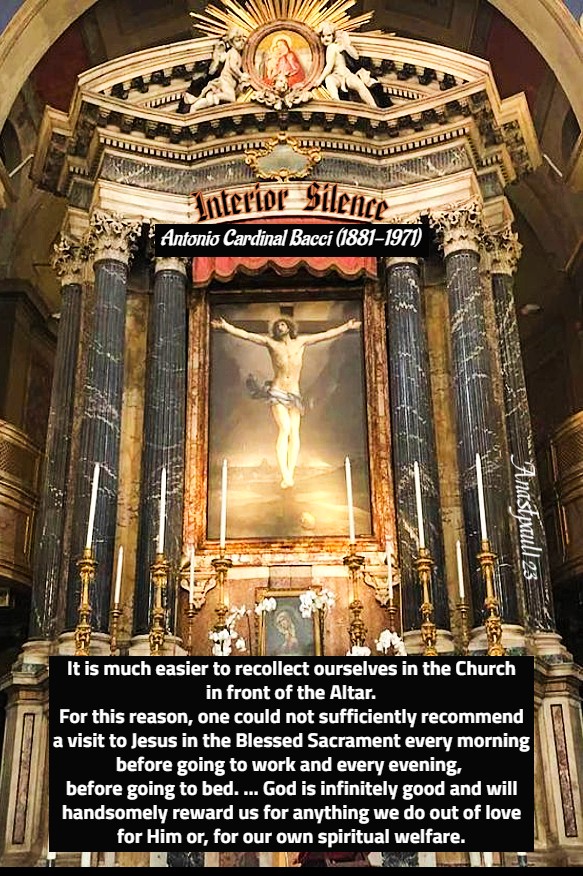
Interior Silence
“It is much easier to recollect ourselves in the Church in front of the Altar. For this reason, one could not sufficiently recommend a visit to Jesus in the Blessed Sacrament every morning before going to work and every evening, before going to bed.
The ideal is always daily Mass and Holy Communion. This will be tiring and maybe, inconvenient. But God is infinitely good and will handsomely reward us for anything we do out of love for Him or, for our own spiritual welfare.”
Quote/s of the Day – 26 February – The First Sunday of Lent – 2 Corinthians 6:1-10, Matthew 4:1-11
“Begone, Satan! for it is written: The Lord thy God shalt thou adore and Him only shalt thou serve.”
Matthew 4:10
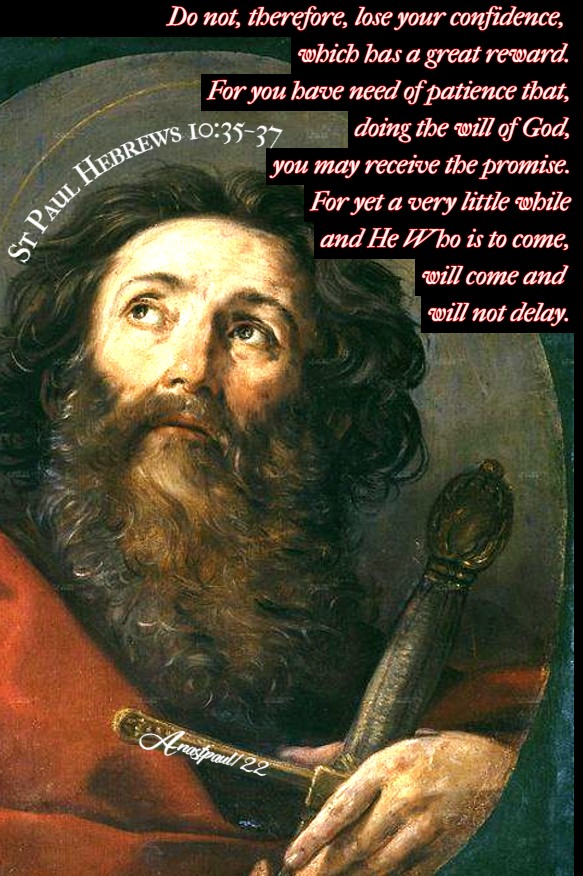
“Do not, therefore, lose your confidence, which has a great reward. For you have need of patience that, doing the will of God, you may receive the promise. For yet a very little while and He Who is to come, will come and will not delay.”
Hebrews 10:35-37
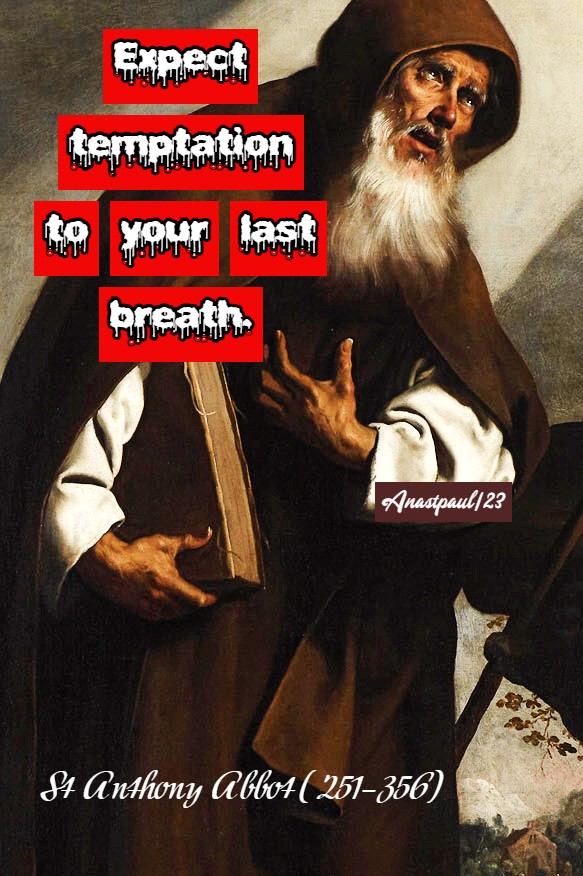
“Expect temptation to your last breath.”
St Anthony Abbot (251-356)
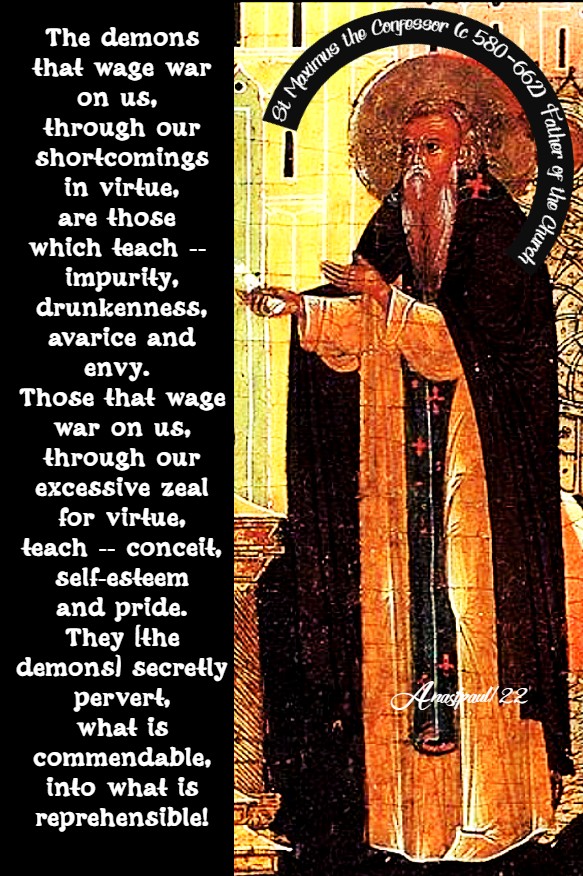
“The demons that wage war on us, through our shortcomings in virtue, are those which teach — impurity, drunkenness, avarice and envy. Those that wage war on us, through our excessive zeal for virtue, teach — conceit, self-esteem and pride. They [the demons] secretly pervert, what is commendable, into what is reprehensible!”
St Maximus the Confessor (c 580-662) Father of the Church
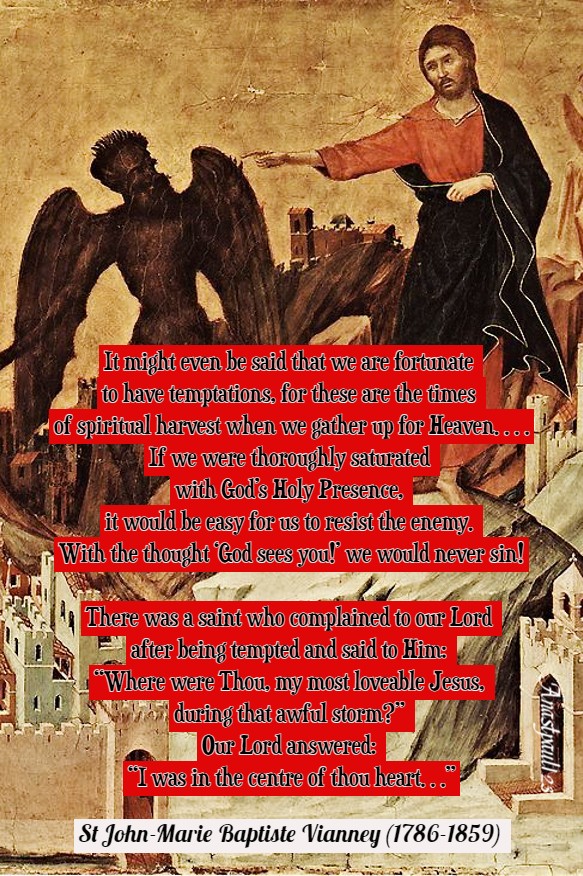
“It might even be said that we are fortunate to have temptations, for these are the times of spiritual harvest when we gather up for Heaven. … If we were thoroughly saturated with God’s Holy Presence, it would be easy for us to resist the enemy. With the thought ‘God sees you!’ we would never sin!
There was a saint who complained to our Lord after being tempted and said to Him: “Where were Thou, my most loveable Jesus, during that awful storm?” Our Lord answered: “I was in the centre of thou heart…”
St John-Marie Baptiste Vianney (1786-1859) The Curé of Ars
“When tempted, turn immediately to your Guardian Angel and ask him, with all your heart, “My Guardian Angel help me now. Do not let me offend my God!”
St John Bosco (1815-1888)
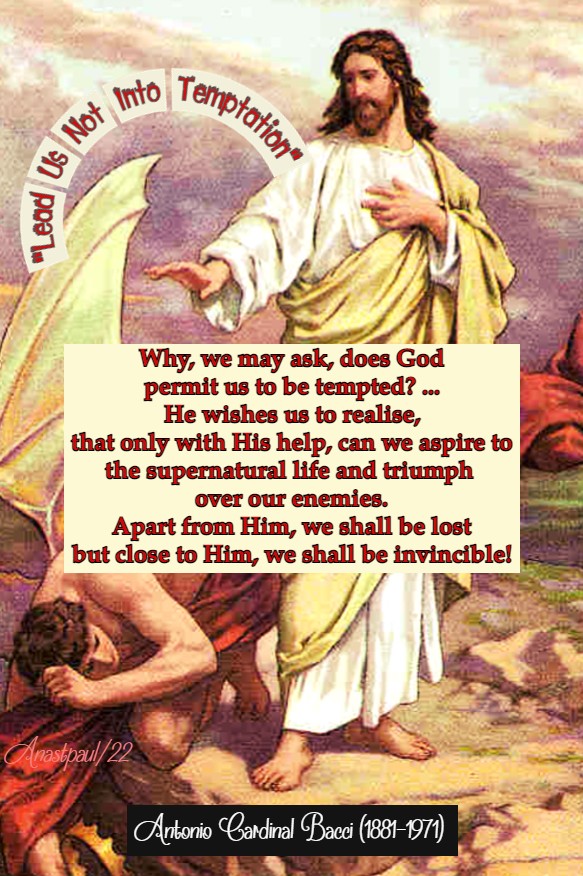
“Why, we may ask, does God permit us to be tempted? He wishes us to realise, that only with His help, can we aspire to the supernatural life and triumph over our enemies. Apart from Him, we shall be lost but close to Him, we shall be invincible!”
Our Lenten Journey with St Francis de Sales – 26 February – The First Sunday of Lent – 2 Corinthians 6:1-10, Matthew 4:1-11 – Scripture search here: https://www.drbo.org/
“My son, when you come to serve God, prepare your soul for temptation.” Ecclus. Sirach 2:1
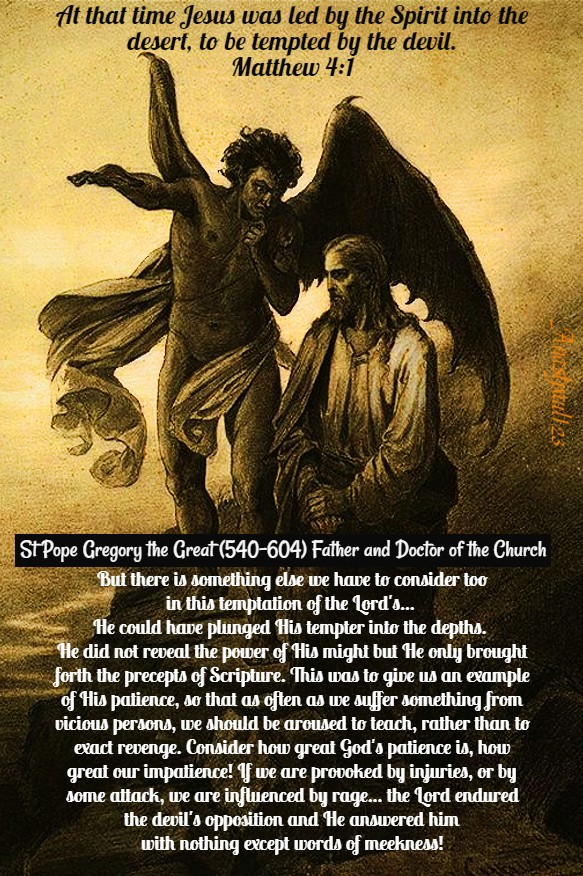
“At that time Jesus was led by the Spirit into the desert, to be tempted by the devil.” Matthew 4:1
TEMPTATION St Francis de Sales (1567-1622) Doctor Caritas
“IN THE FIRST PLACE, I note that although no-one can be exempt from temptation, still no-one should seek it or go of his own accord, to the place where it may be found, for undoubtedly, he who loves it will perish in it (Ecclus (Sirach 3:27). That is why the Evangelist says that Our Lord was led into the desert by the Spirit to be tempted – it was not then by His choice (I am speaking with regard to His human nature) that He went to the place of temptation but, He was led by the obedience He owed to His heavenly Father. …
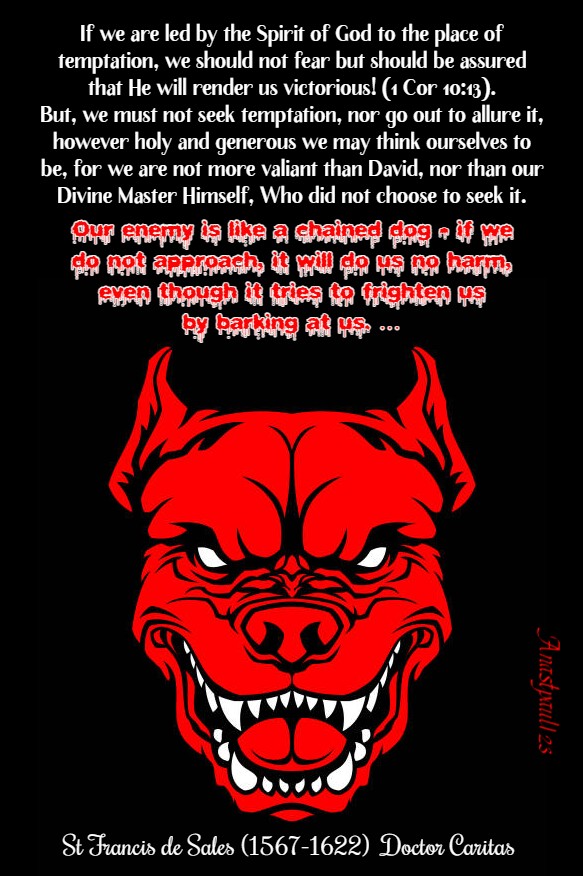
If we are led by the Spirit of God to the place of temptation, we should not fear but should be assured that He will render us victorious! (1 Cor 10:13). But, we must not seek temptation, nor go out to allure it, however holy and generous we may think ourselves to be, for we are not more valiant than David, nor than our Divine Master Himself, Who did not choose to seek it. Our enemy is like a chained dog – if we do not approach, it will do us no harm, even though it tries to frighten us by barking at us. …
… No-one who comes to serve God can avoid temptations. … The great Apostle, St Paul, as soon as he had given himself to the Divine service and ranged himself on the side of Christianity, was immediately tempted for the rest of his life. (2 Cor 12:7). While he was an enemy of God and persecuted the Christians, he did not feel the attack of any temptation, or at least he has given us no testimony of it in his writings. But he did when he was converted by Our Lord.
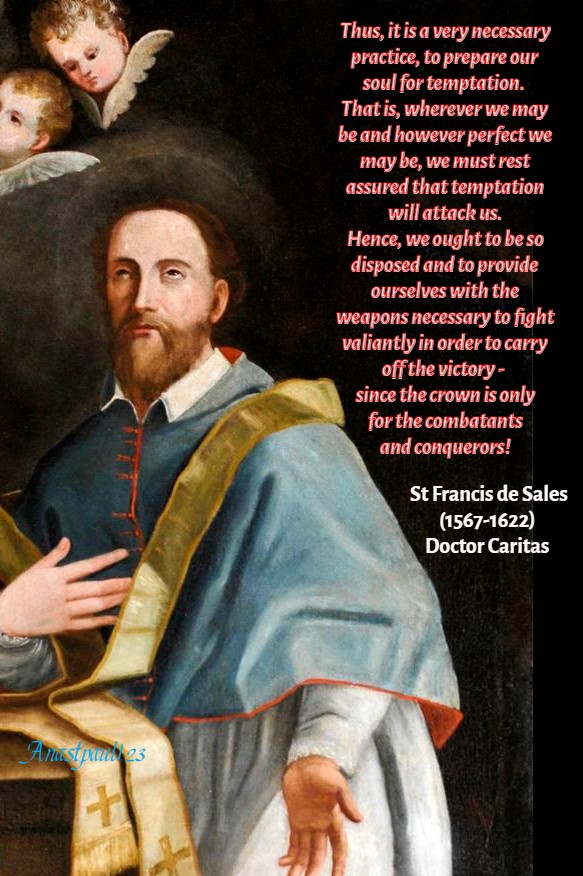
Thus, it is a very necessary practice, to prepare our soul for temptation. That is, wherever we may be and however perfect we may be, we must rest assured that temptation will attack us. Hence, we ought to be so disposed and to provide ourselves with the weapons necessary to fight valiantly in order to carry off the victory – since the crown is only for the combatants and conquerors! (2 Tim 2:5; Jas 1:12). We ought never to trust in our own strength or in our courage and go out to seek temptation, thinking to confound it but, … if we encounter it, we must remain firm in the confidence which we ought to have that He will strengthen us against the attacks of our enemy, however furious they may be!.” (Extract-Sermon 1st Sunday of Lent – 13 February 1622).
One Minute Reflection – 26 February – The First Sunday of Lent – 2 Corinthians 6:1-10, Matthew 4:1-11 – Scripture search here: https://www.drbo.org/
“At that time Jesus was led by the Spirit into the desert, to be tempted by the devil.” – Matthew 4:1
REFLECTION – “If we look at the progress of our Lord’s temptation, we see how great the struggle was that set us free. from temptation. Our ancient enemy rose up against the first human being, our ancestor, in three temptations. He tempted him by gluttony, by vainglory and by avarice… He tempted him by gluttony when he showed him the forbidden food of the tree and told him: “Taste it.” He tempted him by vainglory when he said, “You will be like gods” (Gn 3:5). He tempted him by adding avarice when he said: “knowing good and evil.” Avarice is concerned not only with money but also with high position…
But the means by which the devil overcame the first Adam (1 Cor 15:47) were the same ones which caused him to yield, when he tempted the Second. He tempted Him by gluttony when he said, “Tell these stones to become bread.” He tempted Him by vainglory when he said, “If Thou are the Son of God, cast Thyself down.” He tempted him by an avaricious desire for high position when he showed him all the kingdoms of the world, saying: “I will give Thee all these, if Thou will fall down and worship me”… As a captive, the devil would depart from our hearts by the same avenue which had given him entrance, when he possessed us.
But there is something else we have to consider too in this temptation of the Lord’s… He could have plunged His tempter into the depths. He did not reveal the power of His might but He only brought forth the precepts of Scripture. This was to give us an example of His patience, so that as often as we suffer something from vicious persons, we should be aroused to teach, rather than to exact revenge. Consider how great God’s patience is, how great our impatience! If we are provoked by injuries, or by some attack, we are influenced by rage… the Lord endured the devil’s opposition and He answered him with nothing except words of meekness!” – St Gregory the Great (540-604) Pope, Father and Doctor of the Church (Homilies on the Gospel no 14).
PRAYER – O God, Thou Who purify Thy Church by the annual Lenten observance, grant to Thy household that what they strive to obtain from Thee by abstinence, they may achieve by good works. Through Jesus Christ, Thy Son our Lord, Who lives and reigns with Thee, in the unity of the Holy Ghost, God, world without end. Amen (Collect).
Saint of the Day – 26 February – Saint Porphyrius of Gaza (Died 420) Bishop of Gaza from 395 to 420, known, from the account in his Life, for Christianising the recalcitrant pagan City of Gaza in Palestine and demolishing its pagan temples. Previously he had been a Hermit. Born in Greece and died in 420. Also known as – Porphyry.
The Roman Martyrology reads: “At Gaza, in Palestine, in the time of the Emperor Arcadius, St Porphyry, Bishop, who overthrew the idol Marnas and its temple and after many sufferings, went to rest in the Lord.”
Porphyrius of Gaza is known only from a vivid biography by Mark the Deacon, who had worked with his Bishop, Porphyrius in their work of evangelising the pagans of Gaza. There is also a reference made of the life of Porphyrius by St John II, Bishop of Jerusalem (died 417).
After five years in the Egyptian desert of Scete, Porphyrius livedfor another five years in a cave near the Jordan River. In spite of his impaired health, he frequently visited the scene of the Crucifixiob and Resurrection. Here he met the Mark, at a later date to become the Deacon of his Church and his biographer. According to the Mark’s Vita, Porphyrius was appointed Bishop at the age of 45. Although a reluctant Bishop, he took to his Episcopal elevation with great zeal and devotion. He converted almost all of his Diocese and almost entirely eliminated paganism in his See.
To effect the sale of the property still owned by Porphyrius in his native City, Mark set out for Thessalonica and, upon his return, the proceeds were distributed among the Monasteries of Egypt and among those in need in and around Jerusalem.
In 392 Porphyrius was Ordained to the Priesthood and the Relic of the Holy Cross was intrusted to his care. In 395 he became Bishop of Gaza, a stronghold of paganism, with an insignificant Christian community. The attitude of the pagan population was hostile so that the Bishop appealed to the Emperor for protection and pleaded, repeatedly, for the destruction of pagan temples. He finally obtained an imperial Edict ordering the destruction of pagan sanctuaries at Gaza. A Christian Church was erected on the site of the temple of Marnas.
In 415 Porphyrius attended the Council of Diospolis.
The Saint’s body is said to be buried in Saint Porphyrius’ Church, in Gaza City.
The “Vita St Porphyrii” of Mark the Deacon, formerly known only in a Latin translation, was published in 1874 in its original Greek text and a new edition was issued in 1895 in English.
St Alexander of Alexandria (Died c 326) Bishop of Alexandria, Confessor, Defender of the True Faith against heresies, in particular the Arians. The Roman Martyrology states of him today: “At Alexandria, the Bishop St Alexander, an aged man held in great honour who was a successor of the blessed Peter as Bishop of the City. He expelled from the Church, Arius, one of his Priests, tainted with heretical impiety and convicted by Divine Truth and, subsequently, was one of the three hundred and eighteen Fathers, who condemned him at the Council of Nicea.” Biography: https://anastpaul.com/2022/02/26/saint-of-the-day-26-february-st-alexander-of-alexandria-died-c-326/
St Andrew of Florence St Dionysius of Augsburg St Faustinian of Bologna St Felix St Fortunatus St Irene St Isabelle of France Bl Ottokar of Tegernsee St Porphyrius of Gaza (Died 420) Bishop
Thought for the Day – 25 February – Meditations with Antonio Cardinal Bacci (1881-1971)
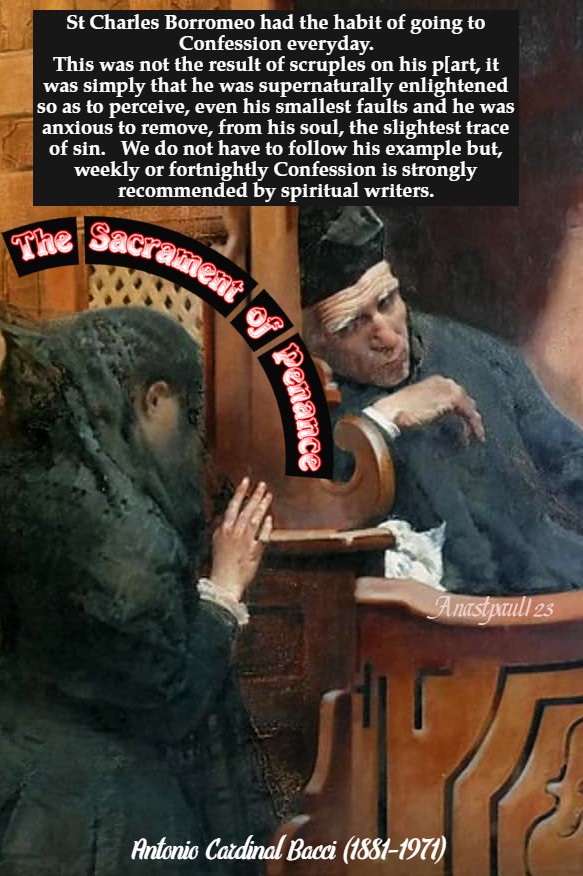
The Sacrament of Penance
“St Charles Borromeo had the habit of going to Confession everyday. This was not the result of scruples on his p[art, it was simply that he was supernaturally enlightened so as to perceive, even his smallest faults and he was anxious to remove, from his soul, the slightest trace of sin.
We do not have to follow his example but, weekly or fortnightly Confession is strongly recommended by spiritual writers. It is a great loss to neglect Confession for too long a period. We are deprived of the graces of this Sacrament, our fervour grows cold and we slip easily from venial into mortal sin.
Let us decide to make a good Confession every week whenever we find it possilbe.”
Quote/s of the Day – 25 February – The First Saturday of Lent – Isaias 58:9-14, Mark 6:47-56
“Thus says the Lord God: If you remove from your midst oppression, false accusation and malicious speech. if you bestow your bread on the hungry and satisfy the afflicted; then light shall rise for you in the darkness and the gloom shall become for you,like midday; then the Lord will guide you always and give you plenty, even on the parched land. He will renew your strength and you shall be like a watered garden, like a spring whose water never fails.”
Isaiah 58:9-11
“… If you hold back your foot on the Sabbath from following your own pursuits on My holy day, if you call the Sabbath a delight and the Lord’s Holy Day honourable; if you honour it, by not following your ways, seeking your own interests, or speaking with malice – then you shall delight in the Lord …”
Isaiah 58:13-14
“Take courage; it is I, do not be afraid. And He got into the boat with them and the wind fell.”
Our Lenten Journey with St Francis de Sales – 25 February – Saturday after Ash Wednesday – Isaias 58:9-14, Mark 6:47-56 – Scripture search here: https://www.drbo.org/
“One thing I have asked of the Lord, this will I seek after that I may dwell in the house of the Lord, all the days of my life. That I may see the delight of the Lord and may visit His temple.” Psalm 26:4
“Take courage, it is I be not afraid!” Mark 6:50
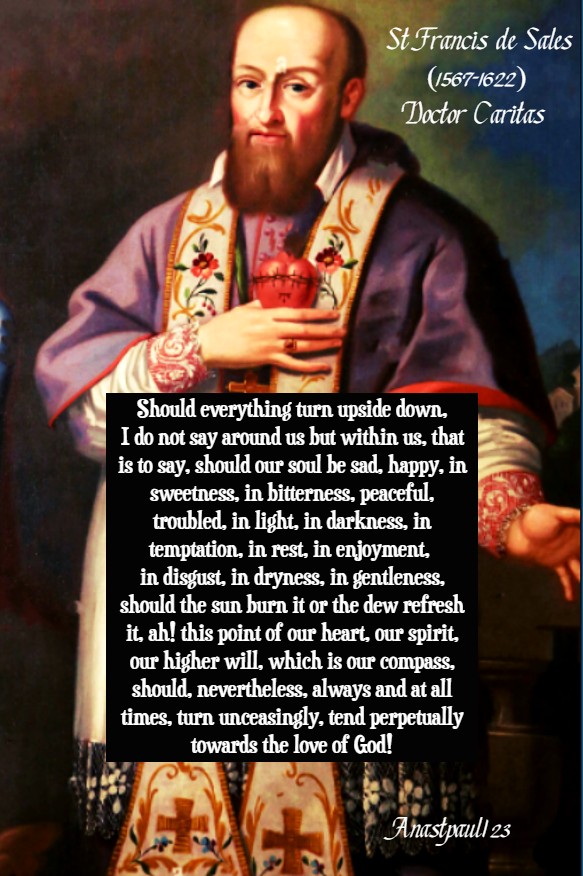
OUR COMPASS St Francis de Sales (1567-1622) Doctor Caritas
“ALL SHIPS HAVE A COMPASS which, when touched by the magnet, always turns towards the polar star. And even when the boat is making its way in a southward direction yet, the compass does not cease turning towards its north at all times.
In the same way, let the fine point of your spirit always turn towards God, its north. … You are about to take to the high seas of the world, do not, on this account, alter dial or mast, sail or anchor or wind. Keep Jesus Christ as your dial at all times, His Cross for a mast on which to hoist your resolutions, as a sail. Let our anchor be profound trust in Him and set out early. May the propitious wind of heavenly inspirations ever fill the sails of your vessel more and more and cause you to speed forward to the harbour of a holy eternity. …
Should everything turn upside down, I do not say around us but within us, that is to say, should our soul be sad, happy, in sweetness, in bitterness, peaceful, troubled, in light, in darkness, in temptation, in rest, in enjoyment, in disgust, in dryness, in gentleness, should the sun burn it or the dew refresh it, ah! this point of our heart, our spirit, our higher will, which is our compass, should, nevertheless, always and at all times, turn unceasingly, tend perpetually towards the love of God!” (From the Letters).
One Minute Reflection – 25 February – The First Saturday of Lent – Isaias 58:9-14, Mark 6:47-56 – Scripture search here: https://www.drbo.org/
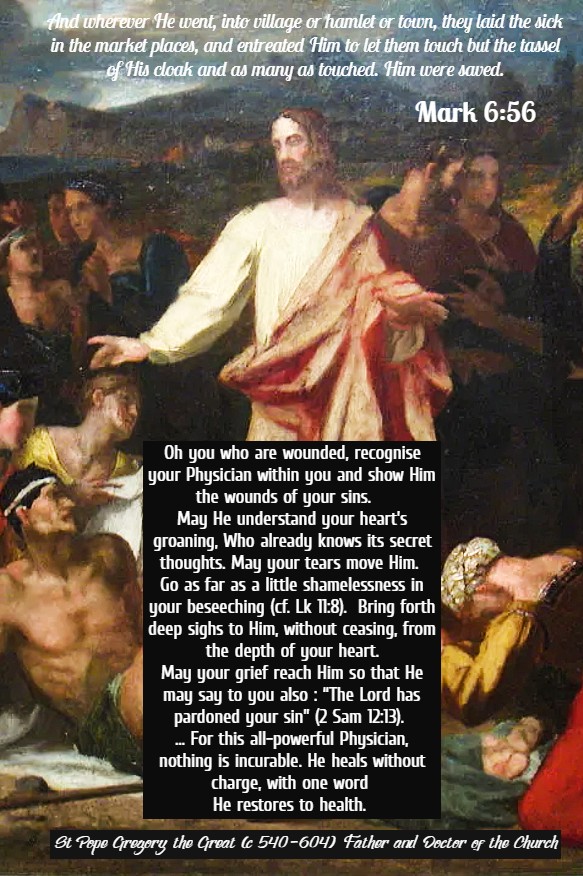
“And wherever He went, into village or hamlet or town, they laid the sick in the market places, and entreated Him to let them touch but the tassel of His cloak and as many as touched. Him were saved. ” – Mark 6:56
REFLECTION – “Let us set before our interior consideration, someone gravely wounded who is about to breathe his last. … Now, the soul’s wound is sin, of which Scripture speaks in these terms: “Wound and welt and gaping gash, not drained or bandaged or eased with salve” (Is 1:6). Oh you who are wounded, recognise your Physician within you and show Him the wounds of your sins. May He understand your heart’s groaning, Who already knows its secret thoughts. May your tears move Him. Go as far as a little shamelessness in your beseeching (cf. Lk 11:8). Bring forth deep sighs to Him, without ceasing, from the depth of your heart. May your grief reach Him so that He may say to you also : “The Lord has pardoned your sin” (2 Sam 12:13). Cry out with David, who said: “Have mercy on me, O God, in … the greatness of your compassion” (Ps 50[51]:3). It is as though one were to say: “I am in great danger because of an enormous wound, that no doctor can cure, unless the all-powerful Physician comes to help me.” For this all-powerful Physician, nothing is incurable. He heals without charge, with one word, He restores to health. I would have despaired of my wound, were it not that I placed my trust in the Almighty.” – St Pope Gregory the Great (c 540-604) Father and Doctor of the Church (Commentary on Psalm 50[51])
PRAYER – Hear, O Lord, our humble prayers and grant that we may devoutly keep this fast which has been established, to cure our souls and bodies. Through Jesus Christ, Thy Son our Lord, Who lives and reigns with Thee, in the unity of the Holy Ghost, God, world without end. Amen (Collect).
Our Morning Offering – 25 February – The First Saturday of Lent
Shelter Me Under Thy Mantle, Refuge of Sinners By St Alphonsus Liguori (1696-1787) Most Zealous Doctor
Most holy Virgin Immaculate, my Mother Mary, to thee, who art the Mother of my Lord, the Queen of the Universe, the Advocate, the Hope, the Refuge of sinners, I, who am the most miserable of all sinners, have recourse this day. I venerate thee, great Queen and I thank thee for the many graces thou hast bestowed upon me, even unto this day, in particular, for having delivered me from the hell which I have so often deserved by my sins. I love thee, my dearest Lady and because of that love, I promise to serve thee willingly forever and to do what I can to make thee loved by others. I place in thee all my hopes for salvation, accept me as thy servant and shelter me under thy mantle, thou, who art the Mother of Mercy. And since thou are so powerful with God, deliver me from all temptations, or at least, obtain for me the strength to overcome them until death. From thee, I implore, a true love for Jesus Christ. Through thee, I hope to die a holy death. My dear Mother, by thy love for Almighty God, I pray thee to assist me always but most of all, at the last moment of my life. Forsake me not then, until thou shalt see me safely in Heaven, there to bless thee and sing of thy mercies, throughout all eternity. Such is my hope. Amen
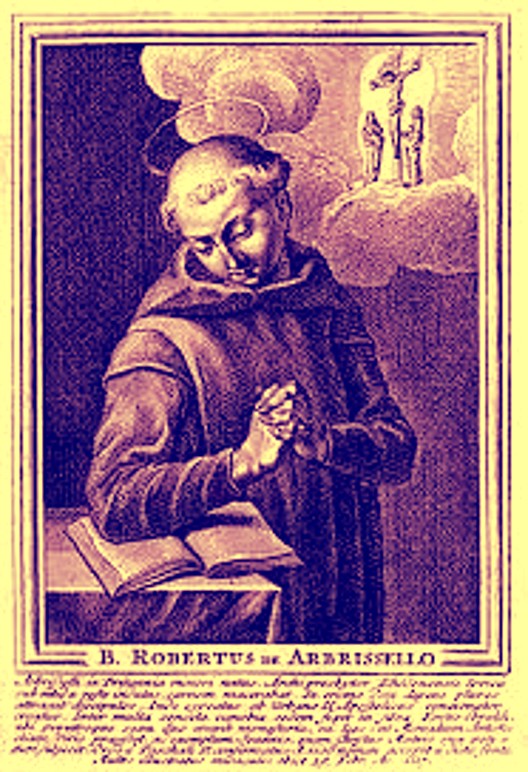
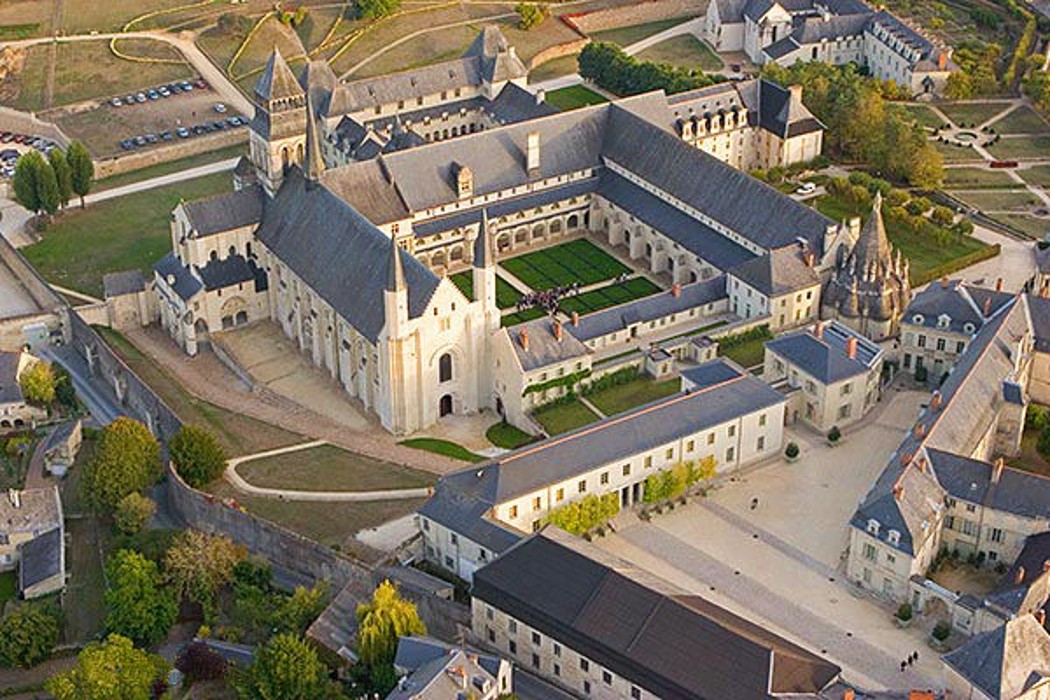
Saint of the Day – 25 February – Blessed Robert of Arbrissel (c1045 – 1116) Priest, Itinerant Apostolic Missionary Preacher of immense talent, Founder of the renowned dual Monastery of Fontevraud-l’Abbaye in Pays-de-la-Loire, France, Teacher, both a Reformer, as well as possessing the sometimes opposite virtue of being a Peacemaker. A quite astonishing man.
The first Vita (Life) of Blessed Robert was written by Baudri, Archbishop of Dol in Brittany, Robert’s intimate friend, at the request of Venerable Petronilla of Chemillé, widow and first Abbess of this immense and celebrated Monastery, who was named by Robert to replace him at his death, as Superior General of the Order of Fontevrault. The Feast of Venerable Petronilla (Died 1149) is celebrated by the Order of Fontevrault on 24 April.
Blessed Robert, one of the principal historical figures of his time and one of the most astonishing Saints of the Church, was born at Arbrissel, now Arbressec, a short distance from Rennes, in about 1045, the son of Domalioch and Orguende. His father was a Parish Priest. Married clergy were not uncommon prior to the Gregorian reform.
He studied in Paris, sustained in his poverty by the assistance of charitable benefactors and became there a celebrated Doctor in the Sacred sciences. His remarkable gifts were everywhere appreciated.
It is supposed that he was Ordained a Priest in Paris, before the Bishop of his native Diocese of Rennes recalled him in 1085 to assist him in reforming his flock. There in Brittany, as Archpriest, Robert devoted himself to the healing of feuds, the suppression of simony, lay investiture and irregular marriages. He was compelled, by the hostility his reforming zeal had caused, to leave the Diocese when his Bishop died in 1093.
In 1095, after teaching Theology for a time in Angers, Robert became a Hermit near Laval, living a life of severe penance with several others, in the company of St Bernard of Thiron, afterwards Founder of the Congregation of Tiron, St Vitalis of Savigny, Founder of Savigny Abbey and others of considerable note. In 1096, Robert himself, founded a Monastery at the site where they were then dwelling in the forest of Craon near Roe. This was the Monastery of La Roé of Canons Regular, with Robert becoming himself the first Abbot.
The reputation of the solitaries had attracted many to visit them and the piety, kindness, eloquence and powerful personality of Robert, in particular, drew many followers. It is said that the forest of Craon became the dwelling-place of a multitude of Anchorites, as once the deserts of Egypt were.
Robert was summoned by Pope Urban II to go to Angers to preach for the dedication of a Church. The Pope then sent him out from there as Apostolic Missionary, on a preaching mission of the various Provinces. He left his Abbacy at and taught abandonment of the world and evangelical poverty all over western France. Robert found a patron in Hildebert, Bishop of Le Mans.
His gifts of grace and nature, his eloquence, heightened by his strikingly ascetic appearance, attracted crowds and effected countless conversions. His disciples were of all ages and conditions, including lepers; even whole families followed him everywhere. Thus was founded his famous Monastery of Fontevrault, not far from Cannes, to lodge these flocks of determined followers of the Gospel. The men dwelt in a separate region from the women; each group had its Chapel and the lepers their quarters apart. Charity, silence, modesty and meekness characterised these establishments, which were sustained by the products of the earth and the alms offered by the neighbouring populations.
Until the death of the holy preacher in 1116, he continued to preach everywhere in western France. The enemy of souls could not remain indifferent to all of this Christian sanctity. Persecuted by certain heretics and others during his life, Blessed Robert was accused of exaggeration and calumniated after his death but the accusatory writings were eventually declared to be forgeries. A calumniatory letter, attributed falsely to an Abbot of western France, who had, in other situations shown a vindictive spirit, was definitely proved not to be from his hand but written by the heretic Roscelin and containing pure fabrications.
Blessed Robert is remembered for his ideal of perfect poverty, both exterior and interior, according to the words of Our Lord, His first beatitude – “Blessed are the poor in spirit.” He was buried at Fontevrault, as he had desired to be but his remains were later transferred to a house of the Order, restored in 1806 after the revolution, at Chemillé in the Diocese of Angers.
St Caesarius of Nanzianzen St Donatus the Martyr Saint Felix III, Pope St Gerland the Bishop St Gothard the Hermit St Herena the Martyr St Justus the Martyr
St Nestor of Side St Riginos Blessed Robert of Arbrissel (c1045 – 1116) Priest, Itinerant Missionary Preacher, Founder of the renowned dual Monastery of Fontevraud-l’Abbaye in Pays-de-la-Loire, France, Teacher, both a Reformer, as well as possessing the opposite virtue of being a Peacemaker. A quite astonishing man. St Tharasius St Victor of Saint Gall
Martyrs of Egypt – A group oSeven f Christian men who were exiled to Egypt for their faith and were eventually Martyred for their faith in the persecutions of Numerian. We know little more than their names: Claudianus, Dioscurus, Nicephorus, Papias, Serapion, Victor, Victorinus.
Thought for the Day – 24 February – Meditations with Antonio Cardinal Bacci (1881-1971)
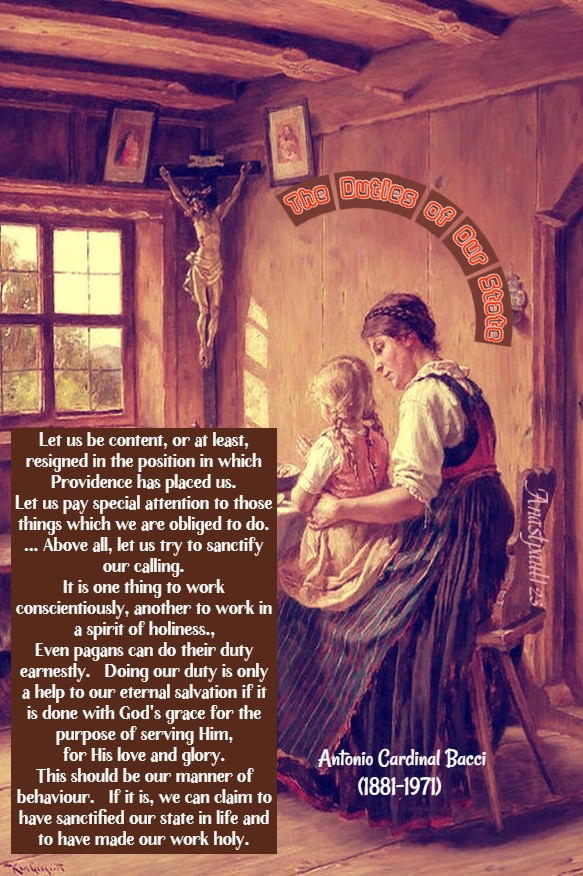
The Duties of Our State
“Let us be content, or at least, resigned in the position in which Providence has placed us. Let us pay special attention to those things which we are obliged to do. Anything which is not necessary should be left until later, even if it is more pleasant or seems more worthwhile in itself. Let us never become involved in business which is incompatible with our state or dangerous to our eternal welfare. Let us not make light of minor offences against the duties of our state. Smaller transgressions gradually become greater. Above all, let us try to sanctify our calling. It is one thing to work conscientiously, another to work in a spirit of holiness., Even pagans can do their duty earnestly. Doing our duty is only a help to our eternal salvation if it is done with God’s grace for the purpose of serving Him, for His love and glory. This should be our manner of behaviour. If it is, we can claim to have sanctified our state in life and to have made our work holy.”
Quote/s of the Day – 24 February – Friday after Ash Wednesday and the Feast of St Matthias, Apostle – Acts 1:15-26, Matthew 11:25-30 – Scripture search here: https://www.drbo.org/
“And praying, they said: Thou, Lord, Who knows the hearts of all men, show which of these two Thou hast chosen, to take the place of this ministry and apostleship, from which Judas hath, by transgression, fallen …”
Acts 1:24-25
“When we stand in the light it is not we who illumine the light and cause it to shine but we are illuminated and made shining by the light… God grants His blessings on those who serve Him because they are serving Him and on those who follow Him because they are following Him but He receives no blessing from them because He is perfect and without need.”
St Irenaeus(c130-c208) Bishop, Father of the Church
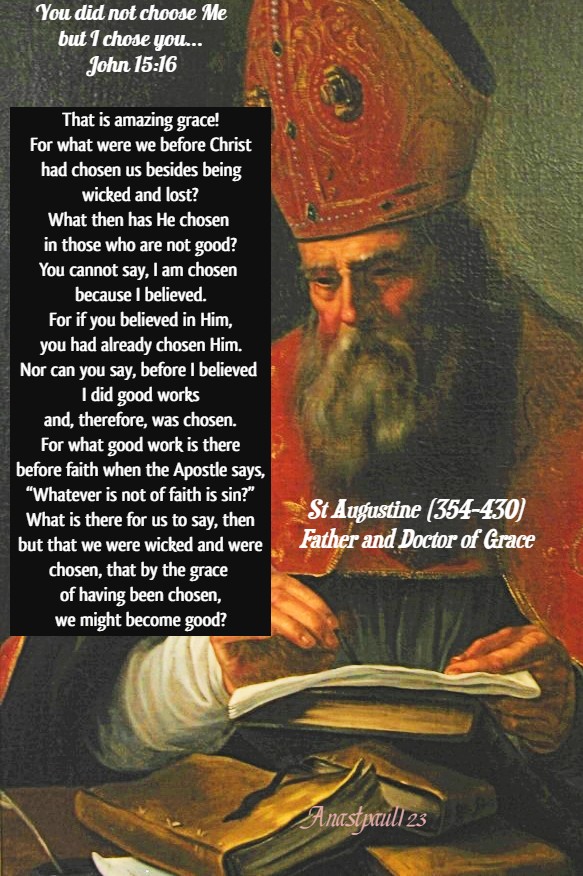
“You did not choose Me but I chose you…”
John 15:16
“That is amazing grace! For what were we before Christ had chosen us besides being wicked and lost? What then has He chosen in those who are not good? You cannot say, I am chosen because I believed. For if you believed in Him, you had already chosen Him. Nor can you say, before I believed I did good works and, therefore, was chosen. For what good work is there before faith when the Apostle says, “Whatever is not of faith is sin?” What is there for us to say, then but that we were wicked and were chosen, that by the grace of having been chosen, we might become good?”
St Augustine (354-430) Father and Doctor of Grace
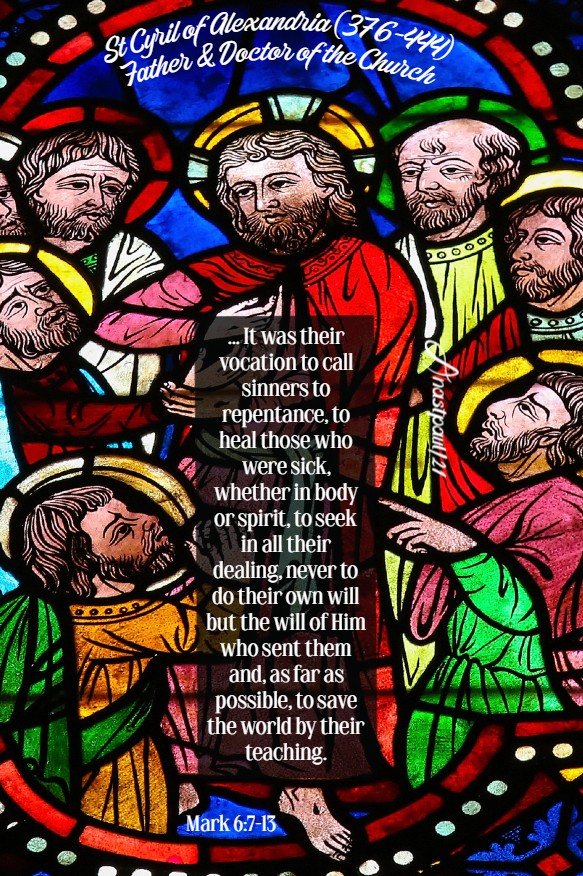
“… It was their vocation to call sinners to repentance, to heal those who were sick, whether in body or spirit, to seek in all their dealing, never to do their own will but the will of Him who sent them and, as far as possible, to save the world by their teaching.”
St Cyril of Alexandria (376-444) Bishop, Father & Doctor of the Church
Our Lenten Journey with St Francis de Sales – 24 February – Friday after Ash Wednesday, Feast of St Matthias, Apostle
“ Lord, Thou hast proved me and known me: Thou hast known my sitting down and my rising up.” Psalm 138:1-2
“Take My yoke upon you and learn from Me, for I Am meek and humble of heart and you will find rest for yourselves. For My yoke is easy and My burden light.” Matthew 11:29-30
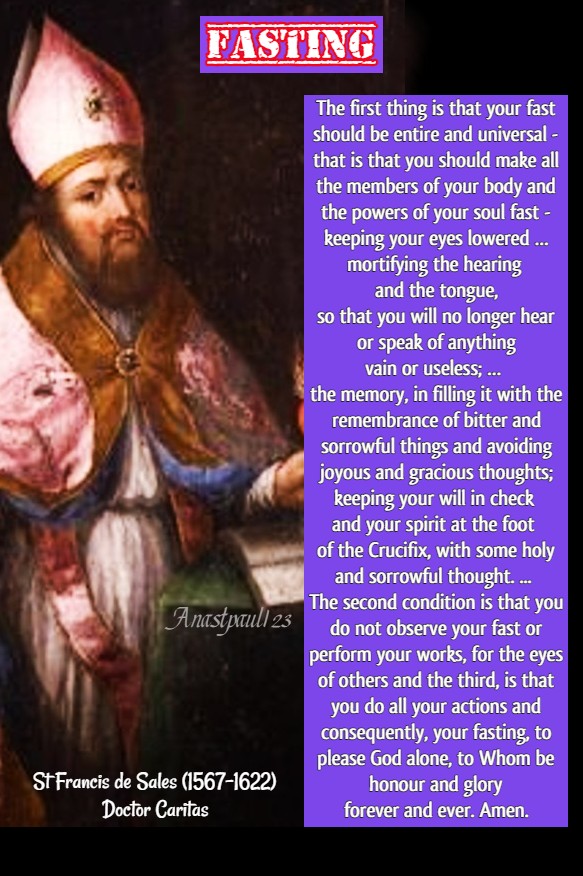
ON FASTING 3 St Francis de Sales (1567-1622) Doctor Caritas
“THE THIRD CONDITION NECESSARY for fasting well, is to look to God and to do everything to please Him, withdrawing within ourselves in imitation of a great Saint, St Gregory the Great, who, withdrew into a secret and out-of-the-way place, where he remained for some time without anyone knowing where he was, being content that the Lord and His Angels knew it.
This is what Cassian, that great Father of the spiritual life, teaches us so well in the book of his admirable Conferences. (Many Saints held it in such esteem that they never went to bed without reading a chapter from it to recollect their mind to God.) He says: “What will it profit you to do what you are doing for the eyes of creatures? Nothing but vanity and complacency which are good for Hell alone. But if you keep your fast and do all your works to please God alone, you will labour for eternity, without delighting in yourself or caring whether you are seen by others or not, since what you do is not done for them, nor do you await your recompense from them. We must keep our fast with humility and truth and not with lying and hyocrisy – that is, we must fast for God and to please Him alone.” …
This is all I wish to tell you regarding fasting and what must be observed in order to fast well. The first thing is that your fast should be entire and universal – that is that you should make all the members of your body and the powers of your soul fast – keeping your eyes lowered … mortifying the hearing and the tongue, so that you will no longer hear or speak of anything vain or useless; … the memory, in filling it with the remembrance of bitter and sorrowful things and avoiding joyous and gracious thoughts; keeping your will in check and your spirit at the foot of the Crucifix, with some holy and sorrowful thought. If you do this, your fast will be universal, interior and exterior, for you will mortify both your body and your spirit. The second condition is that you do not observe your fast or perform your works, for the eyes of others and the third, is that you do all your actions and consequently, your fasting, to please God alone, to Whom be honour and glory forever and ever. Amen.” – (Excerpt from the Sermon given for Ash Wednesday on 9 February 1622).


































 AnaStpaul
You must be logged in to post a comment.