Thought for the Day – 28 February – Meditations with Antonio Cardinal Bacci (1881-1971)
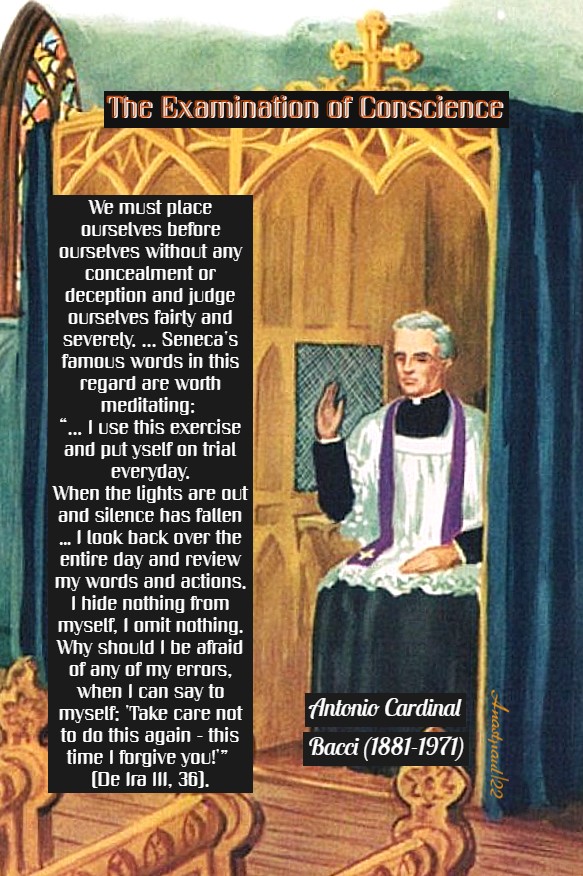
The Examination of Conscience
“Remember the key to wisdom: “Know yourself.” These words were written in Greek in golden letters on the pediment of the temple of the Delphic Apollo. They were the basic rule of the moral doctrine of Socrates and other philosophers. But, if we are to know ourselves well, we must examine ourselves thoroughly. We must place ourselves before ourselves without any concealment or deception and judge ourselves fairly and severely.
The examination of conscience is recommended, not only by spiritual writers of the Church but, also by pagan philosophers. Seneca’s famous words in this regard are worth meditating – “Anger will disappear or subside,” he says, “when you know that you have to present yourself for judgement everyday. Is there any finer custom than this daily examination of conscience? What peace follows from this examination of ourselves! How tranquil, wise and free the mind becomes, whether it has been praised or reproved, when it has acted as its own secret investigator and critic and has examined its own behaviour. I use this exercise and put myself on trial everyday. When the lights are out and silence has fallen … I look back over the entire day and review my words and actions. I hide nothing from myself I omit nothing. Why should I be afraid of any of my errors, when I can say to myself: ‘Take care not to do this again – this time I forgive you!” (De Ira III, 36).”
Quote/s of the Day – 28 February – 1 Cor.inthians 13:1-13, Luke 18:31-43
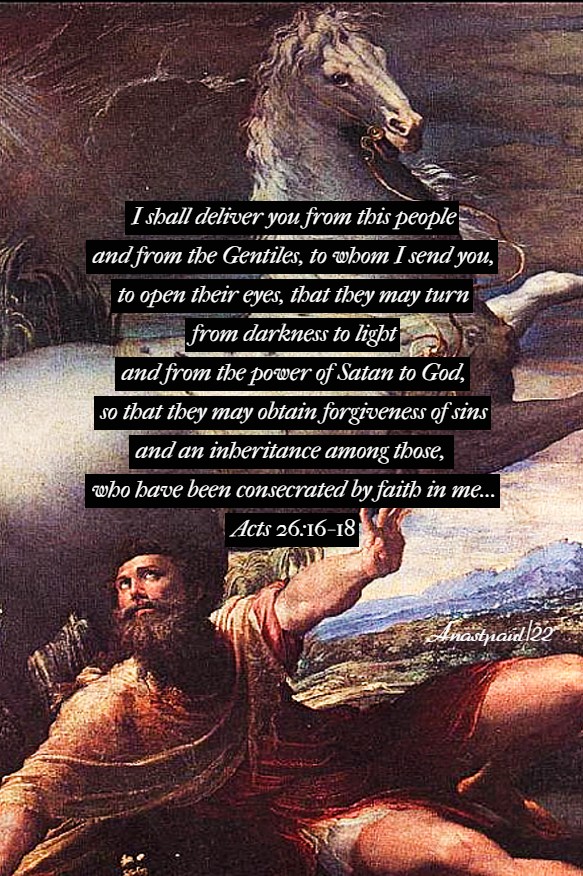
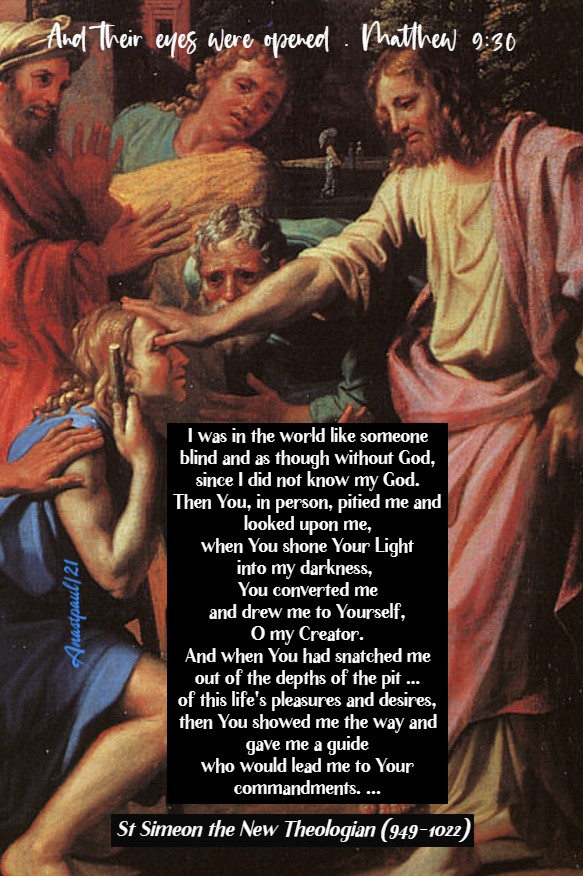
Blind
“I have appeared to you for this purpose, to appoint you as a servant and witness, of what you have seen and what you will be shown. I shall deliver you from this people and from the Gentiles, to whom I send you, to open their eyes, that they may turn from darkness to light and from the power of Satan to God, so that they may obtain forgiveness of sins and an inheritance among those, who have been consecrated by faith in me.”
Acts 26:16-18
“I was in the world like someone blind and as though without God, since I did not know my God. Then You, in person, pitied me and looked upon me, when You shone Your Light into my darkness, You converted me and drew me to Yourself, O my Creator. And when You had snatched me out of the depths of the pit … of this life’s pleasures and desires, then You showed me the way and gave me a guide who would lead me to Your commandments.”
St Simeon the New Theologian (949-1022)
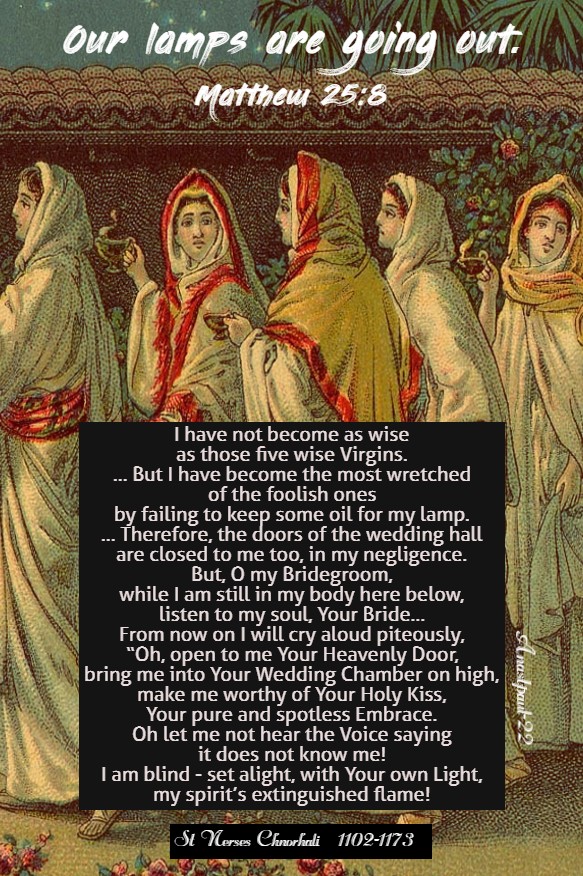
“Our lamps are going out.”
Matthew 25:8 “I have not become as wise as those five wise Virgins. … But I have become the most wretched of the foolish ones by failing to keep some oil for my lamp, namely, mercy together with virginity or, still more, the anointing from Baptism’s Sacred fount…
Therefore, the doors of the wedding hall are closed to me too, in my negligence. But, O my Bridegroom, while I am still in my body here below, listen to my soul, Your Bride… From now on, I will cry aloud piteously, “Oh, open to me Your Heavenly Door, bring me into Your Wedding Chamber on high, make me worthy of Your Holy Kiss, Your pure and spotless Embrace. Oh let me not hear the Voice saying it does not know me! I am blind; set alight with Your own Light my spirit’s extinguished flame!”
St Nerses Chnorhali (1102-1173) Armenian Bishop
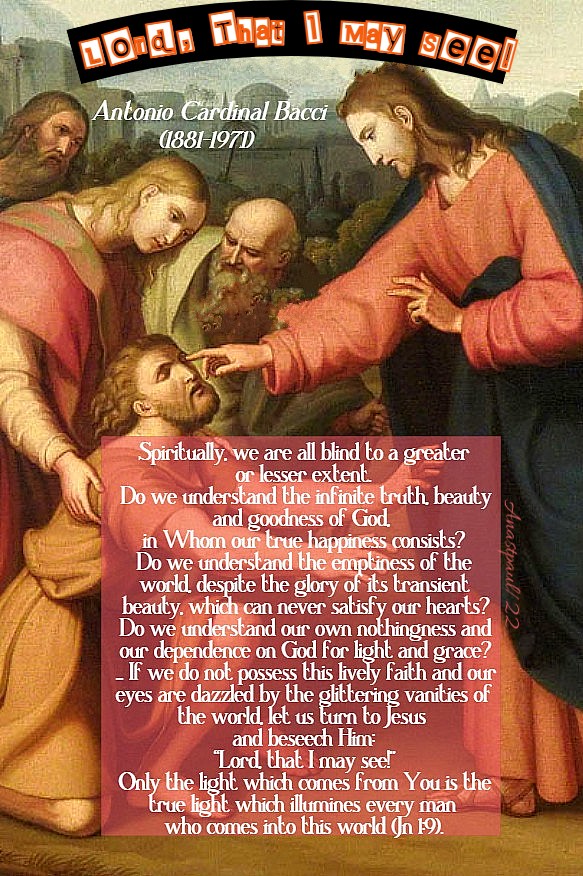
“Spiritually, we are all blind to a greater or lesser extent. Do we understand the infinite truth, beauty and goodness of God, in Whom our true happiness consists? Do we understand the emptiness of the world, despite the glory of its transient beauty, which can never satisfy our hearts? Do we understand our own nothingness and our dependence on God for light and grace? If we do not possess this lively faith and our eyes are dazzled by the glittering vanities of the world, let us turn to Jesus and beseech Him: “Lord, that I may see!” Only the light which comes from You is the true light which illumines every man who comes into this world (Jn 1:9).”
Antonio Cardinal Bacci (1881-1971)
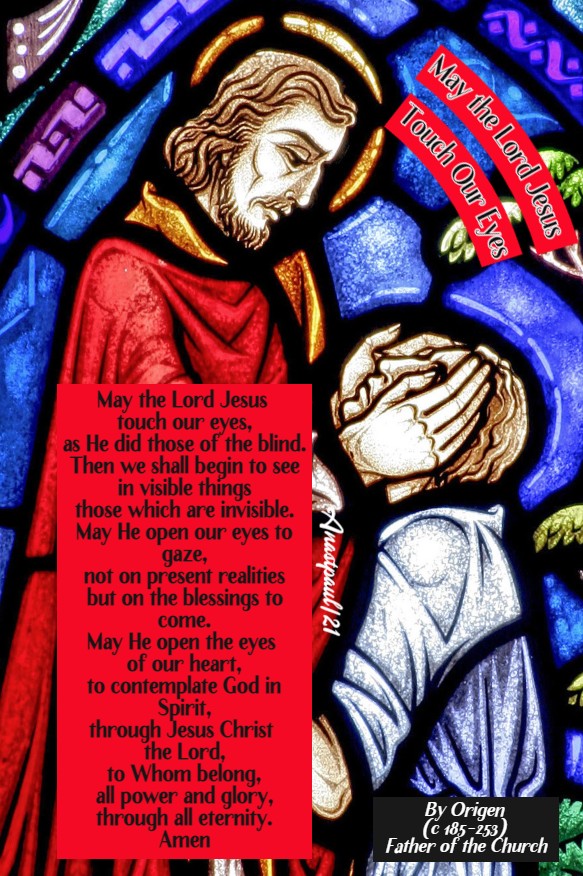
May the Lord Jesus Touch Our Eyes By Origen (c 185-253) Father of the Church
May the Lord Jesus touch our eyes, as He did those of the blind. Then we shall begin to see in visible things those which are invisible. May He open our eyes to gaze, not on present realities but on the blessings to come. May He open the eyes of our heart, to contemplate God in Spirit, through Jesus Christ the Lord, to whom belong, power and glory, through all eternity. Amen.
One Minute Reflection – 28 February – 1 Corinthians 13:1-13, Luke 18:31-43
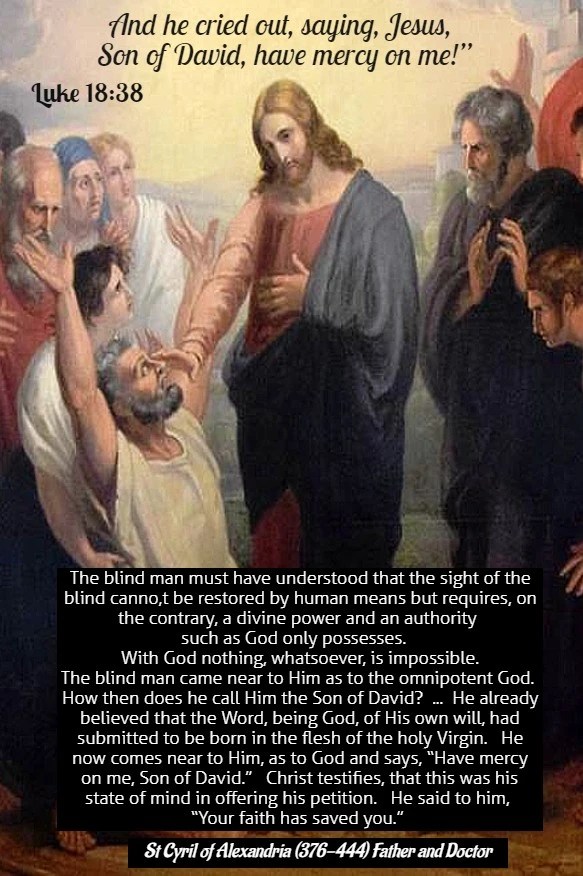
“And he cried out, saying, Jesus, Son of David, have mercy on me!” – Luke 18:38
REFLECTION – The blind man must have understood, that the sight of the blind cannot be restored by human means but requires, on the contrary, a divine power and an authority such as God only possesses. With God nothing, whatsoever, is impossible. The blind man came near to Him as to the omnipotent God. How then does he call Him the Son of David? What can one answer to this? The following is perhaps the explanation. Since He was born and raised in Judaism, of course, the predictions contained in the law and the holy prophets concerning Christ, had not escaped his knowledge. He heard them chant that passage in the book of the Psalms, “The Lord has sworn in truth to David and will not annul it, saying: ‘of the fruit of your loins I will set a king upon your throne.’” The blind man also knew, that the blessed prophet Isaiah said, “There will spring up a shoot from the root of Jesse and from his root a flower will grow up.” Isaiah also said, “Behold, a virgin will conceive and bring forth a son,and they will call his name Emmanuel, which, being interpreted is, God with us.” He already believed that the Word, being God, of His own will, had submitted to be born in the flesh of the holy Virgin. He now comes near to Him, as to God and says, “Have mercy on me, Son of David.” Christ testifies, that this was his state of mind in offering his petition. He said to him, “Your faith has saved you.” – St Cyril of Alexandria (376-444) Archbishop of Alexandria, Father and Doctor of the Incarnation (Commentary on Luke, Homily 126)
PRAYER – O Lord, we beseech You, mercifully hear our prayers, loose us from the chains of our sins and keep us from all adversity. Through Jesus Christ, Thy Son our Lord, Who lives and reigns with Thee, in the unity of the Holy Ghost, God, world without end. Amen (Collect).
Hear us, O Heavenly Father, For the Sake of Your Only Son By St Augustine (354-430) Father and Doctor of the Church
Almighty Father, come into our hearts and so fill us with Your love that forsaking all evil desires, we may embrace You, our only good. Show us, O Lord our God, what You are to us. Say to our souls, I am your salvation, speak so, that we may hear. Our hearts are before You, open our ears, let us hasten after Your Voice. Hide not Your Face from us, we beseech You, O Lord. Open our hearts, so that You may enter in. Repair the ruined mansions, that You may dwell therein. Hear us, O Heavenly Father, for the sake of Your only Son, Our Lord Jesus Christ, who lives and reigns with You and the Holy Spirit, one God, now and forever. Amen
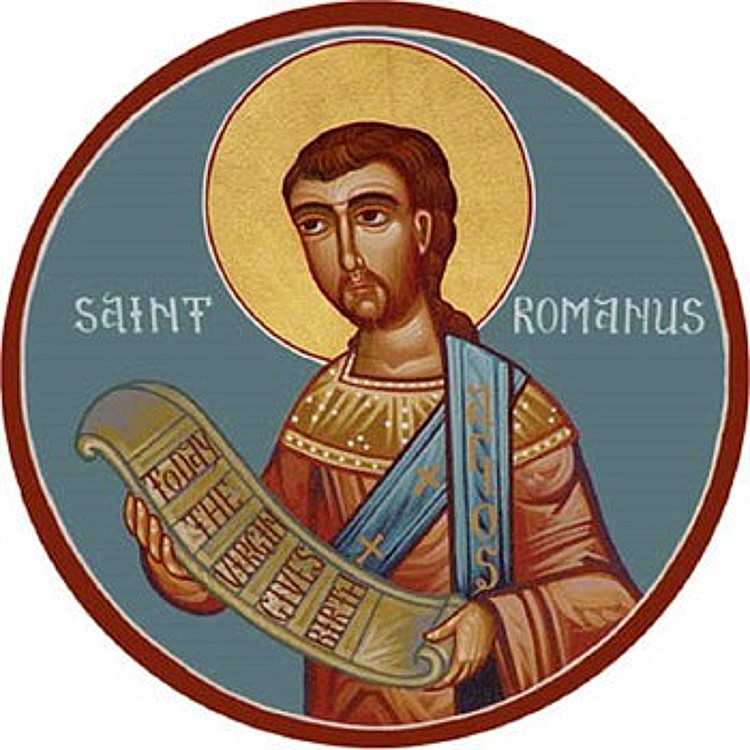
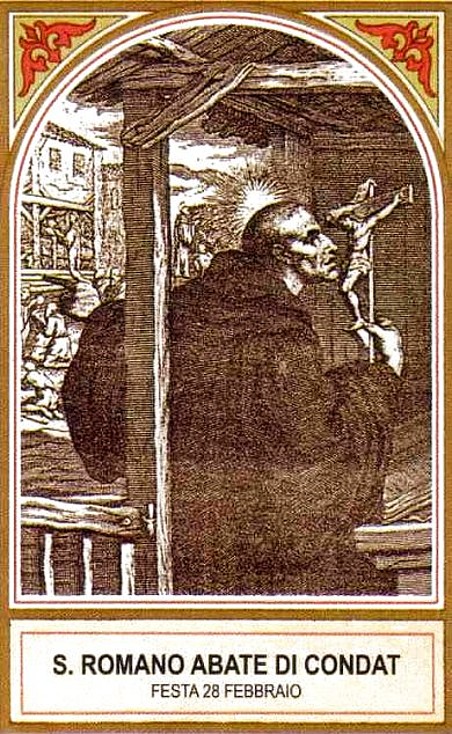
Saint of the Day – 28 February – Saint Romanus of Condat (c 390–c 463) Hermit, Abbot Born in c 390 at Upper Bugey, France and died in c 465 of natural causes. Patronages – drowning victims, insanity,mentally ill people. Together with his brother St Lupicinus, he founded the Monastery of Condat, that of Lauconne, that of the women of La Balme and that of Romainmôtier . His life was inspired by that of the Fathers of the Thebaid desert.
Romanus was born in the territory of the Sequani , today in the current Diocese of Belley-Ars. His parents sent him to study in the Ainay Monastery in Lyon , built at the confluence of the Saone with the Rhone , where he was a pupil of the Abbot Sabino who gave him a Life of the Desert Fathers. Soon he wished to live the life of a hermit, in order to better realise his ascetic ideal At the age of 35 he then retired to the forests of the Jura Massif , to a place called Condat. He lived as a Hermit, imitating the Desert Fathers of the Thebaid. He had found shelter under a great lonely pine, whose fronds protected him from the elements, feeding on wild fruit and drinking from a cool spring nearby. He had also brought a spade and seeds, which he sowed, obtaining good crops. After a few years his brother Lupicinus, who had remained a widower, joined him. Together they lived as Hermits for a few more years, fasting and doing penance.
The beginnings were difficult, above all due to the cold and humid climate of the place. Romanus and Lupicinus, discouraged by the effort, decided to abandon Condat. After a day of walking they stopped at a farmhouse and asked a woman for hospitality, but she encouraged them to go back, arguing that they should not leave the field free to Satan, who had wanted to chase them away from their hermitage.
After a few years, attracted by the fame of holiness that the few inhabitants of the surrounding area had spread, other young people came, eager to imitate them. In around 445, Romanus built the Monastery of Condat and Lupicinus, not far away, built the Monastery of Lauconne . The two brothers had completely different characters, Romanus was more good-natured and meek, while Lupicinus was austere and severe. They often alternated in the direction of the two Monasteries – when Lupicinus’ severity discouraged his Monks, Romanus intervened to encourage them with his gentleness.
In the two Monasteries a Roman rule was in force, derived from that of St. Basil, St Pachomius and the Monastery of the island of Lerino di Sant’Onorato di Arles. The whole community abstained from eating meat, on rare occasions they ate milk and eggs, dressed in animal skins and wore clogs . A few centuries later, the community founded by Romanus and Lupicinus adopted the Benedictine Rule .
When their sister Lola (or Yole) joined them, they founded for her the female Monastery of La Balme (or La Baume), on a sheer rock on the right bank of the Bienne river, which was soon populated by more than a hundred Nuns. . This Monastery was later called Saint Romain de Roche.
In 444 , the Bishop of Arles Saint Hilary, being in Besançon to depose the Bishop Celidonio, received news of the works of Romanus, he wanted to convene him in Besançon and to give him more authority and official recognition, he Ordained him a Priest but this honour did not change the behaviour of the Saint who continued to remain even more humble and kind with his Monks In 450 , Romanus founded the first Monastery of today’s Switzerland, which then took the name of Romainmôtier, which was active until 1536, when the Protestant reform destroyed it.
It is said that when going on a pilgrimage to the tomb of St Maurice in Saint Maurice-en-Valais , Romanus was surprised by the night near Geneva. He asked for hospitality from two lepers who lived in a hut and who wanted to reject him so as not to infect him but he he was not afraid of the disease and wanted to sleep under their roof. In the morning the two lepers realised that they were completely healed and went to Geneva to reveal their healing. The Genevans, who knew them well, went to look for Romanus and gave him a great celebration. Romanus, being a little confused by their attention, took the opportunity to invite them to convert and do penance.
Shortly after his return to Condat, around 465 Romano died. As he himself had arranged, he was buried in the Convent of La Balme. His relics were immediately the object of great veneration. In the seventh century they were moved to the Church of the Abbey of Condat (which, in the meantime, had been dedicated to Saint Eugendus). In 1522 a fire destroyed the Church and the relics of Romanus and Lupicinus. The few surviving remains were preserved in the Church of Saint-Romain-de-Roche built in the 16th century which replaced the Monastery of la Balme. They are enclosed in a 13th Century Reliquary in the shape of a mausoleum.
St Abercius Bl Antonia of Florence St Augustus Chapdelaine St Caerealis St Caerealis of Alexandria St Cyra of Beroea Bl Daniel Brottier St Ermine St Gaius of Alexandria
St Justus the Potter St Llibio St Macarius the Potter St Maidoc St Marana of Beroea St Oswald of Worcester St Proterius of Alexandria St Pupulus of Alexandria St Romanus of Condat (c 390–c 463) Abbot St Ruellinus of Treguier St Rufinus the Potter St Serapion of Alexandria St Sillan of Bangor
Martyrs of Alexandria – A number of clerics and layman who died as martyrs of charity for ministering to the sick during a plague that ravaged Alexandria, Egypt in 261.
Martyrs of Antwerp (14 Saints)
Martyrs of Corinth (26 Saints)
Four Martyred Potters: Justus Macarius Rufinus Theophilus
Martyrs of Unzen – 16 lay people Martyred together in one of the periodic anti-Christian persecutions in imperial Japan – They were Martyred on 28 February 1627 in Unzen, Japan. • Alexius Sugi Shohachi • Damianus Ichiyata • Dionisius Saeki Zenka • Gaspar Kizaemon • Gaspar Nagai Sohan • Ioannes Araki Kanshichi • Ioannes Heisaku • Ioannes Kisaki Kyuhachi • Leo Nakajima Sokan • Ludovicus Saeki Kizo • Ludovicus Shinzaburo • Maria Mine • Paulus Nakajima • Paulus Uchibori Sakuemon • Thomas Kondo Hyoemon • Thomas Uzumi Shingoro
Lenten Preparation Novena in Reparation to the Holy Face Day Eight
“All those who, attracted by My Love and venerating My Countenance, shall receive, by virtue of My Humanity, a brilliant and vivid impression of My Divinity. This splendour shall enlighten the depths of their souls, so that in eternal glory the celestial court shall marvel at the marked likeness of their features, with My Divine Countenance.” … Our Lord Jesus Christ to St Gertrude the Great (1256-1302)
DAILY PREPARATORY PRAYER
O Most Holy and Blessed Trinity, through the intercession of Holy Mary, whose soul was pierced through by a sword of sorrow at the sight of the passion of her Divine Son, we ask Your help, in making a perfect Novena of Reparation with Jesus, united with all His sorrows, love and total abandonment. We now implore all the Angels and Saints to intercede for us as we pray this Holy Novena to the Most Holy Face of Jesus and for the glory of the most Holy Trinity, Father, Son and Holy Spirit. Amen
(Console Holy Face and recite Daily Preparatory Prayer)
DAY EIGHT Psalm 50:16-17: O rescue me, God of my salvation and my tongue shall extol Thy justice. O Lord, open my lips, and my mouth shall declare Thy praise.
Most merciful Face of Jesus, Who in this vale of tears, was so moved by our misfortunes, to call Yourself the healer of the sick and the good Shepherd of the souls gone astray, allow not Satan to draw us away from You but keep us always under Your loving protection, together with all souls who endeavour to console You.
Mary, our Mother, intercede for us. Saint Joseph, pray for us. Through the merits of Your Precious Blood and Your Holy Face, O Jesus, grant us our petition ……………… Pardon and mercy. Amen
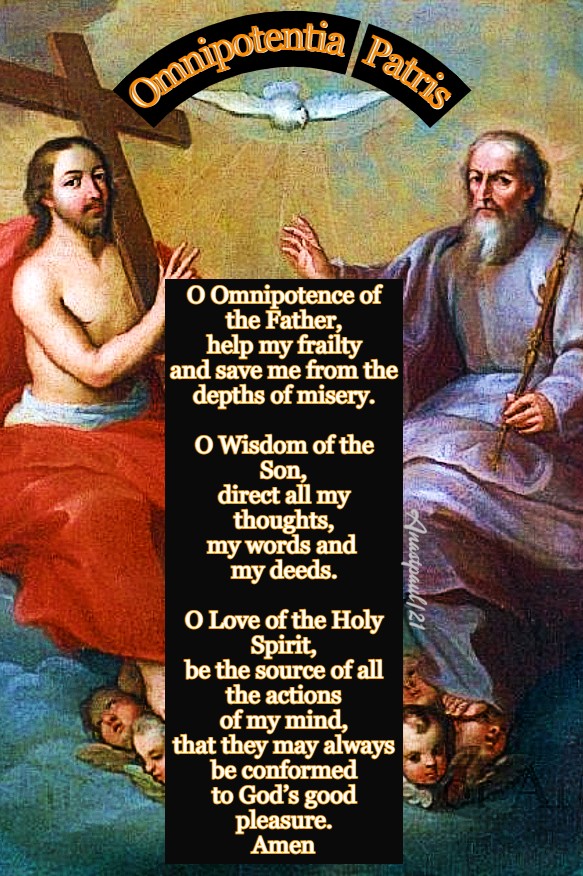
Omnipotentia Patris
O Omnipotence of the Father, help my frailty and save me from the depths of misery.
O Wisdom of the Son, direct all my thoughts, my words and my deeds.
O Love of the Holy Spirit, be the source of all the actions of my mind, that they may always be conformed to God’s good pleasure. Amen
Pray (1) Our Father, three (3) Hail Marys, one (1) Glory Be.
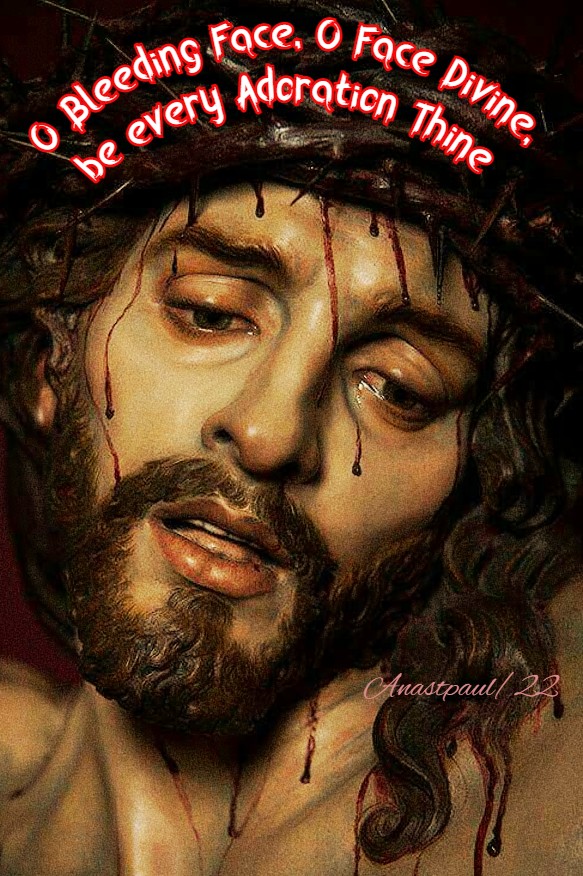
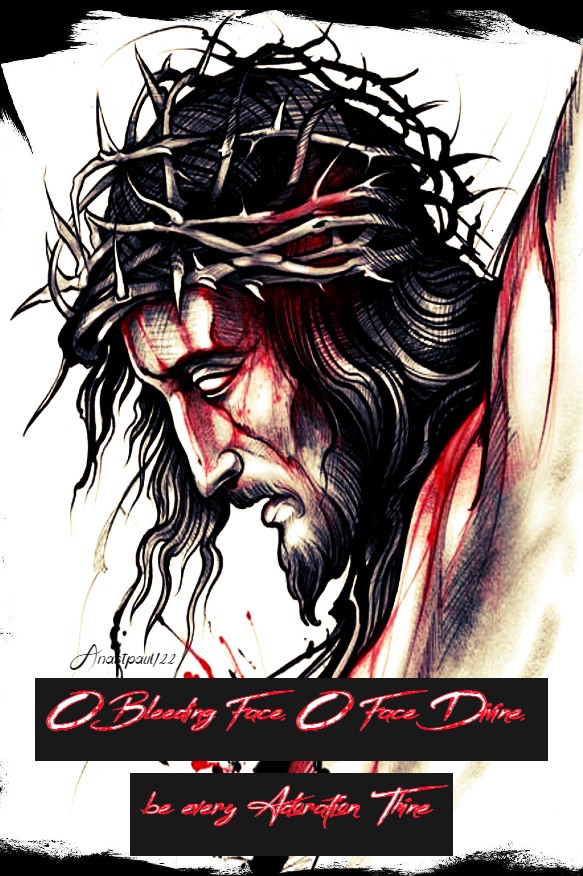
O Bleeding Face, O Face Divine, be every Adoration Thine (Three times)
Thought for the Day – 27 February – Meditations with Antonio Cardinal Bacci (1881-1971)
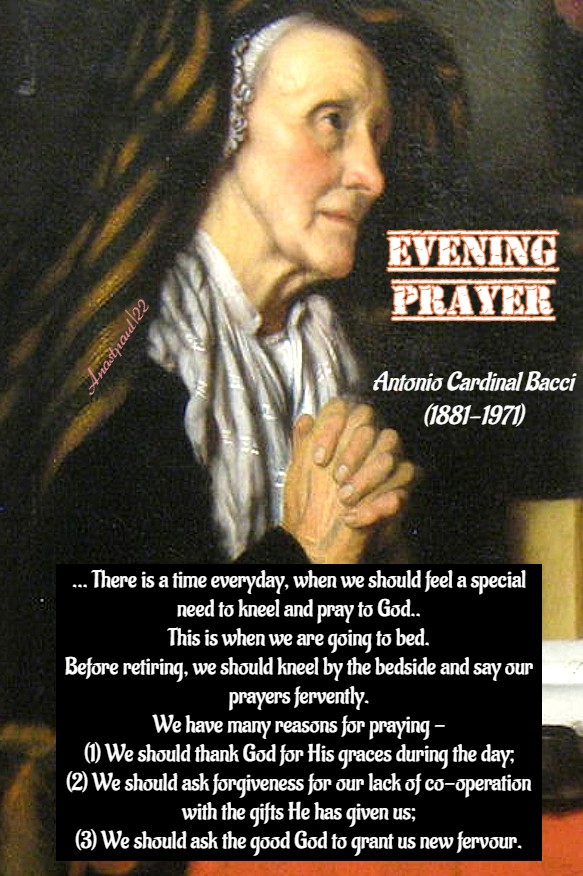
Evening Prayer
“We should pray all the time because we always need the help of God. “They must always pray and not lose heart” (Lk 18:11). There are certain times, however, when this need of God is greater than usual. This is so when we are tempted, or when we are threatened by some evil, whether spiritual or physical. Our need is also greater when we have some important decision to make, or difficult task to undertake. When we are close to death, this need of God is exceptionally urgent.
Apart from these occasions, there is a time everyday, when we should feel a special need to kneel and pray to God.. This is when we are going to bed. Before retiring, we should kneel by the bedside and say our prayers fervently. We have many reasons for praying – (1) We should thank God for His graces during the day; (2) We should ask forgiveness for our lack of co-operation with the gifts He has given us; (3) We should ask the good God to grant us new fervour. Amen.”
Quote/s of the Day – 27 February – Quinquagesima Sunday – 1 Corinthians 13:1-13, Luke 18:31-43
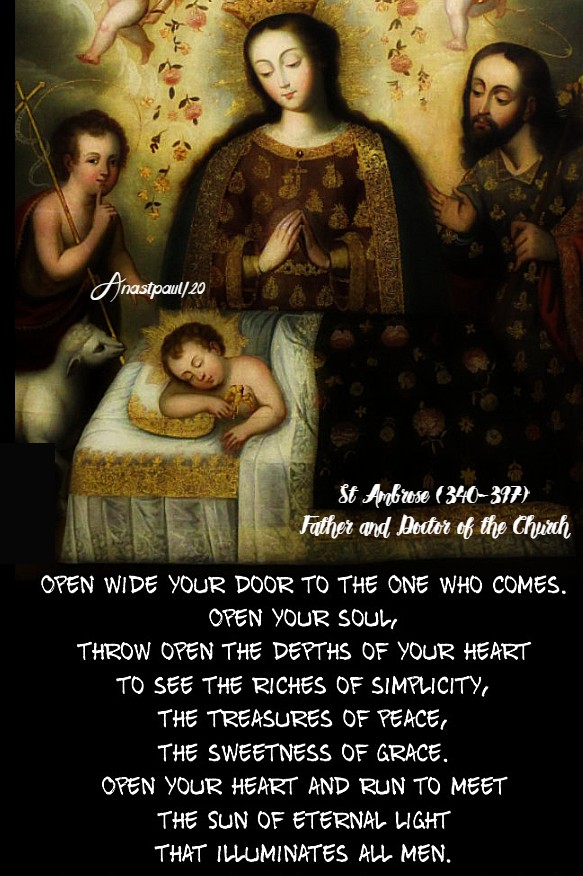
“Open wide your door to the One who comes. Open your soul, throw open the depths of your heart to see the riches of simplicity, the treasures of peace, the sweetness of grace. Open your heart and run to meet the Sun of eternal Light that illuminates all men.”
St Ambrose (340-397) Father and Doctor of the Church
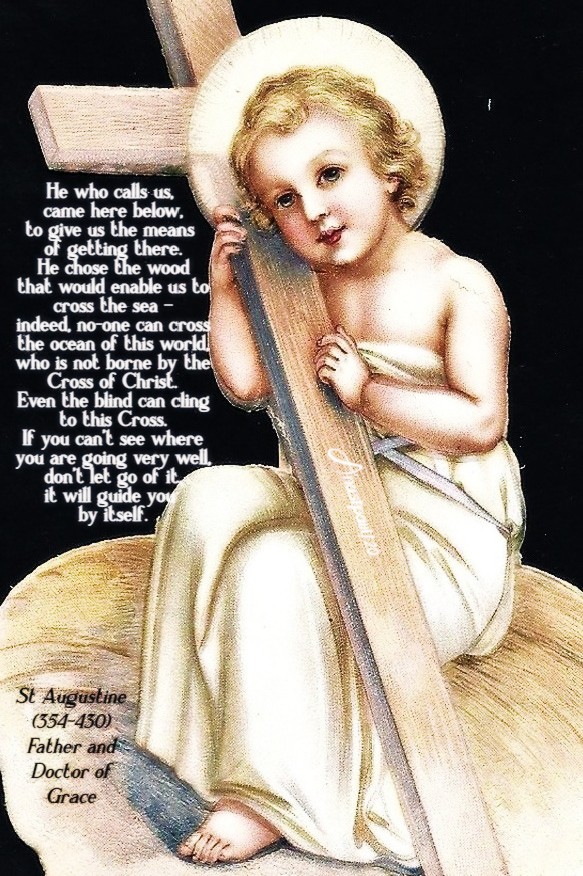
“He who calls us, came here below, to give us the means of getting there. He chose the wood that would enable us to cross the sea – indeed, no-one can cross the ocean of this world, who is not borne by the Cross of Christ. Even the blind can cling to this Cross. If you can’t see where you are going very well, don’t let go of it, it will guide you by itself. ”
St Augustine (354-430) Father and Doctor of the Church
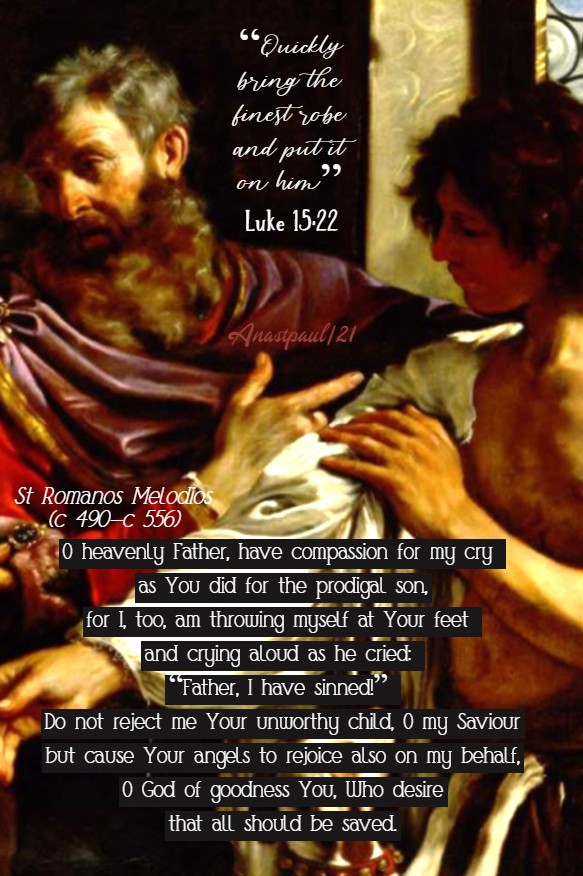
“O heavenly Father, have compassion for my cry as You did for the prodigal son, for I, too, am throwing myself at Your feet and crying aloud as he cried: “Father, I have sinned!” Do not reject me Your unworthy child, O my Saviour but cause Your angels to rejoice also on my behalf, O God of goodness You, Who desire that all should be saved.”
St Romanos Melodios (c 490-c 556) Monk, Composer of hymns, Poet
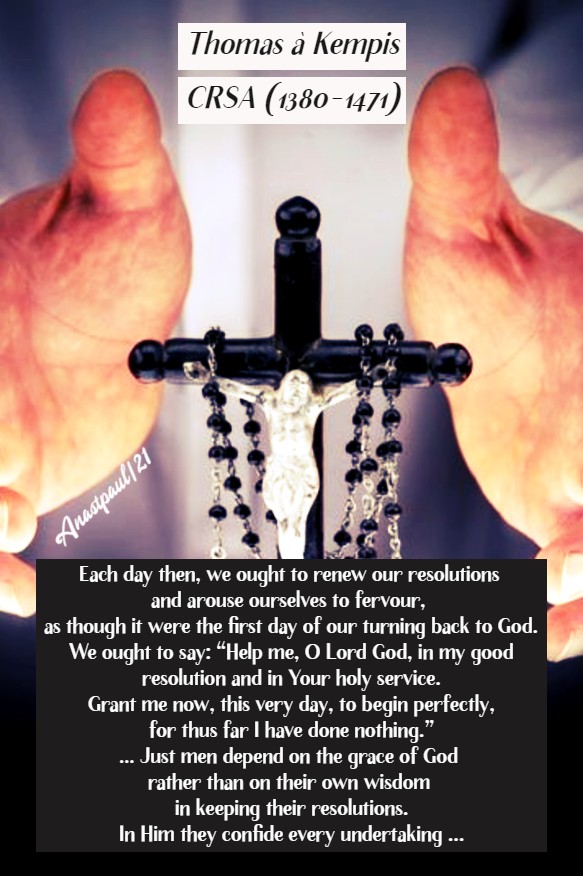
“Each day then, we ought to renew our resolutions and arouse ourselves to fervour, as though it were the first day of our turning back to God. We ought to say: “Help me, O Lord God, in my good resolution and in Your holy service. Grant me now, this very day, to begin perfectly, for thus far I have done nothing.” … Just men depend on the grace of God rather than on their own wisdom in keeping their resolutions. In Him they confide every undertaking …”
One Minute Reflection – 27 February – Quinquagesima Sunday – 1 Corinthians 13:1-13, Luke 18:31-43
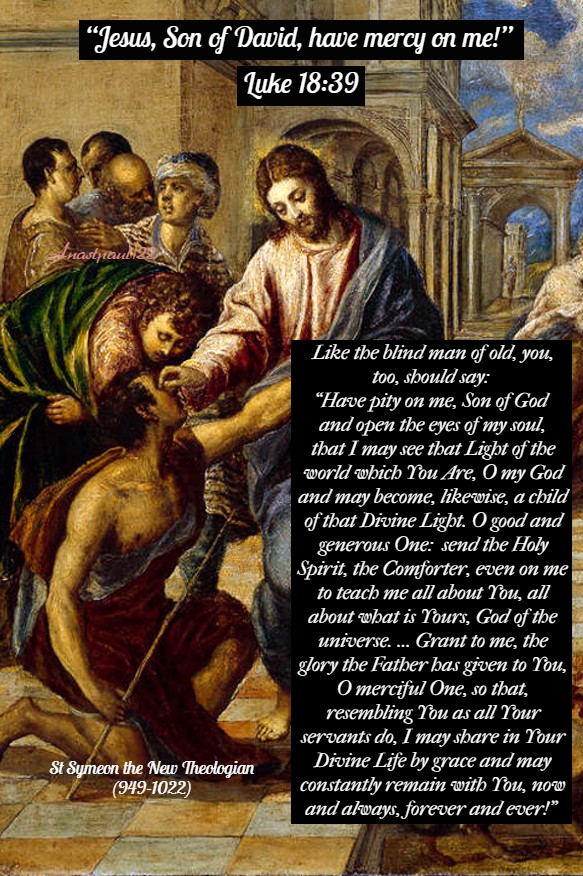
“Jesus, Son of David, have mercy on me!” – Luke 18:39
REFLECTION – “My friend, you have learned that the Kingdom of Heaven is within you, if that is what you want and that every blessing of eternity lies within your hands. So make haste to see, grasp and win these blessings stored up for you… Call to God; bow down before Him.
Like the blind man of old, you, too, should say: “Have pity on me, Son of God and open the eyes of my soul, that I may see that Light of the world which You Are, O my God and may become, likewise, a child of that Divine Light. O good and generous One: send the Holy Spirit, the Comforter, even on me to teach me all about You, all about what is Yours, God of the universe. Dwell also in me, as you have said that I, in my turn, may become worthy of dwelling in You. Make me know how to enter into You and know, that I possess You within me. O Thou, Invisible One, deign to take shape in me, that, seeing Your inaccessible Beauty, I may bear Your image, O You Who dwell in the heavens and may I forget all visible things. Grant to me, the glory the Father has given to You, O merciful One, so that, resembling You as all Your servants do, I may share in Your Divine Life, by grace and may constantly remain with You, now and always, forever and ever!” – St Symeon the New Theologian (949-1022) Greek Monk (Ethics 5).
PRAYER – O Lord, we beseech You, mercifully hear our prayers, loose us from the chains of our sins and keep us from all adversity. Through Jesus Christ, Thy Son our Lord, Who lives and reigns with Thee, in the unity of the Holy Ghost, God, world without end. Amen (Collect).
Our Morning Offering – 27 February – Quinquagesima Sunday
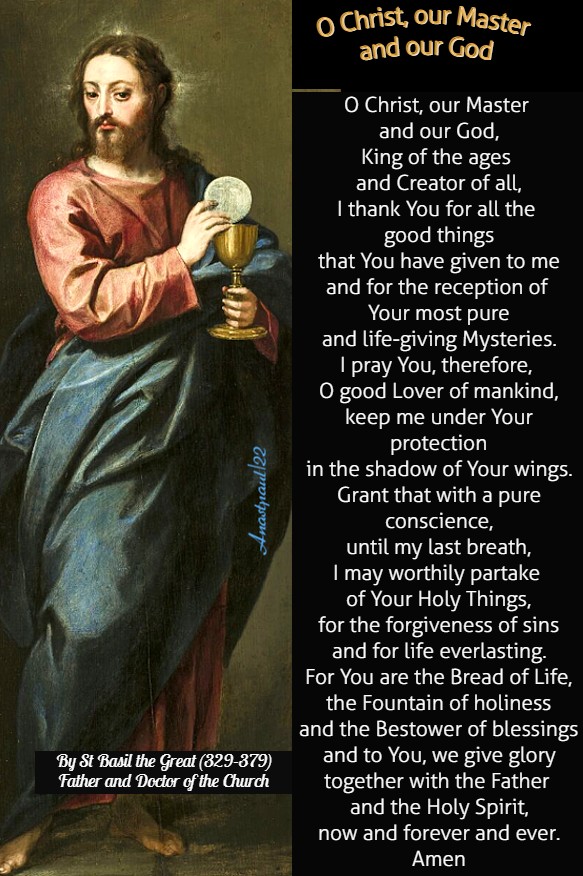
O Christ, our Master and our God By St Basil the Great (329-379) Father and Doctor of the Church
O Christ, our Master and God, King of the ages and Creator of all, I thank You for all the good things that You have given to me and for the reception of Your most pure and life-giving Mysteries. I pray You, therefore, O good Lover of mankind, keep me under Your protection in the shadow of Your wings. Grant that with a pure conscience, until my last breath, I may worthily partake of Your Holy Things, for the forgiveness of sins and for life everlasting. For You are the Bread of Life, the Fountain of holiness and the Bestower of blessings and to You, we give glory together with the Father and the Holy Spirit, now nad forever and ever. Amen
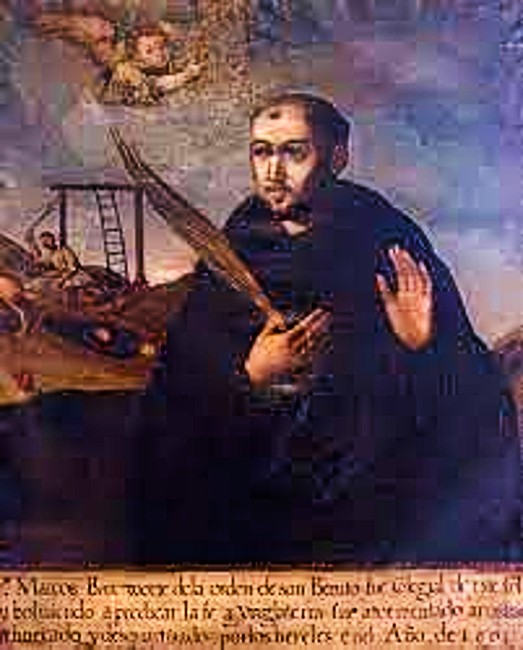
Saint of the Day – 27 February – Blessed Mark Barkworth OSB (c 1572–1601) Priest Martyr. Born in c 1572 in Lincolnshire, England and died by being hung, drawn and quartered on 27 February 1601 at Tyburn, London, England. Also known as – George Barkworthand Mark Lambert. Additional Memorials – 29 October as one of the Martyrs of Douai, 1 December as one of the Martyrs of Oxford University.
Mark was born around 1572 at Searby, Lincolnshire and was raised as a Protestant. He studied for a time at Oxford and was received into the Catholic Church at Douai in 1593, by Father George, a Flemish Jesuit and entered the College there with a view to the Priesthood. He matriculated at Douai University on 5 October 1594
Due to an outbreak of the Plague in France, Mark was sent to Rome and thence to the Royal College of St Alban in Valladolid, Spain, to complete his studies. On 28 December 1596, he he entered the English College in Spain.
On his way to Spain, Mark had a vision of St Benedict, who told him he would die a Martyr, in the Benedictine habit. While at Valladolid, he made contact with the Benedictine Order.
He was Ordained Priest at the English College some time before July 1599, whereafter, he set out for the English Mission, to assist and support the recusant Catholics there (from the Latin recusare (to refuse), was the state of those who remained loyal to the Catholic Church and refused to swear allegiance to the Queen as the head of the protestant church), together with Father Thomas Garnet. On his way he stayed at the Benedictine Monastery of Hyrache in Navarre, where his wish to join the Order was granted, by his being made an Oblate with the privilege of making profession at the hour of death.
After having escaped from the hands of the Huguenots of La Rochelle, he was arrested on reaching England and thrown into Newgate Prison. At this time, it was considered treason to be a Catholic Priest in England. He was imprisoned for six months and was then transferred to Bridewell Palace being used as a Prison. There, he wrote an appeal to Robert Cecil, a Member of Parliament and signed it “George Barkworth” but it seems, to no avail.
“Joy in the Lord because the victory won by Christ’s Confessors predominates over earthly sorrow at the grievousness of their suffering.” – William Cardinal Allen, Founder of Douai College.
Mark, described as always cheerful and brave, showed his fearlessness at his legal enquiries, where he was reported to behave with joy, fearlessness and frank gaiety. Having been condemned by a formal jury verdict, he was thrown into “Limbo,” the horrible underground dungeon at Newgate, where he is said to have remained “very cheerful,” encouraging and praying with those in the prison. He remain joyful, no matter what horrors he encountered even unto death.
Mark was executed at Tyburn with the Jesuit Priest, Blessed Father Roger Filcock and Saint Anne Line (a lay Widow who sheltered and hid Priests and assisted fellow Recusants), on 27 February 1601.
He sang, on the way to Tyburn, the Paschal Anthem: “Hæc dies, quam fecit Dominus, exultemus et lætemur in ea” – “This is the day, the Lord has made, let us rejoice and be glad in it.” On his arrival, he kissed the robe of St Anne, who was already dead, saying: “Ah, sister, thou hast got the start of us but we will follow thee as quickly as we may” and told the people watching, that Pope St Gregory the Great had sent the Benedictine Monks to evangelise England, saying “I am come here to die, being a Catholic, a Priest and a religious man, belonging to the Order of St Benedict – it was by this same Order, that England was converted.”
Mark was said to be “a man of stature, tall and well proportioned, showing strength. The hair of his head brown, his beard yellow, somewhat heavy eyed.” He suffered in the Benedictine Habit, under which he wore a hair-shirt. It was noticed that his knees were, like St James’ – hardened by constant kneeling and an apprentice in the crowd, picking up his legs, after the quartering, called out: “Which of you Gospellers can show such a knee?!” Contrary to usual practice, the quarters of the Priests were not exposed but buried near the scaffold.
Mark was Beatified by Pope Pius XI on 15 December 1929.
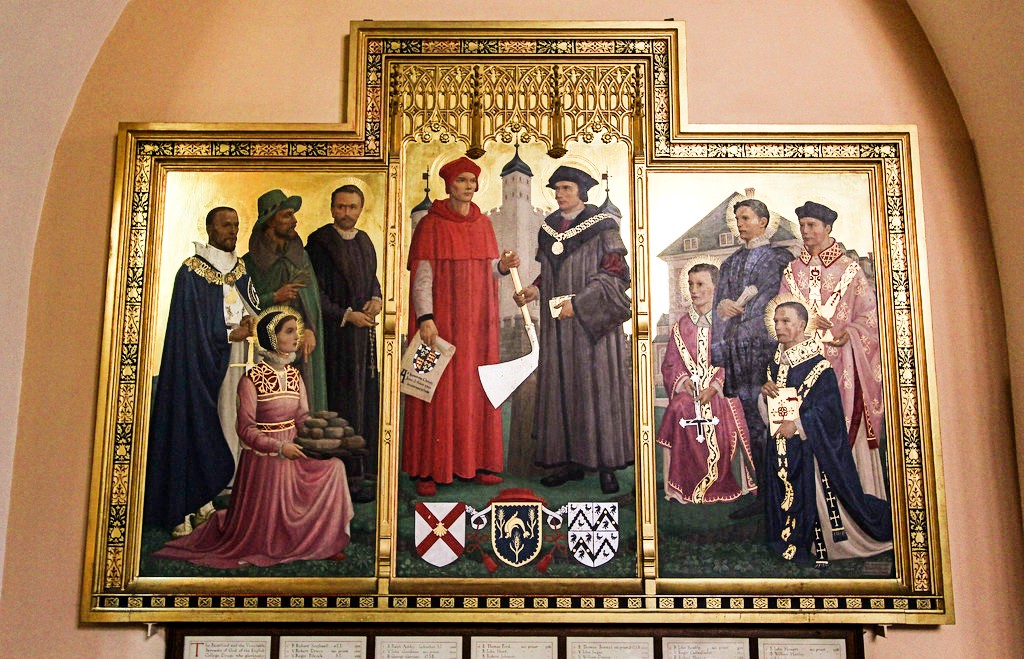
The Painting above is in Ushaw College, County Durham, England (a former Seminary which, since Vatican II, was another Seminary which shut its doors, one of the many hundreds) and commemorates the Catholic Martyrs of the English Reformation. Among them, shown on the right panel, are the Seminary Priests of Douai College who were Martyred between 1577 and 1680. Some 158 in total were killed by the State during that period for daring to minister to Catholics or harbour Priests.
“Joy in the Lord because the victory won by Christ’s Confessors predominates over earthly sorrow at the grievousness of their suffering.” – William Cardinal Allen, Founder of Douai College.
The period of fifty days before Easter. It begins with the Sunday before Ash Wednesday, called Dominica in Quinquagesima or Esto Mihi from the beginning of the Introit of the Mass; it is a Sunday of the second class, and the colour the Mass and Office is violet. For many early Christians Quinquagesima marked the time after which meat was forbidden. In many places, this Sunday and the next two days, were used to prepare for Lent by a good Confession; hence in England, we find the names Shrove Sunday and Shrovetide. Shrove is a form of the English word “shrive,” which means – to obtain absolution for one’s sins by way of Confession and doing penance.. As the days before Lent were frequently spent in merry-making, Pope Benedict XIV by the Constitution “Inter Cetera” (1 January 1748) introduced a Forty Hours’ Devotion to keep the faithful from dangerous amusements and to make some reparation for sins committed. Quinquagesima also means, the time between Easter and Pentecost, or from the Saturday after Easter to the Sunday after Pentecost; it is then called Quinquagesima Paschae paschalis, or laetitae.
St Abundius of Rome St Alexander of Rome St Alnoth St Anne Line St Antigonus of Rome St Baldomerus of Saint Just St Basilios of Constantinople St Comgan St Emmanuel of Cremona St Fortunatus of Rome St Herefrith of Lindsey St Honorina St John of Gorze Bl Josep Tous Soler St Luke of Messina Bl Maria Caridad Brader Blessed Mark Barkworth OSB (c 1572–1601) Priest Martyr St Procopius of Decapolis Bl Roger Filcock St Thalilaeus Bl William Richardson
Martyrs of Alexandria: – Besas of Alexandria Cronion Eunus Julian of Alexandria
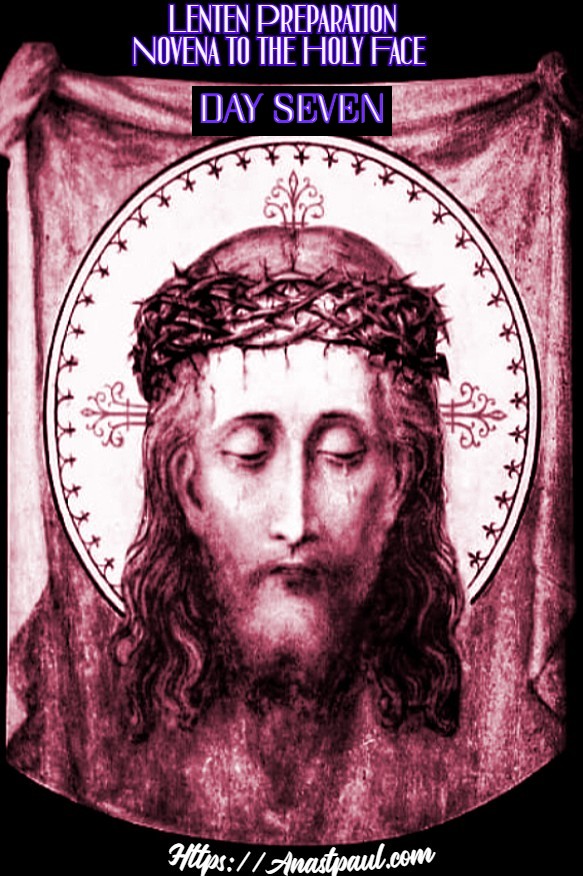
Lenten Preparation Novena in Reparation to the Holy Face Day Seven
“All those who, attracted by My Love and venerating My Countenance, shall receive, by virtue of My Humanity, a brilliant and vivid impression of My Divinity. This splendour shall enlighten the depths of their souls, so that in eternal glory the celestial court shall marvel at the marked likeness of their features, with My Divine Countenance.” … Our Lord Jesus Christ to St Gertrude the Great (1256-1302)
DAILY PREPARATORY PRAYER
O Most Holy and Blessed Trinity, through the intercession of Holy Mary, whose soul was pierced through by a sword of sorrow at the sight of the passion of her Divine Son, we ask Your help, in making a perfect Novena of Reparation with Jesus, united with all His sorrows, love and total abandonment. We now implore all the Angels and Saints to intercede for us as we pray this Holy Novena to the Most Holy Face of Jesus and for the glory of the most Holy Trinity, Father, Son and Holy Spirit. Amen
(Console Holy Face and recite Daily Preparatory Prayer)
DAY SEVEN Psalm 51,14-15: Give me again the joy of your help, with a spirit of fervour sustain me, that I may teach transgressors your ways and sinners may return to you.
Lord Jesus! After contemplating Thy features, disfigured by grief pain, after meditating upon Thy Passion with compunction and love, how can our hearts fail to be inflamed with a holy hatred of sin, which even now, outrages Thy Adorable Face! Lord, suffer us not to be content with mere compassion but grant us grace to closely follow Thee in this Calvary, so that the opprobrium destined for Thee may fall on us, 0 Jesus, that thus, we may have a share, small though it may be, in expiation of sin. Amen
Mary, our Mother, intercede for us. Saint Joseph pray for us. Through the merits of Your Precious Blood and Your Holy Face, O Jesus, grant us our petition ……………… Pardon and mercy. Amen
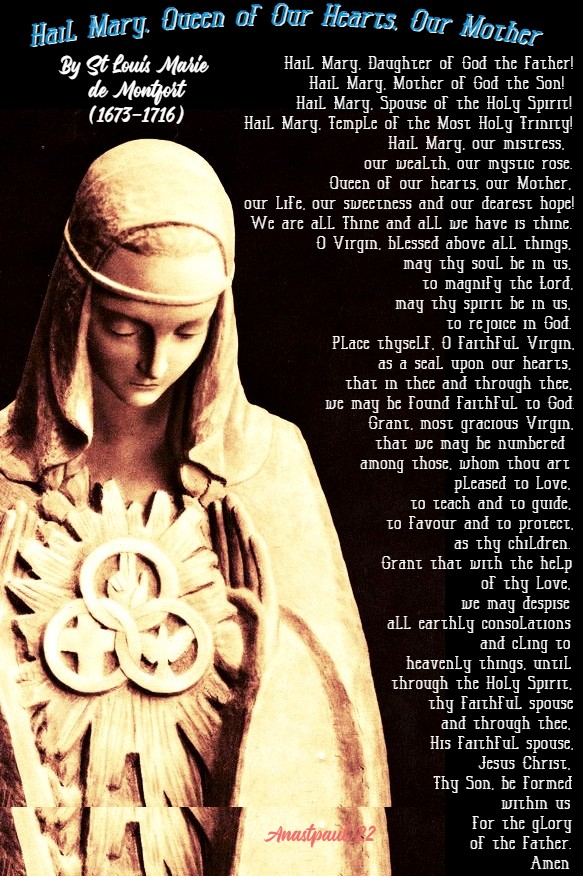
Hail Mary, Queen of Our Hearts, Our Mother Prayer in Honour of Mary By St Louis Marie de Montfort (1673-1716)
Hail Mary, Daughter of God the Father! Hail Mary, Mother of God the Son! Hail Mary, Spouse of the Holy Spirit! Hail Mary, Temple of the Most Holy Trinity! Hail Mary, our mistress, our wealth, our mystic rose. Queen of our hearts, our Mother, our life, our sweetness and our dearest hope! We are all Thine and all we have is thine. O Virgin, blessed above all things, may thy soul be in us, to magnify the Lord, may thy spirit be in us, to rejoice in God. Place thyself, O faithful Virgin, as a seal upon our hearts, that in thee and through thee, we may be found faithful to God. Grant, most gracious Virgin, that we may be numbered among those, whom thou art pleased to love, to teach and to guide, to favour and to protect, as thy children. Grant that with the help of thy love, we may despise all earthly consolations and cling to heavenly things, until through the Holy Spirit, thy faithful spouse and through thee, His faithful spouse, Jesus Christ, Thy Son, be formed within us for the glory of the Father. Amen
Pray (1) Our Father, three (3) Hail Marys, one (1) Glory Be
O Bleeding Face, O Face Divine, be every Adoration Thine (Three times)
Thought for the Day – 26 February – Meditations with Antonio Cardinal Bacci (1881-1971)
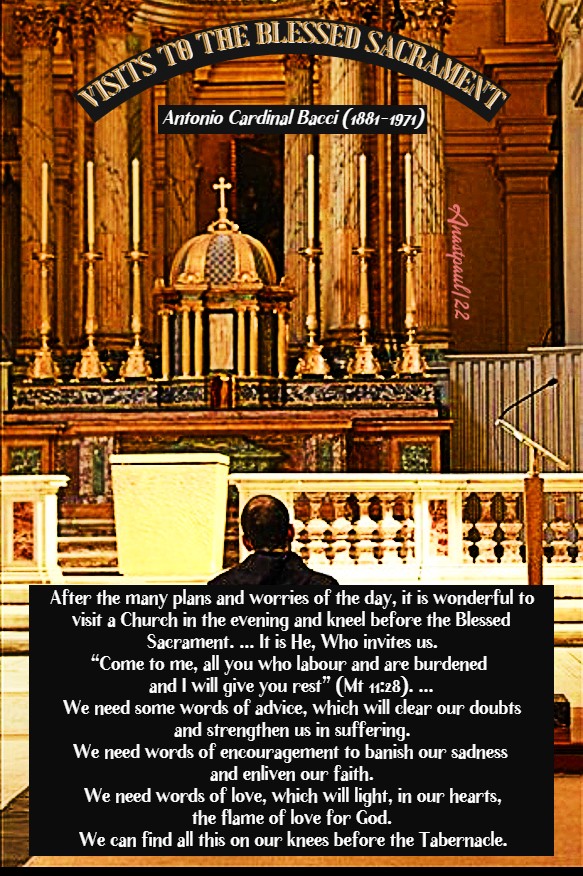
Visits to the Blessed Sacrament
“After the many plans and worries of the day, it is wonderful to visit a Church in the evening and kneel before the Blessed Sacrament. There we can adore Jesus and converse lovingly with Him. We have spent so many hours surrounded by the noise of the world. It is restful now to spend a quarter of an hour in silent prayer before Jesus, the Prisoner of Love, in the Tabernacle. It is He, Who invites us. “Come to me, all you who labour and are burdened and I will give you rest” (Mt 11:28). There are so many matters worrying us. We need some words of advice, which will clear our doubts and strengthen us in suffering. We need words of encouragement to banish our sadness and enliven our faith. We need words of love, which will light, in our hearts, the flame of love for God. We can find all this on our knees before the Tabernacle. Do not end the day, without seeking a renewal of Christian strength, at the feet of Jesus in the Blessed Sacrament, if at all possible.”
Quote/s of the Day – 26 February – Mary’s Saturday
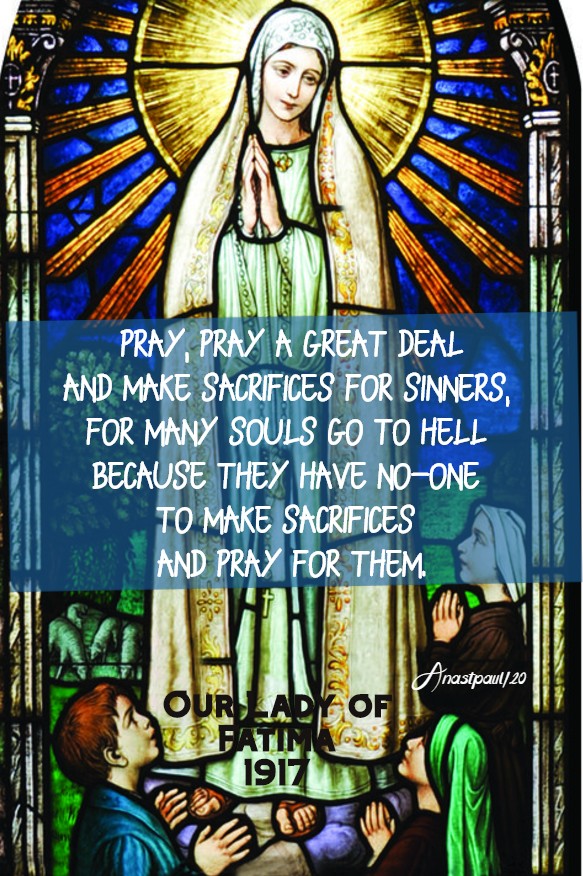
“Pray, pray a great deal and make sacrifices for sinners, for many souls go to Hell because they have no-one to make sacrifices and pray for them.”
Our Lady of Fatima 1917 13 May to 13 October 1917
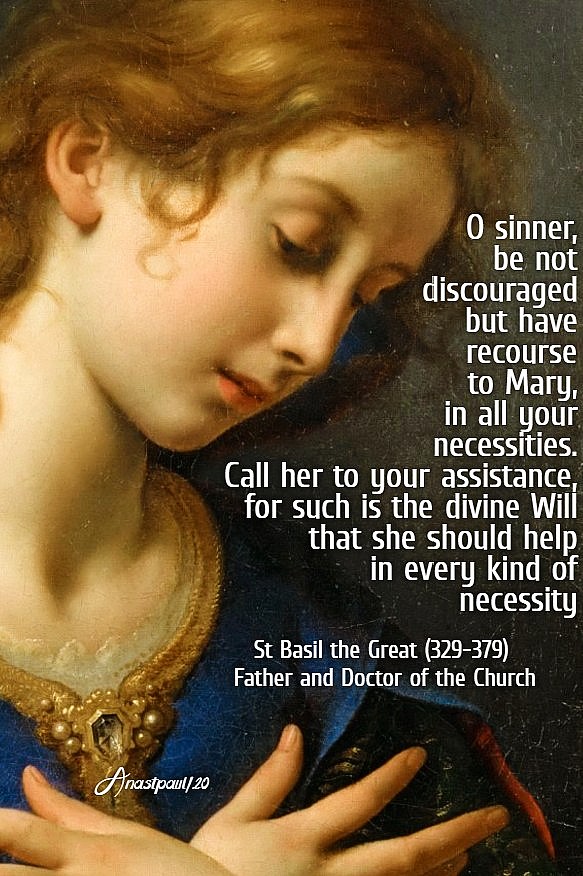
“O sinner, be not discouraged but have recourse to Mary, in all your necessities. Call her to your assistance, for such is the divine Will that she should help in every kind of necessity.”
St Basil the Great (329-379) Father and Doctor of the Church
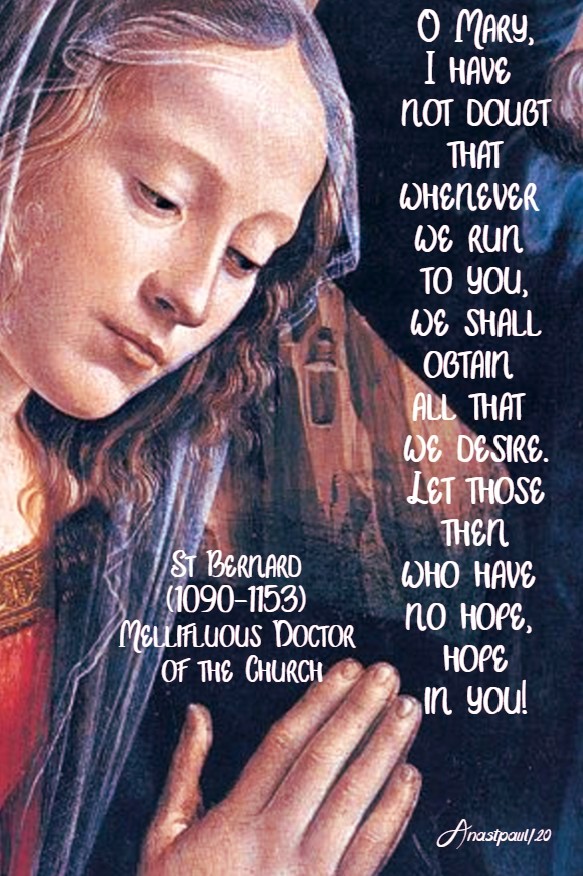
“O Mary, I have not doubt that whenever we run to you, we shall obtain all that we desire. Let those then who have no hope, hope in you!”
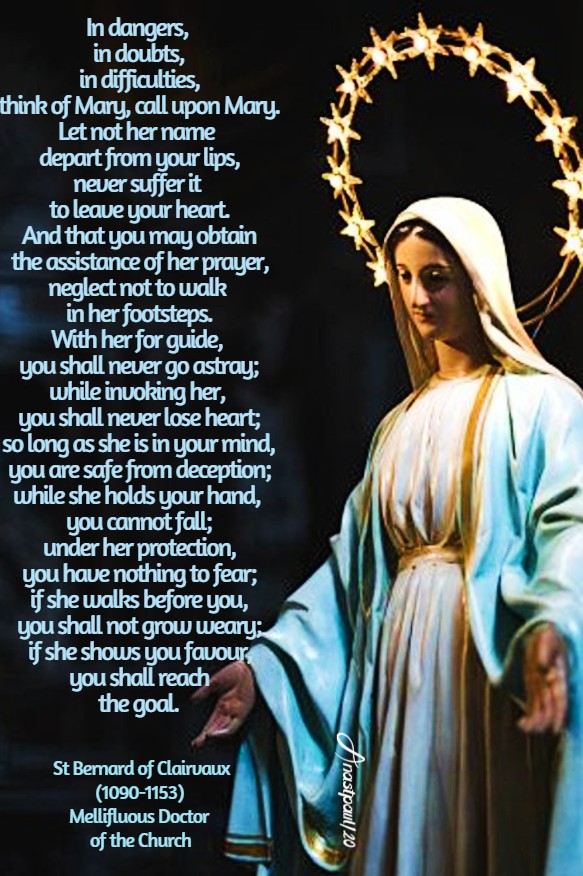
“In dangers, in doubts, in difficulties, think of Mary, call upon Mary. Let not her name depart from your lips, never suffer it to leave your heart. And that you may obtain the assistance of her prayer, neglect not to walk in her footsteps. With her for guide, you shall never go astray; while invoking her, you shall never lose heart; so long as she is in your mind, you are safe from deception; while she holds your hand, you cannot fall; under her protection you have nothing to fear; if she walks before you, you shall not grow weary; if she shows you favour, you shall reach the goal.”
St Bernard of Clairvaux (1090-1153) Mellifluous Doctor of the Church
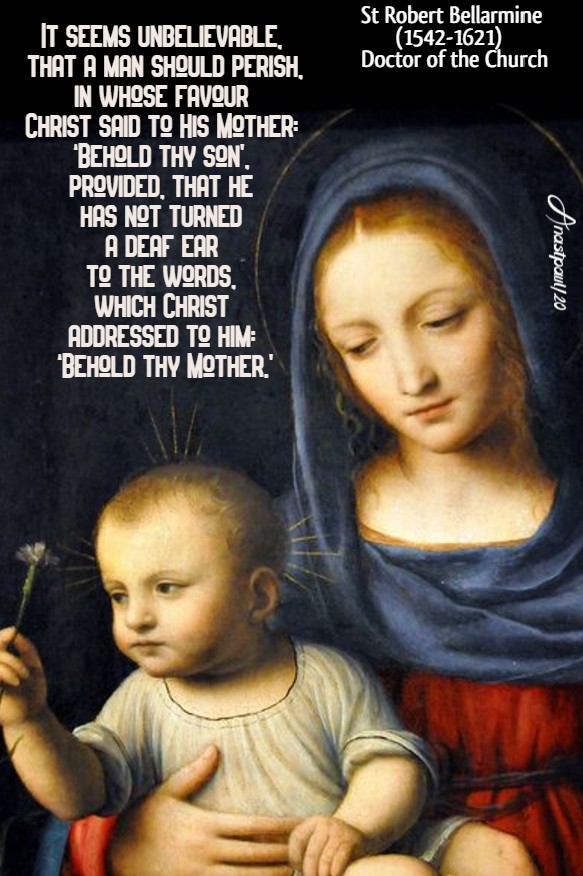
“It seems unbelievable that a man should perish in whose favour Christ said to His Mother: ‘Behold thy son’, provided that he has not turned a deaf ear to the words, which Christ addressed to him: ‘Behold thy Mother.’”
St Robert Bellarmine (1542-1621) Doctor of the Church
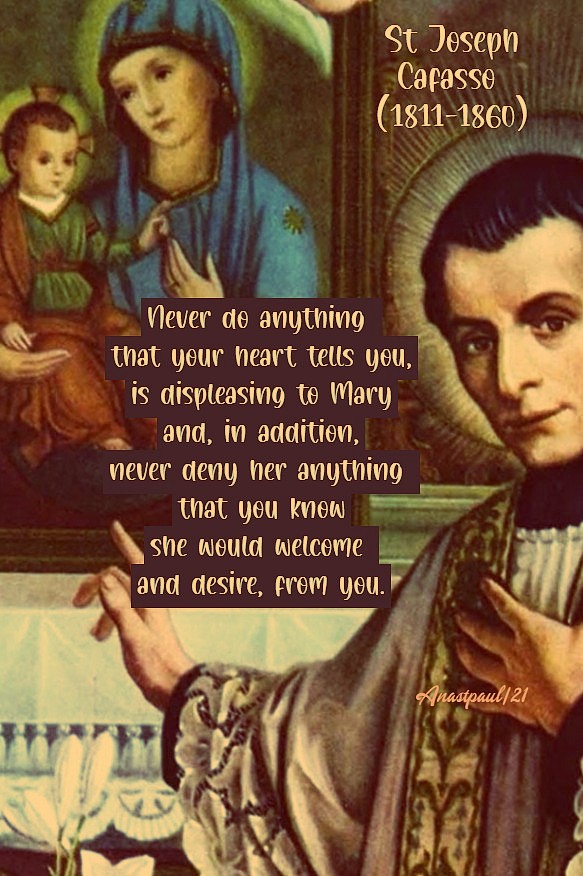
“Never do anything that your heart tells you, is displeasing to Mary and, in addition, never deny her anything that you know she would welcome and desire from you.”
St Joseph Cafasso (1811-1860)
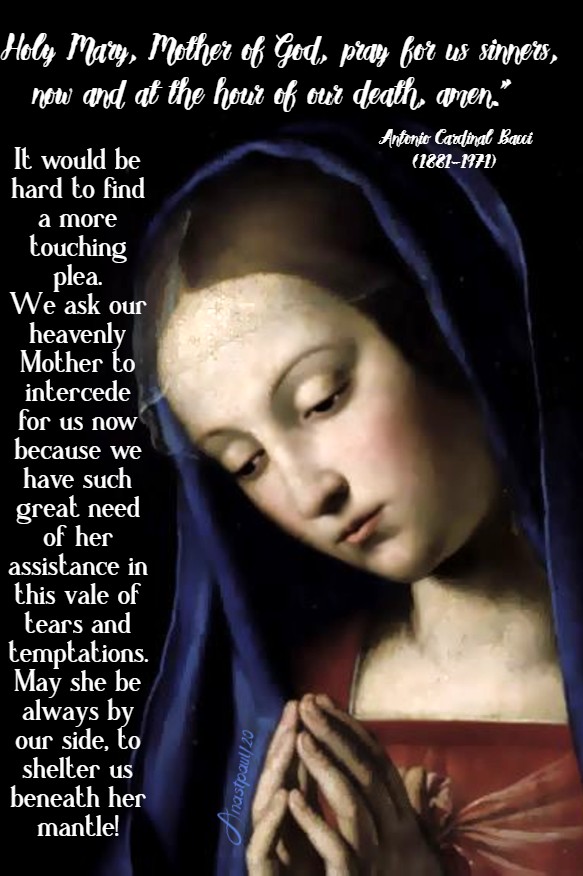
“It would be hard to find a more touching plea. We ask our heavenly Mother to intercede for us now because we have such great need of her assistance in this vale of tears and temptations. May she be always by our side, to shelter us beneath her mantle”
One Minute Reflection – 26 February – Hail Holy Mother! – Sirach 24:14-16, Luke 11:27-28
“Blessed are they who hear the word of God and keep it.” – Luke 11:28
REFLECTION – “If you say, “Show me your God,” I will say to you, “Show me what kind of person you are and I will show you my God.” Show me then whether the eyes of your mind, can see and the ears of your heart, hear.
It is like this. Those who can see with the eyes of their bodies, are aware of what is happening in this life on earth. They get to know things that are different from each other. They distinguish light and darkness, black and white, ugliness and beauty, elegance and inelegance, proportion and lack of proportion, excess and defect. The same is true of the sounds we hear: high or low or pleasant. So it is with the ears of our heart and the eyes of our mind, in their capacity to hear or see God.
God is seen by those who have the capacity to see Him, provided that they keep the eyes of their mind open. All have eyes, but some have eyes that are shrouded in darkness, unable to see the Light of the Sun. Because the blind cannot see it, it does not follow that the sun does not shine. The blind must trace the cause back to themselves and their eyes . In the same way, you have eyes in your mind that are shrouded in darkness because of your sins and evil deeds. …
But if you will, you can be healed. Hand yourself over to the Doctor, and He will open the eyes and ears of your mind and heart. Who is to be the Doctor? It is God, Who heals and gives life through His Word and Wisdom. … ” – St Theophilus of Antioch (Died c 185) Bishop of Antioch, Confessor, Apologist, Father (An excerpt from: A Book addressed to Autolycus).
PRAYER – Grant us, Your servants, O Lord God, we beseech You, to enjoy lasting health of mind and body; and by the intercession of glorious and blessed Mary, ever Virgin, may we be delivered from present sorrow and partake to the full of eternal happiness. Through Jesus Christ, Thy Son our Lord, Who lives and reigns with Thee, in the unity of the Holy Ghost, God, world without end. Amen (Collect).
Our Morning Offering – 26 February – Mary’s Saturday
Prayer to Our Lady of the Miraculous Medal
Virgin Mother of God, Mary Immaculate, we unite ourselves to thee under thy title of Blessed Mother, Our Lady of the Miraculous Medal. May this medal be, for each one of us, a sure sign of thy motherly affection for us and a constant reminder of our filial duties towards thee. While wearing it, may we be blessed by thy loving protection and preserved in the grace of thy Son. Most powerful Virgin, Mother of our Saviour, keep us close to thee, every moment of our lives so that like thee, we may live and act according to the teaching and example of thy Son. Obtain for us, thy children, the grace of a happy death, so that in union with thee we may enjoy the happiness of heaven forever. Amen O Mary, conceived without sin, pray for us who have recourse to thee.
Saint of the Day – 26 February – St Alexander of Alexandria (Died c 326) Bishop of Alexandria, Confessor, Defender of the True Faith against heresies, in particular the Arians. Born in the 3rd Century in northern Egypt and died on 26 February c 326 at Alexandria, Egypt. Also known as – Alessandro di Alessandria.
The Roman Martyrology states of him today: “At Alexandria, the Bishop St Alexander, an aged man held in great honour who was a successor of the blessed Peter as Bishop of the City. He expelled from the Church, Arius, one of his Priests, tainted with heretical impiety and convicted by Divine Truth and, subsequently, was one of the three hundred and eighteen Fathers, who condemned him at the Council of Nicea.”
He was a man of apostolic doctrine and life, mild, affable, exceedingly charitable to the poor and full of faith, zeal and fervour.
St Alexander was made Bishop of Alexandria in 313. He was a disciple of the previous Bishop St Peter the Martyr and had heard the warnings the great Bishop made in prison about the Deacon Arius. Alexander led an untiring battle against this heretic, preparing the way for St Athanasius.
Arius was a tall man of a grave imposing appearance. He attracted confidence by his amiable manner and agreeable conversation. He lived austerely, assumed a penitent air and showed an apparent zeal for religion. With a broad but superficial knowledge of profane literature and the ecclesiastical sciences, he was a subtle and persuasive dialectician. However, under this exterior show of virtue was a man of melancholy, turbulence, ambition and a taste for novelties. After he was Ordained Priest and charged with teaching Scriptures, he could not contain his vanity and titled himself illustrious. After the death of St Achillas, Bishop of Alexandria, Arius aspired to his See. When Alexander was chosen, Arius became his enemy. It was about this time that Arius began to teach his bad doctrine and recruit followers.
Alexander, concerned about the spreading of this heresy and finding Arius obstinate and incorrigible, excommunicated him from the Diocese of Alexandria. The heretic went to Palestine where he received the support of various Bishops, especially Eusebius of Nicomedia. There he began a campaign of intrigues against his adversaries.
The Council of Nicea in 325 condemned Arius and his doctrines. In that famous assembly of Bishops, one of the high luminaries was our Saint, Alexander. St Athanasius, who had accompanied Alexander, was also present as a Deacon. Alexander returned to Alexandria, where he died several years later, after naming St Athanasius as his successor. Having dedicated his life to gloriously fighting in defence of the Church, he delivered his soul to the Lord in c 326.
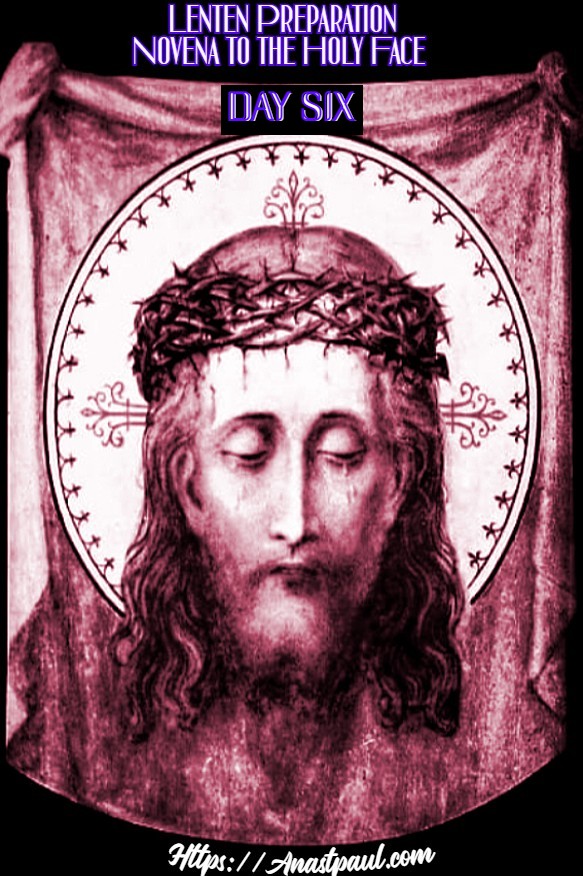
Lenten Preparation Novena in Reparation to the Holy Face Day Six
“All those who, attracted by My Love and venerating My Countenance, shall receive, by virtue of My Humanity, a brilliant and vivid impression of My Divinity. This splendour shall enlighten the depths of their souls, so that in eternal glory the celestial court shall marvel at the marked likeness of their features, with My Divine Countenance.” … Our Lord Jesus Christ to St Gertrude the Great (1256-1302)
DAILY PREPARATORY PRAYER
O Most Holy and Blessed Trinity, through the intercession of Holy Mary, whose soul was pierced through by a sword of sorrow at the sight of the passion of her Divine Son, we ask Your help, in making a perfect Novena of Reparation with Jesus, united with all His sorrows, love and total abandonment. We now implore all the Angels and Saints to intercede for us as we pray this Holy Novena to the Most Holy Face of Jesus and for the glory of the most Holy Trinity, Father, Son and Holy Spirit. Amen
(Console Holy Face and recite Daily Preparatory Prayer)
DAY SIX Psalm 51,12-13: A pure heart create for us O God, put a steadfast spirit within us. Do not cast us away from your presence nor deprive us of your Holy Spirit.
May our hearts be cleansed, O Lord, by the in-pouring of the Holy Spirit and may He render them fruitful by watering them with His heavenly dew. Mary, the most chaste spouse of the Holy Spirit, intercede for us, Saint Joseph pray for us. Through the merits of Your Precious Blood and your Holy Face, O Jesus, grant us our petition ……………… Pardon and mercy. Amen
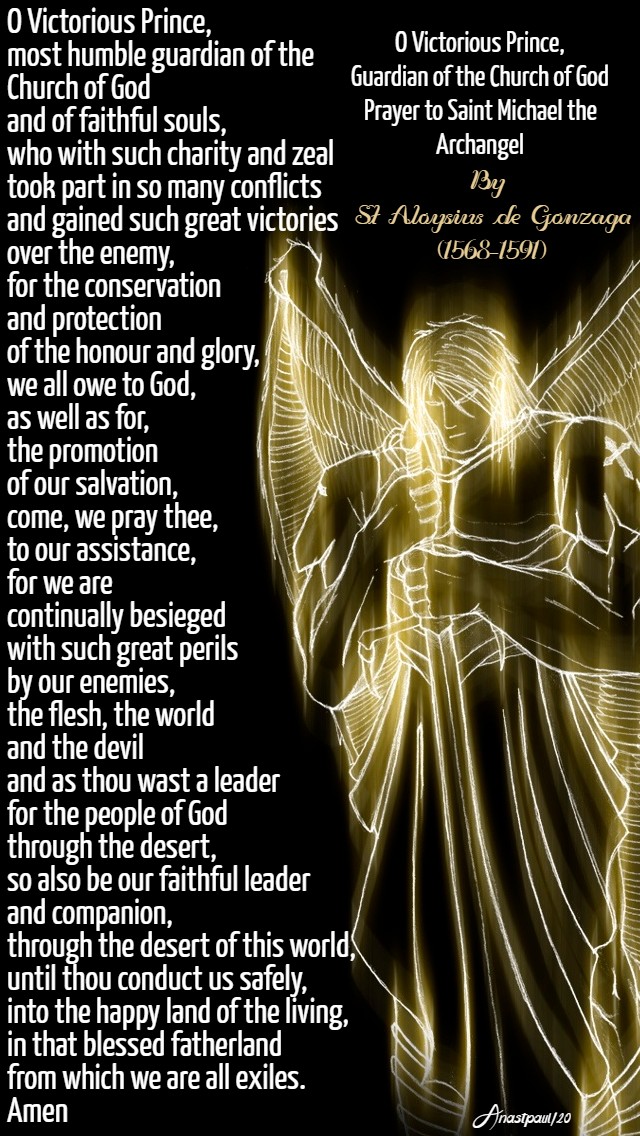
O Victorious Prince, Guardian of the Church of God By St Aloysius de Gonzaga SJ (1568-1591) Prayer to Saint Michael the Archangel
O Victorious Prince, most humble guardian of the Church of God and of faithful souls, who, with such charity and zeal, took part in so many conflicts and gained such great victories over the enemy, for the conservation and protection of the honour and glory, we all owe to God, as well as for the promotion of our salvation. Come, we pray Thee, to our assistance, for we are continually besieged with such great perils by our enemies, the flesh, the world and the devil and as Thou wast a leader for the people of God, through the desert, so also be our faithful leader and companion through the desert of this world, until Thou conduct us safely, into the happy land of the living, in that blessed fatherland from which we are all exiles. Amen.
Pray (1) Our Father, three (3) Hail Marys, one (1) Glory Be.
O Bleeding Face, O Face Divine, be every Adoration Thine (Three times)
Thought for the Day – 25 February – Meditations with Antonio Cardinal Bacci (1881-1971)
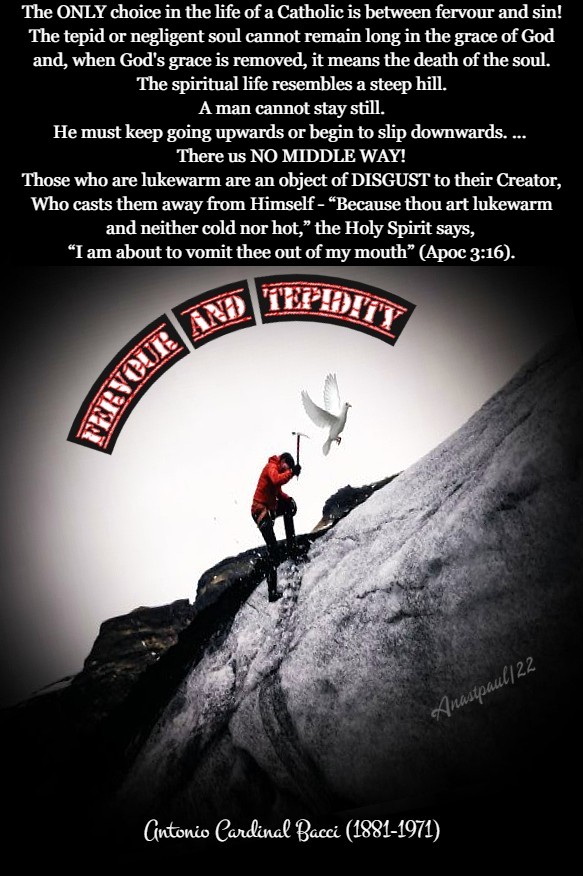
Fervour and Tepidity
“The ONLY choice in the life of a Catholic is between fervour and sin! The tepid or negligent soul cannot remain long in the grace of God and, when God’s grace is removed, it means the death of the soul.
The spiritual life resembles a steep hill. A man cannot stay still. He must keep going upwards or begin to slip downwards. Whoever struggles on, up the hill is approaching perfection and Heaven; whoever slips backwards, is approaching sin, a dead soul and Hell.
There us NO MIDDLE WAY! Those who are lukewarm are an object of DISGUST to their Creator, Who casts them away from Himself – “Because thou art lukewarm and neither cold nor hot,” the Holy Spirit says, “I am about to vomit thee out of my mouth” (Apoc 3:16).
So, it is not enough to be mediocre Catholic. The half-hearted and indifferent are already travelling along the slippery path of sin and are on the waiting list for hell! It is dangerous for anyone to remain thoughtlessly in this state of spiritude ineptitude. A man who never thinks of his own salvation, is suffering from a serious illness. He is running a very great risk of eternal damnation. He has one foot in Hell here on this earth!”
Quote/s of the Day – 25 February – Sexagesima Weekday – 2 Corinthians 11:19-33; 12:1-9, Luke 8:4-15
“In the beginning was the Word and the Word was with God and the Word was God.”
John 1:1
“And the word became flesh and made his dwelling among us.”
John 1:14
“Let the world be in upheaval. I hold to His Promise and read His Message, that is my protecting wall and garrison. What Message? “Know that I am with you always, until the end of the world!”
St John Chrysostom (347-407) Father and Doctor of the Church
“What a happy day they spent! What a blessed night! Who can say what it was they heard from the Lord’s mouth? Let us, too, build a dwelling in our hearts, construct a house where Christ can come to teach and converse with us.”
St Augustine (354-430) Father & Doctor of the Church
“My child, it is indeed the Voice of God you have heard. He has given you a great grace in thus calling you into His one true Church. While you live, never cease to thank Him and bless Him for it.”
St John Francis Régis (1597-1640)
Beloved and Most Holy Word of God By St James of the Marches (1391-1476)
Beloved and most holy Word of God! You enlighten the hearts of the faithful, You satisfy the hungry, console the afflicted. You make the souls of all, productive of good and cause all virtues to blossom. You snatch souls from the devil’s jaw. You make the wretched holy and men of earth, citizens of heaven! Amen
One Minute Reflection – 25 February – Sexagesima Weekday – 2 Corinthians 11:19-33; 12:1-9, Luke 8:4-15
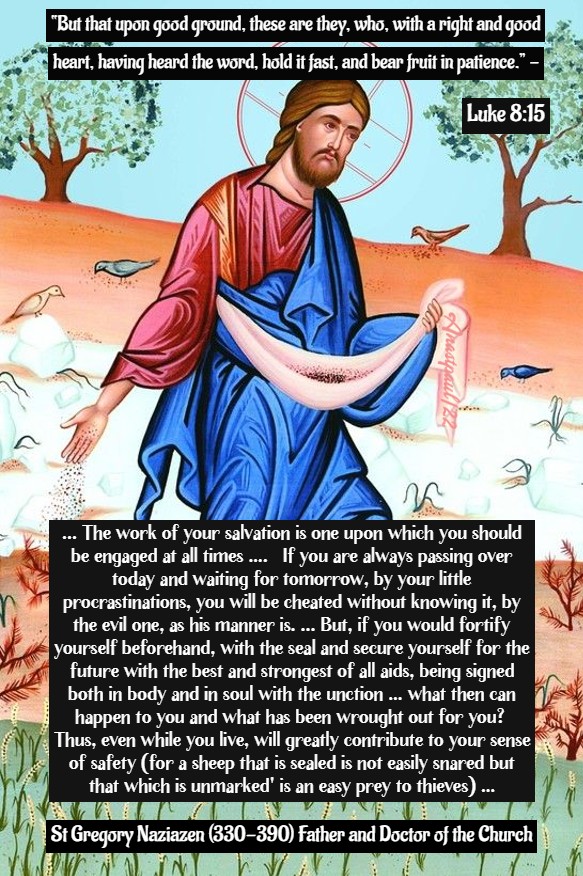
“But that upon good ground, these are they, who, with a right and good heart, having heard the word, hold it fast, and bear fruit in patience.” – Luke 8:15
REFLECTION – “Sow in good season and gather together and open your barns when it is the time to do so and plant in season and let the clusters be cut when they are ripe and launch boldly in spring and draw your ship on shore again at the beginning of winter, when the sea begins to rage. … But the work of your salvation is one’ upon which’ you should be engaged at all times …. If you are always passing over today and waiting for tomorrow, by your little procrastinations, you will be cheated without knowing it, by the evil one, as his manner is. Give to me, he says, the present and to God the future; to me your youth and to God old age; to me your pleasures and to Him your uselessness. How great is the danger that surrounds you. How many the unexpected mischances. War has expended you, or an earthquake overwhelmed you, or the sea swallowed you up. Or a wild beast carried you off, or a sickness killed you, or a crumb going the wrong way (a most insignificant thing but what is easier, than for a man to die, though you are so proud of the divine image), or a too freely indulged drinking bout. Or a wind knocked you down, or a horse ran away with you, or a drug maliciously scheming against you, or perhaps, was found to be deleterious when meant to be wholesome. Or [there was] an inhuman judge, or an inexorable executioner, or any of the things which make the change swiftest and beyond the power of human aid.
But, if you would fortify yourself beforehand, with the seal and secure yourself for the future with the best and strongest of all aids, being signed both in body and in soul with the unction … what then can happen to you and what has been wrought out for you? Listen to the Proverbs: “If you sit,” he says, “you shall be without fear; and if you sleep, your sleep shall be sweet.” And listen to David giving you the good news: “you shall not be afraid for the terror by night, for mischance or noonday demon.” Thus, even while you live, will greatly contribute to your sense of safety (for a sheep that is sealed is not easily snared but that which is unmarked’ is an easy prey to thieves) …” – St Gregory Naziazen (330-390) Archbishop of Constantinople, Father and Doctor of the Church (Theological Oration 40, On Holy Baptism)
07
PRAYER – All-powerful, eternal God, splendour of true light and never-ending day, turn our ears and hearts to Your Word, that we may hear and live by the seed You have sown. May all that grows in us be of Your good seed and yield fruit a hundredfold. Grant us the grace of imitating the virtues of Mary, the Mother of Your only-begotten Son and our Mother and may her prayers intercede on our behalf. May we may be filled with courage and love and spread Your Word by our lives. We make our prayer through Jesus, our Lord and Word, with the Holy Spirit, one God with You, forever, amen.
Our Morning Offering – 25 February – Sexagesima Weekday
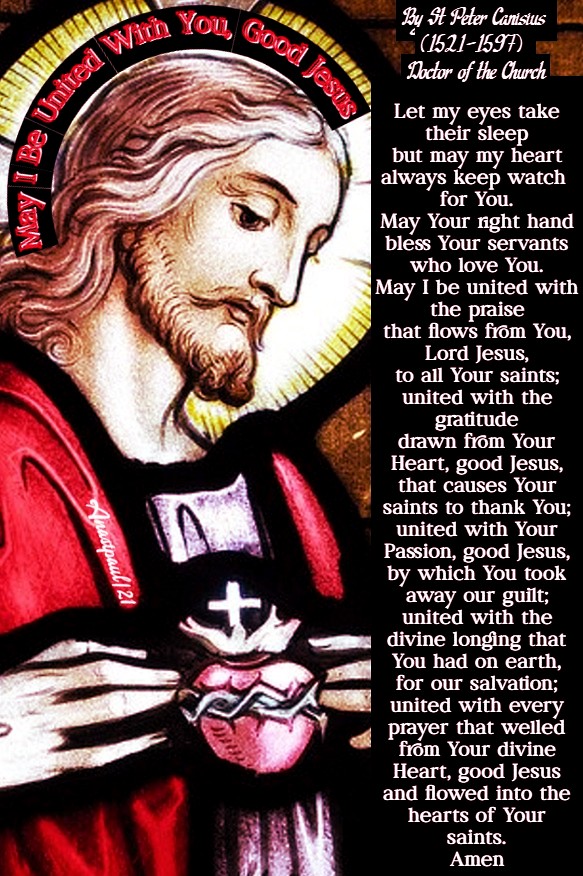
May I Be United With You, Good Jesus By St Peter Canisius (1521-1597) Doctor of the Church
Let my eyes take their sleep but may my heart always keep watch for You. May Your right hand bless Your servants who love You. May I be united with the praise that flows from You, Lord Jesus, to all Your saints; united with the gratitude drawn from Your Heart, good Jesus, that causes Your saints to thank You; united with Your Passion, good Jesus, by which You took away our guilt; united with the divine longing that You had on earth, for our salvation; united with every prayer that welled from Your divine Heart, good Jesus and flowed into the hearts of Your saints. Amen.
Saint of the Day – 25 February – Blessed Avertano of Lucca O.Carm ( 1320-c 1366 ) Lay Brother of the Order of Carmel, miracle-worker, Avertano had a great devotion to the Passion of Christ. Born in c 1320 in the Diocese of Limoges, France and died in c 1380 ub Lucca, Tuscany, Italy of the Plague. Also known as – Aventanus. Additional Memorial – 4 March (Carmelites).
Avertano was born in Limoges, France in the 12th Century. In his youth, Avertano had resolved to live a life closest to the teachings of the Gospel. The desire for holiness was always in his mind and soul.
Thus, when Avertano witnessed the exemplary way of life of the Carmelites, who had just returned from the East to their homeland, he expressed his intention of joining the Order. It did not take long for him to become a Carmelite.
Wherever he was assigned, Avertano was a model of virtue. Many, who came in contact with him, were edified by his reputation for and examples of holiness. He was also known as a miracle-worker who was blessed with many mystical gifts.
He desired to visit the Land of our Saviour but on his way home from his travels, he died of the Plague in c 1366. So many miracles were reported at his grave in the Church of San Pietro, that a series of paintings depicting some of them, were created for the San Pietro Church and the Cathedral of Lucca but then enshrined in the Church of Sts Paolino and Donato in 1806. He was Beatified in 1828 by Pope Gregory XVI,
St Adelelmo of Engelberg St Aldetrudis St Ananias of Phoenicia Blessed Avertano of Lucca O.Carm ( 1320-1380 ) St Caesarius of Nanzianzen St Callistus Caravario Bl Ciriaco Maria Sancha Hervas Bl Didacus Yuki Ryosetsu St Domenico Lentini St Donatus the Martyr Saint Felix III, Pope St Gerland the Bishop St Gothard the Hermit St Herena the Martyr St Justus the Martyr St Laurentius Bai Xiaoman St Luigi Versiglia
Martyrs of Egypt – A group of Christian men who were exiled to Egypt for their faith and were eventually Martyred for their faith in the persecutions of Numerian. We know little more than their names: Claudianus Dioscurus Nicephorus Papias Serapion Victor Victorinus
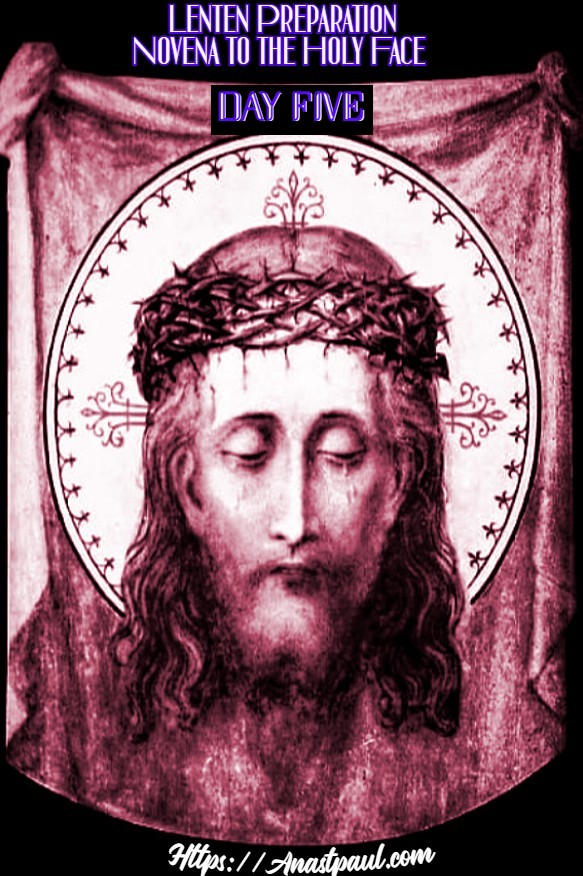
Lenten Preparation Novena in Reparation to the Holy Face Day Five
“All those who, attracted by My Love and venerating My Countenance, shall receive, by virtue of My Humanity, a brilliant and vivid impression of My Divinity. This splendour shall enlighten the depths of their souls, so that in eternal glory the celestial court shall marvel at the marked likeness of their features, with My Divine Countenance.” … Our Lord Jesus Christ to St Gertrude the Great (1256-1302)
DAILY PREPARATORY PRAYER
O Most Holy and Blessed Trinity, through the intercession of Holy Mary, whose soul was pierced through by a sword of sorrow at the sight of the passion of her Divine Son, we ask Your help, in making a perfect Novena of Reparation with Jesus, united with all His sorrows, love and total abandonment. We now implore all the Angels and Saints to intercede for us as we pray this Holy Novena to the Most Holy Face of Jesus and for the glory of the most Holy Trinity, Father, Son and Holy Spirit. Amen
(Console Holy Face and recite Daily Preparatory Prayer)
Psalm 51,10-11: Make me hear rejoicing and gladness, that the bones you have crushed may revive. From my sins turn away your Face and blot out all my guilt.
Holy Face of Jesus, Sacred Countenance of God, how great is Your patience with humankind, how infinite Your forgiveness. We are sinners, yet You love us. This gives us courage. For the glory of Your Holy Face and of the Blessed Trinity, hear and answer us. Mary our Mother, intercede for us, Saint Joseph, pray for us. Through the merits of Your Precious Blood and your Holy Face, O Jesus, grant us our petition ……………… Pardon and mercy. Amen
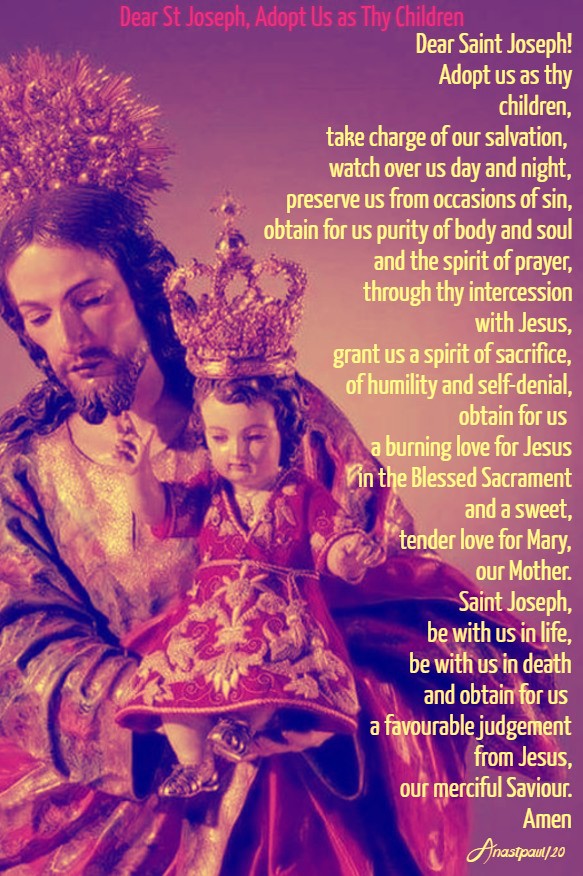
Prayer to Saint Joseph – Adopt Us a Thy Children
Dear Saint Joseph! Adopt us as thy children, take charge of our salvation; watch over us day and night, preserve us from occasions of sin, obtain for us purity of body and soul and the spirit of prayer, through thy intercession with Jesus, grant us a spirit of sacrifice, of humility and self-denial, obtain for us a burning love for Jesus in the Blessed Sacrament and a sweet, tender love for Mary, our Mother. Saint Joseph, be with us in life, be with us in death and obtain for us a favourable judgement from Jesus, our merciful Saviour. Amen
Pray (1) Our Father, three (3) Hail Marys, one (1) Glory Be.
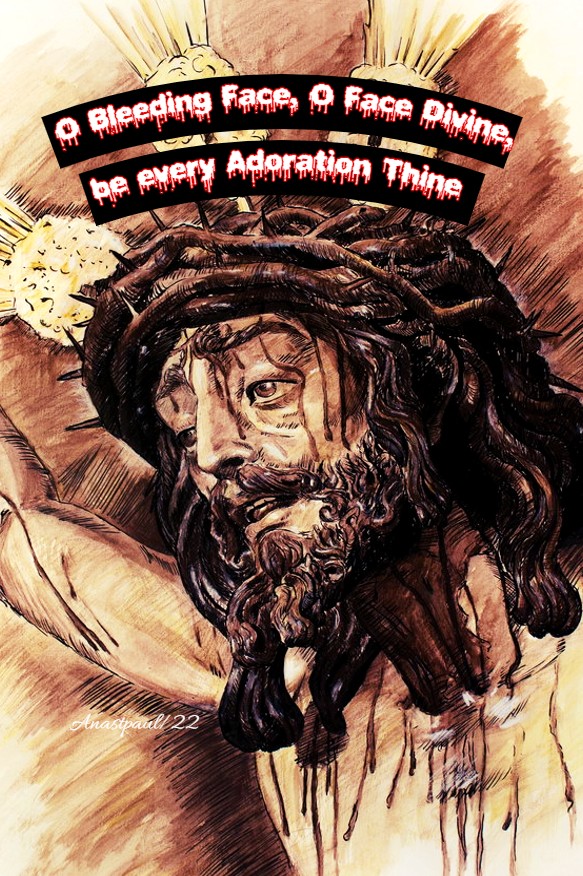
O Bleeding Face, O Face Divine, be every Adoration Thine (Three times)
Thought for the Day – 24 February – Meditations with Antonio Cardinal Bacci (1881-1971)
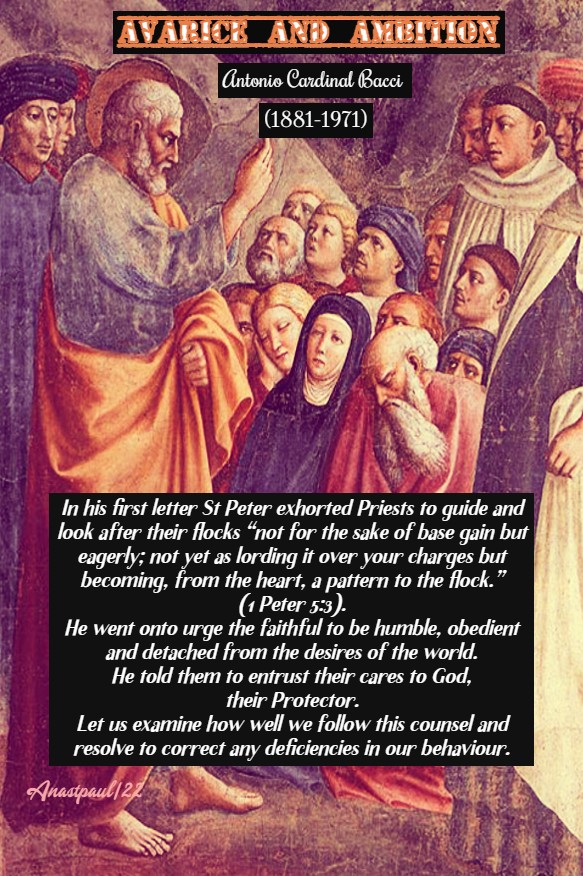
Avarice and Ambition
“Although the Gospel stresses so much, the necessity of being detached from the things of the world and of striving after the things of Heaven, it is a sad fact, that from the early days of the Church up to the present time, greed for money and desire for honour, have always been there to do great harm to the faithful. In his first letter St Peter exhorted Priests to guide and look after their flocks “not for the sake of base gain but eagerly; not yet as lording it over your charges but becoming, from the heart, a pattern to the flock.”(1 Peter 5:3). He went onto urge the faithful to be humble, obedient and detached from the desires of the world. He told them to entrust their cares to God, their Protector.
Let us examine how well we follow this counsel and resolve to correct any deficiencies in our behaviour.”
Quote/s of the Day – 24 February – Feast of St Matthias, Apostle and Martyr – Acts 1:15-26, Matthew 11:25-30
“You did not choose me but I chose you and appointed you that you should go and bear fruit and that your fruit should abide”
John 15:16
“They spoke with such confidence because someone had to be appointed. They did not say “choose” but “make known to us” the chosen one; “the one you choose,” they said, fully aware, that everything was being preordained by God.”























 AnaStpaul
You must be logged in to post a comment.