One Minute Reflection – 12 December – “Gaudete Sunday” – Readings: Zephaniah 3: 14-18; Psalm Isaiah 12: 2-6; Philippians 4: 4-7; Luke 3: 10-18 – Feast of Our Lady of Guadalupe
“I am baptising you with water, for repentance but one mightier than I is coming. I am not worthy to loosen the thongs of his sandals. He will baptise you with the holy Spirit and fire.” – Luke 3:16
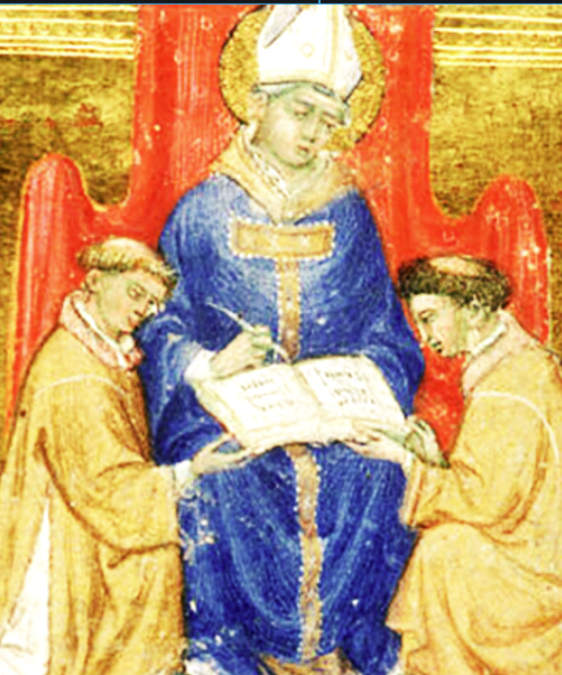
REFLECTION – “Now we must focus on what is meant by these sandals from the spiritual standpoint. We know that Moses said long ago: “Put off your sandals from your feet, for the place on which you are standing is holy ground.” We read that Joshua, the son of Nun likewise said, “Remove the latchet from your sandal.” But as to why they are ordered by the Lord to remove their sandals, we must understand this to be the type of a future truth. According to the law, if a man is unwilling to accept the wife of his brother after his brother’s death, he should take off his shoes, so that another may marry her and succeed, by right of law. As to the commandment prefigured in law, we find it fulfilled in Christ, Who is the true Bridegroom of the Church. Therefore, because neither Moses the lawgiver, nor Joshua the leader of the people, could be the bridegroom of the Church, not without good reason, was it said to them that they should remove the sandals from their feet because the true future Bridegroom of the Church, Christ, was to be expected. John says concerning Him: “He who has the bride is the bridegroom.” To bear, or loosen His sandals, John professed himself to be unworthy. The Lord Himself, through David, revealed that these sandals signify the footsteps of Gospel preaching when he says, “Upon Edom I cast my shoe,” through His Apostles, He will take the steps of Gospel ,teaching everywhere.” – St Chromatius of Aquileia Bishop and Father of the Church (Died c 407) (Tractate on Matthew, 11). About St Chromatius below.
PRAYER – O infinite God and only love of my soul, I thank You, for having given me Your Son. For the sake of this same Son, accept me and bind me with chains of love to my Redeemer. Amen … St Alphonsus Liguori (1696-1787) Most Zealous Doctor Our Lady of Guadalupe, Pray for us!
Saint of the Day – 12 December – Saint Pope Callistus II (c 1065-1124) Bishop of Rome 1 February 1119-13 December 1124) Born in c1065 Quingey, France as Guy or Guido and died on 13 December 1124 in Rome, Italy of natural causes. Also known as – Calixtus II, Guy of Burgundy, Guido of Burgundy.
Guy or Guido in Italian, as he was called before his elevation to the Papacy, was the son of Count William of Burgundy and both by his father’s and mother’s side, was closely connected with nearly all the Royal Houses of Europe. He was the uncle of the Queen of France, cousin of the King of England, related to the German Emperor. His brother Hugh had been appointed Archbishop of Besançon and he himself was named Archbishop of Vienne in 1088 and afterwards appointed Cardinal and Papal Legate in France by Pope Paschal II.
When appointed Papal Legate in France by Pope Paschal II, Guido strenuously opposed Paschal’s “Privilege,” extorted by Henry V, which would have surrendered most of the political positions held by Church officials in the Empire. After protesting the “Privilege” at the Lateran Synod of 1112, he called and presided over a Synod of French and Burgundian Bishops at Vienne, which denounced lay investiture of the clergy as heretical and excommunicated Henry V as hostile to the welfare of the Church. When Gelasius II, who succeeded Pascal, refused to confirm the “Privilege,” the angry Henry V set up Archbishop Burdinus of Braga as antipope Gregory VIII and installed him in Rome. Gelasius was forced to spend his brief, harassed Pontificate in exile and died at Cluny within a year. Some of the Cardinals who had come to Cluny now elected Guido, who was crowned in Vienne on 1 February 1119.
Callistus took immediate steps to establish peace with the imperial government, since both sides were tired of the long investiture struggle. Henry V favourably received a Papal Embassy and temporarily withdrew his support from Gregory VIII. A meeting between Pope and Emperor was arranged.
After presiding over a Synod at Toulouse (1119), which was mainly concerned with reform of the French Church, Callistus proceeded to Reims, where he held a great Council (1119), attended by some 400 Prelates and by Louis VI of France. Negotiations with Henry V broke down after he came to Mousson with a large army and Papal plans to meet with the Emperor were abandoned. The Emperor was excommunicated again (October 1119).
Callistus then went to Rome, where he was enthusiastically received by the people, who had meanwhile driven out the antipope. He allied himself with the Normans, who aided in the capture of antipope Gregory VIII. Gregory, who had taken refuge at Sutri, was held prisoner and subsequently other enemies of the Pope in Italy were overcome too.
Callistus then sent a new embassy to Henry V. A preliminary understanding with a truce was arranged at Würzburg in 1121. The following year, the famous Concordat of Worms (1122) was arrived at, in a Synod held in that City. Because of the Pope’s patience and perseverance, the Concordat was a reasonably satisfactory arrangement for both sides, although a complete victory for neither, bringing peace to both Empire and Church, to the great relief of Christendom.
The First Lateran Council (1123), convoked by Callistus, solemnly confirmed the Concordat of Worms and issued Decrees against clerical marriage and simony. It provided penalties against violators of the Truce of God and against forgers of Ecclesiastical documents and renewed Indulgences for crusading.
During his Pontificate, Callistus also secured from Henry I of England, the acceptance of his candidate, Thurstan, for the Archbishopric of York, transferred metropolitan rights in Spain from the ancient See of Merida to the popular See of Santiago de Compostela and settled the old French rivalry over metropolitan disagreements between Aries and Vienne, in favour of the latter.
Callistus died in 1124 and after some dispute Honorius II was selected as his successor. As to the great influence of the reign of Callistus II on the policy of the Church, there can be no dispute. Owing mainly to him ,the concessions so weakly made by Pope Paschal II were recalled and on his own accession to the Papal throne, his firmness and strength of character secured a settlement of the controversy between Church and State which, although not entirely satisfactory, was at least sufficient to assure a much needed peace.
Through his exertions he put an end to the wholesale bestowal of Ecclesiastical offices by laymen; he re-established the freedom of canonical elections and secured recognition of the principle that Ecclesiastical jurisdiction can come, only from the Church, while on the other hand, he conceded to the secular authorities, the influence to which they were rightly entitled, in the election of Prelates who were at the same time the most powerful and richest subjects of the State.
Callistus II was not very remarkable for his literary productions, yet a few works have come down to us which are ascribed to his pen. They are: “De Miraculis Sancti Jacobi Apostoli,” “De obitu et Vita Sanctorum,”,”Vita Caroli Magni Imperatoris.” Many letters attributed to him are preserved.
Martyrs of Alexandria – (6 saints): A group of six Christians martyred for their faith during the persecutions of Decius. We know little more than five of their names – Alexander, Ammonaria, Dionysia, Epimachus and Mercuria. They were burned to death c 250 in Alexandria, Egypt.
Martyrs of Trier – (4 saints): A group of six Christians martyred for their faith during the persecutions of Decius. We know little more than five of their names – Alexander, Ammonaria, Dionysia, Epimachus and Mercuria. They were burned to death c 250 in Alexandria, Egypt.
Thought for the Day – 11 December – Meditations with Antonio Cardinal Bacci (1881-1971)
The Use and Abuse of the Sacraments
“Let us go back in our imagination to the day when we were Baptised. That was the day of our spiritual rebirth, when we were cleansed from original sin and enriched by the gift of grace, which is the life of the soul. On this solemn occasion, we promised, through the agency of our Godparents, to remain faithful to the trust which we had received and to renounce Satan and whatever else might have power to extinguish our supernatural life and to plunge us into sin.
Have we kept these promises, which were made4 on our behalf and which we repeated from time to time before the Altar as we grew older? Every gift of God demands our gratitude and our co-operation. It is our own grave loss, if we remain cold and indifferent, in spite of the precious favours which we received from God. God is infinitely good and merciful but, precisely because of this, He demands generous co-operation on our part. If we abuse His graces, He will leave us to our own devices. We shall no longer be aware of His inspirations and His appeals to us to advance in virtue. What is to happen to us then? We shall be like an arid plain on which only weeds and thorns can grow. Our lives will be meaningless and purposeless, for God and everlasting happiness are the only goals worthy of our pursuit.”
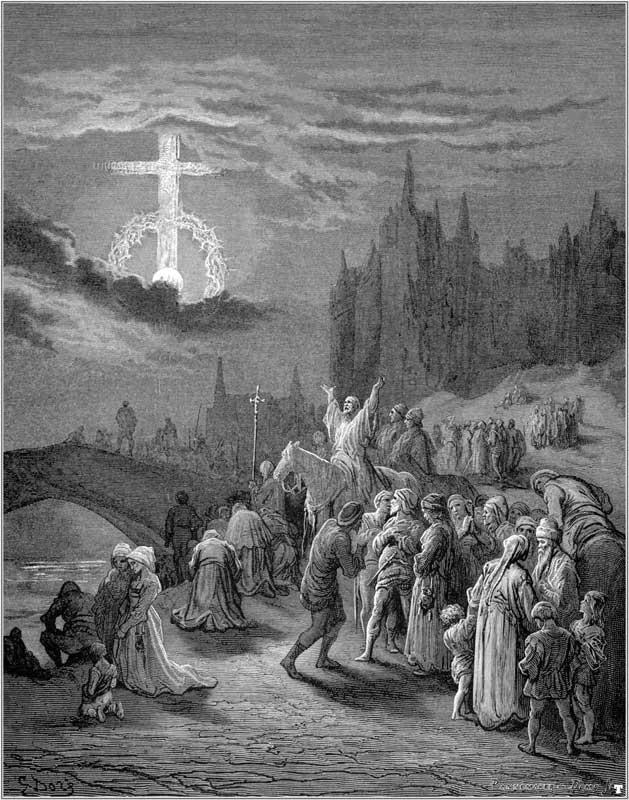
Quote/s of the Day – 11 December – Saturday of the Second week of Advent
“Let us become like Christ, since Christ became like us. He assumed the worse, that He might give us the better; He became poor, that we through His poverty, might be rich.”
St Gregory of Nazianzen (330-390) Father and Doctor of the Church
“Those who refuse to be humble cannot be saved. They cannot say with the prophet: See, God comes to my aid; the Lord is the helper of my soul. But anyone who makes himself humble, like a little child, is greater in the kingdom of heaven.”
St Bede the Venerable (673-735)
“Let all your desires then be, directed toward Him, the Infinite One, the Giver of all Good.”
Bl Jacopone da Todi (1230-1306)
“Who could ever soften this heart of mine but YOU alone O Lord!”
St Francis Borgia (1510-1572)
“Unreasoning and stupid that you look for God where He is not! Listen and be filled with awe – God is in our hearts, I know it. God lives in the human heart when this heart lives withdrawn from all that is not Him, when this heart heeds God’s knock at it’s door (Rv 3,20) and, sweeping and cleaning all its rooms, makes itself ready to welcome Him who alone truly satisfies.”
One Minute Reflection – 11 December – Saturday of the Second week of Advent, Readings: Sirach 48:1-4, 9-11; Psalm 80:2ac and 3b, 15-16, 18-19; Matthew 17: 9-13
“I tell you that Elijah has already come and they did not recognise him but did to him, whatever they pleased.” – Matthew 17:12
REFLECTION – “Our Lord bore witness that John is the greatest of the prophets, yet he received the Spirit according to a certain degree, since John received a spirit like that of Elijah.
Just as Elijah went to dwell in solitude, so God’s Spirit led John to dwell in the wilderness, mountains and caves. A raven flew to Elijah’s help by feeding him; John ate locusts. Elijah wore a leather belt and John wore a leather loincloth round his hips. Elijah was persecuted by Jezebel; Herodias persecuted John. Elijah rebuked Ahab; John rebuked Herod. Elijah divided the waters of the Jordan; John opened up baptism. Elijah’s double measure of spirit came to rest on Elisha; John placed his hands on Our Lord, Who then received the Spirit without measure (Jn 3:34). Elijah opened Heaven and went up; John saw the Heavens opened and the Spirit of God descending and resting on our Saviour.” – St Aphrahat “Jacob” (c 280-c345) Monk and Bishop near Mosul (The Demonstrations, no 6, 13).
PRAYER – Almighty God, let the splendour of Your glory dawn in our hearts. May the coming of Your only Son, dispel all darkness and reveal that we are children of light and Truth. and may His Holy Mother always intercede for us in this vale of tears. We make our prayer through Our Lord Jesus Christ, in the unity of the Holy Spirit, one God with You, now and forever, amen.
The long list of Syriac writers whose works have come down to us, is headed by Aphraates (fourth century), surnamed the “Persian Sage”. The few biographical data which we possess of this illustrious author are gleaned from his own writings. From these we learn that he was born of pagan parents during the last half of the third century, very probably on the frontier region of the Persian empire. After his conversion to Christianity he embraced the religious life and was later elevated to the episcopate, on which occasion he assumed the Christian name of Jacob. The adoption of this name subsequently led to a confusion of identity, and for centuries the works of Aphraates were ascribed to the famous Jacob, Bishop of Nisibis (died 338). It was not until the tenth century that the “Persian Sage” was finally identified with Aphraates, the name under which he is known to modern scholars. The writings of Aphraates consist of twenty-three “Demonstrations,” or homilies on moral and controversial topics.
Our Morning Offering – 11 December – As Sunday is the Feast of Our Lady of Guadalupe and today is Mary’s Saturday, let us pray this powerful indulgenced prayer now.
Our Lady of Guadalupe, Mystical Rose Prayer to Our Lady of Guadalupe By St Pius X (1835-1914)
Our Lady of Guadalupe, Mystical Rose, make intercession for the holy Church, protect the Sovereign Pontiff, help all those who invoke thee in their necessities, and since thou art the ever Virgin Mary and Mother of the true God, obtain for us from thy most holy Son the grace of keeping our faith, sweet hope in the midst of the bitterness of life, burning charityand the precious gift of final perseverance. Amen
This prayer was approved and enriched with an indulgence of five hundred days by St Pope Pius X at an audience held on August, 1908 and was included in the official edition of approved indulgenced prayers (1950). Raccolta number 389, 500 days Indulgence, St Pope Pius X audience, 15 August 1908.
Saint of the Day – 11 December – Blessed Jerome Ranuzzi OSM (c 1410-c 1468) “The Angel of Good Counsel,” “The Blessed Bachelor,” Priest and Friar of the Order of the Servants of Mary, the Servites, Theologian, Adviser both spiritual and secular, renowned for his learning and scholarship, Penitent and Hermit with a great love of solitude and silence. Born as Girolamo Ranuzzi in c 1410 at Sant’Angelo, Vado, Pesaro-Urbino, Italy and died in c 1468 of natural causes. Also known as – Jerome Ranucci, Girolamo and “The Angel of Good Counsel,” “The Blessed Bachelor.” Additional Memorials, 10 and 12 December on local calendars. Patronage – Sant’Angelo, Vado. His body is incorrupt and is still available for veneration in St Mary of the Servites.
The Roman Martyrology states: “In Sant’Angelo in Vado always in the Marches, Blessed Girolamo, Priest of the Order of the Servants of Mary, who in solitude and silence reached the wisdom of holiness.”
“Becoming holy is the vocation of every man and woman who comes into this world. The Servants of Mary lived this noble toil within the Church of Christ. The results of this journey are as colourful as ever, precisely because the Holy Spirit renews everything without ever repeating Himself. The saints are alike but none are the same.” (The journey of the Servants of Mary, Servitium editrice, 2001).
Jerome, who was born around 1410 in Sant’Angelo in Vado, of the wealthy Ranuzzi family (or Ranucci, according to the spelling of contemporary documents). The family became regarded as part of nobles. In 1404, his father Antonio, became the municipal guardian for the Parish of St Eusebius, two kilometers away from his home.
Jerome, while still a teenager, entered the Convent of the Servants of Mary of St Angelo in Vado, from where he went to Bologna to study. There he applied himself to philosophy and theology, obtaining the degree of bachelor and after being Ordained a Priest, returned to his hometown Convent.
The first documented report of Jerome’s presence in St Angelo among the Servants of Mary, dates to 1449. Jerome was at this time, the Vicar of the Provincial Superior Michael Ambrosi, who called a General Chapter at his Convent in St Angelo. Another document certifying his presence in the said Convent is his signing of a contract dated 20 November 1454.
Jerome was undoubtedly a man of doctrine, in fact, several of his famous contemporaries mention him in their historical works as the “bachelor,” from the title obtained for his studies in the ecclesiastical universities of the time.
The famous Duke Federick of Montefeltro of Urbino, used his advice for the most important affairs and then always venerated his memory, when, as shown by subsequent documents of 1471 and 1478, the Duke Federick visited Jerome’s Convent to pay homage at the Tomb of the Blessed.
His contemporaries and fellow Friars, narrated his fame as an ascetic, a rigorous penitent, a persuasive adviser, who was very much alive in St Angelo in Vado. A local tradition indicates a cave where our Blessed Jerome lived his periods of solitude located along the road that leads to Montata, right where the Shrine of the Virgin called “Madonnina di Pagnignò” stands.
In 1462 the “Blessed Bachelor” began the foundation of the female Monastery of St Mary of Gracenear, nearby the male Monastery.
The date of his death is around 1468 and from then on, a crowd of people went to his Tomb to recommend themselves to his intercession. Shortly after his death, when the fame of miracles grew, Friar Jerome was acclaimed a saint by the voice of the people. His incorrupt body is preserved under the main Altar of the Church of St Mary of the Servites, where it is still venerated by the faithful today.
After a long process, his cult was confirmed on 1 April 1775 by Pope Pius VI with the title of Blessed. The Roman Martyrology celebrates his feast today, the 11th December.
Bl Hugolinus Magalotti Bl Jean Laurens Blessed Jerome Ranuzzi OSM (c 1410-c 1468) “The Angel of Good Counsel,” “The Blessed Bachelor,” Priest and Friar of the Order of the Servants of Mary, the Servites Bl Kazimierz Tomasz Sykulski
Bl Martín Lumbreras Peralta Bl Martino de Melgar Bl Melchor Sánchez PérezPens Bl Pilar Villalonga Villalba Bl Severin Ott Martyrs of Saint Aux-Bois – (3 saints): Two Christian missionaries and one of their local defenders who faith in the persecutions of governor Rictiovarus – Fuscian, Gentian and Victoricus. They were beheaded in 287 in Saint Aux-Bois, Gaul (in modern France).
Martyrs of Rome – (3 saints): Three Christians murdered in the persecutions of Diocletian for giving aid to Christian prisoners – Pontian, Practextatus and Trason. They were imperial Roman citizens. They were martyred in c 303 in Rome, Italy.
Thought for the Day – 10 December – Meditations with Antonio Cardinal Bacci (1881-1971)
Those Who Will to be Damned
“Only those who will it themselves, are damned. God wishes all men to be saved. It was for this, that He came into the world and shed His Precious Blood. Moreover, He has given us the means necessary for salvation. “God our Saviour, wishes all men to be saved and to come to the knowledge of the truth” (1 Tim 2:4).
What can be wanting to us, therefore, in order to obtain salvation? Divine grace is certainly not lacking, for God gives it to us without reserve. “I come that they may have life and have it more abundantly” (Jn 10:10). Nor are we lacking in strength, for, as St Paul says, “I can do all things in him who strengthens me” (Phil 4:13). We have the Sacraments, good inspirations and the example of the Saints. All that we can be deficient in, then, is our own goodwill and co-operation with the grace of God. We must be prepared to play our part in our own salvation.
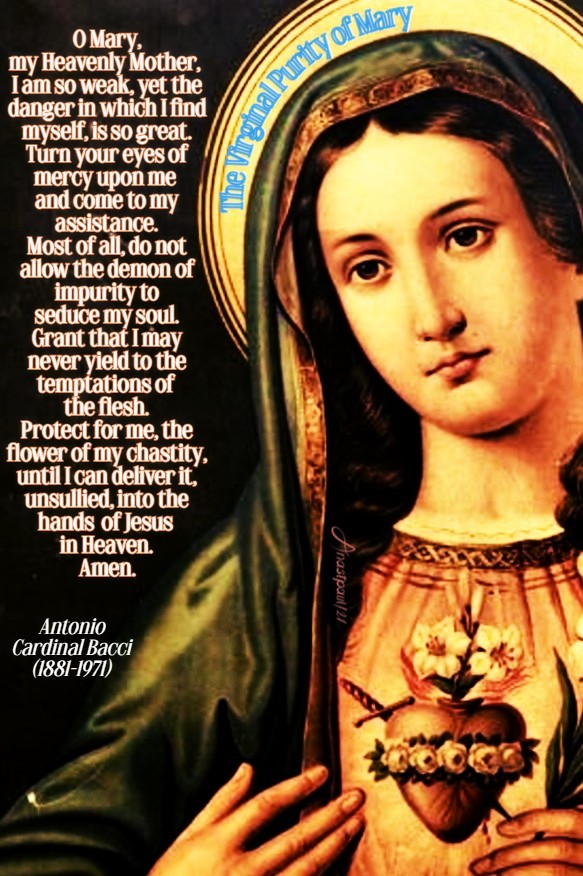
Our first thought and purpose, therefore, must be our own salvation. The treasure hidden in a field and the pearl of great price (Cf Mt 13:44-46) are symbols of the Kingdom of God and of everlasting happiness. We should be prepared to sacrifice everything else, in order to find this treasure an to acquire this pearl!”

Quote/s of the Day – 10 December – Friday of the Second week of Advent, Readings: Isaiah 48: 17-19; Psalm 1: 1-4,6, Matthew 11:16-19
“We played the flute for you but you did not dance, we sang a dirge but you did not mourn.”
Matthew 11:17
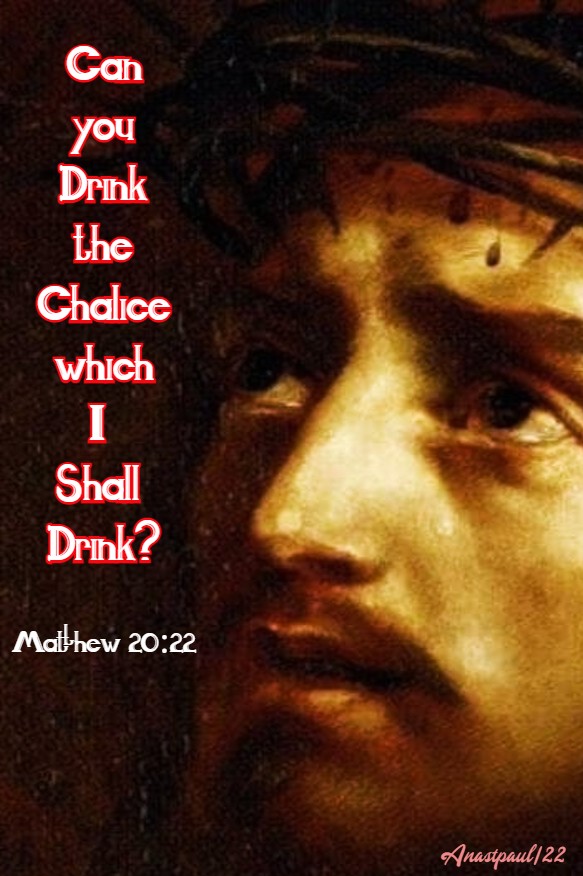
“The soil that should have presented its Master with fruits of sweetness, pierced Him with its sharp thorns. In the same way His enemies, who ought to have welcomed our Saviour with all the devotion of their faith, crowned Him with the thorns of His Passion.”
St Maximus of Turin (c 380-c 420)
“Thy will be done on earth as it is in heaven.”
Matthew 6:10 “I want to advise you and remind you, what His will is. Do not fear that it means He will give you riches, or delights, or honours, or all these earthly things. His love for you is not that small! and He esteems highly what you give Him. He wants to repay you well, for He gives you His kingdom while you are still on earth … See … what He gave to the One He loved most. By that we understand what His will is. For these are His gifts in this world.”
St Teresa of Avila (1515-1582) Doctor of Prayer of the Church
Lord, May Your Kingdom Come Into My Heart By Fr Jean-Pierre de Caussade (1675-1751) Lord, may Your Kingdom come into my heart to sanctify me, nourish me and purify me. How insignificant is the passing moment, to the eye without faith! But how important each moment is, to the eye enlightened by faith! How can we deem insignificant anything which has been caused by You? Every moment and every event is guided by You and so contains Your infinite greatness. So, Lord, I glorify You in everything that happens to me. In whatever manner You make me live and die, I am content. Events please me for their own sake, regardless of their consequences because Your action lies behind them. Everything is Heaven to me because all my moments, manifest Your love. Amen
One Minute Reflection – 10 December – Friday of the Second Week of Advent, Readings: Isaiah 48: 17-19; Psalm 1: 1-4,6, Matthew 11:16-19 and the Memorial of Our Lady of Loreto and the Holy House
“We played the flute for you but you did not dance, we sang a dirge but you did not mourn.” – Matthew 11:17
REFLECTION – “When some children are dancing and others are singing a dirge, their purpose does not agree. Both sides find fault with their friends for not being in harmony with them. So the Jews underwent such an experience when they accepted, neither the gloominess of John the Baptist, nor the freedom of Christ. They did not receive help, one way or another. It was fitting for John, as a lowly servant, to deaden the passions of the body through very hardy training and for Christ, by the power of His Godhead, freely to mortify the sensations of the body and the innate practice of the flesh and to do so, without reliance on strenuous ascetic labours. Nevertheless, John, “while he was preaching the baptism of repentance,” offered himself as a model for those who were obliged to lament, whereas the Lord, “who was preaching the kingdom of heaven” similarly displayed radiant freedom in Himself. In this way, Jesus outlined for the faithful, indescribable joy and an untroubled life. The sweetness of the Kingdom of Heaven is like a flute. The pain of Gehenna is like a dirge.”– OrigenAdamantius (c 185-253) Priest, Theologian, Exegist, Writer, Apologist, Father (Fragments, 142-143)
PRAYER – Lord, watch over Your people, who come to You in confidence. Strengthen the hearts of those who hope in You. Give courage to those who falter because of their failures. In this holy season of Advent, lead them closer to You in hope, by the power of Your Holy Spirit. May Mary Immaculate, our Mother and Advocate be our eternal succour. Through Christ, our Lord, in the unity of the Holy Spirit, God for all eternity, amen.
Our Morning Offering – 10 December – Friday of the Second Week of Advent and the Memorial of Our Lady of Loreto and the Holy House
Maiden yet a Mother By Dante Alighieri (1265-1321) Trans. Msgr Ronald A Knox (1888-1957)
Maiden yet a mother, daughter of thy Son, high beyond all other, lowlier is none; thou the consummation planned by God’s decree, when our lost creation nobler rose in thee!
Thus His place prepared, He who all things made ‘mid His creatures tarried, in thy bosom laid; there His love He nourished, warmth that gave increase to the root whence flourished our eternal peace.
Nor alone thou hearest When thy name we hail; Often thou art nearest When our voices fail; Mirrored in thy fashion All creation’s gird, Mercy, might compassion Grace thy womanhood.
Lady, let our vision Striving heavenward, fail, Still let thy petition With thy Son prevail, Unto whom all merit, prayer and majesty, With the Holy Spirit And the Father be.
Maiden Yet A Mother is a translation of a Poem by Durante (Dante) degli Alighieri (c 1265–1321). It is based upon the opening verses of Canto 33 of the Paradiso from his Divine Comedy in which St Bernard of Clairvaux (1090–1153) praises and prays to the Virgin Mother on behalf of Dante. It was translated from the original Italian into English by the Catholic convert, Monsignor Ronald A Knox (1888-1957).
Saint of the Day – 10 December – Saint John Roberts (1577-1610) Priest Martyr, Monk, Missionary. Born in 1577 at Trawsfynydd, Merionethshire, Gwynedd, northern Wales and died by being hung, drawn and quartered on 10 December 1610 at Tyburn, London, England. Additional Memorials – • 25 October as one of the Forty Martyrs of England and Wales, 1 December as one of the Martyrs of Oxford University.
John Roberts was the eldest son of Robert and Anna of Rhiw Goch Farm, Trawsfynydd. He was a descendant of the Welsh Princes, including Maelgwn Gwynedd, Hywel Dda and Llewelyn the Great.
Despite being raised a Protestant, it is believed that he received his early education from a Monk who had been forced to leave nearby Cymer Abbey after Henry VIII’s dissolution of the monasteries.
St John Robert’s Birthplace
John studied at St John’s College at Oxford. However, he left without earning a degree and entered as a law student at one of the Inns of Court. He travelled throughout the continent and more so, Paris and through the influence of a Catholic fellow traveller, he was converted to Catholicism. By the advice of John Cecil, an English Priest, he decided to enter the English College, at Douai in 1598.
He left College the following year for the Abbey of St Benedict and was sent to make his novitiate at San Martin Pinario, Santiago de Compostela. He made his profession towards the end of 1600. He was Ordained and set out for England in December 1602. Although a Government spy observed him, John and his companions succeeded in entering the country in April 1603 but he was arrested and banished in May. He soon managed to return to England, and worked among the plague victims in London. In 1604 while preparing to leave for Spain with four postulants, he was arrested again. Not recognised as a Priest, he was released and again banished but he returned to England, once again.
In 1605, he was found at the house of Mr And Mrs Thomas Percy, who was involved in the Gunpowder Plot. Although he was not found guilty of being involved, in July 1606. he was imprisoned in the Gatehouse Prison at Westminster for seven months and then exiled This time he was gone for fourteen months, nearly all of which he spent at Douai where he founded and became the first Abbot of a house for English Benedictine Monks, who had entered through Spanish Monasteries. This was the beginning of the Monastery of St Gregory at Douai.
In October 1607, John returned to England. In December, he was again arrested and placed in the Gatehouse at Westminster. After several months, he escaped. He lived in London for about a year and in May 1609, he was taken to Newgate Prison. He would have been executed but the French Ambassador interceded on his behalf and his sentence was reduced to banishment. He visited Spain and Douai but returned to England within the year. He was captured again on 2 December 1610, just as he was concluding Mass. They took him to Newgate in his Vestments. On 5 December he was tried and found guilty under the Act forbidding Priests to minister in England.
On 10 December he was hung, drawn and quartered along with Father Thomas Somers at Tyburn, London. His body was recovered and taken to St Gregory’s at Douai. His arm was found in the possession of the Spanish Royal family before being returned to Santiago de Compostela, where he served as a novice. One of his fingers is kept in the Sacred Cross Church, Gellilydan, while another is at the Tyburn convent and one more in Taunton.
He was Beatified by Pope Leo XIII in 1886 and Canonised by Pope Paul VI as one of the “Forty Martyrs of England and Wales.”
His life is commemorated in Trawsfynydd’s heritage centre, Llys Ednowain. There is an information board about him outside the centre, one of six posted along a walk past significant locations in his life.
The title Our Lady of Loreto refers to the Holy House of Loreto, the house in which Mary was born and where the Annunciation occurred and to an ancient statue of Our Lady which is found there. Tradition says that a band of angels scooped up the little house from the Holy Land and transported it first to Tersato, Dalmatia in 1291, then Recanati, Italy in 1294 and finally to Loreto, Italy where it has been for centuries. It was this flight that led to her patronage of people involved in aviation and the long life of the house that has led to the patronage of builders, construction workers, etc. It is the first shrine of international renown dedicated to the Blessed Virgin and has been known as a Marian centre for centuries. Popes have always held the Shrine of Loreto in special esteem and it is under their direct authority and protection.
The Holy House of Loreto – The feast is so named from the tradition that the house where the Holy Family lived in Nazareth, was transported by angels to the city of Loreto, Italy. The Holy House is now encased by a basilica. It has been one of the famous shrines of the Blessed Virgin since the 13th century.
St Abundius St Albert of Sassovivo St Angelina of Serbia Bl Brian Lacey BL Bruno of Rommersdorf St Caesarius of Epidamnus St Carpophorus St Deusdedit of Brescia
Bl Guglielmo de Carraria St Guitmarus St Hildemar of Beauvais Bl Jerome Ranuzzi Bl John Mason St John Roberts (1577-1610) Priest Martyr St Julia of Merida St Lucerius Bl Marco Antonio Durando St Maurus of Rome St Mercury of Lentini St Pope Miltiades St Polydore Plasden Bl Sebastian Montanol Bl Sidney Hodgson St Sindulf of Vienne St Swithun Wells St Thomas of Farfa Bl Thomas Somers St Valeria Martyrs of Alexandria – 3 saints – A group of Christians murdered for their faith in the persecutions of Galerius Maximian – c312. The only details that have survived are three of the names – Eugraphus, Hermogenes and Mennas.
Thought for the Day – 9 December – Meditations with Antonio Cardinal Bacci (1881-1971)
Perseverance
“Perseverance may be a difficult virtue but nothing is really difficult to a person of strong resolution. When the sister of St Thomas Aquinas asked him how to become holy, he replied that it needed only one thing – a firm act of the will, for God will certainly supply the necessary grace.
Think of how much work and sacrifice is required to achieve worldly success. Cicero wrote that it required constant and tireless labour in order to become a great orator (Cf De Oratore, 1:39). St Paul cited the example of athletes who are prepared to make such great sacrifices, in order to train themselves to win. If they are prepared to do so much to gain a perishable crown, he comments, we should be prepared to do much more to gain an imperishable one (Cf 1 Cor 9:25).
The grace of God is the principal weapon upon which we must depend in order to gain our victory. We should pray for it humbly and perseveringly. There will be victors and losers in the battle for Heaven as well as in earthly contests. We must make sure that we are on the winning side! For this purpose, we should combine fervent and constant prayer with generous co-operation with the grace of God.”
Quote/s of the Day – 9 December – Thursday of the Second week of Advent
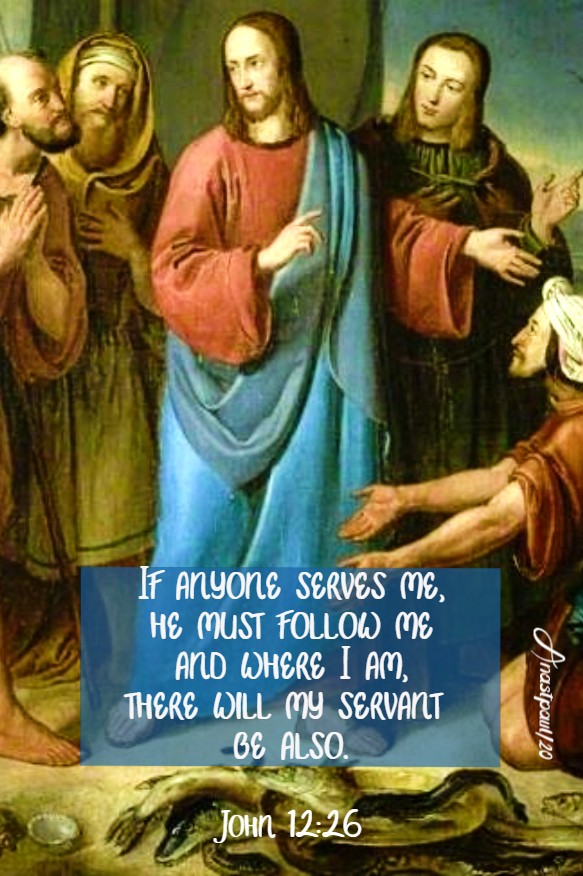
“A person who wishes to become the Lord’s disciple must repudiate a human obligation, however honourable it may appear, if it slows us, ever so slightly, in giving the wholehearted obedience we owe to God.”
St Basil the Great (329-379) Father and Doctor of the Church
“Neither do I condemn you but, having been made secure concerning the past, be on your guard in the future. I, for My part, will not condemn you, I have blotted out what you have done; keep what I have commanded, that you may gain what I have promised.”
St Augustine (354-430) Father & Doctor of Grace
“Be strong and kill yourself with the sword of hate and love, then you will not hear the insults and abuse. which the enemies of the Church throw at you. Your eyes will not see anything, which seems impossible, or the sufferings, which may follow but only the light of faith and in that light , everything is possible and remember , God never lays greater burdens on us than we can bear.”
St Catherine of Siena (1347-1380) Doctor of the Church
The Love of Your Name
“My God, Sweetness beyond words, make bitter all the carnal comfort that draws me from love of the eternal and lures me to its evil self, by the sight of some delightful good in the present. Let it not overcome me, my God. Let not flesh and blood conquer me. Let not the world and its brief glory deceive me, nor the devil trip me by his craftiness. Give me courage to resist, patience to endure and constancy to persevere. Give me the soothing unction of Your spirit, rather than all the consolations of the world and in place of carnal love, infuse into me the love of Your Name.”
Thomas à Kempis CRSA (1380-1471) The Imitation of Christ (Book 3 Ch 26:1-4)
“Crosses, contempt, sorrows and afflictions, are the real treasures of the lovers of Jesus Christ Crucified.”
St Margaret Mary Alacoque (1647-1690) “Apostle of the Sacred Heart”
One Minute Reflection – 9 December – Thursday of the Second week of Advent, Readings: Isaiah 48:17-19; Psalm 1:1-4 and 6; Matthew 11:11`-15
“From the days of John the Baptist until now, the kingdom of heaven suffers violence …” – Matthew 11:12
REFLECTION – “Someone wrestled with Jacob until morning perseveringly … and Jacob said to him: “I will not let you go unless you bless me” (Gn 32:25.27). … So to you, my brethren, we say, you whose set purpose is to win heaven by force, you who have come together to wrestle with the angel who guards the way to the tree of life, to you we say – it is wholly necessary that you should wrestle perseveringly and without remission, not only until the thigh … is deprived of its vigour but also, until the body is mortified. But your toil will be able to achieve this, only by the touch of God’s strength and through His bounty. …
Do you not seem, to yourself ,to be wrestling with an angel, or rather, with God Himself, when day by day He resists your impatient prayers? … You cry to Him and He does not listen to you; you wish to approach Him and He repels you. You make a decision and the opposite happens and so, in every way, He sets Himself against you, with an unrelenting hand. O Mercy, You conceal Yourself and pretend to be unrelenting! With what loving-kindness You fight against those, for whom You fight. For although You “hide these things in your heart,” I know that You “love those who love you” and that, “the abundance of your sweetness which you hide away for those who fear you is immense” (Jb 10:13; Pr 8:17; Ps 31[30]:20).
Do not despair then, persevere, happy soul, who has begun to wrestle with God; He loves to suffer violence from you. He desires to be overcome by you. For when He is angry and stretches forth His Hand to strike, He seeks, as He Himself confesses, a man like Moses to resist Him. … For if His anger is implacable and His sentence unbending, Jeremiah, who had attempted to resist, will weep and say: “You were the stronger and did prevail” (20:7).” – Blessed Guerric of Igny (c 1080-1157) Cistercian Abbot (2nd Sermon on Saint John the Baptist).
PRAYER – Almighty and merciful God, let neither our daily work nor the cares of this life, prevent us from hastening to meet Your Son. Lord, make straight the winding ways within us. Draw us to repent! Enlighten us with Your wisdom and lead us into His company, that we may love Him and do homage to Him. By the prayers of the Immaculate Mother of Your only-begotten Son, may we receive Your grace and Your strength. We make our prayer through Christ our Lord, in the unity of the Holy Spirit, God, now and for all eternity. Amen
Our Morning Offering – 9 December – Thursday of the Second week of Advent
Let Your goodness, Lord, Appear to Us An Advent Prayer By St Bernard (1090-1153) Father and Mellifluous Doctor
Let Your goodness, Lord, appear to us, that we, made in Your image, conform ourselves to it. In our own strength we cannot imitate Your majesty, power and wonder, nor is it fitting for us to try. But Your mercy reaches from the heavens through the clouds to the earth below. You have come to us as a small child but You have brought us the greatest of all gifts, the gift of eternal love. Caress us with Your tiny hands, embrace us with Your tiny arms and pierce our hearts with Your soft, sweet cries. Amen
Saint of the Day – 9 December – Saint Syrus of Pavia (1st Century) the First Bishop of Pavia, Italy, Confessor, miracle-worker, Defender of the Faith, Evangeliser. His birthplace is unknown but he died at Pavia where his relics are enshrined in the City’s Cathedral. Also known as – Cyrus, Cyril, Siro.Patronages – the City and the Diocese of Pavia, Italy.
Detail of St Syrus on Pavia Cathedral facade. Full image below.
The Roman Martyrology states: “At Pavia, St Syrus, the first Bishop of that City, who was renowned for miracles and virtues worthy of an apostle.”
Nothing is known of St Syrus early life but some believe that he was the little boy with the five loaves and 2 fish, who appears in the Gospels.
Syrus is said to have followed Saint Peter to Rome and from there he was sent to the Po valley to preach and convert the people to the Christian faith. He preached in all of the major cities of northern Italy.
Another tradition, from the eighth century, states that Syrus was also a disciple of St Hermagoras, the first Bishop of Achilles, himself a disciple of St Mark the Evangelist.
In the company of St Juventius, Syrus fought against Arianism. Syrus worked to challenge and convert those who followed Arianism in his Diocese.
St Syrus refuting the Arians
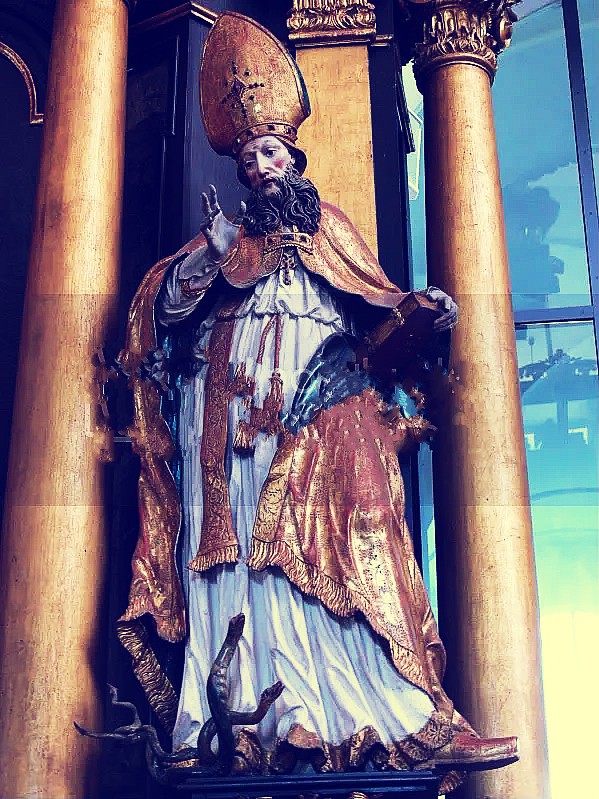
Syrus’ relics are enshrined in the Chapel of Saint Syrus in the Pavia Cathedral on the facade of which the Statue below is displayed.
Nostra Signora dell’Immacolata Concezione / Our Lady of the Conception, Naples, Italy (1618) – 9 December:
The Abbot Orsini wrote: “Our Lady of the Conception, at Naples, so called because, in the year 1618, the Viceroy, with all his Court and the soldiery of Naples, made a vow, in the Church of Our Lady the Great, to believe and defend the Immaculate Conception of the Blessed Virgin.”
Pedro Tellez-Giron, 3rd Duke of Osuna, was the Viceroy of Naples under King Philip III of Spain. He was a Spanish nobleman born in 1574 and married in 1594. He joined the army of the Archduke of Austria as a mere private but his ability and courage, must have been considerable, as he was soon placed in command of two cavalry companies. He fought in several battles and was seriously wounded on two occasions before being made the Viceroy of Sicily in 1610. When he took this new position as Viceroy, the Spanish had not a single galley on the island that was seaworthy. It was necessary to remedy that problem at once, as Sicily was vulnerable to Barbary pirates as well as potential attacks of the fleet of the Ottoman Empire. Within two years he was no longer in a weak position, and as he had 8 galleys and several other ships in the new navy, he used them to attack Ottoman territory. In the summer of 1613 his fleet encountered a larger Ottoman fleet under the command of Sinari Pasha. The encounter lasted three hours and became known as the Battle of Cape Corvo. Sinari Pasha was captured, and Mahamet, Bey of Alexandria and son of Muezzinzade Ali Pasho, Commander of the Ottoman fleet at the battle of LepanTo, was also captured. In 1616 Pedro Tellez-Giron was promoted to Viceroy of Naples and it was during this time, that the now Knight of the Order of the Golden Fleece ,made his vow to defend what would later become a Dogma of the Catholic Faith, the Immaculate Conception of the Blessed Virgin Mary. This doctrine was not actually formally proclaimed by the Church until the Blessed Pope Pius IX formally proclaimed it, on 8 December 1854, in the Papal Bull, Ineffabilis Deus. The Napule have a great devotion to the Blessed Virgin of the Immaculate Conception as manifested by this immense “Guglia” Column or Spire proudly displayed in Naples.
St Adam Scotus Bl Agustín García Calvo * Bl Antonio Martín Hernández * St Auditor of Saint-Nectaire St Balda of Jouarre St Bernhard Mariea Silvestrelli St Budoc of Brittany Bl Carmen Rodríguez Banazal * St Caesar of Korone St Cephas Bl Clara Isabella Fornari St Cyprian of Perigueux Bl Dolores Broseta Bonet * Bl Estefanía Irisarri Irigaray * St Ethelgiva of Shaftesbury St Gorgonia Bl Isidora Izquierdo García * Bl José Ferrer Esteve * Bl José Giménez López * Bl Josefa Laborra Goyeneche * Bl Josep Lluís Carrera Comas * St Julian of Apamea Bl Julián Rodríguez Sánchez *
Bl María Pilar Nalda Franco * St Michaela Andrusikiewicz St Nectarius of Auvergne
St Peter Fourier CRSA (1565-1640) “The Good Father of Mattaincourt,” Priest, Founder, Reformer, Confessor, Ascetic, Theologian, Teacher, Preacher, Apostle of Prayer, Penance and Charity, Marian devotee. Together with the Blessed Alix Le Clerc, in 1597, Fourier founded the Congregation of Notre Dame of Canonesses Regular of St Augustine, who were committed to the free education of children, taking a fourth vow to that goal. Biography: https://anastpaul.com/2018/12/09/saint-of-the-day-9-december-st-peter-fourier-c-r-s-a-1565-1640/
St Proculus of Verona Bl Recaredo de Los Ríos Fabregat * St Syrus of Pavia (1st Century) Bishop St Valeria of Limoges St Wulfric of Holme
Blessed Mercedarian Fathers – (10 beati): The memorial of ten Mercedarian friars who were especially celebrated for their holiness. • Arnaldo de Querol • Berengario Pic • Bernardo de Collotorto • Domenico de Ripparia • Giovanni de Mora • Guglielmo Pagesi • Lorenzo da Lorca • Pietro Serra • Raimondo Binezes • Sancio de Vaillo
Martyred Salesians of Valencia – (5 beati) Martyrs of North Africa – (4 saints): Twenty-four Christians murdered together in North Africa for their faith. The only details to survive are four of their names – Bassian, Peter, Primitivus and Successus.
Martyrs of Paterna – (7 beati) Martyrs of Samosata – (7 saints): Seven martyrs crucified in 297 in Samosata (an area of modern Turkey) for refusing to perform a pagan rite in celebration of the victory of Emperor Maximian over the Persians. They are – Abibus, Hipparchus, James, Lollian, Paragnus, Philotheus and Romanus. They were crucified in 297 in Samosata (an area in modern Turkey).
Martyrs of the Spanish Civil War – (13 beati): • Blessed Agustín García Calvo • Blessed Antonio Martín Hernández • Blessed Carmen Rodríguez Banazal • Blessed Dolores Broseta Bonet • Blessed Estefanía Irisarri Irigaray • Blessed Isidora Izquierdo García • Blessed José Ferrer Esteve • Blessed José Giménez López • Blessed Josefa Laborra Goyeneche • Blessed Josep Lluís Carrera Comas • Blessed Julián Rodríguez Sánchez • Blessed María Pilar Nalda Franco • Blessed Recaredo de Los Ríos Fabregat
Thought for the Day – 8 December – Meditations with Antonio Cardinal Bacci (1881-1971)
The IMMACULATE CONCEPTION
“By virtue of her Immaculate Conception, the Blessed Virgin obtained four distinct privileges. (1) She was preserved free from the stain of original sin. (2) She never experienced the rebellion of the passion against the spirit. (3) She was confirmed in grace, so that, in the words of St Augustine, (De natura er gratia, c 361), one could not mention sin and the name of Mary in one breath. (4) She was perfected in grace and enriched with all the supernatural gifts, to a degree far higher than any of the Saints and than the Angels themselves.
Such is our Mother Mary. We should rejoice with her and we should have perfect confidence in her and have recourse to her in all our needs. Since her intercession is so powerful with God, she can obtain anything from Him. Above all, she is able and eager to obtain for us, that which is more necessary and most important, namely, the avoidance of sin and absolute fidelity to God’s grace, in the execution of our duties.”
Quote/s of the Day – 8 December on the Solemnity of the Immaculate Conception
“This Virgin Mother of the Only begotten of God, is called Mary, worthy of God, Immaculate of the Immaculate, One of the One.”
Origen (c 185-253) Priest, Theologian, Exegist, Writer, Apologist, Father
“Thou alone and Thy Mother, are in all things fair, there is no flaw in Thee and no stain in Thy Mother.”
St Ephrem of Syria (306-373) Father and Doctor of the Church
“Come, then and search out Your sheep, not through Your servants or hired men but do it Yourself. Lift me up bodily and in the flesh, which is fallen in Adam. Lift me up not from Sarah but from Mary, a Virgin not only undefiled but a Virgin whom grace had made inviolate, free of every stain of sin.”
St Ambrose (340-397) Father and Doctor of the Church
“The very fact that God has elected her, proves, that none was ever holier than Mary; if any stain had disfigured her soul, if any other virgin had been purer and holier, God would have selected her and rejected Mary.”
St Jacob of Sarug (c 451-521) Bishop, Theologian, Poet, Writer
“Today humanity, in all the radiance of her Immaculate nobility, receives its ancient beauty. The shame of sin had darkened the splendour and attraction of human nature but when the Mother of the Fair One par excellence, is born, this nature again, regains in her person, its ancient privileges and is fashioned according to a perfect model, truly worthy of God…. The reform of our nature begins today and the aged world, subjected to a wholly divine transformation, receives the first fruits of the second creation.”
St Andrew of Crete (c 650-c 740) Bishop, Theologian, Hymnist
One Minute Reflection – 8 December on the Solemnity of the Immaculate Conception – Readings: Genesis 3:9-15, 20, Psalm 98:1-4, Ephesians 1:3-6, 11-12, Luke 1:26-38
And behold, you will conceive in your womb and bear a son and you shall call his name Jesus.
And Mary said, “Behold, I am the handmaid of the Lord, let it be done to me according to your word.” … Luke 1:38
REFLECTION – “Son of God, grant me Your own admirable Gift, that I may celebrate the wondrous beauty of Your beloved Mother! The Virgin gave birth to a Son while preserving her virginity, she suckled Him who gives nourishment to the peoples, in her Immaculate breast she bore Him who carries the whole world in His Hands. She is Virgin and Mother, what will she not be hereafter? Holy in body, all beautiful in soul, pure of mind, upright in intelligence, perfect in feeling, chaste and faithful, pure of heart and filled with virtue.
May the hearts of virgins rejoice in Mary, since of her was born the One Who set humankind free from dreadful slavery. May the old Adam, wounded by the serpent, rejoice in Mary; it is Mary who gives Adam a posterity that allows him to crush the accursed serpent and who cures him of his mortal wound (Gen 3:15). Let Priests rejoice in the blessed Virgin; she has brought the High Priest into the world, Who gave Himself as a victim, putting an end to the sacrifices of the Old Covenant. … Let the Prophets rejoice in Mary, since in her, were fulfilled their visions, in her were realised their prophecies, in her were confirmed their oracles. Let all the Patriarchs rejoice in Mary since she received the blessing promised to them, she, who, in her Son, has brought them to completion. …
Mary is the new Tree of Life, who, instead of the bitter fruit picked by Eve, gives to mankind that Sweet Fruit on which the whole world is fed.” – St Ephrem (306-373) Deacon in Syria, Father and Doctor of the Church (Marian hymn).
PRAYER –O Mary, My Hope! By St John Damascene (675-749) Father and Doctor of the Church I salute you, O Mary! you are the hope of Christians. Receive the prayer of a sinner, who loves you tenderly, honours you in a special manner and places in you the whole hope of his salvation. From you I have my life. You reinstate me in the grace of your Son: you are the sure pledge of my salvation. I beseech of you, therefore, to deliver me from the burden of my sins, dispel the darkness of my mind, banish from my heart the love of the world, repress the temptations of my enemies and so rule my whole life, that by your means and under your guidance, I may obtain everlasting happiness in heaven. Amen
Our Morning Offering – 8 December – The Solemnity of the Immaculate Conception
O Pure and Immaculate Blessed Virgin By St Ephrem (306-373) Father and Doctor of the Church
O Pure and Immaculate and likewise Blessed Virgin, who art the sinless Mother of thy Son, the mighty Lord of the universe, thou who art inviolate and altogether holy, the hope of the hopeless and sinful, we sing thy praises. We bless thee, as full of every grace, thou who didst bear the God-Man: we bow low before thee; we invoke thee and implore thine aid. Rescue us, O holy and inviolate Virgin, from every necessity that presses upon us and from all the temptations of the devil. Be our intercessor and advocate at the hour of death and judgement, deliver us from the fire that is not extinguished and from the outer darkness; make us worthy of the glory of thy Son, O dearest and most clement Virgin Mother. Thou indeed art our only hope most sure and sacred in God’s sight, to Whom be honour and glory and majesty and dominion forever and ever, world without end. Amen
The Solemnity of the Immaculate Conception of the Blessed Virgin Mary – 8 December. Patronages – barrel makers, coopers, cloth makers, cloth workers, soldiers of the United States, Spanish infantry, tapestry workers, upholsterers, Argentina, Brazil, Congo, Equatorial Guinea, Guam, Nicaragua, Panama, Portugal, Tanzania, Tunisia, United States, 68 Diocese, 8 Cities.
Altar of the Immaculata by Joseph Lusenberg, 1876. Saint Antony’s Church, Urtijëi, Italy.
Today we celebrate the Solemnity of the Immaculate Conception, nine months before the Feast of the Nativity of Mary, which is celebrated on 8 September. I wish you all a Blessed and Holy Feast Day!
Juan Antonio Escalante, Spanish, 17th century
This festival began in the East, in the 8th Century, since mention is made of it by Saint John Damascen, who lived n 721. It was instituted in England in the year 1100 by Saint Anselm, Archbishop of Canterbury. Afterwards in the Diocese of Lyons in the year 1145. Pope Sixtus IV commanded, in the year 1576, the celebration of it throughout Christendom.
At the very first moment of conception in the womb of Saint Ann, Mary’s soul was flooded with the fullness of grace: “all fair, all beautiful.” The laws of man and of nature did not apply to Mary. Her soul was flooded with light so that she could make her acceptance of the Mystical Marriage with her God.
“You have ravished my heart, my sister, my spouse, you have wounded my heart…My sister, my Bride is a garden enclosed, a fountain sealed up…Thou art beautiful, O my Love, sweet and comely; terrible as an army set in array…One is my Dove; My perfect one is but one; she is the holy one of her mother, the chosen of her that bore her. How beautiful art thou, by dearest delights!…Put me as a seal upon they heart, as a seal upon thy arm, for love is strong as death…” – thus God speaks to her in the “Canticle of Canticles,” and Mary replies: “I found Him Whom my soul loved…”
Juan Antonio Escalante, Spanish, 17th century
Mary’s Suscipe – the most perfect act of surrender a creature ever made, an oblation which would have a permanent re-echo every moment of her life, her bridal consecration, her mystical union with God was spoken at the very first moment of her being. Fiat – Be is done to me…
There was never a questioning of God’s will in the life of Mary but it was always perfect acceptance of whatever He planned and wanted of her. Therein lies sanctity – doing God’s will, not ours, regardless. Yes, even the Motherhood of Mary as the “Mater Dei” depended on this, for Christ in the Gospels says:
“Who are My Mother and My Brethren? If anyone does the will of My Father, he is My Mother and My Brethren.”
You, who love the Blessed Mother so intimately should certainly desire, with all your heart, to imitate Mary’s Fiat in every instance of life. Strive for this initial complete consecration to the Will of God in everything, regardless. At the root, foundation of every life lived for God, there must be a “Suscipe” “Take O Lord, and receive all my liberty, my will…” and a Fiat in deepest love and conformity to God’s Holy Will. In return God will favour you with peace, joy of service but, also, as He did His own dear Mother, with suffering but, always, He will give you the grace to say with Mary, “Behold the Handmaid of the Lord, be it done unto me according to Thy Will.”
Murillo, Immaculate Conception, 1650
Mary is “our tainted nature’s solitary boast” and we are her children. Should not a daughter try to resemble her Mother in everything? Mary is the Treasure-house of God’s graces, she will give whatever we ask of her, if it be the divine Will.
“Holy Mary, Mother of God, Immaculate One, pray for us!”
St Gunthildis of Ohrdruf Bl Jacob Gwon Sang-yeon Bl Johanna of Cáceres Bl José María Zabal Blasco St Macarius of Alexandria St Marin Shkurti St Patapius Bl Paul Yun Ji-chung St Rafael Román Donaire St Romaric of Remiremont St Sofronius of Cyprus
Let us begin: In the Name of the Father and of the Son and of the Holy Spirit. Amen
O God, Who by the Immaculate Conception of the Blessed Virgin Mary, did prepare a worthy dwelling place for Your Son, we beseech You that, as by the foreseen death of this, Your Son, You did preserve Her from all stain, so too You would permit us, purified through Her intercession, to come unto You. Through the same Lord Jesus Christ, Your Son, who lives and reigns with You in the unity of the Holy Spirit, God, world without end. Amen
O Mother of the King of the Universe, most perfect member of the human race, our tainted nature’s solitary boast, we turn to you as mother, advocate and mediator. O Holy Mary, assist us in our present necessity. By your Immaculate Conception, O Mary conceived without sin, we humbly beseech you, from the bottom of our heart, to intercede for us with your Divine Son and ask, that we be granted the favour for which we now plead… ………………………………. (State your intention here… ) O Mary of the Immaculate Conception, Mother of Christ, you had influence with your Divine Son while upon this earth, you have the same influence now in Heaven. Pray for us and obtain for us from Him, the granting of our petition, if it be the Divine Will. Amen
Say the: Our Father… the: Hail Mary… the: Glory Be…
Thought for the Day – 7 December – Meditations with Antonio Cardinal Bacci (1881-1971)
The Contemplative and the Active Life
“We ought not to imagine that contemplation is a privilege exvclusive to Monks and Nuns. In fact, it belongs to all Catholics. It is the privilege of the peasant, artisan, or clerk, who, on his way home from work, pays a visit to Jesus in the Blessed Sacrament. “Here I am, my God,“ anyone of them may say. “I am very tired. Please give me some rest for my soul. I am weary and worried, both in body and in soul. I wish to love You more and to be faithful to You, until I die. I wish to think only of You but there are so many other things which I must think about. I have so many temptations and disturbances, which cause me to forget You and which often lead me into evil. O God, be the light of my soul, the peace of my heart, the divine strength of my weak will. …” Murmuring words like these, they listen to God and seem to see Him bending down towards them.
Then there is the student who has spent the day pouring over books, searching for the truth. He goes into the Church for a moment and kneels down. His mind is full of the tumult of thoughts, calculations and problems, never completely answered or explained in the books, written by men. He asks God for the light which he has not found, for the answer which he has not discovered, for the peace and calm, which only He can give.
At least for a moment, all these workers and students are contemplatives. They have left behind the noise of the world, in order to listen to the Voice of God. But this Voice, which does not speak in words but in silence and in peace, is the Voice of contemplation. Prayer comes afterwards, when God makes His presence felt in the soul. In this way, no matter who or what we are, we should all be contemplatives. In other words, we should seek, in quiet conversation with God, the truth and tranquiliity which the world cannot give us.”
You must be logged in to post a comment.