Thought for the Day – 24 July – Meditations with Antonio Cardinal Bacci (1881-1971)
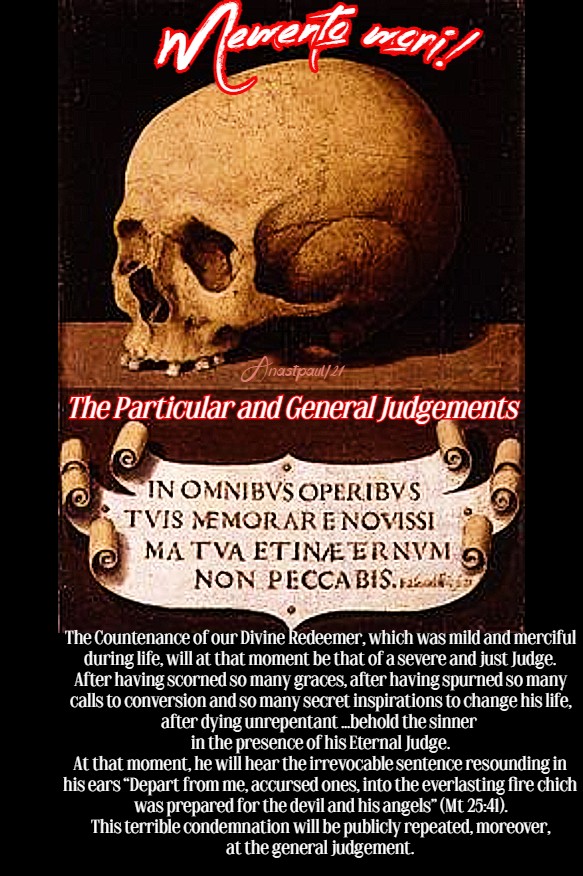
The Particular and General Judgements
“It is appointed unto men to die once and after this comes the judgement” (Heb 9:27).
To have to appear before the Face of the Living God is terrifying for everybody. How much more terrifying will it be for the sinner? Weighed down by numberless sins, he will stand before the scrutinising gaze of God. He will be able to hide nothing. Everything will be evident and clear. The Countenance of our Divine Redeemer, which was mild and merciful during life, will at that moment be that of a severe and just Judge. After having scorned so many graces, after having spurned so many calls to conversion and so many secret inspirations to change his life, after dying unrepentant …behold the sinner in the presence of his Eternal Judge. At that moment, he will hear the irrevocable sentence resounding in his ears “Depart from me, accursed ones, into the everlasting fire chich was prepared for the devil and his angels” (Mt 25:41). This terrible condemnation will be publicly repeated, moreover, at the general judgement. Memento mori!”
Quote/s of the Day – 24 July – “Month of the Most Precious Blood” – Readings: Exodus 24: 3-8; Psalms 50: 1b-2, 5-6, 14-15; Matthew 13: 24-30
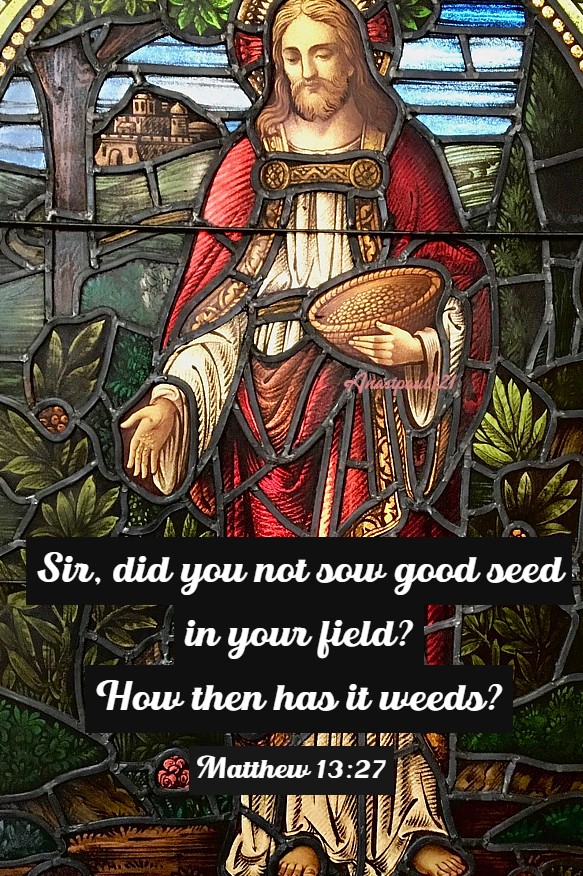
“Sir, did you not sow good seed in your field? How then has it weeds?”
Matthew 13:27
“Every kingdom devided against itself is laid waste.”
Luke 11:17
“No-one can have God as his father, if he does not have the Church as his mother… The Lord warned us of this when He said: “Whoever is not with me, is against me and whoever does not gather together with me, scatters.” The person who breaks the peace and concord of Christ, acts against Christ; the person who gathers together, outside of the Church, scatters the Church of Christ.”
St Cyprian of Carthage (c 200- c 258) Bishop and Martyr, Father of the Church On the unity of the Church
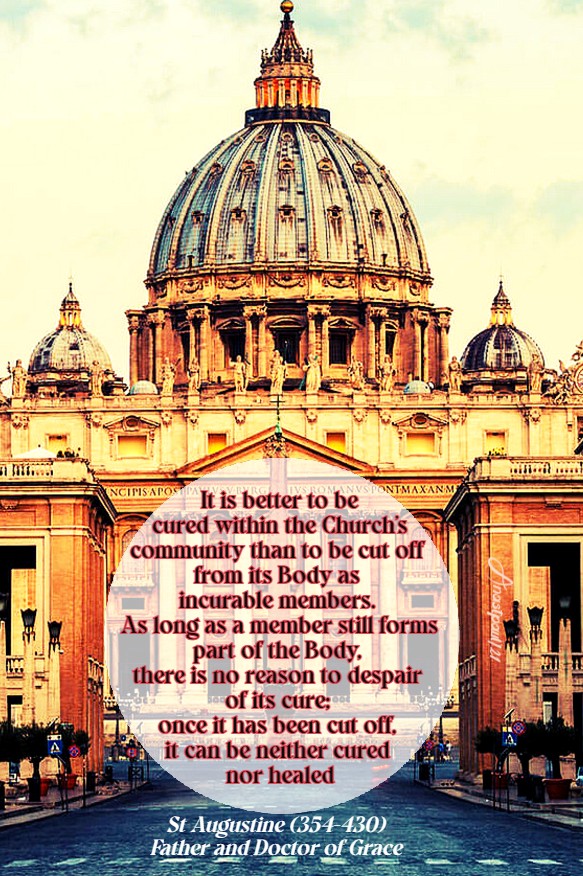
“It is better to be cured within the Church’s community than to be cut off from its Body as incurable members. As long as a member still forms part of the Body, there is no reason to despair of its cure; once it has been cut off, it can be neither cured nor healed.”
St Augustine (354-430) Father and Doctor of Grace
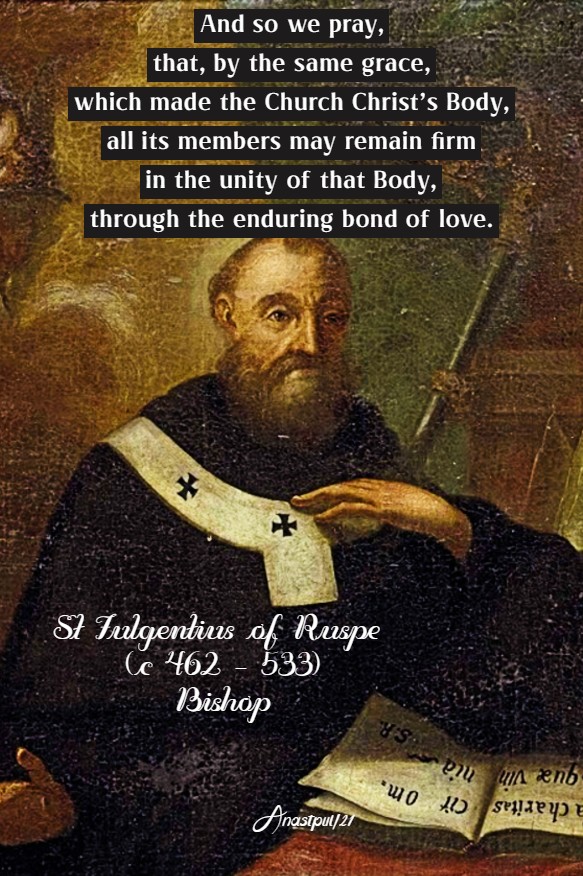
“And so we pray, that, by the same grace, which made the Church Christ’s Body, all its members may remain firm in the unity of that Body, through the enduring bond of love.”
St Fulgentius of Ruspe (c 462 – 533) Bishop, Father of the Church
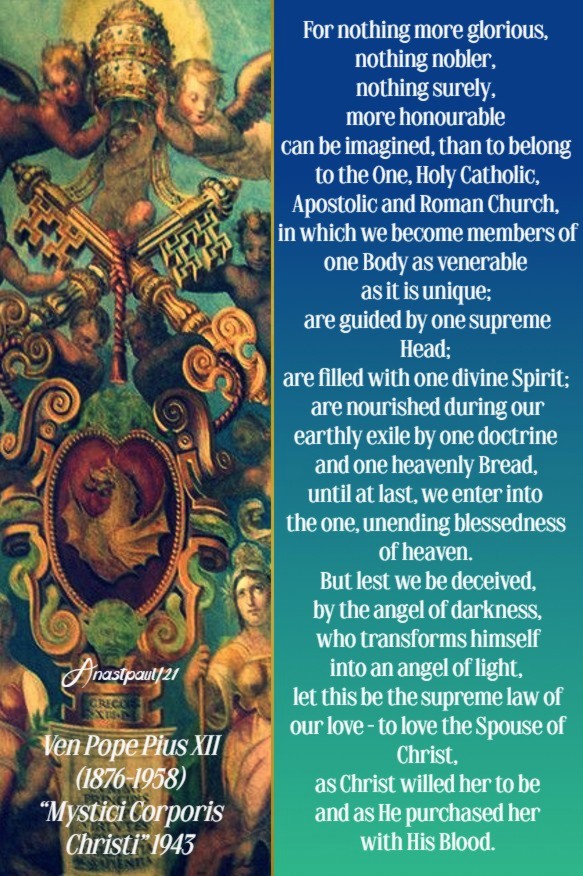
“For nothing more glorious, nothing nobler, nothing surely, more honourable can be imagined, than to belong to the One, Holy Catholic, Apostolic and Roman Church, in which we become members of one Body as venerable as it is unique; are guided by one supreme Head; are filled with one divine Spirit; are nourished during our earthly exile by one doctrine and one heavenly Bread, until at last, we enter into the one, unending blessedness of heaven. But lest we be deceived, by the angel of darkness, who transforms himself into an angel of light, let this be the supreme law of our love – to love the Spouse of Christ, as Christ willed her to be and as He purchased her with His Blood.”
Pope Pius XII (1876-1958) “Mystici Corporis Christi” 1943
One Minute Reflection – 24 July – “Month of the Most Precious Blood” – Readings: Exodus 24: 3-8; Psalms 50: 1b-2, 5-6, 14-15; Matthew 13: 24-30
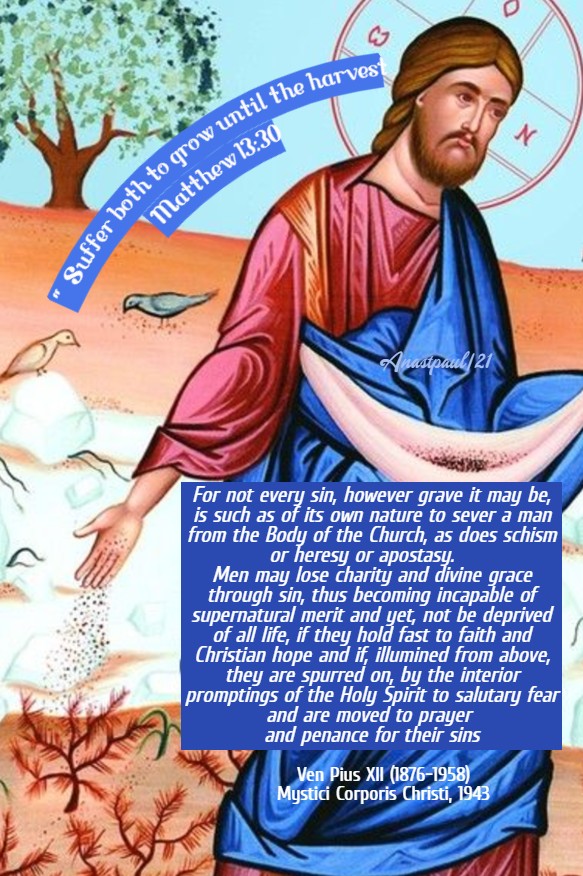
“Suffer both to grow until the harvest” – – Matthew 13:30
REFLECTION – “Nor must one imagine that the Body of the Church, just because it bears the name of Christ, is made up during the days of its earthly pilgrimage, only of members conspicuous for their holiness, or, that it consists only of those whom God has predestined to eternal happiness. It is owing to the Saviour’s infinite mercy, that place is allowed in His Mystical Body here below, for those whom, of old, He did not exclude from the banquet (cf. Mt 9:11). For not every sin, however grave it may be, is such as of its own nature to sever a man from the Body of the Church, as does schism or heresy or apostasy. Men may lose charity and divine grace through sin, thus becoming incapable of supernatural merit and yet, not be deprived of all life, if they hold fast to faith and Christian hope and if, illumined from above, they are spurred on, by the interior promptings of the Holy Spirit to salutary fear and are moved to prayer and penance for their sins.
Let everyone then abhor sin, which defiles the mystical members of our Redeemer but,, if anyone unhappily falls and his obstinacy has not made him unworthy of communion with the faithful, let him be received with great love and let eager charity see in him a weak member of Jesus Christ. For, as the Bishop of Hippo remarks – “it is better to be cured within the Church’s community than to be cut off from its Body as incurable members. As long as a member still forms part of the Body, there is no reason to despair of its cure; once it has been cut off, it can be neither cured nor healed.’”- Venerable Pius XII (1876-1958) – Pope from 1939 to 1958 – Encyclical – Mystici Corporis Christi, 1943
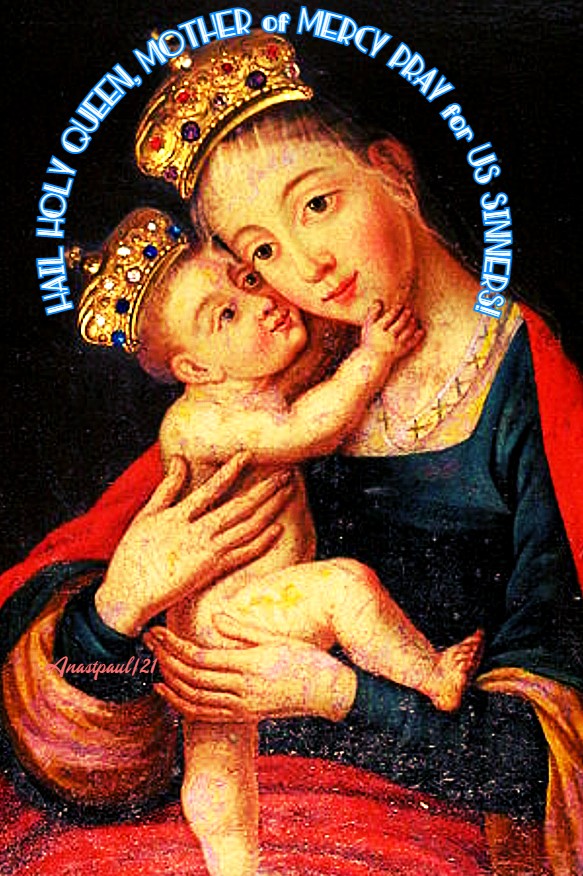
PRAYER – All-powerful and ever-living God, splendour of true light and never-ending day, chase away the night of sin and fill our minds with the glory of Your coming. Take away our heart of stone and give us a heart of flesh, help us in our battle with sin and the devil. By our prayers, Your holy sacraments and the strength of the Holy Spirit, may we be ever vigilant of the evil one. Hear the prayers of our Queen and Mother, the Blessed Virgin of Mercy on our behalf dear Lord. We make our prayer through Christ, our Lord with the Holy Spirit, one God forever, amen.
Our Morning Offering – 24 July – “Month of the Most Precious Blood”
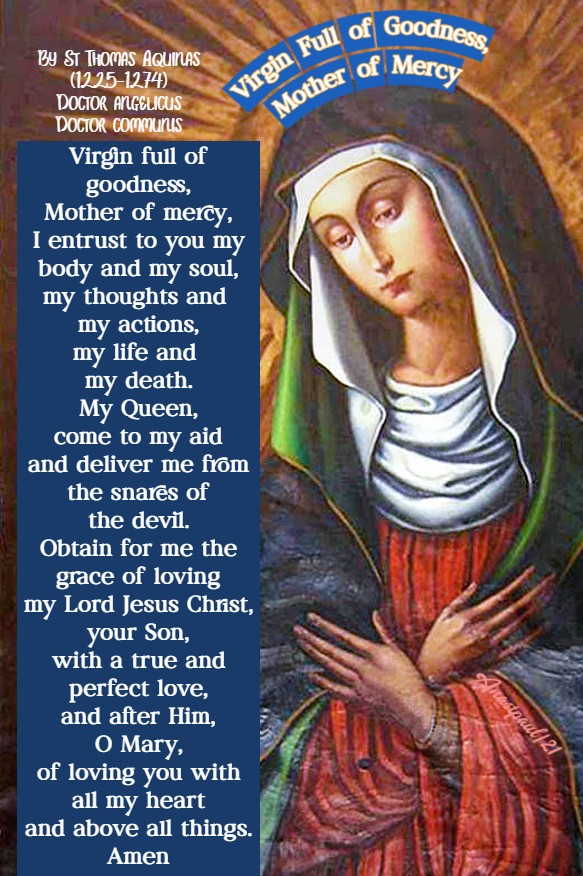
Virgin Full of Goodness, Mother of Mercy By St Thomas Aquinas (1225-1274) Doctor angelicus Doctor communis
Virgin full of goodness, Mother of mercy, I entrust to you my body and my soul, my thoughts and my actions, my life and my death. My Queen, come to my aid and deliver me from the snares of the devil. Obtain for me the grace of loving my Lord Jesus Christ, your Son, with a true and perfect love, and after Him, O Mary, of loving you with all my heart and above all things. Amen.
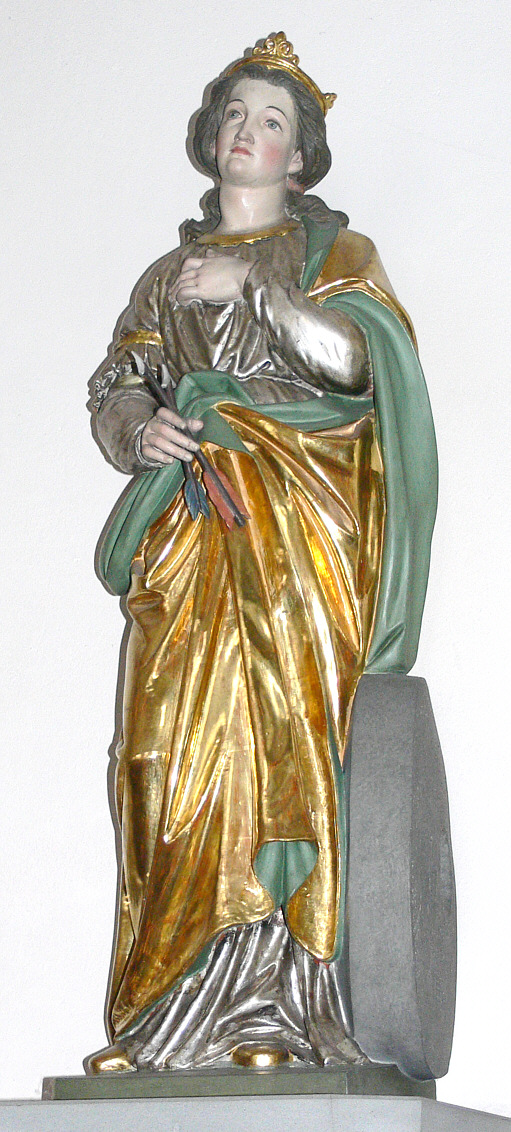
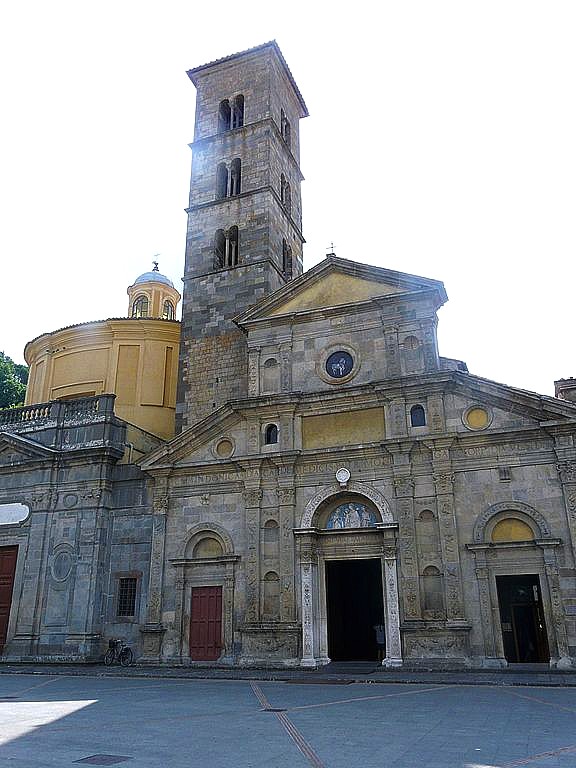
Saint of the Day – 24 July – Saint Christina Bolsena (3rd Century) Virgin Martyr. Born in the 3rd Century, probably at Rome, Italy into the family Anicii and died in the late 3rd Century at Lake Bolsena, Tuscany, Italy. Patronages – archers, mariners, millers . Also known as Cristina Anicii, Cristina of Tyro, Cristina.
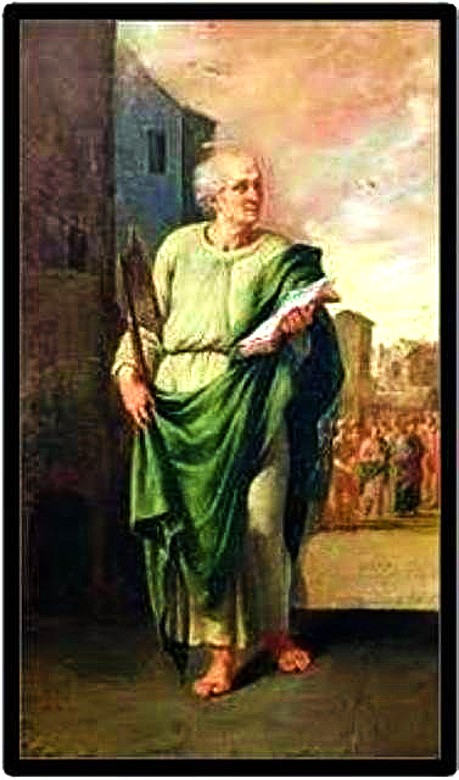
Dolci, Carlo; Saint Christina of Bolsena
The Roman Martyrology’s entry today says: “At Tyro, in Tuscany, on the lake Bolsena, St Christina, Virgin and Martyr. Believing in Christ and breaking up her Father’s gold and silver idols to give them to the poor, she was cruelly scourged by his command, subjected to other most severe torments and thrown with a heavy stone into the lake, from which she was drawn out by an angel. Then, under another Judge, who succeeded her Father, she bore courageously still more bitter tortures. Finally, after she had been shut up by the Governor, Julian, in a burning furnace for five days, without any injury and being cured of the sting of serpents, she ended her Martyrdom by having her tongue cut out and being pierced with arrows.”
St Christina was the daughter of Urbain, a rich and powerful magistrate. . At least one account says that she destroyed her father’s golden idols and distributed their peices among the poor.
Saint Christina giving her father’s idols of gold to the poor, 17th-century painting.
By her father’s command, Christina was tortured to death. Her executions tore into her body with iron hooks. Afterward, they fastened her to a rack and lit a strong fire under her . Narratives say that God protected Christina by turning the burning flames against her onlookers. Next, although a heavy stone was tied around her neck to drown her in Bolsena Lake, an angel loosened the bonds and saved her. Unexpectedly, Christina’s father died while she was being tortured. Perhaps a glimmer of remorse saved his soul from eternal death!
Christina was again tortured by the magistrate who succeeded her father. The writer Fr Alban Butler states, that Christina remained unhurt inside a burning furnace for 5 days. Once removed, serpents could not bite her. In a rage, Christina’s torturers cut out her tongue and shot her to death with arrows. The island-city, Tyro, where she was executed was swallowed up by waters in the course of time.
Chapel of our Lady of the Rosary of Santi Giovanni e Paolo (Venice) – Martyrdom of St Christina by Sante Peranda
St.Christina’s relics are kept at Palermo in Sicily in a Basilica named for her. Her courage is testament to her perfect love for Jesus. “There is no fear in love but perfect love casts out fear. (Jn. 4:18)”
The Tomb of St Christina with Buglioni sculpture in the centre. Tthe Statue illustrates the stone used in the attempt to drown her.
Foundation of Our Lady of Cambron, France (1148) – 24 July:
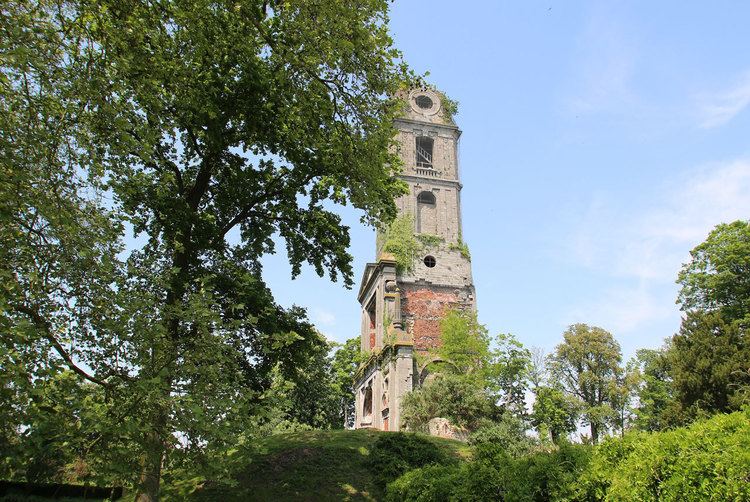
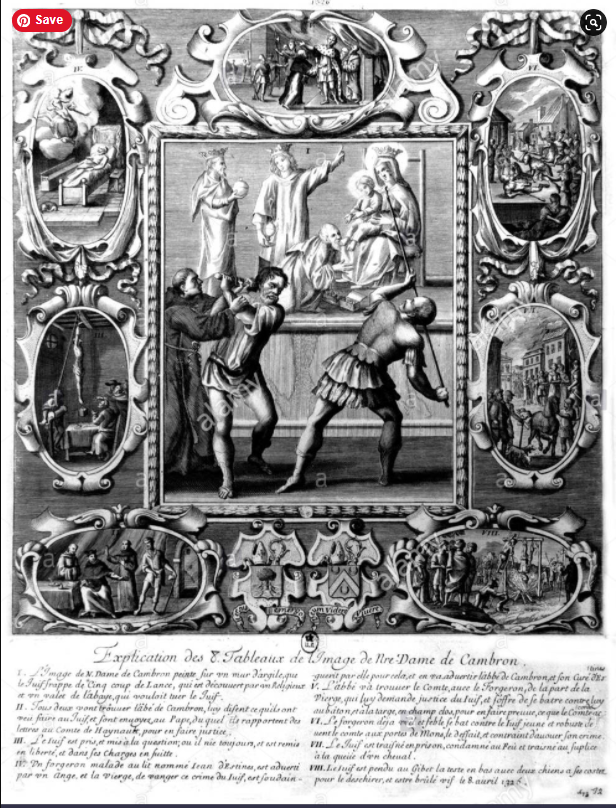
This feast day celebrates the Foundation of the Abbey of Our Lady of Cambron, near Mons, in Hainault, Belgium, by Anselm de Trasigny, Lord of Peronne and Canon of Soignies, in the year 1148. The Abbey of Cambron was founded on the River Blanche and was a daughter house of Saint Bernard of Clairvaux. It was situated some distance from Mons in Cambron-Casteau in Hainaut, Belgium and took its name from the land on which it was built. Cambron, in its turn, had daughter houses in the Abbeys of Fontenelle at Valenciennes and six other sites. The image of Our Lady formerly honoured at Cambron was famous for a great number of miraculous cures. A Chapel dedicated to Our Lady of Cambron, was built at Mons in 1550 in a part of the Prince’s park. In the following centuries the magistrates of Mons had a beautiful door built for the Shrine and added other embellishments. There was a small but well honoured and visited Oratory. In 1559, thieves broke into the Chapel and stole everything of value. After the French Revolution when the State took over all properties belonging to the Church, this Chapel of Our Lady of Cambron was also taken. It was demolished after all the wood, iron and lead was removed. The Statue of the Blessed Virgin which decorated the Altar was then placed in the Church of Saint Elizabeth at Mons. The Abbey of Cambron was rebuilt in the 18th Century but was ordered to be vacated in 1783 by the Holy Roman Emperor Joseph II. It was later sold to a wealthy Count who built a mansion on the property and the land remained in his family’s hands until it was sold in 1993 to a family, who turned the holy and once revered site, into the location of a public zoo known as the Pairi Daiza. Verneration of Our Lady of Cambron: “In 1322 there was a serious incident at Cambron. An image of the Virgin Mary was profaned. The widely held suspicion was that a Jewish perpetrator had falsified conversion to Christianity to gain access to the image. The affair caused significant unrest and provoked the sympathy of many Christians. There were prayers and devotions held to repair the image. Thus the devotion to Our Lady of Cambron was begun. After a request by the King of France Philip of Valois, Pope Benedict XII issued a Papal Bull granting indulgences to pilgrims to Cambron. The pilgrimage to the Virgin of Cambron was thus begun. A solemn procession takes place each year on the third Sunday of Easter.”
Among the pilgrims and visitors were several important figures, including the Emperor Maximilian I, who, passing through Belgium in the early 16th century, visited the Sanctuary of Our Lady of Cambron. He gave the Abbey sufficient funds to commission the restoration of the painted image.
The above very old and blurred image relates the legend of the attack on the Holy Painting
Martyred in England: John Boste Joseph Lambton Nicholas Garlick Richard Simpson Robert Ludlam
Martyred in the Spanish Civil War: Bl Cándido Castán San José Bl Cecilio Vega Domínguez St Ignacio González Calzada St Jaime Gascón Bordas Bl José Joaquín Esnaola Urteaga Bl José Máximo Moro Briz St Josep Guillamí Rodo St Marcos Morón Casas Bl Maria Angeles of Saint Joseph Bl Maria Mercedes Prat Bl Maria Pilar of Saint Francis Borgia Bl Teresa of the Child Jesus and of Saint John of the Cross St Xavier Bordas Piferrer
Thought for the Day – 23 July – Meditations with Antonio Cardinal Bacci (1881-1971)
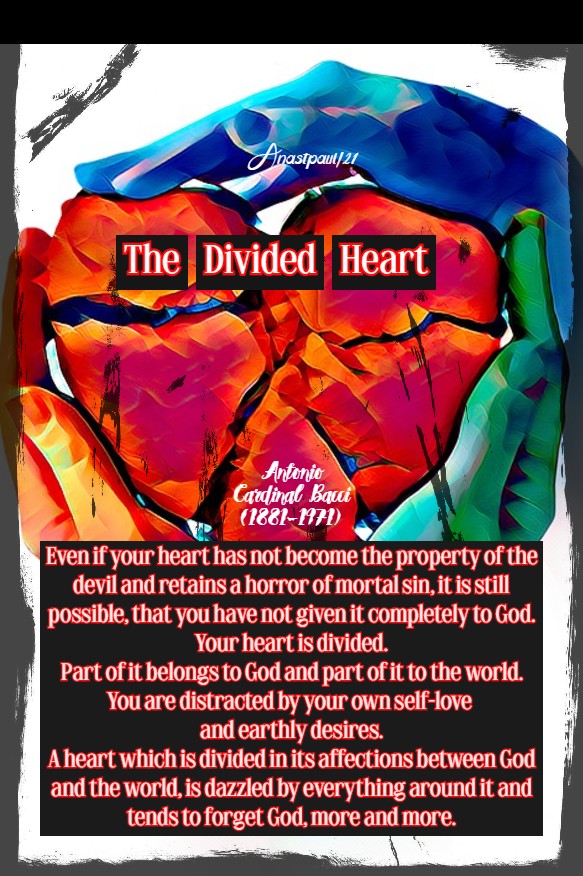
The Divided Heart
“Even if your heart has not become the property of the devil and retains a horror of mortal sin, it is still possible, that you have not given it completely to God. Your heart is divided. Part of it belongs to God and part of it to the world. You are distracted by your own self-love and earthly desires. A heart which is divided in its affections between God and the world, is dazzled by everything around it and tends to forget God, more and more.
We protest that we belong entirely to God but, in practice, we are so absorbed by work, ambition and pleasure, that we neglect God.
A man who is torn between love of God and love of the world is like Cain who, unlike Abel, did not offer God, the best part of his flock but kept this for himself and offered God whatever he had rejected. God was pleased with Abel’s sacrifice but had no regard for that of Cain, who finally became a murderer and was cursed by his Creator.
Do we offer God the leavings of life while we keep the best part of it for our selves? Do we think of ourselves nearly all the time and give very little thought to God? This is not the way in which God has dealt with us. Not only has He created us but, He loves us with an everlasting love. He came down to earth and lived as our fellow man. He redeemed us by His Precious Blood and gave Himself to us as our food!
Why are we not willing to give ourselves to Him forever in return? Gratitude demands that we should do so. God, moeover, is our supreme and only good.
Quote/s of the Day – 23 July – “Month of the Most Precious Blood” – Readings: Exodus 20: 1-17; Psalms 19: 8, 9, 10, 11; Matthew 13: 18-23
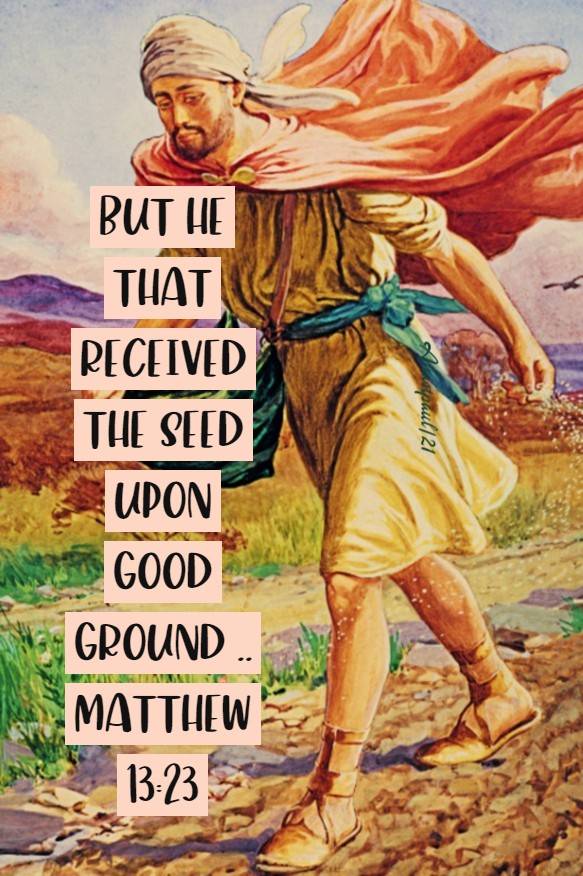
“But he that received the seed upon good ground”
Matthew 13:23
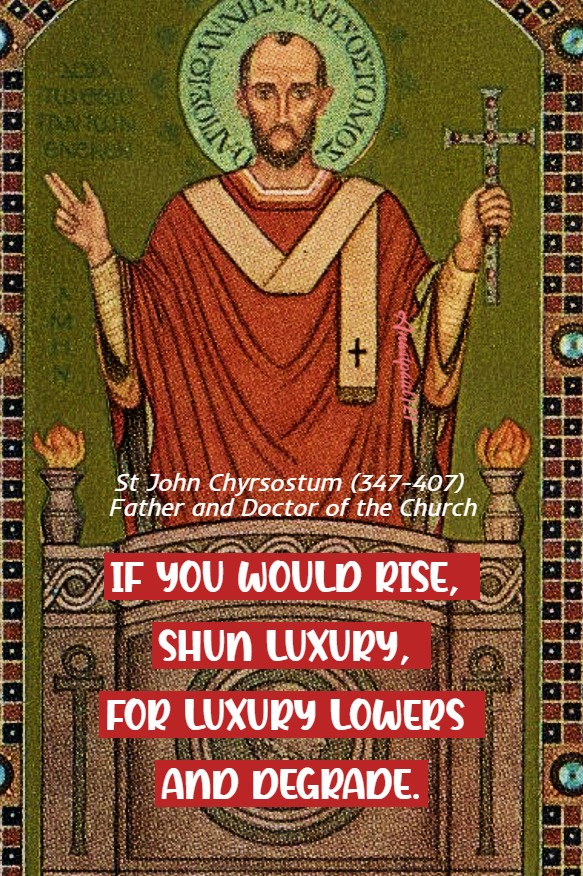
“ If you would rise, shun luxury, for luxury lowers and degrades.“
St John Chyrsostum (347-407) Father and Doctor of the Church
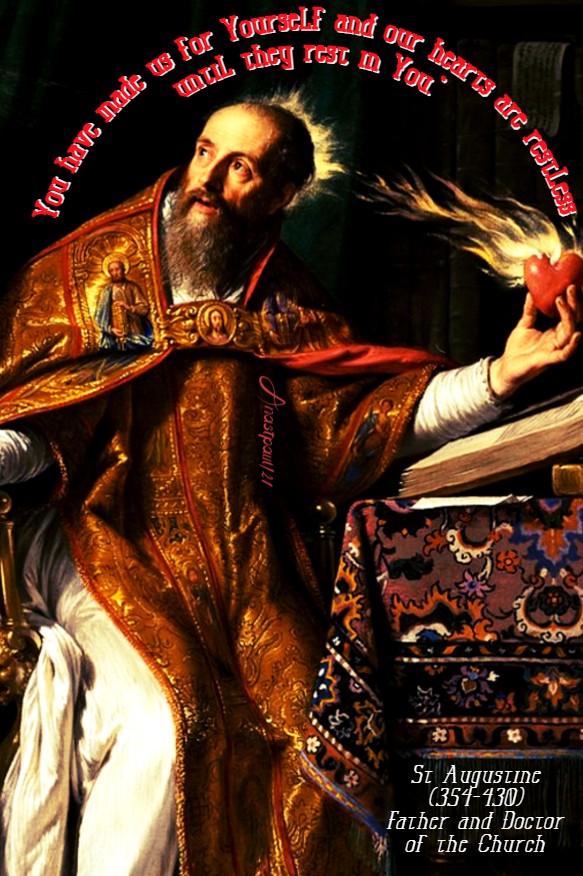
“You have made us for Yourself and our hearts are restless until they rest in You.”
St Augustine (354-430) Father and Doctor of the Church
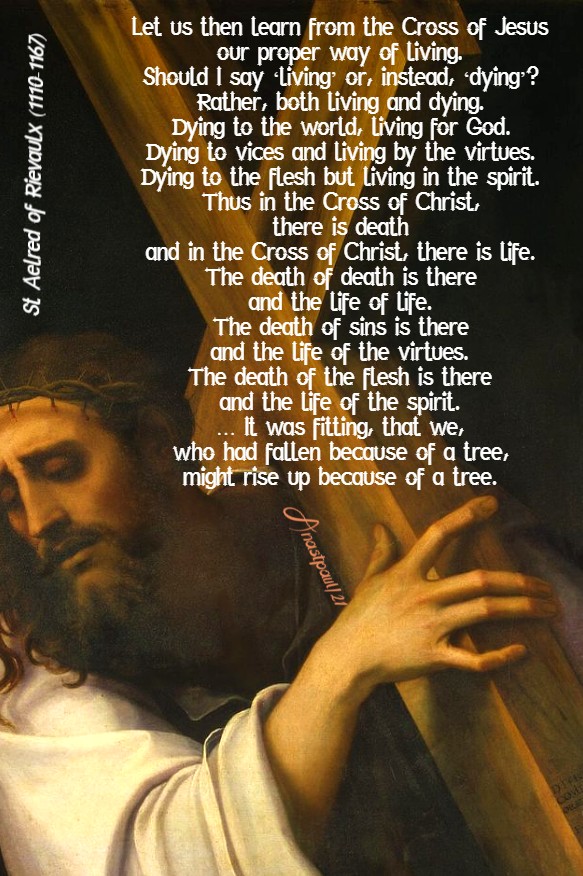
“Let us then learn from the Cross of Jesus our proper way of living. Should I say ‘living’ or, instead, ‘dying’? Rather, both living and dying. Dying to the world, living for God. Dying to vices and living by the virtues. Dying to the flesh but living in the spirit. Thus in the Cross of Christ, there is death and in the Cross of Christ, there is life. The death of death is there and the life of life. The death of sins is there and the life of the virtues. The death of the flesh is there and the life of the spirit. … It was fitting, that we, who had fallen because of a tree, might rise up because of a tree.”
St Aelred of Rievaulx (1110-1167) “St Bernard of the North”
One Minute Reflection – 23 July – “Month of the Most Precious Blood” – Readings: Exodus 20: 1-17; Psalms 19: 8, 9, 10, 11; Matthew 13: 18-23
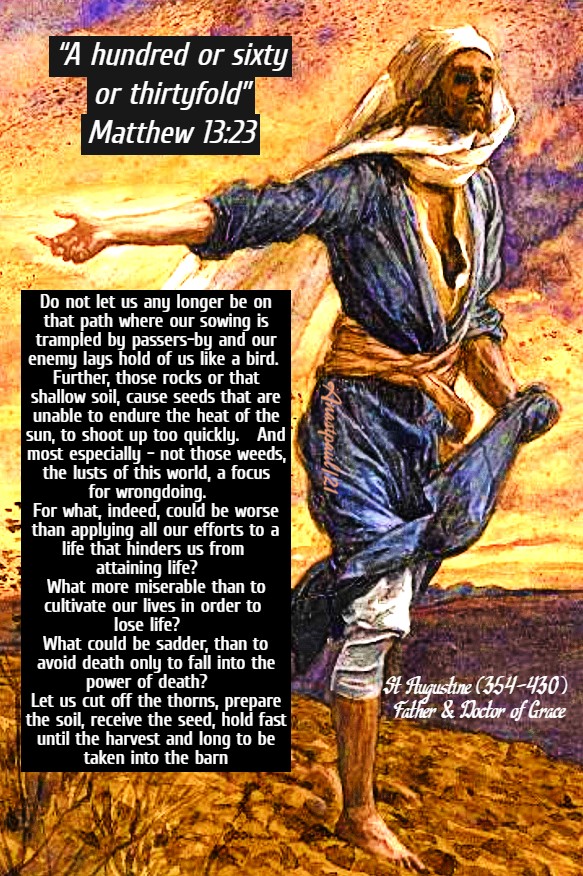
“A hundred or sixty or thirtyfold”- Matthew 13:23
REFLECTION – “ The sowing was carried out by the Apostles and prophets, yet it is the Lord Himself who sows. The Lord Himself is the One present in them, since it is the Lord Himself Who did the reaping. For without Him they are nothing, whereas, without them, He remains unmoved. As He said to them: “Without me you can do nothing” (Jn 15,5). And so what does Christ say as He sows among the gentiles? “A sower went out to sow” (Mt 13,3). In another text reapers were sent out to reap but here, the sower goes out to sow and does not complain of his labour. For what, indeed, does it matter if some seed falls on the path, or rocky ground, or among thorns? If He were to let Himself be discouraged by these arid terrains, He would make no progress towards the good soil!…
Now this has a bearing on ourselves – are we that pathway, those rocks, those weeds? Do we want to be good soil? Let us prepare our hearts to yield thirty, sixty, a hundred, a thousandfold. Thirtyfold or a thousandfold – in each case, it is a question of wheat and nothing but wheat. Do not let us any longer be on that path where our sowing is trampled by passers-by and our enemy lays hold of us like a bird. Further, those rocks or that shallow soil, cause seeds that are unable to endure the heat of the sun, to shoot up too quickly. And most especially – not those weeds, the lusts of this world, a focus for wrongdoing. For what, indeed, could be worse than applying all our efforts to a life that hinders us from attaining life? What more miserable than to cultivate our lives in order to lose life? What could be sadder, than to avoid death only to fall into the power of death? Let us cut off the thorns, prepare the soil, receive the seed, hold fast until the harvest and long to be taken into the barn.” – St Augustine (354-430) – Sermon 101; PL 38, 605
PRAYER – A pure heart create for me O God, put a steadfast spirit within me! (Ps 50[51]) Lord God, bestow a full measure of Your grace to us. Keep us within in the path of Your commandments, help us to work on the earth of our souls, rooting out the weeds and casting forth the stones of malice. Grant that by the prayers of our Blessed and Merciful Mother, we may succeed in attaining sanctity. Through Christ, our Lord, in union with the Holy Spirit, one God, forever, amen.
Our Morning Offering – 23 July – “Month of the Most Precious Blood”
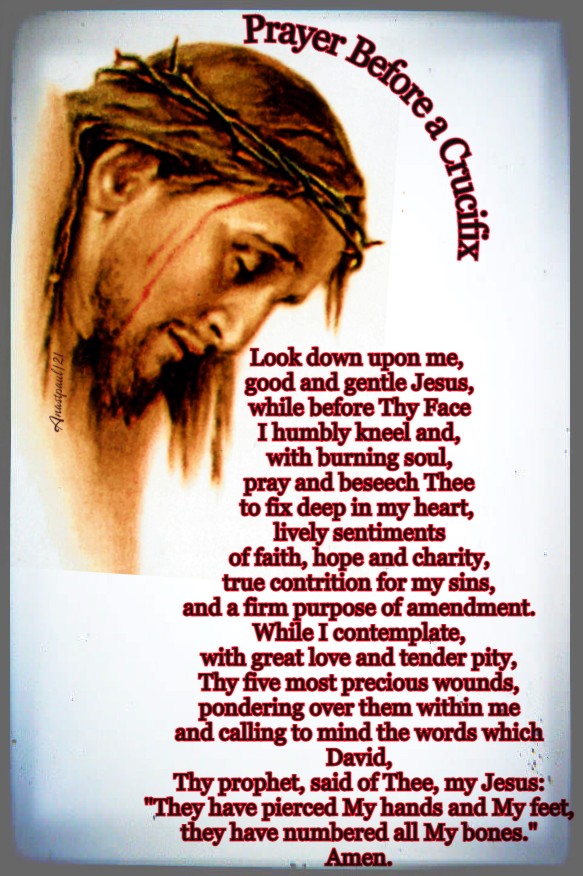
Prayer Before a Crucifix
Look down upon me, good and gentle Jesus, while before Thy face I humbly kneel and, with burning soul, pray and beseech Thee to fix deep in my heart, lively sentiments of faith, hope and charity, true contrition for my sins, and a firm purpose of amendment. While I contemplate, with great love and tender pity, Thy five most precious wounds, pondering over them within me and calling to mind the words which David, Thy prophet, said of Thee, my Jesus: “They have pierced My hands and My feet, they have numbered all My bones.” Amen.
Say – Our Father, Hail Mary, Glory Be for the Catholic Church and the intentions of the Holy Father. A Plenary Indulgence, under the usual conditions, may be gained by those who shall say this prayer with devotion before an image of our Crucified Redeemer. A Partial Indulgence may also be gained for each devout recitation.
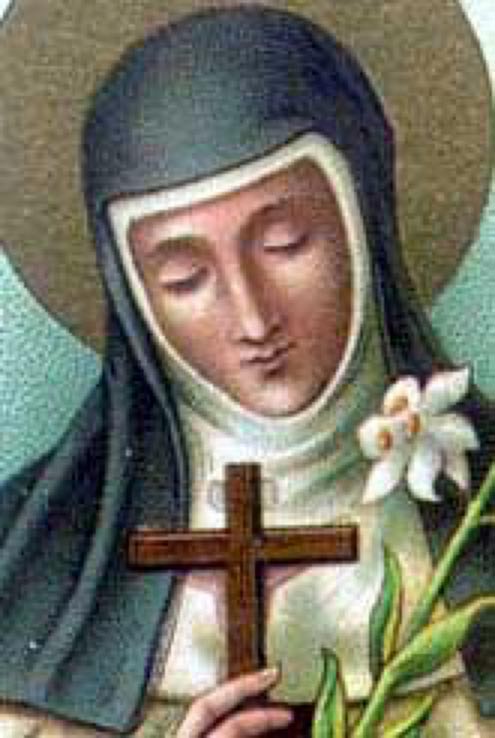
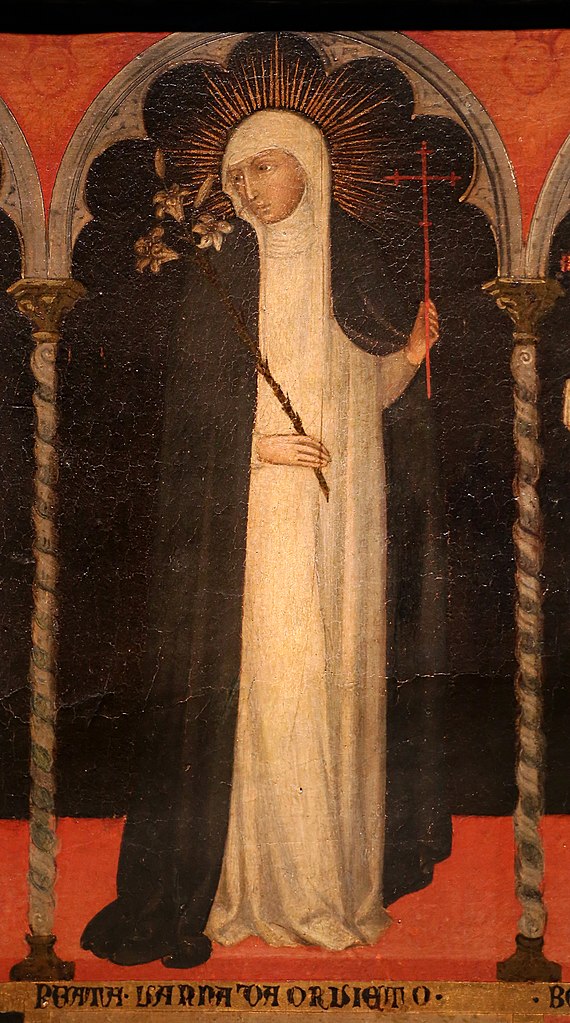
Saint of the Day – 23 July – Blessed Giovanna of Orvieto OP (c 1264-1306) Virgin, Tertiary of the Order of Preachers, Mystic, Stigmatist , miracle-worker. Born in c 1264 at Carnaiola, Italy and died on 23 July 1306, aged 42, of natural causes. She was known for her wise intellect and for her intense devotion to serving the will of God while being noted for the charism of prophecy and visions. Patronages – embroiderers, seamstresses, Italian working women (chosen in 1926). Also known as Jane and Vanna of Orvieto.
The Roman Martyrology states of her today: “In Orvieto in Umbria, Blessed Giovanna, Virgin, Sister of Penance of Saint Domenic, distinguished for charity and patience.”
Giovanna was born near Orvieto, in 1264 of humble peasant parents who both died when she was very young. Moved by a celestial instinct, she entrusted herself entirely to the custody of the Angels, whose loving protection she was deeply aware of.
At the age of ten, she consecrated herself to Jesus and was already yearning for a life of complete dedication to Him. In the meantime she grew beautiful and graceful, while the plan to enter the Third Order of St Dominic, then in bloom, was maturing in her heart. members publicly wore the habit and led religious life, without however, leaving their respective homes.
Realising her decision, the relatives, with whom Giovanna lived, and who had already promised her to a rich young man of the area, showed themselves highly indignant at her decision and began to hinder her in every way.
The young girl then, left Carnaiada and took refuge in nearby Orvieto, where other relatives assisted her, offering her a solitary room and the freedom to serve God. Giovanna, who was only 14 years old at the time, was thus able to receive the white habit of the Order.
Her life was an admirable ascent in the most heroic ways of love. Encouraged by very high contemplation, she entered with so much tenderness in the mysteries of the Passion of Jesus, that she deserved a painful participation in it.
In the last ten years of her life, every Friday, when she entered into ecstasy, she looked like a living crucifix and her bones dislocated with so much clatter, as if they were shattered. To her fellow citizens she was a mirror and teacher of Christian life.
After her death, which took place on 23 July 1306 in Orvieto, from the wound in her side, living blood flowed and God honoured her with many miracles. Her body rests in the Town Church of St Domenic. In 1926 she was elected Patroness of Italy for female workers, seamstresses and embroiderers.
The year after her death, her body was transferred to the Chapel of the Three Kings and many miracles occurred, giving impetus to the process of Beatification, which, however, was not completed for more than 400 years
Giovanna was Beatified on 11 September 1754 by Pope Benedict XIV (cultus confirmed).
Madonna di Altino / Our Lady of Altino, Albino, Bergamo, Lombardy, Italy (1496) – 23 July:
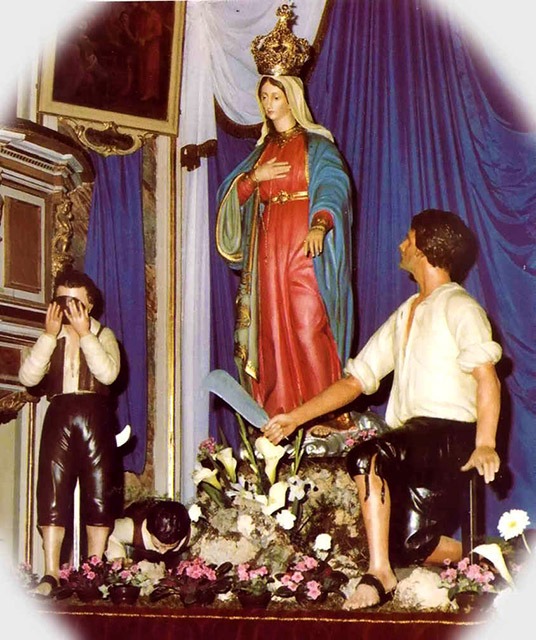
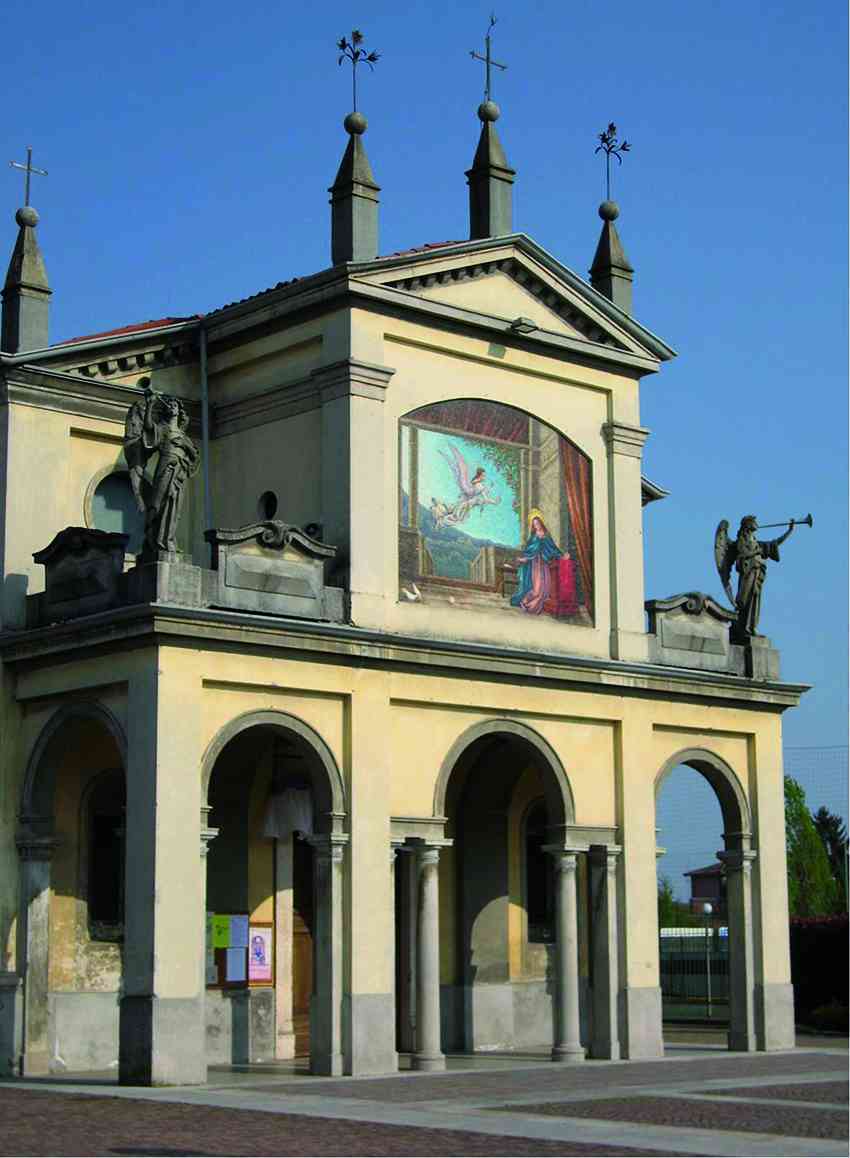
On 23 July 1496, during a heatwave and drought,Quinto Foglia and his two little boys were walking from their home in Vall’Alta to the wooded slopes of Monte Altino, where they worked making charcoal. Stricken with thirst and afraid for his children, Quinto prayed to the Madonna. She appeared and told him to strike a rock with his staff. When he did, a spring surged forth. The next day, people began building a little Chapel, which was completed on 5 September 1496. In 1865 a statuary group depicting the apparition was installed in the Sanctuary. On 23 July 1919, in thanksgiving for her protection during World War I, the Madonna’s Statue was solemnly crowned. The Shrine celebrates its feast with an evening procession on 22 July and solemn Mass on 23 July, the anniversary of both the apparition and the crowning.
Bl Beaudoin of Beaumont St Conan of Cornwall Bl Emilio Arce Díez St Eugene of Rome St Herundo of Rome Blessed Giovanna of Orvieto OP (c 1264-1306) Virgin, Tertoary of the Order of Preachers, Mystic, Stigmatist
Bl Pedro Ruiz de los Paños Angel St Phocas the Gardener St Primitiva of Rome St Rasyphus of Macé St Rasyphus of Rome St Ravennus of Macé St Redempta of Rome St Romula of Rome St Severus of Bizye St Theophilus of Rome St Trophimus of Rome St Valerian of Cimiez Bl Wojciech Gondek — Martyrs of Barcelona – 7 beati: Seven Christians, some lay people, some members of the Missionaries of the Sacred Hearts of Jesus and Mary and some of the Franciscan Daughters of Mercy, who were martyred in two groups on the same day in the Spanish Civil War. • Catalina Caldés Socías • Francesc Mayol Oliver • Miquel Pons Ramis • Miquela Rul-Làn Ribot • Pau Noguera Trías • Prudència Canyelles Ginestà de Aguadé • Simó Reynés Solivellas 23 July 1936 in Barcelona, Spain. They were Beatified on 28 October 2007 by Pope Benedict XVI. Martyrs of Bulgaria: An unknown number of Christians killed for their faith during the 9th century war between the Greek Emperor Nicephorus and the Bulgars.
Martyrs of Carabanchel Bajo – 9 beati: A group of nine Passionist priests, brothers and clerics who were martyred together in the Spanish Civil War. • Anacario Benito Nozal • Felipe Ruiz Fraile • Felipe Valcobado Granado • José Osés Sainz • José Ruiz Martinez • Julio Mediavilla Concejero • Laurino Proaño Cuesta • Manuel Pérez Jiménez • Maurilio Macho Rodríguez 22 July 1936 in Carabanchel Bajo, Madrid, Spain. They were Beatified on 1 October 1989 by Pope John Paul II.
Martyrs of Horta – 10 beati: A lay woman and nine Minim nuns who were martyred together in the Spanish Civil War. • Ana Ballesta Gelmá • Dolors Vilaseca Gallego • Josefa Pilar García Solanas • Josepa Panyella Doménech • Lucrecia García Solanas • Maria Montserrat Ors Molist • Mercè Mestre Trinché • Ramona Ors Torrents • Teresa Ríus Casas • Vicenta Jordá Martí 23 July 1936 at the Sant Genís dels Agudells highway, Horta, Barcelona, Spain. They were Beatified on 27 October 2013 by Pope Benedict XVI.
Martyrs of Manzanares – 5 beati: Five Passionist clerics who were martyred together in the Spanish Civil War. • Abilio Ramos y Ramos • Epifanio Sierra Conde • José Estalayo García • Vicente Díez Tejerina • Zacarías Fernández Crespo They were shot on 23 July 1936 in Manzanares, Ciudad Real, Spain and Beatified on 1 October 1989 by Pope John Paul II.
Thought for the Day – 22 July – Meditations with Antonio Cardinal Bacci (1881-1971)
Progress in the Love of God
“The entire Christian system is based on the love of God. This, is “the greatest and first commandment” (Mt 22:38) of Jesus, from which the second commandment, to love our neighbour, naturally flows. A man who does not observe this first commandment is not a Christian, whereas a man who endeavours to increase, everyday, his love for God, is a saint. There are may grades of ascent in this love but, the basic step is indicated in the words of our Divine Master: “He who has my commandments and keeps them, he is is who loves me” (Jn 14:15,21).
The love of God should not consist of an empty and ineffective sentimentality but, should comprise a sincere determinations to please God by carrying out His will, without reserve and by becoming more closely united to Him, by the help of His holy grace. Progress in the love of God is divided by the masters of the spiritual lfe into three stages: (1) the period of purification; (2) the period of illuminations and; (3) the period of union with God. We may have advanced no farther than the first stage because there is still so much to be purified in our souls. Nevertheless, let us ask God’s grace, to help us to begin this work immediately!”
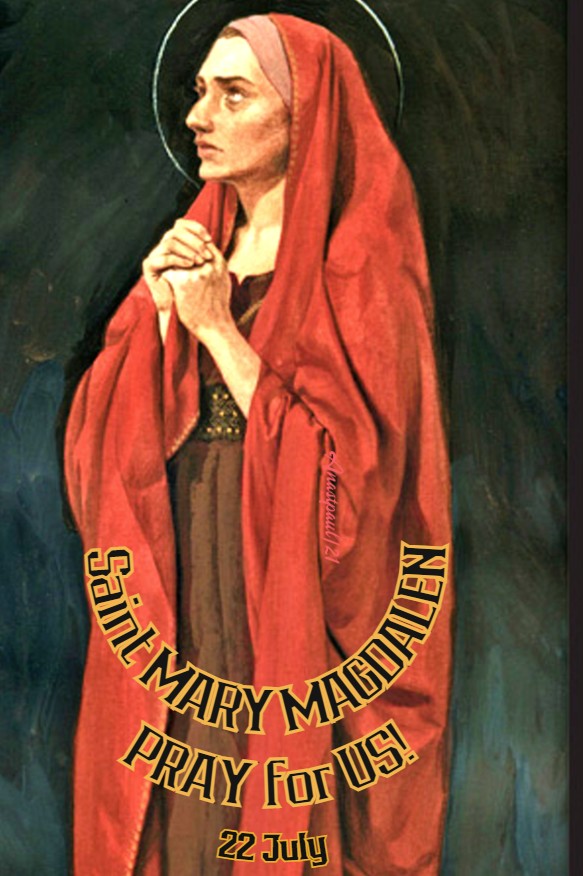
Quote/s of the Day – 22 July –“Month of the Most Precious Blood” – Feast of St Mary of Magdala -– Readings: Song of Solomon 3:1-4, Psalm 63:2-6, 8-9, John 20:1-2, 11-18
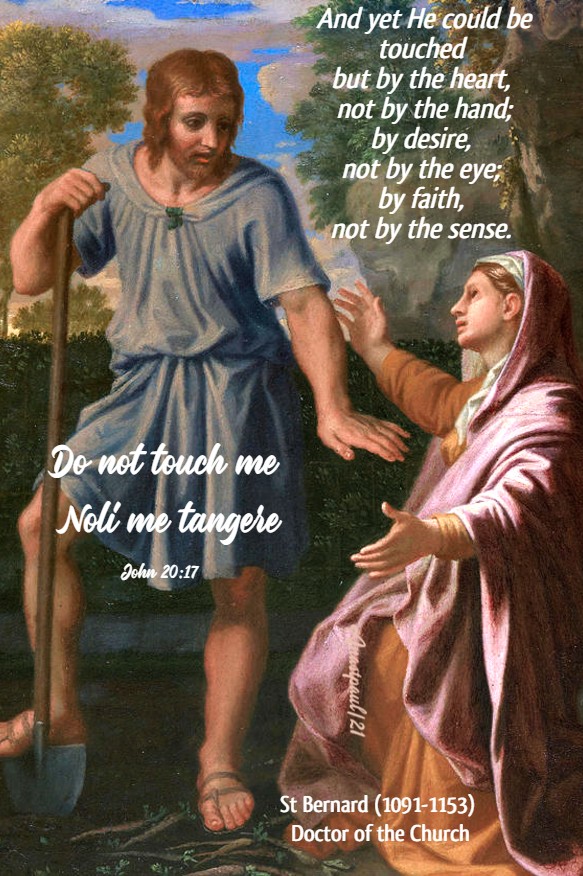
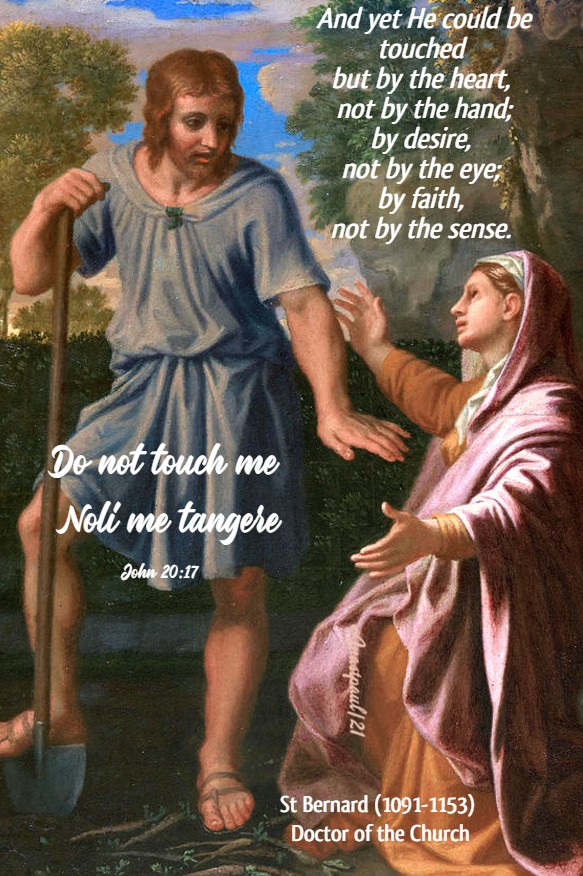
“Do not touch me ” “Noli me tangere”
John 20:17
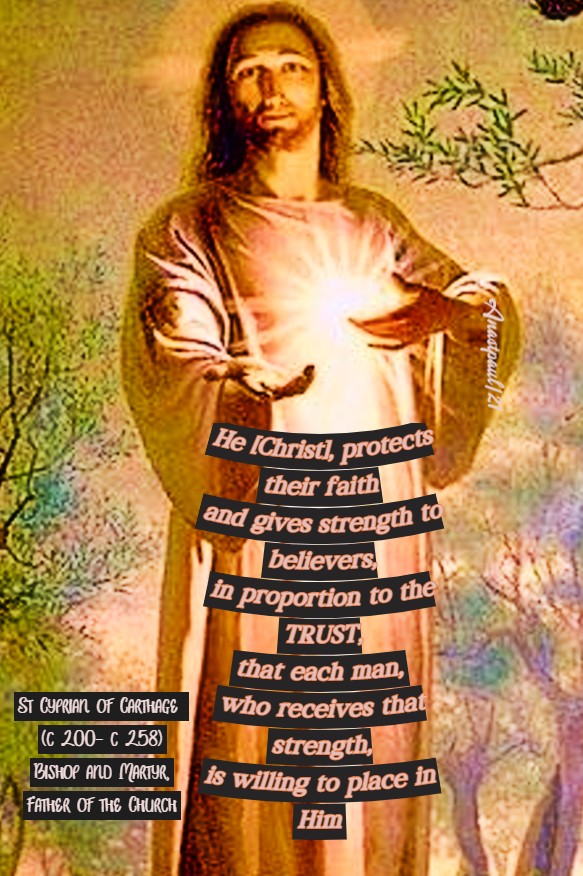
“He [Christ], protects their faith and gives strength to believers, in proportion to the TRUST, that each man, who receives that strength, is willing to place in Him.”
St Cyprian of Carthage (c 200- c 258) Bishop and Martyr, Father of the Church
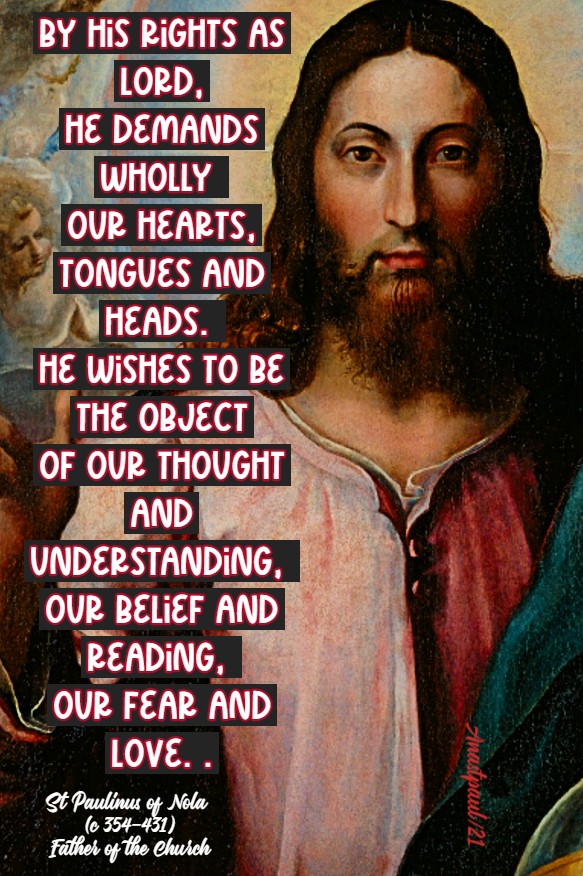
“By His rights as Lord, He demands wholly our hearts, tongues and heads. He wishes to be the object of our thought and understanding, our belief and reading, our fear and love. . . ”
St Paulinus of Nola (c 354-431) Father of the Church
Above Poem 10, from The Poems of St. Paulinus of Nola,
“And yet He could be touched but by the heart, not by the hand; by desire, not by the eye; by faith, not by the sense. …”
St Bernard (1091-1153) Doctor of the Church
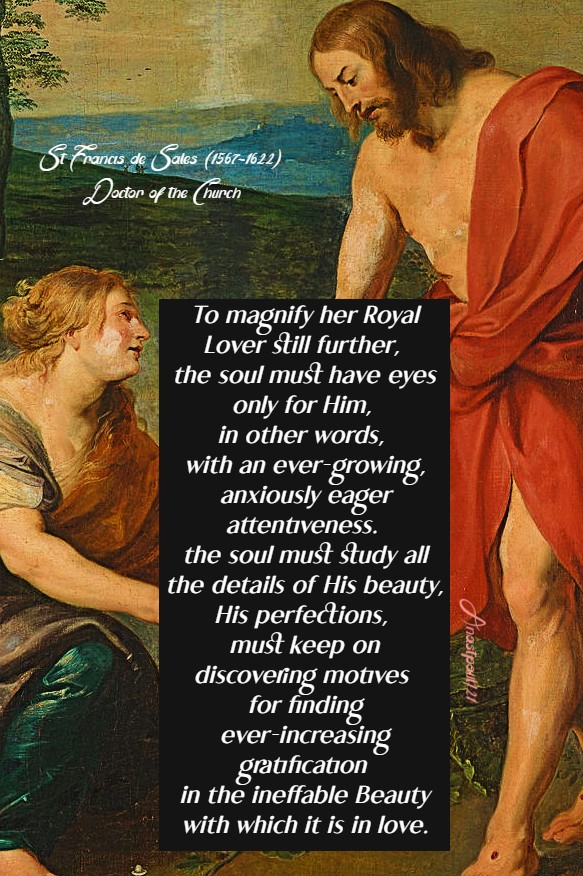
“To magnify her Royal Lover still further, the soul must have eyes only for Him, in other words, with an ever-growing, anxiously eager attentiveness. the soul must study all the details of His beauty, His perfections, must keep on discovering motives for finding ever-increasing gratification in the ineffable Beauty with which it is in love.”
St Francis de Sales (1567-1622) Doctor of the Church
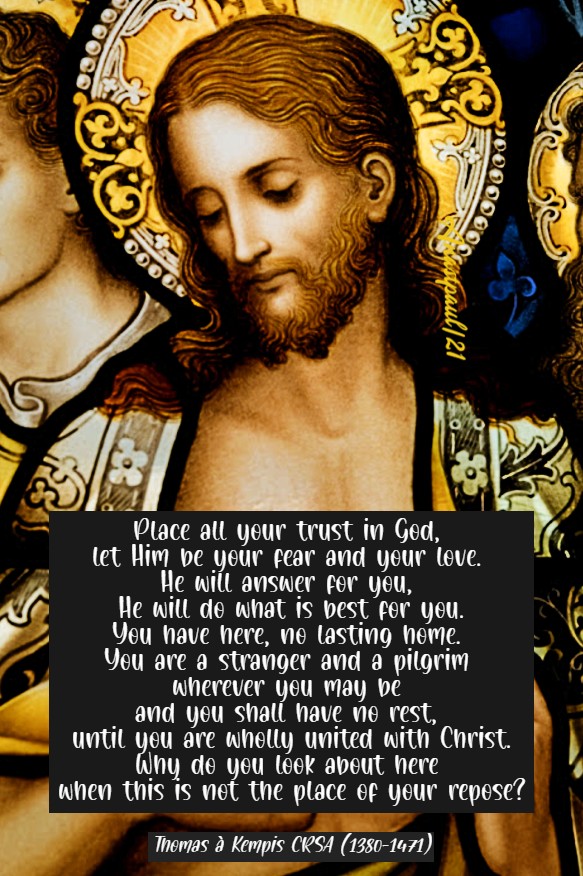
“Place all your trust in God, let Him be your fear and your love. He will answer for you, He will do what is best for you. You have here no lasting home. You are a stranger and a pilgrim wherever you may be and you shall have no rest, until you are wholly united with Christ. Why do you look about here when this is not the place of your repose?”
Thomas à Kempis CRSA (1380-1471)
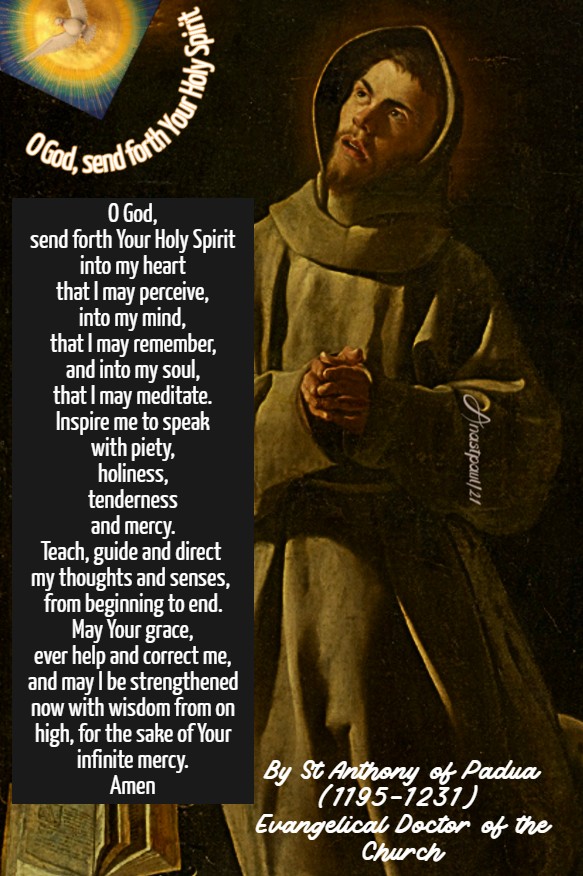
O God, send forth Your Holy Spirit By St Anthony of Padua (1195-1231) Doctor of the Church
O God, send forth Your Holy Spirit into my heart that I may perceive, into my mind, that I may remember, and into my soul, that I may meditate. Inspire me to speak with piety, holiness, tenderness and mercy. Teach, guide and direct my thoughts and senses, from beginning to end. May Your grace, ever help and correct me, and may I be strengthened now with wisdom from on high, for the sake of Your infinite mercy. Amen
St Anthony of Padua (1195-1231) Evangelical Doctor of the Church
One Minute Reflection – 22 July –“Month of the Most Precious Blood” – Feast of St Mary of Magdala – Readings: Song of Solomon 3:1-4, Psalm 63:2-6, 8-9, John 20:1-2, 11-18
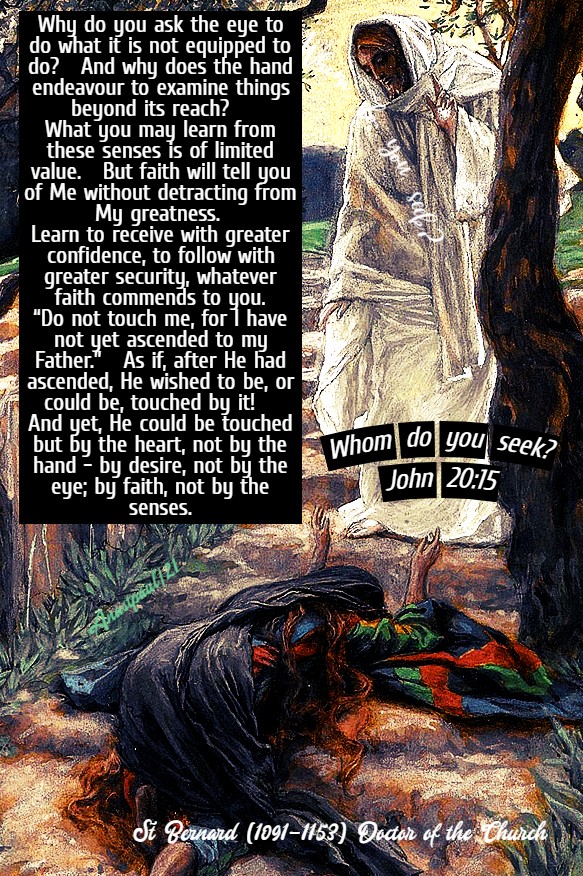
“Whom do you seek?” – John 20:15
REFLECTION – “Only the hearing that catches the Word possesses the truth … “Do not touch me,” says the Lord. He meant: – depend no longer on this fallible sense, put your trust in the Word, get used to faith. Faith cannot be deceived. With the power to understand invisible truths, faith does not know the poverty of the senses; it transcends even the limits of human reason, the capacity of nature, the bounds of experience. Why do you ask the eye to do what it is not equipped to do? And why does the hand endeavour to examine things beyond its reach? What you may learn from these senses is of limited value. But faith will tell you of Me without detracting from My greatness. Learn to receive with greater confidence, to follow with greater security, whatever faith commends to you.
“Do not touch me, for I have not yet ascended to my Father.” As if, after He had ascended, He wished to be, or could be, touched by it! And yet, He could be touched but by the heart, not by the hand – by desire, not by the eye; by faith, not by the senses. “Why do you want to touch Me now?” He says … “Do you not remember that, while I was still Mortal, the eyes of the disciples could not endure, for a short space, the glory of My Transfigured Body that was destined to die? I still accommodate Myself to your senses by bearing this form of a servant (Phil 2:7) which you are accustomed to seeing. But this glory of Mine is too wonderful for you … Defer your judgement, therefore, … With its fuller comprehension, faith will define it more worthily and more surely … They, therefore, will touch Me worthily, who will accept Me as being seated with the Father (Mk 16:19; Ps 110[109]:1), no longer in lowly guise but in My own flesh, transformed with heaven’s beauty. Why wish to touch what is ugly? Have patience, that you may touch Me in My Beauty.” – St Bernard (1091-1153) – Cistercian Monk and Doctor of the Church – Sermons on the Song of Songs, no. 28, 9-10
PRAYER – Almighty, ever-living God, Your only-begotten Son, Jesus Christ made Mary of Magdala the first herald of Easter joy. Grant that, following her example and helped by her prayers, we may, in this life, proclaim the living Christ and come to see Him reigning with You in glory. Through our Lord Jesus Christ, in unity with the Holy Spirit, one God forever and ever, amen.
Our Morning Offering – 22 July – “Month of the Most Precious Blood”
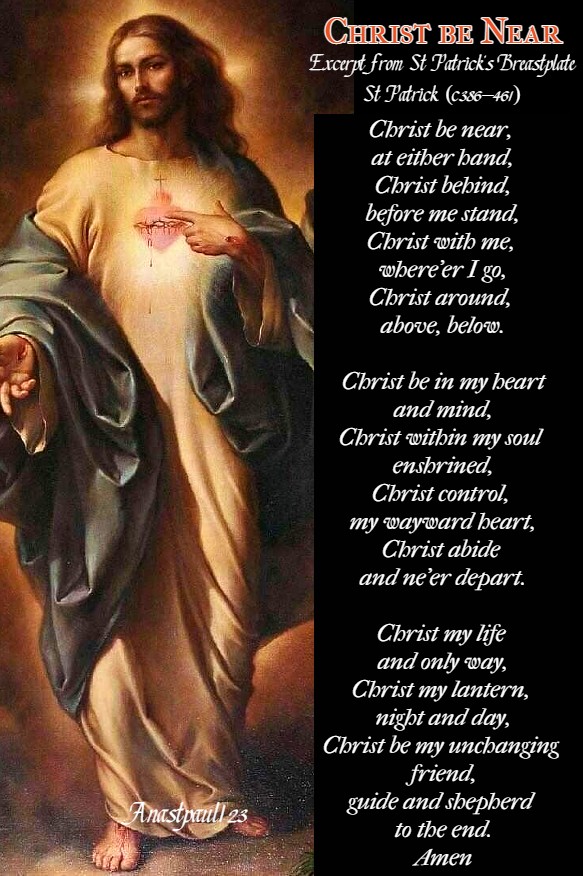
Excerpt from St Patrick’s Breastplate Christ be Near St Patrick (c 386 – 461)
Christ be near, at either hand, Christ behind, before me stand, Christ with me, where’er I go, Christ around, above, below.
Christ be in my heart and mind, Christ within my soul enshrined, Christ control, my wayward heart, Christ abide and ne’er depart.
Christ my life and only way, Christ my lantern, night and day, Christ be my unchanging friend, guide and shepherd to the end.
We have this prayer and his own story in one of the authentic writings of Patrick – his Confessio, which is above all, an act of homage to God for having called Patrick, unworthy sinner, to the apostolate.
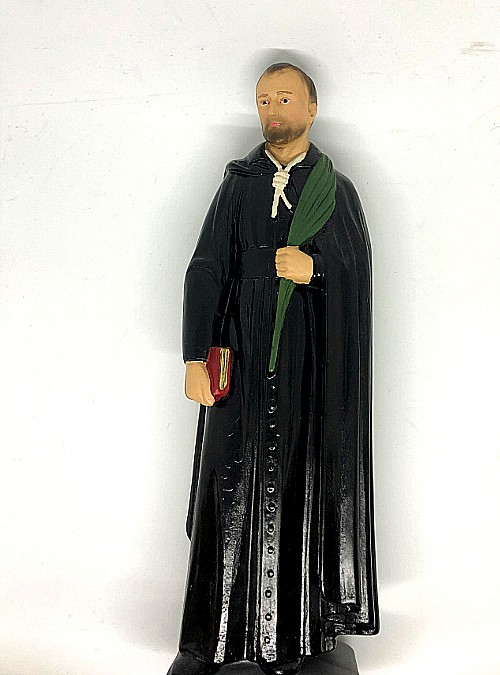
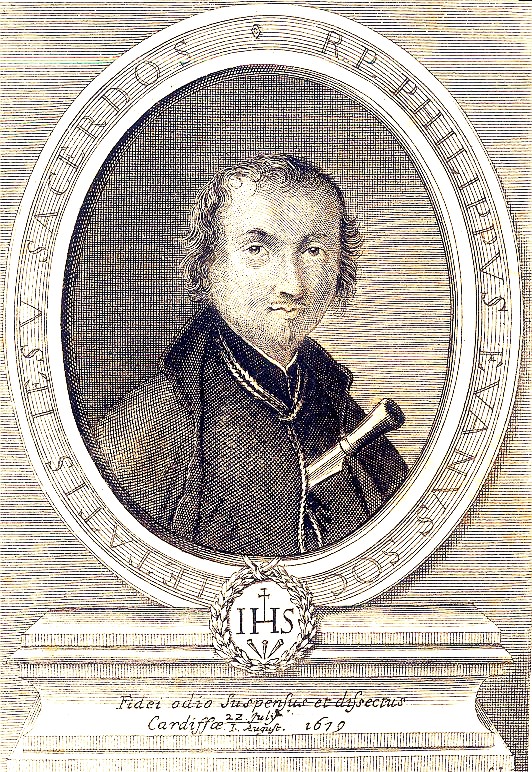
Saint of the Day – 22 July – Saint Philip Evans SJ (1645-1679) Priest ,Martyr, Missionary, Confessor. Born in 1645 in Monmouth, Monmouthshire, Wales and died by being hanged, drawn and quartered 22 July 1679 on Gallows Field in Cardiff, Wales, aged 34 years. Additional Memorial – 25 October as one of the Forty Martyrs of England and Wales,
Philip was born in Wales and studied at the English college at Saint-Omer in Flanders, where he entered the Jesuits and continued his studies. After he was Ordained in 1675, he was missioned back to South Wales where he served four years before he was arrested. During that time he became known for his zeal and charity and was fearless in caring for the Catholics entrusted to him.
He refused to leave Wales when persecution of Catholics increased after the Titus Oates plot of September 1678 falsely accused Jesuits of planning to assassinate King Charles II. The government normally offered a reward of 50 pounds for the arrest of a Jesuit but the local Welsh Magistrate, a staunch Calvinist, offered an additional 200 pounds for the arrest of Father Evans. Despite the threat, he continued serving as the chaplain of Christopher Turberville in Glamorgan, where the constables arrested him after he refused to take the oaths of allegiance and supremacy, which recognised the King as supreme in all religious matters.
For the first three weeks of captivity, Fr Philip remained in solitary confinement in an underground cell. Then he was brought up to the regular prison where he joined Fr John Lloyd, a Diocesan Priest. They waited five months before going to trial on 3 May 1679 because the prosecution could not find witnesses to testify that they were indeed Priests. Eventually a woman and her daughter said that they had received the Sacraments from the Jesuit, which was true. Evans was found guilty of high treason and sentenced to be hanged, drawn and quartered but the execution was deferred until 22 July when the sheriff took both Priests to Gallows Field, outside Cardiff.
Philip is the only one of the many Priests to be Martyred in England and Wales who learned of his execution date while playing tennis. A prisoner in Cardiff Castle, he was allowed to exercise. While he was engaged in a tennis match, he received the news that he would be murdered the next day. Elated by the news, he asked if he could finish the match but was not permitted to do so. Instead, he took up a harp back in his prison cell and sang praise to God for calling him to be a Martyr.
When he mounted the ladder at the gallows, he said: “This is the best pulpit a man can have to preach in, therefore, I can not forbear to tell you again that I die for God and religion’s sake.” At the time of his Martyrdom, Father Evans was 34 years old and had been a Jesuit for 14 years.
The only Marian Feast I can find for today seems to be unverified, in other words, I can find absolutely no references online relating to this invisible Shrine.
St Baudry of Montfaucon St Claudius Marius Victorinus of Saussaye St Cyril of Antioch St Dabius Bl Jacques Lombardie St John Lloyd St Joseph of Palestine St Lewine St Lucia Wang Wangzhi
St Maria Wang Lishi St Meneleus of Ménat St Movean of Inis-Coosery St Pancharius of Besancon Bl Paolo de Lara St Philip Evans SJ (1645-1679) Priest Martyr St Plato of Ancyra St Syntyche of Philippi St Theophilus of Cyprus
Martyrs of Marula/Massylis: – 3 saints: Three Christians martyred together. We know nothing else about them but the names – Ajabosus, Andrew and Elian. They were martyred in Massylis (Marula), Numidia (in modern Algeria).
Martyrs of Massilitani: A group of Christians martyred together in northern Africa. Saint Augustine of Hippo wrote about them.
Martyred in the Spanish Civil War: Bl Jaime María Carretero Rojas Bl Joaquin Rodríguez Bueno Bl José María Mateos Carballido Bl Juan Durán Cintas Bl Ramón María Pérez Sous
Thought for the Day – 21 July – Meditations with Antonio Cardinal Bacci (1881-1971)
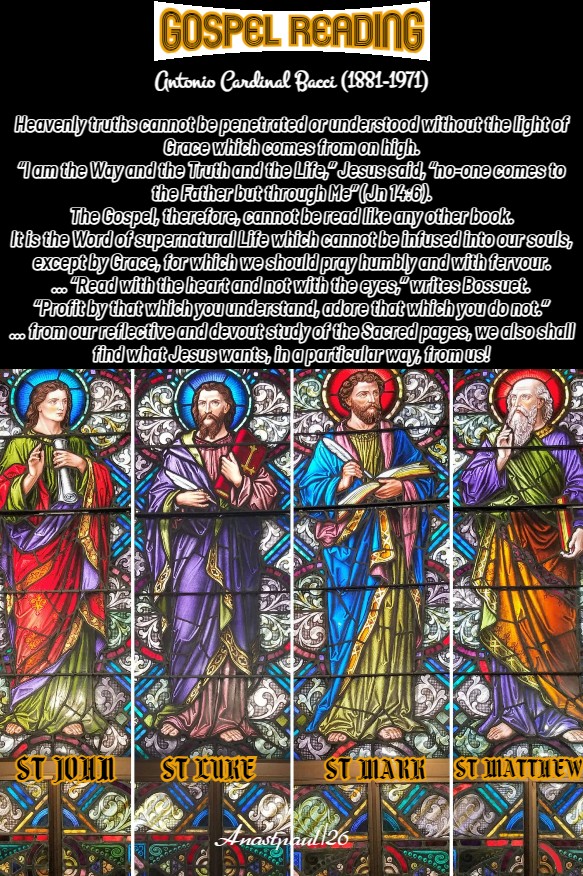
Gospel Reading
“It is not enough to read and to meditate on the Gospel. We should do so with the correct dispossition, which are three in number. In the first place, we should read the Gospel with the recollection of one who prays, “Prayer must often interrupt reading,” says St Bonaventure. Now and again, while we are reading, we should lift our minds to God and ask Him to enlighten us and to inspire us, towards greater fervour.
Heavenly truths cannot be penetrated or understood without the light of Grace which comes from on high. “I am the Way and the Truth and the Life,” Jesus said, “no-one comes to the Father but through Me” (Jn 14:6). The Gospel, therefore, cannot be read like any other book. It is the Word of supernatural Life which cannot be infused into our souls, except by Grace, for which we should pray humbly and with fervour.
In the second place, we should read slowly and reflectively. “Read with the heart and not with the eyes,” writes Bossuet. “Profit by that which you understand, adore that which you do not”
In the Gospel, there is always something which is applicable to ourselves and to the particular circumstances in which we find ourselves. The Saints found there, their own particular road to sanctity, to which they had been called; from our reflective and devout study of the Sacred pages, we also shall find what Jesus wants, in a particular way, from us!”
Quote/s of the Day – 21 July – “Month of the Most Precious Blood” and the Memorial of St Lawrence of Brindisi OFM Cap (1559-1619) Doctor of the Church
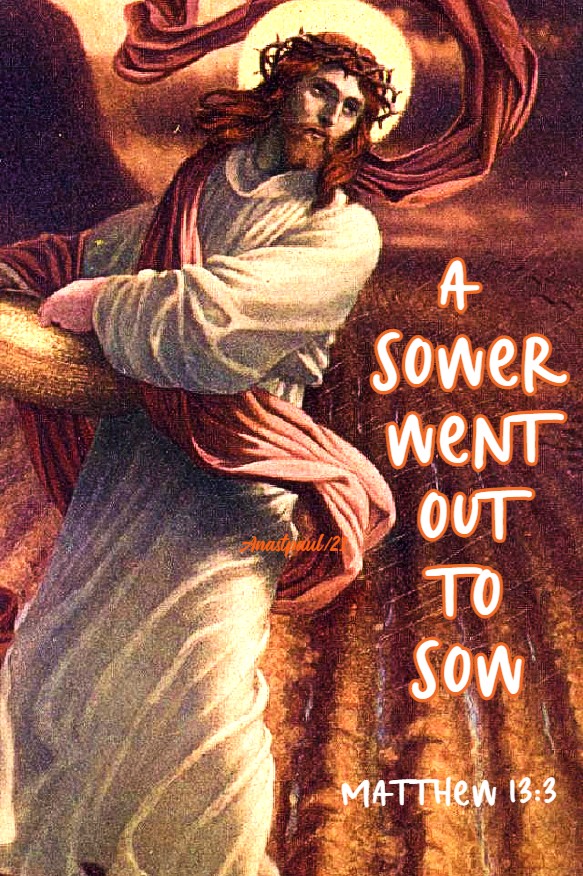
“A sower went out to sow”
Matthew 13:3
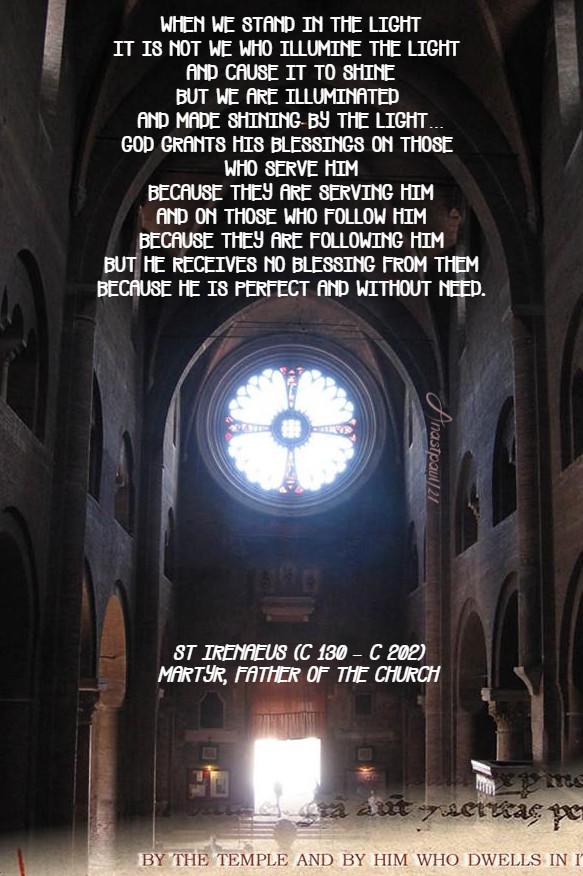
“When we stand in the light it is not we who illumine the light and cause it to shine but we are illuminated and made shining by the light… God grants His blessings on those who serve Him because they are serving Him and on those who follow Him because they are following Him but He receives no blessing from them because He is perfect and without need.”
St Irenaeus (c 130 – c 202) Bishop & Martyr, Father of the Church
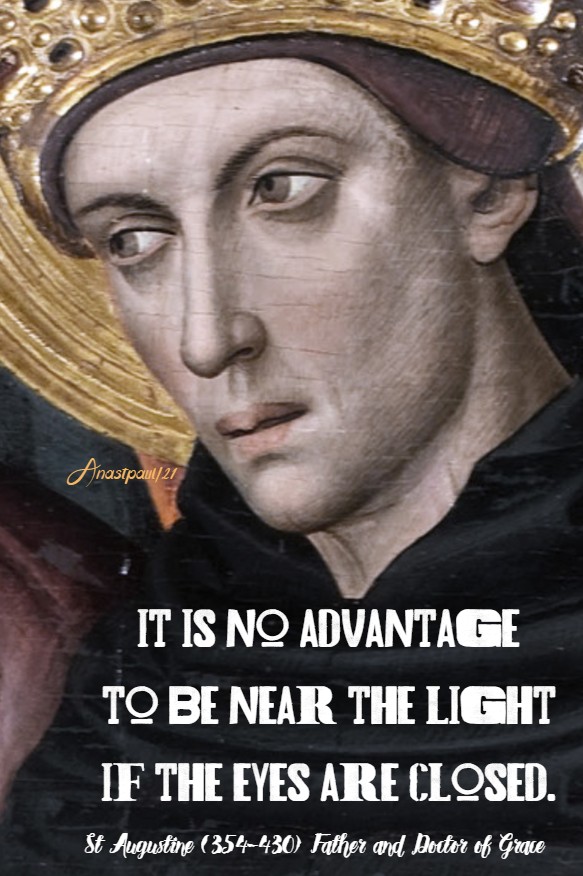
“It is no advantage to be near the light, if the eyes are closed.”
St Augustine (354-430) Father and Doctor of Grace
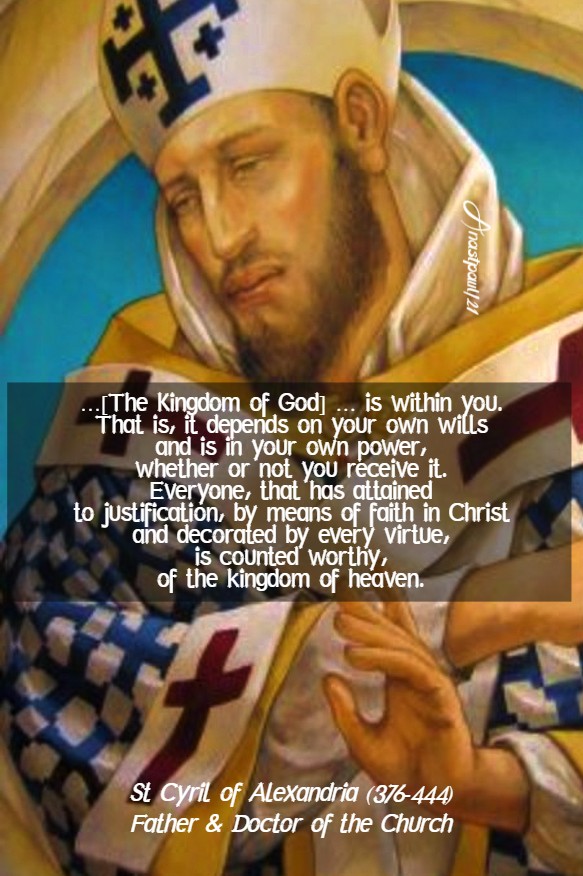
“… [The Kingdom of God] … is within you. That is, it depends on your own wills and is in your own power, whether or not you receive it. Everyone, that has attained to justification, by means of faith in Christ and decorated by every virtue, is counted worthy, of the kingdom of heaven.”
St Cyril of Alexandria (376-444) Father and Doctor of the Church
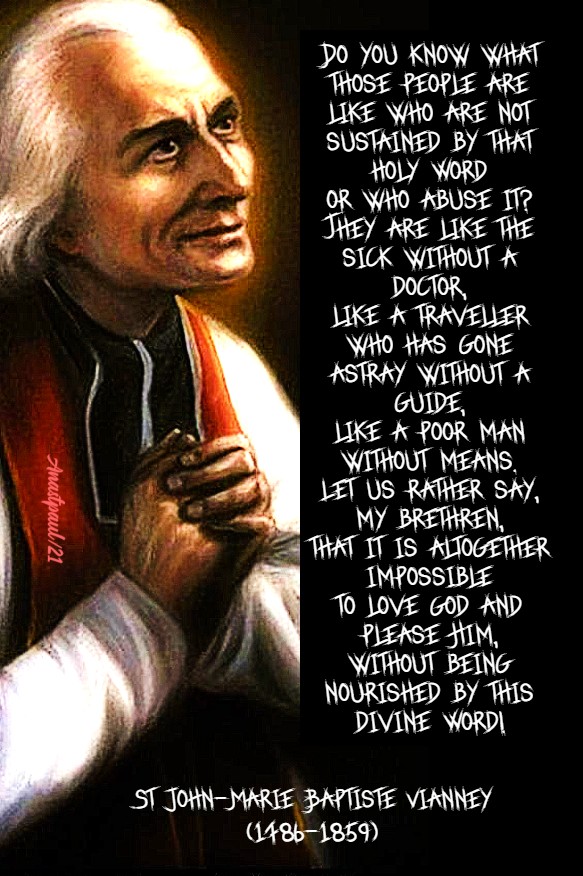
“Do you know what those people are like who are not sustained by that holy Word or who abuse it? They are like the sick without a doctor, like a traveller who has gone astray without a guide, like a poor man without means. Let us rather say, my brethren, that it is altogether impossible to love God and please Him, without being nourished by this divine Word!”
St John-Marie Baptiste Vianney (1786-1859)
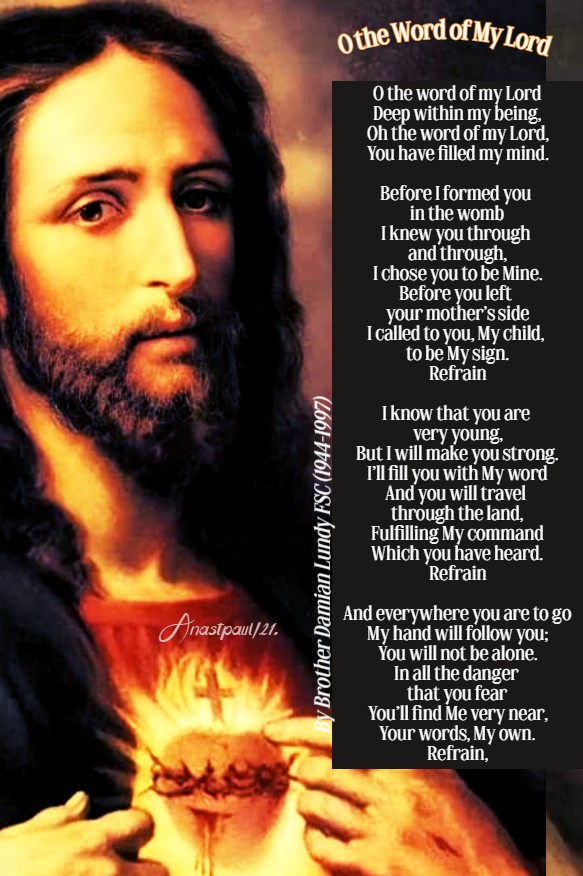
O the Word of My Lord Song of a Young Prophet By Brother Damian Lundy FSC (1944-1997)
O the word of my Lord Deep within my being, Oh the word of my Lord, You have filled my mind.
Before I formed you in the womb I knew you through and through, I chose you to be Mine. Before you left your mother’s side I called to you, My child, to be My sign. Refrain
I know that you are very young, But I will make you strong. I’ll fill you with My word And you will travel through the land, Fulfilling My command Which you have heard. Refrain
And everywhere you are to go My hand will follow you; You will not be alone. In all the danger that you fear You’ll find Me very near, Your words, My own. Refrain,
This hymn, based on Jeremiah 1, was composed by English Brother and teacher Brother Damian Lundy of the De La Salle Order. It is sometimes referred to as “Song of a Young Prophet.”
One Minute Reflection – 21 July – “Month of the Most Precious Blood” – Readings:Exodus 16: 1-5, 9-15; Psalms 78: 18-19, 23-24, 25-26, 27-28; Matthew 13: 1-9
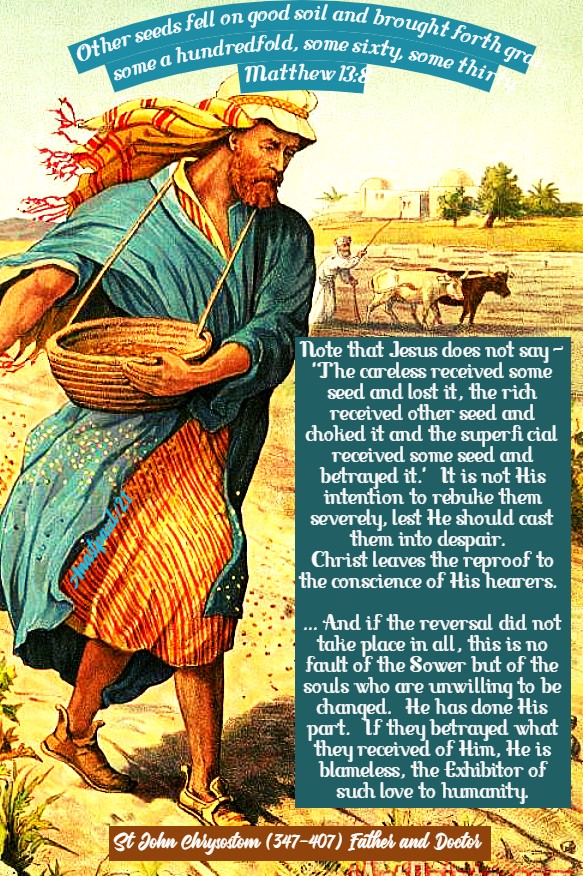
“Other seeds fell on good soil and brought forth grain, some a hundredfold, some sixty, some thirty.” – Matthew 13:8
REFLECTION – “Note that Jesus does not say – ‘The careless received some seed and lost it, the rich received other seed and choked it and the superficial received some seed and betrayed it.‘ It is not His intention to rebuke them severely, lest He should cast them into despair. Christ leaves the reproof to the conscience of His hearers. Remember also, in the parable of the net that much was gathered which was unprofitable. But He speaks this parable as if to anoint His disciples and to teach them, that they are not to be despondent ,even though those lost may be more than those who receive the word. It was with this same ease that the Lord Himself continued to sow, even He who fully foreknew the outcomes.
But why would it be reasonable to sow among thorns or on rocks or on the pathway? With regard to the seeds and the earth it cannot sound very reasonable. But in the case of human souls and their instructions, it is praiseworthy and greatly to be honoured. For the farmer might be laughed at for doing this, since it is impossible for a rock to bear fruit. It is not likely that the path will become anything but a path or the thorns anything but thorns. But with respect to the rational soul, this is not so predictable. For here there is such a thing as the rock changing and becoming rich land. Here it is possible, that the wayside might no longer be trampled upon or lie open to all who pass by but that it may become a fertile field. In the case of the soul, the thorns may be destroyed and the seed enjoy full security. For had it been impossible, this sower would not have sown. And if the reversal did not take place in all, this is no fault of the Sower but of the souls who are unwilling to be changed. He has done His part. If they betrayed what they received of Him, He is blameless, the Exhibitor of such love to humanity.
But mark this carefully: there is more than one road to destruction. There are differing ones and wide apart from one another. For they who are like the wayside are the coarse-minded and indifferent and careless but those on the rock – such as fail from willed weakness only.” – St John Chrysostom (347-407) Father and Doctor – The Gospel of Matthew: Homily,44
PRAYER – Holy, almighty God, You sent Your prophets and then Your only Son to teach us and lead us to eternal life. Remember Lord, Your solemn covenant, renewed and consecrated by the blood of the Lamb, so that Your people may obtain forgiveness for their sins and a continued growth in grace. Send us Your Spirit, to enlighten our hearts and minds and grow in love for You and the Word made flesh. Guide us in our understanding and living, by the Words of the Word. Holy Mother Mary intercede for us, that we may merit to be co-heirs of His Kingdom. Who lives and reigns with You in the unity of the Holy Spirit, one God, forever, amen.
Our Morning Offering – 21 July – “Month of the Most Precious Blood”
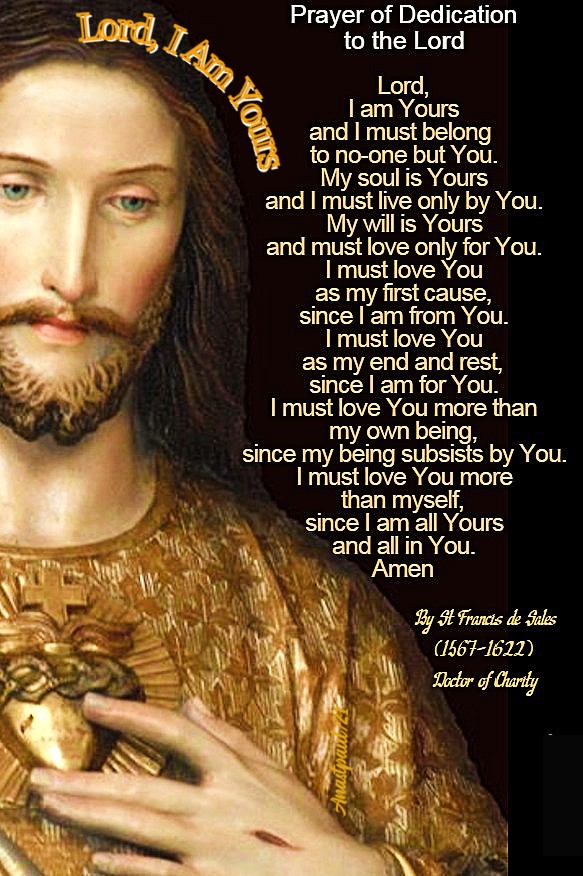
Lord, I Am Yours Prayer of Dedication to the Lord By St Francis de Sales (1567-1622) Doctor of Charity
Lord, I am Yours and I must belong to no-one but You. My soul is Yours and I must live only by You. My will is Yours and must love only for You. I must love You as my first cause, since I am from You. I must love You as my end and rest, since I am for You. I must love You more than my own being, since my being subsists by You. I must love You more than myself, since I am all Yours and all in You. Amen
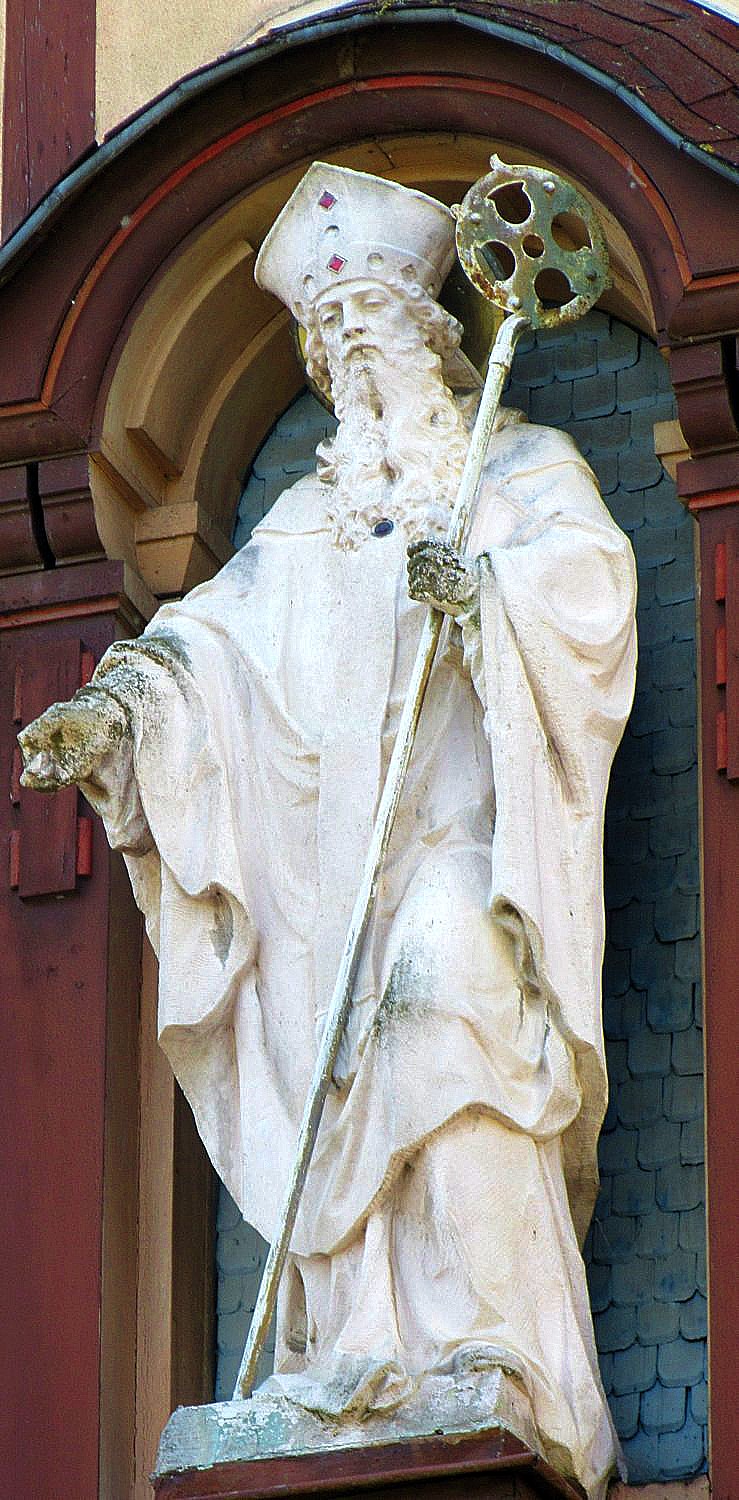
Saint of the Day – 21 July – Saint Arbogast of Strasbourg (Died 678) Bishop of Strasbour, Missionary, Monk, Hermit, Confessor, miracle-worker. Born as Arascach (Irish) in the 7th century in Ireland and died in 678 in Strasbourg of natural causes. Patronage – St Arbogast is the Principal Patron of the Diocese and City of Strasbourg. T he Roman Martyrology states: “At Strasbourg, St Arbogastus, a Bishop, renowned for miracles.”
We have very little historical information of his life, other than that he came to Francie, lived as a Hermit quickly gathering a reputation for wisdom and holiness. He was then appointed Bishop of Strasbourg and is venerated as the saint who brought Christianity to the Alsace. Because of this, the Christian name “Arbogast” became especially popular in the region. His origin is generally believed to be Ireland,
According to the vita, a 10th-century hagiographical account of his life, Arbogast found a warm friend in the King Dagobert II of Austrasia, who reigned between 673-679. On Dagobert’s accession, Arbogast was appointed Bishop of Strasbourg and was famed for sanctity and miracles.
Still according to the vita, Arbogast brought back to life Dagobert’s son, Siegebert, who had been killed by a fall from his horse. Siegebert had been boar hunting with his father’s huntsmen in forests and became separated from the others. He encountered a boar and his startled horse reared, throwing him and trampling him while his foot was caught in his stirrup. His companions found him and took him home, where he died the next day. King Dagobert summoned Arbogast,and the holy man prayed to Mary, Mother of God – as she had carried the life of the entire world, would she not intercede for the life of this one boy? Siegebert stood up in his burial shroud. When the King offered Bishop Arbogast money in reward, he declined, suggesting instead, that land be donated to build a Cathedral at Strasbourg..
St Arbogast’s prayers raise King Dagobert’s son to life
His life as a Hermit in the forest of Haguenau is the domain of legend. But what is true is that the great Bishop Arbogast, installed throughout his territory, Monasteries intended to shine the light of the Gospel in the pagan countryside: – let us mention the Abbey of Surbourg, in the forest of ‘Haguenau and, near Strasbourg, an Abbey which will later bear the name of our saintly Bishop.
Knowing that “it is the Lord who builds up the city,” he put his hope in the prayers of his Monks. Arbogast himself had a great devotion to Saint Martin of Tours, to whom he dedicated, the Monastery of Surbourg.
For six years, he was thus the Good Shepherd of his Church, filled with divine Wisdom, holy virility and fatherly goodness. He spoke the Word of God in the power of the Holy Spirit. Thus his Church experienced a true Christian renewal, he himself deserved to enter into the joy of his Lord as a good and faithful servant and to receive from Christ, the Prince of Shepherds, the incorruptible crown of glory (En.).
According to the vita, he died in 678. His body was buried in the City cemetery and near his grave stood a Chapel, which he had dedicated to Saint Michael. Later, his relics were transferred in part to the Saint-Arbogast Monastery, near Strasbourg, where, his memory is celebrated every year as a Monk and Bishop of great holiness and miracles..
St Arbogast appears on the Coat of Arms of Batzendorf and today, on his Feast, a special Mass, granted by the Holy Father, is celebrated in his honour.
Strasbourg Cathedral`
Collect: O God, you wanted Blessed Arbogast, Your confessor and Pontiff, to become wholeheartedly, he model of his flock; grant us to realise, under his protection in our deeds, what he taught by the word of his mouth.
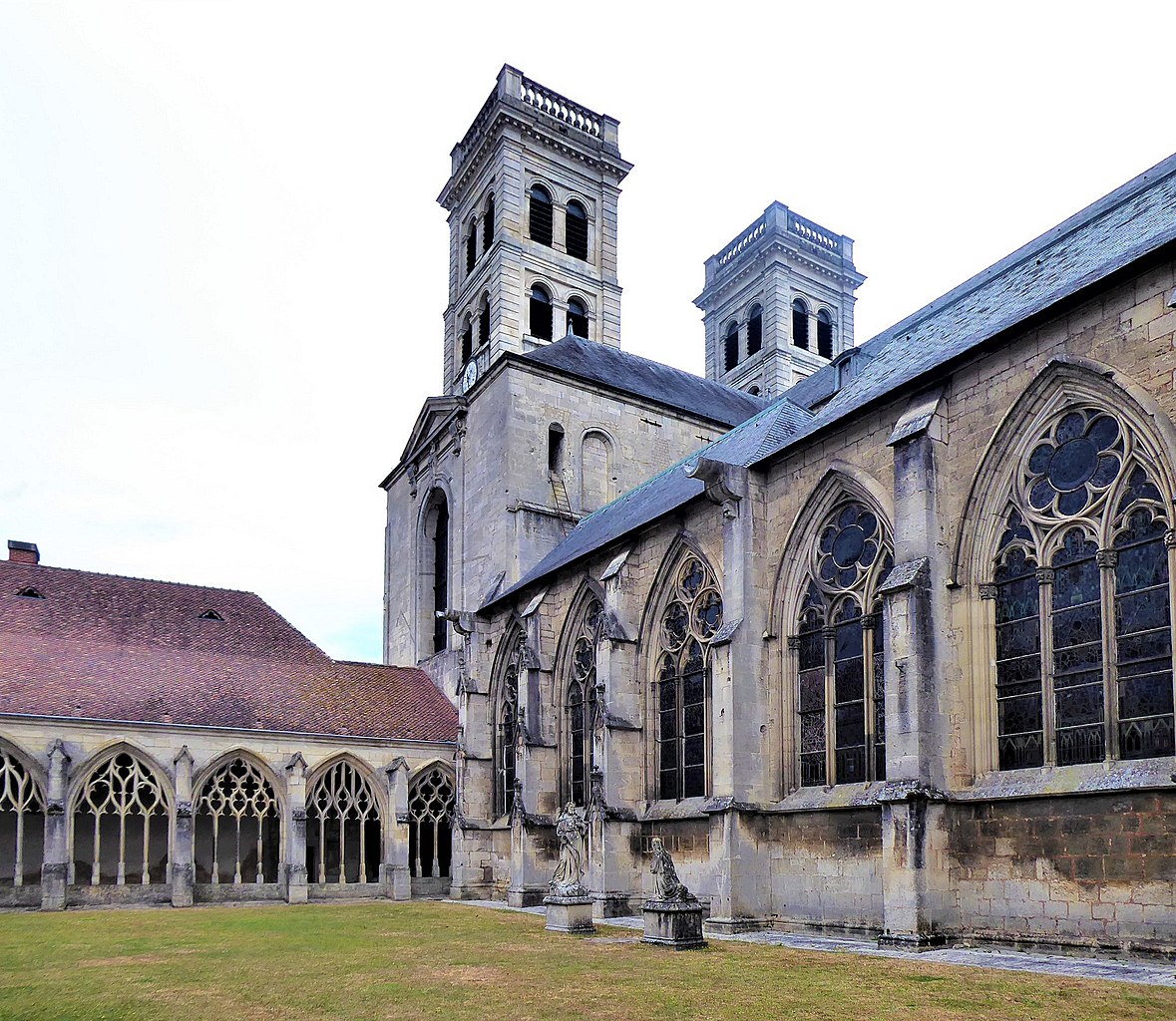
Notre-Dame-de-Verdun / Our Lady of Verdun, Lorraine , France (5th Century) – 21 July:
The present Cathedral of Notre-Dame-de -erdun is both a Cathedral and a national monument of France. It has a long and ancient history. It was in about the year 330 when Saint Sanctinus, a disciple of Saint Denis, converted the City of Verdun to the True Faith and later ,made it an Episcopal City when he became its first Bishop. He built a Church there in honour of Saints Peter and Paul. In the year 457 Saint Pulchrone, built the first Church located at the site where Our Lady of Verdun is presently located. The fifth Bishop of Verdun, Saint Pulchrone, built the Church inside the walls of the City on ancient Roman ruins. This Church was actually named to honour of the Blessed Virgin Mary as Mother of God, a title that had recently been confirmed at the Councils of Ephesus and Chalcedon. It was at the Council of Ephesus in 431 that Mary was formally affirmed to be Theotokos, “God-bearer,” or “the one who gives birth to God.” At Chalcedon, the nature of Christ was formally defined, teaching that He was God and man, “one and the same Christ, Son, Lord, Only-begotten, known in two natures, without confusion, without change, without division, without separation.” With this definition Mary was shown to be the Mother of God and not just of Our Lord in His human nature. The Church and Our Lady of Verdun was celebrated for numerous miracles. In the year 990, Bishop Heimon built a new Cathedral to Our Lady of Verdun, and in the 12th century a choir and two portals were added. In 997, the Emperor Otto III conferred on this Bishop Heimon, or Haymon, the title of Count, making him and his successors Episcopal Counts. The Cathedral was consecrated by Pope Eugene III in 1147. In the 14th century the flat wooden ceiling was replaced with a vaulted ceiling and side-Chapels were added to the nave. Another side Chapel, dedicated to the Blessed Virgin of the Assumption, was built in the 16th century. In 1755 the roof and towers were hit by lightning, which set them both on fire, which did significant damage to the Church. In 1760 the Church was repaired and rebuilt in the Neo-Classical style.
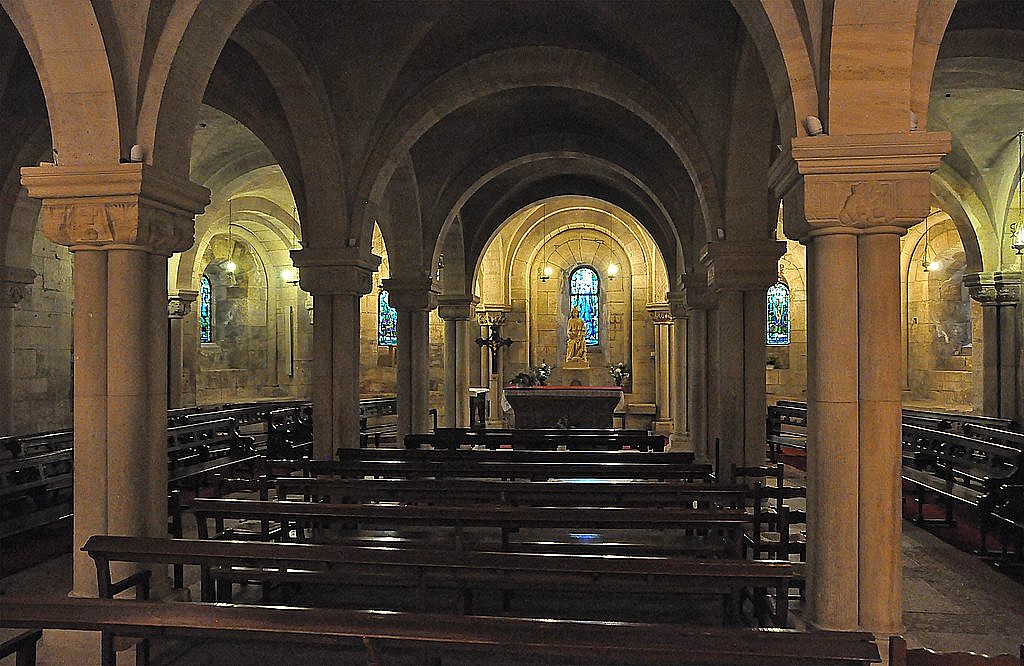
The Cathedral was once again severely damaged in World War I, as it was hit by artillery rounds in the Battle of Verdun, which destroyed the towers. The crypt was rediscovered during the renovation that went on until the year 1936 and a re-inauguration took place in 1935. The millennial celebration of the Cathedral took place in 1990. The Arbennes family were the Counts of Verdun, and Godfrey of Bouillon was a member of that family. Godfrey gave up his right to the title before leaving on the First Crusade.
St Lawrence of Brindisi OFM Cap (1559-1619) Doctor of the Church (Optional Memorial) St Lawrence is known as the “Franciscan Renaissance Man” – he was a Religious member of the Franciscan Friars Minor Capuchin, a Priest, Theologian, Vicar General of the Franciscans, Language scholar, Apologist of immense and calm resources, Humanist, Philosopher, Biblicist, Preacher, Missionary, Professor, International Administrator, Confidant of Popes, Emperors, Kings and Princes, Diplomatic envoy, Army Chaplain, Military Strategist and Morale builder, Polemicist, Prolific writer. Biography: https://anastpaul.com/2018/07/21/saint-of-the-day-21-july-st-lawrence-of-brindisi-ofm-cap-1559-1619-doctor-of-the-church-the-franciscan-renaissance-man/
Bl Agrícola Rodríguez García de Los Huertos St Alberic Crescitelli
St Arbogast of Strasbourg (Died c 678) Bishop St Barhadbescialas St Benignus of Moyenmoutier Bl Claudius of Avignon St Claudius of Troyes St Corona of Marceille Bl Cristóbal López de Valladolid Orea Bl Daniel Molini St Daniel the Prophet St Eleutherius of Marseille St Eternus of Evreaux Bl Gabriel Pergaud St Iosephus Wang Yumei St John of Edessa St John of Moyenmoutier Bl Juan de Las Varillas Bl Juan de Zambrana St Jucundinus of Troyes St Julia of Troyes St Justus of Troyes Bl Parthenius of Thessaly St Praxides of Rome St Simeon Salus
St Wastrada St Zoticus of Comana — Martyrs of Africa – 6 saints: Six Christians who were martyred together. We know no other details about them but the names – Emilian, Hugal, Motanus, Saphus, Stercorius and Victor. They were martyred in an unknown location in Africa, date unknown.
Thought for the Day – 20 July– Meditations with Antonio Cardinal Bacci (1881-1971)
The Surest Way to Avoid Sin
“The surest way of never offending God, is to love Him. If we love God sincerely, it will be impossible for us to offend Him. “Love,” says St Paul, “is the fulfilment of the Law,” (Rom 13:10) and charity “is the bond of perfection” (Col 3:14). If all our actions are inspired by the love of God, it will not matter how insignificant they are, for they will be pleasing to Him and will gain merit for ourselves. Then it will be impossible for us to sin.
If most of our actions, on the other hand, are dictated by an inordinate attachment to creatures and to ourselves, they will certainly not lead us to God. Our hearts need love and cannot live without it. But whom shall we love if we do not love God, Who is our Creator and Redeemer? We shall find love or a moment in beauty, in goodness and in pleasure but, it will soon pass away and leave us with empty hearts. God is our highest good and only He can fully satisfy our hearts. But He wishes us to belong completely to Himself.
Our hearts are too tiny to be divided between God and creatures. We must belong entirely to God. If we love Him sincerely, all created things will form a ladder, which will help us to ascent to Him. Let us love God and remain united to Him in all our actions. Then sin will never find it’s way into our souls.”
Quote/s of the Day – 20 July – “Month of the Most Precious Blood” – Readings: Exodus 14: 21 – 15: 1; Exodus 15: 8-9, 10 and 12, 17; Matthew 12: 46-50
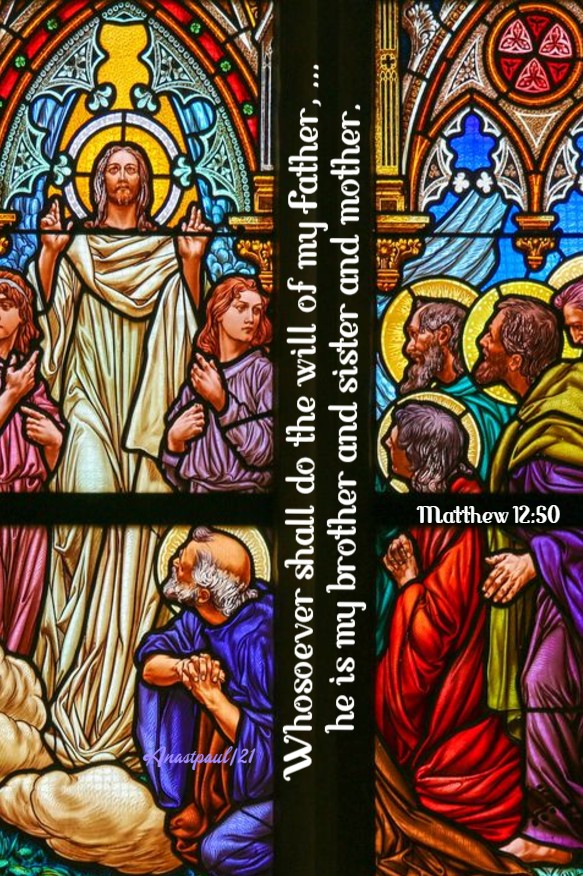
“Whosoever shall do the will of my Father, … he is my brother and sister and mother.”
Matthew 12:50
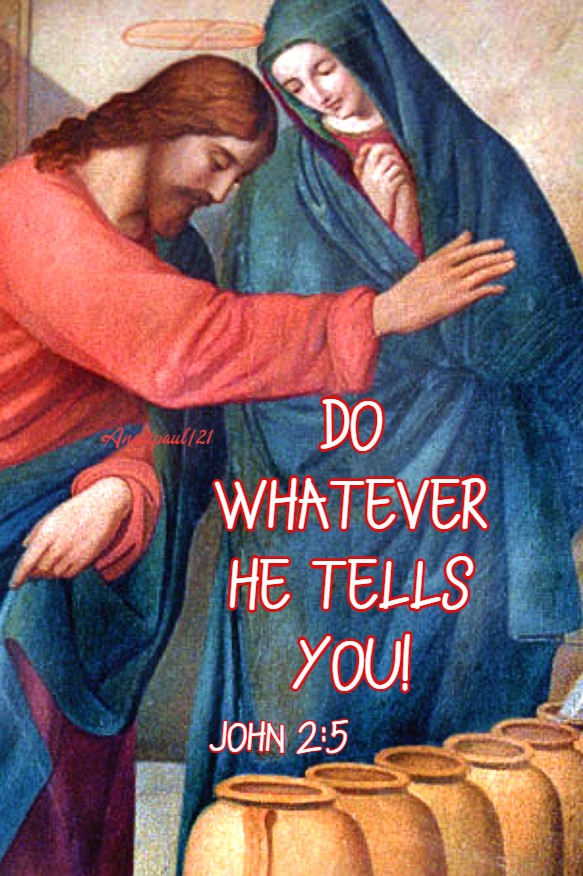
“Do whatever he tells you.”
John 2:5
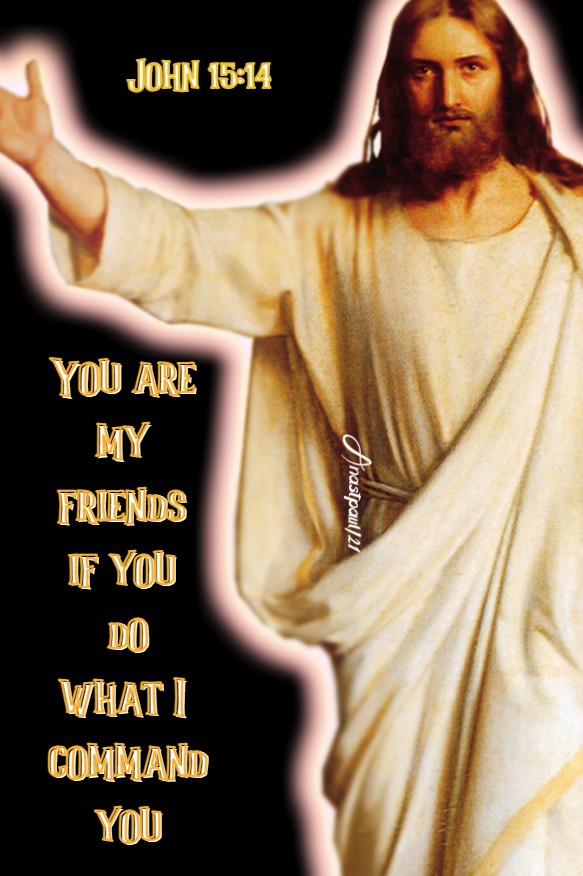
“You are my friends, if you do the things that I command you.”
John 15:14
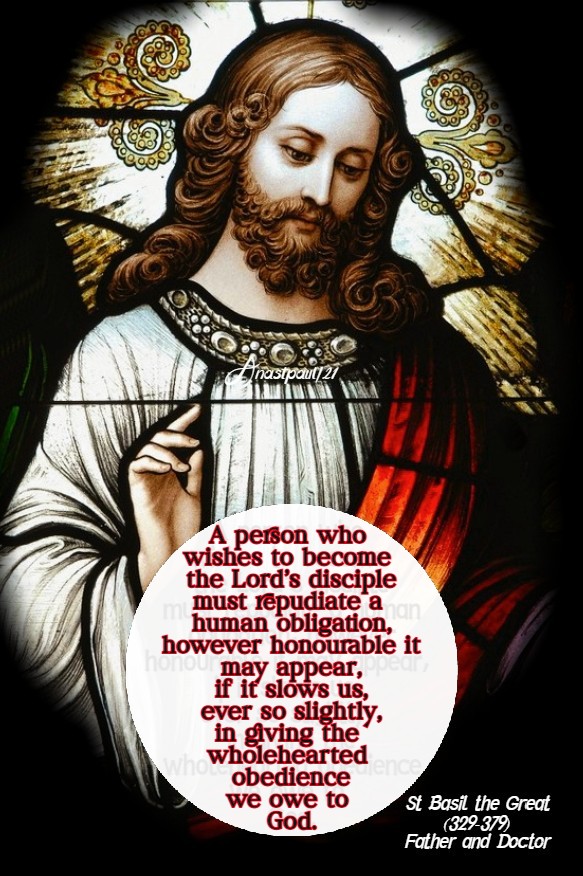
“A person who wishes to become the Lord’s disciple must repudiate a human obligation, however honourable it may appear, if it slows us, ever so slightly, in giving the wholehearted obedience we owe to God.”
St Basil the Great (329-379) Father and Doctor of the Church
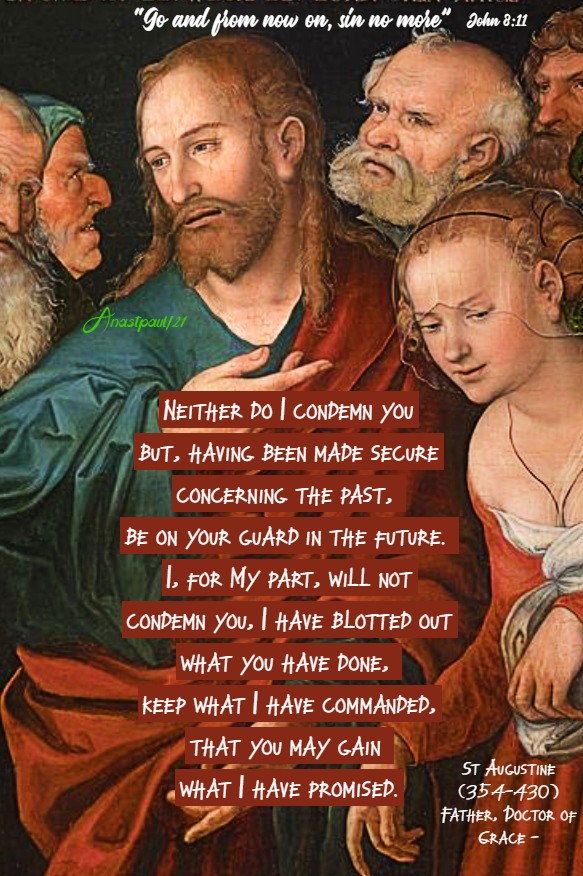
“Neither do I condemn you but, having been made secure concerning the past, be on your guard in the future. I, for My part, will not condemn you, I have blotted out what you have done; keep what I have commanded, that you may gain what I have promised.”
St Augustine (354-430) Father & Doctor of Grace
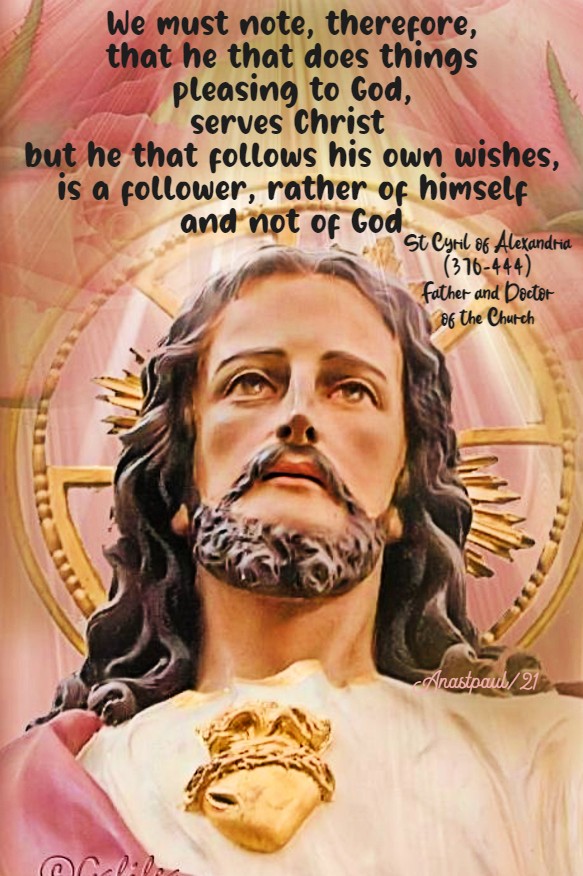
“We must note, therefore, that he that does things pleasing to God, serves Christ but he that follows his own wishes, is a follower, rather of himself and not of God.”
One Minute Reflection – 20 July – “Month of the Most Precious Blood” – Readings: Exodus 14: 21 – 15: 1; Exodus 15: 8-9, 10 and 12, 17; Matthew 12: 46-50
“And pointing to his disciples, he said, “Behold my mother and my brothers!” – Matthew 12:49.
REFLECTION – “.“His Mother is the whole Church, since it is she, who, by God’s grace, gives birth to Christ’s members, that is to say, those who are faithful to Him. Again, His Mother is every holy soul who does the Father’s will and whose fruitful charity is made known in those, to whom she gives birth for Him, “until he has been formed in them” (cf Gal 4:19)…St Augustine (354-430) Father & Doctor” – St Augustine (354-430) Bishop of Hippo, Father and Doctor of Grace of the Church – Sermon 72
PRAYER – Almighty Father, You made us Your children, You called us from all ages and You formed us by Holy Mother Church. Grant, we pray, that by Your grace, we may be ever faithful to her and be guided by Your Holy Spirit of love. O God may YourMother and ours and Your holy Angels and Saints intercede for us that, being made imitators of the Lord’s Passion, we may merit to be co-heirs of His Kingdom. Who lives and reigns with You in the unity of the Holy Spirit, one God, forever, amen.
Our Morning Offering – 20 July – “Month of the Most Precious Blood”
Our Lord, King of all! By St Albert the Great (1200-1280) Doctor of the Church
We pray to You, O Lord, who are the supreme Truth, and all truth is from You. We beseech You, O Lord, who are the highest Wisdom, and all the wise depend on You for their wisdom. You are the supreme Joy, and all who are happy owe it to You. You are the Light of minds and all receive their understanding from You. We love, we love You above all. We seek You, we follow You, and we are ready to serve You. We desire to dwell under Your power for You are the King of all. Amen.
Saint of the Day – 20 July – Saint Joseph Barsabbas the Just (1st Century) Disciple of Jesus, Martyr Bishop. Also known as – Justus, Barsabbas, Joseph Basassas, Joseph of Barsabas, Joseph the Just.
The Roman Martyrology states today: “The birthday of the blessed Joseph, surnamed the Just, whom the Apostles selected with the blessed Matthias, for the Apostleshop in the place of the traitor, Judas. The lot having fallen upon Matthias, Joseph, notwithstanding, continued to preach and advance in virtue and after having sustained from the Jews, many persecutions for the Faith of Christ, happoily ended his life in Judea.”
“Wherefore, of these men who have companied with us all the time that the Lord Jesus came in and went out among us; beginning from the baptism of John, until the day wherein he was taken up from us, one of these must be made a witness with us of his resurrection. And they appointed two, Joseph, called Barsabas, who was surnamed Justus,and Matthias. And praying, they said: Thou, Lord, who knowest the heart of all men, shew whether of these two thou hast chosen, to take the place of this ministry and apostleship, from which Judas hath, by transgression fallen, that he might go to his own place. And they gave them lots and the lot fell upon Matthias and he was numbered with the eleven apostles.” ― Acts 1:21 – 26 D-R
St John Chrysostom writes, “The other candidate (Joseph) was not annoyed, for the apostolic writers would not have concealed failings of their own, seeing they have told of the very chief Apostles, that on other occasions had indignation and not only once but again and again.”
It clear that Joseph Barsabbas (also called “Justus”) must have spent much time with the Apostles and witnessed many of the wondrous events in the life of Jesus. Further identification of Joseph is uncertain. In Christian tradition he is numbered among the Seventy disciples mentioned in Luke 10:1–24, although the biblical text mentions no names. “After these things the Lord appointed other seventy also and sent them two and two before his face into every city and place, whither he himself would come.” (10:1)
Very little is known about Joseph Barsabbas outside of the apostle selection by lots. Tradition believes that he went to Eleutheropolis (about 25 miles from Jerusalem) where he became Bishop Justus of Eleutheropolis. The town was renamed over the centuries. Its original Aramaic name Beth Gabra, translates as the “house of the mighty one.” The Romans gave it the Greek name, Eleutheropolis, meaning “City of the Free.”
Rev Alban Butler says – “After the dispersion of the disciples he preached the gospel to many nations and among other miracles, drank poison without receiving any hurt, as Papias and from him ,Eusebius, testify. This saint, from his extraordinary piety, was surnamed the Just.“
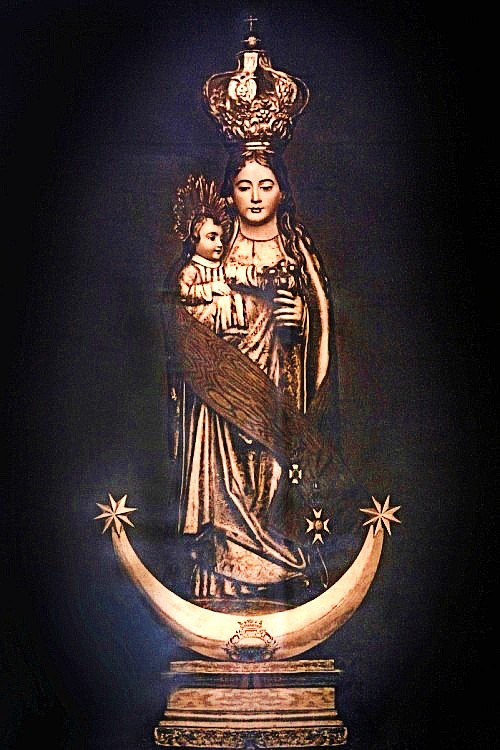
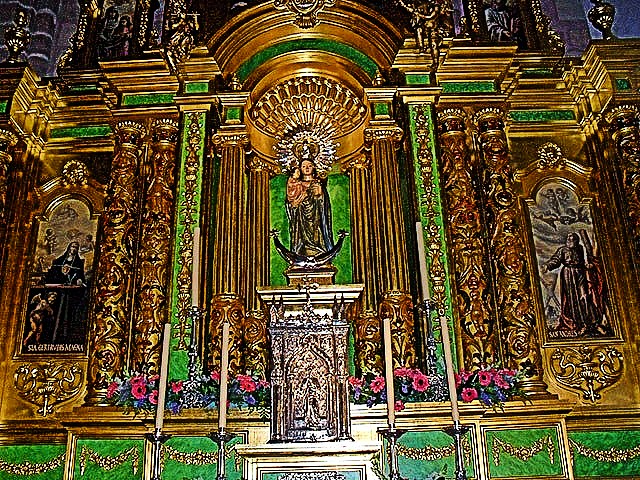
Nuestra Señora de Zocueca / Our Lady of Zocueca, Bailén, Jaén, Andalucía, Spain (1808 – 20 July:
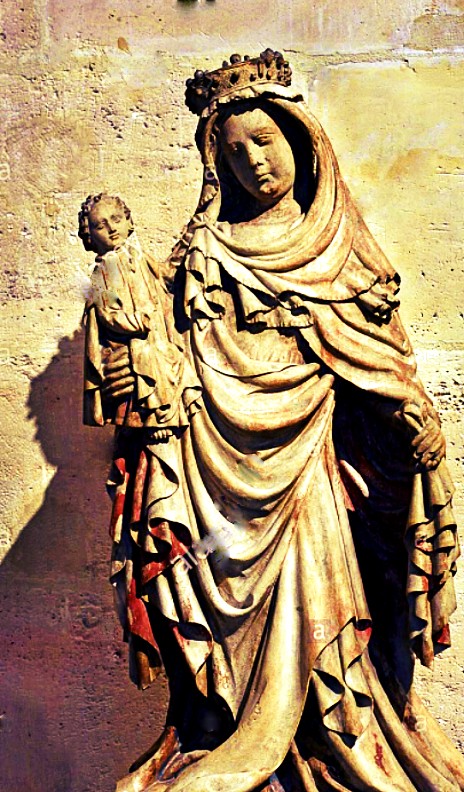
Around 1150, Mozarabic Christians built a rudimentary Chapel near the Rumblar River, the Guadalquivir tribuitary that waters this region in southern Spain, at a place called Zocueca. When Alfonso VII reconquered the area in 1155, people gave thanks to the Virgin at the Shrine. In the 1400s it was was rebuilt, and from this period the graceful, standing Gothic Statue of the Mother and Child seems to date, although tradition holds it to be older than the first Chapel.
During the cholera epidemic of 1681, the people vowed to hold an annual feast in honour of the Virgin, preceded by a day of fasting, if she would save them. The promise has been kept on 5 August ever since. The Chapel was re-decorated in Baroque style in the 1700s.
In 1808, people again thanked the Virgin of Zocueca for her help during the Battle of Bailén, the first Spanish victory against Napoleon. Annually since 1810, the municipality commemorates the battle with a series of civil, patriotic, and religious events from 17-22 July, reaching their greatest splendour on the 20th, when the Patroness, the Virgin of Zocueca, goes through the City streets in procession. Another event in her honour, the romería or pilgrimage, takes place on the last Sunday in September in thanks for her help in ending a plague of locusts which threatened the region’s crops in the late 1800s. Men carry the Statue, bristling with decorations, on their shoulders from its usual home in the Church of the Incarnation in Bailén, to the Sanctuary four miles distant, where overnight vigil is kept before a sunrise Mass. In 1925, the Virgin of Zocueca was proclaimed “Captain General” and her Statue given a military sash. After the Statue burned in the Civil War, religious sculptor Jose Maria Alcacer made a replica, blessed on 5 August1954.
Bl Anne Cartier St Ansegisus St Aurelius of Carthage St Cassian of Saint Saba St Chi Zhuze St Elijah the Prophet
St Elswith
Blessed Gregory Lopez (1542-1596) “The Mystery Man” – Hermit, Spiritual Advisor, Writer. Around 1585, word of a “Mystery Man” began to leak into Mexico City, a strange hermit who lived out in the lonely valley of Guesteca, who walked miles to go to Mass, lived totally subject to “Lady Poverty” and had travelled from the Shrine of Our Lady of Guadalupe in Spain (which dates from 712), to her Shrine in Mexico (which dates from 1531). Biography: https://anastpaul.com/2018/07/20/saint-of-the-day-20-july-blessed-gregory-lopez-1542-1596/
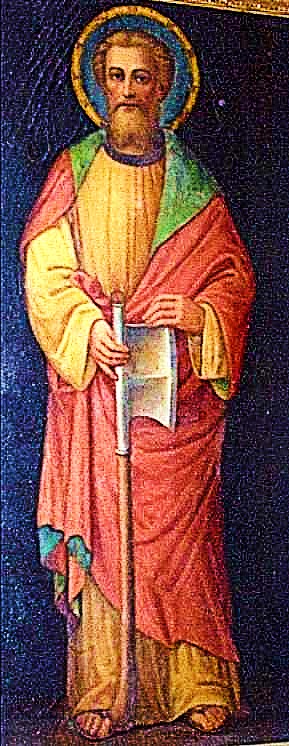
St Joseph Barsabbas the Just (1st Century) Disciple of Jesus, Bishop, Martyr
St José María Díaz Sanjurjo St Joseph Barsabas
Blessed Luigi Novarese (1914-1984) Priest, Apostle of the Sick, Co-Founder. Blessed Luigi with Sr Psorulla, founded the Apostolate of the Suffering as well as the Silent Workers of the Cross. He also established the Marian Priest League and the Brothers and Sisters of the Sick. He built several homes for those who were ill and disabled. Blessed Luigi’s life: https://anastpaul.com/2020/07/20/saint-of-the-day-20-july-blessed-luigi-novarese-1914-1984/
St Maria Fu Guilin St Mère St Paul of Saint Zoilus St Rorice of Limoges St Severa of Oehren St Severa of Saint Gemma St Wulmar
Martyrs of Corinth – 22 saints: 22 Christians who were martyred together. We know nothing else about them but the names – • Appia • Calorus • Cassius • Celsus • Cyriacus • Donatus • Emilis • Felix • Fructus • Magnus • Maximus • Nestita • Partinus • Pasterus • Paul • Romanus • Spretus • Tertius • Theodolus • Ueratia • Valerian • Victor. They were martyred in Corinth, Greece.
Martyrs of Damascus – 16 saints: 16 Christians who were martyred together. We know the names of six of then, but no details about any of them – Cassia, Julian, Macrobius, Maximus, Paul and Sabinus. They were martyred in Damascus, Syria, date unknown.
Martyrs of Seoul – 8 saints: Eight lay native Koreans in various states of life who were murdered together for their faith. • Anna Kim Chang-gum • Ioannes Baptista Yi Kwang-nyol • Lucia Kim Nusia • Magdalena Yi Yong-hui • Maria Won Kwi-im • Martha Kim Song-im • Rosa Kim No-sa • Theresia Yi Mae-im They were martyred on 20 July 1839 at the Small West Gate, Seoul, South Korea and Canonised on 6 May 1984 by St Pope John Paul.
Martyrs of Zhaojia – 3 saints: Married lay woman and her two daughters in the apostolic vicariate of Southeastern Zhili, China. During the persecutions of the Boxer Rebellion, the three of them hid in a well to avoid being raped. They were found, dragged out, and killed for being Christian. Martyrs. They were – Maria Zhao Guoshi (mother), Maria Zhao and Rosa Zhao (sisters). They were martyred in late July 1900 in Zhaojia, Wuqiao, Hebei, China.
Martyrs of Zhujiahe – 4 saints: Two Jesuit missionary priests and two local lay people who supported their work who were martyred together in the Boxer Rebellion during and immediately after Mass. • Léon-Ignace Mangin • Maria Zhu Wushi • Paul Denn • Petrus Zhu Rixin They were martyred on 20 July 1900 in church in Zhujiahe, Jingxian, Hebei, China and Canonised on 1 October 2000 by St Pope John Paul.
Martyred in the Spanish Civil War: • Blessed Abraham Furones y Furones • Blessed Antoni Bosch Verdura • Blessed Francisca Aldea y Araujo • Blessed Jacinto García Riesco • Blessed Joan Páfila Monllaó • Blessed Josep Tristany Pujol • Blessed Matías Cardona-Meseguer • Blessed Rita Josefa Pujalte y Sánchez • Blessed Vicente López y López




















You must be logged in to post a comment.