Thought for the Day – 19 JuLy – Meditations with Antonio Cardinal Bacci (1881-1971)
Falling into Sin
“When we realise that we have fallen, what should we do about it? We must avoid two extremes and opposing kinds of reaction – hardness of heart and an excessive anxiety, which may lead to discouragement and loss of confidence in God’s infinite mercy.
Above all, we must avoid hardness of heart and that accompanying state of indifference which causes us to become immersed in sin. Let us hope that we shall never foolishly boost: “I have sinned and what has befallen me? for the Lord bides His time. Of forgiveness, be not over-confident, adding sin upon sin ” (Ecclus 5:4-5). When we see that we have fallen into sin, let us cry out at once, like the prodigal son: “ I will get up and go to my Father” (Lk 15:19). How unfortunate I am, if I have lost the friendship of God! But God is an infinitely merciful Father and I must throw myself into His arms and implore His forgiveness. When we have sinned, a good Confession will give us God’s forgiveness and peace of soul. Let us go to Him humbly and penitently, trusting that He will give us the kiss of peace.”
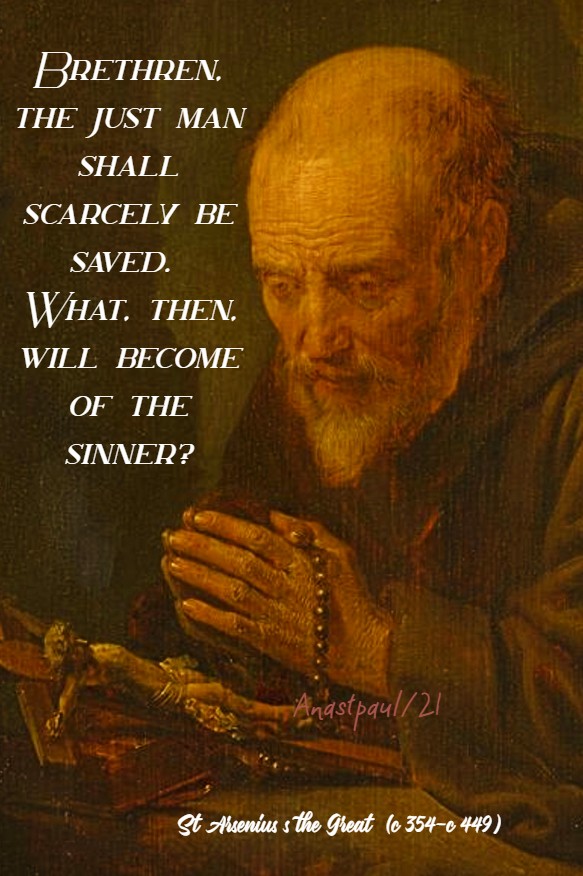
Quote/s of the Day – 19 July – “Month of the Most Precious Blood” – Readings: Exodus 14: 5-18; Exodus 15: 1bc-2, 3-4, 5-6; Matthew 12: 38-42 and the Memorial of St Arsenius s the Great (c 354-c 449)
“The men of Nineveh will rise up at the judgement with this generation and condemn it, for they repented …”
Matthew 12:41
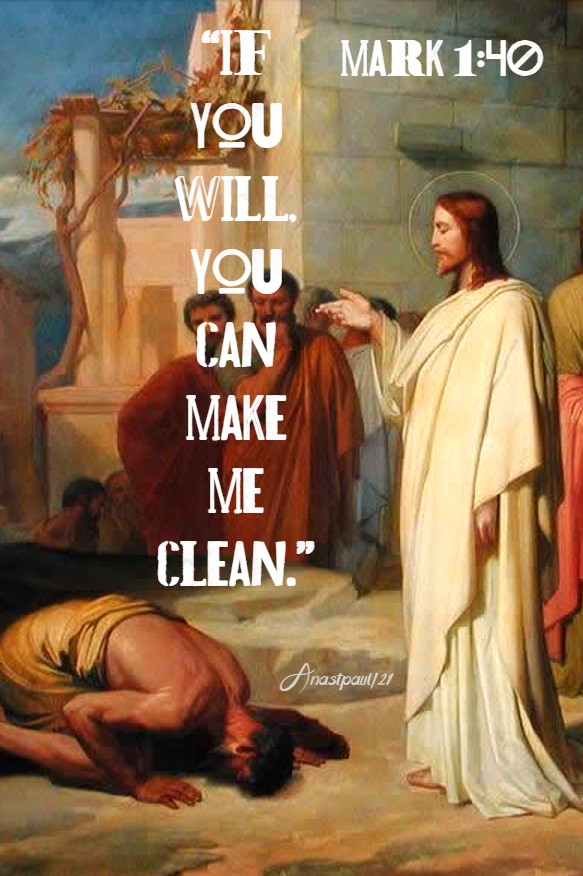
“If you will, you can make me clean.”
Mark 1:40
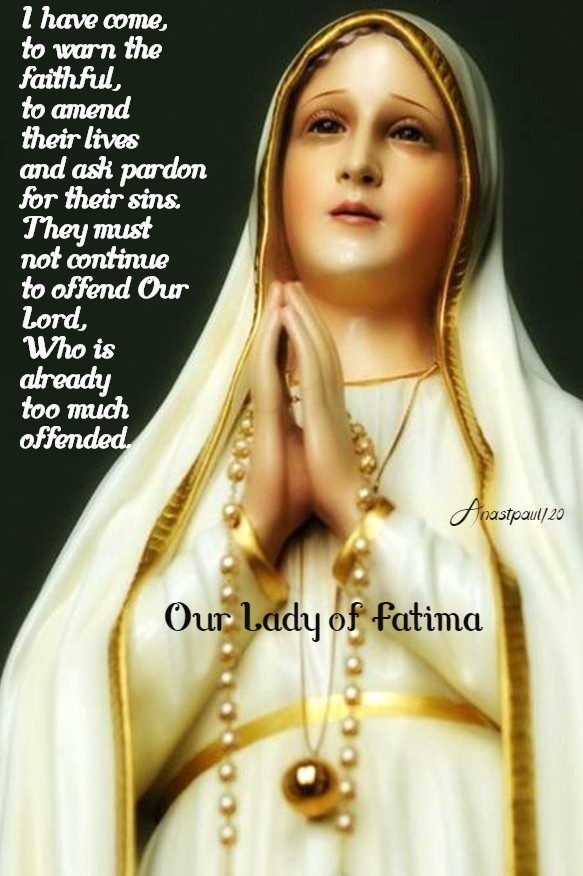
“I have come, to warn the faithful, to amend their lives and ask pardon for their sins. They must not continue to offend Our Lord, Who is already too much offended.”
Our Lady of Fatima 1917
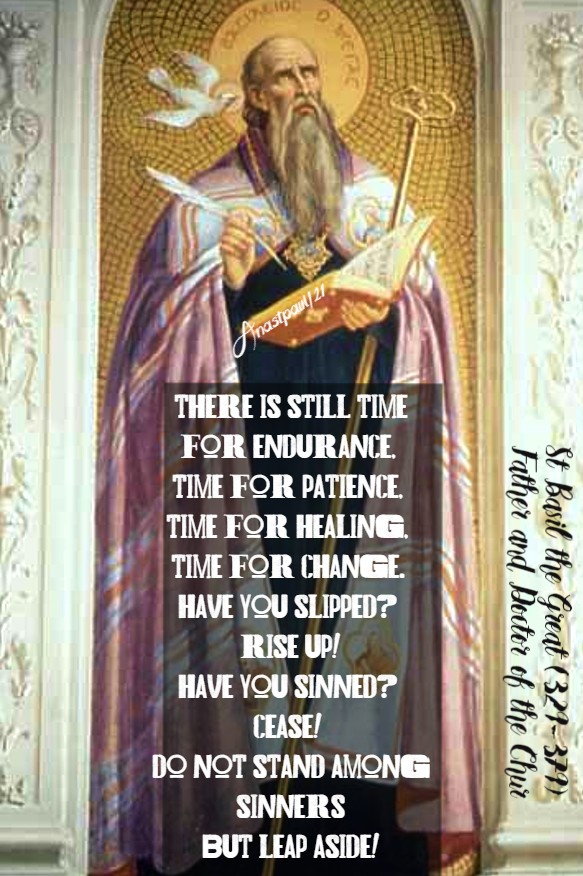
There is still time for endurance, time for patience, time for healing, time for change. Have you slipped? Rise up! Have you sinned? Cease! Do not stand among sinners but leap aside!”
St Basil the Great (329-379) Father and Doctor of the Church
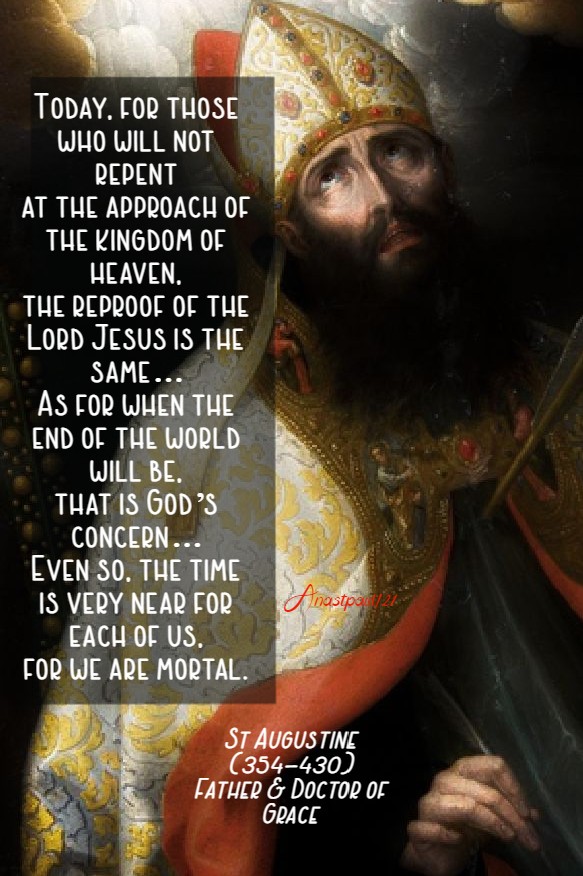
“Today, for those who will not repent at the approach of the kingdom of heaven, the reproof of the Lord Jesus is the same… As for when the end of the world will be, that is God’s concern… Even so, the time is very near for each of us, for we are mortal.”
St Augustine (354-430) Father & Doctor of Grace
“Brethren, the just man shall scarcely be saved. What, then, will become of the sinner?”
One Minute Reflection – 19 July – “Month of the Most Precious Blood” – Readings: Exodus 14: 5-18; Exodus 15: 1bc-2, 3-4, 5-6; Matthew 12: 38-42
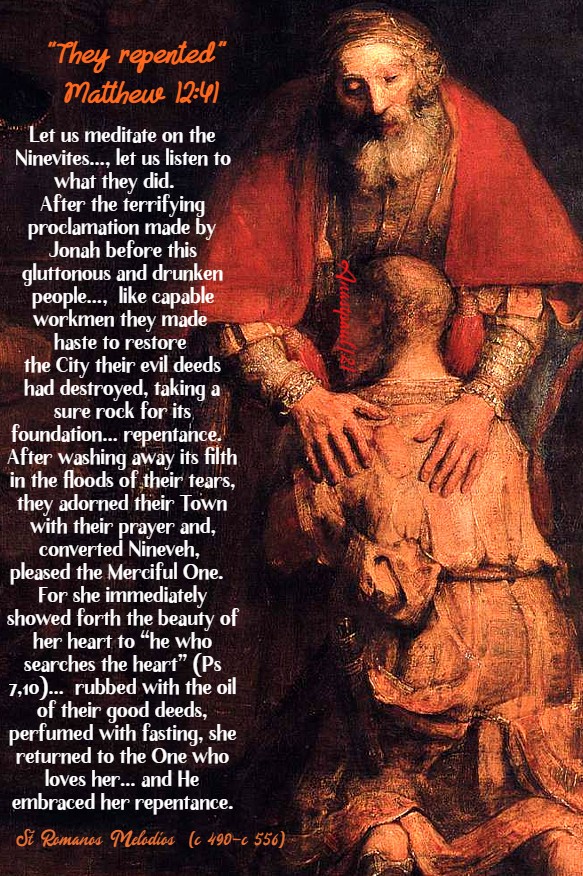
“They repented” – Matthew 12:41
REFLECTION – “Let us meditate on the Ninevites…, let us listen to what they did. After the terrifying proclamation made by Jonah before this gluttonous and drunken people…, like capable workmen they made hast to restore the City their evil deeds had destroyed, taking a sure rock for its foundation…: repentance. After washing away its filth in the floods of their tears, they adorned their Town with their prayer and, converted Nineveh, pleased the Merciful One. For she immediately showed forth the beauty of her heart to “he who searches the heart” (Ps 7,10)… rubbed with the oil of their good deeds, perfumed with fasting, she returned to the One who loves her… and He embraced her repentance. Its king, a wise man,… prepared animals and flocks as if to bring them along in dowry, saying: “O God, my Saviour, I offer everything to You, only reconcile, bring back in grace, she who prostituted herself and betrayed… Your purity, for see how, in her love, she offers her repentance to You like a gift… If I, the sovereign king, have sinned then strike me alone and take pity on all these others. But if we have all fallen short, hear the voices of all… May Your help come upon us and all fear will be dissolved. Nothing will frighten us if You receive what we are offering You – our repentance… Rebellious Nineveh throws herself at Your feet and I, a miserable king and Your wretched servant, I sit down in ashes since I am unworthy of my throne (Joh 3,6). Because I have scorned the crown, I throw dust on my head. Because I am not worthy of my purple, I have put on sackcloth and burst into lamentation. Therefore, do not despise me, cast a glance upon us, O my Saviour, and accept our repentance.” Son of the One God, O only God, those who love You, wish to carry out Your Will; protect them in Your mercy… As in former days You took pity on the Ninevites… so today, release from judgement those who sing to You and grant me forgiveness in return for my confession… Since I have no works worthy of Your glory, at least save me, my Saviour, for my words of contrition – You Who love repentance.” – St Romanos Melodios (c 490-c 556) Monk, Poet, Hymnist – Hymn « Nineveh » § 4-17; SC 99
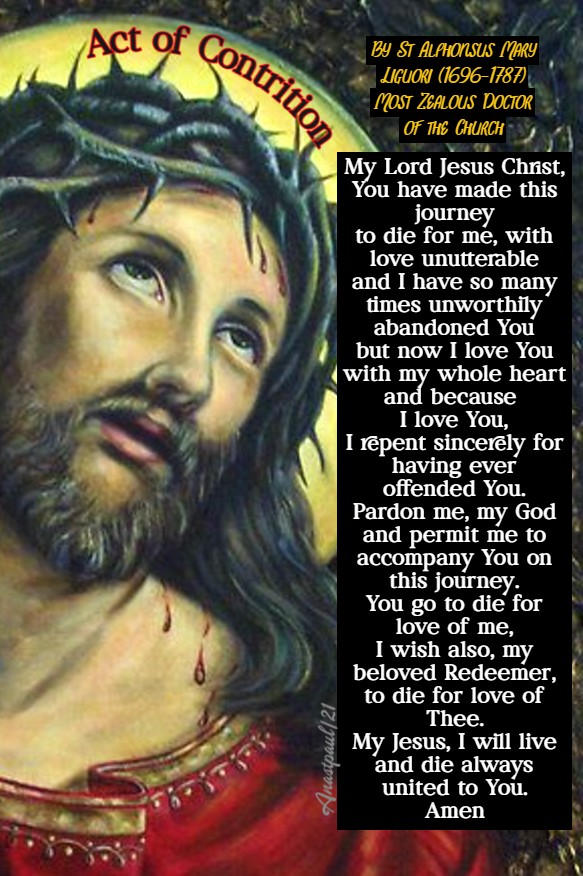
PRAYER – My Lord Jesus Christ, You have made this journey to die for me, with love unutterable and I have so many times unworthily abandoned You but now I love You with my whole heart and because I love You, I repent sincerely for having ever offended You. Pardon me, my God and permit me to accompany You on this journey. You go to die for love of me, I wish also, my beloved Redeemer, to die for love of Thee. My Jesus, I will live and die always united to You.” Amen – By St Alphonsus Mary Liguori (1696-1787) Most Zealous Doctor of the Church
Our Morning Offering – 19 July – “Month of the Most Precious Blood”
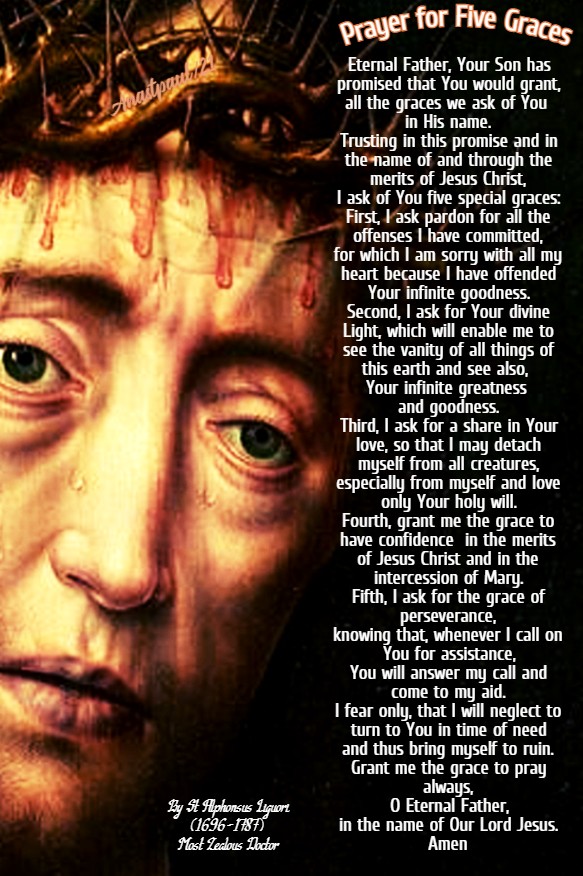
Prayer for Five Graces By St Alphonsus Liguori (1696-1787) Most Zealous Doctor
Eternal Father, Your Son has promised that You would grant, all the graces we ask of You in His name. Trusting in this promise and in the name of and through the merits of Jesus Christ, I ask of You five special graces: First, I ask pardon for all the offenses I have committed, for which I am sorry with all my heart because I have offended Your infinite goodness. Second, I ask for Your divine Light, which will enable me to see the vanity of all things of this earth and see also, Your infinite greatness and goodness. Third, I ask for a share in Your love, so that I may detach myself from all creatures, especially from myself and love only Your holy will. Fourth, grant me the grace to have confidence in the merits of Jesus Christ and in the intercession of Mary. Fifth, I ask for the grace of perseverance, knowing that, whenever I call on You for assistance, You will answer my call and come to my aid. I fear only, that I will neglect to turn to You in time of need and thus bring myself to ruin. Grant me the grace to pray always, O Eternal Father, in the name of Our Lord Jesus. Amen.
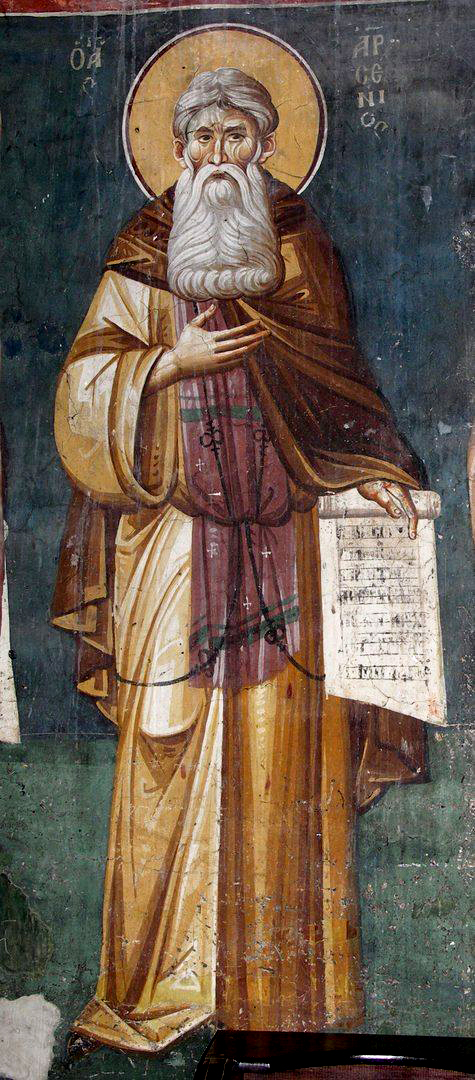
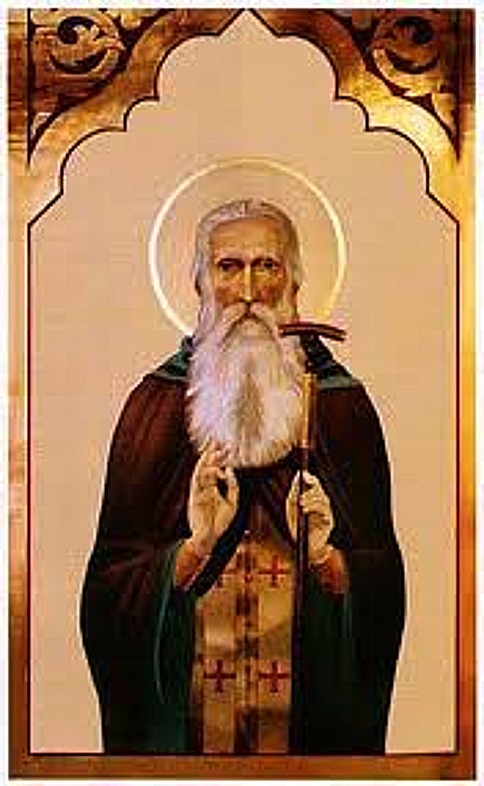
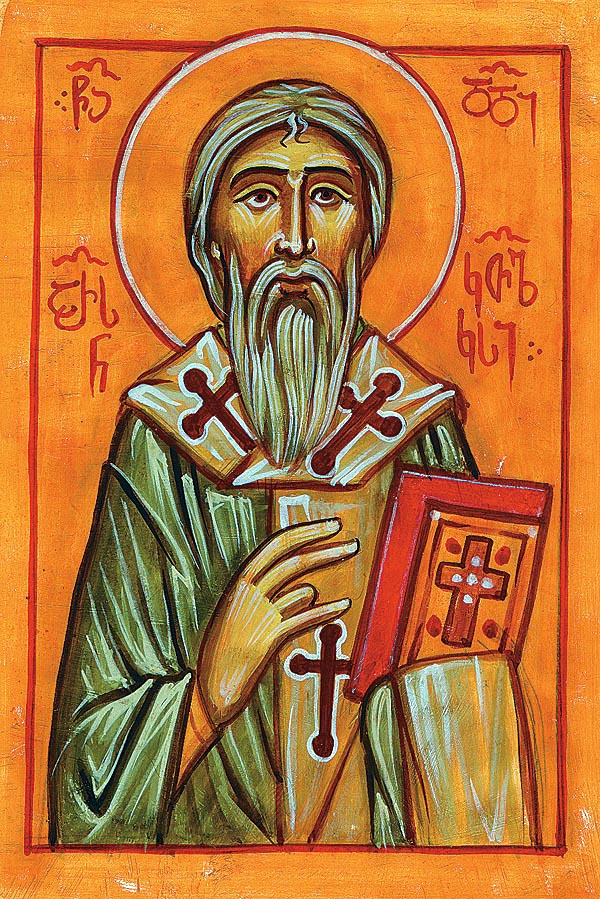
Saint of the Day – 19 July – Saint Arsenius the Great (c 354-c 449) Deacon, Hermit, Ascetic, theologian, writer. Born in s 354 in Rome and died in c 449 at Troë near Memphis, Egypt of natural causes. Arsenius one of the most highly regarded of the Desert Fathers, whose teachings were greatly influential on the development of asceticism and the contemplative life. His contemporaries so admired him as to surname him “the Great”. Also known as – Arsenius the Roman, Arsenius the Deacon.
The Roman Martyrology states of him today: “At Scete, a mountain in Eqypt, St Arsenius, a Deacon of the Roman Church, in the time of Theodosius, he retired into a wilderness, where, endowed with every virtue and shedding continual tears, he yielded his soul to God.”
Arsenius was born in Rome to a Christian, Roman senatorial family. After his parents died, his sister Afrositty was admitted to a community of virgins,and he gave all their riches to the poor, and lived an ascetic life. Arsenius became famous for his virtue and wisdom. Emperor Theodosius the Great, having requested the Emperor Gratian and Pope Damasus to find him in the West a tutor for his son Arcadius, decided on Arsenius, a man well read in Greek literature, a member of a noble Roman family and a Deacon. Upon receving the request to become the tutor of young Arcadius, he left and reached Constantinople in 383 and continued as tutor in the imperial family for eleven years, during the last three of which he also had charge of his pupil’s brother ,Honorius.
Coming one day to see his children at their studies, Theodosius found them sitting while Arsenius talked to them standing. This he would not tolerate and he ordered the teacher to sit while the pupils stood.
Upon his arrival at Court, Arsenius had been given a splendid establishment, and probably because the Emperor so desired, he lived a very great lifestyle but all the time felt a growing inclination to renounce the world. After praying for a long time to be enlightened as to what he should do, he heard a voice saying “Arsenius, flee the company of men and thou shalt be saved.” Thereupon he embarked secretly for Alexandria and hastening to the desert of Scetis, asked to be admitted among the solitaries who dwelt there.
St John the Dwarf, to whose cell he was conducted, though previously warned of the quality of his visitor, took no notice of him and left him standing by himself while he invited the rest to sit down at table. When the John was half finished with his meal, he threw down some bread before Arsenius, bidding him, with an air of indifference, to eat if he would. Arsenius meekly picked up the bread and ate, sitting on the ground. Satisfied with this proof of humility, St.John kept him under his direction. The new solitary was from the beginning most exemplary, yet unwittingly retained some of his old habits, such as sitting cross-legged or laying one foot over the other. Noticing this, the Abbot requested someone to imitate Arsenius’s posture at the next gathering of the brethren and upon his doing so, forthwith rebuked him publicly. Arsenius took the overt hint and corrected himself.
During the fifty-five years of his solitary life he was always the most meanly clad of all, thus punishing himself for his former seeming vanity in the world. In like manner, to atone for having used perfumes at Court, he never changed the water in which he moistened the palm leaves of which he made mats but only poured in fresh water upon it as it wasted, thus letting it become of bad odour.
Even while engaged in manual labour, he never relaxed in his application to prayer . At all times copious tears of devotion fell from his eyes. But what distinguished him the most ,was his disinclination to all that might interrupt his union with God. When, after a long period of searching, his place of retreat was discovered, he not only refused to return to Court and act as adviser to his former pupil the Emperor Arcadius but he would not even be his almoner to the poor and the Monasteries of the neighbourhood. He invariably denied himself to visitors, no matter what their rank and condition and left to his disciples the care of entertaining them.
His contemporaries so greatly admired him that they gave him the surname “the Great.” A biography of Arsenius was written by Theodore the Studite (750–826). Two of his writings are still extant – a guideline for monastic life titled “Instruction and Advice” and a commentary on the Gospel of Luke titled “On the Temptation of the Law.” Apart from this, many sayings attributed to St Arsenius are contained in a collection of quotations of the Saints in the Orthodoz tradition.
Saint Arsenius was a man who lived in solitude and silence, as evidenced by an adage of his: “Many times I spoke and as a result felt sorry but I never regretted my silence.”
Nuestra Señora del Milagro / Our Lady of the Miracle, Lima, Peru (1630) – 19 July and 27 November:
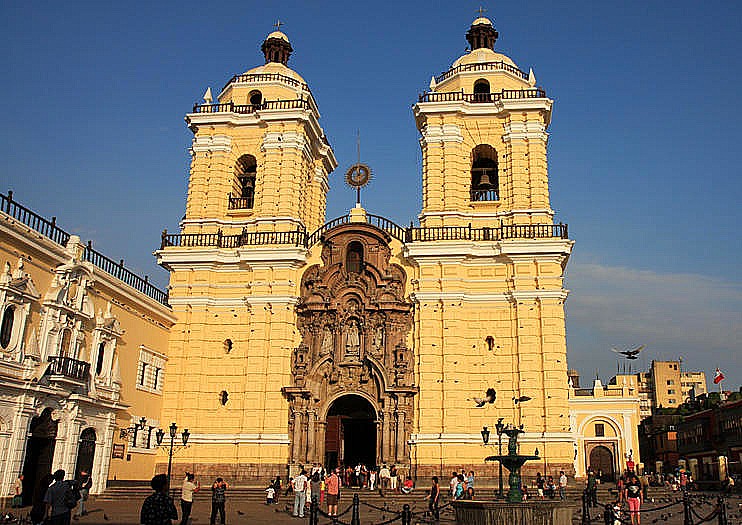
The Franciscan Friars who accompanied the Conquest to Peru hung an image of the Immaculate Conception over the door of their first Church in Lima. On missionary journeys around the region, they would take the image, “La Misionera,” with them. They were in Cusco, the Inca capital, on 23 May 1536 when, during the rebellion of Manco Inca against the two-year Spanish regime, natives trapped many Spaniards in a hut and set fire to the straw roof. La Misionera was seen by all to leave her place inside and to appear above the burning building together with Santiago (St.James the Greater). The fire ceased and all were saved. In honoUr of this event, the Spanish built the Church of the Triumph, now an adjunct of the Cusco Cathedral. Back in Lima, after the Franciscans surrounded the little Chapel with a big Monastery complex, the image over the door was gradually forgotten. By the 1600s, it had one regular devotee, a poor woman. One day she heard the Virgin speak: “You alone, daughter, among all the people here, visit me and pray to me. One day I will repay you.” After the woman told saintly Brother Juan Gomez, he often remarked, “Lima does not recognise the great good it has in this miraculous image, but soon it will know.”
On 27 November 1630, when most of the people of Lima were attending a bullfight in the main plaza, a violent earthquake struck the City. All were terrified, for it seemed certain that they would perish. But those near the Franciscan Church saw the image of Our Lady turn in the direction of the Blessed Sacrament, with her hands held in suppliant gesture. Abruptly, the earthquake stopped.
Several hours later, at vespers that evening, while the populace was leaving the Church, the image, in full view of all present, returned to its original position, when the Marian hymn Tota Pulchra was intoned. This painting shows the Virgin kneeling in prayer, with her arms crossed upon her breast, presumably interceding for Lima.
Now called “Our Lady of the Miracle,” the image was given a magnificent new Church. In 1835, the church burned down. Only the image remained intact. On J19 une 1953, the Papal Nuncio crowned the miraculous image The feast of Our Lady of the Miracle is on 27 November the anniversary of the 1630 earthquake and today the Crowning is honoured each year.
St Ambrose Autpertus Bl Antonio of Valladolid St Aurea of Cordoba St Arsenius the Great (c 354-c 449) Deacon, Hermit, Desert Father. Bl Bernhard of Rodez St Daria of Constantinople St Epaphras of Colosse St Felix of Verona
St Macrina the Younger (c 327-379) Virgin, Ascetic. With charm and grace, St Macrina ruled the roost in a family of saints. St Basil the Elder and St Emmelia, her parents, had ten children including the younger St Basil the Great (329-379) Father and Doctor of the Church, St Gregory of Nyssa (c 335–C 395) Father of the Church and St Peter of Sebaste Bishop (c 340–391). As the eldest child, Macrina exercised a formative influence on her more famous brothers and even on her mother. Her Life: https://anastpaul.com/2019/07/19/saint-of-the-day-19-july-saint-macrina-the-younger-c-327-379/
St Martin of Trier St Michael the Sabaitè Bl Pascasio of Lyon
St Romain of Ryazan St Pope Symachus St Vicente Cecilia Gallardo — Martyrs of Meros – 3 saints: Three Christians tortured and martyred together in the persecutions of emperor Julian the Apostate and governor Almachio. We know nothing else about them but the names – Macedoniuis, Tatian and Theodule. They were burned to death on an iron grill in Meros, Phrygia (in modern Turkey).
Martyrs of China: 3 Beati Elisabeth Qin Bianshi Elisabeth Ioannes Baptista Zhu Wurui Simon Qin Chunfu
Thought for the Day – 18 July – Meditations with Antonio Cardinal Bacci (1881-1971)
Intimacy with Jesus
“The union of love which should exist between Jesus and ourselves, is modelled on the mysterious union between Jesus and His Heavenly Father.
(1) This intimacy between ourselves and Jesus should be, first of all, in the mind. Our thoughts will be good when we think like God and with the mind of Jesus, “Who is the true light that enlightens every man who comes into the world” (Jn 1:9). If we stray away from that light, darkness overwhelms us, even as it pervaded the earth during the agony of Jesus Christ. Our intelligence is a ray of light which comes from God, we should take care not to allow this ray to be separated from its divine source. This heavenly ray always shone on the faces of the saints because they were clean of heart and close to God. That is how we should all be.
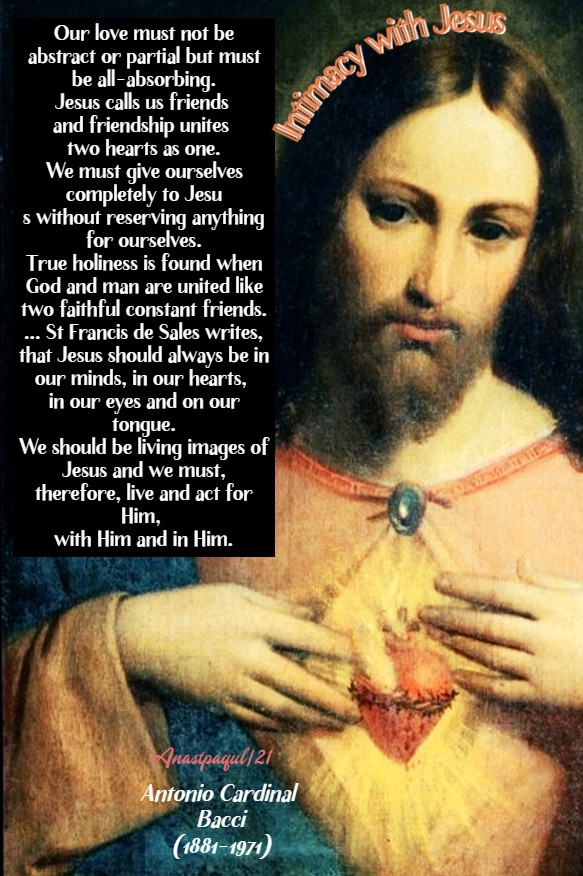
(2) In the second place, we should be united intimately with Jesus in our sentiments. “Have this mind in you which was also in Jesus Christ” (Phil 2:5) says St Paul. Our love must not be abstract or partial but must be all-absorbing. Jesus calls us friends and friendship unites two hearts as one. We must give ourselves completely to Jesus without reserving anything for ourselves. True holiness is found when God and man are united like two faithful constant friends.
(3) In the third place, there must be intimacy in action. It is not possible for a man who truly loves God to do anything which would offend Him. Jesus compares the love which we should have for Him with the love which He has for His Heavenly Father, so we should model our lives continuously on the life of Jesus. Jesus must work in us, as He did in St Paul and all the Saints.
St Francis de Sales writes, that Jesus should always be in our minds, in our hearts, in our eyes and on our tongue. We should be living images of Jesus and we must, therefore, live and act for Him, with Him and in Him.”
Quote/s of the Day – 18 July – “Month of the Most Precious Blood” – Readings: Jeremiah 23: 1-6; Psalms 23: 1-3, 3-4, 5, 6 (1); Ephesians 2: 13-18 Gospel: Mark 6: 30-34
“Come away by yourselves , o a deserted place and rest awhile”
Mark 6:31
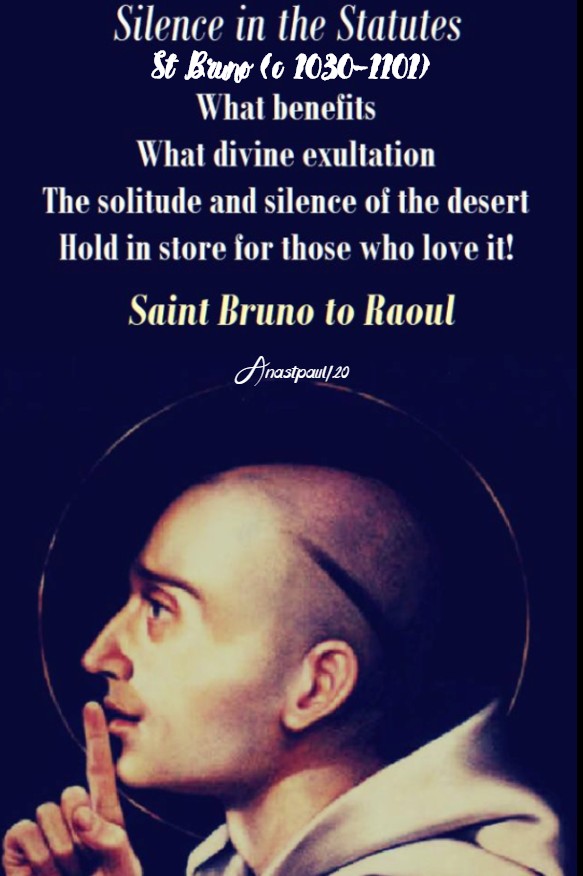
“What benefits What divine exultation The solitude and silence of the desert Hold in store for those who love it!”
St Bruno (c 1030-1101)
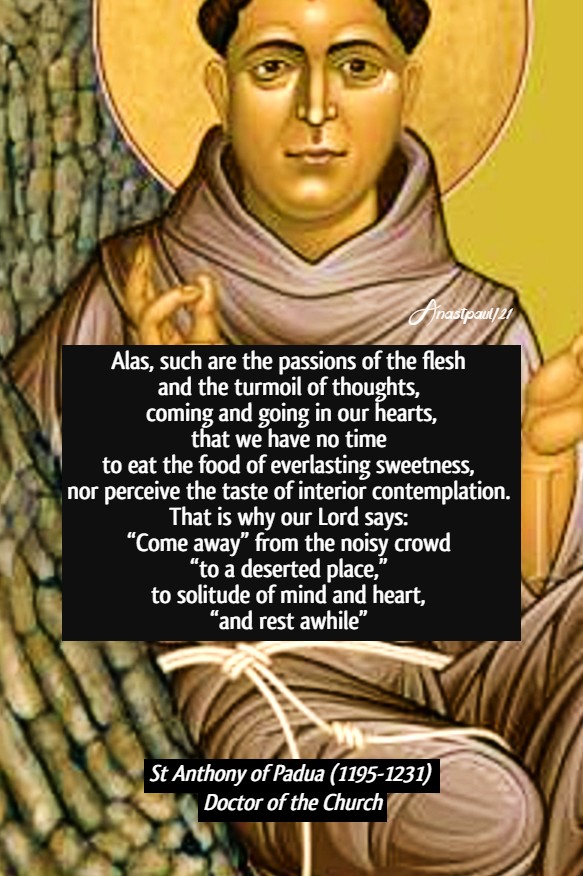
“Alas, such are the passions of the flesh and the turmoil of thoughts, coming and going in our hearts, that we have no time to eat the food of everlasting sweetness, nor perceive the taste of interior contemplation. That is why our Lord says: “Come away” from the noisy crowd “to a deserted place,” to solitude of mind and heart, “and rest awhile.”
St Anthony of Padua (1195-1231) Doctor of the Church
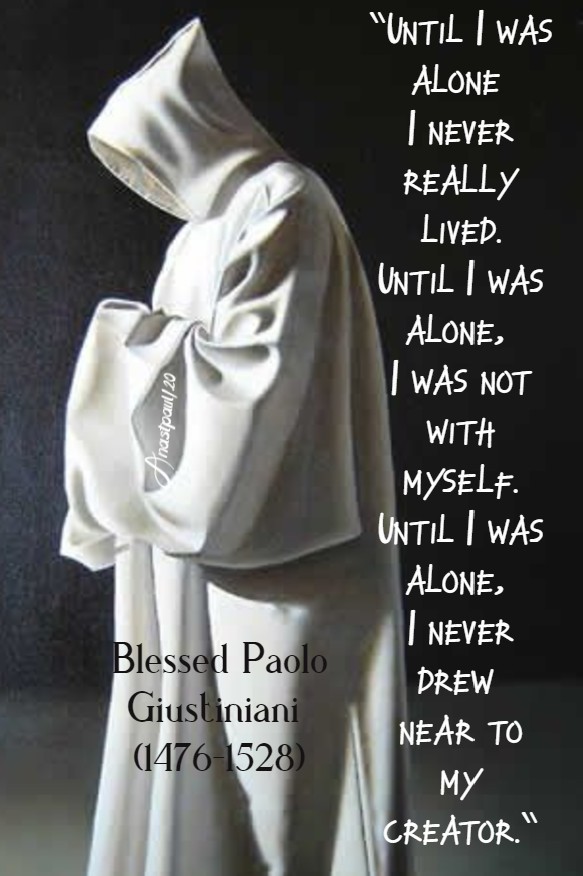
“Until I was alone I never really lived. Until I was alone, I was not with myself. Until I was alone, I never drew near to my creator.”
Bl Paolo Giustiniani (1476-1528)
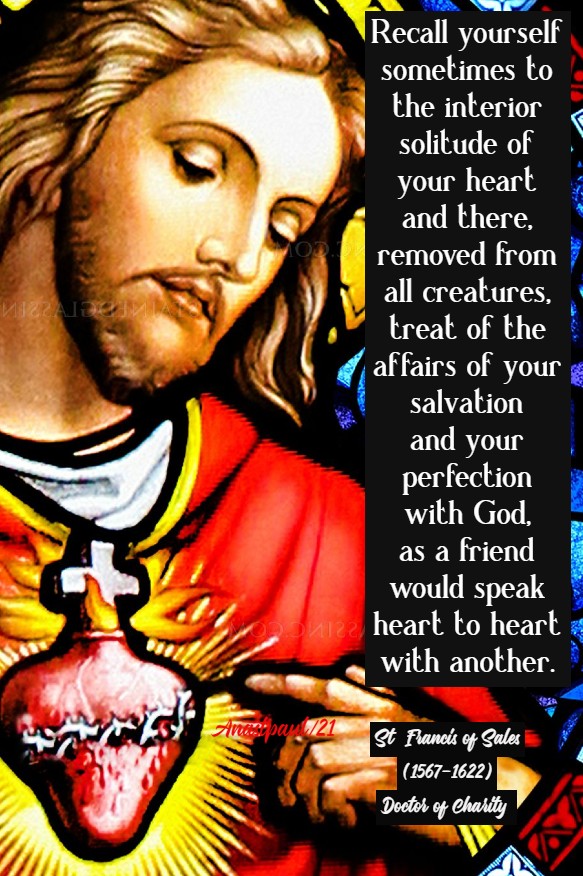
“Recall yourself sometimes to the interior solitude of your heart and there, removed from all creatures, treat of the affairs of your salvation and your perfection with God, as a friend would speak heart to heart with another.”
St Francis of Sales (1567-1622) Doctor of Charity
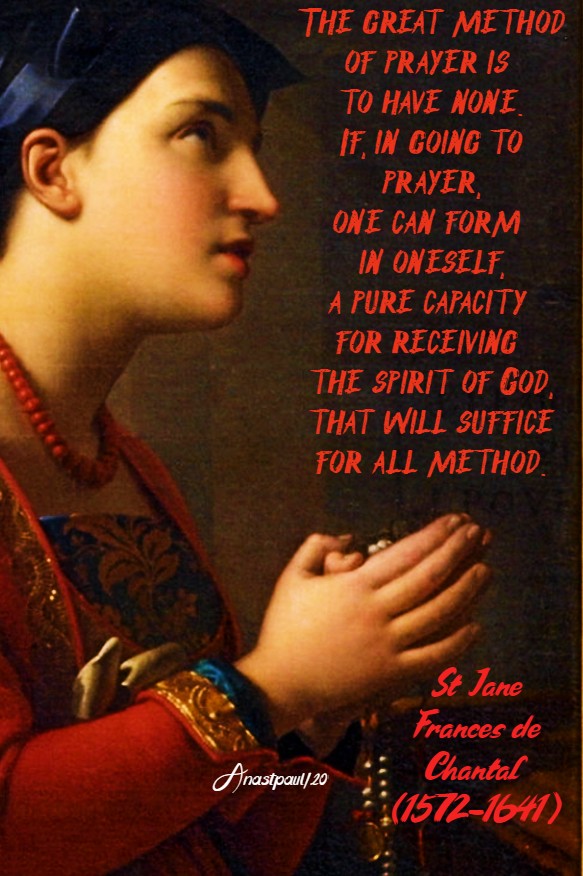
“The great method of prayer is to have none. If, in going to prayer, one can form in oneself, a pure capacity for receiving the spirit of God, that will suffice for all method.”
One Minute Reflection – 18 July – “Month of the Most Precious Blood” – Readings: Jeremiah 23: 1-6; Psalms 23: 1-3, 3-4, 5, 6 (1); Ephesians 2: 13-18 Gospel: Mark 6: 30-34
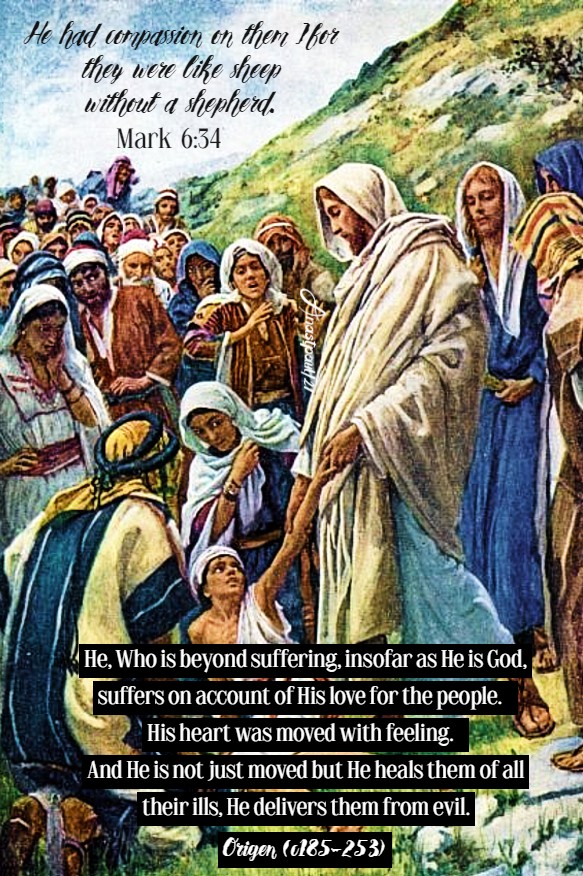
“He had compassion on them for they were like sheep without a shepherd… ” – Mark 6:34
REFLECTION – “Jesus, God’s Word, was in Judaea. Following the news of the prophet John the Baptist’s murder, He went by boat – symbol of His body – to a desert place apart. In this desert place Jesus was “apart” because His word was set aside there and His teaching went against the customs and traditions of the Gentiles. But then the crowds from the Gentile territories, hearing that He, Who is the Word of God, had come to dwell in their desert…, came to follow Him, leaving their towns behind, that is to say, each of them abandoning the superstitious customs of their native land and adhering to Christ’s law… Jesus had come out to meet them since they were unable to come to Him, mingling with “those outside” (Mk 4,11) He led them within.
This crowd of those outside, that He went to meet, is very great. Shedding the light of His Presence upon it, He looked round at it and, seeing what sort of people were surrounding Him, he found them even more worthy of compassion. He, Who is beyond suffering, insofar as He is God, suffers on account of His love for the people. His heart was moved with feeling. And He is not just moved but He heals them of all their ills, He delivers them from evil.” – Origen (c185-253), Priest, Theologian, Exegist, Writer, Apologist, Father – Commentary on St. Matthew, 10,23
PRAYER – Be gracious, Lord, to us who serve You and in Your kindness increase Your gifts of grace within us, so that fervent in faith, hope and love, we may be ever on the watch and persevere in doing what You command. Guard, protect and inspire our own Shepherds, our Priests who serve Your people, keep them faithful, loyal and prayerful. May our Mother, the most Holy and Pure Blessed Virgin Mary, keep our Priests and all of us at her side. Through our Lord Jesus Christ, one God with Holy Spirit, forever and ever, amen.
Our Morning Offering – 18 July – “Month of the Most Precious Blood”
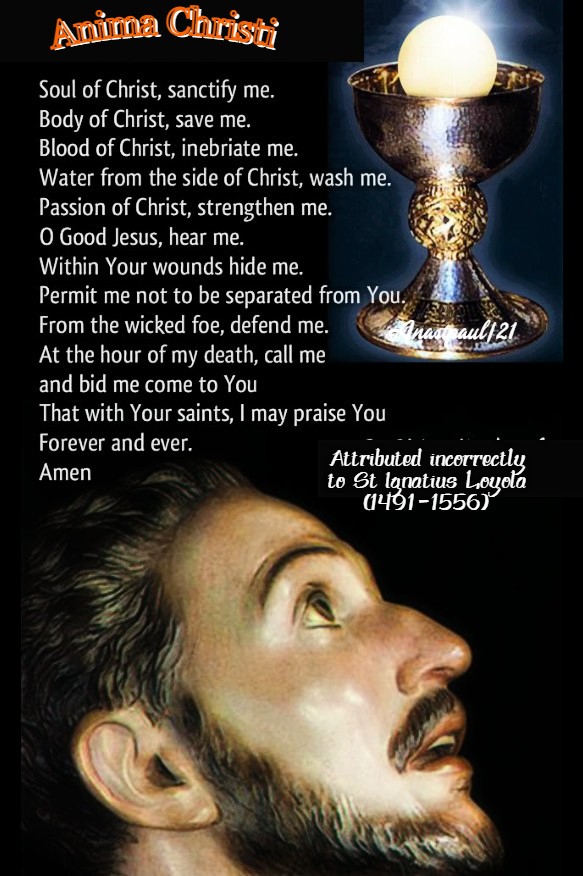
Anima Christi
Soul of Christ, sanctify me Body of Christ, save me Blood of Christ, inebriate me Water from the side of Christ, wash me Passion of Christ, strengthen me Good Jesus, hear me Within Your wounds, shelter me from turning away, keep me From the evil one, protect me At the hour of my death, call me Into Your presence lead me to praise You with all Your saints Forever and ever, Amen
For many years the Anima Christi was popularly believed to have been composed by Saint Ignatius Loyola (1491-1556) , as he puts it at the beginning of his Spiritual Exercises and often refers to it. In the first edition of the Spiritual Exercises Ignatius merely mentions it, evidently supposing that the reader would know it. In later editions, it was printed in full. It was by assuming that everything in the book was written by Ignatius that it came to be looked upon as his composition. On this account the prayer is sometimes referred to as the Aspirations of St. Ignatius Loyola and so my image shows St Ignatius at prayer.
However, the prayer actually dates to the early fourteenth century and was possibly written by Pope John XXII but its authorship remains uncertain. It has been found in a number of prayer books printed during the youth of Ignatius and is in manuscripts which were written a hundred years before his birth. The English hymnologist James Mearns found it in a manuscript of the British Museum which dates to about 1370. In the library of Avignon there is preserved a prayer book of Cardinal Pierre de Luxembourg (died 1387), which contains the prayer in practically the same form as we have it today. It has also been found inscribed on one of the gates of the Alcázar of Seville, which dates back to the time of Pedro the Cruel (1350–1369).
The invocations in the prayer have rich associations with Catholic concepts that relate to the Eucharist (Body and Blood of Christ), Baptism (water) and the Passion of Jesus (Precious Blood and Holy Wounds).
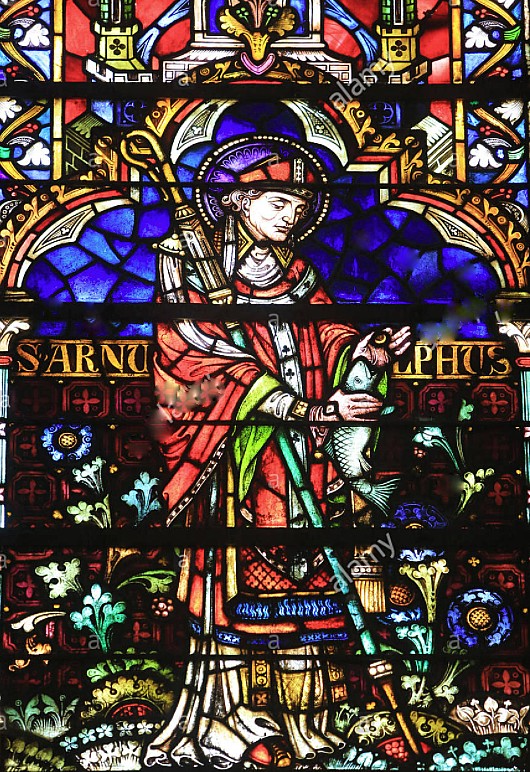
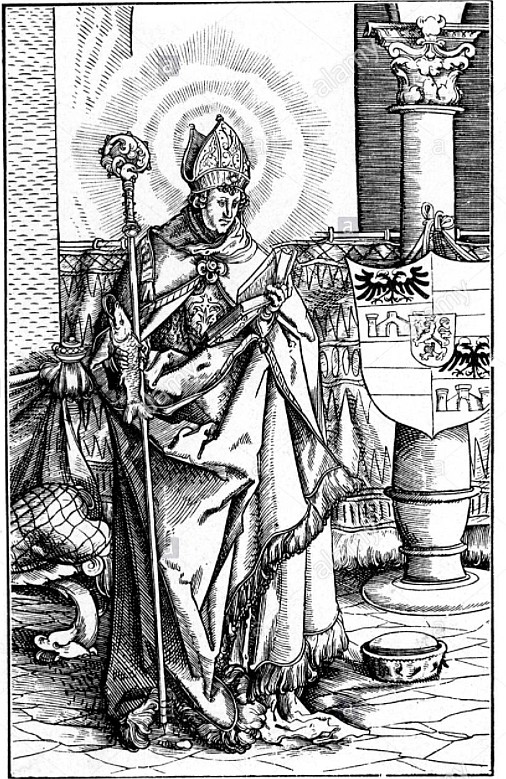
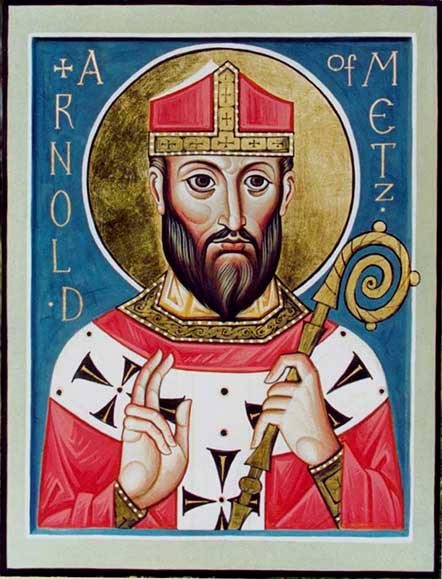
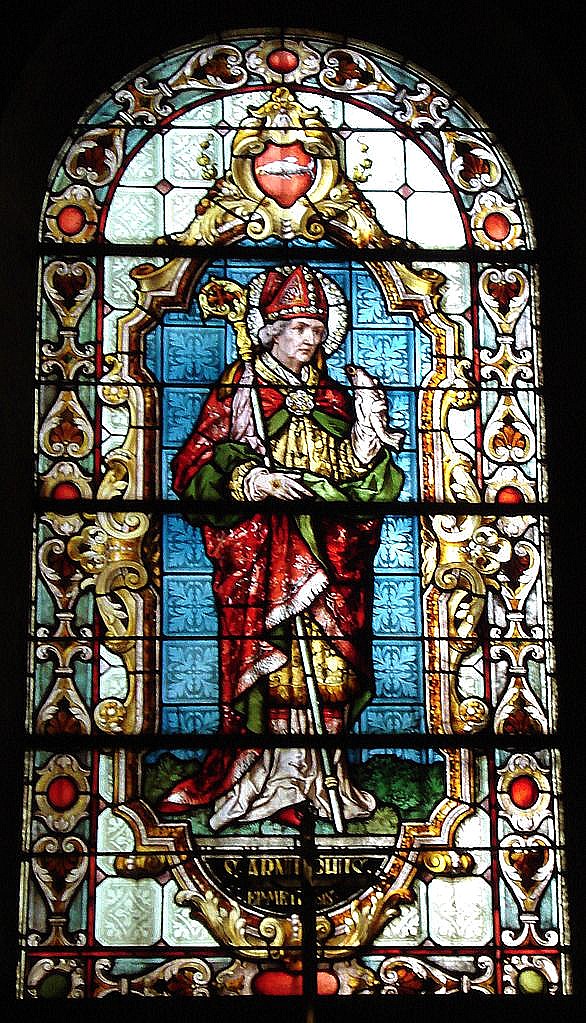
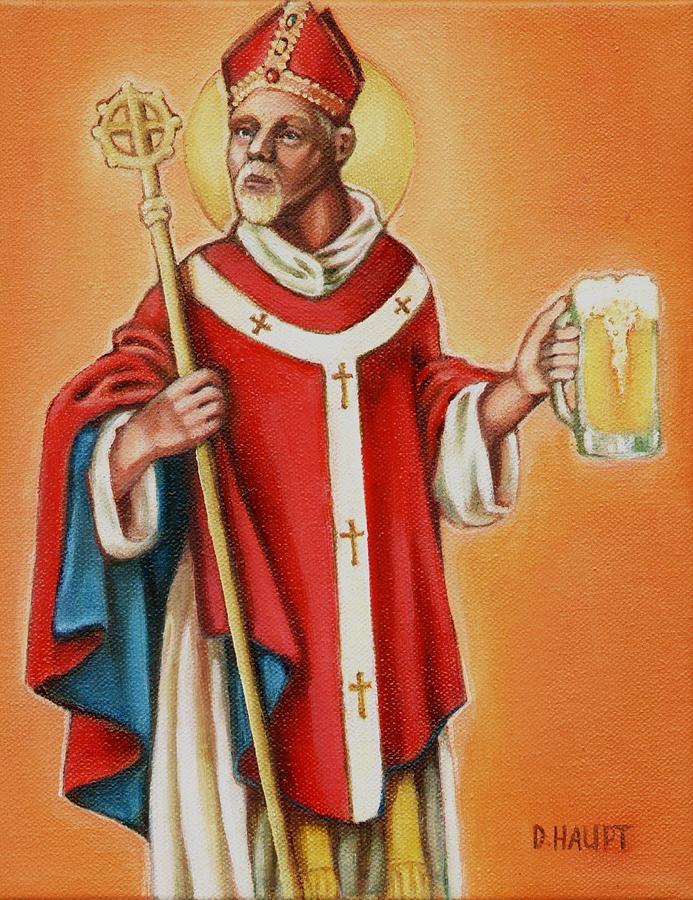
Saint of the Day – 18 July – Saint Arnulf of Metz (c 580-640) Bishop of Metz, France, Monk, miracle-worker, widower and father. Born in c 580 at Lay-Saint-Christophe, France and died in c 640 near Remiremont , France. Also known as – Arnold, Arnoul. Patronage – of Brewers.
The Roman Martyrology states of him today: “At Metz in France, St Arnulf, a Bishop illustrious for holiness and the gift of miracles. He chose an eremitical life and ended his blessed career in peace.”
Arnulf’s parents belonged to a distinguished Frankish family and lived in the eastern section of the kingdom founded by Clovis.
In the school where Arnulf was placed as a boy, he excelled through his talent and his good behaviour. According to the custom of the age, he was sent in due time to the Court of Theodebert II, King of Austrasia (595-612), to be initiated in the various branches of the government. Under the guidance of Gundulf, the Mayor of the Palace, he soon became so proficient that he was placed on the regular list of Royal Officers and among the first of the King’s ministers. He distinguished himself both as a military commander as well as in the civil administration and at one time, he had six distinct Provinces under his care.
In due course, Arnulf was married to a Frankish woman of noble lineage, by whom he had two sons – Anseghisel and Clodulf. While Arnulf was enjoying worldly emoluments and honours, he did not forget higher and spiritual things. His thoughts often dwelt on monasteries and with his friend Romaricus, also an Officer of the Court, he planned to make a pilgrimage to the Abbey of Lérins, evidently for the purpose of devoting his life to God.
However, in the meantime, the Episcopal See of Metz became vacant. Arnulf was universally designated as a worthy candidate for the office and he was Consecrated Bishop of that See around 611, before this he had become a widower. In his new position he set the example of a virtuous life to his community and attended to matters of ecclesiastical government. In 625 he took part in a Council held by the Frankish Bishops at Reims. With all these different activities, Arnulf still retained his station at the Court of the King, and played a prominent role in the national life of his people.
In 613, after the death of Theodebert, he, with Pepin of Landen and other nobles, called on Clothaire II, King of Neustria with a view to friendship. When, in 625, the realm of Austrasia was entrusted to the late King’s son Dagobert, Arnulf became, not only the tutor but also the chief minister, of the young King. At the time of the estrangement between the two Kings, (Clothaire II and Dagobert) in 625 Arnulf, with other Bishops and nobles, tried to bring about a reconciliation. Arnulf now dreaded the responsibilities of the episcopal office, and grew weary of Court life.
About the year 626 he obtained the appointment of a successor to the Episcopal See of Metz and he and his friend, Romaricus withdrew to a solitary place in the mountains of the Vosges. There he lived in communion with God until his death.
His remains, interred by Romaricus, were transferred about a year afterwards, by Bishop Goeric, to the Basilica of the Holy Apostles in Metz.
Miracles of St Arnulf: Arnulf was tormented by the violence that surrounded him and feared that he had played a role in the wars and murders that plagued the ruling families. Obsessed by these sins, Arnulf went to a bridge over the Moselle river. There he took off his Bishop’s ring and threw it into the river, praying to God to give him a sign of absolution by returning the ring to him. Many penitent years later, a fisherman brought to the Bishop’s kitchen a fish in the stomach of which was found the Bishop’s ring. Arnulf repaid the sign of God by immediately retiring as Bishop and becoming a hermit for the remainder of his life.
At the moment Arnulf resigned as Bishop, a fire broke out in the cellars of the Royal Palace and threatened to spread throughout the City of Metz. Arnulf, full of courage and feeling unity with the townspeople, stood before the fire and said, “If God wants me to be consumed, I am in His hands.” He then made the Sign of the Cross, at which point, the fire immediately abated.
It was July 642 and very hot, when the Parishioners of Metz, went to Remiremont to recover the remains of their former Bishop. They had little to drink and the terrain was inhospitable. At the point when the exhausted procession was about to leave Champigneulles, one of the Parishioners, Duc Notto, prayed “By his powerful intercession the Blessed Arnold will bring us what we lack.” Immediately, the small remnant of beer at the bottom of a pot multiplied, in such amounts, that the pilgrims’ thirst was quenched and they had enough to enjoy the next evening when they arrived in Metz. For this reason he is known as the Patron Saint of Brewers.
Notre-Dame-de-Bonne Délivrance /Our Lady of Good Deliverance (14th Century): 18 July Since the 1000s, the Church of Saint-Etienne-des-Grès in the old Latin Quarter of Paris had a chapel to Our Lady of Good Deliverance, where, across the centuries, pilgrims sought the Virgin’s help in their of sufferings. During the Wars of Religion and counter-Reformation, her Confraternity had 12,000 members, including the King and Queen of France. About: https://anastpaul.com/2020/07/18/saint-of-the-day-18-july-our-lady-of-good-deliverance/
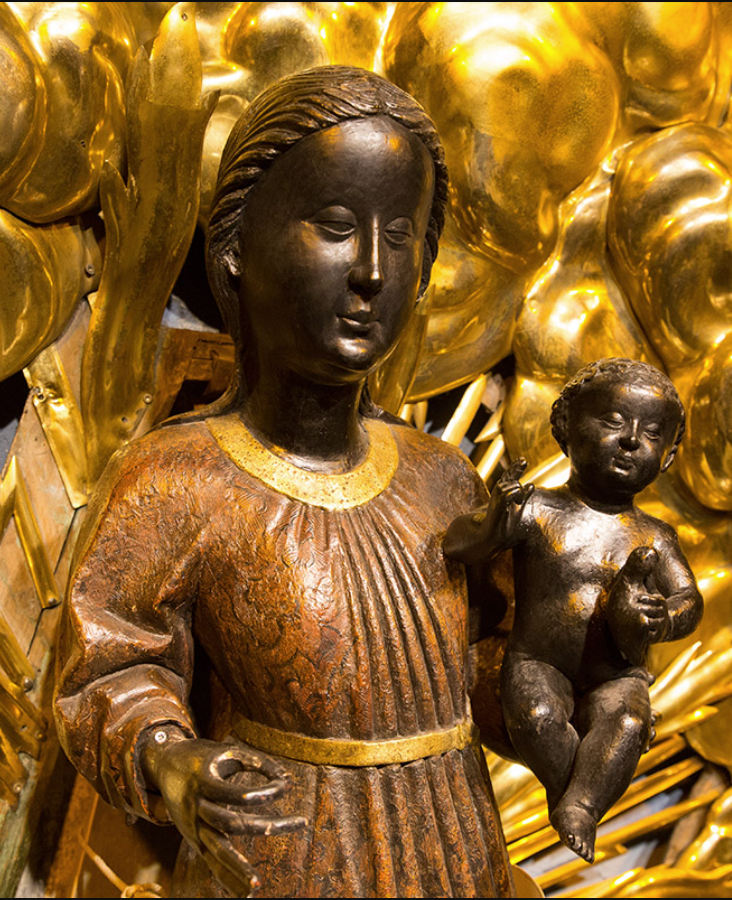
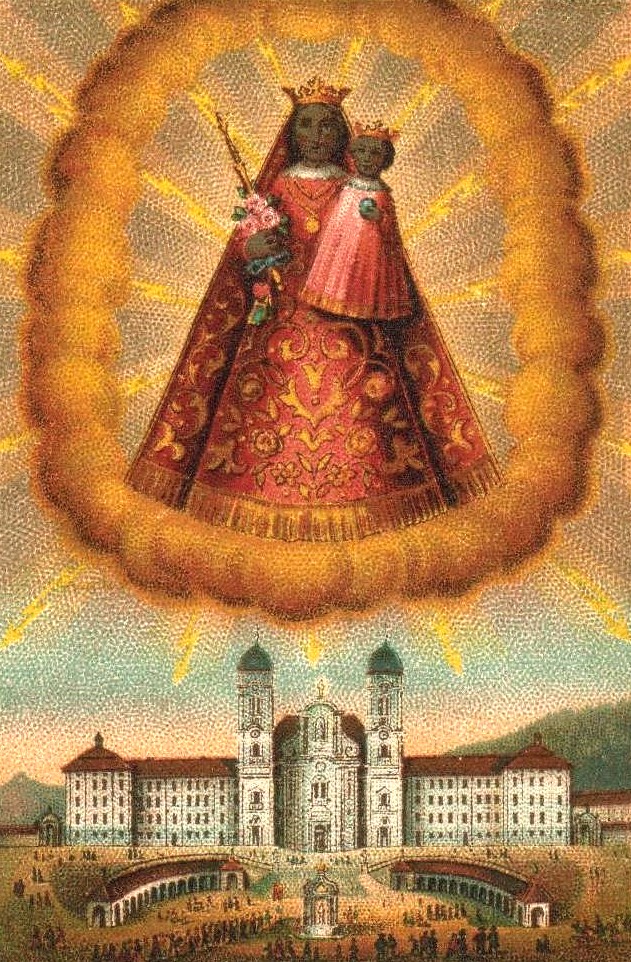
Schwarzen Madonna / Black Madonna of Einsiedeln, Schwyz, Switzerland (853) – First Sunday after Our Lady of Mount Carmel:
“Einsiedeln” means “hermitage.” It was the home of St Meinrad (c 797–861) Martyr, a Benedictine Monk who retreated to this place in the pine woods to live in solitude, with a pair of tame crows for company. Abbess Hildegarde of Zurich gave him a Statue of the Madonna for the forest Chapel built in 853, which soon became a place of pilgrimage. In 863, hoping to get his stash of pilgrim donations, two thieves murdered the Saint, who was living in poverty. The crows alerted people, who found and buried the body and executed the killers. St Meinrad’s life here: https://anastpaul.com/2021/01/21/saint-of-the-day-21-january-saint-meinrad-of-einsiedeln-osb-c-797-861-martyr/
In 948, Benedictines built a Church on the site of St Meinrad’s hermitage. On 14 September, the night before Bishop Conrad was to bless the new Church, he dreamed that Jesus Himself was blessing it. In the morning, when he began the ceremony, everyone heard a voice say, “Stop, for the Church has been Consecrated divinely.” In 1028 the first of five fires destroyed everything but the Chapel containing the Statue. These miracles increased popular devotion to the Shrine, which was repeatedly rebuilt.
Although tradition holds the present Statue to be the original, it is unlike any that remain from the Ottonian period. Carved of dark wood, the graceful, sweet-faced Madonna, her right knee slightly bent, stands a little over three feet tall, holding the Divine Child in her left arm. This is a typical late Gothic work of the mid-1400s, possibly installed after the third fire in 1465. Displayed before a great aureole of golden rays,the Statue has worn elaborate vestments in colours matching those of Priests for each liturgical season. The Feast of Our Lady of Einsiedeln is 16 July but is usually celebrated on the Sunday following. Even greater pilgrimages occur on 14 September in honour of the Church’s miraculous Consecration.
St Aemilian of Dorostorium St Alanus of Sassovivo St Alfons Tracki Blessed Angeline of Marsciano Bl Arnold of Amiens St Arnold of Arnoldsweiler St Arnoul the Martyr St Arnulf of Metz (c 580-640) Bishop St Athanasius of Clysma Bl Bernard de Arenis Bl Bertha de Marbais
St Goneri of Treguier St Gundenis of Carthage Bl Herveus Bl Jean-Baptiste de Bruxelles St Marina of Ourense St Maternus of Milan St Minnborinus St Pambo of the Nitrian Desert St Philastrius of Brescia St Rufillus of Forlimpopoli St Scariberga of Yvelines
St Theneva St Theodosia of Constantinople — Martyrs of Silistria – 7 saints: Seven Christians who were martyred together. No details about them have survived but the names – Bassus, Donata, Justus, Marinus, Maximus, Paulus and Secunda. They were martyred in Silistria (Durostorum), Moesia (in modern Bulgaria), date unknown.
Martyrs of Tivoli – 8 saints: A widow, Symphorosa and her seven sons ( Crescens, Eugene, Julian, Justin, Nemesius, Primitivus and Stracteus) martyred in Tivoli, Italy in the 2nd-century persecutions of Hadrian.
Thought for the Day – 17 July – Meditations with Antonio Cardinal Bacci (1881-1971)
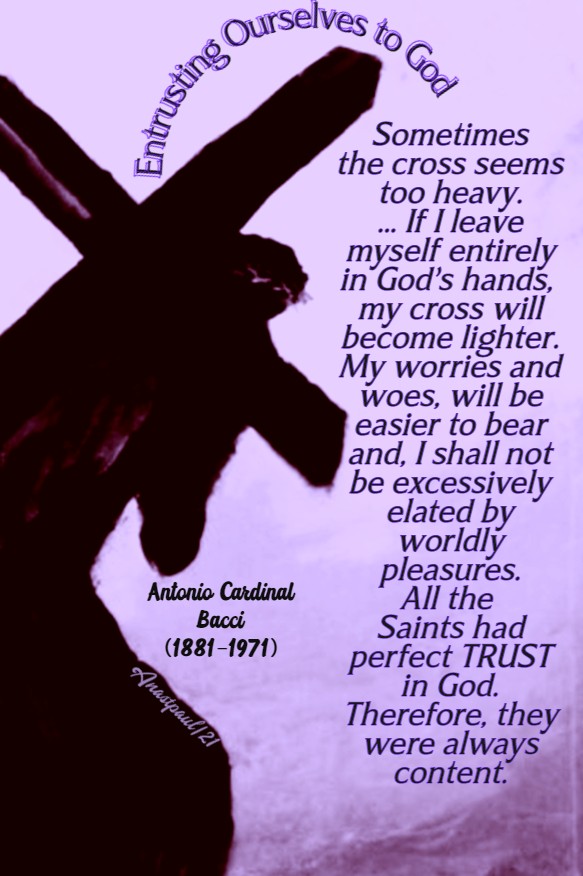
Entrusting Ourselves to God
“Sometimes the cross seems too heavy. Physical or moral sufferings may give rise to a feeling of rebellion, or temptations may grow so strong that I feel overwhelmed and unable to experiece the supernatural influence of God’s grace.
At such times, I should remember the words of Jesus: “Come to me, all you who labour and are burdened and I will give you rest. Take my yoke upon you and learn from me, for I am meek and humble of heart and you will find rest for your souls. For my yoke is easy and my burden light” (Mt 11:28).
If I leave myself entirely in God’s hands, my cross will become lighter. My worries and woes, will be easier to bear and, I shall not be excessively elated by worldly pleasures.
All the Saints had perfect TRUST in God. Therefore, they were always content.”
Quote/s of the Day – 17July – “Month of the Most Precious Blood” – Readings: Exodus 12: 37-42; Psalms 136: 1 and 23-24, 10-12, 13-15; Matthew 12: 14-21
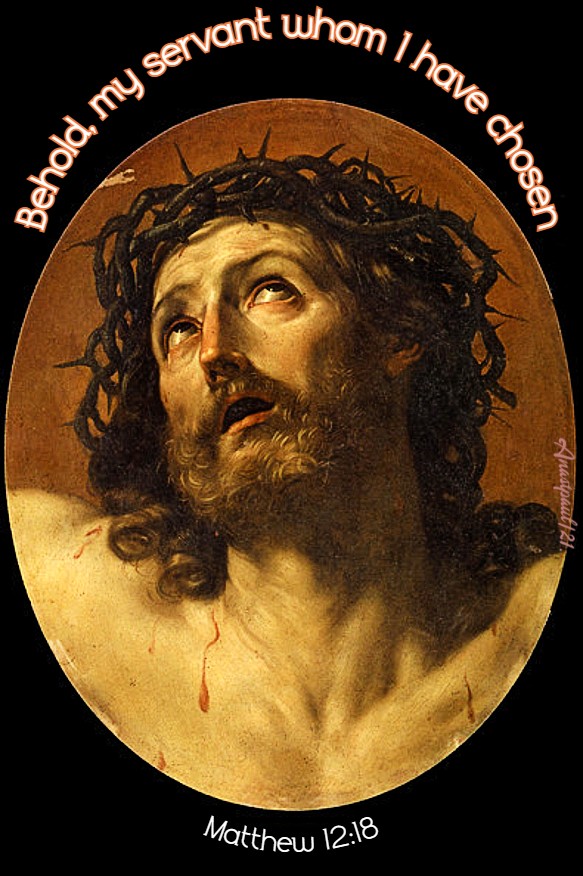
“Behold, my servant whom I have chosen”
Matthew 12:18
“He cries out, saying: See, I am with you all the days of this age. He is Himself the shepherd, the high priest, the way and the door, and has become all things at once for us.”
St Athanasius (297-373) Father & Doctor of the Church
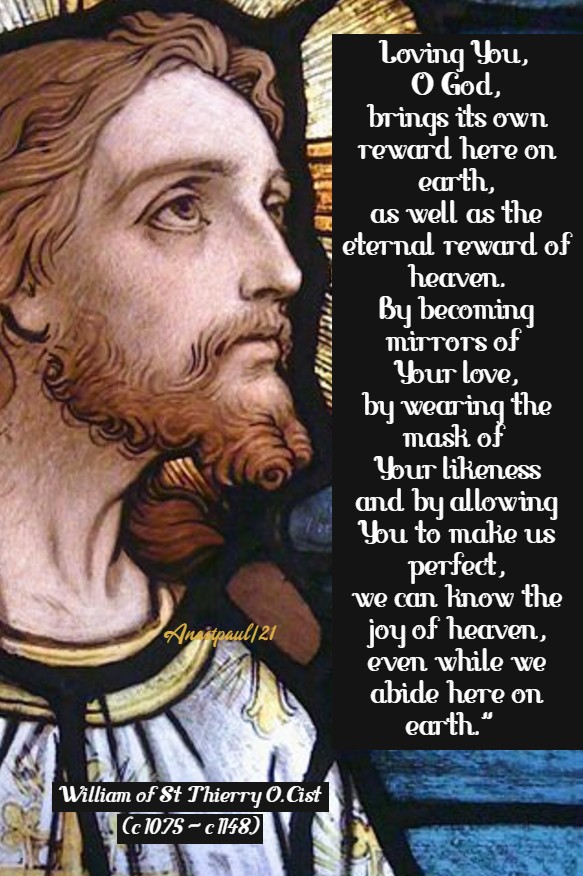
“Loving You, O God, brings its own reward here on earth, as well as the eternal reward of heaven. By becoming mirrors of Your love, by wearing the mask of Your likeness and by allowing You to make us perfect, we can know the joy of heaven, even while we abide here on earth.”
William of St Thierry O.Cist (c 1075 – c 1148)
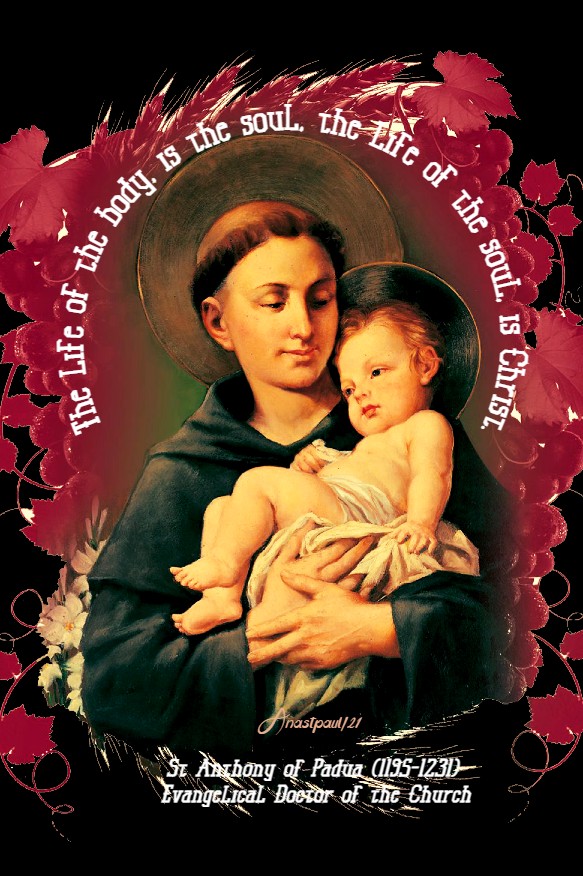
“The life of the body, is the soul, the life of the soul, is Christ.”
St Anthony of Padua (1195-1231) Evangelical Doctor of the Church
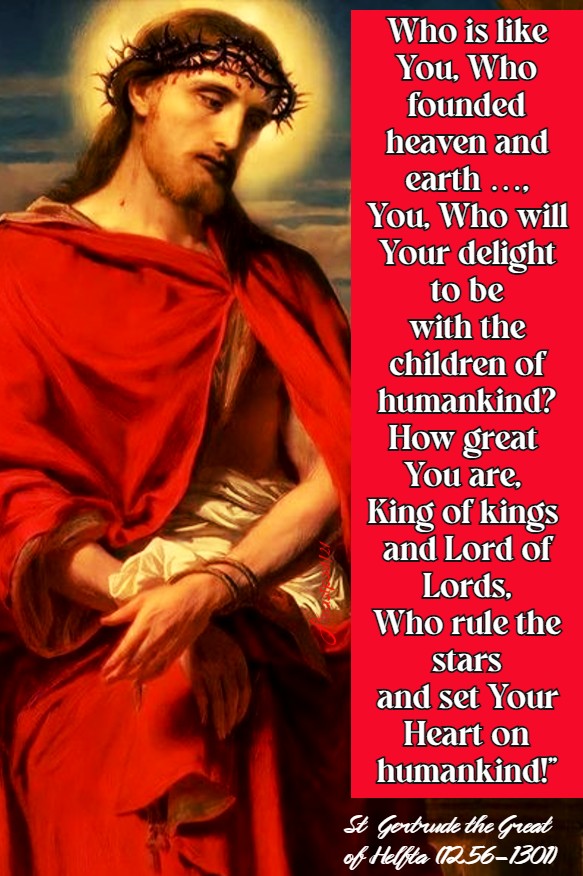
“Who is like You, Who founded heaven and earth …, You, Who will Your delight to be with the children of humankind? How great You are, King of kings and Lord of Lords, Who rule the stars and set Your Heart on humankind!”
St Gertrude the Great of Helfta (1256-1301)
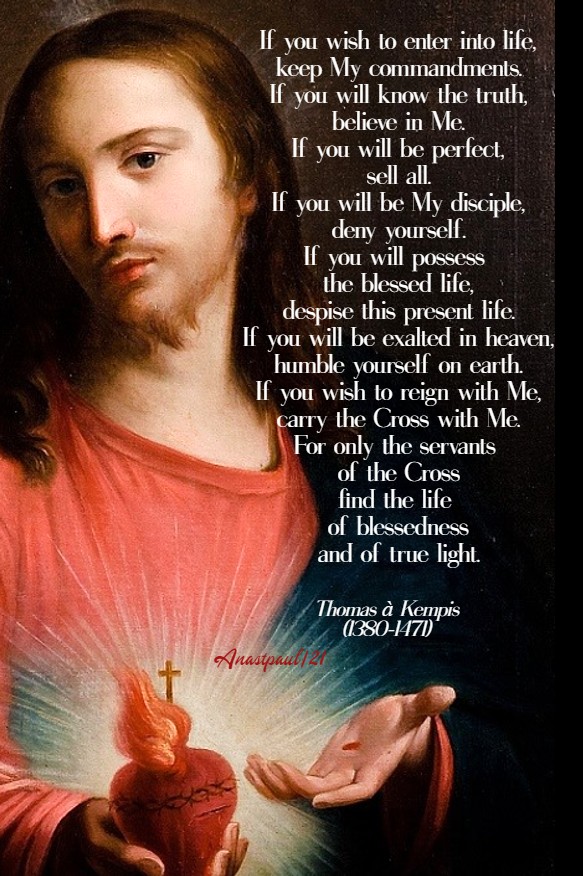
“If you wish to enter into life, keep My commandments. If you will know the truth, believe in Me. If you will be perfect, sell all. If you will be My disciple, deny yourself. If you will possess the blessed life, despise this present life. If you will be exalted in heaven, humble yourself on earth. If you wish to reign with Me, carry the Cross with Me. For only the servants of the Cross find the life of blessedness and of true light.”
Thomas à Kempis (1380-1471) The Imitation of Christ Chapter 56
One Minute Reflection – 17July – “Month of the Most Precious Blood” – Readings: Exodus 12: 37-42; Psalms 136: 1 and 23-24, 10-12, 13-15; Matthew 12: 14-21
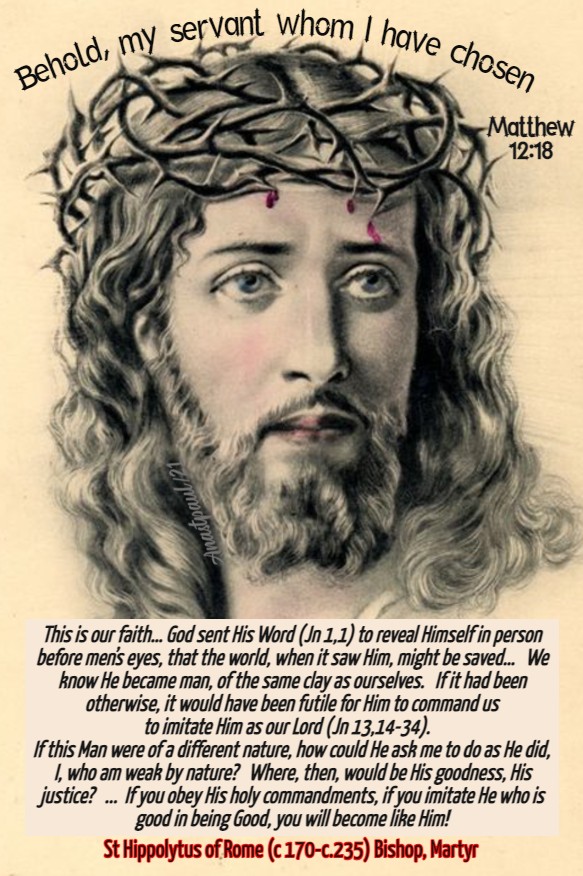
“Behold, my servant whom I have chosen” – Matthew 12:18
REFLECTION – “This is our faith… God sent His Word (Jn 1,1) to reveal Himself in person before men’s eyes, that the world, when it saw Him, might be saved… We know He became man, of the same clay as ourselves. If it had been otherwise, it would have been futile for Him to command us to imitate Him as our Lord (Jn 13,14-34). If this Man were of a different nature, how could He ask me to do as He did, I, who am weak by nature? Where, then, would be His goodness, His justice?
To make us thoroughly understand, that He is no different from us, He desired to bear fatigue and know hunger (Jn 4,6); He did not refuse thirst or to find rest in sleep. He did not refuse suffering, He became subject to death and openly manifested His Resurrection. In all these things, He offered His own humanity as a first-fruits, so that you, in your own suffering, might not lose courage but, recognising that you, yourself, are man, might also wait for what the Father has given to Him…
Thanks to your knowledge of the true God, you will have an immortal and imperishable body like the soul itself. You will receive the Kingdom of Heaven as your inheritance because you acknowledged the King of Heaven, while you lived on earth. You will live in the presence of God, “co-heir with Christ” (Rm 8,17). You will no longer be dominated by desires, suffering and sickness because you have become divine in nature… “Christ is God above all” (cf Rm 9,5)… and has given the perfection of the new Man to the old man (Col 3,9). He called it His image from the beginning (Gn 1,27) and, through this likeness, He has shown His loving kindness for you. If you obey His holy commandments, if you imitate He who is good in being Good, you will become like Him.” – St Hippolytus of Rome (c 170-c.235) Bishop, Martyr, Theologian, Father – The Refutation of all heresies, 10, 33-34
PRAYER – Lord God, in Your wisdom You created us, by Your Providence, You rule us. Penetrate our inmost being with Your holy light so that our way of life may always be one of faithful service and childlike trust in You. Grant that by the intercession of our most Holy and Blessed Virgin Mother, we may always follow behind Your Son, obey His Words and grasp His hand, to lead us to You, Through Jesus Christ our Lord with the Holy Spirit, one God now and for all eternity, amen
Our Morning Offering – 17 July – “Month of the Most Precious Blood” –
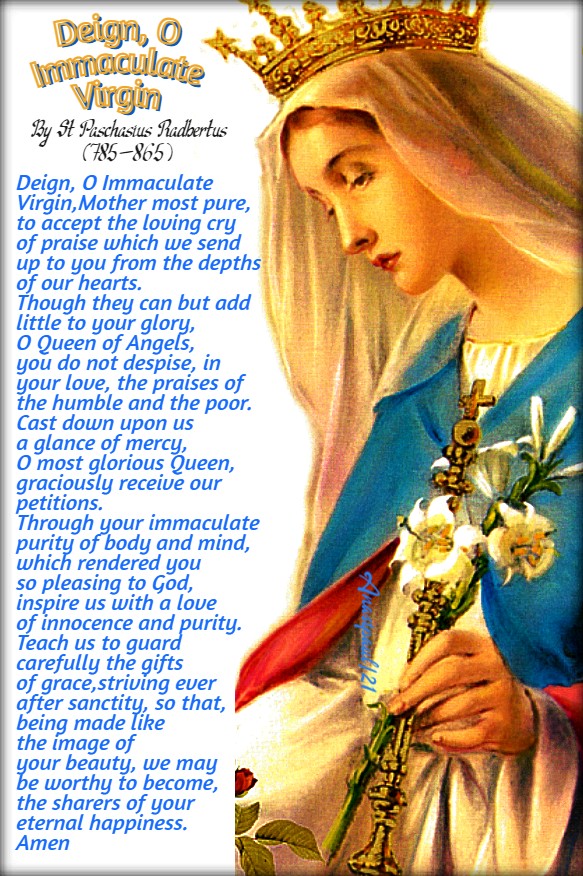
Deign, O Immaculate Virgin By St Paschasius Radbertus (785–865)
Deign, O Immaculate Virgin, Mother most pure, to accept the loving cry of praise which we send up to you from the depths of our hearts. Though they can but add little to your glory, O Queen of Angels, you do not despise, in your love, the praises of the humble and the poor. Cast down upon us a glance of mercy, O most glorious Queen, graciously receive our petitions. Through your immaculate purity of body and mind, which rendered you so pleasing to God, inspire us with a love of innocence and purity. Teach us to guard carefully the gifts of grace, striving ever after sanctity, so that, being made like the image of your beauty, we may be worthy to become, the sharers of your eternal happiness. Amen
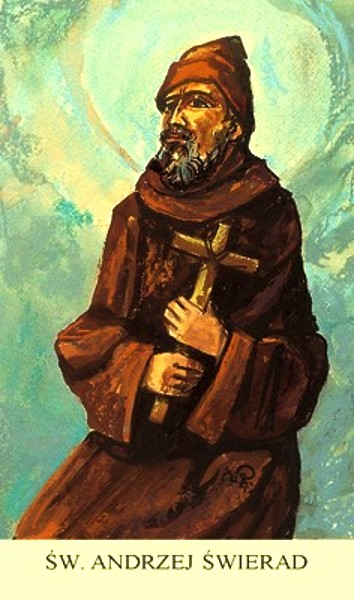
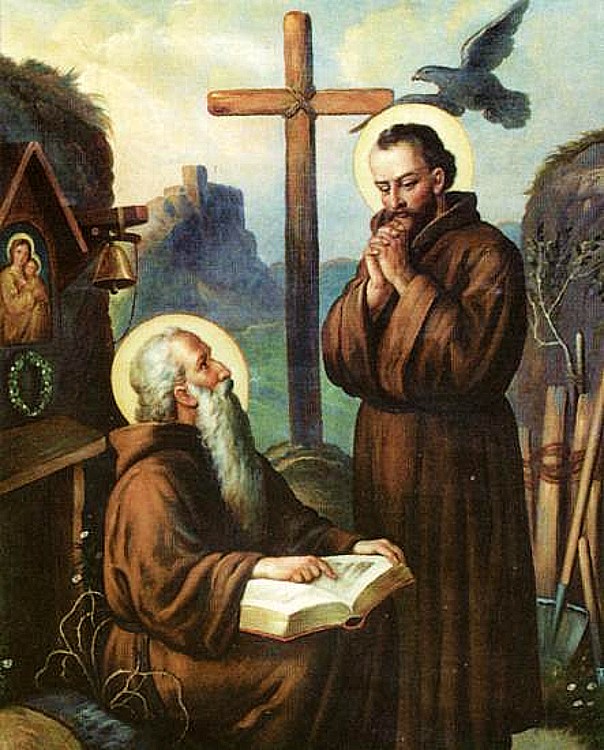
Saint of the Day – 17 July – Saint Andrew Zorard OSB (c 980 – c 1008) Hermit, Benedictine Monk, Missionary, spiritual guide, ascetic. Born in c 980 in Opatowiec, Poland and diedin c 1010 in of natural causes. Patronages – Hungary, Nitra, Diocese of Nitra, Diocese of Tarnów, St Andrew Abbey in Cleveland. Also known as – Sverad, Svorad, Swierad, Swirad, Wszechrad, Zoerardus, Zoërard, Zurawek, Zórawek.
Andrew was born around 980 in Opatowiec, a small village in Poland. A tradition in the small village of Tropie holds, that in his youth he lived near there as a Monk. At around the year 1000, when he was 20 years old, he began living as a Hermit and a Missionary, evangelising in Olawa, Silesia (modern Poland). At some time, he also travelled to northern Hungary (Slovakia).
Around the year 1003 Andrew settled in St Hippolytus Monastery on Mount. Zobor near Nitra – then part of the Kingdom of Hungary, present day Slovakia. He became a Benedictine Monk in the Abbey. He took the name “Andrew” at his profession. He became the spiritual guide of St Benedict of Skalka (Died 1012). Andrew and Benedict, with the permission of their superior Philip, later left the Monastery and became Hermits in a cave along the Váh River.
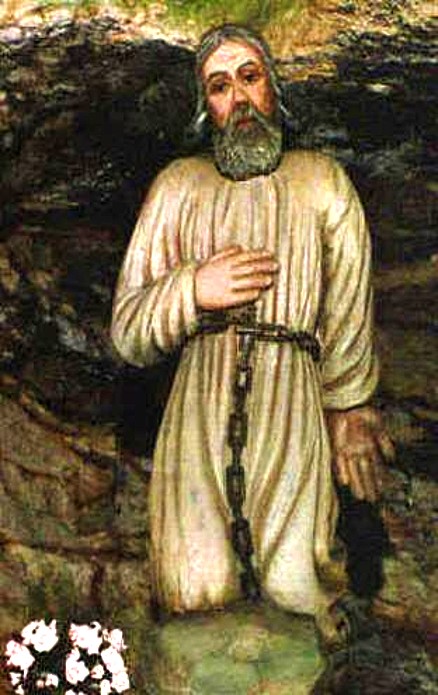
St Benedict (left) and St Andrew
Andrew died of natural causes around 1008. He practiced such severe austerities that, according to legend, the iron chain, which he wore wrapped around the belt, eventually grew into his flesh.
Benedict continued to live in the cave for three years until he was murdered by a gang of thieves looking for treasure. In 1083 Andrew’s relics were transferred to St.Emmeram’s Cathedral in Nitra where they remain to this day. A biography of Benedict and Andrew was written by Maurus of Nitra, Bishop of Pécs.
Andrew is venerated especially in Slovakia, Hungary and Poland,but also in diaspora communities of the United States. His feast day is 17 July but in some calendars he is venerated together with Benedict on 13 June.
Slovakian Postage Stamp honouring St Andrew
King Géza I of Hungary declared him one of the Patron Saints of Hungary. As early as 1064, King Géza took the first steps towards his Canonisation. His cult was officially confirmed in July 1083 by Pope Gregory VII, thanks to the Hungarian King Ladislaus I.
Madonna della Campitelli / Our Lady of Campitelli, Italy (524) – 17 July and 2 February:
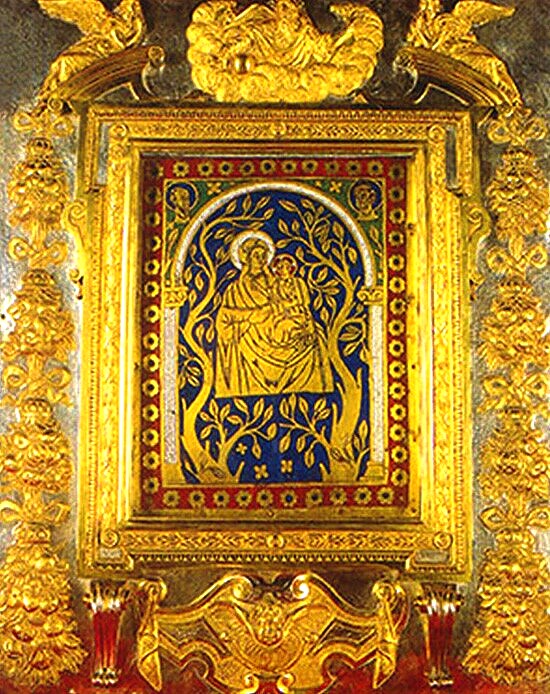
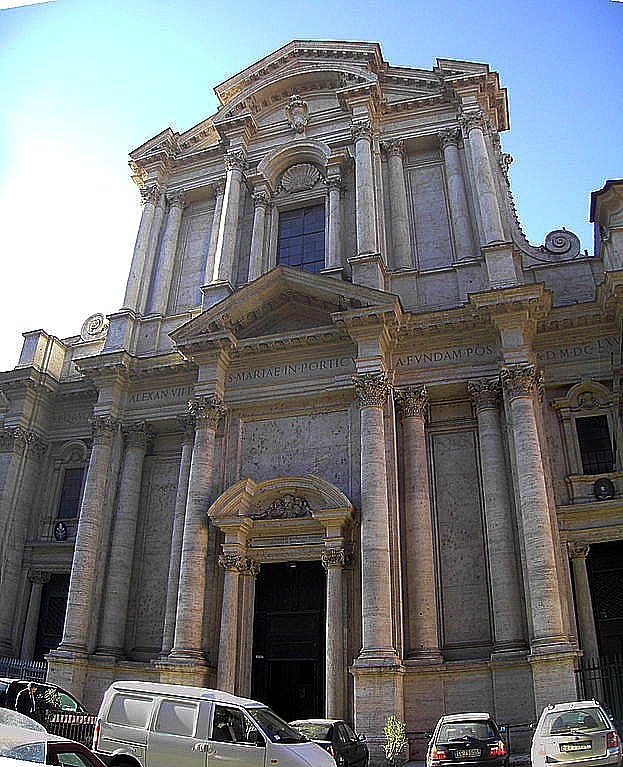
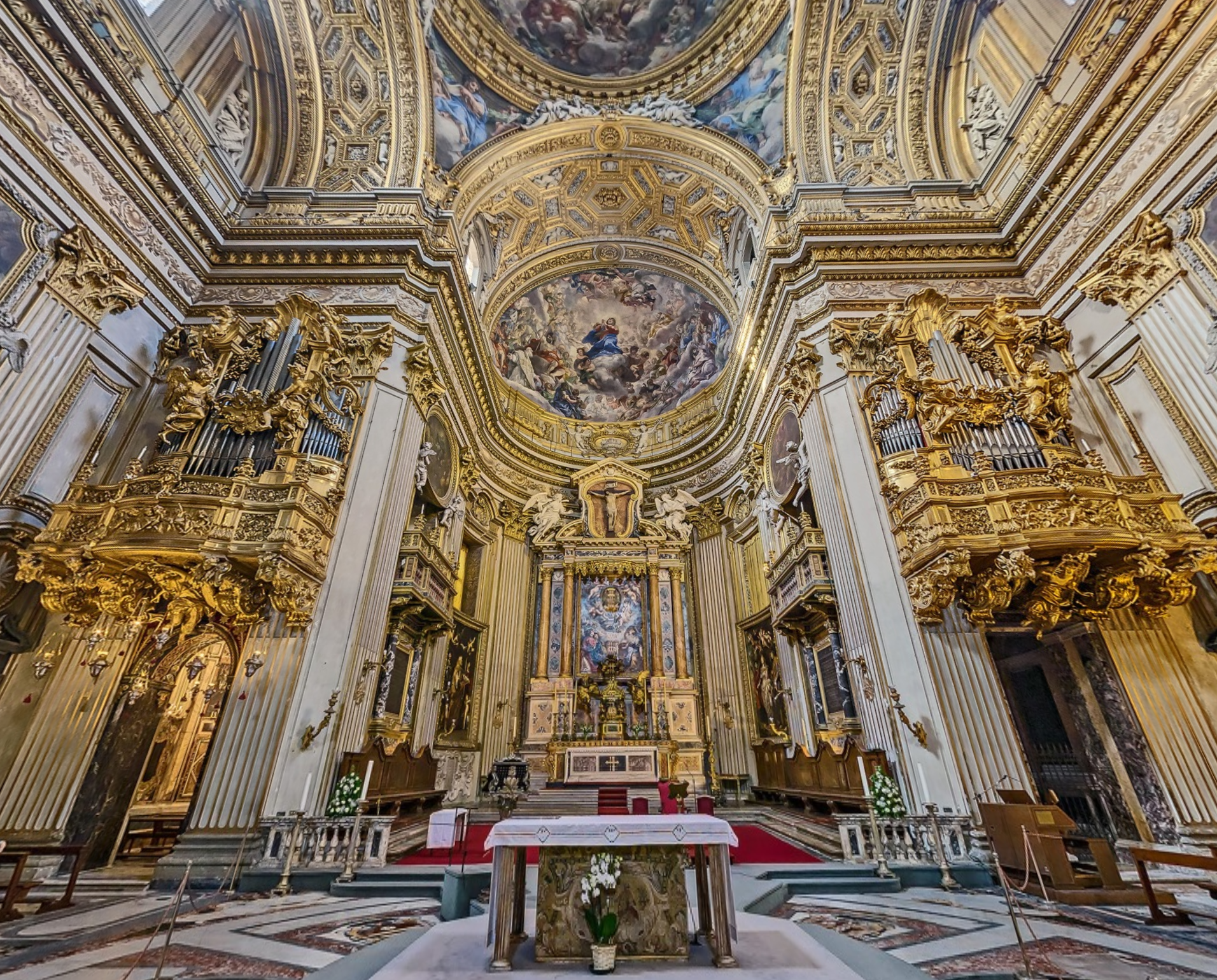
The Sanctuary of Sancta Maria in Campitelli is one of the most celebrated of Rome. It is dedicated to the Blessed Virgin Mary, and is located on the Piazza di Campitelli in Rome, Italy. There is venerated at the Church a precious image that was transported from the portico of the palace of the Roman matron, Galla Patrizia Seveath, to whom the Virgin herself appeared on 17 July 524. The icon is only 25 centimeters high. Mention is made of the miraculous appearance by Pope Gregory the Great. The image is known as Our Lady in the Portico, or the Madonna del Portico. The Church where the icon was kept was known as Santa Galla Antiqua and it used to be located just north of the Piazza Bocca della Verita and west of the Via Petroselli. It was destroyed by Mussolini under pretext that the street should be widened. In the year 1618 the congregation was transferred to a new Church known as Santa Maria in Campitelli, finished in 1667. The work of the Shrine is that of the architect Rainaldi. The new edifice was erected by vote of the people in thanksgiving for the preservation of the city from the pestilence of 1656 and was designed in the Baroque style. There are tall columns on the façade of the church that were intended to include statues, although the statues were never completed as originally planned.
The icon of Our Lady of Campitelli is surrounded by an ornate Shrine behind the High Altar and there is a stairway behind the display that allows a closer inspection of the famous Icon. It is not open to the general public. Many times the sacred image of Our Lady of Campitelli has been carried in procession through the streets of Rome – the people invoking Mary’s protection against pestilence, epidemics and earthquakes. This image is also invoked under the title of Our Lady of Security and two feasts are commemorated in Mary’s honour – 17 July and 2 February.
St Andrew Zorard OSB (c 980 – c 1008) Hermit, Monk, Missionary Bl Arnold of Himmerod Bl Bénigne Bl Biagio of the Incarnation
Bl Carlos de Dios Murias OFM Conv (1945-1976) Priest Martyr St Cynllo St Ennodius of Pavia St Fredegand of Kerkelodor St Generosus St Gorazd St Hedwig, Queen of Poland St Hyacinth of Amastris St Kenelm St Pope Leo IV St Marcellina St Nerses Lambronazi
St Petrus Liu Zeyu Bl Sebastian of the Holy Spirit Bl Tarsykia Matskiv St Theodosius of Auxerre St Theodota of Constantinople St Turninus
Martyrs of Compiegne (16 beati): Sixteen Blessed Teresian Martyrs of Compiègne. Eleven Discalced Carmelite nuns, three lay sisters and two lay women servants who were martyred together in the French Revolution. They were the earliest martyrs of the French Revolution that have been recognised. • Angelique Roussel • Anne Pelras • Anne-Marie-Madeleine Thouret • Catherine Soiron • élisabeth-Julitte Vérolot • Marie Dufour • Marie Hanniset • Marie-Anne Piedcourt • Marie-Anne-Françoise Brideau • Marie-Claude-Cyprienne Brard • Marie-Françoise de Croissy • Marie-Gabrielle Trezel • Marie-Geneviève Meunier • Marie-Madeleine-Claudine Lidoine • Rose-Chretien de Neuville • Thérèse Soiron • They were guillotined on 17 July 1794 at the Place du Trône Renversé (modern Place de la Nation) in Paris, France.
Martyrs of Scillium (12 saints): A group of twelve Christians martyred together, the final deaths in the persecutions of Emperor Marcus Aurelius. Upon their conviction for the crime of being Christians, the group was offered 30 days to reconsider their allegiance to the faith; they all declined. Their official Acta still exist. Their names – • Acyllinus • Cythinus • Donata • Felix • Generosa • Januaria • Laetantius • Narzales • Secunda • Speratus • Vestina • Veturius They were beheaded on 17 July 180 in Scillium, Numidia (in North Africa).
Thought for the Day – 16 July – Meditations with Antonio Cardinal Bacci (1881-1971)
Holiness
“In a radio message which he broadcast on the occasion of the Beatification of Pope Innocent XI, the Supreme Pontiff, Pius XII, defined holiness as “the intimate awareness of loyal subjection to God, Who is adored and loved, as the beginning, end and norm of every thought, affection, word and action.”
Let us meditate on this definition, which helps to shed some light on the true nature of sanctity. A holy man must always have a keen awareness of his own dependence upon God, his Creator, Redeemer and Sanctifier and his hoped for reward and happiness in the next life. This awareness must be vivid, for it should not be possible for it to be obscured by worldly distractions or obliterated by sensual allurements. It should be active, so that it may not be a merely theoretical acknowledgement of our dependence which leads to nothing more than lip-worship; on the contrary, it must be capable of transforming our lives into an act of obedience and of love. Finally, it should be a faithful awareness, a complete and voluntary subjection to God, which is the driving force behind all our words and actions and, which inspires us alike, in joy and in sorrow, in victory and in defeat. If we wish to be perfect Christians, we must cultivate this kind of consciousness of our dependence upon God.”
Quote/s of the Day – 16 July – “Month of the Most Precious” – Readings: Exodus 11: 10 – 12: 14; Psalms 116: 12-13, 15 and 16bc, 17-18; Matthew 12: 1-8
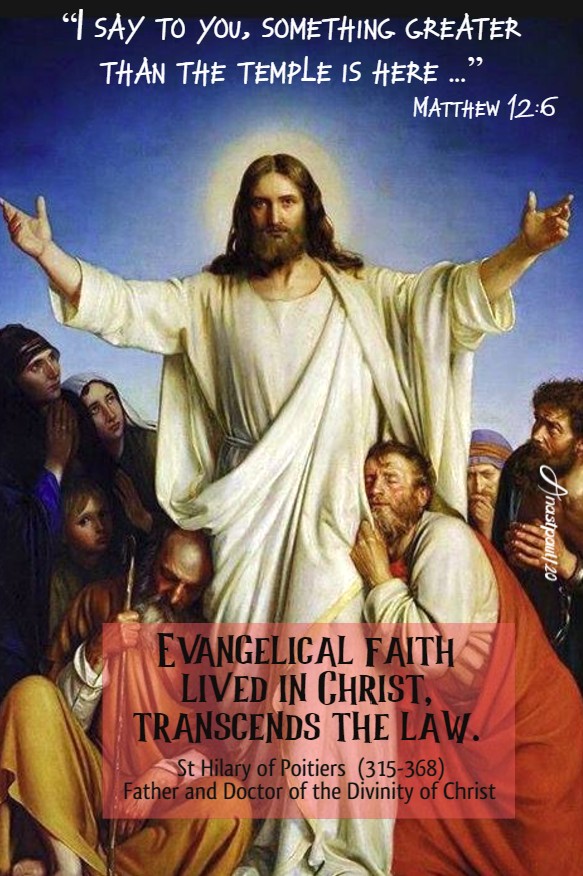
“I say to you, something greater than the temple is here …”
Matthew 12:6
“Evangelical faith lived in Christ, transcends the law.”
St Hilary of Poitiers (315-368) Father and Doctor of the Divinity of Christ
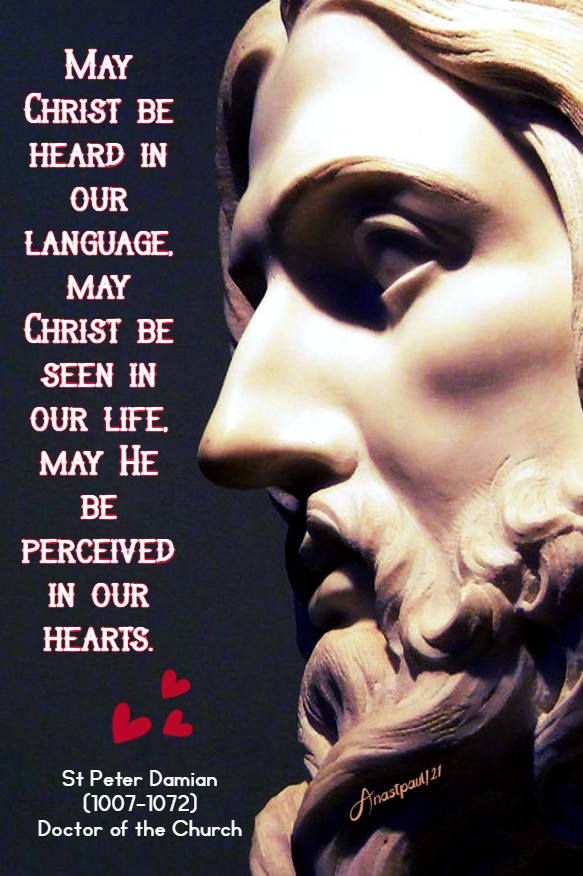
“May Christ be heard in our language, may Christ be seen in our life, may He be perceived in our hearts”
St Peter Damian (1007-1072) Father and Doctor of the Church
“If, then, you seek to know what path to follow, take Christ because He is the way.”
St Thomas Aquinas (1225-1274) Doctor of the Church
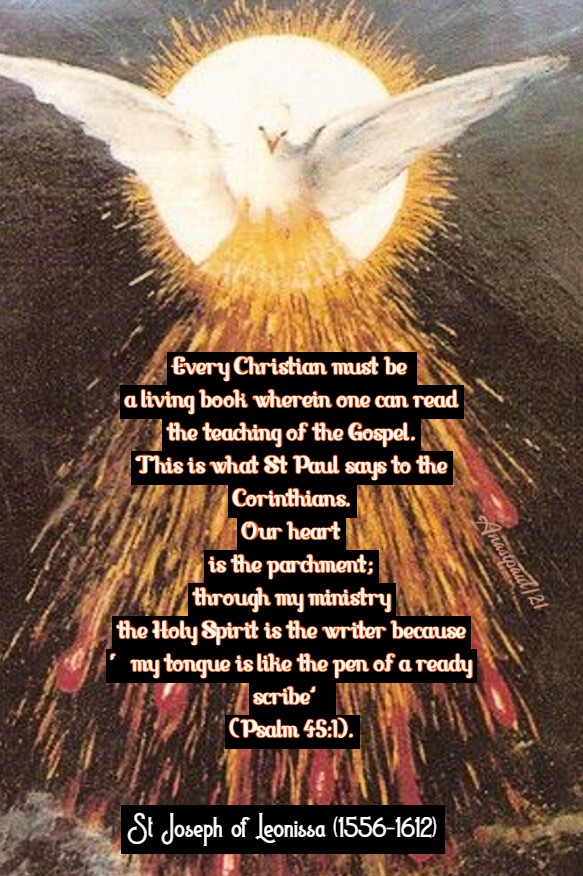
“Every Christian must be a living book wherein one can read the teaching of the Gospel. This is what St Paul says to the Corinthians. Our heart is the parchment; through my ministry the Holy Spirit is the writer because ‘my tongue is like the pen of a ready scribe’ (Psalm 45:1).”
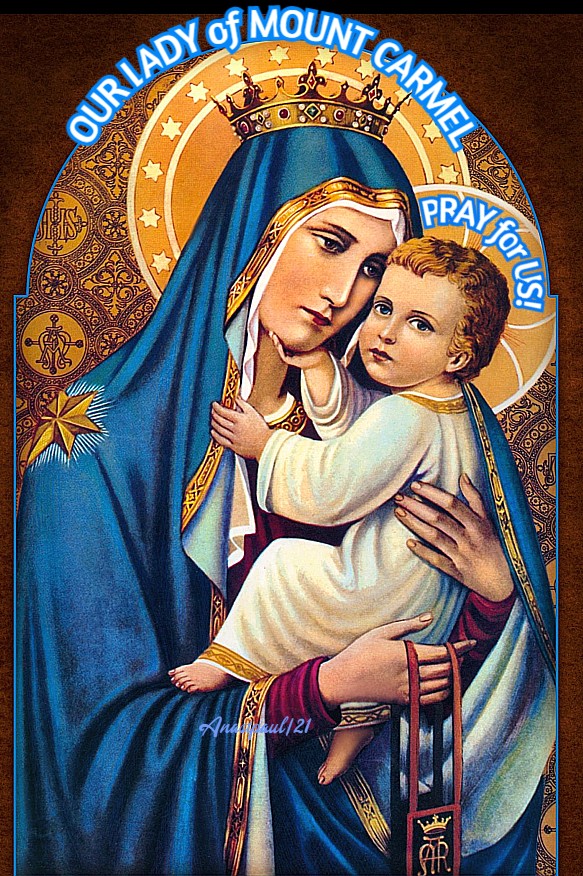
One Minute Reflection – 16 July – “Month of the Most Precious” – Readings: Exodus 11: 10 – 12: 14; Psalms 116: 12-13, 15 and 16bc, 17-18; Matthew 12: 1-8 and the Memorial of Our Lady of Mount Carmel
“For the Son of man is Lord, even of the sabbath.” – Matthew 12:8
REFLECTION – “My brethren, consider the great mystery of the harmony and the difference of the two Laws and two peoples. The people of old celebrated Passover, not in the full light of day but in the shadow of that which was to come (Col 2,17) and fifty days after the Passover celebration… God gave it the Law, written by His own Hand on Mount Sinai… God came down on Mount Sinai in the midst of the fire, striking with terror the people who were standing far off and with His finger He wrote the Law on stone, not in the heart (Ex 31,18). On the other hand, when the Holy Spirit came down to earth, the disciples were all assembled together in the same place and, instead of terrifying them from the height of the mountain, He entered the house where they had gathered (Acts 2,1f.). From the heights of heaven came an enormous noise like that of a strong wind approaching but this noise did not frighten anybody.
You have heard the sound, see the fire, too. For on the mountain these two phenomena are to be distinguished – the noise and the fire. On Mount Sinai the fire was surrounded by smoke but here, to the contrary, it has a shining clarity: “There appeared to them tongues as of fire, which parted.” Was this a fire that stirred up fear? Not at all – “they came to rest on each one of them”… Listen to this tongue speaking and understand that it is the Spirit that writes, not on stone but in the heart. Therefore, the “Law of the Spirit of life,” written in the heart and not on stone, this Law of the Spirit of life which is in Jesus Christ, in whom the Passover has been celebrated in all truth (1Cor 5,7), “has set you free from the Law of sin and death” (Rm 8,2). – St Augustine (354-430) Bishop, Father and Doctor of the Church – Sermon 155, 6-
PRAYER – Almighty God, to whom this world with all its goodness and beauty belongs, give us grace joyfully to begin this day in Your name and to fill it, with an active love for You and for our neighbour. Grant us the grace to repent of our sins, to turn to the Cross of Your Son and to beg Him, in His great love and suffering, to forgive us again! Mary, the Madonna of Humility, intercede for us in our weakness and help us become humble and look only at the face of Christ. Amen
Our Morning Offering – 16 July – The Memorial of Our Lady of Mount Carmel
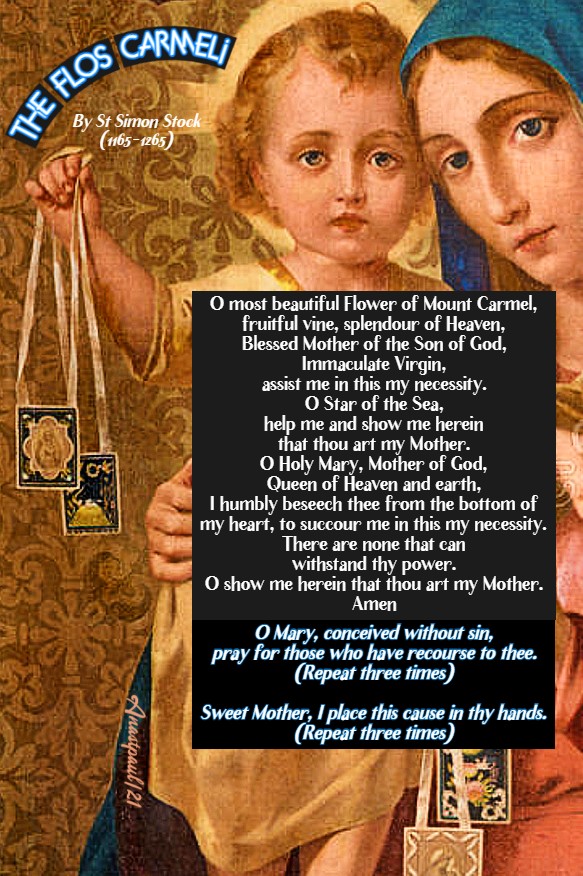
“The Flos Carmeli The Flower of Carmel” By St Simon Stock (1165-1265)
O most beautiful Flower of Mount Carmel, fruitful vine, splendour of Heaven, Blessed Mother of the Son of God, Immaculate Virgin, assist me in this my necessity. O Star of the Sea, help me and show me herein that thou art my Mother. O Holy Mary, Mother of God, Queen of Heaven and earth, I humbly beseech thee from the bottom of my heart, to succour me in this my necessity. There are none that can withstand thy power. O show me herein, that thou art my Mother. Amen.
O Mary, conceived without sin, pray for those who have recourse to thee. (Repeat three times)
Sweet Mother, I place this cause in thy hands. (Repeat three times)
This prayer, the “Flos Carmeli” (“The Flower of Carmel”), was composed by St Simon Stock (1165-1265), a Carmelite, so-called because he and other members of his order lived atop Mount Carmel in the Holy Land. St Simon Stock was visited by the Blessed Virgin Mary on 16 July 1251, at which time, she bestowed upon him a scapular, or habit, (commonly called “the Brown Scapular”), which became part of the liturgical clothing of the Carmelite order Oral tradition tells of St Simon Stock praying, with a passionate intensity to Our Lady of Mount Carmel, during a time of great distress and hardship for the Order. With fervour and faith, he prayed his prayer, the Flos Carmeli for the first time. And Our Lady answered his prayer. Thus, for seven centuries the Flos Carmeli continues to be prayed to the Blessed Mother with the firm faith that she she will answer its request with her powerful help.
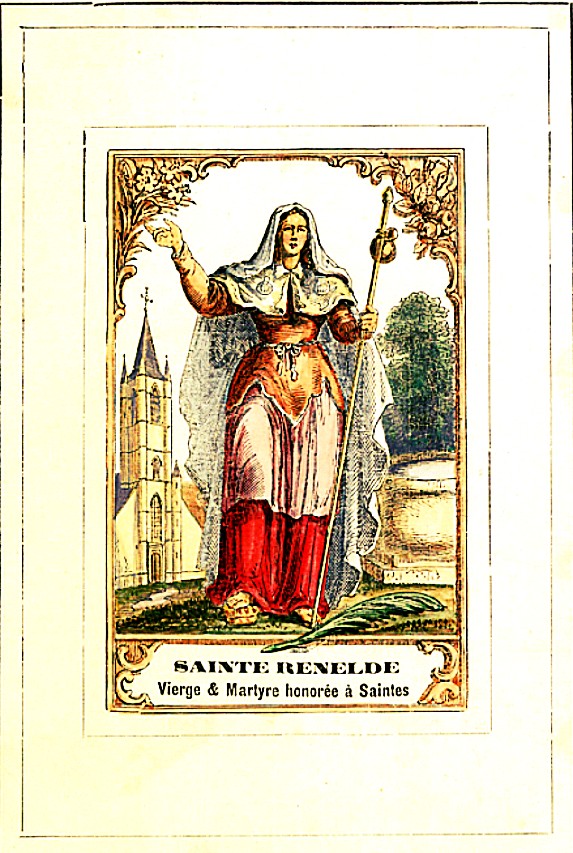
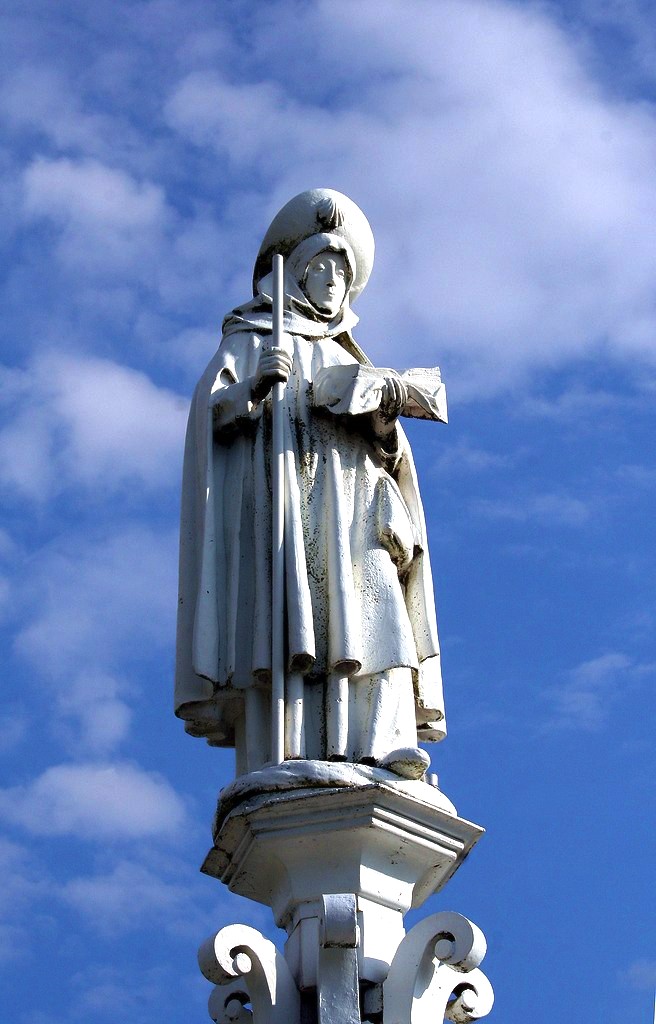
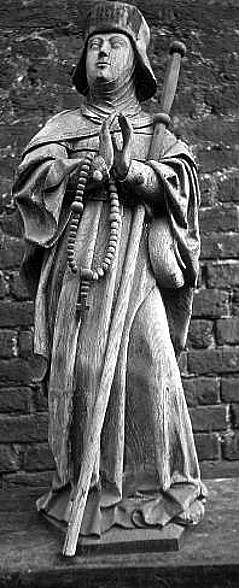
Saint of the Day – 16 July – St Reinildis of Saintes ( c 630 – c 700) Virgin, Laywoman, Martyr, Pilgrim. Born in c 630 in Kontich, Belgium and died by being beheaded in c 700 outside a Chapel in Saintes (in modern Halle), Belgium. by the invading Huns. Also known as – Reinildis of Condacum, Reinildis of Kontich, Rainelde, Raineldis, Reinaldes, Reineldis, Reinhild. Patronage – against eye diseases, the Town of Saintes.
The Roman Martyrology states: “At Saintes, in France, this holy Martyrs Reinildis, Virgin and her companions. who were massacred by bbarbarians for the Christian Faith.”
Reinildis was the daughter of St Amalberga (10 July – here: https://anastpaul.com/2017/07/10/saint-of-the-day-10-july-st-amalberge-of-mauberg/) but her birthplace is under discussion, since it is not known whether it is Kontich, just outside Antwerp, or Condésur-Escaut in present-day northern France. although the former seems more likely. Tradition holds that when her parents and sister, St Gudula (8 January), embraced the religious life, Reinildis followed her father to the Abbey of Lobbes, hoping to be able to enter it, giving the Abbey most of her riches and possessions . However, she did not enter for unknown reasons and instead left on a pilgrimage to the Holy Land, where she stayed for seven years (some sources claim only two) and returned with many relics.
On her return she lived in Saintes, near Hal, southwest of Brussels, devoting all her time to assisting the poor and the sick. of the area. She was killed in Saintes during a barbarian raid. With her at the time of her Martyrdom was the servant Gandolfo and a sub-Deacon called Grimoaldo, all three venerated as Martyrs.
A cult began immediately after her death and in 866, the Bishop, St John of Cambrai, exhumed the relics and buried them again in a solemn ceremony. The first Life of St Reinildis dates from this period.
A document from the twelfth century describes the transfer of her relics to Lobbes Abbey probably in 1170 and their authentication by the local Bishop. It seems that this document was a homily written by a Monk of Lobbes on the day of the anniversary of the translation, and it is more hagiographic than historical but, at least it is a reliable testimony, that the cult of Reinildis was widespread in the Saintes area and in the Abbey of Lobbes.
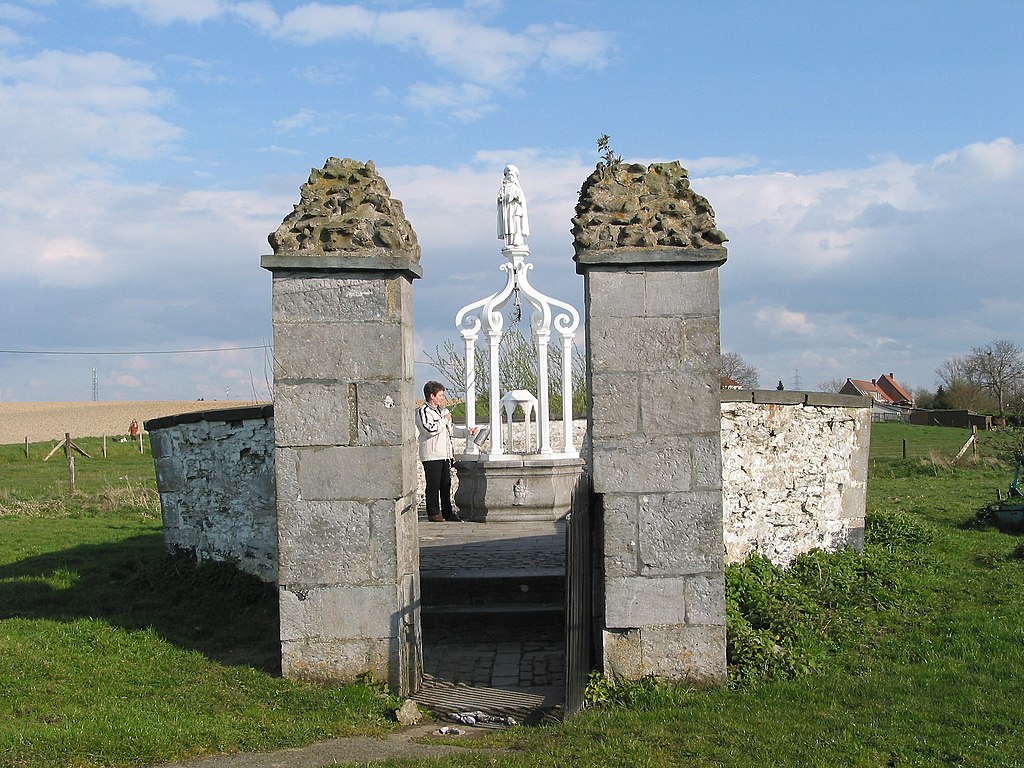
Saint Reinildis’ Patronage against eye diseases is due to the association with a well in Saintes known as “Sainte Renelde’s Well,” the water of which is believed to cure eye diseases.
Saint Reinildis is greatly venerated in Saintes as the Patron Saint of the Town. Some sources even indicate that Saintes owes its name to Reinildis” Martyrdom
The Parish Church of Saintes is, since the Middle Ages, dedicated to Sainte Reinildis and has preserved some of her relics.
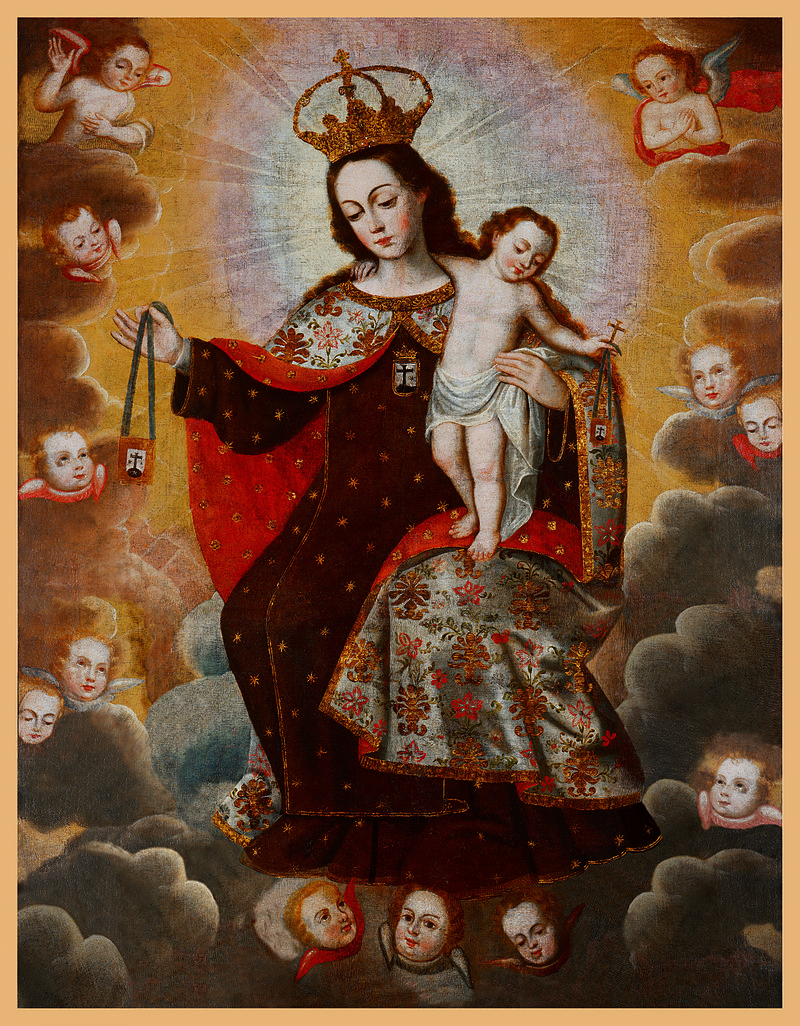
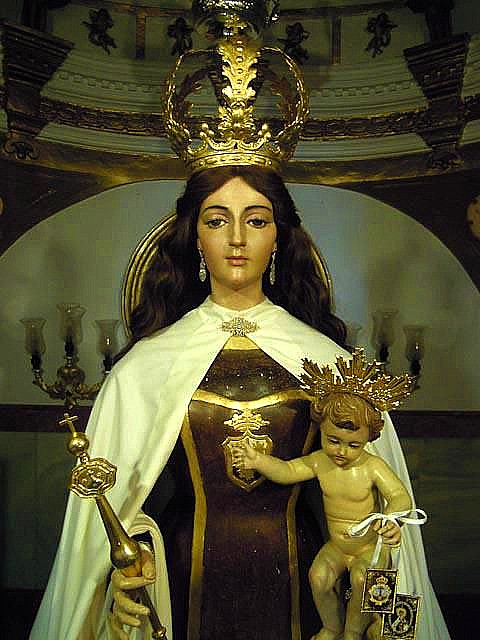
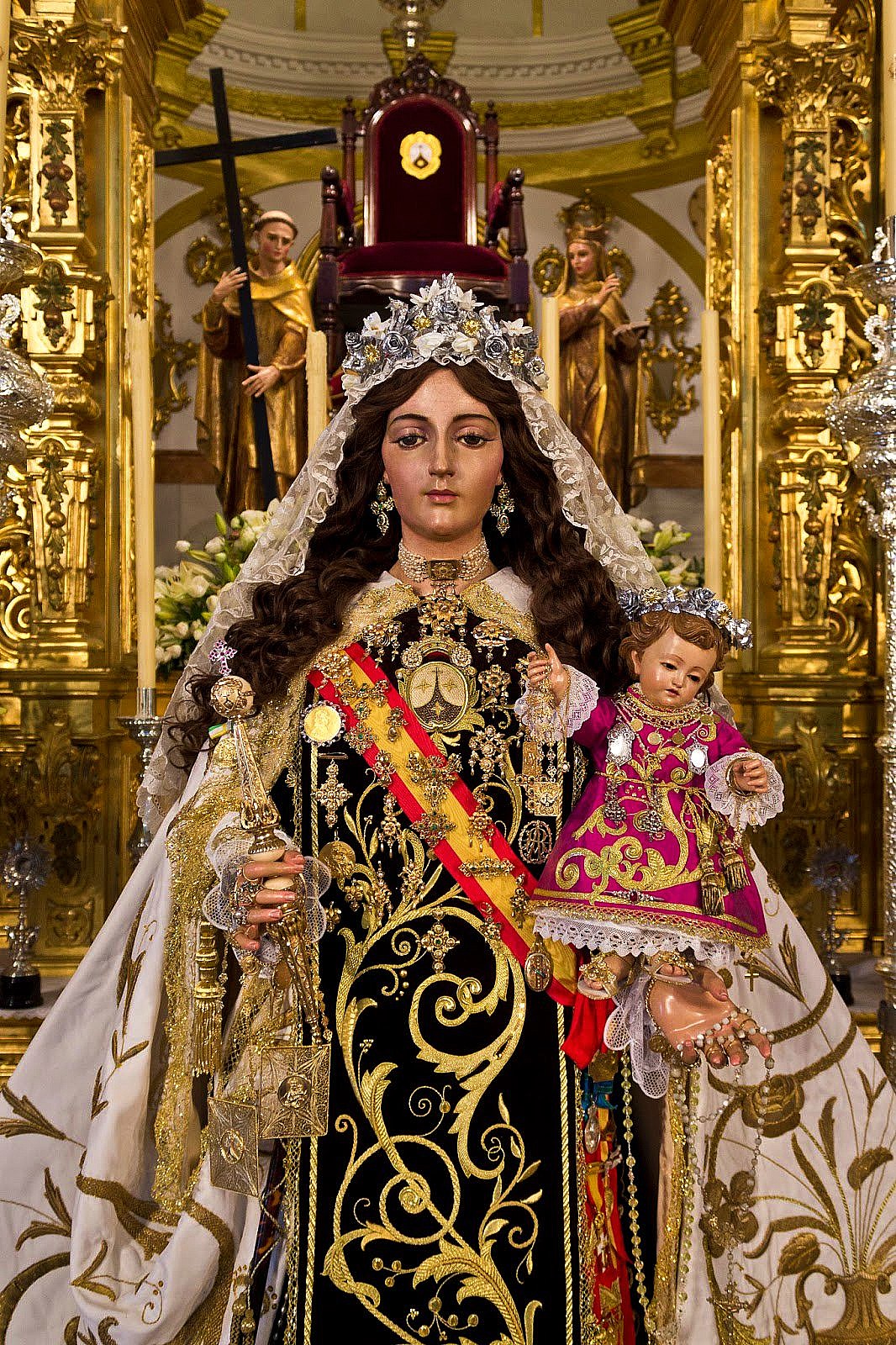
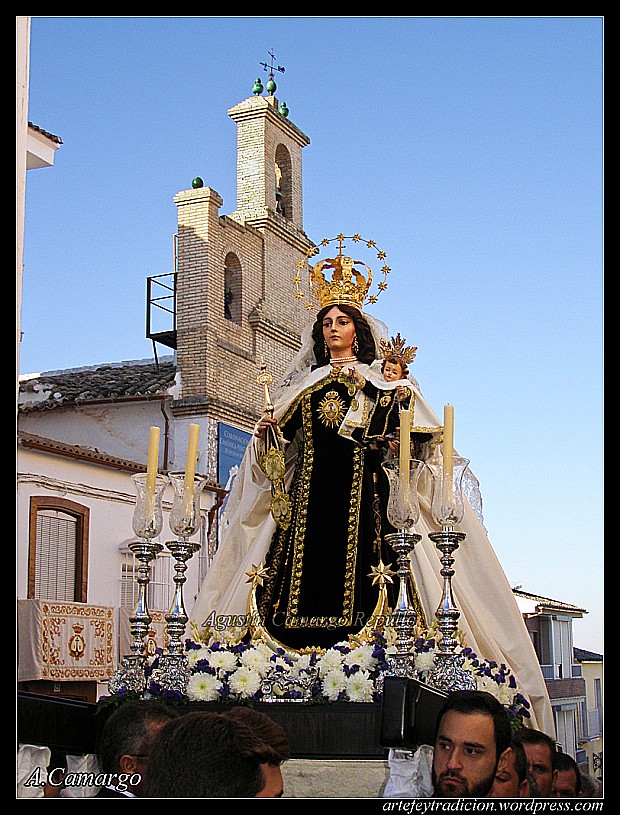
Nuestra Señora del Carmen (Rute, Córdoba, Andalucía, Spain) (17th Century)– 16 July, 13 February – Patron of Rute:
By order of Pope Pius XI, Our Lady of Mount. Carmel was proclaimed Patron of the Town of Rute in southern Spain on 13 February1924. Her beloved image goes back to the late 1600s, when Luisa Roldán (La Roldana) of Seville carved the head and hands. Made to be dressed, the Statue did not have a proper body until the 1960s.
It occupies a neo-baroque setting over the High Altar, also of the 1960s. Rute honours its Patron several times a year. The anniversary celebration lasts three days, culminating on 13 February with Mass, presentations to the Chief of the Brotherhood and the Fiesta Queen of gifts made for the Virgin, and a ceremony of kissing the Scapular of Our Lady of Mount. Carmel. Her liturgical feast day, 16 July is the focus of another three-day celebration. On the last Sunday of June, the procession is held, when the Statue goes in procession through the neighbourhood to the main Parish Church of Santa Catalina Mártir. Another triduum is celebrated around the feast of the Assumption, 14-16 August.
Bl André de Soveral St Andrew the Hermit St Antiochus of Sebaste Bl Arnold of Clairvaux Bl Arnold of Hildesheim St Athenogenes of Sebaste
St Bartholomew of Braga OP – ArchBishop of Braga also known as Bl Bartholomew of the Martyrs (Bartolomeu Fernandez dei Martiri Fernandes) (1514-1590) Portuguese Dominican Friar and Priest, Writer, Theologian, Advisor, Teacher and Catechetical writer, Apostle of Charity founding a series of hospitals and hospices in Braga and surrounds. St Bartholomew: https://anastpaul.com/2018/07/16/saint-of-the-day-16-july-blessed-bartholomew-of-the-martyrs-1514-1590/
Bl Claude Beguignot Bl Domingos Carvalho St Domnin St Domnio of Bergamo Bl Dorothée-Madeleine-Julie de Justamond St Elvira of Ohren St Eugenius of Noli St Faustus St Faustus of Rome and Milan St Fulrad of Saint Denis St Generosus of Poitou St Gobbán Beg St Gondolf of Saintes St Grimoald of Saintes St Helier of Jersey Bl Irmengard Bl John Sugar St Landericus of Séez Bl Madeleine-Françoise de Justamond Bl Marguerite-Rose de Gordon Bl Marguerite-Thérèse Charensol Bl Marie-Anne Béguin-Royal Bl Marie-Anne Doux
Bl Marie-Rose Laye Bl Milon of Thérouanne Bl Nicolas Savouret Bl Ornandus of Vicogne St Paulus Lang Fu St Reinildis of Saintes ( c 630 – c 700) Virgin, Laywoman, Martyr Bl Robert Grissold Bl Simão da Costa St Sisenando of Cordoba St Tenenan of Léon St Teresia Zhang Heshi St Valentine of Trier St Vitalian of Capua St Vitaliano of Osimo St Yangzhi Lang — Martyrs of Antioch – 5 saints: Five Christians who were martyred together. No details about them have survived by the names – Dionysius, Eustasius, Maximus, Theodosius and Theodulus. They were Martyred in Antioch, Syria, date unknown.
Thought for the Day – 15 July – Meditations with Antonio Cardinal Bacci (1881-1971)
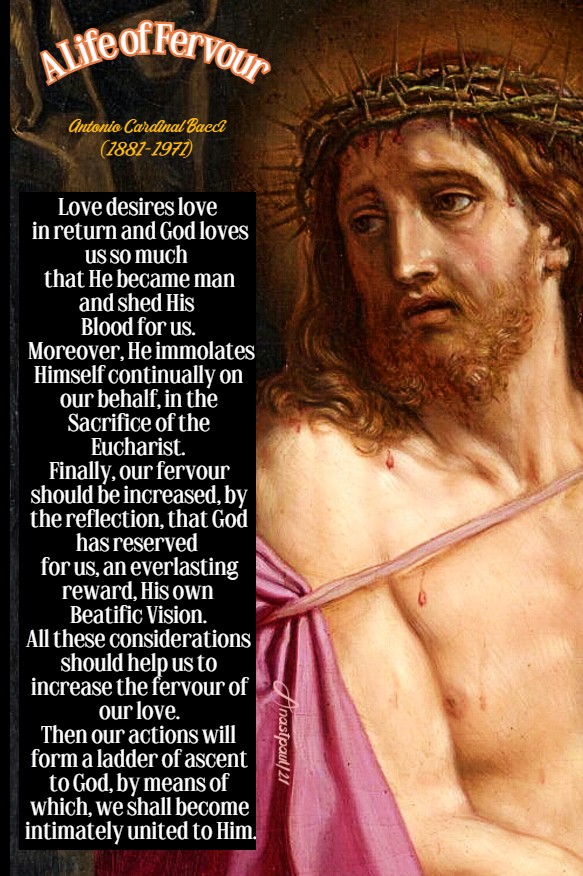
A Life of Fervour
“God is our Creator and absolute Master, Whom the Angels adore and irrational creatures obey. His greatness demands that we should offer all our activities to Him in a spirit of fervent and loving dedication. Since we have received everything from Him, we have many reasons for loving Him. By the work of redemption, God became our Friend and our Brother and the Victim of Expiation for our sins. How could we remain indifferent and ungrateful when we remember the favours which we have received . Love desires love in return and God loves us so much that He became man and shed His Blood for us. Moreover, He immolates Himself continually on our behalf, in the Sacrifice of the Eucharist. Finally, our fervour should be increased, by the reflection, that God has reserved for us, an everlasting reward, His own Beatific Vision.
All these considerations should help us to increase the fervour of our love. Then our actions will form a ladder of ascent to God, by means of which, we shall become intimately united to Him.
Quote/s of the Day – 15 July – “Month of the Most Precious Blood” and the Memorial of St Bonaventure OFM (1221-1274) Seraphic Doctor of the Church
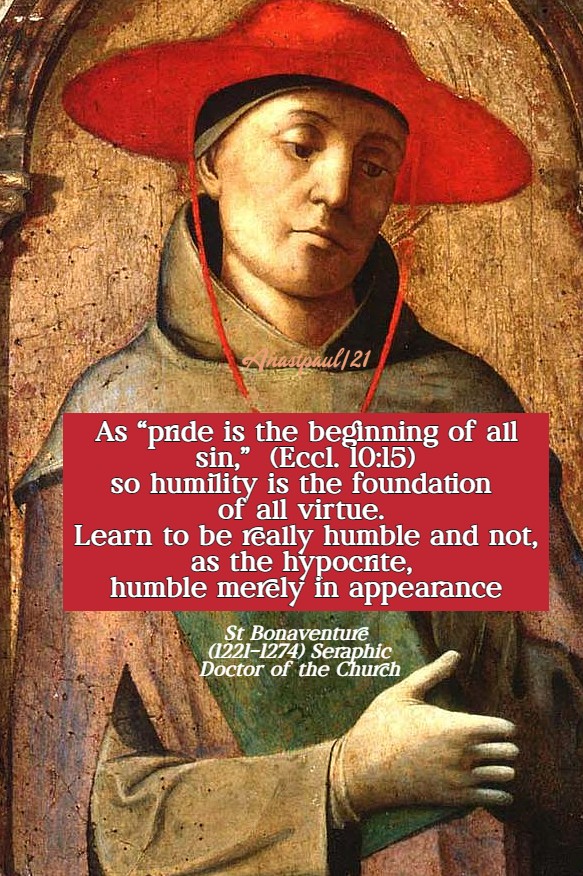
“As “pride is the beginning of all sin,” (Eccl. 10:15) so humility is the foundation of all virtue. Learn to be really humble and not, as the hypocrite, humble merely in appearance.”
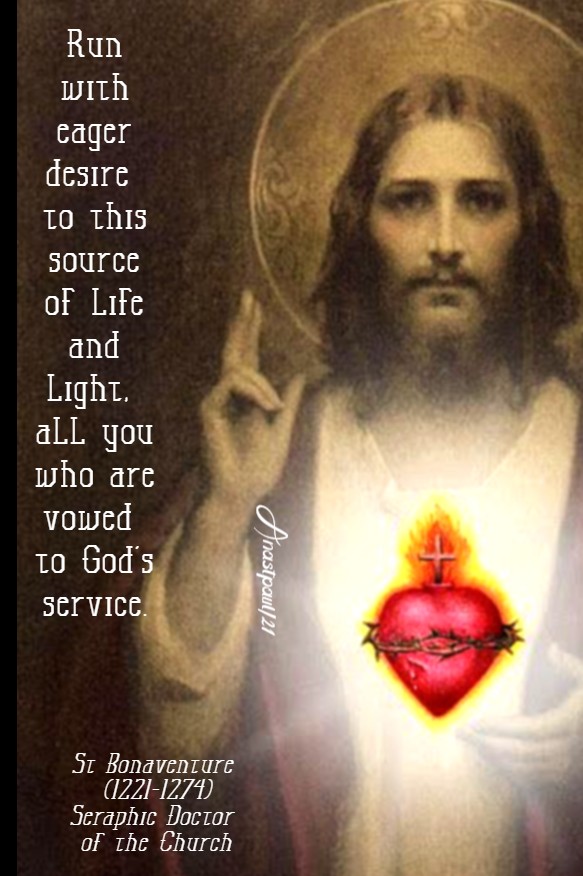
“Run with eager desire to this Source of Life and Light, all you who are vowed to God’s service.”
St Bonaventure’s Sermon of 4 October 1255
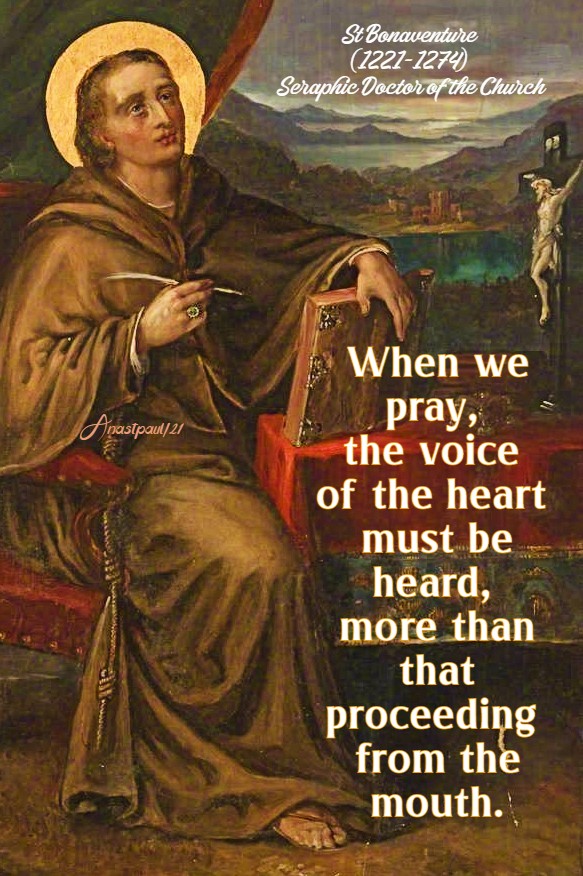
“When we pray, the voice of the heart must be heard , more than that proceeding from the mouth.”
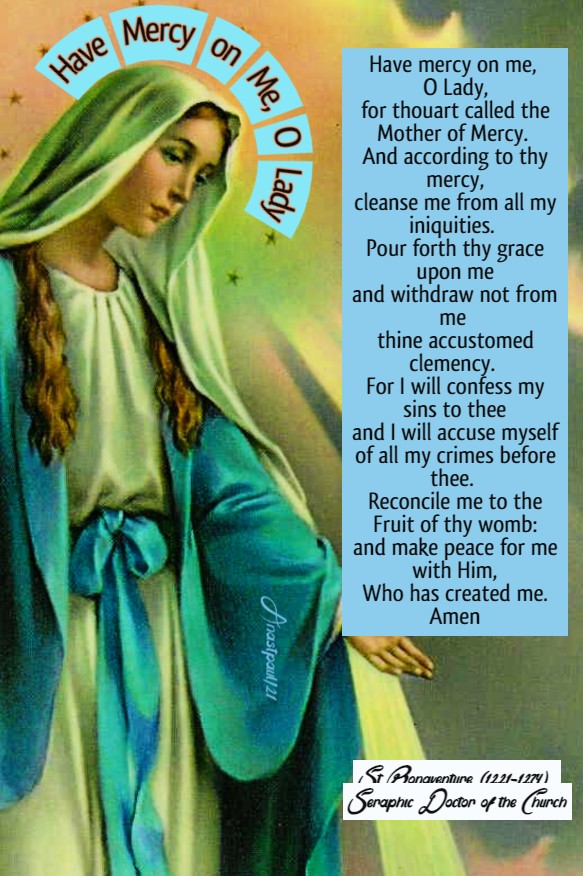
“Have Mercy on Me, O Lady
Have mercy on me, O Lady, for thou art called the Mother of Mercy. And according to thy mercy, cleanse me from all my iniquities. Pour forth thy grace upon me and withdraw not from me thine accustomed clemency. For I will confess my sins to thee and I will accuse myself of all my crimes before thee. Reconcile me to the Fruit of thy womb: and make peace for me with Him, Who has created me. Amen.”
The Psalter of the Blessed Virgin Mary by St Bonaventure
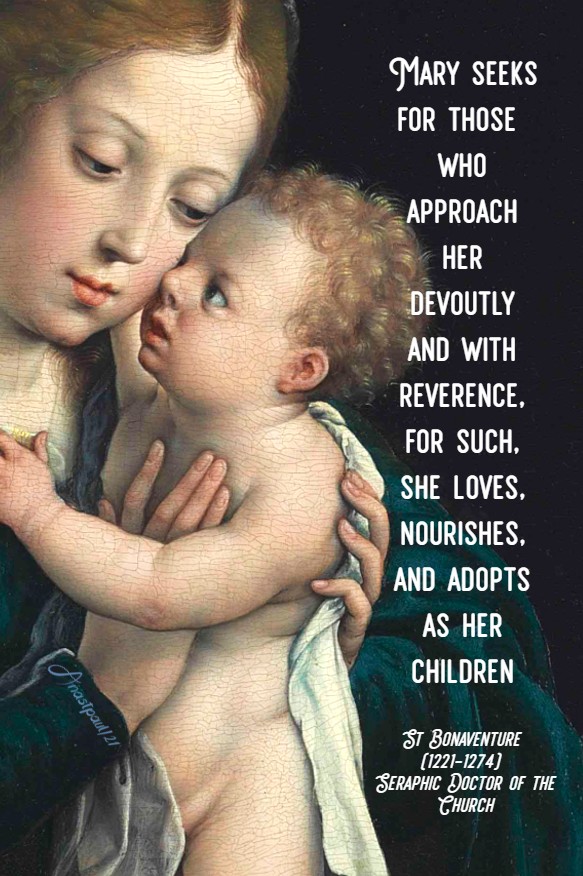
“Mary seeks for those who approach her devoutly and with reverence, for such she loves, nourishes, and adopts as her children. ”
One Minute Reflection – 15 July – “Month of the Most Precious Blood” and the Memorial of St Bonaventure (1221-1274) Seraphic Doctor of the Church – Readings: Exodus 3: 13-20; Psalms 105: 1 and 5, 8-9, 24-25, 26-27; Matthew 11: 28-30
“Take my yoke upon you and learn from me, for I am meek and humble of heart and you will find rest for your souls…” – Matthew 11:29
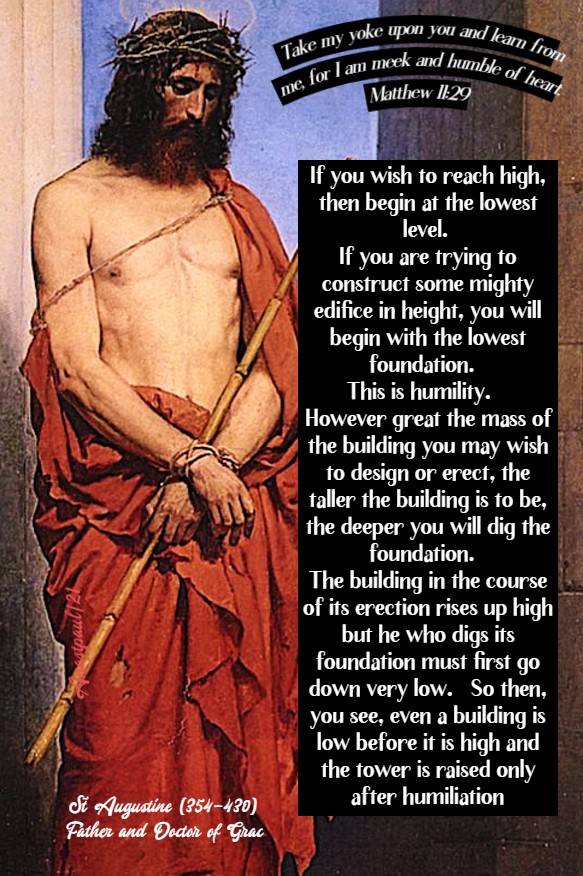
REFLECTION – “You are to “take my yoke upon you and learn from me.” You are not learning from Me, how to re-fashion the fabric of the world, nor to create all things visible and invisible, nor to work miracles and raise the dead. Rather, you are simply learning of Me: “that I am meek and lowly in heart.”If you wish to reach high, then begin at the lowest level. If you are trying to construct some mighty edifice in height, you will begin with the lowest foundation. This is humility. However great the mass of the building you may wish to design or erect, the taller the building is to be, the deeper you will dig the foundation. The building in the course of its erection rises up high but he who digs its foundation must first go down very low. So then, you see, even a building is low before it is high and the tower is raised only after humiliation.” – St Augustine (354-430) Bishop, Father and Doctor of Grace – Sermon 69.
PRAYER – Holy God, our Father, we turn to You in confidence as children and pray, give us meekness of heart, make us “poor in spirit” that we may recognise that we are not self-sufficient, that we are unable to build our lives on our own but need You, we need to encounter You, to listen to You, to speak to You. Help us to understand that we need Your gifts, Your wisdom, which is Jesus Himself, in order to do the Your will in our lives and thus to find rest in the hardships of our journey. Grant we pray that the prayers of our Blessed Mother, St Bonaventure and all Your Angels and Saints, may carry us home to You. Through Christ our Lord, one God with You and the Holy Spirit, now and forever, amen.
Our Morning Offering – 15 July – “Month of the Most Precious Blood” and the Memorial of St Bonaventure (1221-1274) Seraphic Doctor of the Church
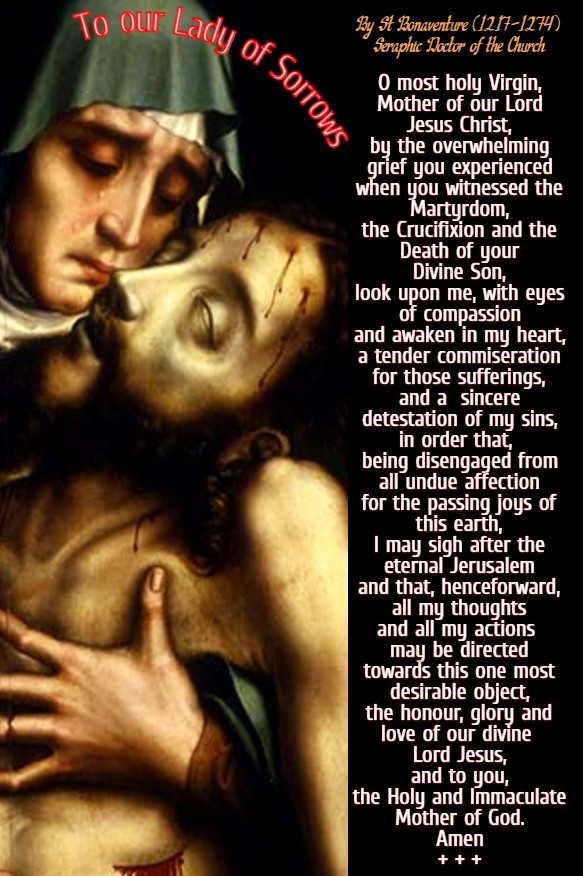
To our Lady of Sorrows By St Bonaventure (1217-1274) Seraphic Doctor of the Church
O most holy Virgin, Mother of our Lord Jesus Christ, by the overwhelming grief you experienced when you witnessed the Martyrdom, the Crucifixion and the Death, of your Divine Son, look upon me, with eyes of compassion and awaken in my heart, a tender commiseration for those sufferings and a sincere detestation of my sins, in order that, being disengaged from all undue affection for the passing joys of this earth, I may sigh after the eternal Jerusalem and that, henceforward, all my thoughts and all my actions may be directed towards this one most desirable object, the honour, glory and love of our divine Lord Jesus, and to you, the Holy and Immaculate Mother of God. Amen.
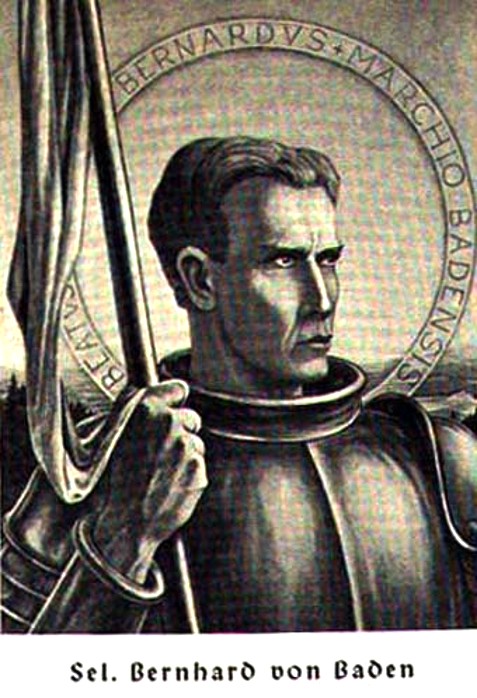
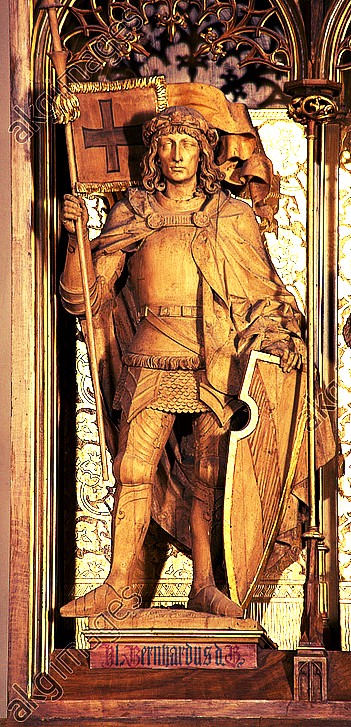
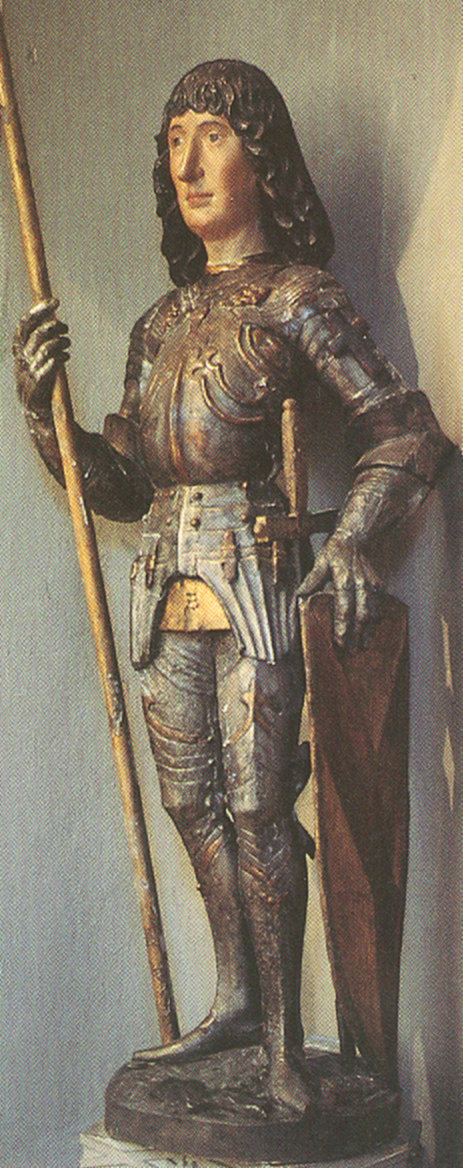
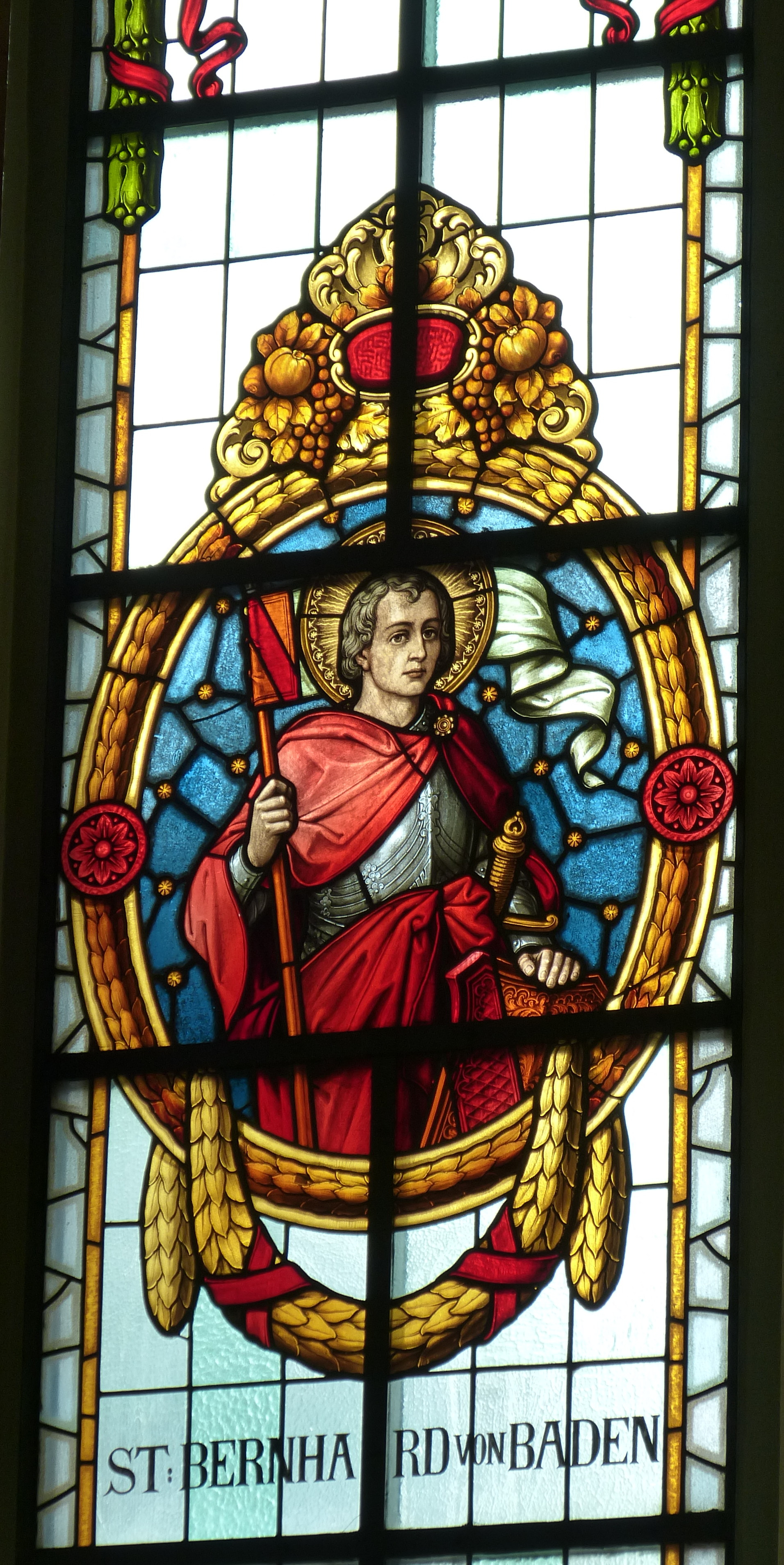
Saint of the Day – 15 July – Blessed Bernard of Baden TOSF (1428-1458) Margrave of Baden (Margrave was originally the medieval title for the military commander assigned to maintain the defence of one of the border provinces of the Holy Roman Empire.) Tertiary of the Order of St Francis, apostle of the poor and the needy. Born in c 1428 in Hohenbaden Castle, Baden-Baden, Baden-Württemberg, Germany and died on 15 July 1458 in Moncalieri, Italy of natural causes. Also known as – Bernard of Marchio, Bernard II, Margrave of Baden-Baden, Bernhard of Baden, Bernardo, Bernardus, Bernhard. Patronages – Baden, Germany, Baden-Baden, Germany, together with Saint Konrad of Constance , he is the Patron Saint of the Archdiocese of Freiburg, Germany, Moncalieri, Italy.
Blessed Bernard was born in late 1428 or early 1429 (his exact birthday is not known) at Hohenbaden Castle near Baden-Baden in the present state of Baden- Baden. Württemberg in Germany. This Castle was the then tribal seat of the Margraves of Baden and Bernhard was the second son of Margrave James I and his wife Catherine of Lorraine, who was the daughter of Blessed Margaret of the Palatinate and Duke Charles II of Lorraine (1364-1431) .
Berrnard grew up in a deeply religious family. His father,had founded Fremersberg Abbey and expanded the Collegiate Church in Baden-Baden. The Margrave’s house was characterised by a deep devotion and religious practices and a great sense of responsibility towards the family members and subjects.
Bernard received a careful education, which would prepare him for his later role as a sovereign. The intent was that he would be Margrave of Pforzheim, Eberstein, Besigheim and several districts in the northern part of the Margraviate.
He was related to the Habsburg dynasty via his older brother Karl I, who had married Catherine of Austria, a sister of Emperor Frederick III. This relationship should give Bernard access to the imperial Court. But first, he assisted his uncle René of Anjou in an armed conflict in northern Italy. According to contemporary sources, he fought bravely. After his father’s death in 1453, he returned to Baden, where he agreed with his brother to give up his claim to part of the margraviate. Instead, he became Frederick III’s personal envoy, despite his young age.
Bernard saw a number of disgraceful situations and tried to alleviate hardship and poverty wherever he could. He spent most of his income assisting the poor and those in need. Even during his lifetime, he impressed his contemporaries with his unusual and deep piety.
Under pressure, after the fall of Constantinople to the Turks in 1453, the imperial Habsburg family began preparing a Crusade against the expanding Ottoman Empire. In March 1453, the Turks captured Constantinople, the capital of the Greek Empire, after a terrible battle and the City was lost to Christianity. This was the main reason that Frederick III, in particular, saw the need to attempt to rout the Turks. Thus, Bernard left soldier life and embarked on a diplomatic career, which was more in line with his peaceful nature. Emperor Frederick III sent him to various Courts in Germany, France and Italy to arouse interest and raise money for a new Crusade. He was so attracted to this mission to save Christianity, that he soon after handed over the office of Margrave of Baden with all rights to his brother Karl for a period of ten years.
Bernard had, since childhood, lived a very religious life and wanted to support his brother-in-law the Emperor by all means. At the imperial Court he also became an ardent intercessor for the needy, following the teachings of Christ and His Church and seeing the Face of Christ in the poor. Bernard rightly believed, that Godliness should lead to mercy for those in most need. He himself lived as he taught and divided his guaranteed annual income into three: one-third was to be used for the poor, one-third was to benefit the Church, and one-third was for himself. In addition, he led a strictly religious life and gave up all worldly pleasures, which earned him deep respect even during his young lifetime.
Emperor Frederick III held two parliaments in 1455, where he appointed delegations of German Princes to recruit rulers outside Germany to take part in a crusade against the Turks. Bernard’s intention was to work on behalf of Emperor Frederick III for the good of Christianity in the areas that the Turks had occupied. His last voyage as an imperial envoy began in late May 1458 and led him and his companions to the Duchy of Orléans and on to Genoa.
He was on his way to Rome, to meet Pope Callistus III (1455-1458), who himself tried to encourage support for a Crusade with great enthusiasm but little success . But shortly after Bernard left Turin in northern Italy, he and his companions were infected by an epidemic, probably the plague. He tried to get home to Baden but even before reaching the village of Moncalieri on the Po River south of Turin in Piedmont, two of his companions were dead. In a hostel next to the Franciscan Monastery in Moncalieri, Bernard died on 15 July 1458, not yet thirty years old.
Due to his position as Prince and Emperor’s envoy, Margrave Bernard was buried in front of the High Altar in the dormitory Church of Santa Maria della Scala in Moncalieri. He was not a citizen of Moncalieri but was, nevertheless, solemnly carried to the grave in the presence of numerous clergy and local citizens, which was probably due more to his privileged status, than the strongly believing and holy life he had led.
During the mourning ceremony, Bernard’s life was told, which led to a citizen of Moncalieri asking Bernhard for prayer and help, as he had only been able to move with a cane and crutches for a long time the result of a bone disease. Already, during the mourning ceremony, this man recovered, which led to general astonishment and joy and was immediately attributed to the prayers of the newly buried Badian Margrave. Bernard’s cult and calls for help and support had begun. He already had a reputation for holiness and for a special devotion to the Virgin Mary, and many miracles were reported at his tomb. In Moncalieri and the surrounding area, accounts spread of his effective intercession. His tomb and his relics became a pilgrimage site which it still is. Pilgrimages were and are held there, prayers are said, vows are made and sacrifices are offered. Bernhard has, for many centuries, been the Patron Saint of Moncalieri, which is probably the only City in Italy, that has a German Prince as their Protector.
His cult spread rapidly in Piedmont and the surrounding areas of France and Germany. In Vic near Nancy and Metz in Lorraine, where Bernhard’s brother Georg had been Bishop, an Altar and Statue were rected in St. Stephan’s Collegiate Church. Of course, he was also remembered in his home county. There, Margaret, daughter of Margrave Charles I, who from 1477 to 1496 was Abbess of the Monastery of Lichtenthal, had a wooden Statue made in honour of her uncle, which was erected in the princely Chapel.
The wooden Statue erected by Bleseed Bernard’s niece
Bernard was Beatifed on 16 September 1769 by Pope Clement XIV. His Canonisation process continues, at present, the second miracle required is being investigated.
Mariae Virginis Molanus / Our Lady of Molanus, Jerusalem (1099) – 15 July :
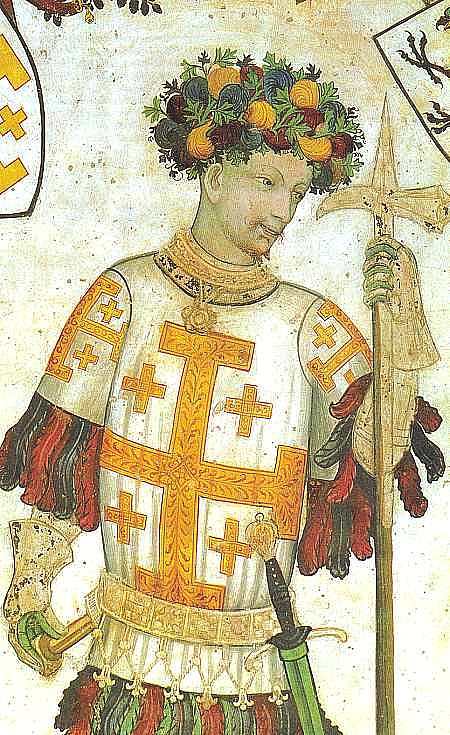
In the year 1099, the Christian armies arrived in Jerusalem, overjoyed that they had survived and reached their objective. Their joy turned nearly to despair, however, as they ran short of food and suffered greatly with a plague during the siege of the City. The leaders of the Crusade concluded, that they could not win without courting the Divine Assistance. It was agreed by all, that they should march together barefoot around the City while singing litanies to the Blessed Virgin Mary. This they did, as the Jews had done centuries before at Jericho, while praying, fasting and giving alms. Eight days later, Godfrey of Bouillon, known as the “Defender of the Holy Sepulchre,” was the first to breach the walls and set foot in Jerusalem, which was then swiftly taken. The Turks were finally defeated after what had been a long and difficult siege and the First Crusade ended with a Christian victory. Now that the City was in Christian hands, the Crusaders desired that they should have a king for the new Kingdom of Jerusalem. The nobleman Raymond of Saint Gilles was offered the crown but he refused, as it did not seem proper to him to be named king in that holy place. Next, Robert Courte-Heuse also refused. Finally, Godfrey of Bouillon, who had so distinguished himself in the taking of Jerusalem, was asked to accept the crown.
Godfrey of Bouillon, from a fresco painted by Giacomo Jaquerio in Saluzzo, northern Italy, around 1420.
Godfrey of Bouillon was a good man, the son of Blessed Ida of Bouillon, whose father was the Duke Godfrey of Lorraine, himself a descendent of Blessed Charles the Great. Although Godfrey agreed to be made king, still, as they were about to crown him King of Jerusalem, Godfrey pushed aside the crown, saying, “I cannot wear a diadem in the place where my Lord wore a Crown of Thorns.” Instead, as he had prayed at Our Lady at Boulogne-sur-mer before leaving on the Crusade, he credited the Blessed Virgin Mary with the victory, and symbolically gave the crown to Our Lady of Molanus. After the victory, clad in white garments, the Crusaders expressed, in solemn procession, hymns and prayers, their gratitude to the Mother of God for giving them this singular victory over the enemies of the Church.
The annual celebration in remembrance of the victory occurs each year on15 July with a Mass offered to Our Lady of Molanus. Formerly the feast of this event was celebrated with a double office and octave.
Dispersion of the Apostles: Commemorates the missionary work of the Twelve Apostles. It was first mentioned in the 11th century and was celebrated in the northern countries of Europe during the Middle Ages. It is now observed in Germany, Poland and some dioceses of England, France and the United States.
St Abundantia of Spoleto St Abudemius of Bozcaada St Adalard the Younger St Anrê Nguyen Kim Thông
Bl essed Anne-Mary Javouhey (1779-1851) “The Mother of the Slaves,” Religious Sister, Missionary and Founder of the Sisters of Saint Joseph of Cluny. Imagine a Mother Teresa in the France of Napoleon’s day and you will have a picture of Anne-Marie Javouhey. Nanette, as she was called, was a “velvet brick,” a thin layer of gentleness covering her determined core. A competent leader, Nanette dominated every scene in her adventurous life. Blessed Anne-Marie was Beatified on 15 October 1950 by Ven Pope Pius XII. Biography: https://anastpaul.com/2019/07/15/saint-of-the-day-15-july-blessed-anne-mary-javouhey-1779-1851/
Bl Antoni Beszta-Borowski St Apronia St Athanasius of Naples St Antiochus of Sebaste St Benedict of Angers Blessed Bernard of Baden TOSF (1428-1458) St David of Sweden St Donivald St Eberhard of Luzy St Edith of Tamworth St Eternus St Felix of Pavia St Gumbert of Ansbach St Haruch of Werden St Jacob of Nisibis St Joseph Studita of Thessalonica Bl Michel-Bernard Marchand Bl Peter Aymillo St Phêrô Nguyen Bá Tuan St Plechelm of Guelderland Bl Roland of Chézery St Valentina of Nevers St Vladimir I of Kiev — Martyred Jesuit Missionaries of Brazil – 40 beati: A band of forty Spanish, Portugese and French Jesuit missionaries martyred by the Huguenot pirate Jacques Sourie while en route to Brazil. They are – • Aleixo Delgado • Alonso de Baena • álvaro Borralho Mendes • Amaro Vaz • André Gonçalves • António Correia • Antônio Fernandes • António Soares • Bento de Castro • Brás Ribeiro • Diogo de Andrade • Diogo Pires Mimoso • Domingos Fernandes • Esteban Zuraire • Fernando Sánchez • Francisco Alvares • Francisco de Magalhães • Francisco Pérez Godoy • Gaspar Alvares • Gonçalo Henriques • Gregorio Escribano • Ignatius de Azevedo • Iõao • João Fernandes • João Fernandes • Juan de Mayorga • Juan de San Martín • Juan de Zafra • Luís Correia • Luís Rodrigues • Manuel Alvares • Manuel Fernandes • Manuel Pacheco • Manuel Rodrigues • Marcos Caldeira • Nicolau Dinis • Pedro de Fontoura • Pedro Nunes • Simão da Costa • Simão Lopes • They were martyed on 15 and 16 July 1570 on the ship Santiago near Palma, Canary Islands. They were beatified on 11 May 1854 by Pope Pius IX.
Martyrs of Alexandria – 13 saints: Thirteen Christians who were martyred together. We know the names of three, no details about them and the other ten were all children. – Narseus, Philip and Zeno. Martyred in the early 4th-century in Alexandria, Egypt.
Martyrs of Carthage – 9 saints: A group of nine Christians who were martyred together. We know nothing else but their names – Adautto, Catulinus, Felice, Florentius, Fortunanziano, Januarius, Julia, Justa and Settimino. They were martyred in Carthaginian and their relics at the basilica of Fausta at Carthage.
Martyrs of Pannonia – 5 saints: Five 4th-century martyrs killed together. No information about them has survived except the names – Agrippinus, Fortunatus, Martialis, Maximus and Secundinus.



































You must be logged in to post a comment.