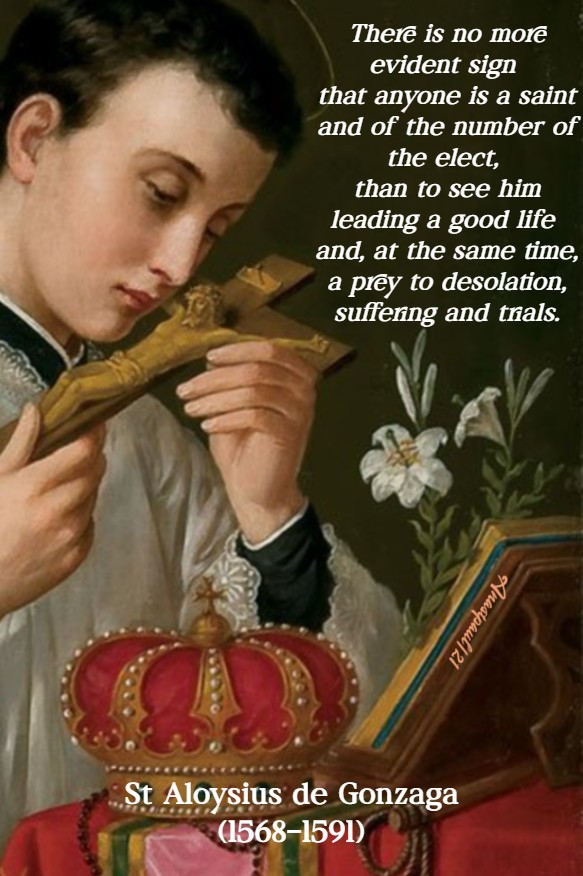
Quote/s of the Day – 21 June – The Memorial of St Aloysius de Gonzaga SJ (1568-1591)
“There is no more evident sign that anyone is a saint and of the number of the elect, than to see him leading a good life and, at the same time, a prey to desolation, suffering and trials.”
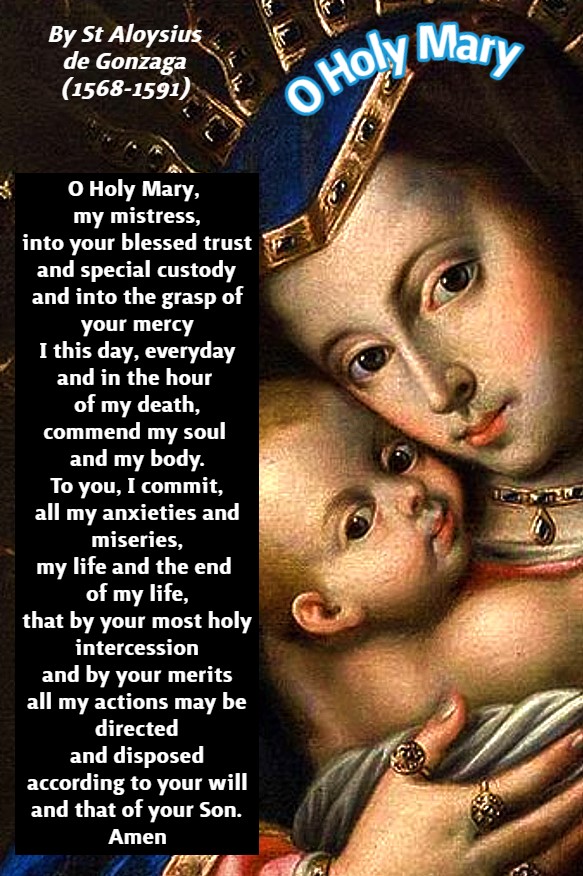
O Holy Mary, my mistress, into your blessed trust and special custody and into the grasp of your mercy I this day, everyday and in the hour of my death, commend my soul and my body. To you, I commit, all my anxieties and miseries, my life and the end of my life, that by your most holy intercession and by your merits all my actions may be directed and disposed according to your will and that of your Son. Amen
One Minute Reflection – 22 June – “Month of the Sacred Heart” , Readings: Genesis 12: 1-9, Psalms 33: 12-13, 18-19, 20 and 22, Matthew 7:1-5 .
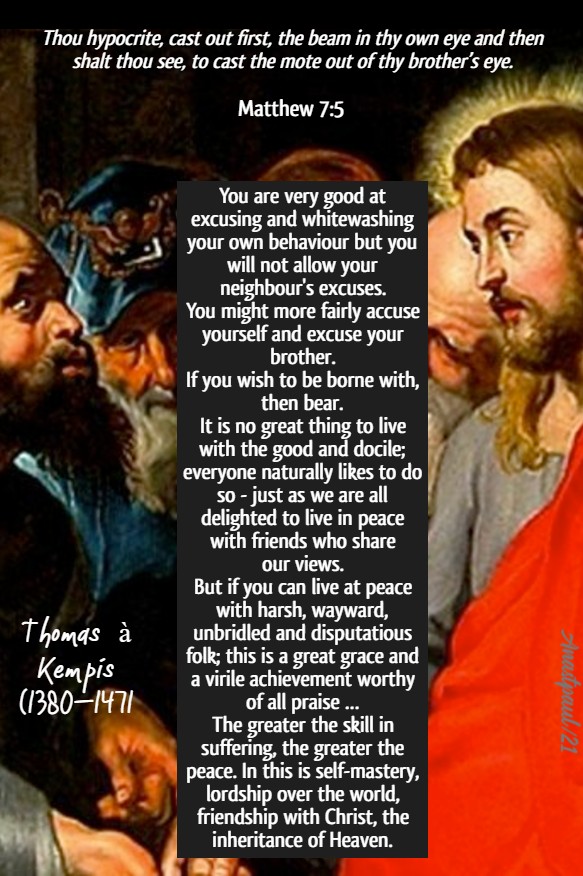
“Thou hypocrite, cast out first, the beam in thy own eye and then shalt thou see, to cast the mote out of thy brother’s eye.” – Matthew 7:5
REFLECTION – “You are very good at excusing and whitewashing your own behaviour but you will not allow your neighbour’s excuses. You might more fairly accuse yourself and excuse your brother. If you wish to be borne with, then bear. Look how far you are, even now, from a true and lowly love which knows no anger nor indignation except against itself. It is no great thing to live with the good and docile; everyone naturally likes to do so – just as we are all delighted to live in peace with friends who share our views. But if you can live at peace with harsh, wayward, unbridled and disputatious folk; this is a great grace and a virile achievement worthy of all praise … The greater the skill in suffering, the greater the peace. In this is self-mastery, lordship over the world, friendship with Christ, the inheritance of Heaven.” – Thomas à Kempis CRSA (1380-1471) – The Imitation of Christ – Book II, Ch 3
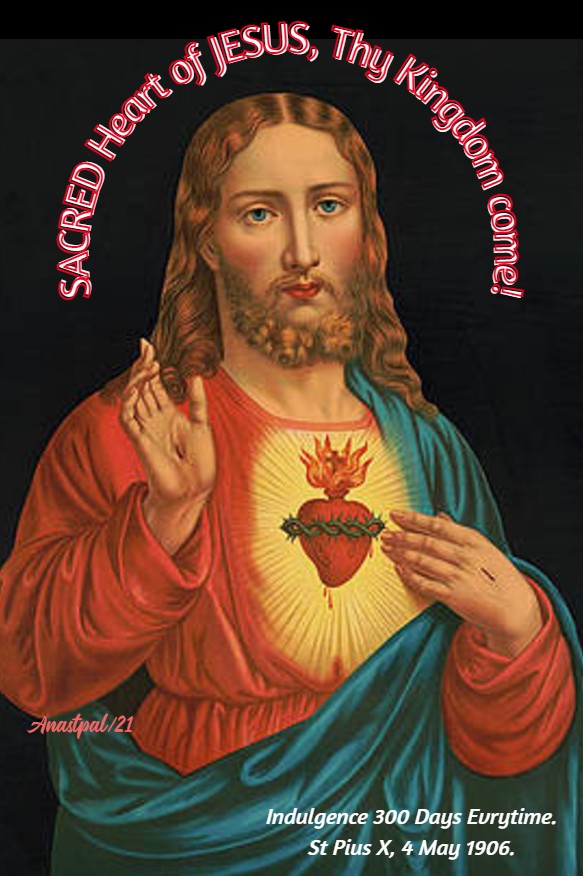
PRAYER – As we pray before You Lord, we ask You, in Your loving kindness, for the grace always to ponder in our hearts what we proclaim with our lips. Keep us in Your commandments and strengthen us by the prayers of the Blessed Virgin Mother, that we may live by a holy conscience and never flinch from the protection of truth. Grant this we pray through Jesus Christ, Your Son, our Lord, in the love and unity of the Holy Spirit, God for always and forever, amen. SACRED Heart of JESUS, Thy Kingdom come! Indulgence 300 Days.Everytime Raccolta 178 St Pius X, 4 May 1906.
Our Morning Offering – 21 June – “Month of the Sacred Heart”
Heart of Jesus! Unknown author (Published 1929)
Heart of Jesus! I entreat Fill my soul with graces sweet! Heart of Jesus! Help me win Freedom from all mortal sin!
Heart of Jesus! Keep my soul Ever under Thy control! Heart of Jesus! Kindle mine With the fire of faith divine!
Heart of Jesus! Give me a light To see, to think, to act aright! Heart of Jesus! Sorrow-rent Make me truly penitent!
Heart of Jesus! Soften mine Out of gratitude to Thine! Heart of Jesus! Full of love Lead my thoughts to heaven above!
Heart of Jesus! Give me grace My purgatory here to face! Heart of Jesus! Let me be Ever filled with love of Thee! Heart of Jesus! Holy shrine, Be It ever home of mine!
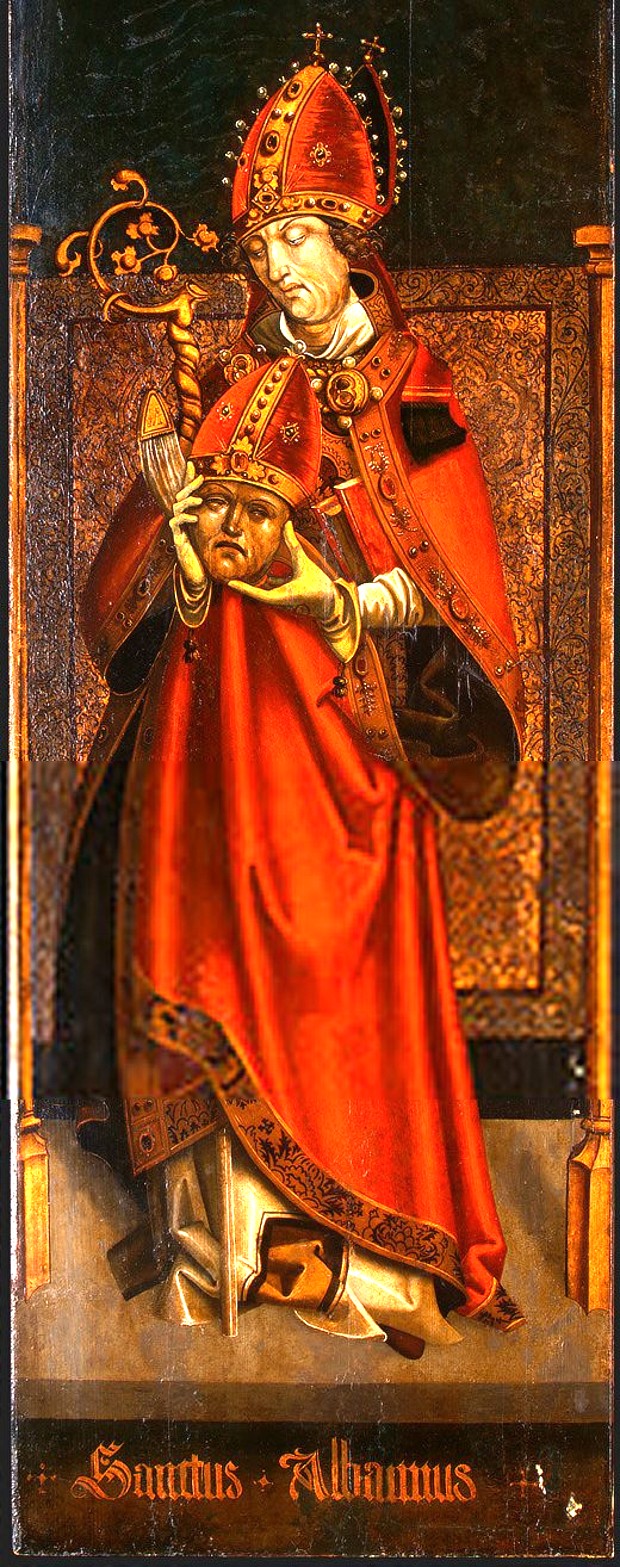
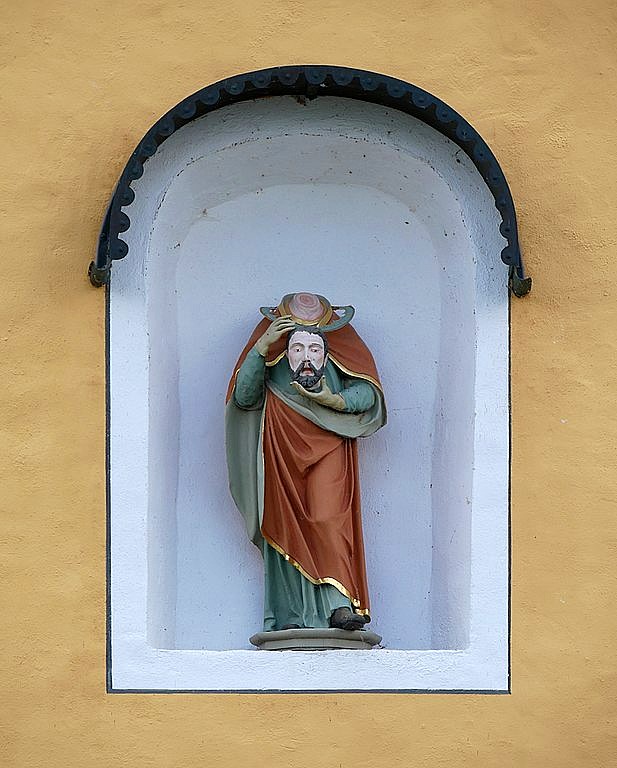
Saint of the Day – 21 June – Saint Alban of Mainz (Died c 400) Martyr, Priest, Missionary, Confessor Born in Greece or Albania (sources vary) and died in c 400 by pagan Vandals at Hanum, Germany. His body was beheaded post-mortem. Patronages – against epilepsy, of epileptics, against kidney stones, against hernia; hernia victims. Also known as – Albano di Magonza, Albinus of Mainz.
The Roman Martyrology states of him today: “St Alban. Martyr, who was made worthy of the crown of life, after long laours and severe combats.”
The oldest surviving substantial source about Alban of Mainz is the Martyrologium (c 845) of Blessed Rabanus Maurus (776-856), who had two separate entries for the Mainzer Alban and the English Alban. Concerning Alban of Mainz, he wrote:
21 June: The Martyr Alban from native Moguntia [Mainz], who during the reign of Emperor Theodosius went forward from the island of Namsia with the Saint Theonestus and Ursus and reached Mediolanum [Milan] and from there he went out and, with the help of the Lord, he arrived in the provinces of Gaul, and stayed there in the Saviour’s name, willing to suffer Martyrdom in the service of God. But after Martyrdom took the blessed Ursus in the City of Augusta, Theonestus arrived with Alban in Moguntiacum [Mainz]; while preaching the word of God there, his pupil Alban fulfilled Martyrdom and was buried there, near the City.
— Rabanus Maurus, Martyrologium. Iunius (c. 845)
The second substantial source is the Passio sancti Albani, an incomplete hagiography written in the 1060s or 1070s by schoolmaster Gozwin, who lamented that very little evidence about Alban had survived to his day. Gozwin’s account is much longer and adds many elements not found in Rabanus’ Martyrologium, including a prologue about the First Council of Nicaea (325) which condemned Arianism, that, nevertheless, persisted until Honorius and Arcadius succeeded Theodosius (395). In that time, Alban is mentioned as one of four disciples of St Theonestus, the others being Sts Ursus, Tabraha and Tabratha. These five Catholic clerics are forced to flee from North Africa to Italy after being persecuted by Huneric, the fiercely Arian King of the Vandals, travelling to St Ambrose, Bishop of Milan. The most wise Ambrose teaches Theonestus and his disciples refined theology and sends them out to convert the ‘Arian beasts’ in Gaul and Germany. They pass a City called Augusta, where Ursus is killed by Arians, and Alban is eventually beheaded in Mainz by local Arians to whom he was preaching the Catholic doctrine of the Trinity. The legend finishes by narrating, that Alban carried his head in his hands to the place where he wanted to be buried.
A Church and Monastery were built in Mainz in 804 to honour Alban. A map of Fulda from 786 seems to have already mentioned a chapel in Mainz dedicated to Alban. It became the centre of Saint Alban’s Abbey, a large Benedictine Monastery, which was renovated by Charlemagne in 806. The Monastery was devastated in 1557 and never restored.
Albert II, Count of Namur founded the collegiate Church of St Alban at Namur in 1047. When the Diocese of Namur was created in 1559, it was expanded as St Aubin’s Cathedral, which claims to possess relics of Alban of Mainz.
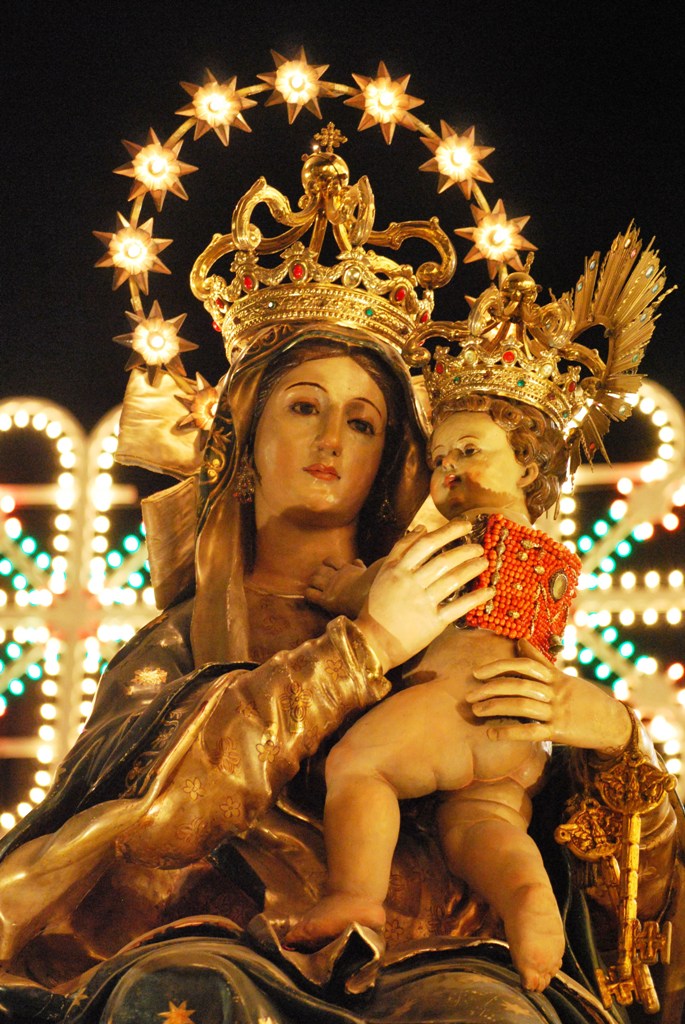
Madonna dei Miracoli / Our Lady of the Miracles, Alcamo, Sicily (1547) – 21 June:
The Processional Statue
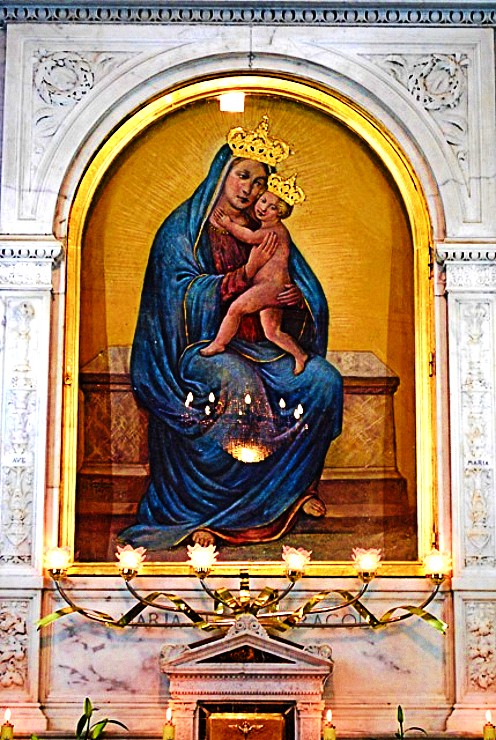
The cult of Our Lady of the Miracles in Alcamo dates to 21 June 1547, the day people remember the Madonna’s apparition to some women near a stream running north of Alcamo. According to tradition while washing their clothes in the stream, the women, with a blind and a deaf one among them, saw the apparition of a woman with a child and were hit by a gust of pebbles, during the apparition but without receiving any injury or pain; on the contrary, after being hit by the pebbles, they strangely felt a certain sense of wellbeing and recovered their health. After learning the news, the women’s husbands, thinking that it was a joke, went to investigate, thinking that someone was hidden among the bushes but they didn’t find anybody. Then the local authorities inquired on the spot, cut down the near grove and found the ruins of a “cuba,” an old arc of a mill that nobody remembered any longer and insidem there was a fresco on a stone made by an anonymous painter of the 13th century representing Our Lady with the Child Jesus, which at first. the believers called “Madonna Fons Misericordiae” (that is Our Lady Source of Mercy).
A representation of the discovery of Our Lady of Miracles’ image (inside its Chapel in the Basilica of Our Lady of the Assumption in Alcamo).
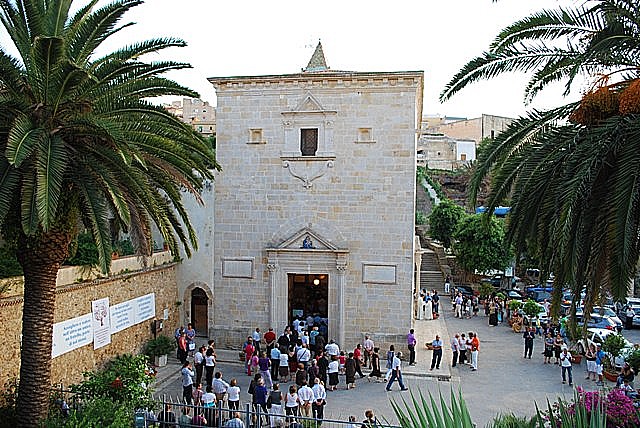
After this discovery, all the people started praying before the rediscovered image and in the following days there were several miracles. Our Lady of Miracles became the Patron of Alcamo, in substitution of the Holy Crucified, who was the Patron Saint of Alcamo and other near small towns (among which Calatafimi and Salemi). The old Patron Saint’s memory however, remains: in fact, they call St Francesco of Paola “santu patri” (whose translation means “Patron Saint”) as the Church named after him was called the Holy Crucified Church. The Madonna’s discovered image was first called “Our Lady Source of Mercy” but thanks to the high number of subsequent miracles, in 1583 the name was changed into “Our Lady of Miracles”. Further to these events, Don Fernando Vega, Alcamo’s governor, ordered the construction of the Sanctuary of Our Lady of Miracles, which hosts the Madonna’s image. Inside the Church there is a white marble sarcophagus containing the mortal remains of the governor Don Fernando Vega, according to his will.
The Crowned Painting of the Madonna of Miracles in the Sanctuary at Alcamo
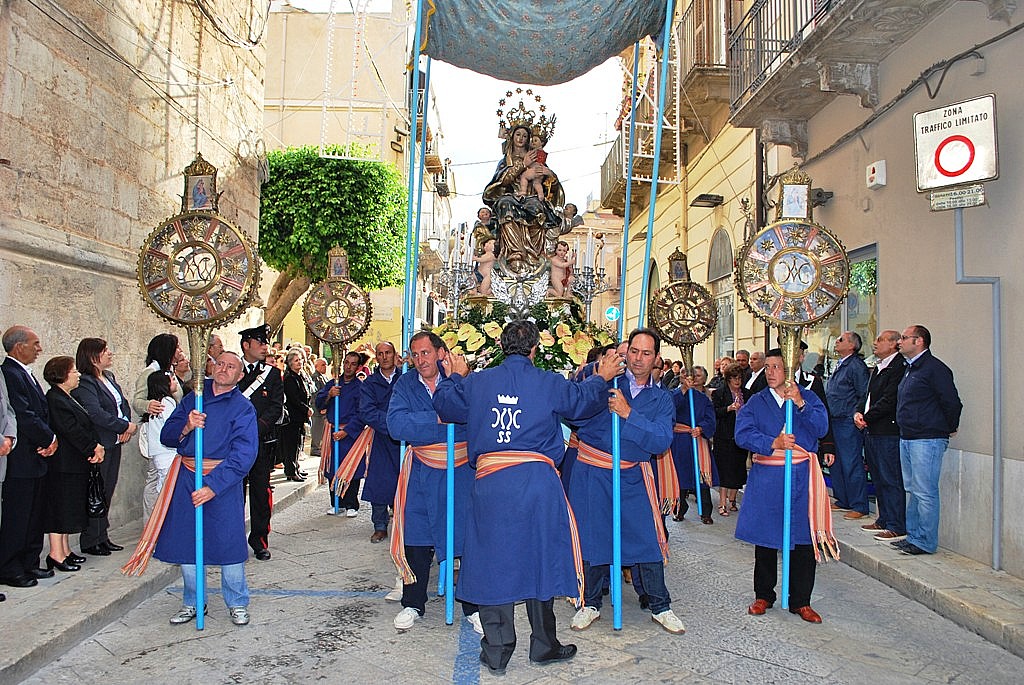
Every year in Alcamo there are the celebrations in honour of Our Lady of Miracles from 19 June until 21 of June. This is the most important religious festivity in Alcamo. The real celebrations are often anticipated by other events, so extending the feast to about two weeks, in this way the beginning of the celebrations changes every year, while the last day is always the 21 June. The celebrations include: The pealing of church bells” which opens the celebrations together with the burst of fireworks and the passing of the band through the town streets; in the past Alcamo’s band also joined the musical band of Partinico (a neighbouring small town). The Holy Mass in honour of Our Lady of Miracles in the Basilica di Santa Maria Assunta (also called “Mother Church”), in which all confraternities and laity groups in Alcamo take part. The procession to the Sanctuary of Madonna of Miracles (called “calata”), in which all civil and religious authorities of the town (together with the Mayor) take part; they are preceded by the band of the town. In old times people took also the animals that had recovered from an illness. Inside the Sanctuary they sing Vespers and then there is the Eucharistic Blessing/Benediction.
St Raymond of Barbastro St Rufinus of Syracuse St Suibhne the Sage St Terence St Ursicenus of Pavia — Martyrs of Taw – 3+ saints: Three Christians of different backgrounds who were martyred together – Moses, Paphnutius, Thomas. They were beheaded in Taw, Egypt, date unknown.
Thought for the Day – 20 June – Meditations with Antonio Cardinal Bacci (1881-1971)
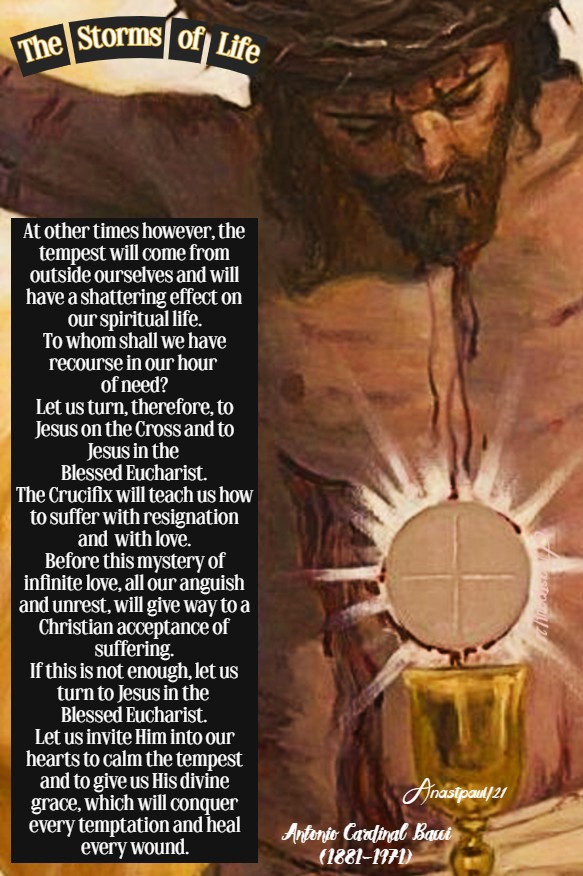
The Storms of Life
“At other times however, the tempest will come from outside ourselves and will have a shattering effect on our spiritual life. It may be some insult which has seriously wounded us. There may be somebody near to us who has grown quite insufferable. Or perhaps suffering will come to us in the guise of illness, disgrace or loss of our dear ones. We shall feel lonely and abandoned in the midst of the storm. To whom shall we have recourse in our hour of need? Shall we turn to our fellow-men? Perhaps there will be nobody able to understand us perfectly, or, if there is somebody who sympathises with us,he may be able to do nothing for us, save to utter a few kind words.
Let us turn, therefore, to Jesus on the Cross and to Jesus in the Blessed Eucharist. The Crucifix will teach us how to suffer with resignation and with love. Before this mystery of infinite love, all our anguish and unrest, will give way to a Christian acceptance of suffering.
If this is not enough, let us turn to Jesus in the Blessed Eucharist. Let us invite Him into our hearts to calm the tempest and to give us His divine grace, which will conquer every temptation and heal every wound.”
Quote/s of the day – 20 June – “Month of the Sacred Heart” – Job 38: 1, 8-11, Psalms 107: 23-24, 25-26, 28-29, 30-31 (1b), Second Corinthians 5: 14-17, Fospel: Mark 4: 35-41
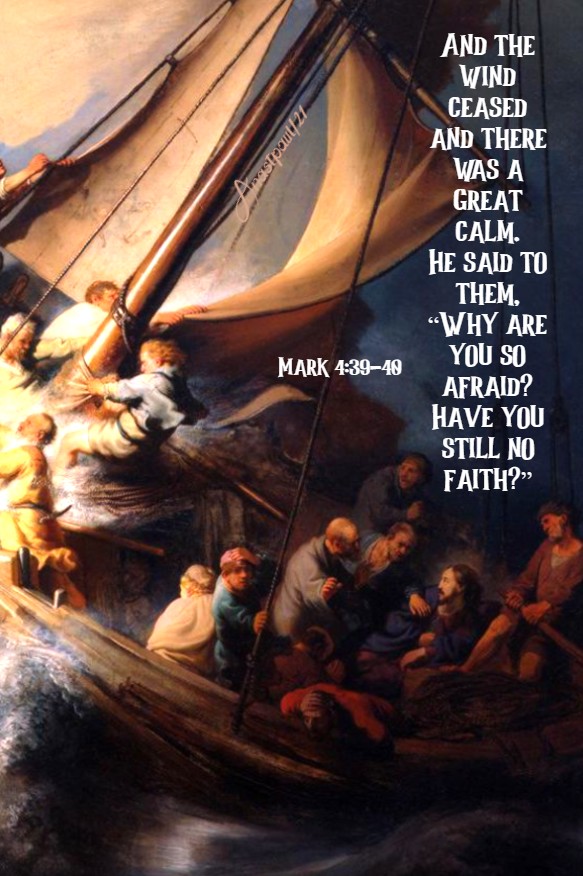
“And the wind ceased and there was a great calm. He said to them, “Why are you so afraid? Have you still no faith?”
Mark 4:39-40
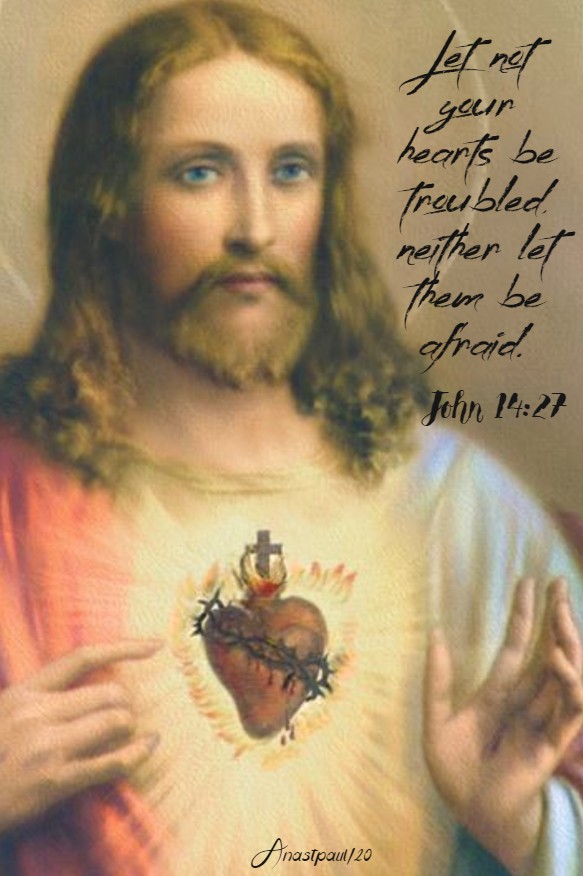
“Let not your hearts be troubled, neither let them be afraid.”
John 14:27
“Can any of you by worrying add a moment to your life-span?”
Luke 12:25
“Place all your trust in God, let Him be your fear and your love. He will answer for you, He will do what is best for you. You have here no lasting home. You are a stranger and a pilgrim wherever you may be and you shall have no rest, until you are wholly united with Christ. Why do you look about here when this is not the place of your repose?”
Thomas à Kempis CRSA (1380-1471)
“Let nothing perturb you, nothing frighten you. All things pass. God does not change. Patience achieves everything.”
St Teresa of Jesus of Avila (1515-1582) Doctor of Prayer
“ … Let the fine point of your spirit always turn towards God, its north. Your are about to take to the high seas of the world, do not, on this account, alter dial or mast, sail or anchor or wind. Keep Jesus Christ as your dial, at all times, His Cross for mast, on which to hoist your resolutions, as a sail. Let your anchor be, profound trust in Him and set out early!”
St Francis de Sales (1567-1622) Doctor of the Church
“Throw yourself into God’s arms. He will carry you when the road is rough.”
One Minute Reflection – 20 June – “Month of the Sacred Heart” – Job 38: 1, 8-11, Psalms 107: 23-24, 25-26, 28-29, 30-31 (1b), Second Corinthians 5: 14-17, Gospel: Mark 4: 35-41
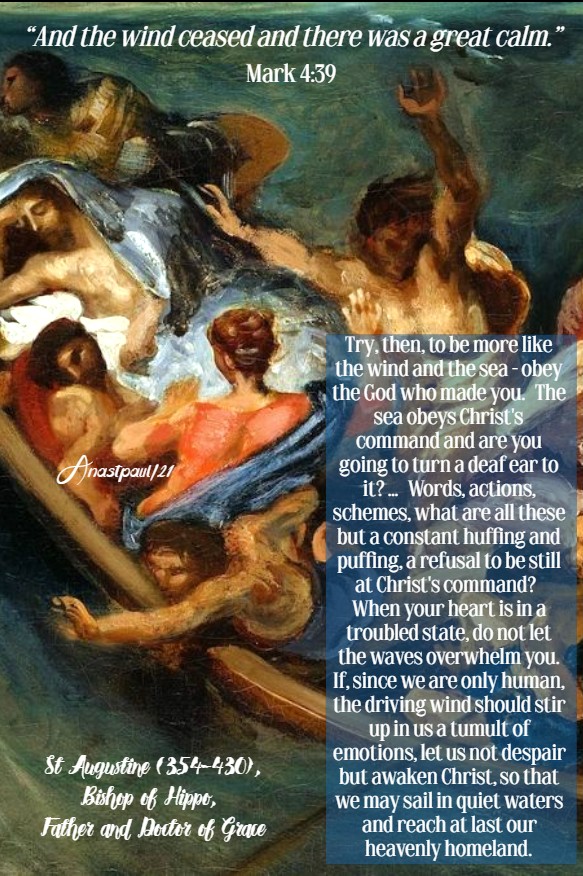
And the wind ceased and there was a great calm. He said to them, “Why are you so afraid? Have you still no faith?” – Mark 4:39-40
REFLECTION – “Your heart is imperilled, your heart is taking a battering. On hearing yourself insulted, you long to retaliate but, the joy of revenge, brings with it another kind of misfortune – shipwreck. Why is this? Because Christ is asleep in you. What do I mean? I mean you have forgotten His presence. Rouse Him, then; remember Him, let Him keep watch within you, pay heed to Him. … You have forgotten that when Christ was being crucified He said: “Father, forgive them, for they know not what they do” (Lk 23:34). Christ, the sleeper in your heart, had no desire for vengeance in His.
Rouse Him, then, call Him to mind. (To remember Him, is to recall His words; to remember Him, is to recall His commands.) Then, when He is awake within you, you will ask yourself, “Whatever kind of wretch am I to be thirsting for revenge? … He who said, ‘Give and it shall be given you; forgive and you will be forgiven,’ would indeed decline to acknowledge me. So I will curb my anger and restore peace to my heart.” Now all is calm again. Christ has rebuked the sea. … This is the moment to awaken Christ and let Him remind you of those words: “Who can this be? Even the winds and the sea obey him” Who is this whom the sea obeys? “It is he to whom the sea belongs, for he made it” (Ps 95[94]:5); “all things were made through him” (Jn 1:3).
Try, then, to be more like the wind and the sea – obey the God who made you. The sea obeys Christ’s command and are you going to turn a deaf ear to it? … Words, actions, schemes, what are all these but a constant huffing and puffing, a refusal to be still at Christ’s command? When your heart is in a troubled state, do not let the waves overwhelm you.
If, since we are only human, the driving wind should stir up in us a tumult of emotions, let us not despair but awaken Christ, so that we may sail in quiet waters and reach at last our heavenly homeland.” – St Augustine (354-430), Bishop of Hippo, Father and Doctor of Grace – Sermon 63
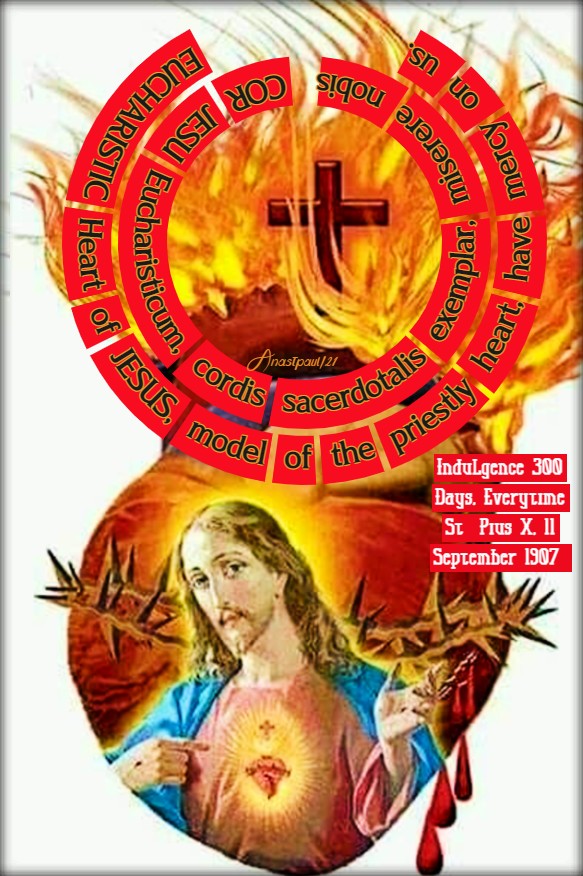
PRAYER – Waken us holy Lord, to Your presence in us, with us, now and forever. Open our eyes to see Your presence and our ears to hear Your voice. Teach us that You are always with us and Your presence is all we need to survive the storms and the winds of this world. For You, just You, are our rock and our foundation, our ship and our harbour. Grant that the prayers of all Your Angels and Saints with their Queen and ours, Mother Mary, may serve to remind us of Your love and power. Through Christ our Lord, with the Holy Spirit, God forever, amen. EUCHARISTIC Heart of JESUS, model of the priestly heart, have mercy on us. COR JESU Eucharisticum, cordis sacerdotalis exemplar, miserere nobis. – Indulgence 300 Days, Everytime – Raccolta 177St Pius X, 11 September 1907
Our Morning Offering – 20June – “Month of the Sacred Heart”
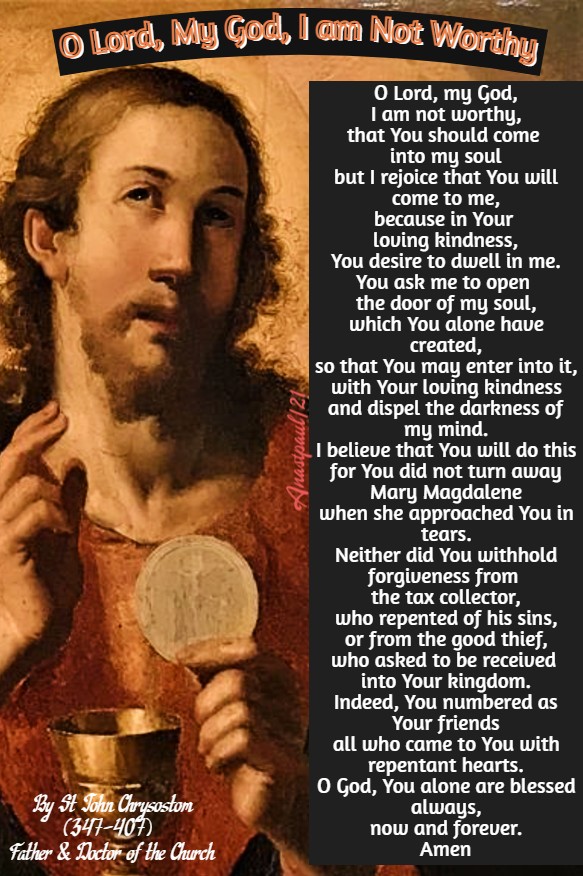
O Lord, My God, I am Not Worthy Prayer Before Holy Communion By St John Chrysostom (347-407) Father & Doctor of the Church
O Lord, my God, I am not worthy, that You should come into my soul but I rejoice that You will come to me, because in Your loving kindness, You desire to dwell in me. You ask me to open the door of my soul, which You alone have created, so that You may enter into it, with Your loving kindness and dispel the darkness of my mind. I believe that You will do this for You did not turn away Mary Magdalene when she approached You in tears. Neither did You withhold forgiveness from the tax collector, who repented of his sins, or from the good thief, who asked to be received into Your kingdom. Indeed, You numbered as Your friends all who came to You with repentant hearts. O God, You alone are blessed always, now and forever. Amen
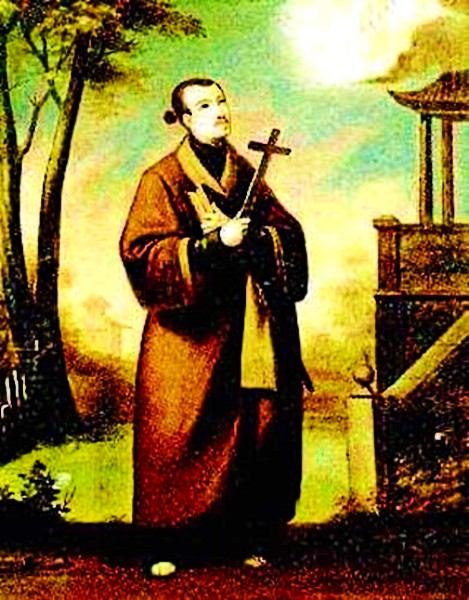
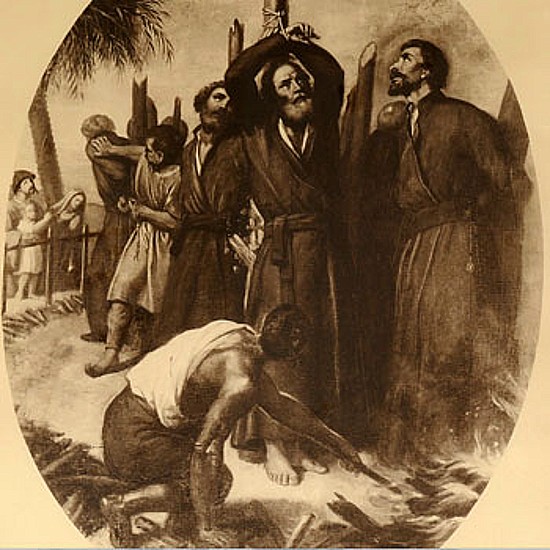
Saint of the Day – 20 June – Blessed Francisco Pacheco SJ (1566-1626) Martyr, Priest of the Society of Jesus, Missionary to India, China and Japan, Provincial Superior. Born in 1566 in Ponte de Lima, Braga, Portugal and died by being burned at the stake on 20 June 1626 in Nagasaki, Japan. Also known as – Francesco, Francis.
Francisco Pacheco was the most experienced Jesuit who died a Martyr during the Great Persecution in Japan between 1617 and 1632. At the time of his arrest, he was Provincial Superior of the Jesuits and Apostolate Administrator of the Diocese and his imprisonment was a serious loss to the Christian community struggling to survive the persecution.
Fr Pacheco was born in Ponte di Lima, near Braga, Portugal, of noble parents. As a youth he heard of the exploits of Missionaries in Japan and dreamed of imitating them. While at the Jesuit school in Lisbon, he also watched the annual departure of the Jesuit Nissionaries and this further strengthened his resolve and thus he decided to join the Society in 1585. His request to go to the missions was only granted seven years later and his first stop was Goa, India where he continued his studies. He then went on to Macau to further continue his studies before being Ordained.
Fr Pacheco finally set forth for Japan in 1604 and spent four years in the capital of Osaka, Miyako (today’s Kyoto) before taking up his next appointment as Head of the Jesuit college in Macau. In 1614, he returned to Japan and became Vicar General to Bishop Luis de Cerqueira and was based in Nagasaki until the promulgation of the shogun’s decree in 1614 banishing all foreign Missionaries and forbidding Japanese Christians to practice their religion.
Fr Pacheco’s exile in Macau was a short one as he returned secretly to Japan the following year, disguised as a merchant and took up Missionary work at Takaku and the islands of Amakusa and Kani. During those years of fierce persecution he sadly saw thousands of Christians give up their religion under governmental pressure and fear of torture. He also witnessed the terrible deaths of his brother Jesuits and hundreds of Christians who remained steadfast in their faith, though it meant beheading or death by slow fire. Fr Pacheco knew that the longer he remained in Japan the closer was his Martyrdom.
Following his appointment as the Jesuits’ Provincial Superior, Fr Pacheco moved his residence from Nagasaki to the seaport of Kuchinotsu in Arima which had better security and better contact with the Jesuits in Japan. The search for Jesuit Missionaries was intensified when more spies were recruited by Shogun Iyemitsu. Fr Pacheco was betrayed by his former host, an apostate who because of the reward money and hoping to gain favour with the district governor, revealed where he was With 200 soldiers surrounding the house, Fr Pacheco and two of his Catechists, Paul Kinsuke and Peter Kinsei were arrested with two others living in the next house. The Jesuits, the Catechists, their hosts and families were all arrested and placed in a dungeon in Shimabara where they had to endure the damp and cold winter. Within a few days, Fr John Baptist Zola and his Catechist, Vincent Kaun, were added to their number.
While in prison, Fr Pacheco admitted the four Catechists into the Society and transformed his group of prisoners, including the lay persons into a quasi-religious community with set times for rising, prayer, meditation, fasting and doing penance to prepare and strengthen them for the Martyrdom to come. Their greatest sorrow was their inability to celebrate Mass, recite the Breviary and recite the Rosary as all these had been taken away from them, although, of course, they could still count on their fingers and added their own meditations. Finally, on 20 June 1626, the prisoners were brought to Nagasaki where two other prisoners, Fr Balthazar de Torres SJ and his Catechist, Michael Too, were included. The final number was nine Jesuits and nine lay Christians and all were escorted to the Martyrs’ Hill where the executions were to take place.
The Jesuits rejoiced in seeing each other and embraced for the last time. They were the first to die. The government kept the Christians aside hoping that some would apostatize but watching the Martyrs die only strengthened their faith. They were kept in a prison in Nagasaki, determined to die for Christ. They were Martyred on 12 July 1626.
Fr Pacheco and his eight Jesuit companions, together with the nine lay Christians, were included among the 205 M,artyrs Beatified by Blessed Pope Pius IX on 7 May1867. Their ashes thrown into the sea and no relics remain.
Fourth Sunday after Pentecost (Traditional Calendar) +2021 Twelfth Sunday in Ordinary Time +2021
Notre-Dame-de-Grace / Our Lady of Grace in Equemauville, Honfleur, France – also known as Our Lady of Consolation (1524) 20 June (The Crowning) and 23 October:
The Abbot Orsini wrote: “Our Lady of Consolation, near Honfleur. This Chapel is much frequented; two children have been raised to life there, in memory of which ,their figures are there in silver.”
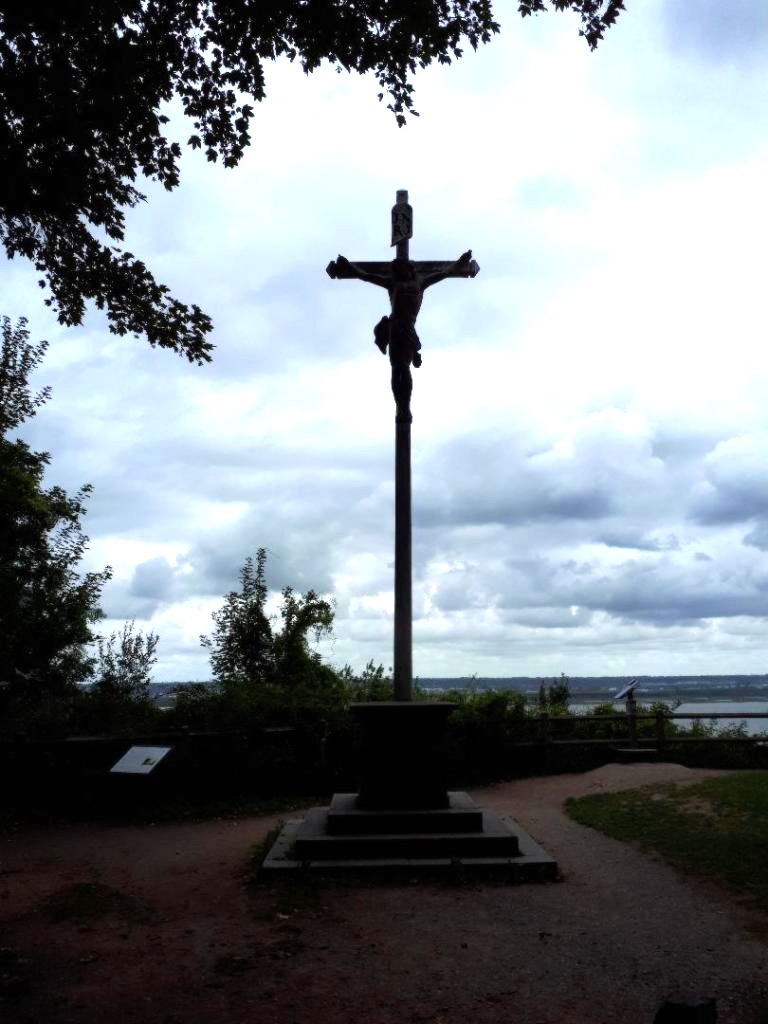
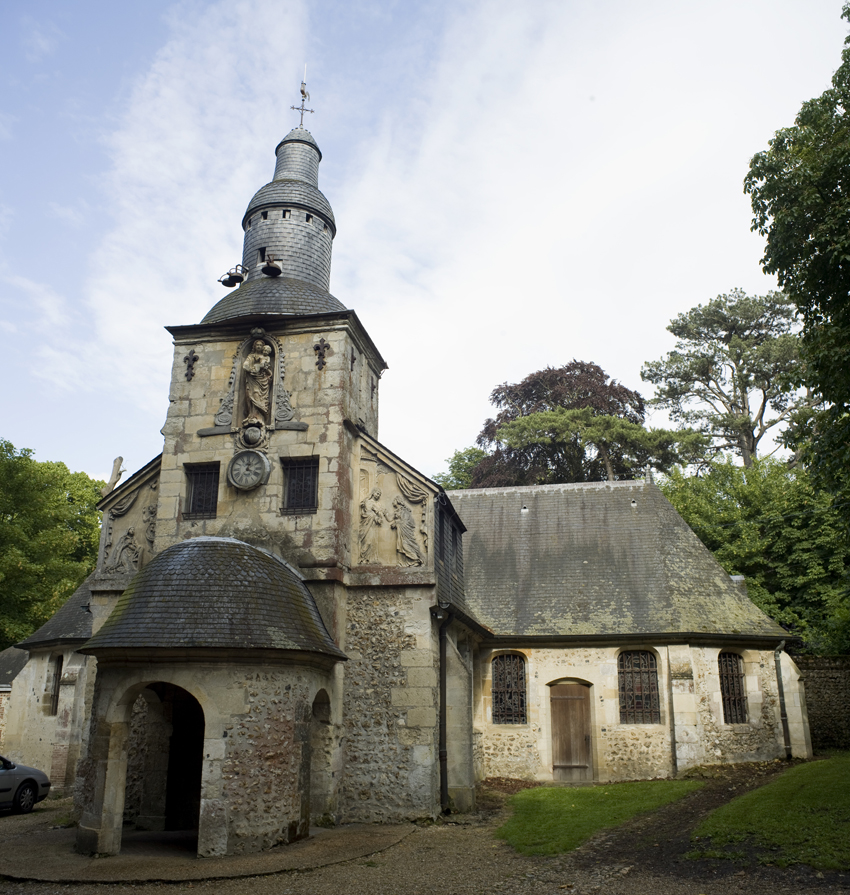
Also known as Our Lady of Grace, or Notre-Dame-de-Grace, the first thing that can be seen among the trees upon the height is a large Crucifix that seems to bless the sea, although the Chapelle Notre-Dame-de-Grace is still invisible, hidden under the old trees that surround it. The present Chapel is a small one, located a short distance from that Crucifix and the tall trees and lawns that surround the Church are in stark contrast to the Church’s humble dimensions.
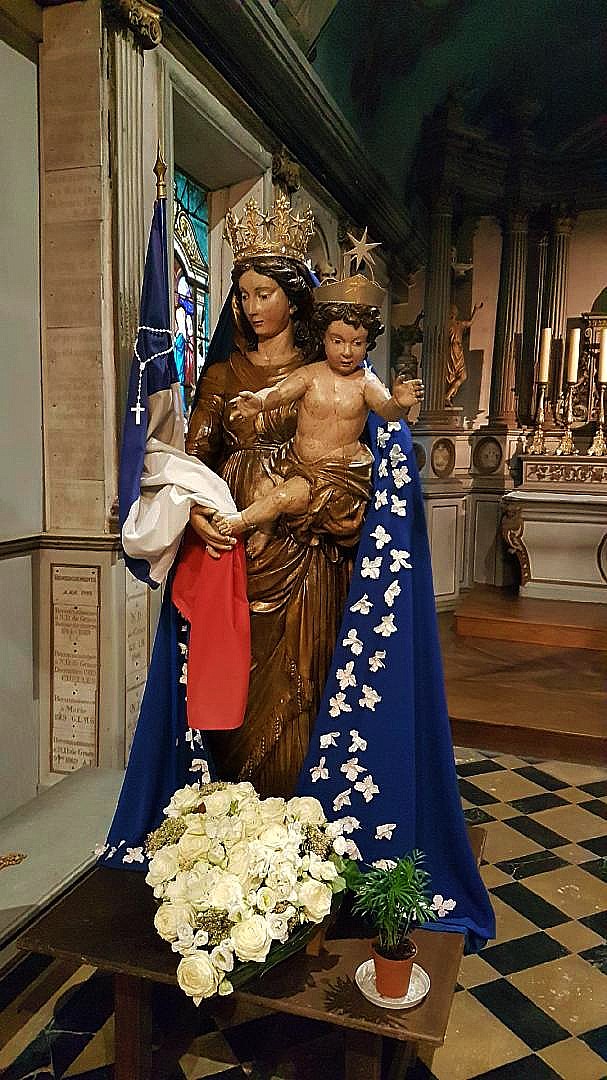
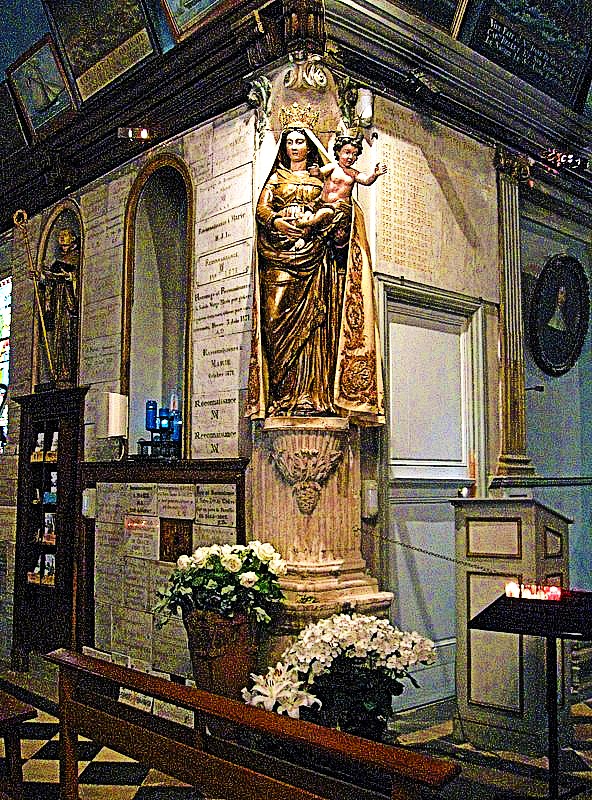
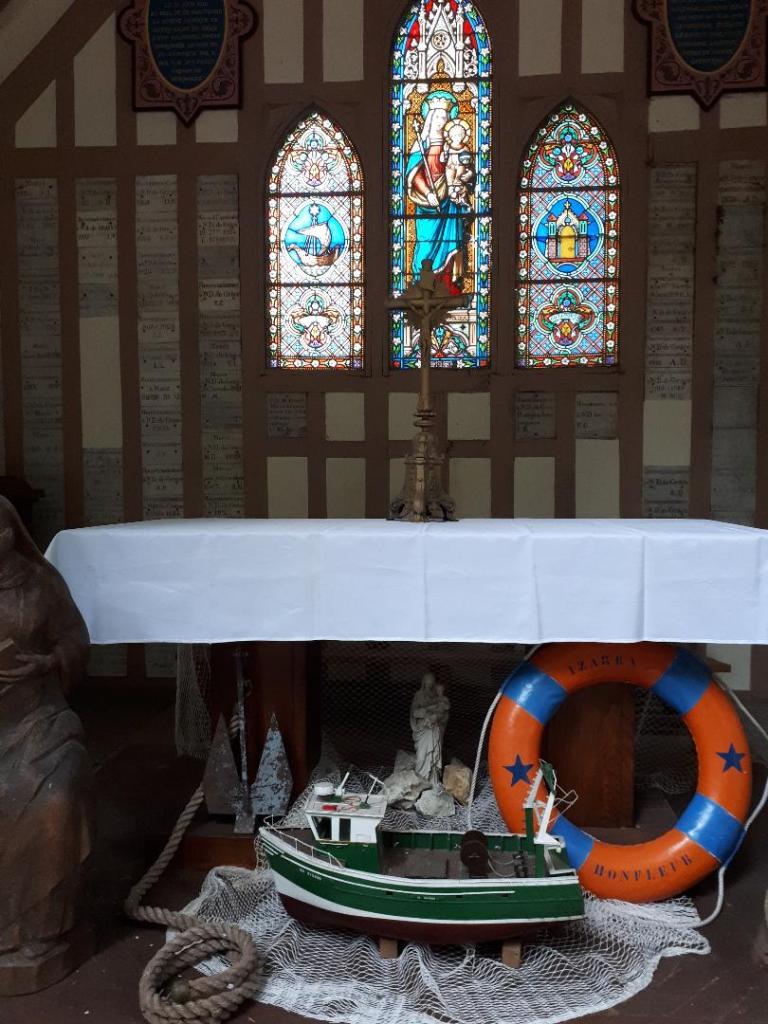
Once inside, everything is modest but exudes an atmosphere of holiness. There is a low arch, and passing beneath it, the view from the windows inside, is obscured by the thick foliage of the surrounding trees. On the Gospel side is the Statue of the Blessed Virgin on a short pillar. A fabric canopy frames the Statue which depicts the Mother of God holding her Divine Child. At the feet of Our Lady are placed small anchors and hearts of silver gilt that shine on the dais and we see a small amount of flowers that are the humble obeisance’s of children and the poor. There are votive offerings hundreds of years old, and paintings of ships battered by storms, or broken upon the rocks, beneath which are brief accounts of the perils and the salvation sent after prayer to Notre-Dame-de Grace. Crutches lean against the wall as trophies demonstrating the victorious prayers of the healed cripples who now walk, and burning candles, are constantly renewed beneath the holy image, exhibiting the persevering ardoUr of the faithful. It is a collective testimony of piety and edification from the servants of Mary.
The origin of the pilgrimage to Notre-Dame de Grace goes back to the eleventh century. According to tradition, in the year 1034, Robert the Magnificent, Duke of Normandy, was sailing to England. He was suddenly assailed by a violent storm and at the height of the danger he promised to build three Chapelsdevoted to the Blessed Virgin if he returned safely to his lands. The storm ended at once and the Prince immediately returned home to take care of his vow. He built one of the Chapels promised near his Castle, and dedicated it to Our Lady of Mercy. Another he built near Caen, which he called Notre-Dame de la Deliverance,and the third he built on the plateau in Equemauville overlooking Honfleur, which was named Notre Dame de Grace. This Chapel near Honfleur, soon became a busy place of pilgrimage. There is an authentic document at the Church from King Louis XI dated 28 January 1478 and letters showing that the Chapel was endowed with a certain tract of land containing a house, a barn, etc.
The Chapel partially collapsed and the sea swallowed part of the cliff near the Church during a violent earthquake that occurred on 29 September 1538. Only a section of one wall, the Altar, and the Statue of the Virgin Mary remained standing but such was the devotion of the people to this special place that many pilgrims continued to come and pray kneeling amid the debris. Unfortunately the landslides did not cease, so finally, in 1602, the last vestiges of the Sanctuary were removed to prevent the faithful from exposing their lives to the unremitting danger. The faithful regretted the loss of their Chapel, and one of them, Mr. Gonnyer, undertook to raise a new one. He dug the foundations one hundred paces from the old Church to the south-west but he was forced to stop at that point for lack of money. Offerings from the inhabitants of Honfleur did the rest and in 1613 the Chapel was acquired. It was a small building three times as long as it was wide;,thatched, isolated among the heather and looked more like a barn than a chapel. The Capuchins took possession on 16 March 1621, and they planted a large wooden Crucifix amid the ruins of the old chapel. They eventually replaced it with a stone Crucifix that they placed closer to the chapel than the old one had been. In the Middle Ages people understood that the Church provided for the moral and physical welfare of the people, as well as, the state. They knew that the apostolate of the monastic orders was necessary to form and maintain the ties of charity between the rich and poor, adjust the opulent life of one to soften the sufferings of others and to communicate to all, through preaching and by the Sacraments and example, the secret of living and dying well. When the Revolution erupted there was wide-spread desecration throughout France and all religious communities were dissolved. In vain the faithful recipients of so many graces endeavoured to protect their Sanctuary and the religious who served there. At one time it was hoped Honfleur could keep the Capuchins and so, a petition was drafted for that purpose in 1790. “Through the removal of religious communities,” said the petitioners, “we fear being deprived of the significant relief that we receive from the Capuchins. These men are religious at all times, labour for the good of the City and the neighbouring countryside and through the uprightness of their intentions and the justice of their actions, they have earned public esteem and confidence. They have a small Chapel, located on the coast under the invocation of the Blessed Virgin, which is held in great reverence throughout the Country and we urge its conservation.” The petition was sent to the National Assembly, who refused it. The Chapel was plundered and converted into a tavern. The old Statue was destroyed and sadly “those who were but lately to pray and ask for graces forgot themselves to commit orgies in a place where everything, even the walls, reproached them for their apostasy.” That was so long ago and now the tides of commercial prosperity have come to caress the people and promote the development of the City and the Port of La Havre. Hanfleur possesses all the signs of a prosperous City that is increasing in wealth and population, regardless of the attendant demoralisation and miseries of every kind, that accompany the seeming prosperity. La Havre is the seat of business where speculators contest in the commercial sphere where they work without ceasing to earn their fortune and contribute to each other’s ruin. Without the aid of the Blessed Virgin, there was no longer any hope for relief. After the atrocities had subsided the Chapel was restored and a copy of the original Statue created from Church records.
It was on 15 February 1912 that the Chapter of Saint Peter in Rome awarded the Golden Crown to the sSatue of Our Lady of Grace. The solemn Feasts of her Coronation were celebrated on 20 June 1913. Many people from Honfleur think that it is thanks to the intercession of Notre Dame de Grâce that Honfleur is the only Norman city not to have been bombed during the Second World War. The Chapel was classified as a historical monument in 1938.
Still, it was here, at this remote Chapel about 5 kilometers from Honfleur, that Marie-Francoise-Therese Martin came with her father and sister Celine in July of the year 1887 to pray to Notre-Dame-de Grace that she might be able to enter Carmel. That woman is better known today as Saint Therese of the Child Jesus and the Holy Face, or simply Therese of Lisieux, the “Little Flower.”
Irish Martyrs – 17 beati – This is the collective title given to the 260 or more persons who are credited with dying for the faith in Ireland between 1537 and 1714. Seventeen of them were beatified together on 27 September 1992 by St Pope John Paul II. • Blessed Conn O’Rourke• Blessed Conor O’Devany• Blessed Dermot O’Hurley• Blessed Dominic Collins• Blessed Edward Cheevers• Blessed Francis Taylor• Blessed George Halley• Blessed John Kearney• Blessed Matthew Lambert• Blessed Maurice Eustace• Blessed Patrick Cavanagh• Blessed Patrick O’Healy• Blessed Patrick O’Loughran• Blessed Peter Higgins• Blessed Robert Meyler• Blessed Terrence Albert O’Brien• Blessed William Tirry
Martyrs of Lower Moesia: Martyred on the Black Sea at Lower Moesia (in modern Bulgaria), date unknown. St Cyriacus St Paul
Martyred in Nagasaki: 9 Beati : burned alive on 20 June 1626 in Nagasaki, Japan. Their ashes were thrown into the sea and no relics remain. They were Beatified on 7 May 1867 by Pope Pius IX. • Blessed Baltasar de Torres Arias • Blessed Francisco Pacheco • Blessed Gaspar Sadamatsu • Blessed Giovanni Battista Zola • Blessed Ioannes Kisaku • Blessed Michaël Tozo • Blessed Paulus Shinsuke • Blessed Petrus Rinsei • Blessed Vincentius Kaun
Thought for the Day – 19 June– Meditations with Antonio Cardinal Bacci (1881-1971)
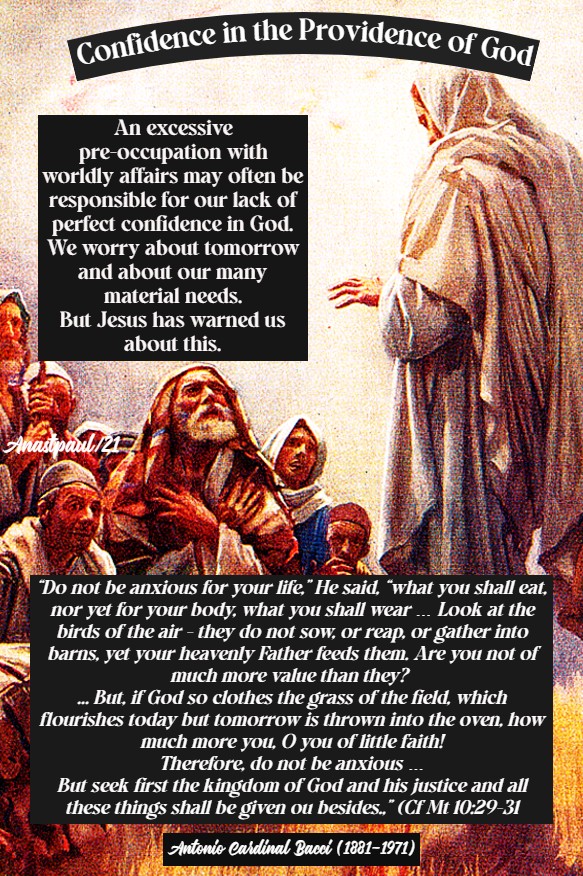
Confidence in the Providence of God
“An excessive pre-occupation with worldly affairs may often be responsible for our lack of perfect confidence in God. We worry about tomorrow and about our many material need. But Jesus has warned us about this. “Do not be anxious for your life,” He said, “what you shall eat, nor yet for your body, what you shall wear … Look at the birds of the air – they do not sow, or reap, or gather into barns, yet your heavenly Father feeds them. Are you not of much more value than they? … Consider how the lilies of the field grow, they neither toil nor spon, yet I say to you that not even Solomon in all his glory, was arrayed like one of these. But, if God so clothes the grass of the field, which flourishes today but tomorrow is thrown into the oven, how much more you, O you of little faith! Therefore, do not be anxious … But seek first the kingdom of God and his justice and all these things shall be given ou besides. Therefore, do not be anxious about tomorrow; for tomorrow will have anxieties of its own. Sufficient for the day is its own trouble” (Cf Mt 6:25-34).
“Are not two sparrows sold for a farthing? And yet, not one of them will fall to the ground without your Father’s leave. But, as for you, the very hairs of your head are all numbered. Therefore, do not be afraid!” (Cf Mt 10:29-31).”
Quote/s of the Day – 19 June – “Month of the Sacred Heart”- Readings: Second Corinthians 12: 1-10, Psalms 34: 8-9, 10-11, 12-13, Matthew 6: 24-34
“If God so clothes the grass of the field… will he not much more provide for you, O you of little faith?”
Matthew 6:30
“He [Christ], protects their faith and gives strength to believers, in proportion to the TRUST, that each man, who receives that strength, is willing to place in Him.”
St Cyprian of Carthage (c 200- c 258) Bishop and Martyr, Father of the Church
“The soul’s every movement is a reminder of God, the taking of a step, the extension of the right hand, the raising of the arm, with thanks for good works, with shame for bad, for familiar conversation and public addresses, in rational discourse, in works of success, in the fervour of virtue, day and night, we are guided by You in the useful movements for our spirit, asleep or awake … ”
St Gregory of Narek (950-1003) Father & Doctor of the Church
“You first loved us so that we might love You— not because You needed our love but because, we could not be what You created us to be, except by loving You.”
William of Saint Thierry (c 1075-1148)
“What are you afraid of, you men of little faith? That He will not pardon your sins? But with His own hands He has nailed them to the cross. That you are used to soft living and your tastes are fastidious? But He knows the clay of which we are made (Gn 2:7). That a prolonged habit of sinning binds you like a chain? But the Lord loosens the shackles of prisoners. Or perhaps that angered by the enormity and frequency of your sins, He is slow to extend a helping hand? But where sin abounded, grace became superabundant (Rom 5,20). Are you worried about clothing and food and other bodily necessities s so that you hesitate to give up your possessions? But He knows that you need all these things (Mt 6,32). What more can you wish? What else is there to hold you back from the way of salvation? ”
St Bernard (1091-1153) Mellifluous Doctor of the Church
One Minute Reflection – 19 June – “Month of the Sacred Heart”- Readings: Second Corinthians 12: 1-10, Psalms 34: 8-9, 10-11, 12-13, Matthew 6: 24-34
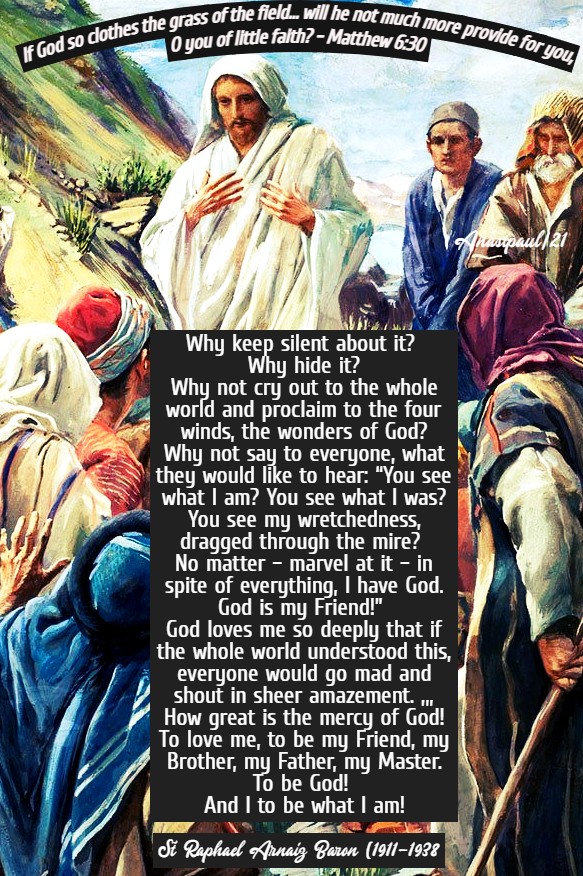
“If God so clothes the grass of the field… will he not much more provide for you, O you of little faith?” – Matthew 6:30
REFLECTION – “Today I take up my pen in the Name of God, so that my words, imprinting themselves on the white paper, may give service in perpetual praise of God, the blessed author of my life, my soul, my heart. I would like the whole Universe, with all the planets, stars and the countless sidereal systems, to be a vast smooth surface on which could be written the Name of God. I would like my voice to be stronger than a thousand thunders, more powerful than the surge of the sea, more fearful than the eruption of volcanoes, only to say the Name of God. I would like my heart to be as great as Heaven, pure as that of the Angels, guileless as that of the dove (Mt 10,16), so that it could possess God. But as none of these grandiose dreams can be realised, satisfy yourself, Brother Rafael, with little, and you who are nothing, that very nothing must suffice…
Why keep silent about it? Why hide it? Why not cry out to the whole world and proclaim to the four winds, the wonders of God? Why not say to everyone, what they would like to hear: “You see what I am? You see what I was? You see my wretchedness, dragged through the mire? No matter – marvel at it – in spite of everything, I have God. God is my Friend!” God loves me so deeply that if the whole world understood this, everyone would go mad and shout in sheer amazement. Still more, all that is but a little. God loves me so much that the Angels themselves don’t understand it! (cf. 1Pt 1,12) How great is the mercy of God! To love me, to be my Friend, my Brother, my Father, my Master. To be God! And I to be what I am!
Oh Jesus! I don’t have paper or pen. What can I say? How am I not to go mad!” – St Raphael Arnaiz Baron (1911-1938) Spanish Trappist Monk – To know how to wait, 04/03/1938
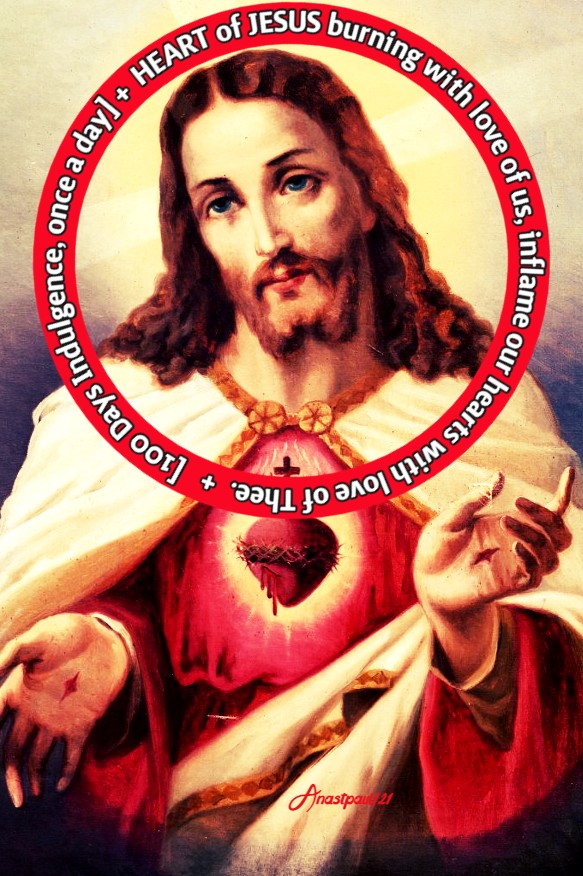
PRAYER – O my God, how great is Your love and how so can it be? For to our nothingness and taking on that garment, You sent Your Divine Son. To cleanse me and die for me! And I, then, do not understand this love?! Help me, teach me, soften my heart and open its eyes and ears that I may learn minute by minute and day by day, to love You more and more. By the prayers and love of the Blessed Virgin Mary, my Mother, that I may reach You in Heaven. Through Christ our Lord and Redeemer, with the Holy Spirit, God now and forever, amen. HEART of JESUS burning with love of us, inflame our hearts with love of Thee. – Indulgence 100 Days Once a Day – Raccolta 164 Pope Leo XIII, 16 July 1893.
Our Morning Offering – 19 June – “Month of the Sacred Heart” and always a Marian Saturday
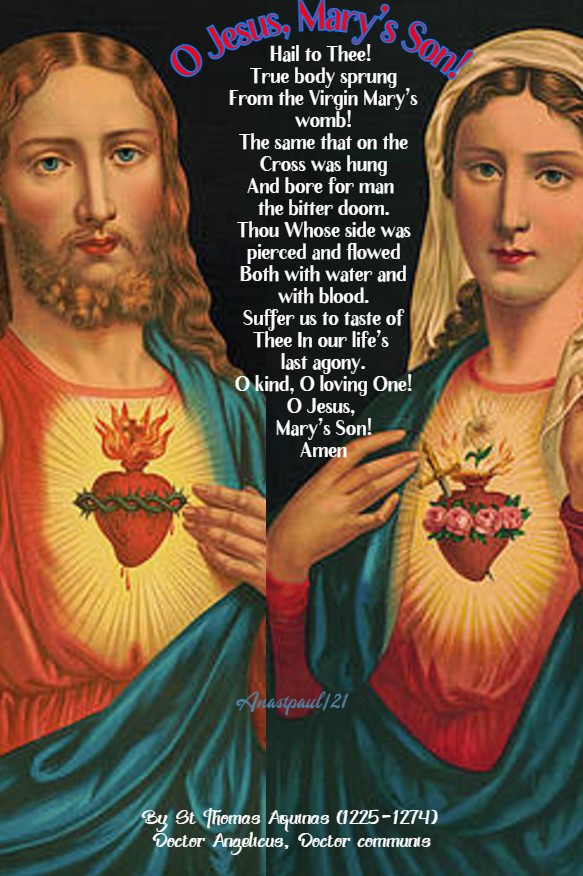
O Jesus, Mary’s Son! By St Thomas Aquinas (1225-1274) Doctor Angelicus, Doctor communis
Hail to Thee! True body sprung From the Virgin Mary’s womb! The same that on the cross was hung And bore for man the bitter doom. Thou Whose side was pierced and flowed Both with water and with blood. Suffer us to taste of Thee In our life’s last agony. O kind, O loving One! O Jesus, Mary’s Son! Amen
Saints of the Day – 19 June – Saints Gervase and Protase (Died c 165) Martyrs, Twin Brothers of Martyr Parents, Laymen Died c 165. Patronages – for the discovery of thieves, haymakers, Archdiocese of Perugia-Città della Pieve, Italy, City of Milan and 4 Cities. Also known as – Gervasius and Protasius
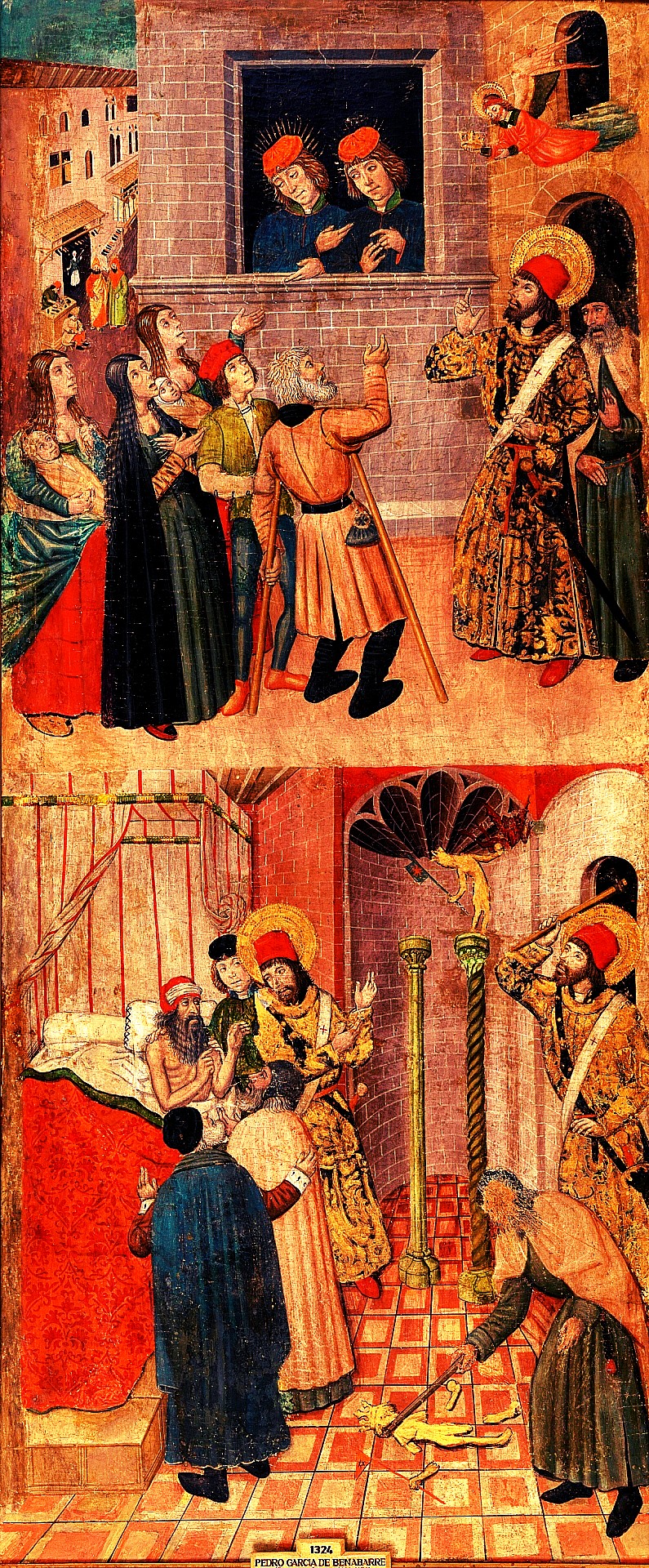
The Roman Martyrology states of them today: “In Milan, Saints Gervase and Protase. The Judge Astasius ordered that Gervase be beaten to death with leaded scourges and Protase beaten with sticks and beheaded. By divine revelation blessed Ambrose discovered their bodies, flecked with blood and incorrupt as if they had just died that day. During the translation of their bodies, a blind man gained his sight by touching the bier and many were set free who had been possessed by demons.”
Gervase and Protase were the twin sons of Martyrs. Their Father, Saint Vitalis of Milan, a man of consular dignity, suffered Martyrdom at Ravenna, possibly under Nero. Their Mother, Saint Valeria, died for her faith at Milan. When their parents died, the two brothers sold the family assets, distributed the proceeds to the poor and retired to a small house where they spent ten years in prayer and meditation. Denounced as Christians in Astasio, they were imprisoned and refusing to sacrifice to pagan gods, they were, therefore, sentenced to death. Gervase died under the blows of the scourges, Protase was instead beheaded.
The Martyrdom
The legend around our Martyrs was enriched with further clarifications: the Datiana historia eccle siae Mediolanensis states that the two saints were converted to Christianity, together with their parents, noble citizens of Milan, by the Bishop St Gaius who would have ruled the Church of the City from 63 to 85 and their Martyrdom would have occurred in the time of Nero (54-68), therefoe. a discrepancy exists as to the date of their death.
Saint Ambrose, in 386, had built a magnificent Basilica at Milan, now called the Basilica Sant’Ambrogio. Asked by the people to consecrate it in the same solemn manner as was done in Rome, he promised to do so if he could obtain the necessary relics. In a dream, he was shown the place where such relics could be found. He ordered excavations to be made outside the City, in the cemetery Church of Saints Nabor and Felix, who were at the time the primary patrons of Milan and there found the relics of Saints Gervasius and Protasius. In a letter, St Ambrose wrote: “I found the fitting signs and on bringing in some, on whom hands were to be laid, the power of the holy Martyrs became so manifest, that even whilst I was still silent, one was seized and thrown prostrate at the holy burial-place. We found two men of marvellous stature, such as those of ancient days. All the bones were perfect, and there was much blood.”
St Ambrose had their relics removed to the Basilica of Fausta (now the Church of Saints Vitalis and Agricola) and on the next day, moved into the Basilica, accompanied by many miracles, emblematic of divine favour in the context of the great struggle then taking place between St Ambrose and the Arian Empress Justina. Of the vision, the subsequent discovery of the relics and the accompanying miracles, St Ambrose wrote to his sister Marcellina describing thee events..
Saint Augustine, not yet baptised, witnessed these events and relates them in his “Confessions” (IX, vii), and in “De Civitate Dei” (XXII, viii) as well as in his “Sermon 286 in natal. “.
They are also referred to by Saint Paulinus in his life of Saint Ambrose. The latter died in 397 and by his own wish was buried in his Basilica by the side of these Twin Brpther Martyrs. The Brescia Casket was made for or used to hold the relics of all three – St Ambrose, St Gervase and St Protase.
The Crypt in Sant’Ambrogio Basilica. Embossed silver urn, (the Brescia Casket) displaying the skeletons of Saints Ambrose, Gervase and Protase.
The two Saints immediately enjoyed considerable popularity, especially in the West – they were particularly venerated in Italy, in Miam. Ravenna, in Brescia and in Rome, where, under the Pontificate of Pope Innocent I (402-417), the matron Vestina erected a dedicated Church in their honour, the current St Vitale in via Nazionale; in Gaul, in Vienne and in Rouen; in Spain, in Carmona; in Africa, in Carthage. The anniversary of the invention of their bodies soon entered the most important Calendars and Sacramentaries, such as the Carthaginian Calendar, the Gregorian Sacramentary and the Geronymian Martyrology which all remember them, unanimously, on 19 June. The Geronymian, then, also remembers them other times – 20 May (apparently due to a reading and transcription error); 28 July, the day of Saints Nazario and Celso, in whose Acts. our twin Martyrs are also remembered.
Nostra Signora d Montesenario / Our Lady of Monte Senario, Florence, Italy – Ordo Servorum Beatae Mariae Virginis (OSM) (1240) – 19 June:
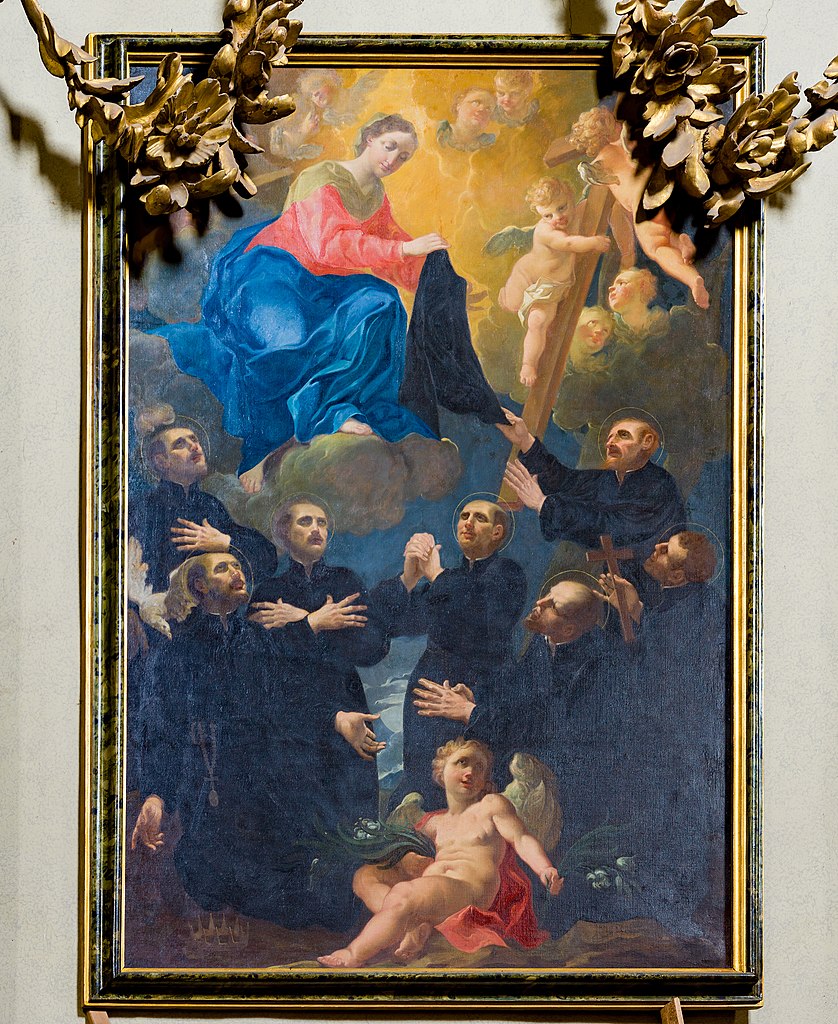
The cradle of the Order of the Servants of Mary began at Monte Senario in the year 1233 in the City of Florence, Italy, by a group of Hermits now known as the Seven Holy Founders Saints of the Servite Order – Ordo Servorum Beatae Mariae Virginis (OSM). They were sons of wealthy families and they retired from the world for a life of prayer and devotion to the praises of Mary. Leaving La Camarzia, a Suburb of Florence, the seven went to Monte Senario in the region of Tuscany. Uncertain of what way of life to follow, they turned to Our Lady in prayer and supplication and she appeared to them on the Feast of the Assumption in the year 1240.
Monte Senario
The Blessed Virgin, Our Lady of Monte Senario, presented the Seven Holy Founders with the Habit of their new Order and an Angel stood nearby bearing a scroll that was marked, “Servants of Mary.” He read to the Seven Holy Founders the following words: “You will found a new order, and you will be my witnesses throughout the world. This is your name: Servants of Mary. This is your rule: that of Saint Augustine. And here is your distinctive sign: the black scapular, in memory of my sufferings.”
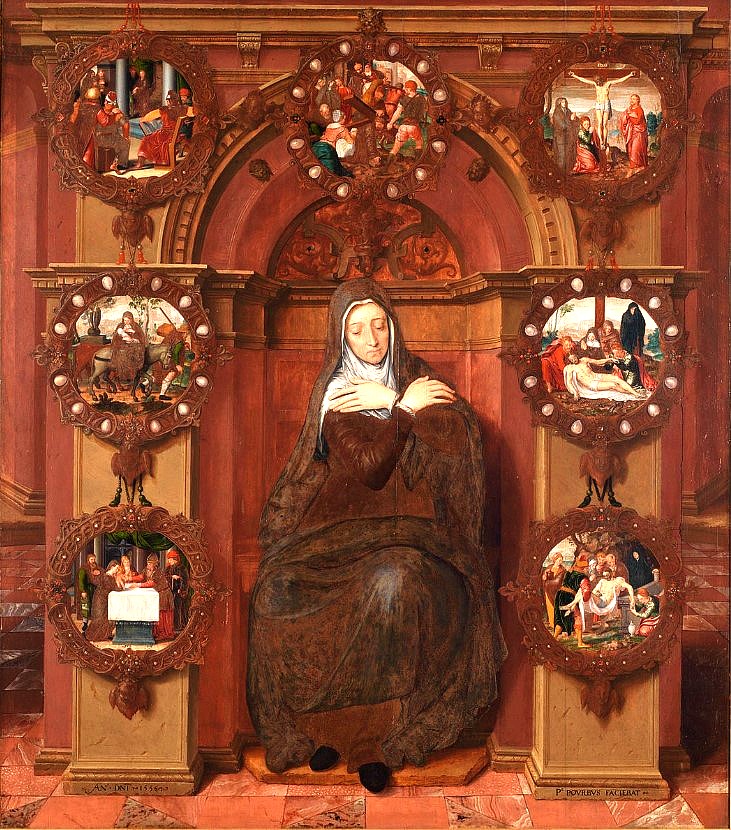
From that day in 1240, the seven were known as the Servants of Mary, the Order of Servants of Mary, or the Servites. under her title of Mother of Sorrows (Italian: Madonna Addolorata) Members of the Order take solemn vows to especially honour the Seven Sorrows of the Blessed Virgin Mary. The sorrows are, in order, the prophecy of Simeon, the flight into Egypt, the loss of the Holy Child at Jerusalem, meeting Jesus on His Way to Calvary, standing at te foot of the Cross, Jesus taken down from the Cross, and the burial of Christ. According to an ancient document called the “Legenda de Origin ordini,” “Our Lady wanted to begin her Order with seven men to show everyone, with absolute clarity, that she wanted to adorn her Order, endowing it with the seven gifts of the Holy Spirit.”
The Order gained official recognition in 1249 but was not officially approved until Pope Benedict IX issued a Bull in 1304. Their Church on Monte Senario, rebuilt in 1700, is a favourite resort of pilgrims from Florence especially. Mary here, as Our Lady of Monte Senario, as well as elsewhere, proves herself the miraculous Mother of God. The names of the Seven Holy Founders are Saint Alexis Falconieri, Saint Bartholomew degli Amidei, Saint Benedict dell’Antella, Saint Buonfiglio Monaldi, Saint Gherardino Sostegni, Saint Hugh dei Lippi-Uguccioni, and Saint John Buonagiunta Monetti.
St Adleida of Bergamo Bl Arnaldo of Liniberio St Culmatius of Arezzo St Deodatus of Jointures St Deodatus of Nevers St Gaudentius of Arezzo St Gervase and St Protase (Died c 165) Martyrs, Twin Brothers of Martyr Parents, Laymen St Hildegrin of Châlons-sur-Marne Bl Humphrey Middlemore St Innocent of Le Mans
St Modeste Andlauer St Nazario of Koper Bl Odo of Cambrai St Rémi Isoré Bl Sebastian Newdigate Bl Thomas Woodhouse Bl William Exmew St Zosimus of Umbria
Thought for the Day – 18 June – Meditations with Antonio Cardinal Bacci (1881-1971)
Belonging Entirely to God
“Let us reflect on the extent to which God is deserving of all our love. He is our Creator, our final end and our Redeemer. Jesus was not satisfied with giving us part of Himself but He gave us Himself completely. Although, as God He was infinite, He could not have given us more.
One drop of Hs Precious Blood or a solitary tear, would have sufficed to redeem us from our sins. But He shed His Blood to the last drop and gave His life for us. Better still, He willed to remain amongst us in the Sacrament of the Holy Eucharist as our constant spiritual nourishment. What more could He have done in order to merit our love?”
Quote/s of the Day – 18 June – “Month of the Sacred Heart”- Readings: Second Corinthians 11: 18, 21-30, Psalms 34: 2-3, 4-5, 6-7, Gospel: Matthew 6: 19-23
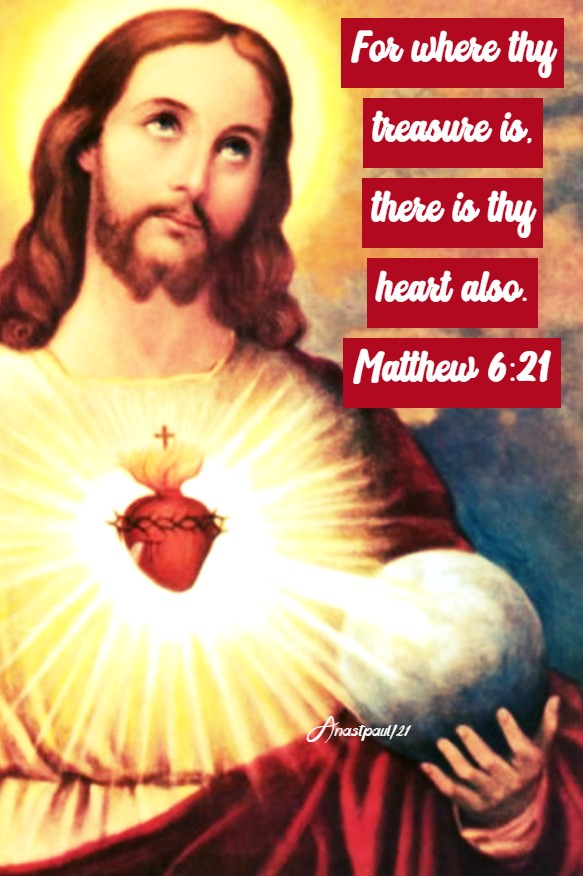
“ For where thy treasure is, there is thy heart also.”
Matthew 6:21
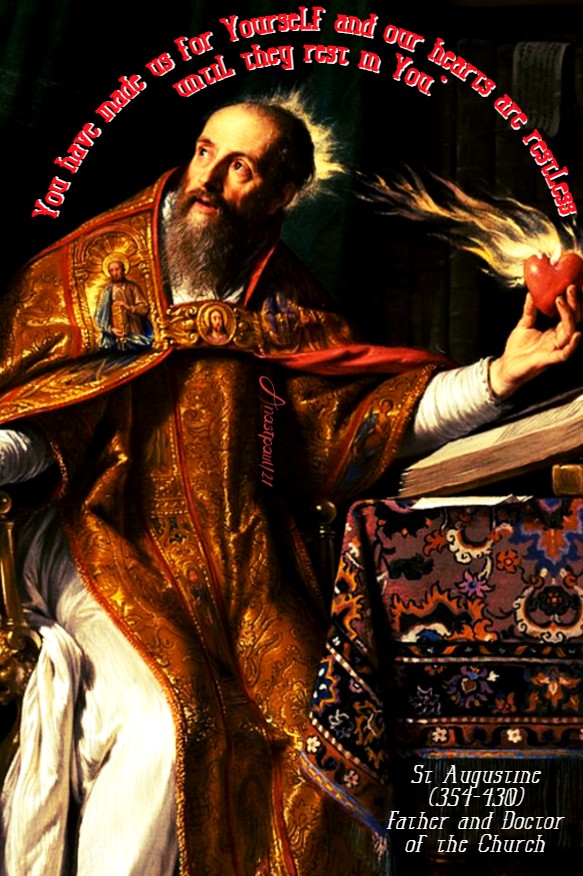
“You have made us for Yourself and our hearts are restless until they rest in You.”
St Augustine (354-430) Father and Doctor of the Church
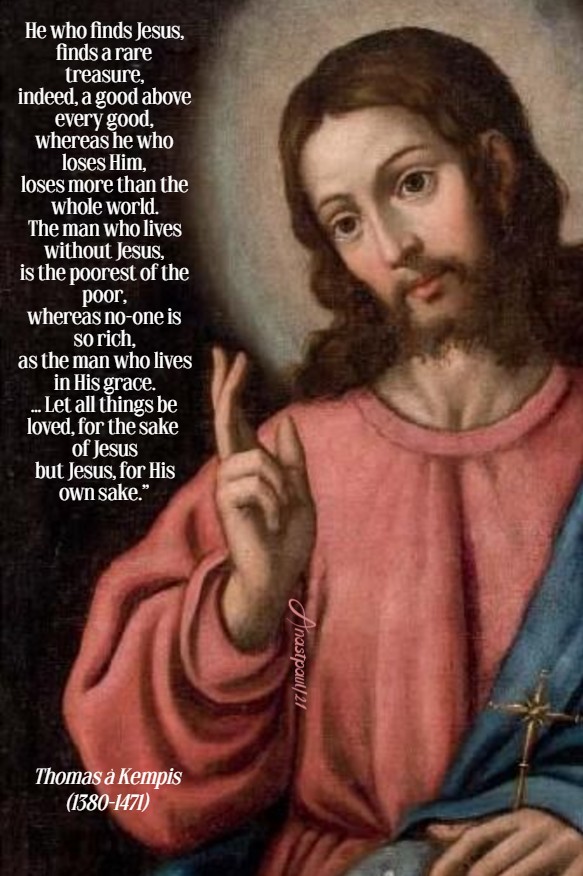
“ He who finds Jesus, finds a rare treasure, indeed, a good above every good, whereas he who loses Him, loses more than the whole world. The man who lives without Jesus, is the poorest of the poor, whereas no-one is so rich, as the man who lives in His grace. … Let all things be loved, for the sake of Jesus but Jesus, for His own sake.”
Thomas à Kempis (1380-1471)
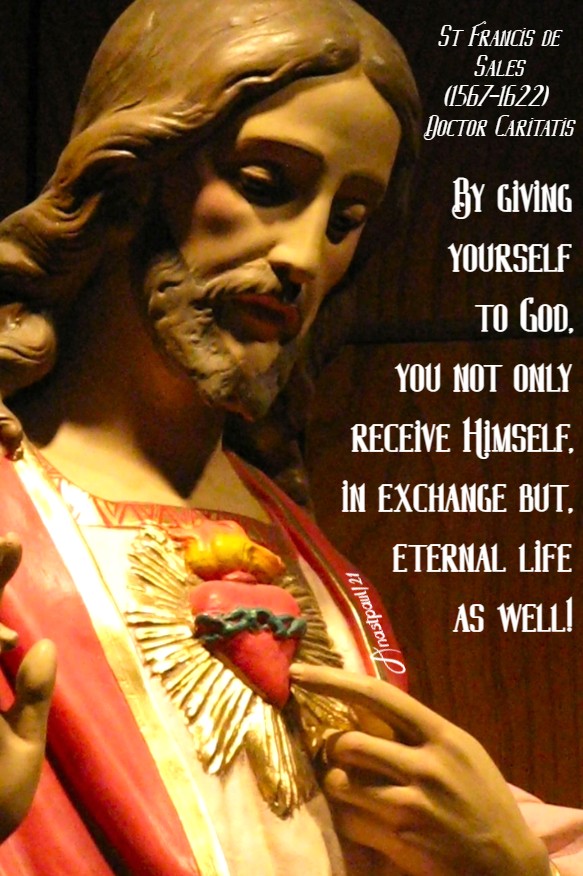
“By giving yourself to God, you not only receive Himself in exchange but, eternal life as well!”
St Francis de Sales (1567-1622) Doctor Caritatis
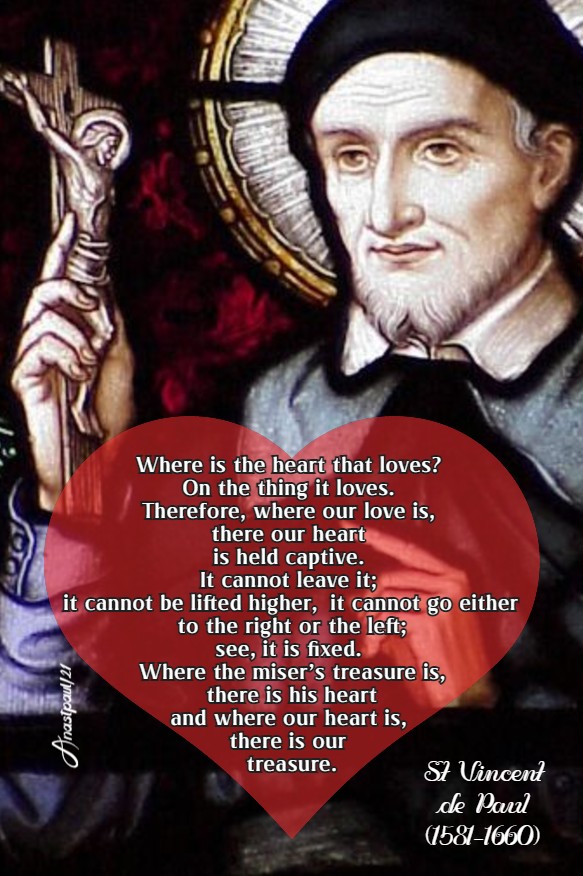
“Where is the heart that loves? On the thing it loves. Therefore, where our love is, there our heart is held captive. It cannot leave it; it cannot be lifted higher, it cannot go either to the right or the left; see, it is fixed. Where the miser’s treasure is, there is his heart and where our heart is, there is our treasure.”
One Minute Reflection – 18 June – “Month of the Sacred Heart”- Readings: Second Corinthians 11: 18, 21-30, Psalms 34: 2-3, 4-5, 6-7, Gospel: Matthew 6: 19-23
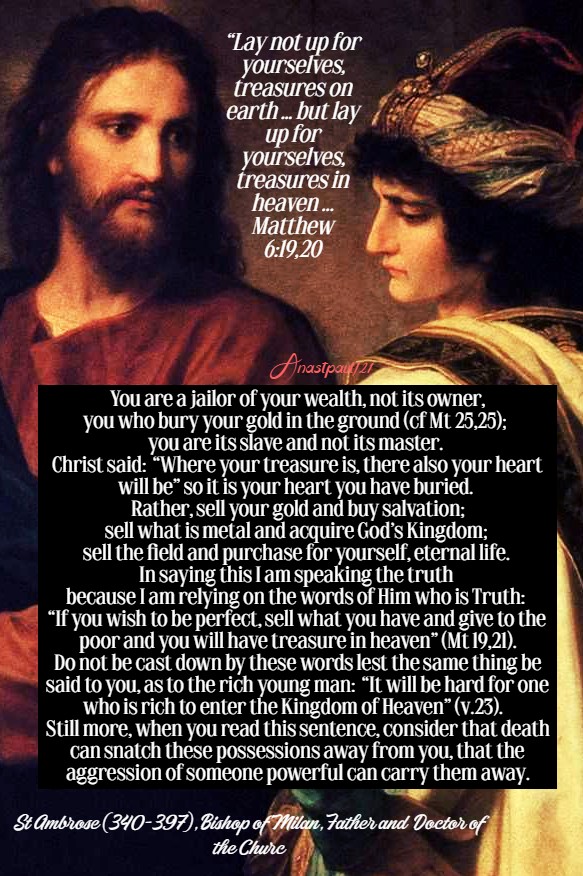
“Lay not up for yourselves, treasures on earth … but lay up for yourselves, treasures in heaven” – Matthew 6:19,20
REFLECTION – “You are a jailor of your wealth, not its owner, you who bury your gold in the ground (cf Mt 25,25); you are its slave and not its master. Christ said: “Where your treasure is, there also your heart will be” so it is your heart you have buried. Rather, sell your gold and buy salvation; sell what is metal and acquire God’s Kingdom; sell the field and purchase for yourself, eternal life. In saying this I am speaking the truth because I am relying on the words of Him who is Truth: “If you wish to be perfect, sell what you have and give to the poor and you will have treasure in heaven” (Mt 19,21). Do not be cast down by these words lest the same thing be said to you, as to the rich young man: “It will be hard for one who is rich to enter the Kingdom of Heaven” (v.23). Still more, when you read this sentence, consider that death can snatch these possessions away from you, that the aggression of someone powerful can carry them away. At the end of the day, you will have seen no further than insignificant goods, in place of great wealth – these are no more than a treasure of coins rather than treasures of grace. By their very nature they perish, rather than remaining forever.” – St Ambrose (340-397), Bishop of Milan, Father and Doctor of the Church – Naboth the poor, 58.
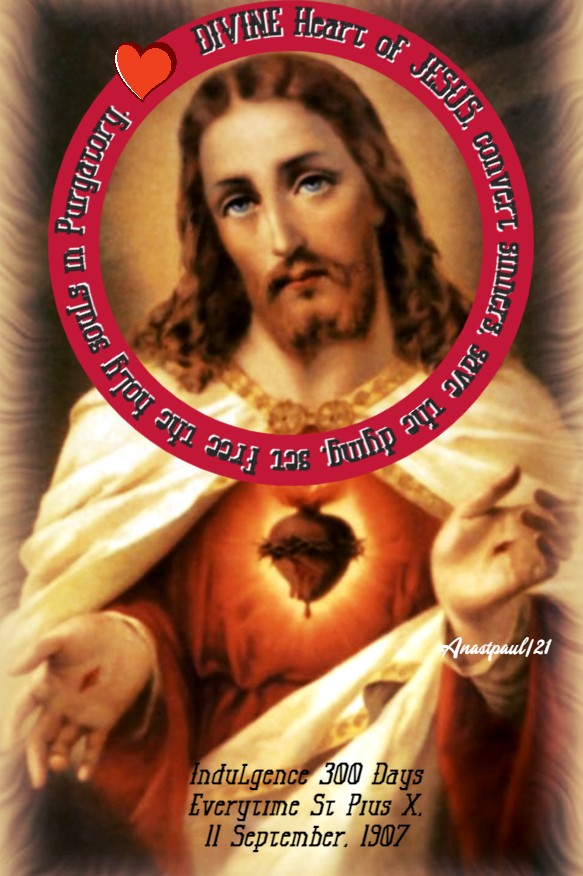
PRAYER – Lord God, You fill us with Your grace and teach us true faith. Strengthen in our hearts that faith that no trials may quench the fire, that we may seek Your face in every moment and accept AND LIVE all of Your will. May You be our first thought and our last each day. Grant us the grace of true charity of our neighbour that no earthly wealth can equal the treasures of love. Send us Your Spirit to keep the fire blazing. May the humble love and intercession of Mary Mother of our faith, be our succour and may she intercede for us on our pilgrim way. Through Jesus Christ, Your Son our Lord, with the Holy Spirit, God forever, amen. DIVINE Heart of JESUS, convert sinners, save the dying, set free the holy souls in Purgatory. Indulgence 300 Days Everytime – St Pius X, 11 September, 1907
Our Morning Offering – 18 June – “Month of the Sacred Heart”
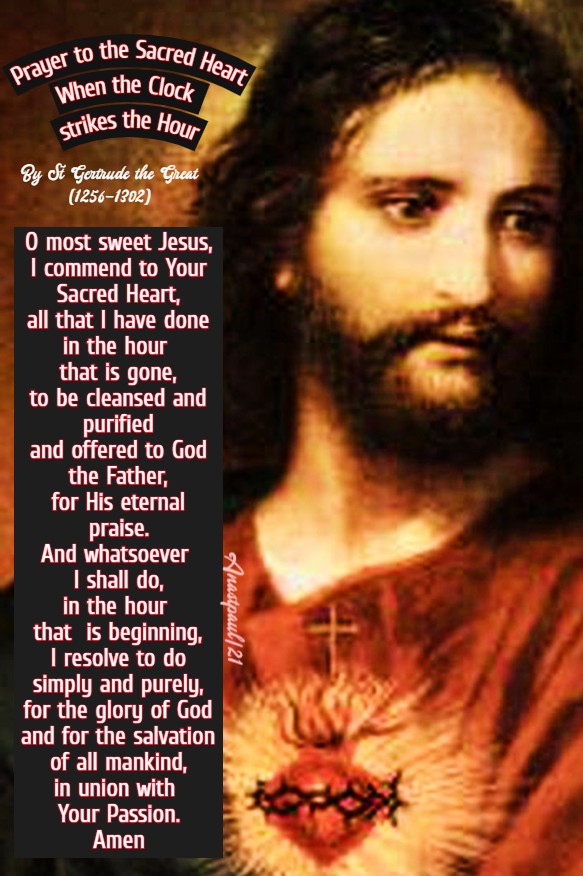
Prayer to the Sacred Heart When the Clock strikes the Hour By St Gertrude the Great (1256-1302)
O most sweet Jesus, I commend to Your Sacred Heart, all that I have done in the hour that is gone, to be cleansed and purified and offered to God the Father, for His eternal praise. And whatsoever I shall do, in the hour that is beginning, I resolve to do simply and purely, for the glory of God and for the salvation of all mankind, in union with Your Passion. Amen
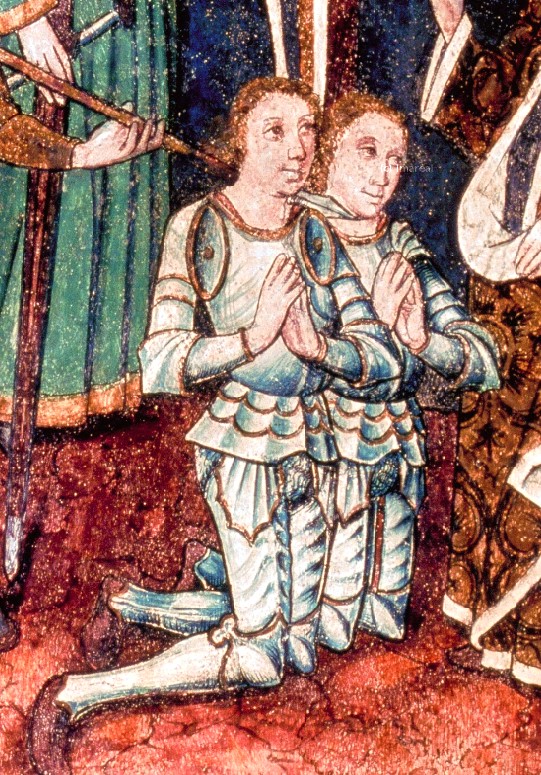
Saints of the Day – 18 June – Saints Marcus and Marcellian (Died c 286) Martyrs, Twin Brothers, Laymen, Confessors. Sons of Saint Tranquillinus of Rome who raised them as pagans before his own conversion. They may have been Deacons. Imprisoned for their faith during the persecutions of Diocletian. They were visited in prison by Saint Sebastian who encouraged them in perseverance in the footsteps of Our Lord Jesus Christ. Also known as Mark and Marcellianus, respectively.
The Roman Martyrology states of them today: “At Rome, on the Ardeatine Road, in the persecution of Diocletian, the birthday of the saintly brothers, Marcus and Marcellian, Martyrs, who were arrested by the Judge Fabian, tied to a stake and had sharp nails driven into their fet. As they ceased not, to praise the name of Christ, they were pierced through the sides with lances and thus went to the Kingdom of Heaven, with the glory of Martyrdom.”
Saint Marcus and Saint Marcellian were twin brothers of an illustrious family in Rome, who had been converted to the Faith in their youth and were honourably married.
When Diocletian ascended the imperial throne in 284, the pagans raised persecutions; the brothers were then thrown into prison and condemned to be beheaded. Their friends obtained a delay of the execution for thirty days, that they might prevail on them to worship the false gods. Tranquillinus and Martia, their afflicted pagan parents, accompanied by their sons’ wives and their little babes, endeavoured to move them by the most tender entreaties and tears. But Saint Sebastian, an officer of the Emperor’s household, arriving in Rome soon after their confinement, daily visited and encouraged them.
The issue of the conferences was the happy conversion of the father, mother and wives, also of Nicostratus, the public stenographer and soon afterwards, of Chromatius, the Judge, who set the Saints at liberty and abdicating the magistracy, retired into the country. Marcus and Marcellian were concealed by a Christian officer of the imperial household, in his apartments in the palace but they were betrayed by an apostate and re-imprisoned. Fabian, a Judge who had succeeded Chromatius, condemned them to be bound to two pillars, their feet nailed to them. In this posture they remained a day and a night and on the following day were stabbed with lances. Their Martyrdom occurred in the year 286.
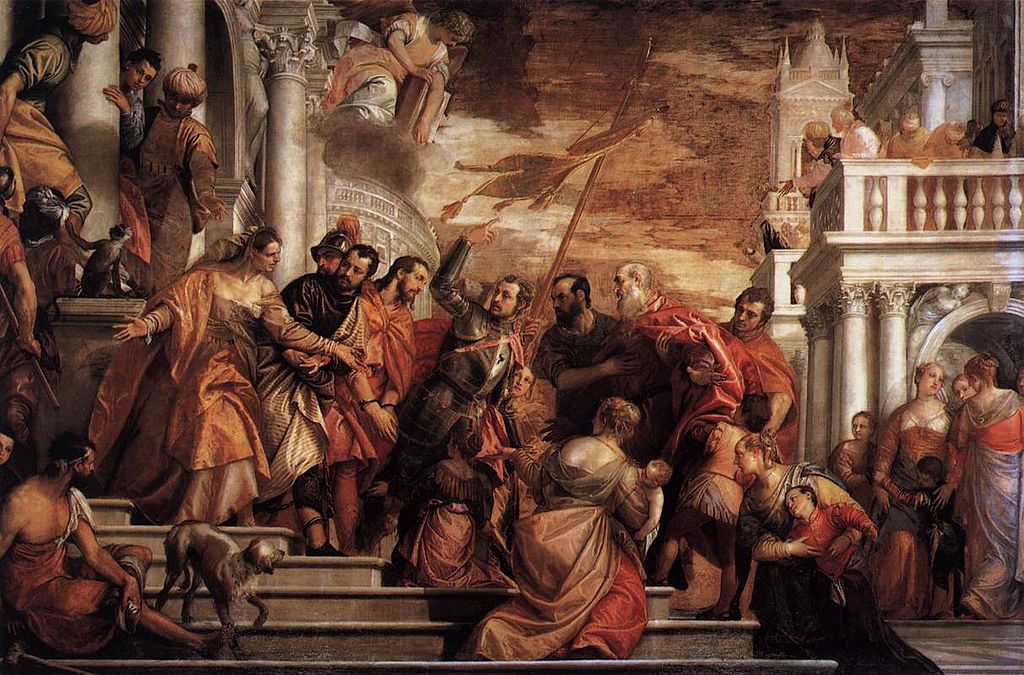
Saints Mark and Marcellinus being led to Martyrdom by Paolo Veronese (1528–1588)
The bodies of Marcus and Marcellianus and that of their father, Saint Tranquillinus, were moved, probably during the ninth century, to the Church of Saints Cosmas and Damian. They were re-discovered there in 1583 during the reign of Pope Gregory XIII. The bodies now remain there in a tomb, next to the Martyred Pope, Saint Felix II. Nearby is an ancient painting of the two Martyrs with a third person, who appears to be the Virgin Mary. In 1902, their basilica in the catacombs of Saint Balbina was rediscovered.
They are honoured particularly in Spain, where the City of Badajoz escaped destruction by their intercession.
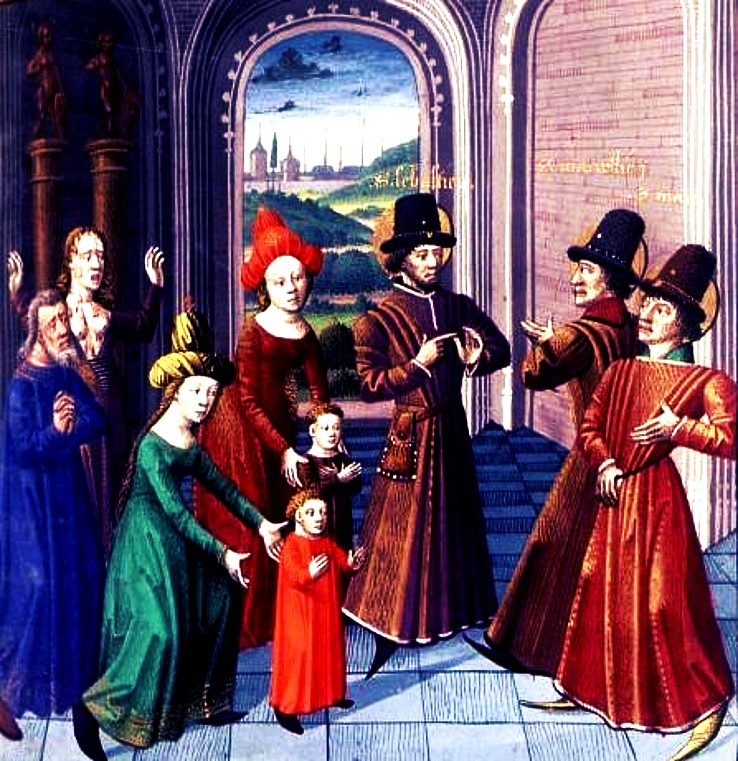
Saints Marcus and Marcellianus (to the right) with Saint Sebastian. From a medieval French manuscript.
Notre-Dame-des-Oliviers / Our Lady of Olives (Murat, Cantal, France) (1881 – 18 June:
In a pleasant valley of France there lies a little Town where, by the favour of God, lightning never strikes. This favour, unique in the world, dates to the time when the Church of Murat (Cantal) was burned by lightning, except for a wooden statue of the Virgin Mary. In 1493, and ever since, the Town has been named Our Lady of Olives. The Virgin Mary is the Olive recalled in the scriptures (Sirach 24:14) by whose intercession the Town was protected.
By virtue of the Medallion of Our Lady of Olives, the persons who carry it are preserved from lightning, wherever they may be during a storm. It is a privilege attached to the medallion which bears the unique name in the annals of the Church, “Our Lady of Olives.” This marvellous way of being protected against lightning, deserves to be known throughout the world and ought to be extended to the four corners of the universe. The second privilege of the Medallion is to protect, in an unmistakable manner, women who are about to become mothers and to assist them in the hour of deliverance. Those who are afflicted with sickness and who pray to the Divine Mother, are promptly relieved. The Virgin was Crowned on 18 June1881, by an Apostolic Brief given by Leo XIII on the tenth day of May 1878.
Prayer to Our Lady of Olives
Kneeling at thy feet, we pray thee Virgin Mary, that through thine intercession, there may be borne a new generation who will unite all hearts and souls in the same faith and the same charity. We pray thee “Divine Olive of Peace,” to implore God, that harmony may reign between nations, that true liberty be given to all people, that heresies and all bad doctrines condemned by the Pope may disappear. We pray that all the treasures of the Divine Heart be showered upon all men and that we be preserved from all harm. Pray for us, help us and save us. Amen.
St Abraham of Clermont St Alena of Dilbeek St Amandus of Bordeaux St Arcontius of Brioude St Athenogenes of Pontus St Calogero of Sicily St Calogerus of Fragalata St Calogerus the Anchorite St Colman mac Mici St Cyriacus of Malaga St Demetrius of Fragalata St Edith of Aylesbury
St Elpidius of Brioude St Equizio of Telese St Erasmo St Etherius of Nicomedia Bl Euphemia of Altenmünster St Fortunatus the Philosopher St Gerland of Caltagirone
St Gregory of Fragalata St Guy of Baume St Jerome of Vallumbrosa Sts Marcus and Marcellianu (Died c 286) Martyrs, Twin Brothers St Marina of Alexandria St Marina of Bithynia Bl Marina of Spoleto
St Osanna of Northumberland St Osmanna of Jouarre St Paula of Malaga Bl Peter Sanchez — Hermits of Karden: A father (Felicio) and his two sons (Simplicio and Potentino)who became pilgrim to various European holy places and then hermits at Karden (modern Treis-Karden, Germany). (Born in Aquitaine (in modern France. ) Their relics transferred to places in the Eifel region of western Germany at some point prior to 930. They were canonised on 12 August 1908 by Pope Pius X (cultus confirmation).
Martyrs of Ravenna – 4 saints: A group of four Christians martyred together. We have no details but their names – Crispin, Cruciatus, Emilius and Felix. They were martyred in Ravenna, Italy, date unknown.
Martyrs of Rome – 3 saints: Three Christians martyred together . We have no details but their names – Cyriacus, Paul and Thomas. In Rome, Italy, date unknown.
Martyrs of Tripoli – 3 saints: Three imperial Roman soldiers, at last two of them recent converts, who were imprisoned, tortured and executed for their faith. Martyrs – Hypatius, Leontius and Theodulus. They were Greek born and they died c135 at Tripoli, Phoenicia (in modern Lebanon).
Thought for the Day – 17 Juner– Meditations with Antonio Cardinal Bacci (1881-1971)
The “Our Father”
“Our Lord exhorted His disciples on many occasions to pray often and with confidence, if they wished to be heard. Everything which they asked His heavenly Father, in His name, He said, they would obtain. Ask, He said and it shall be given you; seek and you shall find, knock and it shall be opened to you. Finally, He insisted that we ought to pray and never to give up. In other words, life can be a continuous prayer if we offer to God all our thoughts, words and actions.
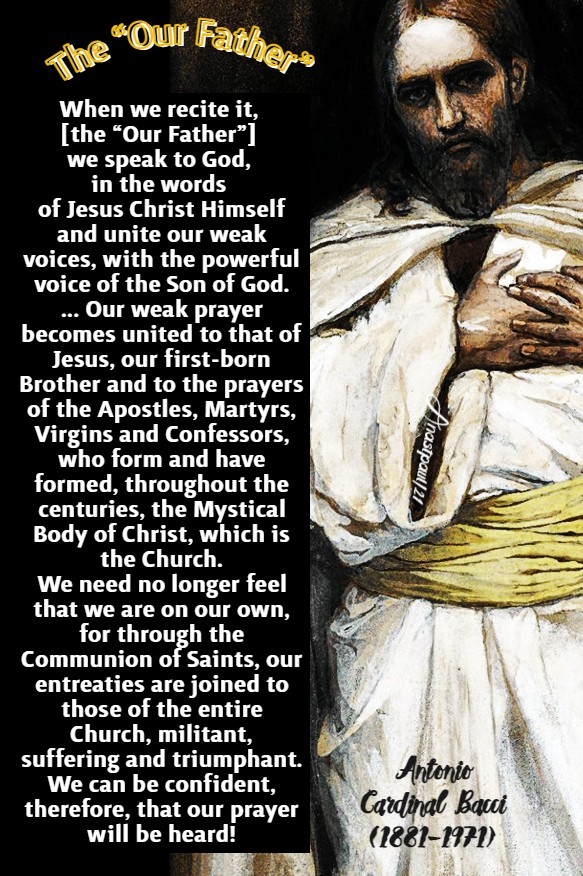
The ideal Christian prayer is to do the will of God at all times from the motive of pure love. The Apostles, however, who had not made that much progress in the spiritual life, asked Jesus to teach them how to pray (Lk 11:1). It was then that Our Lord composed the most beautiful of prayer, the “Our Father” (Mt 6:9-13). When we recite it, we speak to God, in the words of Jesus Christ Himself and unite our weak voices, with the powerful voice of the Son of God! We address the Eternal God, moreover, by the name of Father. Even in the Old Testament, God is often referred to in this way. Then, however, He figured as the Father of the chosen people, whereas now, He is the Father of all. He is our Father, the Father of all mankind and of all races, whom He has willed to redeem from the slavery of sin. The term “Our Father” has taken on a new and fuller meaning. Our weak prayer becomes united to that of Jesus, our first-born Brother and to the prayers of the Apostles, Martyrs, Virgins and Confessors, who form and have formed, throughout the centuries, the Mystical Body of Christ, which is the Church. We need no longer feel that we are on our own, for through the Communion of Saints, our entreaties are joined to those of the entire Church, militant, suffering and triumphant. We can be confident, therefore, that our prayer will be heard!”
Quote/s of the Day – 17 June – “Month of the Sacred Heart” – Gospel: Matthew 6: 7-15
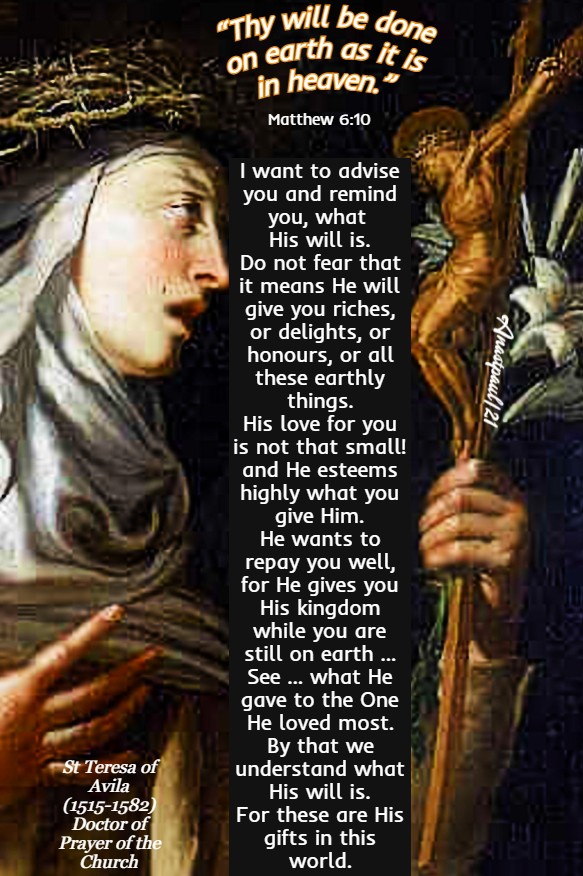
“Thy will be done on earth as it is in heaven.”
Matthew 6:10
“I want to advise you and remind you, what His will is. Do not fear that it means He will give you riches, or delights, or honours, or all these earthly things. His love for you is not that small! and He esteems highly what you give Him. He wants to repay you well, for He gives you His kingdom while you are still on earth … See … what He gave to the One He loved most. By that we understand what His will is. For these are His gifts in this world.”
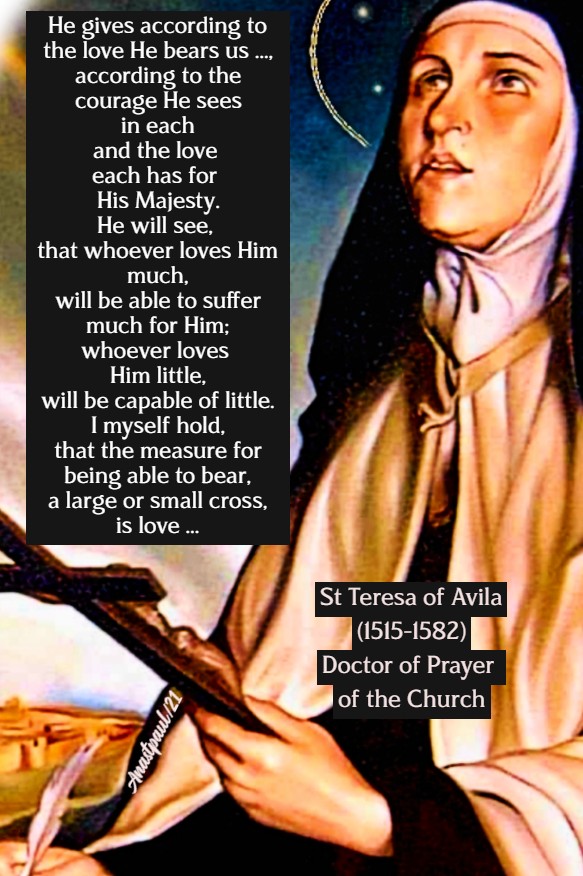
“He gives according to the love He bears us …, according to the courage He sees in each and the love each has for His Majesty. He will see, that whoever loves Him much, will be able to suffer much for Him; whoever loves Him little, will be capable of little. I myself hold, that the measure for being able to bear, a large or small cross, is love …”
St Teresa of Avila (1515-1582) Doctor of Prayer of the Church
Way of Perfection, Ch 32
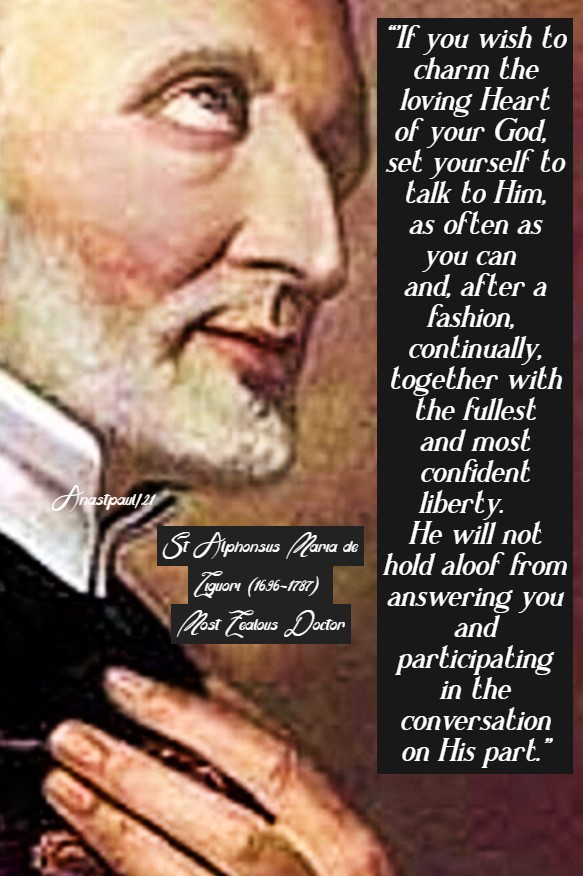
“If you wish to charm the loving Heart of your God, set yourself to talk to Him, as often as you can and, after a fashion, continually, together with the fullest and most confident liberty. He will not hold aloof from answering you and participating in the conversation on His part.”
St Alphonsus Maria de Liguori (1696-1787) Most Zealous Doctor
One Minute Reflection – 17 June – “Month of the Sacred Heart” – Readings: Second Corinthians 11: 1-11. Psalms 111: 1b-2, 3-4, 7-8, Gospel: Matthew 6: 7-15
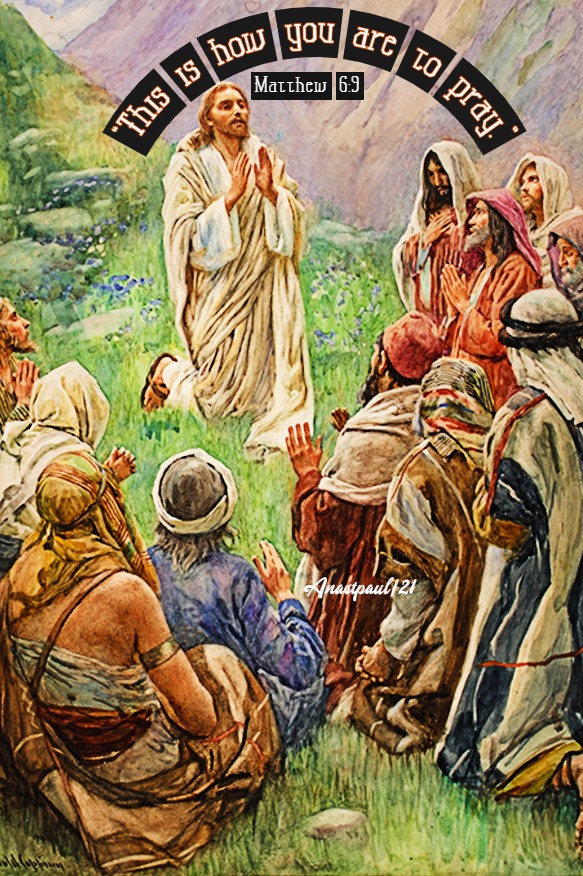
“This is how you are to pray.” – Matthew 6:9
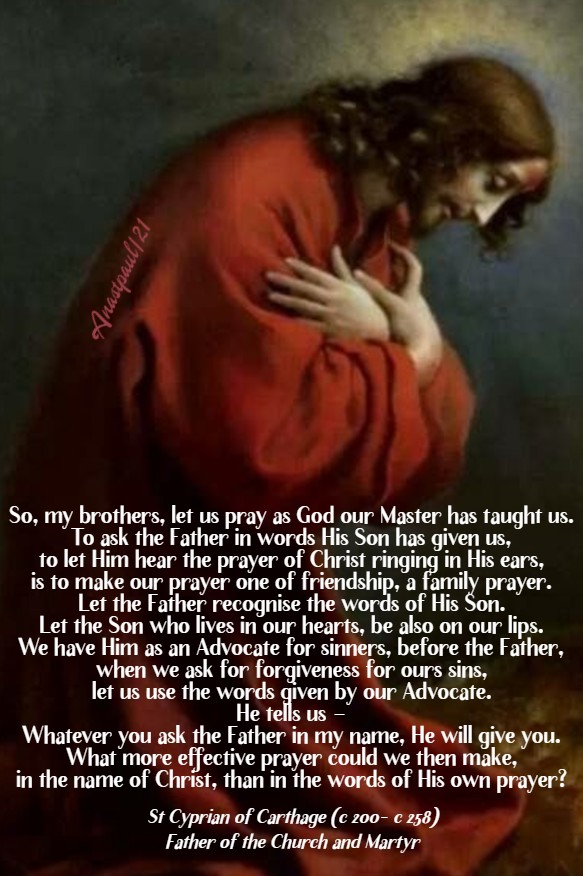
REFLECTION – “So, my brothers, let us pray as God our master has taught us. To ask the Father in words His Son has given us, to let Him hear the prayer of Christ ringing in His ears, is to make our prayer one of friendship, a family prayer. Let the Father recognise the words of His Son. Let the Son who lives in our hearts, be also on our lips. We have Him as an Advocate for sinners, before the Father, when we ask for forgiveness for ours sins, let us use the words given by our Advocate. He tells us – Whatever you ask the Father in my name, He will give you. What more effective prayer could we then make, in the name of Christ, than in the words of His own prayer? …
As the Lord’s Prayer continues, we ask: Give us this day our daily bread. We can understand this petition in a spiritual and in a literal sense. For in the divine plan both senses may help toward our salvation. For Christ is the Bread of Life; this Bread does not belong to everyone but is ours alone. When we say, our Father, we understand that He is the Father of those who know Him and believe in Him. In the same way, we speak of our daily bread because Christ is the Bread of those who touch His body.” – St Cyprian of Carthage (c 200- c 258) Bishop, Father of the Church and Martyr – An excerpt from his “On the Lord’s Prayer”
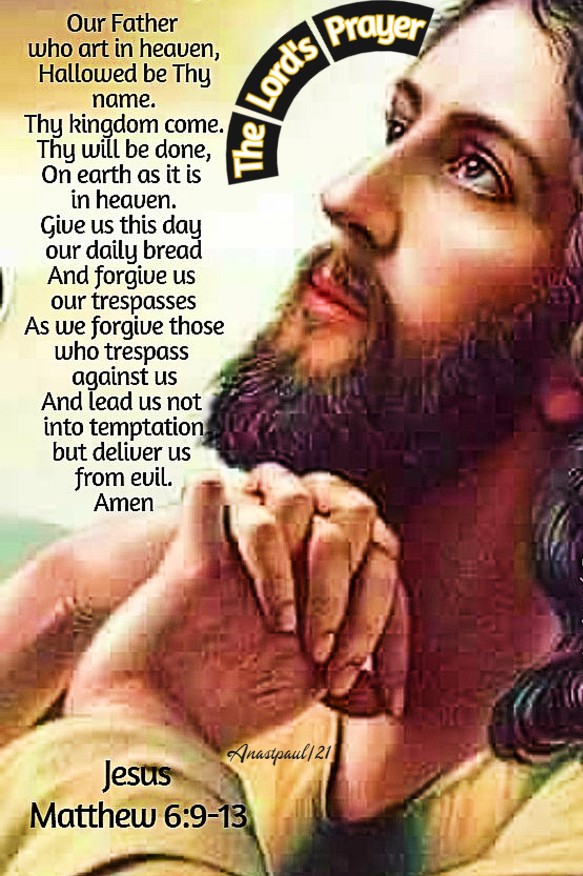
PRAYER – Our Father Who art in heaven, Hallowed be Thy name. Thy kingdom come. Thy will be done, On earth as it is in heaven. Give us this day our daily bread And forgive us our trespasses As we forgive those who trespass against us And lead us not into temptation but deliver us from evil. Amen
Our Morning Offering – 17 June – “Month of the Sacred Heart”
Seal Your Image on My Heart By Archbishop Baldwin of Canterbury (c 1125-1190)
O Lord, take away my heart of stone, my hardened heart, my uncircumcised heart and grant to me a new heart, a heart of flesh, a clean heart. Come, You who cleanse the heart and love the pure of heart, possess my heart and dwell in it, containing it and filling it, higher than my highest and more intimate than my most intimate thoughts. You are the image of all beauty and the seal of all holiness, seal Your image on my heart and seal my heart in Your mercy, O God, the strength of my heart and my portion forever, amen.
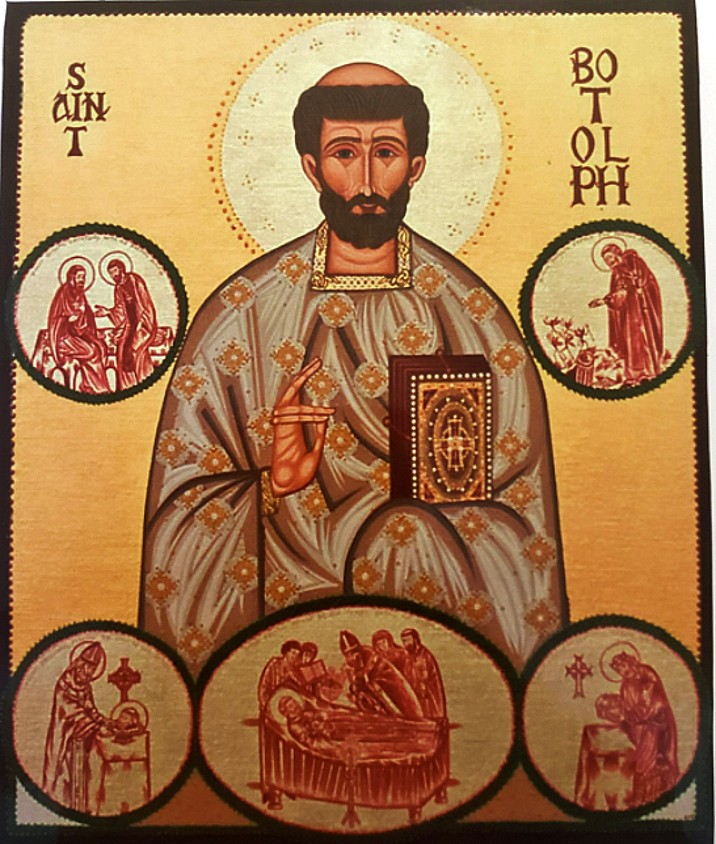
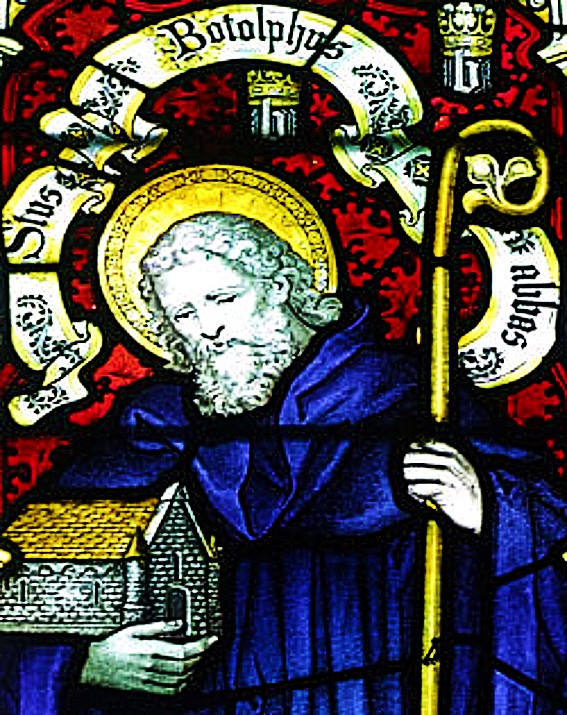
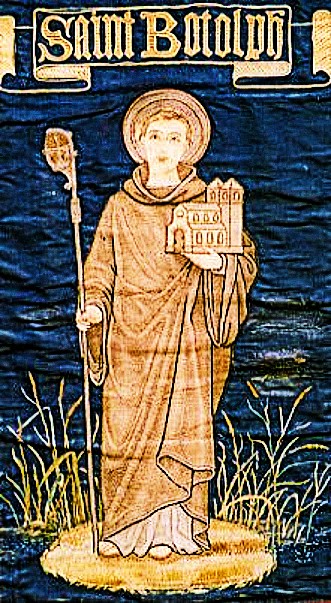
Saint of the Day – 17 June – St Botolph of Ikanhoe (Died 680) Abbot, Missionary, Founder of the Monastery of Ikanhoe, Spiritual Director. Born in c 610 in East Anglia, England and died on 17 June 680 of natural causes following a lengthy illness. Also known as – Botolph, Botulf, Botwulf. , Patronages – agricultural workers, farm workers, farmers, sailors, mariners, watermen, travellers. 7 cities. Additional Memorial – 1 December – translation of his relics.
Little is known about Botolphf’s life, other than details in an account written four hundred years after his death by the 11th-century Monk Folcard. Botulph, a seventh century Saxon from an aristocratic Christian family is the brother of Saint Adolph of Utrecht. He was educated with his brother, at the Monastery of Cnobersburg (Burgh Castle), Suffolk under the direction of its Founder, Saint Fursey. When Mercian forces under King Penda invaded the region, the boys were sent to study at the Monastery at Bosanham, Sussex.
He became a Benedictine Monk at Farmoutiere-en-Brie, Gaul (modern northeastern France) and was sent back to the British Isles in 647 to establish the Benedictine Order there.
With the support of Saint Syre, Saint Aubierge and their brother, King Anna of East Anglia, Botulph founded the Monastery of Ikanhoe in East Anglia, declining the offer of a part of the Royal estate and settling for a wild, barren site that was removed from people, reported to be haunted by demons and which would require endless work to sustain the Monks.
For many years it was believed that the area that grew up around it came to be called Botulph’s Town, contracted to Botulphston and later contracted to Boston in Lincolnshire but recent research has shown, that the original site is another location. The Saxon Chronicle indicates, that by 654, Botulph had attracted enough brother Monks and hermits that work began on the Monastery. Through hard work and faith, the Monastery grew in population; the Monks built several structures, turned large areas of marsh and scrub into productive farming and grazing lands and dispelled the people’s fears of demons.
Botulph served as Spiritual Director for Saint Ceolfrith and worked as a travelling missionary through rough, bandit-plagued areas of East Anglia, Kent and Sussex.
His legacy continued for centuries in the strength of the Benedictine movement in the Isles and in the dozens of Churches named for him, many of them built at City gates to serve as safe-haven for travellers in times when robbers roamed the roads and many in port or river towns.
He died while being carried to Chapel for compline services and was buried at Ikanhoe. His relics were moved in 870 to keep them from being destroyed by invading Danes and then transferred to Grundisburgh in 983. They were later distributed to Monasteries at Thornery, Westminster, and Edmundsburg, Suffolk. Tradition says that for safety, the cask of relics destined for Edmundsburg were taken there in the middle of the night but the travellers were guided by a light that hovered above the relics’ new Shrine. In our times too, processions of the relics through Edmundsburgh has ended droughts there by the intercession of St Botolph.
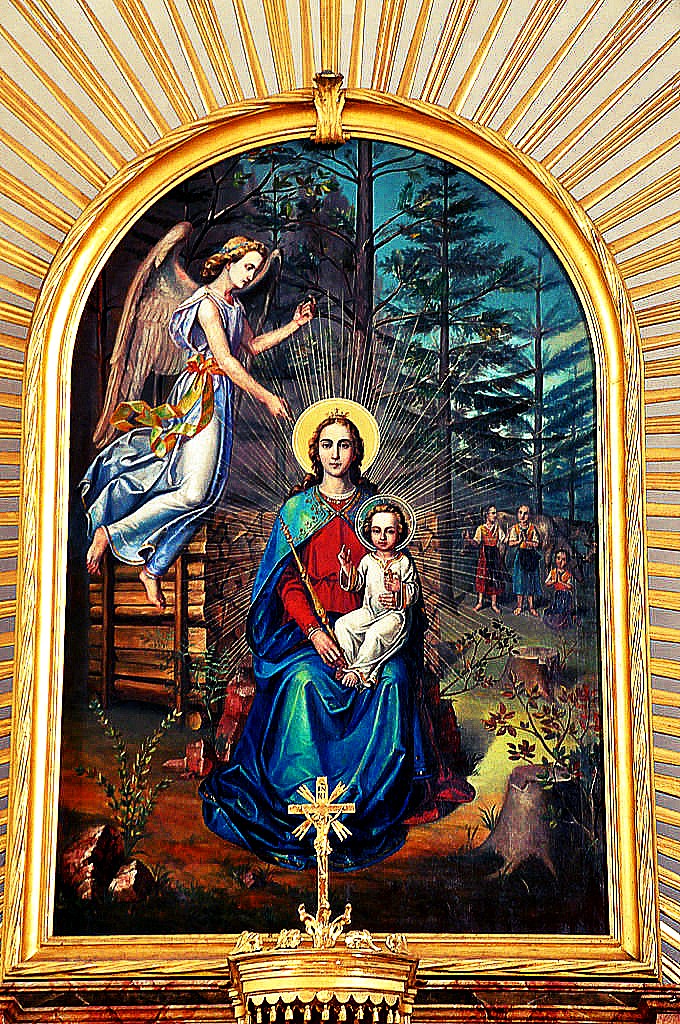
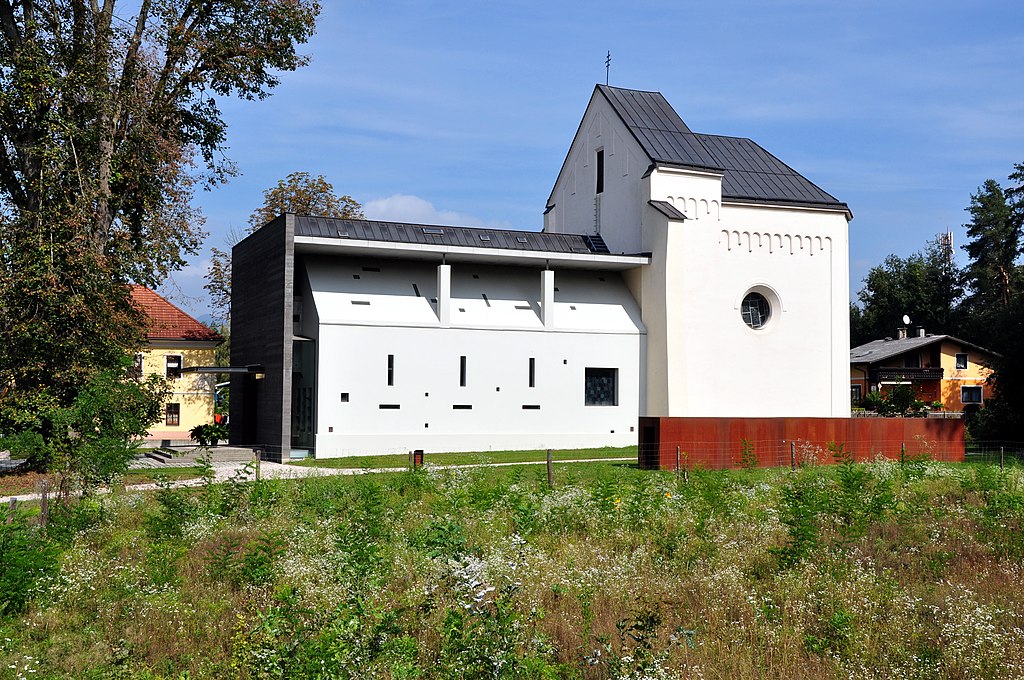
Heilige Maria im Walde / Holy Maria in the Forest, Dolina, Grafenstein, Carinthia, Austria (1849) – 17 June:
The Apparitions occurred, as the Immaculate Conception, in a wooded area near Dolina, Grafenstein, Carinthia, Austria on the 17, 18 and 19 June 1849 to three young shepherdesses, prior to the public proclamation of the Dogma of the Immaculate Conception ion 1854. Thus began the influx of pilgrims and in the woods, just where she had appeared as the Immaculate Conception, a wooden Chapel was erected. The Church, begun in 1861 but was never fully completed. A local artist painted an image called the Madonna del Bosco, inspired by the descriptions of the three shepherdesses. This painting was a picture of grace that inspired faith and devotion of many.
St Antidius of Besançon Bl Arnold of Foligno St Avitus of Perche St Blasto of Rome St Botolph of Ikanhoe (Died 680) Abbot St Briavel of Gloucestershire St David of Bourges St Dignamerita of Brescia St Diogenes of Rome St Emily de Vialar St Gundulphus of Bourges
St Himerius of Amelia St Hypatius of Chalcedon St Molling of Wexford St Montanus of Gaeta St Nectan of Hartland Bl Paul Burali d’Arezzo Bl Peter Gambacorta St Phêrô Ða Bl Philippe Papon
St Prior St Rambold of Ratisbon Bl Ranieri Scaccero St Theresa of Portugal — Martyrs of Apollonia – 7 saints: A group of Christians who fled to a cave near Apollonia, Macedonia to escape persecution for his faith, but were caught and executed. The names we know are – Basil, Ermia, Felix, Innocent, Isaurus, Jeremias and Peregrinus. They were beheaded at Apollonia, Macedonia.
Martyrs of Aquileia – 4 saints: Four Christian martyrs memorialised together. No details about them have survived, not even if they died together – Ciria, Maria, Musca and Valerian. c.100 in Aquileia, Italy.
Martyrs of Chalcedon – 3 saints: Three well-educated Christian men who were sent as ambassadors from King Baltan of Persia to the court of emperor Julian the Apostate to negotiate peace between the two states, and an end of Julian’s persecutions of Christians. Instead of negotiating, Julian imprisoned them, ordered them to make a sacrifice to pagan idols and when they refused, had them executed. Their names were Manuel, Sabel and Ismael. They were beheaded in 362 in Chalcedon (part of modern Istanbul, Turkey) and their bodies burned and no relics survive.
Martyrs of Fez – 4 beati: A group of Mercedarians sent to Fez, Morocco to ransom Christians imprisoned and enslaved by Muslims. For being openly Christian they were imprisoned, tortured, mutilated and executed. Martyrs – Egidio, John, Louis and Paul. They were martyred in Fez, Morocco.
Martyrs of Rome – 262 saints: A group of 262 Christians martyred in the persecutions of Diocletian. In c303 in Rome, Italy. They were buried on the old Via Salaria in Rome.
Martyrs of Venafro – 3 saints: Three Christian lay people, two of them imperial Roman soldiers, who were converts to Christianity and were martyred together in the persecutions of Maximian and Diocletian – Daria, Marcian and Nicander. They were beheaded c.303 in Venafro, Italy. By 313 a basilica had been built over their graves which were re-discovered in 1930. They are patrons of Venafro, Italy.
Thought for the Day – 16 June – “Month of the Sacred Heart” – Meditations with Antonio Cardinal Bacci (1881-1971)
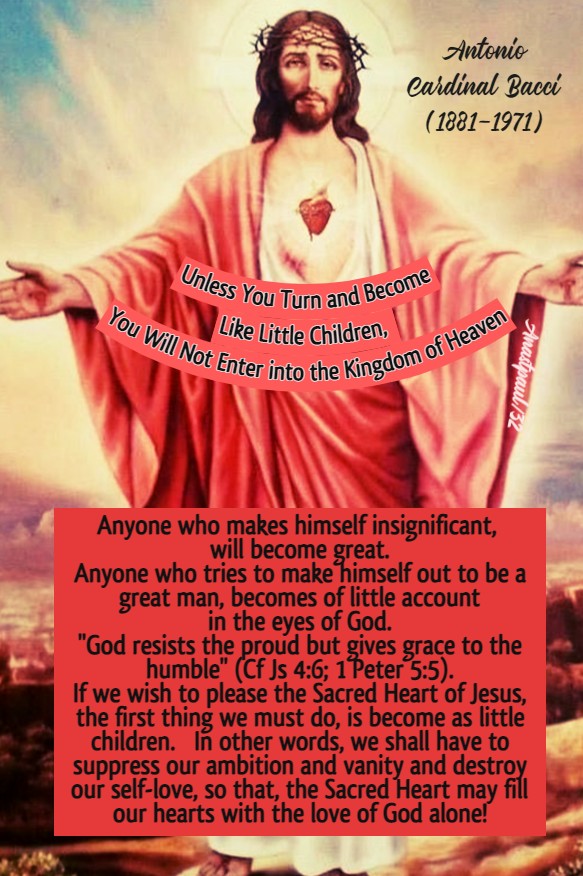
“Unless You Turn and Become Like Little Children, You Will Not Enter into the Kingdom of Heaven”
“At the beginning of their ministry, before they had been strengthened and enlightened by the Holy Spirit, the Apostles were as ambitious as most other men. One day, the mother of John and James, the sons of Zebedee, came to Jesus and asked Him, if her two sons could have precedence over the other Apostles and sit on the highest thrones in His kingdom, one at His right hand and the other at His left. Jesus disapproved of this desire to predominate. “Whoever wishes to become great among you,” He said, “shall be your servant and, whoever wishes to be first among you shall be your slave; even as the Son of Man has not come to be served but to serve and to give his life as a ransom for many” (Mt 20:26-28).
On another occasion, the Apostles came to Jesus and asked Him, which of them would be the greatest in the kingdom of Heaven. Jesus’ only answer was to call a little child and to place him in the centre of the group. “Amen, I say to you, unless you turn and become like little children, you shall not enter into the kingdom of heaven. Whoever, therefore, humbles himself as this little child, he is the greatest in the kingdom of heaven” (Mt 18:3-4).
This is the lofty teaching of the Gospel. If we wish to be great and pleasing in the eyes of God, we must be unimportant in our own regard and in our relations with men. The Gospel involves an overthrow of human values. Anyone who makes himself insignificant, will become great. Anyone who tries to make himself out to be a great man, becomes of little account in the eyes of God. “God resists the proud but gives grace to the humble” (Cf Js 4:6; 1 Peter 5:5). If we wish to please the Sacred Heart of Jesus, the first thing we must do, is become as little children. In other words, we shall have to suppress our ambition and vanity and destroy our self-love, so that, the Sacred Heart may fill our hearts with the love of God alone!”



























You must be logged in to post a comment.