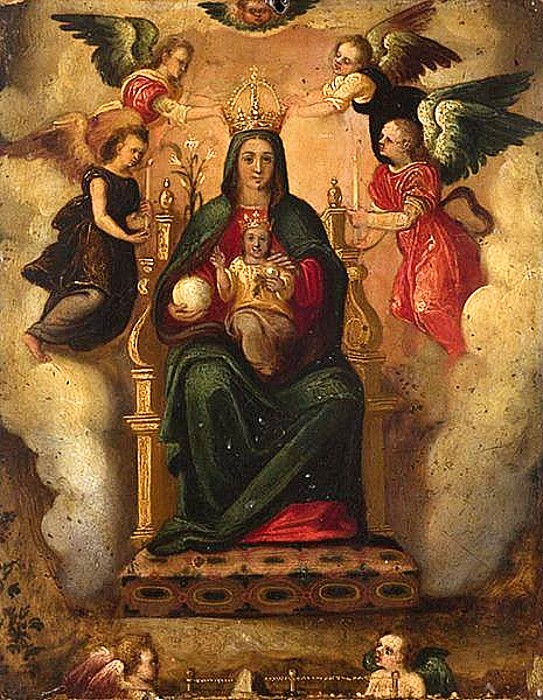
Nuestra Señora de la Palabra / Our Lady of the Word, Montserrat, Spain (1514) – 14 January:
In the year 1514, Our Lady was venerated at a Shrine near Montserrat, Spain. Her aid was invoked on behalf of a dumb man who went on pilgrimage there and the Blessed Virgin miraculously restored his speech. From that time on, she was given the title Our Lady of Speech. Here again the words of the “Memorare” were verified: “Remember, O most gracious Virgin Mary,that never was it known that anyone who fled to thy protection,implored thy help or sought thy intercession,was left unaided. Inspired by this confidence,I fly unto thee, O Virgin of virgins, my Mother; to thee do I come, before thee I stand, sinful and sorrowful. O Mother of the Word Incarnate, despise not my petitions but in thy mercy hear and answer me.” When God was made man, it was she who gave voice to the Word. In the Magnificat, God the Holy Ghost, her mystical spouse, spoke though her. When Christ was a child, she was His voice. When Our Lord was a man, He spoke for himself, while his mother remained silent. After the Ascension, she again became His voice as she guided the infant Church through those perilous times. Over and over again, the words of God came through her, for she is His Mediatrix of grace, the link between us and Him.
As a consequence, even while on earth, His Mother’s word had great influence upon Christ. “They have no wine,” uttered in behalf of the embarrassed newlyweds at Cana, was all that was necessary to bring forth her Sons’ first miracle.
And so, down the ages, Mary hearkens to the words of her Calvary-born children and speaks in their behalf to Jesus. Her intercession, her word, her speech, is never in vain. Let us never cease to invoke this powerful protectress, who wants nothing more than to intercede for us, her children, before the throne of God.
St Potitus Bl Rainer of Arnsberg St Sabas of Sinai St Sava of Serbia St Successus of Africa St Theodolus of Sinai Bl William de Sanjulia — Martyrs of Mount Sinai: A group of monks on Mount Sinai who were martyred by desert Bedouins. Their names and exact number have not come down to us. Martyred by Bedouins.
Martyrs of Raithu – 43 saints: A group of 43 monks in the Raithu Desert near Mount Sinai, Palestine, near the Red Sea. They were martyred for their faith by desert Bedouins. Their names have not come down to us. Martyred by Bedouins.
Thought for the Day – 13 January – Meditations with Antonio Cardinal Bacci (1881-1971)
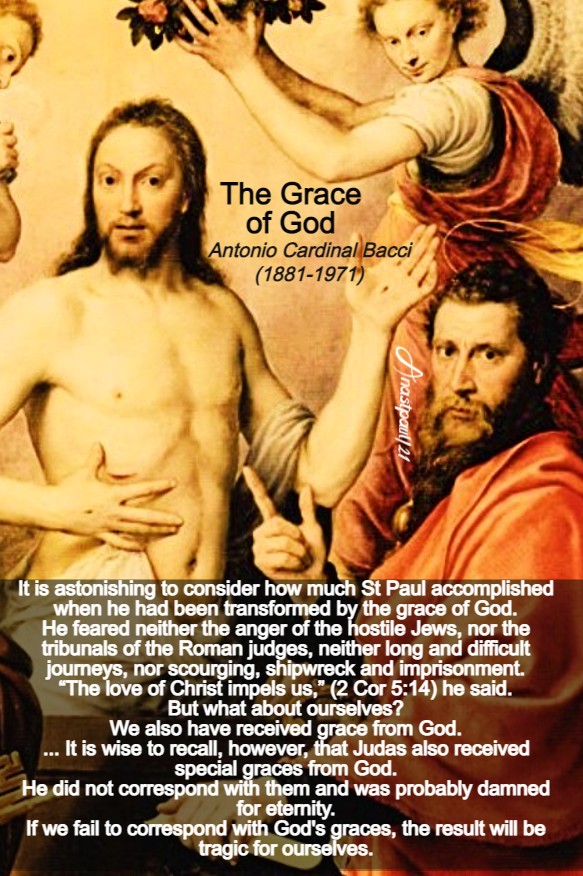
The Grace of God
“It is astonishing to consider how much St Paul accomplished when he had been transformed by the grace of God. Formerly, a persecutor of Christians, he became the Apostle of the Gentiles. Enlightened by faith and inspired by charity, he travelled the globe, spreading everywhere, the religion of Jesus Christ.
He feared neither the anger of the hostile Jews, nor the tribunals of the Roman judges, neither long and difficult journeys, nor scourging, shipwreck and imprisonment. “The love of Christ impels us,” (2 Cor 5:14) he said. It was the love of God which drove him on and on, until he met his martyrdom. But what about ourselves? We also have received grace from God. Often we hear His voice appealing to us to abandon our sinful ways, to practise virtue, to love Him more ardently and to prove our love, by deeds. If we co-operate, we shall be able to say with St Paul: “by the grace of God, I am what I am and his grace in me has not been fruitless,” (1 Cor 15:10) and “I have laboured … yet, not I but the grace of God with me” (ibid).
It is wise to recall, however, that Judas also received special graces from God. He did not correspond with them and was probably damned for eternity. If we fail to correspond with God’s graces, the result will be tragic for ourselves.”
Quote/s of the Day – 13 January – The Memorial of St Hilary of Poitiers (315-368) Father & Doctor of the Church
“He conquered death, broke the gates of hell, won for Himself a people to be His co-heirs, lifted flesh from corruption up to the glory of eternity.”
“There is no space where God is not; space does not exist apart from Him. He is in heaven, in hell, beyond the seas; dwelling in all things and enveloping all. Thus He embraces and is embraced by, the universe, confined to no part of it but pervading all.”
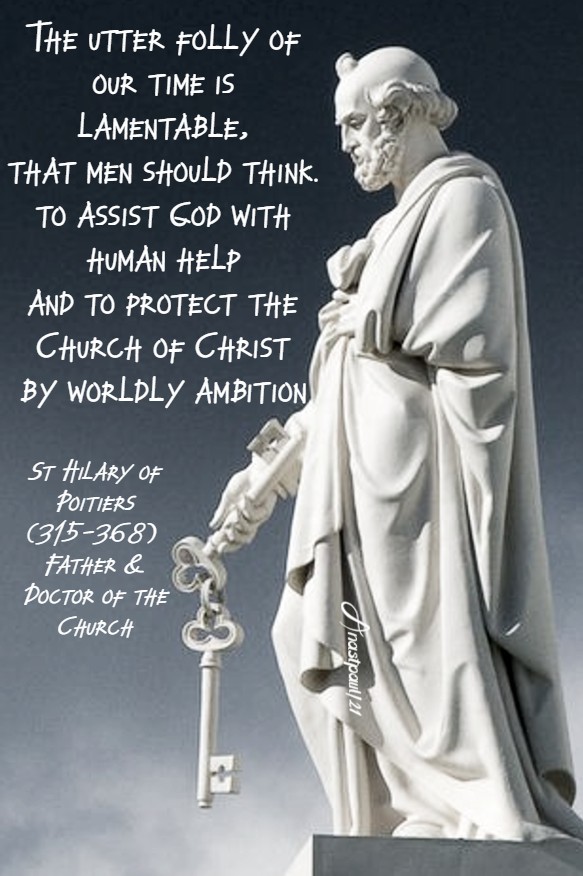
“The utter folly of our time is lamentable, that men should think. to assist God with human help and to protect the Church of Christ by worldly ambition.”
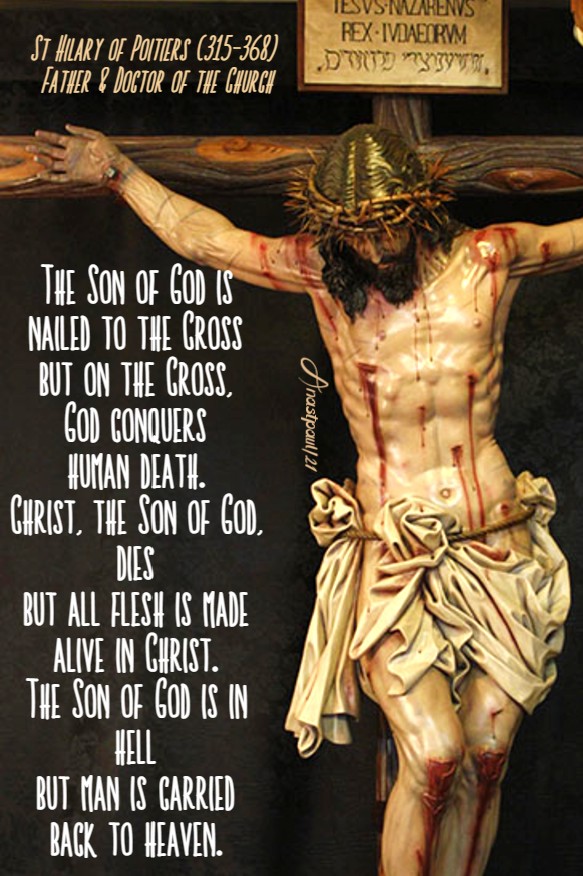
“The Son of God is nailed to the Cross but on the Cross, God conquers human death. Christ, the Son of God, dies but all flesh is made alive in Christ. The Son of God is in hell but man is carried back to heaven.”
St Hilary of Poitiers (315-368) Father & Doctor of the Church
One Minute Reflection – 13 January – Readings: Hebrews 2:14-18, Psalms 105:1-2, 3-4, 6-7, 8-9, Mark 1:29-39 and the Memorial of St Hilary of Poitiers (315-368) Father & Doctor of the Church and Blessed
That evening at sundown, they brought to him all who were sick, or oppressed by demons. – Mark 1:32
REFLECTION – “Let us set before our interior consideration someone gravely wounded who is about to breathe his last. … Now, the soul’s wound is sin, of which Scripture speaks in these terms: “Wound and welt and gaping gash, not drained or bandaged or eased with salve” (Is 1:6). Oh you who are wounded, recognise your physician within you and show Him the wounds of your sins. May He understand your heart’s groaning Who already knows its secret thoughts. May your tears move Him. Go as far as a little shamelessness in your beseeching (cf. Lk 11:8). Ceaselessly bring forth deep sighs to Him from the depth of your heart.
May your grief reach Him so that He may say to you also : “The Lord has pardoned your sin” (2 Sam 12:13). Cry out with David, who said: “Have mercy on me, O God, in (…) the greatness of your compassion” (Ps 50[51]:3). It is as though one were to say: “I am in great danger because of an enormous wound, that no doctor can cure, unless the all-powerful Physician comes to help me.” For this all-powerful Physician, nothing is incurable. He heals without charge! With one word He restores to health! I would have despaired of my wound were it not, that I placed my trust in the Almighty.” – St Gregory the Great (540-604) Pope, Father, Doctor of the Church – Commentary on Psalm 50[51]
PRAYER – God our Saviour, through the grace of Baptism, You made us children of light. You lead us by the hand and guide and protect us by Your commandments. Fill us with joy at Your nearness and the light of Your Son, by whose beam we see You and follow. St Hilary and Bl Veronica were shining examples to us all, grant, we pray, that their prayers may aid us. Through Jesus our Lord and Christ, with the Holy Spirit, God forever, amen.
Our Morning Offering – 13 January – The Octave of Epiphany and the Memorial of St Hilary of Poitiers (315-368) Father & Doctor of the Church
I Owe You a Most Particular Duty By St Hilary of Poitiers (315-368)
I am well aware, Almighty God and Father, that in my life I owe You a most particular duty. It is to make my every thought and word speak of You. In fact, You have conferred on me, this gift of speech and it can yield no greater return than to be at Your service. It is for making You known as Father, the Father of the only-begotten God and preaching this to the world, that knows You not and to the heretics, who refuse to believe in You. … Grant that I may express what I believe. Amen
Excerpt from a Sermon On the Trinity (Lib 1, 37-38: PL 10, 48-49) by Saint Hilary of Poitiers. It is used in the Roman Office of Readings for the feast of St Hilary, today.
Saint of the Day – 13 January – Blessed Veronica of Binasco OSA (c 1445-1497) Virgin Nun of the Order of St Augustine, Mystic, endowed with the gifts of prophecy and discernment- born as Giovanna Negroni in c 1445 at Binasco, Italy, a small village near Milan and died on 13 January 1497 in Milan, Italy of natural causes. Veronica of Binasco was known as a great contemplative who also gave loving care to sick sisters in her community and ministered to the people of Milan. Additional Memorial – 28 January (Augustinian calendar).
Veronica grew up in the small town of Binasco, Italy, not far from Milan. She and her family were poor and she worked with her mother and father, doing chores and in the fields. Her parents set their daughter on the path to Christian virtues, as it was said that her father was a scrupulously honest man, never selling a horse without first disclosing its faults or imperfections to the buyer. As she developed a desire for saintliness and perfection, she became tired of the joking and songs of her companions, even hiding her head and weeping as she worked.
Having no formal education, she attempted, unsuccessfully, to teach herself to read. While making this effort one night, the Virgin Mary appeared to Veronica, telling her that while some of her pursuits were necessary, her reading was not. Instead, the Virgin taught her in the form of three mystical letters:
The first signified purity of intention; the second, abhorrence of murmuring or criticism; the third, daily meditation on the Passion. By the first she learned to begin her daily duties for no human motive but for God alone; by the second, to carry out what she had thus begun by attending to her own affairs, never judging her neighbour but praying for those who manifestly erred; by the third she was enabled to forget her own pains and sorrows in those of her Lord and to weep hourly but silently, over the memory of His wrongs. – Alban Butler, Lives of the Saints.
Veronica became accustomed to nearly constant apparitions and religious ecstasies. She saw scenes from the life of Christ, yet these never interrupted her work. She joined an Augustinian lay order at the convent of Saint Martha in Milan at the age of 22. She took the religious name Veronica, reflecting her devotion to the Passion of Christ.This community was very poor; Veronica’s job was to beg in the streets of the city for food.
She was known and respected by the secular and ecclesiastical leaders of her day. Several times Christ gave to her in prayer important messages which she carried to influential persons, such as the Duke of Milan and Pope Alexander VI.
Her spiritual life was intense. She was particularly devoted to the Eucharist and to the Suffering and Death of Jesus. She experienced physical mistreatment from the devil but found strength in prayer, remaining at peace and overcoming difficulties through the power of Christ. She cheerfully helped others when help was needed. In spite of her growing reputation for holiness and wisdom, Veronica remained humble.
After a six-month illness, Veronica died on the date she had predicted, 13 January 1497. So numerous were her admirers who came to pay their respects, her burial was delayed for nearly a week. Many sick persons who touched her body were restored to health. Her remains are preserved at the parish Church in Binasco.
Death of St Veronica of Milan, from the Church of Binasco
She was Beatified in 1517 by Pope Leo X (cultus confirmed). In 1672, Pope Clement X extended the devotion to the entire Augustinian Order and in 1749 Pope Benedict XIV added Blessed Vernoica to the Roman Martyrology.
Painting by the Belgian artist François-Joseph Navez (1787-1869). painted in 1816
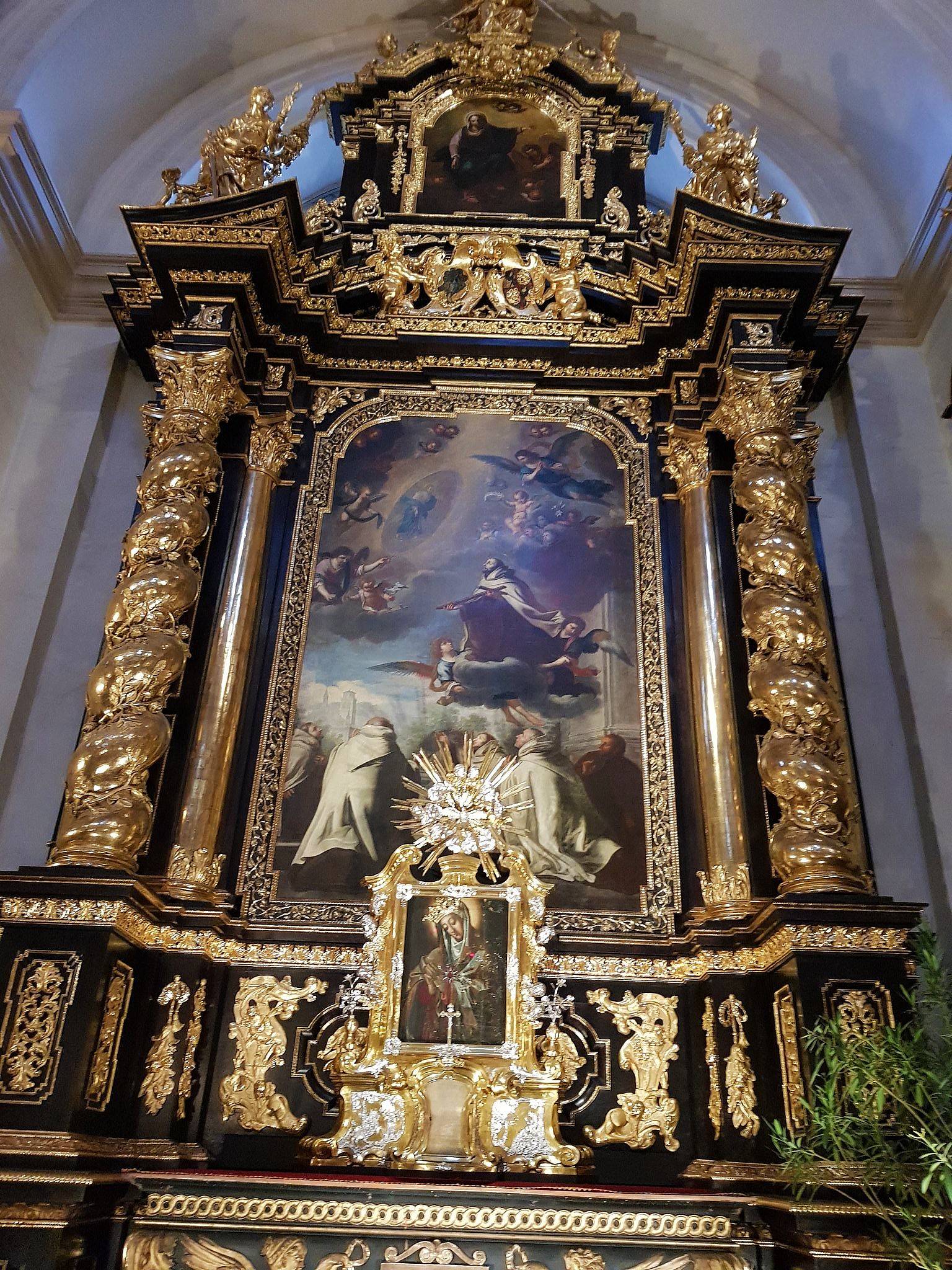
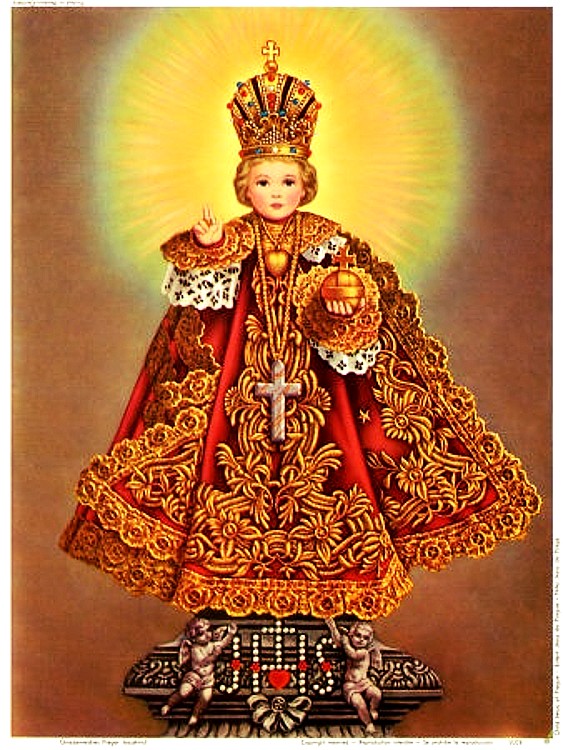
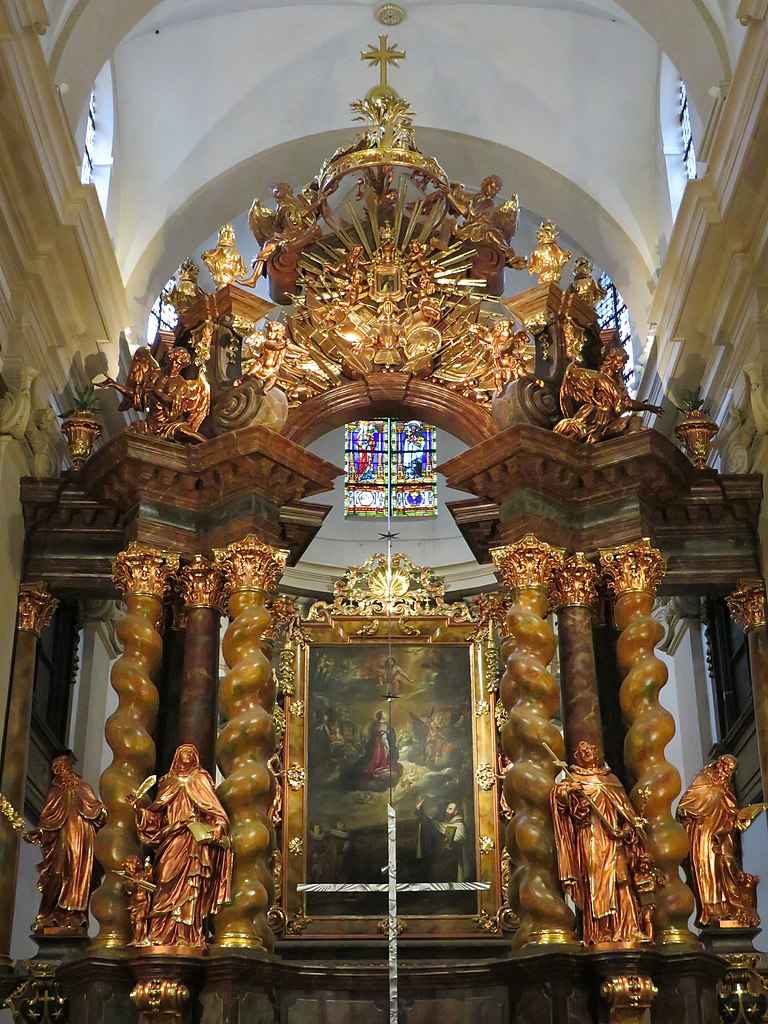
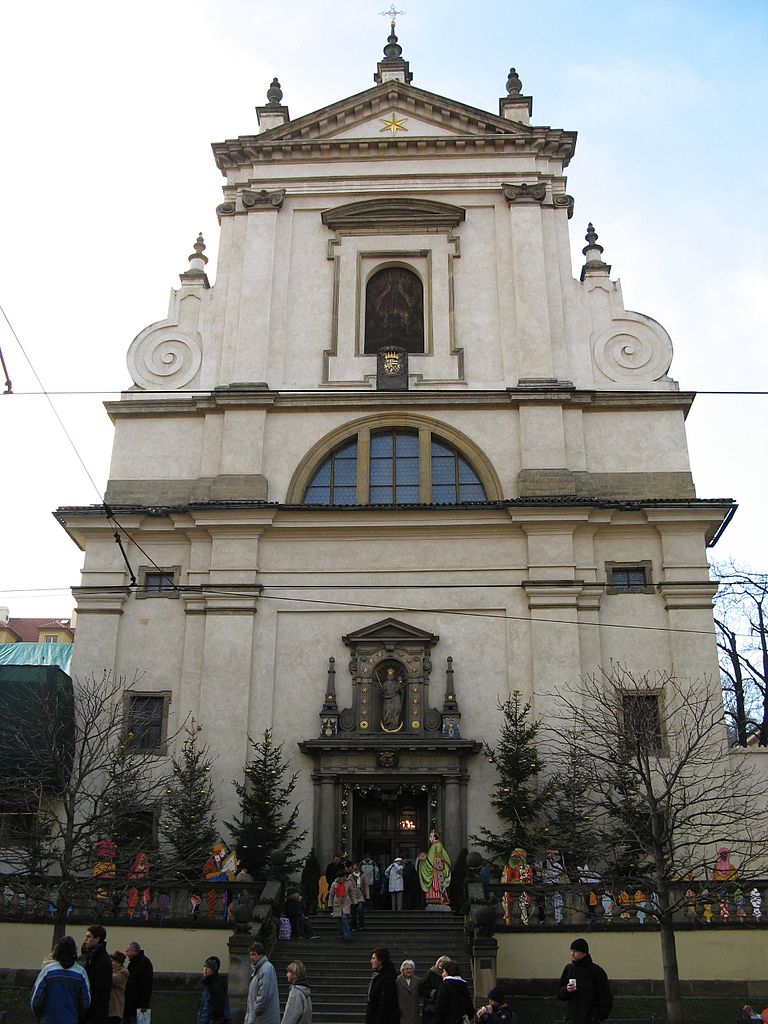
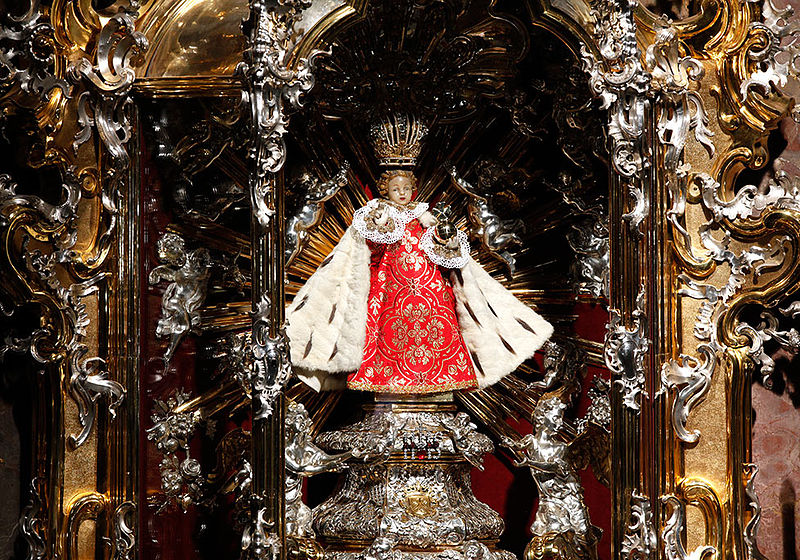
Panny Marie Vítězné / Our Lady of Victory, Prague, Czech Republic (1620), home of the Infant of Prague: 13 January: Among shrines dedicated to Our Lady of Victory, that at Prague has become world-famous because it is also the home of the Statue of the Infant of Prague.
The story of the Shrine is an unusual one. In 1620 the Austrian Emperor, Ferdinand II and Prince Maxmilian of Bavaria gained a major victory over a coalition of Protestant armies in the battle of the White Mountains near Prague. The previous day, Fr Dominic of Jesus-Maria, a Discalced Carmelite, had found, in the castle of Strakowicz, a picture representing the nativity of Christ. It showed the Blessed Virgin kneeling before her Divine Son, while St Joseph stood behind her holding a lantern. In the background were two shepherds. The Calvanists had shown their fanaticism, by piercing the eyes of Mary and her spouse, St Joseph. Carrying the picture to the camp, the Monk held it up and urged the soldiers to restore Mary’s honour. His words decided the hesitation of the generals and gave courage to the men. They adopted Mary’s name as their battle cry and Mary blessed their efforts. In the moment of success, they hailed the painting as Our Lady of Victory and carried it in triumph into Prague, where their leaders adorned it with rich jewels. In gratitude to God for his great success and in recognition of the help given by Father Dominic, Ferdinand II founded several Carmelite Monasteries, including one at Prague which was solemnly blessed under invocation of Our Lady of Victory. Before this time, however, Father Dominic had taken the picture of Our Lady of Victory to Rome where it was first venerated in the Basilica of St Mary Major, then carried – in the presence of Pope Gregory XV – to the Church of St Paul near the Carmelite convent, on 8 May 1622. Pope Paul V subsequently changed the name of the Church to Our Lady of Victory and the feast was officially inaugurated. The original painting was destroyed in a fire in 1833 and has been replaced by a copy. Another copy hangs in the church of Our Lady of Victory in Prague, in a building erected in 1706 replacing the earlier church. From the Shrine of Our Lady of Victory in Prague, came to the entire world the devotion to the Infant of Prague. Our need for Mary’s help continues as long as we live and so long, too, we need her guidance. The struggle between the forces of evil and the forces of good, will continue until the end of time. The devil, whose intelligence and power exceed those we can command in our own right, has an acute appreciation of the value of our souls bought with a great price. Our sure way to defeat him, is to range ourselves under Mary’s banner, to call on her to bring us victory and to acknowledge her, as Our Lady of Victory when she protects us from dangers and brings us triumphant through temptation.
Shrine of Our Lady of Victory
The Altar of the Infant of Prague is right next to Our Lady of Victory’s Altar. I have been blessed to have visited here and to venerate both.
St Agrecius of Trier St Andrew of Trier St Berno of Cluny St Ðaminh Pham Trong Kham St Designatus of Maastricht St Elian of Brittany St Emil Szramek St Enogatus of Aleth St Erbin of Cornwall Blessed Francesco Maria Greco (1857-1931) Blessed Francesco’s Life: https://anastpaul.com/2019/01/13/saint-of-the-day-13-january-blessed-francesco-maria-greco-1857-1931/ Bl Francisca Inés Valverde González St Giuse Pham Trong Ta St Glaphyra St Gumesindus of Córdoba St Hermylus Bl Hildemar of Arrouaise Bl Ida of Argensolles Bl Ivetta of Huy St Kentigern “Mungo” of Glasgow (c 518-614) About St Mungo: https://anastpaul.com/2020/01/13/saint-of-the-day-13-january-saint-kentigern-mungo-of-glasgow-518-614/ St Leontius of Caesarea St Luca Pham Trong Thìn Bl María Francisca Espejo y Martos Bl Matteo de Lana St Peter of Capitolíade St Servusdei of Córdoba St Stephen of Liège St Stratonicus Blessed Veronica of Binasco OSA (c 1445-1497) Virgin Mystic St Viventius St Vivenzio of Blera — Forty Martyred Soldiers at Rome: Forty soldiers martyred in the persecutions of Gallienus. They were martyred in 262 on the Via Lavicana, Rome, Italy.
Second Thought for the Day – 12 January – The Memorial of St Benedict Biscop OSB (c 628-690)
“How Venerable Benedict Did Prophesy to His Monks the Time of His own Death.”
(St Gregory’s Dialogues, Book 2, Chapter 37)
In the year that was to be his last, the man of God foretold the day of his holy death to a number of his disciples. In mentioning it to some who were with him in the Monastery, he bound them to strict secrecy. Some others, however, who were stationed elsewhere, he only informed of the special sign they would receive at the time of his death.
Six days before he died, he gave orders for his tomb to be opened. Almost immediately, he was seized with a violent fever that rapidly wasted his remaining energy. Each day his condition grew worse until finally, on the sixth day, he had his disciples carry him into the chapel where he received the Body and Blood of our Lord, to gain strength for his approaching end. Then, supporting his weakend body on the arms of his brethren, he stood with his hands raised to heaven and, as he prayed, breathed his last.
That day, two monks, one of them at the monastery, the other some distance away, received the very same revelation. They both saw a magnificent road covered with rich carpeting and glittering with thousands of lights. From his monastery, it stretched eastward in a straight line until it reached up into heaven. And there in the brightness stood a man of majestic appearance, who asked them, “Do you know who passed this way?”
“No,” they replied.
“This,”he told them, “is the road taken by blessed Benedict, the Lord’s beloved, when he went to heaven.”
Thus, while the brethren, who were with Benedict witnessed his death, those who were absent knew about it, through the sign he had promised them. His body was laid to rest in the Chapel of St John the Baptist, which he had built to replace the altar of Apollo.
Thought for the Day – 12 January – Meditations with Antonio Cardinal Bacci (1881-1971)
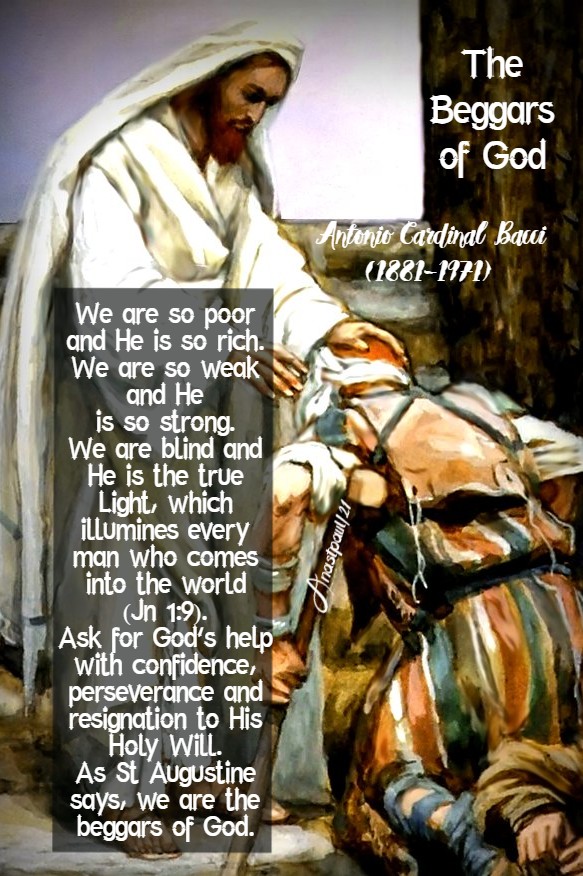
The Beggars of God
“Both in the natural and in the supernatural orer, we are in continual need of the help of God. We did not exist and God, in His infinite goodness, created us. It is He, Who preserves us in existence from day to day and from moment to moment. The act of conservation, is like a continuous creation. If God did not sustain us, we should return immediately to the dust from which we came: “Remember, man, that dust you are and unto dust you shall return” (Gen 3:19).
We are continually dependent on our Lord and Creator for our existence and activity. If we remained always aware of this tremendous fact, we would never offend God. We would show Him a filial gratitude and humbly implore His assistance.
We are so poor and He is so rich. We are so weak and He is so strong. We are blind and He is the true Light, which illumines every man who comes into the world (Jn 1:9). Ask for God’s help with confidence, perseverance and resignation to His Holy Will. As St Augustine says, we are the beggars of God.”
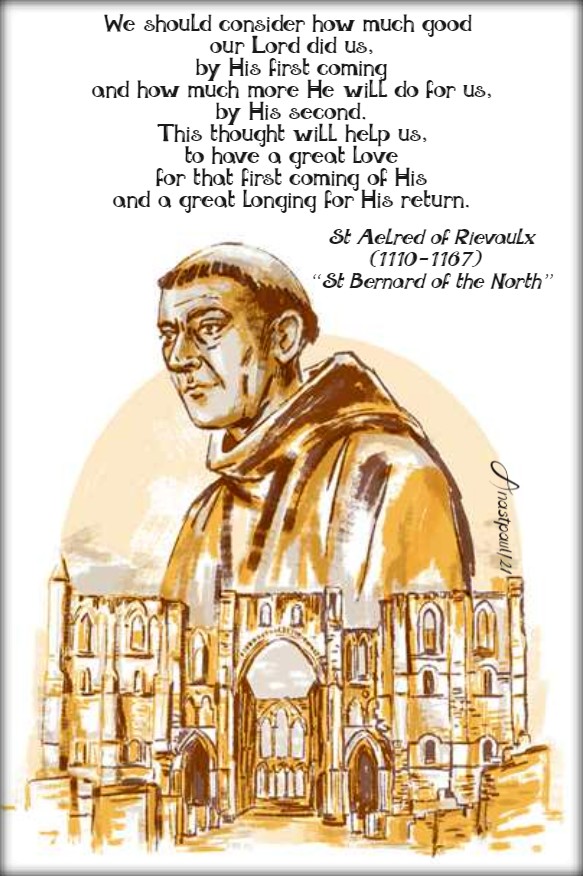
Quote/s of the Day – 12 January – The Memorial of St Aelred of Rievaulx (1110-1167) “St Bernard of the North”
“We should consider how much good our Lord did us, by His first coming and how much more He will do for us, by His second. This thought will help us, to have a great love for that first coming of His and a great longing for His return.”
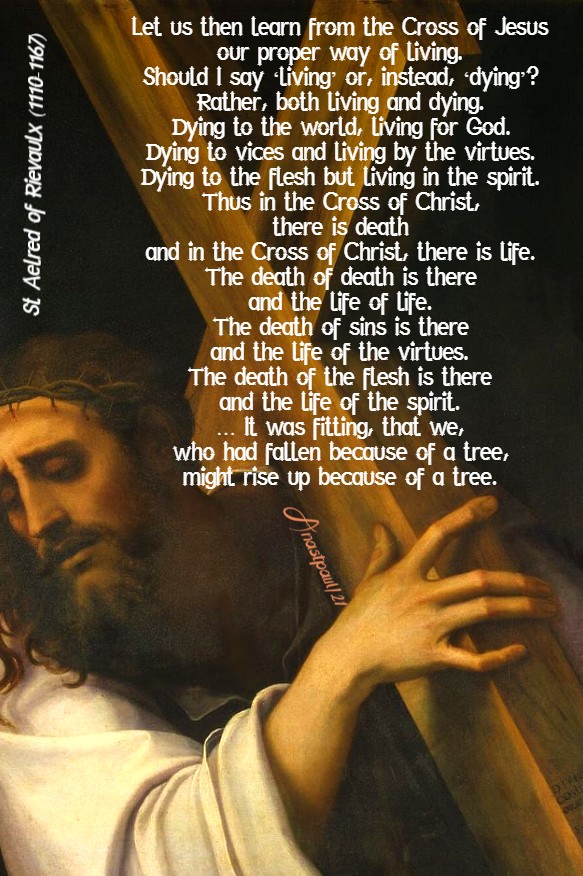
“Let us then learn from the Cross of Jesus our proper way of living. Should I say ‘living’ or, instead, ‘dying’? Rather, both living and dying. Dying to the world, living for God. Dying to vices and living by the virtues. Dying to the flesh but living in the spirit. Thus in the Cross of Christ, there is death and in the Cross of Christ, there is life. The death of death is there and the life of life. The death of sins is there and the life of the virtues. The death of the flesh is there and the life of the spirit. … It was fitting, that we, who had fallen because of a tree, might rise up because of a tree.”
“Faith is not even a virtue, unless it is expressed by love, nor is hope, unless it loves, what it hopes for.”
“When insults have no effect on us, when persecutions and penalties, have no terror for us, when prosperity or adversity, has no influence on us, when friend and foe, are viewed in the same light… do we not come close, to sharing, the serenity of God?”
“If I see him [my neighbour] in distress, whether it be on account of the austerity of the food. or because of work or the vigils – if, I say, I see that he is tormented in body and tempted in spirit, if I see him in such affliction, and…do not on occasion accommodate myself to the infirmities of the weak I am not running in the fragrance of Christ’s ointments but with the harshness of the pharisees.”
St Aelred of Rievaulx (1110-1167) “St Bernard of the North”
One Minute Reflection – 12 January – Seventh day in the Octave of Epiphany, Readings: Hebrews 2:5-12, Psalms 8:2 and 5, 6-7, 8-9, Mark 1:21-28 and the Memorial of St Benedict Biscop OSB (c 628-690)
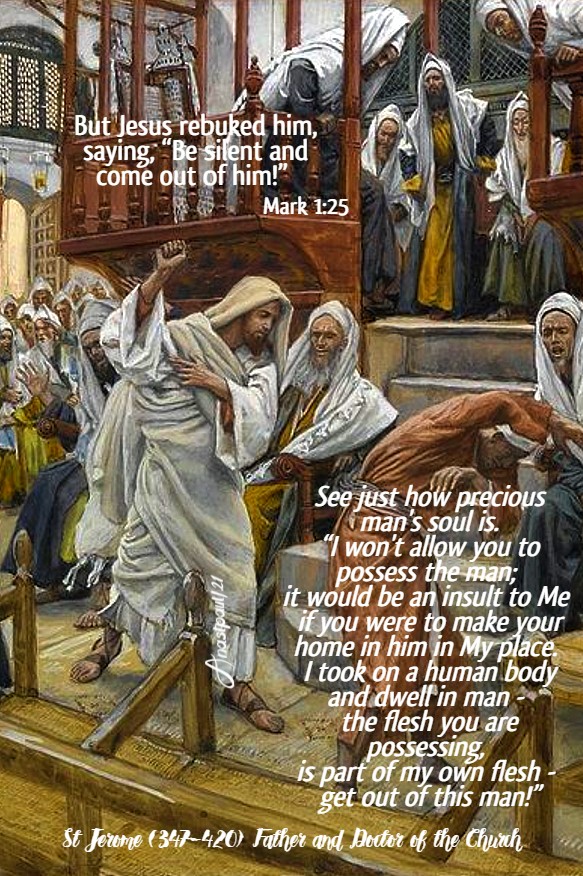
But Jesus rebuked him, saying, “Be silent and come out of him!” – Mark 1:25
REFLECTION – “Jesus rebuked the devil and said, ‘Be silent! Come out of him!’” Truth has no need of the Deceiver’s testimony. “I did not come to get the confirmation of your testimony but to cast you out of what I have created…, I have no need of the recognition of one whom I have vowed to destroy. Shut your mouth! Let your silence be My praise. I want no praise from your mouth, My praise is your torture, your punishment … Silence! and come out of this man!” It is as though He said: “Come out …, what are you doing in My house? It is I who want to enter in, so be silent and get out of the man, he being endowed with reason. Get out of the man! Leave the home prepared for Me! The Lord wants His house – vacate this man” …
See just how precious man’s soul is. This contradicts those who think that we human beings and animals have an identical soul and are animated by a same spirit. In another incident the devil is cast out of a single man and sent into two thousand pigs (Mt 8:32) – what is precious is saved, what is unclean is lost. “Come out of the man and get into the pigs…, go where you want, get along with you into the abyss. Leave the man, My private property, alone … I won’t allow you to possess the man, it would be an insult to Me if you were to make your home in him in My place. I took on a human body and dwell in man – the flesh you are possessing, is part of my own flesh – get out of this man!” – St Jerome (347-420) Father and Doctor of the Church – Homilies on Saint Mark’s Gospel, no. 2
PRAYER – King of heaven and earth, Lord God, rule over our hearts and bodies this day. Sanctify us and guide our every thought, word and deed, according to the commandments of Your law, so that now and forever, Your grace may free and save us. Sanctify our hearts, minds and actions with Your power, that all we are, may speak of Your Light. May the prayers of the Blessed Virgin our Mother and the ever-zealous St Benedict Biscop, bring us to peace and confidence. We make our prayer through Your Son, our Lord Jesus, in union with the Holy Spirit, one God for all eternity, amen.
Our Morning Offering – 12 January – Seventh day in the Octave of Epiphany and the Memorial of St Aelred of Rievaulx (1110-1167) “St Bernard of the North”
Behold Me, O Sweet Lord, Behold Me! By St Aelred of Rievaulx (1110-1167)
Behold me, O sweet Lord, behold me! For I hope. that in Your loving kindness, O Most Merciful One, You will behold me, either as a loving physician to heal, a kind teacher to correct, or an indulgent father to pardon… confident in Your sweet powerful mercy and most merciful power, I ask in virtue of Your sweet Name and of the mystery of Your sacred humanity that, mindful of Your kindness and unmindful of my ingratitude, You forgive me my sins and heal the languors of my soul. Amen
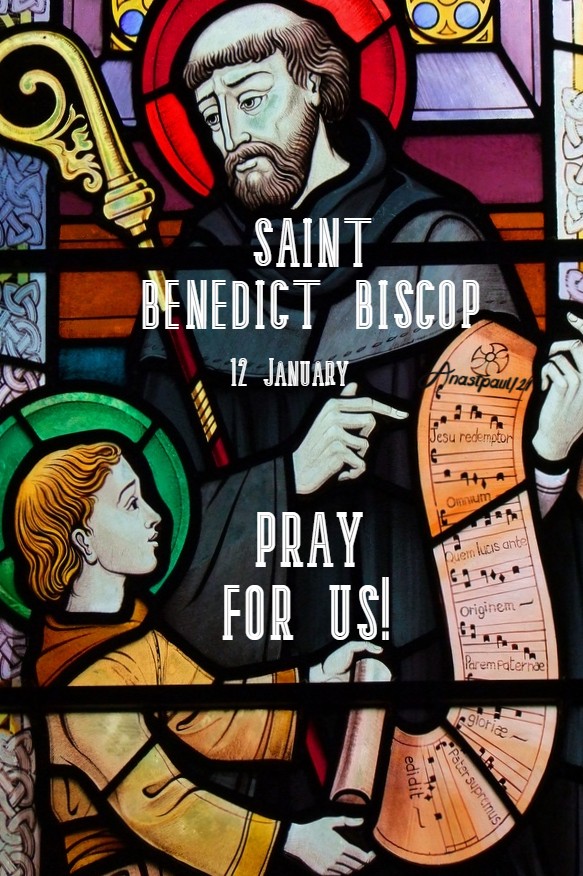
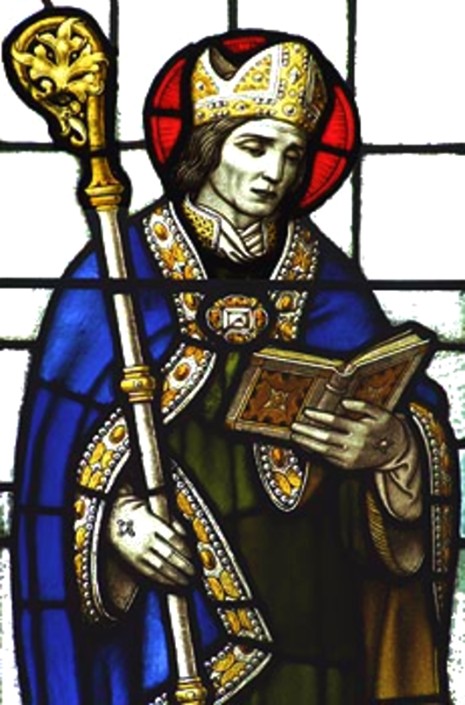
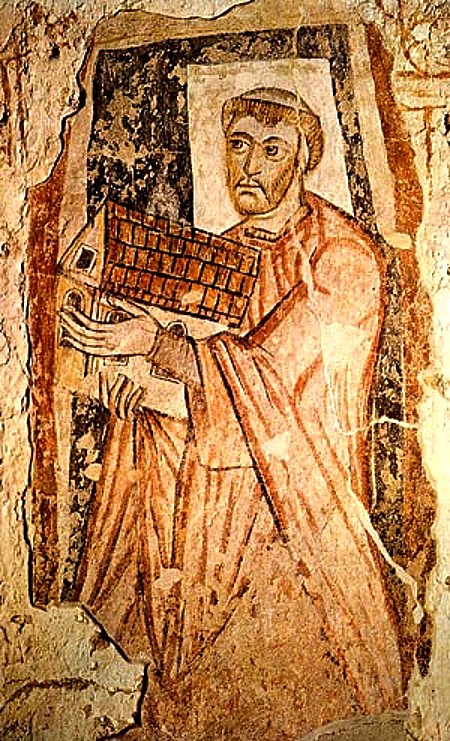
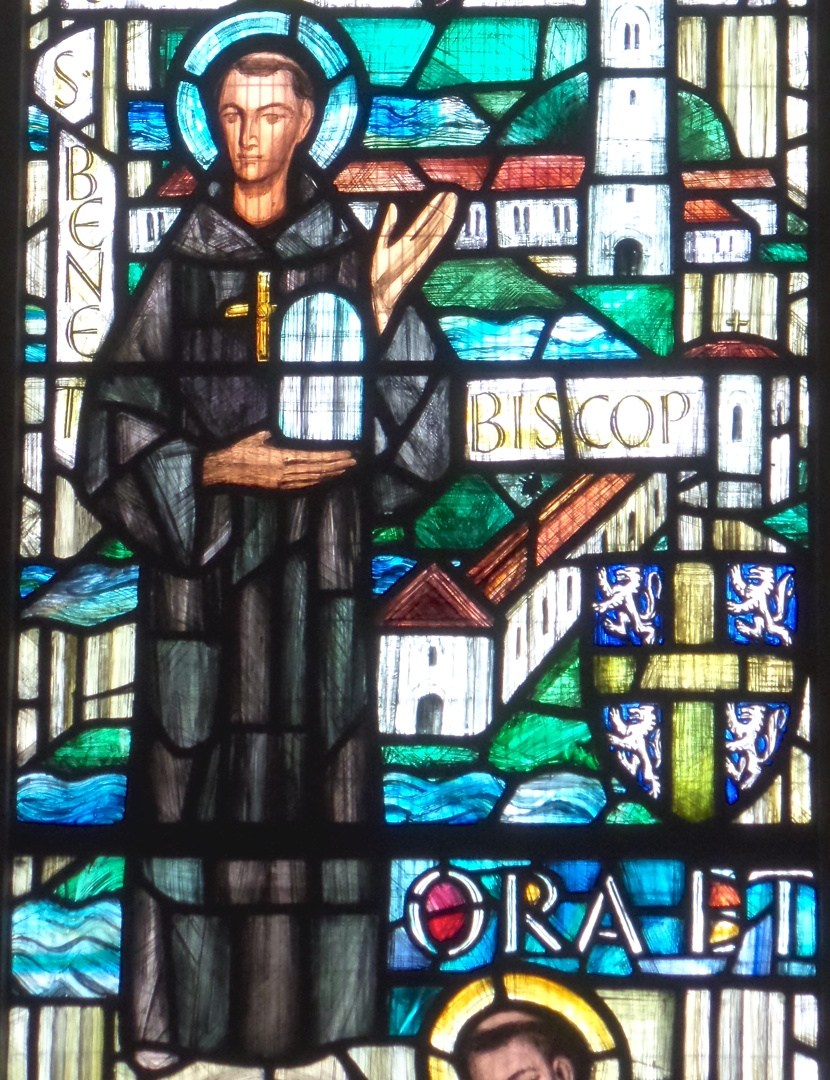
Saint of the Day – 12 January – St Benedict Biscop OSB (c 628-690) (pronounced “bishop”) – Bishop and Abbot of Wearmouth, who introduced Stained Glass windows to England and raised the Venerable Saint Bede, Founder of Monkwearmouth-Jarrow Priory (where he also founded the famous library) – he was known as a Bibliophile, Confessor, a man of great piety and learning. Born in c 628 in Northumbria, England as Benet Biscop and died on 12 January 690 of natural causes at Wearmouth, England. Patronages – English Benedictines, musicians, painters, Church libraries and librarians, Sunderland, England, St Benet Biscop Catholic Academy in Northumberland, England.
Benedict’s idea was to build a model Monastery for England, sharing his knowledge of the experience of the Church in Europe. It was the first Ecclesiastical building in Britain to be built in stone and the use of glass was a novelty for many in 7th-century England. It eventually possessed, what was a very large library for the time – several hundred volumes – and it was here, that Benedict’s student St Bede wrote his famous works. The library became world-famous and manuscripts that had been copied there became prized possessions throughout Europe, including especially the Codex Amiatinus, the earliest surviving manuscript of the complete Bible in the Latin Vulgate version.
Benet was born of the highest Anglo-Saxon nobility. He held office in the household of King Oswy (Oswiu) of Northumbria. But, after a journey to Rome, the first of his five such trips, when his was 25 (653) in the company of Saint Wilfrid, the saint renounced his inheritance and dedicated himself to God. He then spent his time in studying the Scriptures and prayer. Following a second visit to Rome with Oswy’s son Aldfrith in 666, he became a Monk in the Monastery of Saint-Honorat in Lerins near Cannes, France, taking the name Benedict. He remained there for two years strictly observing the rule.
His third pilgrimage to Rome in 669, coincided with the visit of Archbishop-elect Wighard of Canterbury, who died there, prior to his consecration. Saint Theodore was finally selected to replace Wighard as Archbishop of Canterbury and Pope Saint Vitalian, ordered Benedict to accompany Theodore and Saint Adrian to England, as a Missionary, which he did in obedience. Theodore appointed Benedict Abbot of Sts Peter and Paul (now St Augustine’s) Monastery in Canterbury, where he remained for two years before returning to Northumbria. (He was succeeded as Abbot by Saint Adrian, whose feast day was yesterday and who held this position for 39 years.)
Thereafter, Saint Benedict travelled to and fro between Britain and Rome (beginning in 671), returning always with books and relics and bringing back with him craftsmen to build and enrich the Churches of Britain. This fourth journey was made, with the view of perfecting himself in the rules and practice of a monastic life, so he stayed a while in Rome and visited other Monasteries.
In 674, he was granted 70 hides of land by Oswy’s son, Egfrid, at the mouth of the river Wear (Wearmouth), where he built a great stone Church and Monastery dedicated to Saint Peter. He was the first to introduce glass into England, which he brought from France along with stone and other materials. His foreign masons, glaziers and carpenters taught their skill to the Anglo-Saxons. He spared no trouble or effort in seeking far and wide for all that would richly embellish his Romanesque church.
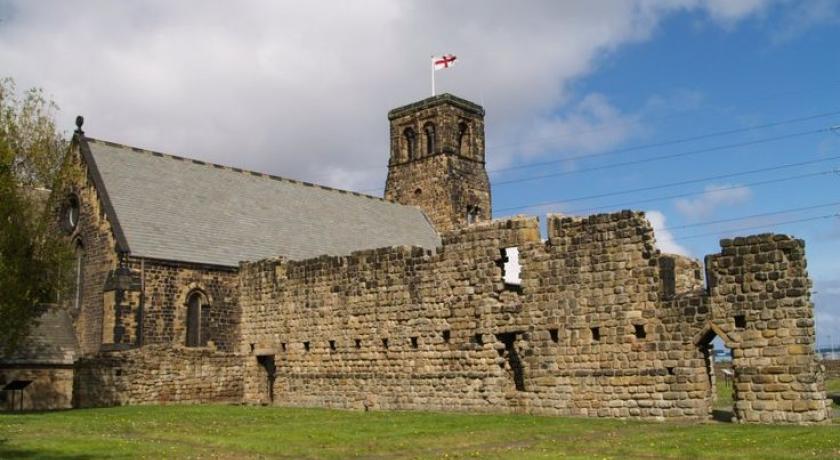
Partly in ruins, St Peter’s Monastery and Church
From his trip to Rome in 679, Benedict brought back Abbot John of Saint Martin’s, the precentor (Archcantor) from Saint Peter’s. This was a result of Benedict persuading Pope Saint Agatho that Abbot John would be able to instruct the English monks, so that the music and ceremonies at Wearmouth might follow exactly the Roman pattern. Upon his return to England, he held training classes in the use and practice of church music, liturgy and chants. (John also taught the English monks uncial script and wrote instructions on the Roman liturgy for them.)
But, chiefly, he brought books, for he was a passionate collector. His ambition was to establish a great library in his Wearmouth Monastery. He also imported pictures from Rome and Vienne, beautiful paintings and musical scores. Among these treasures imported from Rome were a series of paintings of Gospels scenes, of Our Lady and the Apostles and of incidents described in the Book of Revelation, to be set up in the church.
Benedict also devised his rule based on that of Saint Benedict and those of the 17 Monasteries he had visited. He doubtlessly organised the scriptorium in which was written the manuscript of the Bible which, his successor as Prior at Wearmouth, Saint Ceolfrid, took with him in 716 as a present to Pope Saint Gregory II – the very book was identified in the Biblioteca Laurentiana at Florence in 1887, the famous Codex Amiatinus. All this immeasurably enriched the early English Church.
Because his Monastery and Church at Wearmouth was so edifying, in 682 Egfrid gave him a further gift of forty hides of land, this time at Jarrow on the Tyne River. Here he established a second Monastery, six miles from St. Peter’s and dedicated it to Saint Paul (now called Jarrow) in 685, which became famous as a great centre of learning in the West and the home of Saint Bede. our Saint’s charge and spiritual son. Among its inmates were many Saxon thanes turned Monks, who ploughed and winnowed and worked at the forge, like the rest and at night, slept in the common dormitory, for rank and class had no place among them.
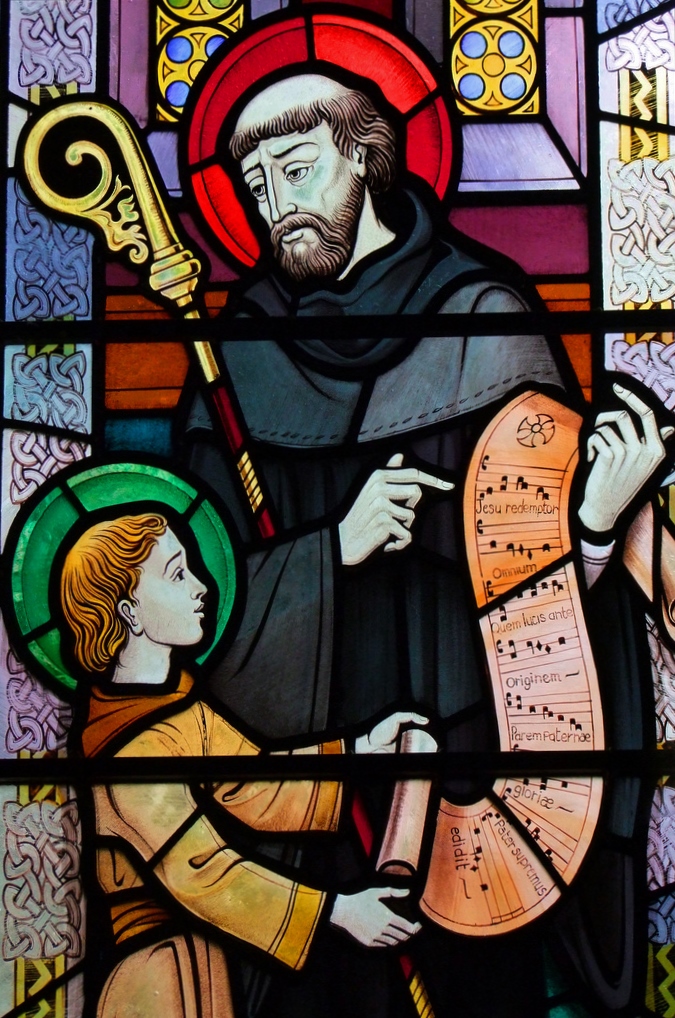
St Benedict Biscop with St Bede
And because Benedict was busier than ever with all his enterprises and still governed both Abbeys, he handed over some of his authority. Benedict first took to help him at Wearmouth, his nephew, Saint Eosterwin, a noble like himself and then Saint Sigfrid. In Jarrow, he placed Saint Ceolfrid in charge. While Benedict still ruled the Abbeys as their Founder, he made these men the Abbots under his direction of the two foundations, so that the Monasteries would not be without leadership during his absences.
Benedict made his last voyage to Rome in 685, returning with even more books and sacred images and some fine silk cloaks of exceptional workmanship, which he exchanged with the King for three hides of land.
It was due to Benedict Biscop that so much material lay to hand for Bede and other scholars and that, a solid foundation was laid for the later glories of the English Church. After his death, the school at Jarrow alone, comprised 600 scholars, apart from the flow of constant visitors. It was also in large part due to him, that the Church of Northumbria turned from the old Celtic forms, to those of Rome. Out of his labours and travels came a rich and abundant harvest.
At the end of his life, Benedict suffered from a painful paralysis in his lower limbs. (It is interesting to note that Sigfrid was afflicted with the same paralysis about the same time.) Throughout his three-year confinement, he asked the Monks to come into his room to sing Psalms and he joined them when he could. His last exhortations to his Monks, before he died at age 62, were to continue his work, to preserve his great library, to follow the monastic Rule of Saint Benedict and, to elect an Abbot, based on his holiness and ability rather than his lineage. He said, he would rather the Monasteries be turned into wildernesses than to have his brother succeed him as Abbot.
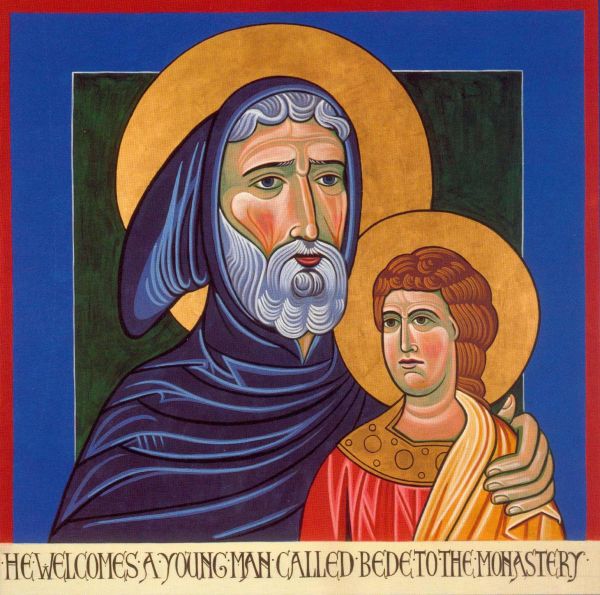
Benedict’s biography was written by Saint Bede, who had been entrusted to his care at age seven and whose learning was made possible by the library Benedict collected at Jarrow. Bede, the historian, says that the civilisation and learning of the 8th century rested in the Monastery founded by Benedict.
Proof of a very early public cultus of Benedict Biscop comes from a sermon of Bede on him (Homily 17) for his feast but the cultus became more widespread only after the translation of his relics under Saint Ethelwold about 980. Saint Benedict’s relics are thought to rest at Thorney Abbey, although Glastonbury also claims some of them.
Nuestra Señora La Conquistadora/ Our Lady the Conqueror, Santa Fe, New Mexico – 12 January:
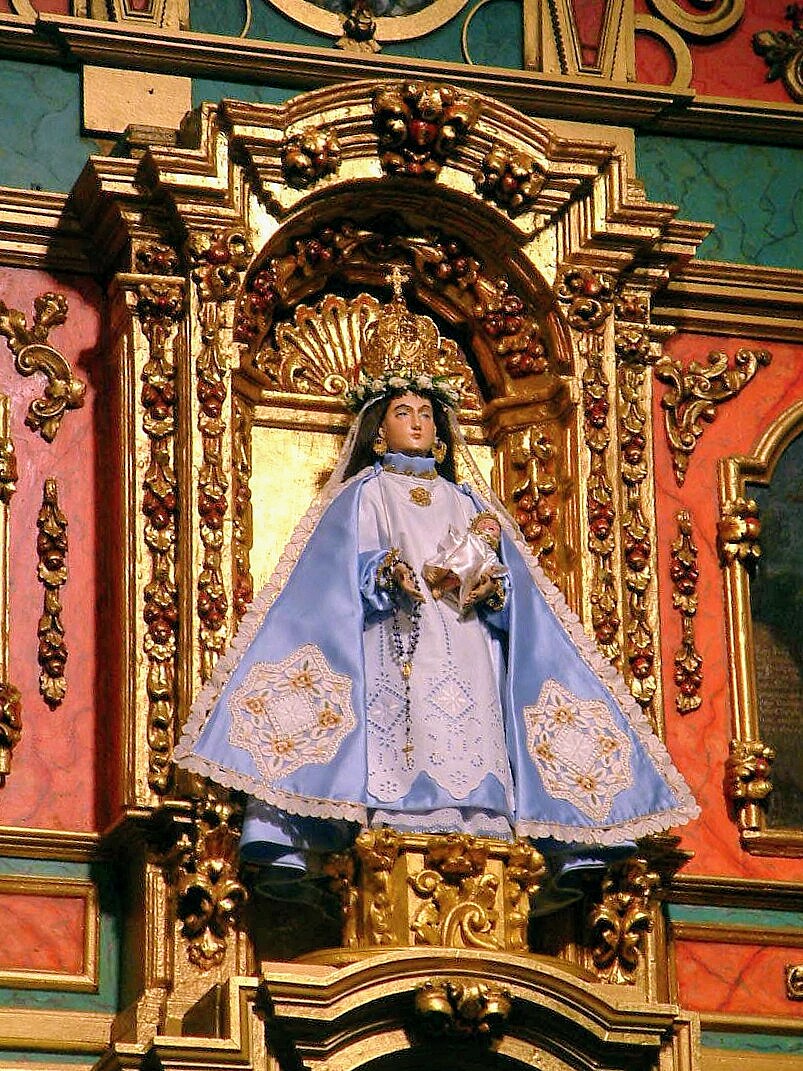
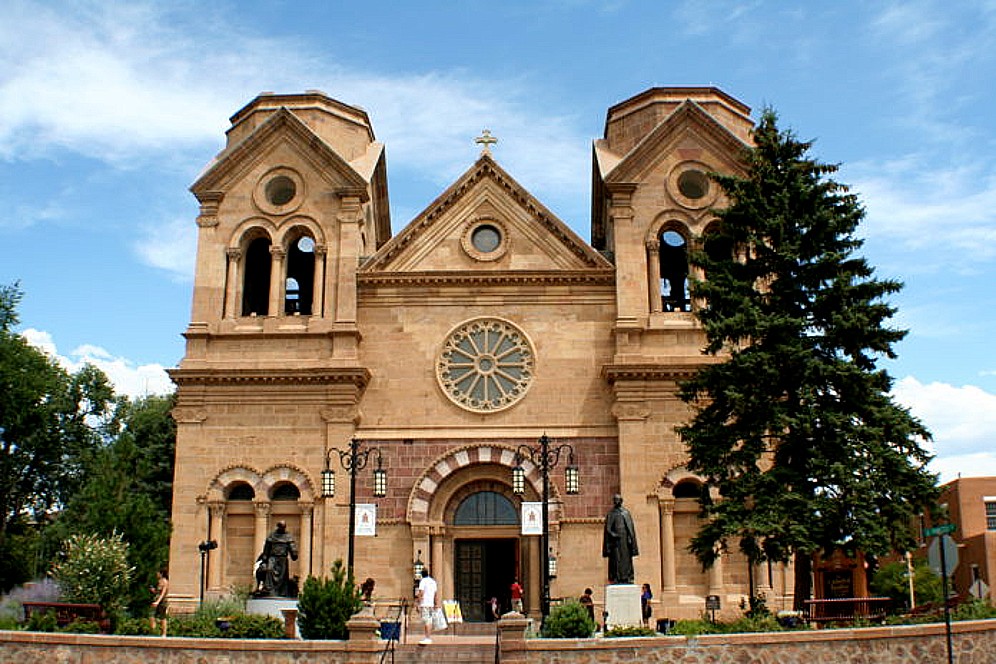
In the North Chapel of the beautiful Cathedral of Santa Fe stands a little Statue (scarcely 90 cms tall) of Our Lady holding the Child Jesus. It was skilfully carved by loving hands in Spain. Mary is clad in a richly embroidered dress, topped by a jewelled crown. Her regal countenance wears a serene, detached expression that is strangely impressive. This is Our Lady of Conquest, or La Conquistadora. The Statue of Our Lady came to the new world in the care of the Franciscan missionary Fray Alonso da Venevides. She was installed with great ceremony in a Church in Santa Fe. Over the ensuing decades, as often happens, the men living in the region did not practice their religion as they should. Mary appeared in a vision to a young girl, warning her that the colony would be overrun due to the loss of reverence for Priests and the Faith. In the year 1680 the local Indians rose up and attacked the Spanish. Twenty-one Priests were killed and the colonists completely driven out of the region. The statue was rescued from the burning Church and taken back to Mexico with the colonists who escaped the wrath of the Indians.
It was not until the year 1691 that Don Diego de Vargas was sent by the King of Spain to attempt the re-settlement of the City of Santa Fe. Like so many Spanish heroes who had accomplished seemingly impossible deeds during their lifetimes, he was as fervent a Catholic as he was a capable knight. Don Diego de Vargas carried with him the statue of Our Lady as he re-entered New Mexico. Although he had only a small force, he was able to peacefully negotiate a peace with the various Indian nations. He attributed his success to “the Sovereign Queen, Most Blessed Mary.” He is said to have vowed to build a chapel for her and hold a yearly procession if she would grant him a speedy and bloodless victory over the Indian, which she did. Upon reaching his goal, however, the Indians refused to allow the Spanish colonists to return to Santa Fe. The Spanish under Don Diego were few in number and they were forced to fight a numerically superior force. The colonists prayed the Rosary before the Statue of the Blessed Virgin, as the men engaged the Indians in battle. The fighting lasted all day and it was not until evening when they reclaimed the city. Once again, Mary was credited for the victory and to show her sovereignty, Don Diego placed an officer’s baton in her hand. The Shrine symbolises a spirit of deep-rooted Faith and devotion, which characterised the “Conquistadores” of this land. There is still a great deal of devotion shown to Mary at the Cathedral of St Francis, which includes processions, fiestas and other celebrations. The Statue was formally crowned by Cardinal Francis Spellman and in 1960 received a Papal Coronation.
Bl Antoine Fournier St Antonio Maria Pucci OSM (1819-1892) Biography: https://anastpaul.com/2019/01/12/saint-of-the-day-st-anthony-mary-pucci-osm-1819-1892/ St Arcadius of Mauretania Bl Bartholomew Alvarez Bl Bernardo de Plano St Biccianus St Benedict Biscop OSB (c 628-690) – Bishop and Abbot of Wearmouth, who introduced Stained Glass windows to England and raised the Venerable Saint Bede St Bernard of Corleone St Caesaria of Arles St Caroticus Bl Emmanuel d’Abreu St Eutropius St Ferreolus of Grenoble Bl John Gaspard Cratz St John of Ravenna Bl Lucia of Valcaldara St Marguerite Bourgeoys CND (1620-1700) St Marguerite’s Biography: https://anastpaul.wordpress.com/2017/01/12/saint-of-the-day-12-january-st-marguerite-bourgeoys/
St Martinian of Belozersk St Martin of León Bl Nicholas Bunkerd Kitbamrung St Peter of Abessala Blessed Pierre-François Jamet (1762-1845) About Blessed Pierre-François: https://anastpaul.com/2020/01/12/saint-of-the-day-12-january-blessed-pierre-francois-jamet-1762-1845/ St Probus of Verona St Quinctus the Soldier St Satyrus St Tatiana of Rome St Tigrius St Victorian of Asana Bl Vincent da Cunha — Martyrs of Africa – 44 saints: A group of 44 Christian soldiers murdered together for their faith in Africa. The only details that survive are four of their names – Castulus, Modestus, Rogatus and Zoticus.
Martyrs of Ephesus – 42 saints: Forty-two monks martyred at a monastery in Ephesus (modern Turkey) during the persecutions of the Iconoclast Byzantine Emperor Constantine V. Their names have not come down to us. Martyred c 762.
Martyrs of Iona – 38 saints: Thirty-eight monks martyred in Iona, Ireland. Their names have not come down to us. They were Martyred in 750 at Iona, Ireland.
Thought for the Day – 11 January – Meditations with Antonio Cardinal Bacci (1881-1971)
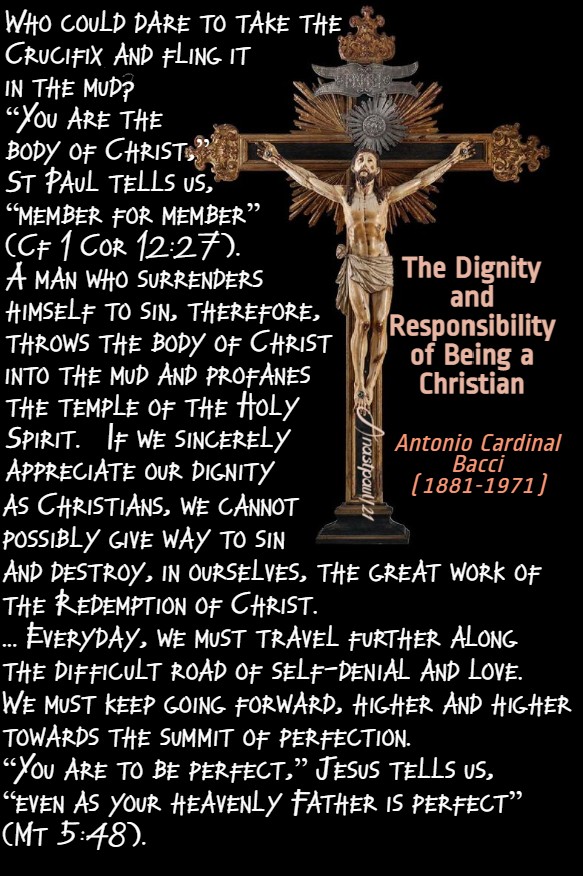
The Dignity and Responsibility of Being a Christian
“This exalted dignity carries with it grave obligations. The most important is to avoid sin. Who could dare to take the Crucifix and fling it in the mud? “You are the body of Christ,” St Paul tells us, “member for member” (Cf 1 Cor 12:27). A man who surrenders himself to sin, therefore, throws the body of Christ into the mud and profanes the temple of the Holy Spirit. If we sincerely appreciate our dignity as Christians, we cannot possibly give way to sin and destroy, in ourselves, the great work of the Redemption of Christ. We should, moreover, practise virtue. We should live in and for Jesus, like St Paul, who said, “For to me to live is Christ … ” (Phil 1:21). Everyday, we must travel further along the difficult road of self-denial and love. We must keep going forward, higher and higher towards the summit of perfection. “You are to be perfect,” Jesus tells us, “even as your heavenly Father is perfect” (Mt 5:48). Even this is not enough, however! A genuine Christian is not satisfied with avoiding sin and sanctifying himself but, he tries, by every means at his disposal, by word, action, good example and sacrifice, to spread the Kingdom of Christ among his fellow-men.”
Quote/s of the Day – 11 January – The Sixth Day in the Octave of Epiphany, Readings: Hebrews 1:1-6, Psalms 97:1 and 2, 6 and 7, 9, Mark 1:14-20
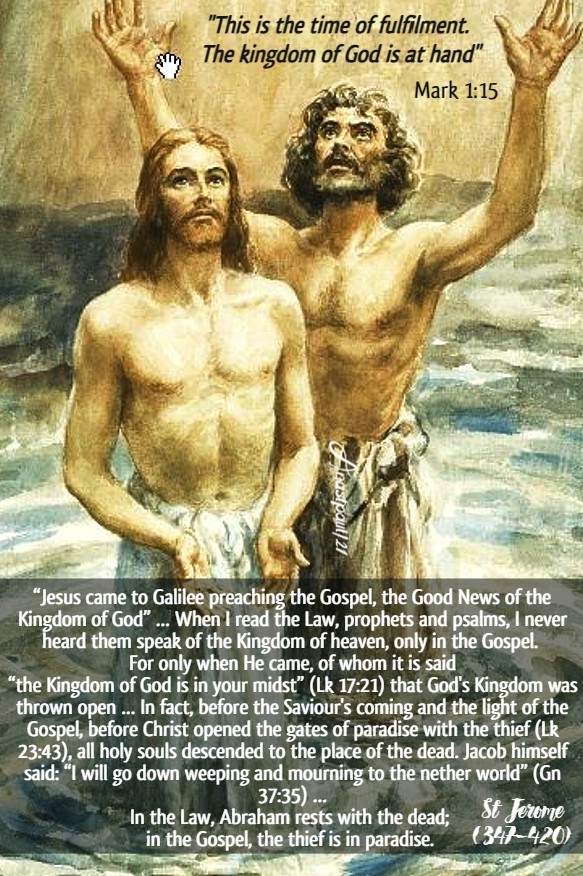
“This is the time of fulfilment. The kingdom of God is at hand, repent and believe in the gospel.”
Mark 1:15
“And the people sought him and came to him and would have kept him from leaving them, but he said to them, I must preach the good news of the kingdom of God to the other towns as well; for I was sent for this purpose.”
Luke 4:42-43
” … For behold, the kingdom of God, is in the midst of you.”
Luke 17:21
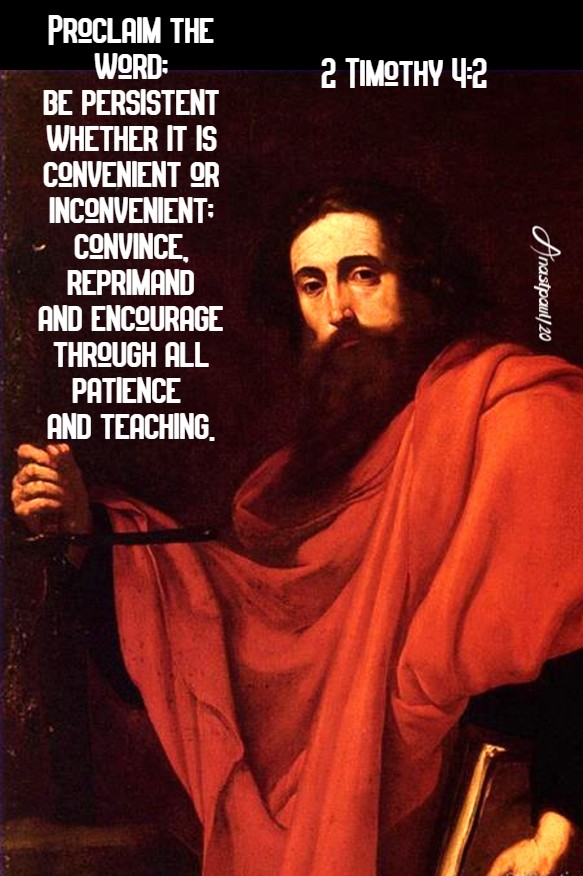
“Proclaim the word; be persistent whether it is convenient or inconvenient; convince, reprimand and encourage through all patience and teaching.”
2 Timothy 4:2
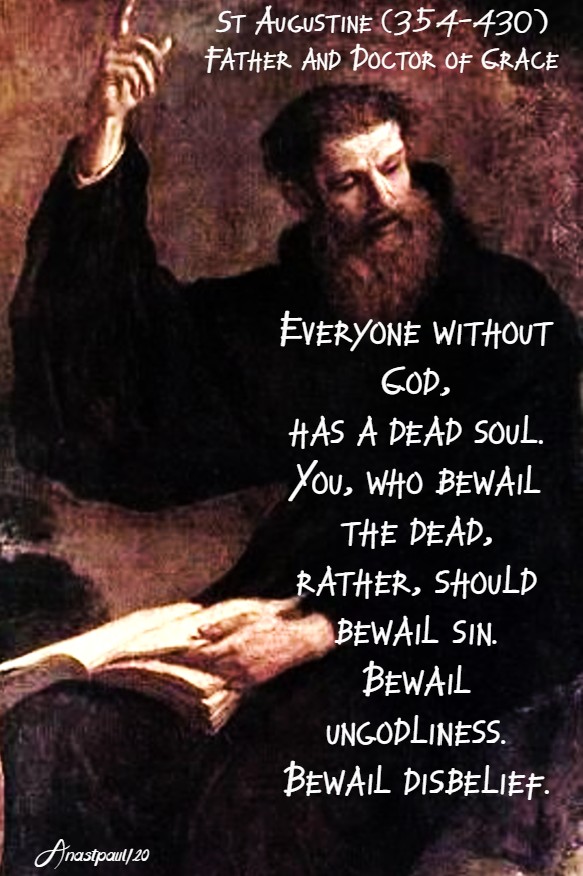
“Everyone without God, has a dead soul. You, who bewail the dead, rather, should bewail sin. Bewail ungodliness. Bewail disbelief.”
St Augustine (354-430) Father and Doctor of Grace
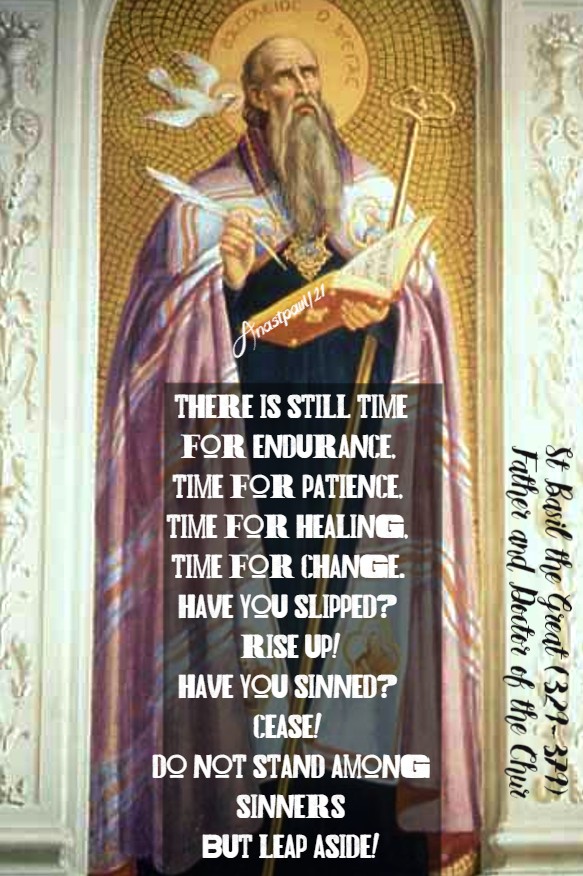
“There is still time for endurance, time for patience, time for healing, time for change. Have you slipped? Rise up! Have you sinned? Cease! Do not stand among sinners but leap aside!”
St Basil the Great (329-379) Father and Doctor of the Church
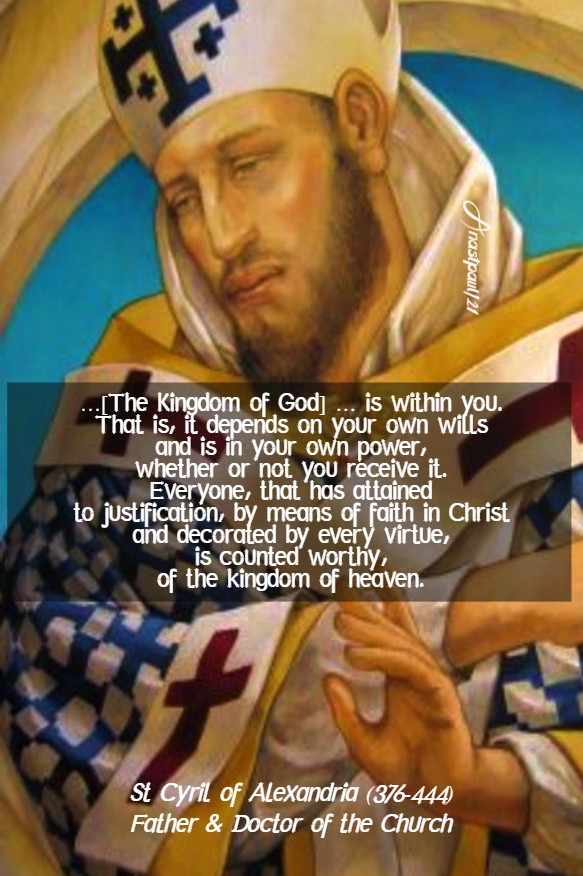
” …[The Kingdom of God] … is within you. That is, it depends on your own wills and is in your own power, whether or not you receive it. Everyone, that has attained to justification, by means of faith in Christ and decorated by every virtue, is counted worthy, of the kingdom of heaven.”
St Cyril of Alexandria (376-444) Father & Doctor of the Church
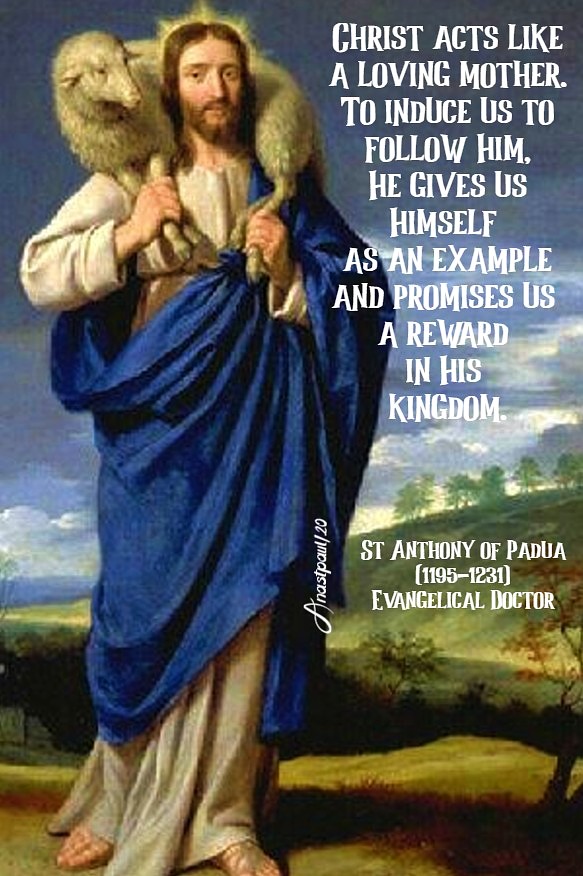
“Christ acts like a loving mother. To induce us to follow Him, He gives us Himself as an example and promises us a reward in His kingdom.”
St Anthony of Padua (1195-1231) Evangelical Doctor
“This is the time of fulfilment. The kingdom of God is at hand ”– Mark 1:15
REFLECTION – “After John had been arrested, Jesus came into Galilee ” According to our interpretation, John stands for the Law and Jesus the Gospel. Indeed, John says: “One mightier than I is coming after me …” (Mk 1:7) and elsewhere: “He must increase, I must decrease” (Jn 3:30): in this way he compares the Law with the Gospel. And afterwards he says: “I – that is, the Law – baptise you with water; he – that is the Gospel – will baptise you in the Holy Spirit” (Mk 1:8). And so, Jesus comes because John had been put in prison. In effect, the Law is finished, it has been brought to an end, it no longer has its former freedom. But we have passed from the Law to the Gospel …
“Jesus came to Galilee preaching the Gospel, the Good News of the Kingdom of God” … When I read the Law, prophets and psalms, I never heard them speak of the Kingdom of heaven, only in the gospel. For only when He came, of whom it is said “the Kingdom of God is in your midst” (Lk 17:21) that God’s Kingdom was thrown open … In fact, before the Saviour’s coming and the light of the Gospel, before Christ opened the gates of paradise with the thief (Lk 23:43), all holy souls descended to the place of the dead. Jacob himself said: “I will go down weeping and mourning to the nether world” (Gn 37:35) … In the Law, Abraham rests with the dead; in the Gospel, the thief is in paradise. We are not denigrating Abraham; we all want to rest in his bosom (Lk 16:23) but we prefer Christ to Abraham, the Gospel to the Law.
We read that after Christ’s Resurrection many saints appeared in the holy city (Mt 27:53). Our Lord and Saviour preached on earth and preached, too, to the underworld. He died and descended to hell to free the souls held captive there (1 Pt 3:18f.).” – St Jerome (347-420) Priest, Translator of Sacred Scripture, Father and Doctor of the Church – Homilies on Saint Mark’s Gospel, no.2A ; SC 494
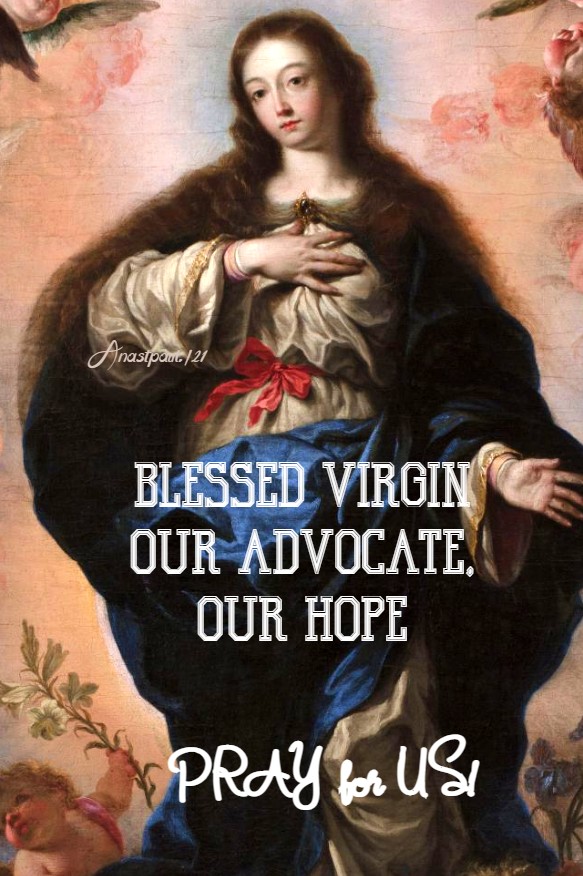
PRAYER – Lord, be the beginning ad the end of all that we are and do and say. Prompty our actions with Your grace and complete them with Your all-powerful help. Let our hearts belong to You alone and make us Your obedient servants. By the intercession of the Blessed Mary our Hope and all the Saints and Angels, we make our prayer through Christ our Lord, amen.
Our Morning Offering – 11 January – Month of the Most Holy Name of Jesus
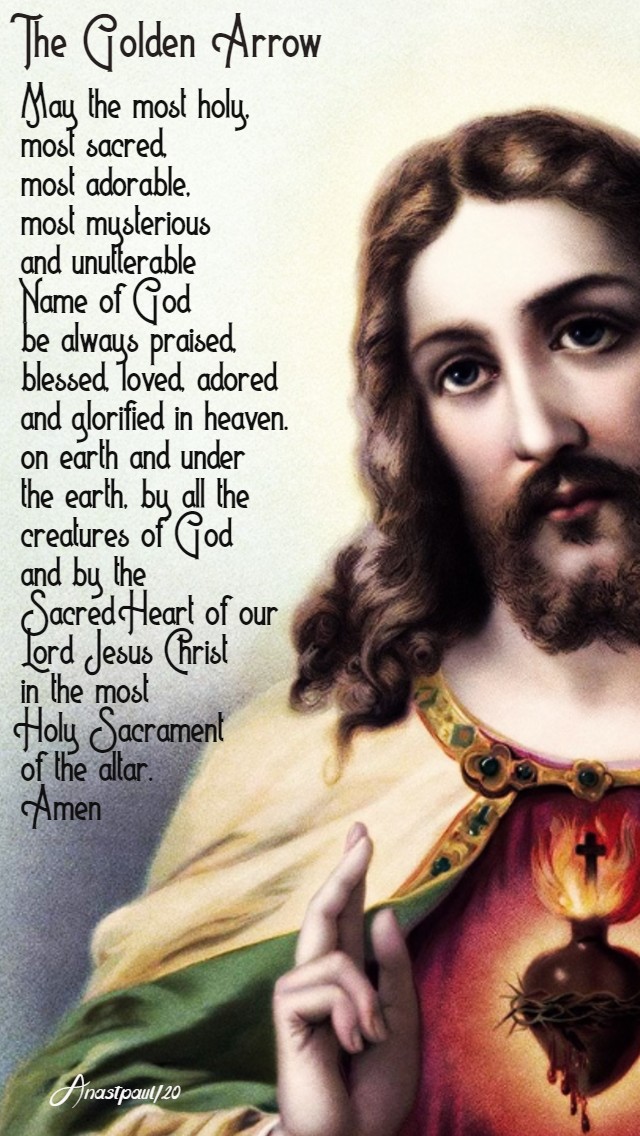
The Golden Arrow
May the most holy, most sacred, most adorable, most mysterious and unutterable Name of God be always praised, blessed, loved, adored and glorified in heaven. on earth and under the earth, by all the creatures of God and by the Sacred Heart of our Lord Jesus Christ in the most Holy Sacrament of the altar. Amen
This prayer was revealed by Jesus Himself to a Carmelite Nun of Tours in 1843 as a reparation for blasphemy. “This Golden Arrow will wound My Heart delightfully” He said “and heal the wounds, inflicted by blasphemy.”
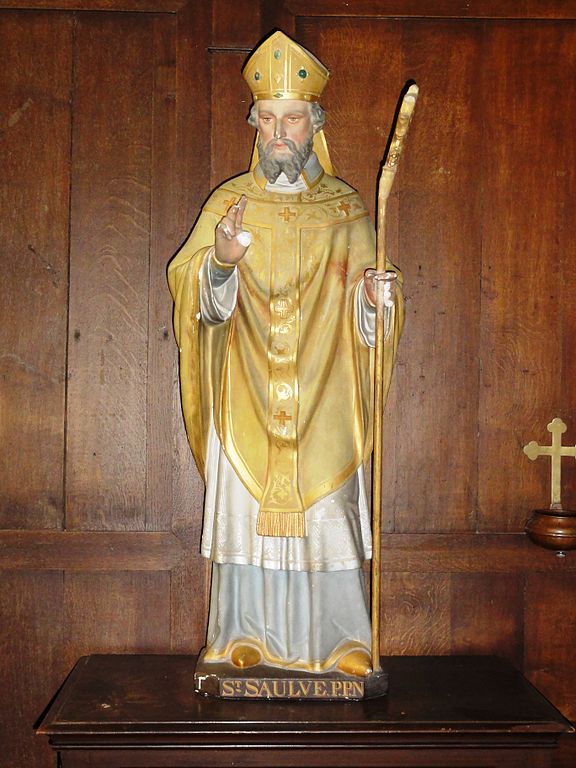
Saint of the Day – 11 January – Saint Salvius of Amiens (Died c 625) Bishop, Monk, miracle-worker. St Salvius was the fifth Bishop of the French city of Amiens . He lived in the 6th century and 7th century. He is often confused with Salvius of Albi and Salvius of Valencijn. Patronages – against speech impediments, of Montreui, the Frisian town of Dronrijp and of the town of Saint-Sauflieu, in France. He is also known as – Sauve or Saulve (also of Montreuil).
Salvius came from a wealthy Amiens family. He chose an ascetic lifestyle as a hermit but a group of followers gathered around him. One of these followers was St Ingoald (died around 600, memorial on 29 October). The Montreuil Monastery was created from this group of followers. Salvius himself was the first Abbot.He lived a frugal life and was very kind to his fellow man.
According to legend, Salvius was miraculously elected Bishop of Amiens . The miracle is that Salvius had died after a holy life and his fellow monks had entombed his corpse and then watched around the Coffin that night as is the custom, in the “Wake.” In the morning, the coffin opened with a big bang and Salvius opened his eyes from his sleep. He told the monks that he was indeed on his way to the heavenly world but God had sent him back to continue to serve on earth. As a result of this amazing experience, he was elected Bishop to succeed Bishop Ado.
As the Bishop, Salvius was gracious and lived a life of great care and mercy to the poor. By the grace of God, Salvius was able to perform many miracles, curing the blind, the deaf and those with other ailments. On one of his journeys as a Bishop, he healed a deaf and dumb child. He is, therefore, named as patron, for those suffering from speech impediments.
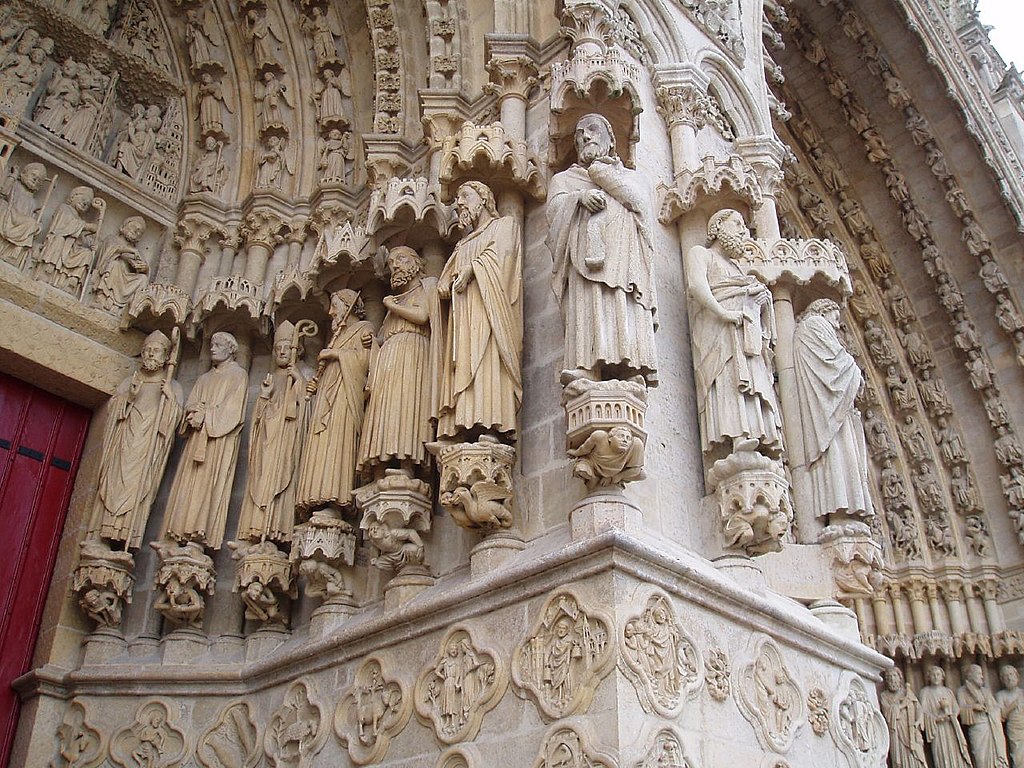
He built a church dedicated to the apostle Peter at Montreuil and also discovered the place where the body of St Firmin of Amiens was buried. St Firmin, who died in c 303 as a Martyr, was the first Bishop of Amiens. Salvius came to the right place with the help of the Holy Spirit. Here he glanced up into the sky, in prayer and a ray of sunshine brought about a shaking of the earth precisely at the site of Firminius’ tomb. Salvius commissioned the remains of Firminius to be taken to Notre-Dame of Amiens. The image below shows our Saint as the 3rd from the left in the St Firmin (in the middle) portal of the Notre-Dame of Amiens.
OLYMPUS DIGITAL CAMERA
Miraculous cures continued at his grave. His relics rest at Montreuil, in Picardy, in the Benedictine Abbey which bears his name, whither they were translated from the Cathedral of Amiens, several years after his death, as is related in his anonymous life. A relic of this saint was formerly kept with great veneration in the Cathedral of Canterbury, mentioned in the history of that church.
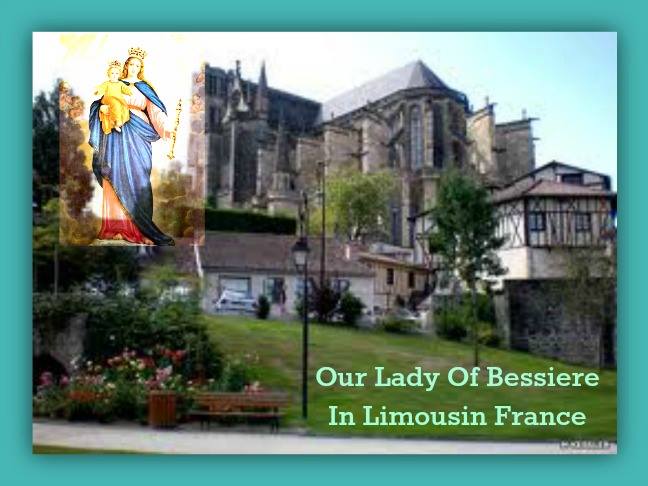
Notre-Dame de Bessiere / Our Lady of Bessiere, Limousin, France – 11 January:
The region of Limousin is nestled near the heart of France, and the essentially rural area has suffered much from heresies such as that of the French Huguenots over the centuries. Devotion to Our Lady is always a sure remedy, so much so that one of her titles is Destroyer of Heresies. Among the many miracles said to have taken place at the Shrine of Our Lady of Bessiere, in Limousin, France, is one told of a certain heretic who had derided the devotion paid to Our Lady. He would hide in the woods and waylay pilgrims on their way to the Shrine. Fearing neither God nor his Holy Mother, he would block their way, mock them for undertaking such a journey, sneer at their Christian beliefs and taunt them with sarcastic reproaches and foul ridicule. The unhappy man was soon to regret his folly. He was severely punished one day, as upon returning home, he saw his house go up in flames before his very eyes. Even with the assistance of his neighbours, all attempts to put out the flames were fruitless. In a matter of minutes his house was fully engulfed in flames. As the fire was at its height, Our Lady appeared in the flames in all her majesty and was seen to frown upon the heretic. This vision was witnessed by all present, who immediately fell upon their knees, urging the heretic to do the same. A broken man, frightened and frustrated, he prostrated himself, calling upon the Mother of God to be merciful to him. His pleas were not in vain but it was not his house that she saved but his soul. In that moment he experienced a true and lasting conversion. He went onto live a very penitential life and died true believer.
Thought for the Day – 10 January – Meditations with Antonio Cardinal Bacci (1881-1971)
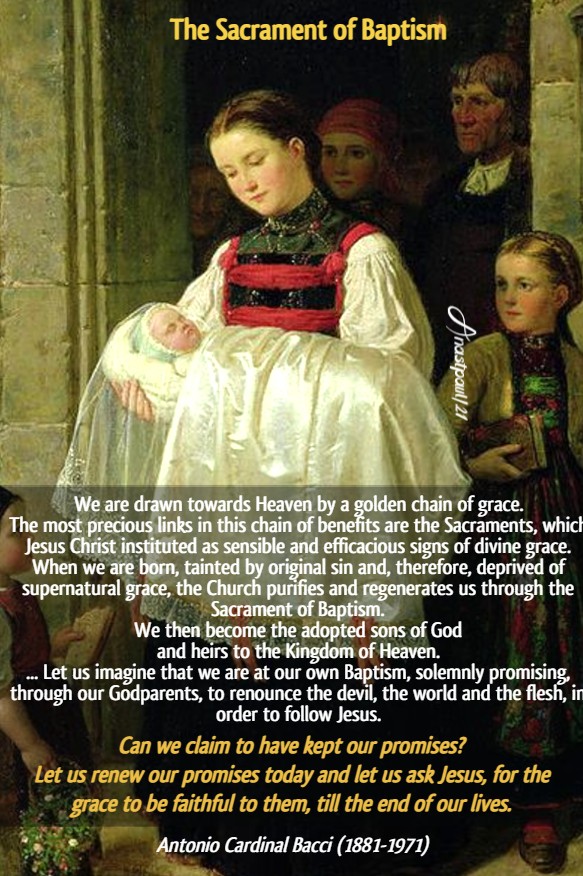
The Sacrament of Baptism
“We are drawn towards Heaven by a golden chain of grace. The most precious links in this chain of benefits are the Sacraments, which Jesus Christ instituted as sensible and efficacious signs of divine grace. When we are born, tainted by original sin and, therefore, deprived of supernatural grace, the Church purifies and regenerates us through the Sacrament of Baptism. We then become the adopted sons of God and heirs to the Kingdom of Heaven.
It is helpful for us to repeat the Baptismal vows which were once made by others, in our name. Let us imagine that we are at our own Baptism, solemnly promising, through our Godparents, to renounce the devil, the world and the flesh, in order to follow Jesus.
Can we claim to have kept our promises? Or are we forced to admit that we have not always lived up to our obligations?
Let us renew our promises today and let us ask Jesus, for the grace to be faithful to them, till the end of our lives.”
Quote/s of the Day – 10 January – Feast of the Baptism of the Lord
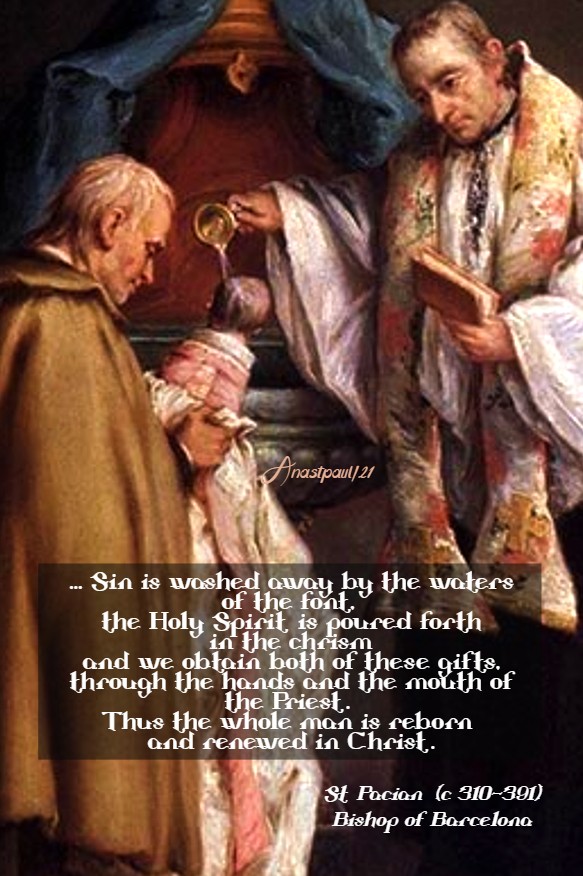
“ … Sin is washed away by the waters of the font, the Holy Spirit is poured forth in the chrism and we obtain both of these gifts, through the hands and the mouth of the Priest. Thus the whole man is reborn and renewed in Christ.”
St Pacian (c 310–391) Bishop of Barcelona
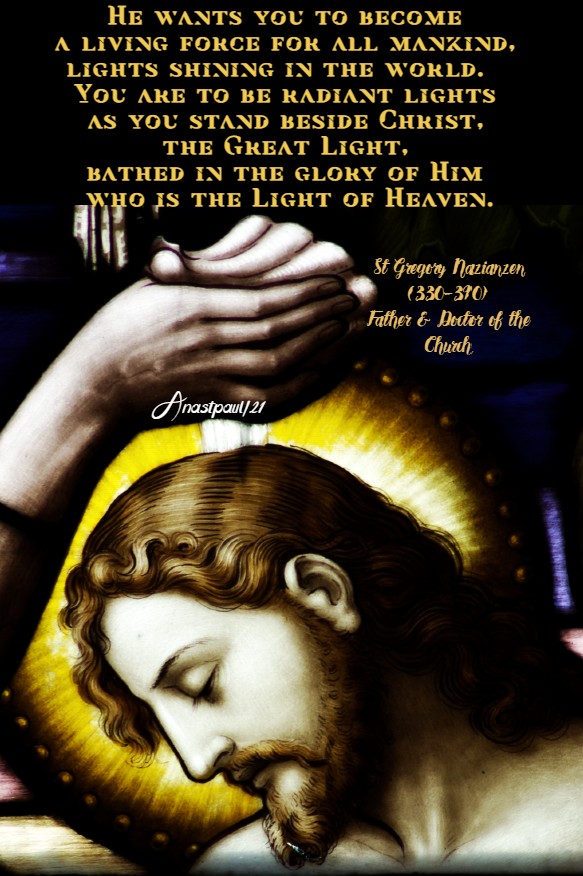
“He wants you to become a living force for all mankind, lights shining in the world. You are to be radiant lights as you stand beside Christ, the Great Light, bathed in the glory of Him who is the Light of Heaven.”
St Gregory Nazianzen (330-390) Father & Doctor of the Church
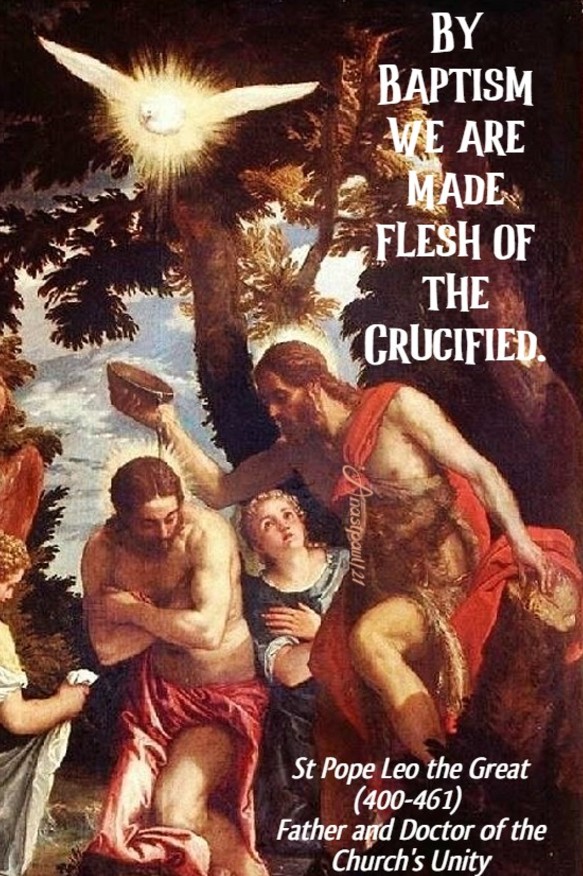
“By Baptism we are made flesh of the Crucified.”
St Pope Leo the Great (400-461) Father and Doctor of the Church’s Unity
One Minute Reflection – 10 January – Feast of the Baptism of the Lord , Readings: Isaiah 55:1-11, Isaiah 12:2-3,4,5-6, 1 John 5:1-9, Mark 1:7-11
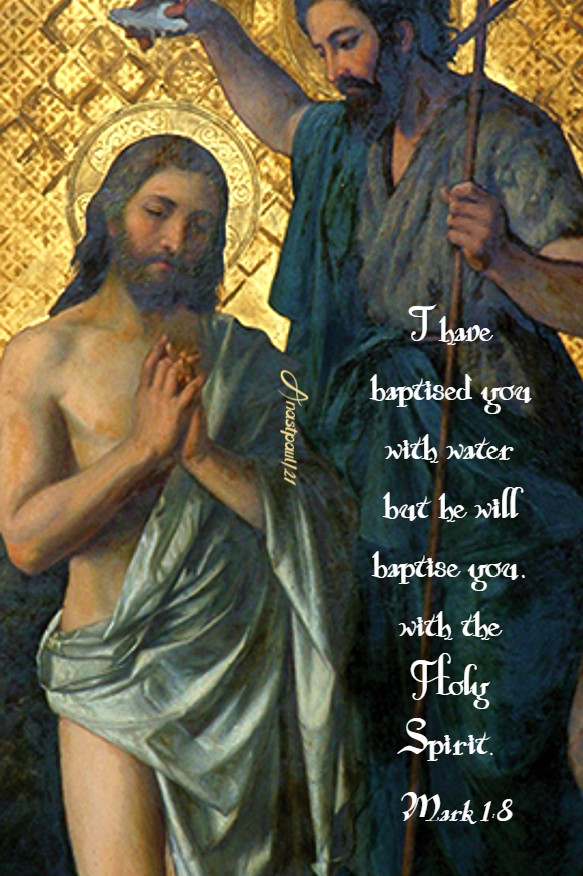
“I have baptised you with water but he will baptise you, with the Holy Spirit.” – Mark 1:8
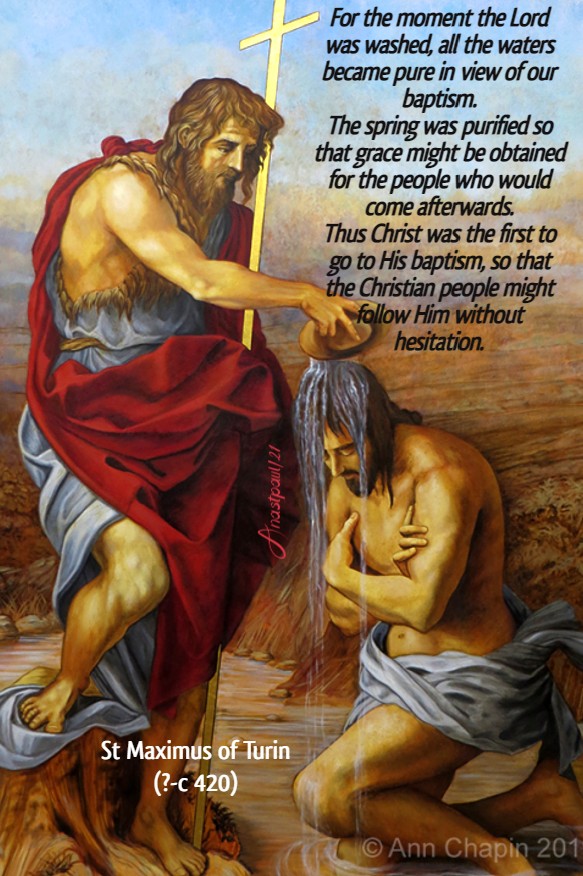
REFLECTION – “Today, the Lord Jesus has come to be baptised. He wanted to wash His body in the water of the Jordan. Someone might say: “Why did He who was the Holy One want to be baptised?” So listen. Christ was baptised, not in order to be sanctified by the water but so that He, Himself would sanctify the water and would purify the waves, that He touched by His personal action. Thus, we have to do with the consecration of the water much more than with that of Christ. For the moment the Lord was washed, all the waters became pure in view of our baptism. The spring was purified so that grace might be obtained for the people who would come afterwards. Thus Christ was the first to go to His baptism, so that the Christian people might follow Him without hesitation. And in this I perceive a mystery. Did not the column of fire go ahead into the Red Sea in this way, so as to encourage the children of Israel to walk behind it? It crossed the water first so as to break a path for those who would follow. According to the testimony of the Apostle Paul, this event was a symbol of baptism (1 Cor 10:1f.). Without any doubt, when the people were covered by the cloud and carried by the water, it was a kind of baptism. And all that was fulfilled by the same Christ our Lord, who in the column of His body now precedes the Christian people to baptism, just as He preceded the children of Israel across the sea, in the column of fire. The same column, which in times past enlightened the eyes of those who were walking, now gives light to the hearts of the believers. Then it marked a solid path in the waves, now in this bath, it strengthens the steps of faith.” – St Maximus of Turin (?-c 420) Bishop – Sermon for the feast of the Epiphany
PRAYER– By the Benedictines of Stanbrook When Jesus comes to be baptised, He leaves the hidden years behind, The years of safety and of peace, To bear the sins of all mankind.
The Spirit of the Lord comes down Anoints the Christ to suffering, To preach the word, to free the bound And to the mourner comfort bring.
Our everlasting Father, praise, With Christ, His well-beloved Son, Who with the Soirit reigns serene, Untroubled Trinity in One. Amen
Our Morning Offering – 10 January – Feast of the Baptism of the Lord
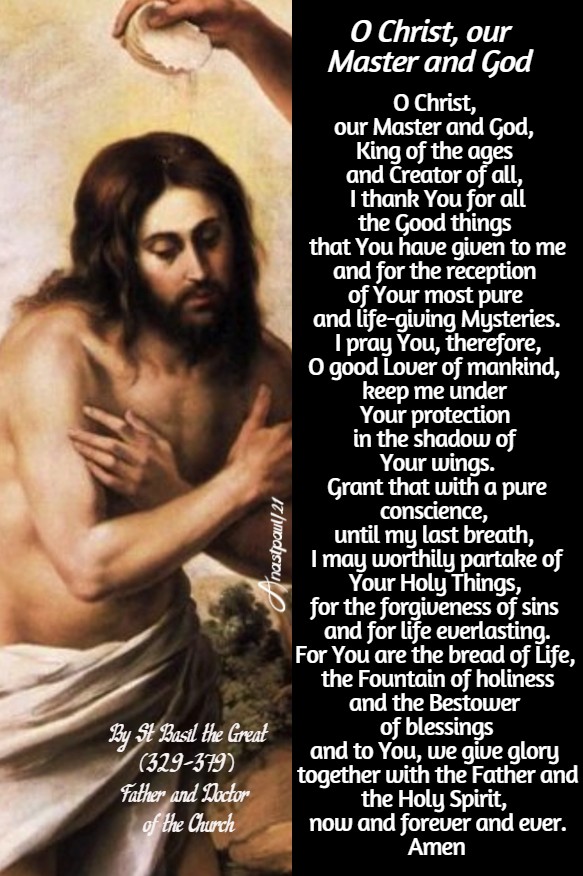
O Christ, our Master and God St Basil the Great (329-379) Father and Doctor of the Church
O Christ, our Master and God, King of the ages and Creator of all, I thank You for all the Good things that You have given to me and for the reception of Your most pure and life-giving Mysteries. I pray You, therefore, O good Lover of mankind, keep me under Your protection in the shadow of Your wings. Grant that with a pure conscience, until my last breath, I may worthily partake of Your Holy Things, for the forgiveness of sins and for life everlasting. For You are the bread of Life, the Fountain of holiness and the Bestower of blessings and to You, we give glory together with the Father and the Holy Spirit, now nad forever and ever. Amen
Saint of the Day – 10 January – Saint William of Bourges O.Cist (c 1140-1209) Archbishop of Bourges from 1200 until his death, Confessor, Monk, renowned for miracles and virtue. He served as a Canon in Soissons and Paris before he entered the Order of Grandmont. Sometime later he entered the Cistercians. He was known to practice austerities, such as abstaining from meat and wearing a hair shirt. He was also known for his deep devotion to the Blessed Sacrament and for his conversion of sinners. He oversaw the construction of the new archdiocesan Cathedral that his predecessor had authorised and in which he himself would be buried. He performed eighteen miracles in life and many more in death. His Canonisation was celebrated under Pope Honorius III, a mere 9 years after his death, in 1218 and he was named as the Patron Saint for the Parisian college, i.e. the University of Paris as well as of gunsmiths. He was born as Guillaume de Donjeon in the 12th century in Nevers, France and died on 10 January 1209 at Bourges, France of natural causes whilst at prayer. He is also known as Guillaume de Bourges, William Berruyer, William de Don Jeon, William the Confessor. Additional Memorial – 8 November as one of the Saints of the Diocese of Evry.
William, of the illustrious family of the ancient Counts of Nevers, was educated by Peter the Hermit, Archdeacon of Soissons, his maternal uncle. From his early childhood William learned to despise the folly and emptiness of the world, to abhor its pleasures and to tremble at its dangers. At an early age he learned to elude the vanities of the world and to practice exercises of piety and the gaining of knowledge.
William was made a Canon, an Ecclesiastic attached to a Cathedral Church, first at Soissons and afterwards in Paris but, he soon resolved to abandon the world and retired into the solitude of Grandmont, where he lived with great regularity in that austere Order of Monks. Finally, he joined the Cistercians, flourishing with sanctity at the time and later was chosen to be Prior of the Abbey of Pontigny, then made Abbot of Challis.
On the death of Henri de Sully, Archbishop of Bourges, William was chosen to succeed him. The announcement of this new dignity which had fallen on him overwhelmed him with grief and he would not have accepted the office had not the Pope and his own Cistercian General, the Abbot of Citeaux, commanded him to do so.
This image shows St William receiving the order to accept the Bishopric
His first care in his new position was to conform his life to the most perfect rules of sanctity. He redoubled all his austerities, saying it was incumbent on him now, to do penance for others, as well as for himself. He always wore a hair shirt under his religious habit and never added to his clothing in winter or diminished it in summer; he never ate any flesh meat, though he had it at his table for guests. As the Bishop William proved to be instrumental in the ongoing construction of the Gothic Cathedral of Saint Stephen which his predecessor had commenced earlier in 1195. The lower half of the Cathedral was completed and around December 1208 the choir was almost finished, at which time, he was able to celebrate the Christmas Mass.
He began preparations for a mission among the Albigensians when he died just after midnight kneeling at the altar in contemplation and meditation in 1209, in this posture he expired. In his last will and testament he requested that he be buried in his hair shirt and be laid on ashes.
While this holy Bishop was laid out for veneration, an infirm young boy who wanted to venerate him but had to be carried to the Church by his mother, was completely cured of his infirmities and ran about proclaiming the miracle. The stone of his Tomb in the Cathedral Church of Bourges cured mortal wounds and illnesses and delivered possessed persons; the deaf and dumb, the blind, the mentally ill became sound. So many miracles occurred there that the monks could not record them all.
St William had fostered a deep and special devotion to the Blessed Sacrament and loved to spend much of his time at the foot of the altar contemplating it. The poor and sick were never forgotten for the Bishop visited them on frequent occasions, while he also ministered to the imprisoned. He defended clerical rights against state intervention. He once incurred wrath from King Philip II when the bishop enacted an interdict from Innocent III against him for having divorced his wife.
St Petronius of Die Bl Raymond de Fosso St Saethryth of Faremoutier St Thecla of Lentini St Thomian of Armagh St Valerius of Limoges St William of Bourges O.Cist (c 1140-1209) Bishop
Thought for the Day – 9 January – Meditations with Antonio Cardinal Bacci (1881-1971)
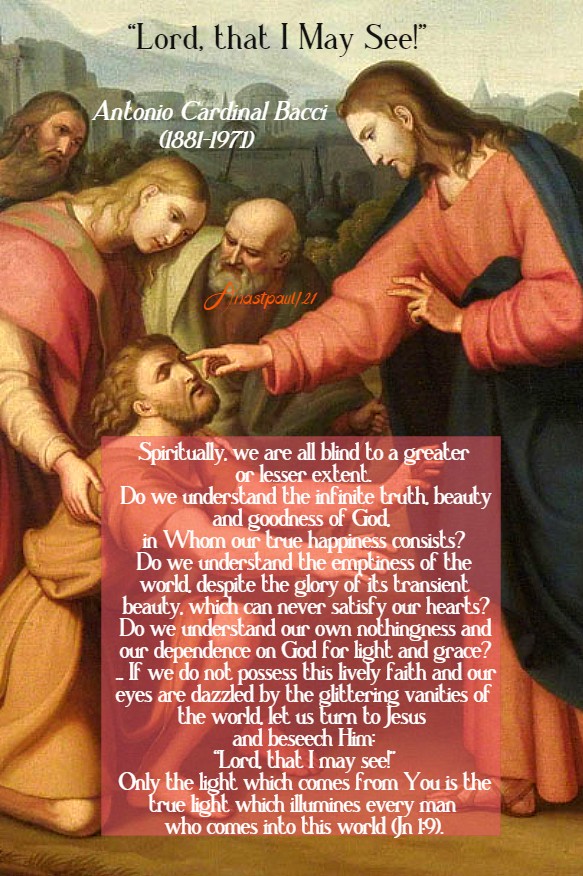
“Lord, that I May See!”
“Spiritually, we are all blind to a greater or lesser extent. Do we understand the infinite truth, beauty and goodness of God, in Whom our true happiness consists? Do we understand the emptiness of the world, despite the glory of its transient beauty, which can never satisfy our hearts? Do we understand our own nothingness and our dependence on God for light and grace? If we understood all this, then the scales of our spiritual blindness would fall from our eyes. Our faith would be even purer and more heartfelt than that of the poor blind man of Jericho. If we do not possess this lively faith and our eyes are dazzled by the glittering vanities of the world, let us turn to Jesus and beseech Him: “Lord, that I may see!” Only the light which comes from You is the true light which illumines every man who comes into this world (Jn 1:9).”
Quote/s of the Day – 9 January – Saturday after Epiphany
“He must increase but I must decrease.”
John 3:30
“Do not have Jesus Christ on your lips and the world in your heart.”
St Ignatius of Antioch (37-105) Bishop & Martyr
“You hide your heart from man – hide it from God if you can. … Where will you go? Where will you flee? Do you want to hear some advice? If you want to flee from Him – flee to Him. Flee to Him by Confessing, not from Him, by hiding, for you cannot hide but you can Confess. Tell Him. “You are my refuge” (Ps 32[31]:7) and let there be nursed in yo, the love that alone leads to life.”
St Augustine (354-430) Father and Doctor of Grace
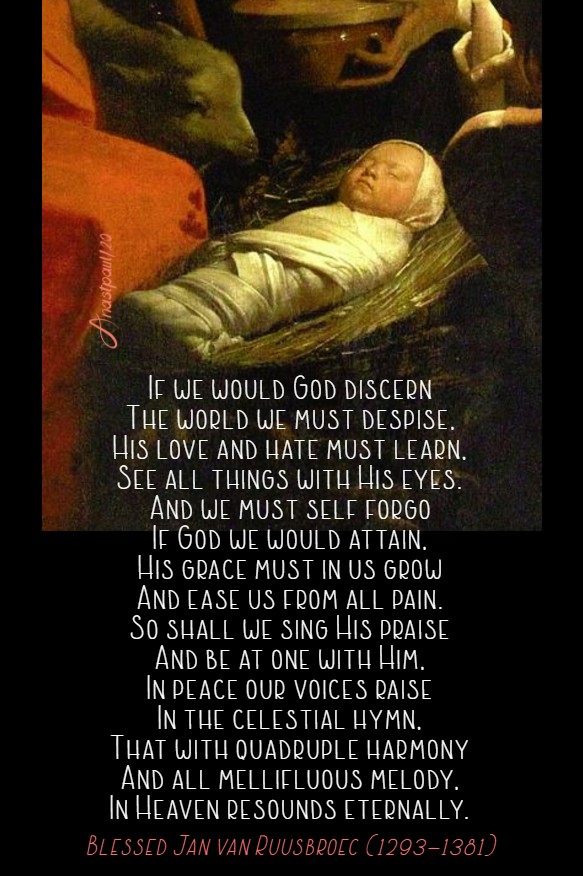
“If we would God discern The world we must despise, His love and hate must learn, See all things with His eyes. And we must self forgo If God we would attain, His grace must in us grow And ease us from all pain. So shall we sing His praise And be at one with Him, In peace our voices raise In the celestial hymn, That with quadruple harmony And all mellifluous melody, In Heaven resounds eternally.”
Bl Jan van Ruusbroec (1293-1381)
“Embrace, then, Jesus crucified, raising to Him the eyes of your desire! Consider His burning love for you, which made Jesus pour out His blood from every part of His body! Embrace Jesus crucified, loving and beloved and in Him, you will find true life because He is God made man. Let your heart and your soul burn with the fire of love drawn from Jesus on the Cross! … You will have no other desire than to follow Jesus! Run, … do not stay asleep because time flies and does not wait one moment! Dwell in God’s sweet love!”
St Catherine of Sienna (1347-1380) Doctor of the Church
“Without the Way, there is no going, Without the Truth, there is no knowing, Without the Life, there is no living.”
One Minute Reflection – 9 January – Saturday after Epiphany, Readings: 1 John 5:14-21, Psalms 149:1-2, 3-4,5 and 6 and 9, John 3:22-30
“He must increase but I must decrease.” – John 3:30
REFLECTION – “He must increase but I must decrease.” In John, human righteousness had reached the highest level that man could attain. Truth itself (Jn 14:6) said: “Among men, there has been none greater than John the Baptist” (cf. Mt 11:11); so no man could have surpassed him. But he was only a man, whereas Jesus Christ, was man and God. And since, according to Christian grace, we are asked (…) not to boast about ourselves but “whoever boasts let him boast in the Lord” (2 Cor 10:17), …, that is the reason John cried out: “He must increase but I must decrease.” To be sure, God is neither decreased nor increased in Himself. But for ourselves, to the extent that a true spiritual life develops, divine grace increases and human importance decreases until the temple of God, which is made up of all the members of the body of Christ (cf. 1 Cor 3:16), reaches it’s perfection, all domination, authority and importance have died and God has become “all in all” (cf. Col 1:16; 1 Cor 15:28). … “The Word was the true light which enlightens everyone coming into this world, … from his fullness we have all received” (Jn 1:9.16). In itself, the light is always total light, however, it increases in one who is enlightened and diminishes when, what is without God in that person, is destroyed. For without God, we can only sin and this human power decreases, when divine grace overcomes and destroys the sin.The weakness of the creature gives way to the power of the Creator and the vanity of our egoism melts before the love that fills the universe. From the depths of our distress, John the Baptist acclaims the mercy of Christ: “He must increase and I must decrease.” – St Augustine (354-430) Bishop, Father, Doctor of Grace – Sermon for the birth of John the Baptist;
PRAYER – Almighty, ever-living God, through Christ, Your Son, You made of us a new creation. Shape us then, in His likeness, by the gift of the Holy Spirit, since in Him, our human nature now lives with You. Lord God, let the Blessed Virgin the Mother of Your Divine Son and our mother, ever commend us to Your love and care. May her charity and wisdom inspire us to treasure Your teaching and express it in our lives. Through our Lord Jesus, in union with the Holy Spirit, one God forever, amen.
Our Morning Offering – 9 January – Saturday after Epiphany
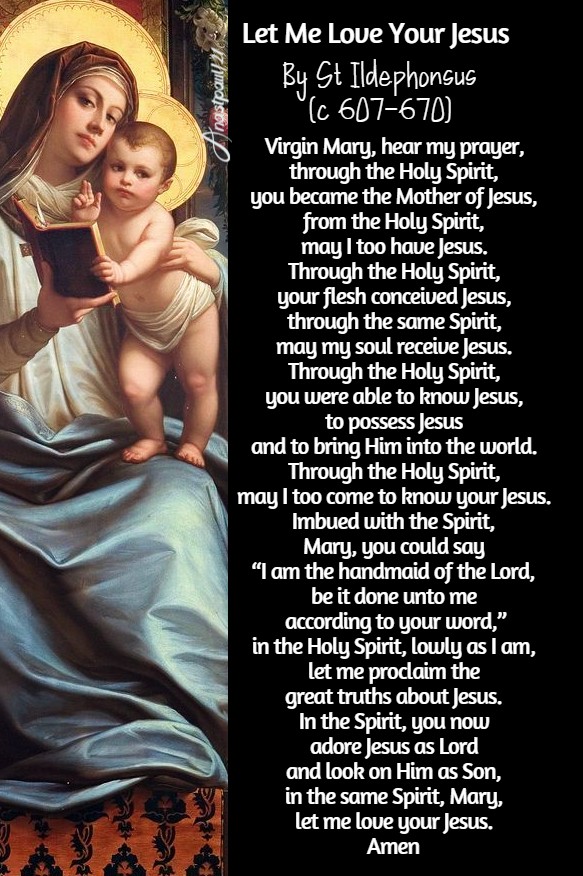
Let Me Love Your Jesus By St Ildephonsus (c 607-670)
Virgin Mary, hear my prayer, through the Holy Spirit, you became the Mother of Jesus, from the Holy Spirit, may I too have Jesus. Through the Holy Spirit, your flesh conceived Jesus, through the same Spirit, may my soul receive Jesus. Through the Holy Spirit, you were able to know Jesus, to possess Jesus and to bring Him into the world. Through the Holy Spirit, may I too come to know your Jesus. Imbued with the Spirit, Mary, you could say “I am the handmaid of the Lord, be it done unto me according to your word,” in the Holy Spirit, lowly as I am, let me proclaim the great truths about Jesus. In the Spirit, you now adore Jesus as Lord and look on Him as Son, in the same Spirit, Mary, let me love your Jesus. Amen
















 AnaStpaul
You must be logged in to post a comment.