Our Morning Offering – 27 March – Saturday of Passion Week or the Fifth Week of Lent
Mother of Love, of Sorrow and of Mercy By St Bridget of Sweden (1303-1373)
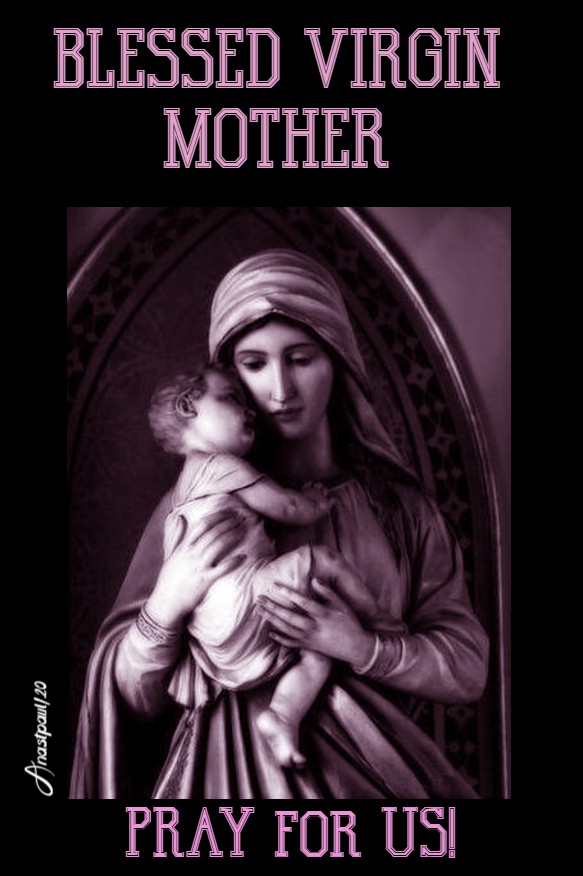
O Blessed Virgin Mary, Immaculate Mother of God, who endured a martyrdom of love and grief, beholding the sufferings and sorrows of Jesus! Thou didst co-operate in the benefit of my redemption by thy innumerable afflictions and by offering to the Eternal Father, His only-begotten Son, as a holocaust and victim of propitiation for my sins. I thank thee for the unspeakable love which led thee to deprive thyself of the Fruit of thy womb, Jesus, true God and true Man, to save me, a sinner. Oh! make use of the unfailing intercession of thy sorrows with the Father and the Son, that I may steadfastly amend my life and never again crucify my loving Redeemer by my sins and that, persevering till death in His grace, I may obtain eternal life through the merits of His Cross and Passion. Amen
Mother of Love, of Sorrows and of Mercy, pray for us!
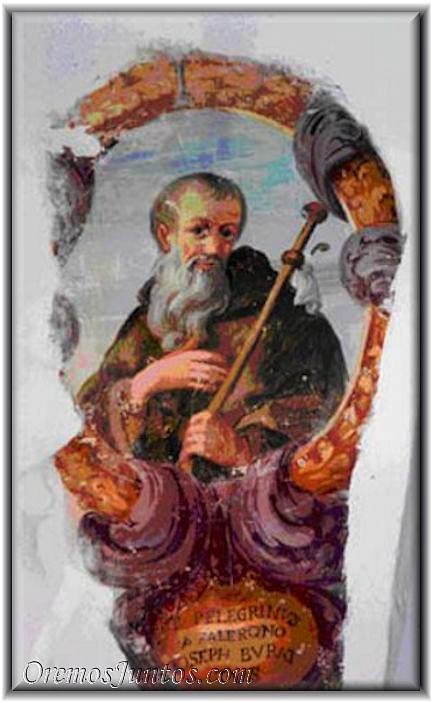
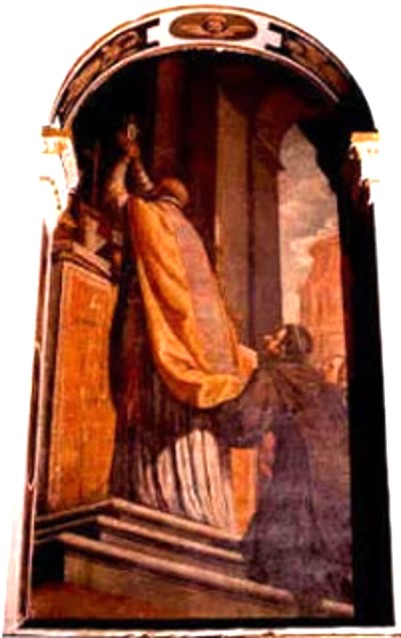
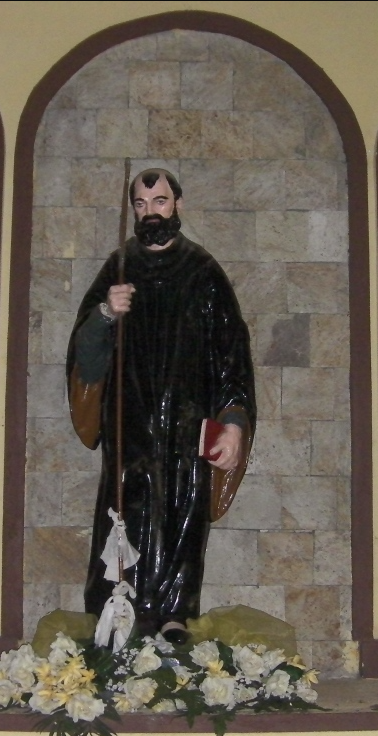
Saint of the Day – 27 March – Blessed Pellegrino of Falerone OFM (Died 1233) Lay Brother of the First Order of St Francis of Assisi. He died in 1233 at the Convent of St Severino in the Marches, Italy of natural causes.
Peregrino of Falerone was a fellow student at Bologna University of Blessed Rizziero of Muccia (Died 1235) and like him, the scion of a noble family. Peregrino was the son of Roger, the wealthy Lord of Falerone.
When, after a sermon preached by St Francis at Bolobna, both these young men abandoned their studies and asked him for the religious habit, becoming amongst the first followers of St Francis, who said to Peregrino:
“You, my son, will serve God in the humble vocation of a lay brother and you should apply yourself to practice humility, in a special way.”
For the young nobleman who, until now, had studied philosophy and jurisprudence with great success, it was a great trial that the vocation of a lay brother should be assigned to him. But Peregrino gave proof, that he possessed true nobility of soul and that he valued the lowest place in Christ’s service, higher than all the honours of the world.
Joyfully he received the habit as a lay brother and strove, above all, to lay a firm foundation in humility. On this secure foundation he then built up all the other virtues in a high degree. At some point, he made a pilgrimage to the Holy Land to visit and follow the steps of our Saviour.
One of the first disciples of St Francis, did not hesitate to assert, that Brother Peregrino was one of the most perfect religious in the whole world.
Peregrino was Beatified on 31 July 1821 by Pope Pius VII.
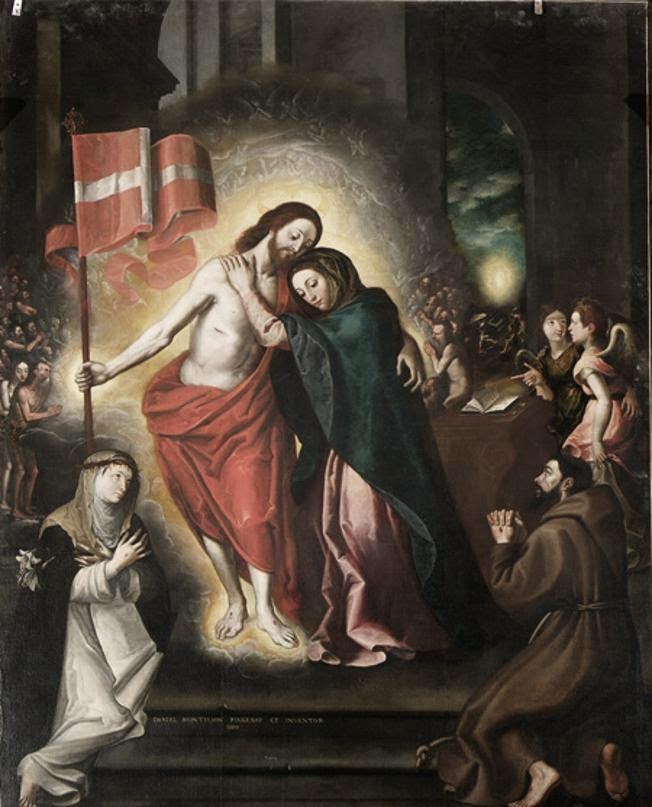
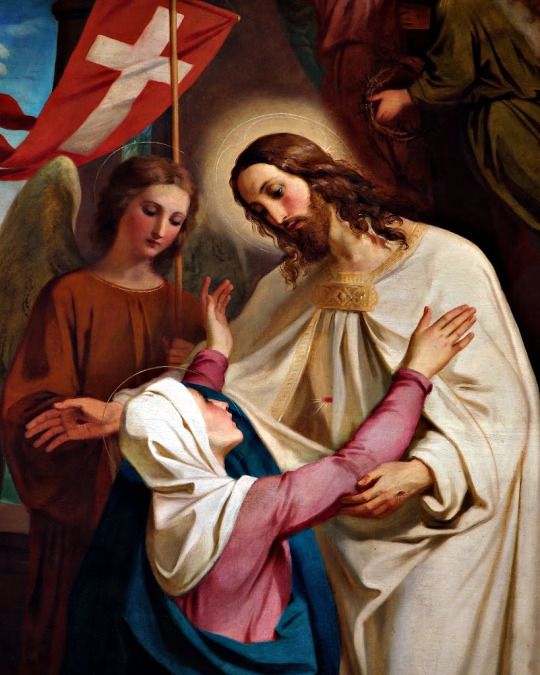
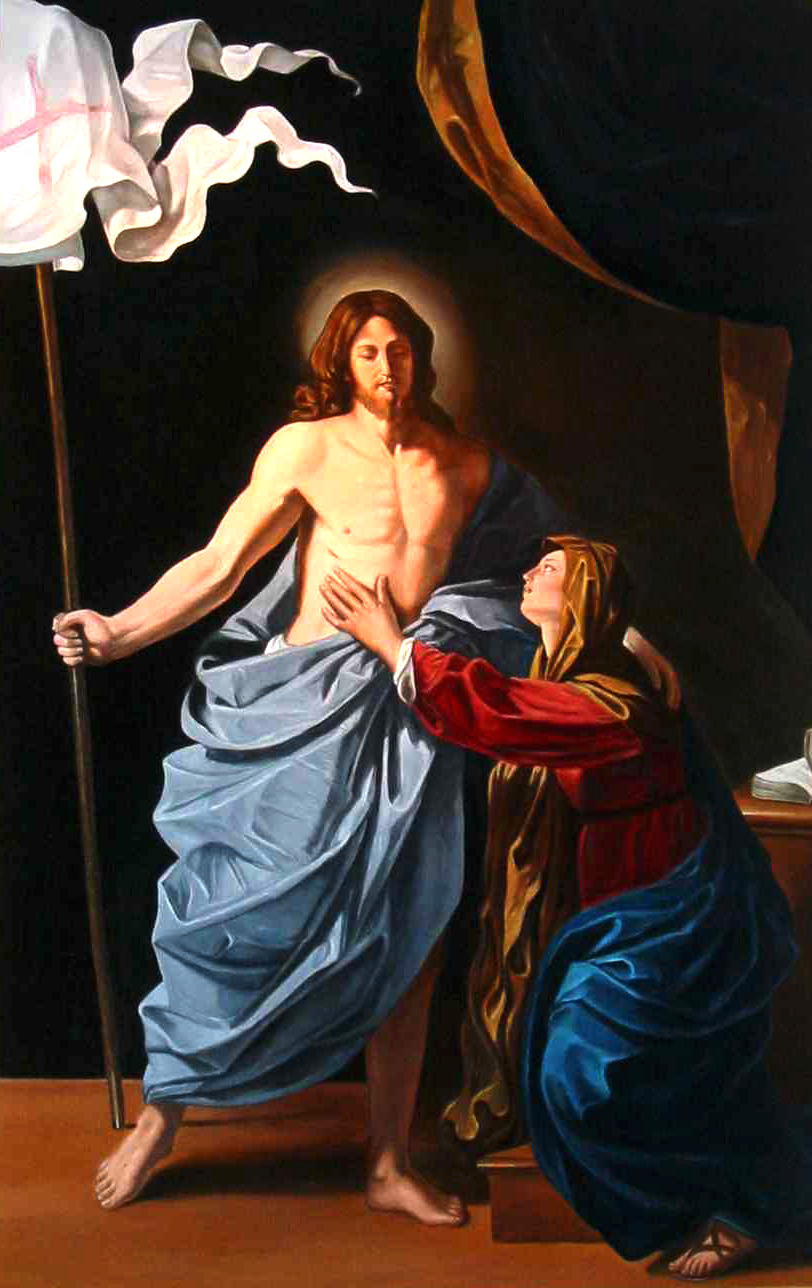
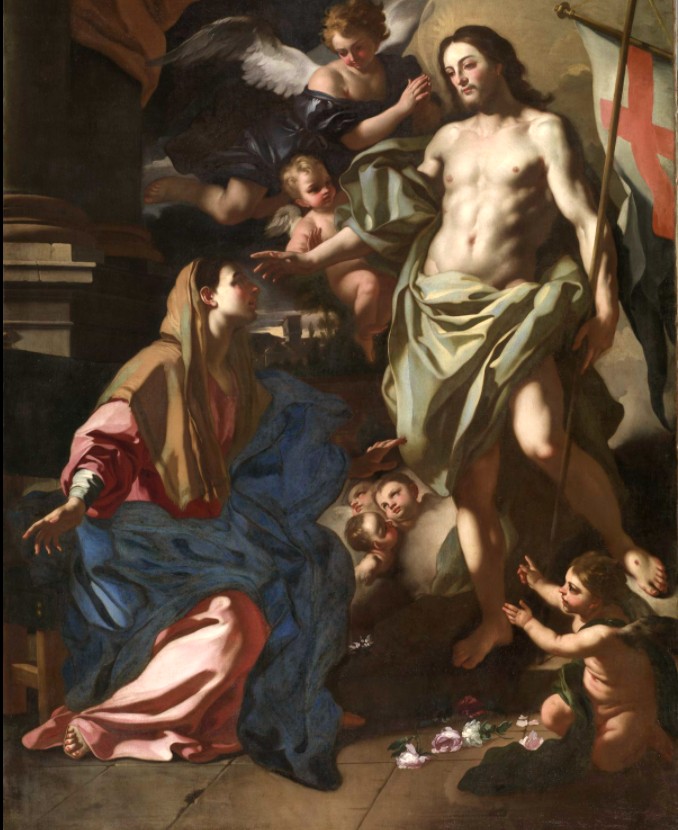
Apparition of Our Lord to Our Lady, as soon as He was risen – 27 March:
There is nothing in Scripture that says Jesus appeared to His Mother after His resurrection. Not everything that occurred is recorded in Scripture (Jn. 21:25), therefore, just because it is not recorded does not mean it did not happen.
Pious belief has long held, that Jesus must have appeared to His Mother before anyone else. The popular belief of why it was not recorded in Scripture, is that the other appearances of Jesus, were written and publicised as proof of the risen Christ, whereas His appearance to His Mother, was a private and personal appearance, born of a deep communion of love.
Pious belief has also noted the absence of Jesus’ mother on Easter morning. Why did she not go to the tomb? Why was Jesus already missing? When news of Jesus’ Resurrection spread amongst His followers, why did Jesus’ Mother not follow them to the tomb? Pious belief has reasoned, that Jesus must have appeared to His Mother immediately following His Resurrection. Indeed, it is legitimate to think, that the Mother was probably the first person to whom the risen Jesus appeared. Could not Mary’s absence from the group of women, who went to the tomb at dawn, (cf. Mk 16:1; Mt 28:1) indicate that she had already seen her Son Jesus?
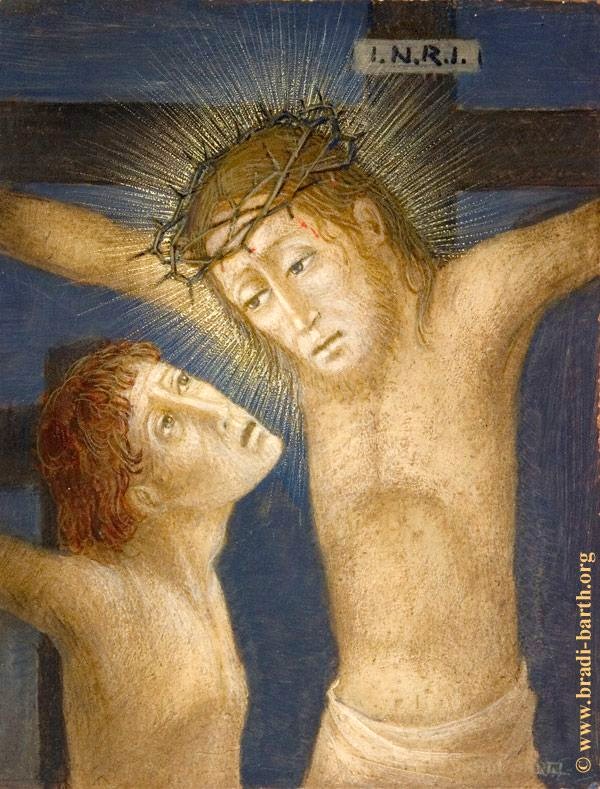
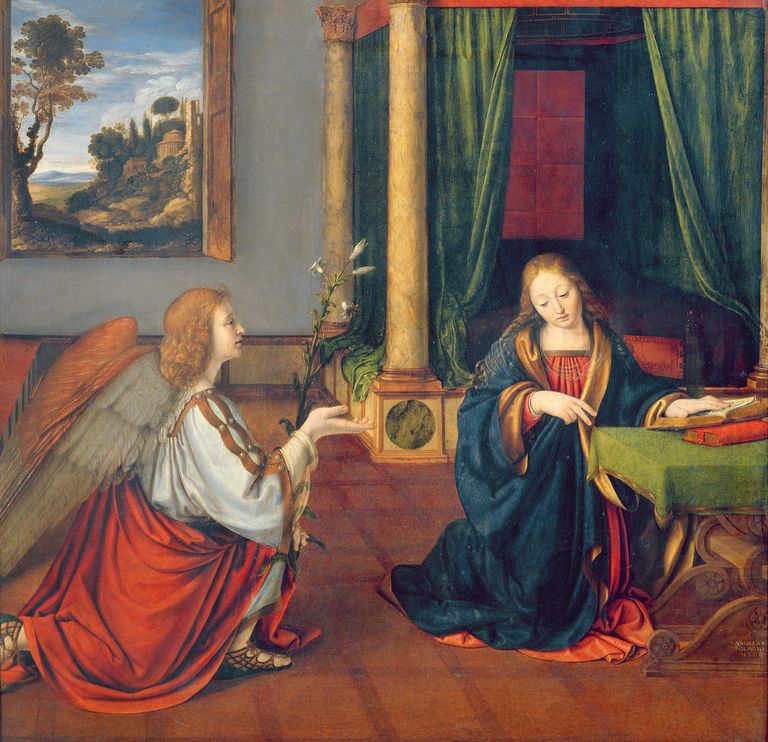
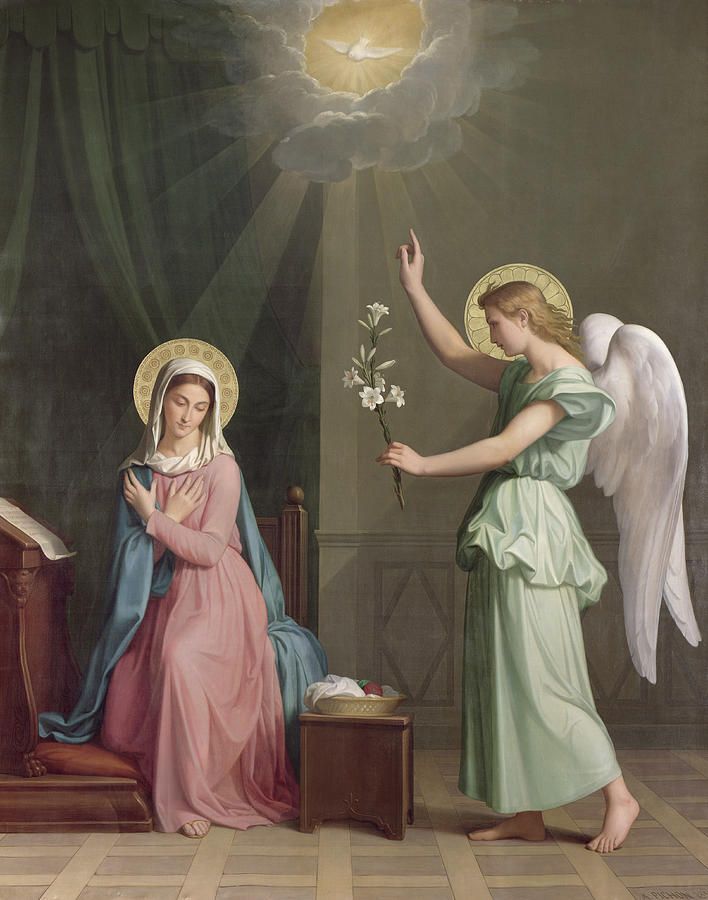
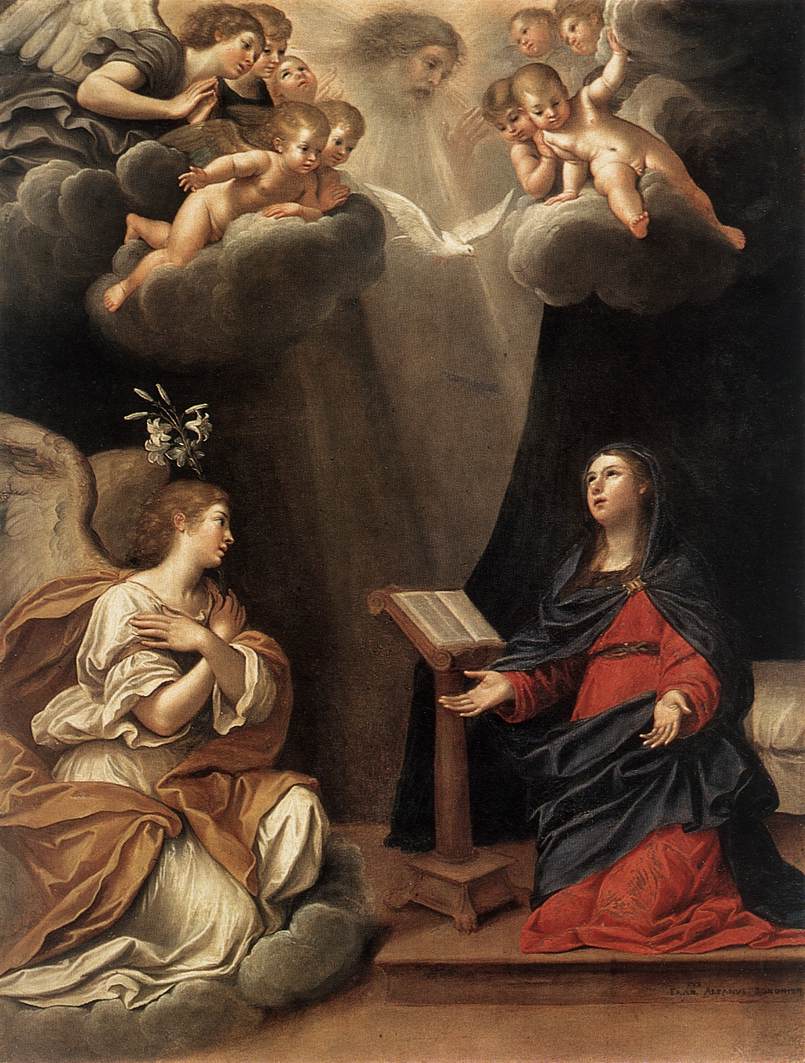
Out of interest, all these great masterpieces of the Catholic faith shown here were painted at least 500 years plus ago – this first apparition of Our Risen Lord to His Mother, has always been believed!
St Matthew of Beauvais St Macedo of Illyria St Panacea de’Muzzi of Quarona Blessed Pellegrino of Falerone OFM (Died 1233) Lay Franciscn Brother Bl Peter Jo Yong-sam St Philetus St Romulus the Abbot St Rupert of Salzburg (c 660–710) Biography of St Rupert: https://anastpaul.com/2019/03/27/saint-of-the-day-st-rupert-of-salzburg-c-660-710/ St Suairlech of Fore St Theoprepius — Martyrs of Bardiaboch: A group of Christians who were arrested, tortured and executed together for their faith during the persecutions of Persian king Shapur II. Martyrs. – Abibus, Helias, Lazarus, Mares, Maruthas, Narses, Sabas, Sembeeth and Zanitas. 27 March 326 at Bardiaboch, Persia.
Thought for the Day – 26 March – Meditations with Antonio Cardinal Bacci (1881-1971)
True Peace
“When He came into the world, Jesus proclaimed peace. The Angels hovering over His humble manger, sang songs of glory to God on high and of peace to men of goodwill on earth. During His earthly pilgrimage, He often spoke of peace. When He forgave sinners their faults, He said to each of them, “Go in peace” and “sin no more” (Lk 7:50; 8:48; Jn 8:11). When He was leaving this earth, He bequeathed His peace to His Apostles, as if it were a sacred heirloom: “Peace I leave with you, My peace, I give to you, not as the world gives do I give to you” (Jn 14:27). We can see, from these words, that the peace of Jesus, is not the same as worldly peace.
The Church, in its liturgy, implores from God, that peace which the world cannot give. When the world speaks of peace, it means, normally, the external public peace which flows from respect for the law and for the established regime. This is peace, there is no doubt about that. It is necessary and is a gift from God. But, it is not enough. We need the inner peace of soul of which we have already spoken, for it is the only true and solid foundation for external peace. Without this peace of soul, external peace is uncertain and fleeting.
We have said, that true peace is based on three things: Right order, harmony and liberty. But, in order to obtain full and perfect peace, still one more thing is necessary – complete and loving abandonment to the will of God. The beginning of real peace and holiness, lies in doing the will of God in every detail. The perfection of peace and holiness, is to do the will of God in everything, purely from love for Him.
Dante expresses this profound idea when he decries the peace of the blessed in Heaven, now unshakeable in their joyful compliance with the divine will.”
“E la sua volontate e nostra pace: Ella E quel mare, al qual tutto si move cio ch’ella crea E che natura face.”
“His Will is our repose: He is the ocean, into which everything flows, which He has created in the universe.”
Lenten Journey Day Thirty Six – 26 March – Friday of Passion Week or the Fifth Week of Lent, Readings: Jeremiah 20:10-13, Psalms 18:2-3,3-4, 5-6, 7, John 10:31-42
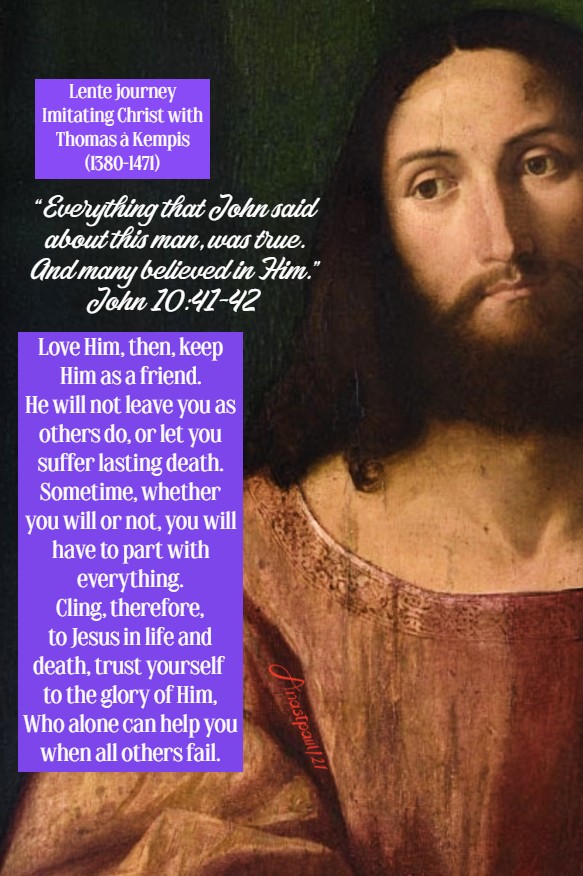
Imitating Christ with Thomas à Kempis (1380-1471)
In You is the source of life and in Your Light Lord, we see light Psalm 35(36)
“Everything that John said about this man, was true. And many believed in Him.” – John 10:41
BLESSED is he who appreciates what it is to love Jesus and who despises himself for the sake of Jesus. Give up all other love for His, since He wishes to be loved alone above all things.
Affection for creatures is deceitful and inconstant but the love of Jesus, is true and enduring. He who clings to a creature, will fall with its frailty but he who gives himself to Jesus, will ever be strengthened.
Love Him, then, keep Him as a friend. He will not leave you as others do, or let you suffer lasting death. Sometime, whether you will or not, you will have to part with everything. Cling, therefore, to Jesus in life and death, trust yourself to the glory of Him, Who alone can help you when all others fail.
Your Beloved is such, that He will not accept what belongs to another — He wants your heart for Himself alone, to be enthroned therein, as King in His own right. If you but knew how to free yourself entirely from all creatures, Jesus would gladly dwell within you.
You will find, apart from Him, that nearly all the trust you place in men is a total loss. Therefore, neither confide in nor depend upon a wind-shaken reed, for “all flesh is grass”(Is 40:6) and all its glory, like the flower of grass, will fade away.
You will quickly be deceived if you look only to the outward appearance of men and you will often be disappointed, if you seek comfort and gain in them. If, however, you seek Jesus in all things, you will surely find Him. Likewise, if you seek yourself, you will find yourself – to your own ruin. For the man who does not seek Jesus does himself much greater harm than the whole world and all his enemies could ever do. (Book 2 Ch 7)
Quote/s of the Day – – 26 March – Friday of Passion Week or the Fifth Week of Lent, Readings: Jeremiah 20:10-13, Psalms 18:2-3,3-4, 5-6, 7, John 10:31-42
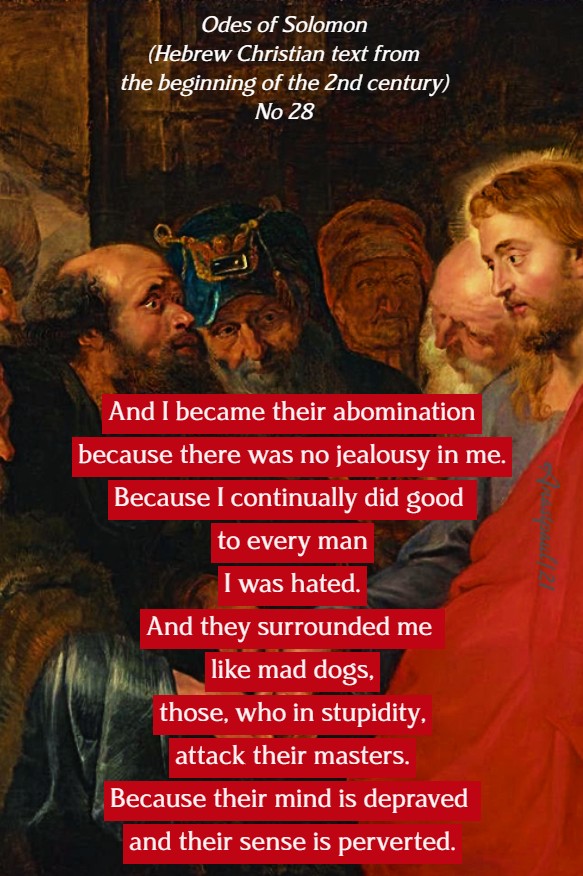
“Again they sought to seize Him”
John 10:39
“And I became their abomination because there was no jealousy in me. Because I continually did good to every man I was hated. And they surrounded me like mad dogs (Ps 22[21]:17) those, who in stupidity, attack their masters. Because their mind is depraved and their sense is perverted.”
Odes of Solomon (Hebrew Christian text from the beginning of the 2nd century) No 28
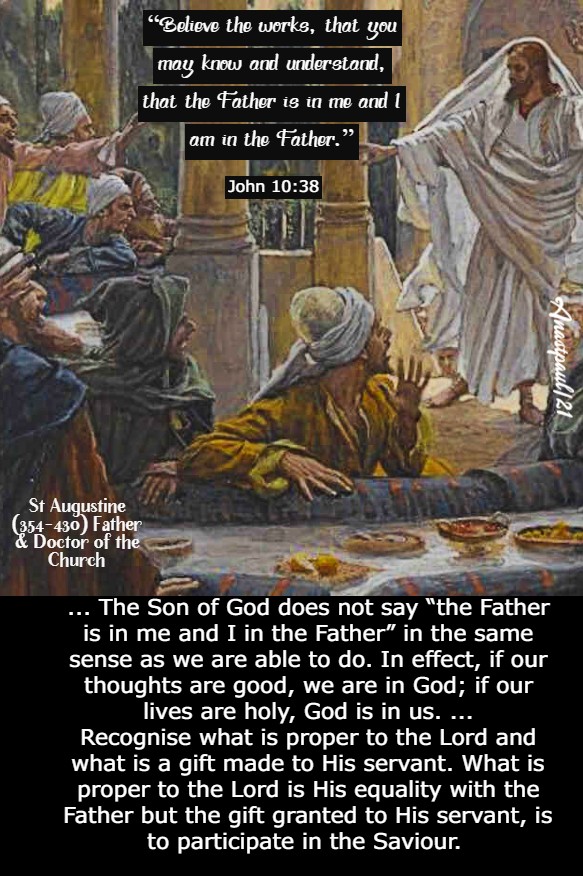
“Believe the works, that you may know and understand, that the Father is in me and I am in the Father.” … John 10:38
REFLECTION – “Believe the works, that you may realise and understand, that the Father is in me and I in the Father.” The Son of God does not say “the Father is in me and I in the Father” in the same sense as we are able to do. In effect, if our thoughts are good, we are in God; if our lives are holy, God is in us. When we are sharers in His grace and enlightened by His light, then we are in Him and He in us. But … recognise what is proper to the Lord and what is a gift made to His servant. What is proper to the Lord is His equality with the Father but the gift granted to His servant, is to participate in the Saviour.
“Then they tried to seize him.” If only they had seized Him! But by faith and intellect, not so as to mock and put him to death! At this very moment, as I speak to you …, all of us, both you and I, are wanting to seize Christ. To ‘seize’, what does that mean? You have ‘seized’ when you have understood. But Christ’s enemies were looking for something different. You have seized in order to possess but they wanted to seize Him in order to get rid of Him. And because this was how they wanted to seize Him, what does Jesus do? “He escaped from their power.” They were unable to seize Him because they did not have the hands of faith. … We truly seize Christ if our minds grasp the Word.” … St Augustine (354-430) Father & Doctor of the Church – Sermons on the Gospel of John, no 48, 9-11
PRAYER – Holy Father, our Father, help us to lay down the stones of hate and embrace Your Son who stands before us in need. Give us the hands of faith and minds to grasp the Word, teach us to see His Face in those who cry out to us. Teach us compassion and love. Mary, your Immaculate Heart is our school. We make our prayer through Christ our Lord, with the Holy Spirit, one God for all eternity, amen.
Our Morning Offering – 26 March – Fridaty of Passion Week or the Fifth Week of Lent
O Saviour of the World By St Ignatius of Antioch (c 35-c 108) Father of the Church
Lord Jesus Christ, on the human side You are sprung from David’s line, Son of God according to God’s will and power, born of the Virgin Mary, baptised by John and Crucified for us in the flesh, under Pontius Pilate and Herod the Tetrarch. On the third day, You raised a standard to rally Your saints and faithful forever in the one body of Your Church. By the grace and power of these mysteries, fit us out with unshakeable faith, nail us body and soul to Your Cross and root us, in love, by Your Blood, shed for us, O Saviour of the world, living and reigning, now and forever, amen
Saint of the Day – 26 March – Saint Castulus of Rome (Died c 288) Martyr, married to Saint Irene of Rome (the woman who assisted St Sebastian after he had been wounded by the Imperial archers), Military Officer and he was the Chamberlain (or officer, valet) of Emperor Diocletian. Martyred in c in 288 on the Via Labicana outside Rome near the Colosseum. Patronages – against blood poisoning, against drowning, against skin diseases and rashes, against fever, against horse theft, against lightning, against storms, against wildfire, cowherds, farmers, shepherds, Hallertau, Germany, Moosburg an der Isar, Germany.
The Roman Martyrology states: “At Rome, on the Labicana road, St Castulus, Martyr, Chamberlain in the Palace of the Emperor. For harbourig Christians, he was three times suspended by the hands, three times cited before the Tribunals and as he persevered in the confession of the Lord, he was thrown into a pit, overwhelmed with a mass of sand and thus obtained the crown of martyrdom.”
Castulus was a convert to the Christian religion. He sheltered Christians in his home and arranged for religious services, unbelievably, inside Emperor Diocletian’s Palace. Among those he sheltered, were the Saints and Marytrs, Mark and Marcellian. He is one of the saints associated with the life and martyrdom of Saint Sebastian.
With his friend Saint Tiburtius, he converted many men and woman to Christianity and brought them to Pope Saint Caius to be baptised. He was betrayed by an apostate named Torquatus and taken before Fabian, prefect of the City.
He was tortured and executed by being buried alive in a sand pit on the Via Labicana. According to traditional sources, his wife, Irene subsequently buried the body of the martyred Saint Sebastian. She was later be martyred herself, it is thought also in c 288.
A Church is dedicated to him in Rome, built on the site of his martyrdom and has existed, from at least the seventh century.
Castulus was venerated in Bavaria after relics of his were taken to Moosburg. Duke Heinrich der Löwe started the construction of the Castulus Cathedral in 1171.
In 1604, relics were also brought to Landshut, Germany. His relics still rest in Landshut’s Church of St Martin’s and in the Church of St Castulus, Prague.
Notre-Dame de Soissons / Our Lady of Soissons, France (1128) In the Abbey, one of Our Lady’s slippers is kept – 26 March:
In the year 1128, a Plague afflicted the City of Soissons. For six consecutive days the victims went to the Shrine of Our Lady and called out to her for help. The Blessed Virgin Mary appeared to them, accompanied by heavenly hosts of Angels. Immediately the people, who witnessed the miracle and believed, were cured. The Bishop asked all who were cured to celebrate a Novena of thanksgiving and to kiss the slipper of the Holy Virgin kept in the Church.
A rustic , a servant of one of the Knights of Soissons, a man named Boso, came to the Church for the festival which was to follow the Novena. While his companions gave gifts and talked of the slipper of Our Lady, he gave nothing and scoffed at the idea, muttering, “You are very foolish to believe this to be the Virgin’s slipper. It would have rotted long ago.” At these words Boso’s blasphemous mouth was drawn toward his ear with such sharp pain that his eyes seemed to slip out of his head. A tumour appeared and covered his face, making it unfit for human use. Roaring and writhing, he threw himself before the Altar of Mary, begging for help, as he had offended the Mother of God and he knew there was no-one else who could heal him. The Abbess, a woman named Mathilda, took the slipper and made the Sign of the Cross over the victim. Immediately he began to heal. The punished scoffer repented and gave himself up to the service of the Church of Soissons. Many – the lame, the blind, the deaf, the dumb, the paralytics, were healed at the Shrine. The Abbey was once the largest in France, famous for its rich collection of relics, including the “Lady Slipper” but all that remains today of the Abbey is a ruined wall with two arches, as the rest was methodically razed by the eager hands of the devotees of the French Revolution.
Martyrs of Rome – 5 saints: A group of Christians martyred together. The only details to survive are the names – Cassian, Jovinus, Marcian, Peter and Thecla. Rome, Italy, date unknown.
Thought for the Day – 25 March – Meditations with Antonio Cardinal Bacci (1881-1971)
The Recollection of Mary
“It is believed that when the Angel Gabriel visited the Blessed Virgin in order to tell her that she was to be the Mother of God, she was in a quiet corner of her home, absorbed in prayer. She had no love for the noise and confusion of the world but preferred to be recollected in the company of God. This was to be the pattern of her whole life. In the midst of her domestic duties, on her journey to St Elizabeth and on her travels in Galilee and Judea, in the wake of her divine Son, her mind and heart were always concentrated on God.
Interior recollection is a wonderful thing. It helps us to hear God’s voice more clearly. It keeps us removed from the temptations of the world and assists us in sanctifying every moment of our lives.
“The cell continually dwelt in growth sweet,” (Bk 1, C 20:5) says The Imitation of Christ and goes onto ask: “What can thou see elsewhere that thou does not see here? Behold the heavens and the earth and all the elements, for out of these are all things made” (Ibid C 20:8). “As often as I have been amongst men,” it exclaims, “I have returned less a man” (Ibid C 20:2). When we move around chattering with different people, we have lost something of ourselves by the time we return home. Perhaps we have wasted a good deal of time in useless conversation or, worse still, have seen or heard unpleasant or disturbing things. When we go about in the world, we do not often see much that is edifying or instructive and rarely meet people whose conversation does us good. For this reason, even when we cannot remain apart, we should carry in ourselves, as Mary did, a spirit of interior recollection and communication with God.”
Lenten Journey Day thirty five – 25 March – The Solemnity of the Annunciation of the Lord, Readings: Isaiah 7:10-14; 8: 10, Psalms 40:7-8,8-9, 10, 11, Hebrews 10:4-10, Luke 1:26-38
Imitating Christ with Thomas à Kempis (1380-1471)
In You is the source of life and in Your Light Lord, we see light Psalm 35(36)
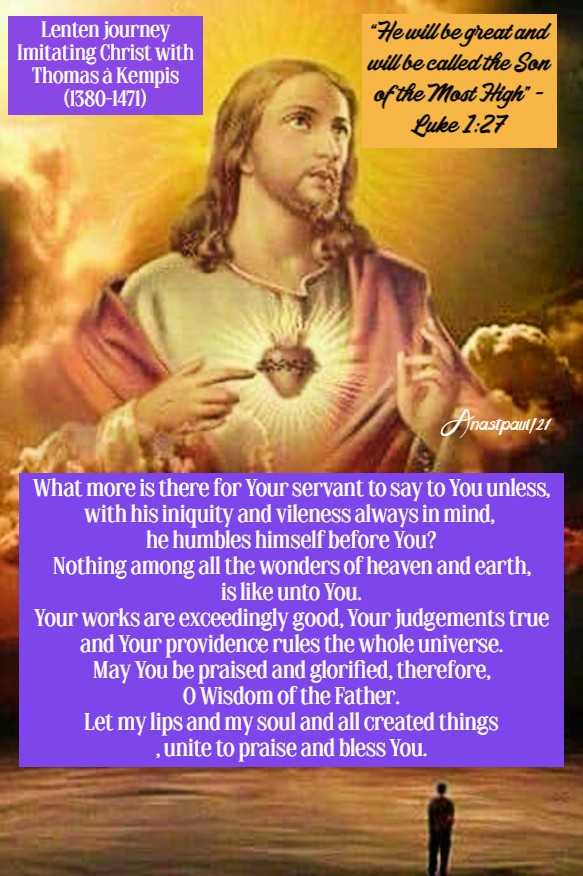
“He will be great and will be called the Son of the Most High” – Luke 1:27
ABOVE all things and in all things, O my soul, rest always in the Lord my God, for He is the everlasting rest and joy of the angels and the saints.
O Jesus, Splendour of eternal glory, Consolation of the pilgrim soul, who labour in this sinful world, with You my lips utter no sound and to You my silence speaks. How long will my Lord delay His coming? Let Him come to His poor servant and make him happy. Let Him put forth His hand and take this miserable creature from his anguish. Come, O come, for without You there will be no happy day or hour because You are my happiness and without You my table is empty. I am wretched, as it were imprisoned and weighted down with fetters, until You fill me with the light of Your presence, restore me to liberty and show me a friendly countenance. Let others seek, instead of You, whatever they will but nothing pleases me, or will please me but You, my God, my Hope, my everlasting Salvation. I will not be silent, I will not cease praying, until Your grace returns to me and You speak inwardly to me, saying: “Behold, I am here. Lo, I have come to you because you have called Me. Your tears and the desire of your soul, your humility and contrition of heart, have inclined Me and brought Me to you.”
Lord, I have called You and have desired You and have been ready to spurn all things for Your sake. For You first spurred me on, to seek You. May You be blessed, therefore, O Lord, for having shown this goodness to Your servant according to the multitude of Your mercies.
What more is there for Your servant to say to You unless, with his iniquity and vileness always in mind, he humbles himself before You? Nothing among all the wonders of heaven and earth, is like unto You. Your works are exceedingly good, Your judgements true and Your providence rules the whole universe. May You be praised and glorified, therefore, O Wisdom of the Father. Let my lips and my soul and all created things, unite to praise and bless You. (Book 3 Ch 21:1,4-6)
Quote/s of the Day – 25 March – The Solemnity of the Annunciation of the Lord, Readings: Isaiah 7:10-14; 8: 10, Psalms 40:7-8,8-9, 10, 11, Hebrews 10:4-10, Luke 1:26-38
“Behold, I am the handmaid of the Lord; let it be to me according to your word.”
Luke 1:38
“And so, when God’s birth is proclaimed to you, keep silent. Let Gabriel’s word be held in your mind for nothing is impossible to this glorious Majesty, who humbled Himself for us and was born of our humanity.”
“In her, God spun a garment with which to save us.”
St Ephrem (306-373) Father & Doctor
“He came from Him, from whom He did not depart, going forth from Him, with whom He stayed, so that without intermission, He was wholly in eternity, wholly in time, wholly was He found in the Father when wholly in the Virgin, wholly in His own majesty and in His Father’s, at the time when He was wholly in our humanity. ”
“Has anyone ever come away from Mary, troubled or saddened or ignorant of the heavenly Mysteries? Who has not returned to everyday life gladdened and joyful because a request has been granted by the Mother of God?”
St Amadeus of Lausanne (1110-1159)
“The Father bending down to this beautiful creature, who was so unaware of her own beauty, willed that she be the Mother, in time, of Him, Whose Father He is, in eternity. Then the Spirit of love, Who presides over all of God’s works, came upon her; the Virgin said her fiat: “Behold the handmaid of the Lord, be it done to me according to thy word” and the greatest of mysteries, was accomplished!”
One Minute Reflection – 25 March – The Solemnity of the Annunciation of the Lord, Readings: Isaiah 7:10-14; 8: 10, Psalms 40:7-8,8-9, 10, 11, Hebrews 10:4-10, Luke 1:26-38
“Hail, full of grace!” – Luke 1:28
REFLECTION – “This woman will be the Mother of God, the door to light, source of life; she will reduce to oblivion the judgement that weighed on Eve. “The rich among the people seek the face” of this woman, “the kings of the nations shall pay her homage,” they shall “offer gifts”… yet the glory of the Mother of God is an interior glory – the fruit of her womb.
O woman, so worthy of love, thrice happy, “blessed are you among women and blessed is the fruit of your womb.” Daughter of David the king and Mother of God, King of the universe, masterpiece in whom the Creator rejoices… you are to be nature’s full achievement. For you, life is not yours; you were not born for yourself alone but your life is to be God’s. You came into the world for Him, you will serve for the salvation of all people, fulfilling God’s design established from the beginning – the incarnation of the Word and our own divinisation. Your whole desire is to feed on the words of God, to be strengthened by their sap, like “a green olive tree in the house of God,” “like a tree planted by running water,” you are the “tree of life” who “yielded its fruit in due season”…
He who is infinite, limitless, came to dwell in your womb, God, the Child Jesus, was nourished by your milk. You are the ever virginal doorway of God; your hands hold your God; your lap is a throne raised up above the cherubim… You are the wedding chamber of the Spirit, the “city of the living God, gladdened by the runlets of the stream,” that is to say, the waves of the Spirit’s gifts. You are “all fair, the Beloved” of God.” – St John Damascene (675-749) Monk, Theologian, Father and Doctor of the Church – Homily on the Nativity of the Virgin, § 9 ; SC 80 ( Biblical references : Ps 44[45],13; 71[72],11.10; Mt 2,11; Lk 1,42; Is 62,5; Ps 51[52],10; 1,3; cf Gn 2,9, Rv 22,2; cf Ez 44,2; Ps 79[80],2; cf Sg 1,4; Ps 45[46],5; Sg 4,7)
PRAYER – Shape us in the likeness of the Divine nature of our Redeemer, whom we believe to be true God and true man, since it was Your will, Lord God, that He, Your Word, should take to Himself, our human nature in the womb of the Blessed Virgin Mary. We make our prayer through our Lord Jesus, in the unity of the Holy Spirit, God for always and forever, amen.
Our Morning Offering – 25 March – The Solemnity of the Annunciation of the Lord
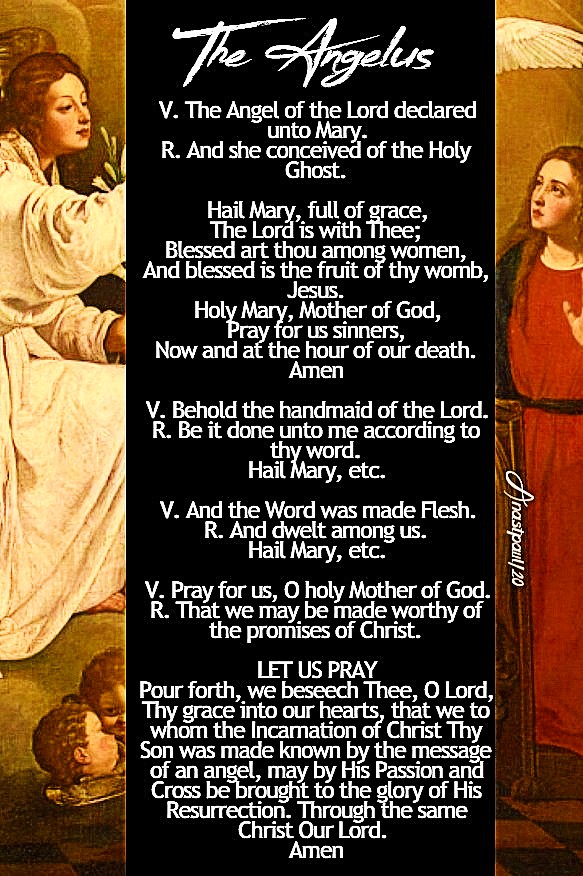
The Angelus
V. The Angel of the Lord declared unto Mary. R. And she conceived of the Holy Spirit. Hail Mary, full of grace, The Lord is with Thee; Blessed art thou among women, And blessed is the fruit of thy womb, Jesus. Holy Mary, Mother of God, Pray for us sinners, Now and at the hour of our death. Amen V. Behold the handmaid of the Lord. R. Be it done unto me according to thy word. Hail Mary, etc. V. And the Word was made Flesh. R. And dwelt among us. Hail Mary, etc. V. Pray for us, O holy Mother of God. R. That we may be made worthy of the promises of Christ. LET US PRAY Pour forth, we beseech Thee, O Lord, Thy grace into our hearts, that we to whom the Incarnation of Christ Thy Son was made known by the message of an angel, may by His Passion and Cross be brought to the glory of His Resurrection. Through the same Christ Our Lord. Amen
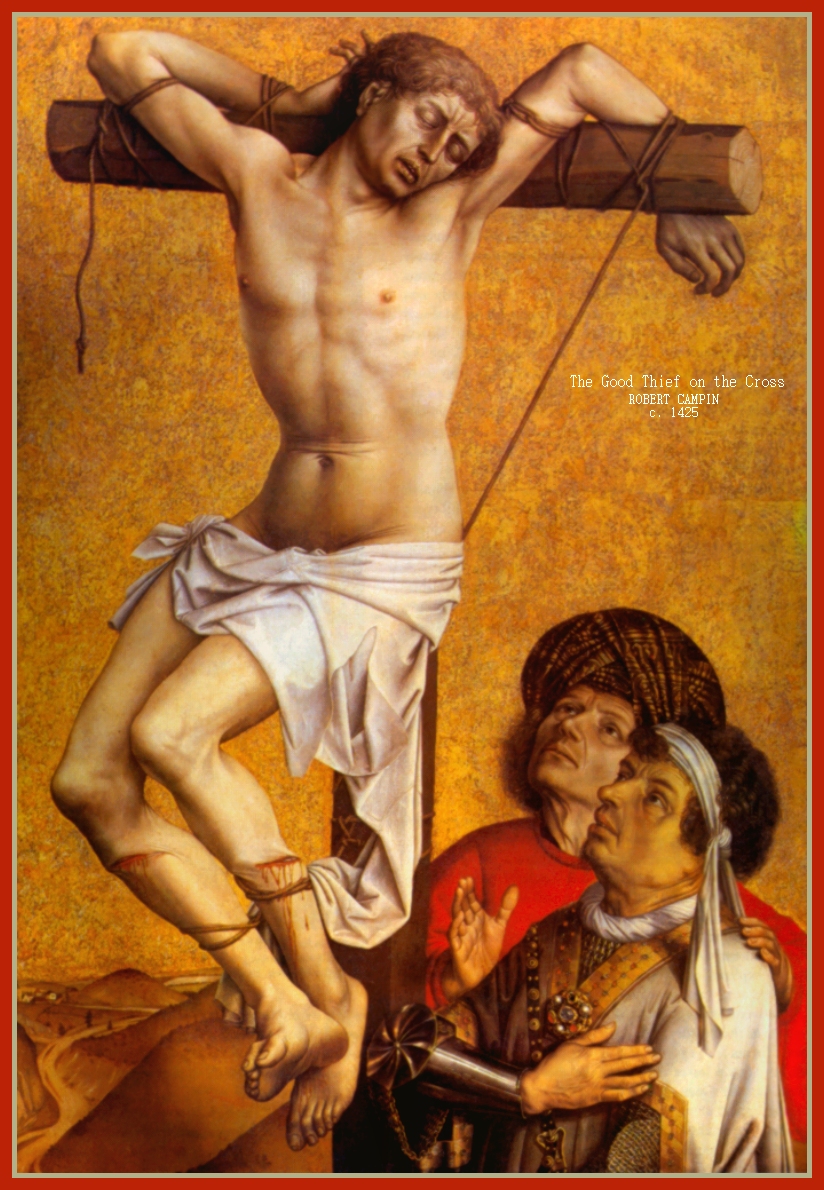
Saint of the Day – 25 March – Saint Dismas “The Good Thief” the first Saint – crucified alongside Jesus Christ in 33. Patronages – condemned prisoners, all prisoners, dying people, funeral directors, penitents, penitent criminals, prison chaplains, prisoners, prisons, reformed thieves, undertakers, Przemysl, Poland, Archdiocese of, Merizo, Guam. Also known as The Penitent Thief, The Good Thief on the Cross, Demas, Desmas, Dimas, Dysmas, Rach, Titus, Zoatham.
The Roman Martyrology, on the 25th of March, makes mention of the Good Thief, who, according to tradition, is called Dismas, in the following words:
“At Jerusalem, on this day, is the Feast of the Good Thief, who acknowledged Christ on the Cross and from Him, deserved to hear the words: ‘This day shalt thou be with Me in Paradise.“
The sudden change and conversion, for Dismas from a sinner, became a penitent and Saint, has been rightly attributed to the prayers of our Blessed Lady. Mary, say the holy Fathers, who had obtained the soul of the malefactor, as a recompense of her sorrows and the price of her compassion.
Saint Peter Damien assures us, that Mary prayed for the thief who was on the right side of the Cross, on which side she also stood and exhorted him, to hope in Jesus and to do penance.
Saint Anselm, in a treatise on the youth of Jesus, relates the following incident about the early years of Saint Dismas, which he says is a pious legend:
“Dismas was living in a forest on the confines of Egypt, when Mary went thither with the Child Jesus, to escape the rage of Herod. He was a highwayman and the son of the chief of a band of robbers. One day, as he lay in ambush, he saw a man, a young woman and a little Child approaching, from whom he rightly expected no opposition. Therefore, he went towards them, with his comrades, with the intention to ill-treat them. But he was at once so charmed with the supernatural beauty and grace which shone on the countenance of Jesus, that instead of doing them harm, he gave them hospitality in the cave which he inhabited and made ready for them, everything of which they stood in need. Mary was grateful for the tenderness and care, which the robber bestowed on her Beloved Son and warmly thanking him, she assured him that he would be rewarded before his death. This promise was fulfilled later, when Dismas was crucified with the Saviour of the World and obtained the grace of repentance in his last hour, openly confessing Jesus Christ’s Divinity. When the Apostles had fled, he had the happiness of receiving the first fruits of the Redeemer’s Sacrifice and soon after, entered the Heavenly Kingdom with his Saviour.”
Dismas is considered the Patron of penitents and is especially invoked for the conversion of hardened and obstinate criminals and sinners.
The Church has indeed sanctioned the veneration given to this Saint, with a most beautiful Office, in his honour.
A tradition, which has come down from the apostolic ages, tells us that the great mystery of the Incarnation, was achieved on the twenty-fifth day of March. It was at the hour of midnight, when the most holy Virgin was alone and absorbed in prayer, that the Archangel Gabriel appeared before her and asked her, in the name of the Blessed Trinity, to consent to become the Mother of God. Let us assist, in spirit, at this wonderful interview between the angel and the Virgin: and, at the same time, let us think of that other interview which took place between Eve and the serpent. A holy Bishop and Martyr of the second century, Saint Irenaeus, who had received the tradition from the very disciples of the Apostles, shows us that Nazareth, is the counterpart of Eden.
In the garden of delights there is a virgin and an angel and a conversation takes place-between them. At Nazareth a virgin is also addressed by an angel and she answers him but the angel of the earthly paradise, is a spirit of darkness and he of Nazareth, is a spirit of light. In both instances, it is the angel that has the first word. ‘Why,’ said the serpent to Eve, ‘hath God commanded you, that you should not eat of every tree of paradise?’ His question implies impatience and a solicitation to evil, he has contempt for the frail creature to whom he addresses it but he hates the image of God, which is upon her.
See, on the other hand, the angel of light; see with what composure and peacefulness he approaches the Virgin of Nazareth, the new Eve and how respectfully he bows himself down before her: ‘Hail, full of grace! The Lord is with thee! Blessed art thou among women!’ Such language is evidently of heaven, none but an angel could speak thus to Mary.
Scarcely has the wicked spirit finished speaking than Eve casts a longing look at the forbidden fruit, she is impatient to enjoy the independence it is to bring her. She rashly stretches forth her hand, she plucks the fruit, she eats it and death takes possession of her: death of the soul, for sin extinguishes the light of life; and death of the body, which being separated from the source of immortality, becomes an object of shame and horror and finally, crumbles into dust.
But let us turn away our eyes from this sad spectacle and fix them on Nazareth. Mary has heard the angel’s explanation of the mystery, the will of heaven is made known to her and how grand an honour it is to bring upon her! She, the humble maid of Nazareth, is to have the ineffable happiness of becoming the Mother of God and yet, the treasure of her virginity is to be left to her! Mary bows down before this sovereign will and says to the heavenly messenger: ‘Behold the handmaid of the Lord, be it done unto me, according to thy word.’
Thus, as the great St Irenaeus and so many of the holy fathers remark, the obedience of the second Eve, repaired the disobedience of the first, for no sooner does the Virgin of Nazareth speak her fiat, ‘be it done,’ than the eternal Son of God (who, according to the divine decree, awaited this word) is present, by the operation of the Holy Ghost, in the chaste womb of Mary and there, He begins His human life. A Virgin is a Mother and Mother of God and it is this Virgin’s consenting to the divine will, that has made her conceive by the power of the Holy Ghost. This sublime mystery puts between the eternal Word and a mere woman, the relations of Son and Mother, it gives to the almighty God, a means whereby He may, in a manner worthy of His majesty, triumph over satan, who hitherto seemed to have prevailed against the divine plan.
Never was there a more entire or humiliating defeat than that which this day befell satan. The frail creature, over whom he had so easily triumphed at the beginning of the world, now rises and crushes his proud head. Eve conquers in Mary. God would not choose man for the instrument of His vengeance, the humiliation of satan would not have been great enough and, therefore, she who was the first prey of hell, the first victim of the tempter, is selected to give battle to the enemy. The result of so glorious a triumph is, that Mary is to be superior not only to the rebel angels but to the whole human race, yea, to all the angels of heaven. Seated on her exalted throne, she, the Mother of God, is to be the Queen of all creation. Satan, in the depths of the abyss, will eternally bewail his having dared to direct his first attack against the woman, for God has now so gloriously avenged her and, in heaven, the very Cherubim and Seraphim reverently look up to Mary and deem themselves honoured, when she smiles upon them, or employs them in the execution of any of her wishes, for she is the Mother of their God.
Therefore is it that we, the children of Adam, who have been snatched by Mary’s obedience from the power of hell, solemnise this day of the Annunciation. Well may we say of Mary, those words of Debbora, when she sang her song of victory over the enemies of God’s people: ‘The valiant men ceased and rested in Israel, until Debbora arose, a mother arose in Israel. The Lord chose new wars and He Himself, overthrew the gates of the enemies.’ Let us also refer to the holy Mother of Jesus, these words of Judith, who by her victory over the enemy was another type of Mary: ‘Praise ye the Lord our God, who hath not forsaken them that hope in Him. And by me, His handmaid, He hath fulfilled His mercy, which He promised to the house of Israel and He hath killed the enemy of His people, by my hand this night. . . . The almighty Lord hath struck him and hath delivered him into the hands of a woman and hath slain him.’
Our Lady of Betania: The name Betania means Bethany in Spanish. It was originally given this name by Maria Esperanza and was the site of their farm, in Venezuela. Apparitions of the Blessed Virgin Mary were reported and eventually a small Chapel was built there and the faithful began to gather, especially on Feast Days but throughout the year.
St Alfwold of Sherborne St Barontius of Pistoia St Desiderius of Pistoia St Dismas (Crucified with Jesus) “The Good Thief”
Bl Everard of Nellenburg Bl Herman of Zahringen St Hermenland St Humbert of Pelagius Bl James Bird Bl Josaphata Mykhailyna Hordashevska St Kennocha of Fife St Lucia Filippini St Marie-Alphonsine/Mariam Sultaneh Danil Ghattas (1843-1927) About St Marie-Alphonusine: https://anastpaul.com/2020/03/25/saint-of-the-day-25-march-st-marie-alphonsine-danil-ghattas-1843-1927/ St Matrona of Barcelona St Matrona of Thessaloniki St Mona of Milan St Ndre Zadeja Bl Pawel Januszewski St Pelagius of Laodicea Bl Placido Riccardi St Procopius St Quirinus of Rome Bl Tommaso of Costacciaro — 262 Martyrs of Rome: A group 262 Christians martyred together in Rome. We know nothing else about them, not even their names.
Thought for the Day – 12 March – Meditations with Antonio Cardinal Bacci (1881-1971)
Detachment from the World
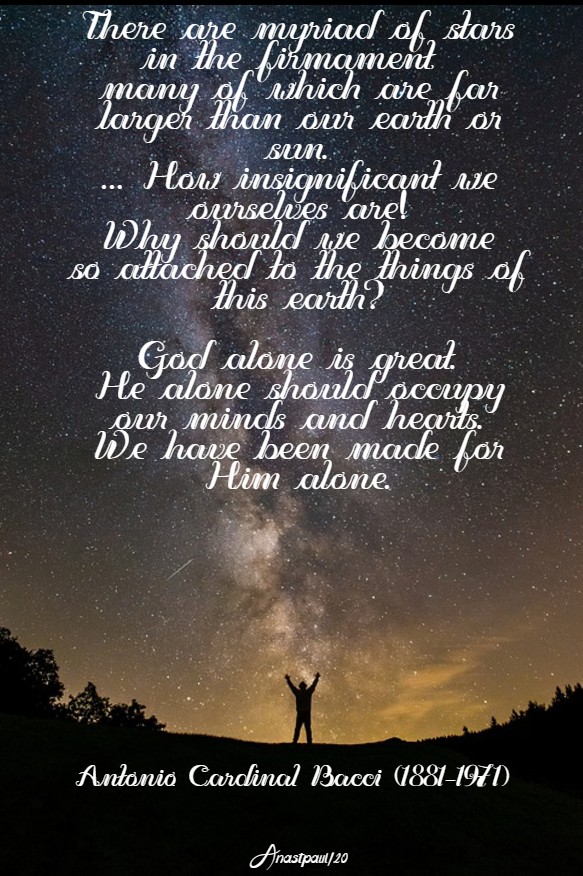
“It is very difficult to detach ourselves from worldly affairs and remain always united to God. Nevertheless, St Ignatius Loyola often exclaimed: “How ugly the earth seems when I look towards Heaven!” The Saints saw the things of this world in the light of God. They recognised how insignificant this world is, beside the infinite splendour of God. They realised that earthly things cannot satisfy the human heart, nor assuage the restlessness of the soul, which was created for God. We, on the other hand, become too attached to worldly goods. It may happen that our hearts become absorbed in them. Let us reflect on the unimportance of this world. There are myriad of stars in the firmament, many of which are far larger than our earth or sun. Some, like Andromeda, are 250,000 light years distant from us; others, like the Triangle, are 280,000 light years away, while still others, are probably much farther. All obey exactly the plan of their Creator. How tiny our earth is by comparison! How insignificant we ourselves are! Why should we become so attached to the things of this earth? God alone is great. He alone should occupy our minds and hearts. We have been made for Him alone.”
Day Thirty four of our Lenten Journey – 24 March – Wednesday of Passion or the Fifth Week of Lent, Readings: Daniel 3:14-20, 91-92, 95, Daniel 3:52, 53, 54,55, 56, John 8:3
Imitating Christ with Thomas à Kempis (1380-1471)
In You is the source of life and in Your Light Lord, we see light Psalm 35(36)
“If you abide in my word, you are truly my disciples and you will know the truth and the truth will set you free.” – John 8:31-32
CHRIST:MY CHILD, you can never be perfectly free unless you completely renounce self, for all who seek their own interest and who love themselves, are bound in fetters. They are unsettled by covetousness and curiosity, always searching for ease and not for the things of Christ, often desiring and pursuing, that which will not last, for anything that is not of God, will fail completely.
Hold to this short and perfect advice, therefore, give up your desires and you will find rest. Think upon it in your heart and when you have put it into practice, you will understand all things.
DISCIPLE: But this, Lord, is not the work of one day, nor is it mere child’s play, indeed, in this brief sentence is included all the perfection of holy persons.
CHRIST: My child, you should not turn away or be downcast when you hear the way of the perfect. Rather you ought to be spurred on the more, toward their sublime heights, or at least, be moved to seek perfection.
I would this were the case with you — that you had progressed to the point where you no longer loved self but simply awaited My bidding … Then you would please Me very much and your whole life would pass in peace and joy. But you have yet many things which you must relinquish and, unless you resign them entirely to Me, you will not obtain that which you ask.
“I counsel thee to buy of me gold, fire-tried, that thou mayest be made rich” (Apoc 3:18)– rich in heavenly wisdom, which treads underfoot, all that is low. Cast aside earthly wisdom, which seeks to please the world, others and self.
I have said: exchange what is precious and valued among men, for that which is considered contemptible. For true heavenly wisdom — not to think highly of self and not to seek glory on earth — does indeed seem mean and small and is well-nigh forgotten, as many men praise it with their mouths but shy far away from it, in their lives. Yet this heavenly wisdom is a pearl of great price, which is hidden from many. (Book 3 Ch 32)
Quote/s of the Day 24 March – Wednesday of Passion or the Fifth Week of Lent, Readings: Daniel 3:14-20, 91-92, 95, Daniel 3:52, 53, 54,55, 56, John 8:31-42
“If you continue in my word, you are truly my disciples and you will know the truth and the truth will make you free.”
John 8:31-32
“The good man, though a slave, is free; the wicked, though he reigns, is a slave and not the slave of a single man but, what is worse, the slave of as many masters, as he has vices.”
St Augustine (354-430) Father & Doctor of Grace
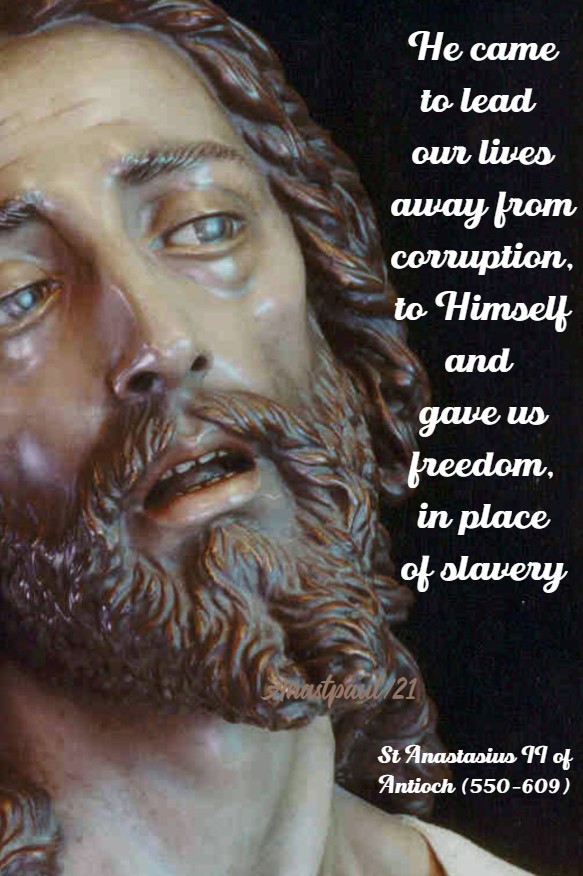
“He came to lead our lives away from corruption, to Himself and gave us freedom, in place of slavery.”
St Anastasius II of Antioch (550-609)
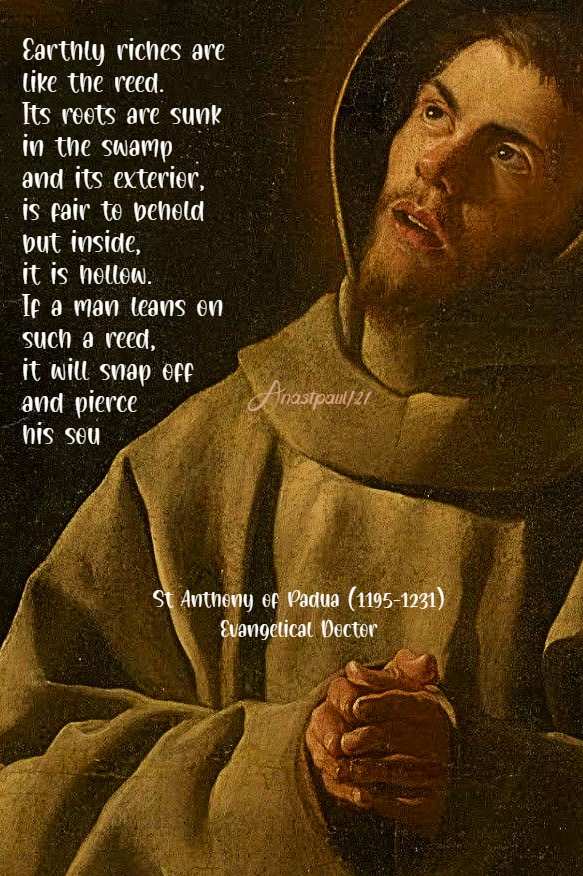
“Earthly riches are like the reed. Its roots are sunk in the swamp and its exterior, is fair to behold but inside, it is hollow. If a man leans on such a reed, it will snap off and pierce his soul.”
St Anthony of Padua (1195-1231) Evangelical Doctor
One Minute Reflection – 24 March – Wednesday of Passion or the Fifth Week of Lent, Readings: Daniel 3:14-20, 91-92, 95, Daniel 3:52, 53, 54,55, 56, John 8:31-42
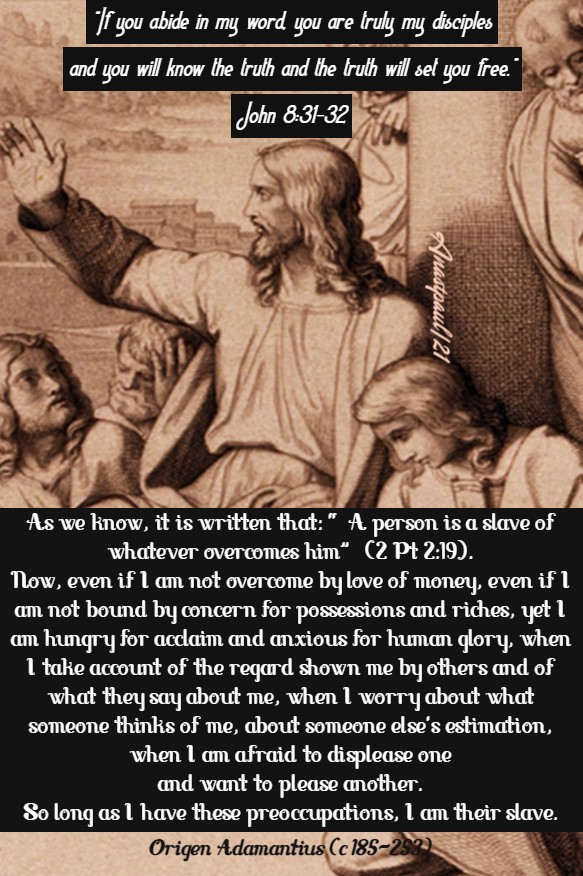
“If you abide in my word, you are truly my disciples and you will know the truth and the truth will set you free.” – John 8:31-32
REFLECTION – “The Lord is the Spirit, and where the Spirit of the Lord is, there is freedom” (2 Cor 3:17) … But how can we find this freedom who are slaves of this world, slaves of money, slaves of fleshly desires? It is true that I strive to amend and judge myself, I condemn my faults. And on their part, let those who hear me, examine the thoughts of their own hearts. But let me mention that, insofar as I am bound by one of these attachments, I have not been converted to the Lord, nor attained true freedom, since such matters and preoccupations, still have power to hold me. ….
As we know, it is written that: “A person is a slave of whatever overcomes him” (2 Pt 2:19). Now, even if I am not overcome by love of money, even if I am not bound by concern for possessions and riches, yet I am hungry for acclaim and anxious for human glory when I take account of the regard shown me by others and of what they say about me, when I worry about what someone thinks of me, about someone else’s estimation, when I am afraid to displease one and want to please another. So long as I have these preoccupations, I am their slave. Yet I should like to make an effort to set myself free from them and try to break free from the yoke of this shameful slavery and attain the liberty, Saint Paul tells us about: “You were called for freedom, do not become slaves to human beings” (Gal 5:13; 1 Cor 7:23). But who will gain this freedom for me? Who will deliver me from this shameful slavery if not He who said: “If the Son sets you free, then you are free indeed” … So let us faithfully serve and “love the Lord our God with all our heart, with all our soul and with all our strength” (Mk 12:30), so that we may merit to receive the gift of freedom from our Lord Jesus Christ.” – Origen Adamantius(c 185-253) Priest, Theologian, Exegist, Writer, Apologist, Father – Homilies on Exodus, no. 12, 4
PRAYER – God of mercy, shed Your light on our hearts that are being purified by penance and in Your goodness, give us a favourable hearing. Teach us to work with You and for You and thus fill the world with Your Spirit. In Christ our Saviour, we become a new creation and Your adopted children, therefore, all things are renewed. May the prayers of the Blessed Virgin assist to humility and fidelity to grace. Through Christ our Lord, with the Holy Spirit, God forever, amen.
Our Morning Offring – 24 March – Wednesday of Passion or the Fifth Week of Lent
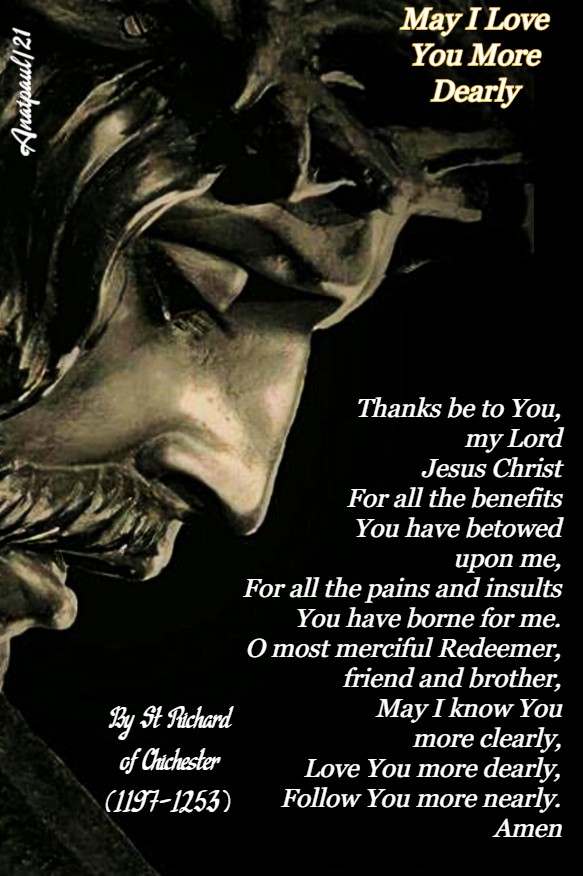
May I Love You More Dearly St Richard of Chichester (1197-1253)
Thanks be to You, my Lord Jesus Christ For all the benefits You have bestowed upon me, For all the pains and insults You have borne for me. O most merciful Redeemer, friend and brother, May I know You more clearly, Love You more dearly, Follow You more nearly. Amen
Saint of the Day – 24 March – Blessed John dal Bastone OSB Silv. (c 1200-1290) Priest, Monk. Born Giovanni Bonello Botegoni on 24 March c 1200 in Paterno, Fabriano, Italy, died 24 March 1290 in Fabriano, at the age of 90 years. Also known as Giovanni Bonello Botegoni, John Bottegoni, John of the Staff, John of the Club.
John was born into a wealthy farming family. His father Bonello and mother Superla, had five children and John was the youngest. Because of his studious nature, his parents sent him to Bologna to study Humanities. There, he became afflicted with a purulent sore on the side of one of his hip bones. On his way home, he rode on a donkey, which made his thigh on the afflicted side, painful too. Thereafter, he was crippled for the rest of his life and was forced to walk with a staff, for this he was sometimes called John of the Staff.
John became attracted to the fame and sanctity of the venerable Saint Sylvester Gozzolini (1177 – 26 November 1267), who was the Founder of the Order of the Sylvestrine Congregation, and went to meet him for spiritual direction. In 1230 he was admitted to the Congregation and adopted the monastic life. He lived for 60 years in a small cell of the Hermitage of Montefano. He became renowned for his love of humble solitude, for prudence and for his counsel. After this long period, Sylvester raised him to the Priesthood.
During all these years, John’s body was racked with pain but, he nevertheless, continued to live a life of asceticism. He lived in extreme poverty and had no possessions beyond those of his basic needs. His fellow Monks confidently sought his advice in their difficulties and doubts. He continued to preach and offer solace to all who sought his counsel.
After Sylvester died in 1267, John’s illness became more severe and he was taken to a hospital at Fabriano, where he died. His body was laid in the Church of St Benedict in Fabriano.
Tomb in the Crypt of Blessed John dal Bastone at the Cloister Church of St Benedict, Fabriano
On 29 Aug 1772, he was Beatified by Pope Clement XIV. On 27 October 1872, in the centenary year of his Beatification, the first Foundation stone was laid for a Church in his honour in Pelawatte, Battaramulla, Sri Lanka. The Church was completed in 1881. It was originally administered by the Silvestrines but in 1972 it was entrusted to the Franciscans.
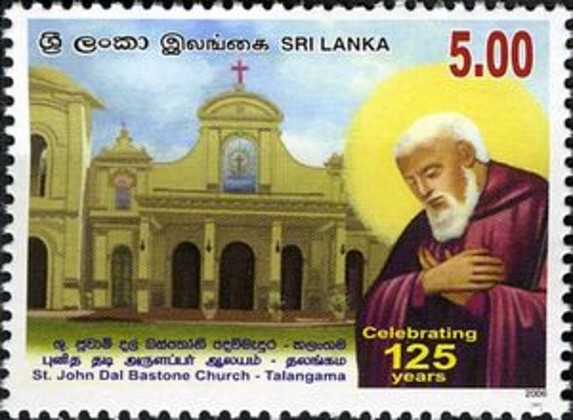
In 2006, the Sri Lanka Post issued a stamp commemorating the 125th Anniversary of the Church, which is the only one in the world, to be dedicated to Blessed John dal Bastone.
Notre-Dame de L’épine Fleurie / Our Lady of the Flowering Thorn, France – 24 March:
From the infancy of the Church, images of our Blessed Lady have been in use among the faithful to enkindle and keep alive in their hearts a tender devotion to the Mother of God. When the barbarians overran the Roman Empire, the Christians, fearful of profanation, hid these paintings and Statues of the Blessed Virgin, in the most secret recesses of caves and forests. The Huns and vandals spared neither age nor sex and when the tumult of war had subsided, oftentimes, few or none remained to withdraw those images from their hiding places and they rested, until the providence of God, allowed them to be discovered and often, in a miraculous manner. “Our Lady of the Flowering Thorn” was one of these and the marvellous circumstances of the discovery, are thus related by a chronicler of the olden time:
“On the western side of the Jura, France, there once stood an old baronial residence. Its noble owner had heard the voice of St Bernard calling through the length and breadth of the land, to the rescue of Jerusalem and of the Holy Sepulchre. He had listened to the thrilling words, “Hail to thee, holy City, City of the Son of God, chosen and sanctified to be the source of salvation to man. Sovereign of nations, capital of empires, metropolis of patriarchs, mother of prophets and apostles, hail to thee.” The infidel had taken possession of her, and Christendom rose to the rescue. Who has not heard of what the world calls the fatal ending of St Bernard’s crusade! Yet surely not fatal to those devoted souls, whom the love of God inspired to fight for the land where Jesus suffered and died for them and who fell on the battlefield, to rise and grasp the crown of glory. Among those heroes of the Cross fell the Lord of our castle on the Jura, leaving a widow to mourn her loss while she rejoiced in his gain. “Sorrowful, yet always rejoicing.” Their names have been lost in the lapse of ages, he is only remembered as the crusader, she as the saint. It was on one of those days when winter, about to leave the earth, seems to cast himself into the bosom of spring, that our saint was walking along the avenue of her castle, her mind full of pious meditation. She had reached the termination of the avenue, when her eye was attracted toward a thorny bush, and there she saw an arbutus laden with the richest blossoms of spring. She hastened towards it, doubtful whether the flakes of snow had not deceived her but no, she found it crowned with a multitude of little white stars shaded with crimson rays and she carefully broke off a branch to hang up in her oratory, over an image of the Blessed Virgin which she had venerated from childhood. She joyfully returned towards the castle, carrying her innocent offering. Whether this little tribute was really agreeable to the Mother of Jesus, or whether it was only that pleasure, which the heart feels at the slightest effusion of tenderness, towards a beloved object, the soul of the lady was that evening filled with the most ineffable sweetness. She promised herself a great deal of pleasure in going every day to gather a fresh garland to adorn the statue of her Mother Mary, and she was faithful to her resolution. Now it happened that one day, being very busy in relieving the wants of the poor who came to her for alms and kind words, she could not go to gather her garland before the shades of evening had covered the earth and as she approached the thicket, an uneasy feeling came over her, occasioned by the increasing darkness. S he was thinking that it would be difficult to gather the flowers, when a calm clear light seemed to overspread the bushes. Startled at the sight, and fearing that robbers might be lurking there, she paused for a moment, but remembering she had never once omitted to bring her offering, she boldly ventured forward, though it was with a trembling hand she plucked the branch, that seemed as if it bent towards her. During that night and all the next day, the lady reflected on what she had seen, without being able to account for it and her heart, being penetrated with the mystery, she went the following evening to the thicket, accompanied by a faithful servant and her old Chaplain. The soft light was seen as they approached, becoming every instant brighter and more vivid. They stopped and fell upon their knees, for it seemed to them, that this light came from heaven . Then the good old Priest arose and moved with reverential steps toward the thicket, chanting a hymn of the Church; he put aside the branches which appeared to open of their own accord, and there, a little image of the Blessed Virgin, rudely carved by unskilled though pious hands, was descried in the midst of the bushes and it was from this Statue that the light emanated. “Hail Mary, full of grace,” said the Priest, kneeling before the image, “and at that moment a melodious murmur was heard through the surrounding woods, as if the chant had been taken up by the choirs of angels.” He then recited those admirable litanies in which faith speaks the language of the most sublime ecstasy and after repeated acts of veneration, he took the Statue in his hands to carry it to the castle, where it would rest in a sanctuary more worthy of it. The lady and her servant followed with hands joined and bowed heads, repeating the responses of the solemn litany. It is needless to tell of the elegance and rich decorations of the niche where the holy image was placed, surrounded with blazing lights and rich perfumes, while the lady and her household knelt in prayer until morning advanced—but lo! when the beams of the orb of day arose upon the earth, the image was nowhere to be seen. Why had the heavenly Virgin deserted the widowed saint? What new dwelling had she chosen? The blessed Mother of the lowly Jesus had preferred the modest shelter of her flowery thorns, to the splendour of a worldly dwelling; she had returned to the freshness of the woods, to taste the peace of solitude and the sweet exultations of the flowers. All the inhabitants of the castle proceeded at evening to the wood and found it more resplendent than ever. They knelt in respectful silence. “Queen of angels, Queen of all saints,” said the Chaplain, “it is here thou art pleased to dwell, be it as thou wilt.” And soon a Chapel was raised on the spot, embellished with all the architectural beauties those ages of faith and poetic sentiment could inspire. The rich adorned it with gifts, and kings lavished it with jewels and gold. The renown of the miracles wrought there, drew large crowds of pilgrims and ere long, a convent reared its head, of which the saint became the superior. She died full of years and good works and our Lady of the Flowering Thorn received her pure soul and carried her in her maternal arms to the blissful bowers of paradise, where thornless flowers bloom forever, around the Throne of God. Still, each spring, till Time is no more, the thorn trees bloom and white petals testify to those who will listen, to the tale that no scientist would believe, the story of Our Lady of the Flowering Thorn. If you wish to check on the details, you might go yourself to the forgotten valley, near the highest peak of the Jura and walk among the ruins there. As you kneel on the grassy stone that once formed the arch above the Chapel window, say a prayer to Our Lady for the one from whom I heard the tale, for me and for all lovers and devotees of Mary. Amen.”
The 29th “Day of Missionary Martyrs” + 2021 “In Love and Alive” A day of prayer and fasting in memory of the missionary Martyrs of the Faith.
St Pigmenius of Rome St Romulus of North Africa St Secundus of North Africa St Seleucus of Syria St Severo of Catania St Timothy of Rome — Martyrs of Africa – 9 saints: A group of Christians murdered for their faith in Africa, date unknown. The only details about their that survive are the names – Aprilis, Autus, Catula, Coliondola, Joseph, Rogatus, Salitor, Saturninus and Victorinus. .
Martyrs of Caesarea – 6 saints: A group of Christians martyred together in the persecutions of Diocletian. We know little else but six of their names – Agapius, Alexander, Dionysius, Pausis, Romulus and Timolaus. They were martyred by beheading in 303 at Caesarea, Palestine.
Thought for the Day – 23 March – Meditations with Antonio Cardinal Bacci (1881-1971)
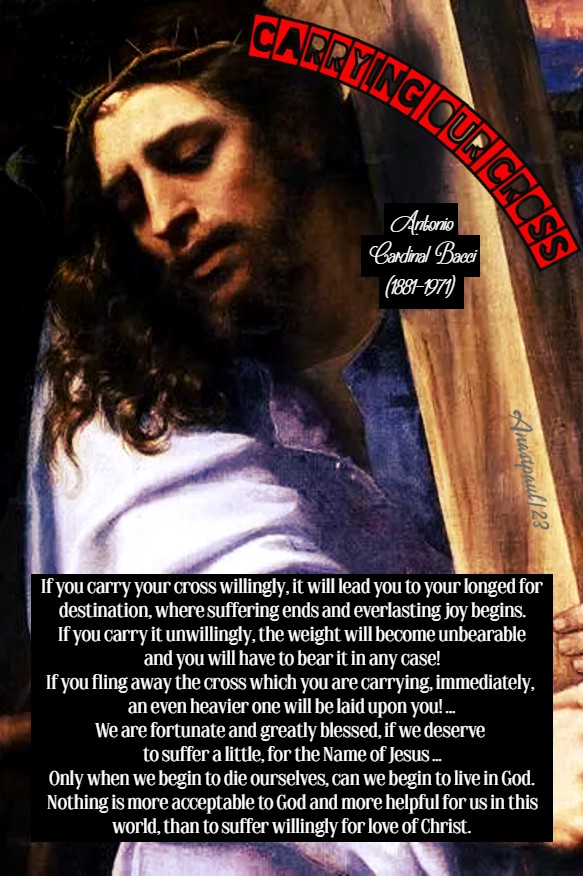
Carrying our Cross
“We also read in the Imitation of Christ: “No man has so heartfelt a sense of the Passion of Christ, as he whose lot it has been, to suffer like things.” (Imitation of Christ, Bk II, Ch 12) If you carry your cross willingly, it will lead you to your longed for destination, where suffering ends and everlasting joy begins. If you carry it unwillingly, the weight will become unbearable and you will have to bear it in any case! If you fling away the cross which you are carrying, immediately, an even heavier one will be laid upon you! Look upon them as wonderful consolations because, the sufferings of this life cannot be regarded as the measure of that glory which will be ours in Heaven … (Rom 8:18). We are fortunate and greatly blessed, if we deserve to suffer a little, for the name of Jesus … Only when we begin to die ourselves, can we begin to live in God. Nothing is more acceptable to God and more helpful for us in this world, than to suffer willingly for love of Christ.”
Day Thirty four of our Lenten Journey – 23 March – Tuesday of Passion Week or the Fifth Week of Lent, Readings: Numbers 21:4-9, Psalms 102:2-3, 16-18, 19-21, John 8:21-30
Imitating Christ with Thomas à Kempis (1380-1471)
In You is the source of life and in Your Light Lord, we see light Psalm 35(36)
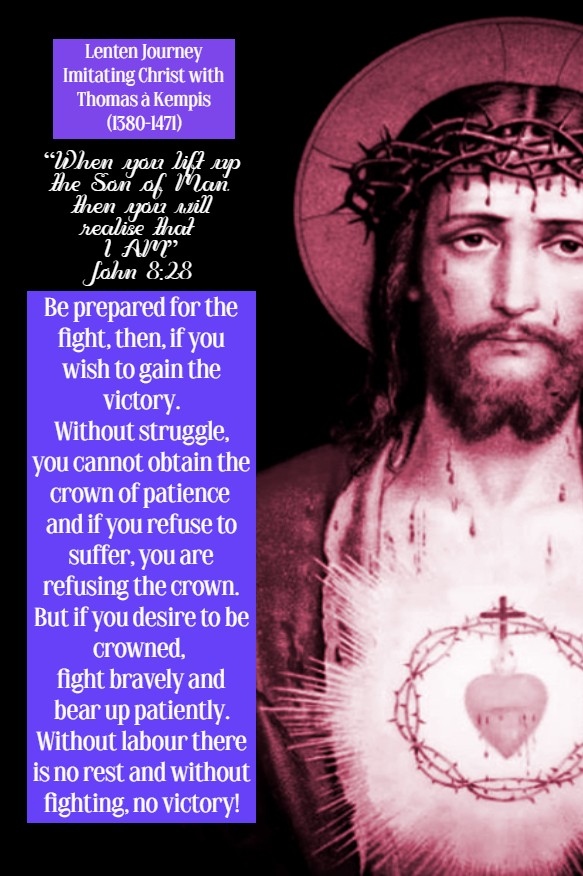
“When you lift up the Son of Man, then you will realise that I AM” – John 8:28
CHRIST: WHAT are you saying, My child? Think of My suffering and that of the saints and cease complaining. You have not yet resisted to the shedding of blood. What you suffer is very little compared with the great things they suffered who were so strongly tempted, so severely troubled, so tried and tormented in many ways. Well may you remember, therefore, the very painful woes of others, that you may bear your own little ones the more easily. And if they do not seem so small to you, examine if perhaps your impatience is not the cause of their apparent greatness; and whether they are great or small, try to bear them all patiently. The better you dispose yourself to suffer, the more wisely you act and the greater is the reward promised you. Thus you will suffer more easily if your mind and habits are diligently trained to it. Do not say: “I cannot bear this from such a man, nor should I suffer things of this kind, for he has done me a great wrong. He has accused me of many things of which I never thought. However, from someone else I will gladly suffer as much as I think I should.” Such a thought is foolish, for it does not consider the virtue of patience or the One Who will reward it, but rather weighs the person and the offense committed. The man who will suffer only as much as seems good to him, who will accept suffering only from those from whom he is pleased to accept it, is not truly patient. For the truly patient man does not consider from whom the suffering comes, whether from a superior, an equal, or an inferior, whether from a good and holy person or from a perverse and unworthy one; but no matter how great an adversity befalls him, no matter how often it comes or from whom it comes, he accepts it gratefully from the hand of God and counts it a great gain. For with God nothing that is suffered for His sake, no matter how small, can pass without reward. Be prepared for the fight, then, if you wish to gain the victory. Without struggle you cannot obtain the crown of patience and if you refuse to suffer, you are refusing the crown. But if you desire to be crowned, fight bravely and bear up patiently. Without labour there is no rest and without fighting, no victory.
DISCIPLE: O Lord, let that which seems naturally impossible to me become possible through Your grace. You know that I can suffer very little and that I am quickly discouraged when any small adversity arises. Let the torment of tribulation suffered for Your name be pleasant and desirable to me, since to suffer and be troubled for Your sake, is very beneficial for my soul. (Book 3 Ch 19)
Quote/s of the Day – 23 March – Tuesday of Passion Week or the Fifth Week of Lent, Readings: Numbers 21:4-9, Psalms 102:2-3, 16-18, 19-21, John 8:21-30
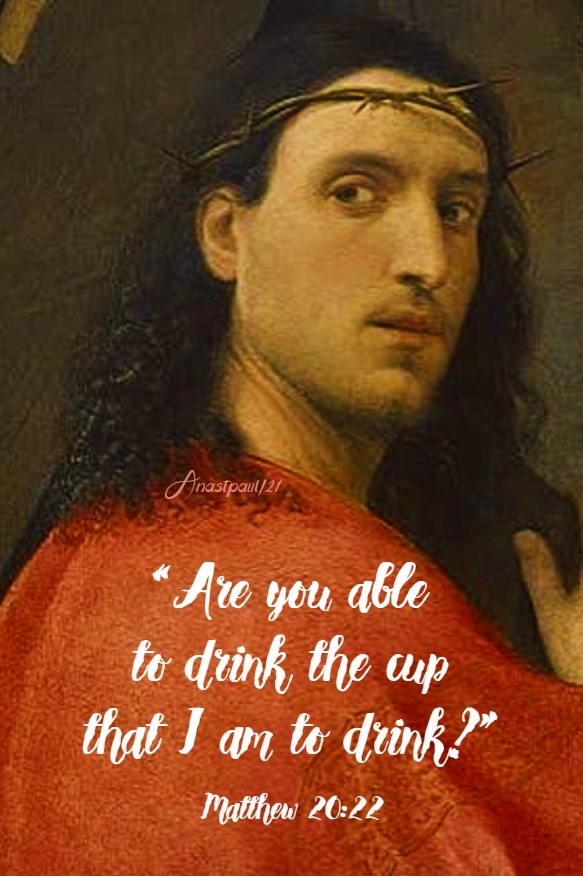
“Are you able to drink the cup that I am to drink?”
Matthew 20:22
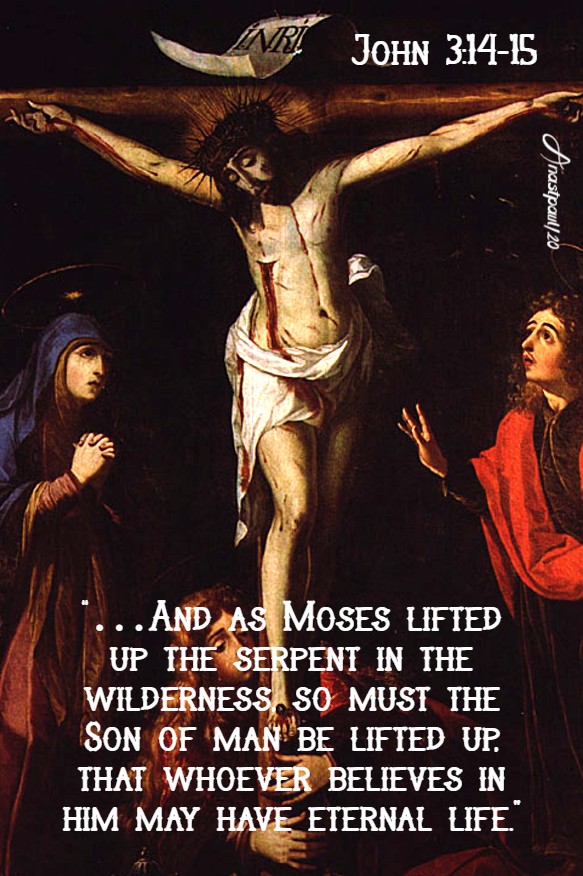
“…And as Moses lifted up the serpent in the wilderness, so must the Son of man be lifted up, that whoever believes in him may have eternal life.”
John 3:14-15
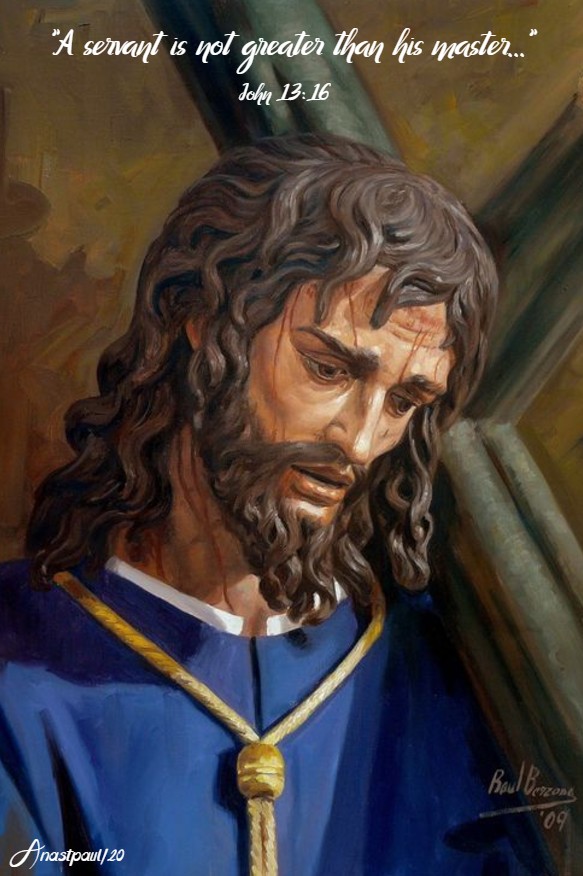
“The servant is not greater than his Master”
John 13:16
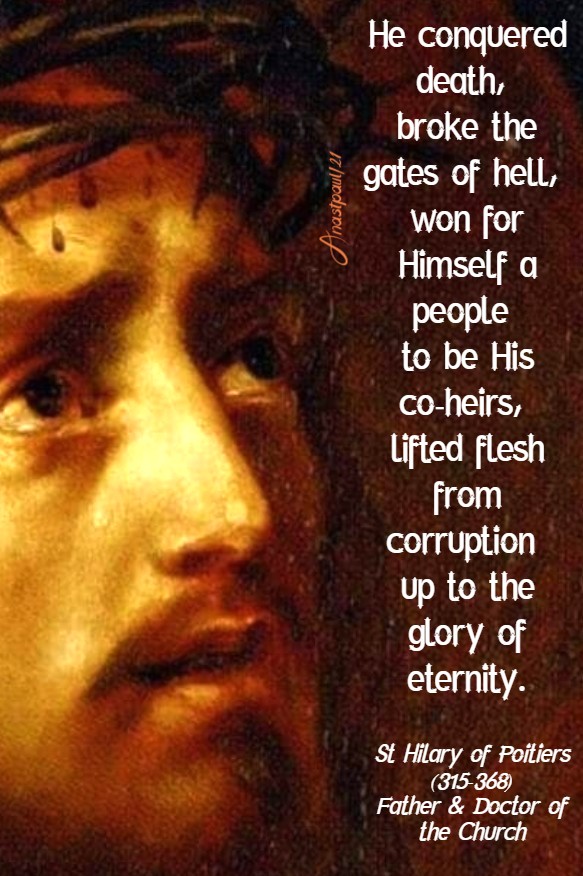
“He conquered death, broke the gates of hell, won for Himself a people to be His co-heirs, lifted flesh from corruption up to the glory of eternity.”
“The Son of God is nailed to the Cross but on the Cross, God conquers human death. Christ, the Son of God, dies but all flesh is made alive in Christ. The Son of God is in hell but man is carried back to heaven.”
St Hilary of Poitiers (315-368) Father & Doctor of the Church
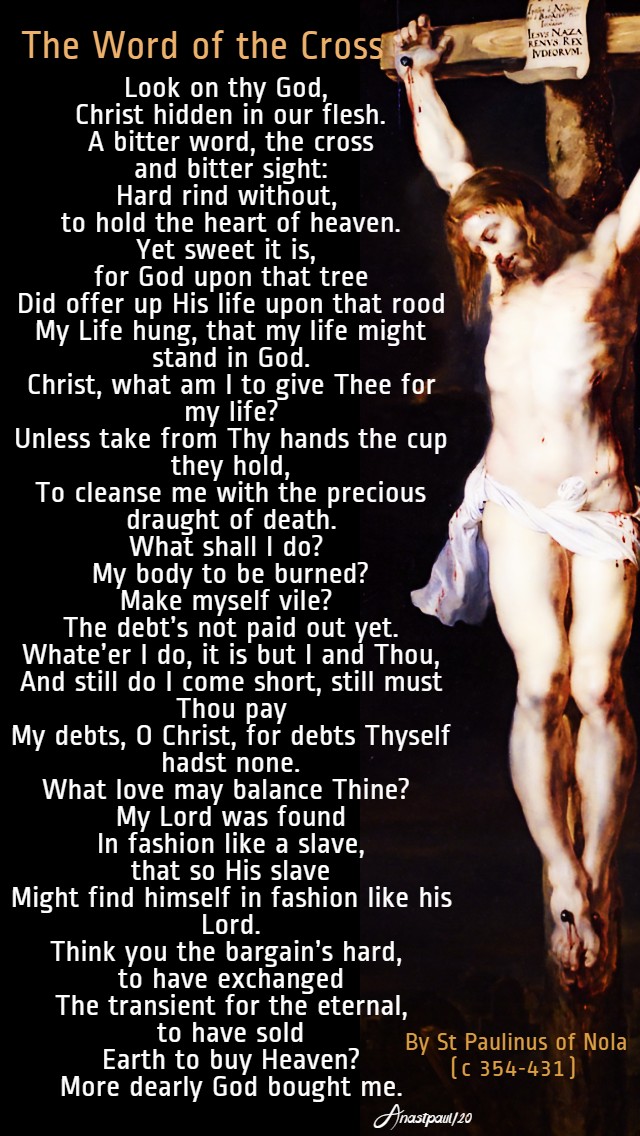
The Word of the Cross by Saint Paulinus of Nola (c 354-431)
Look on thy God, Christ hidden in our flesh. A bitter word, the cross and bitter sight: Hard rind without, to hold the heart of heaven. Yet sweet it is, for God upon that tree Did offer up His life upon that rood My Life hung, that my life might stand in God. Christ, what am I to give Thee for my life? Unless take from Thy hands the cup they hold, To cleanse me with the precious draught of death. What shall I do? My body to be burned? Make myself vile? The debt’s not paid out yet. Whate’er I do, it is but I and Thou, And still do I come short, still must Thou pay My debts, O Christ, for debts Thyself hadst none. What love may balance Thine? My Lord was found In fashion like a slave, that so His slave Might find himself in fashion like his Lord. Think you the bargain’s hard, to have exchanged The transient for the eternal, to have sold Earth to buy Heaven? More dearly God bought me.
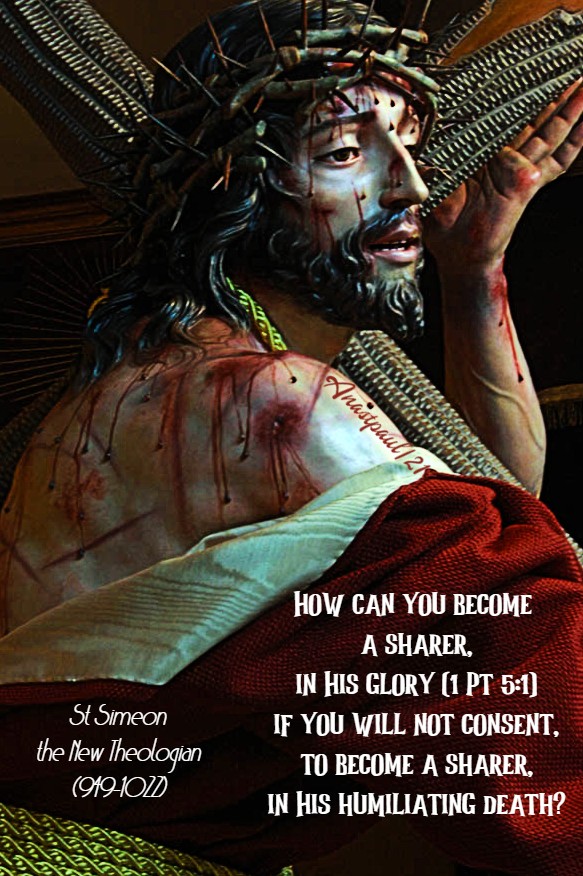
“How can you become a sharer, in His glory (1 Pt 5:1) if you will not consent, to become a sharer, in His humiliating death?”
St Simeon the New Theologian (949-1022)
“Let us then learn from the Cross of Jesus our proper way of living. Should I say ‘living’ or, instead, ‘dying’? Rather, both living and dying. Dying to the world, living for God. Dying to vices and living by the virtues. Dying to the flesh, but living in the spirit. Thus in the Cross of Christ, there is death and in the Cross of Christ there is life. The death of death is there and the life of life. The death of sins is there and the life of the virtues. The death of the flesh is there and the life of the spirit.”
St Aelred of Rievaulx (1110-1167)
“ … If you die with Him, you shall also likewise live with Him. If you are His companion in punishment, so shall you be in glory.”
“When you lift up the Son of Man, then you will realise that I AM” – John 8:28
REFLECTION – “Isaiah the prophet describes an exalted vision for us: “I saw the Lord seated on a throne” (Is 6:1). What a wonderful sight, my brethren! Happy the eyes that saw it! Who would not want with all their heart, to behold the splendour of so great a glory? … Yet here, I am listening to that same prophet give us an account of a very different vision of the same Lord: “We saw Him; He had no beauty, no splendour – we took Him for a leper” (Is 53:2f. Vg.) (…)
And so, if you desire to see Jesus in His glory, try, first of all, to contemplate Him in His humiliation. Begin by gazing on the serpent raised up in the desert, (cf. Jn 3:14) if you wish to see the King seated on His throne. Let the first vision fill you with humility, so that the second, may raise you from your humiliation. Let the former, reprove and heal your pride, before the latter fulfils and satisfies, your desire. Do you see the Lord “emptied?” (Phil 2:7). Do not let this vision leave you untouched, or you will not be able to behold Him later on, in the glory of His exaltation, without anxiety.
“You will be like Him,” indeed, when you see Him “as He is” (1 Jn 3:2); so, be like Him now, as you see what He became for your sake. If you do not refuse to become like Him in His humiliation, He will certainly give you, the likeness of His glory in return. He will never allow someone who has shared His Passion, to be excluded from communion in His glory. So little does He refuse, to admit someone who has shared His Passion, into the Kingdom with Him, that the thief found himself in paradise that very day with Him because he confessed Him on the cross (Lk 23:42) … Yes indeed, “if we suffer with Him, we shall reign with Him” (Rm 8:17). – St Bernard (1091-1153) Cistercian Monk and Mellifluous Doctor of the Church – Sermon 1 for the first Sunday of November.
PRAYER – Holy Father, we have sinned against You and beg for Your forgiveness and mercy. Through the merits of the saving Cross of Your Son, help Your people O Lord, to persevere in obedience to Your will, so that through this obedience, we may reach our eternal home. May the eyes of our hearts, never cease contemplating the Holy Cross and following the way of its humiliation. We hope for the intercession of your angels and saints and our most loving Mother Mary. Through Christ, our Lord with the Holy Spirit, God forever, amen.
Our Morning Offering – 23 March – Tuesday of Passion Week or the Fifth Week of Lent
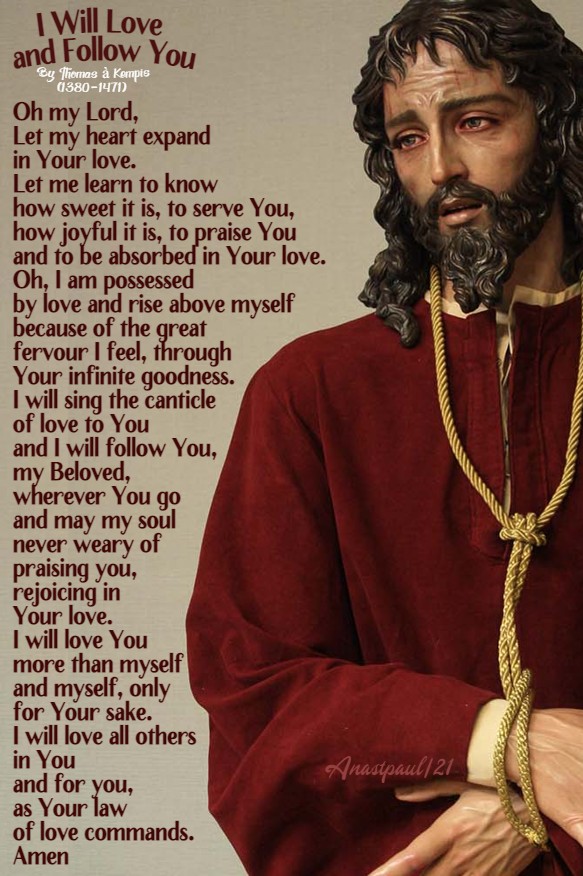
I Will Love and Follow You By Thomas à Kempis CRSA (1380-1471)
Oh my Lord, Let my heart expand in Your love. Let me learn to know how sweet it is, to serve You, how joyful it is, to praise You and to be absorbed in Your love. Oh, I am possessed by love and rise above myself because of the great fervour I feel, through Your infinite goodness. I will sing the canticle of love to You and I will follow You, my Beloved, wherever You go and may my soul never weary of praising you, rejoicing in Your love. I will love You more than myself and myself, only for Your sake. I will love all others in You and for you, as Your law of love commands. Amen
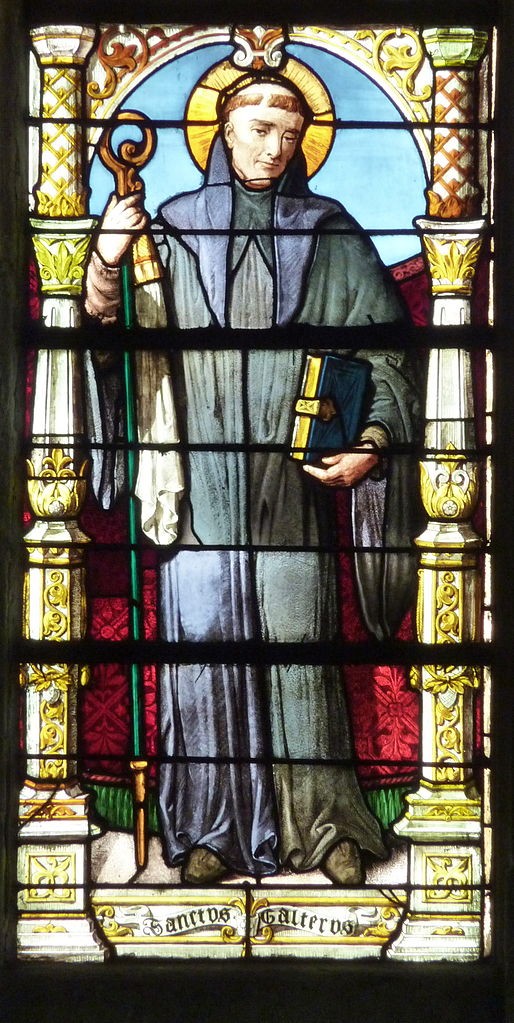
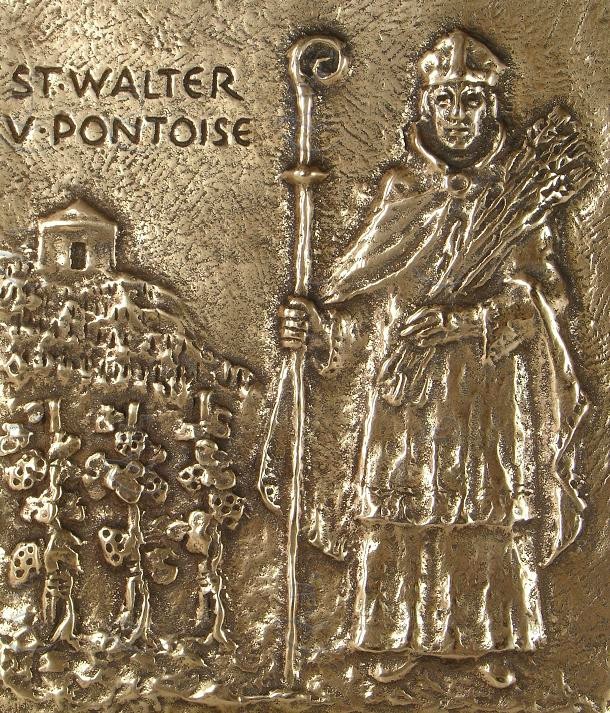
Saint of the Day – 23 March – Saint Walter of Pontoise OSB (c 1030-c 1099) A very reluctant Abbot, Reformer, would-be hermit. Born in c 1030 in Andainville, Picardy, France and died on Good Friday, 8 April 1099 of natural causes. Patronages – against job-related stress, prisoners, prisoners of war, vintners, Pontoise, France.
Walter had been a Professor of philosophy and rhetoric before deciding to join the Benedictine Abbey of Rebais-en-Brie to retreat from the world and the temptations success had brought him.
When the Cross Benedictine Abbey in Pontoise was founded, Walter was chosen as its first Abbot. By custom, the Abbot placed his hand under the king’s hand during the installation. Instead, Walter placed his hand over the hand of King Philip I and told him: “It is from God, not from your majesty, that I accept the charge of this church.”
Walter soon decided that embracing the Office of Abbot sid not leave him enough time for solitude and prayer, so he secretly left the Abbey and went to the Benedictine Abbey at Cluny, where St Hugh was the Abbot.
When the Monks at Pontoise learned where he was, they forced him to return, so he often moved into a cell for days at a time. Eventually, he fled again, this time to an island in the Loire River. The Monks brought him back again after a pilgrim told them where he was.
Walter hadn’t given up his dream to live as a simple Monk, so he went to Rome to appeal to Pope Gregory VII and resign his position as Abbot. However, Pope Gregory dashed Walter’s plans, telling him to go back to the Abbey and use his God-given talents for the best of his fellow Monks. This order seemed to change everything and Walter never again tried to escape.
Not that he led a quiet life. as the Abbot. For after his visit to Pope Gregory, he campaigned against the abuses and corruptions of his fellow Benedictines and denounced clerical abuses, especially among secular Priests, whom he criticised for lack of discipline and for simony. They responded by having him beaten and imprisoned. That didn’t stop Walter who, at a 1092 Church Council in Paris, defended a Vatican decree banning the faithful from going to Masses offered by Priests, living with a concubine.
Walter continued living as simple life as possible and being faithful to his administrative and pastoral functions as the Abbot. But, to find his own solace, he often spent the night in prayer before the Tabernacle in Church.
Shortly before his death on Good Friday, he built the Convent of Our Lady at Bertaucourt for Nuns.
Walter was buried in the Abbey at Pontoise. Numerous miracles were reported at his tomb. His remains were stolen during the French Revolution. Most were not recovered.
He was Canonised by Hugh de Boves, the Archbishop of Rouen in 1153 and was one of the last Saints in Western Europe, to have been Canonised by an authority, other than the Pope.
Walter is the Patron of prisoners because while he was a novice, he once took pity on an inmate at the Monastery prison and helped the prisoner to escape.


























You must be logged in to post a comment.