St Petronius of Die Bl Raymond de Fosso St Saethryth of Faremoutier St Thecla of Lentini St Thomian of Armagh St Valerius of Limoges St William of Bourges O.Cist (c 1140-1209) Bishop
Thought for the Day – 9 January – Meditations with Antonio Cardinal Bacci (1881-1971)
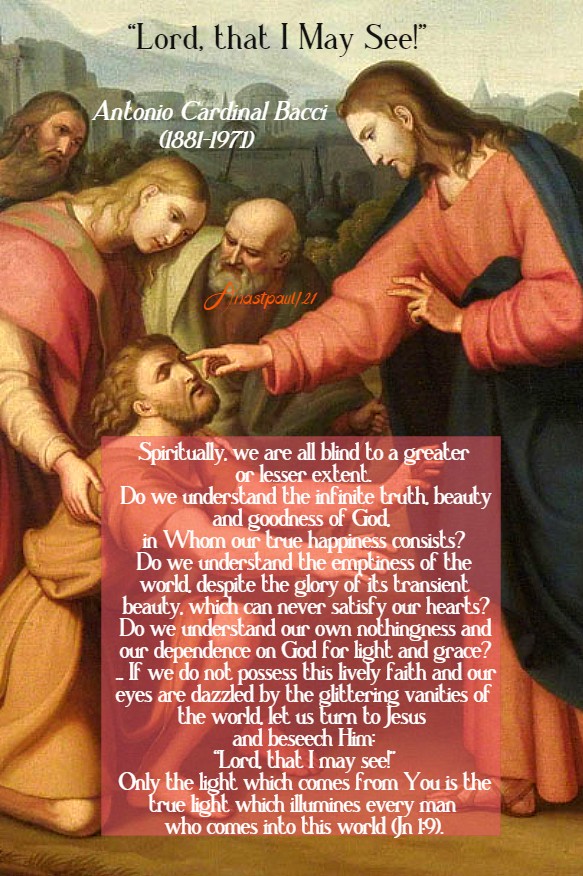
“Lord, that I May See!”
“Spiritually, we are all blind to a greater or lesser extent. Do we understand the infinite truth, beauty and goodness of God, in Whom our true happiness consists? Do we understand the emptiness of the world, despite the glory of its transient beauty, which can never satisfy our hearts? Do we understand our own nothingness and our dependence on God for light and grace? If we understood all this, then the scales of our spiritual blindness would fall from our eyes. Our faith would be even purer and more heartfelt than that of the poor blind man of Jericho. If we do not possess this lively faith and our eyes are dazzled by the glittering vanities of the world, let us turn to Jesus and beseech Him: “Lord, that I may see!” Only the light which comes from You is the true light which illumines every man who comes into this world (Jn 1:9).”
Quote/s of the Day – 9 January – Saturday after Epiphany
“He must increase but I must decrease.”
John 3:30
“Do not have Jesus Christ on your lips and the world in your heart.”
St Ignatius of Antioch (37-105) Bishop & Martyr
“You hide your heart from man – hide it from God if you can. … Where will you go? Where will you flee? Do you want to hear some advice? If you want to flee from Him – flee to Him. Flee to Him by Confessing, not from Him, by hiding, for you cannot hide but you can Confess. Tell Him. “You are my refuge” (Ps 32[31]:7) and let there be nursed in yo, the love that alone leads to life.”
St Augustine (354-430) Father and Doctor of Grace
“If we would God discern The world we must despise, His love and hate must learn, See all things with His eyes. And we must self forgo If God we would attain, His grace must in us grow And ease us from all pain. So shall we sing His praise And be at one with Him, In peace our voices raise In the celestial hymn, That with quadruple harmony And all mellifluous melody, In Heaven resounds eternally.”
Bl Jan van Ruusbroec (1293-1381)
“Embrace, then, Jesus crucified, raising to Him the eyes of your desire! Consider His burning love for you, which made Jesus pour out His blood from every part of His body! Embrace Jesus crucified, loving and beloved and in Him, you will find true life because He is God made man. Let your heart and your soul burn with the fire of love drawn from Jesus on the Cross! … You will have no other desire than to follow Jesus! Run, … do not stay asleep because time flies and does not wait one moment! Dwell in God’s sweet love!”
St Catherine of Sienna (1347-1380) Doctor of the Church
“Without the Way, there is no going, Without the Truth, there is no knowing, Without the Life, there is no living.”
One Minute Reflection – 9 January – Saturday after Epiphany, Readings: 1 John 5:14-21, Psalms 149:1-2, 3-4,5 and 6 and 9, John 3:22-30
“He must increase but I must decrease.” – John 3:30
REFLECTION – “He must increase but I must decrease.” In John, human righteousness had reached the highest level that man could attain. Truth itself (Jn 14:6) said: “Among men, there has been none greater than John the Baptist” (cf. Mt 11:11); so no man could have surpassed him. But he was only a man, whereas Jesus Christ, was man and God. And since, according to Christian grace, we are asked (…) not to boast about ourselves but “whoever boasts let him boast in the Lord” (2 Cor 10:17), …, that is the reason John cried out: “He must increase but I must decrease.” To be sure, God is neither decreased nor increased in Himself. But for ourselves, to the extent that a true spiritual life develops, divine grace increases and human importance decreases until the temple of God, which is made up of all the members of the body of Christ (cf. 1 Cor 3:16), reaches it’s perfection, all domination, authority and importance have died and God has become “all in all” (cf. Col 1:16; 1 Cor 15:28). … “The Word was the true light which enlightens everyone coming into this world, … from his fullness we have all received” (Jn 1:9.16). In itself, the light is always total light, however, it increases in one who is enlightened and diminishes when, what is without God in that person, is destroyed. For without God, we can only sin and this human power decreases, when divine grace overcomes and destroys the sin.The weakness of the creature gives way to the power of the Creator and the vanity of our egoism melts before the love that fills the universe. From the depths of our distress, John the Baptist acclaims the mercy of Christ: “He must increase and I must decrease.” – St Augustine (354-430) Bishop, Father, Doctor of Grace – Sermon for the birth of John the Baptist;
PRAYER – Almighty, ever-living God, through Christ, Your Son, You made of us a new creation. Shape us then, in His likeness, by the gift of the Holy Spirit, since in Him, our human nature now lives with You. Lord God, let the Blessed Virgin the Mother of Your Divine Son and our mother, ever commend us to Your love and care. May her charity and wisdom inspire us to treasure Your teaching and express it in our lives. Through our Lord Jesus, in union with the Holy Spirit, one God forever, amen.
Our Morning Offering – 9 January – Saturday after Epiphany
Let Me Love Your Jesus By St Ildephonsus (c 607-670)
Virgin Mary, hear my prayer, through the Holy Spirit, you became the Mother of Jesus, from the Holy Spirit, may I too have Jesus. Through the Holy Spirit, your flesh conceived Jesus, through the same Spirit, may my soul receive Jesus. Through the Holy Spirit, you were able to know Jesus, to possess Jesus and to bring Him into the world. Through the Holy Spirit, may I too come to know your Jesus. Imbued with the Spirit, Mary, you could say “I am the handmaid of the Lord, be it done unto me according to your word,” in the Holy Spirit, lowly as I am, let me proclaim the great truths about Jesus. In the Spirit, you now adore Jesus as Lord and look on Him as Son, in the same Spirit, Mary, let me love your Jesus. Amen
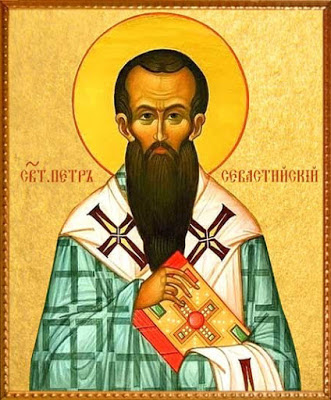
Saint of the Day – 9 January – St Peter of Sebaste (c 340-c 391) Bishop of Sebaste in Lesser Armenia. Born in c 340 in Caesarea, Cappadocia and died in 391 in Sebaste, Lesser Armenia, of natural causes. He was the younger brother of Basil of Caesarea, Gregory of Nyssa, the famous Christian Hermit Naucratius and Macrina the Younger, all Saints. He is also known as Peter of Sebasteia, as well as a close friend and colleague of St Gregory of Nazianzen, another Doctor of the Church.
Any sibling who has ever idolised their older siblings, followed in their footsteps, or felt himself living in their shadow, can certainly relate to Peter of Sebaste, who was the youngest child of a true theological powerhouse of a family.
Peter lived in the second half of the fourth century and was born around the year 340. He was the youngest of ten children and lost his father in his cradle, some think before he was born. His older siblings were two of the Cappadocian Fathers—Basil of Caesarea, that is St Basil the Great and St Gregory of Nyssa—and the great female monk and desert mother, St Macrina the Younger. Macrina took the young Peter under her spiritual wing and trained him in the religious life of asceticism.
Family of Saints
Peter was a brilliant young student and, after a childhood spent studying the liberal arts, he turned all of his intellectual strength towards theological studies, focusing particularly on studying the Sacred Scriptures.
Basil was appointed the Bishop of Caesarea in 370 and, shortly after, ordained his younger brother, Peter, as a Priest. Soon after ordaining Peter, Basil took him into his Episcopal court as an advisor and confidante. Peter withdrew soon after from court and became, like Macrina, a solitary ascetic.
Peter helped Macrina and their mother start a monastic community of women and started a monastery community of men as well but, unfortunately, he was forced back into the public square when he was appointed the Bishop of Sebaste in Armenia.
As Bishop, Peter’s activities were not well-recorded but in his life and Episcopal administration, he displayed the same characteristics as Basil. Linked together in the closest manner with his brothers, he followed their writings with the greatest interest. At his advice Gregory of Nyssa wrote his great work, Against Eunomius, in defence of Basil’s similarly named book answering the polemical work of Eunomius. It was also at his desire, that Gregory wrote the Treatise on the Work of the Six Days, to defend Basil’s similar treatise against false interpretations and to complete it. Another work of Gregory’s, On the Endowment of Man, was also written at Peter’s suggestion and sent to the latter with an appropriate preface as an Easter gift in 397.
“A letter, which St Peter wrote and which is prefixed to St Gregory of Nyssa’s books against Eunomius, has entitled him to a rank among the ecclesiastical writers and is a standing proof, that though he had confined himself to sacred studies, yet by good conversation and reading and by the dint of genius and an excellent understanding, he was inferior to none but his incomparable brother Basil and his colleague and friend, St Gregory of Nazianzen, in solid eloquence. In 381, he attended the general council held at Constantinople and joined the other Bishops in condemning the Macedonian heretics. Not only his brother, St Gregory of Nyssa but also Theodoret and all antiquity, bear testimony to his extraordinary sanctity, prudence and zeal. ” (From the life of his sister St Macrina, composed by their brother St Gregory of Nyssa).
His death happened in summer, about the year 391 and his brother of Nyssa mentions, that his memory was honoured at Sebaste (probably the very year after his death) by an anniversary solemnity, with several martyrs of that city. His name occurs in the Roman Martyrology, on the 9th of January.
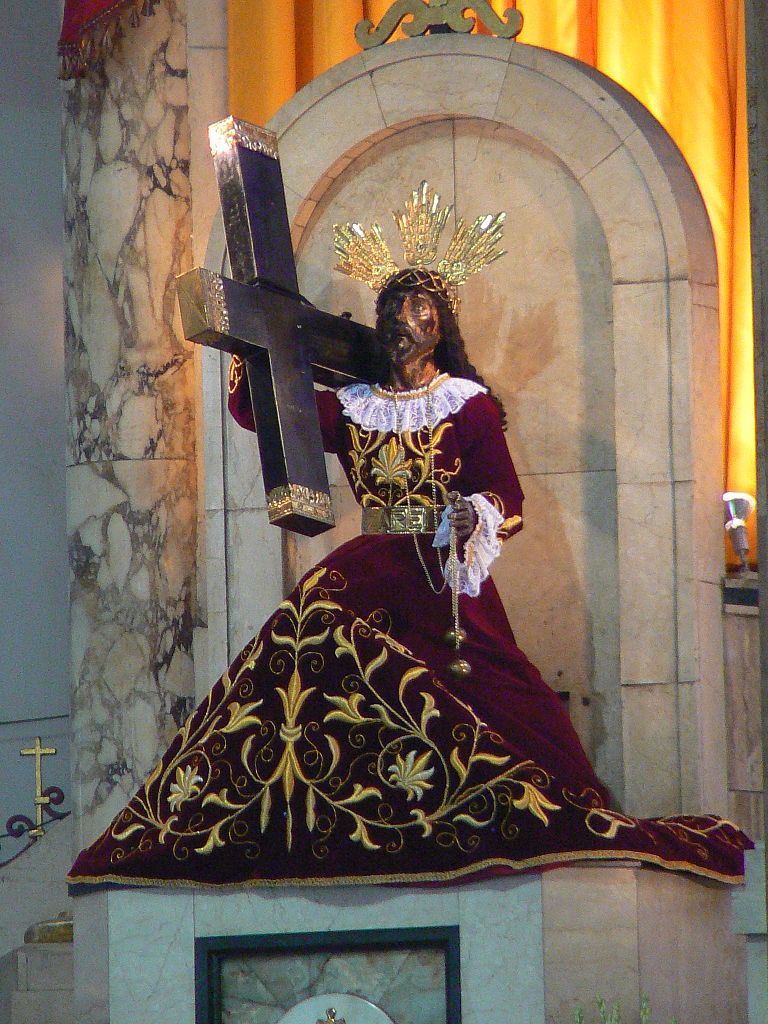
Feast of the Black Nazarene, 9 January: The Black Nazarene is a blackened, life-sized wooden icon of Jesus Christ carrying the Cross. It was constructed in Mexico in the early 17th Century by an Aztec carpenter. In 1606, Spanish Augustinian Missionaries originally brought the icon to Manila. Philippines. .In 1650, Pope Innocent X issued a Papal Bull which canonically established the Cofradia de Jesús Nazareno, to encourage devotion. In the 19th Century, Pope Pius VII granted Indulgences to those who piously pray before the image. Patronage: Quiapo, Philippines.
The ship caught fire, burning the icon but the locals kept the charred Statue. Miracles, especially cures, have been reported in its presence. The Church in which it stood, burned down around it in 1791 and, again in 1929. In 1645, the Church was destroyed by earthquakes and 1863 it was damaged once again. In 1945 the restored Church was badly shaken by bombings BUT still, throughout all these natural and un-natural disasters, the Statue remained standing amidst the devastation around it.
It used to be carried through the streets every January and Christians would rub cloths on it to make Relics but Centuries of this treatment have left the Statue in bad state and since 1998, a replica is paraded on the Feast day celebrations
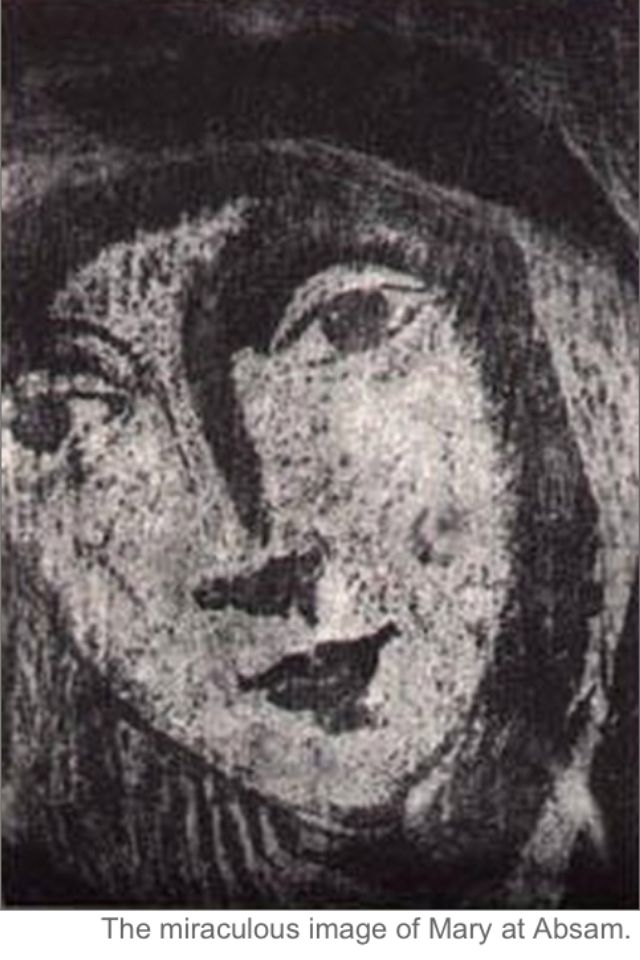
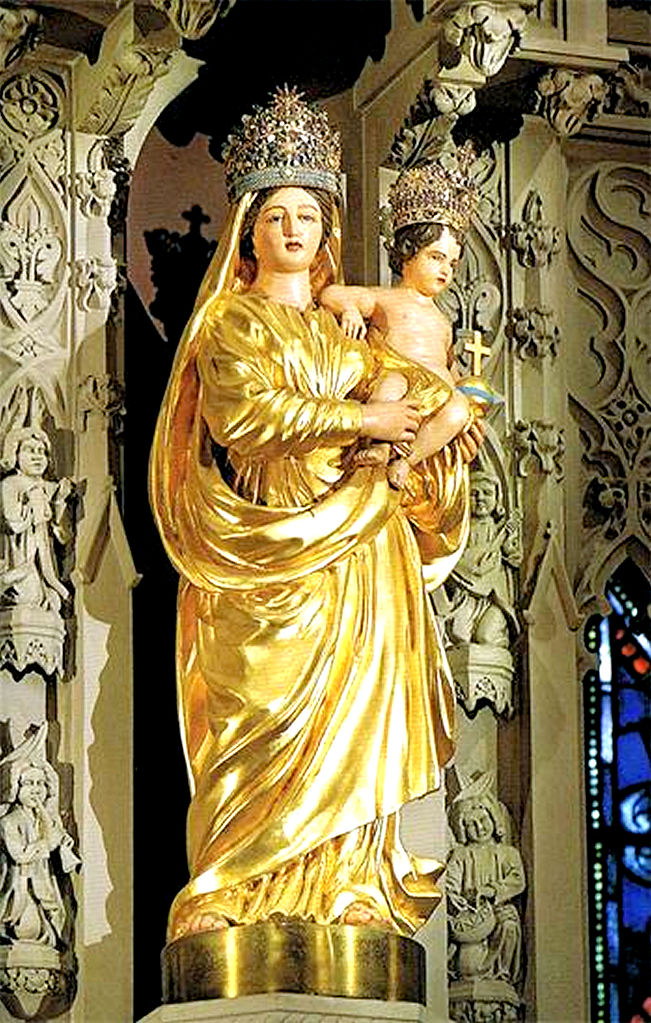
Our Lady of Mercy of Absam/Our Lady of Clemency (Austria) (1797) – 9 January: The Shrine is probably the only one in the world where Our Lady’s Shrine is enclosed in glass. It dates from the late 18th century. On a dark snowy day in 1797, Rosina Bucher, a young girl of the village of Absam near Innsbruck, was sitting by the window sewing in her farmhouse. It was between three and four in the afternoon and the light was just beginning to fade. Rosina looked up and saw a face in the window pane. She looked closely, not sure that she saw clearly and finally called her mother. Others, including the Parish Priest, were called in to observe the strange happening. All agreed that it was a face, the face of the Mother of Sorrows. It was turned slightly and there was a strange expression on it. The window was made up of several small panes of glass quite dark in colour. They removed the pane of glass with the picture on it, which was on the inside of the double window. After they had examined the glass, it was sent to experts in painting and glasswork. Here it was discovered that the face disappeared when water was put on the glass but came back as soon as the glass was dry. They analysed it chemically and could not discover by what process the picture had been placed there.
Rosina’s mother thought it was an omen of trouble. The Parish Priest, on the contrary, felt that Our Lady’s blessing must rest on the house. He asked her to let him have the picture for the Church. It can now be seen at St Mary’s Basilica Absam, which quickly became a popular shrine and the most important site of Marian pilgrimage in the Austrian federal state of Tyrol. Many miracles have been recorded from the pilgrims who prayed there. The church was raised to the status of a Minor Basilica in June of 2000 by Pope John Paul II due to its popularity as a site of pilgrimage. Our Lady of Clemency of Absam is still a popular place of pilgrimage but the most popular date is the anniversary of the discovery of the picture, 17 January. On the 17th of each month, there is a celebration of the discovery of the image. The picture is quite small, the size of a small pane of glass. It is not at all pretty and popularly known as Our Lady of Mercy and Clemency of Absam – clemency, because Mary’s heart is filled with love and kindness to those who pray at this shrine and implore her help.
Sts Julian and Basilissa (died c 304) Martyrs Biography: https://anastpaul.com/2019/01/09/saints-of-the-day-sts-julian-and-basilissa-died-c-304-martyrs/ Bl Kazimierz Grelewski St Marcellinus of Ancona St Marciana Bl Martinus In Eon-min St Maurontius St Nearchus St Paschasia of Dijon St Peter of Sebaste (c 340-c 391) Bishop St Philip Berruyer St Polyeucte St Teresa Kim St Waningus of Fécamp — Martyrs of Africa – 21 saints: A group of 21 Christians murdered together for their faith in the persecutions of Decius. The only details to survive are 14 of their names – Artaxes, Epictetus, Felicitas, Felix, Fortunatus, Jucundus, Pictus, Quietus, Quinctus, Rusticus, Secundus, Sillus, Vincent and Vitalis. They were martyred in c 250. Martyrs of Antioch – 6 saints: A group of Christians martyred together during the persecutions of Diocletian – Anastasius, Anthony, Basilissa, Celsus, Julian and Marcionilla.
Thought for the Day – 8 January – Meditations with Antonio Cardinal Bacci (1881-1971)
Entrusting Ourselves to God
“Sometimes the cross seems too heavy. Physical or moral sufferings may give rise to a feeling of rebellion, or temptations may grow so strong that I feel overwhelmed and unable to experiece the supernatural influence of God’s grace.
At such times, I should remember the words of Jesus: “Come to me, all you who labour and are burdened and I will give you rest. Take my yoke upon you and learn from me, for I am meek and humble of heart and you will find rest for your souls. For my yoke is easy and my burden light” (Mt 11:28).
If I leave myself entirely in God’s hands, my cross will become lighter. My worries and woes, will be easier to bear and, I shall not be excessively elated by worldly pleasures.
All the Saints had perfect TRUST in God. Therefore, they were always content.”
Quote/s of the Day – 8 January – The Third Day within the Octave of Epiphany
“Trust”
He [Christ], protects their faith and gives strength to believers, in proportion to the TRUST, that each man, who receives that strength, is willing to place in Him.”
St Cyprian of Carthage (c 200- c 258) Bishop and Martyr, Father of the Church
“The Lord is near, do not be anxious about anything!”
St Augustine (354-430) Great Western Father and Doctor of Grace
“Rest is in Him alone. Man knows no peace in the world but he has no disturbance when he is with God.”
St Bernard of Clairvaux (1090-1153) Mellifluous Doctor
“He who trusts in God can do all things.”
St Francis de Sales (1567-1622) Doctor of Charity
“Free your mind from all that troubles you; God will take care of things. You will be unable to make haste in this (choice) without, so to speak, grieving the heart of God because He sees that you do not honour Him sufficiently with holy trust. Trust in Him, I beg you and you will have the fulfilment of what your heart desires.”
St Vincent de Paul (1581-1660)
“Oh! My God, how much Your Hand was upon me and yet how little I was aware of it! How good You are! How good You are! How You protected me! How you covered me with Your wings, when I did not even believe in Your existence!”
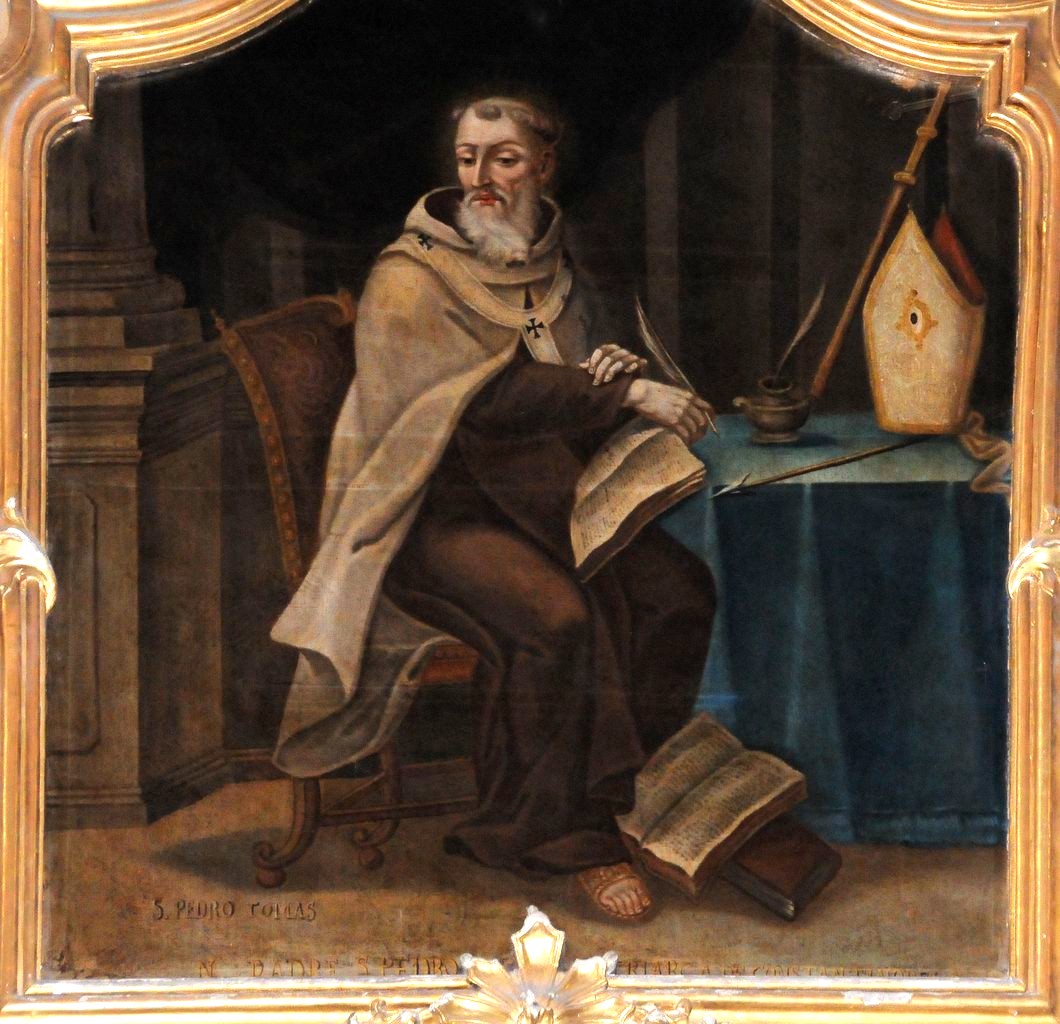
One Minute Reflection – 8 January – The Third Day within the Octave of Epiphany, Readings: 1 John 4:11-18, Psalms 72:1-2, 10,12-13, Mark 6:45-52 and the Memorial of St Peter Thomas OCD (c 1305-1366)
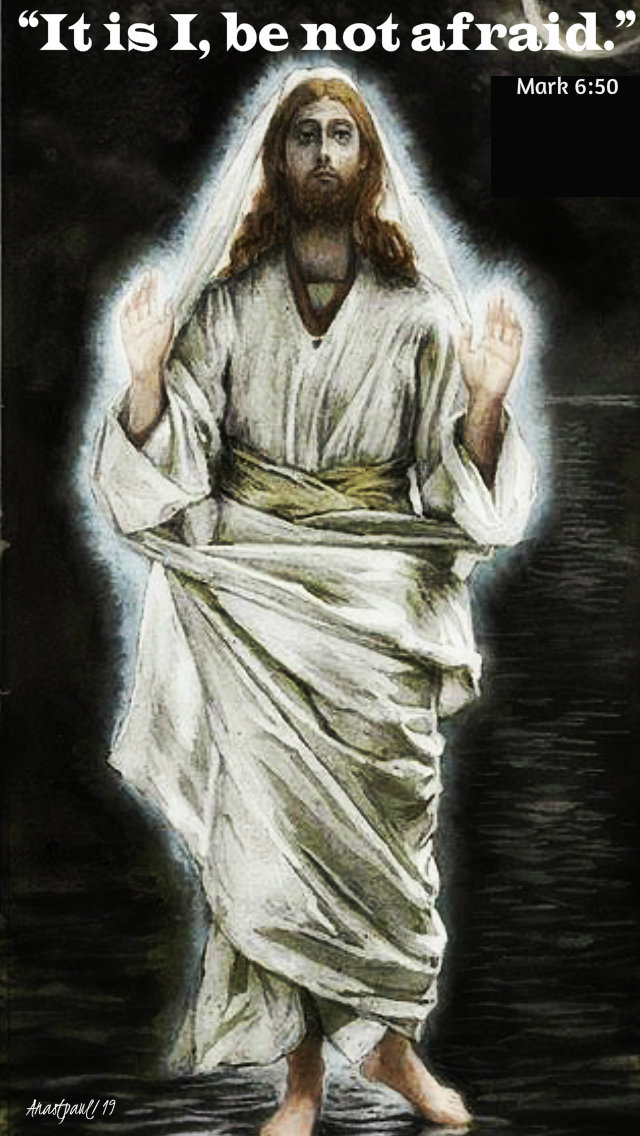
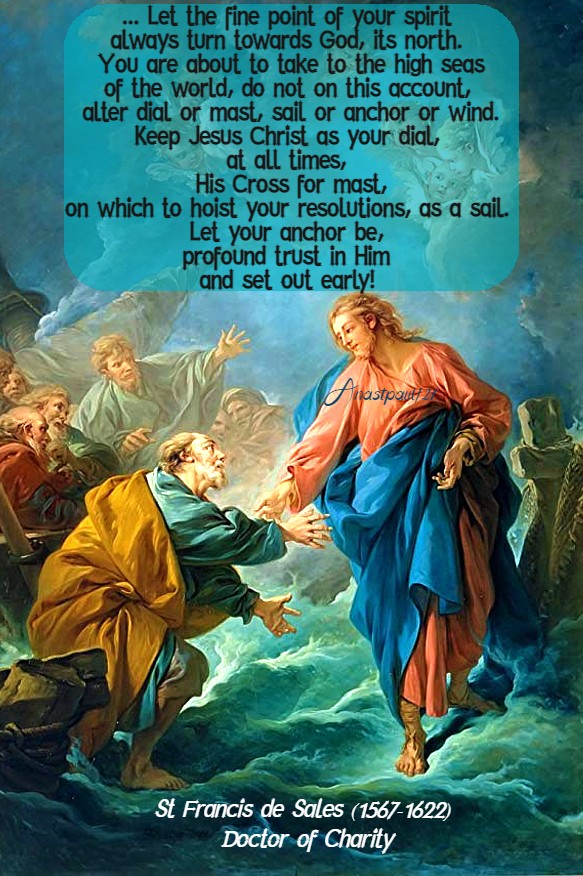
“Take courage, it is I, be not afraid!” … Mark 6:50
REFLECTION – “All ships have a compass which, when touched by the magnet, always turns towards the polar star. And even when the boat is making its way in a southward direction, yet the compass does not cease turning towards its north at all times. In the same way, let the fine point of your spirit always turn towards God, its north. … You are about to take to the high seas of the world, do not on this account, alter dial or mast, sail or anchor or wind. Keep Jesus Christ as your dial, at all times, His Cross for mast on which to hoist your resolutions, as a sail. Let your anchor be, profound trust in Him and set out early. May the propitious wind of heavenly inspirations ever fill the sails of your vessel more and more and cause you, to speed forward, to the harbour of a holy eternity. … Should everything turn upside down, I do not say around us but within us, that is to say, should our soul be sad, happy, in sweetness, in bitterness, peaceful, troubled, in light, in darkness, in temptation, in rest, in enjoyment, in disgust, in dryness, in gentleness, should the sun burn it or the dew refresh it, ah!, this point of our heart, our spirit, our higher will, which is our compass, should, nevertheless, always and at all times turn unceasingly, tend perpetually towards the love of God.” … St Francis de Sales (1567-1622) – Bishop of Geneva and Doctor of the Church
PRAYER – God and Father, light of all mankind, make our hearts radiant with the splendour of that light which long ago You shed on our fathers in the faith and give Your people the joy of lasting peace. May the prayers of Your blessed saints and martyrs be a comfort on our journey. Through Christ, our Lord, in the unity of the Holy Spirit, God forever, amen.
Our Morning Offering – 8 January – The Third Day within the Octave of Epiphany
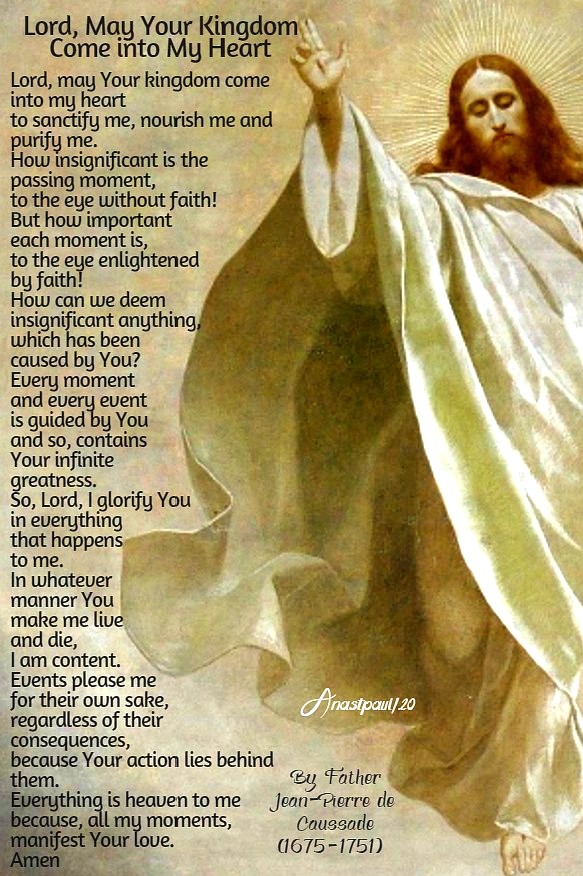
Lord, May Your kingdom Come Into My Heart By Fr Jean Pierre de Caussade (1675-1751)
Lord, may Your kingdom come into my heart to sanctify me, nourish me and purify me. How insignificant is the passing moment, to the eye without faith! But how important each moment is, to the eye enlightened by faith! How can we deem insignificant anything which has been caused by You? Every moment and every event is guided by You and so contains Your infinite greatness. So, Lord, I glorify You in everything that happens to me. In whatever manner You make me live and die, I am content. Events please me for their own sake, regardless of their consequences because Your action lies behind them. Everything is heaven to me because all my moments, manifest Your love. Amen
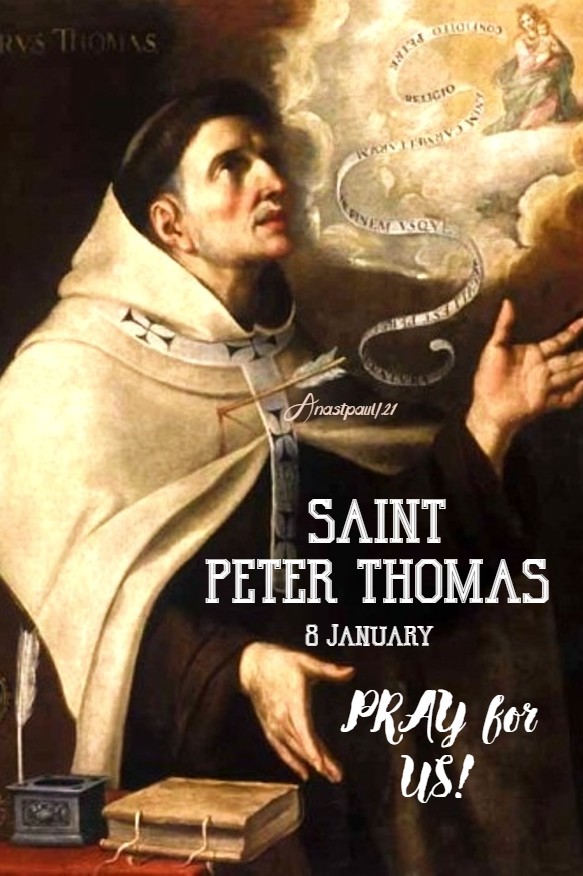
Saint of the Day -8 January – St Peter Thomas OCD (c 1305-1366) Carmelite Priest and Friar, Archbishop of Crete, Latin Patriarch of Constantinople, noted Preacher, Papal legate, the Carmelite Order’s Procurator-General to the Papal Court, Teacher, Marian devotee, miracle-worker – born as Pierre Tomas in c 1305 in southern Perigord, France and died 1366 at Famagorta, Cyprus from wounds received in a military action in Alexandria, Egypt in 1365. He preached the Crusade against the Turks throughout Serbia, Hungary and Constantinople and travelled with the armies. He enjoyed a reputation among both Catholic and Orthodox spheres as an apostle of Church unity. Before the Turkish uprising (when his remains were lost), during the Canonisation process, when his tomb was opened, his body was found to be “perfect and whole and the members as flexible as before” (Carmesson, pp. 100-1)
Peter Thomas was born around the year 1305 to a very poor family in Périgord. His father was a serf. When still a teenager, he left his parents and his younger sister to ease the burdens on his family. He went to the nearby small town of Monpazier, where he attended school for about three years, living on alms and teaching younger pupils. He led the same type of life at Agen until the age of twenty, when he returned to Monpazier.
The Prior of the Carmelite convent of Lectoure employed Thomas as a teacher for a year in their school. He entered the Carmelite Order at the age of twenty-one and made his profession of religious vows at Bergerac where he taught for two years. He studied philosophy at Agen, where he was ordained a Priest three years later. For the next few years, he continued his studies, while also teaching in Bordeaux, Albi and again in Agen. This was followed by three years of study in Paris. He was preaching in Cahors, during a procession of prayer held in supplication for the end to a serious drought, when rain began to fall. This was viewed by many as miraculous.
He was the Order’s Procurator General and an official Preacher at the Papal Court of Pope Clement VI at Avignon. At the death of Pope Clement VI, he accompanied the bosy to the Chaise-Dieu, preaching at all the twelve stops along the way (April, 1353).
From that time on the whole life of Peter Thomas was dedicated to the fulfilment of delicate missions entrusted to him by the Holy See, for peace among Christian princes, for the defence of the rights of the Church before the most powerful monarchs of the age, for the union of the Orthodox Byzantine–Slavs with the Roman Church, for the anti-Muslim crusade and the liberation of the Holy Land.
In 1354 he was made Bishop of Patti and Lipari. In 1363 he was appointed Archbishop of Crete and in 1364 he became the Latin Patriarch of Constantinople.
Peter caught a cold during the Christmas feasts of 1365. His condition worsened on 28 December and on 6 January, being “reduced to skin and bones” (Phil Of M., p. 151, 15), he piously ended his earthly life “at about the second hour of the night” (ib. 154, 8), after having distributed all his belongings to the poor. He died in the Carmelite convent of Famagusta.
His remains seemed surrounded by light to those who watched them during the wake. The funeral was a veritable triumph – even the dissident Greeks and others, who would willingly have “drunk his blood” (ib. p. 156, 3-4) while he was aliv, participated devoutly. The funeral eulogy was delivered by John Carmesson, who several times felt himself mysteriously urged to call the deceased a saint (lb., 157, 8). The body remained exposed for six days and was visited by a great number of people – cures and other miracles were verified before and after the burial (Smet, pp. 163-84).
Two qualified admirers of Peter Thomas wrote his Vita almost on the morrow of his death – Philip of Mézières (died 1405), Chancellor of King Peter of Cyprus and spiritual son of the Saint, (The Life of St. Peter Thomas by Philippe de Mézières) and the Franciscan, John Carmesson, Minister of the Province of the Holy Land, who had delivered the funeral eulogy.
The fours volumes of sermons and the tract De Immaculata Conception Blessed Maria Virgini which he wrote have been lost. But the famous processional Cross presented to him in 1360 by the Christian refugees from Syria and used by him, as the standard in the Alexandrian crusade and as a source of strength in his own last agony. is now preserved in the Venetian church of St John. He had willed the Cross to his friend, Philip of Mézières, who on 23 December 1370, gave it to the Grand School of St John in Venice. This processional Cross became the object of intense devotion and was depicted on the city’s standard.
He was Beatified in 1609 by Pope Paul V and Canonised in 1628 by Pope Urban VIII.
St Garibaldus of Regensburg St Gudule of Brussels St Helladius St Julian of Beauvais St Lawrence Giustiniani St Lucian of Beauvais St Maximian of Beauvais St Maximus of Pavia Bl Nathalan of Aberdeen St Patiens of Metz St Pega of Peakirk St Peter Thomas OCD (1305-1366) St Severinus of Noricum St Theophilus the Martyr St Thorfinn Blessed Titus Zeman SDB (1915-1969) Priest and Martyr His Life and Death: https://anastpaul.com/2020/01/08/saint-of-the-day-8-january-blessed-titus-zeman-sdb-1915-1969-priest-and-martyr/
The above film was the winner of the International “Festival dobrých správ” (of Good News) honoured a short film about the life of Blessed Titus Zeman SDB. The video entitled “Titus Zeman – a Martyr for Spiritual Freedom to Follow Oneʹs Vocation” was first place in the category of short films under 15 minutes and takes a closer look at the heroic sacrifice of the Salesian. The author of the winning film is Salesian past pupil Roman Maturkanič from Slovakia who currently works as a film director. “Probably the biggest challenge was to narrate the very eventful life of Titus in such a short time. We won the first place prize but we could say that this is Titusʹ victory,” said the director of the film’s achievement in the competition.
St Wulsin of Sherborne — Martyrs of Greece – 9 saints: A group of Christians honored in Greece as martyrs, but we have no details about their lives or deaths – Euctus, Felix, Januarius, Lucius, Palladius, Piscus, Rusticus, Secundus and Timotheus
Martyrs of Terni – 4 saints: A group of Christian soldiers in the imperial Roman army. Executed during the persecutions of emperor Claudius. Martyrs. – Carbonanus, Claudius, Planus and Tibudianus. They were martyred in 270 in Terni, Italy.
Thought for the Day – 7 January – Meditations with Antonio Cardinal Bacci (1881-1971) The Solemnity of the Epiphany of the Lord
Merit and the Love of God
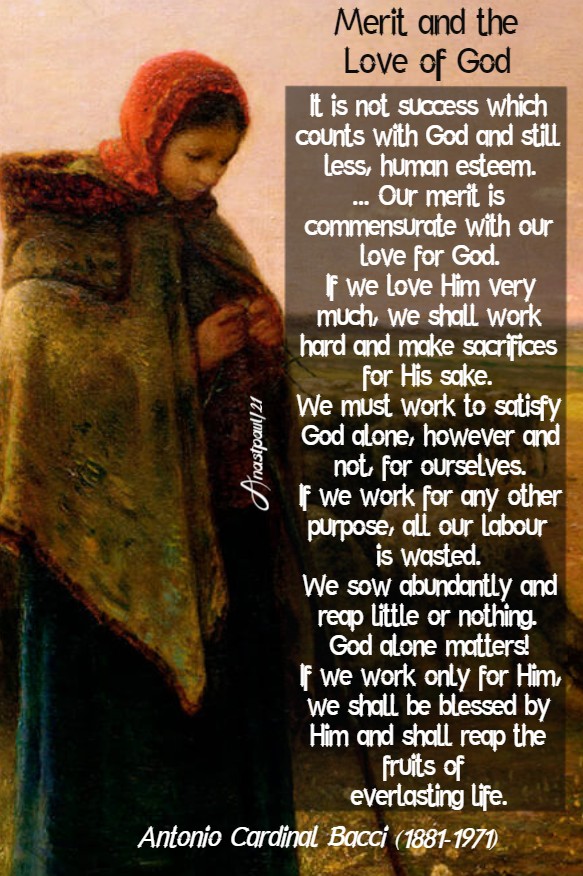
“The more we know, writes St Catherine of Siena, the more we love and the more we love, the more we receive. Our merit, she concludes, increases in accordance with the measure of our love (Dialogues, c 131). We tend to judge men on the strength of their achievements and to judge ourselves, according to the degree of success which we have attained. Our standards could hardly be more false. “How much soever each one is in Thy eyes,” the author of The Imitation of Christ cries out to God in the words of St Francis, “so much is he and no more” (Bk III, c 50).
It is not success which counts with God and still less, human esteem. What matters with God, is our intention of pleasing Him and of working for His glory, from the motive of pure love. If we are successful in our work, let us praise God. If we are unsuccessful, let us thank Him, just the same. Our merit is commensurate with our love for God. If we love Him very much, we shall work hard and make sacrifices for His sake. We must work to satisfy God alone, however and not, for ourselves. If we work for any other purpose, all our labour is wasted. We sow abundantly and reap little or nothing. God alone matters. If we work only for Him, we shall be blessed by Him and shall reap the fruits of everlasting life. Amen!”
Quote of the Day – 7 January – The Second Day within the Octave of Epiphany
Poem “The Epiphany”
To blaze the rising of this glorious sun A glittering star appeareth in the east Whose sight to pilgrim toil three sages won To seek the light they long had in request, And by this star to nobler star they pace Whose arms did their desired sun embrace.
Still was the sky wherein these planets shined And want the cloud that did eclipse their rays, Yet through this cloud their passage they did find, And pierced these sages’ hearts by secret ways, Which made them know, the Ruler of the skies By Infant tongue and looks of babish eyes.
Heaven at her light, earth blusheth at her pride And of their pomp these peers ashamed be, Their crowns, their robes, their train they set aside When God’s poor cottage, clouts and crew they see, All glorious things their glory now despise Since God contempt doth more than glory prize.
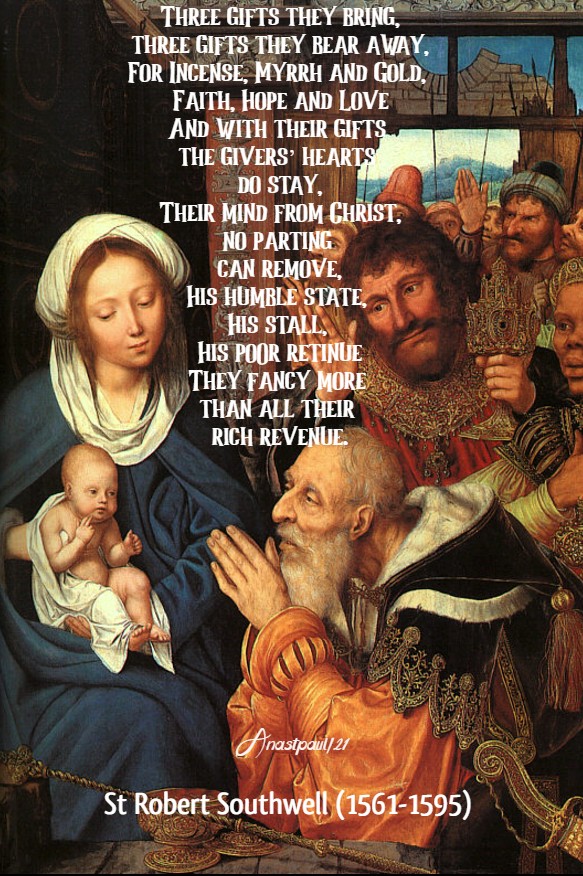
Three gifts they bring, three gifts they bear away, For Incense, Myrrh and Gold, Faith, Hope and Love And with their gifts the givers’ hearts do stay, Their mind from Christ, no parting can remove, His humble state, His stall, His poor retinue They fancy more than all their rich revenue.
One Minute Reflection – 7 January – The Second Day within the Octave of Epiphany, Readings: 1 John 3:22 – 4:6, Psalms 2:7-8, 10-12, Matthew 4:12-17, 23-25 and the Memorial of St Raymond of Peñafort (1175-1275) “Father of Canon Law”
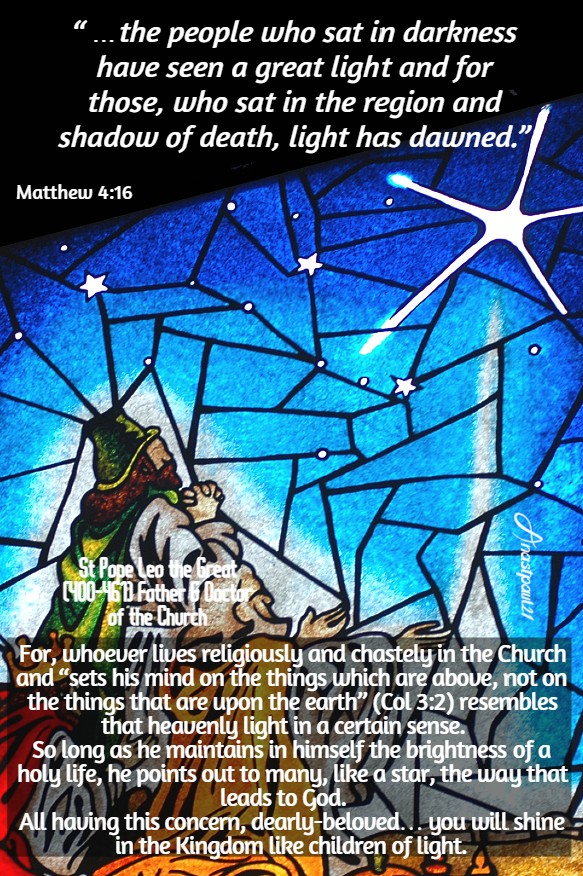
“ …the people who sat in darkness have seen a great light and for those, who sat in the region and shadow of death, light has dawned.”…Matthew 4:16
REFLECTION – “All these things we know to have taken place ever since the three wise men, aroused in their far-off land, were led by a star to recognise and worship the King of heaven and earth. The responsiveness of that star exhorts us to imitate it’s obedience and, as much as we can, to make ourselves servants of that grace which invites us all to Christ. For, whoever lives religiously and chastely in the Church and “sets his mind on the things which are above, not on the things that are upon the earth” (Col 3:2) resembles that heavenly light in a certain sense. So long as he maintains in himself the brightness of a holy life, he points out to many, like a star, the way that leads to God. All having this concern, dearly-beloved… you will shine in the Kingdom like children of light.”… St Pope Leo the Great (400-461) Father & Doctor of the Church
PRAYER – Lord, may the radiance of Your glory, light up our hearts and bring us through the shadows of this world, until we reach our homeland of everlasting light. Grant we pray, that by the intercession of St Raymond of Peñafort , our way may be smoothed and our troubles eased. We ask this through Jesus, our Lord, with the Holy Spirit, God forever, amen.
Our Morning Offering – 7 January – The Second Day within the Octave of Epiphany
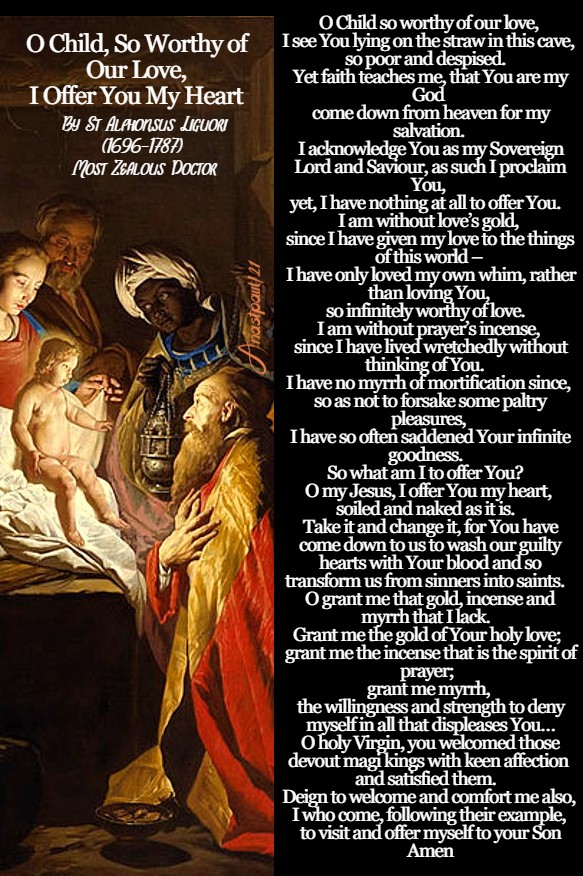
O Child, So Worthy of Our Love, I Offer You My Heart By St Alphonsus Liguori (1696-1787) Most Zealous Doctor
O Child so worthy of our love, I see You lying on the straw in this cave, so poor and despised. Yet faith teaches me, that You are my God come down from heaven for my salvation. I acknowledge You as my Sovereign Lord and Saviour, as such I proclaim You, yet, I have nothing at all to offer You. I am without love’s gold, since I have given my love to the things of this world – I have only loved my own whim, rather than loving You, so infinitely worthy of love. I am without prayer’s incense, since I have lived wretchedly without thinking of You. I have no myrrh of mortification since, so as not to forsake some paltry pleasures, I have so often saddened Your infinite goodness. So what am I to offer You? O my Jesus, I offer You my heart, soiled and naked as it is. Take it and change it, for You have come down to us to wash our guilty hearts with Your blood and so transform us from sinners into saints. O grant me that gold, incense and myrrh that I lack. Grant me the gold of Your holy love; grant me the incense that is the spirit of prayer; grant me myrrh, the willingness and strength to deny myself in all that displeases You… O holy Virgin, you welcomed those devout magi kings with keen affection and satisfied them. Deign to welcome and comfort me also, I who come, following their example, to visit and offer myself to your Son Amen
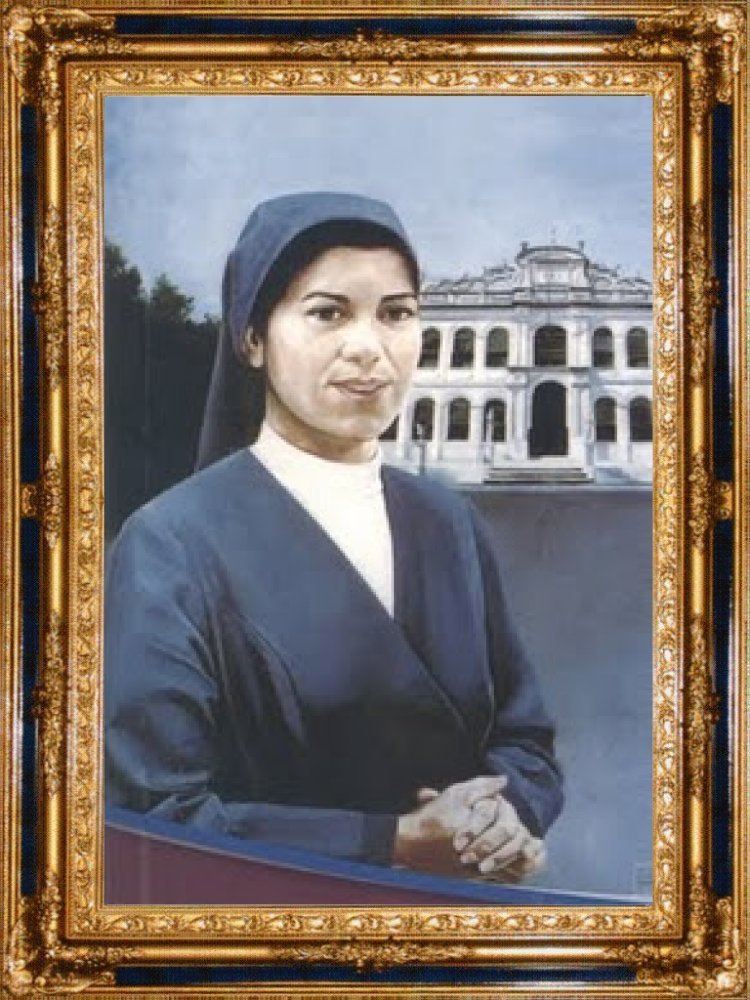
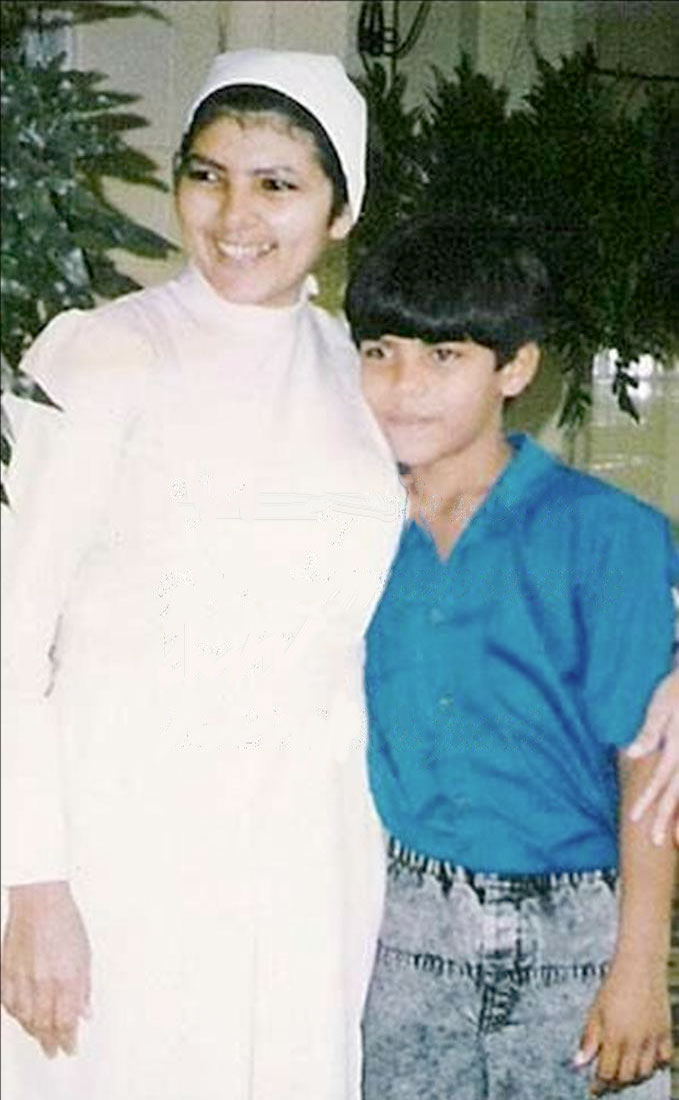
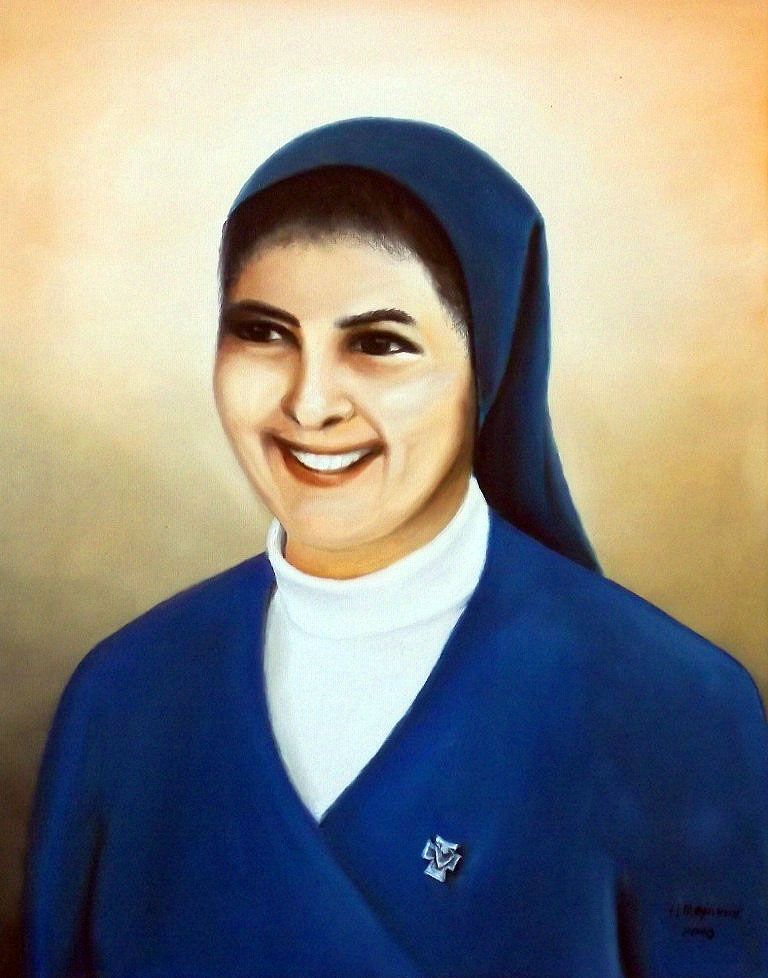
Saint of the Day – 7 January – Blessed Lindalva Justo de Oliveira DC (1953-1993) Virgin and Martyr – “in defensum castitati,” Religious Sister of the Vincentian Sisters, apostle of the elderly and the sick – born on 20 October 1953 Sitio Malhada da Areia, Açu, Rio Grande do Norte, Brazil and died on 9 April 1993 (aged 39) in Salvador, Bahia, Brazil. She was stabbed 44 times.
Lindalva Justo de Oliveira was born on 20 October 1953 at Sitio Malhada da Areia, in a very poor area of Rio Grande do Norte, Brazil. Lindalva’s father, João Justo da Fé, a farmer, was a widower. His second marriage was to Maria Lúcia de Oliveira. Little Lindalva was the sixth of 13 children born to the couple. Lindalva was baptised on 7 January 1954.
Her family was not well-off but rich in the Christian faith. João moved his family to Açu so his children could attend school and after many sacrifices, he was able to buy a house where the family still resides today.
Besides following her mother’s good example, Lindalva demonstrated a natural inclination toward the poorer children and spent much time with them.
At age 12, Lindalva received First Holy Communion and during her school years she was always happy to help the less fortunate. Later, while living with her brother, Djalma and his family in Natal, she received an administrative assistant’s diploma in 1979.
From 1978 to 1988 she held various jobs in retail sales and as a cashier at a petrol station, sending some of her salary home to help her mother. Lindalva found time to visit the local home for the elderly every day after work.
In 1982, as she lovingly assisted her father in the last months of his terminal illness, she reflected seriously on her life and decided to serve the poor. She then enrolled in a nursing course but also enjoyed those things typical of young people – building friendships, guitar lessons and cultural studies.
In 1986 she participated in the vocational initiatives of the Daughters of Charity. After she received the Sacrament of Confirmation in 1987, Lindalva applied for admission to the Daughters. On the Feast of Our Lady of Lourdes, 11 February 1988, she entered the postulancy and edified her companions with her joy and genuine concern for the poor.
Her character was marked by a sweet disposition but also by truth. In a letter to her alcoholic brother, Antonio, she wrote: “Think about it and reward yourself. I pray for you very much and I will continue to pray and if necessary I will do penance so that you are able to fulfil yourself as a person. Follow Jesus, who fought until death for the life of sinners and gave His own life, not as God but as man, for the forgiveness of sins. We must seek refuge in Him, only in Him is life worth living.”A year later her brother quit drinking.
On 29 January 1991 Sr Lindalva was assigned 40 elderly male patients in the municipal nursing home in Salvador da Bahia. She undertook the more humble tasks and sought out those who suffered the most and cared for their spiritual and material well-being by encouraging their reception of the Sacraments. Sr Lindalva would sing and pray with them and she even took her driving test so she could take them out for rides.
During January of 1993, a certain Augusto da Silva Peixoto, a 46-year-old man with an irascible character, managed to be admitted to the facility through the recommendation of another, even though he had no right to be there. Sr Lindalva treated him with the same courtesy and respect as the other patients, yet he became enamoured of her.
She prudently distanced herself from him and was cautious in his regard. Nonetheless, he explicitly declared his lustful intentions towards her. A simple solution would have been for Sr Lindalva to leave but her love for the elderly caused her to declare, “I prefer to shed my blood than to leave this place.”
By 30 March Augusto’s advances became so insistent and frightening that she sought the help of a health-care official to restrain this unruly patient. Although he promised to improve his attitude and behaviour, he harboured hatred and vengeance that developed into a murderous plan.
On 9 April 1993, Good Friday, Sr Lindalva took part in the parish Way of the Cross at 4: 30 in the morning. By 7 a.m. she was back at work to prepare and serve breakfast as she did every day. As she served coffee from behind a table, Augusto approached and thrust a fishmonger’s knife above her collar-bone.
Sinking to the ground, she cried “God protect me” several times. Patients ran for cover. Enveloped in an insane rapture while holding up her body, Augusto stabbed her 44 times shouting, “I should have done this sooner!”
He then suddenly became calm, sat down on a bench, wiped the knife on his trousers, threw it on the table and exclaimed: “She did not want me!” and turning to the doctor, said, “You can call the police, I will not run away; I did what had to be done”.
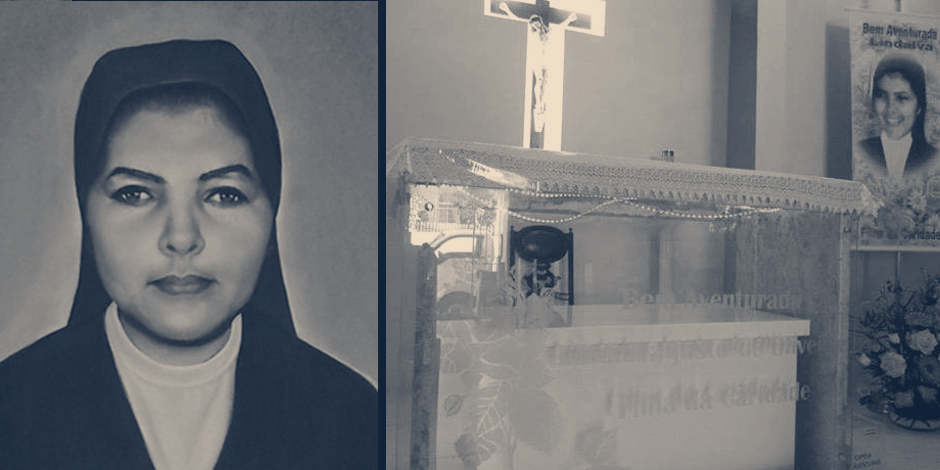
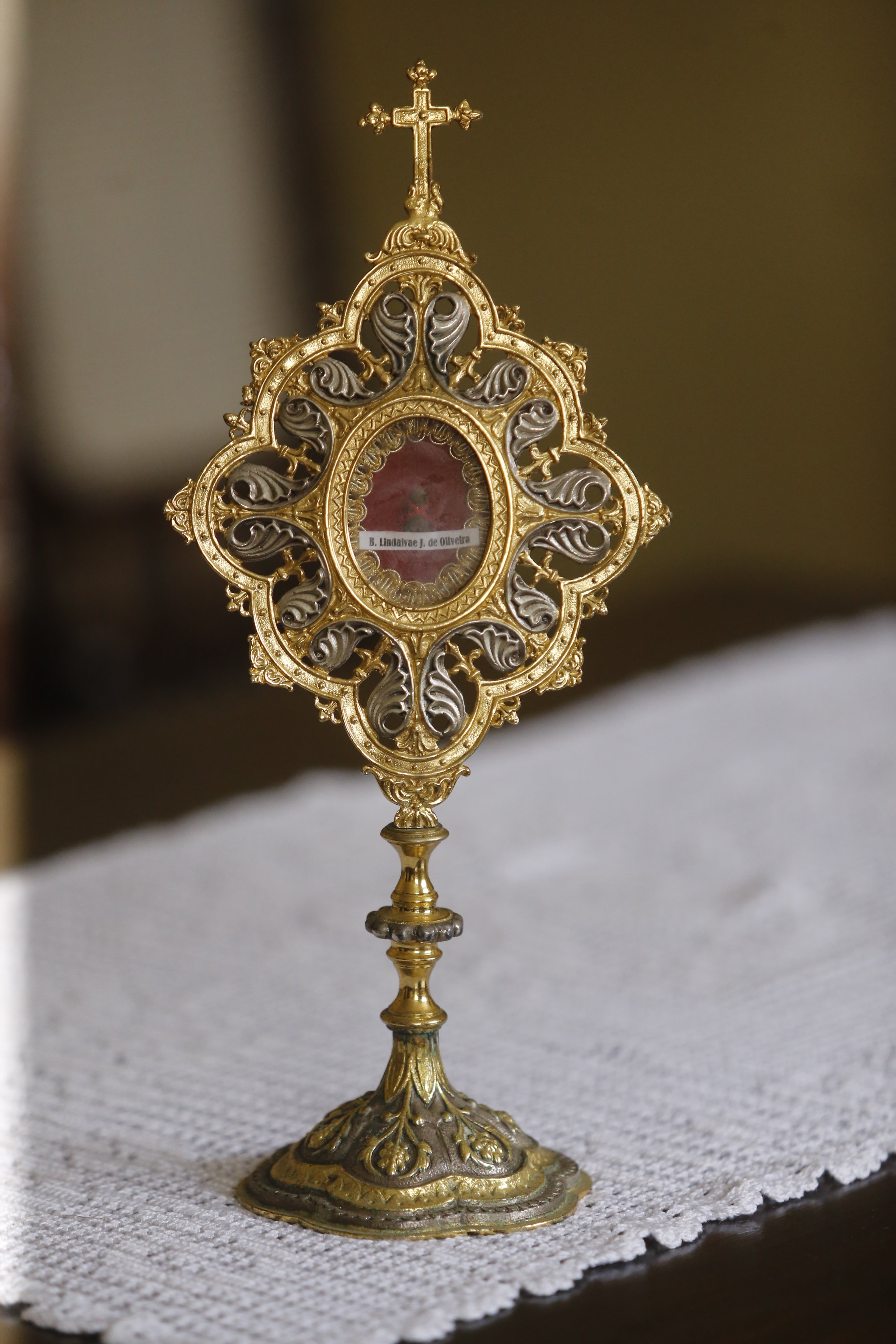
The next day, Holy Saturday, 10 April 1993, Cardinal Lucas Moreira Neves, OP, Primate of Brazil, celebrated the 39-year-old Sister’s funeral and commented: “A few years were enough for Sr Lindalva to crown her Religious life with martyrdom”…. Vatican.va As of 6 April 2014 her remains are in the Capela das Relíquias da Beata Lindalva.
Tomb in the Chapel established in Blessed Lindalva’s honour
Oliveira’s Beatification received the approval of Pope Benedict XVI who determined that she was killed “in defensum castitatis” – the defence of her vow of chastity. She was Beatified on 2 December 2007 in which Cardinal José Saraiva Martins presided over on the behalf of the Pope.
Augustus, her murderer, was still alive as of 2007. He was in a mental hospital until 2005.
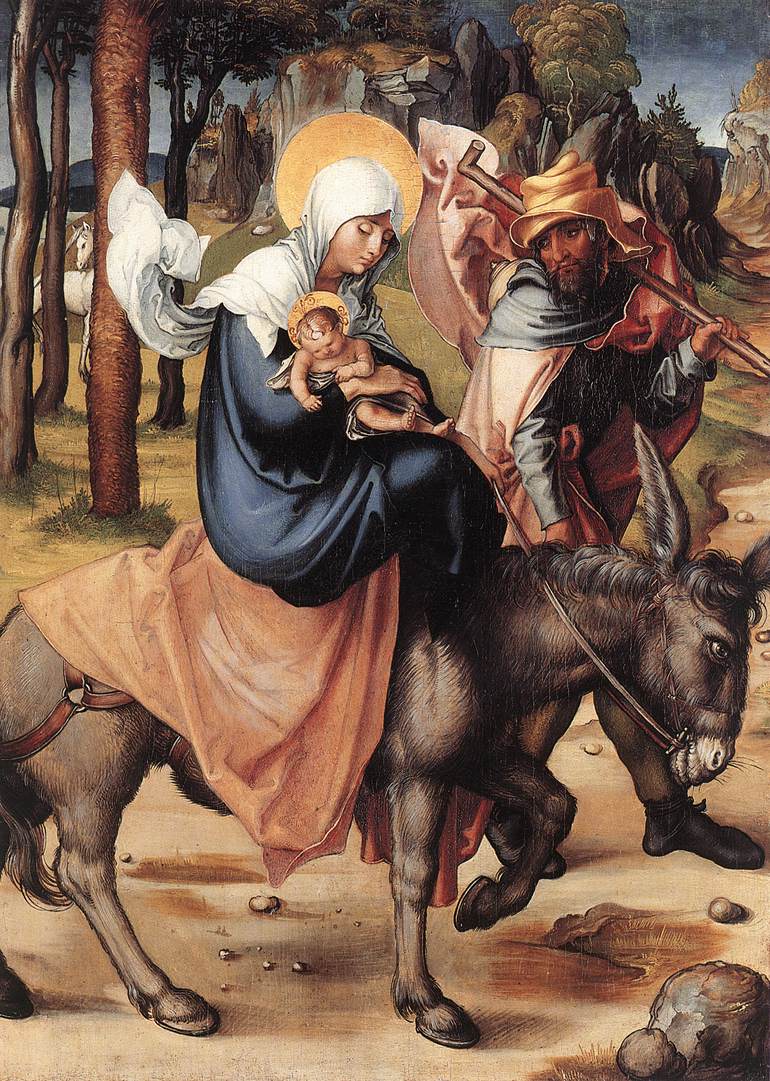
Our Lady of Egypt — 7 January: “So he arose and took the child and his mother by night and withdrew into Egypt and remained there until the death of Herod; that there might be fulfilled what was spoken by the Lord through the prophet, saying, ‘Out of Egypt I called my son.'” Matthew, 2:14, 15 Only one child escaped the cruel sword of Herod – Mary’s Son, safe in the arms of his Mother fleeing with Him into Egypt. How much Our Lady have suffered during that long journey across the desert: anxiety, fatigue, hunger, thirst, want of shelter! While in Egypt, Mary’s interest in the Gentiles must have greatly increased. It was not in vain that Mary and her Son were sent into Egypt; God had his reasons. Egypt is a true picture of the Blessed Sacrament, hidden away in so many Tabernacles, surrounded by so many people who do not suspect His Presence; it is nothing to so many that pass by- yes even to Catholics! But what is it to those who know? What was Jesus to Mary and Joseph in the land of Egypt? He was their All – with Him, exile did not exist; with Him, God’s will was easy, God’s arrangements, the best; with Him, it was impossible to complain, impossible to have any regrets about the past or impatient wonderings about the future. Mary was absorbed in the present because she had Jesus with Her – He had to be cared for, fed, taught, thought about, worked for, lived for – Egypt!
St Aldric of Le Mans Bl Ambrose Fernandez St Anastasius of Sens St Brannock of Braunton St Candida of Greece St Canute Lavard St Cedd St Clerus of Antioch St Crispin I of Pavia St Cronan Beg St Emilian of Saujon St Felix of Heraclea Bl Franciscus Bae Gwan-gyeom St Januarius of Heraclea St Julian of Cagliari St Kentigerna Blessed Lindalva Justo de Oliveira DC (1953-1993) Virgin Martyr, Religious Sister St Lucian of Antioch Bl Marie-Thérèse Haze St Pallada of Greece St Polyeuctus of Melitene St Reinhold of Cologne St Spolicostus of Greece St Theodore of Egypt St Tillo of Solignac St Valentine of Passau St Virginia of Ste-Verge Bl Wittikund of Westphalia
Thought for the Day – 6 January – Meditations with Antonio Cardinal Bacci (1881-1971) The Solemnity of the Epiphany of the Lord
The Epiphany
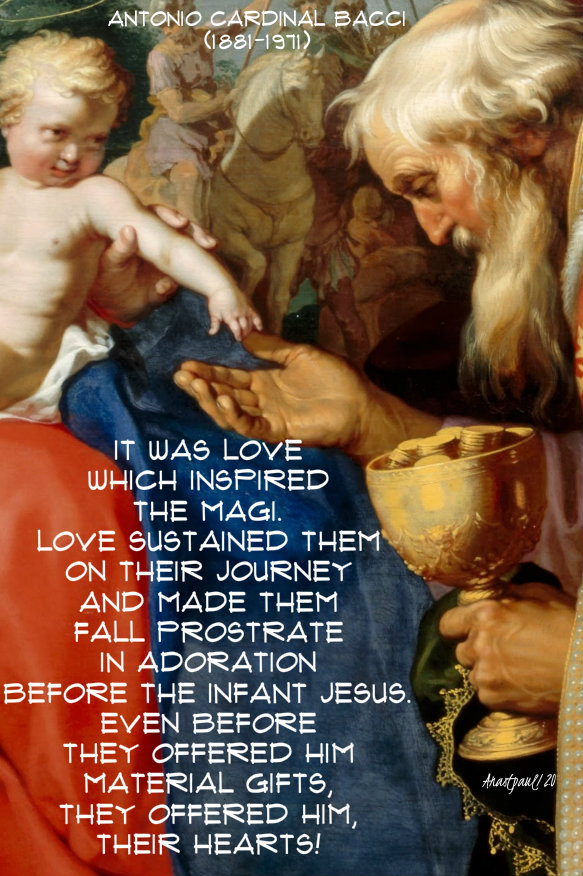
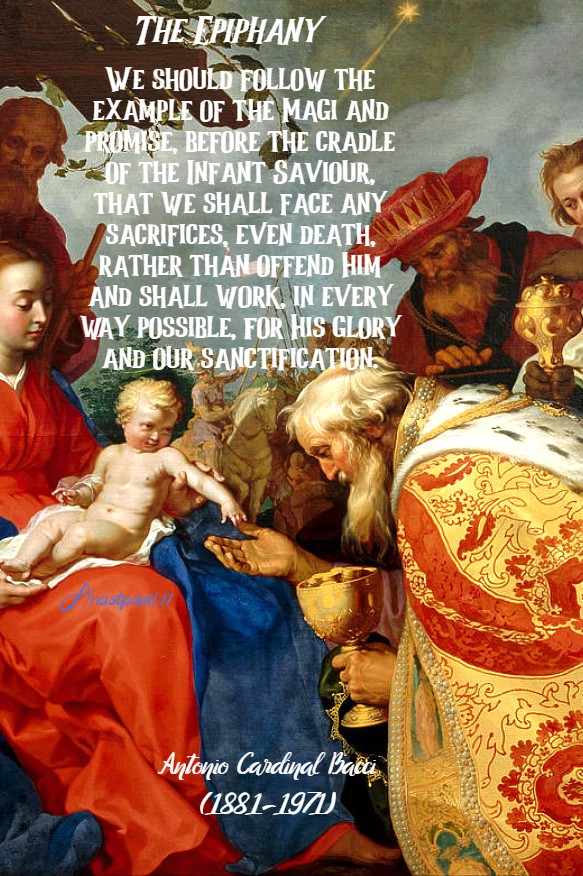
It was love which inspired the Magi. Love sustained them on their journey and made them fall prostrate in adoration before the Infant Jesus. Even before they offered Him material gifts, they offered Him, their hearts! As a reward for their faith and charity, God showered his graces upon them and an immense supernatural joy pervaded their souls. In that moment of adoration, they received the highest possible reward for their hardships and perseverance. With deep interior joy, they gave Jesus their hearts and never withdrew them. A pious tradition maintains, that they apostles and Saints and, in fact, the Church venerates them as such, today.
We should follow the example of the Magi and promise, before the cradle of the Infant Saviour, that we shall face any sacrifices, even death, rather than offend Him and shall work, in every way possible, for His glory and our sanctification.”
Quote/s of the Day – 6 January – The Solemnity of the Epiphany of the Lord
In Your Light, we see light!
“If the Magi had come in search of an earthly King, they would have been disconcerted at finding that they had taken the trouble to come such a long way for nothing. Consequently they would have neither adored nor offered gifts. But since they sought a heavenly King, though they found in Him no signs of royal pre-eminence, yet, content with the testimony of the star alone, they adored – for they saw a man and they acknowledged God.”
St John Chrysostom (347-407) Father and Doctor of the Church
“Today the Magi gaze in deep wonder at what they see – heaven on earth, earth in heaven, man in God, God in man, One whom the whole universe cannot contain, now enclosed in a tiny body. As they look, they believe and do not question, as their symbolic gifts bear witness – incense for God, gold for a King, myrrh for One who is to die.”
St Peter Chrysologus (c 400-450) Father and Doctor of Homilies
“What are you doing, O Magi? Do you adore a little Babe, in a wretched hovel, wrapped in miserable rags? Can this Child be truly God? … Are you become foolish, O Wise Men … Yes, these Wise Men have become fools that they may be wise.”
St Bernard of Clairvaux (1090-1153) Doctor of Light
“… They fell down and worshipped him. Then, opening their treasures, they offered him gifts, gold and frankincense and myrrh.” … Matthew 2:11
REFLECTION – “But if, with careful thought, we wish to see how their threefold kind of gift, is also offered by all who come to Christ, with the foot of faith — is not the same offering repeated in the hearts of true believers? For he who acknowledges ,Christ the King of the universe brings Gold from the treasure of his heart, he who believes the Only-begotten of God to have united man’s true nature to Himself, offers Myrrh and he who confesses Him, in no wise, inferior to the Father’s Majesty, worships Him in a manner, with Incense.” … St Pope Leo the Great (400-461) Father and Doctor of the Church
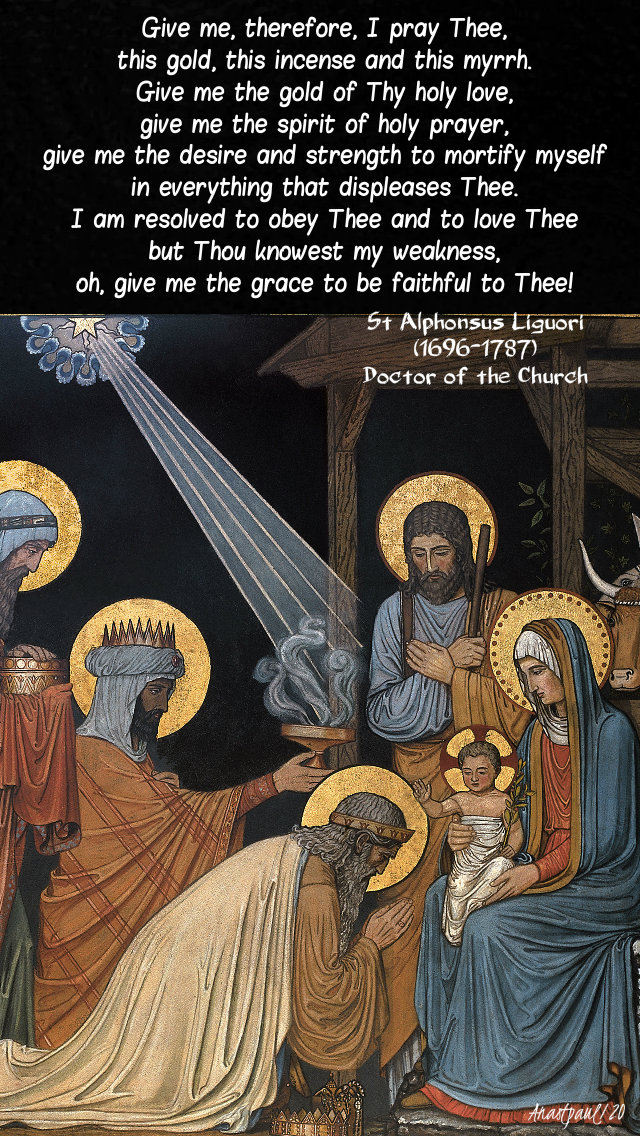
PRAYER – “Give me, therefore, I pray Thee, this gold, this incense and this myrrh. Give me the gold of Thy holy love, give me the spirit of holy prayer, give me the desire and strength to mortify myself in everything that displeases Thee. I am resolved to obey Thee and to love Thee but Thou knowest my weakness, oh, give me the grace to be faithful to Thee!” … St Alphonsus Liguori (1696-1787) Doctor of the Church
Our Morning Offering – 6 January – The Solemnity of the Epiphany of the Lord
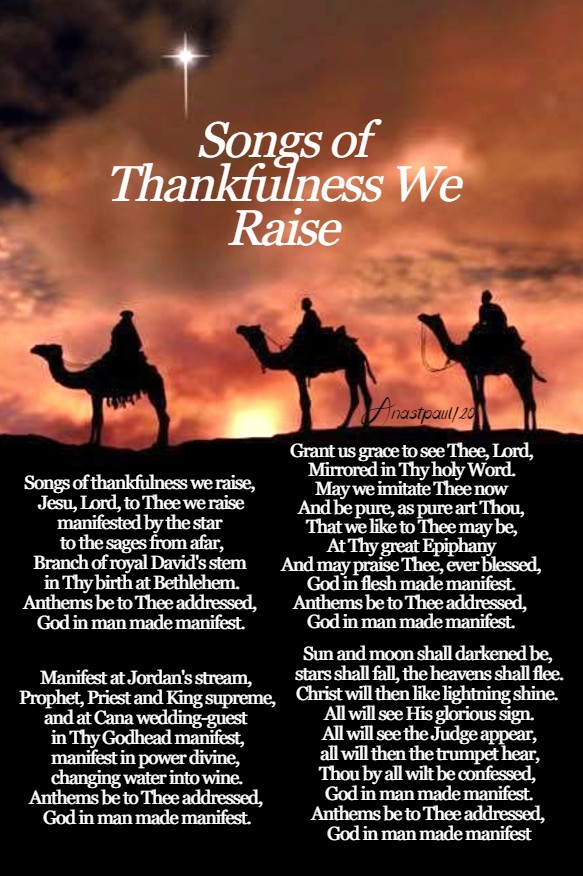
Songs of Thankfulness We Raise By Christopher Wordsworth (1807-1885) (1862)
Songs of thankfulness we raise, Jesu, Lord, to Thee we raise manifested by the star to the sages from afar, Branch of royal David’s stem in Thy birth at Bethlehem. Anthems be to Thee addressed, God in man made manifest.
Manifest at Jordan’s stream, Prophet, Priest and King supreme, and at Cana wedding-guest in Thy Godhead manifest, manifest in power divine, changing water into wine. Anthems be to Thee addressed, God in man made manifest.
Grant us grace to see Thee, Lord, Mirrored in Thy holy Word. May we imitate Thee now And be pure, as pure art Thou, That we like to Thee may be, At Thy great Epiphany And may praise Thee, ever blessed, God in flesh made manifest. Anthems be to Thee addressed, God in man made manifest.
Sun and moon shall darkened be, stars shall fall, the heavens shall flee. Christ will then like lightning shine. All will see His glorious sign. All will see the Judge appear, all will then the trumpet hear, Thou by all wilt be confessed, God in man made manifest. Anthems be to Thee addressed, God in man made manifest
Christopher Wordsworth (b. Lambeth, London, England, 1807; d. Harewood, Yorkshire, England, 1885), nephew of the great Romantic poet William Wordsworth, wrote this hymn in five stanzas.
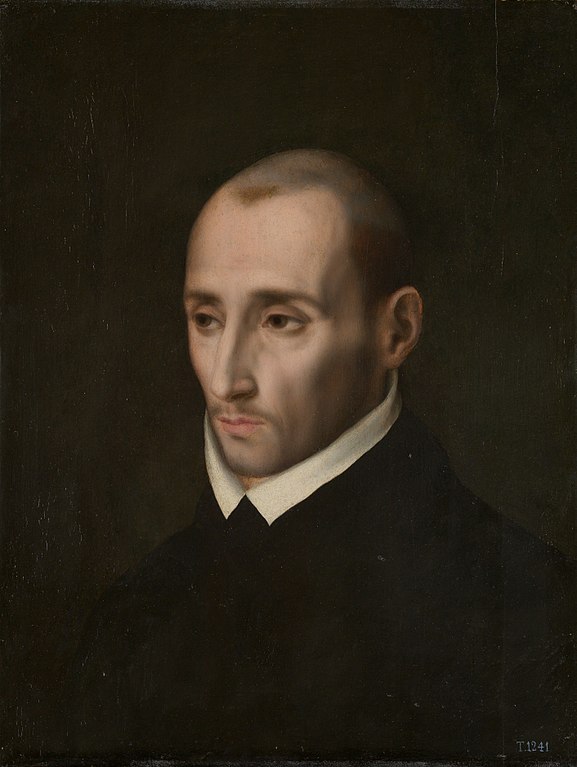
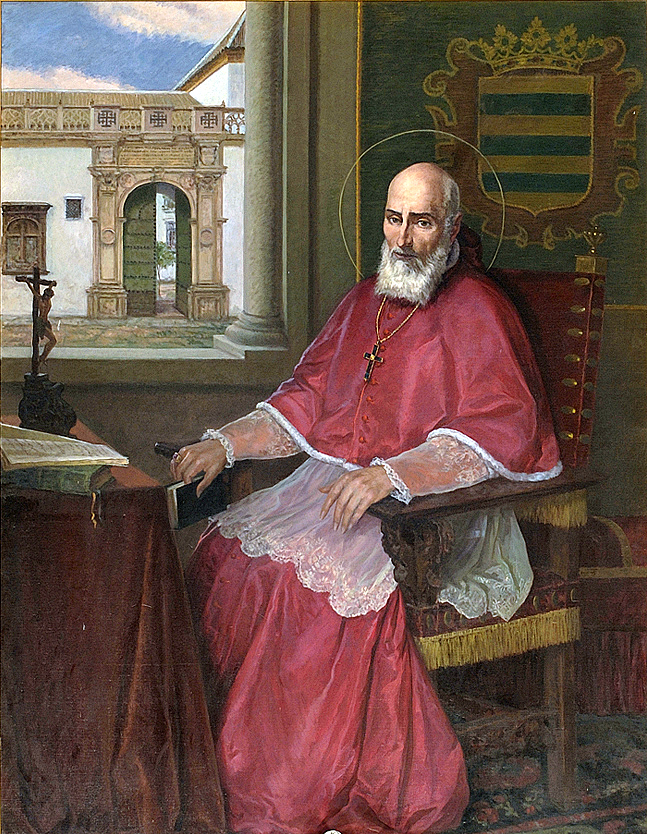
Saint of the Day – 6 January – Saint Juan de Ribera (1532-1611) Archbishop and Viceroy of Valencia, Latin Patriarchate of Antioch, Commander in Chief, President of the Audiencia and Chancellor of the University of Valencia.
Juan de Ribera’s father was Pedro Afán de Ribera, Viceroy of Naples and Duke of Alcala. His mother died when he was very young.
He studied at the University of Salamanca and was ordained as Priest in 1557, Pope Pius IV appointed him Bishop of Badajoz on 27 May 1562 at the age of 30. There he dedicated himself to teaching the Catechism to Roman Catholics and counteracting Protestantism.
He was appointed as the Archbishop of Valencia on 3 December 1568. In 1599 he consecrated Alfonso Coloma as Bishop of Barcelona. King Philip III of Spain later appointed him Viceroy of Valencia in 1602 and thus he became both the religious and the civil authority. In this role he founded the Museum of the Patriarch, known among Valencians as the College of Saint John, entrusted to the formation of Priests according to the spirit and the dispositions of the Council of Trent.
As Archbishop, Ribera dealt with the issue of Valencia’s large Morisco population, descendants of Muslims who converted to Christianity at threat of exile. The Moriscos had been kept separate from the main population by a variety of decrees that prohibited them from holding public office, entering the Priesthood, or taking certain other positions; as a result, the Moriscos had maintained their own culture rather than assimilated. Some of them did, in fact, still practice forms of crypto-Islam. He finally ordered the deportation of all Moors from his See in 1609.
Efforts to Canonise Ribera, who himself had been active in attempting the cause of St Ignatius of Loyola and his testimony was used in the cause of St Nicholas Factor, began shortly after his death. Various admiring biographies of Ribera were published. He was Beatified on 18 September in 1796 by Pope Pius VII and Canonised on 12 June 1960, by Pope John XXIII.
The Solemnity of the Epiphany of the Lord – Epiphany celebrates the visit of the three kings or wise men to the Christ Child, signifying the extension of salvation to the Gentiles. The date of Epiphany, one of the oldest Christian feasts, is 6 January the 12th day after Christmas. However, in most countries, the celebration of Epiphany is transferred to the Sunday that falls between 2 January and 8 January (inclusive). Greece, Ireland, Italy and Poland continue to observe Epiphany on 6 January as do some dioceses in Germany. Because Epiphany is one of the most important Christian feasts, it is a Holy Day of Obligation in most countries.
St Demetrius of Philadelphia St Diman Dubh of Connor St Edeyrn St Eigrad St Erminold of Prüfening St Felix of Nantes Bl Frederick of Saint-Vanne Bl Gertrud of Traunkirchen Bl Gertrude van Oosten St Guarinus of Sion St Guy of Auxerre St Honorius St Hywyn of Aberdaron St Juan de Ribera (1532-1611) Bishop St Julian of Antinoë St Julius Bl Luc of Roucy Bl Macarius the Scot St Macra of Rheims St Merinus St Nilammon of Geris St St Petran of Landévennec St Peter of Canterbury St Pia of Quedlinburg St Pompejanus St Rafaela Porras y Ayllón Bl Raymond de Blanes Bl Rita Amada de Jesus St Schotin St Wiltrudis of Bergen — Martyrs in Africa: Unknown number of Christian men and women who were martyred in the persecutions of Septimus Severus. They were burned to death c 210.
Martyrs of Sirmium – 8 saints: A group of Christians martyred together for their faith. The only surviving details are the names of eight of them – Anastasius VIII, Florianus, Florus, Jucundus, Peter, Ratites, Tatia and Tilis. They were martyred in the 4th century at Syrmium, Pannonia (modern Sremska Mitrovica, Vojvodina, Serbia).
Twelve Apostles – Saints of Ireland: Twelve 6th century Irish monks who studied under Saint Finian at Clonard Abbey and then spread the faith throughout Ireland. Each has his own commemoration but on this day they and their good work are considered and celebrated together. Though Saint Finian is sometimes included, most ancient writers list them as – • Brendan of Birr • Brendan the Navigator • Columba of Iona • Columba of Terryglass • Keiran of Saighir • Kieran of Clonmacnois • Canice of Aghaboe • Lasserian of Leighlin • Mobhí of Glasnevin • Ninnidh the Saintly of Loch Erne • Ruadh´n of Lorrha • Senan of Iniscathay
Thought for the Day – 5 January – Meditations with Antonio Cardinal Bacci (1881-1971)
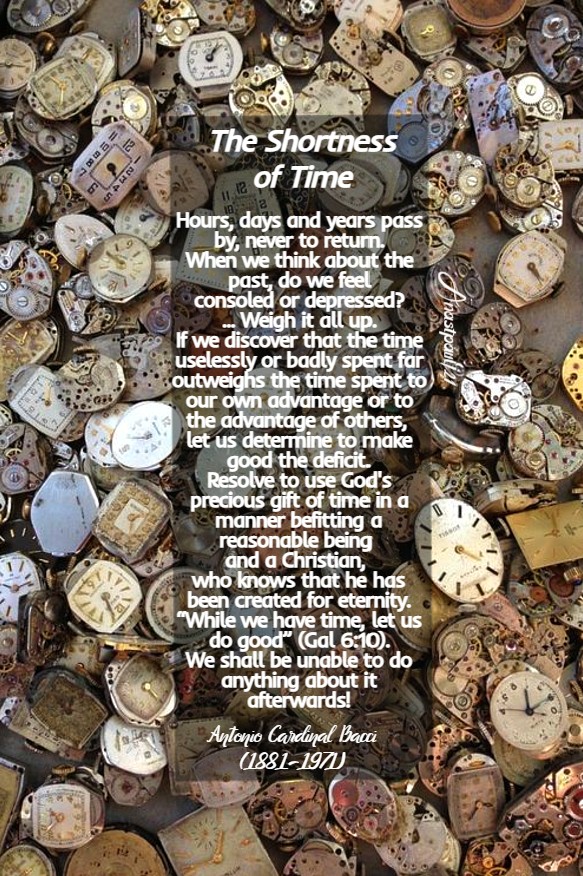
The Shortness of Time
“We often complain about the swift passage of time. Hours, days and years pass by, never to return. When we think about the past, do we feel consoled or depressed? How many hours have we spent on useless pursuits such as, idle conversation or excessive entertainment? How many have we devoted to serious sin? How many, on the other hand, have we spent in prayer, mortification or apostolic work? How many have we devoted to helping our neighbour by our charitable assistance or advice? Weigh it all up. If we discover that the time uselessly or badly spent far outweighs the time spent to our own advantage or to the advantage of others, let us determine to make good the deficit. Resolve to use God’s precious gift of time in a manner befitting a reasonable being and a Christian, who knows that he has been created for eternity. “While we have time, let us do good” (Gal 6:10). We shall be unable to do anything about it afterwards!”
Quote/s of the Day – 5 January – Christmas Weekday and the Memorial of St John Neumann (1811-1860)
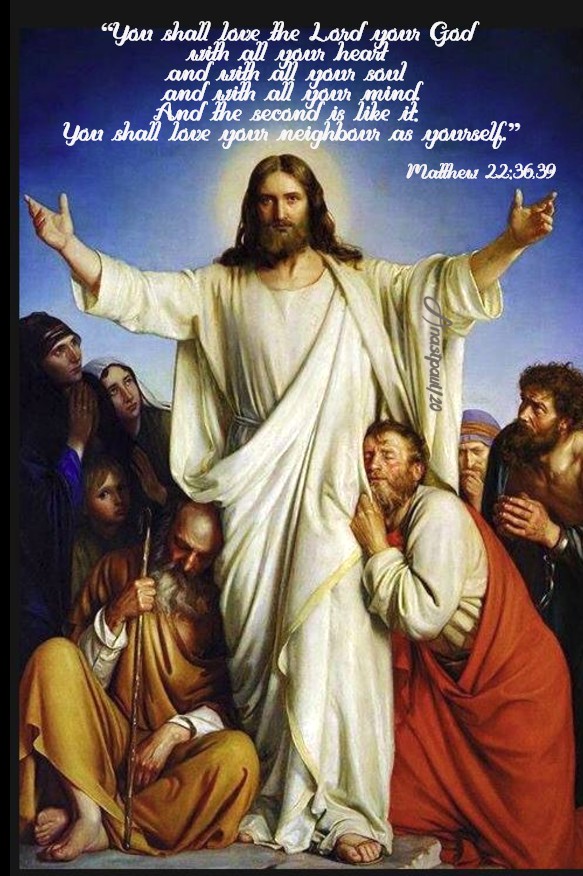
Our Work
“You shall love the Lord your God with all your heart and with all your soul and with all your mind. And the second is like it: You shall love your neighbour as yourself.”
Matthew 22:36,39
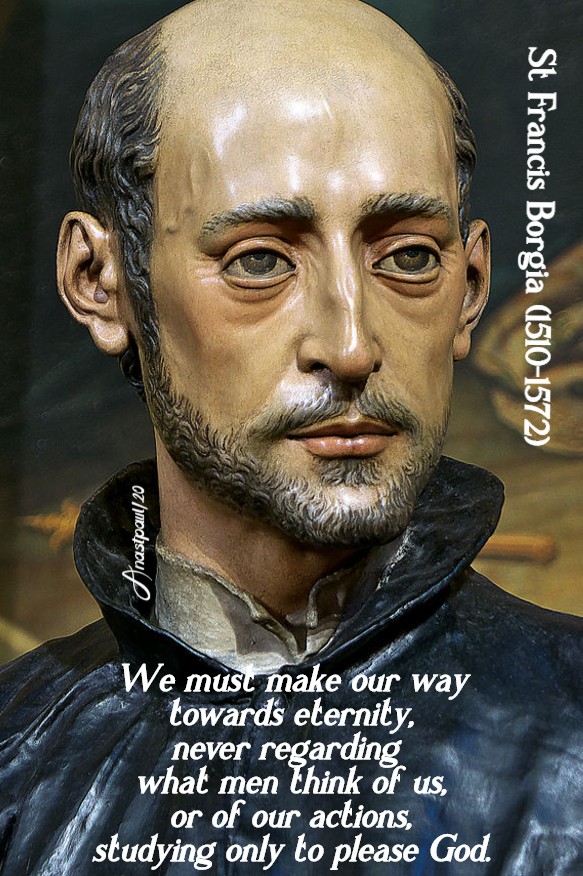
“We must make our way towards eternity, never regarding what men think of us, or of our actions, studying only to please God.”
St Francis Borgia (1510-1572)
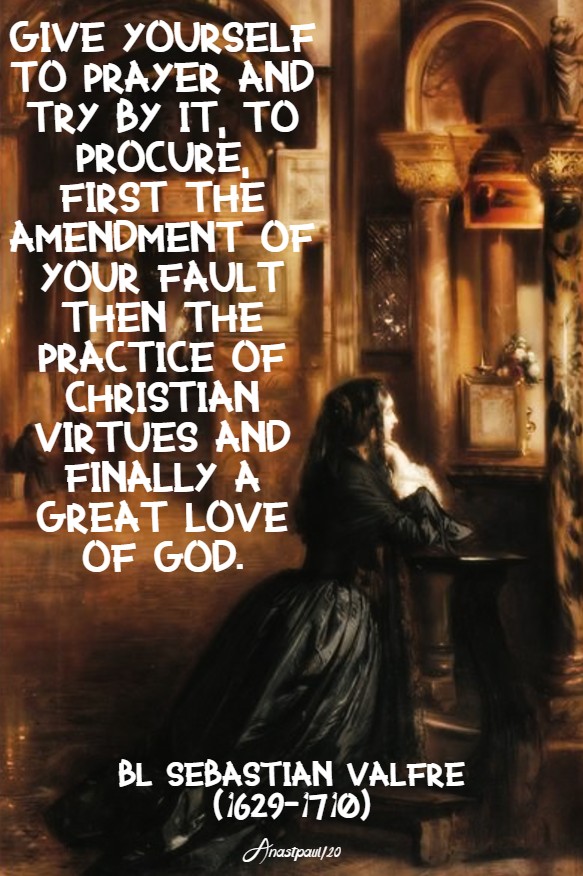
“Give yourself to prayer and try by it, to procure, first the amendment of your fault, then the practice of Christian virtues and finally a great love of God.”
Bl Sebastian Valfre (1629-1710)
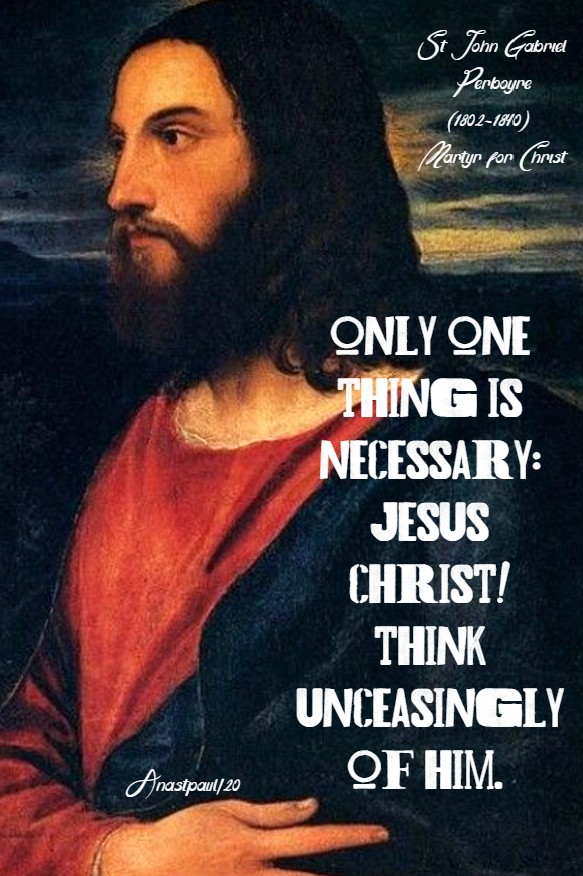
“Only one thing is necessary: Jesus Christ! Think unceasingly of Him. ”
St John Gabriel Perboyre CM (1802-1840) Martyr for Christ
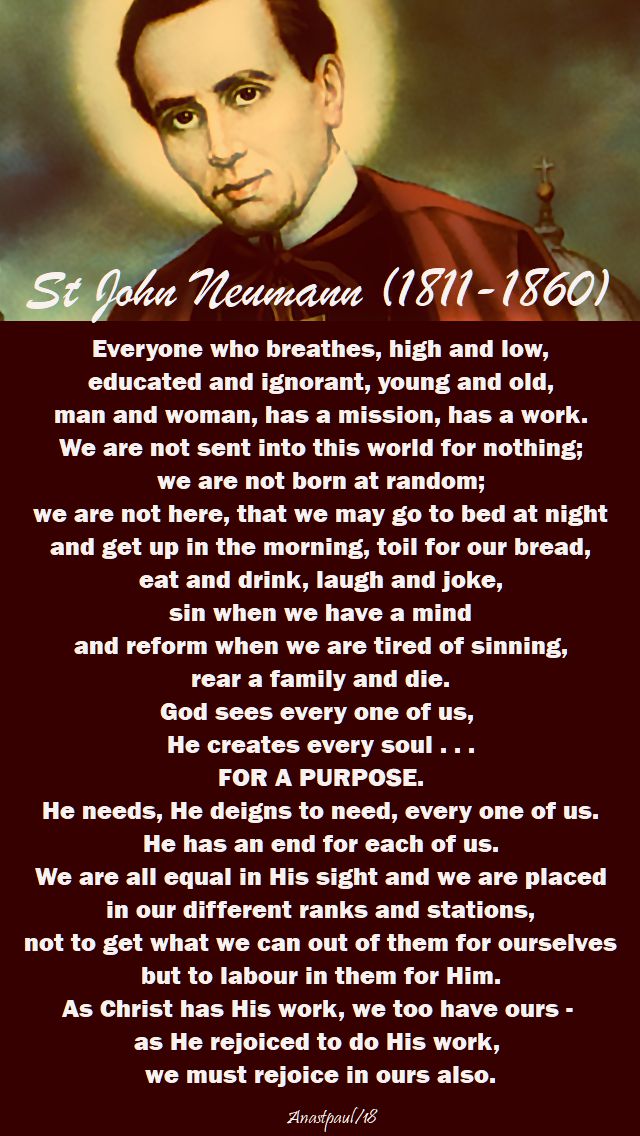
“Everyone who breathes, high and low, educated and ignorant, young and old, man and woman, has a mission, has a work. We are not sent into this world for nothing; we are not born at random; we are not here, that we may go to bed at night and get up in the morning, toil for our bread, eat and drink, laugh and joke, sin when we have a mind and reform when we are tired of sinning, rear a family and die. God sees every one of us, He creates every soul . . . FOR A PURPOSE. He needs, He deigns to need, every one of us. He has an end for each of us. We are all equal in His sight and we are placed in our different ranks and stations, not to get what we can out of them for ourselves but to labour in them for Him. As Christ has His work, we too have ours – as He rejoiced to do His work, we must rejoice in ours also.”
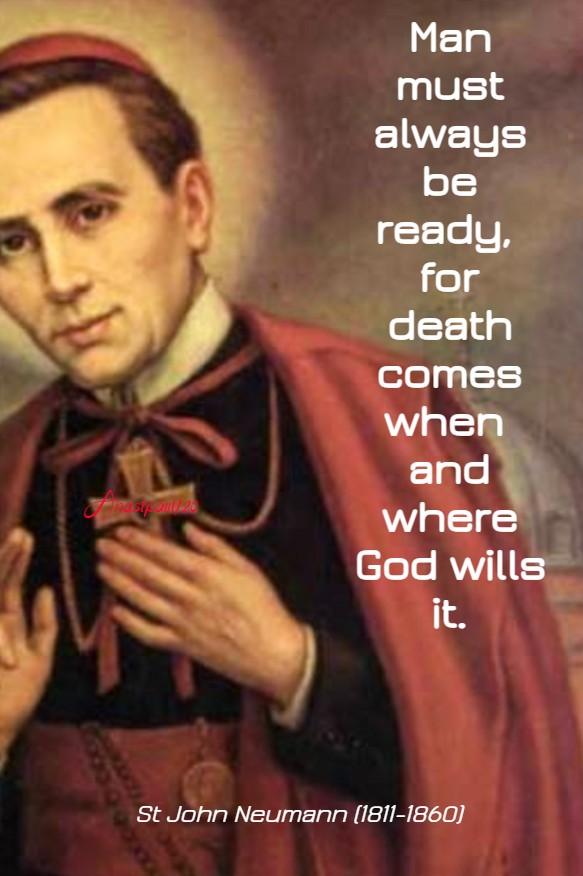
“Man must always be ready, for death comes when and where God wills it.”
St John Neumann (1811-1860)
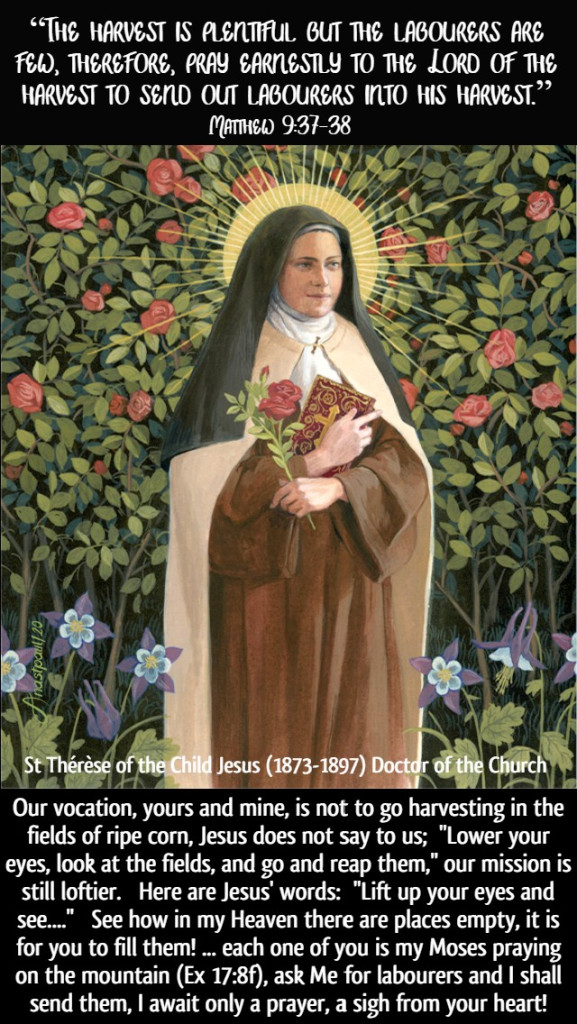
“Our vocation, yours and mine, is not to go harvesting in the fields of ripe corn, Jesus does not say to us; “Lower your eyes, look at the fields and go and reap them,” our mission is still loftier. Here are Jesus’ words: “Lift up your eyes and see….” See how in My Heaven there are places empty, it is for you to fill them! … each one of you is my Moses praying on the mountain (Ex 17:8f), ask Me for labourers and I shall send them, I await only a prayer, a sigh from your heart!”
St Thérèse of the Child Jesus and the Holy Face (1873 – 1897) Doctor of the Church
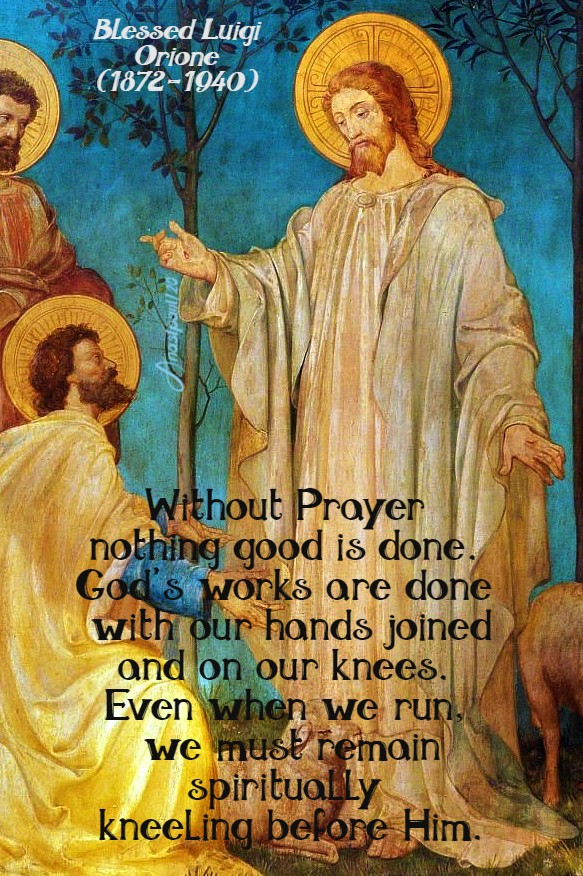
“Without Prayer nothing good is done. God’s works are done with our hands joined and on our knees. Even when we run, we must remain spiritually kneeling before Him.”
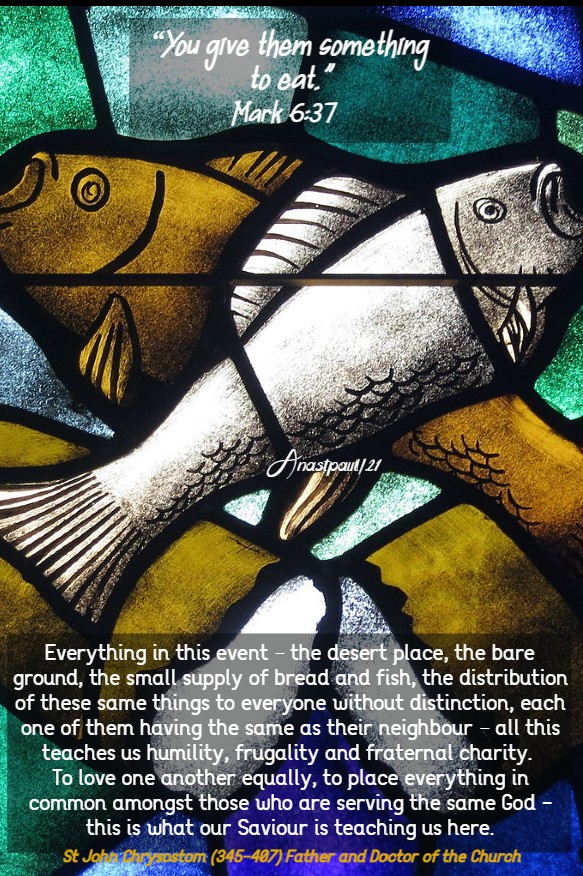
But he answered them, “You give them something to eat.”… Mark 6:37
REFLECTION – “Let us take note of the disciples’ trusting abandonment to God’s providence in life’s greatest necessities and their disdain for a life of luxury – there were twelve of them and they only had five loaves and two fish. They were not bothered by bodily things but dedicated all their zeal to the things of the soul. Moreover, they did not keep these provisions for themselves, they handed them over to the Saviour at once when He asked them for them. Let us learn from this example, to share what we have, with those in need, even if we only have a little. When Jesus asks them to bring the five loaves, they don’t say: “What will there be for us later on? Where will we find what is necessary for our own needs?” They obey promptly … Taking the loaves, then, the Lord broke them and entrusted the honour of distributing them to the disciples. He did not just want to honour them by this holy service but desired them to take part in the miracle, so as to be wholly convinced witnesses to it and, not forget what had taken place under their own eyes …. It is through them, that He made the people sit down and, that He distributed the bread, so that each one of them, might bear witness to the miracle accomplished at their hands … Everything in this event – the desert place, the bare ground, the small supply of bread and fish, the distribution of these same things to everyone without distinction, each one of them having the same as their neighbour – all this teaches us humility, frugality and fraternal charity. To love one another equally, to place everything in common amongst those who are serving the same God – this is what our Saviour is teaching us here.” – St John Chrysostom (345-407) Bishop of Constantinople, Father and Doctor of the Church
PRAYER – All-powerful, eternal God, splendour of true light and never-ending day, let our striving for Your kingdom not fall short through selfishness or fear, may the universe be alive with the Spirit and our homes be the pledge of the world redeemed. May our eyes see and our hearts have compassion, to all those who need us. May the intercession of our Holy Mother, St Gerlach and all the saints, be a strength and a comfort. Through Jesus, our compassionate and loving Redeemer, with the Holy Spirit, one God with You forever, amen.
Our Morning Offering – 5 January – Christmas Weekday and the Memorial of St Charles of Mount Argus CP (1821-1893)
Most Holy Virgin Mary, Oh, my Mother! By St Charles of Mount Argus (1821-1893)
Most Holy Virgin Mary, Oh, my Mother! How sweet it is to come to thy feet, imploring thy perpetual help! If earthly mothers cease not to remember their children, how can thou, the most loving of all mothers, forget me? Grant then, to me, I implore thee, thy perpetual help in all my necessities, in every sorrow and especially in all my temptations. As we are all thy children, I ask for thy unceasing help for all who are now suffering. Help the weak, cure the sick, convert sinners and console all earthly mothers who are now weeping over their children. Open the gates of heaven to those we loved upon earth and who are now suffering in purgatory. Obtain for us, dear Mother, that having earnestly invoked thee on earth, we may see thee, love thee and eternally thank thee, hereafter in heaven. Amen
St Charles of Mount Argus and St Gerlach, our Saint today, are both from the same Province in the Netherlands.
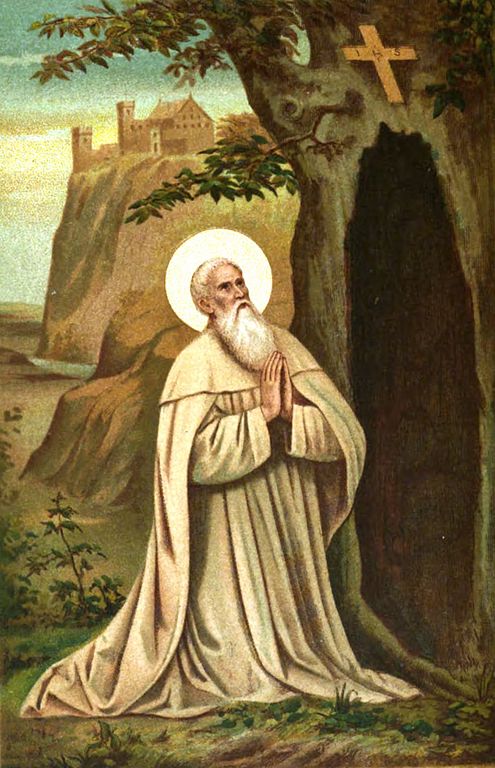
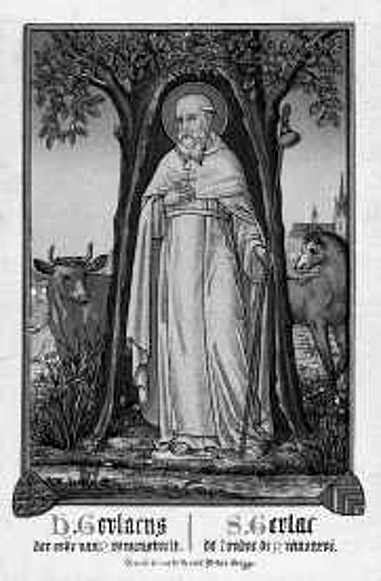
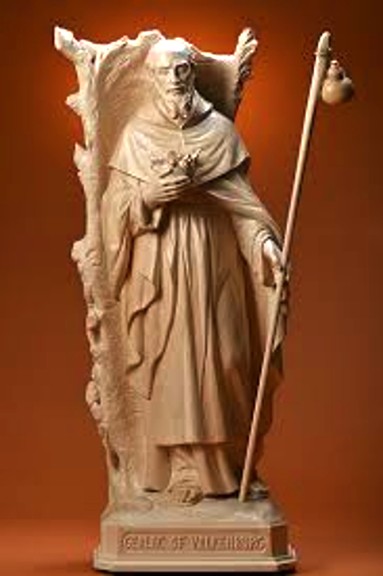
Saint of the Day – 5 January – Saint Gerlach (c 1100-c 1170) Hermit – born in c 1100 at Valkenburg, Netherlands and died in 1172 – 1177 at Houthem, in the Province of Limburg in the Kingdom of the Netherlands of natural causes. Also known as Gerlac von Houthem, Gerlac of Maastricht, Gerlac of Valkenberg, Gerlach, Gerlache, Gerlacus, Gerlachus, Gerlak.Patronages – against cattle disease, against plague/epidemics, of domestic animals.
The Vita Beati Gerlaci Eremytae, written around 1227, describes his legend and life. Originally a licentious soldier and brigand, Gerlach became a pious Christian upon the death of his wife and went on pilgrimage to Rome and Jerusalem. At Rome, he performed rites of penance for the sins of his youth, made a general confession of his sins to Pope Eugene III and then proceeded to Jerusalem where the latter had sent him. There he tended the sick, which he did for seven years.
Upon returning to the Netherlands, he gave up all of his possessions to the poor and took up residence in a hollow oak on his former Estate near Houthem. He ate bread mixed with ash and travelled by foot, each day on pilgrimage to Maastricht, to the Basilica of Saint Servatius.
Neighbouring Monks wished to see him enter their Monastery, especially since they were convinced that Gerlach was very rich and hid his treasure in the hollow of the tree where he lived. The local Bishop, therefore, intervened and ordered that the oak be felled. When he saw that there was no hidden treasure, he ordered that the tree be made into boards and be used to build a new hermitage for Gerlach.
The people of the neighbourhood already considered him a saint and he also enjoyed the protection of great figures, such as Hildegard of Bingen .
Legend states that when Gerlach had done enough penance, water from the local well transformed itself into wine three times, as a sign that his sins had been forgiven. He died shortly after, barely fifty and legend has it that the last rites were administered to him by the Saint Servatius himself.
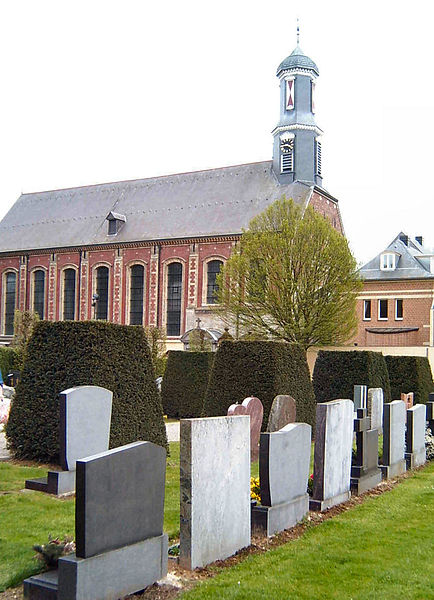
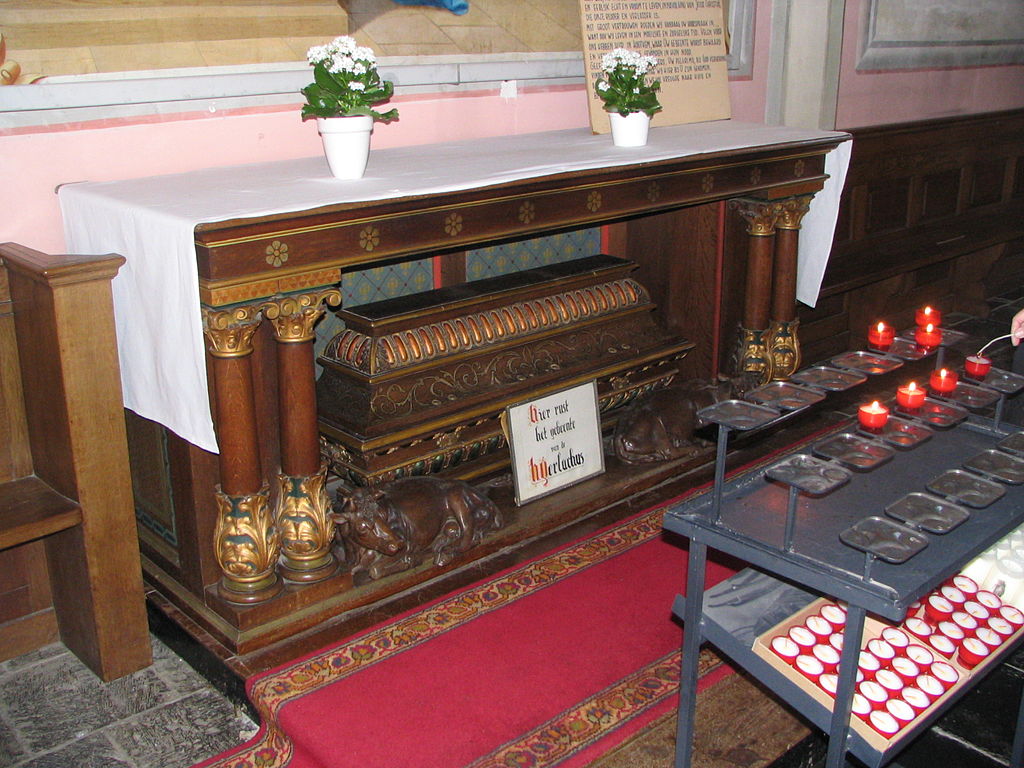
The Order of Premontre (Norbertines) claims his as one of theirs, due to his “rough white habit” and has him on its liturgical calendar as a “Blessed.” Below is the Church of St Gerlac in Houthem where his relics now rest. The Abbey of St Gerlac, which was named after him, is now a hotel.



















You must be logged in to post a comment.