St Abbondius of Rome
St Altigianus
St Apollinaris of Rheims
St Archelaus of Ostia
St Asterius of Aegea
St Claudius of Aegea
St Domnina of Aegea
St Eleazar of Lyons
St Eonagh
St Flavian of Autun
Bl Franciszek Dachtera
Bl Giacomo Bianconi of Mevania
St Hilarinus
St Ireneus of Rome
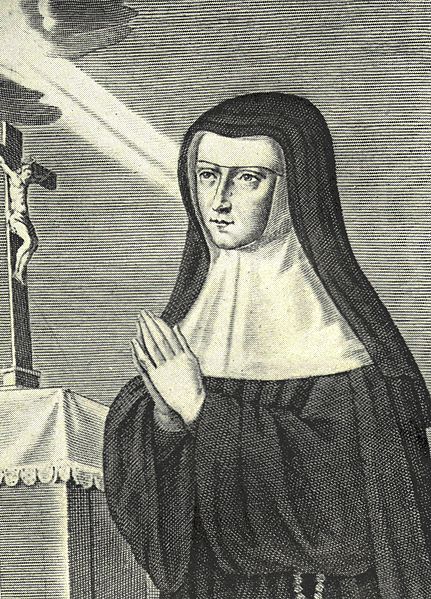
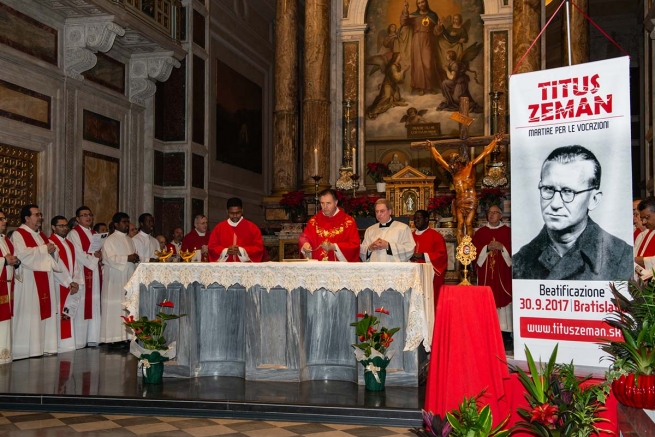
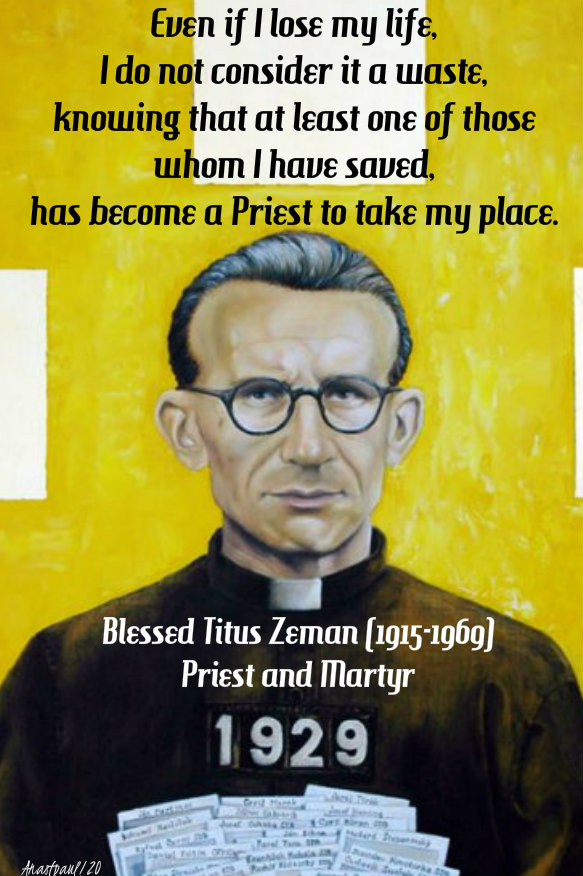
Bl Jean Bourdon Bl Ladislaus Findysz (1907-1964) Martyr
St Lupo of Novi
St Luppus
St Maximus of Ostia
St Minervius of Lyons
St Neon of Aegea
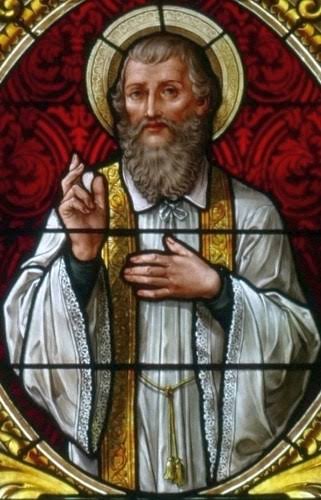
St Philip Benizi (1233-1285) Biography here: https://anastpaul.wordpress.com/2017/08/23/saint-of-the-day-23-august-st-philip-benezi/
St Quiriacus of Ostia
St Theonilla of Aegea
St Timothy of Rheims
St Tydfil
St Victor of Vita
St Zaccheus of Jerusalem
—
Martyrs of Agea – 4 saints: A group of Christian brothers, Asterius, Claudius and Neon, denounced by their step-mother who were then tortured and martyred in the persecutions of Pro-consul Lysias. They were crucified in 285 outside the walls of Aegea, Cilicia (in Asia Minor) and their bodies left for scavengers.
Martyred in the Spanish Civl War:
• Blessed Constantino Carbonell Sempere
• Blessed Estanislau Sans Hortoneda
• Blessed Florentín Pérez Romero
• Blessed José Polo Benito
• Blessed Lorenzo Ilarregui Goñi
• Blessed Manuela Justa Fernández Ibero
• Blessed Mariano García Méndez
• Blessed Nicolás Alberich Lluch
• Blessed Pere Gelabert Amer
• Blessed Petra María Victoria Quintana Argos
• Blessed Ramón Grimaltos Monllor
• Blessed Urbano Gil Sáez
• Blessed Vicente Alberich Lluch
Thought for the Day – 22 August – Memorial of the Queenship of the Blessed Virgin Mary
Queen of the World and of Peace
Saint Amadeus of Lausanne (1108-1159)
Bishop
An excerpt from a Sermon
Observe how fitting it was that even before her assumption, the name of Mary shone forth wondrously throughout the world. Her fame spread everywhere even before she was raised above the heavens in her magnificence. Because of the honour due her Son, it was indeed fitting for the Virgin Mother to have first ruled upon earth and then be raised up to heaven in glory. It was fitting that her fame be spread in this world below, so that she might enter the heights of heaven on overwhelming blessedness. Just as she was borne from virtue to virtue by the Spirit of the Lord, she was transported from earthly renown to heavenly brightness.
So it was, that she began to taste the fruits of her future reign while still in the flesh. At one moment she withdrew to God in ecstasy, at the next, she would bend down to her neighbours with indescribable love. In heaven angels served her, while here on earth she was venerated by the service of men. Gabriel and the angels waited upon her in heaven. The virgin John, rejoicing that the Virgin Mother was entrusted to him at the cross, cared for her with the other apostles here below. The angels rejoiced to see their queen, the apostles rejoiced to see their lady and both obeyed her with loving devotion.
Dwelling in the loftiest citadel of virtue, like a sea of divine grace or an unfathomable source of love that has everywhere overflowed its banks, she poured forth her bountiful waters on trusting and thirsting souls. Able to preserve both flesh and spirit from death, she bestowed health-giving salve on bodies and souls. Has anyone ever come away from her troubled or saddened or ignorant of the heavenly mysteries? Who has not returned to everyday life gladdened and joyful because his request had been granted by the Mother of God?
She is a bride, so gentle and affectionate and the mother of the only true bridegroom. In her abundant goodness, she has channelled the spring of reason’s garden, the well of living and life-giving waters, that pour forth in a rushing stream from divine Lebanon and flow down from Mount Zion, until they surround the shores of every far-flung nation. With divine assistance, she has redirected these waters and made them into streams of peace and pools of grace. Therefore, when the Virgin of virgins was led forth by God and her Son, the King of kings. amid the company of exulting angels and rejoicing archangels, with the heavens ringing with praise, the prophecy of the psalmist was fulfilled, in which he said to the Lord:
At your right hand stands the queen, clothed in gold of Ophir.
Quote/s of the Day – 22 August – The Memorial of The Queenship of Mary, Holy Mother of God
“Let Heaven sustain me in its embrace, because I am honoured above it. For heaven was not thy mother but Thou hast made it thy throne. How much more honourable and venerable than the throne of a king is His mother.”
St Ephrem (306-373) Doctor of the Church
“Be enthroned, Lady, for it is fitting that you should sit in an exalted place since you are a Queen and glorious above all kings.”
St Germanus (378-448)
“O my Lady, my Sovereign, You who rule over me, Mother of my Lord . . . Lady among handmaids, Queen among sisters.”
St Ildephonsus (607-670)
“Just as Mary surpassed in grace all others on earth, so also in heaven is her glory unique. If eye has not seen or ear heard or the human heart conceived what God has prepared for those who love Him (1 Corinthians 2:9), who can express what He has prepared for the woman who gave Him birth and who loved Him, as everyone knows, more than anyone else?”
St Bernard of Clairvaux (1090-1153) – Doctor of Light – Mellifluous Doctor
One Mi nute Reflection – 22 August – The Memorial of The Queenship of Mary, Holy Mother of God – Today’s Gospel: Luke 1:26–38
And Mary said, “Behold, I am the handmaid of the Lord, let it be to me, according to your word.” And the angel departed from her...Luke 1:38
REFLECTION – “With the certainty of faith we know that Jesus Christ is king in the full, literal and absolute sense of the word; for He is true God and man. This does not, however, prevent Mary from sharing His royal prerogatives, though in a limited and analogous manner; for she was the Mother of Christ and Christ is God and she shared in the work of the divine Redeemer, in His struggles against enemies and in the triumph He won over them all. From this union with Christ the King she assuredly obtains so eminent a status that she stands high above all created things and upon this same union with Christ is based that royal privilege, enabling her to distribute the treasures of the kingdom of the divine Redeemer. And lastly, this same union with Christ is the fountain of the inexhaustible efficacy of her motherly intercession, in the presence of the Son and of the Father.
Without doubt, then, does our holy Virgin possess a dignity that far transcends all other creatures. In the eyes of her Son, she takes precedence over everyone else. In order to help us understand the pre-eminence that the Mother of God enjoy,s over all creation, it would help to remember that from the first moment of her conception, the holy Virgin was filled with such a plenitude of grace as to surpass the graces, enhancing all the saints. Recall what our predecessor Pius IX, of blessed memory, wrote in his Bull Ineflabilis Deus: “More than all the angels and all the saints has God ineffable freely endowed Mary with the fullness of the heavenly gifts that abound in the divine treasury and she, preserving herself ever immaculately clean, from the slightest taint of sin, attained a fullness of innocence and holiness, so great, as to be unthinkable apart from God Himself, a fullness that no one other than God will ever possess.”…Venerable Pope Pius XII (1876-1958) – Excerpted from Ad Caeli Reginam
PRAYER – Almighty God, our Father, You have given us Mary, the Mother of Your Son, to be our Mother and our Queen. Grant that, supported by her prayers, we may come to the kingdom of heaven and to the glory destined for Your children. We make our prayer through our Lord Jesus Christ, in the unity of the Holy Spirit, one God forever, amen.
Our Morning Offring – 22 August – Celebrating the Queenship of Mary
Salve Regina Hail Holy Queen
Hail, holy Queen, Mother of Mercy
Hail our life, our sweetness and our hope.
To thee do we cry,
Poor banished children of Eve,
To thee do we send up our sighs,
Mourning and weeping in this vale of tears.
Turn then, most gracious advocate,
Thine eyes of mercy toward us
And after this our exile,
Show unto us the blessed fruit of thy womb, Jesus.
O clement, O loving, O sweet Virgin Mary.
℣ Pray for us, O holy Mother of God,
℟ that we may be made worthy
of the promises of Christ.
Let us pray:
Almighty, everlasting God,
who by the co-operation of the Holy Spirit
didst prepare the body and soul
of the glorious Virgin-Mother Mary
to become a dwelling-place fit for Thy Son,
grant we pray,
that as we rejoice in her commemoration,
so by her fervent intercession,
we may be delivered from present evils
and from everlasting death.
Through the same Christ our Lord.
Amen
The Hail Holy Queen or Salve Regina is a choral anthem going back to the eleventh century. Since the thirteenth century it is the last evening chant in many religious communities. The authorship is not clearly defined. The Salve is first mentioned in a meditation by Anselm II, Bishop of Lucca, 1073-86 (PL 184, 1078-98) and (erroneously) to Hermannus Contractus (1013-54) of Reichenau.
The “Hail, Holy Queen” is a salutation deprecatonia, a greeting of petition and intercession. Mary is called mother of mercy because Christ her Son, is the incarnation of God’s love and mercy. Giving us Christ, she gave us, sinful humans, the life and hope we need (as baptised children of Eve) to survive in this vale of tears. This antiphon is not part of the rosary but represents the same spirit. It is part of the official prayer of the Church (Liturgy of the Hours: Vespers and/or Compline) and thus is even more precious than the rosary. Sung, it becomes a wonderful expression of our spiritual intimacy with Mary.
It is interesting that it was a Domenican (like today’s Saint Giacomo Bianconi), Blessed Jordan of Saxony OP (1190-1237) who initiated the custom of singing the Salve Regina in procession each night after Compline in the Dominican Order, to ask Our Lady’s protection of the brothers against temptations from the devil. This is a custom still practised by Dominicans throughout the world and by our community each night.
Saint of the Day – 22 August – Blessed Giacomo Bianconi OP (1220-1301) – Dominican Priest and Friar, Confessor, Spiritual Advisor, founder and restorer of convents and churches – born on 7 March 1220 at Mevania (modern Bevagna), diocese of Spoleto, Umbria, Italy and died on 22 August 1301 at Mevania, Italy of natural causes. He is also known as Blessed James Bianconi.
Blessed Giacomo was born in Bevagna and was received into the Dominican Order at Spoleto in 1236. After his ordination, he devoted his energies to the eradication of the heresy of the Nicolaites from Umbria and finally succeeded in converting its chief propagator, Ortinellus. He became Provincial Minister in 1281 and was elected Prior of the Dominican convents in Spoleto, in 1291 and Foligno, in 1299.
Blessed Giacomo was prominent in providing aid to refugees from Bevagna after the Emperor Frederick II sacked the city in 1249. He was subsequently active in the rebuilding of the town, which culminated in the rebuilding of Palazzo dei Consoli in 1270. In 1291, he received permission to rebuild the church of San Giorgio in Bevagna and to construct the adjoining convent. He also established two nunneries in Bevagna – Santa Lucia and Santa Margherita. Towards the end of his life, he also served as Lector at San Domenico, Orvieto, where he acted as the spiritual advisor of the Blessed Jane of Orvieto. This Church is now renamed as Sts Domenico & Giacomo.
These two statues below, which are thought to have been bought by the Blessed Giacomo in Perugia, were moved from in Sts Domenico & Giacomo to the Pinacoteca in 2016:
✴a figure of the Madonna and Child; and
✴a wooden Crucifix. Once, as he prayed before it because he was experiencing doubts about his salvation, blood spurted from the image and he heard Christ saying: “This blood is the sign of your salvation”.
Both statutes were recorded in the 17th century the Cappella del Crocifisso at SS Domenico & Giacomo, which belonged to the Antici family.
After a life of extraordinary austerity, Giacomo died in Bevagna. Sts George and Dominic appeared to him as he died, in order to reward him for the honour that he had shown to them during his life.
When the Blessed Giacomo died in 1301, he was buried in San Giorgio. Miracles were reported at his grave and his relics were translated in 1302 into a sarcophagus that is now on the counter-facade of Sts Domenico & Giacomo, to the left of the entrance.
The Dominicans rebuilt San Giorgio in 1397 and re-dedicated it as Sts Domenico & Giacomo, probably as part of a bid for the canonisation of Giacomo Bianc oni. Pope Boniface IX granted indulgences to those who prayed before his relics during the first three days of May. Boniface IX granted similar indulgences in respect of Blessed Peter Crisci of Foligno. However, any early attempt to secure canonisation failed.
The relics were re-interred in 1589 in a new sarcophagus, as part of a fresh attempt to secure his beatification. This was adorned with painted scenes by Ascensidonio Spacca, il Fantino that depict the Blessed Giacomo.
Bishop Alfonso Visconti initiated a process for canonisation in 1608 but this was halted when he died soon after. Bishop Maffeo Barberini (later Pope Urban VIII) re-opened the case in 1612 and this led in 1632 to a formal process under three bishops, including Bishop Lorenzo Castrucci of Spoleto. This process was inconclusive and a second was needed before Urban VIII Beatified the Blessed Giacomo in 1641 . The frescoes in the cloister of the convent, which depict scenes from the life of the Blessed James, commemorate this event.
The death of Urban VIII in 1644 probably precluded the canonisation of the Blessed Giacomo. Yet another process was instituted in 1658 and Pope Clement X confirmed the cult in 1672. The relics were finally translated to the gilded bronze urn on the high altar of SS Domenico & Giacomo in 1686. Blessed Giacomo’s praise can be read in the Roman martyrology on 22 August
Queenship of Mary (Memorial): On 22 August, the Church celebrates a Feast in honour of the Queenship of Mary. The Queenship can be considered a prolongation of the celebration of the Assumption. The Memorial of the Queenship of Mary – 22 August – A Marian feast day decreed by Pope Pius XII on 11 October 1954, in his encyclical Ad caeli reginam to recognise and celebrate the Blessed Virgin Mary as Queen of the world, of the universe, of the Angels, of Heaven, Prophets, Apostles, Martyrs, Confessors, Virgins, all Saints,of Families, Queen conceived without original sin Queen assumed into Heaven, Queen of the Most Holy Rosary, Queen of Mercy, Queen of Peace. Amen, Holy Queen and Mother! Here too: https://anastpaul.wordpress.com/2017/08/22/the-memorial-of-the-queenship-of-mary-22-august/
St Andrew of Fiesole
St Anthusa of Seleucia
St Antoninus of Rome
St Arnulf of Eynesbury
St Athanasius of Tarsus
Bl Bernard Perani
St Dalmau Llebaría Torné
Bl Élie Leymarie de Laroche
St Epictetus of Ostia
St Ethelgitha of Northumbria
St Fabrician of Toledo
St Felix of Ostia Bl Giacomo/James Bianconi OP (1220–1301)
St Gunifort
St Joan Farriol Sabaté St John Kemble (1599 – 1679) Martyr Biography: https://anastpaul.com/2018/08/22/saint-of-the-day-22-august-st-john-kemble-1599-1679-martyr/
St John Wall
St Josep Roselló Sans
St Julio Melgar Salgado
St Maprilis of Ostia
St Martial of Ostia
St Maurus of Rheims
St Narciso de Esténaga y Echevarría
St Philibert of Toledo
Bl Richard Kirkman
St Saturninus of Ostia
Bl Simeon Lukach
St Sigfrid of Wearmouth
St Symphorian of Autun
St Thomas Percy
St Timothy of Rome
Bl William Lacey
_
Martyred in the Spanish Civil War:
• Blessed Dalmau Llebaría Torné
• Blessed Joan Farriol Sabaté
• Blessed Josep Roselló Sans
• Blessed Julio Melgar Salgado
• Blessed Narciso de Esténaga y Echevarría
Thought for the Day – 21 August – Wednesday of the Twentieth week in Ordinary Time, Year C and The Memorial of St Pope Pius X (1835-1914
The Song of the Church
Saint Pius X
Bishop of Rome
An excerpt from his Apostolic Constitution, Divino afflatu
The collection of psalms found in Scripture, composed as it was under divine inspiration, has, from the very beginnings of the Church, shown a wonderful power of fostering devotion among Christians, as they offer to God a continuous sacrifice of praise, the harvest of lips blessing His name. Following a custom already established in the Old Law, the psalms have played a conspicuous part in the sacred liturgy itself and, in the divine office. Thus was born what Basil calls the voice of the Church, that singing of psalms, which is the daughter of that hymn of praise (to use the words of our predecessor, Urban VIII) which goes up, unceasingly, before the throne of God and of the Lamb and which teaches those especially charged with the duty of divine worship, as Athanasius says, the way to praise God and the fitting words in which to bless Him. Augustine expresses this well when he says: God praised himself so that man might give him fitting praise, because God chose to praise himself man found the way in which to bless God.
The psalms have also a wonderful power to awaken in our hearts the desire for every virtue. Athanasius says: Though all Scripture, both old and new, is divinely inspired and has its use in teaching, as we read in Scripture itself, yet the Book of Psalms, like a garden enclosing the fruits of all the other books, produces its fruits in song and in the process of singing, brings forth its own special fruits to take their place beside them. In the same place Athanasius rightly adds: The psalms seem to me to be like a mirror, in which the person using them can see himself and the stirrings of his own heart, he can recite them against the background of his own emotions. Augustine says in his Confessions: How I wept when I heard your hymns and canticles, being deeply moved by the sweet singing of your Church. Those voices flowed into my ears, truth filtered into my heart and from my heart surged waves of devotion. Tears ran down and I was happy in my tears.
Indeed, who could fail to be moved by those many passages in the psalms which set forth so profoundly the infinite majesty of God, His omnipotence, His justice and goodness and clemency, too deep for words and all the other infinite qualities of His that deserve our praise? Who could fail to be roused to the same emotions by the prayers of thanksgiving to God for blessings received, by the petitions, so humble and confident, for blessings still awaited, by the cries of a soul in sorrow for sin committed? Who would not be fired with love as he looks on the likeness of Christ, the redeemer, here so lovingly foretold? His was the voice Augustine heard in every psalm, the voice of praise, of suffering, of joyful expectation, of present distress.
One Minute Reflection – 21 August – Tuesday of the Twentieth week in Ordinary Time, Year C – Today’s Gospel: Matthew 20:1–16 and the Memorial of St Pope Pius X (1835-1914)
“So the last will be first and the first last.” … Matthew 20:16
REFLECTION – “You think that the fight for power in the Church is something of these days, eh? It started there, right beside Jesus”. Yet in the Church it should not be so, (Mt 20:25-26), Jesus explains the true meaning of power. “But Jesus summoned them and said, “You know that the rulers of the Gentiles lord it over them and the great ones make their authority over them felt. But it shall not be so among you. Rather, whoever wishes to be great among you shall be your servant.”
When someone is given a higher position – in the world’s eyes – we say, ‘ah, that person has been promoted to…. Yes, that’s a lovely phrase and we in the Church should use it, yes – this person was promoted to the cross, that person was promoted to humiliation. That is true promotion. It is what makes us more similar to Jesus. ” … Pope Francis – 21 May 2013 Santa Marta
PRAYER – Lord God, You filled the saints with strength and courage and gave them the knowledge of unity with You. Grant, we pray, that in imitation of St Pope Pius X, we may defend the Catholic faith and renew all things in Christ, Your Son. Help us Holy Father, to follow the example of St Pius and finally inherit eternal life ,with You and all the saints. We make our prayer through Christ, our Lord with the Holy Spirit, one God forever, amen.
Our Morning Offering – 21 August – Wednesday of the Twentieth week in Ordinary Time, Year C and The Memorial of St Pope Pius X (1835-1914)
O Holy Spirit of Light and Love By St Pope Pius X (1835-1914)
O Holy Spirit of Light and Love,
to You I consecrate my heart,
mind and will
for time and eternity.
May I be ever docile
to Your Divine inspirations
and to the teachings
of the Holy Catholic Church
whose infallible guide You are.
May my heart be ever inflamed
with the love of God and love of neighbour.
May my will be ever in harmony with Your Divine Will.
May my life faithfully imitate the life and virtues
of our Lord and Saviour Jesus Christ.
To Him,
with the Father,
and You, Divine Spirit,
be honour and glory forever.
Amen.
Saint of the Day – 21 August – Saint Abraham of Smolensk (Died c 1222) Monk, Abbot, Priest, apostle of the poor, Preacher, Biblical scholar and spiritual adviser – born in the 12th century at Smolensk, Russia and died in c 1222 at Smolensk, Russia of natural causes. Patronage – Smolensk. He is venerated as a saint in both the Eastern Orthodox Church and the Roman Catholic Church. Pope Paul III Canonised him as a saint in 1549.
Abraham was born in Smolensk, Russia during the mid twelfth century to a wealthy family, a son after twelve daughters. From childhood he grew up in the fear of God. He often was in church and had the opportunity to read books. As an only son, his parents hoped he would marry and continue their illustrious lineage. However, he sought a different life.
After the death of his parents, he gave away all his wealth to monasteries, churches and the destitute. He walked through the city in rags, asking God to show him the way to salvation. Abraham entered the Monastery of the Most Holy Mother of God (Bogoroditskaya Monastery), near Smolensk and accepted tonsure as a monk. He accepted various obediences at the monastery and fervently occupied himself with the copying books and culling spiritual riches from them.
Prince Roman Rostislavich of Smolensk established a school in the city, at which not only Slavonic but also Greek and Latin books were used to teach. The prince also had a large collection of books, which the Monk Abraham use. He became very popular among the laity as he worked for the sick and troubled. He also became a noted biblical scholar in pre-Mongol Russia. He lived austerely and preached on the Last Judgement, while developing a genuine apostolate for the sick and poor of the region.
He lived as an ascetic for more than 30 years at the monastery, when in the year 1198 Bishop Ignatius of Smolensk persuaded him to accept the dignity of priest. From his ordination Fr Abraham celebrated daily the Holy Mass and fulfilled the obedience of clergy not only for the brethren but also for the laypeople.
Fr Abraham had been characterised as being a man of stern and militant character, who kept the idea of the Last Judgement in the minds of himself and others. While very popular among the laity, he was less popular among many of the local clergy, who came to view him with enmity and jealousy. This animosity among the brethren in time reached Bishop Ignastius and after five years he was compelled to transfer to the Cross-Exaltation Monastery in the city of Smolensk.
At the poor monastery, Fr Abraham began a program to improve it. From the offerings by the faithful, he embellished the cathedral church with icons, curtains and candle-stands. On two icons that he himself inscribed were themes that most of all concerned him. One depicted the dreaded Last Judgement and, on the other, the suffering of the trials of life. He was strict both towards himself and towards his spiritual children. He preached constantly in church and to those who came to him in his cell, conversing with rich and poor alike. An ascetic, lean and pale from extreme toil, in priestly garb he resembled in appearance St Basil the Great.
His unpopularity among the city notables and the clergy remained and they soon demanded of Bishop Ignatius that he bring Fr Abraham to trial, with accusations of the seduction of women and the tempting of his spiritual children. But even more terrible were the accusations of heresy and reading of forbidden books, for which his enemies proposed to drown or burn him. At the trial before the prince and the bishop, Fr Abraham rebutted all the false accusations. But despite his defence, he was suspended as a priest and returned to his former monastery of the Most Holy Mother of God.
However, the city soon faced a terrible drought and the citizens of Smolensk demanded that Fr Abraham be restored. This clamour for reinstatement led to a second investigation by Bishop Ignatius, one that cleared his name. Only after Bishop Ignatius acquitted Fr Abraham, lifting his suspension and permitting him to serve and preach again, did the rain again fall on the Smolensk lands, ending the drought.
Bishop Ignatius built a new monastery, in honour of the Placing of the Robe of the Most Holy Mother of God to which he entrusted its guidance to Fr Abraham. It was to this monastery that Bishop Ignatius, now the spiritual friend of Fr Abraham, himself retired because of his advanced age. Many brethren desired to enter under the guidance of Fr Abraham but he examined them very intensely and only accepted those after great investigation, so that at his monastery there were but seventeen brethren. Fr Abraham, after the death of Bishop Ignatius even more so than before, urged the brethren to reminisce about death and to pray day and night, that they be not condemned in the Judgement by God.
St Abraham died about the year 1222, having spent 50 years as a Monk. Already at the end of the thirteenth century a service to him had been compiled by his student and disciple, the Monk Ephrem. The Mongol/Tatar invasion, seen as the wrath of God for sin, not only did not stifle the memory of St Abraham of Smolensk but rather, was a reminder to people of his calling to repentance and recollection of the dreaded Last Judgement.
Our Lady of Knock: Our Lady, Saint Joseph and Saint John the Evangelist appeared in a blaze of light at the south gable of Saint John the Baptist Church, Knock, County Mayo, Ireland. They appeared to float about two feet above the ground and each would occassionally move toward the visionaries and then away from them. The Blessed Virgin Mary was clothed in white robes with a brilliant crown on her head. Where the crown fitted to her brow, she wore a beautiful full-bloom golden rose. She was praying with her eyes and hands raised towards Heaven. Saint Joseph wore white robes, stood on Our Lady’s right and was turned towards her in an attitude of respect. Saint John was dressed in white vestment, stood was on Mary’s left and resembled a bishop, with a small mitre. He appeared to be preaching and he held an open book in his left hand. Behind them and a little to the left of Saint John was a plain altar on which was a cross and a lamb with adoring angels. The apparition was witnessed by fifteen people. Miraculous healings were reported soon after in the area and it is now a major pilgrimage destination. Patronage – Ireland.
Altar sculpture at Knock, based on accounts of the apparition.
St Abraham of Smolensk (Died c 1222)
St Agapius of Edessa
St Agathonicus of Constantinople
St Anastasius Cornicularius
St Aria of Rome
St Avitus I of Clermont
St Bassa of Edessa
Bl Beatrice de Roelas
St Bernhard of Lérida
St Bernard de Alziva
St Bonosus
Bl Bruno Zembol
St Camerinus of Sardinia
St Cameron
St Cisellus of Sardinia
St Cyriaca
St Euprepius of Verona
St Fidelis of Edessa
Bl Gilbert of Valenciennes
St Gracia of Lérida
St Hardulph
St Joseph Nien Vien
Bl Ladislaus Findysz
St Leontius the Elder
St Luxorius of Sardinia
St Maria of Lérida
St Maximianus the Soldier
St Maximilian of Antioch
St Natale of Casale Monferrato
St Paternus of Fondi
St Privatus of Mende
St Quadratus of Utica
St Sidonius Apollinaris
St Theogonius of Edessa
Bl Victoire Rasoamanarivo
St Zoticus the Philosopher
Martyred in the Spanish Civil War:
• Blessed Joan Cuscó Oliver
• Blessed Joan Vernet Masip
• Blessed Pedro Mesonero Rodríguez
• Blessed Pere Sadurní Raventós
• Blessed Ramon Peiró Victori
• Blessed Salvador Estrugo Salves
Thought for the Day – 21 August – Tuesday of the Twentieth week in Ordinary Time, Year C and the Memorial of St Bernard of Clairvaux (1090-1153) “Doctor of Light”
I love because I love, I love that I may love
Saint Bernard
Abbot and Doctor of the Church
An excerpt from Sermon 83
Love is sufficient of itself, it gives pleasure by itself and because of itself. It is its own merit, its own reward. Love looks for no cause outside itself, no effect beyond itself. Its profit lies in its practice. I love because I love, I love that I may love. Love is a great thing so long as it continually returns to its fountainhead, flows back to its source, always drawing from there the water which constantly replenishes it. Of all the movements, sensations and feelings of the soul, love is the only one in which the creature can respond to the Creator and make some sort of similar return, however unequal, though it be. For when God loves, all He desires is to be loved in return, the sole purpose of His love is to be loved, in the knowledge that those who love Him are made happy by their love of Him.
The Bridegroom’s love, or rather the love which is the Bridegroom, asks in return nothing but faithful love. Let the beloved, then, love in return. Should not a bride love, and above all, Love’s bride? Could it be that Love not be loved?
Rightly then does she give up all other feelings and give herself wholly to love alone, in giving love back, all she can do is to respond to love. And when she has poured out her whole being in love, what is that in comparison with the unceasing torrent of that original source? Clearly, lover and Love, soul and Word, bride and Bridegroom, creature and Creator, do not flow with the same volume, one might as well equate a thirsty man with the fountain.
What then of the bride’s hope, her aching desire, her passionate love, her confident assurance? Is all this to wilt just because she cannot match stride for stride with her giant, any more than she can vie with honey for sweetness, rival the lamb for gentleness, show herself as white as the lily, burn as bright as the sun, be equal in love with Him who is Love? No. It is true that the creature loves less because she is less. But if she loves with her whole being, nothing is lacking where everything is given. To love so ardently then is to share the marriage bond, she cannot love so much and not be totally loved and it is in the perfect union of two hearts that complete and total marriage consists. Or are we to doubt that the soul is loved by the Word first and with a greater love?
Quote/s of the Day – 21 August – Tuesday of the Twentieth week in Ordinary Time, Year C and the Memorial of St Bernard of Clairvaux (1090-1153) “Doctor of Light”
“The measure of love is love without measure.”
“Action and contemplation are very close companions; they live together in one house on equal terms. Martha and Mary are sisters.”
“The three most important virtues are: humility, humility and humility.”
“If the hurricanes of temptation rise against you, or you are running upon the rocks of trouble, look to the star – call on Mary!”
“Let us not imagine that we obscure the glory of the Son by the great praise we lavish on the Mother – for the more she is honoured, the greater is the glory of her Son. There can be no doubt that whatever we say in praise of the Mother gives equal praise to the Son.”
One Minute Reflection – 21 August – Tuesday of the Twentieth week in Ordinary Time, Year C – Today’s Gospel: Matthew 19:23–30 and the Memorial of St Bernard of Clairvaux (1090-1153) “Doctor of Light”
And everyone who has left houses or brothers or sisters or father or mother or children or lands, for my name’s sake, will receive a hundredfold and inherit eternal life...Matthew 19:29
REFLECTION – “Abraham became “the friend of God” (Jam 2,23) because he freely and generously followed the Word of God, his call. It was not due to any lack on His part that God’s Word gained Abraham’s friendship. He is perfect from the beginning; “Before Abraham was, I am” (Jn 5,58). But it was that He, who is good, might give Abraham eternal life… Likewise, in the beginning, it was not because He had any need of man that God formed Adam but that He might have someone on whom to bestow His blessings.
Still less was it because He needed our service that He commanded us to follow Him but to win salvation for us. For to follow our Saviour is to have a share in His salvation, just as following the light is to participate in the light. When we stand in the light it is not we who illumine the light and cause it to shine but we are illuminated and made shining by the light… God grants His blessings on those who serve Him because they are serving Him and on those who follow Him because they are following Him but He receives no blessing from them because He is perfect and without need.
If God asks for our service it is that He who is good and merciful might bestow His blessings on those who persevere in His service. Because, if God has no need of anything, yet we have need of communion with God. The glory of man is to persevere in the service of God. That is why our Lord said to His disciples: “You did not choose me, it was I who chose you” (Jn 15,16), thus indicating that… for having followed the Son of God they had been glorified by Him: “Father, I will that where I am they also may be, that they may see my glory” (Jn 17,24). … St Irenaeus of Lyons (c.130-c.208) Bishop, theologian and Martyr – Against the heresies, IV, 14,1 ; SC 100
PRAYER – All-knowing God, let me be able to stand in Your presence with a good conscience. Help me to avoid anything that would sully my conscience and do all I can to remain united with You . You made St Bernard burn with zeal for Your house and gave him the grace to enkindle and enlighten others in Your Church. Grant that by his prayer, we may be filled with the same spirit and always live as children of the Light. Through Christ our Lord, in the unity of the Holy Spirit, God forever, amen.
Our Morning Offering – 20 August – The Memorial of St Bernard of Clairvaux (1090-1153) “Doctor of Light”
High and Holy God By St Bernard
High and Holy God,
give me this day a word of truth
to silence the lies
that would devour my soul
and kind encouragements
to strengthen me when I fall.
Gracious One,
I come quietly to Your door
needing to receive from Your hands
the nourishment that gives life.
Amen and Amen
Saint of the Day – 20 August – Saint Philibert of Jumièges (c. 608–684) was an Abbot and Monastic Founder, particularly of Jumièges Abbey. Born in c 608 in Gascony, France and died in 684 on the island of Héri, France of natural causes.
He was born in Gascony as the only son of a Vic or Vic-Jour (now Vic-Fezensac) based courtier of Dagobert I and was educated by Saint Ouen. He later entered the monastery of Rebais as a monk and was promoted to abbot but his inexperience was too great for the position. He left and spent some time travelling round monasteries studying their Rules and constitutions.
In 654, Philibert received a gift of land from Clovis II on which he founded Jumièges Abbey. He drew up a Rule based on his studies for this and for his later foundations, drawing on several earlier Rules, including those of Benedict, Macarius, Basil the Great and particularly the strict rule of Columbanus. The monks’ chief work was the reclaiming of waste lands.
St Philibert overseeing the construction of one of his monasteries – Guérinière church
For a time Philibert lost the favour of Ouen and the royal family and was exiled. He withdrew to Poitiers and near Heriou founded the monastery of Noirmoutier, whereupon Ansoald, bishop of Poitiers, put his own foundation of Luçon Abbey under Philibert’s charge as well. When he regained the favour of his patrons, he founded other houses, including the monastery of Cunaut and the nunnery at Pavilly.
Jumièges Abbey
Jumièges Abbey, as painted by John Sell Cotman in 1818
Philibert died and was buried at Heriou but in 836 the monks of Noirmoutier abandoned their home in the face of the Viking attacks to seek refuge on the mainland, in 875 finally settling with the relics of Philibert in the abbey at Tournus named in his honour, where the great church of St Philibert at Tournus still stands.
St Philibert’s Relics
St Philibert’s Tomb
The filbert, or hazelnut, is said to have been named after him, since it ripens about 20 August in England, on his feast day the first fruits appear.
St Bernardo Tolomei (1272 – 1348) Biography here: https://anastpaul.wordpress.com/2017/08/21/saint-of-the-day-21-august-st-bernardo-tolomei-1272-1348/ Apologies for the date mix-up. His Memorial in the universal Church is actually today 20 August.
St Brogan
St Burchard of Worms
St Christopher of Cordoba
St Cristòfol Baqués Almirall
St Edbert of Northumbria
Bl Georg Hafner
Bl Gervais-Protais Brunel
St Gobert of Apremont
St Haduin of Le Mans
St Heliodorus of Persia
St Herbert Hoscam
St Leovigild of Cordoba
Bl Louis-François Lebrun
St Lucius of Cyprus Bl Maria de Mattias ASC (1805-1866) Biography: https://anastpaul.com/2018/08/20/saint-of-the-day-20-august-st-maria-de-mattias-a-s-c-1805-1866/
St Maximus of Chinon
St Oswine of Deira St Philibert of Jumièges (c 608–684)
St Porphyrius of Palestrina
St Ronald of Orkney
St Samuel the Patriarch
Bl Wladyslaw Maczkowski
St Zacchaeus the Publican
—
Martyred in the Spanish Civil War: 8 Beati
Enrique Rodríguez Tortosa
Francesc Llagostera Bonet
Ismael Barrio Marquilla
José Tapia Díaz
Magí Albaigés Escoda
Manuel López Álvarez
María Climent Mateu
Serapio Sanz Iranzo
Tomás Campo Marín
Thought for the Day – 19 August – The Memorial of St John Eudes Orat. (1601-1680) “Apostle of Two Hearts”
St John Eudes captured the devotion to the Sacred Heart of Jesus and the Immaculate Heart of Mary by honouring them in the liturgy. Thanks to this saint, Holy Cross priests have as their patron Jesus’ Sacred Heart and Notre Dame has a Basilica dedicated to the Sacred Hearts of Jesus and Mary.
In fact, even though John was Canonised a saint after the Basilica was constructed, he is depicted there in a stained glass window leading people in devotion to the Immaculate Heart of Mary.
John’s spirituality focused on the love of Jesus and Mary, symbolised in their sacred hearts. He began a feast day for people to honour the heart of Mary and the Sacred Heart of Jesus, these feast days spread quickly and were taken up around the Church. While John was not the first to be devoted to the Sacred Hearts of Jesus and Mary, he was the first to capture this devotion in the liturgy, which gave the Church a way to participate and spread it.
He died after giving a parish mission in his old age that left him sick and weak—he preached outdoors, in the winter, every day for nine weeks and never recovered. He died on this date in 1680.
John Eudes is probably best known for the central theme of his writings – Jesus as the source of holiness and Mary as the model of the Christian life. His devotion to the Sacred Heart and to the Immaculate Heart led Pope Pius XI to declare him the father of the liturgical cult of the Hearts of Jesus and Mary.
He believed in the unity of the hearts of Jesus and Mary and wrote: ”You must never separate what God has so perfectly united. So closely are Jesus and Mary bound up with each other that whoever beholds Jesus, sees Mary, whoever loves Jesus, loves Mary, whoever has devotion to Jesus, has devotion to Mary.”
St John Eudes, you help us form our hearts in the shape of Jesus’ Sacred Heart and our lives in the obedience and love of the Immaculate Heart of His Mother — pray for us!
Quote/s of the Day – 19 August – The Memorial of St John Eudes Orat. (1601-1680) “Apostle of Two Hearts”
“A Christian has a union with Jesus Christ – more noble, more intimate and more perfect than the members of a human body have with their head!”
“The Christian life is a continuation and completion of the life of Christ in us. We should be so many Christs here on earth, continuing His life and His works, labouring and suffering in a holy and divine manner in the spirit of Jesus.”
“Our wish, our object, our chief preoccupation must be to form Jesus in ourselves, to make His spirit, His devotion, His affections, His desires and His disposition, live and reign there. All our religious exercises should be directed to this end. It is the work which God has given us to do unceasingly. “
“Faith is a beam, radiating from the face of God.”
One Minute Reflection – 19 August – Monday of the Twentieth week in Ordinary Time, Year C – Gospel: Matthew 19:16–22 and The Memorial of St John Eudes Orat. (1601-1680) “Apostle of Two Hearts”
Jesus said to him, “If you would be perfect, go, sell what you possess and give to the poor and you will have treasure in heaven and come, follow me.” … Matthew 19:21
REFLECTION – “O Jesus! can anyone declare that he does not desire this great blessing, especially after he has passed through the chief difficulties? No, no-one can! We all say we desire it but there is need of more than that, for the Lord to possess entire dominion over the soul. It is not enough to say so, any more than it was enough for the young man when our Lord told him what he must do if he desired to be perfect…
Enter then, enter, my daughters, into your interior, pass beyond the thought of your own petty works, which are no more, nor even as much, as Christians are bound to perform, let it suffice, that you are God’s servants, do not pursue so much as to catch nothing. Think of the saints, who have entered the Divine Presence and you will see the difference between them and ourselves. Do not ask for what you do not deserve, nor should we ever think, however much we may have done for God, that we merit the reward of the saints, for we have offended Him. Oh, humility, humility! I know not why but I am always tempted to think, that persons who complain so much of aridity in prayer, must be a little wanting in this virtue… Let us try ourselves, my sisters, or let our Lord try us, He knows well how to do so, although we often pretend to misunderstand Him…
If we turn our backs on Him and go away sorrowfully, like the youth in the Gospel, when He tells us what to do to be perfect, what can God do? for He must proportion the reward to our love for Him. This love, my daughters, must not be the fabric of our imagination, we must prove it by our works. Yet do not suppose that our Lord has need of any works of ours, He only expects us to manifest our goodwill… if we continue in it… doubtless, by persevering in this poverty and detachment of soul, we shall obtain all for which we strive. But, mark this – it must be on one condition – that we `hold ourselves for unprofitable servants.’ (Lk 12:48) … St Teresa of Avila (1515-1582) Doctor of the Church – Interior Castle, Mansion 3, Chapter 1
PRAYER – Father of mercies and God of all consolation, You gave us the loving Heart of Your own beloved Son, because of the boundless love by which You have loved us, which no tongue can describe. May we render You a love that is perfect with hearts made one with His. Grant, we pray, that our hearts may be brought to perfect unity, each heart with the other and all hearts with the Heart of Jesus….and may the rightful yearnings of our hearts find fulfilment through Him, Our Lord Jesus Christ, Your Son, who lives and reigns with You, in the unity of the Holy Spirit, one God, forever and ever. – Collect from Saint John Eudes’ Mass, Gaudeamus, 1668 St John Eudes, Pray for us! amen.
Our Morning Offering – 19 August – Monday of the Twentieth week in Ordinary Time and The Memorial of St John Eudes Orat. (1601-1680) “Apostle of Two Hearts”
O Jesus, Living in Mary By St John Eudes (1601-1680)
O Jesus, living in Mary,
Come and live in Your servants
in the holiness of Your Spirit,
in the fullness of Your Strength,
in the perfection of Your Ways,
in the truth of Your Virtues,
in communion with Your Mysteries.
Come and master the enemy
in Your Holy Spirit
for the glory of the Father.
Amen
Saint of the Day – Blessed Jordan of Pisa OP (c 1255–1311) – Dominican Friar, Theologian, Professor, renowned Preacher, Founder of the Confraternity of the Holy Redeemer at Pisa, Visionary, Marian devotee, promoter and daring innovator of the vernacular Italian language as a ‘church’ language and a tool for evangelisation – born c 1255 at Pisa, Italy and died on 19 August 1311 at Piacenza of natural causes. At a time when scholars believed that no colloquial tongue could ever replace Latin as a ‘gentleman’s’ language, Jordan worked to make Italian the beautiful tongue that it is today.
See the Note at the bottom
Jordan attended the University of Paris where he first encountered the Dominican friars in 1276. Four years later, probably after obtaining his degrees, he returned to Italy and took the habit. He began a long teaching career there as soon as he was qualified to do so.
He preached and taught variously at Siena, Viterbo and Perugia before eventually moving to Florence, in which area he was a widely respected preacher, eventually being appointed by the provincial chapter at Rieti as a lector in the church of Santa Maria Novella in 1305. He held that post for the next three years and contributed greatly to its esteem. In 1301, he attended a general meeting of the order held in Cologne, Germany..
He seems to have been fascinated with the whole question of preaching as an apostolic tool and to have been one of the first to make a scientific study of it. He pointed out that the Greek church was “invaded by a multitude of errors,” because the Greeks had no preachers, he could never say enough in praise of Saint Dominic’s farsightedness in establishing an order specifically for preaching.
Jordan studied methods of making sermons more effective, both by using examples that would reach the people and by the use of the vernacular. This latter was a much-disputed subject in his day, Jordan was considered a daring innovator. Because it was controversial, he strove to make Italian a beautiful instrument on which he could play the melodies of the Lord.
Bl Jordan’s Pantheologia (written early 14th century, this manuscript from 1470)
Blessed with an extraordinary memory, Jordan was renowned for his knowledge in general and knew the Breviary by heart, as well as the Missal, most of the Bible (with its marginal commentary), plus the second part of the Summa. This faculty of memory he used in his sermons but he was quick to point out to young preachers that learning alone can never make a preacher. By the holiness of his own life he made this plain and continually preached it to those he was training to preach.
Jordan of Pisa had two great devotions–to Our Blessed Mother and to Saint Dominic. He was favoured with a vision of Our Lady, she came into the fathers’ refectory and served at table. Jordan, who was the only one who could see her, could barely eat for excitement. He spoke often of her in his sermons and also of Saint Dominic.
In 1311 the Master General, Aymericus Giliani, appointed him professor of theology at the friary of Saint James in Paris, to deliver his reading of the Lombard’s Sentences and obtain his master’s degree but Jordan died on his way to Paris. His body was returned from Piacenza, where death overtook him, to rest in the church of Santa Caterina in Pisa.
On 23 August 1833, Blessed Jordan’s cultus was confirmed by Pope Gregory XVI and in 1838 he was Beatified by Pope Gregory XVI.
Santa Caterina in Pisa
Jordan studied the use of preaching for evangelisation. He pioneered the use of the Tuscan language for preaching and lecturing, which helped establish it as the foremost among the vernaculars of Italy. His Tuscan was reputedly versatile and musical but never elaborate or ornate. At Florence he would reportedly preach five times a day, walking about, both indoors and out, followed by a crowd of listeners as he developed his topic. During his lengthy sermons his friend and disciple, Silvester of Valdiseve (1278–1348), sometimes sat near the pulpit with wine to refresh him. Some of his listeners took notes that have survived. His preaching was said to have a positive effect on Florentine public life and morality by its emphasis on sound (i.e. Thomistic) doctrine, Christian living and perseverance. What he had to say would have sounded dry in Latin but significantly, no Latin sermons by Jordan have survived.
God of holiness,
by the integrity of his life and gentle manner
You made Blessed Jordan
a fitting minister to preach the gospel.
By following his example,
may we generously strive to serve You
through service to our neighbour
and so gain the fruit of an everlasting reward.
We ask this through our Lord Jesus Christ,
Your Son, who lives and reigns with You
and the Holy Spirit, one God, forever and ever.
Amen
General Calendar of the Order of Preachers
Note: The first image above is probably NOT Blessed Jordan but the image found online for him, is actually Blessed Jordan of Saxony. I used this unknown friar above as there seem to be no known images available of Blessed Jordan of Pisa.
St Andrew the Tribune
St Badulf of Ainay
St Bertulf of Luxeuil
St Calminius
St Credan of Evesham
St Donatus of Mount Jura
St Elaphius of Châlons
St Ezekiel Moreno Y Diaz
St Guenninus
Bl Guerricus
Bl Hugh Green Bl Jordan of Pisa OP (c 1255–1311)
St Julius of Rome
St Louis of Toulouse
St Magnus of Anagni
St Magnus of Avignon
St Magnus of Cuneo
St Marianus of Entreaigues
St Marinus of Besalu
St Magino of Tarragona
St Mochta
St Namadia of Marsat
St Rufinus of Mantua
St Sarah the Matriarch
St Sebaldus
St Thecla of Caesarea
St Timothy of Gaza
—
Martyrs of Nagasaki – 15 beati: A group of missionaries and their laymen supporters who were executed for spreading Christianity in Japan.
• Antonius Yamada
• Bartholomaeus Mohyoe
• Iacobus Matsuo Denji
• Ioachim Díaz Hirayama
• Ioannes Miyazaki Soemon
• Ioannes Nagata Matashichi
• Ioannes Yago
• Laurentius Ikegami Rokusuke
• Leo Sukeemon
• Ludovic Frarijn
• Marcus Takenoshita Shin’emon
• Michaël Díaz Hori
• Paulus Sankichi
• Pedro de Zúñiga
• Thomas Koyanagi
Theywere beheaded on 19 August 1622 at Nagasaki, Japan and Beatified on 7 May 1867 by Pope Pius IX.
Martyred in the Spanish Civil War
Martyred Carmelite Sisters of Charity – 9 beati
Martyred Salesians of Ciudad Real – 8 beati
Martyred Subiaco Benedictines of Barcelona – 7 beati
• Blessed Agueda Hernández Amorós
• Blessed Agustí Busquets Creixell
• Blessed Andrés Pradas Lahoz
• Blessed Antolín Martínez y Martínez
• Blessed Antoni Pedró Minguella
• Blessed Càndid Feliu Soler
• Blessed Cipriano González Millán
• Blessed Damián Gómez Jiménez
• Blessed Elvira Torrentallé Paraire
• Blessed Félix González Bustos
• Blessed Francisca de Amézua Ibaibarriaga
• Blessed Francisco de Paula Ibáñez y Ibáñez
• Blessed Ignasi Guilà Ximenes
• Blessed Isidro Muñoz Antolín
• Blessed Joan Roca Bosch
Thought for the Day – 18 August – The Memorial of St Alberto Hurtado SJ (1901-1952)
” Hogar de Christo”
Hogar means “hearth” or “home.”
Hurtado wanted to welcome the poor into “Christ’s home.”
In October 1944, while giving a retreat, he felt impelled to appeal to his audience to consider the many poor people of the city, especially the numerous homeless children who were roaming the streets of Santiago. This request evoked a ready and generous response. This was the beginning of the initiative for which Father Hurtado is especially well-known – a form of charitable activity which provided not only housing but a home-like milieu for the homeless: “El Hogar de Cristo”.
By means of contributions from benefactors and with the active collaboration of committed laity, Father Hurtado opened the first house for children, this was followed by a house for women and then one for men. The poor found a warm home in “El Hogar de Crist o.” The houses multiplied and took on new dimensions, in some houses there were rehabilitation centres, in others trade-schools and so on. All were inspired and permeated by Christian values.
From all accounts Hurtado was an intensely busy man. In 1946, he bought a green pickup truck to better bring at-risk children living on the street back to the shelters. He called them his patroncitos, his “little bosses.” In addition to his work with Hogar, his retreats and outreach to youth, he wrote several books and found the journal Mensaje, a Catholic magazine designed to highlight the social teachings of the church and which is still proudly published by the Chilean Jesuits.
Pancreatic cancer brought him, within a few months, to the end of his life. In the midst of terrible pain, he was often heard to say, “I am content, Lord.”
After having spent his life manifesting Christ’s love for the poor, Father Hurtado was called to the Lord on 18 August 1952.
From his return to Chile after his Tertianship to his death, a matter of only fifteen years, Father Hurtado lived and accomplished all the works described above. His apostolate was the expression of a personal love for Christ the Lord – it was characterised by a great love for poor and abandoned children, an enlightened zeal for the formation of the laity and a lively sense of Christian social justice.
Alberto understood the need for the balance between prayer and work, striving to be a “contemplative in action.” On the one hand, the activist is the one who at every moment recognises “the divine impulse.” On the other, prayer should not encourage a “sleepy sort of laziness under the pretext of keeping ourselves united with God.” I like to think of him as the patron saint of multitaskers.
In Santiago, near the original Hogar, is a shrine to Alberto, where many come to pray. Inside is his beat-up green pickup.
Sunday Reflection – 18 August – Twentieth Sunday in Ordinary Time, Year C,
The ‘Secret’ Prayers (Offertory)
If you watch very closely, you’ll notice that the priest is moving his lips and praying some prayers very, very quietly during the preparation of the Gifts. The rubrics indicate that the priest should pray them ‘sub secreto’, which is translated as ‘inaudibly’ or ‘secret.’
But there’s really no secret, because the prayers are printed in the Roman Missal or other worship resources for the whole world to see. And even though the rubrics indicate that the priest is to pray these prayers, there is absolutely no reason why you can’t do that too!
As the priest pours wine and a little water into the chalice, he prays quietly: “By the mystery of this water and wine may we come to share in the divinity of Christ, who humbled himself to share in our humanity.”
Then the priest bows profoundly and says quietly: “With humble spirit and contrite heart may we be accepted by you, O Lord and may our sacrifice in your sight this day be pleasing to you, Lord God.”
Finally, as he washes his hands he prays, “Wash me, O Lord, from my iniquity, and cleanse me from my sin.”
One Minute Reflection – 18 August – Twentieth Sunday in Ordinary Time, Year C, Gospel: Luke 12:49-53
“Do you think that I have come to establish peace on the earth? No, I tell you but rather division.” … Luke 12:51
REFLECTION – “God has come into the world with a message of peace (cf Lk 2:14) and reconciliation (cf Rom 5:11). By resisting, through sin, the redeeming work of Christ, we become His opponents. Injustice and error lead to division and war. “Insofar as men are sinners, the threat of war hangs over them and will so continue until the coming of Christ but, insofar, as they can vanquish sin by coming together in charity, violence itself will be vanquished and make these words come true – “They shall turn their swords into plough-shares and their spears into sickles. Nation shall not lift up sword against nation, neither shall they learn war any more” (Is 2,4).” … Vatican II – Gaudium et spes #78 – Constitution on the Church in the modern world
PRAYER – Father of might and power, every good and perfect gift comes to us from You. Implant in our hearts the love of Your name and Your creatures. Increase our zeal for Your service and Your peace. Nourish in us what good and tend it with watchful care. Grant that the prayers and caring love of the Blessed Virgin, our Mother, may help us to spread peace in our world. We make our prayer through Christ, our Lord in the union of the Holy Spirit, one God for all eternity, amen.
Our Morning Offering – 18 August – Twentieth Sunday in Ordinary Time, Year C
To You, O Master By St Macarius the Wonder-Worker (Died 850)
To You, O Master,
who loves all mankind
I hasten on rising from sleep.
By Your mercy,
I go out to do Your work
and I make my prayer to You.
Help me at all times and in all things.
Deliver me from every evil thing of this world
and from pursuit by the devil.
Save me and bring me to Your eternal kingdom,
For You are my Creator,
You inspire all good thoughts in me.
In You is all my hope
and to You I give glory,
now and forever.
Amen
You must be logged in to post a comment.