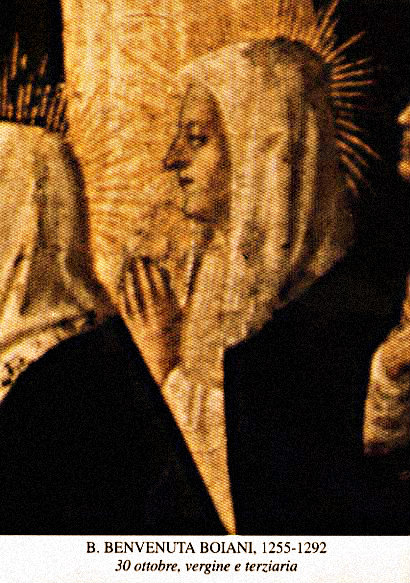
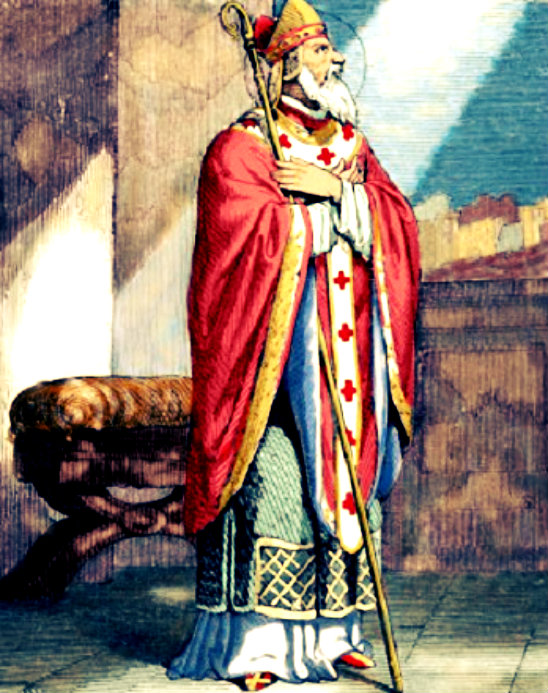
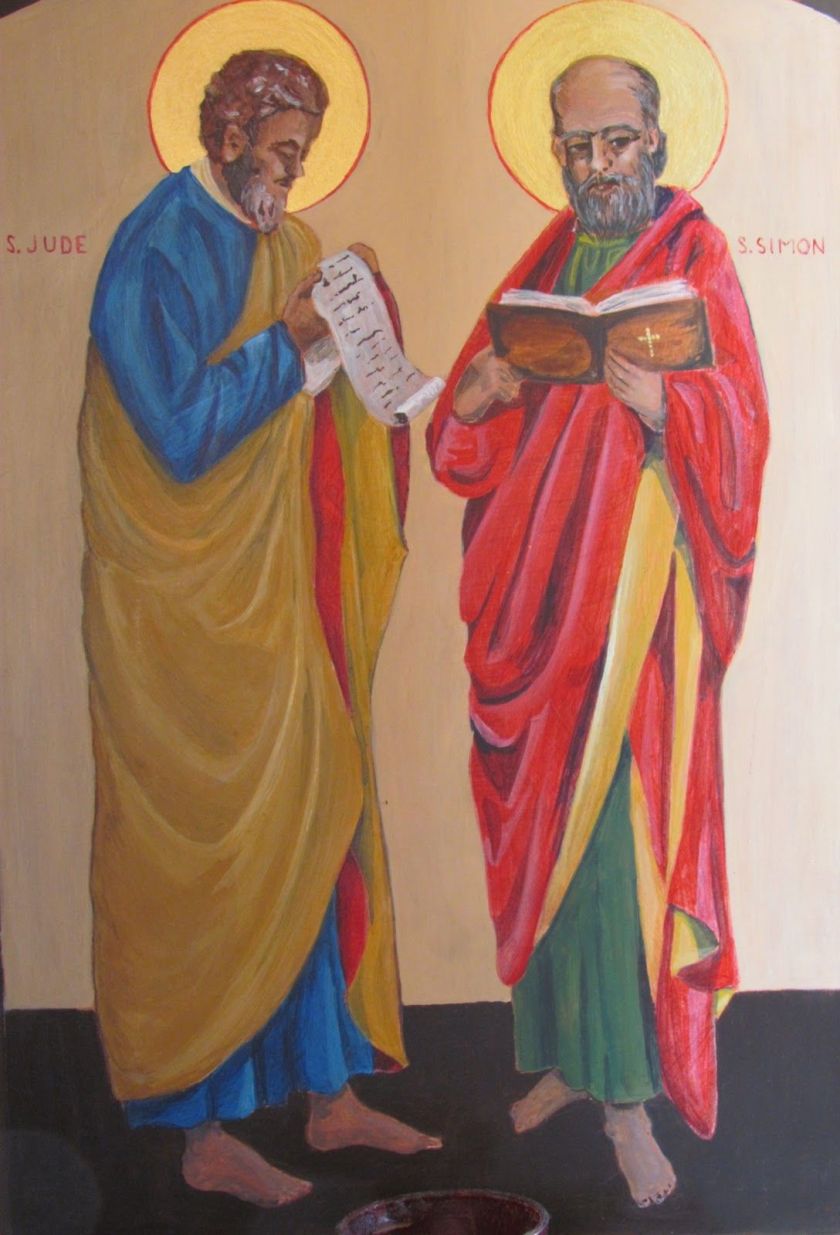
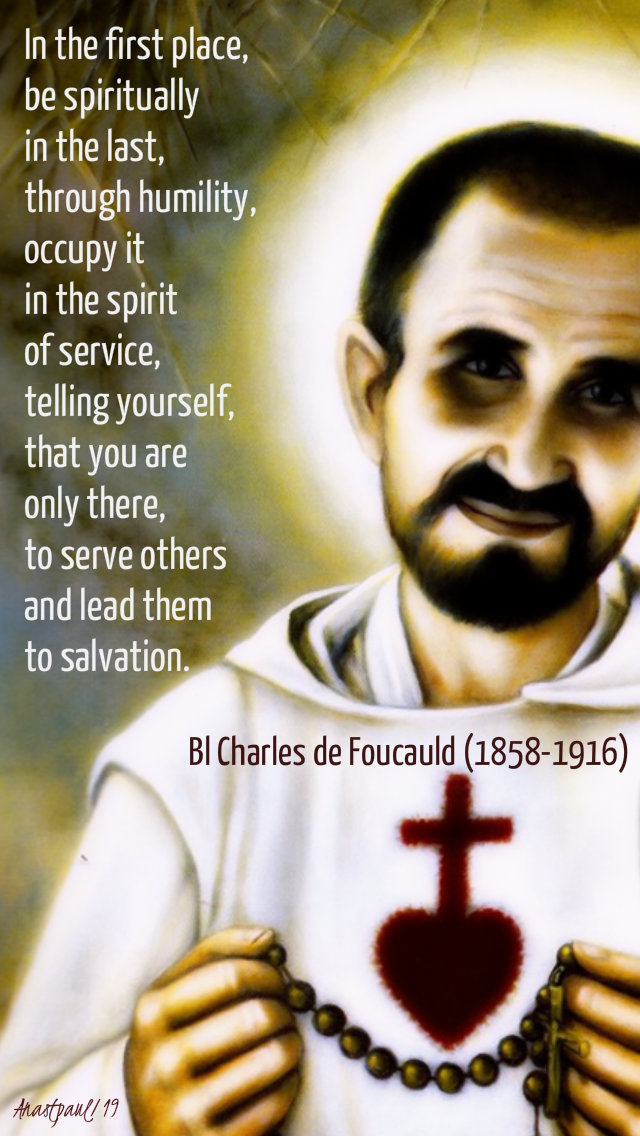
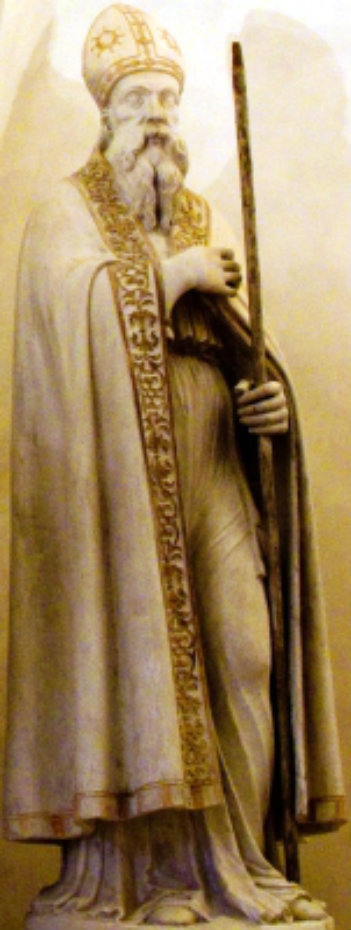
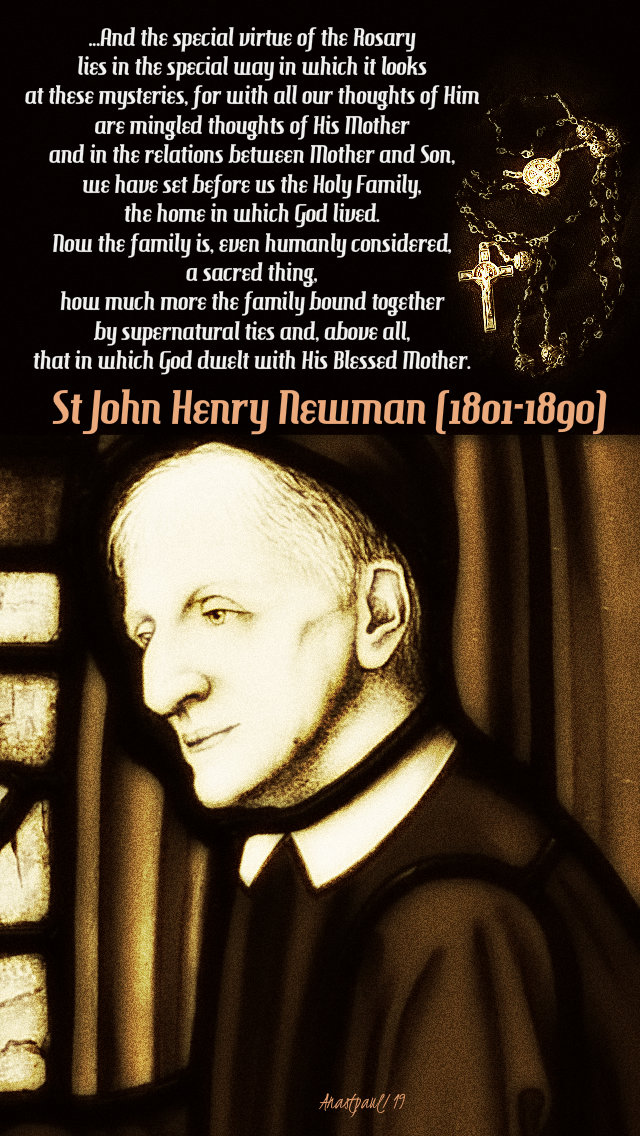
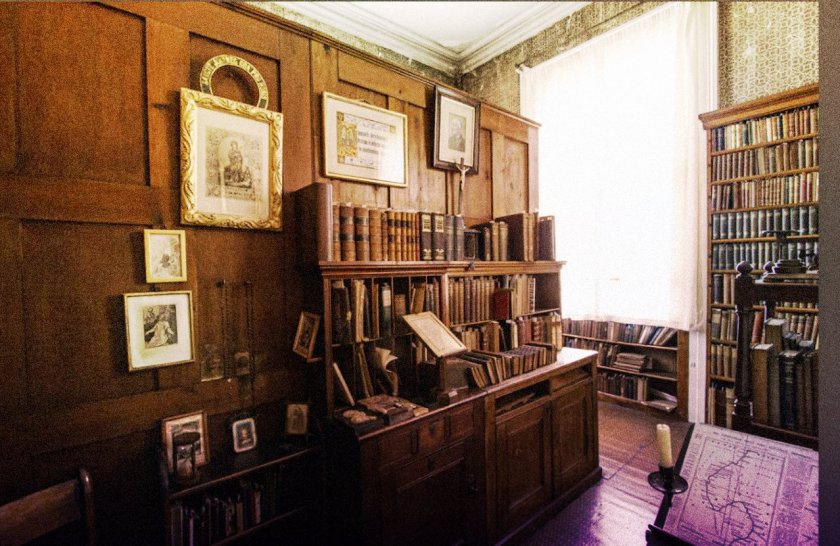
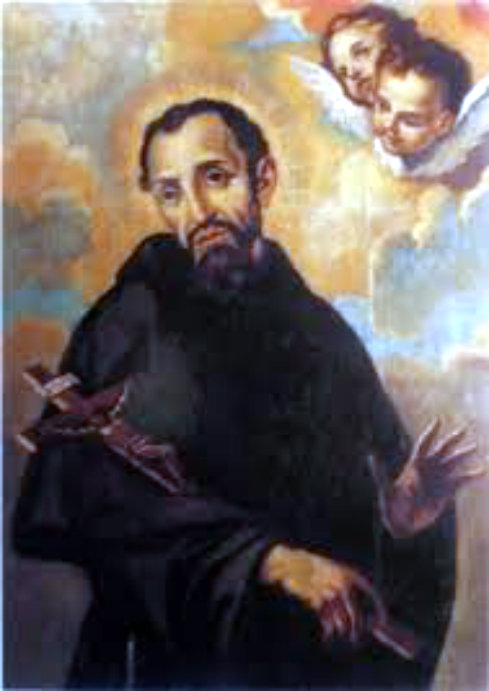
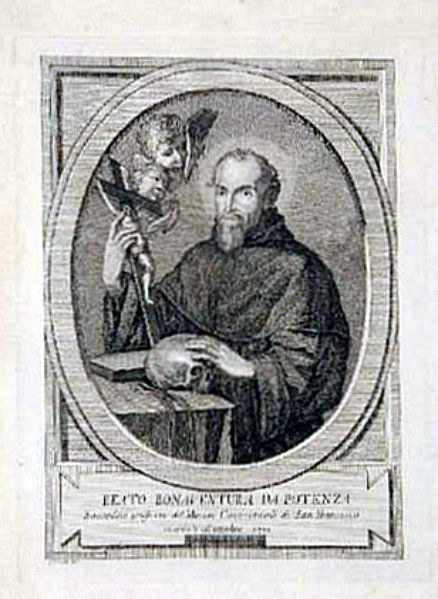
St Rita of Cascia (1386-1457) (Optional Memorial) About St Rita: https://anastpaul.wordpress.com/2017/05/22/saint-of-the-day-22-may-st-rita-of-cascia-patron-of-impossible-causes-abused-wives-and-widows/
St Aigulf of Bourges
St Atto of Pistoia
St Aureliano of Pavia
St Ausonius of Angoulême
St Baoithin of Ennisboyne
St Basiliscus of Pontus
St Bobo of Provence
St Boethian of Pierrepont
St Castus the Martyr
St Conall of Inniscoel
Bl Diego de Baja
Bl Dionisio Senmartin
St Emilius the Martyr
St Faustinus the Martyr
St Francisco Salinas Sánchez
St Fulgencio of Otricoli
Bl Fulk of Castrofurli
Bl Giacomo Soler
Bl Giusto Samper
St Helen of Auxerre
St Humility of Faenza
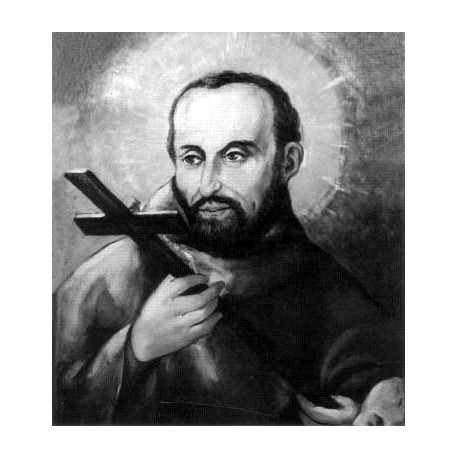
Bl John Baptist Machado Bl John Forest OFM (1471-1538) Martyr of Oxford University Biography: https://anastpaul.wordpress.com/2018/05/22/saint-of-the-day-22-may-bl-john-forest-o-f-m-1471-1538-martyr/
St John of Parma
St José Quintas Durán St Julia (5th century) Martyr
St Lupo of Limoges
St Marcian of Ravenna
St Margaret of Hulme
Bl Maria Rita Lopes Pontes de Souza Brito
Bl Pedro of the Assumption
St Quiteria
St Romanus of Subiaco
St Timothy the Martyr
St Venustus the Martyr
—
Martyred in the Spanish Civil War:
• Blessed Francisco Salinas Sánchez
• Blessed José Quintas Durán
Marian Thoughts – 21 May – ‘Mary’s Month’ – Tuesday of the fifth Week of Easter, C
Mini Series – Pope Francis and the Holy Rosary
“The prayer of the rosary is, in many ways, the synthesis of the history of God’s mercy, which becomes a history of salvation for all who let themselves be shaped by grace. “…Pope Francis 9 October 2016
The Second Luminous Mystery
The Wedding Feast at Cana
Jesus did this as the beginning of his signs in Cana in Galilee and so revealed his glory, and his disciples began to believe in him....John 2:11
“In the context of the Covenant, we are also to understand Our Lady’s observation: “They have no wine” (v. 3). How can one celebrate a wedding feast and make merry without what the prophets indicated as a typical element of the messianic banquet? Water is necessary for life but wine expresses the abundance of a banquet and the joy of a feast. This wedding feast was short of wine, the newlyweds are ashamed of this. But just imagine ending a wedding feast drinking tea, it would be a shame. Wine is necessary for a feast. By transforming into wine the water of the jars used “for the Jewish rites of purification” (Jn 2:6), Jesus preforms an eloquent sign – He transforms the Law of Moses into the Gospel, bearer of joy. As John states elsewhere: “For the law was given through Moses; grace and truth came through Jesus Christ” (1:17).
Sometimes, even our best, beautiful dreams, our hard work and troubles – all go to nothing. Great works demand making sacrifices but sometimes we reach a wall. Let us pray that we – like Mary – know how to humbly show this situation to Jesus and that we strongly believe that even out of the greatest failure, He is able to produce the most unexpected good.”
Thought for the Day – 21 May – Tuesday of the Fifth Week of Easter, C and The Memorial of St Eugene de Mazenod OMI (1782-1861)
Born into a noble family in Aix (Provence), Saint Eugene spent part of his childhood in Italy because of the French Revolution. Ordained a priest at Amiens in 1811, he soon organised missionaries to go to rural parts of Provence, instructing the people whose religious training had been disrupted for many years by the French Revolution and its aftermath.
Eugene began the Missionary Oblates of Mary Immaculate in 1816, obtaining papal approval for them 10 years later. From rural preaching, they soon moved into running seminaries to improve the quality of the clergy. Their first foreign mission was in Canada in 1841; soon they were in Africa, Asia, Australia and Latin America.
In 1851, Eugene followed his uncle as archbishop of Marseilles where he died 10 years later. He had focused his energies on Church renewal and reform while vigorously defending the Church’s right to spread the Good News.
His congregation has grown to become one of the largest in the Church, serving in over 68 countries, especially in Africa and Canada. Many of its members have become missionary bishops.
At Eugene’s Canonisation in 1998, St Pope John Paul II praised his vision, perseverance, and conformity to God’s will, saying: “His influence is not limited to the age in which he lived but continues its effect on our time…
Saint Eugene de Mazenod allowed the grace of God to bear rich fruit in his life. That required a certain amount of flexibility, as well as courage, to face the problems every growing group encounters. We look to saints like Eugene not to borrow their courage and zeal but, with God’s grace, to discover our own, always seeking first God’s kingdom (see Matthew 6:33).
Note: We have these Oblates in our Diocese in the Western Cape, South Africa, whilst they look the same as any other priest, they are not – they follow the pattern of St Eugene and are vessels, by the grace of God, of His marvellous and effective love and zeal!
Quote/s of the Day – 21 May – Tuesday of the Fifth Week of Easter, C and The Memorial of St Eugene de Mazenod OMI (1782-1861)
“I wish I could pass my life at the foot of the Holy Tabernacles in which our adorable Saviour dwells.”
“To love the Church is to love Jesus Christ and vice versa.”
“What more glorious occupation than to act in everything and for everything only for God, to love Him above all else, to love Him all the more, as one who has loved Him too late.”
“Practice well among yourselves: charity, charity, charity and outside, zeal for the salvation of souls”
“We glorify God in the masterpiece of His power and love… it is the Son whom we honour in the person of His Mother.”
One Minute Reflection – 21 May – Tuesday of the Fifth Week of Easter, C, Gospel: John 14:27–31 and the Memorial of St Eugene de Mazenod (1782-1861)
“My peace I give to you”... John 14:27
REFLECTION – “We could have great peace if we were willing not to busy ourselves with the sayings and doings of others, for which we bear no responsibility. How can you remain long at peace, if you interfere in other people’s business, if you are on the watch for a chance to leave your solitude, if your inner recollection is slight and sporadic? Blessed are the simple, for they have great peace. What is it that made some of the saints such perfect contemplatives? Their whole study was to deaden themselves to every earthly desire and so they could wholly cleave to God, from the very depth of their heart and freely give time to Himself. But as for us, we are too much taken up with our appetites, too anxious about transitory things. We seldom perfectly conquer even one fault, so frigid and tepid we remain.
If we were perfectly dead to ourselves and free of all inner involvements; then we could also taste the things of God and have some experience of heavenly contemplation. It is total and utter hindrance to me that we are not free from passion and lust and we do not undertake the perfect way of the Saints. When we meet with even slight adversity, we are quickly thrown and we turn to human comforts. If we were to try like gallant warriors, to stand firm in battle, then surely we should see the help of God upon us from heaven. For He is ready to help those who struggle, hoping in His grace… If you did but mind what peace for yourself, what joy for others your good dispositions would secure! I think you would take much more thought for spiritual progress.”… Thomas à Kempis (1380-1471) – The Imitation of Christ – Book 1, ch.11
PRAYER – Loving Father, grant us the grace to strive after perfect love. Help us to bring forth frequents acts of love so that we may grow in this greatest of virtues. In the great love of Your divine Son, who gave Himself for us, He filled us with peace and hope. May these gifts grow always in our hearts. We ask for the intercession of Mary, the Blessed Virgin, His Mother and of St Eugene de Mazenod, who overflowed with love, they said his heart was as big as the world. Through Christ our Lord, with the Holy Spirit, God forever, amen.
Our Morning Offering – 21 May – ‘Mary’s Month’ – Tuesday of the Fifth Week of Easter, C
Mary, our Queen By St Anthony of Padua (1195-1231)
Mary, our Queen,
Holy Mother of God,
we beg you to hear our prayer.
Make our hearts overflow with divine grace
and resplendent with heavenly wisdom.
Render them strong with your might
and rich in virtue.
Pour down upon us the gift of mercy
so that we may obtain the pardon of our sins.
Help us to live in such a way
as to merit the glory and bliss of heaven.
May this be granted us by your Son Jesus
who has exalted you above the angels,
has crowned you as Queen,
and has seated you with Him
forever on his refulgent throne.
Amen
Saint of the Day – 21 May – Saint Arcangelo Tadini (1846-1912) – Priest, Founder of the Worker Sisters of the Holy House of Nazareth, of which Order, he is the Patron, Social Reformer, Apostle of the Holy Eucharist, Prayer and Charity.
Arcangelo Tadini was born on 12 October 1846 in Verolanuova (Brescia), Italy. At the age of 18 he entered the seminary in Brescia, however, an accident was to leave him with a limp for the rest of his life. He was ordained in 1870 but illness obliged him to spend his first year as a priest with his family.
From 1871 to 1873 he was a curate at Lodrino, a mountain village and then at the Shrine of Santa Maria della Noce near Brescia.
He was known for his attention to his people’s needs. After flooding left many parishioners homeless, he organised a soup-kitchen in the parish house that served 300 meals a day. In 1885 he was transferred to Botticino Sera as curate and two years later was appointed parish priest and dean of the same parish, where he spent the remaining 25 years of his life.
A zealous pastor of souls, he provided catechesis for every age group, started a choir, organised various confraternities, rebuilt the church and cared for the liturgy. When he preached, people were amazed at the warmth and power that his words instilled.
With the spread of the industrial revolution, he founded the Workers’ Mutual Aid Association to help labourers suffering from illness, accidents, disabilities or old age. He used his own inheritance to plan and build a spinning factory, providing it with the latest equipment and later building an adjacent residence for working women. To educate young working women, he founded the Congregation of Worker Sisters of the Holy House of Nazareth, who went into the factories to work alongside the other women, sharing their toil and tensions, while teaching them by their example. To the sisters and the young working women, Fr Tadini held up the example of Jesus, who not only sacrificed Himself on the Cross but spent the first 30 years of His life in Nazareth where He was not ashamed, to use a carpenter’ s tools, or to have calloused hands and a brow bathed in sweat.
He taught his parishioners that work is not a curse but rather the way in which men and women are called to fulfil themselves as human beings and as Christians. His strength came from prayer – his parishioners would see him stand for hours in front of the Blessed Sacrament, despite his disability, absorbed in contemplation of God. Fr Arcangelo Tadini ended his earthly life on 20 May 1912….Vatican.va
He was Beatified on 3 October 1999 by St Pope John Paul II and Canonised by Pope Benedict XVI on 26 April 2009.
His order now operates in countries across the world such as Burundi and the United Kingdom. He had died without his order having received full approval, the Bishop of Brescia, Giacinto Gaggia issued diocesan approval on 30 November 1931 while Pope Pius XII issued the decree of praise on 12 January 1953. St Pope John XXIII issued papal approval a decade later on 16 March 1962.
St Eugene de Mazenod OMI (1782-1861) Biography: https://anastpaul.wordpress.com/2018/05/21/saint-of-the-day-21-may-st-eugene-de-mazenod-o-m-i-1782-1861/
Martyrs of the Mexican Revolution (Optional Memorial): The 1917 Mexican constitution was pointedly anti-clerical and anti-Church, and its adoption instituted years of violent religious persecution including expulsion of foreign priests, closing of parochial schools, and the murders of several priests and lay leaders who work to minister to the faithful and support religious freedom. 25 of them who died at different times and places but all as a result of this persecution were celebrated together. They each have separate memorials but are also remembered as a group.
• Saint Agustin Caloca Cortes
• Saint Atilano Cruz Alvarado
• Saint Cristobal Magallanes Jara
• Saint David Galván-Bermúdez
• Saint David Roldán-Lara
• Saint David Uribe-Velasco
• Saint Jenaro Sánchez DelGadillo
• Saint Jesús Méndez-Montoya
• Saint Jose Isabel Flores Varela • Saint “Joselito” José Luis Sánchez del Río (1913-1928) Aged 14
Memorial 10 February Biography: https://anastpaul.wordpress.com/2018/02/10/saint-of-the-day-10-february-st-jose-sanchez-del-rio-joselito-1913-1928-boy-martyr/comment-page-1/
• Saint José María Robles Hurtado
• Saint Julio álvarez Mendoza
• Saint Justino Orona Madrigal
• Saint Luis Batiz Sainz
• Saint Manuel Moralez
• Saint Margarito Flores-García
• Saint Mateo Correa-Magallanes
• Saint Miguel de la Mora
• Saint Pedro de Jesús Maldonado-Lucero
• Saint Pedro Esqueda Ramírez
• Saint Rodrigo Aguilar Alemán
• Saint Roman Adame Rosales
• Saint Sabas Reyes Salazar
• Saint Salvador Lara Puente
• Saint Toribio Romo González
• Saint Tranquilino Ubiarco Robles
Canonised: 21 May 2000 by Pope John Paul II
—
St Adalric of Bèze
Bl Adilio Daronch
St Ageranus of Bèze
St Ansuinus of Bèze
St Antiochus of Caesarea Philippi St Arcangelo Tadini (1846–1912)
St Bairfhion of Killbarron
St Berard of Bèze
St Collen of Denbighshire
St Constantine the Great
St Donatus of Caesarea
St Eutychius of Mauretania
Bl Franz Jägerstätter
St Genesius of Bèze
St Godric of Finchale
Bl Hemming of Åbo
St Hospitius of Cap-Saint-Hospice
Bl Hyacinth-Marie Cormier
St Isberga of Aire
Bl Jean Mopinot
Bl Lucio del Rio
St Mancio of Évora
Bl Manuel Gómez González
St Nicostratus of Caesarea Philippi
Bl Pietro Parenzo
St Polieuctus of Caesarea
St Polius of Mauretania
St Restituta of Corsica
St Rodron of Bèze
St Secundinus of Cordova
St Secundus of Alexandria
St Serapion the Sindonite
St Sifrard of Bèze
Bl Silao
St Synesius
St Theobald of Vienne
St Theopompus
St Timothy of Mauretania
St Valens of Auxerre
St Vales
St Victorius of Caesarea
—
Martyrs of Egypt: Large number of bishops, priests, deacons and lay people banished when the Arian heretics seized the diocese of Alexandria, Egypt in 357 and drove out Saint Athanasius and other orthodox Christians. Many were old, many infirm and many, many died of abuse and privations while on the road and in the wilderness. Very few survived to return to their homes in 361 when Julian the Apostate recalled all Christians and then many of those later died in the persecutions of Julian.
Martyrs of Pentecost in Alexandria: An unspecified number of Christian clerics and lay people who, on Pentecost in 338, were rounded up by order of the Arian bishop and emperor Constantius and were either killed, or exiled, for refusing to accept Arian teachings. 339 in Alexandria, Egypt.
Marian Thoughts – 20 May – ‘Mary’s Month’ – Monday of the fifth Week of Easter, C
Mini Series – Pope Francis and the Holy Rosary
“Mary helps us to understand what it means to be a disciple of Christ. Eternally chosen to be his Mother, she learned to become His disciple. Her first act was to listen to God. She obeyed the message of the Angel and opened her heart to receive the mystery of divine motherhood. She followed Jesus, listening to every word that issued from His lips (cf. Mk 3:31-35). She kept all those things in her heart (cf. Lk 2:19) and became the living memory of the signs worked by God’s Son to awaken our faith. But is not enough simply to listen. That is certainly, the first step but listening, then, needs to be translated into concrete action. The disciple truly puts his life at the service of the Gospel.”…Pope Francis (9 October 2016)
The First Luminous Mystery
The Baptism of the Lord
“We then understand the great humility of Jesus, the One who had not sinned, in lining up with the penitents, mingled among them to be baptised in the waters of the river. In doing so, He manifested what we celebrated at Christmas – the availability of Jesus to immerse Himself in the river of humanity, to take upon Himself the shortcomings and weaknesses of humanity, to share our desire to be free and to overcome everything that separates us from God and makes us strangers to our brothers and sisters. Just like in Bethlehem, along the banks of the River Jordan, God keeps His promise, to take charge of the fate of human beings and Jesus is the tangible and definitive sign.”
Thought for the Day – 20 May – Monday of the fifth Week of Easter, C and the Memorial of St Bernadine of Siena OFM (1380-1444)
Most of the saints suffer great personal opposition, even persecution. Bernardine, by contrast, seems more like a human dynamo who simply took on the needs of the world.
He was the greatest preacher of his time, journeying across Italy, calming strife-torn cities, attacking the paganism he found rampant, attracting crowds of 30,000, following St Francis of Assisi’s admonition to preach about “vice and virtue, punishment and glory.”
Compared with Saint Paul by the pope, Bernardine had a keen intuition of the needs of the time, along with solid holiness and boundless energy and joy. He accomplished all this despite having a very weak and hoarse voice, miraculously improved later because of his devotion to Mary.
When he was 20, the plague was at its height in his hometown of Siena. Sometimes as many as 20 people died in one day at the hospital. Bernardine offered to run the hospital and, with the help of other young men, nursed patients there for four months. He escaped the plague but was so exhausted that a fever confined him for several months. He spent another year caring for a beloved aunt whose parents had died when he was a child and at her death began to fast and pray to know God’s will for him.
At 22, he entered the Franciscan Order and was ordained two years later. For almost a dozen years he lived in solitude and prayer but his gifts ultimately caused him to be sent to preach. He always travelled on foot, sometimes speaking for hours in one place, then doing the same in another town. For nearly a quarter of a century he crisscrossed Italy on foot, calling people to repentance in exhortations like this:
“A sinner who repents learns to be prudent. He is like a donkey that, once he has fallen in a spot, afterwards looks more carefully where he sets his foot. For fear of punishment he takes care not to fall into those sins again, or into any others. Now, I want to ask older people about this. Old man and old woman, are you there? “Yes.” Tell me, have you fallen into sin over and over again? “Yes.” Well, have you returned to God? “Yes.” They have fallen often and so they walk more gingerly. They think about how they had better set their feet. As they see death approaching, they thank God that they have had time to turn to him. And they do not trust themselves not to fall, but always ask God to help them not to fall again.”
Especially known for his devotion to the Holy Name of Jesus, Bernardine devised a symbol—IHS, the first three letters of the name of Jesus in Greek—in Gothic letters on a blazing sun. This was to displace the superstitious symbols of the day, as well as the insignia of factions – for example, Guelphs and Ghibellines. The devotion spread and the symbol began to appear in churches, homes and public buildings. Opposition arose from those who thought it a dangerous innovation. Three attempts were made to have the pope take action against him but Bernardine’s holiness, orthodoxy and intelligence were evidence of his faithfulness.
General of the Friars of the Strict Observance, a branch of the Franciscan Order, Bernardine strongly emphasised scholarship and further study of theology and canon law. When he started there were 300 friars in the community, when he died there were 4,000. He returned to preaching the last two years of his life, dying while travelling.
Another dynamic saint once said, “…I will not be a burden, for I want not what is yours but you…. I will most gladly spend and be utterly spent for your sakes” (2 Corinthians 12:14). There is danger that we see only the whirlwind of activity in the Bernardines of faith—taking care of the sick, preaching, studying, administering, always driving—and forget the source of their energy. We should not say that Bernardine could have been a great contemplative if he had had the chance. He had the chance, everyday and he took it.
Quote/s of the Day – 20 May – Monday of the fifth Week of Easter, C and the Memorial of St Bernadine of Siena OFM (1380-1444)
“The name of Jesus, is in fact, the great foundation of the faith that turns people into children of God. The Catholic Faith indeed, consists in the news of Jesus Christ, as light of the soul, gate of life and foundation of eternal salvation.”
“The Name of Jesus is the glory of preachers because the shining splendour of that Name causes His word to be proclaimed and heard. And how do you think such an immense, sudden and dazzling light of faith came into the world, if not because Jesus was preached? Was it not through the brilliance and sweet savour of this Name that God called us into His marvellous light?”
“The last degree of love is when He gave Himself to us to be our Food; because He gave Himself to be united with us in every way.”
“Let Mary never be far from your lips and from your heart. Following her, you will never lose your way. Praying to her, you will never sink into despair. Contemplating her, you will never go wrong.”
“The power of the priest, is the power of the divine person, for the transubstantiation of the bread, requires as much power, as the creation of the world.”
One Minute Reflection -20 May – Monday of the fifth Week of Easter, C, Gospel: John 14:21–26 and the Memorial of St Bernadine of Siena OFM. (1380-1444)
“We will come to him and make our dwelling with him”…John 14:24
REFLECTION – “My Father will love him and we will come to him and make our home with him.” Consider, dearly beloved, how great this solemnity is, that commemorates the coming of God as a guest in our hearts. If some rich and powerful friend were to enter your home, you would quickly clean the entire house, for fear something there, might offend your friend’s eyes, when he entered. Let anyone then who is preparing his inner house for God, cleanse away the dirt of his evil deeds.
You see what Truth tells us – “We will come and make our home with him.” He does indeed enter the hearts of some but does not make His home there, because through repentance, they acquire respect for God but during a time of temptation, they forget that they have repented and so return to committing sins, as if they had never wept over them at all. The Lord comes into the heart and makes His home in one, who truly loves God and observes His commandments, since the love of His divine nature, so penetrates him that he does not turn away from it during times of temptation. That person loves truly, whose heart does not consent to be overcome by wicked pleasures… Hence the following clarification – “Whoever does not love me does not keep my words.” Dearly beloved, enter into yourselves and inquire if you truly love God. But let no-one believe the answer his heart gives in his own case, apart from the testimony of his works….St Pope Gregory the Great (540-604) Doctor of the Church Homilies on the Gospels no 30.
PRAYER – Lord, by Your grace, we are made one in mind and heart. Give us a love for what You command and a longing for what You promise, so that, amid this world’s changes, our hearts may be set on the world of lasting joy. May the angels and saints intercede for us and may our Mother, the Mother of God, be a constant assistant and guiding hand. We make our prayer, through our Lord Jesus Christ, in the unity of the Holy Spirit, one God with You, forever and ever, amen.
Our Morning Offering – 20 May – ‘Mary’s Month’ – Monday of the Fifth week of Easter, C and the Memorial of Saint Bernadine of Siena OFM (1380-1444)
Most Holy Virgin, I Choose You this Day By St Francis de Sales (1567-1622) Doctor of the Church
Most Holy Mary, Virgin Mother of God,
I am unworthy to be your servant.
Yet moved by your motherly care for me
and longing to serve you,
I choose you this day to be my Queen,
my Advocate and my Mother.
I firmly resolve ever
to be devoted to you
and to do what I can
to encourage others
to be devoted to you.
My loving Mor,
through the Precious Blood
of your Son shed for me,
I beg you to receive me
as your servant forever.
Aid me in my actions
and beg for me the grace
never by thought, word or deed
to be displeasing in your sight
and that of your most holy Son.
Remember me, dearest Mother,
and do not abandon me
at the hour of death.
Amen
Saint of the Day – 20 May – Saint Ethelbert (died 794) Martyr – also known as Albert or Albrigh), King of East Anglia – Patronages – Hereford, England, Hereford Cathedral where a portion of his remains lie.
He was most probably born in 779 to a Christian family belonging to the ancient royal lineage of East Anglia. His father’s name was Aethelred and his mother bore the name Leofruna. He was brought up in the Christian tradition and obtained an education at the monastery in Bury St Edmunds. From his childhood Ethelbert was very serious, polite, kind-hearted and friendly and was filled with the desire to imitate Christ in everything. At that time most of England was under the control of King Offa of Mercia, who had a great ambition to place all the lands of England and part of Wales under his control and wanted the Church to be subordinated to the State.
When Ethelbert was 14, his father died and the young man was crowned king and started to rule his kingdom. It was in the year 793 or 794 that Ethelbert was offered marriage but the devout king first declined, wishing to keep his virginity. But as he needed an heir, Ethelbert finally agreed. His adviser, Oswald, suggested as a candidate the daughter of King Offa and his Queen Cynethryth of Mercia, Alfreda (also called Etheldritha). Ethelbert and all the court consented; only the saint’s mother, Leofruna, was hesitant as she feared the Mercian family and their dishonesty. Nevertheless, it was decided that Ethelbert would set out for Mercia.
As soon as the young king mounted his horse, a sudden earthquake occurred that made all his companions panic. Leofruna saw in this a sign from the Lord that her son would never return home alive. “Let the will of God be done!” exclaimed Ethelbert. But another sign followed. The sun darkened and such a dense fog rose around, that all who accompanied the king could not see each other or anything near them. Seeing this solar eclipse, the king commanded everybody to kneel and pray together – “May the Lord give us His mercy!”he said. As soon as they offered up a prayer, the fog dispersed.
On their way to Mercia, Ethelbert was filled with spiritual joy and asked his companions to sing joyful songs, promising to give his bracelet to the most skilful singer. They started singing spiritual hymns and songs relating his royal lineage. The king took off his bracelet immediately and promised other gifts on his return. Eventually, they reached Mercia, deciding to stop at Sutton in present-day Herefordshire. The following night Ethelbert had a strange vision – his palace was in ruins and his mother, weeping, was coming up to him, meanwhile, he himself, turned into a beautiful bird with golden wings which flew very high to the heavens, where it finally heard the angelic choir glorifying the Most Holy Trinity. Waking up, he asked his adviser Oswald to explain the dream to him. Oswald kept silence for a few moments and then replied – “Oh, king! Whatever happens to you, by the mercy of God all will be for the good”.
Thus, the trusting Ethelbert sent his messengers with gifts to King Offa while he followed behind. Offa, however, believed the wicked false rumours spread by his impious wife Cynethryth that the young king was allegedly coming with the hostile intent to invade the kingdom. As pious Ethelbert was approaching the royal palace, young Alfreda, his would-be betrothed, spotted him from the window. The young princess at once ran to her mother, exclaiming – “Dear mother! King Ethelbert has come! Such a pleasant young man! I would surely marry him!” These words enraged Cynethryth—she hurried to her husband Offa and said to him – “The rumors are true. If this marriage takes place, you will lose your kingdom very soon. So go and offer half of your riches to him who agrees to kill him”.
Ethelbert was welcomed near the palace by Wimbert, the court officer, who (after a conversation with the king) was treacherously going to murder the unsuspecting King of the East Angles. Ethelbert got down from his horse and said he wished to speak with King Offa. Wimbert slyly responded that the king was aware of his arrival and was waiting for him but, he must remove his sword, as it was not proper to appear before the king with a weapon in peacetime. The ingenuous Ethelbert gave up his sword and, accompanied by several nobles, proceeded to the king. He came to Offa. The doors were closed. The innocent Ethelbert was then seized, tied and beaten severely. After that Wimbert beheaded Ethelbert with his (the saint’s) own sword. The young Alfreda mourned the loss of her fiancé very bitterly and, unable to endure the callousness of her parents, retired to Crowland in the Lincolnshire marches where she lived as anchoress for 40 years. Famous for her prophecies, Alfreda reposed in c. 835 and afterwards was locally venerated as saint.
Since then Ethelbert has been known and venerated by English people as a martyr, a saint of God who gained abundant divine grace. Although Ethelbert did not die for Christ, he fell victim to evil, being personally very pious, so he is regarded as a martyr. King Offa, who arranged his murder, did not repent (according to most of the sources) and is remembered as a cruel king with a lust for power. It is supposed, that the scene of St Ethelbert’s martyrdom was the royal villa at or near Sutton. His body was buried like rubbish but a heavenly light identified it and it was eventually relocated.
Ethelbert was locally canonised by the Church. (Local canonisation took place before official papal canonisation had been established. The individual was ‘locally venerated’) He became the subject of a series of vitae that date from the eleventh century and he was venerated in religious cults in both East Anglia and at Hereford. 12 ancient churches and several chapels were dedicated to him, besides the Cathedral, together with the Blessed Virgin, in which he lies. During one of the moves of his body, the head fell off the body, fell off the cart it was being carried in, touched a pedestrian who had been blind for eleven years and cured him. The head is now enshrined at Westminster Abbey, London.
St Bernadine of Siena OFM (1380-1444) (Optional Memorial) About St Bernardine: https://anastpaul.wordpress.com/2017/05/20/saint-of-the-day-20-may-st-bernardine-of-siena/
St Abercius
Bl Albert of Bologna
St Alexander of Edessa
St Althryda
St Anastasius of Brescia
St Aquila of Egypt
St Arcangelo Tadini
Bl Arnaldo Serra and Companions
St Asterius of Edessa
St Austregisilus of Bourges
St Basilla of Rome
St Baudelius of Nîmes
St Codrato
Bl Columba of Rieti St Ethelbert of East Anglia (died 794) Martyr
Bl Guy de Gherardesca
St Helena
St Hilary of Toulouse
St José Pérez Fernández
St Lucifer of Caglieri
St Marcello
Bl Maria Angelica Perez
St Plautilla of Rome
St Protasius Chong Kuk-bo
St Rafaél García Torres
St Talaleo of Egea
St Thalalaeus of Edessa
St Theodore of Pavia
St Tomás Valera González
Thought for the Day – 19 May – The Fifth Sunday of Easter, C
The New Commandment
A new commandment I give to you, that you love one another, even as I have loved you, that you also love one another…. John 13:34
Saint Augustine (354-430)
Bishop and Great Western Father of the Church
An excerpt from his Tractates on the Gospel of John, 65.
A new commandment I give you, that you love one another. This commandment that He is giving them is a new one, the Lord Jesus tells His disciples. Yet was it not contained in the Old Law, where it is written – you shall love your neighbour as yourself? Why does the Lord call it new when it is clearly so old? Or is the commandment new because it divests us of our former selves and clothes us with the new man? Love does indeed renew the man who hears, or rather obeys its command but, only that love which Jesus distinguished from a natural love, by the qualification – As I have loved you.
This is the kind of love that renews us. When we love as He loved us, we become new men, heirs of the new covenant and singers of the new song. My brothers, this was the love that even in bygone days renewed the holy men, the patriarchs and prophets of old. In later times it renewed the blessed apostles and now it is the turn of the Gentiles. From the entire human race throughout the world this love gathers together into one body a new people, to be the bride of God’s only Son. She is the bride of whom it is asked in the Song of Songs: Who is this who comes clothed in white? White indeed are her garments, for she has been made new and the source of her renewal, is none other, than this new commandment.
And so all her members make each other’s welfare their common care. When one member suffers, all the members suffer with him and if one member is glorified, all the rest rejoice. They hear and obey the Lord’s words – a new commandment I give you, that you love one another, not as men love one another for their own selfish ends, nor merely on account of their common humanity but because they are all gods and sons of the Most High. They love one another as God loves them, so that they may be brothers of His only Son. He will lead them to the goal that alone will satisfy them, where all their desires will be fulfilled. For when God is all in all, there will be nothing left to desire.
This love is the gift of the Lord who said – as I have loved you, you also must love one another. His object in loving us, then, was to enable us to love each other. By loving us Himself, our mighty head has linked us all together, as members of His own body, bound to one another by the tender bond of love.
Sunday Reflection – 19 May – The Fifth Sunday of Easter, C
Holy Communion
Bl John Henry Newman (1801-1890)
O my God, holiness becomes Your House and yet You make Your abode in my breast. My Lord, my Saviour, to me You come, hidden under the semblance of earthly things, yet in that very flesh and blood which You took from Mary. You, who did first inhabit Mary’s breast, come to me.
My God, You see me; I cannot see myself. Were I ever so good a judge about myself, ever so unbiased and with ever so correct a rule of judging, still, from my very nature, I cannot look at myself and view myself truly and wholly. But You, as You come to me, contemplate me.
When I say, Domine, non sum dignus—”Lord, I am not worthy”—You whom I am addressing, alone understands in their fullness the words which I use. You see how unworthy so great a sinner is to receive the One Holy God, whom the Seraphim adore with trembling. You see, not only the stains and scars of past sins but the mutilations, the deep cavities, the chronic disorders which they have left in my soul. You see the innumerable living sins, though they be not mortal, living in their power and presence, their guilt and their penalties, which clothe me. You see all my bad habits, all my mean principles, all wayward lawless thoughts, my multitude of infirmities and miseries, yet You come. You see most perfectly how little I really feel what I am now saying, yet You come.
O my God, left to myself should I not perish under the awful splendour and the consuming fire of Your Majesty. Enable me to bear You, lest I have to say with Peter, “Depart from me, for I am a sinful man, O Lord!”
One Minute Reflection – 19 May – The Fifth Sunday of Easter, C, Gospel: John 13:31-35
“A new commandment I give to you, that you love one another, even as I have loved you, that you also love one another….“…John 13:34
REFLECTION – “For what do they love, those who love their neighbour with a pure, spiritual love, if not God? This is the love the Lord wants to distinguish from a purely natural affection when He adds: “As I have loved you”. What has He loved in us if not God? Not God as we possess Him now but as He wants us to possess Him where “God will be all in all.” Doctors love their patients because of the health they want to give them, not because of their sickness. “Love one another as I have loved you”. This is why He has loved us – so that we, in our turn, might love one another.”…St Augustine (354-430) Doctor and Great Western Father of the Church – Sermons on Saint John’s Gospel, 65
PRAYER – Almighty God and Father, Your ways are not our ways, teach us to willingly agree to them, for You know which way we should go. Help us to say “yes” always to Your plan and to render ourselves, as a sacrament of Your divine love to all we meet. Fill us with the grace to be Your tools, to bring glory to Your kingdom. Our Father, who art in heaven, may Your Will be done on earth, as it is in heaven. Mary Mother of God, Mother of Faith, pray for us! Through our Our Lord Jesus Christ with You, in the union of the Holy Spirit, one God forever, amen.
Our Morning Offering – 19 May “Mary’s Month” The Fifth Sunday of Easter, C
O Mary, Give us a Heart like Yours By St Mother Teresa (1910-1997)
O Mary, give us a heart
as beautiful, pure
and spotless as yours.
A heart like yours,
so full of love and humility.
May we be able to receive Jesus
as the Bread of Life,
to love Him
as you loved Him,
to serve Him
under the mistreated face of the poor.
We ask this through
Jesus Christ our Lord.
Amen
Saint of the Day – 19 May – St Maria Bernarda Bütler (1848-1924) aged 74 – Religious Sister, Founder, Missionary, Apostle of the Holy Eucharist, of prayer and charity, Marian devotee – born Verena Bütler on 28 May 1848 in Auw, Aargau, Switzerland and died on 19 May 1924 in Cartagena, Bolívar, Colombia of natural causes. St Maria Bernarda was a Swiss Roman Catholic professed religious and the foundress of the Franciscan Missionary Sisters of Mary Help of Sinners and a part of the missions in Ecuador and Colombia. She worked for the care of the poor in these places until her exile from Ecuador and entrance into Colombia where she worked for the remainder of her life. Her order moved there with her and continued to expand during her time there until her death.
Maria Bernarda/Verena Bütler was born in Auw, in the Canton of Argovia, in Switzerland, on 28 May 1848 and was baptised on the same day. She was the fourth child of Henry and Catherine Bütler, modest but exemplary country people, who educated the eight children born of their marriage in the love of God and of neighbour.
Gifted with excellent health, Verena grew up happy, intelligent, generous and a lover of nature. She began to attend school at seven years of age. The fervour and commitment with which she made her First Communion, on 16 April 1860, remained constant in her for the rest of her life.
Childhood HomeSt Maria Bernarda’s Childhood Bedroom
Devotion to the Eucharist would, in fact, form the foundation of her spirituality.
Having completed her elementary studies at the age of 14, Verena dedicated herself to farm work and experienced affection for a worthy young man with whom she fell in love. On feeling the call of God, she broke off the engagement in order to turn completely to the Lord. During this period in her life she was granted the grace of enjoying the presence of God, feeling Him very close. She herself said: “To explain this state of soul to someone who has never experienced anything similar is extremely difficult, if not impossible”. And again: “The Holy Spirit taught me to adore, praise, bless and give thanks to Jesus in the tabernacle at all times, even at work and in real life.
Drawn by the love of God, she entered a convent in her region as a postulant at 18 years of age. However, becoming aware that it was not the place to which the Lord was calling her, Verena very quickly returned home.
Work, prayer and apostolic activity in the parish kept her desire for the consecrated life alive. At the suggestion of her Pastor, Verena entered the Franciscan Monastery of Mary Help of Sinners in Altstätten on 12 November 1867. She took the Franciscan habit on 4 May 1868, taking the name of Sister Maria Bernarda of the Heart of Mary and made her Religious Profession on 4 October 1869 with the firm proposal of serving the Lord until death in the contemplative life.
She was very soon elected Mistress of Novices and Superior of the Community on three occasions, carrying out this fraternal service for nine consecutive years. Her zeal and love for the Kingdom of God had prepared her to begin a new missionary experience. Having willingly accepted the invitation of Msgr. Peter Schumacher, Bishop of Portoviejo in Ecuador, who, outlining the precarious situation of his people, asked her to come to his Diocese. Maria Bernarda clearly saw the will of God, who was calling her to be an announcer of the Gospel in that far away country, in this invitation.
Having overcome the initial resistance of the Bishop of St Gall and obtained a regular pontifical indult, Sr Maria Bernarda and six companions left the Monastery in Altstätten and set out for Ecuador on the 19th of June 1888. Only their light of faith and zeal to announce the Gospel sustained the Blessed and her companions in the difficult separation from their beloved Monastery and Sisters. In her intentions, Maria Bernarda thought of giving birth to a missionary foundation dependent on the Swiss Monastery.
The Lord, however, made her instead the foundress of a new Religious Congregation, that of the Franciscan Missionary Sisters of Mary Help of Sinners.
They were received paternally by the Bishop, who entrusted to Maria Bernarda the community of Chone, which presented a distressing spectacle because of the total lack of priests, scant religious practice and rampant immorality. Maria Bernarda became “everything to everyone”, placing prayer, poverty, fidelity to the Church and the constant exercise of the works of mercy at the base of her missionary work. She, together with her daughters, began an intense apostolate among families, deepening their knowledge of the language and of the culture of the people. The first fruits did not delay in maturing. The Christian life of the people blossomed again as if by magic.
The new Franciscan Congregation also grew in number and two filial houses were founded in Sant Ana and Canoa. Very soon after however, the missionary work of Mother Maria Bernarda was marked by the mystery of the Cross. Many indeed were the sufferings to which she and her daughters were submitted – absolute poverty, torrid heat, uncertainty and difficulties of every kind, risks to their health and security of their lives, misunderstanding on the part of ecclesiastical authorities and, besides, the separation of some Sisters from the community, establishing themselves later as an autonomous congregation (the Franciscans of the Immaculate: Blessed Charity Brader). Maria Bernarda underwent all this with heroic fortitude and in silence without defending herself or nourishing resentment towards anyone but forgiving them from her heart and praying for those who made her suffer.
As if all these trials were not enough, a violent persecution in 1895, begun by forces hostile to the Church, obliged Sr Maria Bernarda and her Sisters to flee from Ecuador. Without knowing where to go, she went, with 14 Sisters, towards Bahia, from where she continued towards Colombia.
The group was still wandering when it received an invitation from Msgr. Eugene Biffi to work in his Diocese of Cartagena. So, on 2 August 1895, the feast of the Porziuncola of Assisi, the Foundress and her Sisters, exiled from Ecuador, reached Cartagena and were received paternally by the Bishop . They found hospitality in a female hospital, commonly called a “Pious Work”. The Lord had led her by the hand towards that asylum, where Mother Mary Bernard would remain to the end of her life. After the house in Cartagena, the Foundation was extended not only in Columbia but also in Austria and Brasil.
With a compassionate heart, authentically Franciscan, she engaged above all in relieving the spiritual and material needs of the poor, whom she always considered to be her favourites. She used to say to the Sisters: “Open your houses to help the poor and marginalised. Give preference to the care of the indigent over all other activity”. The Mother guided her Congregation over thirty years. Even after resigning from the Office of Superior General, she continued to animate her dear Sisters with feelings of true humility, especially through the example of her life and her words and writings.
Struck by piercing hypo-gastric pains, while at the “Pious Work” in Cartagena, an establishment of her Daughters and loved and venerated by all as an authentic saint, Mary Bernard quietly went to sleep in the Lord on 19 May 1924. She was 74 years of age, 56 in the consecrated life and 38 in missionary life. News of her death spread quickly. The Pastor of the Cathedral of Cartagena announced her passing away, saying to the faithful: “A saint has died in this city, this morning – the reverend Mother Bernard!” Her tomb immediately became a centre of pilgrimage and a place of prayer.
The apostolic zeal and ardour of charity of Mother Mary Bernard are being re-lived today in the Church, particularly through the Congregation founded by her, present at the moment in various countries on three continents. The Blessed can be pointed out as an authentic model of “inculturation”, the urgency of which the Church has underlined for an efficient announcement of the Gospel (cf. Redemptoris Missio, n. 52). She incarnated perfectly her orienting motto: “My guide, my star, is the Gospel”.
St Maria Bernarda’s Bible and Crucifix below
During her life, she found support and comfort in God alone.
From the time she abandoned her homeland, to which she never went back, when she left her dear Monastery in Altstätten and during her untiring apostolic activity, she was always sustained by a solid spirituality of unceasing prayer, heroic charity towards God and her neighbour, by a faith that was solid as rock, by an unlimited trust in the Providence of God, by evangelical strength and humility and by a radical fidelity to the commitments of her consecrated life. From her contemplation of the mysteries of the Most Holy Trinity, the Eucharist and the Passion of the Lord, she also drew the gift of mercy towards all, which she practised and left, as the particular charism of her Congregation. Very devoted to the Virgin Mother of the Lord, she wished her Congregation to have Our Lady Help of Sinners as mother, protector and life model in her discipleship of Christ and in her missionary activity. As a Franciscan, she cultivated the same veneration which St Francis of Assisi nourished for “Holy Mother Church”, Pastors and priests, whom she called “the anointed of the Lord”.
This slideshow requires JavaScript.
The Blessed left an admirable example of the biblical woman – strong, prudent, mystical, spiritual teacher and notable missionary. She left the Church a wonderful testimony of dedication to the cause of the Gospel, teaching all, especially today, that it is possible to unite contemplation and action, life with God and service to humanity, bringing God to men and women, and men and women to God.
The Servant of God St Pope John Paul II conferred the title and honour of Blessed her on 29 October 1995. The Holy Father, Benedict XVI, inscribed her in the register of Saints on 12 October 2008…Vatican.va
St Alcuin of York
Bl Augustine Novello
St Calocerus of Rome St Pope Celestine V (1210-1296) Biography: https://anastpaul.wordpress.com/2017/05/19/saint-of-the-day-19-may-st-pope-celestine-v/
St Crispin of Viterbo
St Cyriaca of Nicomedia and Companions
St Cyril of Trèves
St Dunstan of Canterbury
St Evonio of Auvergne
St Hadulph of Saint-Vaast
Bl Humiliana de’ Cerchi St Ivo Hélory of Kermartin TOSF (1253-1303) An interesting man and Saint: https://anastpaul.wordpress.com/2018/05/19/saint-of-the-day-19-may-st-ivo-of-kermartin-1253-1303-advocate-of-the-poor/
Bl Jean-Baptiste-Xavier Loir
Bl Józef Czempiel
Bl Juan of Cetina
Bl Louis Rafiringa
Bl Lucinio Fontanil Medina
St Parthenius of Rome
Bl Peter de Duenas
Bl Peter Wright
St Philoterus of Nicomedia
St Pudens of Rome
St Pudentiana of Rome
St Theophilus of Corte St Maria Bernarda Bütler (1848-1924)
Marian Thoughts – 18 May – ‘Mary’s Month’ – Saturday of the Fourth Week of Easter, C
Mini Series – Pope Francis and the Holy Rosary
“Praying the rosary does not remove us from the problems of life. On the contrary, it demands that we immerse ourselves in the history of each day, so as to grasp the signs of Christ’s presence in our midst. Whenever we contemplate an event, a mystery of the life of Christ, we are asked to reflect on how God comes into our own lives, so as to be able to welcome Him and follow Him.” Pope Francis
The Fifth Joyful Mystery:
The Finding of Jesus in the Temple
The Holy Family had gone to Jerusalem to celebrate the Passover but on the return voyage, Mary and Joseph discovered that Jesus, who was only twelve years old, was not in the caravan.
They searched for Jesus for three days, finally finding Him in the Temple amid the doctors of the law.
When they found Jesus, the Gospel says, “they were astonished” and Mary expressed her concern to Jesus, saying, “Your father and I have been looking for you with great anxiety.”
In the Holy Family, astonishment never failed!
To feel astonishment is the opposite of taking everything for granted… It means opening ourselves to others.
This attitude is important for mending compromised relationships and curing the open wounds within the family.
The anxiety felt by Mary and Joseph, shows the centrality of Jesus in the Holy Family. And so we see, why the family of Nazareth is holy – because it was centred on Jesus, all the attention and care of Joseph revolved around Him.
The anxiety felt by Mary and Joseph, when Jesus was lost for three days, should also be our anxiety, when we are far from Jesus, when we forget Jesus, going without prayer, without reading the Gospel for several days.
Mary and Joseph found Jesus in the Temple and we too, should seek Jesus in the house of God – and especially, in the Liturgy, where we have the living experience of Jesus, in His Word and in the Eucharist, from which we receive the strength to face the difficulties of each day…. Pope Francis 2018
Thought for the Day – 18 May – St John Paul II’s Birthday!
Pope John Paul II (1920-2005) was born Karol Józef Wojtyla on 18 May 1920, in Wadowice, Poland. He was ordained in 1946, became the bishop of Ombi in 1958 and became the archbishop of Krakow in 1964. He was made a cardinal by Pope Paul VI in 1967 and in 1978 became the first non-Italian pope in more than 400 years. His Patronages are: Archdiocese of Kraków, World Youth Day (co-Patron), World Meeting of Families 2015 (co-Patron), Young Catholics, Families, Świdnica, Trecastelli, Borgo Mantovano, Rivignano Teor.
On the Anniversary of his Birth, we ask for his intercession.
Vatican Official Prayer to St John Paul II
Oh, St John Paul, from the window of heaven, grant us your blessing!
Bless the church that you loved and served and guided,
courageously leading it along the paths of the world,
in order to bring Jesus to everyone and everyone to Jesus.
Bless the young, who were your great passion.
Help them dream again, help them look up high again,
to find the light that illuminates the paths of life here on earth.
May you bless families, bless each family!
You warned of Satan’s assault against this precious
and indispensable divine spark that God lit on earth.
St John Paul, with your prayer, may you protect the family
and every life that blossoms from the family.
Pray for the whole world, which is still marked by tensions,
wars and injustice.
You tackled war by invoking dialogue and planting the seeds of love:
pray for us so that we may be tireless sowers of peace.
Oh St John Paul, from heaven’s window,
where we see you next to Mary,
send God’s blessing down upon us all.
Amen
Quote/s of the Day – 18 May – Saturday of the Fourth Week of Easter, C, John 14:7–14 and the Memorial of St Felix of Cantalice O.F.M. Cap.(1515-1587) “Brother Deo Gratias”
What is Faith?
First, faith is simple. We believe in God – in God, who is the Beginning and End of human life. We believe in a God, who enters into a relationship with us human beings, who is our origin and our future. Consequently, faith is, always and inseparably, hope – the certainty that we have a future and will not end up as nothing. And faith is love, since God’s love is “contagious”. This is the first thing – we simply believe in God and this brings with it, hope and love.
Pope Benedict XVI
Regensburg Homily Tuesday 12 September 2006
and we thank God for our faith with St Felix!
“Deo Gratias”
“Thank God”
St Felix of Cantalice (1515-1587)
“Brother Deo Gratias”
One Minute Reflection – 18 May – Saturday of the Fourth Week of Easter, C, John 14:7–14
“He who has seen me has seen the Father…”…John 14:9
REFLECTION – “We believe in God. This is what the main sections of the Creed affirm, especially the first section. But another question now follow – in what God? Certainly we believe in the God who is Creator Spirit, creative Reason, the source of everything that exists, including ourselves.
The second section of the Creed tells us more. This creative Reason is Goodness, it is Love. It has a face. God does not leave us groping in the dark. He has shown Himself to us as a man. In His greatness, He has let Himself become small. “Whoever has seen me has seen the Father”, Jesus says (Jn 14:9). God has taken on a human face. He has loved us even to the point of letting Himself be nailed to the Cross for our sake, in order to bring the sufferings of mankind to the very heart of God.
Today, when we have learned to recognise the pathologies and the life-threatening diseases associated with religion and reason and the ways that God’s image can be destroyed by hatred and fanaticism, it is important to state clearly the God in whom we believe and to proclaim, confidently, that this God has a human face. Only this can free us from being afraid of God – which is ultimately at the root of modern atheism. Only this God saves us from being afraid of the world and from anxiety before the emptiness of life. Only by looking to Jesus Christ, does our joy in God come to fulfilment and become redeemed joy. During this solemn Eucharistic celebration, let us look to the Lord lifted up before us on the Cross and ask Him to give us the immense joy which, at the hour of His farewell, He promised to the disciples (cf. Jn 16:24)!”…Pope Benedict XVI – Regensburg Homily Tuesday 12 September 2006
PRAYER – Since it is from You God, our Father, that redemption comes to us, Your adopted children, look with favour on the family You love, give us true freedom and to all who believe in Christ and bring us all alike to our eternal heritage. Grant we pray, that by the prayers of Your holy angels and saints, most especially our beloved Virgin Mary, Mother of Christ, we may run this race always in prayer, trusting in Your divine Son’s intercession, to attain the Glory of Your Kingdom and the Light of Your Face. Through Jesus Christ, in the union of the Holy Spirit, one God with You, forever and ever, amen.
Our Morning Offering – 18 May – ‘Mary’s Month” – Saturday Fourth Week of Easter, C
O Blessed Lady, Mediatrix and Advocate By St Bernard (1090-1153)
Our Mediatrix and Advocate
O blessed Lady,
you found grace,
brought forth the Life,
and became the Mother of Salvation.
May you obtain the grace for us to go to the Son.
By your mediation,
may we be received by the One
who through you, gave Himself to us.
May your integrity compensate with Him
for the fault of our corruption;
and may your humility,
which is pleasing to God,
implore pardon for our vanity.
May your great charity
cover the multitude of our sins;
and may your glorious fecundity
confer on us a fecundity of merits.
Dear Lady,
our Mediatrix and Advocate,
reconcile us to your Son,
recommend us to Him,
and present us to your Son.
By the grace you found,
by the privilege you merited,
by the mercy you brought forth,
obtain for us the following favour,
O blessed Lady.
Amen
Saint of the Day – 18 May – Blessed William of Toulouse OSA (c 1297-1369) Augustinian Priest, Preacher, apostle of prayer and charity, spiritual adviser – born in c 1297 in Toulouse, France and died on 18 May 1369 in Toulouse, France of natural causes.
Today we remember a French Augustinian who excelled in preaching the word of God. By means of his own deep interior life and attentiveness to Scripture, his influence on the people of his day through this preaching and pastoral work, as well as through the gift of spiritual direction, was significant and widespread. He was loved and admired by the people, who recognised his holiness and the power of his intercession.
William was born in Toulouse, France, around the year 1297. At the age of 19 he entered the Augustinian monastery in his native city and was sent to study in Paris where he received the title of lector in theology. Afterwards he devoted himself especially to the ministry of preaching, for which he became well known and respected, and through which he drew many others to embrace the religious life.
Except for a brief period when he was Prior in Pamiers, he seems to have spent his whole religious life in Toulouse, in the monastery of Saint’Etienne, where, in 1341, the Order’s General Chapter was held.
William died in Toulouse on 18 May 1369 and was buried in the cemetery of his monastery. Not long after, because of the veneration of the people who regarded him as a saint and wonder-worker, his remains were transferred to the chapel of Saint Mary Magdalene where he was accustomed to celebrate Mass. Pope Leo XIII confirmed his cult in 1893.
William’s methodology as a preacher was – pray, contemplate and only then speak of God, otherwise the preacher’s words will not touch the heart of his listeners but become lost in the rafters of the church. As a man of prayer and recollection, he was much sought after as a spiritual director and after his death, his people continued to revere and pray to him for his intercession.
St Pope John I (c 470 – 526) – He was Pope from 13 August 523 to his death in 526. (Optional Memorial) Biography: https://anastpaul.wordpress.com/2017/05/18/saint-of-the-day-18-may-st-pope-john-i/
—
Bl Burchard of Beinwil
St Dioscorus of Kynopolis
St Elgiva of Shaftesbury
St Eric of Sweden St Felix of Cantalice OFM Cap.(1515-1587) All about St Felix: https://anastpaul.wordpress.com/2018/05/18/saint-of-the-day-18-may-st-felix-of-cantalice-o-f-m-cap-1515-1587/
St Felix of Spoleto
St Feredarius of Iona
Bl Jan Oprzadek
St Merililaun
St Ortasio of Alexandria
St Potamon of Heraclea
St Serapione of Alexandria
Bl Stanislaw Kubski
St Venantius of Camerino Bl William of Toulouse OSA (c 1297-1369)
—
Martyrs of Ancyra – 8 saints: Seven nuns martyred in the persecutions of Diocletian and the innkeeper who was executed for giving them a Christian burial: Alexandria, Claudia, Euphrasia, Julitta, Matrona, Phaina, Thecusa and Theodatus. c.304 in Ancyra, Galatia (in modern Turkey)
Marian Thoughts – 17 May – ‘Mary’s Month’ – Thursday of the Fourth Week of Easter, C
Mini Series – Pope Francis and the Holy Rosary
“Praying the Rosary together as a family, s very beautiful and it gives us strength.”
Pope Francis
The Fourth Joyful Mystery: The Presentation
Forty days after Christmas, we celebrate the Lord who enters the temple and comes to encounter His people.
In the Christian East, this feast is called the “Fest of Encounter” – it is the encounter between God, who became a child, to bring newness to the world and an expectant humanity, represented by the elderly man and woman in the Temple.
In the Temple, there is also an encounter between two couples – the young Mary and Joseph and the elderly Simeon and Anna. The old receive from the young, while the young draw upon the old. In the Temple, Mary and Joseph find the roots of their people. This is important, because God’s promise does not come to fulfilment, merely in individuals, once for all but within a community and throughout history. There too, Mary and Joseph find the roots of their faith, for faith is not something learned from a book but the art of living with God, learned from the experience of those who have gone before us. The two young people, in meeting the two older people, thus find themselves. And the two older people, nearing the end of their days, receive Jesus, the meaning of their lives. This event, fulfils the prophecy of Joel: “Your old men shall dream dreams and your young men shall see visions” (2:28).
In this encounter, the young see their mission and the elderly realise their dreams.
All because, at the centre of the encounter, is Jesus … May we never look at the screen of our cell phone more than the eyes of our brothers or sisters or focus more on our software, than on the Lord….Pope Francis 2018
You must be logged in to post a comment.