Posted in DOMINICAN OP, SAINT of the DAY

Saint of the Day – 24 February – Blessed Constantius of Fabriano OP (1401-1481)

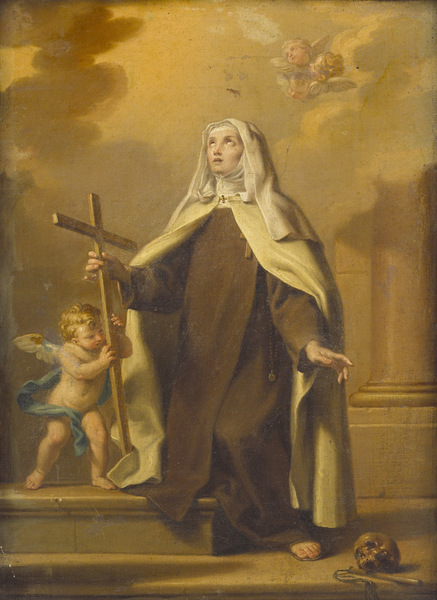
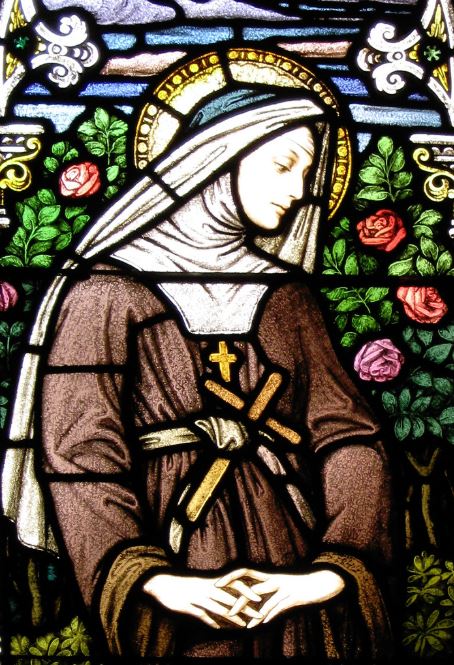
Saint of the Day – 24 February – Blessed Constantius of Fabriano OP (1401-1481) Dominican Priest, Prior, Reformer, Preacher of renown, Writer, known as a Miracle-Worker and had the gift of prophecy, peacemaker – born Constantius Bernocchi in 1401 at Fabriano, Marches of Ancona, Italy and died in 1481 at Ascoli Piceno, Italy of natural causes.

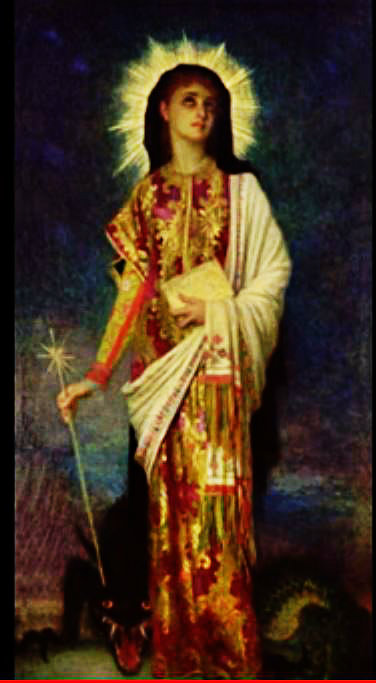
Constantius had an remarkable childhood, not only for the usual signs of precocious piety but also for a miracle that he worked when he was a little boy. Constantius had a sister who had been bedridden most of her nine years of life.   One day, the little boy brought his parents in to her bedside and made them pray with him.   The little girl rose up, cured and she remained well for a long and happy life.   Naturally, the parents were amazed and they were quite sure it had not been their prayers that effected the cure but those of their little son.Beato_Costanzo_Servoli_da_Fabriano

Constantius entered the Dominicans at age 15 and had as his masters Blessed Conradin and Saint Antoninus.   He did well in his studies and wrote a commentary on Aristotle. His special forte was Scripture and he studied it avidly.   After his ordination, he was sent to teach in various schools in Italy, arriving eventually at the convent of San Marco in Florence, which had been erected as a house of strict observance.   Constantius was eventually appointed prior of this friary that was a leading light in the reform movement.   This was a work dear to his heart and he himself became closely identified with the movement.

Several miracles and prophecies are related about Constantius during his stay in Florence.  He one day told a student not to go swimming, because he would surely drown if he did.   The student, of course, dismissed the warning and drowned.   One day, Constantius came upon a man lying in the middle of the road.   The man had been thrown by his horse and was badly injured, he had a broken leg and a broken arm.   All he asked was to be taken to some place where care could be given him but Constantius did better than that–he cured the man and left him, healed and astonished.

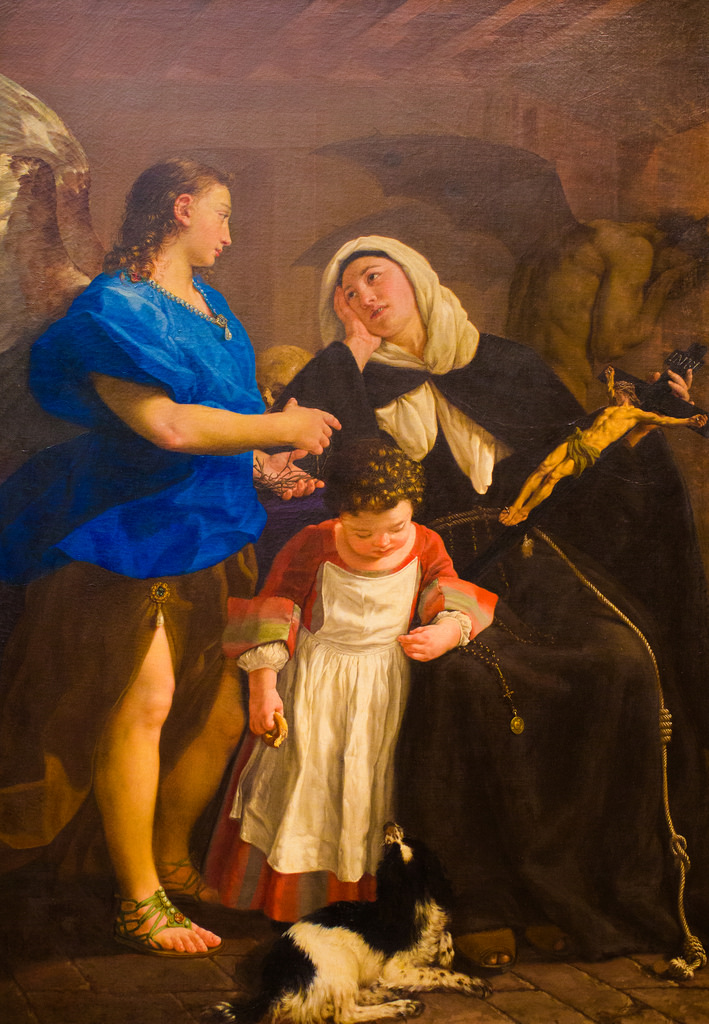
Constantius was made prior of Perugia, where he lived a strictly penitential life.  Perhaps the things that he saw in visions were responsible for his perpetual sadness, for he foresaw many of the terrible things that would befall Italy in the next few years.   He predicted the sack of Fabriano, which occurred in 1517.   At the death of Saint Antoninus, he saw the saint going up to heaven, a vision which was recounted in the canonisation process.bl constanzo snip

He was also credited with the power of working miracles and besides the care of his office, he acted as peacemaker outside the convent and quelled popular tumults.

Blessed Constantius is said to have recited the Office of the Dead every day, and often the whole 150 Psalms, which he knew by heart and used for examples on every occasion.  He also said that he had never been refused any favour for which he had recited the whole psalter.   He wrote a number of books, these, for the most part, were sermon material and some were the lives of the blesseds of the order.

He was esteemed so holy that it was reckoned a great favour to speak to him or even to touch his habit.

On the day of Constantius’s death, little children of the town ran through the streets crying out, “The holy prior is dead!   The holy prior is dead!”   Upon the news of his death, the senate and council assembled, “considering his death a public calamity” and resolved to defray the cost of a public funeral.   The cultus of Blessed Constantius was confirmed in 1821 by Pope Pius VII.

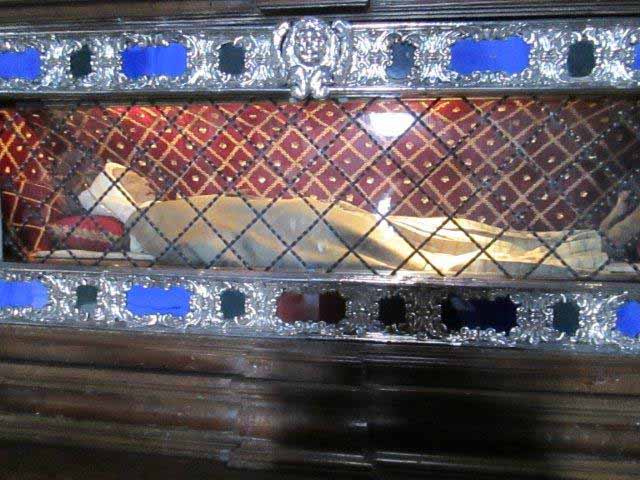
The relics of Blessed Constantius have suffered from war and invasion.   After the Dominicans were driven from the convent where he was buried, his tomb was all but forgotten for a long time.   Then one of the fathers put the relics in the keeping of Camaldolese monks in a nearby monastery, where they still remain.

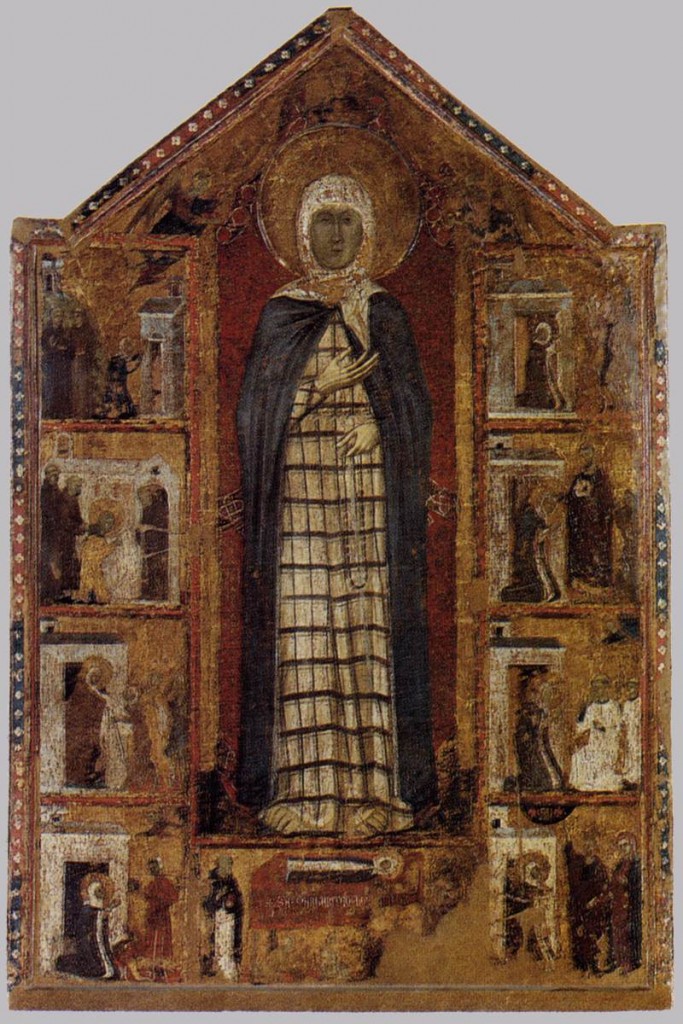
bl constanzo right - virgin and child with saints.jpg
Virgin & Child with Dominican Saints, Bl Constantius on the right
Posted in SAINT of the DAY

7th Sun in Ord Time, Year C & Memorials of the Saints 24 February

Seventh Sunday in Ordinary Time, Year C (2019)

St Adela of Blois
Bl Antonio Taglia
Bl Arnold of Carcassonne
St Betto of Auxerre
Bl Berta of Busano
Bl Constantius of Fabriano OP (1401-1481)
St Cummian Albus of Iona
St Ethelbert of Kent
Evetius of Nicomedia
Bl Florentina Nicol Goni
Bl Ida of Hohenfels
Bl Josefa Naval Girbes
St Liudhard
Bl Lotario Arnari
Bl Marco De’ Marconi
St Modestus of Trier
St Peter the Librarian
St Praetextatus of Rouen
St Primitiva
St Sergius of Caesarea
Bl Simon of Saint Bertin
Blessed Tommaso Maria Fusco (1831-1891)

Blessed Tommaso;s life:  https://anastpaul.wordpress.com/2018/02/24/saint-of-the-day-24-february-blessed-thomas-mary-fusco-and-tommaso-maria-fusco-1831-1891/

Posted in PRAYERS of the CHURCH, SAINT of the DAY

Thought for the Day – 23 February – A rich and pleasing sacrifice –

Thought for the Day – 23 February – A rich and pleasing sacrifice – Memorial of Saint Polycarp of Smyrna, Apostolic Father, Bishop and Martyr

Saint Polycarp of Smyrna (c 69 – c 155)
Bishop, Apostolic Church Father and Martyr

An excerpt from a Letter on the Martyrdom of Saint Polycarp by the Church of Smyrna

When the pyre was ready, Polycarp took off all his clothes and loosened his under-garment.   He made an effort also to remove his shoes, though he had been unaccustomed to this, for the faithful always vied with each other in their haste to touch his body.   Even before his martyrdom he had received every mark of honour in tribute to his holiness of life.

There and then, he was surrounded by the material for the pyre.   When they tried to fasten him also with nails, he said:  “Leave me as I am.   The one who gives me strength to endure the fire will also give me strength to stay quite still on the pyre, even without the precaution of your nails.”   So they did not fix him to the pyre with nails but only fastened him instead.   Bound as he was, with hands behind his back, he stood like a mighty ram, chosen out for sacrifice from a great flock, a worthy victim made ready to be offered to God.

Looking up to heaven, he said:  “Lord, almighty God, Father of Your beloved and blessed Son Jesus Christ, through whom we have come to the knowledge of Yourself, God of angels, of powers, of all creation, of all the race of saints who live in Your sight, I bless You for judging me worthy of this day, this hour, so that in the company of the martyrs I may share the cup of Christ, Your anointed one and so rise again to eternal life in soul and body, immortal through the power of the Holy Spirit.   May I be received among the martyrs in Your presence today as a rich and pleasing sacrifice.   God of truth, stranger to falsehood, You have prepared this and revealed it to me and now You have fulfilled Your promise.   I praise You for all things, I bless You, I glorify you through the eternal priest of heaven, Jesus Christ, Your beloved Son.   Through Him be glory to You, together with Him and the Holy Spirit, now and for ever. Amen.”prayer-before-his-martyrdom-st-polycarp-23-feb-2019.jpg

When he had said “Amen” and finished the prayer, the officials at the pyre lit it.   But, when a great flame burst out, those of us privileged to see it witnessed a strange and wonderful thing.   Indeed, we have been spared in order to tell the story to others.   Like a ship’s sail swelling in the wind, the flame became as it were a dome encircling the martyr’s body.   Surrounded by the fire, his body was like bread that is baked, or gold and silver white-hot in a furnace, not like flesh that has been burnt.   So sweet a fragrance came to us that it was like that of burning incense or some other costly and sweet-smelling gum.

The fire was lighted but it did him no hurt, so he was stabbed to the heart and his dead body was burnt.   “Then,” say the writers of his acts, “we took up the bones, more precious than the richest jewels or gold and deposited them in a fitting place, at which may God grant us to assemble with joy to celebrate the birthday of the martyr to his life in heaven!”

St Polycarp was a Christian leader in a pagan world. He spoke clearly and simply, fearless in love and defense of Christ, even though persecutions raged around him. He sought only to hand on the message he had been given by John. Even as Polycarp prepared for martyrdom, his joy and confident trust were evident to all.

The community of believers celebrated the anniversary of Polycarp’s death with great joy, for in him they had seen an outstanding example of love and patience.   He had held strong and had won the treasure of eternal life.   Polycarp is remembered as an Apostolic Father, one who was a disciple of the apostles.

St Polycarp, Pray for the Church, Pray for Us!st-polycarp-pray-for-us-23-feb-2019.jpg

Posted in QUOTES of the SAINTS, QUOTES on FAITH, QUOTES on LOVE, QUOTES on PEACE, QUOTES on PERSEVERANCE, QUOTES on the CHURCH, QUOTES on the CROSS of CHRIST, QUOTES on TRUST and complete CONFIDENCE in GOD, QUOTES on TRUTH, QUOTES on UNITY/with GOD, SAINT of the DAY

Quote/s of the Day – 23 February – “Stand Fast!” – St Polycarp

Quote/s of the Day – 23 February – The Memorial of St Polycarp (c 69–c 155) Martyr and Apostolic Father of the Church

“Stand fast, therefore,
in this conduct
and follow the example of the Lord,
firm and unchangeable in faith,
lovers of the brotherhood,
loving each other,
united in truth,
helping each other
with the mildness of the Lord,
despising no man.”

St Polycarp, Letter to the Philippiansstand fast therefore in this conduct - st polycarp - 23 feb 2019

“Let us, therefore,
forsake the vanity
of the crowd and their
false teachings
and turn back
to the Word delivered to us
from the beginning.”let us therefore forsake the vanity of the crowd st polycarp 23feb2019

“Hear me declare
with boldness,
I am a Christian!”

St Polycarp (c 69–c 155) Martyr

and Apostolic Father of the Churchhear me declare with boldness i am a christian st polycarp - 23 feb 2019

Posted in DOCTORS of the Church, FATHERS of the Church, QUOTES of the SAINTS, QUOTES on FAITH, SAINT of the DAY, The TRANSFIGURATION, The WORD

One Minute Reflection – 23 February – The witness of the Prophets leads to the witness of the Apostles

One Minute Reflection – 23 February – Saturday of the Sixth week in Ordinary Time, Year C – The Memorial of St Polycarp (c 69–c 155) Martyr and Father of the Church

And after six days Jesus took with him Peter and James and John and led them up a high mountain, apart by themselves and he was transfigured before them and his garments became glistening, intensely white, as no fuller on earth could bleach them. And there appeared to them Elijah with Moses and they were talking to Jesus…Mark 9:2-4

The witness of the Prophets leads to the witness of the Apostles

REFLECTION – “It was the will of the Lord Jesus that Moses alone (though he was accompanied, it is true, by Joshua (Ex 24:13)) should climb the mountain to receive the law.   In the gospel too, out of His many disciples He limited the revelation of His risen glory to three – Peter, James and John.   Wishing to put no stumbling block in the way of His weaker followers, whose vacillating minds might prevent them from taking in the full meaning of the paschal mystery, He chose to keep His redemptive plan a secret and repeatedly warned Peter, James and John not to talk freely about what they had seen. Peter, in fact, did not know what to say.   He thought of setting up three shelters for the Lord and His attendants.   Then he found himself unable to bear the brilliance of the glory radiating from His transfigured Lord.   Together with those “sons of thunder” (Mk 3:17), James and John, he fell to the ground (Mt 17:6)…

They entered the cloud in order to receive knowledge of hidden, secret matters and there they heard the voice of God saying:  “This is my Beloved Son in whom I am well pleased. Listen to him.”   What does “This is my beloved Son” mean?   The implication is as follows: Make no mistake, Simon.   Do not imagine God’s Son can be put into the same category as the servants who attend him.   This man is my Son – neither Moses nor Elijah can be given that title, even though the one opened the sea and the other closed the heavens. Both of them exercised dominion over the elements but it was by the power of the Lord’s word that they did so (Ex 14; 1 Kgs 17:1).   They were only servants, it was the Lord who made the waters into a solid wall, the Lord who caused the drought that closed the heavens and the Lord who, in his own time, opened them to release the rain.
For evidence of the resurrection to be accepted, the combined witness of those servants is required.   But when the glory of their risen Lord is revealed, the servant’ aureole is lost in shadow.   Sunrise obscures the stars, the light of the heavenly bodies grows pale before the brilliance of the sun shining on this material world.   How then could human stars attract notice in the presence of the eternal Sun of Justice?   (Mal 3:20).”…St Ambrose (340-397) Father & Doctormark 9 2 and he wwas transfigured - sunrise obscures the stars st ambrose 23 feb 2019.jpg

PRAYER – Lord of all creation, let us praise You with voice and mind and deed. Let us too give glory to Your Holy Son and bask in the Sun of Justice! Grant us a place in the reflection of His Light to shine on those around us.   As You gave St Polycarp, a place in the company of the Martyrs, grant us our eternal joy with him and all Your angels and saints.   May his intercession, give us the strength to drink from that cup which Christ drank and so rise to eternal life.   Through Christ our Lord, in unity with the Holy Spirit, one God forever, amen.st-polycarp-pray-for-us-no-2-23-feb-2018.jpg

Posted in MARIAN PRAYERS, MARIAN Saturdays, Our MORNING Offering, The BLESSED VIRGIN MARY

Our Morning Offering – 23 February – O Sweet Mother of God

Our Morning Offering – 23 February – Saturday of the Sixth week in Ordinary Time, Year C – Marian Saturdays

O Sweet Mother of God
By St Faustina Kowalska (1905–1938)

O sweet Mother of God,
I model my life on You.
You are for me the bright dawn.
In You I lose myself, enraptured.
O Mother, Immaculate Virgin,
In You, the divine ray is reflected,
Midst storms, ‘tis You
who teach me to love the Lord,
O my shield and defense from the foe.
Amen

(Diary 1232)o sweet mother of god - st faustina 23 feb 2019.jpg

Posted in Of BACHELORS, Of GARDENERS, Horticulturists, Farmers, SAINT of the DAY

Saint of the Day – 23 February – St Serenus the Gardener (Died 307) Martyr

Saint of the Day – 23 February – St Serenus the Gardener (Died 307) Martyr – born in Greece and was beheaded on 23 February 303 at Sirmiun, Pannonia (modern Hungary). Patronages – bachelors, falsely accused people, gardeners.

st serenus the gardener 2

Serenus was by birth a Grecian.   He left his family estate, friends and country to serve God in celibacy, penance and prayer.   With this design he bought a garden in Sirmium in Pannonia, which he cultivated with his own hands and lived on the fruits and herbs it produced.

One day a woman came to his garden with her two daughters.   Serenus, seeing them come up, advised them to withdraw and to conduct themselves in future as decency required in persons of their sex and condition.   The woman, stung at our Saint’s charitable remonstrance, retired in confusion but resolved on revenging the supposed affront.   She accordingly wrote to her husband that Serenus had insulted her.

He, on receiving her letter, went to the emperor to demand justice, whereupon the emperor gave him a letter to the governor of the province to enable him to obtain satisfaction.   The governor ordered Serenus to be immediately brought before him. Serenus, on hearing the charge, answered, “I remember that, some time ago, a lady came into my garden at an unseasonable hour and I own I took the liberty to tell her it was against decency for one of her sex and quality to be abroad at such an hour.”   This plea of Serenus having put the officer to the blush for his wife’s conduct, he dropped his prosecution.

But the governor, suspecting by this answer that Serenus might be a Christian, began to question him, saying, “Who are you and what is your religion?”   Serenus, without hesitating one moment, answered, “I am a Christian. It seemed a while ago as if God rejected me as a stone unfit to enter His building but He has the goodness to take me now to be placed in it; I am ready to suffer all things for His name, that I may have a part in His kingdom with His Saints”   The governor, hearing this burst into rage and said, “Since you sought to elude by flight the emperor’s edicts and have positively refused to sacrifice to the gods, I condemn you for these crimes to lose your head.”

st serenus the gardener

The sentence was no sooner pronounced than the Saint was carried off and beheaded, on 23 February, in 307.

Posted in SAINT of the DAY

Memorials of the Saints – 23 February

St Polycarp of Smyrna (c 69 – c 155) (Memorial)
St Polycarp’s life and death: https://anastpaul.wordpress.com/2018/02/23/saint-of-the-day-23-february-st-polycarp-c-69-c-155-martyr-and-father-of-the-church/

St Alexander Akimetes
St Boswell
St Dositheus of Egypt
St Felix of Brescia
St Florentius of Seville
St Giovanni Theristi
Bl Giovannina Franchi
Bl John of Hungary
Bl Josephine Vannini
Bl Juan Lucas Manzanares
Bl Ludwik Mzyk
St Martha of Astorga
St Medrald
St Milburga
Bl Nicolas Tabouillot
St Ordonius
St Polycarp of Rome
Bl Rafaela Ybarra de Villalongo
St Romana
St Serenus the Gardener (Died 307) Martyr
Bl Stefan Wincenty Frelichowski
St Willigis of Mainz
St Zebinus of Syria

Martyrs of Syrmium – 73 Christians who were martyred together in the persecutions of Diocletian. We know no details about them, and only six of their names – Antigonus, Libius, Rogatianus, Rutilus, Senerotas and Syncrotas.

Posted in DOCTORS of the Church, FATHERS of the Church, FEASTS and SOLEMNITIES, MORNING Prayers, QUOTES of the SAINTS, QUOTES on FAITH, QUOTES on the CHURCH, The APOSTLES & EVANGELISTS

Thought for the Day – 22 February – St Pope Leo the Great “The Chair of Peter”

Thought for the Day – 22 February – The Feast of the Chair of Saint Peter

Pope Saint Leo the Great (400-461)
Bishop of Rome and Great Latin Father & Doctor of the Church

An excerpt from Sermo 4

Out of the whole world one man, Peter, is chosen to preside at the calling of all nations and to be set over all the apostles and all the fathers of the Church.   Though, there are, in God’s people many shepherds, Peter is thus appointed, to rule in his own person, those whom Christ also rules as the original ruler.   Beloved, how great and wonderful is this sharing of His power that God in His goodness has given to this man.   Whatever Christ has willed to be shared in common, by Peter and the other leaders of the Church, it is only through Peter, that He has given to others, what He has not refused to bestow on them.

The Lord now asks the apostles as a whole, what men think of him.   As long as they are recounting the uncertainty born of human ignorance, their reply is always the same.

But when He presses the disciples to say what they think themselves, the first to confess his faith in the Lord, is the one who is first in rank, among the apostles.

Peter says:  You are the Christ, the Son of the living God.   Jesus replies:  Blessed are you, Simon Bar-Jona, for flesh and blood has not revealed it to you, but my Father who is in heaven.   You are blessed, he means, because my Father has taught you.   You have not been deceived by earthly opinion but have been enlightened by inspiration from heaven. It was not flesh and blood that pointed Me out to you but the one whose only-begotten Son I am.

He continues:  And I say to you.   In other words, as my Father has revealed to you my godhead, so I in my turn make known to you, your pre-eminence.   You are Peter:  though I am the inviolable rock, the cornerstone that makes both one, the foundation apart from which no one can lay any other, yet you also are a rock, for you are given solidity by my strength, so that which is my very own because of my power is common between us through your participation.

And upon this rock I will build my Church and the gates of hell shall not prevail against it.   On this strong foundation, He says, I will build an everlasting temple.   The great height of my Church, which is to penetrate the heavens, shall rise on the firm foundation of this faith.

The gates of hell shall not silence this confession of faith;  the chains of death shall not bind it.   Its words are the words of life.   As they lift up to heaven those who profess them, so they send down to hell those who contradict them.

Blessed Peter is therefore told – To you I will give the keys of the kingdom of heaven. Whatever you bind on earth is also bound in heaven.   Whatever you lose on earth shall be loosed also in heaven.

The authority vested in this power passed also to the other apostles and the institution, established by this decree, has been continued in all the leaders of the Church.   But, it is not without good reason, that what is bestowed on all, is entrusted to one.   For Peter, received it separately, in trust, because he is the prototype, set before all the rulers of the Church.

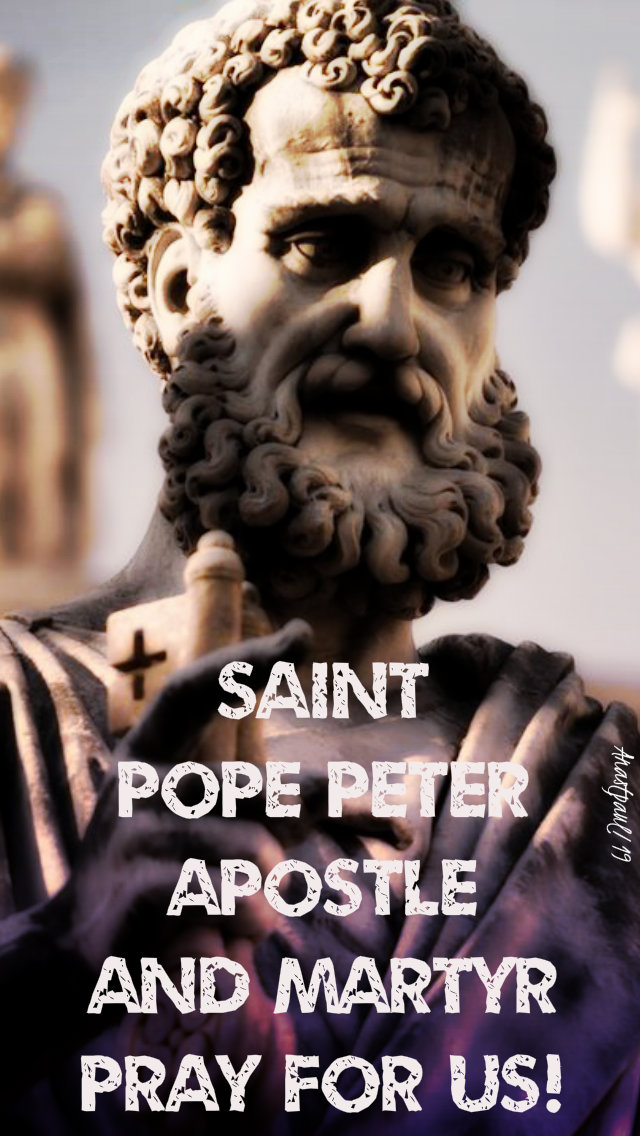
Saint Pope Peter
Apostle and Martyr
Pray for us!st pope peter apostle and martyr pray for us 22feb2019.jpg

Posted in FEASTS and SOLEMNITIES, QUOTES of the SAINTS, QUOTES on FAITH, QUOTES on the CHURCH, QUOTES on the CROSS of CHRIST, SAINT of the DAY, The WORD

Quote/s of the Day – 22 February – “On this rock I will build my Church”

Quote/s of the Day – 22 February – The Feast of the Chair of Saint Peter

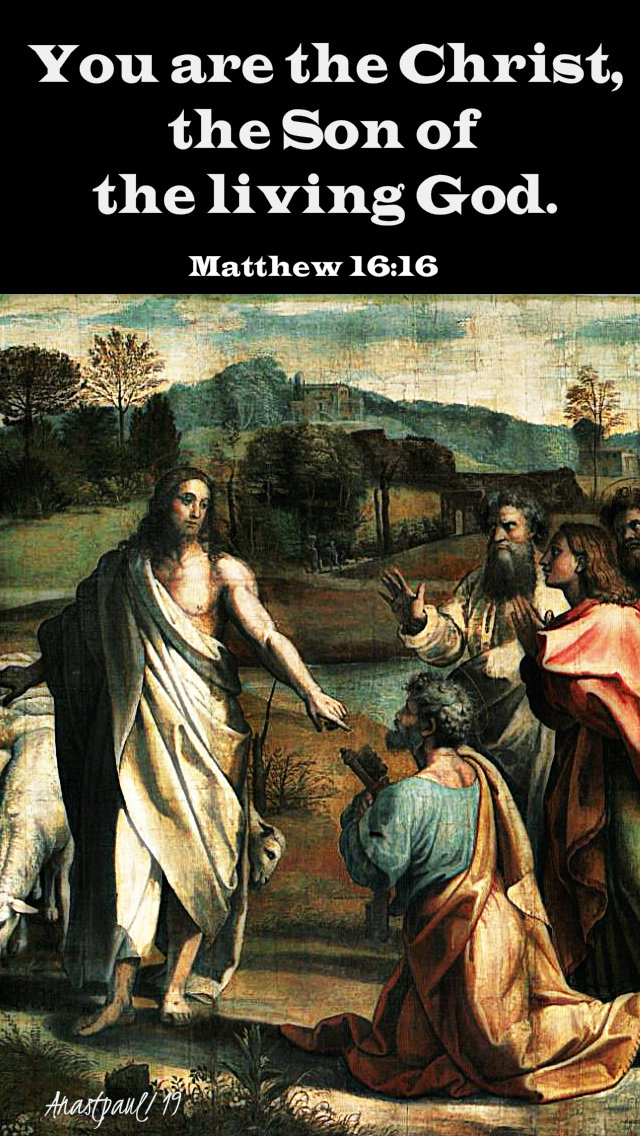
“You are the Christ, the Son of the living God.”

Matthew 16:16matthew 16 16 you are the christ the son of the living god 22feb2019.jpg

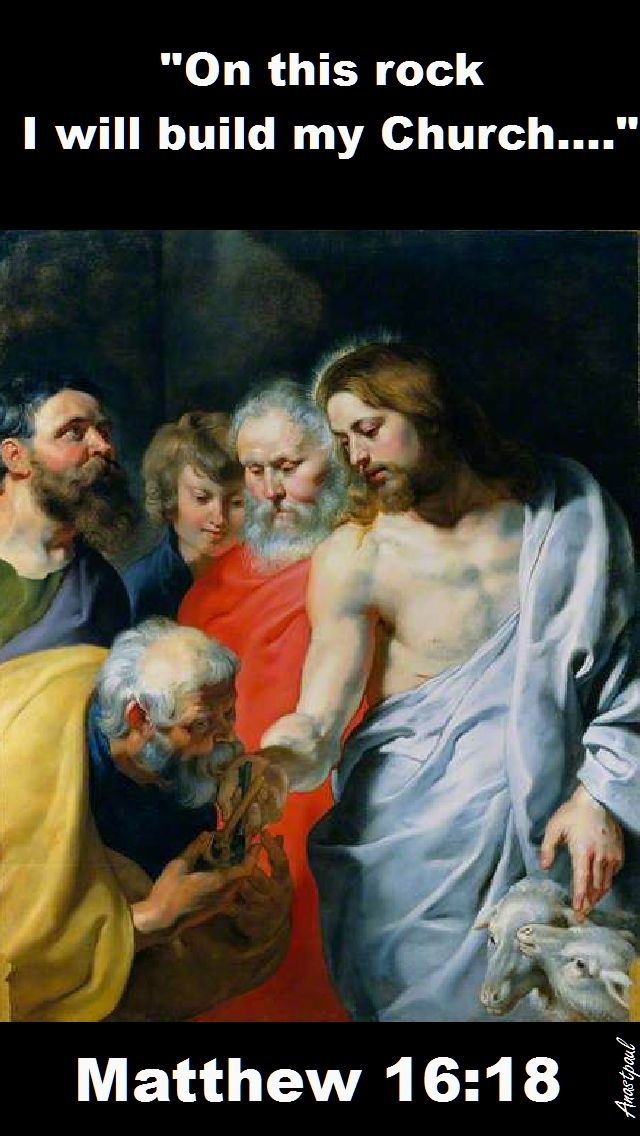
“On this rock I will build my Church”

Matthew 16:18on-this-rock-matthew-16-18-22-feb-2017.jpg

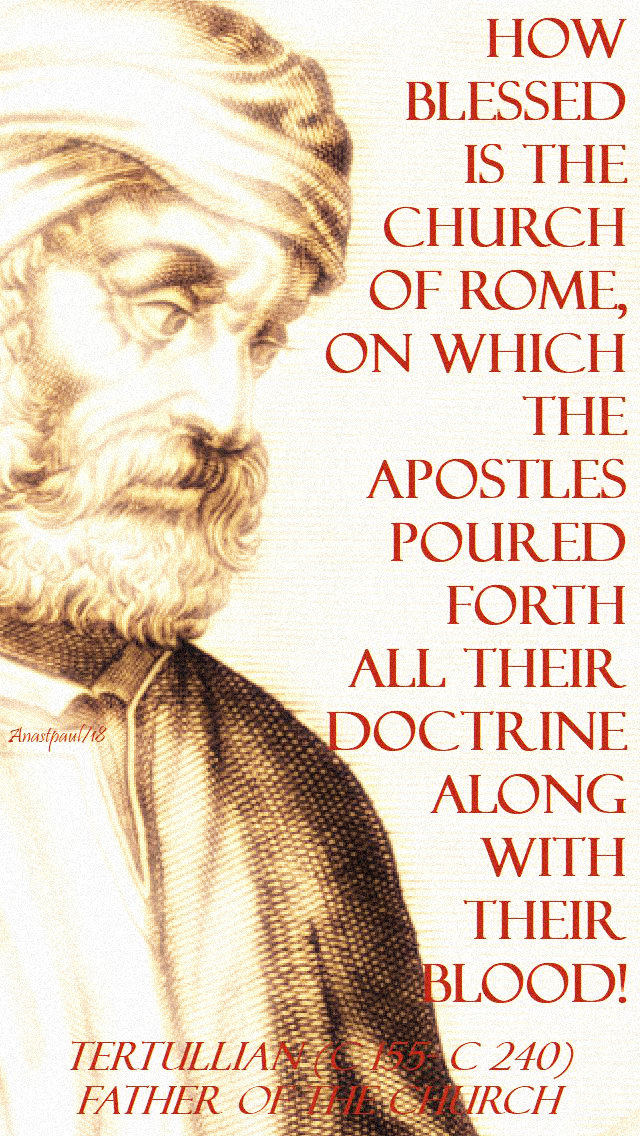
“How blessed is the Church of Rome,
on which the Apostles poured forth
all their doctrine along with their blood!”
(De Praescriptione Hereticorum, 36)

Tertullian (c 155- c 240)
Quintus Septimius Florens Tertullianushow-blessed-is-the-church-of-rome-tertullian-22-feb-2018.jpg

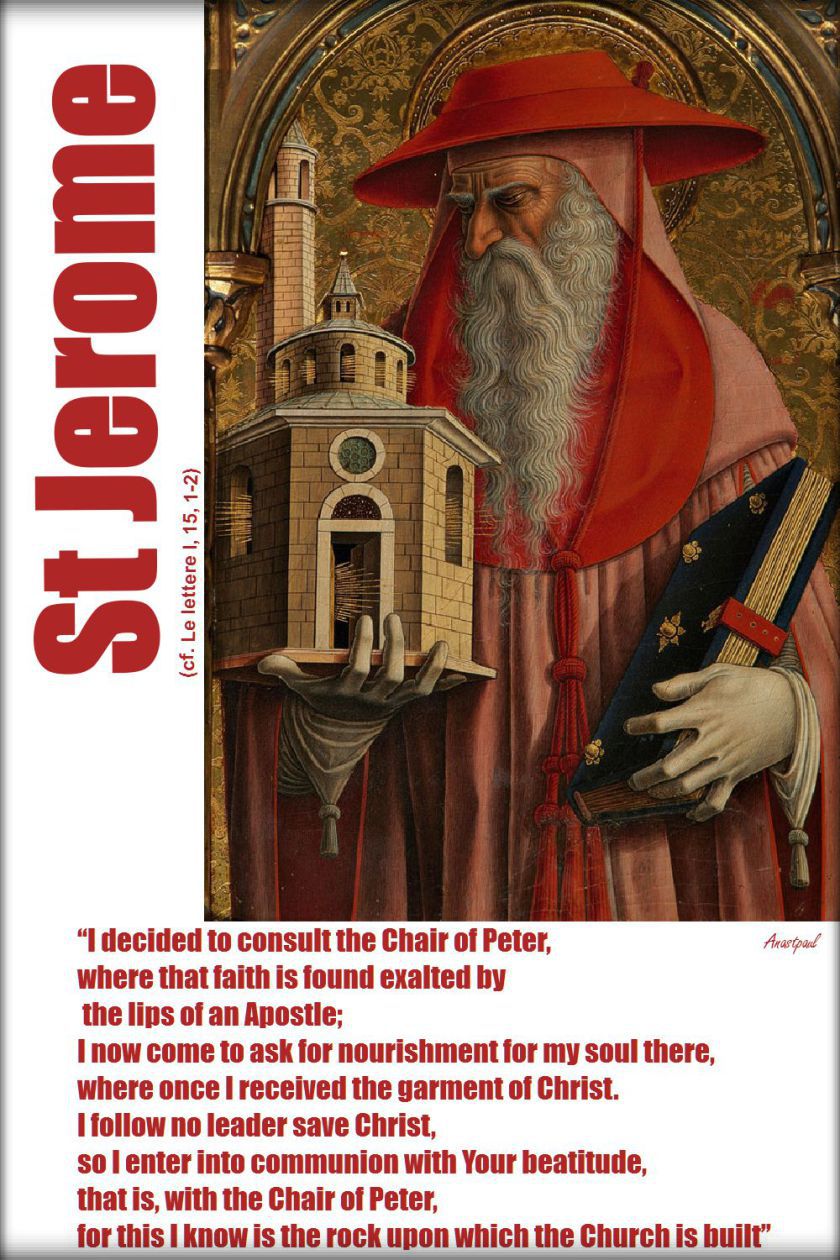
“I decided to consult the Chair of Peter, where that faith is found exalted by the lips of an Apostle;
I now come to ask for nourishment for my soul there, where once I received the garment of Christ.
I follow no leader save Christ, so I enter into communion with Your beatitude,
that is, with the Chair of Peter, for this I know, is the rock upon which the Church is built.”
(cf. Le lettere I, 15, 1-2)

St Jerome (343-420) Father & Doctori-decided-to-consult-the-chair-of-peter-st-jerome-22feb-2017

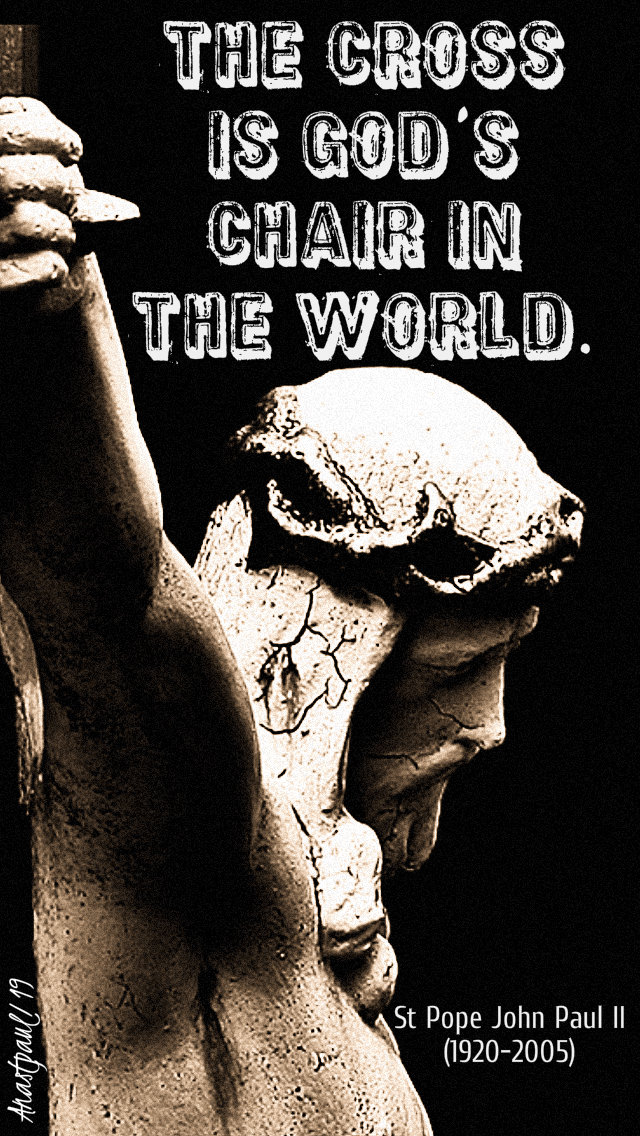
“The Cross is God’s chair in the world.”the cross is god's chair in the world - st john paul 22feb2019.jpg

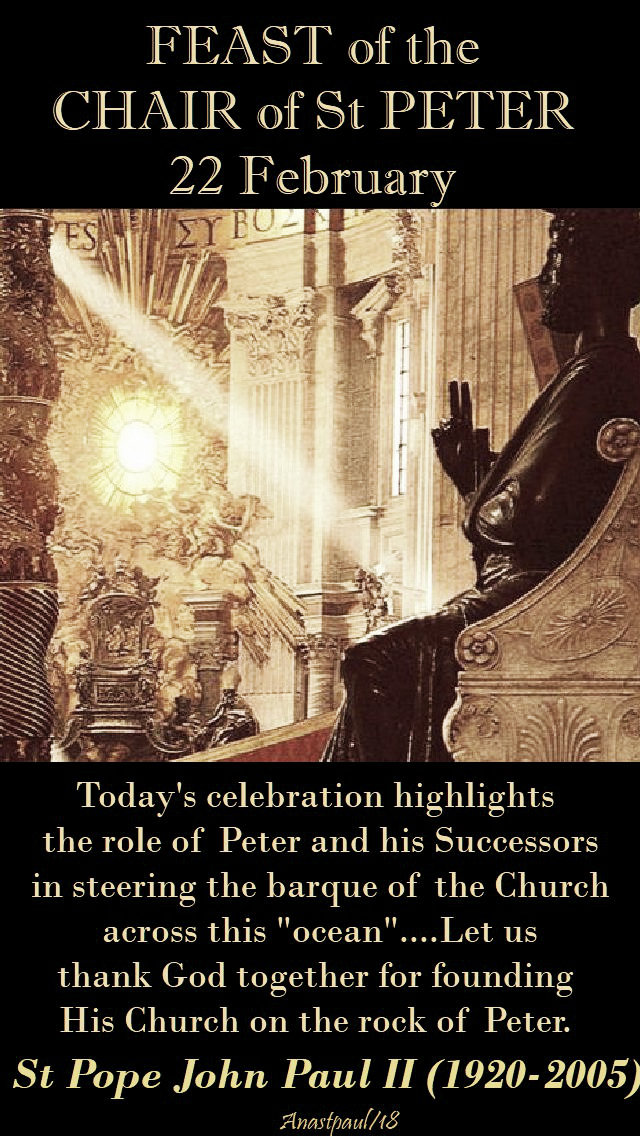
“Today’s celebration highlights
the role of Peter and his Successors
in steering the barque of the Church across this “ocean”….
Let us thank God together
for founding His Church on the rock of Peter.feast-of-the-chair-of-st-peter-22-feb-2019-todays-celebration-highlights-st-john-paul.jpg

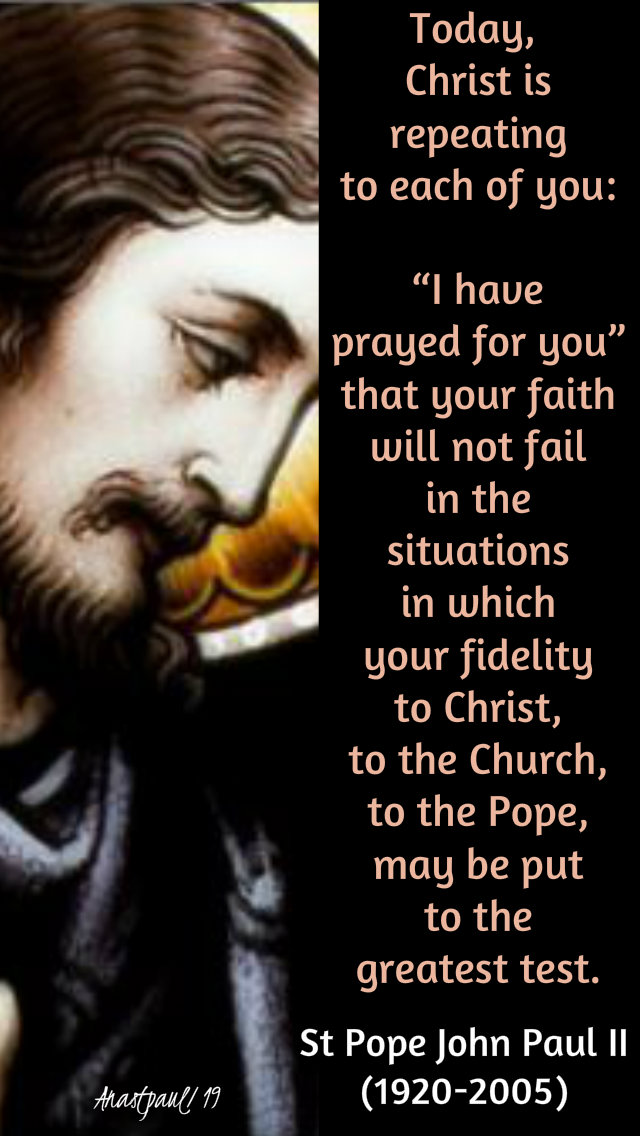
“Today, …Christ is repeating to each of you:
“I have prayed for you”
that your faith will not fail in the situations
in which your fidelity to Christ,
to the Church,
to the Pope,
may be put to the greatest test.”

St Pope John Paul II (1920-2005)today christ is repeating to each one of you - st john paul 22feb2019 chair of peter.jpg

Posted in DOCTORS of the Church, FATHERS of the Church, FEASTS and SOLEMNITIES, MORNING Prayers, QUOTES of the SAINTS, QUOTES on the CHURCH, SAINT of the DAY

One Minute Reflection – 22 February – The Feast of the Chair of Saint Peter

One Minute Reflection – 22 February – The Feast of the Chair of Saint Peter

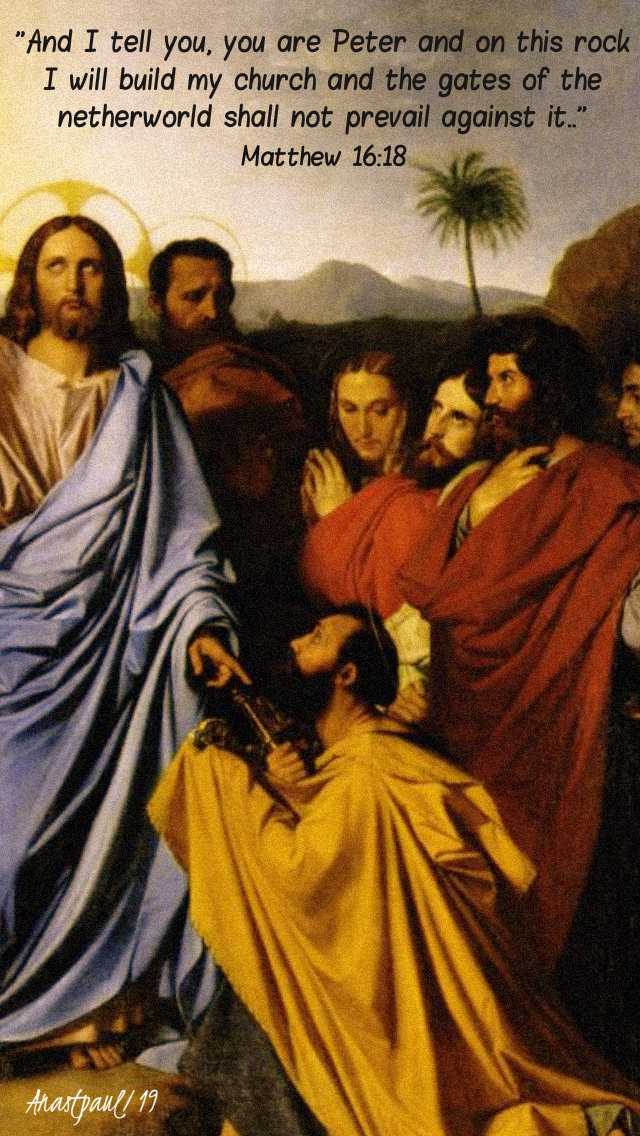
“And I tell you, you are Peter and on this rock I will build my church and the gates of the netherworld shall not prevail against it..”…Matthew 16:18matthew 16 18 and i tell you you are peter and on this rock 22 feb 2019.jpg

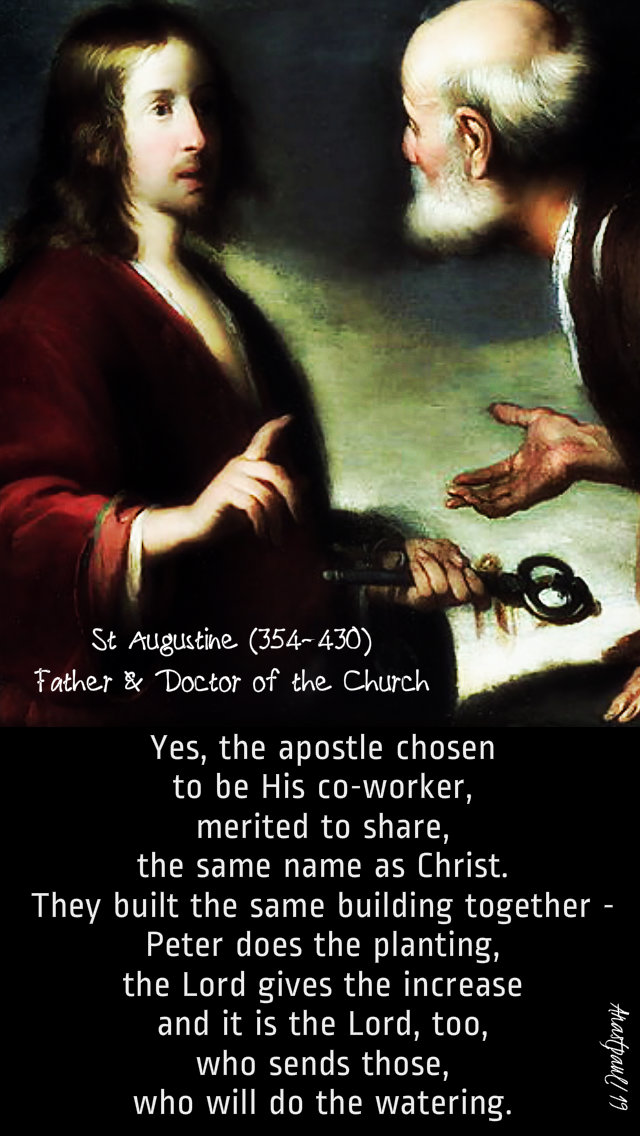
REFLECTION – “You are Peter and on this rock I shall build my Church.”   He was given this name of ‘Peter’ because he was the first to set the foundations of the faith among the nations and because he is, the indestructible rock on which rests, the judgement seat and the whole edifice, belonging to Christ Jesus.   It was on account of his faithfulness that he was called Peter, whereas our Lord receives the same name on account of His power according to Saint Paul’s words:  “They drank from a spiritual rock that followed them and that rock was the Christ” (1Cor 10:4).   Yes, the apostle chosen to be His co-worker, merited to share, the same name as Christ.   They built the same building together – Peter does the planting, the Lord gives the increase and it is the Lord, too, who sends those, who will do the watering (cf. 1 Cor 3:6f.).
As you know, my beloved, it was following on from his own failure, when our Saviour suffered, that blessed Peter was raised up.   It was after he had denied the Lord that he became the first next to him.   Rendered more faithful when he wept over the faith he had betrayed, he received a still greater grace than the one he had lost.   To him Christ confided His flock, so that he might guide it like a good shepherd and he who had been so weak, would now become the support of all.   He who had fallen when questioned about his faith, must now establish the others, on the unshakeable foundations of faith. Hence he is called the foundation stone of the piety of the Churches.”…St Augustine (354-430) Father & Doctor of the Churchyes, the apostle chosen to be his co-worker - st augustine - 22 feb 2019.jpg

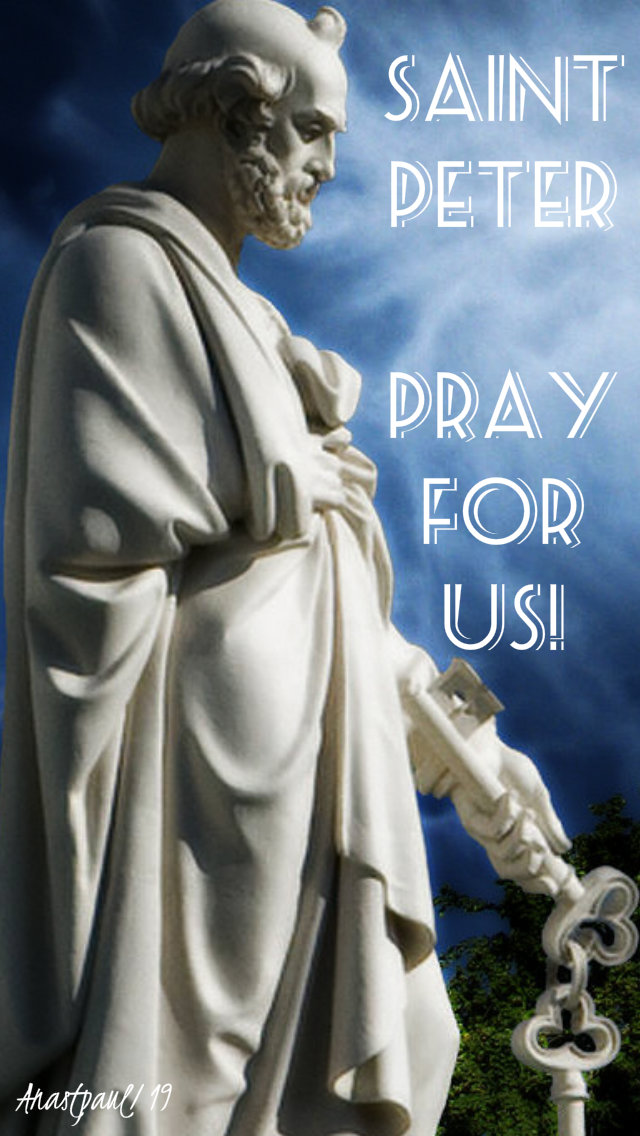
PRAYER – Holy Father, send Your Divine Enlightener into the hearts of all Your faithful, filling us with the strength to fulfil our mission as the followers of the Chair of St Peter. And most of all, we pray Lord Holy God to inspire and light the way of our Holy Father, Francis. Sustain and guide him, keep him in health and strength, to lead Your people by the Light of the Way and the Truth. Holy Father, have mercy on us, Holy Spirit guide and lead us, Lord Jesus Christ be our intercessor and teacher, amen.st peter pray for us 22 feb 2019.jpg

Posted in Our MORNING Offering, PAPAL PRAYERS, PRAYERS of the SAINTS, PRAYERS to the SAINTS, SAINT of the DAY

Our Morning Offering – 22 February – May the mystery of Your Passion, enlighten our life

Our Morning Offering – 22 February – The Memorial of St Margaret of Cortona TOSF (1247–1297)

O St Margaret of Cortona
By St John Paul (1920-2005)

O Saint Margaret of Cortona,
I too come today as a pilgrim and I pause to pray with you
at the feet of the image of Christ Crucified and Risen,
whom, as a penitent, you contemplated at length.
Lord Jesus, crucified for us,
in offering yourself on Calvary for all humanity,
You have revealed to us, the wellsprings of everlasting life.
May the mystery of Your Passion, enlighten our life,
making us ready to follow You on the way of holiness and love.
Rekindle our faith, teach us to recognise and welcome
in our everyday life, the plans of Your mysterious Providence.
Give us the courage to confess our sins
and open our hearts to sorrow,
in order to receive the gift of Your mercy.
Empower us to forgive our brethren
following the example of Your love that knows no bounds.
Help us to be humbly disposed to repair the harm we have done
by actively and generously serving the poor, the sick
and all who are marginalised and without hope.
Give everyone the joy of persevering faithfully,
in full harmony with the Church,
along the way of the particular calling.
Above all others, show the young,
the splendid plan of love that You intend to bring about for them
and with them, in the new millennium.
Enable us to be peacemakers,
tenacious weavers of daily relationships of fraternal solidarity,
artisans of reconciliation,
witnesses and apostles of the civilisation of love.
O glorious Saint Margaret of Cortona,
present this request to your Crucified Lord and ours.
Guide us with the strength of your example,
support us with your constant protection,
be our companion, we beg you,
till we reach our Father’s house.
Amen

Pope John Paul II, 1999o st margaret of cortona by st john paul - 22 feb 2019.jpg

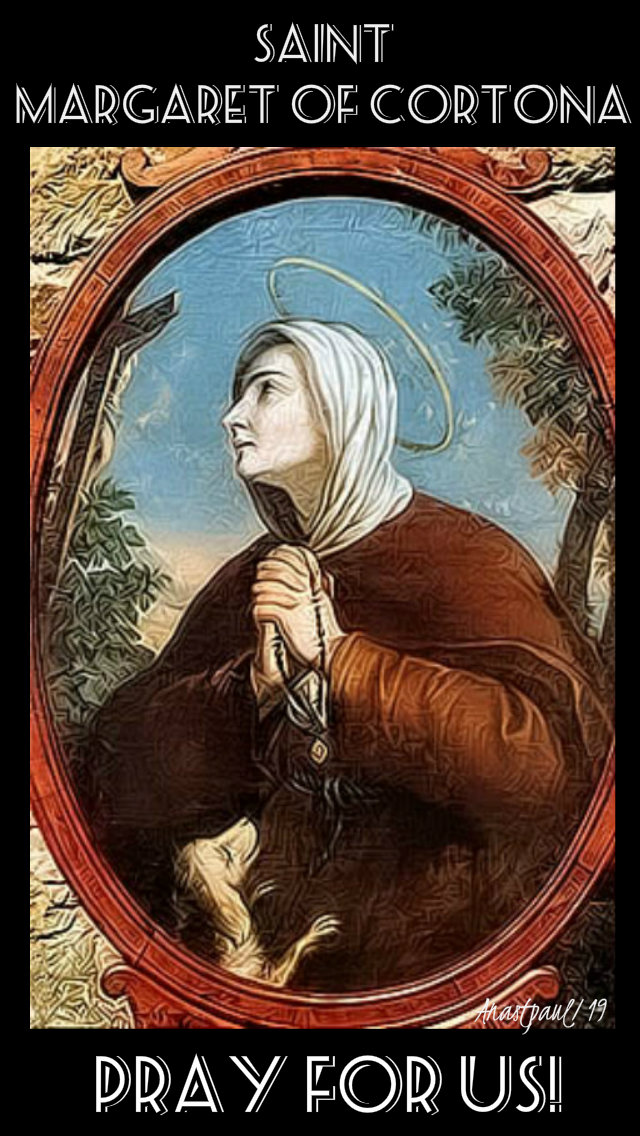
St Margaret of Cortona, Pray for Us!st margaret of cortona pray for us 22 feb 2019.jpg

Posted in DOCTORS, / SURGEONS / MIDWIVES., Of BEGGARS, the POOR, against POVERTY, PATRONAGE - MENTAL ILLNESS, PATRONAGE - PENITENTS, PATRONAGE - TERTIARIES, SAINT of the DAY, Spinsters - Single LAYWOMEN

Saint of the Day – 22 February – St Margaret of Cortona TOSF (1247–1297)

Saint of the Day – 22 February – St Margaret of Cortona TOSF (1247–1297) Penitent, Franciscan Tertiary, Mystic, Apostle of Charity, Founder of a charitable Lay Apostolate and an Order of Sisters – born in 1247 at Loviano, Tuscany, Italy and died on 22 February 1297 at Cortona, Italy of natural causes.   Patronages – against insanity or mental illness, against sexual temptation, against temptations, of falsely accused people, beggars and homeless people, against the death of parents, stepchildren, midwives, penitent women, people ridiculed for their piety, reformed prostitutes, single laywomen, tertiaries, Arezzo-Cortona-Sansepolcro, Italy, Diocese of, Cortona, Italy, Diocese of, Cortona, Italy.snip st margaret

Margaret was born of farming parents, in Laviano, a little town in the diocese of Chiusi.  At the age of seven, Margaret’s mother died and her father remarried.   Stepmother and stepdaughter did not like each other.   As she grew older, Margaret became more wilful and reckless and her reputation in the town suffered.   At the age of 17 she met a young man, according to some accounts, the son of Gugliemo di Pecora, lord of Valiano and she ran away with him.   Soon Margaret found herself installed in the castle, not as her master’s wife, for convention would never allow that but as his mistress, which was more easily condoned.    For ten years, she lived with him near Montepulciano and bore him a son.

When her lover failed to return home from a journey one day, Margaret became concerned.   The unaccompanied return of his favourite hound alarmed Margaret and the hound led her into the forest to his murdered body.

That crime shocked Margaret into a life of prayer and penance.    Margaret returned to his family all the gifts he had given her and left his home.   With her child, she returned to her father’s house but her stepmother would not have her.   Margaret and her son then went to the Franciscan friars at Cortona, where her son eventually became a friar.   She fasted, avoided meat and subsisted on bread and vegetables.36952739804_18fa72f735_b.jpg

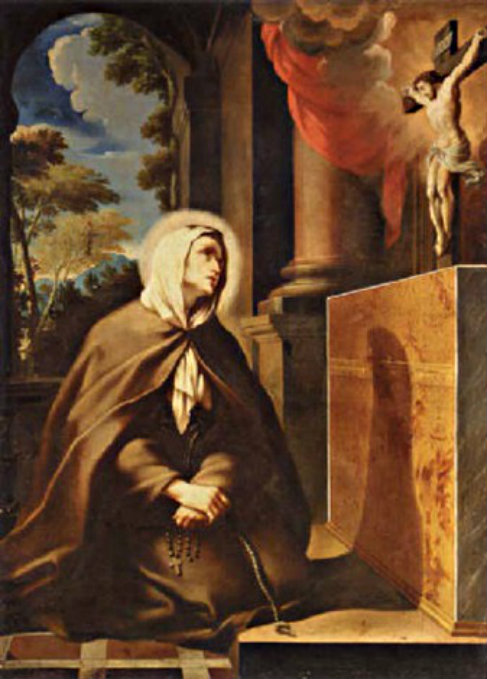
In 1277, after three years of probation, Saint Margaret joined the Third Order of Saint Francis and chose to live in poverty.   Following the example of St Francis of Assisi, she begged for sustenance and bread.   She pursued a life of prayer and penance at Cortona and there established a hospital for the sick, homeless and impoverished.   To secure nurses for the hospital, she instituted a congregation of Tertiary Sisters, known as “le poverelle” (Italian for “the little poor ones”).italian-school-roman-(17)-saint-margaret-of-cortona-kneeling-before-a-crucifix

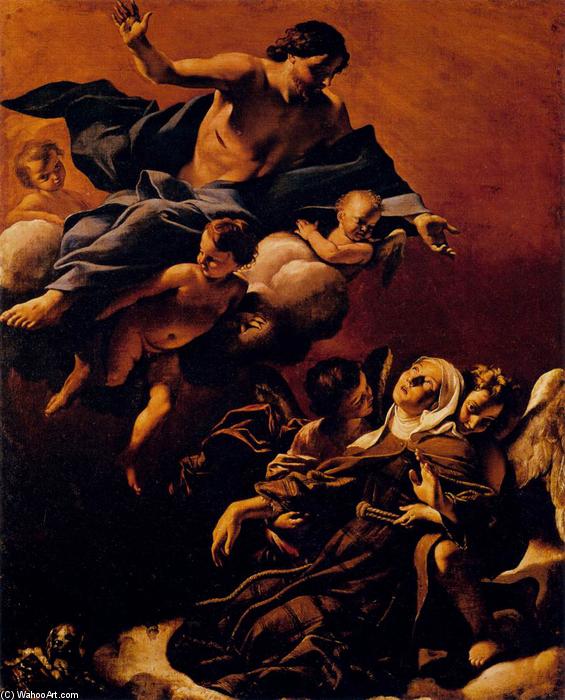
While in prayer, Margaret heard the words, “What is your wish, poverella?” (“little poor one?”) and she replied, “I neither seek nor wish for anything but You, my Lord Jesus.”   She also established an order devoted to Our Lady of Mercy and the members bound themselves to support the hospital and to help the needy.Giovanni-Lanfranco-Ecstasy-of-St-Margaret-of-Cortona-2-

On several occasions, St Margaret participated in public affairs.   Twice, following divine command, she challenged the Bishop of Arezzo, Guglielmo Ubertini Pazzi, in whose diocese Cortona lay, because he lived and warred like a prince.   She moved to the ruined Church of St Basil, now Santa Margherita and spent her remaining years there, she died on 22 February 1297.Calvi_J._A._Estasi_di_santa_Margherita.jpg

After her death, the Church of Santa Margherita in Cortona was rebuilt in her honour.  In the church of Santa Margherita you can view her incorrupt body of Saint Margaret. Hundreds of reports of miracles, both physical and spiritual, were reported by those who come here to venerate her.   Saint Margaret was Canonised by Pope Benedict XIII on 16 May 1728.Cortona-bodyof-st-margaret-of-cortona.jpg

MargaretOfCortona1-683x1024.jpg

st margaret glass.JPG

Posted in Uncategorized

Feast of the Chair of St Peter and Memorials of the Saints – 22 February

The Chair of Saint Peter (Feast)
About this great Feast: https://anastpaul.wordpress.com/2018/02/22/feast-of-the-chair-of-st-peter-cathedra-petri-22-february/

St Ailius of Alexandria
St Angelus Portasole
St Aristion of Salamis
St Athanasius of Nicomedia
St Baradates of Cyrrhus
Bl Diego Carvalho
St Elwin
Bl Émilie d’Oultremont d’Hoogvorst
Bl Isabella of France
St John the Saxon
St Limnaeus
St Margaret of Cortona TOSF (1247–1297)

St Maximian of Ravenna
St Miguel Facerías Garcés
St Mohammed Abdalla
St Papias of Heirapolis
St Paschasius of Vienne
St Raynerius of Beaulieu
St Thalassius

Martyrs of Arabia – A memorial for all the unnamed Christians martyred in the desert and mountainous areas south of the Dead Sea during the persecutions of Emperor Valerius Maximianus Galerius.

Posted in LENT, NOVENAS, PRACTISING CATHOLIC, Uncategorized

Preparing for Lent and Announcing a Lenten Preparation Novena – 21 February

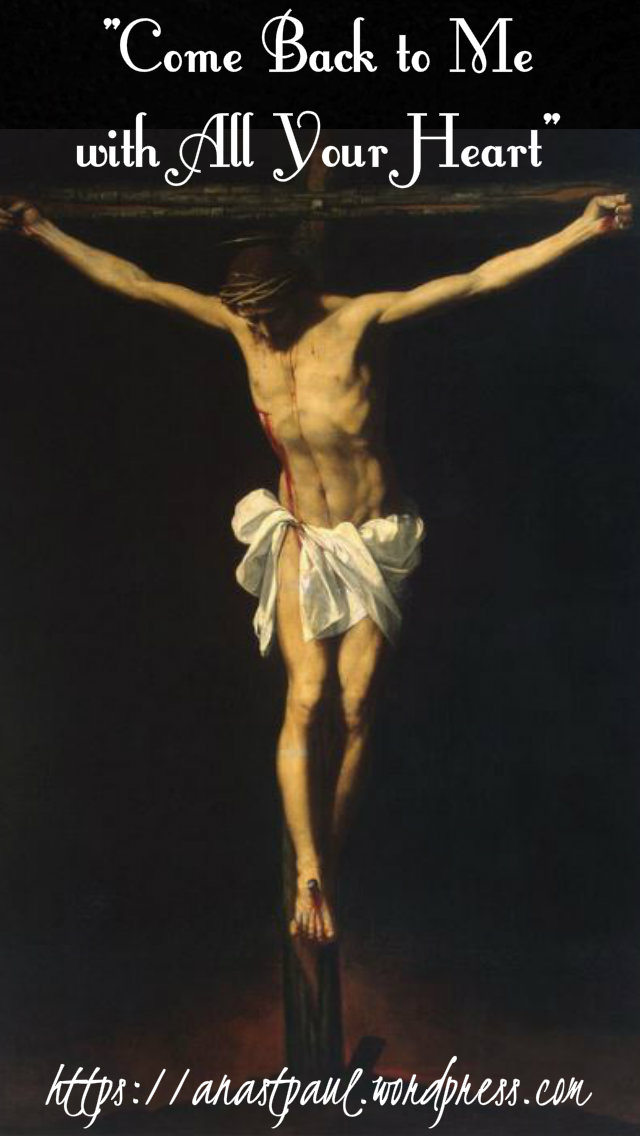
“Come Back to Me with All Your Heart”

Lent with All My Heartcome back to me with all your heart - lent 2019

Each year, when Lent comes near, I easily return to my old instincts that Lent is supposed to be a time when I do some sacrifice to please God for six weeks.   I know, in my head and heart that this isn’t the meaning of Lent but it is deeply ingrained in me, and I suspect it is for many of us.

The first Preface (the prayer that introduces the Eucharistic Prayer) of Lent is titled: “The spiritual meaning of Lent.” It sets the tone for Lent with this prayer, worthy of our reflection:

For by your gracious gift each year
your faithful await the sacred paschal feasts
with the joy of minds made pure,
so that, more eagerly intent on prayer
and on the works of charity,
and participating in the mysteries
by which they have been reborn,
they may be led to the fullness of grace
that you bestow on your sons and daughters.
(The Roman Missal, Third Typical Edition, 2011)

We are invited to await the Three Holy Days – Holy Thursday, Good Friday and Easter Sunday – “with the joy of minds made pure.”   Rarely does it seem that we are going through Lent with joy, or that this joy comes from “minds made pure.”   And, rarely is it so clear that the “fullness of grace” to which we are led comes from being “more eagerly intent on prayer” and “on the works of charity.”   Finally, this journey is framed at “participating in the mysteries by which they have been reborn.”

I want to begin Lent this year, using Ignatius’ naming of a grace I desire:  “Lord, lead me to the fullness of your grace.”   I want to ask that I might be more intent on prayer and works of charity.    And, I want to experience, through the readings and the liturgies each week during Lent, that I’m really reliving the mysteries of my rebirth and salvation.

I desire that this be what I “do” during Lent.   This gets me closer to a Lent experience that is about what God wants to give me, rather than what I try to give God.

When we are more “intent on prayer,” what will that look like?   If we let our prayer become more personal – more about our relationship with Jesus – we will discover all we need for our Lenten journey.   We will discover who we are.   We will discover pockets of independence, areas of resistance, patterns that are unhealthy and sinful.   And, if we stay open to graces being offered us from Jesus who always desires a deeply relationship with Him, we will be drawn – reading by reading – story after story – into admiration and affections for Jesus, His way and His invitation to us.   Lent can become a day-by-day process of being more and more aware of the gift being offered us.   The gift becomes a person and a more intimate relationship with Him.   We will be drawn to greater freedom and deeper self-sacrificing, dying-to-self love.

It is in this context that sacrifices will come.   The Preface above suggests that what flows from this kind of prayer is “works of charity.”   It seems to imply that when we desire to be closer to Jesus in prayer, we live that out, not by giving up candy or alcohol, or even by chipping away at our bad habits.   It appears that the next step in living out a closer relationship with Jesus is to offer ourselves in service of others – that is, to love as Jesus loves us.   Lent will lead us to ask who we are called to love and serve.   Often, it will be those who are closest to us.   Sometimes, it will be purifying and transformative to let our hearts be open to and compassionate for those who are deeply in need in our city, or in our world.   Almsgiving has long been a central part of Lent.   It allows us to exercise compassion.   But, there may also be times when we can find ways to do more – to let ourselves experience greater proximity with those on the margins of our world. Sometimes we may only be able to exercise that desire by intentionally reading more about their plight, and growing in compassion that way.   At other times, we may take acts of solidarity that lead to political advocacy on their behalf.   We may even decide to take the step of going to and serving in a place when we can meet and let my heart be touched by, personal encounters with people in need.

When we let ourselves fall in love with Jesus and then let our hearts desire to be more like His, Lent comes alive.  Then, Lent moves quite directly to celebrating His love for us on those major feasts and a profound desire to love as He has loved us.   What a fruitful Lent that could be!

May our Lent with all my heart, be a journey of desire, that my heart be more like His.
Fr Andy Alexander, SJ

The Lenten Preparation Novena

begins Monday 25 February

I will be away during the Novena (though I will pre-schedule it) and back on Ash Wednesday.preparing for lent 2019.jpg


Posted in DOCTORS of the Church, PAPAL SERMONS, PRACTISING CATHOLIC, QUOTES of the SAINTS, SAINT of the DAY, The HOLY CROSS, The SIGN of the CROSS

Thought for the Day – 21 February – Peter, Servant of the Servants of the Cross of Christ

Thought for the Day – 21 February – the Memorial of St Peter Damian OSB (1007-1072) Doctor of the Church

Excerpt from Pope Benedict’s Catechesis on St Peter Damian
General Audience
Wednesday, 9 September 2009

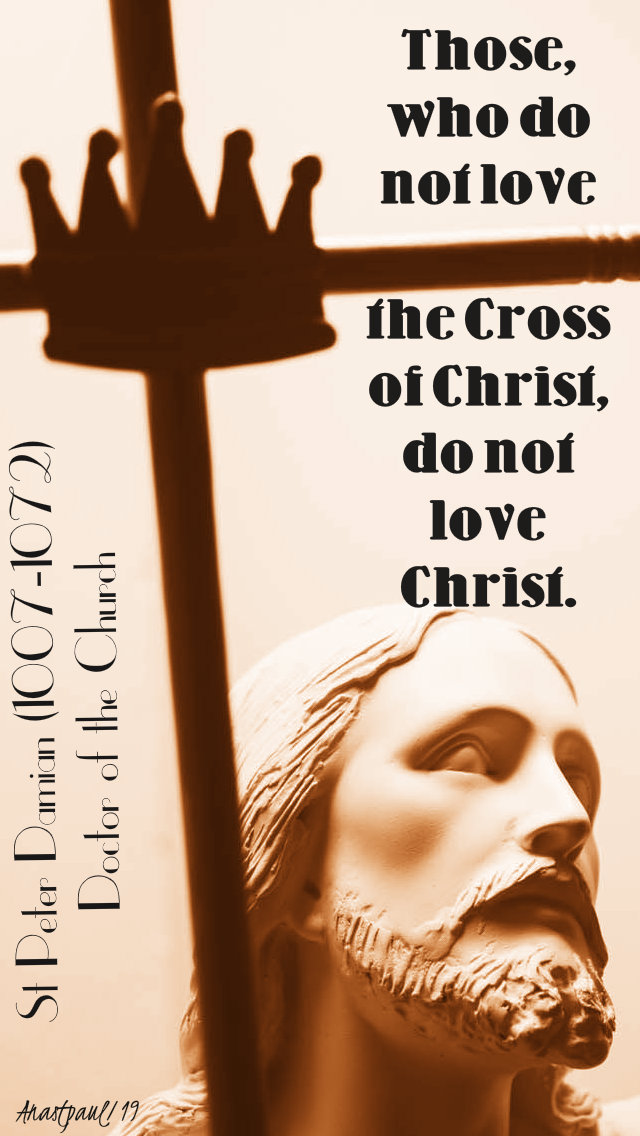
One detail should be immediately emphasised – the Hermitage at Fonte Avellana was dedicated to the Holy Cross and the Cross was the Christian mystery that was to fascinate Peter Damian more than all the others.   “Those who do not love the Cross of Christ do not love Christ”, he said (Sermo XVIII, 11, p. 117) and he described himself as “Petrus crucis Christi servorum famulus Peter, servant of the servants of the Cross of Christ” (Ep, 9, 1).
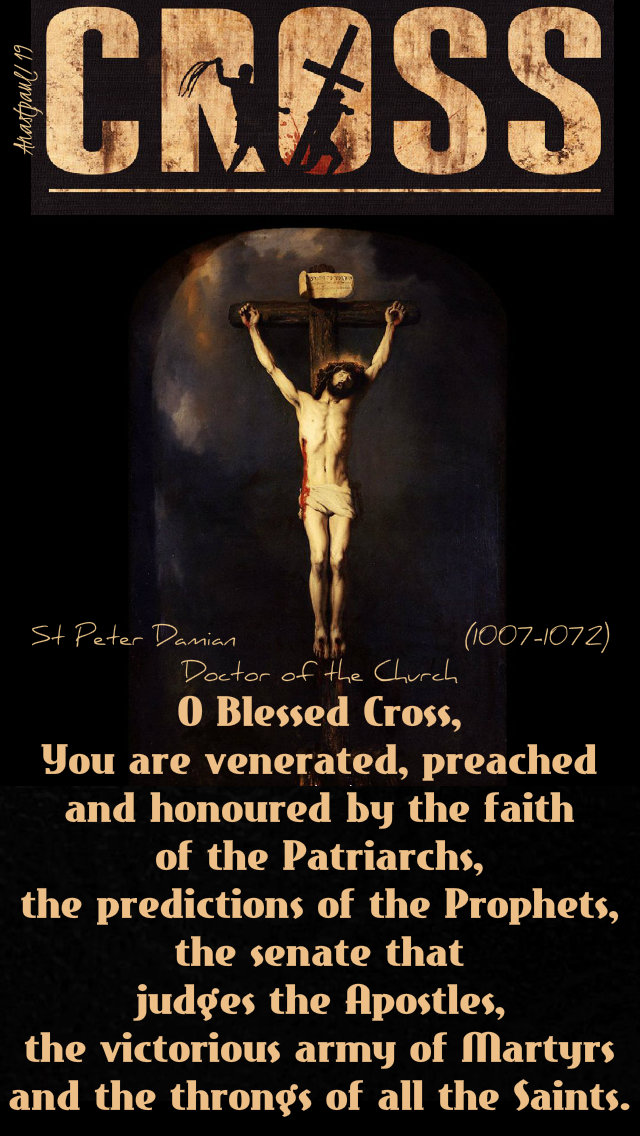
Peter Damian addressed the most beautiful prayers to the Cross in which he reveals a vision of this mystery which has cosmic dimensions for it embraces the entire history of salvation: “O Blessed Cross”, he exclaimed, You are venerated, preached and honoured by the faith of the Patriarchs, the predictions of the Prophets, the senate that judges the Apostles, the victorious army of Martyrs and the throngs of all the Saints” (Sermo XLVII, 14, p. 304).
Dear Brothers and Sisters, may the example of St Peter Damian spur us too always to look to the Cross as to the supreme act God’s love for humankind of God, who has given us salvation.

St Peter Damian, who was essentially a man of prayer, meditation and contemplation, was also a fine theologian – his reflection on various doctrinal themes led him to important conclusions for life.   Thus, for example, he expresses with clarity and liveliness the Trinitarian doctrine, already using, under the guidance of biblical and patristic texts, the three fundamental terms which were subsequently to become crucial also for the philosophy of the West – processio, relatio and persona (cf. Opusc. XXXVIII: PL CXLV, 633-642; and Opusc. II and III: ibid., 41 ff. and 58 ff).
However, because theological analysis of the mystery led him to contemplate the intimate life of God and the dialogue of ineffable love, between the three divine Persons, he drew ascetic conclusions from them for community life and even for relations between Latin and Greek Christians, divided on this topic.   His meditation on the figure of Christ, is significantly reflected, in practical life, since the whole of Scripture is centred on Him.
The “Jews”, St Peter Damian notes, “through the pages of Sacred Scripture, bore Christ on their shoulders as it were” (Sermo XLVI, 15).   Therefore Christ, he adds, must be the centre of the monk’s life:  “May Christ be heard in our language, may Christ be seen in our life, may he be perceived in our hearts” (Sermo VIII, 5).   Intimate union with Christ engages not only monks but all the baptised.   Here we find a strong appeal for us too not to let ourselves be totally absorbed by the activities, problems and preoccupations of every day, forgetting that Jesus must truly be the centre of our life.

Communion with Christ creates among Christians a unity of love.   In Letter 28, which is a brilliant ecclesiological treatise, Peter Damian develops a profound theology of the Church as communion.   “Christ’s Church”, he writes, is united by the bond of charity to the point that just as she has many members so is she, mystically, entirely contained in a single member – in such a way that the whole universal Church is rightly called the one Bride of Christ in the singular, and each chosen soul, through the sacramental mystery, is considered fully Church”.   This is important – not only that the whole universal Church should be united but that the Church should be present in her totality in each one of us.   Thus the service of the individual becomes “an expression of universality” (Ep 28, 9-23).
However, the ideal image of “Holy Church” illustrated by Peter Damian does not correspond as he knew well to the reality of his time.   For this reason he did not fear to denounce the state of corruption that existed in the monasteries and among the clergy, because, above all, of the practice of the conferral by the lay authorities of ecclesiastical offices; -various Bishops and Abbots were behaving as the rulers of their subjects rather than as pastors of souls.   Their moral life frequently left much to be desired.   For this reason, in 1057 Peter Damian left his monastery with great reluctance and sorrow and accepted, if unwillingly, his appointment as Cardinal Bishop of Ostia.   So it was that he entered fully into collaboration with the Popes in the difficult task of Church reform.   He saw that to make his own contribution of helping in the work of the Church’s renewal contemplation did not suffice.   He thus relinquished the beauty of the hermitage and courageously undertook numerous journeys and missions.

Dear brothers and sisters, it is a great grace that the Lord should have raised up in the life of the Church a figure as exuberant, rich and complex as St Peter Damian.   Moreover, it is rare to find theological works and spirituality as keen and vibrant as those of the Hermitage at Fonte Avellana.

St Peter Damian was a monk through and through, with forms of austerity which to us today might even seem excessive.   Yet, in that way he made monastic life an eloquent testimony of God’s primacy and an appeal to all to walk towards holiness, free from any compromise with evil.   He spent himself, with lucid consistency and great severity, for the reform of the Church of his time.  He gave all his spiritual and physical energies to Christ and to the Church but always remained, as he liked to describe himself, Petrus ultimus monachorum servus, Peter, the lowliest servant of the monks.

St Peter Damian,

‘Peter, Servant of the Servants of the Cross of Christ’

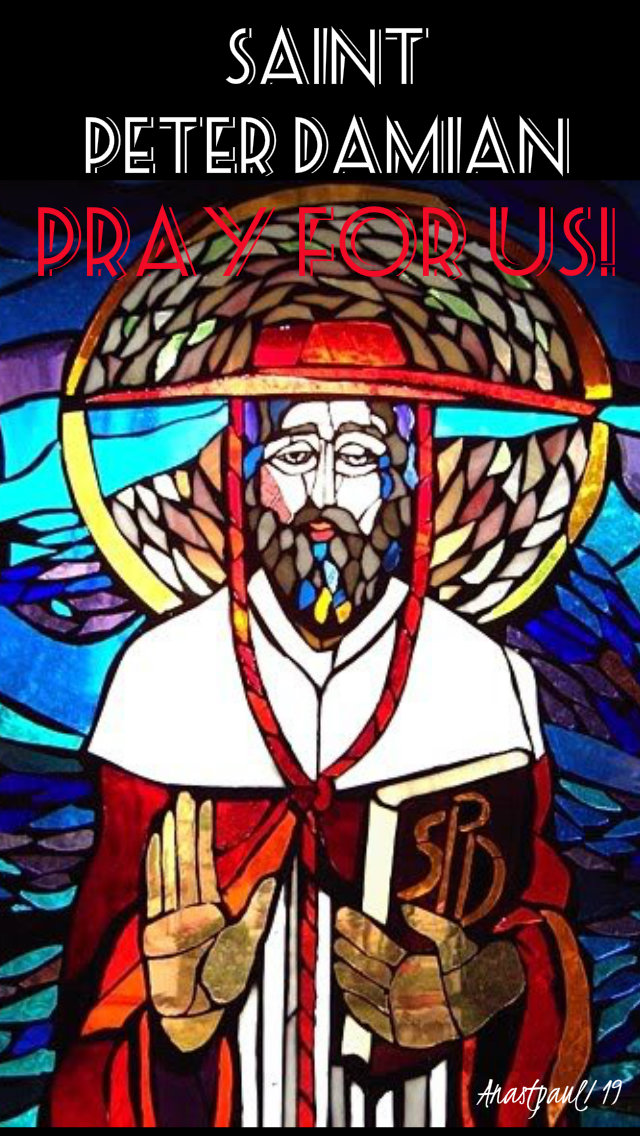
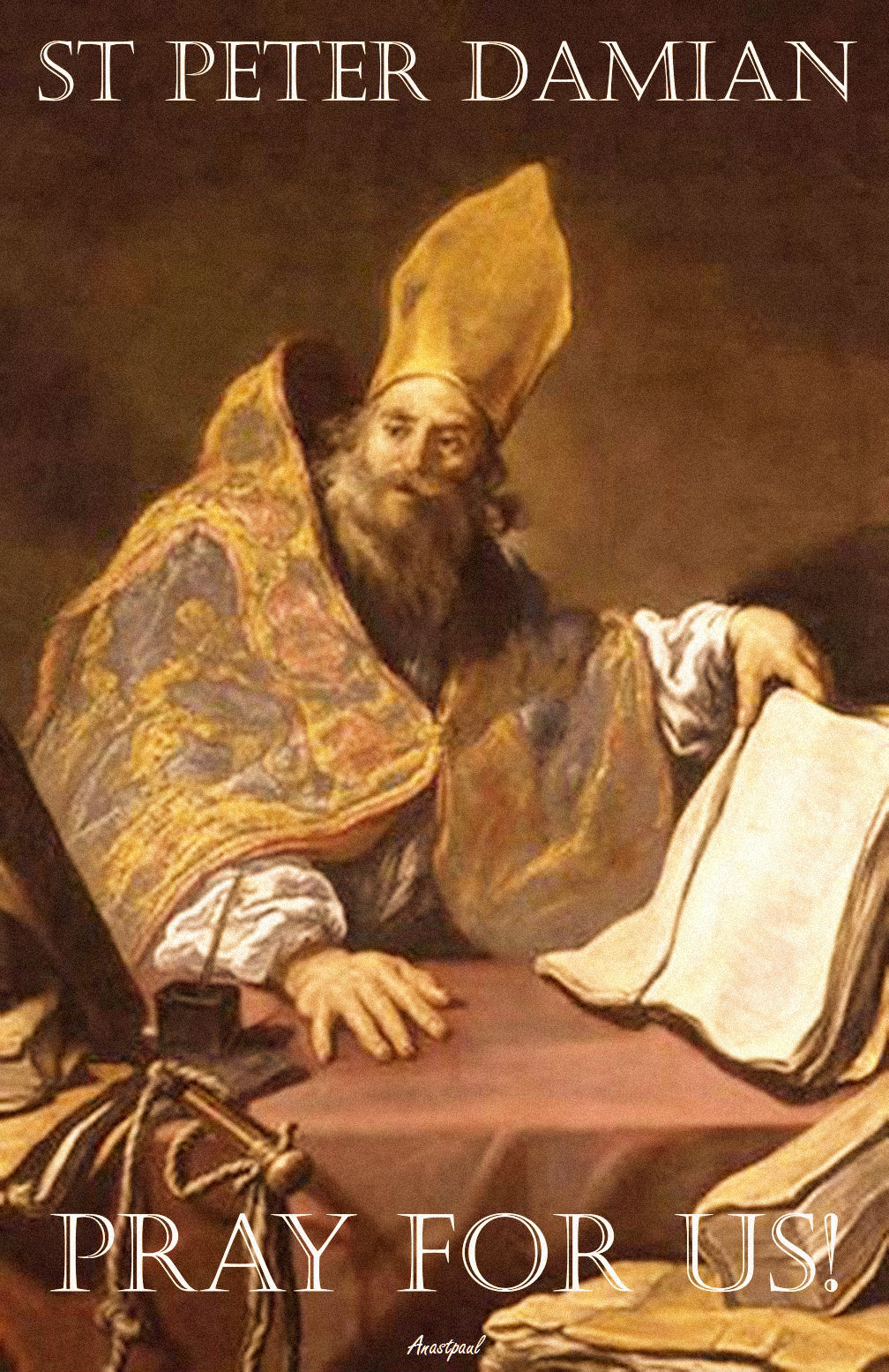
Pray for the Church, Pray for Us All!st peter damian pray for us 21 feb 2019.jpg

Posted in DOCTORS of the Church, PRACTISING CATHOLIC, QUOTES of the SAINTS, QUOTES on EVANGELISATION, QUOTES on SUFFERING, QUOTES on the CROSS of CHRIST, SAINT of the DAY, The HOLY GHOST, The SIGN of the CROSS

Quote/s of the Day – 21 February – St Peter Damian

Quote/s of the Day – 21 February – the Memorial of  St Peter Damian OSB (1007-1072) Doctor of the Church

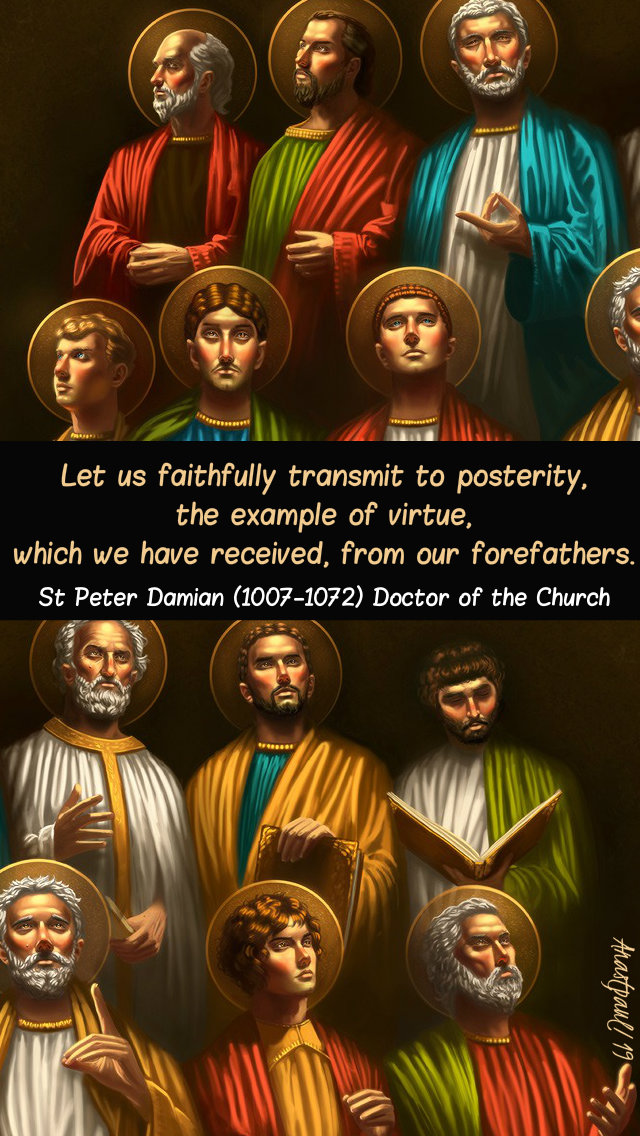
“Let us faithfully transmit to posterity,
the example of virtue,
which we have received,
from our forefathers.”let us faithfully transmit - st peter damian 21 feb 2019.jpg

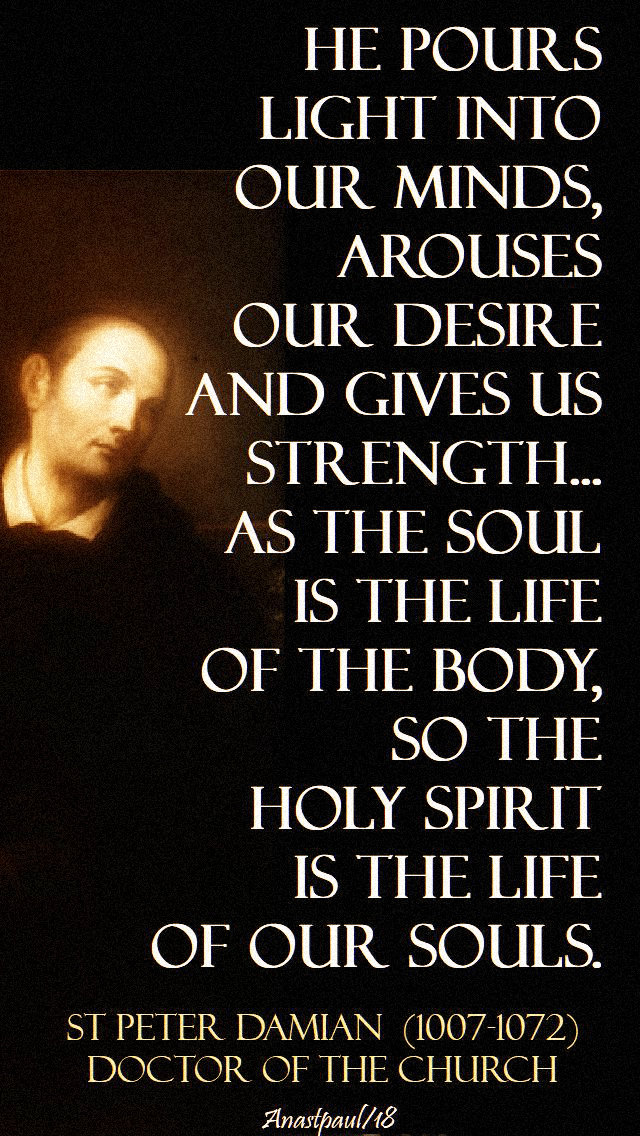
“He pours light into our minds,
arouses our desire and gives us strength…
As the soul is the life of the body,
so the Holy Spirit, is the life of our souls.”he-pours-light-into-our-minds-st-peter-damian-21-feb-2018.jpg

“When you are scorned by others
and lashed by God, do not despair.
God lashes us in this life,
to shield us from the eternal lash, in the next.”when-you-are-scorned-by-others-st-peter-damian-21-feb-2018.jpg

“May Christ be heard in our language,
may Christ be seen in our life,
may He be perceived in our hearts”
(Sermo VIII, 5)may christ be heard - st peter damian 21 feb 2019.jpg

“O Blessed Cross,
You are venerated, preached
and honoured by the faith of the Patriarchs,
the predictions of the Prophets,
the senate that judges the Apostles,
the victorious army of Martyrs
and the throngs of all the Saints”
(Sermo XLVII, 14, p. 304)o blessed cross - st peter damian - 21 feb 2019.jpg

“Those, who do not love
the Cross of Christ,
do not love Christ”
(Sermo XVIII, 11, p. 117)

St Peter Damian (1007-1072) Doctor of the Churchthose who do not love the cross of christ do not love christ - st peter damian 21 feb 2019.jpg

those who do not love no 2 st peter damian 21 feb 2019.jpg

Posted in DOCTORS of the Church, MORNING Prayers, SAINT of the DAY, The WORD

One Minute Reflection – 21 February – “You are the Christ.”

One Minute Reflection – 21 February – Thursday of the Sixth week in Ordinary Time, Year C, Gospel: Mark 8:27-33 and the Memorial of St Peter Damian OSB (1007-1072) Doctor of the Church

“Who do men say that I am?”… “But who do you say that I am?” Peter answered him, “You are the Christ.” ...Mark 8:27,29

REFLECTION – “With these two questions, Jesus seems to say that it is one thing to follow the prevailing opinion and another, to encounter Him and open oneself to His mystery, there one discovers the truth.   Prevailing opinion contains a true but partial response, Peter and with him, the Church of the past, present and always, by the grace of God, responds with the truth:  “You are the Christ, the Son of the living God”.
Jesus is the Son of God – hence He is perennially alive as His Father is eternally alive.  This is the novelty, that grace ignites, in the heart of those who are open to the mystery of Jesus, the non-mathematical — but even stronger, inner — certainty, of having encountered the Wellspring of Life, Life itself made flesh, visible and tangible in our midst.   This, is the experience of Christians and it is not their merit, not that of we Christians, it is not our merit but comes from God, it is a grace of God, the Father and Son and Holy Spirit.   All this is contained in the seed of Peter’s response: “You are the Christ, the Son of the living God”.Pope Francis – Angelus, 29 June 2018mark 8 29 but who do you say - this is the novelty -pope francis 21 feb 2019.jpg

PRAYER – Lord of heaven and earth, by Your grace You have brought our hearts and mind to seek and hope in Your saving love, in Your only Son, our Lord Jesus Christ.   May we, who like Peter, our father in faith, declare, ‘You are the Christ!’, remain ever in His steps, carrying the cross behind Him.   We thank You for the blessing of St Peter Damian, grant that, through his intercession, we may, like him, constantly follow the Light of Christ and so rise to eternal life.   We make our prayer through our Lord Jesus, in unity with the Holy Spirit, one God forever, amenST PETER DAMIAN PRAY FOR US.jpg

Posted in JESUIT SJ, Our MORNING Offering, PRAYERS of the SAINTS

Our Morning Offering – 21 February – Lord, Whatever You Will

Our Morning Offering-21 February-Thursday of the Sixth week in Ordinary Time, Year C

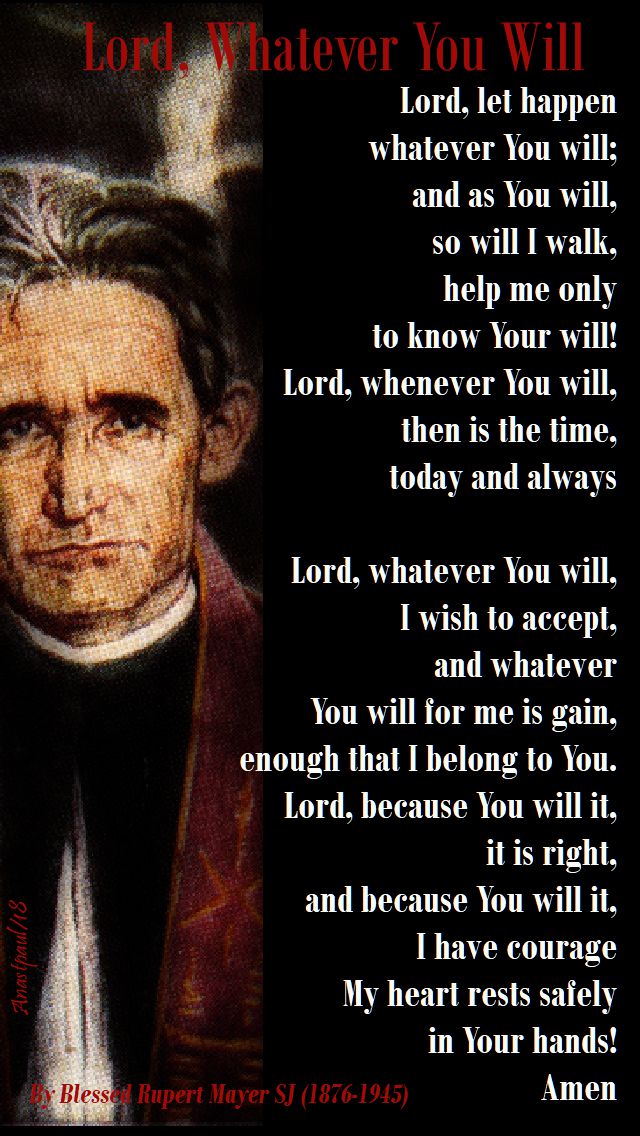
Lord, Whatever You Will
By Blessed Rupert Mayer SJ (1876-1945)
The Apostle of Munich

Lord, let happen whatever You will;
and as You will, so will I walk,
help me only to know Your will!
Lord, whenever You will,
then is the time,
today and always

Lord, whatever You will,
I wish to accept,
and whatever You will for me is gain,
enough that I belong to You.
Lord, because You will it, it is right,
and because You will it, I have courage.
My heart rests safely in Your hands!
Amenlord, whatever you will by bl rupert mayer sj- 5 nov 2018 his mem 3 nov.jpg

Posted in DANTE ALIGHIERI!, DOCTORS of the Church, SAINT of the DAY

Saint of the Day – 21 February – St Peter Damian OSB (1007-1072) Doctor of the Church

Saint of the Day – 21 February – St Peter Damian OSB (1007-1072) Doctor of the Church, Bishop Cardinal, Benedictine Monk, Confessor, Theologian, Writer, Teacher, Preacher, Poet, Reformer.   Patronages – Spiritual warfare, Church Reformers and Faenza, Italy. Partly because he was orphaned and had been treated shabbily by one of his brothers, Peter Damian was very good to the poor.   It was the ordinary thing for him to have a poor person or two with him at table and he liked to minister personally to their needs.

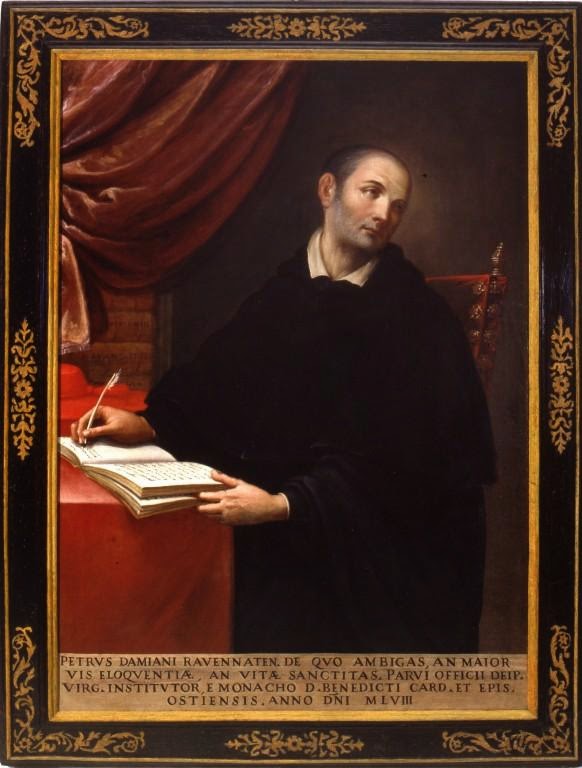
221peter14.jpg

Peter escaped poverty and the neglect of his own brother when a second brother, who was Archpriest of Ravenna, took him under his wing.   His brother sent him to good schools and Peter became a professor.

Already in those days, Peter was very strict with himself.   He wore a hair shirt under his clothes, fasted rigorously and spent many hours in prayer.   Soon, he decided to leave his teaching and give himself completely to prayer with the Benedictines of the reform of Saint Romuald at Fonte Avellana.   They lived two monks to a hermitage.   Peter was so eager to pray and slept so little that he soon suffered from severe insomnia.   He found he had to use some prudence in taking care of himself.   When he was not praying, he studied the Bible.

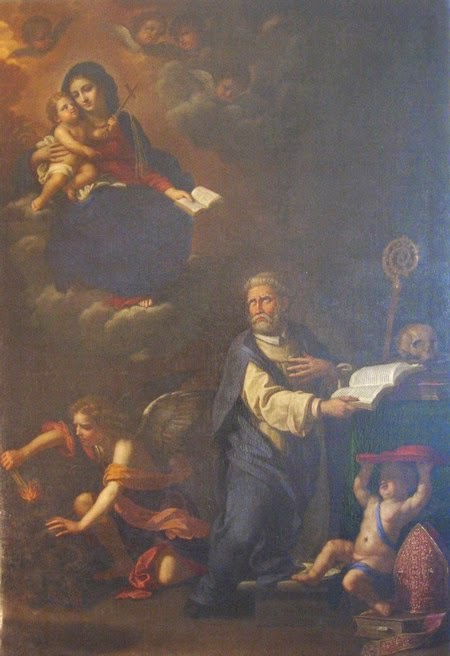
st per damian ravenna  2.jpg
Unknown
St Peter Damian
1725

The abbot commanded that when he died Peter should succeed him.   Abbot Peter founded five other hermitages.   He encouraged his brothers in a life of prayer and solitude and wanted nothing more for himself.   The Holy See periodically called on him, however, to be a peacemaker or troubleshooter, between two abbeys in dispute or a cleric or government official in some disagreement with Rome.

Finally, Pope Stephen IX made Peter the Cardinal-Bishop of Ostia.   He worked hard to wipe out simony—the buying of church offices–and encouraged his priests to observe celibacy and urged even the diocesan clergy to live together and maintain scheduled prayer and religious observance.   He wished to restore primitive discipline among religious and priests, warning against needless travel, violations of poverty and too-comfortable living.   He even wrote to the Bishop of Besancon complaining that the canons there sat down when they were singing the psalms in the Divine Office.

He wrote many letters.   Some 170 are extant.   We also have 53 of his sermons and seven lives, or biographies, that he wrote.   He preferred examples and stories rather than theory in his writings.   The liturgical offices he wrote are evidence of his talent as a stylist in Latin.
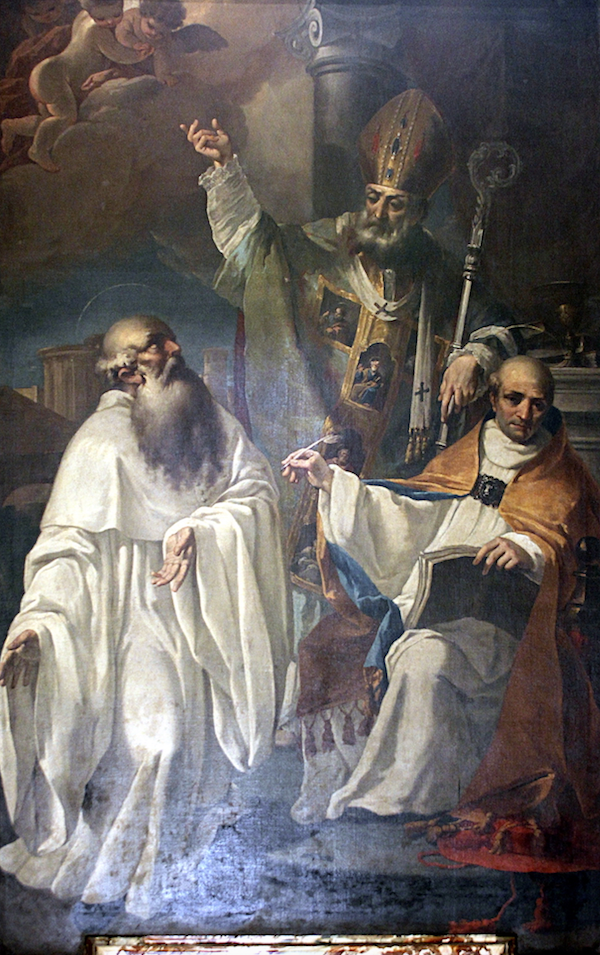
ST PETER DAMIAN 2.png
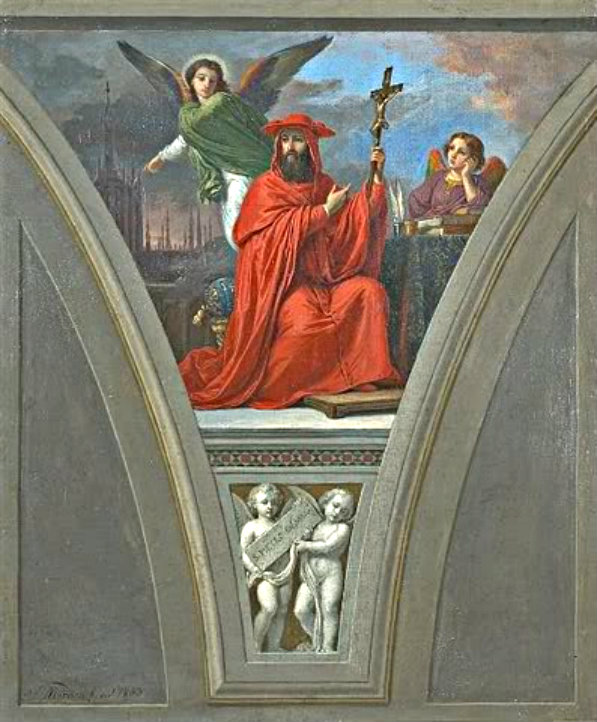
I cannot find out much about this image, it seems to be Saint Romuald on the left (of whom St Peter wrote a biography), St Peter Damian in the centre and an unknown saint, I presume on the right.

He asked often to be allowed to retire as Cardinal-Bishop of Ostia and finally Pope Alexander II consented.   Peter was happy to become once again just a monk but he was still called to serve as a papal legate.   When returning from such an assignment in Ravenna, he was overcome by a fever.   With the monks gathered around him saying the Divine Office, he died on 22 February 1072.

In 1828, he was declared a Doctor of the Church.st peter damian statue snip.JPG

In Canto XXI, Dante has the Saint pronounce an invective against the luxury enjoyed by prelates in the Church of his day and in that of Dante`s – the translation below is by Allen Mandelbaum:

113 … There, within that monastery,
114 in serving God, I gained tenacity:
115 with food that only olive juice had seasoned,
116 I could sustain with ease both heat and frost,
117 content within my contemplative thoughts.

118 That cloister used to offer souls to Heaven,
119 a fertile harvest but it now is barren
120 as Heaven’s punishment will soon make plain.

121 There I was known as Peter Damian
122 and, on the Adriatic shore, was Peter
123 the Sinner when I served Our Lady’s House.

124 Not much of mortal life was left to me
125 when I was sought for, dragged to take that hat
126 which always passes down from bad to worse.

127 Once there were Cephas and the Holy Ghost’s
128 great vessel – they were barefoot, they were lean,
129 they took their food at any inn they found.

130 But now the modern pastors are so plump
131 that they have need of one to prop them up
132 on this side, one on that and one in front,

133 and one to hoist them saddleward.  Their cloaks
134 cover their steeds, two beasts beneath one skin:
135 o patience, you who must endure so much!”

amos nattini st peter damian
Amos Nattini (1892-1985)
Divina Commedia, Paradiso canto XXI, San Pier Damiani nel cielo di Saturno
1923-1941
Posted in DOCTORS of the Church, SAINT of the DAY

Memorials of the Saints – 21 February

St Peter Damian OSB (1007-1072) Doctor of the Church (Optional Memorial)
A lot about St Peter here:   https://anastpaul.wordpress.com/2017/02/21/saint-of-the-day-21-february-st-peter-damian/

St Avitus II of Clermont
Bl Caterina Dominici
Bl Claudio di Portaceli
St Daniel of Persia
Bl Eleanora
St Ercongotha
St Eustathius of Antioch
St Felix of Metz
St George of Amastris
St Germanus of Granfield
St Gundebert of Sens
Bl Noel Pinot
St Paterius of Brescia
St Pepin of Landen
St Peter Mavimenus
St Randoald of Granfield
St Robert Southwell SJ (1561-1595) Martyr
St Robert’s Biography: https://anastpaul.wordpress.com/2018/02/21/saint-of-the-day-21-february-st-robert-southwell-s-j-1561-1595-martyr/

St Severian of Scythopolis
St Severus of Syrmium
Bl Thomas Pormort
St Valerius of San Pedro de Montes
St Verda of Persia

Martyrs of Sicily – 79 saints – Seventy-nine Christians martyred together in the persecutions of Diocletian. They were martyred in c 303 on Sicily.

Martyrs of Hadrumetum – A group of 26 Christians martyred together by Vandals. We know little more than eight of their names – Alexander, Felix, Fortunatus, Saturninus, Secundinus, Servulus, Siricius and Verulus. c 434 at Hadrumetum (modern Sousse, Tunisia)

Martyrs Uchibori – Three Japanese laymen, all brothers, all sons of Paulus Uchibori Sakuemon, one a teenager, one only five years old and all martyred for their faith in the persecutions in Japan. 21 February 1627 in Shimabara, Nagasaki, Japan. Beatified 24 November 2008 by Pope Benedict XVI.
Antonius
Balthasar
Ignatius

Posted in DOMINICAN OP, SAINT of the DAY

Thought for the Day – 20 February – The Angel of Mercy, Blessed Julia Rodzinska

Thought for the Day – 20 February – The Memorial of Blessed Julia Rodzinska OP (1899-1945) Martyr

Excerpt from the account of the Works of Mercy, Spirituality, Love of God and the Church and the Martyrdom of Blessed Julia Rodzinska, by Eva Hoff, a prisoner of KL Stutthof, a German Jewess, who survived and after the war settled in Sweden

In her presence, you felt the need and urge to pray.
Everything she had, she shared with others, even the last piece of bread.   Though devastated by starvation, she saw others to be in greater need and offered them her meagre ration of bread.
When other prisoners did everything to avoid contact with those who were sick and dying of typhus, she, instead, rushed to assist them.
Her sacrificial love of neighbour was stronger than fear of exposing herself to a deadly disease.   She cared more for others than herself.   The person in need was her key concern.
She assisted anyone in need with no difference.   Her heart’s desire was to be wherever she was of help.   She never thought about herself, yet always about others.
She was very devout.   Her piety was contagious and inspired others to pray.
She sought the brokenhearted and downcast to console and uplift their spirits.
Strikingly noticeable was tranquillity, her face radiated with.   Every time I had been with her, I could sense how calm and recollected she was.
She died of exhaustion and commitment to her sacrificial ministry, so we, whom she served, could survive.
She performed works of mercy where there was no mercy!
I got to know sister Julia in that ghastly concentration camp of Stutthof near Gdańsk (Poland), where we suffered humiliation at every turn.   The initial selection after arrival at the camp was already horrible.   People were sent to the gas, based on external appearance.

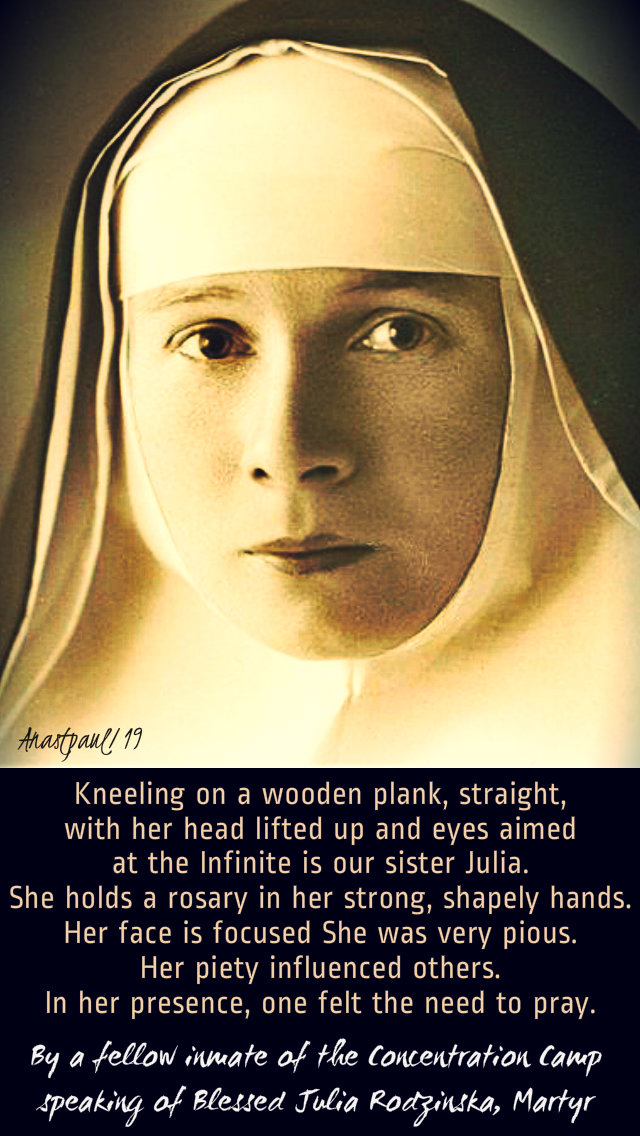
I accompanied Sister Julia until her last days.   She never concealed that she was a religious.   She showed unwavering faith and hope in God.   She consoled all of us, entrusted us to God and encouraged us to pray.   She organised and led common prayers. We always prayed the rosary, the litany of Our Lady, hymns and any number of prayers she composed according to our needs and situation.   Prisoners of different nationalities came to pray.   People spread the word – let’s pray the rosary with sister Julia.   The image will always stay with me – the small, poorly lit room overflowing with people on bunk beds, three or even four levels high;  here and there, rags drying in the air.   Kneeling on a wooden plank, straight, with her head lifted up and eyes aimed at the Infinite is our Sister Julia.   She holds a rosary in her strong, shapely hands.   Her face is focused… She was very pious.   Her piety influenced others.   In her presence, one felt the need to pray.

She was outstanding in her love of God and the Church.   She made arrangements secretly to meet with a priest—also a prisoner—to go to confession and to give others an opportunity for reconciliation.   On many a Sunday morning, when the circumstances allowed, we walked in silence around the barrack taking part spiritually in the Mass.
When I encouraged her to talk about the convent, she spoke about the noble customs and lofty ceremonies of religious life.   At those time, she became absorbed by what was highest and dearest to her.   She thanked me at the end of such conversations, whereas it was I who should have thanked her, for what those conversations meant to me.

Sister Julia performed works of mercy in the camp, where people had nearly forgotten that mercy even exists.   She was cheerful, prayerful, obliging and self-sacrificing.   She risked her life to help others.   She cared for those who despaired.   She showed the same attitude toward every person, regardless of nationality or religion.   She knew how to offer consolation because of her profound hope in God.   She literally shared everything—to the last piece of bread—with those who suffered hunger more than she did.

She reminded us frequently that God guides everything.   She said that we needed to obey God’s will, even if we had to suffer everything in such humiliation or die in the camp, that everything was in God’s hands.   She accepted her fate in the spirit of faith in Divine Providence, even as she sensed that she would not survive.   She prayed constantly and served her neighbour until the very end.

She visited the victims of typhus—so terribly contagious—when others did everything to avoid them.   She wouldn’t lie down herself, despite her own illness, in order to help others.   Led by love, by sacrificial love, she succumbed to the disease.   Despite everything, she couldn’t imagine abandoning those who needed her help.   Her sacrificial love was stronger.

Sensing imminent death, she missed her Community and those she would not see again. She cried in her helplessness but she didn’t despair.   She overcame her weakness by prayer, serving the sick until the end.   Sister Julia died from typhus.   She gave her life for others.   The survivors spoke of her, as a great and holy person.

Oh that we had one ounce of your love!

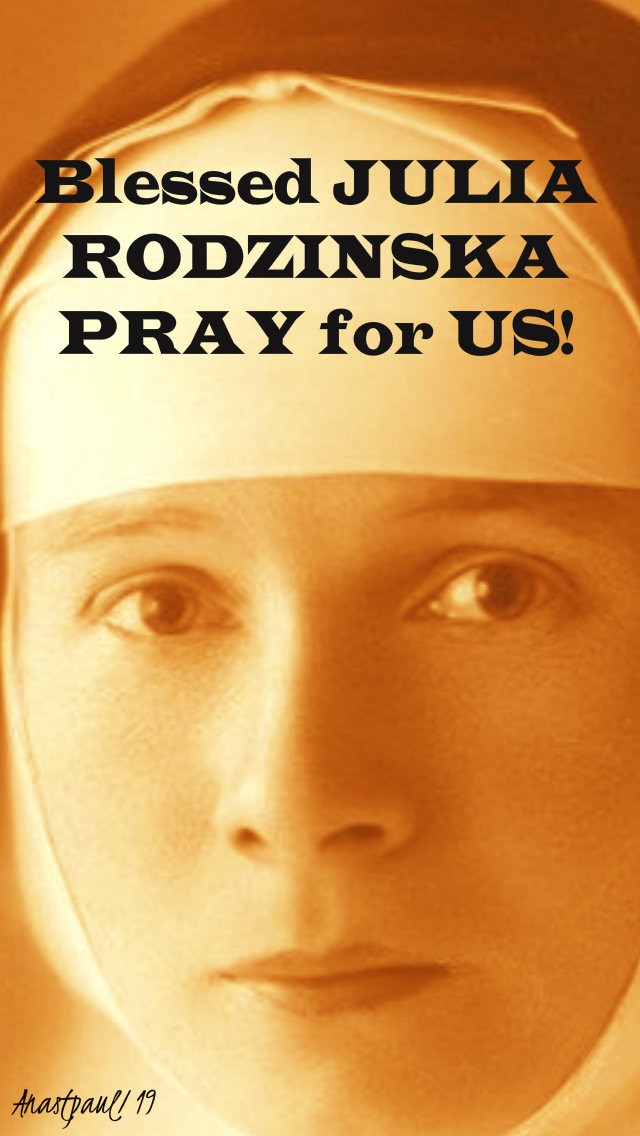
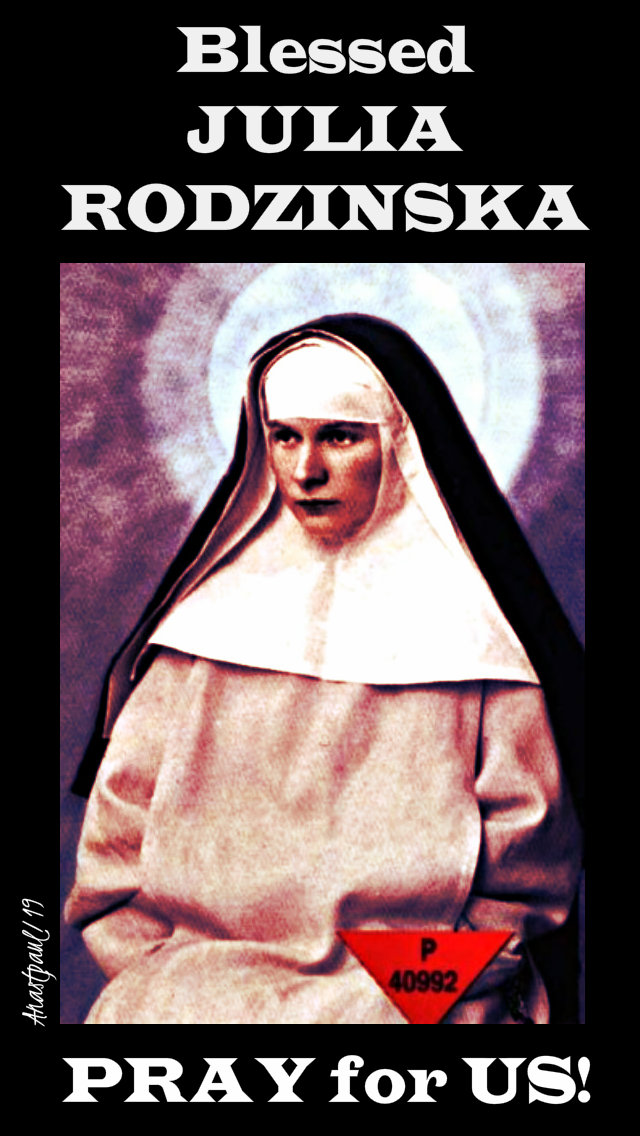
Blessed Julia Rodzinska, Pray for Us!bl julia rodzinska pray for us 20 feb 2019.jpg

Posted in CATHOLIC Quotes, ON the SAINTS, QUOTES on COURAGE, QUOTES on DIVINE PROVIDENCE, QUOTES on FAITH, QUOTES on HOPE, QUOTES on LOVE, QUOTES on MARTYRDOM, QUOTES on MERCY, QUOTES on PRAYER, QUOTES on SUFFERING, SAINT of the DAY

Quote/s of the Day – 20 February – Bl Julia Rodzinska

Quote/s of the Day – 20 February – The Memorial of Blessed Julia Rodzinska OP (1899-1945) Martyr

“Kneeling on a wooden plank, straight,
with her head lifted up and eyes aimed
at the Infinite is our sister Julia.
She holds a rosary in her strong, shapely hands.
Her face is focused… She was very pious.
Her piety influenced others.
In her presence, one felt the need to pray.”knelling on a wooden plank - on bl julia rodzinska 20 feb 2019

“She was outstanding
in her love of God
and the Church.”

“She performed works of mercy
where there was no mercy.”

“She reminded us frequently
that God guides everything.”

By a fellow inmate of the Concentration Camp
speaking of Blessed Julia Rodzinska, Martyrshe was outstanding,she performed works of mercy,she reminded us - bl julia rodzinska martyr 20 feb 2019

Posted in DOCTORS of the Church, FATHERS of the Church, MORNING Prayers, QUOTES of the SAINTS, QUOTES on CONVERSION, SAINT of the DAY, The WORD

One Minute Reflection – 20 February – “Let us open ourselves, to the light of the Lord”

One Minute Reflection – 20 February – Wednesday of the Sixth week in Ordinary Time, Year C – Gospel: Mark 8:22-26 and The First Memorial of Saints Francisco (1908-1919) and Jacinta (1910-1920) and Blessed Julia Rodzinska OP (1899-1945) Martyr

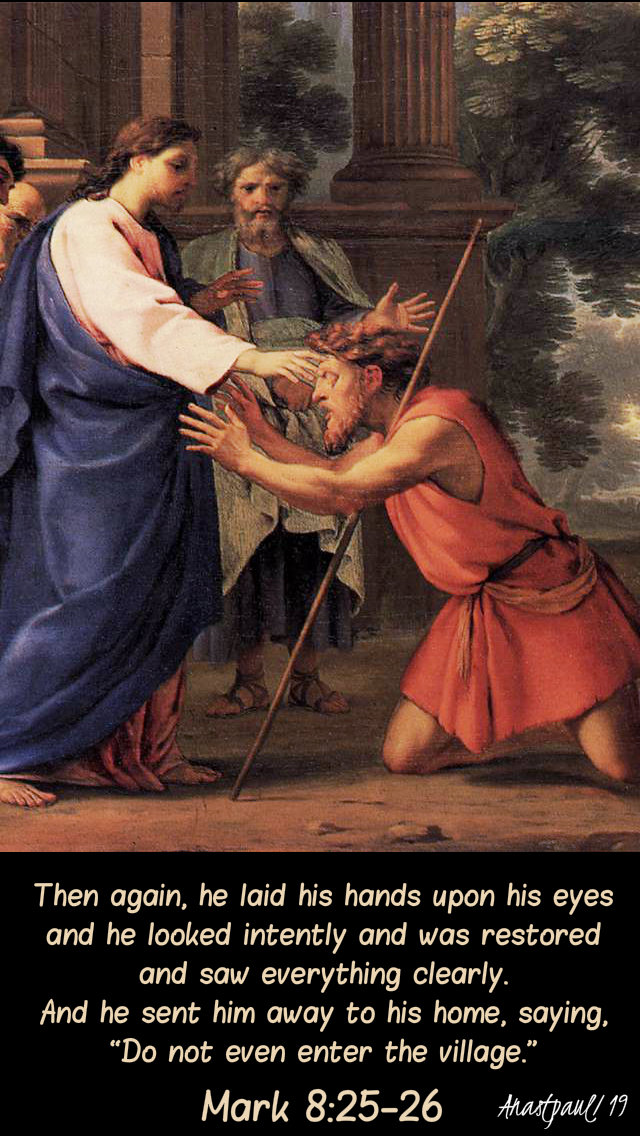
And he took the blind man by the hand and led him out of the village….Then again he laid his hands upon his eyes;  and he looked intently and was restored and saw everything clearly.   And he sent him away to his home, saying, “Do not even enter the village.”...Mark 8:22,25-26then again he laid his hands upon his eyes - mark 8 25-26 20 feb 2019.jpg

REFLECTION – “They came, then, to Bethsaida, into the village of Andrew and Peter, James and John.   Bethsaida means “house of fishers” and, in truth, from this house, hunters and fishermen are sent into the whole world.   Ponder the text.   The historical facts are clear, the literal sense is obvious.   But we must now search into its spiritual message.   That He came to Bethsaida, that there was a blind man there, that He departed, what is there remarkable about all that?   Nothing, but what He did there is great;  striking, however, only if it should take place today, for we have ceased to wonder about such things.

How, then, is his house not in Bethsaida?   Note the text exactly.   If we consider the literal interpretation only, it does not make any sense.   If this blind man is found in Bethsaida and is taken out and cured and he is commanded:  “Return to your own house,” certainly, he is bid:   “Return to Bethsaida.”   If, however, he returns there, what is the meaning of the command:  “Do not go into the village?”   You see, therefore, that the interpretation is symbolic.   He is led out from the house of the Jews, from the village, from the law, from the traditions of the Jews.   He, who could not be cured in the law, is cured in the grace of the gospel.   It is said to him, “Return to your own house” — not into the house that you think, the one from which he came out but into the house that was also the house of Abraham, since Abraham is the father of those who believe.”… St Jerome (343-420) Father & Doctor of the Church – Tractate on the Gospel of Mark, Homily 79.he is led out from the house of the jews - mark 8 25-26 20 feb 2019 st jerome.jpg

“Our lives are sometimes similar to that of the blind man who opened himself to the light, who opened himself to God, who opened himself to His grace.  Today, we are invited to open ourselves to the light of Christ in order to bear fruit in our lives, to eliminate unchristian behaviours;  we are all Christians but we all, everyone, sometimes has unchristian behaviours, behaviours that are sins.   We must repent of this, eliminate these behaviours in order to journey well along the way of holiness, which has its origin in baptism.   We, too, have been “enlightened” by Christ in baptism, so that, as St Paul reminds us, we may act as “children of light” (Eph 5:8), with humility, patience and mercy.
Let us ask ourselves about the state of our own heart?   Do I have an open heart or a closed heart?   It is opened or closed to God?   Open or closed to my neighbour?   We are always closed to some degree, which comes from original sin, from mistakes, from errors.   We need not be afraid!
Let us open ourselves, to the light of the Lord, He awaits us always in order to enable us to see better, to give us more light, to forgive us.   Let us not forget this!”…Pope Francis – Angelus, 30 March 2014

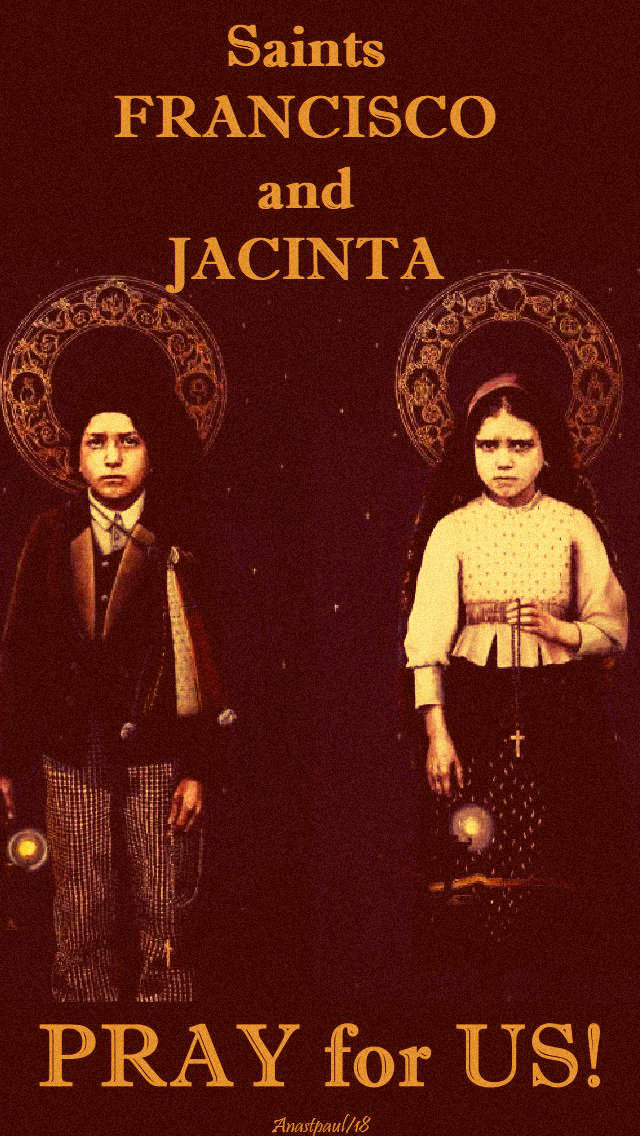
PRAYER – Heavenly Father, just as the little children, Francisco and Jacinta and Blessed Julia Rodzinska, were chosen to be bearers of Your message, grant we pray, that by their prayers on our behalf, we too may Your bearers of light.   Be with us, holy Mother, during our journey to the eternal glory of your Son, help us to become like little children and in that new purity, shine with His Light.   Through Jesus our Lord, with the Holy Spirit, one God forever, amen.sts-francisco-jacinta-20-feb-2018.jpg

bl julia rodzinska pray for us 20 feb 2019 no 2.jpg

Posted in DOCTORS of the Church, Our MORNING Offering, PRAYERS of the SAINTS, REDEMPTORISTS CSSR

Our Morning Offering – 20 February – Prayer for the Gift of Prayer

Our Morning Offering – 20 February – Wednesday of the Sixth week in Ordinary Time, Year C

Prayer for the Gift of Prayer
By St Alphonsus Liguori (1696-1787) Doctor of the Church

O Incarnate Word,
You have given Your Blood and Your Life
to confer on our prayers that power by which,
according to Your promise,
they obtain for us all that we ask.
And we, O God,
are so careless of our salvation,
that we will not even ask You for the graces
that we must have, if we should be saved!
In prayer You have given us the key
of all Your Divine treasures;
and we, rather than pray,
choose to remain in our misery.
Alas! O Lord, enlighten us,
and make us know the value of prayers,
offered in Your name and by Your merits,
in the eyes of Your Eternal Father.
Amenprayer for the gift of prayer - st alphonsus liguori 2nd time 20 feb 2019.jpg

Posted in DOMINICAN OP, SAINT of the DAY

Saint of the Day – 20 February – Blessed Julia Rodzinska OP (1899-1945) Martyr

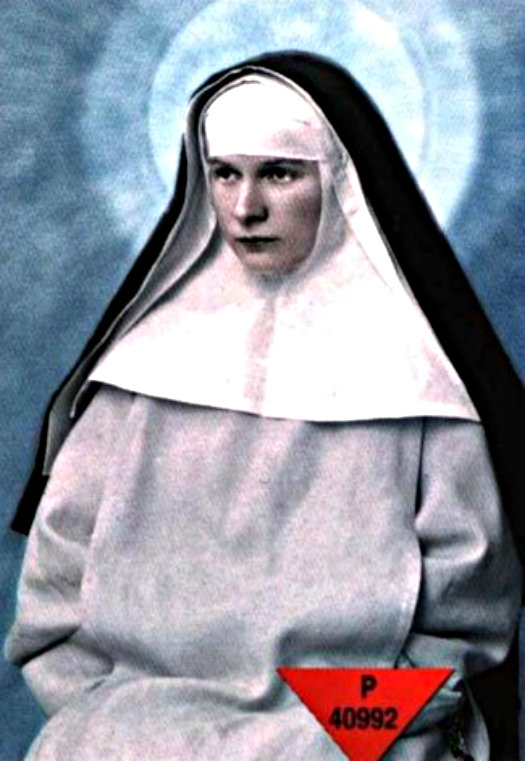
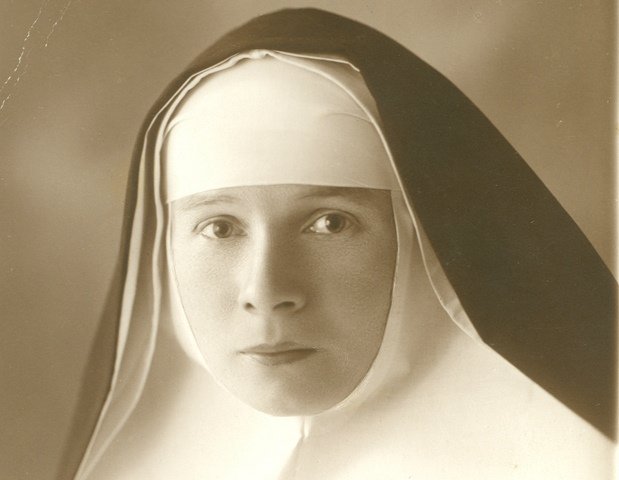
Saint of the Day – 20 February – Blessed Stanislawa/Julia Rodzinska OP (1899-1945) Martyr – Dominican Sister, known as the “Mother of Orphans” and the “Apostle of the Rosary”, Apostle of Charity, Teacher, Catechist, also known as Sister Maria Julia, Mother Maria Julia, prisoner P40992.img-Blessed-Stanislawa-Rodzinska.jpg

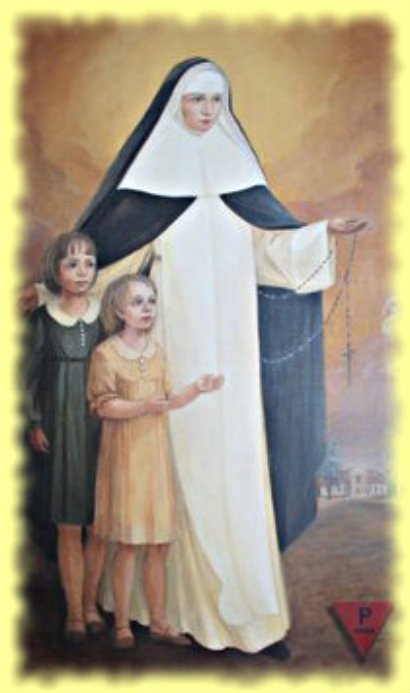
Blessed Sister Julia Stanisława was born on 16 March 1899 in Nawojowa, a town near Nowy Sącz.   She was baptised and given the names, Stanisława Marta Józefa.   Her father was an organist.   He also worked in a savings bank and in the District Office.   There were four other children in the family.   When Stanisława was 8 years old, her mother died and two years later, her father.   After her parents’ death, the Dominican Sisters from a nearby convent run by Sr Stanisława Lenart took care of her.   There, she finished school and then she started her studies in the Teachers’ College which she was unable to complete because she began her religious formation in Wielowieś.   On 3 August 1917 she assumed the habit together with a new name – Maria Julia.   On 4 September 1918 she continued her studies in the Holy Family Teachers’ College in Kraków, from which she graduated in May 1919.

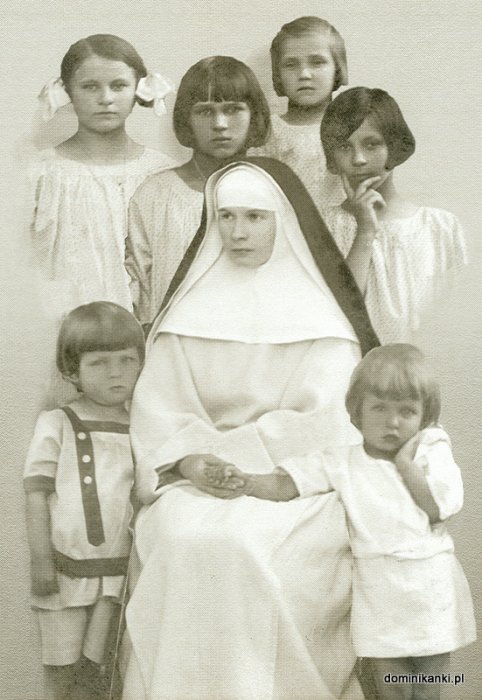
After having completed her studies, Sister Julia Rodzińska began to work as a teacher, mainly among orphaned children.   She made her monastic vows on 5 August 1924.   She then continued her education and in 1925-1926 she completed an Advanced Teachers’ Course and at the age of 27 she was named the director of the State Primary School of Our Lady of the Gate of Dawn in Vilnius.   Sr Julia was not strong physically, suffering from a very serious stomach disorder, which meant she had to undergo a difficult operation in 1937.julia2

After the Soviet army occupied Vilnius, the situation of the Dominican Sisters was put into jeopardy.   In September 1940, the sisters who worked as teachers were dismissed from work.   At first, they tried to work as technical personnel but finally in 1941 the Home for Orphans was removed from their authority and placed under that of Lithuanian authorities and Sister Julia left the Home forever.   The schooling work done by the Dominican Sisters since 1922 was terminated.

The Dominicans did not leave Vilnius.   Together with Sister Julia, they stayed on Parkowa Street and in the convent of the Nuns of Visitation on Rossa Street.   In these conditions, Sister Julia continued to teach in secret, also during the German occupation, until she was arrested in 1943.

On 12 July 1943, Sister Julia was arrested by the Gestapo on a charge of political activity and collaboration with the Polish partisans.   She was imprisoned in Vilnius and for almost a year she was kept in an isolation cell.   Then she was transported to the disciplinary camp but soon, she was evacuated together with other prisoners to Stutthof concentration camp.   She arrived there on 9 July 1944 and was given number 40992. Together with a group of women from the Vilnius intelligence, she was assigned to block no 27 in the “Jewish Camp”.   The conditions were indescribable.   Filth, vermin, overcrowding in the barracks (three or four women slept on one bed on a three-storey bunk bed), low-calorie food rations given out in extreme conditions, unbearable physical work, limited access to water, lack of hygienic products, necessity to satisfy one’s bodily needs in public – these are only some of the elements of the indirect extermination used in the camp.   An additional torment, was the inhumane treatment carried out by the prisoners who were assigned as ‘wardens’ – mainly German criminals and SS men.julia-pow-1386

In these conditions sister Julia did not lose her hope for survival.   She shared her hope and spiritual strength with other prisoners.   In the camp it had a special meaning because the inhumane treatment distorted the prisoners’ minds and changed the moral norms of many of them.   In the barrack, where mostly Jews lived, Sister Julia organised and led the prayers.   She also constantly reminded the prisoners about the religious values.   Religious observances were strictly prohibited and punished in the camp. Therefore this was one of the forms of moral resistance of the prisoners to what was happening in the camp.   Sister Julia was never guided by nationality or religion in her way of helping others.   She was kind to all the needful.   She was known as the one who consoled and encouraged all the adrift and miserable.   She knew that one prisoners, whose wife was living in the “Jewish Camp”, was about to commit suicide.   She sent him notes until he assured her that he wouldn’t take his life.   According to the testimony of this prisoner, he survived the camp thanks to Sister Julia, who awaken his hope for survival and overcame the fear of the life in the camp.

In November 1944 a typhus epidemic devastated the camp.   The illness spread mainly among the prisoners in the Jewish part of the camp.   The authorities of KL Stutthof isolated the “Jewish Camp” from the rest of the compound and left the women without any help.   Risking her own life, Sister Julia Rodzińska undertook the task of helping the Jews from block XXX, who were dying alone.   When the majority avoided this “death block” fearing the infection, Sister Julia took a decision that meant the acceptance of death among those who she helped.   She organised water to drink, dressings and medicines that where available in the camp.   She served the needful even when she got infected with typhus and was suffering from serious illness.

The Dominican Sister, Julia Rodzińska, died on 20 February 1945 in block no 27.   Her body was burnt on a pyre.   An amazing testimony about the heroic conduct and the martyr’s death of Sr Julia has been written and declared by Eva Hoff, a prisoner of KL Stutthof, a German Jewess, who survived the marine evacuation and after the war settled in Sweden.   There, she gave an oral and written account of the life and the circumstances of the death of Sr Julia in KL Stutthof.   The account has been confirmed by other prisoners of KL Stutthof and Father Franciszek Grucza who heard Sr Julia’s confessions and gave her Communion.

place where bl julia's body was burnt.jpg
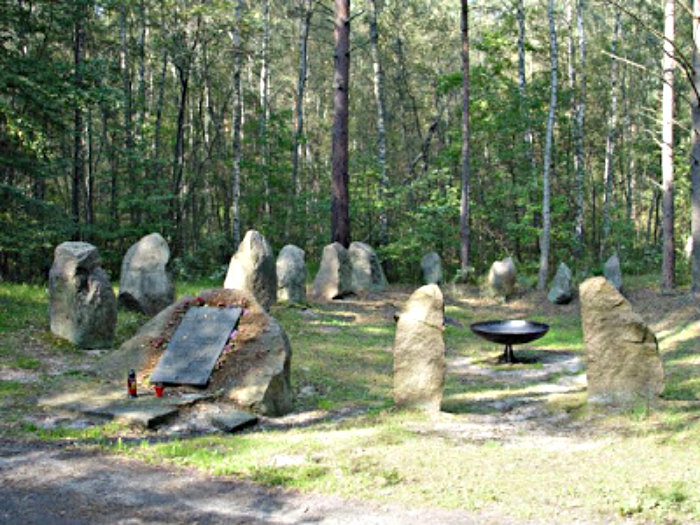
A Shrine where Sr Julia’s body was burnt

On the 13 June 1999, during his pilgrimage to Poland, the Holy Father John Paul II beatified 108 martyrs of World War II.   Sister Julia Rodzińska, the Dominican nun, was among them.

On 12 June 2006 the Primary School in Nawojowa has been named after blessed Sister Julia Rodzińska.wilno_-_z_dziecmi-352

Posted in SAINT of the DAY

Memorials of the saints – 20 February

St Amata of Assisi
St Bolcan of Derken
St Colgan
St Eleutherius of Tournai
St Eucherius of Orleans
St Falco of Maastricht
St Francisco Marto (1908-1919)
St Jacinta Marto (1910-1920)
Today (2019) is the Third Anniversary of their Canonisation: https://anastpaul.wordpress.com/2018/02/20/saints-of-the-day-20-february-saints-francisco-1908-1919-and-jacinta-marta-1910-1920/

St Leo of Catania
St Nemesius of Cyprus
St Pothamius of Cyprus
St Serapion of Alexandria
St Silvanus of Emesa
Bl Stanislawa/Julia Rodzinska OP (1899-1945) Martyr
St Valerius of Courserans
St Wulfric of Haselbury
St Zenobius of Antioch

Posted in DOCTORS of the Church, EUCHARISTIC Adoration, JESUIT SJ, PRAYERS for CANONISATION, PRAYERS to the SAINTS, QUOTES of the SAINTS, QUOTES on FAITH, SAINT of the DAY, The WORD

Thought for the Day – 19 February – “If you do not believe, you will not understand”

Thought for the Day – 19 February – Tuesday of the Sixth week in Ordinary Time, Year C, Gospel: Mark 8:14–21 and the memorial of Bl John Sullivan SJ (1861-1933)

And He said to them “Do you not yet understand or comprehend?”...Mark 8:21

Faith, the theologians say, is a certain and obscure habit of soul.   It is an obscure habit because it brings us to believe divinely revealed truths, that transcend every natural light and infinitely exceed, all human understanding.   As a result, the excessive light of faith bestowed on a soul, is darkness for it – a brighter light will eclipse and suppress a dimmer one.   The sun so obscures all other lights, that they do not seem to be lights at all when it is shining and instead of affording vision to the eyes, it overwhelms, blinds and deprives them of vision since its light is excessive and disproportioned to the visual faculty.   Similarly, the light of faith in its abundance, suppresses and overwhelms that of the intellect…

Another clearer example…  If those born blind were told about the nature of the colours white or yellow, they would understand absolutely nothing, no matter how much instruction they received, since they never saw these colours…   Only the names of these colours would be grasped, since the names are perceptible through hearing…   Such is faith to the soul – it informs us of matters we have never seen or known…   The light of natural knowledge does not show them to us…   Yet we come to know it through hearing, by believing, what faith teaches, in blinding our natural light and bringing it in to submission.   St Paul states:  “Faith comes through hearing” (Rm 10:17).   This amounts, to saying, that faith is not a knowledge, derived from the senses but an assent of the soul, to what enters through hearing…   Faith, manifestly, is a dark night for souls but in this way, it gives them light.   The more darkness it brings on them, the more light it sheds.   For by blinding, it illumines them, according to those words of Isaiah:  “If you do not believe, you will not understand” (cf. Is 7:9).isaiah 7 9 - if you do not believe you will not understand 19 feb 2019.jpg

Blessed John Sullivan was illuminated by the Light of faith, in his many hours of silent prayer before the Blessed Sacrament, the place where our light is found.

God and Father,
You honour those who honour You.
Make sacred the memory
of Your servant John Sullivan,
by granting through his intercession,
the petition we now make
……………….(name the petition)
and hastening the day,
when his name will be venerated
by the title of Saint.
We make our prayer
through Christ our Lord,
in the Holy Spirit,
God forever.
Amen

Blessed John Sullivan, Pray for Us!bl-john-sullivan-pray-for-us-no-2-19-feb-2018.jpg

Posted in JESUIT SJ, QUOTES of the SAINTS, QUOTES on CHARITY, QUOTES on CONVERSION, QUOTES on DEATH, QUOTES on PERSEVERANCE, QUOTES on SANCTITY, SAINT of the DAY

Quote/s of the Day – 19 February – Blessed John Sullivan SJ (1861-1933)

Quote/s of the Day – 19 February – the Memorial of Bl John Sullivan SJ (1861-1933)

“Any friend of the poor
is a friend of God.”

any-friend-of-the-poor-is-a-friend-of-god-bl-john-sullivan-19-feb-2018.jpg

“I hope every single one of you, will have broken, every resolution you made, in the retreat before the end of the week, and if not then, at least in a fortnight. It will do you good and humble you, provided you get up and begin again and do not flop down and lie there on the broad of your back, saying “It’s no use, it’s all over.” Not a bit of it, it’s not all over, it’s only beginning. So up with you and start again. Remember, each time you fall, that you are not back where you were before but are starting again, from where you fell.”

remember each time you fall - bl john sullivan 19 feb 2019.jpg

“Be always beginning.
Let the past go.
The saints were always beginning.
That is how they became saints.”

be always beginning - bl john sullivan 19 feb 2019.jpg

Death is
“Looking on
the lovely Face of God.”

Blessed John Sullivan (1861-1933)

death is ...looking on the lovely face of god - bl john sullivan 19 feb 2019

Posted in JESUIT SJ, MORNING Prayers, QUOTES on HYPOCRISY, SAINT of the DAY, The WORD

One Minute Reflection – 19 February – “Am I a just and transparent person or am I a hypocrite?”

One Minute Reflection – 19 February – Tuesday of the Sixth week in Ordinary Time, Year C, Gospel: Mark 8:14–21 and the Memorial of Bl John Sullivan SJ (1861-1933)

And he cautioned them, saying, “Take heed, beware of the leaven of the Pharisees and the leaven of Herod.”...Mark 8:15

REFLECTION – “Jesus tells us to beware of the leaven of the Pharisees.   That leaven is hypocrisy.
Hypocrisy is an internal division, you say one thing and do another.   It is a sort of spiritual schizophrenia.   Furthermore a hypocrite is a phoney – he seems good, courteous but he has a dagger behind him.   A hypocrite is two-faced.   He is a phoney. Jesus, speaking of these doctors of the law, affirms that they say one thing but do not do. This is another form of hypocrisy, it is existential nominalism – those who believe that, by saying things, everything is in order.   No, things must be done, not just said.   On the contrary, a hypocrite is a nominalist, he believes that everything is done with words. Moreover, a hypocrite is incapable of blaming himself, he never finds a smudge on himself, he blames others.   Just think of the speck and the log, this is precisely how we can describe this leaven which is hypocrisy.
May the Lord give to us, to all of us, the Holy Spirit and the grace of the clarity to tell ourselves what is the leaven I grow with, which is the leaven I act with.   Am I a just and transparent person or am I a hypocrite?”…Pope Francis – Santa Marta, 14 October 2016mark 8 15 take heed beware of the leaven - jesus tells us pope francis 19 feb 2019 no 2.jpg

PRAYER – God of mercy, teach us to live as You have ordained.   Help us to follow Your commandments with courage and steadfast devotion.   Let our Saviour be our master, help us to learn from Him, the ways of prayer in silence.    Fill us with the fire of the Holy Spirit, that we may learn.   Grant blessed Trinity, that by the prayers of Blessed John Sullivan, we may grow in holiness.   Through Jesus our Lord, in unity with the Holy Spirit, one God forever. Amenbl-john-sullivan-pray-for-us-19-feb-2018.jpg