St Aemilian of Trebi
St Agatha Lin
Bl Amadeus of Lausanne
St Antimus of Brantôme
St Archebran
Bl Bartolomé Aiutamicristo
St Brigid of Picardy
St Callinicus
St Cannera of Inis Cathaig
Bl Charlemagne (a decree of canonization was issued by the anti-pope Paschal III but this was never ratified by valid authority.)
St Constantly
St Flavian of Civita Vecchia
St Glastian of Kinglassie
Bl James the Almsgiver
St James the Hermit
St Jerome Lu
St John of Reomay
St Joseph Freinademetz
Bl Julian Maunoir
St Julian of Cuenca
St Lawrence Wang
St Leucius of Apollonia
Bl María Luisa Montesinos Orduña
St Maura of Picardy
Bl Mosè Tovini
Bl Odo of Beauvais
Bl Olympia Bida
St Palladius of Antioch
St Paulinus of Aquileia
Bl Peter Won Si-jang
St Richard of Vaucelles
St Thyrsus of Apollonia
—
Martyrs of Alexandria: A group of 4th-century parishioners in Alexandria, Egypt. During the celebration of Mass one day an Arian officer named Syrianus led a troop of soldiers into their church and proceded to murder all the orthodox Christians in the place. 356 in Alexandria, Egypt.
6th Day: For Salesian Cooperators and the Salesian Family
O Saint John Bosco,
you founded the Association of Salesian Cooperators,
the seed of the worldwide Salesian Family,
in order to ensure the widest possible participation
in the charitable work on behalf of young people.
Pray for all the members of the Salesian Family that,
inspired by your example and bonded in one spirit,
they may share in the Salesian mission and model in their life
and work pastoral educative charity.
Through your intercession may God
grant me the following grace
……………………………….
(mention your intention)
so that together with the Salesian Family
I may assist all I am able to
and help young people in today’s society.
Our Father… Hail Mary… Glory to the Father…
St John Bosco Pray for us!
Thought for the Day – 27 January – The Third Sunday in Ordinary Time, Year C – Gospel: Luke 4:14–21
Christ is present to His Church
Second Vatican Council
An excerpt from Sacrosanctum Concilium, 7-8.
Christ is always present to His Church, especially in the actions of the liturgy. He is present in the sacrifice of the Mass, in the person of the minister (it is the same Christ who formerly offered Himself on the cross that now offers by the ministry of priests) and most of all under the eucharistic species. He is present in the sacraments by His power, in such a way, that when someone baptises, Christ Himself baptises. He is present in His word, for it is He Himself who speaks, when the holy Scriptures are read in the Church. Finally, He is present when the Church prays and sings, for He Himself promised: Where two or three are gathered in my name, I am there in their midst.
Indeed, in this great work which gives perfect glory to God and brings holiness to men, Christ is always joining in partnership with Himself, His beloved Bride, the Church, which calls upon its Lord and through Him gives worship to the eternal Father.
It is, therefore, right to see the liturgy as an exercise of the priestly office of Jesus Christ, in which through signs addressed to the senses, man’s sanctification is signified and, in a way proper to each of these signs, made effective and in which public worship is celebrated in its fullness, by the mystical body of Jesus Christ, that is, by the head and by His members.
Accordingly, every liturgical celebration, as an activity of Christ the priest and of His body, which is the Church, is a sacred action of a pre-eminent kind. No other action of the Church equals its title, to power or its degree, of effectiveness.
In the liturgy on earth we are given a foretaste and share in the liturgy of heaven, celebrated in the holy city of Jerusalem, the goal of our pilgrimage, where Christ is seated at the right hand of God, as minister of the sanctuary and of the true tabernacle. With the whole company of heaven we sing a hymn of praise to the Lord, as we reverence the memory of the saints, we hope to have some part with them and to share in their fellowship, we wait for the Saviour, our Lord Jesus Christ, until He, who is our life, appears and we appear with Him in glory.
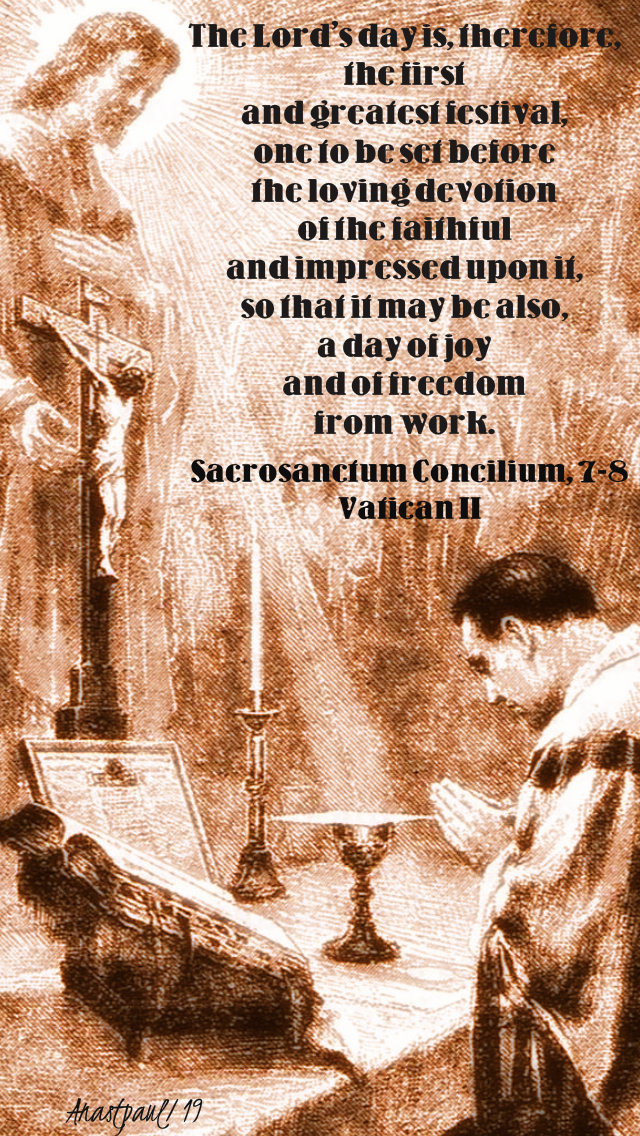
By an apostolic tradition taking its origin from the very day of Christ’s resurrection, the Church celebrates the paschal mystery every eighth day, the day that is rightly called the Lord’s day. On Sunday, the Christian faithful ought to gather together, so that by listening to the word of God and sharing in the Eucharist they may recall the passion, death and resurrection of the Lord Jesus and give thanks to God who has given them a new birth with a lively hope, through the resurrection of Jesus Christ from the dead.
The Lord’s day is therefore the first and greatest festival, one to be set before the loving devotion of the faithful and impressed upon it, so that it may be also, a day of joy and of freedom from work. Other celebrations must not take precedence over it, unless they are truly of the greatest importance, since it is the foundation and the kernel of the whole liturgical year.
Sunday Reflection – 27 January – The Third Sunday in Ordinary Time, Year C – First Reading: Nehemiah 8:8–10
“Go your way, eat the fat and drink sweet wine…” Nehemiah 8:10
“For it is a holy day of the Lord for us when we take pains to hear and carry out His words. On this day it is proper that, however much outwardly we have endured the obstacles of tribulations, we should be “rejoicing in hope,” in keeping with the apostle’s saying: “As if sorrowful, yet always rejoicing.” On this day we are also commanded to eat fat food and drink sweet drink, that is, to rejoice over the abundance of good action bestowed on us by God and over the very sweetness of hearing God’s Word” ., St Bede the Venerable (673-735) Father & Doctor (On Ezra and Nehemiah, 3.)
By Blessed James Alberione (1884-1971) (Founder of the Pauline Family)
Honour Jesus Truth, Way and Life at Mass
The Eucharistic Celebration is the centre and principal act of worship….
There are many methods for participating in the Mass.
A suggestion:
a) From the beginning to the Gospel,
honour Jesus Truth
by meditating and applying the sacred doctrine, especially the Epistle and the Gospel.
b) From the Gospel to the “Our Father,”
honour Jesus, Way to the Father, especially in the Passion and prayer.
c) From the “Our Father” to the end,
honour Jesus, Life of the soul,
by receiving Communion and its sanctifying and healing grace.
Then Live a Eucharistic Day
It is a good practice to make the Host the day’s foundation.
This means making the day Eucharistic.
Spend the morning [after Mass] in thanksgiving,
displaying the fruits of a holy joy,
working “through Him, with Him and in Him,”
to the glory of the most Blessed Trinity.
From midday to the following morning
start your preparation by offering, sanctifying and carrying out your various duties
with your heart in tune with the Dweller in the tabernacle.
Quote of the Day – 27 January – The Memorial of St Angela Merici (1474-1540)
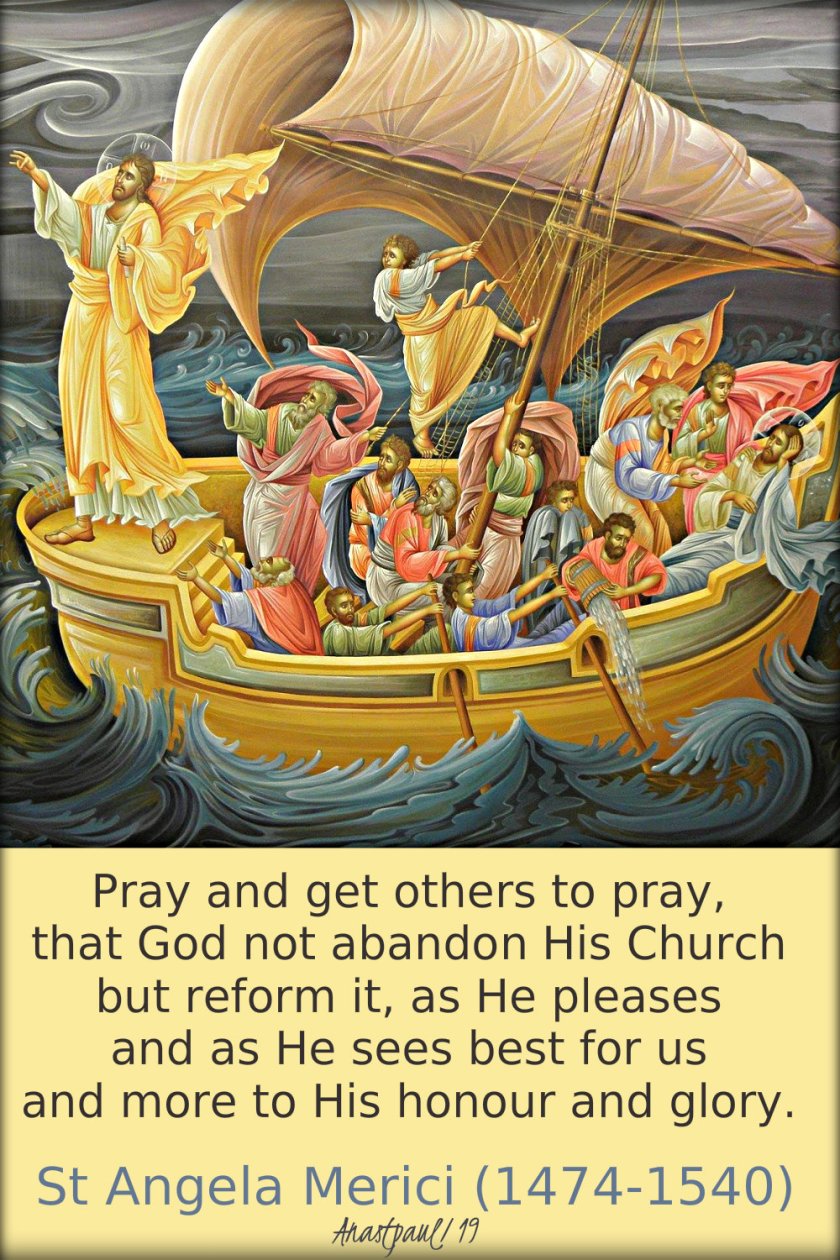
“Pray and get others to pray, that God not abandon His Church but reform it, as He pleases and as He sees best for us and more to His honour and glory.”
One Minute Reflection – 27 January – The Third Sunday in Ordinary Time, Year C – Gospel: Luke 4:14–21
“The Spirit of the Lord is upon me, because he has anointed me to preach good news to the poor. He has sent me to proclaim release to the captives and recovering of sight to the blind, to set at liberty those who are oppressed…”...Luke 4:18
REFLECTION – “Now let us imagine that we too enter the synagogue of Nazareth, the village where Jesus has grown up, until He is about 30 years old. Then, after a moment of silence filled with expectation on the part of everyone, He says, in the midst of their general amazement: “Today this scripture has been fulfilled in your hearing”.
Evangelising the poor – this is Jesus’ mission. According to what He says, this is also the mission of the Church and of every person baptised in the Church. Being a Christian is the same thing as being a missionary. Proclaiming the Gospel with one’s word and even before, with one’s life, is the primary aim of the Christian community and of each of its members.
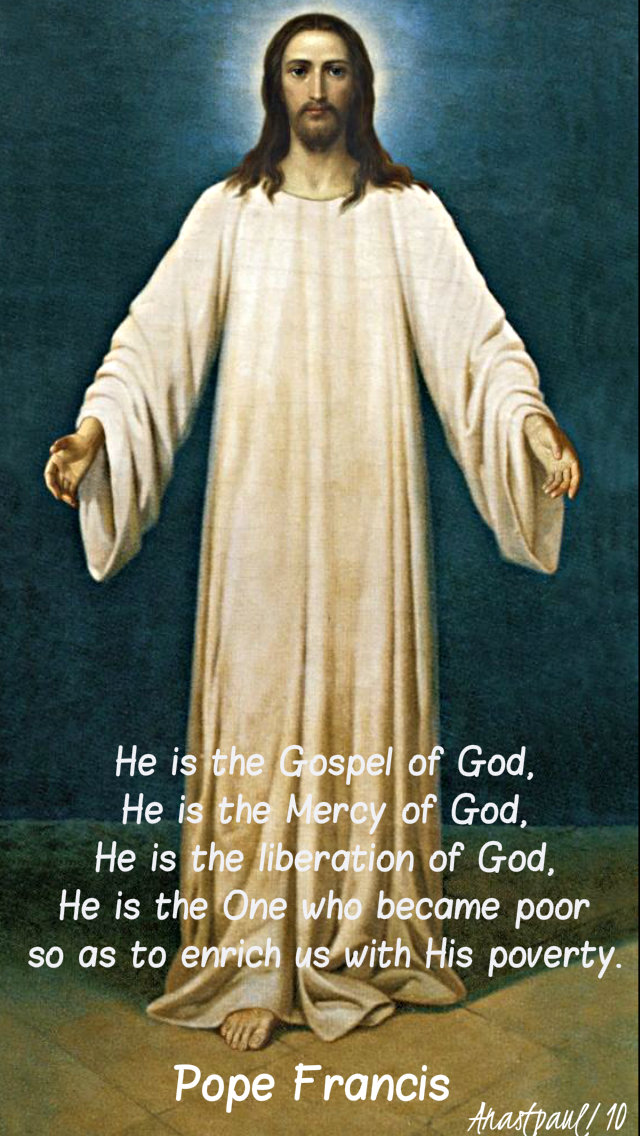
It is noted here that Jesus addresses the Good News to all, excluding no one, indeed favouring those who are distant, suffering sick, cast out by society. Let us ask ourselves: what does it mean to evangelise the poor? It means first of all drawing close to them, it means having the joy of serving them, of freeing them from their oppression, and all of this in the name of and with the Spirit of Christ, because He is the Gospel of God, He is the Mercy of God, He is the liberation of God, He is the One who became poor so as to enrich us with His poverty.”…Pope Francis – Angelus, 24 January 2016
PRAYER – All-powerful, ever-living God, direct our steps in the way of Your love, so that our whole life may be fragrant with all we do in our daily lives as missionaries of Your beloved Son, who sent us forth to proclaim the Good News. Lord God, let St Angela Merici ever commend us to Your love and care. May her charity and wisdom inspire us to treasure Your teaching and express it in our lives. Through our Lord Jesus, in union with the Holy Spirit, one God forever, amen.
Our Morning Offering – 27 January – The Third Sunday in Ordinary Time, Year C
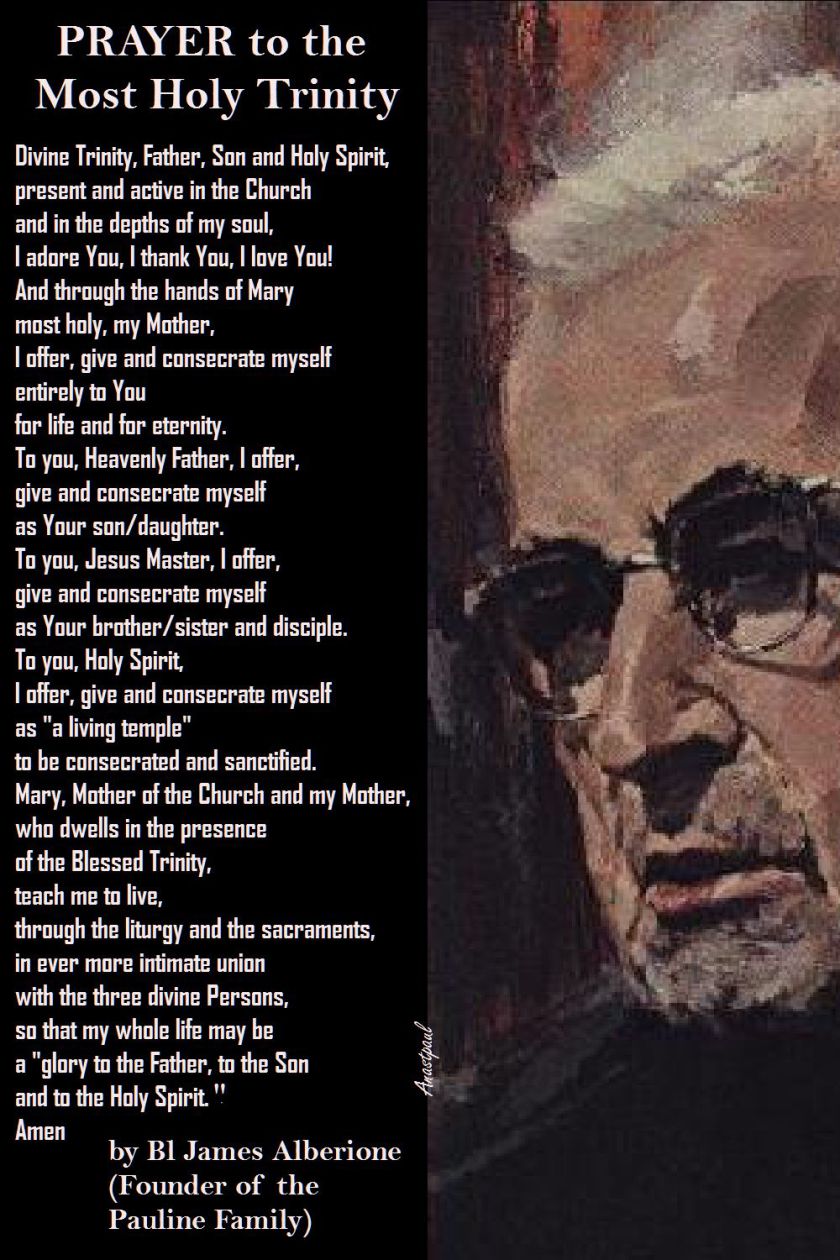
Consecration to the Most Holy Trinity by Blessed James Alberione (1884-1971) (Founder of the Pauline Family)
Divine Trinity, Father, Son and Holy Spirit,
present and active in the Church
and in the depths of my soul,
I adore You, I thank You, I love You!
And through the hands of Mary
most holy, my Mother,
I offer, give and consecrate myself
entirely to You
for life and for eternity.
To you, Heavenly Father, I offer,
give and consecrate myself
as Your son/daughter.
To you, Jesus Master, I offer,
give and consecrate myself
as Your brother/sister and disciple.
To you, Holy Spirit,
I offer, give and consecrate myself
as “a living temple”
to be consecrated and sanctified.
Mary, Mother of the Church and my Mother,
who dwells in the presence
of the Blessed Trinity,
teach me to live,
through the liturgy and the sacraments,
in ever more intimate union
with the three divine Persons,
so that my whole life may be
a “glory to the Father, to the Son
and to the Holy Spirit.” Amen.
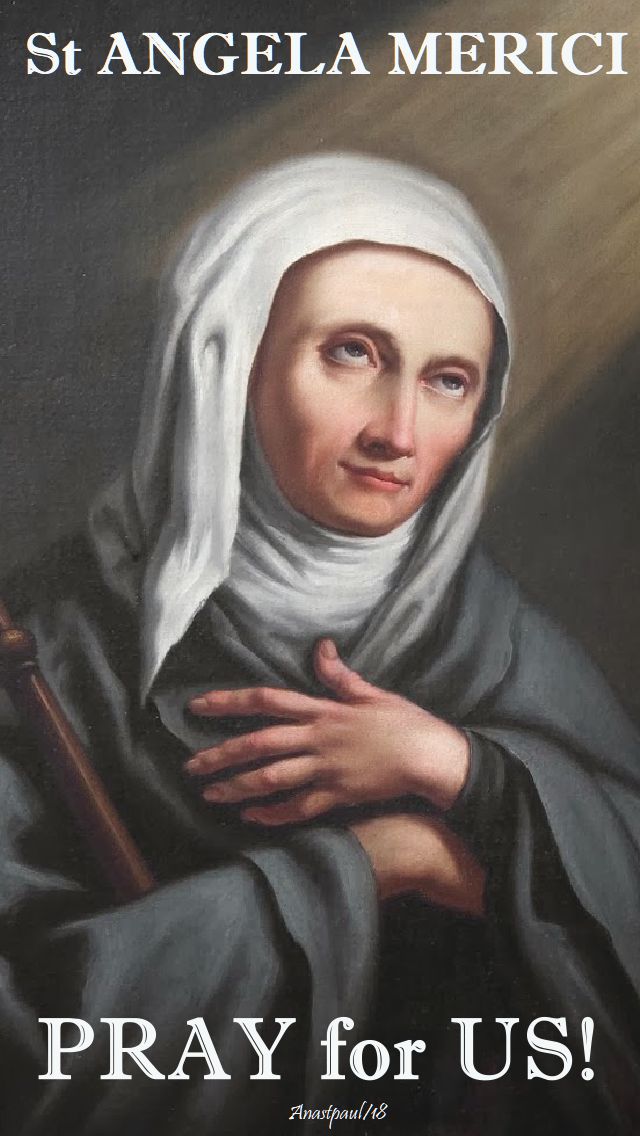
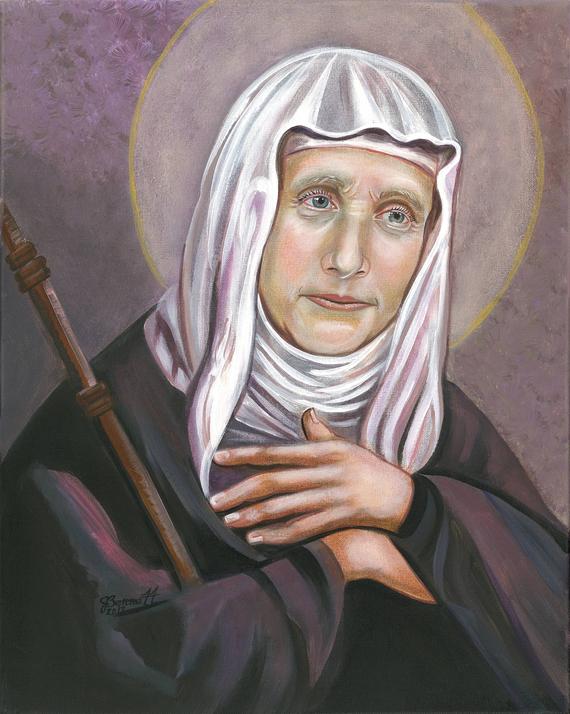
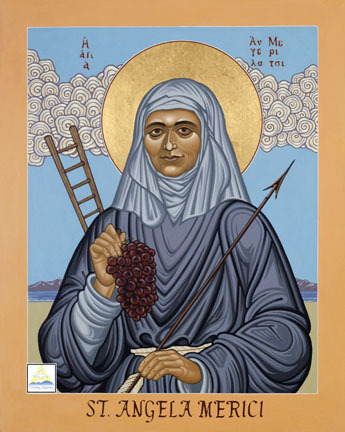
Saint of the Day – 27 January – St Angela Merici (1474-1540) Virgin, Founder. She founded the Company of St. Ursula in 1535 in Brescia, in which women dedicated their lives to the service of the Church through the education of girls. From this organisation later sprang the monastic Order of Ursulines, whose Nuns established places of prayer and learning throughout Europe and, later, worldwide, most notably in North America. Born on 21 March 1474 in Desenzano del Garda, Province of Brescia, Venice, Italy and died oh 27 January 1540 (aged 65) at Brescia of natural causes. Patronages – sickness, handicapped people, loss of parents, courage, She was Beatified on 30 April 1768 by Pope Clement XIII and Canonised on 24 May 1807 by Pope Pius VII.
Women like St Teresa of Ávila and St Catherine of Genoa contributed significantly to the Catholic Reformation. But in the 16th century church perhaps, no woman responded more creatively to the need for reform than St Angela Merici. She built communities that trained single women in Christian living and provided them a secure place of honour in their local societies.
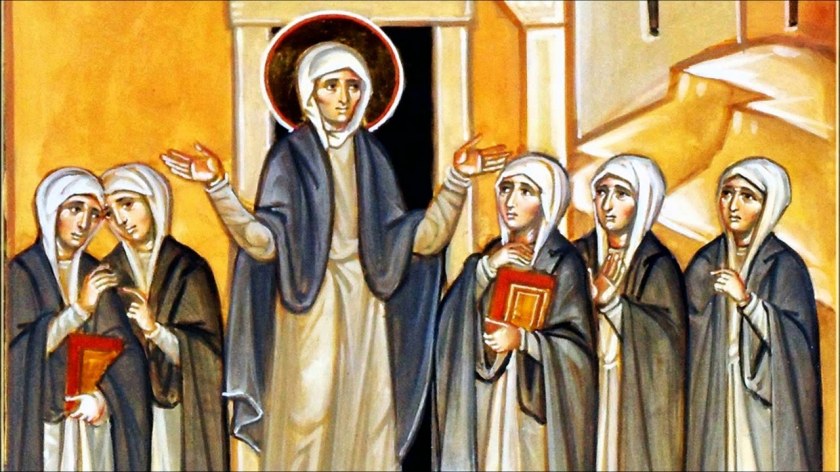
A single lay woman herself, Angela established groups of unmarried women of all classes in Brescia and other northern Italian cities. She wanted the women to be in the world but not of it. So they consecrated themselves to God and promised to remain celibate. But they lived at home with their families and looked for ways to serve their neighbours. In 1535, Angela organised the groups into the Company of St Ursula, later called the Ursulines. Unique for its time, her avant-garde association anticipated modern secular institutes and covenant communities.
Angela gave the Ursulines a military structure, dividing towns into districts governed hierarchically by mature Christian women. This design allowed the community to support members in daily Christian living and protect them from spiritually unhealthy influences.
The rule that Angela wrote for the company required members to remain faithful to the Christian basics. In the following excerpt, she explains the importance of daily vocal and mental prayer:
Each one of the sisters should be solicitous about prayer, mental as well as vocal, that is a companion to fasting. For Scripture says prayer is good with fasting. As by fasting we mortify the carnal appetites and the senses, so by prayer we beg God for the true grace of spiritual life. Thus, from the great need we have of divine aid, we must pray always with mind and heart, as it is written, “Pray constantly” (1 Thessalonians 5:17 NJB). To all we counsel frequent vocal prayer that prepares the mind by exercising the bodily senses. So each one of you, every day will say with devotion and attention at least the Office of the Blessed Virgin and the seven penitential psalms (Psalm 6, 32, 38, 51, 102, 130, and 143) because in saying the office we are speaking with God.
To afford matter and some method in mental prayer, we exhort each one to raise her mind to God and to exercise herself in it every day. And so in the secret of her heart, let her say:
“My Saviour, illumine the darkness of my heart and grant me grace rather to die than to offend your Divine Majesty anymore. Guard, O Lord, my affections and my senses, that they may not stray, nor lead me away from the light of your face, the satisfaction of every afflicted heart.
I ask you, Lord, to receive all my self-will, that by the infection of sin, is unable to distinguish good from evil. Receive, O Lord, all my thoughts, words and deeds, interior and exterior, that I lay at the feet of your Divine Majesty. Although I am utterly unworthy, I beseech you to accept all my being.”
At Angela Merici’s death in 1540 she had started 24 groups. Over the years the Ursulines have flourished as the oldest and one of the most respected of the church’s teaching orders.
To the long list of authorities Ursulines were to obey—Ten Commandments, Church, parents, civil laws—St Angela added “divine inspirations that you may recognise as coming from the Holy Spirit.” A refreshing and liberating rule. Also a dangerous one, for when it’s obeyed, the Holy Spirit may act in unexpected ways.
Bl Antonio Mascaró Colomina
St Avitus
St Candida of Bañoles
St Carolina Santocanale
St Devota of Corsica
St Domitian of Melitene
St Emerius of Bañoles
Bl Jurgis Matulaitis-Matulewicz/George Matulaitis
St Gilduin
Bl Gonzalo Diaz di Amarante
St Henry de Osso y Cervello
St John Maria Muzeyi
Bl John of Warneton
St Julian of Le Mans
St Julian of Sora
St Lupus of Châlons
Bl Manfredo Settala
St Marius of Bodon
Bl Michael Pini
St Natalis of Ulster
St Paul Josef Nardini
Bl Rosalie du Verdier de la Sorinière
St Theodoric of Orléans
St Pope Vitalian
—
Martyrs of North Africa – 30 saints: A group of 30 Christians martyred together by Arian Vandals. The only details to have survived are four of their names – Datius, Julian, Reatrus and Vincent. c 500 in North Africa.
5th Day: For Salesian Brothers, Sisters and Priests
O Saint John Bosco,
you founded the Salesian Society
and the Institute of the Daughters of Mary Help of Christians
for the continuation and extension of the work on behalf of young people.
Pray for all your sons and daughters,
the members of these two religious families that,
inspired by your example and imbued with your spirit
they may be faithful to their religious consecration
and steadfast in the Salesian mission.
Through your intercession
may God grant me the following grace
………………………………..
(mention your request)
so that together with the sons and daughters
of your religious families
I may assist and help all especially young people.
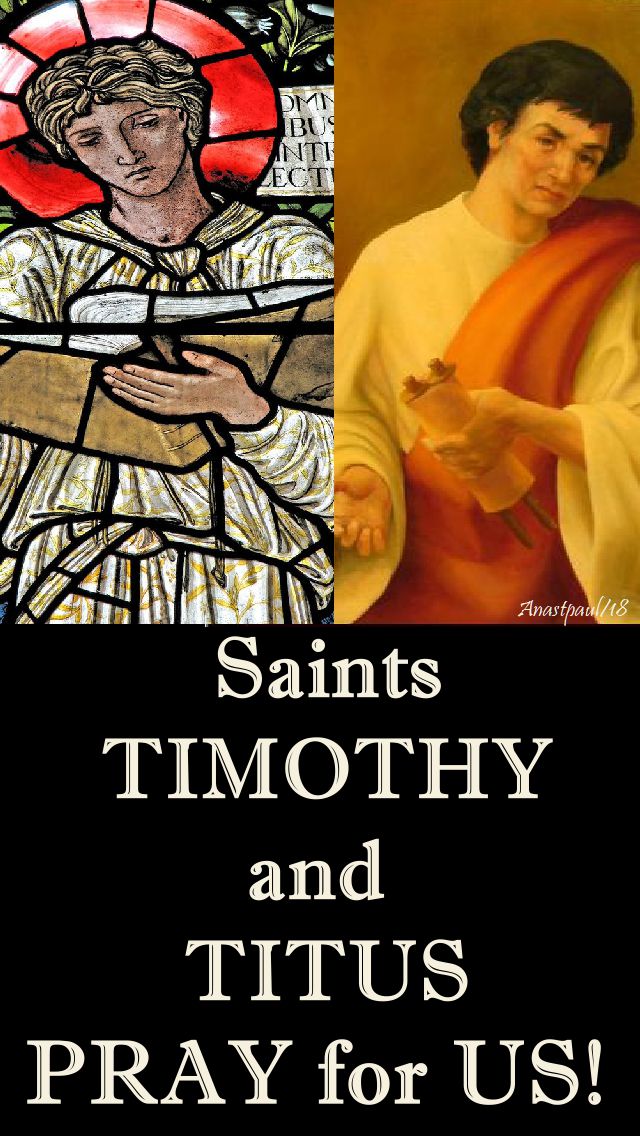
Thought for the Day – 26 January – The Memorial of Sts Timothy and Titus, Disciples and Companions of the Apostle Paul and Bishops of the Catholic Church
Timothy was comparatively young for the work he was doing. Several references seem to indicate that he was timid. And one of Paul’s most frequently quoted lines was addressed to him: “Stop drinking only water but have a little wine for the sake of your stomach and your frequent illnesses” (1 Timothy 5:23).
Titus has the distinction of being a close friend and disciple of Paul as well as a fellow missionary. He was Greek, apparently from Antioch. Even though Titus was a Gentile, Paul would not let him be forced to undergo circumcision at Jerusalem. Titus is seen as a peacemaker, administrator, great friend. Paul’s second letter to Corinth affords an insight into the depth of his friendship with Titus and the great fellowship they had in preaching the gospel.
In Timothy and Titus, we get another glimpse of life in the early Church – great zeal in the apostolate, great communion in Christ, great friendship. Yet always there is the problem of human nature and the unglamorous details of daily life, the need for charity and patience in “quarrels with others, fears within myself,” as Paul says. Through it all, the love of Christ sustained them.
After his experience with Jesus Christ, Paul realised that he was not alone on the road to salvation. Jesus Christ has already accomplished salvation for us. In faith and Baptism, Christians receive the grace of the Holy Spirit, who is our constant guide. The Holy Spirit helps us to live in relationship with God and others.
And so, we too, are always sustained by the love of Christ!
One Minute Reflection – 26 January – The Memorial of Sts Timothy and Titus, Disciples and Companions of the Apostle Paul and Bishops of the Catholic Church
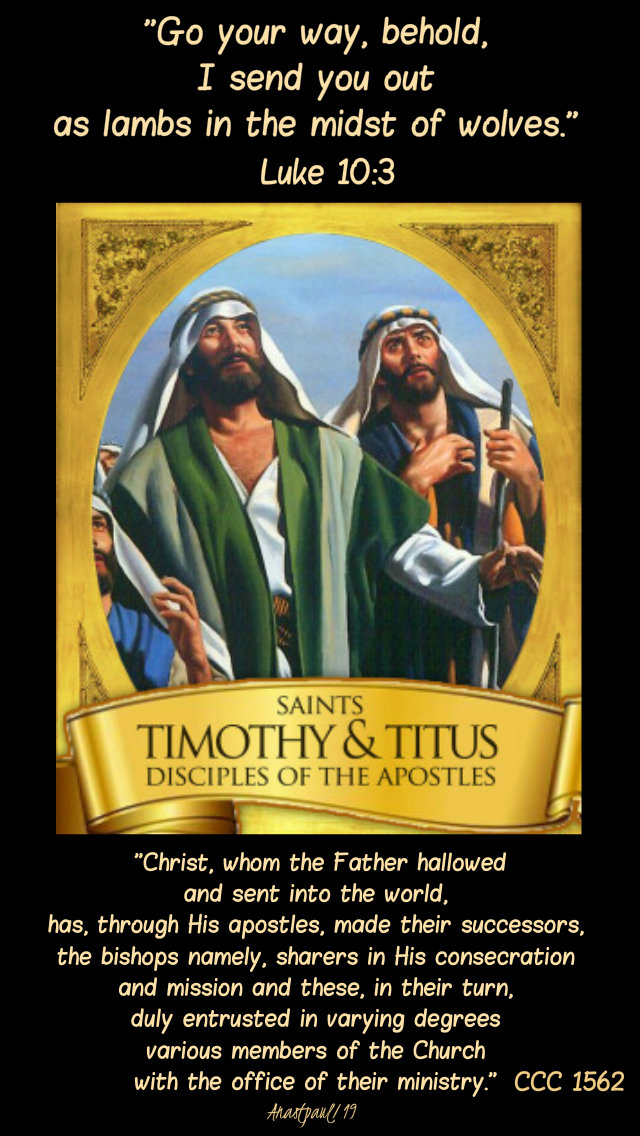
“And he said to them, “The harvest is plentiful but the labourers are few, pray therefore the Lord of the harvest to send out labourers into his harvest. Go your way, behold, I send you out as lambs in the midst of wolves.”...Luke 10:2-3
REFLECTION – 1562 “Christ, whom the Father hallowed and sent into the world, has, through His apostles, made their successors, the bishops namely, sharers in His consecration and mission and these, in their turn, duly entrusted in varying degrees various members of the Church with the office of their ministry.” 43 “The function of the bishops’ ministry was handed over in a subordinate degree to priests so that they might be appointed in the order of the priesthood and be co-workers of the episcopal order for the proper fulfilment of the apostolic mission that had been entrusted to it by Christ.”...CCC 1562 The ordination of priests – co-workers of the bishops
Another observation concerns the willingness of these collaborators. The sources concerning Timothy and Titus highlight their readiness to take on various offices that also often consisted in representing Paul in circumstances far from easy. In a word, they teach us to serve the Gospel with generosity, realising that this also entails a service to the Church herself.”…Pope Benedict XVI 13 December 2006
PRAYER – Almighty God, You endowed Saints Timothy and Titus with power to preach Your Word. Grant that, living a life of integrity and holiness in this world, reaching out to teach the Gospel both by our lives and our words, we may, through their prayers, come to our true home in heaven. Through our Lord Jesus Christ, in union with the Holy Spirit, one God forever, amen.
Our Morning Offering – 26 January – The Memorial of the 3 Founders of the Cistercian Order
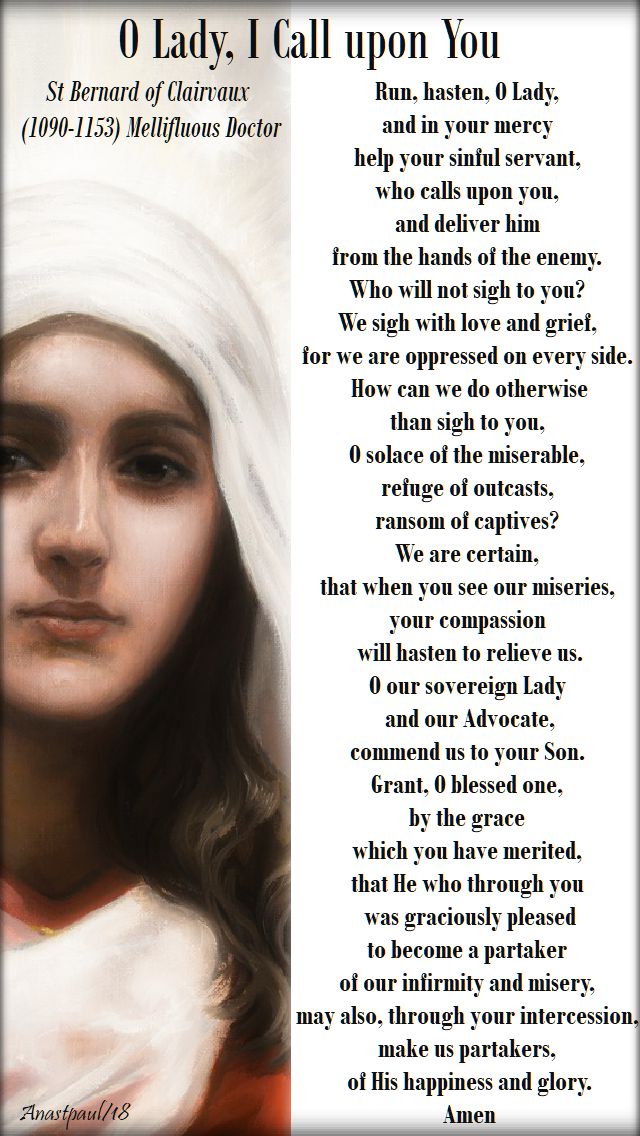
Run, Hasten, O Lady By St Bernard of Clairvaux (1090-1153) Doctor of the Church
Run, hasten, O Lady
and in your mercy,
help your sinful servant,
who calls upon you
and deliver him
from the hands of the enemy.
Who will not sigh to you?
We sigh with love and grief,
for we are oppressed on every side.
How can we do otherwise than sigh to you,
O solace of the miserable,
refuge of outcasts,
ransom of captives?
We are certain that when you see our miseries,
your compassion will hasten to relieve us.
O our sovereign Lady and our Advocate,
commend us to your Son.
Grant, O blessed one,
by the grace which you have merited,
that He Who through you
was graciously pleased to become
a partaker of our infirmity and misery,
may also through your intercession,
make us partakers
of His happiness and glory.
Amen
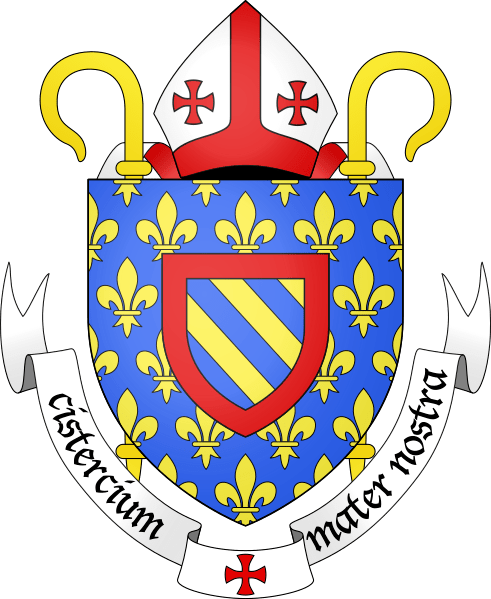
Saints of the Day – 26 January – St Alberic of Citeaux O.Cist (Died 1109) Monk and Abbot , St Robert of Molesme O.Cist (1028-1111) Abbot and St Stephen Harding O.Cist (c 1060-1134) Monk, Priest and the three are Co-Founders of the Cistercian Order.
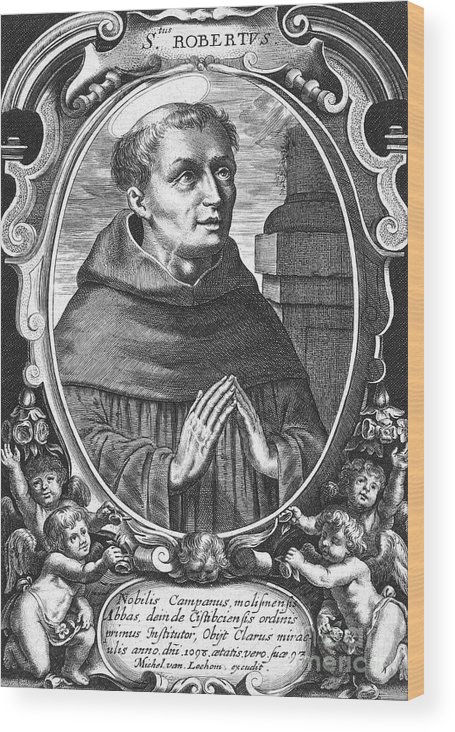
Robert was born about 1029, a nobleman from Champagne, a younger son, who entered the Benedictine abbey of Montier-la-Celle near Troyes at age fifteen and rose to the office of prior. He was made the abbot of Saint Michel-de-Tonnerre around the year 1070 but he soon discovered that the monks were quarrelsome and disobedient, so he returned to Montier-la-Celle.
Meanwhile, two hermits from a group of monks that had settled at Collan went to Rome and asked Pope Gregory VII to give them Robert as their superior. The pope granted their request and as of 1074 Robert served as their leader. Soon after, Robert moved the small community to Molesme in the valley of Langres in Burgundy. Initially, the establishment consisted of only huts made of branches surrounding a chapel in the forest, dedicated to the Holy Trinity. Molesme Abbey quickly became known for its piety and sanctity and Robert’s reputation as a saintly man grew. It is because of this reputation that in 1082 St Bruno of Cologne (c 1030 -1101) came to Robert seeking advice. He lived with Robert’s community for a time before going on to found the Grande Chartreuse, the first Carthusian monastery.
In 1098 there were 35 dependent priories of Molesme and other annexes and some priories of nuns. Donors from the surrounding area vied with one another in helping the monks; soon they had more than they needed, slackened their way of life and became tepid. Benefactors sent their children to the abbey for education and other non-monastic activities began to dominate daily life. The vast land holdings they had acquired required a large number of employees. As the community grew increasingly wealthy, it began to attract men seeking entry for the wrong reasons. They caused a division among the brothers, challenging Robert’s severity. Robert twice tried to leave Molesme but was ordered back by the Pope.
In 1098, Robert and twenty-one of his monks left Molesme with the intention of never returning. Renaud, the viscount of Beaune, gave this group a desolate valley in a deep forest, there they founded Cîteaux Abbey. Saints Stephen Harding and Alberic – two of Robert’s monks from Molesme – were pivotal in founding the new house. The archbishop of Lyons, being persuaded that they could not subsist there without the endorsement of an influential churchman, wrote in their favour to Eudo, duke of Burgundy. Eudo paid for the construction they had begun, helped the monks finance their operating expenses and gave them much land and cattle. The bishop of Challons elevated the new monastery to the canonical status of an abbey.
In 1099, the monks of Molesme asked Robert to return and agreed to submit entirely to his interpretation of the Rule of St Benedict, the local bishop also pressured Robert to return. He agreed and Molesme became a major centre for the Benedictines under his tutelage. Albéric was made successor abbot at Cîteaux, with Stephen Harding as prior.
Robert died on 17 April 1111. Pope Honorius III Canonised him in 1222. His feast day in the Roman Catholic Church was at first observed on 17 April, later transferred to April 29 and finally combined with the feast of Alberic and Stephen Harding and is observed in our day on 26 January.
The Life of Saint Robert de Molesme was written by Guy, his immediate successor as abbot of Molesme.
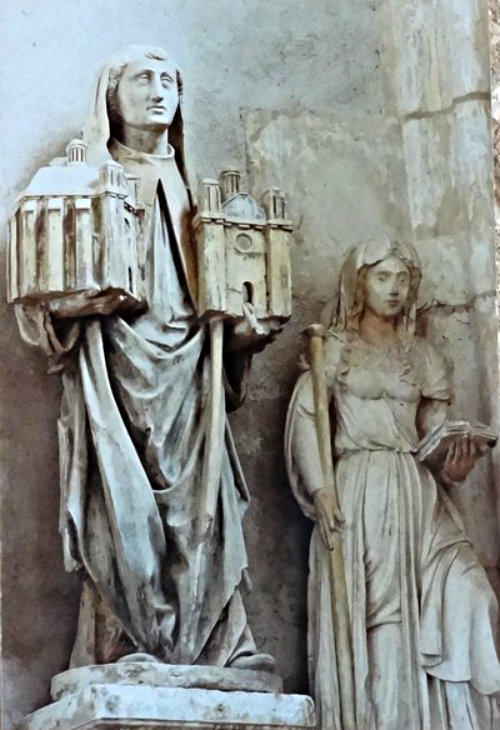
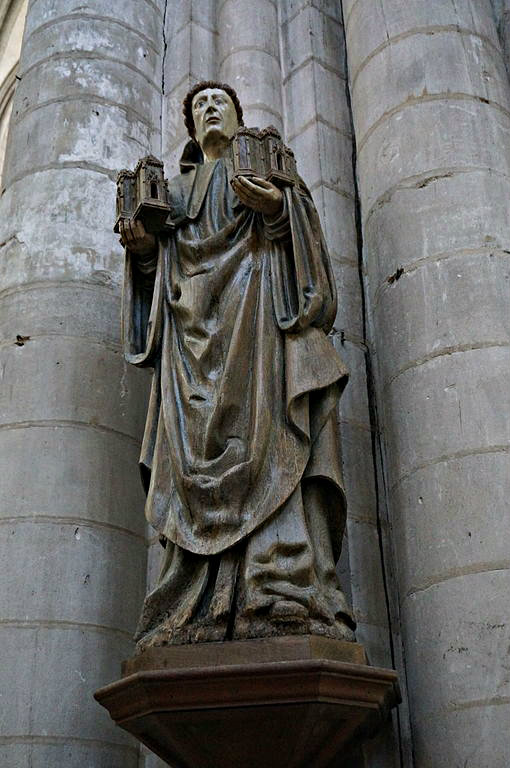
St Robert of Molesme, 15th Cent statue
Alberic was a hermit in the forest of Collan in France who, along with five other hermits, invited Abbot Robert of Molesme to begin a new monastery with them that would operate under the Rule of St Benedict.
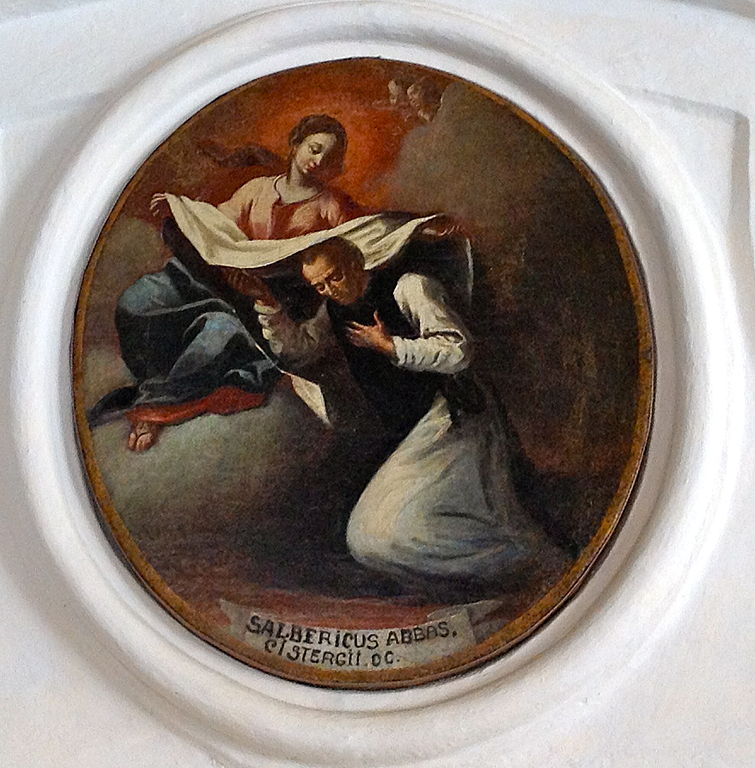
Alberic is credited with attaining the Cistercian Order’s legal foundation. Pope Pascal II granted this legitimacy with his Bull Desiderium quod (around 1100). Albéric also decided to move the monastery’s buildings a kilometer to the north and initiated construction on the first abbey church. The Church was consecrated less than six years later. Alberic also introduced the use of the white Cistercian cowl. It was given to him for the monks, according to legend, by the Virgin Mary as they were at choir praying vigils. Accordingly, the white cowl is one of Alberic’s attributes in hagiographical paintings.
Alberic’s feast day, together with that of Robert of Molesme and Stephen Harding, is celebrated on 26 January.
Harding was born in Sherborne, Dorset, in the Kingdom of England and spoke English, Norman, French and Latin. He was placed in Sherborne Abbey at a young age but eventually left the monastery and became a travelling scholar, journeying with one devout companion into Scotland and afterwards to Paris and then to Rome. He eventually moved to Molesme Abbey in Burgundy, under the Abbot Robert of Molesme (c. 1027-1111). During his time at Molesme abbey he seemed to have assumed the name Stephen.
When Robert left Molesme to avoid what he perceived to be the abbey’s increasing wealth and overly strong connections to the aristocracy, Harding and Alberic of Cîteaux went with him. Seeing no hope of a sufficient reformation in Molesme, Robert appointed another abbot for the abbey and then, with Alberic, Harding and twenty-one other monks, received permission from Hugh, the Archbishop of Lyons and legate of the Holy See, to found a new monastery in Citeaux, a marshy wilderness five leagues from Dijon. There, they formed a new, more austere monastery. Eudes, afterwards Duke of Burgundy, built them a little church which was placed under the patronage of the Blessed Virgin, as all the churches of the Cistercians from that time have been.
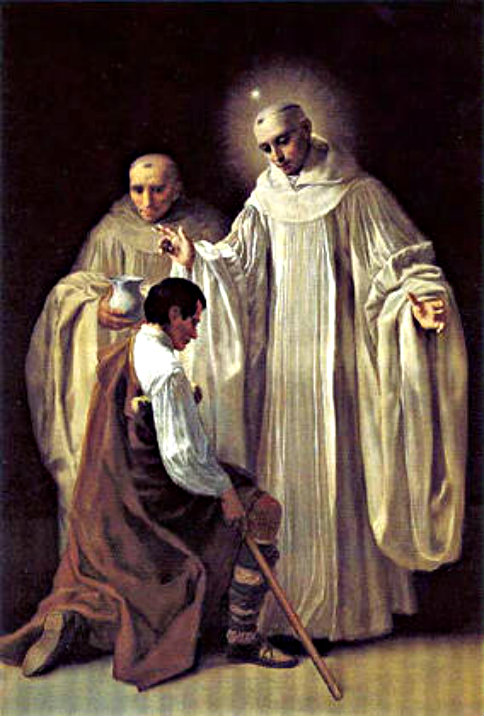
Stephen became the third abbot of Cîteaux. However, very few were joining the community and the monks were suffering from hunger and sickness. In 1112, Bernard of Clairvaux entered the community, bringing with him thirty companions. Between 1112 and 1119, a dozen new Cistercian houses were founded to accommodate those joining the young order. Harding’s organisational skills were exceptional, he instituted the system of general chapters and regular visitations. In 1119, he received official approbation for the Carta Caritatis (Charter of Charity), an important document for the Cistercian Order, establishing its unifying principles.
St Stephen receives St Bernard
Stephen Harding served Cîteaux Abbey as abbot for twenty-five years. While no single person is considered the founder of the Cistercian Order, the shape of Cistercian thought and its rapid growth in the 12th century were arguably due to Harding’s leadership. Insisting on simplicity in all aspects of monastic life, he was largely responsible for the severity of Cistercian architecture and the simple beauty of the Order’s liturgy and music. He was an accomplished scribe for the monastery’s scriptorium, his highest achievement is considered to be the Harding Bible, famous among medieval manuscripts. In 1133, he resigned as head of the order because of age and infirmity. He died on 28 March 1134 and was buried in the tomb of Alberic, his predecessor, in the cloisters at Cîteaux. Stephen was largely responsible for the severity of Cistercian architecture because he was an adherer of simplicity in all aspects of monastic life.
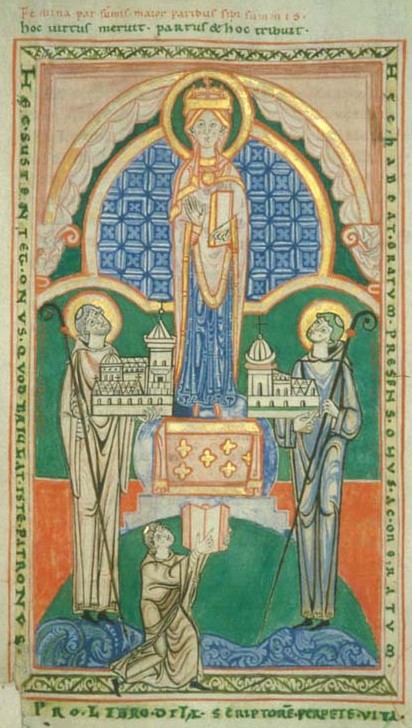
An illumination by St Stephen Harding presenting a model of his church to the Blessed Virgin Mary (Municipal Library, Dijon). Cîteaux, c 1125. At this period Cistercian illumination was the most advanced in France but within 25 years it was abandoned altogether under the influence of St Bernard of Clairvaux.
In a joint commemoration with Robert of Molesme and Alberic, the first two abbots of Cîteaux, the Roman Catholic Church celebrates Stephen Harding’s feast day on 26 January. There is a Catholic Baroque Church established by 1785, the patron saint of which is Stephen Harding, it is located in Hungary, in the village Apátistvánfalva.
The north aisle of the Church of St Sepulchre-without-Newgate in London was formerly a chapel dedicated to him (it became the Musicians’ Chapel in the 20th century).
St Alberic of Citreaux O.Cist (Died 1109)
St Alphonsus of Astorga
St Ansurius of Orense
St Athanasius of Sorrento
St Conan of Iona
Bl Eystein Erlandsön
Bl José Gabriel del Rosario Brochero
Bl Marie de la Dive veuve du Verdier de la Sorinière
Bl Michaël Kozal
St Paula of Rome St Robert of Molesme O.Cist (1028-1111)
St Stephen Harding O.Cist (c 1060-1134)
St Theofrid of Corbie
St Theogenes of Hippo
St Tortgith of Barking
—
Martyred Family of Constantinople: Saint Mary and Saint Xenophon were married and the parents of Saint John and Saint Arcadius. Theirs was a wealthy family of Senatorial rank in 5th century imperial Constantinople, but were known as a Christians who lived simple lives. To give their sons a good education, Xenophon and Mary sent them to university in Beirut, Phoenicia. However, their ship wrecked, there was no communication from them, and the couple assumed, naturally, that the young men had died at sea. In reality, John and Arcadius had survived and decided that instead of continuing to Beirut, they were going to follow a calling to religious life and became monks, eventually living in a monastery in Jerusalem. Years later, Mary and Xenophon made a pilgrimage to Jerusalem – where they encountered their sons. Grateful to have their family re-united and taking it as a sign, Xenophon and Mary gave up their positions in society in Constantinople, and lived the rest of their lives as a monk and anchoress in Jerusalem. A few years later, the entire family was martyred together.
They were martyred in 5th century Jerusalem.
St Xenophon
St Mary
St John
St Arcadius
O Saint John Bosco,
you became father, teacher and friend
to young people by the great love
and personal sacrifice with which you worked
for their salvation.
Pray for us that, inspired by your example
we also may love this chosen portion of God’s flock
with Christ’s own pastoral charity
and receive every child as we would the Lord Jesus himself.
Through your intercession
may God grant me the following grace
………………….…………….
(mention your request)
so that together with others
I may assist and help young people in today’s society, AMEN.
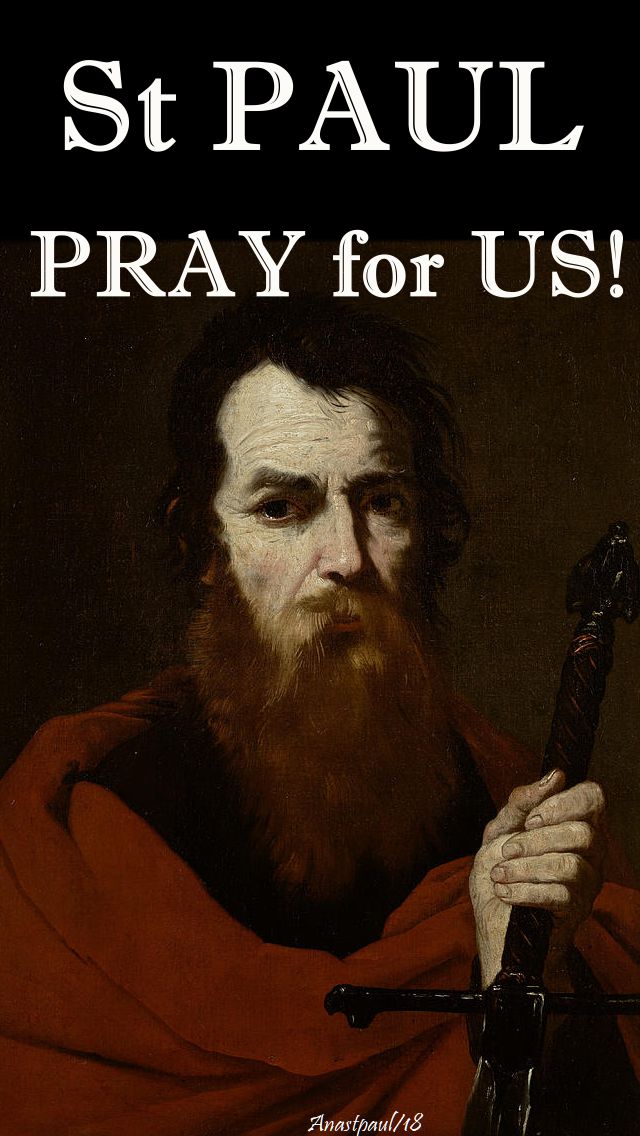
Thought for the Day – 25 January – For love of Christ, Paul bore every burden
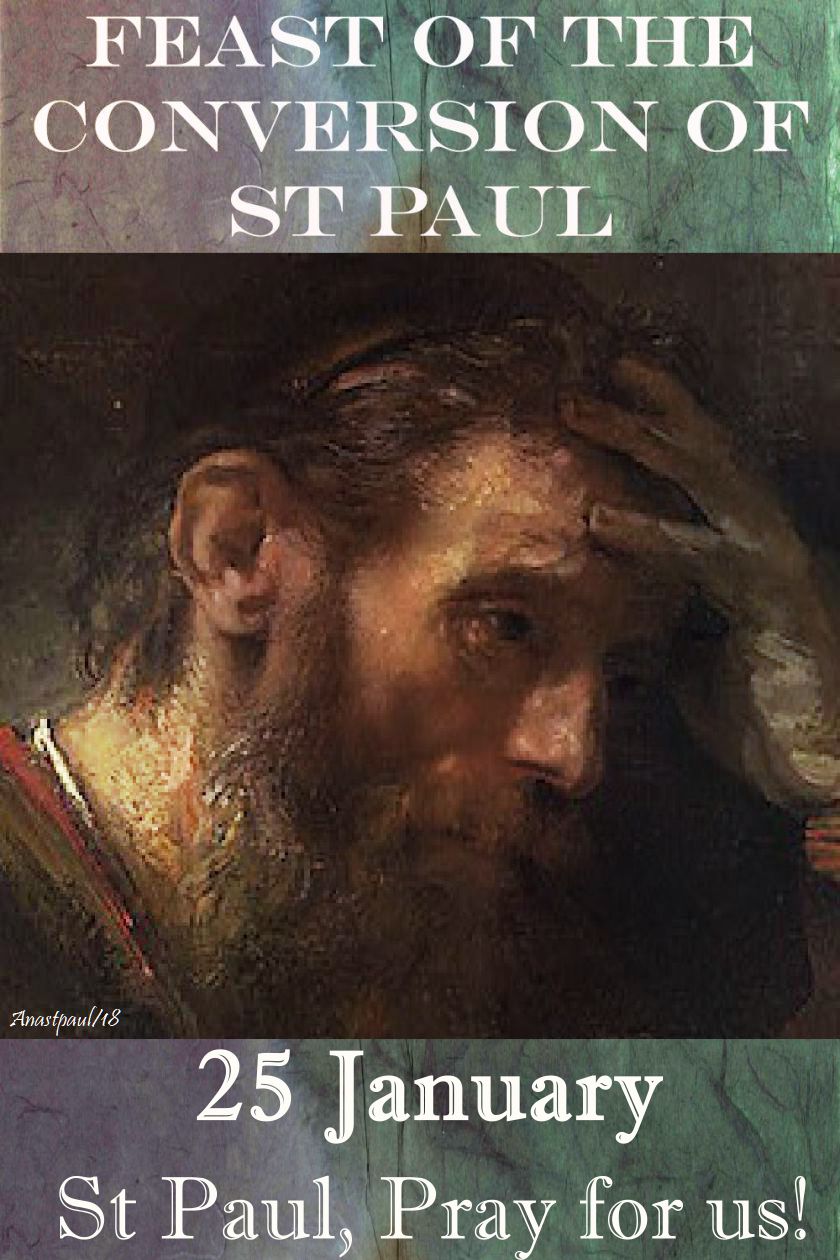
Feast of the Conversion of St Paul, Apostle of Christ
Saint John Chrysostom (347-407)
Father and Doctor of the Church
An excerpt from his Homily 2: In Praise of Saint Paul
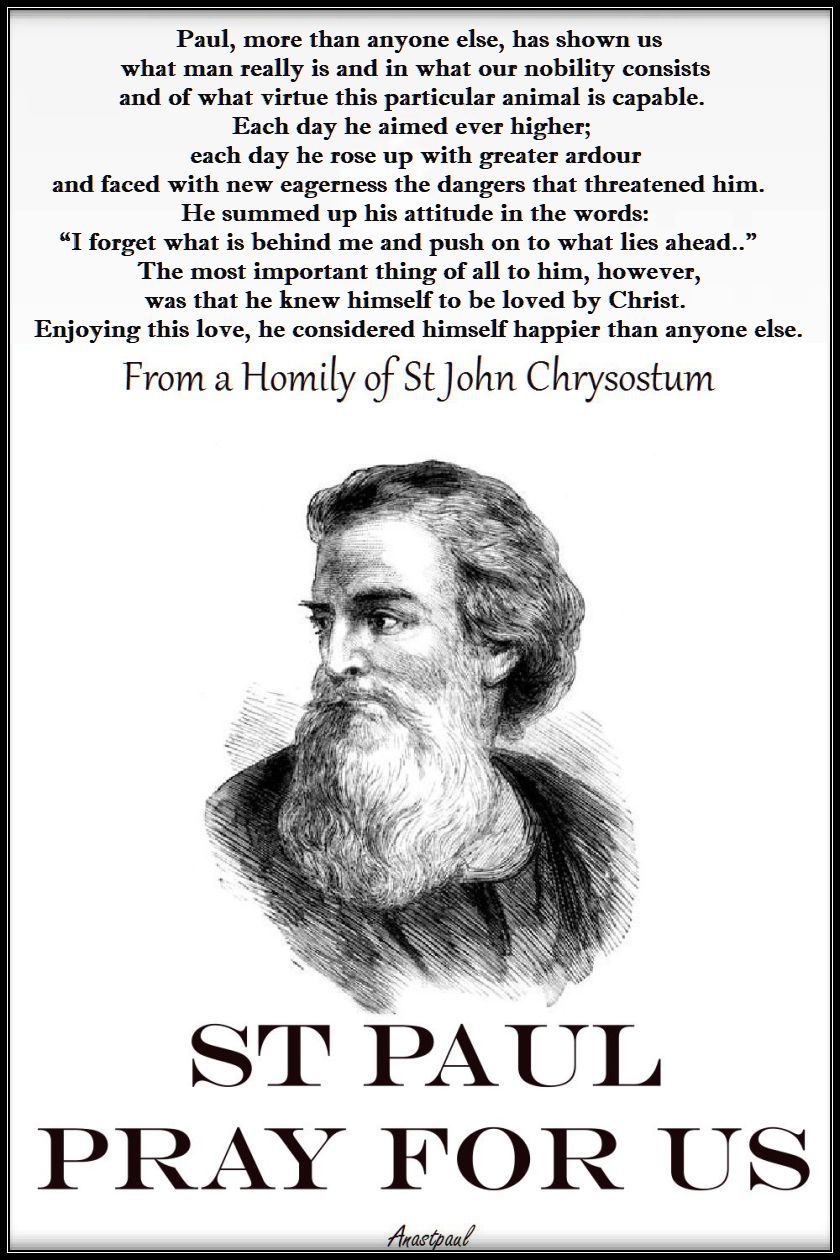
Paul, more than anyone else, has shown us what man really is and in what our nobility consists and of what virtue this particular animal is capable. Each day he aimed ever higher, each day he rose up with greater ardour and faced with new eagerness the dangers that threatened him. He summed up his attitude in the words: I forget what is behind me and push on to what lies ahead. When he saw death imminent, he bade others share his joy: Rejoice and be glad with me! And when danger, injustice and abuse threatened, he said: I am content with weakness, mistreatment and persecution. These he called the weapons of righteousness, thus telling us that he derived immense profit from them.
Thus, amid the traps set for him by his enemies, with exultant heart he turned their every attack into a victory for himself – constantly beaten, abused and cursed, he boasted of it as though he were celebrating a triumphal procession and taking trophies home, and offered thanks to God for it all: Thanks be to God who is always victorious in us! This is why he was far more eager for the shameful abuse that his zeal in preaching brought upon him than we are for the most pleasing honours, more eager for death than we are for life, for poverty than we are for wealth, he yearned for toil far more than others yearn for rest after toil. The one thing he feared, indeed dreaded, was to offend God, nothing else could sway him. Therefore, the only thing he really wanted was always to please God.
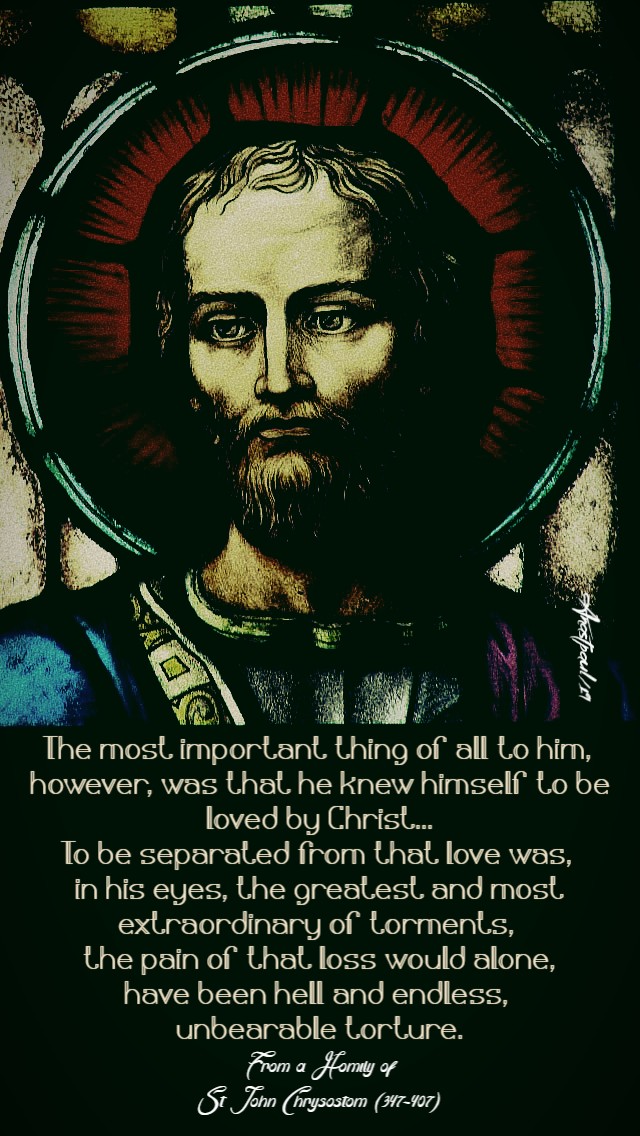
The most important thing of all to him, however, was that he knew himself to be loved by Christ. Enjoying this love, he considered himself happier than anyone else, were he without it, it would be no satisfaction to be the friend of principalities and powers. He preferred to be thus loved and be the least of all, or even to be among the damned, than to be without that love and be among the great and honoured.
To be separated from that love was, in his eyes, the greatest and most extraordinary of torments, the pain of that loss would alone, have been hell and endless, unbearable torture.
So too, in being loved by Christ he thought of himself as possessing life, the world, the angels, present and future, the kingdom, the promise and countless blessings. Apart from that love nothing saddened or delighted him, for nothing earthly did he regard as bitter or sweet.
Paul set no store by the things that fill our visible world, any more than a man sets value on the withered grass of the field. As for tyrannical rulers or the people enraged against him, he paid them no more heed than gnats. Death itself and pain and whatever torments might come were but child’s play to him, provided that thereby he might bear some burden for the sake of Christ.
Quote/s of the Day – 25 January – Feast of the Conversion of St Paul the Apostle
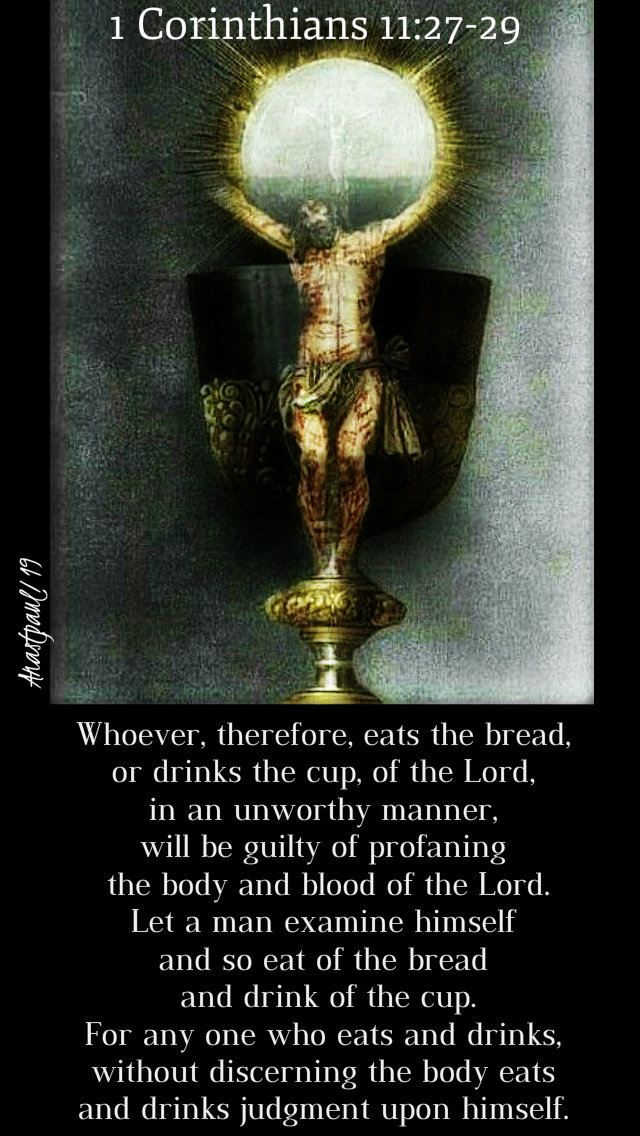
“Whoever, therefore, eats the bread, or drinks the cup, of the Lord, in an unworthy manner, will be guilty of profaning the body and blood of the Lord. Let a man examine himself and so eat of the bread and drink of the cup. For any one who eats and drinks, without discerning the body eats and drinks judgement upon himself.”
1 Corinthians 11:27-29
“Let love be genuine, hate what is evil, hold fast to what is good, love one another with brotherly affection, outdo one another in showing honour. Never flag in zeal, be aglow with the Spirit, serve the Lord. Rejoice in your hope, be patient in tribulation, be constant in prayer. Contribute to the needs of the saints, practice hospitality.”
Romans 12:9-13
“….but we rejoice in our sufferings because we know, that suffering produces perseverance, perseverance, character and character, hope.”
Romans 5:4
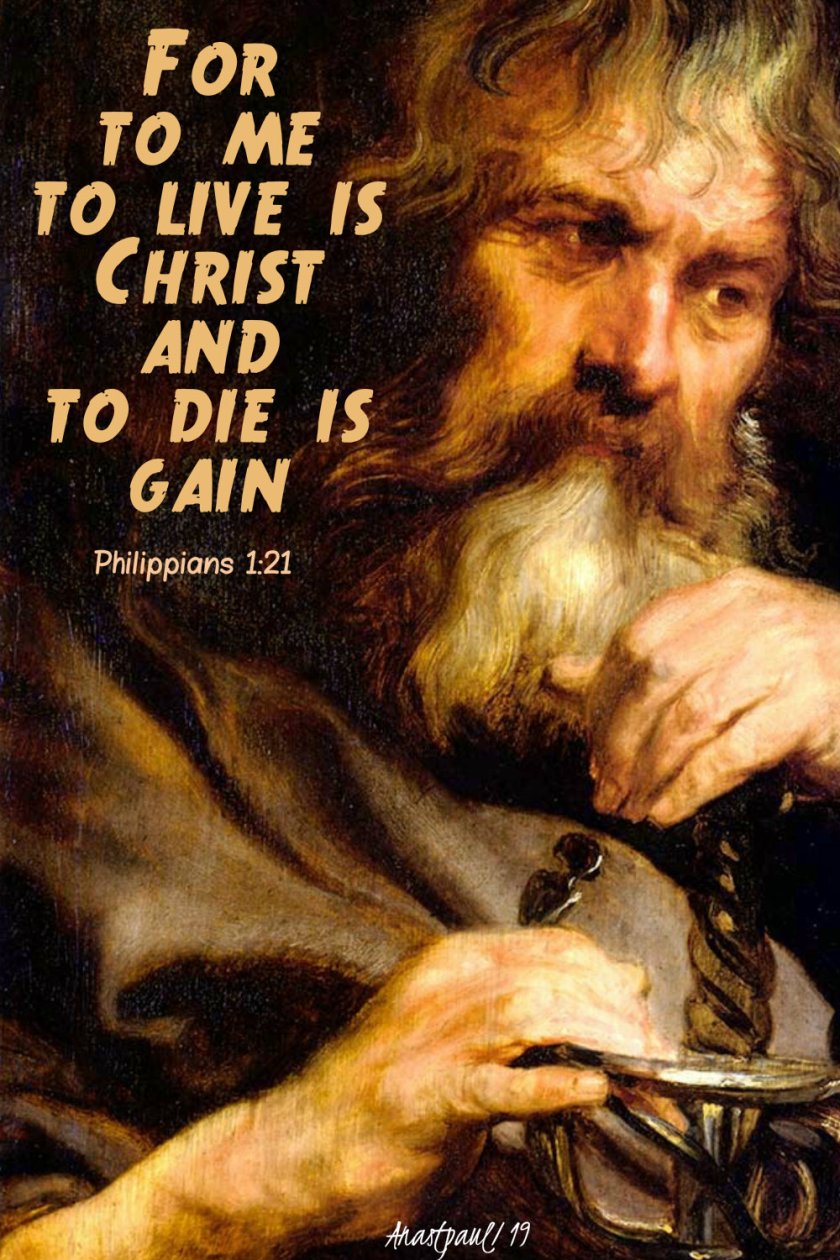
“For to me, to live is Christ and to die is gain.”
Philippians 1:21
Pope Benedict XVI reflects on the significance of Paul’s conversion for the whole Christian people:
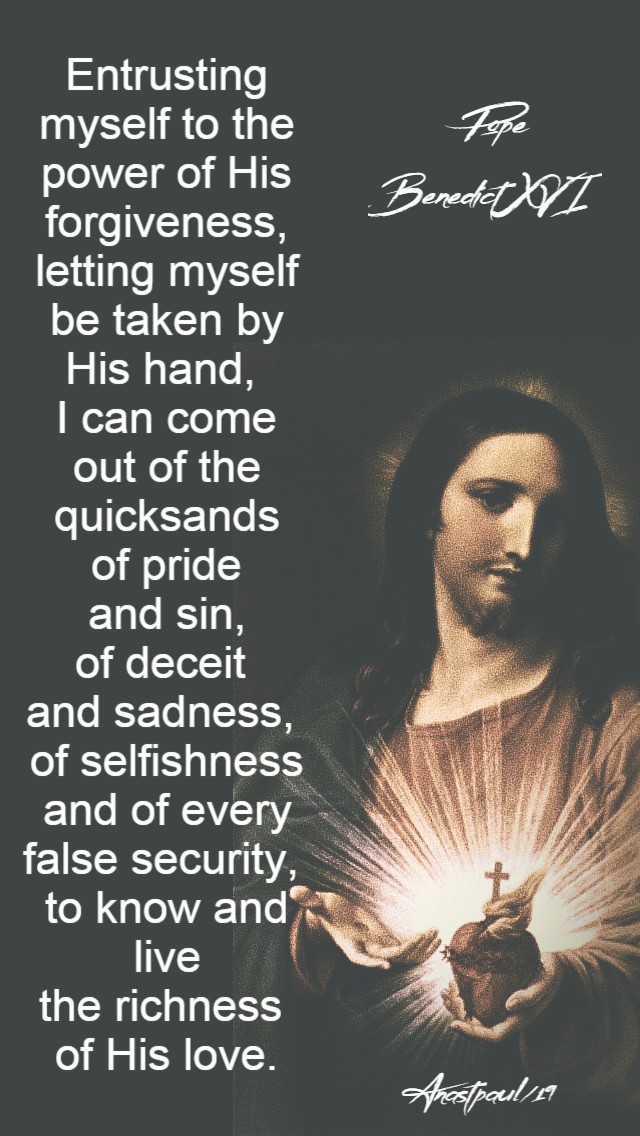
“Paul’s conversion matured in his encounter with the Risen Christ, it was this encounter that radically changed his life. What happened to him on the road to Damascus is what Jesus asks in today’s Gospel, Saul is converted because, thanks to the divine light, “he has believed in the Gospel.” In this consists his and our conversion – in believing in Jesus dead and risen and in opening to the illumination of His divine grace. In that moment Saul understood, that his salvation, did not depend on good works fulfilled according to the law but, on the fact, that Jesus died also for him the persecutor and has risen. This truth by which every Christian life is enlightened thanks to Baptism completely overturns our way of life. To be converted means, also for each one of us, to believe that Jesus “has given himself for me”, dying on the Cross (cf. Galatians 2: 20) and, risen, lives with me and in me. Entrusting myself to the power of His forgiveness, letting myself be taken by His hand, I can come out of the quicksands of pride and sin, of deceit and sadness, of selfishness and of every false security, to know and live the richness of His love.”
One Minute Reflection – 25 January – Feast of the Conversion of St Paul – Acts 9:1-22
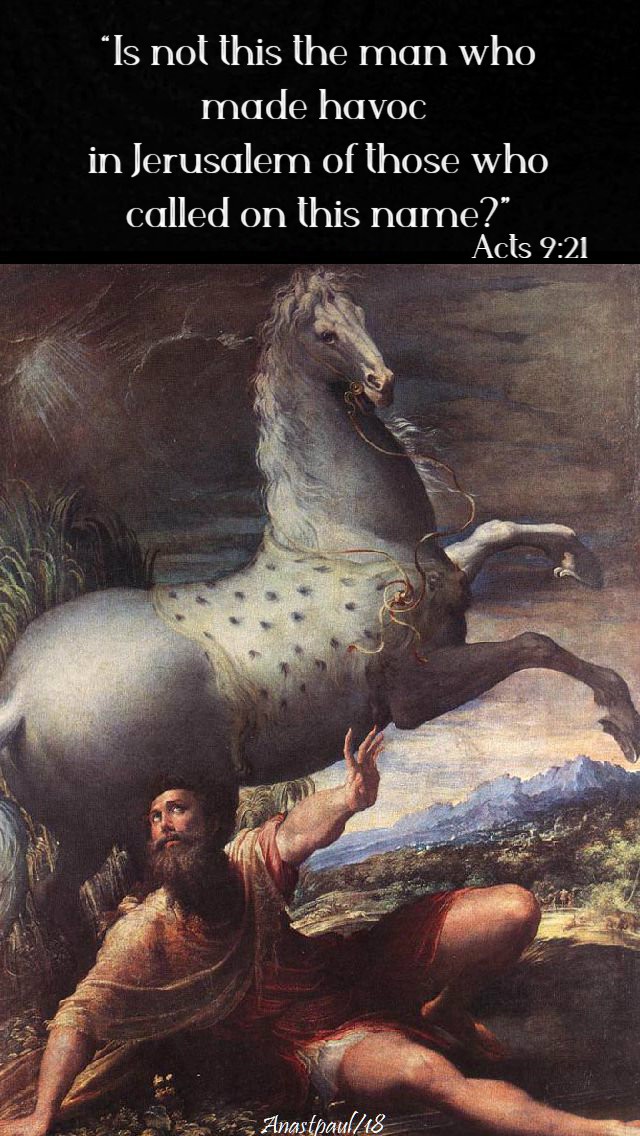
And all who heard him were amazed, and said, “Is not this the man who made havoc in Jerusalem of those who called on this name?”…Acts 9:21
REFLECTION – “We preach not ourselves but Christ Jesus as Lord and ourselves as your servants for Jesus’ sake” (2 Cor 4:5). Who then is this? The former persecutor. O mighty wonder! The former persecutor himself preaches Christ. But why? Was he bribed? No, there was no one who could have persuaded him in that way. Was it the sight of Christ on earth that blinded him? But Jesus had already been taken up into heaven. Saul set out from Jerusalem to persecute Christ’s church and after three days the persecutor had become a preacher in Damascus. By what power? Other people call on friends as witnesses for their friends but I have presented to you as a witness the former enemy.
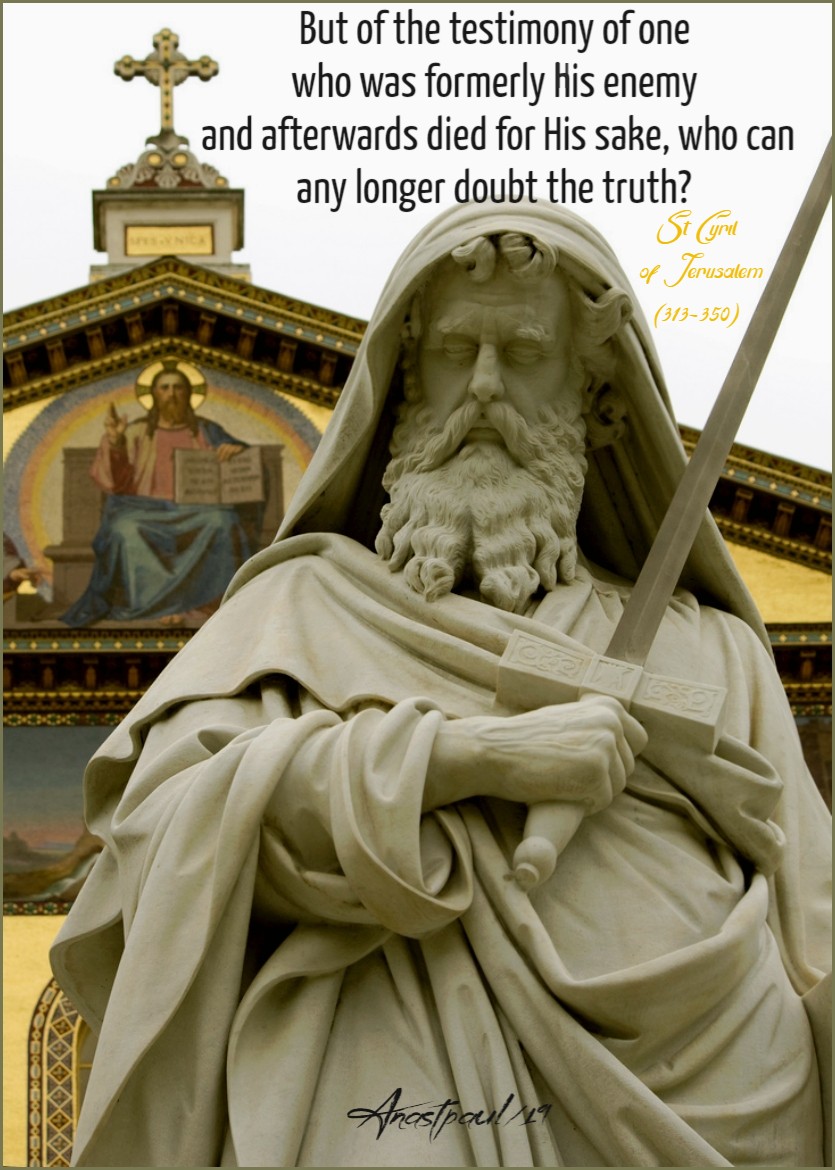
Do you still doubt? The testimony of Peter and John is weighty… but they were istcyrilofjerusalemndeed His friends. But of the testimony of one who was formerly His enemy and afterwards died for His sake, who can any longer doubt the truth? I am amazed at the wise dispensation of the Holy Spirit;… to Paul, the former persecutor, He gave the privilege of writing fourteen letters… In order that his teaching might be beyond question, He granted the former enemy and persecutor the privilege of writing more letters than Peter and John so that we might all be thus made believers. For “all were amazed at Paul and said: ‘Isn’t this the man who was formerly a persecutor? Didn’t he come here to take us away bound to Jerusalem?’” (Acts 9:21) “Do not be not amazed,” said Paul, I know how “it is hard for me to kick against the pricks” (Acts 26:14); I know that “I am not worthy to be called an apostle, because I persecuted the Church of God” (1 Cor 15:9); yet “mercy was shown to me because I did it in ignorance”… “the grace of God was exceedingly abundant in me” (1 Tm 1:13-14).”…St Cyril of Jerusalem (313-350) Father & Doctor of the Church
PRAYER – Today Lord, we celebrate the conversion of St Paul, Your chosen vessel for carrying Your name to the whole world. Help us to make our way towards You by following in his footsteps and by being Your disciples before the men and women of our day. Grant that by the prayers of St Paul, we too may say, “Yet I live, no longer I, but Christ lives in me; insofar as I now live in the flesh, I live by faith in the Son of God who has loved me and given himself up for me.” (Galatians 2:20) Through Jesus Christ, our Lord, in union with the Holy Spirit, one God forever and ever, amen.
Our Morning Offering – 25 January – The Feast of the Conversion of St Paul
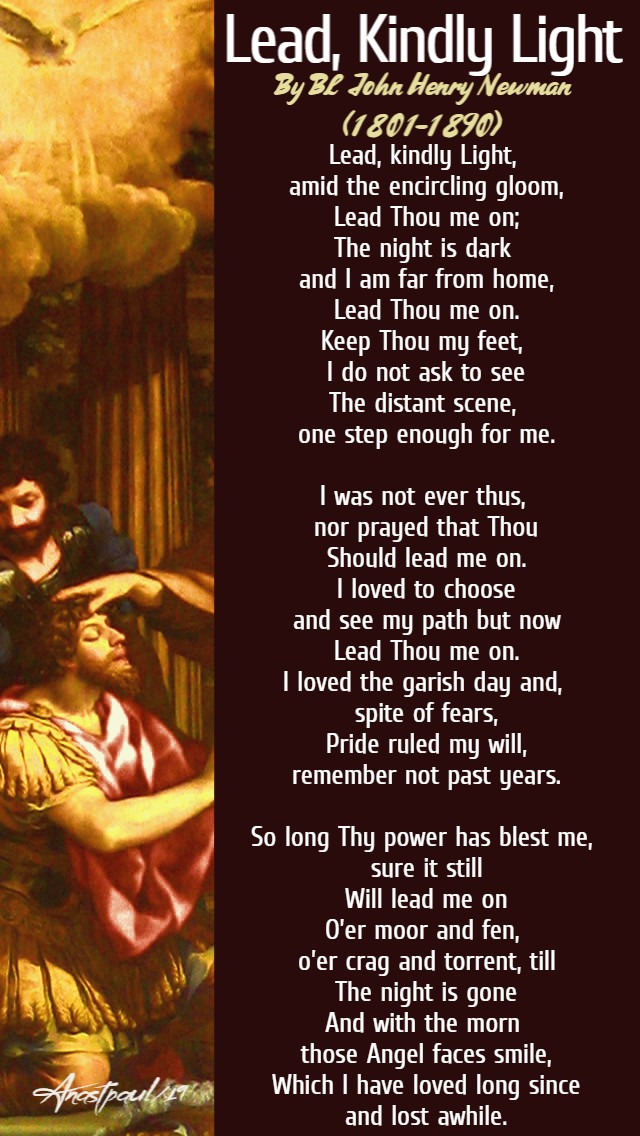
Lead, Kindly Light By Blessed John Henry Newman (1801-1890)
Lead, kindly Light, amid the encircling gloom,
Lead Thou me on;
The night is dark and I am far from home,
Lead Thou me on.
Keep Thou my feet, I do not ask to see
The distant scene, one step enough for me.
I was not ever thus, nor prayed that Thou
Should lead me on.
I loved to choose and see my path but now
Lead Thou me on.
I loved the garish day and, spite of fears,
Pride ruled my wil, remember not past years.
So long Thy power has blest me, sure it still
Will lead me on
O’er moor and fen, o’er crag and torrent, till
The night is gone
And with the morn those Angel faces smile,
Which I have loved long since and lost awhile.
Lead, Kindly Light is a hymn with words written in 1833 by Blessed John Henry Newman (1801-1890) as a poem titled “the Pillar and the Cloud” – it consists of 3 verses, anything after that is not by John Henry.
As a young priest, Newman became sick while in Italy and was unable to travel for almost three weeks. In his own words: “Before starting from my inn, I sat down on my bed and began to sob bitterly. My servant, who had acted as my nurse, asked what ailed me. I could only answer, “I have a work to do in England.” I was aching to get home, yet for want of a vessel I was kept at Palermo for three weeks. I began to visit the churches and they calmed my impatience, though I did not attend any services. At last I got off in an orange boat, bound for Marseilles. We were becalmed for whole week in the Straits of Bonifacio and it was there that I wrote the lines, Lead, Kindly Light, which have since become so well known.”
Why this for St Paul? – this time in Bl John Henry’s life was a time of internal “conversion’ – after, his well-known “Sicily providential illness”, he started to turn towards “Rome” – although first the Oxford Movement had to happen and then some more difficult years before his final conversion but once he had put his hand to the plough, there was no turning back in his journey towards Truth.
I am sure you will agree with me that the words of this most beautiful prayer/poem/hymn, fit the Feast of the Conversion of St Paul perfectly.
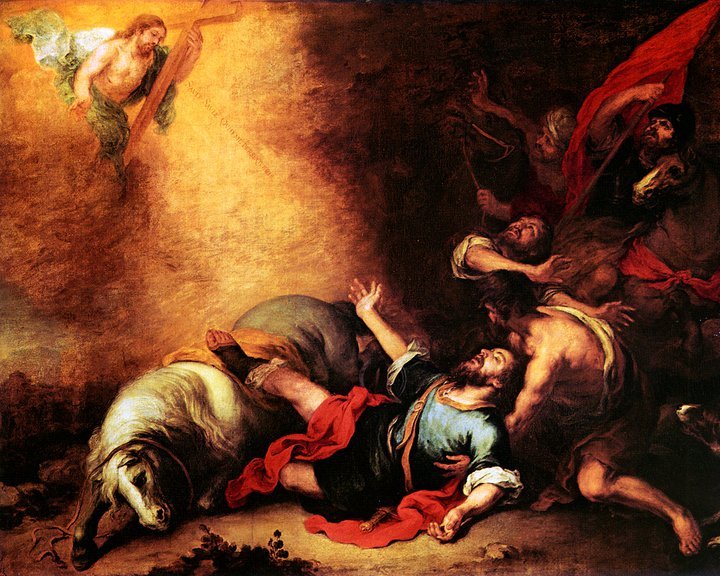
Saint Paul’s entire life can be explained in terms of one experience—his meeting with Jesus on the road to Damascus. In an instant, he saw that all the zeal of his dynamic personality was being wasted, like the strength of a boxer swinging wildly. Perhaps he had never seen Jesus, who was only a few years older. But he had acquired a zealot’s hatred of all Jesus stood for, as he began to harass the Church: “…entering house after house and dragging out men and women, he handed them over for imprisonment” (Acts 8:3b). Now he himself was “entered,” possessed, all his energy harnessed to one goal—being a slave of Christ in the ministry of reconciliation, an instrument to help others experience the one Saviour.
One sentence determined his theology: “I am Jesus, whom you are persecuting” (Acts 9:5b). Jesus was mysteriously identified with people—the loving group of people Saul had been running down like criminals. Jesus, he saw, was the mysterious fulfilment of all he had been blindly pursuing.
From then on, his only work was to “present everyone perfect in Christ. For this I labour and struggle, in accord with the exercise of his power working within me” (Colossians 1:28b-29). “For our gospel did not come to you in word alone but also in power and in the Holy Spirit and [with] much conviction” (1 Thessalonians 1:5a).
Paul’s life became a tireless proclaiming and living out of the message of the cross: Christians die baptismally to sin and are buried with Christ; they are dead to all that is sinful and unredeemed in the world. They are made into a new creation, already sharing Christ’s victory and someday to rise from the dead like Him. Through this risen Christ the Father pours out the Spirit on them, making them completely new.
So Paul’s great message to the world was – You are saved entirely by God, not by anything you can do. Saving faith is the gift of total, free, personal and loving commitment to Christ, a commitment that then bears fruit in more “works” than the Law could ever contemplate.
Conversion of Paul the Apostle (Feast)
Details: https://anastpaul.wordpress.com/2018/01/25/feast-of-the-conversion-of-st-paul-25-january/
St Agape the Martyr
St Agileus of Carthage
St Amarinus of Clermont
St Ananias of Damascus
Bl Antoni Swiadek
Bl Antonio Migliorati
St Apollo of Heliopolis
Bl Archangela Girlani
St Artemas of Pozzuoli
St Auxentius of Epirus
St Bretannion of Tomi
St Donatus the Martyr
St Dwynwen
St Emilia Fernández Rodríguez de Cortés
St Eochod of Galloway
Bl Francesco Zirano
Bl Henry Suso
St Joel of Pulsano
St Juventinus of Antioch
Bl Manuel Domingo y Sol
St Maximinus of Antioch
St Palaemon
St Poppo
St Praejectus of Clermont
St Publius of Zeugma
St Racho of Autun
St Sabinus the Martyr
Bl Teresa Grillo Michel
Thought for the Day – 24 January – “To Philotea – You and Me”
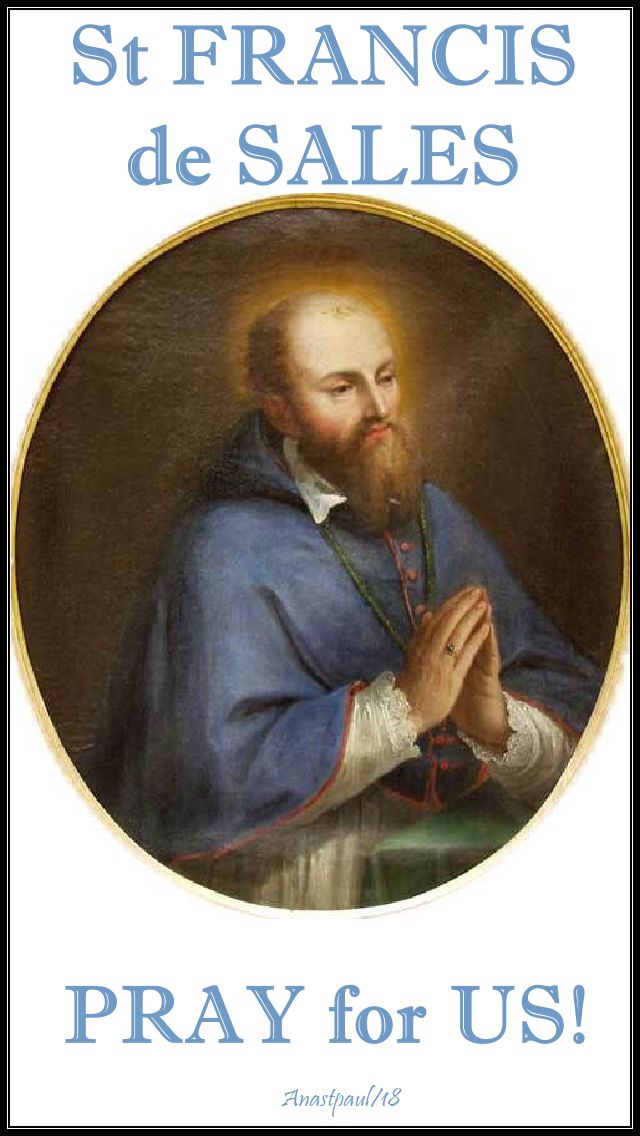
The Memorial of St Francis de Sales (1567-1622) Doctor of the Church:
Doctor Caritatis (Doctor of Charity) ‘The Gentle Christ of Geneva’
Excerpt from Pope Benedict’s Catechesis on St Francis de Sales Wednesday, 2 March 2011
To Philotea, the ideal person to whom he dedicated his Introduction to a Devout Life (1607), Francis de Sales addressed an invitation that might well have seemed revolutionary at the time. It is the invitation to belong completely to God, while living to the full, her presence in the world and the tasks proper to her state. “My intention is to teach those who are living in towns, in the conjugal state, at court” (Preface to The Introduction to a Devout Life).
The Document with which Pope Leo xiii, more than two centuries later, was to proclaim him a Doctor of the Church, would insist on this expansion of the call to perfection, to holiness.
It says: “[true piety] shone its light everywhere and gained entrance to the thrones of kings, the tents of generals, the courts of judges, custom houses, workshops and even the huts of herdsmen” (cf. Brief, Dives in Misericordia, 16 November 1877).
Thus came into being the appeal to lay people and the care for the consecration of temporal things and for the sanctification of daily life on which the Second Vatican Council and the spirituality of our time were to insist.
The ideal of a reconciled humanity was expressed in the harmony between prayer and action in the world, between the search for perfection and the secular condition, with the help of God’s grace that permeates the human being and, without destroying him, purifies him, raising him to divine heights.
Novena to St Paul in preparation for the Feast of The Conversion of St Paul on 25 January
Day Nine – 24 January
The key to conversion? Keeping our focus on the Cross of Jesus Christ, for “the human heart is converted by looking upon (the Crucified) whom our sins have pierced” (CCC 1432 cf. Jn 19:37; Zech 12:10)
LET US PRAY:
Glorious St Paul,
your conversion is a powerful witness to the world
that God loves us and does not give up on us,
no matter how far we stray.
Help me to cling to Christ Crucified
help me to fully participate at every SACRIFICE of the Holy Mass
help me to understand, that this IS He
who showed us the way
gave us the light to follow it in Holy Mother Church
who is His bride and shows us the only truth.
May every circumstance of my life be an occasion
to change my way of thinking,
to renounce self-will and
to surrender myself to the wisdom and tenderness of Jesus Christ
who is acting to make me His saint.
Pray that I may love God’s will and providence for me.
In this confidence, I entrust to you, St Paul,
these, my intentions
…………………………………….
(mention your request)
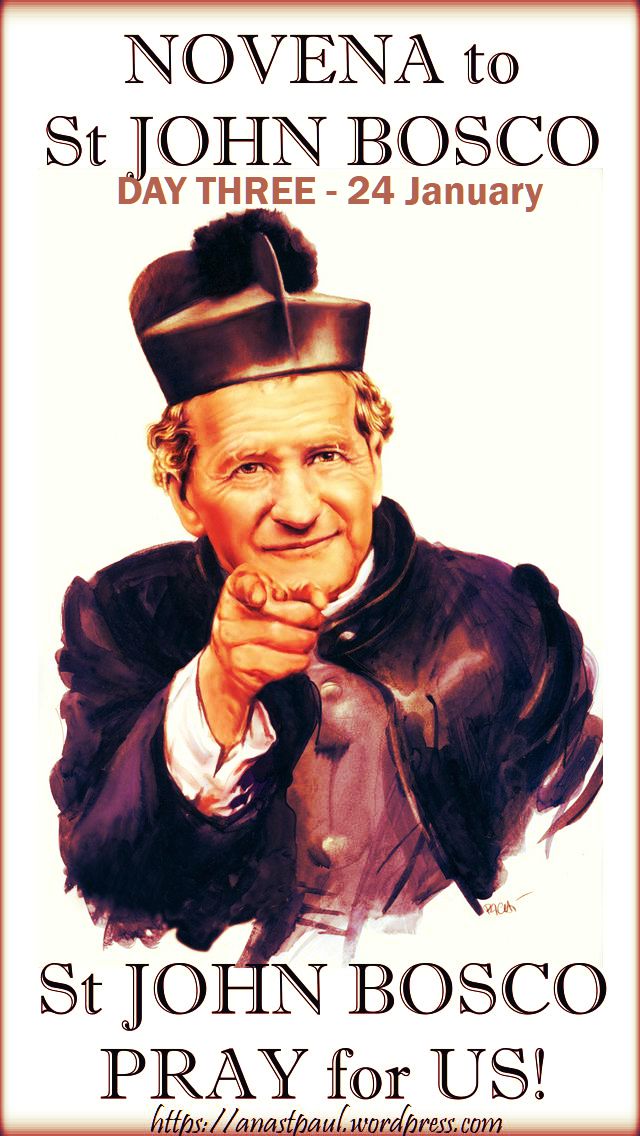
3rd Day – 24 January – Loyalty to the Church and to the Pope
O Saint John Bosco,
you nurtured a filial love for the Church and the Pope
and you courageously spoke and wrote in their defense.
Pray for us that, inspired by your example,
we may be faithful sons and daughters of Holy Mother Church
and may likewise,
love and honour the Holy Father
as the Vicar of Jesus Christ on earth.
Through your intercession
may God grant me the following grace
……………………………….[mention your request].
so that together with others
I may assist in bringing all around me
especially the young to the love of the Church, amen.
Our Father… Hail Mary… Glory to the Father…
St John Bosco Pray for us!
Quote/s of the Day – 24 January – The Memorial of St Francis de Sales (1567-1622) Doctor of the Church: Doctor Caritatis (Doctor of Charity)
‘The Gentle Christ of Geneva’
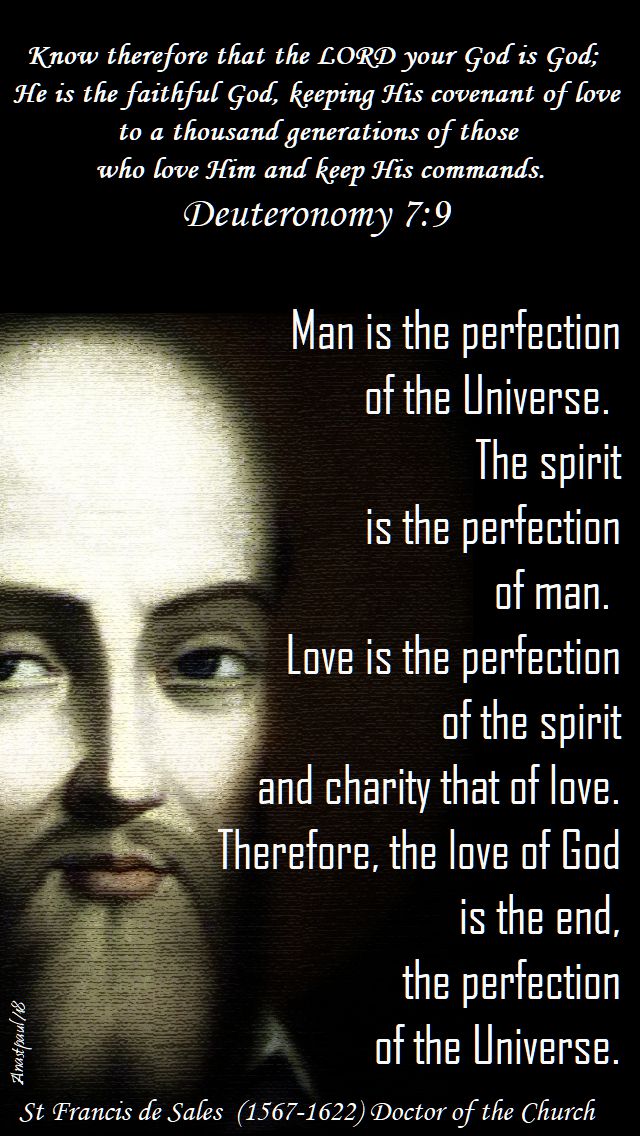
“Man is the perfection of the Universe. The spirit is the perfection of man. Love is the perfection of the spirit and charity that of love. Therefore, the love of God is the end, the perfection of the Universe.”
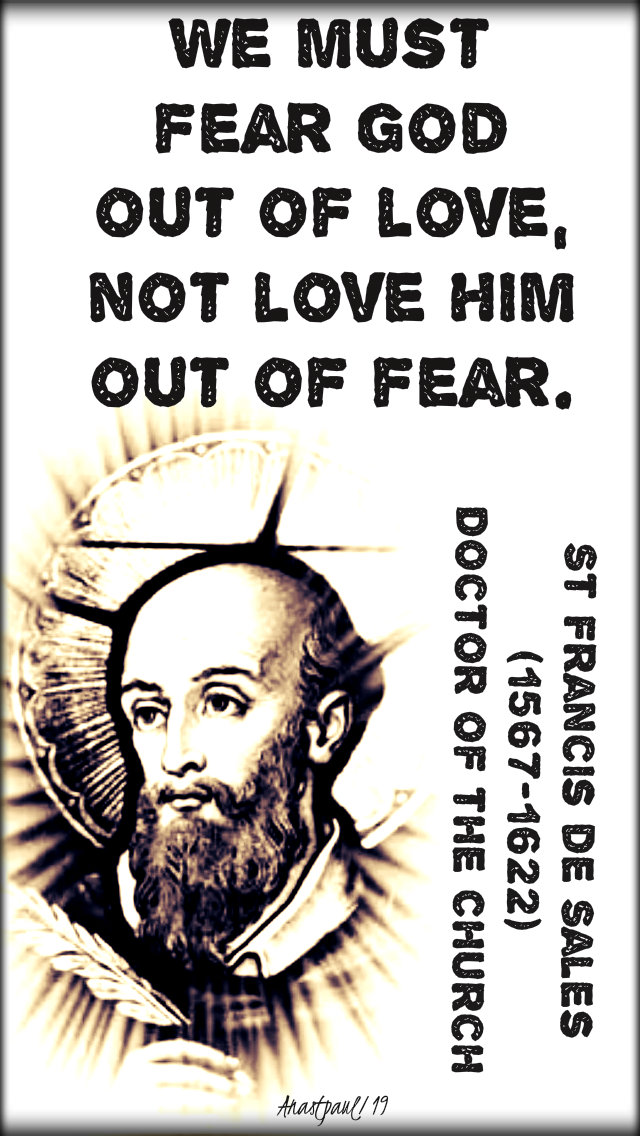
“We must fear God out of love, not love Him out of fear.”
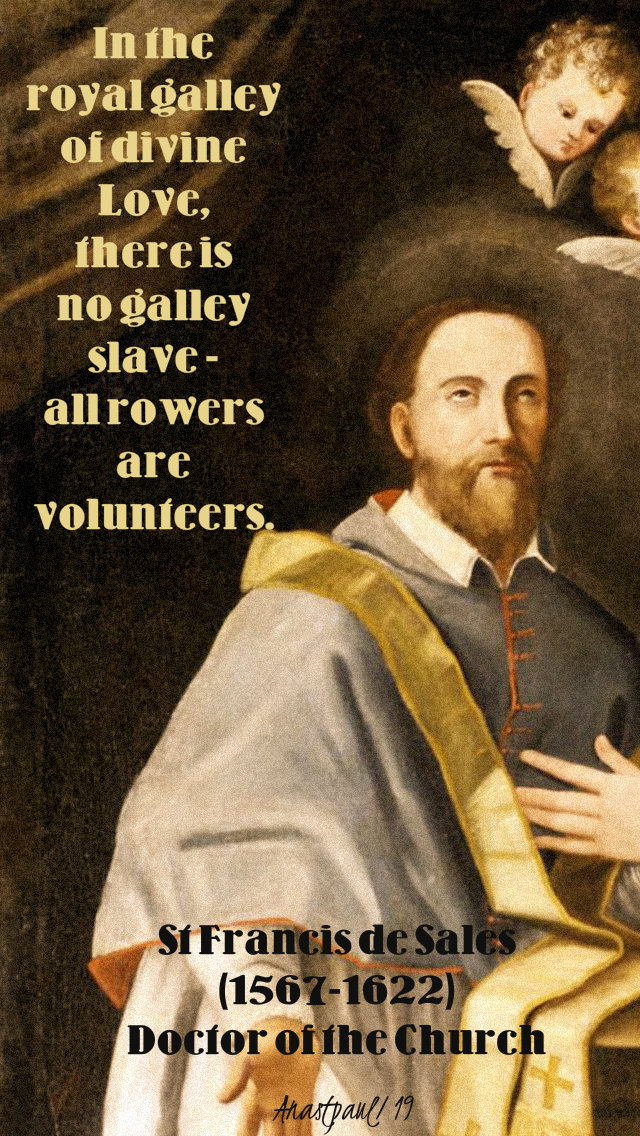
“In the royal galley of divine Love, there is no galley slave – all rowers are volunteers.”
“Nothing makes us so prosperous in this world, as to give alms.”
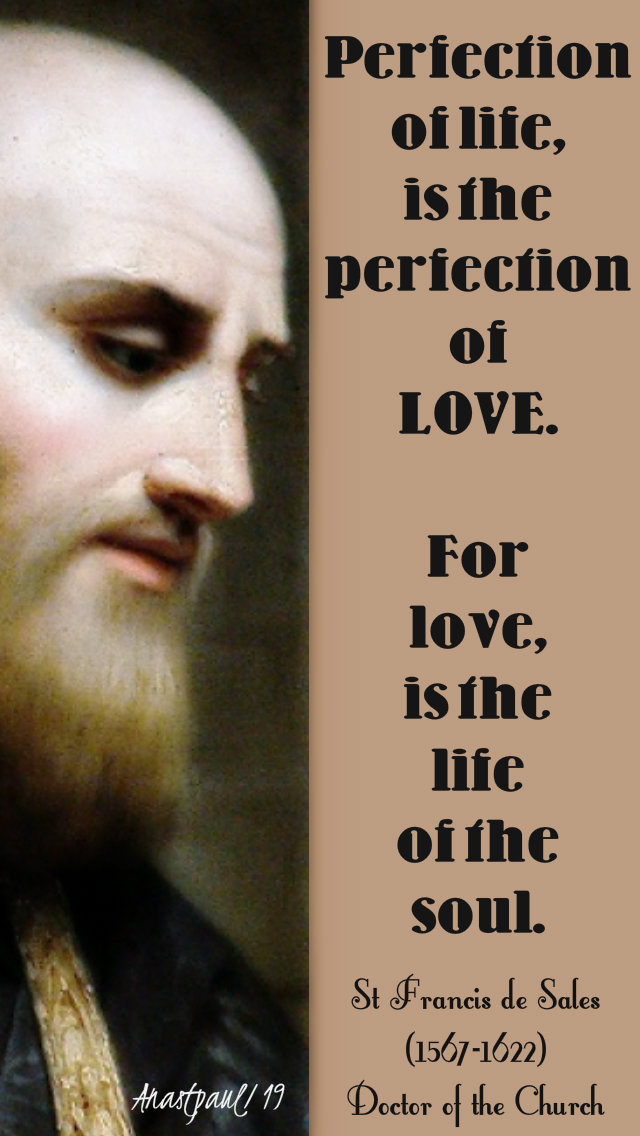
“Perfection of life, is the perfection of love. For love, is the life of the soul.”
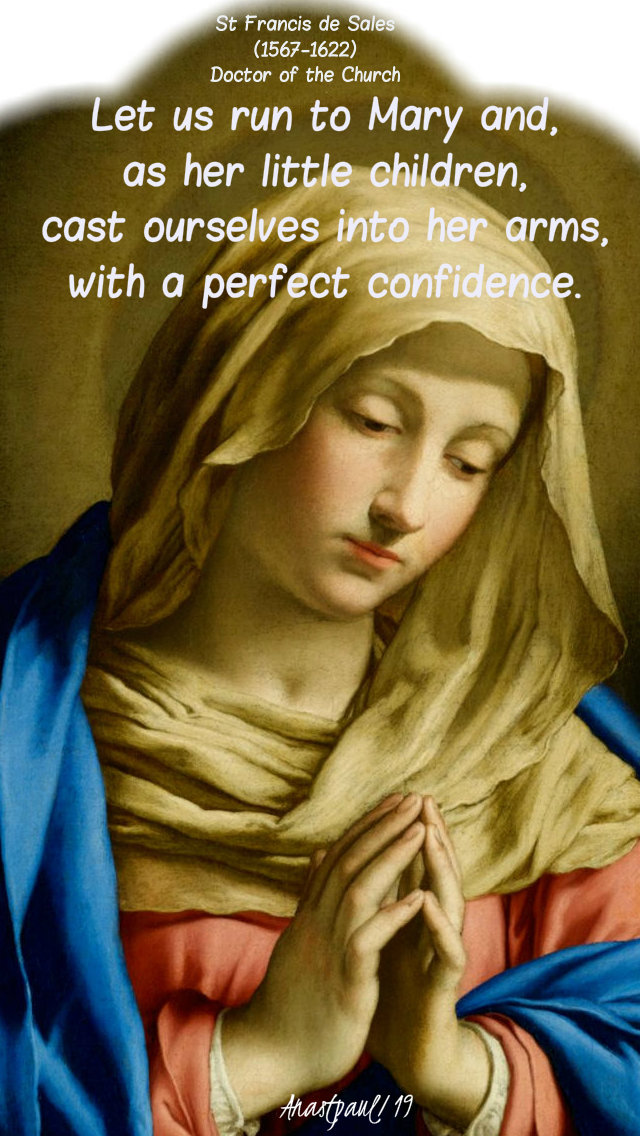
“Let us run to Mary and, as her little children, cast ourselves into her arms, with a perfect confidence.”
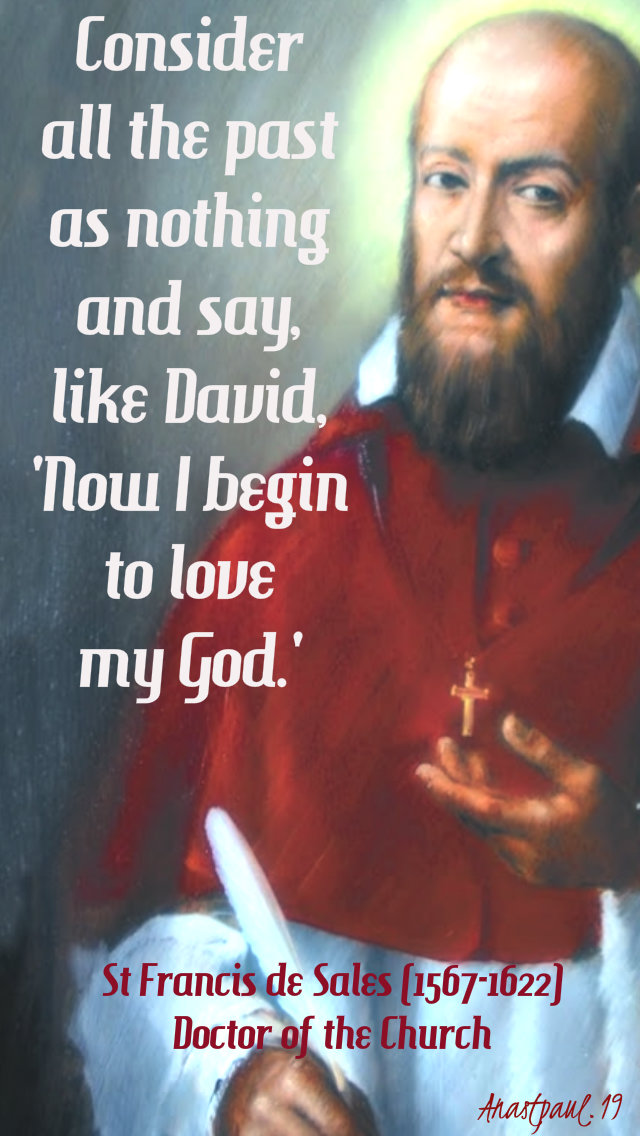
“Consider all the past as nothing and say, like David, ‘Now I begin to love my God.'”
One Minute Reflection – 24 January – Thursday of the Second week in Ordinary Time, Gospel Mark 3:7–12 and The Memorial of St Francis de Sales (1567-1622) Doctor of the Church: Doctor Caritatis (Doctor of Charity) ‘The Gentle Christ of Geneva’
“…a great multitude, hearing all that he did, came to him.”…Mark 3:8
REFLECTION – “Why did the multitude come? What did they need? Whether this multitude went to Jesus out of “need” or because “some were curious”, the true reason is seen in the fact that this crowd was drawn by the Father, it was the Father that drew the crowd to Jesus. We read in the Gospel that ‘Jesus was moved, because He saw these people as sheep without a shepherd’. Therefore, the Father, through the Holy Spirit, draws people to Jesus.
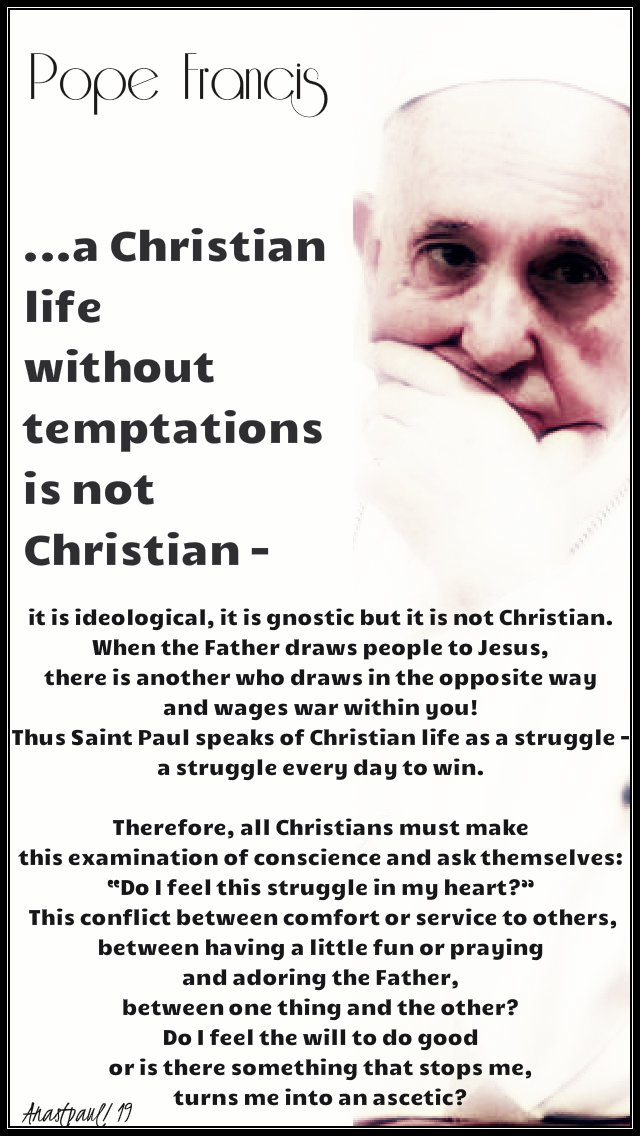
The impure spirits try to impede; they wage war on us. Someone might object – Father, I am very Catholic, I always go to Mass…. But I never have these temptations, thank God! “No! Pray, because you are on the wrong path! because a Christian life without temptations is not Christian – it is ideological, it is gnostic but it is not Christian. When the Father draws people to Jesus, there is another who draws in the opposite way and wages war within you! Thus Saint Paul speaks of Christian life as a struggle – a struggle every day to win.
Therefore, all Christians must make this examination of conscience and ask themselves: “Do I feel this struggle in my heart?” This conflict between comfort or service to others, between having a little fun or praying and adoring the Father, between one thing and the other? Do I feel the will to do good, or is there something that stops me, turns me into an ascetic? And also, do I believe that my life moves Jesus’ heart? If I don’t believe this, I must pray a lot to believe it, so that He may grant me this grace. And we ask the Lord to make us Christians who know how to discern what is happening in our hearts and to choose well the path, through which the Father draws us to Jesus.”..Pope Francis – Santa Marta, 19 January 2017
PRAYER – Lord God, true light and creator of light, grant us the grace to see clearly by the light who is Light, Your only Son. Lead us in His path and send us Your Spirit. Grant us the strength to grow in holiness so that our struggle against the powers of darkness may we a victory over temptation. May the intercession of the master of spirituality, St Francis de Sales, help us and protect us. We make our prayer through Christ our Lord, in the unity of the Holy Spirit, God for all eternity, amen.
Our Morning Offering – 24 January – The Memorial of St Francis de Sales CO, OM, OFM (Cap) (1567-1622) – Doctor of the Church: Doctor caritatis (Doctor of Charity) – ‘The Gentle Christ of Geneva’
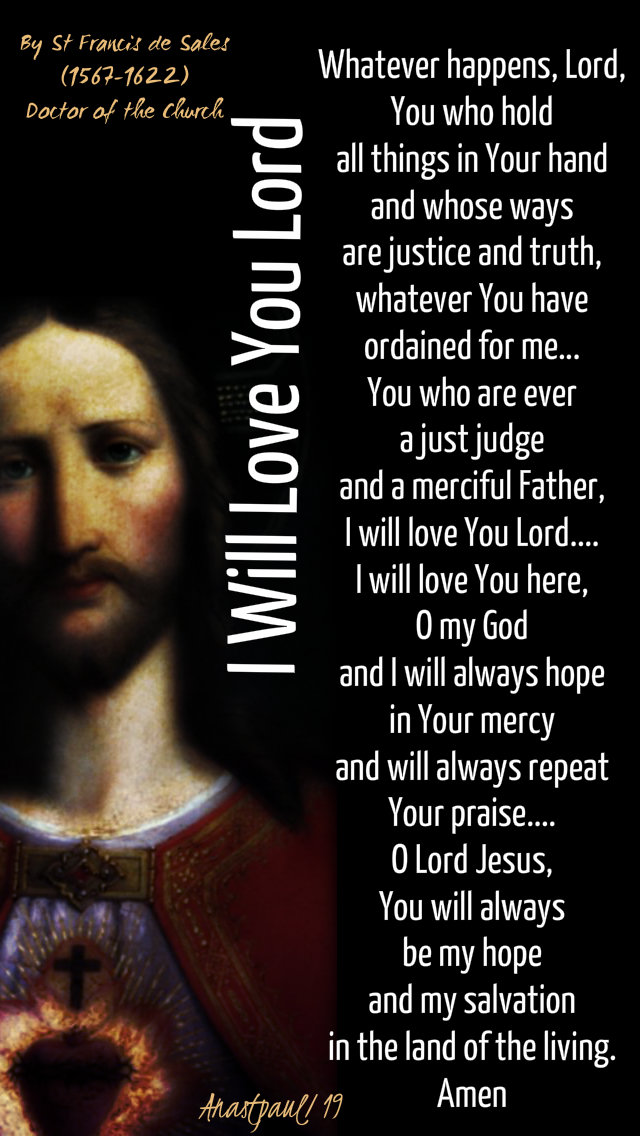
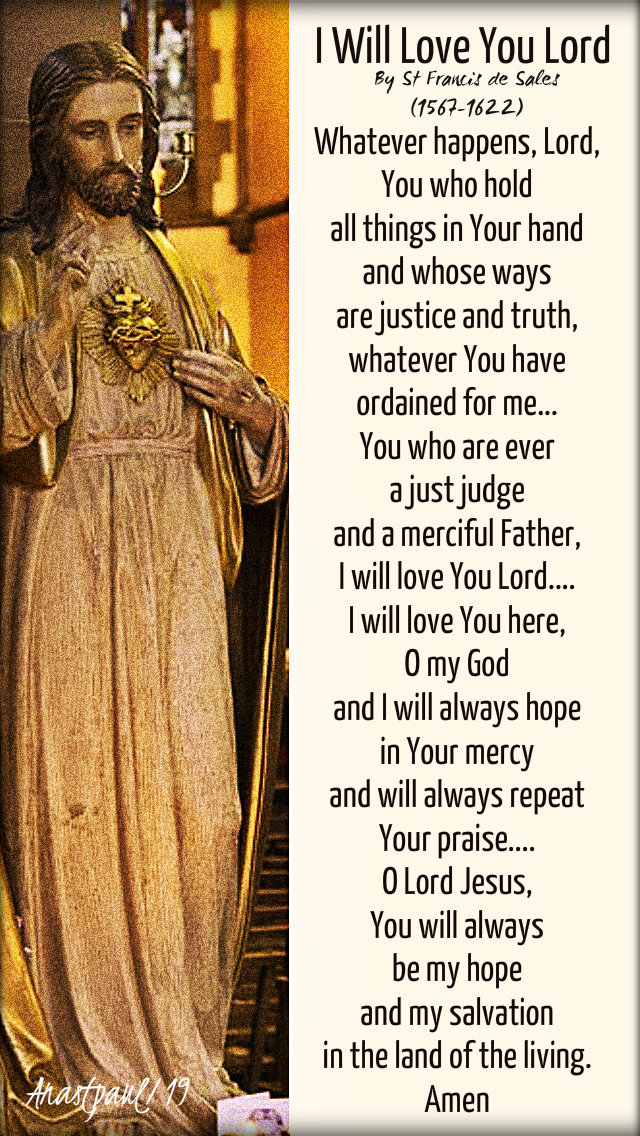
I Will Love You Lord By St Francis de Sales
“Whatever happens, Lord,
You who hold
all things in Your hand
and whose ways
are justice and truth,
whatever You have ordained for me…
You who are ever a just judge
and a merciful Father,
I will love You Lord….
I will love You here,
O my God
and I will always hope
in Your mercy
and will always repeat Your praise….
O Lord Jesus,
You will always be my hope
and my salvation
in the land of the living.
Amen
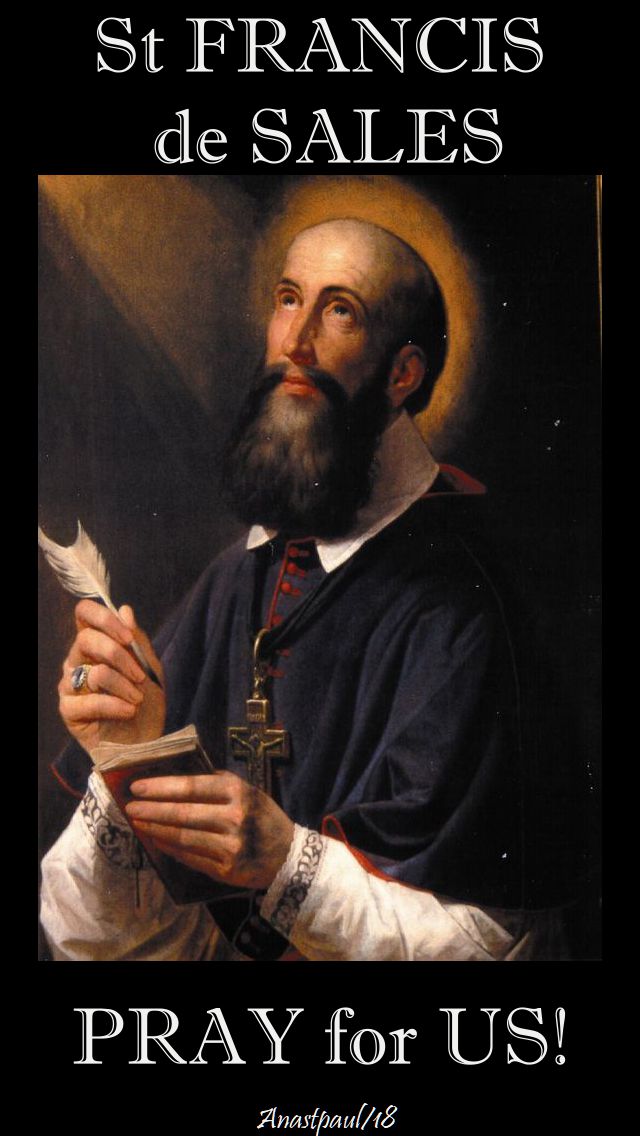
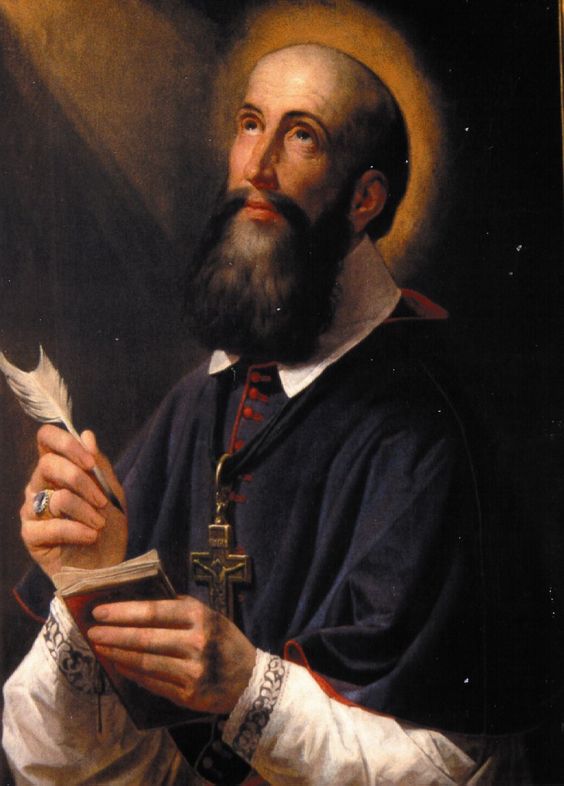
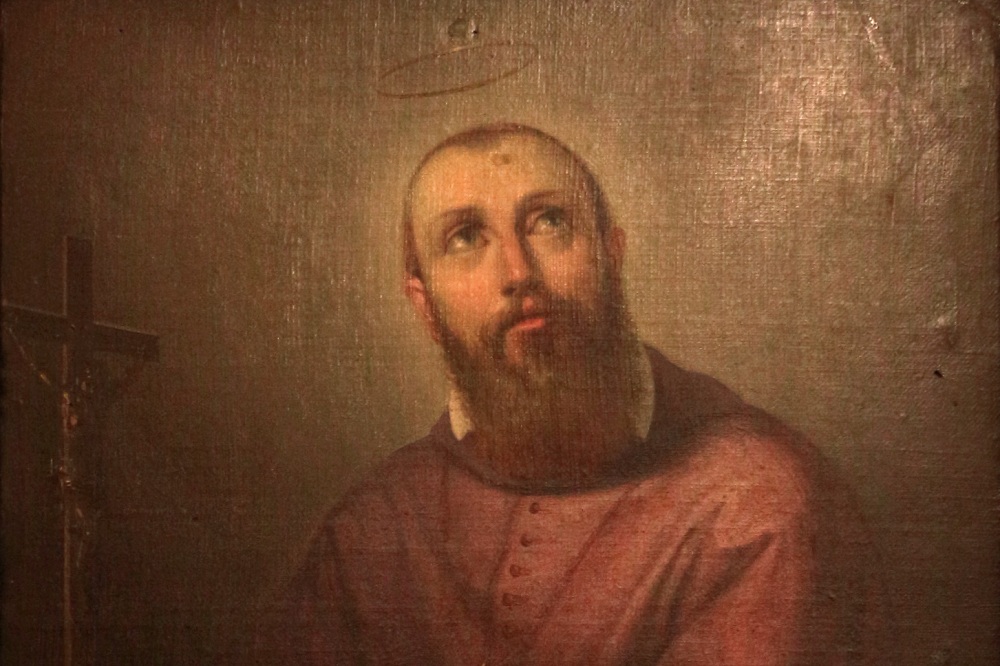
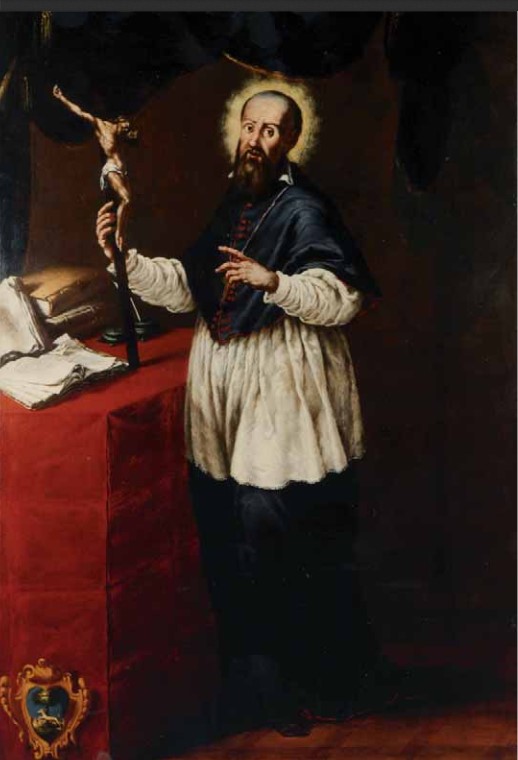
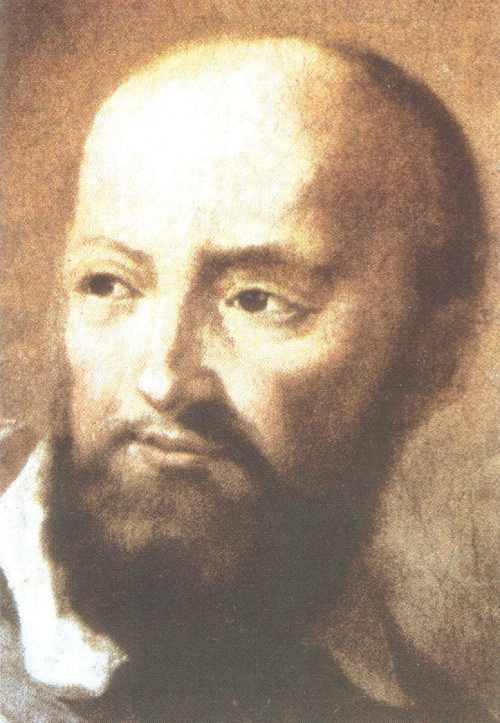
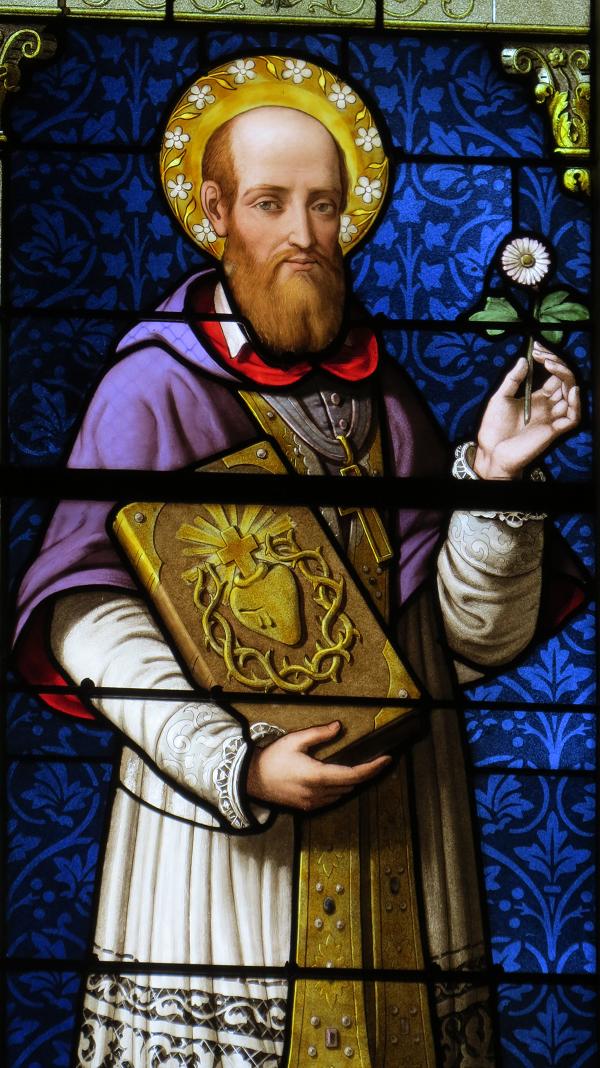
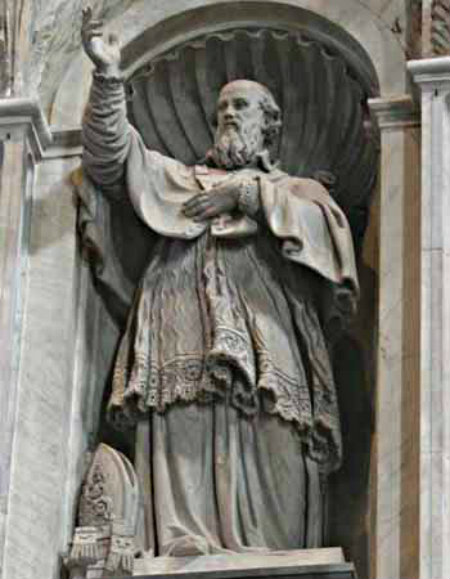
Saint of the Day – 24 January – St Francis de Sales CO, OM, OFM (Cap) (1567-1622) – Doctor of the Church: Doctor caritatis (Doctor of Charity) – ‘The Gentle Christ of Geneva’ and Patronages – against deafness, authors, writers, Catholic press, confessors, deaf people, journalists, teachers, Champdepraz, Aosta, Italy, 8 Diocese, 7 Cities, the Institute of Christ the King Sovereign Priest, the Salesians of Don Bosco. His motto ‘Non-excidet’ – (No failure).
Excerpt from Pope Benedict’s
Catechesis on St Francis de Sales
Wednesday, 2 March 2011
“God is God of the human heart” (The Treatise on the Love of God, I, XV). These apparently simple words give us an impression of the spirituality of a great teacher of whom I would like to speak to you toda – St Francis de Sales, a Bishop and Doctor of the Church.
Born in 1567, in a French border region, he was the son of the Lord of Boisy, an ancient and noble family of Savoy. His life straddled two centuries, the 16th and 17th and he summed up in himself the best of the teachings and cultural achievements of the century drawing to a close, reconciling the heritage of humanism striving for the Absolute that is proper to mystical currents. He received a very careful education, he undertook higher studies in Paris, where he dedicated himself to theology and at the University of Padua, where he studied jurisprudence, complying with his father’s wishes and graduating brilliantly with degrees in utroque iure, in canon law and in civil law.
In his harmonious youth, reflection on the thought of St Augustine and of St Thomas Aquinas led to a deep crisis. This prompted him to question his own eternal salvation and the predestination of God concerning himself, he suffered as a true spiritual drama the principal theological issues of his time. He prayed intensely but was so fiercely tormented by doubt, that for a few weeks he could barely eat or sleep. At the climax of his trial, he went to the Dominicans’ church in Paris, opened his heart and prayed in these words: “Whatever happens, Lord, You who hold all things in Your hand and whose ways are justice and truth, whatever You have ordained for me… You who are ever a just judge and a merciful Father, I will love You Lord…. I will love You here, O my God and I will always hope in Your mercy and will always repeat Your praise…. O Lord Jesus You will always be my hope and my salvation in the land of the living”(I Proc. Canon., Vol. I, art. 4).
The 20-year-old Francis found peace in the radical and liberating love of God – loving Him without asking anything in return and trusting in divine love, no longer asking what will God do with me – I simply love Him, independently of all that He gives me or does not give me. Thus I find peace and the question of predestination — which was being discussed at that time — was resolved, because he no longer sought what he might receive from God, he simply loved God and abandoned himself to His goodness. And this was to be the secret of his life which would shine out in his main work – the The Treatise on the Love of God.
Overcoming his father’s resistance, Francis followed the Lord’s call and was ordained a priest on 18 December 1593. In 1602, he became Bishop of Geneva, in a period in which the city was the stronghold of Calvinism so that his episcopal see was transferred, “in exile” to Annecy. As the Pastor of a poor and tormented diocese in a mountainous area whose harshness was as well known as its beauty, he wrote: “I found [God] sweet and gentle among our loftiest rugged mountains, where many simple souls love Him and worship Him in all truth and sincerity and mountain goats and chamois leap here and there between the fearful frozen peaks to proclaim His praise” (Letter to Mother de Chantal, October 1606, in Oeuvres, éd. Mackey, t. XIII, p. 223).
Nevertheless the influence of his life and his teaching on Europe in that period and in the following centuries is immense. He was an apostle, preacher, writer, man of action and of prayer dedicated to implanting the ideals of the Council of Trent, he was involved in controversial issues dialogue with the Protestants, experiencing increasingly, over and above the necessary theological confrontation, the effectiveness of personal relationship and of charity, he was charged with diplomatic missions in Europe and with social duties of mediation and reconciliation.
Yet above all St Francis de Sales was a director, from his encounter with a young woman, Madame de Charmoisy, he was to draw the inspiration to write one of the most widely read books of the modern age, The Introduction to a Devout Life. A new religious family was to come into being from his profound spiritual communion with an exceptional figure, St Jane Frances de Chantal -The Foundation of the Visitation, as the Saint wished, was characterised by total consecration to God lived in simplicity and humility, in doing ordinary things extraordinarily well – “I want my Daughters”, he wrote, not to have any other ideal than that of glorifying [Our Lord] with their humility” (Letter to Bishop de Marquemond, June 1615).
He died in 1622, at the age of 55, after a life marked by the hardness of the times and by his apostolic effort.”











You must be logged in to post a comment.