Posted in MARIAN QUOTES, QUOTES of the SAINTS, SAINT of the DAY, St Louis-Marie Grignion de MONTFORT, The BLESSED VIRGIN MARY

Saint of the Day – 28 April – St Louis Marie Grignion de Montfort (1673-1716)

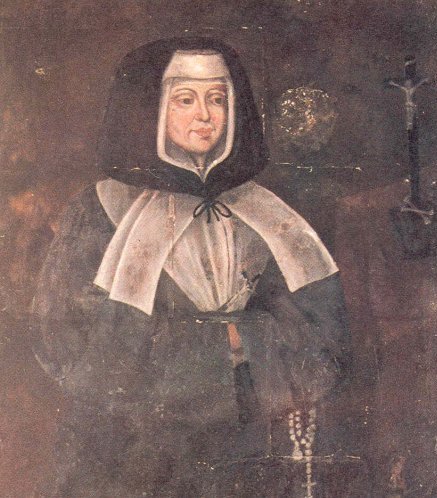
Saint of the Day – 28 April – St Louis Marie Grignion de Montfort (1673-1716) Priest, Founder, Confessor, Writer,  Poet, Apostle of the Holy Eucharist and Adoration, Apostle of the Blessed Virgin Mary, Apostle of the Holy Rosary, Preacher, Missionary Apostolic.   St Louis was born on 31 January 1673 at Montfort-La-Cane, Brittany, France – he Died on 28 April 1716 at Saint-Laurent-sur-Sovre, France of natural causes.   He was Canonised on 20 July 1947 by Pope Pius XII.   Patronages: preachers,  Brothers of Saint Gabriel,  Company of Mary, Daughters of Divine Wisdom.

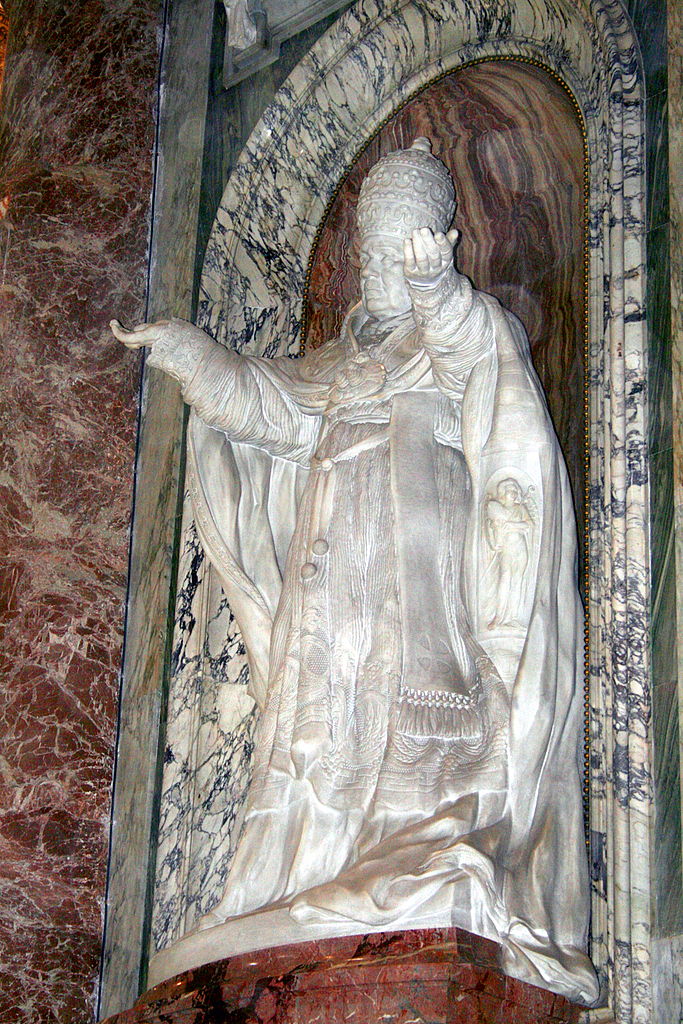
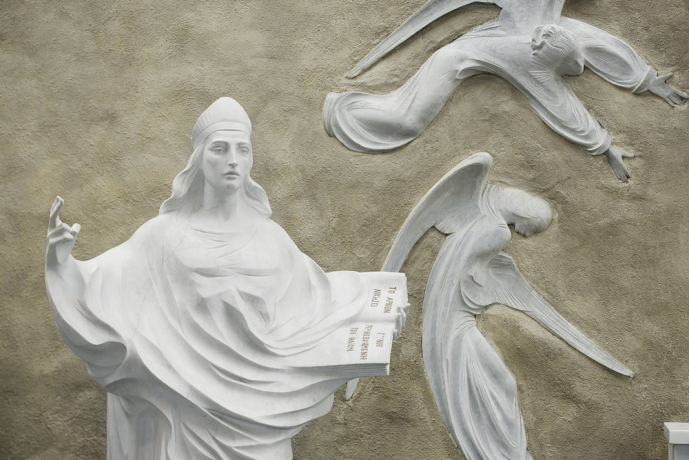
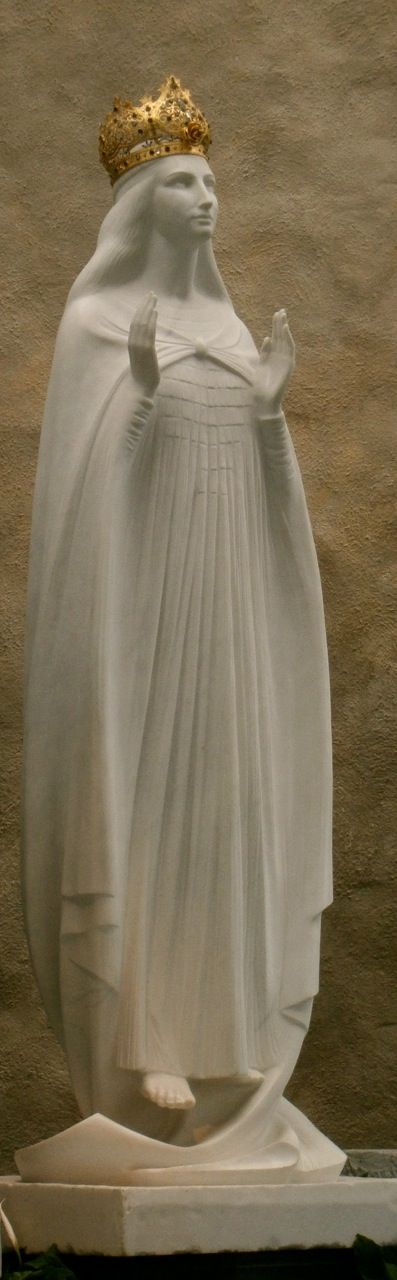
St Louis was known in his time as a preacher and was made a missionary apostolic by Pope Clement XI.   As well as preaching, he found time to write a number of books which went on to become classic Catholic titles and influenced several popes.   He is particularly renowned for his great devotion to the Blessed Virgin Mary and the practice of praying the Rosary.   He is considered as one of the forerunner writers in the field of Mariology.   His most notable works regarding Marian devotions are contained in The Secret of Mary and the True Devotion to Mary.   A “founders statue” created by Giacomo Parisini is located in an upper niche of the south nave of Saint Peter’s Basilica.

Today the universal Church celebrates the feast day of Louis-Marie de Monfort, a 17th century saint who is revered for his intense devotion to the Blessed Virgin Mary.

St Louis Marie is perhaps most famously known for his prayer of entrustment to Our Lady, “Totus Tuus ego sum,” which means, “I am all yours.”   The St Pope John Paul II took the phrase “Totus Tuus” as his episcopal motto.

Born in Montfort, Brittany, on 31 January 1673, St Louis Marie possessed a strong devotion to the Blessed Sacrament as a child and was also intimately devoted to the Blessed Virgin, especially through the Rosary.   He took the name Marie at his confirmation.

He was ordained a priest in June 1700 and assigned to Nantes.   His great desire was to go to the foreign missions, preferably to the new French colony of Canada but his spiritual director advised against it.   His letters of this period show that he felt frustrated from the lack of opportunity to preach as he felt he was called to do.

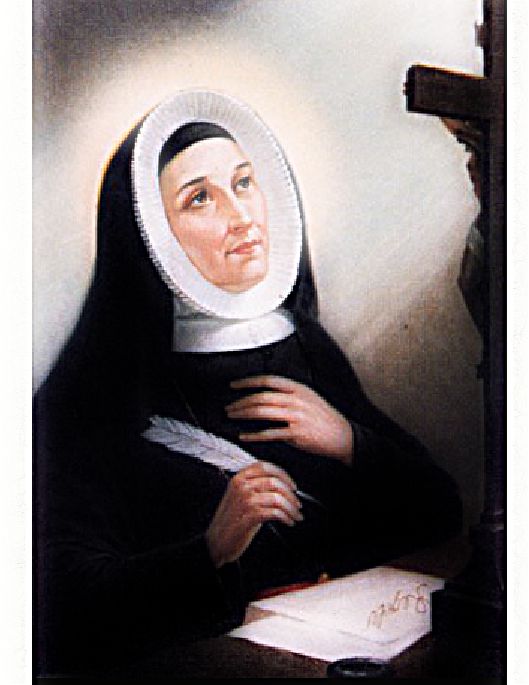
In November 1700 he joined the Third Order of the Dominicans and asked permission not only to preach the rosary but also to form rosary confraternities.   He began to consider the formation of a small company of priests to preach missions and retreats under the standard and protection of the Blessed Virgin.   This eventually led to the formation of the Company of Mary.   At around this time, he first met Blessed Marie Louise Trichet (1684-1759) when he was appointed the chaplain of the hospital of Poitiers.   That meeting became the beginning of Blessed Marie Louise’s thirty-four years of service to the poor.

He set off to make a pilgrimage to Rome, to ask Pope Clement XI, what he should do. The Pope recognised his real vocation and, telling him that there was plenty of scope for its exercise in France, sent him back with the title of Apostolic Missionary.   On his return from his long pilgrimage to Rome, Montfort made a retreat at Mont Saint Michel “to pray to this archangel to obtain from him the grace to win souls for God, to confirm those already in God’s grace, and to fight Satan and sin”.   These occasions gave him time to think, contemplate and write.

montfortside

For several years he preached in missions from Brittany to Nantes.   As his reputation as a missioner grew, he became known as “the good Father from Montfort”.

He left Nantes and the next several years were extraordinarily busy for him.   He was constantly occupied in preaching missions, always walking between one and another. Yet he found time also to write – his True Devotion to Mary, The Secret of Mary and the Secret of the Rosary, rules for the Company of Mary and the Daughters of Wisdom and many Hymns.   His missions made a great impact, especially in the Vendée.   The heated style of his preaching was regarded by some people as somewhat strange and he was poisoned once.   Although it did not prove fatal, it caused his health to deteriorate. Yet he continued, undeterred.   He went on preaching and established free schools for the poor boys and girls.

San_Luigi_Maria-Grignion-da_Montfort

Daughters of Wisdom
The bishop of La Rochelle had been impressed with Montfort for some time and invited him to open a school there.   Montfort enlisted the help of his follower Marie Louise Trichet who was then running the General Hospital in Poitiers.   In 1715 Marie Louise and Catherine Brunet left Poitiers for La Rochelle to open the school there and in a short time it had 400 students.  On 22 August 1715, Trichet and Brunet, along with Marie Valleau and Marie Régnier from La Rochelle received the approbation of Bishop de Champflour of La Rochelle to make their religious profession under the direction of Montfort.   At the ceremony Montfort told them:  “Call yourselves the Daughters of Wisdom for the teaching of children and the care of the poor.”   The Daughters of Wisdom grew into an international Order and the placing of Montfort’s founders statue in Saint Peter’s Basilica was based on that Order.

Death and burial
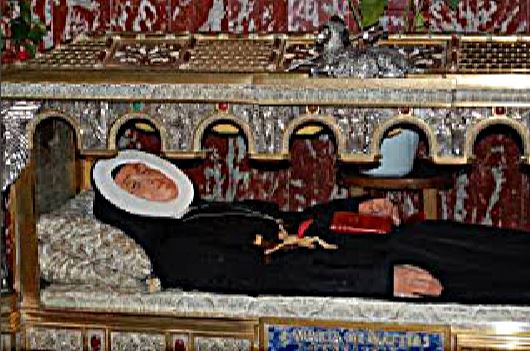
Worn out by hard work and sickness, he finally came in April 1716 to Saint-Laurent-sur-Sèvre to begin the mission which was to be his last.   During it, he fell ill and died on 28 April of that year.   He was 43 years old and had been a priest for only 16 years.   His last sermon was on the tenderness of Jesus and the Incarnate Wisdom of the Father. Thousands gathered for his burial in the parish church and very quickly there were stories of miracles performed at his tomb.   Exactly 43 years later, on 28 April 1759, Marie Louise Trichet also died in Saint-Laurent-sur-Sèvre and was buried next to Montfort.   On 19 September 1996, St Pope John Paul II (who beatified Trichet) came to the same site to meditate and pray at their adjacent tombs.

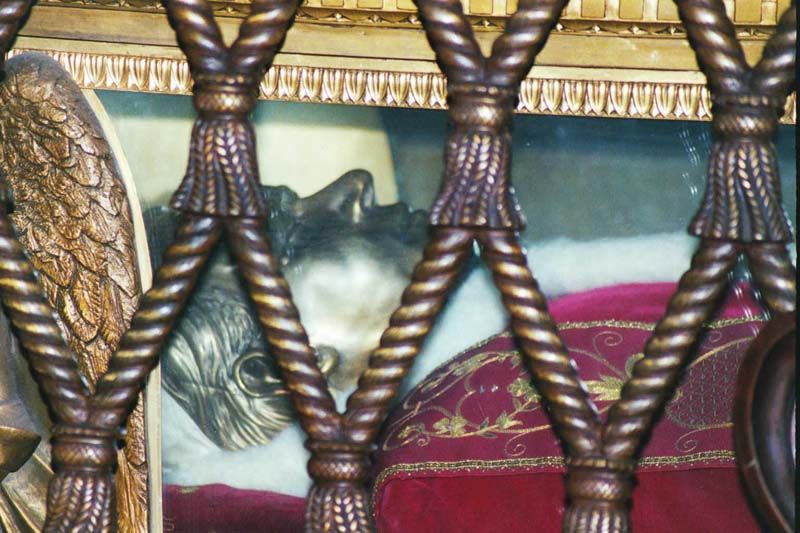
Detail of the wax reclining of Saint Louis-Marie Grignion de Montfort

Spirituality
“God Alone”:   was the motto of Saint Louis and is repeated over 150 times in his writings.
The Incarnation:  “The Incarnation of the Word is for him the absolute central reality.”
Love of the Blessed Virgin Mary
Fidelity to the Cross
Missionary Zeal

Total Consecration to Mary
In Montfort’s approach to Marian consecration, Jesus and Mary are inseparable.   He views “consecration to Jesus in Mary” as a special path to being conformed to, united and consecrated to Christ, given that:

” …of all creatures the one most conformed to Jesus Christ, it follows that among all devotions that which most consecrates and conforms a soul to our Lord is devotion to Mary, His Holy Mother and that the more a soul is consecrated to her, the more will it be consecrated to Jesus Christ.”

“God the Father made an assemblage of all the waters and He named it the sea.      He has made an assemblage of all His graces and He has called it Mary.”

Louis de Montfort influenced a number of popes
In the 19th century, Pope Pius IX considered it the best and most acceptable form of Marian devotion, while Pope Leo XIII granted indulgences for practicing Montfort’s method of Marian consecration.   Leo beatified Montfort in 1888, selecting for Montfort’s beatification the day of his own Golden Jubilee as a priest.
In the 20th century St Pope Pius X acknowledged the influence of Montfort’s writings in the composition of his encyclical Ad diem illum.
Pope Pius XI stated that he had practised Montfort’s devotional methods since his early youth.   Pope Pius XII declared Montfort a saint and stated that Montfort is the guide “who leads you to Mary and from Mary to Jesus.”
St Pope John Paul II once recalled how as a young seminarian he “read and reread many times and with great spiritual profit” a work of de Montfort and that:  “Then I understood that I could not exclude the Lord’s Mother from my life without neglecting the will of God-Trinity.”   According to his Apostolic Letter Rosarium Virginis Mariae, the pontiff’s personal motto was “Totus Tuus.”   The thoughts, writings, and example of St Louis de Montfort were also singled out by St Pope John Paul II’s encyclical Redemptoris Mater as a distinctive witness of Marian spirituality in the Roman Catholic tradition

While the saint is best known for his spiritual writings, he was also a poet and during his missions managed to compose more than 20,000 verses of hymns.    Montfort’s hymns and canticles were, for the most part, meant to be sung in village churches and in the homes of the poor.   Some authors argue that a reading of Saint Louis’s hymns is essential for an understanding of him as a man and for appreciating his approach to spirituality. He is also said to have carved at least three statues depicting the Madonna and Child.

St Louis Marie Grignion de Montfort, Pray for us!

statue-saint-louis-marie-grignon-montfort-slmg20bc


Posted in SAINT of the DAY

Memorials of the Saints – 28 April

St Louis Marie Grignion de Montfort (1673-1716) (Optional Memorial)

St Peter Chanel (1803-1841) Martyr (Optional Memorial)


St Adalbero of Augsburg
St Agapio of Cirtha
St Artemius of Sens
St Benedict of the Bridge
St Cronan of Roscrea
St Cyril of Turov
Bl Gerard of Bourgogne
St Gianna Beretta Molla (1922-1962)

Bl Józef Cebula
Bl Luchesius
St Pamphilus of Sulmona
St Prudentius of Tarazona

St Alexander
St Aphrodisius of Beziers
St Berthold
St Buonadonna
Carino Peter of Balsamo
St Firmiano
St Germaine
St Guido Spada
St Luchtighern of Ennistymon
St Marie Louise Trichet Jesus
St Mark of Galilee
St Peter of Bearn
St Primianus
St Probe
St Tellurium

Martyrs of Alexandia:
Didymus
Theodora

Martyrs of Durostorum:
Dada
Maximus
Quintilian

Martyrs of Languedoc:
Agapius
Aphrodisius
Caralippus
Eusebius

Martyrs of Nicomedia:
Caralampo
Eusebius

Martyrs of Prusa:
Acacius
Menander
Patritius
Polyenus

Martyrs of Ravenna:
Ursicinus
Valeria
Vitalis

Martyrs of Vietnam:
Gioan Baotixta Ðinh Van Thành
Phaolô Pham Khac Khoan
Phêrô Nguyen Van Hien

Pilgrims of Gallinaro:
Arduin
Bernhard
Gerard
Hugh

Posted in MARIAN QUOTES, MARIAN TITLES, MIRACLES, MORNING Prayers, QUOTES of the SAINTS, SAINT of the DAY

Thought for the Day – 27 April – Friday of the Fourth Week of Eastertide and the Feast of Our Lady of Montserrat

Thought for the Day – 27 April – Friday of the Fourth Week of Eastertide and the Feast of Our Lady of Montserrat

“If I were a leper my mother would hug me.   She would kiss my wounds without fear or hesitation. —Well then, what would the Blessed Virgin Mary do?

When we feel we are like lepers, all full of sores, we have to cry out:  Mother!       And the protection of our Mother will be like a kiss upon our wounds, which obtains our cure. “…St. Josemaria Escriva  (1902-1975) – The Forge, no. 190

when we feel we are like lepers - st josemaria no 2- 27 april 2018

Approximately 28 miles northwest of Barcelona, Spain, is the mountain of Montserrat. Located on the mountain is the Benedictine Monastery and Marian Shrine of Montserrat where since the 8th century pilgrims have journeyed to see the miraculous image of Our Lady of Montserrat.

According to tradition, the image of Our Lady was found on the mountain in 718 AD.   The Benedictine Monks chose to build their monastery around the statue of Our Lady because they were unable to lift or move it.   The statue of Our Lady of Montserrat remains on the mountain today, enshrined within the sanctuary in a beautifully decorated chapel.   Our Lady is depicted seated on a throne holding the Child Jesus. Her face and hands have darkened over time due to external elements for which she is affectionately called “La Morenita.”

Saints Peter Nolasco, Ignatius Loyola, and Josemaria Escriva are counted among the many pilgrims that throughout the centuries have gone to Our Lady of Montserrat to seek her intercession.   St Josemaria was deeply devoted to Our Lady of Montserrat.   During the 1940’s, he frequently visited the shrine and made an especially important visit in 1946 before departing for Rome, which would become his new permanent home and where would begin an important period in the history of Opus Dei.

A CARESS FROM HIS HEAVENLY MOTHER: CURED OF DIABETES

Despite his move to Rome, St Josemaria’s love for the Blessed Virgin Mary under this advocation continued throughout his life.   And it was on the feast of Our Lady of Montserrat, 27 April 1954, that he was cured of diabetes, after a very severe attack which brought him to the point of death.   The story is told by Jose Miguel Cejas in his book Josemaría Escrivá, un hombre, un camino y un mensaje (“Josemaria Escriva, a man, a way and a message”):

“27 April 1954 and life was going on as usual in Villa Tevere, the headquarters of the Opus Dei prelature in Rome. It was the feast of Our Lady of Montserrat, an ordinary day, filled with prayer and work in the warm Italian springtime.   Recently Escriva’s diabetes had intensified.   Every week he went for a blood test and the results were progressively worse, in spite of a strict diet and the high doses of insulin he was given daily.   Escriva did not lose his peace of mind over this:  God led him along paths of abandonment, humility, simplicity and trust.   That day, following the doctor’s instructions, at ten to one in the afternoon, Alvaro del Portillo had given him an injection with a new prescription of delayed-action insulin.   Afterwards they went down to the dining-room.

Escriva sat down at table and suffered a physical collapse.   He realised that he could be about to die and his instant reaction was to ask for absolution.
“Alvaro, give me absolution.”
“But, Father, what are you saying?”
“Absolution!”
As Fr Del Portillo was too surprised to do anything, Escriva began the words for him, “Ego te absolvo – ” and fell unconscious on the floor.

It was an anaphylactic shock.   Del Portillo gave him absolution, put some sugar in his mouth and made him swallow it, dashed water in his face and moved his head and limbs and quickly summoned a doctor.   Some minutes later, Escriva slowly began to come round, though he found that he could not see anything.

The doctor was astonished, since these types of insulin reaction are normally fatal. However, after some hours Escriva felt better and recovered his sight again.   From that day on, his diabetes was cured.   It had been a caress from his Heavenly Mother, on the feast of Our Lady of Montserrat.”

Our Lady of Montserrat, pray for us!our lady of montserrat pray for us - 27 april 2018

St Josemaria Escriva, pray for us!st josemaria - pray for us

Posted in DOCTORS of the Church, FATHERS of the Church, MORNING Prayers, QUOTES - J R R Tolkien and MORE, QUOTES of the SAINTS, QUOTES on SIN, QUOTES on SUFFERING, QUOTES on the CROSS of CHRIST, QUOTES on the DEVIL/EVIL, SPEAKING of ....., The PASSION

Quote/s of the Day – 27 April – Friday of the Fourth Week of Eastertide “Speaking of: Sin and Suffering”

Quote/s of the Day – 27 April – Friday of the Fourth Week of Eastertide

“Speaking of:  Sin and Suffering”

“The dragon, sits by the side of the road,
watching those who pass.
Beware lest he devour you.
We go to the Father of Souls
but it is necessary,
to pass by the dragon.”

St Cyril of Jerusalem (315-387) Father & Doctor of the Churchthe dragon sits by the side - st cyril of jerusalem - 27 april 2018

“Only those who do not fight
are never wounded.”

St John Chrysostom (347-407) Father & Doctor of the Church

only those who do not fight - st john chrysostom - 27 april 2018

“The life of each and every one of us has been written.
The crucifix is my autobiography.
The blood is the ink.
The nails the pen.
The skin the parchment.
On every line of that body, I can trace my life.
In the crown of thorns I can read my pride.
In the hands that are dug with nails,
I can read avarice and greed.
In the flesh hanging from him like purple rags,
I can read my lust.
In feet that are fettered, I can find the times
that I ran away and would not let Him follow.
Any sin that you can think of is written there.”

Venerable Archbishop Fulton Sheen (1895-1979)the life of each and every one of us - ven fulton sheen - 27 april 2018

“My key to heaven
is that I loved Jesus
in the night.”

St Mother Teresa (1910-1997)my key to heaven = st mother teresa - 27 april 2018

“Don’t waste your suffering.”

St John Paul the Great (1920-2005)don't waste your suffering - st john paul - 27 april 2018

Posted in CATHOLIC-PRAYERS OF THE CHURCH, MORNING Prayers, PAPAL PRAYERS, PRAYERS for VARIOUS NEEDS, PRAYERS of the CHURCH, PRAYERS of the SAINTS, QUOTES of the SAINTS, QUOTES on FAITH, QUOTES on PEACE, QUOTES on SUFFERING, QUOTES on WORRY/ANXIETY, SAINT of the DAY, The BLESSED VIRGIN MARY, The WORD

One Minute Reflection – 27 April – Friday of the Fourth Week of Eastertide and the Feast of Our Lady of Montserrat

One Minute Reflection – 27 April – Friday of the Fourth Week of Eastertide and the Feast of Our Lady of Montserrat – Gospel today John 14:1-6

“Let not your hearts be troubled;  believe in God, believe also in me.“…John 14:1john 14 1

REFLECTION – “I will not mistrust Him, Meg, although I shall feel myself weakening and on the verge of being overcome with fear.   I shall remember how St Peter at a blast of wind, began to sink, because of his lack of faith and I shall do as he did:  call upon Christ and pray to Him for help.   And then I trust He shall place His holy hand on me and in the stormy seas hold me up from drowning.”…St Thomas More (1478-1535)i will not distrust him Meg - st thomas more - 11 jan 2018

PRAYER – “[Lord God] I believe in You, increase my faith.   All my hopes are in You, secure my trust.   I love You, teach me to love You more each day… I adore You as my first beginning, I long for You as my final end.   I praise You as my constant helper and call on You as my loving protector.   Guide me by Your Wisdom, correct me with Your Justice, comfort me with Your Mercy, protect me by Your Power… Lord, enlighten my understanding, enflame my will, purify my heart, sanctify my soul.   Help me to repent of my past sins and to rise above my human weaknesses and to grow stronger as a Christian…”(from the Universal Prayer by Pope Clement XI (1649-1721))

lord god I believe - from the universal prayer - pope clement XI - 27 april 2018

Posted in DOCTORS of the Church, MARIAN PRAYERS, PRAYERS of the SAINTS, SAINT of the DAY

Our Morning Offering – 27 April – Friday of the Fourth Week of Eastertide and the Feast of Our Lady of Montserrat (718)

Our Morning Offering – 27 April – Friday of the Fourth Week of Eastertide and the Feast of Our Lady of Montserrat (718)

O Most Blessed and Sweet Virgin Mary
By St Thomas Aquinas (1225-1274) Doctor of the Church

0 most blessed and sweet Virgin Mary,
Mother of God, filled with all tenderness,
Daughter of the most high King,
Lady of the Angels,
Mother of all the faithful,
On this day and all the days of my life,
I entrust to your merciful heart,
my body and my soul,
all my acts, thoughts, choices,
desires, words, deeds,
my entire life and death,
So that, with your assistance,
all may be ordered to the good
according to the will of your beloved Son,
our Lord Jesus Christ.
Ameno most blessed and sweet virgin mary - st thomas aquinas - 27 april 2018


Posted in MARIAN TITLES, SAINT of the DAY

Feast of Our Lady of Montserrat – 27 April

Feast of Our Lady of Montserrat (718) – 27 April, is a Marian title associated with a venerated statue of the Madonna and Child venerated at the Santa Maria de Montserrat monastery on the Montserrat Mountain in Catalonia, Spain. She is the Patron Saint of Catalonia, an honour she shares with Saint George (Sant Jordi in Catalan). Pope Leo XIII granted the image a Canonical coronation on 11 September 1881. The image is one of the Black Madonnas of Europe, hence its familiar Catalan name, La Moreneta (“the little dark-skinned one” or “the little dark one”). Believed by some to have been carved in Jerusalem in the early days of the Church, it is more likely a Romanesque sculpture in wood from the late 12th century. An 18th century polychromed statue of the same image is also displayed in Saint Peter’s basilica, previously stored in the Vatican Museums which was gifted by the President of Brazil, Joao Goulart on the Papal election of Pope Paul VI in 1963. The image has been on display for Papal masses since the Pontificate of Pope Benedict XVI.

hope-montserrat

Blackened by candles that burned before the statue day and night, this particular image dates back to at least the twelfth century.    St Ignatius of Loyola made an annual pilgrimage to Montserrat as have a million or more pilgrims every year in modern times.
The mountain named Montserrat rises 20 miles northwest of Barcelona, in the region of Catalonia, which takes it names from the Spanish, Catalan, for “sawn mountain” probably because its rock outgrowths seem to be the teeth of a saw
 from a distance. These most unusual lofty cone-shaped jags are almost perpendicular.   The highest cone rises to a height of nearly 4,000 feet, while the circumference around the entire base of the mountain is measured at about 12 miles.   The church which contains the miracle-working statue of the Madonna and Child sits about halfway up the mountain.
According to tradition, the miraculous image was first known as La Jerosolimitana (the native of Jerusalem), since it is thought to have been carved there in the early days of the Church.   The statue was eventually given to St Etereo, Bishop of Barcelona, who brought it to Spain.
In the seventh century, when Saracen infidels invaded Spain, the Christians of Barcelona heroically defended it for three years until defeat appeared imminent.   Knowing that they could hold out no longer, they decided to take their treasured image of Our Lady to a secret, safe place.   Quietly, with the knowledge of the Bishop and the Governor of the city, a group brought the statue to Montserrat, placing it in a small cave, on 22 April 718. A complete account  of the origin of the miraculous image, the cause of its removal and the place of its hidden security were recorded and  in the archives of Barcelona.
Even though the location of the statue was eventually forgotten, the people of Barcelona never forgot the holy image for almost 200 years.   Then, in 890, shepherd boys from Monistrol, a village at the foot of Montserrat, were sent unbeknown to them to be the source of the discovery of the treasure.
While tending their flocks that night the shepherds were surprised by lights and the sound of singing coming from the mountain.   When this happened once again, they reported the situation to their priest, who looked into the matter.   He, too, heard the singing and saw the mysterious lights, so he 
reported this to the Bishop, who also witnessed the same occurrences.   At last the statue of Our Lady was discovered in the cave and brought out and placed in a small church that was soon built;  this little church developed into the present church that was completed in 1592.
In 888 there had already been a chapel dedicated to Our Lady and it was at that spot that the present shrine is located.   Eventually a monastery was added, which grew rapidly, because of the miracles wrought there by the Blessed Virgin.   According to the caretakers of the shrine, the statue that still presides over the monastery was introduced in the twelfth or thirteenth century.   This statue might have replaced an earlier one, which could have been destroyed during one of the many wars.
Carved in wood, the statue is in a sitting position and measures slightly over three feet in height.   In Romanesque style, the figure is slender, with an elongated face and a delicate expression.   The dress of the Virgin consists of a tunic and cloak both gilded and plain in design which is draped.   Beneath the crown is a veil adorned with stars, squares, and stripes in subtle shades of colour.   The right hand of the Virgin holds a sphere, while the other is extended in a graceful gesture.   The Child Jesus sits on His Mother’s lap and also wears a crown and lovely garments.   His right hand is raised in blessing; His left hand holds an object that resembles a large pine cone.   A cushion serves as the Madonna’s footrest;  she is seated upon a chair that has large legs and whose back is topped by cone-shaped finials.   The statue is highly revered not only as a religious treasure but also because of its artistic value.   It is almost completely gilded, save the face and hands of both Our Lady and the Child Jesus 
[and His feet also].   Unlike many old statues which are black because of the kind of wood or the effects of the original paint, the dark colour of Our Lady of Montserrat is attributed to the innumerable candles and lamps used in its veneration.   Because of this dark colour it is affectionately called La Moreneta, The Dark Little One.   Thus, the Virgin of Montserrat is classified among the Black Madonnas.
The image is in an alcove behind the main altar.   It can be reached by climbing decorated stairs to the side of the church. The stairs lead to a large room which is directly behind the alcove where the statue is enthroned. This large room is called the Camarin de La Virgen, the Chamber of the Virgin.   A large number of people can fit in the space to pray beside the throne of the Blessed Mother.   The pilgrim cannot touch the image, however, since it is protected by a glass. 

A_Virgem_de_Mont_Serrat
Although not located on the peak of the mountain as are the sanctuaries of Monte Cassino and Le Puy, the monastery is situated high enough from the surrounding area to make one think it safe from attack.   Yet the monastery sustained considerable damage during the Napoleonic invasion.   Additional harm was inflicted during civil wars and revolutionary disturbances.   The treasured image of the Madonna and Child was hidden during these times but was soon restored to its place of honour when the church and buildings were quickly repaired.   These buildings were spared during the Spanish Civil War of 1936-1939 by the Autonomous Government of Catalonia. 

800px-Abbey_of_Montserrat_02
Benedictines settled in the monastery hundreds of years ago and still maintain the sanctuary and provide hospitality to the steady stream of pilgrims who go there.   The number of historical figures connected to the sanctuary or who have visited it, including one of its hermits, Bernat Boil, who accompanied Christopher Columbus to the New World, thus becoming the first missionary to America.   One of Montserrat’s first abbots became Julius II, the Renaissance Pope for whom Michelangelo worked.   Emperor Charles V and Philip II of Spain both died with blessed candles from the sanctuary in their hands.   King Louis XIV of France had intercessory prayers said at Montserrat for the Queen Mother and Emperor Ferdinand III of Austria made generous financial gifts to the monastery.   All the kings of Spain prayed at the shrine, as did Cardinal Roncalli, who later became St Pope John XXIII. 

basilica of the Abbey of Montserrat, Catalonia, Spainour lady of montserrat
Some of the Saints who visited there were St Peter Nolasco, St Raymond of Penafort, St Vincent Ferrer, St Francis Borgia, St Aloysius Gonzaga, St Joseph Calasanctius, St Anthony Mary Claret and St Ignatius, who as a knight was confessed by one of the monks.   After spending a night praying before the image of Our Lady of Montserrat, he began his new life and the founding of Jesuit order.   A few miles away is Manresa, a pilgrim shrine of the Society of Jesus.   The shrine holds the cave wherein St Ignatius Loyola retired from the world and wrote his Spiritual Exercises.
The Virgin of Montserrat was declared the Patron Saint of the Diocese of Catalonia by Leo XIII.   The statue has always been one of the most celebrated images in Spain.
A historian wrote:  “In all ages the sinful, the suffering, the sorrowful, have laid their woes at the feet of Our Lady of Montserrat and none have ever gone away unheard or unaided.” 

montserrat

Posted in MARIAN TITLES, SAINT of the DAY

Feast of Our Lady of Montserrat and Memorials of the Saints 27 April

Our Lady of Montserrat:  (718) Our Lady is venerated under the invocation of the Virgin of Montserrat or “Rosa d’abril” – because of the Virolai hymn sung to her – at the Santa Maria de Montserrat monastery in the Montserrat mountain in Catalonia, Spain.
It is one of the black Madonnas of Europe, hence its familiar Catalan name, la Moreneta (“The little dark-skinned one”).
Believed by some to have been carved in Jerusalem in the early days of the Church. Legend has it that the Benedictine monks could not move the statue to construct their monastery, choosing to instead build around it.
On 11 September 1844, Pope Leo XIII declared the virgin of Montserrat patroness of Catalonia, Spain.

St Adelelmus of Le Mans
St Asicus of Elphin
St Castor of Tarsus
St Enoder
St Floribert of Liege
Bl Hosanna of Cattaro
Bl Jakov Varingez
St John of Kathara
St Joseph Outhay Phongphumi
St Laurensô Nguyen Van Huong
St Liberalis of Treviso
St Maughold
Bl Nicolas Roland
St Noël Tenaud
Bl Peter Armengol
St Pollio of Cybalae
St Simeon of Jerusalem
St Stephen of Tarsus
St Tertullian of Bologna
St Theophilus of Brescia
St Winewald of Beverley
St Zita of Lucca

Martyrs of Nicomedia: A group of Christians murdered together for their faith. In most cases all we have are their names – Dioscurus, Evanthia, Felicia, Felix, Germana, Germelina, Johannes, Julius, Laetissima, Nikeforus, Papias, Serapion and Victorinus. They died at Nicomedia, Bithynia, Asia Minor (modern Izmit, Turkey).

Posted in EASTER, QUOTES of the SAINTS, QUOTES on CHARITY, QUOTES on FAITH, QUOTES on HUMILITY, QUOTES on MERCY, QUOTES on PRAYER, QUOTES on SILENCE, QUOTES on SIN, QUOTES on SUFFERING, SAINT of the DAY

Thought for the Day – 26 April – Thursday of the Fourth Week of Eastertide and the Memorial of St Rafael Arnáiz Barón (1911-1938)

Thought for the Day – 26 April – Thursday of the Fourth Week of Eastertide and the Memorial of St Rafael Arnáiz Barón (1911-1938)

“This humble worship that surely is more pleasing to God than many deeds that the world calls charity. . . How much greater in God’s eyes is a heartfelt ‘Hail Mary’ than even the greatest thing done without wholehearted love for God.”

Rafael had only four more years to live.   A few months after entering the monastery, he was diagnosed with a virulent form of diabetes.   The illness brought with it melancholy and perplexity.   Three times the novice’s superiors sent him home to rest and recover his strength.   Drafted into the Nationalist Army at the very height of the Spanish Civil War, Rafael was declared unfit for active duty.   Returning to the monastery for the last time, he was received as a regular oblate, that is, a man living within the cloister without vows and following a personal rule of life approved by the abbot.   Regular oblates were, at that time, somewhat marginalised in monastic communities.   Their peculiar status — monks living without vows and without the security that comes from having made profession — was not without its own challenges.   Rafael entered fully into the vocation of the oblate, understanding that the oblate is destined for the altar, that is, for sacrifice.

St Rafael, in spite of the brevity and discontinuity of his monastic experience, lived it fully.   He remained faithful in the face of bewildering contradictions, uncertainties and apparent failure.   He found the Will of God in weakness, in illness, in war, in the inability to make monastic profession and in the sufferings inherent in community life.

Brother Rafael Maria was humble because he accepted one humiliation after another without ever despairing of the mercy of God.   He died stripped of everything, without having fulfilled even the legitimate human aspirations that so appealed to him. Configured to the poor and crucified Jesus, he died in the splendour of the Resurrection on 26 April 1938 at the age of 27.

St Pope John Paul II proclaimed Rafael a model for today’s youth but for me, he is a model for us all on how to learn to love suffering, how to learn to love the Cross of Christ and thus suffering in our own crosses in total abandonment to Divine Providence.

“The whole community is gathered in adoration
to ask the Lord for peace,
to pray for those who are dying and to make reparation for so many sins . . .
But one mustn’t spread discouragement. . . .
When we ask for mercy and pardon, we are doing as David did . . .
that is, the Lord will blot out all our sins and those of the whole world,
not by any poor merits of ours
but by the multitude and the greatness of His mercy.”

Saint Rafael Arnáiz Barón, Pray for us!st rafael arnaiz baron - pray for us no 2- 26 april 2018

Posted in MORNING Prayers, QUOTES of the SAINTS, QUOTES on DIVINE PROVIDENCE, QUOTES on FAITH, QUOTES on LOVE, QUOTES on MERCY, QUOTES on SANCTITY, QUOTES on SUFFERING, QUOTES on the CROSS of CHRIST, SAINT of the DAY, The HOLY CROSS

Quote/s of the Day – 26 April – Thursday of the Fourth Week of Eastertide and the Memorial of St Rafael Arnáiz Barón (1911-1938)

Quote/s of the Day – 26 April – Thursday of the Fourth Week of Eastertide and the Memorial of St Rafael Arnáiz Barón (1911-1938)

“Every day, I am happier, in my complete abandonment,
into His Hands.   I see His will, even in the most insignificant
and tiny things that happen.
In everything I find a lesson, that serves to make me
understand better, His mercy toward me.
I love His designs, with my whole being
and that is enough.every day i am happier - st rafael arnaiz baron - 26 april 2018

If at times, God is not in the soul,
it is because we do not want Him there.
We have such an accumulation of things to do,
of distractions, of interests, vain desires, conceit,
we have so much world within us,
that God distances Himself…
but, all we have to do is want Him.if at times, god is not in the soul, st rafael arnaiz baron - 26 april 2018

It is difficult to explain why one loves suffering!
But I believe, that it can be explained,
because it is not suffering in itself
but rather as it is in Christ
and whoever loves Christ
loves His Cross.

To savour the Cross…to live sick,
unknown, abandoned by all—
only You…and on the Cross.
How sweet the bitterness,
the loneliness, the grief, the pain,
wolfed down and swallowed in silence,
without help.
How sweet the tears shed next to Your Cross.

Ah! If I knew how to tell the world where true happiness is!
But this the world does not understand, nor can it…
because to understand the Cross…one must love it.
To love it one must suffer
and not only suffer
but love the suffering…
In this, Lord, how few follow You to Calvary.”

St Rafael Arnáiz Barón (1911-1938)it is difficult to explain- ah if ia knew how to tell - to savour the cross - st rafael baron - 26 april 2018

Posted in EASTER, MORNING Prayers, QUOTES of the SAINTS, QUOTES on HUMILITY, QUOTES on PRAYER, QUOTES on SUFFERING, QUOTES on the CROSS of CHRIST, SAINT of the DAY, The HOLY CROSS, The RESURRECTION

One Minute Reflection – 26 April – Thursday of the Fourth Week of Eastertide and the Memorial of St Rafael Arnáiz Barón (1911-1938)

One Minute Reflection – 26 April – Thursday of the Fourth Week of Eastertide and the Memorial of St Rafael Arnáiz Barón (1911-1938)

The message of the cross is foolishness to those who are perishing but to us, who are being saved, it is the power of God…1 Cor 1:181 corinthians 1 18

REFLECTION – …(I am) “a humble lay brother who has chosen the road of truth in the dark night of the world…only the Cross of Christ sheds light on the path of this life….God is in the detached heart, in the silence of prayer, in the voluntary sacrifice to pain, in the emptiness of the world and its creatures.   God is in the Cross and, as long as we do not love the Cross, we will not see Him, or feel Him…. If the world and men knew…. But they will not know;  they are very busy in their interests;  their hearts are very full of things that are not God.”…St Rafael Arnáiz Barón (1911-1938)

only the cross of christ sheds light - st rafael baron - 26 april 2018

PRAYER – Lord God, we were sinners and Your grace made us holy.   We were without hope and You filled us with joy.   Stand by us in Your saving work and stay with us in Your gifts of grace.   May we never fail to persevere in the path of holiness that comes from following You, carrying our crosses behind the Cross of Your Son and looking forward in hope to the promise His Resurrection.   Grant Lord, that our faith may increase and our courage grow, by the prayers of St Rafael Arnáiz Barón.   Through Jesus our Lord, one God with You in the unity of the Holy Spirit, forever and ever, amen.

st rafael arnaiz baron - pray for us - 26 april 2018

Posted in JESUIT SJ, MORNING Prayers, PRAYERS of the SAINTS

Our Morning Offering – 26 April – Thursday of the Fourth Week of Eastertide

Our Morning Offering – 26 April – Thursday of the Fourth Week of Eastertide

O Christ Jesus,
When All is Darkness
By St Ignatius Loyola (1491-1556)

O Christ Jesus,
when all is darkness
and we feel our weakness
and helplessness,
give us the sense of
Your presence,
Your love
and Your strength.
Help us to have perfect trust
in Your protecting love
and strengthening power,
so that nothing
may frighten or worry us,
for, living close to You,
we shall see Your hand,
Your purpose,
Your will
through all things.
Ameno christ jesus when all is darkness - st ignatius loyola - 26 april 2018

Posted in SAINT of the DAY, VATICAN Resources

Saint of the Day – 26 April – St Rafael Arnáiz Barón O.C.S.O. (1911-1938)

Saint of the Day – 26 April – St Rafael Arnáiz Barón O.C.S.O. (1911-1938) 9 April 1911 in Burgos, Spain – 26 April 1938 in Dueñas, Palencia, Spain – Religious Brother of the Cistercian Monastery of the Strict Observance (Trappists), Apostle of Eucharistic Adoration and of the Blessed Virgin Mary, Artist and Writer.   Known as Brother María Rafael.   Patronages – against diabetes, diabetes mellitus, World Youth Day 2011.

Beato_Raffaele_Arnaiz_Baron

St Rafael Arnáiz Barón was born in Burgos, Spain, on 9 April 1911 into a well-to-do Christian family.   He was the eldest of four.   As a boy he attended several schools run by Jesuits and his sensitivity to spiritual topics and to art was apparent from boyhood. These qualities were remarkably well balanced giving him an open, joyful attitude to the world, combined with exuberant good humour, respect and humility.

Bouts of fever and pleurisy interrupted his education.   When he had recovered his father took him to Zaragoza to consecrate him to Our Lady of the Pillar and his family moved to Oviedo where he completed his secondary schooling.

In 1930 Rafael embarked on architectural studies in Madrid.   It was in this year that his deeper commitment to Christ began.   After completing his secondary schooling, that summer he had spent a holiday near Avila at the home of his uncle and aunt, the Duke and Duchess of Maqueda.   It was they who introduced him to the Trappist Monastery of San Isidoro de Dueñas whose beauty and prayerful atmosphere attracted him.
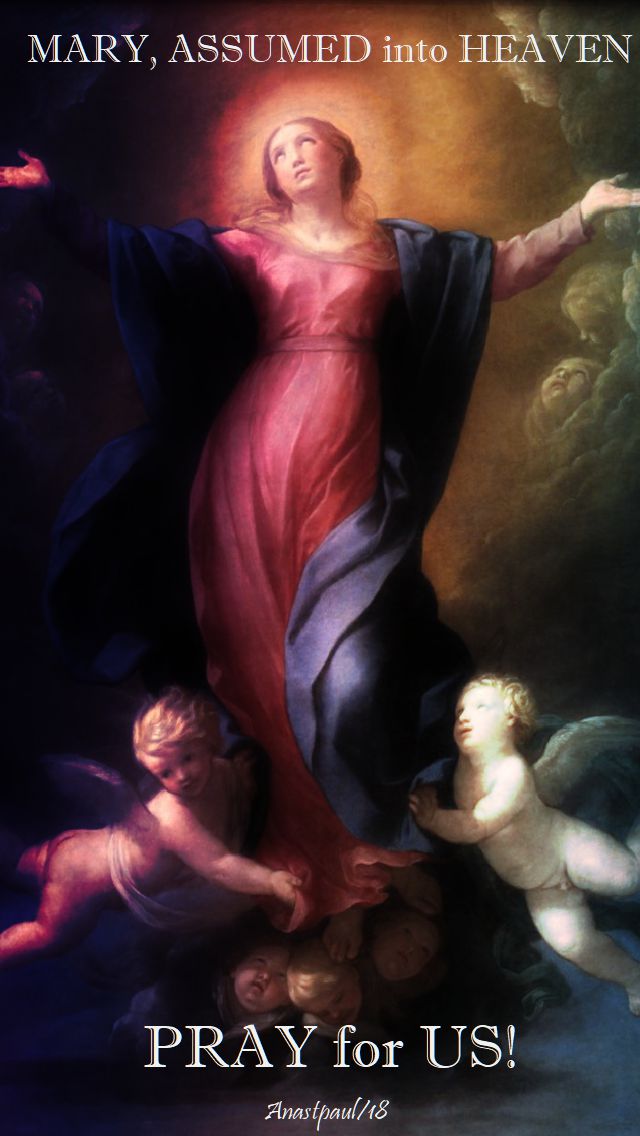
Rafael was a talented artist, His pictorial powers both in concept and in actual completion were considerable and he was far from fussy.   His teacher says of him:

“He was magnificent in the art of decoration and had done
some truly outstanding pieces . . . both in oils and in watercolour,
he worked to large design and without fussiness; he
needed only a few highly descriptive brush strokes to bring
it off;   he knew how to give strength and setting to all he did.
He had a very exact sense of colour and in some of his pictures
he was able to achieve the most difficult tints.   One peculiarity
was that when Rafael did landscapes, he preferred
to completely exclude from them any sign of people;  none of
his works contain a single human figure that could take or
distract from the luminosity of the whole.”

He was called up but declared unfit for active duty.   He decided to abandon his architectural studies in Madrid and seek the mystery of the “Absolute” in this Cistercian Monastery of the Strict Observance, which he entered on 16 January 1934 and joyfully received the white habit.   He was 23.   He said upon entering that this decision had not been prompted by suffering or disappointments but rather by God who, “in his infinite goodness” had given him far more in life than he deserved.   Rafael felt deeply suited to the monastic rhythm of Gregorian chant and the Liturgy of the Hours.   He wrote many letters to his mother, who after his death collected them in a book and to his uncle and aunt with whom he had a close friendship.

REPORTAJE. RAFAEL ARNAIZ BARON. HERMANO RAFAEL. BEATO OVETENSE EN PROCESO DE CANONIZACION

Four months after entering the monastery, after an austere Lent, he was smitten by a serious form of diabetes mellitus which forced him to go home for treatment.   Indeed, he was obliged to go back and forth between his home and the monastery again and again between 1935 and 1937.   It was at the height of the Spanish Civil War.

Thus, on his final return to the monastery, he was made an oblate, taking the last place and living on the fringes of the community.   Canon law at the time did not permit a person in his condition of poor health to take monastic vows.

The Virgin Mary was the love and consolation of Rafael’s life.   “It is a pity,” he wrote, “that David [the psalmist] didn’t know the Most Holy Virgin! What marvelous things he would have said about her! A heart as big as his would certainly have been full of love for Mary! Mary! If only I knew how to write!”

He died in the monastery’s infirmary on 26 April 1938 after a final attack of the disease at only 27 years old.   He was buried in the monastery cemetery and his remains were later translated to the Abbey Church.

Despite his brief life, he embodies the Cistercian grace in a remarkably pure way.   From beginning to end he let himself be led through a series of bewildering contradictions and perplexities illness, war, the inability to pronounce his vows, abnormal community relations until he totally renounced himself.   Humiliation was his constant companion.
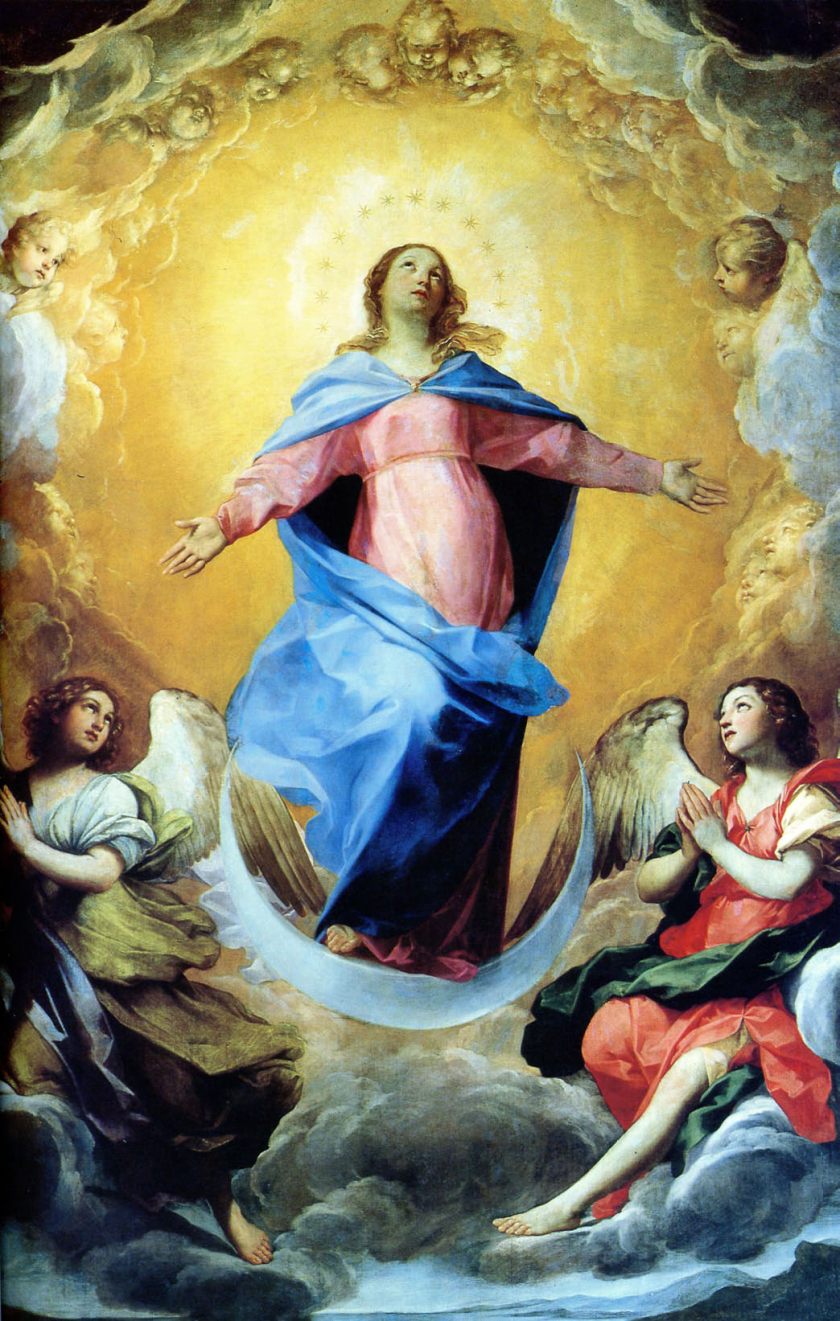
His one desire was to live in order to love:  to love Jesus, Mary, the Cross, his Trappist monastery.   His reputation for holiness spread rapidly throughout Spain and his grave at San Isidro became a place of pilgrimage where many favours were received.
On 19 August 1989, at the World Youth Day in Santiago de Compostela, John Paul II proposed Bro. Rafael as a model for young people today and beatified him on 27 September 1992, in Rome.   In his Homily at the beatification Mass, the late Pope said of this Spanish Trappist that he set an example, especially for young people, “of a loving and unconditional response to the divine call”. (Vatican.va)

ST RAPHAEL BARON 2

The sainthood process started in Palencia in an informative process that spanned from 28 June 1961 until 30 April 1967 while theologians agreed on 25 January 1974 that all of his spiritual writings were in full accordance with the norms of the faith.   The formal introduction to the cause came later on 15 January 1983 and the late Trappist became titled as a Servant of God.   The Congregation for the Causes of Saints validated the informative process in Rome on 26 June 1987 and received the Positio dossier in 1987. Theologians approved this dossier on 12 May 1989 as did the C.C.S. on 11 July 1989.   The confirmation of his heroic virtue on 7 September 1989 allowed for St Pope John Paul II to sign a decree that titled him as Venerable.

The process for a miracle took place in the location that it originated in and it received C.C.S. validation on 6 October 1989;  a medical board approved it on 31 October 1991 as did the theologians on 4 March 1992 and the C.C.S. on 7 April 1992. St John Paul II approved this miracle on 13 June 1992 and beatified the Trappist on 27 September 1992 in Saint Peter’s Square.   The process for another miracle opened in Madrid and spanned from 9 April 2005 to 7 May 2006 before its validation on 30 November 2006.   Medical experts assented to this on 13 March 2008 as well as theologians on 7 June 2008 and the C.C.S. members on 4 November 2008.   Pope Benedict XVI approved this miracle on 6 December 2008 and formalised the date for the sainthood celebration in a consistory on 21 February 2009.  Pope Benedict XVI Canonised him on 11 October 2009.


Canonisation miracle
The miracle that led to the Canonisation was the January 2001 healing of Begoña Alonso Leon in Madrid.   She was 30 and in the fifth month of being pregnant with her daughter Laura and began to feel severe contractions and headaches as well as signs of eclampsia. On 25 December 2000 – Christmas – she was admitted at seven months into a Madrid hospital due to the symptoms worsening and after an ultrasound was directed to the surgical theatre for a cesarean section.   Her daughter was born in good health but Leon’s condition worsened and she was in the intensive care unit for over two weeks.   Her rapid healing after this was attributed to the late Trappist whom she appealed to during her illness.

canonisation snip


canonisation banner

Posted in MARIAN TITLES, SAINT of the DAY

Feast of Our Lady of Good Counsel and Memorials of the Saints – 26 April

Our Lady of Good Counsel (Memorial) – https://anastpaul.wordpress.com/2017/04/26/thought-for-the-day-26-april/

our-lady-of-good-counsel-pray-for-us

Bl Alda of Siena
St Antoninus of Rome
St Basileus of Amasea
St Clarence of Venice
St Claudius of Rome
St Pope Cletus
St Cyrinus of Rome
St Exuerantia of Troyes
Bl Gregory of Besians
Bl Juli Junyer Padern
St Lucidius of Verona
St Pope MarcellinusSt
Paschasius Radbertus
St Pelligrino of Foggia
St Peter of Braga
St Primitive of Gabi
St Rafael Arnáiz Barón (1911-1938)

St Richarius of Celles
Bl Stanislaw Kubista
St Trudpert of Munstertal
St William of Foggia
Bl Wladyslaw Goral

Posted in CATECHESIS, EASTER, FEASTS and SOLEMNITIES, MORNING Prayers, ON the SAINTS, PAPAL MESSAGES, PAPAL SERMONS, QUOTES - J R R Tolkien and MORE, QUOTES on FAITH, QUOTES on LOVE, QUOTES on the CHURCH, SAINT of the DAY, The WORD

Thought for the Day – 25 April – Wednesday of the Fourth Week of Easter and the Feast of St Mark the Evangelist

Thought for the Day – 25 April – Wednesday of the Fourth Week of Easter and the Feast of St Mark the Evangelist

Today we celebrate St Mark, the Evangelist, the first Gospel writer and the friend of Sts Peter and Paul, the cousin of St Barnabas and our Father in faith – our friend too, a chosen member of the Catholic Church who has gone before to show us the way.   Mark knew there would be difficulties for believers in every age, for the persecution of the early Church was the beginning “of the labour pains” (13:8), since “the Gospel must first be preached to all nations” (13:10).   He has given us a moving story of how God works in mysterious ways and shown us in the actions of Jesus how to be patient in our faith even in the most troubling circumstances, for “he is going before you to Galilee; there you will see him as he told you” (16:7).   This narrative could only have been created by someone who himself knew suffering, the pain of unfulfilled hopes and the sorrow of untimely death.   His faith made him write about it.   His hope makes it so convincing!   Let us listen to Pope Benedict on being a Catholic today, now, in the world we live in!

Chosen:   I think it is worth reflecting on this word.   We are chosen.   God has always known us, even before our birth, before our conception, God wanted me as a Christian, as a Catholic, He wanted me as a priest.   God thought of me, He sought me among millions, among a great many, He saw me and He chose me.   It was not for my merits, which were non-existent but out of His goodness;  He wanted me to be a messenger of His choice, which is also always a mission, above all a mission and a responsibility for others.   Chosen: we must be grateful and joyful for this event.   God thought of me, he chose me as a Catholic, me, as a messenger of His Gospel, as a priest.   In my opinion it is worth reflecting several times on this and coming back to this fact of His choice;  He chose me, He wanted me, now I am responding.

Perhaps today we are tempted to say:  we do not want to rejoice at having been chosen, for this would be triumphalism.   It would be triumphalism to think that God had chosen me because I was so important.   This would really be erroneous triumphalism. However, being glad because God wanted me is not triumphalism.   Rather, it is gratitude and I think we should relearn this joy:  God wanted me to be born in this way, into a Catholic family, he wanted me to know Jesus from the first.   What a gift to be wanted by God so that I could know His face, so that I could know Jesus Christ, the human face of God, the human history of God in this world!   Being joyful because He has chosen me to be a Catholic, to be in this Church of His, where subsistit Ecclesia unica;  we should rejoice because God has given me this grace, this beauty of knowing the fullness of God’s truth, the joy of his love.

Chosen:  a word of privilege and at the same time of humility.   However “chosen” — as I said — is accompanied by the word “parepidemois”, exiles, foreigners.   As Christians we are dispersed and we are foreigners:  we see that Christians are the most persecuted group in the world today, because it does not conform, because it is a stimulus, because it opposes the tendencies to selfishness, to materialism and to all these things.

Christians are certainly not only foreigners; we are also Christian nations, we are proud of having contributed to the formation of culture, there is a healthy patriotism, a healthy joy of belonging to a nation that has a great history of culture and of faith.   Yet, as Christians, we are always also foreigners — the destiny of Abraham, described in the Letter to the Hebrews.   As Christians we are, even today, also always foreigners. In the work place Christians are a minority, they find themselves in an extraneous situation;  it is surprising that a person today can still believe and live like this.   This is also part of our life:  it is a form of being with the Crucified Christ, this being foreigners, not living in the way that everyone else lives, but living — or at least seeking to live — in accordance with His Word, very differently from what everyone says.   And it is precisely this that is characteristic of Christians.   They all say:  “But everyone does this, why don’t I?”   No, I don’t, because I want to live in accordance with God.   St Augustine once said:  “Christians are those who do not have their roots below, like tree, but have their roots above and they do not live this gravity in the natural downwards gravitation”.   Let us pray the Lord that he help us to accept this mission of living as exiles, as a minority, in a certain sense, of living as foreigners and yet being responsible for others and, in this way, reinforcing the goodness in our world.

This is faith:  touching Christ with the hand of faith, with our heart and thus entering into the power of His life, into the healing power of the Lord.   And let us pray the Lord, that we may touch Him more and more, so as to be healed.   Let us pray that He will not let us fall, that He too may take us by the hand and thus preserve us for true life….

LECTIO DIVINA” OF THE HOLY FATHER BENEDICT XVI

Chapel of the Seminary
Friday
, 8 February 2013

St Mark, Pray for us!st-mark-pray-for-us-25 april 2017


Posted in CATHOLIC Quotes, DOCTORS of the Church, EASTER, FATHERS of the Church, MORNING Prayers, PRACTISING CATHOLIC, QUOTES - J R R Tolkien and MORE, QUOTES of the SAINTS, QUOTES on FAITH, QUOTES on SUFFERING, SPEAKING of .....

Quote/s of the Day – 25 April – Wednesday of the Fourth Week of Easter and the Feast of St Mark the Evangelist

Quote/s of the Day – 25 April – Wednesday of the Fourth Week of Easter and the Feast of St Mark the Evangelist

Speaking of:  Being Catholic

“I would not believe in the Gospel,
had not the authority
of the Catholic Church
already moved me.”

St Augustine (354-430) Father & Doctori would not believe - st augustine - speaking of being catholic - 25 april 2018

“In her voyage,
across the ocean of this world,
the Church is like a great ship
being pounded by the waves
of life’s different stresses.
Our duty is not to abandon ship
but to keep her on her course.”

St Boniface (672-754) Father & Martyrin her voyage across the ocean - st boniface - speaking of being catholic - 25 april 2018

“Jesus is with me.
I have nothing to fear.”

Blessed Pier Giorgio Frassati (1901-1925)jesus is with me - bl pier - 25 april 2018

“The Jesus of the Gospels
is surely not convenient for us.”the jesus of the gospels - pope benedict - 25 april 2018

“The Jesus who makes everything okay
for everyone is a phantom,
a dream,
not a real figure…”

Pope Benedict XVIthe jesus who makes - pope benedict - 25 april 2018

“Catholicism is a matter
of the body
and the senses,
as much as it is a matter
of the mind,
precisely because,
the Word became flesh.”catholicism is a matter - bishop barron - 25 april 2018

“Easter is an earthquake,
an explosion.
If you see it as less than that,
you’re not getting it.”

Bishop Robert Barroneaster is an earthquake - bishop barron - 25 april 2018

“At some point,
Jesus is going to call you out.
That’s what He does.”

Father Mike Schmitzat some point - fr mike schmitz - 25 april 2018


Posted in EASTER, FEASTS and SOLEMNITIES, MORNING Prayers, PRAYERS of the CHURCH, QUOTES of the SAINTS, SAINT of the DAY, The WORD

One Minute Reflection – 25 April – Wednesday of the Fourth Week of Easter and the Feast of St Mark the Evangelist

One Minute Reflection – 25 April – Wednesday of the Fourth Week of Easter and the Feast of St Mark the Evangelist

Jesus said to the Eleven, “go out to the whole world and the proclaim the gospel to all creation.”…Mark 16:15

REFLECTION – So that this call should resound throughout the world, Christ sent forth the apostles he had chosen, commissioning them to proclaim the gospel:  “Go therefore and make disciples of all nations, baptising them in the name of the Father and of the Son and of the Holy Spirit, teaching them to observe all that I have commanded you; and lo, I am with you always, to the close of the age.”    Strengthened by this mission, the apostles “went forth and preached everywhere, while the Lord worked with them and confirmed the message by the signs that attended it.”
Those, who with God’s help, have welcomed Christ’s call and freely responded to it, are urged on, by love of Christ, to proclaim the Good News, everywhere in the world.   This treasure, received from the apostles, has been faithfully guarded by their successors.   All Christ’s faithful are called to hand it on, from generation to generation, by professing the faith, by living it in fraternal sharing and by celebrating it, in liturgy and prayer…CCC 2-3those who with god's help...ccc 2-3 - 25 april 2018

PRAYER – Almighty God, You chose the Evangelist St Mark and ennobled him with grace, to preach the Gospel.   Let his teaching so improve our lives and his prayers so support us, that we may walk faithfully in his footsteps, which are the footsteps of Christ our Lord.   Through Jesus Christ our Lord, in union with the Holy Spirit, one God forever, amen.st mark - pray for us - 25 april 2018

Posted in DOCTORS of the Church, EASTER, FATHERS of the Church, MORNING Prayers, PRAYERS of the SAINTS, The RESURRECTION

Our Morning Offering – 25 April – Wednesday of the Fourth Week of Easter

Our Morning Offering – 25 April – Wednesday of the Fourth Week of Easter

Easter Prayer
By St Pope Gregory the Great (540-604) Father & Doctor of the Church

It is only right,
with all the powers of our heart and mind,
to praise You Father
and Your Only-Begotten Son,
Our Lord Jesus Christ.
Dear Father,
by Your wondrous condescension
of Loving-Kindness toward us,
Your servants,
You gave up Your Son.
Dear Jesus, You paid the debt of Adam for us
to the Eternal Father
by Your Blood poured forth in Loving-Kindness.
You cleared away the darkness of sin
by Your magnificent and radiant Resurrection.
You broke the bonds of death
and rose from the grave as a Conqueror.
You reconciled Heaven and earth.
Our life had no hope of Eternal Happiness
before You redeemed us.
Your Resurrection has washed away our sins,
restored our innocence and brought us joy.
How inestimable is the tenderness of Your Love!
We pray You, Lord,
to preserve Your servants
in the peaceful enjoyment
of this Easter happiness.
We ask this through Jesus Christ Our Lord,
Who lives and reigns with God the Father,
in the unity of the Holy Spirit,
forever and ever.
Amen

it is only right with all the powers - easter prayer of st pope gregory the great - wed 4th week of easter - 25 april 2018


Posted in EASTER, FEASTS and SOLEMNITIES, Of LAWYERS & CANON Lawyers, Attorneys, Solicitors, Barristers, Notaries, Para-Legals, PATRONAGE - PRISONERS, The APOSTLES & EVANGELISTS

Saint of the Day – 25 April – St Mark the Evangelist

Saint of the Day – 25 April – St Mark the Evangelist – also known as John Mark (Born 1st century – Martyred 25 April 68 at Alexandria, Egypt) – The Winged Lion – Evangelist, Martyr, Missionary, Preacher, Teacher, friend and assistant to St Peter, St Paul, cousin of St Barnabas.1977.2_evangelista-san-marcosst mark and the winged lion

John Mark, later known simply as Mark, was a Jew by birth.   He was the son of that Mary who was proprietress of the Cenacle or “upper room” which served as the meeting place for the first Christians in Jerusalem (Acts 12:12).   He was still a youth at the time of the Saviour’s death.    We cannot be certain whether he knew Jesus personally.    Some scholars feel that the evangelist is speaking of himself (so he then did know Jesus) when describing the arrest of Jesus in Gethsemane:  “Now a young man followed him wearing nothing but a linen cloth about his body.    They seized him, but he left the cloth behind and ran off naked” (Mark 14:51-52). 

During the years that followed, the rapidly maturing youth witnessed the growth of the infant Church in his mother’s Upper Room and became acquainted with its traditions. This knowledge he put to excellent use when compiling his Gospel.   Later, we find Mark acting as a companion to his cousin Barnabas and Saul on their return journey to Antioch and on their first missionary journey.   But Mark was too immature for the hardships of this type of work and therefore left them at Perge in Pamphylia to return home.

As the two apostles were preparing for their second missionary journey, Barnabas wanted to take his cousin with him.   Paul, however, objected.   Thereupon the two cousins undertook a missionary journey to Cyprus.   Time healed the strained relations between Paul and Mark and during the former’s first Roman captivity (61-63), Mark rendered Paul valuable service (Col. 4:10; Philem. 24) and the Apostle learned to appreciate him.   When in chains the second time Paul requested Mark’s presence (2 Tim. 4:11).

An intimate friendship existed between Mark and Peter;  he played the role of Peter’s companion, disciple and interpreter.   According to the common patristic opinion, Mark was present at Peter’s preaching in Rome and wrote his Gospel under the influence of the prince of the apostles.   This explains why incidents which involve Peter are described with telling detail (e.g., the great day at Capharnaum, 1:14f)).   Little is known of Mark’s later life.   It is certain that he died a Martyr’s death as bishop of Alexandria in Egypt.   His relics were transferred from Alexandria to Venice, where a worthy tomb was erected in St Mark’s Cathedral.

tomb-st-mark-venice
St Mark’s Tomb inside the Altar at St Mark’s, Venice
st mark's venice
St Mark’s Venice

The Gospel of St Mark, the shortest of the four, is, above all, a Roman Gospel.   It originated in Rome and is addressed to Roman, or shall we say, to Western Christianity. Another high merit is its chronological presentation of the life of Christ.   For we should be deeply interested in the historical sequence of the events in our blessed Saviour’s life.

Mark2. Benozzo Gozzoli
Ceilings in the Vatican depicting St Mark

Saint Mark Mosaic Angels Saint Peter's Basilica Vatican Rome Ita

Furthermore, Mark was a skilled painter of word pictures.   With one stroke he frequently enhances a familiar scene, shedding upon it new light.   His Gospel is the “Gospel of Peter,” for he wrote it under the direction and with the aid of the prince of the apostles.   “The Evangelist Mark is represented as a lion because he begins his Gospel in the wilderness,   ‘The voice of one crying in the desert:   Make ready the way of the Lord,’ or because he presents the Lord as the unconquered King.”…Excerpted from The Church’s Year of Grace, Pius Parsch

st mark - the winged lionthe winged lion of st mark


Posted in EASTER, FEASTS and SOLEMNITIES, SAINT of the DAY, The APOSTLES & EVANGELISTS

25 April – Feast of St Mark the Evangelist and Memorials of the Saints

St Mark the Evangelist (Feast) Also known as John Mark (Born 1st century – martyred 25 April 68 at Alexandria, Egypt) – The Winged Lion


St Agathopodes of Antioch
Bl Andrés Solá Molist
St Anianus of Alexandria
Bl Antonio Pérez Lários
St Callista of Syracuse
St Clarentius of Vienne
St Ermin of Lobbes
St Evodius of Syracuse
St Franca Visalta
St Giovanni Piamarta
St Heribaldus of Auxerre
St Hermogenes of Syracuse
Bl José Trinidad Rangel y Montaño
St Kebius
St Macaille
St Macedonius
St Mario Borzaga
St Pasicrate of Mesia
St Paul Thoj Xyooj
Pedro de San Jose Betancur
Phaebadius of Agen
Philo of Antioch
Robert of Syracuse
Bl Robert Anderton
Stefano of Antioch
St Valenzio of Mesia
Bl William Marsden

Martyrs of Yeoju – 3 saints: Three Christian laymen martyred together in the apostolic vicariate of Korea. 25 April 1801 in Yeoju, Gyeonggi-do, South Korea
They were Beatified15 August 2014 by Pope Francis
• Ioannes Won Gyeong-do
• Marcellinus Choe Chang-ju
• Martinus Yi Jung-bae

Posted in MORNING Prayers, QUOTES of the SAINTS, QUOTES on CHARITY, QUOTES on FAITH, QUOTES on LOVE, QUOTES on MERCY, QUOTES on PRAYER, QUOTES on SILENCE, SAINT of the DAY, Uncategorized

Thought for the Day – 24 April – Tuesday of the Fourth Week of Eastertide and the Memorial of St Mary Euphrasia Pelletier (1796-1868)

Thought for the Day – 24 April – Tuesday of the Fourth Week of Eastertide and the Memorial of St Mary Euphrasia Pelletier (1796-1868)

Sorrow and joy alternated almost without interruption in Angers and the new houses. There were difficulties connected with each of the foundations, entailing a great deal of hard work.   Throughout these hardships, St Mary Euphrasia endured and embraced them, and said “Great crosses bring great graces.”

Ardent prayer sustained her.   “Pray, be silent and hope” became her motto.   She loved to repeat: “I belong to every country where there are souls to be saved.”   Her work of saving them was going on apace and souls were bought at a great price.

Mary Euphrasia’s last years were very lonely. Labour, enterprises, intense activities, physical and moral sufferings were steadily taking a toll on the Foundress’ strength.   She was almost seventy-two years of age when she breathed her last on 24 April 1868, the Friday after Good Shepherd Sunday.   “Goodbye my daughters, goodbye dear Institute” were her last words.

Mary Euphrasia founded, in her lifetime, 110 houses on every continent.   Today, the Mission Partners of the Good Shepherd (Sisters and Lay) are present in more than 70 countries, embracing the world with their zeal for the salvation of all people.   A year after the death of Mary Euphrasia, the Ceylon (Sri Lanka) mission was founded.   From Ceylon, the Good Shepherd Sisters came to Singapore in 1939 and reached Malaysia in 1956.

It is not easy to sum up the life of Mary Euphrasia.   Perhaps it is best understood in terms of her own wish for her Sisters:  “You will effect no good, my dear Sisters … until you become animated with the thoughts, sentiments and affections of the Good Shepherd” and “Live His way of life!”

St Mary Euphrasia, pray for us!st mary euphrasia pelletier - pray for us - no 2 - 24 april 2018

Posted in EUCHARISTIC Adoration, MORNING Prayers, PRACTISING CATHOLIC, QUOTES of the SAINTS, QUOTES on LOVE, QUOTES on REPENTANCE, QUOTES on SIN, SAINT of the DAY, The HOLY EUCHARIST / The HOLY MASS

Quote/s of the Day – 24 April – Tuesday of the Fourth Week of Eastertide and the Memorial of St Mary Euphrasia Pelletier (1796-1868)

Quote/s of the Day – 24 April – Tuesday of the Fourth Week of Eastertide and the Memorial of St Mary Euphrasia Pelletier (1796-1868)

“Draw near to our Lord, thoroughly aware
of you own nothingness and you may hope
all things from His Goodness and Mercy.
Never forget that Jesus Christ is no less generous
in the Blessed Sacrament than He was
during His mortal life on earth.”draw near to our lord - st mary euphrasia - 24 april 2018

“The Blessed Sacrament is the first
and supreme object of our worship.
We must preserve, in the depths of our hearts,
a constant and uninterrupted, profound adoration,
of this precious pledge, of Divine Love.”we must preserve - st mary euphrasia - 24 april 2018

“To speak of the Blessed Sacrament,
is to speak of what is most sacred.
How often, when we are in a state of distress,
those to whom we look for help leave us;
or what is worse, add to our affliction
by heaping fresh troubles upon us.
He is ever there waiting to help us.”to speak of the blessed sacrament - st mary euphrasia- no 2- 24 april 2018

“May your heart be an altar,
from which the bright flame,
of unending thanksgiving
ascends to heaven.”may your heart be an altar - st mary euphrasia - 24 april 2018

“It is human to fall
but angelic to rise again.”

“One person is of more value
than the whole world.”

“Do well ALL that you do!”it is human...one person is more value ...do well all - st mary euphrasia pelletier - 24 april 2018

St Mary Euphrasia Pelletier (1796-1868)

Posted in MORNING Prayers, QUOTES of the SAINTS, QUOTES on CHARITY, QUOTES on LOVE, SAINT of the DAY

One Minute Reflection – 24 April – Tuesday of the Fourth Week of Eastertide and the Memorial of St Mary Euphrasia Pelletier (1796-1868)

One Minute Reflection – 24 April – Tuesday of the Fourth Week of Eastertide and the Memorial of St Mary Euphrasia Pelletier (1796-1868)

In brotherly love, let your feelings of deep affection for one another, come to expression and regard others as more important than yourself...Romans 12:10

REFLECTION – “If you always love one another, if you always uphold one another, you will be capable of working wonders!”…St Mary Euphrasia Pelletier

if you always love another - st mary euphrasia pelletier - 24 april 2018

PRAYER – Lord, by Your grace, we are made one in mind and heart.   Give us a love for what You command and a longing for what You promise, so that, amid this world’s changes, our hearts may be one with each other and be set on the world of lasting joy. May the prayers of St Mary Euphrasia on our behalf, help us to achieve holy love for all Your children and our brothers.   Through Jesus Christ our Lord in the unity of the Holy Spirit, one God forever, amen.

st mary euphrasia pelletier - pray for us - 24 april 2018

Posted in MORNING Prayers, PRAYERS of the SAINTS, SAINT of the DAY

Our Morning Offering – 24 April – Tuesday of the Fourth Week of Eastertide and the Memorial of St Mary Euphrasia Pelletier (1796-1868)

Our Morning Offering – 24 April – Tuesday of the Fourth Week of Eastertide and the Memorial of St Mary Euphrasia Pelletier (1796-1868)

Morning Prayer
By St Mary Ephrasia Pelletier

O my God,
may every beat of my heart,
be a prayer, to obtain grace
and pardon for sinners.
May all my sighs, be so many
appeals to Your infinite mercy.
May each look, have the virtue,
to gain to Your love,
those souls, whom I shall look on.
May the food of my life,
be to work without ceasing
for Your glory
and the salvation of souls.
Amen

morning prayer of st mary euphrasia pelletier - 24 april - o my god, may every beat of my heart. no. 2. jpg


Posted in Of TRAVELLERS / MOTORISTS, SAINT of the DAY

Saint of the Day – 24 April – St Mary Euphrasia Pelletier (1796-1868)

Saint of the Day – 24 April – St Mary Euphrasia Pelletier (1796-1868) Nun, Foundress of the Congregation of Our Lady of Charity of the Good Shepherd.  St Mary Euphrasia was born on 31 July 1796 at Noirmoutier, Vendée, France as Rose Virginie Pelletier – Died 24 April 1868 at Angers, Maine-et-Loire, France of natural causes.   Patronages – Good Shepherd Sisters, travellers.

st mary euphrasia-holy card and info

Rose Virginie was born on 31 July 1796 on Noirmoutier a small island off the northwest coast of France.   Her parents had fled there thinking that they could escape the violence of the French Revolution.   She was the 8th child of Dr Julian and Anne Pelletier.   An elder sister and her father died when she was ten years old.   In 1810 her mother placed Rose Virginie in a boarding school in Tours.   Shortly after her eldest brother died and then her mother in 1813.   All these deaths were great tragedies and hardships for the young girl.

Near the boarding school was the convent of the Order of Our Lady of Charity of the Refuge, a religious Congregation founded by Saint John Eudes to provide care and protection for women and girls who were homeless and at risk of exploitation.   Despite her guardian’s reservations Rose Virginie was allowed to join the sisters provided that she not make her vows before she turned 21.   She made her profession in 1816, taking the name of Mary of Saint Euphrasia.   The sisters of the community had been dispersed at one point during the revolution;  the majority had been imprisoned.   Rose Virginie joined what was a community of elderly weary sisters.    A short time after her profession, she became first mistress of the penitents and about eight years later was made prioress of the house of Tours.    She founded a community, the “Sisters Magdalen” for women who wanted to lead a contemplative and enclosed life and would support, by their ministry of prayer, the different works of the Congregation.   It is now known as the Contemplatives of the Good Shepherd.

The city of Angers asked that Sister Mary Euphrasia establish a Convent of Refuge there. She established a house in an old factory and called it “Bon Pasteur” (Good Shepherd).   In 1831 she was appointed as Mother Superior of the House in Angers.   The congregation in Tours did not wish to expand to Angers, nor did the house in Nantes. St John Eudes had established his houses as separate and autonomous.   Mother Mary Euphrasia came to believe that if the work was to grow, that each house should be under the direction of a Generalate.   She founded additional convents in Le Mans, Poitiers, Grenoble and Metz.

In April 1835, Pope Gregory XVI granted approval of the Mother-House at Angers for the institute known as Congregation of Our Lady of Charity of the Good Shepherd of Angers. Convents that developed for Angers would be part of the institute while those houses that did not attach themselves to the General Administration would remain Refuges.  The development of the Generalate made possible the sending of the sisters to wherever they were needed.   Convents were also established in Italy, Belgium, Germany and England.  The institute is directly subject to the Holy See;   Cardinal Odescalchi was its first cardinal-protector.

header st mary euphrasia pelletier.jpg

For some time, Mother Mary Euphrasia Pelletier had to deal with the opposition of the Bishop Angebault of Angers, who wished to exercise the authority of Superior General, although the constitutions of the Order did not provide for this.   She was accused of ambition, of innovation and of disobedience.   Sometimes she was put in the position of addressing conflicting instructions from Rome and the bishop.   Although she had the support of Rome, the local clergy tended to keep their distance from someone who had incurred the bishop’s displeasure.   According to Sister Norma O’Shea, the bishop’s opposition, coupled with the deaths of a number of sisters and longtime supporters, made Sister Mary Euphrasia’s last years very lonely.

st mary euphrasia-holy card

Mother Mary Euphrasia Pelletier devoted herself to the work entrusted to her. By 1868, she was Superior General of 3,000 religious, in 110 convents, in thirty-five countries.   She died of cancer on 24 April 1868.   She is buried on the property of the Motherhouse of the Sisters of the Good Shepherd in Angers, France.

On 11 December 1897, Pope Leo XIII declared her “Venerable.”   She was Beatified on 30 April 1933 and Canonised on 2 May 1940 by Venerable Pope Pius XII.

Posted in MARIAN TITLES, SAINT of the DAY, The BLESSED VIRGIN MARY

Feast of Our Lady of Bonnaria, Our Lady of Luján and Memorials of the Saints – 24 April

St Fidelis of Sigmaringen (1577-1622) Known as “The Poor Man’s Lawyer” (Optional Memorial)

Our Lady of Bonaria:   Devotion to the Blessed Virgin Mary in the form of a statue of Mary and the Christ Child that was washed up at a Mercedarian monastery near Cagliari, Italy on 25 April 1370, apparently from a shipwreck the night before.   Legend says that the locals tried to open the crate it was in, but only one of the Mercedarian monks could get the it open.   Patron of Sardinia, Italy.

Our Lady of Bonaria

Our Lady of Luján in Buenos Aires:   Virgin of Luján, Patroness of Argentina, Uruguay and Paraguay. 16th-century icon of the Virgin Mary.   Tradition holds that a settler ordered the terracotta image of the Immaculate Conception in 1630 because he intended to create a shrine in her honour to help reinvigorate the Catholic faith in Santiago del Estero, his region.   After embarking from the port of Buenos Aires, the caravan carrying the image stopped at the residence of Don Rosendo Oramas, located in the present town of Zelaya.   When the caravan wanted to resume the journey, the oxen refused to move. Once the crate containing the image was removed, the animals started to move again. Given the evidence of a miracle, people believed the Virgin wished to remain there.   The image was venerated in a primitive chapel for 40 years.   Then the image was acquired by Ana de Matos and carried to Luján, where it currently resides.
Among the Popes who have honoured Our Lady of Luján are Clement XI, Clement XIV, Pius VI, Pius IX, Leo XIII, Pius XI, Venerable Pius XII, and St John Paul II.   In 1824, Fr John Mastai Ferretti visited the shrine on his way to Chile.   He later became Pope Pius IX and defined the dogma of the Immaculate Conception on 8 December 1854.
Because of the reputation of the shrine, Pope Leo XIII decided in 1886 to honour the miraculous statue with a Canonical Coronation.   On 30 September of that year, he blessed the crown, which was made of pure gold and set with 365 diamonds, rubies, emeralds and sapphires, 132 pearls and a number of enamels depicting the emblems of the Archbishop and the Argentine Republic.   The papal coronation of Our Lady of Luján took place on 8 May 1887.   The celebrant chosen by the Pope for this event was Archbishop Federico León Aneiros who at that time made a pilgrimage in thanksgiving to Our Lady for sparing his archdiocese from the scourge of cholera.   On 8 September 1930, Pope Pius XI formally declared Our Lady of  Luján. as the Patroness of Argentina, Paraguay and Uruguay.   The Papal document was signed by Cardinal Eugenio Pacelli, the future Venerable Pope Pius XII.
In 1982, during the Falklands War, St Pope John Paul II became the first pope to visit Our Lady of Luján.   During this visit the Pope celebrated an outdoor Mass in the square of the Basilica of Our Lady of Luján and bestowed upon her the Golden Rose.   Both in his homily of June 11 and his Angelus back in Rome reflecting on the trip, he commented on Our Lady’s never failing maternal solicitude for the faithful in times of distress.   Sixteen years later in Rome, St John Paul II gave a replica of the image to the Argentine National Parish during his pastoral visit there.
The Golden Rose is a gift from the Pope to nations, cities, basilicas, sanctuaries or images. It is blessed by him on the fourth Sunday of Lent, anointed with the Holy Chrism and dusted with incense.   This Rose consists of a golden rose stem with flowers, buds and leaves, placed in a silver vase lined on the inside with a bronze case bearing the Papal shield.   Pope Leo IX is considered as the originator of this tradition in the year 1049.
In the Americas, the Rose has been given to Our Lady of Guadalupe in Mexico, to Our Lady of Aparecida in Brazil, to St Joseph’s Oratory in Canada, to the Basilica of the National Shrine of the Immaculate Conception in the United States, to the Cathedral Basilica of Nuestra Señora del Valle in Argentina and to the Basílica Santuario Nacional de Nuestra Señora de la Caridad del Cobre in Cuba.   On 11 June 1982, St John Paul II personally bestowed a Golden Rose on Our Lady of Luján.


St Alexander of Lyon
St Anthimos of Nicomedia
St Authairius of La Ferté
St Benedetto Menni
St Bova of Rheims
St Deodatus of Blois
St Diarmaid of Armagh
St Doda of Rheims
St Dyfnan of Anglesey
St Egbert of Rathemigisi
St Eusebius of Lydda
St Gregory of Elvira
St Honorius of Brescia
St Ivo of Huntingdonshire
St Leontius of Lydda
St Longinus of Lydda
St Mary Euphrasia Pelletier (1796-1868)

St Mary of Cleophas
St Mary Salome
St Mellitus of Canterbury
St Neon of Lydda
St Sabas the Goth of Rome
St Tiberio of Pinerolo
St William Firmatus

Mercedarian Martyrs of Paris: No info yet.

Posted in MORNING Prayers, SAINT of the DAY

Thought for the Day – 23 April – Monday of the Fourth Week of Eastertide and the Memorial of St George

Thought for the Day – 23 April – Monday of the Fourth Week of Eastertide and the Memorial of St George

Saint George is the object of a vast amount of imagination.  There is every reason to believe that he was a real martyr who suffered at Lydda in Palestine, probably before the time of Constantine.   The Church adheres to his memory, but not to the legends surrounding his life.   That he was willing to pay the supreme price to follow Christ is what the Church believes.   And it is enough.

But deny it as much as we will, human nature seems to crave more than cold historical data.   The life of Saint Francis of Assisi is inspiring enough, but for centuries the Italians have found his spirit in the legends of the Fioretti, too.   Santa Claus is the popular extension of the spirit of Saint Nicholas.   The legends about Saint George are part of this yearning.   Both fact and legend are human ways of illumining the mysterious truth about the One who alone is holy.

St George, Pray for us!st george - pray for us - no 2 - 23 april 2018

Posted in DOCTORS of the Church, FATHERS of the Church, MORNING Prayers, QUOTES - J R R Tolkien and MORE, QUOTES of the SAINTS, QUOTES on FAITH, QUOTES on HUMILITY, QUOTES on LOVE, QUOTES on SANCTITY, SPEAKING of .....

Quote/s of the Day – 23 April – Monday of the Fourth Week of Eastertide

Quote/s of the Day – 23 April – Monday of the Fourth Week of Eastertide

“Speaking of Love, Life & Virtue”

“He that is kind is free, though he is a slave;
he that is evil is a slave, though he be a king.”

St Augustine (354-430) Doctor of Gracehe that is kind - st augustine - 23 april 2018

“What we love
we shall grow to resemble.”

St Bernard of Clairvaux (1090-1153) Mellifluous Doctor

what we love - st bernard - 23 april 2018

“The creator of the heavens obeys a carpenter;
the God of eternal glory listens to a poor virgin.
Has anyone ever witnessed anything comparable to this?
Let the philosopher no longer disdain from listening
to the common labourer;
the wise, to the simple;
the educated, to the illiterate;
a child of a prince, to a peasant.”

St Anthony of Padua (1195-1231) Evangelical Doctor

the creator of the heavens - st anthony of padua - 23 april 2018

“Commitment is doing what you said you would do,
after the feeling you said it in, has passed.”

St Camillus de Lellis (1550-1614)commitment is - st camillus de lellis - 23 april 2018

“You cannot love a thing
without wanting to fight for it.”

G K Chesterton (1874-1936)you cannot love a thing - g k chersterton - 23 april 2018

“You can’t go back
and change the beginning
but you can start where you are
and change the ending.”

C S Lewis (1898-1963)you can't go back and change the beginning - c s lewis - 23 april 2018

“The whole point of life
is to learn to be a gift.”

Father Mike Schmitzthe whole point of life - fr mike schmitz - 23 april 2018

Posted in DOCTORS of the Church, MORNING Prayers, ON the SAINTS, QUOTES of the SAINTS, QUOTES on CHARITY, QUOTES on FAITH, QUOTES on PERSECUTION, QUOTES on SANCTITY, QUOTES on SUFFERING, SAINT of the DAY

One Minute Reflection – 23 April – Monday of the Fourth Week of Eastertide and the Memorial of St George

One Minute Reflection – 23 April – Monday of the Fourth Week of Eastertide and the Memorial of St George

Since we have these promises, beloved, let us cleanse ourselves from every defilement of flesh and spirit, making holiness perfect in the fear of God.…2 Corinthians 7:1

REFLECTION – “Saint George was a man who abandoned one army for another, he gave up the rank of tribune to enlist as a soldier for Christ.   Eager to encounter the enemy, he first stripped away his worldly wealth by giving all he had to he poor.   Then, free and unencumbered, bearing the shield of faith, he plunged into the thick of the battle, an ardent soldier for Christ.   Clearly what he did, serves to teach us a valuable lesson, if we are afraid to strip ourselves of out worldly possessions, then we are unfit to make a strong defence of the faith.   Dear brothers, let us not only admire the courage of this fighter in heaven’s army but follow his example.   Let us be inspired to strive for the reward of heavenly glory.   We must now cleanse ourselves, as Saint Paul tells us, from all defilement of body and spirit, so that one day we too may deserve to enter that temple of blessedness to which we now aspire.” – from a sermon by St Peter Damian (1007-1072) Doctor of the Churcheager to encounter the enemy - st peter damian on st george - 23 april 2018

PRAYER – Almighty, everliving God, we confidently call You Father, as well as Lord. Renew Your Spirit in our hearts, make us ever more perfectly Your children.   Grant that all who have received the grace of Baptism may strive to be worthy of their Christian calling and reject everything opposed to it.   St George, in strength and love, you rejected false Gods, gave all you had to the poor and bravely went to your death in complete trust, please pray for us.   Through our Lord Jesus Christ, in union with the Holy Spirit, one God forever, amen.st george - pray for us - 23 april 2018

Posted in DOCTORS of the Church, MORNING Prayers, PRAYERS for VARIOUS NEEDS, PRAYERS of the SAINTS

Our Morning Offering – 23 April – Monday of the Fourth Week of Eastertide

Our Morning Offering – 23 April – Monday of the Fourth Week of Eastertide

Act of Abandonment
By St Francis De Sales (1567-1622) Doctor of Charity

O my God, I thank You
and I praise You
for accomplishing Your holy
and all-lovable will
without any regard for mine.
With my whole heart,
in spite of my heart,
do I receive this cross I feared so much!
It is the cross of Your choice,
the cross of Your love.
I venerate it;
nor for anything in the world
would I wish that it had not come,
since You willed it.
I keep it with gratitude and with joy,
as I do everything that comes from Your hand;
and I shall strive to carry it without letting it drag,
with all the respect
and all the affection which Your works deserve.
Ameno my god, I thank you and I praise You - st francis de sales - act of abandonment - 23 april 2018