
Quote of the Day – 11 February – Memorial of Our Lady of Lourdes and the 26th World Day of Prayer for the Sick
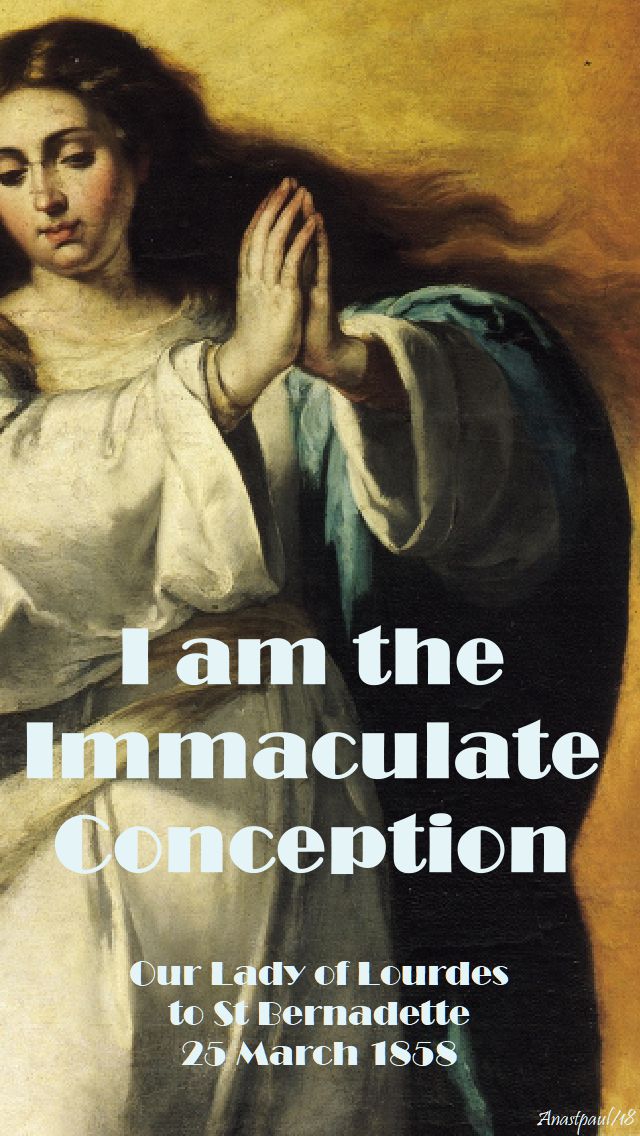
One Minute Reflection – – 11 February – 6th Sunday of Year B, Memorial of Our Lady of Lourdes and the 26th World Day of Prayer for the Sick
One Minute Reflection – – 11 February – 6th Sunday of Year B, Memorial of Our Lady of Lourdes and the 26th World Day of Prayer for the Sick
….if you will, you can make me clean…Mark 1:41.
REFLECTION – “Jesus, who is present in our suffering neighbour, wishes to be present in every act of charity and service of ours, which is expressed also, in every glass of water we give “in his name” (cf Mk 9:41). Jesus wants love, the solidarity of love, to grow from suffering and around suffering. He wants, that is, the sum of that good which is possible in our human world. A good that never passes away. The Pope, who wishes to be a servant of this love, kisses the forehead and kisses the hands of all those who contribute to the presence of this love and to its growth in our world. He knows, in fact and believes that he is kissing the hands and the forehead of Christ himself, who is mystically present in those who suffer and in those who, out of love, serve the suffering.”…St Pope John Paul, Memorial of Our Lady of Lourdes – 1979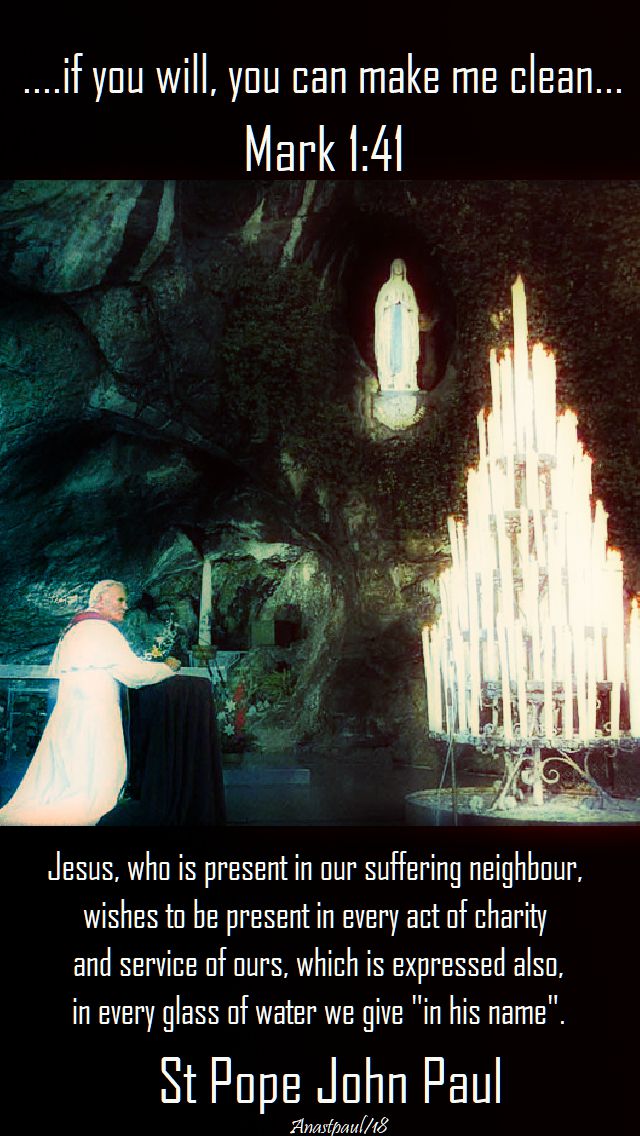
PRAYER – Christ of our sufferings,
Christ of our sacrifices,
Christ of our Gethsemane,
Christ of our difficult transformations,
Christ of our faithful service to our neighbour,
Christ of our pilgrimages to Lourdes,
Christ of our community, today, in St Peter’s Basilica,
Christ our Redeemer,
Christ our Brother!
Amen.
Our Lady of Lourdes, Pray for us that we may live this solidarity of love, in You and with You and for You, amen.
Our Morning Offering – 11 February – 6th Sunday of Year B
Our Morning Offering – 11 February – 6th Sunday of Year B
Your Sacred Table – A Prayer Before Holy Communion –
By Saint Francis de Sales (1567-1622) Doctor of the Church
Divine Saviour,
we come to Your sacred table
to nourish ourselves,
not with bread but with Yourself,
true Bread of eternal life.
Help us daily to make a good and perfect meal
of this divine food.
Let us be continually refreshed
by the perfume of Your kindness and goodness.
May the Holy Spirit fill us with His Love.
Meanwhile, let us prepare a place
for this holy food by emptying our hearts.
Amen.
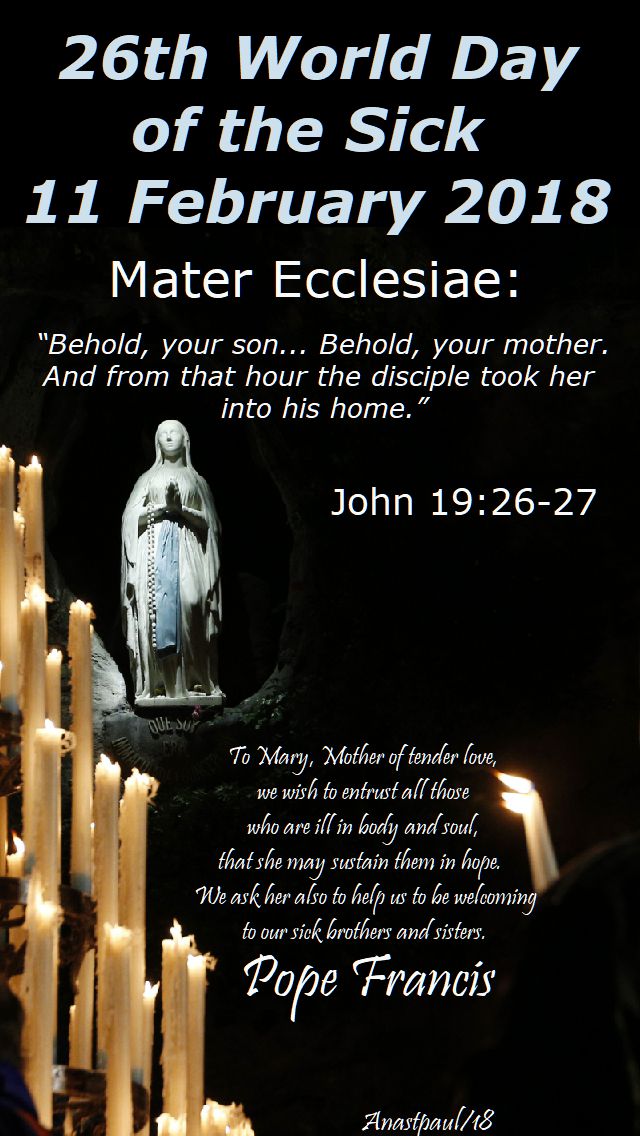
The Memorial of the Apparitions of Our Lady of Lourdes / Our Lady of the Immaculate Conception – 11 February
Blessed Memorial of the Apparitions of Our Lady of Lourdes/Our Lady of the Immaculate Conception – (11 February and 16 July of 1858) – Patron of the ill and infirm, protection from disease, France, 6 cities and a Diocese.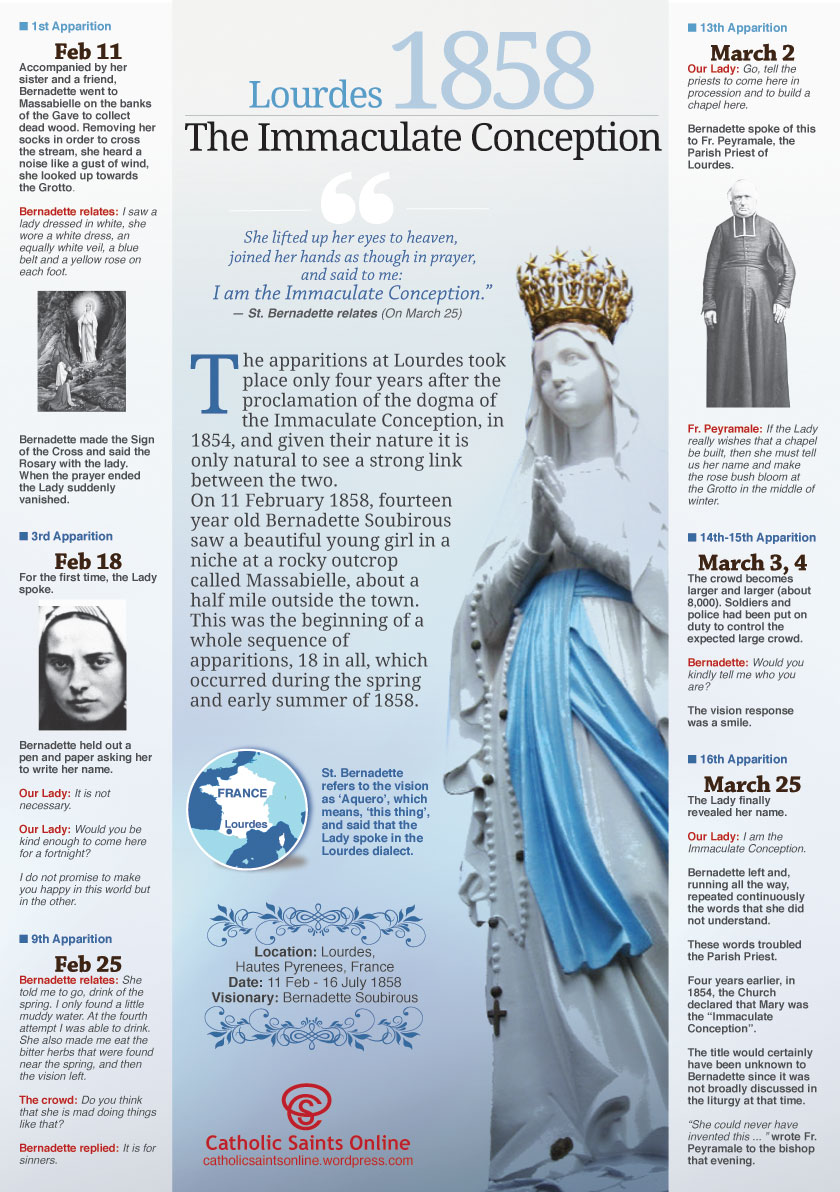

The memorial commemorates the eighteen (18) apparitions of the Blessed Virgin Mary to Saint Bernadette Soubiroux that occurred between 11 February and 16 July of 1858 near the town of Lourdes in the Hautes-Pyrenees region of France. Though there would be other people with her, only Saint Bernadette could see the Lady.
During the 9th appearance, on 25 February, the Lady told Bernadette to drink from a spring that suddenly appeared in the grotto where the apparitions occurred. During the 12th appearance, on 1 March, a visitor washed her arm in water from the spring and some nerve damage in it was immediately cured. There is a tradition of miraculous cures at the grotto, or received by those who drink or are bathed in its waters. Bernadette later said that the water had no special properties but it helped focus the faithful who received the cures through faith and prayer.


During the 13th appearance, on 2 March, the Lady told Bernadette to tell local priests that they should build a chapel at the grotto and have processions to be made to it; the priests were understandably sceptical but due to the numbers of pilgrims coming to the area, construction of several churches was started within a few years.
During the 16th appearance, on 25 March, the Lady identified herself as “the Immaculate Conception”.

Due to the number of people gathering at the site and making treks to the area, on 8 June 1858, the mayor of Lourdes barricaded the grotto and stationed guards to prevent public access; visitors were fined for kneeling near the grotto or talking about it and Bernadette saw the last appearance of the Lady from outside the barricade. The grotto was re-opened to the public in October 1858 by order of Emperor Louis Napoleon III and the pilgrims have not stopped coming since.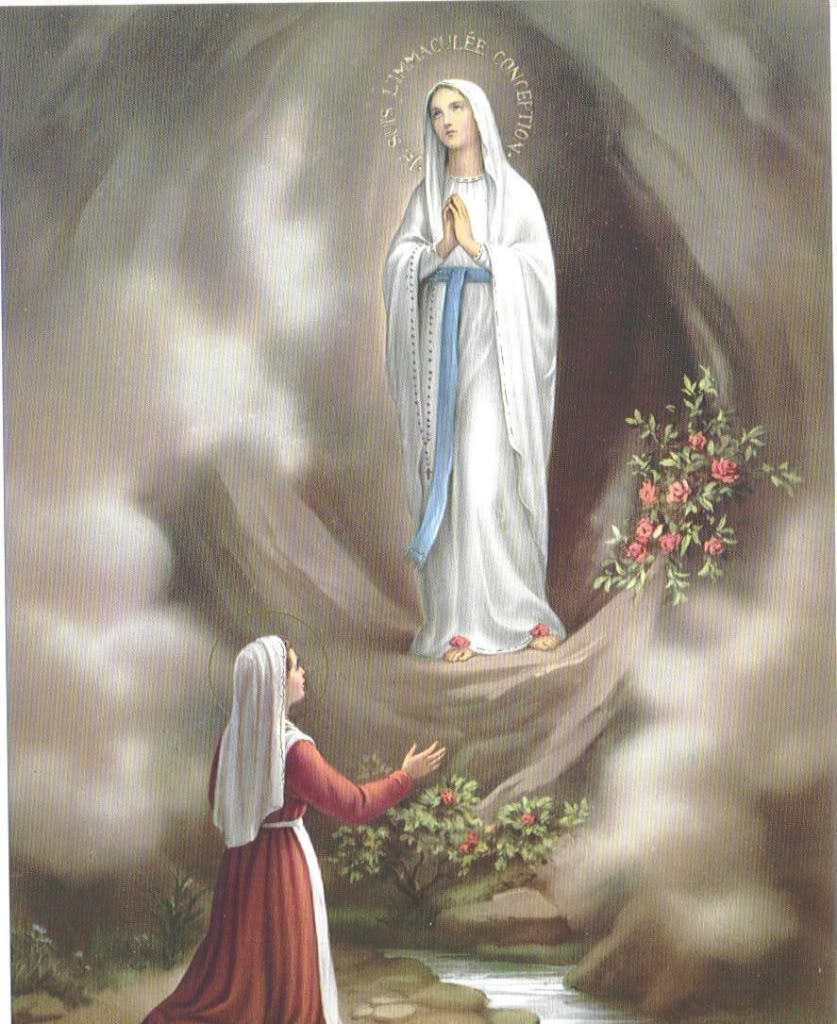


Church Approval:
• on 18 January 1862 Bishop Bertrand-Sévère Mascarou-Laurence, with the authorisation of Pope Pius IX, declared that the faithful are “justified in believing the reality of the apparition”
• national French pilgrimages to the site began in 1873
• the basilica of Notre-Dame de Lourdes was consecrated in 1876
• Blessed Pope Pius IX formally granted a canonical coronation to the statue of Our Lady in the courtyard of the basilica on 3 July 1876
• Church of the Rosary consecrated in 1901
• a special office and Mass were authorised by Pope Leo XIII
• observance of the feast extended to the whole Church by St Pope Pius X in 1907
Memorial of Our Lady of Lourdes, the 26th World Day of Prayer for the Sick and Memorials of the Saints – 11 February
Our Lady of Lourdes (11 February and 16 July of 1858) – (Optional Memorial)
World Day of the Sick
—
St Ampelius of Africa
St Ardanus of Tournus
Bl Bartholomew of Olmedo
St Caedmon
St Calocerus of Ravenna
St Castrensis of Capua
St Dativus the Senator
Bl Elizabeth Salviati
St Etchen of Clonfad
St Eutropius of Adrianopolis
St Felix the Senator
St Gobnata
St Pope Gregory II
Bl Gaudencia Benavides Herrero
St Helwisa
St Jonas of Muchon
St Lucius of Adrianople
St Pope Paschal I
St Pedro de Jesús Maldonado-Lucero
St Saturninus of Africa
St Secundus of Puglia
St Severinus of Agaunum
St Soter of Rome
St Theodora the Empress
Bl Tobias Francisco Borrás Román
—
Guardians of the Holy Scriptures: Also known as –
• Anonymous Martyrs in Africa
• Martyrs of Africa
• Martyrs of Numidia
• Martyrs of the Holy Books
A large number of Christians tortured and murdered in Numidia (part of modern Algeria) during the persecutions of Diocletian, but whose names and individual stories have not survived. They were ordered to surrender their sacred books to be burned. They refused. Martyrs. c 303 in Numidia.
Martyrs of Africa – 5 saints: A group of five Christians who were martyred together; we know nothing else but the names of four of them – Cyriacus, Oecominius, Peleonicus and Zoticus.
.
Novena to Our Lady of Lourdes – DAY NINE– 10 February
Novena to Our Lady of Lourdes – DAY NINE– 10 February (we Pray the Novena for our own intentions and for the sick, the infirm within our own communities but also for all those throughout the world who suffer, especially those who have no-one to pray for them in preparation for the Wold Day of the Sick on 11 February.)
DAY NINE
O glorious Mother of God,
to you we raise our hearts and hands
to implore your powerful intercession
in obtaining from the benign Heart of Jesus
all the graces necessary
for our spiritual and temporal welfare,
particularly for the grace of a happy death.
O Mother of our Divine Lord,
as we conclude this novena for the special favour
we seek at this time.
……………………………(make your request)
Mary and Bernadette
We feel animated with confidence that your prayers in our behalf
will be graciously heard. O Mother of My Lord,
through the love you bear to Jesus Christ
and for the glory of His Name,
hear our prayers and obtain our petitions.
O Brilliant star of purity, Mary Immaculate, Our Lady of Lourdes,
glorious in your assumption,
triumphant in your coronation,
show unto us the mercy of the Mother of God,
Virgin Mary, Queen and Mother,
be our comfort, hope, strength, and consolation. Amen.
Our Lady of Lourdes, pray for us.
Saint Bernadette, pray for us.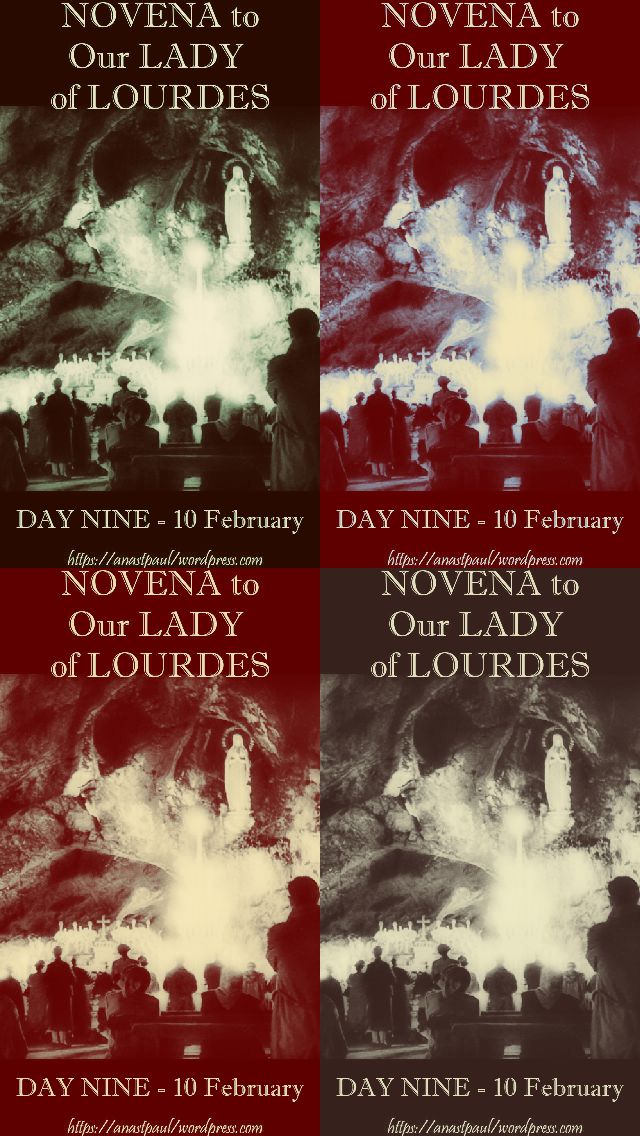
Thought for the Day – 10 February – The Memorial of St José Sánchez del Río “Joselito”(1913-1928)
Thought for the Day – 10 February – The Memorial of St José Sánchez del Río “Joselito”(1913-1928)
Mexican child-saint José Sánchez del Río (Joselito) “is not only a martyr of the Christian faith, but is a martyr of the fundamental rights of the person.”
In an interview with the Register at the Vatican on Saturday, the newly proclaimed saint’s postulator, Father Fidel Gonzáles, stressed this as he spoke about St José Sánchez del Río. Father Gonzalez stressed how young José’s faith was not for sale and no one, no “offer” — not even his parents’ intervention — would convince him to negate his faith, even if it cost him his life.
The Vatican official also addressed how there are many Christian martyr saints that exist, even if they have not been formally recognised by the Church and reflected on how important it is, in the midst of today’s world, full of ambiguities, relativism and religious persecution, to not abandon our faith, as St Josélito teaches us.
“It’s always a little surprising to hear about saints as young as only 14 years old. But can a child, someone so young, really be a saint as much as an adult or an elderly person? Of course. There is a theological sanctity that belongs to every baptised person, even if baptised even a few hours after birth, because it is a grace of the Holy Spirit. Instead, the moral holiness grows like a tree, which comes and develops from a small seed and then spreads throughout the course of a lifetime. In the specific case of St José Sánchez del Río, we are facing a martyr of nearly age 15 but he had a clear awareness of the ideas that led him to proclaim his faith with martyrdom. I can say that he really is an exceptional figure.
Why?
…because he showed a psychological maturity much higher than that of his own age. We could say that, psychologically, he had the maturity of someone at least 18 or 20 years old, especially as he demonstrated his firm decision to reject the many proposals that they made to free him from prison in exchange for the apostasy of his faith in Christ. But he replied with a phrase, instead, of accepting, one that the witnesses then reported, a phrase that he used speaking to his parents when they tried to free him from captivity: “My faith is not for sale,” which means: “My faith in Christ cannot be sold, even though I know that this involves torture and death.”
“Long live Christ the King” was the cry with which the Mexican Cristeros went down in history. What did those words mean to them? It’s a theological expression; maybe neither St Josélito nor the others, fully realised its meaning, its significance. For them, it was a way of proclaiming the centrality of Christ in history. We must point out that St José did not ever stop proclaiming Christ. They said, “If you shout, ‘Death to Christ the King,’ we will spare your life.” But instead he continued: “Long live Christ the King. … Long live the Lady of Guadalupe.” This invocation of Our Lady of Guadalupe was significant, too, as it was the first concrete manifestation of God in the history of Mexico and Latin America. José stayed faithful to the very, very end, even as they continued stabbing him and eventually shot him with the pistol.”
As a specialist on the concept of sanctity, are you familiar with other martyrs like St. José?
“I have been a consultant for 31 years of the Congregation for the Causes of Saints and I have seen hundreds of cases of martyrdom but never of a martyr so young. It’s a unique case, where you really see the power of divine grace. But José Sánchez del Río — this is my thesis — is not only a martyr of the Christian faith but is a martyr of the fundamental rights of the person: the right to freedom of opinion, freedom of religion, the right to practice their religion. … In short, he is a martyr of all the rights that were denied the totalitarian era. The 20th century is the century of totalitarian regimes, each very different from the others but yet they all agree on setting aside God, getting rid of the foundation of human rights.
St Josélito simply teaches us that the Catholic faith is not for sale, as he said himself [while] dying. This is especially true in a world like today, full of ambiguities, of relativism, of dominant cultural nihilism. The Christian faith, instead, has a solid foundation, i.e., the principle that God is the creator of all reality and if we put it aside, then all the rights of the person lose consistency and end up at the mercy of a political power.
It’s interesting, I repeat, that all ideological totalitarianisms of the 20th century have desecrated the human person, profaning God.”
Correspondent Deborah Castellano Lubov writes from Rome.
St Joselito, Pray for us!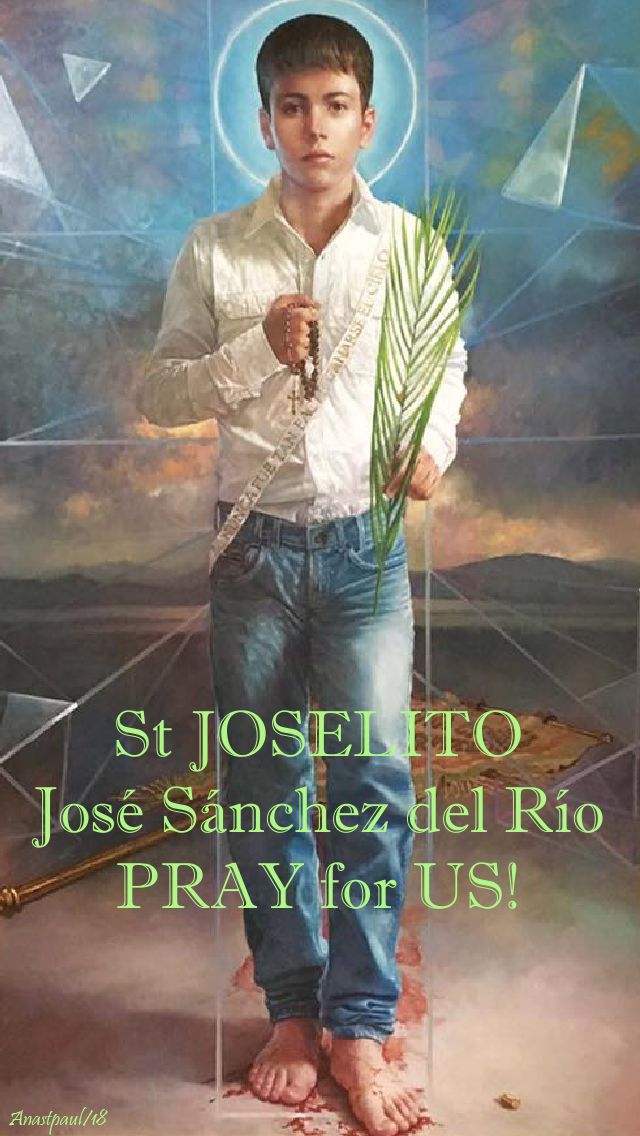
Quote/s of the Day – 10 February – The Memorial of St José Sánchez del Río “Joselito”(1913-1928)
Quote/s of the Day – 10 February – The Memorial of St José Sánchez del Río “Joselito”(1913-1928)
“Mama, do not let me lose the
opportunity to gain Heaven
so easily and so soon”.
“You will be in Heaven before me.
Prepare a place for me.
Tell Christ the King I shall be with Him soon”.
“Long live Christ the King!
Long live Our Lady of Guadalupe!”.
Saint “Joselito”(1913-1928)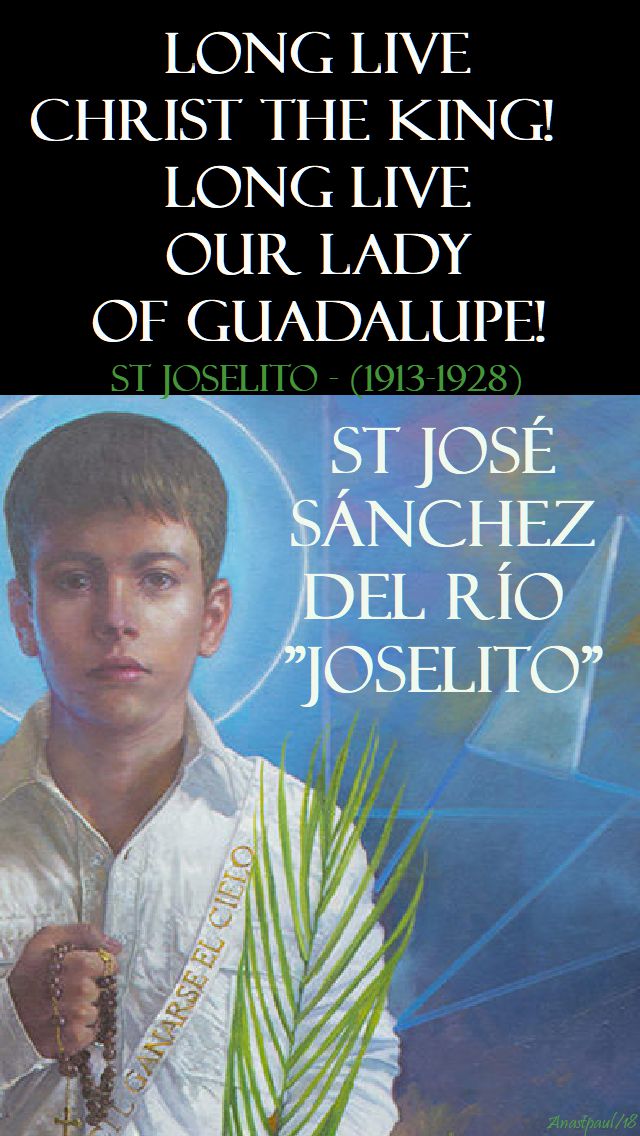
One Minute Reflection – 10 February – The Memorial of St José Sánchez del Río “Joselito”(1913-1928)
One Minute Reflection – 10 February – The Memorial of St José Sánchez del Río “Joselito”(1913-1928)
What will separate us from the love of Christ? Will anguish, or distress, or persecution, or famine, or nakedness, or peril, or the sword? As it is written: “For your sake we are being slain all the day; we are looked upon as sheep to be slaughtered.” No, in all these things we conquer overwhelmingly through him who loved us ...Romans 8:35-37
REFLECTION – “My faith is not for sale.” … St José Sánchez del Río “Joselito”(1913-1928)
PRAYER – Lord, my God, You chose us from the foundations of the world to be Your children. We pray that our courage may not fail us as we are attacked from all sides, as we struggle home to You. Grant that through the prayers of young Joselito, we too may fight unto death for Your love and the glory of Your Kingdom. Through our Lord, Jesus, in the unity of the Holy Spirit, one God forever and ever, amen.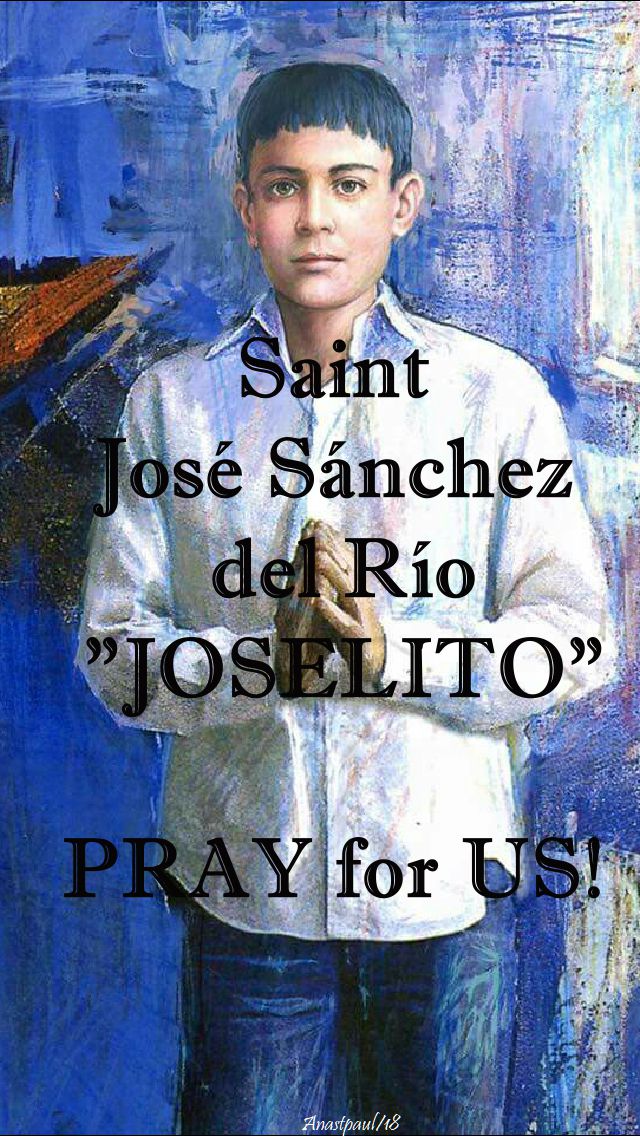
Our Morning Offering – 10 February – The Memorial of St Scholastica (c 480-543), the Twin Sister of St Benedict (480-547)
Our Morning Offering – 10 February – The Memorial of St Scholastica (c 480-543), the Twin Sister of St Benedict (480-547)
Father, in Your Goodness, Grant Me ….
St Benedict
Father, in Your goodness,
grant me
the intellect to comprehend You,
the perception to discern You,
and the reason to appreciate You.
In Your kindness
endow me with
the diligence to look for You,
the wisdom to discover You
and the spirit to apprehend You.
In Your graciousness
bestow on me
a heart to contemplate You,
ears to hear You,
eyes to see You,
and a tongue to speak of You.
In Your mercy confer on me
a conversation pleasing to You,
the patience to wait for You,
and the perseverance to long for You.
Grant me a perfect end,
Your holy presence.
Amen.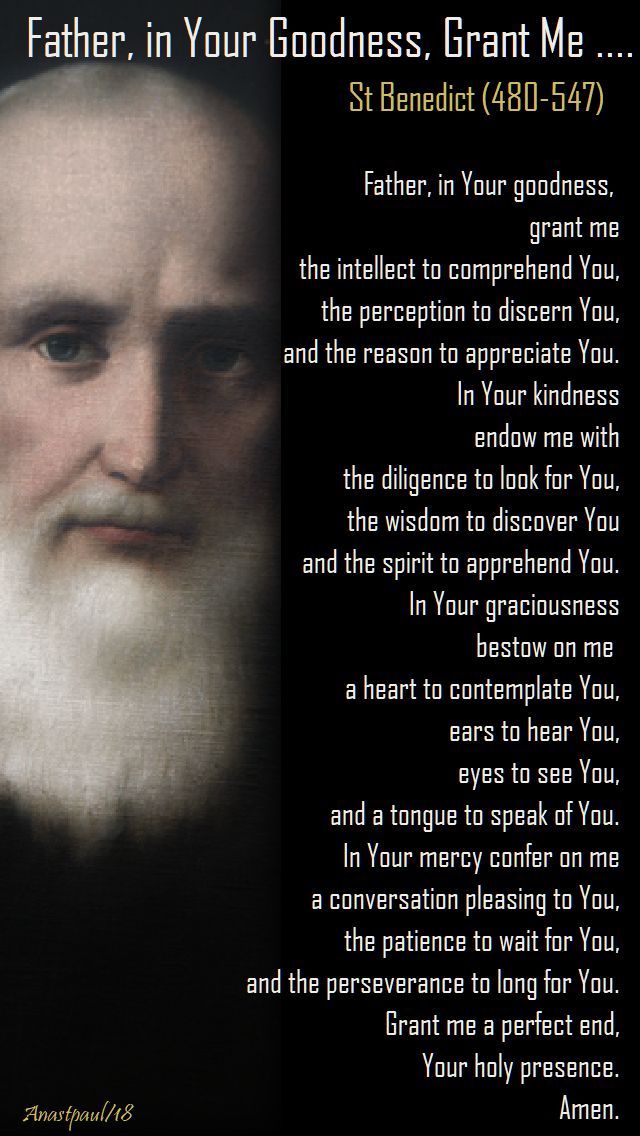
Saint of the Day – 10 February – St José Sánchez del Río “Joselito” (1913-1928) Boy Martyr
Saint of the Day – 10 February – St José Sánchez del Río “Joselito” (1913-1928) known as “Joselito” – (28 March 1913 – 10 February 1928) Boy Martyr was a Mexican Cristero who was put to death by government officials because he refused to renounce his Catholic faith. His death was seen as a largely political venture on the part of government officials in their attempt to stamp out dissent and crush religious freedom in the area. Patronages – Persecuted Christians, Catholic Children and Adolescents, Sahuayo, Mexico, his birthplace. He was declared to be venerated on 22 June 2004 by St Pope John Paul II and was beatified by Pope Benedict XVI – through the Cardinal-Prefect of the Congregation of the Causes of Saints – on 20 November 2005 in Mexico. Pope Francis approved a miracle attributed to him on 21 January 2016, allowing for his canonisation to take place and he was proclaimed to be a saint on 16 October 2016.

José Sánchez del Río was born on 28 March 1913 in Sahuayo, Michoacán, Mexico. Wanting to defend the faith and rights of Catholics, he followed in the footsteps of his two older brothers and asked his mother for permission to join the Cristeros. She objected, telling him that he was too young. “Mama”, he replied, “do not let me lose the opportunity to gain Heaven so easily and so soon”.
At that time, the laws banned religious orders, deprived the Church of property rights and denied priests civil liberties, including the right to trial by jury and the right to vote. As the restrictions on religious liberty increased, Catholics could be fined or imprisoned for teaching Church doctrine, wearing clerical attire, meeting together after their convents were disbanded, promoting religious life or holding religious services in non-church locations.
On 5 February 1928 the young boy was captured during a battle and imprisoned in the church sacristy. In order to terrorise him, soldiers made him watch the hanging of one of the other captured Cristeros. But José encouraged the man, saying, “You will be in Heaven before me. Prepare a place for me. Tell Christ the King I shall be with Him soon”.
In prison, he prayed the Rosary and sang songs of faith. He wrote a beautiful letter to his mother telling her that he was resigned to do God’s will. José’s father attempted to ransom his son but was unable to raise the money in time.
On 10 February 1928 the teenager was brutally tortured and the skin of the soles of his feet was sheered off; he was then forced to walk on salt, followed by walking through the town to the cemetery. The young boy screamed with pain but would not give in.
At times the soldiers stopped him and said, “If you shout, “Death to Christ the King’, we will spare your life”. But he answered: “Long live Christ the King! Long live Our Lady of Guadalupe!”.


Once he arrived at the cemetery, José was asked once more if he would deny his faith. The 14 year old shouted out: “Long live Christ the King!”, and was summarily shot. (vatican.va)
Memorials of the Saints – 10 February
St Scholastica (c482-547) (Memorial)
—
Bl Alexander of Lugo
Bl Alojzije Stepinac
St Andrew of Bethlehem
St Aponius of Bethlehem
St Austrebertha of Pavilly
St St Baldegundis
St Baptus of Magnesia
Bl Catherine du Verdier de la Sorinière
St Charalampias
Bl Clare Agolanti of Rimini
St Desideratus of Clermont
St Erluph of Werden
Bl Eusebia Palomino Yenes
Bl Hugh of Fosse
Bl José Sánchez del Río
Bl Louise Bessay de la Voûte
Bl Louise Poirier épouse Barré
Bl Marie-Anne Hacher du Bois
Bl Marie-Louise du Verdier de la Sorinière
Bl Mikel Beltoja
Bl Paganus
Bl Paul of Wallachia
Bl Pierre Frémond
St Porfirio
St Prothadius of Besançon
St Salvius of Albelda
St Silvanus of Terracina
St Soteris the Martyr
St Troiano of Saintes
St Trumwin of Whitby
Bl William of Maleval
Martyred Soldiers in Rome: A group of ten Christian soldiers who were martyred together for their faith. We know little more about them but four of their names – Amantius, Hyacinth, Irenaeus and Zoticus. • 120 at Rome, Italy. They were buried on the Via Lavicana outside RomeAmantius, Hyacinth, Irenaeus, Zoticus.
Novena to Our Lady of Lourdes – DAY EIGHT– 9 February
Novena to Our Lady of Lourdes – DAY EIGHT– 9 February (we Pray the Novena for our own intentions and for the sick, the infirm within our own communities but also for all those throughout the world who suffer, especially those who have no-one to pray for them in preparation for the Wold Day of the Sick on 11 February.)
DAY EIGHT
O Immaculate Mother of God,
from heaven itself you came to appear to the little Bernadette
in the rough Grotto of Lourdes!
And as Bernadette knelt at your feet
and the miraculous spring burst forth
and as multitudes have knelt ever since
before your shrine, O Mother of God,
we kneel before you today to ask that in your mercy
you plead with your Divine Son to grant
the special favour we seek in this novena.
…………………………….. (make your request)
O Brilliant star of purity, Mary Immaculate, Our Lady of Lourdes,
glorious in your assumption,
triumphant in your coronation,
show unto us the mercy of the Mother of God,
Virgin Mary, Queen and Mother,
be our comfort, hope, strength, and consolation. Amen.
Our Lady of Lourdes, pray for us.
Saint Bernadette, pray for us.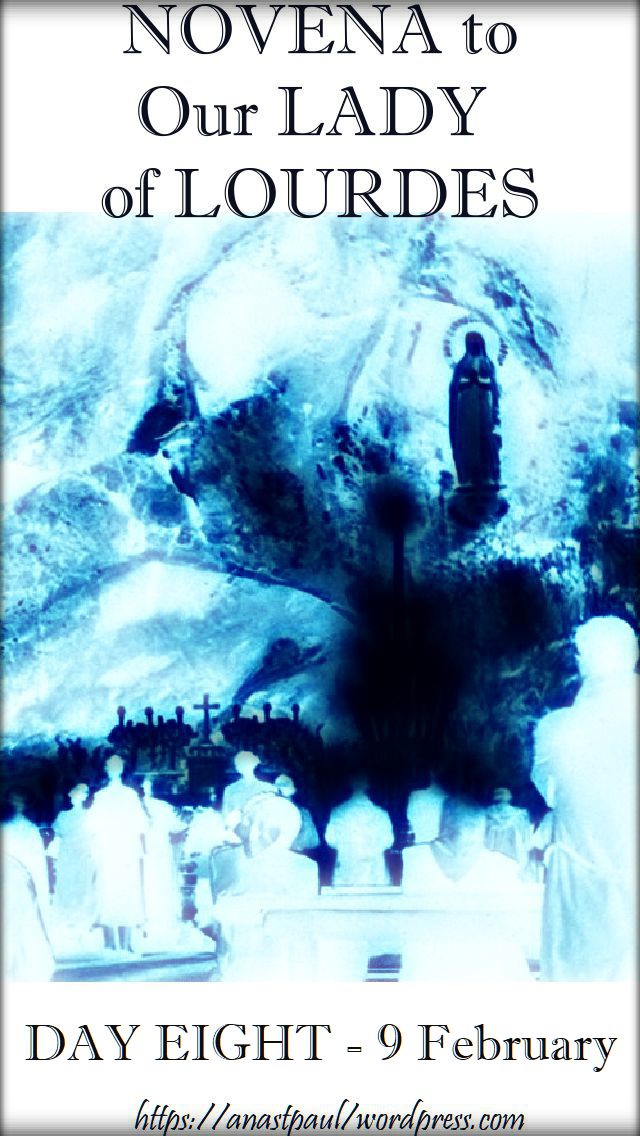
Thought for the Day – 9 February – The Memorial of Bl Anne Catherine Emmerich (1774-1824)
Thought for the Day – 9 February – The Memorial of Bl Anne Catherine Emmerich (1774-1824)
In a letter to Count Stolberg, Clemens August Droste zu Vischering, the vicar‑general at that time, called Anna Katharina Emmerick a special friend of God. In the words of Hans Urs von Balthasar we can say, “She brought her friendship with God to bear in solidarity with human beings.” To bring friendship with God to bear in solidarity with human beings – does this not shed light on an important concern in the life of the church today?
The Christian faith no longer includes everyone. In our world the Christian community represents people before God. We must bring our friendship with God to bear, let it be the decisive factor in solidarity with human beings.
Anna Katharina Emmerick is united to us in the community of believers. This community does not come to an end with death. We believe in the lasting communion with all whom God has led to perfection. We are united with them beyond death and they participate in our lives. We can invoke them and ask for their intercession. We ask Anna Katharina Emmerick, the newly named Blessed, to bring her friendship with God to bear in solidarity with us and with all human beings. (vatican.va)
Blessed Anne, pray for us!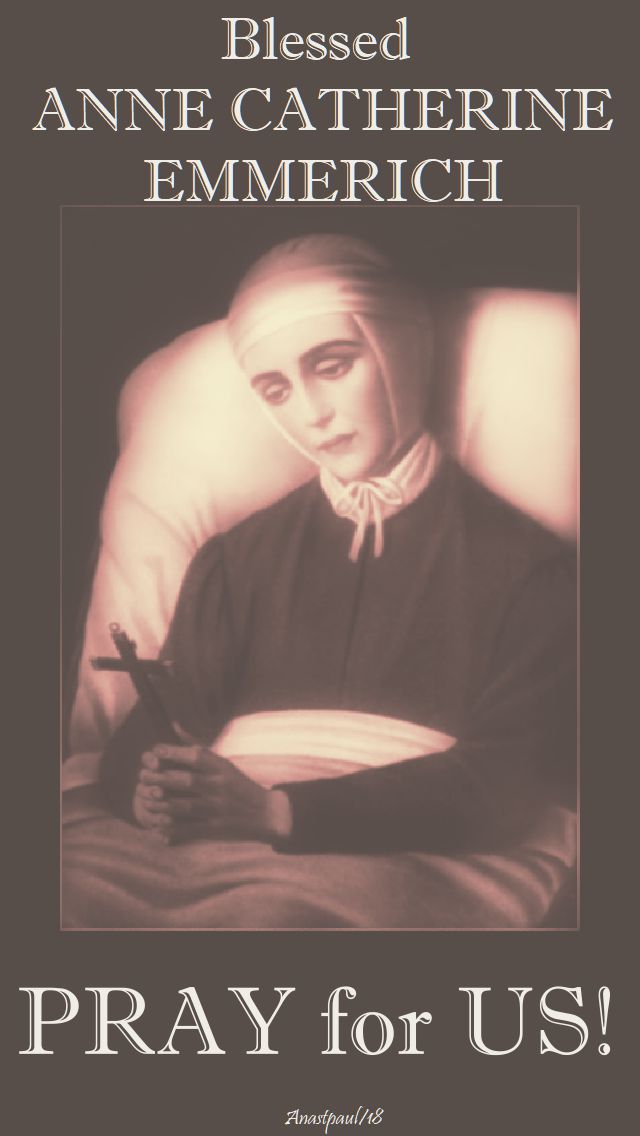
Quote/s of the Day – 9 February – The Memorial of Bl Anne Catherine Emmerich (1774-1824)
Quote/s of the Day – 9 February – The Memorial of Bl Anne Catherine Emmerich (1774-1824)
“The prayer most pleasing to God is that
made for others and particularly for the poor souls.
Pray for them, if you want your prayers to bring high interest.”
Bl Anne Catherine Emmerich (1774-1824)
“As much as by her patience to endure her physical weaknesses, we are impressed by the strength of character of the new blessed and her firmness in the faith. She received this strength from the Holy Eucharist. In this way, her example opened the hearts of poor and rich men, educated and humble people, to complete loving passion toward Jesus Christ. Still today she communicates to all the salvific message: ‘By his wounds you have been healed’ (see 1 Peter 2:24).”
St Pope John Paul II, homily at the beatification of Blessed Anne, 3 October 2004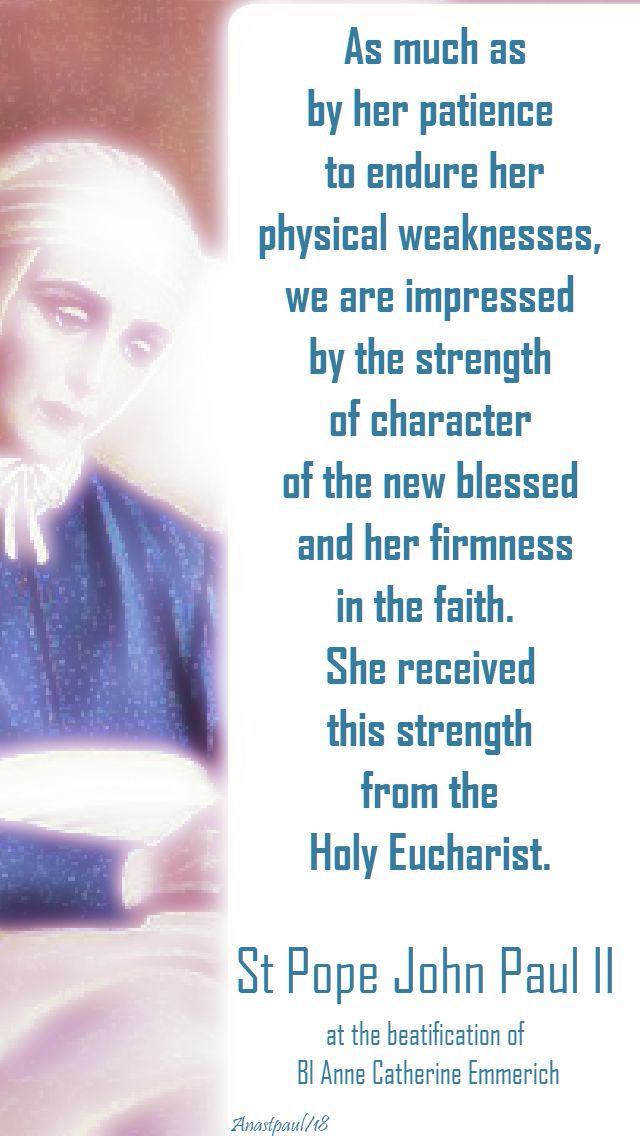
One Minute Reflection -9 February – The Memorial of Blessed Anne Catherine Emmerich 1774-1824)
One Minute Reflection -9 February – The Memorial of Blessed Anne Catherine Emmerich (1774-1824)
“And I will give you the keys of the kingdom of heaven. And whatever you shall bind on earth shall be bound, even in heaven. And whatever you shall loose on earth shall be loosed, even in heaven.”...Matthew 16:19
REFLECTION – “The Church is the only one, the Roman Catholic! And if there were left upon earth but one Catholic, he would be the one, universal Church, the Catholic Church, the Church of Jesus Christ against which the gates of Hell shall never prevail.”…
Bl Anne Catherine Emmerich (1774-1824)
PRAYER – We come to You, our heavenly Father and beg You, that by the prayers of Your child, Bl Anne Emmerich, we may stand strongly in defense of our faith and the holy Church of Your Son. Come O Holy Spirit, fill our hearts with courage and love, our minds with the words to defend your beloved Spouse and keep our wills always in uniformity with Yours. We pray through Jesus our Lord, in unity with You, our Father and the Holy Spirit, one God forever amen.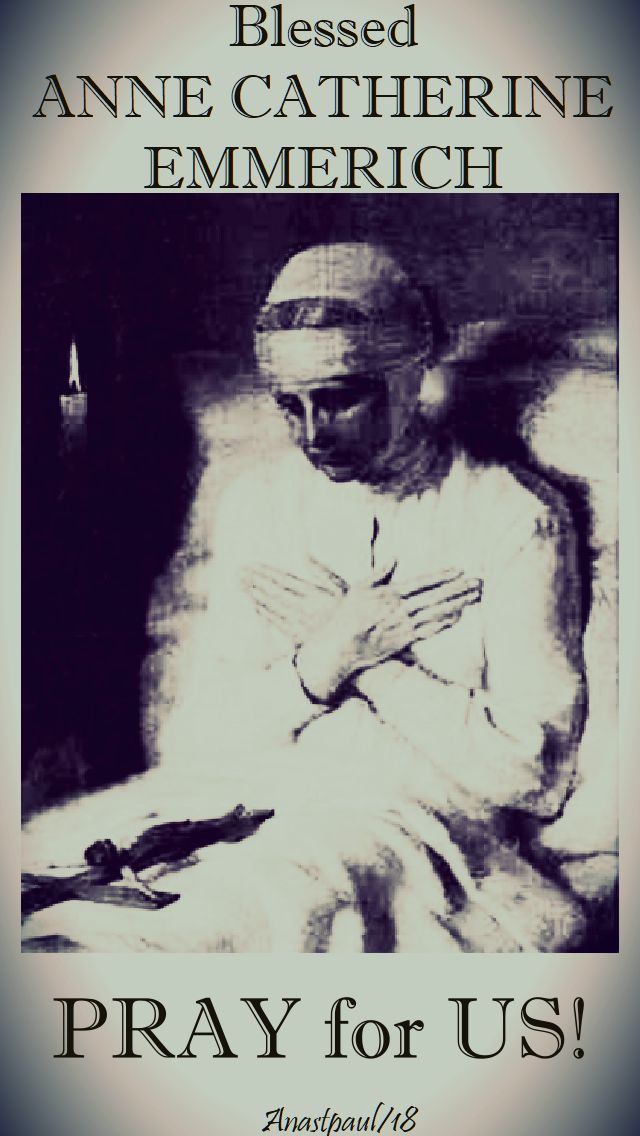
Our Morning Offering – 9 February – The Memorial of Blessed Anne Catherine Emmerich
Our Morning Offering – 9 February – The Memorial of Blessed Anne Catherine Emmerich (1774-1824)
A Magnificat
Translated from the German by Olga Warnke of the Institute of the Blessed Virgin Mary
My soul glorifies the Lord,
my spirit rejoices in God my Saviour!
For He has blessed me lavishly
and makes me ready to respond.
He shatters my little world
and lets me be poor before Him.
He takes from me all my plans
and gives me more than I can hope for or ask.
He gives me opportunities
and the ability to become free
and to burst through my boundaries.
He gives the strength to be doing,
to build on Him alone,
for He shows Himself
as the ever greater One in my life.
He has made known to me this!
It is in my being servant that it becomes possible.
For God’s kingdom to break through
here and now.
Amen.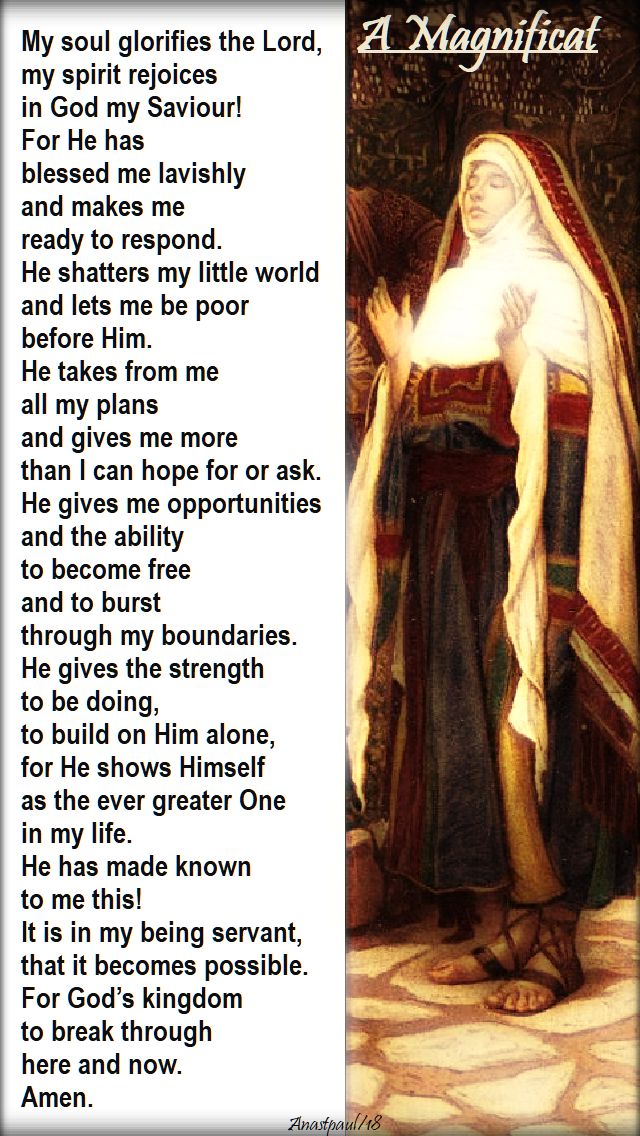
Saint of the Day – 9 February – Blessed Anna Katharina Emmerick/Anne Catherine Emmerich (1774-1824)
Saint of the Day – 9 February – Blessed Anna Katharina Emmerick/Anne Catherine Emmerich (1774-1824) – Handicapped, Virgin, Religious, Penitent, Marian Visionary, Mystic, Ecstatic, Writer and Stigmatist. Her body is incorrupt.
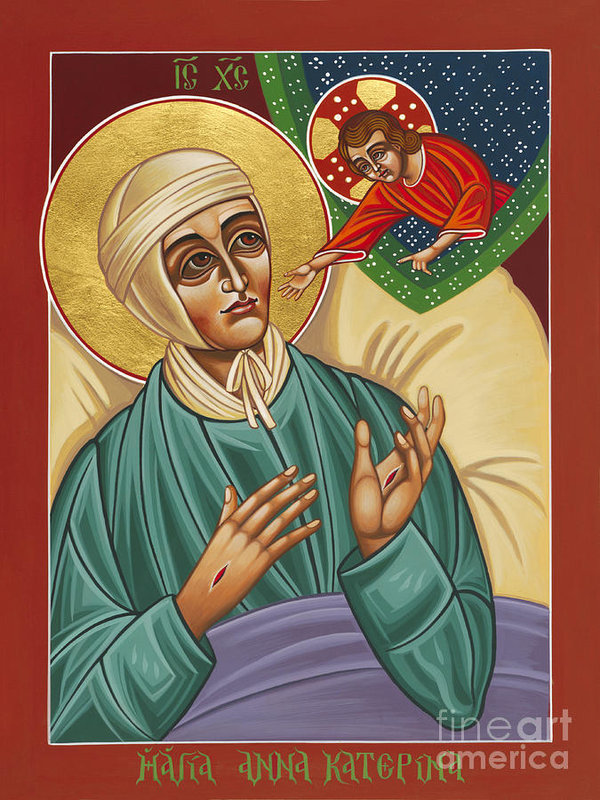
Anna Katharina Emmerick was born on 8 September 1774 in the farming community of Flamsche near Coesfeld. She grew up amidst a host of nine brothers and sisters. She had to help out in the house and with the farm work at an early age. Her school attendance was brief, which made it all the more remarkable that she was well instructed in religious matters. Her parents and all those who knew Anna Katherina noticed early on that she felt drawn to prayer and to the religious life in a special way.
Anna Katharina laboured for three years on a large farm in the vicinity. Then she learned to sew and stayed in Coesfeld for her further training. She loved to visit the old churches in Coesfeld and to join in the celebration of Mass. She often walked the path of Coesfeld’s long Way of the Cross alone, praying the stations by herself. She wanted to enter the convent but since her wish could not be fulfilled at that time, she returned to her parental home. She worked as a seamstress and, while doing so, visited many homes.
Anna Katherina asked for admission to different convents but she was rejected because she could not bring a significant dowry with her. The Poor Clares in Münster finally agreed to accept her if she would learn to play the organ. She received her parents’ permission to be trained in Coesfeld by the organist Söntgen. But she never got around to learning how to play the organ. The misery and poverty in the Söntgen household prompted her to work in the house and help out in the family. She even sacrificed her small savings for their sake.
Together with her friend Klara Söntgen Anna Katharina was finally able to enter the convent Agnetenberg in Dülmen in 1802. The following year she took her religious vows. She participated enthusiastically in the life of the convent. She was always willing to take on hard work and loathsome tasks. Because of her impoverished background she was at first given little respect in the convent. Some of the sisters took offence at her strict observance of the order’s rule and considered her a hypocrite. Anna Katharina bore this pain in silence and quiet submission.


From 1802 to 1811 Anna Katharina was ill quite often and had to endure great pain.
As a result of secularisation the convent of Agnetenberg was suppressed in 1811 and Anna Katharina had to leave the convent along with the others. She was taken in as a housekeeper at the home of Abbé Lambert, a priest who had fled France and lived in Dülmen. But she soon became ill. She was unable to leave the house and was confined to bed. In agreement with Curate Lambert she had her younger sister Gertrud come to take over the housekeeping under her direction.
During this period Anna Katharina received the stigmata. She had already endured the pain of the stigmata for a long time. The fact that she bore the wounds of Christ could not remain hidden. Dr Franz Wesener, a young doctor, went to see her and he was so impressed by her that he became a faithful, selfless and helping friend during the following eleven years. He kept a diary about his contacts with Anna Katharina Emmerick in which he recorded a wealth of details.
A striking characteristic of the life of Anna Katharina was her love for people. Wherever she saw need she tried to help. Even in her sickbed she sewed clothes for poor children and was pleased when she could help them in this way. Although she could have found her many visitors annoying, she received all of them kindly. She embraced their concerns in her prayers and gave them encouragement and words of comfort.
Many prominent people who were important in the renewal movement of the church at the beginning of the 19th century sought an opportunity to meet Anna Katharina, among them Clemens August Droste zu Vischering, Bernhard Overberg, Friedrich Leopold von Stolberg, Johann Michael Sailer, Christian and Clemens Brentano, Luise Hensel, Melchior and Apollonia Diepenbrock. The encounter with Clemens Brentano was particularly significant. His first visit led him to stay in Dülmen for five years. He visited Anna Katharina daily to record her visions which he later published.
Anna Katharina grew ever weaker during the summer of 1823. As always she joined her suffering to the suffering of Jesus and offered it up for the salvation of all. She died on 9 February 1824. She was buried in the cemetery in Dülmen. A large number of people attended the funeral. Because of a rumour that her corpse had been stolen the grave was reopened twice in the weeks following the burial. The coffin and the corpse were found to be intact.


Clemens Brentano wrote the following about Anna Katharina Emmerick: “She stands like a cross by the wayside”. Anna Katharina Emmerick shows us the centre of our Christian faith, the mystery of the cross.
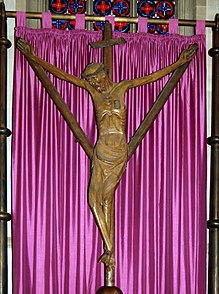
The life of Anna Katharina Emmerick is marked by her profound closeness to Christ. She loved to pray before the famous Coesfeld Cross and she walked the path of the long Way of the Cross frequently. So great was her personal participation in the sufferings of our Lord that it is not an exaggeration to say that she lived, suffered and died with Christ. An external sign of this, which is at the same time, however, more than just a sign, are the wounds of Christ which she bore.

Anna Katharina Emmerick was a great admirer of Mary. The feast of the Nativity of Mary was also Anna Katharina’s birthday. A verse from a prayer to Mary highlights a further aspect of Anna Katharina’s life for us. The prayer states, “O God, let us serve the work of salvation following the example of the faith and the love of Mary”. To serve the work of salvation – that is what Anna Katharina wanted to do.
In Colossians the apostle Paul speaks of two ways to serve the gospel, to serve salvation. One consists in the active proclamation in word and deed. But what if that is no longer possible? Paul, who obviously finds himself in such a situation, writes: “Now I rejoice in my sufferings for your sake and in my flesh I complete what is lacking in Christ’s afflictions for the sake of his body, that is, the church” (Col 1:24).
Anna Katharina Emmerick served salvation in both ways. Her words, which have reached innumerable people in many languages from her modest room in Dülmen through the writings of Clemens Brentano, are an outstanding proclamation of the gospel in service to salvation right up to the present day. At the same time, however, Anna Katharina Emmerick understood her suffering as a service to salvation. Dr Wesener, her doctor, recounts her petition in his diary: “I have always requested for myself as a special gift from God that I suffer for those who are on the wrong path due to error or weakness, and that, if possible, I make reparation for them.” It has been reported that Anna Katharina Emmerick gave many of her visitors religious assistance and consolation. Her words had this power because she brought her life and suffering into the service of salvation. In serving the work of salvation through faith and love, Anna Katharina Emmerick can be a model for us all.
Dr Wesener passed on this remark of Anna Katharina Emmerick: “I have always considered service to my neighbour to be the greatest virtue. In my earliest childhood I already requested of God that he give me the strength to serve my fellow human beings and to be useful. And now I know that he has granted my request.” How could she who was confined to her sickroom and her bed for years serve her highborn? (vatican.va)
Her Works: • The Dolorous Passion of Our Lord Jesus Christ
• The Life of Jesus Christ and Biblical Revelations
• The Lowly life and Bitter Passion of Our Lord Jesus Christ and His Blessed Mother


Anna was Beatified on 3 October 2004, by St Pope John Paul II. However, the Vatican focused on her own personal piety rather than the religious writings associated to her by Clemens Brentano. Her documents of postulation towards canonisation is handled by the Priestly Fraternity of St Peter. Father Peter Gumpel who was involved in the analysis of the matter at the Vatican told Catholic News Service: “Since it was impossible to distinguish what derives from Sister Emmerich and what is embroidery or additions, we could not take these writings as a criteria. Therefore, they were simply discarded completely from all the work for the cause”.
In 2003 actor Mel Gibson brought Anne Catherine Emmerich’s vision to prominence as he used her book The Dolorous Passion as a key source for his movie The Passion of the Christ. Gibson stated that Scripture and “accepted visions” were the only sources he drew on and a careful reading of Emmerich’s book shows the film’s high level of dependence on it.
In 2007 German director Dominik Graf made the movie The Pledge as a dramatisation of the encounters between Anne Catherine and Clemens Brentano, based on a novel by Kai Meyer.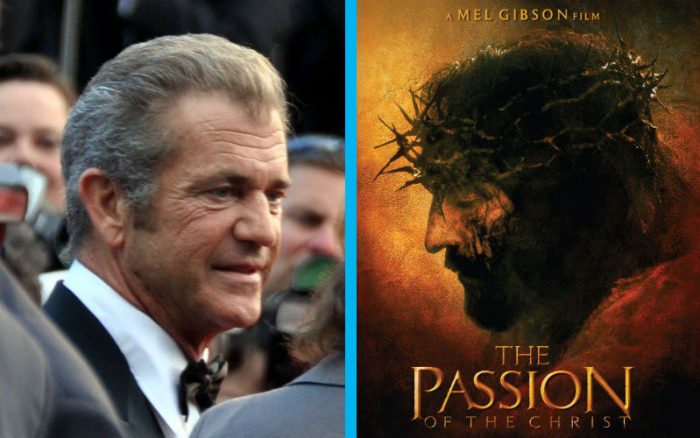

House of the Virgin Mary

Neither Brentano nor Emmerich had ever been to Ephesus and indeed the city had not yet been excavated; but visions contained in The Life of The Blessed Virgin Mary were used during the discovery of the House of the Virgin Mary, the Blessed Virgin’s supposed home before her Assumption, located on a hill near Ephesus, as described in the book Mary’s House.
In 1881, a French priest, the Abbé Julien Gouyet used Emmerich’s book to search for the house in Ephesus and found it based on the descriptions. He was not taken seriously at first but sister Marie de Mandat-Grancey persisted until two other priests followed the same path and confirmed the finding.
The Holy See has taken no official position on the authenticity of the location yet but in 1896 Pope Leo XIII visited it and in 1951 Pope Pius XII initially declared the house a Holy Place. St Pope John XXIII later made the declaration permanent. Blessed Pope Paul VI in 1967, St Pope John Paul II in 1979 and Pope Benedict XVI in 2006 visited the house and treated it as a shrine.
Memorials of the Saints – 9 February
St Alexander of Rome
St Alexander of Soli
St Alto of Altomünster
St Ammon of Membressa
St Ammonius of Soli
Bl Anne Catherine Emmerich (1774-1824)
St Ansbert of Rouen
St Apollonia of Alexandria
St Attracta of Killaraght
St Brachio of Auvergne
St Cuaran the Wise
St Didymus of Membressa
St Donatus the Deacon
St Eingan of Llanengan
St Emilian of Membressa
Bl Erizzo
Bl Francisco Sanchez Marquez
Bl Giacomo Abbondo
Bl Godeschalk of Želiv
St Lassa of Membressa
Bl Marianus Scotus
St Maro
St Miguel Febres Cordero Muñoz (1854-1910)
St Nebridius of Egara
St Nicephorus of Antioch
St Poëmus of Membressa
St Primus the Deacon
St Raynald of Nocera
St Romanus the Wonder Worker
St Ronan of Lismore
St Sabino of Abellinum
St Sabinus of Canosa
St Teilo of Llandaff
—
Martyrs of Alexandria: An unknown number of Christians who were massacred in church in 4th century Alexandria, Egypt by Arian heretics for adhering to the orthodox faith.
Martyrs of Membressa: A group of 44 Christians martyred together. We know little else about them some names –
• Ammon
• Didymus
• Emilian
• Lassa
• Poemus
They were martyred in Membressa in Africa.
Happiness is……Soon to be St Pope Paul VI, Cardinals approve miracle
Yesterday 7 February 2018, the Vatican Congregation recognised the healing of an unborn child. Pope Francis’ final decision and announcement of canonisation day is the last step
Paul VI will be canonised soon. The meeting of the bishops and cardinals of the Congregation of Saints unanimously approved the recognition of a miracle attributed to the intercession of Giovanni Battista Montini. Now the only thing missing, is Pope Francis’ final signature of approval and the announcement of the date for the canonisation of the Pontiff from Brescia who died in Castel Gandolfo forty years ago.
The miracle needed for Paul VI’s aureole concerns the healing of an unborn child, in the fifth month of pregnancy. A case studied by the postulation in 2014. The mother, originally from the province of Verona, was carrying out a difficult pregnancy and was at risk of miscarriage for a disease that could have compromised the life of the fetus and mother. A few days after Pope Montini’s beatification, which took place in Rome on Sunday 19 October 2014, the woman went to Brescia to pray the new Blessed at the Santuario delle Grazie. The baby girl was born in good health and still is as is the mother.
The miracle had been studied by the Congregation for the Causes of Saints. The inexplicability of the healing had been decided upon last year by the Medical Council of the Department and then analysed and approved by theologians. The last step was today’s cardinal meeting, which took note of the doctors’ conclusions and theologians’ evaluations. Now the Cardinal Prefect, Angelo Amato, will bring the bishops’ and cardinals’ ballot to Pope Francis. He will have the final word on the matter. The Holy Father will announce -during a consistory- the date of Paul VI’ canonisation, which will probably be celebrated in Rome in October, during the Synod of young people.
Last December, the diocesan weekly magazine of Brescia speculated on potential dates, “At this point, we are more sure than hopeful. The month of October could be the right one. From 3 to 28 October in Rome the 15th Ordinary Assembly of the Synod of Bishops on young people will be celebrated and will converge in the Vatican prelates from all over the world. What better opportunity to canonise, in front of such a great number of Bishops, the other Pontiff – after Saint John XXIII – of the Second Vatican Ecumenical Council? It will probably occur on one of the first three Sundays of October, though the most popular one today seems to be that of 21th”.
However, the 50th Anniversary of the Publication of Pope Paul VI’s Encyclical, Humanae Vitae, is on 25 July this year (25 July 1968) – this too could be a very appropriate date.
Pope Montini, born in 1897 and died in 1978, was the Pontiff who brought the Second Vatican Ecumenical Council to completion and succeeded in concluding it practically with the unanimous approval of the documents voted. He began the epoch of apostolic travels in the world, he went through the years of post-conciliar crisis. The day he was beatified, Francis, who often refers to Montini’s Magisterium, had said, “On this day of the beatification of Pope Paul VI, his words return to my mind, with which launched the Synod of Bishops, … By carefully surveying the signs of the times, we are making every effort to adapt ways and methods to the growing needs of our time and the changing conditions of society”.
Pope Francis had thanked Paul VI for his “humble and prophetic witness of love for Christ and his Church! “ and had recalled that “the great helmsman” of the Second Vatican Council and founder of the synod, after the closing of the Council meeting, wrote: “Perhaps the Lord has called me and preserved me for this service not because I am particularly fit for it, or so that I can govern and rescue the Church from her present difficulties, but so that I can suffer something for the Church and in that way it will be clear that He, and no other, is her guide and saviour”. In this humility – Francis concluded – “the grandeur of Blessed Paul VI shines forth: before the advent of a secularised and hostile society, he could hold fast, with farsightedness and wisdom – and at times alone – to the helm of the barque of Peter, while never losing his joy and his trust in the Lord”.
I love you, nearly Saint Paul VI, please pray for the universal Church and for the whole world!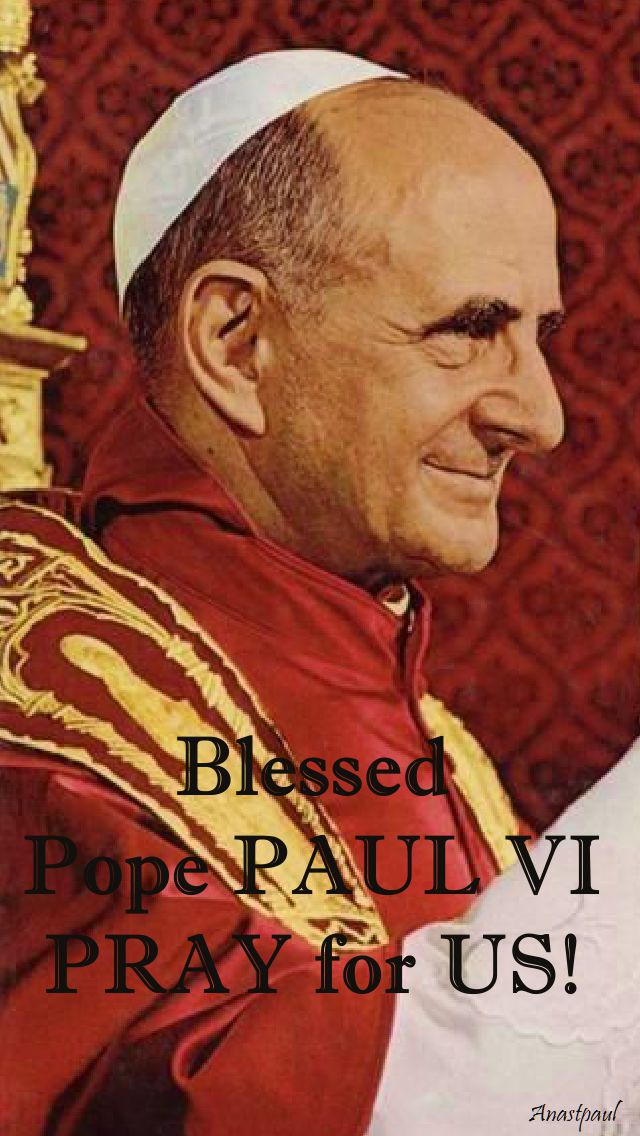
Novena to Our Lady of Lourdes – DAY SEVEN– 8 February
Novena to Our Lady of Lourdes – DAY SEVEN– 8 February (we Pray the Novena for our own intentions and for the sick, the infirm within our own communities but also for all those throughout the world who suffer, especially those who have no-one to pray for them in preparation for the Wold Day of the Sick on 11 February.)
DAY SEVEN
O Almighty God,
who by the Immaculate Conception of the Blessed Virgin Mary
did prepare a worthy dwelling place for Your Son,
we humbly beseech You,
that as we contemplate the apparition of Our Lady in the Grotto of Lourdes,
we may be blessed with health of mind and body.
O most gracious Mother Mary, beloved Mother of Our Lord and Redeemer,
look with favour upon us as you did that day on Bernadette
and intercede with Him for us
that the favour we now so earnestly seek may be granted to us.
………………………………(make your request)
O Brilliant star of purity, Mary Immaculate, Our Lady of Lourdes,
glorious in your assumption, triumphant in your coronation,
show unto us the mercy of the Mother of God, Virgin Mary, Queen and Mother,
be our comfort, hope, strength and consolation. Amen
Our Lady of Lourdes, pray for us.
Saint Bernadette, pray for us.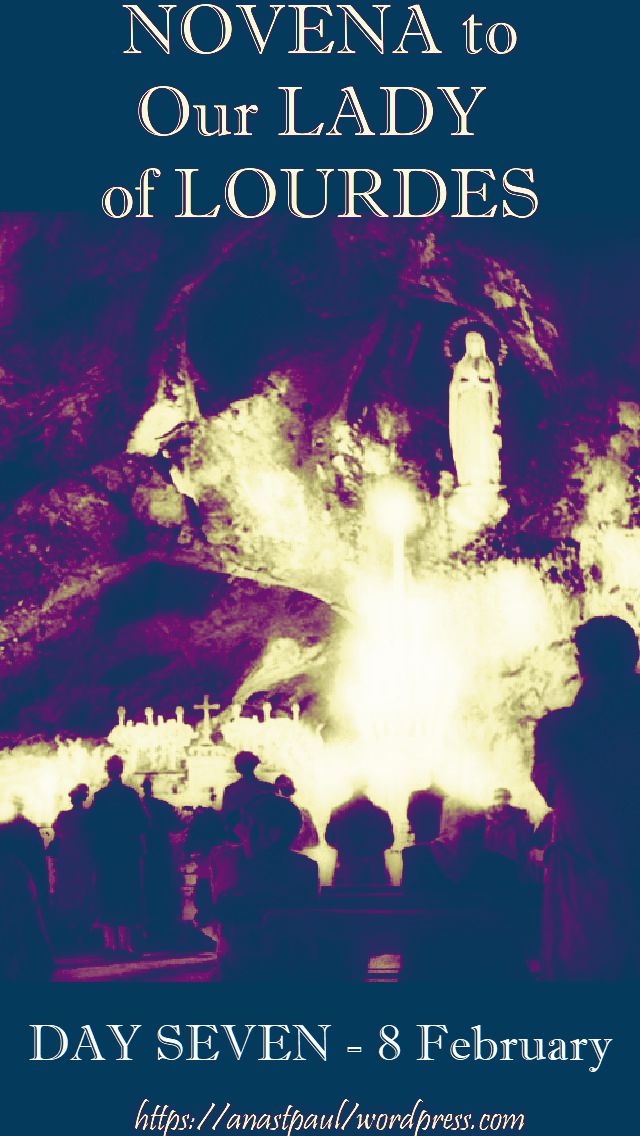
Thought for the Day – 8 February – The Memorial of St Jerome Emiliani (1486-1537)
Thought for the Day – 8 February – The Memorial of St Jerome Emiliani (1486-1537)
A careless and irreligious soldier for the city-state of Venice, Jerome was captured in a skirmish at an outpost town and chained in a dungeon. In prison Jerome had a lot of time to think and he gradually learned how to pray. When he escaped, he returned to Venice where he took charge of the education of his nephews—and began his own studies for the priesthood.
In the years after his ordination, events again called Jerome to a decision and a new lifestyle. Plague and famine swept northern Italy. Jerome began caring for the sick and feeding the hungry at his own expense. While serving the sick and the poor, he soon resolved to devote himself and his property solely to others, particularly to abandoned children. He founded three orphanages, a shelter for penitent prostitutes and a hospital.
Around 1532, Jerome and two other priests established a congregation, the Clerks Regular of Somasca, dedicated to the care of orphans and the education of youth. Jerome died in 1537 from a disease he caught while tending the sick. He was canonised in 1767. In 1928, Pope Pius Xl named him the patron of orphans and abandoned children.
Very often in our lives it seems to take some kind of “imprisonment” to free us from the shackles of our self-centredness. When we’re “caught” in some situation we don’t want to be in, we finally come to know the liberating power of Another. Only then can we become another for “the imprisoned” and “the orphaned” all around us.
St Jerome Emiliani, pray for us!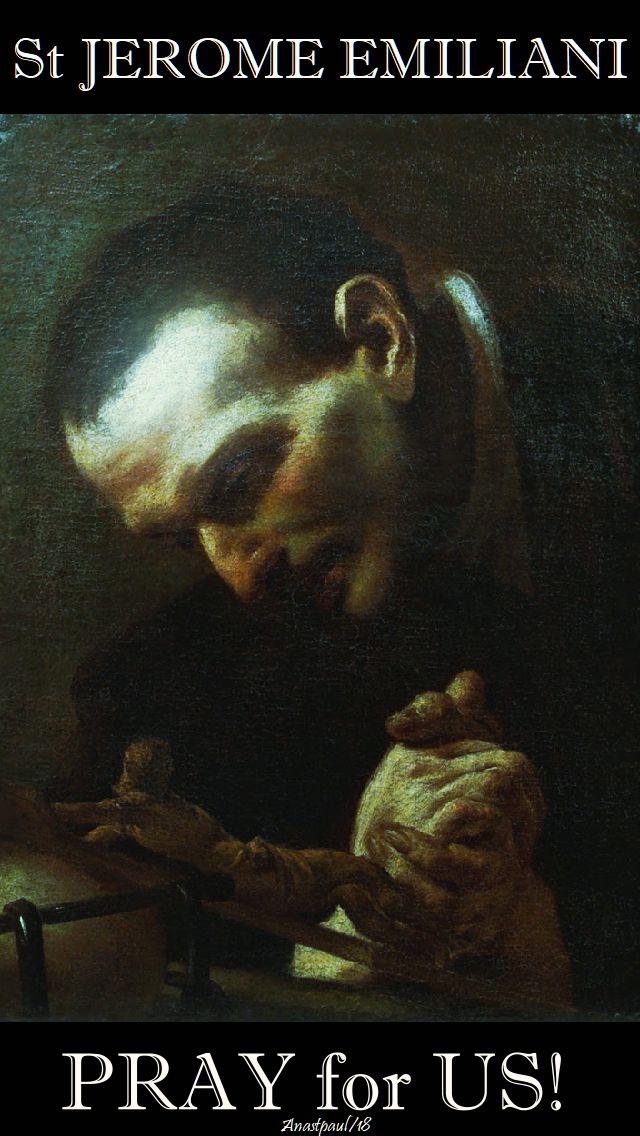
Quote/s of the Day – 8 February – The Memorial of St Jerome Emiliani (1486-1537) & St Josephine Bakhita (1869-1947) and the Fourth World Day of Prayer and Awareness against Trafficking in Persons
Quote/s of the Day – 8 February – The Memorial of St Jerome Emiliani (1486-1537) & St Josephine Bakhita (1869-1947) and the Fourth World Day of Prayer and Awareness against Trafficking in Persons
” God wishes to test you, like gold in the furnace.
The dross is consumed by the fire but the pure gold remains
and its value increases.
It is in this manner, that God acts with His good servant,
who puts his hope in Him and remains unshaken in times of distress.
God raises him up and, in return for the things,
he has left out of love for God, He repays him a hundredfold in this life
and with eternal life hereafter.
If then you remain constant in faith, in the face of trial,
the Lord will give you peace and rest for a time in this world
and forever in the next.”
St Jerome Emiliani (1486-1537)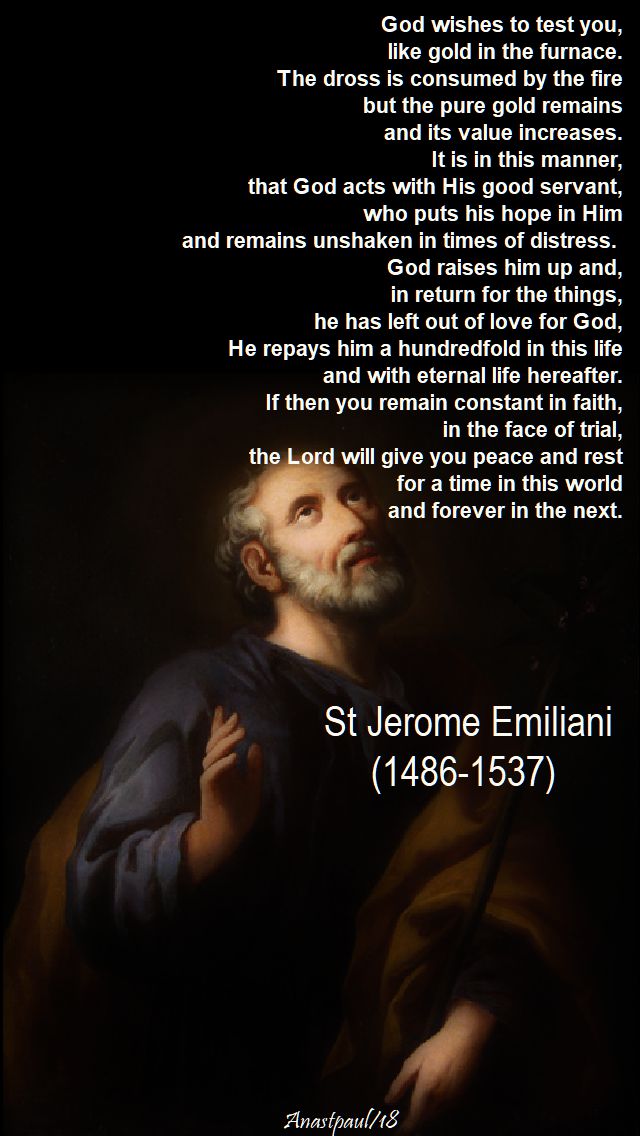
“When a person loves another dearly,
he desires strongly to be close to the other:
therefore, why be afraid to die?”
“The Lord has loved me so much:
we must love everyone…
we must be compassionate!”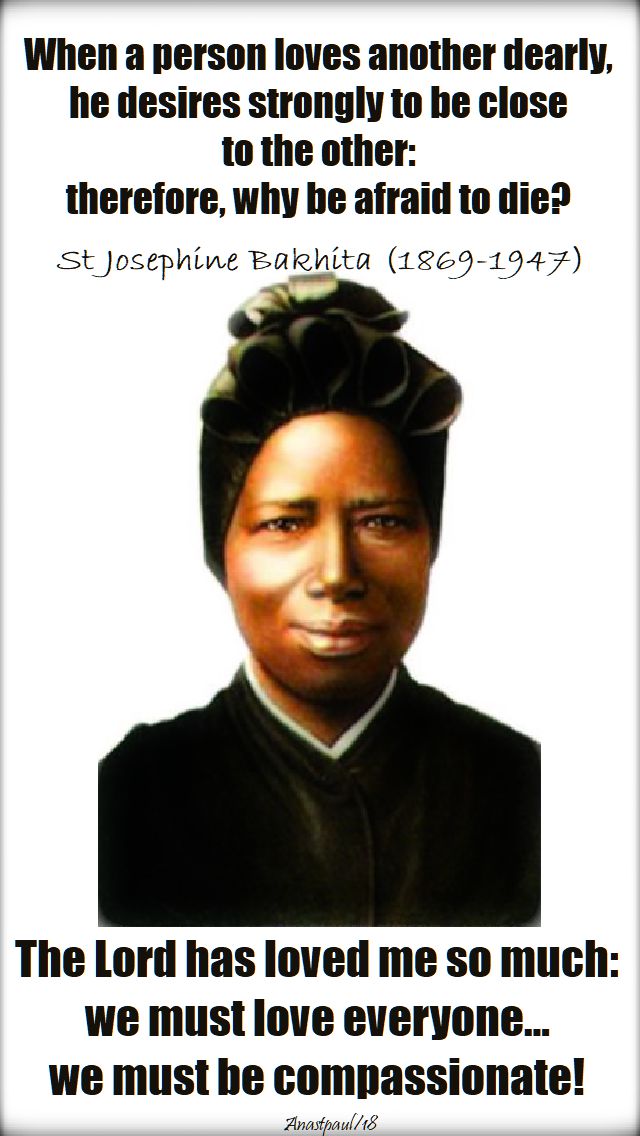
“If I were to meet the slave-traders
who kidnapped me and even those who tortured me,
I would kneel and kiss their hands,
for if that did not happen,
I would not be a Christian and Religious today.”
St Josephine Bakhita (1869-1947)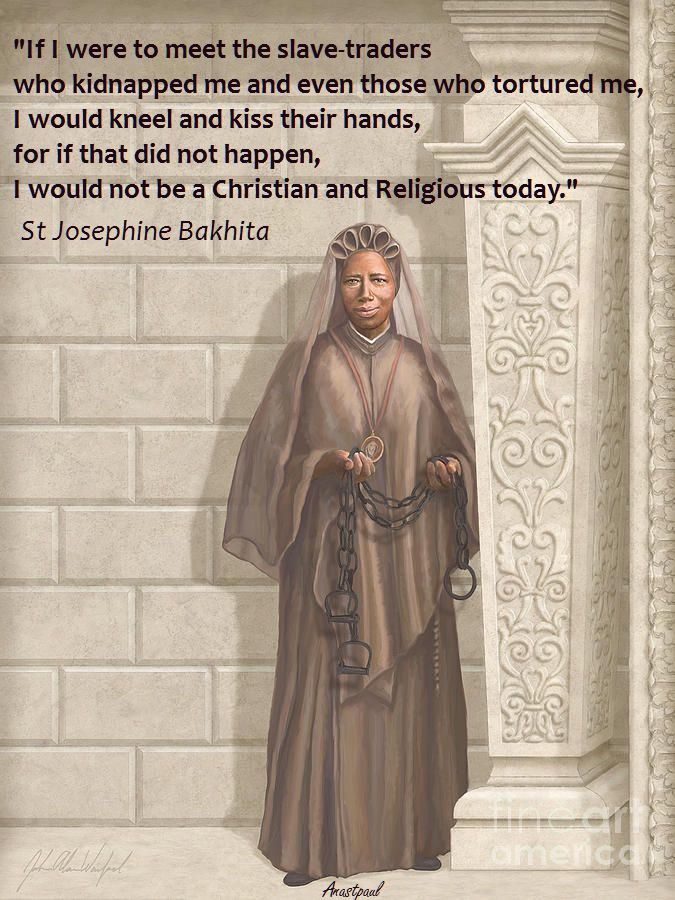
“Rejoice, all of Africa!
Bakhita has come back to you:
the daughter of the Sudan,
sold into slavery as a living piece of merchandise
and yet still free:
free with the freedom of the saints.”
St Pope John Paul II (1920-2005)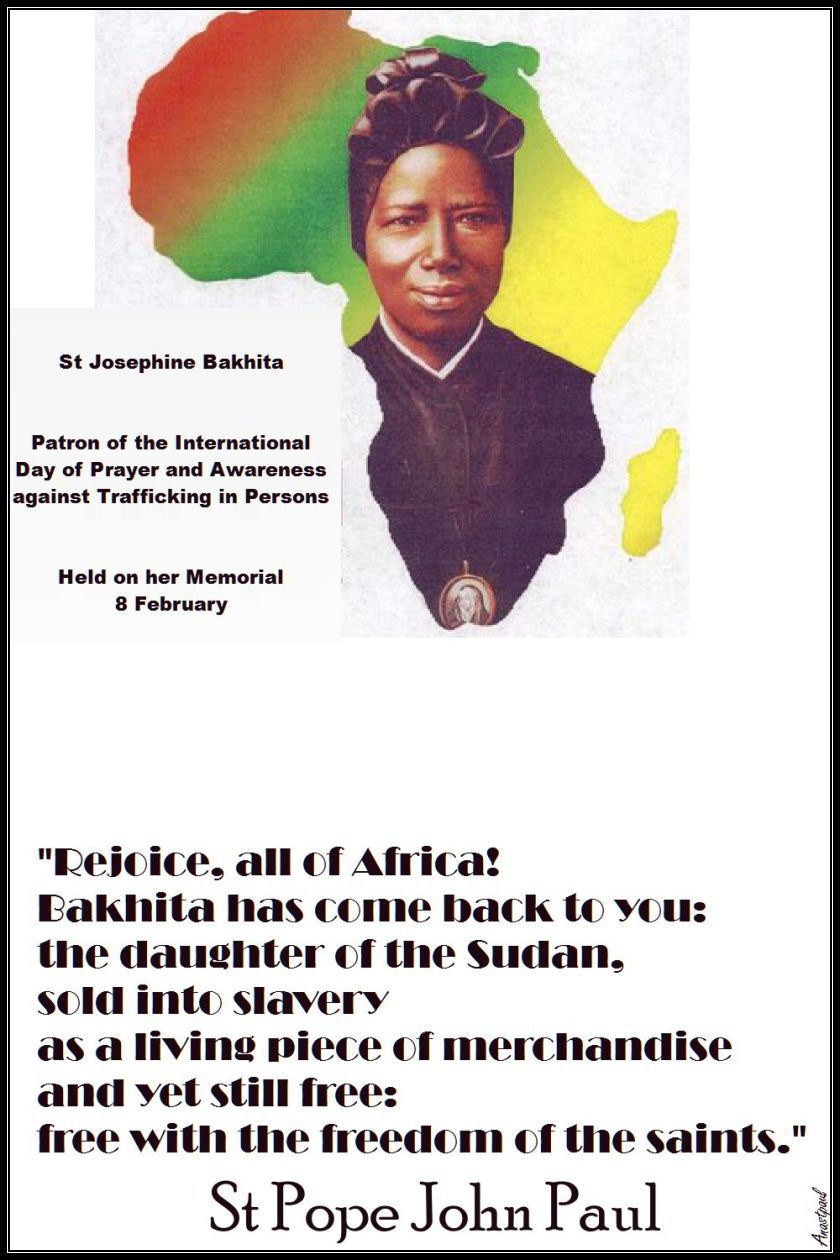
One Minute Reflection – 8 February – The Memorial of St Jerome Emiliani (1486-1537) – Gospel Mark 7:24-30 Year B
One Minute Reflection – 8 February – The Memorial of St Jerome Emiliani (1486-1537) – Gospel Mark 7:24-30 Year B
But she answered him, “Yes, Lord; yet even the dogs under the table eat the children’s crumbs.” And he said to her, “For this saying you may go your way; the demon has left your daughter.” And she went home, and found the child lying in bed, and the demon gone...Mark 7:28-30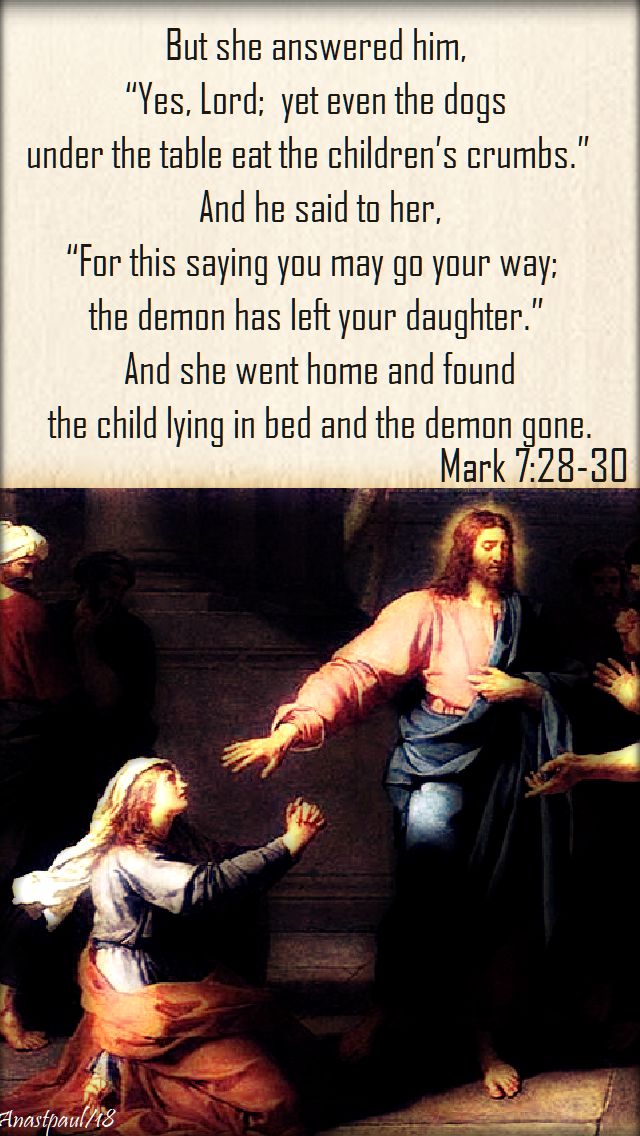
REFLECTION – “I urge you to persevere in your love for Christ and your faithful observance of the law of Christ. Our goal is God, the source of all good. As we say in our prayer, we are to place our trust in God and in no one else. In His kindness, our Lord wished to strengthen your faith, for without it, as the evangelist points out, Christ could not have performed many of His miracles.”…St Jerome Emiliani (1486-1537)
PRAYER – Father of mercy, You chose St Jerome Emiliani to be a father to orphans in their need. Grant that through his prayer, we may keep faithfully the spirit of sonship, by which we are not only called but really are Your children. Help us to imitate his love and faith, manifesting by our commitment to Your commandments, our true faith. Amen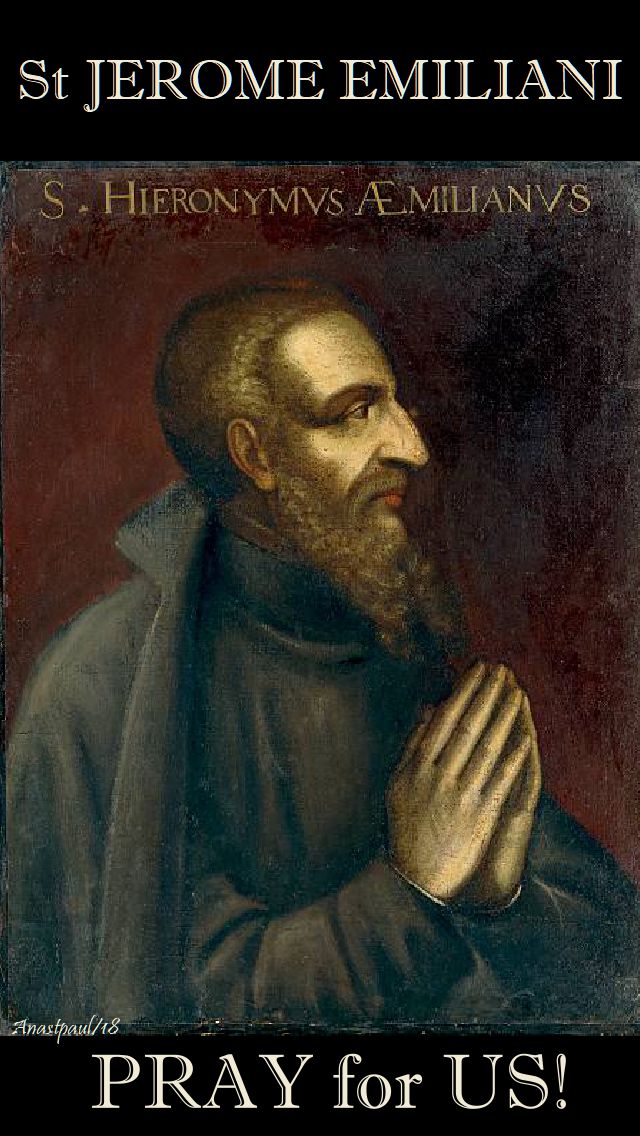
Our Morning Offering on The FOURTH International Day of Prayer and Awareness against Trafficking in Persons – 8 February 2018
PRAYER to END HUMAN TRAFFICKING
O God, when we hear of children and adults
deceived and taken to unknown places
for purposes of sexual exploitation, forced labour
and organ ‘harvesting’,
our hearts are saddened and our spirits angry
that their dignity and rights are ignored
through threats, lies and force.
We cry out against the evil practice
of this modern slavery,
and pray with Saint Bakhita for it to end.
Give us wisdom and courage to reach out
and stand with those whose bodies, hearts and spirits
have been so wounded, so that together we may
make real Your promises to fill these sisters and brothers
with a love that is tender and good.
Send the exploiters away empty-handed
to be converted from this wickedness,
and help us all to claim the freedom
that is Your gift to Your children, amen.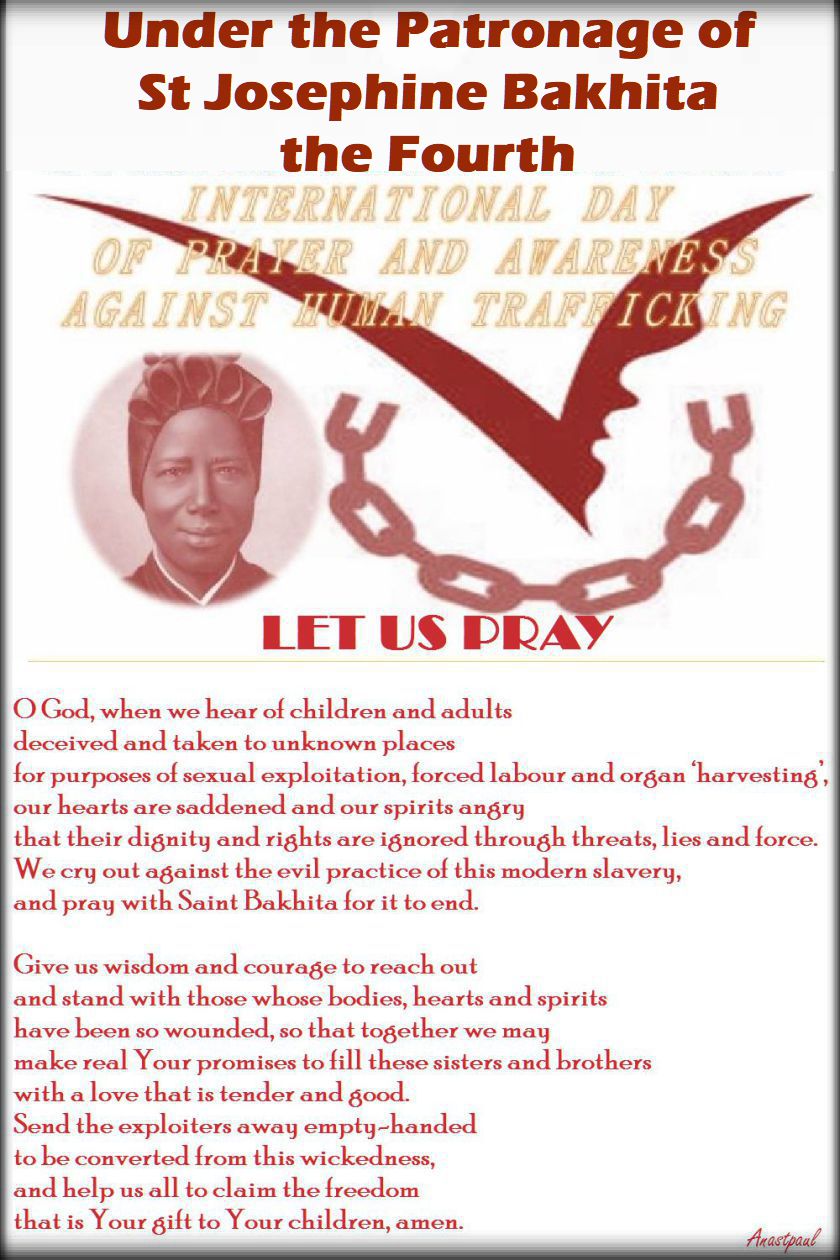
The FOURTH International Day of Prayer and Awareness against Trafficking in Persons under the Patronage of St Josephine Bakhita (1869-1947) – 8 February 2018
The FOURTH International Day of Prayer and Awareness against Trafficking in Persons under the Patronage of St Josephine Bakhita (1869-1947) – 8 February 2018
2018 theme of the Day of Prayer and Awareness:
“Migration without trafficking. Say yes to Freedom and No to slavery”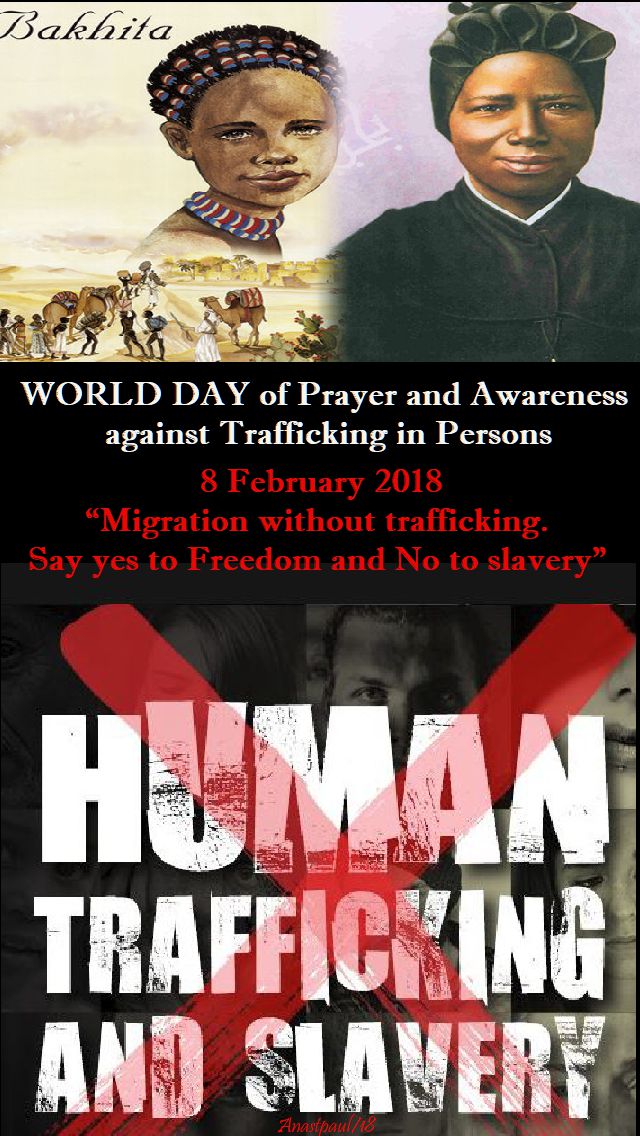
Speaking on the eve of the Day of Prayer and Awareness Raising against Human Trafficking, 7 February 2018, Pope Francis urged civil society and institutions to take concrete action to protect the victims and eliminate this terrible scourge that affects so many forced migrants and refugees.
Pope Francis noted that many migrants are forced to choose illegal channels of migration where they are submitted to “abuse of every kind, exploitation and slavery.”
He noted that criminal organizations that engage in the trafficking of persons make use of migratory routes to hide their victims among the migrants and refugees.
Pope Francis also asked for prayers so that “the Lord may convert the hearts of traffickers and give hope to those who suffer because of this shameful scourge so they may regain their freedom”.
“You may choose to look the other way but you can never say again that you did not know” said William Wilberforce, an English politician, philanthropist, theologian and a leader of the movement to abolish the slave trade who lived in the XVIII/XIX century.
Daily Prayer to End Human Trafficking
God of goodness and mercy,
Rewarder of the humble,
You blessed St Josephine Bakhita of Sudan
with charity and patience.
May her prayers help us and her example
inspire us to carry our cross
and to love You always.
Pour upon us the spirit of wisdom
and love with which you filled St Josephine Bakhita,
by serving You as she did.
May her prayers on behalf of those enslaved
bring awareness and an end to this evil practice.
May we too please You by our faith and actions,
through our Lord, Jesus Christ, Your Son, in union
with the Holy Spirit, one God forever and ever, amen.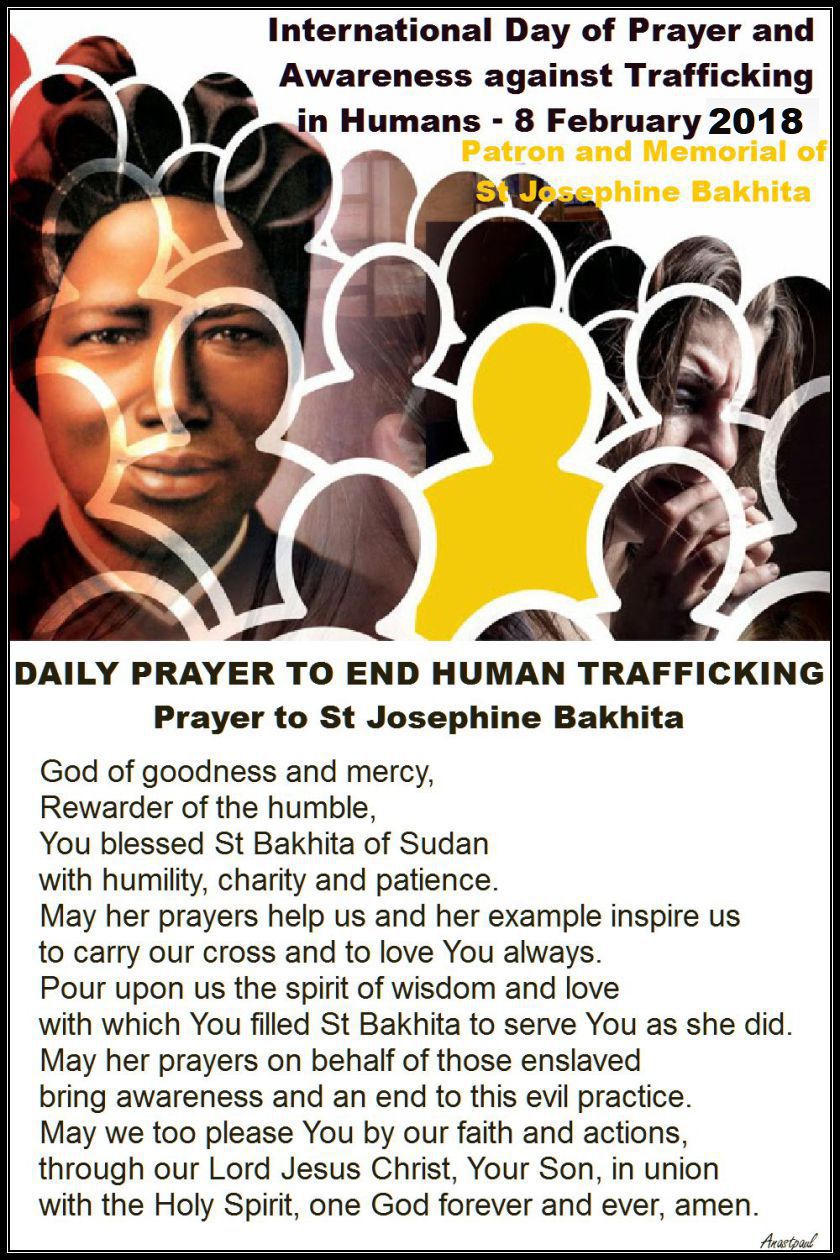
Saint of the Day – 8 February – St Josephine Bakhita (1869-1947)
Saint of the Day – 8 February – St Josephine Bakhita (1869-1947) and the FOURTH World Day of PRAYER AND AWARENESS AGAINST TRAFFICKING IN PERSONS UNDER THE PATRONAGE OF ST BAKHITA
St Josephine Bakhita F.D.C.C. (1869-1947) RELIGIOUS – Patron of Sudan and World Day against Trafficking in Persons. She was born in Sudan, was kidnapped and sold as a slave and became a Canossian Religious Sister in Italy, living and working there for 45 years. In 2000 she was declared a Saint by St Pope John Paul II.
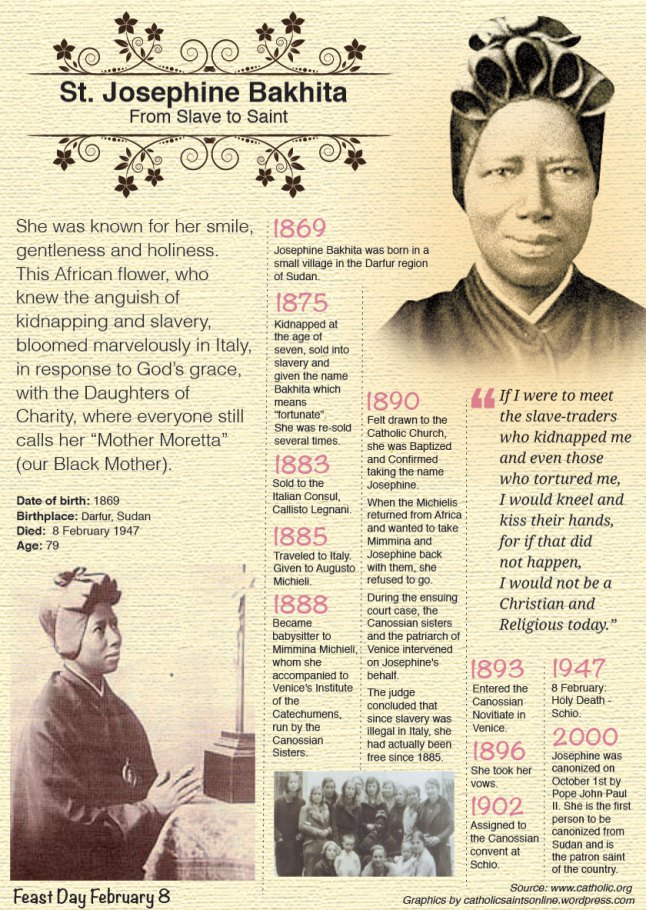
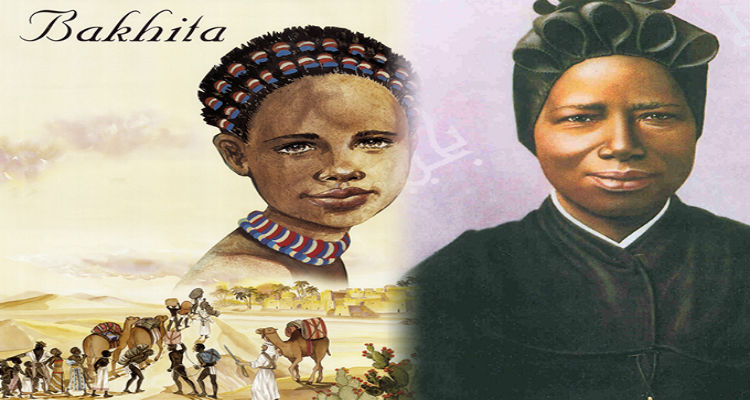
Mother Josephine Bakhita was born in Sudan in 1869 and died in Schio (Vicenza) in 1947.
This African flower, who knew the anguish of kidnapping and slavery, bloomed marvelously in Italy, in response to God’s grace, with the Daughters of Charity.
Mother “Moretta”
In Schio (Vicenza), where she spent many years of her life, everyone still calls her “our Black Mother”. The process for the cause of Canonisation began 12 years after her death and on December 1st, 1978 the Church proclaimed the Decree of the heroic practice of all virtues.
Divine Providence which “cares for the flowers of the fields and the birds of the air”, guided the Sudanese slave through innumerable and unspeakable sufferings to human freedom and to the freedom of faith and finally to the consecration of her whole life to God for the coming of his Kingdom.
In Slavery
Bakhita was not the name she received from her parents at birth. The fright and the terrible experiences she went through made her forget the name she was given by her parents. Bakhita, which means “fortunate”, was the name given to her by her kidnappers.
Sold and resold in the markets of El Obeid and of Khartoum, she experienced the humiliations and sufferings of slavery, both physical and moral.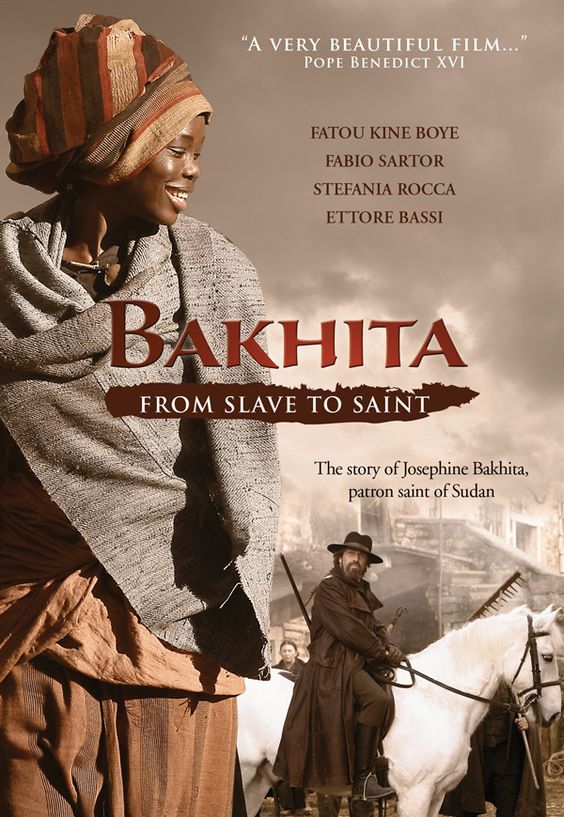
Towards freedom
In the Capital of Sudan, Bakhita was bought by an Italian Consul, Callisto Legnani. For the first time since the day she was kidnapped, she realised with pleasant surprise, that no one used the lash when giving her orders; instead, she was treated in a loving and cordial way. In the Consul’s residence, Bakhita experienced peace, warmth and moments of joy, even though veiled by nostalgia for her own family, whom, perhaps, she had lost forever. Political situations forced the Consul to leave for Italy. Bakhita asked and obtained permission to go with him and with a friend of his, a certain Mr Augusto Michieli.
In Italy
On arrival in Genoa, Mr Legnani, pressured by the request of Mr Michieli’s wife, consented to leave Bakhita with them. She followed the new “family”, which settled in Zianigo (near Mirano Veneto). When their daughter Mimmina was born, Bakhita became her babysitter and friend.
The acquisition and management of a big hotel in Suakin, on the Red Sea, forced Mrs. Michieli to move to Suakin to help her husband. Meanwhile, on the advice of their administrator, Illuminato Checchini, Mimmina and Bakhita were entrusted to the Canossian Sisters of the Institute of the Catechumens in Venice. It was there that Bakhita came to know about God whom “she had experienced in her heart without knowing who He was” ever since she was a child. “Seeing the sun, the moon and the stars, I said to myself: Who could be the Master of these beautiful things? And I felt a great desire to see him, to know Him and to pay Him homage…”
Daughter of God
After several months in the catechumenate, Bakhita received the sacraments of Christian initiation and was given the new name, Josephine. It was 9 January 1890. She did not know how to express her joy that day. Her big and expressive eyes sparkled, revealing deep emotions. From then on, she was often seen kissing the baptismal font and saying: “Here, I became a daughter of God!” With each new day, she became more aware of who this God was, whom she now knew and loved, who had led her to Him through mysterious ways, holding her by the hand.
When Mrs. Michieli returned from Africa to take back her daughter and Bakhita, the latter, with unusual firmness and courage, expressed her desire to remain with the Canossian Sisters and to serve that God who had shown her so many proofs of His love. The young African, who by then had come of age, enjoyed the freedom of choice which the Italian law ensured.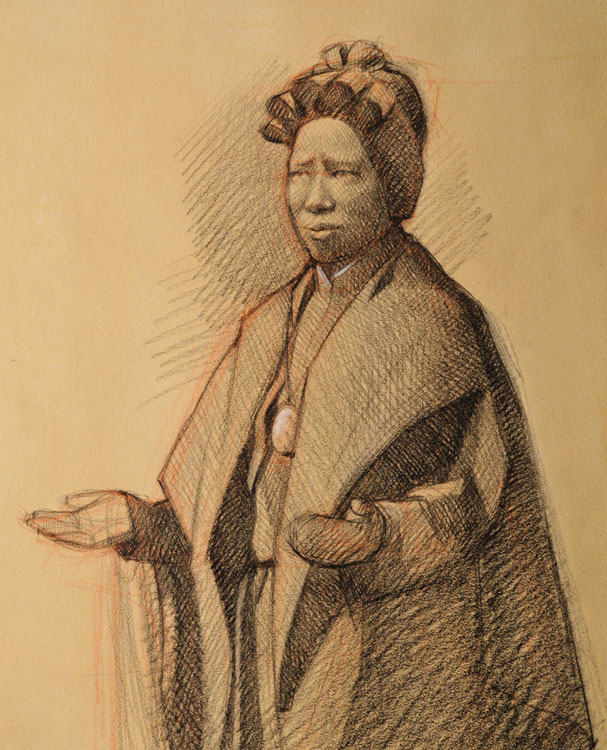
Daughter of St Magdalene
Bakhita remained in the catechumenate where she experienced the call to be a religious, and to give herself to the Lord in the Institute of St. Magdalene of Canossa. On 8 December 1896, Josephine Bakhita was consecrated forever to God whom she called with the sweet expression “the Master!”
For another 50 years, this humble Daughter of Charity, a true witness of the love of God, lived in the community in Schio, engaged in various services: cooking, sewing, embroidery and attending to the door. When she was on duty at the door, she would gently lay her hands on the heads of the children who daily attended the Canossian schools and caress them. Her amiable voice, which had the inflection and rhythm of the music of her country, was pleasing to the little ones, comforting to the poor and suffering and encouraging for those who knocked at the door of the Institute.


Witness of love
Her humility, her simplicity and her constant smile won the hearts of all the citizens. Her sisters in the community esteemed her for her unalterable sweet nature, her exquisite goodness and her deep desire to make the Lord known. “Be good, love the Lord, pray for those who do not know Him. What a great grace it is to know God!”
As she grew older she experienced long, painful years of sickness. Mother Bakhita continued to witness to faith, goodness and Christian hope. To those who visited her and asked how she was, she would respond with a smile: “As the Master desires.”
Final test
During her agony, she re-lived the terrible days of her slavery and more then once she begged the nurse who assisted her: “Please, loosen the chains… they are heavy!”
It was Mary Most Holy who freed her from all pain. Her last words were: “Our Lady! Our Lady!” and her final smile testified to her encounter with the Mother of the Lord.
Mother Bakhita breathed her last on 8 February 1947 at the Canossian Convent, Schio, surrounded by the Sisters. A crowd quickly gathered at the Convent to have a last look at their «Mother Moretta» and to ask for her protection from heaven. The fame of her sanctity has spread to all the continents and many are those who receive graces through her intercession. (vatican.va)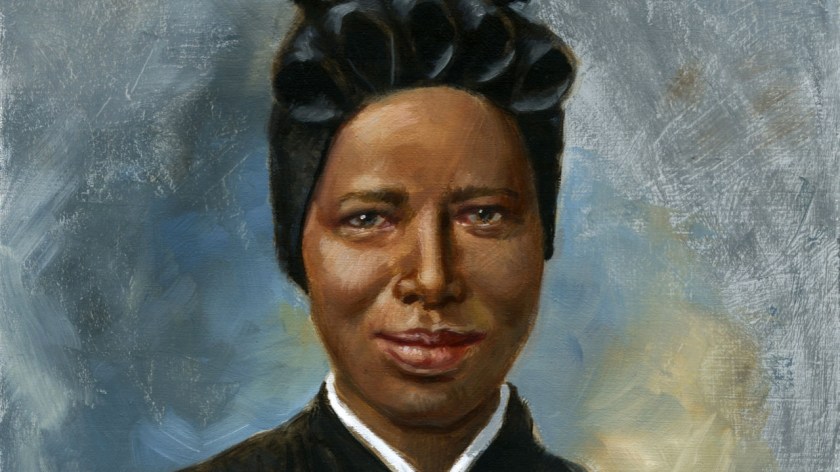
FOURTH WORLD DAY OF PRAYER AND AWARENESS AGAINST TRAFFICKING IN PERSONS UNDER THE PATRONAGE OF ST BAKHITA and Memorials of the Saints – 8 February
St Jerome Emiliani (Optional Memorial)
St Josephine Bakhita (Optional Memorial) today is the FOURTH WORLD DAY OF PRAYER AND AWARENESS AGAINST TRAFFICKING IN PERSONS UNDER THE PATRONAGE OF ST BAKHITA
—
St Cointha of Alexandria
St St Cuthman
St Cyriacus of Rome
St Dionysus of Armenia
St Elfleda of Whitby
St Emilian of Armenia
Bl Esperanza de Jesus
St Giacuto
St Gisela
St Honoratus of Milan
St Invenzio of Pavia
St Isaias Boner
St Jacoba
Bl Josephina Gabriella Bonino
St Kigwe
St Lucius of Rome
St Meingold
St Mlada of Prague
St Nicetius of Besançon
St Oncho of Clonmore
St Paul of Rome
St Paul of Verdun
Bl Peter Igneus
St Sebastian of Armenia
St Stephen of Muret
—
Four Mercedarians
Martyrs of Constantinople: Community of 5th century monks at the monastery of Saint Dius at Constantinople. Imprisoned and martyred for loyalty to the Vatican during the Acacian Schism. 485 in Constantinople.
Martyrs of Persia: An unknown number of Christians murdered in early 6th-century Persia. Legend says that so many miracles occurred through the intercession of these martyrs that the king decreed an end to the persecution of Christians.
Novena to Our Lady of Lourdes – DAY SIX– 7 February
Novena to Our Lady of Lourdes – DAY SIX– 7 February (we Pray the Novena for our own intentions and for the sick, the infirm within our own communities but also for all those throughout the world who suffer, especially those who have no-one to pray for them in preparation for the Wold Day of the Sick on 11 February.)
DAY SIX
O glorious Mother of God,
so powerful under your special title of Our Lady of Lourdes,
to you we raise our hearts and hands
to implore your powerful intercession in obtaining
from the gracious Heart of Jesus
all the helps and graces necessary
for our spiritual and temporal welfare
and for the special favour we so earnestly seek in this novena.
……………………………(make your request)
O Lady of Bernadette,
with the stars of heaven in your hair
and the roses of earth at your feet,
look with compassion upon us today
as you did so long ago on Bernadette in the Grotto of Lourdes.
O Brilliant star of purity, Mary Immaculate,
Our Lady of Lourdes,
glorious in your assumption,
triumphant in your coronation,
show unto us the mercy of the Mother of God,
Virgin Mary, Queen and Mother,
be our comfort, hope, strength, and consolation. Amen.
Our Lady of Lourdes, pray for us.
Saint Bernadette, pray for us.


You must be logged in to post a comment.