Quote of the Day – 25 August – The Memorial of St Louis IX – King of France
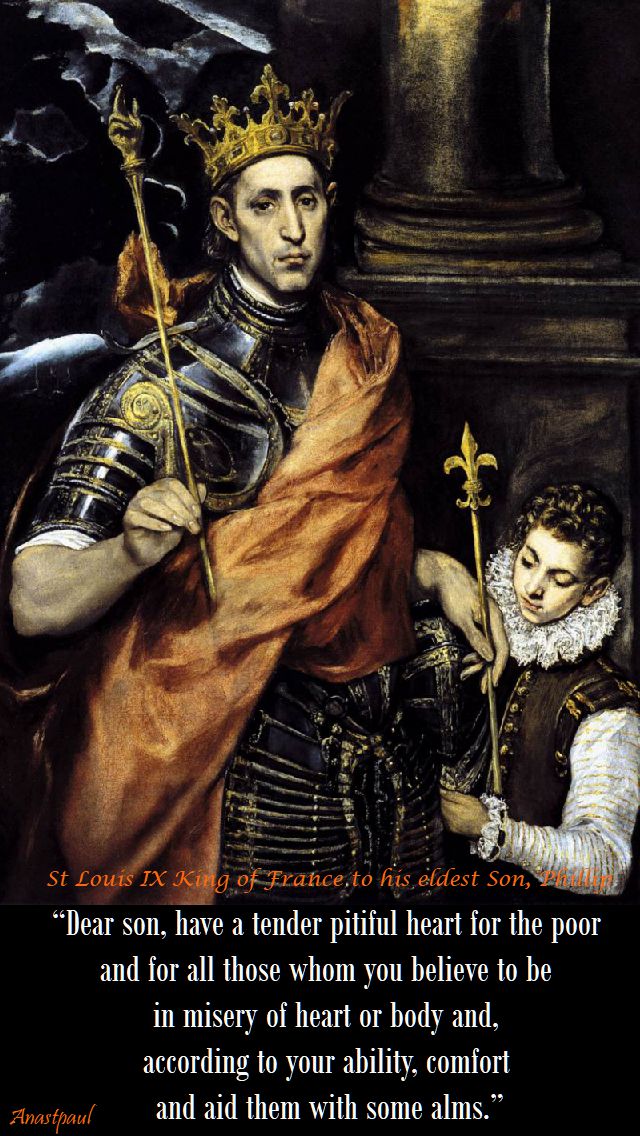
“Dear son, have a tender pitiful heart for the poor and for all those whom you believe to be in misery of heart or body and, according to your ability, comfort and aid them with some alms.”
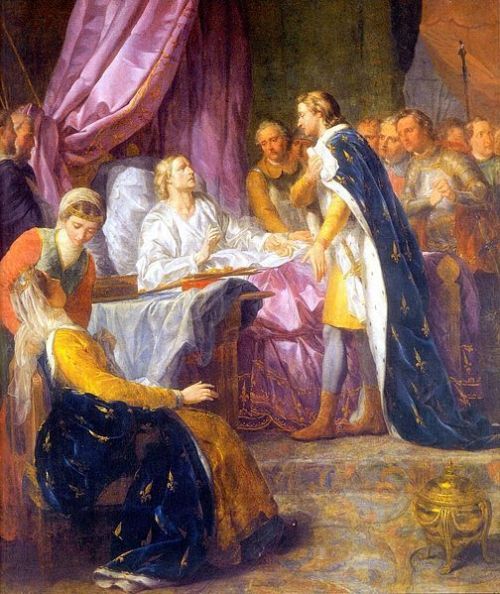
St Louis IX King of France to his eldest Son, Phillip
One Minute Reflection – August 25 – The Memorial of St Louis IX – King of France
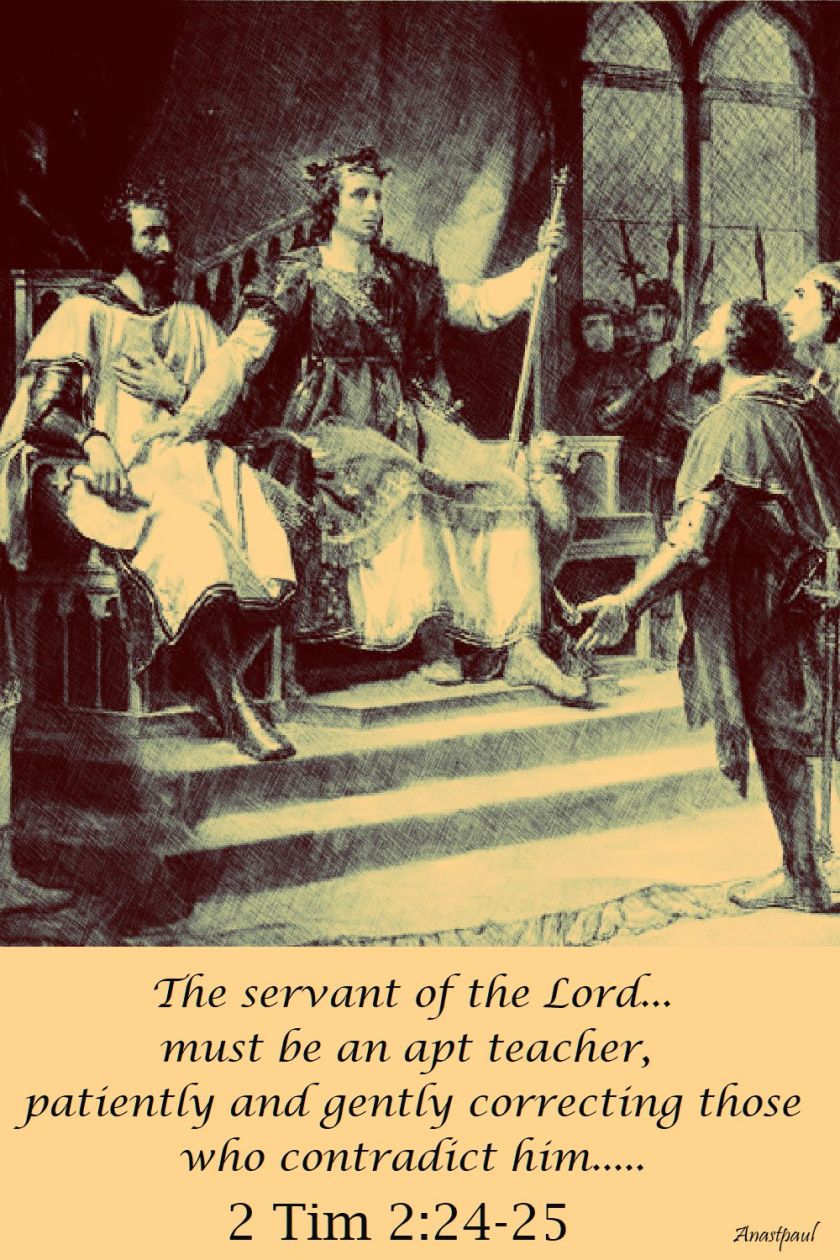
The servant of the Lord…..must be an apt teacher, patiently and gently correcting those who contradict him….2 Tim 2:24-25
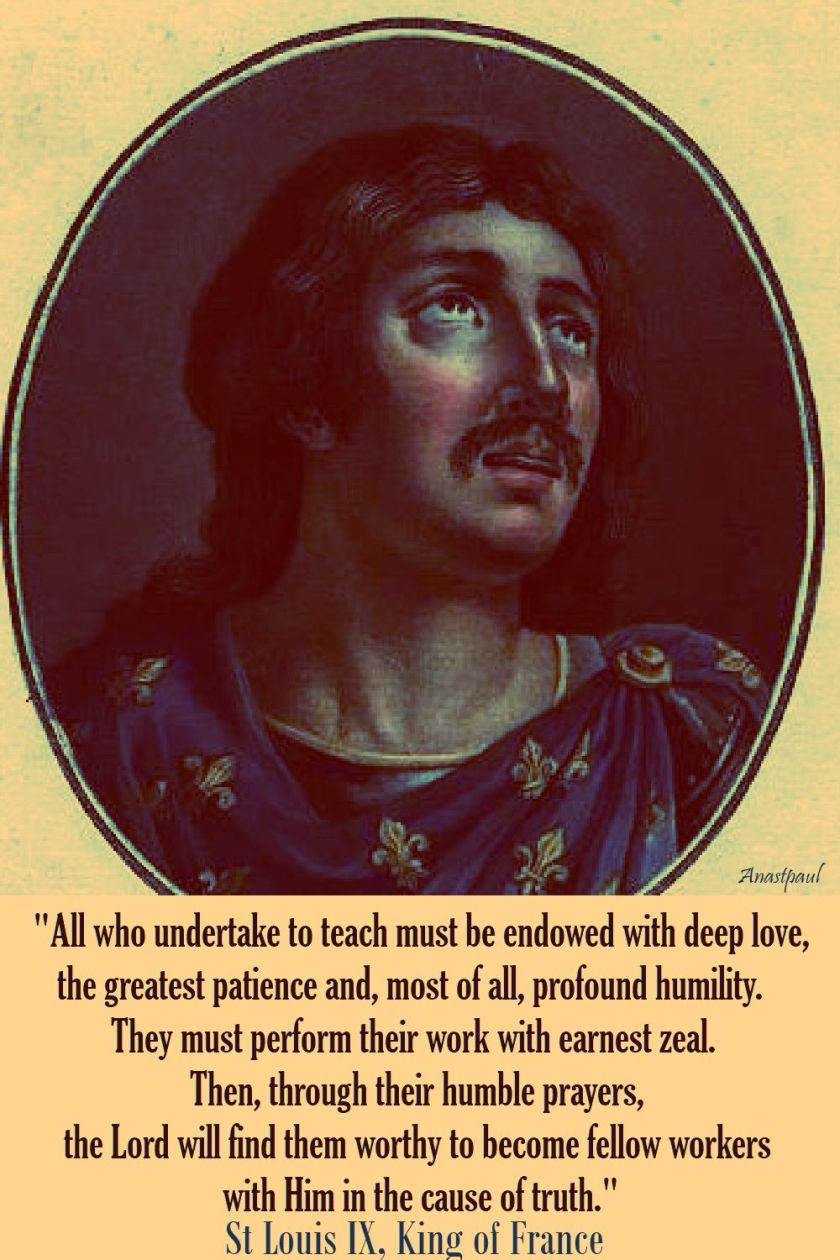
REFLECTION – “All who undertake to teach must be endowed with deep love, the greatest patience and, most of all, profound humility. They must perform their work with earnest zeal. Then, through their humble prayers, the Lord will find them worthy to become fellow workers with Him in the cause of truth.”…St Louis IX King of France
PRAYER – Dear Lord, help me to teach others about You by my example as well as my words. Grant that I may spread Your truth and Your light wherever I go. St Louis, this is exactly what you sought to do, constantly serving God in penitence and prayer, ever mindful of His people. You lived the greatest commandment and strove always to be an example to your people through your great love for our Lord and for His Church. St Louis, please pray for us! Amen
Our Morning Offering – 25 August – The Memorial of St Louis IX – King of France
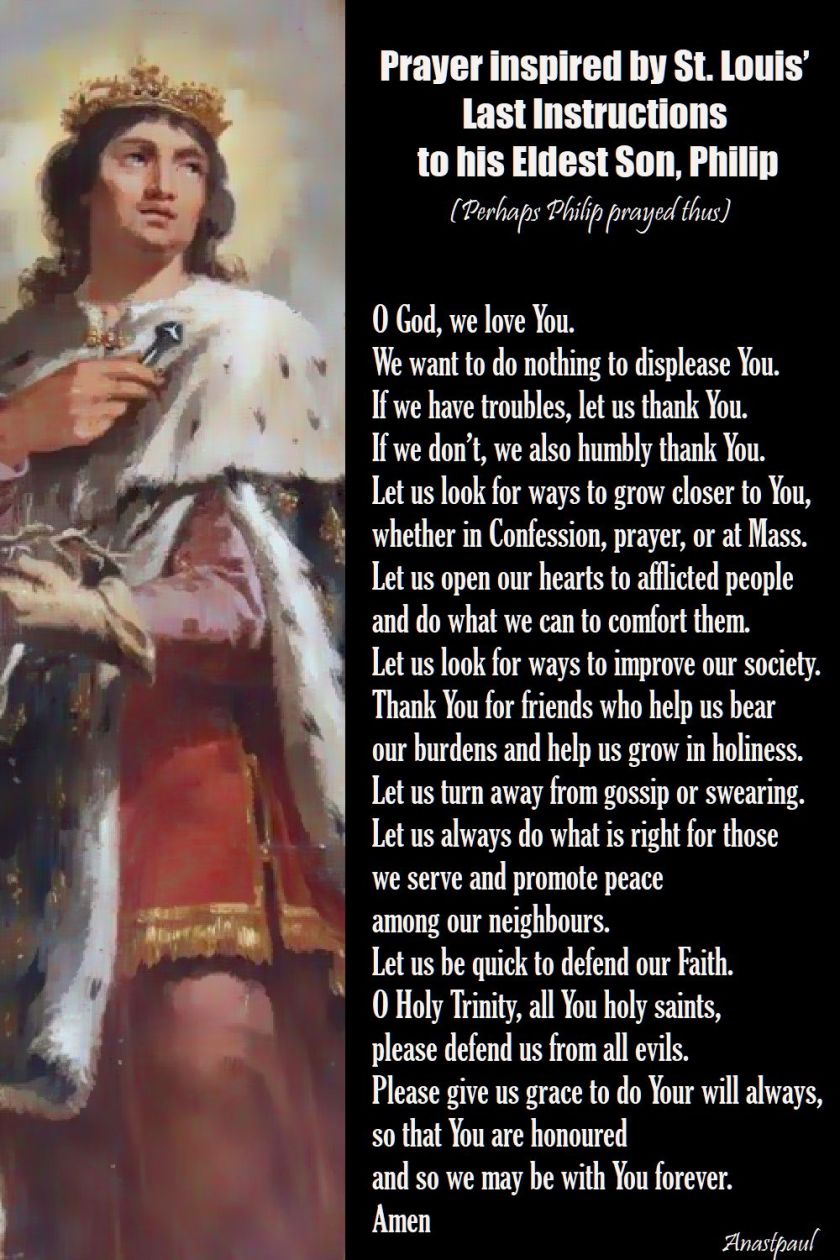
Prayer inspired by St. Louis’ Last Instructions to his Eldest Son, Philip (Perhaps Philip prayed thus)
O God, we love You.
We want to do nothing to displease You.
If we have troubles, let us thank You.
If we don’t, we also humbly thank You.
Let us look for ways to grow closer to You,
whether in Confession, prayer, or at Mass.
Let us open our hearts to afflicted people
and do what we can to comfort them.
Let us look for ways to improve our society.
Thank You for friends who help us bear
our burdens and help us grow in holiness.
Let us turn away from gossip or swearing.
Let us always do what is right for those
we serve and promote peace among our neighbours.
Let us be quick to defend our Faith.
O Holy Trinity, all You holy saints,
please defend us from all evils.
Please give us grace to do Your will always,
so that You are honoured
and so we may be with You forever.
Amen
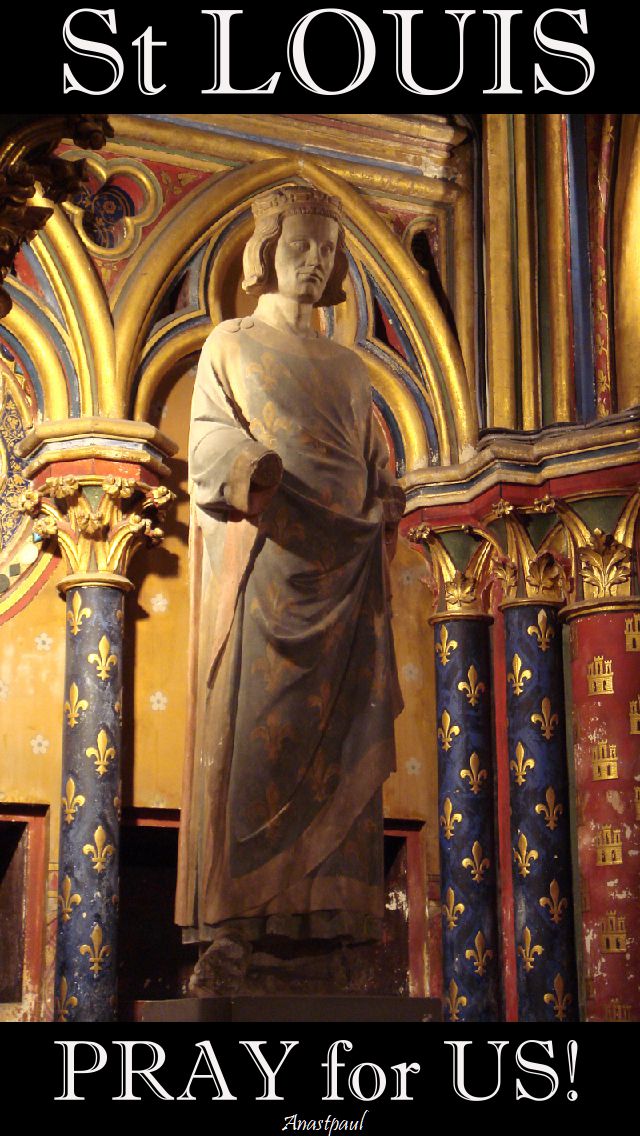
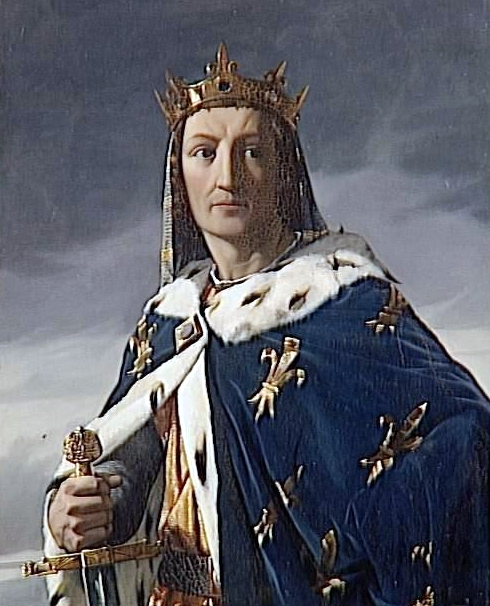
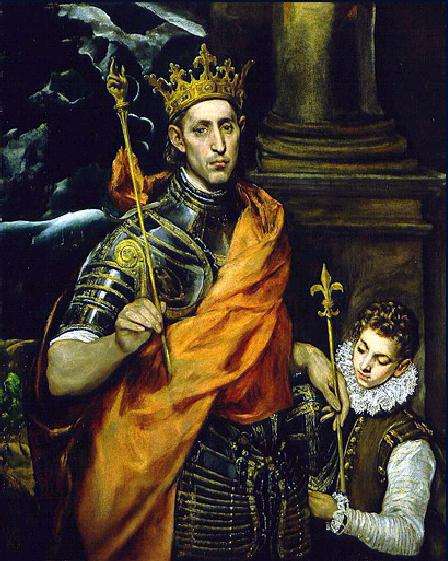
Saint of the Day – 25 August – St Louis IX, King of France (1214-1270) Confessor, King, Reformer, Apostle of Charity, a Third Order Franciscan. Born on 25 April 1214 at Poissy, France and died on 25 August 1270 at Tunis (in modern Tunisia) of natural causes). His relics in the Basilica of Saint Denis, Paris, France but they were destroyed in 1793 during the French Revolution. He was Canonised in 1297 by Pope Boniface VIII. Attributes: crown, crown of thorns, king holding a cross, king holding a crown of thorns, nails, cross and Crucifix. Patronages – against the death of children, barbers, bridegrooms, builders, button makers, construction workers, Crusaders, difficult marriages, distillers, embroiderers, French monarchs, grooms, haberdashers, hairdressers, hair stylists, kings, masons, needle workers, parenthood, parents of large families, passementiers, prisoners, sculptors, sick people, soldiers, stone masons, stonecutters, trimming makers, Québec, Québec, archdiocese of, Saint Louis, Missouri, Archdiocese of, Versailles, France, Diocese of, many cities in France and other parts of the world, Franciscan Tertiaries and the Congregation of the Sisters of Saint Louis.
Louis IX was a reformer and developed French royal justice, in which the king is the supreme judge to whom anyone is able to appeal to seek the amendment of a judgment. He banned trials by ordeal, tried to prevent the private wars that were plaguing the country and introduced the presumption of innocence in criminal procedure. To enforce the correct application of this new legal system, Louis IX created provosts and bailiffs.
According to his vow made after a serious illness, and confirmed after a miraculous cure, Louis IX took an active part in the Seventh and Eighth Crusade in which he died from dysentery. He was succeeded by his son Philip III.
Louis’s actions were inspired by Christian values and Catholic devotion. He decided to punish blasphemy, gambling, interest-bearing loans and prostitution and bought presumed relics of Christ for which he built the Sainte-Chapelle. He also expanded the scope of the Inquisition and ordered the burning of Talmuds. He is the only canonised king of France and there are consequently many places named after him.
Louis was born on 25 April 1214 at Poissy, near Paris, the son of Prince Louis the Lion and Princess Blanche, and baptised in La Collégiale Notre-Dame church. His grandfather on his father’s side was Philip II, king of France; while his grandfather on his mother’s side was Alfonso VIII, king of Castile. Tutors of Blanche’s choosing taught him most of what a king must know—Latin, public speaking, writing, military arts and government. He was 9 years old when his grandfather Philip II died and his father ascended as Louis VIII. A member of the House of Capet, Louis was twelve years old when his father died on 8 November 1226. He was crowned king within the month at Reims cathedral. Because of Louis’s youth, his mother ruled France as regent during his minority. The night before he was crowned, he fasted and prayed. He asked God to make him a good servant, to make him a good and holy king for his people.
Louis’ mother trained him to be a great leader and a good Christian. She used to say:
I love you, my dear son, as much as a mother can love her child; but I would rather see you dead at my feet than that you should ever commit a mortal sin.
No date is given for the beginning of Louis’s personal rule. His contemporaries viewed his reign as co-rule between the king and his mother, though historians generally view the year 1234 as the year in which Louis began ruling personally, with his mother assuming a more advisory role. She continued to have a strong influence on the king until her death in 1252. On 27 May 1234, Louis married Margaret of Provence (1221 – 21 December 1295), whose sister Eleanor later became the wife of Henry III of England. The new queen’s religious devotion made her a well suited partner for the king. He enjoyed her company and was pleased to show her the many public works he was making in Paris, both for its defense and for its health. They enjoyed riding together, reading, and listening to music. This attention raised a certain amount of jealousy in his mother, who tried to keep them apart as much as she could.
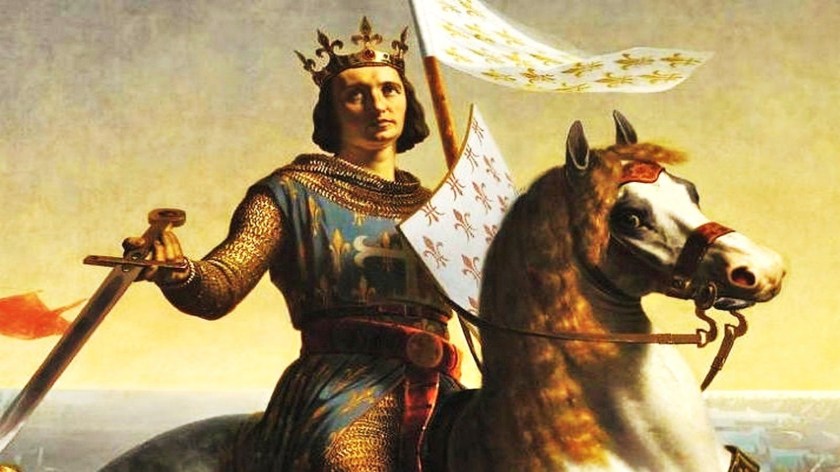
After the morning Mass, King Louis IX would ride his horse out into the country to see how he could work to make life better for his people. He would often stop in villages to listen to what the people had to say. He checked that wealthy, powerful nobles were not abusing people. When he heard that the nobles unjustly took from people who had less, he forced the nobles to give back what they had taken. He listened to people’s ideas for how to improve their country and he passed laws to protect those who were vulnerable. Louis was devoted to his people, founding hospitals, visiting the sick and like his patron Saint Francis, caring even for people with leprosy. He is one of the patrons of the Secular Franciscan Order. Louis united France—lords and townsfolk, peasants and priests and knights—by the force of his personality and holiness. For many years the nation was at peace. Every day, Louis had 13 special guests from among the poor to eat with him and a large number of poor were served meals near his palace. During Advent and Lent, all who presented themselves were given a meal and Louis often served them in person. He kept lists of needy people, whom he regularly relieved, in every province of his dominion.
The king ordered churches and hospitals built throughout France. In his travels, the king himself would often visit and care for those who were sick. He listened to the needs of others. As a man given the power to guide his country, he could do great good for his people. He worked for peace in the world and when he did fight, he was merciful to those he captured.
In 1244, King Louis led a Crusade into the Holy Land. As king, Louis could have taken special privileges and comforts. Instead, he chose to share the hardships of his soldiers. Once, the king was captured. While in prison, he prayed the Liturgy of the Hours every day. Disturbed by new Muslim advances in Syria, he led another crusade in 1267, at the age of 41. His crusade was diverted to Tunis for his brother’s sake. The army was decimated by disease within a month and Louis himself died on foreign soil at the age of 44. He was canonised 27 years later.
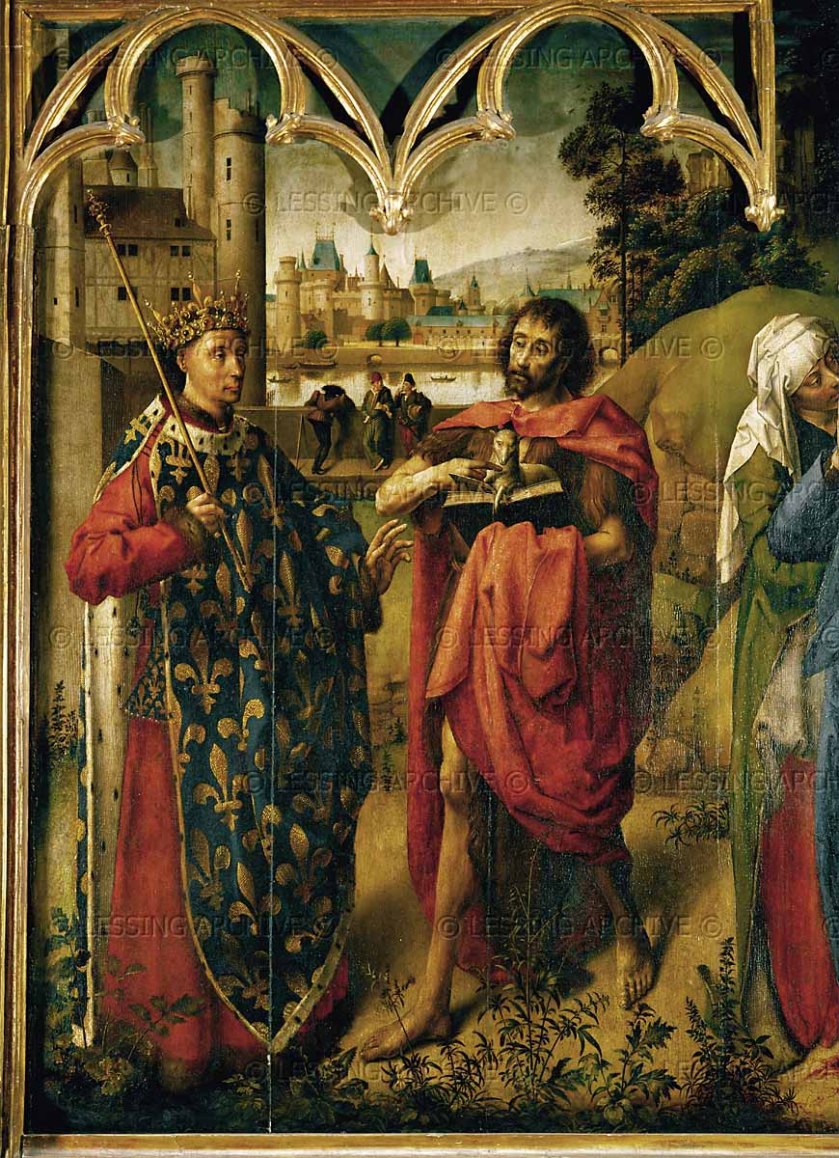
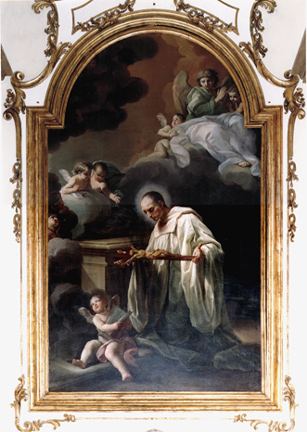
Louis’ patronage of the arts drove much innovation in Gothic art and architecture and the style of his court radiated throughout Europe by both the purchase of art objects from Parisian masters for export and by the marriage of the king’s daughters and female relatives to foreign husbands and their subsequent introduction of Parisian models elsewhere. Louis’ personal chapel, the Sainte-Chapelle in Paris, was copied more than once by his descendants elsewhere. Louis ordered the production of the Morgan Bible, a masterpiece of medieval painting. In his private chapel, Saint Louis would genuflect during the Nicene Creed to show reverence to the incarnation of Christ at the words, and was incarnate by the Holy Spirit from the Virgin Mary; and was made man. During the crusades, the king’s practice became widespread and eventually was established as part of the rubrics of Holy Mass. The painting of St Louis and St John the Baptist below, is from the Flemish school and was a detail for an altar of the Parliament of Paris. In the background is the Louvre palace from the 13th century.
During the so-called “golden century of Saint Louis”, the kingdom of France was at its height in Europe, both politically and economically. Saint Louis was regarded as “primus inter pares”, first among equals, among the kings and rulers of the continent. He commanded the largest army and ruled the largest and wealthiest kingdom, the European centre of arts and intellectual thought at the time. The foundations for the famous college of theology later known as the Sorbonne were laid in Paris about the year 1257. The prestige and respect felt in Europe for King Louis IX were due more to the attraction that his benevolent personality created rather than to military domination. For his contemporaries, he was the quintessential example of the Christian prince and embodied the whole of Christendom in his person. His reputation for saintliness and fairness was already well established while he was alive and on many occasions he was chosen as an arbiter in quarrels among the rulers of Europe.
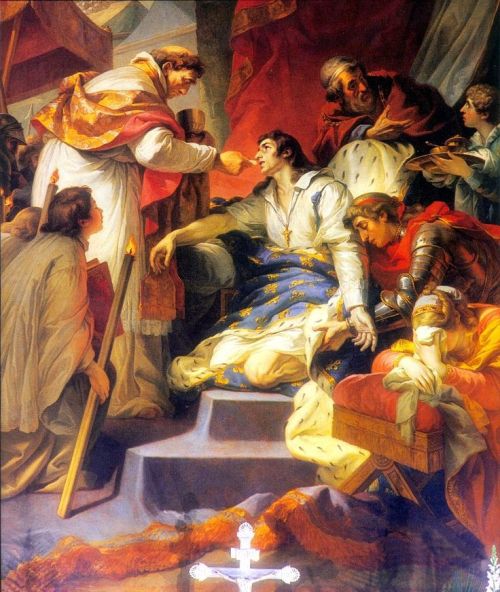
When Louis was dying, he prayed “Lord, I will enter into your house. I will worship in your holy temple and will give glory to your name.” Through his prayer, his support of the Church and his Christlike service to all, Louis made his whole life an act of worship.
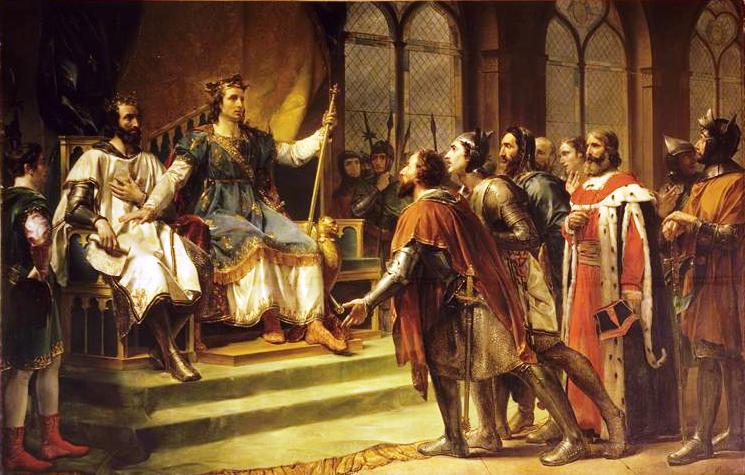
St Louis on his Deathbed instructing his son St Louis receives the Last Rites and Holy Communion
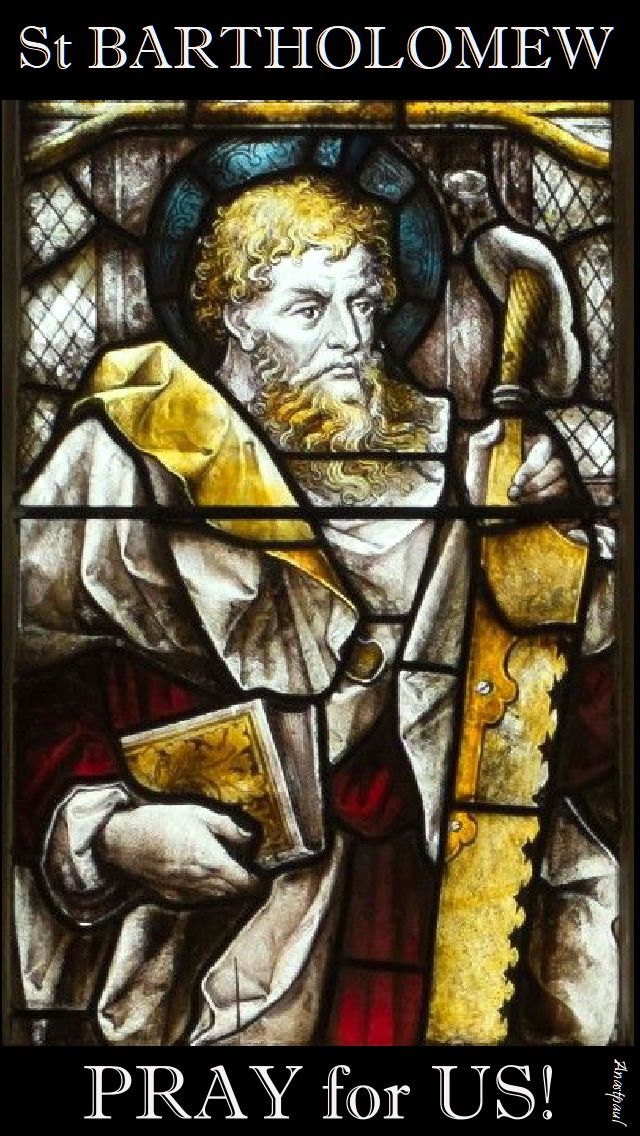
Thought for the Day – 24 August The Feast of St Bartholomew, Apostle
“…Philip told this Nathanael that he had found “him of whom Moses in the law and also the prophets wrote, Jesus of Nazareth, the son of Joseph” (Jn 1: 45). As we know, Nathanael’s retort was rather strongly prejudiced: “Can anything good come out of Nazareth?” (Jn 1: 46). In its own way, this form of protestation is important for us. Indeed, it makes us see that according to Judaic expectations the Messiah could not come from such an obscure village as, precisely, Nazareth (see also Jn 7: 42).
But at the same time Nathanael’s protest highlights God’s freedom, which baffles our expectations by causing Him to be found in the very place where we least expect Him. Moreover, we actually know that Jesus was not exclusively “from Nazareth” but was born in Bethlehem (cf. Mt 2: 1; Lk 2: 4) and came ultimately from Heaven, from the Father who is in Heaven.
Nathanael’s reaction suggests another thought to us: in our relationship with Jesus we must not be satisfied with words alone. In his answer, Philip offers Nathanael a meaningful invitation: “Come and see!” (Jn 1: 46). Our knowledge of Jesus needs above all a first-hand experience: someone else’s testimony is of course important, for normally the whole of our Christian life begins with the proclamation handed down to us by one or more witnesses.
However, we ourselves must then be personally involved in a close and deep relationship with Jesus; in a similar way, when the Samaritans had heard the testimony of their fellow citizen whom Jesus had met at Jacob’s well, they wanted to talk to Him directly and after this conversation they told the woman: “It is no longer because of your words that we believe, for we have heard for ourselves and we know that this is indeed the Saviour of the world” (Jn 4: 42).
…To conclude, we can say that despite the scarcity of information about him, St Bartholomew stands before us to tell us that attachment to Jesus can also be lived and witnessed to without performing sensational deeds. Jesus Himself, to whom each one of us is called to dedicate his or her own life and death, is and remains extraordinary.”
Note: the name “Nathanael” means “God has given”.
Pope Benedict XVI – General Audience 4 October 2006
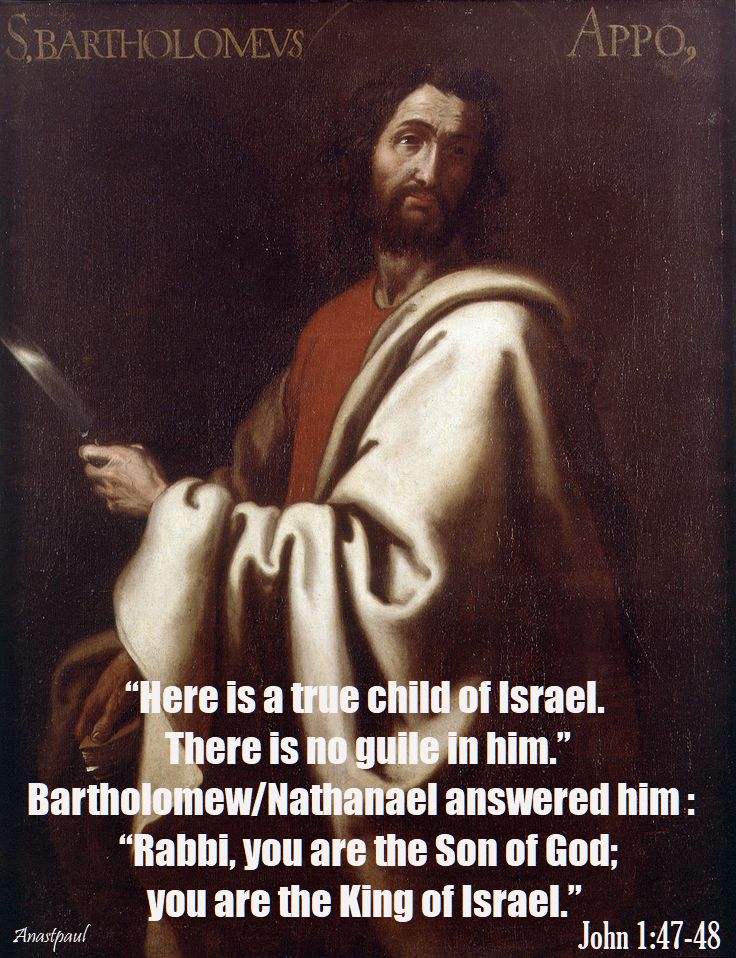
Quote of the Day – 24 August – The Feast of St Bartholomew, Apostle
“Here is a true child of Israel. There is no guile in him.” Bartholomew/Nathanael answered him : “Rabbi, you are the Son of God; you are the King of Israel.”
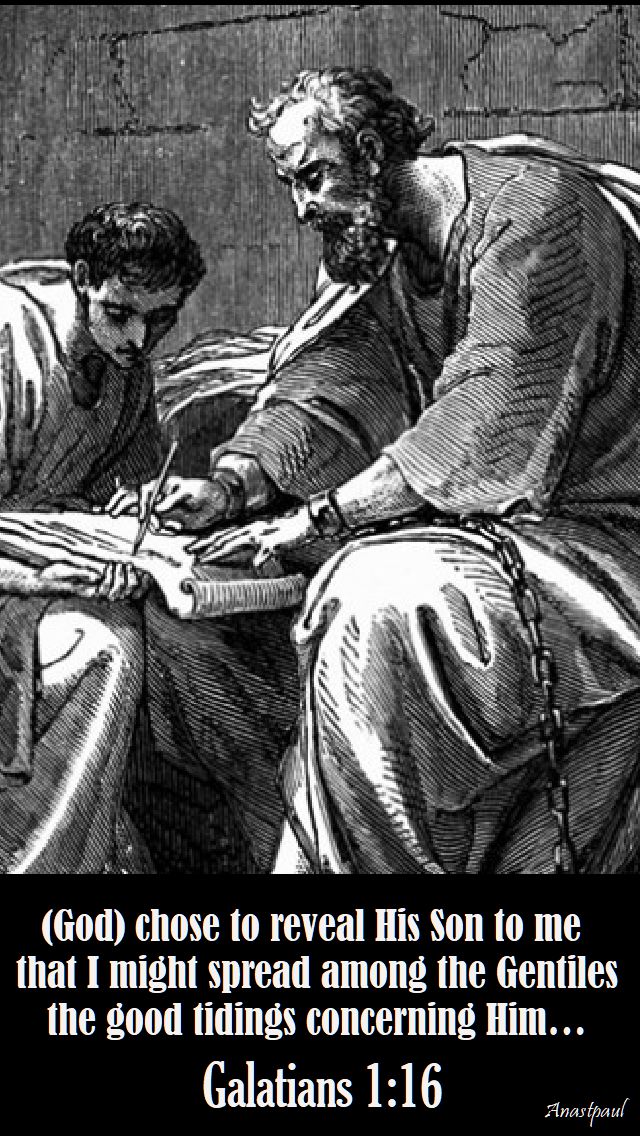
One Minute Reflection – August 24 – The Feast of St Bartholomew
(God) chose to reveal His Son to me
that I might spread among the Gentiles
the good tidings concerning Him…………Galatians 1:16
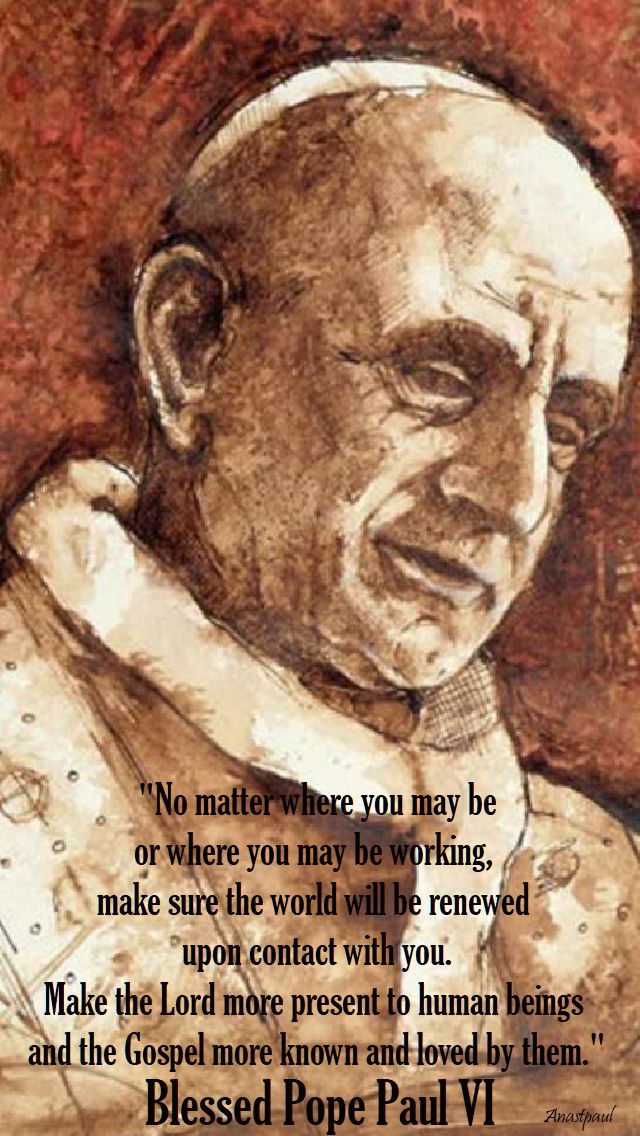
REFLECTION – “No matter where you may be or where you may be working, make sure the world will be renewed upon contact with you.
Make the Lord more present to human beings and the Gospel more known and loved by them.”… Bl Pope Paul VI
PRAYER – Heavenly Father, teach me to imitate Your divine Son in my life. Grant that by my presence as well as by my deeds, I may bring Christ and His message to everyone I meet. Let me follow Your Apostles and manifest the love and zeal of St Bartholomew. May all the Apostles Pray for us. Amen
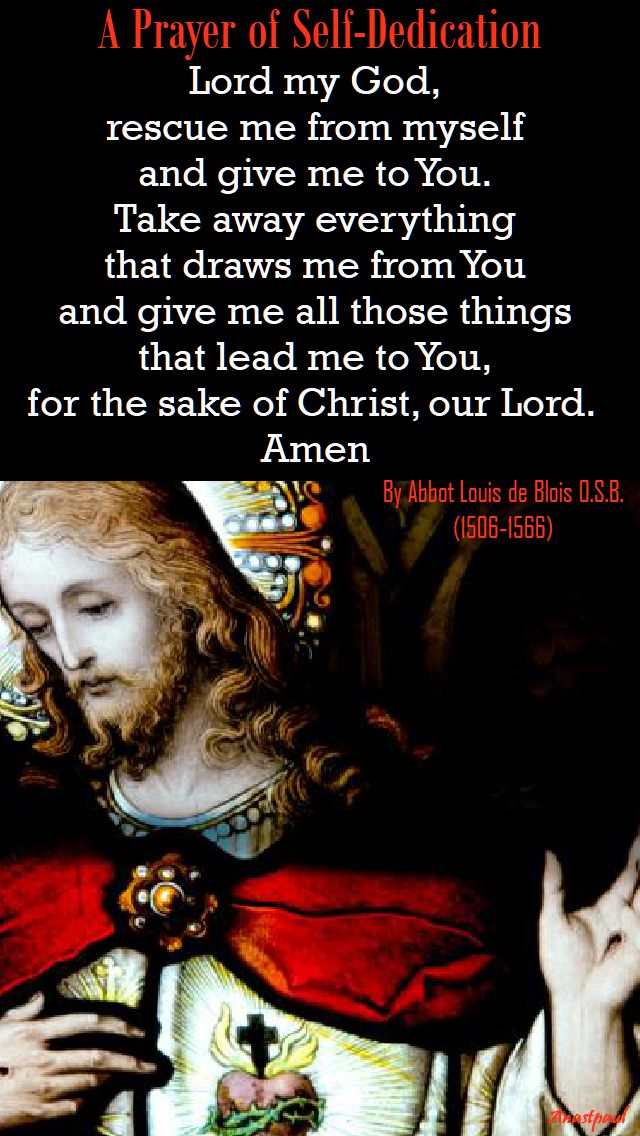
A Prayer of Self-Dedication
Abbot Louis de Blois O.S.B. (1506-1566)
Lord my God,
rescue me from myself
and give me to You.
Take away everything
that draws me from You
and give me all those things
that lead me to You,
for the sake of Christ, our Lord. Amen
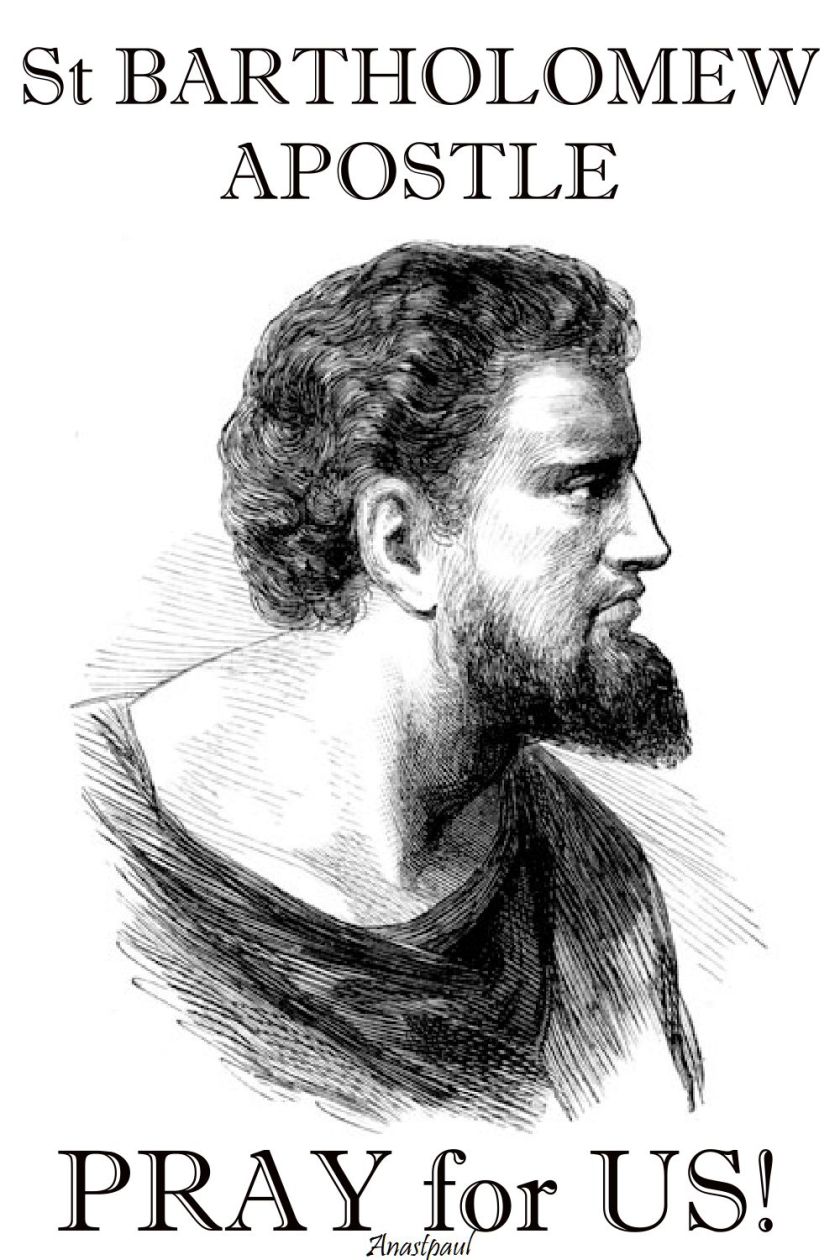
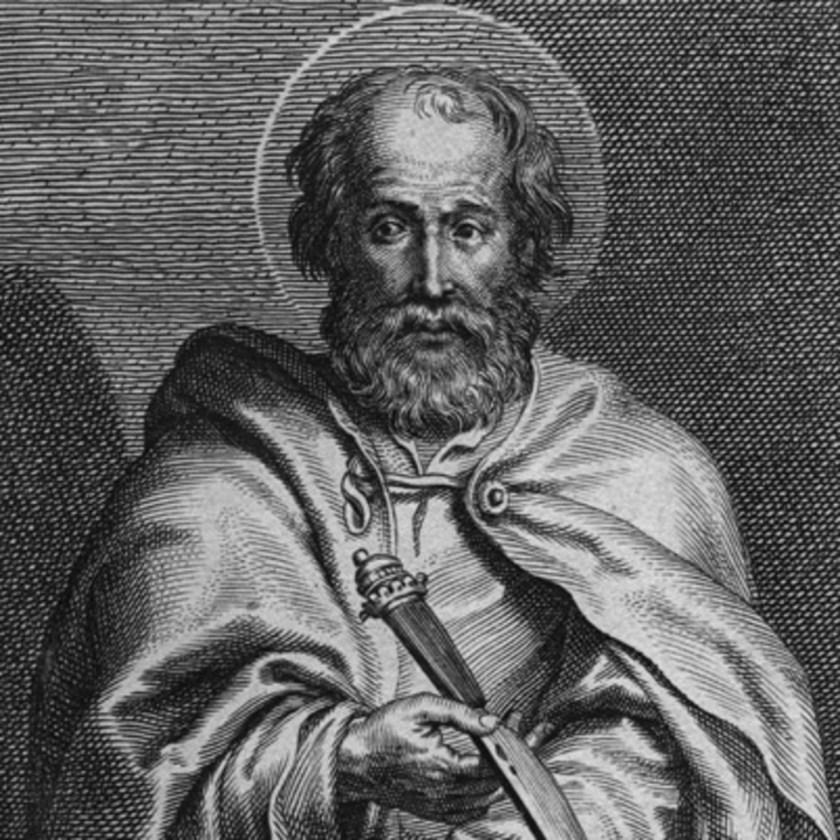
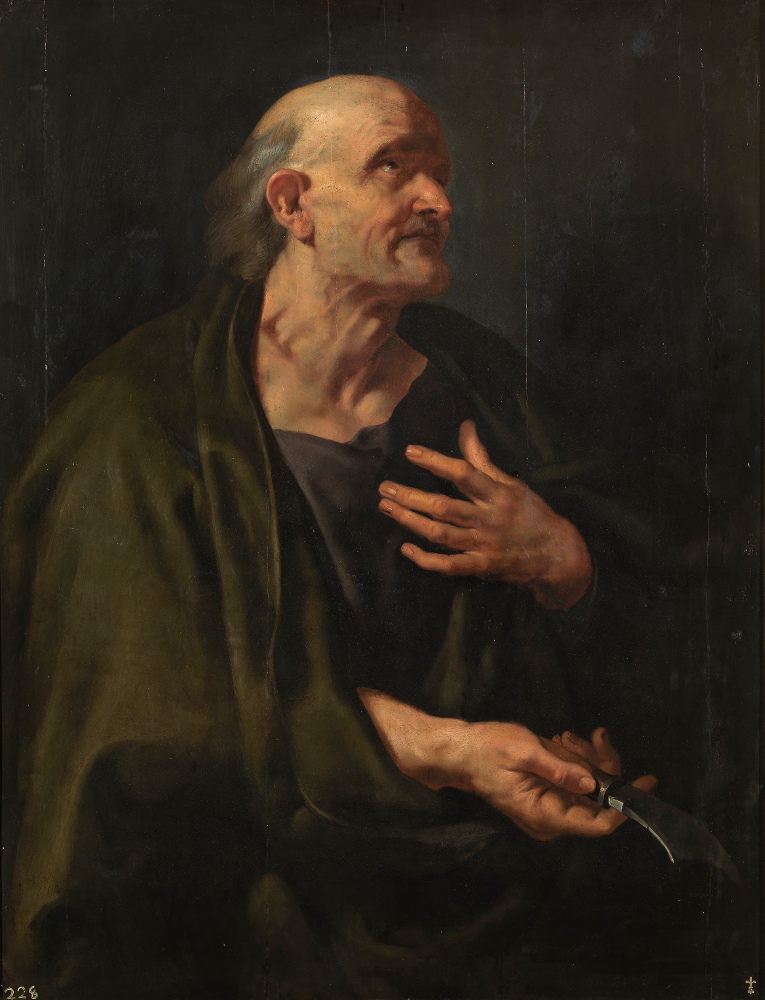
Saint of the Day – 24 August – St Bartholomew Apostle of Christ – Martyr – Patronages –Armenia; bookbinders/publishers; butchers; Florentine cheese and salt merchants; Gambatesa, Italy; Catbalogan, Samar; Għargħur, Malta; leather workers; neurological diseases; plasterers/construction workers; shoemakers; tanners; trappers; skin diseases/rashes, against involuntary shaking disorders; Los Cerricos (Spain), 16 further cities all over the world. Attributes – cross, elderly man holding a tanner’s knife and a human skin, tanner’s knife, bright red (skinless) man holding his own skin.
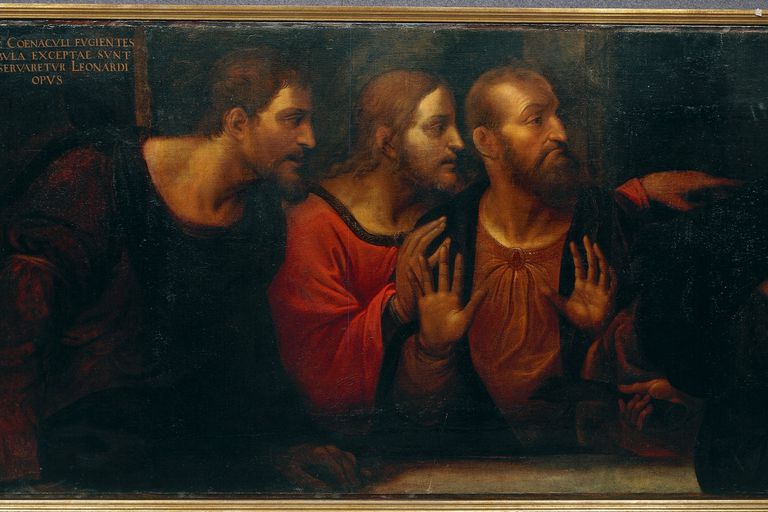
Apostles Bartholomew, Andrew, James
Saint Bartholomew is one of the Twelve Apostles, mentioned sixth in the three Gospel lists (Matthew 10:3; Mark 3:18; Luke 6:14) and seventh in the list of Acts (1:13). The name (Bartholomaios) means “son of Talmai” which was an ancient Hebrew name.
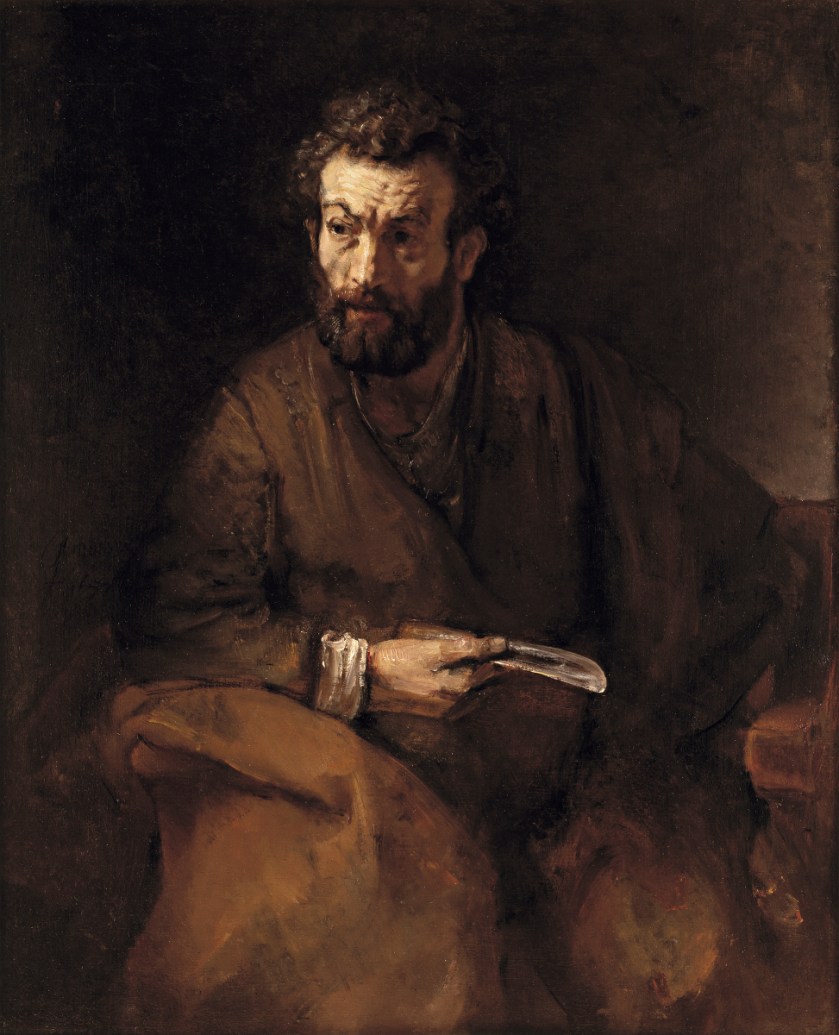
Rembrandt van Rijn
Besides being listed as an Apostle, he is not otherwise mentioned in the New Testament, at least not under the name Bartholomew: many ancient writers and Catholic tradition have identified Bartholomew as Nathaniel in the Gospel of John (John 1:45-51, and 21:2).
The Gospel passage read at Mass on the feast of Saint Bartholomew is precisely this passage from John (1:45-51) where Nathaniel is introduced to Jesus by his friend Phillip, and Jesus says of him “Here is a true child of Israel. There is no duplicity in him (1:47).”
We are presented with the Apostle’s character in this brief and beautiful dialogue with the Lord Jesus. He is a good Jew, honest and innocent, a just man, who devotes much time to quiet reflection and prayer – “under the fig tree (1:48)” – and has been awaiting the Messiah, the Holy One of God.
At Jesus’ mention that “Before Philip called you, when you were under the fig tree, I saw you (1:48),” Nathaniel responded “Rabbi, you are the Son of God! You are the King of Israel (1:49)!”
Being “a true child of Israel,” Nathaniel was a man well-read in the Scriptures and knew what they said of the Messiah and where he would come from. This is why he is skeptical of Phillip’s claim that Jesus is the Messiah, “Can anything good come out of Nazareth (1:46)?”
But Nathaniel was lacking “duplicity” – that is, his heart was undivided, his intentions pure – his openness to reality was always ready to recognise and surrender to the truth when he encountered it. He remained open to his friend Phillip’s invitation to “Come and see (1:46).” In encountering Jesus and hearing His words, he found himself face to face with the Truth Himself, and, like John the Baptist’s leap in his mother’s womb at the Lord’s presence, Nathaniel’s words leapt out of his own heart in a clear and simple confession of faith, “Rabbi, you are the Son of God! You are the King of Israel!”
Jesus, in Matthew 5:8, says, “Blessed are the pure of heart, for they shall see God.” In Nathaniel we have an example of the pure man who sees – recognises – God when confronted with Him and on seeing Him believes in Him and upon believing in Him, follows Him.
Nothing is known for sure about the life of Nathaniel/Bartholomew after the Ascension of Jesus but tradition holds that he preached in the East and died a martyr’s death in Armenia, being flayed alive for having won converts to the Lord Jesus.
St Bartholomew the Apostle (Feast) – https://www.youtube.com/watch?v=nHtOOTiNoz0
—
St Abban
St Abyce
St Agofridus of Lacroix
Bl André Fardeau
Bl Antonio de Blanes
St Eutychius of Troas
St George Limniotes
St Irchard
St María Micaela of the Blessed Sacrament
Bl Miroslav Bulesic
St Ouen of Rouen
St Patrick the Elder
St Ptolemy of Nepi
St Romanus of Nepi
St Sandratus
St Taziano of Claudiopolis
—
Martyred in the Spanish Civil War:
• Blessed Fortunato Velasco Tobar
• Blessed Isidre Torres Balsells
• Blessed Rigoberto Aquilino de Anta Barrio
Martyred in World War II: 6 Beati
Czeslaw Jozwiak
Edward Kazmierski
Edward Klinik
Franciszek Kesy
Jarogniew Wojciechowski
Luis Almécija Lázaro
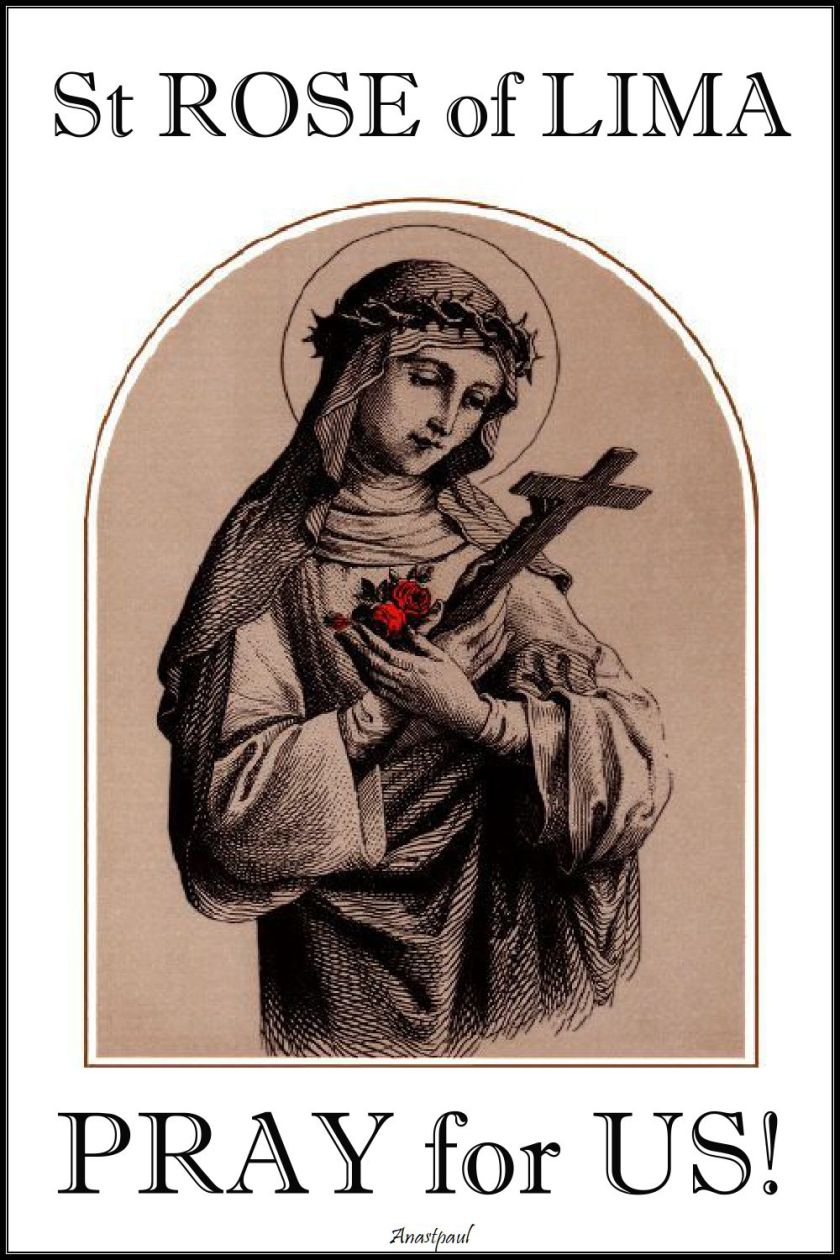
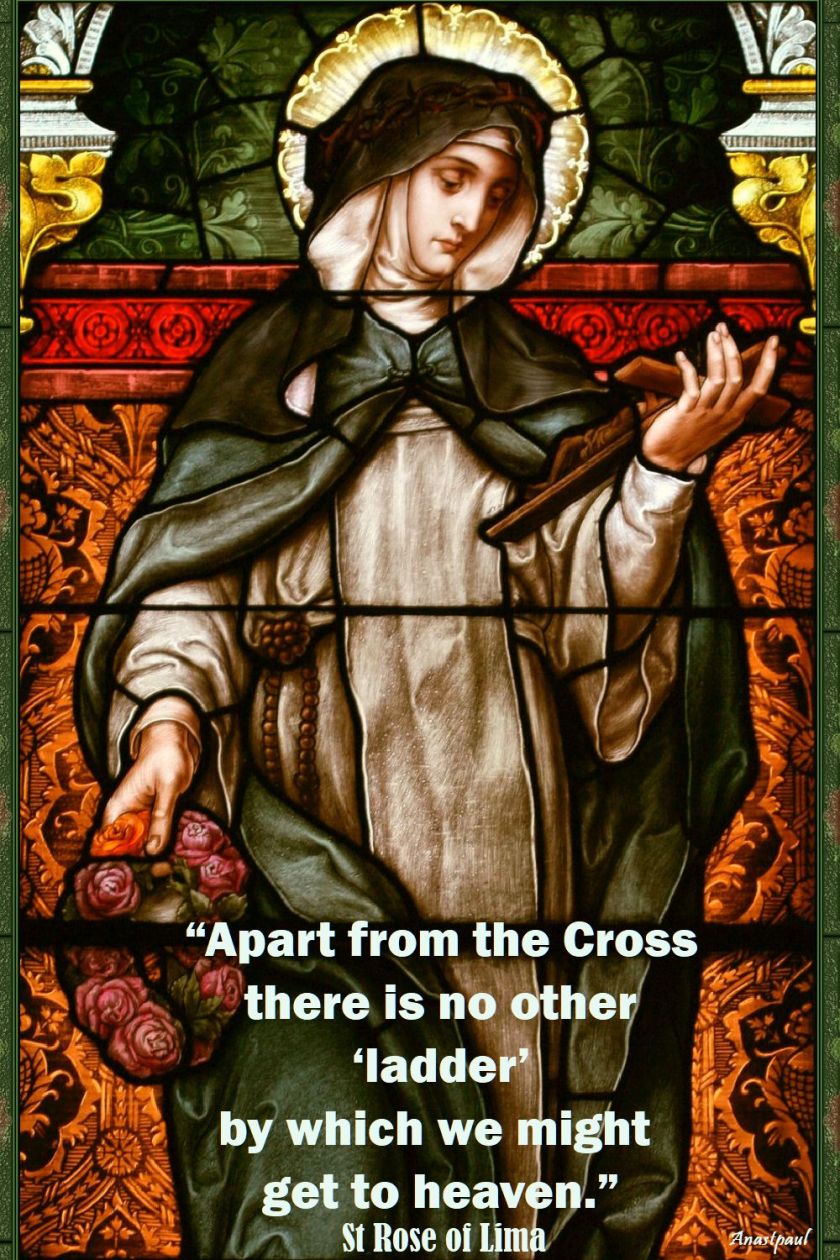
It is easy to dismiss excessive penances of the saints as the expression of a certain culture or temperament. But a woman wearing a crown of thorns may at least prod our consciences. We enjoy the most comfort-oriented life in human history. We eat too much, drink too much, use a million gadgets, fill our eyes and ears with everything imaginable. Commerce thrives on creating useless needs on which to spend our money. It seems that when we have become most like slaves, there is the greatest talk of “freedom.” Are we willing to discipline ourselves in such an atmosphere? “Without the burden of afflictions it is impossible to reach the height of grace. The gift of grace increases as the struggle increases.” (St Rose of Lima)
“If your hand or your foot causes you to sin, cut it off and throw it away. It is better for you to enter into life maimed or crippled than with two hands or two feet to be thrown into eternal fire. And if your eye causes you to sin, tear it out and throw it away. It is better for you to enter into life with one eye than with two eyes to be thrown into fiery Gehenna” (Matthew 18:8–9)
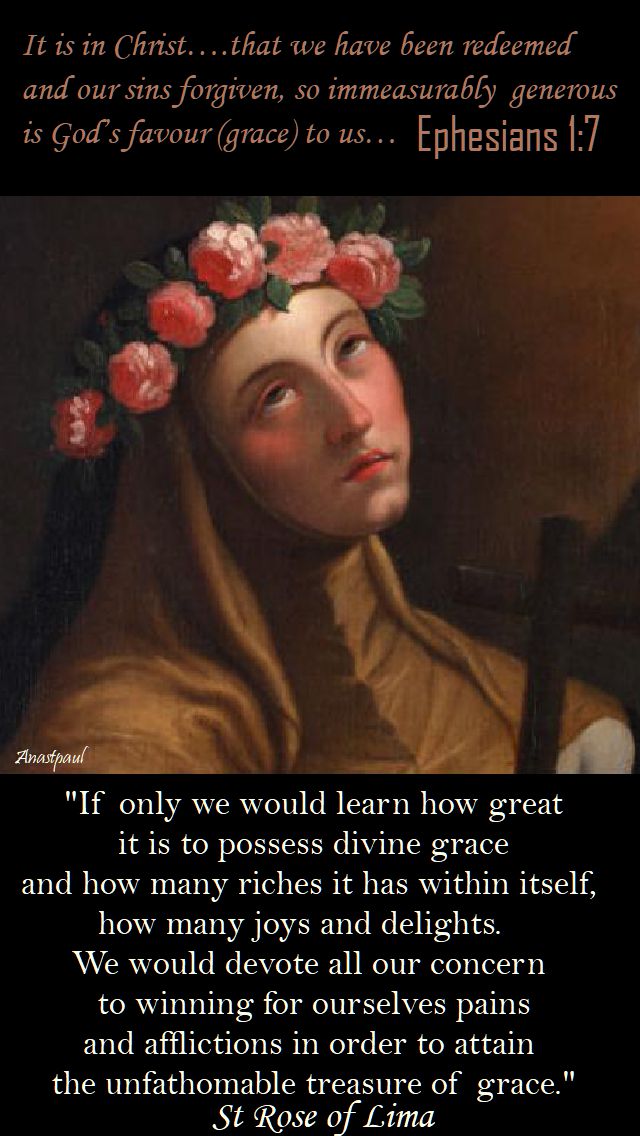
One Minute Reflection – 23 August – St Rose of Lima
It is in Christ….that we have been redeemed and our sins forgiven, so immeasurably generous is God’s favour (grace) to us……..Ephesians 1:7
REFLECTION – “If only we would learn how great it is to possess divine grace and how many riches it has within itself, how many joys and delights. We would devote all our concern to winning for ourselves pains and afflictions in order to attain the unfathomable treasure of grace.”…St Rose of Lima
PRAYER – God is all goodness, keep ever in my mind the surpassing riches of Your grace. Grant that I may devote all my efforts to co-operating with that grace and growing in it day by day. St Rose of Lima Pray for us! Amen
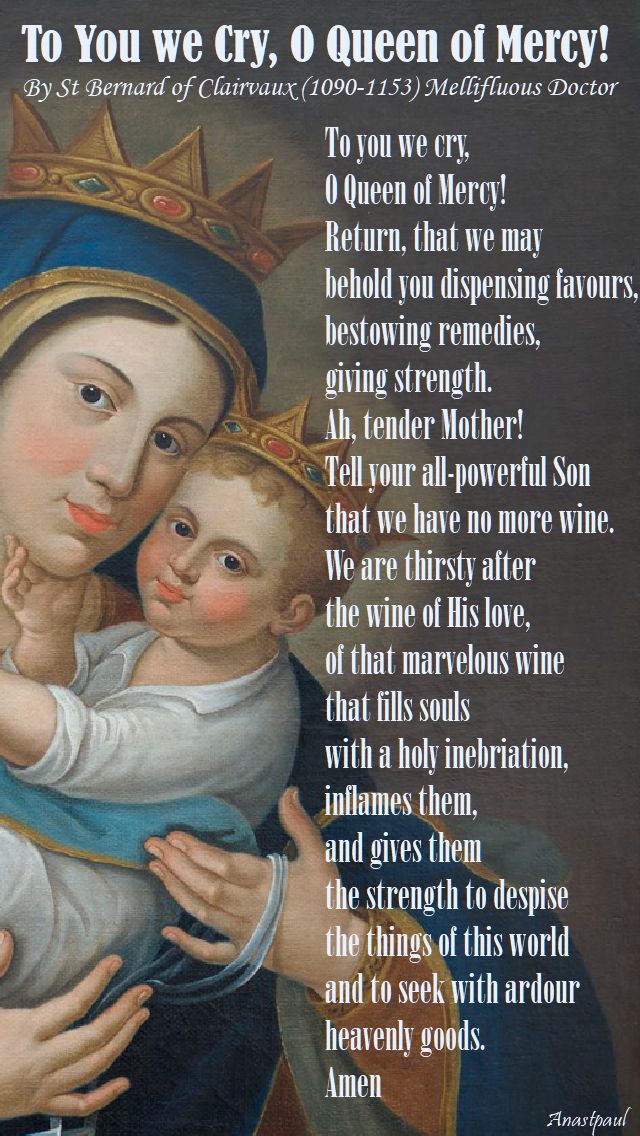
To You we Cry, O Queen of Mercy! By St Bernard of Clairvaux (1090-1153) Doctor mellifluus (Mellifluous Doctor)
To you we cry,
O Queen of Mercy!
Return, that we may
behold you dispensing favours,
bestowing remedies,
giving strength.
Ah, tender Mother!
Tell your all-powerful Son
that we have no more wine.
We are thirsty after the wine of His love,
of that marvelous wine
that fills souls with a holy inebriation,
inflames them,
and gives them the strength to despise
the things of this world
and to seek with ardour heavenly goods.
Amen
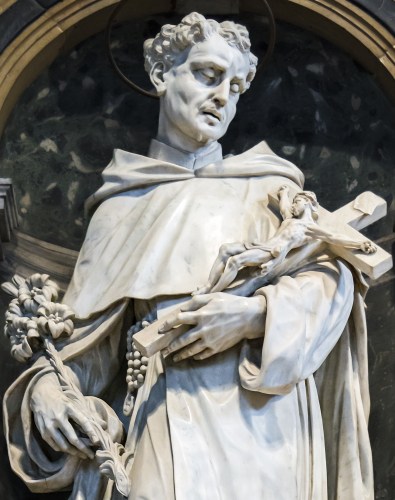
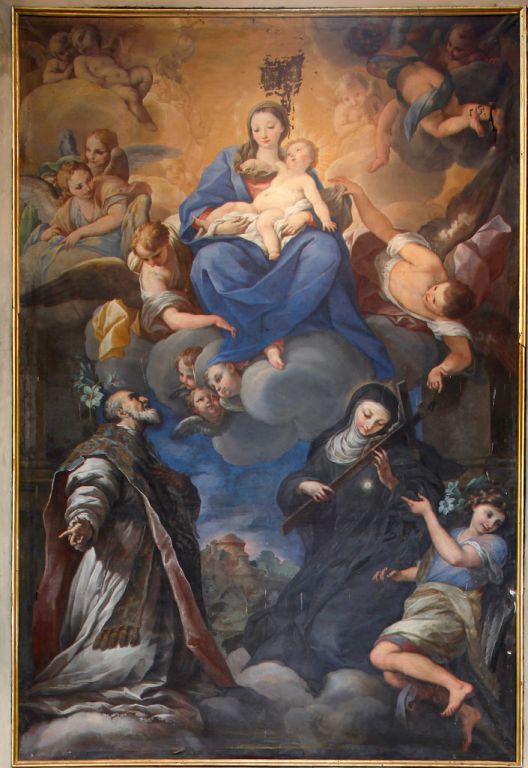
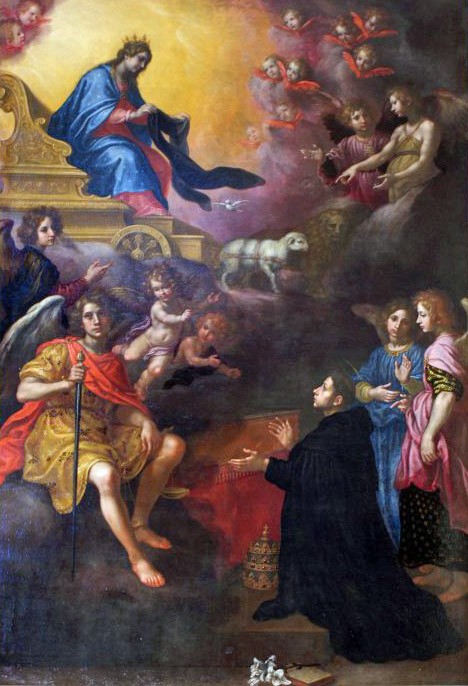
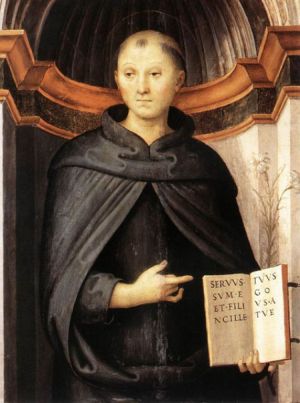
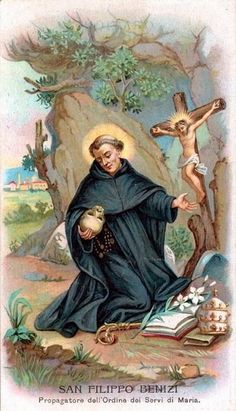
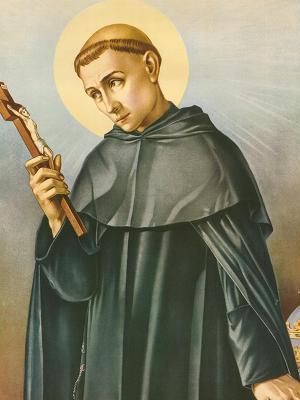
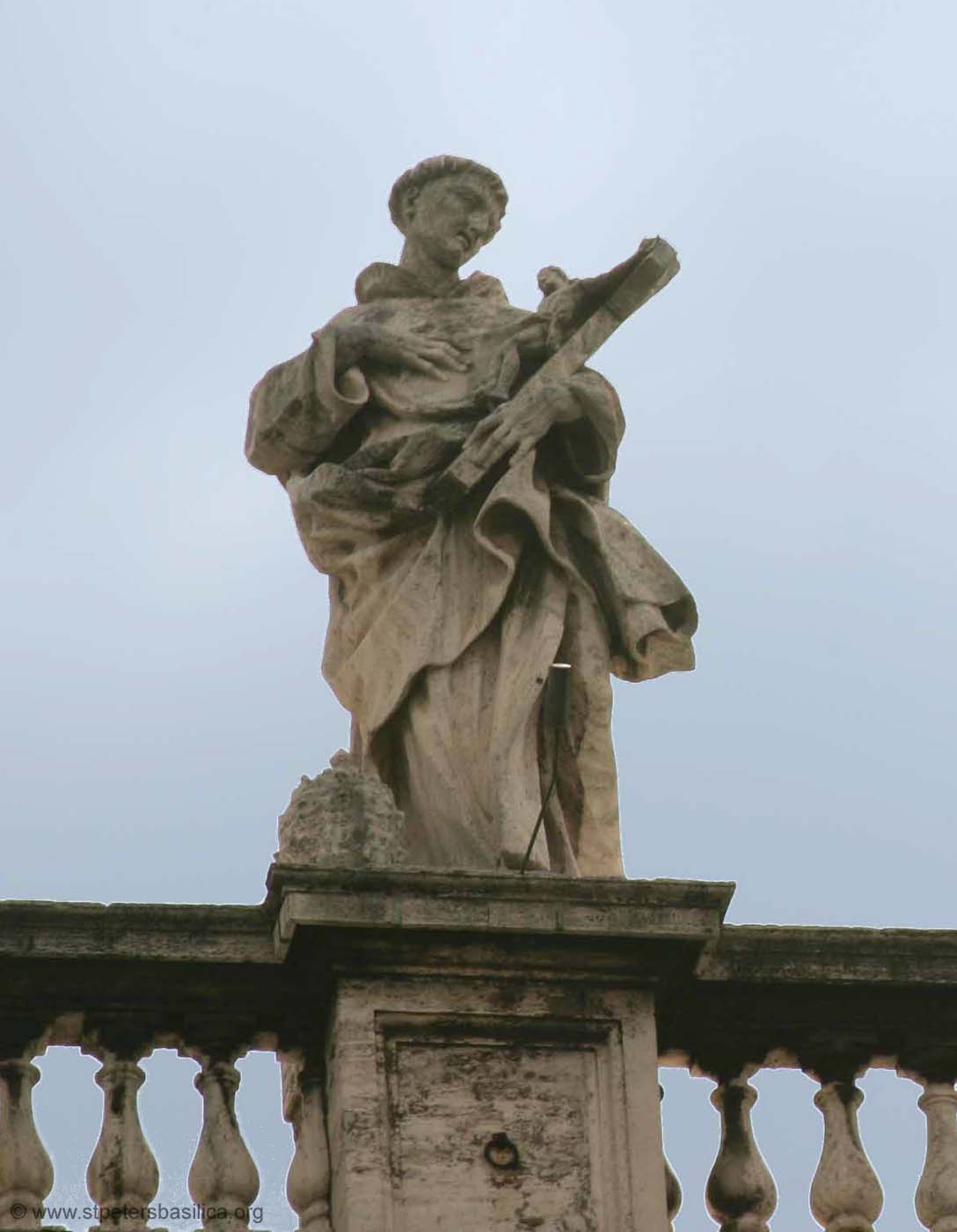
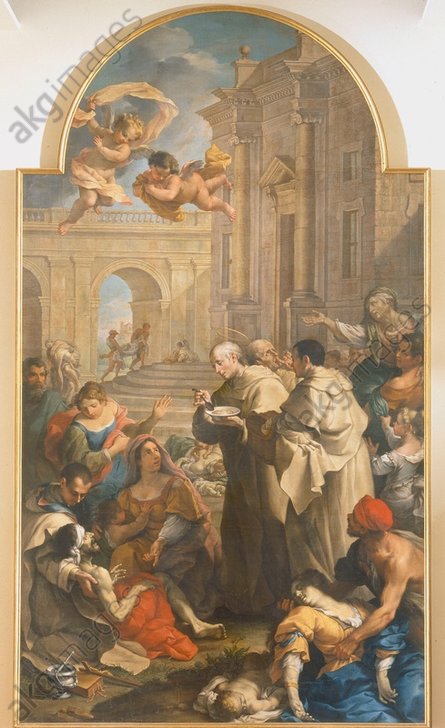
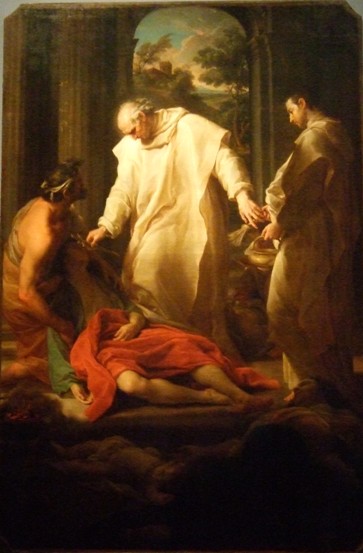
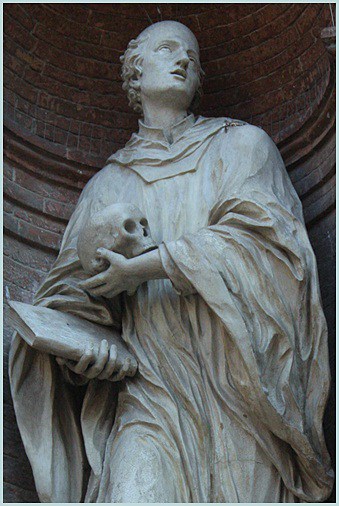
Saint of the Day – 23 August – St Philip Benezi OSM (1233-1285) Co-Founder, Servite Priest Confessor, Superior, Reformer, Preacher, Medical Doctor. Born on15 August (Feast of the Assumption and the day that the Blessed Virgin appeared to the first of the Founders of the Servite Order) 1233 at district of Oltrarno, Florence, Italy -and died on 22 August (Octave of the Assumption i.e. the Feast of the Immaculate Heart of Mary) 1285 at Todi, Italy). Patronages – Minor Basilica of Monte Senario (Vaglia) in the Diocese of Florence, Tuscany, Italy; Zamboanga del Norte, Philippines. The Church of the Servites of Mary in Todi, Umbria, contains the body of St Philip Benizi, where the Statue below resides and is the work of Bernini. St Philip was Beatified on 8 October 1645 by Pope Innocent X and Canonised on 12 April 1671 by Pope Clement X – he was first Servite to be Canonised.
Saint Philip Benizi was born in Florence on the Feast of the Assumption, 1233 of a noble family. That same day the Order of Servites was founded by the Mother of God. As an infant one year old, Philip spoke when in the presence of these new religious and announced the Servants of the Virgin. Amid all the temptations of his youth, he longed to become a Servant of Mary and it was only the fear of his own unworthiness which made him yield to his father’s wish and begin to study medicine. He received the bonnet of a doctor of medicine at Padua.
After long and weary waiting, his doubts were solved one day by Our Lady Herself, who in a vision during a Mass in Florence offered in the Servite Chapel, bade him enter Her Order. Still Philip dared only offer himself as a lay brother and saying nothing of his studies, in this humble state he strove to do penance for his sins. Two Dominican Fathers traveling with him one day recognised the great talents, wisdom and knowledge which he had succeeded in concealing. They talked to his Superiors and he was told to prepare for the priesthood. As a priest he did immense good. He pacified many dissensions, common among the city-states of those days. One day he met a leper, almost naked and having no money, gave him his tunic. When the leper put it on, he was instantly cured.
Thereafter ,honours were accorded him in rapid succession; he became General of the Order and only by flight did he escape elevation to the Papal throne; he retired to a grotto in the mountains until the conclave had ended. His preaching restored peace to Italy, wasted by civil wars. He was sent not only to various cities of that country but to the Netherlands and Germany, where he converted many, not without opposition and even a flogging by rebels. At the Council of Lyons, he spoke to the assembled prelates with the gift of tongues. Amid all these favours Philip lived in extreme penitence, constantly examining his soul before God and condemning himself as only fit for hell.
Saint Philip, although he was free from every stain of mortal sin, was never weary of beseeching God’s mercy. From the time he was ten years old he daily prayed the Penitential Psalms. On his deathbed he recited verses of the Miserere, his cheeks streaming with tears; during his agony he went through a terrible contest to overcome the fear of damnation. But a few minutes before he died, all his doubts disappeared and were succeeded by a holy trust. He uttered the responses to the final prayers in a low but audible voice and when at last the Mother of God appeared before him, he lifted up his arms with joy and breathed a gentle sigh, as if placing his soul in Her hands. He died on the Octave of the Assumption – the Feast of the Immaculate Heart of Mary, 1285.
An ancient chronicle recounts that “in the time of his transfer, when the brothers took the sarcophagus in which his most holy body laid, from one part of the church to a more honourable part of the church, they noticed that all of the images in the church turned towards his precious body and kneeled in supplication, miraculously praying to him. “That same day the whole city of Todi was filled with a sweet soft smell that came from the religious reliques and having secretly opened the tomb, the brothers were clearly alerted by everyone who ran from the city, after having touched the holy reliques, they reacquired the sight of the marvelous general. The son of a widow, who died that same day, was brought to the tomb and he was immediately revived. Also many paralyzed people, handicapped people and sick people, while praying in the church that day of the transfer, were cured. So many in fact, sick and deformed came to the tomb of the man of God and returned home healthy and happy, thanking God infinitely.”
It is said that the title of “Our Lady of the Divine Providence”, came from Saint Philip Benizi, fifth superior of the Servants of Mary, who one day called out for the protection of the Virgin when the brothers had nothing to eat. St Philip then found two baskets of bread at the door of the monastery and no one knew how they got there.
Five scenes from his life were painted in the early 16th century by the Florentine Andrea del Sarto: “His Charity to a Leper,” “The Smiting of the Blasphemers,” “The Cure of the Woman Possessed with a Devil,” “The Resurrection of Two Children near the Tomb of the Saint” and “The Veneration of his Relics.” These are murals and too faded to post.
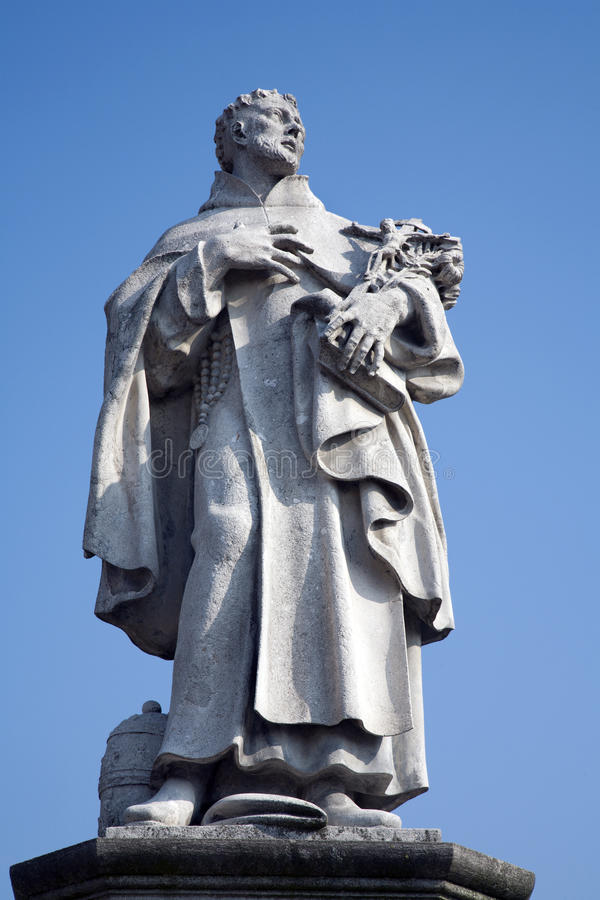
There is a Statue of him on the Charles Bridge in Prague, Czech Republic. Designed in 1714, this Statue was made from Salzburg marble and donated by the Servites’ Convent in Prague. The Statue portrays him holding a Crucifix, a book and a spray. At his feet, there is the Crown of the Pope. A clay model of this statue can be found in the Salzburg museum. The second statue below is on the Colonade at St Peter’s.
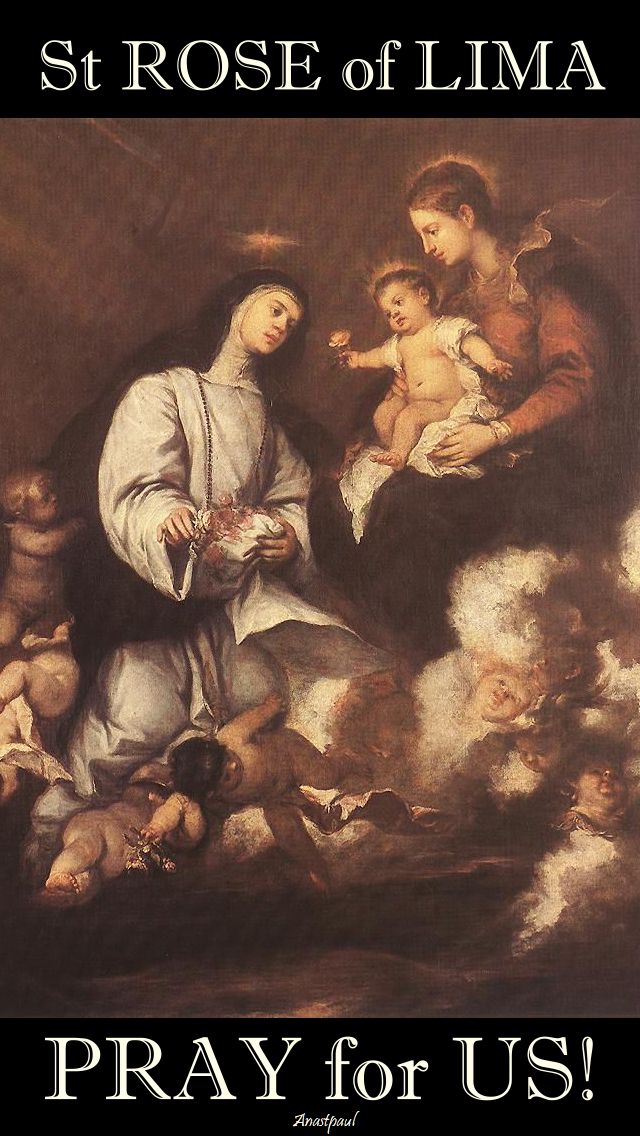
St Rose of Lima (Optional Memorial)
—
St Abbondius of Rome
St Altigianus
St Apollinaris of Rheims
St Archelaus of Ostia
St Asterius of Aegea
St Claudius of Aegea
St Domnina of Aegea
St Eleazar of Lyons
St Eonagh
St Flavian of Autun
Bl Franciszek Dachtera
Bl Giacomo Bianconi of Mevania
St Hilarinus
St Ireneus of Rome
Bl Jean Bourdon
St Lupo of Novi
St Luppus
St Maximus of Ostia
St Minervius of Lyons
St Neon of Aegea
St Philip Benizi
St Quiriacus of Ostia
St Theonilla of Aegea
St Timothy of Rheims
St Tydfil
St Victor of Vita
St Zaccheus of Jerusalem
—
Martyrs of Agea – 4 saints: A group of Christian brothers, Asterius, Claudius and Neon, denounced by their step-mother who were then tortured and martyred in the persecutions of Pro-consul Lysias. They were crucified in 285 outside the walls of Aegea, Cilicia (in Asia Minor) and their bodies left for scavengers.
Martyred in the Spanish Civl War:
• Blessed Constantino Carbonell Sempere
• Blessed Estanislau Sans Hortoneda
• Blessed Florentín Pérez Romero
• Blessed José Polo Benito
• Blessed Lorenzo Ilarregui Goñi
• Blessed Manuela Justa Fernández Ibero
• Blessed Mariano García Méndez
• Blessed Nicolás Alberich Lluch
• Blessed Pere Gelabert Amer
• Blessed Petra María Victoria Quintana Argos
• Blessed Ramón Grimaltos Monllor
• Blessed Urbano Gil Sáez
• Blessed Vicente Alberich Lluch
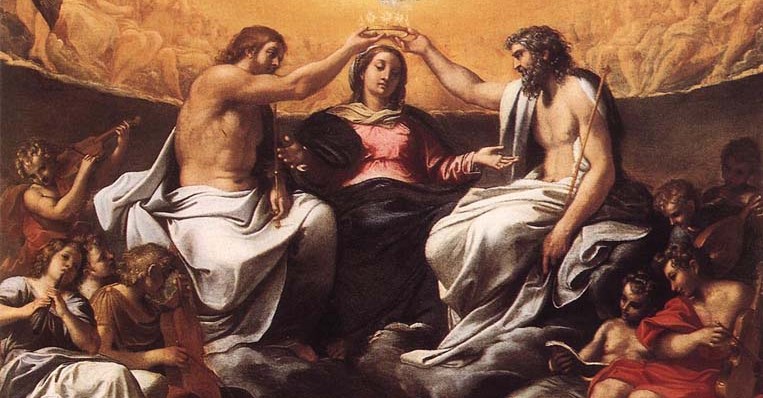
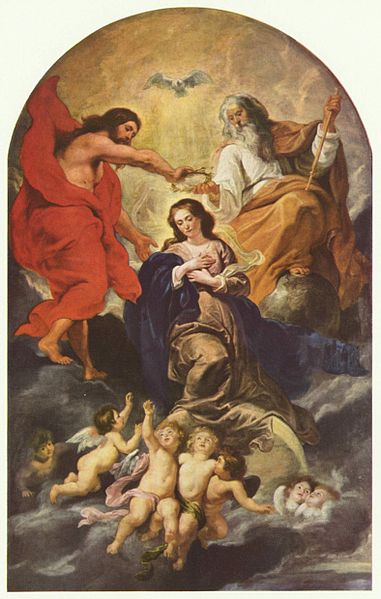
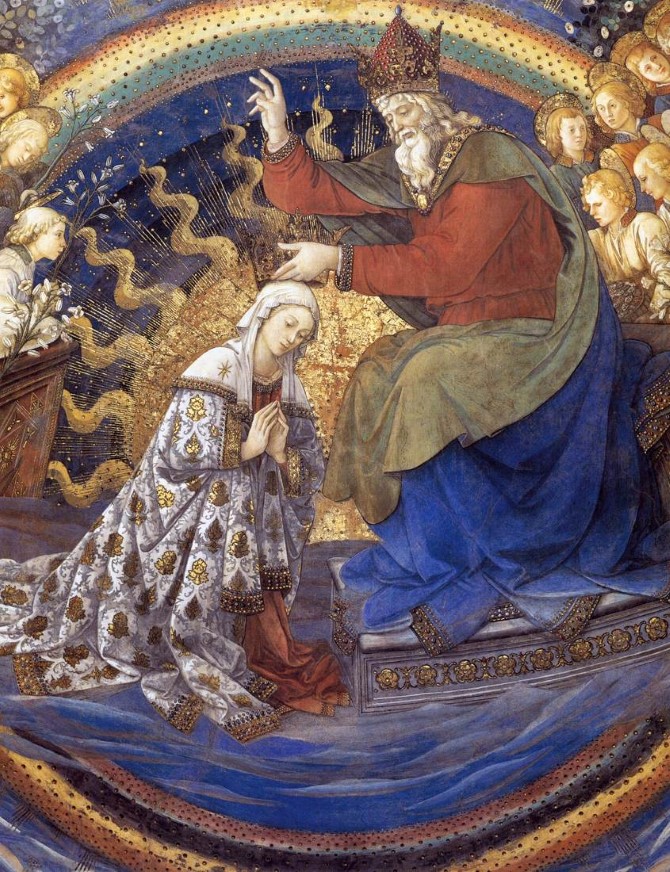
Thought for the Day – 22 August – The Queenship of Mary
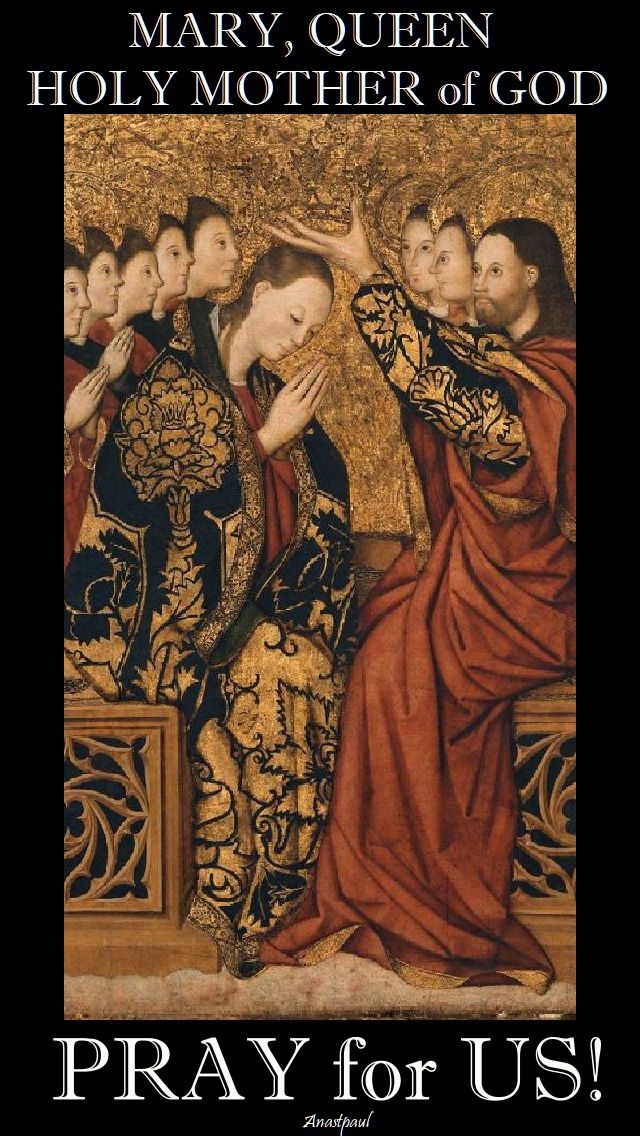
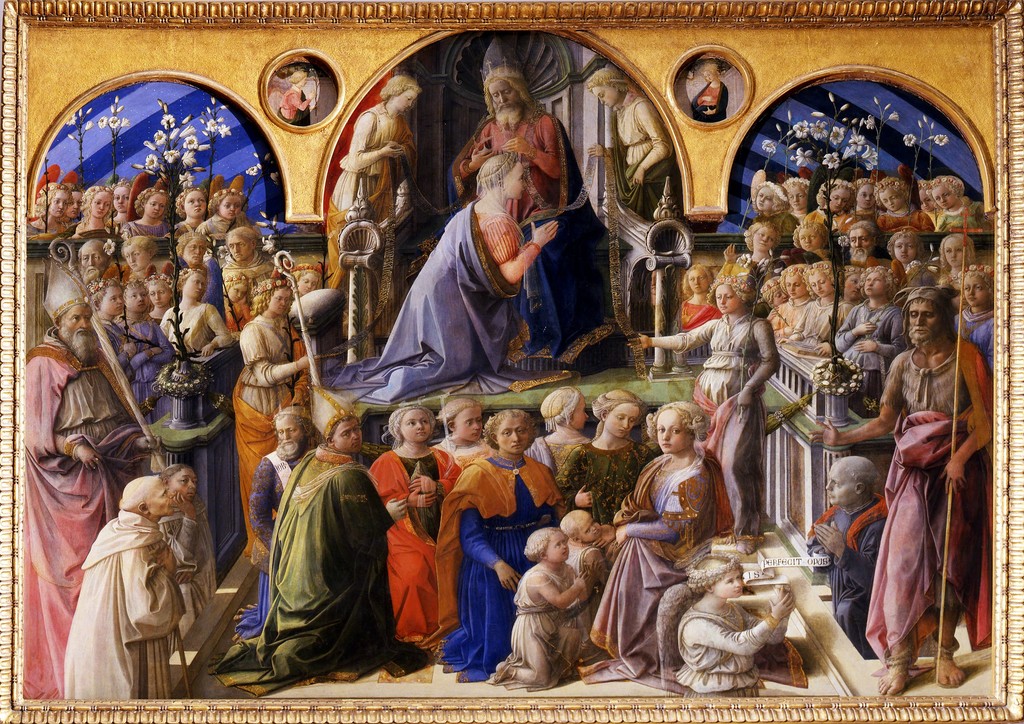
As St. Paul suggests in Romans 8:28–30, God has predestined human beings from all eternity to share the image of his Son. All the more was Mary predestined to be the mother of Jesus. As Jesus was to be king of all creation, Mary, in dependence on Jesus, was to be queen. All other titles to queenship derive from this eternal intention of God. As Jesus exercised his kingship on earth by serving his Father and his fellow human beings, so did Mary exercise her queenship. As the glorified Jesus remains with us as our king till the end of time (Matthew 28:20), so does Mary, who was assumed into heaven and crowned queen of heaven and earth.
In the fourth century St Ephrem called Mary “Lady” and “Queen.” Later Church fathers and doctors continued to use the title. Hymns of the 11th to 13th centuries address Mary as queen: “Hail, Holy Queen,” “Hail, Queen of Heaven,” “Queen of Heaven.” The Dominican rosary and the Franciscan crown as well as numerous invocations in Mary’s litany celebrate her queenship.
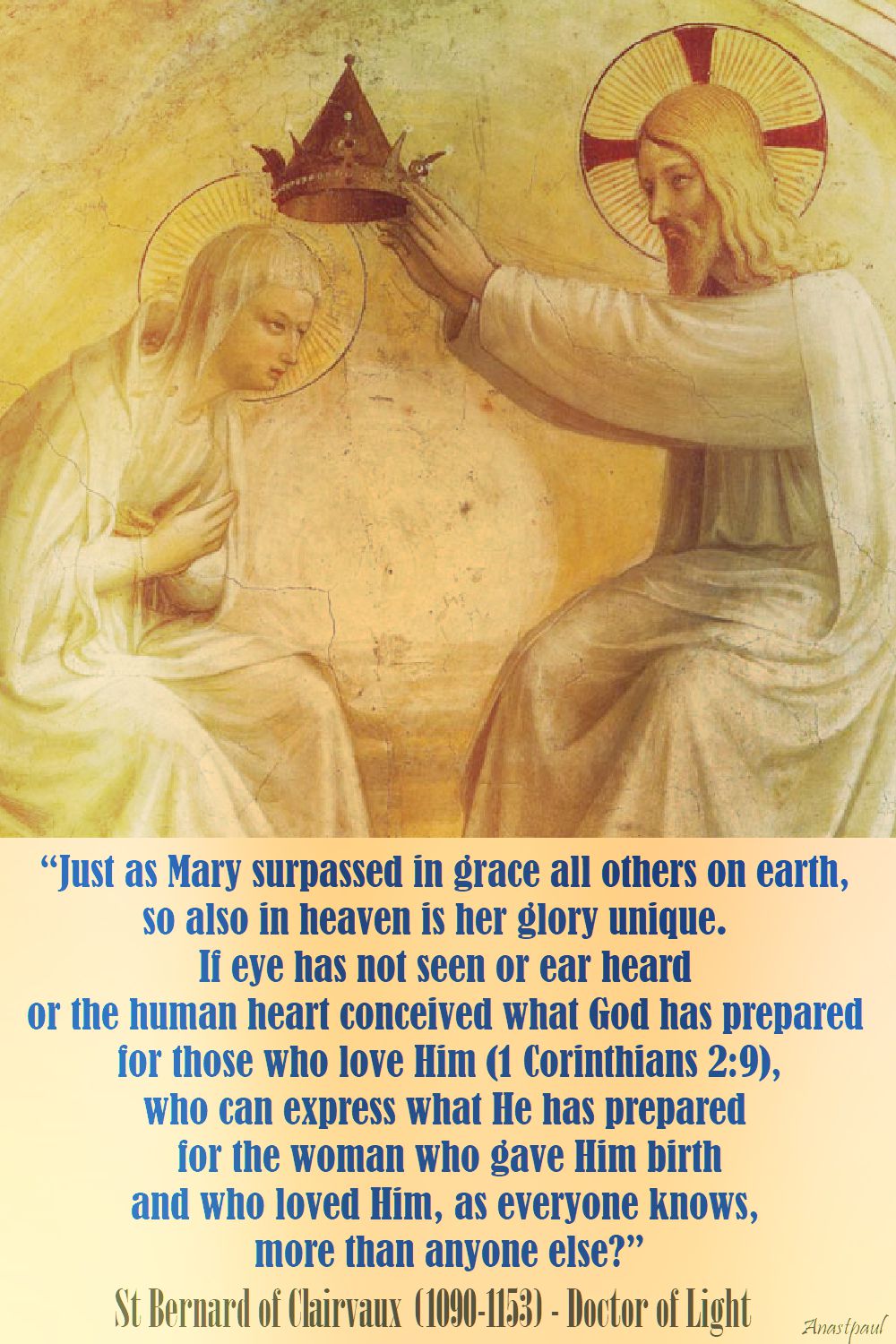
The feast is a logical follow-up to the Assumption and is now celebrated on the octave day of that feast. In his 1954 encyclical To the Queen of Heaven, Pius XII points out that Mary deserves the title because she is Mother of God because she is closely associated as the New Eve with Jesus’ redemptive work because of her preeminent perfection and because of her intercessory power. (Fr Don Miller OFM) “Just as Mary surpassed in grace all others on earth, so also in heaven is her glory unique. If eye has not seen or ear heard or the human heart conceived what God has prepared for those who love Him (1 Corinthians 2:9), who can express what He has prepared for the woman who gave Him birth and who loved Him, as everyone knows, more than anyone else?” (St Bernard of Clairvaux (1090-1153) – Doctor of Light – Mellifluous Doctor)
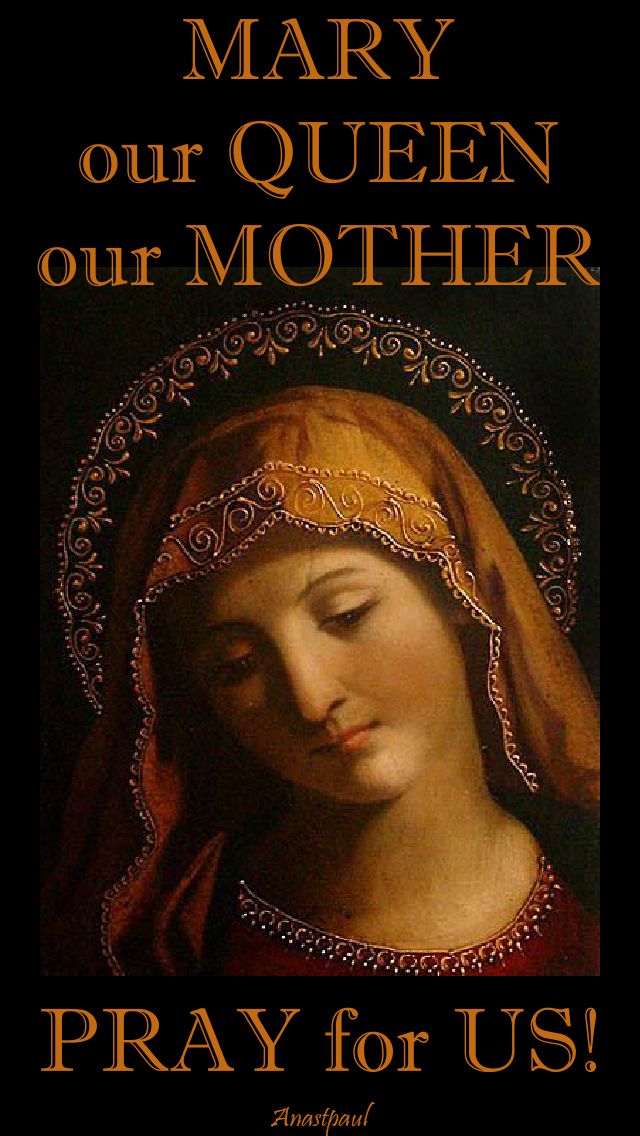
Mary Queen of Heaven and Earth Pray for your children!
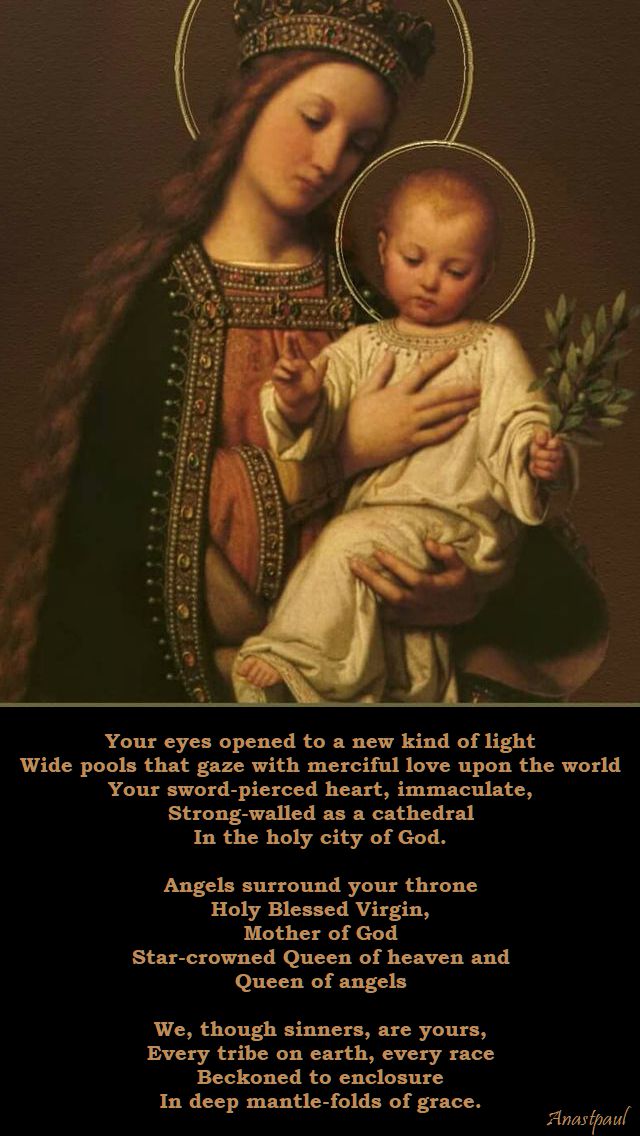
Your eyes opened to a new kind of light Wide pools that gaze with merciful love upon the world Your sword-pierced heart, immaculate,
Strong-walled as a cathedral
In the holy city of God.
Angels surround your throne Holy Blessed Virgin, Mother of God Star-crowned Queen of heaven and Queen of angels
We, though sinners, are yours, Every tribe on earth, every race Beckoned to enclosure In deep mantle-folds of grace.
Quote/s of the Day – 22 August – The Queenship of Mary
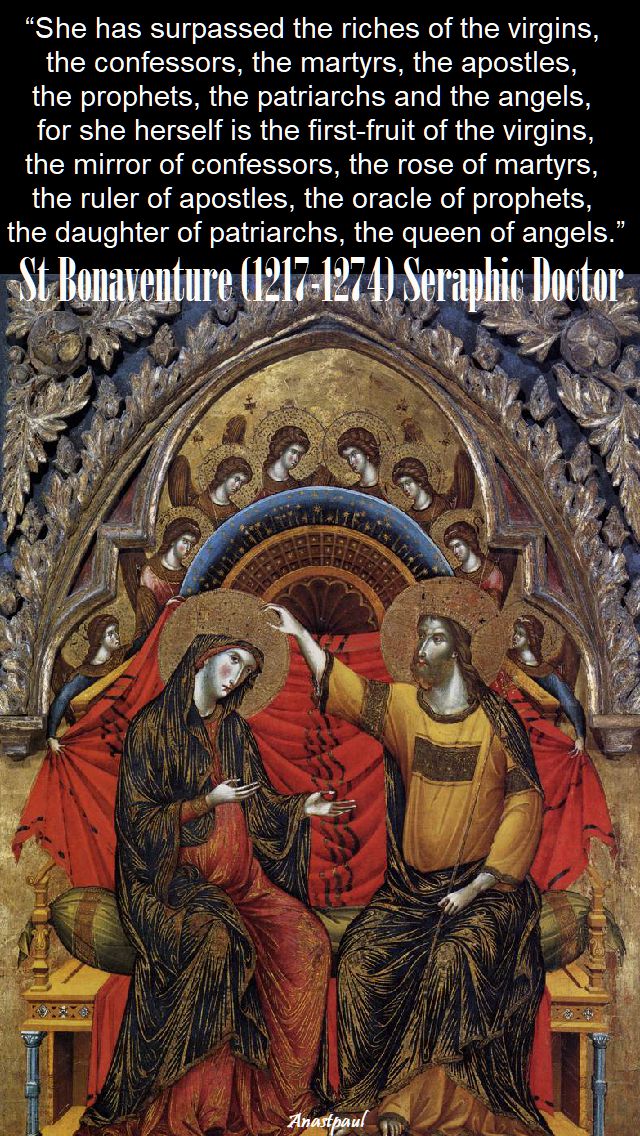
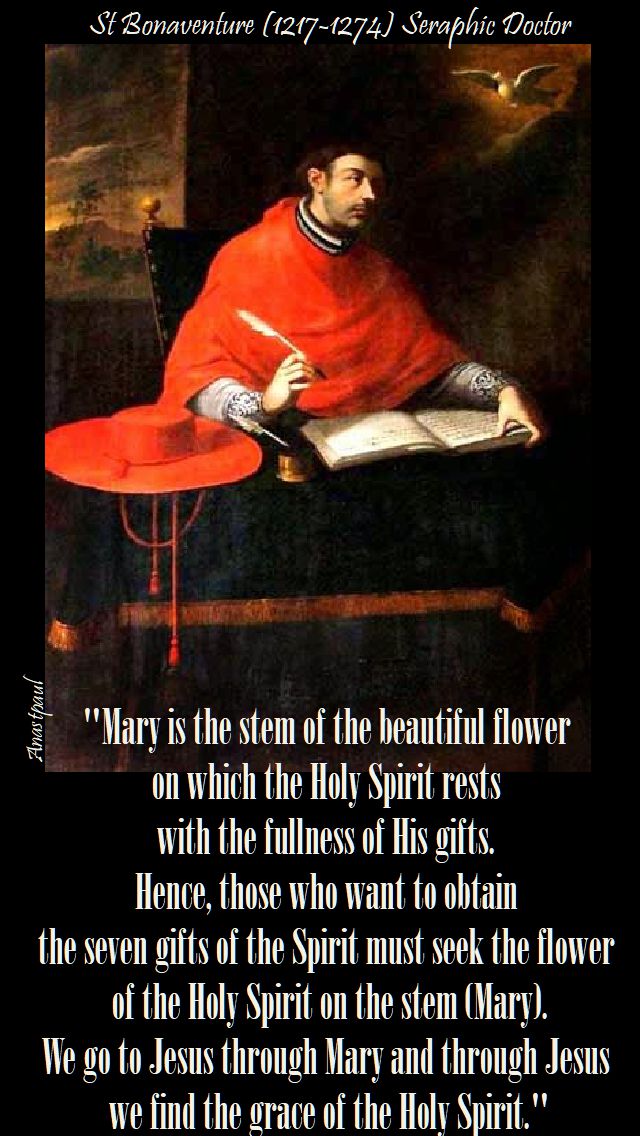
“She has surpassed the riches of the virgins, the confessors, the martyrs, the apostles, the prophets, the patriarchs and the angels, for she herself is the first-fruit of the virgins, the mirror of confessors, the rose of martyrs, the ruler of apostles, the oracle of prophets, the daughter of patriarchs, the queen of angels.”
…St Bonaventure (1217-1274) Seraphic Doctor
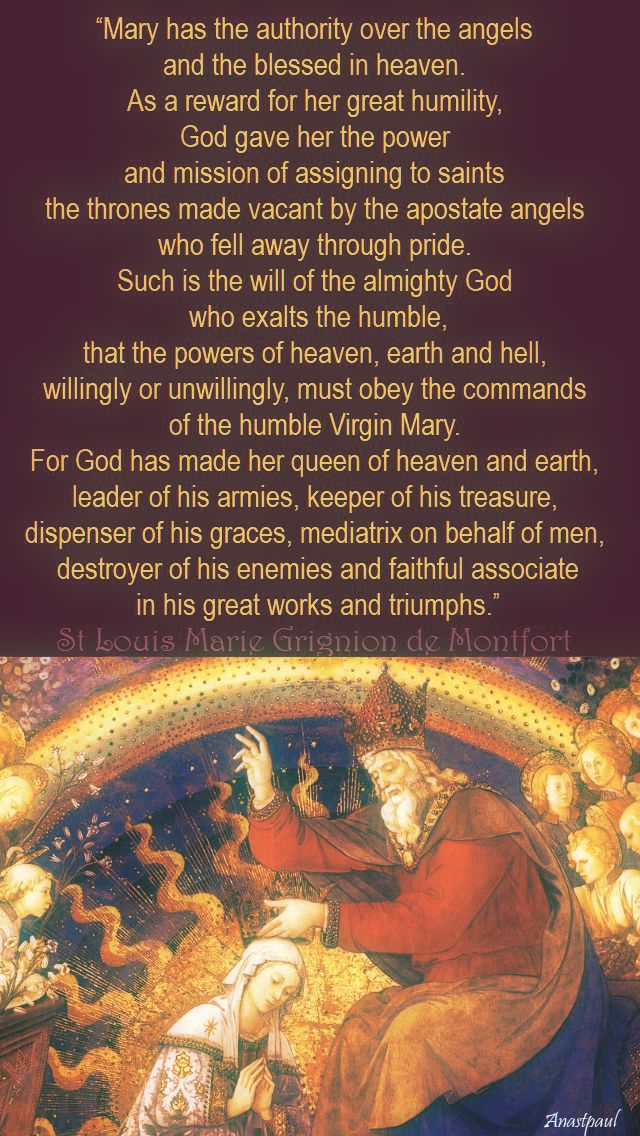
“Mary has the authority over the angels and the blessed in heaven. As a reward for her great humility, God gave her the power and mission of assigning to saints the thrones made vacant by the apostate angels who fell away through pride. Such is the will of the almighty God who exalts the humble, that the powers of heaven, earth and hell, willingly or unwillingly, must obey the commands of the humble Virgin Mary. For God has made her queen of heaven and earth, leader of his armies, keeper of his treasure, dispenser of his graces, mediatrix on behalf of men, destroyer of his enemies and faithful associate in his great works and triumphs.”
…St Louis Marie de Montfort
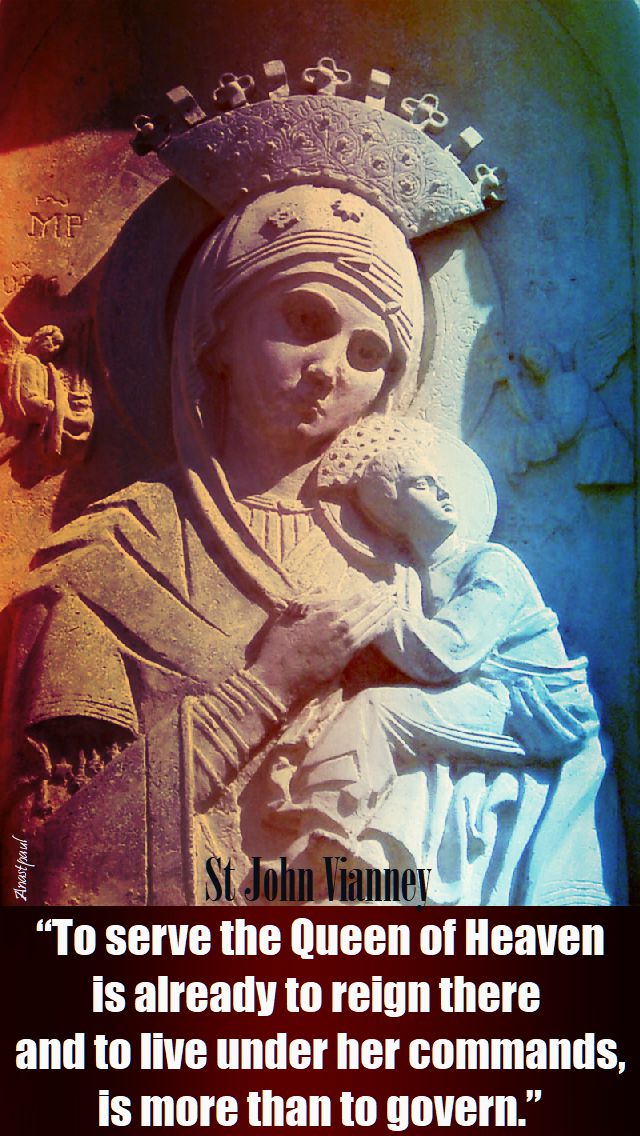
“To serve the Queen of Heaven is already to reign there and to live under her commands, is more than to govern.”
…St John Marie Vianney
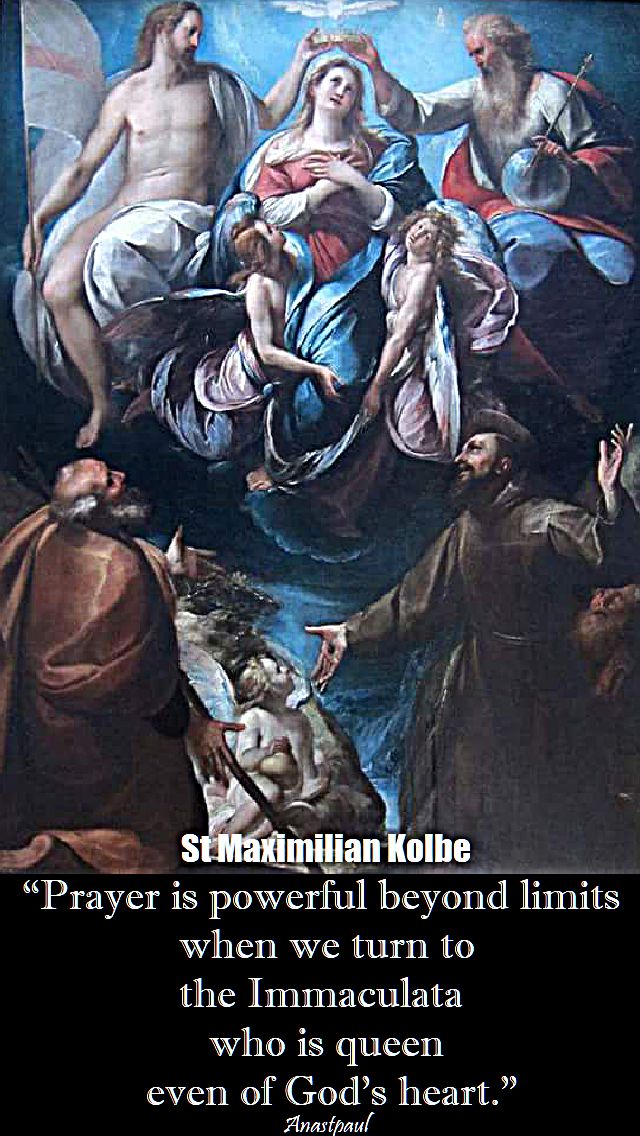
“Prayer is powerful beyond limits when we turn to the Immaculata who is queen even of God’s heart.”
…St Maximilian Kolbe
“No one has access to the Almighty as His mother has – none has merit such as hers. Her Son will deny her nothing that she asks and herein lies her power. While she defends the Church, neither height nor depth, neither men nor evil spirits, neither great monarchs, nor craft of man, nor popular violence, can avail to harm us – for human life is short but Mary reigns above, a Queen forever.”
One Minute Reflection – August 22 – The Memorial of the Queenship of Mary
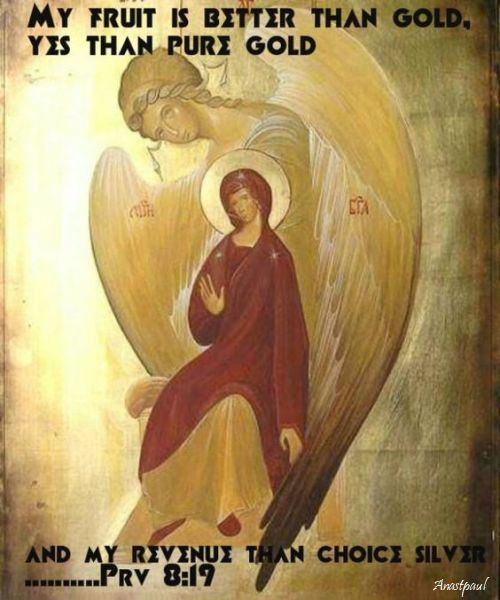
My fruit is better than gold, yes than pure gold and my revenue than choice silver………….Prv 8:19
REFLECTION – “Mary is the stem of the beautiful flower on which the Holy Spirit rests with the fullness of His gifts. Hence, those who want to obtain the seven gifts of the Spirit must seek the flower of the Holy Spirit on the stem (Mary).
We go to Jesus through Mary and through Jesus we find the grace of the Holy Spirit.”…St Bonaventure (1217-1274) Seraphic Doctor
PRAYER – Heavenly Father, You made Mary the Spouse of the Holy Spirit. Help me through Mary and Jesus to reach the Spirit and obtain His surpassing gifts. Holy Mother of God, Queen of Heaven and Earth, be my companion and my guide. Amen
Our Morning Offering – 22 August – The Queenship of Mary
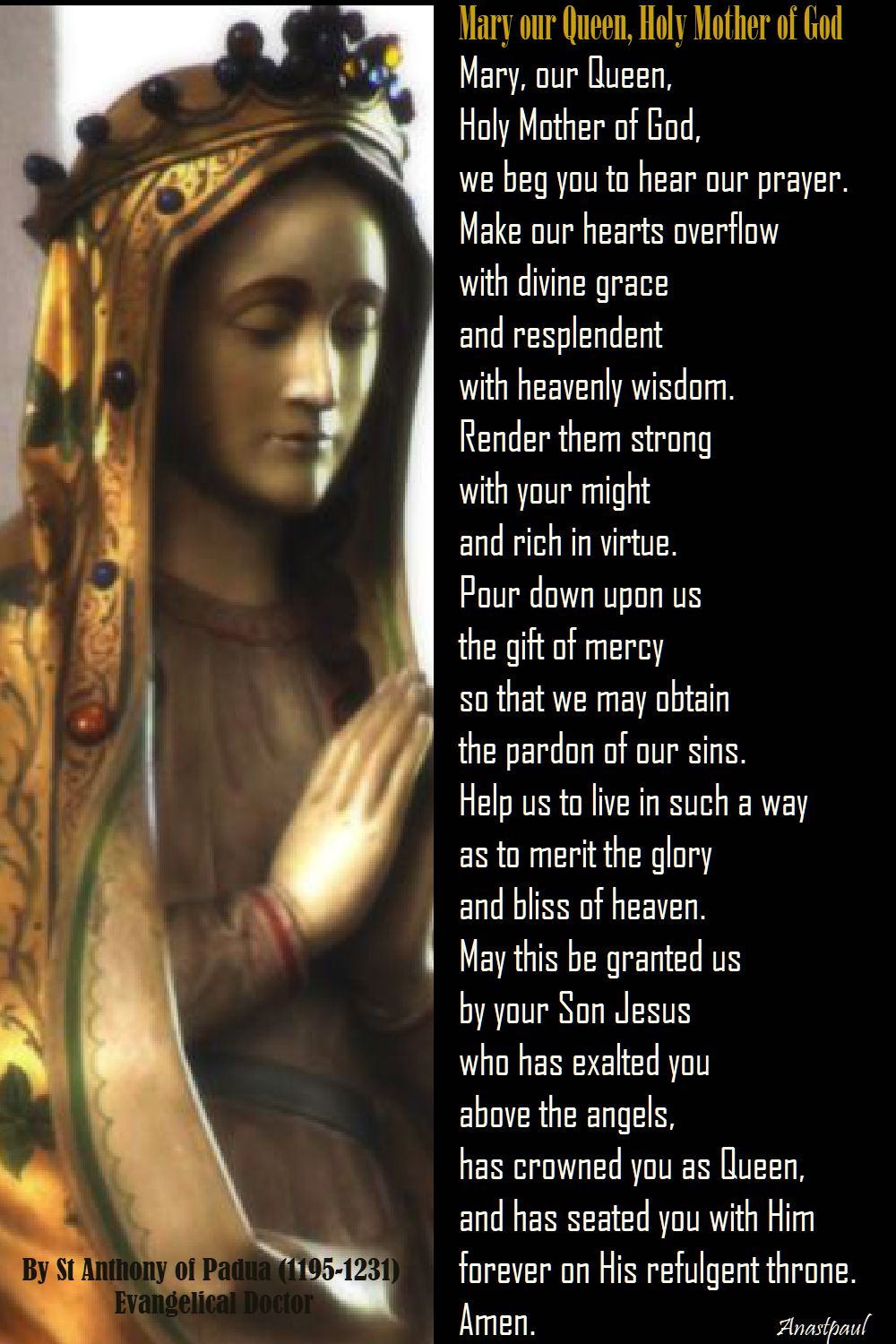
Mary our Queen, Holy Mother of God By St Anthony of Padua (1195-1231) Evangelical Doctor
Mary, our Queen,
Holy Mother of God,
we beg you to hear our prayer.
Make our hearts overflow with divine grace
and resplendent with heavenly wisdom.
Render them strong with your might
and rich in virtue.
Pour down upon us the gift of mercy
so that we may obtain the pardon of our sins.
Help us to live in such a way
as to merit the glory and bliss of heaven.
May this be granted us by your Son Jesus
who has exalted you above the angels,
has crowned you as Queen,
and has seated you with Him
forever on His refulgent throne.
Amen.
The Memorial of the Queenship of Mary – 22 August – A Marian feast day decreed by Pope Pius XII on 11 October 1954, in his encyclical Ad caeli reginam to recognise and celebrate the Blessed Virgin Mary as Queen of the world, of the universe, of the angels, of heaven, Prophets, Apostles, Martyrs, Confessors, Virgins, all Saints,of Families, Queen conceived without original sin Queen assumed into Heaven, Queen of the Most Holy Rosary, Queen of Mercy, Queen of Peace. The movement to officially recognise the Queenship of Mary was initially promoted by several Catholic Mariological congresses in Lyon, France, Freiburg, Germany and Einsiedeln, Switzerland. Pro Regalitate Mariae, an international society to promote the Queenship of Mary, was founded in Rome, Italy by noted Marioligist and writer Father Gabriel Roschini. Patronages – the diocese of Cabinda, Angola.
From early times Christians have believed and not without reason, that she of whom was born the Son of the Most High received privileges of grace above all other beings created by God. He “will reign in the house of Jacob forever,” “the Prince of Peace,” the “King of Kings and Lord of Lords.” And when Christians reflected upon the intimate connection that obtains between a mother and a son, they readily acknowledged the supreme royal dignity of the Mother of God.
In this feast, particularly cherished by the Popes of modern times, we celebrate Mary as the Queen of Heaven and Earth.
Pope Pius IX said of Mary’s Queenship: “Turning her maternal Heart toward us and dealing with the affair of our salvation, she is concerned with the whole human race. Constituted by the Lord, Queen of Heaven and earth and exalted above all choirs of Angels and the ranks of Saints in Heaven, standing at the right hand of Her only-begotten Son, Our Lord Jesus Christ, she petitions most powerfully with Her maternal prayers and she obtains what she seeks.”
And Pope Pius XII added the following: “We commend that on the festival there be renewed the consecration of the human race to the Immaculate Heart of the Blessed Virgin Mary. Upon this there is founded a great hope that there will rejoice in the triumph of religion and in Christian peace…
…Therefore, let all approach with greater confidence now than before, to the throne of mercy and grace of our Queen and Mother to beg help in difficultly, light in darkness and solace in trouble and sorrow…
. . Whoever, therefore, honours the lady ruler of the Angels and of men – and let no one think themselves exempt from the payment of that tribute of a grateful and loving soul – let them call upon her as most truly Queen and as the Queen who brings the blessings of peace, that She may show us all, after this exile, Jesus, who will be our enduring peace and joy.”
St Lomman, Abbot, (5th—early 6th century)
“The Help of Mary, Queen and Mother”
O Mary, when our eyes close in our last sleep and open to behold thy Son, the Just Judge and the Angel opens the Book and the Enemy accuses us; in that terrible hour, come to our aid. Be with us.
When death came to Joseph, you and your Son were with him: Thy Son to judge, thou to console. O Happy Joseph! When death comes for us, be near us. O Mary, when we are held captive in the place of atonement; plead for us and visit us, that we may find consolation in thy presence. Stretch forth thy hand to help us; deliver us from our bondage. We are thy children: Thou art our Mother. As little children we come to thee; we know no fear.
O Mary, He changed water into wine for thee, even as He said: My hour has not yet come. Now He will not refuse thee, when you plead for us thy children. O Mary, come quickly to our aid. Do not let us stray from the Fold. The wolf is waiting to destroy us. There shall be neither night nor day to thy praises.
Adoration to the Father Who created thee! Adoration to they Son, Who took flesh from thee! Adoration to the Holy Spirit, Thy Divine Spouse! Three in One, One in Three. Equal in all things. To Him be glory for ever. Forever. Forever. Amen.
Queenship of Mary (Memorial)
—
St Andrew of Fiesole
St Anthusa of Seleucia
St Antoninus of Rome
St Arnulf of Eynesbury
St Athanasius of Tarsus
Bl Bernard Perani
St Dalmau Llebaría Torné
Bl Élie Leymarie de Laroche
St Epictetus of Ostia
St Ethelgitha of Northumbria
St Fabrician of Toledo
St Felix of Ostia
St Gunifort
St Joan Farriol Sabaté
St John Kemble
St John Wall
St Josep Roselló Sans
St Julio Melgar Salgado
St Maprilis of Ostia
St Martial of Ostia
St Maurus of Rheims
St Narciso de Esténaga y Echevarría
St Philibert of Toledo
Bl Richard Kirkman
St Saturninus of Ostia
Bl Simeon Lukach
St Sigfrid of Wearmouth
St Symphorian of Autun
St Thomas Percy
St Timothy of Rome
Bl William Lacey
_
Martyred in the Spanish Civil War:
• Blessed Dalmau Llebaría Torné
• Blessed Joan Farriol Sabaté
• Blessed Josep Roselló Sans
• Blessed Julio Melgar Salgado
• Blessed Narciso de Esténaga y Echevarría
Thought for the Day – 21 August – The Memorial of St Pope Pius X
“I was born poor, I lived poor, I will die poor.” These words were part of the will that Pope Pius X left at his death on August 20, 1914.
He was born Giuseppe Melchiorre Sarto, the second of 10 children. His father was a poor parish clerk in Riese, Italy, and his mother worked as a seamstress. At 11, Giuseppe was accepted as a student in high school. Every day, he walked five miles to school and back. At 15, he began attending the local seminary. When his father died, Giuseppe wanted to come home and help with the family. His mother, however, would not let him.
In 1858, he was ordained and then worked as a parish priest for 17 years. He believed his call was to encourage those who were poor to lead Christian lives and to help them overcome financial problems. He was, however, named spiritual director of the major seminary and chancellor of the diocese. Later, he became a bishop and then a cardinal.
In 1903, this little-known cardinal was elected to become Pope Pius X. He took as his motto “Restore all things in Christ.”He emphasised the importance of the Eucharist. He directed that children as young as seven should be allowed to receive the Eucharist. He initiated changes in Church music and worship. He began a biblical institute. He gave the first official impetus to the modern liturgical renewal.
Pope Pius X believed that real peace could be achieved only through social justice and charity. He sponsored and sheltered refugees with his own resources. He wrote an encyclical encouraging Latin American bishops to improve the treatment of native people working on plantations.
He worked to stop the world from going to war. When Europe entered World War I, on the 11th anniversary of his election as pope, Pius was heartbroken, it killed him. He said, “I would gladly give up my life to save my poor children from this ghastly scourge.” Just a few weeks after the war started, Pope Pius X died.
St Pius’ humble background was no obstacle in relating to a personal God and to people whom he loved genuinely. Pius X gained his strength, his gentleness and warmth for people from the source of all gifts, the Spirit of Jesus. In contrast, we often feel embarrassed by our backgrounds. Shame makes us prefer to remain aloof from people whom we perceive as superior. If we are in a superior position, on the other hand, we often ignore simpler people. Yet we, too, have to help “restore all things in Christ,” especially the wounded people of God.
Quote/s of the Day – 21 August – The Memorial of St Pope Pius X
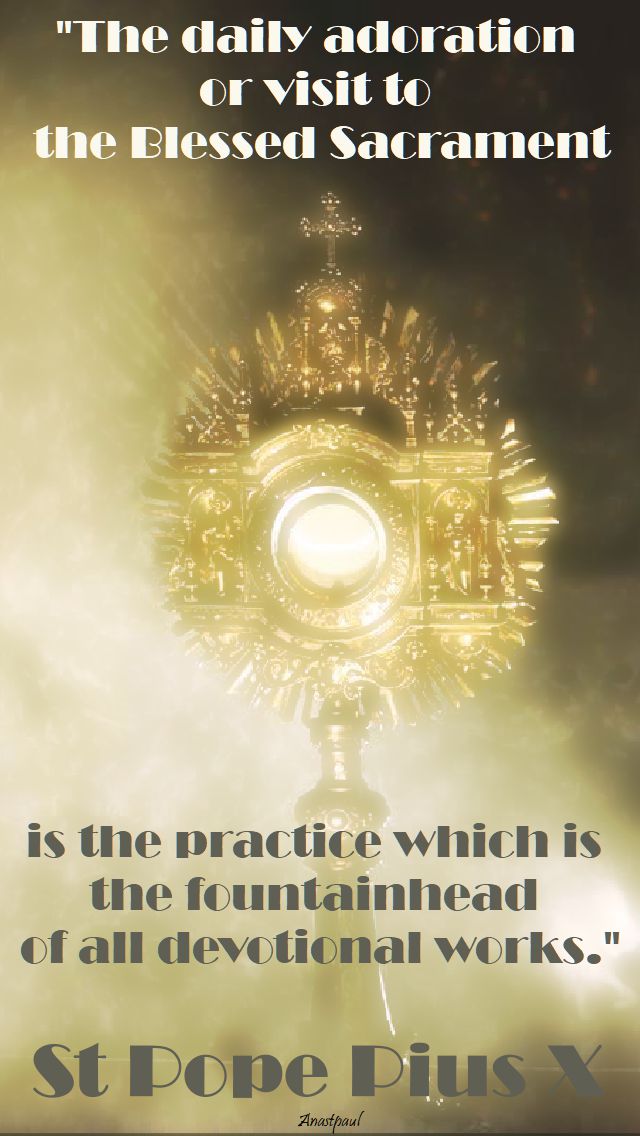
“The daily adoration or visit to the Blessed Sacrament is the practice which is the fountainhead of all devotional works.”
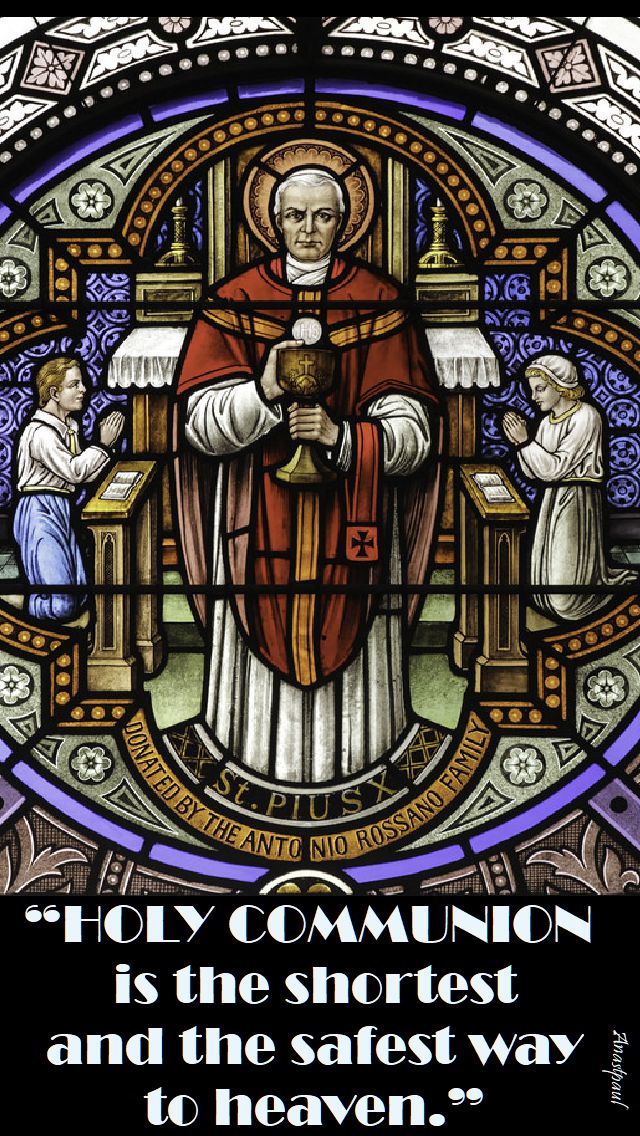
“HOLY COMMUNION is the shortest and the safest way to heaven.”
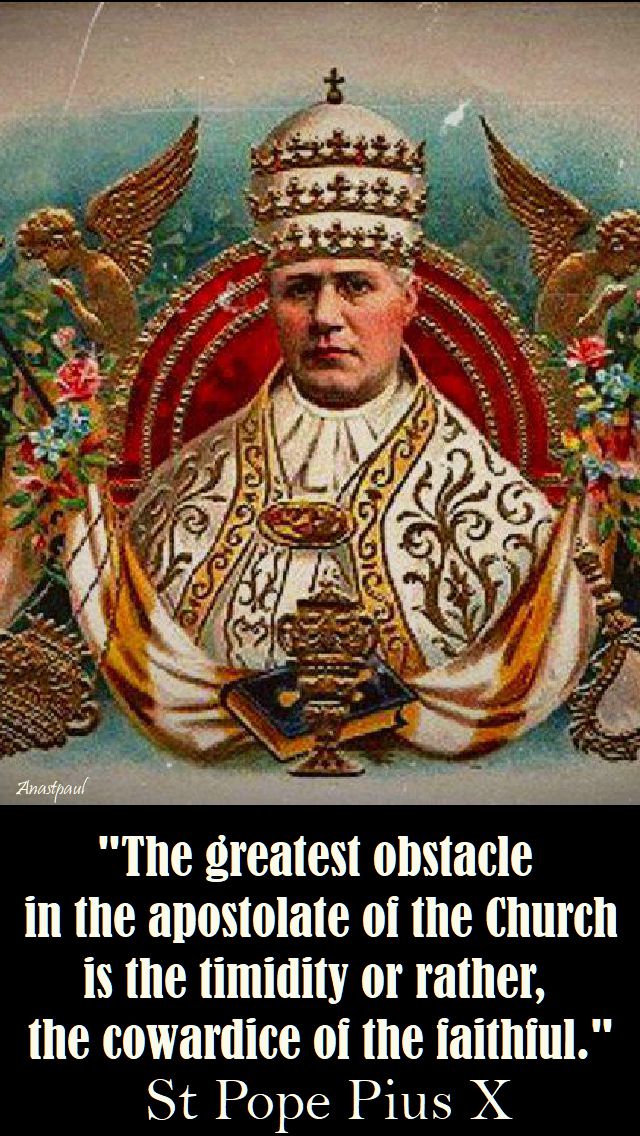
“The greatest obstacle in the apostolate of the Church is the timidity or rather the cowardice of the faithful.”
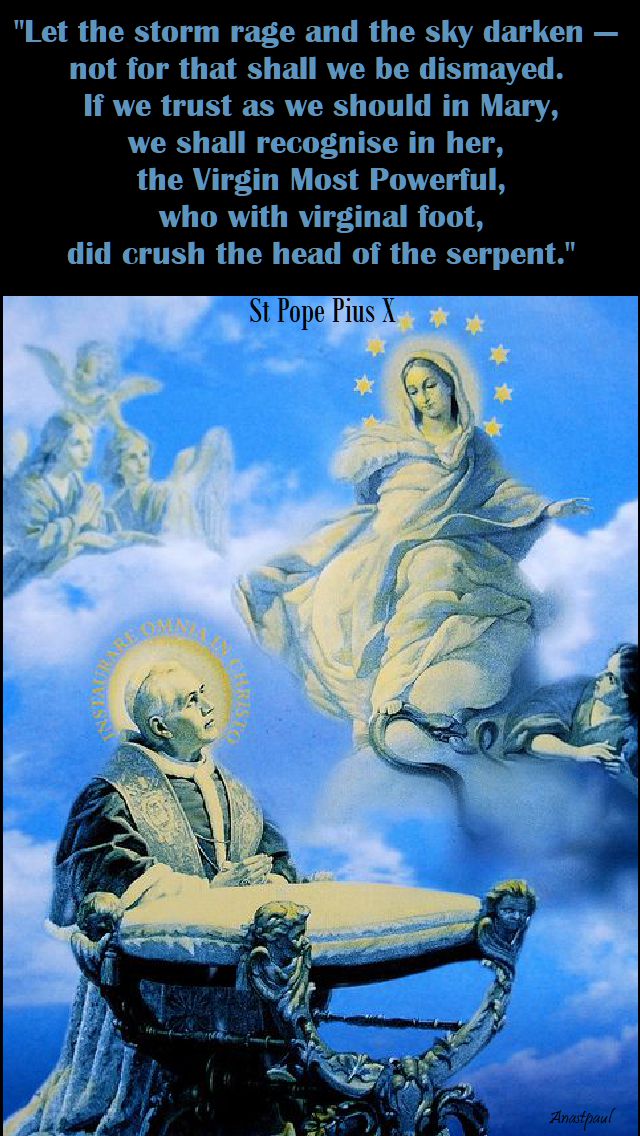
“Let the storm rage and the sky darken — not for that shall we be dismayed. If we trust as we should in Mary, we shall recognise in her, the Virgin Most Powerful, who with virginal foot did crush the head of the serpent.”
Our Morning Offering – August 21 – The Memorial of St Pope Pius X
Prayer for Union with the Holy Spirit By St Pope Pius X
O Holy Spirit of Light and Love,
to You I consecrate my heart,
mind and will
for time and eternity.
May I be ever docile
to Your Divine inspirations
and to the teachings
of the Holy Catholic Church
whose infallible guide You are.
May my heart be ever inflamed
with the love of God and love of neighbour.
May my will be ever in harmony with Your Divine Will.
May my life faithfully imitate the life and virtues
of our Lord and Saviour Jesus Christ.
To Him,
with the Father,
and You, Divine Spirit,
be honour and glory forever.
Amen.
One Minute Reflection – August 21 – The Memorial of St Pope Pius X
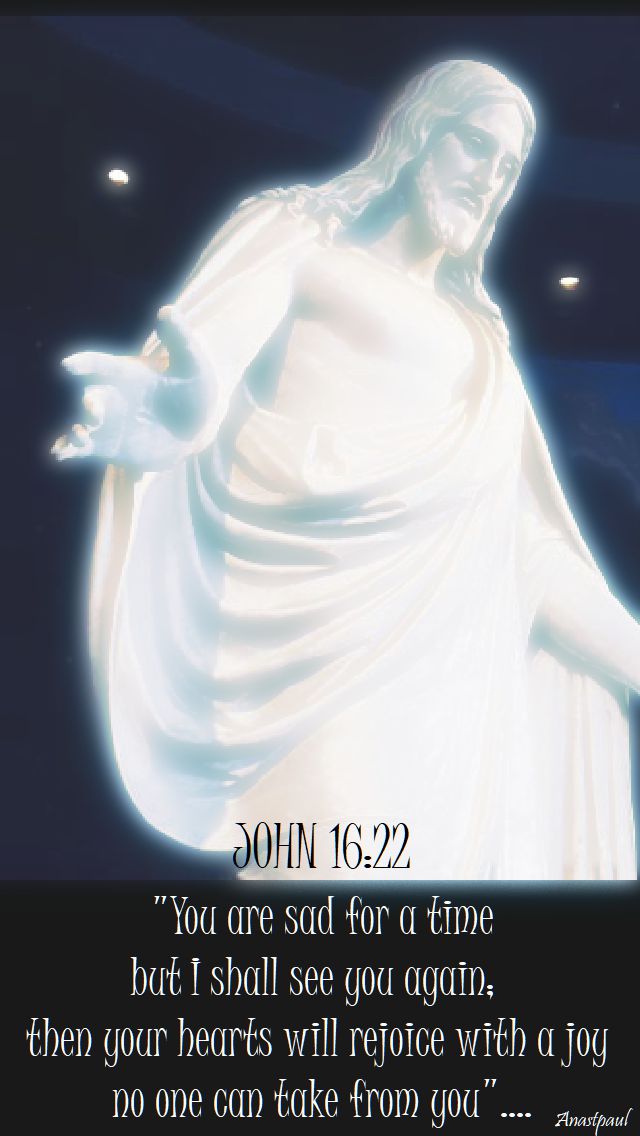
You are sad for a time but I shall see you again; then your hearts will rejoice with a joy no one can take from you…………John 16:22
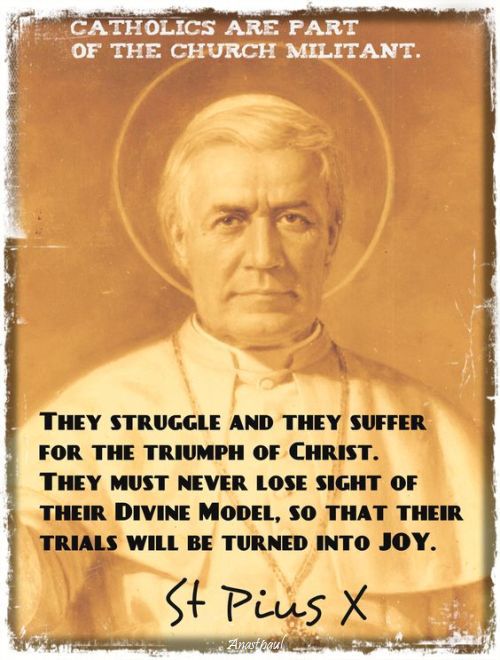
REFLECTION – Catholics are part of the Church Militant. They struggle and they suffer for the triumph of Christ.
They must never lose sight of their Divine Model, so that their trials will be turned into joy……..St Pius X
PRAYER – Jesus Lord of Sorrows, enable me to struggle and suffer in union with You. Let me keep ever before me the joy that will follow upon these passing sufferings. St Pius X Pray for Us. Amen
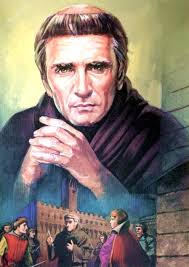
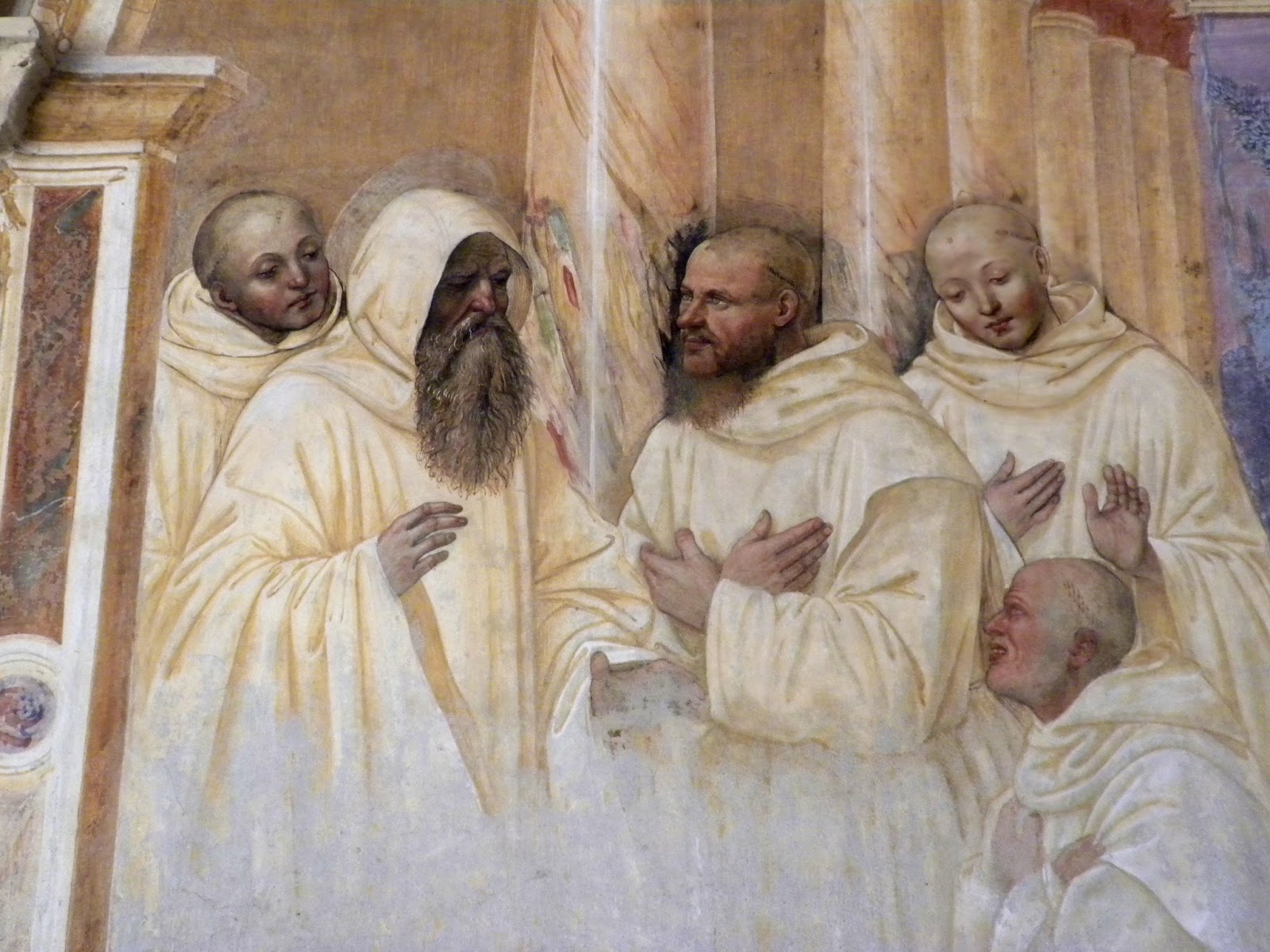
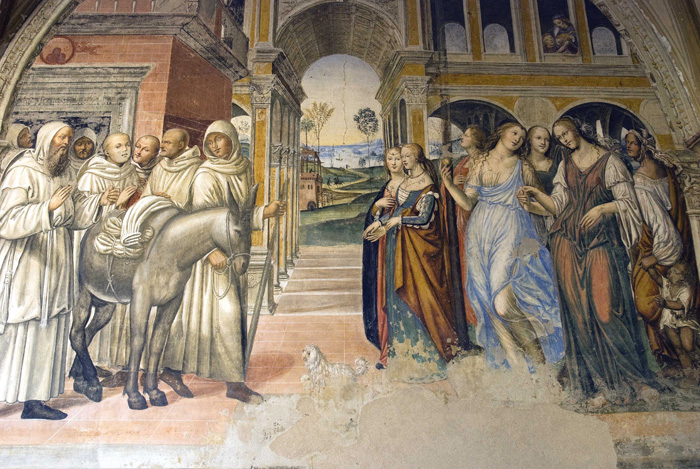
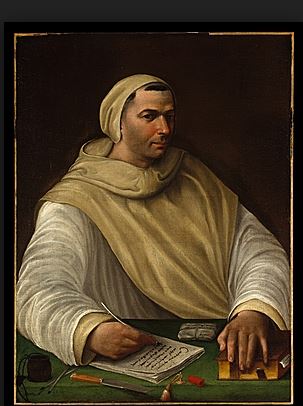
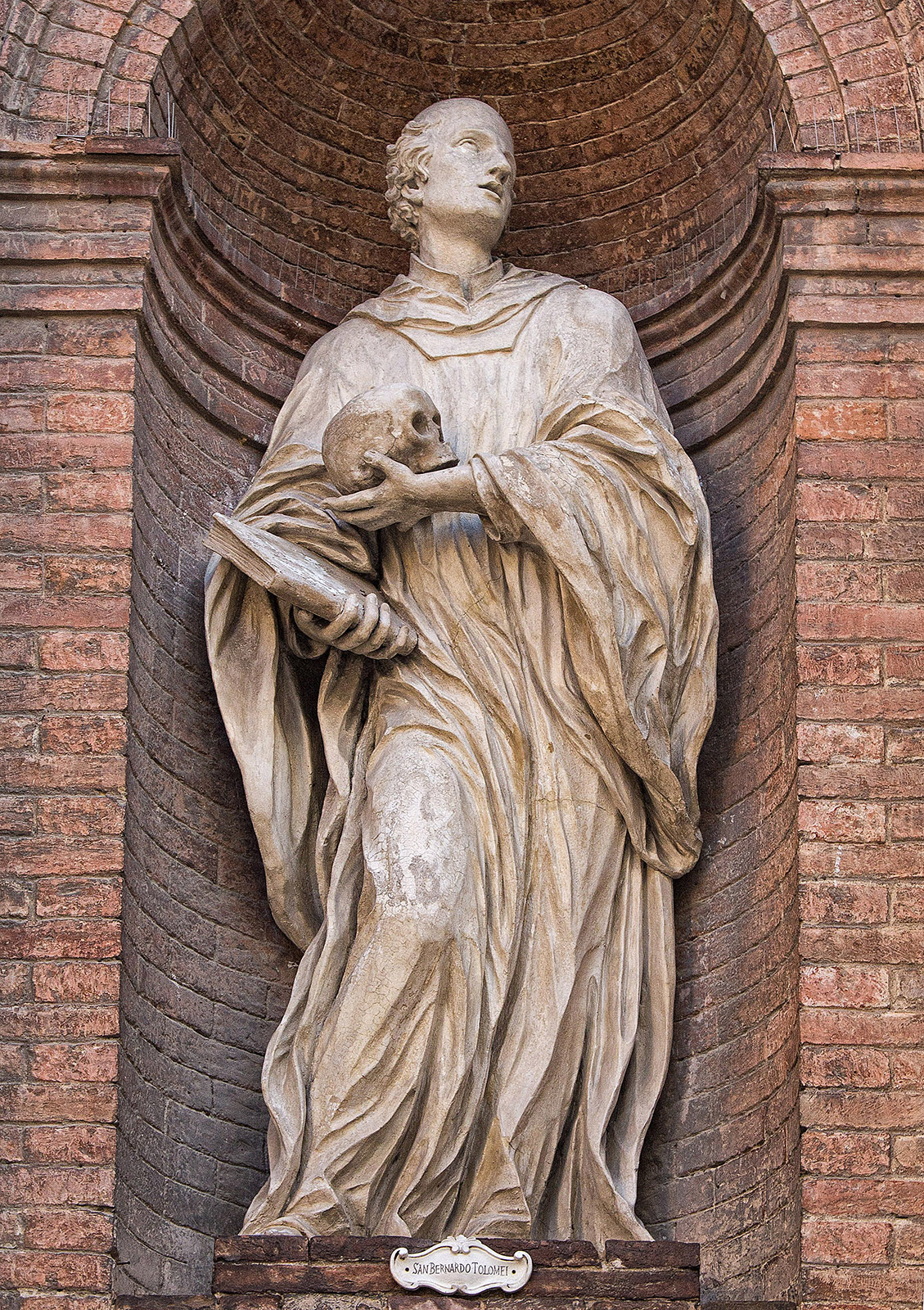
Saint of the Day – 21 August – St Bernardo Tolomei (1272-1348) Founder, Theologian, Mystic, Hermit, Lawyer, Soldier, Politician (10 May 1272 at Siena, Tuscany as Giovanni Tolomei – 20 August 1348 in Siena, Italy of natural causes). He was Beatified on 24 November 1644 by Pope Innocent X (cultus confirmed) and Canonised on 26 April 2009 Pope Benedict XVI. Patronage – the Order he founded, the Congregation of the Blessed Virgin of Monte Oliveto, known as the Olivetans. Attributes – White Habit.
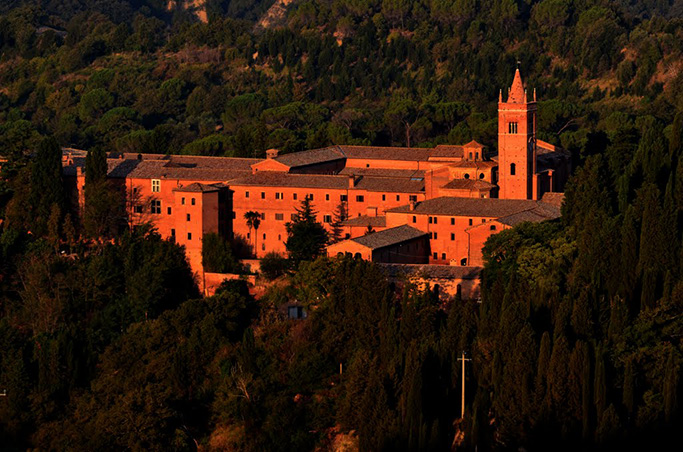
BERNARDO TOLOMEI, son of Mino Tolomei, was born in Siena on the 10th of May 1272. At his baptism he was given the name Giovanni. He was probably educated by the Dominicans at their College of San Domenico di Camporegio in Siena. He was knighted by Rodolfo I d’Absburgo (†1291). While studying law in his home town, he was also a member of the Confraternity of the Disciplinati di Santa Maria della Notte dedicated to aiding the sick at the hospital della Scala. Due to a progressive and almost total blindness, he was forced to give up his public career. In 1313, in order to realize a more radical Christian and ascetic ideal, together with two companions, (Patrizio di Francesco Patrizi †1347 and Ambrogio di Nino Piccolomini †1338) both noble Sienese merchants and members of the same Confraternity, he retired to Accona on a property belonging to his family, about 30km south-east of the city. It was here that Giovanni, who in the mean time had taken the name Bernardo out of veneration for the holy Cistercian abbot, St Bernard of Clairvaux (Memorial 20 August), together with his two companions, lived a hermitic penitential life characterised by prayer, manual work and silence.
Towards the end of 1318, or the beginning of 1319, while deep in prayer, he saw a ladder on which monks in white habits ascended, helped by angels and awaited by Jesus and Mary.
In order to secure the legal position of his group, Bernardo, together with Patrizio Patrizi, visited the bishop of Arezzo, Guido Tarlati di Pietramala (1306-c.1327) under whose jurisdiction Accona fell at the time. On the 26th March 1319 he was given a Decree authorising him to build the future monastery of Santa Maria di Monte Oliveto and instituted “sub regula sancti Benedicti”, with certain privileges and exemptions. Through his legate, the bishop received their monastic profession. In choosing the Rule of St. Benedict, Bernardo accepted Benedictine coenobitism and, wishing to honour Our Lady, the founders wore a white habit. Welcoming the small group of monks, the bishop said: “Since your fellow citizens glory in placing themselves under the patronage of the Virgin, and because of the virginal purity of the glorious Mother, it pleases you to wear a white monastic habit, therefore showing outwardly that purity which you harbour within.” (Antonio di Barga, Cronaca 5). The white habit characterised various forms of medieval monasticism, amongst which the Camaldolese, Carthusians, Cistercians and the monks of Montevergine.
With the laying of the first stone of the church on the 1st of April 1319, the monastery of Santa Maria di Monte Oliveto Maggiore was born. The hermits became monks according to the Rule of St Benedict to which they made some institutional changes. The most characteristic element of this institutional change recorded in an episcopal document 28thMarch 1324, was the temporariness of the abbatial office and the abbot-elect would have to be confirmed by the bishop of Arezzo. When the time came to elect an abbot, Bernardo succeeded in withdrawing himself from those eligible because of his infirmity of sight. Therefore, Patrizio Patrizi was elected first abbot (1st of September 1319). Two other abbots followed: Ambrogio Piccolomini (1st of September 1320) and Simone di Tura (1st of September 1321). On the 1st of September 1322, Bernardo could no longer oppose the wishes of his brethren and so became the fourth abbot of the Monastery he founded, remaining abbot until his death. An Act dated 24th September 1326 attests that the Apostolic Legate, Cardinal Giovanni Caetani Orsini (†1339), dispensed abbot Bernardo from the Canonical impediment of Infirmity of Sight, hence validating his election. From Avignone, with three Bulls dated 21st January 1344 (Significant Vestrae Sanctitati: acknowledges the foundation and requests pontifical privileges; Vacantibus sub religionis: canonical approval of the new community; Solicitudinis pastoralis officium: the faculty to erect new monasteries in Italy) Clemente VI approved the Congregation which numbered ten monasteries. Bernardo did not go to Avignone himself but sent two monks: Simone Tendi and Michele Tani.
Significant evidence of the spiritual personality of Bernardo consists in the fact that, even though the monks had decided not to re-elect an abbot at the end of his annual mandate, they decided to ignore this, re-electing Bernardo for twenty-seven consecutive years, until his death. Another act of trust in Bernardo’s paternity was seen in the General Chapter of the 4thof May 1347 when the monks granted him the faculty to govern without recourse to the Chapter and the brethren, trusting that he would do all in conformity to God’s Will and for the salvation of all.
Bernardo tried at least twice, in 1326 and 1342, to lay down the abbatial office, declaring to the Pope’s Legate and Jurists that he was not a priest but only in Minor Orders, also citing the existing dispensation from his function as abbot because of his persistent infirmity of vision. However his leadership was asserted fully legitimate even according to the canonical norms of the time. With the Pontifical Approbation of a new Benedictine Congregation named “Santa Maria di Monte Oliveto”, Bernardo is the initiator of a resolute Benedictine monastic movement.
Bernardo left his monks an example of a holy life, the practice of the virtues to a heroic level, an existence dedicated to the service of others and to contemplation. During the Plague of 1348 Bernardo left the solitude of Monte Oliveto for the monastery of San Benedetto a Porta Tufi in Siena. In the city, the disease was particularly dire. On the 20th August 1348, while helping his plague-stricken monks, he himself, along with 82 monks, fell victim of the Plague. Bernard Tolomei died, together with half of the congregation, during the epidemic of plague that ravaged Tuscany in 1348; he had gone to rescue his brothers from the monastery of St Benedict of Siena.
This hero of penance and martyr of charity did not go by unnoticed, as Pius XII observed in a letter sent to Abbot General Dom Romualdo M. Zilianti on the 11th April 1948, to commemorate the forthcoming sixth centenary of the death of Blessed Bernardo. The venerable abbot was buried near the monastery church in Siena. All the plague-stricken bodies were put in a common pit of quick-lime outside the church. Unfortunately the search for the bodies of the victims of the plague, both in Siena and in and around the Abbey of Monte Oliveto Maggiore, has been unsuccessful to this day.
The Congregation underwent a strong development later, in Italy exclusively until the 19th century where the first foreign foundations took place, first in France. Today of modest size, the monastic family is nonetheless present almost on five continents. Its institutions have, of course, evolved from the beginning, in order to allow for a greater consistency of local communities and to be able to live real cultural diversity.
St Pius X, Pope (Memorial) Our Lady of Knock: Our Lady, Saint Joseph and Saint John the Evangelist appeared in a blaze of light at the south gable of Saint John the Baptist Church, Knock, County Mayo, Ireland. They appeared to float about two feet above the ground and each would occassionally move toward the visionaries and then away from them. The Blessed Virgin Mary was clothed in white robes with a brilliant crown on her head. Where the crown fitted to her brow, she wore a beautiful full-bloom golden rose. She was praying with her eyes and hands raised towards Heaven. Saint Joseph wore white robes, stood on Our Lady’s right and was turned towards her in an attitude of respect. Saint John was dressed in white vestment, stood was on Mary’s left and resembled a bishop, with a small mitre. He appeared to be preaching and he held an open book in his left hand. Behind them and a little to the left of Saint John was a plain altar on which was a cross and a lamb with adoring angels. The apparition was witnessed by fifteen people. Miraculous healings were reported soon after the area and it is now a major pilgrimage destination. Patronage – Ireland.
OLYMPUS DIGITAL CAMERA
—
St Abraham of Smolensk
St Agapius of Edessa
St Agathonicus of Constantinople
St Anastasius Cornicularius
St Aria of Rome
St Avitus I of Clermont
St Bassa of Edessa
Bl Beatrice de Roelas
St Bernhard of Lérida
St Bernard de Alziva
St Bernardo Tolomeo – https://www.youtube.com/watch?v=32y6LTMevbo
St Bonosus
Bl Bruno Zembol
St Camerinus of Sardinia
St Cameron
St Cisellus of Sardinia
St Cyriaca
St Euprepius of Verona
St Fidelis of Edessa
Bl Gilbert of Valenciennes
St Gracia of Lérida
St Hardulph
St Joseph Nien Vien
Bl Ladislaus Findysz
St Leontius the Elder
St Luxorius of Sardinia
St Maria of Lérida
St Maximianus the Soldier
St Maximilian of Antioch
St Natale of Casale Monferrato
St Paternus of Fondi
St Privatus of Mende
St Quadratus of Utica
St Sidonius Apollinaris
St Theogonius of Edessa
Bl Victoire Rasoamanarivo
St Zoticus the Philosopher
Martyred in the Spanish Civil War:
• Blessed Joan Cuscó Oliver
• Blessed Joan Vernet Masip
• Blessed Pedro Mesonero Rodríguez
• Blessed Pere Sadurní Raventós
• Blessed Ramon Peiró Victori
• Blessed Salvador Estrugo Salves
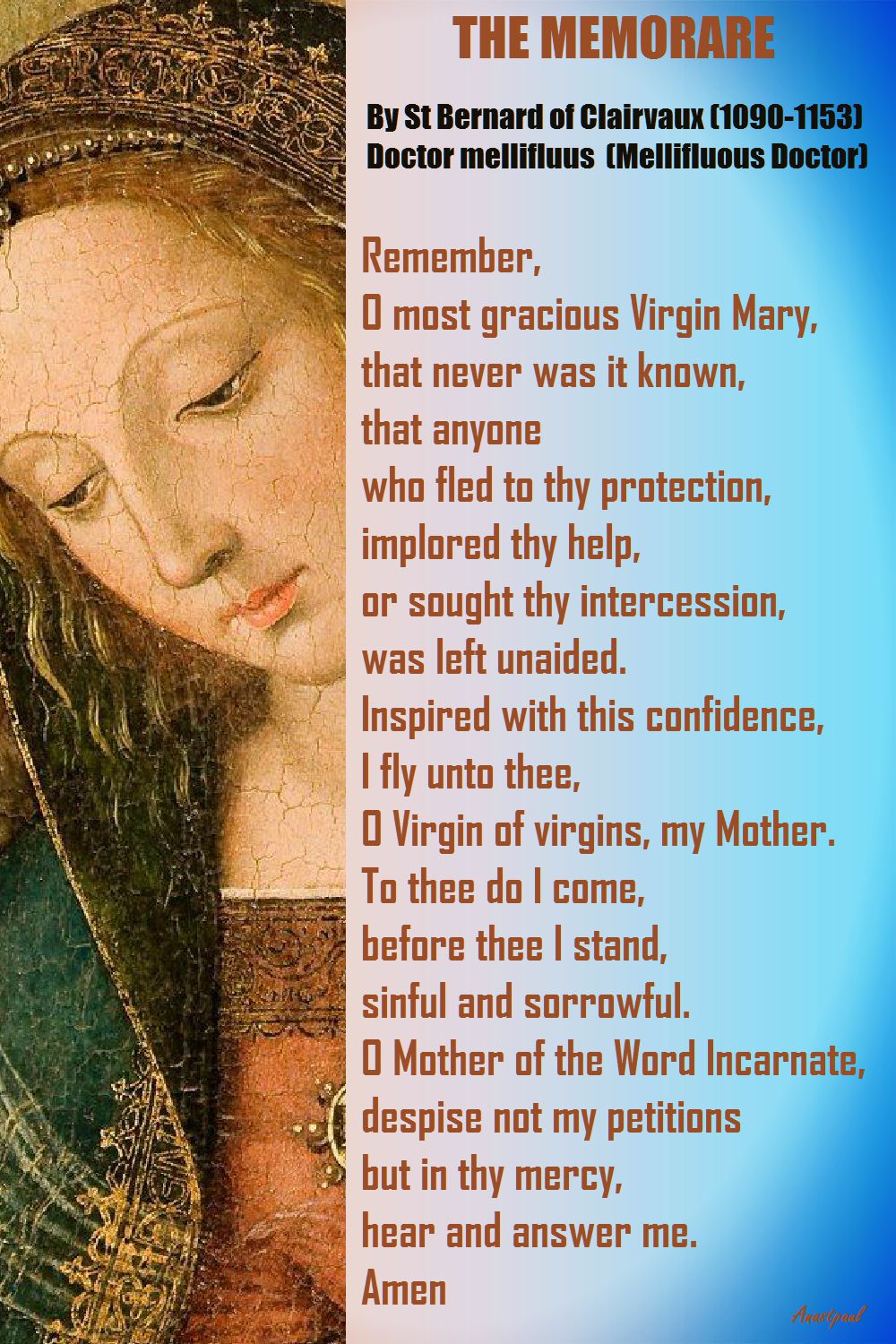
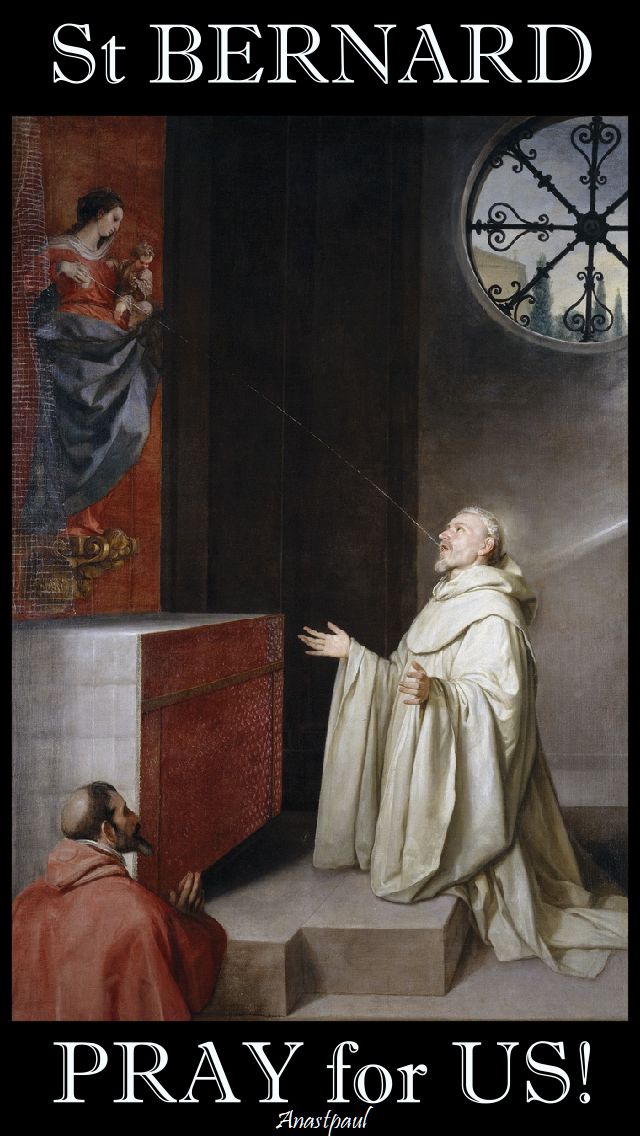
On the Feast Day of St Bernard, August 20, can we do better than call on our Mother
The Memorare by St Bernard of Clairvaux
REMEMBER, O most gracious Virgin Mary,
that never was it known that anyone who fled
to thy protection, implored thy help, or sought
thy intercession was left unaided. Inspired by
this confidence, I fly unto thee, O Virgin of virgins,
my Mother; to thee do I come; before thee I stand,
sinful and sorrowful. O Mother of the Word Incarnate,
despise not my petitions, but in thy mercy
hear and answer me. Amen.
(The Express Novena you will recall, is 9 times the Memorare)
Thought for the Day – 20 August – The Memorial of St Bernard of Clairvaux
Man of the century! Woman of the century! You see such terms applied to so many today—“golfer of the century,” “composer of the century,” “right tackle of the century”—that the line no longer has any punch. But Western Europe’s “man of the twelfth century,” without doubt or controversy, had to be Bernard of Clairvaux. Adviser of popes, preacher of the Second Crusade, defender of the faith, healer of a schism, reformer of a monastic Order, Scripture scholar, theologian, and eloquent preacher: any one of these titles would distinguish an ordinary man. Yet Bernard was all of these—and he still retained a burning desire to return to the hidden monastic life of his younger days.
His ability as arbitrator and counsellor became widely known. More and more he was lured away from the monastery to settle long-standing disputes. On several of these occasions, he apparently stepped on some sensitive toes in Rome. Bernard was completely dedicated to the primacy of the Roman See. But to a letter of warning from Rome, he replied that the good fathers in Rome had enough to do to keep the Church in one piece. If any matters arose that warranted their interest, he would be the first to let them know.
Shortly thereafter it was Bernard who intervened in a full-blown schism and settled it in favour of the Roman pontiff against the antipope.
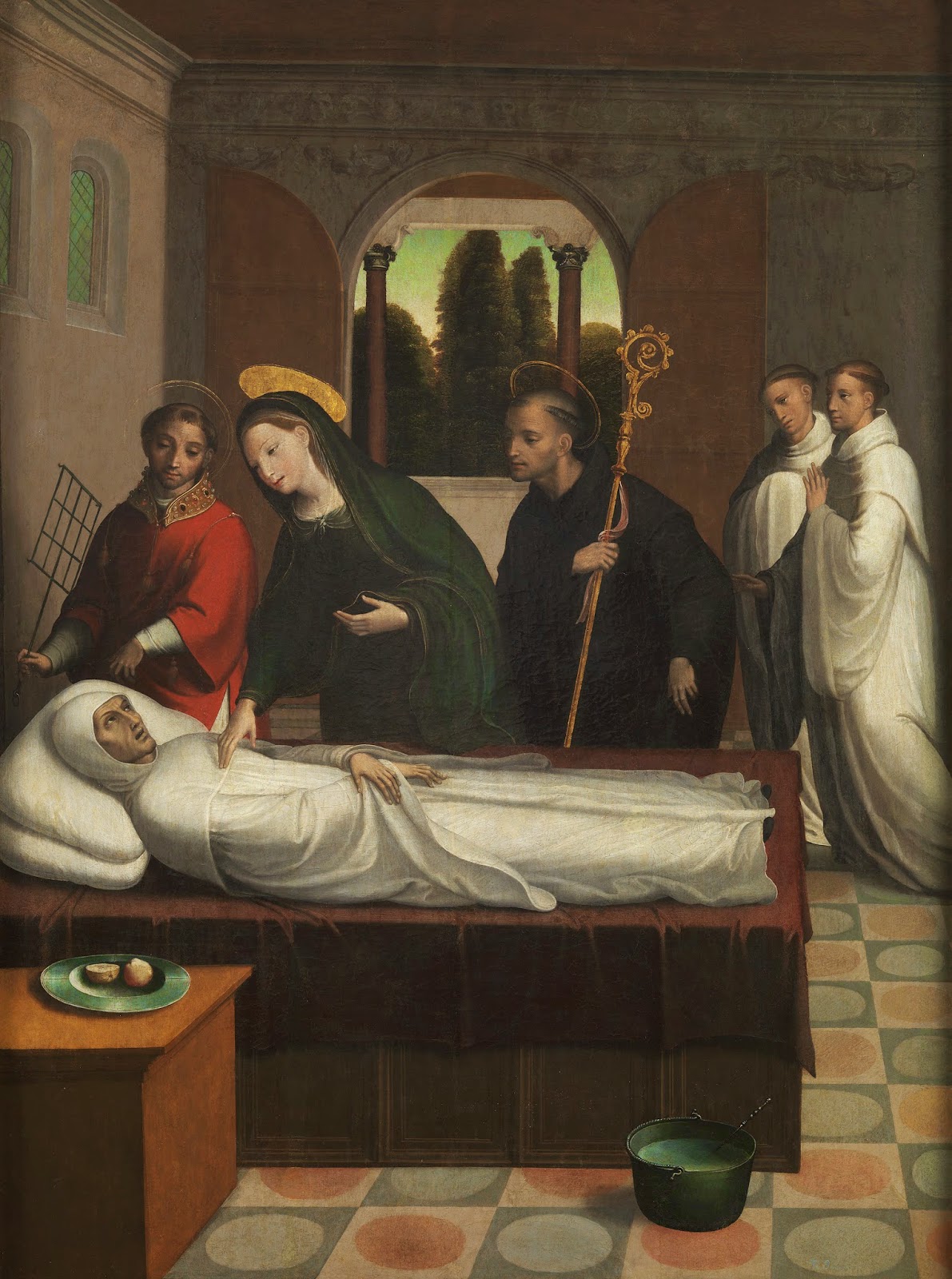
Bernard felt responsible in some way for the degenerative effects of the crusade. This heavy burden possibly hastened his death, which came August 20, 1153.
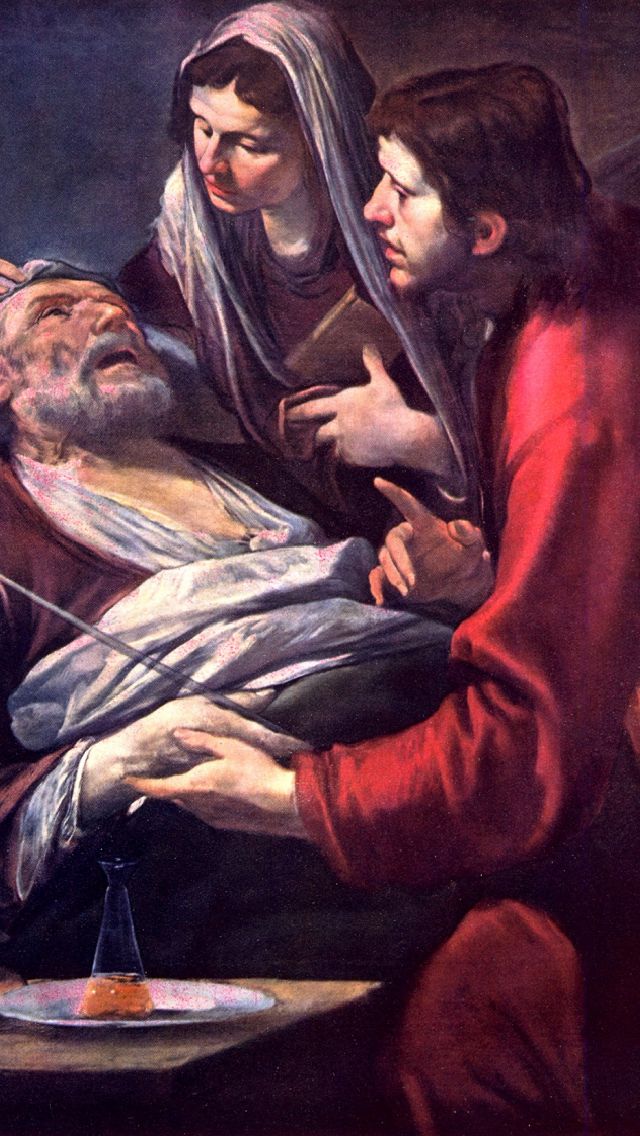
Juan Correa de Vivar (1510 – 16 April 1566) Death of St Bernard – 1545
Bernard’s life in the Church was more active than we can imagine possible today. His efforts produced far-reaching results. But he knew that they would have availed little without the many hours of prayer and contemplation that brought him strength and heavenly direction. His life was characterised by a deep devotion to the Blessed Mother. His sermons and books about Mary are still the standard of Marian theology….Fr Don Miller OFM





















You must be logged in to post a comment.