Transfiguration of Our Lord (Feast)
—
Bl Gezelin of Schlebusch
St Gislain of Luxemburg
St Glisente of Brescia
Bl Goderanno
Bl Guillermo Sanz
St Hardulf of Breedon
St Pope Hormisdas
St James the Syrian
St Justus of Alcala
Bl Maria Francesca Rubatto
Bl Octavian of Savona
St Pastor of Alcala
St Stephen of Cardeña
BlTadeusz Dulny
Bl William of Altavilla
—
Martyrs of Cardeña: Two hundred Benedictine monks at the Saint Peter of Cardegna monastery, Burgos, Spain who were martyred in the 8th century by invading Saracens. They were buried by local Christians in a nearby churchyard in Burgos, Spain and Beatified in 1603 by Pope Clement VIII (cultus confirmed).
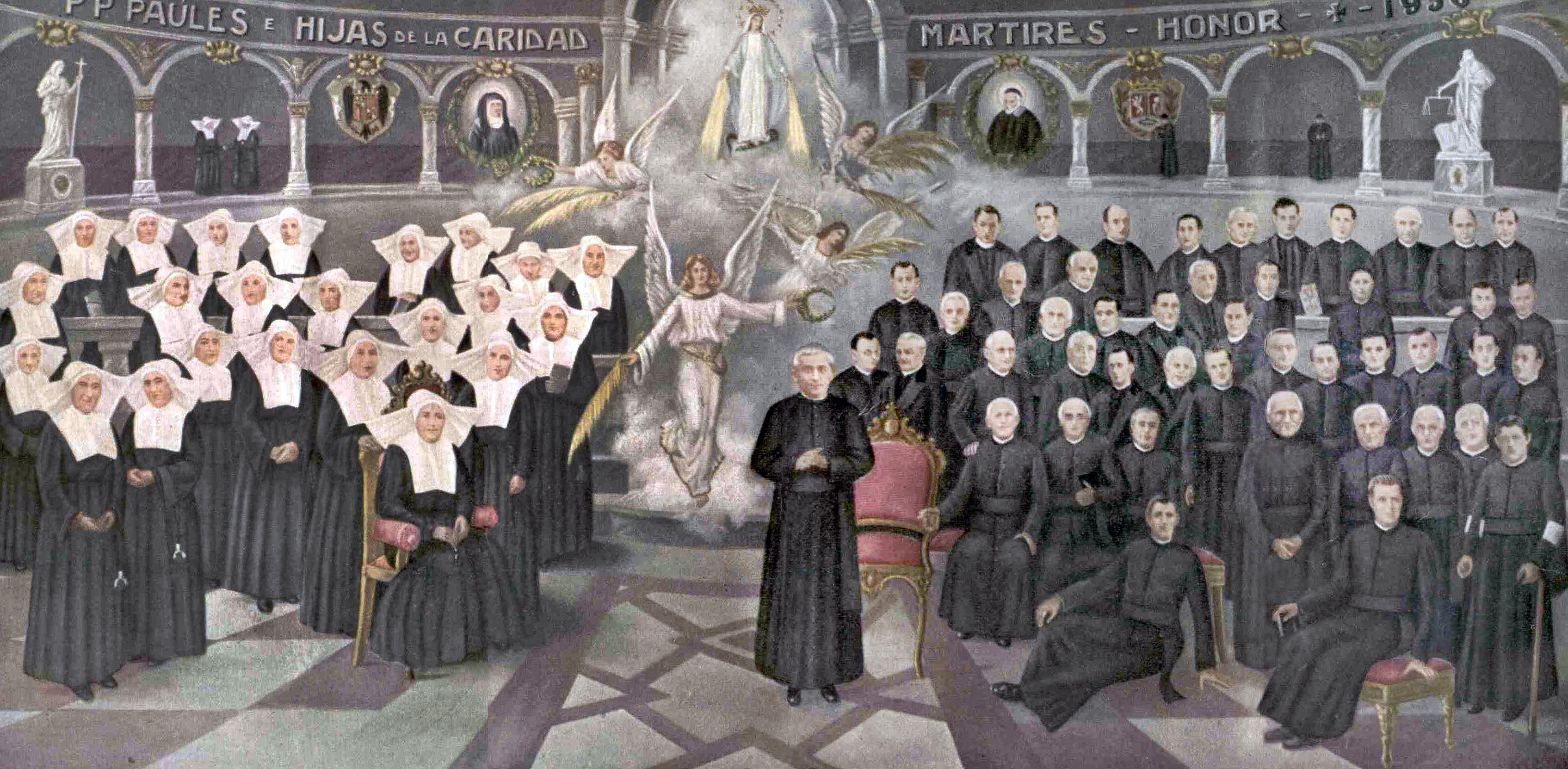
Martyred in the Spanish Civil War: 10 Beati
Alejandro Casare Menéndez
Andrés Soto Carrera
Antoni Serra Hortal
Bl Carlos López Vidal
Francesc Vives Antich
José González Ramos Campos
José María Recalde Magúregui
Juan Silverio Pérez Ruano
Pau Bertrán Mercadé
Saturnino Ortega Montealegre
That we have passed from death to life we know because we love the brothers. The man who does not love is among the living dead. Anyone who hates his brother is a murderer and you know that eternal life abides in no murderer’s heart. The way we came to understand love was that he laid down his life for us; we too must lay down our lives for our brothers. (1 John 3:14-16)
Love is the fulfilling of the law and Dominic, the preacher of God’s law, was consumed with the fire of love. In all his actions his love for God appeared and his constant prayer was that he might have true charity and love God purely for his own sake. From this love sprang that ardent desire to suffer for God which made him a martyr in spirit. So deeply was he moved by the love of Jesus Crucified that he longed to die for him. His life of generous self-sacrifice proved his love sincere. As a youth he sold his only treasure, the books from which he studied, to feed the poor. His life was entirely devoted to the hardest apostolic labour, traveling far and wide to seek the lost sheep of the Good Shepherd and braving every kind of danger. His prayers for souls were continual and daily he did penance for sinners. The one object of his Order was the salvation of souls. Throughout his life he preached to the heathen hoping for martyrdom. He had compassion for the suffering and misery of others. To all he was gentle, kind and merciful.
The true love of God is proved by the desire to be like Christ, and to labor and suffer for others.
Beloved, let us love one another because love is of God; everyone who loves is begotten of God and has knowledge of God. The man without love knows nothing of God, for God is love. (1 John 4:7-8)
Pray for us, blessed father, St. Dominic, That we may be made worthy of the promises of Christ.
Let us pray:
O Holy Father St. Dominic,
who showed us the way to eternal happiness
and won many souls to God by founding the Order of Friars Preachers,
pray for us,
that we may follow in your footsteps
and ever work for the glory of God
and the salvation of souls.
We pray that we may grow
in love and devotion
for our Father who art in heaven
and manifest this devotion,
through our love and assistance
to our neighbour.
We ask too Holy St Dominic,
that our prayers and yours,
may draw back those
who have lapsed from the one, true faith
and for this our special intention …
(make your request)
Through Christ our Lord. Amen
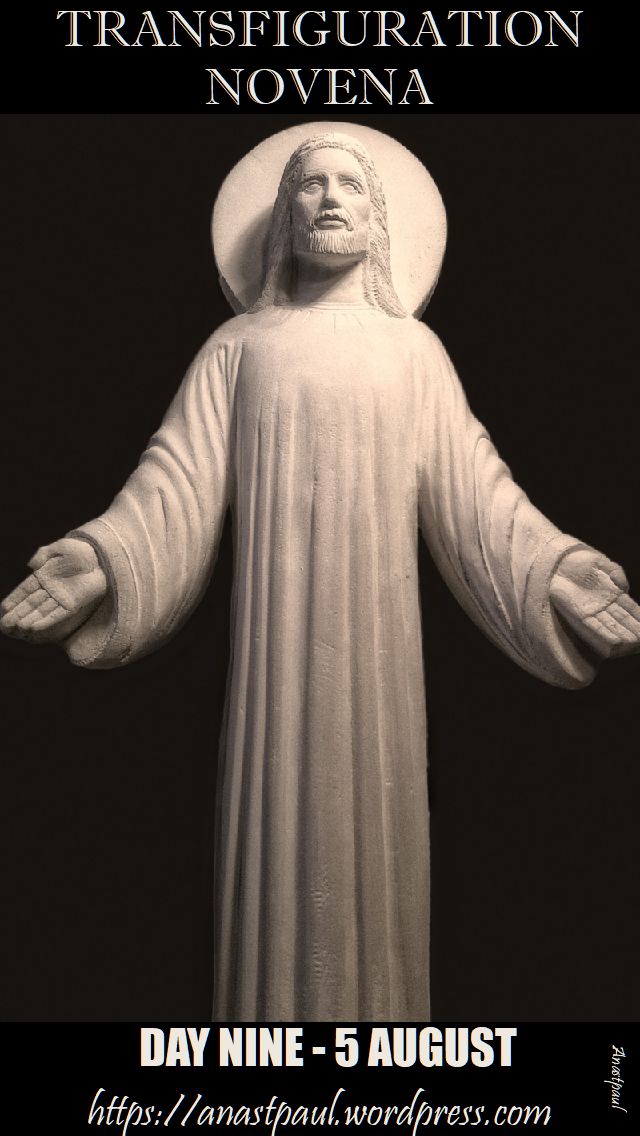
Ninth Day: Transfiguration and the Blessed Trinity
The event of the transfiguration marks a decisive moment in the ministry of Jesus. A revelatory event which prefigures the glory of the Resurrection, it was given to the disciples to prepare them for the tragedy of the Cross. The Resurrection of Jesus is the epiphany of the Trinity. The Father raises Jesus from the dead and the first gift of the glorification is the sending of the Holy Spirit.
Let us Pray:
O Christ,
With the Father, You sent us
the Spirit of Love, to guide and inspire,
lead. assist and transfigure us.
You will reform our lowly body
and make it like Your glorious one,
we pray for our brothers and sisters
who have died that they may share
Your glory forever.
Amen
Theological debate over Christ’s nature as God and man reached fever pitch in Constantinople in the early fifth century. The chaplain of Bishop Nestorius began preaching against the title Theotokos, “Mother of God,” insisting that the Virgin was mother only of the human Jesus. Nestorius agreed, decreeing that Mary would henceforth be named “Mother of Christ” in his see. The people of Constantinople virtually revolted against their bishop’s refutation of a cherished belief. When the Council of Ephesus refuted Nestorius, believers took to the streets, enthusiastically chanting, “Theotokos! Theotokos!”….. ( Fr Don Miller, OFM)
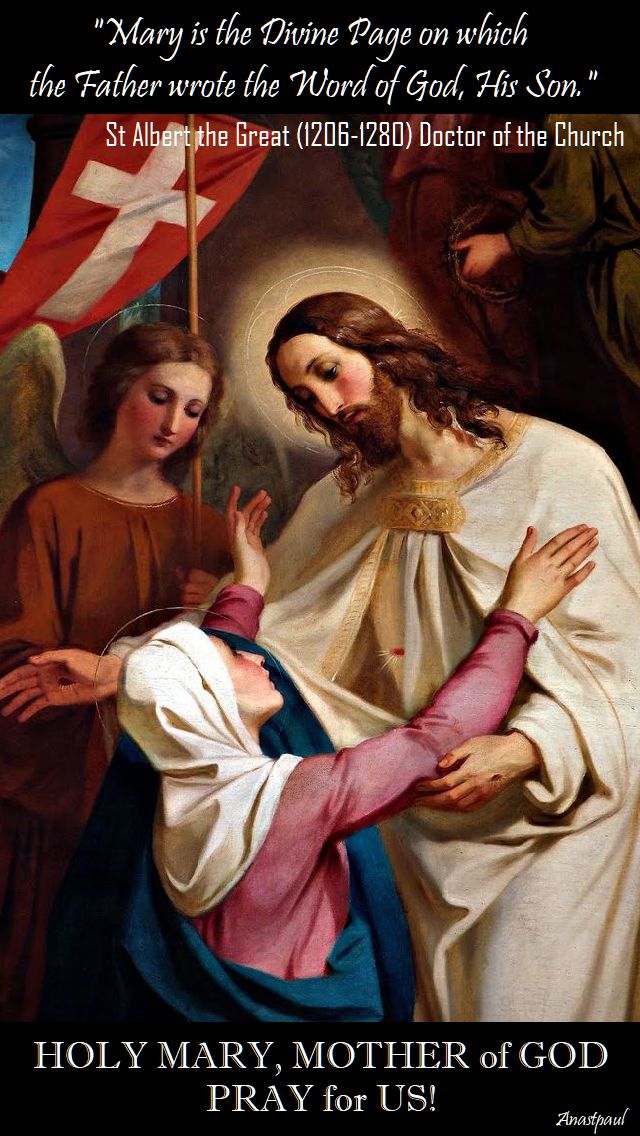
“Mary is the Divine Page on which the Father wrote the Word of God, His Son.” … St Albert the Great (1206-1280) German; scientist, philosopher, theologian and Doctor of the Church
” What the Catholic faith believes about Mary is based on what it believes about Christ and what it teaches about Mary, illumines in turn, its faith in Christ” (CCC#487).
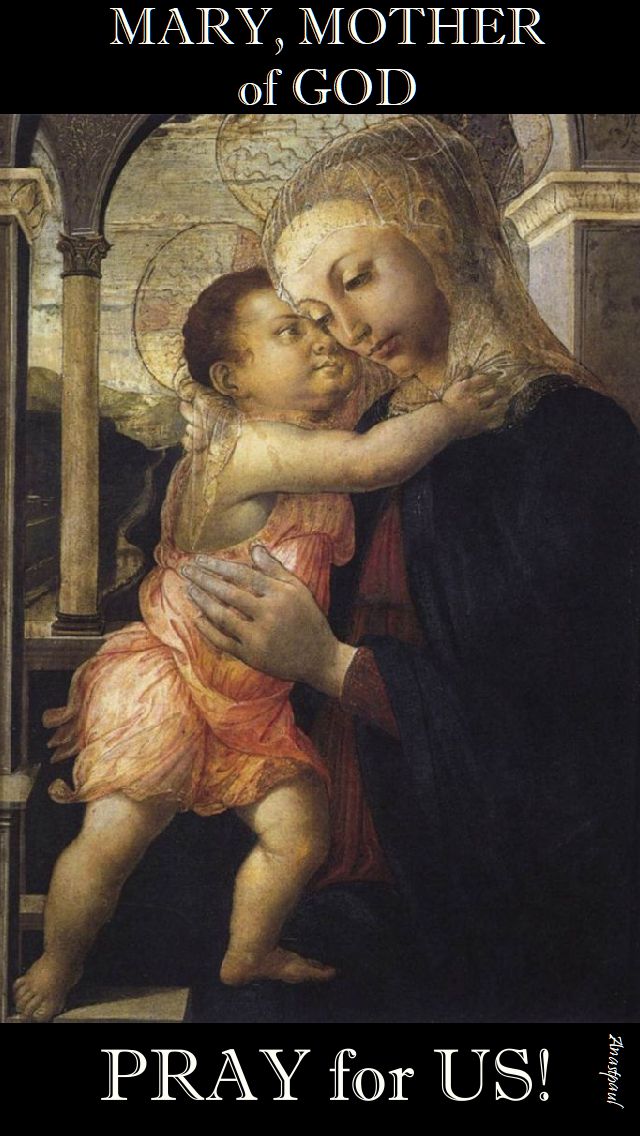
Holy Mary, Mother of God, pray for us!
Prayer to Our Lady of the Snows
Mary, Mother of God,
it is our Christian belief that all who fashion their lives in imitation of your Son, Jesus Christ
and have placed their hope in Him,
are gathered together in a communion of saints.
Those who have gone before us live in intimate communion with Christ.
You are the most eminent of them, for you were drawn into His life and being as no other.
You who gave Him human life followed Jesus, the Way, the Truth and the Life.
Mary, look at us.
Look at all who are centred on your Son.
At the present time some of His disciples are pilgrims on earth.
Others have died and are being purified, while still others are in glory,
contemplating ‘in full light, God Himself Triune and One, exactly as He is.
All of God’s people hunger to be intimately one with Him.
Mary, we are the wayfarers
and we hunger for this exchange of spiritual goods with you
who were so intimately close to Jesus Christ.
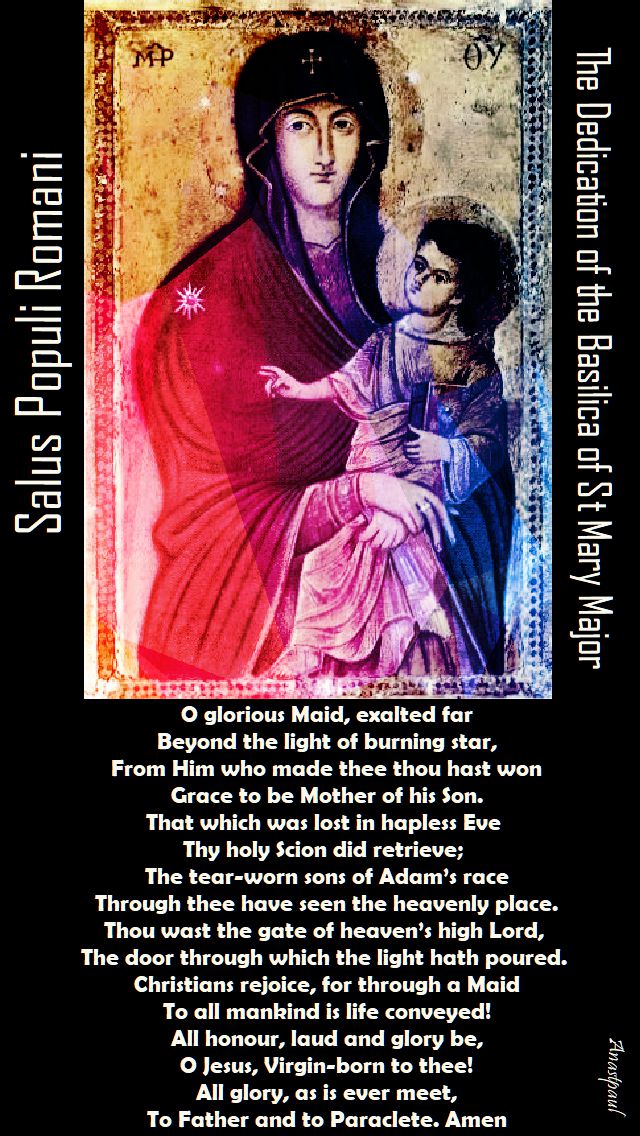
Your image, as protectress of the Roman people,
reminds us that you invite us to live in Christ.
Your arms embrace Jesus fully, effortlessly.
Jesus, whose burden is light and yoke is easy,
wishes to be as close to every individual as He is to you.
You are both wayfarer and guide to us wayfarers on our pilgrimage of faith.
Teach us, Mary, to embrace Christ fully, to make Him our Way, our Truth, our Life.
Teach us, Mary, to carry Christ to the world,
and, each in our own way, to give Him birth in the hearts of many.
Protect your people, Mary – protect your Church.
We ask this, as we ask all things, through Jesus Christ Our Lord,
in union with God our Father and the Holy Spirit,
one God forever and ever. Amen
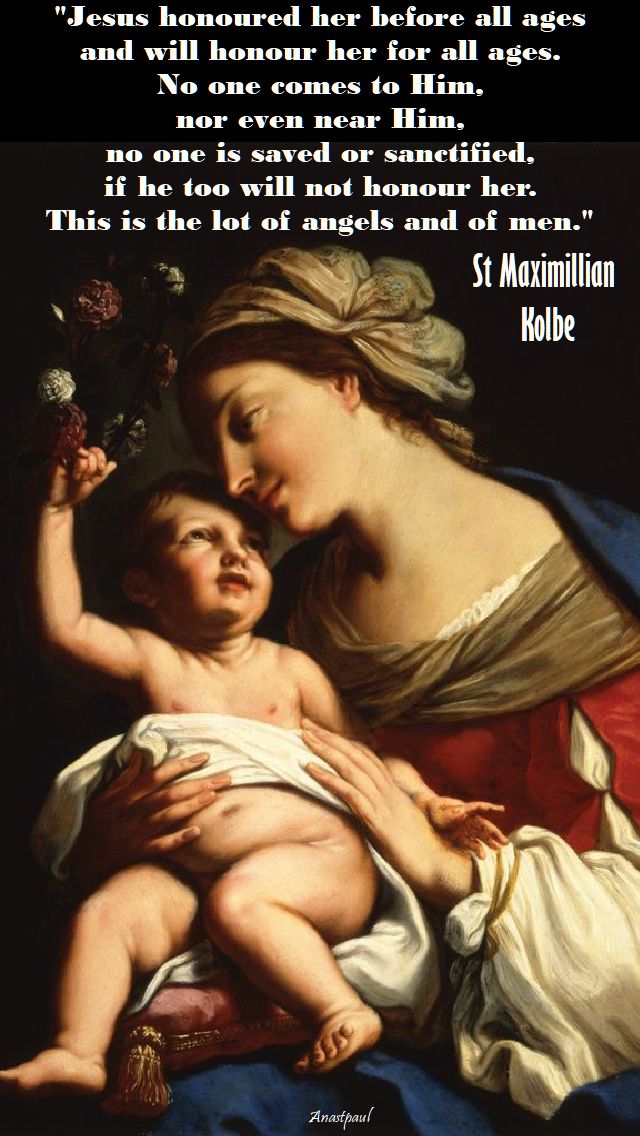
“Jesus honoured her before all ages and will honour her for all ages. No one comes to Him, nor even near Him, no one is saved or sanctified, if he too will not honour her. This is the lot of angels and of men.”
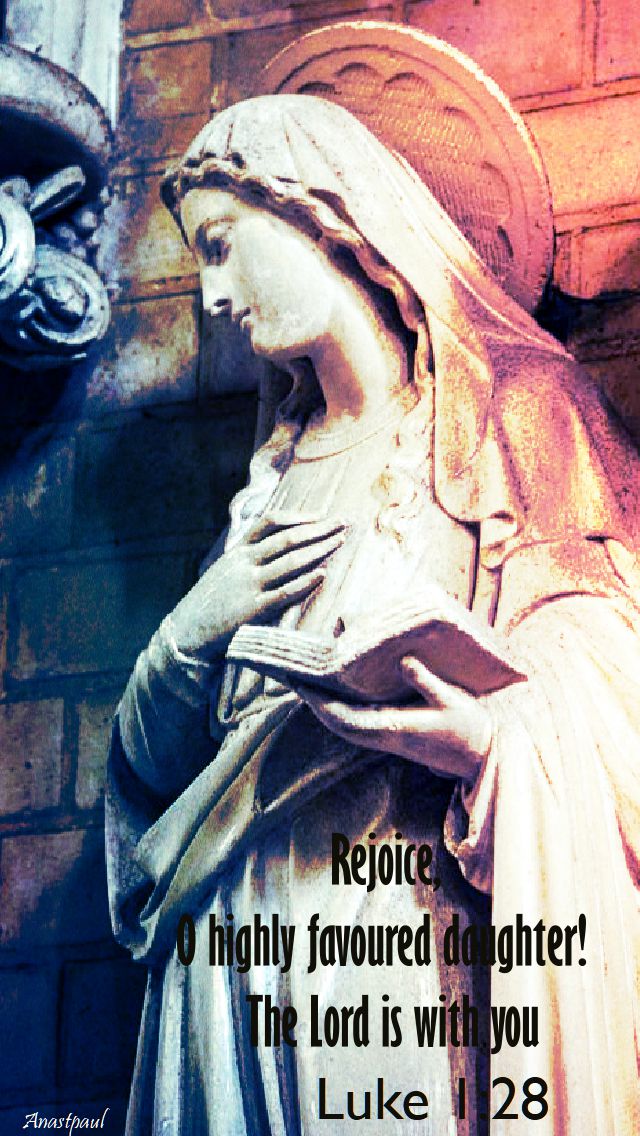
Rejoice, O highly favoured daughter! The Lord is with you………..Luke 1:28
REFLECTION – “The salvation of the whole world began with the “Hail Mary.”
Hence, the salvation of each person is also attached to this prayer.”…St Louise Marie Grignion de Montfort
PRAYER – Lord Jesus, let the great prayer to Your holy Mother be on my lps, morning, noon and night. Enable me to say it especially at the hour of my death – for she will come to me! Mary, Mother of our God, pray for us, amen.
Our Morning Offering – 5 August The Feast of the Dedication of Mary Major
O glorious Maid, exalted far
Beyond the light of burning star,
From Him who made thee thou hast won
Grace to be Mother of his Son.
That which was lost in hapless Eve
Thy holy Scion did retrieve;
The tear-worn sons of Adam’s race
Through thee have seen the heavenly place.
Thou wast the gate of heaven’s high Lord,
The door through which the light hath poured.
Christians rejoice, for through a Maid
To all mankind is life conveyed!
All honour, laud and glory be,
O Jesus, Virgin-born to thee!
All glory, as is ever meet,
To Father and to Paraclete. Amen
5 August – Dedication of the Basilica of Saint Mary Major: Our Lady of the Snows – Patronage – Italy, Reno, Nevada, diocese of, Conco, Italy, Rovereto, Italy, San Marco in Lamis, Italy, Susa, Italy, Torre Annunziata, Italy, Utah.
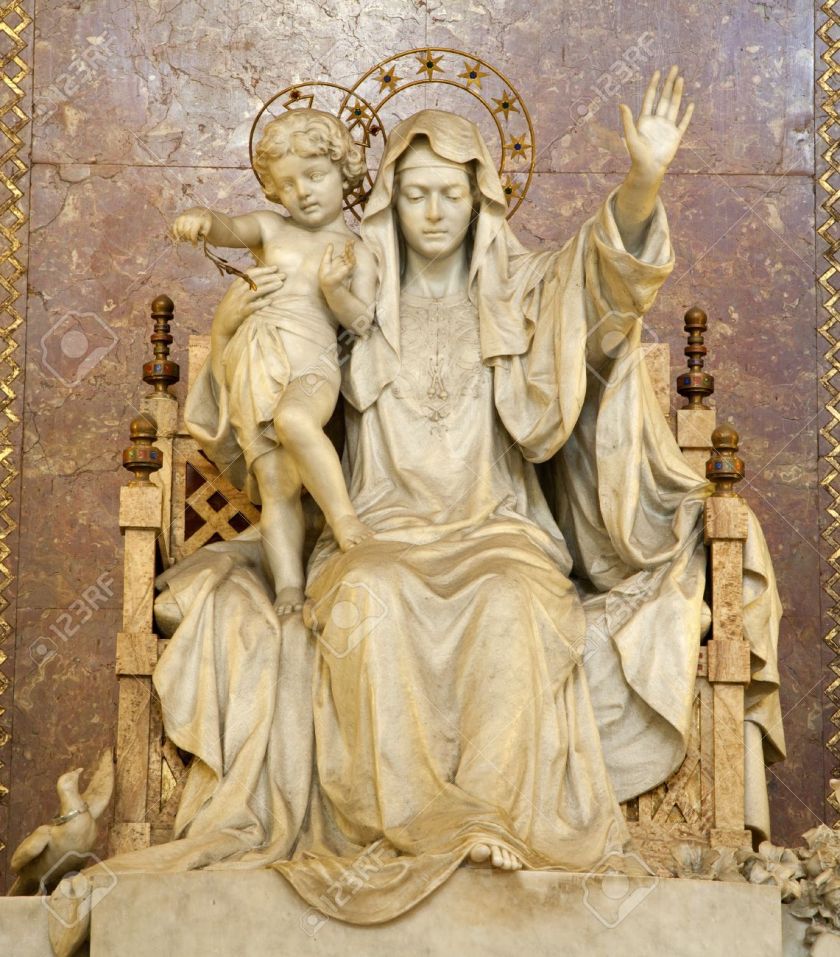
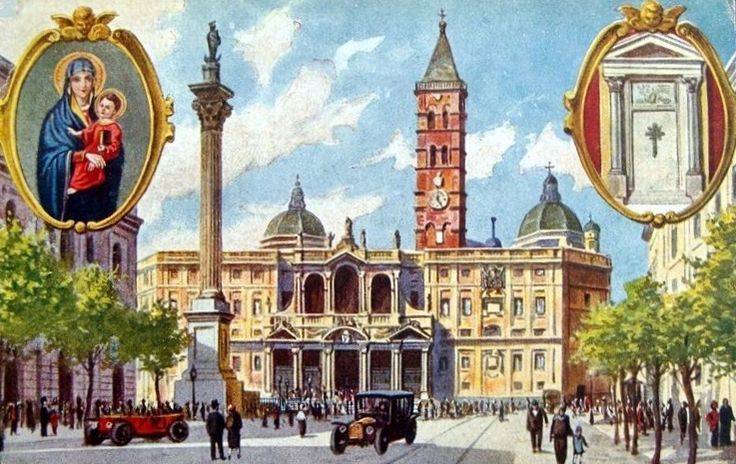
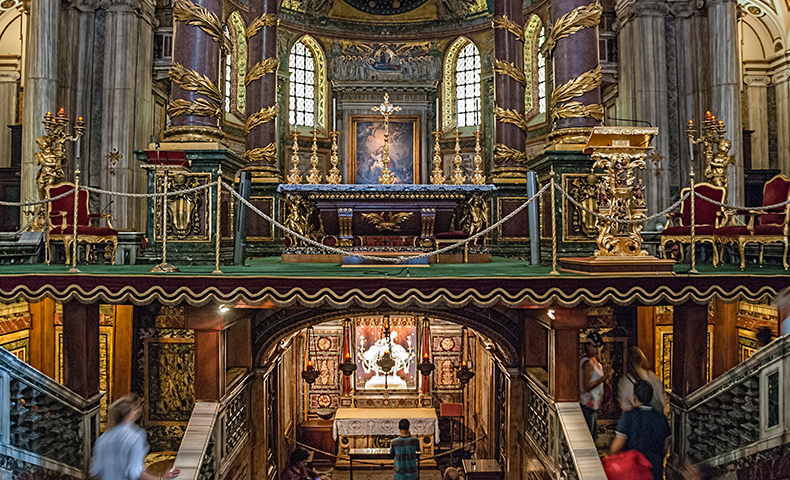
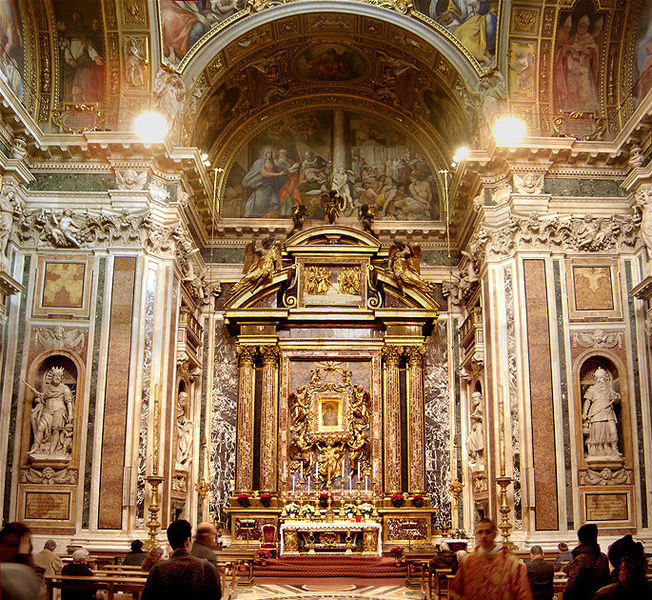
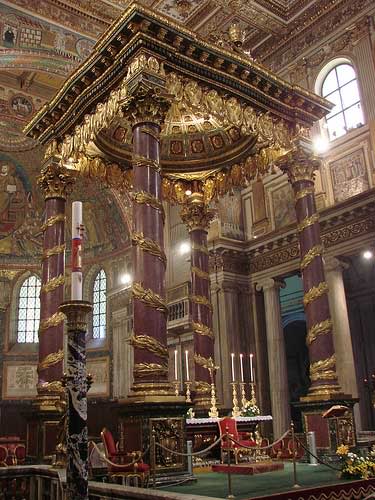
Today, 5 August, we celebrate the feast (optional memorial) of the Dedication of the Papal Basilica of Mary Major (Basilica di Santa Maria Maggiore) in Rome. This grand basilica is also known as the Basilica of Saint Mary of the Snow (Santa Maria ad Nives ) due to a miraculous snowfall occurring there during the hot summer months and the Basilica of Saint Mary of the Crib (Santa Maria ad Præsepe), from the relics of the holy crib or manger of Bethlehem, in which Christ was laid at His birth, housed within.
Saint Mary Major takes it’s name from two references to greatness (“major”): first, it is the largest church in the world dedicated to Our Blessed Mother; second, that it is one of four Papal (or major) basilicas. Together with Saint Lawrence outside the Walls, these four basilicas were formerly referred to as the five “patriarchal basilicas” of Rome, associated with the five ancient patriarchal sees of Christendom.
Saint John Lateran: represents Rome, the See of Peter Saint Paul outside the Walls: represents the See of Alexandria Saint Peter: represents the See of Constantinople Saint Lawrence outside the Walls: represents the See of Jerusalem Saint Mary Major: represents the See of Antioch, where Mary spent the majority of her life.
Also known as the Liberian Basilica, as it was presided over by Pope Liberius, this Basilica housed one of the earliest Christian congregations of Rome. It is also the only Roman basilica that retained the core of its original structure(432-440), left intact despite several construction projects and damage from the great earthquake of 1348.
The beginnings of Saint Mary Major date to the Constantinian period (300s AD), under the direction of Pope Liberius. According to Holy Legend, as recounted in the Breviary:
“Liberius was on the chair of Peter (352-366) when the Roman patrician John and his wife, who was of like nobility, vowed to bequeath their estate to the most Holy Virgin and Mother of God, for they had no children to whom their property could go. The couple gave themselves to assiduous prayer, beseeching Mary to make known to them in some way what pious work they should subsidizse in her honour. Mary answered their petition and confirmed her reply by means of the following miracle. On the fifth of August — a time when it is unbearably hot in the city of Rome — a portion of the Esquiline would be covered with snow during the night. During that same night the Mother of God directed John and his wife in separate dreams to build a church to be dedicated to the Virgin Mary on the site where they would see snow lying. For it was in this manner that she wanted her inheritance to be used. John immediately reported the whole matter to Pope Liberius and he declared that a similar dream had come to him. Accompanied by clergy and people, Liberius proceeded on the following morning in solemn procession to the snow-covered hill and there marked off the area on which the church in Mary’s honour was to be constructed.”
Each year on August fifth, a solemn Mass is offered to celebrate the Miracle of the Snows. During the Mass, white rose petals are dropped from the coffered ceiling, covering the floor, celebrating and re-creating the miraculous snowfall of the fourth century. At sunset on the same day, an artificial “snowfall” is staged as a tourist attraction in the square outside the basilica.
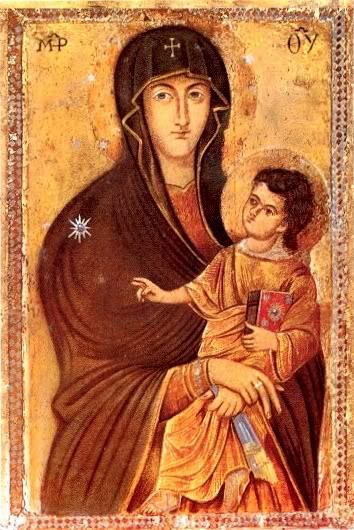
Following construction of the grand basilica, Pope Liberius presided over Masses for the congregation. Under Pope Sixtus III (432-440) the basilica was rebuilt. Following the Council of Ephesus, led by St Cyril of Alexandria, Mary was definitively declared the Theotokos —the Divine Mother of God—and the basilica was consecrated in her honour. The basilica was decorated with mosaics from the lives of Christ and Our Blessed Mother, which have survived until today. Also present is the oldest surviving image of the Blessed Virgin. Known as the Salus Populi Romani, (The Health of the Roman People), this icon is credited with saving Rome from the plague. Thought to have been painted by John the Evangelist, radiocarbon dating has placed the age of this icon at approximately two thousand years old.
As early as the end of the fourth century a replica of the Bethlehem nativity grotto had been added, including relics of the manger of Christ. On this account the edifice became known as “St. Mary of the Crib.” The crib resembles an ordinary manger but is kept in a case of silver and in it lies an image of a little child, also of silver. On Christmas day the holy manger is taken out of the case and exposed. It is kept in a subterraneous chapel in this church and throughout history, saints, including Saint Jerome, have written about this holy relic—both when it resided in Bethlehem and after its relocation to Rome.
The Basilica of Saint Mary Major – (no Catholic church can be honoured with the title of “basilica” unless by apostolic grant or from immemorial custom. St Mary Major is one of the only four that hold the title of “major basilica) is important to Christendom for three important reasons:
1) The basilica stands as a venerable monument to the Council of Ephesus (431), during which the dogma of Mary’s divine Motherhood was solemnly defined. The definition of the Council occasioned a most notable increase in the veneration paid to Mary.
2) The basilica is Rome’s “church of the crib,” a Bethlehem within the Eternal City. It also is a celebrated station church, serving, for instance, as the center for Rome’s liturgy for the first Mass on Christmas. In some measure every picture of Mary with the divine Child is traceable to this church due to the surviving Salus Populi Romani.
3) Saint Mary Major is Christendom’s first Marian shrine for pilgrims. It set the precedent for the countless shrines where pilgrims gather to honour Our Blessed Mother throughout the world. Here was introduced an authentic expression of popular piety that has been the source of untold blessings and graces for Christianity in the past as in the present.
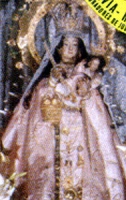
Our Lady of Copacabana: A statue of the Blessed Virgin Mary standing four feet tall, made of plaster and maguey fiber, and created by Francisco Tito Yupanqui. Except for the face and hands, it is covered in gold leaf, dressed like an Inca princess, and has jewels on neck, hands and ears. There is no record of what the image looks like under the robes, the carved hair has been covered by a wig, and the image never leaves the basilica. On 21 February 1583 it was enthroned in an adobe church on the peninsula of Copacabana, which juts into Lake Titicaca nearly 3 miles above sea level. In 1669 the viceroy of Peru added a straw basket and baton to the statue, which she still holds today. The present shrine dates from 1805. The image was crowned during the reign of Pope Pius XI, and its sanctuary was promoted to a basilica in 1949. It has been the recipient of many expensive gifts over the years, most of which were looted by civil authorities in need of quick cash.
Patronage – Bolivia, Bolivian navy.
—
St Abel of Rheims
St Addai
St Aggai of Edessa
Bl Arnaldo Pons
St Cantidianus
St Cantidius
St Cassian of Autun
St Casto of Teano
Bl Corrado of Laodicea
St Emidius of Ascoli Piceno
St Eusignius
St Gormeal of Ardoilen
Bl James Gerius
St Margaret the Barefooted
St Mari
St Memmius of Châlons-sur-Marne
St Nonna
St Oswald of Northumbria
St Paris of Teano
Bl Pierre-Michel Noël
St Sobel
St Theodoric of Cambrai-Arras
St Venantius of Viviers
St Viator
—
Martyrs of Fuente la Higuera: A group of Augustinian priests and clerics who were martyred together in the Spanish Civil War. 5 August 1936 in Fuente la Higuera, Valencia, Spain. They were Beatified on 28 October 2007 by Pope Benedict XVI.
10 Beati:
• Anastasio Díez García
• Ángel Pérez Santos
• Cipriano Polo García
• Emilio Camino Noval
• Felipe Barba Chamorro
• Gabino Olaso Zabala
• Luciano Ramos Villafruela
• Luis Blanco Álvarez
• Ubaldo Revilla Rodríguez
• Victor Gaitero González
Martyrs of the Salarian Way: Twenty-three Christians who were martyred together in the persecutions of Diocletian.
303 on the Salarian Way in Rome, Italy.
Martyred in the Spanish Civil War:
Bl Eduardo González Santo Domingo
Bl Jaume Codina Casellas
Bl Joan Gibert Galofré
Bl José Trallero Lou
Bl Lluís Domingo Mariné
Bl Manuel Moreno Martínez
Maximino Fernández Marinas
Bl Pau Virgili Monfá
Bl Pere Massó Llagostera
Bl Salvi Huix Miralpeix
Bl Victor García Ceballos
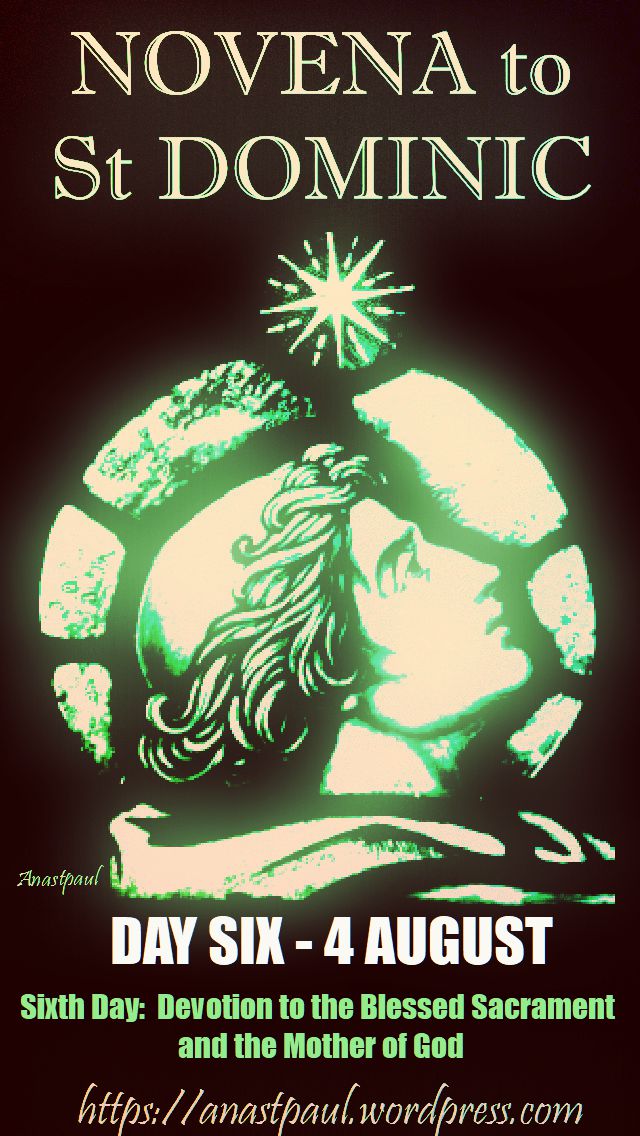
Sixth Day: Devotion to the Blessed Sacrament and the Mother of God
How lovely is your dwelling place, O Lord of hosts! My soul yearns and pines for the courts of the Lord. My heart and my flesh cry out for the living God. Even the sparrow finds a home and the swallow a nest in which she puts her young by your altars, O Lord of hosts, my King and my God! (Psalms 84:2-4)
The Eucharist and the Mother of God were objects of Dominic’s special devotion. Before the tabernacle he spent his nights, finding there rest after his labours; and arriving weary and foot sore from a journey, he always visited the Blessed Sacrament before refreshing his body. However much fatigued, he always celebrated Mass and if possible sang it. During the celebration of Mass tears were often seen flowing down his face, moving all to devotion.
Of God’s Mother he was always an ardent and reverent lover. His life, his work, his Order were placed under her protection, and he invoked her in every difficulty and danger. He began the custom of saying the Hail Mary before preaching. The Blessed Mother filled him with heavenly favors, watched over him with motherly care and gave him the habit of his Order. A tradition cherished in his Order and supported by the testimonies of many popes, ascribes to him the first teaching of devotion to the recitation of the Rosary. His disciples were called “Friars of Mary” and have carried her Rosary and scapular to the uttermost parts of the earth.
I myself am the bread of life. No one who comes to me shall ever be hungry, and no one who believes in me shall ever thirst. (John 6:35)
I am the mother of fair love, and of fear, and of knowledge, and of holy hope. In me is all grace of the way and of the truth, in me is all hope of life and of virtue. Come to me, all you that desire me, and be filled with my goodness. (Sirach 24: 18; John 14:6)
Pray for us, blessed father, St. Dominic, That we may be made worthy of the promises of Christ.
Let us pray:
O most blessed father, St. Dominic,
who loved our Lord Jesus Christ
in the most perfect manner
and served Mary, His Virgin Mother,
with most fervent devotion,
pray for us, your children,
that we may ever grow in love
of the Sacrament of the Altar,
and that, next to God,
we may at all times trust in the protection
of the Queen of Heaven,
so that at the hour of death
we may be received by her into heaven
and ever abide under the mantle of her love.
We pray that we may grow
in love and devotion
for our Lord Jesus in the Holy Eucharist
and attach ourselves, with unfailing confidence,
to His Holy Mother’s protection.
We ask too Holy St Dominic,
that our prayers and yours,
may draw back those
who have lapsed from the one, true faith
and for this our special intention …
(make your request)
Through Christ our Lord. Amen
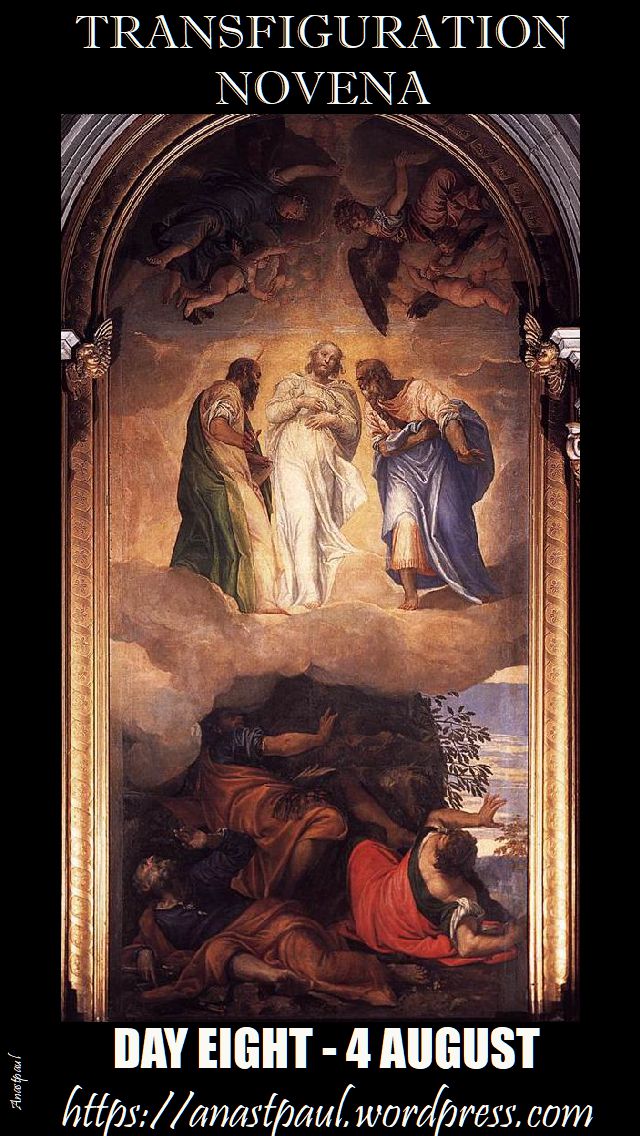
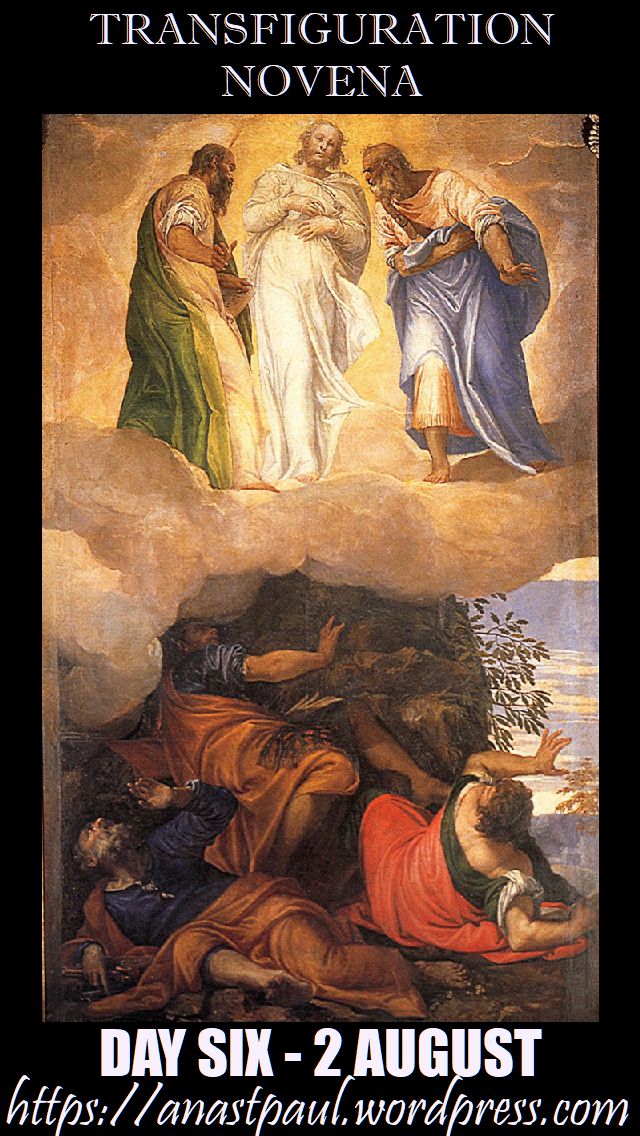
The Transfiguration of the Lord is one shining moment in the life of the apostles that prepares them for the trials ahead. Peter, James and John experience the glory in the mountain of Transfiguration.
This is a foretaste of the glory that will be theirs in the Father’s kingdom
and it will help them survive with courage the “terrible” days when Jesus undergoes His passion and death
and when they themselves are persecuted in His name.
Let us Pray:
O Christ,
upon the mountaintop
You let the light of Your face
shine over Moses and Elijah.
Peter, James and John.
Shine Your Face upon Your Church,
that we may persevered with courage
and zeal to live for the glory of Your Kingdom.
We ask You too to bless Your people
who call on Your name,
as they strive to reach You
in Your kingdom of light and life. Amen
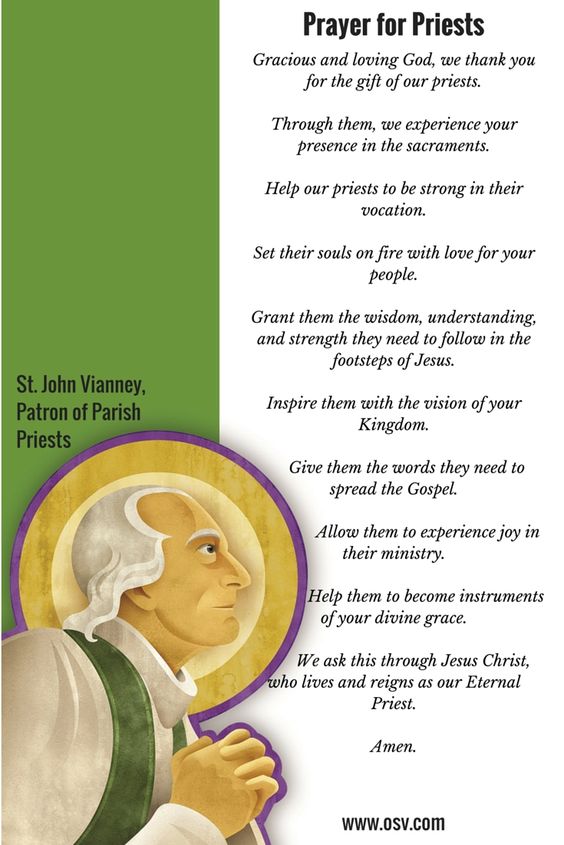
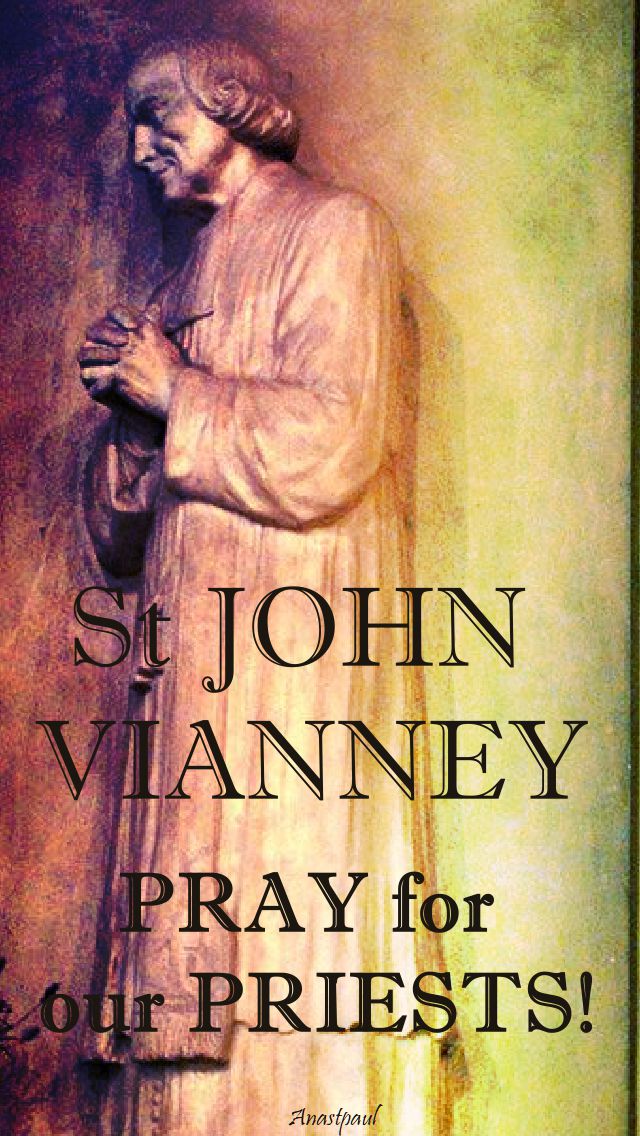
When Pope Benedict XVI announced a special Year for Priests to be observed in the Church (June 19, 2009 — June 19, 2010), he noted that the timing was not arbitrary. The year coincides, he said, with the 150th anniversary of the death of St. John Vianney, “a true example of a pastor at the service of Christ’s flock.”
It is, therefore, appropriate that we pray for all our priests today:
Gracious and loving God, we thank your for the gift of our priests. Through them, we experience your presence in the sacraments.
Help our priests to be strong in their vocation. Set their souls on fire with love for your people.
Grant them the wisdom, understanding, and strength they need to follow in the footsteps of Jesus. Inspire them with the vision of your Kingdom.
Give them the words they need to spread the Gospel. Allow them to experience joy in their ministry.
Help them to become instruments of your divine grace.
We ask this through Jesus Christ, who lives and reigns as our Eternal Priest.
The people were careless about practicing their faith, so they were not happy with this priest who was eager to draw them back to God and Christian living. Some caused trouble by lying about John, by acting violently against him and by refusing to cooperate with him. They hoped that he would give up and leave. Instead, Father Vianney increased his prayers, fasting, and penances.
Gradually, people came to celebrate the sacraments and listen to his homilies. Within a few years, Father Vianney was spending 10–16 hours a day in the confessional. People from all over France and other countries came to consult him. The government built a railroad line to Ars to accommodate all the pilgrims. Father Vianney just continued his hard, yet simple, way of prayer, fasting and penance. He was strict with his parishioners but a hundred times stricter with himself. John gave away his furnishings, his belongings and the gifts of clothes and food that the neighbours brought him. Once he received a black velvet cape as an award and sold it to buy food for those who were poor.
Indifference toward religion, coupled with a love for material comfort, seem to be common signs of our times. A person from another planet observing us would not likely judge us to be pilgrim people, on our way to somewhere else. St John Vianney on the other hand, was a man on a journey, with his goal before him at all times – if he could overcome all obstacles, so can we!
“You must accept your cross. If you bear it courageously, it will carry you to heaven.”
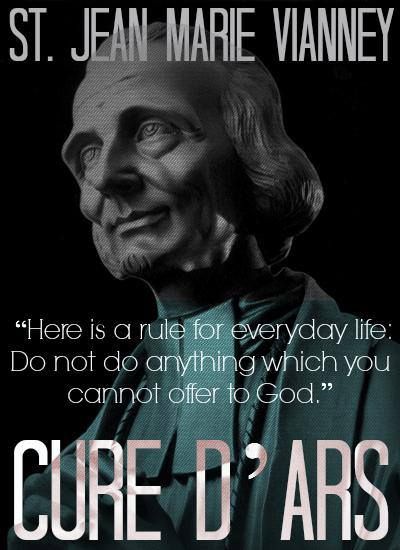
“Here is the rule for everyday life. Do not do anything which you cannot offer to God.”
“The priest is not a priest for himself – he is for you. After God, the priest is everything.”
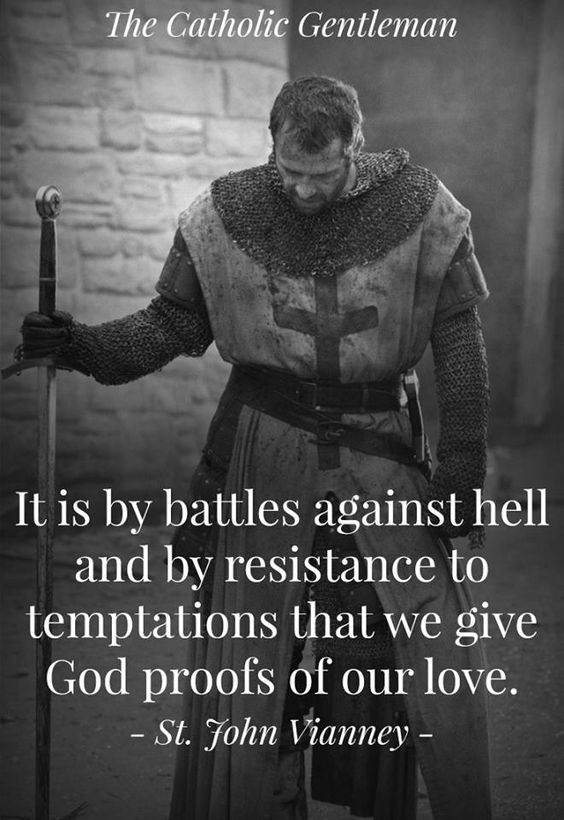
“It is by battles against hell and by resistance to temptations, that we give God proofs of our love.”
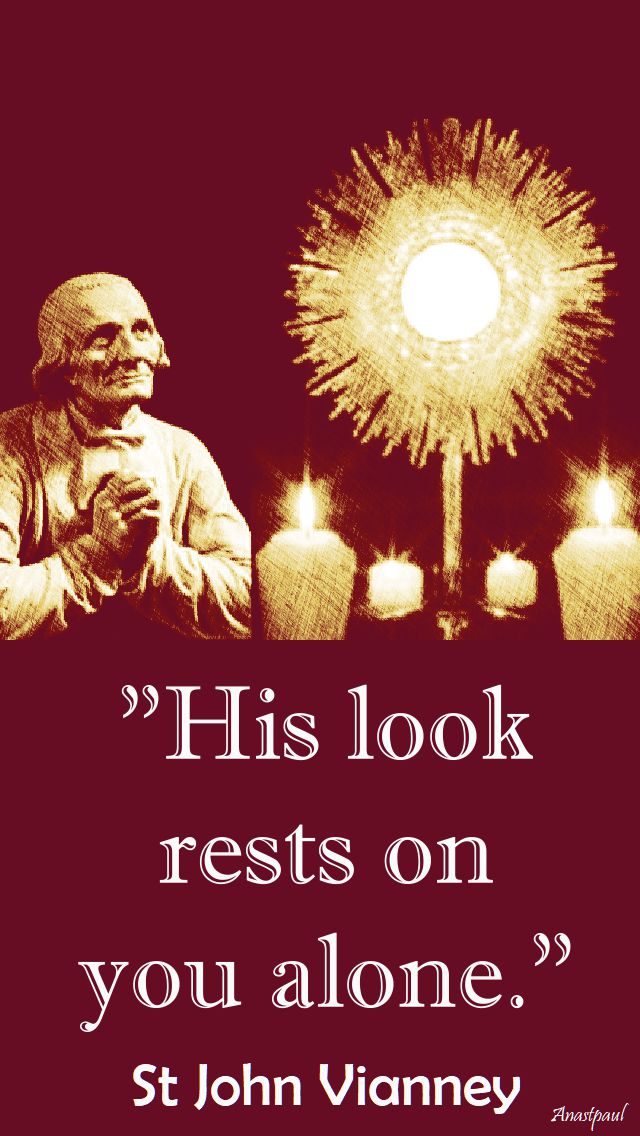
“His look rests on you alone.”
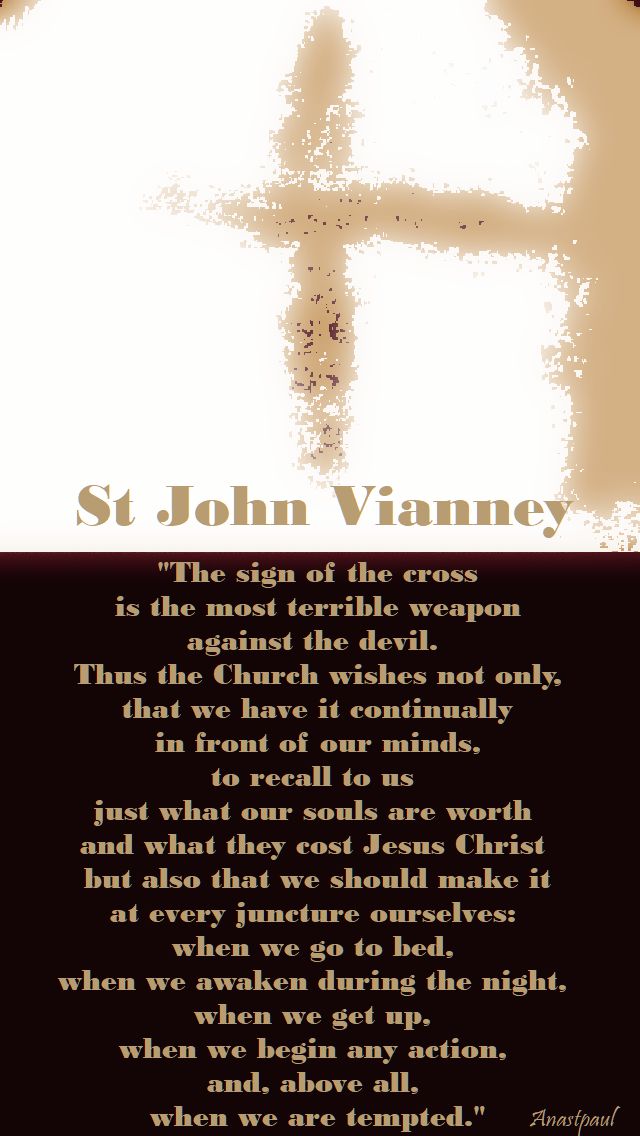
“The sign of the cross is the most terrible weapon against the devil. Thus the Church wishes not only, that we have it continually in front of our minds, to recall to us just what our souls are worth and what they cost Jesus Christ but also that we should make it at every juncture ourselves: when we go to bed, when we awaken during the night, when we get up, when we begin any action, and, above all, when we are tempted.”
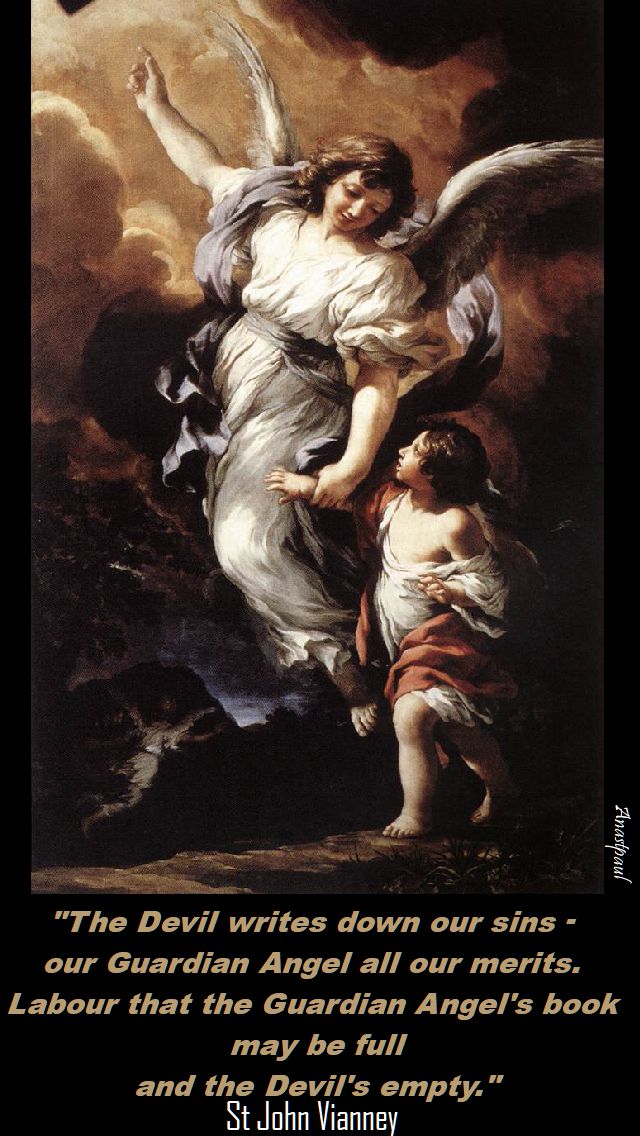
“The Devil writes down our sins – our Guardian Angel all our merits. Labour that the Guardian Angel’s book may be full and the Devil’s empty.”
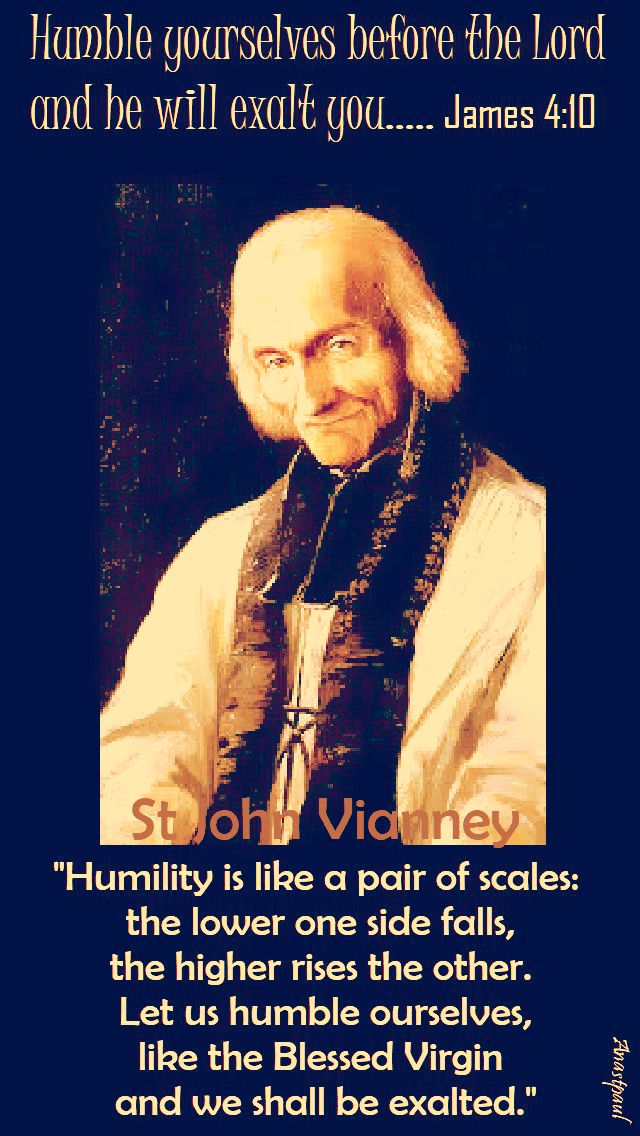
Humble yourselves before the Lord and he will exalt you…..James 4:10
REFLECTION – “Humility is like a pair of scales: the lower one side falls, the higher rises the other. Let us humble ourselves like the Blessed Virgin and we shall be exalted.”………St John Vianney
PRAYER – Lord God, light of the faithful and shepherd of souls, who gave blessed John Vianney to Your Church to feed Your flock by his teaching and form them by his example, grant that by his intercession, we may keep the faith which he taught and follow in the way he walked, through our Lord Jesus Christ, in union with the Holy Spirit. St John Vianney, pray for us, amen.
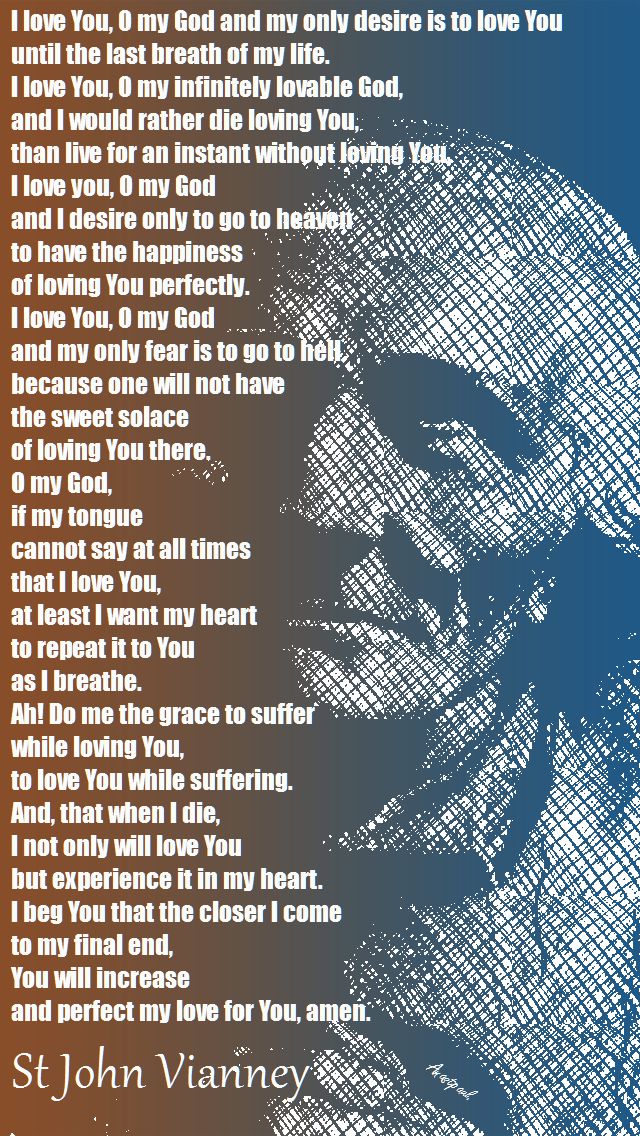
I love You, O my God.
My only desire is to love You, until the last breath of my life.
I love You, O infinitely loveable God
and I prefer to die loving You,
rather than to live for an instant without You.
I love You, O my God
and I desire only to go to heaven,
to have the happiness of loving You perfectly.
I love You, O my God
and my only fear is to go to hell
because one will never have the sweet solace of loving You there.
O my God, if my tongue cannot say at all times that I love You,
at least I want my heart to repeat it to You as many times as I breathe.
Ah! Do me the grace: to suffer while loving You,
to love You while suffering.
And, that when I die: I not only will love You
but experience it in my heart.
I beg You that the closer I come to my final end,
You will increase and perfect my love for You. Amen
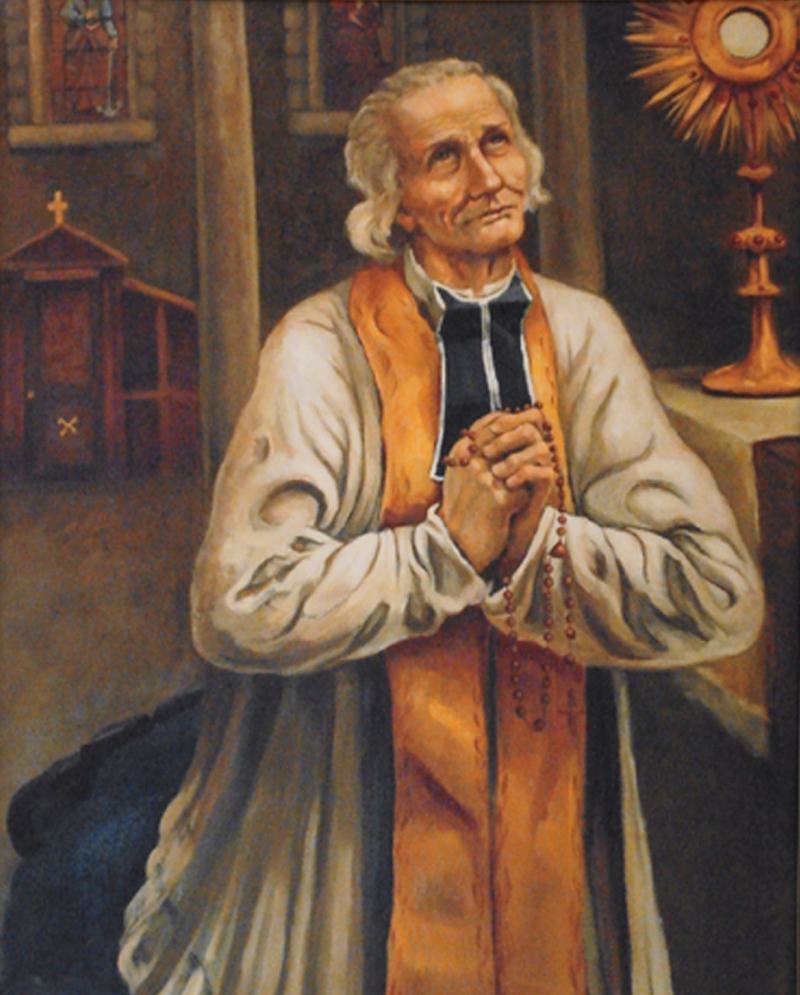
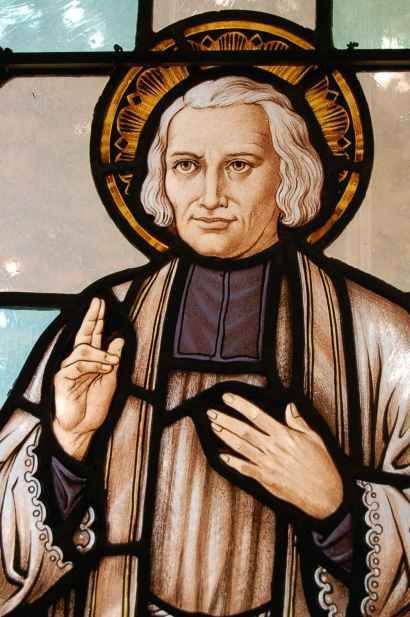
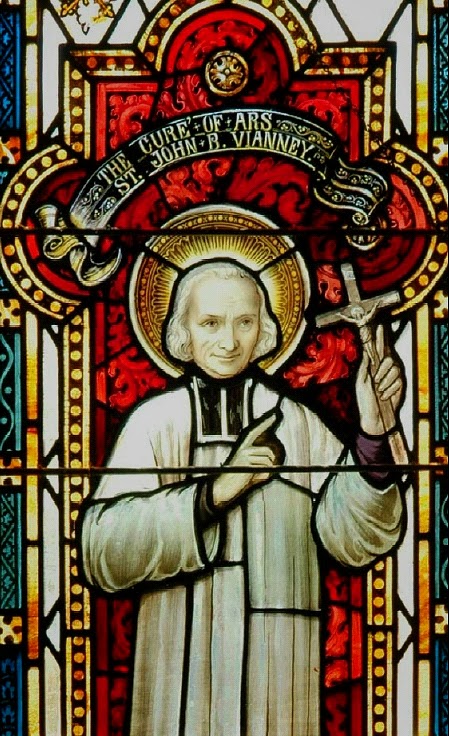
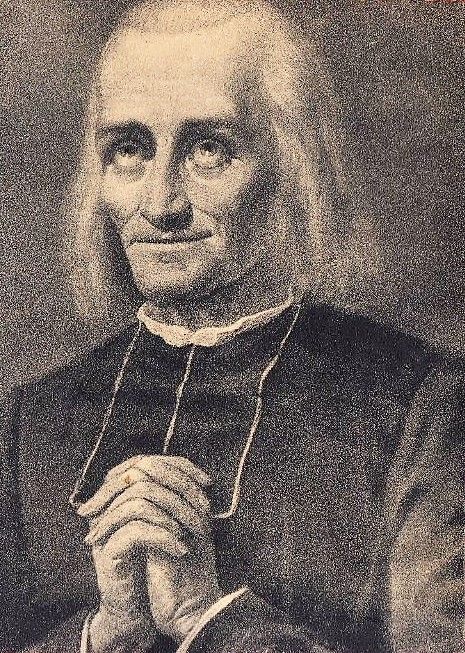
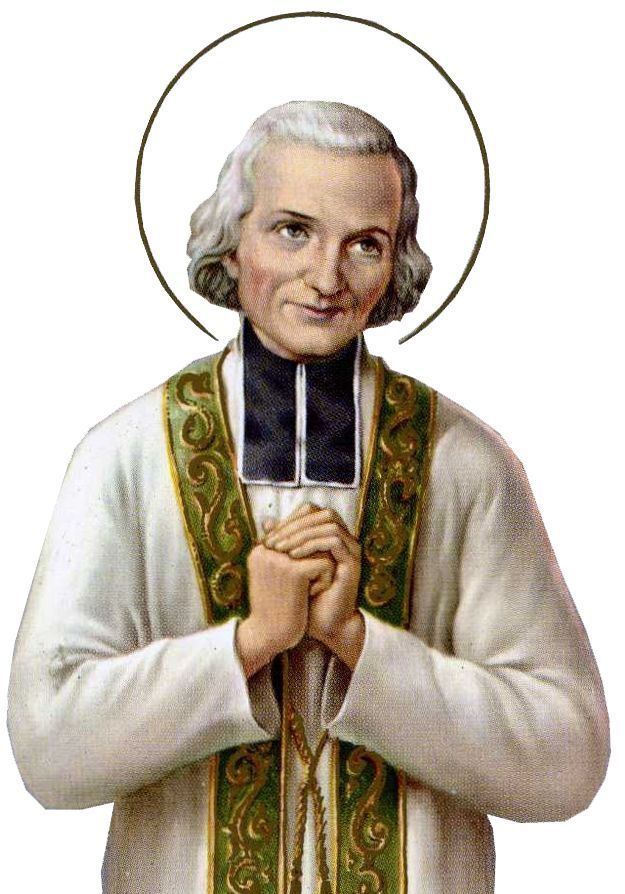
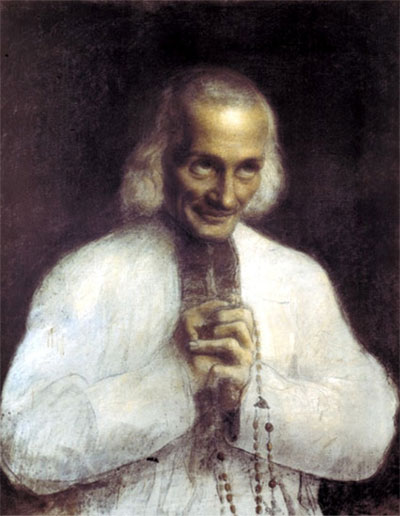
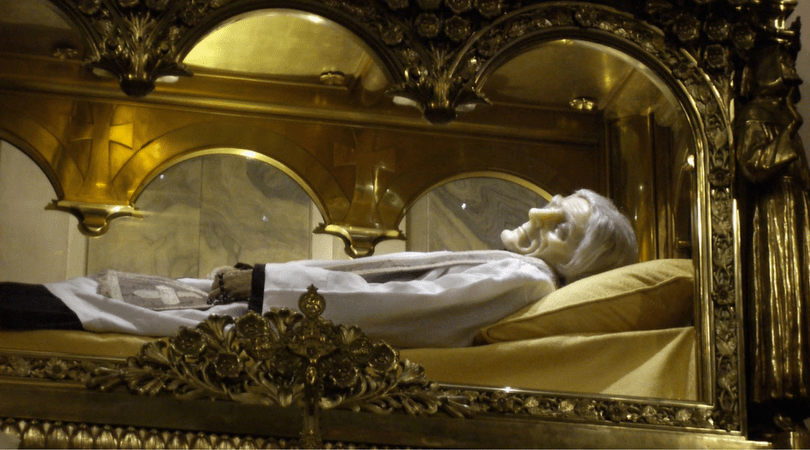
Saint of the Day – 9 August – St Jean-Baptiste Marie Vianney TOSF (1786-1859) – The Curé of Ars (Parish Priest of Ars) – Confessor Priest and Tertiary – (8 May 1786 at Dardilly, Lyons, France – 4 August 1859 at Ars, France of natural causes) His body is interred in the Basilica of Ars. He was Canonised on 31 May 1925 by Pope Pius XI. Patronages – Confessors, Priests (proclaimed on 23 April 1929 by Pope Pius XI), Personal Apostolic Administration of Saint John Mary Vianney, Dubuque, Iowa, Archdiocese of, Kamloops, British Columbia, Diocese of, Kansas City, Kansas, Archdiocese of, Lafayette, Louisiana, Diocese of, Saint Paul and Minneapolis, Minnesota, Archdiocese of. St John Vianney’s body is incorrupt.
St John Vianney was born on 8 May 1786, in the French town of Dardilly, France (near Lyon) and was baptised the same day. His parents, Matthieu Vianney and his wife Marie (Belize), had six children, of whom John was the fourth. The Vianneys were devout Catholics, who helped the poor and gave hospitality to St Benedict Joseph Labre, the patron saint of tramps, who passed through Dardilly on his pilgrimage to Rome.
St Benedict Joseph Labre
By 1790, the anticlerical Terror phase of the French Revolution forced many loyal priests to hide from the regime in order to carry out the sacraments in their parish. Even though to do so had been declared illegal, the Vianneys traveled to distant farms to attend Masses celebrated by priests on the run. Realising that such priests risked their lives day by day, Vianney began to look upon them as heroes. He received his First Communion catechism instructions in a private home by two nuns whose communities had been dissolved during the Revolution. He made his first communion at the age of 13 (normal in those times). During the Mass, the windows were covered so that the light of the candles could not be seen from the outside. His practice of the Faith continued in secret, especially during his preparation for confirmation.
The Catholic Church was re-established in France in 1802 by Napoleon Bonaparte, resulting in religious peace throughout the country, culminating in a Concordat. By this time, Vianney was concerned about his future vocation and longed for an education. He was 20 when his father allowed him to leave the farm to be taught at a “presbytery-school” in the neighbouring village of Écully, conducted by the Abbé Balley. The school taught arithmetic, history, geography and Latin. Vianney struggled with school, especially with Latin, since his past education had been interrupted by the French Revolution. Only because of Vianney’s deepest desire to be a priest—and Balley’s patience—did he persevere.
St Vianney’s studies were interrupted in 1809 when he was drafted into Napoleon’s armies. He would have been exempt, as an ecclesiastical student but Napoleon had withdrawn the exemption in certain dioceses because of his need for soldiers in his fight against Spain. Two days after he had to report at Lyons, he became ill and was hospitalised, during which time his draft left without him. Once released from the hospital, on 5 January, he was sent to Roanne for another draft. He went into a church to pray and fell behind the group. He met a young man who volunteered to guide him back to his group but instead led him deep into the mountains of Le Forez, to the village of Les Noes, where deserters had gathered. St Vianney lived there for fourteen months, hidden in the byre attached to a farmhouse and under the care of Claudine Fayot, a widow with four children. He assumed the name Jerome Vincent and under that name, he opened a school for village children. Since the harsh weather isolated the town during the winter, the deserters were safe from gendarmes. However, after the snow melted, gendarmes came to the town constantly, searching for deserters. During these searches, Vianney hid inside stacks of fermenting hay in Fayot’s barn.
An imperial decree proclaimed in March 1810 granted amnesty to all deserters, which enabled Vianney to go back legally to Ecully, where he resumed his studies. He was tonsured in 1811 and in 1812 he went to the minor seminary at Verrières-en-Forez. In autumn of 1813, he was sent to the major seminary at Lyons. Considered too slow, he was returned to Abbe Balley. However, Balley persuaded the Vicar general that Vianney’s piety was great enough to compensate for his ignorance and the seminarian received minor orders and the subdiaconate on 2 July 1814, was ordained a deacon in June 1815 and was ordained priest on 12 August 1815 in the Couvent des Minimes de Grenoble. He said his first Mass the next day and was appointed the assistant to Balley in Écully.
Curé of Ars
In 1818, shortly after the death of Balley, Jean-Marie Vianney was appointed parish priest of the parish of Ars, a town of 230 inhabitants. As parish priest, he realised that the Revolution’s aftermath had resulted in religious ignorance and indifference, due to the devastation wrought on the Catholic Church in France. At the time, Sundays in rural areas were spent working in the fields, or dancing and drinking in taverns. He spent time in the confessional and gave homilies against blasphemy and paganic dancing. If his parishioners did not give up this dancing, he refused them absolution. Abbe Balley had been St Vianney’s greatest inspiration, since he was a priest who remained loyal to his faith, despite the Revolution. He felt compelled to fulfill the duties of a curé, just as did Balley, even when it was illegal. With Catherine Lassagne and Benedicta Lardet, he established La Providence, a home for girls. Only a man of vision could have such trust that God would provide for the spiritual and material needs of all those who came to make La Providence their home.
Later years
Fr Vianney came to be known internationally and people from distant places began travelling to consult him as early as 1827. “By 1855, the number of pilgrims had reached 20,000 a year. During the last ten years of his life, he spent 16 to 18 hours a day in the confessional. Even the bishop forbade him to attend the annual retreats of the diocesan clergy because of the souls awaiting him yonder”. His work as a confessor is John Vianney’s most remarkable accomplishment. In the winter months he was to spend 11 to 12 hours daily reconciling people with God. In the summer months this time was increased to 16 hours. Unless a man was dedicated to his vision of a priestly vocation, he could not have endured this giving of self day after day.
Many people look forward to retirement and taking it easy, doing the things they always wanted to do but never had the time. But John Vianney had no thoughts of retirement. As his fame spread, more hours were consumed in serving God’s people. Even the few hours he would allow himself for sleep were disturbed frequently by the devil, who physically attacked and tormented St John and kept him from sleeping.
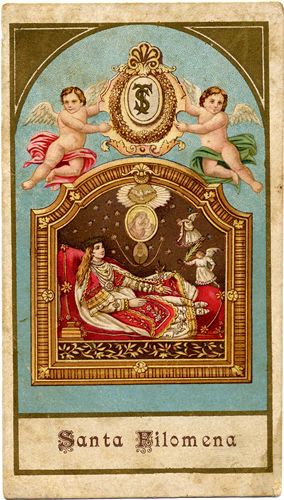
St Vianney had a great devotion to St. Philomena. He regarded her as his guardian and erected a chapel and shrine in honor of the saint. During May 1843, he fell so ill he thought that his life was coming to its end. St John Vianney attributed his cure to her intercession.
He yearned for the contemplative life of a monk and four times ran away from Ars, the last time in 1853. St John Vianney read much and often the lives of the saints, and became so impressed by their holy lives that he wanted for himself and others to follow their wonderful examples. The ideal of holiness enchanted him. This was the theme which underlay his sermons. “We must practice mortification. For this is the path which all the Saints have followed,” he said from the pulpit. He placed himself in that great tradition which leads the way to holiness through personal sacrifice. “If we are not now saints, it is a great misfortune for us: therefore we must be so. As long as we have no love in our hearts, we shall never be Saints.” The Saint, to him, was not an exceptional man before whom we should marvel but a possibility which was open to all Catholics. Unmistakably did he declare in his sermons that “to be a Christian and to live in sin is a monstrous contradiction. A Christian must be holy.” With his Christian simplicity he had clearly thought much on these things and understood them by divine inspiration, while they are usually denied to the understanding of educated men. He was a champion of the poor as a Franciscan tertiary and was a recipient of the coveted French Legion of Honour.
On 4 August 1859, Vianney died at the age of 73. The bishop presided over his funeral with 300 priests and more than 6,000 people in attendance. Before he was buried, Vianney’s body was fitted with a wax mask.
On 3 October 1874 Pope Pius IX proclaimed him “venerable”; on 8 January 1905, Pope Pius X declared him Blessed and proposed him as a model to the parochial clergy. In 1925 John Mary Vianney was canonized by Pope Pius XI, who in 1929 made him patron saint of parish priests.
In 1959, to commemorate the centenary of John Vianney’s death, Pope John XXIII issued the encyclical letter Sacerdotii nostri primordia. St Pope John Paul II visited Ars in person in 1986 in connection with the anniversary of Vianney’s birth and referred to the great saint as a “rare example of a pastor acutely aware of his responsibilities … and a sign of courage for those who today experience the grace of being called to the priesthood.”
In honour of the 150th anniversary of Vianney’s death, Pope Benedict XVI declared a Year of the Priest, running from the Feast of the Sacred Heart 2009–2010. The Vatican Postal Service issued a set of stamps to commemorate the 150th Anniversary. With the following words on 16 June 2009, Benedict XVI officially marked the beginning of the year dedicated to priests, “…On the forthcoming Solemnity of the Most Sacred Heart of Jesus, Friday 19 June 2009 – a day traditionally devoted to prayer for the sanctification of the clergy –, I have decided to inaugurate a ‘Year of the Priest’ in celebration of the 150th anniversary of the dies natalis of John Mary Vianney, the Patron Saint of parish priests worldwide…” In the Holy Father’s words the Curé d’Ars is “a true example of a pastor at the service of Christ’s flock.”
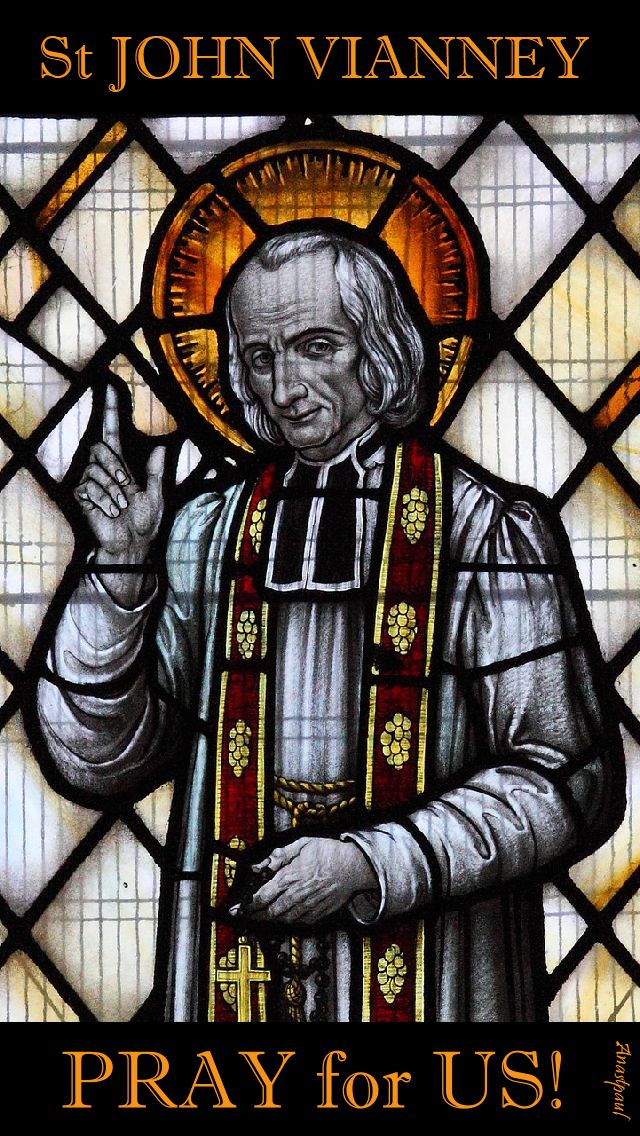
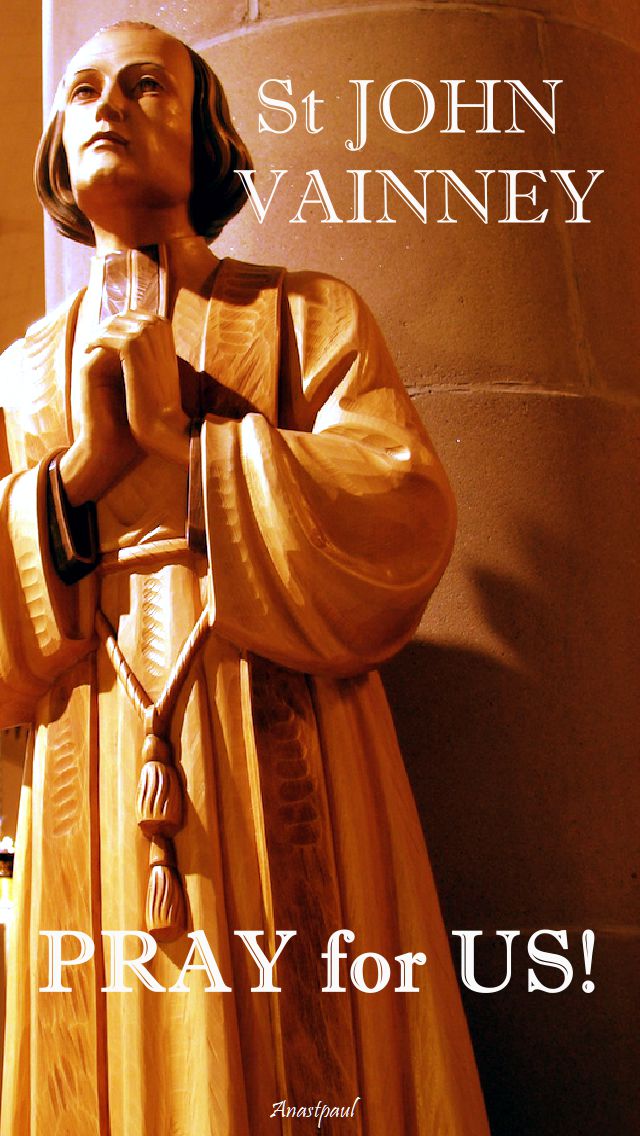
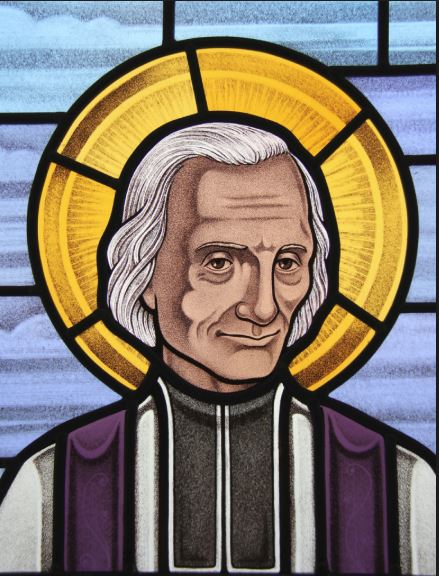
There are statues and stained glass windows of St John Vianney in many French churches and in Catholic churches throughout the world. Also, many parishes founded in the twentieth and twenty-first centuries are named after him. Some relics are kept in the Church of Notre-Dame de la Salette in Paris.
St John Mary Vianney (Memorial) – https://www.youtube.com/watch?v=Fc3kd25BqeY
—
St Agabius of Verona
St Aristarchus of Thessalonica
St Crescentio of Rome
St Eleutherius of Bithynia
St Epiphanes of Besançon
St Euphronius of Tours
St Francesc Mercader Rendé
Bl Frédéric Janssone
St Hyacinth of Rome
St Ia of Persia
St Isidore of Besançon
St Justin of Rome
St Lua of Limerick
St Onofrio of Panaia
St Perpetua of Rome
St Protasius of Cologne
St Rainerio of Split
St Sithney
St Tertullinus of Rome
Bl William Horne
—
Martyred in the Spanish Civil War:
Bl Gil Rodicio y Rodicio
Bl Gonzalo Gonzalo y Gonzalo
Bl Josep Batalla Parramon
Bl Josep Colom Alsina
Bl Josep Rabasa Betanachs
Bl Luis Quintas Durán
Bl Antonio Arrue Peirano
Bl Riccardo Gil Barcelon
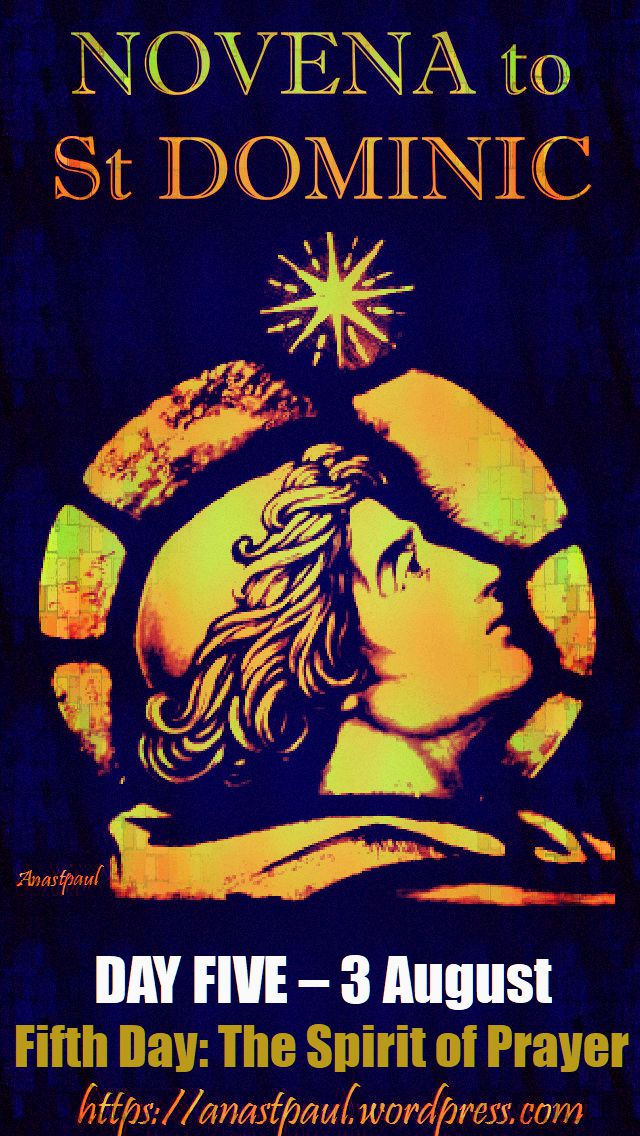
Fifth Day: The Spirit of Prayer True devotion was in his mouth and no dishonesty was found upon his lips; he walked with me in integrity and in uprightness and turned many away from evil. (Malachi 2:6)
As an unbridled tongue destroys a spirit of prayer, Dominic loved silence and retirement, that he might dwell with God. His intimate friend, William of Montserrat, said that “Dominic always kept the silence prescribed by the custom and rule of the Order, abstained from idle words and always spoke either of God or to God.”
Dominic considered custody of the senses important and fed his soul constantly with spiritual reading. His books were the Bible and Cassian’s Conferences of the Fathers of the Desert. The Holy Scriptures he always carried and ordered his spiritual children diligently and unceasingly to read them. At dinner one religious used to read aloud, that the souls of all might be fed on the Word of God.
If any man offends not in words, the same is a perfect man. (James 3:2)
Pray for us, blessed father, St. Dominic, That we may be made worthy of the promises of Christ.
Let us pray:
O most Holy Father St. Dominic,
who always showed yourself loving to all
and never despised, wounded or offended anyone,
obtain for me from our Saviour,
the grace to be severe only to myself
and my evil passions
and always gentle and loving toward my neighbour,
ever like him, pardoning all who injure or offend me.
We pray that we may learn
from our blessed St Dominic,
not to offend with words
neither in our thoughts or verbally
We ask too Holy St Dominic,
that our prayers and yours,
may draw back those
who have lapsed from the one, true faith
and for this our special intention …
(make your request)
Through the same Christ our Lord. Amen
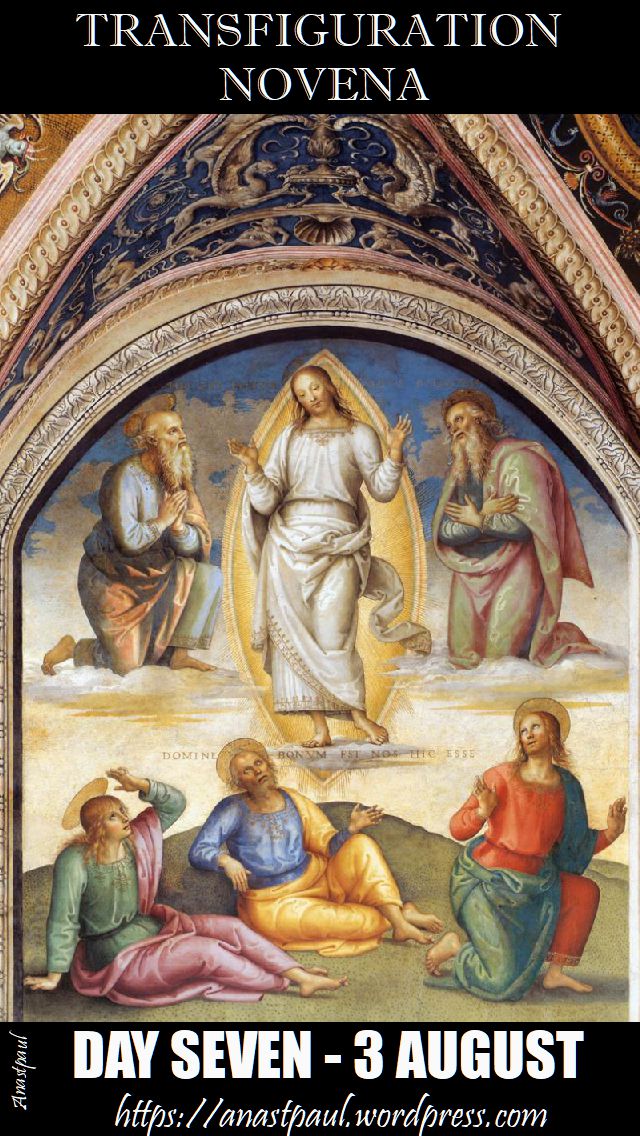
Seventh Day: Honour and Worship as we await Your second coming
Without the Risen Christ, Transfiguration has no meaning. It would appear to be just futile show without a happy ending. But the Resurrection confirms the glory that was shown during the transfiguration and which rightly belongs to Jesus. The glory will be manifested eventually in His second coming for the last judgment.
Let us Pray:
O Christ,
You gave light to the world
when the glory of the Creator shone over You.
You predicted Your coming Glory
in the Resurrection
and the Holy Eucharist,
the eternal promise You made to us all,
to remain with us until the end of time.
We pray for all men and women of good will
that they walk in Your light,
as we worship You in the Holy Mass
and await Your second coming. Amen
O Holy Priest of Ars, your precious remains are contained in a magnificent reliquary, the donation from the priests of France. But this earthly glory is only a very pale image of the unspeakable glory which you are enjoying with God. During the time you were on earth, you used to repeat in your dejected hours, ‘one will rest in the other life.” It is done, you are in eternal peace, and eternal happiness.
I desire to follow you one day. Until then, I hear you saying to me:
“You should work and fight as long as you are in the world.”
Teach me then to work for the salvation of my soul, to spread the good news and good example and to do good towards those around me in order that I will receive the happiness of the Elect with you.
Holy Priest of Ars, I have confidence in your intercession. Pray for me during this novena especially for … (mention silently your special intentions).
Our Father, Hail Mary, Glory Be.
Thought for the Day – 3 August – August the Month of the Immaculate Heart of Mary
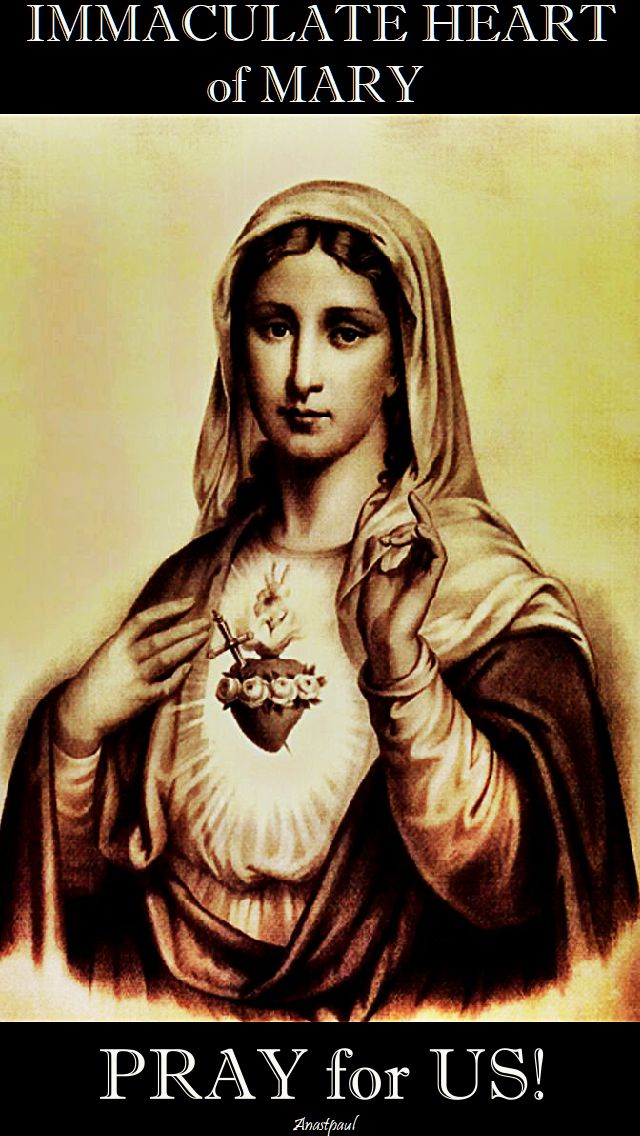
Pope Paul VI said: “Mary offers a calm vision and a reassuring word to the people of our time, torn as we often are between anguish and hope, defeated as we can be by our own limitations and assailed by limitless aspirations, troubled in our minds and divided in our hearts, uncertain as we face the riddle of death, oppressed at times by loneliness, yet yearning for company and fellowship, a prey to boredom and disgust. Mary shows the victory of hope over anguish, of fellowship over solitude, of peace over anxiety, of joy and beauty over boredom and disgust, of eternal vision over earthly perceptions, of life over death.” (cf Marialis Cultus, 57)
Mary offers us a firm eschatological assurance and hope that God is in charge, through His Son, in His Holy Spirit.
Our love of Mary and devotion to her “fits into the only worship that is rightly called Christian, because it takes its origin and effectiveness from Jesus Christ, finds its complete expression in Christ and leads us through Christ in the Holy Spirit to the Father.” (Marialis Cultus, Introduction)
“Do whatever he tells you” (John 2:5) are the last recorded words of Mary in Scripture. It is her message yesterday, today and forever. It is the hallmark of genuine spirituality, Christian behaviour and commitment to her son.
“Ask our Mother Mary, in whose heart we can find repose and peace, Mary who was full of the Holy Spirit, to nurture and foster the growth of the life of Jesus that is present in us by his Holy Spirit, so we can say that we not only belong to Jesus Christ and His Church but that we have become the Body of Christ because Christ lives in us and the love of Christ impels us to stay faithful as trustworthy stewards and disciples through all the competing pressures of life!” (Bishop Peter Ingham )
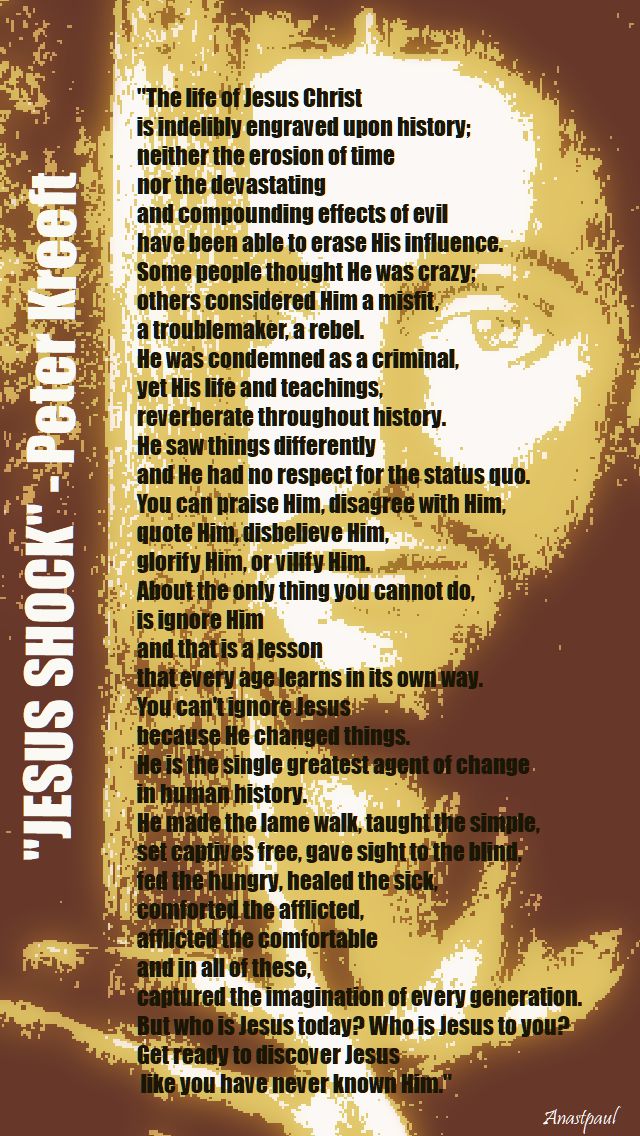
“The life of Jesus Christ is indelibly engraved upon history;
neither the erosion of time nor the devastating and compounding effects of evil
have been able to erase His influence.
Some people thought He was crazy;
others considered Him a misfit, a troublemaker, a rebel.
He was condemned as a criminal, yet His life and teachings,
reverberate throughout history. He saw things differently
and He had no respect for the status quo.
You can praise Him, disagree with Him, quote Him,
disbelieve Him, glorify Him, or vilify Him.
About the only thing you cannot do is ignore Him
and that is a lesson that every age learns in its own way.
You can’t ignore Jesus because He changed things.
He is the single greatest agent of change in human history.
He made the lame walk, taught the simple, set captives free,
gave sight to the blind, fed the hungry, healed the sick,
comforted the afflicted, afflicted the comfortable and in all of these,
captured the imagination of every generation.
But who is Jesus today? Who is Jesus to you?
Get ready to discover Jesus like you have never known Him.”
“Thus it will be at the end of the age. The angels will go out and separate the wicked from the righteous and throw them into the fiery furnace, where there will be wailing and grinding of teeth.”…..Matthew 13:49-50
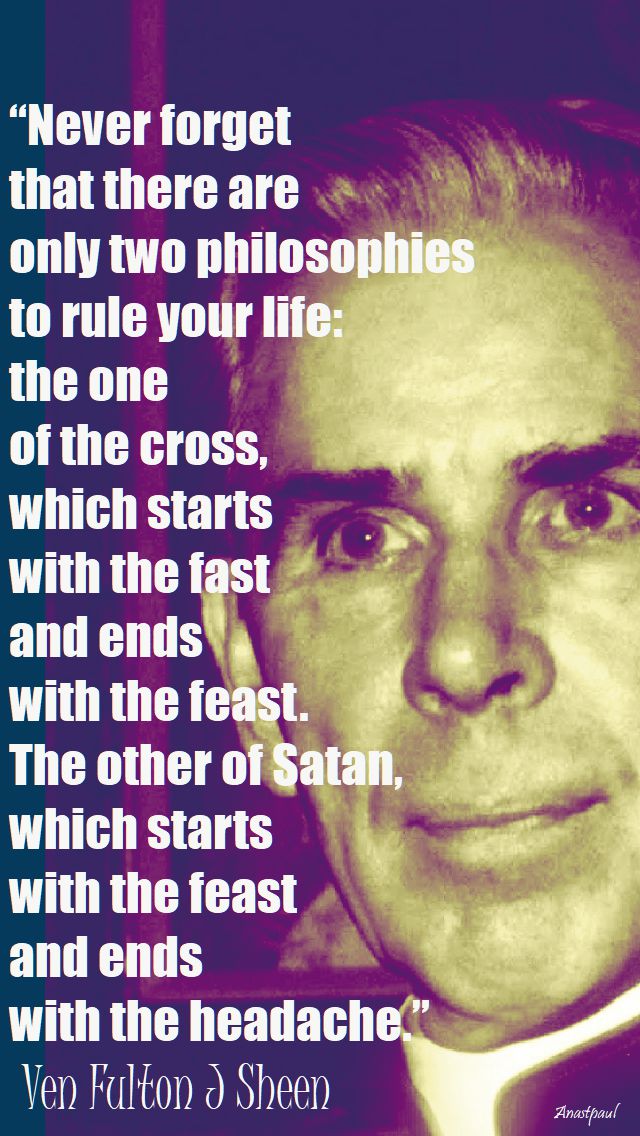
REFLECTION – “Never forget that there are only two philosophies to rule your life: the one of the cross, which starts with the fast and ends with the feast. The other of Satan, which starts with the feast and ends with the headache.” ..― Venerable Fulton J. Sheen
PRAYER – Help me Lord, to listen to Your word and live by it, so that I may be counted among the good ones whom Your angels will choose for eternal happiness. Let me accept the reality of good and evil living side by side in this world. And let me not be scandalised if the situation is not different also within Your Church in this world. Holy Martyrs of Spain , pray for us! Amen
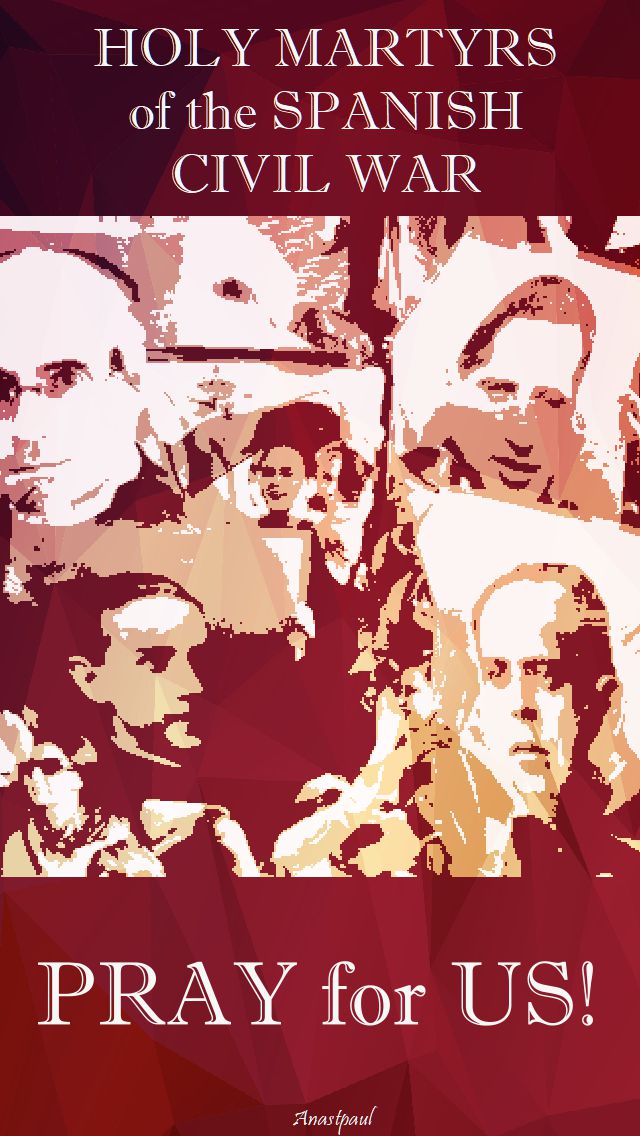
Saints of the Day – 3 August – The Martyrs of the Spanish Civil War 1931-1939
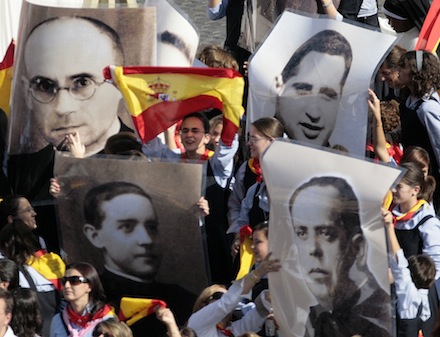
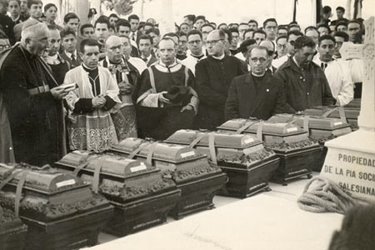
Fifty thousand Spanish people attended the Beatification ceremony of 498 Martyrs, victims of religious persecution in 1930’s Spain. These 498 people were killed only for their faith in Jesus Christ and their ideals, their killing being part of the anti-Catholic plan of the Republican government in power since 1931. The figures of this persecution are beyond comprehension and a complete and hate-filled attack on all Catholics whilst the world watched the violence: 13 Bishops, 4,154 Priests and Seminarians, 2,365 Religious, 283 Nuns and about 4,000 Laymen killed for helping or hiding Nuns or Priests.
As Monsignor Vicente Carcel Orti, the Spanish historian who has been living in Rome for forty years and who worked for the Curia, points out, the Spanish Church did not seek any confrontation with the Republic, but was persecuted in spite of her neutrality. The government persecuted the Church in legislative terms, while Republican extremists used violence against people and things. Anti-clerical violence was unleashed by Freemasons and Communists. Persecution started long before the civil war. According to Monsignor Carcel Orti, the shameful history of the Spanish Republic, a puppet in the hands of the Stalinist regime, has been concealed on account of its follow-up: the long winter of Franco’s dictatorship has, in a way, justified a distorted and mythicized reading of those tragic years.
This not too-long and highly informative interview with the Spanish historian is meant to throw light on this dramatic period in the history of the Spanish Church in order to achieve a better understanding of what is going on in present-day Spain.
Twentieth-century Spain was a nation of Martyrs. What was the political and ideological context in which the persecution of the Church and the martyrdom of believers occurred?
MONSIGNOR VICENTE CARCEL ORTI: It was a slow process which began with a great anticlerical movement in the 19th century. In 19th century Spain the Church was closely linked to the monarchy by means of concordats. Catholicism was, in practice, the state religion, like the Orthodox religion in Greece and Romania and Anglicanism in England. In the 1920’s King Alphonse XIII handed power over to Primo de Rivera, who set up a military dictatorship (we are talking about the age of dictatorships: there was Mussolini in Italy, Stalin in Russia and Hitler in Germany). The military regime, on the one hand, dissolved parliament, trade unions and political parties; on the other hand it ushered in a period of security and economic growth, through public works amongst other things. Unfortunately economic growth came to a sudden halt with the 1929 world crisis. The following year the Republicans won the municipal elections. Thus General Primo de Rivera relinquished his power while the king left the country, though without abdicating. It was under these circumstances that the Republicans seized power on April 14th, 1931, and proclaimed the Republic.
Why did the Republic persecute the Church and Catholic believers?
MSGR VICENTE CARCEL ORTI: The Republicans had built up so much hatred for the monarchy and everything relating to it, the Church included, that, once they seized power, they began to hit their enemies. Their first and easiest target was the Church, being defenseless. The new regime made laws against the Church; in the meantime anarchists, socialists and Communists began to use violence against people and things.
What was the role of Freemasonry in this anti-Catholic campaign?
MSGR VICENTE CARCEL ORTI: Freemasonry played a key role in the anti-Catholic campaign since Freemasons were present in political institutions, in the government and the “Cortes” (the Spanish parliament), where they had at least 183 deputies. Spanish Freemasonry, therefore, played a major role in the making of anti-Catholic laws and in the defamatory campaign against the Church.
What kind of persecution was the Church faced with from 1931 to 1936?
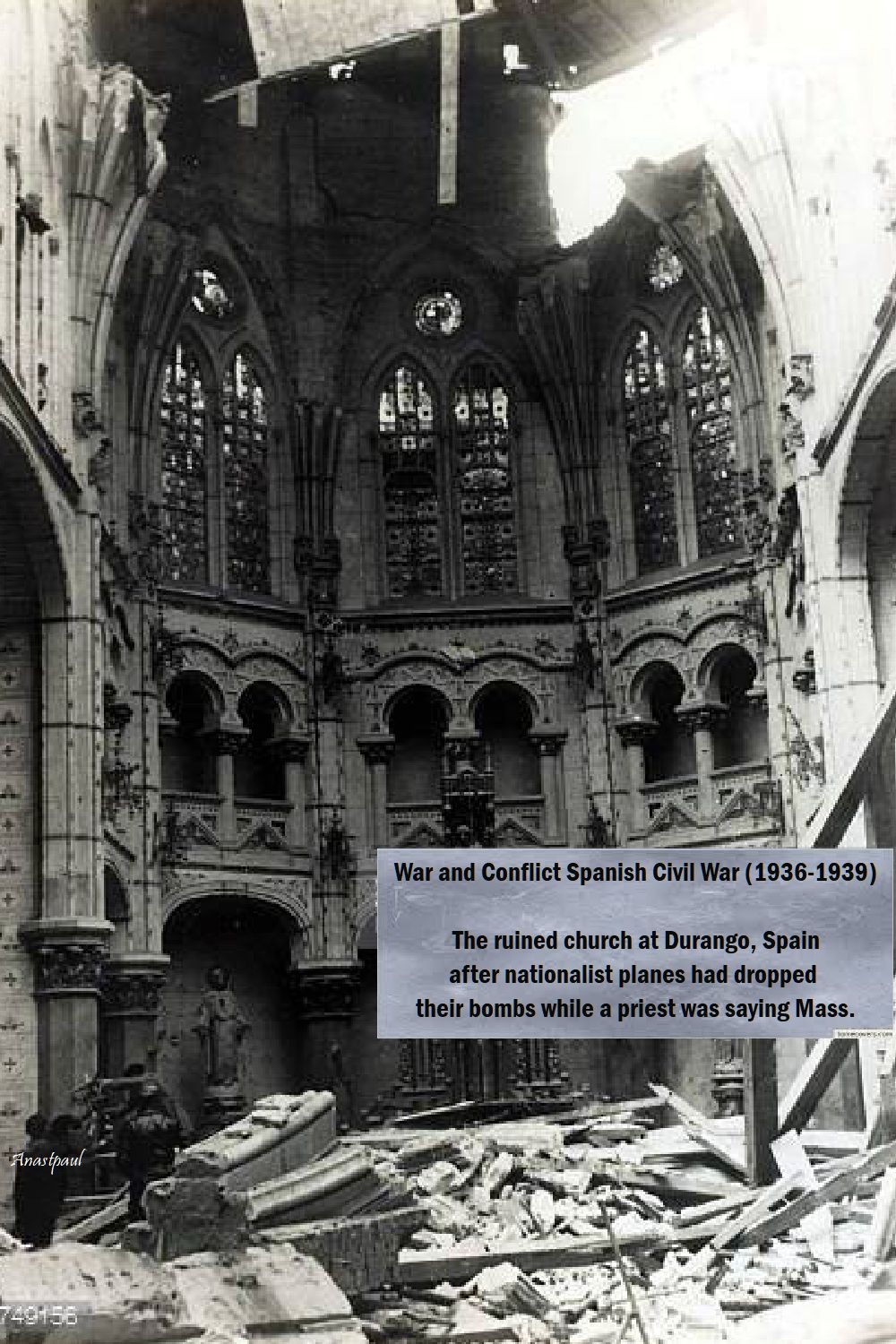
MSGR VICENTE CARCEL ORTI: As historians have ascertained, a growing number of measures against the Catholic Church and religious practice were taken between 1931 and 1936. These oppressive laws aimed at a radical and antidemocratic conception of the separation between Church and State. Numberless examples could be quoted: the Jesuits were dissolved in January 1932; in May 1933 a law against ecclesiastical property deprived the Church of all her possessions, which were handed over to civil authorities; a law was passed against the teaching of religion in schools, and the clergy was forbidden to teach. Violent persecution proper began in 1934 with the “Turon martyrs,” who have already been canonised and many other believers murdered during the Communist Revolution of the Asturias, when priests, religious and seminarians, 37 in all, were killed and 58 churches were burned. After 1936 in all the main cities, cathedrals, religious communities and parish churches were attacked, ransacked and burned. These persecutions aimed at erasing all traces of Catholic tradition in Spain. Hatred for the faith went even beyond murders and found expression in thousands of sacrilegious acts:tabernacles were emptied, consecrated particles were eaten, shot at, strewn in the streets and trodden on; churches were used as stables, altars were demolished, priests and nuns were held at gunpoint in the attempt to force them to recant their faith. Let us remember that persecutions started years before the beginning of the civil war, and the Church could be accused of supporting Franco’s Falangists, referred to as “rebels.”
But wasn’t the Church hostile to the Republican government?
MSGR VICENTE CARCEL ORTI: Spanish bishops recognised the legitimate Republican government from the start. The problem, however, was that the Republican authorities had always been openly hostile to Catholics. After the events of the Asturias, in the summer of 1936, socialists, Communists and anarchists started the most violent persecution in the history of Spain, aimed at the physical elimination of the Church, of both people and things; this persecution lasted until 1939.
Could you quote any figures?
MSGR VICENTE CARCEL ORTI: Albeit incomplete, the figures are impressive: 18 bishops, 4,184 between priests and seminarians, 283 nuns and about 4,000 laymen were killed for helping or hiding priests or nuns. It must be emphasized that in the part of the country occupied by Franco’s troops, no harm was done to the clergy nor were the churches destroyed.
Some critics of Franco say that he had 16 Basque Priests executed?
MSGR VICENTE CARCEL ORTI: It is true that when the nationalist troops entered Bilbao, 16 priests were shot, not because they were priests but for political reasons with other people. I have found the documentary evidence of this along with the witness of the bishop who had asked those priests to refrain from being involved in political activities. Such political activities triggered off Franco’s repression, which also involved 16 priests. When the Pope learned about this, he immediately sent a telegram to Franco, who promised that events like that would never happen again. The martyrdom of priests, however, only occurred in the “red” areas. In addition, the Republicans destroyed churches and monasteries (in my diocese, the diocese of Valencia, over 1000 churches and other sacred buildings were destroyed).
When did the Beatification causes of the Spanish Martyrs begin?
MSGR VICENTE CARCEL ORTI: At the end of the civil war in 1939, the Holy See demanded that all information about the persecution available to parishes and dioceses be collected. Once all the necessary material had been collected, bishops gradually started the diocesan phase of the beatification cases. These cases began in the 1940’s and continued into the 1950’s. At the end of the diocesan phase, all documents were sent to Rome for the “Roman” phase, to be held by the Congregation for the Causes of the Saints. Yet Paul VI stopped the cases, as he thought it would be best to wait until fifty years had passed from those dramatic events. Also, he posed a condition: Spain was to have a democratic government (the military regime was still in power in 1960’s Spain). At the beginning of John Paul II’s pontificate Spain was already a democracy; the Spaniards therefore asked the Pope to proceed with the beatification cases but he did not comply with their request, since fewer than fifty years had passed since the end of the civil war. John Paul II waited until 1987 to celebrate the first beatification case of martyrs who were victims of religious persecution (three Carmelite nuns from Guadalajara). This marked the beginning of the beatifications of our martyrs. On October 18th we celebrated sixteen beatifications, raising 979 martyrs to the altars. As far as I know, the Congregation is now examining another 2000 cases so that 2000 martyrs will probably be beatified in six or seven years’ time.
The Church has sometimes been accused of opening up an old sore with the Beatification of the Martyrs of the civil wa?
MSGR VICENTE CARCEL ORTI: It is a specious dispute with a strong ideological and political orientation. The victims beatified and canoniSed have never been referred to as “martyrs of the civil war,” but victims of religious persecution; the Church has always paid tribute to martyrs of faith and always will. Civil and military institutions commemorate “soldiers killed in war” or “victims of political repression,” both on the Republican and on the Nationalist sides but this doesn’t mean opening up an old sore, even though political parties sometimes clearly exploit past events.
How can these Martyrs become a mark of reconciliation?
MSGR VICENTE CARCEL ORTI: Nowadays the word “martyr” is abused; in common speech it is used in several senses, but its original and most proper use refers to someone suffering or dying for God’s sake, bearing witness to their faith, forgiving and praying for their executioners, as Jesus Christ did on the cross. Others can be called “heroes” or “victims” for various causes, sometimes questionable, but are referred to as “martyrs,” since this word is abused, being extended to those suffering for somebody or something.
“Christian martyrs” have no ideological or political motivation except their faith in God and love of their neighbors. These martyrs never waged or fomented any war; they were never involved in party strife. They brought an everlasting message of peace and love, which lightens our faith and feeds our hope.
The Beatification of these martyrs coincides with the Spanish Parliament’s decision to commemorate the victims of Franco’s regime. Who were they?
MSGR VICENTE CARCEL ORTI: They were people killed in the civil war and in the ensuing wave of repression. This involved the winners’ ideological enemies. Franco’s reaction was violent but did not last too long. Republicans were tried, though by court-martials and documents of these trials have come down to us.
A point must be made: those who fought for the Republic at that time did not fight for freedom or democracy but to set up a regime like the one in power in the Soviet Union. Franco was therefore right when he said that he was making war on Communism. If he had not won, there would have been the Spanish Soviet Union.
All over the world left-wing parties have always idealised the Spanish Republicans and depicted Franco as the incarnation of evil.
MSGR VICENTE CARCEL ORTI: Franco saved the Church from total destruction. Without his intervention the Church would probably have been blotted out. Yet no one knew at the time that he would become a dictator.
Franco also saved Spain from the Second World War.
MSGR VICENTE CARCEL ORTI: This is another very important element. At the end of the civil war, Hitler paid a visit to Franco and asked his permission for the German army to cross Spain as far as Gibraltar (he intended to conquer North Africa and occupy the whole Mediterranean). Franco did not give his consent on the grounds that the country had been devastated by the civil war and could not afford to be involved in another conflict.
Pius XI, who was in contact with Franco, warned him against Hitler (Franco declared himself a Catholic, Hitler was a pagan).
At the end of the Second World War Franco established relations with the U.S.A. and brought his country into the U.N. Spain was recognised by all states. When certain circles demand that the Spanish Church apologise for her relations with Franco’s regime,I therefore ask myself: “What do we have to apologize for? For having ten thousand martyrs?” Such requests are made by the ideological heirs of those who persecuted the Church. They do everything to erase all memories of her martyrdom.
MSGR VICENTE CARCEL ORTI:These requests are only demagogical. In addition, the Spanish Church produced a document many years ago, recognising that mistakes had been made and forgiving her persecutors. In this document it was also pointed out that no other course of action was possible under those circumstances.
Why is the struggle against Franco still a myth to the whole of the Left, a symbol of the fight for democracy against dictatorship?
MSGR VICENTE CARCEL ORTI:Most of the European Left was and is Communist. Since Franco was the only one to defeat Communists on the battlefield, these have reacted by presenting the fight of the International Brigades as the fight for freedom against dictatorship. Unfortunately Communist organizations are the most backward and the most conservative ones nowadays; they are unable to revise their past or make any self-criticism.
Socialist, Communist and Masonic parties are in power in Spain nowadays. They see the Church in the same way as the Republicans who tried to destroy her 70 years ago. Needless to say, nobody kills priests and nuns or burns religious buildings but the Church is perceived as a hindrance to the real progress of Spain and the whole of mankind, as an institution to marginalize and reduce to silence, being the holder of a conservative vision of man, an ideological adversary. Zapatero seems to be willing to create a new world, a new man in Spain.
MSGR VICENTE CARCEL ORTI: This is typical of all left-wing totalitarian regimes. Stalin too intended to create a new man; so did Pol Pot. Freedom is at risk in Spain, as the state is trying to interfere with people’s private lives, to impose a given way of life, to decide how they must bring up their children, etc. It is not enough for laws to be passed by a parliament to be right. As there is only one voice to defend man’s good, attempts are being made to hush it. Yet, whilst politicians are voted into and out of power, the Church remains.
Martyrs Born Various Died 1934, 1936-1939 Venerated in Roman Catholicism Beatified 29 March 1987 1 October 1989 29 April 1990 25 October 1992 10 October 1993 1 October 1995 4 May 1997 10 May 1998 7 March 1999 11 March 2001 by Pope John Paul II 29 October 2005 28 October 2007 23 January 2010 17 December 2011 by Pope Benedict XVI[1] 13 October 2013 1 November 2014 5 September 2015 3 October 2015 21 November 2015 23 April 2016 8 October 2016 29 October 2016 25 March 2017 6 May 2017 21 October 2017 11 November 2017 by Pope Francis Canonised 4 May 2003 in Madrid by Pope John Paul II Feasts – Various
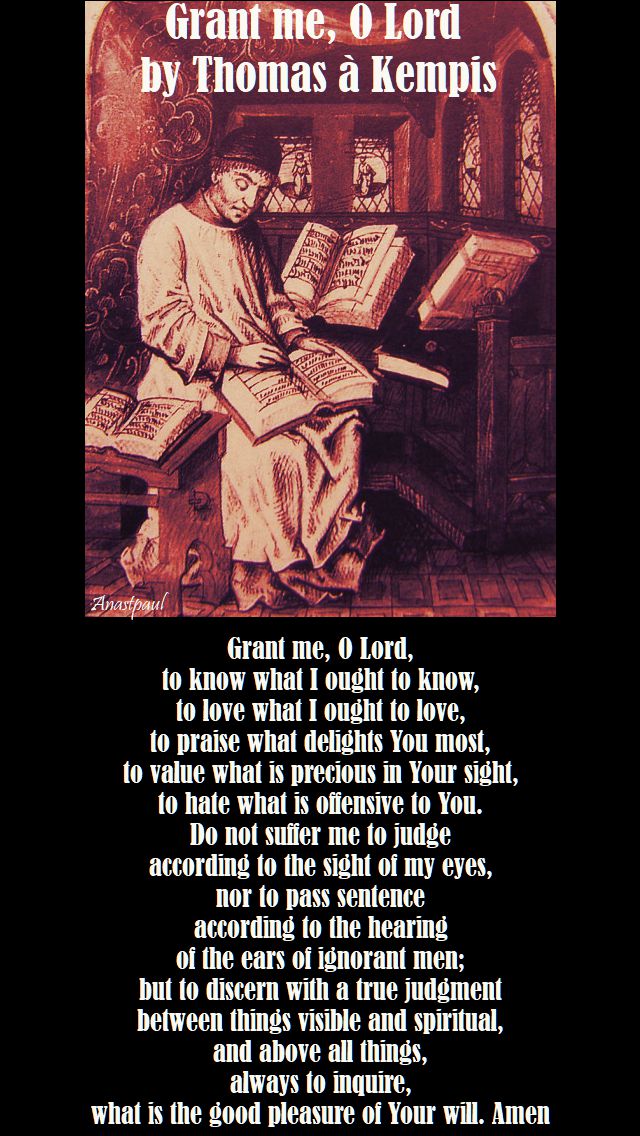
Grant me, O Lord,
to know what I ought to know,
to love what I ought to love,
to praise what delights You most,
to value what is precious in Your sight,
to hate what is offensive to You.
Do not suffer me to judge
according to the sight of my eyes,
nor to pass sentence
according to the hearing
of the ears of ignorant men;
but to discern with a true judgment
between things visible and spiritual,
and above all things,
always to inquire,
what is the good pleasure of Your will. Amen
St Abibas
St Anthony the Roman
St Aspren of Naples
Bl Augustine Gazotich
Bl Benno of Metz
St Dalmatius
St Euphronius of Autun
St Gamaliel
St Gaudentia
Bl Godfrey of Le Mans
Bl Gregory of Nonantula
St Hermellus
St Nicodemus
St Senach of Clonard
St Trea of Ardtree
St Waltheof of Melrose
—
Martyrs of Vercelli – 4 saints (below)
Martyred in the Spanish Civil War: https://www.youtube.com/watch?v=HAioTwJ0BMA
BlAndrés Avelino Gutiérrez Moral
Bl Antonio Isidoro Arrué Peiró
Bl Eleuterio Mancho López
Bl Eugenio Remón Salvador
Bl Federico López y López
Bl Francisco Bandrés Sánchez
Bl Geronimo Limón Márquez
Bl Jose Guardiet y Pujol
Bl Patricio Beobide Cendoya
Bl Ricardo Gil Barcelón
Bl Salvador Ferrandis Seguí
Be filled with the Spirit, addressing one another in psalms and hymns and inspired songs. Sing praise to the Lord with all your hearts. Give thanks to God the Father always and for everything in the name of our Lord Jesus Christ. (Ephesians 5:18-20)
Prayer was the breath of St. Dominic’s life, the light on his path, the staff on his pilgrimage. He prayed always. In childhood his delight was to serve Mass, to visit the Blessed Sacrament and to chant Office. As a student, he learned wisdom more from prayer than from books. He won more souls by prayer than by preaching or miracles. In traveling, St Dominic prayed as he went, sometimes the Veni Creator Spiritus or the Ave Maris Stella or sometimes he recited psalms. He often reminded his companions to think of God. Many times St. Dominic spent the night in prayer before the altar. His methods of prayer were various: sometimes he lay prostrate, then stood erect, then knelt down. For hours he would stand before a crucifix, genuflecting and making fervent ejaculations. Often he stretched out his arms like a cross, pleading earnestly to God. On occasion he was seen in rapture by the vehemence of his prayer. “In all labours and trials, in hunger, thirst, fatigue, his heart turned always to God.”
Pray for us, blessed father, St. Dominic, That we may be made worthy of the promises of Christ.
Let us pray:
O God,
who enlightened Your Church
by the virtues and preaching of St Dominic,
Your confessor and our father,
mercifully grant that by his prayers
we may be delivered from present dangers
and ever increase in spiritual blessings.
We pray too, that we may learn
from our blessed St Dominic,
to pray always, constantly living with You
in our hearts, minds and souls.
Pray too Holy St Dominic,
that our prayers and yours,
may draw back those
who have lapsed from the one, true faith
and for this our special intention …
(make your request)
Through Christ our Lord. Amen
The value of the vision and the accompanying glory is its gift of equipping us for service and endurance.
No one can stay on the mountaintop of Tabor forever, for there are responsibilities in the valley.
Christ fulfilled His life’s work not in the glory but in the valley and it was there He was truly and completely the Messiah.
Let us Pray:
O Christ our Lord,
You took Peter, James and John
and led them up a high mountain by themselves
and there you equipped them, by Your glory,
with understanding and courage for the journey ahead.
We pray for ourselves,
that we may come to be transfigured and prepared,
for service to You, Your Holy Church and our neighbour
and be equipped with endurance to complete our mission
and to look forward in hope of being transfigured at the last day. Amen
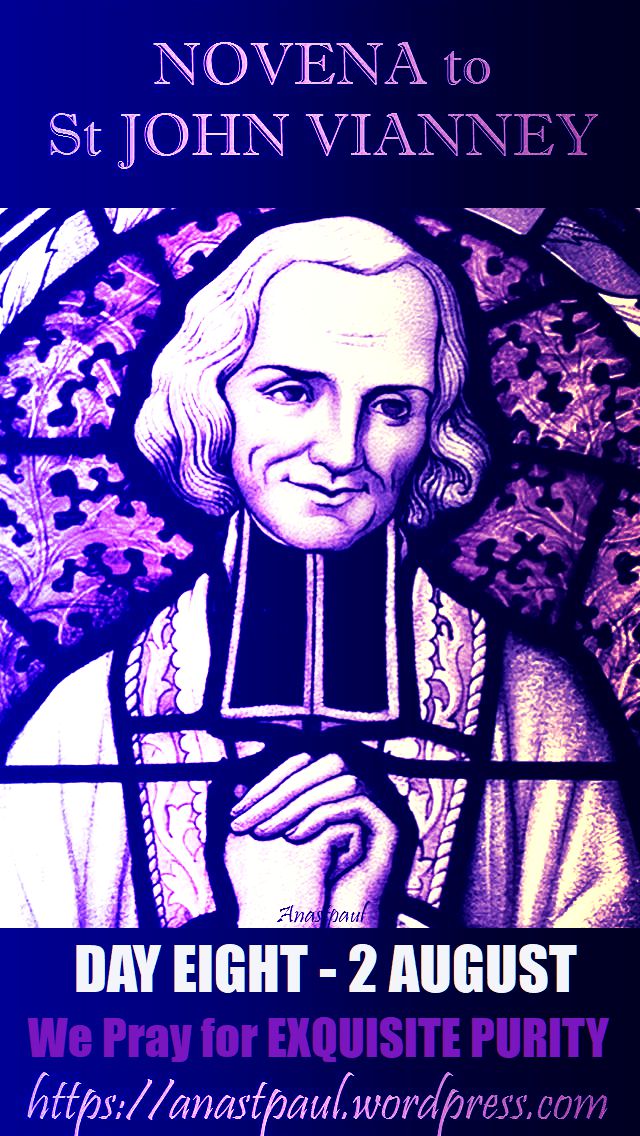
O Holy Priest of Ars,
a witness of your life made this magnificent praise of you:
‘We would have taken him for an angel in a mortal body.”
You so edified others:
modesty and exquisite purity radiated from your body.
With such charm and with such enthusiasm,
you preached to others about these beautiful virtues
which you said resembled the perfume of a vineyard in bloom.
Please I beg you,to join your entreaties to those of Mary Immaculate
and Saint Philomena in order that I guard always,
as God asks me, the purity of my heart.
You, who have directed so many souls towards the heights of virtue,
defend me in temptations and obtain for me the strength to conquer them.
Holy Priest of Ars, I have confidence in your intercession.
Pray for me during this novena especially for …
(mention silently your special intentions).
Our Father, Hail Mary, Glory Be.













You must be logged in to post a comment.