
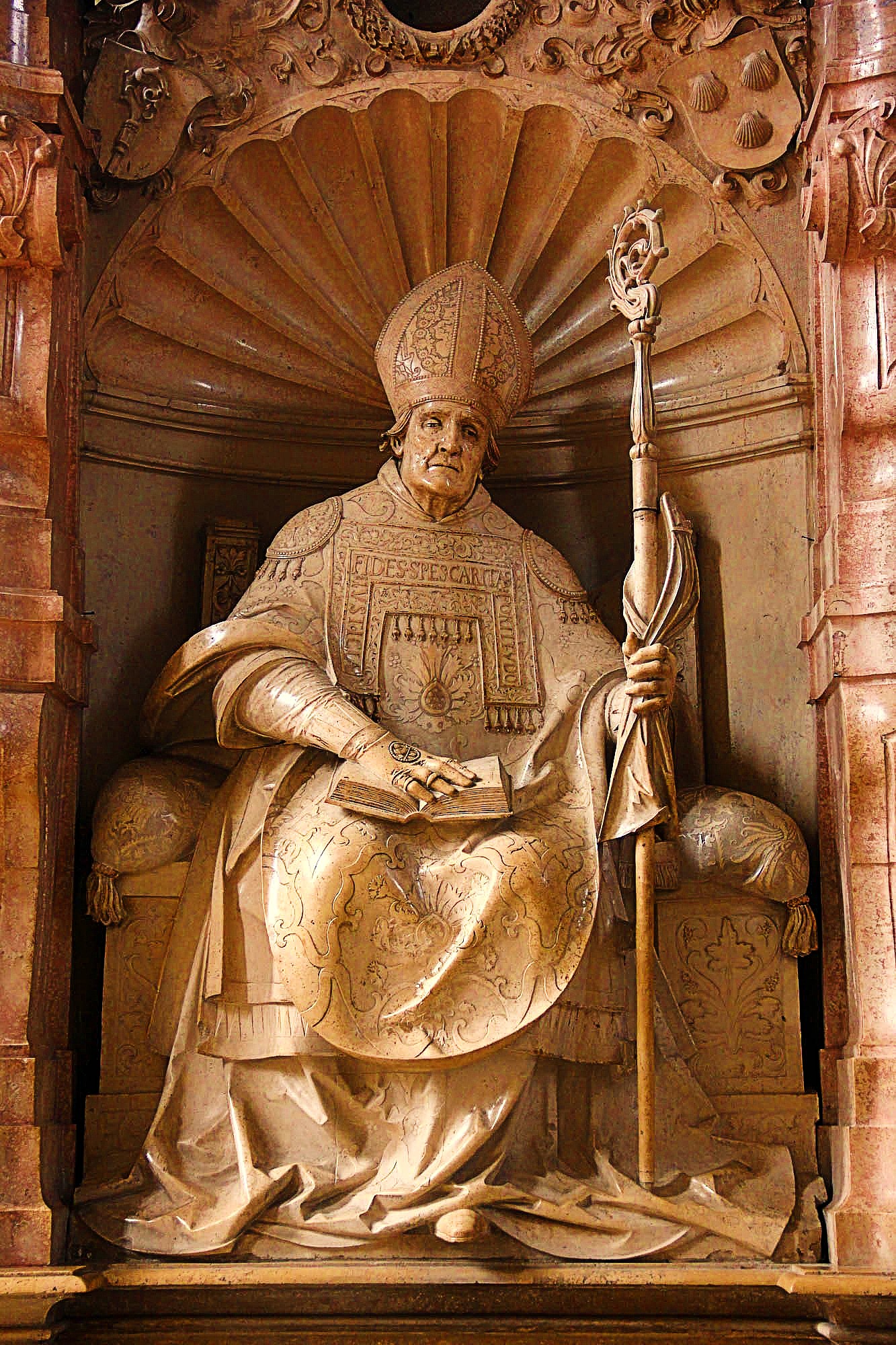
Saint of the Day – 7 July – Saint Hedda (Died 705) Bishop of Winchester, England, Monk, Abbot Believed to have been born in Headingley, Leeds and died on 7 July 705 in Winchester, after having served his huge Diocese as a faithful shepherd for around 30 years. He had been a man of love and justice, of knowledge and eloquence and great determination. Also known as – Hedda of Dorchester, Hedda of Wessex, Edda…
Haeddi…
The Roman Martyrology reads today: “In England, St Hedda, Bishop of the West -Saxons.”
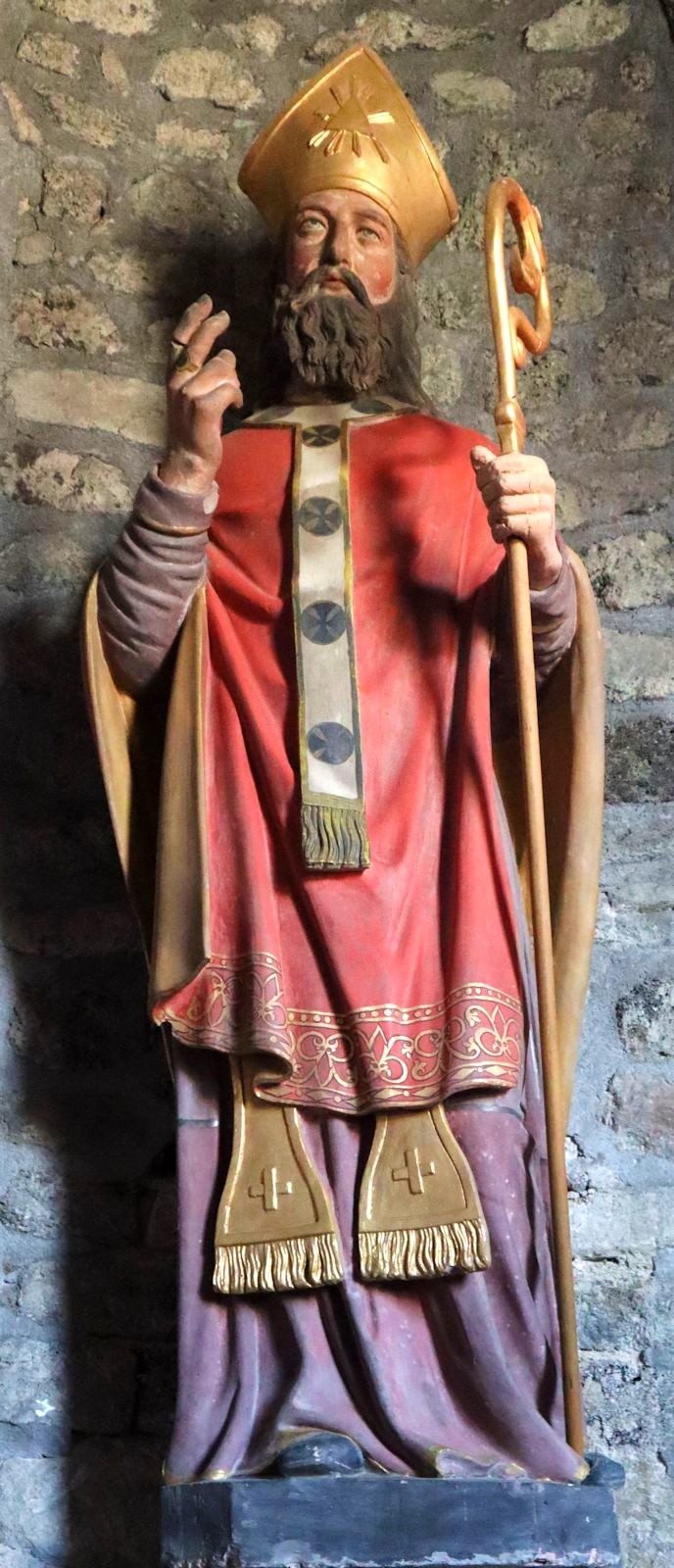
Almost nothing is known of the early life of Hedda, who, according to the historian, William of Malmesbury (1080-1143), was first a Monk and then an Abbot, possibly of a Monastery in Wessex.
His signature on a document, suggests that Hedda was the Abbot of a Monastery in Wessex, perhaps Glastonbury. Moreover, this hypothesis seems confirmed by the fact that his name was found among those of Abbots and illustrious men on one of the ancient and almost illegible records engraved on stone “pyramids” at Glastonbury.
According to other sources, Hedda was a Monk at St Hilda’s Monastery at Whitby but, the fame of Whitby as a centre of learning, taken together with the statements of the Venerable St Bede about Hedda’s less comprehensive education, make this thesis seem unlikely. St Bede states further, that Hedda was “a just and good man”and that he governed his Diocese with love being “more inspired by a love of virtue, than by lessons … ” However, William of Malmesbury insists that after having read much of Hedda’s correspondence, he found our Saint to be a man of great knowledge and profound eloquence.
Hedda settled in Winchester, as the Episcopal Seat of the Diocese of the West-Saxons, (formerly in Dorchester) making this move permanent and then proceeding to transfer the Relics of St Birinus from Dorchester to Winchester . These Relics he had placed in the Church of Sts Peter and Paul.
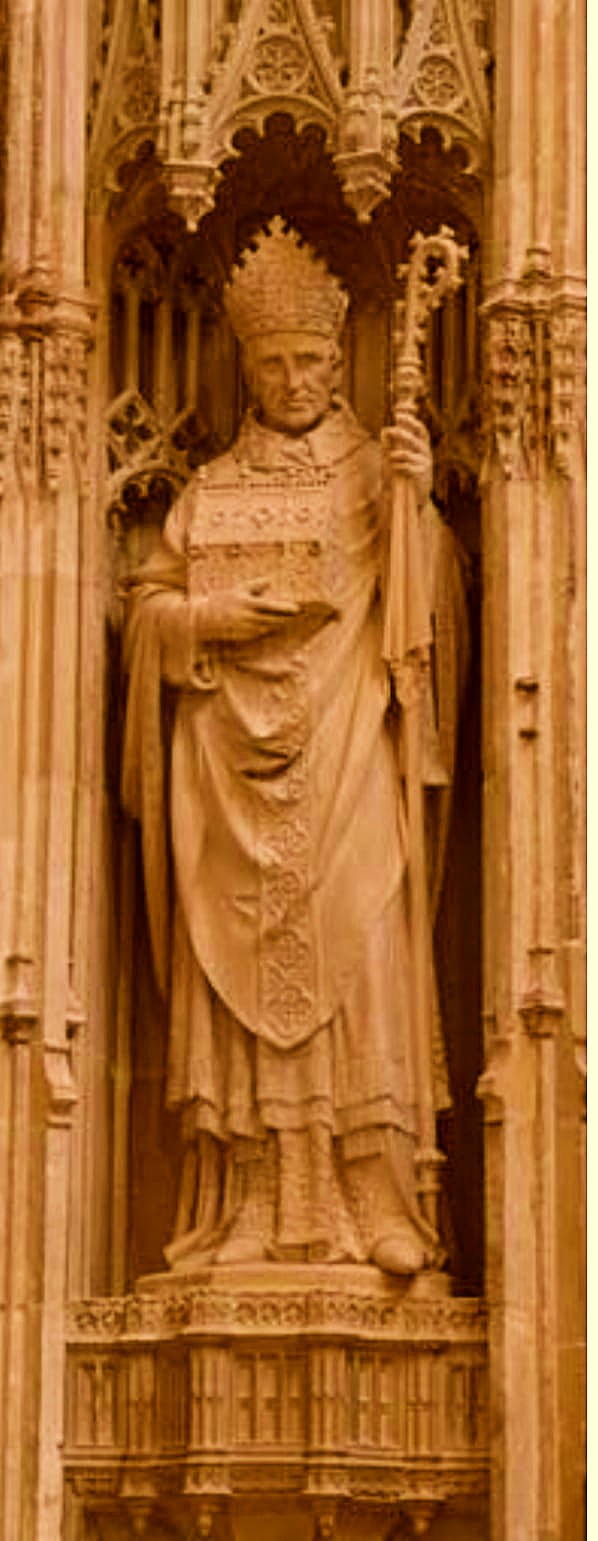
It was Hedda who brought King Cenwalh to the Faith, who, despite the conversion of his father, Cynogils, had long remained a pagan. Hedda was also a valued advisor to King St Ina (689-726) in whose law code of Wessex, the Bishop is mentioned as contributing to the laws and thus, was not a stranger to the wise laws issued by King Ina. He also visited the Hermit St Gutlach, on the Island of Croyland, Ordained him a Priest and Consecrated his Church. The Bishop Hedda, was one of the first benefactors, (probably affirming his deep connections to it) of Glastonbury Abbey, to which he made a gift of lands and on which he directed the favours of the sovereigns.
Throughout his Episcopate, Hedda strenuously opposed any attempt to divide his Diocese and this seems also in consideration of the precarious and difficult political situation of the Kingdom of Wessex, whose unity would have been favoured by that of the Diocese. Archbishop Theodore of Canterbury, had divided numerous Diocese, left that of Wessex intact until the death of Hedda, perhaps because of the friendship which bound him to the latter.
In 704 the question was again raised, as is evident from a letter written by Wealdheri, the Bishop of London, to Archbishop Britwald to inform him that a Synod of Bishops held that year, had decided to exclude the West-Saxons from communion, unless they conformed to the disposition of the same Archbishop which seems to have referred to the question of the division of the Diocese. Hedda, however, persisted in his position.
Hedda died in Winchester in 705. The faithful of his Diocese, whom he had governed for about thirty years, soon venerated him as a Saint. So many were the miracles and cures at his tomb, St Bede says even the dust from his grave had the power to perform miraculous cures.
His memory is celebrated on 7 July and on that day Hedda is also commemorated in the Roman Martyrology. His Feast is still celebrated Liturgically today in the Archdiocese of Birmingham which governs Winchester.




 AnaStpaul
You must be logged in to post a comment.