One Minute Reflection – 22 December – “The Month of the Divine Infancy and the Immaculate Conception of the Blessed Virgin Mary” – The Feast of St Thomas, Apostle of Christ (Delayed) – Ephesians 2:19-22 – John 20:24-29 – Scripture search here: https://www.drbo.org/
“Blessed are they who have not seen and yet, have believed.” – John 20:29
REFLECTION – “The disciples’ weakness was so unsteady that, not content with seeing the risen Lord, they still wanted to touch Him if they were to believe in Him. It was not enough for them to see Him with their eyes, they wanted to put out their hands to His limbs and touch the marks of His recent wounds. It was after He had touched and acknowledged His scars that the unbelieving disciple cried out: “My Lord and my God!” Those scars revealed the One Who, where other people were concerned, healed every wound! Could the Lord not have risen without scars? Yet, He saw within His disciples’ hearts, wounds which those scars which He had preserved in His Body, would heal.
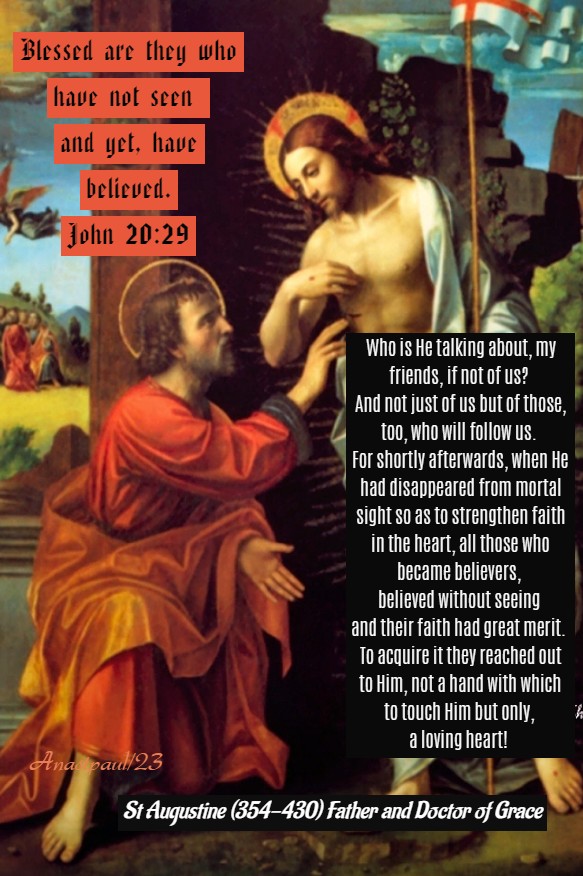
And what does the Lord answer that confession of faith of His disciple, who says: “My Lord and my God”? “Have you come to believe because you have seen Me? Blessed are they who have not seen and yet, have believed.” Who is He talking about, my friends, if not of us? And not just of us but of those, too, who will follow us. For shortly afterwards, when He had disappeared from mortal sight so as to strengthen faith in the heart, all those who became believers, believed without seeing and their faith had great merit. To acquire it they reached out to Him, not a hand with which to touch Him but only, a loving heart! ” – St Augustine (354-430) Father and Doctor of Grace (Sermon 88).
PRAYER – O Lord, grant us, we beseech Thee, to glory in the Feast-day of blessed Thomas, Thy Apostle, that we maybe helped continually by his patronage and imitate his faith with a devotion like his. Through Jesus Christ, Thy Son our Lord, Who lives and reigns with Thee, in the unity of the Holy Ghost, God, world without end. Amen (Collect).
Our Morning Offering – 22 December – “The Month of the Divine Infancy and the Immaculate Conception of the Blessed Virgin Mary” – Feast of St Thomas, Apostle
Exsultet Orbis! Let the World Rejoice! Unknown Author
Now let the earth with joy resound, And Heaven the chant re-echo round; Nor Heaven nor earth too high can raise The great Apostles’ glorious praise.
O ye who, throned in glory dread, Shall judge the living and the dead, Lights of the world forever more! To you the suppliant prayer we pour.
Ye close the Sacred Gates on high. At your command apart they fly. O loose for us the guilty chain We strive to break and strive in vain.
Sickness and health your voice obey, At your command they go or stay. From sin’s disease our souls restore; In good confirm us more and more.
So when the world is at its end. And Christ to Judgment shall descend, May we be called, those joys to see Prepared from all eternity.
Praise to the Father, with the Son, And Holy Spirit, Three in One; As ever was in ages past And so shall be while ages last. Amen
(Roman Breviary for the Common of Apostles) An Office Hymn that was traditionally prescribed for Vespers and Lauds on the Feasts of Apostles and Evangelists outside Easter time. The Hymn is found as early as the tenth century in a hymnal of Moissac Abbey.
St Abban of New Ross Bl Adam of Saxony St Amaswinthus of Málaga St Athernaise of Fife St Bertheid of Münster St Chaeremon of Nilopolis
St Flavian (Died 363) Martyr Layman, Prefect of Imperial Rome, Husband of Saint Dafrosa, Father of Saint Bibiana and Saint Demetria. The Roman Martyrology states: “At Rome, ex-Prefect, who, under Julian the Apostate, was condemned to be branded for Christ and banished to Aquae Taurinae, where he gave up his soul to God in prayer.” His Life and Death: https://anastpaul.com/2021/12/22/saint-of-the-day-22-december-saint-flavian-of-acquapendente-died-363-martyr/
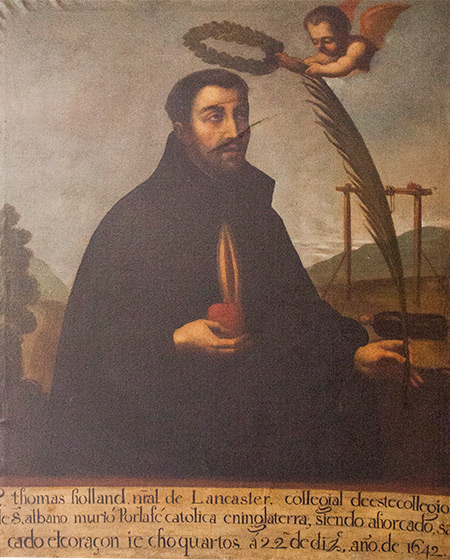
Blessed Thomas Holland SJ (1600-1642) Priest of the Society of Jesus and Martyr. of England and Wales. With eyes closed in prayer, Fr Holland looked at a Priest secretly in the crowd and received absolution. After he was hanged, his body was beheaded and quartered and exposed on London Bridge. Fr Holland was only forty-two years of age and a Jesuit for eighteen years. Pope Pius XI Beatified him on 15 December 1929. His Life and Death: https://anastpaul.com/2019/12/22/saint-of-the-day-22-december-blessed-thomas-holland-sj-1600-1642-priest-and-martyr-his-faith-was-his-crime/
Martyrs of Ostia – 3 Saints: A group of Christians Martyred together. The only details about them to survive are three names – Demetrius, Florus and Honoratus. They were martyred at Ostia, Italy.
Martyrs of Rhaitu – 43 Saints: 43 Monks Martyred by Blemmyes, in Raíthu, Egypt, date unknown.
Martyrs of Via Lavicana – 30 Saints: A group of 30 Christians Martyred together in the persecutions of Diocletian. Died in c 303 in Rome, Italy and were buried between two bay trees on the Via Lavicana outside Rome.
DISCLAIMER: Please note: I cannot control the content of the Advertisements on this Site, or of pop-ups which may appear, The revenue from the Advertisements, however, does provide a little assistance in the support of the Site. I do apologise for any inappropriate content.
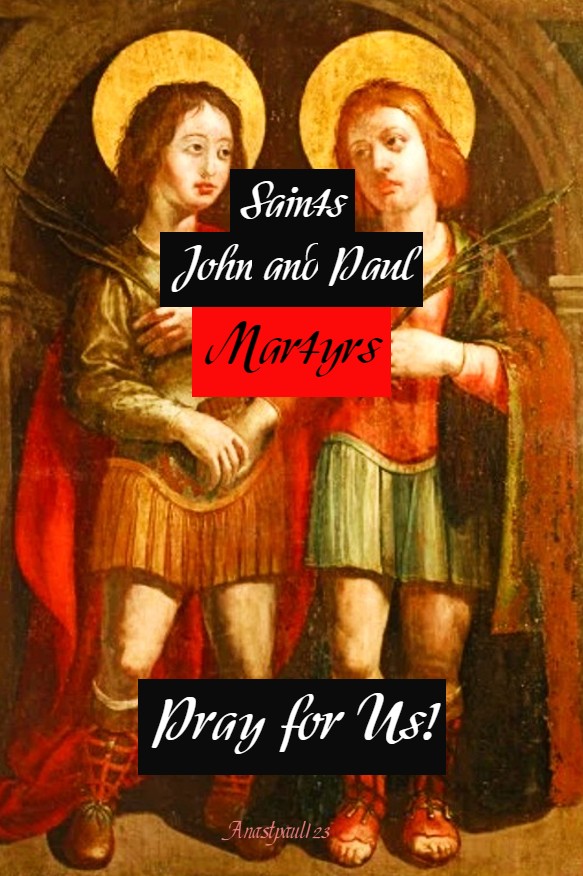
One Minute Reflection – 26 June – “The Month of the Most Sacred Heart of Jesus” – Saint John and Saint Paul of Rome (Died c362) Martyrs – The Octave Day of Corpus Christi – 1 Corinthians 23-29 – John 6:56-59 – Scripture search here: https://www.drbo.org/
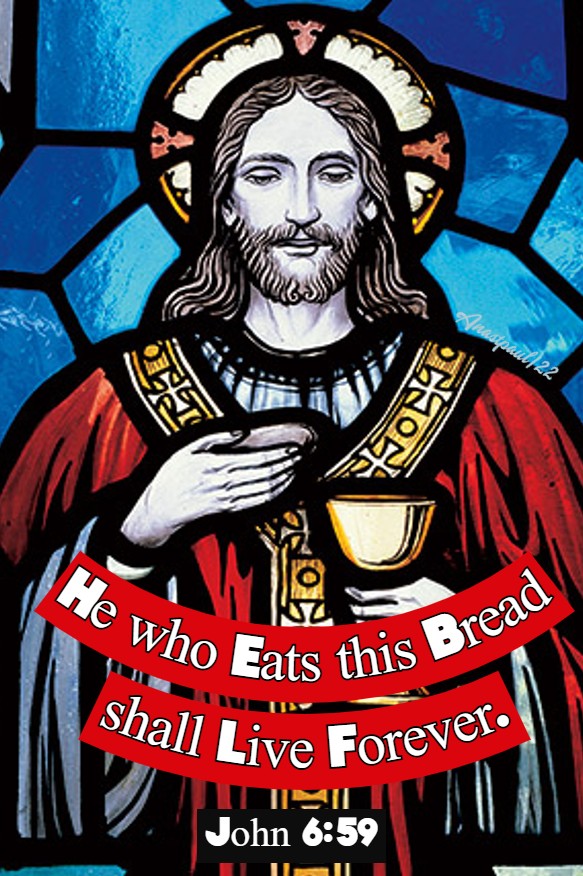
“He who eats this Bread shall live forever.” – John 6:59
REFLECTION – “Since it was the Will of God’s Only-Begotten Son that men should share in His Divinity, He assumed our nature in order that, by becoming Man. He might make men gods . Moreover, when He took our flesh. He dedicated the whole of its substance to our salvation. He offered His Body to God the Father, on the Altar of the Cross, as a sacrifice for our reconciliation. He shed His Blood for our ransom and purification, so that we might be redeemed, from our wretched state of bondage and cleansed from all sin. But to ensure that the memory of so great a gift would abide with us forever, He left His Body as food and His Blood as drink, for the faithful to consume in the form of bread and wine.
O precious and wonderful banquet which brings us salvation and contains all sweetness! Could anything be of more intrinsic value? Under the old law, it was the flesh of calves and goats, which was offered but here, Christ Himself, the True God, is set before us as our food! What could be more wonderful than this? No other Sacrament has greater healing power; through it, sins are purged away, virtues are increased and the soul is enriched with an abundance of every spiritual gift. It is offered in the Church for the living and the dead, so that what was instituted for the salvation of all, may be for the benefit of all. Yet, in the end, no-one can fully express the sweetness of this Sacrament, in which spiritual delight is tasted at its very source, and in which, we renew the memory, of that surpassing love for us, which Christ revealed in His Passion.
It was to impress the vastness of this Love, more firmly upon the hearts of the faithful, that our Lord instituted this Sacrament at the Last Supper. As He was on the point of leaving the world to go to the Father, after celebrating the Passover with His disciples, He left it as a perpetual memorial of His Passion. It was the fulfilment of ancient figures and the greatest of all His Miracles, while, for those who were to experience the sorrow of His departure, it was destined to be a unique and abiding consolation.” – St Thomas Aquinas (1225-1274) Dominican Priest and Theologian, Doctor of the Church (An excerpt from On the Feast of the Body of Christ).
PRAYER – We beseech Thee, Almighty God that on this feast-day, we may have the double joy of celebrating blessed John and Paul, true brothers ,who obtained eternal glory through one Faith and one Martyrdom. Through Jesus Christ, Thy Son our Lord, Who lives and reigns with Thee, in the unity of the Holy Ghost, God, world without end. Amen (Collect).
O HEART of love, I place all my trust in Thee; for though I fear all things from my weakness, I hope all things from Thy mercies. – Ejaculation of Saint Margaret Mary – Indulgence 300 Days, Everytime – Raccolta 180St Pius X, 3 June 1908.
Our Morning Offering – 26 June – “The Month of the Most Sacred Heart of Jesus” – The Octave Day of Corpus Christi
Lauda Sion Salvatorem Sion, Lift Up thy Voice and Sing (Excerpt) By St Thomas Aquinas OP (1225-1274) Doctor Angelicus / Doctor Communis
Sion, lift thy voice and sing, Praise thy Saviour and thy King, Praise with hymns thy Shepherd true, Dare thy most to praise Him well, For He doth all praise excel, None can ever reach His due.
Special theme of praise is Thine, That true living Bread divine, That life-giving flesh adored, Which the brethren twelve received, As most faithfully believed, At the Supper of the Lord.
Let the chant be loud and high, Sweet and tranquil be the joy Felt to-day in every breast; On this festival divine Which recounts the origin Of the glorious Eucharist.
St Thomas Aquinas wrote the Liturgy for Corpus Christi when Pope Urban IV added the Solemnity to the universal Church’s Liturgical Calendar in 1264. He provided a great Sequence, one of the great poems chanted or recited before the proclamation of the Gospel. Lauda Sion is one of only four medieval Sequences which were preserved in the Roman Missal published in 1570 following the Council of Trent (1545–1563)—the others being Victimae Paschali Laudes (Easter), Veni Sancte Spiritus (Pentecost) and Dies irae (requiem masses). (A fifth, Stabat Mater, would later be added in 1727.) Before Trent, many Feasts had their own Sequences. The existing versions were unified in the Roman Missal promulgated in 1570. The Lauda Sion is still sung today as solemn Eucharistic Hymn, although its use is optional in the post-Vatican II Ordinary form. As with St Thomas’s other three Eucharistic Hymns, the last few stanzas of the Lauda Sion are often used alone, in this case, to form the “Ecce Panis Angelorum.”
Quote/s of the Day – 21 December – The Feast of St Thomas, Apostle – Ephesians 2:19-22; John 20:24-29 – Scripture search here: https://www.drbo.org/
“My Lord and my God”
John 20:28
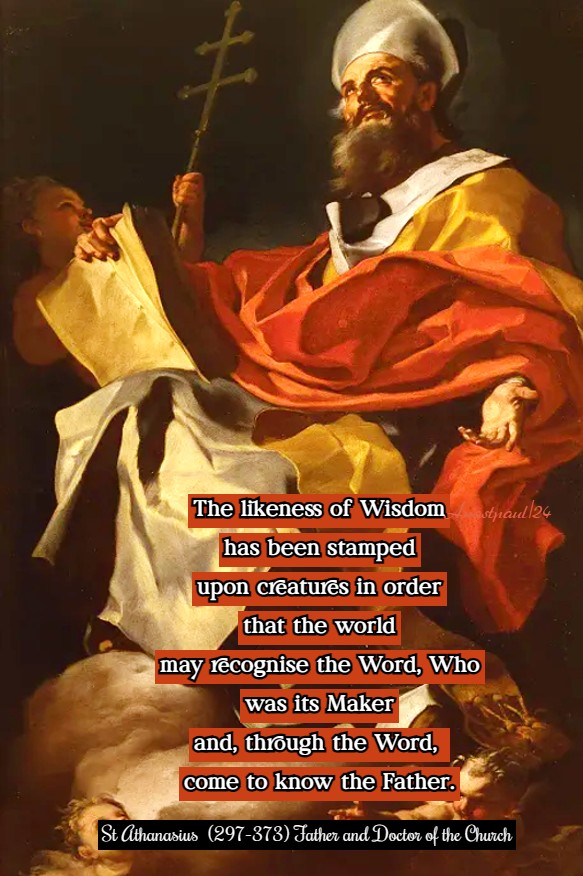
“The likeness of Wisdom has been stamped upon creatures, in order that the world may recognise the Word, Who was its Maker and, through the Word, come to know the Father. ”
St Athanasius (297-373) Father and Doctor of the Church
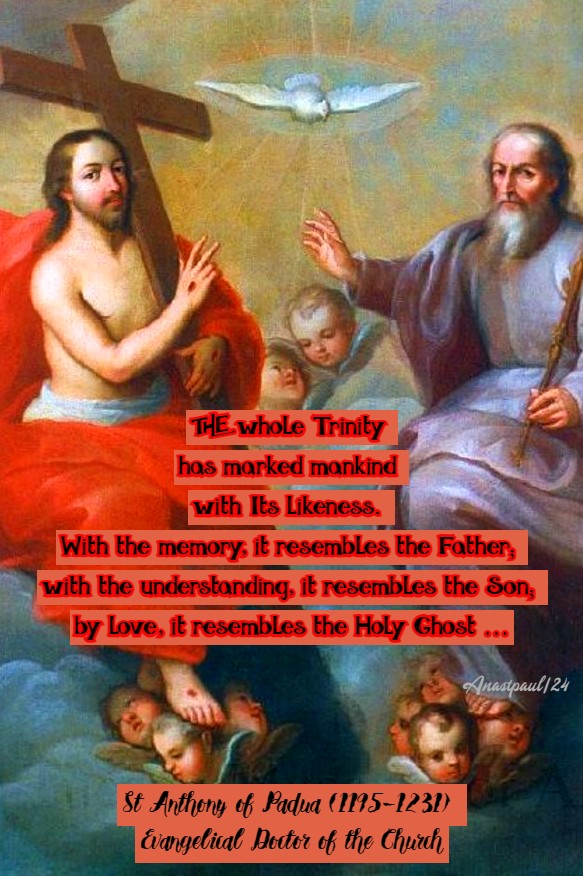
“The whole Trinity has marked mankind with Its likeness. With the memory, it resembles the Father; with the understanding, it resembles the Son; by love, it resembles the Holy Ghost … ”
St Anthony of Padua (1195-1231) Evangelical Doctor of the Church
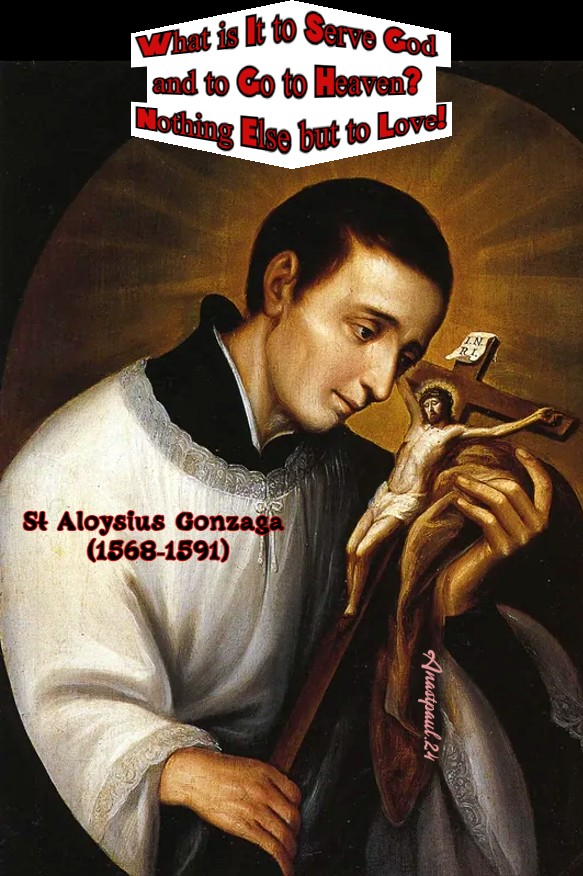
“What is it to serve God and to go to Heaven? Nothing else but to love!”
One Minute Reflection – 21 December – “The Month of the Divine Infancy and the Immaculate Conception of the Blessed Virgin Mary” – Ember Saturday – Feast of St Thomas, Apostle of Christ – Ephesians 2:19-22; John 20:24-29 – Scripture search here: https://www.drbo.org/
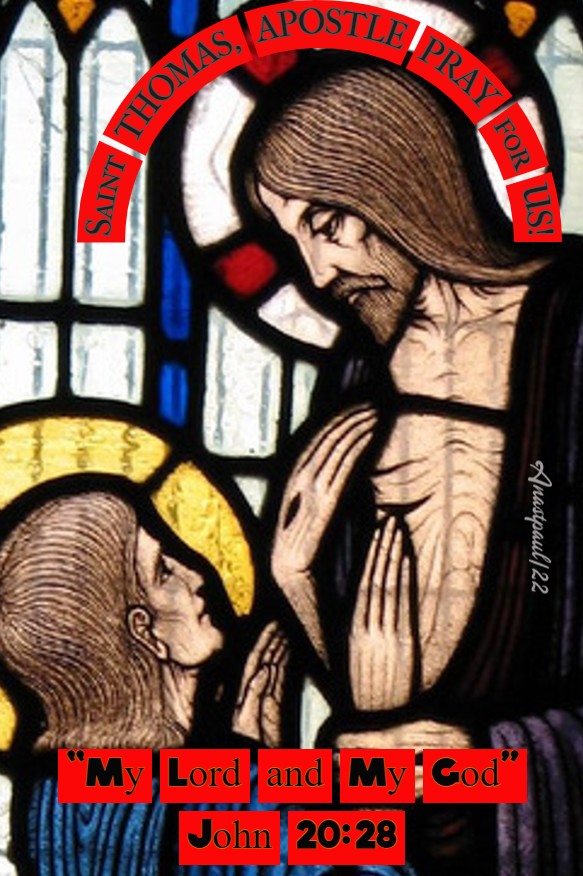
“My Lord and my God!” – John 20:28
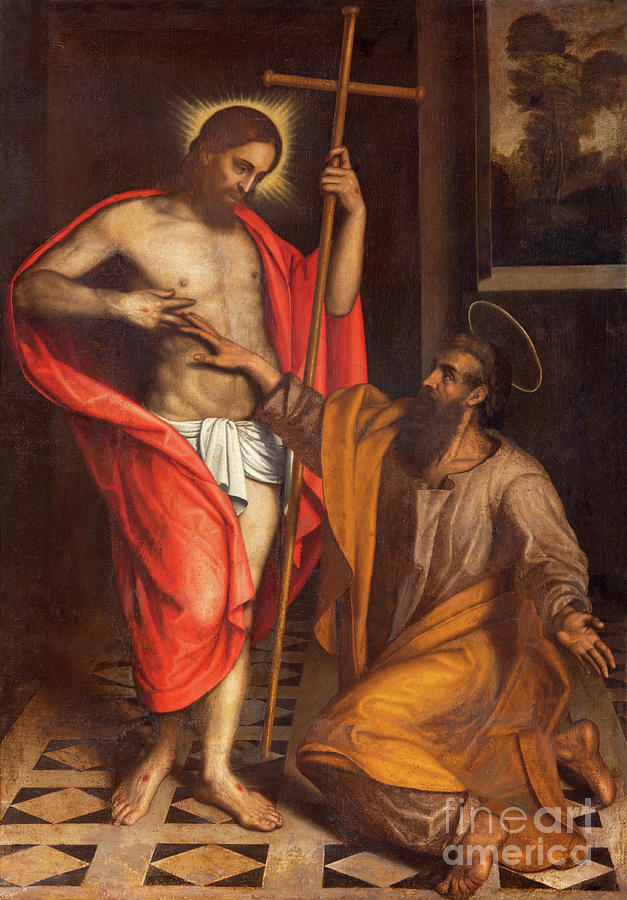
REFLECTION – “Thomas said to the Twelve: “Unless I shall see in His Hands the print of the nails and put my finger into the place of the nails and put my hand into His Side, I will not believe!” (Jn 20:25). The name ‘Thomas‘ means ‘abyss‘ for by his doubt he gained an even deeper understanding and became firmer in his faith. … It was not by chance but by Divine Decree that Thomas was absent and unable to believe that which he heard. A splendid Decree! Saintly doubt of the disciple!
“Unless I shall see in His Hands,” he said (Jn 20:25). He wished to see raised up the fallen tent of David, of which Amos had said: “On that day, I shall raise up the fallen tent of David; I shall repair the breaches of its walls” (cf Am 9:11). ‘David‘ stands for the Divinity; the ‘tent‘ Christ’s own Body in which the Divinity was contained as in a tent, falen, crushed in death and the Passion. The breaches in the walls stand for the Wounds of His Hands, Feet and Side. These are the Wounds which the Lord would rebuild in His Resurrection. It was of them that Thomas said: “Unless I put my finger into the place of thenail and my hand into His Side, I will not believe!”
The Lord, understanding, did not want to leave His honest disciple, who was to become a vessel of election, in doubt. And so, He removed the smoke of doubt from his mind, in an act of kindness, just as he removed the blindness of infidelity from Paul. “Put your finger here and see My Hands and bring your hand and put it into My Side and do not be unbelieving but believe.” Then Thomas said to him: “My Lord and my God!” (Jn 20:28)” – St Anthony of Padua (1195-1231) Franciscan, Doctor of the Church (Sunday in the Octave of Easter).
PRAYER – O Lord, grant us, we beseech Thee, to glory in the Feast-day of blessed Thomas, Thy Apostle, that we maybe helped continually by his patronage and imitate his faith with a devotion like his. Through Jesus Christ, Thy Son our Lord, Who lives and reigns with Thee, in the unity of the Holy Ghost, God, world without end. Amen (Collect).
Our Morning Offering – 21 December – “The Month of the Divine Infancy and the Immaculate Conception of the Blessed Virgin Mary” – The Feast of St Thomas, Apostle
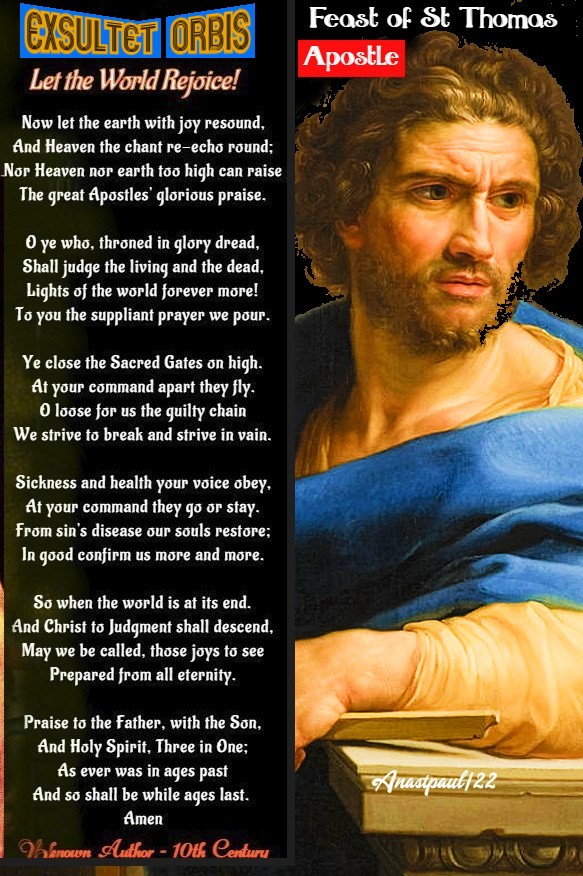
Exsultet Orbis! Let the World Rejoice! Unknown Author
Now let the earth with joy resound, And Heaven the chant re-echo round; Nor Heaven nor earth too high can raise The great Apostles’ glorious praise.
O ye who, throned in glory dread, Shall judge the living and the dead, Lights of the world forever more! To you the suppliant prayer we pour.
Ye close the Sacred Gates on high. At your command apart they fly. O loose for us the guilty chain We strive to break and strive in vain.
Sickness and health your voice obey, At your command they go or stay. From sin’s disease our souls restore; In good confirm us more and more.
So when the world is at its end. And Christ to Judgment shall descend, May we be called, those joys to see Prepared from all eternity.
Praise to the Father, with the Son, And Holy Spirit, Three in One; As ever was in ages past And so shall be while ages last. Amen
(Roman Breviary for the Common of Apostles) An Office Hymn that was traditionally prescribed for Vespers and Lauds on the Feasts of Apostles and Evangelists outside Easter time. The Hymn is found as early as the tenth century in a hymnal of Moissac Abbey.
Quote/s of the Day – 21 December – Feast of St Thomas, Apostle of Christ – Ephesians 2:19-22; John 20:24-29 – Scripture search here: https://www.drbo.org/
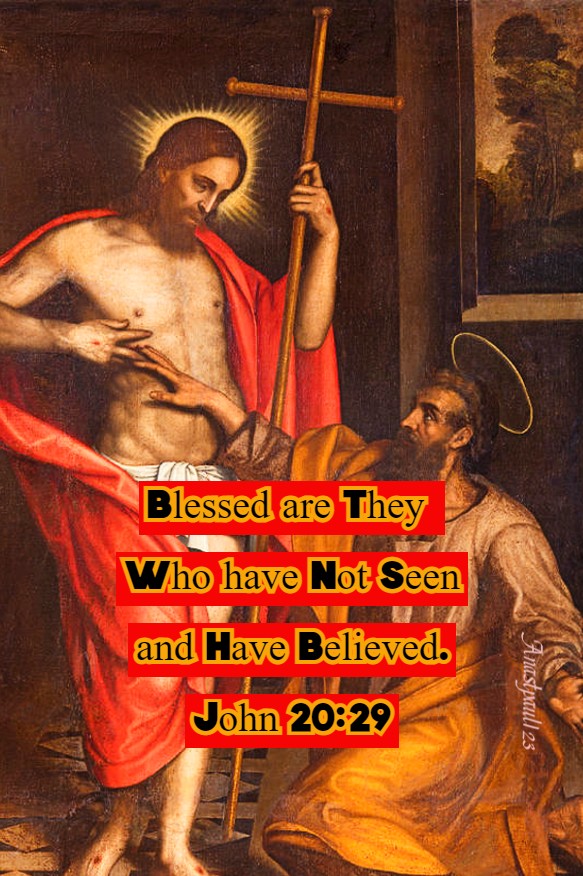
“Blessed are they who have not seen and yet, have believed.”
John 20:29
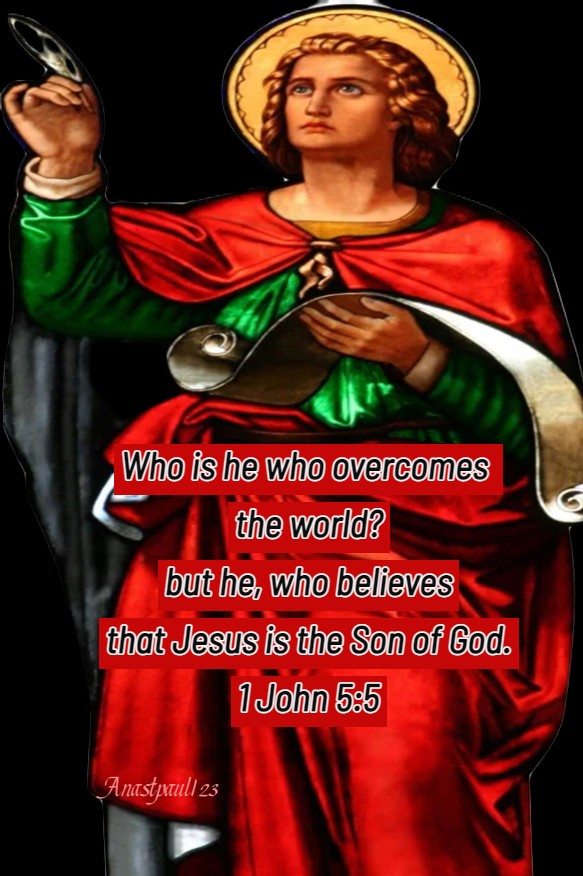
“Who is he who overcomes the world? but he who believes that Jesus is the Son of God.”
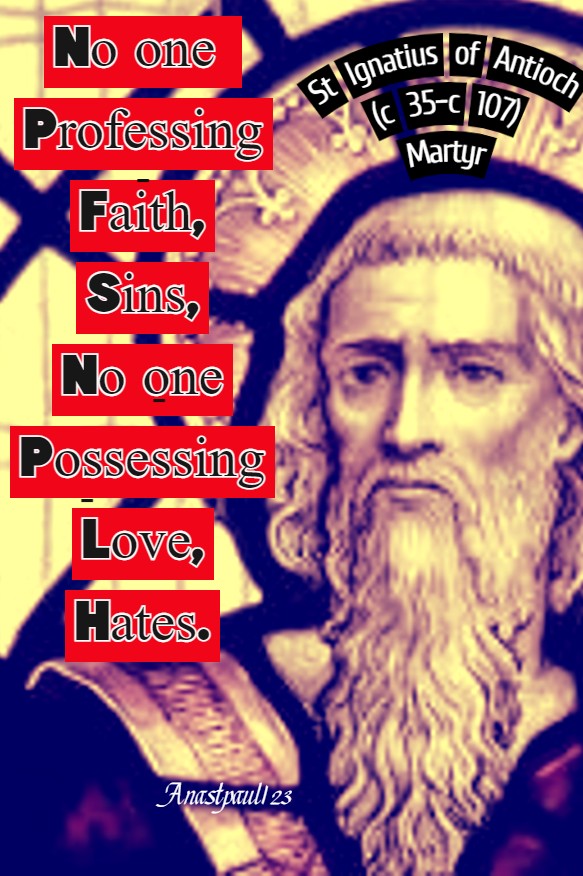
St Ignatius of Antioch (c35–c107) Bishop, Martyr, Apostolic Father
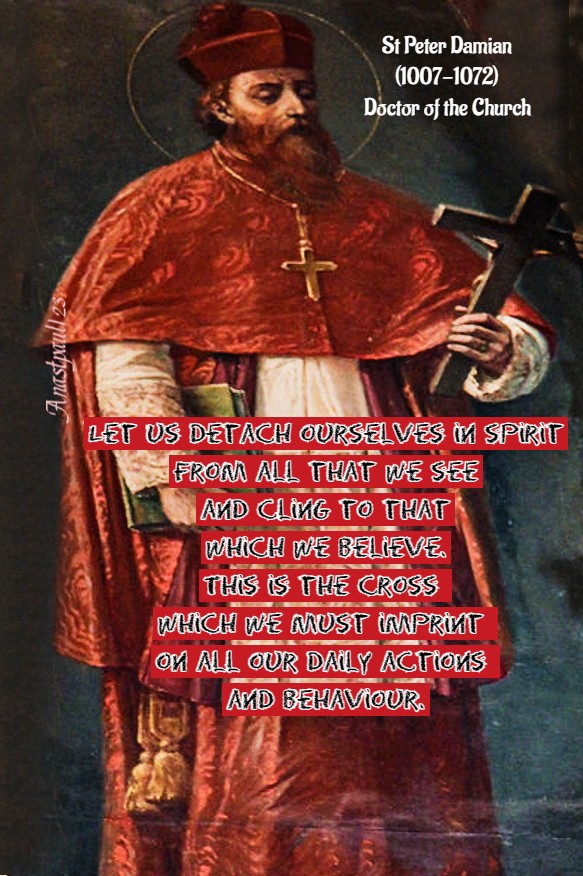
“Let us detach ourselves in spirit from all that we see and cling to that which we believe. This is the Cross which we must imprint on all our daily actions and behaviour.”
St Peter Damian (1007-1072) Doctor of the Church
“If we wish to make any progress in the service of God, we must begin everyday of our life, with new eagerness. We must keep ourselves, in the presence of God, as much as possible and have no other view or end, in all our actions but the Divine honour.”
St Charles Borromeo (1538-1584)
“The very prince of the universe, is man; the crowning point of man, is his heart; of the heart, is love and the perfection of love, is charity. That is why the love of God is the goal, the crowning point, the be-all and end-all of the universe.”
One Minute Reflection – 21 December – “The Month of the Divine Infancy and the Immaculate Conception of the Blessed Virgin Mary” – Feast of St Thomas, Apostle of Christ – Ephesians 2:19-22; John 20:24-29 – Scripture search here: https://www.drbo.org/
“Blessed are they who have not seen and yet, have believed.” – John 20:29
REFLECTION – “The disciples’ weakness was so unsteady that, not content with seeing the risen Lord, they still wanted to touch Him if they were to believe in Him. It was not enough for them to see Him with their eyes, they wanted to put out their hands to His limbs and touch the marks of His recent wounds. It was after He had touched and acknowledged His scars that the unbelieving disciple cried out: “My Lord and my God!” Those scars revealed the One Who, where other people were concerned, healed every wound! Could the Lord not have risen without scars? Yet, He saw within His disciples’ hearts, wounds which those scars which He had preserved in His Body, would heal.
And what does the Lord answer that confession of faith of His disciple, who says: “My Lord and my God”? “Have you come to believe because you have seen Me? Blessed are they who have not seen and yet, have believed.” Who is He talking about, my friends, if not of us? And not just of us but of those, too, who will follow us. For shortly afterwards, when He had disappeared from mortal sight so as to strengthen faith in the heart, all those who became believers, believed without seeing and their faith had great merit. To acquire it they reached out to Him, not a hand with which to touch Him but only, a loving heart! ” – St Augustine (354-430) Father and Doctor of Grace (Sermon 88).
PRAYER – O Lord, grant us, we beseech Thee, to glory in the Feast-day of blessed Thomas, Thy Apostle, that we maybe helped continually by his patronage and imitate his faith with a devotion like his. Through Jesus Christ, Thy Son our Lord, Who lives and reigns with Thee, in the unity of the Holy Ghost, God, world without end. Amen (Collect).
Our Morning Offering – 21 December – “The Month of the Divine Infancy and the Immaculate Conception of the Blessed Virgin Mary” – Feast of St Thomas, Apostle
Exsultet Orbis! Let the World Rejoice! Unknown Author
Now let the earth with joy resound, And Heaven the chant re-echo round; Nor Heaven nor earth too high can raise The great Apostles’ glorious praise.
O ye who, throned in glory dread, Shall judge the living and the dead, Lights of the world forever more! To you the suppliant prayer we pour.
Ye close the Sacred Gates on high. At your command apart they fly. O loose for us the guilty chain We strive to break and strive in vain.
Sickness and health your voice obey, At your command they go or stay. From sin’s disease our souls restore; In good confirm us more and more.
So when the world is at its end. And Christ to Judgment shall descend, May we be called, those joys to see Prepared from all eternity.
Praise to the Father, with the Son, And Holy Spirit, Three in One; As ever was in ages past And so shall be while ages last. Amen
(Roman Breviary for the Common of Apostles) An Office Hymn that was traditionally prescribed for Vespers and Lauds on the Feasts of Apostles and Evangelists outside Easter time. The Hymn is found as early as the tenth century in a hymnal of Moissac Abbey.
St Festus of Tuscany St Glycerius of Nicomedia St James of Valencia St John of Tuscany St John Vincent St Severin of Trèves (Died c300) Bishop, Confessor Bl Sibrand of Marigård St Themistocles of Lycia Blessed Tommaso Vitali OSM (1425-1490) Priest and Friar of the Order of the Servants of Mary (the Servites)
One Minute Reflection – 20 April – “The Month of the Resurrection” –Feria Day, Thursday in the Second Week of Easter – 1 John 5:4-10, John 20:19-31 – Scripture search here: https://www.drbo.org/
“My Lord and my God.” – John 20:28
REFLECTION – “Thomas said: “Unless I see the mark of the nails in His Hands and put my finger into the nailmarks and put my hand into His Side, I will not believe.” What an astonishing hardness of heart on this disciple’s part: not even the witness of so many of the brethren, nor even the sight of their joy, were enough to give him faith. Yet, the Lord appeared to take care of him. The good Shepherd does not allow the loss of His sheep (Mt 18:12) having said to His Father: “Thou gave them to me and none of them was lost” (Jn 17:6.12). Let the shepherds learn, then, what care they should show towards their sheep, since the Lord came for a single one. Any care and labour are a small thing, compared with the importance of one soul…
“Put your finger here and see My Hands, and bring your hand and put it into My Side, and do not be unbelieving but believe.” O blessed hand that penetrated the secrets of the Heart of Christ! What riches did they not find in it? It was while resting on this Heart that John drew out the Mysteries of Heaven (Jn 13:25), while penetrating It that Thomas found great treasures – what a wonderful school which forms such disciples! Thanks to this Heart, the former expressed marvellous things, higher than the stars, concerning the Divinity when he said: “In the beginning was the Word and the Word was with God and the Word was God” (Jn 1:1). And the latter, touched by the Light of Truth, cried out this sublime cry: “My Lord and my God!” – St Thomas of Villanova OSA (1486-1555) Hermit of Saint Augustine, Bishop (Sermon for Low Sunday (in Homiliarius Breviarii Romani).
PRAYER – Grant, we beseech Thee, O Lord God, unto all Thy servants that they may remain continually in the enjoyment of soundness, both of mind and body and, by the glorious intercession of the Blessed Mary, always a Virgin, may be delivered from present sadness and enter into the joy of Thine eternal gladness. Through Jesus Christ, Thy Son our Lord, Who lives and reigns with Thee, in the unity of the Holy Ghost, God, world without end. Amen (Collect).
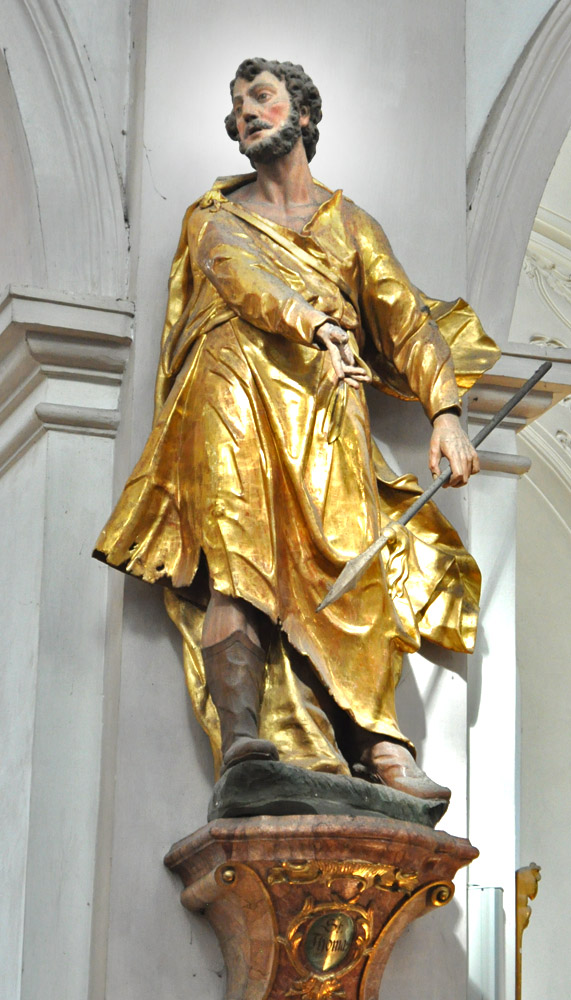
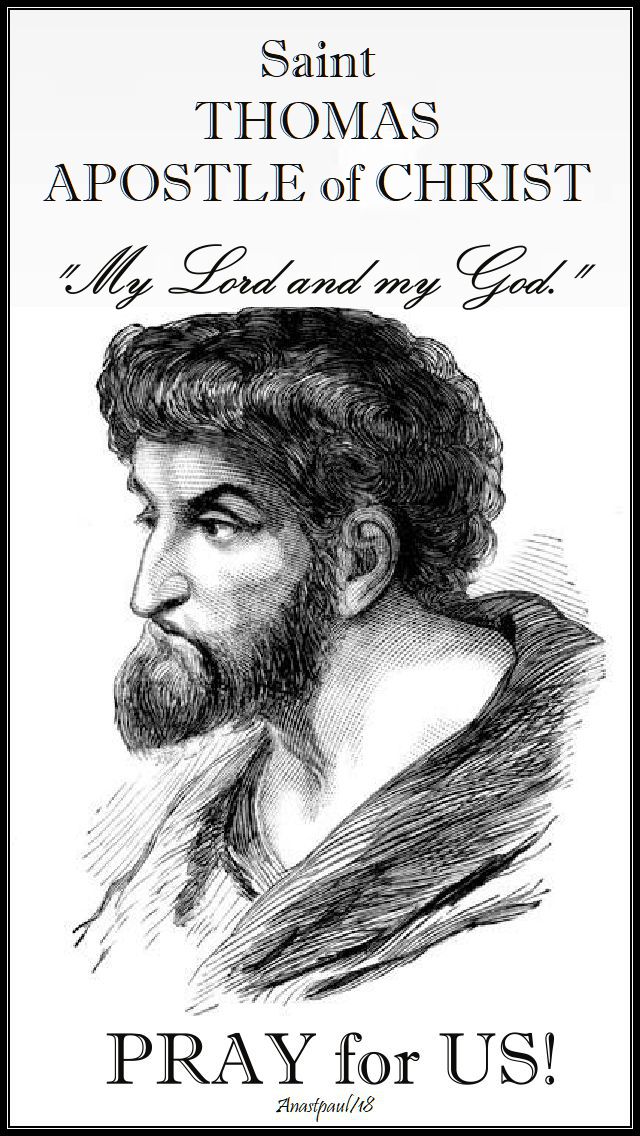
Saint of the Day – 21 December – Feast of St Thomas, Apostle of Christ, Martyr. His Patronages are:• people in doubt; against doubt• architects• blind people and against blindness• builders• construction workers• geometricians• stone masons and stone cutters• surveyors• theologians• Ceylon• East Indies• India• Indonesia• Malaysia • Pakistan• Singapore• Sri Lanka• Diocese of Bathery, India• Castelfranco di Sopra, Italy• Certaldo, Italy• Ortona, Italy.
St Thomas, Apostle From the Liturgical Year, 1870
This is the last Feast the Church keeps before the great one of the Nativity of her Lord and Spouse. She interrupts the Greater Ferias, in order to pay her tribute of honour to Thomas, the Apostle of Christ, whose glorious Martyrdom has consecrated this twenty first day of December and has procured, for the Christian people, a powerful patron that will introduce them to the Divine Babe of Bethlehem.
To none of the Apostles could this day have been so fittingly assigned, as to St Thomas. It was St Thomas whom we needed; St. Thomas, whose festal patronage would aid us to believe and hope, in that God, Whom we see not and Who comes to us in silence and humility, in order to try our Faith.
St Thomas was once guilty of doubting, when he ought to have believed and only learned the necessity of Faith by the sad experience of incredulity. He comes then most appropriately to defend us, by the power of his example and prayers, against the temptations which proud human reason might excite within us.
Let us pray to him with confidence. In that Heaven of Light and Vision, where his repentance and love have placed him, he will intercede for us,and gain for us that docility of mind and heart, which will enable us to see and recognise Him, Who is the Expected of Nations and Who, though the King of the world, will give no other signs of His Majesty, than the swaddling-clothes and tears of a Babe.
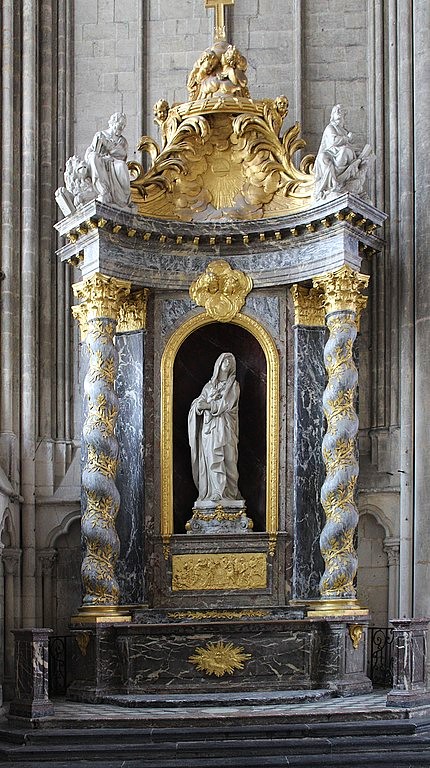
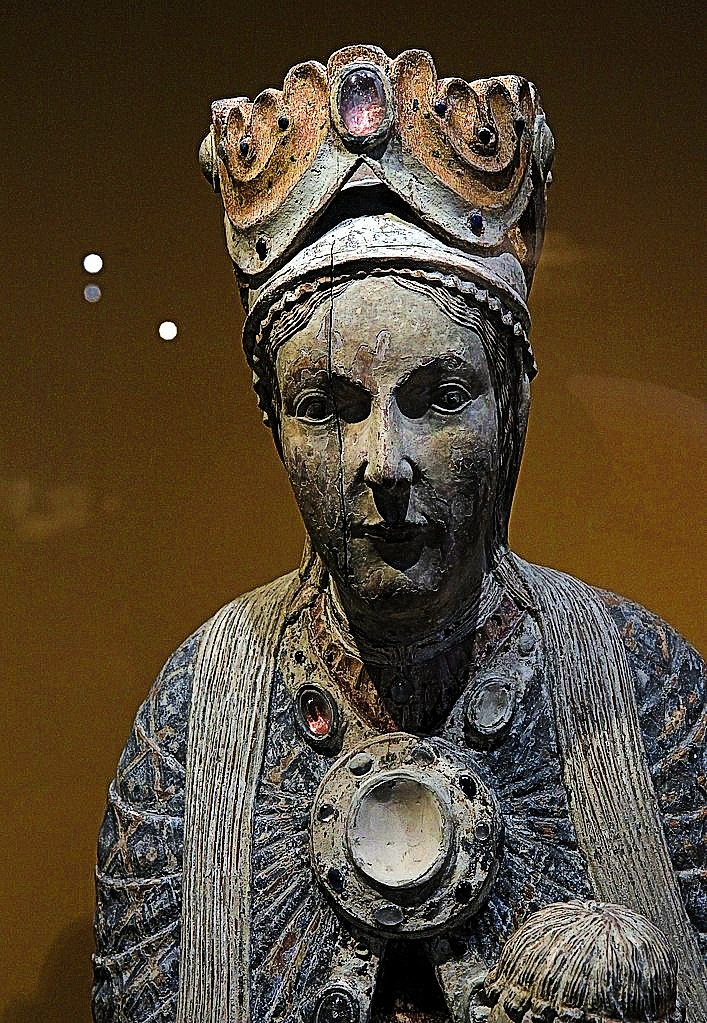
Notre-Dame-de-la-Carole / Our Lady of la Carole, Paris (1418) – 3 July:
Roadside Shrines can still be seen in places all over Europe, though it is nothing like it used to be in the Middle Ages when these Shrines were extremely prevalent. They were public reminders of God and His Saints and were meant for the good of the general public, who would come upon the Shrine and pause for a moment to pray. They could be simple or somewhat elaborate, ranging from unadorned crosses to free standing towers or even small Chapels. On 3 July in the year 1418, a Swiss soldier committed a sacrilege upon a Statue of the Blessed Virgin known as Our Lady of la Carole, or Our Lady of Carole. It was located at the corner of the Rue aux Ours, which was built in the 13th century and terminated at the hospital of Saint John, which is no longer in existence. The Rue aux Ours is now a short street that begins at Rue Saint-Martin and ends at the Boulevard Sebastopol in Paris, France. The soldier of the Duke of Burgandy’s troops, said to be a Swiss soldier, came upon the Shrine of the Blessed Virgin after having left a tavern where he had gambled away his money. He was probably intoxicated when he drew his sword and repeatedly struck the Statue of the Blessed Virgin with the weapon. The Statue of Our Lady of Carole then began to bleed profusely, as if made of flesh and blood and WAS wounded by the blows. The citizens who had observed the sacrilege were outraged and followed the soldier as he fled from the scene of his crime. The man was eventually caught and apprehended and then brought before the Chancellor where he was sentenced to death for the outrage.
In remembrance of this incident and in expiation for the crime, there was a popular feAST that took place on the Rue aux Ours every year. There were fireworks and a wax figure representing the sacrilegious wretch who had struck the image of the Blessed Virgin was set ablaze. This festival continued until the French Revolution brought an end to the traditional observance.
St Anatolius of Constantinople (Diedc 458) Bishop Bl Andreas Ebersbach Bl Barbara Jeong Sun-mae St Bladus St Byblig St Cillene St Dathus of Ravenna St Eusebius of Laodicea St Firminus St Firmus Bl Gelduin St Giuse Nguyen Ðình Uyen St Gunthiern St Guthagon St Heliodorus of Altinum St Hyacinth of Caesarea St Ioannes Baptista Zhao Mingxi St Irenaeus of Chiusi
St Maelmuire O’Gorman St Mark of Mesia St Mennone the Centurian St Mucian of Mesia St Paul of Mesia St Petrus Zhao Mingzhen St Philiphê Phan Van Minh St Raymond of Toulouse (Died 1118) Layman — Martyrs of Alexandria – 13 saints: Thirteen Christian companions marytred together. No details about them have survived but the names – Apricus, Cyrion (2 of), Eulogius, Hemerion, Julian, Julius, Justus, Menelaus, Orestes, Porfyrios and Tryphon (2 of). They martyred in Alexandria, Egypt, date unknown.
Martyrs of Constantinople – 24 saints: A group of 24 Christians martyred in the persecutions of Arian emperor Valens. We know little more than their names – Acacios, Amedinos, Ammonius, Ammus, Cerealis, Cionia, Cionius, Cyrianus, Demetrius, Eulogius (2), Euphemia, Heliodoros, Heraclios, Horestes, Jocundus, Julian, Martyrios, Menelaeus, Sestratus, Strategos, Thomas, Timotheos and Tryphon. They were martyred in c367 in Constantintinople.
Theodotus and Companions – 6 saints: Six Christians who were imprisoned, tortured and martyred together in the persecutions of Trajan. Saint Hyacinth ministered to them in prison. We know nothing else about them but their names – Asclepiodotus, Diomedes, Eulampius, Golinduchus, Theodota and Theodotus. They were beheaded in c110, location unknown.
Thought for the Day – 3 July – Feast of St Thomas Apostle
The weakness of Thomas’s faith
is a source of our Lord’s great blessing for the Church
We must not suppose that St Thomas differed greatly from the other apostles. They all, more or less, mistrusted Christ’s promises when they saw Him led away to be crucified. When He was buried, their hopes were buried with Him and when the news was brought them, that He was risen again, they all disbelieved it. On His appearing to them, He “upbraided them with their unbelief and hardness of heart.” (Mark 16:14)… Thomas was convinced latest, because He saw Christ latest. On the other hand, it is certain that, though he disbelieved the good news of Christ’s resurrection at first, he was no cold-hearted follower of his Lord, as appears from his conduct on a previous occasion, when he expressed a desire to share danger and to suffer with Him…: “Let us also go, that we may die with him.” (Jn 11:16)… It was at the instance of Thomas that they hazarded their lives with their Lord.
St Thomas then loved his Master, as became an apostle and was devoted to His service; but when he saw him crucified, his faith failed for a season with that of the rest… and more than the rest. His standing out alone, not against one witness only but against his ten fellow disciples, besides Mary Magdalene and the other women is evidence of this… He seems to have required some sensible insight into the unseen state, some infallible sign from heaven, a ladder of angels like Jacob’s (Gn 28:12), which would remove anxiety by showing him the end of the journey at the time he set out. Some such secret craving after certainty beset him. And a like desire arose within him on the news of Christ’s resurrection.
While our Saviour allowed Thomas his wish and satisfied his senses that He was really alive, He accompanied the permission with a rebuke: “Because thou hast seen me, thou hast believed: blessed are they that have not seen and yet have believed.”… All His disciples minister to Him even in their weaknesses, that so He may convert them into instruction and comfort for His Church….Blessed John Henry Newman (1801-1890)PPS II, Sermon 2. “Faith without Sight”
“My Lord and my God!”
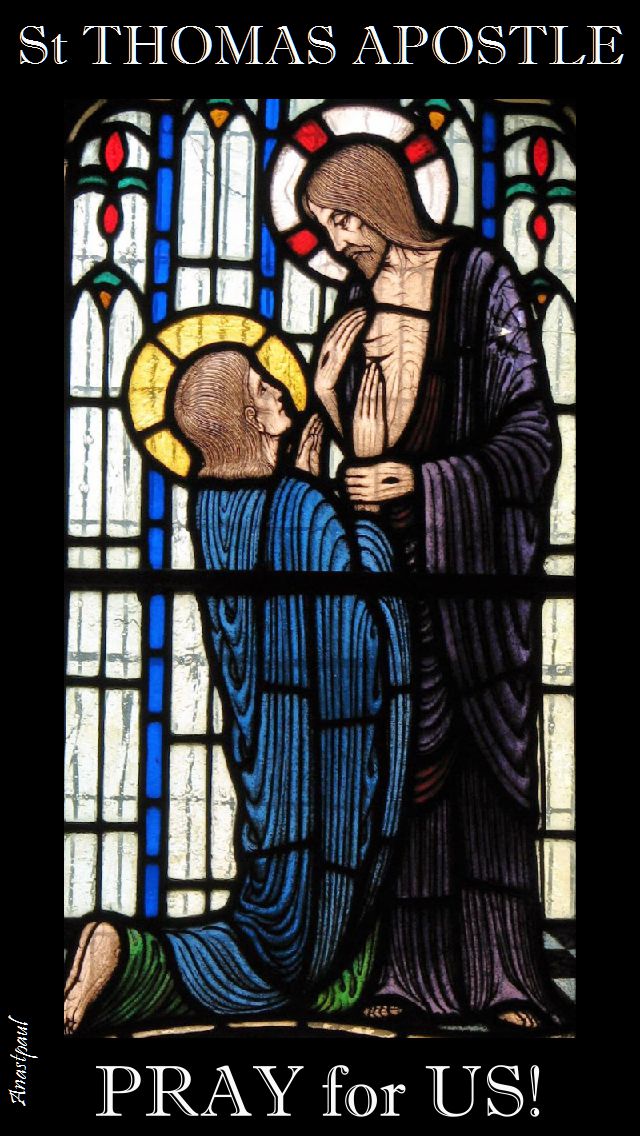
St Thomas, Pray for us that we too may so love our Lord and our God and “follow Him” to the end of time!
Quote of the Day – 3 July – Feast of St Thomas Apostle
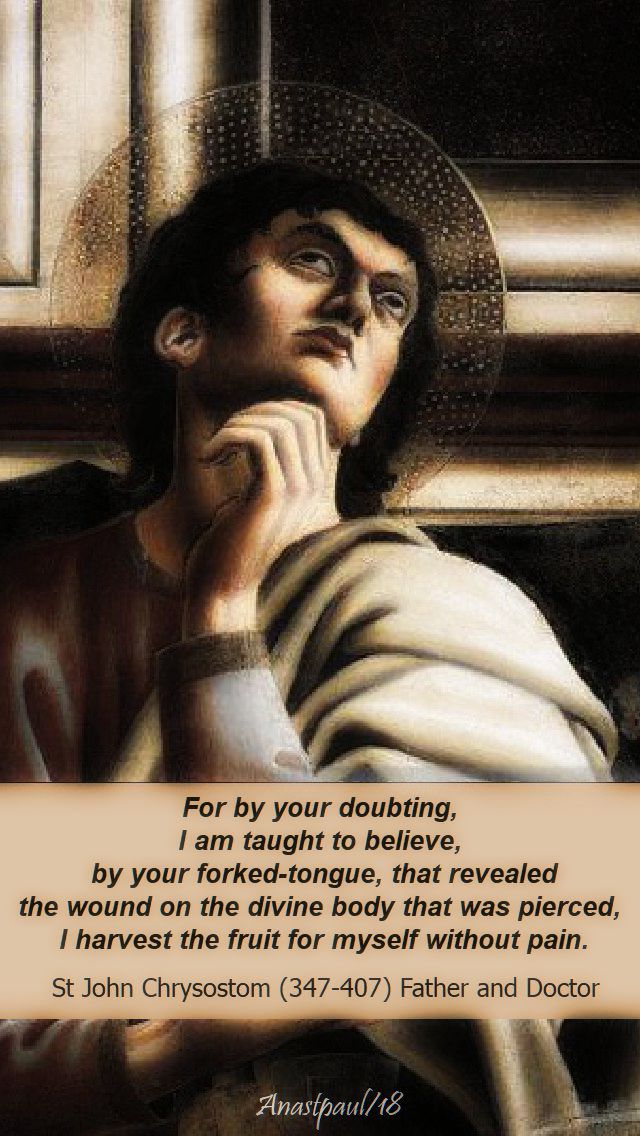
“For by your doubting, I am taught to believe, by your forked-tongue, that revealed the wound on the divine body that was pierced, I harvest the fruit for myself without pain.”
St Anatolius of Alexandria
St Anatolius of Constantinople
Bl Andreas Ebersbach
Bl Barbara Jeong Sun-mae
St Bladus
St Byblig
St Cillene
St Dathus of Ravenna
St Eusebius of Laodicea
St Firminus
St Firmus
Bl Gelduin
St Germanus of Man
St Giuse Nguyen Ðình Uyen
St Gunthiern
St Guthagon
St Heliodorus of Altinum
St Hyacinth of Caesarea
St Ioannes Baptista Zhao Mingxi
St Irenaeus of Chiusi
St Pope Leo II
St Maelmuire O’Gorman
St Mark of Mesia
St Mennone the Centurian
St Mucian of Mesia
St Paul of Mesia
St Petrus Zhao Mingzhen
St Philiphê Phan Van Minh
St Raymond of Toulouse
—
Martyrs of Alexandria – 13 saints: Thirteen Christian companions marytred together. No details about them have survived but the names – Apricus, Cyrion (2 of), Eulogius, Hemerion, Julian, Julius, Justus, Menelaus, Orestes, Porfyrios and Tryphon (2 of). They martyred in Alexandria, Egypt, date unknown.
Martyrs of Constantinople – 24 saints: A group of 24 Christians martyred in the persecutions of Arian emperor Valens. We know little more than their names – Acacios, Amedinos, Ammonius, Ammus, Cerealis, Cionia, Cionius, Cyrianus, Demetrius, Eulogius (2), Euphemia, Heliodoros, Heraclios, Horestes, Jocundus, Julian, Martyrios, Menelaeus, Sestratus, Strategos, Thomas, Timotheos and Tryphon. They were martyred in c367 in Constantintinople.
Theodotus and Companions – 6 saints: Six Christians who were imprisoned, tortured and martyred together in the persecutions of Trajan. Saint Hyacinth ministered to them in prison. We know nothing else about them but their names – Asclepiodotus, Diomedes, Eulampius, Golinduchus, Theodota and Theodotus. They were beheaded in c110, location
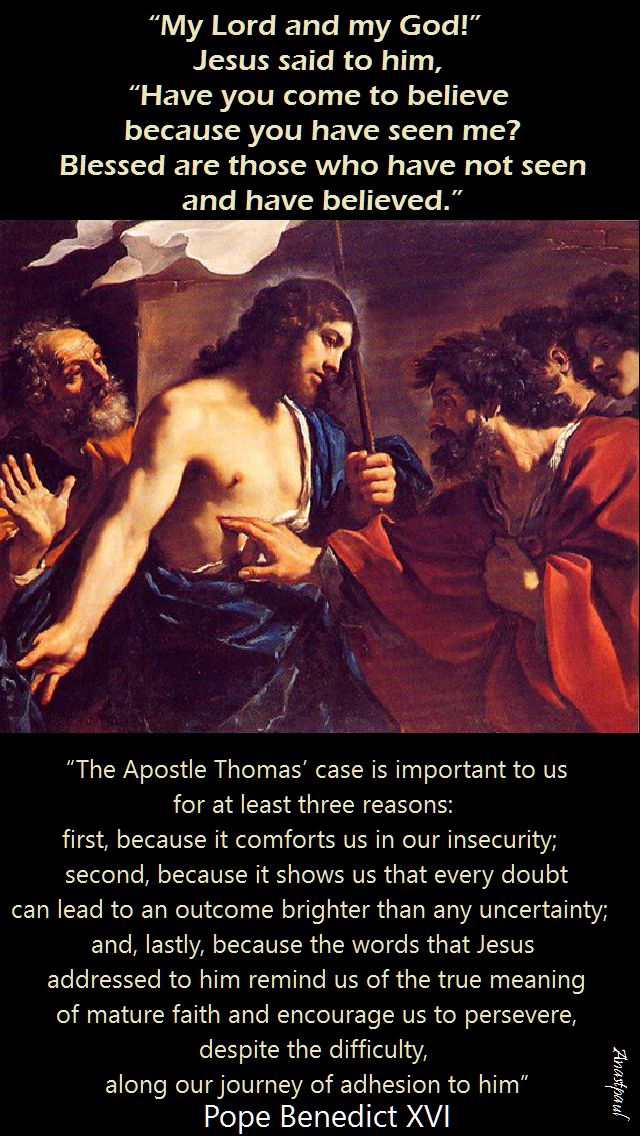
“My Lord and my God!” Jesus said to him, “Have you come to believe because you have seen me?
Blessed are those who have not seen and have believed.”…John 20:28-29
REFLECTION – “the Apostle Thomas’ case is important to us for at least three reasons: first, because it comforts us in our insecurity; second, because it shows us that every doubt can lead to an outcome brighter than any uncertainty; and, lastly, because the words that Jesus addressed to him remind us of the true meaning of mature faith and encourage us to persevere, despite the difficulty, along our journey of adhesion to him”………….Pope Benedict XVI, 27 September 2006.
PRAYER – Father, let our celebration of the Feast of St Thomas the Apostle, be the source of his unfailing help and protection. Fill us with Your life-giving grace through faith in Your Son, whom St Thomas acknowledged to be his Lord and God. St Thomas continue to intercede for us that we may grow strong in faith and trust. Through our Lord Jesus Christ, in union with the Holy Spirit, one God forever and ever Amen.














 AnaStpaul
You must be logged in to post a comment.